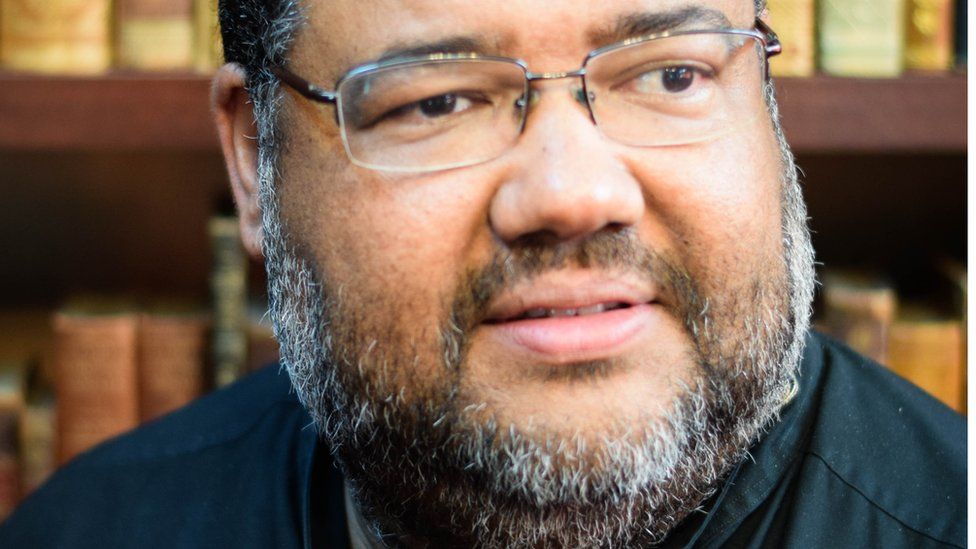
The company of evolutionary Japanese fashion designer Issey Miyake has announced the death of the designer. He died at age 84.
Miyake, who is famous for his avant-garde designs and scent, established a global fashion brand by creating the iconic black turtleneck sweaters worn by Steve Jobs.
Japanese media reported that the designer died of liver cancer on Friday and a private funeral has already taken place.
Born in Hiroshima in 1938, Miyake was just seven years old when the city was devastated by an atomic bomb dropped by the United States. His mother died of radiation exposure three years later.
“When I close my eyes, I still see things no one should ever experience,” he wrote in a New York Times opinion piece in 2009 – adding that he prefers to think of things “that can be created, not destroyed, and that bring beauty and joy”.
Miyake reportedly wanted to be a dancer or athlete when he was young – but that changed after he read his sister’s fashion magazines.
He studied graphic design at a Tokyo art university and then moved to Paris in the 1960s, where he worked with lauded fashion designers Guy Laroche and Hubert de Givenchy.
He moved to New York for a short time, before heading back to Tokyo in 1970 to open the Miyake Design Studio.
By the 1980s he was celebrated as one of the world’s most pioneering designers as he worked with materials from plastic to metal – and also traditional Japanese materials and paper.
Miyake developed a new way of pleating fabric by wrapping it between layers of paper in a heat press.
Miyake’s distinctive Bao Bao line of bags, recognizable for their small resin triangles, was celebrated for its engineering and was so popular that knock-offs flooded the fake designer market.
He became known for creating a style that was high-tech yet practical and comfortable, and was a household name in not only Japan’s fashion industry – but on the global catwalk.
His fashion house developed highly sought-after clothes for men and women, as well as bags, watches, and perfumes – a bottle of L’Eau d’Issey, launched in 1992, was rumored to sell every 14 seconds.
His A-POC (A Piece of Clothing) line, which can now be seen in museums, used a special weaving machine that made outfits out of one continuous tube of fabric.
IMAGE SOURCE, GETTY IMAGES
Image caption,
The distinctive Bao Bao bag
Miyake was asked by Apple co-founder Steve Jobs to design his iconic turtle neck jumpers and reportedly made 100 of them, at $175 each.
He was awarded the prestigious Kyoto Prize for his dedication to the arts in 2006 and received the Order of Culture in 2010 for “remarkable accomplishments” in Japan’s culture and arts.
“Design needs to express hope,” Issey Miyake famously said, as he believed in the role of fashion in questioning how humans should exist – instead of making money.
For people here, he is one of a few Japanese names who get recognized around the world, along with Yoko Ono.
Not many will know about his traumatic childhood, as Miyake himself didn’t talk about it until his later years.
It was because he wrote in 2009, that he didn’t want to be known as “the designer who survived the atomic bomb”.
Miyake may have chosen not to talk about it for a long time, but Japan’s revolutionary designer left us one day before the 77th anniversary of his hometown’s bombing.
Tributes have been paid from around the world to Olivia Newton-John, who has died from cancer aged 73.
The British-born Australian singer and actress were best known for playing Sandy in Grease, one of the most successful film musicals ever made.
Her Grease co-star John Travolta said she “made all of our lives so much better” while its director said: “What you see is what you get with her.”
She died peacefully at her California ranch surrounded by family and friends.
An actress and musician, Newton-John achieved commercial success as a country singer and sold millions of records globally.
But it was her role as high school student Sandy in the film Grease that catapulted her to worldwide fame.
Tributes have been paid from around the world to Olivia Newton-John, who has died from cancer aged 73.
The British-born Australian singer and actress were best known for playing Sandy in Grease, one of the most successful film musicals ever made.
Her Grease co-star John Travolta said she “made all of our lives so much better” while its director said: “What you see is what you get with her.”
She died peacefully at her California ranch surrounded by family and friends.
An actress and musician, Newton-John achieved commercial success as a country singer and sold millions of records globally.
But it was her role as high school student Sandy in the film Grease that catapulted her to worldwide fame.
“Olivia was the essence of summer – her sunniness, her warmth and her grace are what always comes to mind when I think of her. I will miss her enormously.”
“Her spandex trousers in Grease were my inspiration for my ‘Da ya think I’m Sexy’ era,” he added, referencing the iconic tight black outfit that she wore at the film’s finale.
US television host Oprah Winfrey said her “positivity was just infectious”. “You’ll be missed, Olivia,” she wrote. “Here’s to the good times.”
Travolta wrote on Instagram: “Your impact was incredible. I love you so much. We will see you down the road and we will all be together again.”
“Yours from the first moment I saw you and forever!” he added, signing off: “Your Danny, your John!”
The film’s director Randal Kleiser said he had been friends with Newton-John for 40 years and “she never changed, she was always exactly the way everyone imagines her”.
Asked what his everlasting memory of her will be, he told BBC Radio 5 Live: “Hanging out with her at her ranch. Seeing the real Olivia which was exactly like the Olivia she projected. No cameras around, no people around… she was exactly the same and as loving as ever.”
Didi Conn, who played Frenchy in Grease, told BBC Newsnight: “She was such a humungous, big, big pop star and her persona was of this beauty… pure and sweet. In the movie we would call her Miss Goody Two Shoes, you know, but simmering under that façade of innocence was a hot mama ready to come out.”
Other tributes came from singers Kylie Minogue, who called her an inspiration, and Dionne Warwick, who called Newton-John “one of the nicest people I had the pleasure of recording and performing with”.
Australian rock legend John Farnham, a long-time friend and with whom Newton-John released her final studio album, said she would be “greatly missed” and “behind that iconic smile was a tenacious fighter”.
Olivia Moore, who is currently playing Sandy in Grease in London’s West End, broke the news to a shocked audience at the end of Monday evening’s performance.
Newton-John was first diagnosed with cancer in 1992 and went on to become a leading advocate of cancer research. Her charity, the Olivia Newton-John Foundation, has raised millions of pounds to support research.
“We are incredibly grateful for the special relationship we had with Olivia for many years. Her generous support and gift provided hope and changed the lives of thousands of cancer patients… She was the light at the end of the tunnel for many, many people.”
Her efforts in the field were recognized by the Queen, who honored her with a damehood in the 2020 New Year’s Honours list.
In a statement posted to her social media channels, Newton-John’s husband John Easterling said she had died on Monday, hailing her “a symbol of triumphs and hope for over 30 years, sharing her journey with breast cancer”.
“Her healing inspiration and pioneering experience with plant medicine continue with the Olivia Newton-John Foundation Fund, dedicated to researching plant medicine and cancer.”
In later years, Newton-John became a cancer campaigner which led to the opening of an institute named after her in Melbourne
Newton-John was born in Cambridge on 26 September 1948.
Her father had been a British spy during World War Two. Her mother was the daughter of the German Nobel laureate, Max Born, and had fled with her family when the Nazis came to power in 1933.
The family moved to Australia in 1954, where she was raised.
Her breakthrough came in 1971 when she released a Bob Dylan-penned track, If Not For You, which reached number seven in the UK charts and featured on an album of the same name.
She won four Grammy awards and scored seven US number one hits between 1974 and 1977.
While critics never warmed to her audience-friendly style of music, the star forthrightly dismissed the reviews.
“It annoys me when people think because it’s commercial, it’s bad,” she told Rolling Stone. “It’s completely opposite. If people like it, that’s what it’s supposed to be.”
In 1978 she became a global star with the release of Grease. The film, set in the 1950s, told the story of Sandy’s summer fling with John Travolta’s Danny and the difficulties the relationship encounters. In the end, the pair reconcile, with Sandy having transformed her appearance.
“It was consuming my day and after a time I went ‘you know what, I need to enjoy my life so I’m going to eat a cookie if I want it,” she said.
“Because the joy of life and everyday living has to be a part of that healing process as well. So I’ve chosen that path to be grateful and to feel good about things because the other side’s not so good.”
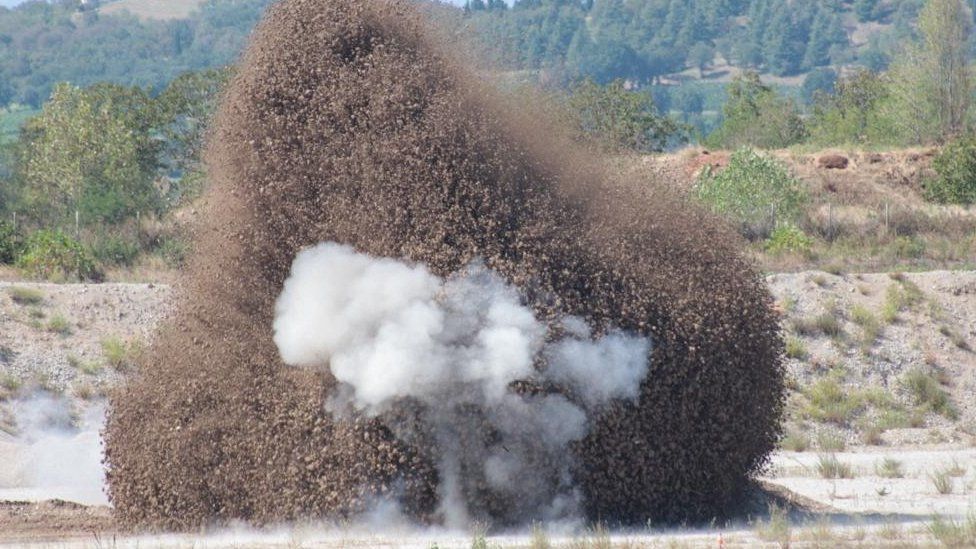
On Tuesday, a series of large explosions occurred near a Russian military airbase in the Crimean peninsula, which Russia has annexed. Video from the incident showed large smoke plumes rising into the sky.
The Russian defense ministry said the blasts had been caused by detonated aviation ammunition, Russian state media RIA Novosti reported.
“Around 3:20 p.m., several aviation munitions detonated on the territory of the airfield ‘Saki’ near the settlement of Novofedorivka,” the ministry said in the statement, according to RIA Novosti.
Oleg Kryuchkov, adviser to the head of the Crimean region — which Russia annexed from Ukraine in 2014 — confirmed several explosions had occurred near the village of Novofedorivka.
On his Telegram channel, Kryuchkov said: “So far, I can only confirm the fact of several explosions in the Novofedorivka area. I ask everyone to wait for official messages.”
There was no word from the Ukrainian side about any possible attacks in the area. Ukraine is not known to have struck the territory of Crimea since the Russian invasion began.
Companies with outstanding financial structures benefit from Africa’s fast-growing population and rich resources. This article looks at the fastest-growing businesses in Africa. These businesses are selected based on their growth rate and revenue generation potential.
Note that we consulted several reliable sources while compiling this list. These sources include the World Bank, Market Watch, Nairametrics, Tech Crunch, Africa Business Communities, etc.
1. Financial Technology Business
Financial technology businesses continue to outshine many startups in the African continent with problem-solving innovations. According to Tech Crunch, Africa is the world’s second-fastest-growing and profitable payments and banking market after Latin America. The continent is home to over 500 financial technology firms, most in Nigeria, South Africa, and Kenya.
According to The World Bank, about 66% of Sub-Saharan Africa’s population is unbanked. The unbanked population is another reason financial technology businesses thrive in the continent. They leverage technology to modify, automate and enhance financial services for consumers and businesses.
According to Business Elites Africa, 75% of Nigerian financial technology startups earn an average of $5 million annually. Given the continuous funding for financial technology companies in Africa, the sector will continue to grow with internet penetration and smartphone usage.
2. Food Business
With many investors benefiting from Africa’s resources, the food business is one of the businesses in the continent with a fast growth percentage. According to Business Standard, Africa’s food industry recorded a growth of 3.6% in 2020-21 and 3.9% in 2021-22. Food is a basic need for everyone, making it profitable for businesses for entrepreneurs in the sector.
The growth is driven by soaring demands for packaged and processed foods and the high consumption of frozen and dairy products. The food and beverage industry expansion and innovation are other growth contributing factors. According to Nairametrics, a more significant food Crisis is looming in Africa.
The Russia-Ukraine war, low purchasing power, political instability, and conflicts are soaring food prices to unprecedented levels in the continent. Meanwhile, Agro entrepreneurs are benefiting from feeding over one billion people. Entrepreneurs earn huge rewards locally by storing and packaging food products with an excellent transportation network.
3. Real Estate Business
With Africa’s large population, there is a high demand for commercial and residential properties, making the real estate business thrive. According to Nairametrics, The Nigeria real estate market grew by 1.77% in 2021 and 10.84% in the first quarter of 2022. The Egyptian real estate market generated $10 billion, representing a growth of 8% in 2021.
According to Nairametrics, Egypt’s real estate market has a growth projection of 6.5% in 2022. Kenya’s real estate market rose by 5.2% in Q3 2021 and is projected to grow by 5.9% in 2022. The real estate business is one of the most valued in Africa, with entrepreneurs earning from leasing, buying, and renting commercial and residential properties.
The real estate business is highly profitable but requires knowledge and experience. To get started in Africa’s real estate business, consider seeking advice from experienced realtors and learn from previous mistakes. Learn the industry’s strengths, weaknesses, and how it works.
4. E-Commerce Business
Electronic commerce is a fast-growing African business due to technological advancement and innovation. Firms in this sector allow individuals and companies to trade goods and services through the internet. According to Vanguard Newspaper, Africa’s real estate market value has a projection to reach $180 billion by 2025. The report further disclosed that Africa’s eCommerce ventures secured funding of more than $256 million in 2021, representing a 40% growth from 2020.
According to Africa Business Communities, the e-commerce industry is expected to generate annual revenue of $46.1 billion by 2025. The lucrative industry business involves facilitating the sales of goods and services between companies and their customers. E-commerce ventures also facilitate the sales of goods and services through third parties. Jumia, eBay, Konga, and Kilimall are a few examples of African e-commerce platforms.
5. Logistics Business
Logistic business is a lucrative and fast-growing business in many African countries. Whether in Mauritius, South Africa, Ethiopia, Ghana, Kenya, or Nigeria, entrepreneurs earn considerable rewards in the industry. According to Market Watch, Africa’s logistics market rose from millions to Multi-million dollars from 2017 to 2022. Reports from Sawya show that Egypt’s Suez Canal recorded a revenue of $704 million in July 2022, representing an increase from the $531.8 million reported in July 2021.
According to Research and Markets, Nigeria’s Logistics and Freight Market is expected to grow with a compound annual growth rate (CAGR) of over 3% from 2022 to 2027. The business is profitable in various African countries with the rise of delivery agencies working hand-in-hand with traditional and online retailers. Delivery agencies streamline the transfer of goods to customers’ destinations. Consider researching the business’s strengths and weaknesses before investing and focusing on building an online presence for promotions
 Twitter made legal summons to billionaire investors Chamath Palihapitiya and Marc Andreessen on Monday according to documents obtained by The Post.
According to the report, Twitter also summoned investors Jason Calacanis, Keith Rabois, and Joe Lonsdale as well as board members David Sacks, Stephen Jurvetson, who founded SpaceX and Tesla, and one of the businessmen who assisted Musk in founding PayPal.
Rabois declined to comment on the subpoena when contacted by Insider. Twitter, Musk, Palihapitiya, Andreessen, Sacks, Jurvetson, Calacanis, and Lonsdale did not respond to a request for comment from Insider ahead of publication.
Lonsdale dubbed the social media company’s legal requests a “giant harassing fishing expedition,” on Twitter.
Joe Lonsdale (@JTLonsdale)Â August 1, 2022
Sacks also responded to the subpoena on Twitter with an image of a middle finger.
David Sacks (@DavidSacks)Â August 2, 2022
The social media company is requesting information from Musk’s social circle related to any communication between the Tesla CEO and his social circle related to bots or spam. The legal request also includes any information related to Musk’s appearance at the All-In Summit in May an event he attended with Palihapitiya, Sacks, and Calacanis. At the Miami event, Musk appeared to backtrack on his plans to buy Twitter, weeks before he officially attempted to pull out of the $44 billion deal in July.
Notably, some of the individuals that received legal requests from Twitter have not been openly involved in Musk’s deal to purchase the company. Though, Calacanis and Andreessen have publicly helped the billionaire in his efforts to finance the deal.
The missives to Musk’s social circle came after several banks that were helping finance the deal, including Morgan Stanley, Citigroup, and Bank of America.
The case is being tried in Delaware. Last month, Twitter appeared to win its first battle against Musk when Chancery Court judge Kathaleen St. J. McCormick agreed to an expedited trial. The social media company is suing to compel Musk to buy the company for $44 billion.
Multiple experts previously told Insider that Musk faces an uphill battle in his efforts to get out of the deal due to the ironclad contract he signed earlier this year.
In an interview with CNN on Monday, Taiwan’s Foreign Minister said that despite China’s threat to the island being “more serious than ever,” Taiwan will continue to steadfastly defend its independence and democracy, including by embracing people who support it.
Minister Wu’s defiant message came after China said it will continued military drills around the self-governing island, after a four-day show of force following US House Speaker Nancy Pelosi’s trip to Taipei last week.
“China has always been threatening Taiwan for years and it’s getting more serious in the last few years,” Wu said. “Whether Speaker Pelosi visits Taiwan or not, the Chinese military threat against Taiwan has always been there and that is the fact that we need to deal with.”
Military drills drum home China’s relentless message in the Taiwan Strait
Welcoming overseas friends to the island was a key part of Taiwan’s strategy to counter China’s attempts to isolate it from the international community — regardless of the potential backlash from Beijing, Wu said.
“(China) cannot dictate to Taiwan that we should not welcome anyone who likes to come and show support for Taiwan,” said Wu, who has served as Taiwan’s foreign minister since 2018.
Pelosi’s Taiwan trip — the first by a sitting House Speaker to the island in 25 years — was vehemently opposed by China’s ruling Communist Party, which views Taiwan as its territory despite never having controlled it.
In the wake of Pelosi’s visit, Beijing has ramped up pressure on Taiwan, including via economic penalties, the launch of missiles over the island for the first time, and drills that Taipei has said were meant to “simulate” an attack against its main island and navy.
Though those exercises were originally expected to end Sunday, drills around Taiwan continued Monday, according to an announcement from China’s military.
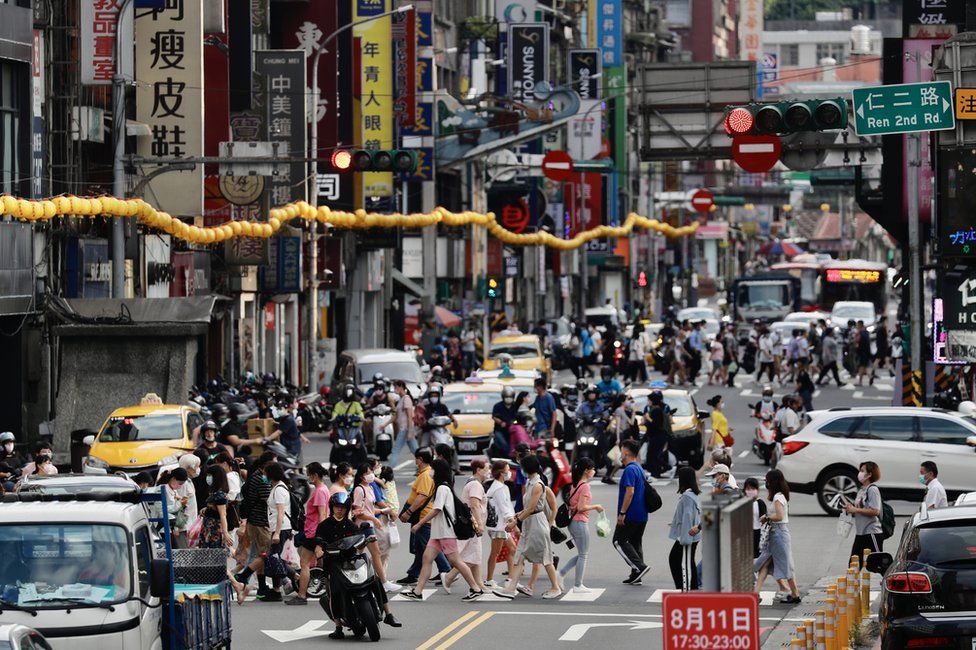
But as the live-fire drills raised global fears of a possible military conflict, the mood in Taiwan remained calm, with life carrying on as usual with packed restaurants and crowded public transport.
For Wu, the threat made it even more critical that Taiwan continues to build its international relationships and show it is not afraid.
“I worry that China may really launch a war against Taiwan,” he said. “But what it is doing right now is trying to scare us and the best way to deal with it (is) to show to China that we are not scared.”
Though her trip was long-mooted and much discussed, Taiwanese officials only received short notice of her arrival, Wu said.
“Since her travel is always subject to a lot of considerations, especially security considerations … we were not able to find out until the very last moment when she firmed up her plan,” Wu said, adding Taipei knew the itinerary a few days beforehand, but not the exact timing of her arrival.
The visit from the speaker and an accompanying congressional delegation included meetings at Taiwan’s legislature and the office of Taiwanese President Tsai Ing-wen, where Pelosi said they came to send an “unequivocal message” that “America stands with Taiwan.”
US House Speaker Nancy Pelosi is welcomed by Taiwanese Foreign Minister Joseph Wu after landing at Taipei Songshan Airport on August 2.
Wu said his most memorable impression of the trip was greeting Pelosi and the delegation at the airport, where she “showed her charm” by saying she’d been looking forward to her visit for a long time.
“And by the time she departed, she not only said goodbye to me, but also said goodbye to the ground crew, the security people, and to those people who had been taking care of the airport, one by one,” Wu said.
When asked whether the United States would increase its support for Taiwan after the visit, Wu said the US has always been “highly supportive” of Taiwan — but the current support was “unprecedented.”
In an exclusive interview with CNN last October, Taiwan’s President Tsai Ing-wen confirmed some US military trainers were in Taiwan — the first time a Taiwanese leader had admitted to their presence since Washington and Taipei severed diplomatic ties in 1979.
But perceptions of American support sparked Beijing’s ire against the speaker’s visit, with China’s foreign ministry issuing a statement on the heels of Pelosi’s arrival Tuesday evening saying her trip would have a “severe impact on the political foundation of China-US relations,” and “gravely undermines peace and stability across the Taiwan Strait.”
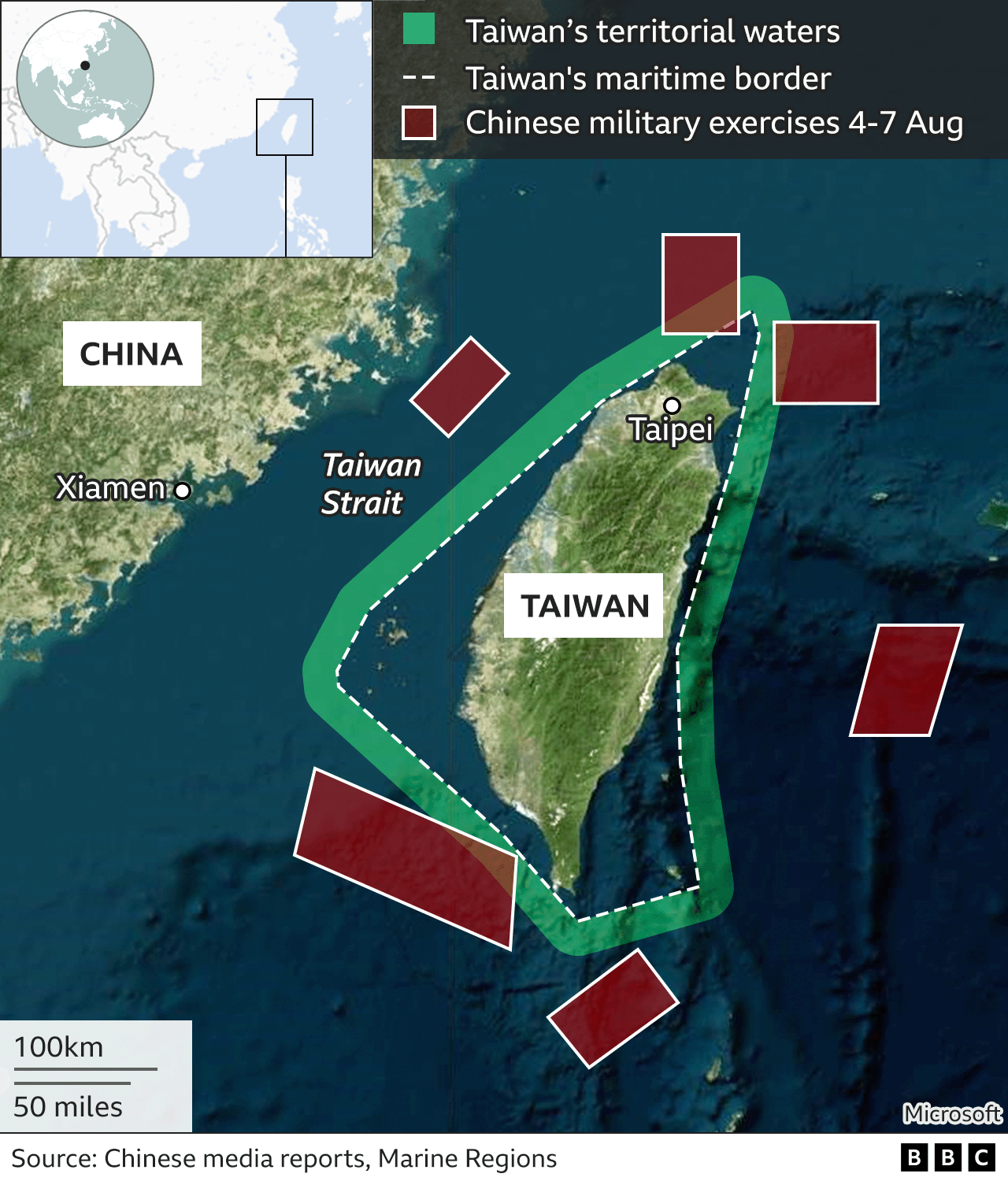
Beijing announced the large-scale military exercises in what it said were six zones around the island of Taiwan swiftly after Pelosi’s arrival, in response to what it viewed as an infringement of China’s “sovereignty and territorial integrity.”
While the US and many of its allies have decried the drills, China defended its actions as “legitimate and justified,” saying it was the US, not China, who was “the biggest saboteur and destabilizer of peace in the Taiwan Strait,” where China claims “sovereign rights and jurisdiction.”
‘Wrecking’ the status quo
Taiwan and China have been governed separately since the end of a civil war more than seven decades ago, in which the defeated Nationalists fled to Taipei.
Taiwan transitioned from authoritarian rule to democracy in the 1990s and is now ranked one of the freest jurisdictions in Asia by Freedom House, a US-based non-profit organization.
In recent years, as his power has grown, Chinese leader Xi Jinping has made clear his ambitions to “reunify” with the island — by force if necessary.
Wu accused China of trying to change the status quo in the Taiwan Strait, including by conducting military exercises in recent days across the median line — the
halfway point between the island and mainland China that has previously been an informal but largely respected border of control between Beijing and Taipei.
Dozens of Chinese warplanes crossed the median line between Thursday and Sunday, according to accounts from Taiwan’s Defense Ministry. While the informal median line has largely preserved peace in the Taiwan Strait for decades, China now openly denies its existence.
A military plane takes off from a Taiwanese airbase in Hualien for an air patrol operation on August 7.
“This kind of behavior is wrecking the status quo, and it’s wrecking peace and stability in this region and it should not be accepted,” Wu said, adding that China had sought to declare the Taiwan Strait as its internal waters for “some time” before Pelosi’s visit.
That had implications beyond Taiwan as China seeks to expand its influence across the Western Pacific, Wu said. But he added that he remained optimistic about the future.
“Democracy is going to prevail,” he said. “If you look at authoritarianism, it’s not resilient. It may appear strong, and it may appear to be expanding. But it’s not resilient and at some point is going to break.”
When asked if the situation could be called a crisis, Wu said that was ultimately up to Beijing.
“It depends on the will of the Chinese leaders to see whether they want to pursue the relations with Taiwan … in a peaceful and stable manner.”
“The important thing for us is that we need to be prepared,” Wu said. “We want to defend the freedom and democracy that we enjoy over here. Nobody can take that away from us.”
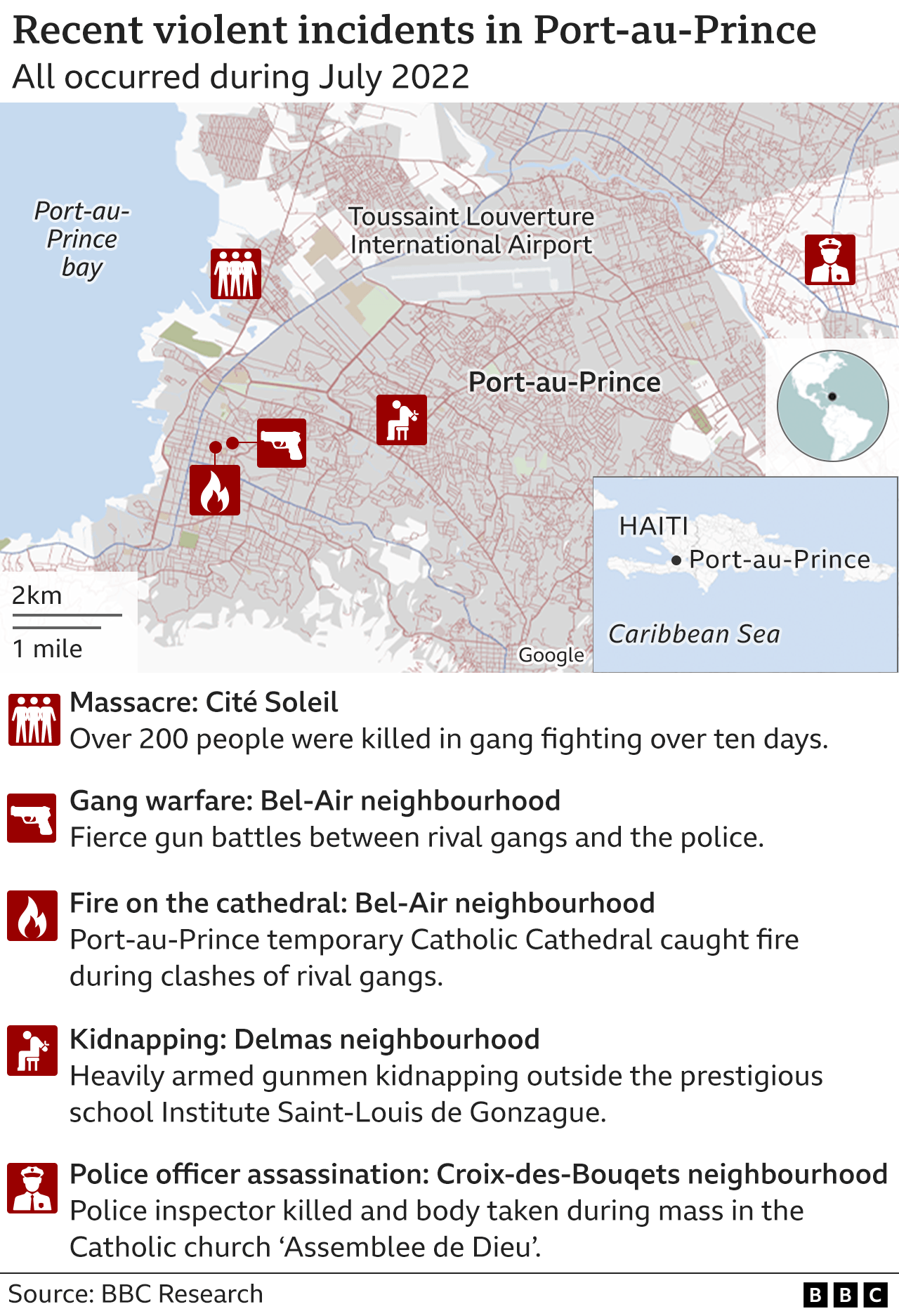
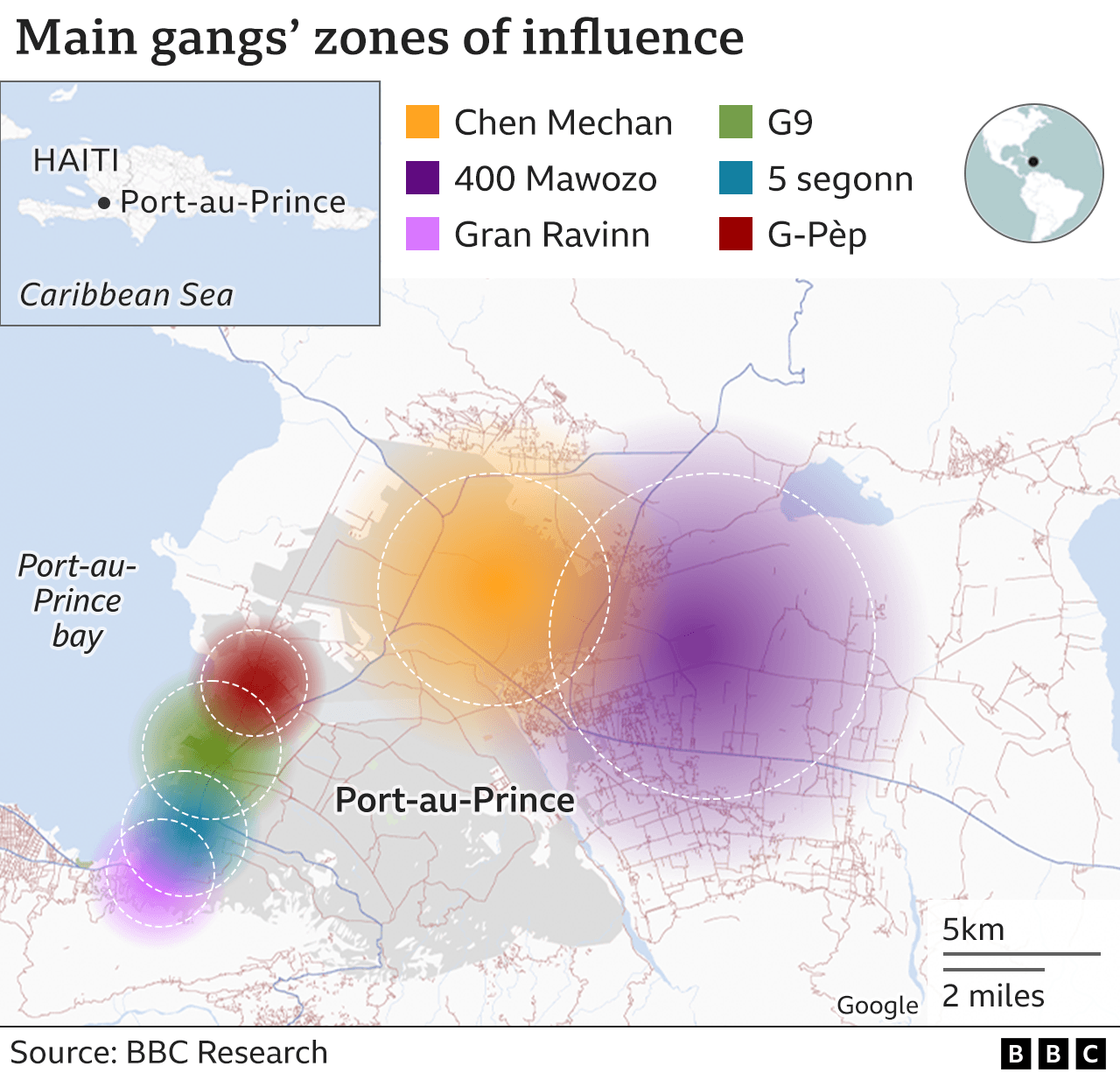
Police took a wounded civilian to the pavement as the bullets bounced off the armored car, another victim of the terrible daily shootings that blight Port-au-Prince, the capital of Haiti, and the neighborhood. Here, within Croix-des-Bouquets, a gang-controlled area, the SWAT team of Haiti has rammed into a gun battle that has already destroyed a public bus.
In the past 72 hours, the Haitian police have succeeded in killing a leader of the 400 Mawozo gangs and rescued six hostages from them, they say. But the gang – one of the dozens terrorizing the capital – has not been dislodged from these streets.
“Can you see that red sign ‘SMS’? That’s them,” said a SWAT officer, indicating the gunmen’s position. Like his team, he did not want to be named, citing their safety. He pointed down the road towards a small shack, as dozens of people flooded from a side alley into the street.
“Get away,” he said to the crowd, over the armored car’s loudspeaker. “You’re too exposed. It’s dangerous.”
It is a common scene of injury, gunfire, and panic in one of the dozens of neighborhoods controlled by gangs Seventeen American and Canadian missionaries appear to descend into a full-blown war between police and increasingly well-equipped and organized criminal groups.
And this is a familiar routine: Police probe into gang areas to show their reach, and gangs respond with intense volleys of bullets.
Police SWAT stand watch following an anti-gang operation in Croix-des-Bouquets.
Social media video from inside the area shows gangs using a bulldozer covered with steel plates to act as armor demolishing homes, presumably those of rivals. Other houses had been burned, with other videos showing dozens of locals fleeing the area on foot at night, during the peak of the fighting.
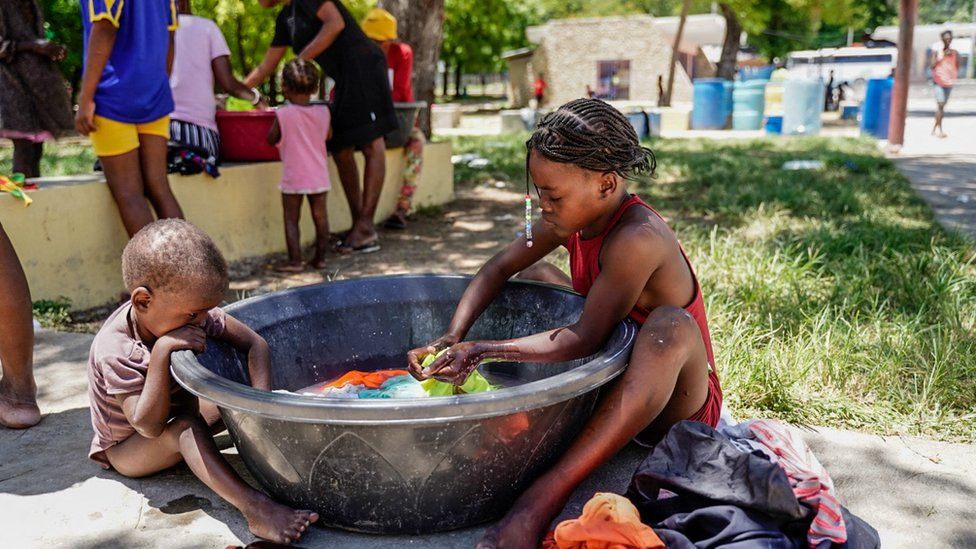
Flies blanket the rain-sodden concrete floor of the sporting amphitheater stage, where children as young as four months struggle to sleep, exposed to the elements. One has bruises from a fall, another a painful and ugly rash, but they are alive.
Here, Natalie Aristel angrily shows us her new, unpalatable home.
“Here’s where I sleep in a puddle,” she said, pointing at the water. “They burned my house and shot my husband seven times,” she says, referring to gang members.
“I can’t even afford to go see him [in the hospital]. In this park, even if they brought some food, there’s never enough for everyone. The kids are dying.”
Others are missing. “I have four kids, but my first is missing and I can’t find him,” another woman said. “We’ve been totally abandoned by the state and have to pay to even use a toilet,” another added.
A young boy added: “My mother and father have died. My aunt saved me. I want to go to school but it was torn down.”
Locals speak of a perfect storm of calamities — and warn the country increasingly feels on the verge of societal collapse.
People in this neighborhood built a wall on a public road last month to keep out gangs who were kidnapping residents for ransoms.
What remains of the country’s emergency interim government, created last year after the assassination of President Jovenel Moïse, is beginning to crumble and steeped in accusations of inactivity. His successor, Prime Minister Ariel Henry, has pledged to combat insecurity and hold new elections but so far has shown little progress toward either goal.
Meanwhile, analysts calculate inflation in the country at 30%. Gas is scarce and the subject of angry queues at stations. The UN has warned gang violence may put the youngest children in areas of active fighting at the risk of imminent starvation, as their parents cannot access food or go to work.
One Haitian security forces source speaking to CNN estimated that gangs control or influence three-quarters of the city.
Frantz Elbe, Director General of the Haitian National Police, rejects the assertion. “It is not a general problem in the metropolitan area,” he told CNN, declining to give a percentage.
Kidnappings are rampant and indiscriminate — one of few thriving industries in Haiti. Seventeen American and Canadian missionaries were kidnapped last year after visiting an orphanage in Croix-des-Bouquets and only released after a ransom was paid to the 400 Mawozo gangs.
Police, often outgunned, are doing what they can, Elbe tells CNN.
“The gangs are changing the way they fight. It used to be with knives, and now it is with big weapons. The police need to be well-equipped. With the little we have, we will do what we can to fight the gang members,” he said.
Director General of the Haitian police force Frantz Elbe.
The challenge they face is exposed by a brief checkpoint set up in Croix-des-Bouquets, where a truck has been dragged across the main road by the gangs and torched.
Police bring in an armored military bulldozer to push the wreckage to the roadside, which is already littered with other truck carcasses. The bulldozer operator, asked if he works under fire, replies: “Often.”
SWAT police set up a perimeter, scanning nearby rooftops. Locals and the vehicles they travel in are stopped and checked. One man says the situation is “bad, very bad,” before another gives him a stern glance.
He suddenly changes tone: “We know nothing.”
Fear is the currency of this war, though it is unclear if he fears speaking to the press, or the police, or what the gang may learn he said later.
To flee this fear, however, requires enduring more. A short boat journey from the mainland is the island of La Gonave, a hub for human traffickers.
The lackadaisical tempo and blue water of one tiny inlet on La Gonave belie its poverty. Heat, trash, hunger, and the business of leaving dominate this world.
One, a smuggler who introduced himself as Johnny, calmly explained how his business works.
The journey is often one-way for the boat, so each endeavor requires the boat to be bought outright, at a cost of about US $10,000, he says. To cover that cost, Johnny needs at least two hundred customers, who will huddle in its disheveled hull.
Shreds of netting appear to plug any gaps between in the hull, and loose wooden planks will make up the boat’s interior. Johnny shows where the pump and motors will eventually go.
“If we die, we die. If we make it, we make it,” he said.
He added he hoped to pack his boat with 250 passengers, as he considered it in “good” condition.
The ultimate destination is the United States, with Cuba and the Turks and Caicos islands sometimes accidental stops along the way.
And it is from these three places that the International Organization for Migration has reported surging numbers of forced repatriations of Haitians in the first seven months of this year, with 20,016 so far, compared to 19,629 for all of 2021.
Some Haitians appear to be getting closer to the journey’s end, with the US Coast Guard interdicting 6,114 Haitians between October and late June — four times as many as between October 2020 and October 2021. In the past weekend alone, more than 330 migrants from Haiti were rescued by the US Coast Guard near the Florida Keys.
A boat in La Gonave, Haiti.
The numbers are as staggering as the risks. Previous journeys from this inlet have ended in tragedy. Johnny is unclear on the timing of the last boat, but precise about the potential losses: One recent trip he organized led to the deaths of 29 people.
“The boat had an engine problem,” he said. “Water got inside the boat. We called for help, but they took too long. The boat was sinking while I was trying to save people. When help came, it was too late.”
While CNN cannot independently confirm Johnny’s account of the system, two other locals who said they were involved in trafficking described similar details independently. Authorities in the neighboring Caribbean nations the Bahamas and Turks and Caicos have repeatedly reported finding the remains of would-be migrants after boats capsized in their waters.
Despite the risks, many Haitians are still desperate for a way out. Locals on La Gonave told CNN that at least 40 people who aimed to attempt the boat trip were already on the island and the rest would follow from the mainland once Johnny said the boat was ready.
One potential passenger, a university graduate who was once a teacher, described why he would risk all to take the voyage.
“I worked as a teacher, but it did not work out. Now, I am driving a motorcycle every day in the sun and the dust. How will I be able to take care of my family when I have one?”
He said he saved a year’s money to make the journey and did not fear the rickety conditions of the boat. “I can be eaten by a shark or make it to America.”
Serhii Sorokopud a fourteen-year-old Ukrainian teenager is still tormented by what happened when Russian tanks rolled into his village five months ago.
The deep scars across his back are a reminder of trauma both hidden and visible.
Russian troops set up a military camp in the small farming community of Yahidne, northeast of the capital Kyiv, on March 3, on their advance toward the capital.
Serhii and his family were taken captive with hundreds of others in the basement of his school.
“First, there was a strong blow to the back. I fell, couldn’t get up, couldn’t move,” he told CNN on Thursday, showing the spot behind his school where he was hit. “People ran over and lifted me up. I couldn’t even walk. There was a lot of blood.”
The next day, the teenager was taken by Russian troops in a helicopter across the border to Belarus for treatment alongside their wounded soldiers.
Photos of his injuries, shared with CNN, show a deep laceration to his shoulder. A medical report from the Gomel Regional Children’s Clinical Hospital, where he was treated, said he suffered an open fracture of the shoulder blade, fractured ribs, and a deep bruising of his right lung.
Serhii sustained injuries after being struck with shrapnel last March.
Over the next month, Serhii had no contact with his family and underwent major surgery twice.
His mother, Svitlana Sorokopud, said Russian troops in Yahidne took all the residents’ cell phones and, cut off from the outside world, she had no way to find out where her son had gone.
“It cannot be described in words when you don’t know where your child is,” she said. “I cried day and night. He had such a serious injury, and I did not know where he was.”
It wasn’t just physical injuries that beset her son, but the agony of being separated from his family, she said.
“In the beginning, he couldn’t even sleep there, and he had nightmares. He was worried that we would not pick him up.”
Serhii made contact with his parents only after the Russians started their retreat on March 30, and his family was able to buy a new cell phone and access the internet again.
They say that a Belarusian doctor had posted Serhii’s name, date of birth and hometown on social media. “Parents, perhaps, [are] in Yahidne,” the post read.
“Please spread the word so they know the boy is alive.”
When they found out where he was, Svitlana said they spoke on the phone every day for around a month, assuring him they were coming.
His 25-year-old sister crossed the border to Poland and then to Belarus at the beginning of May to get him.
Now, in Yahidne, there are burned-out homes on every street.
Outside the house where Serhii and his family now live, his 9-year-old brother and young nephew pretend to operate a checkpoint. The specter of a new Russian offensive in northern Ukraine is never far from their minds.
“There is no fear now,” Serhii said. “But sometimes I wonder what will happen if they come back, and what they will do.”
Serhii’s mother Svitlana was devastated when her son was separated from the family.
As the war stretches into its sixth month, the impact on Ukraine’s children is evident in the grim tally of young lives cut short.
On a new Ukrainian government webpage, “Children of War,” the toll ticks up against the backdrop of a black screen: 361 dead and 703 wounded at the last count.
Yet the impact is not just physical, but psychological, Daria Gerasimchuk, the Ukrainian president’s commissioner for children’s rights, said.
“Absolutely every Ukrainian child is affected … Every child has heard air raid warnings.
Children see the suffering of their relatives and friends.
Children are forced to say goodbye to parents who go to defend the country on the front line.
There are those who are still under occupation.
Those who are injured. In other words, absolutely every Ukrainian child has got quite serious psychological and physical injuries,” Gerasimchuk said in an interview with CNN last week.
Most Ukrainian children have fled the front lines and nearly two-thirds have been displaced, either inside the country or across borders as refugees, according to UNICEF in June.
That same month, Ukrainian President Volodymyr Zelensky said: “Russia is stealing the childhood of our children, it wants to destroy our future.”
Human Rights Watch has said that Russia’s invasion “instantly suspended the education of 5.7 million children between the ages of 3 and 17, many of whom had already missed out on months of education due to deadly attacks on schools in eastern Ukraine, or Covid-19 school closures.
” Many schools in Ukraine have resumed classes, according to the World Bank, but these take place almost entirely online.
The deep scars on Serhii’s back are a permanent reminder of his survival.
While something resembling normal life returns to the streets of Kyiv, Jenya Nikitina — a bashful 7-year-old — knows this uneasy calm can be shattered in an instant. She was asleep when multiple Russian missiles hit the capital’s western district of Shevchenkivskyi on the morning of June 26, striking her family’s apartment block. Her father, Oleksii, was killed. Jenya and her mother, Katerina Volkova, a 35-year-old Russian citizen, were trapped for hours.
Her mother remembers the moment she heard Jenya call out, confirming she was still alive.
“There was no happiness [at] this moment I was able to hear her,” she told CNN, sitting beside her daughter outside a school gymnasium in Chokolivka district in Kyiv ahead of Jenya’s Saturday morning gymnastics class. “It was even more awful because I was thinking [that] she was also in pain … I was telling her, ‘Someone will come.’ Was I believing in this? That is another question.”
Jenya, who was trapped for a few hours, had a concussion and multiple abrasions. Her mother, trapped for five hours, sustained burns, deep cuts, and a fracture.
Weeks later, it’s her daughter’s psychological scars that worry Katerina the most. Asked if it’s possible for a child to understand what has happened, her voice breaks.
“I’m not sure we adults emotionally understand what is happening.”
Katerina Volkova and her 7-year-old daughter Jenya.
In case the sirens start again, Jenya’s gymnastics classes are the only time they are separated. Leaping and bounding on the mat is a chance to heal and, for a brief time, forget.
Katerina is worried that fear is now too familiar for her daughter.
“It [her childhood] was taken … in the future there will be joyful moments and lots of parents are trying, still, to make these moments for them,” she said, adding that children have experienced “too much.”
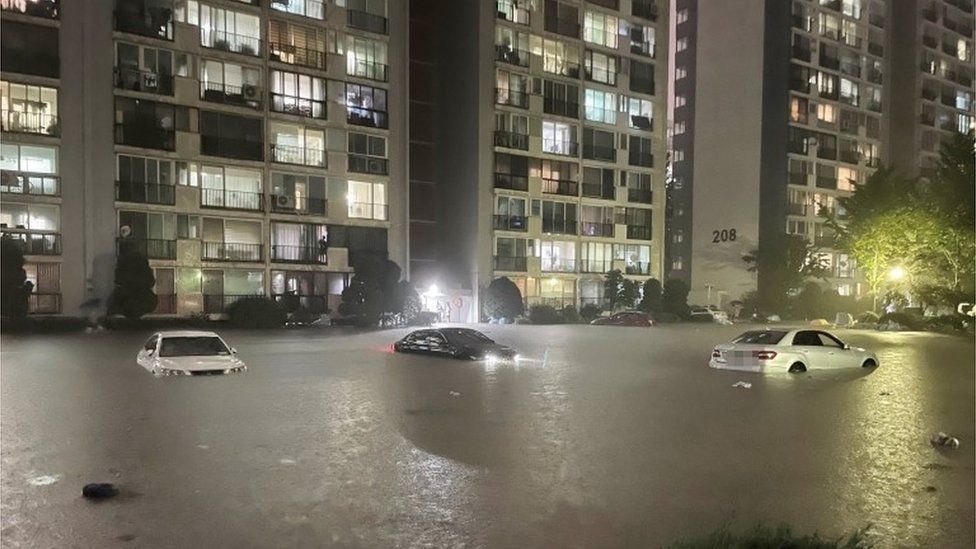
Torrential rain has hit parts of South Korea’s capital Seoul. At least eight people have died and 14 others have been injured as a result of the flooding caused by rain.
Heavy downpours on Monday night submerged roads, flooded metro stations, and caused blackouts across the city and neighboring provinces.
Korea’s meteorological agency reported that some areas received the highest rate of rainfall in 80 years.
Weather officials added that the rain was likely to continue over several days.
Images showed floodwater gushing down the steps of metro staircases, parked cars submerged up to their windows, and people making their way across streets in knee-high water.
Local reports said three victims were living in a semi-basement apartment known as a banjiha.
Rescue officials said they were unable to access the apartment as floodwaters had risen to waist-high levels on the street.
Destruction is scattered all around Seoul this morning. But the scene of the real tragedy is one pink house, where tiny smashed-out windows peek out from just above the pavement.
Sun-woo has lived in the flat above the family for 10 years. By the time he arrived home at 8 pm, their home was submerged.
“I feel devastated about this tragedy,” he said. “If I’d come home earlier perhaps, I could have saved them. I have a lot of regrets.”
He said the family who had died had lived there for 10 years, and that their older sister had learning difficulties.
The home is almost identical to the apartment featured in the Oscar-winning film Parasite. The real-life events here evoke the opening scene, in which the leading family tries desperately to funnel the water out of their home during a torrential downpour – only this outcome is far worse.
That South Korea’s President Yoon visited the apartment earlier shows these deaths are significant.
They are a reminder that away from the glitzy towers of upmarket Gangnam, where much much of the damage was done, live hundreds of Koreans in these subterranean apartments that are not fit for purpose.
Image caption,
Three people were killed when floodwater submerged their semi-basement flat
Parts of Seoul, the western port city of Incheon, and Gyeonggi province surrounding Seoul charted rainfall of over 10cm per hour on Monday night, according to the Yonhap news agency.
Meanwhile, Seoul’s Dongjak district recorded more than 141.5 mm of rain per hour – the highest rate since 1942, according to Korea’s Meteorological Administration (KMA).
The other victims included a person who was electrocuted, one person was found under the wreckage of a bus stop and another died in a landslide. At least 14 were injured and six others were reported missing.
IMAGE SOURCE,REUTERS
At least 163 people in Seoul have been made homeless and have taken shelter in schools and public facilities, according to Yonhap.
The downpour also affected public transportation, as flooded railroads forced the suspension of railway services in Seoul and Incheon.
South Korean president Yoon Suk-yeol ordered government officials to evacuate residents from high-risk areas and urged businesses to grant employees flexible commuting hours on Tuesday morning.
The KMA continued to issue heavy rain warnings across Seoul and surrounding metropolitan areas and said it expected rainfall for the central part of the country to continue at least until Wednesday.
In accordance with the New START arms limitation deal, Russia has informed the US that it has “temporarily” stopped on-site inspections of its strategic nuclear weapons.
The Russian foreign ministry claims that the US seeks to take advantage and had deprived Russia of the right to undertake inspections on US territory.
It said US sanctions imposed on Russia over Ukraine had changed conditions between the countries.
The treaty came into force in 2011.
It is the last remaining arms reduction agreement between the former Cold War rivals. It caps at 1,550 the number of long-range nuclear warheads that each country can deploy.
The suspension comes a week after US President Joe Biden said he was ready to work on a new nuclear arms deal with President Vladimir Putin. The current one will expire in 2026.
The ministry accused the US of ignoring “existing realities” such as “the suspension of normal” air links.
New START followed years of arms reduction talks between the US and the former USSR, aimed at preventing nuclear war.
Russia’s invasion of Ukraine in February sparked hostile rhetoric on both sides, including warnings that the conflict could escalate into a third world war.
Some commentators on Russian state media have boasted about Moscow’s nuclear arsenal in the context of current tensions with Nato.
Former US President Donald Trump claimed that the FBI searched his Florida property and that a safe was forced open during the search.
Mar-a-Lago in Palm Beach, according to Mr. Trump, was “occupied by a huge group of FBI investigators.”
According to reports, the search on Monday was related to a probe into how Mr. Trump handled official documents.
“These are dark times for our nation,” Mr. Trump’s statement said. “Nothing like this has ever happened to a President of the United States before.”
The FBI (Federal Bureau of Investigation) and the justice department have not commented on the reported search.
American presidents are required by the Presidential Records Act (PRA) to transfer all of their letters, work documents, and emails to the National Archives (NA).
There are also other federal laws regarding the handling of classified documents.
In February, the National Archives said it had retrieved 15 boxes of papers from Mar-a-Lago, which Mr. Trump should have turned over when he left the White House.
The agency later told Congress the boxes included “items marked as classified national security information”.
Mr. Trump’s lawyer, Christina Bobb, told NBC News that some papers had been seized during the search.
The dramatic escalation of law enforcement scrutiny of Mr. Trump comes as the Republican prepares for possible another presidential run in 2024.
News of the search has mobilized some of Donald Trump’s supporters. A group of fans gathered outside Mar-a-Lago to wave flags and express their anger.
House of Representatives Republican minority leader Kevin McCarthy said: “I’ve seen enough. The Department of Justice has reached an intolerable state of weaponized politicization.”
Meanwhile, Florida Senator Marco Rubio, a Republican, tweeted: “Using government power to persecute political opponents is something we have seen many times from 3rd world Marxist dictatorships.”
Mr. Trump said he had co-operated with all relevant government agencies and so the “unannounced raid on my home was not necessary or appropriate”.
He said it amounted to “prosecutorial misconduct” and “the weaponization of the justice system” to prevent him from running for the White House again.
“Such an assault could only take place in broken, Third-World countries,” he said. “Sadly, America has now become one of those countries, corrupt at a level not seen before.
“They even broke into my safe!”
According to CBS News, the BBC’s US partner, Mr. Trump was in Trump Tower in New York City at the time of the reported raid.
Eric Trump, the president’s second-oldest son, told Fox News that the FBI’s execution of the search warrant on Mr. Trump’s Mar-a-Lago estate was related to an investigation into the handling of National Archives records.
In February, the NA asked the justice department to investigate Mr. Trump for his handling of official papers.
NA officials say the former president illegally ripped up many documents. Some of them had to be taped back together, they said.
Mr. Trump at the time rejected reports that he had mishandled official records as “fake news”.
A senior Trump adviser in Palm Beach told CBS the new search by federal agents on Mar-a-Lago was about the presidential records.
“This is about the PRA,” said the Trump source, who only agreed to speak on condition of anonymity.
“When have you ever heard about a raid because of PRA?”
The source added: “They [the FBI] just left and they left with very little.”
A federal search warrant must be signed by a judge. Though such a warrant does not suggest that criminal charges are expected, law enforcement agencies must first demonstrate they have probable evidence of illegality.
An unnamed law enforcement official told CBS that the Secret Service was notified shortly before the warrant was served around 10:00 local time on Monday (14:00 GMT) and that agents protecting Mr. Trump helped the FBI investigators.
Several boxes were taken away, the source said, adding that no doors were kicked down and that the raid had concluded by the late afternoon.
In a forthcoming book, Confidence Man, New York Times journalist Maggie Haberman reports that staff at the White House residency sometimes found wads of paper clogging a toilet and that they believed Mr. Trump was the flusher.
Ms. Haberman has posted photos that she says show paper in a toilet bowl at the White House.
A senior White House official has told CBS that President Joe Biden’s administration was given no notice of the FBI search.
“No advance knowledge,” said the senior official, who was not authorized to speak publicly about the matter. “Some learned from old media, some from social media.”
The White House has said it is limiting its interactions with top justice department officials to avoid any hint of political pressure or impropriety.
Mr. Biden pledged during his White House campaign to stay out of justice department affairs. The Democratic president and his family are also waiting to see whether federal prosecutors will indict his son, Hunter Biden, on tax evasion or other federal charges.
There is a school of thought that the timing of this search is designed to avoid the long-held maxim that the justice department does not engage in actions that are deemed politically sensitive, near the time of an election.
We are exactly three months away from the poll that will determine the makeup of the next Congress and rarely has there been such a sensitive time in American politics.
Mr. Trump certainly believes the motives behind the “raid” were entirely political, a move designed to scupper his chances of running for the White House in 2024.
There is much that we do not know, but Trump’s supporters are apoplectic with rage at what’s happened.
In addition to the NA inquiry, a US House of Representatives select committee is investigating Mr. Trump’s actions surrounding the US Capitol riot on 6 January 2021 – when a horde of his supporters rioted at Congress as lawmakers met to certify Mr. Biden’s election victory.
The US justice department is examining Mr. Trump’s challenge to the results of the 2020 presidential election. Attorney General Merrick Garland has said he intends to hold “everyone” accountable.
And a prosecutor in Fulton County, Georgia, is also investigating whether Mr. Trump and his associates tried to interfere in that state’s results from the 2020 election.
US politician Nancy Pelosi’s visit has set off fresh tensions between self-ruled Taiwan and China, which claims the island as part of its territory. BBC correspondents weigh in on the significance of China’s main response – its live-fire military drills around the island – and how the two sides see them
The hardliners at the top of the Chinese Communist Party would likely be pleased with the results of Nancy Pelosi’s visit. They took advantage of the window Ms. Pelosi provided.
Now, a number of harsher military actions in the vicinity of Taiwan are considered “acceptable”.
These actions, like shooting missiles over the island, have come to be regarded as “legitimate” by the international community not because they were sanctioned but rather because Beijing got away with them.
Each time the People’s Liberation Army (PLA) flies fighter jets closer – or in greater numbers – across the Taiwan Strait, this becomes the new standard.
What’s more, the very idea that mainland China might one day attack Taiwan to seize the territory by force is now being considered a likely possibility by many more Chinese people.
Again, this is seen as a win for those who want it to happen.
Other, more peaceful strategies for achieving what China’s Foreign Minister Wang Yi described as Taiwan’s “return to the motherland” are not being discussed currently – or certainly not in any detail.
A side benefit of this grand, live-fire show by the PLA has also been to accelerate the belief globally that China’s military rise is unstoppable – this may possibly intimidate South East Asian neighbors which have rival claims to the South China Sea.
These vast military exercises would have taken some planning. It is hard to imagine that the generals conceived of them, all of a sudden when it was leaked that Ms. Pelosi was planning to visit.
What seems more likely is that they had the plans ready and pulled them out of the drawer because the opportunity presented itself.
As one laughing nationalist in Beijing put it when he was interviewed in the street last week, “Thanks comrade Pelosi”!
IMAGE SOURCE, REUTERS
Image caption,
US House Speaker Nancy Pelosi met Taiwan President Tsai Ing-wen during her visit
It would be dangerous though if the Chinese government became too caught up in its own belligerent rhetoric and started convincing itself that seizing and holding Taiwan could be relatively easy – rather than a tough, bloody, catastrophic event.
Some analysts even think that these war games have assisted the Taiwanese and US military in preparing defense strategies to ward off any attack from the mainland.
But the exercises were not enough for President Xi Jinping’s government. On Friday night the foreign ministry announced that China was suspending cooperation with the US on cross-border crime, including narcotics, and maritime safety; and that all high-level US-China military dialogue were to be paused.
American media has also reported that calls from the US Defense Secretary, Lloyd Austin, and General Mark Milley, chairman of the joint chiefs of staff, have gone unanswered from the Chinese side.
Crucially, Beijing has suspended climate change cooperation with Washington. The world’s largest carbon emitters are not talking.
Tensions have certainly increased following Ms. Pelosi’s visit, but Mr. Xi’s government seems to like it that way – at least for now.
A war of words
Rupert Wingfield-Hayes, Taiwan
For the last few days, much of the attention has been on the military fireworks going on around Taiwan. But equally important are the words from Beijing that have accompanied the drills.
China’s foreign minister Wang Yi has pointed to a small group of Taiwanese politicians whom he has labeled the “Taiwan separatist forces”.
At the top of this list is Taiwan’s President Tsai Ing-wen. She has been singled out for special opprobrium. Minister Wang called her an “unworthy descendant of the Chinese nation” – in other words, a traitor.
The aim is to try and separate the mass of Taiwanese people, who Beijing says are not the enemy, from the small “clique” it claims is trying to tear Taiwan away from the motherland.
The problem for Beijing is this version of Taiwan is completely at odds with reality. Recent polls show an overwhelming majority of Taiwanese oppose any sort of unification with China, and a large and growing majority consider themselves “Taiwanese” and not “Chinese”.
According to Wang Yi – this is because Tsai Ing-wen’s government has been going “all out to promote de-Sinicisation” and trying to create “two Chinas” or “one China, one Taiwan”.
IMAGE SOURCE,EPA
Image caption,
A majority of Taiwanese oppose unification with China, according to recent polls
That is why we’ve heard the Chinese ambassador to France saying that after Taiwan is “reunified” with China, Taiwanese people “will need re-education”. According to him, they have been “brainwashed” into believing they are not Chinese.
Again, this is completely at odds with reality. Taiwan is an open society where people are free to read what they want, think what they want, and vote for who they like.
The question now is: what impact will all of this have?
Beijing’s objective is to frighten the Taiwanese into voting against President Tsai’s party in the next election in 2024. They would like to see the more-China-friendly KMT (Kuomintang) back in power.
China is also making direct threats to Taiwanese business leaders, many of whom have large investments in the Chinese mainland. They’re being told they need to “choose the right side”.
Beijing has tried these sorts of tactics before, and they have not been very successful. A lot of Taiwanese businesses will be hurt by Beijing’s sanctions, particularly its fruit farmers. The tourist industry is already being hurt by China’s embargo on mainland tourists coming to Taiwan.
But if the evidence of the last few days is anything to go by, Taiwanese attitudes towards Beijing look set to harden further.
Voting will be open to anybody in the queue  when it closes.
The results of the last presidential election in 2017 were annulled after the Supreme Court ruled that the electoral commission had not followed the law when it came to the electronic transmission of the vote tallies from the polling stations.
Judges ruled that “illegalities and irregularities” had taken place.
A re-run was won by Mr. Kenyatta, but boycotted by Mr. Odinga – the main opposition candidate at the time.
The chairman of the electoral commission, Wafula Chebukati, who was also in charge of the 2017 vote, has frequently tried to reassure Kenyans that his team will be up to the task this time.
But Monday’s logistical problems have increased the pressure on him.
Baba v Hustler
This election looks like it will be a tight race between frontrunners Mr. Odinga and Mr. Ruto.
Mr. Odinga – a long-serving opposition leader, nicknamed Baba (“father”) by his supporters, is running for president for the fifth time. Mr. Ruto, who has tried to emphasize his connection with ordinary Kenyans by calling himself a “hustler”, will be taking his first stab at the presidency.
Two other candidates – David Mwaure and George Wajackoya – are also in the race.
Despite the campaign being dominated by issues, ethnic loyalty may also play a part in determining how people vote.
For the first time in the multi-party era, none of the main candidates are from the country’s largest ethnic group – Kikuyu.
But knowing that those votes are vital, both have chosen Kikuyu running mates.
Voting process
To win the presidential race in the first round, a candidate needs:
more than half of all the votes cast across the country
at least 25% of the votes are cast in a minimum of 24 counties.
Voters will also be choosing MPs and senators to go to the national parliament, county governors, and county assembly members, as well as 47 women’s representatives, to sit in the National Assembly.
On election day, voters will have their fingerprints scanned to check their identity but a printed register can also be used if the machines fail.
Each voter will then be given color-coded ballot papers for each of the elections, which they will mark in a private booth and drop in the relevant ballot boxes.
Counting will start at the polling stations shortly after voting ends. Officials will then take a photo of the final tally and send the image to both the constituency and national tallying centers.
To ensure transparency the media, political parties, and civil society groups have been urged to run their own tallies using final results declared at the more than 40,000 polling stations.
Like much of the global airline industry, Qantas is struggling to resume its services as borders reopen.
“The high levels of winter flu and a Covid spike across the community, coupled with the ongoing tight labor market, make resourcing a challenge across our industry,” Qantas’ chief operating officer Colin Hughes said in an email shared with the BBC by the company.
“There is no expectation that you will opt into this role on top of your full-time position,” Mr. Hughes added.
The managers and executives were asked to work in the baggage handling roles for three or five days a week, in shifts of either four or six hours a day.
The note went on to say that applicants need to be able to move suitcases weighing as much as 32kg each.
“We’ve been clear that our operational performance has not been meeting our customers’ expectations or the standards that we expect of ourselves – and that we’ve been pulling out all stops to improve our performance,” a Qantas spokesperson told the BBC.
“As we have done in the past during busy periods, around 200 head office staff have helped at airports during peak travel periods since Easter.”
Qantas was among airlines hit hard by the pandemic as countries closed their borders, grounding planes.
The industry laid off thousands of staff during the pandemic, many of which were the ground staff.
In November 2020, Qantas outsourced more than 2,000 ground staff roles, on top of thousands more job cuts it had already announced, in an effort to limit its financial losses.
Last month, the airline apologized after passengers complained of delays and missing luggage.
As measures to slow the spread of Covid-19 have eased around the world, Qantas and other major airlines have struggled to resume services at the scale seen before the pandemic.
Staff shortages have also affected UK airports and airlines, resulting in cancellations and delays throughout the holidays. The lack of baggage handlers has also contributed to a backlog of bags in terminals.
To assist control demand, airports like Heathrow have capped passenger numbers over the summer. As a result, several airlines have suspended ticket sales for specific routes.
Top media correspondent for CNN, says the Texas jury’s decision last week to find Alex Jones liable for punitive damages of more than $45 million in a case brought by the parents of Sandy Hook shooting victim Jesse Lewis was a “reckoning that was 10 years in the making.”
In the last five years, two Chicago-based podcast hosts have held Jones and his Infowars network accountable. Their program, Knowledge Fight, has produced more than 700 episodes, and uses comedy to “cut through crazy lies,” Stelter said on Reliable Sources Sunday.
A jury finds Infowars conspiracy theorist Alex Jones should pay $45.2 million to a Sandy Hook shooting victim
Jordan Holmes and Dan Friesen, the hosts, flew to Texas to attend Jones’ trial in person. Watching Scarlett Lewis, the mother of Jesse Lewis, give her evidence and address Jones directly, according to Friesen, was the most moving moment in the courtroom.
“I think it will stay with pretty much everyone there for the rest of their lives,” Friesen said.
The co-hosts have been covering Jones since 2017, watching his transformation from a seemingly untouchable figure to one that is now in serious legal and financial jeopardy.
“During this whole stretch of time, his content itself has been essentially hollow,” Friesen said. “Watching him from my perspective has gotten a lot less interesting.”
But despite Jones’ legal woes, Holmes said that the culture he’s helped engender has gotten a lot bigger.
“Conspiracy culture is something that is created through the cracks of our regular society,” Holmes said.
“People would like to focus on Alex being kind of a bombastic character that we can mock and make fun of, but this isn’t about him,” Holmes said.
The podcast format allows the hosts to go beyond Jones as a character and dive into the mechanisms of what he’s doing and why these conspiracy narratives exist.
“We approach it with the understanding that it’s a serious topic,” Friesen said. “But also that in order to make it interesting for anybody to listen to, we have to make it something entertaining.”
Alex Jones’ company files for bankruptcy amid Texas trial to award damages to Sandy Hook families
Friesen has listened to countless hours of Jones’ program, and calls it an “incredibly boring experience.”
“The reason that I do this is because I can stomach that boredom,” Friesen said. He endures the task in order to help others get insights into the misinformation phenomenon. “So they could be in a place where they could better understand what Alex is doing and what he brings to the table.”
Many people believe that Jones’ current financial and legal difficulties will help to reduce the spread of false information and conspiracy culture. Friesen isn’t sure it will be a serious blow, though.
“The conspiracy producers and people who engage in the sorts of conduct that Alex does end up becoming a little bit savvier,” Friesen said. “They end up learning where the lines are … of what they can do and what they can get away with.”
A 27-year-old Muslim man killed last week in Albuquerque, New Mexico, is being remembered as a “brilliant public servant” committed to “improving conditions and inclusivity for disadvantaged minorities,” according to the mayor of the city he worked for.
Police believe the death of Muhammad Afzaal Hussain on August 1 could be linked to the killings of three other Muslim men. The most recent killing, which Albuquerque police were alerted to Friday night, came a day after authorities determined there was a connection between the killings of Hussain and 41-year-old Aftab Hussein, who, like Hussain was from Pakistan.
A fourth Muslim man was killed in Albuquerque after authorities said 3 similar killings may be connected
Detectives are working to determine whether the November killing of Mohammad Ahmadi, a Muslim man from Afghanistan killed outside a business he ran with his brother, was also related.
Authorities are now looking for a “vehicle of interest” they say is potentially connected to the murders, Albuquerque Police Department Deputy Chief Cecily Parker said Sunday. The car is described as a dark silver, sedan-style Volkswagen Jetta or Passat with tinted windows, Parker said.
At the time he was killed, Hussain worked on the planning team for the city of Española, New Mexico, according to a news release from the mayor, who said he was “deeply saddened” to learn of the man’s death.
Muhammad Afzaal Hussain, one of the four Muslim men killed in Albuquerque, New Mexico, worked for the city of Española, New Mexico.
“Muhammad was soft-spoken and kind, and quick to laugh,” Mayor John Ramon Vigil said in a news release last Wednesday. “He was well-respected and well-liked by his coworkers and members of the community.”
Hussain, who had worked for the office for a year, studied law and human resource management at the University of Punjab in Pakistan, the mayor’s release said, before receiving both master’s and bachelor’s degrees in community and regional planning from the University of New Mexico.
“Our City staff has lost a member of our family,” the mayor’s statement said, “and we all have lost a brilliant public servant who wanted to serve and improve his community.”
The University of New Mexico community is similarly “heartbroken” over Hussain’s death, President Garnett S. Stokes said in a statement, calling Hussain “an inspiring leader and a really special Lobo who touched so many lives.”
“It was my privilege to know and work with him,” Stokes said.
Jesse Alemán, the acting dean of graduate studies at the university, called Hussain a “brilliant, respected student leader” who “continued to extend his compassionate leadership skills and educational expertise at the local and state levels” after he graduated.
Congresswoman Melanie Stansbury, who said Hussain worked on her campaign for Congress, said his “smile and his passion lit up a room.”
“His work as a field organizer for our campaign inspired countless people with his compassion and dedication to working in partnership with our communities, as one of the kindest and hardest working people I have ever known,” Stansbury said at the news conference Sunday.
Victims were ‘ambushed with no warning,’ police say
The attacks have drawn condemnation from political leaders, including President Joe Biden, who said he was “angered and saddened” by the attacks.
“While we await a full investigation, my prayers are with the victims’ families, and my Administration stands strongly with the Muslim community,” Biden wrote on Twitter.
Vice President Kamala Harris and New Mexico Gov. Michelle Lujan Grisham similarly expressed support for New Mexico’s Muslim community, with the latter describing the attacks as “deeply angering and wholly intolerable.”
“I am incredibly angry about the situation,” the governor said Sunday. “Every New Mexican should stand up and be against this kind of hatred. It has no place in this city and it has no place in our state,” Lujan Grisham said.
Speaking to the Muslim community in Albuquerque and across the state Sunday, Congresswoman Stansbury said Muslims are “part and parcel of who we are in New Mexico.”
“I want to say that every one of us in New Mexico must rise to meet these acts of hatred by demonstrating love, demonstrating friendship, and by demonstrating solidarity.
This is not New Mexico. This is not who we are,” Stansbury said. “We will stand in solidarity. We will stand in grief and in mourning. And we will stand in our commitment to love and inclusion and belonging in this community.”
The FBI is assisting with the investigation, according to a news release from the Albuquerque Police Department, which has created an online portal where residents can upload videos and images that may help authorities investigate the recent killings. The local Crime Stoppers Board has voted to increase a reward for information that helps lead to an arrest from $15,000 to $20,000.
“These shootings are disturbing,” Albuquerque Police Chief Harold Medina said in a news conference Saturday, soon after the fourth victim was discovered.
Albuquerque police officers responded just before midnight Friday to reports of a shooting in the area of Truman Street and Grand Avenue, and found the victim dead, according to the police department’s news release.
The victim, a Muslim man believed to be in his mid-20s, was from South Asia, police said. His identity has not been positively confirmed, the release added.
Hussain, Hussein, and Ahmadi were all “ambushed with no warning, fired on and killed,” Kyle Hartsock, deputy commander of the police department’s Criminal Investigations Division, previously said.
3 Muslim men in Albuquerque were murdered. Police are investigating possible ties to the same killer
“Our top priority is keeping the community safe and we are asking the Muslim community especially, to be vigilant, to watch out for one another. If you see something, say something,” the police chief said Saturday. “Evil will not prevail.”
The Muslim community is living in fear due to the killings, Albuquerque Mayor Tim Keller said Sunday, and the city is taking steps to increase security.
“We have heard from the community that the fear is so strong, there is a concern about even things like groceries and getting meals for certain folks in certain areas of town,” Keller said. The city is providing meals for those affected by the shootings, he added.
The Council on American-Islamic Relations is also offering a $10,000 reward for information leading to an arrest and conviction of those responsible, the organization announced, calling the series of killings a “horrific, hateful shooting spree.”
“We thank local, state, and federal law enforcement for their ongoing work on this crisis, and we call the Biden administration to ensure that authorities have all of the resources needed to both protect the Albuquerque Muslim community and stop those responsible for these horrific crimes before they claim more innocent lives,” CAIR National Deputy Director Edward Ahmed Mitchell said in a statement.
Britain is as close as it has ever been to being run by a prime minister who is not White. When Boris Johnson eventually skulks out of office, he will be replaced by either Rishi Sunak, son of Indian migrants via East Africa or Liz Truss who is doing her best Margaret Thatcher impression.
There was much fanfare that half of the original eight Conservative candidates were from an ethnic minority, representing far and away the most diverse contest for the next leader of the country ever.
But rather than being a signal that we are at a watershed moment in British politics, this whole episode is the perfect example that diversity is often the enemy of anti-racism.
Representation matters. But Sunak does not represent the majority of those experiencing racism in the UK. This is not (just) because his family is alleged millionaire tax dodgers.
(In April the Independent revealed Sunak’s multi-millionaire Indian wife held a non-domicile status, allowing her to avoid paying tax on foreign earnings in the UK — an arrangement that though legal was awkward for the chancellor’s wife and one she pledged to change).
When he was chancellor, Johnson liked to draw attention to his government being the most diverse in British history, including Sunak. (It was Sunak’s resignation from the government last month that started the floodgate of ministers losing faith in Johnson, which led to this leadership contest).
Britain’s Prime Minister Boris Johnson and then-Chancellor Rishi Sunak are pictured in October 2020. Sunak is one of two remaining Conservative candidates hoping to become the UK’s next prime minister.
In Britain, immigration policy has always been the first line of defense against the so-called race problem. Unlike the United States, Britain kept its colonial violence and subjects primarily in its former colonies. It is only since technology allowed travel from the empire that Britain has had to deal with large numbers of racial minorities.
Since it became clear Black and brown migrants were coming to stay in the late 1950s, immigration policy has been aimed at reducing non-White migration in order to “keep Britain, White.”
This eventually led to the “hostile environment” that mandated immigration checks on all walks of life, which resulted in the Windrush scandal.
The scandal, which began to surface in 2017, saw countless people who had been legally living in the country for decades suddenly losing their jobs and being subject to arrest and deportation because they could not prove their status.
Home Secretary Priti Patel has only made matters worse, proposing using warships to turn back boats crossing the Mediterranean even though it would put lives at risk, and unlawfully seeking to deport those that make it to British waters to Rwanda for processing.
Patel had to admit that her latest piece of immigration legislation was so restrictive that her own Ugandan Indian parents would have been barred from entering the country.
She seems so committed to the “keep Britain White” agenda that the next logical step is surely to deport herself.
Patel’s recent policing bill essentially outlaws the protests sparked by the death of George Floyd, and she has been outspoken about how “dreadful” she finds Black Lives Matter demonstrations.
It is no coincidence that the most racist policy has come from a non-White spokesperson. Patel’s diversity is the point, allowing her to get away with words and deeds someone of a different hue could not.
He has pledged to push ahead with plans to deport asylum seekers to Rwanda, deport an increasing number of foreign-born criminals, and even proposed a cap on the total number of refugees.
Make no mistake, he is a continuity candidate and will be steering the same racist ship as his predecessor.
Whoever takes over from Johnson has a large majority in parliament and can effectively pass whatever legislation they see fit.
In theory, a new prime minister could bring in sweeping changes.
Unlike when former US President Barack Obama was elected, there is no hostile Congress standing in the way of a non-White leader to usher in the age of racial progress.
Unfortunately, if Sunak wins, we will see precisely the opposite occur.
Conservative leadership hopeful Rishi Sunak campaigns with Tory activists on July 22.
Let’s just say the average member of the Conservative party voting for the next prime minister is not a liberal advocate for racial justice.
One of the most appealing candidates for the membership was Kemi Badenoch, a Nigerian immigrant who became the queen of the anti-woke brigade with her attacks on critical race theory, Black Lives Matter, and her defense of the British empire.
She is so extreme that far-right nationalist group Britain First reportedly endorsed her candidacy. (Badenoch did not publicly respond to the endorsement).
Anyone who hopes to lead the party is bound to the faithful and the will of the parliamentarians.
The Conservatives have always been the anti-immigrant, law and order party who have disdain for notions like institutional racism.
It is not just a brand but deep in the DNA of the party. The idea that Black and brown faces leading the party is progressive is as insulting as absurd. This is the real identity politics, the idea that just because of their color people like Patel, Badenoch and Sunak must have the best interests of Black and brown communities at heart.
In truth, there have always been those who chose to align with the forces of racial oppression in order to enrich and enable themselves. The British Empire simply could not have run without countless Black and brown middle managers. The fact that one may now be elevated into the most important role is no kind of victory.
In fact, a Sunak victory would put British race relations back even further than the Johnson government did. There is nothing more damaging than the illusion of progress because it masks the real problems that continue to exist.
The absolute last thing that this racist government need is the PR boost from a brown face at the head of the table. If Sunak wins, he will be leading an openly racist government, hell-bent on continuing its devastating agenda. But because a non-White prime minister has been such a long time coming, many of us will delude ourselves into believing a change has come.
DISCLAIMER: Independentghana.com will not be liable for any inaccuracies contained in this article. The views expressed in the article are solely those of the author(s) and do not reflect those of Independent Ghana
A bipartisan pair of senators has called on the Biden administration to designate Russia as a state sponsor of terrorism in response to its invasion of Ukraine, saying they would push Congress to pass a bill issuing the designation “whether or not” it had President Joe Biden’s support.
Democratic Sen. Richard Blumenthal and Republican Sen. Lindsey Graham told CNN’s Dana Bash on “State of the Union” on Sunday that the designation should be made either by the President or Congress, with both of them saying Biden must intensify pressure on Russian President Vladimir Putin and continue aiding Ukraine amid the ongoing invasion.
“I hope the President will decide to adopt this stance voluntarily and he hasn’t taken it off the table on the state-sponsored terrorism,” said Blumenthal, who represents Connecticut.
Graham, of South Carolina, said he wants the Biden administration to engage with Congress in designating Russia as a state sponsor of terrorism but said Congress is “willing” to advance legislation calling for the designation regardless.
“I’d like to work with (the Biden administration). But whether or not we have to do legislation to make it happen — we’re willing to do it.
I am urging the administration to act now,” Graham said.
The two senators traveled together in June to Ukraine, where they met with Ukrainian President Volodymyr Zelensky and called on Biden to send more humanitarian aid to the county and issue stronger sanctions in addition to designating Russia as a state sponsor of terrorism.
The US State Department is responsible for designating nations as state sponsors of terrorism.
 The department defines the designation as a country that has “repeatedly provided support for acts of international terrorism.” There are only four countries that are currently labeled state sponsors of terrorism by the US: North Korea, Iran, Cuba, and Syria.
In July, the Senate passed a nonbinding resolution calling on the State Department to designate Russia as a state sponsor of terrorism. And in April, a senior administration official said department officials were looking at the possibility of labeling Russia a state sponsor of terrorism.
Both senators on Sunday praised House Speaker Nancy Pelosi for making a controversial visit to Taiwan last week and connected American support for the self-governing island to the impact of US aid to Ukraine in combating Russia’s invasion. Blumenthal said, “China is watching what we do in Ukraine” as it considers potential actions in neighboring Taiwan.
“She should have gone, I’m glad she went,” Graham said. “If she hadn’t gone, what would that have sent a signal to the Iranians and to the Russians?”
Upcoming Senate agenda
Though Graham and Blumenthal were split on the benefits of the Inflation Reduction Act, Democrats’ sweeping climate and health care bill that is being debated in the Senate on Sunday, the senators both advocated more bipartisan gun legislation.
The two senators, who both supported the gun safety legislation passed earlier this year, said there were more gun safety overhauls they both want to see passed. They specifically highlighted a proposal to empower judges and law enforcement to restrict gun access to those who may pose a threat to others.
“I think what we can do is incentivize states to give them the tools they need to deal with this before it’s too late,” Graham said, stressing that his proposal would not be a “national ‘red flag’ law.”
“The common ground that I think we share and many of my colleagues on both sides of the aisle share: Keep guns out of the hands of dangerous people, but through due process,” Blumenthal said.
The two stood by their respective party’s positions when asked about the Democrats’ climate and health care bills. Blumenthal said the bill would deliver “historic” cost savings to Americans, while Graham said the legislation is “gonna make everything worse.”
Blumenthal and Graham also split on whether Congress should codify the right to marriage for same-sex couples.
Though some Republicans have said they would side with Democrats on the bill, Graham said he believes same-sex marriage laws should be decided by the states.
When asked if the US Supreme Court decision affirming the right to same-sex marriage should be overturned, Graham replied: “Well, that’d be up to the court.”
2024 election
Blumenthal, who is up for reelection this year, did not say whether or not he wants Biden to run for reelection in 2024, saying instead that he is concentrating on this year’s midterms.
“I’m going to be very blunt and very honest with you. My focus is totally on this November,” Blumenthal said.
He continued: “I will support President Biden if he decides he wants to run and I think his decision will be determined by how November ends for the Democratic Party and for senators like myself who are running for reelection.”
Graham, in contrast, reiterated his support for Donald Trump and said he would support the former President if he runs for a second term in 2024.
However, Graham said Trump should refrain from bringing up election conspiracies if he runs again, noting: “I don’t believe the election was stolen.” But he added that he wants to “look at election integrity measures.”
“I think we should look at election integrity measures to make sure some problems don’t happen again. But if he runs for president, talking about 2020 is not what people want to hear,” Graham said.
Graham has been subpoenaed by an Atlanta-area grand jury investigating efforts made by Trump and his allies to overturn the 2020 election results in Georgia. Graham has filed a motion to block the subpoena.
The Senate on Sunday afternoon passed Democrats’ $750 billion health care, tax, and climate bill, in a significant victory for President Joe Biden and his party.
The package is the product of painstaking negotiations, and its final passage would give Democrats a chance to achieve major policy objectives ahead of the upcoming midterm elections.
The Democrat-controlled House, which is expected to take up the legislation on Friday, August 12, must approve the bill before Biden can sign it into law.
The sweeping bill — named the Inflation Reduction Act — would represent the largest climate investment in US history and make major changes to health policy by giving Medicare the power for the first time to negotiate the prices of certain prescription drugs and extend expiring health care subsidies for three years.
The legislation would reduce the deficit, be paid for through new taxes — including a 15% minimum tax on large corporations and a 1% tax on stock buybacks — and boost the Internal Revenue Service’s ability to collect.
It would raise over $700 billion in government revenue over 10 years and spend over $430 billion to reduce carbon emissions and extend subsidies for health insurance under the Affordable Care Act and use the rest of the new revenue to reduce the deficit.
Senate Democrats, with a narrow 50-seat majority, stayed unified to pass the legislation, using a special, filibuster-proof process to approve the measure without Republican votes.
The final passage came after a marathon series of contentious amendment votes known as a “vote-a-rama” that stretched nearly 16 hours from late Saturday night until Sunday afternoon.
From Friday, those arriving in the city will have to stay at designated quarantine hotels for three days.
They will then undergo another four days of “medical surveillance” either at home or at any hotel.
Currently, overseas arrivals have to quarantine for seven days at designated hotels.
During the “medical surveillance” period, people can go out but may not enter places that require vaccine passes to be checked, including bars, gyms, and amusement centers.
They are also barred from participating in any mask-off activities – such as certain forms of exercise – or entering homes for the elderly or disabled people and designated medical venues.
But if they test negative daily during the four-day period, they can take public transport, go to work and enter shopping centers or public markets.
Mr. Lee said that the government would “actively control” the number of Covid cases.
Covid cases soared in Hong Kong earlier this year after the arrival of the highly transmissible Omicron variant.
As the rest of the world opens up, the city’s insistence on maintaining strict travel restrictions, which have put the economy under severe strain, has been increasingly criticized.
Packed with close to 400 parishioners, Sunday mass on 24 July was like any other at the Assembly of God on the outskirts of Haiti’s capital, Port-au-Prince, Pastor Samuel Lucien says.
Warning: This article contains descriptions from the beginning which some readers may find upsetting.
The 45-year-old led a unit that regularly patrols territory controlled by one of the capital’s most feared gangs, called 400 Mawozo.
“I tried to seek cover but there were so many bullets, such heavy fire. I’ve never heard anything like it before in my life. It was like a warzone,” recalls Pastor Lucien.
After murdering Inspector Laleau, the gunmen left the church, taking his body with them.
Later that evening, 400 Mawozo shared a video showing the gang’s leader next to Laleau’s tortured body, threatening to kill everyone in his policing unit.
Outgunned
Even before 400 Mawozo had posted its gruesome warning, police officers knew they had become targets.
“It hurts us to see how they are treating police officers, how they are killing policemen,” says Lionel Lazarre, head of the police union.
​​Outmanned and outgunned by the well-armed gangs, officers, who earn less than $100 (£82) a month on average, are demanding the government do more to back them up.
“We need more support and more equipment urgently,” insists Mr. Lazarre. “We urgently need the government to make this their priority.”
While Mr. Lazarre says he still believes that the Haitian police can solve the current security crisis, murders like that of Inspector Laleau are a brutal sign of the control that gangs now exert in Haiti’s capital.
Ghost town
An estimated 60% of Port-au-Prince is now classed as “lawless” by human rights groups.
The city, similar in size to sprawling Los Angeles, has been paralyzed by a battle for power and territory between dozens of gangs.
Once buzzing with nightlife, the city center now looks and feels like a ghost town. The shops are shut and many residents have abandoned their homes out of fear of being caught in the crossfire.
On the outskirts, huge swathes of the community are living hand to mouth, without electricity or access to clean water.
Bloody July
While gang-related violence had been on the rise since the assassination in July 2021 of President Jovenel Moïse by mercenaries, it has reached shocking new levels in recent weeks.
In collaboration with local journalist Harold Isaac, the BBC has mapped five major incidents which illustrate the levels of violence residents faced all in the space of one month this year.
27 July: G9 launched an assault on G-Pèp in Port-au-Prince’s city centre, close to the presidential palace. A turf war over the Bel Air neighborhood ensues.
27 July:Â During the turf war, the city’s temporary cathedral is set ablaze. The original cathedral was destroyed in 2010 during an earthquake.
A city wracked by violence
With the help of Harold Isaac, the BBC has also mapped which gangs control which parts of the city, as of July 2022.
Relentless turf wars between the groups mean many of the boundaries are in constant flux.
The G9, an alliance made up of nine gangs, controls the city’s major coastal ports and oil terminals, giving it a stranglehold over much of the city’s economy. It may not be the gang to command the most territory, but it arguably is the one with the biggest economic power.
US officials allege that Barbecue and the G9 were behind a brutal massacre in 2018, in which at least 71 people were killed in the La Saline neighborhood of the capital.
The gang which commands the biggest swathe of the territory is 400 Mawozo.
Last year, it became infamous for kidnapping 17 North American missionaries, including children.
The influence of 400 Mawozo is not limited to the capital either. It controls the road to Haiti’s border with the Dominican Republic as well as access to the north of the country.
Access to Haiti’s south is in the hands of 5 Segonn (5 Seconds), a gang that has boasted on social media of seizing entire buses full of people traveling out of Port-au-Prince.
A community in shock
Since the murder of Inspector Laleau, no church service has been held in the Assembly of God.
Pastor Lucien says the community is still in shock: “People are still too scared to attend church.”
“Everybody knows the risks, that something could happen,” he says. “But we never imagined it would happen in a church, let alone our church.”
Isolated weapons fire from both sides in the minutes before and just after the Sunday night deadline failed to derail the Egypt-brokered truce.
At least 44 people have died in the most serious flare-up since an 11-day conflict in May 2021.
US and United Nations leaders urged both sides to continue to observe the ceasefire.
In a statement, US President Joe Biden praised the truce and called on all parties “to fully implement [it] and to ensure fuel and humanitarian supplies are flowing into Gaza”.
He also urged reports of civilian casualties to be investigated in a timely manner.
The ceasefire was mediated by Egypt – which has acted as an intermediary between Israel and Gaza in the past – over the course of Sunday.
But as it came into effect late on Sunday, the Israeli military confirmed it was striking Palestinian Islamic Jihad (PIJ) targets in Gaza in response to rockets fired just before. Israeli media also reported some isolated rocket fire from Gaza minutes after the deadline.
But no further violence was reported as the night wore on.
The latest violence began with Israeli attacks on sites in the Gaza Strip, which its military said were in response to threats from a militant group. It followed days of tensions after Israel arrested a senior PIJ member in the occupied West Bank.
By Sunday evening, the Palestinian health ministry said that 15 children had been confirmed among the 44 deaths recorded in the latest violence. Gaza’s health ministry has blamed “Israeli aggression” for the deaths of Palestinians and for the more than 300 people wounded.
Israel accused PIJ militants of accidentally causing at least some of the deaths inside Gaza – claiming on Saturday that the group fired a stray rocket killing multiple children in Jabalia.
Concerns over the humanitarian situation in Gaza, where health officials warned that hospitals only had enough fuel to run generators for another two days, led to the ceasefire deal being agreed upon.
“We appreciate the Egyptian efforts that had been exerted to end the Israeli aggression against our people,” PIJ spokesman Tareq Selmi said.
Israel said that it “maintains the right to respond strongly” if the ceasefire is violated.
The latest conflict closely follows Israel’s arrest of Bassem Saadi, reported to be the head of PIJ in the West Bank, a week ago.
He was held in the Jenin area as part of an ongoing series of arrest operations after a wave of attacks by Israeli Arabs and Palestinians that left 17 Israelis and two Ukrainians dead. Two of the attackers came from the Jenin district.
Large crowds gathered on Sunday for the funerals of those killed in strikes on Rafah, in the south of the territory, including senior PIJ commander Khaled Mansour – the second top militant to have died. Demonstrations in support of Gaza have also been held in the West Bank city of Nablus.
PIJ, which is one of the strongest militant groups operating in Gaza, is backed by Iran and has its headquarters in the Syrian capital Damascus.
It has been responsible for many attacks, including rocket fire and shootings against Israel.
In November 2019, Israel and PIJ fought a five-day conflict following the killing by Israel of a PIJ commander who Israel said had been planning an imminent attack. The violence left 34 Palestinians dead and 111 injured, while 63 Israelis needed medical treatment.
Israel said 25 of the Palestinians killed were militants, including those hit preparing to launch rockets.
Taiwan has accused China of using these drills as practice for an invasion of the island.
However, the US, along with Australia and Japan, have condemned the drills. They believe their objective is to change the current state in the Taiwan Strait thus – the body of water between the mainland and the island.
Washington has also condemned Beijing for breaking off cooperation with the US in a number of areas including climate change in retaliation for Ms. Pelosi’s visit.
Beijing sees Taiwan as a breakaway province that it can claim by force, if necessary.
But Taiwan is a self-ruled island that sees itself as distinct from China.
Any hint of recognition of this by world leaders, however, enrages China.
The renewed activity around Taiwan comes after Chinese maritime authorities announced that drills would also take place in other locations.
In the Yellow Sea – located between China and the Korean peninsula – new daily military drills were due to start from Saturday until the middle of August, and include live-fire exercises.
In addition, a month-long military operation in one area of the Bohai sea – north of the Yellow Sea – started on Saturday.
An unexploded World War Two bomb submerged in an Italian river has been revealed due to extreme drought.
The bomb weighing 450kg (1,000lb) was found by fishermen on the banks of the depleted River Po.
Large sections of the 650km (400 miles) river have dried up in Italy’s worst drought for 70 years.
Low rainfall levels and unusually hot weather and have compounded northern Italy’s water shortages and heightened fears about the effects of climate change.
“The bomb was found by fishermen on the bank of the Po river,” army official Colonel Marco Nasi told Reuters news agency.
The unexploded device, which Italian military officials said contained 240kg (530lb) of explosive, was discovered near the Lombardy village of Borgo Virgilio in July.
IMAGE SOURCE, ITALIAN ARMY
Image caption,
Army officials detonated the bomb in a controlled explosion on Sunday
Some 3,000 nearby residents were reportedly evacuated so that bomb disposal experts could safely carry out a controlled explosion on Sunday.
“At first, some of the inhabitants said they would not move, but in the last few days we think we have persuaded everyone,” local mayor Francesco Apori said.
Along with river traffic on the channel itself, the area’s airspace was briefly closed.
The Po is the longest river in Italy, flowing from the south-western Alps to the Adriatic Sea. However, this year’s annual satellite photographs show growing portions of the dried-up riverbed due to the severe drought.
Last month, Italian authorities issued an emergency declaration for the Po’s environs, which irrigates around one-third of the nation’s agricultural output.
Its current has grown so weak due to heat and lack of rainfall in recent months that farmers in the Po Valley say salty seawater is now seeping into the river, destroying crops.
An 11-year-old girl has died after going missing at water sports and activity park.
Police were called to the lake at Liquid Leisure Windsor in Datchet, Berkshire, at about 15.55 BST on Saturday after the child got into difficulty.
She was found more than an hour later by emergency services and was rushed to hospital, but later died.
Members of the public who went into the water to look for her have been praised for their bravery.
Thames Valley Police said her death is being treated as unexplained and an investigation has been launched. The water park, in Datchet, Berkshire, has an obstacle course
Supt Michael Greenwood said: “This has been an extremely traumatic and upsetting incident for all involved.”
Several members of the public got into the lake shortly after she got into difficulty “but were unable to locate her”, he said.
“I would like to commend them for their courage and bravery,” he added.
MAGE SOURCE,PA MEDIA Image caption, People leaving flowers outside Liquid Leisure on Sunday afternoon.
I
A mother-of-two, who did not want to be named, was at the water park when the girl went missing.
She said lifeguards and friends of the girl’s family ran along the lake shouting her name at about 15:45.
“I later learnt that they were hoping she’d somehow managed to make it back to the shoreline and was in shock or passed out,” the woman said.
“They were asking all of us to shout her name, describing her as shoulder height on an adult, with shoulder-length brown hair.”
She said between 30 and 40 people – lifeguards and other swimmers – jumped into the water to look for the girl before emergency services arrived.
“As the situation unfolded, with every minute that passed by you could see the rising panic amongst the onlookers,” the woman added.
The Royal Berkshire Fire and Rescue Service, Buckinghamshire Fire and Rescue Service, Surrey Fire and Rescue Service, and South Central Ambulance Service joined police officers at the site.
The National Police Air Service was also involved in the search, although it is not clear exactly where the girl was found.
The girl’s family has been informed and they are being supported by officers. The water park is closed on Sunday following the girl’s death
Supt Greenwood, the local policing area commander for Windsor and Maidenhead, offered his “sincere condolences” and requested that the privacy of the girl’s family be “respected”.
He said: “We are in the early stages of investigating this incident to understand the full circumstances.”
Liquid Leisure Windsor describes itself as home to “Europe’s largest aqua park”, with a floating obstacle course on the lake.
It also has outdoor activities including wakeboarding, open water swimming, and boat rides.
In a statement on its Facebook page, the company said it would be closed on Sunday.
It said its thoughts were with all those affected “by this desperately tragic and upsetting incident”.
Liquid Leisure Windsor added it would not be right to comment further while police are in the early stages of an investigation, but it would “continue to fully support and assist them throughout the process”
Beijing is expected to continue military drills in the air and seas around Taiwan until Sunday
The United States has accused Beijing of “provocative” and “irresponsible” actions after Taiwan said China rehearsed an attack on the island.
Taiwan said it responded to the Chinese drills, now in their fourth day, by deploying aircraft and ships on Sunday.
The heightened tensions follow a trip to Taiwan by a US delegation led by senior Democrat Nancy Pelosi.
China views the visit as a challenge to its claims of sovereignty over Taiwan, which sees itself as distinct.
Accra Hearts of Oak has requested the postponement of the game against the Great Olympics in the Ga Mantse Cup.
The game was scheduled to come off at the Accra Sports Stadium on Sunday, August 7, 2022.
However, according to media sources, Hearts of Oak management wrote to the organizers to postpone the game in order to allow the team to complete their preseason training.
Hearts of Oak resumed training last week and sources at the club indicate that they cannot play a high-profile friendly against City rival Great Olympics on Sunday.
“We received a letter from Hearts of Oak stating that the team is not ready to honor the game on Sunday because their team isn’t ready and they just started preseason.”
“They want the game to be played on August 28. We are yet to meet the stakeholders and see the way forwardâ€, William Ezear of Primeval Consult confirmed the game will be postponed.
Black Stars midfielder, Thomas Partey was in action for Arsenal on Friday, August 5, 2022, as the Gunners started off the new English Premier League season on a good note.
The 2022/23 English Premier League season has officially started with many actions expected to happen over the weekend.
In the opening match of the campaign, Thomas Partey started for Arsenal when the team traveled to Selhurst Park to take on London rivals Crystal Palace.
On the matchday, the highly-rated midfielder excelled in midfield and helped Arsenal to cruise to a delightful 2-0 win at the end of the 90 minutes.
It was all thanks to a first-half strike from Gabriel Martinelli and an own goal from Crystal Palace defender Marc Guehi late in the second half.
For the losers, Ghana duo Jordan Ayew and Jeffrey Schlupp played for the team. Their performance however could not save the hosts from defeat.
Questions linger over the future of an iconic venue that has helped bring prime ministers, the Beatles, and Laurel and Hardy to the Kent coast.
Carved into a cliffside in Margate, the Winter Gardens is considered a monument to the grandeur and elegance of the seaside town’s former heyday.
However, the building closes this week, with no decision made on its future.
Campaigner Jack Packman said: “My fear is that once it closes its doors it will never reopen again.”
With its Ionic columns and domed roof, the Winter Gardens was a bold statement for Margate when it opened in 1911.
The neo-Grecian style banqueting and conference hall was intended to be a focal point for the town’s local community and the pre-World War One generation of well-to-do seaside visitors.
The potential loss of the venue is being viewed as sad news by local historians, community activists, the leisure industry, and also performing artists.
However, like many other British seaside towns, it entered a period of decline following the onset of foreign package holidays in the 1970s.
Architecturally, the Winter Gardens has been one of the jewels in Margate’s crown. The town itself is considered by some to be an architectural gem, if somewhat dated and crumbling.
IMAGE SOURCE,RICHARD CLEMENTS
Image caption,
The venue was one of the UKs most popular venues for much of the 20th Century
Concerned local resident, Jack Packman, has led a campaign to keep the venue open.
More than 200 people attended a protest in July.
Mr. Packman said: “Closure would be a huge loss. The Winter Gardens is the go-to-place for all performing arts in the area.
“It survived a bomb dropping on it during the World War Two and they reopened. it Why can’t they reopen it now?”
“I’m born and bred in Margate. I went there as a child for school prize-giving. I saw my first ever plays there. I even met my wife there.
” The Winter Gardens has been an important attraction in Margate for more than 100 years
Margate has seen a cultural resurgence in recent years.
The Turner Contemporary art gallery attracted much attention when it opened in the town in 2011.
In 2019, Margate hosted the UK’s most high-profile contemporary art award, the Turner Prize.
The Winter Gardens is considered a major part of Margate’s cultural landscape by many performers.
In 2017 BBC Music named it “one of the most beautiful gig venues in the UK”.
And comedian Jason Manford, who performed at the venue in July, said on his Twitter feed: “I hope somebody buys it! It’s a cracking venue.”
Archie Battersbee, the 12-year-old who had been at the center of a legal battle between his parents and doctors, has died.
His mother, Hollie Dance, said: “Such a beautiful little boy, and he fought right until the very end.”
She said she was “the proudest mum in the world” as she spoke outside the Royal London Hospital in east London, where he died.
Her son’s life support was withdrawn earlier on Saturday.
He died at 12.15 BST, Ms. Dance said, adding: “I’m so proud to be his mum.”
Archie had been in hospital since being found unconscious at his home in Southend, Essex, in April.
He suffered severe brain injuries and needed life-sustaining support, including mechanical ventilation and drug treatment. He never regained consciousness.
Ms. Dance earlier said she had done everything she promised Archie she would do, but that the hospital had made it clear there were no more options for her son.
She and Paul Battersbee, Archie’s father, had asked the European Court of Human Rights to intervene in the case last week as they fought for life support to be continued but were told it fell outside its scope.
They then wanted him to be moved to a hospice but the High Court, taking medical evidence into account, ruled he was too unstable to be transported by ambulance.
Ms. Dance said: “It’s with my deepest sympathy and sadness to tell you Archie passed at 12.15 today.
“And can I just tell you, I’m the proudest mum in the whole world?
“Such a beautiful little boy and he fought right until the very end and I’m so proud to be his mum.”
The High Court ruled Archie should remain at Royal London Hospital in Whitechapel, east London.
The family sought permission to appeal against the decision, but that bid was rejected by three justices at the Court of Appeal.
They then asked the ECHR to intervene, but late on Friday, the court said the request could not be dealt with.
In a statement after Archie’s death, Barts Health NHS Trust said: “Members of his family were present at the bedside and our thoughts and heartfelt condolences remain with them at this difficult time.
“The trust would like to thank the medical, nursing and support staff in the paediatric intensive care department who looked after Archie…”
Seventy-five years ago Sparsh Ahuja’s family was one of the millions to flee their homes as British India split into two new nations, India and Pakistan. His grandfather never spoke of the place he fled as a young boy – until his grandson encouraged him to open up. It would lead to two families – separated by religion, a border, and many decades – reconnecting once again.
Sparsh cradles three grey pebbles in his palm. They are precious to him – his only physical link to the land where his ancestors once lived.
His journey to the stones began five years ago when he was in India visiting his grandfather, Ishar Das Arora. Sparsh noticed the elderly man would jot down notes in Urdu. But Urdu was the official language of Pakistan. He knew his grandfather had originated from what became Pakistan, but little more. No one in the family spoke of that time, says Sparsh.
“Even on the TV, or if we were playing a board game, and something about Pakistan came up, it was just a hush in the family.”
Sparsh was curious. One evening, over a game of chess, he began asking his grandfather about his childhood and that place no one spoke of.
“He was really hesitant,” Sparsh recalls. “The first couple of times he was like, ‘This isn’t important. Why do you care?’”
But gradually, he opened up, happy that someone was showing an interest. Sparsh asked if he could record his family story – Ishar agreed. “He told my grandmother to find his best suit and tie. And he got all dressed up.”
Wearing a smart white shirt, his hair neatly combed, Ishar broke that “hush” about their family history.
Sparsh is in his mid-20s. He is thoughtful, chooses his words carefully, and has a gentleness about him. The conversation that day with his grandfather changed his life.
I meet him at his home in Brick Lane, east London. He explains how his grandfather had told him that he was born in Bela in 1940, a Muslim majority village, near Jand in Punjab. His grandfather’s parents ran a small shop on the side of the road selling peanuts. It was a peaceful time in undivided British India.
But, around the time of partition, when Ishar was seven, there were raids on the village.
Ishar and his family – who were Hindu – were taken to the house of the village chief, a Muslim man who gave them protection. When a mob brandishing pistols came knocking on the door looking for Hindus, the village head refused to allow them in. Ishar’s overriding memory was fear. He does not remember their subsequent migration to Delhi, where he still lives today.
Hearing this story in full – of a childhood in Pakistan, his Hindu grandfather being saved by a Muslim man, and the migration across a new border to India, changed something in Sparsh. He felt it was the first time he got to know his grandfather properly.
But it also set him on a mission. “I just knew straight away that I had to go back to that village. I just didn’t feel like our family story could be complete unless one of us went back and saw the place again.”
IMAGE SOURCE,SPARSH AHUJA
Image caption,
Ishar and Sparsh
Sparsh then told his grandfather he wanted to go to Bela. Ishar responded: “No, it’s not safe. just stay here. What’s left there?”
But Sparsh wasn’t deterred. If anything, he was even more intrigued. Because while Ishar was palpably scared of his grandson returning, Sparsh noticed something curious – his grandfather still called Bela “home”.
Sparsh began making preparations to travel to Pakistan. “There’s a part of me there. Because I’ve grown up in so many different countries now – born in India, raised in Australia, and university and work in Britain, I don’t really feel like there is one place I can say, ‘This is where I am from.’ So I felt like there was just a missing piece of that puzzle I needed to see.”
In March 2021, Sparsh was in Islamabad, Pakistan’s capital. On the morning of the journey to his ancestral home, more than 100km (60 miles) away, he got up early. He wore a traditional blue salwar kameez and put on a white turban, wound in a special way. He had seen a picture of Ishar’s father – his great-grandfather – and wanted to go back to his village looking like him. He got into a taxi with two friends, and they set off. Sitting in the back seat, Sparsh was clutching a map given to him by his grandfather, sketched from old memories.
“My grandfather drew a mosque, a river and a hill they called the ‘echoing hill’. They used to go there and scream their name. And obviously the hill would echo back. That’s not very useful.
You can’t put that on Google Maps,” Sparsh laughs, remembering. “And that Sparsh was quiet on the long journey, lost in his thoughts. “What I was scared the most of was there being nothing there. I would have been really devastated.”
Gradually, the landscape grew more mountainous, the roads became uneven, the earth turned to red clay, just as Ishar had described. And then, out of the window, he saw people selling peanuts on the side of the road, just as his great-grandparents once did. He felt as though they must be close.
They arrived in a picturesque green valley, with a flowing river. There were fruit trees, cows roaming and mud huts. A sign read: Bela.
Sparsh got out of the car and, in his best Punjabi, spoke to an elderly lady, explaining why he was there. “She was like, ‘Oh, I don’t know anything about that. But the village head, he might be able to guide you.’”
As they drove into the village, more locals appeared. They were staring at Sparsh, “They were like, ‘Why is this random car showing up?’ And the thing is, it spread really quickly. The village was divided into three parts. By the time I arrived in the third part they already knew some random guy was driving around. People were just calling each other up.”
Sparsh found the village head. He introduced himself and explained that a man from Bela had saved his grandfather’s life nearly 75 years ago.
Did he know this man?
“He just goes real quiet. And he says, ‘You are talking about my father.’”
The village head was elderly, he had been a young boy at the time of partition. He told Sparsh he remembered his grandfather and his family. Overcome with emotion, Sparsh told him: “I wouldn’t be here if it wasn’t for your father.”
Sparsh was taken to the village head’s home to meet his son and grandson. They drank tea together. Sparsh heard a familiar story of how his family had been protected, but from another perspective told by the descendants of those who saved them.
Then they said they had something to show Sparsh.
The grandson and great-grandson of the man who saved Ishar took Sparsh’s hands and walked him through the village.
They reached a courtyard. A building stood at its edge. Then the grandson said to Sparsh: “This was the mosque that your grandfather used to live next to.” He then pointed to a mud brick house and explained how that was the plot where Ishar had lived.
Sparsh walked towards the centre of the courtyard and instinctively fell to his knees, putting his head and both palms to the dusty cracked earth.
Eventually, when he stood up, the two grandsons – one Hindu, one Muslim – embraced.
Sparsh’s voice breaks as he remembers that moment.
He says it was really emotional for him and that he had broken down in tears. “It was just the weight of that moment. I felt like I had finally made it there. It’s not something I ever expected would be possible in my lifetime, given the way these countries are.”
IMAGE SOURCE,SPARSH AHUJA
Image caption,
The river close to Bela, looking across to the “echoing hill”
Before visiting Bela, he says he had felt angry about having lost something. But, once he saw his ancestral land, “a lot of that fire died down after that day.”
Sparsh says he was able to let go of “intergenerational trauma” a little bit.
“Because if you’ve grown up being told: ‘This is where we came from and we were never able to go back’ – that’s not the story I will tell my children. It will be: ‘We lost this land, but then we went back.’ It’s like that loop is now complete.”
Before he left the village, Sparsh took some grey pebbles from where his ancestors once lived, slipping them into his pocket.
That night, back in Islamabad, Sparsh WhatsApped his grandfather. Ishar responded: “I am proud of you. You have touched my motherland, which I could not explain in words.”
It took three generations for this traumatic story of partition to be re-written.
The two families are now connected on WhatsApp. They greet each other on their respective festivals, just as they used to when their ancestors were in the village together.
But there are no neat endings.
When things get tense politically, Sparsh says, his grandfather ceases contact on WhatsApp. “He says, ‘I don’t feel like messaging them now because I don’t know if it’s safe to.’”
And there are those on both sides with harder attitudes. Last year, Sparsh called out a social media post from one of the younger relatives of the village head in Bela, who said the Taliban takeover in Afghanistan had been a victory for Islam. Sparsh wrote to him saying: “You know, brother, by seeing your post, I felt really sad. It was to escape extremism like this that my nana [grandfather] had to flee the village in the first place.”
The village head’s family member in Pakistan apologised saying he didn’t mean to hurt anyone’s feelings. “It’s complicated,” Sparsh says. Further complicated, as some in Sparsh’s family hold anti-Muslim attitudes and support the ruling Hindu Nationalist Bharatiya Janata Party (BJP).
But there is a conversation at least.
IMAGE SOURCE,SPARSH AHUJA
Image caption,
Ishar visits his childhood village through Virtual Reality goggles
The experience with his grandfather inspired Sparsh and some university friends to go a step further. They set up Project Dastaan – which uses Virtual Reality (VR) technology to help other families in India, Pakistan, Bangladesh and the diaspora revisit places long since lost to history. Recently, Sparsh put a headset on Ishar and took his grandfather on a virtual tour or Bela – showing him the mosque near his old home, the land where his house once stood and the echoing hill.
Now, at the age of 82, Ishar is even thinking of going back to Bela in person. But as an Indian passport holder, it’s difficult to cross the border to Pakistan.
Sparsh gave one of the precious Bela pebbles to his grandfather, who keeps it beside his bedside table. The other two were used to make necklaces – one for Ishar, the other for Sparsh, who wears his remnant from another time every day.
IMAGE SOURCE,BBC/KAVITA PURI
Image caption,
Sparsh and Ishar wearing their pebble necklaces
Sparsh wants to hand his necklace down to his future children to keep a little bit of the village with them.
“As a South Asian, the whole idea of your soil, your homeland, is where you are from. It’s not something you can separate yourself from. Those pebbles are my ancestors. A bit of my past I can keep.
“I can’t look up my family’s histories and archives, so they will have to do for now. And that is why I want to make sure the future generation, at least in my family, has that.”
The Pentagon has rejected a request from Washington DC’s mayor for help in dealing with thousands of undocumented migrants who have been transported to the city from border states.
Arizona and Texas say the buses are being routed to the US capital and New York City to spread out the burden of unprecedented migration.
New York officials accuse them of using “human beings as political pawns”.
Conservatives have slammed the immigration policies of US President Joe Biden, a Democrat, including his efforts to lift a pandemic-related order that has kept out most asylum seekers.
On Friday it emerged that the US Department of Defense has rejected Washington DC Mayor Muriel Bowser’s request for National Guard troops to help process the migrants.
Defense Secretary Lloyd Austin said the troops’ “readiness” might be affected if they were diverted to assist with the reception of migrants to the city, a US defense official told Reuters news agency.
In a news conference on Friday, Mayor Bowser, a Democrat, said the city would resubmit “a more specified request for help”, and continue to work towards converting the DC Armory or nearby military bases into migrant processing centers.
The mayor said migrants were being “tricked” into making the journey, calling their arrival a “crisis” for the city.
She accused the Republican governors of Arizona and Texas of “cruel political gamesmanship” and said they had “decided to use desperate people to score political points”.
On Friday, Texas Governor Greg Abbott said he had started to send buses carrying migrants to New York City. He has already sent at least 5,200 migrants to Washington since April.
About 50 migrants from Bolivia, Colombia, Ecuador, Honduras, and Venezuela alighted in midtown Manhattan at Port Authority Bus Terminal.
They included a family of four from Colombia, who ended up at a homeless center in the Bronx. One of them, mother-of-two Leidy, told Reuters: “It’s a little easier to enter the country now. Before it was very hard to come here with children.”
Governor Abbott said President Biden’s “refusal to acknowledge the crisis caused by his open border policies” had forced Texas to “take unprecedented action to keep our communities safe”.
He said that New York and Washington DC were ideal destinations as self-proclaimed sanctuary cities – Democratic-led jurisdictions around the US that limit their co-operation with federal immigration law enforcement.
Arizona Governor Doug Ducey, also a Republican, has already sent around 1,000 migrants to Washington DC. The governors say the journeys are voluntary and are an effort to help reunite families in the US.
On Friday, White House press secretary Karine Jean-Pierre called the bus trips “shameful” and a waste of taxpayers’ dollars.
Officials have declined to specify the financial cost of the bus journeys. In June, a Texas TV network put the costs at about $1,400 (£1,150) per traveler.
Hundreds of people have been stranded, cars have been swept away and roads have been closed after record rainfall triggered flash floods in America’s Death Valley.
The national park, which straddles eastern California and Nevada, was hit by 1.46in (3.71cm) of rain in one area – around 75% of what it typically gets in a whole year.
It was also more than has ever been recorded for the entire month of August.
Since 1936, the only single day with more rain was 15 April 1988, when 1.47in (3.73cm) fell, park officials said.
While there were no immediate reports of injuries, officials confirmed around 500 visitors and 500 park workers were stuck inside the park, and roughly 60 vehicles have been buried in mud and debris.
“Entire trees and boulders were washing down,” said photographer John Sirlin.
“The noise from some of the rocks coming down the mountain was just incredible.”
How a giant 45-mile long super-tunnel might be the key to helping California’s parched south
Thousands ordered to flee as officials declare a state of emergency due to ‘explosive’ California wildfire
He had witnessed the flooding while trying to capture photos of lightning as the storm approached.
“It was more extreme than anything I’ve seen there,” added Mr. Sirlin, who has been chasing storms since the 1990s.
“There were at least two dozen cars that got smashed and stuck in there,” he said, adding that he did not see anyone injured “or any high water rescues”.
Image: Flooding caused a highway to close. Pic: National Park Service
During Friday’s rainfall, large rubbish containers were pushed into parked cars, which caused vehicles to collide with one another, the park said in a statement.
“Additionally, many facilities are flooded, including hotel rooms and business offices,” it added.
Image: Cars have been stuck in mud and debris. Pic: National Park Service
Sirens have been heard in southern and central Israel, with people in Tel Aviv also saying they could hear booms.
At least 12 people have died, including a senior member of the Palestinian Islamic Jihad (PIJ), as a result of Israeli airstrikes, officials have said.
A blast was heard in Gaza City on Friday and smoke was seen coming from the seventh floor of a tall building.
The PIJ said it had responded by firing more than 100 rockets toward Israeli cities, including Tel Aviv.
TV stations appeared to show a number of missiles being shot down by air defense systems, with no reports of casualties.
The Palestinian Health Ministry said that 84 people were wounded, with a senior Islamic Jihad commander, a 23-year-old woman, and a five-year-old girl among the dead.
The strike comes after days of tensions following the arrest of a senior militant in the occupied West Bank on Monday.
Israel had closed roads around Gaza earlier this week and sent reinforcements to the border, in anticipation of retaliation.
Ukraine’s nuclear agency says Russian rockets have damaged part of a giant Russian-controlled nuclear power plant, but there has been no radiation leak.
Enerhoatom said a nitrogen-oxygen unit and a high-voltage power line had been damaged at the Zaporizhzhia plant – Europe’s largest – in southern Ukraine.
Local Russian-appointed officials blamed Ukraine for shelling earlier.
Ukraine also accuses Russian forces of firing rockets at civilian areas from the site, employing “terror tactics”.
“Every morning we wake up and see that they have hit only residential homes,” a local businessman told the BBC.
The BBC was unable to verify the reported damage at the nuclear plant. Enerhoatom says there were two rounds of Russian rocket fire on Friday, which prompted the site’s operators to disconnect a reactor from the power grid.
Enerhoatom said, “there is a risk of hydrogen leakage and dispersal of radioactive particles”.
“The fire danger is high. Currently, there are no injuries,” it added.
Russia seized the Zaporizhzhia plant in March but kept its Ukrainian employees. Russia controls the plant and surrounding areas, close to Ukrainian-held territory. It consists of six pressurized water reactors and stores radioactive waste.
Western officials have sounded the alarm about Russia’s tactics there.
The plant is in the city of Enerhodar, in southeast of Ukraine along the left bank of the River Dnieper (Dnipro in Ukrainian).
The Russian-appointed officials in Enerhodar said Ukrainian forces shelled the plant twice on Friday “from the opposite bank of the Dnieper”. “The second time the nationalists managed to hit the target – shells landed in the plant’s industrial site,” their statement said.
The plant’s Moscow-installed management was quoted by Russia’s state-run Interfax news agency as saying two of the plant’s power lines had been hit by a Ukrainian artillery strike, causing a fire.
It is not clear how many power lines still operate at the plant, and the contrasting claims have not been independently verified.
Earlier, in its daily intelligence update, the UK defense ministry said Russia was using the area to launch attacks – taking advantage of the “protected status” of the nuclear power plant to reduce the risk of overnight attacks from Ukrainian forces.
The head of the UN’s nuclear agency, Rafael Grossi, warned this week that the plant was “completely out of control”.
Any accident at the power station could have catastrophic consequences.
The assessment reflects the views of civilians in nearby Nikopol, which lies across the river and is still under Ukrainian control.
“Our forces don’t shoot back because the 30km (19-mile) zone around the power station is sacred. You don’t want to shoot there. But the Russians are terrorists. There’s nothing sacred to them,” the local businessman, who did not want to be named, told the BBC.
“It’s meant to scare us,” he continued, explaining that rockets have hit Nikopol every night since the middle of July.
A former employee of the plant, who is still in contact with colleagues but is now in Ukrainian-held territory, told the BBC that as well as firing rockets from the area around the plant, Russian forces had moved some military hardware into one of the main buildings.
The BBC can’t verify the claim, but Enerhoatom has reported the same thing.
The UN’s nuclear watchdog has warned several times about the difficult conditions for staff working at the power plant and wants access to inspect the site.
The former employee, who worked at the plant for several weeks under Russian occupation before leaving, said the Russian soldiers in charge of the plant generally left the workers alone, but their presence caused psychological difficulties.
Many employees are unable to leave the occupied area because “they are afraid of losing their salaries, afraid to leave their relatives, or afraid of the Russians taking over their homes after they go”.
Twelve people were killed on Saturday in Croatia when a bus carrying Polish pilgrims went off the road.
According to officials, all 31 surviving passengers are hurt, with some battling for their lives in hospitals.
According to the Polish Foreign Ministry, the passengers were all adults from Poland.
The trip, organized by the Brotherhood of St Joseph Catholic group, included three priests and six nuns. They were traveling to Medjugorje, a Catholic shrine in Bosnia.
The bus veered off the A4 road between Jarek Bisaski and Podvorec, northeast of Zagreb, and the vehicle ended up in a roadside ditch.
The accident happened at around 05:40 local time (04:50 GMT).
It was initially reported that 11 people had been killed, but one more person died later in hospital, Croatian Interior Minister Davor Bozinovic said.
“Some of the injured passengers are fighting for their lives,” Mr. Bozinovic told reporters.
The Polish Foreign Ministry said the driver is not thought to be among the fatalities, but this is yet to be confirmed.
Croatian Prime Minister Andrej Plenković expressed his condolences to the families of the victims, adding in a post on Twitter that emergency services were doing all they could to help.
Two Polish ministers are traveling to Croatia in the wake of the incident, local media reported.
Indiana lawmakers passed an abortion bill Friday that bans the procedure with very few exceptions, making it the first state to pass such a bill since Roe v. Wade was overturned by the Supreme Court in June.
Known as SB1, the GOP-led state Senate 28-19 voted to accept the bill after it was passed by the Republican-controlled state House 62-38 earlier that day.
The bill replaces the state’s current 22-week abortion ban with a near-total ban on abortion. There are exceptions if the woman’s life is in danger and in cases of rape or incest up until 10 weeks gestation.
Under the bill, patients cannot use telehealth medicine to seek an abortion and must consult a provider in person.
This bill “makes Indiana one of the most pro-life states in the nation,” Republican Rep. Wendy McNamara, who sponsored the legislation, said at a media briefing after the House voted to pass the bill.
The Indiana legislature has passed a law barring almost all abortions
It now heads to Gov. Eric Holcomb’s desk. Holcomb is expected to sign the bill into law, and it would go into effect on Sept. 15.
Earlier last week, the state senate voted on several amendments to the bill, including stripping exceptions for rape or incest.
Republican state Sen. Michael Young, who introduced the amendment, said at the time that “exceptions equal death.”
“And what you’re telling me is if they rape the woman, we oughta kill the baby,” Young said during the debate, according to local reports. “That is not right, and I will never, ever accept that.”
However, the amendment failed to pass on a 28-18 vote, with 18 Republicans siding with the Democrats to keep rape and incest exceptions in place.
Republicans in the state house also attempted Thursday to remove exceptions for rape or incest from the bill, but it failed on a vote.
The House also changed some language from the Senate version of the bill. The Senate bill allowed abortions for rape and incest among girls 16 years and older up until eight weeks’ gestation and up until 12 weeks for those aged 15 and younger, which the House changed to 10 weeks for all victims regardless of age.
Additionally, the House removed a portion of the bill requiring rape and incest victims to sign an affidavit attesting the attack happened before being allowed to get an abortion.
Residents on this state line have built their industry, economy, and lives around the South Platte River. But as an intense and widespread drought digs into the High Plains, flows have decreased.
Unwilling to leave things to chance, Nebraska has taken action by invoking the fine print of a century-old water compact between the two states — and sparking new tension in the process.
Nebraska Gov. Pete Ricketts in April signed legislation that, within the terms of the compact, would allow Nebraska to build a canal in Colorado to siphon water off the South Platte River.
In response, Colorado Gov. Jared Polis described the plan as a “costly and misguided political stunt.”
But it’s conflict climatologists say could play out more often as drought expands in the West and Central US, draining water supplies and exacerbating strains between urban growth and agriculture.
“We go through droughts every 20 years or so, but nothing of this magnitude,” said Tom Cech, former co-director of the One World One Water Center at Metropolitan State University in Denver. “We are in for a wave of water rights battles through the West. This is the driest it has been in 1,200 years.”
Who has the right?
The South Platte River runs from the Rocky Mountains in Colorado, through Denver, and courses northeast alongside I-76 toward Nebraska. Along the way, the city gives way to miles of farms and ranches on both sides of the Colorado-Nebraska border.
But much of that land is now brown.
Concerns about how much water — or how little — is flowing down the South Platte led Ricketts to announce the $500 million plan to build a canal on Colorado land to funnel water into a Nebraska reservoir system during the non-irrigation months in the fall and winter.
“Without this compact and our ability to enforce our rights, we will see the dramatic impact upon our state,” Ricketts said in an April press conference, pointing to Colorado’s ever-growing population and its estimate of nearly $10 billion for 282 new projects along the South Platte. “Should all the long-term goals be affected, they would reduce the amount of water flows coming to the state of Nebraska by 90%.”
That rationale raised eyebrows in Colorado.
“The fact is, many of those projects are not necessarily going to come to fruition,” Kevin Rein, Colorado’s state engineer and director of the Colorado Division of Water Resources, told CNN, noting that the state curtails usage based on water-rights seniority to ensure that Nebraska still gets the water it has the right to.
“In the 99-year history of the compact, we have complied with those provisions of the compact,” Rein said. “They are getting what they agreed to.”
Despite the population growth in Denver, Rein said, the amount of water used has decreased because of conservation efforts. However, the state acknowledges future expansion could impact supplies.
“Development along the South Platte River could begin to diminish flows as they travel down the river toward the lower section of the river and ultimately Nebraska,” Rein said.
At the same time, building a canal would have an impact on Colorado water rights, Rein said. But overall, he believes the compact is good for Colorado.
“It’s really two states getting along,” he explained. “What we have is good for farmers in Colorado and good for farmers in Nebraska in that region that are part of a community and work together. And they’re the ones that could be impacted.”
The South Platte River Compact allows Nebraska 500 cubic feet of water per second — with some conditions — in the fall and winter between October 15 and April 1.
However, during the irrigation season in the spring and summer, from April 1 and October 15, Nebraska’s allotment drops to 120 cubic feet per second.
However, the agreement is crucial because it gives Nebraska permission to drain water from the South Platte by building a canal on Colorado land “for irrigation of lands in Nebraska” and “grants Nebraska and its citizens the right to acquire by purchase, prescription, or the exercise of eminent domain” any land necessary to build and maintain the canal.
Nebraska’s legislature so far has approved $53.5 million for the Perkins County Canal Project Fund for “design, engineering, permitting and options to purchase land.” The state said it has also hired an independent consulting firm to do a cost and timeline analysis. The study is expected to be presented to Nebraska’s legislature before the end of the year.
Caught in the middle of this political tug-of-war are the farmers, ranchers, and their communities built around the South Platte in eastern Colorado and western Nebraska — many of whom were surprised to hear of Nebraska’s plans for the canal.
‘Nobody wants to lose any of their property
History can be found all around Julesburg, Colorado. There’s the Pony Express Trail and Fort Sedgwick, which was immortalized in the 1990 movie “Dances with Wolves.”
For Jay Goddard, a banker and fifth-generation rancher in this corner of Colorado, history literally stretch across his land.
Goddard’s ranch bears a two-and-a-half-mile scar from when Nebraska began — but never finished — digging a Perkins County canal more than a century ago.
“Well, obviously, nobody wants to lose any of their property,” Goddard told CNN while walking along the remainder of the ditch, with the interstate highway and Nebraska visible in the distance. The ground on his ranch is dry and brittle. “There’s usually water standing in some of these lagoons and they’re completely dry right now.”
He’s also concerned about the impacts of the canal on the overall health of the river.
“I hope it doesn’t knock down the flow during the wintertime. We have a lot of hunters that come to this area. We have a lot of good wildlife — whether geese, turkey, deer, and ducks — that come through on migration and so I’m worried that it will dry up the river at the wrong time,” Goddard said.
Not only would that hurt Julesburg’s tourism and economy, but it would also impact its neighbors’ businesses as well. Goddard explained that the border is porous, with many — like him — having operations in both states.
“I want to make sure that my [agriculture] producers and the folks that bank on our [agriculture] lending side is taken care of well on both sides of the line,” Goddard said.
Just on the other side in Nebraska, farmer Darrel Armstrong sees the issue as less about Nebraska versus Colorado and more a battle of “agriculture against urban.”
“We feel that in a lot of the agreements that have been made that [rural areas are] coming up short,” Armstrong said to CNN. “The people who are upholding the agreements had nothing to do with making the agreements.”
According to Cech, the population expansion in the High Plains was enabled by the agriculture industry.
“If you don’t have irrigation in Colorado — in the West — all you’re going to grow is probably prickly pear cactus and sagebrush,” Cech said. “Water is key to that economic growth, not only in Colorado or Western Nebraska but in California and the West in general.”
As the drought lingers, which Armstrong called, “very devastating,” the tougher the conditions for his business. “We are looking at potentially zero production on our dry land crops without water,” he said.
He agrees with Goddard that the South Platte needs to be protected.
“The South Platte basically is the lifeblood to our surface aquifer and so we need to somehow keep the South Platte running,” Armstrong said. “We’re seeing less and less come down the river from what we had in the past.”
Lawsuits could delay Nebraska from moving forward with its canal project. But for now, on these farms and ranches, there are more questions than answers.
“What can they do for me to make sure that it’s not disrupting my production, but also my other producers in this area?” rancher Goddard wondered.
It’s just the beginning of a new era of water wars in an age of unprecedented climate change as rivers dry up and desperation flows.
“Human nature is our biggest barrier, I believe, in trying to manage water in the West,” Cech said.
In the US state of Pennsylvania, a house fire has claimed the lives of three children and seven adults. The firefighter who was summoned to the site was devastated to learn that the victims were members of his own family.
Six of the victims’ names have been confirmed by Pennsylvania State Police, but the youngest children, aged five, six, and seven, are still unidentified.
A criminal investigation has been launched into the fire’s cause.
The blaze is thought to have begun on the porch early on Friday morning.
Harold Baker, a Nescopeck Volunteer Fire Company firefighter, told the Associated Press news agency that the dead were his son, daughter, father-in-law, brother-in-law, sister-in-law, three grandchildren, and two other relatives.
He said the three children who died – two boys and a girl – did not live in the home, and were visiting for summer activities.
Three children and seven adults have died in a house fire in the US state of Pennsylvania, and a firefighter called to the scene was horrified to find the victims were his own family.
Pennsylvania State Police confirmed the names of six of the victims, but have yet to identify the youngest children, ages five, six, and seven.
A criminal investigation has been launched into the fire’s cause.
Harold Baker, a Nescopeck Volunteer Fire Company firefighter, told the Associated Press news agency that the dead were his son, daughter, father-in-law, brother-in-law, sister-in-law, three grandchildren, and two other relatives.
He said the three children who died – two boys and a girl – did not live in the home, and were visiting for summer activities.
Kenya’s outgoing President Uhuru Kenyatta wants to transfer the political crown to his adversary-turned-friend Raila Odinga, but his deputy William Ruto is aiming to take it in the election on August 9. This is comparable to Trump-supporting Clinton in a US election.
As a result, there has been a political drama in which Mr. Ruto has portrayed himself as a “hustler,” battling what he sees as an attempt by two of Kenya’s largest dynasties—the Kenyattas and the Odingas—to retain power.
Trying to evoke the sympathy of Kenyans, he has prayed, wept, and made the incendiary claim that President Kenyatta was threatening him.
“As long as you don’t kill my children I shall face you but please let’s respect each other,” Mr. Ruto said, at one of his final campaign rallies as a crowd cheered him on.
Mr. Kenyatta refuted his claim by saying: “For nearly three years, you have made fun of me. Do you feel any touch?”
As Mr. Kenyatta publicly backed Mr. Odinga as his successor, their debate demonstrated how personal and acrimonious Kenya’s election campaign has become.
“The president has diverted the focus of Ruto, to exchange words with him, and to forget about his competitor,” Kenyan political analyst Prof Masibo Lumala told the BBC.
“The president has managed to bring out a side of his deputy that shows his anger, which is not a good thing,” he added.
Another analyst, Prof Macharia Munene said these sharp exchanges made Mr. Odinga “look like the sober one” during the campaign, though he also landed some blows on Mr. Ruto, questioning his hustler claim by labeling him “a man of lands” – a reference to the long-running controversy over how the deputy president became a big landowner in Kenya. He denies acquiring land illegally.
President Kenyatta’s move to back Mr. Odinga has been seen as an attempt by him to secure his legacy by reuniting two families that jointly fought British colonial rule – only to fall out in 1966, three years after independence, and to remain at loggerheads until his second and final term.
It meant ditching Mr. Ruto, with whom he formed an alliance in the 2013 election to fight off charges they faced at the International Criminal Court (ICC) over the deadly violence that hit Kenya after the 2007 poll.
“What had united them disappeared,” Prof Munene said, adding: “Now Ruto wants to be elected and Uhuru wants his legacy so their interests have collided.”
Mr. Kenyatta first made overtures to Mr. Odinga after the disputed 2017 polls. Rejecting the results, Mr. Odinga had called for a boycott of several companies, including one associated with the Kenyatta family, and declared himself the “people’s president” at a huge rally in the capital, Nairobi.
“Uhuru had to accommodate Raila because he was able to create instant trouble and hamper his work,” Prof Munene said, adding that the 77-year-old veteran politician accepted Mr. Kenyatta’s olive branch as it bolstered his chances of becoming president after four failed attempts.
“Mr. Odinga is appearing to be more desperate because of age, and this appears to be his last chance,” Prof Munene said.
IMAGE SOURCE,GETTY IMAGES
Image caption,
Raila Odinga has chosen ex-Justice Minister Martha Karua as his running-mate
The Kenyatta and Odinga families are extremely rich. What their fortunes are worth is unclear, but the public got a glimpse of the Kenyattas’ wealth when the Pandora Papers linked them to offshore investments, including a company with stocks and bonds worth $30m (£22m).
Mr. Ruto is also wealthy, but he has portrayed himself as someone who – having once sold chickens and groundnuts by the roadside – understands the plight of the poor, and will champion their interests if elected.
“While we are busy planning how the lowest Kenyan will be uplifted, some other operatives are busy in hotels planning how to install a puppet president who they will control, as they want so that their selfish interests continue being served,” Mr. Ruto once said at a rally – lines that he often repeated and which were dismissed as untrue by his opponents.
With women making up nearly half the number of registered voters, Mr. Odinga, unlike Mr. Ruto, has chosen a female running-mate, former Justice Minister Martha Karua.
Prof Lumala described her as a breath of fresh in a male-dominated campaign and said she had given Kenyans their “Kamala Harris” moment on the campaign trail.
“We could see an element of motherhood [in her]. She maintained her sanity and even when hitting, she was measured in her language,” he added, though she too attacked Mr. Ruto in the final days of the campaign by saying he should “stop trying to be Deputy Jesus” by crying at prayer meetings.
Mr. Ruto has focused heavily on winning over the youth – not surprising as the official rate of unemployment among those aged between 18 and 34 years is nearly 40%, and the economy is not creating enough jobs to absorb the 800,000 young people joining the workforce every year.
Mr. Ruto has therefore coined the phrase “Hustler Nation” to refer to the young people struggling to make ends meet, and has promised a “bottom-up approach” to the economy, saying it will benefit the poor.
After carrying out airstrikes against targets in the Gaza Strip, Israel says it has arrested 19 members of the Palestinian group Islamic Jihad in raids across the occupied West Bank.
Eleven people have been killed in the air strikes, including a child and PIJ leader Tayseer Jabari.
Israel said the strikes followed an “immediate threat” from the group.
Scores of rockets were fired from Gaza towards Israel overnight, most of them intercepted, Israel’s military said.
The latest violence is the most serious flare-up between Israel and Gaza in just over a year
The 11-day war in May 2021 left more than 200 Palestinians and a dozen Israelis dead before a ceasefire was agreed upon.
The Israeli military is warning this latest operation – codenamed Breaking Dawn – could last for a week.
Sirens’ warning of incoming missiles continued to sound in Israeli towns on Saturday, amid more reports of air strikes in Gaza that Israel says are targeting PIJ militants.
Palestinian health officials confirmed a man was killed near Khan Younis in the south of the strip.
But so far Hamas, the biggest militant group in the area – which has a similar ideology to Islamic Jihad and often coordinates its actions with it – does not seem to be firing from its large rocket arsenal.
As a result, there are no reports of Israeli air strikes targeting Hamas.
Hamas issued strong statements on Friday night saying that “resistance groups” were united. But because it governs Gaza it has its own practical considerations which may stop it from getting more involved.
Life in the Palestinian territory has already become much harder in the past week after Israel closed its crossings with Gaza amid fears that Islamic Jihad would retaliate for the arrest of one of its leaders in the northern West Bank.
The calculations of Hamas could change if, for example, the civilian death toll in Gaza rises rapidly.
If it does decide to join the fighting then it would quickly get much more intense.
If things stay like this, Egypt – which often acts as a go-between for Israel and Gaza – could have a better chance of brokering some kind of truce.
Cairo officials were preparing on Saturday to host a potential delegation of PIJ representatives as part of that process, Egyptian media said.
Almost 200 rockets were fired from Gaza towards Israel overnight, the Israeli military said. Most were intercepted by the Iron Dome defense, with no Israeli casualties.
Some 30 Islamic Jihad targets have been struck, among them two weapon storage facilities and 6 rocket manufacturing sites, the IDF said. At least 78 people have been injured.
Referring to the initial strike on Friday, Israeli Prime Minister Yair Lapid said Israel carried out “a precise counter-terror operation against an immediate threat”.
Meanwhile, Interior Minister Ayelet Shaked said: “We don’t know how this will play out… but this could take time… this could be a lengthy round [of conflict] and a hard one.”
The IDF said its attacks targeted sites linked to PIJ, including the high-rise Palestine Tower in Gaza City which was hit on Friday in a loud explosion that left smoke pouring from the building.
IMAGE SOURCE,GETTY IMAGES
Image caption,
Smoke rises above the southern Gaza Strip during an Israeli air strike
The IDF said Tayseer Jabari was a “senior commander” in PIJ and accused him of having committed “multiple terrorist attacks” against Israeli civilians.
Five-year-old Alaa Kaddum was among those killed in the strikes, local officials also said.
In remarks delivered while on a trip to the Iranian capital Tehran, PIJ secretary general Ziyad al-Nakhalasaid: “We will respond forcefully to this aggression, and there will be a fight in which our people will win.”
“There are no red lines for this battle… and Tel Aviv will be under the rockets of the resistance”.
The latest conflict closely follows Israel’s arrest of Bassem Saadi, reported to be the head of PIJ in the West Bank, on Monday night.
He was held in the Jenin area as part of an ongoing series of arrest operations after a wave of attacks by Israeli Arabs and Palestinians that left 17 Israelis and two Ukrainians dead. Two of the attackers came from the Jenin district.
PIJ, which is one of the strongest militant groups operating in Gaza, is backed by Iran and has its headquarters in the Syrian capital Damascus.
It has been responsible for many attacks, including rocket-fire and shootings against Israel.
In November 2019, Israel and PIJ fought a five-day conflict following the killing by Israel of a PIJ commander who Israel said had been planning an imminent attack. The violence left 34 Palestinians dead and 111 injured, while 63 Israelis needed medical treatment.
Israel said 25 of the Palestinians killed were militants, including those hit preparing to launch rockets.
The start of London’s Thames River, now in Somerford Keynes in the English county of Gloucestershire.
The starting point of England’s famous River Thames has dried up and moved downstream, following weeks of little rainfall and a heat wave in July that smashed the UK’s all-time temperature record.
The Thames usually begins in the English market town of Cirencester, part of the green and hilly Cotswolds countryside, and flows through the capital, London, and then out into the North Sea.
The start of the river has moved 5 miles (8 kilometers) downstream to Somerford Keynes, according to the Rivers Trust, which works across the UK and Ireland.
The flow there is weak and only just discernible.
“What we’re seeing at the source of the iconic River Thames is sadly emblematic of the situation we’re facing across the country, now and in the future,”
Christine Colvin, Advocacy and Engagement Director for the Rivers Trust, said in a statement sent to CNN.
A dried-up part of the river in Kemble, England.
The “source” refers to the start, or headwaters, of a river.
“Whilst it’s not uncommon for the source to be dry in the summer, to only be seeing the river flowing five miles downstream is unprecedented,” she said. “
The climate crisis is leading and will lead, to more extreme weather including droughts and heatwaves.
This poses a grave threat to rivers and, as a result, the wider landscape.”
She added that the country needed to build resilience against the future climate.
“This means detecting household leaks, fixing mains infrastructure leaks, more efficient water use domestically plus implementing sustainable drainage solutions as part of desperately needed green infrastructure,” Colvin said.
The shift in the river’s headwaters comes as authorities in England warn that the nation could officially fall into a drought at some point in August
Southern England recorded its driest July on record since 1836, with only 17% of average rainfall, according to the Met office.
The country as a whole recorded just 35% (around 23 millimeters) of its average rainfall in July.
Several water companies have already announced hosepipe bans in parts of England’s south.
The UK’s Met Office has warned that high temperatures will return to England next week, though they are not expected to reach near the record highs seen in July.
It said in a statement that an area of high pressure was building from the Atlantic into the south and southwest of England and that temperatures could reach the low to mid-30s, in degrees Celsius, toward the end of next week.
These cities are better at enduring extreme heat. Here’s what they’re doing different
“We could see parts of the UK entering heatwave conditions if the above-average temperatures last for three days or more,” Met Office chief forecaster Steve Willington said. “As the high pressure builds there is very little meaningful rain in the forecast, especially in those areas in the south of England, which experienced very dry conditions last month.”
Rebekah Sherwin, the deputy chief meteorologist at the Met Office, said that early August sunshine in the UK didn’t have the same heating potential as mid-July, because the sun is lower in the sky and the days are shorter.
“Both of these factors suggest that we’re very unlikely to see temperatures peak much above low to mid-30s,” she said. “However, this would still be a hot spell of weather.”
On mainland Europe, some countries, including France, are experiencing their third heat wave of the summer, and pockets of the continent are in a drought.
Ten miners have been trapped in a flooded coal mine in northern Mexico for over 24 hours, as rescuers battle to reach them.
The incident was reported Wednesday afternoon when the miners encountered an abandoned tunnel with water that flooded the mine, authorities said.
According to Laura Velazquez, the National Coordinator of Civil Protection, who is in charge of the rescue operation, rescuers were able to remove five individuals from the mine on Wednesday. They are now attempting to pump water out of the flooded region.
“We have not slept, we are working day and night, uninterrupted,” said Velazquez on Thursday.
“We are strategically putting pumps in each of these wells to be able to extract the greatest amount of water and have immediate access to the mines and rescue the miners as soon as possible,” she said.
Relatives of a miner cry.
Early on Thursday morning, six special forces divers joined the rescue operations, General Agustin Radilla said. There has been no update on their findings as of yet, however.
“They say the water is rising…I want my husband to come out all right,” said the wife of one trapped miner, Erika Escobedo, to Reuters.
She told the news agency that she had spent “all night watching rescue efforts at the site.”
Governor Miguel Riquelme, of Coahuila and Zaragoza state, traveled on Thursday to the municipality of Sabinas where the mine is located.
“Five water extraction pumps totaling 150 horsepower are currently working and other submersible pumps are being installed, which are being sent by companies in the region and thus continue with the rescue efforts,” he wrote on Twitter.
Mexican soldiers do rescue work at the coal mine.
In 2006, an explosion in a local mine killed 65 people. In 2011, 14 miners were trapped and confirmed dead following another mine blast in Sabinas.
According to a statement released by Mexico’s Secretary of Labor and Social Welfare, the mine where the ten are currently trapped only began operations in January, and “does not have a history of complaints for any type of anomaly.”
In his daily press briefing on Thursday, President Andres Manuel Lopez Obrador said any investigation into the mine would come only after the rescue operation had concluded.
“Those responsible, the permits, the inspections, everything, all of that, we are leaving until after. We already have the basic information,” he said.
“But let’s not talk about that now, let’s look to save the miners.”
As tensions grew in the area following US House Speaker Nancy Pelosi’s visit to the island this week, Chinese warships and aircraft carried out military drills in the vicinity of Taiwan on Friday, according to the island’s Defense Ministry.
The ministry said Chinese People’s Liberation Army (PLA) forces crossed the median line — the halfway point between the island and mainland China — in a move it called a “highly provocative act.”
The line has previously been an informal but largely respected border of control between Beijing and Taipei.
Taiwan’s military responded with radio warnings and put air patrol forces, naval ships and shore-based missile systems on alert, the ministry added.
House Speaker Nancy Pelosi shakes hands with Japan’s Prime Minister Fumio Kishida in Tokyo on August 5, 2022.
On Friday, Taiwan’s Premier Su Tseng-chang said the island represented “freedom and democracy,” and that “the evil neighbor next door flexed its muscles on our doorstep and arbitrarily sabotaged (one of) the busiest waterways in the world with military exercises.”
The skies and waters around Taiwan have become a focal point as Beijing ramps up tensions not only with Taiwan, but with neighboring Japan, which lodged a formal protest with China after five projectiles landed in Japan’s Exclusive Economic Zone (EEZ).
The missiles were among a number launched by Beijing Thursday — some of which flew over Taiwan — as Pelosi made her way to Tokyo where she met with Japanese Prime Minister Fumio Kishida on Friday.
China has previously fired missiles into waters surrounding Taiwan — a democratic island of 24 million that the Chinese Communist Party regards as its territory, despite having never controlled it — most notably during the Taiwan Strait Crisis in the 1990s.
But missiles flying over the island marked a significant escalation, with US officials warning there may be more to come.
“We anticipated that China might take steps like this — in fact, I described them for you in quite some detail just the other day,” John Kirby, a spokesperson for the US National Security Council, told reporters at the White House on Thursday. “We also expect that these actions will continue and that the Chinese will continue to react in the coming days.”
A US aircraft carrier will stay in the area around Taiwan for several more days to “monitor the situation,” Kirby added.
On Friday, Kishida said the Chinese military drills were “a serious issue concerning the security of our country and its people” and called for an immediate halt to the exercises.
Japan and the US would “work together to maintain stability in the Taiwan Strait,” he added.
Speaking in Tokyo on Friday, Pelosi accused China of trying “to isolate Taiwan,” pointing to the island’s exclusion from international groups like the World Health Organization.
“They may try to keep Taiwan from visiting or participating in other places, but they will not isolate Taiwan by preventing us to travel there,” she said.
She added that her visit to Taiwan had been about maintaining the status quo, not changing it.
Later on Friday, China’s Foreign Ministry said it was imposing sanctions on Pelosi and her immediate family for “seriously interfering in China’s internal affairs (and) seriously undermining China’s sovereignty and territorial integrity.”
Missiles posed ‘no risk’
China started military drills around the island on Thursday, firing multiple missiles toward waters near northeastern and southwestern Taiwan the day after Pelosi’s departure.
A Chinese military expert confirmed on state broadcaster CCTV that the conventional missiles flew over Taiwan’s main island, including airspace covered by Taiwanese defense missiles.
“We hit the targets under the observation of US Aegis combat system, which means the Chinese military has solved the difficulties of hitting long-range targets on waters,” said Maj. Gen. Meng Xiangqing, a professor of strategy at the National Defense University in Beijing.
In a statement late Thursday, Taiwan’s Defense Ministry said the missiles had traveled above the atmosphere and therefore posed no risk to the island.
Authorities did not trigger air raid alerts because they predicted the missiles would land in waters east of Taiwan, the ministry said.
The ministry added it would not release further information about the missiles’ trajectory to protect its intelligence-gathering capabilities.
China fires missiles near Taiwan in live-fire drills as PLA encircles island
Five ballistic missiles are believed to have landed within Japan’s EEZ, including four believed to have flown over Taiwan, said Japan’s Defense Ministry on Thursday.
“This is a serious problem that concerns Japan’s security and the safety of its citizens. We strongly condemn it,” Japan’s Defense Minister Nobuo Kishi told reporters during a news conference.
China also sent 22 warplanes into Taiwan’s air defense identification zone (ADIZ) on Thursday — all of which crossed the median line.
It follows similar Chinese incursions a day earlier across the median line.
Thursday’s incursions were made by 12 Su-30 fighter jets, eight J-11 fighter jets, and two J-16 fighter jets, Taiwan’s Defense Ministry said in a statement.
Later Thursday, the ministry said it detected four drones flying over “restricted waters” around the Taiwan-controlled Kinmen islands near mainland China.
The ministry said Taiwan’s military fired flares to warn the drones away, but did not specify the type or origin of the devices.
China’s People’s Liberation Army (PLA) conducts missile tests into the waters off the eastern coast of Taiwan, from an undisclosed location on August 4, 2022.
On Friday, a spokesperson from Taiwan’s Foreign Ministry said the government’s English website and the ministry website had both detected a large number of attacks on Tuesday — the day Pelosi landed in Taiwan.
The IP addresses behind the attacks came from China and Russia, among other locations, with the intention of paralyzing the government sites, said the spokesperson.
She added that the websites were back to normal after emergency repair work, but “massive attacks with malicious intent .. by overseas hostile forces” continued on Thursday and Friday.
Disruptions to trade
In a speech on Thursday, Taiwan’s President Tsai Ing-wen condemned China’s military drills as “irresponsible,” saying they marked a “deliberate and continuous escalation of military threats.”
“I must emphasize that, we do not seek to escalate conflicts or provoke disputes, but we will firmly defend our sovereignty and national safety, as well as safeguarding democracy and freedom,” she added.
She also thanked the Group of Seven, comprised of the world’s largest economies, which released a statement on Wednesday voicing concern over China’s live-fire exercises and urging Beijing not to change the status quo in the region.
The exercises have also caused disruption to flight and ship schedules, with some international flights canceled and vessels urged to use alternative routes for several ports around the island.
On Tuesday, the Chinese Defense Ministry said it would hold its exercises in six zones around Taiwan, warning ships and aircraft to stay out of the areas during the drills.
The Taiwan Strait is a key trade route for vessels carrying goods between major economies in northeast Asia such as China, Japan, and South Korea, and the rest of world.
CNN’s Gawon Bae and Yong Xiong in Seoul, Emiko Jozuka in Tokyo, Laura He in Hong Kong, Eric Cheung in Taipei, and Sam Fossum in Washington contributed to this rep
A day after basketball star Brittney Griner was convicted of drug smugglingand sentenced to nine years in prison for carrying less than a gram of cannabis oil through a Moscow airport. The US and Russia have indicated they are ready to hold talks over a prisoner swap.
A day after basketball player Brittney Griner was found guilty of marijuana smuggling and given a nine-year prison term for bringing less than a gram of cannabis oil through a Moscow airport, the US and Russia made it known that they were prepared to hold negotiations over a prisoner swap.
Russia’s foreign minister Sergey Lavrov told reporters in Cambodia that the Kremlin is “ready to discuss this topic, but within the framework of the channel that has been agreed by the presidents,” state news agency RIA Novosti reported.
“There is a specified channel that has been agreed upon by [Russian President Vladimir Putin and US President Joe Biden], and no matter what anyone says publicly, this channel will remain in effect,” Lavrov reportedly said Friday at the Association of Southeast Asian Nations summit.
Shortly later, US Secretary of State Antony Blinken said at the same summit that the US will “pursue” talks with Russia.
Brittney Griner is facing a 9-year sentence in a Russian jail following her conviction. Here’s what could come next for the WNBA star
“We put forward, as you know, a substantial proposal that Russia should engage with us on.
And what Foreign Minister Lavrov said this morning and said publicly is that they are prepared to engage through channels we’ve established to do just that. And we’ll be pursuing that,” Blinken told reporters at a press briefing.
The comments from each side suggest that a negotiation process, which has already proven complex, could accelerate in the coming days.
Russian government officials requested last month that a former colonel from the country’s domestic spy agency, who was convicted of murder in Germany last year, be included in the US’ proposed swap of notorious arms dealer Viktor Bout for Griner and Paul Whelan, multiple sources familiar with the discussions told CNN.
Whelan, a US citizen, has been held by Russia since 2018 and was convicted by a Russian court in 2020 on espionage charges that he has strenuously denied. Griner’s conviction has raised similar concerns that she is being used as a political pawn in Russia’s war against Ukraine.
The US State Department classifies the pair as wrongfully detained.
Griner, a Women’s National Basketball Association star, pleaded guilty to carrying cannabis oil in her luggage as she traveled through a Moscow airport on February 17.
She testified in court that she was aware of Russia’s strict drug laws and had no intention of bringing cannabis into the country, saying she was in a rush and “stress packing.”
Griner inside a defendant’s cage before the court’s verdict was announced on Thursday.
Prior to the verdict on Thursday, Griner apologized to the court and asked for leniency in an emotional speech.
“I never meant to hurt anybody, I never meant to put in jeopardy the Russian population, I never meant to break any laws here,” she said.
“I made an honest mistake and I hope that in your ruling that doesn’t end my life here. I know everybody keeps talking about political pawns and politics, but I hope that that is far from this courtroom,” she continued.
Griner’s lawyers had hoped that her guilty plea and statements of remorse would result in a more lenient sentence.
Her conviction, Blinken told reporters, “puts a spotlight on [Washington’s] very significant concern with Russia’s legal system and the Russian government’s use of wrongful detentions to advance its own agenda using individuals as a political pawn.”
“The same goes for Paul Whelan,” Blinken added.
Earlier Friday, a US State Department official told reporters there had been no “serious response” from Russia on a proposed swap. The same official said Blinken and Lavrov had not met while at the Cambodia summit, and that Blinken had no plans to do so.
Before the start of Thursday’s WNBA game between Griner’s Phoenix Mercury and the Connecticut Sun, members of both teams linked arms around the center court, and a 42-second moment of silence was held for Brittney Griner.
Near the end of those 42 seconds, members of the crowd started chanting, “Bring her home! Bring her home!”
This story has been updated with additional developments.
The Guardian reports that he told more than 650 bishops attending the once-a-decade Lambeth conference that, for “a large majority†of conservative Anglicans, questioning biblical teaching was “unthinkableâ€.
Welby said: “In many countries, [it] would make the church a victim of derision, contempt, and even attack. For many churches, to change traditional teaching challenges their very existence.â€
In a letter sent to bishops shortly before what was described as a “robust discussion†on sexuality, Welby said the 1998 resolution, known as Lambeth 1.10, was “not in doubtâ€.
But he also indicated that he would not seek the authority to discipline or exclude churches including those in Scotland, Wales, and the US that conduct or bless same-sex marriage.
And in a hint at a possible future change in the Church of England, he told the conference that for churches in liberal democracies, not updating traditional teaching could also challenge their very existence. They, too, could be “a victim of derision, contempt and even attackâ€.
His comments come nine months after he expressed grave concern about a proposed law in Ghana, which would impose harsh penalties on the LGBT community.
The bill is supported by the Anglican Church of Ghana, despite a previous agreement by all Anglican churches not to support discriminatory legislation.
Gay sex is already punishable in Ghana with a prison term of three years.
The bill seeks to increase jail terms to up to a decade and force some to undergo “conversion therapy”, where attempts are made to change people’s sexuality.
It also makes cross-dressing and public displays of same-sex affection punishable by fines or detention and makes the distribution of material deemed pro-LGBT by news organizations or websites illegal.
China is kicking off its biggest-ever military exercises in the seas around Taiwan following US politician Nancy Pelosi’s visit.
The live fire drills began at 12:00 local time (04:00 GMT) and in several areas were due to take place within 12 miles of the island.
Taiwan said China was trying to change the status quo in the region.
Ms. Pelosi made a brief but controversial visit to Taiwan, which China regards as a breakaway province.
The drills are Beijing’s main response, although it has also blocked some trade with the island.
The exercises are due to take place in busy waterways and will include long-range live ammunition shooting, Beijing says.
Taiwan says it amounts to a sea and air blockade while the USsaid the drills were irresponsible and could spiral out of control.
Analyst Bonnie Lin told the BBC that the Taiwanese military would react cautiously but there was still a risk of confrontation.
“For example, if China decides to fly planes over Taiwan’s airspace, there is a chance that Taiwan might try to intercept them. And we could see a mid-air collision, we could see a lot of different scenarios playing out,” she said.
Taiwan said it scrambled jets to warn off Chinese warplanes on Wednesday and its military fired flares to drive away unidentified aircraft over the Kinmen islands, located close to the mainland.
Several ministries have suffered cyber-attacks in recent days, the Taiwanese government said.
Taiwan has also asked ships to take different routes and is negotiating with Japan and the Philippines to find alternative aviation routes.
Japan has also expressed concern to China over the areas covered by the military drills, which it says overlaps with its exclusive economic zone (EEZ).
In response, Chinese government spokeswoman Hua Chunying said Beijing did not accept the “so-called” Japan EEZ.
On Wednesday, China detained a suspected Taiwanese separatist in the coastal Zhejiang province on suspicion of endangering national security, according to local media reports.
Meanwhile, China’s Ambassador to France Lu Shayetold French TV that after “reunification” with Taiwan, Beijing would focus on “re-education”.
China has previously used the term “re-education” to refer to its detention of mostly-Muslim minorities in its north-western Xinjiang region, where human rights groups say more than a million people have been incarcerated.
These drills are unprecedented
In the Taiwanese capital, the situation remains calm but Taiwan is being forced to reroute a huge amount of air and sea traffic around the exclusion zones declared by Beijing.
Meanwhile a US aircraft that can track ballistic missiles in flight has taken off from Japan and is heading towards Taiwan.
Analysts say one scenario is that China is preparing to fire ballistic missiles – to splash down in the exclusion zones, very close to Taiwan’s coast. That is what China did back in 1996, the last time tensions between Beijing and Taipei got this bad. But this time the exclusion zones are much closer to Taiwan.
There is also concern that one of the exclusion zones is to the east of Taiwan in the Pacific ocean. Analysts say it is possible China is preparing to fly a missile over the top of Taiwan – to splash down in that zone. That would be considered a major violation of Taiwan’s airspace.
Mrs Pelosi, the most senior US politician to visit Taiwan in 25 years, made the trip as part of a wider Asian tour.
China had warned her not to travel to the island.
Accusing the US of “violating China’s sovereignty under the guise of so-called democracy”, Chinese Foreign Minister Wang Yi said: “Those who play with fire will not come to a good end and those who offend China will be punished.”
In a statement after the visit, Ms. Pelosi said China cannot “prevent world leaders or anyone from traveling to Taiwan to pay respect to its flourishing democracy, to highlight its many successes and to reaffirm our commitment to continued collaboration”.
After leaving Taiwan, Ms. Pelosi traveled to South Korea, where she met her counterpart Kim Jin-pyo. She is due to visit the Joint Security Area near the border between the two Koreas, patrolled by the US-led UN command and North Korea.
The US walks a diplomatic tightrope with its Taiwan policy. On the one hand, it abides by the “One China” policy, which recognizes only one Chinese government, giving it formal ties with Beijing and not Taiwan.
On the other, it maintains a “robust unofficial” relationship with the island, which includes selling weapons for Taiwan to defend itself.
Management consultancy Bain has been banned from government contracts for three years over its involvement in a South African corruption scandal.
The government cited “grave professional misconduct” for the move.
The firm said it was “disappointed and surprised” by the decision but acknowledged it had made “mistakes”.
The move follows a probe into allegations of widespread corruption during South Africa’s former President Jacob Zuma nine years in power.
The former president has been accused of placing the interests of corrupt associates ahead of those of his country, in a type of corruption known as “state capture”.
In the South African government’s investigation, Bain was found to have had links with corruption in the country as part of its work for the national tax agency.
The 2018-2022 South African Government Commission, called the Zondo commission, after Raymond Zondo, who currently serves as Chief Justice of South Africa, concluded Bain acted “unlawfully” and, along with other private sector companies, colluded in “the clearest example of state capture”.
A spokesperson from the Cabinet Office said that after reviewing Bain’s role and taking account of the “evidence and conclusions of the South African Government Commission”, the Minister for Government Efficiency, Jacob Rees-Mogg, considered Bain to be “guilty of grave professional misconduct”.
“This decision has been taken in light of Bain’s responsibility as a global brand for its South Africa division and the company’s failure to clarify the facts and circumstances of its involvement,” the spokesperson added.
Bain said it had “apologized for the mistakes” it’s South African office made in its work with Sars and that it had repaid all fees from the work, with interest, in 2018.
But the management consultancy said it had not acted illegally at Sars or elsewhere “and no evidence to the contrary has been put forward.”
Labour peer and veteran anti-apartheid campaigner Peter Hain said he believed that the alleged role Bain played in assisting the damaging of Sars, was “sufficient for precluding Bain from engaging in work at public institutions”.
The US-based firm has been awarded UK government contracts worth up to £63m since 2018 and London is its second-largest office.
Lord Hain said he was pleased by the decision.
Global corporates like Bain, he said, had to “feel the pain for the consequences” of their behavior in South Africa’s “state capture and corruption scandal” under former President Zuma.
“Otherwise other corporates will be tempted to do the same,” Lord Hain told the BBC.
‘Brazenly assisted’ corruption
In a speech to the House of Lords last month, Lord Hain, under parliamentary privilege, said Bain had “brazenly assisted” Mr. Zuma to organize his decade of “shameless looting and corruption”. Lord Hain said the firm had earned fees estimated at £100m from state institutions during this period.
“Bain used its expertise, not to enhance the functioning of a world-renowned tax authority as Sars was acknowledged, but to disable its ability to collect tax and pursue tax evaders, all in the service of their corrupt paymasters.”
“The very company who possessed the expertise to bolster South Africa’s defensesagainst the ravages of state capture, in fact, weakened these defenses and profited from it,” Lord Hain added.
After raising the issue with former Prime Minister Boris Johnson, Lord Hain received a letter from his office in January affirming that the Cabinet Office had been asked to “look into this matter with urgency”.
In another letter also seen by the BBC, the American Ambassador in London promised to share Lord Hain’s concerns with relevant parties in Washington.
Whistleblower formerly employed by Bain welcomes news
Athol Williams, a South African whistleblower formerly employed by Bain, testified at the Zondo Commission’s state inquiry into corruption allegations and left the country saying he feared for his life.
IMAGE SOURCE, ATHOL WILLIAMS
Image caption,
Athol Williams says the killing of another whistle-blower in SA had left him in fear of his life
In response to the decision, Mr. Williams, a former ethics lecturer at the University of Cape Town, said that this external confirmation of Bain’s misconduct “raises the urgency of the Zondo Commission’s recommendation that all Bain’s public sector contracts be investigated with a view to prosecution”.
“SA has taken a big step forward today in our fight against corruption, state capture, and predatory companies, a fight that I consider our new liberation struggle.”
The first grain ship to depart Ukraine since Russia invaded has been cleared to leave Turkish waters for its destination in Lebanon.
A team of officials from Russia, Ukraine, Turkey, and the UN inspected the Razoni’s cargo of 26,000 tonnes of corn and its crew.
The UN said the ship was free to leave for Lebanon on Wednesday.
Russia has been blockading Ukraine’s ports since it invaded in February, intensifying global food shortages.
Under a deal brokered by Turkey and the UN last month, which set up a Joint Coordination Centre (JCC) to oversee exports, both sides agreed shipments could resume.
The Razoni, which left the Ukrainian port of Odesa on Monday, is bound for the Lebanese port of Tripoli.
“The team carried out a three-hour inspection and confirmed that crew and cargo are as authorized and consistent with the information the JCC received before the vessel sailed from Odesa,” the UN said on Wednesday.
“The joint inspection team had the opportunity to discuss with the crew and gain valuable information on the vessel’s journey along the maritime humanitarian corridor in the Black Sea that was agreed by the JCC.
“The JCC will use this voyage in its ongoing work on fine-tuning procedures and processes to enable the continuation of safe passage of commercial vessels across the Black Sea under the Initiative.”
Ukraine has said its naval vessels will guide cargo ships through waters that have been mined.
Ukrainian President Volodymyr Zelensky has said he wants to see grain exports become regular again. In addition to easing food shortages elsewhere, he said he hoped exports would encourage Ukrainian farmers to sow seeds for the next season.
Ukrainian authorities say there are 17 other grain ships waiting to leave the country’s Black Sea ports once the Razoni completes its voyage safely.
The deal between Russia and Ukraine, brokered at the end of July after two months of negotiations, was called into doubt when Russia launched two missiles at the port of Odesa less than 24 hours after the agreement was announced.
Trust is low on both sides, but if kept to, the deal is set to last 120 days and can be renewed if both parties agree.
Russia and Ukraine jointly account for nearly a third of global wheat exports.
 IMAGE SOURCE, GETTY IMAGES