The Communications Director of the Ghana Football Association (GFA), Henry Asante Twum, has announced a change in the Black Stars’ camping arrangements.
Black Stars, who were originally scheduled to assemble and camp in Accra, will now head straight to Morocco to camp for their 2026 FIFA World Cup qualifier against the Central African Republic (CAR).
The change in plans, according to the Communications Director of the Ghana Football Association (GFA), Henry Asante Twum, during an appearance on Woezor TV, is to allow the players more recovery time and to avoid logistical challenges.
In the interview, he explained that the decision to camp directly in Morocco was taken after consultations to ensure players had adequate rest and to avoid the logistical strain of flying from Accra just days before the match
“Various discussions have been held, and I can confirm that there is a proposal that the players will report to Morocco instead of Accra because we don’t have enough time to prepare for the game,” he said.
He explained that since most of the players will be in action for their clubs over the weekend, they are expected to report to camp on Sunday, with the last group arriving on Monday.
“These players will play for their respective clubs this weekend, so we are expecting that the players will report to camp on Sunday and then the last badge of players are expected on Monday since the game is on a Wednesday so if they reports to Accra, they will have to be flown to Morocco either on Monday or Tuesday which will be a lot of work because the players will not have enough time and space to rest in between the period and some of the players will be coming from a far disctance so the last meeting we had, we proposed that we will meet in Morocco instead of meeting in Accra before flying to Morocco and that what is being firmed up,” he added.
Also, Ghana’s head coach, Otto Addo, has finalised his squad for the double-header. He released the squad list yesterday, October 2, with the official list . Following the clash with CAR, the Black Stars will return to Accra to host Comoros at the Accra Sports Stadium on Sunday, October 12, in their final qualifier.
Full Squad Overview
Goalkeepers: Lawrence Ati Zigi (St. Gallen), Benjamin Asare (Hearts of Oak), Joseph Anang (St. Patrick’s Athletic)
Midfielders: Thomas Partey (Villarreal CF), Mohammed Kudus (Tottenham Hotspur), Elisha Owusu (Auxerre), Kwasi Sibo (Real Oviedo), Prince Owusu (Medeama SC)
Forwards: Inaki Williams (Athletic Club), Antoine Semenyo (AFC Bournemouth), Joseph Paintsil (LA Galaxy), Kamaldeen Sulemana (Atalanta), Abdul Fatawu Issahaku (Leicester City), Jordan Ayew (Leicester City), Christopher Bonsu Baah (Al-Qadsiah)
Ghana currently lead Group I with 19 points and require a victory to confirm their fifth World Cup appearance.
The Ghana Black Stars have moved a rank higher in the latest FIFA ranking. This comes after their recent performances in the 2026 World Cup qualifiers.
The team have climbed from 76th to 75th. The Black Stars, after two matches with Chad and Mali, respectively, still sit atop Group 1 with 19 points, despite drawing with Chad on September 4 at the Stade Olympique Maréchal Idriss Déby Itno in N’Djamena.
However, they had a win in their clash with Mali. Black Stars led by a goal, securing for themselves three (3) extra points and a point from Chad’s draw.
Despite the global improvement, their standing in Africa remains unchanged, with the four-time African champions still ranked 14th on the continent.
In July, Ghana’s Black Stars fell about six places in FIFA’s rankings at the time.
This was after their loss to Angola and a 1-1 draw with Niger during the 2025 Africa Cup of Nations (AFCON) qualifiers in September during the international break.
In the ranking released on July 10, Ghana ranked 76th in the FIFA World Rankings. This leaves the former African giant out of the top 10 national teams as they continue the push to rejoin the continent’s elite.
According to the July ranking, Argentina still held its spot as number one, followed by Spain, France, and then England, with Brazil taking the fifth spot.
In Africa, Morocco sat on top with its 12th position on the global level with 1,698.72 points. Senegal also moved a spot up from its 19th position last year. Egypt dropped to 34 on the global scale but remained 3rd in Africa despite its slight dip from the 32nd position, which was caused by a quiet international window with no matches played since March.
Meanwhile, other teams gained points through qualifiers and friendlies, allowing them to climb higher in the rankings.
Algeria (36th), Nigeria (44th) and the Ivory Coast (45th) follow closely, despite the latter’s recent AFCON success.
Tunisia (49th), Cameroon (51st), Mali (54th) and South Africa (57th) round out the African top ten, with Ghana sitting just outside the group.
Ghana played in May when they played in the Unity Cup in London, facing their long-standing rivals, Nigeria.
They lost 1–2 to the Super Eagles but ended with a resounding 4–0 win over Trinidad and Tobago in the third-place play-off.
Coach Otto Addo blamed their defeat to Nigeria on a lack of chemistry among players who he claims hadn’t played together often.
Some fans also blamed our underperformance in the cup on the absence of key players like Kudus, Semenyo, and Partey due to club commitments and minor injuries.
Meanwhile, Black Stars head coach Otto Addo admitted that Ghana’s performance was below par following the squad’s draw with Chad in yesterday’s clash at N’Djamena.
Speaking during the post-match press conference, the head coach slammed his side for their wastefulness despite dominating play in the 2026 FIFA World Cup qualifiers. According to him, the team wasted opportunities they got from their several dead-ball situations.
“I can’t say we played excellently, or we played well, because it was a draw. The result is everything; we had a lot of corners, we did nothing out of that…We had a lot of shots, goal attempts, we had a lot of ball possession, and normally we have to win this game. This, in the end, surely, is not good enough, and we have to improve, especially on our execution,” Otto Addo said.
The government is set to establish a $50 million FinTech Growth Fund to boost Ghana’s digital economy while supporting the fight against cybercrime.
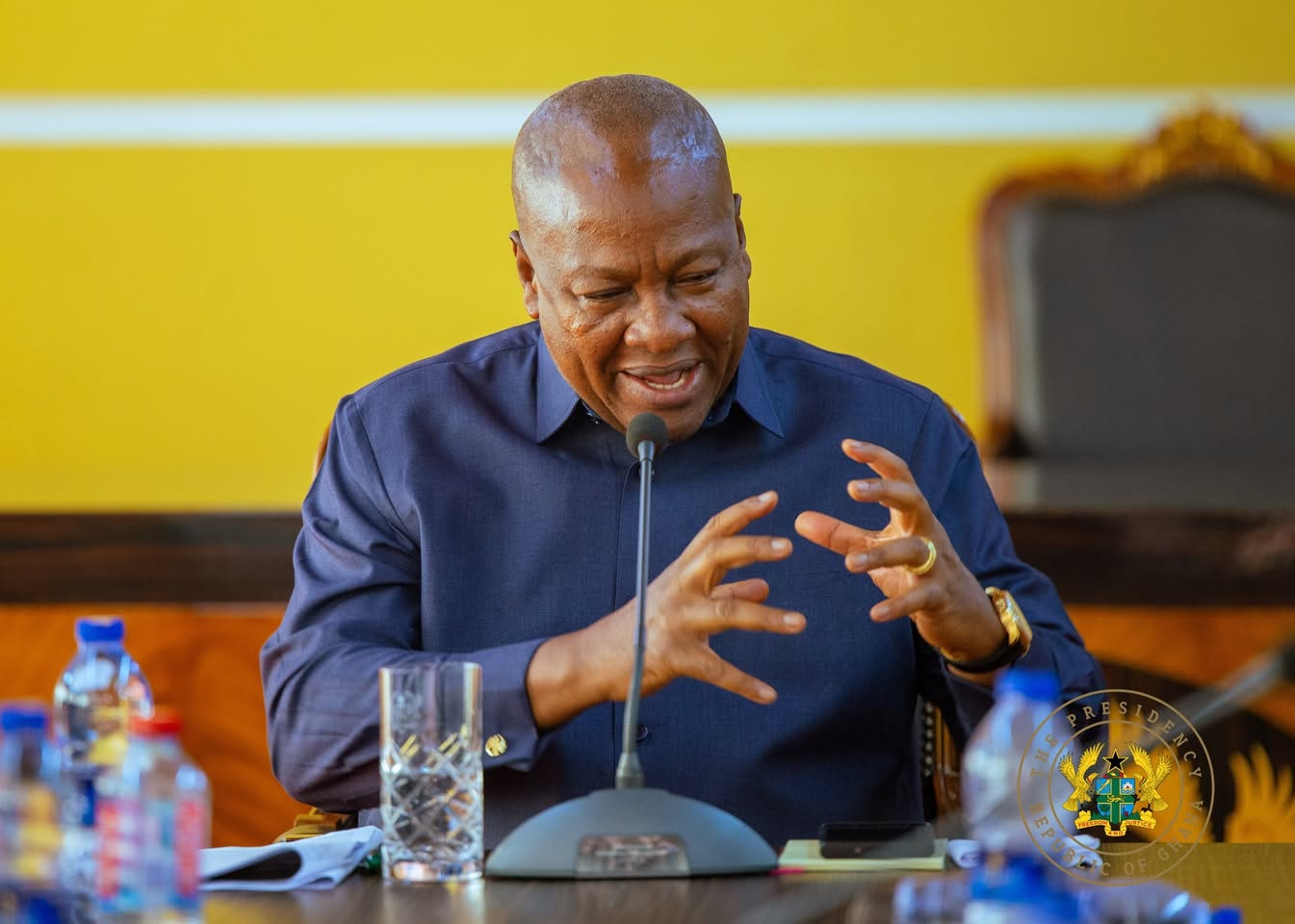
This was announced by President John Mahama in a speech at the launch of the 2025 National Cyber Security Awareness Month and the inauguration of the Joint Cyber Security Committee, which took place at the Accra International Conference Centre (AICC) on Wednesday, October 1.
“We are establishing a $50 million FinTech Growth Fund to support Ghanaian innovators in developing digital solutions tailored to our local needs. This initiative is a key pillar of our Reset Ghana agenda, aimed at boosting the digital economy and strengthening our fight against cybercrime,” he said.
He continued that the fund forms part of his government’s Reset Ghana agenda, which seeks to build a strong and secure digital system.
“As we expand digital public services and mobile money usage, we must reinforce the systems that safeguard them. This is why under the Reset Ghana agenda, my administration has prioritised digital transformation as a key part of our national development policy. And cybersecurity is at the core of that transformation,” President Mahama said.
The President outlined four flagship digital programmes already underway. These include the One Million Coders Programme, which seeks to train young Ghanaians in software engineering, data analytics, and cybersecurity; and the Digital Jobs Initiative, a public-private partnership aimed at creating sustainable employment opportunities in technology.
He added that the new FinTech Growth Fund will support local start-ups to design financial technology solutions that can serve both Ghana and the wider African market.
“The FinTech Growth Fund will support local start-ups to design financial technology solutions that serve Ghana and can be scaled across the African continent. We are investing in innovation that reflects our realities and empowers our people,” he said.
At the same event, Interior Minister, Muntaka Mohammed Mubarak, has confirmed INTERPOL’s report that sixty-eight suspected cybercriminals have been apprehended by the Cyber Crime Unit of the Ghana Police Service in a joint operation which led to the seizure of more than 800 electronic devices linked to online fraud and other illegal activities.
The Asawase Member of Parliament highlighted the government’s commitment to fighting online crime.
“Our cybercrime units successfully arrested 68 suspected cybercriminals, identified 108 victims, and seized over 885 electronic devices linked to illicit activities,” he said.
“This remarkable achievement underscores the unwavering commitment of the Government of Ghana to safeguarding our digital space, protecting our citizens and contributing to the global fight against cybercrime.”
He also highlighted that the Ghana security service is stepping up cyber intelligence and open-source monitoring efforts to track and neutralise threats before they escalate.
“In this fast-evolving landscape, proactive intelligence gathering and threat monitoring are essential. To this end, the Ghana Police Service is employing cyber intelligence, open-source intelligence techniques, and internal data-sharing platforms to identify, track, and neutralise threats before they escalate,” the Minister noted.
On Thursday, September 26, INTERPOL issued a statement a release shared by INTERPOL on its official website, the international security agency revealed that the operation, dubbed Operation Contender 3.0 and funded by the United Kingdom’s Foreign, Commonwealth and Development Office under the African Joint Operation against Cybercrime project, discovered that these criminal syndicates caused USD 450,000 in financial losses, with USD 70,000 recovered in cash.
“Ghanaian authorities arrested 68 individuals, seized 835 devices and identified 108 victims. Their investigations revealed USD 450,000 in financial losses, with USD 70,000 recovered,” excerpts of the statement revealed.
According to INTERPOL, the operation was targeted at criminal networks exploiting social media and dating platforms to carry out romance scams and sextortion.
“The crackdown targeted transnational criminal networks exploiting digital platforms, particularly social media, to manipulate victims and defraud them financially. Specifically, the operation focused on romance scams, where perpetrators build online relationships to extract money from victims, and sextortion, in which victims are blackmailed with explicit images or videos,” the statement said.
INTERPOL explained: “…For romance scams, the suspects had used fake profiles, forged identities and stolen images to deceive victims. The scammers extracted payments using a range of schemes, including fake courier and customs shipment fees. In sextortion cases, offenders secretly recorded intimate videos during explicit chats and used them for blackmail.”
On the continent level, these syndicates have caused an estimated $2.8 million in losses to 1,463 identified victims.
During the operation, police identified IP addresses, digital infrastructures, domains and social media profiles linked to members of the scam syndicates. These leads and the subsequent arrests also resulted in the seizure of USB drives, SIM cards, and forged documents, as well as the takedown of 81 cybercrime infrastructures across Africa.
The operation, which ran from July 28 to August 11, 2025, resulted in the seizure of 1,235 electronic devices continent-wide.
Acting Executive Director of Police Services at INTERPOL, Cyril Gout, highlighted the growing threat, stating, “Cybercrime units across Africa are reporting a sharp rise in digital-enabled crimes such as sextortion and romance scams. The growth of online platforms has opened new opportunities for criminal networks to exploit victims, causing both financial loss and psychological harm.”
He emphasised that collaboration between INTERPOL, its member countries, and private sector partners like Group-IB and Trend Micro was crucial to the operation’s success, enabling enhanced data sharing and swift enforcement actions that led to the takedown of 81 cybercrime infrastructures.
“The transnational operation was strengthened by collaboration with private sector partners Group-IB and Trend Micro, resulting in enhanced data sharing and operational capabilities. The exchange of INTERPOL cyber activity reports facilitated swift enforcement actions from participating countries, underscoring the value of international cooperation in combating cybercrime,” INTERPOL highlighted.
Aside from Ghana, the operation also uncovered syndicates in other African countries such as Angola, Côte d’Ivoire and Senegal.
“In Senegal, police arrested 22 suspects, uncovering a network that impersonated celebrities and used emotional manipulation on social media and dating platforms to defraud 120 victims of approximately USD 34,000. A total of 65 devices, forged identification documents and money transfer records were seized during the operation.
“Police in Côte d’Ivoire dismantled a cybercrime ring that created fake profiles online to manipulate vulnerable individuals into sharing intimate images. Once in possession of compromising material, the criminals blackmailed victims, demanding payments to prevent public exposure. Police arrested 24 suspects, seized 29 devices and identified 809 victims.
“In Angola, authorities arrested 8 individuals and identified 28 domestic and international victims, primarily targeted via social media. Offenders used fraudulent documents to create fake identities, facilitating financial transactions and concealing their real identities while engaging victims,” the statement added.
According to INTERPOL’s 2025 Africa Cyberthreat Assessment Report, released in June, “two-thirds of surveyed African member countries said cyber-related offences make up a medium-to-high proportion of all crimes.”
Other countries that participated in the operation include Benin, Burkina Faso, Gambia, Guinea, Kenya, Nigeria, Rwanda, South Africa, Uganda and Zambia.
Ghanaian law enforcement officers, in partnership with counterparts from 11 other West African countries, played a pivotal role in an international crackdown on vehicle crime that uncovered about 150 stolen vehicles and led to the seizure of more than 75.
The joint effort, spearheaded by INTERPOL and dubbed Operation Safe Wheels, aimed at curbing the trafficking of stolen vehicles in the region.
It was executed between 17 and 30 March and saw law enforcement teams establish an average of 46 checkpoints daily, inspecting around 12,600 vehicles and cross-checking their details with INTERPOL’s Stolen Motor Vehicle (SMV) database.
The operation, supported by INTERPOL’s SMV Task Force, unearthed the involvement of two organised crime groups and sparked 18 fresh investigations. It was part of Project Drive Out, a new initiative funded by the Government of Canada to tackle auto theft and the illegal spare parts market.
INTERPOL revealed that the majority of the vehicles identified during the operation had been smuggled from Canada, with others reported stolen in European countries such as France, Germany, and the Netherlands.
Toyota was the most frequently recovered brand, followed by Peugeot and Honda. Smuggling was carried out via both land and sea routes.
In Nigeria’s port city of Lagos, for instance, customs officials discovered six suspicious vehicles, Toyota and Lexus models, hidden in freight containers from Canada.
Four showed signs of forced entry, and checks later confirmed that all had been stolen in Canada in 2024. Collaborative investigations between Nigerian authorities and Canada’s INTERPOL bureau are underway.
INTERPOL deployed nine experts, including a vehicle examiner from Canada, across several countries, including Ghana, to support on-the-ground activities. Their efforts proved vital in tracking and verifying stolen vehicles.
David Caunter, INTERPOL’s Director of Organised and Emerging Crime, highlighted the broader implications of vehicle theft: “Each year, hundreds of thousands of vehicles are stolen around the world, yet the initial theft is often only the beginning of a vehicle’s journey into the global criminal underworld.
Stolen vehicles are trafficked across the globe, traded for drugs and other illicit commodities, enriching organised crime groups and even terrorists.
INTERPOL’s SMV database is the strongest tool we have to track stolen vehicles and identify the criminals involved in this global trade.”
In 2024 alone, nearly 270,000 stolen vehicles were identified worldwide using the SMV database.
Participating countries in Operation Safe Wheels included Benin, Burkina Faso, Cabo Verde, Côte d’Ivoire, Gambia, Ghana, Guinea-Bissau, Mali, Mauritania, Niger, Nigeria, and Togo.
The government has begun efforts to amend the Ghana Shippers’ Authority Act following complaints about unfair shipping charges at Ghana’s ports.
In May, the Chamber of Freight and Trade expressed discontent about the fluctuations in port fees, particularly demurrage. Speaking during the Citi Breakfast Show on Wednesday, May 20, the President of the Chamber, Mr Dennis Amfo Sefa, complained bitterly about the lack of regulation, particularly in how private shipping companies charge importers.
One of the major issues he addressed was demurrage, which is charged in dollars in Ghana. Demurrage is a fee or penalty charged when goods or containers stay too long at a port, terminal, or with a shipping line beyond the agreed free time. According to him, BoG has no rules that regulate how these shipping lines operate as far as the exchange rate is concerned.
“The shipping lines are not under any obligation to use the BoG rate. Some use interbank rates from their banks. Others lock in a rate and review it monthly. This lack of uniformity creates serious challenges for importers. We’ve complained for years, but the Shippers Authority isn’t doing enough. Shipping lines are left to do whatever they want, and it’s hurting business,” the President fumed.
In response, the Ship Owners and Agents Association clarified that their exchange rate calculations are based on prevailing rates at the port of origin when vessels depart for Ghana, in line with standard international shipping practices, rather than rates published by the Bank of Ghana.
This outcry helped trigger the Transport Ministry’s push to amend the Ghana Shippers’ Authority Act for stronger oversight and dispute resolution.
During an appearance on the same platform on Thursday, October 2, the Minister for Transport, Joseph Bukari Nipke, disclosed that the planned legal reforms would strengthen the Ghana Shippers’ Authority’s ability to regulate port operations.
“I have been on the move to ensure that we get the Ghana Shippers’ Authority Act amended, which will give them the mandate to be able to control the activities at the port and also regulate the work of the shipping lines properly,” he stated.
He expressed optimism in getting the amendment done as soon as possible, as he disclosed that the cabinet has approved the Act’s amendment and currently awaits the reconvening of Parliament to be presented to the House. This, he said, will empower the Shippers Authority to regulate businesses at the port as it should be.
“Some of our laws were not helping in controlling those issues. But thank God the cabinet has approved the amendment, and when parliament reconvenes, it will be laid in parliament. That will give the Ghana Shippers’ Authority the power to regulate and also fix charges at the port. When that happens, they will also have the power to bring down the cost of doing business at the port and run the place effectively,” he added.
If passed, the amendment is expected to enhance clarity in port operations, improve efficiency, and reduce the cost of doing business for importers and exporters.
Meanwhile, the Chief Executive Officer of the Ghana Shippers Authority (GSA), Professor Ransford Gyampo, in July, charged his legal team to take on individuals and bodies disseminating claims about him leading recruitment exercises at the authority he heads.
His legal counsel and other lawyers were reported to have begun action that week.
In a post on social media, Professor Gyampo noted that his attention had been drawn to such claims and could not stay quiet as such “lies” fester to tarnish his image despite calls for his silence over the matter.
“I plead that I am allowed to respond, not to the grand scheme against me because of my vociferousness against bad governance in the previous regime, but merely as a way to set the records straight,” he wrote.
Setting the record straight, he added, “I have not recruited 28 women and two men as alleged.”
Professor Gyampo explained that he is not in charge of recruitment, adding that “Recruitment over the years, I am told, has been done professionally by a private outsourced agency that follows a rigorous selection process.”
He also rebuffed reports of travelling first class or business class during his business trips.
“I have never travelled in First Class or Business class. I remain the only CEO in Ghana who travels on an ECONOMY TICKET. Again, the evidence of my boarding passes for all four trips is there”
“Part of my work requires that I travel, and out of the over 38 opportunities, I have only honoured 4, and these were with the expressed approval and permission from the Chief of Staff. Anyone can check for the evidence,” he shared.
Meanwhile, Professor Gyampo has reiterated his commitment to sharing his take on “national issues while focusing on my core job of championing the interest of shippers forcefully and proactively.””I assure all that I know the public confidence in me and I won’t do anything to betray the trust reposed in me. All must also be assured that baseless allegations have never been enough to silent me,” he added.
The appointment, made by President John Dramani Mahama this year, saw Prof. Gyampo succeed Kwesi Baffour Sarpong, who was appointed by the erstwhile Akufo-Addo government in December 2024.
Prof Gyampo, while engaging relevant stakeholders in March, noted that GSA is very keen on ensuring a conducive business environment for all players in the shipping and logistics sector to thrive, as their success holds great benefits for Ghana’s economic fortunes.
A month later, he suspended non-essential foreign travel at the authority. In cases where travel is approved, every staff member, including himself, must fly economy class. He also halted payment of certain staff incentives.
Also, existing contracts at the Authority have been scrutinised, with some renegotiated or terminated altogether to ensure better value for money.
Renowned Ghanaian football coach, Annor Walker, has been confirmed dead after a brief illness.
He passed away on October 1, 2025, at his residence in Accra.
Affectionately referred to as the ‘giant-killer’, the veteran coach who was Technical Advisor for Vision FC since last year till the time of his passing carved a reputation for his tactical discipline, keen eye for talent, and unwavering dedication to the development of Ghanaian football.
According to reports, between 2005 and 2010, Mr Walker earned his CAF License A while working with Nania. He began his career with Nania FC in the early 2000s until around 2012. His stint with Nania began with him in the role of an assistant, until later he climbed to become the head coach.
As head coach, he led the club to its historic 2011 MTN FA Cup victory over Asante Kotoko, a major display that cemented his reputation as a tactical mastermind.
He left Nania to continue his coaching work with Kpando Hearts of Lions around 2012, and during his tenure, he built a solid defensive and tactical squad which was hard to break. Walker’s time with Kpando wasn’t trophy-winning, but he managed to keep the team going and in a stable position rather than sinking.
His impressive record at Kpando opened more opportunities for him. He joined Berekum Chelsea as a technical team member during their 2012 CAF Champions League campaign.
His input helped the club set a record as the third Ghanaian club to reach the group stages of Africa’s premier club competition, i.e., CAF Champions League Group Stage qualification, following in the footsteps of Hearts of Oak and Asante Kotoko.
He joined Accra Great Olympics starting in 2020. His tenure ended around June 2023, after which he moved to FC Samartex for the 2022–23 season and later to Vision FC as Technical Director.
On the national level, Walker served as head coach of the Black Galaxies, Ghana’s home-based national team. Under his leadership, the team qualified for the 2023 African Nations Championship (CHAN) in Algeria, reaffirming his ability to compete at the highest level.
Walker is best remembered for his remarkable stint with Accra Great Olympics, where he transformed the club into one of the Ghana Premier League’s most competitive sides in recent years.
Annor’s death barely ten (10) days after the death of Ghanaian boxer, Ernest Akushey, widely known as ‘Bahubali’s’ death.
According to reports from James Town TV and Africabox Showup, Ernest Akushey gave up the ghost today, Tuesday, September 23, after he was rushed to the hospital following complaints of undisclosed symptoms on Monday.
The symptoms are said to have worsened, and around 2 am the following day he was confirmed dead.
Bahubali’s death comes barely a week after he suffered a thrashing defeat in a bout with rising opponent Jacob Dickson at the Bukom Boxing Arena, which took place on Saturday, September 13, 2025.
Fans braved early morning rain to attend the event at Bukom Boxing Arena, which was part of the “Monaco – The Night To Prove” boxing showcase.
According to reports, the bout appeared to have favoured Akishey’s opponent as he dominated right from the beginning until he clinched his victory when the final bell rang with an eighth-round technical knockout (TKO).
Widely circulated videos of the fight showed Akushey struggling under relentless pressure, sparking sympathy among fans even before the tragic news of his death.
Consequently, many have speculated that the heavy punches he received during his last fight might have caused him some internal injuries, which have led to his death. However, the family has presented no official autopsy report to support this claim.
Akushey, who rose through the ranks at the Wadada Gym in James Town, was once an undefeated prospect with a 6-0-0 record.
He earned his “Bahubali” moniker from his ferocious, crowd-pleasing style, likened to the warrior hero in the Indian blockbuster film.
“Bahubali’s” death marks the second case at Bukom. The first death linked to Bukom was that of a Nigerian, Segun “Success” Olanrewaju, who died after collapsing in the ring in the middle of a professional bout with a Ghanaian opponent, Jon Mbanug, at Fight Night 15 of the Ghana Professional Boxing League.
The tragic incident occurred on Saturday night, March 29, at the Bukom Boxing Arena in Accra, where the 40-year-old fighter Olanrewaju, a former holder of both the Nigerian and West African light-heavyweight titles, had been putting on a strong performance before suddenly losing consciousness mid-fight.
Spectators and officials watched in horror as medical personnel rushed in to provide emergency assistance.
A widely shared video of the match shows the moment he collapsed, leaving fans and members of the boxing community in shock.
Meanwhile, three months after Success’ death, President Mahama’s son, Sharaf Mahama, in partnership with Sharaf-led sports management company, Legacy Rise Sports, successfully organised a boxing tournament – Battle of the Beasts at the Bukom Sporting Arena.
At a press conference held at the Multichoice Office in Achimota, Mr. Mahama expressed his commitment to giving Ghanaian boxers the global exposure they deserve.
He commended all the foreign boxers who traveled to Ghana to be part of the event and extended gratitude to the sponsors and partners who are making the night possible.
Renowned trainer Coach Ofori Asare of Wisdom Boxing Gym highlighted the importance of fair officiating, especially in the highly anticipated bout between his fighter, Theo Allotey (aka Lopez), and Daniel Selassie Gorsh, who will be defending his WBO Africa Bantamweight title.
Asare described Allotey as a seasoned fighter whose experience and transition from amateur to professional ranks make him the right contender for the title.
“Boxing is not about trash talk—it’s about delivering in the ring,” Asare said, adding that his fighters are ready to impress fans with dominant performances.
Also on the card, Haruna Mohammed (aka Thunder) was to defend his National Cruiserweight Title against Abdulai Ahmed from Fit Square Gym.
MultiChoice has announced that a review meeting will be held in December to review the impact of the value upgrade, which took effect yesterday, October 1.
This comes after the pay-TV service provider, in a joint press briefing with the Minister, announced a value upgrade for its subscribers.
In a statement shared yesterday, Wednesday, October 1, MultiChoice authenticated the Minister of Communication, Hon. Samuel Nartey George’s announcement that the satellite TV provider upgrades were part of a permanent renegotiated arrangement.
The statement read, “Following the recent joint press conference with the Ministry of Communication, Digital Technology and innovations, the National Communications Authority, MultiChoice Africa, and MultiChoice Ghana, we wish to clarify the FAQs published on our website,e which created an erroneous Impression of a contradiction regarding my DStv value offering, which, effective today, October 1, 2025, we would like to clarify as follows. We fully support the joint media statement that was issued by the Honourable Minister, Hon Samuel Nartey George and implementation of some has already commenced”.
However, it revealed that the Committee, which was chaired by the Minister himself, will reconvene in the last quarter of the year for a review of the impact of the upgrade, adding that “This will be a periodic exercise.”
It continued that, “As contained in the said joint media statement regarding the Value offering, the Committee will reconvene in three (3) months to evaluate the impact of this initiative. There is no restriction on a subscriber’s choice of a bouquet. This offer is available to both existing, returning, and new customers from 1 October 2025.”
The clarification statement, which was issued by MultiChoice, was necessitated by harsh criticisms and backlash that many were directing at the Ningo-Prampram Member of Parliament, Sam George, following the issuance of FAQs explaining their “We’ve Got You” promotion package.
MultiChoice Africa’s adjustment follows calls by Ningo-Prampram MP, Sam Nartey George, for a reduction in DStv subscription packages for Ghanaian customers. Sam George had earlier instructed the National Communications Authority (NCA) to suspend the broadcast of DStv should Multichoice fail to reduce prices of its packages.
Speaking at a press conference in Accra on Friday, September 5, Sam George noted that the government has established a joint committee with MultiChoice Ghana to reach a final agreement on how its prices will be adjusted to ensure Ghanaian customers pay less.
“We have taken an immediate step to put together a committee comprising representatives from the ministry, the regulator, NCA, Multichoice Ghana, and Multichoice Africa. I will personally chair the committee. Let us be clear, they have finally accepted that there will be a reduction, and they want us to discuss the level of reduction. I believe that as a minister, we do not need 30 days,” he said.
On Wednesday, September 24, the National Communications Authority (NCA) announced a 7-day extension window for the stakeholder committee set up to review DSTV’s pricing model in Ghana to present their report by September 29. The committee is expected to present its report on Monday, September 29, 2025.
Originally scheduled to present its final report by September 22, the committee requested an extension, which was granted by the Minister of Communications and Digital Technology and Innovations, Sam George.
In a statement released by the NCA, it announced that “Whilst the Committee has made significant progress, it has requested an extension of one week to complete its work, which extension has been granted by the Honourable Minister for Communication, Digital Technology and Innovations.
Consequently, the outcome of the Committee’s work is expected to be presented by 29th September, 2025”.
It continued that “the Stakeholder committee established to evaluate DStv pricing in Ghana commenced work on 8th September 2025, to address the following: a. Achieve a shared understanding of DStv pricing for Ghana and structured, mutually acceptable and commercially viable measures to address the Minister’s concerns around the pricing of the DStv service.
Establish an acceptable roadmap to curb cross-border piracy of DStv decoders/service from Nigeria to Ghana”. On September 7, the NCA announced that it will have a meeting with MultiChoice Ghana (the company that runs DStv) over the satellite television provider’s pricing model in Ghana on Monday, September 8.
The governing body of the electronic communications and broadcasting sectors in Ghana announced this in an official statement dated September 7 and titled “Update on DSTV Pricing in Ghana”.
It revealed that MultiChoice has responded to its mandate to suspend its operations in Ghana and has expressed its readiness to review its pricing and collaborate with the Committee set by Sam Nartey George.
“The National Communications Authority (NCA) has received from Multichoice Ghana its response to the notice of intention to suspend their authorisation and request for their pricing model…The first meeting of the Stakeholder Committee shall be held on Monday, 8th September 2025. The Authority shall provide further updates on this matter in due course,” NCA revealed in the statement.
The paid-TV company denied some claims made by the Communications Minister about its readiness to cut prices for Ghanaian consumers.
In a responsive statement titled “MultiChoice sets the record straight on DStv pricing” and shared on Friday, September 5, MultiChoice announced its readiness to cooperate with the Working Committee established by the Communications Ministry to find a solution to the discussion concerning the reduction of DSTV fees for the Ghanaian populace.
However, it objected to claims by the Minister that their outfit is ready for a price reduction. “We have noted the statement made by the Minister for Communications Technology and Innovation, Hon. Samuel Nartey George. We continue to engage with the Minister in a bid to find an amicable solution that is beneficial for all parties involved, but does not jeopardise the viability of the DStv service.
“We will fully participate in the established Working Committee. However, we wish to clarify that MultiChoice Group has not agreed to a price reduction”, the statement explained. The said Committee, according to Sam George, will be chaired by him to ensure transparency and fairness. Consequently, NCA engaged MultiChoice on the statement for clarity.
“…While the Authority reviews their submission, there have been further engagements with Multichoice Ghana regarding its public statement dated 5th September 2025”, the statement continued adding that following the engagements,
“…the following clarifications have been obtained: 1. Multichoice Ghana agrees with the directive from the Honourable Minister for Communication, Digital Technology and Innovations for the establishment of a Stakeholder Committee to evaluate DSTV pricing in Ghana, and that they intend to fully participate in this work. 2. The outcome of the Stakeholder Committee would be determined at the end of its work. 3. MultiChoice has confirmed that it will respect due process and the laws of Ghana and its people”.
Taking to his official X (formerly Twitter) account, Sam George highlighted his commitment to protecting the interests of Ghanaians without compromise. He affirmed that he would not allow any form of disrespect to consumers from any company.
“If MultiChoice has objected to price cuts as they earlier agreed to, then the proposed shutdown of their services in Ghana would hold as earlier communicated”.
“Let me be clear, I have no intention to continue tolerating the disrespect to Ghanaians by DStv. If MultiChoice is not interested, as they claim in their last statement, in discussing a reduction in prices as they had indicated to me, we would proceed to effect the shutdown tomorrow as indicated.
He reiterated that “DStv indicated their willingness to engage the Ministry on its concerns on pricing and prayed us to stay our enforcement action. If they have changed their position, then we simply would enforce the regulatory action”.
The Ningo-Prampram Member of Parliament stressed that Ghana is ready to partner with international firms, but only in full respect of the country’s laws and consumer protection.
MultiChoice has clarified the Frequently Asked Questions (FAQs) it issued concerning its value upgrades. The FAQs, which answered questions often asked by the general public, seem to contradict the Minister of Communication, Hon. Samuel Nartey George’s announcement that the satellite TV provider upgrades were part of a permanent renegotiated arrangement.
Explaining what they described as “We’ve Got You” promotion, MultiChoice highlighted that,
“This promotion is our gesture to give our customers even more value. New, active, and previously disconnected customers who are active during the promotion period on DStv will get to view one package higher than what they have paid for at no extra cost. This promotion will run for a limited period. It will start on 01 October 2025 and run until 31 December 2025. Terms and conditions apply” parts of the FAQs explained.
This threw netizens into a frenzy, with many questioning the integrity of the Minister, while others defended him for making an effort to lobby for the best offers for the Ghanaian populace.
In response to this, MultoChoice shot down the allegations against the Minister by releasing a press statement in which it affirmed the Minister’s announced 30-50% value upgrade.
The statement read, “Following the recent joint press conference with the Ministry of Communication, Digital Technology and innovations, the National Communications Authority, MultiChoice Africa, and MultiChoice Ghana, we wish to clarify the FAQs published on our website,e which created an erroneous Impression of a contradiction regarding my DStv value offering, which, effective today | October 2025, we would like to clarify as follows. We fully support the joint media statement that was issued by the Honourable Minister, Hon Samuel Nartey George and implementation of some has already commenced”.
However, it revealed that the Committee, which was chaired by the Minister himself, will reconvene in the last quarter of the year for a review of the impact of the upgrade, adding that “ This will be a periodic exercise”.
It continued that, “As contained in the said joint media statement regarding the Value offering, the Committee will reconvene in three (3) months to evaluate the impact of this initiative. There is no restriction on a subscriber’s choice of a bouquet. This offer is available to both existing, returning, and new customers from 1 October 2025.”
MultiChoice then apologised for “any inconvenience the FAQs may have caused”.
MultiChoice Africa’s adjustment follows calls by Ningo-Prampram MP, Sam Nartey George, for a reduction in DStv subscription packages for Ghanaian customers. Sam George had earlier instructed the National Communications Authority (NCA) to suspend the broadcast of DStv should Multichoice fail to reduce prices of its packages.
Speaking at a press conference in Accra on Friday, September 5, Sam George noted that the government has established a joint committee with MultiChoice Ghana to reach a final agreement on how its prices will be adjusted to ensure Ghanaian customers pay less.
“We have taken an immediate step to put together a committee comprising representatives from the ministry, the regulator, NCA, Multichoice Ghana, and Multichoice Africa. I will personally chair the committee. Let us be clear, they have finally accepted that there will be a reduction, and they want us to discuss the level of reduction. I believe that as a minister, we do not need 30 days,” he said.
On Wednesday, September 24, the National Communications Authority (NCA) announced a 7-day extension window for the stakeholder committee set up to review DSTV’s pricing model in Ghana to present their report by September 29. The committee is expected to present its report on Monday, September 29, 2025.
Originally scheduled to present its final report by September 22, the committee requested an extension, which was granted by the Minister of Communications and Digital Technology and Innovations, Sam George.
In a statement released by the NCA, it announced that “Whilst the Committee has made significant progress, it has requested an extension of one week to complete its work, which extension has been granted by the Honourable Minister for Communication, Digital Technology and Innovations.
Consequently, the outcome of the Committee’s work is expected to be presented by 29th September, 2025”.
It continued that “the Stakeholder committee established to evaluate DStv pricing in Ghana commenced work on 8th September 2025, to address the following: a. Achieve a shared understanding of DStv pricing for Ghana and structured, mutually acceptable and commercially viable measures to address the Minister’s concerns around the pricing of the DStv service.
Establish an acceptable roadmap to curb cross-border piracy of DStv decoders/service from Nigeria to Ghana”. On September 7, the NCA announced that it will have a meeting with MultiChoice Ghana (the company that runs DStv) over the satellite television provider’s pricing model in Ghana on Monday, September 8.
The governing body of the electronic communications and broadcasting sectors in Ghana announced this in an official statement dated September 7 and titled “Update on DSTV Pricing in Ghana”.
It revealed that MultiChoice has responded to its mandate to suspend its operations in Ghana and has expressed its readiness to review its pricing and collaborate with the Committee set by Sam Nartey George.
“The National Communications Authority (NCA) has received from Multichoice Ghana its response to the notice of intention to suspend their authorisation and request for their pricing model…The first meeting of the Stakeholder Committee shall be held on Monday, 8th September 2025. The Authority shall provide further updates on this matter in due course,” NCA revealed in the statement.
The paid-TV company denied some claims made by the Communications Minister about its readiness to cut prices for Ghanaian consumers.
In a responsive statement titled “MultiChoice sets the record straight on DStv pricing” and shared on Friday, September 5, MultiChoice announced its readiness to cooperate with the Working Committee established by the Communications Ministry to find a solution to the discussion concerning the reduction of DSTV fees for the Ghanaian populace.
However, it objected to claims by the Minister that their outfit is ready for a price reduction. “We have noted the statement made by the Minister for Communications Technology and Innovation, Hon. Samuel Nartey George. We continue to engage with the Minister in a bid to find an amicable solution that is beneficial for all parties involved, but does not jeopardise the viability of the DStv service.
“We will fully participate in the established Working Committee. However, we wish to clarify that MultiChoice Group has not agreed to a price reduction”, the statement explained. The said Committee, according to Sam George, will be chaired by him to ensure transparency and fairness. Consequently, NCA engaged MultiChoice on the statement for clarity.
“…While the Authority reviews their submission, there have been further engagements with Multichoice Ghana regarding its public statement dated 5th September 2025”, the statement continued adding that following the engagements,
“…the following clarifications have been obtained: 1. Multichoice Ghana agrees with the directive from the Honourable Minister for Communication, Digital Technology and Innovations for the establishment of a Stakeholder Committee to evaluate DSTV pricing in Ghana, and that they intend to fully participate in this work. 2. The outcome of the Stakeholder Committee would be determined at the end of its work. 3. MultiChoice has confirmed that it will respect due process and the laws of Ghana and its people”.
Taking to his official X (formerly Twitter) account, Sam George highlighted his commitment to protecting the interests of Ghanaians without compromise. He affirmed that he would not allow any form of disrespect to consumers from any company.
“If MultiChoice has objected to price cuts as they earlier agreed to, then the proposed shutdown of their services in Ghana would hold as earlier communicated”.
“Let me be clear, I have no intention to continue tolerating the disrespect to Ghanaians by DStv. If MultiChoice is not interested, as they claim in their last statement, in discussing a reduction in prices as they had indicated to me, we would proceed to effect the shutdown tomorrow as indicated.
He reiterated that “DStv indicated their willingness to engage the Ministry on its concerns on pricing and prayed us to stay our enforcement action. If they have changed their position, then we simply would enforce the regulatory action”.
The Ningo-Prampram Member of Parliament stressed that Ghana is ready to partner with international firms, but only in full respect of the country’s laws and consumer protection.
“No company is above the law. When MultiChoice is ready to discuss a price reduction, they can come to the negotiation table. Until then, there is nothing for us to meet over. The NCA Ghana would carry out enforcement. Ghana is open for businesses that respect our laws and institutions,” he stressed.
The statement follows Communications Minister Sam George’s claims in an earlier press briefing held yesterday, Friday, September 5, that the satellite television provider has agreed to a price reduction.During the briefing, he also revealed that, following their agreement to reduce prices, they have asked for thirty days to conclude discussions and arrive at a final decision.
But Sam George outrightly declared that the 30-day window is too much, hence they have just fourteen days to reach a decision. With the 14-day window, MultiChoice has until September 21 to arrive at a solution.
“Let us be clear they have finally accepted that there will be a reduction, and they want us to discuss the level of reduction. I believe that as a minister, we do not need 30 days. 14 days is enough for us to reach this decision, inclusive of weekends,” the Minister said. Engaging the public on Friday, September 5, as part of the Government Accountability Series, the minister noted that he received a 9-page document from Multichoice on July 21 over its inability to reduce its subscription fees.
Earlier, the Minister for Communications, Digital Technology and Innovation, announced that should Multichoice fail to reduce the prices of its subscription services, the DStv broadcast license will be suspended nationwide, effective August 7, 2025.
Engaging the public yesterday as part of the Government Accountability Series, the minister noted that he received a 9-page document from Multichoice on July 21 over its inability to reduce its subscription fees.
Minister for Foreign Affairs Samuel Okudzeto Ablakwa has reiterated his commitment to establishing a passport office in each of the sixteen regions nationwide.
Speaking at the ceremony organised to hand over diplomatic passports to five distinguished Ghanaians, the Minister disclosed that,
“But we still have seven regions without passport application centres. I am delighted to announce that by December, we will make sure every region without a passport application centre has one, starting with Bolgatanga this month,” he said.
He revealed that the first of the new centres will be commissioned this month in Bolgatanga, as part of efforts to decentralise passport services and improve accessibility across the country.
The Minister disclosed during a ceremony to hand over diplomatic passports to five distinguished Ghanaians: travel vlogger Wode Maya, Grammy-nominated reggae artist Rocky Dawuni, broadcaster and entrepreneur Anita Erskine, contemporary visual artist Ibrahim Mahama, and British-Ghanaian entrepreneur Dentaa Amoateng MBE.
Mr Ablakwa noted that ongoing reforms within the Foreign Affairs Ministry have already transformed the passport acquisition process, with applicants now receiving their passports in record time through courier services, eliminating the need for stressful trips to collection centres.
“The Foreign Affairs Ministry has become very efficient, and Ghanaians are already confirming that now it is a smooth process. They are receiving their passports in record time and do not have to stress to pick them up at passport offices, because they are being delivered via courier services.
The minister announced in mid-September that a new passport application office would be opened in Bolgatanga.
Speaking during a press briefing at the Government Accountability Series held in Accra on Monday, September 15, Minister for Foreign Affairs and Regional Integration, Samuel Okudzeto Ablakwa, revealed that as part of efforts to expedite passport application service, a centre will be launched in October after months of anticipation.
“I am glad to note that the Bolgatanga passport application centre will be fully operational next month, in October. I know our compatriots in the Upper East have been agitating for this, and I’m glad that next month your suffering will be over. We apologise to you for all the stress and the hustle, but the wait is over. Next month, I will personally be in Bolga to open this new PAC,” he noted.
He also added that seven new centres will be opened this year to expand coverage.
“Currently, we have 13 passport application centres in nine regions with a breakdown as follows: three in the Greater Accra Region, two in the Ashanti Region, two in the Northern Region, one in Upper West, one in Eastern, one in Central, one in Volta, one in Western, and one in the Bono Region,” the North Tongu MP continued.
Also, the Minister revealed that, following the introduction of the chip-embedded biometric passport regime, officially launched on April 28, 2025, by the Ministry of Foreign Affairs, over 161,824 chip-embedded passports have been printed and more than half delivered to respective applicants.“As of 10th September 2025, a total of 161,824 chip-embedded passports have been printed, of which 122,895 have been delivered to applicants. Our reforms have also addressed the critical issue of delays in the processing of passport applications,” he added.
He said this had been made possible through the new passport operations, which provide 24-hour service.“Additionally, we have rolled out 24-hour passport operations, ensuring a shorter turnaround time for passport issuance and delivery within 15 days to any part of the world,” he noted.
On passport application booklet fees, the Minister assured that he will keep his promise of fighting for a reduction in price of the booklets, which were increased in 2024 by the Akufo-Addo-led administration with the justification that the adjustment was part of the 2023 Fees and Charges Regulations, L.I. 2481, which aimed to align service costs with production expenses. According to the Minister, his outfit has submitted proposals to Parliament and awaits Parliament’s response on the case.
He said, “The ministry has also received the tenders for the passport head office and annexe building project and is currently evaluating them. I’m also pleased to inform this gathering that, in keeping our promise, we have submitted proposals to Parliament as contained in the new Fees and Charges Bill fora reduction in passport fees from 500 Ghana cedis to 350 Ghana cedis for the 32-page booklet.
“It is expected to come into force once Parliament resumes session and passes the new Fees and Charges Bill.
Before Parliament went on break, it was laid, and you know, for laws it has to meet a 21-day count, and we couldn’t get to 21 days before we took the break, but when we resume, certainly the count will be on, and after 21 days, this will come into force”.
The Fees and Charges Bill is a legislative framework that governs how public institutions in Ghana set, adjust, and collect fees for services they provide. It’s designed to ensure transparency, consistency, and economic relevance in how citizens are charged for accessing government services.
The North Tongu MP also announced that the long-standing practice of applicants waiting about three months to receive their passports will soon be replaced with a same-day passport issuance service. This express delivery system is expected to greatly reduce the influence of middlemen, popularly known as “goro boys,” who charge applicants exorbitant fees to expedite application services.
“Meanwhile, we are also introducing a same-day passport delivery service for those with emergencies and members of the business community who may require super express service with a shorter turnaround time beyond the expedited service that we already render, and this is also contained in the new Fees and Charges.“So when this new Fees and Charges matures, you will see that a new service provision will come into force where you can obtain a passport in a day without going through a middleman or a “goro boy” as they are infamously called, he added.
Meanwhile, in July, a total of 40,648 visas were issued by Ghana’s missions in Washington, D.C., and New York from January 2025 to date and out of this, 28,626 were multiple-entry visas to Ghana.
The Ministry of Foreign Affairs made this information known while debunking reports that it is responsible for the United States government’s revision of the reciprocity schedule for a considerable number of African countries, including Ghana, reducing the B1/B2 visa validity from 5 years multiple entry to 3 months single entry.
People are now happy while holding their phones and conversing with their family and friends after internet service was restored in Afghanistan.
The disruptions in internet service started around September 15, following regional fibre-optic failures. It lingered for days until it spread across all parts of the nation by the evening of Monday, September 29, when both mobile and fibre internet services were totally cut off.
This affected emergency services as Afghans were unable to access both mobile data and fibre internet service, blocking access to basic communications platforms like WhatsApp and Signal, severely impacting education, healthcare, humanitarian aid, and daily life.
However, according to Internet Society Pulse, there has been a partial restoration in early October. Local reports also suggest that internet and telco services are gradually being restored.
“…Communications were resuming across provinces while internet monitor NetBlocks said live network data was showing a ‘partial restoration’ of connectivity”.
A source close to the government confirmed to BBC Afghan that the internet is back by special order of the Taliban prime minister.
The 48-hour blackout disrupted businesses and flights, limited access to emergency services and raised fears about further isolating women and girls whose rights have severely eroded since the Taliban swept back to power in 2021.
One man who visited several areas in the capital city, Kabul, on Wednesday told BBC Afghan: “Everyone is happy, holding their cell phones and talking to their relatives.
“From women, to men and Talibs [a member of the Taliban], each was talking on phones after services were restored. There are more crowds now in the city.”
The government is yet to issue a formal statement on the shutdown; however, in September, when the disruptions began, a spokesperson for the Taliban governor in the northern province of Balkh said internet access was being blocked “for the prevention of vices”.
Though the spokesperson didn’t specify what vices, it was widely reported that access to online pornography and immoral content contradicts their Islamic values. Also, the Taliban government have cited the use of social media by citizens for dissent or activism. Authorities have expressed unease over platforms being used to organise protests, share critical commentary, or promote ideas they deem subversive.
The internet has been a lifeline for Afghan women and girls, especially since bans on formal education for girls over 12. The Taliban view some of this digital engagement as contrary to their governance model.
Afghan women have told the BBC that the internet is a lifeline to the outside world since the Taliban banned girls over the age of 12 from getting an education. Women’s job options have also been severely restricted, and in September, books written by women were removed from universities.
Since returning to power in 2021, the Taliban have imposed numerous restrictions in accordance with their interpretation of Islamic Sharia law.
Following the internet shutdown on Monday, the United Nations said it left Afghanistan almost completely cut off from the outside world. It added that it risked “inflicting significant harm on the Afghan people, including by threatening economic stability and exacerbating one of the world’s worst humanitarian crises”.
Meanwhile, in an unrelated development, users of MTN in Ghana, a leading telecom giant in Ghana, had their excitement short-lived when they began to make purchases of the newly increased data packages.
This was after customers made attempts to purchase data at around 7 am, according to a user on X (formerly Twitter) who was receiving feedback such as ‘the service is being upgraded, try again after 7 AM.’
Others also claimed they were being given noon as another time to retry purchasing.In response to this, MTN issued a statement dated July 1, apologising for the inconvenience and assuring customers that services would be restored swiftly.
“We recognise the importance of staying connected and sincerely apologise for the inconvenience this may cause”, the MTN Corporate Communications Department explained.
They explained that they were experiencing what they described as a “major technical issue” while they were working to implement the 15% increment in data.“Whilst implementing the data offer, which will provide 15% additional volume of data from today, 1st July, 2025, MTN experienced a major technical issue that has affected data bundle purchases, including the data volume offer.
As a result, customers are temporarily unable to purchase data bundles,” parts of the statement read.
They concluded with an appreciation of customers’ patience, promising occasional updates on the state of the service.
This comes on the back of Minister for Communication, Digital Technology, and Innovations Sam Nartey George announcing on June 10 in a press conference that, effective July 1, telecommunication companies will review the amount of data provided for their bundle packages.
Airtel Tigo (AT) and Telecel, he noted, were expected to increase their data offers by over 10%, whereas MTN will review their data offers by 15%, Mr Sam George revealed while engaging the press today, Tuesday, June 10.
AT’s GHC400 data package, providing 195 GB, will now offer 236 GB. Telecel’s GHC400 data package will now be worth 250 GB and not 190 GB, effective next month.
According to the minister, MTN will reintroduce its GHC399 data package, offering 214GB, and will stop providing 92.88GB for GHC350.
In a turn of events, AT and Telecel implemented a 15% increase in their data bundles. However, MTN stated that they were unable to do the same, citing challenges in implementing the increase.
The Ministry of Foreign Affairs has announced that it has secured scholarships for Ghanaians interested in pursuing short training courses and university education in different fields through a collaboration with some partner countries.
The Ministry, in a statement shared on its official platform X (formerly Twitter) on Tuesday, September 30, noted that all interested applicants can access the scholarships via the Ministry’s official website. Other opportunities shall also be shared on the Ghana Scholarships Secretariat’s platform for access.
“The Ministry of Foreign Affairs wishes to inform the general public that, through its diplomatic engagements, scholarships for short-term capacity-building training programmes and for tertiary education covering various fields of study are available to the Republic of Ghana for the benefit of its citizenry.
The links for these capacity-building training programmes are uploaded on the Ministry’s website to make them more accessible to interested individuals. The Ministry also transmits scholarships received from partner countries to the Ghana Scholarships Secretariat, to be awarded to qualified candidates,” the statement read.
Ot added that “Interested persons are encouraged to either visit the Ministry’s website to apply for the available training programmes in accordance with published guidelines or contact the Ghana Scholarships Secretariat for available scholarships. Inquiries can also be sent by email to ipa@mfa.gov.gh”
The Ablakwa-led Ministry warned the public against engaging people that shall pose as middlemen to grant access to the said programmes. The statement highlighted the Ministry’s commitment to ensuring equal and quality education for the public.
“The general public is advised to rely solely on official information from the Ministry of Foreign Affairs and the Ghana Scholarships Secretariat and is cautioned against engaging intermediaries to access a training programme or scholarship.
Foreign Affairs Ministry announces scholarships for Ghanaians
The Ministry of Foreign Affairs wishes to use this opportunity to assure the general public of its commitment to providing quality public service.
Ghana is currently owing one billion cedis in scholarship commitments to the United Kingdom, according to the Registrar of the Scholarship Secretariat, Kwaku Asafo Agyei.
He made this known in an exclusive interview with Nana Kwadwo Jantuah on Nhyira FM’s Morning show, stating that deep concerns are being raised over the disappearance of Crown Agency in the UK, which previously managed short courses for Ghanaian beneficiaries.
“Ghana currently owes over one billion cedis in scholarships in the UK. This has to be paid to allow beneficiaries to access their tuition,” he stated. “The Crown Agency in the UK, which was responsible for organising short courses for beneficiaries, has disappeared.”
Mr Safo said that, according to an audit report, the previous government administration prioritised funding for short courses while neglecting regular academic programs, a practice that undermined the Secretariat’s core mandate.
“I called for an audit into suspected scandals at the Secretariat. The report shows that the previous administration prioritised paying for short courses while avoiding regular academic programs,” he indicated.
He stressed that the Secretariat has no responsibility to cover expenses for dependents who travel with beneficiaries. Yet, he claimed his predecessor unlawfully extended sponsorship to these dependents and even provided them with monthly stipends, calling it a clear misuse of office.
“The National Scholarship Secretariat is not responsible for the cost of any dependent who accompanies a beneficiary. However, my predecessors paid billions of cedis to sponsor beneficiaries, which is an unnecessary cost to the state,” he said.
Mr Asafo Agyei further revealed that certain appointees in President Akufo-Addo’s administration were granted authority letters for 10-year visas, even though the short courses they were attending lasted barely two weeks.
Last year, it was reported that a group of Ghanaian students studying at the University of Birmingham, UK, were facing deportation after their student visas were revoked.
According to a statement from the UK Visas and Immigration, this visa cancellation was due to the students’ failure to pay their tuition fees.
The majority of these students were on the Government of Ghana Scholarship Scheme, but due to the government’s delay in sending the necessary funds, they were unable to meet their financial obligations.
A letter from the UK Visa and Immigration Office sent to the affected students outlined their limited options: either leave the country voluntarily or face legal consequences, including possible detention and prosecution. The students were faced with the threat of deportation if no resolution was found immediately
“You still have permission until 09 November 2024, and the current conditions of your stay will continue to apply until then. Please ensure that you comply with these conditions.”
“You now have until 09 November 2024 to either leave the United Kingdom (UK) or make another application to stay here. You do not have a right of appeal or administrative review against the decision to cancel your permission.”
“If you leave or are already outside the Common Travel Area (the UK, the Channel Islands, the Isle of Man, and the Republic of Ireland) before 9 November 2024, your permission will end immediately, and you will have to make a new application to re-enter the UK,” part of the letter stated.
In contrast, Foreign Affairs Minister Samuel Okudzeto Ablakwa has revealed that Ukraine is committed to reinstating medical scholarship programs for Ghanaian students once the ongoing war with Russia comes to an end.
He made this known after separate discussions with the Foreign Ministers of Ukraine and Georgia during the Raisina Dialogue in India.
In a Facebook post, Ablakwa stated that Ukraine is keen on strengthening its educational partnership with Ghana and expanding bilateral agreements in the sector.
“Ukraine is seeking to restore medical scholarship opportunities and an expanded bilateral educational partnership agreement with Ghana after the war,” he wrote.
Nigerian music executive and Mavin Records founder, Don Jazzy, has shared how focusing on music cost him a marriage.
He made this admission during his appearance on the Echo Podcast, aired on September 26. Reflecting on what he believes he almost lost in his pursuit of success, Don Jazzy pointed to marriage.
He explained that he had always imagined being married by forty, yet at forty-two, he remains unmarried. While he is open to marriage if the opportunity arises, he stressed that it is not something that keeps him up at night.
“I never thought that I’d be 40-something and not be married when I was growing up. So I’ll say maybe I already lost that one. But don’t mind me. I’m not even interested in this very moment. It’s not like I’m not interested, but it doesn’t bother me like that. If it comes, it comes. If it doesn’t come, I’m totally fine,” he said.
Asked what he would have become if he hadn’t been a musician and producer, he responded that he would still have been in the music industry as a manager or
“Maybe I would have still been in the music industry, maybe as a manager, still the same thing. Or now, I’ll probably be an investment banker. Or maybe a footballer. I’m a Man U fan. But now I like forex trading. I saw the Bitcoin, crypto, I saw when you were praying for Bitcoin. It’s just that I always want to know what’s next. I’m inquisitive”, he noted.
Having succeeded as one of the most renowned producers in Africa and beyond, Don Jazzy gave a breakdown of how he has sustained and built a reputation for discovering, nurturing stars like Tiwa Savage, Rema, and Ayra Starr.
He explained that it has always and should always be a collaborative effort, mostly between the artist and the production team. He said the artist should always be hungry to become a hit to help management push them.
“Okay, let me put it this way. It’s not just me. Like I said, there are plenty of things to do and plenty of boxes to tick. Collectively, all of us, individually, you bring money, you bring the staff, the people that are going to work, the marketing team, the research team, the PR team. There are different people who are going to work on the era itself.
But then the artists themselves also contributed. If you want it more than the artist, it doesn’t really work. The artist has to know what they want, and they put their body into it. It’s not enough to just have a vision that I want to be this. Some people have the vision first, but they’ve gone ahead to research what it will take. If you say, I want to be like Michael Jackson, that’s your dream. You have to go and research why Michael Jackson was Michael Jackson. What did Michael Jackson do to get to that point? So you demand determination from the artist. They have to already know what it takes to achieve that dream, because you can’t just throw it on your team. I can’t want it more than you,” he disclosed.
He continued that “At the moment, about a minimum $100,000, or 100 to 300,000 in that bracket. 500 million for the first project. Naira”.
Despite his wealth and influence, Don Jazzy says what truly keeps him grounded is his humble upbringing, faith, and an unending hunger to see unknown artists rise to stardom, not the pursuit of money.
“They tell me. My background, my upbringing, I wasn’t always like this. The God that gave it can take it away. I see people who have been there, and they don’t have it today. So all that keeps me grounded.
I’m also very hungry for more. It doesn’t have anything to do with money. It actually gives me joy just seeing that this artist was unknown, and tomorrow the artist is known. My joy stems not just from monetary gain. At a certain point, it’s not really the money that drives you”, he continued.
Meanwhile, the Ghanaian actor and director Fiifi Coleman officially tied the knot with his fiancée, Liza Kwarteng, in a colourful traditional wedding ceremony in Kumasi, Saturday, September 27, lighting up their ceremony with their smiles as beautiful as their wedding colours.
While much isn’t known about his wife, many gushed over her beautiful self and outfit, as she donned an ensemble made of rich kente fabric, featuring vibrant shades of gold, green, and burgundy.
Her outfit was a classic Ghanaian bridal style, featuring a fitted bodice and a flowing wrap skirt, accented by intricate beaded embroidery and gold accessories.
She adorned her look with traditional jewellery, including a layered gold necklace, matching earrings, and a radiant headpiece that crowned her neatly styled hair, giving her the glow of a true Ashanti bride.
Fiifi, draped regally in the same richly woven kente cloth, in a classic Ghanaian style, giving him an appearance of royalty. Among Fiifi’s groomsmen was the loved and celebrated actor, Adjetey Annan, whose appearance threw guests, friends and family present into ecstasy.
The pair radiated love all afternoon, their smiles and subtle gestures painting a perfect picture of partnership.
Adding to the excitement was a lineup of familiar faces who came to celebrate with the couple.
The event, themed “FIZA25,” was nothing short of star-studded, with the presence of the vice president of Liberia, veteran actor Fred Amugi, Rapper and cultural ambassador, Okyeame Kwame, renowned actress and fashion icon, Kalsoume Sinare, Actress and TV personality, Gloria Sarfo, Mzbel and James Gardiner all were present to support their colleague on his special day.
Recruitment into the security service in Ghana is often plagued by corruption and bribery. Over the years, many have fallen victim to surging fraudulent recruitment schemes, mostly advertised on social media platforms such as Facebook, WhatsApp, and Instagram
These social media scams are perpetrated by impostors posing as senior officers with the promise of “protocol recruitment,” selling as a shortcut to the hiring process, and demanding payment from desperate job seekers.
Some scammers have often pegged protocol fees ranging from GH¢2,000 to GH¢10,000, depending on the scammer’s promises and the desperation of the applicant. Some victims paid multiple instalments, believing they were securing officer roles or fast-tracked enlistment. These payments were often made in cash or mobile money, with no receipts, making prosecution difficult.
In light of this, the Ghana Armed Forces (GAF) and the Defence Ministry have issued an awareness caution to the public to be vigilant and guard themselves against these scams.
“The general public is kindly informed that any purported recruitment links on Facebook, Instagram, WhatsApp or any other social media platforms inviting people for protocol recruitment are a scam and should be ignored. Additionally, no such enlistment/recruitment invitation will emanate from any member of the Ghana Armed Forces or its High Command and should be ignored as well,” it added. “The Ghana Armed Forces counts on the cooperation of the general public in this endeavour,” the Force warned.
According to GAF, recruitment announcements will be made through its official website and Ghana’s two main state-owned national newspapers.
“The enlistment/recruitment exercise will be announced through the official Ghana Armed Forces platforms such as gafonline.mil.gh, gafrecruitment.mil.gh, in addition to the Daily Graphic and the Ghanaian Times newspapers,” GAF noted.
GAF also outlined a new development where the recruitment exercise would be conducted in all sixteen (16) regions nationwide.
This marks a significant change in the security force’s recruitment process, moving away from the traditional method that was largely centralised in a few selected centres such as Accra, Tamale, and Kumasi. The new approach, GAF explained, is to ensure equal opportunity for applicants across the country, particularly those in remote or underserved areas who previously had to travel long distances and incur high costs.
“The Ghana Armed Forces wishes to inform the public that the 2025 Enlistment/Recruitment Exercise into the Ghana Armed Forces will commence in the coming days at all the regional capitals of the 16 Regions of the country. This approach offers equal opportunity for all potential applicants in the entire country,” parts of the statement read.
The Deputy Defence Minister, Brogya Genfi, on the other hand, emphasised that, aside from the forms which are for sale, recruitment is free and will never be put on sale, writing his text in caps to underscore the importance of his point.
“Let this be clear: Recruitment into the Ghana Armed Forces is NOT for sale, and will NEVER be for sale under our #EagleEyes watch. Any individual or syndicate involved in fraudulent recruitment schemes will be dealt with without mercy. Take Note that no recruitment will take place on social media. The process will be transparent and professional”, he said in a post shared on his official Facebook page on Monday, September 29.
Meanwhile, on Thursday, September 18, a group of delayed recruits picketed near Jubilee House, demanding clarity on their enlistment status. They claimed to have passed medicals and interviews in 2023–2024 but had not yet been called for training.
The protest highlighted frustrations over poor communication, with some recruits waiting for more than a year. Barely a week after their demonstration, the Defence Ministry announced a major enlistment exercise that is expected to address their concerns.
Deputy Defence Minister Brogya Genfi revealed that the government is set to recruit about twelve thousand (12,000) personnel to strengthen the country’s defence. He further disclosed that the cost of recruitment forms has been slashed by 40 percent to ensure wider access and fairness.
“The Ghana Armed Forces (GAF) is undergoing a massive expansion beginning this week. Over the next 3 years, GAF will recruit 12,000 personnel to reinforce our national defence capabilities. In line with H.E. the President and Commander-in-Chief John Dramani Mahama’s commitment to affordability, accessibility and fairness, the cost of the recruitment forms has been reduced by over 40% compared to the last recruitment,” the Minister said.
Deputy Defence Minister Brogya Genfi also sent a cautionary reminder to all applicants who will make it for the recruitment and be shortlisted for training to join the force. He sent a stern caution with a patriotic call to service, highlighting the sacrifices of military life, which is quite different from that of civilians.
His message read, “ All qualified applicants must be medically fit and be prepared to abandon all hope of normal life! We are building a force that reflects the strength, discipline, and unity of Ghana”.
Meanwhile, GAF is actively contributing to ECOWAS regional security efforts through the 2024–2025 Standby Force collaboration. This involves joint training exercises, intelligence sharing, and border security coordination with neighbouring countries such as Côte d’Ivoire, Burkina Faso, and Togo.
Ghana’s activation to contribute to the ECOWAS Standby Force (ESF) followed a major decision on 15 September, when ECOWAS Defence and Finance Ministers met in Abuja, Nigeria, to finalise funding and deployment arrangements. This marked a pivotal step in strengthening regional security in response to growing threats in the Sahel corridor.
Subsequently, a Tripartite Meeting of Commandants from ECOWAS Training Centres of Excellence was held in Accra from 17 to 19 September 2025, hosted by the Kofi Annan International Peacekeeping Training Centre (KAIPTC). At the meeting, Ghana’s troop readiness, logistical capacity, and training contributions were thoroughly assessed.
The ECOWAS Standby Force is expected to begin operations in early 2026, with Ghana contributing personnel, equipment, and strategic support. As part of preparations, the 48 Engineer Regiment and Northern Command (Nyohini Camp, Tamale) have already undergone inspection and clearance for deployment.
Ghana will join a broader Multi-National Joint Task Force with Benin, Burkina Faso, Côte d’Ivoire, Mali, Niger, Nigeria, and Togo, working together to combat terrorism, transnational crime, and instability across West Africa.
The commercial operation of the Tema-Mpakadan railway line is set to begin today, Wednesday, October 1.
This was announced by Dr Frederick Appoh, Chief Executive Officer of the Ghana Railway Development Authority (GRDA), during a working tour of the Authority by Deputy Minister of Transport Dorcas Affo-Toffey on Monday, September 29.
”We completed the operationalisation test-run from Tema to Mpakadan about two weeks ago, and we can confidently say we are ready to reset the railways sector with this commercialisation,” Dr Appoh disclosed.
Dr Appoh revealed that the route was officially opened under the erstwhile government; however, around March 202,5, when the Mahama-led administration took over, the lines had developed some defects. But GRDA stepped in, fixed defects with the contractor, cleared encroachment issues, and says the line is now back on track.
“The trains are ready and capable of running the lines. At the moment, we’re going to run the trains on 1 October. It is exciting to disclose that we are going to start the first phase of revenue service from October 1, 2025,” he said.
Madam Affo Toffey, speaking during her visit, reiterated the government’s commitment to the railways sector.
She said the sector forms an integral part of the government’s quest to reset the economy and harness growth and productivity through sustainable rail transport.
Madam Affotey highlighted the government’s commitment to lift the phase Western Region is part of the government’s grand agenda to revive rail transport in the country.
”It is the vision of President John Mahama to transform the railway sector as a major part of the resetting Ghana agenda,” the minister said.
Meanwhile, the Transport Minister also announced the opening of the Tema-Mpakadan railway.
Speaking during the Government Accountability Series press conference held at the Presidency in Accra, Minister Joseph Bukari Nikpe announced that a test run of the Diesel Multiple Unit (DMU) train, which was freshly procured from Poland and was involved in an accident in 2024, has been successfully carried out on the railway, which is set to be opened in October.
“The train that was involved in the accident during the test drive in 2024 has been repaired. A successful test run was carried out on September 16, “The 97km Tema to Mpakadan Railway Line, which is part of a multimodal system connecting Tema Port to Buipe Port via the Volta Lake, has been completed, and I am pleased to announce that the Tema–Mpakadan Railway will officially open on October 1,” he noted.
He continued that, the completion and soon to be opened railway forms part of government’s plans to broaden the rail infrastructure for goods and passenger services.
“The Government plans to modernise and expand the railway infrastructure for fleet and passenger services, creating jobs, boosting local economies and fostering trad” adding that “the viability of the rail line depends on fleet services but requires further investment in port infrastructure to facilitate the transfer of cargo between rail and the lake.”
Mr Nikpe said the Government had therefore taken steps to devolve the line for fleet operations.
About the project
The Tema-Mpakadan Railway Project is Ghana’s first standard-gauge railway, a 97.7 km line connecting Tema Port to Mpakadan on the Volta River.
The line’s key objective is to improve freight and passenger transport while reducing road congestion.
The project, financed by India Exim Bank, aims to integrate Ghana’s transport systems, boost economic activity and facilitate trade with neighbouring landlocked countries.
Trades Union Congress (TUC) announced that it will not tolerate the sidelining of the Ghana Railway Company Limited in issues related to the operations of Ghana’s national railway system. Their remarks come at a time when the government has yet to engage them on the commissioning of the Tema-Mpakadan railway set to happen in the next four days.
At a press conference organised by the Union on Wednesday, September 24th, to address the government’s delay and failure to settle the twelve-month salary of the railway workers, the General Secretary of the TUC, Joshua Ansah, admonished the government to abort it, as the operators, i.e., Ghana Railway Company Limited, have not been officially informed about it.
“The Ghana Railway Company Limited, which is the operator, the ministry can’t purport to run the Mpakadan rail line and other lines without the operator. We will resist any attempt to sideline the Ghana Railway Company Limited,” he added.
He also announced an imminent strike, set to take effect on September 30, if the government does not pay the twelve months’ salary owed to the Railway Workers Union of Ghana by then.
Joshua Ansah, gave the government a six-day window to settle the workers or expect an industrial action to drum home their demands following the failure of authorities to address them.
According to him, the railway workers have been subjected to hardships in the last twelve months, and they are no longer going to take assurances without action from the government.
“It’s been 12 solid months since the workers of the company were paid. Just imagine the situation of a worker and their family in today’s Ghana without a salary for 12 calendar months,” adding that all they have exhausted all avenues to get their grievances addressed; however, all efforts have proven futile.
“We have written letters and engaged the government at the highest level. We will no longer settle for assurances. We have had enough of them already,” he said.
However, the railway services have announced that they are expected to resume in the coming days after the Railway Workers Union of Ghana called off its strike. This comes after the National Labour Commission (NLC) expressed its willingness to negotiate on the demands of the railway workers on September 30.
Ghana Armed Forces (GAF) is set to begin recruitment in the coming days, the service has announced in a statement.
In light of this, the Deputy Defence Minister Brogya Genfi took to his official Facebook page and sent a cautionary reminder to all applicants who will make it for the recruitment and be shortlisted for training to join the force. He sent a stern caution with a patriotic call to service, highlighting the sacrifices of military life, which is quite different from that of the civilians.
His message read, “ All qualified applicants must be medically fit and be prepared to abandon all hope of normal life!.We are building a force that reflects the strength, discipline, and unity of Ghana”.
He continued that government is set to recruit about twelve thousand (12,000) personnel to boost the country’s defence. He added that the cost of recruitment forms has been slashed by 40 percent to ensure wider access and promote equality.
“The Ghana Armed Forces (GAF) is undergoing a massive expansion beginning this week. Over the next 3 years, GAF will recruit 12,000 personnel to reinforce our national defence capabilities. In line with H.E. the President and Commander-in-Chief John Dramani Mahama’s commitment to affordability, accessibility and fairness, the cost of the recruitment forms has been reduced by over 40% compared to the last recruitment,” the Minister noted.
He emphasised that recruitment was free of charge, writing his text in caps to underscore the importance of his point.
“Let this be clear: Recruitment into the Ghana Armed Forces is NOT for sale, and will NEVER be for sale under our #EagleEyes watch. Any individual or syndicate involved in fraudulent recruitment schemes will be dealt with without mercy. Take Note that no recruitment will take place on social media. The process will be transparent and professional”, he added.
In addition to this, GAF’s recruitment announcemnt was issued on Monday, September 29 and signed by Acting Director General for Public Relations, Veronica Afei Arjun.
It announced a new development where the recruitment exercise would be conducted in all sixteen (16) regions nationwide.
This marks a significant change in the security force’s recruitment process, moving away from the traditional method that was largely centralised in a few selected centres, such as Accra, Tamale, and Kumasi. This, they explained, is to ensure equal opportunity for applicants nationwide, especially those in remote or underserved areas who previously had to travel long distances and incur high costs.
“The Ghana Armed Forces wishes to inform the public that the 2025 Enlistment/Recruitment Exercise into the Ghana Armed Forces will commence in the coming days at all the regional capitals of the 16 Regions of the country. This approach offers equal opportunity for all potential applicants in the entire country,” parts of the statement said.
GAF announced that the recruitment announcement would be made through its official website and Ghana’s two main state-owned national newspapers.
“The enlistment/recruitment exercise will be announced through the official Ghana Armed Forces platforms such as gafonline.mil.gh, gafrecruitment.mil.gh, in addition to the Daily Graphic and the Ghanaian Times newspapers,” GFA noted.
GAF issued a warning to the public to ignore any recruitment advertisements on social media, stating that no member of their force would issue such notices or ads.
“The general public is kindly informed that any purported recruitment links on Facebook, Instagram, WhatsApp or any other social media platforms inviting people for protocol recruitment are a scam and should be ignored. Additionally, no such enlistment/recruitment invitation will emanate from any member of the Ghana Armed Forces or its High Command and should be ignored as well”, adding that “the Ghana Armed Forces counts on the cooperation of the general public in this endeavour.
The GAF’s issuance of strong warnings comes on the back of fraudulent recruitment schemes that have surged over the years, especially on social media platforms like Facebook, WhatsApp, and Instagram. These scams often promise “protocol recruitment”, implying backdoor access and demanding payment from desperate applicants.
Scammers impersonate senior officers, circulate fake enlistment links, and charge fees for guaranteed placement.
Over the years, some scammers have often pegged protocol fees ranging from GH¢2,000 to GH¢10,000, depending on the scammer’s promises and the desperation of the applicant. Some victims paid multiple instalments, believing they were securing officer roles or fast-tracked enlistment.
These payments were often made in cash or mobile money, with no receipts, making prosecution difficult. The GAF has repeatedly stated that recruitment is free, and any payment demand is criminal.
Meanwhile, GAF is actively contributing to ECOWAS regional security efforts through the 2024–2025 Standby Force collaboration. This involves joint training exercises, intelligence sharing, and border security coordination with neighbouring countries such as Côte d’Ivoire, Burkina Faso, and Togo.
Ghana’s activation to contribute to the ECOWAS Standby Force (ESF) followed a major decision on 15 September, when ECOWAS Defence and Finance Ministers met in Abuja, Nigeria, to finalise funding and deployment arrangements. This marked a pivotal step in strengthening regional security in response to growing threats in the Sahel corridor.
Subsequently, a Tripartite Meeting of Commandants from ECOWAS Training Centres of Excellence was held in Accra from 17 to 19 September 2025, hosted by the Kofi Annan International Peacekeeping Training Centre (KAIPTC). At the meeting, Ghana’s troop readiness, logistical capacity, and training contributions were thoroughly assessed.
The ECOWAS Standby Force is expected to begin operations in early 2026, with Ghana contributing personnel, equipment, and strategic support. As part of preparations, the 48 Engineer Regiment and Northern Command (Nyohini Camp, Tamale) have already undergone inspection and clearance for deployment.
Ghana will join a broader Multi-National Joint Task Force with Benin, Burkina Faso, Côte d’Ivoire, Mali, Niger, Nigeria, and Togo, working together to combat terrorism, transnational crime, and instability across West Africa.
The government has announced a thirty percent (30%) increase in farmgate prices for three staple crops in Ghana.
In a statement shared by the Ministry of Food and Agriculture (MOFA), it announced a minimum guaranteed farmgate price set for gari, rice and maize.
Farmgate refers to the point where agricultural products are sold directly by the farmer, typically at the farm itself, before any additional costs like transportation, packaging, or retail markups are added. This forms part of the government’s efforts to give farmers the option to sell directly to the National Food Buffer Stock Company at fixed rates.
Farmers now have a minimum price assurance, protecting them from exploitative middlemen and volatile market swings and protecting them against post-harvest losses. With NAFCO ready to buy at guaranteed rates, farmers are less likely to leave produce unsold or rotting and stabilise the agricultural value chain.
“Any farmer experiencing difficulties with buyers who attempt to purchase below the guaranteed prices should sell their stock directly to NAFCO, where they will be assured of the approved price. The guaranteed prices are intended to tackle the problem of unsold surplus grains, provide fair earnings for farmers, and stabilise the agricultural value chain,” parts of the statement said.
Consequently, “farmers are strongly encouraged not to sell their produce below these announced prices.”
The prices were approved by the Producer Price Determination Committee during its first meeting, which took place from September 11 to 12 after its inauguration earlier this month.
Under the new structure, a 100-kilogramme bag of maize will be purchased at GH¢450, a 50kg bag of rice at GH¢625, and a 34kg bag of gari at GH¢340.
This translates into GH¢4.50 per kilogramme for maize, GH¢12.50 per kilogramme for rice, and GH¢10 per kilogramme for gari.
Before the government announced the new prices, farmers were primarily selling their staple crops at significantly lower and fluctuating rates. For example, the price of maize before the increase ranged from GH¢2.80 to GH¢3.50 per kilogram.
These prices were not fixed and could change, especially during glut periods when there was an oversupply in the market, which impacted pricing. During such times, prices often dropped sharply, forcing many farmers to sell below their production costs to prevent their crops from spoiling, often due to inadequate storage facilities.
It was the same for rice farmers, who were selling their produce between GH¢8.00 and GH¢10.00 per kilogram, as locally milled rice struggled to compete with cheaper imports. Gari prices were also unstable, ranging from GH¢6.50 to GH¢8.00 per kilogram, depending on cassava supply and processing costs.
About the Producer Price Determination Committee
The Producer Price Determination Committee was set up to guide the pricing of selected agricultural commodities as part of efforts to revive the National Food Security Reserve.
The 10-member body includes representatives from the Ministry of Food and Agriculture, NAFCO, the World Food Programme, the Peasant Farmers Association, the Poultry Farmers Association, the Feed Ghana Secretariat, and the Network of Commercial Agricultural Production.
Earlier this year, President John Dramani Mahama announced a government plan to provide GH¢100 million to NAFCO to revitalise the national food security reserve, which has been empty for some years.
NAFCO is expected to store excess maize, rice and gari to prepare for shortages, disasters or other emergencies. It will also help stabilise prices in lean seasons and reduce post-harvest losses faced by farmers.
Ghana’s Producer Price Inflation (PPI) for June 2025 saw a sharp decline of 5.9%, marking the lowest level since November 2023, according to the Ghana Statistical Service (GSS).
Presenting the data in a press briefing held on Wednesday, July 16, in Accra, Government Statistician Dr. Alhassan Iddrisu indicated that for June alone, there was a deflation of 1.4%, meaning that, on average, producers earned less money for their products than they did in May.
This comes after a drop of 4.2 percentage points, given the 10.1% rate drop in May, indicating a significant drop of 19.7 percentage points compared to June 2024, when it was 25.6%, marking the fifth month in a row that the PPI has gone down.
“Ghana Producer Price inflation fell sharply to 5.9% in June 2025, down from 10.1% in May, a 42 percentage point dip in just a month, marking the fifth straight month of decline and the lowest rate since November 2023,” he announced.
Dr. Alhassan Iddrisu attributed the decline to the mining and manufacturing sectors along with the transport and hospitality sectors.
Also, GSS disclosed that inflation for August 2025 dropped to 11.5% from 12.1% recorded in July this year. This marks the eighth consecutive month of recorded inflation since October 2021.
As of June, the country recorded a 13.7 percent rate, a 4.7 percent decline from the 18.4 percent rate reported in May. Food inflation fell by 6.5 percentage points to 16.3 percent, down from 22.8 percent in May, whereas non-food inflation dropped by 3 percentage points to 11.4 percent.
The Upper West Region recorded the highest regional inflation of 32.3%, largely due to food inflation and utilities. The Bono region recorded the lowest of 8.4%.
On a regional level, the Upper West Region once again recorded the highest inflation at 24.8%, though this was down from 32.3% in June. This figure is more than twice the national average of 12.1%. In contrast, the Central Region posted the lowest rate at 7.7%.
Before the release of GSS’s recent data, an economic research firm, IC Research, projected that Ghana’s inflation rate would experience a significant decline, dropping to 16% by the end of June.
According to IC Research, the projected improvement is partly driven by the appreciation of the local currency and a reduction in fuel prices, both of which are easing inflationary pressures.
“The June 2025 CP [Consumer Price Index]I data window recorded a 29.5% month-on-month and 35.3% year-on-year appreciation of the Ghanaian cedi against the US dollar. This exerted downward pressure on prices of imported items, with notable declines in petroleum prices and transport fares.
The Ghana Armed Forces (GAF) recruitment is set to take place in the coming days, the service has announced in a statement.
The statement, issued on Monday, September 29, was signed by Acting Director General for Public Relations, Veronica Afei Arjun.
It outlined a new development in which the recruitment exercise would be conducted in all sixteen (16) regions nationwide.
This marks a significant change in the security force’s recruitment process, moving away from the traditional method that was largely centralised in a few selected centres such as Accra, Tamale, and Kumasi. The new approach, GAF explained, is to ensure equal opportunity for applicants across the country, particularly those in remote or underserved areas who previously had to travel long distances and incur high costs.
“The Ghana Armed Forces wishes to inform the public that the 2025 Enlistment/Recruitment Exercise into the Ghana Armed Forces will commence in the coming days at all the regional capitals of the 16 Regions of the country. This approach offers equal opportunity for all potential applicants in the entire country,” parts of the statement read.
According to GAF, recruitment announcements will be made through its official website and Ghana’s two main state-owned national newspapers.
“The enlistment/recruitment exercise will be announced through the official Ghana Armed Forces platforms such as gafonline.mil.gh, gafrecruitment.mil.gh, in addition to the Daily Graphic and the Ghanaian Times newspapers,” GAF noted.
GAF also warned the public to disregard recruitment advertisements circulating on social media, stressing that no member of the force would issue such notices or ads.
“The general public is kindly informed that any purported recruitment links on Facebook, Instagram, WhatsApp or any other social media platforms inviting people for protocol recruitment are a scam and should be ignored. Additionally, no such enlistment/recruitment invitation will emanate from any member of the Ghana Armed Forces or its High Command and should be ignored as well,” it added. “The Ghana Armed Forces counts on the cooperation of the general public in this endeavour.”
The strong warning comes against the backdrop of fraudulent recruitment schemes that have increased in recent years, particularly on social media platforms like Facebook, WhatsApp, and Instagram. These scams often promise “protocol recruitment,” suggesting backdoor access in exchange for payment.
Scammers typically impersonate senior officers, circulate fake enlistment links, and demand fees in return for guaranteed placement.
Over the years, some scammers have demanded protocol fees ranging from GH¢2,000 to GH¢10,000, depending on the promises made and the desperation of applicants. Victims often paid multiple instalments, believing they were securing officer roles or fast-tracked enlistment. Payments were usually made in cash or through mobile money without receipts, making prosecution difficult. GAF has repeatedly stressed that recruitment is free and that any demand for payment is illegal.
Meanwhile, on Thursday, September 18, a group of delayed recruits picketed near Jubilee House, demanding clarity on their enlistment status. They claimed to have passed medicals and interviews in 2023–2024 but had not yet been called for training.
The protest highlighted frustrations over poor communication, with some recruits waiting for more than a year. Barely a week after their demonstration, the Defence Ministry announced a major enlistment exercise that is expected to address their concerns.
In a Facebook post on September 29, Deputy Defence Minister Brogya Genfi revealed that the government is set to recruit about twelve thousand (12,000) personnel to strengthen the country’s defence. He further disclosed that the cost of recruitment forms has been slashed by 40 percent to ensure wider access and fairness.
“The Ghana Armed Forces (GAF) is undergoing a massive expansion beginning this week. Over the next 3 years, GAF will recruit 12,000 personnel to reinforce our national defence capabilities. In line with H.E. the President and Commander-in-Chief John Dramani Mahama’s commitment to affordability, accessibility and fairness, the cost of the recruitment forms has been reduced by over 40% compared to the last recruitment,” the Minister said.
He stressed that the recruitment process remains free of charge and cautioned against fraud.
“Let this be clear: Recruitment into the Ghana Armed Forces is NOT for sale, and will NEVER be for sale under our #EagleEyes watch. Any individual or syndicate involved in fraudulent recruitment schemes will be dealt with without mercy. Take Note that no recruitment will take place on social media. The process will be transparent and professional,” he emphasised.
The Minister also cautioned prospective applicants to be ready for the demands of military life.
“All qualified applicants must be medically fit and be prepared to abandon all hope of normal life! We are building a force that reflects the strength, discipline, and unity of Ghana,” he concluded.
Beyond national recruitment, GAF is actively contributing to ECOWAS regional security efforts through the 2024–2025 Standby Force collaboration. This initiative involves joint training exercises, intelligence sharing, and border security coordination with neighbouring countries such as Côte d’Ivoire, Burkina Faso, and Togo.
Ghana’s participation in the ECOWAS Standby Force (ESF) followed a decision taken on September 15, when ECOWAS Defence and Finance Ministers met in Abuja, Nigeria, to finalise funding and deployment arrangements. This was a pivotal step toward strengthening regional security in response to growing threats in the Sahel corridor.
Subsequently, a Tripartite Meeting of Commandants from ECOWAS Training Centres of Excellence was held in Accra from September 17 to 19, hosted by the Kofi Annan International Peacekeeping Training Centre (KAIPTC). At the meeting, Ghana’s troop readiness, logistical capacity, and training contributions were thoroughly assessed.
The ECOWAS Standby Force is expected to begin operations in early 2026, with Ghana contributing personnel, equipment, and strategic support. As part of preparations, the 48 Engineer Regiment and Northern Command (Nyohini Camp, Tamale) have already undergone inspection and clearance for deployment.
Ghana will join a broader Multi-National Joint Task Force with Benin, Burkina Faso, Côte d’Ivoire, Mali, Niger, Nigeria, and Togo, working together to combat terrorism, transnational crime, and instability across West Africa.
Former Man Utd forward and the club’s all-time leading goal scorer, Wayne Rooney has expressed his frustration about the club’s current state, highlighting that his faith in Amorim’s leadership is dead now.
Wayne Rooney made these comments on a BBC podcast, which was aired on September 29, following Manchester United’s 3-1 loss to Brentford on September 27.
According to Rooney, he sees faith in Ruben Amorim to turn things around at Manchester United and believes the soul has gone from his former club.
“I just don’t know what’s going on. I have tried my hand at management, and it didn’t work out too well, so I get it. Ruben Amorim is my age, he’s still a young manager, and I’m sure he’s got a massive future, but what’s going on at Man Utd, this is not Man Utd. I honestly hope he can turn it around, and he does. But… after everything I’ve seen, honestly, I’ve got no faith in it,” he said on his BBC podcast.
Man Utd appointed Ruben Amorim in November, and for about ten months now, the Reds haven’t seen any significant revival in their fortunes. The team keep regressing when fans anticipated a turnaround after the dismissal of Erik ten Hag in October 2024 for his poor run. Head coach Amorim has taken just 34 points from his 33 Premier League games in charge.
Despite the ongoing poor form, which includes last month’s Carabao Cup exit at League Two Grimsby, Amorim reportedly retains the backing of United’s board.
United endured their worst Premier League campaign last season, finishing 15th, their lowest position since they were relegated from the old First Division in 1974.
He fumed over players’ dead desire to fight and win, adding that he goes to games expecting the team to lose and feels some players do not deserve to represent the club.
“I don’t recognise the whole football club. I don’t see players fighting, I don’t see character, I don’t see desire to win. I go to a game watching… expecting the team to lose or maybe pick up a point. The soul has gone from the club. It needs a new engine, a new lease of life. It needs something to kickstart that football club. What is going on? This is not all on the manager, by the way. Players, they’re not deserving to wear that shirt, and it hurts.”
With passion, he spoke about how the culture of the club has died, citing how people on the sidelines are quitting and others being laid off; everything shows this is not the Man Utd he knows. Expressing fears about the potential of it affecting his two children, who are currently enrolled in the club’s academy.
“The culture of that football club has gone,” added the former England captain. I see it daily, I see staff losing jobs, people walking out of jobs. I’ve got two kids [in the academy] at that football club, and I really hope this doesn’t affect what they’re doing -what I’m seeing at that football club is not Manchester United
United, who sit 14th in the table, return to action on Saturday at home to Sunderland before travelling to leaders Liverpool after the October international break.
Rooney has been quite vocal about his former club’s status recently. Manchester United suffered an embarrassing defeat to Manchester City yesterday, Sunday, 14 September at the Etihad Stadium. The Reds lost against their rivals in a 0-3 derby with a brace from Erling Haaland and Phil Foden.
He mentioned that fans were so disappointed that they began to leave the stadium with chants of Amorim’s name. There are no signs of recovery for the once celebrated and results-oriented Man Utd that had its name on the lips of fans all the time.
“I think if the manager is honest with himself, it has got worse. I want to be as supportive and positive as I can be with the manager and the players. But it is very difficult to sit here and say we are seeing progression, and at least we’re seeing things that will get results in the near future.
“I think after the last year when Ten Hag got sacked and Ruben came in, we’re hearing how they’re going to play and it is going to change,” said Rooney, who scored 253 goals for United between 2004 and 2017.
“We’re seeing none of that, and it is very difficult. There was an image towards the end of the game where I saw the Manchester United fans leaving. You could hear the fans singing Amorim’s name, but I think that is so powerful that the United fans were leaving the game. You know the game is over, and I think they were very disappointed in what they were seeing. It is hard to see how it continues”, he questioned.
He went on to question, “What are the patterns? What are we seeing that might improve the team moving forward?”
United finished 15th in the league last term with 42 points, their lowest position since 1989–90. They earned their fewest points in a top-flight season since they were last relegated in 1973–74.Since Amorim’s arrival, they have spent about £250m on new signings, while shipping out most of their so-called ‘bomb squad’.
This has allowed the 40-year-old coach to revamp his side into a 3-4-3 system that he has vowed not to deviate from after enjoying success with Sporting.
Former UN Senior Government Advisor, Prof Baffour Agyeman-Duah, has joined the many who have commended President Mahama for his bold speech on Thursday, 25 September at the 80th United Nations General Assembly currently underway.
He challenged the UN to make reforms and review its policies to suit the evolving world, calling its representation outdated. It was unfair for veto power to be a reserve of just five countries, he stressed in the General Assembly Hall of the United Nations Headquarters in New York City, USA.
In reaction to this, the Professor, during an interview with Joy News on 29 September, shortly after the General Debate concluded, lauded President Mahama’s speech and posture at the Assembly as that of legendary African post-independence leaders like former president Kwame Nkrumah and Nyerere.
He described President John Mahama’s speech at the United Nations as the boldest from an African leader in a very long time.
Prof Agyeman-Duah said it was the first time in many years that he had heard an African leader address critical issues at the UN without fear.
“When I heard the President’s speech, it reminded me of the early post-independence era when our leaders, Nyerere and Nkrumah, went to the UN and made our case for the world to listen to us,” he said.
He explained that African leaders have, for too long, been timid. He suggested that this timidity was either due to fear or dependence on foreign powers. “Our hands are in their mouth, so don’t bite them hard,” he said.
Prof Agyeman-Duah continued that the silence that has been forced on African leaders by these global powers due to Africa’s overdependence and reliance on them has finally been cut through by President Mahama. He said he was impressed when Mahama declared that if something looks like a duck, walks like a duck, and quacks like one, then it is indeed a duck.
“That really impressed me,” he said.
He pointed to Mahama’s stance on immigration, where he spoke against the way Western countries treat Africans.
Former Finance Minister Dr Mohammed Amin Adam also applauded President John Dramani Mahama for what he described as an “impressive and commendable” speech delivery at the 80th United Nations General Assembly (UNGA) in New York on Thursday, September 25.
Taking to his official Facebook page, the Member of Parliament for Karaga lauded the president’s bold articulation of perspectives, highlighting pressing global issues and calls for long-standing traditions which needed to be reviewed.
“President Mahama’s address at the 80th United Nations General Assembly was truly commendable, particularly his insights on pressing global issues such as immigration, financing for development, the Middle East conflict, and climate change. His eloquent delivery and thought-provoking perspectives showcased his leadership capabilities on the international stage”, he said.
According to him, the impressive will go a long way however, the realities of his talk should reflect in his policies in Ghana, galamsey and free speech should be dealt with among other national development concerns which should be duly addressed by the president and his government.
“It’s important how such well articulated vision and approach to international development translate to national development in Ghana particularly as the reset economy is not resetting, whilst Galamsey is out of control and free speech is being murdered.
Despite his criticism, the MP ended on a hopeful note, urging that Mahama’s leadership values at the international level be applied to Ghana’s progress.
“Let’s hope his leadership principles and global perspectives inform his decision-making for the benefit of Ghana’s development. Best wishes to you, Mr. President.”
Also, President Mahama made calls for a permanent representation of Africa on the United Nations General Assembly, granting the continent the right to veto power.
In his speech at the 80th United Nations General Assembly (UNGA) on Thursday, September 25, President Mahama explained that the long-standing tradition in which veto power is reserved for just five nations is outdated.
The current arrangement, rooted in the post-World War II order, the President stressed, concentrates power in the hands of a few countries.
He said, “Veto power should not be restricted to five nations, nor should it be absolute. There must be a mechanism for the General Assembly to challenge a veto. No single nation should be able to exercise an absolute veto to serve its own interests in a conflict.”
Currently, five countries hold permanent seats on the United Nations Security Council (UNSC), which automatically grants them veto power. This allows any one of them to block substantive resolutions, even if all other members agree. Named the P5, they include the United States, the United Kingdom, France, Russia, and China.
These countries were granted permanent status and veto rights in 1945, at the end of World War II, as part of the founding structure of the UN. Eight decades later, nothing has changed despite the shifting global order, President Mahama highlighted.
He referred to Africa’s growing and youthful population, citing demographic projections that by 2050, Africa will be home to over a quarter of the world’s population and a third of its youth, hence, “the future is African.”
He emphasised that it is time for the UN to grant Africa permanent representation on its council. He believes that just as Ghana is making adjustments, the UN must “reset” itself in light of the dramatic changes since 1945; however, the UN’s structures have not kept pace.
“A continent as large as Africa, with its numerous UN member states, would have at least one permanent seat on the Security Council. Madame President, I believe that in honour of this milestone celebration, the United Nations should also embark on a process of serious recalibration and establish its own reset agenda. Since the organisation’s founding, the number of UN member nations has nearly quadrupled, and quite frankly, it is not the same world that it was back then when the UN was formed,” he stressed.
He reiterated that if equality were truly upheld, Africa, with its 54 member states, would have at least one permanent seat on the Security Council.
“The most powerful post-World War II nations are still being rewarded with an almost totalitarian guardianship over the rest of the world. And yet, the first sentence in Chapter 2, Article 1 of the UN Charter declares that ‘The Organisation is based on the principle of the sovereign equality of all its members,’” he said.
Drawing on the words of Nelson Mandela, who in 1995 urged the UN to “reassess its role, redefine its profile, and reshape its structures,” President Mahama noted that little progress had been made three decades later.
“Today, we African leaders are still making the same request: for a permanent seat on the Security Council, with the power of veto. So, I ask again: if not now, then when?” he declared.
Another reform President Mahama urged the UN to pursue was gender equality, particularly empowering women and girls. He emphasised that women are indispensable in the world’s pursuit of development.
He said the future must be one of inclusion and fairness. “Allow me to echo the Indian-American writer, Arundhati Roy, who wrote: ‘Another world is not only possible, she is on her way. On a quiet day, I can hear her breathing.’ I want to add that for the sake of Africa, and quite selfishly, for the sake of my 18-year-old daughter, I hope this new world that is arriving is a place of safety and equality for women and girls. To succeed, we must empower everyone, including women and girls, to reach their full potential,” he stated.
Former Man City midfielder has displayed incredible form since he joined Everton about a month ago. He has won about two Man of the Match awards already, admitting a tactical freedom he has earned with the Toffees, which is bringing out the best in him.
Speaking during an interview with SkySports’ Tim Sherwood, the England forward, though admitting his off-field lifestyle affected his form and effectiveness on the pitch, stressed that that was not entirely the case.
One of the major things that affected him was an emotional disconnect at Etihad, hence his move to his current club. According to him, he is most effective in an environment where he feels loved and welcomed.
“I’m at my best when I feel loved. You know, I’m quite vulnerable off the pitch, and I wanted to go somewhere to just feel the love again and just wake up with a smile on my face and want to play again,” he added.
Jack’s last days at Etihad are generally described as difficult. For one who is normally listed as a starter in Pep’s squad, particularly in key matches, Grealish began losing his spot, leading to his starting in just seven matches out of 38 Premier League matches in the 2024/25 season, with two youngsters, Jeremy Doku and Phil Foden, taking his spot with more energy and finishing.
Pep, during a media conference, addressed concerns raised about Grealish’s limited time, and he said,
“You have to fight with Savinho—the impact he has had this season is amazing. Jeremy Doku is incredible, a top player as well. Phil Foden can play on the left as well; that’s the point. It’s never against a player from my point of view. It’s OK, accept the challenge, prove you are the best.”
He also added:
“I want much more… This is the level I would like to see from Jack. But it has not been like that”. While he never publicly addressed Jack’s dip in form to his off-field lifestyle, it is reported that Guardiola warned Grealish privately about his off-field activities, suggesting they could affect his form and future at the club, which subsequently did.
While at Man City, some pundits blame his slump in form on Pep, for trying to mould Grealish into a possession-heavy, disciplined winger, which clashed with his natural free-flowing style. Analysts noted he became a “shadow of his best self” as he was asked to prioritise ball retention over flair.
However, under the leadership of Moyes, Everton’s coach, Jack says the tactical freedom he’s found has reignited his spark.
“I don’t mean this in an arrogant way, but I do like it when managers say, ‘you’re the footballer, go and do what you want to do.’
“Obviously, you have your jobs. You have your roles to do without the ball and set pieces, but he says to me, ‘when you get the ball, just go and do what you want to do.’”
Grealish is next in action when Everton face West Ham in the Premier League at their new Hill Dickinson Stadium on Monday night.
Jack Grealish officially joined Everton on August 13, 2025, on a season-long loan from Manchester City at a reported fee of £15 million for the season. Since joining Everton, he has provided 4 assists in 5 league games, after which he won Man of the Match vs Brighton & Wolves, earning praises for his creativity and tempo control. He currently has an average rating of 7.48, the highest among Everton midfielders.
Jack Grealish joined Man City in 2021 in a £100m deal from Aston Villa, which was described as the most expensive in the history of football at the time. Jack Grealish spent a total of 19 years at Aston Villa, including his youth and senior career. He joined the club’s academy in 2002 at the age of six and remained there until 2021.
Grealish signed a six-year deal with Man City; however, before the expiry of the contract, he dipped in form, which led to his being sidelined and omitted from Pep Guardiola’s squad for the FIFA Club World Cup after being told he would struggle for opportunities next season.
Before being axed for the Club World Cup, he was omitted from the matchday squad for the final game of the Premier League season against Fulham.
Grealish has been with the club for four seasons, from 2021 to 2025. During his stint at City, he scored 17 goals in 157 appearances across all competitions.
He played a significant role in Manchester City’s success, including their treble-winning campaign in the 2022–23 season, and contributed to three consecutive Premier League titles.
Meanwhile, Everton was the first club to make a formal approach for Grealish, although there has been other interest from the Premier League and Europe since the transfer window opened.
According to reports, clubs from both the Premier League and Europe, including West Ham, Napoli, Tottenham Hotspur, Newcastle United, AC Milan, and Aston Villa.
Jack Grealish was reported to be training alone about a month ago despite his return to Manchester City.
In early June, he was omitted from the squad for the FIFA Club World Cup after being informed by the club that he could leave.
According to reports, his exit was by mutual agreement, signalling that a summer exit was being prepared.
Since then, Grealish has been training individually while awaiting a transfer, with interest from clubs like West Ham, Napoli, and Everton.
Despite interest from multiple clubs, he remains at the Etihad while a deal is explored.
According to sources, the club seeks a permanent sale, but it’s reported that a more realistic option remains a loan spell, given Grealish’s wages and valuation.
Jack Grealish has finally broken his silence after he departed from Man City in August after a hard season at the treble winners’ side.
Normally listed as a starter in Pep’s squad, particularly in key matches, Grealish began losing his spot.
Leading to his starting in just seven matches out of 38 Premier League matches in the 2024/25 season, with two youngsters, Jeremy Doku and Phil Foden, taking his spot with more energy and finishing.
Pep, during a media conference, addressed concerns raised about Grealish’s limited time, and he said,
“You have to fight with Savinho—the impact he has had this season is amazing. Jeremy Doku is incredible, a top player as well. Phil Foden can play on the left as well; that’s the point. It’s never against a player from my point of view. It’s OK, accept the challenge, prove you are the best.”
He also added:
“I want much more… This is the level I would like to see from Jack. But it has not been like that”.While he never publicly addressed Jack’s dip in form to his off-field lifestyle, it is reported that Guardiola warned Grealish privately about his off-field activities, suggesting they could affect his form and future at the club, which subsequently did.
In an interview with SkySports, Tim Sherwood, the British player, admitted that his off-field activities were part of the decline in performance, but stressed that it was not entirely the case.
Living a more balanced life could have produced a different story, he said, but his timing was not always the best. And his off-field lifestyle, partying, and trips are to enjoy life to the fullest.
“People go, ‘he likes to go out, he likes to party,’ and I do. I want to be able to live my life and enjoy myself, but obviously, there’s a time and a place to do that. Sometimes, I’ll be honest with you, I probably haven’t picked the right times. At City, I didn’t help myself at times, I’ll openly say that, but then I don’t think it was all down to that, ” Grealish said.
However, his main reason for leaving Etihad was that he wanted to feel loved again. He felt disconnected while at Man City, which in turn affected his effectiveness, as he is at his best when he feels loved.
“I’m at my best when I feel loved. You know, I’m quite vulnerable off the pitch, and I wanted to go somewhere to just feel the love again and just wake up with a smile on my face and want to play again,” he added.
While at Man City, some pundits blame his slump in form on Pep, for trying to mould Grealish into a possession-heavy, disciplined winger, which clashed with his natural free-flowing style. Analysts noted he became a “shadow of his best self” as he was asked to prioritise ball retention over flair.
However, under the leadership of Moyes, Everton’s coach, Jack says the tactical freedom he’s found has reignited his spark.
“I don’t mean this in an arrogant way, but I do like it when managers say, ‘you’re the footballer, go and do what you want to do.’
“Obviously, you have your jobs. You have your roles to do without the ball and set pieces, but he says to me, ‘when you get the ball, just go and do what you want to do.’”
Grealish is next in action when Everton face West Ham in the Premier League at their new Hill Dickinson Stadium on Monday night.
Jack Grealish officially joined Everton on August 13, 2025, on a season-long loan from Manchester City at a reported fee of £15 million for the season. Since joining Everton, he has provided 4 assists in 5 league games, after which he won Man of the Match vs Brighton & Wolves, earning praises for his creativity and tempo control. He currently has an average rating of 7.48, the highest among Everton midfielders.
Jack Grealish joined Man City in 2021 in a £100m deal from Aston Villa, which was described as the most expensive in the history of football at the time. Jack Grealish spent a total of 19 years at Aston Villa, including his youth and senior career. He joined the club’s academy in 2002 at the age of six and remained there until 2021.
Grealish signed a six-year deal with Man City; however, before the expiry of the contract, he dipped in form, which led to his being sidelined and omitted from Pep Guardiola’s squad for the FIFA Club World Cup after being told he would struggle for opportunities next season.
Before being axed for the Club World Cup, he was omitted from the matchday squad for the final game of the Premier League season against Fulham.
Grealish has been with the club for four seasons, from 2021 to 2025. During his stint at City, he scored 17 goals in 157 appearances across all competitions.
He played a significant role in Manchester City’s success, including their treble-winning campaign in the 2022–23 season, and contributed to three consecutive Premier League titles.
Meanwhile, Everton was the first club to make a formal approach for Grealish, although there has been other interest from the Premier League and Europe since the transfer window opened.
According to reports, clubs from both the Premier League and Europe, including West Ham, Napoli, Tottenham Hotspur, Newcastle United, AC Milan, and Aston Villa.
Jack Grealish was reported to be training alone about a month ago despite his return to Manchester City.
In early June, he was omitted from the squad for the FIFA Club World Cup after being informed by the club that he could leave.
According to reports, his exit was by mutual agreement, signalling that a summer exit was being prepared.
Since then, Grealish has been training individually while awaiting a transfer, with interest from clubs like West Ham, Napoli, and Everton.
Despite interest from multiple clubs, he remains at the Etihad while a deal is explored.
According to sources, the club seeks a permanent sale, but it’s reported that a more realistic option remains a loan spell, given Grealish’s wages and valuation.
Sarkodie thrilled fans with a unique, exciting entry at his just-ended Rapperholic concert in Kumasi over the weekend.
Despite the delays in the commencement time of the concert, his legendary entrance to the stage melted any possible disappointment or anger.
It began with a poetic prelude where the poet praised Sarkodie as one whose glory cannot be boxed or hidden, a reference to his kingship, his heritage as the son of the Ashanti Kingdom, highlighting his well-known title “Landlord”, positioning not just a rapper, but a voice of heritage.
The speaker invoked the spirit of Kumasi and the Ashanti Kingdom, framing Sarkodie’s homecoming as a symbolic return to the source of his strength. One of the lines of the poet was her praise for Sarkodie as one who “ does not just rhyme, but remembers. He does not just perform, he preserves,” she delivered her rich culture and praise-loaded poem for Sarkodie, with the Ashanti Flag projected on the huge LED screens behind her.
As the poem ended, Sarkodie’s nickname “Obidi” blazed across the stage in flaming letters, followed by a glowing crown that hovered above, symbolising his reign in Ghanaian rap.
Following the grand display before the ‘landlord’s’ appearance on stage, it began to rain; however, the downpour didn’t dampen the fans’ energy, and they stayed put until Sarkodie appeared.
He finally showed, opening the stage with his “Original” song in which he addresses critics, cementing his reputation as a pioneer and not a product of hype. His journey through the rap journey with a line in the song which says, “I didn’t come to fit in, I came to stand out.”
He was surprised on stage by dancehall artist Shatta Wale, whose appearance was welcomed with loud and explosive cheers by fans. The duo performed their decade-old song “Megye Wo Girl”.
Sarkodie playfully shoved Shatta Wale as he joined him on stage, and their chemistry was electrifying, making it a highlight of the night.
Then followed Sarkodie’s performance with legendary rapper Obrafour. The landlord had to pause the high-energy flow to introduce Obrafour, calling him “the reason I rap”. As a sign of respect, he knelt before Obrafour on stage, a deeply emotional moment that drew cheers and chants of “legend, legend!” from the crowd. They performed a remix of “Oye Ohene”.
Kweku Flick joined Sarkodie on stage while they performed their song “Yɛbɛyɛ Fine”, which translates to “We’ll be fine” in Twi. They both moved in sync with dancers dressed in streetwear fused with traditional prints.
The current Kumasi star, King Paluta, thrilled fans with their “Africa We Dey” song. Sarkodie opened with a verse on unity and struggle, then passed the mic to Paluta, who unleashed rapid-fire Twi bars.
Other artists that showed up at the concert were Medikal, who did a solo performance marked with a playful moment chasing Shatta Wale on stage.
Efya, Gyakie, Kofi Kinaata, Olive The Boy, Donzy, Oseikrom SikaniJay Bahd, Ypee, Beeztrap KOTM, Skyface SDW, Kwesi Amewuga, Lalid, Kofi Jamar, among other acts. Some fans were also invited on stage to freestyle live.
About Rapperholic 2025
The concert was held on Saturday, 27, at the Baba Yara Sports Stadium in Kumasi. When the stadium was announced as the venue to host the concert, concerns were raised by football enthusiasts and stakeholders about the authority approving the concert to be held at the stadium when Ghana is preparing for an international match. Ghana has a mixed history when it comes to the quality of our pitches, with rare cases of consistent maintenance often from hosting football, concerts, and rallies. Lack of pitch covers, among others.
The Baba Yara pitch is undergoing renovations to meet CAF and FIFA standards, including turf upgrades and drainage improvements.
Hence, to address these concerns, the Director General of the National Sports Authority (NSA), Yaw Ampofo Ankrah, clarified that while his outfit has given the rapper the green light to host the concert at the stadium, he has been banned from extending his activities to the pitch itself.
Acknowledging the poor state of pitches in the Ghana government’s efforts to renovate and add to the number of stadiums nationwide, he explained that, “Sarkodie is prohibited from using the pitch to host the Rapperholic event. The pitch is important to us, and there is no way the event will be hosted on the pitch,” he said during an appearance on Asempa FM’s Ultimate Sports Show.
He continued that, while Sarkodie has explicitly been told to stay away from the pitch itself, he cautioned that sanctions would be applied if the arrangements were violated.
“We are aware that there is an agreement in place stating that a penalty or fine will be incurred should that happen, but we are not interested in pursuing that. There are no pitch covers, so we have to put measures in place to ensure that the pitch is safe,” he noted.
Sarkodie, responding to the NSA’s directive, took to his social media platform X (formerly Twitter) to assure fans that, as he had been explicitly directed from the outset, he expressed his intention to host the concert at the stadium and would not break any rules.
“The rules were set from day 1, and we are not ready to break it (sic),” he said.
When did Rapperholic start
The Rapperholic Concert was founded in 2012 to showcase Sarkodie’s music, celebrate Ghanaian rap, and thrill fans with exciting performances from both local and foreign artists. The concert is usually headlined by Sarkodie, who mostly gives opportunities to emerging rappers to perform. Rapperholic is mostly nothing short of an actual display of fashion and culture, with fans dressing in streetwear, among others.
Sarkodie visits Otumfuor
Sarkodie visited Otumfuo Osei Tutu II at Manhyia Palace to formally seek royal blessing for the Rapperholic Kumasi Edition. During the meeting, Otumfuo warmly welcomed Sarkodie’s initiative and said:
“They don’t allow me to go out often, but this one, I would like to attend and watch the event myself.”Sarkordie was there with his team to officially inform the King about the upcoming concert and also seek his blessings and consent.
After advising the rapper and his team to stay humble, he said he’s happy to attend the event if invited.
The Asante Overlord’s comments show his regard for the rapper’s craft. Months ago, he also expressed his admiration for celebrated Ghanaian musician Kofi Kinaata. He was honoured by the Asantehene Otumfuo Osei Tutu II for his contribution to youth development through music.
A recent Global InfoAnalytics tracking poll has named former Vice President Dr Mahamudu Bawumia as the people’s preferred candidate to lead the New Patriotic Party (NPP) into the 2028 general election against his closest contender, former Member of Parliament (MP) for Assin Central, Kennedy Ohene Agyapong.
The poll suggests that 57% of voters prefer Dr Bawumia as the party’s presidential candidate, while 29% picked Kennedy Ohene Agyapong.
The other contenders, i.e., former Minister of Education, Dr Yaw Osei Adutwum, secured 6%, Minister of Food and Agriculture, Dr Bryan Acheampong, polled 5%, while former NPP General Secretary, Kwabena Agyapong, registered 3%.
In the critical swing regions of Greater Accra, Central, and Western, Dr Bawumia also leads decisively with 57%, followed by Kennedy Agyapong at 32%. Dr Adutwum and Dr Acheampong each secured 4%, while Kwabena Agyapong obtained 3%.
The survey further indicates that in a potential runoff between Dr Bawumia and Kennedy Agyapong, Dr. Bawumia would extend his lead with 62% against Agyapong’s 38%.
Among NPP delegates, Dr Bawumia remains firmly ahead with 47%, while Kennedy Agyapong trails with 17%. Dr Acheampong and Dr Adutwum received 3% and 1% respectively, with Kwabena Agyapong also at 1%. However, 27% of delegates remain undecided, and 4% declined to disclose their preference.
In a runoff scenario within the delegates’ poll, Dr Bawumia commands 49%, compared to Kennedy Agyapong’s 19%, with 27% undecided and 5% declining to disclose.
The vetting committee of the New Patriotic Party (NPP) on Tuesday, September 23, assessed the former Vice-President Dr Mahamudu Bawumia and four other persons contesting to lead the party into the 2028 elections.
The four others who have expressed interest in contesting, include Dr. Yaw Osei Adutwum (former Education Minister and Member of Parliament for Bosomtwe), Bryan Acheampong (Member of Parliament for Abetifi), former party General Secretary Kwabena Agyepong, and former Assin Central MP Kennedy Ohene Agyapong.
On Tuesday, July 29, the NPP opened nominations for its 2028 flagbearer position. Dr. Mahamudu Bawumia, the party’s 2024 flagbearer and former Vice President, Kennedy Agyapong, Kwabena Agyepong, and Dr. Osei Adutwum have all picked up nomination forms.
Former General Secretary of the NPP, Kwabena Agyei Agyepong, officially filed his nomination forms on Tuesday, August 26. Party executives received the nomination forms from former Assin Central MP and presidential hopeful Kennedy Ohene Agyapong on Wednesday, August 27.
Dr Yaw Osei Adutwum filed his nomination forms for the NPP flagbearer race on Thursday, August 28, 2025.
In the meantime, Dr. Mahamudu Bawumia has received strong backing from 268 former Metropolitan, Municipal, and District Chief Executives (MMDCEs), who paid him a visit in June to pledge their support.Former Energy Minister and running mate of the New Patriotic Party’s (NPP) 2024 presidential candidate, Dr Matthew Opoku Prempeh, has decided to throw his weight behind Dr Mahamudu Bawumia ahead of the party’s presidential primaries in 2026.
In an interview on Asempa FM on August 26, the former minister noted that he remains grateful to the former Vice President who decided to make him his running mate despite the many individuals who advised him to do otherwise. According to Dr Opoku Prempeh, popularly known as Napo, Dr Bawumia was engaged countless times by some bigwigs in the party to pick someone else to be his running mate.
“I am not ungrateful. Look at this big party and all the people who were praying for the running mate slot; he ignored all of them and made me his running mate.
“I know it was a difficult situation, but a lot of people don’t know. Some bigwigs in the party went to Dr Bawumia to tell him not to make me the running mate, but he ignored them. There are some names that, if I mentioned them, you would be shocked. Some even took him to offices to advise him against me, but still he chose me,” he remarked.
He thus said, “So, I cannot be ungrateful to him… For those who stood in the flagbearership contest, everyone knows Kennedy Agyapong is my friend, but I am still for Bawumia”.
The New Patriotic Party (NPP) has made room for new additions to its already approximately 220,000 delegates who are eligible to vote in its presidential primaries slated for Saturday, January 31, next year.
In a statement dated August 26, signed and shared by the Secretary of the Presidential Elections Committee, Williams Yamoah, the party announced that registration has been opened for an additional 60,000 new delegates, which include nineteen new categories of people. This directive follows reforms adopted at the party’s National Annual Delegates Conference held in Accra on Saturday, July 19.
The statement explained: “In accordance with Article 13(1)(11) of the Constitution of the New Patriotic Party (NPP), and pursuant to the motion on transitional provisions adopted at the National Annual Delegates Conference held in Accra on Saturday, July 19, 2025, the following new categories of Party officials and dignitaries have been included in the upcoming Presidential Primary voter register.”
The updated voter register, also known as the party album, will now include several new categories of officials and dignitaries. These are: all former regional and constituency executives, members of the National Council of Elders, 30 members of the National Council of Patrons, all past national officers, former party-card-bearing MPs and parliamentary candidates, as well as former party-card-bearing ministers and deputy ministers.
Other groups added to the list are external branch executives, former external branch executives, and key members of the Tertiary Students Confederacy (TESCON), including presidents of recognised institutions, the National TESCON Coordinator, regional coordinators, and one TESCON patron from each institution. Additionally, 10 members from each Regional Council of Elders, 10 patrons from each region, and five members and patrons from each constituency have also been included.
The statement directed that “all officers that fall under the categories above are requested to register their names with their respective organisational structures, including the National Secretariat, Regions, Constituencies and External Branches, as applicable, with immediate effect.”To make the registration process easier, the statement clarified that a digital link would be circulated to External Branch Executives for online registration. All other qualified members were advised to liaise with their respective regions and constituencies to register.
However, the forms are to be accessed via the party’s official website. “The registration form may be downloaded from the Party’s official website. For ease of reference, a sample copy is hereby attached,” excerpts of the statement read. The statement further warned that the registration was strictly for the aforementioned categories of people, with a deadline set for Friday, September 19.
The International Monetary Fund (IMF)’s review of Ghana’s fifth review under the Fund program will begin today, September 29.
The full mission, under the leadership of Mission Chief Stéphane Roudet, touched down over the weekend. They will spend two weeks in the country engaging the technical staff of the Ministry of Finance and the Bank of Ghana.
According to reports, one of the main topics the IMF is set to discuss with the government is spending on building projects, as audit reports are currently not ready. There are still some unsettled bills from last year’s spending on building projects.
Also, the team will discuss whether the Bank of Ghana’s recent cuts to interest rates are enough now that inflation (price rises) has dropped sharply, as well as how Ghana is managing its foreign reserves and how they are spending.
The review will assess economic data up to June 2025, with discussions focusing on inflation trends, reserve sustainability, arrears audits, weak private banks requiring recapitalisation, the state of state-owned banks, revenue shortfalls, arrears build-up in statutory funds, and gaps in social spending.
This will be the IMF’s last but one review before Ghana’s programme with the global lender ends in May 2026, following the final review, which is slated for April 2026.
Experts say this review is very important because Ghana might have trouble keeping its finances under control once the IMF program ends.
Some donor partners are therefore pushing for “shock absorbers” to ensure stability beyond the IMF exit.
Government, however, insists there is no cause for concern, maintaining that measures are already in place to ensure disciplined expenditure after the programme.
If Ghana passes this review, the country is expected to receive about $360 million in October 2025, bringing total disbursements so far to about $2.3 billion since the programme began.
The IMF Executive Board approved Ghana’s $3 billion Extended Credit Facility in May 2023. The programme aims to restore fiscal sustainability through revenue mobilisation and efficient spending, protect the vulnerable, implement structural reforms in tax and energy, and preserve financial stability.
It also seeks to curb inflation, rebuild reserves under a flexible exchange rate regime, and create conditions for private investment, growth, and job creation.
According to Joy Business, the review will be based on Ghana’s economic data up to June 2025. Key areas of discussion include inflation performance, sustainability of reserve build-up, audit of arrears, the recapitalisation needs of weak private sector banks, and state-owned banks such as NIB. This review has become necessary to alleviate fears among market analysts that Ghana may struggle to maintain fiscal discipline at the end of the programme.
Development partners have therefore urged Ghana to adopt measures that will help stabilize the economy after the IMF program ends in May 2026. Fiscal policy shortfalls, particularly in the context of an appreciated currency, will also be reviewed, with adjustments needed to achieve the 1.5% of GDP primary surplus target. Other issues include arrears in the NHIL, GETFund, and Road Fund, as well as shortfalls in social spending.
In July, the IMF announced that five banks, including the National Investment Bank (NIB), were struggling to meet their recapitalisation requirements. This was revealed in the IMF’s July 2025 Country Report, which presented details of Ghana’s Fourth Review under the Extended Credit Facility. The report also included assessments of Ghana’s banking sector, fiscal performance, and debt sustainability.
“…a few banks (including one state-owned) are materially behind on their recapitalisation schedule due to slow progress against shareholder capital commitments, higher NPLs, and/or delayed booking of credit impairments and required provisioning identified under the BoG’s 2023 asset quality assessments,” parts of the report revealed.
Recapitalisation requirements refer to the minimum amount of money (capital) a bank must maintain to remain financially stable and avoid collapse even when incurring losses. The report further noted that banks still struggling with recapitalisation requirements are under intensified monitoring by the Bank of Ghana (BoG) and subject to corrective measures aimed at accelerating their recapitalisation plans to achieve a Capital Adequacy Ratio (CAR) of 13% by the end of March 2025.
“Parliamentary approval and implementation of the World Bank-funded segment of the GFSF could help some banks achieve CAR targets by end-2025, provided that they secure capital injections sufficient to reach capital levels eligible for access,” the Fund projected.
The IMF further emphasised that “stepped-up efforts to improve the crisis management and resolution framework, enhance financial-sector safety nets, and address legacy issues at the specialised deposit-taking institutions are also important.”
According to the reports, about 13 banks that faced capital deficits following the Domestic Debt Exchange Programme (DDEP) introduced by the previous government have now met their requirements, with some even exceeding their recapitalisation thresholds as of the end of 2024.
The IMF noted that these banks are performing well and remain on track due to increased profits and support from the Ghana Financial Stability Fund (GFSF), which was set up in August 2023 under the Akufo-Addo-led administration to assist financial institutions impacted by the DDEP.
It also added that these banks are likely to reach the required safety level of 13% CAR on their own without additional support by the end of 2025.
“The Bank of Ghana has implemented risk containment measures to support banking system stability. It appropriately intensified monitoring and escalated measures at weak, undercapitalised banks to promote timely recapitalisation. The Ghana Financial Stability Fund (GFSF), established in August 2023, has provided targeted support to banks, contributing to improved profitability and recapitalisation progress,” the report noted.
The IMF further stated that the government is working to support struggling banks as part of efforts to strengthen financial stability.
“The authorities have taken intensified actions to address undercapitalised banks. Looking ahead, further strengthening financial sector stability requires fully implementing the plan to strengthen NIB, finalising the reform strategy to support state-owned banks’ viability and sustainability, and developing contingency plans to address weak banks that fail to recapitalise,” the report stated.
Banks are predicting a stronger cedi following the Bank of Ghana’s (BoG) largest auction of dollars since the beginning of the year.
According to Bank of Ghana market data reported by JoyBusiness, the Central Bank last week sold its largest amount of U.S. dollars so far this year, $243 million, to commercial banks through a (7) seven-day FX forward auction.
According to the data, BoG offered US$300 million; however, the commercial banks just accepted US$243 million, with a price range of GHC 12.15-12.40.
In response to this, the banks have predicted that this sale has the potential to stabilise the cedi in its trade against the dollar with this intervention from the BoG.
Even though trading between banks has increased since August, only about $4 million changed hands on Wednesday, so the market is still quiet.
The intervention comes shortly after President John Mahama announced at a recent media engagement that the BoG had withdrawn routine interventions in the forex market, stressing the need to strike a balance between supporting exporters and not overburdening importers.
At the Monetary Policy Committee press briefing held on Wednesday, September 17, Governor Dr Johnson Asiama assured that commercial banks have been adequately supplied with dollars to meet market demand.
At the briefing, he stated: “Over the past weeks, there was no single demand that we have not met. I will be really surprised if businesses are still having problems getting dollars from the commercial banks.”
Following this, reports indicate that the cedi’s depreciation on the market has slowed; however, it remains unclear whether BoG’s latest intervention could be linked to that.
Meanwhile, the Bank of Ghana has expressed optimism that current pressures on the cedi will normalise soon, backed by new monetary measures aimed at boosting forex inflows for commercial banks.
Director of Research Dr Philip Abradu-Otoo, during a media engagement, disclosed that the Central Bank’s directive requiring mining firms to channel their dollar inflows through local banks has already eased liquidity challenges.
“We have also seen remittances pick up after recent regulatory intervention, and all of these should go a long way to improve supplies on the market,” Dr Abradu-Otoo stated.
He added that cocoa inflows and expected donor disbursements in the coming months will further strengthen the forex supply.
“All these inflows should go a long way to improve the supply situation when it comes to the forex market,” he stressed.
Meanwhile, Bloomberg in April this year, ranked the cedi as the best-performing currency with a sixteen per cent (16%) gain against the dollar. What made the cedi earn the tag as the worst-performing currency is as a result of it seeing the steepest decline on the global level. The cedi’s appreciation in the last eight months helped ease inflationary pressures, pushing consumer inflation down to 21.2 per cent, the lowest in eight months at the time.
Ghana’s import-dependent economy brings in a wide range of goods, from food to machinery, with demand typically rising toward the end of the year as businesses prepare for the Christmas season. The higher demand for dollars has piled pressure on the cedi, while the Bank of Ghana’s (BoG) limited supply of foreign exchange also adds to the strain.
Head of Market-Risk Management at UMB Bank, Mr Hamza Adam, said banks that submitted dollar requests on behalf of clients to the Bank of Ghana the previous week received only half of what they asked for.
“This week the central bank is trying to meet all demand,” he said by phone from Accra on September 3, 2025.
Meanwhile, before Bloomberg reported on the cedi, BoG addressed the concerns of Ghanaians concerning the fast depreciation of the cedi, calling for calm. Bank of Ghana Governor, Dr Johnson Asiama, during an interview with Joy Business, which was aired on Wednesday, August 27, mentioned that the current depreciation of the cedi was temporary, assuring a comeback soon.
“The Bank of Ghana operates a managed floating system in terms of framework; therefore, these blips will happen. But the assurance is that this is a short-term issue, and the challenges are being addressed,” he assured.
According to data from the Bank of Ghana, which was shared on 23rd August, the Ghana cedi had seen a five percent (5%) depreciation. Between August 23 and August 28, the Ghanaian cedi depreciated from GH¢10.43 to around GH¢11.00 per US dollar.
The sharpest movement was between August 23 and 24, where the cedi depreciated from GH¢10.43 to GH¢10.90. The dollar was selling at GH¢10.43 on August 23, GH¢10.90 on August 24, and between August 25 and 27, it staggered between GH¢10.85 and GH¢11.00.
As of August 28, it had crossed GH¢11 cedis, sparking major concerns. On Dr. Johnson Asiama’s part, the current depreciation is a result of the temporary shortage of foreign exchange supply in the market, resulting from the effects of the currency appreciation coupled with other phenomena that, “…we are beginning to see those phenomena at play. Imports become a lot cheaper, so it’s just natural to begin to see pressure build up on the currency”.
He said there is no need for panic as the economic indicators are obviously strong, giving signs of a cedi recovery soon enough. Dr Asiamah attributed the depreciating cedi to the decline in remittance inflows, sharp appreciation of the cedi and limited interbank trading.
”…what is happening is just because of the sharp appreciation, we are beginning to have some cash flow problems, specifically because we have seen some decline in terms of remittance inflows. Also, imports become a lot cheaper, so it’s just natural to begin to see pressure build up on the currency
“Over the last two months, we have also seen very limited interbank trading, he stated.”
Heavy metals like lead, mercury, and cadmium chemicals, mostly traced to illegal mining activities (galamsey), have gradually crept into our food chain, causing devastating effects on both the born and unborn.
Ongoing research by a forensic histopathologist and former Head of Pathology at KNUST and Komfo Anokye Teaching Hospital (KATH), Prof. Dr Paul Poku Sampene Ossei, has revealed alarming trends in the rising cases of spontaneous abortions among pregnant women in Ghana.
Approximately five hundred cases of spontaneous abortions (miscarriages) have been recorded in research that links these cases to severe contamination of placentas and the presence of heavy metals, such as lead and mercury, resulting from galamsey activities.
A spontaneous abortion is the unintentional expulsion of an embryo or fetus from the uterus before it is viable.
Speaking on JoyNews’ Newsfile on Saturday, September 27, Prof. Sampene warned that galamsey is poisoning unborn babies and endangering the lives of mothers.
“I have about 500 cases where women go to the hospital and abort their babies because of the concentration of these heavy metals in their placenta,” he disclosed.
According to him, his research involved over 4,000 placentas examined from different regions across Ghana. The results showed dangerous levels of heavy metal contamination on both the maternal and foetal sides. “The placentas are all contaminated, polluted with heavy metals,” he said.
The dangers of these metals extend beyond pregnancy losses. Another effect of galamsey is the excessive use of alum to address the increasing turbidity of water. Ghana Water Company Limited, the nation’s largest water supplier, has resorted to using higher concentrations of alum. Prof. Sampene cautioned that high levels of aluminium hydroxide pose serious health risks.
According to him, one of the consequences of excessive alum use is kidney disease, which is already on the rise. He warned that if left unchecked, “Ghana will be in big trouble.”
“Of course, people are talking about turbidity, and then the Water Company is saying that they are using more alum. Alum is aluminium hydroxide, that is the full name, aluminium hydroxide, and this aluminium hydroxide, when taken for a long period, in fact at higher concentration, has a lot of what you call health effects. One of them is kidney problems.
“When you use alum, that’s aluminium hydroxide, which is used to purify the water, especially when they are using that concentration, which I believe is so high, it’s going to cause kidney problems, it’s going to irritate the respiratory tract, and it’s going to cause what we call neurological defects. All these things have been proven, have been studied and proven to be important, and we have to be very careful about them now. This goes apart from the effects that we are seeing around,” he explained.
He expressed particular concern about the effects of these metals on children, whose developing organs and systems are unable to filter them effectively.
“Do we have what it takes to even solve the kidney diseases that are coming out now? Dialysis is very expensive, and nobody gets it for free. Children are also being diagnosed with chronic kidney disease. These are the realities we have to face,” he said.
Prof. Sampene further disclosed that birth deformities are increasingly being recorded in mining areas, though some doctors are hesitant to speak out publicly.
“Ever since I drew attention to this, doctors in mining areas tell me they are recording a lot of deformities in babies. Most of them fear coming out, but it is happening,” he revealed.
Reports linking birth deformities in children to galamsey (illegal mining) activities began gaining public attention around 2019. In August 2024, toxicologist Yakubu Adam published a detailed feature article on Modern Ghana titled “Galamsey and Its Associated Congenital Anomalies: A Public Health Concern in Ghana.” It highlighted the role of mercury exposure, particularly methylmercury, in causing congenital anomalies such as microcephaly, cerebral palsy, and developmental delays.
Given the devastating and fatal effects galamsey is having in Ghana, Prof. Sampene expressed concern about the lack of urgency, especially on the part of the government, and criticised the politicisation of the fight.
“And so, oh yes, sometimes it’s so saddening, like I said earlier, that when we see politicians trying to equalise or trying to trivialise the whole thing, it’s so sad. And of course, it’s something that people are playing with. In fact, for me, I’m not interested in whether the government or the president declares a state of emergency. But the most important thing is that the galamsey activity is really killing us,” he lamented.
Prof. Sampene also cited additional dangers, referencing KATH data, which showed that between 2019 and 2021, drowning accounted for 40% of unnatural deaths in the Ashanti Region, with 25% of these linked to abandoned galamsey pits.
“The next thing is drowning. These abandoned pits collect a lot of water, and children, for some reason, like to go and swim in them, and then, in attempting to swim, they drown. In Konfo alone, I think between 2019 and 2021, I carried out that research by going through the data in Konfo, and then I was trying to compare the profile of unnatural death in the Ashanti Region, especially the northern part.
“What it showed me was that drowning alone took in fact, the total was 2,470 drowning alone was 40%. Road traffic accidents took the highest number, poisoning and so forth were there, but drowning alone accounted for 40%. And out of the 40%, the ones that came from galamsey abandoned pits alone were 25%,” he added. He further appealed to both the National Democratic Congress (NDC) and the New Patriotic Party(NPP) to rise above partisanship and address what he described as a national health emergency.
“I would have wished that the two main political parties, NDC and NPP, come together and say enough is enough. Otherwise, if care is not taken, we will soon see people walking but with very high cognitive impairment. Mercury inhalation alone can damage the brain. We are seriously in trouble,” he warned.
His remarks come after President Mahama called for patience and calm following the growing pressure on him from stakeholders and citizens to declare a state of emergency over the devastating and deadly effects of galamsey.
Speaking during his first media encounter on September 10, the President explained that the government doesn’t need to declare a state of emergency to fight illegal mining because the laws already give us enough power to act; we just need to enforce them more vigorously.
“I’ve been reluctant to implement a state of emergency in the galamsey fight because we’ve not exhausted the powers we even have without a state of emergency. We have the opportunity to arrest anybody, to confiscate any such thing. The laws for forest protection and all that give us enough powers to be able to act,” he said.
Galamsey is one major challenge and a cancer eating into the country’s ecosystem. The fight against it is a long-standing one with little to no positive and generally significant and impressive effect; however, past and present administrations remain relentless in the fight against the environmental demon.
Ghana in August lost right gallant men who were en route to an event on anti-galamsey in a gory and heart-wrenching plane crash on August 6, in Adansi.
They were burned beyond recognition while on their way to an event to dissuade Ghanaians from engaging in illegal mining activities. Their remains had to be collected in cocoa sacks for forensic examination.
Consequently, their death heightened calls from officials, concerned citizens and other stakeholders on President Mahama to be fierce and stern in his fight against the menace.
Former President John Agyekum Kuffour has made calls for the establishment of a pan-African media house that will tell the stories of Africa just as they are, real without compromise.
Speaking at the Crossroads Forum hosted by the Africa Media Bureau in Accra, Ghana, on Friday, September 26, the former President explained that external narratives by non-African bodies have, over the years, shaped the continent in ways that do not accurately reflect its reality.
He said this stems from colonial divisions that left Africa fragmented along linguistic lines, with limited cultural and practical knowledge among its own people.
To address this, he called on Africans to champion their own stories by establishing a dedicated African media agency, either in Accra, which hosts a blend of diverse cultures, or in another suitable city on the continent, to shape the continent’s narrative and tell its stories without bias but with authenticity.
“If the professional media people will find a way to establish a powerful media agency, say here in Accra, very African, to tell African stories, not just political, it could be economic, it could be social, it could be entertainment, it could be trade, it could be industry. I tell you, before you know it, the African in Nigeria, Nairobi, or South Africa, we would do better,” the former president noted. He also added that,
“Poor Africa so far has tended to be defined from outside. We are seeking our identity,” the former President remarked. “For instance, now we are forming things like AfCFTA, but it tends to be just talk, talk… But then digitalisation, global technology, they are evading us.”
While acknowledging the reach of technology in the remotest communities, communities on the continent, he quizzed, “We talk platforms. How many of the platforms are managed and driven by us?” highlighting the lack of African ownership in digital spaces.
Addressing challenges that continue to restrain African unity, he explained that the continent still carries remnants of colonialism, particularly language barriers and a lack of knowledge about each other’s history, culture and experiences.
“We still are locked into the blinkers of colonialism. We are Anglophone, my cousin in Côte d’Ivoire is Francophone, the next person is Lusophone, we do not know ourselves,” he said.
“You stop the person in Accra and you want to discuss something in Nigeria, you’d be lucky if this person knows anything,” he said, underscoring the disconnect between African countries.
The former president’s advocacy for a Pan -African media agency is a reiteration of calls by Ghana’s first president, Dr Kwame Nkrumah, who advocated for African-controlled media as early as the 1960s, emphasising the need to counter colonial narratives and promote African unity.
The African Union, on the other hand, is a major advocate for this pan- African media hub. As part of measures to see it at work, the organisation in 2022 inaugurated the AU Media Fellowship, an initiative aimed at empowering African journalists and content creators to tell Africa’s stories from within, promote cross-border collaboration, and counter negative global narratives.
Also, media scholars like Prof. Kwame Karikari and Dr Etse Sikanku have long argued for a robust African media ecosystem that can shape global perceptions and empower local storytelling.
Meanwhile, the president’s calls come at a time when assaults on journalists are rife, particularly in Ghana, which has affected the country’s global ranking on media freedom. President John Dramani Mahama has pledged his commitment to media safety, freedom and a compensation package for journalists who have been assaulted over the years while on duty.
Speaking during the GJA’s courtesy call on Friday, September 5, Mr. Albert Dwumfuor, the Association’s president, reminded the president to uphold his promise to ensure the safety and sustainability of the media in Ghana. He appealed to the president to take concrete steps to end assaults on media professionals.
“Unwarranted attacks on journalists must end. We call on you to ensure that perpetrators of violence against media personnel are held accountable,” he stressed.
During a media engagement on August 16, 2024, then-presidential candidate Mahama had pledged to journalists that, once in office, his government would protect media freedom and ensure their safety.
“The best thing you can give the media is to give them the freedom to do their work. Unfortunately, that hasn’t happened under this government. Media people have been hounded, some have run into exile, some have been threatened, their lives have been threatened, and indeed some have paid the ultimate price like Ahmed Suale did,” he said.
He continued with a personal pledge: “You can trust that as a person who is a member of the Ghana Journalists Association (GJA) myself, I am not the kind of person who would hound the media, and so one gift I can give to you is the freedom to do your work without anybody intimidating and harassing you.”
Consequently, Mr. Dwumfuor urged President Mahama to exercise his executive powers by enacting stronger laws to empower security agencies to protect journalists. According to him, attacks on journalists are often premeditated, making them aggravated offences that require tougher punishment.
“Your Excellency, we encourage you to invoke your executive powers to enact a law to empower security agencies to protect journalists. Since most of these attacks are premeditated, they must be treated as aggravated offences. If we continue to treat them as misdemeanours, it will not serve as a deterrent,” he noted.
President John Dramani Mahama, at the same event, revealed that he has received a report from the Ghana Police Service containing records of all victims of electoral violence. He stated that after a thorough review of the report, victims would be duly compensated. Additionally, he assured that the compensation package would also cover journalists who have suffered repeated attacks during elections.
“…And so once that is done, I’m sure that if there were journalists involved, they would also be considered for compensation,” he added.
Ghanaian actor and director Fiifi Coleman officially tied the knot with his fiancée, Liza Kwarteng, in a colourful traditional wedding ceremony in Kumasi yesterday, lighting up their ceremony with their smiles as beautiful as their wedding colours.
While much isn’t known about his wife, many gushed over her beautiful self and outfit, as she donned an ensemble made of rich kente fabric, featuring vibrant shades of gold, green, and burgundy.
Her outfit was a classic Ghanaian bridal style, featuring a fitted bodice and a flowing wrap skirt, accented by intricate beaded embroidery and gold accessories.
She adorned her look with traditional jewellery, including a layered gold necklace, matching earrings, and a radiant headpiece that crowned her neatly styled hair, giving her the glow of a true Ashanti bride.
Fiifi, draped regally in the same richly woven kente cloth, in a classic Ghanaian style, giving him an appearance of royalty. Among Fiifi’s groomsmen was the loved and celebrated actor, Adjetey Annan, whose appearance threw guests, friends and family present into ecstasy.
The pair radiated love all afternoon, their smiles and subtle gestures painting a perfect picture of partnership.
Adding to the excitement was a lineup of familiar faces who came to celebrate with the couple.
The event, themed “FIZA25,” was nothing short of star-studded, with the presence of the vice president of Liberia, veteran actor Fred Amugi, Rapper and cultural ambassador, Okyeame Kwame, renowned actress and fashion icon, Kalsoume Sinare, Actress and TV personality, Gloria Sarfo, Mzbel and James Gardiner all were present to support their colleague on his special day.
Former Multimedia Group staff member and renowned disc jockey (DJ), Samuel Tei Mensah Nartey, popularly referred to as DJ Awana, has been laid to rest. The funeral, which was held on Saturday, September 27 at the Aggrey Road School Park in Tema Community 2.
He was laid in state from 8:00am -9:00am after which a burial service was held for him.They proceeded to the Prampram Cemetery where the interment took place.
The funeral was graced by friends, family, sympathisers and his colleagues from the Multimedia Group joined mourners to commiserate with the family.
Tributes were read in his honour, while saxophonist Sax Borsah delivered a moving performance, describing DJ Awana as a true gem who helped make many gospel songs a hit.
DJ Awana, aged 47, passed away on Sunday, April 6, 2025, at the 37 Military Hospital after a short illness.
He is survived by three children: Beatrice Nartey, El-Nathan Duodu Nartey, and Nelson Nartey.
DJ Awana started his successful career in media over 20 years ago at Adom FM, which was then based in Tema.
He quickly gained recognition and became a beloved figure in both Ghana’s media and live event industries.
Known for his kind personality, calm voice, and thoughtful music choices, DJ Awana won the affection of many listeners.
He began his illustrious career in 2003 with Adom FM, a station under the Multimedia Group. Over the years, he became a household name, captivating audiences with his unique style and signature jingle, “3y3 Awana nie oo,” which resonated deeply with his listeners.
In 2007, DJ Awana briefly left Adom FM to join Oman FM, a station owned by Kencity Media. However, he later returned to the Multimedia Group, where he continued to shine, this time with Hitz FM.
His career spanned over two decades, during which he became a prominent figure in Ghana’s radio and live event scenes. DJ Awana was not only a talented DJ but also a mentor and a beloved personality in the industry.
Tragically, DJ Awana passed away on April 6, 2025, at the 37 Military Hospital in Accra after battling a short illness. His untimely demise has left a void in the Ghanaian entertainment industry, with many colleagues and fans mourning his loss and celebrating his legacy.
Ghana has lost many celebrities, government officials as well as other renowned personalities like Apostle Kwadwo Safo Kantanka .
Ghana’s entertainment industry mourned the loss of several beloved figures this year. Highlife musician Dada KD passed away after a short illness. Legendary highlife musician, Daddy Lumba born Charles Kwadwo Fosu succumbed at the Ridge hospital, though the exact cause of his death was not publicly disclosed but speculations attributed it to medical negligence. The film industry also suffered a blow with the death of Abdullai Tahiru, popularly known as Taidu from the Junka Town series, who died on February 9, 2025. His cause of death was not specified.
In the realm of government and public service, Ghana lost several key officials in a tragic helicopter crash on August 6, 2025. Among the deceased were Dr. Edward Omane Boamah, Minister for Defence; Ibrahim Murtala Mohammed, Minister for Environment, Science and Technology; Limuna Muniru, Deputy National Security Coordinator; Dr. Samuel Sarpong, former Minister for Food and Agriculture; and Samuel Aboagye, a former NDC parliamentary candidate. The crash also claimed the lives of three Ghana Air Force officers who were accompanying them to a government event.
The nation also bid farewell to Apostle Dr. Kwadwo Safo Kantanka, a revered cleric, inventor, and founder of the Kristo Asafo Mission. He died peacefully on September 11, 2025, shortly after celebrating his birthday. His passing marked the end of an era for Ghana’s innovation and spiritual leadership.
The very recent death was that of rising Ghanaian boxer, Ernest Akushey aka Bahubali who passed just 11 days after a thrashing defeat to Jacob Dickson, his opponent.
Ghana Police, in a joint operation with the International Police (INTERPOL), have cracked down on scammers in the country, arresting sixty-eight suspected individuals involved in romance scams and sextortion.
In a release shared by INTERPOL on its official website, the international security agency revealed that the operation, dubbed Operation Contender 3.0 and funded by the United Kingdom’s Foreign, Commonwealth and Development Office under the African Joint Operation against Cybercrime project, discovered that these criminal syndicates caused USD 450,000 in financial losses, with USD 70,000 recovered in cash.
“Ghanaian authorities arrested 68 individuals, seized 835 devices and identified 108 victims. Their investigations revealed USD 450,000 in financial losses, with USD 70,000 recovered,” excerpts of the statement revealed.
According to INTERPOL, the operation was targeted at criminal networks exploiting social media and dating platforms to carry out romance scams and sextortion.
“The crackdown targeted transnational criminal networks exploiting digital platforms, particularly social media, to manipulate victims and defraud them financially. Specifically, the operation focused on romance scams, where perpetrators build online relationships to extract money from victims, and sextortion, in which victims are blackmailed with explicit images or videos,” the statement said.
INTERPOL explained: “…For romance scams, the suspects had used fake profiles, forged identities and stolen images to deceive victims. The scammers extracted payments using a range of schemes, including fake courier and customs shipment fees. In sextortion cases, offenders secretly recorded intimate videos during explicit chats and used them for blackmail.”
On the continent level, these syndicates have caused an estimated $2.8 million in losses to 1,463 identified victims.
During the operation, police identified IP addresses, digital infrastructures, domains and social media profiles linked to members of the scam syndicates. These leads and the subsequent arrests also resulted in the seizure of USB drives, SIM cards, and forged documents, as well as the takedown of 81 cybercrime infrastructures across Africa.
The operation, which ran from July 28 to August 11, 2025, resulted in the seizure of 1,235 electronic devices continent-wide.
Acting Executive Director of Police Services at INTERPOL, Cyril Gout, highlighted the growing threat, stating, “Cybercrime units across Africa are reporting a sharp rise in digital-enabled crimes such as sextortion and romance scams. The growth of online platforms has opened new opportunities for criminal networks to exploit victims, causing both financial loss and psychological harm.”
He emphasised that collaboration between INTERPOL, its member countries, and private sector partners like Group-IB and Trend Micro was crucial to the operation’s success, enabling enhanced data sharing and swift enforcement actions that led to the takedown of 81 cybercrime infrastructures.
“The transnational operation was strengthened by collaboration with private sector partners Group-IB and Trend Micro, resulting in enhanced data sharing and operational capabilities. The exchange of INTERPOL cyber activity reports facilitated swift enforcement actions from participating countries, underscoring the value of international cooperation in combating cybercrime,” INTERPOL highlighted.
Aside from Ghana, the operation also uncovered syndicates in other African countries such as Angola, Côte d’Ivoire and Senegal.
“In Senegal, police arrested 22 suspects, uncovering a network that impersonated celebrities and used emotional manipulation on social media and dating platforms to defraud 120 victims of approximately USD 34,000. A total of 65 devices, forged identification documents and money transfer records were seized during the operation.
“Police in Côte d’Ivoire dismantled a cybercrime ring that created fake profiles online to manipulate vulnerable individuals into sharing intimate images. Once in possession of compromising material, the criminals blackmailed victims, demanding payments to prevent public exposure. Police arrested 24 suspects, seized 29 devices and identified 809 victims.
“In Angola authorities arrested 8 individuals and identified 28 domestic and international victims, primarily targeted via social media. Offenders used fraudulent documents to create fake identities, facilitating financial transactions and concealing their real identities while engaging victims,” the statement added.
According to INTERPOL’s 2025 Africa Cyberthreat Assessment Report released in June, “two-thirds of surveyed African member countries said cyber-related offences make up a medium-to-high proportion of all crimes.”
Other countries that participated in the operation include Benin, Burkina Faso, Gambia, Guinea, Kenya, Nigeria, Rwanda, South Africa, Uganda and Zambia.
Ghanaian law enforcement officers, in partnership with counterparts from 11 other West African countries, played a pivotal role in an international crackdown on vehicle crime that uncovered about 150 stolen vehicles and led to the seizure of more than 75.
The joint effort, spearheaded by INTERPOL and dubbed Operation Safe Wheels, aimed at curbing the trafficking of stolen vehicles in the region.
It was executed between 17 and 30 March and saw law enforcement teams establish an average of 46 checkpoints daily, inspecting around 12,600 vehicles and cross-checking their details with INTERPOL’s Stolen Motor Vehicle (SMV) database.
The operation, supported by INTERPOL’s SMV Task Force, unearthed the involvement of two organized crime groups and sparked 18 fresh investigations. It was part of Project Drive Out – a new initiative funded by the Government of Canada to tackle auto theft and the illegal spare parts market.
INTERPOL revealed that the majority of the vehicles identified during the operation had been smuggled from Canada, with others reported stolen in European countries such as France, Germany, and the Netherlands.
Toyota was the most frequently recovered brand, followed by Peugeot and Honda. Smuggling was carried out via both land and sea routes.
In Nigeria’s port city of Lagos, for instance, customs officials discovered six suspicious vehicles—Toyota and Lexus models—hidden in freight containers from Canada.
Four showed signs of forced entry, and checks later confirmed that all had been stolen in Canada in 2024. Collaborative investigations between Nigerian authorities and Canada’s INTERPOL bureau are underway.
INTERPOL deployed nine experts, including a vehicle examiner from Canada, across several countries, including Ghana, to support on-the-ground activities. Their efforts proved vital in tracking and verifying stolen vehicles.
David Caunter, INTERPOL’s Director of Organized and Emerging Crime, highlighted the broader implications of vehicle theft:“Each year, hundreds of thousands of vehicles are stolen around the world, yet the initial theft is often only the beginning of a vehicle’s journey into the global criminal underworld.
Stolen vehicles are trafficked across the globe, traded for drugs and other illicit commodities, enriching organized crime groups and even terrorists.
INTERPOL’s SMV database is the strongest tool we have to track stolen vehicles and identify the criminals involved in this global trade.”
In 2024 alone, nearly 270,000 stolen vehicles were identified worldwide using the SMV database.
Participating countries in Operation Safe Wheels included Benin, Burkina Faso, Cabo Verde, Côte d’Ivoire, Gambia, Ghana, Guinea-Bissau, Mali, Mauritania, Niger, Nigeria, and Togo.
A recent report from the Ghana Food and Drugs Authority has raised serious health concerns after discovering heavily contaminated food and cosmetic products containing some metals in the Ghanaian market.
In what they describe as the National Summary Report on Heavy Metal Contaminant Assessment surveillance, conducted across all 16 administrative regions, assessed levels of Lead (Pb), Cadmium (Cd) and Mercury (Hg) in turmeric, cereal mixes (tom brown), bentonite clay (“ayilor”), kohl (“Kaji Kaji”) and some skin-lightening creams and lotions.
Per the report, the product with the highest contamination is Kohl (“kaji kaji”). The findings showed that kohl had the highest contamination rate, with 77.79 percent of samples testing positive for lead. The Upper East and Eastern regions recorded a 100 percent contamination rate for the product.
Turmeric also recorded a 42.09 percent contamination rate for lead, with the Greater Accra and the Central regions topping the list.
Cereal mixes were found to contain 29 percent contamination from cadmium, particularly in the Northeast, Western North, and Oti regions, while bentonite clay recorded a 24.62 percent lead contamination rate, mainly in the Northeast and Greater Accra regions.
Skin-lightening creams and lotions met safety standards; no mercury was found there.
The FDA emphasised that these contaminations were mainly from unbranded products, particularly from open markets and retail shops, citing serious public health concerns.
Speaking at the launch of the National Summary Report on Heavy Metal Contaminant Assessment held in Accra in September, Deputy Chief Executive, Food Division, FDA, Mr Roderick Kwabena Dadie Agyei, noted that his outfit was reviewing and setting new regulations to regulate the importation of kohl as well as tighten oversight and surveillance duties at the port.
The food safety regulatory body has announced a recall for all affected contaminated products and has implemented expanded safety checks for cereal mixes. This initiative aims to identify the exact source of these products and determine if they originate from areas prone to illegal mining, known as galamsey, to prevent their supply from reaching the market.
“The FDA thinks that issues of traceability of food products should be taken seriously. We must know if these foodstuffs are coming from galamsey areas so that we can stop the supply. The heavy metals are causing birth defects and dire health challenges. We need to stop the galamsey and change our agricultural practices,” Mr Agyei said.
A significant concern raised was the impact of metals infiltrating our food chain on children. During the same event, Rev. Dr Emmanuel Kyerematen Amoah, a health specialist from UNICEF Ghana, emphasised that children are particularly vulnerable to the effects of these metals. Even small amounts in their bodies can lead to cardiovascular issues, kidney problems, and negative influences on their IQ development. He said reducing lead in consumer products was a collaborative responsibility, adding that “this report is not the end, it is … a call to decisive action. We owe it to our children, our families and the generations yet unborn to make this country safe from the devastating effects of lead.
“We must develop and enforce standards and regulations for lead in consumer items. We must support trade groups and businesses to properly register their products and seek safer alternatives for public health protection,” the Health Specialist said.
The Volta Regional Directorate of the Food and Drugs Authority (FDA) has made another bust following the interception of a large consignment of Tapentadol Hydrochloride tablets, popularly known as “RED,” at the Kpoglu border in the Volta Region, within the Ketu South Municipal District.
The FDA made the seizure, in collaboration with security agencies, during a routine surveillance operation on August 14.
The tablets seized include 7,700 tablets of 250mg Tapentadol valued at an estimated street value of GH¢11.5 million.
During a media engagement, Volta and Oti Regional Head of the FDA, Mr Gorden Akurugu, explained that the drugs were hidden in sacks and packed in a truck with registration number TG 6891 BI, from Nigeria to Ghana.
The police have arrested the driver, identified as Oliver Takra of Go Express Transport Company, and an agent.
Also, two others have been arrested, including a Nigerian man and a woman believed to be the receiver of the drugs, and they are currently assisting police with investigations.
The Volta FDA Chief, referring to Section 122 of Ghana’s Public Health Act, 2012 (Act 851), cautioned that the transportation of the drugs by road and without his outfit’s approval is a breach of law which warrants a prison sentence of over twenty years.
He mentioned Kotoka International Airport and Tema Harbour as the only legitimate entry points for drugs.
He assured that the suspects would be fully prosecuted under the law, commending the collaborative role of Customs Excise and Preventive Service (CEPS), the National Investigations Bureau (NIB), the Narcotics Control Commission, and National Security in the operation.
“This interception is a clear signal that we are committed to protecting public health and ensuring the safety of Ghanaians,” he said.
The FDA in August suspended the manufacture of Tasty Tom Enriched Tomato Mix following consumer complaints and the FDA’s investigation of Nutrifoods Ghana Limited’s manufacturing plant, which established infractions on standards and quality.
In a statement issued August 3 by the Food and Drugs Authority, the national regulatory body noted that “maintenance of critical manufacturing equipment was poor, and monitoring systems were inadequate to protect public health and safety.”
The lapses at the manufacturing plant affected the integrity of the canned products by compromising the sealing mechanisms, leading to contamination and bloating of the products in pouches.
“Mould was found on some of them, raising serious health and safety concerns, hence the suspension and product recall,” the statement added.
A market recall of all canned Tasty Tom Enriched Tomato Mix products, and specific batches of the product in pouches (the 380g and 1.05kg pouches) was earlier directed by the FDA.
On August 1, NutriFoods Ghana Limited, following guidance from the FDA and National Security, after some incidents of bloating, recalled all batches of the Tasty Tom Enriched Tomato Mix in 210g and 400g Cans and Tasty Tom Enriched Tomato Mix in 380g and 1.05kg.
In a statement, Business Head of the company Jay Jagadip revealed that in January 2025, the FDA suspended the can manufacturing lines for the 210g and 400g Tasty Tom Enriched Tomato Mix and production had since ceased.
The company’s manufacturing activities were suspended until further notice to ensure full compliance with all regulatory recommendations. The company entreated consumers to return any of its packages they suspected to be affected.
“Moreover, if you have any of the Tasty Tom Enriched Tomato Mix that you suspect may be affected, please return them to the above locations or contact the above number as well.”
“We deeply regret any inconvenience caused to our consumers and trade partners because of this issue and recall. We at Nutrifoods Ghana Ltd are committed to delivering high-quality products meeting all the required stringent national food safety standards and ensuring our consumers are delighted with our products. We want to reassure our consumers and trade partners that we are doing our best to recover all affected products and replace them without difficulty,” the statement added.
The FDA commenced internal investigations to ascertain if there were regulatory lapses, particularly because Nutrifoods had earlier in January 2025 been barred from manufacturing the product, in line with the Food and Drugs Authority’s commitment to transparency and accountability.
The Authority noted that any dereliction of duty identified will be swiftly dealt with in order to strengthen the FDA’s regulatory oversight. Meanwhile, the Food and Drug Authority has advised consumers, retailers and wholesalers to take note of this directive and act accordingly.
“We will continue to exercise rigorous oversight in accordance with our mandate to protect public health and safety,” the Authority assured.
Ghanaian Afrobeats and R&B star KiDi, born Dennis Nana Dwamena, has shared how he deals with advances from women.
His music, filled with themes of love, desire, and flirtation, has earned him huge admiration, particularly from female fans, earning him monickers like Girl Dem Sugar and Sugar Daddy, among other nicknames he proudly owns due to consistently leaning into romantic storytelling.
In a candid interview on Joy Prime’s entertainment magazine show PrimeTime, hosted by George Quaye, the award-winning artiste discussed the challenges of fame and the attention it brings, especially from women.
In response to how he handles the attention from women, he explained that, “There’s no rule book on how to deal with these things; just grace and making sure that you’re disciplined.”
When asked whether he intends to marry, he said yes but admitted he is unsure about his readiness and the timing for such a lifelong commitment. He confirmed he was currently single and not in a relationship with any woman.
KiDi disclosed: “KiDi is getting married, but we don’t know if it’s soon. It’s something I want one day, but I don’t know if I’m ready for it yet.” Asked if there was a special woman in his life, he replied: “No.”
He also reflected on his determination to stay authentic in his craft despite the demands of fame, explaining that his personal experiences shape his music, allowing him to create songs that resonate deeply with fans.
KiDi, the voice behind hits such as Odo, Touch It, Say Cheese, Enjoyment, and Adiepena, has gained international recognition and was crowned Artist of the Year at the 2022 Vodafone Ghana Music Awards. His soulful and romantic style has endeared him especially to women, cementing his place as one of the most adored acts of his generation.
In late April, KiDi made it clear that a woman’s sexual history plays a significant role in whether or not he would consider her for marriage.
Speaking on the Rants, Bants and Confessions podcast, the “Likor” hitmaker stated that while he has no problem with a woman’s body count in a casual relationship, he thinks differently when it comes to a lifelong commitment.
“If we’re just having a good time, having fun, I don’t care. But if you’re someone I’m going to call mine, it matters,” he said.
KiDi explained that when he envisions a future with someone, her past matters to him—not just physically, but emotionally. He believes that multiple intimate connections could leave behind emotional baggage that might affect a committed relationship.
“I don’t want to walk into a space and see all the guys eyeing each other. I don’t want a woman who has given her body and soul to too many people, because when I meet you, I feel like I’m meeting a very degraded version of yourself,” he added.
His comments stirred mixed reactions online, with some agreeing with his perspective while others found it controversial.
In May, he jokingly announced that he is the latest prophet to hit town. He commented after his predictions for the outcome of a football game between Arsenal and Madrid on Spotify came to pass just as he expected.
During an engagement with Derrick Elorm Ashilevi on “Talk No Dey Cook Rice Podcast”, KiDi was asked by the host how he felt about such an experience.
In response, the musician humoursely declared, “I mean, I feel like you people should be asking about your future now …So I can tell you what’s going to be happening tomorrow,” while he bursts into laughter.
KiDi has established himself as one of Ghana’s top contemporary artistes as he blends his music with Afrobeat, Highlife and R&B influences.
Ghanaian disc jockey and Multimedia Group staff member, Samuel Tei Mensah Nartey, popularly known as DJ Awana, will be buried today.
This was announced in a detailed public notice by his former employers.
The final funeral rites of the veteran are slated for today, Saturday, September 27. He will be laid in state at the Aggrey Road School Park in Tema Community 2 from 8:00 am to 9:00 am, followed by a burial service at the same venue from 9:00 am.
Interment will take place at the Prampram Cemetery. He is survived by three children: Beatrice Nartey, El-Nathan Duodu Nartey, and Nelson Nartey.
He died on Sunday, April 6, 2025, at the 37 Military Hospital following a brief illness.
DJ Awana started his successful career in media over 20 years ago at Adom FM, which was then based in Tema.
He quickly gained recognition and became a beloved figure in both Ghana’s media and live event industries.
Known for his kind personality, calm voice, and thoughtful music choices, DJ Awana won the affection of many listeners.
He began his illustrious career in 2003 with Adom FM, a station under the Multimedia Group. Over the years, he became a household name, captivating audiences with his unique style and signature jingle, “3y3 Awana nie oo,” which resonated deeply with his listeners.
In 2007, DJ Awana briefly left Adom FM to join Oman FM, a station owned by Kencity Media. However, he later returned to the Multimedia Group, where he continued to shine, this time with Hitz FM.
His career spanned over two decades, during which he became a prominent figure in Ghana’s radio and live event scenes. DJ Awana was not only a talented DJ but also a mentor and a beloved personality in the industry.
Tragically, DJ Awana passed away on April 6, 2025, at the 37 Military Hospital in Accra after battling a short illness. His untimely demise has left a void in the Ghanaian entertainment industry, with many colleagues and fans mourning his loss and celebrating his legacy.
Ghana has lost many celebrities, government officials as well as other renowned personalities like Apostle Kwadwo Safo Kantanka .
Ghana’s entertainment industry mourned the loss of several beloved figures this year. Highlife musician Dada KD passed away after a short illness. Legendary highlife musician, Daddy Lumba born Charles Kwadwo Fosu succumbed at the Ridge hospital, though the exact cause of his death was not publicly disclosed but speculations attributed it to medical negligence. The film industry also suffered a blow with the death of Abdullai Tahiru, popularly known as Taidu from the Junka Town series, who died on February 9, 2025. His cause of death was not specified.
In the realm of government and public service, Ghana lost several key officials in a tragic helicopter crash on August 6, 2025. Among the deceased were Dr. Edward Omane Boamah, Minister for Defence; Ibrahim Murtala Mohammed, Minister for Environment, Science and Technology; Limuna Muniru, Deputy National Security Coordinator; Dr. Samuel Sarpong, former Minister for Food and Agriculture; and Samuel Aboagye, a former NDC parliamentary candidate. The crash also claimed the lives of three Ghana Air Force officers who were accompanying them to a government event.
The nation also bid farewell to Apostle Dr. Kwadwo Safo Kantanka, a revered cleric, inventor, and founder of the Kristo Asafo Mission. He died peacefully on September 11, 2025, shortly after celebrating his birthday. His passing marked the end of an era for Ghana’s innovation and spiritual leadership.
The very recent death was that of rising Ghanaian boxer, Ernest Akushey aka Bahubali who passed just 11 days after a thrashing defeat to Jacob Dickson, his opponent.
About Bahubali’s death
Some reports suggest that doctors have confirmed Akushey died from internal bleeding and malaria.
Reports from James Town TV and Africabox Showup indicate that Ernest Akushey passed away on Tuesday, September 23, after being rushed to LEKMA Hospital following complaints of unspecified symptoms on Monday.The symptoms are said to have worsened, and around 2 am the following day, he was confirmed dead.
Bahubali’s death comes barely a week after he suffered a thrashing defeat in a bout with rising opponent Jacob Dickson at the Bukom Boxing Arena, which took place on Saturday, September 13, 2025.
Fans braved early morning rain to attend the event at Bukom Boxing Arena, which was part of the “Monaco – The Night To Prove” boxing showcase.
According to reports, the bout appeared to have favoured Akishey’s opponent as he dominated right from the beginning until he clinched his victory when the final bell rang with an eighth-round technical knockout (TKO).
Widely circulated videos of the fight showed Akushey struggling under relentless pressure, sparking sympathy among fans even before the tragic news of his death.
Consequently, many have speculated that the heavy punches he received during his last fight might have caused him some internal injuries, which have led to his death. However, the family has presented no official autopsy report to support this claim.
A video which was trending on social media after Akushey’s death captures former IBF welterweight champion Joshua Clottey talking to Ernest “Bahubali” Akushey after the bout with Dickson. It was about time he decided, as he wasn’t fit enough to continue in the sport, which warned him of imminent health problems.
“Bahubali, it’s about time that you made a decision. I have told you to stop boxing. The reason I told you that is because I know you feed from boxing. I don’t know when you started fighting, but up to where you have gotten to now. But you need to make a decision and know what you’re doing because those small punches in the games, and you’re falling. You’re going to many wars, and you might not realise the effects today, but in the future, when you grow,” he warned.
According to reports, Akushey collapsed after his bout with Dickson, with many speculating that their bout was a mismatch and a one-sided affair, given the dominance of Akushey’s opponent right from the start tothe finish.
Akushey, who rose through the ranks at the Wadada Gym in James Town, was once an undefeated prospect with a 6-0-0 record.
He earned his “Bahubali” moniker from his ferocious, crowd-pleasing style, likened to the warrior hero in the Indian blockbuster film.
“Bahubali’s” death marks the second case at Bukom. The first death linked to Bukom was that of a Nigerian, Segun “Success” Olanrewaju, who died after collapsing in the ring in the middle of a professional bout with a Ghanaian opponent, Jon Mbanug, at Fight Night 15 of the Ghana Professional Boxing League.
The tragic incident occurred on Saturday night, March 29, at the Bukom Boxing Arena in Accra, where the 40-year-old fighter Olanrewaju, a former holder of both the Nigerian and West African light-heavyweight titles, had been putting on a strong performance before suddenly losing consciousness mid-fight.
Spectators and officials watched in horror as medical personnel rushed in to provide emergency assistance.
A widely shared video of the match shows the moment he collapsed, leaving fans and members of the boxing community in shock.
Ghanaian songstress Wendy Shay has praised Dancehall artist Shatta Wale, born Charles Nii Armah, expressing her gratitude for his rare and generous gesture of giving up some royalties from their hit collaborations, “Stevie Wonder” and “H.I.T. (Haters In Tears),” to her record label, Rufftown Records.
Taking to her official X (formerly known as Twitter), she expressed her shock and excitement at the same time, she wrote,
“I witnessed something yesterday, and I still cannot believe it. Shatta Wale gave all his mechanical rights on Stevie Wonder and H.I.T. to Rufftown Records. I don’t know how many people can show such kindness in this industry. A King for a reason. More blessings, King”.
One of the collaborations, released by Stevie Wonder in 2018, has garnered over six million views on YouTube, and their 2020 feature, “H.I.T. (Haters In Tears),” has nearly nine million views.
Expressing her amazement on social media, Wendy Shay described the move as a rare act of generosity in the music industry.
Mechanical rights are royalties earned whenever a song is reproduced, sold, or streamed on digital platforms or through physical copies like CDs. They ensure that the songwriter or performer is compensated whenever the song is mechanically reproduced.
By transferring his share of these rights to Rufftown Records, Shatta Wale has redirected a portion of the long-term earnings from both songs to Wendy Shay’s label. This means Rufftown will now exclusively benefit from sales, streams, and reproductions of Stevie Wonder and H.I.T., strengthening the label’s financial base.
Bullet’s Rufftown Records, Wendy Shay, over the years, have displayed an enviable camaraderie, which was particularly evident when Rufftown CEO Bullet stood by Shatta Wale during his recent detention at EOCO over an ownership dispute involving his car.
Shatta Wale was invited for questioning by the Economic and Organised Crime Office (EOCO) following his alleged involvement in a fraud case regarding his purchase of a Lamborghini Urus.
He was detained and later granted bail. While in detention, a mass of his fans gathered in front of the EOCO office on Thursday, demanding his release.
While in detention, several of his associates, including his media manager, Sammy Flex, and Leslie Quaynor, CEO of the now-defunct Fantasy Dome, both of whom worked to ensure that the artiste met his bail conditions. Other industry colleagues, such as Bullet of Rufftown Records and Captan, were also spotted at the scene.
Bullet, whose real name is Ricky Nana Agyemang, during an engagement with the media on Thursday, August 21, described EOCO’s dealings with Shatta Wale as witch-hunting by the security system in Ghana.
He believes the Ghanaian system is built to restrain creatives and musicians.
“I think it is more of a witch hunt. There is more to it than people might not even understand. The system has been designed for musicians and celebrities to be poor so that they can suppress us,” Bullet said.
He insists that the establishment was unsettled by Shatta Wale’s financial success and influence in the industry.
“They don’t understand that a musician has been able to make so much money. They don’t understand that a musician has been able to buy a house in Trassaco, own Shaxi company, own estates and do oil business. So the system will hold you back and tell you that you can never make it or shouldn’t make it. Nobody should be happy that Shatta Wale has been arrested,” he added.
Bullet expressed his admiration for Shatta Wale and his contribution to transforming the lives and fortunes of Ghanaian musicians, setting new standards for performance fees.
Before Shatta Wale raised the bar so high, charging even thousands of dollars, high-profile artists were being paid as little as GHS 2,000 to 3,000 per show.
“Back in the day, even when we were A-list artistes, the highest we received was GH¢3,000. Shatta Wale came into the industry and changed everything. Now, artistes can charge GH¢200,000 or GH¢300,000 for a show. Shatta Wale came into the industry and started taking $100,000 or $150,000 for a show, so he changed something. He showed the way that musicians, too, can make money,” Bullet added.
Left for what he describes as “the system”, artists would still be struggling to even afford a BMW, much less to purchase luxurious cars like Rolls-Royce and Lamborghini. “The systems” are unhappy with the wealth some artists have amassed and are currently enjoying.
“Before, musicians couldn’t even afford a BMW, but now boys are building mansions, boys are buying Range Rovers and Rolls-Royces. Boys are making money and owning estates, so the system is not happy; they want us to be poor,” he stated.
Shatta Wale, Lamborghini and EOCO
These comments come on the back of Shatta Wale’s release from the custody of the Economic and Organised Crime Office (EOCO) after a bail variation.
Shatta Wale was on Wednesday night granted bail of GHC10,000,000 with two sureties to be justified in investigations surrounding a 2019 Lamborghini Urus, a car identified by the FBI and the US Justice Department as proceeds of a $4 million crime.
The $4 million crime involves Nana Kwabena Amuah, a Ghanaian who is currently serving an eighty-six (86) months jail term in federal prison in the USA, which is just over 7 years.
However, he was not able to make bail, prompting his legal counsel to apply for a variation of bail. Subsequently, EOCO granted the singer bail of GHC5 billion with two sureties to be justified.
Under the new conditions, Shatta Wale is required to report to EOCO three times a week as investigations continue.
Shatta Wale was invited by the Economic and Organized Crime Office (EOCO) following a public claim on August 5 that he purchased the car in question at a price of US$150,000 from an unidentified party.
According to EOCO in a press statement issued on August 21, an invitation was issued to Charles Nii Armah Mensah to report on August 13.
This was, however, rescheduled for August 20, 2025 at 10am.
“Counsel for Charles Nii Armah Mensah, indicated to EOCO officers that they would prefer to report at 11am. EOCO readjusted its schedule to align with their time. Shortly before 11am, Counsel for Nii Armah called EOCO to claim that his client was not available and that he was also busy,” a part of the statement noted.
EOCO indicated to the singer’s Counsel that he and his client were expected to report as scheduled.
Charles Nii Armah Mensah arrived in the Office around 3pm and, according to EOCO, insisted that he was not going to cooperate until his counsel arrived, a right which he is entitled and was accorded him.
Ghana Boxing Authority (GBA) came under heavy criticism following the death of 32-year-old Ghanaian boxer, Ernest Akushey aka Bahubali, just eleven days after a bout.
Although the family and the Authority have yet to officially confirm the exact cause of his death, fans and other stakeholders have expressed concerns about the welfare of boxers, the effectiveness and implementation of safety measures, and the enforcement of boxing protocols, especially to protect rising talents like Ernest.
Many speculated that GBA’s approval for Ernest to fight Dickson was a clear mismatch given the one-sided show witnessed during the bout, where the latter showed clear dominance right from the beginning to the end, where he was finally declared winner.
However, in response, the interim head of the Ghana Boxing Authority (GBA), in an interview with Gideon Okyere Anim (Gattuso) on Original TV, urged Ghanaians to reconsider their focus on the boxing authorities and instead direct their criticism at Bahubali’s family.
“The family should have sought professional medical care instead of taking him to a prayer camp. It’s a sad situation, but we cannot shift the blame to the GBA or the National Sports Authority (NSA) when medical negligence was the issue,” he noted.
Bahubali’s sister, in an interview with GhanaWeb, revealed that a few days after her brother’s fight with Dickson, he took ill and was taken to a pastor for prayers. Following the pastor’s prayers, he advised the family to seek medical care for the boxer at Korle-Bu; an advice they heeded not.
According to his sister, they took him to another pastor at Teshie for more prayers, following which they noticed the boxer had gotten better until she realised her brother had begun shrinking. It was then that they rushed him to Korle-Bu, where he was placed on oxygen; however, after some hours, he succumbed and was prepared for the morgue.
In a separate interview with JoySports, Banor said:
“Together with the medical team of the Ghana Boxing Authority, we are putting together a structure that just after fights, [after a few days], you will be asked to see the medical department so they can take care of you.”
He also expressed GBA’s commitment to ensuring the safety of boxers before every bout.
“There are medical protocols before and after each bout, and we shall continue to ensure that all boxers are fit to fight, as has been the practice ”.
Banor also addressed the controversy surrounding the NSA’s blanket ban on boxing activities, where he urged Ghanaians to ignore the information.
“There has not been any official communication to that effect, and I will implore the general public to disregard any such information. We were in a meeting with the NSA yesterday, and nothing of such sort came up for discussion,” he clarified.
About Bahubali’s death
Some reports suggest that doctors have confirmed Akushey died from internal bleeding and malaria.
Reports from James Town TV and Africabox Showup indicate that Ernest Akushey passed away on Tuesday, September 23, after being rushed to LEKMA Hospital following complaints of unspecified symptoms on Monday.The symptoms are said to have worsened, and around 2 am the following day, he was confirmed dead.
Bahubali’s death comes barely a week after he suffered a thrashing defeat in a bout with rising opponent Jacob Dickson at the Bukom Boxing Arena, which took place on Saturday, September 13, 2025.
Fans braved early morning rain to attend the event at Bukom Boxing Arena, which was part of the “Monaco – The Night To Prove” boxing showcase.
According to reports, the bout appeared to have favoured Akishey’s opponent as he dominated right from the beginning until he clinched his victory when the final bell rang with an eighth-round technical knockout (TKO).
Widely circulated videos of the fight showed Akushey struggling under relentless pressure, sparking sympathy among fans even before the tragic news of his death.
Consequently, many have speculated that the heavy punches he received during his last fight might have caused him some internal injuries, which have led to his death. However, the family has presented no official autopsy report to support this claim.
A video which was trending on social media after Akushey’s death captures former IBF welterweight champion Joshua Clottey talking to Ernest “Bahubali” Akushey after the bout with Dickson. It was about time he decided, as he wasn’t fit enough to continue in the sport, which warned him of imminent health problems.
“Bahubali, it’s about time that you made a decision. I have told you to stop boxing. The reason I told you that is because I know you feed from boxing. I don’t know when you started fighting, but up to where you have gotten to now. But you need to make a decision and know what you’re doing because those small punches in the games, and you’re falling. You’re going to many wars, and you might not realise the effects today, but in the future, when you grow,” he warned.
According to reports, Akushey collapsed after his bout with Dickson, with many speculating that their bout was a mismatch and a one-sided affair, given the dominance of Akushey’s opponent right from the start tothe finish.
Akushey, who rose through the ranks at the Wadada Gym in James Town, was once an undefeated prospect with a 6-0-0 record.
He earned his “Bahubali” moniker from his ferocious, crowd-pleasing style, likened to the warrior hero in the Indian blockbuster film.
“Bahubali’s” death marks the second case at Bukom. The first death linked to Bukom was that of a Nigerian, Segun “Success” Olanrewaju, who died after collapsing in the ring in the middle of a professional bout with a Ghanaian opponent, Jon Mbanug, at Fight Night 15 of the Ghana Professional Boxing League.
The tragic incident occurred on Saturday night, March 29, at the Bukom Boxing Arena in Accra, where the 40-year-old fighter Olanrewaju, a former holder of both the Nigerian and West African light-heavyweight titles, had been putting on a strong performance before suddenly losing consciousness mid-fight.
Spectators and officials watched in horror as medical personnel rushed in to provide emergency assistance.
A widely shared video of the match shows the moment he collapsed, leaving fans and members of the boxing community in shock.
Meanwhile, three months after Success’ death, President Mahama’s son, Sharaf Mahama, in partnership with Sharaf-led sports management company, Legacy Rise Sports, successfully organised a boxing tournament – Battle of the Beasts at the Bukom Sporting Arena.
At a press conference held at the Multichoice Office in Achimota, Mr Mahama expressed his commitment to giving Ghanaian boxers the global exposure they deserve.
He commended all the foreign boxers who travelled to Ghana to be part of the event and extended gratitude to the sponsors and partners who are making the night possible.
Renowned trainer Coach Ofori Asare of Wisdom Boxing Gym highlighted the importance of fair officiating, especially in the highly anticipated bout between his fighter, Theo Allotey (aka Lopez), and Daniel Selassie Gorsh, who will be defending his WBO Africa Bantamweight title.
Asare described Allotey as a seasoned fighter whose experience and transition from amateur to professional ranks make him the right contender for the title.
“Boxing is not about trash talk—it’s about delivering in the ring,” Asare said, adding that his fighters are ready to impress fans with dominant performances.
Also on the card, Haruna Mohammed (aka Thunder) was to defend his National Cruiserweight Title against Abdulai Ahmed from Fit Square Gym.
Coach Carl Lokko of Bronx Boxing Club emphasised his gym’s reputation as the “house of champions,” stating that although his boxers often miss out on amateur national team selections, they consistently shine at the professional level.
In his brief but confident remarks, reigning WBO Africa champion Daniel Gorsh promised fireworks, declaring, “On the D-day, we shall see who is who.”
The main attraction of the night will see Ghana’s Jacob Dickson (aka The Beast) face off against American fighter Andrew Tabiti (also nicknamed The Beast) in a fierce contest for the WBC Africa Bridgerweight Title—a bout that has sparked major excitement among fans.
Another fan-favourite clash featured Abubakar Kamoko (aka Bukom Tilapia), son of the legendary Bukom Banku, taking on Stephen Ackon in an energetic, powerful, and passionate clash.
Former boxer Aryeetey Powers has sworn to proceed with the “Battle of the Beasts” boxing event despite the National Sports Authority’s (NSA) ban on all boxing activities.
The Authority announced the ban following the death of boxer Ernest Akushey, aka ‘Bahubali’.
Speaking during an appearance on Asempa FM’s Ultimate Sports Show on Wednesday, September 24, the Director General of the National Sports Authority (NSA), Yaw Ampofo Ankrah, revealed that all boxing activities in Ghana are suspended until investigations into the cause of death of Bahubali are completed.
The goal of the ban is to prioritise the safety of boxers and ensure that proper safety measures are in place before any future boxing events resume.
“All boxing activities are hence suspended pending investigation into the death of Ernest Akushey,” he announced.
Financing and organising a single-night professional boxing event, Aryeetey said, he will proceed with the event despite the vow as he cannot allow his investment in terms of finances, time and organising, among others, to go to waste; he has no intention of cancelling the fight.
He disclosed during an exclusive interview with Gideon Okyere Anim (Gattuso) on Original TV.
“There’s no way I’m going to cancel my fight,” Powers said. “I’ve put in too much — both in terms of money and planning. My investment cannot go to waste,” he explained.
Powers expressed deep disappointment, claiming he was misled by both the Minister of Sports and NSA Director General Yaw Ampofo Ankrah, who initially denied knowledge of the suspension when he sought clarification.
Aryeetey Power’s boxing event
Aryeetey is organising a single-night professional boxing bout named “Battle of the Beasts”. The event slated for November 23 is set to feature Jacob Dickson vs. Haruna Mohammed at the Bukom Boxing Arena, Accra.
About Bahubali’s death
Some reports suggest that doctors have confirmed Akushey died from internal bleeding and malaria.
Reports from James Town TV and Africabox Showup indicate that Ernest Akushey passed away on Tuesday, September 23, after being rushed to LEKMA Hospital following complaints of unspecified symptoms on Monday. The symptoms are said to have worsened, and around 2 am the following day, he was confirmed dead.
Bahubali’s death comes barely a week after he suffered a thrashing defeat in a bout with rising opponent Jacob Dickson at the Bukom Boxing Arena, which took place on Saturday, September 13, 2025.
Fans braved early morning rain to attend the event at Bukom Boxing Arena, which was part of the “Monaco – The Night To Prove” boxing showcase.
According to reports, the bout appeared to have favoured Akishey’s opponent as he dominated right from the beginning until he clinched his victory when the final bell rang with an eighth-round technical knockout (TKO).
Widely circulated videos of the fight showed Akushey struggling under relentless pressure, sparking sympathy among fans even before the tragic news of his death.
Consequently, many have speculated that the heavy punches he received during his last fight might have caused him some internal injuries, which have led to his death. However, the family has presented no official autopsy report to support this claim.
A video which was trending on social media after Akushey’s death captures former IBF welterweight champion Joshua Clottey talking to Ernest “Bahubali” Akushey after the bout with Dickson. It was about time he decided, as he wasn’t fit enough to continue in the sport, which warned him of imminent health problems.
“Bahubali, it’s about time that you made a decision. I have told you to stop boxing. The reason I told you that is because I know you feed from boxing. I don’t know when you started fighting, but up to where you have gotten to now. But you need to make a decision and know what you’re doing because those small punches in the games, and you’re falling. You’re going to many wars, and you might not realise the effects today, but in the future, when you grow,” he warned.
According to reports, Akushey collapsed after his bout with Dickson, with many speculating that their bout was a mismatch and a one-sided affair, given the dominance of Akushey’s opponent right from the start tothe finish.
Akushey, who rose through the ranks at the Wadada Gym in James Town, was once an undefeated prospect with a 6-0-0 record.
He earned his “Bahubali” moniker from his ferocious, crowd-pleasing style, likened to the warrior hero in the Indian blockbuster film.
“Bahubali’s” death marks the second case at Bukom. The first death linked to Bukom was that of a Nigerian, Segun “Success” Olanrewaju, who died after collapsing in the ring in the middle of a professional bout with a Ghanaian opponent, Jon Mbanug, at Fight Night 15 of the Ghana Professional Boxing League.
The tragic incident occurred on Saturday night, March 29, at the Bukom Boxing Arena in Accra, where the 40-year-old fighter Olanrewaju, a former holder of both the Nigerian and West African light-heavyweight titles, had been putting on a strong performance before suddenly losing consciousness mid-fight.
Spectators and officials watched in horror as medical personnel rushed in to provide emergency assistance.
A widely shared video of the match shows the moment he collapsed, leaving fans and members of the boxing community in shock.
Meanwhile, three months after Success’ death, President Mahama’s son, Sharaf Mahama, in partnership with Sharaf-led sports management company, Legacy Rise Sports, successfully organised a boxing tournament – Battle of the Beasts at the Bukom Sporting Arena.
At a press conference held at the Multichoice Office in Achimota, Mr Mahama expressed his commitment to giving Ghanaian boxers the global exposure they deserve.
He commended all the foreign boxers who travelled to Ghana to be part of the event and extended gratitude to the sponsors and partners who are making the night possible.
Renowned trainer Coach Ofori Asare of Wisdom Boxing Gym highlighted the importance of fair officiating, especially in the highly anticipated bout between his fighter, Theo Allotey (aka Lopez), and Daniel Selassie Gorsh, who will be defending his WBO Africa Bantamweight title.
Asare described Allotey as a seasoned fighter whose experience and transition from amateur to professional ranks make him the right contender for the title.
“Boxing is not about trash talk—it’s about delivering in the ring,” Asare said, adding that his fighters are ready to impress fans with dominant performances.
Also on the card, Haruna Mohammed (aka Thunder) was to defend his National Cruiserweight Title against Abdulai Ahmed from Fit Square Gym.
Coach Carl Lokko of Bronx Boxing Club emphasised his gym’s reputation as the “house of champions,” stating that although his boxers often miss out on amateur national team selections, they consistently shine at the professional level.
In his brief but confident remarks, reigning WBO Africa champion Daniel Gorsh promised fireworks, declaring, “On the D-day, we shall see who is who.”
The main attraction of the night will see Ghana’s Jacob Dickson (aka The Beast) face off against American fighter Andrew Tabiti (also nicknamed The Beast) in a fierce contest for the WBC Africa Bridgerweight Title—a bout that has sparked major excitement among fans.
Another fan-favourite clash featured Abubakar Kamoko (aka Bukom Tilapia), son of the legendary Bukom Banku, taking on Stephen Ackon in an energetic, powerful, and passionate clash.
Nigerian singer and former member of music duo, P Square, known professionally as Rudeboy, flared up after an X (formerly Twitter) user, @chubbiedivah, alleged that he sexually abused a domestic help, who was way younger.
It all started when the singer shared photos from the 25th birthday celebration of his partner, Ivy Ifeoma and in reaction, some users who identified themselves as feminists in a threaded reaction slammed the singer.
One user, @Zoyabloms, identifying as “Evil Feminist,” mocked the couple’s age difference.
Another user, @darkskinnedtemi, also identifying as a feminist, escalated the conversation with cheating allegations involving Rudeboy and a housemaid.
However, @chubbiedivah’s allegations caught the singer’s attention. She alleged that Rudeboy sexually coerced a domestic help who was underage, and claimed he expelled his then-wife and sister-in-law after being confronted. Rudeboy, obviously enraged by the claims, in a strongly worded response, threatened to exhaust all means to punish his accuser over claims he described as ‘defamatory’.
The response read, “@chubbiedivah, if you like, go private, leave X!! I will find you. I will use every necessary means—power, resources, and money!!! You will face the law; I will use you to set an example!! … your only way out is to leave the surface of this earth and relocate to space. To everyone who brought my attention to her tweet … thank you.”
Rudeboy’s response has sparked mixed reactions on social media, with some supporting his right to pursue legal redress, while others expressed concern over the tone of his message.
I hardly reply !!! But you see this one !!! @chubbiedivah if you like go private , leave X !! I will find you , I will use every necessary means , power , resources and money !!! You will face the law , I will use you to set an example!! (scapegoat )… your only way out is to… pic.twitter.com/kZCR5sGxXP
Some users quickly shared the profile details of the @chubbiedivah with Rudeboy, adding that they will do everything within their power to help him clear his name in these defaming allegations.
One user, @UnkleAyo, posted, “I know I’ve replied 3 times. No vex. I don’t want you to miss any information. In case you need her pictures so you can print big, big ‘wanted’ banners, here you go. Before they begged you to forgive her, she called you:
– paedophile
– yamayama nigga
– rapist
No gree o”.
Another user, @don_dola205, asked, “Does she even have any evidence of those claims?” while another, @Gusszman, added, “This matter should be addressed immediately. Accusing someone of rape seems to have become a norm for certain uncultured ladies. What may appear to be a casual comment today could turn into a false accusation against an innocent boy tomorrow, even though there is no basis for it, simply because she feels she can get away with it as a lady…”.
Notably, many of the users’ comments suggested and urged Rudeboy to take the lady on, citing that letting it slide will only ruin his reputation, as many of his fans will express their disappointment in his purported act by cancelling him.
More than two users expressed how they had to shut themselves away at the sound of his music after hearing the speculations about the misconduct. Others also humourously affirmed their belief in Rudeboy’s lawsuit threats, referring to his song “Personally”, whose lyrics read “ Ago deal with you personally”.
Rudeboy is not the only celebrity victim in accusations relating to sexual misconduct. Over the years, many acts have been falsely accused, entangled in legal battles, and, when declared innocent, they are left devastated, with their music career sinking, some even deserted by their loved ones.
A case in point is Mendy’s case, where his football career came to a standstill after thirteen women accused him of sexual assault spanning incidents from 2018 to 2020. The charges included eight counts of rape, one count of attempted rape, and one count of sexual assault, spanning incidents from 2018 to 2020.
These allegations were spread across two separate trials in the UK.
Ultimately, Mendy was acquitted of all charges, first in January 2023 (on most counts), and then in July 2023 (on the remaining two).
However, he was arrested in August 2021 and immediately suspended by Manchester City FC, where he played as a left-back. The club stopped paying him after his arrest in 2021. According to reports, he was heavily drained during the legal tussle, and he neared bankruptcy, causing him to sell many of his luxurious assets.
Mendy put his £5 million mansion in Mottram St Andrew, Cheshire, on the market in 2023. The home featured six bedroom suites, a swimming pool, gym, cinema, and sat on 1.75 acres of land. He later slashed the asking price by £750,000, down to £4.25 million, in a desperate bid to sell quickly. He also sold his Lamborghini and several other designer watches to sort out his legal fees.
Another case is that of the Ghanaian and Villareal forward, Thomas Partey. The Ghanaian international’s legal woes just four days after he departed from Arsenal. He is currently facing six serious criminal charges in the UK. The charges were formally presented at Westminster Magistrates’ Court on August 5. These charges have been levelled against him by three different women.
In one of the charges, Complainant 1 claims that, between April and May 2021, Partey penetrated her anally during what began as consensual vaginal intercourse, without her consent. She further claims that between April and June 2021, Partey engaged her in anal sex on on at least four separate occasions without her consent.
Complainant 2 also alleges that in December 2021, after she refused to engage in sexual activity, Partey raped her vaginally. She also claims that in February 2022, he penetrated her anally after she explicitly declined anal sex. A third allegation from Complainant 2 states that during a trip to Marbella, Spain, in June 2022, Partey raped her vaginally.
Complainant 3 also claims that in February 2022, Partey lay on top of her, attempted to kiss her, and touched her over her clothes without her consent.
However, the player has denied all the allegations levelled against him. His lawyer has denied the charges of rape and sexual assault against her client.
The statement issued by Partey’s lawyer, Jenny Wiltshire, noted:“Thomas Partey denies all the charges against him. He has fully cooperated with the police and CPS throughout their three-year investigation. He now welcomes the opportunity to finally clear his name.”
The lawyer noted that as legal proceedings are ongoing, her client will not make any further comment on the matter.Under UK law, rape and sexual assault are prosecuted under the Sexual Offences Act 2003, which sets out clear definitions and penalties for these crimes. Rape is defined as intentional penile penetration of the vagina, anus, or mouth of another person without their consent and without a reasonable belief that they consent.
Sexual assault involves intentionally touching another person sexually without their consent.
Police said the investigation was opened in February 2022 when it first received a report of rape.
President John Dramani Mahama says the global pandemic, COVID-1,9, which plagued the world five years ago, foiled the hard-fought-for decades of poverty reduction policies which were implemented by African countries.
He was highlighting some of the challenges of global progress and the fragility of development gains, which, in a general sense, affect development.
President Mahama referred to the impact of the pandemic and how it led to a regression in progress made in bettering the livelihoods of citizens, particularly the less privileged. In an Accra Reset keynote at UNGA80 on September 23, the President said,
“In 1990, 36 per cent of the world lived in extreme poverty. By 2019, that figure had fallen to eight per cent. Global life expectancy had risen by nearly a decade in just one generation. Maternal mortality had declined by a third since the year 2000. And in global health since 2000 alone, more than 50 million lives had been saved through expanded access to vaccines, HIV treatment, and malaria prevention. The Global Fund and Gavi, born out of a new development consensus two decades ago, had provided life-saving tools to billions of the world’s population. This progress deserves recognition. It reminds us of what becomes possible when global solidarity rises to meet global challenges.”
COVID-19, first recorded in China, was declared a Global Health Emergency in January 2020. The World Health Organisation (WHO) declared it a Public Health Emergency of International Concern (PHEIC).
In early 2020, especially from March 2020 onward, as countries began enforcing lockdowns, travel bans, and social distancing measures, these affected work and production globally, affecting vulnerable countries like Africa, which were already struggling with healthcare, limited financial resources, inadequate infrastructure, and other constraints, the most from these health and safety-imposed restrictions.
The unprecedented pandemic devastated global economies, leading to widespread job losses and a sharp rise in the cost of living.
While the erstwhile Akufo-Addo government consistently attributed Ghana’s economic downturn between 2020 and 2022 to the pandemic, then-opposition leader Mahama and the National Democratic Congress (NDC) rejected that explanation.
However, speaking at the United Nations General Assembly during a side event dubbed Accra Reset, President Mahama acknowledged that the pandemic had indeed negatively impacted Ghana, particularly its fight against poverty.
“And yet, even as we celebrate these gains, the cracks in the global order are growing deeper… The COVID-19 pandemic erased two decades of poverty reduction in less than two years”, state broadcaster Ghana Television quoted the President as saying on its official Facebook page.
Meanwhile, Also, President Mahama made calls for a permanent representation of Africa on the United Nations General Assembly, granting the continent the right to veto power.
In his speech at the 80th United Nations General Assembly (UNGA) on Thursday, September 25, President Mahama explained that the long-standing tradition in which veto power is reserved for just five nations is outdated.
The current arrangement, rooted in the post-World War II order, the President stressed, concentrates power in the hands of a few countries.
He said, “Veto power should not be restricted to five nations, nor should it be absolute. There must be a mechanism for the General Assembly to challenge a veto. No single nation should be able to exercise an absolute veto to serve its own interests in a conflict.”
Currently, five countries hold permanent seats on the United Nations Security Council (UNSC), which automatically grants them veto power. This allows any one of them to block substantive resolutions, even if all other members agree. Named the P5, they include the United States, the United Kingdom, France, Russia, and China.
These countries were granted permanent status and veto rights in 1945, at the end of World War II, as part of the founding structure of the UN. Eight decades later, nothing has changed despite the shifting global order, President Mahama highlighted.
He referred to Africa’s growing and youthful population, citing demographic projections that by 2050, Africa will be home to over a quarter of the world’s population and a third of its youth, hence, “the future is African.”
He emphasised that it is time for the UN to grant Africa permanent representation on its council. He believes that just as Ghana is making adjustments, the UN must “reset” itself in light of the dramatic changes since 1945; however, the UN’s structures have not kept pace.
“A continent as large as Africa, with its numerous UN member states, would have at least one permanent seat on the Security Council. Madame President, I believe that in honour of this milestone celebration, the United Nations should also embark on a process of serious recalibration and establish its own reset agenda. Since the organisation’s founding, the number of UN member nations has nearly quadrupled, and quite frankly, it is not the same world that it was back then when the UN was formed,” he stressed.
He reiterated that if equality were truly upheld, Africa, with its 54 member states, would have at least one permanent seat on the Security Council.
“The most powerful post-World War II nations are still being rewarded with an almost totalitarian guardianship over the rest of the world. And yet, the first sentence in Chapter 2, Article 1 of the UN Charter declares that ‘The Organisation is based on the principle of the sovereign equality of all its members,’” he said.
Drawing on the words of Nelson Mandela, who in 1995 urged the UN to “reassess its role, redefine its profile, and reshape its structures,” President Mahama noted that little progress had been made three decades later.
“Today, we African leaders are still making the same request: for a permanent seat on the Security Council, with the power of veto. So, I ask again: if not now, then when?” he declared.
Another reform President Mahama urged the UN to pursue was gender equality, particularly empowering women and girls. He emphasised that women are indispensable in the world’s pursuit of development.
He said the future must be one of inclusion and fairness. “Allow me to echo the Indian-American writer, Arundhati Roy, who wrote: ‘Another world is not only possible, she is on her way. On a quiet day, I can hear her breathing.’ I want to add that for the sake of Africa, and quite selfishly, for the sake of my 18-year-old daughter, I hope this new world that is arriving is a place of safety and equality for women and girls. To succeed, we must empower everyone, including women and girls, to reach their full potential,” he stated.
He added that empowering women is not optional but essential for progress. “To succeed, we must empower everyone, including women and girls, to reach their full potential,” President Mahama said.
President Mahama then congratulated Vice-President Naana Jane Opoku-Agyemang on becoming Ghana’s first female Vice-President, describing her rise as a milestone for women. “Now every Ghanaian girl knows the heights to which she can ascend,” he said.
Former Finance Minister, Dr Mohammed Amin Adam, has applauded President John Dramani Mahama for what he describes as an “impressive and commendable” speech delivery at the 80th United Nations General Assembly (UNGA) in New York yesterday, Thursday, September 25.
Taking to his official Facebook page, the Member of Parliament for Karaga lauded the president’s bold articulation of perspectives, highlighting pressing global issues and calls for long-standing traditions which needed to be reviewed.
“President Mahama’s address at the 80th United Nations General Assembly was truly commendable, particularly his insights on pressing global issues such as immigration, financing for development, the Middle East conflict, and climate change. His eloquent delivery and thought-provoking perspectives showcased his leadership capabilities on the international stage”, he said.
According to him, the impressive will go a long way however, the realities of his talk should reflect in his policies in Ghana, galamsey and free speech should be dealt with among other national development concerns which should be duly addressed by the president and his government.
“It’s important how such well articulated vision and approach to international development translate to national development in Ghana particularly as the reset economy is not resetting, whilst Galamsey is out of control and free speech is being murdered.
Despite his criticism, the MP ended on a hopeful note, urging that Mahama’s leadership values at the international level be applied to Ghana’s progress.
“Let’s hope his leadership principles and global perspectives inform his decision-making for the benefit of Ghana’s development. Best wishes to you, Mr. President.”
Also, President Mahama made calls for a permanent representation of Africa on the United Nations General Assembly, granting the continent the right to veto power.
In his speech at the 80th United Nations General Assembly (UNGA) on Thursday, September 25, President Mahama explained that the long-standing tradition in which veto power is reserved for just five nations is outdated.
The current arrangement, rooted in the post-World War II order, the President stressed, concentrates power in the hands of a few countries.
He said, “Veto power should not be restricted to five nations, nor should it be absolute. There must be a mechanism for the General Assembly to challenge a veto. No single nation should be able to exercise an absolute veto to serve its own interests in a conflict.”
Currently, five countries hold permanent seats on the United Nations Security Council (UNSC), which automatically grants them veto power. This allows any one of them to block substantive resolutions, even if all other members agree. Named the P5, they include the United States, the United Kingdom, France, Russia, and China.
These countries were granted permanent status and veto rights in 1945, at the end of World War II, as part of the founding structure of the UN. Eight decades later, nothing has changed despite the shifting global order, President Mahama highlighted.
He referred to Africa’s growing and youthful population, citing demographic projections that by 2050, Africa will be home to over a quarter of the world’s population and a third of its youth, hence, “the future is African.”
He emphasised that it is time for the UN to grant Africa permanent representation on its council. He believes that just as Ghana is making adjustments, the UN must “reset” itself in light of the dramatic changes since 1945; however, the UN’s structures have not kept pace.
“A continent as large as Africa, with its numerous UN member states, would have at least one permanent seat on the Security Council. Madame President, I believe that in honour of this milestone celebration, the United Nations should also embark on a process of serious recalibration and establish its own reset agenda. Since the organisation’s founding, the number of UN member nations has nearly quadrupled, and quite frankly, it is not the same world that it was back then when the UN was formed,” he stressed.
He reiterated that if equality were truly upheld, Africa, with its 54 member states, would have at least one permanent seat on the Security Council.
“The most powerful post-World War II nations are still being rewarded with an almost totalitarian guardianship over the rest of the world. And yet, the first sentence in Chapter 2, Article 1 of the UN Charter declares that ‘The Organisation is based on the principle of the sovereign equality of all its members,’” he said.
Drawing on the words of Nelson Mandela, who in 1995 urged the UN to “reassess its role, redefine its profile, and reshape its structures,” President Mahama noted that little progress had been made three decades later.
“Today, we African leaders are still making the same request: for a permanent seat on the Security Council, with the power of veto. So, I ask again: if not now, then when?” he declared.
Another reform President Mahama urged the UN to pursue was gender equality, particularly empowering women and girls. He emphasised that women are indispensable in the world’s pursuit of development.
He said the future must be one of inclusion and fairness. “Allow me to echo the Indian-American writer, Arundhati Roy, who wrote: ‘Another world is not only possible, she is on her way. On a quiet day, I can hear her breathing.’ I want to add that for the sake of Africa, and quite selfishly, for the sake of my 18-year-old daughter, I hope this new world that is arriving is a place of safety and equality for women and girls. To succeed, we must empower everyone, including women and girls, to reach their full potential,” he stated.
He added that empowering women is not optional but essential for progress. “To succeed, we must empower everyone, including women and girls, to reach their full potential,” President Mahama said.
President Mahama then congratulated Vice-President Naana Jane Opoku-Agyemang on becoming Ghana’s first female Vice-President, describing her rise as a milestone for women. “Now every Ghanaian girl knows the heights to which she can ascend,” he said.
As Ghana commemorates Founder’s Day on September 21 in honor of Osagyefo Dr. Kwame Nkrumah, and prepares to observe World Maritime Day on September 25, it is fitting to reflect on the immense legacy of Ghana’s first President in shaping the nation’s maritime infrastructure and its associated economic development.
Nkrumah understood, far earlier than many of his contemporaries, that maritime infrastructure was not merely about ships and harbors, but about the holistic integration of ports, industry, and transport systems as catalysts for national development. His vision for Ghana’s maritime future laid the foundation for much of what sustains the sector today.
Central to Nkrumah’s maritime ambition was the construction of Tema Port in the 1950s. At that time, global port development was in its second generation, characterized by mechanized handling of bulk cargo, stronger links with inland transport, and increasing integration with industrial activity. Though containerization in Ghana would only begin in the 1980s, the decision to build Tema Port positioned Ghana as a modern maritime hub in West Africa.
In keeping with international practice where port development stimulates city growth, Nkrumah complemented Tema Port with the creation of Tema Township, envisaging a symbiotic relationship between the port and the surrounding urban space. Although the port’s contribution to the township’s development has diminished in contemporary times, the initial model remains a testament to his foresight.
Nkrumah ensured that the port was not an isolated facility, but part of a broader industrial ecosystem. He strategically established industries such as the Tema Oil Refinery, Volta Aluminium Company (VALCO), and Tema Steel Works to provide both inputs and outputs for port-related trade, while also supporting maritime-linked industries such as shipbuilding.
Equally critical was the creation of maritime-supporting infrastructure:
Tema Dry Dock: Essential for ship maintenance and repair, reducing dependence on foreign facilities and ensuring that Ghanaian and foreign vessels could be serviced locally, thereby retaining revenue within the country.
Tema and Takoradi Boat Yards: Vital for constructing and repairing smaller vessels, enhancing coastal trade, artisanal fishing, and inland waterway transport. Boat yards not only bolstered the fishing and transport sectors but also cultivated local technical skills in ship repair and boatbuilding.
Recognizing the strategic importance of fisheries to food security and maritime trade, Nkrumah established the Ghana Fishing Corporation, which operated 19 fishing trawlers. This strengthened Ghana’s presence in industrial fishing, encouraged the growth of ancillary industries such as fish processing, and provided employment for Ghanaian seafarers
To absorb the seafarers being trained by the Ghana Nautical College—established in the 1950s—Nkrumah created the Black Star Line, Ghana’s national shipping line, with 19 general cargo vessels. This provided opportunities for practical sea service, reduced dependency on foreign shipping lines, and elevated Ghana’s status as a maritime nation. The Nautical College has since evolved into the Regional Maritime University (RMU), serving West and Central Africa, a living testament to Nkrumah’s regional vision.
A port is only as strong as its connections to its hinterland. Nkrumah’s infrastructure development included the Tema–Accra Railway line and other railway projects to facilitate efficient cargo movement between ports and inland destinations. Complementing this was the Tema Motorway, which remains Ghana’s most vital land transport corridor for cargo moving to and from Tema Port. These projects illustrate Nkrumah’s comprehensive understanding of the maritime transport chain.
Osagyefo Dr. Kwame Nkrumah was not merely Ghana’s political founder; he was the architect of Ghana’s maritime and industrial infrastructure. His integrated approach—linking ports, industry, shipping, fishing, education, and transport—demonstrates an advanced appreciation of maritime economics and logistics. Today, even as Ghana navigates new challenges in the global maritime domain, Nkrumah’s legacy continues to inspire.
As we mark World Maritime Day, we must acknowledge that Ghana’s maritime future rests on the shoulders of the visionary who built its foundation. Indeed, Kwame Nkrumah remains the doyen of Ghana’s maritime infrastructure—a leader who saw in the sea not just a boundary, but a boundless horizon of opportunity.
Writer: Evans Ago Tetteh, Ph.D. Regional Maritime University. Regent, Kpone-Sebrepor.
DISCLAIMER: Independentghana.com will not be liable for any inaccuracies contained in this article. The views expressed in the article are solely those of the author’s, and do not reflect those of The Independent Ghana
President Mahama has joined calls for a permanent representation of Africa on the United Nations General Assembly, granting the continent the right to veto power.
In his speech at the 80th United Nations General Assembly (UNGA) on Thursday, September 25, President Mahama explained that the long-standing tradition in which veto power is reserved for just five nations is outdated.
The current arrangement, rooted in the post-World War II order, the President stressed, concentrates power in the hands of a few countries.
He said, “Veto power should not be restricted to five nations, nor should it be absolute. There must be a mechanism for the General Assembly to challenge a veto. No single nation should be able to exercise an absolute veto to serve its own interests in a conflict.”
Currently, five countries hold permanent seats on the United Nations Security Council (UNSC), which automatically grants them veto power. This allows any one of them to block substantive resolutions, even if all other members agree. Named the P5, they include the United States, the United Kingdom, France, Russia, and China.
These countries were granted permanent status and veto rights in 1945, at the end of World War II, as part of the founding structure of the UN. Eight decades later, nothing has changed despite the shifting global order, President Mahama highlighted.
He referred to Africa’s growing and youthful population, citing demographic projections that by 2050, Africa will be home to over a quarter of the world’s population and a third of its youth, hence, “the future is African.”
He emphasised that it is time for the UN to grant Africa permanent representation on its council. He believes that just as Ghana is making adjustments, the UN must “reset” itself in light of the dramatic changes since 1945; however, the UN’s structures have not kept pace.
“A continent as large as Africa, with its numerous UN member states, would have at least one permanent seat on the Security Council. Madame President, I believe that in honour of this milestone celebration, the United Nations should also embark on a process of serious recalibration and establish its own reset agenda. Since the organisation’s founding, the number of UN member nations has nearly quadrupled, and quite frankly, it is not the same world that it was back then when the UN was formed,” he stressed.
He reiterated that if equality were truly upheld, Africa, with its 54 member states, would have at least one permanent seat on the Security Council.
“The most powerful post-World War II nations are still being rewarded with an almost totalitarian guardianship over the rest of the world. And yet, the first sentence in Chapter 2, Article 1 of the UN Charter declares that ‘The Organisation is based on the principle of the sovereign equality of all its members,’” he said.
Drawing on the words of Nelson Mandela, who in 1995 urged the UN to “reassess its role, redefine its profile, and reshape its structures,” President Mahama noted that little progress had been made three decades later.
“Today, we African leaders are still making the same request: for a permanent seat on the Security Council, with the power of veto. So, I ask again: if not now, then when?” he declared.
Another reform President Mahama urged the UN to pursue was gender equality, particularly empowering women and girls. He emphasised that women are indispensable in the world’s pursuit of development.
He said the future must be one of inclusion and fairness. “Allow me to echo the Indian-American writer, Arundhati Roy, who wrote: ‘Another world is not only possible, she is on her way. On a quiet day, I can hear her breathing.’ I want to add that for the sake of Africa, and quite selfishly, for the sake of my 18-year-old daughter, I hope this new world that is arriving is a place of safety and equality for women and girls. To succeed, we must empower everyone, including women and girls, to reach their full potential,” he stated.
He added that empowering women is not optional but essential for progress. “To succeed, we must empower everyone, including women and girls, to reach their full potential,” President Mahama said.
President Mahama then congratulated Vice-President Naana Jane Opoku-Agyemang on becoming Ghana’s first female Vice-President, describing her rise as a milestone for women. “Now every Ghanaian girl knows the heights to which she can ascend,” he said.
He also expressed hope that the United Nations will soon appoint its first female Secretary-General. “Words matter, but issues of representation matter even more,” he concluded.
He did not leave out calls for reforms in the world’s financial architecture, which he said is currently rigged against Africa. Africa must have a greater say in the world’s multilateral financial institutions.
“We demand not only a reform of the Security Council, but also a reset of the global financial architecture, which is currently rigged against Africa. Africa must have a greater say in the world’s multilateral financial institutions,” he mentioned, highlighting that despite Africa’s vast natural wealth from minerals to agricultural produce, it is often extracted without fair compensation, processing, or reinvestment on the continent.
“Africa continues to be the source of raw materials for the world, yet we remain at the bottom of the value chain. This is not just unjust, it is unsustainable.”
He also pleaded with global powers to remove the blockade on Cuba. He said, “…as Dr. Kwame Nkrumah, our nation’s founder, famously said, ‘We seek to be friends of all and enemies to none.’ The Cuban people shed their blood on African soil in the fight against apartheid. Indeed, Cuba has been, and continues to be, a faithful friend to Africa. You see, the very fact that I can stand here and ask these things, and the fact that all nations can ostensibly gather here to address critical global issues, air grievances, and express concerns, that is what makes the survival of this organisation so important,” he added.
Ghana’s tourism industry has embarked on a growth path, generating a whopping GH₵15.2 billion in revenue from inbound tourists between October 2022 and September 2023, marking a triple of the revenue generated during the pandemic era.
These statistics were contained in a recent report by the Ghana Statistical Service, titled “Ghana International Travellers’ Survey (GITS). The report revealed that Q3 2023 alone saw a 61.6% surge in arrivals compared to Q4 2022.
Per the report, a total of 901,448 international visitors travelled to Ghana. 888,584 of them were inbound overnight visitors. These are foreign nationals who entered Ghana and stayed at least one night, making up 98.6% of all inbound arrivals. Their spending contributed the bulk of the ₵15.2 billion in tourism revenue.
On the other hand, inbound same-day visitors, thus travellers who entered Ghana but did not stay overnight, often cross borders for business, shopping, or transit. They numbered 12,864 and contributed ₵24 million to the economy.
For the overnight visitors, 543,392 of them were males and 345,192 females. Inbound same-day visitors also totalled 12,864, with males numbering 8,214 and females also numbering 4,650.
This shows that there were more males than females among the travellers. Most of these visitors were transit passengers, especially from Côte d’Ivoire, Nigeria, and Liberia.
One of the main purposes for these visitors, according to the reports, was to visit friends and relatives. Business and professional travel dominated in Q4 2022, accounting for 46.9% of overnight visits
Same-day visitors were mostly transit passengers, especially in late 2023.
Visitor numbers peaked in Q3 2023, when arrivals surged by 61.6% compared to Q4 2022, driven by a wave of tourists from West Africa, Europe, the Americas, and Asia.
“Over the period, the highest expenditure for inbound overnight visitors from each continent was recorded in Q3 2023. Inbound overnight visitors from Africa and America made the highest expenditure of GHS 1.8 billion and GHS 1.5 billion, respectively,” the report highlighted.
Also, according to the report, “the average length of stay of an inbound overnight visitor is 12 nights. Inbound overnight visitors from Asia have the longest stay across all quarters, ranging from 21 to 28 nights, whereas those from Africa have the shortest stay (7 to 8 nights)”.
Accommodation and food were the biggest beneficiaries, taking up nearly 63% of total spending. Hotels saw rising demand, with stays climbing to 146,571 in Q3 2023.
Business and professional travellers topped the spending charts, contributing GHS2.7 billion in a single quarter, while American tourists recorded the highest per-capita expenditure at GHS28,233.
Also, per the report, many who visited Ghana had tertiary education and were aged 36 to 64.
During their visit to Ghana, same-day visitors mostly preferred to visit the Bisa Abrewa Museum, Cape Coast Castle, National Museum, and Kwame Nkrumah Memorial Park.
Overnight visitors also preferred to visit Independence Square & Arts Centre, Kwame Nkrumah Memorial Park and the Cape Coast Castle.
Given the current milestone chalked by the tourism industry, the GSS made some recommendations to maximise the economic and developmental potential of inbound overnight tourism, targeting three particular stakeholders, i.e., the government, private sector/businesses, development partners and Civil Society Organisations (CSOs).
For the government, GSS made three recommendations. It suggested a collaboration between the government: first, the Ministry of Tourism, Arts & Culture (MoTCCA) to partner with embassies, chambers of commerce and diaspora groups to run special campaigns aimed at Americans, Europeans, businesspeople and professionals, because these visitors spend the most money. GSS recommends that special packages be introduced to help make travelling to Ghana attractive to tourists.
“Specific packages could include diaspora homecoming events, international business conferences, and cultural tourism promotion”, GSS noted in the report.
Also, GSS suggested that the government take advantage of ECOWAS’ free-movement protocols to design packages for West African nationals visiting Ghana.
It said “The Government should collaborate with stakeholders to leverage ECOWAS free movement protocols to create cross-border packages tailored to business and professional, visiting friends and relatives (VFR), and vacation markets, particularly from Nigeria, Liberia, and Sierra Leone”, adding that priority to be given to facelifting tourism site infrastructure facilities, mostly the ones preferred by these tourists.
“Prioritise infrastructure upgrades at high-traffic heritage and eco-tourism sites such as Cape Coast and Elmina Castles, Kakum National Park, and the Arts Centre. Investments should also focus on expanding and modernising shopping and culinary infrastructure through tax incentives,” it continued.
GSS also charged private sector business owners, specifically those who run restaurants, eateries and accommodation services, to expand their services to accommodate the growing numbers. It is recommended that retail and culinary investments,”…seize opportunities to expand shopping and dining experiences by developing open-air markets, renovating malls, and hosting themed food festivals. Strengthening the retail and culinary ecosystem can increase visitor spending and improve Ghana’s appeal as a diverse tourism destination”.
And for the hospitality, it urged that “private investors and operators should partner with government initiatives to deliver modern accommodation facilities, ensuring a wider range of affordable and high-quality lodging options for inbound tourists”.
Development Partners and Civil Society Organisations (CSOs) also charged “…development partners, in collaboration with MoTCCA and GTA, should support the rollout of a National Tourism App offering real-time access to attractions, maps, booking services, safety alerts, and translation tools. Partnerships with technology firms can also deliver virtual guides and itinerary planners to enhance the experience of self-arranged tourists.”
Another recommendation for the CSOs and development partners includes the provision of “tourist support services by introducing multilingual tourist help desks at major entry points (airports, land borders, ports), providing both physical and digital support for international visitors. This will improve visitor satisfaction, safety, and accessibility, especially for non-English-speaking tourists”.
The Presidency officially announced President John Dramani Mahama’s departure for the 80th United Nations General Assembly (UNGA) in New York through a statement issued by the Presidential Spokesman and Minister in charge of Government Communications, Mr Felix Kwakye Ofosu, on Saturday, September 21.
The statement announced that the President will lead a high-level delegation and was scheduled to deliver his address to the Assembly today, Thursday, September 25. During his speech, he called for reforms to the UN Security Council and global financial architecture, emphasising the need to embrace gender equality to achieve global development.
Find his full speech below:
Madam President, Mr Secretary-General, Excellencies, Ladies and Gentlemen:
At this 80th session of the United Nations General Assembly, I would like to speak about Africa’s role in the future of the organisation. However, it is impossible to do that without first considering the collective role that Africa played in its founding, which was small and relatively insignificant.
Of the 51 Member States involved in the founding of the United Nations in 1945, only four were African: Egypt, Ethiopia, Liberia, and South Africa.
It is important to point out that the United Nations came into being in the aftermath of World War 2 because of the inability of its precursor, the League of Nations, to avert a large-scale global conflict, which had been its guiding purpose when it was founded in 1920 on the heels of World War 1.
Out of the 42 founding member states of the League of Nations, only three were African: Liberia, the Union of South Africa, and Ethiopia. Egypt joined later in 1937. Africa’s overall participation in the organisation’s founding was minimal and relatively unimportant.
That’s because, before all the other talks and meetings, representatives from a group of 14 nations gathered in Berlin for a series of discussions that began in 1884, which led to the partition and formal colonisation of the continent—also called the Scramble for Africa.
It has famously been written that “past is prologue.” Well, in the past, the majority of the 54 nations that now comprise Africa were never offered a seat at the table where plans for a new World Order were being drawn.
But, Madam President,
As fate would have it, the tables have turned, and Africa’s role in the authorship of whatever is yet to come for this world will be huge, and it will be consequential.
According to this organisation’s own projections, by the year 2050, more than 25% of the world’s population is expected to come from the African continent. Additionally, by 2050, one- third of all young people, aged 15 to 24, will be residing on the African continent.
So, you see, the future is African.
Allow me to say this once again, a little louder for the people in the back. The future is African!
Already today, Africa is a catalyst for human potential and development, as well as for economic reform and ecological stability. Africa is a catalyst for systemic change. If this reality—which is fact-based and straightforward—seems provocative or unsettling, perhaps it’s because you’re viewing it through the lens of centuries of racism, colonialism, imperialism, and the resulting implicit bias.
Maybe you’re unaware of the resilience of African nations or their remarkable ability to make a strong comeback, just when you think it’s safe to discount them.
That’s what is happening right now in Ghana. Our Constitution limits leaders to two four-year terms. In January, I was sworn in for a second term, which, I should add, is non-consecutive with the first. Our currency, the Ghana cedi, was rapidly depreciating.
Faced with rising inflation, a huge debt burden, and low morale amongst our citizens, my new administration quickly embarked on an ambitious programme of comprehensive transformation designed to restructure Ghana’s economic foundation and enhance our competitive standing globally. We refer to this process of recalibration as our reset agenda.
In just eight months, we have achieved a significant reduction in inflation, from 23.8% in December 2024 to 11.5% in August 2025, restoring price stability for our citizens. Additionally, the Ghana cedi has appreciated considerably against other currencies, with Bloomberg reporting it as the best-performing currency in the world at one point.
Our improved sovereign credit rating reflects increasing investor confidence. Our 24-Hour Economy Initiative promises to transform our economy. There is a renewed willingness among the people to trust that their elected officials have Ghana’s interests at heart and that we are progressing together.
Madam President,
I believe that, in honour of this milestone celebration, the United Nations should also embark on a process of serious recalibration and establish its own reset agenda. Since the organisation’s founding, the number of UN Member Nations has nearly quadrupled. And, quite frankly, it is not the same world that it was back then.
I mentioned earlier that I began my second non-consecutive term as president this past January. My first term ended in January 2017. In that span of time, the world had changed with such ferocity, my first days in office felt as though I’d just awakened from a Rip Van Winkle-style slumber. That was after only eight years; imagine, then, what it would be like after eighty years.
In 1945, the sun had not yet set on the largest empire in history; the most common mode of international travel was by sea; the personal computer had not been invented, let alone made portable; and television, a new convenience, was still in its infancy, albeit in black and white.
Relations between the US and the Soviet Union were turning frosty, with Winston Churchill declaring that “an iron curtain has descended across the Continent.”
Eighty years on, in today’s world, 100,000 commercial flights take off and land every day; libraries have been digitised so that volumes of literature can exist on a device small enough to fit inside your pocket. This is a world of cryptocurrency, Artificial Intelligence, social media, the Internet, and its dark, hidden dungeon —the dark web—all of which carry a potential threat to global peace and security.
Climate change is real, and we are fighting a losing battle against the loss of the Maldives and other island nations to the rising sea level, Timbuktu to desertification, and the Amazon Rainforest to global warming and deforestation.
Madam President,
The UN founding charter is outdated when it comes to representation. The most powerful post- World War 2 nations are still being rewarded with an almost totalitarian guardianship over the rest of the world. And yet, the first sentence in Chapter 2, Article 1 of the UN charter declares that “The Organisation is based on the principle of the sovereign equality of all its members.”
If this were truly the case, a continent as large as Africa with its numerous UN Member states would have at least one permanent seat on the Security Council. Furthermore, veto power should not be restricted to five nations, nor should it be absolute.
There must be a mechanism for the General Assembly to challenge a veto. No single nation should be able to exercise an absolute veto to serve its own interests in a conflict.
In 1995, during the 50th anniversary of the United Nations, Nelson Mandela stood in this very spot. He said, “The United Nations has to reassess its role, redefine its profile, and reshape its structures. It should truly reflect the diversity of our universe and ensure equity among the nations in the exercise of power within the system of international relations. In general, and the Security Council in particular.”
Thirty years later, we African leaders are still making the same request: for a permanent seat on the Security Council, with the power of veto. So, today, Madam President, I stand here in this exact spot, asking: if not now, then when?
We demand not only a reform of the Security Council, but also a reset of the global financial architecture, which is currently rigged against Africa. Africa must have a greater say in the world’s multilateral financial institutions.
While I am making requests, I would like to call for the removal of the blockade on Cuba. As Dr Kwame Nkrumah, our nation’s founder, famously said, “We seek to be friends of all and enemies to none.” The Cuban people shed their blood on African soil in the fight against apartheid. Indeed, Cuba has been, and continues to be, a faithful friend to Africa.
You see, the very fact that I can stand here and ask these things, and the fact that all nations can ostensibly gather here to address critical global issues, air grievances, and express concerns—that is what makes the survival of this organisation so important.
In every old city or village, you will find a town square, a courtyard, or a plaza that once served as a gathering place for the citizens and their leaders. Meetings and celebrations were held there, as were trials and elections. They were spaces that brought people together and held them as a community. Sadly, time and technology have eroded those spaces.
Madam President,
In many ways, the United Nations is the proverbial town square of our modern global village. And it has never been more critical for us to protect this one space that brings and holds the world’s nations together as a community.
The Internet, social media platforms, and Artificial Intelligence offer us the illusion of connectivity, when in fact they reinforce isolation by using algorithms that ensure we do not receive new ideas and perspectives, but rather more of the same. We are served alternative facts and manipulated images, making it easier to disseminate disinformation and sow seeds of division.
These are dangerous times. Our world is currently experiencing a rise in nationalism and economic instability. There is a general breakdown of multilateralism; various acts of aggression have been committed against the sovereignty of others, and nations are attempting to circumvent the very safeguards put in place to prevent large-scale global conflict.
These conditions are all too similar to the ones that led to the League of Nations’ failure in fulfilling its mandate. The denial of visas to President Abbas and the Palestinian delegation sets a bad precedent and should be deeply worrying to all member nations.
Ghana recognised the state of Palestine in 1988 and supported a two-state solution to the conflict.
Contrary to the claims of some, a two-state solution would not be a reward for Hamas but, rather, a reprieve for the hundreds of thousands of innocent people who have been facing collective punishment and forced starvation for no reason other than the fact that they are Palestinian.
For nearly two years, and for the fear of reprisal, we here in this General Assembly have been playing hide-and-seek with language to find the right words to help us avoid or excuse what we all know is taking place there.
But here’s the thing, it doesn’t matter what you call it: if it looks like a duck, swims like a duck, and quacks like a duck, well then… It must be a duck. The crimes in Gaza must stop.
Madam President,
I want to draw particular attention to the conflict in Sudan, which this body has described as the world’s largest humanitarian crisis. Twelve million people have had to flee their homes.
When we speak of migration, we refer to the 12 million new refugees, whom we, as a global community, should be willing to assist in much the same way that many member nations readily assisted new refugees from Ukraine.
Let’s dispense with euphemisms and dog-whistles and speak frankly. It’s not a mystery that when leaders of Western nations complain of their migration problems, they are often referring to immigrants from the Global South.
Many of those migrants are climate refugees. Interestingly, the Global North emits 75% more greenhouse gases than the Global South. However, the effects of climate change are more severe in the Global South because we lack the resources to address them effectively.
So, when the desert encroaches and our villages and towns become unlivable, we are forced to flee.
Warsan Shire, a Somali-British poet born in Kenya to Somalian refugee parents, was London’s first Youth Poet Laureate. She writes in her poem titled “Home”.
You have to understand that no one puts their children in a boat unless the water is safer than the land No one burns their palms
under trains beneath carriages
No one spends days and nights in the stomach of a truck feeding on newspaper unless the miles travelled mean something more than a journey.
Madam President,
We cannot normalise cruelty. We cannot normalise hatred.
We cannot normalise xenophobia and racism.
If we are going to tell a story, let’s not tell it slant. Let’s tell all the truth.
When we speak of migrants, we speak of Maame Ewusi-Mensah Frimpong, a judge on the US District Court for the Central District of California. She is the first Black female judge on any of California’s four federal district courts. She was born in America to immigrant parents from Ghana.
We speak of Peter Bossman, a medical doctor born in Ghana who moved to the town of Piran in Slovenia in the 1980s. He later became the first Black mayor of Piran, the first Black mayor in Slovenia, and in the whole of Eastern Europe.
We speak of T-Michael, the iconic Ghanaian-Norwegian artist and designer, and the late Kofi Annan, former United Nations Secretary-General and Nobel Peace Prize recipient, who was born in Ghana but spent his adulthood in various places in America and Europe.
These are people who have brought great distinction to the countries that they call home. Just as the migrants and the children of migrants before them did. These are not invaders or criminals.
Madam President,
The slave trade must be recognised as the greatest crime against humanity. As African Champion on reparations, Ghana intends to introduce a motion in this August body to that effect.
More than twelve and a half million Africans were forcibly taken against their will and transported to create wealth for the powerful Western nations.
We must demand reparations for the enslavement of our people and the colonisation of our land that resulted in the theft of natural resources, as well as the looting of artefacts and other items of cultural heritage that have yet to be returned in total. We recognise the value of our land and the value of our lives.
As did our coloniser, as well as the governments that happily paid reparations to former slave owners as compensation for the loss of their “property”—that “property” for which compensation was paid referred to enslaved people who had been freed.
Madam President,
An increasingly insecure world is witnessing upward spending on defence budgets of bilateral partners and steep cuts in Official Development Assistance. Since July 2024, there has been a 40% drop in humanitarian aid to Africa.
In this era of global uncertainty, Africa must exercise sovereignty over its natural resources to raise the necessary funds to ensure the well-being of its citizens.
The days of parceling out vast concession areas to foreign interests for exploitation must come to an end. We will continue to welcome foreign investment, but we must negotiate better for a bigger share of the natural resources that belong to us.
We are tired of the continued image of poverty-stricken, disease-ridden rural communities, living at the periphery of huge foreign-controlled natural resource concession areas. We are tired of having people extract the most they can from us and, in return, offer us the very least by way of respect, consideration, and dignity.
We are tired of not being represented in ways that reveal the richness and complexity of our history or acknowledge all that we have overcome to arrive here, in this liminal space of untold possibilities.
Allow me to echo the Indian-American writer, Arundhati Roy, who wrote: “Another world is not only possible, she is on her way. On a quiet day, I can hear her breathing.”
I want to add that for the sake of Africa, and quite selfishly, for the sake of my 18-year-old daughter, I hope this new world that is arriving is a place of safety and equality for women and girls. To succeed, we must empower everyone, including women and girls, to reach their full potential.
In closing, Madam President,
I would like to congratulate you on your election to preside over this historic 80th General Assembly, and on being the fifth woman to hold this distinction.
I would also like to congratulate Her Excellency Naana Jane Opoku-Agyemang on being the first woman Vice President of Ghana. Now every Ghanaian girl knows the heights to which she can ascend.
Words matter, but issues of representation matter even more, which is why Ghana looks forward to the appointment of a woman as Secretary General of this organisation in the future.
The Transport Minister announced on September 18 the opening of the Tema-Mpakadan railway. During the Government Accountability Series press conference held at the Presidency in Accra, Minister Joseph Bukari Nikpe disclosed that “….I am pleased to announce that the Tema–Mpakadan Railway will officially open on October 1”.
In reaction to this, the Trades Union Congress (TUC) has announced that it will not tolerate the sidelining of the Ghana Railway Company Limited in issues related to the operations of Ghana’s national railway system. Their remarks come at a time when the government has yet to engage them on the commissioning of the Tema-Mpakadan railway set to happen in the next four days.
At a press conference organised by the Union on Wednesday, September 24th, to address the government’s delay and failure to settle the twelve-month salary of the railway workers, the General Secretary of the TUC, Joshua Ansah, admonished the government to abort it, as the operators, i.e., Ghana Railway Company Limited, have not been officially informed about it.
“The Ghana Railway Company Limited, which is the operator, the ministry can’t purport to run the Mpakadan rail line and other lines without the operator. We will resist any attempt to sideline the Ghana Railway Company Limited,” he added.
He also announced an imminent strike, set to take effect on September 30, if the government does not pay the twelve months’ salary owed to the Railway Workers Union of Ghana by then.
Joshua Ansah, gave the government a six-day window to settle the workers or expect an industrial action to drum home their demands following the failure of authorities to address them.
According to him, the railway workers have been subjected to hardships in the last twelve months, and they are no longer going to take assurances without action from the government.
“It’s been 12 solid months since the workers of the company were paid. Just imagine the situation of a worker and their family in today’s Ghana without a salary for 12 calendar months,” adding that all they have exhausted all avenues to get their grievances addressed; however, all efforts have proven futile.
“We have written letters and engaged the government at the highest level. We will no longer settle for assurances. We have had enough of them already,” he said.
Accordingly, Mr Ansah stated that “We have sent a notice to the government and the owner of the company that if by September 30 the 12-month outstanding salaries owed to our affiliate are not paid, TUC will embark on a strike”.
While the state previously covered 70% of railway workers’ salaries, this support has been reduced, leaving the Ghana Railway Company and its staff in crisis. In light of that, Mr Ansah urged the government to “look for any means” to settle the 12-month debt immediately.
“The state used to pay 70% of the salaries of the railway workers, but that support has been withdrawn,” he noted.
Their press conference follows the Railway Workers Union officially informing the Greater Accra Regional Police Command of its intention to strike and picket on September 30 due to the government’s failure to pay salaries since October 2024.
Reaffirming the TUC’s solidarity with the workers, Mr Ansah said: “The union itself was founded on railway land, and we have a duty to ensure fair treatment and timely pay for railway staff.”
Meanwhile, during the Minister’s update at the Government Accountability Series, he touched on Railway Labour Issues and Ghana Railway Company Limited Staff Salaries. Mr Nikpe said the Ghana Railway Company’s operations had declined over the years due to infrastructure deterioration, which had limited its capacity to generate sufficient revenue to cover its costs, including staff salaries.
“We are engaging with the Ministry of Finance and stakeholders to develop a sustainable solution going forward,” the Minister said.“I must add that we feel for the workers, and we have gotten close to resolving this issue and getting them their salaries.”
He also added that a test run of the Diesel Multiple Unit (DMU) train, which was freshly procured from Poland and was involved in an accident in 2024, has been successfully carried out on the railway, which is set to be opened in October.
“The train that was involved in the accident during the test drive in 2024 has been repaired. A successful test run was carried out on September 16. The 97km Tema to Mpakadan Railway Line, which is part of a multimodal system connecting Tema Port to Buipe Port via the Volta Lake, has been completed,” he noted.
He continued that the completion and soon-to-be-opened railway forms part of the government’s plans to broaden the rail infrastructure for goods and passenger services.
“The Government plans to modernise and expand the railway infrastructure for fleet and passenger services, creating jobs, boosting local economies and fostering trade”, adding that “the viability of the rail line depends on fleet services but requires further investment in port infrastructure to facilitate the transfer of cargo between rail and the lake.”
Mr Nikpe said the Government had therefore taken steps to devolve the line for fleet operations.
Concerning the Western Railway Line, the Minister said the Western Railway Line spans 330km from Takoradi to Kumasi, with a branch line extension from Dunkwa to Awaso.
Mr Nikpe said construction on sections of the line, the 22km Kojokrom to Manso, 78km from Takoradi Port to Huni Valley, and 6km Adum to Kaase, had all been halted since December 2024 due to unpaid payment certificates by the administration.
Consequently, the government is engaging stakeholders, including the Transport Ministry and the Finance Ministry, among others, to ensure that all debts are paid for the completion of projects by the contractors.
“The government, through the Ministry of Transport and Ghana Railway Development Authority, is engaging stakeholders, including the Ministry of Finance and the Attorney General’s Office, to resolve the outstanding issues to enable the contractor to resume work,” the Minister stated.
As part of efforts to expedite the completion of the projects without any impediments, the Minister revealed that his outfit was partnering with the Ghana Railway Development Authority, Security Agencies and the Lands Commission to launch a campaign to remove encroachers from the railway right-of-way and perfect titles to railway lines nationwide.
National Sports Authority (NSA) has announced that it is making arrangements to acquire pitch covers for national stadia nationwide. He made this revelation during an appearance on Asempa FM’s Ultimate Sports Show on Wednesday, September 24.
Ghana has a mixed history when it comes to the quality of our pitches, with rare cases of consistent maintenance often from hosting football, concerts, and rallies. Lack of pitch covers, among others.
In light of this, the Director General of the National Sports Authority (NSA), Yaw Ampofo Ankrah, attributed Ghana’s lack of pitch covers to a possible oversight; however, he assured that his outfit was making arrangements to secure some to ensure the sustainability and quality of stadia’s turfs nationwide.
The poor condition of several pitches, largely due to inadequate maintenance and the absence of protective covers, has raised concerns about their suitability for hosting matches.
“We are in the process of acquiring pitch covers for our stadia. In the past, maybe it was an oversight, and that is why we don’t have some at the moment, but for now, we are making arrangements to get them,” he said.
He stressed that the move is aimed at preventing further deterioration of the facilities. “We don’t want our pitches to deteriorate, as we witnessed in the past,” Ampofo Ankrah added.
The national stadia include Accra Sports Stadium, Aliu Mahama Stadium, Essipong Sports Stadium, Baba Yara Stadium, and Cape Coast Stadium.
His remarks come at a time when he clarified the Authority’s decision to allow Ghanaian rapper and highlife artist Michael Addo, popularly referred to as Sarkodie, to host his Rapperholic concert this Saturday, September 27, at the Baba Yara sports stadium in Kumasi.
The Sark Nation were ecstatic after the ‘landlord’ announced that his flagship annual concert, Rapperholic, would be held in Kumasi this year. However, football enthusiasts weren’t happy to hear that the Baba Yara Sports Stadium will host the concert.
However, during an appearance on Asempa FM’s Ultimate Sports Show, the Director General of the NSA, Yaw Ampofo Ankrah, clarified that while his outfit has given the rapper the green light to host the concert at the stadium, he has been banned from extending his activities to the pitch itself.
Acknowledging the poor state of pitches in the Ghana government’s efforts to renovate and add to the number of stadiums nationwide, he explained that, “Sarkodie is prohibited from using the pitch to host the Rapperholic event. The pitch is important to us, and there is no way the event will be hosted on the pitch,” he added.
He continued that, while Sarkodie has explicitly been told to stay away from the pitch itself, he cautioned that sanctions would be applied if the arrangements were violated.
“We are aware that there is an agreement in place stating that a penalty or fine will be incurred should that happen, but we are not interested in pursuing that. There are no pitch covers, so we have to put measures in place to ensure that the pitch is safe,” he noted.
Estimated costs for pitch covers
Pitch covers vary significantly in cost depending on their design, durability, and deployment method The cost of a basic tarpaulin cover typically ranges from $5,000 to $20,000 USD, thus approximately around (GH₵ 61,750 -GH₵ 247,000). They are mostly manually deployed sheets designed to protect the pitch from rain. Comparatively cheaper but offer limited durability and seasonal flexibility.
Heavy-duty weatherproof covers cost between $20,000 and $50,000 USD (G₵ 617,500- GH₵ 247,000). These are UV-resistant and suitable for multi-season use. They provide better protection against both rain and sun, making them ideal for regions with fluctuating weather patterns like Ghana.
Mechanised retractable covers are significantly more expensive, ranging from $100,000 to $500,000 USD or more. These systems are automated and typically used in elite stadiums around the world. They allow for quick deployment and retraction, often integrated with advanced turf management systems.
Full dome or roof structures, which go beyond simple pitch covers, can cost anywhere from $1 million to $10 million USD or more. These are permanent installations that protect the entire stadium and are usually reserved for high-capacity, multi-purpose venues in wealthier countries.
Sarkodie, responding to the NSA’s directive, took to his social media platform X (formerly Twitter) to assure fans that, as he had been explicitly directed from the outset, he expressed his intention to host the concert at the stadium and would not break any rules.
“The rules were set from day 1, and we are not ready to break it (sic),” he said.
About Rapperholic
The Rapperholic Concert was founded in 2012 to showcase Sarkodie’s music, celebrate Ghanaian rap, and thrill fans with exciting performances from both local and foreign artists. The concert is usually headlined by Sarkodie, who mostly gives opportunities to emerging rappers to perform. Rapperholic is mostly nothing short of an actual display of fashion and culture, with fans dressing in streetwear, among others.
This year promises nothing different. The concert is set to host artists like Black Sherif, King Promise, Efya, and surprise international acts. Under the theme “Rapperholic: The Homecoming”.
The Baba Yara Stadium is currently under renovation to meet Confederation of African Football (CAF) and FIFA standards, making preservation of the playing surface a top priority.
Sarkodie visits Otumfuor
Sarkodie visited Otumfuo Osei Tutu II at Manhyia Palace to formally seek royal blessing for the Rapperholic Kumasi Edition. During the meeting, Otumfuo warmly welcomed Sarkodie’s initiative and said:
“They don’t allow me to go out often, but this one, I would like to attend and watch the event myself.”Sarkordie was there with his team to officially inform the King about the upcoming concert and also seek his blessings and consent.
After advising the rapper and his team to stay humble, he said he’s happy to attend the event if invited.
The Ghana Boxing Authority has recorded another post-match death following the death of Ernest Akushey aka “Bahubali” on Tuesday, September 23.
While an autopsy report is yet to be formally released to determine the cause of his death, many have speculated that he may have died from internal injuries from a bout with Jacob Dickson at the Bukom Boxing Arena on September 12.
This has led to many stakeholders, fans and concerned citizens questioning the effectiveness of mandatory post-fight medical checks and stricter matchmaking protocols and the welfare and oversight for rising boxers.
In response to this, the Director General of the National Sports Authority (NSA), Yaw Ampofo Ankrah, has announced that all boxing activities in Ghana will be suspended following the tragic death of boxer Ernest Akushey.
“All boxing activities are hence suspended pending investigation into the death of Ernest Akushey,” he announced during an interview on Asempa FM’s Ultimate Sports Show on Wednesday, September 24.
The NSA boss also questioned why Akushey had been allowed to engage in multiple bouts in the last 12 to 24 months.
“Ernest Akushey is said to have fought in multiple bouts over the past 12-24 months, which shouldn’t have happened,” he added.
Some reports suggest that doctors have confirmed Akushey died from internal bleeding and malaria.
According to reports from James Town TV and Africabox Showup, Ernest Akushey gave up the ghost today, Tuesday, September 23, after he was rushed to the LEKMA hospital following complaints of undisclosed symptoms on Monday.
The symptoms are said to have worsened, and around 2 am the following day he was confirmed dead.
Bahubali’s death comes barely a week after he suffered a thrashing defeat in a bout with rising opponent Jacob Dickson at the Bukom Boxing Arena, which took place on Saturday, September 13, 2025.
Fans braved early morning rain to attend the event at Bukom Boxing Arena, which was part of the “Monaco – The Night To Prove” boxing showcase.
According to reports, the bout appeared to have favoured Akishey’s opponent as he dominated right from the beginning until he clinched his victory when the final bell rang with an eighth-round technical knockout (TKO).
Widely circulated videos of the fight showed Akushey struggling under relentless pressure, sparking sympathy among fans even before the tragic news of his death.
Consequently, many have speculated that the heavy punches he received during his last fight might have caused him some internal injuries, which have led to his death. However, the family has presented no official autopsy report to support this claim.
A video which was trending on social media after Akushey’s death captures former IBF welterweight champion Joshua Clottey talking to Ernest “Bahubali” Akushey after the bout with Dickson. It was about time he decided, as he wasn’t fit enough to continue in the sport, which warned him of imminent health problems.
“Bahubali, it’s about time that you made a decision. I have told you to stop boxing. The reason I told you that is because I know you feed from boxing. I don’t know when you started fighting, but up to where you have gotten to now. But you need to make a decision and know what you’re doing because those small punches in the games, and you’re falling. You’re going to many wars, and you might not realise the effects today, but in the future, when you grow,” he warned.
According to reports, Akushey collapsed after his bout with Dickson, with many speculating that their bout was a mismatch and a one-sided affair given the dominance of Akushey’s opponent right from the start to finish.
Akushey, who rose through the ranks at the Wadada Gym in James Town, was once an undefeated prospect with a 6-0-0 record.
He earned his “Bahubali” moniker from his ferocious, crowd-pleasing style, likened to the warrior hero in the Indian blockbuster film.
“Bahubali’s” death marks the second case at Bukom. The first death linked to Bukom was that of a Nigerian, Segun “Success” Olanrewaju, who died after collapsing in the ring in the middle of a professional bout with a Ghanaian opponent, Jon Mbanug, at Fight Night 15 of the Ghana Professional Boxing League.
The tragic incident occurred on Saturday night, March 29, at the Bukom Boxing Arena in Accra, where the 40-year-old fighter Olanrewaju, a former holder of both the Nigerian and West African light-heavyweight titles, had been putting on a strong performance before suddenly losing consciousness mid-fight.
Spectators and officials watched in horror as medical personnel rushed in to provide emergency assistance.
A widely shared video of the match shows the moment he collapsed, leaving fans and members of the boxing community in shock.
Meanwhile, three months after Success’ death, President Mahama’s son, Sharaf Mahama, in partnership with Sharaf-led sports management company, Legacy Rise Sports, successfully organised a boxing tournament – Battle of the Beasts at the Bukom Sporting Arena.
At a press conference held at the Multichoice Office in Achimota, Mr Mahama expressed his commitment to giving Ghanaian boxers the global exposure they deserve.
He commended all the foreign boxers who travelled to Ghana to be part of the event and extended gratitude to the sponsors and partners who are making the night possible.
Renowned trainer Coach Ofori Asare of Wisdom Boxing Gym highlighted the importance of fair officiating, especially in the highly anticipated bout between his fighter, Theo Allotey (aka Lopez), and Daniel Selassie Gorsh, who will be defending his WBO Africa Bantamweight title.
Asare described Allotey as a seasoned fighter whose experience and transition from amateur to professional ranks make him the right contender for the title.
“Boxing is not about trash talk—it’s about delivering in the ring,” Asare said, adding that his fighters are ready to impress fans with dominant performances.
Also on the card, Haruna Mohammed (aka Thunder) was to defend his National Cruiserweight Title against Abdulai Ahmed from Fit Square Gym.
Coach Carl Lokko of Bronx Boxing Club emphasised his gym’s reputation as the “house of champions,” stating that although his boxers often miss out on amateur national team selections, they consistently shine at the professional level.
In his brief but confident remarks, reigning WBO Africa champion Daniel Gorsh promised fireworks, declaring, “On the D-day, we shall see who is who.”
The main attraction of the night will see Ghana’s Jacob Dickson (aka The Beast) face off against American fighter Andrew Tabiti (also nicknamed The Beast) in a fierce contest for the WBC Africa Bridgerweight Title—a bout that has sparked major excitement among fans.
Another fan-favourite clash featured Abubakar Kamoko (aka Bukom Tilapia), son of the legendary Bukom Banku, taking on Stephen Ackon in an energetic, powerful, and passionate clash.
The Trades Union Congress (TUC) has announced an imminent strike, set to take effect on September 30, if the government does not pay the twelve months’ salary owed to the Railway Workers Union of Ghana by then.
Speaking at a press conference held in Accra yesterday, the General Secretary of the TUC, Joshua Ansah, gave the government a six-day window to settle the workers or expect an industrial action to drum home their demands following the failure of authorities to address them.
According to him, the railway workers have been subjected to hardships in the last twelve months, and they are no longer going to take assurances without action from the government.
“It’s been 12 solid months since the workers of the company were paid. Just imagine the situation of a worker and their family in today’s Ghana without a salary for 12 calendar months,” adding that all they have exhausted all avenues to get their grievances addressed; however, all efforts have proven futile.
“We have written letters and engaged the government at the highest level. We will no longer settle for assurances. We have had enough of them already,” he said.
Accordingly, Mr Ansah stated that “We have sent a notice to the government and the owner of the company that if by September 30 the 12-month outstanding salaries owed to our affiliate are not paid, TUC will embark on a strike”.
While the state previously covered 70% of railway workers’ salaries, this support has been reduced, leaving the Ghana Railway Company and its staff in crisis. In light of that, Mr Ansah urged the government to “look for any means” to settle the 12-month debt immediately.
“The state used to pay 70% of the salaries of the railway workers, but that support has been withdrawn,” he noted.
Speaking on the planned commissioning of the Tema–Mpakadan Railway line on October 1, TUC admonished the government to abort it, as the operators, i.e., Ghana Railway Company Limited, have not been officially informed about it.
“The Ghana Railway Company Limited, which is the operator, the ministry can’t purport to run the Mpakadan rail line and other lines without the operator. We will resist any attempt to sideline the Ghana Railway Company Limited,” he added.
This follows the Railway Workers Union officially notifying the Greater Accra Regional Police Command of its intention to strike and picket on September 30 due to the government’s failure to pay salaries since October 2024.
Reaffirming the TUC’s solidarity with the workers, Mr Ansah said: “The union itself was founded on railway land, and we have a duty to ensure fair treatment and timely pay for railway staff.”
Barely five months ago, the Railway Workers Union declared an industrial action over a 7-month unpaid arrears of 900 staff members if the Ghana Railway Company Limited fails to pay.
This comes after the group stated on Monday, May 12, that it was giving authorities until the close of Tuesday, May 13, to pay them or explain the reason for the delay in payment of their salaries.
During a media engagement, the Branch Secretary of the Accra division, Franklin Cobbinah, explained that the move has been necessitated as all efforts to engage the government have proven futile, citing that “…we learnt our management together with the union have been there but what comes out at the meeting we are told anything”.
Responding to concerns of issuing a short notice of their action to the government, Mr Cobbinah insisted that, “For us, it’s not short because we have waited for quite a long time, 7 months, so when should we tell them to bring us our salary again? The time is now. That is why we gave them by the close of yesterday.”
“We started demanding this salary somewhere last year, and we were told we are to wait till we get a sector minister, so we continue from there. We are told there was no sector minister to talk about the Railway Ministry. We learnt our management together with the union and have been there, but what comes out at the meeting we are told anything,” he added.
The Ministry of Railway Development, according to the Branch Secretary of the Accra division, visited for a headcount, promising to settle their salaries right after May Day; however, there has been no news of their settlement for the past twelve days.
“…the Ministry came to take particulars of ours and we were told just after May day we would receive our salaries and today is 13th (sic) we haven’t heard anything, nobody is telling us what is going on. So the only decision we, the workers, can take is to sit down and wait for the management to come and tell us why we haven’t been paid,” he added.
In response to the union’s strike, the Ghana Railway Development Authority (GRDA) has issued a statement distancing itself from the industrial action by workers of the Ghana Railway Company Limited (GRCL). They said they have no connection to it and that it does not affect its operations.
“We wish to assure the public that the GRDA remains fully operational and has not initiated or endorsed any form of public demonstration on any issue,” the statement said.
About the Tema-Mpakadan railway opening
The Transport Minister announced on September 18 the opening of the Tema-Mpakadan railway.
Speaking during the Government Accountability Series press conference held at the Presidency in Accra, Minister Joseph Bukari Nikpe announced that a test run of the Diesel Multiple Unit (DMU) train, which was freshly procured from Poland and was involved in an accident in 2024, has been successfully carried out on the railway, which is set to be opened in October.
“The train that was involved in the accident during the test drive in 2024 has been repaired. A successful test run was carried out on September 16, “The 97km Tema to Mpakadan Railway Line, which is part of a multimodal system connecting Tema Port to Buipe Port via the Volta Lake, has been completed, and I am pleased to announce that the Tema–Mpakadan Railway will officially open on October 1,” he noted.
He continued that, the completion and soon to be opened railway forms part of government’s plans to broaden the rail infrastructure for goods and passenger services.
“The Government plans to modernise and expand the railway infrastructure for fleet and passenger services, creating jobs, boosting local economies and fostering trade”, adding that “the viability of the rail line depends on fleet services but requires further investment in port infrastructure to facilitate the transfer of cargo between rail and the lake.”
Ghanaian rapper Sarkodie has assured the National Sports Authority that he will not break the rules of the stadium during his Rapperholic concert in Kumasi.
Taking to his social media platform, X (formerly Twitter), earlier today, Wednesday, 24 September, the “Maakye” hitsmaker wrote, “The rules were set from day 1, and we are not ready to break it (sic)”.
His comments come after the Director General of the National Sports Authority (NSA), Yaw Ampofo Ankrah, during an appearance on Asempa FM’s Ultimate Sports Show, clarified that while his outfit has given the rapper the green light to host the concert at the stadium, he has been banned from extending his activities to the pitch itself.
Acknowledging the poor state of pitches in the Ghana government’s efforts to renovate and add to the number of stadiums nationwide, he explained that “Sarkodie is prohibited from using the pitch to host the Rapperholic event. The pitch is important to us, and there is no way the event will be hosted on the pitch,” he added.
He continued that, while Sarkodie has explicitly been told to stay away from the pitch itself, he cautioned that sanctions would be applied if the arrangements were violated.
“We are aware that there is an agreement in place stating that a penalty or fine will be incurred should that happen, but we are not interested in pursuing that. There are no pitch covers, so we have to put measures in place to ensure that the pitch is safe,” he noted.
The annual flagship concert of the rapper is set to be held for the first time in Kumasi, at the Baba Yara Sports Stadium on Saturday, September 29. This maiden edition of the concert in Kumasi was largely welcomed by the Sark Nation in Kumasi. Following the announcement, social media lit up with comments like:
“The landlord is home… Give me 1 ticket eeh.” Another user said, “Fresh and clean Sark. The King of African music is welcome to Kumasi”. Another user added, “Old Gee with the moves 💯.”
The explanation by the NSA boss had become necessary following concerns raised by football enthusiasts and stakeholders about the authority approving the concert to be held at the stadium when Ghana is preparing for an international match. Ghana has a mixed history when it comes to the quality of our pitches, with rare cases of consistent maintenance often from hosting football, concerts, and rallies. Lack of pitch covers, among others.
The Baba Yara pitch is undergoing renovations to meet CAF and FIFA standards, including turf upgrades and drainage improvements.
The National Sports Authority (NSA) has flagged the pitch as vulnerable to damage, especially from non-sporting events like concerts.
There are no protective pitch covers, making it risky to host large-scale setups directly on the grass.
The Rapperholic Concert was founded in 2012 to showcase Sarkodie’s music, celebrate Ghanaian rap, and thrill fans with exciting performances from both local and foreign artists. The concert is usually headlined by Sarkodie, who mostly gives opportunities to emerging rappers to perform. Rapperholic is mostly nothing short of an actual display of fashion and culture, with fans dressing in streetwear, among others.
This year promises nothing different. The concert is set to host artists like Black Sherif, King Promise, Efya, and surprise international acts. Under the theme “Rapperholic: The Homecoming”.
Sarkodie visits Otumfuor
Sarkodie visited Otumfuo Osei Tutu II at Manhyia Palace to formally seek royal blessing for the Rapperholic Kumasi Edition. During the meeting, Otumfuo warmly welcomed Sarkodie’s initiative and said:
“They don’t allow me to go out often, but this one, I would like to attend and watch the event myself.” Sarkordie was there with his team to officially inform the King about the upcoming concert and also seek his blessings and consent.
After advising the rapper and his team to stay humble, he said he’s happy to attend the event if invited.
The Asante Overlord’s comments show his regard for the rapper’s craft. Months ago, he also expressed his admiration for celebrated Ghanaian musician Kofi Kinaata. He was honoured by the Asantehene Otumfuo Osei Tutu II for his contribution to youth development through music.
As a special ceremony held on Friday, May 9, 2025, at the Manhyia Palace in Kumasi, Kinaata received the “Youth in Entertainment Award” in recognition of how his music continues to inspire, guide and educate the younger generation. Otumfuo Osei Tutu II praised the artist for using his platform to address societal challenges and offer wisdom through lyrics that resonate deeply with everyday realities. He said, “Susuka is a song full of wisdom.”
“Susuka,” one of Kinaata’s most acclaimed songs, had earlier been described by the Asantehene as a composition “full of wisdom ” during the General Conference of the Ghana Bar Association in September 2024. Kinaaa’s style, rooted in storytelling and social commentary, has earned him widespread respect for being a voice of the voiceless.
From tackling themes of personal responsibility and social justice to highlighting issues affecting youth, his work stands out in Ghana’s music landscape for its depth and relevance. The award was presented as part of Otumfuo’s Millennium Excellence Awards-an initiative of Manhyia Palace that celebrates individuals who have made meaningful contributions to national development, particularly those whose efforts support vulnerable groups such as the poor, widows and orphans.
Fans of Ghanaian rapper and highlife singer Michael Owusu Addo, popularly known as Sarkodie, were ecstatic after the ‘landlord’ announced that his flagship annual concert, Rapperholic, would be held in Kumasi this year. However, football enthusiasts weren’t happy to hear that the Baba Yara Sports Stadium will host the concert.
However, during an appearance on Asempa FM’s Ultimate Sports Show, the Director General of the National Sports Authority (NSA), Yaw Ampofo Ankrah, clarified that while his outfit has given the rapper the green light to host the concert at the stadium, he has been banned from extending his activities to the pitch itself.
Acknowledging the poor state of pitches in the Ghana government’s efforts to renovate and add to the number of stadiums nationwide, he explained that, “Sarkodie is prohibited from using the pitch to host the Rapperholic event. The pitch is important to us, and there is no way the event will be hosted on the pitch,” he added.
He continued that, while Sarkodie has explicitly been told to stay away from the pitch itself, he cautioned that sanctions would be applied if the arrangements were violated.
“We are aware that there is an agreement in place stating that a penalty or fine will be incurred should that happen, but we are not interested in pursuing that. There are no pitch covers, so we have to put measures in place to ensure that the pitch is safe,” he noted.
Sarkodie, responding to the NSA’s directive, took to his social media platform X (formerly Twitter) to assure fans that, as he had been explicitly directed from the outset, he expressed his intention to host the concert at the stadium and would not break any rules.
“The rules were set from day 1, and we are not ready to break it (sic),” he said.
The Baba Yara Stadium is currently under renovation to meet Confederation of African Football (CAF) and FIFA standards, making preservation of the playing surface a top priority.
About Rapperholic
The Rapperholic Concert was founded in 2012 to showcase Sarkodie’s music, celebrate Ghanaian rap, and thrill fans with exciting performances from both local and foreign artists. The concert is usually headlined by Sarkodie, who mostly gives opportunities to emerging rappers to perform. Rapperholic is mostly nothing short of an actual display of fashion and culture, with fans dressing in streetwear, among others.
This year promises nothing different. The concert is set to host artists like Black Sherif, King Promise, Efya, and surprise international acts. Under the theme “Rapperholic: The Homecoming”.
Sarkodie visits Otumfuor
Sarkodie visited Otumfuo Osei Tutu II at Manhyia Palace to formally seek royal blessing for the Rapperholic Kumasi Edition. During the meeting, Otumfuo warmly welcomed Sarkodie’s initiative and said:
“They don’t allow me to go out often, but this one, I would like to attend and watch the event myself.” Sarkordie was there with his team to officially inform the King about the upcoming concert and also seek his blessings and consent.
After advising the rapper and his team to stay humble, he said he’s happy to attend the event if invited.
The Asante Overlord’s comments show his regard for the rapper’s craft. Months ago, he also expressed his admiration for celebrated Ghanaian musician Kofi Kinaata. He was honoured by the Asantehene Otumfuo Osei Tutu II for his contribution to youth development through music.
As a special ceremony held on Friday, May 9, 2025, at the Manhyia Palace in Kumasi, Kinaata received the “Youth in Entertainment Award” in recognition of how his music continues to inspire, guide and educate the younger generation. Otumfuo Osei Tutu II praised the artist for using his platform to address societal challenges and offer wisdom through lyrics that resonate deeply with everyday realities. He said, “Susuka is a song full of wisdom.”
“Susuka,” one of Kinaata’s most acclaimed songs, had earlier been described by the Asantehene as a composition “full of wisdom ” during the General Conference of the Ghana Bar Association in September 2024. Kinaaa’s style, rooted in storytelling and social commentary, has earned him widespread respect for being a voice of the voiceless.
From tackling themes of personal responsibility and social justice to highlighting issues affecting youth, his work stands out in Ghana’s music landscape for its depth and relevance. The award was presented as part of Otumfuo’s Millennium Excellence Awards-an initiative of Manhyia Palace that celebrates individuals who have made meaningful contributions to national development, particularly those whose efforts support vulnerable groups such as the poor, widows and orphans.
Ivory Coast’s Baby Elephants thrashed Ghana Black Starlets in a 3-0 match in the ongoing WAFU B U17 Championship on Tuesday evening.
This tournament also serves as the qualifier for the 2025 U-17 Africa Cup of Nations (AFCON).
During the match, the Baby Elephants showed dominance in a stunning display not just in the first half but throughout the game.
Just eighteen minutes into the match, Robinho Gavi Yao took advantage of Ghana’s defence loops and notched a goal to give his side a lead.
The Starlets pushed for an equaliser but were unable to find a way past a resolute Ivorian backline before the break. But the young Elephants proved too strong, combining pace and precision to outclass their visitors.
While Ghana fought to build from behind, the Ivory Coast accurately converted its chances more efficiently. In the end, they cemented their lead with two more goals in the second half, giving them an emphatic win at Stade Konan Banny. The Baby Elephants were more clinical in the final third.
Match statistics
According to the statistics, Ivory Coast dominated possession with approximately 60% registering a total of 14 shots, with 7 on target, while Ghana, on the other hand, held around 40% with 6 shots, of which only 2 were on target.
Ivory Coast also earned more corners, with 5 against Ghana’s 3. Their pass accuracy was notably higher, at around 82%, while Ghana managed roughly 68%. In terms of discipline, the Ivory Coast committed 11 fouls and received 1 yellow card, whereas Ghana committed 13 fouls and received 2 yellow cards.
Ghana: What’s at stake
Following this defeat, the Starlets currently sit at the bottom of Group A with just a point from two matches. As part of the group state schedule, the Starlets are scheduled to play three matches, and so far they have played two. Their opener, which was against Togo on Saturday, Sept 20, ended in a draw, from which they earned a point, and their second was against the Baby Elephants yesterday.
Their current position on the table leaves them at the mercy of the results from their final match with Niger on Friday, September 26, which will be hosted at the Accra Sports Stadium.
They’ll also need the Ivory Coast to defeat Togo to avoid a tie on points.
The result leaves the Ivory Coast top of Group A with six points from two matches.
Meanwhile, the Ghana Black Stars have moved a rank higher in the latest FIFA ranking. This comes after their recent performances in the 2026 World Cup qualifiers.
The team have climbed from 76th to 75th. The Black Stars, after two matches with Chad and Mali, respectively, still sit atop Group 1 with 19 points, despite drawing with Chad on September 4 at the Stade Olympique Maréchal Idriss Déby Itno in N’Djamena.
However, they had a win in their clash with Mali. Black Stars led by a goal, securing for themselves three (3) extra points and a point from Chad’s draw.
Despite the global improvement, their standing in Africa remains unchanged, with the four-time African champions still ranked 14th on the continent.
In July, Ghana’s Black Stars fell about six places in FIFA’s rankings at the time.
This was after their loss to Angola and a 1-1 draw with Niger during the 2025 Africa Cup of Nations (AFCON) qualifiers in September during the international break.
In the ranking released on July 10, Ghana ranked 76th in the FIFA World Rankings. This leaves the former African giant out of the top 10 national teams as they continue the push to rejoin the continent’s elite.
According to the July ranking, Argentina still held its spot as number one, followed by Spain, France, and then England, with Brazil taking the fifth spot.
In Africa, Morocco sat on top with its 12th position on the global level with 1,698.72 points. Senegal also moved a spot up from its 19th position last year. Egypt dropped to 34 on the global scale but remained 3rd in Africa despite its slight dip from the 32nd position, which was caused by a quiet international window with no matches played since March.
Meanwhile, other teams gained points through qualifiers and friendlies, allowing them to climb higher in the rankings.
Algeria (36th), Nigeria (44th) and the Ivory Coast (45th) follow closely, despite the latter’s recent AFCON success.
Tunisia (49th), Cameroon (51st), Mali (54th) and South Africa (57th) round out the African top ten, with Ghana sitting just outside the group.
Ghana played in May when they played in the Unity Cup in London, facing their long-standing rivals, Nigeria.
They lost 1–2 to the Super Eagles but ended with a resounding 4–0 win over Trinidad and Tobago in the third-place play-off.
Coach Otto Addo blamed their defeat to Nigeria on a lack of chemistry among players who he claims hadn’t played together often.
Some fans also blamed our underperformance in the cup on the absence of key players like Kudus, Semenyo, and Partey due to club commitments and minor injuries.
Meanwhile, Black Stars head coach Otto Addo admitted that Ghana’s performance was below par following the squad’s draw with Chad in yesterday’s clash at N’Djamena.
Speaking during the post-match press conference, the head coach slammed his side for their wastefulness despite dominating play in the 2026 FIFA World Cup qualifiers. According to him, the team wasted opportunities they got from their several dead-ball situations.
“I can’t say we played excellently, or we played well, because it was a draw. The result is everything; we had a lot of corners, we did nothing out of that…We had a lot of shots, goal attempts, we had a lot of ball possession, and normally we have to win this game. This, in the end, surely, is not good enough, and we have to improve, especially on our execution,” Otto Addo said.
Ghana’s third World Cup qualifier match is slated for Tuesday, October 8. The Black Stars will take on the Central African Republic in a decisive match at the El Abdi Stadium in Morocco.
Currently leading Group I with 19 points from eight matches, Otto Addo’s squad need a win in their last two games, one against Morocco and the final against the Central African Republic (CAR), to secure their place at next year’s tournament in the United States, Canada, and Mexico.
Following the clash with CAR, head coach Otto Addo’s side will return to Accra to conclude their qualification campaign with a home fixture against Comoros at the Accra Sports Stadium on Friday, October 11.
The four-time African champions are aiming for a fifth World Cup appearance, having previously competed in the 2006, 2010, 2014, and 2022 editions held in Germany, South Africa, Brazil, and Qatar, respectively.
The Ghana Black Stars have moved a rank higher in the latest FIFA ranking. This comes after their recent performances in the 2026 World Cup qualifiers.
The team have climbed from 76th to 75th. The Black Stars, after two matches with Chad and Mali, respectively, still sit atop Group 1 with 19 points, despite drawing with Chad on September 4 at the Stade Olympique Maréchal Idriss Déby Itno in N’Djamena.
However, they had a win in their clash with Mali. Black Stars led by a goal, securing for themselves three (3) extra points and a point from Chad’s draw.
Despite the global improvement, their standing in Africa remains unchanged, with the four-time African champions still ranked 14th on the continent.
In July, Ghana’s Black Stars fell about six places in FIFA’s rankings at the time.
This was after their loss to Angola and a 1-1 draw with Niger during the 2025 Africa Cup of Nations (AFCON) qualifiers in September during the international break.
In the ranking released on July 10, Ghana ranked 76th in the FIFA World Rankings. This leaves the former African giant out of the top 10 national teams as they continue the push to rejoin the continent’s elite.
According to the July ranking, Argentina still held its spot as number one, followed by Spain, France, and then England, with Brazil taking the fifth spot.
In Africa, Morocco sat on top with its 12th position on the global level with 1,698.72 points. Senegal also moved a spot up from its 19th position last year. Egypt dropped to 34 on the global scale but remained 3rd in Africa despite its slight dip from the 32nd position, which was caused by a quiet international window with no matches played since March.
Meanwhile, other teams gained points through qualifiers and friendlies, allowing them to climb higher in the rankings.
Algeria (36th), Nigeria (44th) and the Ivory Coast (45th) follow closely, despite the latter’s recent AFCON success.
Tunisia (49th), Cameroon (51st), Mali (54th) and South Africa (57th) round out the African top ten, with Ghana sitting just outside the group.
Ghana played in May when they played in the Unity Cup in London, facing their long-standing rivals, Nigeria.
They lost 1–2 to the Super Eagles but ended with a resounding 4–0 win over Trinidad and Tobago in the third-place play-off.
Coach Otto Addo blamed their defeat to Nigeria on a lack of chemistry among players who he claims hadn’t played together often.
Some fans also blamed our underperformance in the cup on the absence of key players like Kudus, Semenyo, and Partey due to club commitments and minor injuries.
Meanwhile, Black Stars head coach Otto Addo admitted that Ghana’s performance was below par following the squad’s draw with Chad in yesterday’s clash at N’Djamena.
Speaking during the post-match press conference, the head coach slammed his side for their wastefulness despite dominating play in the 2026 FIFA World Cup qualifiers. According to him, the team wasted opportunities they got from their several dead-ball situations.
“I can’t say we played excellently, or we played well, because it was a draw. The result is everything; we had a lot of corners, we did nothing out of that…We had a lot of shots, goal attempts, we had a lot of ball possession, and normally we have to win this game. This, in the end, surely, is not good enough, and we have to improve, especially on our execution,” Otto Addo said.
He blamed the poor condition of the pitch in N’Djamena for slowing down Ghana’s tempo and limiting their ability to break down Chad’s defence.
“It’s very difficult to play on this terrain when it’s not watered. We can’t play fast, so it’s a disadvantage for us,” he continued.
He then went on to applaud Chad for their defensive effort and late equaliser, which earned them their late goal.
Ghana appeared on course for another victory in Group I when Jordan Ayew put them ahead in the 17th minute. But the Chadians struck late, with Celestine Ecua equalising in the 88th minute to frustrate the four-time African champions in N’Djamena.
He expressed disappointment that the Black Stars will have little time to regroup as they prepare to host Mali in a crucial Matchday 8 encounter at the Accra Sports Stadium on Monday, September 8, with kick-off at 19:00 GMT.
Despite their poor play, they saw victory against Mali, after which the coach warned the squad against getting complacent but stressed the need for focus and hard work.
However, Otto Addo has issued a warning to both fans and players not to be complacent, citing the need to respect each opponent.
“Everybody was talking before the Chad game that we had already won. It’s dangerous. We are not at the World Cup yet,” Addo said after the game.“We have a lot of work to do, and every opponent must be respected,” he added.
Speaking during a post-match conference at the Accra Sports Stadium on Tuesday, September 8, he highlighted that some players were visibly nervous due to being newbies or debutants in the senior team; however, he lauded their ability to swiftly blend in after he first half. The former Dortmund coach described the first half of the match as a “deserved draw”.
“Yeah, some problems, I think, yeah, you could see that we have a young squad and players who haven’t been playing often for the national team so far, and we were a little bit nervous here and there, but after 50 minutes I think we got into the game. The game was even, but with a little bit of upper chances for us, but it was a, I think, yeah, it was a deserved draw to halftime, and then we, we increased the pressure early in the second half, we managed to score out of a set piece.”
He went on to applaud Antoine Semenyo for his relentless speed, which held the squad together against their opponents despite the pressure from Mali in the last minutes of the game.
He said, “He fought until he couldn’t run anymore… I was very satisfied with his performance and with his runs, especially.”
Addo emphasised the intensity of the final stages, saying, “It stayed really, really hot till the last minute and Mali was putting pressure on us, but not really creating chances—just high balls and long shots.” He credited the defence for their resilience and fight, expressing satisfaction with how they held firm under pressure.
He also touched on Ghana’s decision-making in the final third, urging his players to be more direct: “Sometimes you don’t need the perfect solution—just rip the ball in. Even if it’s one against three, something can happen.”
With just two games left, Ghana needs only one more win to confirm their place at next year’s tournament. However, Addo cautioned against complacency despite the team’s progress.
The Ghana Gold Board (GoldBod) has set a record as the first entity to donate to the Ghana Medical Fund, also known as the MahamaCares Fund, to help support and promote healthcare in the country.
The government, in April this year, unveiled the Mahama Cares Ghana Medical Trust Fund, a program dedicated to providing financial aid to individuals battling chronic conditions such as kidney failure, cancer, and heart disease. The fund is designed to alleviate the financial burden faced by patients in need of life-saving medical care.
The news of the donation was shared on GoldBod’s official Facebook page yesterday, Tuesday, September 23
During a presentation of the donation, Mr Richard Nunekpeku, Deputy Chief Executive Officer of the GoldBod, reaffirmed GoldBod’s confidence in the vision of His Excellency President John Dramani Mahama and the leadership of the Fund.
“We are convinced of the foresight behind MahamaCares and the capacity of its administrators to deliver on its mission and to use the resources effectively in furtherance of this noble vision, the reason why we are making this donation”, he said.
Mr Nunekpeku further called on other state and corporate institutions to join forces in supporting this laudable initiative aimed at addressing the specific challenges of chronic disease care in Ghana.
Receiving the donation, Obuobia Darko Opoku, Administrator of the MahamaCares Fund, underscored the urgent healthcare gaps revealed by a recent needs assessment. The study identified severe shortages of essential medical equipment across major facilities in Accra. She assured that the Fund is committed to addressing these deficits, adding: “Our focus is to equip health institutions with the tools needed to provide quality care for patients battling non-communicable diseases.”
Meanwhile, the launch of the Medical Trust Fund took place at the University of Ghana Medical Centre (UGMC) in Accra on Tuesday, April 29, and brought together key stakeholders from the healthcare sector and the corporate world. President John Dramani Mahama, who officially introduced the fund, called on the private sector to support Mahama Cares as part of their corporate social responsibility.
“I want to encourage corporate Ghana, businesses, the mines, the banks, and all the other companies, that this Ghana Medical Trust Fund is coming to your clients who save their money in your banks or do business with you. Some of them are even your own staff.“So, as part of your Corporate Social Responsibility (CSR), if you give anything, consider that you are giving to your own staff or customers. So, I would like to encourage all corporations in Ghana, both private and public, to, at the end of the year, donate some portion of their annual CSR to the Ghana Medical Fund because it is going to do a lot of good to the country,” he stated.
The Minister for Health, Kwabena Mintah Akandoh, expressed his support for the initiative, describing it as long overdue. He emphasised that the fund would ensure equitable access to healthcare, particularly for individuals facing financial barriers to treatment.
“The draft bill for the Mahama Care is ready and will be submitted immediately Parliament resumes,” he confirmed.Akandoh also announced a significant policy change to strengthen the programme, revealing that the government has removed the capping of the National Health Insurance Scheme (NHIS). This, he explained, will unlock substantial resources for the fund.“Most importantly, the uncapping of the national health insurance firm has been removed. This move has unlocked substantial resources to ensure that a dedicated allocation of funds will now support the Mahama Care Programme,” he added.
Following the uncapping of NHIS, Parliament on July 23 passed the Ghana Medical Trust Fund Bill under a certificate of urgency, giving legal backing to the Mahama Cares Initiative and enabling the establishment of a dedicated fund to support patients battling life-threatening conditions.
Meanwhile, GoldBod has been quite instrumental in dealing with leakages in Ghana’s gold trading by regulating the affairs of licensed traders.
The Ghana Gold Board (GoldBod) is the sole authority with exclusive right to buy, sell, weigh, grade, assay, value, and export gold and other precious minerals in Ghana. The Ghana Gold Board functions under the oversight and supervision of the Ministry of Finance of the Republic of Ghana.
Gold Board (GoldBod) Ghana has announced the suspension of the licence of a Tier 2 licensed gold buying company in Tarkwa over breach of several gold laws.
In a statement dated Wednesday, September 16, the governing body overseeing all gold trading and export activities in Ghana informed the public that the company’s license has been suspended and all its shops closed.
“The Ghana Gold Board (“GoldBod”) wishes to inform the general public that it has suspended the license and closed all trading shops of NK Benak Enterprise, a licensed gold buyer (Tier 2), with immediate effect,” the statement stated.
The suspension comes on the heels of the company’s breach of several gold trading laws, leading to the arrest of its CEO, who is currently facing prosecution.
“This action has been taken on grounds of NK Benak Enterprise’s complicity in several gold-related offences, which have led to the arrest of the sole proprietor, Bernard Nkrumah, and his prosecution before the High Court,” GoldBod added.
Consequently, Bernak has lost the right to trade with all other licensed gold trading companies. GoldBod emphasised in the statement, highlighting the commitment to ensuring the appropriate enforcement of all gold trading laws to ensure transparency.
“Notice is hereby given to all licensed traders, miners, and the general public to desist from trading and/or engaging in any form of gold transaction with NK Benak Enterprise forthwith. GoldBod remains committed to enforcing the laws and regulations that govern the gold trading sector in the spirit of accountability and transparency,” it added.
This is not the first gold trading company that has been suspended by GoldBod over breach of trading laws. In late August, GoldBod announced it had suspended the license of Evanex Gold Enterprise, a licensed gold buyer (Tier 2), with immediate effect. They took this action following an adverse investigative finding of illegal gold pricing made against the company, contrary to the terms and conditions of the license of the company.
The GoldBod has thereby cautioned licensed traders, miners, and the general public against trading or engaging in any form of gold transaction with Evanex Gold Enterprise forthwith.
“GoldBod remains committed to enforcing the laws and regulations that govern the gold trading sector in the spirit of accountability and transparency,” a statement issued by GoldBod read.
Miners operating under a valid mining license have been offered a special temporary bonus scheme from the Ghana Gold Board (GoldBod) in efforts to support the industry as well as combat gold smuggling. The licensed miners will enjoy an additional GH¢832 per pound of gold sold through the Ghana Gold Board.
“This novelty is in response to legitimate complaints from licensed miners about the significant reduction in the local price of gold in the last few months due to the continuous appreciation of the Ghana cedi.
“The special bonus will ensure that licensed miners who have contributed immensely to the country’s increased gold output and foreign exchange earnings do not indirectly suffer as a result of the significant appreciation of the Ghana cedi that they have helped the country achieve,” it added. This information was contained in a statement issued by the GoldBod on Wednesday, August 27.
On July 7, a task force was inaugurated with a special mandate with specific powers as police officers to wage war against smuggling and all forms of illegal gold trading activities in the country.
According to the Chief Executive Officer (CEO) of Goldbod, Sammy Gyamfi, this will save the government from any leakages in revenue mobilisation in the sector, helping to generate and invest revenue for economic development.
“(This will) help the state combat and defeat the phenomenon of gold smuggling, the canker of illegal gold trading, and price disruptions that deprive the state of the needed revenue, profit, and the needed forex for our economy and the development of our country.
He thus cautioned traders to secure the appropriate licence to engage in any form of gold trading in the country, saying, “But for those who are hell bent on trading illegally without the licenses, we are serving notice that we are coming after you,” he announced.