Author: Abigail Ampofo

  • DSTV Stakeholder committee report presentation postponed to  September 29

    DSTV Stakeholder committee report presentation postponed to September 29

    The National Communications Authority (NCA) has announced a 7-day extension window for the stakeholder committee set up to review DSTV’s pricing model in Ghana to present their report by September 29.

    Originally scheduled to present its final report by September 22, the committee requested an extension, which was granted by the Minister of Communications and Digital Technology and Innovations, Sam George.

    In a statement released by the NCA, it announced that “Whilst the Committee has made significant progress, it has requested an extension of one week to complete its work, which extension has been granted by the Honourable Minister for Communication, Digital Technology and Innovations. Consequently, the outcome of the Committee’s work is expected to be presented by 29th September, 2025”.

    It continued that “the Stakeholder committee established to evaluate DStv pricing in Ghana commenced work on 8th September 2025, to address the following: a. Achieve a shared understanding of DStv pricing for Ghana and structured, mutually acceptable and commercially viable measures to address the Minister’s concerns around the pricing of the DStv service. b. Establish an acceptable roadmap to curb cross-border piracy of DStv decoders/service from Nigeria to Ghana”.

    On September 7, the NCA announced that it will have a meeting with MultiChoice Ghana (the company that runs DStv) over the satellite television provider’s pricing model in Ghana on Monday, September 8.

    The governing body of the electronic communications and broadcasting sectors in Ghana announced this in an official statement dated September 7 and titled “Update on DSTV Pricing in Ghana”.

    It revealed that MultiChoice has responded to its mandate to suspend its operations in Ghana and has expressed its readiness to review its pricing and collaborate with the Committee set by the Minister of Communication, Digital Technology, and Innovation, Sam Nartey George.

    “The National Communications Authority (NCA) has received from Multichoice Ghana its response to the notice of intention to suspend their authorisation and request for their pricing model…The first meeting of the Stakeholder Committee shall be held on Monday, 8th September 2025. The Authority shall provide further updates on this matter in due course, NCA revealed in the statement.

    The paid-TV company denied some claims made by the Communications Minister about its readiness to cut prices for Ghanaian consumers.

    In a responsive statement titled “MultiChoice sets the record straight on DStv pricing” and shared on Friday, September 5, MultiChoice announced its readiness to cooperate with the Working Committee established by the Communications Ministry to find a solution to the discussion concerning the reduction of DSTV fees for the Ghanaian populace.

    However, it objected to claims by the Minister that their outfit is ready for a price reduction.

    “We have noted the statement made by the Minister for Communications Technology and Innovation, Hon. Samuel Nartey George. We continue to engage with the Minister in a bid to find an amicable solution that is beneficial for all parties involved, but does not jeopardise the viability of the DStv service.

    “We will fully participate in the established Working Committee. However, we wish to clarify that MultiChoice Group has not agreed to a price reduction”, the statement explained. The said Committee, according to Sam George, will be chaired by him to ensure transparency and fairness. Consequently, NCA engaged MultiChoice on the statement for clarity.

    “…While the Authority reviews their submission, there have been further engagements with Multichoice Ghana regarding its public statement dated 5th September 2025”, the statement continue,d adding that following the engagements,

    “…the following clarifications have been obtained: 1. Multichoice Ghana agrees with the directive from the Honourable Minister for Communication, Digital Technology and Innovations for the establishment of a Stakeholder Committee to evaluate DSTV pricing in Ghana and that they intend to fully participate in this work. 2. The outcome of the Stakeholder Committee would be determined at the end of its work. 3. MultiChoice has confirmed that it will respect due process and the laws of Ghana and its people”.

    Meanwhile, the said committee includes representatives from the Ministry of Communication, Digital Technology and Innovation, the National Communications Authority, MultiChoice Ghana, and MultiChoice Africa, which would be chaired by the Communications Minister himself, he stated during the press briefing, citing that this is to ensure fairness and transparency.

    The development comes after MultiChoice’s statement denying its purported initial agreement to cut their subscription fees. Taking to his official X (formerly Twitter) account, Sam George highlighted his commitment to protecting the interests of Ghanaians without compromise.

    He affirmed that he would not allow any form of disrespect to consumers from any company.

    “If MultiChoice has objected to price cuts as they earlier agreed to, then the proposed shutdown of their services in Ghana would hold as earlier communicated”.

    “Let me be clear, I have no intention to continue tolerating the disrespect to Ghanaians by DStv. If MultiChoice is not interested, as they claim in their last statement, in discussing a reduction in prices as they had indicated to me, we would proceed to effect the shutdown tomorrow as indicated.

    He reiterated that “DStv indicated their willingness to engage the Ministry on its concerns on pricing and prayed us to stay our enforcement action. If they have changed their position, then we simply would enforce the regulatory action”.

    The Ningo-Prampram Member of Parliament stressed that Ghana is ready to partner with international firms, but only in full respect of the country’s laws and consumer protection.

    “No company is above the law. When MultiChoice is ready to discuss a price reduction, they can come to the negotiation table. Until then, there is nothing for us to meet over. The NCA Ghana would carry out enforcement. Ghana is open for businesses that respect our laws and institutions,” he stressed.

    The statement follows Communications Minister Sam George’s claims in an earlier press briefing held yesterday, Friday, September 5, that the satellite television provider has agreed to a price reduction.

    During the briefing, he also revealed that, following their agreement to reduce prices, they have asked for thirty days to conclude discussions and arrive at a final decision.

    But Sam George outrightly declared that the 30-day window is too much, hence they have just fourteen days to reach a decision. With the 14-day window, MultiChoice has until September 21 to arrive at a solution.

    “Let us be clear—they have finally accepted that there will be a reduction, and they want us to discuss the level of reduction. I believe that as a minister, we do not need 30 days. 14 days is enough for us to reach this decision, inclusive of weekends,” the Minister said.

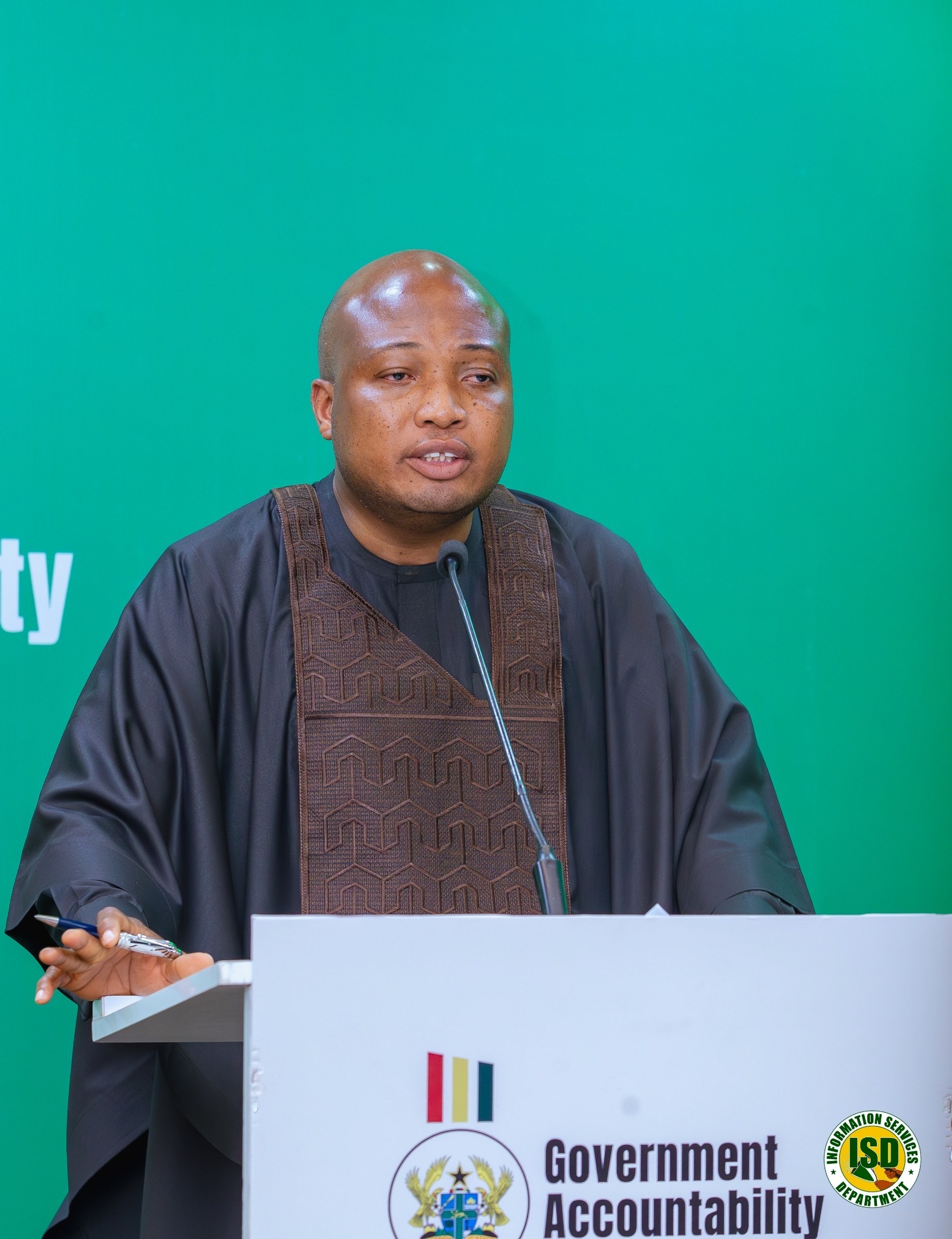
    Engaging the public on Friday, September 5, as part of the Government Accountability Series, the minister noted that he received a 9-page document from Multichoice on July 21 over its inability to reduce its subscription fees.

    Earlier, the Minister for Communications, Digital Technology and Innovation, announced that should Multichoice fail to reduce the prices of its subscription services, the DStv broadcast license will be suspended nationwide, effective August 7, 2025.

    Engaging the public yesterday as part of the Government Accountability Series, the minister noted that he received a 9-page document from Multichoice on July 21 over its inability to reduce its subscription fees.

    The company cited depreciation of the cedi in past years, despite the recent cedi appreciation, as the reason for its inability to reduce prices.

    Sam George noted that it is unacceptable for Nigerians to be paying less for the same packages offered to Ghanaians at higher costs when the naira has depreciated at an accelerating rate against the cedi.

    As such, he has directed the National Communications Authority (NCA) to suspend the broadcast of DStv should Multichoice fail to reduce prices of its packages.

    “Their reasons included that the cedi had depreciated in the preceding eight years by 240%, and they claimed that my request for a reduction based on the appreciation of the cedi was unfounded because, in their words, the appreciation of the Ghana cedi over the last 6 months has been a fluke which could not be sustainable.

    “As Minister, my fidelity is to the Ghanaian people. I have to act in the interest of the Ghanaian people, and I believe the Ghanaian people have been fleeced and exploited for too long. I wrote back to the NCA on Monday and directed the NCA in that letter to suspend the broadcasting license of DStv effective 7th of August 2025, if they fail to effect a reduction in their bundle prices.

    “I can’t as a minister serving the Ghanaian people, continue to watch what can be best described as plain stealing happening to the Ghanaian people. In my letter to them, I gave them scenarios from seven markets that DSTV is operating in. The same content in the premium bouquet that is offered to Ghanaians for the $83 equivalent is offered to Nigerians for the $29 equivalent.

    “How can anyone explain this price disparity to me? Enough of the mistreatment of the Ghanaian consumer. In Nigeria, in the same timeframe, they say the Ghanaian cedi has depreciated by 240%, and the Nigerian naira has depreciated by 409%. If Nigerians are paying the equivalent of $29, DSTV must charge the same here in Ghana,” he said.

  • NDC’s Prof. Alidu Seidu, declared MP-elect for Tamale Central

    NDC’s Prof. Alidu Seidu, declared MP-elect for Tamale Central

    The Electoral Commission (EC), in a statement dated Friday, September 12, announced a reopening of nominations for Tamale Central after two candidates withdrew their nominations on the last day, Wednesday, September 10. Following the expiry of this ten-day window, the Commission, as mandated by CI 127, declared Professor Alidu Mahama Seidu of the National Democratic Congress (NDC) as the winner of the Tamale Central by-election, after he emerged as the sole candidate in the race.

    Regulation 46(1) of CI 127 states: “Where at the close of nominations only one person stands nominated, the Returning Officer shall declare that person duly elected without a poll.”

    In light of this, the Returning Officer for the Tamale Central Constituency, Mr. Muniru Musah, on Tuesday, September 23, 2025, in Tamale, declared Professor Seidu as the replacement for the late Environment Minister and Member of Parliament for the constituency.

    “As it stands, only Prof. Alidu Seidu Mahama stands nominated, and according to CI 127, he shall be declared elected,” Mr. Musah stated.

    Following Prof. Seidu’s triumph in the NDC’s primaries, he was initially expected to contest the seat with two other party opponents—Abdallah Salifu of the People’s National Convention (PNC) and Abubakari Abdul-Rahman of the Liberal Party of Ghana (LPG). However, both withdrew from the race on Wednesday, September 10.

    In response, the EC reopened nominations for 10 days, but no fresh contenders came forward. With the window closed and no challengers, Prof. Seidu was declared MP-elect without a single vote being cast.

    While the University of Ghana professor has not made any formal statements following his victory, the NDC’s Deputy Regional Secretary, Ziblim Saaka, expressed gratitude to constituents and assured them of inclusive, development-driven leadership. He said the MP-elect will deliver on his promises and advance the party’s commitment to progress in Tamale Central.

    “Prof. Alidu Mahama Seidu will be one of the best MPs to be elected to represent the good people of the Tamale Central constituency… By the end of four years, he will be one of the best-performing MPs in Ghana.”

    Prof. Seidu is expected to be sworn into Parliament in the coming days to assume his duties.

    The by-election was necessitated by the death of the incumbent MP, Dr Alhaji Ibrahim Murtala Mohammed, who lost his life in a helicopter crash in August.

    The NPP had earlier declared its intention not to participate in the upcoming by-election. According to a statement signed by the Party’s General Secretary, Justin Kodua Frimpong, the decision was taken by the Party at a National Steering Committee meeting held on Monday, August 11, at the Party Headquarters pursuant to Article 10(10)(1) of the Party Constitution.

    The statement indicated that their decision was the Party’s way of honouring Dr. Murtala Mohammed and the other crash victims.

    In arriving at the decision, the Party considered many factors, including the circumstances under which the Tamale Central seat became vacant and the possibility of further polarisation of the country at this critical time. The NPP argued that it would be inhumane and unconscionable to subject the nation to competitive processes in search of a replacement for the departed MP.

    The Party added that the tension and acrimony often associated with by-elections in the country should be avoided.

    “It is the considered view of the Party that the greatest tribute that the NPP and the rest of the nation can pay in honour of the departed, is not only to win the fight against Galamsey but also to ensure a smooth and peaceful replacement for the good people of Tamale Central.

    “Consequently, the NPP hereby announces that when the Electoral Commission of Ghana opens nominations for the Tamale Central by-election in line with Article 112 (5) of Ghana’s Constitution, the Party will, in accord with the national interest, not take part in the contest,” parts of the statement read.

    Professor Alidu Seidu Mahama, a senior lecturer at the University of Ghana’s Political Science Department, was elected by NDC delegates as the Party’s candidate for the Tamale Central parliamentary primaries.

    His victory was officially announced by Electoral Commission officials at the Alhaji Aliu Mahama Sports Stadium on September 6.

    According to the results, he secured 840 votes out of 1,511 valid ballots cast, beating 11 other contenders in what was described as a hotly contested race.

    His closest challenger, former Tamale Metropolitan Assembly Mayor Abdul Hanan Gundadoo, polled 536 votes, while the remaining candidates shared the rest of the ballots.

    A total of 1,511 delegates out of 1,551 registered cast their votes; one ballot was rejected. Prof. Alidu Seidu Mahama secured a commanding lead with 840 votes, followed by Abdul Hanan Gundadoo with 536.

    The remaining candidates received the following: Dr. Seidu Fiter Mohammed (44), Ing. Aliu Abdul Hamid (23), Alhassan Mbalba (10), Dr. Abdul Rahaman Rashid (9), Sadat Haruna (9), Alhassan Osman Gomda, aka Naa Simani (7), Shamima Yakubu (5), Mariama Naana Salifu (5), Prof. Abdul Razak Abubakari (4), and Muleika Salisu (3).

    Following his declaration as the winner, Prof. Seidu expressed his gratitude to the delegates for their support and trust in his leadership.

    “I am deeply grateful to the party, the delegates, and my fellow aspirants for the clean and competitive campaign we all ran. This victory is not mine alone; it belongs to every member of this great party who believes in unity, progress, and service,” the UG professor said.

    On August 29, the National Democratic Congress (NDC) cleared 12 out of 16 aspirants who picked up nomination forms to contest the Tamale Central parliamentary primary after the completion of the vetting process.

    The NDC had opened nominations on August 21 for aspirants seeking to contest the Tamale Central Constituency primary.

    Nomination forms were made available at the Northern Regional Office of the Party from Friday, August 22, to Sunday, August 24, 2025, between 8:00 a.m. and 5:00 p.m. each day.

    Prospective aspirants were expected to pay a non-refundable nomination fee of GH¢5,000 and a filing fee of GH¢40,000, to be paid in cash only into the Party’s official account at UMB Bank, Adabraka Branch. No cheques or bankers’ drafts were accepted, the Party announced.

    Female aspirants and persons with disabilities were entitled to a 50 percent reduction on the filing fee. A certified copy of the delegates’ list was to be made available to all aspirants after the vetting process.

    Aside from being a political scientist, Prof. Seidu Alidu once headed the Department of Political Science at the University of Ghana. At the Water Resources Commission, he currently serves as Executive Secretary. In 2014, he received a scholarship from the Donahue Institute to study U.S. Political Thought at the University of Massachusetts.

    He has lectured at 12 universities across Africa, including the University of Lagos, University of Ibadan, University of Dar es Salaam, University of Nairobi, and the University of Botswana. Prof. Alidu is a respected scholar who has contributed research to many renowned journals in areas such as peace, justice, politics, and African development.

    He has also consulted for organisations including PASGR, the Centre for International Development Issues Nijmegen, IDS at the University of Sussex, the Friedrich-Ebert Stiftung, UNDP, the Varieties of Democracy Project, and the Social Science Research Council. Prof. Alidu is a former MIASA Fellow on Parliaments and Democracy in Africa.

  • President Mahama considering Justice Paul Baffoe-Bonnie as Chief Justice

    President Mahama considering Justice Paul Baffoe-Bonnie as Chief Justice

    The Presidency has announced that President John Dramani Mahama has submitted the name of His Lordship Justice Paul Baffoe-Bonnie to the Council of State for consideration as Chief Justice.

    In a statement issued on Tuesday, September 23, by the Spokesperson to the President, Minister of Government Communications and Member of Parliament (MP) for Abura-Asebu-Kwamankese, Felix Kwakye Fosu, he revealed that “President John Dramani Mahama has, in accordance with Article 144(1) of the 1992 Constitution, forwarded the name of His Lordship Justice Paul Baffoe-Bonnie to the Council of State for consideration as Chief Justice of the Republic of Ghana.”

    Article 144(1) of the 1992 Constitution of Ghana outlines the process for appointing the Chief Justice, which states that, “The Chief Justice shall be appointed by the President acting in consultation with the Council of State and with the approval of Parliament.”

    Accordingly, Justice Baffoe-Bonnie, who since April this year has been serving as Acting Chief Justice, is now being considered to take the role permanently. The Presidency cited virtues such as diligence and integrity as qualities that make him the best fit for the position, adding that “he has made invaluable contributions to the development of Ghanaian jurisprudence.”

    “Justice Baffoe-Bonnie has, throughout his distinguished judicial career, served with diligence and integrity at the High Court, the Court of Appeal, and currently, the Supreme Court. He has earned the esteem of the Bench, the Bar, and the wider legal fraternity for his intellect, impartiality, and unwavering commitment to justice. His wealth of experience and long service on the Bench render him eminently qualified for the high office of Chief Justice. His Lordship has been serving as Acting Chief Justice since 22nd April 2025,” parts of the statement added.

    This development comes after President John Dramani Mahama relieved the embattled Chief Justice, Gertrude Tokornoo, of her duties with immediate effect in a formal statement dated September 1. The statement, issued by the Presidency and signed by the Spokesperson to the President, Felix Kwakye Ofosu, indicated that her dismissal was in accordance with Article 146(9) of the 1992 Constitution. President Mahama had earlier suspended the Chief Justice on Tuesday, April 22, after a prima facie case was established following separate petitions calling for her removal.

    The new development follows President Mahama’s receipt of recommendations from the committee probing petitions seeking the removal of Chief Justice Gertrude Araba Esaaba Sackey Torkornoo on Monday, September 1. The Presidency justified its decision to dismiss her, citing findings from the Article 146 Committee of Inquiry.

    According to the statement, the Committee found that the grounds of stated misbehaviour under Article 146(1) had been established and recommended her removal from office. “President John Dramani Mahama has, in accordance with Article 146(9) of the 1992 Constitution, removed the Chief Justice, Her Ladyship Justice Gertrude Araba Esaaba Sackey Torkonoo, from office with immediate effect. This follows receipt of the report of the Committee constituted under Article 146(6) to inquire into a petition submitted by a Ghanaian citizen, Mr Daniel Ofori. After considering the petition and the evidence, the Committee found that the grounds of stated misbehaviour under Article 146(1) had been established and recommended her removal from office. Under Article 146(9), the President is required to act in accordance with the committee’s recommendation,” parts of the statement read.

    The committee, chaired by Supreme Court Justice Gabriel Scott Pwamang, included Justice Samuel Kwame Adibu Asiedu, former Auditor-General Daniel Yaw Domelevo, Major Flora Bazwaanura Dalugo of the Ghana Armed Forces, and Professor James Sefah Dzisah of the University of Ghana.

    In July, an application for review regarding an “abuse of court processes” by the embattled Chief Justice was dismissed by the Human Rights Division of the Accra High Court. The court, presided over by Justice Amoako on Thursday, July 31, noted that several claims, such as illegal composition of the committee and wrongful conduct of adversarial proceedings, were already before the Supreme Court. Justice Amoako argued that relitigating these issues would result in duplication of litigation and abuse of court processes. Consequently, the claims were dismissed.

    The judge also dismissed reliefs such as an order of certiorari to quash the committee’s proceedings and nullify its sittings because the Chief Justice did not receive a fair hearing, citing jurisdictional limits.

    The judicial review application, filed on June 9 this year, sought nine reliefs, including a series of declarations that the Article 146 committee probing her removal had acted unlawfully. She asked the court to prevent the committee from proceeding without providing her with authenticated copies of the petitions seeking her removal and the subsequent responses.

    The Chief Justice argued that the President’s purported prima facie determination contained no reasons or justification and was entirely devoid of the elements of judicial or quasi-judicial reasoning expected under the Constitution. However, as the proceedings of the Article 146 committee are to be held in-camera in accordance with Article 146(8) of the Constitution, the court noted that it could not inquire into matters raised by the suspended Chief Justice.

    In response, Justice Gertrude Torkornoo proceeded to the ECOWAS Community Court in Abuja, Nigeria, seeking $10 million in compensation over her suspension from office by President John Dramani Mahama. This formed part of the 10 reliefs she requested. Her latest suit followed several unsuccessful cases at the Supreme Court earlier this year after her suspension.

    The suspended Chief Justice wanted the court to ensure she continues to enjoy the paraphernalia and entitlements of her office pending the determination of the case. Among the measures requested are: “That the Republic of Ghana suspend the disciplinary/removal from office as Chief Justice process against the Applicant, pending the hearing and determination of the complaint on the merits. That Ghana refrains from taking any other measures that may harm the rights claimed by the Applicant and/or aggravate or extend the dispute submitted to the Court, or compromise the implementation of any decision that the Court may render. Given the urgency of the situation, the Applicant respectfully requests the Court to hold a hearing on this request as soon as possible, and that the President of the Court ask Ghana to act to allow any order that the Court may issue on the Request for Assignment of Precautionary Measures to have its appropriate effect.”

    Other reliefs sought include declarations that the panel constituted by the Government of Ghana to investigate and determine the allegations of misconduct was not independent and impartial, thereby violating her human right to a fair hearing under Article 7 of the African Charter on Human and Peoples’ Rights. She also argued that her suspension constituted a violation of her rights to fair working conditions, dignity, and professional standing, exposing her to immeasurable public ridicule. Additionally, she requested an order for the Government of Ghana to prescribe clear procedures for investigating misconduct allegations against a Chief Justice, as well as an order to restore her to office until the conclusion of constitutional proceedings. Finally, she sought $10 million in compensation for moral and reputational damages.

    Meanwhile, the government’s spokesperson, Felix Kwakye Ofosu, has refuted Justice Torkornoo’s claims, maintaining that her suspension aligns with the Constitution. On Thursday, August 14, the Bar Council of England and Wales and the Commonwealth Lawyers Association called for the immediate reinstatement of Ghana’s Chief Justice by President Mahama and the Executive arm of government. 

    “Immediately and without delay, reinstate the Chief Justice of Ghana to her Office, consistent with both the hitherto strong attachment to the rule of law demonstrated by Ghana and also the constitutional duties incumbent upon it. And afford the Chief Justice due and fair process in the investigation and determination of the disciplinary matters brought against her, including but not limited to full and transparent access to that process by her legal representatives,” the group demanded in a joint statement issued on August 14.

    The groups also urged the government to ensure impartial investigations of the disciplinary charges, with her lawyers granted full and transparent access to the proceedings. They further demanded the establishment of clear procedural rules to guide the disciplinary process, including a definite timeframe for the committee to complete its work and communicate its decision.

    In response, Attorney General Dr Dominic Ayine emphasised that his office can only intervene after the committee concludes its work and submits a report to President Mahama. “The suspension will, therefore, remain in effect until the inquiry committee completes its work and submits its report, to which His Excellency, the President will adhere,” he said.

  • Korle-Bu announces spike in childhood cancer, calls for aid in completion of stalled 48-bed Pediatric Oncology Block

    Korle-Bu announces spike in childhood cancer, calls for aid in completion of stalled 48-bed Pediatric Oncology Block

    Childhood cancer is gradually becoming a major concern within Ghana’s health system. Over the years, some children have lost their lives due to limited access to treatment, largely attributed to inadequate infrastructure.

    This was confirmed by the Head of the Paediatric Oncology Unit, Dr. Ernestina Shandorff, who, speaking to the media on the sidelines of the Childhood Cancer Awareness Walk held in Accra. She revealed an alarming rise in cases of childhood cancer at the facility.

    She explained that in previous years, the Unit recorded about 150 cases annually. However, recently, the number has sharply increased to over 200 cases, stressing that these are only new cases. When combined with old cases, the figure rises to about 1,000.

    “It’s high time because our numbers have really increased. Around 2014, we used to see maybe around 160 children with cancer every year; now we see more, we see over 230 every year, new cases, excluding the old children. Plus, the old children will be in the 1000s,” she revealed.

    One major concern expressed by Dr Shandorff was the lack of adequate facilities to cater to the increasing number of cases. This shortage, she said, reduces the survival chances of some children, especially when emergency cases requiring immediate attention are placed on waiting lists, care that could otherwise be provided promptly if sufficient facilities were available.

    “The number of children has outgrown the unit, so we really need a bigger space to be able to make sure we provide adequate care for these children. It takes a village, that’s the truth. So we are advocating through this walk for sponsorship to complete this building so that these children can have the space, and we don’t have to wait for them in the emergency room, wait for additional time that could impact the cure rate of these children,” she said.

    Consequently, she called on all stakeholders to support the completion of the stalled 48-bed Pediatric Oncology Block.
    “…So I call on everybody, govt, philanthropist, please come to the aid of the unit,” she appealed.

    Also at the same event, the Executive Director of Lifeline for Childhood Cancer Ghana, Akua Sarpong, reiterated the urgent need for the completion of the building to save more children.

    “We are building a 48-bed pediatric oncology block at Korle Bu. It’s not just a building — it’s a lifeline. Every day, children are turned away or delayed because there’s no space. That delay can mean the difference between life and death.”

    Her commitment to ensuring the facility’s completion, she explained, is borne out of a personal tragedy.
    “I lost my daughter to cancer. That pain drives me every day. No parent should have to watch their child suffer because the system isn’t ready.”

    She closed with a rallying cry, saying, “We won’t stop until no child in Ghana dies from cancer. That’s our promise.”

    The sod-cutting for the project was done in August 2023 under the erstwhile Akufo-Addo-led government, with an expected completion by October 2024. However, construction has stalled due to funding challenges. So far, about $458,000 has been raised out of the original project cost of $1.6 million (approximately GH¢13.9 million), leaving over $1.1 million still needed to complete the facility.

    “We’ve raised some funds, but it’s not enough. We need government support, corporate sponsorship, and individuals who care. Childhood cancer is not rare anymore, it’s real, and it’s rising,” Dr. Sarpong confirmed.

    The government, in April this year, unveiled the Mahama Cares Ghana Medical Trust Fund, a program dedicated to providing financial aid to individuals battling chronic conditions such as kidney failure, cancer, and heart disease. The fund is designed to alleviate the financial burden faced by patients in need of life-saving medical care.

    The launch took place at the University of Ghana Medical Centre (UGMC) in Accra on Tuesday, April 29, and brought together key stakeholders from the healthcare sector and the corporate world. President John Dramani Mahama, who officially introduced the fund, called on the private sector to support Mahama Cares as part of their corporate social responsibility.

    “I want to encourage corporate Ghana, businesses, the mines, the banks, and all the other companies, that this Ghana Medical Trust Fund is coming to your clients who save their money in your banks or do business with you. Some of them are even your own staff.
    “So, as part of your Corporate Social Responsibility (CSR), if you give anything, consider that you are giving to your own staff or customers. So, I would like to encourage all corporations in Ghana, both private and public, to, at the end of the year, donate some portion of their annual CSR to the Ghana Medical Fund because it is going to do a lot of good to the country,” he stated.

    The Minister for Health, Kwabena Mintah Akandoh, expressed his support for the initiative, describing it as long overdue. He emphasised that the fund would ensure equitable access to healthcare, particularly for individuals facing financial barriers to treatment.

    “The draft bill for the Mahama Care is ready and will be submitted immediately Parliament resumes,” he confirmed.
    Akandoh also announced a significant policy change to strengthen the programme, revealing that the government has removed the capping of the National Health Insurance Scheme (NHIS). This, he explained, will unlock substantial resources for the fund.
    “Most importantly, the uncapping of the national health insurance firm has been removed. This move has unlocked substantial resources to ensure that a dedicated allocation of funds will now support the Mahama Care Programme,” he added.

    Following the uncapping of NHIS, Parliament on July 23 passed the Ghana Medical Trust Fund Bill under a certificate of urgency, giving legal backing to the Mahama Cares Initiative and enabling the establishment of a dedicated fund to support patients battling life-threatening conditions.

    As of now, the operational guidelines and eligibility criteria for accessing the fund are still being finalised. A task force composed of health, legal, and finance experts is developing the rollout framework, but no public release has been made yet. The initiative is expected to roll out in phases beginning in late 2025, with an initial pilot focused on supporting patients with cancer and kidney failure. The exact start date for disbursements and patient enrollment is yet to be announced by the government.

    In a recent development, the Ghana Gold Board (“GoldBod”) on Tuesday, September 23, made a significant contribution of GHS 2 million to the Ghana Medical Trust Fund (“Mahama Cares”) to strengthen healthcare delivery and combat the growing burden of non-communicable diseases (NCDs) in Ghana.

    Speaking at the presentation ceremony, Deputy Chief Executive Officer of GoldBod, Mr Richard Nunekpeku, reaffirmed GoldBod’s confidence in the vision of His Excellency President John Dramani Mahama and the leadership of the Fund. “We are convinced of the foresight behind Mahama Cares and the capacity of its administrators to deliver on its mission and to use the resources effectively in furtherance of this noble vision, the reason why we are making this donation,” he said.

  • Ghanaian boxer, Akushey dies days after heavy defeat

    Ghanaian boxer, Akushey dies days after heavy defeat

    A suspected boxing injury-related death has been reported following the passing of a Ghanaian boxer, Ernest Akushey, popularly known as “Bahubali”.

    According to reports from James Town  TV and Africabox Showup, Ernest Akushey gave up the ghost today, Tuesday, September 23, after he was rushed to the hospital following complaints of undisclosed symptoms on Monday.

    The symptoms are said to have worsened, and around 2 am the following day he was confirmed dead.

    Bahubali’s death comes barely a week after he suffered a thrashing defeat in a bout with rising opponent Jacob Dickson at the Bukom Boxing Arena, which took place on Saturday, September 13, 2025.

    Fans braved early morning rain to attend the event at Bukom Boxing Arena, which was part of the “Monaco – The Night To Prove” boxing showcase.

    According to reports, the bout appeared to have favoured Akishey’s opponent as he dominated right from the beginning until he clinched his victory when the final bell rang with an eighth-round technical knockout (TKO).

    Widely circulated videos of the fight showed Akushey struggling under relentless pressure, sparking sympathy among fans even before the tragic news of his death.

    Consequently, many have speculated that the heavy punches he received during his last fight might have caused him some internal injuries, which have led to his death. However, the family has presented no official autopsy report to support this claim.

    Akushey, who rose through the ranks at the Wadada Gym in James Town, was once an undefeated prospect with a 6-0-0 record.

    He earned his “Bahubali” moniker from his ferocious, crowd-pleasing style, likened to the warrior hero in the Indian blockbuster film.

    “Bahubali’s” death marks the second case at Bukom. The first death linked to Bukom was that of a Nigerian,  Segun “Success” Olanrewaju, who died after collapsing in the ring in the middle of a professional bout with a Ghanaian opponent, Jon Mbanug, at Fight Night 15 of the Ghana Professional Boxing League.

    The tragic incident occurred on Saturday night, March 29, at the Bukom Boxing Arena in Accra, where the 40-year-old fighter Olanrewaju, a former holder of both the Nigerian and West African light-heavyweight titles, had been putting on a strong performance before suddenly losing consciousness mid-fight.

    Spectators and officials watched in horror as medical personnel rushed in to provide emergency assistance.

    A widely shared video of the match shows the moment he collapsed, leaving fans and members of the boxing community in shock.

    Meanwhile, three months after Success’ death, President Mahama’s son, Sharaf Mahama, in partnership with Sharaf-led sports management company, Legacy Rise Sports, successfully organised a boxing tournament – Battle of the Beasts at the Bukom Sporting Arena.

    At a press conference held at the Multichoice Office in Achimota, Mr. Mahama expressed his commitment to giving Ghanaian boxers the global exposure they deserve.

    He commended all the foreign boxers who traveled to Ghana to be part of the event and extended gratitude to the sponsors and partners who are making the night possible.

    Renowned trainer Coach Ofori Asare of Wisdom Boxing Gym highlighted the importance of fair officiating, especially in the highly anticipated bout between his fighter, Theo Allotey (aka Lopez), and Daniel Selassie Gorsh, who will be defending his WBO Africa Bantamweight title.

    Asare described Allotey as a seasoned fighter whose experience and transition from amateur to professional ranks make him the right contender for the title.

    “Boxing is not about trash talk—it’s about delivering in the ring,” Asare said, adding that his fighters are ready to impress fans with dominant performances.

    Also on the card, Haruna Mohammed (aka Thunder) was to defend his National Cruiserweight Title against Abdulai Ahmed from Fit Square Gym.

    Coach Carl Lokko of Bronx Boxing Club emphasized his gym’s reputation as the “house of champions,” stating that although his boxers often miss out on amateur national team selections, they consistently shine at the professional level.

    In his brief but confident remarks, reigning WBO Africa champion Daniel Gorsh promised fireworks, declaring, “On the D-day, we shall see who is who.”

    The main attraction of the night will see Ghana’s Jacob Dickson (aka The Beast) face off against American fighter Andrew Tabiti (also nicknamed The Beast) in a fierce contest for the WBC Africa Bridgerweight Title—a bout that has sparked major excitement among fans.

    Another fan-favourite clash featured Abubakar Kamoko (aka Bukom Tilapia), son of the legendary Bukom Banku, taking on Stephen Ackon in an energetic, powerful, and passionate clash.

    With ten thrilling bouts lined up, this fight night is curated by former world champion Amir Khan in collaboration with Legacy Rise Sports Promotions.

    The tournamnet saw King Promise thrill the fans with a performance had the crowd swaying in their seats at first, but as the tempo rose, so did the energy.

    He delivered to his fans ‘hot’ with some of his hit songs, including “CCTV,” “Selfish”, and “Paris.”

    Tapping feet turned into dancing, and soon the audience was on its feet—clapping, singing along, gesturing at the artiste in the ring, and moving to every beat.

    What began as a partially seated crowd quickly turned into a lively dance floor, swept up by his infectious sound and energetic dance moves.

    The star-studded event saw celebrities turn up in their numbers as well as business moguls.

    Actress Fella Makafui, Juliet Ibrahim, Jackie Appiah and also industrialists Ibrahim Mahama, Osei Kwame Despite, and some members of the East Legon football club, all of whom were spotted cheering passionately from ringside seats.

    The bout itself was a spectacle. Abu Kamako, nicknamed “Ambitious Tilapia” and son of former boxing icon Bukom Banku, claimed a unanimous-decision victory over Stephen Ackon, where all three judges scored the bout 60‑54 in his favour, despite a slow start and heavy punches from Ackon, extending his undefeated streak to 4-0.

  • Air Côte d’Ivoire announces non-stop, direct flight service from Accra to Paris

    Air Côte d’Ivoire announces non-stop, direct flight service from Accra to Paris

    Starting October 15 this year, travellers from Accra to Paris will have an added alternative to the already eleven existing airline options, following Air Côte d’Ivoire’s recent launch of Accra–Paris flights.

    This was contained in a statement by the company announcing a daily service connecting Accra to Paris (France) through its hub in Abidjan. According to the schedule, the flight will leave Accra at 10:45 a.m. and arrive in Abidjan at 12:00 noon.

    From Abidjan, they will then proceed to Paris-Charles de Gaulle Airport in a direct flight.

    In the first week of the West African airline’s operation, the Paris flight is on schedule to leave at 2:40 p.m.; after that, it moves to 3:40 p.m., arriving in Paris at 11:20 p.m.
    This near-midnight flight is scheduled to give customers an easy catch of their morning flights to connect them to other European cities.

    What the aircraft is like and what it offers

    For the route, Air Côte d’Ivoire will use its new Airbus A330-900neo, fitted with a four-class cabin comprising business, premium economy, and economy seating.

    The aircraft offers enhanced passenger comfort while doubling as a cargo workhorse capable of facilitating same-day freight delivery between Paris and Abidjan. This means that while passengers are promised comfort in the respective cabins of the aircraft, fast freight between Paris and Abidjan is also assured.

    Before Air Côte d’Ivoire announced the Paris route, travellers mostly resorted to travelling with KLM, Brussels Airlines, British Airways, Turkish Airlines, Ethiopian Airlines, or TAP Portugal. Air Côte d’Ivoire’s service gives an alternative and increases competition.

    Aside from the new route, Air Côte d’Ivoire will restart flights to Casablanca (Morocco) and Johannesburg (South Africa) in October 2025. This is part of its plan to make Abidjan a stronger regional hub linking West Africa with the rest of the world.

    Also, Delta Air Lines is expanding its footprint in Ghana with the introduction of a new seasonal daily nonstop flight service between Accra and Atlanta, starting December 1, 2025.

    The upcoming service aims to offer travellers in Ghana a more efficient route to the United States by eliminating layovers and streamlining the travel experience. Operated with the Airbus A330-900neo, the route will provide passengers with a range of seating options, including Delta One Suites, Premium Select, Comfort+, and Main Cabin.

    This development marks Delta’s second nonstop route connecting Ghana directly with the U.S., highlighting the airline’s continued interest in strengthening its presence in the West African market.

    The statement underscored Atlanta’s strategic role as Delta’s primary hub and the world’s busiest airport in terms of passenger traffic. From there, travellers will have access to over 215 destinations across the U.S. and internationally, including key cities such as Miami, Washington D.C., Los Angeles, Dallas, and Honolulu.

    The new service is anticipated to cater especially to those visiting relatives, conducting business, or travelling during festive seasons like “Detty December.”

    Passengers on board will enjoy complimentary high-speed Delta Sync Wi-Fi, allowing them to stay connected, stream entertainment, receive travel notifications, and shop online throughout their flight. This feature, available to SkyMiles Members, reflects Delta’s commitment to offering a modern, digitally enhanced flying experience.

    The rollout of this route forms part of the airline’s broader strategy to upgrade its fleet with advanced connectivity tools, including the installation of dual-network systems across newer and regional aircraft.

    Having served the Ghanaian market for more than ten years, Delta considers the Accra–Atlanta route a significant move toward deepening travel and cultural connections between Ghana and the United States.

    Last year, direct flights from London’s Gatwick Airport to Kumasi Prempeh I International Airport were announced to take place starting December 3, 2024.

    This new route is the result of a partnership between the Ghana Airports Company Limited (GACL) and Ethiopian Airlines.

    The announcement was made by GACL in a statement on November 28, 2024, “in collaboration with Ethiopian Airlines, will operate direct flights from London Gatwick Airport to Kumasi Prempeh I International Airport (PIA) starting December 3, 2024.”

    Travellers on the new London–Kumasi direct route, according to the statement, can now depart London Gatwick at 2:10 a.m., arriving at Kumasi Prempeh I International Airport by 9:05 a.m.; the return flight leaves Kumasi at 11:00 a.m. and touches down in London at 6:00 p.m., making the journey smooth and perfectly timed for both business and leisure.

    Meanwhile, in an unrelated development, PassionAir, a domestic airline operator, announced significant disruptions to its flight operations across all routes.

    This stemmed from an anticipated shortage of aviation fuel in Accra from Wednesday, 22 July, to Sunday, 27 July, as announced by the Ghana Civil Aviation Authority. During this period, PassionAir will not be seeing to flight operations.

    In a statement dated July 23, PassionAir apologised for any inconvenience caused. The Corporate Affairs of PassionAir advised its valued passengers and the public to stay informed by contacting the customer service team on 0800 221 221 for the latest updates and assistance.

    The company appreciated its passengers and the public for their “patience and understanding.”

    Already, the domestic airline operator has informed its passengers about cancelled flights. An SMS read, “Dear Valued Customer, Due to an aviation fuel shortage in Accra and Kumasi, your flight has been cancelled. We apologise for the inconvenience.”

    Meanwhile, in an unrelated development, PassionAir, a domestic airline operator, announced significant disruptions to its flight operations across all routes.

    This stemmed from an anticipated shortage of aviation fuel in Accra from Wednesday, 22 July, to Sunday, 27 July, as announced by the Ghana Civil Aviation Authority. During this period, PassionAir will not be seeing to flight operations.

    In a statement dated July 23, PassionAir apologised for any inconvenience caused. The Corporate Affairs of PassionAir advised its valued passengers and the public to stay informed by contacting the customer service team on 0800 221 221 for the latest updates and assistance.

    The company appreciated its passengers and the public for their “patience and understanding.”

    Already, the domestic airline operator has informed its passengers about cancelled flights. An SMS read, “Dear Valued Customer, Due to an aviation fuel shortage in Accra and Kumasi, your flight has been cancelled. We apologise for the inconvenience.”

  • Youth account for 14% of 665 new  HIV cases recorded in Ahafo – Regional Health Director 

    Youth account for 14% of 665 new  HIV cases recorded in Ahafo – Regional Health Director 

    The Ghana Health Director at Ahafo North, Dr Akosua Owusu Sarpong, has raised an alarm over the rising cases of HIV infections in the region, particularly among the youth.

    At a press briefing held at Hwediem in the Asutifi South District, Dr Sarpong revealed that, following research conducted, it was indicated that six hundred and thirty-six (636) have contracted the infection, adding to the old number of cases in the region. 

    Out of this number, fourteen percent (14%) of them are teens, adolescents, a major challenge she believes should be dealt with as soon as possible.

    “After our research, we can say that HIV infection is on the rise. From the beginning of the year to June, we have recorded 636 new cases in addition to the old cases we have now. And the most disturbing trend is infection among our youth, adolescents, and teenagers, from 14% of the total number of new cases. It’s quite concerning that our children who are either in school or working will be infected. She added that this rising case of infections among the youth was “alarming, scary, and dangerous.” 

    Consequently, she highlighted her outfit’s commitment to intensifying HIV awareness just as it had been doing in the previous years.

    “…We are creating awareness about HIV…just as we have been doing in previous years”, she noted.

    She further admonished infected persons to take all necessary measures to prevent the spread of the virus, urging them to desist from deliberately trying to infect others simply because they themselves have been infected. There are medications you can take to stay healthy, she added

    “We have medication for infected persons. Take precautions to prevent infecting others. Do not say I have been infected, hence I will also transmit to others”.

    On how the viral disease’s spread can be contained, she advised total abstinence from sex, faithfulness to partners, and the use of condoms.

    “Total abstinence from sex, being faithful to your sexual partners, and the careful use of condoms are effective ways to limit the transmission of the viral disease.”

    On available interventions, the regional health director urged the public to take advantage of and help prevent the spread of HIV.

    “There are many HIV interventions in our facilities, such as the prevention of mother-to-child transmission of HIV, early infant diagnosis, and HIV linkage to care with antiretroviral medications. Everyone in the Ahafo region should take advantage of these interventions in their health facilities to seek care when positive and to prevent new infections,” she continued.

    Dr Sarpong then went on to call on the media and all other stakeholders to join them in creating awareness to fight the fatal infection and save more lives.

    “I am appealing to journalists and media outlets in the region to support our public education campaigns to curb the spread of HIV and AIDS,” she continued.

    In late April, there were reports of a rapid increase in HIV infections in the Berekum Municipality in the Bono Region, which now has the highest HIV/AIDS prevalence rate at 3.34 per cent.

    This was revealed by Mark Kyeremeh Oppong, the Bono Regional Technical Officer in charge of Monitoring and Evaluation at the Ghana Health Service.

    He described the findings from the Ghana AIDS Commission’s 2023 sentinel survey as worrying and noted that the entire Bono Region is experiencing a concerning rise in HIV cases.

    Speaking at the launch of the “Miss Elegance Tertiary Ghana 2025”, a beauty pageant initiated by the Reproductive Needs and Fitness (RENEF) foundation, a health-centred Non-Governmental Organisation (NGO), Oppong encouraged young people who are sexually active to stay away from premarital sex and avoid having multiple sexual partners. For those who cannot abstain, he advised them to always practice safe sex.

    RENEF, an organisation focused on reproductive health and gender equality, is using its 2025 beauty pageant as a platform to encourage students in tertiary institutions to voluntarily test for HIV and AIDS. The campaign aims to help control the rising number of infections.

    Oppong expressed concern that the Bono Region has recorded the highest HIV prevalence in the country for three consecutive years. He said the increasing infection rate is troubling and called for urgent research to understand the root causes of the spread.

    USAID withdrawal puts Ghana at risk

    Ghana stands to lose an estimated $138.7 million in funding this year after the United States decided to withdraw support for HIV/AIDS programs.

    The allocation, requested through the USAID Foreign Assistance Discretionary Request Report, was designated to aid essential sectors such as healthcare, economic development, education, and governance.

    “In terms of aid, Ghana, on average, receives more than $130 million annually. Last year alone, bilateral support from USAID totalled over $150 million, which was dedicated to health, agriculture, education, governance, and other critical sectors. This year, Ghana submitted a request for $138.7 million, and now, that amount will no longer be available.”

    The health sector is expected to face severe repercussions, with a $69.2 million funding request aimed at tackling malaria, bolstering health security, and improving maternal and child health, family planning, reproductive health, and nutrition, which are now at risk.

    The withdrawal of U.S. aid jeopardises these vital programs.

    The struggle against HIV/AIDS will also take a major hit. Since 2007, Ghana has received support through the U.S. President’s Emergency Plan for AIDS Relief (PEPFAR), a program designed to reduce the spread of HIV/AIDS and assist those living with the virus. Over time, more than $132 million has been invested in Ghana through PEPFAR, working alongside local partners to combat the epidemic.

    However, with the recent reduction in funding, initiatives focused on antiretroviral treatment, testing, and prevention efforts will face significant disruptions.

    The U.S. funding cut presents a serious challenge for Ghana, as the country may experience funding gaps that could undermine essential public health programs and economic growth initiatives.

    Ghana-US explores options to fight against HIV

    Health Minister Honourable Mintah Akandoh and Chargé d’Affaires Rolf Olson of the United States Embassy have held discussions on exploring opportunities to strengthen collaboration in fighting HIV/AIDS, malaria, and other diseases.

    The two held discussions on August 26 to discuss ongoing U.S. health assistance to Ghana and the Mahama Administration’s priorities in the health sector.

    Director-General of the Ghana AIDS Commission, Dr. Kyeremeh Atuahene, has stated that Ghana requires $300 million annually to achieve its HIV/AIDS elimination target by 2030.

    According to the Commission, over 500,000 people in Ghana are currently living with HIV/AIDS. The national HIV prevalence rate stands at approximately 1.7%, with regional disparities.

    Ghana is facing a concerning rise in HIV-related deaths, with new data revealing a staggering 33% increase in fatalities in 2023.According to reports from the Ghana AIDS Commission, 12,480 Ghanaians lost their lives to AIDS-related illnesses in 2023, compared to 9,359 deaths recorded in 2022. Unfortunately, deaths resulting from AIDS recorded for persons of all ages were 9,359.

  • FixTheCountry movement to hold galamsey vigil today

    FixTheCountry movement to hold galamsey vigil today

    The youth-led civic movement in Ghana, FixTheCountry ‘s anti-galamsey protest is set to come off today, Sunday, September 21, 3pm at Revolution Square in Accra, in response to illegal mining activities, locally known as galamsey, in the country.

    The protest comes on the back of President Mahama’s remarks on measures his government is taking to fight the menace.He ruled out declaring a state of emrgency citing that, the instruments available to deal with galamsey haven’t been exhausted yet hence the need for calm.

    Taking to the X platform (formerly Twitter), on Monday, September 15, the group’s convenor, Oliver Barker-Vormawor, stressed that the solution to end the menace requires collective efforts, hence, he called on all and sundry to participate in the upcoming vigil.

    “On Sunday 21st September, we will have a vigil at the Revolution Square, and on Monday 22nd (a holiday), there will be a march, calling attention to the urgency of our environmental crisis.

    “The responsibility to protect and preserve the environment is by divine assignment, ours as a people,” he wrote, adding that the issue transcends electoral politics.Our responsibility to end galamsey does not end at elections. Nor does it begin after our party loses one. This is bigger than petty politics”.

    Illegal mining activities continue to retrogress the country’s development, as they lead to the loss of lives, destruction of properties and the environment, and water bodies, among others.

    For years, the country’s efforts to nip the canker in the bud have not yielded the needed results. Among measures taken to protect water bodies from illegal miners is the deployment of river guards.

    The river guards are selected from communities most affected by illegal mining, ensuring they have a deep understanding of the local landscape and challenges.

    The government has rolled out an official order requiring all machinery used in mining operations to be registered with the Driver and Vehicle Licensing Authority (DVLA) by 1st August.

    A statement issued by the Ministry of the Interior on Tuesday, July 15, states that the state will go ahead to confiscate unregistered mining equipment after the deadline.

    “The Government, as part of efforts to reform the mining sector in the country, requires that all machinery used in mining activities must be registered with the Driver and Vehicle Licensing Authority (DVLA) by 1st August 2025. Equipment that remains unregistered after this deadline will be confiscated by the State,” the Ministry stated on its website.

    Mr Mubarak has empowered the Ghana Police Service and DVLA to begin strict enforcement of the new rule from August 2. “The Ghana Police Service and DVLA have been directed to enforce this directive from 2nd August 2025 onward rigorously. The general public, especially those who use mining machinery, is advised to take note and comply with the directive,” he wrote.

    The Ministry reiterates its resolve to maintain national peace through effective internal security and law enforcement. Meanwhile, a similar directive came in months ago where excavator owners and operators were asked to register their machines with the Driver and Vehicle Licensing Authority (DVLA) within two weeks or risk losing them to the state, as the government intensifies efforts to clamp down on illegal mining activities.

    The Chief Executive Officer (CEO) of the DVLA, Julius Neequaye Kotey, issued the directive in Accra, warning that effective June 1, any excavator not registered with the DVLA will be confiscated.

    Speaking at a press briefing, Mr. Kotey announced that the Ghana Police Service and the DVLA’s operational team commenced a nationwide enforcement after the deadline, arresting and impounding excavators being used at mining sites or for commercial purposes without proper documentation.

    “This exercise will help identify every excavator that enters the country and trace how it is being used. The goal is to ensure we can monitor and hold people accountable,” Mr. Kotey said.The directive fell in line with Section 38 of the Road Traffic Act, 2004 (Act 683), which mandates the registration of all motor vehicles and trailers, including farm and heavy-duty equipment.

    Despite the law, the DVLA found many unregistered excavators operating in mining areas, some of which have been used in illegal activities.

    Mr. Kotey emphasized that the DVLA, with its 34 offices nationwide, could register all excavators and farm machinery within two weeks and was ready to strictly enforce the directive. “Excavators in the hands of illegal miners have worsened the destruction of our environment. This is why we must act,” Mr Kotey said.

    To further control the situation, the DVLA, in collaboration with key agencies like the Minerals Commission, National Security, the Ghana Ports and Harbours Authority (GPHA), and the Customs Division of the Ghana Revenue Authority (GRA), commenced tagging all newly imported excavators.

    In addition to tagging new imports, the Minerals Commission was tasked to lead a team that would tag all excavators already in the country. Legal small-scale mining sites have also been geo-fenced, with their site coordinates integrated into the Ghana Mine Repository and Tracking software for better oversight.

    The move is part of broader government efforts to combat illegal mining. Three months ago, Lands and Natural Resources Minister Emmanuel Armah-Kofi Buah announced the rollout of a system to monitor excavator imports and usage, involving port tagging and digital tracking in partnership with several state agencies.

    According to the sector minister. The third most valuable item imported into this country is excavators, and it is worth GHC6.2 billion.

    In April, a total of 47 individuals were arrested for engaging in illegal mining activities along the Tano River and within the Aboi, Subri, and Nimiri forests in the Western Region. This followed a special four-day intelligence-led operation that commenced on April 17, within the Samreboi enclave.

    According to the Ghana Police Service, the suspects include 39 Ghanaians and 8 Chinese nationals. The Police indicated that a significant amount of equipment and materials believed to have been used for the mining operations were retrieved.

    These include seventeen excavators, one bulldozer, four motorbikes, two Toyota Hilux vehicles, one Rav4 vehicle, four pump action guns, one single barrel gun, fifty-four live BB cartridges, and eight pumping machines.

    Prosecution began for the arrested suspects. On Tuesday, 41 of them were arraigned, with 29 remanded into Police custody to reappear before the court on April 30, 2025. Twelve others were also remanded to return to court on May 2, 2025.

    The remaining seven were put before the court on April 23, 2025.Two coordinated operations conducted on Friday, June 20, at Nikanika and Adeade in the Central Region led to the arrest of 3 suspects and the seizure of several pieces of mining equipment. The operations were executed by the Ghana Police Service, through its Special Anti-Galamsey Task Force.

    The task force proceeded to a mining site at Nikanika. Although no operators were found at the scene, the team retrieved a single-barrel shotgun loaded with a cartridge and three water-pumping machines.

    The task force extended its operation to Adeade, where three suspects—Prosper Quansah, Chrispin Nartey, and Owusu Gambra—were arrested with an excavator on a lowbed trailer.

    One SANY excavator, four unregistered Haojin motorbikes, and one lowbed vehicle with registration number GN 2136-24 were seized from the scene. All exhibits were secured in police custody.

    Some 12 accused persons standing trial for engaging in illegal mining activities at Tumetu near Princess Town in the Ahanta West Municipality of the Western Region have been remanded into prison custody.

    While 10 of the accused persons were arrested at a palm plantation, two were arrested at the Elluabo Chavene Ghana Rubber Estate Limited (GREL) plantation.

    This was due to a coordinated police intelligence-led operation within the Ahanta West Municipality. The accused persons are Lord Yankey, Caleb Adu Kwaw, Stephen Agyei, Ebenezer Barnes, Mathew Somagevi, Paa Grant, Bashiru Kaviru, Joseph Borney, Aminu Issah, Kofi Sogah, Albert Normah, and Robert Mensah.

    Four water pumping machines, one tricycle with registration number M-20-WR 1045, and two motorbikes were retrieved from the sites, according to the police.

    All twelve accused persons admitted to the offence during police interrogations. They were subsequently put before the Takoradi Harbour Area Circuit Court ‘A’, and were remanded into prison custody at Sekondi and reappeared before the court on Tuesday, July 8.

    Also, fifteen individuals are in police custody for engaging in illegal mining activities at Manso Adubia. They were arrested following a special intelligence-led operation at Watreso and Preacher Krom.The suspects include Tahiru Ibrahim (24), Shaibu Idrissu, (23), Boateng Emmanuel (27), Jamon Kwaku Samuel (21), Yaro Patrick (29), Kofi Boakye (21), Gubong Mathew (45), Fatawu Zackari Seidu (26), and Abdul Malik Seidu (22).

    The others are Dauda Tahiru (23), Sampson Grace (21), Boolangkpuo Freda (24), Arima Hagar (26), Kwarteng Vasco (30), Kwame Adutwum (24).

    Two excavator control boards, two automatic pump-action guns, two Musler 12 firearms, 59 BB cartridges, three AA cartridges, one water pumping machine, two power generators, one vulcanizing machine, and one Apsonic motorbike were seized from the site.

  • 8 Toyota RAV4s, 2 Toyota C-HRs stolen from the Netherlands traced in Ghana

    8 Toyota RAV4s, 2 Toyota C-HRs stolen from the Netherlands traced in Ghana

    The Ghana Police Service, in collaboration with the Netherlands Embassy and the international security firm Digitpol, has intercepted ten trafficked vehicles in Ghana.

    Speaking during a press briefing on Saturday, September 20, 2025, the Director-General of the Criminal Investigations Department (CID) of the Ghana Police Service, COP Lydia Yaako Donkor, revealed that the trafficked vehicles following the investigations were recovered in Accra, Cantonments, Nima and Kantamanto.

    “Recently, the Police collaborated with the Netherlands Embassy and Digitpol, a security company that works closely with the Netherlands Police, to track and recover stolen vehicles trafficked into Ghana. These vehicles, which had been reported stolen from the Netherlands, were tracked to Ghana. These vehicles were recovered in parts of Accra, including Kantamanto, Nima, and Cantonments,” she revealed.

    The operation, which took place from September 15 to September 17 this year, led to the recovery of eight cars, including Toyota RAV4s and two Toyota CH-Rs.

    COP Lydia explained that the tracking and recovery of these trafficked vehicles form part of the government’s efforts to clamp down on the growing challenge of transnational vehicle crime — a problem she said drains the government’s coffers and tarnishes Ghana’s reputation, making it an attractive hub for crime syndicates and other illegal activities.

    “The Criminal Investigations Department has intensified efforts to address the growing challenge of transnational vehicle crime. Vehicle theft not only causes financial loss to victims but also tarnishes Ghana’s international reputation and fuels other criminal activities. As part of its efforts, the CID has been working with national stakeholders, including the Ghana Ports and Harbours Authority, as well as international partners and embassies of affected countries,” she detailed.

    Consequently, she advised prospective buyers to be vigilant in their car purchasing transactions.

    “Prospective buyers are strongly advised to demand proof of ownership from the country of origin. Vehicle details can also be verified with INTERPOL Accra before finalising any purchase,” adding that “these operations highlight the importance of international cooperation in fighting vehicle-related crimes. The operation is ongoing unabated. A lot more vehicles have been identified, and in the coming days, we are going to be tracking and retrieving them.”

    COP Lydia’s caution to prospective buyers comes on the back of laws in Ghana that criminalise the purchase of stolen vehicles. Both the seller and the buyer are declared complicit in such crimes.

    Ghana’s Criminal Offences Act, 1960 (Act 29), Section 146, declares that, “Whoever dishonestly receives any property which he knows or has reason to believe to have been stolen, fraudulently obtained, or unlawfully converted, is guilty of a second-degree felony.”

    The subsequent section, Section 147, also states that “Whoever receives any property under such circumstances as would cause a reasonable person to suspect that the property had been stolen or unlawfully obtained, and fails to make reasonable inquiries as to the ownership of the property, shall be presumed to have dishonestly received the property.”

    Recently, Ghana’s dancehall artist Charlkes Nii Armah, popularly referred to as Charles Nii Armah was invited for questioning by the Economic and Organised Crime Office (EOCO) following his alleged involvement in a fraud case regarding his purchase of a Lamborghini Urus a car identified by the FBI and the US Justice Department as proceeds of a $4 million crime.

    The $4 million crime involves Nana Kwabena Amuah, a Ghanaian who is currently serving a jail term in the USA..

    He was detained and later granted bail. While in detention, a mass of his fans gathered in front of the EOCO office on Thursday, demanding his release.

    According to EOCO, Charles Nii Armah Mensah was unable to identify the person from whom he purchased the said Lamborghini Urus vehicle.

    He is reported to have said he purchased it from the “Street” and from someone possibly called “ZAK” who may have contacted him on WhatsApp but whose identity he does not know and whose contact he has thrown away.

    Also, EOCO states that Charles Nii Armah Mensah does not also possess any documentation in terms of receipt or transfer documents which shows that he owns or purchased the said vehicle except a customs declaration document in his possession bearing the name of Nana Kwabena Amuah, who is currently in jail.

    Earlier this morning, die-hard fans of Shatta Wale started to mass up at the Economic and Organized Crime Office (EOCO) following the singer’s detention on Wednesday.

    They demanded his immediate release from EOCO detention.

    EOCO’s investigation forms part of a larger investigation regarding possible co-conspirators in the $4m crime which occurred in the US involving some Ghanaians and recoveries of the proceeds of the crime.

    Following requests from the FBI and the US Justice Department of EOCO to track the vehicle and conduct local investigations in respect of uncovering possible co-conspirators in Ghana, EOCO began looking for the vehicle until it was identified and seized in or around May this year in the possession of one Charles Nii Armah Mensah.

    On August 15, 2025, a United States District Court of the Eastern District of Kentucky, Central Division of Lexington in a criminal case of the United States of America vrs. Nana Kwabena Amuah issued an order Forfeiting Substitute Asset on the Lamborghini Urus in question, authorising the US Government to take possession of the said vehicle in Ghana as restitution for the crime.

    Meanwhile, following Shatta Wale’s release, the musician publicly commended EOCO for their professionalism in handling the case.

    He praised the establishment after being released from EOCO’s custody on Thursday night.

    In a video on social media, Shatta Wale revealed that while being detained, he was not abused but rather taken through necessary processes as required by the law.

    “To all the staff at EOCO, you guys have been wonderful. At least I came there and you guys really took me through the rightful processes that were needed. I just want to say God bless you,” he said.

    Shatta Wale also used the opportunity to thank his supporters who thronged the streets to demand his immediate release from EOCO.

    He acknowledged that no harm came his way while in custody and remains safe.

    “One Don is safe, I’m home now, and I want to say a big thank you [to fans] for supporting and being around me in times like this because I needed you guys the most and you held me down,” he said.

  • UEFA, Athletico set to probe staff members spitting at fan incident after Liverpool clash

    UEFA, Athletico set to probe staff members spitting at fan incident after Liverpool clash

    Atletico Madrid is set to launch an investigation into an altercation that occurred after the final whistle in the Liverpool Champions League match at Anfield on Wednesday, September 17.

    The Spanish-based club lost 2-3 to Liverpool, but the post-match was marred by a melee after Atletico’s head coach, Diego Simeone, lost his temper, confronted one opposition fan and was sent away with a red card. Visibly agitated, he was captured being restrained by stewards and other staff of the team.

    While stewards and other backroom staff worked to end the misunderstanding, a member of Atlético’s backroom staff, wearing a club-issued coat, was caught on video seemingly spitting toward Liverpool fans during the melee.

    His behaviour has garnered reactions with many expressing certainty that, following the review of footage and other relevant information to authenticate this bizarre behaviour in football, the football governing body is likely to take punitive action against the staff.

    BBC reports that, following an engagement with Athletico, they have confirmed that they will probe further into the case; however, they declined to comment further.

    Liverpool, on the other hand, will provide any relevant CCTV footage and other information to support a potential UEFA probe.

    Meanwhile, in a post-match interview, Simeon, though not justifying his behaviour, explained that he had endured the insults throughout the whole period the game was underway, which isn’t an easy situation to deal with, despite being a coach.

    “They always talk about care, about respect, but they insult you from the crowd all game. I can’t say anything back because I’m the coach. My reaction is not justifiable. But after 90 minutes of insults, it’s not easy, ” he said.

    After the game, the Argentine coach said, “It’s never very good when we react as managers, is it? But if there are comments against racism or insults, we can get angry and fight back as well, managers.

    “When they scored the third goal, he [the supporter] turned around and insulted me. When I turned around, I am a person and I’m human.”

    When asked for specifics on the insults, Simone added: “I’m not going to get into the exact nature of the insults.

    “I don’t want to get involved with that. I have to stay in my place. I know what went on behind the manager’s bench.

    “I can’t solve society’s problems in one press conference. I’ve got to live with it because it exists all over the place, ” he detailed.

    It is reported that Jonny Poulter, a Liverpool fan who was the centre of all this trouble after his remarks triggered Athletic coach’s denial of making racist or political insults, however, confirmed that he was spat at. He is reported to have said in a post-match video he shared on his socials.

    “Something I want to get off my chest here, in regards to what happened last night with Simeone, and I think he’s a bit of a coward. When he went in and did his press conference after the game, the Spanish media had asked him what he said, if it was racist, if it was regarding the Falklands War and all this rubbish, right?. There was nothing racist said by me or anyone else. There was never a mention of the Falklands War by me or anyone else. Just putting it out there. Nothing racist, no mention of any war or slurs of any kind,”  he shared in an X post.

    According to Poulter, Simeon claims of being a target of racist comments, and his snubbing of further questions to authenticate his claims leaves room for the world to make assumptions.

    “But the fact that he was asked it, and he didn’t answer the question, and he just got up and walked out, has left it open for speculation for the world,” he noted.

    He claims that all he said was “ ‘Hey, hey, f* off,’ we’ve won, basically, as you do” after receiving tons of DMs asking him what he said to have stirred the wrath of the Athletico coach.

    “I’ve had messages on every platform, I don’t know how many, of people saying, ‘Oh what did he say, what did you say’…” he added.

    Poulter has a record of breaching laws when he visits the stadium.. Before this incident with Simeon, he had suffered a three-year ban from football after a 2015 altercation during Steven Gerrard’s final home game, where he was convicted of abusing a disabled fan and her husband. Also, had been cautioned in 2013 for attempting to bring smoke pellets into Wigan’s DW Stadium.

  • Haaland sets new record; notches 50th UCL goal after Napoli win

    Haaland sets new record; notches 50th UCL goal after Napoli win

    Man City’s goal-scoring machine, Erling Haaland, has broken and set a new record after notching his fiftieth (50) Champions League goal.

    He snatched the spot of fastest player to reach 50 UEFA Champions League goals from the legendary Dutch striker Ruud van Nistelrooy, who achieved the milestone in 62 appearances. However, in Haaland’s case, he has achieved it in 42 appearances, covering van Nistelrooy’s record by a stunning 13-match margin.

    He notched the fiftieth UEFA goal after lofting a header following an assist from Phil Foden in the fifty-sixth minute during Man City’s clash with Napoli yesterday, Thursday, September 18.

    As expected earlier, Pep Guardiola’s men dominated in the first minutes, but Napoli kept a good defensive shape, coupled with their keeper Milinković-Savić’s stunning keeping skills in making some significant saves.

    Unfortunately, at the twentieth minute, Napoli lost a man, captain Giovanni Di Lorenzo, after being sent off for a last-man foul on Haaland. Referee Felix Zwayer initially waved play on, but VAR intervened and the red card was confirmed.

    Following their skipper’s dismissal from the field, Napoli’s coach, Antonio Conte, substituted Kevin De Bruyne, a former City player who was making an emotional return to Etihad Stadium, playing his immediate past teammates in the 26th minute to reinforce their defence with Mathías Olivera.

    City pressed hard, with Rodri, Reijnders, and Gvardiol testing Napoli keeper Vanja Milinković-Savić, who made several key saves between the 33rd -42 minutes; however, they notched no goal until the first half was over.

    However, just eleven minutes into the second half, City found the back of the net when Haaland scored. Napoli could barely sink it in when Jeremy Doku Doku swerved three of their defenders and curled a low shot into the bottom corner, sealing the win.

    City controlled the tempo, with 70% possession and 23 shots, while Napoli managed just one attempt and 30% possession.

    Man City also had a stunning game on Sunday in a clash against Man Utd.

    Kevin De Bruyne’s last days at Man City

    News of De Bruyne’s departure from Man City began in late 2023 and early 2024 when speculations began swelling about him being on Saudi Arabia’s wishlist alongside Liverpool’s Salah and Man Utd’s Fernandes. Pep Guardiola, in response, rebuffed claims saying De Bryne is going nowhere. 

    However, some months later, it emerged that he expressed his uncertainty about his participation in the Club World Cup at the time over fears of sustaining an injury. The attacking midfielder, whose contract was set to expire by the end of the season, left as a free agent.

    Speaking in an interview during a discussion about his potential participation in the Club World Cup, Kevin said: “I think in a way I have to take care of myself because if I get injured in the Club World Cup, what am I going to do?”

    “Nobody’s going to take care of me at that point. So there’s a big chance probably I won’t play it, but I don’t know, maybe yes.”

    With two games left to go this season, he said he had to consider what is best for his own career as he prepares for his next move.

    “I have to take care of my family. I’ve got three kids and my wife; it’s not an easy process at this time,” he said.

    However, his uncertainty about missing the Club World Cup has left a slim chance of his participation.

    Many believed he could sign a short-term extension that would allow him to play in the newly expanded tournament in June and July.

    The timing of the Club World Cup, which was expanded from seven teams to 32, has led to FIFA introducing a short-term transfer window to enable players whose contracts expire on June 30 to move to clubs participating in the tournament.

    It also allows players like De Bruyne to sign short-term deals purely to take part before moving on as free agents.

    But that brings with it the risk of him suffering a serious injury that would jeopardise a future transfer.

    Kevin De Bruyne had an outstanding career at Manchester City, distinguishing himself as one of the best midfielders in the world.

    He joined the club in 2015, and since then, he has won 6 Premier League titles, a Champions League, and multiple domestic trophies. Following his injury return in the 2024/25 season, De Bruyne made a total of 38 appearances across all competitions, scoring 6 goals and providing 8 assists.

    He also scored 4 goals in the Premier League and assisted 7. However, he scored no goals in the Champions League after 7 matches.

    In the FA Cup, he played four games and scored two goals.

    After fourteen years with Man City, the 33-year-old is now considering his options but says there has been uncertainty over whether City wants him to be part of its squad for the Club World Cup in the United States.

    Meanwhile, City at the time didn’t have the best season, as they gave up their Premier League title this season after four consecutive wins. De Bruyne said, though,

    “This year has just not gone the way we wanted it to. You have to accept it. You have to move on and work hard and go again,” De Bruyne said.

    “It’s alright. This doesn’t change anything that’s happened in the past 10 years.” De Bruyne said he has yet to decide on his next move and whether he would look to join another Premier League team”.

  • We have to be concerned – President Mahama on youth’s growing taste for military regime over democracy

    We have to be concerned – President Mahama on youth’s growing taste for military regime over democracy

    There were louder cheers and applause for the leaders of the military junta during his inauguration in January this year, a phenomenon that Ghana’s President John Dramani Mahama has described as troubling, given the large youth population in Africa.

    With approximately seven military coups occurring in Africa over the last three years, President Mahama has called on stakeholders to address the challenges facing Africa’s democracy with urgency, to sustain the rule of law and make it attractive to the youth again.

    He made these remarks while delivering a keynote speech at the just-ended two-day Democracy Dialogue 2025 held at the Accra International Conference Centre under the theme “Why democracies die”. In his speech, he highlighted a 2024 survey conducted by Afrobarometer and released in July last year, which suggested that more of the youth prefer a military regime over democracy.

    President Mahama noted, “For those who attended my inauguration: if you were not on Black Star Square but were locked in a room and only heard the announcements of presidents coming up to greet me, you would have noticed that the loudest applause was for the countries that have overthrown democracy and are under military dictatorship. That should give us pause for thought. That should make us ask ourselves why democracy is dying.

    That’s why today’s topic is relevant: What are the things we need to do to sustain democracy? Democracy will not survive by itself if we don’t work for it. Surveys such as Afrobarometer show that many young people now say they would prefer to live under a military government. That should give us pause for thought”.

    He warned African leaders of the need to address the challenges faced by their citizens or risk losing their democracies to military rulers and other anti-democracy forces.

    In reference to the recent topplings, particularly in the Sahel, mostly referred to as the “Coup Belt”, President Mahama recommended the need to strengthen African institutions, including the judiciary, parliaments, and electoral bodies, adding the need to deliver development by providing proper roads, educational and healthcare facilities, as well as providing jobs for the youth.

    He said, “The first is that we must strengthen institutions; independent courts, parliaments, and our electoral bodies. The second is that we must deliver development, because democracy without development, democracy without roads, schools, hospitals, and jobs, will always be at risk. Third, we must educate our citizens.

    “As Thomas Sankara said, a soldier without political education or ideological training is a potential criminal. The same is true of leadership without ethical grounding.
    Fourth, we must protect media and civic space. A free press is democracy’s immune system. Finally, we must build regional solidarity, because the fall of democracy in one nation weakens democracy in all others”.

    He added, “Like Amadou Toumani Touré said: whatever system of government you have, autocracy, democracy, theocracy, if it does not deliver opportunities and prosperity to the people, it will not survive”.

    President Mahama outlined weak institutions, leadership deficits, exclusion and inequality as some of the challenges confronting Africa’s democracy in particular.

    After outlining the challenges confronting Africa’s democracy, President Mahama called for more forums like the ‘Democracy Dialogue’ to identify, discuss, and solve them to make democracy attractive to the youth.

    He said citizens have grown weary of corruption, tired of misgovernance, and tired of the lack of opportunity, hence the need for accountability among leaders.

    “That is why I said we need a reset of our democracy, our economy, and our governance. We need to make governance accountable. Anybody who wants to serve in public office must be prepared to account to the people. ….Those of us who believe in democracy must continue to use dialogues like this to see what is wrong with our implementation of democracy so that we can make a reset that makes the youth continue to have faith in democratic governance and not romanticise unconstitutional government,” he stressed.

    President Mahama also mentioned that it is for all the stated reasons why he has called for a reset. The Mahama-led administration assumed office with what he describes as a “reset agenda,” an economic recovery and social transformation move to help stabilise and ensure economic growth.

    Before he assumed power, one of the major highlights in his campaign message was to reset the country, and after just nine months in power. Many have lauded his efforts so far, despite challenges such as galamsey and other poor road networks marring his measures.

    In the educational sector, he announced free tuition for freshers entering university and other public tertiary institutions by allocating GH¢452.9 million via the Ghana Education Trust Fund (GETFund).

    In the transport sector, the Mahama-led administration has paid GH¢809 million to the contractor working on the Pokuase-Nsawam Road (Greater Accra to Eastern Corridor) for four interchanges planned for Amasaman, Pobiman, Medie, and Nsawam Junction.

    Also, the government, on September 16, cut sod for the construction of the Afienya road, promising a one-year completion.
    During the event, Roads Minister, Kwame Governs Agbodz, affirmed that “This is not a campaign promise, it’s a bold intervention. The contractor on this stretch can deliver in less than 24 months.”

    In the health sector, the government has invested GH¢2 Billion in Medical Equipment & Training between 2025 and 2028, as announced by the Ministry of Finance in April.
    Also, the Ga North Municipal Hospital (Accra) received $1.5 million worth of equipment in September 2025. The equipment includes anaesthesia machines, incubators, ECGs, sterilisers, delivery sets, and more.

  • Tema-Mpakadan railway opening set for October 1 – Transport Minister

    Tema-Mpakadan railway opening set for October 1 – Transport Minister

    Transport Minister has announced the opening of the Tema-Mpakadan railway.

    Speaking during the Government Accountability Series press conference held at the Presidency in Accra, Minister Joseph Bukari Nikpe announced that a test run of the Diesel Multiple Unit (DMU) train, which was freshly procured from Poland and was involved in an accident in 2024, has been successfully carried out on the railway, which is set to be opened in October.

    “The train that was involved in the accident during the test drive in 2024 has been repaired. A successful test run was carried out on September 16, “The 97km Tema to Mpakadan Railway Line, which is part of a multimodal system connecting Tema Port to Buipe Port via the Volta Lake, has been completed, and I am pleased to announce that the Tema–Mpakadan Railway will officially open on October 1,” he noted.

    He continued that, the completion and soon to be opened railway forms part of government’s plans to broaden the rail infrastructure for goods and passenger services.

    “The Government plans to modernise and expand the railway infrastructure for fleet and passenger services, creating jobs, boosting local economies and fostering trad” adding that “the viability of the rail line depends on fleet services but requires further investment in port infrastructure to facilitate the transfer of cargo between rail and the lake.”

    Mr Nikpe said the Government had therefore taken steps to devolve the line for fleet operations.

    Concerning the Western Railway Line, the Minister said the Western Railway Line spans 330km from Takoradi to Kumasi, with a branch line extension from Dunkwa to Awaso.

    Mr Nikpe said construction on sections of the line, the 22km Kojokrom to Manso, 78km from Takoradi Port to Huni Valley, and 6km Adum to Kaase, had all been halted since December 2024 due to unpaid payment certificates by the administration.

    Consequently, government is engaging stakeholders including the Trasnport Ministry, the Finance among others to ensure that all debts are paid to for the completion of projects by the contractors.

    “The government, through the Ministry of Transport and Ghana Railway Development Authority, is engaging stakeholders, including the Ministry of Finance and the Attorney General’s Office, to resolve the outstanding issues to enable the contractor to resume work,” the Minister stated.

    As part of efforts to expedite the completion of the projects without any impediments, the Minister revealed that his outfit was partnering with the Ghana Railway Development Authority, Security Agencies and the Lands Commission to launch a campaign to remove encroachers from the railway right-of-way and perfect titles to railway lines nationwide.

    Touching on Railway Labour Issues and Ghana Railway Company Limited Staff Salaries, Mr Nikpe said the Ghana Railway Company’s operations had declined over the years due to infrastructure deterioration, which had limited its capacity to generate sufficient revenue to cover its costs, including staff salaries.

    “We are engaging with the Ministry of Finance and stakeholders to develop a sustainable solution going forward,” the Minister said.
    “I must add that we feel for the workers, and we have gotten close to resolving this issue and getting them their salaries.”

    Meanwhile, President John Dramani Mahama has announced that five billion Ghana Cedis (GHS5bn) will be allocated annually for road maintenance.

    According to him, one hundred and sixty-six (166) constituencies identified as having the country’s worst roads have been earmarked to receive ten kilometres of roads, drains and pavements annually over the next four years.

    Speaking during the official launch of the government’s flagship infrastructure development initiative, the Big Push programme, at Afienya on Tuesday, September 16,President Mahama explained that this will provide each constituency with forty kilometres by the end of the period.

    He added that the initiative will not only focus on new road construction but also ensure proper maintenance of existing ones.

    “So every year the Ghana road fund is going to put aside about five billion cedis a year on road maintenance alone. Pothole patching, desilting, grass cutting, and all the things that keep the road in good shape,” he said.

    He added that while some communities may not find their roads listed under the Big Push, there is still a separate allocation for ongoing road works across the country.

    He assured traditional rulers, farmers, and citizens that these funds will continue to improve roads that are not captured under the new initiative.

    According to him, beginning next year and through to 2027, Ghanaians will notice a significant improvement in the quality of roads nationwide.

    Parliament on July 30 unanimously endorsed the government’s proposal to divert all royalties that will be received from oil revenues and mineral royalties to support the implementation of the Big Push Programme.

    This comes after the government requested Parliament approve committing funds to assist in the construction of certain road projects. Mr Isaac Adongo, the Chairman of the Parliament’s Finance Committee, while presenting the report by the Budget and Finance joint committee to the plenary, said, “The Committee has carefully considered the Referral, and it is of the opinion that the request is in the right direction.”

    The Committee also noted that Parliament had already approved the policy and the allocation to the “Big Push” Programme in the 2025 Budget Statement. Granting the request would enable the Government to enter into multi-year contracts to execute the road infrastructure projects under the Programme.

    “The Committee accordingly recommends to the House to approve the Request for the multi-year commitments for the selected road projects under the “Big Push” Programme contained in the Mid-Year Fiscal Policy Review of the 2025 Budget Statement and Economic Policy of the Government of Ghana, in accordance with Section 33 of the Public Financial Management Act, 2016, (Act 921),” Mr Adongo said.

    The initiative aimed at improving road infrastructure across the country is estimated at GHC13.8 billion, and it is expected to be completed by 2028 with support from the country’s own financial resources. According to the 2025 budget, GH¢5.75 billion is owed by the Road Fund, with an allocation of GH¢2.81 billion programmed for road maintenance.

    This represents a 155.5% increase from the 2024 allocation of GH¢1.1 billion, underscoring the government’s emphasis on sustaining Ghana’s road network. The Minister for Roads and Highways, Kwame Governs Agbodza, on Wednesday, July 30, revealed that his ministry has undertaken studies and prepared comprehensive engineering interventions and cost estimates for road projects under the Big Push Programme.

  • TEWU-TUC announces indefinite strike effective today

    TEWU-TUC announces indefinite strike effective today

    On September 9, the Teachers and Educational Workers’ Union (TEWU) of TUC (Ghana) issued a statement announcing an imminent strike if the government refuses to meet their demands. After offering a ten-day window, their demands, outlined in a statement dated Tuesday, September 16,  remain unmet, prompting their decision to embark on an indefinite strike effective today, Friday, September 19. 

    The statement issued by the Union charged all its members nationwide to stay away from their respective posts until further notice.

    “The Teachers and Educational Workers’ Union (TEWU) of TUC (Ghana) hereby formally declares an indefinite strike action effective Friday, 19th September 2025. All TEWU members across the country are directed to stay at home until further notice. 

    “This decision has become inevitable due to the Government and employer institutions’ persistent failure to address long-standing concerns of non-teaching staff despite exhausting all laid-down legal and procedural requirements”, parts of the statement read.

    They itemised their demands into seven points, including the immediate Signing of Conditions of Service for: TEWU of TUC (Ghana) and all Junior Staff of Public and Technical Universities, Non-Teaching Staff of the Ghana Education Service (GES), Staff of the Ghana Library Authority, Staff of Museums and Monuments Board, and Inclusion in the payment of GES Non-teaching Staff for Continuous Professional Development Allowance in September 2025.

    The others are: Resolution of Promotion Grievances in GES, including: Staff who passed interviews but remained unpaid on new scales. Staff placed on scales but denied official promotion letters. Staff who have received no communication after the interviews. 

    The Union warned its members against defying the strike by showing up at their respective posts, citing that “…it shall constitute an unfair labour practice should any employer prevent or intimidate any of our members, non-teaching staff of the GES, Public and Technical Universities, Ghana Library Authority, Ghana Museums and Monuments Board from exercising their lawful right to strike”.

    Nearly a year ago, the Union embarked on a strike over non-implementation of agreed allowances, such as vehicle maintenance and off-campus, delays in Tier Two pension deductions, and general dissatisfaction with working conditions. In this regard, they announced an indefinite strike action on September 29, 2024.

    In a statement dated September 5, and titled “Notice of industrial action due to delay in signing conditions of service”, the Union stated that after several follow-ups and engagement with relevant stakeholders for the finalisation of their conditions of service, nothing concrete has come out of it. This, they mentioned, has affected members. Following this, “We hereby notify the Management of these Institutions of our intention to commence action with effect from 19 September to compel the relevant authorities to expedite the signing of the Conditions of Service.

    “Despite repeated engagements and persistent follow-ups, the delay in finalising and signing the Conditions of Service for these critical sectors remains unresolved. The prolonged inaction has severely impacted our members’ welfare and morale. We have outlived our patience and can no longer contain the growing pressure from our rank and file. The continued postponement is unacceptable and leaves us with no alternative but to escalate the matter,” they clarified in the statement.

    Members of TEWU who intend to partake in this strike include “…Technical and Public Universities, Ghana Library Authority, and Ghana Museums and Monuments Board (GMMB)”.

    Anticipated impact of TEWU’s imminent strike action

    The industrial action by the Teachers and Educational Workers’ Union (TEWU) significantly disrupted academic operations across Ghanaian universities. Administrative and logistical functions such as registration, examination preparation, timetable coordination, and facility maintenance were delayed, pushing academic calendars off course.

    A case in point is the rescheduling of examinations and practical lab sessions. The College of Basic and Applied Sciences had to postpone its lab sessions due to the absence of lab assistants. Administrative offices, including those handling student registration and exam coordination, were all involved in the strike, disrupting academic schedules among others. TEWU’s absence at their post was heavily felt, forcing the University Teachers Association of Ghana (UTAG) to send a public appeal to the government to intervene and resolve the crisis.

    In an interview on Citi FM’s Eyewitness News on September 27, 2024, UTAG National President Dr Mamudu Akudugu stated: “I would appeal to the government to at least find ways of resolving whatever the issues are so that our colleagues can be assured and then come back to continue their work.”

    Meanwhile, about two months ago, the Tertiary Education Workers Union of Ghana (TEWU-GH) embarked on an indefinite strike, effective Thursday, July 3, following the expiry of a seven-day ultimatum issued to “relevant authorities” on June 24.

    The group’s strike was in protest of what they describe as the “egregious and unjustifiable” recognition of a smaller union, TEWU-TUC, to officially represent workers on the Governing Councils of public universities, a decision that disregards TEWU-GH’s majority membership and legitimate claim to representation.

    In a statement dated July 3, 2025, and signed by the National Chairman, Suleman Abdul-Rahman, TEWU-GH, the disgruntled union, expressed its discontent and dissatisfaction with the authorities’ failure to provide any satisfactory explanation or resolution after multiple concerns were expressed over TEWU-TUC’s representation.

    The union cited that concerned authorities “blatantly disregarding democratic principles and the rights of the majority union” have forced them to take “drastic and immediate action” to uphold fairness, transparency, and democracy in tertiary education governance.

    Consequently, TEWU-GH demanded the immediate and unconditional withdrawal of TEWU-TUC’s appointment as workers’ representative on university governing councils.

    The union also wanted the Ministers for Labour and Education to instruct the Chief Labour Officer to conduct a verification exercise, in line with Labour Regulations 2007 (L.I. 1833), to determine which union holds the majority membership among non-teaching staff in public universities. It further called for the establishment of a clear, credible, and democratic process for determining union representation on university governing councils. They argue this is essential to ensure that the voice of the majority is respected and reflected in governance structures.

    TEWU-GH also called for the establishment of “a transparent, democratic, and verifiable process” to determine union representation across tertiary institutions, ensuring that governance structures reflect the voice of the majority.

    Reaffirming its resolve, the union stated, “We remain committed to peaceful engagement with authorities but will not compromise on our demands or retreat in the face of adversity.”

    TEWU-GH appealed to fellow labour unions, stakeholders, and all well-meaning Ghanaians to stand in solidarity, emphasising that “only through collective support can the rights and interests of tertiary education workers be protected, safeguarding industrial harmony across the Traditional Public Universities.”

  • Without prosperity for the people, our democracy will die – President Mahama to African leaders

    Without prosperity for the people, our democracy will die – President Mahama to African leaders

    Democracy in Africa is currently under strain, given the recent military coups recorded so far in the last three years. From 2022 to date, five coups have taken place in West Africa and two others in the North and Central. 

    This has sparked concerns among stakeholders, including Ghana’s President John Dramani Mahama, who has expressed fears about the sustainability of democracy both in the region and globally.

    Joining other stakeholders in discussions at the recent Democracy Dialogue 2025 held at the Accra International Conference Centre under the theme “Why democracies die”, President Mahama, in his keynote speech, warned African leaders of the need to address the challenges faced by their citizens or risk losing their democracies to military rulers and other anti-democracy forces. 

    In reference to the recent topplings, particularly in the Sahel, mostly referred to as the “Coup Belt”, President Mahama recommended the need to strengthen African institutions, including the judiciary, parliaments, and electoral bodies, adding the need to deliver development by providing proper roads, educational and healthcare facilities, as well as providing jobs for the youth.

    He said, “The first is that we must strengthen institutions; independent courts, parliaments, and our electoral bodies. The second is that we must deliver development, because democracy without development, democracy without roads, schools, hospitals, and jobs, will always be at risk. Third, we must educate our citizens. 

    “As Thomas Sankara said, a soldier without political education or ideological training is a potential criminal. The same is true of leadership without ethical grounding.

    Fourth, we must protect media and civic space. A free press is democracy’s immune system. Finally, we must build regional solidarity, because the fall of democracy in one nation weakens democracy in all others”.

    He added, “Like Amadou Toumani Touré said: whatever system of government you have, autocracy, democracy, theocracy, if it does not deliver opportunities and prosperity to the people, it will not survive

    President Mahama highlighted the growing taste for military rule over democracy, particularly among the youth, which he said was a major cause for concern, given the population of youth in Africa.

    He referred to the loud applause and cheers received by leaders of the military junta during his inauguration in January this year, citing a survey conducted by Afrobarometer and released in July last year, which suggested that more of the youth prefer a military regime over democracy.

    President Mahama noted, “For those who attended my inauguration: if you were not on Black Star Square but were locked in a room and only heard the announcements of presidents coming up to greet me, you would have noticed that the loudest applause was for the countries that have overthrown democracy and are under military dictatorship. That should give us pause for thought. That should make us ask ourselves why democracy is dying. 

    That’s why today’s topic is relevant: What are the things we need to do to sustain democracy? Democracy will not survive by itself if we don’t work for it. Surveys such as Afrobarometer show that many young people now say they would prefer to live under a military government. That should give us pause for thought.

    After outlining the challenges confronting Africa’s democracy, President Mahama called for more forums like the ‘Democracy Dialogue’ to identify, discuss, and solve them to make democracy attractive to the youth. 

    He said citizens have grown weary of corruption, tired of misgovernance, and tired of the lack of opportunity, hence the need for accountability among leaders.

    “That is why I said we need a reset of our democracy, our economy, and our governance. We need to make governance accountable. Anybody who wants to serve in public office must be prepared to account to the people. ….Those of us who believe in democracy must continue to use dialogues like this to see what is wrong with our implementation of democracy so that we can make a reset that makes the youth continue to have faith in democratic governance and not romanticise unconstitutional government,” he stressed.

    President Mahama also mentioned that it is for all the stated reasons why he has called for a reset. The Mahama-led administration assumed office with what he describes as a “reset agenda,” an economic recovery and social transformation move to help stabilise and ensure economic growth.

     Before he assumed power, one of the major highlights in his campaign message was to reset the country, and after just nine months in power. Many have lauded his efforts so far, despite challenges such as galamsey and other poor road networks marring his measures.

    In the educational sector, he announced free tuition for freshers entering university and other public tertiary institutions by allocating GH¢452.9 million via the Ghana Education Trust Fund (GETFund). 

    In the transport sector, the Mahama-led administration has paid GH¢809 million to the contractor working on the Pokuase–Nsawam Road (Greater Accra to Eastern Corridor) for four interchanges planned for Amasaman, Pobiman, Medie, and Nsawam Junction.

    Also, the government, on September 16, cut sod for the construction of the Afienya road, promising a one-year completion.

    During the event, Roads Minister, Kwame Governs Agbodz, affirmed that “This is not a campaign promise—it’s a bold intervention. The contractor on this stretch can deliver in less than 24 months.”

    In the health sector, the government has invested GH¢2 Billion in Medical Equipment & Training between 2025 and 2028, as announced by the Ministry of Finance in April.

     Also, the Ga North Municipal Hospital (Accra) received $1.5 million worth of equipment in September 2025. The equipment includes anaesthesia machines, incubators, ECGs, sterilisers, delivery sets, and more.

  • GoldBod shuts all NK Benak Ent shops nationwide, suspends license over several gold offences

    GoldBod shuts all NK Benak Ent shops nationwide, suspends license over several gold offences

    Gold Board (GoldBod) Ghana has announced the suspension of the licence of a Tier 2 licensed gold buying company in Tarkwa over breach of several gold laws.

    In a statement dated Wednesday, September 16, the governing body overseeing all gold trading and export activities in Ghana informed the public that the company’s license has been suspended and all its shops closed.

    “The Ghana Gold Board (“GoldBod”) wishes to inform the general public that it has suspended the license and closed all trading shops of NK Benak Enterprise, a licensed gold buyer (Tier 2), with immediate effect,” the statement stated.

    The suspension comes on the heels of the company’s breach of several gold trading laws, leading to the arrest of its CEO, who is currently facing prosecution.

    “This action has been taken on grounds of NK Benak Enterprise’s complicity in several gold-related offences, which have led to the arrest of the sole proprietor, Bernard Nkrumah, and his prosecution before the High Court,” GoldBod added.

    Consequently, Bernak has lost the right to trade with all other licensed gold trading companies. GoldBod emphasised in the statement, highlighting the commitment to ensuring the appropriate enforcement of all gold trading laws to ensure transparency.

    “Notice is hereby given to all licensed traders, miners, and the general public to desist from trading and/or engaging in any form of gold transaction with NK Benak Enterprise forthwith. GoldBod remains committed to enforcing the laws and regulations that govern the gold trading sector in the spirit of accountability and transparency,” it added.

    This is not the first gold trading company that has been suspended by GoldBod over breach of trading laws. In late August, GoldBod announced it had suspended the license of Evanex Gold Enterprise, a licensed gold buyer (Tier 2), with immediate effect. They took this action following an adverse investigative finding of illegal gold pricing made against the company, contrary to the terms and conditions of the license of the company.

    The GoldBod has thereby cautioned licensed traders, miners, and the general public against trading or engaging in any form of gold transaction with Evanex Gold Enterprise forthwith.

    “GoldBod remains committed to enforcing the laws and regulations that govern the gold trading sector in the spirit of accountability and transparency,” a statement issued by GoldBod read.

    Miners operating under a valid mining license have been offered a special temporary bonus scheme from the Ghana Gold Board (GoldBod) in efforts to support the industry as well as combat gold smuggling. The licensed miners will enjoy an additional GH¢832 per pound of gold sold through the Ghana Gold Board.

    “This novelty is in response to legitimate complaints from licensed miners about the significant reduction in the local price of gold in the last few months due to the continuous appreciation of the Ghana cedi.

    “The special bonus will ensure that licensed miners who have contributed immensely to the country’s increased gold output and foreign exchange earnings do not indirectly suffer as a result of the significant appreciation of the Ghana cedi that they have helped the country achieve,” it added.  This information was contained in a statement issued by the GoldBod on Wednesday, August 27.

    On July 7, a task force was inaugurated with a special mandate with specific powers as police officers to wage war against smuggling and all forms of illegal gold trading activities in the country.

    According to the Chief Executive Officer (CEO) of Goldbod, Sammy Gyamfi, this will save the government from any leakages in revenue mobilisation in the sector, helping to generate and invest revenue for economic development.

    “(This will) help the state combat and defeat the phenomenon of gold smuggling, the canker of illegal gold trading, and price disruptions that deprive the state of the needed revenue, profit, and the needed forex for our economy and the development of our country.

    He thus cautioned traders to secure the appropriate licence to engage in any form of gold trading in the country, saying, “But for those who are hell bent on trading illegally without the licenses, we are serving notice that we are coming after you,” he announced.

    Earlier, the GoldBod CEO on June 5 also warned that persons who trade without licenses would be prosecuted, adding that his outfit takes no bribes before the said licenses are issued. During a meeting with the Chamber of Licensed Gold Buyers, Mr Gyamfi stated that “I don’t take or demand bribes before I issue a licence.”

    The acting CEO noted that the process for registering has been made seamless and is devoid of corruption. “We have removed the human interface element, and so there is no corruption, bribery, inducements, or favouritism. It is a very transparent and competitive process, and once you qualify, you get the license,” he added.

    Lauding his outfit’s results-oriented reforms and initiatives since his takeover as CEO, Sammy Gyamfi, during a media engagement, revealed that GoldBod has exceeded the $5 billion mark in gold export value for the first half of 2025, surpassing the $4.6 billion recorded for the entire year of 2024.

    He expressed optimism that GoldBod would hit the 60-tonne export mark by the end of July 2025, driven by stronger compliance, improved oversight, and the streamlined licensing regime under the Ghana Gold Board Act, 2025 (Act 1140).

    “In the whole of 2024, gold exports stood at 66 tons with an export value of $4.6 billion. We have done only six months, and yet we have crossed the $4.6 billion. We have gone beyond $5 billion, and in terms of volumes, we have done 50 tons and over, and we are optimistic that by the end of next month, we will have hit 60 tons,” he said.

    The Ghana Gold Board (GoldBod) is the sole authority with exclusive right to buy, sell, weigh, grade, assay, value, and export gold and other precious minerals in Ghana. The Ghana Gold Board functions under the oversight and supervision of the Ministry of Finance of the Republic of Ghana.

    History of GoldBod

    The Ghana Gold Board (GoldBod) is a body corporate established by an Act of Parliament (ACT 1140) in the year 2025 to oversee, regulate and undertake the buying, selling, assaying, refining, exporting and other related activities in respect of Gold and other Precious Minerals in Ghana.

    The GoldBod per section 78 of ACT 1140, took over the rights, obligations, assets, liabilities and workforce of the Precious Minerals Marketing Company (PMMC) Limited, which is an offshoot of the Ghana Diamond Marketing Board.

    In 1963, the Ghana Diamond Marketing Board was established and charged with the responsibility of purchasing and marketing Ghana’s diamonds.

    In 1965, by a Legislative Instrument (LI) 401, the Ghana Diamond Marketing Board was incorporated as a State-Owned Enterprise (SOE).

    Upon the promulgation of the diamonds decree (NRCD 32) in 1972, LI 916 was enacted to change the company’s name to Diamond Marketing Corporation.

    In 1989, PNDC Law 219 was enacted to yet again change the Company’s name to the Precious Minerals Marketing Corporation with enhanced functions to grade, assay, value gold, diamonds and other precious minerals of the country.

    In the year 2000, the Corporation was converted by the Statutory Corporations Conversion to Companies Act (ACT 461) to a Limited Liability Company to operate under the Ghana Companies Code Act (ACT 179) 1963, as Precious Minerals Marketing Company (PMMC) Limited with the same functions.

    In the year 2016, the PMMC was appointed the national assayer by the government of Ghana.

    To strengthen industry regulation and optimise national benefits, the Ghana GoldBod was established on 2 April 2025 by the government of Ghana to restructure and streamline the precious mineral trading sector of Ghana.

    The GoldBod initiative is a product of extensive stakeholder consultations and aims at maximising foreign exchange inflows, gold reserve accumulation and value addition for sustainable growth and transformation.

  • Black Stars a spot higher in latest FIFA rankings after Chad, Mali games

    Black Stars a spot higher in latest FIFA rankings after Chad, Mali games

    The Ghana Black Stars have moved a rank higher in the latest FIFA ranking. This comes after their recent performances in the 2026 World Cup qualifiers.

    The team have climbed from 76th to 75th. The Black Stars, after two matches with Chad and Mali, respectively, still sit atop Group 1 with 19 points, despite drawing with Chad on September 4 at the Stade Olympique Maréchal Idriss Déby Itno in N’Djamena.

    However, they had a win in their clash with Mali. Black Stars led by a goal, securing for themselves three (3) extra points and a point from Chad’s draw.

    Despite the global improvement, their standing in Africa remains unchanged, with the four-time African champions still ranked 14th on the continent.

    In July, Ghana’s Black Stars fell about six places in FIFA’s rankings at the time.

    This was after their loss to Angola and a 1-1 draw with Niger during the 2025 Africa Cup of Nations (AFCON) qualifiers in September during the international break.

    In the ranking released on July 10, Ghana ranked 76th in the FIFA World Rankings. This leaves the former African giant out of the top 10 national teams as they continue the push to rejoin the continent’s elite.

    According to the July ranking, Argentina still held its spot as number one, followed by Spain, France, and then England, with Brazil taking the fifth spot.

    In Africa, Morocco sat on top with its 12th position on the global level with 1,698.72 points. Senegal also moved a spot up from its 19th position last year. Egypt dropped to 34 on the global scale but remained 3rd in Africa despite its slight dip from the 32nd position, which was caused by a quiet international window with no matches played since March.

    Meanwhile, other teams gained points through qualifiers and friendlies, allowing them to climb higher in the rankings.

    Algeria (36th), Nigeria (44th) and the Ivory Coast (45th) follow closely, despite the latter’s recent AFCON success.

    Tunisia (49th), Cameroon (51st), Mali (54th) and South Africa (57th) round out the African top ten, with Ghana sitting just outside the group.

    Ghana played in May when they played in the Unity Cup in London, facing their long-standing rivals, Nigeria.

    They lost 1–2 to the Super Eagles but ended with a resounding 4–0 win over Trinidad and Tobago in the third-place play-off.

    Coach Otto Addo blamed their defeat to Nigeria on a lack of chemistry among players who he claims hadn’t played together often.

    Some fans also blamed our underperformance in the cup on the absence of key players like Kudus, Semenyo, and Partey due to club commitments and minor injuries.

    Meanwhile, Black Stars head coach Otto Addo admitted that Ghana’s performance was below par following the squad’s draw with Chad in yesterday’s clash at N’Djamena.

    Speaking during the post-match press conference, the head coach slammed his side for their wastefulness despite dominating play in the 2026 FIFA World Cup qualifiers. According to him, the team wasted opportunities they got from their several dead-ball situations.

    “I can’t say we played excellently, or we played well, because it was a draw. The result is everything; we had a lot of corners, we did nothing out of that…We had a lot of shots, goal attempts, we had a lot of ball possession, and normally we have to win this game. This, in the end, surely, is not good enough, and we have to improve, especially on our execution,” Otto Addo said.

    He blamed the poor condition of the pitch in N’Djamena for slowing down Ghana’s tempo and limiting their ability to break down Chad’s defence.

    “It’s very difficult to play on this terrain when it’s not watered. We can’t play fast, so it’s a disadvantage for us,” he continued.

    He then went on to applaud Chad for their defensive effort and late equaliser, which earned them their late goal.

    Ghana appeared on course for another victory in Group I when Jordan Ayew put them ahead in the 17th minute. But the Chadians struck late, with Celestine Ecua equalising in the 88th minute to frustrate the four-time African champions in N’Djamena.

    He expressed disappointment that the Black Stars will have little time to regroup as they prepare to host Mali in a crucial Matchday 8 encounter at the Accra Sports Stadium on Monday, September 8, with kick-off at 19:00 GMT.

    Despite their poor play, they saw victory against Mali, after which the coach warned the squad against getting complacent but stressed the need for focus and hard work.

    However, Otto Addo has issued a warning to both fans and players not to be complacent, citing the need to respect each opponent.

    “Everybody was talking before the Chad game that we had already won. It’s dangerous. We are not at the World Cup yet,” Addo said after the game.“We have a lot of work to do, and every opponent must be respected,” he added.

    Speaking during a post-match conference at the Accra Sports Stadium on Tuesday, September 8, he highlighted that some players were visibly nervous due to being newbies or debutants in the senior team; however, he lauded their ability to swiftly blend in after he first half. The former Dortmund coach described the first half of the match as a “deserved draw”.

    “Yeah, some problems, I think, yeah, you could see that we have a young squad and players who haven’t been playing often for the national team so far, and we were a little bit nervous here and there, but after 50 minutes I think we got into the game. The game was even, but with a little bit of upper chances for us, but it was a, I think, yeah, it was a deserved draw to halftime, and then we, we increased the pressure early in the second half, we managed to score out of a set piece.”

    He went on to applaud Antoine Smeneyyo for his relentless speed, which held the squad together against their opponents despite the pressure from Mali in the last minutes of the game.

    He said, “He fought until he couldn’t run anymore… I was very satisfied with his performance and with his runs, especially.”

    Addo emphasised the intensity of the final stages, saying, “It stayed really, really hot till the last minute and Mali was putting pressure on us, but not really creating chances—just high balls and long shots.” He credited the defence for their resilience and fight, expressing satisfaction with how they held firm under pressure.

    He also touched on Ghana’s decision-making in the final third, urging his players to be more direct: “Sometimes you don’t need the perfect solution—just rip the ball in. Even if it’s one against three, something can happen.”

    With just two games left, Ghana needs only one more win to confirm their place at next year’s tournament. However, Addo cautioned against complacency despite the team’s progress.

  • Man Utd announces huge financial revenue despite poor run of form

    Man Utd announces huge financial revenue despite poor run of form

    Manchester United has had a poor campaign, and currently sits fourteenth (14th) on the Premier League table, finishing fifteenth (15th) last year; however, they have reported a remarkable revenue milestone in the recent financial report published on Wednesday, September 17.

    The Premier League giants have reported a record £666.3 million revenue for the 2024/25 fiscal year. The whopping revenue was made from the new business deals they signed.

    Manchester United earned a lot of money from their new shirt sponsor, Snapdragon. They also made more money from ticket sales and match days than ever before, £160.3 million by June 30, 2025.

    The club’s CEO, Omar Berrada, in complementary remarks concerning the financial report, eulogised his side’s resilience despite a challenging campaign, citing the club’s bid to improve in all aspects and not just their finances.

    “To have generated record revenues during such a challenging year for the club demonstrates the resilience which is a hallmark of Manchester United. As we settle into the 2025-26 season, we are working hard to improve the club in all areas,” said the chief executive while emphasising the positive impact of the club’s cost-cutting policy, which was implemented early last year, shortly after Sir Ratcliffe’s INEOS officially joined as a minority owner.

    “As we start to feel the benefits of our cost-reduction programme, there is significant potential for improved financial performance, which will, in turn, support our overriding priority: success on the pitch.”

    He expressed Man Utd’s satisfaction with their current additions to the club’s squad (both men and women) as well as the overhaul currently underway in their leadership structure.

    “On the field, we are pleased with the additions we have made to our men’s and women’s first team squads over the summer, as we build for the long term. Off the field, we are emerging from a period of structural and leadership change with a refreshed, streamlined organisation equipped to deliver on our sporting and commercial objectives”, he continued.

    An upgrade of the club’s infrastructure is also underway, according to Berrad, detailing their commitment to complete their men’s first team building at Carrington within the expected timeline.


    “We are also investing to upgrade our infrastructure, including completion of the £50m redevelopment of our men’s first team building at Carrington, on time and on budget, following prior investment in our women’s team facilities, to create a world-class environment for our players and staff. Meanwhile, planning continues to meet our ambition of developing a new stadium at Old Trafford as part of a transformational regeneration of the surrounding community,” he noted.

    Berrada did not reference United’s poor start to the current campaign but says United are building “for the long term”.

    While they have made about £33 million, it represents about seventy percent (70%) less than the losses they made in the year before, when the figure was £113.2m.

    United say they “remain committed to, and in compliance with, both the Premier League’s Profit and Sustainability Rules and UEFA’s Financial Fair Play Regulations”.

    In January, Deloitte ranked United as having the fourth-highest revenue in world football, based on the club’s earnings of £651m from the previous year.

    Real Madrid (£883m) were in first place, followed by Manchester City (£708m) and Paris St-Germain (£681m).

    Meanwhile, despite the club’s poor run in this season and last, the coach, Ruben Amorim, insists on maintaining his tactical philosophy, which many pundits have slammed as being the ‘killer’ of the club’s form.

    In a post-match conference, he explicitly stated that he shall stand with his 3-4-3 system, stressing that, if the club seeks to see a change, then they should consider finding a replacement for him.

    Manchester United suffered an embarrassing defeat to Manchester City yesterday, Sunday, 14 September at the Etihad Stadium. The Reds lost against their rivals in a 0-3 derby with a brace from Erling Haaland and Phil Foden.

    In reaction to this, former club captain and record goalscorer Wayne Rooney has turned on Amorim, expressing his disappointment at how the team keeps regressing when fans anticipated a turnaround after the dismissal of Erik ten Hag in October 2024 for his poor run.

    Man Utd appointed Ruben Amorim in November, and for about ten months now, the Reds haven’t seen any significant revival in their fortunes.

    Speaking during a BBC podcast, The Wayne Rooney Show, one of the greatest goal scorers in history, mentioned that fans were so disappointed that they began to leave the stadium with chants of Amorim’s name. There are no signs of recovery for the once celebrated and results-oriented Man Utd that had its name on the lips of fans all the time.

    “I think if the manager is honest with himself, it has got worse. I want to be as supportive and positive as I can be of the manager and the players. But it is very difficult to sit here and say we are seeing progression, and at least we’re seeing things that will get results in the near future.

    “I think after the last year when Ten Hag got sacked and Ruben came in, we’re hearing how they’re going to play and it is going to change,” said Rooney, who scored 253 goals for United between 2004 and 2017.

    “We’re seeing none of that, and it is very difficult. There was an image towards the end of the game where I saw the Manchester United fans leaving. You could hear the fans singing Amorim’s name, but I think that is so powerful that the United fans were leaving the game. You know the game is over, and I think they were very disappointed in what they were seeing. It is hard to see how it continues”, he questioned.

    He went on to question, “What are the patterns? What are we seeing that might improve the team moving forward?”

    United finished 15th in the league last term with 42 points, their lowest position since 1989–90. They earned their fewest points in a top-flight season since they were last relegated in 1973–74. Since Amorim’s arrival, they have spent about £250m on new signings, while shipping out most of their so-called ‘bomb squad’.

    This has allowed the 40-year-old coach to revamp his side into a 3-4-3 system that he has vowed not to deviate from after enjoying success with Sporting.

    However, many of last season’s problems already appear to be resurfacing.

  • “Not guilty” – Thomas Partey insists during court appearance in sexual assault, rape case

    “Not guilty” – Thomas Partey insists during court appearance in sexual assault, rape case

    The Ghanaian international’s legal woes began just four days after he departed from Arsenal. He is currently facing six serious criminal charges in the UK. The charges were formally presented at Westminster Magistrates’ Court on August 5. These charges have been levelled against him by three different women.

    In one of the charges, Complainant 1 claims that, between April and May 2021, Partey penetrated her anally during what began as consensual vaginal intercourse, without her consent. She further claims that between April and June 2021, Partey engaged her in anal sex on on at least four separate occasions without her consent.

    Complainant 2 also alleges that in December 2021, after she refused to engage in sexual activity, Partey raped her vaginally. She also claims that in February 2022, he penetrated her anally after she explicitly declined anal sex. A third allegation from Complainant 2 states that during a trip to Marbella, Spain, in June 2022, Partey raped her vaginally.

    Complainant 3 also claims that in February 2022, Partey lay on top of her, attempted to kiss her, and touched her over her clothes without her consent.

    However, the player has denied all the allegations levelled against him. His lawyer has denied the charges of rape and sexual assault against her client.

    The statement issued by Partey’s lawyer, Jenny Wiltshire, noted:“Thomas Partey denies all the charges against him. He has fully cooperated with the police and CPS throughout their three-year investigation. He now welcomes the opportunity to finally clear his name.”

    The lawyer noted that as legal proceedings are ongoing, her client will not make any further comment on the matter. Under UK law, rape and sexual assault are prosecuted under the Sexual Offences Act 2003, which sets out clear definitions and penalties for these crimes. Rape is defined as intentional penile penetration of the vagina, anus, or mouth of another person without their consent and without a reasonable belief that they consent.

    Sexual assault involves intentionally touching another person sexually without their consent.

    Police said the investigation was opened in February 2022 when it first received a report of rape.

    In the case of Thomas Partey, if he is found guilty of the multiple counts of rape and sexual assault, especially involving multiple complainants and repeated offences, he could face a lengthy custodial sentence, potentially 15–25 years or more, depending on the court’s assessment of harm and culpability.

    However, as several clubs would have cut ties with Thomas Partey, either permanently or temporarily, after having been entangled in such a case, Villareal has taken a different turn by allowing him to play and train, citing that they respect the player’s insistence on his innocence.

    He joined the La Liga side on Thursday, August 7, as a free agent after finalising the move from Arsenal on June 30, after his contract expired.

    His move to the Yellow Submarine side marks his return to Spain after leaving Atletico Madrid in 2020.

    Less than 24 hours after completing his transfer, the Black Stars midfielder has already started training with his new teammates.

    While concerns were expressed about Villareal’s deal with Partey as he has a pending case, the club, in reaction, issued a statement yesterday citing their respect for the player’s insistence on his innocence.

    They said, while they await the final verdict, they maintain their stance as strong advocates against acts of violence in all its forms, including gender-based violence, discrimination, racism, xenophobia, or any behaviour that undermines the dignity of individuals.”

    “The club is aware that the player is currently involved in legal proceedings in England. The player firmly maintains his innocence and denies all charges against him. Villarreal CF respects the fundamental principle of the presumption of innocence and will await the outcome of the judicial process, which will be responsible for clarifying the facts of the case.

    Due to the law in England in relation to ongoing proceedings, the club is unable to comment further. Villarreal wishes to reiterate its strong commitment to respect and diversity and firmly condemns any acts of violence in all its forms, including gender-based violence, discrimination, racism, xenophobia, or any behaviour that undermines the dignity of individuals.”

    They went ahead to praise Partey for his stunning football skills, calling him a “complete midfielder with great stamina and exceptional physical attributes”.

    They highlighted his successful spells with Arsenal, Atlético Madrid, and the Ghana national team, where he earned over 50 caps.

    Thomas Partey is currently facing six serious criminal charges in the UK. The charges were formally presented at Westminster Magistrates’ Court on August 5. These charges have been levelled against him by three different women.

    However, renowned sports journalist Dan Kwaku Yeboah has accused Premier League side Arsenal of playing a role in the rape charges brought against Ghanaian midfielder Thomas Partey.

    According to him, the fact that the charges became public immediately after Partey’s contract renewal talks with the Gunners failed suggests that club officials may have influenced the timing of the revelation.

    The Peace FM journalist also noted that the alleged incidents occurred in 2022 while Partey was still playing for Arsenal, yet the charges were only made public in 2025 after he left the club which he sees as another indication of the club’s involvement.

    Speaking on Radio XYZ, Kwaku Yeboah stated that the charges could negatively impact Partey’s football career as clubs may hesitate to sign him until the case is resolved.

    “With the way the charges surfaced, I believe the person who influenced Arsenal’s decision not to extend Partey’s contract is behind this. At this point, it will reduce his market value and discourage interested clubs.

    “They have decided to destroy his career. How could something that happened in 2022 be kept under wraps until he was out of the club? This is a calculated attempt,” he said.

    He further criticised those urging men to be cautious around women, suggesting such advice can be hypocritical, given the temptations men face.

    “People are advising him and other men to be careful, but that may be hypocritical. Men are moved by sight, so if a woman appears naked, it’s likely the man will be aroused,” he added.

    Partey has made his mark both locally and internationally. In June, Thomas Partey once again won the Player of the Year award at the 2025 edition of the Ghana Football Awards.

    He beat both Antoine Semenyo of Bournemouth and Athletic Bilbao’s Inaki Williams to bag the award. This marked the third time the Ghanaian international has won the award, with the first and second being won in 2018 and 2019, respectively.

    According to reports, Partey won the award for his exceptional contributions to Arsenal and the Black Stars.

  • Spurs fans jeer at Partey ahead of court hearing

    Spurs fans jeer at Partey ahead of court hearing

    A few hours before, former Arsenal forward Thomas Partey would make an appearance in court; he was jeered at by Tottenham Hotspur fans during their clash with Villarreal on Tuesday, September 16, at the Spurs stadium in London.

    With some fans allegedly chanting, “You know what you are”, it is reported that their boos were in connection with the Black Stars player’s sexual assault case. His hearing is slated for today, Wednesday, September 17, at Southwark Crown Court.

    The Ghanaian international’s legal woes just four days after he departed from Arsenal. He is currently facing six serious criminal charges in the UK. The charges were formally presented at Westminster Magistrates’ Court on August 5. These charges have been levelled against him by three different women.

    In one of the charges, Complainant 1 claims that, between April and May 2021, Partey penetrated her anally during what began as consensual vaginal intercourse, without her consent. She further claims that between April and June 2021, Partey engaged her in anal sex on on at least four separate occasions without her consent.

    Complainant 2 also alleges that in December 2021, after she refused to engage in sexual activity, Partey raped her vaginally. She also claims that in February 2022, he penetrated her anally after she explicitly declined anal sex. A third allegation from Complainant 2 states that during a trip to Marbella, Spain, in June 2022, Partey raped her vaginally.

    Complainant 3 also claims that in February 2022, Partey lay on top of her, attempted to kiss her, and touched her over her clothes without her consent.

    However, the player has denied all the allegations levelled against him. His lawyer has denied the charges of rape and sexual assault against her client.

    The statement issued by Partey’s lawyer, Jenny Wiltshire, noted:
    “Thomas Partey denies all the charges against him. He has fully cooperated with the police and CPS throughout their three-year investigation. He now welcomes the opportunity to finally clear his name.”

    The lawyer noted that as legal proceedings are ongoing, her client will not make any further comment on the matter.
    Under UK law, rape and sexual assault are prosecuted under the Sexual Offences Act 2003, which sets out clear definitions and penalties for these crimes. Rape is defined as intentional penile penetration of the vagina, anus, or mouth of another person without their consent and without a reasonable belief that they consent.

    Sexual assault involves intentionally touching another person sexually without their consent.

    Police said the investigation was opened in February 2022 when it first received a report of rape.

    In the case of Thomas Partey, if he is found guilty of the multiple counts of rape and sexual assault, especially involving multiple complainants and repeated offences, he could face a lengthy custodial sentence, potentially 15–25 years or more, depending on the court’s assessment of harm and culpability.

    However, as several clubs would have cut ties with Thomas Partey, either permanently or temporarily, after having been entangled in such a case, Villareal has taken a different turn by allowing him to play and train, citing that they respect the player’s insistence on his innocence.

    He joined the La Liga side on Thursday, August 7, as a free agent after finalising the move from Arsenal on June 30, after his contract expired.

    His move to the Yellow Submarine side marks his return to Spain after leaving Atletico Madrid in 2020.

    Less than 24 hours after completing his transfer, the Black Stars midfielder has already started training with his new teammates.

    While concerns were expressed about Villareal’s deal with Partey as he has a pending case, the club, in reaction, issued a statement yesterday citing their respect for the player’s insistence on his innocence.

    They said, while they await the final verdict, they maintain their stance as strong advocates against acts of violence in all its forms, including gender-based violence, discrimination, racism, xenophobia, or any behaviour that undermines the dignity of individuals.”

    “The club is aware that the player is currently involved in legal proceedings in England. The player firmly maintains his innocence and denies all charges against him. Villarreal CF respects the fundamental principle of the presumption of innocence and will await the outcome of the judicial process, which will be responsible for clarifying the facts of the case.

    Due to the law in England in relation to ongoing proceedings, the club is unable to comment further. Villarreal wishes to reiterate its strong commitment to respect and diversity and firmly condemns any acts of violence in all its forms, including gender-based violence, discrimination, racism, xenophobia, or any behaviour that undermines the dignity of individuals.”

    They went ahead to praise Partey for his stunning football skills, calling him a “complete midfielder with great stamina and exceptional physical attributes”.

    They highlighted his successful spells with Arsenal, Atlético Madrid, and the Ghana national team, where he earned over 50 caps.

    Thomas Partey is currently facing six serious criminal charges in the UK. The charges were formally presented at Westminster Magistrates’ Court on August 5. These charges have been levelled against him by three different women.

    However, renowned sports journalist Dan Kwaku Yeboah has accused Premier League side Arsenal of playing a role in the rape charges brought against Ghanaian midfielder Thomas Partey.

    According to him, the fact that the charges became public immediately after Partey’s contract renewal talks with the Gunners failed suggests that club officials may have influenced the timing of the revelation.

    The Peace FM journalist also noted that the alleged incidents occurred in 2022 while Partey was still playing for Arsenal, yet the charges were only made public in 2025 after he left the club which he sees as another indication of the club’s involvement.

    Speaking on Radio XYZ, Kwaku Yeboah stated that the charges could negatively impact Partey’s football career as clubs may hesitate to sign him until the case is resolved.

    “With the way the charges surfaced, I believe the person who influenced Arsenal’s decision not to extend Partey’s contract is behind this. At this point, it will reduce his market value and discourage interested clubs.

    “They have decided to destroy his career. How could something that happened in 2022 be kept under wraps until he was out of the club? This is a calculated attempt,” he said.

    He further criticised those urging men to be cautious around women, suggesting such advice can be hypocritical, given the temptations men face.

    “People are advising him and other men to be careful, but that may be hypocritical. Men are moved by sight, so if a woman appears naked, it’s likely the man will be aroused,” he added.

    Partey has made his mark both locally and internationally. In June, Thomas Partey once again won the Player of the Year award at the 2025 edition of the Ghana Football Awards.

    He beat both Antoine Semenyo of Bournemouth and Athletic Bilbao’s Inaki Williams to bag the award. This marked the third time the Ghanaian international has won the award, with the first and second being won in 2018 and 2019, respectively.

    According to reports, Partey won the award for his exceptional contributions to Arsenal and the Black Stars.

  • Govt to phase out ‘goro boys’ with same-day passport delivery service

    Govt to phase out ‘goro boys’ with same-day passport delivery service

    The Foreign Affairs Ministry seek to stamp out middlemen popularly known as ‘goro boys’ in the passport service in their newly announced same-day passport delivery service.

    Due to reasons such as backlogs, manual vetting, among other cases, causing delays in passport delivery service, these ‘goro boys’ are usually spotted around passport offices offering to aid applicants in speeding applications at a fee, mostly exorbitant depending on the timelines applicants desire to receive their booklets.

    However, after many years in operation, the Foreign Affairs Minister, doubling as Member of Parliament for North Tongu, has announced an express delivery service which will cater for emergency cases and members of the business community. The long-standing practice of applicants waiting about three months to receive their passports will soon be over.

    “Meanwhile, we are also introducing a same-day passport delivery service for those with emergencies and members of the business community who may require super express service with a shorter turnaround time beyond the expedited service that we already render, and this is also contained in the new fees. 

    “So when this new Fees and Charges matures, you will see that a new service provision will come into force where you can obtain a passport in a day without going through a middleman or a “goro boy” as they are infamously called, he said.

    He made this revelation while giving an update on the affairs of his Ministry on Monday, September 15,  under the Government Accountability Series held at the Presidency in Accra.

    He also noted that, as part of measures to make passport services more accessible to all Ghanaians, seven new passport centres will be opened this year to expand coverage.

    “Currently, we have 13 passport application centres in nine regions with a breakdown as follows: three in the Greater Accra Region, two in the Ashanti Region, two in the Northern Region, one in Upper West, one in Eastern, one in Central, one in Volta, one in Western, and one in the Bono Region.

    “Efforts are in place to open seven additional passport application centres to cover the six new regions and Bolgatanga, the capital of the Upper East Region. These PACs will be opened this year”, he said.

    He added that the PAC in Bolgatanga will be opened next month,  “I am glad to note that the Bolgatanga passport application centre will be fully operational next month, October. I know our compatriots in the Upper East have been agitating for this, and I’m glad that next month your suffering will be over. We apologise to you for all the stress and the hustle, but the wait is over. Next month, I will personally be in Bolga to open this new PAC,” he continued.

    Also, the Minister revealed that, following the introduction of the chip-embedded biometric passport regime, officially launched on April 28, 2025, by the Ministry of Foreign Affairs, over 161,824 chip-embedded passports have been printed and more than half delivered to respective applicants.

    “As of 10th September 2025, a total of 161,824 chip-embedded passports have been printed, of which 122,895 have been delivered to applicants. Our reforms have also addressed the critical issue of delays in the processing of passport applications,” he added.

    He said this had been made possible through the new passport operations, which provide 24-hour service.

     “Additionally, we have rolled out 24-hour passport operations, ensuring a shorter turnaround time for passport issuance and delivery within 15 days to any part of the world,” he noted.

    On passport application booklet fees, the Minister assured that he will keep his promise of fighting for a reduction in price of the booklets, which were increased in 2024 by the Akufo-Addo-led administration with the justification that the adjustment was part of the 2023 Fees and Charges Regulations, L.I. 2481, which aimed to align service costs with production expenses.

    According to the Minister, his outfit has submitted proposals to Parliament and awaits Parliament’s response on the case.

    He said “The ministry has also received the tenders for the passport head office and annexe building project and is currently evaluating them. I’m also pleased to inform this gathering that, in keeping our promise, we have submitted proposals to Parliament as contained in the new Fees and Charges Bill for reduction in passport fees from 500 Ghana cedis to 350 Ghana cedis for the 32-page booklet. It is expected to come into force once Parliament resumes session and passes the new Fees and Charges Bill.

    “Before Parliament went on break, it was laid, and you know, for laws it has to meet a 21-day count, and we couldn’t get to 21 days before we took the break, but when we resume, certainly the count will be on, and after 21 days, this will come into force”.

    The Fees and Charges Bill is a legislative framework that governs how public institutions in Ghana set, adjust, and collect fees for services they provide. It’s designed to ensure transparency, consistency, and economic relevance in how citizens are charged for accessing government services.

    Meanwhile, in July, a total of 40,648 visas were issued by Ghana’s missions in Washington, D.C., and New York from January 2025 to date and out of this, 28,626 were multiple-entry visas to Ghana.

    The Ministry of Foreign Affairs made this information known while debunking reports that it is responsible for the United States government’s revision of the reciprocity schedule for a considerable number of African countries, including Ghana, reducing the B1/B2 visa validity from 5 years multiple entry to 3 months single entry.

    Ghanaian visa applicants can no longer access the 5-year visa and multiple-entry.

    It was reported that the Foreign Ministry had also limited the number of entries and duration given to US passport holders, hence the reciprocity by the US government.

    However, in a statement, the Ministry refuted this claim, noting that consistent with bilateral arrangements, US passport holders are entitled to a maximum visa validity of five years, and in most instances, five-year multiple-entry visas are issued upon request.

    “Some applicants, however, apply for single-entry visas owing largely to limited validity of their passports,” the statement read.

    Besides the maximum five-year multiple visas, Ghana also issues multiple-entry 6-month, one-year, two-year, three-year, and four-year visas based on various considerations.

    The statement further indicated that “The official statistics clearly demonstrate that contrary to false narratives, Ghana has issued, on average, an impressive 70.42% of multiple long-term visas to US passport holders, consistent with our bilateral arrangements.”

    The Foreign Ministry noted that the present limitations imposed by the United States vary substantially from the prior reciprocal arrangements that Ghana has kept with the United States.

  • Bolgatanga passport office to be operational in October – Foreign Affairs Minister

    Bolgatanga passport office to be operational in October – Foreign Affairs Minister

    Bolgatanga is set for a new passport application office as Foreign Affairs Minister, Samuel Okudzeto Ablakwa announces the opening of a permanent office in the Region.Speaking during a press briefing at the Government Accountability Series held in Accra on Monday, September 15, Minister for Foreign Affairs and Regional Integration, Samuel Okudzeto Ablakwa, revealed that as part of efforts to expedite passport applicatin service, a center will be launched in October after months of anticipation.

    “I am glad to note that the Bolgatanga passport application centre will be fully operational next month, October. I know our compatriots in the Upper East have been agitating for this, and I’m glad that next month your suffering will be over. We apologise to you for all the stress and the hustle, but the wait is over. Next month, I will personally be in Bolga to open this new PAC,” he noted.

    He also added that seven new centres will be opened this year to expand coverage.

    “Currently, we have 13 passport application centres in nine regions with a breakdown as follows: three in the Greater Accra Region, two in the Ashanti Region, two in the Northern Region, one in Upper West, one in Eastern, one in Central, one in Volta, one in Western, and one in the Bono Region,” the North Tongu MP continued.

    Also, the Minister revealed that, following the introduction of the chip-embedded biometric passport regime, officially launched on April 28, 2025, by the Ministry of Foreign Affairs, over 161,824 chip-embedded passports have been printed and more than half delivered to respective applicants.
    “As of 10th September 2025, a total of 161,824 chip-embedded passports have been printed, of which 122,895 have been delivered to applicants. Our reforms have also addressed the critical issue of delays in the processing of passport applications,” he added.

    He said this had been made possible through the new passport operations, which provide 24-hour service.
    “Additionally, we have rolled out 24-hour passport operations, ensuring a shorter turnaround time for passport issuance and delivery within 15 days to any part of the world,” he noted.

    On passport application booklet fees, the Minister assured that he will keep his promise of fighting for a reduction in price of the booklets, which were increased in 2024 by the Akufo-Addo-led administration with the justification that the adjustment was part of the 2023 Fees and Charges Regulations, L.I. 2481, which aimed to align service costs with production expenses.
    According to the Minister, his outfit has submitted proposals to Parliament and awaits Parliament’s response on the case.

    He said “The ministry has also received the tenders for the passport head office and annexe building project and is currently evaluating them. I’m also pleased to inform this gathering that, in keeping our promise, we have submitted proposals to Parliament as contained in the new Fees and Charges Bill for reduction in passport fees from 500 Ghana cedis to 350 Ghana cedis for the 32-page booklet. It is expected to come into force once Parliament resumes session and passes the new Fees and Charges Bill.
    “Before Parliament went on break, it was laid, and you know, for laws it has to meet a 21-day count, and we couldn’t get to 21 days before we took the break, but when we resume, certainly the count will be on, and after 21 days, this will come into force”.

    The Fees and Charges Bill is a legislative framework that governs how public institutions in Ghana set, adjust, and collect fees for services they provide. It’s designed to ensure transparency, consistency, and economic relevance in how citizens are charged for accessing government services.

    The North Tongu MP also announced that the long-standing practice of applicants waiting about three months to receive their passports will soon be replaced with a same-day passport issuance service. This express delivery system is expected to greatly reduce the influence of middlemen, popularly known as “goro boys,” who charge applicants exorbitant fees to expedite application services.

    “Meanwhile, we are also introducing a same-day passport delivery service for those with emergencies and members of the business community who may require super express service with a shorter turnaround time beyond the expedited service that we already render, and this is also contained in the new Fees and Charges.
    “So when this new Fees and Charges matures, you will see that a new service provision will come into force where you can obtain a passport in a day without going through a middleman or a “goro boy” as they are infamously called, he added.

    Meanwhile, in July, a total of 40,648 visas were issued by Ghana’s missions in Washington, D.C., and New York from January 2025 to date and out of this, 28,626 were multiple-entry visas to Ghana.

    The Ministry of Foreign Affairs made this information known while debunking reports that it is responsible for the United States government’s revision of the reciprocity schedule for a considerable number of African countries, including Ghana, reducing the B1/B2 visa validity from 5 years multiple entry to 3 months single entry.

    Ghanaian visa applicants can no longer access the 5-year visa and multiple-entry.

    It was reported that the Foreign Ministry had also limited the number of entries and duration given to US passport holders, hence the reciprocity by the US government.

    However, in a statement, the Ministry refuted this claim, noting that consistent with bilateral arrangements, US passport holders are entitled to a maximum visa validity of five years, and in most instances, five-year multiple-entry visas are issued upon request.

    “Some applicants, however, apply for single-entry visas owing largely to limited validity of their passports,” the statement read.

    Besides the maximum five-year multiple visas, Ghana also issues multiple-entry 6-month, one-year, two-year, three-year, and four-year visas based on various considerations.

    The statement further indicated that “The official statistics clearly demonstrate that contrary to false narratives, Ghana has issued, on average, an impressive 70.42% of multiple long-term visas to US passport holders, consistent with our bilateral arrangements.”

    The Foreign Ministry noted that the present limitations imposed by the United States vary substantially from the prior reciprocal arrangements that Ghana has kept with the United States.

    The US’ decision has sparked concerns, and the Ministry has acknowledged the legitimate concerns of Ghanaian travellers to the United States for professional, business, educational, touristic, medical and family purposes inconvenienced.

    The Ministry has expressed its firm solidarity with all those. Ghana recognises the sovereign right of every country to determine its visa regime.

  • Big Push Initiative: Roads Minister announces a 24-hour shift system for road contractors

    Big Push Initiative: Roads Minister announces a 24-hour shift system for road contractors

    The poor state of  Ghana’s road networks and its dire impact on economic activities and the fatalities recorded over the years have called for swift measures, as the  Minister of Roads, Kwame Governs Agbodza, has announced that contractors will work around the clock to speed up the construction works under the BigPush Initiative.

    He made this announcement during the sod-cutting ceremony in Afienya on September 16, stressing the urgency of the project. He directed, “Under the Big Push, all the projects are going to be done under a 24-hour economy. Day and night, they have to work,” he directed.

    According to him, this forms part of government’s flagship policy, the 24-hour economy, earmarked as an economic game changer for economic growth and development.

    He vowed that, unlike many past projects, this one will not be delayed or left unfinished citing the competence on the lead contractor in charge of the project to meet completion timelines.

    “We shall implement Big Push, and the results will be there for everybody to see. When we say we can do this project within 24 months, we mean business. The contractor on this stretch, I believe, can do this project in less than 24 months,” he emphasised.

    Eulogising the competence of Ghanaian engineers and contractors, he expressed confidence that, with the opportunities given to local contractors, he expects the highest standards of professionalism.

    “Mr President, we are very convinced that the selection of contractors that will work on this road, from Atimpoku to Aflao, can work and complete the work within 24 months. This is about proving that Ghanaian expertise can stand tall. We are giving our contractors the platform, but we also expect the highest standards of professionalism.”

    “Mr President, the section where we are doing the sod cutting belongs to a company called First Sky. Mr. President, I can tell you First Sky can do this work in less than 24 months”, he said.

    He challenged the contractors to prove that Ghanaian construction firms are capable of delivering quality road projects and entreated them to apply for comprehensive insurance for the projects.

    He stressed that the government and his Ministry would not countenance shoddy work, adding that “if you do a bad job, we shall ask the insurer to repair the road.”

    Mr Agbodza also urged the contractors to employ extra hands to fast-track construction works and also create jobs for the youth and graduates in the construction field.

    “There are a lot of young people who have graduated from universities with degrees in Quantity Surveying, Civil Engineering, and Management. I want to encourage the contractors to take these graduates and mentor them to become contractors and engineers when you and I are not here”, he advised.

    He further urged all contractors to secure insurance covers for their projects warning that, refusal to do so would be at their own peril.

    “Every contractor engaged under the Big Push must secure insurance cover for their projects. If a contractor fails to meet standards or defects arise, the guarantees will be invoked to fund necessary repairs.”

    The Roads Ministry in July announced stringent supervision and oversight measures that will be implemented to ensure quality roads are provided for citizens warning contractors against constructing sub standard road networks. 

    “We’ve instituted strict monitoring protocols. Every contractor must meet timelines, insure their work, and deliver to standard, or face penalties” highlighting that, the Big Push Agenda is not just a promise but a full scale national transformation; no region will be left behind, he stated.

    “This is the largest single commitment to road infrastructure in our history. Every region, every constituency will feel it.”

    On  his part, the government is not just building roads but building trust; he is bent on completing the projects, a reason why “…contractors must work day and night.”

    Big Push In Volta Region

    The road project under the Big Push Initiative in the Volta Region was divided into 9 lots stretching from Atimpoku through Asikuma, Ho, Kpetoe, Ave Afiadenyigba, Penyi to Aflao. There is a proposal for a bypass at Aflao, along the beach to the border, in the original design. The entire length measures 177 kilometres.

    It is being undertaken by Messrs First Sky Limited and 8 other contractors.

    Construction works would include widening of existing road width and shoulders, strengthening existing pavements, upgrading of road surfaces to asphaltic concrete surfacing, replacing weak and undersized culverts, and providing road safety measures.

    The Big Push Agenda

    The initiative aimed at improving road infrastructure across the country is estimated at GHC13.8 billion, and it is expected to be completed by 2028 with support from the country’s own financial resources. According to the 2025 budget, GH¢5.75 billion is owed by the Road Fund, with an allocation of GH¢2.81 billion programmed for road maintenance.

    This represents a 155.5% increase from the 2024 allocation of GH¢1.1 billion, underscoring the government’s emphasis on sustaining Ghana’s road network. The Minister for Roads and Highways, Kwame Governs Agbodza, on Wednesday, July 30, revealed that his ministry has undertaken studies and prepared comprehensive engineering interventions and cost estimates for road projects under the Big Push Programme.

    The Ministry of Finance has since issued commitment authorizations for some twenty-nine (29) road infrastructure projects under the Big Push Programme which include: Upgrading of Akosombo-Gyakiti-Kudikope Road, Road Dualization of Winneba-Mankessim Road, Rehabilitation of Mankessim-Ajumako-Breman Asikuma-Agona Swedru, Construction of nchi-Elubo Road, and Rehabilitation of Atimpoku-Asikuma Junction Road.

    The government has also selected a number of abandoned road projects, for which no dedicated funding was allocated by the previous administration.

    They include rehabilitation and upgrading of Kasoa-Winneba Road, construction of Suame Interchange and Local Roads, reconstruction of Navrongo-Chuchuliga-Sandema Road, and upgrading of Tumu-Chuchuliga-Navrongo, including construction of a 36m span reinforced concrete bridge over the Kanyibie River and a 24m span reinforced concrete bridge over the Bechelihu river.

    In March this year, Deputy Minister for Roads and Highways Alhassan Suhuyini acknowledged the significant financial burden facing the government to clear outstanding debts owed to contractors and suppliers. His remarks followed the presentation of the 2025 budget by Finance Minister Dr. Cassiel Ato Forson, who disclosed that the government’s total commitments to contractors stand at a staggering GH¢67.5 billion.

    He emphasized the importance of prioritizing road maintenance, a sector that has suffered due to poor upkeep. “The minister has stressed that a significant portion of these funds will be directed toward road maintenance. This is a smart move because our poor maintenance culture has resulted in roads deteriorating within 8 to 10 years instead of lasting longer,” he explained.

    Mr Suhuyini noted that, in addition to paying off some existing road maintenance debts, the government is looking at a broader infrastructure push. “With GH¢10 to GH¢13 billion allocated under the ‘Big Push’ initiative, several new road projects will commence, while some outstanding debts will also be retired,” he added.

  • Ghana’s GDP grew by 6.3% in Q2 – BoG Governor

    Ghana’s GDP grew by 6.3% in Q2 – BoG Governor

    Bank of Ghana (BoG) has announced a 6.3% Gross Domestic Product (GDP) in the second quarter of 2025. While acknowledging the global financial pressures, the BoG governor, Johnson Pandit Asiama, speaking during the 126th Monetary Policy Committee (MPC) meeting held on September 15, stated that Ghana has seen a 1.0% growth in GDP from the previous 5.3% in the first quarter.

    “Ghana’s recovery is gaining momentum even as the global environment remains uncertain. Worldwide, growth is easing, and financial conditions are still tight amid trade tensions and geopolitical risks; yet domestically, improved fundamentals have strengthened confidence in our outlook. Real activity has firmed. Provisional data show GDP growth accelerated to 6.3 percent in Q2 2025, led by services and agriculture, with non-oil GDP expanding by 7.8 percent,” Dr Asiamah stated.

    According to him, some short-term economic measurements (called high-frequency indicators) show that the economy is still growing. Among the short-term measurements, the Bank of Ghana’s Composite Index of Economic Activity was 6.1% higher in July than it was a year earlier.

    “High-frequency indicators confirm this momentum: the Bank’s Composite Index of Economic Activity was up 6.1 percent year-on-year in July, and recent PMI readings alongside our business and consumer Surveys point to improving sentiment,” he stated.

    In his update, he also touched on inflation, stating that it has gone down from the previous 12.1% in July to 11.5% in August, marking a 0.6 percentage point drop in just one month, marking the eighth consecutive month of decline and the lowest inflation rate since October 2021. He added that, even though there was a decline in remittance, the cedi remains one of the strongest-performing currencies on the global level.

    “On the price front, headline inflation fell further to 11.5 percent in August, its lowest since October 2021, supported by a tight monetary stance, fiscal consolidation, and better food supplies; core measures and expectations continue to re-anchor. External buffers have strengthened. For the first eight months of the year, Ghana recorded a trade surplus of US$6.2 billion, underpinned by robust gold exports and higher cocoa receipts.

    “Gross international reserves stood at US$10.7 billion in August, covering about 4½ months of imports. Despite seasonal pressures and a moderation in remittance inflows in recent weeks, the cedi remains among the strongest currencies globally year-to-date, appreciating by about 21 per cent as of September 12.

    “It now ranks alongside high performers such as the Russian ruble, Swedish krona, Norwegian krone, Swiss franc, Euro, and British pound. This outperformance reflects prudent monetary policy, effective liquidity management, fiscal consolidation, and increased foreign exchange inflows,” he stressed.

    The Bank of Ghana in late July projected that inflation was likely to decline further and fall within the medium-term target range of 6 to 10 percent during the third quarter of 2025, ahead of earlier expectations.

    According to a statement released by the Chairman of the Monetary Policy Committee (MPC) and Governor of the Bank of Ghana, Dr Johnson Asiama, on July 30, 2025, macroeconomic conditions saw a significant improvement, inflation expectations were broadly anchored, external buffers were strengthened, and confidence in the economy was returning.

    “The July forecast also shows that headline inflation is expected to decline further in the third quarter of 2025 and trend within the medium-term target of 8±2 percent by the end of 2025, earlier than initial projections,” the statement indicated.

    It further explained that the external sector outlook was positive, anchored on favourable commodity prices and improved remittance inflows, despite the resumption of external debt service, adding that the cedi has further strengthened against major trading currencies on the back of the strong external sector performance and increased reserve accumulation.

    Meanwhile, the BoG cautioned that there are upside risks to the inflation outlook, which include potential supply chain challenges emanating from the global trade tensions, and upward adjustment in utility tariffs.
    This notwithstanding, the central bank maintained that the impact of these risks on inflation is expected to be offset by an appropriately tight monetary policy stance and continued fiscal consolidation.

    The IMF projects a decrease in global inflation while predicting slower 2025 economic growth in the U.S. and other regions.

    The Bretton Woods institution attributed this anticipated improvement to the debt restructuring programme implemented by the erstwhile government, noting its positive impact in placing the country on a path toward debt sustainability.

    During the IMF press briefing held on September 11 in Washington, D.C., the Director of Communications, Julie Kozack, responded to a journalist’s question on Ghana’s debt sustainability and the impact of the restructuring agreement. She explained that Ghana’s “debt service indicators” have improved significantly because of the restructuring.

    According to her, this development provides the country with greater space to recover economically and channel resources into key investments.“The recent restructuring agreement has significantly improved debt service indicators for Ghana, and that has created more space for economic recovery and also much-needed investments in the economy,” she stated.

    Kozack added that IMF research indicates Ghana’s public debt will decline from about 82% of GDP in 2022 to around 60% in 2025, describing the trend as a “fairly steep reduction” that demonstrates progress toward fiscal stability.“

    According to our latest assessment, public debt is expected to fall fairly sharply from 82% in 2022. We estimate or project that it will reach 60% of GDP in 2025. That is a fairly steep reduction in public debt and marks a significant step toward durably restoring fiscal sustainability,” she said.

  • Govt to establish 7 new passport offices nationwide by December – Ablakwa 

    Govt to establish 7 new passport offices nationwide by December – Ablakwa 

    Government has announced an expansion of Passport Application Centres (PAC) nationwide as part of measures to make passport services more accessible to all Ghanaians.

    Speaking during a press briefing at the Government Accountability Series held in Accra on Monday, September 15, Ghana’s Minister for Foreign Affairs and Regional Integration,  Samuel Okudzeto Ablakwa, mentioned that, seven new centers will be opened this year, to expand coverage.

    centres“Currently, we have 13 passport application centers in nine regions with a breakdown as follows: three in the Greater Accra Region, two in the Ashanti Region, two in the Northern Region, one in Upper West, one in Eastern, one in Central, one in Volta, one in Western, and one in the Bono Region. Efforts are in place to open seven additional passport application centers to cover the six new regions and Bolgatanga, the capital of the Upper East Region. These PACs will be opened this year”, he said.

    He added that, the PAC in Bolgatanga will be opened next month, after months of anticipated opening.

     “I am glad to note that the Bolgatanga passport application center will be fully operational next month, October. I know our compatriots in the Upper East have been agitating for this and I’m glad that next month your suffering will be over. We apologize to you for all the stress and the hustle, but the wait is over. Next month I will personally be in Bolga to open this new PAC” he continued.

    Also, the Minister revealed that, following the introduction of the chip-embedded biometric passport regime, officially launched on April 28, 2025 by the Ministry of Foreign Affairs, over 161,824 chip-embedded passports have been printed and more than half delivered to respective applicants.

    “As of 10th September 2025, a total of 161,824 chip-embedded passports have been printed, of which 122,895 have been delivered to applicants. Our reforms have also addressed the critical issue of delays in the processing of passport applications”.

    He said this had been made possible through the new passport operations, which provide 24-hour service.

     “Additionally, we have rolled out 24-hour passport operations, ensuring a shorter turnaround time for passport issuance and delivery within 15 days to any part of the world,” he noted.

    On passport application booklet fees, the Minister assured that he will keep his promise of fighting for  a reduction in price of the booklets which were increased in 2024 by the Akufo-Addo led administration with justification that the adjustment was part of the 2023 Fees and Charges Regulations, L.I. 2481, which aimed to align service costs with production expenses.

    According to the Minister, his outfit has submitted proposals to Parliament and await Parliament’s response on the case.

    “The ministry has also received the tenders for the passport head office and annex building project and is currently evaluating them. I’m also pleased to inform this gathering that, in keeping our promise, we have submitted proposals to Parliament as contained in the new Fees and Charges Bill for reduction in passport fees from 500 Ghana cedis to 350 Ghana cedis for the 32-page booklet. It is expected to come into force once Parliament resumes session and passes the new Fees and Charges Bill.

    “Before Parliament went on break it was laid, and you know for laws it has to meet a 21-day count and we couldn’t get to 21 days before we took the break, but when we resume certainly the count will be on and after 21 days this will come into force”.

    The Fees and Charges Bill is a legislative framework that governs how public institutions in Ghana set, adjust, and collect fees for services they provide. It’s designed to ensure transparency, consistency, and economic relevance in how citizens are charged for accessing government services.

    The North Tongu MP also announced that the long-standing practice of applicants waiting about three months to receive their passports will soon be replaced with a same-day passport issuance service. This express delivery system is expected to greatly reduce the influence of middlemen, popularly known as “goro boys,” who charge applicants exorbitant fees to expedite application services.

    “Meanwhile, we are also introducing a same-day passport delivery service for those with emergencies and members of the business community who may require super express service with a shorter turnaround time beyond the expedited service that we already render, and this is also contained in the new Fees and Charges. So when this new Fees and Charges matures, you will see that a new service provision will come into force where you can obtain a passport in a day without going through a middleman or a “goro boy” as they are infamously called, he added.

    He noted that the new development marks significant progress in the country’s passport reform agenda. The reform initiatives surrounding the new passports also include 24-hour operations, e-tracking, and reduced application fees, all aimed at improving the overall experience for applicants.

    The ministry has emphasized that the passport overhaul is an integral component of a comprehensive initiative aimed at modernizing the system, eliminating intermediaries, and ensuring a more transparent and user-centric application process.

    In addition, the rollout will include several reforms throughout 2025, such as 24/7 passport processing, courier delivery to both home and office addresses, electronic application tracking, and a 30% reduction in processing fees.

    As an upgrade to the current biometric passport, the new chip-embedded passport also boasts an improved design that reflects Ghana’s rich cultural heritage. The passport design incorporates Adinkra symbols such as “Fawohodie” (Freedom and Independence) and “Funtunfunefu Denkyemfunefu” (Democracy and Cooperation).

    The new chip-embedded passport, which was rolled out on April 28, represents a major shift from the outgoing biometric system and brings Ghana in line with international travel standards. The updated document contains 175 security features and is embedded with nanotechnology to safeguard against fraud and damage.

    It also includes a compressed polymer-based biographical data page, which users are advised to handle carefully. Ghanaians still holding valid biometric passports can continue using them until 2030 in line with regulations set by the International Civil Aviation Organization (ICAO), though they may opt to upgrade to the new version at any time.

    Biometric Travel Solutions spearheaded the development of the new passport platform, with Troskit and Ghana Post leading courier services under a 24-hour operational model. In May, the minister announced that a total of 31,935 passports had been printed.

  • Galamsey: This is not a routine to be managed with half measures, act now – Catholic Bishops to Mahama

    Galamsey: This is not a routine to be managed with half measures, act now – Catholic Bishops to Mahama

    President Mahama called for patience and calm following the growing pressure on him from stakeholders and citizens to declare a state of emergency due to the devastating and deadly effects of galamsey.

    Speaking during his first media encounter, the President explained that government doesn’t need to declare a state of emergency to fight illegal mining because the laws already give us enough power to act, we just need to enforce them more vigorously.

    “I’ve been reluctant to implement a state of emergency in the galamsey fight because we’ve not exhausted the powers we even have without a state of emergency. We have the opportunity to arrest anybody, to confiscate any such thing. The laws for forest protection and all that give us enough powers to be able to act,” he said.

    In response to this, the Ghana Catholic Bishops’ Conference (GCBC) has issued a strongly worded statement signed by the Bishop of Sunyani and President of the group,  Rev. Matthew Kwasi Gyamfi  to the government,  highlighting dire consequences the country is currently facing due to galamsey and the need for urgent measures without delay. In a statement dated issued on Monday September 16, the religious group expressed their commitment to ensuring the protection of God’s creation which was being ravaged by galamsey.

    “As shepherds of the Church and moral custodians of our nation, we cannot be silent before a calamity that imperils both the integrity of God’s creation and the dignity of His people. Illegal and unregulated mining, commonly known as galamsey, has become one of the gravest afflictions of our time. It ravages our rivers and forests, poisons our soil, endangers public health, corrupts governance, erodes our  moral fibre, and extinguishes livelihoods. This is not a routine challenge to be managed with half-measures; it is a national emergency requiring decisive, extraordinary response, ” excerpts of the statement read.

    Detailing the sorry state of our water bodies, our reserves which have been left barren and farmlands punctured with deadly pits, the Catholic Priests fumed that, these dying natural resources resulting from the poisons which are slowly seeping into our food chains, causing diseases such as cancer kidney failure among other preventable diseases citizens are currently dealing with.

    Galamsey over the years has been a menace which per reports is heavily sponsored by the people very close to the corridors of power, politicians, nobles and relatives of the unsuspecting individuals in the country and the bishops have expressed disappointment in their silence asserting that these culprits are being shielded for the personal gains of agencies, institutions expected to fight galamsey.

    “ This betrayal of trust cuts to the very marrow of our national identity. We call such leaders to repentance without delay” they added.

    Consequently, they have called on the President to act without delay, expressing their disappointment in President Mahama’s remarks on enforcing the anti galamsey measure. They are worried about galamsey’s threats to national security citing that, 

    “Worse still, galamsey has matured into a threat to national security. It enriches criminal cartels, breeds lawlessness, and foments violent conflicts in mining communities. Yet, in the face of this, the President of the Republic, His Excellency John Dramani Mahama, appears not to grasp the existential scale of the menace. In both January and May 2025, delegations of our Conference raised these concerns directly with him, only to be met with unsatisfactory responses focused narrowly on economic gain. At his “Meet the Press” session of 10 September 2025, he dismissed calls for a state of emergency. This is profoundly troubling. The hour is late. Delay is betrayal. Now, not tomorrow, not later, is the time to act.

    We therefore urge the President and his government to declare, without hesitation, a state of emergency in the most affected mining zones and around endangered water bodies. Such a declaration would empower extraordinary interventions: curfews in volatile areas, the securing of devastated lands, the dismantling of entrenched criminal syndicates, and the halting of corrupt administrative complicities. The scale of the crisis justifies nothing less”.

    Rev. Matthew Kwasi Gyamfi also appealed to the president to provide alternative livelihoods for the illegaal miners and compensate affected farmers with new lands, credit and training. They also called on government to “prosecute not only the poor but also the powerful; not only the weak but also the well-connected. Without courage, no policy will stand, no law will hold, no declaration will succeed”.

    The statement ended with a call for patriotism from all Ghanaians in the fight against galamsey.

    “To all Ghanaians, we say: resist the lure of quick wealth that leaves our children a desert in place of a homeland. To chiefs: remember your sacred responsibility as custodians of the land. To politicians:place Ghana above personal and partisan advantage. To religious leaders: speak prophetically without fear or favour. To our security agencies: act with integrity, be defenders of the people, not accomplices in their betrayal.

    “Beloved brothers and sisters, this struggle is not merely about law enforcement. It concerns the very soul of Ghana. It is about whether we choose life or death, blessing or curse (Deuteronomy 30:19).
    With God’s grace, let us choose life, for ourselves, for our children, and for generations yet unborn. May the Lord bless our homeland, Ghana, and make us faithful stewards of His creation”.

    Galamsey is one major challenge and a cancer eating into the country’s ecosystem. The fight against it is a long-standing one with little to no positive and generally significant and impressive effect; however, past and present administrations remain relentless in the fight against the environmental demon.

    Ghana in August lost right gallant men who were en route to an event on anti-galamsey in a gory and heart-wrenching plane crash on August 6, in Adansi.

    They were burned beyond recognition while on their way to an event to dissuade Ghanaians from engaging in illegal mining activities. Their remains had to be collected in cocoa sacks for forensic examination.

    Consequently, their death heightened calls from officials, concerned citizens and other stakeholders on President Mahama to be fierce and stern in his fight against the menace.

  • Replace me if you cannot accept my tactics – Man Utd Amorim after Man City defeat

    Replace me if you cannot accept my tactics – Man Utd Amorim after Man City defeat

    Manchester United coach Ruben Amorim has reiterated his commitment to his tactical identity, emphasising that nothing will make him change it despite the team’s poor position on the Premier League table. 

    Manchester United suffered an embarrassing defeat to Manchester City yesterday, Sunday, 14 September at the Etihad Stadium. The Reds lost against their rivals in a 0-3 derby with a brace from Erling Haaland and Phil Foden.

    Speaking in a post-match conference, Amorim addressed some mistakes made by his side, highlighting the confused state of the players at times. According to him, some goals could have been avoided, but he admits he made poor decisions during the game.

    “If you look at the goals, we can avoid those kinds of goals… The second goal, in the moment of the game that we are pressing City, we suffer a goal from the throw-in… And then the third goal, Haaland has all the space, confusion with our players… In those moments, they were better than us”, he continued.

    On his tactical philosophy, which has come under massive attack, particularly after the derby defeat against City, he reiterated that he will not change it. Some critics have slammed him for his 3-4-3 setup, which appears to be affecting players like Bruno Fernandes or Benjamin Šešk, given United’s current position on the league table.

    “It’s not a record that you should have at Manchester United… But I’m not going to change. When I want to change my philosophy, I will change. If not, you have to change the man.”

    Despite sitting in 14th place on the league table, Amorim insists that Man Utd is doing better, citing that fans walking out of the stadium is not a new thing given the results from the match.

    “We are doing better, and the results don’t show that. The record says everything, I understand. But I don’t accept that we are not doing better.”

    “That is normal with the results… I accept that. I see that we are doing better, but then the results don’t show that.”

    He left a note for fans and stakeholders, “My message is that I am going to give everything. I will do everything, always thinking about what is best for the club… I really want to win games. I am suffering more than they.”

    In reaction to Man Utd’s poor run in the match with City, former club captain and record goalscorer Wayne Rooney has turned on Amorim, expressing his disappointment at how the team keeps regressing when fans anticipated a turnaround after the dismissal of Erik ten Hag in October 2024 for his poor run.

    Man Utd appointed Ruben Amorim in November, and for about ten months now, the Reds haven’t seen any significant revival in their fortunes.

    Speaking during a BBC podcast, The Wayne Rooney Show, one of the greatest goal scorers in history, mentioned that fans were so disappointed that they began to leave the stadium with chants of Amorim’s name. There are no signs of recovery for the once celebrated and results-oriented Man Utd that had its name on the lips of fans all the time.

    “I think if the manager is honest with himself, it has got worse. I want to be as supportive and positive as I can be of the manager and the players. But it is very difficult to sit here and say we are seeing progression, and at least we’re seeing things that will get results in the near future.

    “I think after the last year when Ten Hag got sacked and Ruben came in, we’re hearing how they’re going to play and it is going to change,” said Rooney, who scored 253 goals for United between 2004 and 2017.

    “We’re seeing none of that, and it is very difficult. There was an image towards the end of the game where I saw the Manchester United fans leaving. You could hear the fans singing Amorim’s name, but I think that is so powerful that the United fans were leaving the game. You know the game is over, and I think they were very disappointed in what they were seeing. It is hard to see how it continues”, he questioned.

    He went on to question, “What are the patterns? What are we seeing that might improve the team moving forward?”

    United finished 15th in the league last term with 42 points, their lowest position since 1989–90. They earned their fewest points in a top-flight season since they were last relegated in 1973–74. Since Amorim’s arrival, they have spent about £250m on new signings, while shipping out most of their so-called ‘bomb squad’.

    This has allowed the 40-year-old coach to revamp his side into a 3-4-3 system that he has vowed not to deviate from after enjoying success with Sporting.

    However, many of last season’s problems already appear to be resurfacing.

    Rooney fears Man Utd heading into relegation. Statistics have it that Amorim has only won 36% of all matches with Manchester United, setting a record as a permanent manager with the lowest win rate at Old Trafford since World War II.

    In the league specifically, he’s only won 26% of games, which is very poor.

    Looking at the 17 clubs that have stayed in the Premier League since he took over, United’s record under Amorim is the worst, tied with Tottenham, only 31 points from 31 league matches, which means the team earns a point per game.

    “Quite a lot of league seasons that is relegation form,” said Rooney.“What is important when you’re trying to implement a new style is you win games as well while you’re doing that.”

    Rooney also echoed comments made by other former players now working in the media when he addressed Amorim’s insistence on deploying two central midfielders, often against opposition sides featuring three.

    “The problem with this [3-4-3] system is having two in [central] midfield. The players do not have the energy and legs to cover the full width of the pitch and go up and down. They’re getting overrun and overpowered in that midfield,” he added.

  • Man Utd is at its worst under Amorim – Wayne Rooney

    Man Utd is at its worst under Amorim – Wayne Rooney

    Manchester United suffered an embarrassing defeat to Manchester City yesterday, Sunday, 14 September at the Etihad Stadium. The Reds lost against their rivals in a 0-3 derby with a brace from Erling Haaland and Phil Foden.

    In reaction to this, former club captain and record goalscorer Wayne Rooney has turned on Amorim, expressing his disappointment at how the team keeps regressing when fans anticipated a turnaround after the dismissal of Erik ten Hag in October 2024 for his poor run.

    Man Utd appointed Ruben Amorim in November, and for about ten months now, the Reds haven’t seen any significant revival in their fortunes.

    Speaking during a BBC podcast, The Wayne Rooney Show, one of the greatest goal scorers in history, mentioned that fans were so disappointed that they began to leave the stadium with chants of Amorim’s name. There are no signs of recovery for the once celebrated and results-oriented Man Utd that had its name on the lips of fans all the time.

    “I think if the manager is honest with himself, it has got worse. I want to be as supportive and positive as I can be on the manager and the players. But it is very difficult to sit here and say we are seeing progression, and at least we’re seeing things that will get results in the near future.

    “I think after the last year when Ten Hag got sacked and Ruben came in, we’re hearing how they’re going to play and it is going to change,” said Rooney, who scored 253 goals for United between 2004 and 2017.

    “We’re seeing none of that, and it is very difficult. There was an image towards the end of the game where I saw the Manchester United fans leaving. You could hear the fans singing Amorim’s name, but I think that is so powerful that the United fans were leaving the game. You know the game is over, and I think they were very disappointed in what they were seeing. It is hard to see how it continues”, he questioned.

    He went on to question, “What are the patterns? What are we seeing that might improve the team moving forward?”

    United finished 15th in the league last term with 42 points, their lowest position since 1989–90. They earned their fewest points in a top-flight season since they were last relegated in 1973–74.
    Since Amorim’s arrival, they have spent about £250m on new signings, while shipping out most of their so-called ‘bomb squad’.

    This has allowed the 40-year-old coach to revamp his side into a 3-4-3 system that he has vowed not to deviate from after enjoying success with Sporting.

    However, many of last season’s problems already appear to be resurfacing.

    Rooney fears Man Utd heading into relegation
    Statistics have it that, Amorim has only won 36% of all matches with Manchester United setting a record as a permanent manager with the least win rate Old Trafford since World War II.

    In the league specifically, he’s only won 26% of games, which is very poor.

    Looking at the 17 clubs that have stayed in the Premier League since he took over, United’s record under Amorim is the worst, tied with Tottenham only 31 points from 31 league matches which means the team ears a point per game.

    “Quite a lot of league seasons that is relegation form,” said Rooney.
    “What is important when you’re trying to implement a new style is you win games as well while you’re doing that.”

    Rooney also echoed comments made by other former players now working in the media when he addressed Amorim’s insistence on deploying two central midfielders, often against opposition sides featuring three.

    “The problem with this [3-4-3] system is having two in [central] midfield. The players do not have the energy and legs to cover the full width of the pitch and go up and down. They’re getting overrun and overpowered in that midfield,” he added.

    Speaking in a post-match conference, Amorim addressed some mistakes made by his side, highlighting the confused state of the players at times. According to him, some goals could have been avoided, but he admits he made poor decisions during the game.

    “If you look at the goals, we can avoid those kinds of goals… The second goal, in the moment of the game that we are pressing City, we suffer a goal from the throw-in… And then the third goal, Haaland has all the space, confusion with our players… In those moments, they were better than us”, he continued.

    On his tactical philosophy, which has come under massive attack, particularly after the derby defeat against City, he reiterated that he will not change it. Some critics have slammed him for his 3-4-3 setup, which appears to be affecting players like Bruno Fernandes or Benjamin Šeško, given United’s current position on the league table.

    “It’s not a record that you should have at Manchester United… But I’m not going to change. When I want to change my philosophy, I will change. If not, you have to change the man.”

    Despite sitting in 14th place on the league table, Amorim insists that Man Utd is doing better, citing that fans walking out of the stadium is not a new thing given the results from the match.

    “We are doing better and the results don’t show that, the record says everything, I understand. But I don’t accept that we are not doing better.”

    “That is normal with the results… I accept that. I see that we are doing better, but then the results don’t show that.”

    He left a note for fans and stakeholders, “My message is that I am going to give everything. I will do everything, always thinking about what is best for the club… I really want to win games. I am suffering more than them.”

  • IMF projects Ghana’s total debt stock to reach 60% of GDP by end of 2025

    IMF projects Ghana’s total debt stock to reach 60% of GDP by end of 2025

    The International Monetary Fund (IMF) has projected that Ghana’s total debt stock will decline to sixty percent (60%) of GDP by the end of 2025.

    The Bretton Woods institution attributed this anticipated improvement to the debt restructuring programme implemented by the erstwhile government, noting its positive impact in placing the country on a path toward debt sustainability.

    During the IMF press briefing held on September 11, 2025, in Washington, D.C., the Director of Communications, Julie Kozack, responded to a journalist’s question on Ghana’s debt sustainability and the impact of the restructuring agreement. She explained that Ghana’s “debt service indicators” have improved significantly because of the restructuring.

    According to her, this development provides the country with greater space to recover economically and channel resources into key investments.
    “The recent restructuring agreement has significantly improved debt service indicators for Ghana, and that has created more space for economic recovery and also much-needed investments in the economy,” she stated.

    Kozack added that IMF research indicates Ghana’s public debt will decline from about 82% of GDP in 2022 to around 60% in 2025, describing the trend as a “fairly steep reduction” that demonstrates progress toward fiscal stability.
    “According to our latest assessment, public debt is expected to fall fairly sharply from 82% in 2022. We estimate or project that it will reach 60% of GDP in 2025. That is a fairly steep reduction in public debt and marks a significant step toward durably restoring fiscal sustainability,” she said.

    She recommended that Ghana continue implementing reforms such as boosting domestic revenue, strengthening public financial management, and cutting unnecessary expenditure.
    “Now, to make this stick for the country, Ghana will need to continue on the path of reform. Some of the reforms needed to really entrench debt sustainability include boosting domestic revenue in the country, strengthening public financial management to ensure that expenditures are effective and efficient, and, of course, in a broader sense, maintaining overall fiscal discipline. These are all essential to lock in the recent gains,” she added.

    On the issue of cost-cutting and excessive spending, the current government has taken steps, including reducing the size of the Cabinet and scrapping DSTV subscription payments for diplomats and at the Jubilee House.

    President Mahama has ordered the discontinuation of all DSTV and other satellite TV subscription payments at the Presidency. This forms part of the government’s reset agenda to cut costs and save taxpayers’ money, according to the Minister of State for Government Communications, Felix Ofosu Kwakye.
    “I can reveal to you that if you come to this house, there’s no office in this house that is allowed to subscribe to DSTV or any satellite television,” he said.

    Speaking on JoyNews, Mr. Kwakye explained that the ban will eventually extend to all government agencies and institutions. While he admitted the decision may seem “trivial,” an internal review revealed that satellite TV subscriptions accounted for a notable share of operational expenses.

    “You would say that that is a trivial matter, but he has done that. Because when you computed the cost, it was a significant money. You can turn on the television that you see here, and you will find that I’m limited to local television stations. It is something that will be extended to all government agencies to ensure that we don’t waste the taxpayers’ money,” he added.

    He further disclosed that more cost-cutting measures are under discussion and will soon be announced. President Mahama, he said, remains committed to accountability, transparency, and eliminating unnecessary government spending.


    “This is a man deeply committed to making savings for the Ghanaian people. Governance necessarily involves taking tough decisions… but the citizenry must see corresponding levels of modesty on the part of government officials—and that’s what President Mahama is committed to doing,” he stressed.

    Earlier in September, President Mahama also announced plans to end government funding for costly rental properties at Ghana’s diplomatic missions abroad. This measure, he said, will save the country $15 million annually.

    Speaking at the induction ceremony for 15 distinguished individuals, the President emphasised that Ghana can no longer afford the financial burden of renting expensive accommodation for its missions overseas. He described the practice as wasteful and incompatible with the ruling National Democratic Congress (NDC) Reset Agenda.

    He disclosed that the Cabinet has already approved a new policy, the Strategic Transition from Rental to Developing (STRIDE), which will shift foreign missions into state-owned properties. However, the Ministers of Foreign Affairs and Finance will review the policy to ensure smooth implementation.

    The Mahama-led administration assumed office on what it describes as a “reset agenda”—an economic recovery and social transformation initiative designed to stabilise the economy and promote growth.

    Among the measures taken so far is a reduction in government size, with the President appointing 56 ministers, four fewer than his 60-minister cap. The STRIDE policy, in particular, is expected to eliminate the huge losses Ghana incurs annually on rent for diplomatic missions by securing permanent, state-owned accommodation.

    “From my latest briefing, a transaction advisor has been appointed, standard developments are being prepared, and funding mechanisms are already being negotiated. This shift will ensure that our missions abroad are housed in proper homes owned by the republic, reducing wasteful expenditure while safeguarding Ghana’s dignity on the international stage.

    “Ghana cannot continue spending more than $15 million every year on renting properties abroad for our diplomatic use. This is not a judicious use of taxpayers’ resources, and the Reset Agenda is an immediate reversal of this trend,” he stated.

    Presenting the 2025 mid-year budget review on July 24, Finance Minister Dr Cassiel Ato Forson noted that the government’s commitment to fiscal discipline, prudent debt management, and exchange rate appreciation has resulted in significant improvement in Ghana’s debt profile.

    He revealed that the public debt reduced from GH¢726.7 billion as of the end of December 2024 to GH¢613 billion as of the end of June 2025. Ghana’s public debt reduced by GH¢113.7 billion in six months.

    The sector minister noted that “for the first time in Ghana’s history, there is a negative 15.6% rate of debt accumulation.”

    Ghana’s public debt-to-GDP ratio as of the end of June 2025 was 43.8%, down from 61.8% at the end of 2024. Ghana’s public debt as a percent of GDP reduced by 18% in six months. The country’s foreign debt, as a percentage of total public debt, declined from 57.4% as of the end of December 2024 to 49% by the end of June 2025.

    “This has significantly improved Ghana’s debt sustainability,” the Finance Minister said while speaking on the floor of the House.

    Touching on Ghana’s programme with the International Monetary Fund (IMF), the Finance Minister noted that Ghana remains on track with the implementation of the Programme. He revealed that the government’s commitment to fiscal discipline, prudent debt management and exchange rates has paved the way for a 5th review scheduled for September.

    “The 5th Review, which is scheduled for September 2025, will be based on end-June 2025 data. Preliminary data shows that Ghana is on course to achieving most of the targets for the 5th Review. Mr. Speaker, our commitment to fiscal discipline, prudent debt management, and exchange rate appreciation has resulted in significant improvement in Ghana’s debt profile,” he added.

    On commercial debt restructuring, the Finance Minister stated that the Ministry has made two debt service payments of about US$700 million to Euro bondholders. Dr Forson disclosed that beginning in August, the Ministry of Finance will commence the building of cash buffers to support the repayment of Ghana’s domestic debt service obligations relating to the Domestic Debt Exchange Programme bonds, which will fall due in 2027 and 2028.

    Six months of the year, the government’s expenditure stood at GH¢109.7 billion, equivalent to 7.8% of the Gross Domestic Product (GDP).

    The Finance Minister noted that the current expenditure was 14.3% below the programmed amount of GH¢128.0 billion, equivalent to 9.1% of GDP. According to the sector minister, this reflects the government’s strong expenditure control.

    The minister noted that total expenditures (commitment) for 2025 have been programmed at GH¢270.9 billion, down from GH¢279.2 billion in 2024. Primary expenditure on a commitment basis (expenditures net of interest payments)—is projected at GH¢206.8 billion in 2025 (14.8% of GDP), presenting a significant decline from 19.8% of GDP in 2024 and lower than the 2023 level of 15.6% of GDP.

    Providing a breakdown of the total expenditure in six months in Parliament, the minister said that primary expenditure, or non-interest expenditures on a commitment basis, amounted to GH¢84.3 billion, or 6.0% of GDP. This is an improvement of about GH¢13.3 billion over the target of GH¢97.5 billion, which is 7.0% of GDP.

    Interest payments, on the other hand, amounted to GH¢25.4 billion, which is 1.8% of GDP. This is below the target of GH¢30.5 billion, which is 2.2% of GDP. Dr Cassiel Ato Forson explained that this was mainly due to lower domestic interest payments.

    Domestic interest payments amounted to GH¢21.6 billion, against a target of GH¢26.5 billion, representing a reduction of GH¢4.9 billion, and this was mainly on account of lower than planned domestic borrowings and the decline in T-bill rates. External interest payments amounted to GH¢3.8 billion, against a target of GH¢4.0 billion. This stemmed from the appreciation of the Ghana cedi.

    The cedi has recorded a remarkable turnaround in the first six months of 2025, appreciating by 42.6% against the US dollar. The cedi also gained 30.3% against the British pound and 25.6% against the euro during the same period.

    Other expenditure, mainly comprising Energy Sector Levies (ESL), transfers, and Energy Sector Payment Shortfalls, amounted to GH¢11.4 billion, or 0.8% of GDP. This was 12.7% below the target of GH¢13.1 billion, or 0.9% of GDP for the period. Arrears clearance amounted to GH¢4.8 billion.

    On a cash basis, the overall balance recorded a deficit of 1.1% of GDP. The deficit, according to Dr Cassiel Ato Forson, was largely financed from domestic sources with Net Domestic Financing (NDF) of GH¢13.1 billion, well below the GH¢18.7 billion target.

    Net Foreign Financing was GH¢2.8 billion, mostly from the utilization of a GH¢4.5 billion International Monetary Fund (IMF) loan disbursement from the 1st to the 6th of January 2025, before the Mahama administration took office. Project loan disbursement was GH¢2.4 billion.

    The Finance Minister noted that although Ghana is relying on the domestic market for financing, “We have borrowed less than we planned, signifying strong expenditure control and fiscal discipline.”

    Presently, the government is revising both revenue and expenditure projections to reflect the impact of the additional revenue from the Energy Sector Levies (Amendment) Act, 2025 (Act 1141).

    Total expenditure on a commitment basis has been revised downward to GH¢269.5 billion from the original budget projection of GH¢270.9 billion. However, primary expenditure has been revised upwards to GH¢209.6 billion from the original budget projection of GH¢206.8 billion.

    Total revenue and grants have been revised upwards from the 2025 budget target of GH¢227.1 billion to GH¢229.9 billion, or from 16.2% of GDP to 16.4% of GDP, representing a nominal increase of 1.3%.

    “The additional revenue of GH¢2.9 billion will come from the increase in revenues from the amendment to the Energy Sector Levies Act,” the minister added.

    Interest payments have been revised downwards by GH¢4.3 billion, from the original budget projection of GH¢64.1 billion to GH¢59.9 billion. Domestic interest, on the other hand, has been revised downward by GH¢5.1 billion, mainly on account of gains from the reduction in the treasury bill rates, as a result of the implementation of our prudent debt management policies.

    However, external interest payments have been revised upward by GH¢795 million to make additional provision for debt service due on post-cut-off date disbursements made by our bilateral creditors since 2023. Energy sector payments have also been revised upwards by GH¢2.9 billion to provision for fuel purchases for power generation.

  • US judge questions the Mahama-Trump agreement on the deportation of West African nationals

    US judge questions the Mahama-Trump agreement on the deportation of West African nationals

    A federal judge, Tanya Chutkan, has questioned the Trump-led administration over its decision to deport West African nationals to Ghana instead of sending them straight to their home countries, describing the move as an apparent attempt to circumvent U.S. immigration laws.

    These laws say the U.S. government cannot deport or return a person to a country where they are likely to be tortured or persecuted.
    Her remarks come after the President of Ghana, John Dramani Mahama, revealed during a media encounter held on Wednesday, September 10, at 8:00 PM at the Jubilee House, that the first West African nationals have arrived in Ghana following their deportation from the USA.

    The batch consisted of 14 individuals, mostly Nigerians, along with one Gambian national.

    “We were approached by the US to accept third-country nationals who were being removed, and we agreed that West African nationals could be accommodated, since all our fellow West Africans do not require a visa to enter Ghana. So, if they travel from the US to Accra, entry is not an issue. Bringing our West African colleagues back is therefore acceptable,” President Mahama explained.

    Consequently, Judge Tanya Chutkan granted an emergency hearing after lawyers of the deportees contended that their clients, expected to be returned to their home countries, Nigeria and Gambia, feared they would be tortured or persecuted.

    For clarity, Chutkan instructed Donald Trump’s administration to submit a report by 9 p.m. on Saturday, detailing what efforts they are taking to prevent Ghana from sending the deportees back to their home countries.

    While President Mahama didn’t explicitly detail the deal of being a purported transit hub for the West African national sent from the US, the judge, until Trump’s government submits its report, suspects complicity on the part of the Ghanaian government in the full deportation process.

    She explained that concerns about their safety in their home countries were not speculations or claims but real enough “that the United States government agrees they shouldn’t be sent back to their home country.”

    According to her, the arrangement appeared to have been designed by U.S. officials “to make an end run” around legal requirements that bar the government from sending migrants back to situations of danger.

    The controversial deportations form part of President Donald Trump’s strategy of relocating migrants to “third countries” to expedite removals and pressure undocumented immigrants to leave the U.S.


    The deportation of the West African Nationals and their conditions
    It emerged after a lawsuit filed on Friday, September 12, by the counsel of the migrants, the American Civil Liberties Union (ACLU) and Asian Americans Advancing Justice that five of the nationals deported from the US to Ghana had U.S. legal protections preventing deportation to their home countries over fear of danger or persecution. One of them, a bisexual man, has already been sent to Gambia and is reportedly in hiding.

    The others were held in an open-air facility managed by the Ghanaian military, described as having squalid conditions.

    The said migrants, according to claims, were taken from a Louisiana detention facility, shackled, and flown on a U.S. military aircraft without being told their destination. The complaint further alleges that some were restrained in straitjackets for 16 hours.

    Trump’s government responds to the Judge’s request for clarity in the deportation case

    The U.S. Department of Justice, in response to the judge’s request, stated that it no longer had custody of the migrants, challenging the court’s authority to interfere in diplomacy, citing a Supreme Court ruling that approves their deportations to third countries.

    U.S. Department of Homeland Security spokesperson Tricia McLaughlin, however, rejected claims that straitjackets were used during the flight, refusing to comment on the allegations of circumventing immigration law.

    Meanwhile, the Ghanaian government has faced backlash after it announced the arrival and subsequent repatriation of the deportees.

    Among the critics are the Minority in Parliament, the opposition New Patriotic Party (NPP), which has questioned the legality of the deal, citing Article 75 of Ghana’s Constitution.

    The article dictates that international agreements, as such, should be approved by Parliament. Opposition MPs argue that Mahama’s deal with the U.S. was never ratified and is therefore unlawful.

    They cite previous Supreme Court rulings, like the one involving the Gitmo 2 detainees, as precedent for why executive-only deals are unconstitutional.
    “The deal should have been brought to Parliament. It’s the same President Mahama who entered into a deal for the relocation of the Gitmo 2 to Ghana. What’s in it for our beloved country, Ghana?,” wrote Charles Owiredu, NPP MP for Abirem.

    The opposition slammed Mahama for hiding behind the Economic Community of West African States (ECOWAS) protocol on free movement, calling it a misleading move. Those protocols apply to voluntary travel, not forced deportations orchestrated by non-member states like the U.S.


    “Accepting forced deportations orchestrated by non-ECOWAS states contradicts the spirit of regional integration protocols designed for voluntary movement,” stated the Minority Caucus on the Foreign Affairs Committee.

     About the Gitmo 2 deal

    In January 2016, President Mahama welcomed two Yemeni nationals, namely, Mahmud Umar Muhammad Bin Atef and Khalid Muhammed Salih Al-Dhuby, who had been detained at Guantanamo Bay (the U.S. military prison located in Cuba) for about a decade and a half, approximately. 

    They were held there after being linked to Al-Qaeda activities, and their transfer to Ghana in January 2016 was part of a bilateral agreement between the U.S. and the Mahama-led administration.

    The Mahama government then explained that the move was merely a humanitarian gesture, and the two were to stay in Ghana for two years. This humanitarian deal, originally supposed to be approved by Parliament as the constitution demands, wasn’t hence,  in June 2017, Ghana’s Supreme Court ruled that the Gitmo 2 deal was unconstitutional.

    The court ordered the government to submit the agreement to Parliament within three months or return the detainees to the U.S.

  • Presidency announces over GHC6.5m, $20k donation to children’s support fund for August 6 crash victims

    Presidency announces over GHC6.5m, $20k donation to children’s support fund for August 6 crash victims

    The presidency has announced GHS6,583,600 and US$20,000 in donations to support the children of the victims of the Adansi August 6 helicopter crash between September 1 to September 11.

    Contained in a statement dated September 13, Dr. Valerie Sawyerr Senior Presidential Advisor on Gover

    Coordinator of the Fund presented a list of donors who have contributed to the fund so far for the welfare of the children since the passing of their fathers. The list includes both individuals and companies alike. 

    Telco giant MTN, National Investment Bank (NIB) Ghana, Keda Ghana Ceramics Limited, Cynthia Naa Odotey, Nana Victoria Akyaa Afriyie-Abrokwa, Chase Group Foundation, Kay Simmon, Dela Radio, KGL Technology Charles Incoom, Ghana Commercial Bank (GCB).

    Concerned firms and individuals who would like to donate are to do so parties either to the cedi account or dollar account “via the following Stanbic Bank Ghana Limited accounts (Stanbic Heights Branch, Accra): Ghana Cedi (GHS) Account: 9040013628372 US Dollar (USD) Account: 9040013628534” adding that “Cheques and bank drafts should be made payable to: CHILDREN SUPPORT FUND 6825.

    MOMO payments can also be made via the attached payment platforms”.

    The  Children Support Fund was set up by President John Mahama .He announced the creation of the fund during an address on Tuesday, August 12, while attending the funeral rites for the late Deputy National Security Coordinator, Alhaji Mohammed Muniru Limuna, which was held at Adenta but officially announced it while speaking at the State funeral organized for the victims at Black Star Square on Friday, August 15.

     .

    “At the funeral, we will announce a programme for creating a fund that will assist with the education of their children. Persons who want to contribute to the future of the children they’ve left behind would have the opportunity to do so.”

    President Mahama emphasised the need to protect the victims’ dependents from hardship, specifically mentioning the two-month-old child of the military pilot, Peter Bafemi.

    “It’s a difficult calamity. Because if you look at all those who died, they were at the prime of their lives and had so much responsibility, children still in school, and some even with infants as young as two months… These responsibilities are what we have to take up to make sure that the absence of the parents does not adversely affect the innocent children,” he said.

    Following the announcement, several people have donated both Ghanaians and foreigners. 

    In a statement  issued on Friday, 29 August 2025, by Dr Valerie Sawyerr, Senior Presidential Advisor on Governmental Affairs and Coordinator of the Fund. According to the presidency, 14 individuals and organisations have made donations to the Fund between August 19 and August 28.

    The donors include Ghana Airport Ltd, Kennedy Hedoe, Peter Adongo, Mensah Michael, Appaul Wiredu Lateef, Samuel Hodalor, Dauda Iddi, ARB Apex Bank PLC, STL Foundation, Olam Agric, Fidelity Bank Ghana, ADB Bank, GLICO General Insurance, and the National Insurance Commission.The Fund was officially launched by President John Dramani Mahama.

    As of August 27, the fund  had accrued a total of GH₵3,576,600 and US$20,000.

    On Tuesday, August 27, families of six out of the eight deceased persons received GHC 2 million in donations from Ghana’s leading insurance company, GLICO General Insurance.

    The beneficiaries include the families of the Acting Deputy National Security Coordinator in charge of Human Security, Alhaji Muniru Limuna Mohammed; Vice Chairman of the National Democratic Congress, Samuel Sarpong; Deputy Director-General of NADMO, Samuel Aboagye; Wing Commander Peter Baafemi Analaa; Flight Lieutenant Manaen Twum Ampadu; and Flight Sergeant Mensah Ernest Addo.

    The families of the two ministers—Minister for Defence, Dr. Edward Kofi Omane Boamah, and Minister for Environment, Science, Technology, and Innovation, Dr. Ibrahim Murtala Mohammed—have also received benefits under the personal accident cover, as both were insured with the company.Speaking during the presentation, Andrew Achampong-Kyei, Managing Director of GLICO, urged the families of the deceased to take advantage of insurance packages as a safeguard against unforeseen circumstances.

    “I’ll encourage you all that it’s important we protect our lives. Having insurance should be part of our social fabric, so we safeguard our lives and investments,” he said.

    The Group Chief Executive Officer, Edward Forkuo Kyei, expressed sympathy to the grieving families while assuring them of the company’s support during these difficult times.

    “You are not standing alone; we are with you. It is for this reason we express our deepest condolences,” he noted.

    Meanwhile, President Mahama has expressed his gratitude to Stanbic Bank Ghana for donating GHS 500,000 to the Fund, as well as to companies including Procus GH Limited, GB Foods Ghana, Sunda FM Manufacturing Ltd, Sage Distribution Ltd, Quantum Oil Terminals, Quantum LPG Logistics Ltd, Newgas Cylinder Ltd, and Quantum Terminals PLC for their contributions.

    During the August 15 state burial, the President also announced posthumous promotions for three Ghana Air Force officers who perished in the crash. Squadron Leader Peter Analaa, Flying Officer Tsum Ampadu, and Sergeant Ernest Addo were all elevated to their next ranks as a tribute to their professionalism, sacrifice, and dedication.

    Their new ranks are Wing Commander Peter Baafemi Analaa, Flight Lieutenant Manaen Twum Ampadu, and Flight Sergeant Mensah Ernest Addo.

    On Friday, the government organized a State funeral to lay to rest six out of the eight victims of the Adansi helicopter crash. Dr. Ibrahim Murtala Mohammed and Alhaji Muniru Limuna Mohammed, however, had been buried earlier on Sunday, August 10.

    Janazah prayers were held at the Forecourt of the State House in Accra before their burial at the Military Cemetery in Tse Addo. At the State burial, tributes were read by the bereaved families, who reflected on the love, peace, and joy they had shared with the deceased.

    President Mahama, in his tribute, eulogized each of the victims, highlighting their contributions and outstanding qualities. “Each of these men had a story. Each had a family they cherished, a vision they pursued, and a heart that beat with love for Ghana,” the President said.

    The solemn and emotional ceremony brought together families, friends, mourners, and representatives of international organizations. Following the interfaith service at Black Star Square, the gathering proceeded to the Military Cemetery in Tse Addo, Greater Accra Region, where the burials took place.

    President Mahama, Vice President Professor Jane Naana Opoku-Agyemang, the families of the deceased, the Ghana Armed Forces, government officials, members of the National Democratic Congress (NDC), and other dignitaries took turns to lay wreaths in memory of the victims of the tragic incident.

    Investigations into the Z-9 helicopter crash have officially begun following the establishment of an investigative Board, as announced by the Ministry of Defence.

  • Abronye shouldn’t be denied bail,this is not the NDC we voted for  – Martin Kpebu

    Abronye shouldn’t be denied bail,this is not the NDC we voted for – Martin Kpebu

    Private Legal Practitioner, Martin Kpebu, has criticised the government over its continued detention of the Bono Regional Chairman of the New Patriotic Party, Kwame Baffoe, popularly known as Abronye DC.

    This comes after the Chairman was detained for another ten days following his denial of bail by the Accra Circuit Court over charges of misdemeanour.

    During an interview on Asempa FM’s Ekosii Sen yesterday, September 12, Kpebu stated that “We must let the Attorney-General and IGP Yohuno know that this is not lawful. We didn’t vote for the NDC for this type of governance, and I cannot be part of this type of government.”

    Speaking in a separate interview on Citi FM’s eyewitness news, the human rights lawyer Martin Kpebu expressed his distaste for the disproportionate treatment being meted out to Abronye over an offence which is considered a basic in legal terms, citing that, as part of constitutional provisions, the offender has the right to plead for freedom.

     “Definitely, I agree in respect of this particular case. I absolutely agree,” Kpebu said. “This is a misdemeanour — so that is to say, in law, it is one of the smallest offences. It is even said that if it is before the court, the accused person can go and plead”.

    According to him, the case of Abronye isn’t as serious as it is being treated, urging the IGP to order the release of the Bono NPP chairman.

    “This is not a serious case that he should stay in custody for one more week; we can’t allow that to happen in the country. We’re begging IGP Yohuno,” he added.

    While distancing himself from the content of the statements made by Abronye, Kpebu was firm in his legal opinion.

    “Let’s be very clear. I don’t support the content or the statements that he made. No. We are only analysing the law,” he clarified.

    Kpebu argued that the nature of the charge does not warrant a refusal of bail. “This offence is not as big as it is being made to look. It is a small one, so generally we don’t refuse bail for such cases. It is believed that the person is not likely to run. So if he is not likely to run, you admit him to bail.”


    Abronye’s legal tussle

    Bono Regional Chairman of the New Patriotic Party (NPP), Kwame Baffoe, popularly known as Abronye, has been remanded in prison custody for another seven days until his next appearance on September 19. He made his second appearance in court ( the Accra Circuit Court) yesterday, Friday, September 12 and his first appearance in court on Tuesday, September 9.He is being held in custody for offensive conduct conducive to the breach of the peace.

    Armed police officers stormed the residence of former NPP Youth Organiser, Moses Abor, in search of Abronye on Sunday, September 8.

    Last week, Abronye made headlines after he formally wrote to eight different countries, including Côte d’Ivoire, the United States, France, Italy, Canada, Spain, the United Kingdom, and Germany, seeking protection for his safety in Ghana.

    Defending his reason for seeking asylum, he added that “consistent, escalating political persecution, threats to my life, and systemic abuse of state security powers by the current Government of Ghana”.

    During his first appearance in court, the NPP Bono Chairman’s legal team requested bail after the presiding judge scheduled his next appearance for the next three days; however, the presiding judge at the Accra Circuit Court denied their request. Consequently, Abronye was held in custody by the police until his next appearance. Ghana Police, in an official statement shared on their Twitter page, confirmed the NPP member’s arrest on Monday, September 8.

    “The Ghana Police Service has today, 08/09/25, arrested Mr. Kwame Baffoe @ Abronye for Offensive conduct conducive to the breach of the peace”, confirming he is in their custody awaiting arraignment before the Court.

    Making an appearance for his first court hearing, he arrived in handcuffs, escorted by police officers from a black police van known as “Black Maria, sparking bitter concerns among members of the opposition NPP, including the party’s National Youth Organiser, Salam Mustapha.

    The court denying him bail visibly did not sit well with some members of the opposition NPP, who appeared in court in solidarity with their member.

    During a media engagement, he complained bitterly about how the Chairman’s case of misdemeanour was being treated like a criminal case when it is a civil case.

    He said Abronye wasn’t a criminal to be transported in handcuffs and in a Black Maria, citing it as a waste of taxpayers’ money and time of concerned individuals.

    He warned the government against what he described as the mistreatment of NPP party members, stating that, “Power has an end, the tables will turn, and we will all have our revenge”.

    Criticising the Ghana Police for bias, he announced an upcoming protest against the law enforcement agency in the coming days, which he will lead. The New Patriotic Party (NPP) is set to embark on a demonstration slated for Friday, September 23.

    The party’s National Youth Organiser, Salam Mustapha, announced this on his official Facebook platform on Friday, September 12.

    “Tuesday, 23rd September, the National Youth Wing will organise a demo against the state-sponsored police harassment. From Obra Spot to police headquarters. 6 a.m. sharp!” he said.

    The move, they said, is to protest what it calls state-sponsored harassment by the Ghana Police Service against its members.

    Abronye’s arrest comes days after the Economic and Organised Crime Office (EOCO) held the presidential candidate and leader of the Liberal Party of Ghana (LPG), Kofi Akpaloo, for alleged financial misappropriation and other related misconduct. On Wednesday, September 3, Kofi Akpaloo was picked up at his residence in Kumasi by EOCO officials for interrogation. Mr Akpaloo vied for the presidency in the 2024 general elections.

    Before the election, Akpaloo expressed strong confidence in his chances for a decisive win, predicting victory over major contenders.

    However, he obtained 5,219, which is 0.09%. Recently, EOCO has given much attention to investigating high-profile political figures and business leaders.

    Meanwhile, the Ashanti Regional Chairman of the NPP, Bernard Antwi Boasiako, widely known as Chairman Wontumi, is also under investigation for alleged fraud, causing financial loss to the state, and money laundering.

    Several other party affiliates have reportedly been arrested in separate cases.

  • Tamale Central by-election: EC reopens nominations after candidates withdrawal

    Tamale Central by-election: EC reopens nominations after candidates withdrawal

    The Electoral Commission (EC) has announced a reopening of nominations for Tamale Central after two candidates withdrew their nominations on the last day, Wednesday, September 10.

    In a statement dated September 12, the Commission announced a ten-day window for interested contenders to file their nominations, stating that any attempt to withdraw during this period would be deemed unlawful.

    “The Electoral Commission wishes to announce for the information of the General Public that at the close of nominations on Wednesday, 10th September 2025, three (3) Candidates stood nominated for the Tamale Central Constituency Parliamentary By-Election. Two (2) of the three (3) Candidates, however, withdrew their nominations after the close of nominations…. A further period of ten (10) days shall be allowed for nomination of other Candidates, and it shall not be lawful for any person nominated within that period of ten (10) days to withdraw his/her nomination,” an excerpt of the statement read.

    The EC explained that the extension in withdrawal was in accordance with Article 50 (2) of the 1992 Constitution, where two or more Candidates are nominated at the close of nomination, but before election day, only one Candidate stands nominated”.

    Interested parties are to download the forms from the EC’s website from September 12 to 21.

    “The Nominations will be received at the Tamale Metropolitan Office of the Commission from 12th September to 21st September, 2025, between the hours of 9:00 am to 12:00 pm and 2:00 pm to 5:00 pm each day. Interested Candidates are required to download the Nomination Forms from the Commission’s website (www.ec.gov.gh) from 12th September to 21st September, 2025,” the statement added.

    On the mode of submission of the forms, candidates can either submit them by themselves or by their proposers. The forms should contain the signatures of two registered voters, with evidence of support from eighteen registered voters in the constituencies. 

    A proposer is a registered voter who officially endorses a candidate’s nomination to contest in an election.

    “A prospective Candidate may personally deliver or cause to be delivered on his/her behalf, by either the Proposer or Seconder of his/her Nomination, the completed Nomination Forms to the Returning Officer at the Tamale Metropolitan Office of the Commission on the dates and times stated above. The Nomination Forms for each Candidate shall be witnessed by the signature or mark of two registered voters as Proposer and Seconder, and supported by eighteen (18) other registered voters in the Constituency as assenting to the Nominations. The Nomination Forms shall also be endorsed with the Candidate’s consent to the Nomination,” EC directed.

    It added that, “A Candidate shall at the time of submitting his/her completed Nomination Forms, provide the Returning Officer with two (2) copies of a recent postcard (bust-sized) photograph against a red background, showing his/her full face and ears”.

    After all these conditions have been met, candidates can then go ahead and file their nomination at a fee of GHC 10,000. Candidates with disability have a slash of twenty per cent.

    “The filing fee for the election is Ten Thousand Ghana Cedis (GHC 10,000.00) per Candidate. However, the filing fee for Female Candidates and Persons with Disabilities (PWDs) is Seven Thousand, Five Hundred Ghana Cedis (GHC 7,500.00). Completed Nomination Forms are expected to be delivered in quadruplicate.

    EC then “urged the public to be guided accordingly”.

    The EC’s statement comes after the National Democratic Congress’s (NDC) Prof Seidu Alidu became the sole contestant for the Tamale Central parliamentary by-election. This comes after the People’s National Convention (PNC) and the Liberal Party of Ghana (LPG) bowed out from the race on Wednesday, September 10.

    NPP had earlier declared its intention not to participate in the upcoming by-election. According to a statement signed by NPP’s General Secretary Justin Kodua Frimpong, the decision was taken by the Party at a National Steering Committee meeting held on Monday, August 11, at the Party Headquarters pursuant to Article 10(10)(1) of the Party Constitution.

    The statement indicated that their decision will be the party’s better way of honoring Dr. Murtala Mohammed and the other crash victims.

    In arriving at the decision, the Party considered many factors, including the circumstances under which the Tamale Central seat has become vacant and the possibility of a further polarization of the country at this critical time. The NPP is of the belief that it would be inhumane and unconscionable to subject the nation to competitive processes in search of a replacement for the departed MP.

    The Party believes that the tension and acrimony often associated with the conduct of by-elections in the country should be avoided.

    “It is the considered view of the Party that the greatest tribute that the NPP and the rest of the nation can pay in honour of the departed, is not only to win the fight against Galamsey but also to ensure a smooth and peaceful replacement for the good people of Tamale Central.

    “Consequently, the NPP hereby announces that when the Electoral Commission of Ghana opens nominations for the Tamale Central by-election in line with Article 112 (5) of Ghana’s Constitution, the Party will, in accord with the national interest, not take part in the contest,” parts of the statement read.

    Professor Alidu Seidu Mahama who is a senior lecturer at the University of Ghan’s ,Political Science Department, was elected by the NDC delegates as its candidate for the Tamale Central parliamentary primaries.

    His victory was officially announced by Electoral Commission officials at the Alhaji Aliu Mahama Sports Stadium on September 6.

    According to the results, he secured 840 votes out of 1,511 valid ballots cast, beating 11 other contenders in what was a hotly contested race.

    His closest challenger, former Tamale Metropolitan Assembly Mayor Abdul Hanan Gundadoo, polled 536 votes, while the remaining candidates shared the rest of the ballots.

    A total of 1,511 delegates out of 1,551 registered cast their votes one ballot was rejected in an election where Prof. Alidu Seidu Mahama secured a commanding lead with 840 votes, followed by Abdul Hanan Gundadoo with 536.

    The remaining candidates received the following: Dr. Seidu Fiter Mohammed (44), Ing. Aliu Abdul Hamid (23), Alhassan Mbalba (10), Dr. Abdul Rahaman Rashid (9), Sadat Haruna (9), Alhassan Osman Gomda aka Naa Simani (7), Shamima Yakubu (5), Mariama Naana Salifu (5), Prof. Abdul Razak Abubakari (4), and Muleika Salisu (3).

    Following his declaration as winner, he expressed his gratitude to the delegates for their support and trust in his leadership.

    “I am deeply grateful to the party, the delegates, and my fellow aspirants for the clean and competitive campaign we all ran. This victory is not mine alone—it belongs to every member of this great party who believes in unity, progress, and service,” the UG Professor said.

  • NPP to protest on Sept 19 over “state-sponsored police” harassment’ of its members

    NPP to protest on Sept 19 over “state-sponsored police” harassment’ of its members

    The New Patriotic Party (NPP) is set to embark on a demonstration slated for Friday, September 23.

    The party’s National Youth Organiser, Salam Mustapha, announced this on his official Facebook platform on Friday, September 12.

    “Tuesday, 23rd September, the National Youth Wing will organise a demo against the state-sponsored police harassment. From Obra Spot to police headquarters. 6 a.m. sharp!” he said.

    The move, they said, is to protest what it calls state-sponsored harassment by the Ghana Police Service against its members.

    The protest comes after the Bono Regional Chairman of the New Patriotic Party (NPP), Kwame Baffoe, popularly known as Abronye, has been remanded in prison custody for another seven days until his next appearance on September 19. He made his second appearance in court ( the Accra Circuit Court) yesterday, Friday, September 12 and his first appearance in court on Tuesday, September 9.

    He is being held in custody for offensive conduct conducive to the breach of the peace.

    During his first appearance in court, the NPP Bono Chairman’s legal team requested bail after the presiding judge scheduled his next appearance for the next three days; however, the presiding judge at the Accra Circuit Court denied their request.

    Consequently, Abronye was held in custody by the police until his next appearance. Ghana Police, in an official statement shared on their Twitter page, confirmed the NPP member’s arrest on Monday, September 8.

    “The Ghana Police Service has today, 08/09/25, arrested Mr. Kwame Baffoe @ Abronye for Offensive conduct conducive to the breach of the peace”, confirming he is in their custody awaiting arraignment before the Court.

    He arrived in handcuffs, escorted by police officers from a black police van known as “Black Maria, sparking bitter concerns among members of the opposition NPP, including the party’s National Youth Organiser, Salam Mustapha.

    The court denying him bail visibly did not sit well with some members of the opposition NPP, who appeared in court in solidarity with their member.

    During a media engagement, he complained bitterly about how the Chairman’s case of misdemeanour was being treated like a criminal case when it is a civil case.

    He said Abronye wasn’t a criminal to be transported in handcuffs and in a Black Maria, citing it as a waste of taxpayers’ money and time of concerned individuals.

    He warned the government against what he described as the mistreatment of NPP party members, stating that, “Power has an end, the tables will turn, and we will all have our revenge”.

    Criticising the Ghana Police for bias, he announced an upcoming protest against the law enforcement agency in the coming days, which he will lead.

    Also, the lawyer of the accused Daniel Martey Addo, the Managing Counsel at Nkrumah & Associates, while commending the adherence to legal proceedings following his client’s arraignment in court, he, however, stated that, “it appears that the prosecution would just want him to be remanded.

    For whatever reason, you gave us an invite, and the charges levelled against my client were just misdemeanours, and in law, you would know that there are categories of offences, and misdemeanour is the basic one that should not be the reason an accused person should be remanded.”,

    Armed police officers stormed the residence of former NPP Youth Organiser, Moses Abor, in search of Abronye on Sunday, September 8.

    Last week, Abronye made headlines after he formally wrote to eight different countries, including Côte d’Ivoire, the United States, France, Italy, Canada, Spain, the United Kingdom, and Germany, seeking protection for his safety in Ghana.

    Defending his reason for seeking asylum, he added that “consistent, escalating political persecution, threats to my life, and systemic abuse of state security powers by the current Government of Ghana”.

    Abronye’s arrest comes days after the Economic and Organised Crime Office (EOCO) held the presidential candidate and leader of the Liberal Party of Ghana (LPG), Kofi Akpaloo, for alleged financial misappropriation and other related misconduct. On Wednesday, September 3, Kofi Akpaloo was picked up at his residence in Kumasi by EOCO officials for interrogation. Mr Akpaloo vied for the presidency in the 2024 general elections.

    Before the election, Akpaloo expressed strong confidence in his chances for a decisive win, predicting victory over major contenders.

    However, he obtained 5,219, which is 0.09%. Recently, EOCO has given much attention to investigating high-profile political figures and business leaders.

    Meanwhile, the Ashanti Regional Chairman of the NPP, Bernard Antwi Boasiako, widely known as Chairman Wontumi, is also under investigation for alleged fraud, causing financial loss to the state, and money laundering.

    Several other party affiliates have reportedly been arrested in separate cases.

  • Mali coach insists Ghana’s goal against his side would have been rejected by VAR

    Mali coach insists Ghana’s goal against his side would have been rejected by VAR

    Mali head coach Tom Saintfiet remains sceptical about the legitimacy of Ghana’s goal in their 1-0 victory over Mali in the 2026 FIFA World Cup qualifier at the Accra Sports Stadium.

    The clash, which came off on Monday, September 8, saw Ghana gain three points more to solidify their position as leaders of Group I.

    However, Mali remains unsettled about the authenticity of the goal, which was notched a header in the 49th minute, just a few minutes into the second half.  Following the clash, Mali’s Tom confirmed in a post-match conference that his players mentioned the goal was supposed to have been considered a foul.

    While acknowledging that he didn’t see the basis on which his players were making those assertions, they told him that, “In the second half, our plan, like I said, was step by step building up the pressure, and then we conceded the goal much too early. I have to see it again. According to the people around me, the players, it happened after a fault just before the corner.

    “Mohamed Kamara gets pushed, that’s what they say. I didn’t see it. And then, with the corner, I hear that my goalkeeper also got pushed. But again, I didn’t see it. That went too fast for me, and I didn’t see any TV coverage. So I don’t want to make any excuses for some things that happened,” he noted.

    In a recent interview with  Adom TV’s “Fire for Fire” program, “Had VAR been used, Alexander Djiku’s goal would have been ruled out”. 

    Tom anticipated a win against Ghana, stating during a conference that he intends to write history, but unfortunately, his hopes were dashed after his side’s 0-1 loss against the Black Stars. Despite this, he is optimistic about Mali’s qualification for the global tournament next year. Despite the setback, Mali’s World Cup ambitions remain alive, with playoff spots still within reach.

    “Qualifying for the 2026 World Cup will be tough, but we will fight to win our remaining games,” he said.

    Ghana Black Stars 1-0 win against Mali pushes them closer to a seat at the international football tournament, 2026 FIFA World Cup.

    Ghana’s win was a comeback from their disappointing draw with Chad on September 4, in an away match hosted at N’Djamena. Jordan excited fans when he notched the opener in the 17th minute following an assist from Mohammed Kudus. Chad, however, managed to equalise when Celestine Ecua cancelled out Jordan Ayew’s opener.

    In yesterday’s match, Alexander Djiku’s second-half strike cemented Ghana’s position at the top of Group I with 19 points.

    Ahead of the clash with Mali, Otto Addo expressed optimism about the team’s victory, however, admitting that it will not be easy.

    His hopes were, however, not crushed; Black Stars made him proud with their narrow win. Their victory has been widely commended as fans are already excited about the team’s looming qualification for the World Cup.

    However, Otto Addo has issued a warning to both fans and players not to be complacent, citing the need to respect each opponent.

    “Everybody was talking before the Chad game that we had already won. It’s dangerous. We are not at the World Cup yet,” Addo said after the game.“We have a lot of work to do, and every opponent must be respected,” he added.

    Speaking during a post-match conference at the Accra Sports Stadium on Tuesday, September 8, he highlighted that some players were visibly nervous due to being newbies or debutants in the senior team; however, he lauded their ability to swiftly blend in after he first half. The former Dortmund coach described the first half of the match as a “deserved draw”.

    “Yeah, some problems, I think, yeah, you could see that we have a young squad and players who haven’t been playing often for the national team so far, and we were a little bit nervous here and there, but after 50 minutes I think we got into the game. The game was even, but with a little bit of upper chances for us, but it was a, I think, yeah, it was a deserved draw to halftime, and then we, we increased the pressure early in the second half, we managed to score out of a set piece.”

    He went on to applaud Antoine Smeneyyo for his relentless speed, which held the squad together against their opponents despite the pressure from Mali in the last minutes of the game.

    He said, “He fought until he couldn’t run anymore… I was very satisfied with his performance and with his run,s especially.”

    Addo emphasised the intensity of the final stages, saying, “It stayed really, really hot till the last minute and Mali was putting pressure on us, but not really creating chances—just high balls and long shots.” He credited the defence for their resilience and fight, expressing satisfaction with how they held firm under pressure.

    He also touched on Ghana’s decision-making in the final third, urging his players to be more direct: “Sometimes you don’t need the perfect solution,just rip the ball in. Even if it’s one against three, something can happen.”

    With just two games left, Ghana needs only one more win to confirm their place at next year’s tournament. However, Addo cautioned against complacency despite the team’s progress.

    The Black Stars will travel to face the Central African Republic in their next fixture before concluding their qualifying campaign with a home clash against Comoros in October.

    Ahead of the Mali clash, their coach, Tom Saintfiet, expressed his optimism about winning.

    Mali were anticipating a win against Ghana for the first time in nearly a decade, following their last competitive fixture with the Black Stars on February 11, 2012, where they won 2-0 in the Africa Cup of Nations third-place playoff.

    Following this, Mali coach Tom Saintfiet mentioned that they are bent on winning in the 2026 World Cup qualifier later this evening. The game is set for 7 pm at the Accra Sports Stadium.

    Speaking during a pre-match interview on Sunday, September 7, Tom Saintfiet mentioned he is ready to “write history” despite admitting that it wouldn’t be an easy match. He has already described the game with Ghana as one he expects a miracle from.

    “Ghana is a top team in Africa. They are number one in our group, four points ahead of us, so it will be a tough match, but we are here to write history. We want to win here. We are here to try and make miracles come true. We are here to play with confidence and try to surprise the 40,000 people in the stadium,” he said.

    Coach Tom Saintfiet brushed aside concerns about the Accra pitch. “The pitch is for both teams. We’ll play tomorrow on any surface and show our potential,” he said confidently at a conference.

  • GPL opener slated for today; President Mahama, Stonebwoy to grace occasion

    GPL opener slated for today; President Mahama, Stonebwoy to grace occasion

    The Ghana Football Association (GFA) has announced the 2025/2026 Ghana Premier League (GPL) opener, and this time, President John Dramani Mahama is set to attend as a special guest on Friday, September 12.

    In a statement shared on the football governing body’s official X (formerly Twitter) page yesterday, it revealed that the president, Mahama, and the GFA president will both perform the ceremonial kick-off 

    “H.E. President @JDMahama will perform the ceremonial kick-off, alongside GFA President  @kurtokraku”, excerpts of the statement said.

    The ceremonial kick-off is a symbolic gesture used to mark the official start of a football match or tournament.

    Coming off at the Accra Sports Stadium, the season will begin with a clash between  Hearts of Oak and newly promoted Hohoe United. Fans will also be treated to a special performance from dancehall star Stonebwoy to mark the occasion.

    On Saturday, the show continues with defending champions Bibiani Gold Stars set to face Bechem United. At the same time, MTN FA Cup winners Asante Kotoko travel to http://junoon.riphahfsd.edu.pk/ Berekum Chelsea in one of the weekend’s standout fixtures.

    More action follows as Sunday will see  Hearts of Lions welcome Dreams FC to the Kpando Sports Stadium, fellow newcomers Eleven Wonders will be hosted by Basake Holy Stars, while Vision FC will meet Samartex.On Sunday, several exciting matches are scheduled in the Ghana Premier League, all kicking off at 3:00 PM local time. 

    Young Apostles will face off against Medeama at the Agyeman Badu Stadium, a venue known for its vibrant atmosphere and passionate fans. This match promises to be a thrilling encounter as both teams look to make a strong start.

    Meanwhile, Karela United will take on Aduana Stars at the Aliu Mahama Stadium. This venue has hosted many memorable fixtures, and fans will be eager to see how these two sides perform in what could be a tightly contested game.

    In another fixture, Nations FC will battle newly promoted Swedru All Blacks at the Dr. Kwame Kyei Sports Complex. With the Swedru All Blacks making their debut in the top flight, all eyes will be on how they handle the pressure against a well-established opponent.

    Meanwhile, the Ghana Football Association (GFA) on Monday August 4, officially released the fixtures for the 2025/26 Ghana Premier League season.

    This allows fans and teams to know what to expect in the upcoming season.

    Under a 34-matchday timetable, the 18 teams in the league will each play every other team twice, once at home and once away, to ensure fairness and balance.

    Defending champions Gold Stars FC will start the season with a title defence fixture against Bechem United at the Duns Park in Bibiani, setting the tone for what promises to be another thrilling season of top-flight football in Ghana.

    Asante Kotoko will clash with Berekum Chelsea in their opening encounter, while Hearts of Oak will start the campaign with a home clash against newly promoted Hohoe United.

    Match Day 1 also features intriguing away assignments for former champions: Medeama SC visit Young Apostles, while FC Samartex make a trip to face Vision FC.

    Premier League returnees Swedru All Blacks FC and Eleven Wonders FC begin their campaigns on the road, visiting Nations FC and Basake Holy Stars, respectively. Heart of Lions, last season’s runners-up, will host Dreams FC in their first fixture, while Karela United entertain Aduana FC.

    The first leg of the iconic clash between Accra Hearts of Oak and Asante Kotoko SC is scheduled for Match Day 5 at the Accra Sports Stadium, with the reverse fixture set for Match Day 22 at the Baba Yara Sports Stadium in Kumasi.

    On Match Day 9, Nations FC will play against Asante Kotoko at home and visit the Porcupine Warriors’ home for a return leg in Kumasi for Match Day 26 in the Ashanti Derby.

    Hohoe United will host Kpando Heart of Lions on Match Day 17, before making the trip to Kpando for the reverse fixture on the final day of the Premier League, Match Day 34, marking the return of the Volta derby after several years.

    A string of Brong Ahafo regional battles is set to heat up the calendar.

    Young Apostles will face Bechem United on Match Day 5, Berekum Chelsea on Match Day 7, and Aduana FC on Match Day 16. Return fixtures are set for Match Days 22, 24, and 33, respectively. Aduana FC are also scheduled for a match against Bechem United on Match Day 9 and Berekum Chelsea on Match Day 11.

    Bechem United is scheduled to lock horns with Eleven Wonders on Match Day 14 and Berekum Chelsea on Match Day 17. Eleven Wonders will travel to Berekum Chelsea on Match Day 16 for a clash at the Golden City Park.

    Medeama SC will host FC Samartex on Match Day 6, with the reverse fixture scheduled for Match Day 23. On Match Day 15, Medeama will welcome Basake Holy Stars, before travelling for the return leg on Match Day 32. Meanwhile, FC Samartex will face Basake Holy Stars away on Match Day 14, with the return leg of the Western Derby set for Match Day 31.

    The 2025/26 Premier League season is set to begin on September 12, 2025 and end on the weekend of May 23/24, 2026.

    The eight-month schedule is in alignment with the 23rd FIFA World Cup 2026, slated for June 11 to July 19, 2026.

    The FIFA World Cup will start about seventeen days after the 2025/26 Ghana Premier League season ends.

    This helps ensure that all elite domestic competitions end before the beginning of the global showpiece.

    With the 31st Ordinary Session of the Ghana Football Association (GFA) Congress, scheduled for Tuesday, August 12, 2025, at the Ghanaman Centre of Excellence in Prampram, the Football Association has confirmed that the Premier League will start as planned and finish in May 2026, following FIFA’s official calendar.

    Matches will mostly be played on weekends, while midweek games will be used to make up for any matches that were postponed—just like in the 2024/25 season.

  • Govt confirms the withdrawal from forex market

    Govt confirms the withdrawal from forex market

    The cedi has, since the start of the year, seen a notable appreciation following a sharp depreciation the year before.

    In 2024, it lost about 24–25% of its value against major trading currencies, particularly the dollar.
    However, it was stabilised following the assumption of power by the Mahame-led administration when the Bank of Ghana intervened by pumping some dollars into the market.

    In March and April 2025, the Bank of Ghana injected over $750 million into the market, which earned the cedi a ranking as the best-performing currency against the dollar according to Bloomberg at the time.

    However, by July 2025, the BoG started reducing the frequency and amount of the intervention to prevent an overvalued exchange rate, as well as caution from the International Monetary Fund (IMF) on the government’s excessive support, urging a more market-driven approach, and a balance in the sustainability of the cedi.

    Consequently, the value of the cedi began to decline. Speaking at the Presidential Media Encounter at the Jubilee House on Wednesday, President John Mahama announced that the Bank of Ghana had completely withdrawn its intervention from the market, attributing the cedi’s devaluation to this move.

    He said the intervention made dollars easily accessible and cheaper, leading to an influx of imports contributing to the cedi’s depreciation.

    “And so yes, Bank of Ghana has been intervening in the forex market, but they’ve withdrawn. And what happened was that, because of the rapid appreciation in the value of the cedi, we saw an exponential increase in imports, because then people could buy cheaper dollars, and so they could import more, which is a natural economic phenomenon, ” he explained.

    While the cedi appreciation was good news for importers, exporters, on the other hand, were being hurt by a stronger cedi.

    “But on the other side, exporters are not happy, because they get fewer cedis for what they export, ” President Mahama added.

    In light of this, he assured that measures were underway to ensure that both exporters and importers break even as far as the value of the cedi is concerned.

    “And so every country tries to find out a balance where exporters can do good business and importers are not overburdened by high Forex, eh, rates? Where that lie? I don’t know. I’m not a central bank, but the cedi is making an adjustment, and I believe that it will settle at a certain rate, and we will make sure that any depreciation that occurs in the value of the cedi is within a margin of about 5% per annum. That is what we target,” he mentioned.

    He continued, “There was one occasion where I said people were asking whether it would go below GH¢10, and I said, it is dropping, but it will find its true value. It was undervalued at ¢16, and it probably is overvalued at 10, but somewhere between there we have the real value of the cedi.”

    Though the government decided to withdraw from market intervention, President Mahama highlighted the volatility of the cedi, citing how it makes planning difficult, particularly for importers as well.

    “When you have steep depreciation of about like we had in 2024, 25% depreciation in the currency in the first half of the year, it makes planning difficult,” adding that the current depreciation of the cedi could be blamed on the massive reduction in remittances. When the cedi appreciated, there was a 50% decline in remittance inflows, according to Bank of Ghana Governor Dr. Johnson Asiama.


    “It’s also seen that it coincided with a period where we saw a reduction of 50% in remittances, because citizens in the diaspora were taken aback by the rapid appreciation of the cedi.

    “And so if somebody was building a house, if he was going to send $100,000, it meant that he was losing a certain percentage of that $100,000 and most of them would decide to adopt a wait-and-see attitude and say, Oh no, ask for cedis. It’s not possible that the cedi can regain its value to that extent.


    “By all means, it will go up again, so I’ll hold back my remittance until the cedi goes back up. So we saw a 50% reduction,” he listed.

    Some other factors affecting the value of the cedi are forex leakages and non-repatriation of funds.

    “There were also some other factors. Some money transfer companies were collecting dollars abroad and not repatriating them.

    “There were other cases where people applied through the commercial banks for foreign exchange to cover imports, and those monies are transferred to pay for imports, but the imports never came into Ghana.”
    “And we’ve studied for a period of four years. And every year over the period of four years, about $42 billion was taken out of this country without the corresponding imports coming into the country.


    “And so we started sanctioning some banks, and soon will start interrogating some individuals who ostensibly took money out against imports, but never brought those imports.”


    President Mahama stressed that such abuses threaten the economy.
    “We want to know what happened and if there was wrongdoing, to sanction whoever it is. While we work to stabilise our economy and improve the value of our currency, we must protect that currency, because a good, strong cedi is good for all of us.


    “But when that happens, some people try to take advantage of it, and I think that we should all condemn anything like that,” he added.
    According to data from the Bank of Ghana, which was shared on 23rd August, the Ghana cedi had seen a five per cent (5%) depreciation.

    Between August 23 and August 28, the Ghanaian cedi depreciated from GH¢10.43 to around GH¢11.00 per US dollar.
    The sharpest movement was between August 23 and 24, where the cedi depreciated from GH¢10.43 to GH¢10.90. The dollar was selling at GH¢10.43 on August 23, GH¢10.90 on August 24, and between August 25 and 27, it staggered between GH¢10.85 and GH¢11.00.


    As of August 28, it had crossed GH¢11 cedis, sparking major concerns. On Dr. Johnson Asiama’s part, the current depreciation is a result of the temporary shortage of foreign exchange supply in the market, resulting from the effects of the currency appreciation coupled with other phenomena that, “…we are beginning to see those phenomena at play. Imports become a lot cheaper, so it’s just natural to begin to see pressure build up on the currency”.


    He said there is no need for panic as the economic indicators are obviously strong, giving signs of a cedi recovery soon enough. Dr Asiamah attributed the depreciating cedi to the decline in remittance inflows, sharp appreciation of the cedi and limited interbank trading.


    ”…what is happening is just because of the sharp appreciation, we are beginning to have some cash flow problems, specifically because we have seen some decline in terms of remittance inflows. Also, imports become a lot cheaper, so it’s just natural to begin to see pressure build up on the currency


    “Over the last two months, we have also seen very limited interbank trading, he stated.”

  • “It is not true” – President Mahama on movement of late-night excavators from Tema port

    “It is not true” – President Mahama on movement of late-night excavators from Tema port

    Speculations emerged earlier this week following the discovery by JoyNews that hundreds of excavators had been spotted being moved from Tema Port during the night.

    These reports sparked concerns about the possible sneaking of these excavators to galamsey sites for illegal mining operations. Others also questioned the legality of moving, citing that it would have been done during the day.

    However, President Mahama has rebuffed these claims, citing that the transport of these excavators forms part of efforts to decongest the Tema Port, which is currently overwhelmed with an influx of excavators due to the increase in its import into the country.

    “In the meantime, a lot of excavators have arrived at the port, and recently, somebody said they were being released at midnight to their owners. That’s not true. “We have not released hundreds of seized excavators to their original owners so that these owners could quickly move into galamsey activities and cause further destruction to forest reserves,” he clarified.

    The movement is carried out at night due to traffic conditions during the day, President Mahama added.

    “And they do that in the night because of traffic in the daytime. So in the night, they have the pay-loaders moving the excavators out of the port to the designated areas where they are supposed to be held”, he explained.

    On where the excavators are being transported to, President Mahama revealed that, 

    “Hundreds of excavators seized at the Tema Port have been relocated to Shai Hills, near a military installation, where a vast area has been acquired for the proper safeguarding of the machinery.”

    Government is also working with the relevant Ministries to implement their ‘no permit no excavator policy’, which was first announced by the President during a keynote address at the Global Mining Summit, an initiative led by Otumfuo Osei Tutu II, the Asantehene, on June 1.

    At the event, “We will track excavators to know whether they are being used for illegal mining or not, and we will intend to change the permitting regime. You’ll not be allowed to import an excavator or put it on a ship unless you get a permit before you can ship an excavator.

    Consequently, “In collaboration with the Ministry of Transport, the Ministry of Finance, GRA Customs Division and the Ports and Harbours Authority, we’ve instituted a system for the proactive tracking of all imported excavators and earthmoving equipment from the port of entry.”

    “This is to make sure that every single piece of equipment is accounted for from the moment it lands at our ports to where it is finally deployed, ” he reiterated at the Media Encounter on Wednesday, September 10, at the Presidency.

    President Mahama also addressed the growing public and political pressure to ban the importation of excavators due to their widespread use in galamsey operations, stating that, 

    “We cannot place an outright ban on the importation of excavators into the country because they are not only used by illegal miners but also by genuine contractors, among others.” 

    Also, due to the devastating and deadly effects of galamsey, several stakeholders, including Convener, Media Coalition Against Galamsey, Ken Ashigbey, some civil society groups and environmental advocates have made calls for a state of emergency to be declared by the Mahama-led administration, but President Mahama has rejected them.

    According to him, “I’ve been reluctant to implement a state of emergency in the galamsey fight because we’ve not exhausted the powers we even have without a state of emergency. We have the opportunity to arrest anybody, to confiscate any such thing. The laws for forest protection and all that give us enough powers to be able to act.”

    Galamsey is one major challenge and a cancer eating into the country’s ecosystem. The fight against it is a long-standing one with little to no positive and generally significant and impressive effect; however, past and present administrations remain relentless in the fight against the environmental demon.

    Ghana in August lost right gallant men who were en route to an event on anti-galamsey in a gory and heart-wrenching plane crash on August 6, in Adansi.

    They were burned beyond recognition while on their way to an event to dissuade Ghanaians from engaging in illegal mining activities. Their remains had to be collected in cocoa sacks for forensic examination.

    Consequently, their death heightened calls from officials, concerned citizens and other stakeholders on President Mahama to be fierce and stern in his fight against the menace. 

    Council of State representative, Nene Drolor Bosso Adamtey I, during an engagement with The Independent Ghana, entreated the relevant authorities and the general public to ramp up their efforts in ridding the country of illegal mining activities.

    Nene Drolor Bosso Adamtey I indicated that the lives lost must empower all to stand firm in protecting the environment.

    “Galamsey is a canker we should fight. We must stamp it out of our system. It destroys our country, water bodies and our environment and our agricultural development,” he added.

    Nene Drolor Bosso Adamtey I added: “Their death must ensure we fight galamsey and win. We must not let it overcome us. Ghana must overcome galamsey.”

    Meanwhile, the government in July set up the National Anti-Illegal Mining Operations Secretariat (NAIMOS) in efforts to curb illegal mining activities (galamsey) in the country.

    Speaking during an update on Wednesday, July 23, the Minister for Lands and Natural Resources, Emmanuel Armah-Kofi Buah, disclosed that the newly established Secretariat will act as the brain of Ghana’s anti-illegal mining operations.

    “To coordinate the efforts of the military, police, and other security agencies, the ministry has established the National Anti-Illegal Mining Operations Secretariat (NAIMOS) as the operational nerve-centre for Ghana’s fight against illegal small-scale mining,” he stated.

    The Secretariat is expected to collaborate with other key institutions, such as the Ministry of Transport, the Ministry of Finance (GRA-Customs Division), and the Ghana Ports and Harbours Authority, as part of their mandate.

    Their collaboration will ensure that excavators and other earth-moving equipment that enter the country are not diverted to illegal mining activities.

    “In collaboration with the Ministry of Transport and the Ministry of Finance (GRA-Customs Division), and the Ports and Harbours Authority, we have initiated a proactive tracking of all imports of excavators and earth-moving equipment from the point of entry,” he added.

    In addition to the measures currently being put in place in the fight against galamsey, President Mahama, during the maiden Media Encounter, revealed that his outfit is “…organising a trip to Australia to see how small-scale mining is done without destroying the environment.”

  • US deportees: Ghana repatriates 1st batch of West African nationals

    US deportees: Ghana repatriates 1st batch of West African nationals

    Fourteen West African nationals have arrived in Ghana following their deportation from the USA, President Mahama has announced.

    This is in line with a bilateral agreement between the two countries, where Ghana was approached by the US in accordance with their Immigration and Nationality Act (INA), which allows the U.S. to remove individuals who violate immigration laws, such as overstaying visas or entering illegally. Consequently, the Donald Trump administration made a diplomatic arrangement with various countries, including Ghana, to accept deportees who were not their own nationals. 

    Ghana agreed, but only to receive West African nationals, because, under ECOWAS rules, citizens of member states can enter and stay in Ghana for up to 90 days without a visa.

    Speaking at the Presidential Media Encounter at Jubilee House on Wednesday, President Mahama stated that the initial batch consisted of 14 individuals, mostly Nigerians, along with one Gambian national.

    “We were approached by the US to accept third-country nationals who were being removed, and we agreed that West African nationals could be accommodated, since all our fellow West Africans do not require a visa to enter Ghana. So, if they travel from the US to Accra, entry is not an issue. Bringing our West African colleagues back is therefore acceptable,” President Mahama explained.

    The President continued that, so far, the majority of the deportees, particularly the Nigerians, have been taken back to their home countries by bus, with the Gambian national whose country officials have been informed of his presence.

    “We facilitated the return of the Nigerian deportees to their home country by providing bus transportation. The Gambian national’s case, however, required further coordination with the Gambian Embassy to secure an air ticket for his repatriation.”

    President Mahama emphasised that Ghana’s participation in the deportation arrangement is consistent with the ECOWAS Protocol on Free Movement, which allows citizens of member states to enter and reside in other West African countries without a visa for up to 90 days.

    “West Africa has a protocol for free movement, and any West African is free to come to Ghana and stay for up to 90 days. Therefore, if our colleagues are being returned, we don’t have a problem accepting them,” he added.

    Among the West African Protocols is also the right of residence, which allows citizens to stay in another member state if they obtain an ECOWAS residence permit or card, and another right is the right of establishment, which allows citizens to set up businesses or engage in economic activities in other member states.

    A report by The Washington Post reveals that the Trump administration is considering extending its restriction on entry to citizens of some 36 countries.

    The African-dominated list in the State Department memo reviewed by The Washington Post includes Ghana, Angola, Antigua and Barbuda, Benin, Bhutan, Burkina Faso, Cabo Verde, Cambodia, Cameroon, Democratic Republic of Congo, Djibouti, Dominica, Ethiopia, Egypt, Gabon, and Gambia.

    The others are the Ivory Coast, Kyrgyzstan, Liberia, Malawi, Mauritania, Niger, Nigeria, Saint Kitts and Nevis, Saint Lucia, Sao Tome and Principe, Senegal, South Sudan, Syria, Tanzania, Tonga, Tuvalu, Uganda, Vanuatu, Zambia, and Zimbabwe.

    The report revealed that the US State Department has new benchmarks and requirements that it would want the governments of these countries to meet within 60 days.

    “It set a deadline of 8 a.m. Wednesday for them to provide an initial action plan for meeting the requirements,” the Washington Post further revealed.

    The memo is said to have indicated that some of these countries have “no competent or cooperative central government authority to produce reliable identity documents or other civil documents,” and were engaged in “widespread government fraud.”

    The memo also bemoaned the number of foreign citizens who had overstayed their visas.

    A report from the US government revealed that Ghana’s visa compliance has worsened.

    About 1,910 individuals out of a total of 25,454 who were issued B1/B2 visas overstayed. 537 out of 2,559 student and exchange visitor visa holders remained in the US unlawfully.

    “Other reasons included the availability of citizenship by monetary investment without a requirement of residency and claims of “antisemitic and anti-American activity in the United States” by people from those countries. The memo also stated that if a country was willing to accept third-country nationals who were removed from the United States or enter a “safe third country” agreement, it could mitigate other concerns,” the Washington Post revealed.

    It is unknown when the proposed travel restrictions would be enforced should the demands not be met.

    In early June, the United States restricted the entry of individuals from Afghanistan, Myanmar, Chad, the Republic of Congo, Equatorial Guinea, Eritrea, Haiti, Iran, Libya, Somalia, Sudan and Yemen.

    The United States has also partially restricted the entry of travellers from Burundi, Cuba, Laos, Sierra Leone, Togo, Turkmenistan and Venezuela.

  • We can qualify, but Otto Addo lacks tactics to take us far in the World Cup – Kyei Mensah Bonsu

    We can qualify, but Otto Addo lacks tactics to take us far in the World Cup – Kyei Mensah Bonsu

    Former Majority Leader and Suame Member of Parliament (MP), Osei Kyei-Mensah-Bonsu, has questioned Black Stars head coach, Otto Addo’s, competence to guide the senior national team through the international tournament, the 2026 FIFA World Cup.

    While he acknowledged his ability to help Ghana qualify for the tournament, he contended that 

    “I’m sure Ghana is going to qualify for the 2026 World Cup, but Otto Addo is not a coach who can lead us to the tournament,” he mentioned during an appearance on Wontumi FM.

    He named Mali as one of the teams he anticipated as tough contenders for Ghana, but following their 1-0 win, he is sceptical about their qualification.

    “I see Mali as the strongest opponent in our group; unfortunately, they did not start the qualification series well. It is too late for them to secure a qualification. For Madagascar, who are trailing us with 16 points, they can’t win the two remaining games,” he added.

    His comments come after Black Stars’ performance has been far from universally impressive since Otto Addo’s second stint as coach of the Ghana Black Stars. Although Ghana currently sits atop Group I, with 19 points, their past two games haven’t been very satisfying in terms of possession and dominance, among others.

    Consequently, however, Kyei-Mensah-Bonsu remains unconvinced about Addo’s suitability for the World Cup. 

    Addo, 48, was reappointed in March 2024 on a three-year contract with an option to extend for two more years. His tenure came under scrutiny after Ghana failed to advance from the group stage at the 2025 Africa Cup of Nations (AFCON), finishing last with just three points from six matches.

    Ghana will conclude their qualification campaign in October with fixtures against the Central African Republic and Comoros.

    Otto Addo’s first exit

    Otto Addo parted ways with Ghana following the Black Stars’ elimination in the group stage in December 2022, during the 2022 FIFA World Cup in Qatar. Even before the team faced the elimination, the former Dortmund coach had already announced his intention to return to his role as talent coach at the Dutch club, Borussia Dortmund, right after the end of the tournament, citing personal and professional priorities, to focus on club football and development work in Germany.

    His second coming

    Otto Addo made a return in March 2024 on a 34-month contract (two years and ten months contract) with an option to extend by two more years. He returned to replace Chris Houghton, who was sacked shortly after Ghana’s disappointing run at the 2023 Africa Cup of Nations (AFCON), where the team was eliminated in the group stage. Chris was sacked in January 2024, along with his entire technical team, as part of the restructuring.

    His return stirred mixed reactions, with many questioning his competence, while others also fumed, quizzing why he had to be chosen when other equally competent contenders were available to fit his role.

    His second coming was marred with a major failure, for the first time in twenty years, after Ghana failed to qualify for AFCON 2025, which triggered a major shake-up in the coaching setup. Despite public criticism and calls for resignation, Addo remained defiant and committed to rebuilding the team.

    Ghana’s Sports Minister, Kofi Adams, has been particularly vocal about the coach’s current performance. During an interview on Citi FM on Wednesday, September 10.

    “If I tell you I am impressed, then it means I do not know my job. I am not. There is still much room for improvement. Even the coach admits he has made mistakes and takes responsibility. But for how long will he continue to take the blame for poor decisions?”

    Meanwhile, Ghana Black Stars’ 1-0 win against Mali, pushes them closer to a seat at the international football tournament, 2026 FIFA World Cup.

    Ghana’s win was a comeback from their disappointing draw with Chad on September 4, in an away match hosted at N’Djamena. Jordan excited fans when he notched the opener in the 17th minute following an assist from Mohammed Kudus. Chad, however, managed to equalise when Celestine Ecua cancelled out Jordan Ayew’s opener.

    In Monday’s match, Alexander Djiku’s second-half strike cemented Ghana’s position at the top of Group I with 19 points.

    Ahead of the clash with Mali, Otto Addo expressed optimism about the team’s victory however, admitting that it will not be easy.

    His hopes were however not crushed; Black Stars made him proud with their narrow win. Their victory has widely been commended as fans are already excited about the team’s looming qualification for the World Cup .

    However, Otto Addo has issued a warning to both fans and players not to be complacent citing the need to respect each opponent.

    “Everybody was talking before the Chad game that we had already won. It’s dangerous. We are not at the World Cup yet,” Addo said after the game.“We have a lot of work to do, and every opponent must be respected,” he added.

    Speaking during a post match conference at the Accra Sports Stadium in Tuesday Septemebr 8, he highlighted that, some players were visibly nervous due to being newbies or debutants in the senior team however, lauded their ability to swiftly blending in after he first half. The former Dortmund coach described the first half of the match as a “deserved draw”.

    “Yeah, some problems, I think, yeah, you could see that we have a young squad and players who haven’t been playing often for the national team so far and we were a little bit nervous here and there, but after 50 minutes I think we got good into the game. It was, the game was even, but with a little bit of upper chances for us, so, but it was a, I think, yeah, it was a deserved draw to halftime and then we, we increased the pressure early in the second half, we managed to score out of a set piece.”

    He went on to applaud Antoine Semenyo for his relentless speed, which held the squad together against their opponents despite the pressure from Mali in the last minutes of the game.

    He said, “He fought until he couldn’t run anymore… I was very satisfied with his performance and with his runs, especially.”

  • SHE eulogises Daddy Lumba, others for always topping up after projects became a hit

    SHE eulogises Daddy Lumba, others for always topping up after projects became a hit

    Ghanaian vocalist SHE, born Yvonne Ohene Djan, recently made remarks about Charles Kwadwo Fosu, popularly known as Daddy Lumba, whose generosity, she said, appears to counter allegations that the late highlife legend had a history of cheating people he worked with during his lifetime.

    Speaking during an interview on Angel FM’s Angel Drive show on September 3, SHE revealed that, having worked with several artists over the years, there have been occasions when she charged a fee for a project only to later regret it because the artist earned more than expected. She, however, went on to list artists who had been generous enough to top up her initial fees after their songs became hits and generated more revenue than anticipated.

    Among those she listed were late highlife legend Daddy Lumba, Kwabena Kwabena, and Ofori Amponsah. SHE explained that being a backing vocalist is not always rewarding at first, because the fee charged before a song’s release usually feels inadequate once the song becomes a hit.

    “As a backing vocalist, you often don’t know how big a song will become. So you charge what feels reasonable at the time, but later you realise the song blew up—and your contribution was bigger than you imagined

    “I believe that every song that becomes a hit makes you realise that the fee you charged was too low, but by that point, the payment has already been made. For some people, once their song becomes a hit, they return to give me a little something extra in addition to the initial payment. Artists like Daddy Lumba, Ofori Amponsah, and Kwabena Kwabena are among those who have come back to give me a little more after their songs became hit songs,” she said.

    @cuterossy_ SHE—-I charged some artists less than i should have, but Daddy Lumba, Ofori Amponsah, and Kwabena Kwabena later returned to pay me more after their songs became hits #foryoupage♬ original sound – cuterossy_

    Her comments come at a time where several people have emerged claiming they are owed by the late legend with others alleging unresolved financial arrangements. Among these people include, 

    CEO of Joy Industries, Manfred Takyi,  alleged Lumba owed him cash and a Toyota Tundra from a failed endorsement deal.

    A Kumawood producer, Paul Gee, said Lumba left him in debt after a music project worth ₵40,000 as well as Ghanaian  gospel artist, Great Ampong. In a video which surfaced recently around July this year, he was captured saying, “Whether he is alive or dead, I need my money back.”

    The duo teamed up as Kwadwo and  Kwadwo to release an album, Hosanna in 2015. According to Ampong, he wrote 8 out of the 10 songs, and they agreed to split profits 50/50.

    After the album launch, Ampong alleged that Lumba took all the proceeds into his car and vanished, ignoring calls and refusing to pay him. For weeks, leading to over a year after their last meeting during the album launch at Prophet Badu Kobi’s church, Lumba never reached out to him about the proceeds from the launch.

    Ampong insisted he never received a single cedi from album sales or launch proceeds, despite over 20,000 CDs sold and an estimated launch revenue of GH¢100,000.

    About SHE

    About SHE, she began her career in the 1990s as a backing vocalist, lending her voice to over 100 hit songs across highlife, hiplife, gospel, and Afrobeat. SHE was discovered by popular Ghanaian music producer Jaff Quaye (Jay Q) in the 1990s at age 19. SHE introduced herself at the time as a rapper at their first meeting as a member of a student music group called Cow & Chicken. 

    Jay Q met SHE at CHM Studios in Mataheko. Having introduced herself as a rapper, Jay Q asked her to sing. She captivated the producer with her unique voice, after which he reportedly told her, “You’re not a rapper, you’re a singer.”

    That was the beginning of her professional music journey. From that moment, Jay Q began recommending her to top artists for choruses and backing vocals. She later came to the limelight when she featured Daddy Lumba on several of his hit songs, including Asieho, Ayehuhuuhu, and Nana Ye Winner (one of the favourite campaign songs of the opposition New Patriotic Party). She’s worked with Daddy Lumba, Ofori Amponsah, Kwabena Kwabena, Samini, Mzbel, Becca, and Obour, among many others.

    She was behind Daddy Lumba’s hit songs such as ‘Asieho,’ ‘Ayehuhuuhu,’ and ‘Nana Ye Winner.’ She also lent her vocals to Bradez’s ‘One Gallon,’ Mzbel’s ‘16 Years,’ Becca’s ‘Daa Ke Daa,’ and Obour’s ‘Konkontiba.’

    A look at SHE’s catalogue discloses how indispensable her work has been to the Ghanaian music industry.

    SHE has worked with a wide range of musicians across different genres, including Kwabena Kwabena, Ofori Amponsah, Okyeame Kwame, Samini, Kofi B, Daasebre Dwamena, Rex Omar, Castro, Tinny, Dada KD, KK Fosu, Nana Acheampong, Ohemaa Mercy, R2Bees, Sidney, Reggie Rockstone, Ps. Josh Laryea, Patience Nyarko, Terry Bonchaka, No Tribe, Great Ampong, and DSP Kofi Sarpong, among others.

    See a list of songs and artist she has worked on and with respectively 

    Daddy Lumba

    She worked with Daddy Lumba on his, Asieho, Ayehuhuuhu, Nana Ye Winner,Tokurom, Always Love U, Wabaso, Mesee Da, Nepa Hu Yehu, Agenda, Ogyeboso

    Mzbel

    SHE was on Mzbel’s 16 Years song, E Dey Be, Awosome, Logoligi, Yopoo, Kiss Me

    SHE was also featured on Becca’s Daa Ke Daa and Bradez and Okyeame Kwame’s, One Gallon

    Obour

    Obour also featured SHE on his Konkontiba and Mesuodaye hits songs. Samini, Kwabena Kwabena, Kofi B, Ofori Amponsah, among several others, have worked with SHE.

  • I will lead a demonstration against Ghana Police – NPP’s Mustapha after Abronye’s arrest

    I will lead a demonstration against Ghana Police – NPP’s Mustapha after Abronye’s arrest

     New Patriotic Party (NPP), National Youth Organiser, Salam Mustapha, has expressed his disgust and distaste at the government over the arrest and detainment of Bono Regional Chairman of the New Patriotic Party (NPP), Mr. Kwame Baffoe, widely known as Abronye DC.

    The Ghana Police, in an official statement shared on their Twitter page, confirmed the NPP member’s arrest on Monday, September 8. “The Ghana Police Service has today, 08/09/25, arrested Mr. Kwame Baffoe @ Abronye for offensive conduct conducive to the breach of the peace,” the statement read, confirming he is in their custody awaiting arraignment before the Court.

     He is scheduled to make his second court appearance on Friday, September 12, after his first court appearance on Tuesday, September 9.

    During the court proceedings, the NPP Bono Chairman’s legal team requested bail after the presiding judge scheduled his next appearance within the next three days. However, the Accra Circuit Court judge denied the request, and Abronye is to remain in police custody until his next appearance.

    The denial of bail visibly upset some NPP members, who appeared in court in solidarity with their party chairman.

    He arrived in handcuffs, escorted by police officers in a black police van known as “Black Maria,” sparking concern among members of the opposition NPP, including the party’s National Youth Organiser, Salam Mustapha. 

    During a media engagement yesterday, after the court session, he was seen outside EOCO’s premises, openly criticising the government, stressing that power changes hands and predicting the opposition would retaliate when in office.

    He warned of an imminent demonstration against the entire police force led by the  Inspector General of Police, Christian Tetteh Yohuno, accusing them of being biased and partisan in their treatment of Abronye.

    “This is an affront to the democracy we are all building. And so, if this government does not stop harassing members of the NPP, I’m telling you, today, we are going to demonstrate against the police. (sic) I, the National Youth Organiser, am going to lead it.,” he announced.

    Mustapha criticised how Abronye’s case of misdemeanour was being treated like a criminal case rather than a civil matter. He stated that Abronye “wasn’t a criminal to be transported in handcuffs and in a Black Maria,” calling it a waste of taxpayers’ money and the time of concerned individuals.

    . He further warned the government against what he described as the mistreatment of NPP party members, stating, “Power has an end, the tables will turn, and we will all have our revenge.”

    Meanwhile, Daniel Martey Addo, the lawyer representing Abronye and Managing Counsel at Nkrumah & Associates, commended the adherence to legal procedures during his client’s arraignment. He, however, questioned the prosecution’s intentions, stating, “It appears that the prosecution would just want him to be remanded. For whatever reason, you gave us an invite and the charges levelled against my client were just misdemeanours. In law, you would know that there are categories of offences, and a misdemeanor is the basic one that should not be the reason an accused person is remanded.”

    According to reports, armed police stormed former NPP Youth Organiser Moses Abor’s house in search of Abronye on Sunday, September 8.

    Last week, Abronye made headlines after formally writing to eight different countries, including Côte d’Ivoire, the United States, France, Italy, Canada, Spain, the United Kingdom, and Germany, seeking protection for his safety in Ghana. Defending his action, he cited “consistent, escalating political persecution, threats to my life, and systemic abuse of state security powers by the current Government of Ghana.”

    In early July, Abronye was in the news for engaging in a legal dispute with law enforcement agencies, including the Economic and Organised Crime Office (EOCO), National Intelligence Bureau (NIB), and the Attorney-General and Minister for Justice, Dr Dominic Ayine. He challenged these institutions in court over what he described as unlawful breaches of the 48-hour detention limit for suspects, claiming they had not met their bail conditions.

    He urged the Supreme Court to declare that the continued detention of suspects by EOCO and NIB beyond 48 hours, solely because they have not met bail conditions, constitutes a violation of Article 14(3) of the Constitution and is therefore unconstitutional. Abronye has asked the apex court to provide a proper interpretation of Article 14(3), which states: “A person who is arrested, restricted or detained for the purpose of bringing him before a court in execution of an order of a court; or upon reasonable suspicion of his having committed or being about to commit a criminal offence under the laws of Ghana, and who is not released, shall be brought before a court within forty-eight hours after the arrest, restriction or detention.”

    He argues that EOCO and NIB lack constitutional authority to detain anyone beyond 48 hours without judicial authorisation, regardless of whether bail has been granted but not executed, and wants the court to declare so. Abronye also seeks clarification on cases where EOCO and NIB impose excessive or punitive bail conditions, which he claims deprive suspects of actual release. According to him, this “constitutes a constructive denial of bail” and “undermines the purpose and spirit of Article 14, especially clause 3.”

    The plaintiff is urging the court to issue an order directing EOCO and NIB to take all necessary and lawful steps to ensure that all persons arrested and granted bail, but unable to fulfil the bail conditions imposed, are either released or brought before a court of competent jurisdiction within 48 hours of their arrest or detention. The defendants have fourteen days after service of the statement of the plaintiff’s case to file their own statement of defence. Abronye’s legal action follows the detention and bail terms of some members of the previous government.

    Meanwhile, Abronye’s arrest comes days after EOCO held the presidential candidate and leader of the Liberal Party of Ghana (LPG), Kofi Akpaloo, in custody for alleged financial misappropriation and other related misconduct. On Wednesday, September 3, Akpaloo was picked up at his Kumasi residence by EOCO officials for interrogation. He had contested the presidency in the 2024 general elections, where he obtained 5,219 votes, representing 0.09%. EOCO has recently focused on investigating high-profile political figures and business leaders.

    EOCO was established by the Economic and Organised Crime Office Act, 2010 (Act 804), as a specialised agency to monitor and investigate economic and organised crime. On the authority of the Attorney-General, it prosecutes these offences to recover proceeds of crime and provide for related matters. The Office of the Special Prosecutor (OSP) has a similar mandate. Recently, the OSP released a fifty-page report covering investigations and prosecutions carried out between January 1 and July 31 this year.

    The OSP’s Seventh Half-Yearly Report, pursuant to Section 3(3) of the Office of the Special Prosecutor Act, 2017 (Act 959), outlines key developments in the Office’s operations. According to the report, despite resistance from powerful interests, the OSP remained focused on executing its mandate. The Office successfully advanced significant corruption-related investigations to the stage of court proceedings while also initiating new inquiries into suspected acts of corruption.

    “Then again, the Office, as one of three implementing partners of the new National Ethics and Anti-Corruption Strategy and Implementing Plan, is fashioning and moulding anti-corruption structures that would stand the test of time. The task ahead remains formidable. Much more so is our resolve to perform. This reporting period was characterised by the intensification of the Office’s prosecutorial mandate. 

    “We advanced high-profile investigations to court and initiated bold inquiries into suspected corruption, often in the face of deep-seated resistance from entrenched interests. Notwithstanding these expected challenges, the Office remains resolute and guided by the rule of law, fairness, firmness, evidence-based action, and the interest of the public. We recognise that the fight against corruption cannot be waged and won only through punitive action and incarceration,” parts of the report read.

    The legislative framework of the OSP mandates the authority to combat corruption, recover assets, and confiscate illicit property. “Indeed, the legislative set-up of the Office leans heavily on corruption prevention and asset recovery and disgorgement of tainted property. Consequently, we proceed on sustainable anti-corruption outcomes by pairing enforcement with robust prevention and asset recovery, especially founded on our unique plea bargaining regime. In this spirit, the Office scaled up its preventive mandate through active engagement with public institutions, private sector actors, and civil society, and secured convictions and asset recovery through impactful plea bargaining. We also reckon that the nation’s anti-corruption legal framework requires re-imagination, modernisation, and retooling to address the immense scale and complexity of modern corruption in the context of our social, economic, and political constructs. 

    On this score, the Office has proposed the inclusion of a new chapter in the Constitution dedicated to the fight against corruption through definitive constitutional expression by the institution of proposed concrete measures to effectively and comprehensively suppress and repress corruption in public life as well as in the private sector, chief among which include lifestyle audit, non-conviction-based asset recovery, enhanced asset declaration and verification regime, and reverse onus presumption of corruption as the foundation of both anti-corruption criminal proceedings and civil asset recovery proceedings,” parts of the report added.

    The Office is also leading the effort for the passage of a comprehensive Corrupt Practices Act and Conduct of Public Officers Act. Currently, sixty-seven cases are being handled by the Office, all of which are undergoing comprehensive review.

  • President Mahama to host first media encounter today 

    President Mahama to host first media encounter today 

    Government has announced the maiden edition of the Presidential Media Encounter scheduled for Wednesday, September 10. 

    In an official statement dated September 8, the government Minister of State in charge of Government Communications, Felix Kwakye Ofosu, shared on his Twitter page that the meeting is set to give Ghanaians the opportunity to seek clarity on government policies in his reset agenda.

    “President John Dramani Mahama will host a Presidential Media Encounter on Wednesday, 10th September 2025. The event is scheduled to take place at The Presidency at 8:00 pm. The encounter will provide a unique platform for President Mahama to engage the Ghanaian people, through the media, on pressing national issues, his Resetting Ghana Agenda, policies and ongoing projects, ” excerpts of the statement read.

    It continued, “It will also offer an opportunity for journalists to pose questions directly to the President on a wide range of subjects affecting the nation. Participation will be strictly by accreditation. The Presidency looks forward to a productive and engaging session with the media”.

    The meeting comes just five days after the Ghana Journalists Association (GJA) paid a courtesy call on President John Dramani Mahama on Friday, September 5, where they discussed press freedom and the longstanding matter of securing land title for the GJA Press Centre.

    During the courtesy call, the GJA president reminded the president to uphold his promise to ensure the safety and sustainability of the media in Ghana as a member.

    He urged President Mahama to fulfil his campaign promise of protecting journalists, appealing to the president to take concrete steps to end assaults on media professionals.

    “Unwarranted attacks on journalists must end. We call on you to ensure that perpetrators of violence against media personnel are held accountable,” he stressed.

    During a media engagement on August 16, 2024, then-presidential candidate Mahama had pledged to journalists that, once in office, his government would protect media freedom and ensure their safety.

    “The best thing you can give the media is to give them the freedom to do their work. Unfortunately, that hasn’t happened under this government. Media people have been hounded, some have run into exile, some have been threatened, their lives have been threatened, and indeed some have paid the ultimate price like Ahmed Suale did,” he said.

    He continued with a personal pledge: “You can trust that as a person who is a member of the Ghana Journalists Association (GJA) myself, I am not the kind of person who would hound the media, and so one gift I can give to you is the freedom to do your work without anybody intimidating and harassing you.”

    Consequently, Mr. Dwumfour urged President Mahama to exercise his executive powers by enacting stronger laws to empower security agencies to protect journalists. According to him, attacks on journalists are often premeditated, making them aggravated offences that require tougher punishment.

    “Your Excellency, we encourage you to invoke your executive powers to enact a law to empower security agencies to protect journalists. Since most of these attacks are premeditated, they must be treated as aggravated offences. If we continue to treat them as misdemeanours, it will not serve as a deterrent,” he noted.

    Mr Dwumfuor also extended an invitation to President Mahama to be a guest speaker at this year’s GJA awards ceremony, which will be held in Kumasi, Manhyia, for the first time.

    For about three decades, since the Association began its award ceremony, Accra has always been the host city, until this year’s edition, which has been announced to be held in Kumasi following the approval of the Overlord of the Ashanti Kingdom, Otumfuo Osei Tutu II.

    “The GJA award has been held in Accra for 28 years. This year, after consultations with key stakeholders, we have decided to move it to Kumasi, and I am excited to inform you that His Majesty Otumfuo Osei Tutu II has agreed to host the ceremony at Manhyia,” he said.

    He explained that the move is to ensure decentralisation in their operations and recognise the contributions of regional chapters like Ashanti.

    “We must empower journalists in every region, not just Accra,” he added.

    In a major milestone, Mr Dwumfour revealed that, for the first time, the award will honour the efforts of institutions and organisations that work to support and protect the welfare of journalists.

    While past awards have focused primarily on individual journalists and media houses, this year’s ceremony expands the scope to honour advocacy groups, watchdog organisations, and institutions that have played a vital role in defending media rights and supporting journalistic integrity.

    President John Dramani Mahama, at the same event, revealed that he has received a report from the Ghana Police Service containing records of all victims of electoral violence. He stated that after a thorough review of the report, victims would be duly compensated.

    The government also promised relief to victims of electoral violence, particularly those who suffered attacks during the 2020 and 2024 elections.

    Additionally, President Mahama assured that the compensation package would also cover journalists who, over the years, have suffered repeated attacks during elections.

    “…And so once that is done, I’m sure that if there were journalists involved, they would also be considered for compensation,” he added.

    The president also acknowledged the rising influence of bloggers in the Ghanaian media space. While commending their efforts in transforming the media landscape, he emphasised the need for them to uphold integrity in their reportage, particularly in their choice of captions. He also expressed concerns about how they are regulated and stressed the need for clearer regulation.

    “Anybody who has a phone and a camera can report news to the public… not only traditional well-organised media houses but also individuals, especially the new group called bloggers. While many are doing a great job, some use filthy language or produce content that borders on hate speech. It raises the question: should they be considered typical journalists?”, he quizzed

    The Bloggers Association, under the leadership of Andre Mustapha Nii Okai Inusah, also known as Attractive Mustapha, in response to President Mahama’s call for regulation of the blogging industry, 

    “Any institution or household without regulations often struggles to function effectively. Bloggers today are not just entertainers or gossip writers; they are agenda-setters whose influence extends far beyond entertainment. We shape public discourse, amplify diverse voices, and drive national conversations,” he stressed.

  • NPP’s Abronye denied bail after first court appearance, to reappear September 12

    NPP’s Abronye denied bail after first court appearance, to reappear September 12

    Bono Regional Chairman of the New Patriotic Party (NPP), Mr. Kwame Baffoe, widely known as Abronye DC, is scheduled to make his second court appearance on Friday, September 12.

    This comes after he made his first appearance in court yesterday, Tuesday, September 9, following his arrest on Monday, September 8, for offensive conduct conducive to the breach of the peace.

    During the court proceeding, the NPP Bono Chairman’s legal team requested bail after the presiding judge scheduled his next appearance for the next three days; however, the presiding judge at the Accra Circuit Court denied their request. Consequently, Abronye has been held in custody by the police until his next appearance.

    Ghana Police in an official statement shared on their Twitter page, confirmed the NPP member’s arrest on Monday, September 8. 

    “The Ghana Police Service has today, 08/09/25, arrested Mr. Kwame Baffoe @ Abronye for Offensive conduct conducive to the breach of the peace”, confirming he is in their custody awaiting arraignment before the Court.

    He arrived in handcuffs, escorted by police officers from a black police van known as “Black Maria, sparking bitter concerns among members of the opposition NPP, including the party’s National Youth Organiser, Salam Mustapha.

    The court denying him bail visibly did not sit well with some members of the opposition NPP, who appeared in court in solidarity with their member.

    During a media engagement, he complained bitterly about how the Chairman’s case of misdemeanour was being treated like a criminal case when it is a civil case. He said Abronye wasn’t a criminal to be transported in handcuffs and in a Black Maria, citing it as a waste of taxpayers’ money and time of concerned individuals.

    He warned the government against what he described as the mistreatment of NPP party members, stating that, “Power has an end, the tables will turn, and we will all have our revenge”. 

    Criticising the Ghana Police for bias, he announced an upcoming protest against the law enforcement agency in the coming days, which he will lead.

    Also, lawyer of the accused Daniel Martey Addo, the Managing Counsel at Nkrumah & Associates, while commending the adherence to legal proceedings following his client arraignmenet in court, he however stated that, “it appears that, the prosecution would just want him to be remanded.For whatever reason you gave us an  invite and the charges levelled against my client were just misdemeanors and in law you would know that there are categories of offences and misdemeanor is the basic one that shouldn’t be should not be the reason an accused person should be remanded.”

    According to reports, armed police stormed former NPP Youth Organiser, Moses Abor’s house in search of Abronye on Sunday, September 8.

    Last week, Abronye made headlines after he formally wrote to eight different countries, including Côte d’Ivoire, the United States, France, Italy, Canada, Spain, the United Kingdom, and Germany, seeking protection for his safety in Ghana.

    Defending his reason for seeking asylum, he added that “consistent, escalating political persecution, threats to my life, and systemic abuse of state security powers by the current Government of Ghana”.

    Early July, Abronye was in the news for being involved in a legal brawl with some law enforcement agencies like the Economic and Organised Crime Office (EOCO), National Intelligence Bureau (NIB) and the Attorney-General and Minister for Justice, Dr Dominic Ayine (defendants). He dragged these institutions to court over what he described as unlawful over what he described as breach of 48-hour detention of suspects on the basis that they have not met their bail conditions.

    He urged the Supreme Court to declare that the continued detention of suspects by EOCO and NIB beyond 48 hours, solely on the basis that they have not met bail conditions, however excessive, constitutes a violation of Article 14(3) and is unconstitutional.

    Abronye has prayed the apex court to give a proper interpretation of Article 14(3) of the Constitution. The law states that “A person who is arrested, restricted or detained for the purpose of bringing him before a court in execution of an order of a court; or upon reasonable suspicion of his having committed or being about to commit a criminal offence under the laws of Ghana, and who is not released, shall be brought before a court within forty-eight hours after the arrest, restriction or detention.”

    He asserts that the arresting institutions, including EOCO and NIB, lack constitutional authority to detain any person beyond 48 hours without judicial authorisation, regardless of whether bail has been granted but not executed, and wants the court to declare so.

    Mr Baffoe wants the court to tackle the issue where EOCO and NIB grant bail on excessive or punitive terms, which deprive suspects of actual release.

    According to him, this “constitutes a constructive denial of bail” and “undermines the purpose and spirit of Article 14, especially clause 3.”

    The plaintiff is urging the court to issue an order directing EOCО and the NIB to take all necessary and lawful steps to ensure that all persons arrested and granted bail, but unable to fulfil the bail conditions imposed, are either released or brought before a court of competent jurisdiction within 48 hours of their arrest or detention.

    The defendants have, within fourteen days after the service on them of the statement of the plaintiff’s case, inclusive of the day of service, to file or cause to be filed for them a statement of the defendant’s case in an action of the suit.

    Abronye’s legal redress comes after the detention and bail terms of some members of the erstwhile government.

    Meanwhile, Abronye’s arrest comes days after the Economic and Organised Crime Office (EOCO) held in custody the presidential candidate and leader of the Liberal Party of Ghana (LPG), Kofi Akpaloo, for alleged financial misappropriation and other related financial misconduct.

    On Wednesday, September 3, Kofi Akpaloo was picked up at his residence in Kumasi by EOCO officials for interrogation. Mr Akpaloo vied for the presidency in the 2024 general elections. Before the election, Akpaloo expressed strong confidence in his chances for a decisive win, predicting victory over major contenders.

    However, he obtained 5,219, which is 0.09%. Recently, EOCO has given much attention to investigating high-profile political figures and business leaders.

    The Economic and Organised Crime Office was established by the Economic and Organised Crime Office Act, 2010 (Act 804) as a specialised agency to monitor and investigate economic and organised crime and, on the authority of the Attorney-General, prosecute these offences to recover the proceeds of crime and provide for related matters.

    The EOCO has similar mandates to the Office of the Special Prosecutor (OSP). Recently, the OSP released a fifty-page report covering investigations and prosecutions carried out between January 1 and July 31 this year.

    The OSP’s Seventh Half-yearly Report is pursuant to Section 3(3) of the Office of the Special Prosecutor Act, 2017 (Act 959). The document also outlines key developments in the Office’s operations.

    According to the OSP, despite resistance from powerful interests, it stayed focused on executing its mandate during this period. As such, the Office successfully progressed significant corruption-related investigations to the stage of court proceedings, while also initiating new inquiries into suspected acts of corruption.

    “Then again, the Office, as one of three implementing partners of the new National Ethics and Anti-Corruption Strategy and Implementing Plan, is fashioning and moulding anti-corruption structures that would stand the test of time. The task ahead remains formidable. Much more so is our resolve to perform.

    “This reporting period was characterised by the intensification of the Office’s prosecutorial mandate. We advanced high-profile investigations to court and initiated bold inquiries into suspected corruption, often in the face of deep-seated resistance from entrenched interests.

    “Notwithstanding these expected challenges, the Office remains resolute and guided by the rule of law, fairness, firmness, evidence-based action, and the interest of the public. We recognise that the fight against corruption cannot be waged and won only through punitive action and incarceration,” parts of the report read.

    The legislative framework of the Office of the Special Prosecutor mandates the Authority to crack down on corruption, recover assets, and confiscate illicit property.

    “Indeed, the legislative set-up of the Office leans heavily on corruption-prevention and asset recovery and disgorgement of tainted property. Consequently, we proceed on sustainable anti-corruption outcomes by pairing enforcement with robust prevention and asset recovery, especially founded on our unique plea bargaining regime.

    In this spirit, the Office scaled up its preventive mandate through active engagement with public institutions, private sector actors, and civil society, and secured convictions and asset recovery through impactful plea bargaining. We also reckon that the nation’s anti-corruption legal framework requires re-imagination, modernisation and retooling to address the immense scale and complexity of modern corruption in the context of our social, economic and political constructs.

    “On this score, the Office has proposed the inclusion of a new chapter in the Constitution dedicated to the fight against corruption through definitive constitutional expression by the institution of proposed concrete measures to effectively and comprehensively suppress and repress corruption in public life as well as in the private sector chief among which include lifestyle audit non-conviction-based asset recovery, enhanced asset declaration and verification regime, and reverse onus presumption of corruption as the foundation of both anti-corruption criminal proceedings and civil asset recovery proceedings,” parts of the report added.

    The Office is also leading the charge in respect of the passage of a comprehensive Corrupt Practices Act and Conduct of Public Officers Act.

    Currently, sixty-seven(67) cases are being handled by the Office, all of which are undergoing comprehensive review.

  • 2026 WCQ: Let’s not get complacent, we aren’t there yet – Otto Addo on Ghana qualification

    2026 WCQ: Let’s not get complacent, we aren’t there yet – Otto Addo on Ghana qualification

    Ghana Black Stars 1-0 win against Mali yesterday, pushes them closer to a seat at the international football tournament, 2026 FIFA World Cup.

    Ghana’s win was a comeback from their disappointing draw with Chad on September 4, in an away match hosted at N’Djamena. Jordan excited fans when he notched the opener in the 17th minute following an assist from Mohammed Kudus. Chad however, managed to equalize when Celestine Ecua canceled out Jordan Ayew’s opener.

    In yesterday’s match Alexander Djiku’s second-half strike cemented Ghana’s position at the top of Group I with 19 points.

    Ahead of the clash with Mali, Otto Addo expressed optimism about the team’s victory however, admitting that it will not be easy.

    His hopes were however not crushed; Black Stars made him proud with their narrow win. Their victory has widely been commended as fans are already excited about the team’s looming qualification for the World Cup .

    However, Otto Addo has issued a warning to both fans and players not to be complacent citing the need to respect each opponent.

    “Everybody was talking before the Chad game that we had already won. It’s dangerous. We are not at the World Cup yet,” Addo said after the game.“We have a lot of work to do, and every opponent must be respected,” he added.

    Speaking during a post match conference at the Accra Sports Stadium in Tuesday Septemebr 8, he highlighted that, some players were visibly nervous due to being newbies or debutants in the senior team however, lauded their ability to swiftly blending in after he first half. The former Dortmund coach described the first half of the match as a “deserved draw”.

    “Yeah, some problems, I think, yeah, you could see that we have a young squad and players who haven’t been playing often for the national team so far and we were a little bit nervous here and there, but after 50 minutes I think we got good into the game. It was, the game was even, but with a little bit of upper chances for us, so, but it was a, I think, yeah, it was a deserved draw to halftime and then we, we increased the pressure early in the second half, we managed to score out of a set piece.”

    He went on to applaud Antoine Smeneyyo for his relentless speed which held the squad together against their opponents despite the pressure from Mali in the last minutes of the game.

    He said “He fought until he couldn’t run anymore… I was very satisfied with his performance and with his runs especially.”

    Addo emphasized the intensity of the final stages, saying, “It stayed really, really hot till the last minute and Mali was putting pressure on us, but not really creating chances—just high balls and long shots.” He credited the defense for their resilience and fight, expressing satisfaction with how they held firm under pressure.

    He also touched on Ghana’s decision-making in the final third, urging his players to be more direct: “Sometimes you don’t need the perfect solution—just rip the ball in. Even if it’s one against three, something can happen.”

    With just two games left, Ghana needs only one more win to confirm their place at next year’s tournament. However, Addo cautioned against complacency despite the team’s progress.

    The Black Stars will travel to face the Central African Republic in their next fixture before concluding their qualifying campaign with a home clash against Comoros in October.

    Ahead of the Mali clash, their coach, Tom Saintfiet, expressed his optimism about winning.

    Mali were anticipating a win against Ghana for the first time in nearly a decade, following their last competitive fixture with the Black Stars on February 11, 2012, where they won 2-0 in the Africa Cup of Nations third-place playoff.

    Following this, Mali coach Tom Saintfiet mentioned that they are bent on winning in the 2026 World Cup qualifier later this evening. The game is set for 7 pm at the Accra Sports Stadium.

    Speaking during a pre-match interview  on Sunday, September 7, Tom Saintfiet mentioned he is ready to “write history” despite admitting that it wouldn’t be an easy match. He has already described the game with Ghana as one he expects a miracle from.

    “Ghana is a top team in Africa. They are number one in our group, four points ahead of us, so it will be a tough match, but we are here to write history. We want to win here. We are here to try and make miracles come true. We are here to play with confidence and try to surprise the 40,000 people in the stadium,” ,” he said.

    Coach Tom Saintfiet brushed aside concerns about the Accra pitch. “The pitch is for both teams. We’ll play tomorrow on any surface and show our potential,” he said confidently at a conference.

    Check out Ghana’s squad for the Mali clash

    Thomas Partey (Villarreal), Mohammed Kudus (West Ham), Jordan Ayew (Crystal Palace), Inaki Williams (Athletic Bilbao), Antoine Semenyo (Bournemouth), Gideon Mensah (AJ Auxerre), Tariq Lamptey (Brighton), Alexander Djiku (Fenerbahçe).


    Also, Real Oviedo received a late call-up for a debut appearance in the senior team, Derrick Arthur Köhn of Union Berlin has also been called for the first time, and Joseph Paintsil has made a return following an injury sideline as well.  Ireland-based goalkeeper, Anang, has been added to the mix.

  • Video: Adu Boahene’s wife allegedly moved bags of cash, valuables from home after her husband’s arrest

    Video: Adu Boahene’s wife allegedly moved bags of cash, valuables from home after her husband’s arrest

    An exclusive CCTV footage that has gone viral on social media allegedly captures the wife of former National Signals Bureau (NSB) Director-General Kwabena Adu-Boahene, Angela Adjei Boateng, removing multiple bags from their home hours after her husband’s arrest on the night of his arrest at Kotoka International Airport on Thursday, March 20, this year.

    In the footage, which was reportedly released by controversial musician and radio presenter Blakk Rasta, Angela Boateng, wrapped in a white towel, was seen parading the horse while hurriedly packing and dragging bags and luggage out of their house while Adu-Boahene was in custody.

    About four vehicles including a white and black cyber truck, two Range Rover;one red and black and the other all black with a vehicle looking like a Fortuner.

    In an ‘operation’ which began at around 9:21 pm on Thursday by about four individuals including Adu Boahene’s wife, and three other men she was able to move the cyber truck and red Range Rover out of the compound while she invited the purported Fortuner which came to carry all the bags allegedly filled with cash and other security apparatus like spy machines as well as other documents.

    After the fortuner left, Mrs Boahen was captured holding a red bag which bag visibly awaiting the coming of another person. Later the expected visitor arrived to whom Angela gave the bag she was carrying earlier and a black duffle bag which reportedly was filled with money.

    At least four individuals were reportedly present at the house that night, all appearing to assist in moving the bags. A van was also captured on the property, allegedly transporting additional items.

    Blakk Rasta claimed, citing “security insider information,” that the bags and items being removed from the residence contained large sums of cash and other valuables.Meanwhile, Attorney-General Dominic Ayine has officially charged Adu-Boahene, his wife Angela Adjei Boateng, and two others; Mildred Donkor and Advantage Solutions Limited, over alleged corruption involving several millions of cedis.

    The accused face 11 counts, including stealing, money laundering, defrauding by false pretences, and willfully causing financial loss to the state.

    Background

    Adu Boahen was arrested in March this year at the Kotoka International Airport (KIA) after allegedly trying to elude authorities using multiple passports.

    Attorney-General Dominic Ayine formally charged Mr Adu Boahene and his wife, Angela Adjei Boateng, with corruption offences to the tune of GH₵49 million on Wednesday, April 30, 2025.

    According to the writ filed at the High Court on Wednesday, April 30, Mr Adu-Boahene, who was responsible for overseeing critical national security infrastructure, including contracts with foreign companies, signed a deal with an Israeli company, ISC Holdings Limited, to purchase cyber defence software for $7 million.

    In total, Adu-Boahene is alleged to have transferred approximately GHS 49 million (around $7 million) from the NSB’s funds into his personal accounts, falsely justifying these transactions as payments for the cyber defence systems, together with his accomplice.

    “Further investigations have revealed that no cybersecurity system of the description in the January 30, 2020, contract was ever received by the Bureau of National Communication or by its successor agency, the National Signals Bureau, or by the Government of Ghana,” court documents indicated.

    Adu-Boahene’s wife, Angela Adjei Boateng, is one of three directors of Advantage Solutions Limited, the sole shareholder of BNC Communications Bureau Limited. Mildred Donkor is a former bank relationship officer for Adu-Buahene, his wife, and BNC Communications Bureau Limited.

    The AG, during a media address in March, detailed that on February 6, 2020, Adu Boahene authorized the transfer of GHC27.1 million from the National BNC’s account at Fidelity Bank to a private BNC account at UMB. The stated purpose of this transaction was to facilitate the acquisition of cyber defense system software from ISC Holdings in Israel for $7 million.

    Further scrutiny of the bank records showed that Mr. Adu Boahene instructed the private BNC to transfer GHC9,537,520, equivalent to $1,750,000 at the time, to ISC Holdings. However, the Attorney-General revealed that “Mr. Adu Boahene fraudulently attached a copy of the government of Ghana ISC contract as well as an invoice, which he held as an invoice issued by ISC Holdings.”

    In addition to the initial transaction, two further payments amounting to GHC21 million were transferred from the National BNC Director’s account at Fidelity Bank to the same private BNC account at UMB on March 18 and March 30, 2020. These payments were recorded as funding for the cyber defense system.

    However, upon closer examination, it was discovered that although a total of GHC49 million had been moved into the private BNC account—an amount equivalent to $7 million at the prevailing exchange rate—only a fraction of the money had been paid to ISC Holdings, raising concerns about the whereabouts of the remaining funds.

    Also, according to court documents, it’s alleged that Adu-Boahene, his wife, and Mildred “ran an elaborate criminal enterprise using A4 (Advantage Solutions Limited) as a holding company through which the stolen funds were funneled and laundered for their own benefit.”

    The documents added that as the holding company for several subsidiary companies, including the private BNC, A4 received a substantial portion of the stolen funds, which its shareholders and directors then invested in the business activities of the subsidiaries, including investments in treasury bills, real estate, the manufacturing of fertilizers, and the rental of luxury cars to VIP customers.

    In July the Former Director General of the National Signals Bureau (NSB), Mr Adu Boahene, along with three co-defendants including his wife made their formal court appearance in on the 18th day after the High Court in Accra, presided over by Justice John Nyante Nyadu, set July 18 as the date for the trial following a pre-trial hearing yesterday, July 3.

    The pre-trial was for the court to address a motion filed by the defendant’s legal team’s request to be granted access to national security accounts dating back to 1992. However, their request was dismissed over inadequate justification by the presiding judge.

    The Defense lawyer Samuel Atta Akyea during proceedings, raised concerns about missing evidence, specifically claiming that 83 pages of bank statements had not been disclosed to the defence. 

    In response to Atta Akyea’s claims, Deputy Attorney-General, Justice Srem Sai, objected allegations that the Attorney-General’s office has lost evidence in the ongoing criminal case involving former National Signals Bureau (NSB) Director-General, Kwabena Adu-Boahene.

    These claims followed from the defence team representing Adu-Boahene and his co-accused at a case Management Conference held on Thursday, June 26 under the leadership of lawyer Samuel Atta Akyea, reiterated that the bank statements provided by the prosecution were incomplete, with essential pages allegedly missing.

    They suggested that these omissions might contain exculpatory evidence, and accused the Attorney-General’s office of “cherry-picking” documents to support its case while withholding material that could potentially clear the accused.

    Attorney-General’s office, in a statement shared on its official (X) on August 28, revealed that, his outfit is still in possession of the rightful evidence against the accused.

    Also, Justice Srem Sai continued that all the necessary documents needed to prove the charges levelled against all the accused have been filed. The said documents include contracts, bank records, property ownership documents, INTERPOL reports, and witness testimonies.

    “The Attorney-General’s office has not lost any evidence regarding the ongoing Republic v Adu-Boahene criminal trial.

    As of June 18, we had filed all the documents which we intend to rely on to prove the charges against the 4 Accused Persons in the case.

    The documents include contracts of sale, bank wire transfer records, bank account statements, company registration documents, property ownership records and purchase receipts, INTERPOL stolen vehicle records, investigative caution statements and charge statements of each Accused Person, records of asset non-declaration, a flow chart of money movements through a complex web of bank accounts, and testimonies of our 3 witnesses” he noted.

    According to him, Adu-Boahen’s legal team are in the wrong and illusory to believed government h as lost evidence in their against against their client. There is no cherry picking as all accused persons have been duly served.

    “Further, court-certified copies of each of these documents have been duly served on each of the Accused Persons. So, it is not even realistic that the documents could be lost to jeopardise the prosecution of the case”.

    On the current status of the case, the Deputy A-G revealed that before the court went on recess, three prosecution witnesses had already testified, proof that the case is still on track and not disrupted by a lack of evidence.

    ” …Before the start of the legal vacation on July 31, the first of our 3 prosecution witnesses had completed testifying and had been cross-examined by the lawyers of 3 of the 4 Accused Persons” adding that “The trial will resume in earnest in mid-October when the courts return from the legal vacation”.

  • Reasons behind Abronye’s arrest

    Reasons behind Abronye’s arrest

    Ghana Police has confirmed the arrest of Mr Kwame Baffoe, popularly known as Abronye DC.

    He was arrested on Monday, September 8. In a statement shared by the Police on their official X(formerly Twitter) handle, they detailed that,

    “The Ghana Police Service has today, 08/09/25, arrested Mr. Kwame Baffoe @ Abronye for Offensive conduct conducive to the breach of the peace”, confirming he is in their custody awaiting arraignment before the Court.

    According to reports, armed police stormed former NPP Youth Organiser, Moses Abor’s house in search of Abronye on Sunday, September 8.

    Last week, Abronye made headlines after he formally wrote to eight different countries, including Côte d’Ivoire, the United States, France, Italy, Canada, Spain, the United Kingdom, and Germany seeking for protection over his safety in Ghana.

    Defending his reason for seeking asylum, he added that “consistent, escalating political persecution, threats to my life, and systemic abuse of state security powers by the current Government of Ghana”.

    Early July, Abronye was in the news for being involved in a legal brawl with some law enforcement agencies like the Economic and Organised Crime Office (EOCO), National Intelligence Bureau (NIB) and the Attorney-General and Minister for Justice, Dr Dominic Ayine (defendants). He dragged these institutions to court over what he described as unlawful over what he described as breach of 48-hour detention of suspects on the basis that they have not met their bail conditions.

    He urged the Supreme Court to declare that the continued detention of suspects by EOCO and NIB beyond 48 hours, solely on the basis that they have not met bail conditions, however excessive, constitutes a violation of Article 14(3) and is unconstitutional.

    Abronye has prayed the apex court to give a proper interpretation of Article 14(3) of the Constitution. The law states that “A person who is arrested, restricted or detained for the purpose of bringing him before a court in execution of an order of a court; or upon reasonable suspicion of his having committed or being about to commit a criminal offence under the laws of Ghana, and who is not released, shall be brought before a court within forty-eight hours after the arrest, restriction or detention.”

    He asserts that the arresting institutions, including EOCO and NIB, lack constitutional authority to detain any person beyond 48 hours without judicial authorisation, regardless of whether bail has been granted but not executed, and wants the court to declare so.

    Mr Baffoe wants the court to tackle the issue where EOCO and NIB of grants bail on excessive, or punitive terms which deprive suspects of actual release.

    According to him, this “constitutes a constructive denial of bail” and “undermines the purpose and spirit of Article 14, especially clause 3.”

    The plaintiff is urging the court to issue an order directing EOCО and the NIB to take all necessary and lawful steps to ensure that all persons arrested and granted bail, but unable to fulfil the bail conditions imposed, are either released or brought before a court of competent jurisdiction within 48 hours of their arrest or detention.

    The defendants have within fourteen days after the service on them of the statement of the plaintiff’s case, inclusive of the day of service, to file or cause to be filed for them a statement of the defendant’s case in an action of the suit.

    Abronye’s legal redress comes after the detention and bail term of some members of the erstwhile government.

    Meanwhile, Abronye’s arrest comes days after the Economic and Organised Crime Office (EOCO) held in custody the presidential candidate and leader of the Liberal Party of Ghana (LPG), Kofi Akpaloo, for alleged financial misappropriation and other related financial misconduct.

    On Wednesday, September 3, Kofi Akpaloo was picked up at his residence in Kumasi by EOCO officials for interrogation. Mr Akpaloo vied for presidency in the 2024 general elections. Prior to the election, Akpaloo expressed strong confidence in his chances for a decisive win, predicting victory over major contenders.

    However, he obtained 5,219 being 0.09%. Recently, EOCO has given much attention to investigating high-profile political figures and business leaders.

    The Economic and Organised Crime Office was established by the Economic and Organised Crime Office Act , 2010 (Act 804) as a specialized agency to monitor and investigate economic and organised crime and on the authority of the Attorney-General prosecute these offenses to recover the proceeds of crime and provide for related matters.

    The EOCO has similar mandates to the Office of the Special Prosecutor (OSP). Recently, the OSP released a fifty-page report covering investigations and prosecutions carried out between January 1 and July 31 this year.

    The OSP’s Seventh Half-yearly Report is pursuant to Section 3(3) of the Office of the Special Prosecutor Act, 2017 (Act 959). The document also outlines key developments in the Office’s operations.

    According to the OSP, despite resistance from powerful interests, it stayed focused on executing its mandate during this period. As such, the Office successfully progressed significant corruption-related investigations to the stage of court proceedings, while also initiating new inquiries into suspected acts of corruption.

    “Then again, the Office, as one of three implementing partners of the new National Ethics and Anti-Corruption Strategy and Implementing Plan, is fashioning and moulding anti-corruption structures that would stand the test of time. The task ahead remains formidable. Much more so is our resolve to perform.

    “This reporting period was characterised by intensification of the Office’s prosecutorial mandate. We advanced high-profile investigations to court and initiated bold inquiries into suspected corruption, often in the face of deep-seated resistance from entrenched interests.

    “Notwithstanding these expected challenges, the Office remains resolute and guided by the rule of law, fairness, firmness, evidence-based action, and the interest of the public. We recognise that the fight against corruption cannot be waged and won only through punitive action and incarceration,” parts of the report read.

    The legislative framework of the Office of the Special Prosecutor mandates the Authority to crack down on corruption, recover assets, and confiscate illicit property.

    “Indeed, the legislative set-up of the Office leans heavily on corruption-prevention and asset recovery and disgorgement of tainted property. Consequently, we proceed on sustainable anti-corruption outcomes by pairing enforcement with robust prevention and asset recovery, especially founded on our unique plea bargaining regime.

    In this spirit, the Office scaled up its preventive mandate through active engagement with public institutions, private sector actors, civil society- and secured convictions and asset recovery through impactful plea bargaining. We also reckon that the nation’s anti-corruption legal framework requires re-imagination, modernisation and retooling to address the immense scale and complexity of modern corruption in the context of our social, economic and political constructs.

    “On this score, the Office has proposed the inclusion of a new chapter in the Constitution dedicated to the fight against corruption through definitive constitutional expression by the institution of proposed concrete measures to effectively and comprehensively suppress and repress corruption in public life as well as in the private sector chief among which include lifestyle audit non-conviction-based asset recovery, enhanced asset declaration and verification regime, and reverse onus presumption of corruption as the foundation of both anti-corruption criminal proceedings and civil asset recovery proceedings,” parts of the report added.

    The Office is also leading the charge in respect of the passage of a comprehensive Corrupt Practices Act and Conduct of Public Officers Act.

    Currently, sixty-seven(67) cases are being handled by the Office, all of which are undergoing comprehensive review.

  • TEWU announces imminent strike over delayed conditions of service agreements

    TEWU announces imminent strike over delayed conditions of service agreements

    The Teachers and Educational Workers’ Union (TEWU) of the Trades Union Congress (TUC) is set to embark on an industrial action effective Septemeber 19 over the delay in agreeing on their conditions of service.

    Nearly a year ago, the Union embarked on a strike over non-implementation of agreed allowances such as vehicle maintenance and off-campus, delays in Tier Two pension deductions and general dissatisfaction with working conditions. They announced an indefinite strike action on September 29, 2024 and today Monday 8, they have issued a notice of an impending same on September 19, this year.

    In a statement dated September 5, and titled “Notice of industrial action due to delay in signing conditions of service”, the Union stated after several follow-ups and engagement with relevant stakeholders for the finalization of their conditions of service , nothing concrete has come out of it. This they mention has affected members.

    Consequently, “We hereby notify the Management of these Institutions of our intention to commence action with effect from 19 September to compel the relevant authorities to expedite the signing of the Conditions of Service.

    “Despite repeated engagements and persistent follow-ups, the delay in finalising and signing the Conditions of Service for these critical sectors remains unresolved. The prolonged inaction has severely impacted our members’ welfare and morale.

    “We have outlived our patience and can no longer contain the growing pressure from our rank and file. The continued postponement is unacceptable and leaves us with no alternative but to escalate the matter,” they clarified in the statement.

    Members of TEWU who intend to partake in this strike include “…Technical and Public Universities, Ghana Library Authority, and Ghana Museums and Monuments Board (GMMB)”.

    Anticipated impact of TEWU’s imminent strike action

    The industrial action by the Teachers and Educational Workers’ Union (TEWU) significantly disrupted academic operations across Ghanaian universities. Administrative and logistical functions such as registration, examination preparation, timetable coordination, and facility maintenance were delayed, throwing academic calendars off course.

    A case in point is the rescheduling of examinations and practical lab sessions. College of Basic and Applied Sciences had to postpone their lab sessions dur to absence of lab assistants. Administrative offices, including those handling student registration and exam coordination, were all involved in the strike disrupting academic schedules among others.

    TEWU’s absence at their post was heavily felt forcing the University Teachers Association of Ghana (UTAG) to send a public appeal to the government to intervene and resolve the crisis.

    In an interview on Citi FM’s Eyewitness News on September 27, 2024, UTAG National President Dr. Mamudu Akudugu stated: “I would appeal to the government to at least find ways of resolving whatever the issues are so that our colleagues can be assured and then come back to continue their work.”

    Meanwhile, about two months ago, The Tertiary Education Workers Union of Ghana (TEWU-GH) embarked on an indefinite strike, effective Thursday, July 3, following the expiry of a seven-day ultimatum issued to “relevant authorities” on June 24.

    The group’s strike was in protest of what they describe as the “egregious and unjustifiable” recognition of a smaller union, TEWU-TUC, to officially represent workers on the Governing Councils of public universities, a decision that disregards TEWU-GH’s majority membership and legitimate claim to representation.

    In a statement dated July 3rd and signed by the National Chairman, Suleman Abdul-Rahman, TEWU-GH, the disgruntled union, expressed its discontent and dissatisfaction with the authorities’ failure to provide any satisfactory explanation or resolution after multiple concerns were expressed over TEWU-TUC’s representation.

    The union cited that concerned authorities “blatantly disregarding democratic principles and the rights of the majority union” have forced them to take “drastic and immediate action” to uphold fairness, transparency, and democracy in tertiary education governance.

    Consequently, TEWU-GH demanded the immediate and unconditional withdrawal of TEWU-TUC’s appointment as workers’ representative on university governing councils.

    The union also wants the Ministers for Labour and Education to instruct the Chief Labour Officer to conduct a verification exercise, in line with Labour Regulations 2007 (L.I. 1833), to determine which union holds the majority membership among non-teaching staff in public universities. It further called for the establishment of a clear, credible, and democratic process for determining union representation on university governing councils. They argue this is essential to ensure that the voice of the majority is respected and reflected in governance structures.

    TEWU-GH also called for the establishment of “a transparent, democratic, and verifiable process” to determine union representation across tertiary institutions, ensuring that governance structures reflect the voice of the majority.

    Reaffirming its resolve, the union stated, “We remain committed to peaceful engagement with authorities but will not compromise on our demands or retreat in the face of adversity.”

    TEWU-GH appealed to fellow labour unions, stakeholders, and all well-meaning Ghanaians to stand in solidarity, emphasising that “only through collective support can the rights and interests of tertiary education workers be protected, safeguarding industrial harmony across the Traditional Public Universities.”

  • World Cup 2026Q: Ghana game going to be tough, but I’m here to make history – Mali coach Tom Saintfiet

    World Cup 2026Q: Ghana game going to be tough, but I’m here to make history – Mali coach Tom Saintfiet

    Mali is anticipating a win against Ghana for the first time in nearly a decade, following their last competitive fixture with the Black Stars on February 11, 2012, when they won 2-0 in the Africa Cup of Nations third-place playoff.

    Following this, Mali coach Tom Saintfiet is bent on winning in the 2026 World Cup qualifier later this evening. The game is set for 7 pm at the Accra Sports Stadium.

    Speaking during a pre-match interview  on Sunday, September 7, Tom Saintfiet mentioned he is ready to “write history” despite admitting that it wouldn’t be an easy match. He has already described the game with Ghana as one he expects a miracle from.

    “Ghana is a top team in Africa. They are number one in our group, four points ahead of us, so it will be a tough match, but we are here to write history. We want to win here. We are here to try and make miracles come true. We are here to play with confidence and try to surprise the 40,000 people in the stadium,” ,” he said.

    Coach Tom Saintfiet brushed aside concerns about the Accra pitch. “The pitch is for both teams. We’ll play tomorrow on any surface and show our potential,” he said confidently at a conference.

    Otto Addo’s side had secured a 2-1 victory in Bamako in June 2024, before the appointment of Saintfiet.

    Ghana currently sit atop of Group I with 16 points, four ahead of fourth-placed Mali and any dip by tonight on Ghana’s part puts their qualification in jeopardy. 

    The Black Stars still have two more matches to play after today’s match with Chad. On October 6, the squad will face the Central African Republic in an away qualifier at the Stade Barthélemy Boganda in Bangui, the capital of the Central African Republic. They’d then return home for a home qualifier with  Comoros on October 14.

    Meanwhile, Mali, though inconsistent, showed their teeth in a commanding 3-0 win over Comoros last time out. Dorgeles Nene, Kamory Doumbia, and Lassana Coulibaly all found the net, reminding everyone of the Eagles’ attacking quality.

    Defensively, they remain one of the stingiest in the group, conceding only four times.

    Speaking ahead of the clash at a press briefing, Otto Addo expressed optimism, citing that the squad has learnt from whatever mistakes they made during the Chad game. He added that, tonight’s match being a home game, he anticipates good results, assuring fans of the team showing a “different face”.

    “The whole team, everybody, was very disappointed after the draw in Chad. The expectation was high for us to win, and we were disappointed. We analysed the game very well and hope that we learned from this. I’m very, very sure we’ll show another face here in front of the crowd. Yeah, surely it’s easier to play at home with our spectators supporting us, pushing our last percentage out of the bodies of the players, but also to play in the evening on grass. I expect a different face of the players. I hope that we learned (sic) from the mistakes we made against Chad. The good thing is, at the end, we still have it in our own hands,” he stated.

    Speaking on the competition against Mali, he minced no words, saying, “ We have to keep the pace high. It will be very, very difficult against Mali, and they’re in good shape. So, yeah, I’m looking forward to tomorrow”.

    Otto Addo also divulged his challenges during the game against Chad, citing restrictions. According to him, there were some tactical decisions he compromised; fielding players like Tariq and Caleb at positions that limited them from offering their full potential. The likes of Partey, who was missing from the squad, the coach explained, were under the weather and openly confused that he could not give the intensity needed for the game. 

    “I was a little bit restricted, to be honest. I know a lot of players were tired on the pitch. I was talking to Thomas at halftime during the match. Tell me, how do you feel? Come on. He said, I don’t feel like I can bring intensity. He didn’t train. He didn’t eat. He had stomach problems, so I couldn’t bring him. And Sulemana was injured, couldn’t sprint. So, I was a little bit restricted. And just maybe to bring you also my tactical thoughts, I know that Caleb plays in midfield. I could have switched him into the midfield and Tariq Lamptey inside. But I was also worried, because I know the coach.

    Thomas Partey (Villarreal), Mohammed Kudus (West Ham), Jordan Ayew (Crystal Palace), Inaki Williams (Athletic Bilbao), Antoine Semenyo (Bournemouth), Gideon Mensah (AJ Auxerre), Tariq Lamptey (Brighton), Alexander Djiku (Fenerbahçe).


    Also, Real Oviedo received a late call-up for a debut appearance in the senior team, Derrick Arthur Köhn of Union Berlin has also been called for the first time, and Joseph Paintsil has made a return following an injury sideline as well.  Ireland-based goalkeeper, Anang, has been added to the mix.

  • World Cup 2026Q: Black Stars-Mali clash slated for today at Accra Sports Stadium

    World Cup 2026Q: Black Stars-Mali clash slated for today at Accra Sports Stadium

    Black Stars are set to face off against Mali later today, Monday, September 8, in the World Cup qualifier. The game is scheduled to be held at the Accra Sports Stadium at 7:00 pm GMT.

    Following the Black Stars’ disappointing draw when they played Chad at the Olympique Maréchal Idriss Déby Itno on Thursday, September 4, every point matters.

    Ghana’s draw with Chad added a point to their 15 points, which cemented their stand as number one in Group I with 16 points from 7 matches. 

    Ghana appeared on course for another victory in Group I when Jordan Ayew put them ahead in the 17th minute. But the Chadians struck late, with Celestine Ecua equalising in the 88th minute to frustrate the four-time African champions in N’Djamena.

    Speaking after the match, Addo expressed disappointment that the Black Stars will have little time to regroup as they prepare to host Mali in a crucial Matchday 8 encounter at the Accra Sports Stadium on Monday, September 8, with kick-off at 19:00 GMT.

    Though a loss today would not lead to Black Stars’ elimination, it would jeopardise their chances of qualifying as the top team. What affirms a team’s qualification is when it emerges as first in its group.

    Speaking ahead of the clash at a press briefing, Otto Addo expressed optimism, citing that the squad has learnt from whatever mistakes they made during the Chad game. He added that, tonight’s match being a home game, he anticipates good results, assuring fans of the team showing a “different face”.

    “The whole team, everybody, was very disappointed after the draw in Chad. The expectation was high for us to win, and we were disappointed. We analysed the game very well and hope that we learned from this. I’m very, very sure we’ll show another face here in front of the crowd. Yeah, surely it’s easier to play at home with our spectators supporting us, pushing our last percentage out of the bodies of the players, but also to play in the evening on grass. I expect a different face of the players. I hope that we learned (sic) from the mistakes we made against Chad. The good thing is, at the end, we still have it in our own hands,” he stated.

    Speaking on the competition against Mali, he minced no words, saying, “ We have to keep the pace high. It will be very, very difficult against Mali, and they’re in good shape. So, yeah, I’m looking forward to tomorrow”.

    Otto Addo also divulged his challenges during the game against Chad, citing restrictions. According to him, there were some tactical decisions he compromised; fielding players like Tariq and Caleb at positions that limited them from offering their full potential. The likes of Partey, who was missing from the squad, the coach explained, were under the weather and openly confused that he could not give the intensity needed for the game. 

    “I was a little bit restricted, to be honest. I know a lot of players were tired on the pitch. I was talking to Thomas at halftime during the match. Tell me, how do you feel? Come on. He said, I don’t feel like I can bring intensity. He didn’t train. He didn’t eat. He had stomach problems, so I couldn’t bring him. And Sulemana was injured, couldn’t sprint. So, I was a little bit restricted. And just maybe to bring you also my tactical thoughts, I know that Caleb plays in midfield. I could have switched him into the midfield and Tariq Lamptey inside. But I was also worried, because I know the coach. 

    Sometimes when he’s behind, he will put the tall central defenders up front and play the high line, if there’s extra time to play just the long balls. And Tariq doesn’t have that height. So, I was a little bit worried and restricted what to do. And the game, the goal came, and the whole team is in it. Me, myself, as well. I’m the first to question myself. What could I have done? But I just want to bring it into my thoughts. It was a difficult, very difficult decision, he added.

    Currently, Mali is just four points behind, and Comoros is only three points back, though they’ve played one more game; any dip by Ghana tonight puts their qualification in jeopardy. 

    The Black Stars still have two more matches to play after today’s match with Chad. On October 6, the squad will face the Central African Republic in an away qualifier at the Stade Barthélemy Boganda in Bangui, the capital of the Central African Republic. They’d then return home for a home qualifier with  Comoros on October 14.

    Meanwhile, Mali, though inconsistent, showed their teeth in a commanding 3-0 win over Comoros last time out. Dorgeles Nene, Kamory Doumbia, and Lassana Coulibaly all found the net, reminding everyone of the Eagles’ attacking quality.

    Defensively, they remain one of the stingiest in the group, conceding only four times.

    Coach Tom Saintfiet brushed aside concerns about the Accra pitch.

    “The pitch is for both teams. We’ll play tomorrow on any surface and show our potential,” he said confidently at a post-match conference.

    See Ghana’s squad list for tonight’s match 

    Thomas Partey (Villarreal), Mohammed Kudus (West Ham), Jordan Ayew (Crystal Palace), Inaki Williams (Athletic Bilbao), Antoine Semenyo (Bournemouth), Gideon Mensah (AJ Auxerre), Tariq Lamptey (Brighton), Alexander Djiku (Fenerbahçe).


    Also, Real Oviedo received a late call-up for a debut appearance in the senior team, Derrick Arthur Köhn of Union Berlin has also been called for the first time, and Joseph Paintsil has made a return following an injury sideline as well.  Ireland-based goalkeeper, Anang, has been added to the mix.