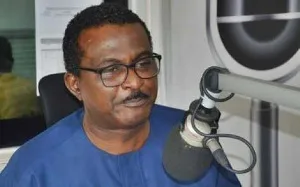
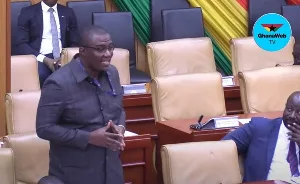
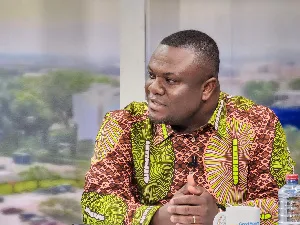
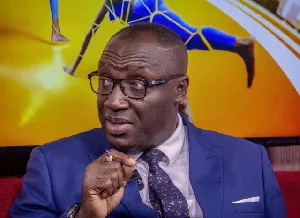
Former Deputy Minister for Finance, Kwaku Ricketts Hagan, has asserted that if the National Democratic Congress (NDC) comes into power in 2024, they will make sure the dormant Komenda Sugar Factory becomes operational in under a year.
During an appearance on Top Radio’s Final Point program, Ricketts Hagan emphasized the NDC’s track record of fulfilling promises and expressed the party’s commitment to ensuring the full functionality of the factory, originally built during a previous NDC administration.
“I can tell you that on authority,” he stated when asked by the host Kwabena Owusu Agyemang whether the factory will be revived if the NDC wins power.
Speaking about the 24-hour economy policy put forth by the NDC presidential candidate, former President John Dramani Mahama, the former deputy minister pointed out that the Komenda Sugar Factory will play a significant role in ensuring the policy’s success and spurring economic growth.
“John Mahama has done it before so if we say that John Mahama can operationalise Komenda Sugar Factory and build more Sugar factories we know what we are talking about,” he stated.
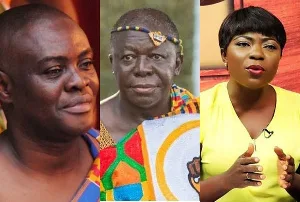
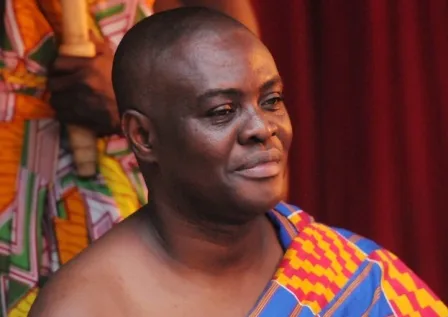
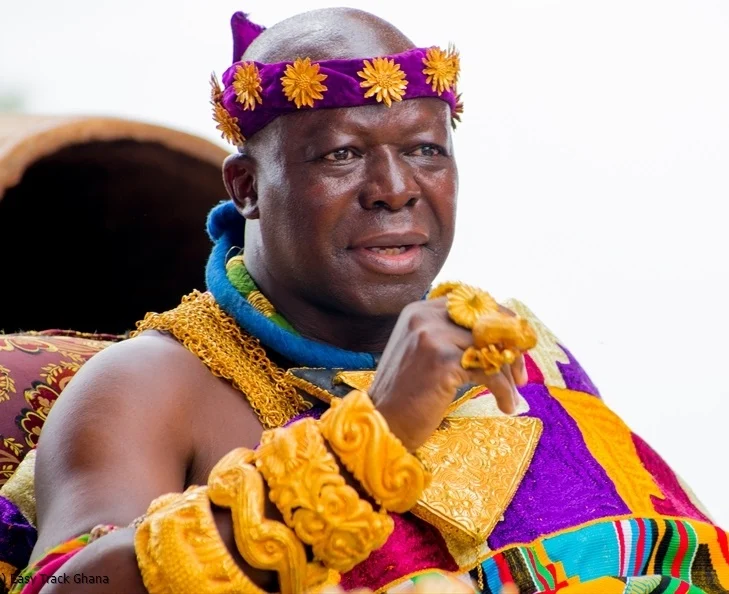
Controversial media personality, Afia Pokua, also known as Vim Lady, has criticized Dormaahene, Oseadeeyo Agyemang Badu II, and Asantehene, Otumfuo Osei Tutu II, for publicly engaging in a chieftaincy dispute.
She expressed that the actions of these two prominent chiefs involved in a public feud over chieftaincy supremacy in the country are unnecessary. Vim Lady urged them to end the dispute to prevent it from escalating into a conflict.
She highlighted that Ghana is already dealing with chieftaincy issues, such as the prolonged Nkonya-Alavanyo conflict, with efforts to resolve it proving unsuccessful.
During an appearance on the Egyasogyaso political show on Okay FM, as monitored by GhanaWeb, Vim Lady emphasized that the disagreement between Dormaahene and Otumfuo Osei Tutu II has the potential to escalate into a full-blown war. She called on them to stop the unnecessary public dispute.
“The way things are going in Ghana with chieftaincy issues is worrying. Already we have politicized our traditional chieftaincy and it has affected its reputation. It [Otumfuo and Dormaahene feud] has now turned into a full-blown tribal difference, and it is dangerous. It’s because of these issues that some nations are at war so, if we want it to be that way then we should allow it to fester,” she said.
“What some people are doing on social media is so disgusting. Already we have Nkonya-Alavanyo conflict issues going on. As we speak, there are security forces guarding the place. It started in 1923 till date and the dispute has not been resolved yet,” Vim Lady added.
Following his assertion that there isn’t a monarchy in Ghana, Dormaahene faced criticism for his perceived underestimate of Otumfuo Osei Tutu II, the Asantehene.
The Sunyani High Court recently prohibited Dormaahene from attending the Berekumhene’s funeral after she failed to show up a day prior to Otumfuo’s arrival.
It remains to be seen if the feud will be settled quickly or if it will worsen, which could be detrimental to the nation.
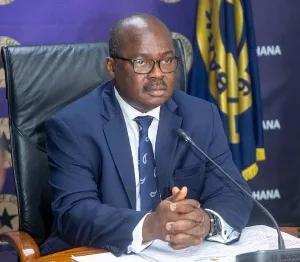
Newly released data from the Bank of Ghana reveals a substantial contraction in private sector credit, hitting its lowest point in more than four years.
As of October 2023, private sector credit experienced a nominal contraction of 7.5 percent, marking a stark reversal from the 57.3 percent growth observed in October 2022.
In real terms, the contraction is even more pronounced, with private sector credit plummeting to negative territories at 31.6 percent, compared to the positive growth of 12 percent in the previous year.
This downward trend underscores the persistent risk aversion stance among banks, resulting in a significant reduction in lending for both businesses and individuals.
“Banks continue deploying their resources toward short-term investments as opposed to extending credit, in response to the increased risks associated with lending following the deteriorating macroeconomic conditions and impact of the Domestic Debt Exchange Programme,” said Dr. Ernest Addison, Bank of Ghana Governor, at a recent press briefing in Accra.
While the banking sector maintains its stability, soundness, liquidity, and profitability, the non-performing loan (NPL) ratio in the industry rose to 18.3 percent in October 2023, reflecting increased credit risk associated with the economic crisis of the previous year. Despite this, the Governor highlighted that profitability continues to rise, with banks investing in high-yield Bank of Ghana and government debt instruments.
Despite signs of economic recovery in 2023, with growth averaging 3.2 percent in the first half, the private sector credit contraction is a concern. High-frequency indicators suggest ongoing momentum, albeit at a more moderate pace in the third quarter.
The significant decline in lending to businesses and households raises concerns about future growth prospects. The risk of this trend worsening is imminent, especially as government borrowing in 2024 may crowd out private sector investment crucial for growth.
To address excess structural liquidity conditions in the market and support the disinflation process, the Monetary Policy Committee (MPC) introduced an additional measure to unify the currency holding for the Cash Reserve Ratio requirement on foreign currency denominated deposits and domestic currency deposits for banks, resetting the CRR to 15 percent from November 30, 2023.
The government’s proposed 2024 budget aims to raise GH¢61.4 billion, primarily from domestic markets, posing a risk of soaking up available credit needed for private sector investment. As of November 20, 2023, Ghana’s Treasury had already issued GH¢128.93 billion on the money market, surpassing its GH¢119.77 billion target, with a substantial portion representing new debt for 2023 expenditures.
Government reliance on domestic markets, due to challenges in tapping international capital, reduces financing available for the private sector. The sharp contraction in credit access could negatively impact Ghana’s growth trajectory if it persists in the medium- to long-term.
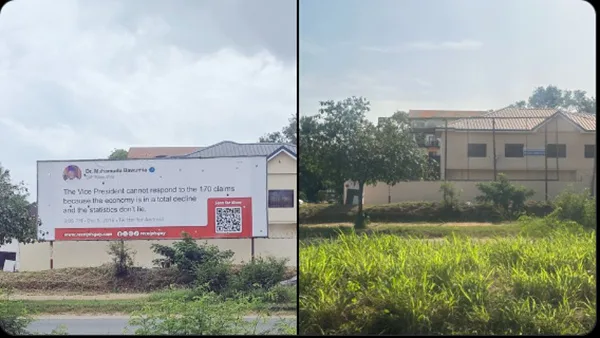
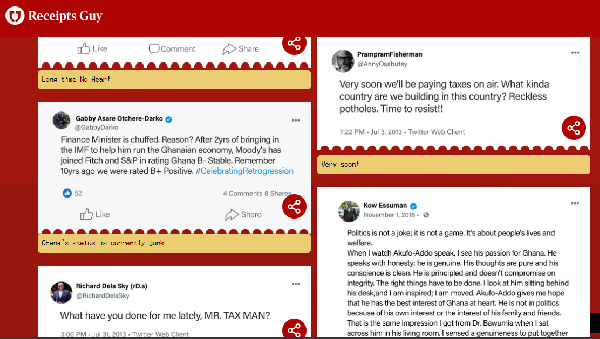
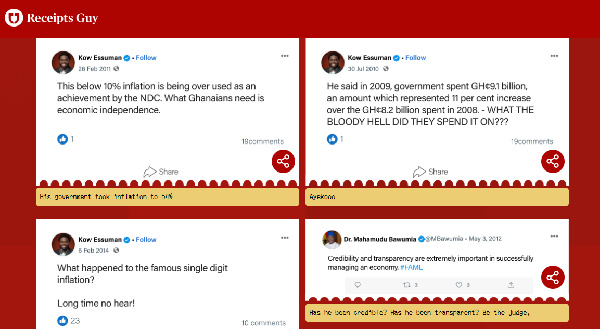
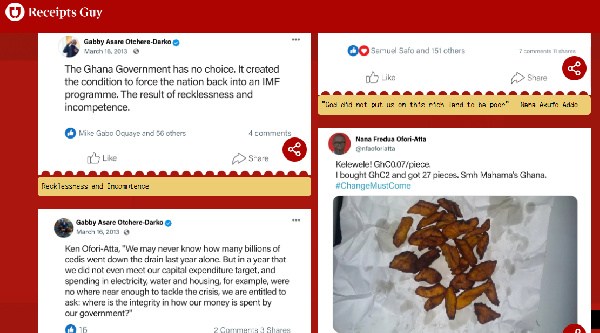
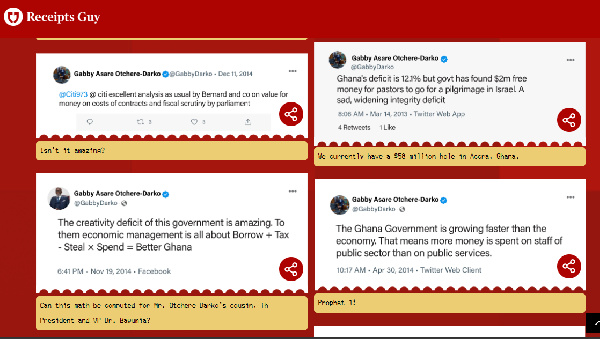
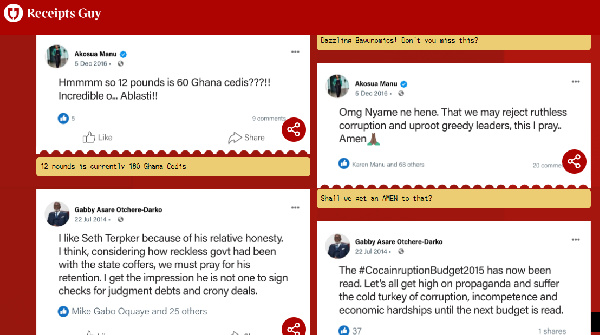
Approximately 48 hours after the media showcased efforts of a man self-identified as Receipts Guy, who initiated a bold campaign by printing old tweets of prominent members of the ruling government, including the president and vice president, one of his billboards has been removed.
Sharing the development with visual evidence through pictures and a video, the X user highlighted the takedown of the billboard featuring an old tweet by Vice President Dr. Mahamudu Bawumia. The X user raised questions about the state of democracy in Ghana, considering the removal of such a billboard.
On this particular billboard, Receipts Guy had reproduced the following:
“The Vice President cannot respond to the 170 claims because the economy is in a total decline and the statistics don’t lie,” which is a tweet posted by Bawumia at 9:06 PM on December 5, 2016.
However, the billboard had vanished from his update, which included before and after pictures to support his claims.
“Is this democracy?” the caption with the two photos said, with the one that went with another tweet with a video, saying, “As expected, THE BILLBOARD HAS BEEN TAKEN DOWN!!!” followed with three laughing emojis.
Earlier, according to GhanaWeb’s report, an X user identified as Receipts Guy, believed to be pro-NDC, took an unconventional approach that some might deem as provocative.
Delving into the archives of old tweets from prominent figures such as Vice President Dr. Mahamudu Bawumia, President Nana Addo Dankwa Akufo-Addo, and Gabby Asare Otchere-Darko, a key member of the New Patriotic Party (NPP), the X user embarked on printing these messages on large billboards.
While the majority of these tweets originated from leading members of the NPP, a few also came from opinion leaders and journalists in the country.
In a tweet, Receipts Guy mentioned that this initiative was prompted by popular demand.
“By popular request, we have receipts on billboards now. As you can see, there is a QR code on it. That takes you to more receipts. You’ll find videos and a gallery tab that leads you to many more related content. Visit Receipts Guy!” he wrote.
The majority of the tweets, which date back to 2012, are available on receiptsguy.com.
As of November 29, 2023, the Interbank forex rates from the Bank of Ghana indicate that the Ghana Cedi is exchanging against the US Dollar at a buying rate of 11.5933 and a selling rate of 11.6049.
At a Forex bureau in Accra, the US Dollar is purchased at a rate of 12.10 and sold at 12.35.
Against the Pound Sterling, the Cedi is traded at a buying rate of 14.6713 and a selling rate of 14.6872.
In an Accra Forex Bureau, the Pound Sterling is bought at 15.00 and sold at 15.50.
The Euro is valued at a buying rate of 12.7245 and a selling rate of 12.7360.
At an Accra Forex Bureau, the Euro is acquired at a rate of 12.95 and sold at a rate of 13.45.
The South African Rand has a buying rate of 0.6192 and a selling rate of 0.6197.
At an Accra forex bureau, the South African Rand is purchased at 0.40 and sold at 1.10.
The Nigerian Naira is priced at a buying rate of 70.1727 and a selling rate of 70.1779.
In an Accra forex bureau, the Nigerian Naira is bought at a rate of 9.00 Naira for every 1 Cedi and sold at a rate of 15.00.
For the CFA, the buying rate is 51.5042, and the selling rate is 51.5507.
In an Accra forex bureau, the CFA is acquired at a rate of 17.30 CFA for every 1 Cedi and sold at a rate of 19.80 CFA for every 1 Cedi.
Young lady, Deborah Seyram Adablah, who accused a former Chief Finance Officer of a bank, Ernest Kwasi Nimako, of sexual harassment, has announced her intention to appeal the ruling of her case after Accra High Court, on November 28, dismissed her suit.
In the ruling delivered by Justice John Bosco Nabarese, the court acknowledged the immorality of the relationship between Nimako and Adablah.
However, it determined that there was no reasonable cause of action as indicated in Adablah’s writ.
Apart from dismissing the suit filed by the former National Service Person against the former bank CFO, the court also mandated Adablah to pay a cost of GH¢10,000.
“You cannot recover the price of something you have committed into an immoral act,” the High Court determined on Tuesday as it firmly asserted it will not endorse a relationship founded on immoral acts.
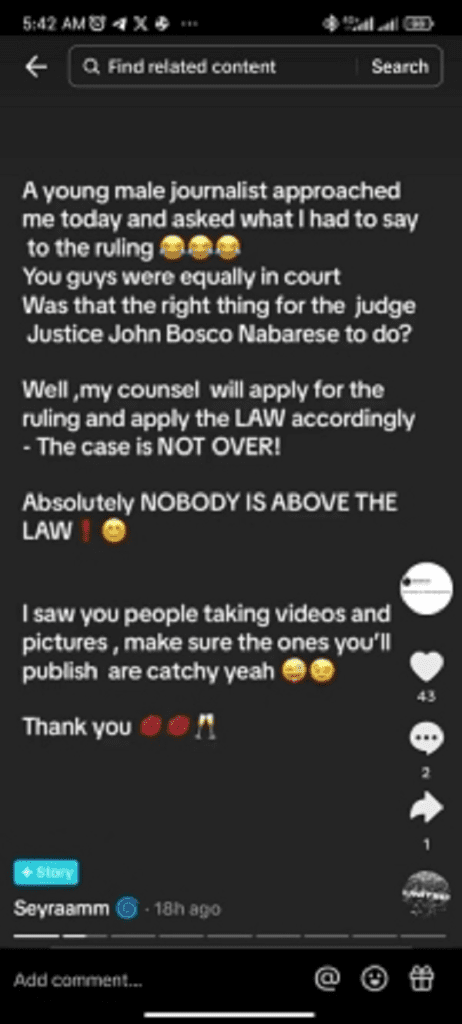
In response to the ruling, Deborah Seyram Adablah said on her own TikTok page that she would carry on the legal battle while her attorney files an appeal against the verdict.
“My lawyer will apply for the ruling and apply the LAW accordingly – The case is NOT OVER!,” she wrote.
Background:
Deborah Seyram Adablah informed the court that Kwasi Nimako made several promises to her, which he failed to fulfill, leading to their breakup.
She stated that Nimako agreed to buy her a car (which he did); cover her accommodation expenses for three years; provide a monthly stipend of GH¢3,000; marry her after divorcing his wife, and offer a lump sum to start a business.
According to the plaintiff, although the car was initially registered in Nimako’s name, he later reclaimed it, depriving her of its use after just a year.
Furthermore, she claimed that Nimako only paid for one year of accommodation, despite promising to cover three years.
In her plea to the court, the plaintiff sought an order directing Nimako to transfer the title of the car into her name and return the car to her possession.
She is also asked the court to order the defendant to pay her the lump sum to enable “her to start a business to take care of herself as agreed by the plaintiff and the defendant.”
Another relief is for the court to order the “sugar daddy” to pay the outstanding two years’ accommodation as agreed between her and the defendant Again, she wants the court to order the defendant to pay her medical expenses as a result of a “side effect of a family planning treatment” the defendant told her to do in order not to get pregnant.
The Member of Parliament for Ningo-Prampram, Sam Nartey George, has voiced profound frustration over the unauthorized spillage of the Dawhenya Dam, denouncing it as a blatant display of negligence and irresponsibility.
This incident has led to extensive devastation, displacing numerous residents and submerging properties in floodwaters.
In a scathing rebuke, Sam George pointed to a lack of discipline and accountability among those entrusted with the dam’s management.
He strongly condemned the actions of those responsible, highlighting their apparent disregard for the potential consequences of their decisions.
Sam George has pledged to uncover the identity of the immediate past manager of the Dawhenya irrigation project, vowing to make the individual’s name public.
Additionally, he expressed his intention to demand an explanation from the relevant ministry regarding the authority granted to spill portions of the irrigation dam, allegedly to foreigners, including Chinese and Indians.
“I am trying to get the name of the immediate past manager of the irrigation project at Dawhenya, and I will put it out in public and demand that whichever ministry is involved must demand from him what authority he had to spill portions of the irrigation dam to foreigners. I am hearing, Chinese and Indians,” citinewsroom quoted Sam George as having said.
Sam Nartey George promised the public that he would try to bring normalcy back to the affected area, despite the seriousness of the situation.
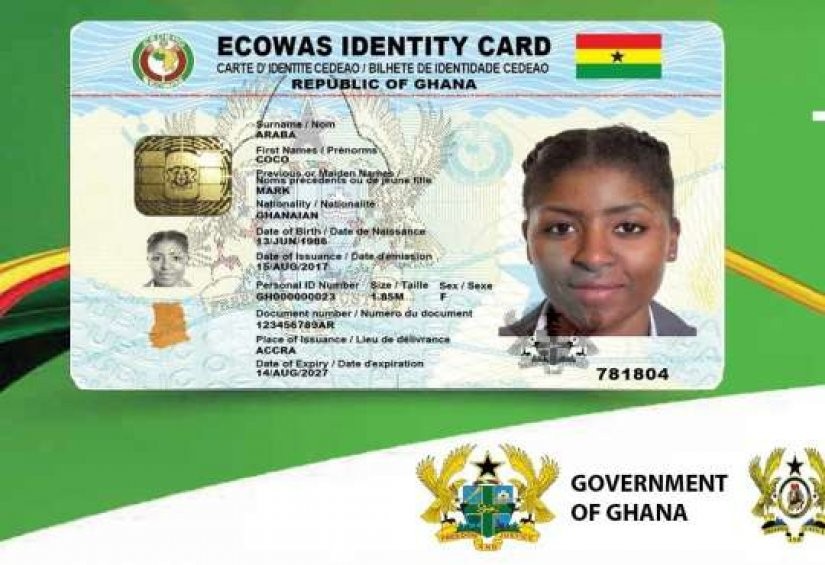
Vice President Dr. Mahamudu Bawumia’s assertion that Ghanaians will soon be able to access credit and purchase cars using the Ghana Card has been doubted by a senior lecturer at the University of Ghana, Prof Kobby Mensah,
In a post shared on X on November 28, 2023, Prof. Mensah questioned the apparent underutilization of the Ghana Card for vehicle purchases, especially considering the presence of established car dealerships in the country.
He threw down a challenge, encouraging individuals to experiment by attempting to use their Ghana Card at a car dealership to determine whether they would be granted permission to buy a car on credit.
“Are we not in Ghana? Are there no garages in Ghana? If the answers to these questions are yes, then the case is simple.
“Take your Ghana card to CFAO to pick up a Mercedes and let’s prove the theory,” the academic wrote.
Are we not in Ghana? Are there no garages in Ghana? If the answers to these questions are yes, then the case is simple. Take your Ghana card to CFAO to pick up a Mercedes and let’s prove the theory 🧐 https://t.co/omtb7N86Lq
Vice President Dr. Mahamudu Bawumia unveiled intentions for Ghanaians to avail themselves of credit options and acquire cars through the utilization of the Ghana Card, aligning with the ongoing digitization efforts in the economy.
Addressing the 57th Congregation of the Kwame Nkrumah University of Science and Technology (KNUST) on November 24, he disclosed active negotiations with domestic automobile companies, including Solar Taxi, to facilitate the implementation of this initiative.
“The Ghana Card will also become the anchor for a credit system in Ghana, and it will take a couple of car manufacturers in Ghana, notably Solar Taxi, to give cars on credit to people,” asaaseradio.com quoted Bawumia as having said.
He emphasized that the Ghana Card would be the exclusive prerequisite for transactions, allowing individuals to procure cars and make payments over an extended period.
The vice president also revealed intentions to launch a credit scoring system for individuals in 2024.
This system, he explained, is designed to establish a reliable credit history for individuals, bolster the financial sector, tackle trust-related concerns, minimize the cost of conducting business, and foster financial discipline.
“Ghana next year will be introducing a credit scoring system for individuals. Every individual will have a credit score. Right now, our credit scoring system does not exist, so we are seen as risky,” he added.
View his post below:
Vice President Dr. Mahamudu Bawumia unveiled initiatives for Ghanaians to utilize credit options and acquire cars through the Ghana Card, aligning with the ongoing digitalization efforts in the economy.
Addressing the 57th Congregation of the Kwame Nkrumah University of Science and Technology (KNUST) on November 24, he disclosed ongoing talks with local automobile companies, including Solar Taxi, to facilitate the implementation of this initiative.
“The Ghana Card will also become the anchor for a credit system in Ghana, and it will take a couple of car manufacturers in Ghana, notably Solar Taxi, to give cars on credit to people,” asaaseradio.com quoted Bawumia as having said.
He emphasized that transactions would exclusively require the Ghana Card, allowing individuals to purchase cars and make payments over an extended period.
The vice president also revealed intentions to launch a credit scoring system for individuals in 2024.
This system, he explained, is designed to establish a credible credit history for individuals, strengthen the financial sector, tackle trust-related issues, minimize the cost of conducting business, and foster financial discipline.
“Ghana next year will be introducing a credit scoring system for individuals. Every individual will have a credit score. Right now, our credit scoring system does not exist, so we are seen as risky,” he added.
Afrobeats sensation, Davido, has expressed admiration on his social media platform for Dr. Louisa Satekla, the wife of Ghanaian Afro-dancehall artist Stonebwoy, commending her exceptional cooking skills.
In a recent post observed by the media, Davido lauded Stonebwoy and his family for their warm hospitality during his recent visit to their home.
“I’m still full from the fufu n light soup wey we chop for @stonebwoy house two days ago …. @drlouisa_s God bless u my sister …. Love you guys !!” posted on his X page on Tuesday, November 28, 2023.
“It’s an honor For Trusting Me With That Which Enters Your Belly… it means A Lot! Mi Casa Su casa..” he tweeted.
001 it’s an honor For Trusting Me With That Which Enters Your Belly… it means A Lot! Mi Casa Su casa.. 🇬🇭🇳🇬!! @davidohttps://t.co/vdxVPN2Oes
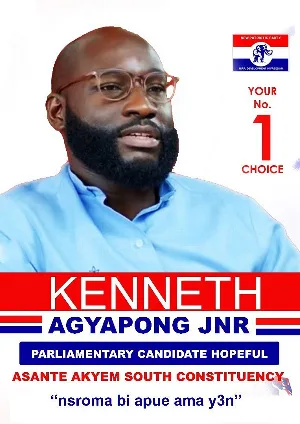
Kenneth Agyapong Jnr, Son of the former New Patriotic Party (NPP) flagbearer hopeful, Kennedy Agyapong, has responded to the circulating posters suggesting his candidacy in the party’s parliamentary primaries for the Asante Akyem South Constituency.
In a statement obtained by the media, Kenneth Agyapong clarified that he is entirely unaware of the posters in question.
Furthermore, he emphasized that he does not currently entertain any political aspirations and has no intention to enter politics at this time.
“I wish to state without any equivocation that, I have personally not contemplated the decision to commence a personal political career, neither have I caused any individual, assigned or group to announce same on my behalf.
“While acknowledging the love and broad-based support I enjoy from a cross-section of Ghanaians within and outside the NPP, I wish to state that I have no intentions of entering into the political fray at this moment. My utmost preoccupation now is to focus on my business and to grow it into international acclaim and not to dabble in party politics for now,” he wrote.
He continued by saying that his current only motivation for getting involved in politics is to help his father, Ken Agyapong, the Assin Central Member of Parliament, achieve his goals in life.
Kenneth went on to express gratitude to everyone who had backed his father in the NPP presidential primary and pleaded with them to support the party in the 2024 elections.
Read his full statement below:
Kenneth Agyapong Jnr writes:
My attention has been drawn to a poster circulating on social media purporting to announce my intention to contest in the upcoming NPP parliamentary primaries in the Asante Akyem South Constituency of the Ashanti Region.
I wish to state without any equivocation that, have personally not contemplated the decision to commence a personal political career, neither have I caused any individual, assigne or group to announce same on my behalf.
While acknowledging the love and broad-based support I enjoy from a cross section of Ghanaians-both within and outside the NPP, I wish to state that I have no intentions of entering into the political fray at this moment.
My utmost préoccupation now is to focus on my business and to grow it into international acclaim and not to dabble in party politics for.
Despite my lack of interest party politics as a person, I still remain committed to the cause of my father’s political ambition and will support him in which ever way possible.
I wish to thank all well wishers for their support and desire to see me in the political space as a politician and assure them that, the future will determine what path I take in terms of my personal development.
Once again I express my heartfelt gratitude to all members of Team PHD and urge all to focus on the larger picture of the NPP as we go into election 2024.
Kenneth Agyapong Jnr, Son of the former New Patriotic Party (NPP) flagbearer hopeful, Kennedy Agyapong, has responded to the circulating posters suggesting his candidacy in the party’s parliamentary primaries for the Asante Akyem South Constituency.
In a statement obtained by the media, Kenneth Agyapong clarified that he is entirely unaware of the posters in question.
Furthermore, he emphasized that he does not currently entertain any political aspirations and has no intention to enter politics at this time.
“I wish to state without any equivocation that, I have personally not contemplated the decision to commence a personal political career, neither have I caused any individual, assigned or group to announce same on my behalf.
“While acknowledging the love and broad-based support I enjoy from a cross-section of Ghanaians within and outside the NPP, I wish to state that I have no intentions of entering into the political fray at this moment. My utmost preoccupation now is to focus on my business and to grow it into international acclaim and not to dabble in party politics for now,” he wrote.
He continued by saying that his current only motivation for getting involved in politics is to help his father, Ken Agyapong, the Assin Central Member of Parliament, achieve his goals in life.
Kenneth went on to express gratitude to everyone who had backed his father in the NPP presidential primary and pleaded with them to support the party in the 2024 elections.
Read his full statement below:
Kenneth Agyapong Jnr writes:
My attention has been drawn to a poster circulating on social media purporting to announce my intention to contest in the upcoming NPP parliamentary primaries in the Asante Akyem South Constituency of the Ashanti Region.
I wish to state without any equivocation that, have personally not contemplated the decision to commence a personal political career, neither have I caused any individual, assigne or group to announce same on my behalf.
While acknowledging the love and broad-based support I enjoy from a cross section of Ghanaians-both within and outside the NPP, I wish to state that I have no intentions of entering into the political fray at this moment.
My utmost préoccupation now is to focus on my business and to grow it into international acclaim and not to dabble in party politics for.
Despite my lack of interest party politics as a person, I still remain committed to the cause of my father’s political ambition and will support him in which ever way possible.
I wish to thank all well wishers for their support and desire to see me in the political space as a politician and assure them that, the future will determine what path I take in terms of my personal development.
Once again I express my heartfelt gratitude to all members of Team PHD and urge all to focus on the larger picture of the NPP as we go into election 2024.
In a tragic incident reported by onuafmonline.com, a 34-year-old Nigerian national known as Ikechuku, popularly called ‘Nose Mask,’ met a grim fate as he was purportedly lynched by an enraged mob in Gomoa Akotsi, located in the Central region.
The unfortunate episode unfolded after ‘Nose Mask’ allegedly stabbed two women, causing them injuries. According to an eyewitness, the initial stabbing occurred within the shared residence of Ikechuku, targeting a young lady. As residents confronted him about the incident, the situation escalated, leading to a second stabbing and injuring another woman.
Suspicion had surrounded Ikechuku during his 11-month stay in the community, with residents speculating that he might have been involved in spiritual practices that could have triggered his violent behavior, prompting the lynching.
The injured victims were swiftly transported to the Winneba Trauma and Specialized Hospital for urgent medical attention. Meanwhile, the lifeless body of Ikechuku was conveyed to the police mortuary by the Gomoa Ojobi police for preservation.
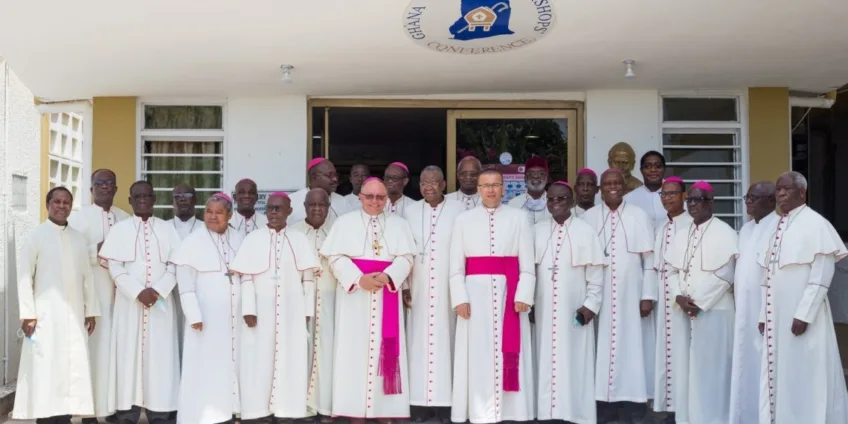
The Ghana Catholic Bishops’ Conference has provided clarity regarding its stance on Ghana’s proposed anti-gay legislation, which aims to criminalize and impose severe penalties on the practice and promotion of homosexuality in all its forms.
Recent discussions about the contentious bill were reignited following a warning from the US Ambassador to Ghana, Virginia Palmer, who cautioned that the country could face significant economic challenges if the legislation, targeting lesbian, gay, bisexual, transgender, and queer (LGBTQ+) activities, is enacted into law.
A survey conducted by the Centre for Democratic Development (CDD-Ghana) revealed that a majority of Ghanaians are in favor of the bill.
In a letter addressed to the Committee on Constitutional, Legal, and Parliamentary Affairs of Parliament, Most Rev. Philip Naameh, the Metropolitan Archbishop of Tamale and President of the Conference, affirmed the Ghana Catholic Bishops’ Conference’s support for the Promotion of Proper Human Sexual Rights and Ghanaian Family Values Bill, emphasizing the church’s endorsement of the legislation in principle.
Portions of the letter said, “We, the Catholic Bishops of Ghana, write in support of the draft Bill presented to Parliament to make homosexual practices illegal in Ghana. Our voice needs to be heard on this matter not only because, in our view, it is morally unacceptable but also because according to the 2010 population census, the Catholic Church in Ghana constitutes a sizable percentage of the population, i.e., about 13.1 percent of the population of Ghana.”
The church offered varied reasons why it wants “this abominable practice made illegal in our country.”
The Bishops used scripture to support their positions regarding God’s view of homosexuality and what it says about the practice.
“The Bible, which is foundational to Christian beliefs and practices, condemns the practice”the letter noted.
Opponents of the bill have primarily raised concerns about the potential danger of physical harm that individuals identifying as homosexual may encounter if the legislation is enacted.
In a letter affirming its endorsement of the bill, the Ghana Catholic Bishops’ Conference voiced similar apprehensions, acknowledging the perceived threat to the well-being of homosexual individuals.
However, the Church maintains the belief that it is unjust to expose homosexuals to any type of harassment solely based on their sexual orientation. The inherent dignity of every individual should be consistently upheld in speech, conduct, and legal frameworks. The Church advocates for the acceptance of homosexuals with respect, compassion, and sensitivity.
According to Pope Francis, the homosexual person needs to be “respected in his or her dignity and treated with consideration, and ‘every sign of unjust discrimination’ is to be carefully avoided, particularly any form of aggression or violence” (Amoris Laetitia 250). Families with LGBT members need “respectful pastoral guidance” from the church and its pastors so that gays and lesbians can fully carry out God’s will in their lives (Amoris Laetitia 250)” the letter concluded.
Their opinions seem to be at odds with those of Cardinal Appiah Turkson of Ghana, a global leader of the Catholic Church. According to Cardinal Turkson, individuals should be assisted in better understanding homosexuality rather than having it criminalized.
Below is the full letter from the Ghana Catholic Bishops’ Conference:
THE CLERK TO THE COMMITTEE COMMITTEE ON CONSTITUTIONAL, LEGAL AND PARLIAMENTARY AFFAIRS OFFICE OF PARLIAMENT OSU-ACCRA
GHANA CATHOLIC BISHOPS’ CONFERENCE’ PAPER ON THE DRAFT BILL ON HOMOSEXUALITY IN GHANA
We, the Catholic Bishops of Ghana, write in support of the draft Bill presented to Parliament to make homosexual practices illegal in Ghana. Our voice needs to be heard on this matter not only because, in our view, it is morally unacceptable but also because according to the 2010 population census, the Catholic Church in Ghana constitutes a sizable percentage of the population, i.e., about 13.1 percent of the population of Ghana. As a Church, we want this abominable practice made illegal in our country. Our reasons will become clear from the following.
The Bible and Homosexuality
The Bible, which is foundational to Christian beliefs and practices, condemns the practice. In the Old Testament, this practice was seen as a perversion and a pagan abomination. In Lev 18:22 we read, “You shall not lie with a male as with a woman; it is an abomination”. Similarly, in Lev 20:13 we read, “If a man lies with a male as with a woman, both of them have committed an abomination; they shall be put to death, their blood is upon them”.
Another passage relevant in this discussion is Gen 19:1-28. While admittedly the text of Gen 19:1-28 does not deal with homosexual people, it does not deny the fact that what the men of Sodom intended to do with the two male guests of Lot constituted homosexual acts (cf. Gen 19:5: the Hebrew verb “yada’” is a biblical euphemism for sexual relations). Lot’s offer to give his two virgin daughters in place of the two male guests shows that he perceived the desire of the men of Sodom as perverted lust.
While the idea of intolerance and hostility towards the stranger is present in the text, it is certainly sexual perversion, i.e., their desire to engage in homosexual acts, which is at the root of the crimes of the men of Sodom.
Most of the references to homosexuality in the New Testament occur in the letters of Paul. The clearest is Rom 1:26-27. In this passage, Paul argues that pagans, even without the biblical revelation, ought to have honoured the true God but they turned instead to idolatry. Because of this primary disorder, God gave them over to sexual disorder as well, both women and men exchanging natural relations for unnatural ones: “For this reason God gave them up to dishonourable passions.
Their women exchanged natural relations for unnatural, and the men likewise gave up natural relations with women and were consumed with passion for one another, men committing shameless acts with men and receiving in their own persons the due penalty for their error” (Rom 1:26). This passage (Rom 1:26) is the only biblical text that addresses the particular issue of homosexual behaviour between consenting females.
Rom 1:27 is the clearest statement in the New Testament regarding the issue of homosexual behavior between consenting adult males. Some interpreters suggest that Paul has in mind here sexual relations between men and boys (pederasty); however, Paul’s indictment seems to include all kinds of homosexual practice, female as well as male, and was not directed against one kind of homosexual practice in distinction from another. In 1 Cor 6:9-10; 1 Tim 1:10 Paul speaks of homosexuality. These two verses may be discussed together.
In 1 Cor 6:9-10 Paul says, “Do you not know that the unrighteous will not inherit the kingdom of God? Do not be deceived; neither the immoral, nor idolaters, nor adulterers, nor sexual perverts nor thieves, nor the greedy, nor drunkards, nor revilers, nor robbers will inherit the kingdom of God”. In 1 Tim. 1:10 Paul speaks of “immoral persons, sodomites, kidnapers, liars, perjurers, and whatever else is contrary to sound doctrine”.
The terms “sexual perverts” and “sodomites” in the two passages translate the same Greek word (arsenokoitai) and refer to homosexuals. The Greek word is a compound of “male” and “intercourse”. While its meaning is not easy to determine because of its seldom use in extant literature of the period, it is generally understood as referring to male homosexual offender. In fact, the highly rated Greek – English Lexicon of the New Testament and Other Early Christian Literature translates arsenokoites (singular) as “a male who practices homosexuality, pederast, sodomite”.
The claim by some homosexuals that it refers to exploitative sexual relationships between men, and not to durable ones based on love and mutual care is neither supported by the immediate context of I Corinthians 6:7-11 nor by what we know of the Graeco-Roman society of the time. Paul is here warning his Corinthians Christians against engaging in homosexual acts which he considers as sinful and undignified of the Christian.
The Catholic Church’s Teaching on Homosexuality
The Catholic Church has addressed the issue of homosexuality in a number of documents. The Church’s teaching on homosexuality can be summarized as follows:
The Church sees the practice of homosexuality as something condemned by the Scriptures and cites in its documents the biblical passages mentioned above that condemn homosexuality. In addition to these passages, the Church sees the practice of homosexuality as being incompatible with the creation stories relating man and woman in Genesis. In the opening chapters of Genesis, the creation of the sexes by God is presented as having a twofold purpose: men and women are meant to come together in a one-flesh unity of life (Gen 2:24) and to beget children (Gen 1:28). Since sexual activity was seen to be ordered to procreation and the continuance of the human race, any form of sexual activity other than heterosexual intercourse is against nature and is a clear violation of right reason.
To choose someone of the same sex for one’s sexual activity or for marriage is to annul the rich symbolism and meaning, not to mention the goals, of God’s sexual design. Homosexual activity is not a complementary union, able to transmit life, and so it thwarts the call to a life of that form of self-giving which the Gospel says is the essence of Christian living.
2. The Church makes a distinction between “the homosexual condition or tendency” and “individual homosexual actions”. For the Church, the latter is “intrinsically disordered” and is “in no case to be approved of”. In other words, while the Church does not condemn people for being homosexuals or for having the homosexual tendency, it condemns the homosexual acts that homosexuals perform.
3. Although the particular inclination of the homosexual person is not a sin, it is a more or less strong tendency ordered towards an intrinsic moral evil, and thus the inclination itself must be seen as an objective disorder.
4. The Church rejects the unfounded and demeaning assumption that the sexual behaviour of homosexual persons is always and very compulsive and, therefore, they should not be blamed for their homosexual acts.
5. Even though the Church strongly condemns homosexual acts, it insists that the rights of homosexuals as persons should be respected. Homosexuals are also human beings, created in the image of God, and they should enjoy the same fundamental human rights that all people enjoy. However, what are these human rights? By human rights, we mean the universal, inviolable and inalienable rights that are due to the human person as a rational being possessing a free will. Human rights protect, or are intended to protect, the dignity of the human person against State and Society. Specific human rights include the right to life, personal liberty and due process of law; to freedom of thought, expression, religion, organization, and movement; to freedom from discrimination on the basis of race, religion, age, language, and sex; to basic education; to employment; and to property.
Nevertheless, according to the Church’s understanding of human rights, the rights of homosexuals as persons do not include the right of a man to marry a man or of a woman to marry a woman. For the Church, this is morally wrong and goes against God’s purpose for marriage. We should also point out that the European Court for Human Rights has ruled that same-sex “marriages” are not considered a human right, making it clear that homosexual partnerships do not in fact equal marriages between a man and a woman. The ruling was announced on 9th June 2016 in the European Court of Human Rights in Strasbourg, France.
Nonetheless, in the view of the Church, it is not right to subject homosexuals to any form of harassment simply because they are homosexuals. The intrinsic dignity of each person must always be respected in word, in action and in law. Homosexuals must be accepted with respect, compassion and sensitivity. According to Pope Francis, the homosexual person needs to be “respected in his or her dignity and treated with consideration, and ‘every sign of unjust discrimination’ is to be carefully avoided, particularly any form of aggression or violence” (Amoris Laetitia 250). Families with LGBT members need “respectful pastoral guidance” from the church and its pastors so that gays and lesbians can fully carry out God’s will in their lives (Amoris Laetitia 250).
The long-held teaching of the Roman Catholic Church has been that while homosexual people, i.e., those who have an erotic inclination towards others of the same sex are to be loved and respected and not discriminated against, homosexual acts are intrinsically immoral. It is for this reason that the Church does not approve of “unions between people of the same sex”. Following the example of Jesus himself who came not to call the righteous but sinners to repentance (cf. Luke 5:32 [NRSV]), the Church in its pastoral care is solicitous about the salvation of all God’s children and endeavours to show them God’s love and mercy.
Signed Most Rev. Philip Naameh Metropolitan Archbishop of Tamale and President, Ghana Catholic Bishops’ Conference
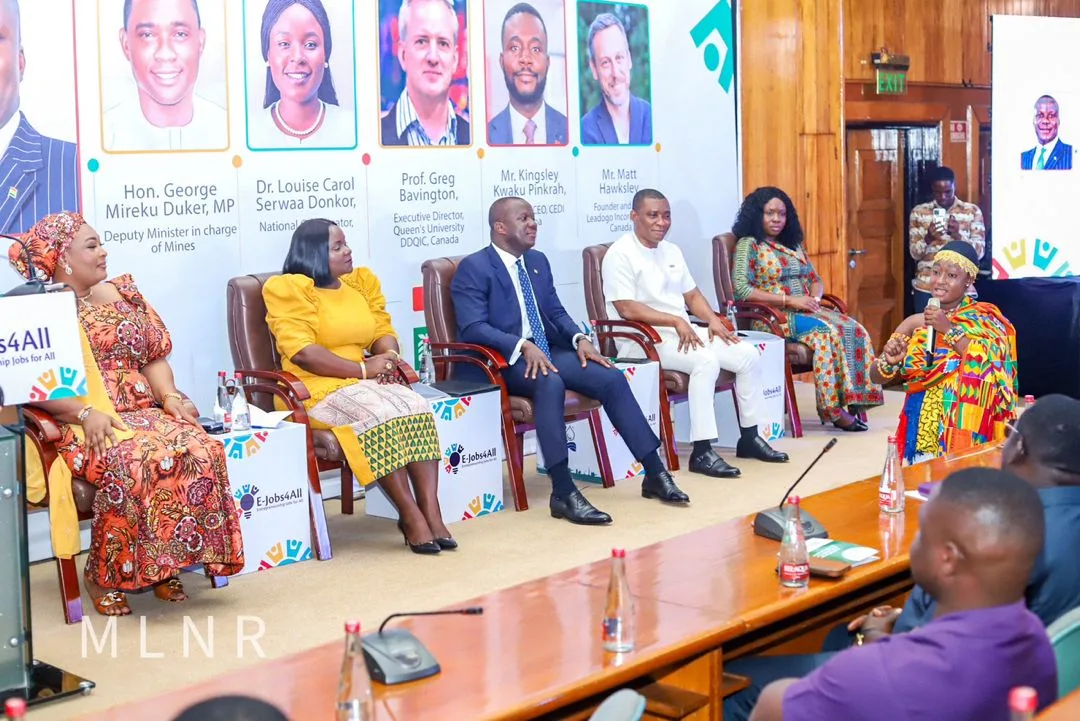
The Ministry of Lands and Natural Resources, through the National Alternative Employment and Livelihood Programme (NAELP), has introduced the Entrepreneurship Jobs for All (Ejobs4All) initiative.
Launched on November 28, 2024, the program aims to provide meaningful employment opportunities for the youth residing in or originating from mining regions in Ghana.
Minister for Lands and Natural Resources, Hon. Samuel A. Jinapor, highlighted the collaborative efforts with NAELP, Queens University, Leadogo Incorporated Canada, and the Centre for Entrepreneurship and Development Initiative (CEDI Ghana) that made this transformative initiative possible.
The program aligns with government initiatives, including declaring water bodies as Red Zones, banning certain activities in Forest Reserves, and implementing Operation Halt II to combat illegalities affecting water bodies, Forest Reserves, lands, farms, and the environment.
The Minerals Development Fund and alternative livelihood programs will be leveraged to support mining communities with revenue generated from mining activities.
“We are, also, engaging with mining companies to ensure that they contribute, meaningfully, to the development of their host communities”.
Minister for Lands and Natural Resources, Hon. Samuel A. Jinapor, announced the launch of the Entrepreneurship Jobs for All (Ejobs4All) program, describing it as more than just a slogan but a beacon of hope and a commendable strategy to tackle unemployment, one of Ghana’s critical challenges.
This initiative aims to empower Ghanaian youth, encourage innovation, and unlock the potential within mining communities.
Dr. Louise Carol Serwaa Donkor, Coordinator of the National Alternative Employment and Livelihood Programme for illegal Miners (NAELP), positioned Ejobs4All at the intersection of innovation, empowerment, and sustainable development.
She emphasized its adaptability and commitment to addressing contemporary challenges, particularly illegal mining and unemployment. The project integrates traditional strengths of the mining sector with cutting-edge practices aligned with global trends.
Kingsley Kwaku Pinkrah, Founder and CEO of the Centre forEntrepreneurship and Development Initiative (CEDI) Ghana, clarified that the initiative goes beyond addressing the adverse effects of illegal mining.
Its primary focus is to establish avenues for sustainable livelihoods, promote innovation, and empower individuals to build businesses contributing positively to communities and the national economy.
The expected outcomes of Ejobs4All are transformative, aiming for business growth in mining regions and job creation for individuals involved in illegal mining.
The program received support from partners such as Matt Hawksley, Founder and CEO of Leaders In Doing Good (Leadogo) Inc. Canada, and Prof. Greg Bavington, Executive Director of Queens University.
This initiative aligns with NAELP’s core mandate of promoting sustainable and resilient businesses in mining communities, actively absorbing the talents and ambitions of unemployed youth for regional development.
CEO of the National Petroleum Authority (NPA), Dr. Mustapha Hamid, viewed a replay of his iconic “Insha Allah, we shall rescue this country” speech while serving as the campaign spokesperson for Nana Addo Dankwa Akufo-Addo during an interview on JoyNews.
Dr. Hamid, who was clearly moved as he watched the video, pondered whether the current NPP government had lived up to its pledge to save Ghana from the difficulties incurred under former President John Dramani Mahama’s administration, he said “Yes, we have; yes, we have recused this country”.
He said that although the nation still faces certain difficulties, Ghana has been saved in a variety of ways that he would eventually bring to the attention of the general public.
“The economy is challenged without a doubt. But I’m saying to you that we have taken this country beyond where we found it.
“We are going into an election… there is time for debate, we would come and debate the issues in the election year, they would hear from me. And I would justify all the rescuing that we have done of this country,” he told JoyNews Emefa Apau.
The Free SHS program was mentioned by the former information minister as one of the things the Akufo-Addo administration had done to save face.
He claims that over 400,000 young people who would have been left behind on the streets now have jobs and are enrolled in postsecondary education thanks to the program.
Chairman of the Health Committee in Parliament, Dr. Ayew Afriye, asserts that the New Patriotic Party (NPP) has exhibited superior management of the health sector compared to other parties, especially the opposition National Democratic Congress (NDC).
Despite economic challenges, he emphasizes the NPP’s unmatched efficiency in handling health-related matters.
“The NPP, by far, are better managers of the health sector in the country, in spite of the difficulty in the economy,” Dr. Afriye stated.
He continued by making a sharp contrast between the NPP’s achievements and the initiatives started by the NDC.
“Under the NDC, projects that have completed and I will say on any day, Ridge Hospital, UGMC, and Dodowa. You cannot compare,” he emphasized.
Dr. Afriye scrutinized the National Medical Supply (NMS) project initiated under the NDC, pointing out that only the Dodowa project materialized, leaving others in Fomena, Takoradi, Abetifi, Garu, and Kumawu incomplete.
In contrast, he commended the NPP for making significant progress, citing the Fomena project’s 40% completion.
“As I sit here, the NMS project that was initiated under the NDC, of which only one of them in Dodowa, saw the ray of light. However, Fomena, it is about 40 per cent as I speak to you. It has been completed by the NPP. Takoradi, Abetifi, Garu, Kumawu all not done, “ he said during the 2024 budget debate on the floor of the house.
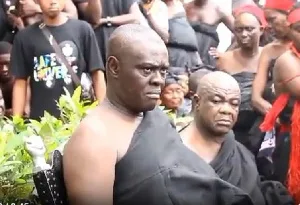
Berekum Chief, Osahene Asomah Agyeman Sabi II, has debunked Dormaahene’s claim that Asantehene had locked out other royal gates in favour of the current royal family in matters to do with the successor to the late Berekumhene.
Domaahene also claimed that he was stopped by a Sunyani High Court from attending the funeral of the late Berekumhene last week, partly because he commanded huge support from some of the ‘barred’ royal houses.
But the Berekum chief made Dormaahene understand that all his claim were false and had no basis.
“Asantehene did not alter any ruling house arrangement, it was a Supreme Court ruling which is the existing policy. So, if Dormaahene says something like that, he is wrong, Otumfuo has done nothing. Keep his name out,” Osahene Asomah Agyeman Sabi II explained.
Following his prohibition from attending the late Paramount Chief’s funeral, Dormaahene expressed sorrow, emphasizing his suitability for honoring the chief.
He noted the pain of the incident and urged Berekum to recognize his potential importance in the future.
This incident adds to the ongoing public disagreement between Dormaahene and Asantehene concerning the influence of the Ashanti overlord beyond his immediate jurisdiction.
Berekum Chief, Osahene Asomah Agyeman Sabi II, has emphasized that Berekum Paramount Chiefs owe allegiance to the Manhyia Palace and no one else.
This comes on the back of allegations that the Asantehene had locked out other royal gates in favour of the current royal family in matters to do with the successor to the late Berekumhene.
Bu the Berekumhene indicated that “Asantehene did not alter any ruling house arrangement, it was a Supreme Court ruling which is the existing policy. So, if Dormaahene says something like that, he is wrong, Otumfuo has done nothing. Keep his name out.
“On Berekum matters, Dormaahene is for all intents and purposes not our spokesman. If he doesn’t have the facts, there is no need sitting on social media and peddling claims…that is why I want to absolve Otunfuo,” he stressed.
“Otumfuo came to dignify Berekum because if you can recall, all Berekum Paramount Chiefs went to swear oath of allegiance at Manhyia Palace. Nana Boakye did, the same with Dasebre somewhere in 2002. We owe allegiance to the Golden Stool, so it is not for Dormaahene to speak for us,” he added.
In response to his prohibition from attending the late Paramount Chief’s funeral, Dormaahene expressed lamentation, emphasized his suitability for honoring the late chief, and suggested that Berekum should recognize his potential future significance to them.
This incident adds to the ongoing public dispute between Dormaahene and Asantehene regarding the status and influence of the Ashanti overlord beyond his direct jurisdiction.
Government is exploring the possibility of increasing fees for passport acquisition processes to guarantee the delivery of enhanced services, according to Deputy Minister of Foreign Affairs, Kwaku Ampratwum-Sarpong.
Defending the proposed move at a press conference on passports and consular services, Mr Ampratwum-Sarpong emphasized that Ghana’s current rates are considerably lower than those of other countries in the sub-region, even though they share the same passport supplier.
“… and even Togo; $40. Supplied by the same supplier who is supplying us with these passports. Ghanaian charges, we charge $8, meaning we are having to subsidize every passport. So, the money to buy the passports is being used to subsidize the passports for Kwaku Manu. Until Kwaku Manu is prepared to pay the realistic passport fees, we will continue to have these problems,” he explained.
Kwaku Ampratwum-Sarpong went on to explain that there are intentions to modernize the kinds of passport that are currently in use in Ghana.
He continued by saying that price increases would follow automatically if this was done.
“And also, we are thinking of upgrading our passport from the biometric to the chip-embedded. So, the chip-embedded is going to cost more and if we continue sitting at the $8, we’ll continue to have the problems that we are having at the passport office, not what has been done by the officers over there. So, we have to brace ourselves, and when the discussions start, we’ll all have to get the picture that we need to pay the realistic fees to get the kind of service we are expecting,” he explained.
The recent surprise visit by the Minister of Foreign Affairs and Regional Integration, Shirley Ayorkor Botchwey, to the Passport Office in Accra has reignited debates on the appropriate cost of acquiring passports for citizens.
Expressing displeasure at the presence of individuals within the office engaged in overpricing and exploiting unsuspecting applicants, the minister took decisive action by dismissing certain staff members seconded to the Passport Office.
Reports indicate that those dismissed were implicated in corrupt practices.
“Reports that officers, and there are nine or so agencies represented in any passport application centre… these people are involved in illegal activities, and when I say illegal activities, we know just two days ago the report in Daily Guide that the issue of goro people involved in our passport acquisition process has become rife. It is wrong.
“How can 100 Ghana for standard service of passport acquisition and 150 for expedited service be bumped up to 2,000 and 3,000? I hear they don’t even charge 2,000 now; they are charging 3000 and it is wrong.
“But I can say and we all will agree that a goro person is outside the passport office and they need somebody inside to work with, they cannot do it on their own, people are paying 2,000, 3,000 to acquire a passport, why should this be so?” she said.
While Minister of Foreign Affairs and Regional Integration, Shirley Ayorkor Botchwey, addressed passport fees, GhanaWeb cross-checked the official ministry website for detailed information.
On the ministry’s website, the ‘Passports’ section provides specifics on fees, application types, passport application centers, and sample documents.
For Application Types, fees are outlined for various passport types: expedited application 48 pages at GH¢200, expedited application 32 pages at GH¢150, standard application 32 pages at GH¢100, and standard application 48 pages at GH¢150.
Additionally, the website lists the locations of passport offices nationwide.
Proof of Profession:
For employees: Introductory letter or work ID card.
For students: Student ID.
For homemakers, the unemployed, and those in non-formal employment: No proof required.
For registered business owners and self-employed: Business registration certificate.
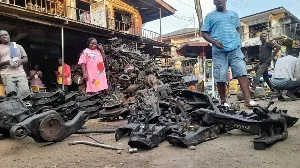
Spare parts dealers located in Garages Zone 12 within Suame Magazine, a district under the Suame Municipal Assembly in the Ashanti Region, have staged a protest against the Assembly, raising concerns about potential land encroachment.
The dealers assert that the government of Ghana allocated the land to them, represented by the Association of Garages, in 1989 through an executive instrument.
They emphasized that they regularly pay ground rent for the usage of the land. Notably, they claim that the land in question holds the same significance as Komfo Anokye Hospital and KNUST.
Consequently, they express their intent to resist any efforts by local chiefs and the municipal chief executive to initiate the sale of the land.
“This land was given to us by the government in 1989 through an executive instrument; the government passed it through Parliament, and Parliament handed it over to the Lands Commission before it was given to us. We pay grounds rent to the Lands Commission because the government took the land from some six chiefs.”
“The land is just like the one used to build Komfo Anokye Hospital and KNUST, but they have realised that we, the spare parts dealers, don’t have any muscles, so the Chiefs and Assembly want to take the land from us,” Issah Zakari, the Chairman of Garages Zone 12, told Rainbow Radio Accra.
Special Assistant to the Ebonyi State Governor on Internal Security for Ohaukwu Local Government Area, Ogbonna Tobias, issued a stern warning to residents about spreading false news regarding alleged manhood disappearance in the region.
Addressing journalists in the local government, Ogbonna emphasized that the proliferation of fake news was causing unwarranted tension and panic in the community.
He cautioned that the State Government would take decisive action against those found spreading such misinformation.
Last week, reports surfaced of four men purportedly losing their manhood in mysterious circumstances within the Local Government, heightening anxiety among residents.
Ogbonna highlighted the detrimental impact of the fake news, noting that economic activities had been disrupted, with numerous youths avoiding Nkwo markets to prevent falling victim to the alleged ritualists.
While the incident was rumored to have occurred at the popular Nkwo market, the whereabouts or identity of the victims remains unconfirmed.
Ogbonna, denouncing the report as false, unfounded, and misleading, expressed concern about the potential for the rumor to incite jungle justice against perceived suspects. He emphasized the lack of evidence or proof supporting claims of manhood disappearance after a handshake in the Local Government Area.
“Let me emphasis that there is no record of any manhood disappearance either at the Nkwo market or any other part of the local government as being spread by propagandist. The fake news if not stopped or checked is capable of causing mob action against perceived suspect or capable of creating crisis and communal clashes in the area.
Comrade Ogbonna, in collaboration with fellow security operatives, asserted that a thorough investigation had been conducted, revealing no evidence to substantiate the allegation of manhood disappearance in the Council. He appealed to the youths in the area, encouraging them to report anyone accusing another of spreading false news to the security agencies rather than resorting to vigilantism.
Over the past week, there has been a noticeable shift in behavior among residents, with many now avoiding any form of handshake or physical contact.
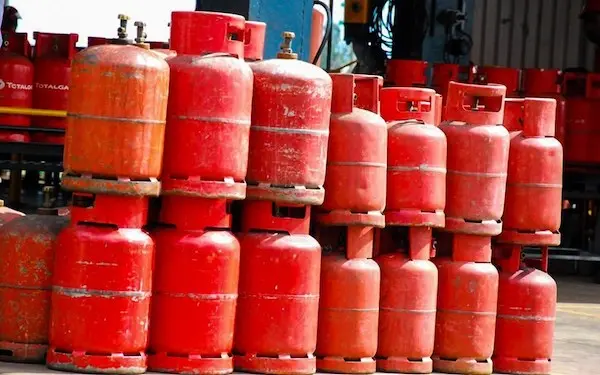
A cost-effective and sustainable substitute for cooking gas, Bioethanol, is gaining traction in Nigeria.
Soaring inflation, surpassing 27% in the past year, has rendered conventional cooking gas unaffordable for many households, as reported by the Nigerian National Bureau of Statistics.
Residents like Adeyemi find solace in bioethanol, allowing them to sidestep the high cost of approximately N1,000 per kilogram for gas. Priced just over $1 per liter, biofuel proves to be a more economical choice, offering users extended cooking capabilities.
Beyond its economic benefits, bioethanol gel provides a cleaner alternative in households where the health risks of wood smoke and other pollutants persist.
The gel emits fewer harmful substances compared to traditional fuels, addressing concerns about indoor air pollution, a significant contributor to the more than 93,000 annual deaths of women in Nigeria, according to the World Health Organization.
“It doesn’t darken your pot when you are using it, you feel comfortable, you don’t even need to stress. Even the smell, the odour it brings out, you’ll love your cooking,” said 43-year-old Adeyemi.
The United Nations estimates that if bioethanol was used for cooking in every household in Nigeria, carbon dioxide emissions could be lowered by more than four million tonnes.
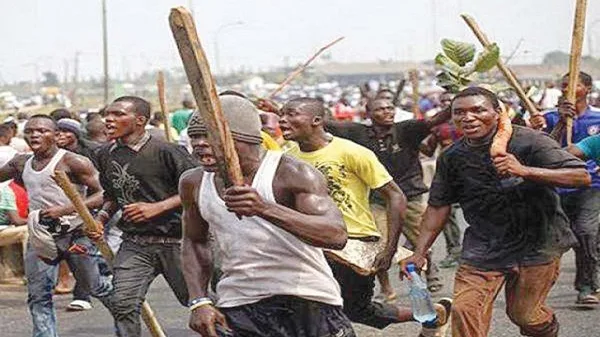
President Nana Akufo-Addo was “respectfully” questioned by the National Democratic Congress’s youth wing in the Greater Accra Region about whether he was “expecting us to use bread knife from Mrs. Akufo-Addo’s kitchen for the clean-up exercise” they recently conducted at former President John Mahama’s residence in Accra, rather than the machetes they were seen brandishing, which the president has criticized.
“If that was the case, what stopped him from sending any of his wandering elephant-size presidential staffers to make them available to us?” a statement signed by Amorse Amos Blessing, Regional Youth Organiser, said.
It was a clapback to the President’s remarks that: “It is my honest hope that the machetes and weapons brandished last week at the residence of the NDC’s presidential candidate, the former President John Mahama, are not signs of things to come in the run-up to the 2024 elections elections”.
The president then warned: “If it is, I can assure them that they will find no success with them”.
“I want to state for the record that under my watch, no person or group of persons no matter their political colouration, will destabilise our country nor destroy the peace that all of us are enjoying”, he noted, stressing: “It will not happen”.
However, the NDC says: “If there was, and still is any Ghanaian who poses a threat to our democracy ahead of the 2024 election, it is President Akufo-Addo himself”.
They asserted that during President Akufo-Addo’s tenure, “state-sponsored brigands” claimed the lives of eight Ghanaians, and these individuals are currently freely roaming the streets, allegedly enjoying impunity due to their affiliation with the “militants” the president once acknowledged as supporters of the NPP during its opposition days.
Furthermore, they claimed that the president’s assertive stance has empowered thugs to assault ASP Nanka Bruce at the Jubilee House, and they noted the absence of any condemnation or response from him.
According to the NDC youth, the president’s conduct indicates his involvement in hooliganism.
They warned: “This time round, nobody would fold his arms and call on civil and moral society to condemn President Akufo-Addo and his trigger-happy thugs when they strike, kill and maim NDC members. In the 2024 elections, if the NPP comes with peace, we shall embrace them with peace. However, if they come the other way round, we will meet them squarely”.
In October 2023, Nigeria’s crude oil production, including condensate, experienced a year-on-year (YoY) surge of 30%, reaching 1.6 million barrels per day (bpd), compared to the 1.2 million bpd recorded in the same period in 2022.
However, on a month-on-month (MoM) basis, the nation’s oil output slightly declined by 0.7%, settling at 1.562 million bpd in October 2023, down from 1.572 million bpd in September 2023.
Analyzing the production figures, it was noted that Nigeria’s output, including condensate, was at 1.5 million bpd in January 2023, dropped to 1.3 million bpd in April, before reaching 1.6 million bpd in September, marking the highest point in 2023.
Despite this improvement, the crude oil production of 1.6 million bpd remained notably below the 2023 budget benchmark of 1.69 million bpd and the OPEC quota of 1.7 million bpd. An anonymous industry expert expressed skepticism about the Federal Government’s goal of increasing output to two million bpd by the end of the year, citing limited investment and other industry factors.
The Minister of State Petroleum Resources (Oil), Senator Heineken Lokpobiri, had previously expressed the government’s commitment to reaching a production level of 2 million bpd by December, addressing challenges hindering exploration and production in the energy sector.
Responding to concerns raised by oil companies regarding the operating environment in the Niger Delta region and divestments by International Oil Companies (IOCs), Minister Lokpobiri assured that the government had the capacity to address existing and potential issues for the betterment of the country’s energy sector.
Similarly, Engr. Emeka Okwuosa, the Managing Director of Oilserve Limited, attributed the consistent attacks on crude oil pipelines in the Niger Delta region to obsolete pipeline systems lacking the latest monitoring technology.
According to him, “most of the problems we have with the crude oil pipeline delivery systems is that when we talk about crude oil theft it is not just about the trunk lines which are the major pipelines that deliver to export terminals, it is about protecting from the wellhead.
“From the wellheads you have the flow lines and those flow lines deliver to collection points. All those are susceptible to attacks. The major problem is that some of these flow lines were built decades ago and they were built not with the technologies we have now. Most of them do not have fibre optic detection systems and so you have to depend on physical protection”, he added.
Member of Parliament (MP), Collins Adomako-Mensah, Afigya Kwabre North has expressed his endorsement of the government’s move to restrict the importation of certain food commodities.
The Minister of Trade and Industry, Kobina Tahir Hammond, is advocating for a regulation with the aim of bolstering Ghana’s currency and supporting local industries.
This regulation is set to limit the importation of strategic products, including rice, fruit juice, margarine, cement, fish, sugar, and 16 others.
However, this initiative has faced strong opposition from the minority in parliament and various business associations.
During a press briefing on Thursday, November 22, the Minority Leader criticized the regulation as a flawed policy and called for its immediate withdrawal.
“We are urging the President to have a rethink because this is not a policy that we should encourage, and they have to withdraw it,” he implored.
coalition of business associations, including the Ghana Union of Traders Associations (GUTA), Food and Beverages Association of Ghana (FABAG), Importers and Exporters Association of Ghana, Ghana Institute of Freight Forwarders (GIFF), Chamber of Automobile Dealership Ghana (CADEG), and Ghana National Chamber of Commerce and Industry (GNCCI), has strongly opposed the proposed import restrictions bill. They contend that the bill, if enacted, would have adverse effects on their businesses. In response, these associations have submitted a petition to Parliament, urging lawmakers to reject the bill presented by the Ministry of Trade and Industry.
Despite the opposition, Hon. Collins Adomako-Mensah supports the government’s stance on import restrictions, asserting that such measures are essential to foster the growth of local businesses and fortify the Ghanaian cedi. During an appearance on Peace FM’s “Kokrokoo” morning show, the MP provided a detailed breakdown of the annual importation costs incurred by the government, revealing a staggering expenditure of $10.8 billion.
Enumerating the major imports and their associated costs, Hon. Collins Adomako-Mensah highlighted that the yearly imports include $164 million for tripe, $200 million for beverages, $100 million for toilet papers and tissues, $100 million for fresh tomatoes, $800 million for rice, and $300 million for sugar. Other significant imports comprise poultry and meat ($400 million), textiles and apparel ($250 million), cooking oil ($300 million), tiles and ceramics ($200 million), plastics ($500 million), papers ($600 million), iron and steels ($600 million), furniture ($250 million), and home appliances ($900 million).
The MP emphasized that a substantial portion of the importation costs is attributed to tin tomatoes, cars, and spare parts, amounting to $1 billion and $2 billion, respectively.
“These are the monies we spend to import these things each year…All these things I have stated are quoted in dollars, not cedis. What it means is that we have to make sure that we have this import cover to ensure that when a trader wants to import something, government should be able to or must make sure that it has this amount of dollars”, he stated.
“Once you continue to transfer the money outside, you are creating jobs outside,” he added, and he asked the host, Kwami Sefa Kayi; “Is it still shocking to you that there is pressure on our cedi?”
To him, when the government restricts imports, “businessmen in Ghana can see an opportunity out of it,” hence enhancing local production.
He, however, called on the government to hold a stakeholder meeting to keep the associations, especially the opposing parties, abreast of the policy.
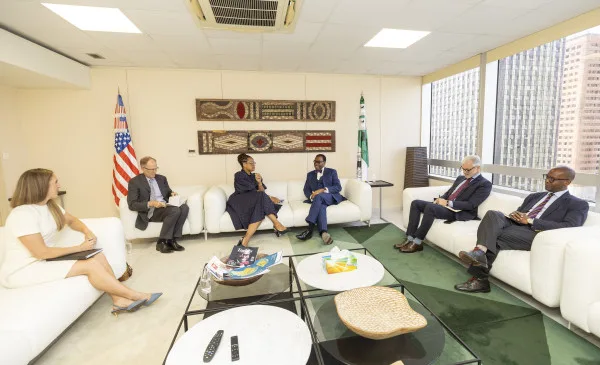
The U.S. Commercial Service and African Development Bank partner for digital transformation in Africa.
Unveiled at the Africa Tech Festival in Cape Town, discussions will address technology adoption, internet access, skill enhancement, and regulatory innovation. Focus on collaboration between African governments and U.S. tech firms.
Ashley Ndir, senior U.S. Commercial Liaison to the African Development Bank, emphasized, “We are at a turning point in Africa’s technological advancement. By bridging insights from the U.S. private sector with Africa’s vibrant markets, we aim to drive innovation and economic growth. This partnership is a testament to that mission.”
Head of ICT Operations Nicholas Williams from the African Development Bank said, “Africa has made significant investments in pivotal infrastructure and policy enhancements to create an innovative digital economy. As Africa’s premier development finance institution, the African Development Bank will help push Africa’s digital boundaries even further by forging strategic relations, building on historical investments and, more importantly, tapping into the energy of our young population, who are digital natives. We value the insights that the U.S. private sector may bring.”
The program builds on the African Development Bank’s $2 billion investment in digital infrastructure, covering broadband development, policy improvements, digital skills scaling, and support for innovative enterprises.
These efforts have lowered internet access costs, improved digital literacy, and created a favorable business and policy environment.
Leveraging the U.S. Commercial Service’s expertise in international trade, the collaboration aims to lead Africa’s digital transformation, envisioning a future where technology drives growth and prosperity. Both entities affirm their dedication to enhancing digital capabilities and unlocking Africa’s full potential in the digital age through this partnership.
Distributed by APO Group on behalf of African Development Bank Group (AfDB).
Media contact: Communication and External Relations Department media@afdb.org
Technical contacts: African Development Bank: Uyoyo Edosio u.edosio@afdb.org
US Government Contact: Ashley Ndir Senior Commercial Liaison to the AfDB Ashley.Ndir@trade.gov
About the U.S. International Trade Administration: By advancing American export prospects in international markets, the International Trade Administration (ITA) of the Department of Commerce of the United States of America enhances American competitiveness.
Through the U.S. and Foreign Commercial Service, our trade experts provide services in more than 100 U.S. cities and 80 international markets. U.S. private sector engagement with the African Development Bank (AfDB) is supported by our U.S. Commercial Service Liaison office.
About the African Development Bank: The African Development Bank (AfDB) (www.AfDB.org) has approved $2 billion in loans, grants, and equity investments for ICT projects in the past decade. These initiatives focus on regional and national broadband infrastructure development, creating favourable policy environments for private sector investments, scaling digital skills, and nurturing innovative enterprises. The AfDB’s efforts have reduced the cost of internet access, enhanced digital literacy, and fostered a conducive business and policy environment.
The Department of Urban Roads, under the leadership of Director Ing. James Amoo-Gottfried, has disclosed that the government faces a road construction compensation debt totaling GH¢143,120,909.10 as of September 2023 across the country.
Ing. Amoo-Gottfried highlighted that the compensations paid for impacted structures and facilities for specific projects, such as La Beach and Borteyman roads, alone amounted to GH¢56,509,022.29.
He attributed the issue to the negligence of local assemblies in permitting encroachment on the right of ways. Ing. Amoo-Gottfried suggested that Metropolitan, Municipal, and District Assemblies (MMDAs) should be held accountable for resettling occupants or paying compensation.
To address this, he recommended deducting these costs from MMDAs’ Common Fund or any other funds owed to them by the central government.
“The cost of resettling or compensation should be deducted from MMDAs share of the Common Fund or any other monies due them from the central government. We have appealed to the Ministry of Roads and Highways to consult the Ministry of Finance to prepare budgetary support to pay compensation for structures in right of ways”ING. James Amoo-Gottfried suggested during a presentation in Koforidua, Eastern Regional Capital.
In the short-term solution, the Department of Urban Roads proposes identifying and mapping all roads and transport routes within assemblies, documenting structures within the right of way, and monitoring corridors to prevent further development and illegal encroachment.
Additionally, there is a suggestion to engage stakeholders, including the land commission, Land Use and Spatial Planning Authority, and telecommunication companies, emphasizing the need to protect the Right of Way.
In the medium term, the National Engineering Coordinating Team (NECT) secretariat has revived the National, Regional, and Metropolitan, Municipal, and District Assembly (MMDA) Engineering Coordinating Teams to coordinate activities in road reservations, aiming to reduce encroachment.
Ing. Amoo-Gottried believes that the upcoming review of the road reservation management policy guidelines, in its final stages, will provide guidance to member agencies and the public.
Looking into the long term, Ing. James Amoo-Gottfried emphasizes that effective coordination among stakeholders is crucial to protect the right of way.
Discussing the conditions of roads in the country, Ing. Amoo-Gottfried highlights that Ghana’s road network is estimated at 100,000 km, with the national road length reaching 94,203 km as of 2022. He points out that 72% of roads in Ghana lack bitumen, equivalent to 68,000 km. Urban roads are reported to have 47% in good condition, 32% in fair condition, and 21% in poor condition.
Ing. James Amoo-Gottfried identifies challenges in road infrastructure, including funding constraints, the absence of a credible road development plan for road reservations, inadequate enforcement of land-use regulations, a lack of coordination in land use at all levels, and issues related to encroachment.
On November 28, 2023, the Bank of Ghana reported the interbank forex rates, revealing that the Ghana Cedi trades against the dollar at a buying price of 11.5842 and a selling price of 11.5958.
In Accra’s Forex bureaus, the dollar is bought at a rate of 12.05 and sold at 12.25. Against the Pound Sterling, the Cedi is traded at a buying price of 14.6169 and a selling price of 14.6327.
In Accra’s Forex Bureau, the pound sterling is bought at a rate of 14.90 and sold at a rate of 15.40.
The Euro is trading at a buying price of 12.6696 and a selling price of 12.6822. In Accra’s Forex Bureau, the Euro is bought at a rate of 12.85 and sold at a rate of 13.35.
The South African Rand is trading at a buying price of 0.6193 and a selling price of 0.6199. In a forex bureau in Accra, the South African Rand is bought at a rate of 0.40 and sold at a rate of 1.10.
The Nigerian Naira is trading at a buying price of 71.3063 and a selling price of 71.3891.
In a forex bureau in Accra, the Nigerian Naira is bought at a rate of 9.00 Naira for every 1 Cedi and sold at a rate of 15.00. For the CFA, it is trading at a buying price of 51.7227 and a selling price of 51.7741.
In a forex bureau in Accra, the CFA is bought at a rate of 17.30 CFA for every 1 Cedi and sold at a rate of 19.80 CFA for every 1 Cedi.
The Akufo-Addo and Bawumia administrations face accusations of politicizing Ghana’s education.
Dr. Clement Apaak, Deputy Ranking Member of Parliament’s Education Committee, accuses Akufo-Addo and Bawumia of bias in locating STEM schools, alleging preferential treatment for NPP strongholds.
During the 2024 budget debate in Parliament, the Builsa South legislator warns of the NPP’s impermanence in power.
Dr. Apaak contends that impartial Ghanaians would agree that the placement of STEM schools is politically motivated, hindering national progress.
He advocates for the government to establish STEM schools across the country rather than in politically advantageous locations.
“Anyone who has observed what is going on with regard to the location of the STEM schools across this country will come to the safe conclusion. Objective Ghanaians will come to the conclusion that the selection of the location of these STEM schools is politically influenced and that is not good for national development.
“Let the schools go to every part of the country. Don’t locate the schools in only areas that are of political benefit to you. You are in power today and in 2025 you will be out of power,” Dr. Apaak cautioned.
Education Minister, Dr. Yaw Osei Adutwum, announces the establishment of 10 STEM schools, with seven already operational.
These include Awaso STEM School (Western Region), Abomosu STEM School (Eastern Region), Bosomtwe Girls STEM School, Bosomtwe STEM School (Ashanti Region), and Koase Sec/Tech (Ahafo Region).
The Greater Accra Region hosts the engineering-focused Accra High School, and the Kpesemkpe STEM School is situated in the North East Region.
Agriculture Minister Bryan Acheampong faced boos from the audience over the weekend as he sought to undermine former President John Dramani Mahama’s proposal for a 24-hour economy.
While acknowledging the merit of the proposal at an event in the Central Region, Acheampong contended that Mahama, due to the electricity challenges encountered during his presidency, was not the suitable individual to put forth such an initiative.
His remarks were met with disapproval from some members of the audience.
“The 24-hour economy is good news, but even in the 8-hour economy, he (Mahama) was unable to keep the lights on… the 8-hour economy he failed at and bequeathed to us, is it 24 hours that he can manage?” Acheampong asked.
Then there were boos from some parts of the crowd, and some people started chanting “away, away.”
Despite the jeers, the minister—who also happens to be the Abetifi Member of Parliament—maintained his position.
Agribusiness minister jeered for undermining the idea of a 24-hour economy.
The 2024 NDC flagbearer, Mahama, recently suggested a 24-hour economy, claiming it would help create jobs and spur economic growth, particularly for young people.
The leader of the New Patriotic Party and his greatest opponent in the 2024 presidential contest, Dr. Bawumia, has countered that the policy is unimaginative.
“This is one idea that John Mahama thinks that he has brought, it is a bad idea, it is an idea that hasn’t been thought through so I want you to compare me to John Mahama, who has the ideas to transform this economy.
“The track record of John Mahama doesn’t show innovative thinking, it doesn’t show ideas, the track record of Dr Bawumia is idea after idea. I have my own priorities and I have my own vision, when I become president I will bring more ideas and you will hear them very soon,” Dr Bawumia stated a recent campaign stop in the Northern Region.
Agric Minister Bryan Acheampong was booed while giving a speech at Bremen Asikuma during Odwira Festival recently.
A 19-year-old Nigerian, recently convicted of manslaughter for fatally stabbing a Ghanaian colleague, made an attempt to flee to Nigeria immediately after the April 2023 incident.
As detailed in a Northampton Police statement on November 22 regarding the guilty verdict against Melvin Lebaga-Idubor, it was revealed that he had endeavored to escape to Lagos just hours after the altercation that resulted in the stabbing of Kwabena Osei-Poku.
The statement highlighted that he had orchestrated the escape plan in collaboration with his girlfriend and another friend, opting to travel by train to Paris with the intention of catching a connecting flight.
Police account of the botched escape:
After the incident, Lebaga-Idubor enlisted the help of his girlfriend, 19-year-old Zhanae Forbes-Coleman from Northampton, and a friend, 18-year-old Antonio Huian, also from Northampton, to aid in his escape.
Huian accompanied him to the hospital, citing “injuries sustained during the altercation with Kwabena,” but they left without Lebaga-Idubor receiving any medical treatment. The clothes he wore during the fatal incident were subsequently burned in a metal bin in Huian’s back garden.
Following this, Forbes-Coleman arrived with a fresh set of clothes and documents, arranging transportation for Lebaga-Idubor to make a stop at his London address before boarding the Eurostar to Paris. Although he successfully reached the French capital with intentions to continue traveling to Nigeria, he was eventually persuaded to return home and subsequently arrested.
Both Lebaga-Idubor and Eke were charged with murder and possession of an offensive weapon, while Huian and Forbes-Coleman faced charges of attempting to pervert the course of justice.
Outcome of trial of four accused:
After a six-week trial at Northampton Crown Court concluding on Wednesday, November 22, Lebaga-Idubor was convicted of murder and possession of a knife.
Eke, on the other hand, was acquitted of the same charges and additionally cleared of a further count of manslaughter.
Forbes-Coleman was found not guilty of attempting to pervert the course of justice.
Huian had previously pleaded guilty to attempting to pervert the course of justice at an earlier court hearing.
The sentencing for Lebaga-Idubor and Huian is scheduled to take place at the same court on a date to be confirmed in January, following the preparation of pre-sentence reports.
What led to the fracas and death
According to a report on northants.police.uk, Ogechi Eke and his accomplice, Melvin Lebaga-Idubor, engaged in an altercation with Kwabena Osei-Poku on April 24, 2023, over a substantial quantity of cannabis. The report reveals that the two Nigerians had initially approached the victim, expressing interest in purchasing drugs from him.
Upon meeting at a university flat, Eke and Lebaga-Idubor changed their intentions and decided to steal the drugs, warning Osei-Poku against selling in the area. This decision sparked a fight, during which an eyewitness reportedly heard Lebaga-Idubor assert, “This is my strip. What are you doing strutting drugs around here? Our line is here.”
Lebaga-Idubor managed to snatch the drugs from the victim, and he and Eke left the campus. Osei-Poku pursued them to retrieve his drugs, leading to an altercation on New South Bridge Road, where Lebaga-Idubor stabbed him twice.
Despite paramedics’ best efforts to save him, Osei-Poku succumbed to his injuries at the scene. Northamptonshire Police released a compilation of CCTV footage showing the victim following the accused individuals on the street. The video depicts the two Nigerians running away from the attack site and later entering a building, with one seen assisting the other, who was injured.
Entertainment pundit and artiste manager, Lawrence Nana Asiamah Hanson, popularly known as Bullgod, has countered Nigerian celebrity Hilda Baci’s assertion that her compatriots are the best for women.
According to him, Baci’s claims are unfounded because Ghanaian men stand out as the best in Africa, particularly in their exemplary care and treatment of women in relationships.
Bullgod referenced an incident during an interview where a white lady preferred Ghanaian men over Nigerians, emphasizing that Ghanaian men are genuine, unlike their counterparts who are involved in fraudulent activities.
Expressing his dissenting opinion on the United Showbiz program on UTV, as monitored by GhanaWeb, Bullgod presented an opposing perspective to Hilda Baci’s statements about Ghanaian men.
“From the men, it’s always Ghana boys. She is saying we don’t do shows, what kind of show should we do to please them? There was a time when a white lady was being interviewed and she was asked to choose between Ghana and Nigerian men.
“She chose Ghanaian men because Nigerian men are scammers and they are not real but Ghana men take care of the women, she said it and we all know it’s true and we can testify. For the men they should forget, we are the best in Africa.”
Bullgod went on to say that the arguments between Ghana and Nigeria about various issues are beneficial to the entertainment sector and help the nation’s image abroad.
“I like the whole Nigerian-Ghana thing because it keeps us in the conversation at the global level when it comes to music in Africa. We seem to be the second but there are other big nations like South Africa and Tanzania who are doing well too. Also, it is a plus because these Nigerians keep coming here which means there is something valuable that we don’t even see it.”
Background
Hilda Effiong Baci Praises Nigerian Men Over Ghanaians, Suggesting Ghanaian Women Secretly Desire Nigerian Partners”
In widely circulated excerpts from a podcast, Hilda Baci expressed her admiration for men in her country, suggesting that Ghanaian women, despite being committed to their own men, harbor a deeper desire to settle down with Nigerian men.
The former Guinness World Record breaker asserted with confidence that if there were a significant influx of Nigerian men in the country, Ghanaian men might face challenges finding marriage partners.
“Ask 20 Ghanaian women if they will marry Ghanaian men. Put Nigerian men and Ghanaian men side by side and see who they will pick. Ghanaian women marry Ghanaians because that is what is at their forefront. When we send some Nigerian men to Ghana, the men over there, won’t get wives,” she blatantly stated during a discussion with some UK Ghanaian men.
Backlash Follows Hilda Baci’s Statements as Ghanaians Dispute Notion of Nigerian Men as ‘Trophies’”
However, her remarks sparked significant criticism from Ghanaians, who countered her assertion that most Nigerian men in Ghana are seen as ‘trophies.’
Some netizens argued that Ghanaian women, in fact, find Nigerian men unappealing and pointed out that many of these men often end up taking on low-skilled jobs such as selling phone covers, among other things.
Neil Armstrong-Mortagbe asserts Chris Hughton should have been fired post-Ghana’s loss to Mexico in October 2023, advocating for dismissal if he were part of the current Ghana Football Association.
Armstrong-Mortagbe stated that if he were a member of the current Ghana Football Association, he would have spearheaded a campaign to sack Hughton.
He clarified that his critique of the coach extends beyond the last two games, encompassing all the matches managed by the Irish-born Ghanaian.
“It becomes difficult to see where Mr Hughton is taking the team, and this is not limited to the last two games,” Armstrong-Mortagbe stated in an interview with Graphic Sports.
“It has been the case virtually throughout the nine games that he has handled the Black Stars,” he added.
Neil Armstrong stated that he did not see Chris Hughton’s signature on the squad or a particular playing style that he desired.
“I struggle to see an identity, I struggle to see a philosophy, I struggle to see us using our players in roles where I think the players could apply themselves better,” he said.
The Black Stars have been experiencing a dismal performance, prompting calls for the dismissal of Hughton.
He led the team to a 1-0 loss against Comoros in the 2026 FIFA World Cup qualifiers, marking Ghana’s third defeat in their last four games. The previous losses were 2-0 to Mexico and 4-0 to the USA.
Speaker of Parliament, Alban Bagbin, has expressed strong disapproval of President Nana Akufo-Addo’s failure to take action on the Criminal Offences Amendment Bill 2022 (Witchcraft Bill), deeming it “unacceptable.”
The bill, sponsored by Francis-Xavier Sosu, was successfully passed in July 2023 with the aim of providing protection to elderly individuals accused of being witches.
Mr. Bagbin has voiced dissatisfaction with the lack of action from the presidency on this matter.
He said: “At a number of events, the president, during the recess, indicated to me verbally that he wants to discuss something with me. That is all. He didn’t talk specifically about the bill. It is the Majority Leader who spoke to me about the bill, stating that he has sight of it and saw that what has been compiled has problems.
“So, I directed the clerk at the table to go through the deliberations of the house to see if they were the ones that had been captured.”
“On the final day, the Majority Leader was not available. But Parliament has established a department called a legislative office, and they are called upon to capture what happens here before sending it to the draft department for them to compile the decisions of the house in the form of the bill. So, there is a procedure in doing this”.
“And for us not to receive any communication from the presidency, even to acknowledge receipt or to say they have a problem with it, that is definitely unacceptable.”
On the same issue, Minority Leader Cassiel Ato Forson said: “The Criminal Offence Amendment bill together with the witchcraft bill was approved by this house months ago.
“Mr. Speaker, these are bills that I have personally followed, and I am aware that the bills, after the passage of this house, were sent to the president months ago. So clearly, Mr. Speaker, there is a constitutional breach, and this house must take steps to deal with it.”
Also, Majority LeadermOsei Kyei-Mensah-Bonsu, explained that: “After the passage of the bill, going through it, we saw major issues”.
“That is from Parliament itself and also informed the president that there are issues with the bill, which prompted him to indicate that he then has to have conversations with the Speaker.
“Unfortunately, at the time, the Speaker was unavailable, and when the president came, the Speaker was also unavailable. As for the president assenting to the bill, it can easily be done.”
In the third quarter of 2023, Newmont Corporation’s Africa operations, including the Ahafo South and Akyem mines in Ghana, made substantial financial contributions to the Government of Ghana.
The company reported total payments of GHS 810.70 million in taxes, royalties, levies, and carried interest. These payments were facilitated through the Ghana Revenue Authority, Forestry Commission, and Ministry of Finance.
Specifically, the Ahafo South operation contributed GHS 441.90 million, while the Akyem operation contributed GHS 368.80 million during the quarter spanning July to September.
The cumulative year-to-date payments from January 1st to September 30th, 2023, by Newmont Corporation’s Ghana operations amount to GHS 2.857 Billion. The breakdown of these payments is as follows:
• GHS 1.829 billion as Corporate Tax; • GHS 522.99 million as Mineral Royalties; • GHS 291.59 million as Pay As You Earn; • GHS 120.12 million as Withholding Tax; • GHS 67.33 million as Carried Interest; and • GHS 25.75 million as Forestry Levy.
“Newmont understands the value of its tax contributions in Ghana to support local and national development, and remains committed to accurate tax payments and disclosure, in accordance with its Extractive Industry Transparency Initiative (EITI) commitments,” said David Thorton, Managing Director of Newmont Africa.
Construction has commenced on Newmont’s third mine in Ghana, known as the Ahafo North project. The new mine is projected to contribute between 275,000 and 325,000 ounces annually for the initial five full years of production. Commercial production is anticipated to commence in the second half of 2025.
Once operational, the Ahafo North mine is expected to not only provide an additional direct revenue stream for the government but also contribute to employment generation, local development, and other mutually agreed-upon value-creation initiatives.
Director of Communication for the New Patriotic Party (NPP), has strongly criticized American professor of Applied Economics at Johns Hopkins University, Steve Hanke, for his ongoing critique of the administration led by President Nana Addo Dankwa Akufo-Addo.
Ahiagbah’s remarks were prompted by Hanke’s consistent criticism of the NPP government, particularly on platforms like the platform formerly known as Twitter.
In response to one of Hanke’s recent posts, Ahiagbah took to Twitter, accusing Hanke of lacking credibility and suggesting that his motivations are more financial than rooted in genuine concern for Ghana.
Ahiagbah remarked, “Steve Hanke will do anything, including peddling falsehoods, to make a living. It is not as if Steve, you care about Ghana; you are merely promoting this falsehood by opposition elements in Ghana for money. Steve Hanke lacks all credibility…”
Using Twitter as a platform, Professor Steve Hanke has been an outspoken critic of the NPP government on social media.
Steve Hanke will do anything including peddling falsehood to make a living. It is not as if Steve, you care about Ghana you are merely promoting this falsehood by opposition elements in Ghana for money. Steve Hanke lacks all credibility…#Bawumia2024#Bawumia#Ghana#tv3newday… https://t.co/kFqibgHktt
A 21-year-old man accused of murdering his grandmother has been detained by the Akrodie Police Command.
The alleged incident occurred in Tweneboah, a suburb in the Asunafo North Municipality of the Ahafo Region, on Thursday, November 23, 2023.
The suspect, identified as Hamidu and commonly known as ‘Sim 2,’ was reportedly apprehended by neighbors after attempting to flee into hiding following the alleged crime.
According to reports, the suspect had, on multiple occasions, expressed intentions to harm his grandmother for reasons known only to himself.
‘Sim 2’ is currently in custody as authorities conduct investigations into the circumstances surrounding the tragic event.
In the parliamentary debate on the 2024 budget that took place on November 27, Mr. James Klutse Avedzi, Chairman of the Public Accounts Committee in Parliament, strongly criticized the government and the Attorney General for their failure to implement the recommendations of the Public Accounts Committee (PAC) regarding the prosecution of individuals who have violated procurement laws.
Expressing his dissatisfaction, Mr. Avedzi emphasized the crucial role of accountability and action in addressing violations of procurement laws.
He pointed out the financial disparities between the current government and its predecessor, stressing the necessity for a robust response to ensure transparency and adherence to legal procedures.
Mr. Avedzi, also a Member of Parliament for Ketu North Constituency in the Volta Region, accused the government during the debate of accumulating over 1.1 trillion Ghana cedis in accrued revenue without making substantial investments, contrasting it with the 200 billion Ghana cedis spent by the previous National Democratic Congress-led government.
Furthermore, he highlighted specific initiatives undertaken by the Mahama-led governmentwith the funds, underscoring the importance of responsible financial management and the effective utilization of accrued revenue.
The parliamentary debate brought to light concerns regarding financial management practices and fund utilization, sparking discussions on the government’s fiscal responsibility and its commitment to addressing lapses in adherence to procurement laws.
Kate Gyamfua, the National Women’s Organizer of the New Patriotic Party (NPP), has revealed that individuals aspiring to become Dr Mahamudu Bawumia’s running mate and are not MPs should forfeit their dreams.
She has categorically stated that that the candidate is already a member of parliament whom the party has already made a decision on.
Shedding light on the yet to be known candidate, Madam Kate said in an interview on Peace FM on November 22, that the choice will be a male and from the Ashanti region.
shed light on the party’s selection process for the running mate of NPP’s flagbearer in the upcoming 2024 elections, Dr. Mahamdu Bawumia.
Read her conversation with the host below:
Host: When will you be electing your running mate? Who are you considering for the role?
Kate: The person knows who they are.
Host: Male or female?
Kate: If male, he knows himself; if female, the same way.
Host: Is it Kate Gyamfua?
Kate: No, they won’t appoint me. I will continue with my monkey works. The flagbearer will appoint his own running mate, and he knows who we want so he will do justice accordingly.
Host: Have you informed him of the person you want?
Kate: Yes, we have. We have communicated to him who we want to be the running mate.
Host: Is it the MP?
Kate: The person should be an MP.
Host: So, the running mate will be an MP?
Kate: Yes.
Host: So those aspiring to be the running mate and are not MPs should forfeit their dreams?
Kate: Before we elected Bawumia, we had different opinions. I, for instance, was supporting Ambrose Dery. So sometimes the campaign for the slot doesn’t work.
Host: But you have said that the person will be an MP.
Kate: Yes, I have told you that already.
Host: And will he come from the Ashanti region?
Kate: Yes, definitely…the Chief of Staff is now taking good care of the women’s wing so if women are part of the running mate slot, then it will be two women and a male.
President Nana Addo Dankwa Akufo-Addo relinquished the leadership of the NPP to Bawumia following the November 7 presidential primaries.
Akufo-Addo had held the position of the party’s leader since 2007. According to the NPP’s constitution, Dr. Bawumia, having emerged victorious in the presidential primaries, now assumes the role of the party’s new leader.
As the new leader, Dr. Bawumia is currently deliberating on the selection of his running mate for the 2024 elections. Several names are being considered for this role, including Ursula Owusu-Ekuful, the Minister of Communication; Adutwum, the Minister of Education and MP for Bosomtwe; John Kumah, the Deputy Finance Minister and Ejisu MP; and Mathew Opoku Prempeh, the Energy Minister, among others.
The Ministry of Gender, Children, and Social Protection in Ghana has undertaken a significant initiative, training more than 120 market executives to serve as paralegals.
Their role is to offer support to survivors of domestic violence. Additionally, the Ministry has completed the initial review phase of the Domestic Violence Act, 732 (2007), its Legislative Instrument, and the National Domestic Violence Policy, preparing for redrafting.
Madam Lariba Zuweira Abudu, the Minister for the Ministry of Gender, Children, and Social Protection, shared these developments during the launch of a 16-day campaign against gender-based violence. The campaign kicked off with a walk through the principal street of Tamale.
Madam Zuweira Abudu urged families and corporate organizations to take proactive measures, including gender-sensitive policy formulation, empowerment opportunities, and transformative actions, to prevent violence against women and girls. She emphasized the pressing global concern about violence targeting women and girls, emphasizing the need for investments in preventive measures.
Expressing gratitude to all partners for their technical and financial support, Madam Lariba highlighted the importance of collaborative efforts to combat injustices against all genders, particularly women and girls. Dr. Wilfred Ochan, the UNFPA Ghana Representative, underscored the significance of breaking the silence on gender-based violence against young girls to enable them to reach their full potential.
Ghana’s development partners reiterated their commitment to supporting the country’s efforts to end all forms of gender-based violence.
Bank of Ghana Governor, Dr. Ernest Addison, expresses optimism regarding the improvement of Ghana’s external payment position.
He attributes this positive outlook to the ongoing implementation of the IMF-supported program and initiatives such as the Gold for Reserves program.
Dr. Addison emphasizes that the early completion and favorable settlement terms with bilateral creditors and commercial bondholders will enhance confidence and stimulate resource flows in the domestic economy.
Speaking at the 115th MPC press briefing in Accra, Dr Addison added that, “The strong build up in reserves have provided cushion against external vulnerabilities, including the delay in the cocoa syndicated loan.”
“Reserve build-up will even be stronger by the end of the year on receipt of the cocoa loan and disbursement of the IMF second tranche,” he added.
However, Dr. Addison stated that in order to firmly set the economy on the path of disinflation and economic growth, ongoing fiscal consolidation will be required.
In the meantime, the BoG has maintained the policy rate at 30% for the second time in a row, citing easing core inflation measures.
Ghana is proactively preparing for anticipated changes that will reshape sustainable practices in the cocoa sector.
In collaboration with the International Trade Centre (ITC), Ghana’s Cocoa Board, the European Union (EU), the Organization of African, Caribbean and Pacific States (OACPS), and ISEAL, a workshop was conducted in Accra on November 23.
The workshop addressed the impact of the EU CS3D on stakeholders in Ghana’s Cocoa value chain and provided insights on navigating the impending changes.
The EU’s approval of a directive mandates companies to conduct sustainability due diligence across their supply chains. This directive requires businesses to establish systems for identifying, preventing, and mitigating environmental and social risks, encompassing both a company’s operations and its sourcing model.
The workshop focused on how stakeholders in Ghana’s cocoa sector can adapt to these forthcoming changes.
Dr. Ebenezer Owusu, Deputy Chief Executive of Agronomy and Control at COCOBOD, acknowledged the challenges posed by illegal mining to the project. Despite these challenges, he expressed hope that Ghana could successfully complete the pilot by March 2024.
“The illegal mining agents talk to the farmers. I want to give you say five thousand cedis. Give this area of your farm to me to use for galamsey. They need money so some of these farmers will go for it without thinking that if they leave that land and harvest their Cocoa, within 3 or 4 years, they will get more than that.
National Program Coordinator for Green and Inclusive Value Chains, Mr. Larry Attipoe, told reporters outside the workshop that the action will assist farmers in exporting their produce via the EU.
“The project is to ensure that value chain have the information. Secondly that we start to prepare by asking how we ensure we are complying with human rights regulations and also ensure that we are respecting the environment in our value chain,” he said.
For his part, the Netherlands Ambassador to Ghana , HE Jeroen Verheul said “Cocoa is a very important product in the trade between Netherlands and Ghana and the EU regulations we are discussing here have strong impact on the way we trade Cocoa.
What we want to achieve with this workshop is to enhance collaborations between all the different persons involved in the value chain of cocoa and chocolate.”
The stakeholder workshop, themed ‘Ghana’s Experience, Preparation, and Challenges Towards Meeting the EU Corporate Sustainability Due Diligence Directive (CS3D),’ was organized in collaboration with the Ghana Cocoa Board, OACPS, ISEAL, and the EU’s Directorate General for International Partnerships (EU-DG INTPA). The workshop received substantial support from the Dutch Ministry of Foreign Affairs through the Netherlands Trust Fund (NTF V) program.
In line with pilot programs on EUCS3D accompanying measures under ITC’s guidance, the workshop aimed to enhance collaboration between buyers and value chain partners.
These programs, focusing on the implementation of mandatory human rights and environmental due diligence sustainably, emphasize a bottom-up approach that amplifies the voices of small farmers, processing operations, and consumer-facing companies.
The collaboration is co-financed by OACPS, the EU, and the Dutch Ministry of Foreign Affairs, and implemented in partnership with the International Coffee Organization (ICO).
Since the unveiling of the proposal for Corporate Sustainability Due Diligence (CS3D) in February 2022, Ghanaian stakeholders have been actively considering how to operationalize its requirements.
The Ghana Cocoa Board, in partnership with ITC’s Alliances for Action sustainable agribusiness initiative, has been leading discussions, organizing training sessions, conducting readiness assessments, and seeking feedback to formulate a comprehensive action plan.
Governor of the Central Bank, Dr. Ernest Addison, announced that private sector credit experienced a contraction of 7.5% during the review period in October 2023.
He explained that banks are directing their resources toward short-term investments instead of extending credit, responding to the heightened risks associated with lending amid deteriorating macroeconomic conditions and the impact of the Domestic Debt Exchange Programme (DDEP).
Dr. Addison provided this information during the 115th Monetary Policy Committee (MPC) press briefing on November 27, 2023, highlighting a significant shift from the 57.3% growth recorded in October 2022.
“In real terms, credit to the private sector contracted significantly by 31.6 percent relative to a growth of 3.0 percent recorded over the same comparative period,” Dr Addison said.
He continued, “On the money market, interest rates broadly tightened at the short end of the yield curve. The 91-day and 182-day Treasury bill rates fell marginally to 29.40 percent and 31.37 percent respectively, in October 2023, from 31.53 percent and 32.61 percent respectively, in October 2022.”
“The rate on the 364-day instrument, however, increased to 33.16 percent from 32.32 percent over the same comparative period,” the BoG Governor added.
For the second time in a row, the BoG has maintained the policy rate at 30%, citing core inflation measures that are beginning to trend lower.
Death in any form is sad. But it is more painful to lose a patient due to empty oxygen cylinders.
But what happens when the oxygen cylinders are empty while patients are in need of oxygen?
Oxygen is an essential medicine used to care for patients at all levels of the healthcare system, including in surgery, trauma, heart failure, asthma, pneumonia and maternal and child care.
The theatre bed and the beds in the wards have all felt the struggles of dying patients.
But often times, the cause of death is always what leaves memories. The sadness and grief accompanying some of these deaths are simply immeasurable. Especially, when it involves the non-availability of an essential consumable like oxygen
But how important is oxygen to patients? Medical Superintendent of the Tamale Central Hospital, Dr Bashiru Abdul Majeed has been providing some answers.
“Oxygen is a very important commodity and key to theatre commodities, because every patient going through surgery or general Anesthesia will require oxygen in one way or the other until they are able to breath very well on their own.”
“Most hospitals at a point may run out of oxygen and when this happens it disrupts surgical procedures because you can’t tell when it will be critical to call for oxygen.”
But how is the availability of oxygen like in the northern parts of the country?
“The production of oxygen in the northern parts of the country is not the best. This is why there are erratic supply of the commodity.”
“We used to get supplies from the Tamale Teaching Hospital, but for some time now, what they produce is not enough to serve their clients. So, they don’t get extra to supply other facilities, so we rely on only the one at Tamale West Hospital. But there is pressure there too, because it serves over 28 hospitals in the Northern, Savannah, North East and others in the Upper regions.”
Deaths recorded
Empty cylinders have accounted for most deaths at health facilities in the country over the years. This has triggered a national conversation around it.
Recently on November 14, a 19-year-old pregnant woman, Abdulai Bariya reportedly died at the Tamale Central Hospital due to lack of oxygen.
Bariya was rushed to the hospital around 3pm Tuesday November 14, after she showed signs of labour. A caesarean section was conducted on her after she failed to push the baby out.
After a successful first surgery, she was moved to the ward. But after an hour, her condition started deteriorating. She was rushed into the theatre and an assessment revealed she had placenta abruption, which required a second surgery to correct.
During the course of surgery, Bariya’s situation got worse and needed oxygen to support her breath. Unfortunately, all the cylinders at the hospital were reportedly empty. Bariya died around 10:45pm as medical officials on duty could not get oxygen for Bariya.
Father of Bariya, Shaibu Abdulai described the incident as medical negligence. “It is very sad and an act of unprofessionalism for the hospital to go ahead with the surgery knowing very well they didn’t have oxygen in their cylinders. That is very disheartening.”
Oxygen Production
Currently, there is only one oxygen plant at the Tamale Central Hospital which supplies over 28 hospitals across the northern enclave. The plant is only able to fill ten cylinders within 24 hours.
Most hospitals have had to rely on the open market in Accra and Kumasi, which puts some financial burden on the hospitals.
Yakubu Haruna is a clinical engineer at the Tamale West Hospital oxygen production plant.
“When they come and we are unable to supply them, we see the disappointment on their faces, but we can’t do anything about it because it’s a machine and the booster is small so can’t produce more. It will be good to have a bigger booster to speed up production,“ he suggested.
Healthcare gaps continue to widen, especially in the northern parts of the country despite several interventions in the sector over the years.
Goal 3 of the United Nations Sustainable Development Goals, seeks to ensure healthy lives and promote well-being for all at all ages.
It also targets to Achieve Universal Health Coverage, including financial risk protection, access to quality essential health-care services, and access to safe, effective, quality and affordable essential medicines and vaccines for all.
To achieve these goals, more investment is needed to equip health facilities with vital inputs such as oxygens in their cylinders to run 24/7 services.
Ghana is set to host the inaugural Global Conference on Cyber Capacity Building (GC3B) from November 29 to 30, 2023, in Accra, welcoming over 800 delegates worldwide.
On the theme “Cyber Resilience for Development,” the two-day event is a collaborative effort involving the Ministry of Communications and Digitalisation, Cyber Security Authority, Global Forum on Cyber Expertise (GFCE), the Cyber Peace Institute, the World Bank, and the World Economic Forum.
Dr. Albert Antwi-Boasiako, the Director-General of Cyber Security Authority, revealed this information during a press briefing in Accra. He emphasized that the GC3B Conference aims to bring together a diverse group of high-level decision-makers and practitioners from governments, international organizations, the private sector, civil society, and academia.
The conference will focus on the crucial role of cyber resilience and capacity building in supporting the United Nations 2030 Agenda for Sustainable Development.
“It would also improve awareness and the need for decision-makers to leverage and create cyber capacity-building programmes and opportunities.
“Expectations for the event include the development of a global cyber capacity-building agenda, improved coordination mechanisms and increased resources for cyber resilience,” he added.
Dr. Antwi-Boasiako emphasized that the forthcoming conference presents a golden opportunity for Ghana to establish itself as a cybersecurity development leader in Africa. He encouraged stakeholders to actively engage in the event to ensure impactful outcomes.
Furthermore, he highlighted that the conference is anticipated to create valuable networking opportunities focused on cyber capacity building. Additionally, it is expected to enhance Ghana’s visibility and active participation in global cybersecurity discussions and initiatives.
“The influx of delegates is also anticipated to bring economic value to the country’s tourism sector,” he stated.
He noted that the media was recognised as a vital partner in this endeavour and encouraged the media to continuously educate the public about the importance of cybersecurity.
The President of the Global Forum on Cyber Expertise (GFCE) Foundation, Mr Christopher Painter, stated, “As the world eagerly anticipates the GC3B Conference, Ghana stands poised to lead discussions and collaborations in the critical realm of cybersecurity, contributing to global efforts for a more secure digital future.”
In a demonstration of the government’s commitment to bolstering the capabilities of the security services, the Minister for the Interior, Mr. Ambrose Dery, presented 30 vehicles to the Ghana Immigration Service (GIS) in Accra.
The assortment of vehicles includes 23 Toyota Land Cruisers GXR, 3 Toyota Land Cruisers Twin Turbo, 1 Toyota Land Cruiser VXS, 1 Toyota Tundra, and 2 Toyota Double Cabin Pick-ups. These vehicles will be allocated to all 19 Regional Commanders, Kyebi and Tepa Training Schools, as well as the heads of key departments within the GIS.
During the handover ceremony, the Minister highlighted the crucial role of the GIS within the National Security Architecture and emphasized the necessity of providing adequate resources to fulfill its mandate of safeguarding the country’s borders.
The distribution of these vehicles aims to enhance the operational efficiency of the GIS and contribute to maintaining national security.
“Border security has become a major national security concern within the West African sub-region and Ghana is not an exception. The sophistication and increasing levels of transnational crimes, including terrorism, calls for urgent attention in the management of our borders,” he added.
Mr. Ambrose Dery commended the Ghana Immigration Service (GIS) for establishing inland checkpoints in response to the recurring instability and violent terrorist activities in the Sahel region. Consequently, he appealed to the public for patience with Immigration Officers at the various checkpoints, emphasizing that their work is in the public’s interest.
Recognizing the logistical challenges faced by the GIS, the Minister assured the public of the government’s dedication to finding reasonable and practical solutions to address these challenges effectively.
The Comptroller-General, Mr. Kwame Asuah Takyi, reiterated the GIS’s unwavering commitment to ensuring the safety of the country’s borders. He pledged to ensure that the newly provided vehicles are utilized appropriately to enhance border security operations.
The role of Asantehene, Otumfuo Osei Tutu II, as a traditional ruler in Ghana has sparked public debate.
Proponents assert that Asanteman has a reigning king governing the Ashanti Kingdom. Conversely, some argue against the existence of a kingdom and, consequently, the absence of a king in Ghana.
Critics of the notion that there is no king or kingdom in Ghana point to the country’s chieftaincy laws, specifically the Chieftaincy Act, 2008 (Act 759).
Section 58 of the Chieftaincy Act, 2008 (Act 759) outlines the categories of chiefs in Ghana.
(a) the Asantehene and Paramount Chiefs, (b) Divisional Chiefs, (c) Sub-divisional Chiefs, (d) Adikrofo, and (e) other chiefs recognised by the National House.
They also cite the mention of the Regional House of Chiefs and National House of Chiefs as the authorities responsible for overseeing traditional areas, emphasizing that the term “kingdom” is not explicitly used in these contexts.
However, it appears that the Asantehene has addressed the debate about whether he is a king or not.
During the climax of the 57th Congregation of the Kwame Nkrumah University of Science and Technology (KNUST) on Friday, November 24, 2024, the Asantehene explicitly referred to the territory under his authority as a kingdom.
In a well-articulated statement delivered in English, he left no room for ambiguity as he advised the government on addressing the issue of illegal small-scale mining (galamsey).
Here is what the Asantehene said:
“Not so long ago, we all heard of actions I took against some chiefs in my kingdom who were either covertly or overtly involved in galamsey activities… I urge the government to take reciprocal actions in the fight against galamsey.”
What is a kingdom:
The National Geographic Society aligns with the definition found in many dictionaries, stating that a kingdom refers to a piece of land or territory governed by a king or queen who holds the authority to make all decisions.
Typically, the king or queen of a kingdom inherits their position through birth or marriage, assuming the role of leadership for their territory.
Kingdoms are frequently subdivided into smaller territories like city-states or provinces, each overseen by officials appointed by the monarch.
These appointed officials bear the responsibility of reporting all occurrences within their respective areas to the sovereign (the king or queen).
In a recent turn of events, Henry Osei Akoto, a prominent member of the National Democratic Congress (NDC) and the 2020 parliamentary candidate for the Oforikrom constituency, has vehemently called for the immediate removal of Upper East Regional Minister Stephen Yakubu.
This demand comes on the heels of the minister’s controversial comments regarding the 24-hour economy proposed by NDC’s flagbearer, John Dramani Mahama.
During a public event over the weekend, Minister Yakubu dismissed the NDC’s 24-hour economy policy, suggesting that its implementation could pose a threat to marriages in the region.
He argued that the predominantly farming male population would be occupied around the clock, leaving limited time for spousal intimacy.
Expressing his astonishment, Osei Akoto questioned the appropriateness of such comments from a minister of state in a public setting.
He emphasized that Yakubu’s remarks were not only insensitive but also raised concerns about his suitability for the position.
In an exclusive interview with GhanaWeb, Henry Osei Akoto insisted that the minister’s statements warranted immediate action, calling for his dismissal. The controversy adds fuel to the ongoing debate surrounding the feasibility and societal impacts of the proposed 24-hour economy policy.
As this development unfolds, political observers are closely monitoring the response of both the government and opposition, as public figures continue to express their views on the matter.
“In fact, I just can’t understand how a minister of state can stand in front of the public and make this kind of pronouncement that we are going to lose our wives when we go on this 24-hour economy. I mean, this is nonsensical. This minister should be sacked with immediate effect.
“You don’t do this. Wherever he’s travelled around the world, he himself knows that every economy is running a 24-hour shift. Why would he come and tell us that if we go on a 24-hour economy shift, we are going to lose our wives? This is barbaric; this shouldn’t come from a minister of state. I’m very disappointed in his statement and he should be condemned for those comments,” he stated.
What the regional minister said
“The vice president is saying that he understands the region. He says that this 24-hour economy, my brothers, when we work in the farms and we are tired in the night we have to sleep with our wives.
“We have to be with our wives. In the night you want us to go and be farming and then people will come and take our wives away?” the minister questioned amidst shouts of no from his audience.
A 24 – Hour Economy will not allow us to sleep with our wives – Upper East Regional Minister, Mr. Stephen Yakubu pic.twitter.com/HBDqgCzF5n
Founder and Leader of Glorious Word Power Ministry International, Prophet Isaac Owusu Bempah, urges Kennedy Agyapong not to exit politics, citing a divine destiny for him to lead Ghana.
Owusu Bempah revealed the message during a church service, stating he has shared this revelation with the Assin Central MP.
“Kennedy Agyapong should not leave politics. He needs to be more active than ever. All he should pray for is a long life because he is destined to govern Ghana. I’m not saying this because people are clamouring for him, but because that’s the word of God.
“I didn’t bother to speak about the NPP primaries because God has not ordained him to sit on the NPP seat but rather the seat of government. He needs to continue what he does and with time, he will become Ghana’s president,” he said.
He added that “Kennedy Agyapong should also work on his relationship with God and also work on himself and with time he will get the opportunity to govern Ghana.”
Governor of the Bank of Ghana (BoG), Dr. Ernest Addison, has expressed expectations that the board of the International Monetary Fund (IMF) will convene before the year concludes to deliberate on the release of the second tranche of the $3 billion fund.
This comes in the wake of the successful review of the initial $600 million tranche. Dr. Addison shared this information during the Q&A session at the 115th Monetary Policy Committee (MPC) press conference held in Accra on Monday, November 27.
He said “We expect the IMF board meeting to take place before the end of the year, which should also trigger another disbursement of foreign exchange.”
During the presentation of the 2024 budget statement to Parliament on November 15, Finance Minister Ken Ofori-Atta highlighted that Ghana achieved all six Quantitative Performance Criteria (QPCs) in the first review of the IMF-supported Post-COVID-19 Programme for Economic Growth (PC-PEG).
The Minister explained that the program undergoes semi-annual assessments by the IMF, involving a staff review mission followed by approval from the IMF Executive Board.
Disbursements under the program are contingent on the successful completion of each review. The initial review involved an IMF mission assessing Ghana’s progress from September 25 to October 6, 2023.
This review covered the assessment of:
i. six (6) Quantitative Performance Criteria (PCs); ii. one (1) Monetary Policy Consultation Clause (MPCC) for inflation; iii. three (3) Indicative Targets (ITs); and iv. nine (7) Structural Reform Benchmarks (SBs) that were due at the end of September 2023.
“I am glad to inform this august house that based on the IMF’s own assessment (at the staff level) after the first review, Ghana met All six (6) of the Quantitative Performance Criteria (QPCs). The QPCs are a floor on net international reserves, ceiling on primary balance on commitment basis, ceiling on contracting non-concessional loan/guarantee, zero collateralized borrowing, and no accumulation of external debt service arrears.
“Two (2) out of the 3 Indicative Targets. The two ITs met are a floor on social spending and a floor on non-oil public revenue. The IT on zero net accumulation of payables was extended largely due to the ongoing negotiations with Energy Sector IPP on legacy debt; .
“Six (6) out of the seven (7) Structural Benchmarks due end-September 2023. The six SBs met are (a) preparation and publication of arrears clearance and prevention strategy, (b) preparation and publication of financial sector strengthening strategy, (c) preparation and publication a strategy for review of earmarked (statutory) funds, (d) preparation and publication of a medium-term revenue strategy, (e) a strategy for indexation of LEAP benefits and (f) BoG to approve capital building buffer plans for banks. The seventh SB on the preparation and publication of an updated Energy Sector Recovery Plan which was expected to be completed at the end of June 2023 was strategically completed and published on the MoF website in October 2023.
“Mr. Speaker, the outstanding performance of Ghana during the first (1st) review paved the way for Ghana to reach a Staff Level Agreement (SLA) with IMF on the 6th October 2023, a record five (5) months after the Programme was approved in May 2023.”