Author: Andy Ogbarmey-Tettey

  • NDC’s committed executive Eric Dadson dead

    NDC’s committed executive Eric Dadson dead

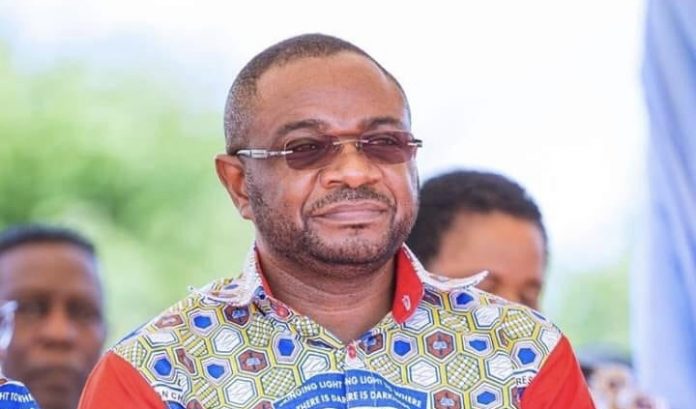
    The National Democratic Congress (NDC), has announced the death of a devoted member Eric Dadson.

    The comrade passed away on August 23, according to the Chairman of the party, Johnson Asiedu Nketiah. He broke the news at the launch of the party’s 2024 general manifesto ahead of the elections, today.

    According to Mr Nketiah, Eric Dadson served the party dutifully.

    He served the following roles; Branch youth organiser, a two-time constituency organiser, Deputy Regional Youth Organiser, a Regional Youth Organiser, Deputy National Youth Organiser aspirant and long time Central Regional Communication member.

    A minute-silence was held in honour of the late comrade at the manifesto launch.

  • LIVESTREAMING: NDC launches 2024 manifesto

    LIVESTREAMING: NDC launches 2024 manifesto

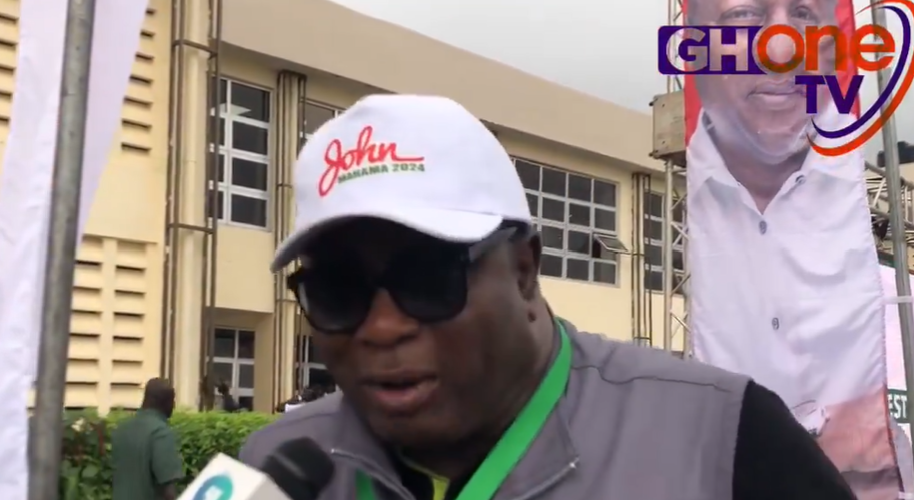
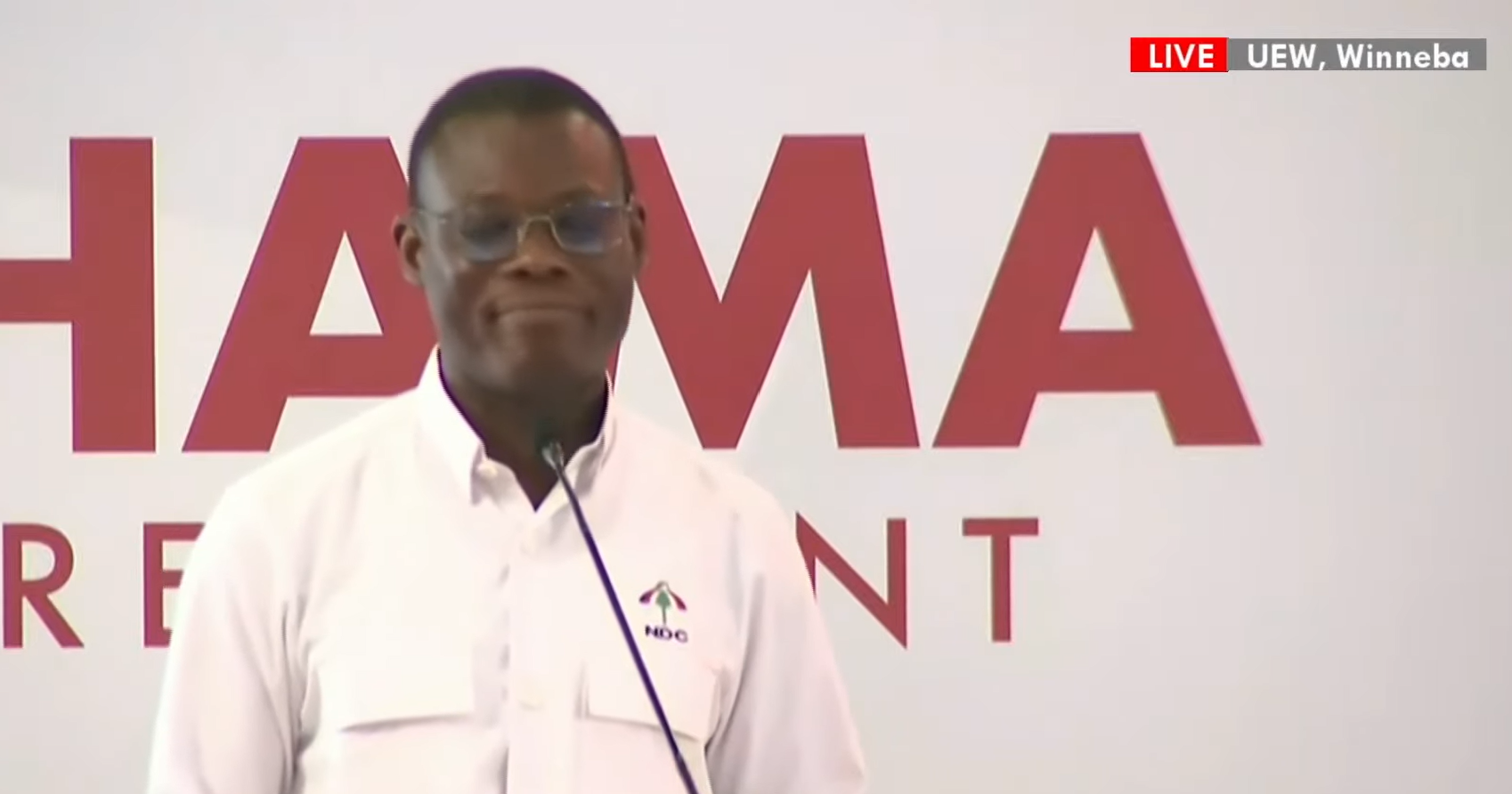
    Supporters of the National Democratic Congress (NDC) have trooped in to the University of Education, Winneba, where the party is set to unveil its manifesto.

    The event, which takes place in Winneba, will draw the top leaders of the NDC as they present their strategic plan under the theme, “Change to Reset Ghana.”

    NDC flagbearer John Dramani Mahama has described this manifesto launch as a pivotal moment in the party’s efforts to “reset” the nation, marking the beginning of their journey to address the country’s challenges ahead of the upcoming elections.

    He also stated, ahead of the launch, that “We face challenges that have held back for too long, but now, it’s time to build the Ghana we all want together. Join me from Winneba in the Central Region as I unveil a vision for our future that will bring justice, jobs, and prosperity to every corner of our beloved nation, Ghana.”

  • Tema West Municipal Assembly to fine NDC for painting crash protection blocks in party colours

    Tema West Municipal Assembly to fine NDC for painting crash protection blocks in party colours

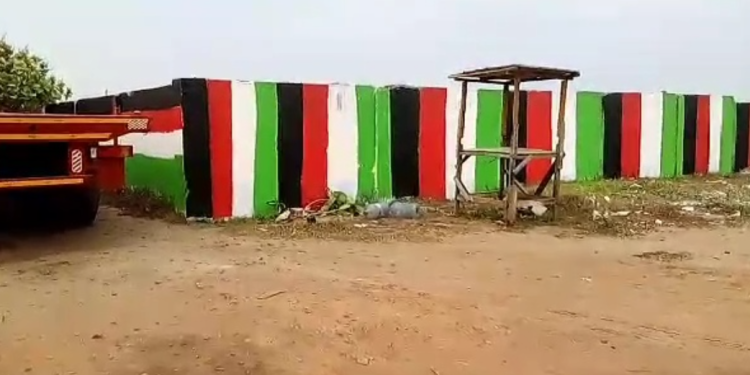
    The Tema West Municipal Assembly (TWMA) has announced that it will impose a surcharge on the National Democratic Congress (NDC) following the unauthorized painting of crash protection blocks with the party’s colours.

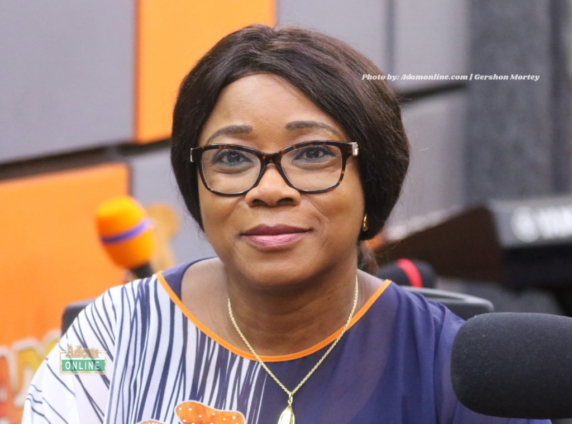
    Chief Executive Officer of the Assembly, Felicia Edem Attipoe, revealed that the blocks, located at strategic points between the rail line, the Sakumono Beach road, and the median, were recently found adorned in the NDC’s black, white, green, and red colours.

    This has led to concerns about public safety and the integrity of road infrastructure.

    During a site visit, Ms. Attipoe expressed her dissatisfaction with the situation, stating that she had ordered the removal and replacement of the painted blocks to maintain road safety.

    “Our major road at Sakumono, connecting from the beach road right down to Nungua, has been painted with NDC colours. I have called the constituency chairman to my office, and we will surcharge them. Seriously, we will surcharge them. It’s not right,” she told the media.

    Ms. Attipoe criticized the decision to paint the blocks in party colours, explaining that these structures were installed to enhance visibility and safety on the road. The inappropriate colours, she said, could mislead drivers and pose a danger, particularly at night.

    “When we talk about visibility, we have colours that have visibility qualities, of which black and green are not part,” she noted.

    The MCE described the incident as vandalism and a destruction of public property, emphasizing that the blocks’ primary function is to aid in safety and not to serve political purposes.

    She warned that using state infrastructure for political branding undermines public safety and accountability.

    “I’m sounding a warning to everybody. You can’t just use a road or use anything just like that because you are in a political season. No, this is not a political road. This is a major road. This is a ceremonial road. In any case, the road has not even been handed over since it was constructed,” Ms. Attipoe added.

    She also called on political parties and the general public to seek guidance from the assembly before undertaking any form of branding or modifications to state properties. The surcharge on the NDC is intended to address the costs associated with the removal of the party colours and to reinforce the importance of respecting public assets.

  • NDC supporters jubilate ahead of 2024 manifesto launch

    NDC supporters jubilate ahead of 2024 manifesto launch

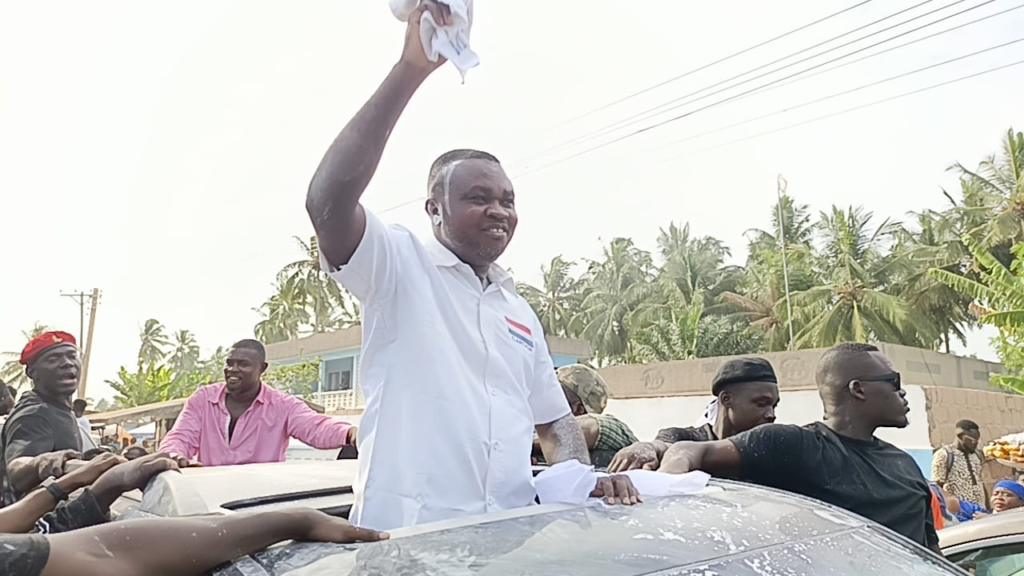
    Ahead of the launch of the 2024 manifesto by the opposition National Democratic Congress (NDC), party supporters are in a jubilant mood, singing and dancing.

    Supporters of the National Democratic Congress (NDC) have trooped in to the University of Education, Winneba, where the party is set to unveil its manifesto.

    The event, which takes place in Winneba, will draw the top leaders of the NDC as they present their strategic plan under the theme, “Change to Reset Ghana.”

    NDC flagbearer John Dramani Mahama has described this manifesto launch as a pivotal moment in the party’s efforts to “reset” the nation, marking the beginning of their journey to address the country’s challenges ahead of the upcoming elections.

    He also stated, ahead of the launch, that “We face challenges that have held back for too long, but now, it’s time to build the Ghana we all want together. Join me from Winneba in the Central Region as I unveil a vision for our future that will bring justice, jobs, and prosperity to every corner of our beloved nation, Ghana.”

  • NPP has no credibility – Elvis Afriyie Ankrah

    NPP has no credibility – Elvis Afriyie Ankrah

    A former Director of Elections of the National Democratic Congress (NDC), Elvis Afriyie Ankrah, has urged Ghanaians to desist from engaging in any action that would give the New Patriotic Party (NPP) another 4-year term to govern.

    He noted that the many promises the NPP made via its present flagbearer, Vice President Dr Mahamudu Bawumia, to develop the country have not been fulfilled.

    Engaging the media ahead of the launch of the 2024 manifesto by the opposition party, he stressed that the ruling party had no credibility and advised its flagbearer, to rescind his decision to contest this year’s election.

    Supporters of the National Democratic Congress (NDC) are flocking to the University of Education, Winneba, where the party is set to unveil its manifesto for the 2024 elections.

    The event, which takes place in Winneba, will draw the top leaders of the NDC as they present their strategic plan under the theme, “Change to Reset Ghana.”

    NDC flagbearer John Dramani Mahama has described this manifesto launch as a pivotal moment in the party’s efforts to “reset” the nation, marking the beginning of their journey to address the country’s challenges ahead of the upcoming elections.

    He also stated, ahead of the launch, that “We face challenges that have held back for too long, but now, it’s time to build the Ghana we all want together. Join me from Winneba in the Central Region as I unveil a vision for our future that will bring justice, jobs, and prosperity to every corner of our beloved nation, Ghana.”

  • How Ghana paid $4.5m for a €1.3m All Africa Games IT system – Bright Simons ‘exposes’

    How Ghana paid $4.5m for a €1.3m All Africa Games IT system – Bright Simons ‘exposes’

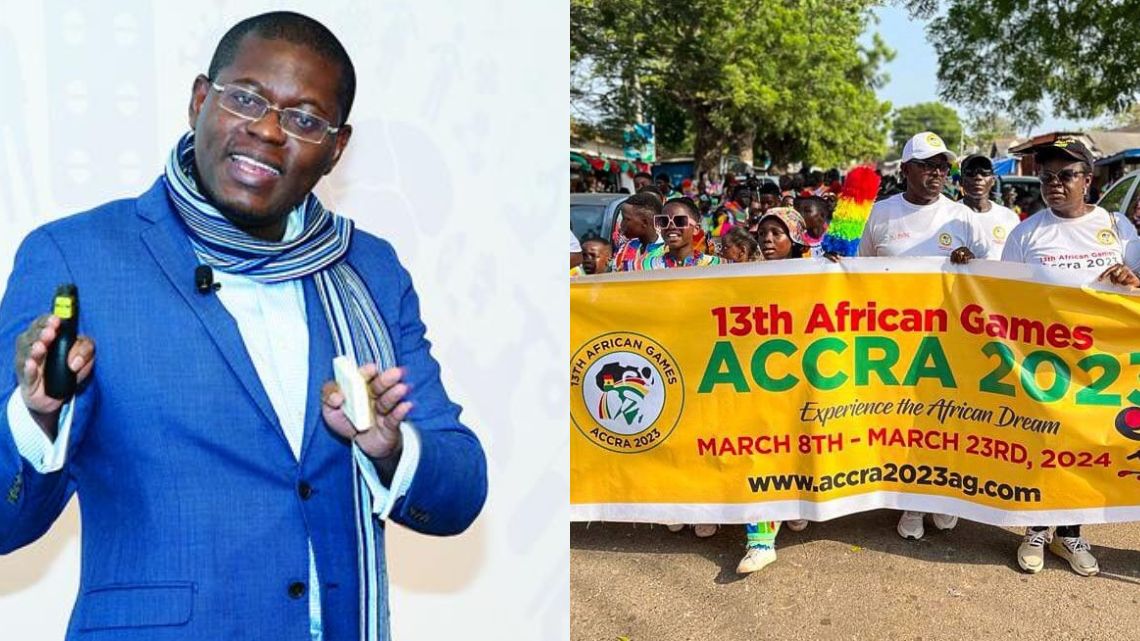
    Honorary Vice President of IMANI Africa, Bright Simons, has raised serious concerns over the high cost of Ghana’s Games Management System during the 2023 African Games.

    In a post on the X platform dated August 23, Mr Simons questioned the transparency of the procurement process that led to the country spending $4.5 million on a system rented from Atos, a French ICT consulting giant.

    He pointed out that Atos had bid to provide a similar system for the 2018 Mediterranean Games in Tarragona, Spain, but lost the contract to Bornan Sports Technology, a company that offered a more comprehensive package at a significantly lower cost.

    Bornan’s winning bid, valued at just under 1.3 million euros, included services for accreditation, athlete registration, results management, television graphics, and results information.

    This package covered more than the system rented by Ghana for the African Games and came at a fraction of the cost.

    “The number of users of the Bornan system also far exceeded those of the African Games because even though the number of athletes were comparable (~3,700 for the Med Games), the number of spectators using the Bornan platform during the Mediterranean Games far outnumbered those who experienced the African Games system,” Simons highlighted in his post.

    The 2018 Mediterranean Games, which hosted 4,000 athletes from 26 nationalities competing in 33 sports, saw over 150,000 spectators.

    Bornan’s system, chosen over bids from Atos and other competitors, was praised for its technical improvements. These included a mobile-accessible results information system for athletes, a commentary support system, and a “latest news” feature designed for media outlets.

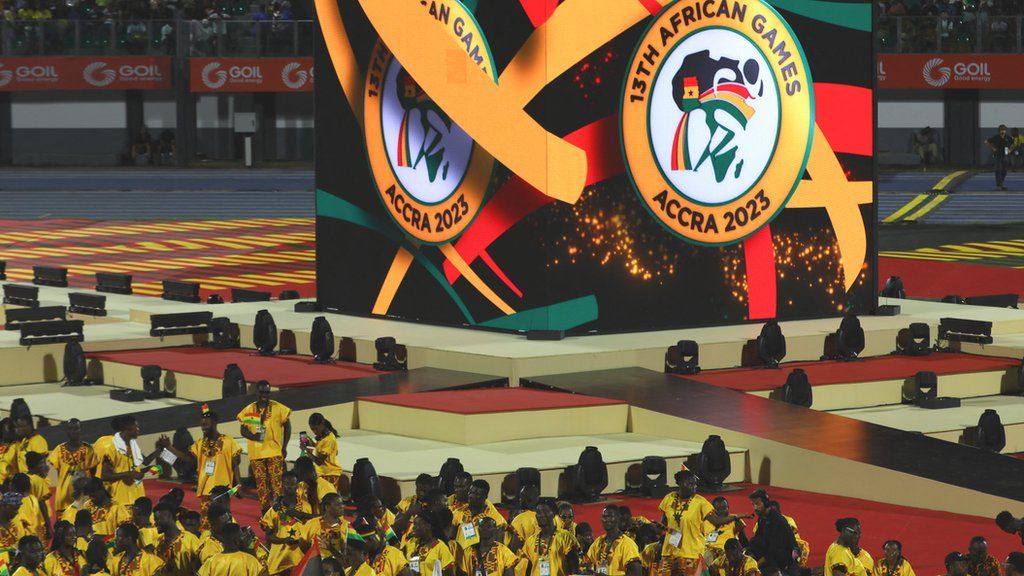
    Despite offering such enhancements, Bornan’s system cost less than half of what Ghana paid Atos for the 2023 African Games.The 2023 African Games, held from March 8 to March 23 under the theme “Experience the African Dream,” attracted over 5,000 athletes and officials competing in 22 sporting disciplines.

    Mr Simons’ post has sparked a debate about whether Ghana’s procurement process was based on a competitive tender and whether the country received value for money.

    “If the Parliamentary inquiry at the Public Accounts Committee is serious, MPs should request all contracts & publish them for all of us to scrutinize,” he urged.

    These concerns align with recent statements from Kobena Mensah Woyome, Chairman of Parliament’s Select Committee for Youth, Sports, and Tourism.

    Woyome, in an interview with JoySports, revealed that Ghana spent over $4 million on the Games Management System for the African Games.

    He questioned the high cost and expressed doubts about what was delivered, stating that the accreditation process and overall system performance did not reflect the value of such a large expenditure.

    “Even the games management system itself…the cost of putting it together and the standard we know at continental events—it just doesn’t add up,” said the South Tongu MP.

    He added, “For instance, the accreditation process and the tags given…we did not see anything extraordinary. But do you know how much we spent? As we are told, it was $4.5 million for that. So, what actually went into it?”

    Woyome further disclosed that he had written to Atos Information Technology, the company responsible for providing the system, seeking clarification on how the funds were utilized. Six months after the event concluded, neither the Local Organizing Committee nor the Sports Ministry has provided a detailed breakdown of the expenditure, despite repeated assurances to do so.

    As pressure mounts, Ghanaians are eagerly awaiting more details on the allocation of funds and whether the contract awarded truly represented value for money.

  • Police arrest man for possession of device suspected to be EC’s

    Police arrest man for possession of device suspected to be EC’s

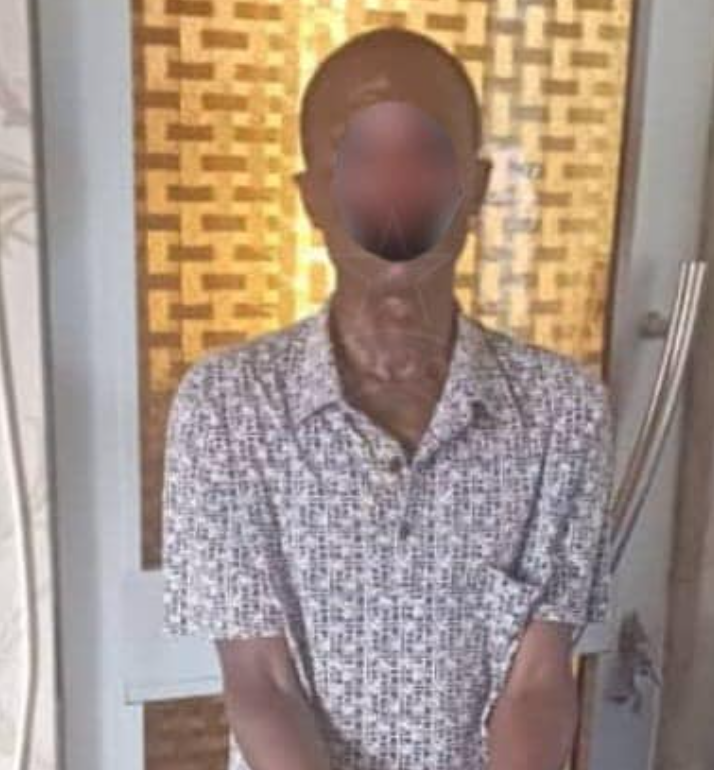
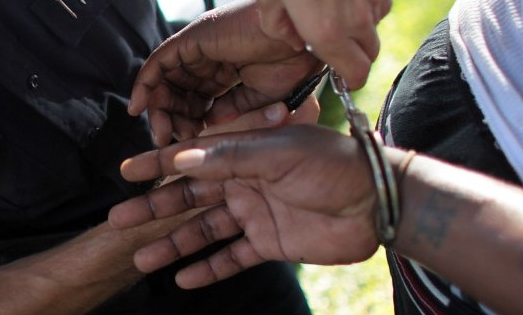
    The Ghana Police Service has arrested a man identified as Yaw Koranteng in Nsawam, located in the Eastern Region, for allegedly possessing a device suspected to belong to the Electoral Commission (EC) of Ghana.

    Mr Koranteng is currently in police custody, assisting authorities with their ongoing investigations, according to the Police.

    The arrest came to light following a press release issued on August 23, 2024, detailing the circumstances surrounding the situation.

    The police, after apprehending the suspect, informed the Electoral Commission of the incident and invited them to confirm whether the device in question is indeed their property.

    In their statement, the police expressed gratitude for the public’s role in assisting with the arrest.

    “As the investigation into this incident continues, we would like to take this opportunity to thank all stakeholders for their continuous support to ensure security, law and order during this election period and beyond,” the police said.

  • KNUST blows alarm on fraudulent admission syndicate

    KNUST blows alarm on fraudulent admission syndicate

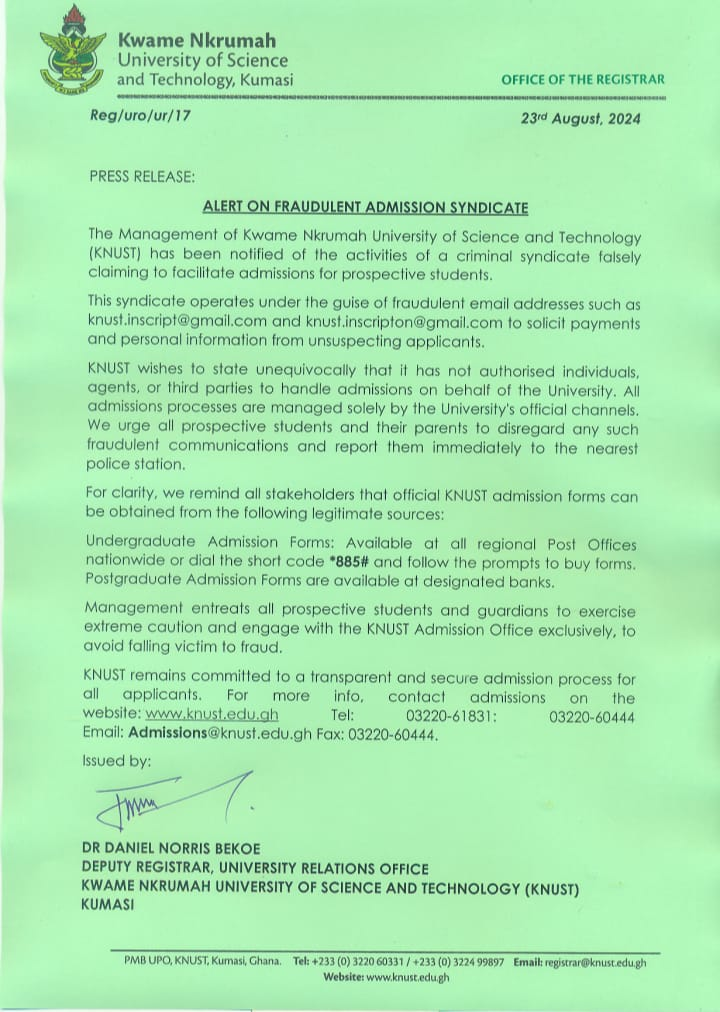
    The management of Kwame Nkrumah University of Science and Technology (KNUST) has issued a strong warning regarding the activities of a criminal syndicate posing as facilitators for university admissions.

    The syndicate is said to be deceiving prospective students into making payments and divulging personal information under the pretense of offering guaranteed admission into the university.

    Operating through fraudulent email addresses such as knust.inscript@gmail.com and knust.inscripton@gmail.com, the syndicate solicits funds and sensitive data from unsuspecting applicants, falsely claiming to manage KNUST’s admission processes.

    In response to these deceptive schemes, KNUST has made it clear that the university has not authorized any individuals, agents, or third parties to handle admissions on its behalf. All admission processes are managed exclusively through the university’s official channels, which include the KNUST Admissions Office and authorized vendors.

    KNUST is urging prospective students and their guardians to disregard any communications from these fraudulent entities and report such activities immediately to the nearest police station.

    In a statement, the university stressed, “We urge all prospective students and their parents to disregard any such fraudulent communications and report them immediately to the nearest police station.”

    To avoid becoming victims of this scam, KNUST has provided clarity on how to properly obtain admission forms:

    • Undergraduate Admission Forms: These can be purchased at all regional post offices nationwide or by dialing the short code *885# and following the prompts to buy the forms.
    • Postgraduate Admission Forms: These are available at designated banks.

    The university management is imploring all stakeholders to exercise extreme caution and ensure they engage solely with the official KNUST Admission Office for any admission-related matters. “Management entreats all prospective students and guardians to exercise extreme caution and engage with the KNUST Admission Office exclusively, to avoid falling victim to fraud,” the statement advised.

    KNUST reaffirms its commitment to ensuring a transparent and secure admission process for all applicants. Any questions or concerns regarding admissions can be directed to the university’s official contact points:

    • Website: www.knust.edu.gh
    • Tel: 03220-61831 / 03220-60444
    • Email: Admissions@knust.edu.gh
    • Fax: 03220-60444

    The university’s management is actively working with law enforcement agencies to address the issue and protect the interests of prospective students.

  • 10-day $13bn Eurobond Debt Exchange Programme to be launched next week

    10-day $13bn Eurobond Debt Exchange Programme to be launched next week

    The Government of Ghana is set to roll out the much-anticipated Eurobond Debt Exchange Programme next week, according to sources familiar with the Finance Ministry’s plans.

    The programme, which aims to restructure approximately $13 billion in Eurobond debt, is expected to run over a 10-day period.

    The Eurobond Debt Exchange Programme will invite investors to swap their existing bonds for new instruments under revised terms, as part of the government’s broader strategy to address its external debt challenges.

    This follows an agreement in principle reached in June 2024 between the government and Eurobond holders, with the prospectus now ready for release.

    As part of the June agreement, Eurobond holders are expected to forgo about $4.7 billion owed by the Ghanaian government. This is a significant portion of the $13.1 billion in debt that the government is looking to restructure under the new plan.

    The term sheet for the deal also indicates that bondholders will contribute a cash flow of $4.4 billion during the period of the ongoing International Monetary Fund (IMF) programme, providing much-needed liquidity as Ghana navigates its fiscal challenges.

    Two options are being proposed to bondholders under the programme. The “P.A.R.” option, which will cap participation at 1.6 billion cedis, offers investors an alternative approach to the traditional bond structure. The second option, known as the “Disco” option, will see bondholders receiving three new instruments as part of the restructuring.

    Furthermore, investors have agreed to a 37% haircut on both interest and principal maturity, a crucial concession that will be incorporated into the offer.

    The government is also introducing a Non-Financial Term, dubbed the “most favoured creditor clause,” aimed at ensuring that no other creditors receive better net present value terms than those offered in the Eurobond exchange.

    The International Monetary Fund (IMF) has given its approval to the deal, noting that the proposed terms are aligned with Ghana’s ongoing Debt Sustainability Programme. In a recent staff report, the IMF emphasized the importance of finalizing external debt restructuring before the country’s upcoming December elections.

    Meanwhile, Ghana is continuing efforts to secure agreements with bilateral commercial creditors as part of a broader plan to restructure its total external debts. The government is seeking a comprehensive solution to stabilize its finances and return to a path of sustainable economic growth.

    World Bank Country Director for Ghana, Robert Taliercio O’Brien, expressed optimism during an interview with Joy Business, suggesting that a timely agreement with external creditors will play a critical role in Ghana’s economic recovery efforts. He stated, “A swift resolution will help the country bounce back from its fiscal challenges and lay the foundation for a stronger recovery.”

    With the Eurobond Debt Exchange Programme slated for launch next week, attention will be focused on the reception from bondholders and the potential impact on Ghana’s economic trajectory. The 10-day window for the debt exchange is seen as a vital step in Ghana’s efforts to regain financial stability amid an ongoing fiscal crisis.

    The outcome of the exchange will likely shape investor confidence and determine the success of Ghana’s broader debt restructuring strategy in the months to come.

  • No one has told me to delete pages of my book concerning Ibrahim Mahama – Manasseh

    No one has told me to delete pages of my book concerning Ibrahim Mahama – Manasseh

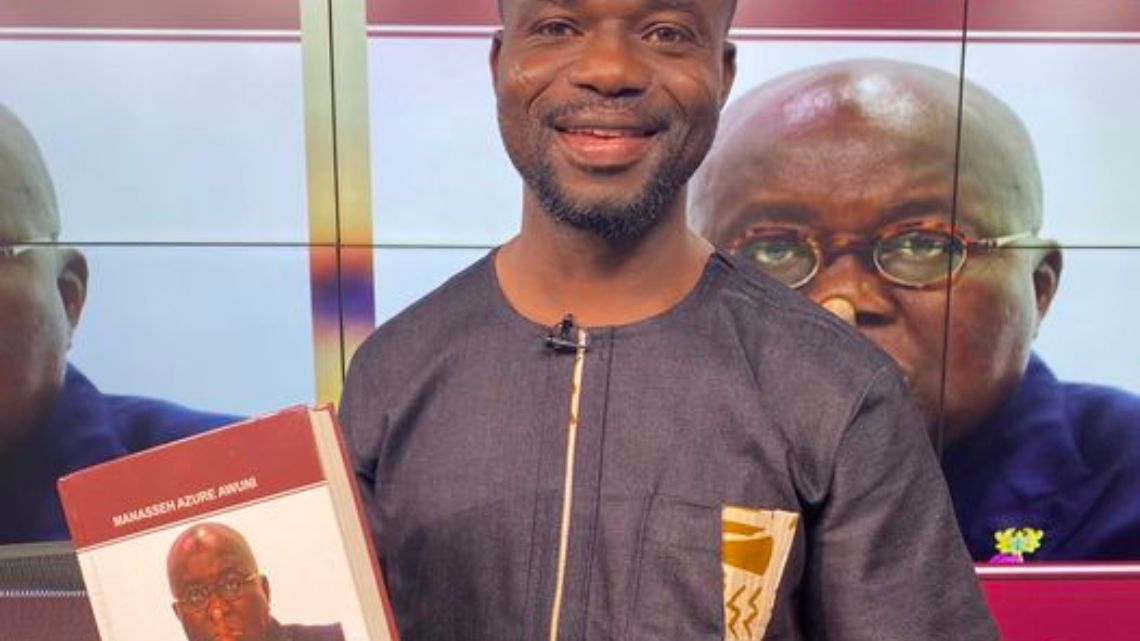
    Investigative journalist Manasseh Azure Awuni has refuted claims that he has been given a seven-day ultimatum to delete sections of his latest book that allegedly tarnish the reputation of businessman Ibrahim Mahama.

    According to Manasseh, these reports are inaccurate, though he acknowledges that Mr. Mahama’s lawyers have raised concerns about specific content in the book.

    The book in question, The President Ghana Never Got, addresses several issues, including the controversial sale of Universal Merchant Bank (UMB), formerly Merchant Bank, in 2013.

    Manasseh writes that the state-owned bank, which was sold to private equity firm Fortiz, faced difficulties partly due to large debts owed by Ibrahim Mahama at the time.

    In the book, it is noted that South Africa’s FirstRand Bank had offered GH₵176 million for 75% of the bank’s shares, while Fortiz secured 90% of the shares for only GH₵90 million. Manasseh highlights that a key debtor of the bank was Mr. Mahama, which, according to him, contributed to the bank’s financial problems.

    In response to this claim, Mr. Mahama, through his solicitors, demanded a retraction and an apology from Manasseh. However, contrary to media reports, Manasseh has denied receiving any directive to delete portions of the book.

    “I have received calls about the news that Ibrahim Mahama has given me seven days to delete pages 89 and 90 of my book because the information is inaccurate. That is not accurate,” Manasseh stated.

    Manasseh went on to explain that the correspondence from Ibrahim Mahama’s lawyers specifically addressed a paragraph in the chapter on the economy, which references Mr. Mahama’s indebtedness to Merchant Bank. The lawyers clarified that it was not Ibrahim Mahama himself who owed the bank, but rather his company, Engineers & Planners.

    “Mr. Ibrahim Mahama’s lawyers have written to me concerning a paragraph of the book… His lawyers say it was a company owned by Ibrahim Mahama, Engineers and Planners, which owed the bank, not Ibrahim Mahama,” Manasseh explained. He added, “I have forwarded their demands to my lawyers, and the matter will be addressed soon.”

    Manasseh Azure Awuni has stood by the claims in his book, expressing confidence in the accuracy of the information he published. He assured the public that the issue is being handled professionally by his legal team and that he will address the concerns raised by Mr. Mahama’s solicitors appropriately.

    The situation has drawn public interest, as Manasseh’s book touches on sensitive issues related to the business dealings of prominent figures in the country.

    Despite the legal back-and-forth, the investigative journalist remains resolute in his position, and the matter is expected to proceed through the legal process.

  • My lawyers are addressing Ibrahim Mahama’s concerns about my latest book – Manasseh

    My lawyers are addressing Ibrahim Mahama’s concerns about my latest book – Manasseh

    Renowned investigative journalist Manasseh Azure Awuni has clarified reports regarding a legal dispute between himself and the Chief Executive Officer of Engineers & Planners, Ibrahim Mahama.

    This follows demands from Mr. Mahama’s legal team, which alleged that Manasseh’s latest book, The President Ghana Never Got, contains false claims that tarnish the businessman’s reputation.

    The controversy centers on a chapter of the book that delves into the sale of Universal Merchant Bank (UMB), formerly known as Merchant Bank, in 2013.

    The chapter suggests that the sale of the state-owned bank to the private equity firm Fortiz was mired in controversy. Manasseh‘s book points out that South Africa’s FirstRand Bank had offered GH₵176 million for 75% of the bank’s shares, but Fortiz secured the deal for just GH₵90 million in exchange for 90% of the shares.

    A key factor, according to the book, was the substantial debt owed to Merchant Bank by Ibrahim Mahama, which, Manasseh claims, contributed to the bank’s financial difficulties at the time. This connection between Mr. Mahama’s debts and the bank’s struggles has become a focal point of the current legal concerns.

    Responding to the accusations, Mr. Mahama’s solicitors are demanding a retraction and an apology, asserting that the information presented in the book is false. They clarified that the debt in question was owed by Engineers & Planners, a company owned by Ibrahim Mahama, and not by Mr. Mahama personally.

    In addressing these concerns, Manasseh Azure Awuni has stood by the content of his book, stating that he has forwarded the demands to his legal team for review.

    “I have received calls about the news that Ibrahim Mahama has given me seven days to delete pages 89 and 90 of my book because the information is inaccurate. That is not accurate,” Manasseh explained in a statement. He added that the actual request from Mr. Mahama’s lawyers involved the correction of a specific paragraph in the chapter on the economy, which states that Ibrahim Mahama was indebted to Merchant Bank at the time of its sale.

    “Mr. Ibrahim Mahama’s lawyers have written to me concerning a paragraph of the book… His lawyers say it was a company owned by Ibrahim Mahama, Engineers and Planners, which owed the bank, not Ibrahim Mahama. I have forwarded their demands to my lawyers, and the matter will be addressed soon,” he further clarified.

    Manasseh did not provide additional details on how his legal team would respond but assured that the issue would be handled professionally.

  • $4m was spent on accreditation tags, games management during African Games 2023 – MP

    $4m was spent on accreditation tags, games management during African Games 2023 – MP

    Chairman of Parliament’s Select Committee for Youth, Sports, and Tourism, Kobena Mensah Woyome, has alleged that Ghana spent over $4 million on the Games Management System during the 2023 African Games.

    This revelation has raised concerns about the country’s expenditure on the event, which took place from March 8th to 23rd under the theme “Experience the African Dream.”

    Speaking to JoySports about Ghana’s financial outlay for the 13th African Games, Mr. Woyome questioned the cost of certain items, particularly the games management system.

    He expressed doubt over the $4.5 million figure reportedly spent on the system, stating that the cost seemed unusually high, given what was actually observed during the event.

    “Even the games management system itself…the cost of putting it together and the standard we know at continental events—it just doesn’t add up,” the South Tongu MP said.

    “For instance, the accreditation process and the tags given…we did not see anything extraordinary. But do you know how much we spent? As we are told, it was $4.5 million for that. So, what actually went into it?”

    In response to these concerns, Mr. Woyome revealed that he had written to ATOS Information Technology, the company responsible for providing the games management system, seeking clarification on how the funds were utilized.

    The controversy surrounding the Games’ finances deepened when Mr. Woyome also alleged that the government spent $15 million on feeding the 2,644 athletes who participated in the 18-day event across Accra and Kumasi.

    “You’re spending $245 million, and out of that, we got to know that a whopping $15 million was used to feed athletes for 18 days,” he asserted.

    Mr. Woyome’s concerns have sparked calls for a bipartisan inquiry into the financial management of the African Games. He stressed the need for transparency, stating, “Some of these things need to be investigated.”

    The 2023 African Games attracted over 5,000 athletes and officials who competed in 22 sports disciplines. However, six months after the event concluded, the Local Organizing Committee and the Sports Ministry have yet to provide a detailed account of the total expenditure, despite repeated assurances.

    Further complicating the issue, Sports Minister Mustapha Ussif recently revealed before the Public Accounts Committee that his ministry paid over $3 million to the Ghana Broadcasting Corporation (GBC) to produce and broadcast the Games.

    However, GBC’s Director General, Prof. Amin Alhassan, countered that the state broadcaster only received $105,000, with the rest being paid to third-party service providers.

    This discrepancy has fueled public suspicion about how the funds were distributed and to whom. The Sports Ministry later clarified that a $3.6 million contract was signed with GBC, out of which $2.5 million was paid to the broadcaster in two instalments, with $1 million directed to third-party providers at GBC’s behest.

    This explanation has raised questions about a $100,000 expenditure discrepancy.

  • 3rd accomplice in robbery at John Kumah’s wife’s home still at large

    3rd accomplice in robbery at John Kumah’s wife’s home still at large

    The third accomplice involved in the burglary at the home of Lillian Kumah, widow of the late Deputy Minister of Finance John Kumah, is still at large.

    The robbery, which took place on December 29, 2023, targeted valuable personal items, sparking concerns about the safety of residents in the area.

    The burglary occurred at the residence where Lillian has lived for several years, continuing to occupy the family home after the death of her husband, John Kumah, a well-respected figure in Ghanaian politics.

    The criminals managed to gain access to the home, stealing a significant haul of valuable items, including $50,000, GHC50,000, an iPhone 15 Pro Max valued at GH¢15,000, an Apple iPad worth GH¢15,000, a Samsung Z Fold phone costing GHC12,000, a Microsoft laptop worth GH¢7,000, a black school bag valued at GHC400, and an Apple watch.

    The burglars also stole other personal belongings, leaving Lillian shaken and distressed by the intrusion. The community, deeply unsettled by the boldness of the crime, has been vocal in expressing concerns about their own safety and the need for stronger security measures in the area.

    After the burglary was reported, the police swiftly launched an investigation, including the review of Closed-Circuit Television (CCTV) footage from the area. This led to the identification and subsequent arrest of two suspects: Adams Sanogo, a trader, and Rabiu Falilu, a Senior High School leaver. Both suspects were charged with conspiracy and dishonestly receiving stolen goods.

    Despite the progress in the case, a third accomplice, identified as Kwame Dunga, remains on the run. The police have been actively searching for Dunga, who is believed to have played a significant role in the crime but has so far evaded capture.

    Sanogo and Falilu have been granted bail, each set at GH₵200,000, along with other conditions. However, the community’s concern remains high, as the third suspect’s continued absence poses a potential threat to security.

    The incident has caused widespread anxiety within the Achimota-Mile 7 community, with many residents calling for increased security measures, particularly for vulnerable groups such as widows and elderly individuals. The community is pushing for improved police presence and enhanced surveillance systems to help deter future criminal activities.

    With the police continuing their search for the elusive accomplice, residents are hopeful that heightened security efforts will bring swift justice and restore a sense of safety to their community.

  • Pay your taxes – Chief Imam tells Muslims 

    Pay your taxes – Chief Imam tells Muslims 

    National Chief Imam of Ghana, Sheikh Osman Nuhu Sharubutu, has called on Muslims across the country to fulfil their civic duty by paying taxes, emphasizing that doing so is essential for sustainable national development.

    He expressed concern about the country’s growing indebtedness and urged the Muslim community to play their part in raising revenue for Ghana’s development.

    Speaking through his spokesperson, Sheikh Aremeyaw Shaibu, during a courtesy call by the newly constituted Board of the Ghana Revenue Authority (GRA) on Thursday, the Chief Imam stressed that paying taxes is in line with Islamic teachings on supporting the less privileged and contributing to societal well-being.

    “As Muslims, it is our obligation to engage in acts of charity, but it is equally important that we adhere to national laws, including the responsibility of paying taxes to support development projects,” the Chief Imam stated.

    The visit was part of the GRA’s tax education month, during which the Board sought to introduce its new members to the Chief Imam and to foster collaboration on tax sensitization efforts.

    The Chief Imam expressed willingness to partner with the GRA in outreach programs aimed at educating the public on tax compliance.

    Sheikh Sharubutu also encouraged all Imams across the country to use their platforms to promote the importance of tax payment, highlighting the direct connection between tax revenue and the provision of public infrastructure and services. Additionally, he urged the GRA to ensure accountability and transparency in the collection and utilization of taxes, which he said would help build trust among citizens.

    In his remarks, Joe Ghartey, Chairman of the GRA Board, expressed concern over Ghana’s low tax compliance rates, noting that only 40% of the country’s revenue comes from taxation. He stressed that without adequate tax contributions, the country cannot undertake significant development projects or achieve financial independence.

    “Ghanaians must start thinking about what they can contribute to the country in addition to what they expect from the government through their taxes. If we truly want to reach our developmental goals, we must pay our taxes,” Ghartey said.

    He added that reducing dependence on borrowing from development partners would strengthen Ghana’s economy and help pave the way for long-term growth.

    Other members of the GRA Board present at the meeting included Ms. Julie Essiam, the Commissioner-General; Brigadier General Ziblim Ayorrogo, Commissioner of the Customs Division; Ms. Pearl Darko, Commissioner in charge of the Support Services Division; and board members Ms. Susan Akomea and Mrs. Araba Bosomtwe.

    As part of the visit, the GRA team also made a donation to the Chief Imam, presenting him with an undisclosed sum of money along with various items, including bags of rice, cartons of Frytol oil, bottled water, and soft drinks.

    The Chief Imam concluded by offering prayers for the leadership of the GRA and for continued peace in Ghana as the country approaches the next general elections.

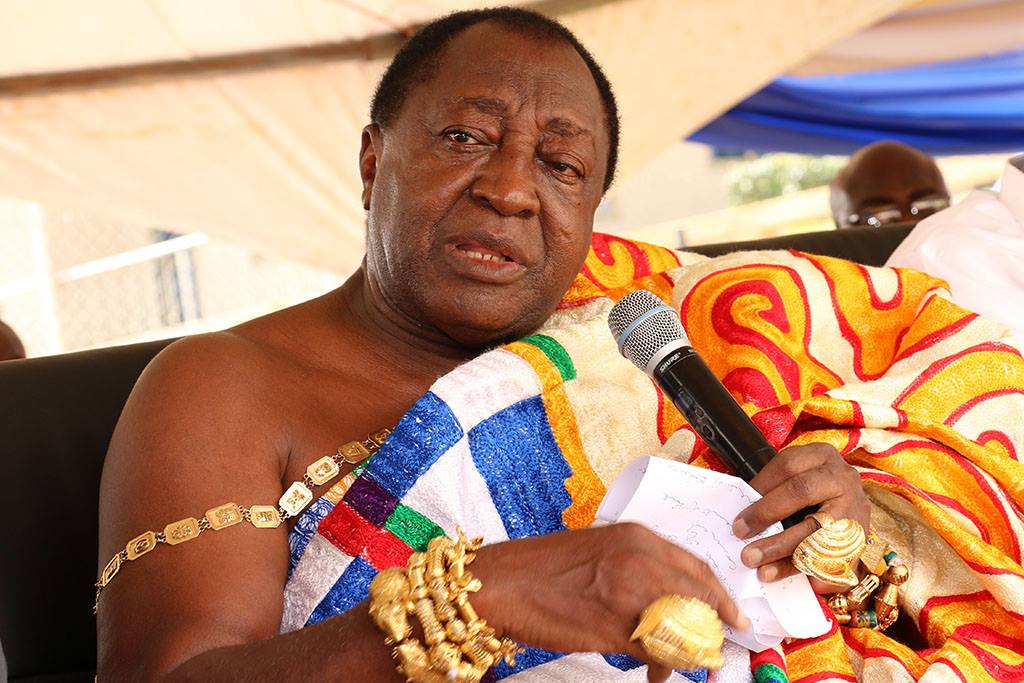
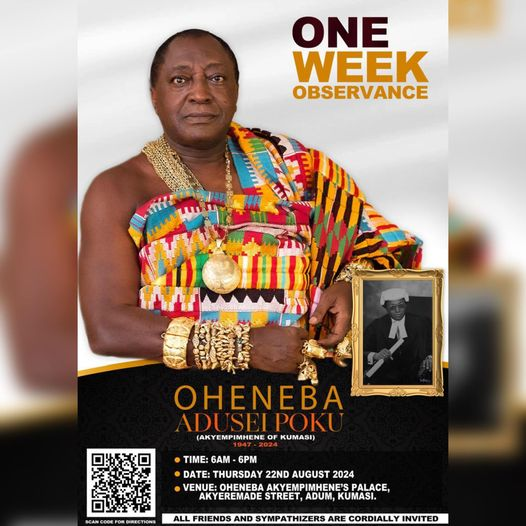
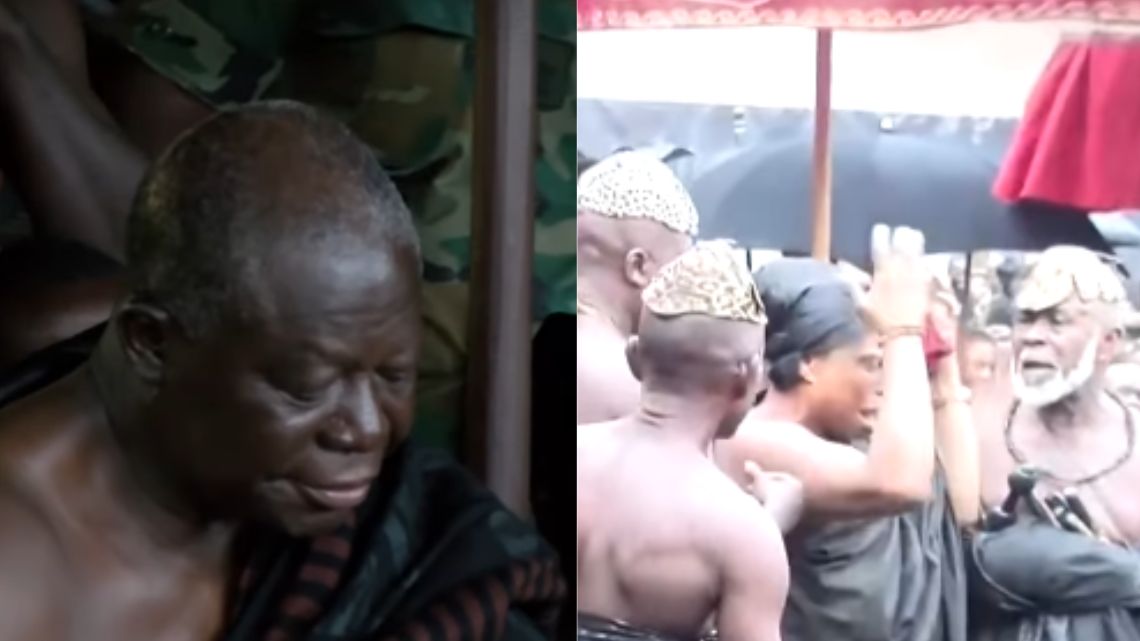
  • Kumasi mourns first son of Otumfuo Opoku Ware II

    Kumasi mourns first son of Otumfuo Opoku Ware II

    The Ashanti Region is in a state of mourning following the passing of the first son of Otumfuo Opoku Ware II, Akyempihene Nana Adusei Poku.

    The 40th-day funeral rites were held on August 22, 2024, to mourn the late royal at the Oheneba Akyempimhene’s palace.

    To commemorate his passing, shops and businesses were closed as all gathered to pay tribute to the late royal.

    Meanwhile, the funeral details of the late Akyempihene are yet to be communicated.

  • High-security presence at Mion, Kulkpeni amid controversy over new market

    High-security presence at Mion, Kulkpeni amid controversy over new market

    The Ghanaian military has been deployed to the Mion and Kulkpeni communities in the Northern Region to quell rising tensions following the alleged illegal establishment of a new market by the Konkomba people in Kulkpeni.

    The military intervention, which began on Saturday, August 17, aims to prevent violence from escalating after weeks of unrest in the region.

    The tension initially flared up following a deadly communal clash in Zogbei, located in the Mion District, two weeks ago. The violent confrontation claimed the lives of over seven people, sparking division between the communities in the district.

    In the aftermath of the clash, the Konkombas in the Mion District opted to boycott the Mion market and establish their own market in Kulkpeni, a move that further intensified the strained relations between residents of the Mion and Yendi districts.

    The establishment of the Kulkpeni market, located near Yendi, was seen as a provocative action by some residents, who threatened to forcibly close the new market.

    The Yendi Municipal Security Council had urged the Konkombas to follow the proper legal channels to officially open the market, but efforts to resolve the issue have so far proven unsuccessful.

    Fears of possible clashes heightened as today, Friday, August 23, marked a scheduled market day in Kulkpeni. In response to the growing threat of violence, the military presence in the area has been significantly bolstered to ensure peace and prevent any outbreak of unrest.

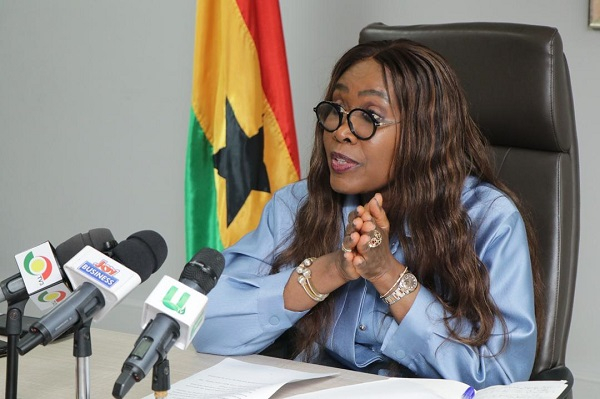
  • VAT policy must be reviewed to be flexible – GRA

    VAT policy must be reviewed to be flexible – GRA

    The Ghana Revenue Authority (GRA) wants a comprehensive review of the country’s Value Added Tax (VAT) policy to simplify the tax system and enhance compliance.

    Commissioner General of the GRA, Julie Essiam, emphasized the need for reforms during the 12th Annual International Tax Conference organized by the Chartered Institute of Taxation, Ghana.

    Addressing participants, Commissioner General Essiam stated that the current VAT structure is complex and makes it difficult for both individuals and businesses to comply with tax regulations.

    She highlighted the importance of implementing tax policies that are straightforward and understandable to all stakeholders.

    “These policies must be simple and easy to understand by everyone and all of us. As we look into the future as a revenue authority, we believe that the future tax policies should focus on the simplification of tax handles,” Essiam remarked.

    She suggested that efforts should be made towards establishing a simplified VAT rate, eliminating the complexities of the current system, which some perceive as causing a cascading effect on the tax burden.

    Essiam further noted that simplifying the VAT system could significantly boost compliance, particularly among private sector businesses.

    “Tax policies must therefore be flexible enough to grow and optimize tax revenues in tandem with private sector development,” she explained.

    Ghana faces mounting pressure to improve its domestic revenue collection as the country struggles with economic challenges and limited access to international capital markets. The GRA has been tasked with increasing tax revenue to support the nation’s development.

    In July 2024, the GRA reported that it had collected GH¢68.05 billion in revenue during the first six months of the year, exceeding its mid-year target by GH¢138.69 million. This represented a 0.2 percent excess in collections, demonstrating the authority’s commitment to raising domestic revenue.

    Calls for reform have not only come from the GRA but also from the business community. Organizations such as the Ghana Union of Traders Association (GUTA) and the Association of Ghana Industries (AGI) have consistently advocated for a review of the current VAT system.

    They describe the existing structure as a disincentive for the private sector, attributing rising market prices, in part, to the VAT regime.

    GUTA has pointed to the cascading effect of VAT on pricing, arguing that the current system puts undue pressure on businesses and consumers alike, contributing to inflation and market instability.

    During the conference, the President of the Chartered Institute of Taxation (CIT), George Ohene Kwatia, added his voice to the discussion, advocating for the creation of a national tax policy to harmonize activities in the sector.

    Mr Kwatia stressed that a unified tax policy could serve as a long-term framework that would guide future governments and reduce the frequent changes in tax regimes driven by shifts in political power.

    “If you have a true national policy, it will drive the tax agenda. This will serve as a guideline for every government that comes to power. This will avoid frequent changes in our tax regimes based on the government in power,” Kwatia said.

    The 12th Annual International Tax Conference, organized by the Chartered Institute of Taxation, provided a unique platform for policymakers, academia, and tax professionals to discuss improvements to Ghana’s tax system.

    The conference encouraged dialogue on balancing tax policy with private sector growth, with the ultimate goal of fostering an enabling environment for businesses to thrive.

    The three-day conference, which concludes on August 23, 2024, is themed “Balance Tax Policy and Private Sector Development.”

    It has featured presentations and discussions aimed at creating tax reforms that promote economic development while enhancing revenue collection.

    The growing consensus is that simplifying the VAT policy will benefit both the government and businesses by improving compliance, boosting revenue, and reducing the financial burden on the private sector.
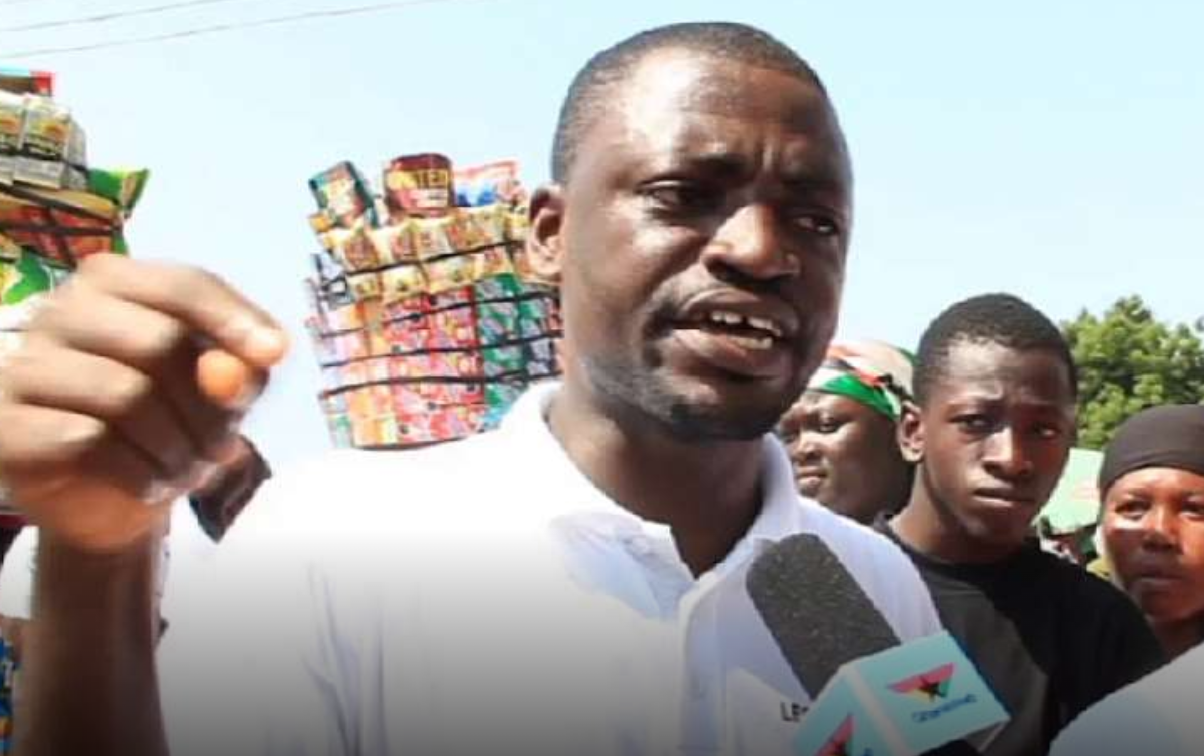
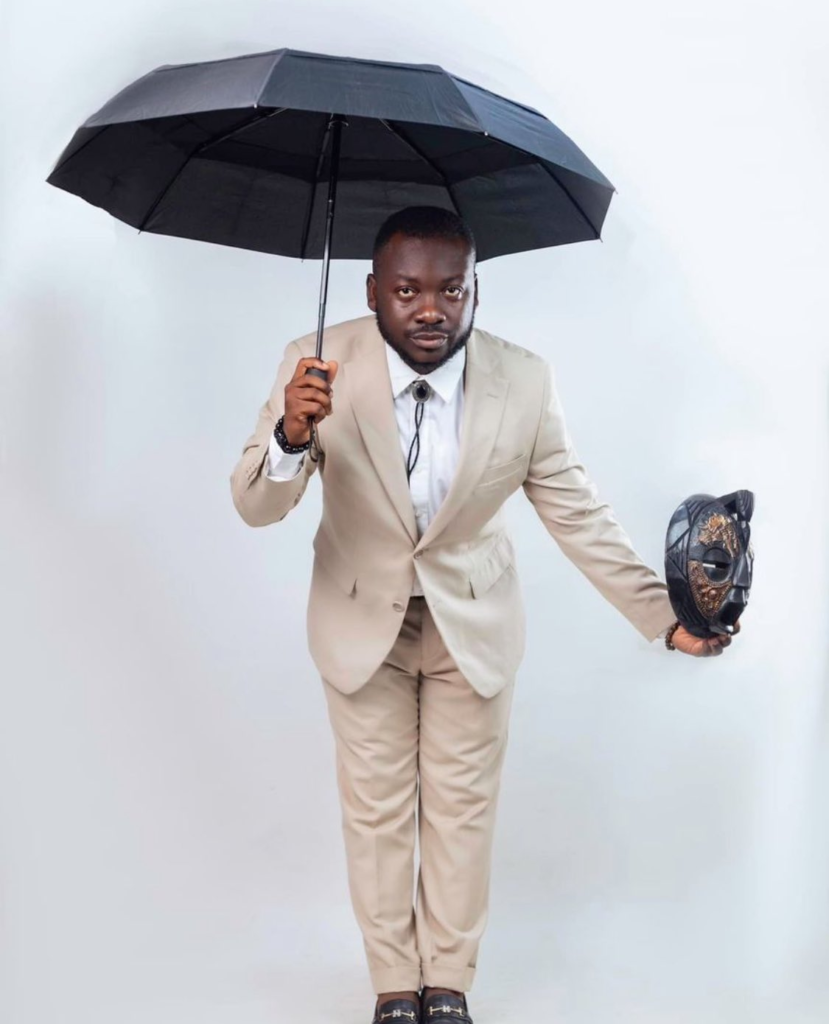
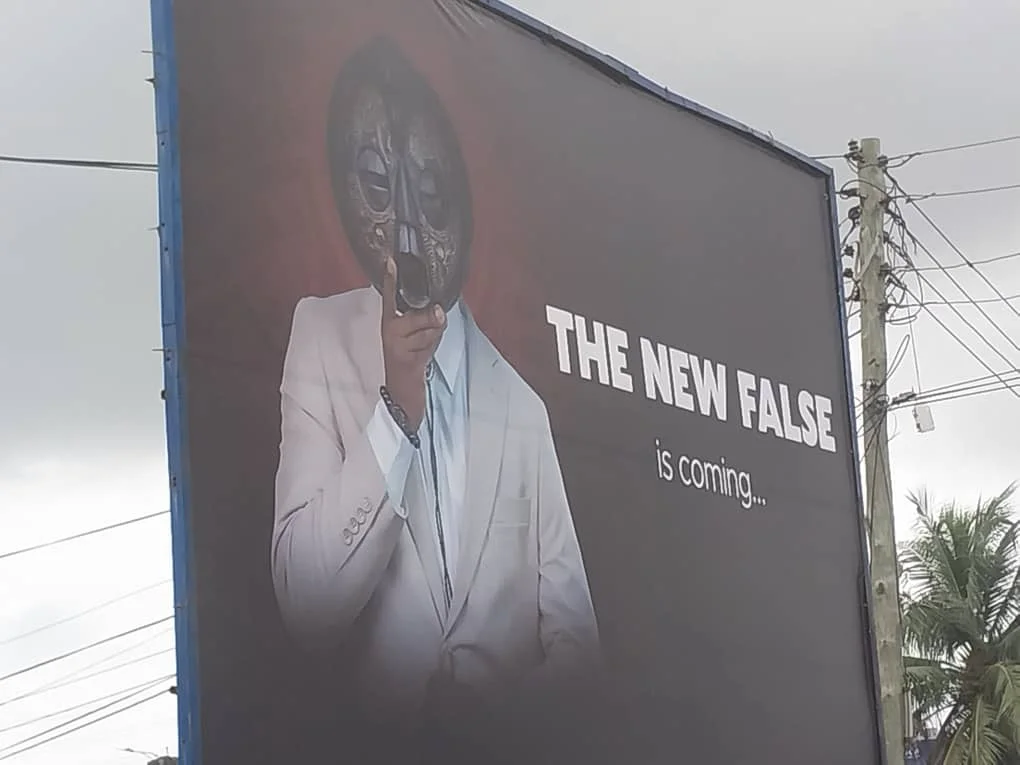
  • Comedian Lekzy DeComic is the face behind “The New False”

    Comedian Lekzy DeComic is the face behind “The New False”

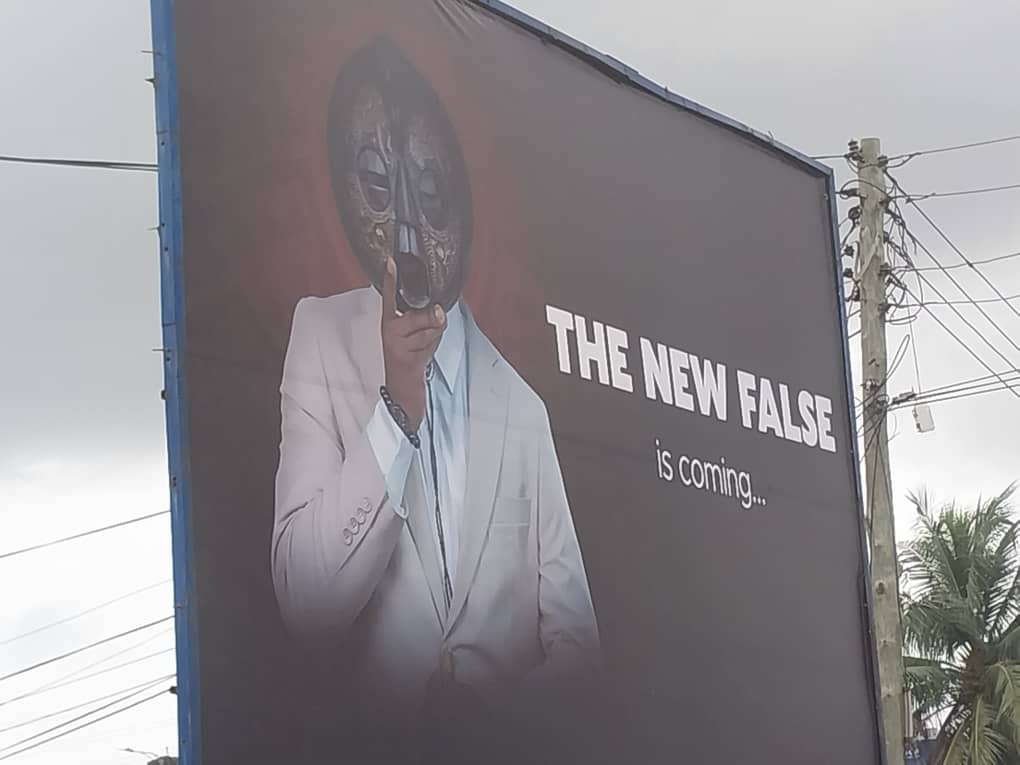
    The mysterious “The New False” billboards that have sparked widespread curiosity across Accra have finally been explained, with comedian Lekzy DeComic revealed as the creative mind behind the campaign.

    The unveiling took place during a press conference on Thursday, August 22, 2024, at Grand Casamora in East Legon.

    Lekzy DeComic, known for his exceptional comedic talent and having spent over eleven years in the industry, is now preparing to stage his latest comedy special.

    Slated for September 28, 2024, this highly anticipated event will be held at the UPSA Auditorium in Accra and promises to be his biggest and most hilarious production yet. Titled The New False, the event is set to make history in Ghana’s arts and pop culture scene.

    Lekzy and his production company, 2Cute Entertainment, are aiming to use humor to ease the current political tension in the country.

    The comedian, whose past specials include hits like Too Cute to Be Mute 1K, Too Cute to Be Mute (Amplified Edition), and CanPAIN MESSage, has become a beloved figure in Ghana’s entertainment landscape, known for blending sharp wit with relatable humor.

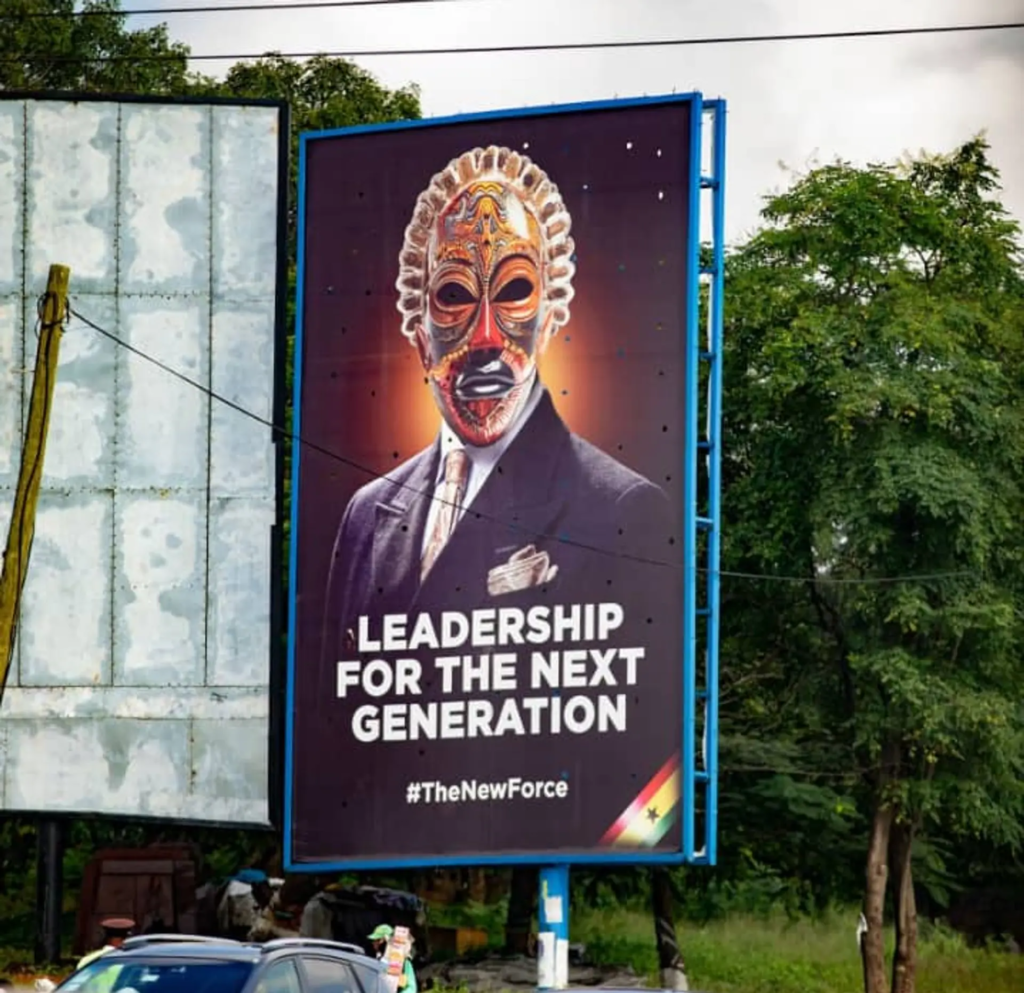
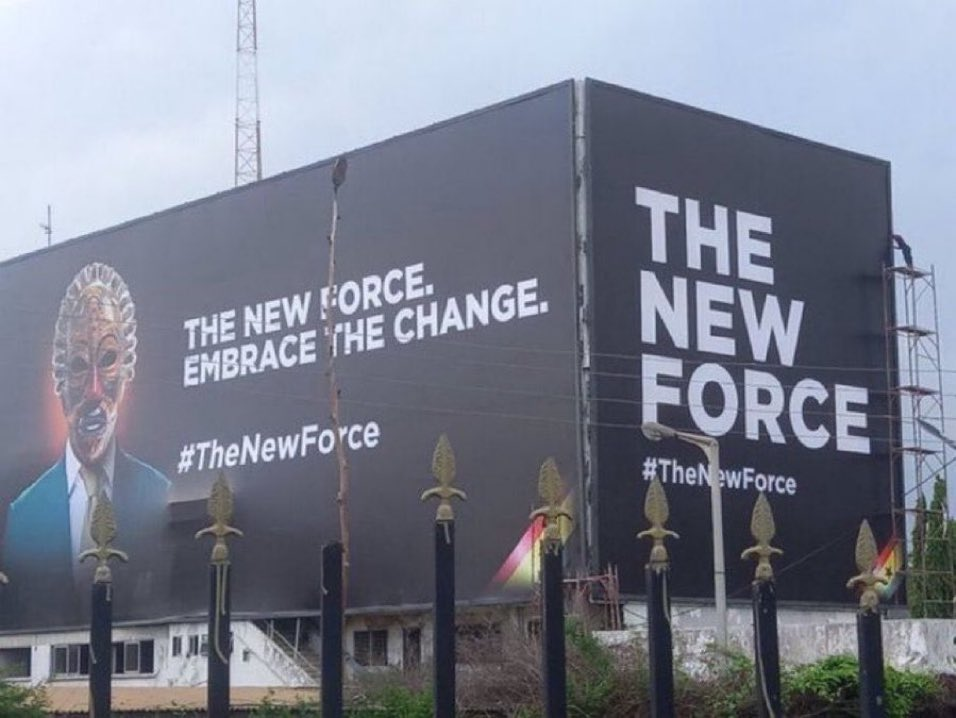
    The emergence of the “The New False” billboard caused a stir due to its striking resemblance to a previous campaign by Nana Kwame Bediako, popularly known as Cheddar, and his political movement The New Force.

    Like its predecessor, the The New False billboard featured a masked figure, giving rise to speculation about its origins and intentions. The design, which appeared to be an echo of The New Force movement, bore phrases like “leadership” and “embrace the change,” sparking further intrigue.

    However, instead of signaling a new political venture, the billboard was revealed to be a marketing strategy for Lekzy’s upcoming comedy special. By playing on the similarities with The New Force, Lekzy has cleverly turned the political symbolism into a comedic narrative.

    Lekzy has solidified his reputation with a series of successful comedy specials and performances at high-profile events such as the Laughline Comedy Show, Easter Comedy Show, Comedy Fiesta, and MMC Live. He has also taken his talent beyond Ghana, performing at international events like the Bloemfontein International Comedy Festival and Go Bananas Comedy Club USA.

    In 2024, Lekzy won the Best Comedy Special award at the Ghana Comedy Awards for his CanPAIN MESSage special, further cementing his status as one of Ghana’s leading comedians.

  • Police arrest 2 students for lynching spiritualist at  Twifo Praso

    Police arrest 2 students for lynching spiritualist at  Twifo Praso

    Two students from Twifo Praso Senior High School have been arrested by the police for allegedly mobilizing their colleagues to lynch a spiritualist, identified as Abdul Latif.

    The violent incident occurred on the evening of Wednesday, August 21, 2024, at Twifo Praso in the Central Region, after Latif accused one of the students of stealing a mobile phone.

    According to reports, a junior student’s phone had gone missing, prompting the students to seek the help of Abdul Latif, a local spiritualist, to identify the culprit.

    After performing his spiritual investigations, Latif accused one of the senior students of being responsible for the theft.

    Enraged by the accusation, the student reportedly rallied a group of around 10 of his colleagues to ambush Abdul Latif. They severely beat him until he died. After the attack, the group dragged Latif’s body into a nearby bush and attempted to conceal it by covering it with weeds.

    The police, upon discovering the body, retrieved it and transported it to the Twifo Praso Government Hospital Mortuary, where it is awaiting autopsy. The two students suspected of leading the mob attack are now in police custody, facing charges related to the lynching.

    Graphic Online’s Central Regional correspondent, Shirley Asiedu Addo, is said to have reported that the incident has sparked outrage among some youth in Twifo Praso, who planned to storm the school in retaliation for Latif’s death.

    However, swift intervention by the police averted further violence. Reinforcement teams from the Central North Regional Police Command were deployed to the area to maintain order and ensure peace.

    The father of the deceased, Yaw Nkrumah, disclosed that this was not the first time his son had been targeted by students from the school. He revealed that Latif had been attacked twice before by students following the initial phone incident but had managed to escape without harm. Sadly, the third attack resulted in his death.

  • Gov’t ‘squandered’ GHC160m weeks after African Games 2023 ended – Ablakwa claims

    Gov’t ‘squandered’ GHC160m weeks after African Games 2023 ended – Ablakwa claims

    Member of Parliament for North Tongu, Samuel Okudzeto Ablakwa, has accused the government of mismanaging public funds, alleging that over GHC160 million was withdrawn from state coffers months after the conclusion of the 2023 African Games.

    The games, held in Accra from March 8th to 23rd under the theme “Experience the African Dream,” brought together over 5,000 athletes and officials from across the continent to compete in 22 sports disciplines.

    In a Facebook post dated August 22, 2024, Mr Ablakwa claimed that despite the games ending six months ago, intercepted financial documents show that the Akufo-Addo/Bawumia administration has continued to make large financial withdrawals, amounting to GHC168,386,331.00.

    He revealed four key transactions:

    1. On May 17, 2024, GHC70 million was released to the Ministry of Youth and Sports, labeled “Payment for 13th African Games.”
    2. On July 3, 2024, another GHC30 million was transferred to the Ministry under the same description.
    3. On July 16, 2024, a further GHC30 million was withdrawn.
    4. That same day, an additional GHC38,386,331.00 was disbursed.

    Mr Ablakwa pointed out that these payments occurred despite the Finance Ministry having already released over GHC460 million before the games’ closing ceremony, an amount he claims far exceeded what Parliament had initially approved.

    He expressed concern that the ongoing withdrawals are occurring without adequate public transparency or justification.

    “The government must explain to Ghanaians why these humongous post-tournament payments continue and exactly what they are being used for,” Ablakwa stated.

    He added that the country’s public finances are being strained while many critical sectors remain underfunded, worsening the economic hardships faced by ordinary citizens.

    Despite repeated assurances from the Local Organizing Committee and the Ministry of Youth and Sports, a comprehensive account of the total expenditure on the games has yet to be provided, six months after the event’s conclusion. This delay has sparked growing calls for accountability, especially given the large sums of money involved.

    The controversy surrounding the government’s spending deepened after a recent hearing before the Public Accounts Committee. During the session, Sports Minister Mustapha Ussif revealed that the Ministry had paid the Ghana Broadcasting Corporation (GBC) over $3 million to produce and broadcast the African Games. However, GBC’s Director General, Prof. Amin Alhassan, countered that the state broadcaster had only received $105,000, with the remaining amount being paid to third-party service providers.

    This significant discrepancy between the figures disclosed by the Sports Ministry and GBC has fueled public suspicion about the actual distribution of funds and who the ultimate recipients were.

    Ablakwa seized on this issue, arguing that the lack of clarity and the conflicting accounts only serve to heighten concerns about financial mismanagement.

    “The government must come clean on the full scope of spending during the African Games, and the Sports Minister, Mustapha Ussif, should be ready to face full parliamentary scrutiny. Ghanaians are tired of the evasiveness. The day of reckoning is fast approaching,” Ablakwa warned.

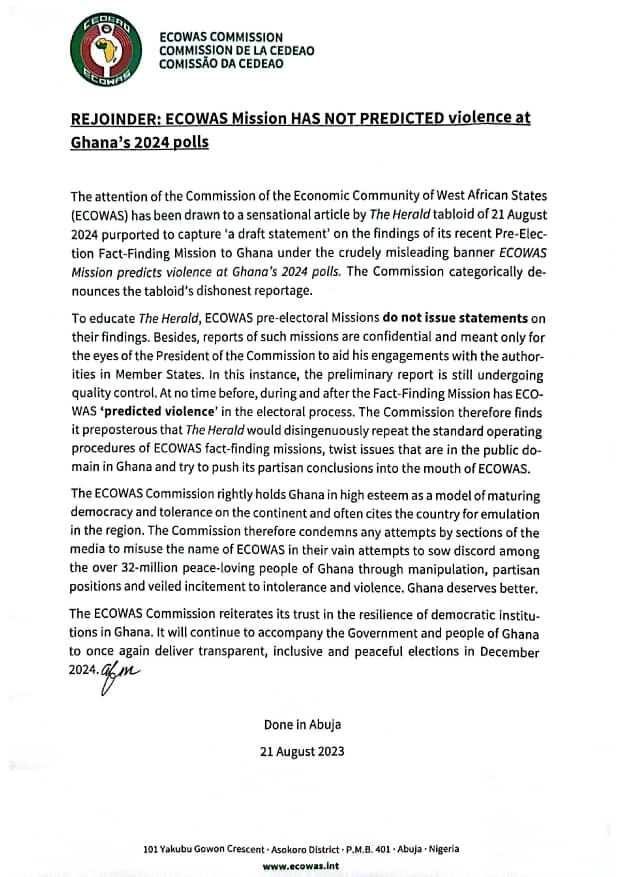
  • Ghana’s 2024 elections will be peaceful, we’ve not predicted doom – ECOWAS

    Ghana’s 2024 elections will be peaceful, we’ve not predicted doom – ECOWAS

    The Economic Community of West African States (ECOWAS) Commission has firmly denied claims that it forecasted violence during Ghana’s 2024 general elections, refuting reports published by The Herald newspaper on August 21, 2024.

    The newspaper had alleged that ECOWAS, in a ‘draft statement’ from its recent Pre-Election Fact-Finding Mission, suggested the potential for violence during the upcoming electoral process.

    In an official statement, ECOWAS clarified that its pre-electoral missions do not release findings publicly. Such reports, the Commission emphasized, are confidential and prepared exclusively for the President of the Commission to guide engagements with member states.

    The Commission strongly rejected the claim that it had predicted any violence in Ghana’s elections, labelling the article a gross distortion of its procedures and findings.

    “To educate The Herald, ECOWAS pre-electoral Missions do not issue statements on their findings. Reports of such missions are confidential and meant only for the President of the Commission to aid his engagements with the authorities in Member States,” the statement read.

    The Commission further stated that the preliminary report from its recent mission in Ghana was still under review. At no time, ECOWAS stressed, had it suggested violence in the electoral process. The organization criticized The Herald for misrepresenting its practices and distorting public information to support partisan narratives.

    “The ECOWAS Commission rightly holds Ghana in high esteem as a model of maturing democracy and tolerance on the continent and often cites the country for regulation in the region,” the statement continued. ECOWAS condemned efforts by sections of the media to misuse its name in attempts to incite division and unrest among Ghana’s population.

    ECOWAS reaffirmed its commitment to peace and democratic stability in Ghana, expressing confidence in the country’s capacity for a peaceful election in 2024.

    “Ghana deserves better,” the Commission concluded, refuting any attempts to stir discord ahead of the elections.

  • Cyber interference can compromise Ghana’s 2024 election results – Information Security expert

    Cyber interference can compromise Ghana’s 2024 election results – Information Security expert

    A Data Privacy and Information Security specialist, Desmond Israel, has warned that the country remains vulnerable to cyber-attacks and electoral interference.

    According to Mr Israel, attackers may not target the voting, counting, or collation processes—since they are fully manual—but instead exploit digital avenues such as political campaigns, communications, and social media manipulation.

    Speaking on Joy FM’s Super Morning Show on Thursday, Israel explained that while Ghana’s elections are safeguarded from direct digital tampering, cyber attackers could still influence the outcome through disinformation and psychological manipulation.

    By hacking into the digital communication systems of political candidates or employing deceptive tactics online, attackers could mislead the public and undermine electoral integrity.

    He cited examples from the 2016 U.S. election, where troll factories created fake accounts and bots to inflate a candidate’s perceived popularity on social media. These tactics gave a false sense of grassroots support and influenced public opinion.

    “An attacker can set up a troll factory, making it appear as though a candidate has a strong grassroots base on social media, when in reality, it’s the opposite. This false popularity can create an illusion of growth and support, which can be misleading and ultimately detrimental,” Israel explained.

    Israel further emphasized that the manipulation doesn’t stop with fake popularity. Attackers could also deploy misinformation and disinformation campaigns to destabilize a candidate just before the election.

    “Once they’ve built up that false hope, they could release damaging information—gathered through hacking or other cyber espionage—causing public outrage,” he warned.

    The combination of fake support and sudden negative revelations could cripple a candidate’s chances.

    He cautioned that these cyber tactics could lead to unexpected losses, even for the most popular candidates.

    “You might be the leading candidate, but in the final week, this manipulation could seriously affect your chances and the overall election outcome. This is a form of election interference,” Israel stated.

    As Ghana heads towards its 2024 general election, the expert urged political parties and candidates to be vigilant and take necessary steps to secure their digital communications and online presence against potential threats.

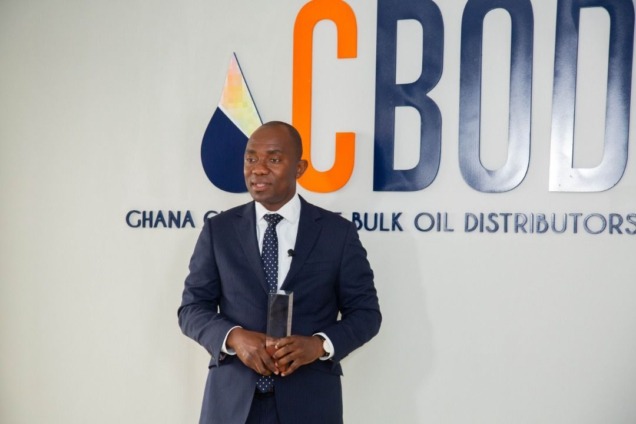
  • CBOD contests LPGMCs’ decision to stop doing business with SAGE Petroleum, Blue Ocean

    CBOD contests LPGMCs’ decision to stop doing business with SAGE Petroleum, Blue Ocean

    The Chamber of Bulk Oil Distributors (CBOD) has expressed deep concern over the recent decision by Liquefied Petroleum Gas Marketing Companies (LPGMCs) to cease doing business with SAGE Petroleum (Quantum Terminals) and Blue Ocean depots in Tema.

    Both companies are key players in Ghana’s downstream petroleum sector and valued members of the CBOD.

    In response to the LPGMCs’ decision, the CBOD defended the operations of Quantum Terminals and Blue Ocean, emphasizing that both companies are legally registered in Ghana and operate in full compliance with the National Petroleum Authority (NPA) Act 691 of 2005.

    The CBOD refuted any allegations of illegality surrounding the companies’ activities, calling such claims misleading and potentially damaging.

    “Quantum and Blue Ocean have, over the years, significantly contributed to the infrastructural development of the downstream sector,” the CBOD stated.

    The chamber highlighted the companies’ investments in facilities like Quantum Terminals and Tema Multi-Purpose Terminals (TMPT), which account for around 9% and 14% of private sector petroleum storage capacity, respectively.

    Their involvement in the Cylinder Recirculation Model (CRM), a government initiative aimed at boosting LPG usage to 50% by 2030, was also underscored, with more than $30 million invested in bottling plants, storage facilities, and cylinders, as well as a planned $70 million investment in the next 18 months.

    The CBOD also pointed out that Blue Ocean and Quantum Terminals have supported the government’s LPG promotion drive by building bottling plant facilities. These investments, the CBOD argued, align with the government’s goals and should be recognized as part of the effort to modernize and expand the LPG industry.

    “While we stand for the protection of Ghanaian businesses and oppose illegal practices, it is equally important to avoid the spread of deliberate misinformation that seeks to create undue controversy,” CBOD stated.

    The chamber stressed that all entities within the LPG value chain should be held accountable, but that such accountability should not come at the expense of companies with proven track records of compliance and contributions to the industry.

    CBOD also questioned whether it is illegal for other Ghanaian institutions, such as Goil and Ghana Gas—both of which have constructed and commissioned their own bottling plants—to participate in the LPG market.

    “The answer is no,” the chamber asserted, arguing that it is critical to promote a competitive business environment where efficiency, rather than baseless allegations or xenophobic rhetoric, drives market success.

    The CBOD praised the Ministry of Energy for its Ghanaian Content and Ghanaian Participation Policy, which protects local personnel within the downstream sector.

    Both Quantum and Blue Ocean, the chamber noted, comply with this policy by employing local staff and partnering with Ghanaian LPG marketers, dealers, and transport companies, thus contributing to the growth of the national economy.

    The chamber warned that the LPGMCs’ decision to cut ties with these companies is counterproductive to ongoing efforts to promote LPG use across the country, a goal shared by the government, NPA, and other stakeholders.

    “While we strive to protect our environment and ensure safety, we must also preserve competition and innovation,” CBOD stated. The chamber called for a swift resolution to the disagreement, urging all parties to engage in constructive dialogue.

    CBOD concluded by reaffirming its support for Quantum Terminals and Blue Ocean.

    “We encourage the LPG Marketing Companies to collaborate with the regulator and all relevant stakeholders. No one in this space is a threat to another, but those who fail to innovate and evolve will face the consequences of the market.”

  • NDC’s conditions to sign peace pact unrealistic – Prof. Agyeman-Duah

    NDC’s conditions to sign peace pact unrealistic – Prof. Agyeman-Duah

    A former UN Senior Governance Advisor, Professor Baffour Agyeman-Duah, has expressed concerns over the conditions laid out by the opposition National Democratic Congress (NDC) before signing the election peace pact ahead of the 2024 General Elections.

    According to him, the NDC’s demands suggest an intent to complicate the election process.

    During an interview on JoyNews’ UpFront on Wednesday, August 21, Prof. Agyeman-Duah acknowledged that while the NDC’s concerns are valid, their conditions are ultimately unrealistic and impractical.

    “Even though I have to say I do sympathize with the concerns raised by the NDC, I do sympathize with them because truly, it’s not been fair that these incidents in the past were not properly addressed, especially if the president himself set up a commission,” he stated.

    “But those conditions that were made, I think they’re very unrealistic. You want the Chief Justice to come and sign, you want the Attorney-General to sign, you want the IGP to sign,” Prof. Agyeman-Duah pointed out.

    His comments come after the NDC Chairman, Johnson Asiedu Nketia, reiterated the party’s refusal to sign any peace pact unless certain conditions were met.

    During a meeting with the National Peace Council on Tuesday, August 20, 2024, Asiedu Nketia outlined six key demands that the NDC insisted must be fulfilled. These include:

    • Full implementation of the Ayawaso Commission’s recommendations following the violence during the Ayawaso West Wuogon by-election.
    • Prosecution of individuals responsible for the killings that occurred during the 2020 elections.
    • Prosecution of those involved in the illegal printing of ballot papers.
    • Transparent and honest resolution of the issue surrounding missing IT equipment from the Electoral Commission’s office, with an explanation satisfactory to the general public.
    • A public declaration by President Akufo-Addo that he will accept the outcome of the 2024 general elections.
    • The signing of the peace pact by key national figures, including the President, the Chief Justice, the Attorney-General, and the Inspector General of Police (IGP).

    While the National Peace Council has urged political parties to work together to ensure peace, Prof. Agyeman-Duah questioned the necessity of involving such high-ranking officials in the peace pact process. He argued that the political parties themselves should be capable of committing to peaceful elections without these additional demands.

    “If you think of the implications of such a move that henceforth, we’re going to have a Chief Justice, the A-G and all these people come in to sign, I think that is a bit too far-fetched. So I do not subscribe to the conditions,” Prof. Agyeman-Duah added.

    The ongoing discussions between the NDC and the National Peace Council reflect heightened tensions ahead of the 2024 General Elections, as concerns over electoral fairness, security, and integrity continue to dominate the political landscape.

  • Ghana’s Regina House in London taken over by Trafigura – Report

    Ghana’s Regina House in London taken over by Trafigura – Report

    Ghana’s Regina House in London, one of the nation’s key commercial properties, has been taken over by Trafigura’s Ghana Power Generation Company (GPGC) due to the government’s failure to settle a $134 million judgment debt, according to reports from JoyNews.

    This development follows a prolonged four-year effort by Trafigura to recover funds after Ghana abruptly terminated a power purchase agreement with the energy firm.

    Despite repeated attempts to secure payment, Trafigura was forced to obtain a ruling from a U.S. District Court, adding $111.4 million in mandatory interest to the arrears. This legal outcome compounded Ghana’s debt, exacerbating its financial obligations.

    The Vice President of Imani Africa, Bright Simons, revealed on social media platform X (formerly Twitter) that Regina House has been placed under receivership by Trafigura, an assertion later confirmed by Joy News. Simons claimed that this information had been concealed by the Ghanaian government, stirring further controversy.

    In an exclusive interview with Joy News, Ghana’s High Commissioner to the United Kingdom, Papa Owusu-Ankomah, acknowledged that Trafigura will remain in control of Regina House until the full debt is settled. He urged for renewed negotiations to avoid further financial penalties, stating, “Until we pay in full or come into an arrangement to pay them, Trafigura will remain in control over the receivership of the Regina House and its proceeds.” He also admitted that Ghana is facing severe financial challenges.

    The legal dispute began on January 26, 2021, when a UK tribunal awarded GPGC $134.3 million after determining that Ghana had breached its contractual obligations by terminating a power purchase agreement on February 18, 2018. Ghana had argued that GPGC failed to meet certain contractual conditions, but the tribunal disagreed, awarding GPGC damages based on an Early Termination Payment formula.

    The tribunal’s award included an interest rate of six-month USD LIBOR plus 6% and reimbursement of GPGC’s arbitration costs amounting to $3.3 million. Although Ghana made partial payments totaling $1.89 million, a significant balance remains unpaid.

    In a bid to recover the remaining funds, GPGC filed a case in the U.S. District Court in January 2024 under the New York Convention, seeking to enforce the arbitral award. Ghana failed to respond to the court’s petition and missed the March 29, 2024 deadline, leading to a ruling in GPGC’s favor. Chief Judge James E. Boasberg confirmed that the U.S. court had jurisdiction under the New York Convention, which requires member states to recognize and enforce arbitral awards, regardless of location or nationality.

    While the U.S. court did not grant pre-judgment interest, it awarded post-judgment interest at a rate specified under U.S. law, further increasing Ghana’s financial burden. As a result, Trafigura now controls Regina House until Ghana can resolve the debt crisis.

    This latest development has raised questions about Ghana’s financial stability and the management of its international obligations as it continues to navigate economic challenges.

  • International banks haven’t rejected us – COCOBOD

    International banks haven’t rejected us – COCOBOD

    The Ghana Cocoa Board (COCOBOD) has firmly denied allegations that it was rejected by international banks in its bid to secure a $1.5 billion loan for the upcoming 2024/2025 cocoa crop season.

    The denial comes amid claims from the Minority in Parliament, who have raised concerns about COCOBOD’s financial health, asserting that international lenders had declined the board’s loan request, casting doubt on the organization’s management.

    In response to these assertions, COCOBOD issued a statement on Friday, August 22, categorically rejecting the claims made by the Minority.

    According to the board, the allegations of loan rejection are baseless and misrepresent the facts. COCOBOD clarified that international banks had, in fact, responded positively to their earlier Request for Proposals (RFP), submitting term sheets for the loan in question.

    “The assertion by the Minority Caucus that the international banks have rejected the Ghana Cocoa Board’s request and that COCOBOD was ‘chased away’ from the market is false,” the statement read.

    It emphasized that COCOBOD continues to engage with financial institutions, noting that “nothing in this process indicates a lack of confidence in COCOBOD’s creditworthiness from these financial institutions.”

    The Minority’s concerns stemmed from what they perceive as diminishing confidence in COCOBOD’s management and financial mismanagement in recent years. They argued that the alleged refusal of the loan request was a troubling sign of the organization’s declining reputation on the international stage.

    In their view, COCOBOD’s decision to seek domestic funding instead of relying on external syndicated loans was a ‘face-saving’ maneuver to hide deeper financial troubles.

    COCOBOD, however, strongly refuted these claims, calling them “falsehoods, inaccuracies, and misrepresentations.” The board explained that while it is indeed shifting towards self-financing as part of a long-term strategy, this decision does not reflect financial instability but rather a move toward reducing dependency on high-interest syndicated loans. COCOBOD described the Minority’s narrative as “categorically untrue.”

    The organization also pointed out that, despite its intentions to wean itself off syndicated borrowing, it still has existing contracts that require fulfillment through this process. COCOBOD is, therefore, continuing to engage with international banks to honor these commitments.

    Ultimately, COCOBOD reassured the public that it remains financially sound and that its decision to transition toward domestic funding is part of a broader strategy aimed at long-term stability for Ghana’s cocoa sector. The board reiterated its commitment to fulfilling its financial obligations and maintaining confidence among its international partners.

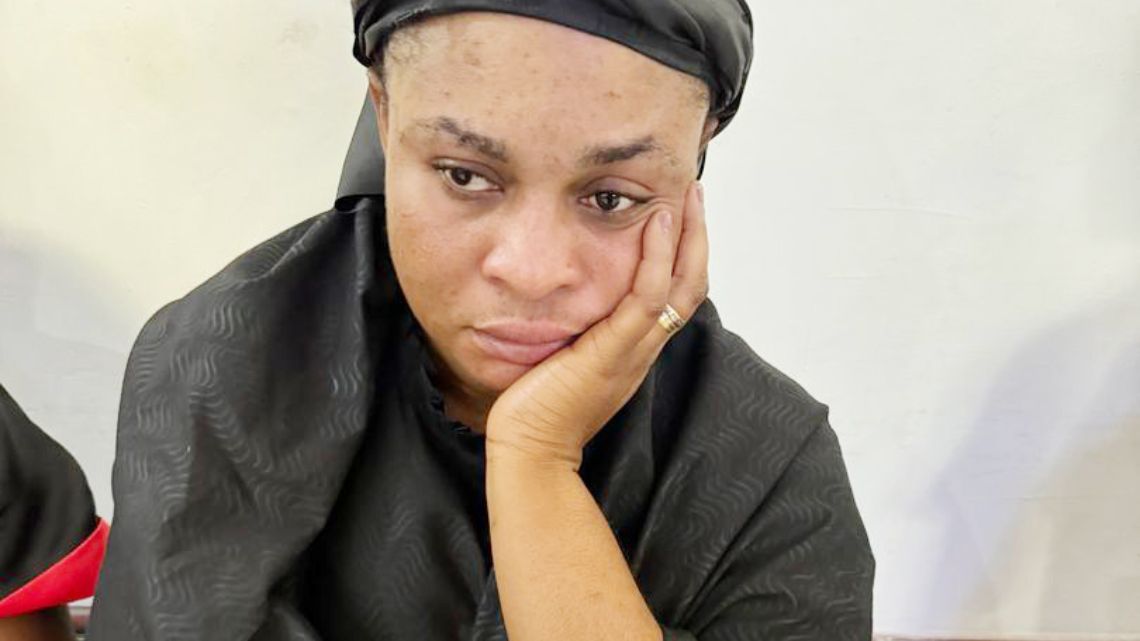
  • Denyasehemaa wails as Asantehene reveals she is a commoner and not a royal

    Denyasehemaa wails as Asantehene reveals she is a commoner and not a royal

    Denyasehemaa Nana Adutwiwaa Bonin III was left in tears after the Asantehene, Otumfuo Osei Tutu II, declared that she was not a royal during the Asanteman Council meeting on Monday, August 19, 2024.

    The declaration came as a shock, not only to the queen mother but also to the attendees at the Asanteman Council, who had gathered to resolve stool disputes in the Berekum, Dua Yaw Nkwanta, Awua Dumase, Sabronum, and Denyase traditional areas.

    Presiding over the meeting, the Asantehene recounted the history of the Denyase stool, revealing that the Denyasehemaa, who had long held her position, did not have the royal bloodline required to occupy the stool.

    The revelation stemmed from an ongoing challenge to her royalty status, brought forth by Achiasebaapanin Nana Akua Afriyie, who invoked the Great Oath to substantiate her claim. In response, the queen mother countered with a similar invocation, firmly insisting on her lineage.

    However, Nana Akua Afriyie maintained that she shared no blood ties with the Denyasehemaa, casting doubt on the queen mother’s royal legitimacy. After a thorough review of the evidence, the Asantehene ruled in favor of Nana Akua Afriyie, stating that the Denyasehemaa was, in fact, a commoner and not fit to hold the title.

    Upon hearing the verdict, Nana Adutwiwaa Bonin III could not contain her emotions. As the king was delivering his statement, the queen mother suddenly approached the Asantehene, fell to the ground, and began to weep uncontrollably.

    In a video shared by Opemsuo Radio, the guards of the Asantehene are seen lifting the Denyasehemaa from the floor as she continued to wail, her hands on her head in anguish.

    The Asanteman Council has now ordered both parties to present their respective family trees for further examination by the committee to confirm the final resolution.

  • We have a long way to go in terms of our cyber infrastructure – Data Privacy expert

    We have a long way to go in terms of our cyber infrastructure – Data Privacy expert

    Data Privacy and Information Security specialist Desmond Israel has sounded the alarm on the inadequacy of Ghana’s cyber infrastructure, emphasizing that the country faces significant vulnerabilities despite recent efforts to secure its electoral process.

    In a discussion on Joy FM’s Super Morning Show, Israel pointed to Ghana’s reliance on offline voting as a commendable step toward mitigating the risk of cyberattacks during the upcoming general elections.

    This move comes after the Africa Center for Digital Transformation (ACDT) warned the Electoral Commission (EC) about potential cyber threats targeting the election.

    “Security by obscurity, I think we have achieved that already by saying that we want to vote offline, and for me, that is 70% of our problem solved,” Israel stated.

    He argued that offline voting addresses a large part of the cybersecurity threat, shielding the electoral process from direct cyber interference on Election Day.

    However, while Israel praised the shift to offline voting, he warned that Ghana still has much work to do in fortifying its broader cyber defenses.

    He expressed concern over the country’s ability to protect itself from state-sponsored cyberattacks, a growing global threat.

    “As a country, we have a long way to go in terms of our cyber infrastructure. I am talking about infrastructure that protects us from state-to-state warfare,” he said, noting that Ghana, like many nations, remains vulnerable to sophisticated cyber threats.

    Israel also highlighted the ongoing risk of information manipulation through misinformation, disinformation, and fake news, which, in his view, pose a significant threat to the democratic process.

    He stressed that these forms of manipulation could influence voter perceptions and undermine the integrity of electoral candidates.

    “They are part of the democracy; we should take them (candidates) for who they are, not for what somebody perceives them to be,” Israel said.

    He warned that misinformation could mislead voters into forming opinions based on false narratives, urging citizens to make informed decisions based on facts rather than fabrications.

    Mr Israel called for the use of fact-checking tools to counter false information and urged voters to resist being swayed by deceptive campaigns that manipulate public opinion.

    He emphasized the importance of protecting the democratic process from digital manipulation, stressing that the country’s journey to robust cyber infrastructure is far from complete.

  • Nigerians angry after Tinubu gets a new plane

    Nigerians angry after Tinubu gets a new plane

    Nigerians have expressed widespread outrage after President Bola Tinubu acquired a new presidential plane, at a time when the country is facing its worst economic crisis in a generation.

    The move has sparked criticism, coming just two weeks after thousands of citizens took to the streets to protest against the rising cost of living and widespread hunger.

    Elected last year to lead Africa’s most populous nation, President Tinubu has introduced several economic reforms aimed at reducing government spending, including the controversial removal of fuel subsidies.

    While these measures have been touted as necessary for long-term growth, they have exacerbated inflation, which currently exceeds 30%, further straining the pockets of ordinary Nigerians.

    In January, Tinubu announced a 60% reduction in the size of official travel delegations, including his own, as part of efforts to cut government expenses.

    However, on Monday, he departed for France aboard a newly acquired Airbus A330, a plane that adds to the presidential fleet of more than five aircraft. The cost of the plane, as well as the details of his trip, remain undisclosed.

    This has led to mounting anger, with many questioning whether the plane purchase had been approved by lawmakers, especially since it was not mentioned in this year’s budget. Critics argue that the acquisition contradicts the president’s message of fiscal restraint and comes at a time when many Nigerians are struggling to afford basic necessities.

    In defense of the decision, President Tinubu’s media aide, Bayo Onanuga, took to X (formerly Twitter) to explain that the new plane would actually result in cost savings. “The new plane, bought far below the market price, saves Nigeria huge maintenance and fuel costs, running into millions of dollars yearly,” Onanuga stated.

    The 15-year-old Airbus A330, which has been configured for VIP use, replaces the country’s aging 19-year-old Boeing BBJ 737-700. The purchase follows the release of the plane to the Nigerian government after it was previously seized by a Chinese firm, Zhangson Investment Co. Limited, due to an investment dispute with Ogun state in southwest Nigeria. Nigerian officials had previously raised concerns over the high maintenance costs of the aging presidential fleet, which had prompted calls for new aircraft.

    In June, lawmakers recommended the purchase of two new planes for the president and his deputy, citing safety concerns over the older planes in the fleet. Last month, they passed a supplementary budget that increased the 2024 national budget from 28.7 trillion naira ($18bn; £14bn) to 35.06 trillion naira, though it is unclear whether the new plane purchase was part of this allocation.

    Despite government reassurances that the acquisition would save money in the long run, many Nigerians remain furious, viewing the purchase as ill-timed and insensitive given the current economic hardships faced by the population.

  • Paying 2023 syndicated loan was a struggle for COCOBOD – Wa East MP

    Paying 2023 syndicated loan was a struggle for COCOBOD – Wa East MP

    Deputy Ranking Member on Parliament’s Food and Agriculture Committee, Dr. Seidu Jasaw, has raised alarm over COCOBOD‘s financial health, revealing that the organization faced significant challenges in repaying its 2023 syndicated loan.

    Speaking on the matter, the Wa East MP warned that these financial difficulties are a reflection of deeper systemic issues within the institution, potentially endangering the future of Ghana’s cocoa industry.

    Dr. Jasaw attributed COCOBOD’s repayment struggles to mismanagement and inefficient resource allocation under the current administration.

    He expressed concern that the organization’s financial instability could worsen if these issues were not addressed promptly.

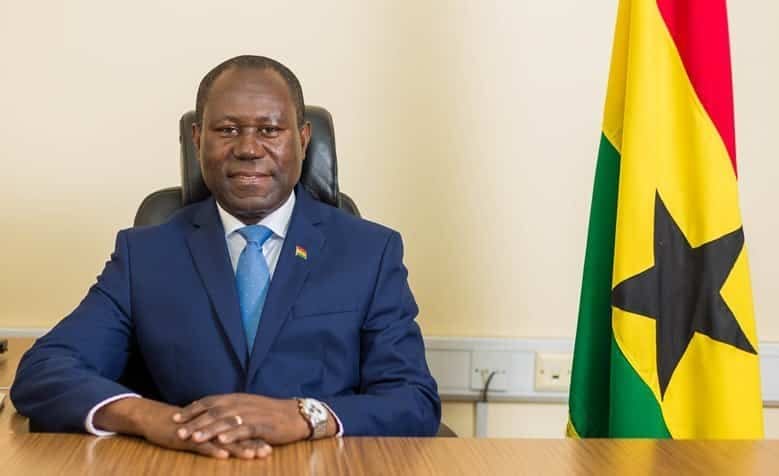
    His comments came in response to a recent announcement by COCOBOD’s CEO, Joseph Boahen Aidoo, who stated that for the first time in over three decades, COCOBOD would not seek offshore syndicated loans to finance the purchase of cocoa beans for the 2024/2025 crop season. Aidoo claimed that the organization would self-finance its operations, aiming to procure around 650,000 metric tonnes of cocoa.

    However, Dr. Jasaw questioned the CEO’s narrative, suggesting that the real reason COCOBOD is not pursuing external loans is that the international market has lost confidence in the organization due to its recent struggles with loan repayments.

    “The syndicated banks refused them the loan because COCOBOD’s financial position is not good at all,” Dr. Jasaw said. “They also have concerns about production. COCOBOD struggled in paying back last year’s syndicated loan, and the Ministry of Finance had to step in with about $70 million in July to assist with the repayment.”

    He emphasized that COCOBOD’s financial strains are more serious than the leadership is willing to admit, accusing the organization of masking its financial troubles as a deliberate policy shift to reduce reliance on international loans.

    “This is a dire situation. I expected COCOBOD to be forthcoming with the information so that Ghanaians could scrutinize it. But when you try to spin it as a deliberate policy shift when it is really about your inability to solve a crisis, I think that is disingenuous, and Ghanaians shouldn’t be taken for granted,” Dr. Jasaw said.

    His warning serves as a call for greater transparency within COCOBOD and immediate reforms to address the underlying financial mismanagement threatening one of Ghana’s most critical industries.

  • Elon Musk’s Starlink to commence operations in Ghana by end of August – NCA

    Elon Musk’s Starlink to commence operations in Ghana by end of August – NCA

    Ghana is poised to launch Elon Musk’s Starlink internet service by the close of August 2024, according to an announcement by the National Communications Authority (NCA).

    The regulatory body has confirmed that all required administrative and licensing formalities have been completed, clearing the path for Starlink to begin delivering its high-speed internet services across the country.

    In a statement released on Thursday, August 22, 2024, the NCA disclosed that Starlink’s operations in Ghana would be managed by Space X Starlink GH LTD, a local branch of Musk’s SpaceX.

    “Starlink will officially commence operations in Ghana by the end of this month. This follows the conclusion of all administrative and licensing procedures with the National Communications Authority (NCA). Starlink will be operated by Space X Starlink GH LTD,” the statement confirmed.

    This marks a significant turnaround from the NCA’s stance in December 2023 when it declared Starlink’s operations illegal due to the absence of a license and proper equipment approval.

    At that time, the public was warned against purchasing Starlink’s equipment, and distributors were ordered to halt all activities.

    However, by March 2024, the tides began to shift as discussions around Starlink’s licensing resumed, fueled in part by widespread internet disruptions across West and Central Africa.

    During a Parliamentary session, the Minister of Communications and Digitalisation, Ursula Owusu-Ekuful,hinted at the possibility of Starlink gaining authorization.

    “We have licensed satellite gateway air stations, landing rights, and satellite air station networks. One web has already been licensed. Starlink is in the process of being licensed, and other operators are being encouraged to land in Ghana,” she stated.

    Starlink, an ambitious project by SpaceX, aims to deliver high-speed, low-latency internet across the globe, with a particular focus on rural and remote areas that have long struggled with poor connectivity.

  • There is no militia training happening at Bawku – Police

    There is no militia training happening at Bawku – Police

    The Ghana Police Service has entreated the public to disregard reports suggesting that some militiamen are being trained at Bawku in the Upper East Region.

    In a post on its Facebook platform, the Service noted that its outfit carried out an investigation after receiving reports of such alleged actions.

    Following its probe, the Police indicated that “our investigation has found no evidence of such training in the area or its environs.”

    The Police are presently on a manhunt for the individual(s) responsible for the misinformation that caused a section of the general public unrest.

    “The Police are working to bring the perpetrators to book and the public should be assured that we will get them,” its statement noted.

    According to the Service, this is the second of such false publications within a week by some unpatriotic individuals intended to create unnecessary alarm and panic among the public.

    Earlier this month, a joint inter-security agencies patrol initiative was launched in Bawku to help restore lasting peace and security in the area.

    This followed clashes involving personnel of the various security services in Bawku, Paga and Kulungugu and some residents.

  • COCOBOD to self-finance 2024/2025 cocoa season; ends 32-year loan cycle

    COCOBOD to self-finance 2024/2025 cocoa season; ends 32-year loan cycle

    The Ghana Cocoa Board (COCOBOD) has announced its decision to self-finance the upcoming 2024/2025 cocoa season, ending its reliance on an annual syndicated loan from foreign banks for the first time in 32 years.

    Speaking at a press conference in Accra, COCOBOD’s Chief Executive Officer, Joseph Boahen Aidoo, explained the rationale behind the bold decision.

    “For the first time in COCOBOD’s history, we want to wean ourselves from the offshore syndication. Since 1992, COCOBOD has always relied on external borrowing from a consortium of banks, but after 32 years, it is time we learned our lessons and took control of our finances,” Mr. Aidoo said.

    The decision so self-finance, he revealed, had been under consideration since last year, and with recent developments, COCOBOD determined that the time was ripe to move away from the syndicated loan model.

    “We were assessing the whole situation, and we concluded that we have to take a bold measure,” Mr. Aidoo stated.

    This ends the longstanding practice of securing offshore loans to purchase cocoa beans for export.

    Mr. Aidoo noted that by not accessing the offshore loan this year, the board could save around $150 million in interest payments and other costs associated with receiving a loan facility.

    While COCOBOD’s move to self-finance is expected to bring significant savings, it also raises concerns about Ghana’s foreign exchange reserves and the stability of the cedi.

    The syndicated loan which usually ranges from $1.2 billion to $1.8 billion has traditionally been a major source of foreign currency inflows for the country, and its absence could exert pressure on the Cedi’s exchange rate.

    Amid this concern, COCOBOD has revised its production target for the upcoming season, lowering it from 810,000 tonnes to 650,000 tonnes. This adjustment is due to adverse weather conditions in key cocoa-growing regions, particularly in Brong Ahafo and Western North, where unusual dryness has affected cocoa trees.

    Despite the challenges, Mr Aidoo reassured Ghanaians that the cocoa sector remains sustainable. He dismissed concerns that the industry could collapse within five years, stating that COCOBOD is implementing various initiatives to address issues like climate change, pests, diseases, and illegal mining.

  • COCOBOD not producing enough cocoa to meet contractual obligations – Ato Forson

    COCOBOD not producing enough cocoa to meet contractual obligations – Ato Forson

    The Minority Leader in Parliament, Dr. Cassiel Ato Forson, has voiced serious concerns over COCOBOD‘s inability to meet its international cocoa supply commitments, a situation he attributes to mismanagement by the organization’s current leadership.

    In a tweet on Thursday, August 22, Dr. Forson warned that COCOBOD’s failure to produce sufficient cocoa for its contractual obligations could have severe repercussions for Ghana’s standing in the global cocoa industry.

    Dr. Forson highlighted that COCOBOD is now struggling to access the international market due to its inability to produce the necessary quantity and quality of cocoa.

    He explained that this shortfall could result in penalties, diminished trust from international partners, and a loss of Ghana’s reputation as a leading cocoa exporter.

    “This is a sharp decline from the achievements seen under previous administrations,” Dr. Forson stated, suggesting that poor decision-making by COCOBOD’s current management is undermining the organization’s capacity to deliver.

    The Minority Leader further called on the government to intervene promptly to address the crisis at COCOBOD before it causes lasting damage to Ghana’s cocoa industry.

    He urged for transparent and efficient leadership to restore the organization’s ability to meet its obligations and maintain its crucial role in the country’s economy.

    Without decisive action, Dr. Forson warned, the long-term consequences could be dire, not only for the cocoa sector but for the entire nation.

  • Ghana faces $112m extra bill in Trafigura judgement debt case – Bright Simons

    Ghana faces $112m extra bill in Trafigura judgement debt case – Bright Simons

    IMANI Africa’s Honorary Vice President, Bright Simons, has revealed that the government now faces an additional $112 million payment to a subsidiary of Swiss energy trading giant, Trafigura, due to mounting interest on an unresolved judgment debt.

    In an article titled What Ghana’s Latest Judgment Debt Says About Accountability, Mr Simons expressed concern over the country’s decision-making process in handling the debt, which he believes lacks proper analysis and foresight.

    “Despite paying nearly $100 million of the original judgment debt, which was less than $140 million, the outstanding balance remains over $112 million today and continues to rise daily,” Mr Simons wrote.

    He criticized the government’s approach, noting that the decision to stretch out the payment schedule is exacerbated by the high interest rate.

    “The interest at that time was about 6.2%. Today, it would have been more than 11%,” Mr Simons revealed.

    The judgment debt stems from a dispute between the Ghanaian government and the Ghana Power Generation Company (GPGC), a subsidiary of Trafigura, over a power purchase agreement that Ghana unilaterally terminated in 2018.

    In 2015, the government entered an agreement with an Italian-owned company, Ghana Power Generation Company (GPGC), with the goal of producing 107 megawatts of electricity between two plants.

    GPGC proceeded to court and in January 2021, an arbitration panel in London ruled in favour of GPGC, ordering Ghana to pay $134,348,661 in damages. Despite partial payments, Ghana still owes over $111 million, with interest continuing to accumulate.

    Mr Simons pointed out that Ghana’s failure to meet critical deadlines to appeal the UK tribunal’s ruling has worsened the situation.

    The District of Columbia Court in the U.S. recently ordered Ghana to pay the outstanding amount plus post-judgment interest after GPGC sought enforcement of the judgment.

    IMANI’s Vice President also emphasized that the events leading to the termination of the contract and the government’s subsequent handling of the arbitration raise serious concerns about governance and accountability in Ghana.

    “The chain of events… raises critical concerns about the quality of governance and accountability in Ghana,” he stated in his article.

    Ghana’s Attorney General and Minister of Justice, Godfred Yeboah Dame, has clarified the situation, stating that no new judgment has been made against Ghana by a U.S. court.

    During an interview on Citi FM on August 21, 2024, Mr. Dame explained that the $134 million award was given in 2021, and the government has been working to meet its payment obligations since then.

    “It is the failure to exhaust payment which has led the company to seek enforcement orders in other jurisdictions,” Dame clarified, adding that there has been no fresh judgment against Ghana.

    “It is only an enforcement order… due to a failure to pay a judgment debt that accrued way back in January 2021,” he said.

  • Man forced to parade goat he allegedly stole at Kparekpare

    Man forced to parade goat he allegedly stole at Kparekpare

    A 55-year-old man, identified as Abalo Kwesi, was publicly humiliated in the farming community of Kparekpare, near Dambai in the Krachi East Municipality of the Oti Region, after being accused of stealing a goat.

    The alleged thief was forced to carry the stolen goat around his neck while parading through the township in full view of residents.

    As Kwesi walked through the streets, local children and youth sang taunting songs to intensify his shame. The unusual sight quickly drew a large crowd, with hundreds of curious onlookers flocking to catch a glimpse of the accused man and his burden.

    Several community members, speaking to the Ghana News Agency (GNA), claimed that Kwesi had been a longstanding nuisance in the area, frequently breaking into homes at night and stealing goats.

    “He has terrorized this community for a long time,” one resident alleged, expressing relief that he had finally been caught.

    This public display was seen as a form of justice by some, while others questioned the method of punishment.

  • Probe Sports Ministry for spending $15m on food for athletes during African Games 2023 – South Tongu MP

    Probe Sports Ministry for spending $15m on food for athletes during African Games 2023 – South Tongu MP

    The South Tongu Member of Parliament (MP), Kobena Mensah Woyome, has alleged that the Ghanaian government spent an astonishing $15 million on feeding athletes during the African Games 2023.

    According to Mr. Woyome, this amount was allocated to provide meals for the 2,644 athletes who participated in the 18-day event held in Accra and Kumasi.

    “You are spending $245 million, and out of that, we got to know that a whopping amount of $15 million was used to feed athletes for 18 days,” Woyome asserted in an interview with the media.

    In response to this revelation, the chairman of Parliament’s Select Committee for Youth, Sports, and Tourism has called for a bipartisan inquiry to investigate Ghana’s financial outlay for the Games.

    “You realize that some of these things need to be investigated,” he urged.

    The 2023 African Games, held from March 8th to 23rd under the theme “Experience the African Dream,” brought together over five thousand athletes and officials who competed in twenty-two sports disciplines.

    Despite repeated assurances, the Local Organizing Committee and the Sports Ministry have yet to provide a comprehensive account of the country’s total expenditure, six months after the Games concluded.

    In a related controversy, the Sports Minister, Mustapha Ussif, recently revealed before the Public Accounts Committee that his ministry paid the Ghana Broadcasting Corporation (GBC) over $3 million to produce and broadcast the Games.

    However, GBC’s Director General, Prof. Amin Alhassan, countered that the state broadcaster only received $105,000, with the remainder being paid to third-party service providers.

    This discrepancy has fueled public suspicion about the true extent of the spending and who the recipients of these payments were.

    The Sports Ministry later clarified that they had indeed signed a $3.6 million contract with GBC, out of which $2.5 million was disbursed to GBC in two instalments on March 13 and May 22, 2024. Additionally, $1 million was paid directly to third-party providers at GBC’s direction.

    The Ministry’s statement raises a $100,000 expenditure discrepancy.

  • PNC begins vetting of Executive aspirants today

    PNC begins vetting of Executive aspirants today

    The People’s National Convention (PNC) has commenced the vetting process for aspirants vying for various leadership positions ahead of its upcoming national congress on Saturday.

    Following the official closure of nominations, 17 candidates who submitted applications will now face the vetting panel in two groups over the next two days.

    According to the Congress Committee’s statement, the first group of aspirants will be vetted today between 10:00 AM and 1:00 PM, with the second group scheduled for the same time on Friday.

    Notable contenders include Bernard Anbataayela Mornah and David Apasera, both competing for the flagbearer position. In the race for Chairmanship, Hajia Hajara Ali and Asaki Awingobit will be scrutinized, while Awudu Ishak and Yakubu Fahrudeen battle for the General Secretary role.

    Aspirants for the National Organiser position include Abass Nuhu and Daniel Nii Noi Osekine, with Christiana Fugah and Esther Osei contesting for Women’s Organiser.

    Other candidates include Mark Ewusi Arko and Alidu Mohammed Nasirdeen for Youth Organiser, and Emmanuel Akazabre for Treasurer.

    Several deputy positions are also in play, with Martin Anafo and Eugene Tamado Koffikan Bashiru competing for Vice Chairman, Prince K. Agyeman-Duah for Assistant Secretary, Saeed Abdallah for Assistant Organiser, and Narrita Mary Logah for Deputy Women’s Organiser.

    “We look forward to a transparent, democratic, and successful vetting process, which will pave the way for our national congress and ultimately determine the fate of our party’s leadership,” the Congress Committee stated.

    This vetting process will determine the final candidates for leadership as the PNC prepares for a crucial congress.

  • Cynthia Morrison ‘abandons’ NPP to contest Agona West seat as independent candidate

    Cynthia Morrison ‘abandons’ NPP to contest Agona West seat as independent candidate

    The New Patriotic Party (NPP) Member of Parliament for Agona West, Cynthia Morrison, has announced her decision to run as an independent candidate in the 2024 parliamentary elections.

    The former Minister for Gender, Children and Social Protection made this revelation during a recent interaction with her constituents, emphasizing that her decision transcends party politics.

    “God willing, I would be contesting the parliamentary election as an independent candidate. It is not about the NDC, and it is not about the NPP. It is about the development of Agona,” Morrison declared.

    Her decision follows her defeat in the NPP parliamentary primary held on April 13, where she secured 152 votes against Christopher Arthur, who garnered 240 votes to win the party’s nomination.

    Despite her loss, Morrison, who has represented Agona West since 2016, remains focused on the development of her constituency.

    She called on the people to rally behind her candidacy, stating, “I don’t care whether you vote for former President John Dramani Mahama or Vice President Dr. Mahamudu Bawumia. But the most important thing is for you to vote massively for Cynthia Morrison so I can come and complete the work I started.”

    Morrison first won the Agona West seat in the 2016 general elections and retained it in 2020 as the NPP candidate, receiving 30,513 votes out of the 59,193 valid votes cast.

  • 13 OMCs’ licenses revoked over GHC200m debt

    13 OMCs’ licenses revoked over GHC200m debt

    The National Petroleum Authority (NPA) has revoked the licenses of 13 Oil Marketing Companies (OMCs) due to their failure to settle debts totalling more than GHC200 million owed to key industry regulators, including the NPA, the Ghana Revenue Authority (GRA), and the Bulk Oil Storage and Transportation Company (BOST).

    These debts represent levies and margins collected on petroleum products sold by the companies, which were not remitted to the appropriate state institutions as required.

    Speaking in an interview with Joy Business, Riverson Oppong, Chief Executive of the Association of Oil Marketing Companies, confirmed the action by the NPA and urged the authority to take further steps to hold the directors of these companies accountable.

    “The details of the directors are already with the NPA. Before any company receives a license, the directors’ names are submitted. Making these names public will help weed out bad operators from the industry,” Mr. Oppong emphasized.

    He further disclosed that some of the debts appear to be deliberately accumulated, with certain directors of the indebted OMCs also managing other OMCs in the sector. “These same directors, who have allowed their companies to accrue debt, are running other OMCs. The question is why would they be allowed to continue operating multiple companies under their names?” he questioned.
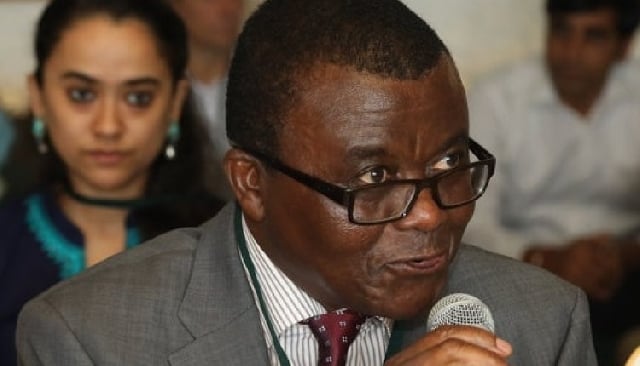
    To address the issue, Mr. Oppong noted that measures have been put in place to prevent such debts from escalating in the future, ensuring better compliance within the petroleum sector.
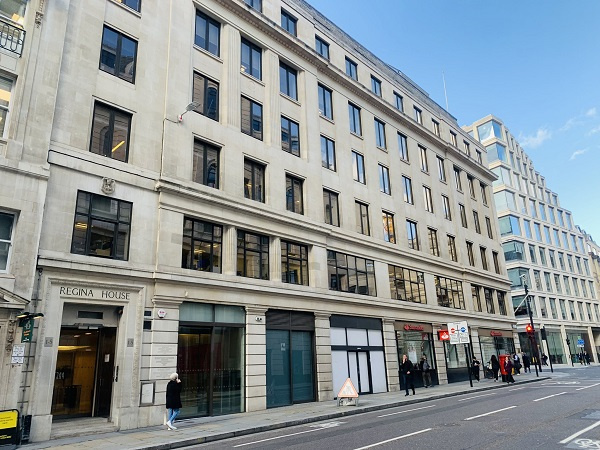
  • Man attempts suicide over inability to pay medical bills

    Man attempts suicide over inability to pay medical bills

    Personnel from the Ghana National Fire Service (GNFS) stationed at Ashaiman rescued a man who allegedly attempted to take his own life on Tuesday, August 20.

    The man, believed to be in his early 50s, had climbed an electric pylon in the Adjei Kojo community, located within the Tema West Municipality near Ashaiman in the Greater Accra Region.

    The man, who reportedly suffers from a severe kidney condition, had reached a breaking point due to his inability to afford the necessary treatment.

    Describing his struggles to the GNFS personnel and witnesses at the scene, he explained that after being diagnosed with the illness, he sought help at the Ashaiman Polyclinic.

    From there, he was referred to Tema General Hospital and eventually directed to the University of Ghana Medical Centre (UGMC).

    “I have been walking from one hospital to another, and I’m exhausted. I tried going to UGMC, but they told me I wouldn’t be able to cover the bills. I just don’t know what to do anymore,” he lamented.

    Moved by his plight, the GNFS officers assured him that they would help him find the means to afford his kidney treatment and give him the support he desperately needs.

  • The New False: “Cheddar-inspired” masquerade billboard pops up, stirs intrigue

    The New False: “Cheddar-inspired” masquerade billboard pops up, stirs intrigue

    A mysterious billboard bearing a striking resemblance to ‘The New Force‘, an enigmatic political movement led by Nana Kwame Bediako, also known as Cheddar, has emerged, stirring up intrigue and speculation.

    The sudden appearance of ‘The New False’ has raised questions about its intentions and the identity of the people behind it.

    With the elections just around the corner, this new development is sure to generate interest and it is unknown whether the billboard with the detail ‘The New False’, is a political movement.

    At Shiashie, the billboard’s design bears a striking resemblance to ‘The New Force’. Like its predecessor, ‘The New False’ features a masked figure, hinting at African origins.

    However, this billboard does provide hints that suggest a quest to change the political landscape, as ‘The New Force’ did with words such as leadership, and embrace the change, among others.

    The statement on the new billboard that has yet to capture the attention of many is “is coming.”

    It seems the ‘movement’ is adopting a similar strategy to Cheddar’s, leveraging intrigue to capture the attention of Ghanaians.

    It’s unclear if similar billboards have popped up in other parts of the country.

    Source: Andy Ogbarmey-Tettey

  • Some invigilators requesting GHC500 to help WASSCE candidates cheat – WAEC

    Some invigilators requesting GHC500 to help WASSCE candidates cheat – WAEC

    The West African Examinations Council (WAEC) has revealed that some invigilators are demanding between GHC200.00 and GHC500.00 from candidates to assist them in cheating during the upcoming West African Senior School Certificate Examination (WASSCE).

    As the exams commence on Monday, August 19, with practical and theory papers, WAEC disclosed in a statement that intelligence reports had uncovered organized cheating schemes involving certain schools and exam centres across the country.

    According to the statement, some supervisors at various examination centres have reportedly planned to assign teachers to invigilate subjects they teach, raising serious concerns about the fairness of the examination process.

    Additionally, WAEC discovered that certain schools had registered individuals who are not legitimate students, further threatening the credibility of the exams.

    “The Council has noted with concern grand schemes by a number of institutions to engage in mass cheating during the examination,” the statement read.

    “Intelligence information picked up indicates that candidates in some parts of the country are being charged sums of money between GHC200.00 and GHC500.00 in order to receive assistance from invigilators; supervisors at some centres are planning to assign teachers to invigilate subjects they teach; some schools have registered persons who are not their bona fide students.”

    In response, WAEC issued a stern warning to heads of schools, supervisors, and invigilators involved in these unethical practices.

    The Council emphasized that those caught aiding in cheating or compromising the examination’s integrity would face severe consequences, including the nullification of candidate entries and the cancellation of results.

    “The Council wishes to caution all heads of schools, supervisors, and invigilators to desist from this practice as all those involved will be dealt with according to the rules and regulations of the examination,” WAEC warned.

    “Examination centres that do not comply with the rules governing the examination will be relocated to WAEC-designated centres.”

    WAEC further appealed to all stakeholders, particularly supervisors and invigilators, to safeguard the integrity of the examination by maintaining the highest standards of conduct and reporting any suspicious activities.

    The WASSCE examination will conclude on Friday, September 20, 2024.

  • 2024 WASSCE begins today, 460,611 candidates sit for exams

    2024 WASSCE begins today, 460,611 candidates sit for exams

    The 2024 West African Senior Secondary School Certificate Examination (WASSCE) officially kicks off today, August 19, 2024, with 460,611 candidates participating in the nationwide exams.

    According to the West African Examinations Council (WAEC), this year’s candidates include 212,954 males and 247,657 females from 1,003 schools across the country.

    The examination process began with practical and theory papers, following the completion of the visual arts project, which ran from August 5 to August 16, 2024. The exams are scheduled to conclude on Friday, September 20, 2024.

    In a press release, WAEC noted a 2.66% increase in the number of candidates compared to the previous year’s figure of 448,674. The exams are being held at 1,000 centres nationwide. WAEC has assured the public that stringent measures have been implemented to ensure a fair and successful examination process.

    However, WAEC expressed concern over reports of attempts to compromise the integrity of the exams. Allegations have surfaced that candidates in some parts of the country are being charged between Gh¢200.00 and Gh¢500.00 for assistance from invigilators, and that some schools have registered individuals who are not bona fide students. Additionally, there are concerns about supervisors assigning teachers to invigilate subjects they teach.

    WAEC issued a stern warning to school heads, supervisors, and invigilators against participating in such fraudulent practices, cautioning that severe consequences would follow, including the nullification of candidates’ entries and the cancellation of results for those caught cheating. Non-compliant examination centres could also face relocation to designated WAEC centres.

    Candidates were advised to strictly follow examination rules and to be cautious of rogue websites offering fake questions, as these can distract them from their studies.

  • Kevin Taylor ‘mocks’ NPP Western Regional Chair for “spitting dirt” at manifesto launch

    Kevin Taylor ‘mocks’ NPP Western Regional Chair for “spitting dirt” at manifesto launch

    US-based vlogger and journalist, Kevin Taylor, has poked fun at the Western Regional Chairman for the New Patriotic Party (NPP), Mr Ndede Siah, following the launch of the ruling party’s manifesto.

    While addressing the party faithful at the launch of the manifesto on Sunday, Mr Francis Ndede Siah, said that the 2024 manifesto document of the party contains measures to achieve progress and economic growth.

    “The manifesto provides innovative ways to achieve progress,” he said in his welcoming address during the manifesto launch.

    He added, “Today will go down in history as the day NPP laid the foundation to break the 8 to secure the future.”

    He however made the submission with some difficulty. He mispronounced a few words which caught the attention of Mr Taylor.
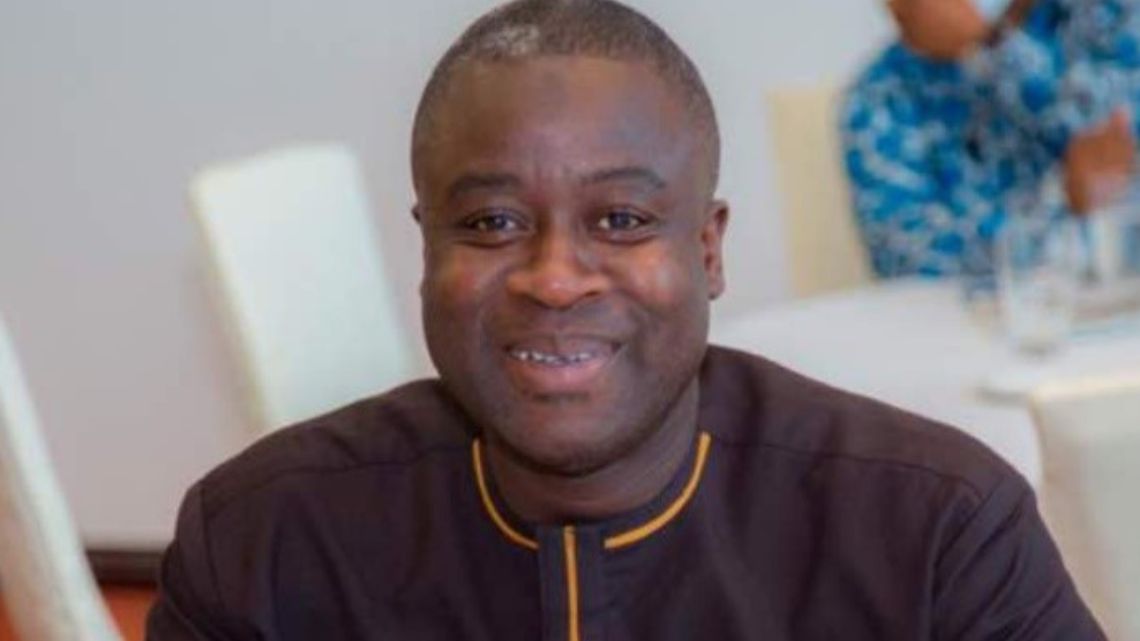
    According to Mr Taylor, it is unacceptable for NDC members to be mocked for making errors while speaking the English Language.

    Mr Taylor in a post on X said, “NPP western region chairman is spitting dirt. These same idiots will say NDC does not read ah ah ah.”

  • We have provided 2024 provisional voter register to NDC, others – EC

    We have provided 2024 provisional voter register to NDC, others – EC

    The Electoral Commission (EC) has announced that the 2024 provisional voter register has been officially released to political parties ahead of the upcoming voter register exhibition.

    The exercise is set to begin on Tuesday, August 20, and will run through August 27, 2024.

    This development comes after mounting pressure from political parties and stakeholders, who demanded access to the provisional register for review.

    Addressing the issue at a press conference on Monday, Deputy Electoral Commissioner Dr. Bossman Asare clarified that the EC remains within its stipulated timeline for providing the provisional register.
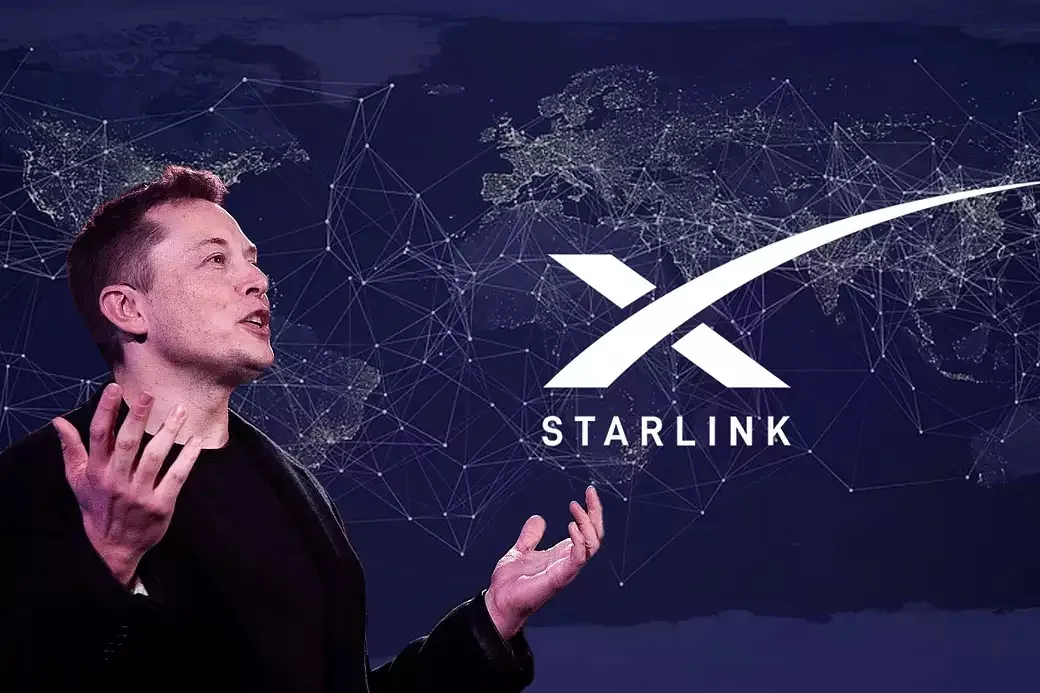
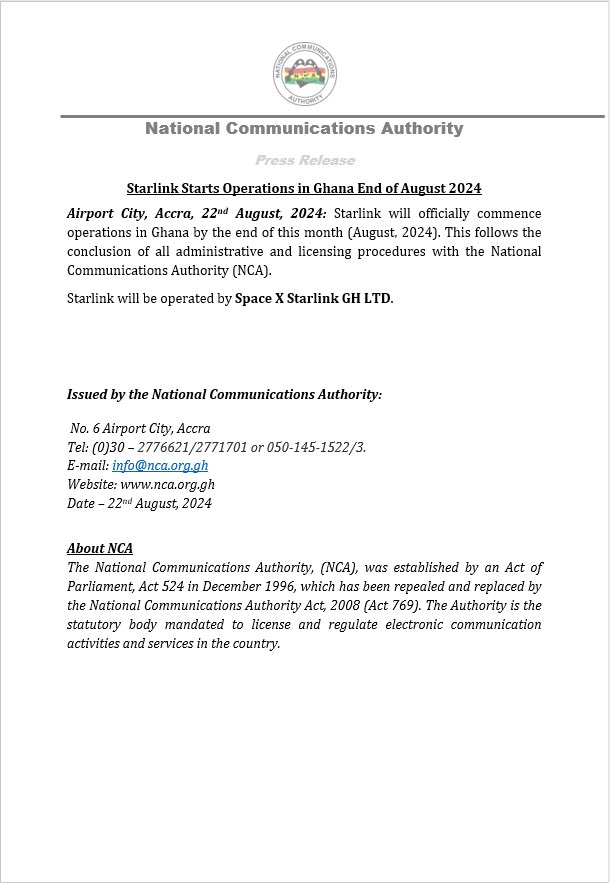
    “We’ve seen media reports claiming the Commission has yet to provide the provisional voter register to political parties after requesting their external drives. However, under Regulation 22 of CI 31, as amended by CI 126, the Commission has until three months from the end of registration to deliver the provisional register,” Dr. Asare explained.

    He added, “With limited registration concluding on May 29, 2024, and the mop-up ending on August 3, 2024, we have until the end of August to complete this process. The external drives with the provisional register are now available for pickup, and we confirm that the NDC has collected theirs, alongside other parties.”

    Dr. Asare also reiterated that the voter register exhibition would begin as planned on August 20 and conclude on August 27, 2024, ensuring all parties are prepared for the upcoming elections.

  • EC begins nationwide voters’ exhibition on Tuesday

    EC begins nationwide voters’ exhibition on Tuesday

    The Electoral Commission (EC) has announced that the nationwide voters’ exhibition exercise will commence on August 20 and run until August 27.

    The exercise is aimed at helping voters locate their designated polling stations ahead of the December 7 election, ensuring a smoother and more efficient voting process.

    Speaking at a press briefing on August 19, Dr. Bossman Asare, Deputy Chairman of the EC in charge of Corporate Services, explained that the exercise allows registered voters to verify their details and request corrections where necessary.

    This includes the inclusion of omitted names, removal of deceased voters, correction of name spellings, and amendments to other registration details.

    Dr. Asare emphasized the importance of the exhibition, particularly for those who registered during the 2024 limited registration exercise and the recent mop-up exercise, urging all registered voters to visit their exhibition centers to ensure they are assigned to the correct polling stations.

    He added that this step is essential for ensuring a smooth election process and encouraged all voters to take part in the exercise to avoid issues on election day.

  • We will deal with anyone who plots chaos during 2024 polls – IGP warns political parties

    We will deal with anyone who plots chaos during 2024 polls – IGP warns political parties

    Inspector General of Police (IGP), Dr. George Akufo-Addo Dampare, has issued a firm warning to political parties and stakeholders in the electoral process, cautioning them against any attempts to disrupt the upcoming 2024 elections.

    With the Electoral Commission (EC) set to begin exhibiting the voters’ register on Tuesday, August 20, the IGP emphasized that the police will not tolerate any illegal activities during the election process.

    In a meeting with the EC Chairperson, Dr. Dampare outlined plans for the deployment of police personnel to all exhibition centers.

    He reassured the public that law enforcement would adopt a strict approach to maintain order and respond swiftly to any crisis that might arise.

    “We urge all stakeholders, especially political parties, to address their concerns through legal channels during this part of the electoral process,” Dr. Dampare said. “Anyone who attempts to take the law into their own hands will be dealt with according to the law.”

    Dr. Bossman Asare, Deputy Chairman of the EC in charge of Corporate Services, echoed these sentiments, stressing the significance of the 2024 election for the country.

    He assured the police task force that the EC is committed to a peaceful, credible, and transparent election, with all necessary preparations in place, including the completion of the voters’ register and arrangements for special voting.

  • Leave the dangerous areas – NADMO tells residents ahead of Bagre Dam spillage

    Leave the dangerous areas – NADMO tells residents ahead of Bagre Dam spillage

    The National Disaster Management Organization (NADMO) is urging residents in flood-prone areas to evacuate immediately, ahead of the scheduled spillage of the Bagre Dam in Burkina Faso.

    The Burkinabe power utility, SONABEL, has confirmed that the spillage will begin on Monday, August 19, prompting urgent calls for relocation to avoid the potential dangers posed by flooding.

    Speaking to JoyNews, West Gonja Municipal NADMO Director Adam Bavug emphasized the need for immediate action, stating that while NADMO is prioritizing the evacuation of residents from at-risk zones, the organization is facing a shortage of relief supplies for those who will be displaced.

    “For now, we are asking them to leave these dangerous areas,” Bavug said. “Our top priority is ensuring people move to safety. We will monitor the numbers—whether it’s 10, 50, or 100—and distribute the resources we have. If it’s not enough, we’ll request assistance from the district assemblies and our head office. But the reality is that we do not have enough resources to support everyone when the spillage hits hard.”

    Meanwhile, peasant farmers in the Upper East region are preparing to scale up sensitization efforts, knowing that many will suffer significant crop losses due to the flooding.

    Eziekel Atanga Azure, organizer for the Peasant Farmers Association in Bawku West, expressed disappointment over the government’s lack of intervention and stated that the farmers have resolved to take matters into their own hands.

    “We thought the government would step in to help, but every year the effect is the same,” Azure said. “So, we’ve advised ourselves and are now focused on raising awareness among our farmers to encourage them to leave those vulnerable areas.”

    Despite ongoing appeals to the government, the farmers are moving forward with self-driven initiatives to protect their livelihoods in anticipation of the impending floods.

  • Survey: Will you vote in the 2024 general election?

    Survey: Will you vote in the 2024 general election?

    The Independent Ghana (TIGPost) has embarked on a survey aimed at understanding voter participation levels ahead of the 2024 elections.

    The questionnaire seeks to delve into the factors influencing voter decisions, particularly focusing on citizens who may be disinterested in voting.

    The survey is designed to collect anonymous responses, helping researchers identify key reasons behind voter apathy. This initiative hopes to shed light on why some citizens choose not to vote and provide insights that could help boost civic engagement.

    TIGPost encourages everyone to participate, as the findings will offer a deeper understanding of the challenges surrounding voter turnout and may guide future strategies to enhance democratic participation in Ghana.

    Click on the hyperlink to access the questionnaire.

    You can also visit our X platform.