Frank Mensah Abdullah, the father of Ishmael Mensah Abdullah, a 10-year-old tragically killed in Kasoa during a botched money ritual, has called on the Ministry of Communication and Digitalisation to intensify its efforts in eliminating media promotions of money-doubling schemes.
He argued that these advertisements not only encourage criminal activity but also endanger public safety.
Mr Abdullah recalled the Ministry’s previous initiatives aimed at curbing such dangerous advertising, particularly on TV, and urged that these measures should extend to radio stations as well.
“The government must embark on an exercise to clamp down on radio stations that advertise money rituals and money doubling. I remember the Minister of Communication and Digitalisation began an earlier exercise. They must continue the exercise again to deal with stations that are into such practices. This will prevent others from engaging in such acts,” he added.
While Mr Abdullah felt some relief at the life sentence given to Nicholas Kini, one of the accused, he expressed frustration over the legal outcomes for Kini’s 15-year-old accomplice, who was directed to a juvenile court.
He advocated for legislative revisions regarding juvenile sentencing in serious crime cases.
“We have indeed had judgement and we must come together as a family. The issue has put my family into debt. We are trusting God for something good.
“We thank the judges for bringing the matter to a logical conclusion. The government must take a second look at the law that refers a juvenile to a juvenile detention centre. They must revisit the laws.”
The government has officially revoked the mining leases of FGR Bogoso Prestea Mining Limited, following recommendations from the Minerals Commission and the Attorney-General and Minister for Justice.
This decision was disclosed in a statement released on Wednesday, September 18, 2024, signed by the Minister of Lands and Natural Resources, Samuel Abu Jinapor.
FGR had been warned in August 2023 regarding violations in its mining activities and was directed by the Minerals Commission to address these issues.
The statement highlighted that the revocation of the mining leases came after an extensive review of reports from both the Minerals Commission and a Ministerial Committee tasked with assessing the company’s operations.
This decision was reached after thorough consultations with key stakeholders.
The move follows growing dissatisfaction from various groups, including the Ghana Mine Workers Union, which saw over 400 members protesting at the Ministry of Lands and Natural Resources, calling for the termination of FGR’s leases.
The union raised concerns over unsafe working conditions and the company’s inability to meet its financial obligations.
Minister Jinapor reiterated the government’s unwavering commitment to ensuring the responsible and sustainable management of Ghana’s natural resources, emphasizing transparency and accountability for the benefit of the nation.
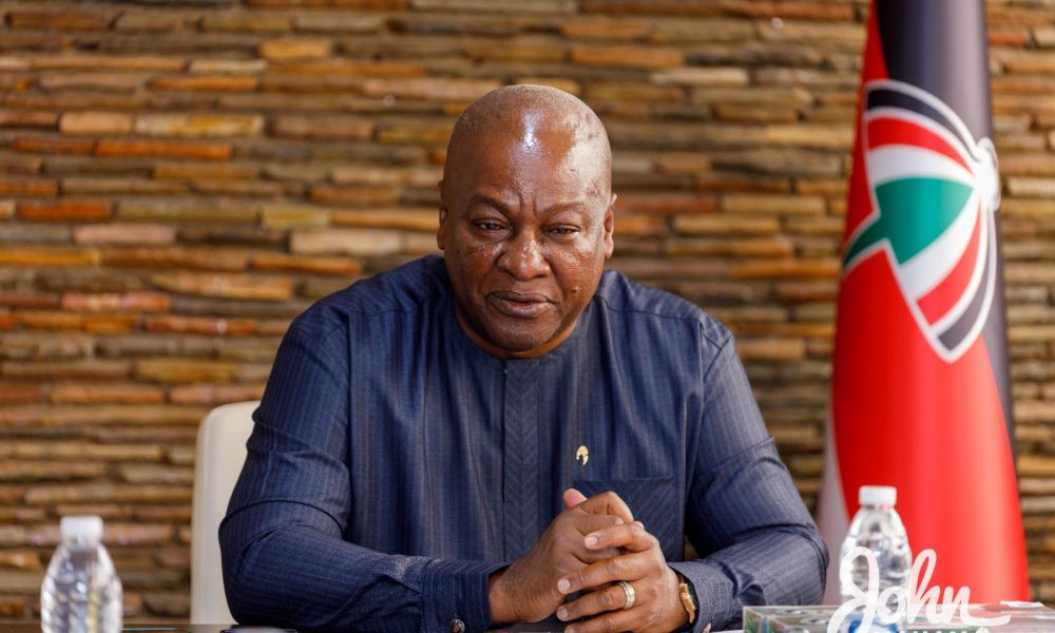
Former President John Dramani Mahama has encouraged trainee nurses to prioritize securing stable employment over relying on allowances. He highlighted the need for sustainable job opportunities in Ghana’s healthcare sector.
Speaking to trainee nurses on Saturday, Mahama acknowledged their financial difficulties but emphasized that long-term job security is more beneficial than temporary financial support.
He assured them that his administration would focus on job creation within the healthcare industry, ensuring stable and rewarding careers for nurses and other health professionals.
“We know the problems with trainee nurses and that is why when we were in government, we said we were going to substitute your allowance with the students’ loan because we wanted to create more employment for you. What is important for you is not the allowance it is to get a job when you finish school,” he stated.
Adding that “But somebody came and said he will pay the allowances. Unfortunately, it was 419…Come and pay the nurses you owe them almost 30 months of arrears. Some of them have left school without receiving their allowances and some of them are going to leave school again without receiving their allowances.
“…I make you a commitment when I come to the hospitals, we were building that have been abandoned by this government we will continue them. When I come to the agenda 111 hospitals, they are building I will continue and finish them so that we can create more space to be able to absorb all of you when you finish school. This election is between Ghana and NPP.”
The Okyenhene, Osagyefuo Amoatia Ofori Panin, has urged the government to relocate certain ministries to various regions to promote balanced development across the country.
He pointed out that many people are compelled to move to Accra due to job scarcity, primarily because most government offices are centralized there.
Specifically, he proposed that ministries such as Food and Agriculture, Lands and Natural Resources, and the Forestry Commission should be decentralized and spread across different regions.
During a public lecture at the University of Ghana, he questioned the rationale behind keeping these ministries in Accra, emphasizing the potential for creating new townships, developing real estate, fostering commerce, and enabling people to work closer to their homes.
Highlighting the disparity in economic opportunities, he emphasized the need to include rural populations in the national economy by distributing governmental functions.
Regarding the issue of illegal mining, he called for a concerted effort to combat the problem effectively, stressing the urgency of implementing more stringent measures.
Speaking at a public lecture at the University of Ghana, he quizzed “Over 67 years, what is the Ministry of Agriculture doing in Accra, what is the Ministry of Lands and Resources doing in Accra? What is the Forestry Commission doing in Accra?”
“I have made suggestions that move these ministries and spread them all across different regions this way we can create new townships, real estate will be developed, commerce will go on and people will stay where they are to work.
“How can we build a national economy that excludes 75% of our population who live in the rural areas wallowing in poverty and hopelessness? They have no chance. There is no job.
“If the government is going to be the biggest employer, I suggest we bring these ministries,” he said.
Professor Joseph Osafo has urged the government to reinstate July 1st as a statutory public holiday.
Ghana, which became a Republic on July 1, 1960, traditionally celebrated this day until the Akufo-Addo administration reclassified it as a commemorative day.
Instead, August 4th was introduced as a statutory holiday to honor the founders of Ghana.
During an appearance on Peace FM’s “Kokrokoo” morning show, Prof. Osafo emphasized the importance of restoring July 1st, highlighting its significance to Ghana.
He expressed that removing its statutory status has diminished a “certain sense of nationalism.”
Prof. Osafo also contended that celebrating Republic Day as a statutory holiday “sends a message” and positively influences the national psyche.
He argued that a commemorative day lacks the same authoritative impact.
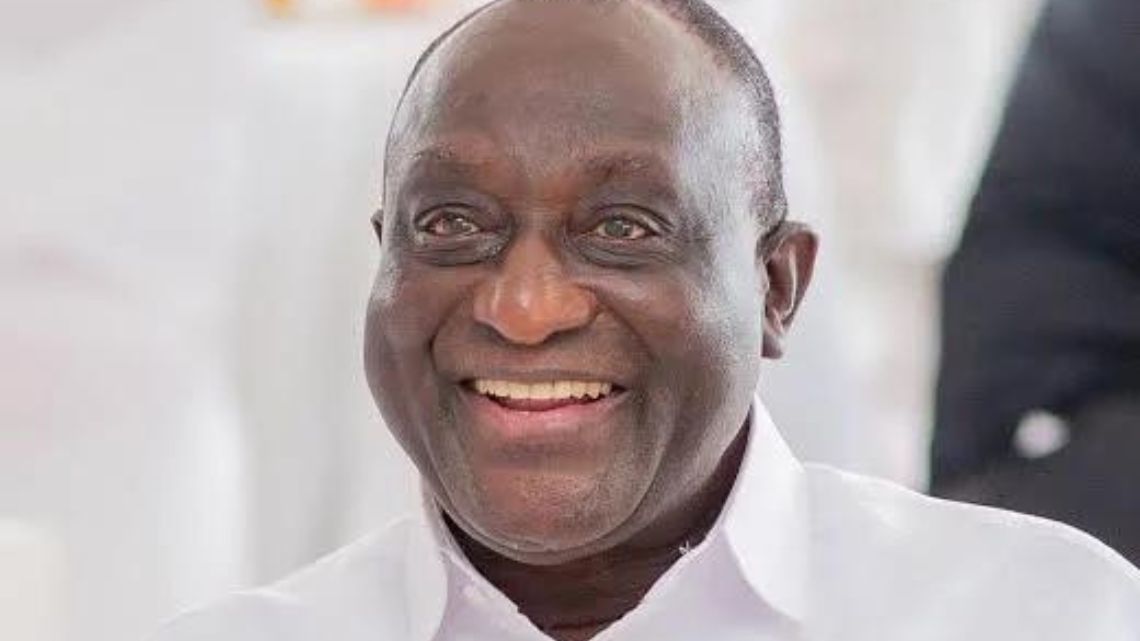
Leader of the Movement for Change, Alan Kyerematen, has pledged to establish a streamlined government of 40 ministers along with innovative strategies to tackle Ghana’s current challenges.
As the December 7 general elections approach, the competition for the most efficient government is heating up, with the opposition NDC already committing to governing with just 60 ministers. Meanwhile, Vice President and NPP flagbearer Dr. Mahamudu Bawumia has promised to lead with only 50 ministers.
Unveiling his Great Transformational Plan manifesto, Kyerematen emphasized his vision for a lean executive administration capped at 40 ministers. Addressing a supportive audience at a conference, he declared,
“I will reduce the current size of government and run a lean executive administration consisting of not more than 40 ministers”, he told a filled conference room as they cheered loudly.
“Eliminate soul sourcing in public procurement and contracting to ensure value for money” according to Alan will inform one of the cardinal means to eliminating corruption within government public procurement.
Kyerematen’s plan includes eliminating sole sourcing in public procurement to enhance transparency and ensure value for money, a crucial step in combating corruption within government contracts.
Regarding governance reform and constitutional amendments, Kyerematen advocates for extending presidential term limits to provide governments ample time for comprehensive development.
Additionally, he proposes abolishing the Council of State to make way for a new second chamber of Parliament.
This chamber would include representation from various stakeholders such as faith-based organizations, traditional authorities, professional bodies, artisanal associations, gender-based organizations, the private sector, labor unions, and people with disabilities.
Kyerematen argues this setup would ensure a more inclusive decision-making process that reflects diverse societal interests.
“I will abolish the Council of State and establish a new second chamber of Parliament with representation from key stakeholders including the faith-based organizations, traditional authorities, professional bodies, artisanal associations, gender-based organizations, private sector, labour unions and people with disability” arguing this would allow for a proper representation of interest groups in the decision making of the country.
With the unveiling of his Great Transformational Plan, Kyerematen positions himself as prepared to challenge the dominant political forces in Ghana and bring about substantial changes in the country’s political landscape.
British-Ghanaian rapper Mensah Ansah, known as M3nsa, has expressed support for the current New Patriotic Party (NPP) government, praising its impact on Ghana’s livability.
He highlighted the flourishing economy, citing thriving businesses and improved provision of essential services like water, which he believes marks this administration as one of Ghana’s best.
Regarding the persistent critique of power fluctuations (‘dumsor’), M3nsa stated that he personally experiences no such issues, as his electricity remains stable without interruptions.
Speaking with Starr FM, M3nsa praised the Akufo-Addo-led government, suggesting that criticisms against it are driven by smear tactics, “I always have electricity; in Dansoman, we don’t experience power cuts. What is ‘dumsor’? I’m unfamiliar with it. I don’t anticipate power outages.
“This government is exemplary. On the streets, everyone seems happy, prices are low, businesses thrive, electricity is steady, water is available, there’s money to spend, and everyone is content. Thus, everything is perfect. The ‘dumsor’ being discussed is merely negative propaganda by those opposed to the government,” he stated.
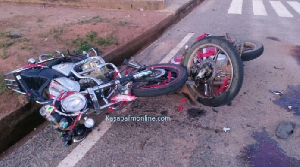
Residents of Enyan Asempanyin in the Ajumako Enyan Essiam District of the Central Region were devastated on Friday evening after two Okada riders tragically died in a motorcycle crash during their colleague’s funeral.
Reports indicate that the two riders, along with their peers, were riding through Enyan Asempanyin after retrieving their colleague’s corpse from the mortuary.
In an interview with Kasapa News’ Yaw Boagyan, eyewitnesses recounted how the riders were performing stunts with their motorbikes, despite repeated warnings from local elders, including the former assembly member, to stop their reckless behavior.
Eyewitnesses also revealed that the leader of the Okada riders’ group had promised a reward of money and alcohol for the rider who could win a race and perform the best stunts.
During the contest, one rider, known as Rasta, was lying on his motorbike while speeding, while another rider, Kwesi, was racing from the opposite direction.
Tragically, they collided, and Kwesi died instantly.
Rasta succumbed to his injuries while being transported to the Ajumako District Government Hospital.
Their bodies have since been deposited in the mortuary.
Ironically, their deceased colleague, 23-year-old Daniel Nyarkoh, whose funeral they were attending, also lost his life in a motor accident.
The Minority in Parliament has strongly objected to the naming of the NPP’s Parliamentary Candidate for Manso Nkwanta, Tweneboah Kodua Fokuo, as the new Managing Director of the National Investment Bank (NIB).
In a press release endorsed by Dr. Kwabena Donkor, the Ranking Member on the Committee on Employment, Social Welfare, and State-Owned Enterprises, the minority MPs voiced their apprehensions regarding the politicization of state-owned enterprises (SOEs).
They argue that such appointments erode public confidence in the government’s capacity to efficiently manage national assets.
Branding it a politically motivated appointment, the NDC MPs assert that the bank requires a leadership team with formidable managerial expertise and a robust recovery strategy to resuscitate its current “life support” status.
“To appoint a Parliamentary Candidate six months into an election beggars belief. The integrity and or the lack of it in this appointment is a clear sign that the Government and the Bank of Ghana have no desire to resuscitate the ailing Bank but are only interested in milking the dying cow.”
“The ignoble thinking behind the appointment must be condemned by all well-meaning Ghanaians,” the statement read.
These objections come following the announcement of Mr. Tweneboa Kodua Fokuo’s assumption of office as the Managing Director of the National Investment Bank (NIB), succeeding Samuel Sarpong.
His appointment becomes effective from Monday, May 13, 2024.
A memo circulated among staff members of the Bank clarified that Mr. Fokuo’s appointment was made by “the majority shareholder.”
It further detailed that Philip Ofori-Asante has been nominated as Deputy Managing Director, following Mr. Fokuo’s appointment.
However, the Minority in Parliament contends that the Bank of Ghana is mandated by Act 612 to approve all senior bank appointments in the Banking and Deposit-taking Sector.
Consequently, the BoG holds a legal obligation to halt this appointment in its regulatory capacity, “assuming the President is misled by Advisors for obvious political considerations.”
The Minority urged President Akuffo Addo to reconsider Mr. Fokuo’s appointment, urging him to prioritize the integrity and business sustainability of the National Investment Bank.
“We demand the reversal of this appointment and a more transparent and impartial selection process that prioritises merit, competence and meritocracy over political affiliation,” they added.
The government has initiated the process of settling outstanding payments owed to the National Association of Institutional Suppliers, following an agreement reached with the Ministry of Education.
This initiative commenced on Monday, April 4, in response to a demonstration staged by the suppliers.
The Public Relations Officer for the National Association of Institutional Suppliers, Emmanuel Ayivor, confirmed in an interview with Citi News that the government has commenced disbursing the overdue payments to members of the association.
“The government promised that our payment would be done for those in the final year by Wednesday and for those in the second year, part would also be paid by Wednesday. And truly, to their words, they have begun payment and most of the members have confirmed on the platform that they are paying.
“Monday will be the day we agreed from both parties to meet at the ministry to assess the payment and how far they have gotten.”
Gold Coast Fund Management customers have stipulated that the government must settle their locked-up investments along with accrued interests by June 30, 2024.
The group’s convener, Charles Nyame, highlighted in an interview with Citi News that over 900 customers have passed away due to their inability to access funds for medical care.
Mr Nyame criticized head of the Economic Management Team, Dr. Mahamudu Bawumia, for disregarding their grievances despite repeated efforts by customers to reclaim their investments from the government.
“Dr. Bawumia, they call you an economic hero, but what kind of hero ignores the cry of his people? We trusted the system and invested our hard-earned money for a secure future but here we are only to be cast aside like dead news. They dangle the public toilet in front of us like some kind of charity,” Charles Nyame lamented.
He further said, “With all due respect Your Excellency, we are not fools. We see through the empty promises. In this year’s election, our votes would not be a choice, it will be a scream born from the death of despair fuelled by years of neglect. We will not be silenced by apathy any more. June 30th is the deadline, give us back our money, every single cedi with interest. We have over 900 of our people, those are the ones that we have the records of their obituaries, they are dead and gone.”
Gold Coast Fund Management operated as a registered fund management entity under the regulation of the Securities and Exchange Commission of Ghana.
Following the government’s financial sector clean-up in 2018, which led to the closure of Gold Coast Fund Management, some customers, previously associated with Blackshield Capital Limited (formerly Gold Coast Management), found their investments locked up.
These affected customers filed a petition, detailing their grievances, with PricewaterhouseCoopers (PwC) following the completion of the clean-up exercise.
The Securities and Exchange Commission (SEC) allocated GH¢8 billion for compensating customers of all 47 defunct fund management companies, a budget approved by Parliament.
The Finance Minister, in public statements, confirmed the completion of the exercise, reporting an expenditure of approximately GH¢25 billion, which encompassed the GH¢8.6 billion earmarked for compensating investors across the 47 defunct companies, including Gold Coast Fund Management.
However, despite these allocations and assurances, investors who were members of the petitioners’ association and had investments exceeding GH¢50,000.00 have yet to receive their funds since 2018.
A fiscal analysis conducted by Banking Consultant, Dr. Richmond Atuahene and Data and Research Analyst Isaac Kofi Agyei presents a bleak outlook for Ghana’s banking industry, largely due to the over-subscription of government bonds.
Entitled ‘Thirsty Banks: Ghana’s 2023 Challenge with High Cash Reserve Ratios,’ the report underscores the prolonged maturity period of government bonds, scheduled until 2031, as a significant concern for numerous banks.
This elongated waiting period poses a risk of depleting banks’ resources, ultimately leading to insufficient liquidity for their day-to-day operations.
According to the report, a substantial portion of commercial banks’ total deposits, totaling GH¢224 billion, has been diverted towards acquiring government bonds following the domestic debt exchange program.
The report suggests that the Bank of Ghana should have taken into account the GH¢50.6 billion of bonds that were restructured before implementing the new, higher Cash Reserve Ratios (CRR).
Ignoring this could lead to double accounting, and many bank boards and management teams are worried that this new directive could quickly drain their resources.
“The Bank of Ghana should have considered the GH¢50.6 billion of bonds that were restructured before implementing the new, higher Cash Reserve Ratios; otherwise, it amounts to double accounting. The government bonds have a final maturity period in 2031, and many bank boards and management teams are concerned that this new directive could lead to a depletion of their resources soon as many banks may not be liquid enough to operate.
“The central question remains: How did the Bank of Ghana establish the new Cash Reserve Ratio without factoring in the restructured bonds held by commercial banks, primarily funded by depositors’ money? Besides Bawumia (2010) argued that the high level of reserve requirements was a legacy of high fiscal deficits so why the heavy dependence on monetary policy to solve a problem deeply rooted in fiscal recklessness?”
The central question raised is how the Bank of Ghana established the new Cash Reserve Ratio without considering the restructured bonds held by commercial banks, which are primarily funded by depositors’ money. Additionally, the report questions the heavy reliance on monetary policy to address a problem deeply rooted in fiscal irresponsibility.
Recommendations put forth in the report suggest that the Bank of Ghana should reassess Cash Reserve Ratio reductions and address Non-Performing Loans (NPL) to restore resilience and economic stability within the banking sector.
The proposed measures emphasize a balanced approach, urging the BoG to reconsider CRR reductions, account for restructured bonds, and mitigate NPL risks.
Furthermore, fiscal measures, including significant budget cuts, are deemed critical to alleviate inflationary pressures and redirect credit to the private sector.
This comprehensive strategy aims to bolster banking sector resilience, foster economic stability, and facilitate sustainable growth in Ghana.
“Recommendations emphasize a balanced approach, urging BoG to reconsider CRR reductions, factor in restructured bonds, and mitigate NPL risks. Fiscal measures, including substantial budget cuts, are critical to easing inflationary pressures and redirecting credit to the private sector.
“This holistic strategy aims to restore banking sector resilience, promote economic stability, and foster sustainable growth in Ghana.”
The United States government has successfully averted a federal shutdown by securing bipartisan agreement in both the House and Senate for a short-term funding arrangement.
This bill, which guarantees funding until November 17, garnered substantial support and was promptly signed into law by President Joe Biden just minutes before the looming deadline.
However, it’s important to note that this funding bill does not include any new assistance for Ukraine, marking a setback for the Democratic Party, as it had been a significant demand for them.
In a notable display of defiance against hardline members of his own party, Republican House Speaker Kevin McCarthy introduced the bill.
The potential government shutdown, which could have resulted in tens of thousands of federal employees being placed on unpaid furlough and the suspension of various government services, was scheduled to commence at 00:01 ET (04:01 GMT) on Sunday.
Democrat denies setting off fire alarm to stall spending vote
However, there was a sudden and dramatic shift in Mr. McCarthy’s stance on Saturday afternoon. He opted to put to a vote a temporary funding measure that would maintain government operations, including funding for natural disasters, but would not yield to significant concessions on spending levels—a crucial demand of the Republican majority in the lower house.
A majority of lawmakers were determined to avert a government shutdown, and notably, the bill received more support from Democrats than Republicans. Up to 90 House Republicans voted against it.
This decision dealt a blow to a small faction of right-wing Republicans who had been stalling negotiations in the chamber with unwavering demands for spending reductions and opposition to new aid for Ukraine.
Following the vote, the House adjourned immediately, leaving the Senate with no alternative but to accept the House legislation, even though the Senate had previously passed its own bill that included aid for Ukraine. Only nine senators voted against the House bill, and all of them were Republicans.
In a statement released shortly after the Senate vote, President Joe Biden said “extreme House Republicans” had sought to create a “manufactured crisis”, and urged Speaker McCarthy to allow a further funding deal for Ukraine to pass without delay.
He said: “We cannot under any circumstances allow American support for Ukraine to be interrupted.”
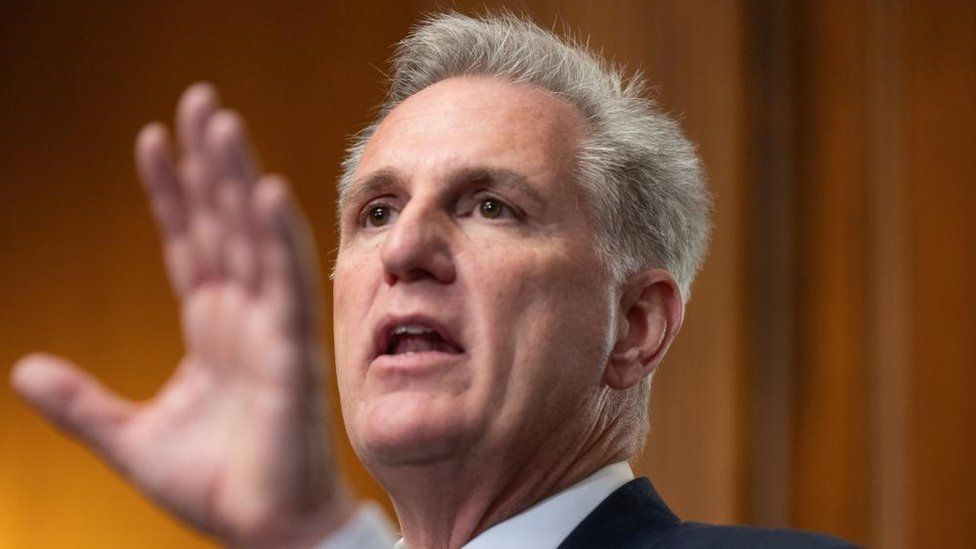
Image caption,Republican House Speaker Kevin McCarthy is under pressure from hardliners in his own party
In an unusual move, senior Senate leaders from both parties, including minority leader Mitch McConnell, released a joint statement signalling their intention to “ensure the US government continues to provide” support to Ukraine in the coming weeks.
It came after Senator Michael Bennet – a Democratic member from Colorado, who backs more funding for Kyiv – held up Saturday’s proceedings in protest at the lack of guarantees for Ukraine included in the deal.
Congress has approved about $113bn (£92bn) in military, humanitarian and economic aid to Ukraine since Russia waged its full-scale invasion last year. President Biden has requested another $24bn.
What happens in a US government shutdown?
Shutdowns happen when both chambers of Congress are unable to agree on the roughly 30% of federal spending they must approve before the start of each fiscal year on 1 October.
With Republicans holding a slim majority in the House and Democrats holding the Senate by a single seat, any funding measure needs buy-in from both parties.
Repeated efforts to pass spending bills in the House have been thwarted in recent weeks by rebel right-wingers.
The group has opposed short-term spending measures and pushed for making cuts by passing long-term spending bills with agency-specific savings, even though such bills stand little chance of advancing through the Senate.
Mr McCarthy had been extremely reluctant to rely on Democratic votes to pass the House’s bill until the last minute, given this would anger these hard-line conservative members of his party.
This drama is likely to be repeated again in less than seven weeks as fundamental disagreements over government spending levels and policies between Republicans and Democrats, and among Republicans themselves, have not been resolved.
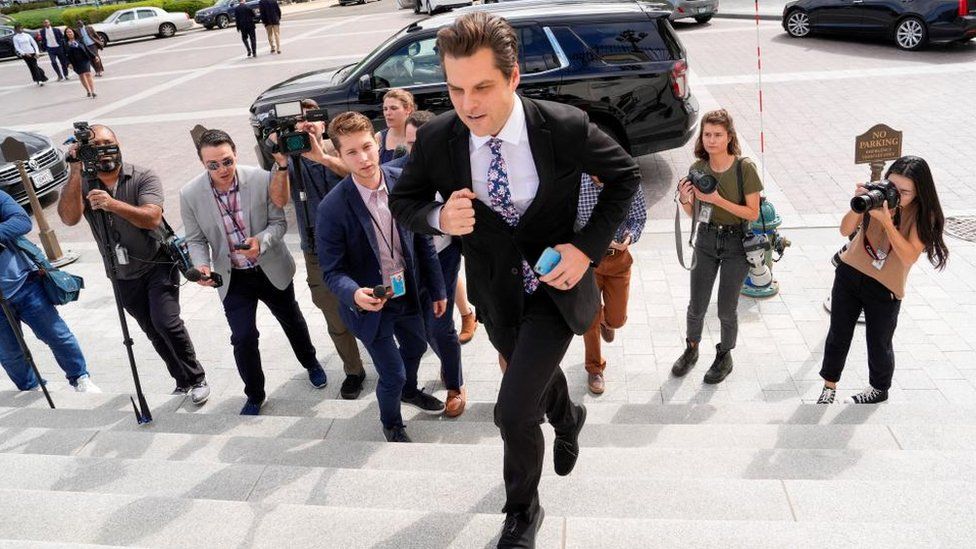
Image caption,A minority of Republicans, including Matt Gaetz (pictured), were pushing for sweeping budget cuts
In the meantime, Florida Congressman Matt Gaetz and hard-line conservatives in the House have a decision to make.
Mr McCarthy’s decision to rely on Democratic votes to pass the short-term bill was supposedly a red line that, if crossed, would prompt an attempt to remove the Speaker from his leadership position, by triggering a so-called motion to vacate.
At his Saturday news conference, Mr McCarthy challenged those who oppose him to “bring it”, adding: “There has to be an adult in the room.”
The days ahead will reveal whether Mr Gaetz and company were serious about their threat – or just bluffing.
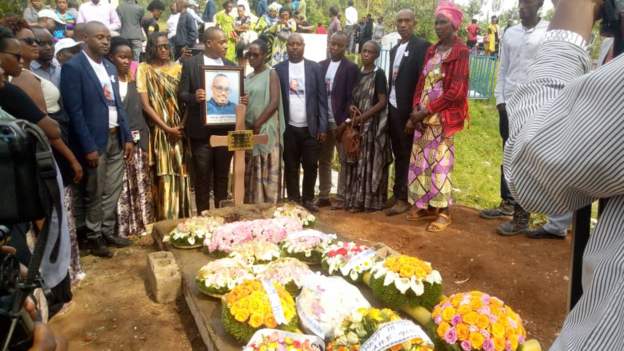
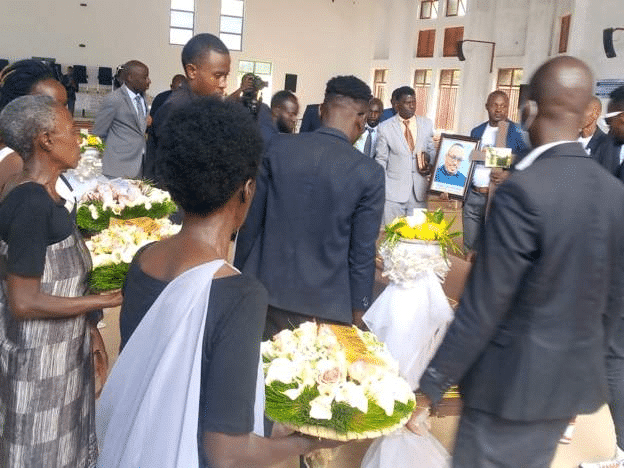
A large crowd turned out on Sunday for the funeral of John Ntwali Williams, a critic of the Rwandan government who passed away last week in the city of Kigali after allegedly being involved in a car accident, according to the police.
Rights groups have called for an independent investigation into the circumstance of his death.
The funeral was attended by friends and family alongside local journalists and opposition figures like Frank Habineza, Victoire Ingabire and Bernard Ntaganda.
“We will never forget your valuable contribution in promoting freedom of media and speech in a challenging environment,” Ms Ingabire said in her eulogy.
Police said Mr Ntwali died on the spot in a road accident on Tuesday night when a motorcycle taxi he had boarded was hit by a car.
But Human Rights Watch said that “there are many reasons to question” the police narrative and called for an “international expertise to determine whether or not he was murdered”.
Who was the late journalist?
Mr Ntwali, 43, had worked at local radio stations, newspapers and online news sites.
At time of his death he was editor at The Chronicles, but also owned a YouTube channel – Pax TV-Ireme News.
He was critical of the government and the ruling party in his reports that focused on justice and human rights, which drew harassment and death threats against him, he said.
He openly questioned state policies like taxes on land, arrests of opposition politicians and YouTubers, and questioned the death of singer Kizito Mihigo – a government critic.
His critics called him “an extremist journalist”.
Mr Ntwali had previously claimed that he survived “staged road accidents” and “death threats from state agents”.