Tag: African Finance Ministers

  • Ghana introduces stricter penalties for fiscal mismanagement with new law

    Ghana introduces stricter penalties for fiscal mismanagement with new law

    The Ministry of Finance has announced the passage of the Public Financial Management (Amendment) Act, 2025, a groundbreaking piece of legislation aimed at enhancing fiscal discipline, accountability, and securing long-term economic stability for Ghana.

    This reform introduces new measures to strengthen fiscal oversight, enforce fiscal responsibility, and improve transparency across the country’s financial management systems.

    Among the major changes introduced by the Act are stricter penalties for fiscal mismanagement. The Finance Minister can now face censure under Article 82 of the Constitution if they breach fiscal rules.

    Additionally, Ministers and Heads of Covered Entities could be imprisoned if their actions contribute to financial misconduct or breaches of fiscal responsibility.

    A key element of the reform is the introduction of a new fiscal responsibility framework. The Act mandates that the government maintain an annual surplus of at least 1.5% of GDP on a commitment basis through a primary balance rule.

    It also introduces a public debt ceiling that caps the debt-to-GDP ratio at 45% by 2034, ensuring that Ghana remains on a sustainable debt trajectory.

    Furthermore, the Act establishes an independent Fiscal Council tasked with monitoring adherence to fiscal rules and overseeing the credibility of the national budget. This autonomous body will play a crucial role in safeguarding macroeconomic stability and ensuring transparency in government financial operations.

    To further enhance fiscal accountability, the Act requires the Minister of Finance to seek approval from either Parliament or Cabinet before suspending any fiscal rules due to unexpected economic challenges. In addition, the law consolidates all fiscal management regulations into a single framework, removing redundancies and improving the effectiveness of enforcement.

    With the passage of this law, the previous Fiscal Responsibility Act of 2018 (Act 982) has been repealed, and the Presidential Fiscal Advisory Council has been dissolved. The Ministry of Finance emphasized that this shift will streamline fiscal oversight, placing responsibility entirely with the newly established Fiscal Council. These reforms, which come ahead of the IMF-supported program’s September 2025 deadline, underscore the Ministry’s commitment to enhancing fiscal discipline and ensuring Ghana’s long-term economic stability. The Ministry has pledged to work closely with all stakeholders to implement these reforms fully and protect the nation’s economic future.
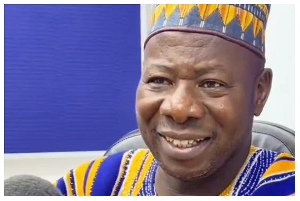
  • People mocked me for driving an old car after my tenure as a Minister – Abdallah Abubakari

    People mocked me for driving an old car after my tenure as a Minister – Abdallah Abubakari

    A former Northern Regional Minister, Abdallah Abubakari, has disclosed the ridicule he faced from his community for continuing to drive an old car after leaving office.

    In a recent interview circulating on social media, he shed light on the societal pressures and expectations placed on public officials in Ghana.

    Abubakari recounted his experiences post his brief tenure as a minister, which lasted less than nine months.

    He mentioned that following the 2016 elections, after the NDC lost power, he resumed driving his Toyota Highlander, a 2005 model he had purchased while serving as Programmes Manager at IBIS.

    “I had the opportunity to serve as a minister for less than nine months. After the 2016 election, I went and picked up my Highlander, which I bought when I was the programmes manager at IBIS. I was the programmes director when I bought the Highlander 2005 model.

    “When I left the office and drove it to Walewale several times, people started laughing at me.

    “They wanted to point out how useless I had been, but my uselessness was not based on my failure to deliver my mandate as a minister.

    “Rather, my failure, as they saw it, was as a regional minister: How come you don’t have a brand-new Porsh V8 with a potbelly that shines out of corruption?’ That is the lens through which people judge achievements in Ghana. And that is why we have a problem,” he lamented.

  • China fines Kenya Sh1.31bn for defaulting on SGR loans

    Finance Minister Ken Ofori-Atta praised the Group of Seven (G7) countries’ decision to invite finance ministers from several African countries to a summit in Washington, DC, as “very historic.”

    Canada, France, Germany, Italy, Japan, the United Kingdom, the United States of America, and the European Union make up the G7, an informal alliance of the seven most developed economies in the world.

    For the crucial meeting, this group summoned the finance ministers of Senegal, Togo, Zambia, Ghana, Guinea, Rwanda, Chad, Tunisia, and Morocco, as well as from South Africa.

    It was reported by Accra-based 3news that the G7 instructed the World Bank to provide financial support to Ghana and other African countries who were at the meeting.

    This financial support, according to the report, is to enable the African countries to deal with the impact of the economic crisis caused by force majeures.

    “It was actually quite a historic meeting because for the first time the G7 has called African Finance Ministers to deliberate on the crisis that they see.

    “…these are exogenous factors that have really (affected), even their own economies (and) put it under serious stress and are, therefore, looking for ways in which they can add to the capital needs to make sure that things do not deteriorate. So countries such as Ghana, Senegal, Tunisia, and Morocco were there,” Ken Ofori-Atta said as quoted by 3news.

    He added “The empathy is clear, the need to [introduce] something new and therefore, their interest in encouraging the World Bank to find more resources, tapping into the private sector so that they will stabilize where things are going.

    “They have reduced growth rate to 2.7 percent expecting a grim and difficult period, they don’t want to make sure that things deteriorate from liquidly to insolvency to chaos.”

    The meeting brings together central bankers, ministers of finance and development, parliamentarians, private sector executives, representatives from civil society organizations and academia to discuss issues of global concern, including the world economic outlook, poverty eradication, economic development, and aid effectiveness.