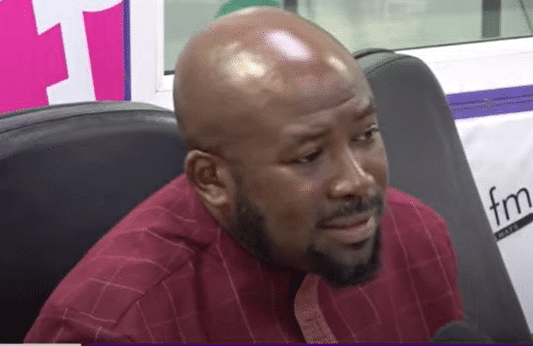
The Chief Investment Officer of Stanbic Investment Management Services (SIMS), George Allotey, has advised Pension Trustees to take advantage of alternative offerings in the Policy Guidelines of the National Pensions Regulatory Authority (NPRA) to diversify their investments so as to protect their funds against shocks as currently being experienced. He said this at the fifth edition of the Pension Strategy Conference organized by Axis Pension Trust in Accra.
Addressing the issue on what the NPRA can do to help Pension Trustees protect their investments given the current inimical economic conditions that they operate in, George Allotey said, “If you look critically at the pension investment guidelines 2021, there are a lot of spaces in there. It doesn’t prescribe a minimum exposure in Government of Ghana; it rather prescribes a maximum exposure. So, it’s not as though our hands have been tied.
“Our pensions sector is only 12 years so we are still learning and gradually the NPRA has been progressive. We trustees have not yet done even one per cent of alternatives so there are many opportunities for us to explore before we start blaming the regulator. There is a lot of work for us the trustees to do to develop products so people can invest in.”
“We must also start holding government accountable for what they use our funds for. If we, in the pensions industry, control about GHS 30 billion funds and the government wants to raise GHS 1 billion and they listen to other fund holders why shouldn’t they listen to us? It’s time we start making our voices heard as critical partners in the financial system,” he added.
The Pension Strategy Conference is an annual event that brings together pension trustees and asset owners, regulators, policymakers and other stakeholders to discuss strategies for navigating the challenging investment landscape. The conference provides a platform for experts to share insights, best practices and innovative ideas for managing pension funds in the current economic climate. This year’s conference was held under the theme, “Positioning Pension Funds to Thrive Beyond the Domestic Debt Exchange”.
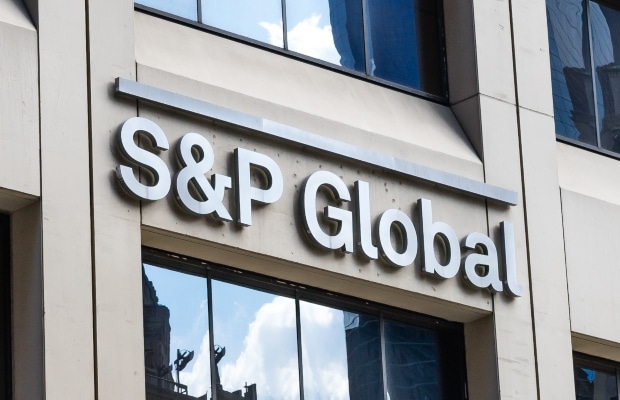
The rating on Ghana’s local-currency debt was upgraded by S&P Global Ratings as the country settled its domestic debt exchange with bondholders. The nation’s foreign debt remains rated in default.
Ghana’s local credit score was raised to CCC+ from SD — or selective default — by S&P after new domestic debt securities were delivered to creditors, according to a Friday statement. The credit assessor continues to score the West African nation’s foreign-currency debt at SD as the government works to restructure the external bonds, wrote analysts Frank Gill and Ravi Bhatia.
“We understand that the authorities aim to lower debt to GDP to about 55% over a five-year horizon,” they wrote. “Discussions with holders of foreign currency instruments are continuing.” Understand power in Washington.
Ghana has been engaging investors since late last year to restructure about $30 billion of its $46 billion in local and international debt.
It recently completed the first part of a domestic restructuring, with investors exchanging 83 billion cedis ($6.7 billion), or 64% of holdings, for new securities, against an overall target of 80%. It aims to start “substantive” discussions with international bondholders and their advisers in the coming weeks, Minister of Finance Ken Ofori-Atta said Thursday.
Still, the ongoing discussion means payments have been halted on individual bonds. S&P on Friday lowered the ratings on three UK-law Eurobonds — maturing in 2023, 2027 and 2025 — to D, or default.
On Friday, a panel of dealers and investors agreed to review whether a missed payment of a coupon on one of a dollar bond due 2026 constituted a so-called credit event, which may trigger payout of insurance protection on the debt.
Fitch Ratings last week cut Ghana’s local-currency credit score to default. It also downgraded its foreign-currency debt rating to partial default after it missed eurobond payment.
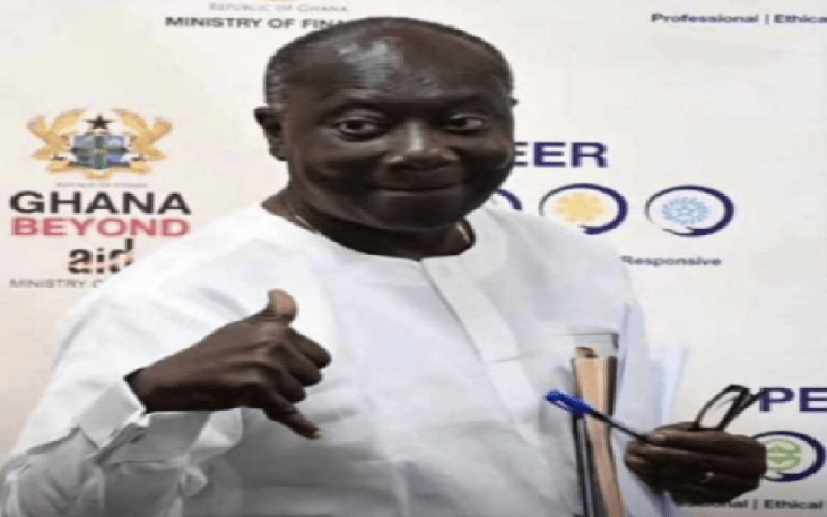
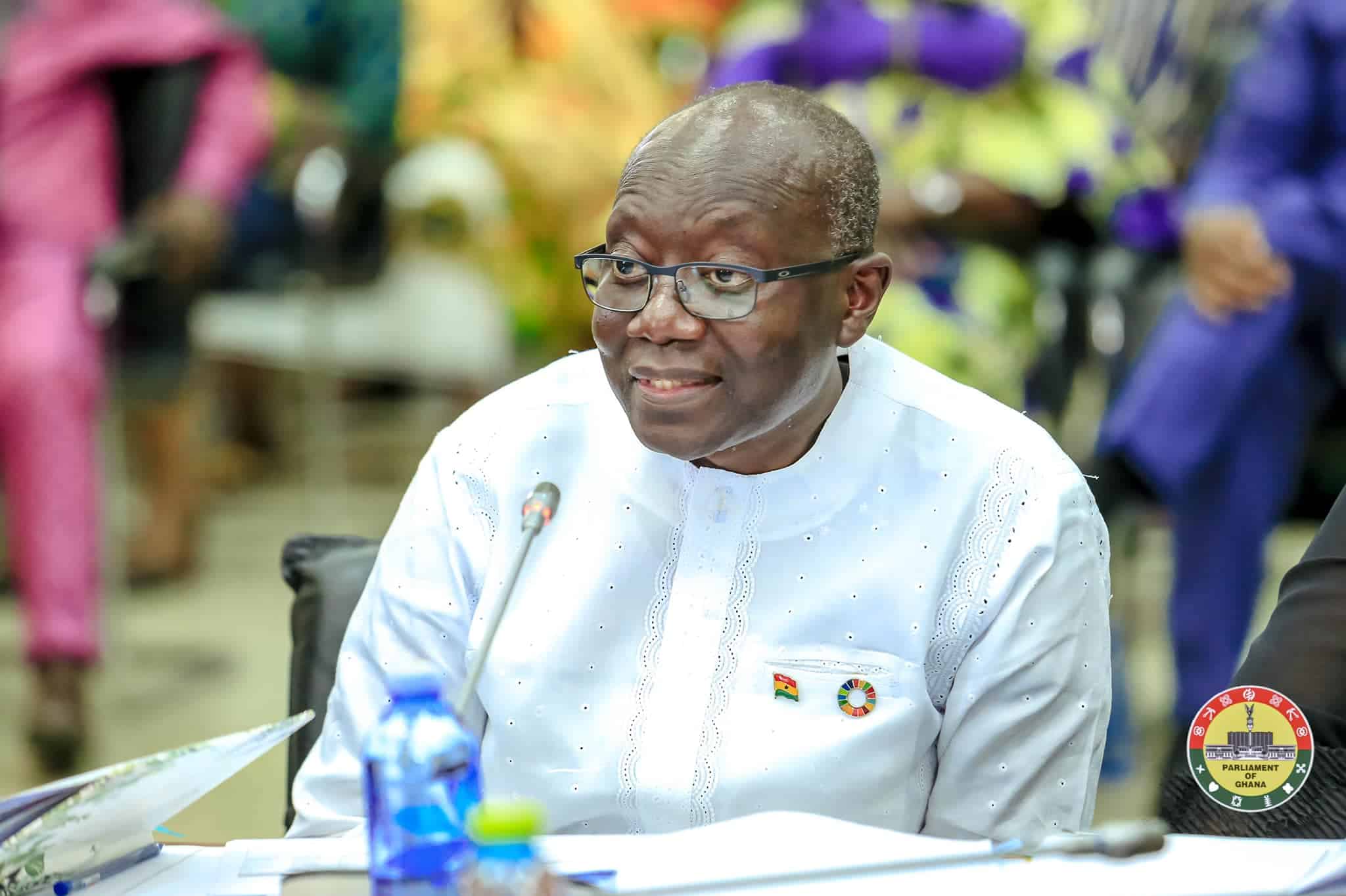
The Minister of Finance, Ken Ofori-Atta, has assured of improved economic stability with a successful completion of the Domestic Debt Exchange Programme (DDEP).
The programme, which he says forms part of government’s response strategy to addressing the current economic challenges, will impact positively on inflation, exchange rates, interest rates, as well as bring some relief to businesses and families.
“I am confident that the programme government has set out for this year, supported by parliament, will get us out of the economic crisis that has besieged our economy since COVID-19 reached our shores back in March 2020. I am confident that with conclusion of the Domestic Debt Exchange programme we will experience stability in exchange rates, inflation and interest rates – bringing businesses and families some respite, the minister said in his address to parliament on details of the debt exchange programme.
Outstanding debt
As of December 2022, the total outstanding debt – to eligible and non-eligible bondholders – amounted to approximately GH¢137billion. Subsequent extensions of dates and payment of maturities meant that the remaining stock was reduced from GH¢137billion to GH¢130billion.
However, the finance minister noted that the eligible bonds as per the exchange memorandum meant an exclusion of pension funds and bonds that were subject to swap mechanisms for monetary and exchange rate policy operations.
This then brought the eligible bonds for tendering to GH¢97.75billion. Out of the total eligible bonds for tendering, GH¢83billion was successfully tendered – accounting for about 85 percent of outstanding eligible amounts and meeting the target of 80 percent threshold as expressed in the memorandum of exchange.
Nonetheless, the GH¢83billion bonds that were successfully tendered represent 64 percent of the outstanding debt stock of GH¢130billion at end-December 2022.
“The Domestic Debt Exchange Programme was to alleviate the debt burden while minimising its impact on investors and the financial sector,” he told the parliamentarians.
According to the minister, since the first announcement there have been multiple engagements with stakeholders – leading to a number of amendments to terms of the offer, with a final extension deadline of February 7, 2023 and an administrative extension of February 14, 2023.
The final terms of the DDEP, he said, were designed to address the specific concerns of different bondholder categories: comprising category A, collective investment schemes and natural persons below the age of 59; category B, natural persons 59 years old or older; and general category holders, representing all other holders except those in categories A and B.
The finance minister further noted that category A holders tendered an amount of GH¢5.9billion, representing 6.06 percent of the eligible bonds; with category B tendering GH¢423 million, representing 0.4 percent; and category C tendering an amount of GH¢76.6billion, representing 78 percent.
Mr. Ofori Atta extended government’s gratitude to bond holders who participated in the programme: “We wish to thank everyone who has tendered and supported the domestic debt exchange programme. It is a truly remarkable act of sacrifice in our nation’s history. Your timely support is deeply appreciated.
“We also appreciate the concerns of those who may still be uncertain in these choices, and I trust that we can continue to engage, work together to reset the fundamental issues of the economy and reposition our economy.”
We will not imperil financial sector
Mr. Ofori-Atta also assured of the government’s willingness to protect and support banks and other financial institutions in the country to aid the recovery process.
“We are determined to protect banks operating in Ghana and strengthen their capacity to finance the economic recovery and growth we see before us,” the minister said.
While acknowledging that the economy is in serious crisis, Mr. Ofori-Atta assured that prudential measures are being employed to mitigate further impacts on the financial landscape and most importantly, on domestic creditors.
“Government is mindful of the exchange’s ramifications on the country’s financial health. As a result, the government is developing several prudential measures to mitigate the potential impact on domestic creditors, considering the need to preserve financial stability. Billions of taxpayer’s monies were used between 2017 and 2019 to rescue the financial sector. We have no intention to imperil that work,” he assured.
Financial Stability Fund
Mr. Ofori Atta also informed parliament of a Financial Stability Fund that is being established to cushion banks, pension funds and insurance companies, among others, to shore-up their liquidity.
“In addition, a Financial Stability Fund (FSF) is being established by government with the help of development partners to provide liquidity and solvency support to banks, pension funds, insurance companies, fund managers and collective investment schemes, to ensure that they are able to meet their obligations to clients as they fall due,” he stated.
Government of Ghana has for the fourth time extended the deadline for its Domestic Debt Exchange Programme (DDEP) from January 31, to February 7, 2023.
The Ministry of Finance in a press release noted the extension is to allow the government to finalise discussions with Organised Labour and Pension Fund Trustees, on a separate arrangement in accordance with the MoU with Organised Labour on December 22, 2022.
According to the ministry, it will via the new Exchange Memorandum confirm a new settlement date of Tuesday, February 14, 2023.The revised and final Exchange Memorandum will be released by Thursday 2nd February 2023, the ministry added.
Following engagements with the representative groups of individual bondholders, some revisions have been made which will form part of the new Exchange Memorandum. They include the following:
a. An affirmation that all individual bondholders are free not to participate;
b. However, upon a successful DDEP, there will be very few of the ‘old bonds’ in circulation, and likely limit its tradability;
To encourage all individual bondholders to participate in the Exchange, government has indicated that all individual bondholders who are below the age of 59 years will be offered instruments with a maximum maturity of 5 years, instead of 12 years, and a 10% coupon rate;
“All retirees (including those retiring in 2023) will be offered instruments with a maximum maturity of 5 years, instead of 12 years, and a 15% coupon rate,” the ministry added.
With this, the government has encouraged all stakeholders to participate in the DDEP, an essential step towards meeting our debt sustainability targets and restoring macroeconomic stability and economic growth.
In December last year, government launched the Domestic Debt Exchange Programme to restructure its debt in order to obtain a credit facility from the International Monetary Fund.
The expiration date of the voluntary offer was initially scheduled to end on Friday 30th December 2023, but was postponed to Friday 6th January, 2023. It was later rescheduled to Monday, 16th January 2023 and subsequently Tuesday, 31st January 2023.
The concerns raised by investors such as pensioners and individual bondholders have caused the government to extend its deadline to enable all parties to be on the same page.
The groups of Individual bondholders campaigning against their inclusion in the domestic debt exchange of the government are hopeful that they will be completely exempted from the program under amended parameters that the government has not yet published.
For them, including them will destroy household confidence in Ghana’s financial system and securities market.
On the Point of View on Citi TV, one of the conveners of the group and legal practitioner, Martin Kpebu said: “Sometimes we all get it wrong. Maybe the finance minister initially thought it could woo individual bondholders on board, but it didn’t turn out well. There is nothing wrong because it’s one nation. It’s been confirmed that government will honour its obligations under the existing bonds thus practically exempting us.”
The deadline for the Domestic Debt Exchange (DDE) Program expires today, Tuesday, January 31, 2023, after several extensions.
Stakeholders are looking forward to the government’s next move given the agreements it recently reached with groups of individual bondholders and players in the banking and insurance industry.
The Vice President, in charge of research at IMANI Centre for Policy and Education, Bright Simons, has even said, the Ministry of Finance is lacking the support of even Cabinet in its decision to include individual bondholders in the Debt Exchange Programme.
“What we are holding now in all probability is much better than what the Minister wants to offer. If the Minister is able to offer something better than what we are holding, then we wouldn’t be doing a debt exchange program. From what I have gathered, people are not interested in any new bonds, they want to hold on to what they currently have”, Martin Kpebu further expressed.
The individual bondholders during discussions with the committee set up by the government to resolve issues on the debt exchange programme stated that with the set target of 80% of eligible bonds, Individual Bondholders are not a critical success factor to the viability of the DDE programme, yet the impact of their inclusion has incalculable consequences.
As part of recommendations to the Technical Committee, they recommended that the government divest loss-making, defunct and troubled 17 State–own enterprises.
The Individual bondholders also suggested that the government review the Free SHS Programme to make it more efficient through effective targeting and allowing parents who can pay to do so.
The group stated that divesting the non-performing SOEs and reviewing free SHS alone will provide the government with GHS 2 billion.
It also urged the government to maintain the 2022 capital expenditure level by reducing the non–ABFA MDA and foreign finance Capex provisions by 50% which they claim will provide the 10.7 billion Ghana Cedis.
In a viral social media video, the former policeman accused the president of failing to heed to advice in the management of the economy.
According to him, he is on the verge of losing his livelihood after he invested his gratuity in government bonds.
“President Nana Addo Dankwa Akufo-Addo, this morning I come in peace. My name is ASP retired Franklin Nartey. I have served Ghana through the police service for over 24 years.
I used my gratuity to purchase a two-year government bond which was supposed to mature in September this year, 2023. Your idea is that because you have misgoverned Ghana, I will not receive my money which I toiled hard to purchase the bond from a commercial bank.
“It is not an armed robber who has attacked me to take my money, it is rather the president we have voted for to look after us,” he added.
The government of Ghana is under heavy pressure following the announcement of a Domestic Debt Exchange programme aimed at varying the terms of existing government bonds.
The policy which forms part of conditions by the government to attain a $3 billion IMF loan, has received resistance from various quarters including individual holders of government bonds.
ASP Nertey in the video revealed that he invested his entire gratuity in a government bond which was expected to mature later this year.
But according to him, he stands to lose the money he gained as part of his over twenty-four years of service in the police.
“The time you were renting private jets for £18,000 an hour, people warned you but you did not listen. When you were appointing so many ministers into your government people warned you and you didn’t listen.
“Today, because of your incompetence, the gratuity I received from my toil to take care of myself is being taken away from me by you until 2033. I have no idea if it is my children or grandchildren you want to come and inherit it.
“President, in all humility, let your cousin’s bank which has benefited from all the loans you contracted use their profit to pay for your debts and give me back my money. Nana Addo, you are very wicked!” ASP Nertey said in the video.
The government had extended the deadline for voluntary participation in the Debt Exchange Programme from December 30, 2022, to January 16, 2023. The Exchange is a government-led debt restructuring policy. It should be noted that the government has been hit by a massive economic downturn characterized by high-interest rates, soaring inflation, record-breaking cedi depreciation, and multiple credit downgrades of the economy.
This programme was introduced with the expectation that it would significantly reduce the burden of interest payments on the Ghanaian government and save approximately US$1.2 billion in interest between 2023 and 2028, or 7% to 8% of the country’s GDP.
The Government announced the following modifications to the Invitation to Exchange, which are set forth;
• Offering accrued and unpaid interest on Eligible Bonds, and a cash tender fee payment to holders of Eligible Bonds maturing in 2023;
• Increasing the New Bonds offered by adding eight new instruments to the composition of the New Bonds, for a total of 12 New Bonds, one maturing each year starting January 2027 and ending January 2038;
• Modifying the Exchange Consideration Ratios for each New Bond. The Exchange Consideration Ratio applicable to Eligible Bonds maturing in 2023 will be different from other Eligible Bonds;
• Setting a non-binding target minimum level of overall participation of 80% of the aggregate principal amount outstanding of Eligible Bonds; and
• Expanding the type of investors that can participate in the Exchange to now include Individual Investors.
Impact on Individual Investors
The investing community, the most average Ghanaian, has raised concerns upon hearing this news of restructuring debts owed them by Government. Many people have imitated that this news will worsen their living conditions because they use these coupon payments to pay for expenses such as daily living cost, rent, school fees and a host of others.
Again, a good number of investors in government bonds are pensioners who have invested their pension payouts as a way to receive a periodic stream of income whilst on retirement. Others who require their investment for any profitable project will be impacted as well, as they will be unable to do so at this time.
Holders of bonds maturing in 2023 will receive coupons starting from 2027 to 2033, while those with bonds maturing in 2024 will receive coupons starting from 2027 to 2038.
Imagine a 62-year-old pensioner who owns a Government of Ghana (GOG) bond and will receive its full principal in 12 years. My question is, what happens to this pensioner if he or she dies before the 12-year period is up? This is the reality for many Ghanaians who have purchased GOG bonds. Many of these bondholders will suffer from depression and die prematurely as a result of this situation.
Impact on businesses
Companies that purchased bonds to fund future business expansion with principal payments will be unable to do so from now (2023) until 2027 because they will not be paid (except coupon payments) according to the terms of their bond. As a result, businesses will miss out on much-needed capital injections to help them expand.
This is likely to have an impact on productivity and, to a greater extent, lead to staff layoffs, because if a company is unable to meet its economic obligations or perform at its usual optimal level, the easiest way out is layoffs.
Impact on financial institutions
The financial sector, which includes stakeholders such as local banks, would be greatly impacted by the implementation of this domestic debt exchange, owing to excessive exposure to government-issued bonds. Bank capital reserves would be severely depleted, resulting in liquidity shortages and, in the long run, financial instability in the economy.
The depreciation of their restructured assets, such as government bonds, may cause the asset side of banks’ balance sheets to suffer a direct hit. On the liability side, banks may face deposit withdrawals and the interruption of interbank credit lines. These issues may jeopardize their ability to mobilize resources.
Way forward
The government needs to be more transparent about the bondholders’ choices if they choose not to accept the DDE. As it stands, the exchange document is not clear on what happens if a bondholder refuses the exchange.
The government should also give bondholders an opportunity to discuss and bargain the offered terms since, in my opinion, doing so will result in a fair resolution moving forward.
Also, government needs to assume more burden in resolving the current economic situation. The just-passed budget still has line items that can be shelved for now to create fiscal space to either continue paying investors their coupons and principals, or reduce the impact of the exchange program with favourable terms.
Additionally, I advise the government to immediately halt the Domestic Debt Exchange Programme and promote greater stakeholder involvement.
Ghanaian economist, Kwame Pianim is currently trending on Twitter following his comment on Ghana’s economy.
Kwame Pianim in an interview with TV3 said government is sitting on a timebomb if it goes ahead to implement the Domestic Debt Exchange programme.
He further said that Ken Ofori-Atta’s irresponsibility and recklessness has led the country into a ditch, which has resulted in the need for the country to undertake a debt restructuring exercise for an IMF bailout.
“…I would have been proud as a Ghanaian to contribute to the debt restructuring exercise but I will not contribute one pesewa for Ken Ofori-Atta leading this, he led us into the gutter…” he stressed.
Following his comment, he has topped Twitter trends with many social media users reacting to his statement.
“AIR -Arrogance, Incompetence and Recklessness. Renowned economist Dr. Kwame Pianim. Who is he referring to?” Nelson Bonkena quizzed.
“We have men like Kwame Pianim in this country but we no dey mind them…” Mr_Kormy Tweeted
Below are some of the tweets
Kwame Pianim dropping common sense but it look like gems! NPP is so arrogantly ignorant and dvmb esp their supposed economic team and Ghanaians are so docile and stvpid allowing these to go on unstopped! And funny enough #BawumiaNeverLies is trending at 1 pic.twitter.com/uv7nnpCG2t— JESUS Is King ????✨ (@GhanaSocialU) January 12, 2023
Ken Ofori Atta is behaving like a child who killed both parents and when he was charged for murder, pleaded he should be pardoned because he is an orphan.
~Kwame Pianim
— Suadique Musah???? (@Suadiquemusa) January 12, 2023
i can sit and listen to kwame pianim for a whole day.
pure wisdom !
— Rahman™???????? (@rahmann_23) January 12, 2023
If we have people like Kwame Pianim in this country and still leaders in this country does not seek advice from him hmmmm….what an intelligent man ,God bless him and may he live long..@kwamepianim#Tv3newday #JohnniesBite— Pocket_Money (@jacobAmarquaye1) January 12, 2023
The Convener of the Individual Bondholders’ Forum, Senyo Hosi, has described as oppressive the government’s Domestic Debt Exchange programme.
He bemoaned that, if the debt programme is allowed to go through, about 60-70% of individual bondholders’ investments may automatically be eroded.
Government in December 2022, hinted that individual bondholders who were previously exempted from the Debt Exchange programme will be included, extending the deadline for registration to January 16, 2023.
Speaking on Eyewitness News, an incensed Mr. Hosi, said, “today I see people’s livelihoods eroding away, in some instances 60%-70% of their wealth is gone. Some may not even live to benefit from the current programme. It’s a very sad situation, and I’m awakened to that responsibility. What’s going on is not right, it’s bullshit, it’s oppressive. It defeats the entire process of finance”.
The Convener of the Individual Bondholders’ Forum slammed the Akufo-Addo government for failing to create room for engagements.
“More importantly, even in governance, you have real lives you are impacting, and you are not creating real room for engagements, who does that? Government should open a channel for us to negotiate on the arrangements,” Mr. Hosi demanded.
An infuriated Convener of the group charged the individual bondholders to reject the Domestic Debt Exchange Programme until a good deal is offered them by the government.
“The way government is forcing people to come on board, we are also saying no to the Debt Exchange Programme. We are not your whipping cart. [President] Nana Akufo-Addo, you can’t forget that you are dealing with people’s lives. We are encouraging every individual bondholder to reject the Debt Exchange Programme, write to your fund managers to reject it. We are saying no to Debt Exchange Programme till they [government] sit down and give us a deal that makes sustainable sense for us as individuals,” Mr. Hosi said.
The group joins a large number of others who are attempting to reject and file class action lawsuits against the government about the debt exchange scheme as part of the debt restructuring initiative suggested by the IMF bailout.
“In an unfortunate oppressive fashion, government has shown total disregard for the contractual rights of Individual bondholders and has made no effort to structure reasonable consultations with individual bondholders,” portions of the statement read.
“In the process, we (IBF) have been presented with painfully stark, impoverishing and unsustainable choices – a situation deeply troubling and wholly untenable. This is only possible because of the absence of effective representation and the perceived ease of oppressing a dispersed section of investors into submission,” it added.
The IBF added that the arrangement under the DDE programme irreversibly takes away the wealth and livelihoods of direct and indirect individual bondholders whose only crime, they say, has been to place trust in government with their investments.
“The medium-to-long-term prospect and outlook of the domestic investment culture in Ghana is going to be affected by this DDE initiative and we call on government to demonstrate the needed sensitivity to enable a constructive resolution in the best interest of all,” the statement stressed.
The IBF however urged labour unions to join in efforts aimed at rejecting the debt exchange programme toward the preservation of hard-earned savings invested by the Ghanaian public.
According to a press release from the Finance Ministry, the Longstop Date for the Invitation is now set for Tuesday, January 31, 2023, and the Settlement Date is now anticipated to take place on Tuesday, January 24, 2023, “or as soon as practicable thereafter, but no later than the Settlement Date, unless further extended by the Government pursuant to the Invitation,” the release stated.
“The Announcement Date is now expected to occur on or about 17th January 2023″.
The previous deadline for the invitation was set for Friday, December 30, following the extension of the original deadline of Monday, December 19.
i. Offering accrued and unpaid interest on Eligible Bonds, and a cash tender fee payment to holders of Eligible Bonds maturing in 2023;
ii. Increasing the New Bonds offered by adding eight new instruments to the composition of the New Bonds, for a total of 12 New Bonds, one maturing each year starting January 2027 and ending January 2038;
iii. Modifying the Exchange Consideration Ratios for each New Bond. The Exchange Consideration Ratio applicable to Eligible Bonds maturing in 2023 will be different than for other Eligible Bonds;
iv. Setting a non-binding target minimum level of overall participation of 80% of the aggregate principal amount outstanding of Eligible Bonds; and
v. Expanding the type of investors that can participate in the Exchange to now include Individual Investors.
The release said these modifications would be set forth fully in an Amended and Restated Exchange Memorandum which is expected to be published during the week of 26th December 2022.
It explained: “Conforming changes (including adding and modifying defined terms) in respect of the above amendments and modifications to cure ambiguity, omission, defect, error or inconsistency may be included in the Amended and Restated Exchange Memorandum.
“As set forth in the Exchange Memorandum, the Government reserves the right in its sole discretion to extend the timetable for the Invitation at any time and to make amendments to the Invitation at any time.”
The Government urged eligible holders, whose eligible bonds were held on their behalf by a broker, dealer, bank, custodian, trust company or other nominee to contact such entity they wished to participate in the Invitation, as such entities may establish an earlier deadline to receive instructions to tender eligible bonds.
“In making this decision to extend and the modifications described herein, the Government considered feedback from the financial sector in relation to the need to secure internal approvals,” the release said.”
“Further, this extension affords the Government of Ghana the opportunity to consider suggestions made by all stakeholders with the aim of adjusting certain measures acceptable within the constraints of the Government’s Debt Sustainability Analysis.”
As part of its efforts to address the country’s ongoing economic crisis, the Government on Monday, December 5, launched a domestic exchange programme of approximately GHS137.3 billion of principal amount outstanding of certain of its domestic notes and bonds issued by the Government, E.S.L.A. Plc or Daakye Trust Plc.
It invited non individual eligible domestic bondholders to exchange them for a package of new bonds to be issued by the Government.
This will facilitate and support its move for economic restoration, stability and growth following the COVID-19 pandemic, high crude oil prices and other external factors.
The Government has reached a Staff Level Agreement with the International Monetary Fund for a three billion dollar bailout package.
Individual investors have been incorporated as part of the government’s efforts to modify the debt scheme.
Private bondholders were initially spared from the domestic debt exchange, but after the government excluded pension funds in response to pressure from organized labor, the program was expanded to cover individual investments.
In addition to the modifications, there would be eight new instruments to the composition of the new bonds, for a total of 12 new bonds, one maturing each year starting January 2027 and ending January 2038.
Individual bondholders’ have now been included in the domestic debt exchange programme as the Government of Ghana has announced the further extension of the expiration date of its Domestic Debt Exchange to January 16, 2023.
Additional changes to the domestic exchange program’s parameters were also announced by the government.
Individual investors were initially not part of the domestic debt restructuring, but it appears the exemption of pension funds from the programme has triggered that.
A statement from the Finance Ministry indicated an expansion of investors in the debt exchange programme to now include individual investors.
“Expanding the type of investors that can participate in the Exchange to now include Individual Investors”, it pointed out.
“In addition to the foregoing extensions, the government announces the following modifications to the Invitation to Exchange, which are set forth in further detail on the Term Sheet attached as Annex A to this press release”.
Offering accrued and unpaid interest on Eligible Bonds, and a cash tender fee payment to holders of Eligible Bonds maturing in 2023;
Increasing the New Bonds offered by adding eight new instruments to the composition of the New Bonds, for a total of 12 New Bonds, one maturing each year starting January 2027 and ending January 2038;
Modifying the Exchange Consideration Ratios for each New Bond. The Exchange Consideration Ratio applicable to Eligible Bonds maturing in 2023 will be different than for other Eligible Bonds;
Setting a non-binding target minimum level of overall participation of 80% of aggregate principal amount outstanding of Eligible Bonds; and
Expanding the type of investors that can participate in the Exchange to now include Individual Investors.
“These modifications will be set forth fully in an Amended and Restated Exchange Memorandum which is expected to be published during the week of 26th December 2022. Conforming changes (including adding and modifying defined terms) in respect of the above amendments and modifications to cure ambiguity, omission, defect, error or inconsistency may be included in the Amended and Restated Exchange Memorandum”, the statement added.
The domestic debt exchange deadline has been extended from December 19 to December 30, with a settlement date of January 6, 2023, according to a statement from the Ministry of Finance.
The Ministry claims that the extension is in response to input from the financial industry over the requirement to get internal and Executive Board clearances, which are required considerations for their participation in the exchange.
“The extension also affords Government of Ghana the opportunity to consider suggestions made by all stakeholders with the aim of adjusting certain measures acceptable within the constraints of the Debt Sustainability Analysis,” it added.
The extension comes in response to criticism of the debt exchange program’s structure from participants in the financial sector.
Critics claim that because the financial sector bears the bulk of the burden, the system is biased in favor of the government.
The Ministry declared that it is trying to rework the debt exchange offer with the Bank of Ghana, other financial sector authorities (SEC, NPRA, and NIC), as well as its advisors, including input from various institutions and the Unions.
“We believe this extension will provide enough time for the necessary consultations and analysis to be completed to meet the expectations of local and foreign institutional bondholders while preserving the integrity of the Debt Sustainability Analysis and the Staff Level Agreement,” it concluded.
Franklin Cudjoe criticized the administration in a message that was published on Facebook on Wednesday for the way it was handling the economy.
He asked Ghanaians to carefully consider the candidates they choose to govern the nation.
“Based on Marked to Market value, I received a haircut in my EDC investment of slightly more than 100,000 cedis throughout the years.
In a somewhat harsh addition, my fund manager says that investors who decide to hold onto their investments until Ghana’s macroeconomic situation and bond prices improve are unlikely to collect these losses.
“Folks, based on IMANI’s analysis of government handling of finances from 2010 to 2022, leading to the publication of IMANI’s Fiscal Recklessness Index, this means waiting for at least 8 years for governments not to be so reckless in pretending to manage the economy.
“And this will be hoping against hope. Until we fix our broken political system that rewards cheap sloganeering with limitless tax and borrowed funds to be splurged at will, we are going nowhere,” he said.
He stated in a four-minute address that the announcement was in line with government’s Debt Sustainability Analysis as contained in the 2023 budget he presented to parliament on November 24.
The minister laid out, among others, the exchange of existing domestic bonds with four new ones as well as their maturity dates and terms of coupon payments.
He also addressed the overarching goal of the government relative to its engagements with the International Monetary Fund as well as measures to minimize impact of domestic bond exchange on different stakeholders.
“The Government of Ghana has been working hard to minimize the impact of the domestic debt exchange on investors holding government bonds, particularly small investors, individuals, and other vulnerable groups,” he said before outlining three main measures:
• Treasury Bills are completely exempted and all holders will be paid the full value of their investments on maturity.
• There will be NO haircut on the principal of bonds.
• Individual holders of bonds will not be affected.
The government of Ghana has announced that it has concluded its Debt Sustainability Analysis and would be undertaking a debt restructuring programme as part of conditions to receive economic support from the International Monetary Fund (IMF).
Debt restructuring involves an institution or government refinancing its existing debt obligations in order not to default its debt or go bankrupt.
A debt restructure has become crucial since the country’s total gross public debt amounted to GH¢467,371.32 million (US$48,871.34 million) as of September 2022, equivalent to 75.9 percent of Gross Domestic Product (GDP.)
The domestic debt component was GH¢195,657.61 million, which is 31.77 percent of GDP, while external debt was GH¢271,713.71 million, representing 44.13 percent of GDP.
Government has decided to restructure its debt through a domestic debt exchange, where domestic bonds (financial assets investors lend to government for a period of time in exchange for regular interest payment) will be exchanged.
Finance Minister, Ken Ofori-Atta,on December 4, announced that existing domestic bonds will be replaced with a set of four new bonds under the government’s domestic debt exchange.
The current bonds held will attract no interest or coupon payment until at least five years from now when they mature. The new set of four bonds mature in 2027, 2029, 2032 and 2037.
Bonds in 2024 will attract an annual coupon of 5%, and that of 2025 will provide 10% interest until maturity. However, coupon payments will be semi-annual.
Individual Investors, who are legal holders of record of Eligible Bonds are not qualified to participate in the Invitation to Exchange.
For current bondholders, the no interest payment is a haircut, where there is a reduction or slash applied to the interest on the value of an asset. They now have to forfeit the interest they were to enjoy. To prevent a haircut, an investor must trade his or her current bond.
In his recent address to the nation on October 30, the President assured investors that they would see no haircuts.
“I also want to assure all Ghanaians that no individual or institutional investor, including pension funds, in Government treasury bills or instruments will lose their money, as a result of our ongoing IMF negotiations. There will be no “haircuts”, so I urge all of you to ignore the false rumours, just as, in the banking sector clean-up, Government ensured that the 4.6 million depositors affected by the exercise did not lose their deposits,” he said.
But barely 24 hours after the President addressed the nation, Information Minister Kojo Oppong-Nkrumah, stated that per his interpretation, the President was referring to just the principal, that is the actual value of money invested.
“My understanding is that no principals will be touched. No principals will have a haircut,” he stated.
Confirming the Information Minister’s interpretation, the Finance Minister has noted that there will be no haircut on the principal of bonds, meaning the original value of the asset will remain unchanged.
Haircuts by governments are not new. On 23 December 2001, Argentina defaulted on its debt.
In September 2003, the Argentine government made an offer to investors to exchange defaulted bonds for new ones.
The proposal known as the ‘Dubai guidelines’, implied an average reduction of the face value of the debt of approximately 75%.
Currently, Zambia is looking at restructuring its debt and there will be a mixture of haircuts to loans’ original value and maturity extensions.
In Zambia’s case, some creditors may choose to have their money faster or not have a haircut but get the money to be paid over a longer period of time.
On Tuesday, December 6, Kumah said on Joy FM that individuals who reject the measure face terrible repercussions and that even if they challenge the government, the likelihood is that they will still experience harsher results.
When asked if the administration was optimistic about the exchange’s acceptability, he replied: “At first, some would express doubts, but when you explain the gravity of the issue, where we are, and how we can all get out better, most of them agree…
On the issue of institutions that refuse to sign on, he cautioned; “then you don’t get the carrots, the benefits, the buffers that are provided. You are on your own, it means that you are open to default in terms of if the markets are unable to redeem (the bonds).”
When the question of government being sued by institutions was raised, he responded by saying that if the system is broken or in the case of an economic crash, there will be little to nothing to sue for.
Government might have overborrowed – Kumah admits
“We are not a perfect institution. We can make mistakes, and our decisions are allowed to be criticised,” he said on the Joy FM Super Morning Show in response to public criticism over management of the economy.
Kumah, who is also Member of Parliament for Ejisu, added that the current state of the economy was also due to after effects of the COVID-19 pandemic, even though there has been some improvements since then.
The government has come in for backlash after it announced a domestic debt exchange for institutional bondholders as part of measures to secure an International Monetary Fund, IMF, programme before the end of the year.
The debt exchange has received stiff fightback especially from a number of institutions including the Trades Union Congress (TUC) and the Ghana Medical Association (GMA) who are insisting that the debt exchange should not affect pensions.
The deputy minister in the same interview also spoke about how excessive borrowing could have triggered the current economic crisis.
According to him, the government could have considered other alternatives to financing its projects and programmes aside from borrowing.
“Maybe the levels of borrowing have been too much and that could be one of the areas. Maybe we should have looked at more alternatives for financing our various programmes but of course, every nation is built on debt, it is what you do with it and what happens [that matters].
“I know we are where we are because, if you borrowed in 2017, 2018 and 2019, US$3 billion of investment each year and you were expecting the returns after 2020 and Covid-19 struck, and brought your economy to almost zero, it means that you are already in a very difficult situation.
“So, this is the reality of what happened, it’s not like we borrowed and did things that didn’t benefit the country,” he added.
Minister of Finance, Ken Ofori-Atta, on December announced a number of measures under the government’s Domestic Debt Exchange (DDE) programme.
He said the announcement was in line with the government’s Debt Sustainability Analysis as contained in the 2023 budget he presented to Parliament on November 24.
Speaking to the graduating class of 2022 at the 13th Accra Business School graduation ceremony, the former leader claimed that the private sector is currently in a very bad situation as a result of the government’s poor management and carelessness during the previous five years.
“The local private sector’s predicament is expected to get worse as a result of the Government’s impending debt operation.
The government’s unilateral offer to pay no interest in 2023 and a suppressed interest rate of between 5 and 10% will worsen the situation for the private sector, though specifics are unknown at this time.
“A worst-case scenario is the contemplated compulsory extension of maturities on Government bonds and the haircut investors will have to take if they decide to cash out because they can’t wait that long. People have lost value on their investments and could potentially lose even more,” the former President said.
In line with the programme, domestic bondholders are billed to exchange their instruments for new ones, Finance Minister Ken Ofori-Atta said in a televised announcement on Sunday.
According to him, existing domestic bonds as of 1st December 2022, will be exchanged for a set of four new bonds maturing in 2027, 2029, 2032, 2037.
“The annual coupon on all of these new bonds will be set at 0% in 2023, 5% in 2024, and 10% from 2025 until maturity. Coupon payments will be semi-annual,” said the Finance Minister.
Meanwhile, the Finance Minister stressed “There will be NO haircut on the principal of bonds, adding Individual holders of bonds will not be affected.
Also, Treasury Bills were exempted from the haircut as holders will be paid the full value of their investments on maturity.
However, the external debt restructuring parameters will be presented in due course, Mr Ofori-Atta said.
Even if the government is not using the term “haircut” to describe losses that would be incurred by bondholders, the former chairman of the Parliamentary Finance Committee asserts that the measures will ultimately result in losses for investors.
The future value if I have one million cedis in bonds due to maturity in 2026 and you apply these four methods of distribution, it is not the same, he said when asked about the problem of losses on principle of such bonds.
“So may be government is not calling it a haircut but I am saying that my one million or whatever investment will not be the same when I realise it in 15 years,” he stressed.
“All these bonds have interest on them, so that you are paid coupons… the average rate of all of these bonds in the system is about 22%.
“So, if you consolidate all of them into the four types…. If you look at the fact that the average interest rate on existing bonds in the system is about 22% and we are coming down to 10%, then that will be a haircut stricto senso,” he submitted on Citi FM’s Eyewitness News, December 5.
“The Fin Min said treasury bills are protected (full redemption) but other local debt instruments (e.g. fixed dep., bank debt holdings) are to to be exchanged for 4 instruments with different maturity dates & coupon payments. So there are implicit haircuts!”
Ofori-Atta announces Domestic Debt Exchange:
The Minister of Finance announced a number of measures under government’s Domestic Debt Exchange (DDE) programme late Sunday.
He stated in a four-minute address that the announcement was in line with government’s Debt Sustainability Analysis as contained in the 2023 budget he presented to Parliament on November 24.
The Minister laid out among others the exchange of existing domestic bonds with four new ones as well as their maturity dates and terms of coupon payments.
He also addressed the overarching goal of the government relative to its engagements with the International Monetary Fund as well as measures to minimize impact of domestic bond exchange on different stakeholders.
“The Government of Ghana has been working hard to minimize the impact of the domestic debt exchange on investors holding government bonds, particularly small investors, individuals, and other vulnerable groups,” he said before outlining three main measures:
• Treasury Bills are completely exempted and all holders will be paid the full value of their investments on maturity.
• There will be NO haircut on the principal of bonds.
• Individual holders of bonds will not be affected.
Policy Analyst, Selorm Branttie, has stated that the legacy of Ghana’s current Minister for Finance is wiping out the country’s middle class.
Ken Ofori-Atta on Sunday, December 4, 2022, announced via a video broadcast a Domestic Debt Exchange forming part of the government’s wider Debt Operation programme by the state.
The Minister laid out among others the exchange of existing domestic bonds with four new ones as well as their maturity dates and terms of coupon payments.
He also addressed the overarching goal of the government relative to its engagements with the International Monetary Fund as well as measures to minimize the impact of domestic bond exchange on different stakeholders.
But reacting to the minister’s announcement on a Facebook page, Selorm Branttie said the ripple effect of the programme which he said is a result of the government’s ineptitude, sets Ghana back to 1994 when the country recorded its lowest growth rate.
“Ken Ofori-Atta’s lasting legacy as a finance Minster is wiping out the middle class in Ghana into vapour. That same middle class that was instrumental in bringing him and his colleagues into power.”
“The ripple effects of his ineptitude has set a whole generation of Ghanaians back to 1984. He should take that shame to his grave,” he stated.
There is a public frenzy about Ghana’s current economic status with several concerns being shared about the impact of the announcement.
Meanwhile, the finance minister is expected to share further details about the country’s Debt Restructuring program.
In a 4-minute speech, he claimed that the declaration was consistent with the government’s Debt Sustainability Analysis, which was included in the 2023 budget he had earlier on November 24 presented to Parliament.
Among other things, the Minister outlined the replacement of four domestic bonds with existing ones, along with details on their maturities and coupon payment schedules.
In the Budget Statement presented to Parliament on November 24th, I announced that government will undertake a debt operation programme.
The broad contours of the Debt Sustainability Analysis has been concluded and I am here this evening to provide some details on Ghana’s Domestic Debt Exchange which will be launched tomorrow. External debt restructuring parameters will be presented in due course.
Under the Programme, domestic bondholders will be asked to exchange their instruments for new ones. Existing domestic bonds as of 1st December, 2022 will be exchanged for a set of four new bonds maturing in 2027, 2029, 2032 and 2037.
The annual coupon on all of these new bonds will be set at 0% in 2023, 5% in 2024 and 10% from 2025 until maturity. Coupon payments will be semi-annual.
Our commitment to Ghanaians and the investor community, in line with negotiations with the IMF, is to restore macroeconomic stability in the shortest possible time and enable investors to realize the benefits of this Debt Exchange.
The Government of Ghana has been working hard to minimize the impact of the domestic debt exchange on investors holding government bonds, particularly small investors, individuals, and other vulnerable groups.
In line with this:
• Treasury Bills are completely exempted and all holders will be paid the full value of their investments on maturity.
• There will be NO haircut on the principal of bonds.
• Individual holders of bonds will not be affected.
The Government recognizes that our financial institutions hold a substantial proportion of these bonds. As such, the potential impact of this exchange on
the financial sector has been assessed by their respective regulators.
Working together, these regulators have put in place appropriate measures and safeguards to minimize the potential impact on the financial sector and
to ensure that financial stability is preserved.
Specifically:
– The Bank of Ghana, the Securities & Exchange Commission, the National Insurance Commission, and the National Pensions Regulatory Authority will ensure that the impact of the debt operation on your financial institution is minimized, using all regulatory tools available to them.
– A Financial Stability Fund (FSF) is being established by Government with the help of development partners to provide liquidity support to banks, pension funds, insurance companies, fund managers, and collective investment schemes to ensure that they are able to meet their obligations to their clients as they fall due.
These are difficult times and we count on the support of all Ghanaians and the investor community to make the exercise successful.
We are confident that these measures will contribute to restoring macroeconomic stability. With your understanding and support and that of the entire investor community, we shall overcome our current difficulties, and with the help of God, put our economy back on the path of renewed and robust growth.
As 1st Samuel 30:19 says, nothing was missing, small or great. I say to you, nothing will be lost, nothing will be missing, and nothing will be broken. We will, together, recover all.
But reacting to that particular tweet, Economist and Political Risk Analyst, Dr. Theo Acheampong, explained that the view of Gabby and the Minister was misleading.
Quoting Gabby’s tweet that read: “There will be no haircut on the principal of your domestic bonds,” Mr. Acheampong clarified: “That’s NOT TRUE, boss.
“The Fin Min said treasury bills are protected (full redemption) but other local debt instruments (e.g. fixed dep., bank debt holdings) are to to be exchanged for 4 instruments with different maturity dates & coupon payments. So there are implicit haircuts!”
The other two key points in Ofori-Atta’s announcement relative to domestic bonds were: “Treasury Bills are completely exempted and all holders will be paid the full value of their investments on maturity,” and “Individual holders of bonds will not be affected.”
What Ofori-Atta said:
The Minister of Finance announced a number of measures under government’s Domestic Debt Exchange (DDE) programme late Sunday.
He stated in a 4-minute address that the announcement was in line with government’s Debt Sustainability Analysis as contained in the 2023 budget he presented to Parliament on November 24.
The Minister laid out among others the exchange of existing domestic bonds with four new ones as well as their maturity dates and terms of coupon payments.
He also addressed the overarching goal of the government relative to its engagements with the International Monetary Fund as well as measures to minimize impact of domestic bond exchange on different stakeholders.
“The Government of Ghana has been working hard to minimize the impact of the domestic debt exchange on investors holding government bonds, particularly small investors, individuals, and other vulnerable groups,” he said before outlining three main measures:
• Treasury Bills are completely exempted and all holders will be paid the full value of their investments on maturity.
• There will be NO haircut on the principal of bonds.
• Individual holders of bonds will not be affected.