Tag: Ghana Statistical Service (GSS)

  • School fees, charcoal, plantain main drivers of Ghana’s 3.3% inflation in February

    School fees, charcoal, plantain main drivers of Ghana’s 3.3% inflation in February

    The latest data from the Ghana Statistical Service (GSS) shows that charcoal, plantain and school-related costs were the main drivers of inflation in February. However, overall price pressures continued to ease.

    According to GSS, the top 20 items alone accounted for the bulk of the 3.3 percent year-on-year inflation recorded last month.

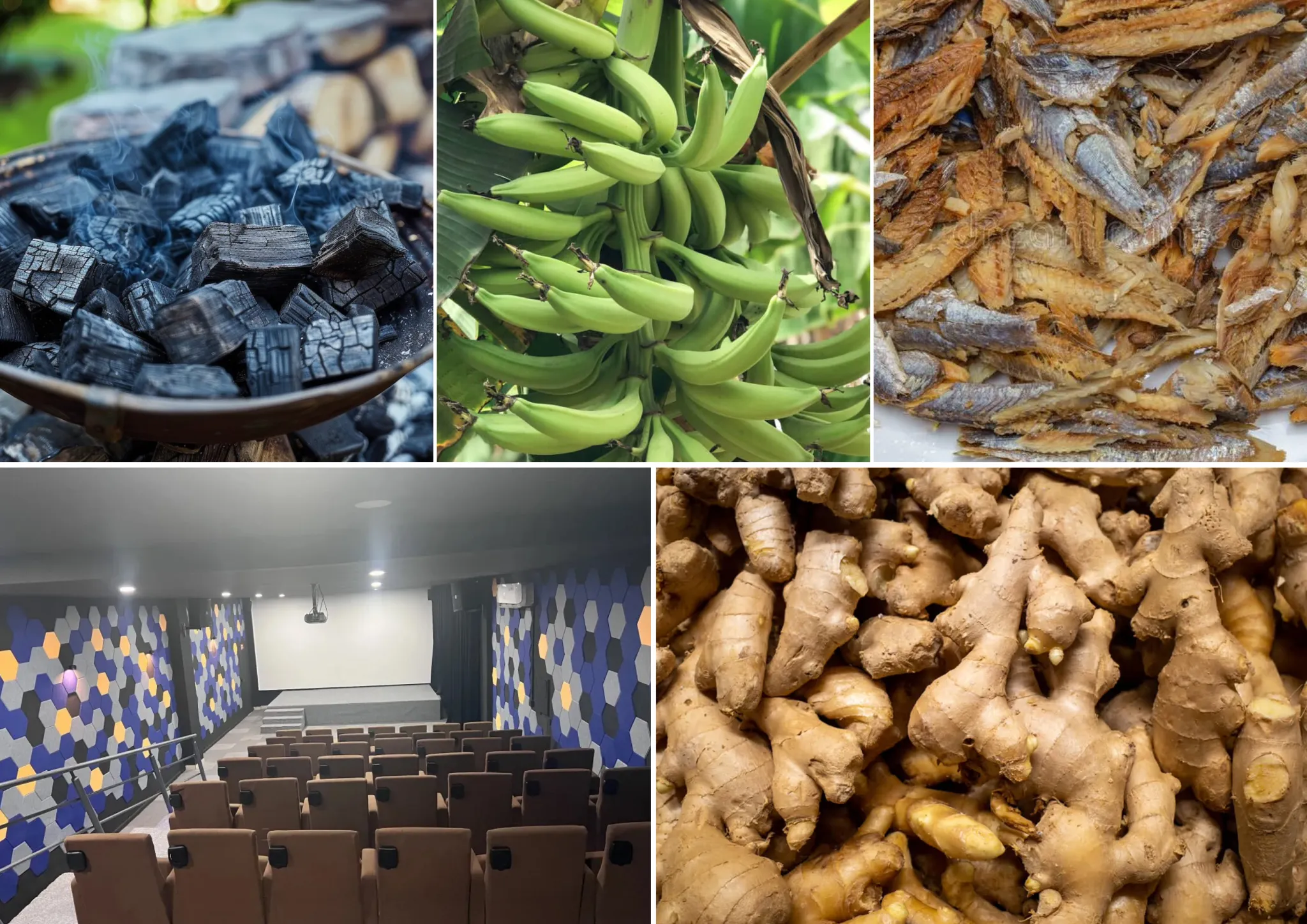
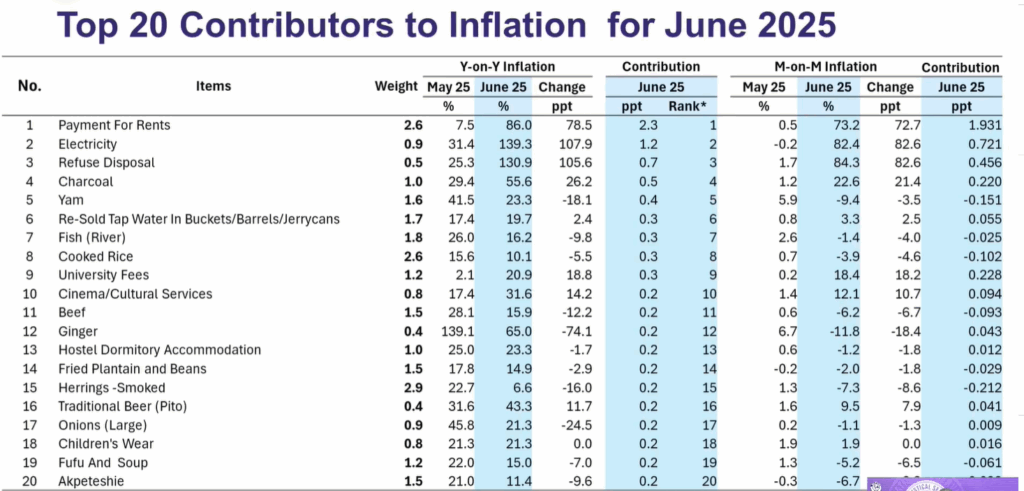
    The commodity that contributed the most is charcoal, posting a 53.1 per cent year-on-year increase. Although prices dipped slightly month-on-month, its weight in household consumption kept it at the top of the inflation table.

    The second driver of inflation was unripe plantain, which saw year-on-year prices shoot up by 67.9 percent, reinforcing continued volatility in staple food markets. River fish and smoked herrings also recorded double-digit increases, highlighting persistent pressure on protein sources.

    Another driver of last month’s inflation was educational expenses. Public and private secondary school fees rose 10 percent year-on-year and increased 4 percent between January and February. Pre-primary and primary education costs also contributed to overall price growth.

    On the other hand, housing-related costs saw a 7.4 percent year-on-year increase, with a sharp month-on-month rise of 5.3 percent. Resold tap water and refuse disposal charges also added to inflationary pressures.

    Other notable contributors included vegetable oil, cooked rice, tomato paste, yams, beef, hotel accommodation, and local dishes such as fufu with soup and kenkey with fried fish.

    Despite the easing in headline inflation to its lowest level since the 2021 rebasing, the item-level breakdown suggests that price pressures remain concentrated in food staples, household energy substitutes, and education services, key areas that directly affect household disposable income and consumer spending.

    For businesses, the data point to continued cost sensitivity in food retail, hospitality, housing, and private education, even as macroeconomic stability gradually improves.

    A member of the Minority in Parliament, Bosome-Freho, Nana Asafo-Adjei Ayeh, has argued that the recent improvements in Ghana’s key economic indicators, such as the appreciation of the Cedi, the decline in inflation and others, have not translated into better living conditions for Ghanaians.

    Addressing the media on Wednesday, February 4, the Member of Parliament (MP) for Bosome-Freho, Nana Asafo-Adjei Ayeh, indicated that all these economic indicators are only visible on paper.

    “The only thing the NDC has done well is their records on paper. They have been very tactical with everything on paper. I won’t even be surprised if inflation goes to zero because everything looks good on paper.

    “The cedi is depreciating on paper, inflation is going down on paper, and interest rates are reducing on paper. But the reality on the ground is different. They can celebrate the inflation rate on paper, but as far as we are concerned, the inflation that is affecting our pockets and daily lives is far worse than it was in 2023,” he said.

    His comment is a reaction to the recent drop in Ghana’s inflation rate for January 2026. Ghana recorded its 13th consecutive decline in inflation, with the rate easing from 5.4% in December to 3.8% in January 2026, according to the latest data from the Ghana Statistical Service (GSS).

    The Statistical Service has attributed the development to a slower rise in the prices of essential food items, largely due to improved availability. Ghana ended 2025 with an inflation rate of 5.4 per cent, a 0.9 percentage decline from 6.3 per cent recorded in November 2025.

    The downward trend of inflation has been attributed to easing food prices. Food inflation fell to 4.9 per cent in December, down from 6.6 per cent in November, as price increases for several key food items slowed.

    Also, food inflation was been attributed as a major driver in the falling inflation rate, providing some relief to households after months of heightened cost-of-living pressures.

    Charcoal and staple foods such as plantains and bread have been identified as major contributors to the country’s cost-of-living pressures, which pushed up the November 2025 inflation rate.According to the last Consumer Price Index breakdown, other factors that affect inflation are basic household goods and utility-related expenses.

    The breakdown highlighted charcoal as the number one inflation driver after its year-on-year contribution increased to 9.2%. The second-largest contributor, smoked herrings, recorded a 7.6% increase in inflation. Unripe plantain, placed third, recorded 6.8%, making it the third biggest contributor to food inflation in November.

    The inflation rate for November 2025 saw a decrease from the 8.0% recorded in October to 6.3% in the same period, according to the Ghana Statistical Service (GSS). This marks the eleventh month in a row since October 2021.

    Addressing the media on Wednesday, December 3, the Government Statistician, Dr. Alhassan Iddrisu, mentioned that broad-based improvements in both food and non-food inflation, supported by stabilising market conditions, significantly caused the decline.

    In October, the GSS announced an 8.0% inflation rate, down from 9.4% recorded in September. The 1.4 percentage point drop from the previous month marks the lowest level since June 2021, sustaining ten consecutive months of consistent decline.

  • Producer price inflation increased by 1.9% in December last year

    Producer price inflation increased by 1.9% in December last year

    Recent data from the Ghana Statistical Service (GSS) show a slight increase in producer prices in December 2025.

    The year-on-year producer price inflation (PPI) stood at 1.9% in December, slightly higher than in November 2025 but significantly lower than in December 2024, indicating a sharp decline over the past year.

    However, on a month-on-month basis, prices fell by 0.8% between November and December 2025, meaning producers charged less in December than in the previous month.

    According to data from the Ghana Statistical Service (GSS), Mining and Quarrying, the largest sector with a weight of 43.7%, recorded a 1.0 percentage point increase in producer inflation. This was from 2.3% in November 2025 to 3.3% in December 2025.

    On the other hand, the Manufacturing sector, which makes up 35% of the PPI weights, decreased from 0.5% in November 2025 to 0.1% December 2025, losing 0.4 percentage points.

    Also, the producer inflation in the transport and storage sub-sector continued to fall, declining from -10.2% in November 2025 to -3.7% in December 2025.

    GSS Recommendation

    GSS advised consumers and households to compare prices during purchases and prioritise value for money. They also mentioned that households use price trends to decide on the times they make purchases by checking when prices of goods and services are more stable, so their income does not lose value.

    For businesses, the GSS called for improved cost efficiency and productivity to sustain operations amid mixed sectoral price pressures.

    It also wants them to reinvest savings from lower input costs, such as manufacturing, into technology, skills, and supply-chain resilience.

    Regarding government, it called for a reduction in structural production costs by strengthening energy supply, transport infrastructure, and logistics systems.

    Also, Ghana’s year-on-year Producer Price Inflation (PPI) for all goods and services saw a slight increase in September, marking a 0.2% point increase from the 3.0% recorded in August 2025, the Ghana Statistical

    The Statistics Authority says the September PPI stood at 3.2%. Despite the slight increase, it marks a sharp decline of 27.3 percentage points compared to September 2024, when producer inflation was significantly higher.

    On a month-on-month basis, producer prices rose by 0.9% between August and September 2025, meaning that on average, producers received 0.9% more for their goods and services than they did the previous month.

    The Mining and Quarrying sector, which makes the greatest part of the index, with a 43.7%, saw a modest uptick in its inflation rate from 4.9% in August to 5.0% in September.

    Similarly, Manufacturing, which accounts for 35% of the PPI weights, recorded a modest uptick from 1.6% to 1.7% over the same period, marking a 6.25% increase.

    However, Transport and Storage prices continued to decline, with inflation in the sector dropping by 8.2% in September, compared to a fall of 8.0% in August 2025.

    The GSS urged businesses to cut waste, improve efficiency, and reinvest savings in technology and skills development to stay competitive amid fluctuating prices. It further encouraged firms to transform inflationary pressures into productivity gains.

    The agency also advised the government to prioritise tax reliefs, address energy and transport bottlenecks, and strengthen local supply chains to make production cheaper and more efficient.

    For households, the GSS recommended smart spending habits, urging consumers to compare prices, buy wisely, and support businesses that pass on cost savings.

    “Spend with intention to stretch income and reward fair pricing,” the Service advised.

    Meanwhile, Ghana’s Producer Price Inflation (PPI) for June 2025 saw a sharp decline of 5.9%, marking the lowest level since November 2023, according to the Ghana Statistical Service (GSS).

    Presenting the data in a press briefing held on Wednesday, July 16, in Accra, Government Statistician Dr. Alhassan Iddrisu indicated that for June alone, there was a deflation of 1.4%, meaning that, on average, producers earned less money for their products than they did in May.

    This comes after a drop of 4.2 percentage points, given the 10.1% rate drop in May, indicating a significant drop of 19.7 percentage points compared to June 2024, when it was 25.6%, marking the fifth month in a row that the PPI has gone down.

    “Ghana Producer Price inflation fell sharply to 5.9% in June 2025, down from 10.1% in May, a 42 percentage point dip in just a month, marking the fifth straight month of decline and the lowest rate since November 2023,” he announced.

    Dr Alhassan Iddrisu attributed the decline to the mining and manufacturing sectors, along with the transport and hospitality sectors.

    The mining and quarrying sector, Ghana’s largest contributor to the PPI with a 43.7% weight—saw inflation fall from 13.7% in May to 6.5% in June. Manufacturing, which contributes about 35% of the PPI basket, dipped from 9.8% to 7.6%.

  • June inflation drops to 13.7 percent – GSS

    June inflation drops to 13.7 percent – GSS

    The Ghana Statistical Service (GSS) has announced the sixth consecutive reduction in the inflation rate this year so far.

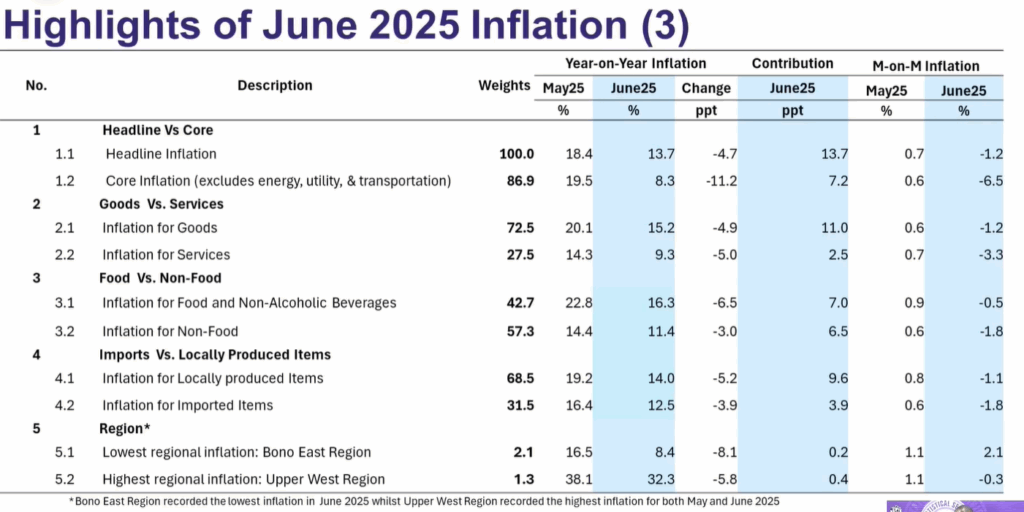
    As of June, the country recorded a 13.7 percent rate, a 4.7 percent decline from the 18.4 percent rate reported in May. This is also the lowest rate recorded since February 2022.

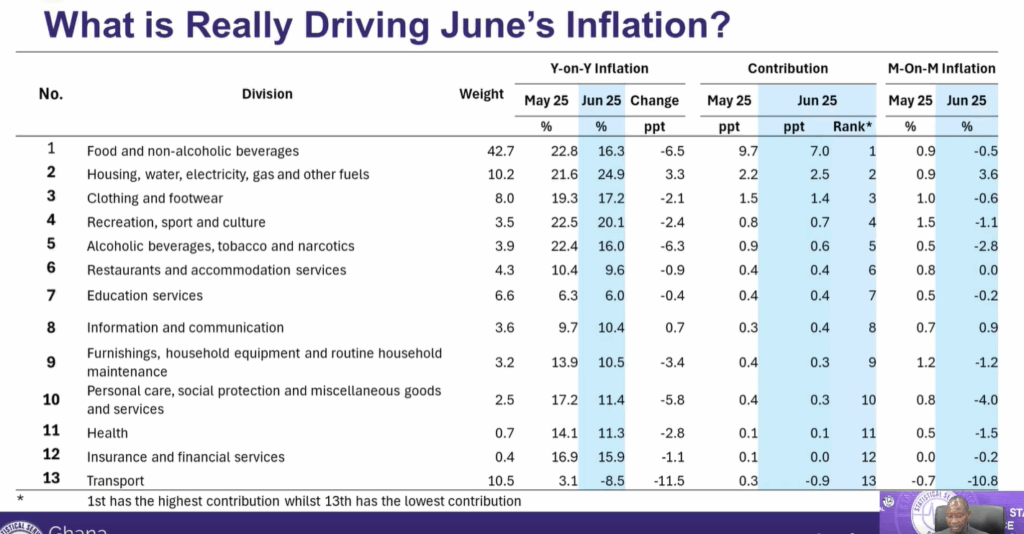
    Government Statistician, Dr. Alhassan Iddrisu, following data released on July 2, noted that the reduction in rate was due to the decline in prices of foodstuffs and items.

    “The downward inflationary trend over the last 6 months provides some consistency and assurance of real sustained shift in prices,” Dr Alhassan said.

    Due to the appreciation of the cedi, the prices of goods and services have seen a relative decline.

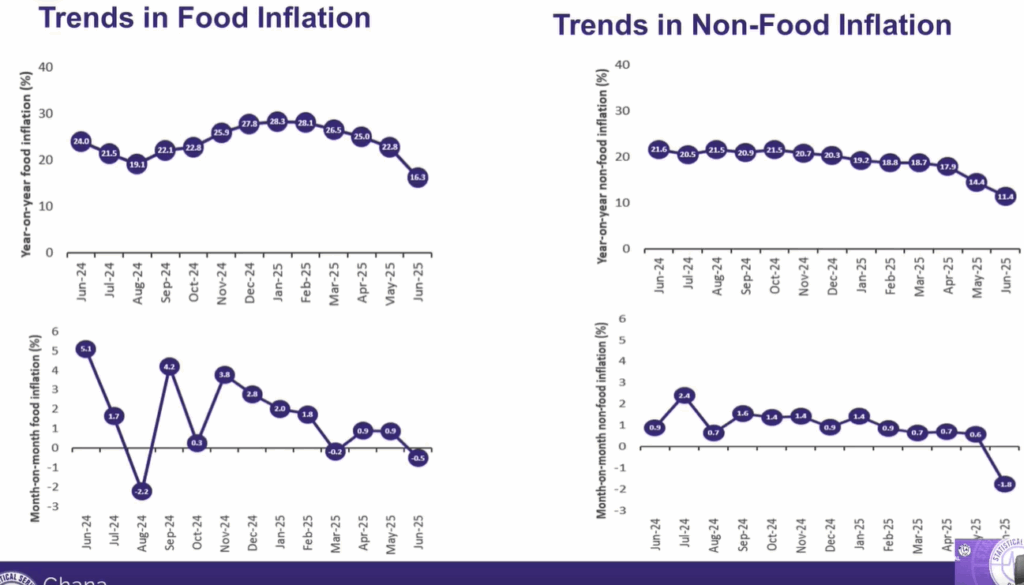
    Food inflation fell by 6.5 percentage points to 16.3 percent, down from 22.8 percent in May, whereas non-food inflation dropped by 3 percentage points to 11.4 percent.

    The Upper West region recorded the highest regional inflation of 32.3%, largely due to food inflation and utilities.The Bono region recorded the lowest of 8.4%.

    Prior to the release of GSS’s recent data, an economic research firm, IC Research, projected that Ghana’s inflation rate will experience a significant decline, dropping to 16% by the end of June.

    According to IC Research, the projected improvement is partly driven by the appreciation of the local currency and a reduction in fuel prices, both of which are easing inflationary pressures.

    “The June 2025 CP [Consumer Price Index]I data window recorded a 29.5% month-on-month and 35.3% year-on-year appreciation of the Ghanaian cedi against the US dollar.

    “This exerted downward pressure on prices of imported items with notable declines in petroleum prices and transport fares. The announced 15.0% reduction in commercial transport fares will continue to restrain transport inflation with downside spillovers for other items,”

    “Additionally, we estimate that the lower transport cost likely eased the month-on-month pressure observed for vegetables & tubers last month, potentially sustaining food disinflation in June [2025]. Consequently, we forecast a 240 basis points decline in the June 2025 annual inflation to 16.0% with the month-on-month rate at 0.8%”, IC Research added.

    Ghana ended the year 2024 with 23.8% inflation. In January 2025, inflation slightly declined to 23.5%. And since then it has continued to ease. In February inflation declined to 23.1%; it saw another decrease in March to 22.4% and declined again in April to 21.2%.

    Discussing improvement with macroeconomic variables – exchange rate—the cedi has appreciated by approximately 24% against the US dollar, contributing to a decline in inflation.

  • Ghana records 18.4% inflation in May; lowest since 2022

    Ghana records 18.4% inflation in May; lowest since 2022

    The Ghana Statistical Service (GSS) has announced the fifth consecutive reduction in the inflation rate this year so far.

    As of May 2025, the country recorded an 18.4% rate, a 2.8% decline from the 21.2% reported in April. This is also the lowest rate recorded since February 2022.

    The decline stems from the significant drop in transport fares and non-food inflation, according to the Government Statistician Alhassan Iddrisu.

    Ghana ended the year 2024 with 23.8% inflation. In January 2025, inflation slightly declined to 23.5%. And since then it has continued to ease. In February inflation declined to 23.1%; it saw another decrease in March to 22.4% and declined again in April to 21.2%.

    Discussing improvement with macroeconomic variables – exchange rate—the cedi has appreciated by approximately 24% against the US dollar, contributing to a decline in inflation.

    The current inflation rate marks a significant milestone, as Ghana’s inflation rate skyrocketed to 31.26 percent in 2022 due to disruptions and cedi depreciation.

    President Mahama has projected that single-digit inflation will be reported by the country at the end of the first half of the year.

    In an address at the Ghana-EU Business Forum held at the Kempinski Hotel in Accra yesterday, President Mahama stated that his government will achieve this feat by effecting a tighter monetary policy rate, cutting expenditure, and reducing debt accumulation.

    “Inflation, which peaked at 23.8% at the end of 2024, has begun to ease, falling to 21.2% in April 2025 largely due to moderation of both food and nonfood inflation and prudent fiscal management. We’re projecting to achieve a single-digit inflation trajectory by the middle of 2026.”

    President Mahama noted there are positive signs that the country is recovering in a disciplined and inclusive way, pointing to the fact that Ghana’s international reserves have increased from $8.9 billion in December 2024 to $10.6 billion by April 2025. This is equivalent to almost five months of import cover.

    “This reflects enhanced export earnings, particularly from gold and non-traditional exports, as well as timely disbursements for our multilateral partners. These figures, though early in the year, are clear signs of a disciplined and inclusive economy,” the president added.

    He stressed that the government is enforcing contract sanctity and implementing firm measures to safeguard investor rights.

    In March, the Monetary Policy Committee by a majority decision, decided to raise the Monetary Policy Rate by 100 basis points to 28.0 percent to re-anchor the disinflation process. As inflation becomes firmly anchored, the Committee noted that it will reassess the scope for a gradual easing in the policy stance.


    During the 2025 budget presentation on March 11, Finance Minister Dr. Cassiel Ato Forson announced the government’s objective to reduce inflation to 11.9% by the end of the year. The president’s projection suggests that the government may have to re-evaluate its earlier inflation projection.

    Fitch Solutions has also forecasted a more conservative outlook, predicting Ghana’s inflation will average 18.8% in 2025 and end the year at 13.6%. This projection suggests that while inflation may decrease, it might not reach the government’s ambitious target.

    The International Monetary Fund (IMF) also provided its assessment, projecting Ghana’s inflation to end 2025 at 17.5%, which is also higher than the government’s target.

    With the unprecedented performance of the cedi in recent times and the calls for reduction in prices of goods and services to reflect the gains in the cedi, stakeholders continue to monitor the financial sector to observe how the country’s inflation rate will be affected.

  • 80,000 girls trapped in forced marriages – GSS report

    80,000 girls trapped in forced marriages – GSS report

    A 2022 report from the Ghana Statistical Service (GSS) suggests that nearly 80,000 girls aged 12 to 17 are trapped in forced marriages across the country.

    Bono East Regional Director of the Department of Children, Mrs. Angella Kangah, highlighted this alarming statistic while speaking about the report.

    She noted that around 250,000 girls aged six to 14 are also out of school, urging the government to make significant investments in girl-child education in Ghana.

    Mrs. Kangah shared these findings during her address to students at Bethel International School Complex in Techiman, commemorating the International Day for the Girl Child with the theme “Girls’ Vision for the Future.”

    She emphasized that girls possess immense potential and called on various stakeholders, including parents and development partners, to join forces with the government to enhance educational opportunities for girls in the country.

    “Girls must be given the opportunity to build on their potential”, she stated and advised girls to be confident too.

    Madam Evelyn Yawa Bansah, the Bono East Regional Director of the Department of Social Welfare, urged girls to learn hard to achieve their life careers and cautioned them against engaging in social ills that could ruin their future.

  • Ghana’s economy progresses by 4.7 percent in 2024 Q1

    Ghana’s economy progresses by 4.7 percent in 2024 Q1

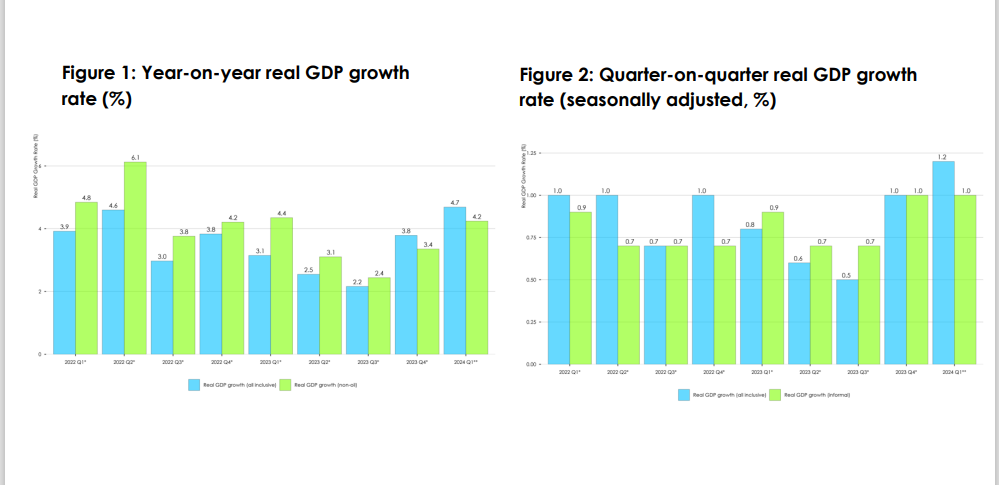
    The Ghana Statistical Service (GSS) reported a 4.7% increase in the country’s GDP during the first quarter of 2024, compared to a 1.2% growth in the fourth quarter of 2023.

    Leading the growth were sectors like mining and quarrying (12.9%), information and communication (17.9%), crops (4.3%), construction (8.2%), and accommodation and food service activities (9.4%).

    However, some sectors experienced contractions, including health and social work (-8.8%), electricity (-7.5%), public administration, defense, and social security (-5.3%), education (-4.9%), other personal service activities (-2.9%), and forestry and logging (-1.2%).

    See image below:

  • GSS reveals 49% of children aged 6–59 months anaemic 

    GSS reveals 49% of children aged 6–59 months anaemic 

    The recently released 2022 Ghana Demographic and Health Survey (GDHS) report sheds light on the progress and challenges in maternal and child health, revealing a significant decline in anemia among children aged 6 to 59 months. According to the report by the Ghana Statistical Services, 49 percent of children in this age group are anemic, marking a notable improvement from the 66 percent recorded in 2014.

    Among the affected children, 28 percent exhibit mild anemia, 20 percent moderate anemia, and 1 percent severe anemia. Notably, anemia prevalence is higher among younger children within the specified age range. Regionally, the Northern Region reports the highest prevalence at 69 percent.

    Anemia, characterized by low levels of hemoglobin, can result from various factors such as iron deficiency, nutritional deficiencies, malaria, and genetic conditions. Its implications include impaired cognitive development, long-term health problems, and increased mortality in severe cases.

    The report also addresses maternal anemia, revealing that 41 percent of women are affected, with 23 percent experiencing mild anemia, 17 percent moderate, and 1 percent severe. Pregnant women face a higher prevalence, reaching 51 percent, compared to non-pregnant women at 40 percent.

    Beyond anemia, the GDHS report delves into the nutrition status of children under the age of 5. Stunting affects 18 percent, wasting (indicating acute malnutrition) affects 6 percent, underweight impacts 12 percent, and 2 percent are classified as overweight. Stunting is more prevalent in rural areas (20 percent) than urban areas (15 percent), with the Northern and North East Regions reporting the highest rates.

    Exclusive breastfeeding practices are highlighted, showing that 53 percent of children aged 6 to 59 months are exclusively breastfed. The report emphasizes the need for policy interventions to enhance breastfeeding practices.

    The survey also touches on antenatal and delivery care for maternal health. Approximately 98 percent of women aged 15 to 49 received antenatal care from skilled providers for their most recent live birth or stillbirth. A significant 86 percent of live births occurred in health facilities, with 88 percent being assisted by skilled providers.

    The comprehensive report provides valuable insights into the state of maternal and child health in Ghana, highlighting both progress and areas requiring targeted interventions.

  • Education remains key influence in tackling health challenges – Ghana Statistical Service

    Education remains key influence in tackling health challenges – Ghana Statistical Service

    The latest Demographic and Health Survey has underscored the crucial role of education as a primary driver. 

    The survey brings to light significant disparities in health and well-being linked to varying levels of education. 

    Echoing UNESCO‘s proclamation that “Education is a human right, a public good, and a public responsibility,” the findings emphasize the interconnectedness of education and public health, advocating for a comprehensive approach to ensure equitable access and quality education for all.

    Shedding light on the educational landscape, the 2021 Population and Housing Census reveals a concerning statistic—5.4 million individuals aged 6 and older, constituting one-fifth of the population, have never set foot in a classroom. 

    The recently published 2022 Ghana Demographic and Health Survey Report further delves into the implications, illustrating stark differences in various health and well-being indicators based on educational attainment. This emphasizes the critical imperative of prioritizing universal education to bridge disparities and ensure a healthier and more equitable future for all.

    Women’s education improves maternal and child health. Under-5 mortality for children whose mothers have no education (52 deaths per 1,000 live births) is almost three times higher than for children whose mothers have secondary education or more (19 deaths per 1,000 live births).

    Among women 15 to 49 years who had a live birth in the previous two years, one in every four females (26.5%) with no education delivered at home, which is almost 18 times the percentage of females with more than secondary education (1.5%). Less than half (41.8%) of children 12 to 23 months whose mothers have no education have been fully vaccinated according to the national schedule; about half the percentage of children whose mothers have secondary education or more (82.0%).

    The frequency of alcohol consumption decreases with the level of education. One in every four males (26.4%) 15 to 49 years with no education reported drinking alcohol daily or almost daily, about three times the percentage of males with more than secondary education (9.0%). The percentage of females in this age range with no education who reported drinking alcohol daily or almost daily (11.6%) is over five times higher than that of women with more than secondary education (2.1%).

    The likelihood of experiencing violence for females 15 to 49 years similarly decreases with educational attainment with females with no education having the highest percentage that have experienced physical (15.1%) and sexual (7.1%) violence, with rates about twice that of women with more than secondary education.

    Reporting positive attitudes to wife beating declines with education for both males and females. About one in every three women (35.6%) 15 to 49 years with no education agree that a husband is justified in hitting or beating his wife, almost eight times higher than women with secondary education or more (4.5%).

    Among men, the percentage of males in this age range with no education who agree wife beating is justified (27.9%) is about seven times higher than men with secondary education or more (3.8%).

    Access to mass media and ICT increases with educational attainment. Half (52.2%) of females 15 to 49 years who have no education do not access mass media weekly, more than twice the percentage of women with more than secondary education (14.0%).

    Among males with 15 to 49 years with no education, almost half (44.8%) do not access media weekly, compared to males with more than secondary (12.7%) education. Further, one in every ten (11.0%) females and two in every 10 (22.0%) males 15 to 49 years with no education did not use the internet in the previous 12 months compared to over nine in every 10 for those with secondary education or more.

    International Day for Education is Commemorated annually on 24th January to raise awareness of the transformative power of education for development. The theme for 2024 is “Learning for lasting peace”.

    The Ghana 2022 Demographic and Health Survey report and microdata can be downloaded from www.statsghana.gov.gh. Disaggregated data on education from the 2021 Population and Housing Census can be accessed directly from the GSS StatsBank: https://statsbank.statsghana.gov.gh.

  • Ghana’s inflation declines to 53.6% in January 2023

    Ghana’s inflation declines to 53.6% in January 2023

    Ghana’s inflation declined marginally to 53.6% in January 2023, from 54.1% recorded in December 2022, latest data from the Ghana Statistical Service (GSS) has revealed.

    This is the first time in 19 months that inflation has dropped.

    According to the figures, the rising food prices pushed the Consumer Price Index (CPI) up.

    However, transport inflation fell for the first time in several months due to the reduction in fuel prices during the period.  Prices of non-food items also declined during the period.

    According to the figures, five divisions registered inflation higher than the national average.

    They are Furnishings, household equipment (71.7%); Housing, water, electricity, gas and other (71.1%); Transport (68.8%); Personal care, social protection and miscellaneous services (63.1%) and Food and non-alcoholic beverages (61.0%).

    The high inflation will keep lending rates still high at an average of about 35%. This means the cost of borrowing will still remain elevated.

    Food inflation inched up to 61.0% in January 2023, from 59.7% recorded in December 2022.

    Non-food Inflation declined to 47.9% in January 2023, from 49.9 % recorded in December 2022.

    While, inflation for locally produced items was 50.0%, inflation for imported items was 62.5%.

    With regard to the regions, Eastern region recorded the highest year-on-year inflation of 66.2%.

    Greater Accra followed suit with an inflation of 65%.

    Volta region however recorded the lowever inflation of 34.7%.

    Source: Myjoyonline

  • Ghana’s inflation will reach its high in March 2023 – Economist

    Ghana’s inflation will reach its high in March 2023 – Economist

    Ghana may have a peak in inflation in March 2023, according to a forecast made by Courage Boti, an economist and research lead at GCB Capital.

    He asserts that the inflation rate may be slower during the first two months of the year before picking up steam in March.

    We could be headed for a high in March 2023 if inflation continues to climb considerably more slowly than expected, at least in January and February of 2023.
    Myjoyonline.com quotes him as saying, “But things are still really fluid right now.

    He hinted that Ghana’s inability to obtain an IMF bailout and the depreciation of the cedi could cause the economy to face new difficulties.

    “We saw from March [2023], April [2023] last year, the rate of inflation was easing but then the depreciation [of the cedi] pressures set in. It appears if we could not achieve an IMF programme as soon as possible, the agitations could reemerge soon and that might mean more currency pressures,” he added.

    The Ghana Statistical Service (GSS) announced that Ghana’s consumer inflation for November this year has hit 54.1%%.

    The 54.1% is an increase from the 50.3% recorded the previous month – November.

    The consumer price index, according to Ghana Statistical Service measures changes in the price of a fixed basket of goods and services purchased by households.

    It further said the assumption is that the basket is purchased each month, hence as the price changes each month, the total price of the basket will also change.

    In a press release sighted by GhanaWeb, it said, “year-on-year inflation rate for December 2022 was 54.1%. This means that in the month of December 2022 the general price level was 54.1% higher than in December 2021. Month-on-month inflation between November and December 2022 was 3.8%.”

    Food inflation shot up from 55.3% to 59.7% whiles non-food inflation also rose to 49.9%.

    Five divisions recorded inflation rates higher than the national average.

    They were Housing, Water, Electricity, Gas, and Other Fuels (82.34%); Furnishings, Household Equipment (71.52%); Transport (71.42%); Personal Care, Social Protection, and Miscellaneous Goods and Services (60.94%) and Food and Non-Alcoholic Beverages (59.71%).

  • In December 2022, Ghana’s inflation will reach 54.1%

    In December 2022, Ghana’s inflation will reach 54.1%

    Ghana’s consumer inflation for November of this year reached 54.1%%, according to the Ghana Statistical Service (GSS).

    The November 50.3% figure was increased to 54.1% in December.

    According to the Ghana Statistical Service, the consumer price index tracks changes in the cost of a predetermined basket of products and services that households typically purchase.

    It further said the assumption is that the basket is purchased each month, hence as the price changes each month, the total price of the basket will also change.

    In a press release sighted by GhanaWeb, it said, “year-on-year inflation rate for December 2022 was 54.1%. This means that in the month of December 2022 the general price level was 54.1% higher than December 2021. Month-on-month inflation between November and December 2022 was 3.8%.”

    Food inflation shot up from 55.3% to 59.7% whiles non-food inflation also rose to 49.9%.

  • Ghanaians were shaken by price increases for these ten commodities in 2022

    In 2022, prices for both products and services skyrocketed. The record-breaking inflation rates reported by the Ghana Statistical Service reflect this.

    By November 2022, the rate had risen above 50%. High import levels were mostly to blame for the high inflation rate.
    The rapid and occasionally unparalleled rate of price hikes left Ghanaians gasping in awe.

    Even if the overall increase in prices for products and services was stunning, some things experienced price jumps to extremely high levels in a very short amount of time.

    In this article, here are some of the items whose price increases came as a shock and were a topic of discussion for a long time.

    Rice

    A bag of 5kg of rice was selling at about GH¢40 at the beginning of 2022. The price shot up to GH¢60, GH¢80 and is currently selling at almost GH¢100 at various supermarkets.

    Oil

    The price of the product shot up to GH¢1,000 overnight from an earlier price of GH¢550 earlier this year. Some retailers even pegged their prices at GH¢1,200. However, after several agitations and complaints, the price has been reduced to GH¢600 and GH¢650, GhanaWeb Business can confirm.

    Fuel

    Fuel prices have topped the chart of conversations this year as the price of the commodity kept increasing with each pricing window.

    This was highly linked to the depreciation of the cedi and the increase in the price of crude oil on the international market. Fuel prices jumped from GH¢6 to almost GH¢16 before coming down to GH¢13 in December 2022.

    Transport fares

    As fuel prices kept increasing, the rippling effect was seen in transport fares. Transport fares increased by more than 50% in 2022 alone, a situation that has never been experienced in the country’s history.

    Bread

    The price of flour, sugar and other baking materials increased significantly this year. This is reflected in the cost of bread. One loaf of butter bread is currently GH¢15 from GH¢6 at the beginning of the year.

    Cement

    The cost of building materials also shook Ghanaians this year as cement moved from GH¢50 to above GH¢80 in a few months. This also caused an increase in rent and other real estate businesses. The increase was also associated with the depreciation of the cedi.

    Pure water

    Another commodity whose price increase shook Ghanaians was sachet and bottled water. Pure water as it is popularly called shot up to GH¢40p from GH¢20p by the end of December 2021.

    Water and electricity

    The Public Utilities and Regulatory Commission announced a 27.15% increase in the price of electricity and a 21.55% increase in water tariffs.

    Sanitary Pad

    The price of sanitary pads increased to GH¢22 from GH¢5 at the beginning of the year. Even though Ghanaians have been calling for a reduction in the taxes on the product, those calls are yet to be heeded.

  • 1.2m children between 4 to 7 not attending school – Statistical Service

    The Ghana Statistical Service (GSS) has revealed that 1.2 million children in the country between the ages of four to seven are not attending schools.

    The statistics are contained in the Statistical Services’ monthly release for November 2022 from the 2021 Population and Housing Census (PHC).

    GSS made this revelation ahead of World Children’s Day celebrated on November 20th.

    According to the Service, almost one million children of the school-going age out of the 1.2 million figure have never attended school.

    It added that Savannah Region has the highest record of “43.2 per cent of children who have never attended school.”

    GSS also disclosed that over a quarter of a million children between five and seven years “have difficulty in performing activities in at least one of the following domains: sight, hearing, physical (walking or climbing stairs), intellectual (remembering or concentrating), self-care, and speech.”

    It also reported that 5,976 children in the country are living without shelter.

    The report stated that Greater Accra Region has the highest percentage of 43.6 which is keenly followed by the Ashanti Region with 15.7% and Eastern Region with 5.4%.

    Source: Myjoyonline

  • Producer Price inflation rate for October hits 65.2%

    The Ghana Statistical Service has revealed that the Producer Price Inflation rate for October 2022 was 65.2 percent.

    This means that between October 2021 and October 2022 (year-on-year), the PPI increased by 65.1 percent, representing a 19.3 percentage points increase in producer inflation relative to the rate recorded in September 2022 (45.9%).

    The month-on-month change in the PPI between September and October 2022 was 15.4 percent

    The Producer Price Index (PPI) measures the average change over time in the prices received by domestic producers for the production of their goods and services.

    A release by the GSS noted that: “The producer price inflation in the Industry less construction sector increased to 75.6 percent in October 2022 from 54.5 percent in September 2022.”

    It also added that the rate in the construction sector declined from 25.1percent in September 2022 to 23.0 percent in October 2022. In the Services sector, the rate increased from 5.6 percent in September 2022 to 10.0 percent in October 2022.

    “This release shows the annual (year-on-year) and monthly producer inflation rates for all sectors Mining and Quarrying; Manufacturing; Electricity and Gas; Water Supply, Sewerage, and Waste Management; Construction; Transport and Storage; Food & Accommodation; Information & Communication,” the GSS added.

    Mining and quarrying (86.4%), manufacturing (73.1%), transport and storage (71.4%) recorded the highest rates, while Information and communication activity recorded the lowest rate of 1.4 percent in October 2022.

    Meanwhile, consumer inflation currently stands at 40.4% as of October 2022.

    The PPI figure for October 2022 is provisional and is subject to revision when additional data become available. All other indicators are final.

    Source: Ghanaweb


  • Uncertainty over Ofori-Atta’s future causing cedi depreciation – Mona Quartey

    A former Deputy Finance Minister, Mona Quartey, has attributed the continuous free fall of the cedi to the uncertainty of the future of Ghana’s Finance Minister, Ken Ofori-Atta.

    According to Mona Quartey, even though several factors have contributed to the depreciation of the cedi, the continuous stay in office of the Finance Minister, whose policies have failed domestically, has eroded the confidence of investors in the Ghanaian economy.

    “There is no doubt that the cedi depreciation is based on uncertainty, and part of the uncertainty is the future of us maintaining the Finance Minister. The world and the markets are looking and wondering why we would continue to keep a Finance team that has implemented economic policies that have failed domestically. So that uncertainty is feeding into the depreciation rate,” Mrs Quartey said on Eyewitness News on Wednesday, November 9, 2022.

    The cedi has lost over 50% of its value since January 2022.

    The former Deputy Finance Minister also noted that the current inflation figure is a clear indication that Ghana is back in HIPC times.

    “[The current inflation rate] is the highest since July 2001 during HIPC times. So there is no doubt that we are back in HIPC times. There is no doubt that we are in dire times, and we are all feeling it in our pockets,” Mrs. Quartey told host Umaru Sanda Amadu.

    Ghana’s inflation rate hit an all-time high of 40.4 per cent for the month of October 2022.

    This was captured in the Consumer Price Index (CPI) data released by the Ghana Statistical Service (GSS) on Wednesday, November 9, 2022.

    Per the data, food and non-food inflation also rose to hit 43.7 percent and 37.8 percent respectively.

    Source: Citinews

  • Statistical Service dismisses Steve Hanke’s inflation methodology describing it as not internationally recognised

    The Ghana Statistical Service has dismissed Professor Steve Hanke, a US Professor of Economics, Purchasing Power Parity approach in computing inflation, saying, it is not the conventional mode for computing consumer inflation.

    According to the GSS, his methodology is not the internationally recognised and accepted standard for computing consumer inflation, adding “a major weakness of the Professor Steve Hanke-Purchasing Power Parity (SH-PPP) approach is the erosion of country specificities.

    In a statement, it said globally, measures of Consumer Price Inflation (CPI) and inflation are based on the Consumer Price Index Manual: Concepts and Methods.

    This it said should satisfy the conditions including importance of items, disaggregation, exhaustiveness and contextualization.

    For instance, it said for contextualization, the GSS approach produces statistics that consider country-specific living arrangements. This accounts for price/quantity adjustments when the use of weighing scales is not predominantly used in the determination of prices and other modes such as ‘olonka’ and baskets are more common.

    The GSS added that The Steve Hanke Purchasing Power Parity (SH-PPP) proposition for computing consumer inflation mainly relies on the role of exchange rate, as it is used to equate a country’s local currency and the world’s reserve currency, the U.S. dollar.

    Three assumptions that underpin the use of SH-PPP for computing consumer inflation, it added, are countries facing high inflation rates, all goods and services that are important (share of total consumption expenditure) in individual countries are internationally tradeable and comparable as well as the presence, stability, and accuracy of exchange rate data.

    The GSS added that Ghana has yielded to the demands for transparency in the production of Consumer Price Index and Inflation, followed scientific and professional standards and ensured country relevance, without compromising international procedures.

    This is evidenced by the publication of the technical guidance for the compilation and computation of CPI and Inflation in 2020, which is accessible on its website. This publication uses international standards such as the United Nations’ Classification of Individual Consumption.

    Ghana Statistical Service’s approach

    The Ghana Statistical Service computes consumer inflation based on the measure of CPI.

    The CPI is based on a fixed basket of goods (such as food and clothing) and services (such as repairs and school fees) that are purchased by households.

    The basket has 307 items and their corresponding weights (share of expenditures).

    Prices are collected on the different brands and service providers of these 307 items leading to approximately 39,500 price quotations collected monthly from 7,726 outlets across the country.

    Source: Myjoyonline

  • Nearly 250,000 girls aged 6 to 14 have never attended school before – GSS

    Data from the Ghana Statistical Service indicates that nearly two hundred and fifty thousand girls aged between 6 and 14 years have never attended school before.

    This was revealed following the 2021 Population and Housing Census, which was conducted between June and July last year.

    The report, published on the Ghana Statistical Service website in commemoration of the International Day of the Girl Child, stated that “despite free and compulsory universal basic education, almost a quarter of a million girls (244,731) aged 6 to 14 years have never attended school at all.”

    Giving a breakdown of the figures, GSS noted that the Northern region has the highest number of girls who have never been to school before.

    “Three out of every 10 of these girls are in the Northern Region which has the highest number of girls who have never attended school (73,516) followed by the Savannah (27,930) and North East (22,857) regions,” it said.

    The report further said “these three regions also have the highest percent of girls currently not attending school (never attended or attended in the past) with Savannah leading all regions with 40.2% followed by the North East Region (29.3%) and the Northern Region (28.5%).”

    According to the report, the total number of girls (aged 6 to 14) in the country who are not attending school ((never attended or attended in the past) is 285,271.

    Three out of every four girls (75.8%) aged 6 to 14 years not attending school are living in rural areas, the report said.

    Touching on other issues affecting the girl child, the report said, 99,150 girls under 15 years are engaged in economic activity with half of them (49.7%) out of school.

    Also, half (49.9%) of girls engaged in economic activity are in the Northern (22,647), Oti (17,694), and North East (9,153) regions which have the highest share of girls in economic activity.

    Meanwhile, the government of Ghana has rolled out various policies aimed at curbing illiteracy in the country; including the Akufo- Addo-led administration’s flagship free Senior High School policy.

    According to the Education Ministry, about 1.6 million students as of the end of 2021 benefited from the government’s flagship education programme, Free SHS, since its inception in 2017.

    However, there is still a vast number of the population that is not educated. This has been confirmed by the statistics provided by GSS, which state that nearly 250,000 girls have never been to school before.

    International Day of the Girl Child

    The International Day of the Girl Child is an annual event commemorated on October 11, 2022 is the tenth year since its inception.

    The theme of International Day of the Girl Child this year is — “Our time is now—our rights, our future”.

    The International Day of the Girl Child is celebrated each year to direct people’s attention to the need to address the challenges facing girls and to promote girls’ empowerment towards the fulfilment of their human rights.

    Source: The Independent Ghana

  • About 8 million persons in Ghana are illiterate – Ghana Statistical Service

    Findings from an upcoming report from the Ghana Statistical Service (GSS) reveal that 7.9 million persons aged 6 years and older in Ghana are illiterate i.e. they cannot read and write with understanding.

    This figure is broken down into 4.6 million illiterate females and 3.3 million illiterate males, indicating a female disadvantage that has been persistent over time.

    The report also finds that between the 2010 and 2021 Population and Housing Censuses (PHC), 1.2 million more illiterate adults (15 years and older) were added to the population from 4.3 million in 2010 to 5.5 million in 2021.

    Ghana has lower levels of adult literacy compared to its comparators (lower middle-income and sub-Saharan African countries), after three years of the provisions on illiteracy captured in the Education Strategic Plan (ESP) 2018-2030.

    This has necessitated the production of the 2021 PHC Thematic Report Brief on Illiteracy in Ghana which will be released later this month. The report provides direction for stakeholders to target hotspots and drivers of illiteracy in Ghana as it focuses on three broad areas; trends, patterns and correlates of illiteracy.

    An earlier report, the 2021 PHC General Report on Literacy and Education which presents data on literacy in English and local languages, current school attendance, and educational attainment disaggregated by sex, region and type of locality, is available to download from www.census2021.statsghana.gov.gh

  • GSS: Majority of employed Ghanaians engaged in vulnerable employment

    A survey from the Ghana Statistical Service has revealed that about two-thirds of the country’s employed population is engaged in vulnerable employment.

    Additionally, 1.8 million people between the ages of 15 and 24 are not enrolled in any type of training, work, or education (NEET).

    The finding of the report dubbed “Ghana 2022 Annual Household Income and Expenditure Survey (AHIES)” also indicated that about 390,000 persons 15 years and older unemployed in quarter 1 remained unemployed in quarter 2 of 2022 while between the first and second quarters of 2022, about 445,000 persons 15 years and older outside the labour force joined the number of unemployed persons.

    The labour statistics also indicated that about two-thirds of the employed population is engaged in vulnerable employment with significant variation across urban areas (56.4%) and rural (80%).

    The report also highlighted gender inequalities in the labour force indicating that the unadjusted gender pay gap in the first quarter of 2022 is 37.3%, with males earning a mean hourly pay of ¢11.00 and females ¢6.90.

    Furthermore, about 390,000 persons 15 years and older unemployed in quarter 1 remain unemployed in quarter 2 of 2022.

    Similarly, between the first and second quarters of 2022, about 445,000 persons 15 years and older outside the labor force join the number of unemployed persons.

    Likewise, close to 850,000 persons 15 years and older employed in quarter 1 transitioned to unemployment status in quarter 2 while more than 500,000 unemployed persons gain employment over the same period.

    44.1% of Ghanaians are multidimensionally poor

    On average the poor individual is deprived in 47.3% of weighted indicators in the first quarter and 46.6% in the second

    The Annual Household Income and Expenditure Survey (AHIES) is the first nationally representative high-frequency household panel survey in Ghana.

    The AHIES is conducted to obtain quarterly and annual data on household final consumption expenditure and a wide scope of demographic, economic, and welfare variables including statistics on labour, food security, multidimensional poverty, and health status for research, policy, and planning.

  • Ghana records 13.9% unemployment rate in 2nd quarter of 2022-GSS report

    A study conducted by the Ghana Statistical Service (GSS) has revealed that about 1.74 million (13.4 per cent) of the total working population of 13 million in the age bracket of 15 years and above, in the first quarter of the year were unemployed.

    The Annual Household and Expenditure Survey (AHIES), under the Harmonising and Improving Statistics in West Africa Project, funded by the World Bank, revealed that unemployment rate rose from 13.4 per centto 13.9 per cent (1.8 million people) in the second quarter of the year.

    AHIES is being conducted by the GSS to obtain quarterly and annual data on household final consumption expenditure and a wide scope of demographic, economic and welfare variable.

    Covering food security, multidimensional poverty and unemployment, the AHIES aims to provide nationally and regionally representative disaggregated data on expenditure, income and living conditions of households in Ghana to support decision-making for development.

    Speaking at the launch of the AHIES in Accra yesterday, the Government Statistician, Professor Samuel K. Annim, said 11,259,000 representing 86.6 per cent of the working population in the first quarter of the year were employed.

    He said the employment rate decreased to 86.1 per cent constituting 11,193,000 of the working population in the second quarter of the year, indicating that unemployment increased by 0.5 percentage points between quarter one (13.4 per cent)  and 13.9 per cent in quarter two of 2022.

    Prof. Annim said the survey indicated that about 390,000 people 15 years and older unemployed in the first quarter remained unemployed in the second quarter, while between the second and first quarter of the year, about 445,000 people outside the labour force joined the number of unemployed persons.

    “About two thirds of the employed population are engaged in vulnerable employment with significant variation across urban areas (about 56.4 per cent) and rural (80 per cent),” Prof. Annim, said.

    Prof. Annim said about 380,000 out of the 13 million working population were triple burdened.

    Triple burdened, the Government Statistician said meant that the affected persons were food insecure, multi-dimensional poor and unemployed, Government Statistician explained.

    He said Savannah Region had the highest per cent of people who are triple burdened persons (8.2 per cent), which is more than twice the national average of 3.2 per cent.

    “The statistics revealed that between the first and second quarters of 2022, food insecurity dropped by 7.0 percentage points while multi-dimensionalpoverty dropped by 2.6 per cent.  Unemployment rate increased by 0.5 percentage points,” Prof. Annim said.

    The Government Statistician indicated that about 1.8 million of the youth aged 14 and 24 years were not in education, employment or training and about 14.5 million people did not have active health insurance coverage, stressing that health insurance was the leading contributor to multidimensional poverty.

    Prof. Kwaku Appiah-Adu, Senior Advisor to the Vice President, who launched the report, said it would support government in evidence-based decision-making and policy planning.

    He said the comprehensive labour force, food insecurity and multidimensional poverty would help government in the areas it should focus on.

    Prof. Appiah-Adu commended GSS for the report and said government would use the report to improve the socio-economic development of the country.

    Senior Economist at the World Bank, Paul Andres Corral Rodas in his remarks, said the survey would provide information necessary to understand and monitor living conditions in Ghana would present unique picture of the labour force, food security and poverty situation in the country.

    Source: Ghanaian Times

  • Producer Price Inflation rate for July hits 41.2%

    Producer Price Inflation (PPI) for July this year recorded 41.5 percent, Ghana Statistical Service has reported.

    The year-on-year producer inflation for all industries was 41.2 percent in July 2022. The monthly change rate was 1.9 percent.

    The manufacturing sub-sector recorded the highest year-on-year producer price inflation rate of 57.4 percent, followed by the mining and quarrying sub-sector with 23.9 percent.

    The utility sub-sector recorded the lowest year-on-year producer inflation rate of 1.3 percent.

    In a press release sighted by GhanaWeb, it said, The Producer Price Inflation rate for July 2022 was 41.2 percent. This rate indicates that between July 2021 and July 2022 (year-on-year), the PPI increased by 41.2 percent. This rate represents a 2.5 percentage points increase in producer inflation relative to the rate recorded in June 2022 (38.7%).”

    “The month-on-month change in the producer price index between June 2022 and July 2022 was 1.9 percent,” it added.

    Producer Price Index (PPI) measures the average change over time in the prices received by domestic producers for the production of their goods and services.


    Source: Ghanaweb

  • Ghana’s inflation rate hits 31.7% in July- GSS

    The Ghana Statistical Service (GSS) has revealed the country’s inflation rate has risen to 31.7% as of July 2022.

    In June 2022, the inflation rate had not crossed the 30% mark, with the GSS reporting 29.8%.

    For the month-on-month, the inflation rate between June 2022 and July 2022 was 3.1%.

    According to the GSS, transportation (44.6%) was again a major cause for the increase in inflation.

    The other factors contributing to the increased inflation are; Housing, Water, Electricity, Gas and Other Fuels (43.0%); Furnishings, Household Equipment and Routine Household Maintenance (42.0%); Recreation, Sport and Culture (33.8%); Personal Care, Social Protection and Miscellaneous Goods and Services (33.7%) and Food and Non-Alcoholic Beverages (32.3%).

    Six divisions recorded inflation rates higher than the national average.

    Divisions Y-o-Y M-o-M
    Transport 44.6 4.9
    Housing, Water Electricity, Gas and Other Fuels 43.0 3.8
    Furnishings, Household Equipment and Routine Household Maintenance 42.0 2.9
    Recreation, Sport and Culture 33.8 3.1
    Personal Care, Social Protection and Miscellaneous Goods and Services 33.7 2.8
    Food an Non-Alcoholic Beverages 32.3 3.3
    Clothing and Footwear 24.7 1.9
    Alcoholic Beverages, Tobacco and Narcotics 21.2 1.4
    Restaurants and Accommodation Services 20.9 1.5
    Informationand Communication 14.3 1.2
    Health 14.1 1.6
    Insurance and Financial services 5.3 0.2
    Education Services 5.1 1.6

    Food inflation went up to 32.3% in July 2022, from 30.7% in June 2022.

    Also, non-food inflation shot up to 31.3% in July 2022, from 29.1% the previous month.

    Inflation for imported items is higher (33.9%) than inflation for locally produced items (30.9%).

    For the food group, Oils and Fats (67%); Fish and Other Seafood (42.9%); Water (42.4%); Cereal Products (40.0%); Milk, Dairy Products and Eggs (39.7%); Fruit and Vegetable Juices (37.7%); Live Animals and Meat (34.5%) and Sugar and Desserts (32.7%) recorded inflation rates higher the food inflation rate of 32.3%.

    Regional statistics

    Eastern region recorded the highest inflation rate of 38.1%. The Western and Greater Accra Regions followed with inflation rates of 37.6% and 35.5% respectively.

    The Upper East region recorded the lowest inflation rate of 19.8% whilst Upper West recorded the least inflation rate of 21.2% for the non-food group.

    On a quarterly basis, the average rate of inflation has increased by 10.7 percentage points. In the second quarter of 2022, it stood at 27.0% relative to the first quarter of 16.3%.


  • Producer Price Inflation hits 38% in June – GSS

    The Ghana Statistical Service (GSS) has revealed that as of June 2022, the average cost of inputs received by domestic producers for the production of goods and services increased by 38 percent.

    Per the Service’s latest report, this represents a 4.7 percent increase in Producer Price Inflation (PPI) relative to the 33.3 percent recorded in May.

    The PPI in the Mining and Quarrying sub-sector increased by 1.6 percent to 25.5 percent in June 2022.

    In May 2022, the sub-sector recorded a rate of 23.9 percent.


    The producer inflation for the Manufacturing sub-sector, constituting more than two-thirds of the total industry, increased by 7.2 percentage points to 51.8 percent.

    Manufacturing Sector

    In June 2022, one out of the sixteen major groups in the manufacturing sub-sector recorded inflation rates higher than the sector average of 51.8 percent.

    Manufacture of coke, refined petroleum products and nuclear fuel recorded the highest inflation rate of 135.9 percent, while the Manufacture of machinery and equipment n.e.c. recorded the least inflation rate of 0.0 percent.

    Petroleum Price Index

    The producer inflation rate in the petroleum subsector was 23.9 percent in June 2021. The rate increased to 25.2 percent in July 2021.

    Thereafter, it increased continuously to 58.4 percent in November 2021 but dropped to 36.0 percent in January 2022. In February 2022 the rate increased to 44.3 percent and jumped to 135.9 percent in June 2022.

  • GHC5bn cash bribe paid to govt officials in 2021 – CHRAJ report

    The Ghana Integrity of Public Services Survey (GIPSS) has revealed that Ghana lost approximately GHC5 billion in cash through the payment of bribes to public officials in 2021.

    The maiden national survey dubbed: “Corruption in Ghana – people’s experiences and views,” conducted by the Commission for Human Rights and Administrative Justice (CHRAJ) in collaboration with the Ghana Statistical Service (GSS) and the United Nations Office on Drugs and Crime (UNODC) indicated that bribes were paid by citizens for various purposes.

    Giving further details the survey said that 33.6 per cent citizens to speed up procedures; 15.8 per cent, as a sign of appreciation; 13.8 per cent, to avoid the payment of fine; 10.8 per cent to avoid problems, and 3.1 per cent, to avoid the cancellation of public utilities.

    It further indicated that apart from the cash payment, which contributed 84.8 per cent of the forms of bribe paid, 13.3 per cent of the bribes paid were food and drinks; 9.7 per cent, exchange for other services; 5 per cent valuables, and 2.2 per cent animals.

    In spite of measures instituted by successive governments to curtail corruption, the canker is still prevalent in the country.

    The report revealed that the Ghana Police Service, Immigration Service and the custom officers of the Ghana Revenue Authority (GRA) were the three top institutions that received bribes.

    The three were followed by the Lands Commission, Driver and Vehicle Licencing Authority (DVLA), Passport Agency officials, and prosecutors, judges and magistrates, with elected government officials being the least recipients.

    Also Government Statistician, Professor Samuel Kobina Annim, who was speaking at the launch of the report, more than a quarter of the country’s adult population (26.7 per cent) paid bribes to a public official in 2021.

    He also mentioned that most of the bribes were paid at the direct request of the public officials involved, as six out of 10 bribes paid (59.4 per cent) were directly requested by those officials.

    About the report

    The aim of the report was to ascertain the prevalence of corruption and, give benchmark indicators that can be used to inform relevant policies to curb administrative corruption in various public institutions in the country.

    It collected evidence-based information from 15,000 households across the country involving people who were 18 years and older on the forms of corruption affecting the population of Ghana.

    Source: The Independent Ghana

  • Police Service most corrupt institution in Ghana Survey

    A latest survey conducted by the Ghana Statistical Service with other stakeholders in the fight against corruption has ranked the Ghana Police Service as the most corrupt institution among 23 other institutions sampled.

    This was revealed in research dubbed; corruption in Ghana, Peoples Experiences and View.

    The aim of the survey is to unearth corrupt institutions and make available data that will guide the formulation of policies that will look at nipping corruption in the bud.

    The survey indicated that more than 17.4 million bribes were paid in 2021 with police officers topping the list of officials who take bribes at 53.2%.

    The Ghana Immigration Service Officers and GRA customs officers come next, at 37.4% and 33.6% respectively, while elected government representatives are at the bottom of the list at 2.9%.

    According to the survey, people with the highest level of (tertiary) education were 1.6 times more likely to have paid a bribe than people with no formal education.

    Also, ten out of the 16 administrative regions recorded a prevalence of bribery higher than the national average.

    There are, however, sizable variations across the 16 regions of the country.

    The prevalence of bribery in the Bono East, Savannah and Volta regions, for example, is substantially lower than the national rate, at 11.8, 14.5 and 19.1 per cent, respectively.

    Also in the Western North, Ahafo and North East regions, bribery is substantially higher, at 53.4, 47.0 and 41.9 per cent, respectively.

    Source: Citinews

  • Inflation hits 29.8% in June 2022; transport, food among major drivers

    Year-on-year inflation shot up further by 2.2% to 29.8% in June 2022, latest data from the Ghana Statistical Service (GSS) has revealed.

    This is the highest recorded since December 2003.

    However, the rate of inflation, according to the inflation curve, has begun slowing down comparatively to previous months.

    The rate of inflation was once again driven by Transport (41.6%); Household Equipment and Maintenance (39.6%); Housing, Water, Gas and Electricity (38.4%); Personal Care and Miscellaneous (31.7%); Recreation, Sports and Culture (31.3%) and Food and Non-Alcoholic Beverages (30.7%). These items recorded inflation rates higher than the national average.

    According to the figures, food inflation surged to 30.7% in June 2022, from 30.1% recorded in May 2022. Non-food inflation also went up by 3.4% to 29.1% in June 2022.

    For food inflation, Oil and Fats (58%); Water (43.2%); Cereal Products (38.4%); Fruit and Vegetable Juices (37.3%); Milk, Diary Products and Eggs (35.7%); Fish and Other Sea Food (34.7%); Live Animals and Meat (33.5%); Soft Drinks (31.1%); Cocoa Drinks (30.9%) and Sugar and Deserts (30.1%) recorded the highest rates of inflation.

    Similarly, month-on-month inflation between May 2022 and June 2022 was 3.0%.

    Whilst inflation for locally produced items was 29.2%, that of imported items was 31.3%.

    Eastern region records highest inflation rate

    The Eastern region recorded the highest inflation rate of 35.8% in the month of June 2022.

    It was followed by Western region with an inflation rate of 33.9% and then Central region with an inflation rate of 31.6%.

    On the other hand, the Greater Accra and Ashanti regions recorded inflation rates of 30.9% and 27.2% respectively.

    The Upper East region recorded the lowest rate rate of inflation of 21%. The region again recorded the lowest inflation rate of 19.9% for food inflation.

    Eastern region registered the highest rate of inflation of 35.5% for non-food inflation.

    Source: MyJoyOnline