Tag: Government of Ghana

  • Ghana secures another debt restructuring agreement with Belgium

    Ghana secures another debt restructuring agreement with Belgium

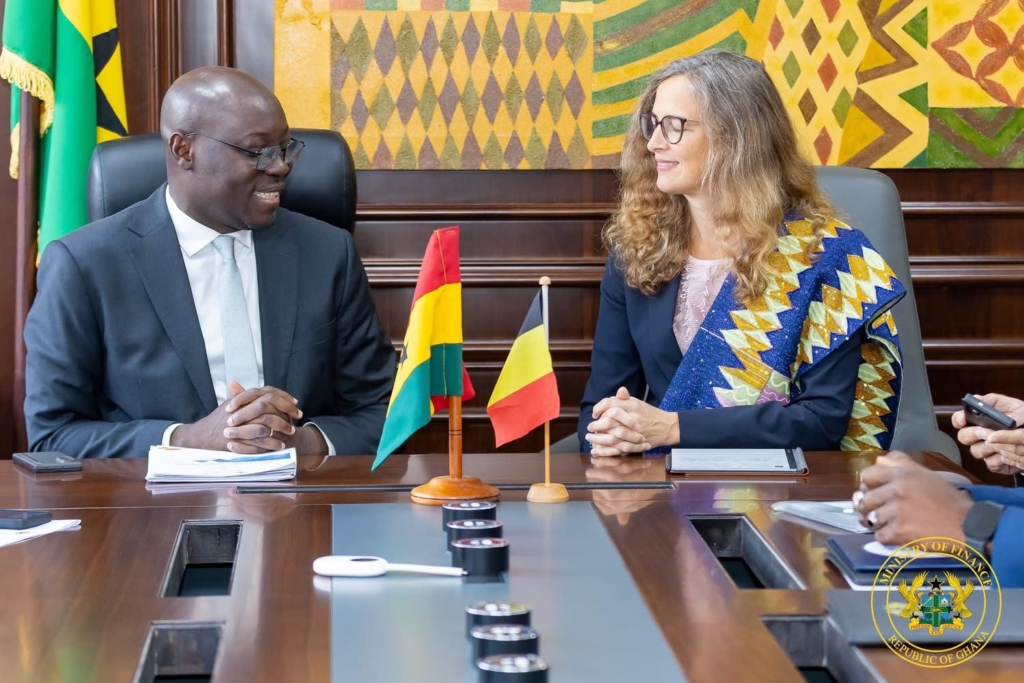
    Ghana has entered into a debt restructuring deal with Belgium to help strengthen the country’s economic stability.

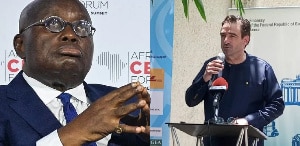
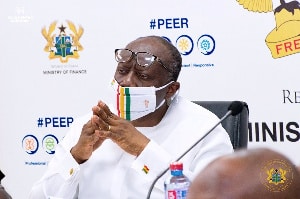
    Finance Minister Dr. Cassiel Ato Forson revealed on Thursday, March 5, that he signed the agreement on behalf of the Ghanaian government, calling it a key milestone in the nation’s ongoing external debt restructuring efforts.

    “A while ago, on behalf of the Government of Ghana, I signed a debt restructuring agreement with the Kingdom of Belgium,” he said.

    The Minister explained that this agreement is part of a wider initiative by the government aimed at stabilising the economy following the severe fiscal challenges faced in 2022 and 2023.

    Dr. Forson reflected on the difficult period the country endured during the crisis, which had compelled the previous administration to declare a debt default.

    He added that Ghana is slowly recovering from the crisis and is beginning to show positive signs of economic improvement.

    “Today, however, the story is changing. Ghana is recovering and witnessing a significant economic turnaround, while we also put in place stronger systems to ensure we do not return to that point again,” the Finance Minister stated.

    Dr. Forson further revealed that the deal with Belgium marks the eighth agreement Ghana has successfully concluded with countries under the Official Creditor Committee (OCC) framework as part of its external debt restructuring programme.

    The Finance Minister also acknowledged the Belgian government and its diplomatic team in Ghana for their steadfast support throughout the restructuring process.

    “On behalf of the Government and people of Ghana, I expressed my sincere gratitude to the Government of Belgium and to H.E. Carole van Eyll, the Ambassador of Belgium to Ghana, for their support and continued partnership with Ghana,” he said.

    https://www.facebook.com/share/p/1CThRi24eH

    France, Ghana’s bilateral creditor, on Friday, July 25, signed an €87.7 million debt relief agreement with the West African country under the Official Creditor Committee (OCC).

    France becomes Ghana’s first bilateral creditor to do so after two years of negotiations. Finance Minister Dr Cassiel Ato Forson and Co-Chair of the OCC, Mr William Ross, signed on behalf of the governments of Ghana and France, respectively.

    This agreement ensures a hundred percent debt service, as well as a reduction in interest and an extension on maturity.

    The Finance Minister expressed immense gratitude to France for standing as a true friend. “It is often said that it is only in difficult times that you see your true friends, and we can say without mincing words that the French Republic came through for Ghana and Ghana is extremely grateful,” Dr Cassiel Ato Forson said.

    “Today is a milestone – in the sense that it has taken us some years to get here, but it’s the most significant one that will pave the way for others to this side. Inflation that was once at 54.1 per cent has now come down to 13.7 per cent. We are seeing growth bound to about a five-year high. We are seeing particularly reserves, the external position improving to about four months of import cover, and the primary surplus is at 1.1 per cent of Gross Domestic Product (GDP),” he added.

    The sector minister assured that the government of Ghana is “determined to hold the line and sustain the progress we have made year to date, and we believe that in the coming days, Ghana will be able to see investment after the stability.”

    Deputy Minister for Finance, Thomas Nyarko Ampem, asserted that the recent agreement is “telling a good story that Ghana is on track.”

    On his part, Mr William Ross noted that the economic recovery being made by the government of Ghana is nothing short of impressive and compared the country’s economic performance to other countries such as Zambia.

    “We have decided to reduce by 100 per cent as debt service, reduce interest and increase the maturity to give you space for investment, to also negotiate with other creditors and create a real partnership for other stakeholders to contribute to.

    “If you look at what we have done for Ghana, it is shorter than what we did for Zambia, but we have continued to improve in the case of Ethiopia… you have been very impressive because you have many people and institutions to engage with,” Mr Ross said.

    French Ambassador to Ghana, Mr Jules Armand Aniambossou, highlighted the many initiatives the government has put in place to rectify the many economic challenges it was saddled with. He noted that France holds in high esteem its historical relationship with the West African country. He said Ghana will continue to receive support from France to aid its economic recovery.

    “When I came to this country more than two years ago, the country was facing some difficulties. But when your friend or your family is facing difficulties, you have to show that you will not just say, I am sorry, but to take some key actions.

    “That is why the French government at the very high level, decided to do. Because we are here today due to the political volunteers from both sides. France decided not to let down Ghana because of our historical relationship and the key role Ghana is playing in our region [Africa],” he stated.

    Last year, the government of Ghana reached an agreement on a Memorandum of Understanding (MoU) with its Official Creditor Committee in its debt restructuring efforts.

    The OCC, co-chaired by France and China, was instrumental in reaching a debt treatment plan in January 2024.

    This paved the way for the International Monetary Fund (IMF) Executive Board to approve the second review of the Fund-supported Post-COVID-19 programme for economic growth (PC-PEG).

    The agreement has prevented the government of Ghana from securing more than $250 million in external financing for 2025, and this includes commercial loans, as part of a borrowing ceiling agreed upon.

    This served as a structural benchmark to ensure compliance with fiscal discipline as part of the country’s IMF programme.

    While presenting the 2025 mid-year budget review on July 24, Finance Minister Dr Cassiel Ato Forson noted that the government’s commitment to fiscal discipline, prudent debt management, and exchange rate appreciation has resulted in significant improvement in Ghana’s debt profile.

    He revealed that the public debt reduced from GH¢726.7 billion as of the end of December 2024 to GH¢613 billion as of the end of June 2025. Ghana’s public debt reduced by GH¢113.7 billion in six months.

    The sector minister noted that “for the first time in Ghana’s history, there is a negative 15.6% rate of debt accumulation.”

    Ghana’s public debt-to-GDP ratio as of the end of June 2025 was 43.8%, down from 61.8% at the end of 2024. Ghana’s public debt as a percent of GDP reduced by 18% in six months. The country’s foreign debt, as a percentage of total public debt, declined from 57.4% as of the end of December 2024 to 49% by the end of June 2025.

    “This has significantly improved Ghana’s debt sustainability,” the Finance Minister said while speaking on the floor of the House.

    Touching on Ghana’s programme with the International Monetary Fund (IMF), the Finance Minister noted that Ghana remains on track with the implementation of the Programme. He revealed that the government’s commitment to fiscal discipline, prudent debt management and exchange rates has paved the way for a 5th review scheduled for September.

    “The 5th Review, which is scheduled for September 2025, will be based on end-June 2025 data. Preliminary data shows that Ghana is on course to achieving most of the targets for the 5th Review. Mr. Speaker, our commitment to fiscal discipline, prudent debt management, and exchange rate appreciation has resulted in significant improvement in Ghana’s debt profile,” he added.

    On commercial debt restructuring, the Finance Minister stated that the Ministry has made two debt service payments of about US$700 million to Euro bondholders.

    Dr Forson disclosed that beginning in August, the Ministry of Finance will commence the building of cash buffers to support the repayment of Ghana’s domestic debt service obligations relating to the Domestic Debt Exchange Programme bonds, which will fall due in 2027 and 2028.
  • UTAG contemplates nationwide strike over govt’s stalled Service Condition talks

    The University Teachers Association of Ghana (UTAG) remains steadfast in its resolve to commence a nationwide strike, attributing the government’s alleged disregard for negotiating their conditions of service.

    UTAG’s General Secretary, Dr Eliasu Mumuni, underscored that deliberations on the base pay, particularly regarding market premiums, represent the pivotal factor that could lead to a reconsideration of their decision.

    Speaking to the press in Accra, Dr Mumuni revealed that UTAG members would gather to declare a specific date for the initiation of their strike.

    He underscored the need for collective approval from the membership before proceeding, stating: “We need that collective permission for membership to say we are behind you, so go ahead.”

    Dr. Mumuni highlighted ongoing efforts to engage all 15 campuses’ membership and prompt the National Labour Commission (NLC) during this period.

    “If they are not able to reach us, and we have gone through the formality of engaging all the membership of all the 15 campuses, as well as prompting the Labour Commission, then we are good to go,” he stressed.

    Meanwhile, UTAG and the Technical University Teachers Association of Ghana (TUTAG) walked out of a meeting with the Fair Wages and Salaries Commission (FWSC) on Wednesday, 10 January 2024.

    The associations attributed their exit to the commission’s alleged bad faith, contempt, and lackadaisical approach towards addressing vital aspects of their conditions of service.

    Expressing dissatisfaction, they denounced what they perceived as gross disrespect and a lack of commitment to improving their conditions of service.

  • Unpaid tier-2 contributions spark strike threat from University Senior Staff

    Unpaid tier-2 contributions spark strike threat from University Senior Staff

    The Senior Staff Association—Universities of Ghana (SSA-UoG) has issued a stern ultimatum, urging the government to expedite the clearance of Tier-2 contributions for its members. Failure to address this matter promptly may result in an impending industrial action by its members, slated to commence on January 15, 2024.

    The association has highlighted that the outstanding payments, subject to concern, have been accruing since February 2023.

    During the Senior Staff Association—Universities of Ghana’s (SSA-UoG) NEC meeting convened at CKT-UTAS in Navrongo, revelations surfaced that the government, despite an initial agreement, has neglected to fulfill the payment of contributions.

    “Historically, Government on several occasions has failed to pay contributions on time to the Board of Trustees for effective management. It will be recalled that between 2010 and 2016, Government deliberately refused to pay members’ Tier-2 contributions. When leadership of SSA-UoG requested that the Government pays the three percent penalty (in accordance with the Pensions Act) on the amount which could have given us over Two Hundred Million Ghana Cedis, they refused and instead used simple interest rates to calculate which gave us Fifty-One million Ghana Cedis.”

    SSA-UoG in a statement demanded that the government to “as a matter of urgency pay all outstanding debt/contributions together with the appropriate interest from February to December 2023 using the three percent penalty rates as stipulated by the Pension’s Act, Act 766, section 64.”

    Below is the full statement.

    At its 17th National Executive Council (NEC) meeting held on 25th November 2023 at CKT-UTAS in Navrongo, it came to the attention of NEC that since February 2023 to date, Government has refused to pay the Tier-2 Pension contributions of members of the Senior Staff Association of Public Universities of Ghana to the Board of Trustees to manage the funds.

    NEC received this news with utter shock and disappointment and quickly wrote to Government for the immediate release of the funds, but Government has refused to pay. This is very unfortunate!

    Historically, Government on several occasions has failed to pay contributions on time to the Board of Trustees for effective management. It will be recalled that between 2010 and 2016, Government deliberately refused to pay members’ Tier-2 contributions. When leadership of SSA-UoG requested that the Government pays the three percent penalty (in accordance with the Pensions Act) on the amount which could have given us over Two Hundred Million Ghana Cedis, they refused and instead used simple interest rates to calculate which gave us Fifty-One million Ghana Cedis.

    Recognizing the significant financial detriment suffered by members as a result of the government’s non-compliance with the Pensions Law (Act 766 Section 64), the labour unions formally rejected the proposed simple interest rate and requested the mandated three percent penalty interest, as stipulated by the act and binding on all employers in Ghana. The government’s subsequent refusal to apply the required interest rate has necessitated the intervention of the National Labour Commission (NLC), where the matter is currently under consideration.

    Years of dedicated service have come to naught for our 2020 to 2023 retirees, who have been denied their rightful lump sums and left to face abject poverty and illness in their twilight years.

    Their selfless contributions to Ghana deserve better.

    The government’s blatant disregard for the welfare of University Senior Staff and their pensioners is undeniable.

    University senior staff were dealt a blow when the Fair Wages and Salaries Commission (FWSC) and the Ghana Tertiary Education Commission (GTEC) abruptly directed university management to cut off overtime allowance for weekend and holiday work. This unilateral alteration of our established Conditions of Service creates significant uncertainty and hardship for dedicated staff.

    We urge our university management to resist these directive letters from FWSC and GTEC, as they contravene the Labour Act and our agreed-upon Conditions of Service.

    On June 30, 2023, the Fair Wages and Salaries Commission (FWSC) communicated to the Ghana Tertiary Education Commission (GTEC) their determination that senior staff in public universities are entitled to overtime allowance, as per their conditions of service. However, on November 7, 2023, the FWSC issued a contradictory directive, stating that senior staff should not receive overtime. Disregarding both the Labour Act and the established conditions of service, GTEC subsequently instructed public universities to implement the latter directive.

    Why is the FWSC making contradictory statements?

    The SSA-UoG therefore wishes to state as follows;

    1. Government as a matter of urgency pay all outstanding debt/contributions together with the appropriate interest from February to December 2023 using the three percent penalty rates as stipulated by the Pension’s Act, Act 766 section 64.

    2. The government must urgently prioritize the recalculation of accrued interest on Tier- 2 pensions for 2010-2016, as agreed upon in the Memorandum of Agreement (MoA) signed on July 25, 2022 and in accordance with the Pensions Act. This issue requires immediate attention to ensure its resolution.

    3. All outstanding arrears must be paid to our retirees without delay.

    4. We demand the immediate withdrawal of the Fair Wages and Salaries Commission (FWSC) and Ghana Tertiary Education Commission (GTEC) letters dated November 7 and 20, 2023, respectively, which illegally eliminate overtime allowance for senior staff.

    Upholding the existing Collective Agreement between labour and government is paramount.

    Should the government and its relevant agencies, namely the Ministry of Employment and Labour Relations, Ghana Pensions Regulatory Authority, Ministry of Finance, Fair Wages and Salaries Commission, and Ghana Tertiary Education Commission, fail to address the concerns outlined in this press release by Monday, January 15th, 2024, the Union will be forced to withdraw our services across all university campuses.

  • Attorney-General seeks injunction to restrict Cassius Mining’s international arbitration

    Attorney-General seeks injunction to restrict Cassius Mining’s international arbitration

    The Attorney-General, Godfred Yeboah Dame, is seeking an injunction at the Commercial Division of the High Court, Accra restraining Cassius Mining Limited, an Australian-owned mining company from instituting or pursuing any arbitration outside the jurisdiction of Ghana.

    The A-G is also restraining the company from taking any step whatsoever in international arbitration proceedings against the Government of Ghana until the arbitration instituted by Cassius Mining Limited against the Government of Ghana at the Ghana Arbitration Centre in 2018 has been heard and determined.

    It would be recalled that earlier in the year, Cassius Mining instituted international arbitration against the Government of Ghana at the Permanent Court of Arbitration claiming about US$300 Million, which was suspended following objections by the Attorney-General.

    Notwithstanding this, the Australian-owned company has made attempts at resorting to other international arbitration forum to pursue its quest of instituting international arbitration against Ghana.

    Backing his application with many voluminous documents, the Attorney-General states, on 12th October 2016, Cassius Mining Limited applied for a prospecting licence from the Government of Ghana covering 13.791 km2 of the Gbane/Datoko area in Talensi, Upper East Region of Ghana. This was granted by the Government of Ghana on 28th December 2016 for a term of two years expiring in December 2018.

    The A-G contends that clause 21 of the Prospecting Licence Agreement specifically required any question or dispute that arises regarding the rights, powers, duties and liabilities of the parties thereto, to be referred to arbitration in accordance with the Alternative Dispute Resolution Act, 2010 (Act 798) of Ghana.

    In this regard, following allegations by Cassius Mining of what it considered to be unlawful and arbitrary actions by the Government of Ghana, the company by a letter dated 14th June 2018, notified the A-G of its referral of the dispute between the parties to arbitration under the auspices of the Ghana Arbitration Centre in accordance with the Minerals and Mining Act, 2006 (Act 703) and clause 21 of the Agreement between the parties.

    On 26th June, 2018, the Australian-owned company indeed, referred the dispute to arbitration at the Ghana Arbitration Centre pursuant to clause 21 of the Prospecting Licence Agreement and the Alternative Dispute Resolution Act, 2010 (Act 798). It proceeded to file a Statement of Claim at the Ghana Arbitration Centre claiming a number of reliefs.

    The A-G stated that on 9th January 2019, Ghana filed an answer to Cassius Mining’s Arbitration at the Ghana Arbitration Centre.

    Following this, a three-member arbitral tribunal comprising Mr. Emmanuel Amofa, Mr. Kizito Beyuo, and Professor Albert Fiadjoe was duly constituted for the hearing of Cassius Mining’s claim.

    Mr Dame says that, in spite of the pendency of the arbitration proceedings at the Ghana Arbitration Centre and in the face of the clear provisions of the arbitration provisions under the Prospecting Licence Agreement and Ghana’s Alternative Dispute Resolution Act, Cassius Mining on 3rd February 2023, instituted international arbitration proceedings against the Government of Ghana in respect of the same subject matter, claiming total amounts of almost US$300 Million, under Article 3.1 of the UNCITRAL Arbitration Rules as adopted in 2021 (UNCITRAL Rules).

    The A-G observes that quite curiously, Cassius Mining titled the originating process “IN THE MATTER OF AN ARBITRATION UNDER A PROSPECTING LICENCE AGREEMENT DATED 28 DECEMBER 2016”. Cassius Mining proposed in that Notice of Arbitration, that the Secretary-General of the Permanent Court of Arbitration at The Hague (PCA) serve as the appointing authority for the said arbitration and that, the arbitration be administered by the PCA.

    The Attorney-General submits that Cassius Mining instituted the international arbitration proceedings even though the “UNICTRAL Rules” is not referred to in the Prospecting Licence Agreement. Further, Cassius Mining knew that the Permanent Court of Arbitration is not mentioned in the Prospecting Licence Agreement and that, the Ghana Arbitration Centre has been administering the arbitration between the parties regarding the same Prospecting Licence Agreement as far back as 2019.

    The A-G states further that, in a Response to the notice of arbitration dated 17th March, 2023, the Government of Ghana raised objections to the institution of the international arbitration by the Australian-owned mining firm and requested the tribunal to declare the proceedings instituted by Cassius Mining “a legal nullity and the arbitration terminated”. The A-G herein further indicated that he will raise a preliminary objection to the jurisdiction of the PCA in a bifurcated phase of the Arbitration to avoid unnecessary expenditures of time and costs for the Parties and the Tribunal.

    The Permanent Court of Arbitration (PCA) on 20th March, 2023, invited Ghana to confirm whether it agrees to the PCA administering this arbitration, as proposed by the Claimant, Cassius Mining.

    The Attorney-General by a letter dated 27th March, 2023, raised vehement objections to the jurisdiction of the PCA and asked the PCA to determine as a preliminary matter, whether it has jurisdiction in the matter or any role to play in the dispute between the parties.

    The A-G states that “the clear abuse of process and reprehensible attempt at forum shopping was not lost on the Secretary-General of the Permanent Court of Arbitration”, as, by a letter to the parties dated 30 March 2023, the PCA decided that “the PCA Secretary-General may act as appointing authority under the UNCITRAL Rules if all parties so agree. The PCA understands that no such agreement has been reached in this matter”.

    The PCA further decided that there is no arbitral tribunal for the dispute constituted since the parties have not agreed.

    The A-G asserts that the effect of the decision of the PCA is that the international arbitration commenced by Cassius Mining Limited under the UNCITRAL Rules could not proceed unless the parties including the Government of Ghana, had agreed for the Permanent Court of Arbitration to appoint a tribunal.

    Given that the parties had not agreed (either in the Prospecting Licence Agreement or in any document) to submit the dispute between the parties to the jurisdiction of an international arbitration tribunal under the UNICTRAL Rules, it was clear that a dispute between the parties could never be submitted for determination by such a forum.

    Faced with this legal stumbling block in the pursuit of international arbitration against Ghana, Cassius Mining instead of returning to Ghana to continue with the ongoing arbitration at the Ghana Arbitration Centre that the company itself had earlier instituted, instituted another international arbitration proceeding by purporting to file what it described as an “Amended Notice of Arbitration” this time entitled “IN THE MATTER OF AN ARBITRATION UNDER THE UNCITRAL ARBITRATION RULES (2021)”.

    The A-G says that he has refused to respond to the Amended Notice of Arbitration as same is a nullity. Consequently, no arbitral tribunal has been constituted for the hearing of this new international arbitration.

    The Attorney-General submits that the recourse by Cassius Mining to international arbitration is a gross abuse of process and most oppressive of the Government of Ghana as, in Clause 21 of the Prospecting Licence Agreement, the parties have agreed that their dispute “shall be referred to arbitration in accordance with the Alternative Dispute Resolution Act, 2010 (Act 798).” Nowhere have the parties agreed that their disputes would be resolved “UNDER THE UNCITRAL ARBITRATION RULES (2021)”.

    The A-G observes that in both the original international Notice of Arbitration and Amended Notice of Arbitration, Cassius Mining has proposed that “the seat of arbitration be London”.

    In the view of Mr. Dame, Cassius Mining clearly is keen on enabling the High Court of England & Wales to have supervisory jurisdiction over the arbitration instead of the courts of Ghana, as stated in Act 798 the agreement between the parties.

    The A-G submits that, by Clause 21 of the Prospecting Licence Agreement entered into between Cassius Mining and the Government of Ghana, the arbitration law governing the resolution of disputes between the parties is the Alternative Dispute Resolution Act, 2010 (Act 798) which grants the High Court of Ghana the power to supervise the arbitral proceedings, and not the High Court of England and Wales.

    The Attorney-General prays for an injunction to restrain the Australian-owned mining firm from pursuing any fresh international arbitration on the ground that this amounts to forum shopping. Mr. Dame submits that Cassius Mining’s forum shopping efforts also constitute an attempt to strip the High Court of Ghana of its statutory jurisdiction to supervise arbitration instituted domestically.

    The A-G finally contends that unless restrained by the High Court of Ghana, the Australian-owned company will continue searching for an international forum that will support its breach of Clause 21 of the Prospecting Licence Agreement and undermine the domestic proceedings currently pending before the Ghana Arbitration Centre, which the company itself instituted way back in 2018.

    The A-G contends that if the court does not restrain Cassius Mining, apart from condoning a blatant violation of the rights of the Republic of Ghana and a denial of the jurisdiction of the High Court of Ghana, the company’s forum-shopping activities will result in unnecessary cost and expense to the Government of Ghana.The application filed by the A-G has been fixed for hearing at the Commercial Division of the High Court on Wednesday, 12th July 2023.

    It remains to be seen what Cassius Mining’s response or next move will be.

  • John Dumelo slams govt over new tax imposed on betting

    John Dumelo slams govt over new tax imposed on betting

    Ghanaian actor turned politician, John Dumelo, is incensed by the 10% tax imposed on earnings from lotteries, games of chance, and sports betting.

    The new tax policy is part of the government’s efforts to increase domestic tax revenue and expand the tax base.

    In a tweet, Dumelo criticized the government’s decision and noted that the youth, who have created their own jobs through sports betting and other forms of gambling, would rise against the government if the tax policy is implemented.

    He argued that instead of taxing the youth’s winnings, the government should focus on creating jobs and providing economic opportunities for the youth.

    “Create jobs; you won’t create. The youth have created their own jobs too; ahhh, you want to tax their winnings…continue. That day will come when the youth will rise against you. It will be too late,” he said.

    Dumelo’s comments have sparked a heated debate on social media, with some Ghanaians supporting his position and others criticizing him for promoting gambling and opposing a legitimate tax policy.

    John Dumelo is not new to the political scene in Ghana. He contested for a parliamentary seat in the 2020 general elections under the ticket of the National Democratic Congress (NDC), but lost to his opponent from the New Patriotic Party (NPP).

    However, he has remained vocal on issues affecting youth and has used his platform to advocate for their interests.

  • US Donates $5M to Ghana’s NHIA to improve healthcare

    US Donates $5M to Ghana’s NHIA to improve healthcare

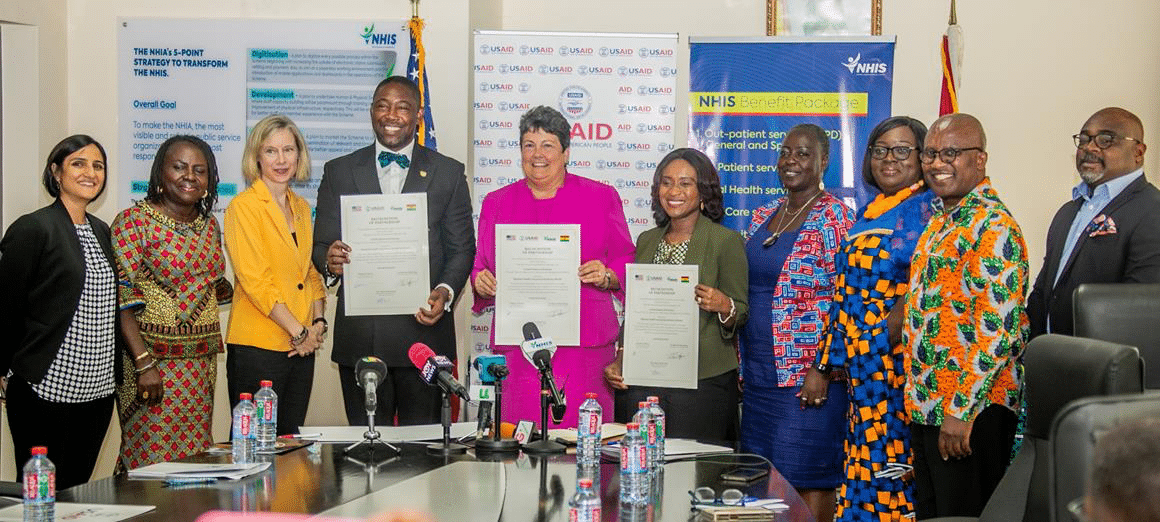
    The United States Ambassador to Ghana, Virginia Palmer, has announced that $5 million in new US funding will be provided to improve the performance of Ghana’s National Health Insurance Scheme (NHIS) and ensure the quality of health services in the country. 

    The new five-year partnership was launched by the Ambassador and Dr. Bernard Okoe Boye, Chief Executive Officer of the NHIA.

    Ambassador Palmer stated that “the health sector is at the core of Ghana’s development. It is essential for the wellbeing of all Ghanaians that funding for health is prioritized. A healthy population is the basis for a prosperous population.”

    The NHIA-USAID partnership aims to improve NHIA’s capacity to digitize all its information systems, making data available to NHIA to better communicate the Scheme’s financial and programmatic status to stakeholders. 

    The partnership will also focus on building NHIA systems to monitor the clinical quality of healthcare services. This actionable clinical data will help NHIA advocate for improved quality of care across public, faith-based, and private healthcare facilities, contributing to improved health outcomes across Ghana.

    USAID’s integrated health programming supports the Government of Ghana in the areas of health system strengthening, maternal, reproductive, newborn, and child health, as well as malaria, HIV, social protection, water, sanitation and hygiene, global health security, and COVID-19. USAID supports the Government of Ghana to build a more resilient health system and prepare Ghana to face future health emergencies.

    This funding is expected to provide a significant boost to Ghana’s healthcare system, ensuring that the NHIS is able to provide quality healthcare services to Ghanaians. 

  • NIA begins printing of 541,000 backlogs of Ghana cards

    NIA begins printing of 541,000 backlogs of Ghana cards

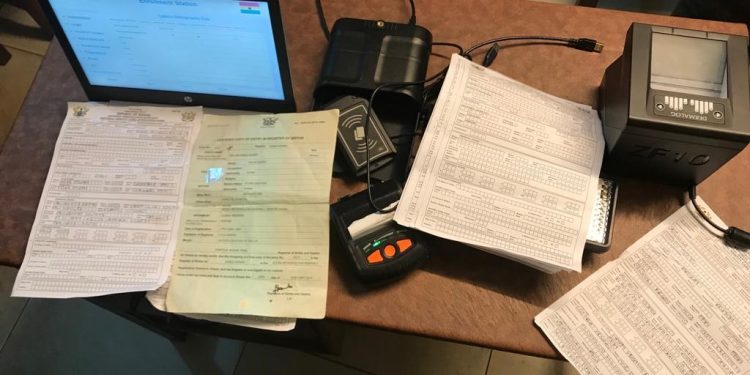
    The National Identification Authority (NIA) has begun printing some 541,529 Ghana cards that had accrued since July 2022.

    The main printing operations began on Saturday, but the NIA claims that the preliminary work for the expedited printing began on Wednesday, March 15, with the configuration of printers, print servers, and monitors as well as the deployment of additional staff from its regional and district offices to increase staff capacity at the head office.

    Printing of the cards was suspended following financial constraints faced by the NIA.

    In view of this, more than 3.5 million cards were locked up in a bonded warehouse.

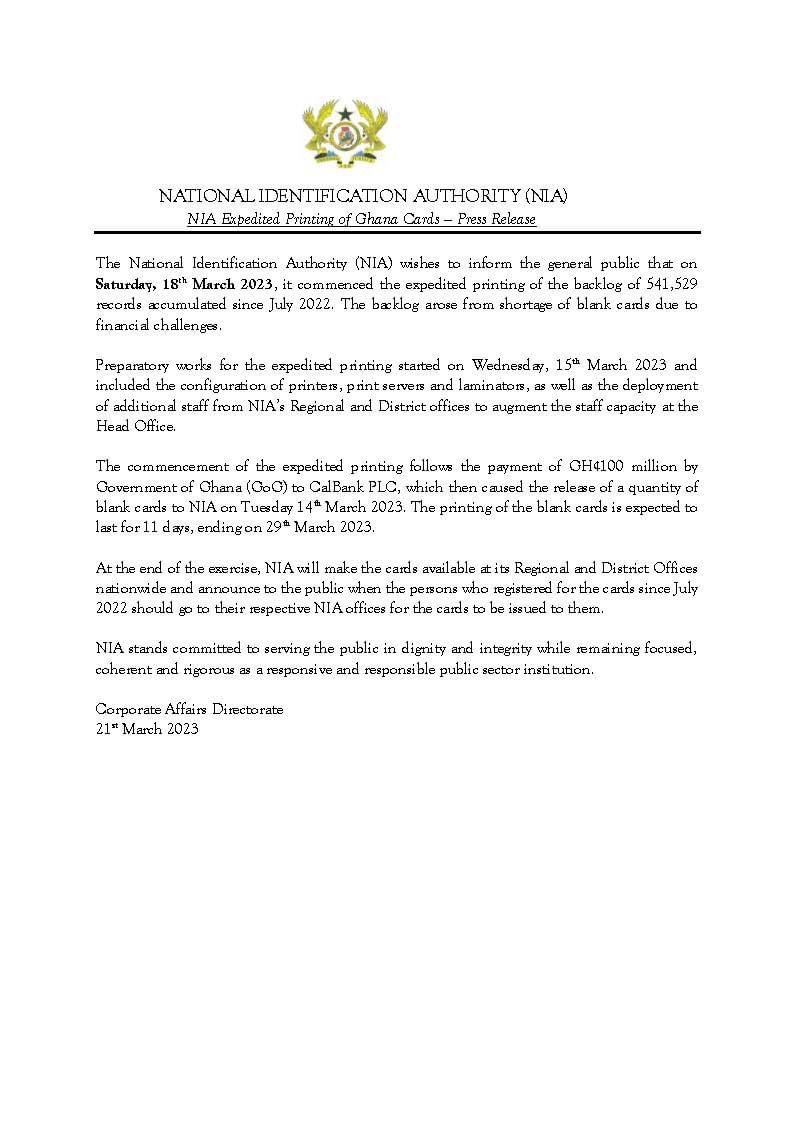
    A statement issued by the NIA on March 21, stated, “the National Identification Authority wishes to inform the general public that on Saturday, 18th March 2023, it commenced the expedited printing of the backlog of 541,529 records accumulated since July 2022. The backlog arose from a shortage of blank cards due to financial challenges”.

    The NIA noted that the commencement of the printing of cards follows payments of GH₵100 million by government to CalBank PLC.

    The printing of the blank cards is expected to last for 11 days, ending on March 29.

    “The commencement of the expedited printing follows the payment of GH₵100 million by Government of Ghana (GoG) to CalBank PLC, which then caused the release of a quantity of blank cards to NIA on Tuesday 14th March 2023. The printing of the blank cards is expected to last for 11 days, ending on 29th March 2023,” NIA emphasised in its statement.

    The NIA assured to make public announcements and make the cards available at its regional and district offices across the country to be collected by persons who registered since July 2022.

    NIA assured, “at the end of the exercise, NIA will make the cards available at its Regional and District Offices nationwide and announce to the public when the persons who registered for the cards since July 2022 should go to their respective NIA offices for the cards to be issued to them”.

    Read below the full statement by NIA

  • Interest on Treasury Bills for past three months hits $4.416 billion

    Interest on Treasury Bills for past three months hits $4.416 billion

    For the past three months, the cost of interest on Government of Ghana Treasury bills is estimated at GH4.416 billion.

    This was disclosed by the Executive Director of Dalex Finance, Joe Jackson.

    Government reportedly bought a total of GH¢33.08 billion worth of T-bills in the last three months.

    The treasury instruments were sold by government at an average yield of 35%.

    In December 2022, the government secured GH¢12.60 billion at an interest rate of 35.72%.

    Government seemed to have reduced its appetite for short-term securities in January 2023, mobilising GH¢7.3 billion at a rate of 35.66%.

    However, the government borrowing from T-bills significantly shot up to GH¢13.1 billion in February 2023 at an interest cost of 35.50%.

    Joe Jackson in a tweet asked, “should you be cautious in buying T-bills?”

    “Government of Ghana bought GH¢33.08 billion in the last three months. The weighted average interest rate was GH¢35.62% and will cost a whopping GH¢4.42 billion,” he noted.

    Government’s only source of borrowing, for now, seems to be the treasury market, hence the significant borrowing on the short-term market.

  • You cannot request foreign relief while continuing to increase your spending – German ambassador

    You cannot request foreign relief while continuing to increase your spending – German ambassador

    Daniel Krull, the German ambassador to Ghana, has urged the government of Ghana to take a reduction in spending into consideration while it continues to ask creditors for debt forgiveness.

    The Ambassador emphasised that Ghana cannot request relief from its external debt while refusing to reduce its spending when speaking at a press conference on Friday, February 24, 2023.

    Naturally, it greatly relies on the type of expenses you’re considering.
    This is true, I’m sure of it—looking at the German Foreign Ministry‘s budget, I can see crucial responsibilities that might be eliminated without harming the country’s economic growth.

    “And I’m convinced without going into details this also is true for Ghana. There are certain expenditures that can be lowered substantially and make an important impact and it has to be part of the package.

    “I mean, I cannot go out to the international community and say I need help, but I’m not willing to cut my own budget expenditures. I have to be careful not to cut the social expenditures that are destroying lives and families. I have to be very careful not to take measures that might negatively impact economic growth.

    “But I’m convinced there are many expenditures that could be looked at very carefully and can be lowered substantially,” he said.

    Comparing Ghana’s situation to some countries including Germany, Mr Krull further called for a reduction in the size of Ghana’s government.

    “I only can compare and with other countries like my own and I can just come to the conclusion that the number is much higher than in my country. So that might bring me to the conclusion that maybe there’s room for improvement,” he said.

    He added that “Ghana has a very dense layer of institutions and responsibilities all over the country.”

    Ghana is currently seeking external debt relief from its creditors amidst the country’s current economic hardship.

    The government of Ghana is calling for the support of some countries including Germany to persuade one of the country’s major creditor, China, for a debt relief.

    With Ghana owing China some $1.7 billion, the government is hoping the debt relief would help the country meet conditions for an IMF bailout.

  • Dalex Finance CEO asks government to sell off state-owned enterprises

    Dalex Finance CEO asks government to sell off state-owned enterprises

    The Chief Executive of Dalex Finance, Kenneth Thompson, has asked government to sell off non-performing State-Owned Enterprises (SOEs).

    He says they are solely responsible for the country’s economic misfortunes.

    According to him, this economic downturn can be averted should government sell SOEs to private investors.

    The Chartered Accountant made these assertions while contributing to discussions on Joy FM’s Super Morning Show on Tuesday.

    “Sell them [state-owned enterprises] off. What is the worst that can happen?” he wondered as he engaged host, Kojo Yankson.

    He further explained that most of the workers in charge of state-owned businesses attain their position on the ticket of familiarity with the appointing authority who is mostly the President.

    In his opinion, this action does not contribute to increased productivity in SOEs.

    Mr Thompson eventually alluded to a principle of business that states that “If the people in charge of a business did not have any skin in it, the business was not going to succeed.”

    However, his co-panellist, Dr Eric Oduro Osae was against the position.

    He noted that SOEs could not be sold to private companies due to national security implications.

    For Dr Osae, handing over SOEs to private investors would mean the investors would have greater shares, which could have severe implications on the economy of the country.

    But the CEO of Dalex Finance, rebutted the claims of his co-panelist, and labelled it as an emotional argument, and highlighted some aspects of state-owned businesses that were failing, such as performance management.

    The Chartered Accountant emphasised that until employees in SOEs had a stake in the business, the country’s economy would continue to suffer. 

    To curb the issue of insufficient productivity at SOEs, Mr Thompson proffered, “Let’s get institutions where people have skin in the game and there’s true accountability.”

    Source: Myjoyonline

  • Traffic Management Agreement: $55 million in Ghanaian judgment debt is rejected by the Court of Arbitration

    Traffic Management Agreement: $55 million in Ghanaian judgment debt is rejected by the Court of Arbitration

    Beijing Everyway Traffic & Lighting Tech. Co. Ltd. (the “Claimant”) filed an investor-state arbitration claim against the Government of Ghana (the “Respondent”), and the Permanent Court of Arbitration dismissed the claim in a final award dated January 30, 2023 after upholding the Attorney-preliminary General’s objection on behalf of the Respondent.

    Beijing Everyway Traffic & Lighting Tech. Co. Ltd requested an award of damages in the amount of “not less than US$55 million” under the terms of a treaty between the governments of the People’s Republic of China and the Republic of Ghana concerning the encouragement and reciprocal protection of investments that was signed on October 12, 1989.

    Arbitral Tribunal and Counsel on Record

    The Members of the Arbitral Tribunal who delivered the final award are Professor Stavros Brekoulakis (presiding arbitrator), Mr. V.K. Rajah SC and Professor Richard Oppong.

    The final award of the Permanent Court of Arbitration shows that at the proceedings, the Government of Ghana was represented by the Attorney-General and Minister for Justice, Godfred Yeboah Dame. Other Counsel listed as part of Ghana’s team include Ms. Diana Asonaba-Dapaah (Deputy Attorney-General); Mrs. Helen Akpene Awo Ziwu (Solicitor-General); Dr. Sylvia Adusu; Mrs. Grace Mbrokoh Ewoal and Ms. Yvonne Bannerman, all state attorneys.

    Background

    The dispute leading to the arbitral proceedings relates to an intelligent traffic management system project in Accra, Ghana, namely the AITMS Project. On 16th December 2011, Ghana signed a Master Facility Agreement and other related Finance Documents with the China Development Bank for a term loan facility to develop twelve (12) infrastructure projects in Ghana, including the AITMS Project. The Claimant was awarded the AITMS Project on or about April 2012. Subsequently, on 17 September 2012, the Claimant and the Ministry of Roads and Highways of Ghana signed the EPIC Contract.

    Under the EPIC Contract, the Claimant, Beijing Everyway, agreed to supply equipment and provide technical services to the Respondent in respect of the planning, design, construction, supervision, operation and training for the AITMS Project in Accra. The Parties agreed to a Contract Price of US$ 100 million and an advance payment of 30%.

    On 22nd December 2018, the Parliament of Ghana approved by resolution the EPIC Contract. The Commencement Date of the EPIC Contract was fixed as 26th August 2019 and the works were scheduled to be completed in 24 calendar months.

    According to the Claimant, between 12th and 15th November 2019, a six (6) member team of the Ministry of Roads and Highways of Ghana conducted a technical visit to its factory and warehouses in China to inspect the production and inventory of the equipment for the AITMS Project.

    During the visit, the Ghanaian delegation observed, inspected and counted the manufactured equipment prior to shipment to Ghana. In January 2020, the Department of Urban Roads of Ghana, under the instruction of the Ministry of Roads and Highways of Ghana, confirmed that Beijing Everyway could ship to Ghana the equipment inspected by the technical team in November 2019. On 15th January 2020, the Department of Urban Roads of Ghana issued an onsite work permit to Everyway for the AITMS Project, covering the installation of new traffic signals, communication network and general civil works at signalized and non-signalized intersections in Accra.

    On 3rd February 2020, Everyway reported to the Department of Urban Roads of Ghana that it had loaded nineteen containers of equipment for shipment for the AITMS Project and asked it to prepare for import customs clearance in Ghana. On 21st February 2020, about six months after the commencement of the AITMS Project, the first installations at two intersections in Accra were switched on, indicating the official launch of the AITMS Project in Ghana.

    During the course of the AITMS Project, the Claimant issued two Interim Payment Certificates amounting in total to US$ 21,995,728 for works that had been performed up to the date of issuance of each Interim Payment Certificate. According to the Claimant, by the time of the Notice of Arbitration (i.e. 10 February 2021), Everyway had completed works with a contractual value of at least US$ 21,995,728.

    According to the Claimant, on 24th March 2020, the Minister of Finance of Ghana requested the Vice President of Ghana to convene a meeting to discuss the AITMS Project. Two meetings among the Vice President of Ghana, Minister of Finance of Ghana, Minister of Roads and Highways of Ghana, Minister of National Security of Ghana, and Deputy Attorney General of Ghana were subsequently called in early April 2020, where it was agreed that two technical teams from the Ministry of National Security and Ministry of Roads and Highways of Ghana would be formed to supervise certain of the AITMS Project. It was also further agreed that Ministry of Roads and Highways of Ghana would remain responsible for certain other aspects of the AITMS Project.

    On 24th April 2020, the Vice President of Ghana issued a decision letter to direct the Minister of Finance of Ghana to convey to the China Development Bank that the project would proceed as approved, with Everyway being the contractor and the Ministry of Roads and Highways of Ghana being the implementing agency on the part of Ghana. However, on 19 November 2020, the Parliament of Ghana suddenly informed the Claimant of Parliament’s decision to rescind the approval of the EPIC Contract.

    Accordingly, on 30th December 2021, the Claimant served Ghana with a notice terminating the EPIC Contract on the ground that the Respondent had “either directly or indirectly, unlawfully expropriated” the Claimant’s investment because the Parliament of Ghana, inter alia, “rescinded approval for the valid and effective EPIC Contract under which Everyway had completed substantial amount of work with (a) no national security or public interest justification, (b) no due domestic legal procedure, (c) in a discriminatory manner, and (d) with no compensation whatsoever for the damages caused.”

    The Claimant sought a declaration that the Respondent has breached Article 4(1) of the China-Ghana Investment Treaty. Furthermore, the Claimant argued that Ghana had breached its duty under the Treaty to observe obligations it has entered into with regard to investments made by Chinese investors (i.e. a breach of the Umbrella Clause).

    Ghana, on the other hand, argued that it has not breached the Treaty because the decision of the Parliament of Ghana to rescind the EPIC Contract with the Claimant was taken in the interests of Ghana’s national security. Ghana further submitted that the Tribunal has no jurisdiction over the Claimant’s claims.

    Ghana’s submissions on the Tribunal’s lack of Jurisdiction

    Arguing the objection to the jurisdiction of the tribunal at a hearing conducted virtually on 22nd March, 2022, the Attorney-General, Godfred Yeboah Dame submitted that the provision of Article 10(1) of the China- Ghana Agreement limits the Tribunal’s jurisdiction to only the determination of the quantum or amount of expropriation, and not the determination of the primary issue whether there has been expropriation at all. The Tribunal thus had no jurisdiction to determine whether Ghana expropriated the Claimant’s investment in the AITMS Project pursuant to Article 4 of the Treaty or breached its contractual obligations with the Claimant under the EPIC Contract pursuant to the Umbrella Clause obligations applicable in this arbitration through Article 3(2) of the Treaty.

    The Attorney-General further argued that relying on Articles 4(1), 4(3) and 10(5) of the Treaty, it is Ghanaian courts that have jurisdiction over the question of the lawfulness of an alleged expropriation, not an arbitral tribunal. An investor bringing a claim for expropriation under the Treaty, must therefore do so “under domestic legal procedure” and under Ghanaian law.

    Mr. Dame submitted to the tribunal that the object and purpose of the Treaty were not only to protect foreign investments but also to encourage foreign investment and foster economic cooperation between the two Contracting States. Accordingly, this required a balanced approach to the interpretation of the Treaty’s substantive provisions, given that a focus only on the protection of foreign investments may dissuade host States from admitting foreign investments and, thus, undermine the overall aim of intensifying the Contracting States’ mutual economic relations.

    Mr. Dame referred to about twenty (20) Bilateral Investment Treaties (BIT) concluded by China prior to the China-Ghana Agreement, and pointed out that none of them provided that an investor can submit any dispute, regardless of its nature, to arbitration. Rather, these BITs provided that investors may only refer the amount of compensation to arbitration, while the question of existence and unlawfulness of expropriation is reserved for amicable settlement or domestic courts of the respective contracting states. The same was the case for other BITs entered into by Ghana with other states. Accordingly, it was evident that neither China nor Ghana recognised the right of an investor to submit the question of the existence and lawfulness of expropriation to international arbitration prior to 1989.

    Claimant’s case on the Tribunal’s Jurisdiction

    The Claimant opposed Ghana’s submissions and argued that the subject matter of the dispute fell under the jurisdiction of the Tribunal. The claimant argued that first, Article 10(1) of the China-Ghana Treaty provides that an arbitral tribunal has jurisdiction on “[a]ny dispute … concerning the amount of compensation for expropriation”; and second, the broad dispute resolution clauses contained in Ghana’s treaties with other countries apply in this dispute through the MFN clause contained in Article 3(2) of the Treaty.

    According to the Claimant, Article 10(1) of the Treaty, when interpreted “in good faith in accordance with the ordinary meaning to be given to the terms of the treaty in their context and in the light of its object and purpose”, should be understood to include not only the question of the amount of compensation for expropriation (i.e. the question of quantum) but also the question of the unlawfulness of expropriation of the Claimant’s investment (i.e. the question of entitlement). The Claimant further argued that Articles 4(1)(a), 4(3) and 10(5) of the Treaty, read independently or jointly, do not require the Claimant to submit a claim for expropriation to the competent courts of Ghana. According to the Claimant, when the investment of a Chinese investor is expropriated by Ghana, Article 4(3) of the Treaty and Article 20(2) of the Constitution of Ghana simply give the investor an option (and not an obligation) to refer the matter to Ghanaian courts. The Claimant argued that the object and purpose of the Treaty support the Claimant’s case that an arbitral tribunal, under Article 10(1) of the Treaty, has jurisdiction to determine the question of both quantum and entitlement of expropriation.

    The Claimant submitted that, according to the “most favoured nation” principle, the dispute resolution provisions of Ghana’s investment treaties with the United Kingdom (Article 10) and Denmark (Article 10) apply in the dispute between the Claimant and the Respondent and thus the Tribunal had jurisdiction over the Claimant’s claims in this arbitration.

    Tribunal’s Decision

    The Tribunal, upon an application of relevant principles of international investment law, came to the final decision that it does not have jurisdiction to decide the Claimant’s claims for expropriation under Article 10(1) of the Treaty.

    The Tribunal stated that the ordinary meaning of Article 10(1) of the Treaty cannot be read as meaning to include the question of entitlement of expropriation. In this respect, the Tribunal noted the important qualification of the term “the amount of” prior to the terms “compensation for expropriation” as placing clear limitations on the scope of questions which can be referred to arbitration. The ordinary meaning of the phrase “concerning the amount of compensation for expropriation”, according to the Tribunal, does not include the question of entitlement or determination of whether expropriation has taken place in the first place.

    Further, the Tribunal c considered that there is nothing in the China-Ghana Treaty to suggest that an investor would be precluded from referring the question of quantum to arbitration under Article 10(1) of the Treaty, once it had referred the question of lawfulness of expropriation to determination by a nation’s domestic court.

    The Tribunal highlighted that it did not consider that a Contracting State may unilaterally preclude an investor from referring the matter of quantum of compensation for expropriation to international arbitration, after it has first referred the matter of entitlement to compensation or determination of expropriation, to national litigation.

    The Tribunal held that the examination of the provision of Article 10(1) within the context of the China-Ghana Agreement suggested that the phrase “concerning the amount of compensation for expropriation” cannot be interpreted as vesting an arbitral tribunal with jurisdiction to decide the question of whether the expropriation is lawful or unlawful.

    Thus, except for the limited scope of Article 10(1) concerning the quantum of compensation for expropriation, there is no provision which would give investors a distinct right to commence arbitration in respect of a breach of any substantive protection under the Treaty.

    In conclusion, the Tribunal found that it did not have jurisdiction to decide the Claimant’s claims for expropriation under Article 10(1) of the Treaty. Also, the Tribunal considered that it did not have jurisdiction to decide the Claimant’s claims in the arbitration under Article 3 of the Treaty. The Tribunal also found that the most favoured nation provision in Article 3(2) of the Treaty cannot be used to extend the Tribunal’s jurisdiction to the Claimant’s claims in this arbitration.

    Costs

    In relation to Costs, the Tribunal noted that both Parties have sought their costs in respect of the arbitration to date. The Tribunal invited the Parties to directly confer and seek to agree on the issue of costs or, failing such agreement, to inform the Tribunal of their agreed format and timetable of their costs submissions within thirty (30) days of receipt of the Award. In the event that the Parties fail to agree on the issue of costs, the Tribunal will address the matter and issue an award on costs covering the arbitration proceedings to date.

    Another arbitration case by Beijing Everyway

    Concurrent with the proceedings at the Permanent Court of Arbitration, Beijing Everyway has instituted another arbitration seeking damages of at least US$55 million for the same subject matter at the London Court of International Arbitration. The Attorney-General has again raised objections in these proceedings, both to the procedure and the substance of the case at that forum, as well.

  • Ghanaian students on govt scholarship stranded in UK over delayed stipends, fees

    Ghanaian students on govt scholarship stranded in UK over delayed stipends, fees

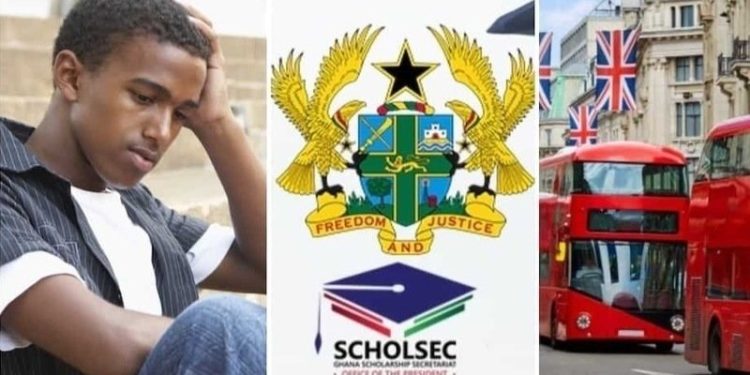
    Some students on the Government of Ghana scholarship under the “Ghana Scholarship Secretariat” are said to be stranded in the United Kingdom (UK) over the delay in releasing their fees and stipends.

    Some of the students are said to have been dismissed while others are being chased by their schools and landlords to pay their rent.

    According to sources, some of the students have not received over 8 months’ stipend, thus worsening their situation.

    Others have had to overstay because they cannot get money to return to Ghana. Some are also said to have been sued by their landlords for refusing to pay rent.

    The students are calling on the government to immediately rescue them from the predicament.

    Some Ghanaians have already started an online petition to gather signatories to force the Government of Ghana to come to their aid.

    “The Government of Ghana should act immediately to rescue these stranded citizens and to save the nation from disgrace,” a write-up on the online platform captured.

  • Government spent nearly 50% of COVID-19 funds on ‘budget support’ – A-G report

    Government spent nearly 50% of COVID-19 funds on ‘budget support’ – A-G report

    The Government of Ghana spent between March 2020 and June 2022 spent nearly 50 percent of COVID-19 related funds mobilised to combat the pandemic on ‘budget support’.

    A recently released Auditor General’s report said the amount spent by government was GH¢10 billion out of the GH¢21,844,189,185.24 mobilised by the State to combat the pandemic.

    The report noted that only GH¢11,750,683,059.11 was spent by government to tackle the virus while the remaining amount, according to its records went toward supporting the budget.

    “Out of GH¢21,844,189,185.24 mobilised, ¢11,750,683,059.11 was spent on Covid-19 activities and the rest on budget support. On Covid-19 activities, we noted that GH¢8,658,496,124.96 was spent in 2020, GH¢3,084,311,725.45 in 2021, and GH¢7,875,208.70 in 2022 to mitigate the impact of coronavirus (Covid-19) pandemic in Ghana,” portions of the report read.

    Meanwhile, the A-G report also uncovered that the Government of Ghana paid during the period of March 2020 and June 2022 paid an amount of $80 million for the purchase of COVID-19 vaccines.

    However, the vaccines have since not been delivered to the country.

    The special audit report has been prepared under Section 16 of the Audit Service Act, 2000 (Act 584) for submission to Parliament.

    It detailed the various expenditure made by Ministries, Departments, and Agencies during the aforementioned period.

    Source: Ghanaweb

  • Your financial situation and the debt exchange program

    Your financial situation and the debt exchange program

    As part of its efforts to address the nation’s ongoing economic crisis, the Government of Ghana announced on December 5, 2022, a Domestic Debt Exchange (DDE) of approximately GH137.3 billion in principal amount of certain bondholders of E.S.L.A. Plc or Daakye Trust Plc to exchange their Eligible Bonds for a package of new bonds to be issued by the Government.

    The deadline for voluntary participation in the Debt Exchange Program had been moved up by the government from December 30, 2022, to January 16, 2023.
    The Exchange is a program for renegotiating government debt.
    It should be mentioned that the government has experienced a severe economic crisis marked by elevated interest rates, skyrocketing inflation, a record-breaking devaluation of the cedi, and numerous downgrades of the economy’s credit rating.

    This programme was introduced with the expectation that it would significantly reduce the burden of interest payments on the Ghanaian government and save approximately US$1.2 billion in interest between 2023 and 2028, or 7% to 8% of the country’s GDP.

    If the debt exchange is successful, the government of Ghana will gain significant fiscal space, while local bondholders will suffer significant losses on their investment in government domestic bonds and notes.

    New Terms of Debt Exchange Programme

    The Government announced the following modifications to the Invitation to Exchange, which are set forth;

    • Offering accrued and unpaid interest on Eligible Bonds, and a cash tender fee payment to holders of Eligible Bonds maturing in 2023;

    • Increasing the New Bonds offered by adding eight new instruments to the composition of the New Bonds, for a total of 12 New Bonds, one maturing each year starting January 2027 and ending January 2038;

    • Modifying the Exchange Consideration Ratios for each New Bond. The Exchange Consideration Ratio applicable to Eligible Bonds maturing in 2023 will be different from other Eligible Bonds;

    • Setting a non-binding target minimum level of overall participation of 80% of the aggregate principal amount outstanding of Eligible Bonds; and

    • Expanding the type of investors that can participate in the Exchange to now include Individual Investors.

    Impact on Individual Investors

    The investing community, the most average Ghanaian, has raised concerns upon hearing this news of restructuring debts owed them by Government. Many people have imitated that this news will worsen their living conditions because they use these coupon payments to pay for expenses such as daily living cost, rent, school fees and a host of others.

    Again, a good number of investors in government bonds are pensioners who have invested their pension payouts as a way to receive a periodic stream of income whilst on retirement. Others who require their investment for any profitable project will be impacted as well, as they will be unable to do so at this time.

    Holders of bonds maturing in 2023 will receive coupons starting from 2027 to 2033, while those with bonds maturing in 2024 will receive coupons starting from 2027 to 2038.

    Imagine a 62-year-old pensioner who owns a Government of Ghana (GOG) bond and will receive its full principal in 12 years. My question is, what happens to this pensioner if he or she dies before the 12-year period is up? This is the reality for many Ghanaians who have purchased GOG bonds. Many of these bondholders will suffer from depression and die prematurely as a result of this situation.

    Impact on businesses

    Companies that purchased bonds to fund future business expansion with principal payments will be unable to do so from now (2023) until 2027 because they will not be paid (except coupon payments) according to the terms of their bond. As a result, businesses will miss out on much-needed capital injections to help them expand.

    This is likely to have an impact on productivity and, to a greater extent, lead to staff layoffs, because if a company is unable to meet its economic obligations or perform at its usual optimal level, the easiest way out is layoffs.

    Impact on financial institutions

    The financial sector, which includes stakeholders such as local banks, would be greatly impacted by the implementation of this domestic debt exchange, owing to excessive exposure to government-issued bonds. Bank capital reserves would be severely depleted, resulting in liquidity shortages and, in the long run, financial instability in the economy.

    The depreciation of their restructured assets, such as government bonds, may cause the asset side of banks’ balance sheets to suffer a direct hit. On the liability side, banks may face deposit withdrawals and the interruption of interbank credit lines. These issues may jeopardize their ability to mobilize resources.

    Way forward

    The government needs to be more transparent about the bondholders’ choices if they choose not to accept the DDE. As it stands, the exchange document is not clear on what happens if a bondholder refuses the exchange.

    The government should also give bondholders an opportunity to discuss and bargain the offered terms since, in my opinion, doing so will result in a fair resolution moving forward.

    Also, government needs to assume more burden in resolving the current economic situation. The just-passed budget still has line items that can be shelved for now to create fiscal space to either continue paying investors their coupons and principals, or reduce the impact of the exchange program with favourable terms.

    Additionally, I advise the government to immediately halt the Domestic Debt Exchange Programme and promote greater stakeholder involvement.

  • Government will increase property tax collection – Majority leader

    Government will increase property tax collection – Majority leader

    The majority leader in parliament has intimated that the government of Ghana will step up the collection of property rates in 2023 as a strategy to increase its tax revenue for development.

    The government is taking this action, says Hon. Osei Kyei-Mensah-Bonsu, who is also the Minister for Parliamentary Affairs, to generate revenue, which will primarily benefit local governments.

    He believes that many people and organizations in the nation own large homes yet frequently underpay or completely ignore their tax obligations to the government.

    Speaking on Kumasi-based Akoma FM, Hon Osei Kyei-Mensah-Bonsu backed his argument with statistics from the National Statistical Service.

    According to the population and Housing census, there are about 8.5 million houses in the country”, he quoted.

    “In most of our regional capitals like Kumasi and Accra, looking at buildings that belong to individuals, some are worth more than a million dollar some of them more than two million dollars when you do valuation.

    “With regards to commercial houses like hotels and others, you can get some valued at more than 50million dollars some close to 100 million dollars. How much do they pay on property rate?” he argued.

    According to him, the move by government will go a long way to help the country because that is one of the main revenue sources for most governments in developed countries.

    “When you go to developed countries, the local councils develop their area with money generated from property rates,” he revealed.

  • Domestic Debt Exchange: Government delays expiration and modifies terms

    The domestic debt exchange program’s parameters have been modified by the Ghanaian government, who have also delayed the program’s expiration from this year’s end to early next.

    The government today announces its decision to extend the expiration date of the invitation from Friday, December 30, 2022, at 4 p.m. (GMT) to Monday, January 16, 2023, at 4 p.m., according to a press release from the ministry of finance dated Saturday, December 24, 2022.

    “The Settlement Date for the Invitation is now expected to occur on Tuesday, January 24, 2023, or as soon as practicable thereafter, but no later than the Longstop Date which is now scheduled for Tuesday, January 31, 2023, unless further extended by the government under the Invitation”, the ministry added.

    “The Announcement Date is now expected to occur on or about January 17, 2023,” the statement further announced.

    Also, the government has modified the terms of the programme as follows:

    Offering accrued and unpaid interest on Eligible Bonds, and a cash tender fee payment to holders of Eligible Bonds maturing in 2023;

    Increasing the New Bonds offered by adding eight new instruments to the composition of the New Bonds, for a total of 12 New Bonds, one maturing each year starting January 2027 and ending January 2038;

    Modifying the Exchange Consideration Ratios for each New Bond. The Exchange Consideration Ratio applicable to Eligible Bonds maturing in 2023 will be different than for other Eligible Bonds;

    Setting a non-binding target minimum level of overall participation of 80% of the aggregate principal amount outstanding of Eligible Bonds; and

    Expanding the type of investors that can participate in the Exchange to now include Individual Investors.

    “These modifications will be set forth fully in an Amended and Restated Exchange Memorandum which is expected to be published during the week of 26th December 2022. Conforming changes (including adding and modifying defined terms) in respect of the above amendments and modifications to cure ambiguity, omission, defect, error or inconsistency may be included in the Amended and Restated Exchange Memorandum,” the ministry noted.

    The government launched the programme on December 5, 2022.

    Accordingly, the government invited holders of approximately ¢137.3 billion of the principal amount outstanding of some of Ghana’s domestic notes and bonds issued by the Government, E.S.L.A. Plc or Daakye Trust Plc to exchange their Eligible Bonds for a package of new bonds to be issued by the government.

    The government then extended the expiration date to Friday, December 30, 2022, and the settlement date to Friday, January 6, 2023.

    Per the memorandum, the government “reserves the right, in its sole discretion, to extend the timetable for the Invitation at any time and to make amendments to the Invitation at any time”.

    “Any Eligible Holders whose Eligible Bonds are held on its behalf by a broker, dealer, bank, custodian, trust company or other nominees must contact such entity if it wishes to participate in the Invitation, as such entities may establish an earlier deadline to receive instructions to tender Eligible Bonds,” the Finance Ministry said.

    It noted at the time: “In making this decision to extend and the modifications described herein, the Government considered feedback from the financial sector about the need to secure internal approvals”.

    “Further, this extension affords the Government of Ghana the opportunity to consider suggestions made by all stakeholders with the aim of adjusting certain measures acceptable within the constraints of the Government’s Debt Sustainability Analysis.”

  • Government includes individual bondholders in domestic debt exchange

    Individual bondholders’ have now been included in the domestic debt exchange programme as the Government of Ghana has announced the further extension of the expiration date of its Domestic Debt Exchange to January 16, 2023.

    Additional changes to the domestic exchange program’s parameters were also announced by the government.

    Individual investors were initially not part of the domestic debt restructuring, but it appears the exemption of pension funds from the programme has triggered that.

    A statement from the Finance Ministry indicated an expansion of investors in the debt exchange programme to now include individual investors.

    “Expanding the type of investors that can participate in the Exchange to now include Individual Investors”, it pointed out.

    “In addition to the foregoing extensions, the government announces the following modifications to the Invitation to Exchange, which are set forth in further detail on the Term Sheet attached as Annex A to this press release”.

    Offering accrued and unpaid interest on Eligible Bonds, and a cash tender fee payment to holders of Eligible Bonds maturing in 2023;

    Increasing the New Bonds offered by adding eight new instruments to the composition of the New Bonds, for a total of 12 New Bonds, one maturing each year starting January 2027 and ending January 2038;

    Modifying the Exchange Consideration Ratios for each New Bond. The Exchange Consideration Ratio applicable to Eligible Bonds maturing in 2023 will be different than for other Eligible Bonds;

    Setting a non-binding target minimum level of overall participation of 80% of aggregate principal amount outstanding of Eligible Bonds; and

    Expanding the type of investors that can participate in the Exchange to now include Individual Investors.

    “These modifications will be set forth fully in an Amended and Restated Exchange Memorandum which is expected to be published during the week of 26th December 2022. Conforming changes (including adding and modifying defined terms) in respect of the above amendments and modifications to cure ambiguity, omission, defect, error or inconsistency may be included in the Amended and Restated Exchange Memorandum”, the statement added.

  • 8 banks engaged in government business may be hard hit by debt exchange program – Report

    According to reports, the country’s debt exchange programme may be especially harmful to eight banks.

    Some of the investments made by the banks whose names have been omitted are in government securities, mainly bonds, issued by the government of Ghana.

    According to myjoyonline.com, these institutions could experience losses if the debt exchange programme, which aims to exchange bonds worth approximately GH137 billion, is effective.

    The programme may have an impact on its liquidity situation based on the size of its balance sheet, even though the loss’s exact size is yet unknown.

    According to the November 2022 Ghana Fixed Income Market report, eight banks—four foreign and four domestic—controlled around 83.91 percent of the debt market.

    The myjoyonline.com report also said despite the knowledge of a possible debt restructuring, the banks traded a significant volume of bonds and bills on the bond market in the month of November 2022.

    The report also stated that these banks, if push comes to shove, could be cushioned by their parent companies.

    Meanwhile, rating agencies have downgraded four Ghanaian banks this year. The downgrades came after Ghana’s creditworthiness status was downgraded consistently throughout 2022.

    “The downgrade of the banks follows the downgrade of Ghana’s Long-Term IDRs as the banks’ standalone credit profiles are closely linked to that of the sovereign (Ghana),” one of the rating agencies said.

    Also, six leading investment banks that control about 89.13% of the debt instrument market may be affected by a restructuring.

    During the announcement of the debt program by the finance minister on December 5, 2022, he stated that a financial Stability Fund would be created to offer liquidity support to banks during the exchange program.

    According to him, the fund will provide liquidity support to banks, pension funds, insurance companies, fund managers, and collective investment schemes to ensure that they can meet their obligations to their clients.

    Speaking at a press conference to launch Ghana’s debt restructuring, the finance minister said the Governor of the Bank of Ghana will follow suit with details of the necessary assistance in due course.

    “We have also dialogued extensively with regulators across the financial sector, including the Securities and Exchange Commission (SEC), National Insurance Commission (NIC), and National Pensions Regulatory Authority (NPRA) to agree that regulatory forbearance will be provided to all entities whose financial position is adversely affected by virtue of participating in this exchange,” Ken Ofori-Atta explained.

  • Reintroduction of road tolls: Be humble, admit you goofed – Engineer to gov’t

    Experienced Ghanaian Engineer, Abdulai Mahama, has charged the government of Ghana to humbly admit they erred by closing down toll booths on the highways of the nation.

    The engineer, who from the onset had advised the government against the closure of toll booths, also predicted their reintroduction.

    Road tolls were scrapped in the 2022 budget as the government moved to introduce the Electronic Transaction Levy (E-Levy).

    However, abandoned toll booths along major roads in the country will be put to work starting in 2023 as part of the government’s revenue generation measures. The amount charged at the toll booths will also be increased.

    This is part of the measures outlined in the 2023 budget statement presented to Parliament by the Minister of Finance, Ken Ofori-Atta, on November 24, 2022.

    Reacting to the latest development, the engineer said, “the government must be humble and admit it goofed big time. How can you say in the budget that you’ll probably close tolls, and at dawn the next day you close them down completely? After closing them down, you also promised to provide alternative jobs for the physically challenged managing these toll booths, but that didn’t happen.”

    He reiterated in an interview with Samuel Eshun on the Happy Morning Show that “the government goofed and has to apologise to Ghanaians.”

    Engineer Mahama also called out the government for closing toll booths with the excuse that they cause traffic congestion.

    “What has changed now? The government said they closed toll booths because of the traffic congestion they caused. But have roads been expanded to cater for these traffic congestions when road tolls are reintroduced next year?” He queried.


  • Global long-term local currency deposit ratings for GCB Bank PLC (GCB Bank) have been reduced by international rating agency Moody‘s to Caa3 from Caa2.

    Additionally, Moody’s Investors lowered the bank’s long-term foreign currency deposit ratings from Caa2 to Caa3, long-term Counterparty Risk Ratings from Caa2 to Caa3, long-term Counterparty Risk Assessment from Caa2 to Caa3(cr), and baseline and adjusted BCA ratings from Caa2 to ca.

    On November 29, 2022, Ghana’s long-term issuer ratings were lowered to Ca from Caa2, with a stable outlook. This was followed by the downgrading on December 2, 2022.

    This was due to the country’s move to restructure its debts after they have reached unsustainable levels.

    “The outlook on the Caa3 long-term local currency deposit rating has been changed to negative from ratings under review. The outlook on the Ca long-term foreign currency deposit rating has been changed to stable from ratings under review. This action concludes the review for downgrade initiated on 4 October 2022,” a release on Moody’s website on December 2, read.

    Moody’s also noted that the downgrade came about as Ghana’s debt restructuring move is likely to affect the bank’s financial position negatively.

    It said the “rating action captures the deteriorating macroeconomic environment and the increasingly uncertain operating environment for banks in Ghana, as reflected by the downgrade of the sovereign ratings and the lowering of the Macro Profile score to ‘Very Weak- from Very Weak’.”

    “The downgrade of GCB Bank’s BCA to ca, on par with the Government of Ghana’s own ratings (Ca Stable), reflects Moody’s expectation that the sovereign debt restructuring planned by the government will negatively affect GCB Bank’s solvency profile. GCB Bank has sizable holdings of sovereign debt securities, at around 3.6 times its shareholders’ equity and 53% of total assets as of year-end 2021,” it added.

    However, Moody’s is of the belief that a restructuring of sovereign debt securities would also weaken the banking system’s liquidity, especially if maturities are extended, because it would mean that banks will need to hold on to their government exposure for an extended period, limiting their ability to lend to the real economy.

  • Ghana to receive CAD$125m from Canadian government to support agriculture sector

    Louise Paris, the Deputy Director of Operations at the Canadian High Commission in Ghana has hinted at a 125 million Canadian dollar grant from the Canadian government to help improve the agriculture sector.

    She said the Canadian government was already partnering with the government of Ghana to modernise the sector in the area of rehabilitation, retooling and infrastructure upgrading of all five colleges of agriculture in the country.

    She said all five colleges would also benefit from a revised curriculum that would support market-oriented, gender sensitive and environmentally sustainable teaching and learning.

    Madam Paris was speaking at a ceremony to officially hand over refurbished and retooled science and computer Laboratories to the Ohawu Agriculture College at Ohawu in the Ketu North Municipality of the Volta region.

    She said the projects in all five colleges of agriculture was part of the Modernising Agriculture in Ghana (MAG) programme implemented by the Technical Education Development for Modernized Agriculture in Ghana (TEDMAG) and valued at 15million Canadian dollars.

    The project was funded by Global Affairs Canada with support from the University of Missouri, USA and the University of Saskatchewan, Canada.

    Mad. Paris said the ultimate outcome of the project was to improve the capacity of agriculture agents in Ghana to provide market-oriented, gender- sensitive and environmentally sustainable services to farmers.

    It also aims at equipping students at the various agriculture colleges with practical agri-business, farm management, commodity value chain management skills and environmentally friendly strategies.

    The project was also geared towards building the capacity of key agriculture actors; like Agric extension agents, farmer-based organisations, and nucleus farmers working in modernized agriculture production, farm management and value- chain management.

    ” Through the MAG programme, Canada is directly providing CAD $125 million to the government of Ghana to help modernise the agriculture sector which has significant potential for reducing poverty and inequality in Ghana this funding will be channeled through government systems with district and regional departments of agriculture as well as the national directorate of MOFA, the CSIR and the Agriculture Colleges all receiving funds to implement their approved activities and to deliver on their respective mandates”. Paris stated.

    She said as part of the MAG programme and other initiatives, the two countries had over the past five years been working together to advance gender equality.

    “Women in Ghana are demonstrating greater empowerment – they have higher levels of financial autonomy allowing them to purchase some land, mould some blocks and put up their own buildings- to purchase rudimentary agro-processing machines, to expand their agro-processing activities and to pay school fees for their children ” she said.

    Mad. Paris said her country would like these benefits extended to the girls in the agriculture colleges through the design and implementation of courses that are attractive to and accessible to women as well as flexible policies to increase girl’s enrollment in these colleges.

    She said each milestone like the handing over of the refurbished facilities moves Ghana and Canada closer to “our shared goals- through our partnership, we will continue to make progress towards poverty reduction, zero hunger, gender equality and growth that works for everyone”. She concluded.

    Mr. Lawoete Tettey, director of human resource and development at the Ministry of Food and Agriculture (MOFA) lauded the initiative saying it was a game changer as far as agriculture programming and development in the country was concerned.

    He said the Ministry was looking forward to upgrading the level of education and exposure students would gain from the new infrastructure and curriculum with the hope that it would improve their learning outcomes.

    “We are looking forward to them having new experience that is relevant to facilitate market-oriented agriculture in the country so that they don’t only come out with classroom knowledge but go into practical agriculture as well which will inure to the benefit of the entire country,” he said.

    Mr Ernest Abiew, principal of Ohawu Agriculture College expressed gratitude to TEDMAG, the Canadian High Commission, MOFA and other partners for the gesture and promised to make maximum use of the facility to improve teaching and learning outcomes.

    He said the college had several challenges including inadequate classroom blocks and hostel facilities especially for female students and a dilapidated place of convenience (toilet), acute water shortage and appealed for further support to address these challenges which he said was hampering smooth academic work in the college.

    Source: Ghanaweb

  • BoG supports government with GH¢2.83 billion for repayment of 5-year bonds

    According to reports, the government was able to finance the maturities of its 5-year bonds thanks to assistance from the Bank of Ghana in the amount of GH2.83 billion.

    This is due to investors’ lack of interest in rollovers, according to a report by Joy Business.

    When a result, the Bank of Ghana is helping the government pay its debts as they become due.

    Additionally, the interest rates have been consistently above 30%, making it difficult for the government to make payments.

    The yields’ overdraft-like structure was also mentioned in the report.

    Meanwhile, the Government of Ghana exceeded its target for the weekly Treasury bill auction after several weeks of consecutive under-subscription.

    Interest rates for the 91-day treasury bills stood at 35.5%, the 182-day bill stood at 36.3%, and the 364-day bill sold at 35.8%.

    Despite the increasing interest rates, the returns on the instrument are still negative due to the high inflation and the depreciation of the cedi.

    Inflation for the month of October stood at 40.4% whiles the Ghana cedi has depreciated by 54% according to the Bank of Ghana.

    The results showed that the GH¢2,066.12 million bids were accepted from the 91-day treasury bill, GH¢223.55 was accepted from the 182-day bill, and GH¢101.71 for the 365-day bill.

    The target for the auction however was GH¢2,176 million but GH¢2,392.27.

    The increase in this week’s subscription may be an indication of increasing investor confidence as last week’s bills were also over-subscribed.

  • Stakeholders meet to discuss practical ways to improve trade finance for SMEs

    Stakeholders from the financial sector have gathered in Accra for a Public Private Dialogue to examine doable solutions to increase the country’s Small and Medium Enterprises’ (SMEs) access to trade credit.

    The African Continental Free Trade Agreement (AfCFTA) is now operational, so the Public-Private Dialogue (PPD), which was organized by CUTS International Accra, a renowned research and public policy think tank, with assistance from GIZ Ghana, aimed to involve relevant stakeholders on how to practically improve businesses’ and SMEs’ access to trade finance.

    In his welcoming remarks, the West African Regional Director of CUTS International, Mr Appiah Kusi Adomako explained that with the commencement of Trading under AfCFTA in January 2021, government and banks in the country must retool their trade finance packages to support SMEs in Ghana to make them competitive and improve their businesses and service.

    “Businesses and SMEs, require finance to be able to increase their business and improve their services to fulfill the demands of the growing market and AfCFTA. However, most of these SMEs in Ghana, similar to other African countries, face obstacles when trying to get trade financing, hence the call on government and financial institutions to support SMEs,” Mr Adomako explained.

    He added that access to trade finance is listed as one of the biggest problems that SMEs in Ghana must deal with.

    Mr Adomako explained that “the AfCFTA presents a rare opportunity for businesses across the continent to be able to export goods, largely quota-free and duty-free. On the parallel side also, member countries can equally import from one country to the other without any quantitative restriction. Even if an SME is not willing to export under the AfCFTA agreement, it must ensure that it is competitive at the local market as it can face competition from other African imports.”

    Mr Adomako emphasized that “the establishment of the Development Bank Ghana (DBG) by Government of Ghana, aimed at providing long-term and competitively priced loans to SMEs who have long struggled with the problem of access to finance to ensure that SMEs are better financed in critical sectors of the economy.

    While I commend the government for this great initiative, there is the need to create a good and friendly business environment and tailor-make policies and initiatives for the private sector, to guarantee SMEs have access to trade financing to support the growth and expansion of their business to other countries.”

    In addition, Mr Adomako explained there is the need to also create a good and friendly business environment and tailored-made policies and initiatives for the private sector, to guarantee SMEs have access to trade financing to support the growth and expansion of their business to other countries”.

    An Economist with the Bank of Ghana, Mr Kwasi Acheampong also emphasized that the Bank of Ghana is putting in measures to cushion businesses and support SME development. He said although the country is going through some economic difficulties, the Bank of Ghana is committed and is rolling out strategies and measures to address the current economic state of play.

    On his path, the Technical Advisor at the GIZ Trade Hub, Mr James Amisssah Hammond underscored the critical role SMEs play in the success of the AfCFTA and their contribution to Ghana’s GDP and trade.

    He explained that GIZ has conducted several training programs on the AfCFTA, and rules of Origin to build the capacity of the SMEs and improve their knowledge and awareness of the Agreement. He emphasized GIZ’s commitment to supporting SME development to unlock their potential to position them to benefit the AfCFTA.

    In attendance were representatives from the Bank of Ghana, US Embassy, European Union, Zenith Bank, Ghana National Chamber of Commerce and Industry, Ministry of Foreign Affairs and Regional Integration, Absa Bank, Association of Bankers, Chartered Institute of Bankers,

    KPMG, Ghana Revenue Authority, Ghana Enterprise Agency, Ministry of Trade and Industry, Cal Bank, ARB Apex Bank, Prudential Bank, Economics Department of the University of Ghana, Ghana Investment Promotion Centre (GIPC), GT Bank, GBC Bank Plc, FBN Bank among others, Private Enterprise Federation, the media and SMEs in Accra.

  • Traders unhappy about VAT rate increment

    Government on Thursday, November 24, 2022, announced a 2.5% increase in Value Added Tax (VAT).

    The Association of Electrical Dealers at Opera Square in the central business district of Accra has been reacting to the content of the 2023 budget.

    The leadership is concerned about the increase in the Value Added Tax (VAT) insisting it will make life unbearable for already ailing businesses.

    Speaking to JoyNews, the Association’s Chairman, Henry Arhin bemoaned the situation and asked government to reconsider its decision.

    “Because of the dollar exchange, businesses are collapsing so if the VAT is also going up then definitely it won’t help us.

    “If we want people to pay VAT then they should moderate it for us,” he told Emefa Apawu.

    The resistance is not peculiar to the Association of Electrical Dealers alone.

    Spare parts dealers in Abossey Okai are also worried the VAT increment will adversely affect their market.

    They claim the upward adjustment will further weaken their trade.

    In the Ashanti Regional capital Kumasi, while some residents remain confident about the turnaround of the country’s economic fortunes, others are dissatisfied with the increase of the VAT.

    “Wasn’t he the same person that organised Kumepreko some years ago because of the VAT, so why has he increased it? He should even scrape the tax policy,” one resident told Luv FM’s Emmanuel Bright Quaicoe.

    Yesterday, Finance Minister, Ken Ofori-Atta announced government’s decision to increase VAT by 2.5 per cent.

    Revenue raised from this increment, he claimed, will be used for road projects and the digitisation agenda.

    Source: Myjoyonline.com

  • Shell signs deferral amendment of LNG delivery agreement with GNPC and Tema LNG company

    A change to the Commercial Agreements has been approved by a number of parties involved in the Tema LNG Project. This change effectively releases the national oil agreement from its earlier obligation to continue paying for regasified liquefied natural gas now, even if 2019 volume levels are significantly reduced.

    The most recent development, which will delay the delivery of LNG cargoes, gives Ghana enough time to establish the necessary infrastructure to meet the country’s high LNG demand while also expanding the regional downstream market in West Africa.
    The opportunity to specifically service businesses in West Africa exists at Tema LNG, the only multi-commercial LNG terminal in Sub-Saharan Africa.

    But, GNPC negotiated the original agreement in a way that the $450 million facility will eventually pass on to the GNPC at the end of the GSA.

    The parties to this groundbreaking agreement are the Ghana National Petroleum Corporation (GNPC) as the “Buyer”; Shell Energy Ghana Ltd (Shell) as the “Seller”; and Tema LNG Terminal Company (TLTC) as the “Operator”. The amendment to the Agreements is said to have been necessitated by a proposal by Shell to defer shipment of LNG. Experts believe the proposal is to manage the global supply-demand dynamics of LNG precipitated by the Russian – Ukraine war.

    By working collaboratively with Shell, GNPC has executed an amendment that ensures that there is no fiscal burden placed on the Government of Ghana by the Project in the near term while maintaining the option to receive liquefied natural gas (LNG) in the medium to long term, to bring significant advantage to the country and the region’s growing energy needs.

    In a recent brief on the Tema LNG Terminal case study, a team of CSOs including IMANI, ACEP and Tax Justice Network Africa among others alleged that despite multiple postponements and much PR, the Tema LNG terminal has failed to supply gas for use in Ghana. The brief says the consortium continues to insist however that the terminal is “operational” and that the take-or-pay arrangement remains valid. The CSOs say that unless the project is terminated, liabilities of up to $1.5 billion, could still manifest to the detriment of Ghana. This is being denied by GNPC.

    According to the CSOs, the Tema LNG project poses a major risk to the already strained finances of the GNPC. Some calculations by ACEP and IMANI suggest that the GNPC could be paying between $790 million and $1. 357 billion a year (based on average 2022 Brent crude prices) for gas the country doesn’t need. These fears are, however, not reflected in the structure of the amended contract.

    Even though it is free of any such obligation for now, GNPC stands to benefit from a portion of the fees in the regional business from Tema LNG. It has, therefore, expressed its willingness to continue working with the Operator, in the intervening period, to deliver solutions for the supply of LNG to customers in the region, to generate additional revenues to the Corporation.

    It says it continues to see the introduction of LNG into the gas supply mix as an important step to shoring up energy security and meeting Ghana’s growing demand for energy and as a way to lead West Africa in the drive towards a transition to cleaner fuels.

    A senior source in the national oil company has further explained circumstances that led to the GNPC and the other parties involved to amend the project agreement.

    According to the source Shell proposed to defer supply of LNG for regasification to a period of about two years after which it believes the country’s current precarious situation would have been normalized.

    “The proposal for amendment came from Shell that we look at deferring the supply for some period till things normalize then we resume activities. So it’s a mutual agreement cleverly executed, which we stand to benefit,” the source stated.

    The source further explained that there is an option for further deferral periods to be explored. It hinted that within the deferral period, the Tema LNG facility can still take advantage of any business opportunities outside Ghana.

    He said the project which is almost complete is not owned by the GNPC, as the terminal use agreement (TUA) that exists is between the Tema terminal facility and Shell, while the GNPC has a gas sales agreement with Shell.

    The source criticized the CSOs for their lack of proper understanding of the transactions and further explained that the terminal becomes an asset of Ghana at the end of the contract period. Basically Ghana takes over the terminal.

    “We don’t have a TUA per se, the agreement we have is to the extent that Ghana takes over the terminal and the terminal company requires permission of GNPC ( during contract period) for other third party businesses that the terminal wants to do,” the source said.

    It maintained the commercial arrangement to buy gas is between the GNPC and Shell with that serving as the basis for the construction of the Tema LNG facility. It says within the deferral period and afterwards GNPC will not prevent the Terminal from going ahead with other business transactions that will inure to its benefit as that will not amount to any breach of law or contract, but allowing the investors to recoup their investments currently estimated at nearly half a billion US dollars. The project is fully private sector funded.

    The national oil company says the terminal infrastructure provides a strategically important asset for energy security both locally and within the west Africa sub region for the benefit of all stakeholders.

  • COVID-19 Emergency Preparedness: Minister lays $60.6 million loan before parliament

    Abena Osei-Asare, deputy minister of finance, presented a credit arrangement totaling $60.6 million to parliament as a third additional funding source for the Ghana COVID-19 disaster preparedness and response project.

    The loan agreement was presented by the Deputy Minister in the Finance Minister’s name.

    The International Development Association (IDA) of the World Bank Group and the Government of Ghana are parties to the Finance Agreement.

    Mr Alban Sumana Kingsford Bagbin the Speaker of Parliament, subsequently referred the loan agreement to the Committee on Finance of Parliament for consideration and report to the House.

  • Why new ‘Ghana Airways’ won’t fly next year – Analysis

    After multiple failed attempts to re-establish a new national airline with Accra as its base, Finance Minister Ken Ofori-Atta announced the new airline will launch this year when presenting the 2022 budget to Parliament in November 2021 of the previous year.

    “The Ministry is in the final stages of discussions with the chosen strategic partner for the development of the home-based carrier as part of the Government’s effort to make Ghana the aviation hub for the West African Sub-region.
    According to Mr. Ofori-Atta, the negotiations are anticipated to be completed and the airline will be launched in 2022.

    Contrary to proposals in the budget, AviationGhana’s analysis of past agreements and current state of affairs show that it is improbable for the proposed airline to take to the skies next year as stated.

    Presently, a second Committee, which was established this year after the Ministry of Aviation was scrapped and oversight responsibility of aviation placed under the Ministry of Transport, has finished its work on evaluating the EgyptAir deal and has presented its findings and suggestions to the Transport Minister, Kweku Ofori Asiamah.

    A key recommendation, gleaned by AviationGhana, is for government to look inward and find the funds required for the project. Other proposed alternatives include partnering an existing local airline or local investors to establish the airline.

    A combination of unclear policy direction, contradictory agreements and challenge with funding sources over the last 10 years, makes the enterprise a difficult proposition to get over the line next year.

    Unclear policy direction

    In 2013, government shortlisted six transactional advisers as part of the process of re-establishing the new airline.

    The policy proposition was that ‘Ghana would own no more than 10 percent of the company’. Ghana was also to retain the rights to routes assigned to the operator of the carrier

    PwC, which got the nod as transaction advisers, in 2015 presented its interim report on the proposed national carrier to government. There was a firm promise that the airline will launch in March 2015 with the Government of Ghana (GoG) holding only a 10percent carried interest in the new entity.

    This, however, changed in 2017–government was willing to hold majority stake in the new entity (51 percent) while the strategic partner controls 49 percent. Government’s 51 percent stake was then to be made available to local investors.

    Indecision about a strategic partner

    For almost a decade, government has been indecisive on the choice of a strategic partner. A host of world-renowned airlines have all been mooted as partners at one stage or another, only for a change of mind months later.

    Qatar Airways, South African Airways, Air Mauritius, Ethiopian Airlines, EgyptAir, Boeing, and Africa World Airlines (AWA) have all been mentioned at one stage or the other.

    The recent attempts saw Ghana engage Ethiopian Airlines ostensibly to establish the new home-based carrier with ET as the strategic partner, given the East African-based airline’s experience and technical know-how. Indeed, a Memorandum of Understanding to guide the initial talks and future discussions was signed in Addis Ababa.

    Despite the signing of an MoU with Ethiopian Airlines to actualise the vision of a new home-based carrier, the deal was held back due to what government described as a lack of agreement over key issues such as routes, funding, and tenure of the management contract among others. Then enters Boeing.

    Ghana signed Letters of Intent on Day 3 of the Dubai Air Show 2019 for the acquisition of the three Boeing 787-9 planes with a list price value of $877.5 million and three Dash8-400s for the start of the country’s new flag carrier.

    The financial arrangements for the acquisition of the planes were either a leasing arrangement with a third party funding it and regular payments made by the new carrier or an outright purchase with funding from investors or central government.

    While the deal, at the time of signing, was a statement of intent by Ghana that it wants to see its national flag back in the skies, it was good press and show of confidence for Boeing, which was going through difficulties because of issues surrounding the fatal crashes with the 737 Max

    However, this proposed partnership with Boeing and D-Havilland remained an ‘intent’ and was not pursued further.

    Lack of funds

    After an expensive banking sector clean up that cost the in excess of GH¢ 10billion, unplanned expenditure to mitigate the impact of the coronavirus pandemic on those below the poverty line—through absorbing of electricity and water bills for a short period and distribution of cooked and raw food items—central government has no fiscal room to maneuver let alone set aside some US$5-10million to start an airline.

    Exim Bank and SSNIT have been mooted in some quarter and meetings held to convince them to fund the project as in the case of EXIM Bank. However, AviationGhana sources say, due to the capital intensive nature of airline operations, the time it takes to break even, and the small margins, these two potential sources are unwilling.

    These issues have conspired to make the new home-based carrier project unattractive to many would-be suitors. It remains to be seen what Cabinet will decide next.

  • Failure to check executive cause of exploitation of country’s natural resources – Prof. Abotsi

    Prof. Ernest Kofi Abotsi, dean of the law school at the University of Professional Studies, Accra (UPSA), blames Parliament’s reluctance to hold the Executive accountable for giving exploitation rights for the overexploitation of the nation’s natural resources.

    Prof. Abotsi said that Chapter 21, Article 268 requires parliamentary clearance for all transactions involving the issuance of minerals exploitation rights during a presentation on the topic “Development and Constitutionalism: Building a Trusteeship that Works and Benefits Citizens” on Tuesday in Accra.

    According to Prof. Abotsi, the 1992 Constitution’s purpose with this article was to strengthen constitutional trusteeship, which is based on the notion that the people who are subject to constitutional governance are the source of that power.

    However, he explained that such intention had not been met due to issues such as winner takes all approach embedded in the country’s political system which leads to corruption and poor negotiating systems.

    “The winner takes all approach have proved impossible to deal with where the winning party see themselves as rightful beneficiaries of not only power but trapping of authority and access to state resources,” Prof. Abotsi said.

    Similarly, Prof. Abotsi bemoaned the poor perfor­mance of government agencies such as the Lands Commis­sion, Fisheries Commission and Forestry Commission in whose hands the regulation of natu­ral resources were entrusted due to agency capture by individuals and groups.

    “The issue of agency capture has equally impacted the oversight of parliament. In fact, the problem may even be worse in the case of the legislative body given the very nature of the organ, its representative mandate and ostensible legitimacy of parliamentary lobbies,” Prof. Abotsi said.

    Despite the manifold legislative interventions to address issues of exploitation of natural resources, Prof. Abotsi said there was a need for constitutional reforms to be established, especially, in the wake of the discovery of oil in the country.

    He therefore made some recommendations to ensure that constitutional trusteeship was enhanced including the streamlining of government’s role as the watchdog over the use of the country’s natural resources and making parliament an approving entity rather than a ratification chamber.

    Making parliament an approving entity, Prof. Abotsi said stood in spite of Article 181 of the 1992 Constitution which required that no deal entered into by the Government of Ghana (GoG) shall be entered into without parliamentary approval.

    “The requirement of a simple majority approval such as contained under Article 181 and 268 is apt to lead to fragmentation of behaviour on the part of parliament,” he said.

    “The record accordingly shows that the require­ment of simple majority has been easily scalable and has resulted in the approval of obnoxious policies and questionable deals in the past. Enhancing this requirement to a higher threshold two-thirds majority approval would lead to higher scrutiny of projects as the need for votes across political lines will necessar­ily compel greater audit of deals presented,” Prof. Abotsi added.

    Source: Ghanaweb 

  • Female representation on boards of GSE-listed companies still low

    Women hold only 25% of board seats and only 27% of non-executive director seats among the 35 businesses listed on the Ghana Stock Exchange in 2022, which is the same as in 2021.
    This information can be found in the 2022 Board Diversity Index Report, which TheBoardroom Africa and the Ghana Stock Exchange jointly released this week (GSE).

    These statistics, according to the report, show that efforts to promote gender diversity have stopped since the previous year.
    The survey also finds that corporate secretary, which is not a board-director function, is the most frequent position held by women across the majority of Ghana’s listed companies.

    Meanwhile, research shows that companies with 30 percent or more female non-executive directors are likely to result in an average of 15 percent increase of women in board chair and executive roles. “It is critical that women not only have a seat at the table but also occupy positions of leadership in these spaces to ensure continuous progress – and this has to be led by boards,” the report said.

    It noted that while an increasing number of Ghanaian companies are responding to the call for more gender-diverse boardrooms, the overall gender gap among senior executives still remains wide.

    Per the report, 61.5 percent of the industry sectors have more than 30 percent women on their boards – a 15.4 percent increase from 2021, and by international standards 30 percent is the minimum to reap the benefits of boardroom diversity.

    Having 30 percent women on boards, the report said, is the pivotal point at which minority voices become heard – it also represents the minimum target recognised by the Board Diversity Charter. However, this threshold remains a minimum target, not a ceiling. “While we recognise the companies meeting this standard, much remains to be done in working toward gender parity – the ultimate goal,” the report stated.

    Indeed, it noted that more than one-third (38 percent) of companies still have one or zero females on their boards, indicating a decrease by 9 percent from 2021. But that gap still needs to be bridged. In terms of sectors that have more women in their boardroom, the report said the advertising & communications, fast-moving consumer goods, mining/natural resources and telecommunications sectors have the highest number of women represented in the boardroom.

    However, in terms of the aggregate number of women directors, the financial services sector outperformed all with 45 percent of all female directors in GSE-listed companies being from the sector. Per the breakdown, women make up 12 percent of Chairs; 13 percent of CEOs/MDs; 17 percent of CFOs; and 6 percent of COOs on Ghana’s listed boards.

    The report observed that there has been an increase in the number of CEOs/MDs and CFOs by 1 and 13 percent respectively from 2021; however, there has been a decrease in the number of Chairs and COOs by 3 and 4 percent respectively from 2021. It also notes that almost one-third (32 percent) of Ghana’s listed companies have boards featuring at least 30 percent female board directors, an increase of 3 percent from 2021.

    Commenting on the methodology, Marcia Ashong, Founder and CEO of TheBoardroom Africa, said: “As we acknowledge the progress made so far, we remind stakeholders to continuously press for progress to solidify and expand on recent strides. We advocate that the Government of Ghana should encourage business leaders to have boardrooms that are fully representative of their stakeholders by signing the Board Diversity Charter; and also promote gender-conscious board appointments in state-owned companies to ensure that, as a country, we can fully reap the benefits of diversity”.

    Touching on the 2022 Board Diversity Index’s significance, Abena Amoah – incoming Managing Director of the Ghana Stock Exchange said: “The Ghana Stock Exchange is an integral part of the Ghanaian economy, and we aim to be at the forefront of sustainable, diverse and inclusive economic growth. We are delighted to see more and more companies respond to the call for diversity, and we further pledge to work with all stakeholders to ensure that Ghanaian boards are more inclusive and effective”.

  • Foreign Ministry provides update on detention of stranded Ghanaians in Dubai

    The Ministry of Foreign Affairs and Regional Integration in reference to its press release of August 18th, has provided an update to the public on the stranded Ghanaians at the Al Tawadi Medical Centre in Dubai.

    A statement issued by the Ministry of Foreign Affairs and copied to the Ghana News Agency said the Ministry, in collaboration with some organisations and public-spirited individuals had so far, successfully repatriated over 450 Ghanaian nationals who were stranded at the Al Tawadi Medical Centre in Dubai, United Arab Emirates (UAE).

    It said from the Ministry’s investigations, most of their compatriots who were stranded were misled by unscrupulous agents who promised non-existent jobs in Dubai and other parts of the UAE.

    It said the recent evacuations involved 80 of their compatriots with the assistance of the Mohammed Bin Rashid Al-Maktoum Humanitarian and Charity Establishment in Dubai between 24th and 27th October, 2022 via Ethiopian Airlines.

    Additionally, 20 Ghanaians were evacuated with the support of an individual and friend of the Government of Ghana, Mr Abdul Razaak-Daheer in September 2022, on board Egypt Air, the statement added.

    It said the Ministry takes this opportunity to extend appreciation to the Mohammed Bin Rashid Al-Maktoum Humanitarian and Charity Establishment, Mr Abdul Razaak-Daheer and all those who assisted the stranded Ghanaians, for their kind gesture.

    It said, “the Ministry wishes to reiterate that the ban on direct-to-home recruitment of Ghanaian labour migrants (house helps) to homes in the Gulf states remains in force until further notice.

    “The ban, however, does not affect the lawful recruitment of skilled workers (non-domestic house helps) to the Gulf States,” it said.

    “The Ministry advises travelling Ghanaians to desist from embarking on journeys via illegal routes to various parts of the world since this almost always has an unfortunate outcome.”

    Source:myjoyoline.com

  • IMF negotiations: Staff-level agreement to be reached by end of 2022 – Finance Ministry

    The Ministry of Finance says the Government of Ghana and the International Monetary Fund (IMF) have reached a clear path towards the final details of a programme with the goal of reaching a Staff-Level Agreement by the end of the year.

    This follows meetings between the Government and the IMF advancing negotiations towards a Fund-supported Programme in Washington (D.C) on the sidelines of the annual meetings of the World Bank and the International Monetary Fund.

    In an update to citizens, the Ministry stated that “a pathway towards fiscal sustainability has also been extensively discussed, and the Government of Ghana and the IMF remain fully committed to the goal of reaching a Staff-Level Agreement on a Programme within the shortest possible time.”

    IMF negotiations: Staff-level agreement to be reached by end of 2022 - Finance Ministry

    The Ministry indicated in pursuance of the Staff-Level Agreement, negotiations with the IMF will continue in Accra, as the IMF team is expected within the next few weeks.

    Meanwhile the Government of Ghana has expressed its gratitude to the IMF, the World Bank, bilateral partners and external investors for their continuous support even as the country goes through a tough time.

    IMF negotiations: Staff-level agreement to be reached by end of 2022 - Finance Ministry

    Furthermore, “the Ministry of Finance and the Bank of Ghana thank the people of Ghana for their forbearance in what is undoubtedly a troubling and challenging time for our economy, and economies globally. Government will continue to work with a fierce sense of urgency, to stabilize the economy and place it back on a firm trajectory of growth.”

    The Ministry has indicated it will continue to provide regular updates and further details on the country’s economic programme to the public immediately they become available.

    “These updates will be posted on the Ministry’s website, under a section titled IMF Programme Updates,” the statement said.

    DISCLAIMER: The Views, Comments, Opinions, Contributions and Statements made by Readers and Contributors on this platform do not necessarily represent the views or policy of Multimedia Group Limited.

    Source:myjoyonline.com

  • IMF alone can’t help Ghana – Kofi Bentil

    Vice President of IMANI Africa, Kofi Bentil, has called on the Government of Ghana to look beyond the International Monetary Fund (IMF) to address the nation’s current economic challenges.

    The Government of Ghana in July this year began formal negotiations with the IMF for economic support, but according to Kofi Bentil, the government should engage other international financial organisations like the World Bank if it will succeed in managing the current economic challenges.

    “We need more than the IMF. We need to be speaking to the world bank and friendly nations for concessionary loans to shore up the economy and then get IMF to tide us over to health. We should be speaking to them by now, IMF alone can’t help us,” he wrote in a Facebook post.

    Ghana, over the past months, has experienced serious economic challenges plummeting the country into severe price hikes amidst a poorly performing cedi on the exchange market.

    The government, in its bid to manage the situation, is seeking an IMF programme.

    The Director of IMF’s African Department, Abebe Aemro Selassie, in a recent media engagement, stated that Ghana needs to show proof of debt sustainability in order to merit an economic support programme.


  • Ghana’s public debt to GDP about 100%; debt restructuring unavoidable – Ato Forson

    According to Cassiel Ato Forson, a former deputy minister of finance, Ghana’s public debt to GDP is currently close to 100%, making debt restructuring inevitable due to the country’s unsustainable debt.

    The MP from Ajumako revealed in a tweet that as part of the IMF negotiations, the administration has now been compelled to add all the necessary components to the calculation of public debt as a percentage of GDP.

    “Govt has finally consented as part of the IMF agreement to add the ESLA and GETFund bonds, plus cocoa bills and Sinohydro, to the public debt after calling the minority names because I urged they add them!
    Tweeted him.

    The Ministry of Finance on Monday announced that the IMF delegation is currently undertaking a comprehensive debt sustainability analysis of the country.

    “the Government of Ghana is putting together a comprehensive post-Covid-19 economic programme which will form the basis for the IMF negotiations.”

    “The programme seeks to establish a macro-fiscal path that ensures debt sustainability and macroeconomic stability, underpinned by key structural reforms and social protection.”

    “Government remains committed and shall continue to actively engage all stakeholders, both public and private, in a clear and transparent manner as we seek to fast-track this process.”

  • Ghana starts comprehensive debt sustainability analysis with IMF

    On Monday, September 26, 2022, the Ghanaian government and the International Monetary Fund started talking.

    The administration claims that a thorough Debt Sustainability Analysis (DSA), a crucial prerequisite for obtaining an IMF-supported program, is currently under way.

    To make sure Ghana’s debt is managed in a sustainable way, this is a crucial prerequisite.

    The government of Ghana is putting together a thorough post-Covid-19 economic blueprint, which would serve as the foundation for the IMF negotiations, according to an announcement from the ministry of finance on September 26, 2022.

    The program aims to create a macro-fiscal path that guarantees debt sustainability and macroeconomic stability and is supported by significant structural changes and social protection.”

    The IMF mission that arrived in Ghana on September 26, 2022, is currently in talks with the Ministry of Finance and The Bank of Ghana.

    “Government remains committed and shall continue to actively engage all stakeholders, both public and private, in a clear and transparent manner as we seek to fast-track this process,” parts of the release read.

    Ghana is seeking at least $3 billion from the Bretton Woods Institution to shore up its reserves and deal with the depreciating cedi and fund its infrastructure projects.

  • CSIR-CRI appeals for funding for studies into snake tomato breeding

    The Crops Research Institute (CRI) of the Council for Scientific and Industrial Research (CSIR) has called on the government and other private organisations to come to their aid with financial support to aid them conduct further studies into prospects of the snake tomato plant in Ghana.

    The snake tomato plant (Trichosanthes cucumerina) is a gourd vegetable that grows in tropical regions, and it is used for culinary and medicinal purposes.

    It is a member of the cucumber family and is called by many names in different parts of the world.

    The snake tomato is packed with phytonutrients.

    Dr. Michael Kwabena Osei, a Senior Research Scientist and a Vegetable Breeder at the CRI, speaking with the Ghana News Agency (GNA) after a field inspection of the trial plot at Kwadaso near Kumasi, underscored the need for agencies and the government to support the research into the plant.

    He explained that Ghana could consume the vegetable as a substitute for the traditional tomato, adding that it had almost the same constituents as tomato.

    “If we should wake up one day and find out that the tomatoes in the country are not able to survive, and we do not have other substitutes, it is going to be a problem.

    “That is why as a Research Institute we go ahead and research and diversify the crops we research on,” he told the GNA.

    The Research Scientist said in the last two years the Institute obtained one line from Amanchia in the Ashanti Region to commence the study.

    It later sought 30 different lines from the World Vegetable Center and now characterizing them to see which ones could be evaluated, going forward.

    This crop, According to Dr. Osei, did not require too much attention as given to tomato, however it took up to four weeks to get matured (from planting to maturity), thrived under sunshine and required little water to produce more.

    Other characteristics are that it can either be harvested in the green stage or ripened stage.

    In terms of the nutritional and medicinal values, the snake tomato is low in calories, high fiber content, contains vitamins A, B and C, laxative properties, lower blood cholesterol, aid digestion as well as treating constipation.

    Dr Osei indicated that in countries like Nigeria, it was mostly used in preparing stews and soups, whereas in Ghana here, the underutilized crop is being patronized by foreigners on the open markets at higher prices.

    He submitted that when the needed funding was made available, it would enable the CSIR-CRI to extend the research to the different agro-ecological zones to determine how the crop performs in other parts of the country.

    Currently, studies are underway to assess poisonous substances, check biochemical, brix, and other fruit qualities.

    The results will inform research scientists during release and make the necessary data available to plant growers.

  • Government urged to constitute boards of statutory organisations

    Mr Haruna Iddrisu, the Minority Leader in Parliament, has called on the Government to, as matter of urgency, constitute the boards of the statutory organisations like the Ghana Education Trust Fund (GETfund) and National Health Insurance Fund (NHIF).

    He said boards must also be constituted for District Assembly Common Fund and Ghana Road Fund as expected of the President.

    Mr Iddrisu, in a submission in Parliament on Wednesday, drew the attention of the Government on the effects of the delay, and urged it to quickly name the boards yet to be established.

    He described the issue as a matter of public importance and cited the Road Fund, that when properly constituted, would make Ghanaian contractors get their monthly releases.

    He said government had a responsibility to protect the Ghanaian private sector and that duty must be extended to Ghanaian contractors who the Road Fund owed.

    “Even if government cannot find money to pay them they should let the administrative machinery work,” Mr Iddrisu, the MP for Tamale South, said.

    “Why is the Road Fund Board not constituted, why is it not functioning, how do we expect contractors to survive…from January to now,” he queried.

    He asked the Government to explain why chief executives for Metropolitan, Municipal and District Assemblies had not yet been appointed by government.

    “I do not share the view that this function or roles be reduced to ministerial role. I cannot imagine the Minister of Education wanting to come to Parliament to present the GETfund… that would not be acceptable,” Mr Iddrisu said.

    “It must be the GETfund Board, solely constituted by the parent Act creating it”.

    Mr Osei Kyei-Mensah-Bonsu, the Majority Leader, said the matter raised by the Minority Leader was of public importance, which the House must dialogue on.

    He called for further engagement with government to resolve the matter.

    Source: GNA