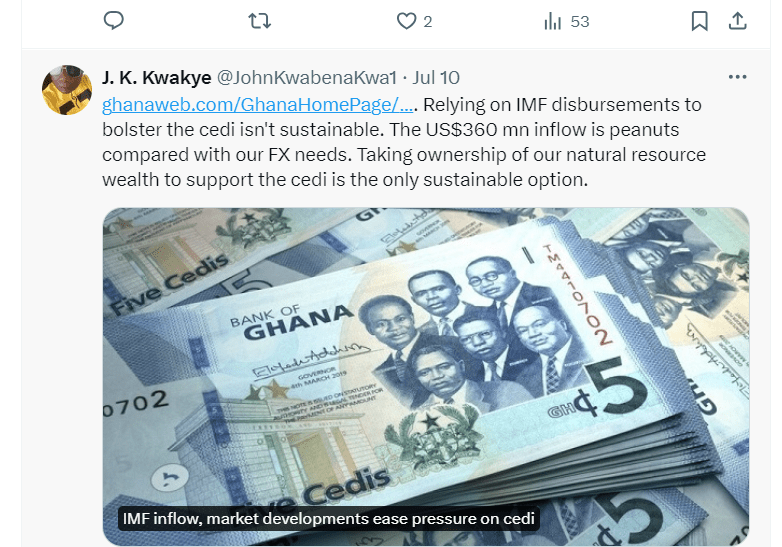
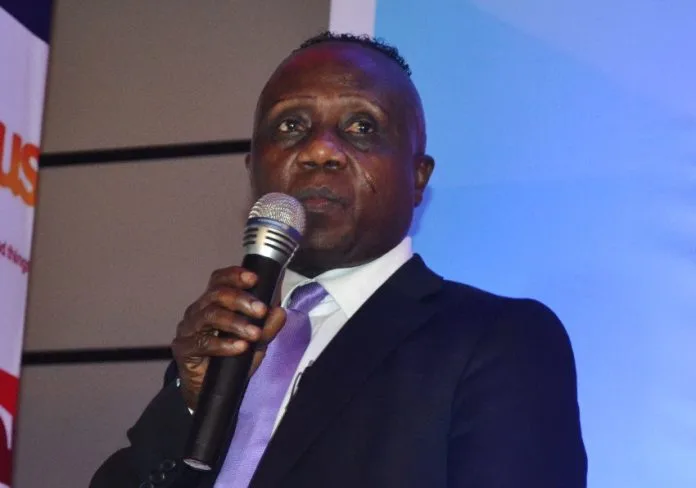
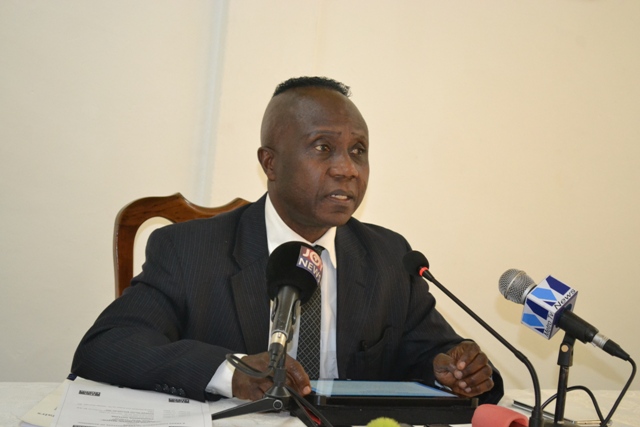
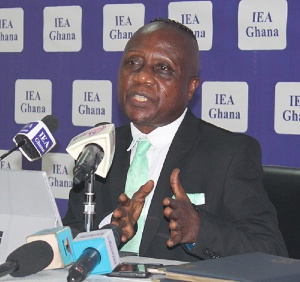
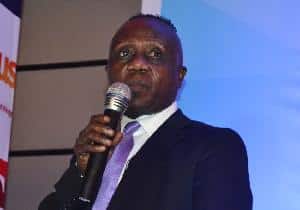
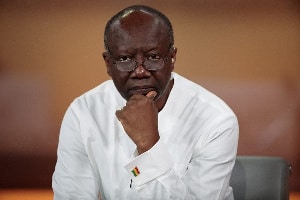
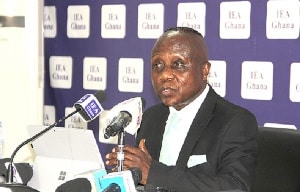
Dr. John Kwaye of the Institute of Economic Affairs has criticized Ghana‘s reliance on IMF disbursements to stabilize the Cedi, deeming it unsustainable.
He advocates for leveraging Ghana’s natural resources for foreign exchange instead, emphasizing the need for the country to assert greater control over its resource wealth.
This stance comes amid recent efforts, including an International Monetary Fund (IMF) disbursement and eased corporate demand, which have temporarily stabilized the Cedi against the US dollar.
The Cedi is reported to have held steady against the US dollar (US$), buoyed by improved market sentiments as FX demand eased.
This stability follows the IMF board’s approval and subsequent release of funds after the second review of its 36-month Extended Credit Facility (ECF).
The Finance Minister Dr Mohammed Amin Adam had announced on Monday that the third tranche was expected to hit the Bank of Ghana account by the close of today Monday, July 1.
“The Cedi has been under pressure in recent times, however, the exchange rate has largely stabilised since 2023. Year-to date depreciation of the cedi against the US$ is 18.4% compared to 22.0% recorded in the same period in 2023.
“The key measures we are implementing to deal with the recent depreciation include: tight monetary policy by the BoG; deepening the ongoing fiscal consolidation programme; intensifying the gold-for-oil programme and the BoG’s gold-for-reserves programme; and anticipated Forex inflows from disbursements from our multilateral and bilateral institutions as well as private sector financial institutions.
“These include the IMF 3rd Tranche of US$360 million which will be disbursed to Ghana by close of business today Monday 1st July 2024, following the IMF Executive Board approval of the 2nd Review last Friday; the IMF 4th Tranche of US$360 million expected in Q4 of 2024 after IMF Executive Board approves the 3rd Review; the World Bank DP02 tranche of US$300 million expected in Q3 of 2024; and disbursements from bilateral institutions/financial institutions including the World Bank GARID Project (US$150 million), EBID facility of US$200 million for SME support, and anticipated proceeds from 2024/2025 Cocobod syndication of up to US$1.5 billion in Q4 of 2024.”
The Institute of Economic Affairs (IEA) has emphasized the necessity of holding a debate before the 2024 elections, involving key political parties planning to participate.
IEA argues that such debates are essential for voters to evaluate both presidential and vice-presidential candidates, thereby making informed choices.
This position by IEA comes amid evident disagreements between the New Patriotic Party (NPP) and the opposition National Democratic Congress (NDC) over the importance of debates.
A senior fellow at IEA, Professor Alexander Bilson Darku, revealed in an interview with Citi News that discussions have begun with various political parties to arrange a debate before December 7.
“Let me make this very clear from the beginning. The need for debate is the right of the people. The people of Ghana ought to know what their presidential candidate, and for that matter, the party they represent, have in stock for them and so we are at a very early stage now talking to them [the political parties].
“We have our timetable and very soon it will be known to the public as to the programme that the IEA has outlined to make this all-important presidential debate come on. I don’t think we should go into the specifics, but I am telling you we will have it at a very good time that would be beneficial to the parties involved and the timing that would be beneficial for the nation.”
Professor Alexander Bilson Darku further mentioned that the participating parties and their candidates will be carefully selected and streamlined.
“We are using the Afrobarometer criteria. It has established a threshold, and we will use that threshold to invite the parties that meet the threshold to participate in the debate.
“This might be four or five parties, and their presidential candidates and vice presidential candidates will be invited to participate in the debate.”
The Director of Research at the Institute of Economic Affairs (IEA), Dr. John Kwakye, has advocated for Ghanaian flagbearers to be evaluated using standards akin to those applied to politicians in the United Kingdom (UK), believing this approach would enhance the expected quality.
Referring to a recent UK report by the Constitution Unit, Dr. Kwakye highlights the public’s demand for stronger mechanisms to ensure political integrity. The report indicates widespread support for independent regulators capable of launching investigations into ministerial misconduct.
Dr. Kwakye suggests a similar grading system for Ghanaian political contestants, underscoring the importance of transparency and accountability in governance.
Despite observing promising policies from Ghana’s presidential candidates for the 2024 elections, Dr. Kwakye expresses skepticism about their ability to deliver on these promises.
He questions whether proposals such as economic transformation, lean government, fiscal discipline, and natural resource ownership will materialize if the candidates are elected.
Dr. Kwakye’s remarks on his platform reflect a cautious optimism about the candidates’ policies, juxtaposed with concerns about their implementation.
“I am going to refocus our paradigm for natural resource management. For the most part, Ghana has not maximised the benefits of our natural resources.
“Since the days of the Portuguese in the 15th century, gold has always been taken out of Ghana. We haven’t benefitted much from our natural resources; I am going to change that paradigm. I am going to bring a bigger focus on ownership of our natural resources.
“It is as if right now we don’t own our natural resources. I believe that if we do the exploration; and we are going to empower our universities and the geological service department to do the exploration, once we explore that we have seven gold belts that we haven’t yet discovered. Once we have explored and we know that the gold is here, the new policy is going be that the ownership of those resources will be one hundred per cent owned by Ghanaians,” he stated.
Let's grade our political contestants by the same standards they are using for the UK candidates. pic.twitter.com/a2eEIIyzWS
Director of Research at the Institute of Economic Affairs (IEA), Dr. John Kwabena Kwakye, has proposed adopting the dollar as Ghana’s currency to stabilize the economy.
“Stabilising the economy is not rocket science. If we feel we cannot maintain the Cedi, let us abandon it and adopt the dollar. Let us dollarise the economy,” he said.
“Dollarisation” is when a country begins to recognize the U.S. dollar as a medium of exchange or legal tender alongside or in place of its domestic currency.
Dr. Kwakye suggested that dollarization should be a temporary measure until the economy rebounds, after which Ghana can reintroduce its currency.
Dollarization occurs when a country recognizes the U.S. dollar as legal tender alongside or instead of its domestic currency due to instability.
Advantages include lower administrative costs and a sounder financial sector, while disadvantages include loss of monetary autonomy and vulnerability to foreign influence.
He also proposed converting the central bank into a currency board, where the local currency is pegged to a foreign reserve currency, allowing for a fixed exchange rate.
Dr. Kwakye criticized the government for failing to implement alternative strategies, opting instead to collateralize assets for loans under the IMF program, limiting policy flexibility.
He expressed concern over recent exits of foreign companies from Ghana, such as Glovo and reports about Société Générale (SG) Ghana, citing the loss of competitiveness and its adverse impact on the economy.
In response, Mr. Yaw Sampah, a private legal practitioner and finance analyst, disagreed with Dr. Kwakye’s proposal to dollarize the economy.
He advocated for policies to diminish the dollar’s significance in Ghana, aiming to reduce speculative demand and promote the use of the local currency.
Mr Sampah emphasized the need to discourage dollar pricing in various sectors, suggesting that the dollar should only be used for international transactions to strengthen the local currency’s value.
The Director of Research at the Institute of Economic Affairs (IEA), Dr. John Kwakye, has urged the government to consider adopting the US Inspector General (IG) system as a strategic measure to combat corruption more effectively.
In response to the address by Dr. Mahamudu Bawumia, the New Patriotic Party’s flagbearer, on his vision for Ghana on February 7, Dr. Kwakye emphasized the importance of preventing corruption at its roots.
He suggested that implementing the US Inspector General system would serve as a proactive approach to corruption prevention.
In his article titled “Dr. Bawumia’s Speech: Turning an Impossibility into the Possibility?” Dr. Kwakye proposed that an independent Inspector General, reporting directly to Parliament, should be embedded in every Metropolitan, Municipal, and District Assembly (MMDA).
This Inspector General would monitor all financial transactions within the MMDA, significantly reducing the occurrence of corruption.
“In terms of preventing corruption before it occurs, we have suggested that Ghana adopt the US Inspector General (IG) system. The IG, who will be independent and report directly to Parliament, will be embedded in every MMDA and monitor all financial transactions within the MMDA. This will contribute to prevent most corruption from taking place. Since we are poor at prosecuting corruption, it would be best to prevent it from occurring in the first instance.”
Additionally, he called on the government to enhance the capabilities and resources of existing anti-corruption institutions such as the Office of the Special Prosecutor (OSP), Economic and Organized Crime Office (EOCO), Commission on Human Rights and Administrative Justice (CHRAJ), and the National Intelligence Bureau (NIB).
Strengthening these institutions, according to Dr. Kwakye, is crucial for them to fulfill their roles effectively in investigating and prosecuting corruption, serving as a deterrent to potential wrongdoers.
However, he emphasized that addressing corruption must begin with robust measures at the highest levels of government.
“Notwithstanding, I believe the accountable institutions—OSP, EOCO, CHRAJ, NIB—have an important role to play in fighting corruption. I will, therefore, call for them to be strengthened and resourced to carry out their mandate of investigating and prosecuting corruption to serve as a deterrent to potential culprits. But it has to be said that the surest way of fighting corruption is to start from the top.”
The Director of Research at the Institute of Economic Affairs (IEA), Dr. John Kwakye, has contested President Akufo-Addo’s claim that Ghana’s economy has turned the corner toward recovery.
Despite the government citing indicators like the decline in inflation as signs of recovery, Dr. Kwakye contends that the ongoing Christmas festivities reflect a different economic reality.
In a social media post, he expressed, “This is an Xmas to forget. Dry, dull and boring. Millions of Ghanaians can’t afford even one decent meal as a chicken costs 100gh. Yet we are told inflation is low and the economy has turned the corner. Really? Maybe it’s turned the corner for a few but not the majority.”
Dr. Kwakye’s post follows President Akufo-Addo’s assertions in his 2023 Christmas message, highlighting the recent decline in inflation, a relatively stable exchange rate, and overall economic growth as signals of a rebound.
President Akufo-Addo stated, “We continue to attract investments in our economy both domestic and foreign, reinforcing our position as the gateway to Africa and remain a beacon of democracy, peace, and stability in Africa. The country is not yet completely out of the woods, but there is a growing sense of confidence that with hard work and determination, Ghana will make it, and collectively, we will secure our futures.”
“…The country is not yet completely out of the woods but there is a growing sense of confidence that with hard work and determination, Ghana will make it and collectively, we will secure our futures,” he added.
This is an Xmas to forget. Dry, dull and boring. Millions of Ghanaians can't afford even one decent meal as a chicken costs 200gh. Yet we are told inflation is low and the economy has turned the corner. Really? May be it's turned the corner for a few but not the majority.
Director of Research at the Institute of Economic Affairs (IEA), Dr. John Kwakye, has expressed his concerns about the continued approval of what he characterizes as “colonial-type contracts” by the government in recent times.
Dr. Kwakye argues that such contracts primarily benefit foreign entities and the government itself. His comments come in response to the approval of the first lithium mining lease to Barari DV Ghana Ltd, a subsidiary of the Australia-based Atlantic Lithium.
In a tweet that was spotted by GhanaWeb Business, Dr. Kwakye called on the Ghanaian parliament to reject the agreement between the Government of Ghana and Barari DV Ghana Limited. He disputed the claim made by the Minister of Lands and Natural Resources, Samuel Abu Jinapor, that the deal was favorable for the country.
“What do our leaders take us for. Why are they still signing colonial-type contracts that favour foreigners and themselves? Parliament must reject it,” he queried.
He further said, “The terms of this license are not as favourable as the Minister would want us to believe. Where is the local – refining component the President promised us? Parliament should reject it!”
The $250-Million Ewoyaa Project in Central Region Set to Commence Production by 2025″
The Ewoyaa project, with an estimated value of $250 million, is located in the Mfantseman Municipality within the Central Region. It is anticipated to commence production activities in 2025.
On October 19, 2023, the Minister of Lands and Natural Resources, Samuel Abu Jinapor, officially signed a 15-year lease agreement with the company in Accra. This lease agreement encompasses an area of approximately 42.63 square kilometers.
Minister Jinapor clarified that the mining lease is in alignment with Ghana’s Green Minerals Policy. The terms of the lease involve an increase in royalty rates, rising from the standard 5 percent to 10 percent. Additionally, the state’s free carried interest has been raised from 10 percent to 13 percent.
Furthermore, the government, facilitated by the Minerals Income Investment Fund (MIIF), will acquire an additional 6 percent stake in the mining company and 3.06 percent in the holding company, which is listed on the Australian and London Stock exchanges.
It’s worth noting that on July 13, 2022, the Minister of Lands and Natural Resources, acting on behalf of President Akufo-Addo, presented a policy statement to Parliament outlining the development and management of green minerals. This policy aims to ensure that the exploitation of these resources benefits the people of Ghana.
Following its presentation to Parliament, the policy was submitted to Cabinet, where it underwent extensive deliberation and critique before receiving approval on July 27, 2023.
Some of the key components of this policy include higher royalty rates, increased Ghanaian participation in green mineral operations to a minimum of 30 percent, strengthened local content and local participation, including the listing on the Ghana Stock Exchange, and a focus on value addition and beneficiation.
In line with these policy directives, the government initiated negotiations with Atlantic Lithium for the Ewoyaa project.
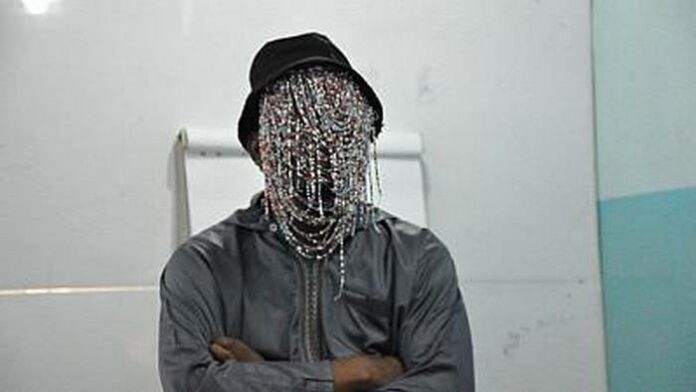
Director of research at the Institute of Economic Affairs (IEA), Dr. John Kwakye, has cautioned investigative journalist, Anas Aremeyaw Anasagainst setting up people to commit crimes in a way to expose them.
Dr Kwakye says setting people up to commit a crime is unacceptable and should be condemned.
His comments come after Anas said that he would be releasing a documentary on corruption in Ghana before the 2024 general elections.
Anas said this exposé will shake the foundation of the country.
He said these while answering questions in an interview on whether Anas was a ‘terrorist’ as was recently said by a High Court judge.
Anas defended his methods and talked about corruption in Africa.
He said “The work that I am doing now might be the last before we get into the [2024] elections. But already the signs are very clear and I can tell you that the foundation would be shaken once again.”
“There are a couple of international ones that are about to be released. But this one, talking to you as a Ghanaian, I mean the foundation of Ghana would be shaken,” he is reported to have said.
Commenting on this in a tweet, Dr Kwakye said “If Anas isn’t interested in cashing in on the elections, he should wait to publish his documentary after not before.
“Anas shouldn’t think that he can hold the whole country to ransom. No one is without blemish in this world. He himself isn’t an angel. Anas should work to catch people who commit actual crimes. He shouldn’t set people up to commit crimes. That’s unacceptable and should be condemned.
Dr. John Kwakye, director of research at the Institute of Economic Affairs (IEA), claimed on September 13, 2022, that the government’s move to request financial assistance from the International Monetary Fund (IMF) was only a temporary fix to the nation’s economic problems.
He believed that a long-term fix was necessary to address the economic situation.
The economic expert stated in a tweet that the IMF was only a temporary fix for our economic issues.
In order to promote policies that would change the economy from having a colonial structure to a modern industrial economy, he continued, “the long-term answers demand fiscal discipline and mobilizing our own enormous resources.”
Read the full story originally published on September 13, 2022 by Ghanaiantimes.
The Director of Research at the Institute of Economic Affairs (IEA), Dr John Kwakye, has described the government’s engagement with the International Monetary Fund (IMF) as a short-term solution to the country’s economic challenges.
According to him, the long-term solution required fiscal discipline and mobilising the country’s abundant resources to support policies that would transform the economy.
In a tweet on Saturday, the economic expert said “IMF is a short-term solution to our economic problems.”
“The long-term solutions require fiscal discipline and mobilising our own abundant resources to support policies that would transform the economy from its colonial structure to a modern industrial economy,” he added.
However, some economists and the Ghana Trades Union Congress have expressed their concerns because of the conditions that an IMF programme comes with.
But others are of the view that an economic programme with the Fund is long overdue since the Ghanaian economy has lost credibility following the downgrade of its credit rating by all three rating agencies (Fitch, Moody’s and S&P).
This has denied the country access to the international capital market, whilst inflation and the local currency have been impacted significantly.
Despite all these challenges, the IMF Managing Director, Kristalina Georgieva, has reiterated her outfit’s commitment to reaching an agreement with the government by the end of this year for an economic programme.
According to her, Ghana’s current economic woes are not self-inflicted ones but exogenous shocks such as COVID-19 and the Russian/Ukraine War.
Speaking with Joy News at the Africa Adaptation Summit in Rotterdam, Holland, Madam Georgieva, said the present economic imbalances are not due to bad policies by the government.
Again, the new IMF Mission Chief for Ghana, Stephane Roudet, arrived in the country last week.
Roudet whose appointment took effect from September 1, 2022, paid a visit to the Minister of Finance, Ken Ofori-Atta and his team and the Governor of the Bank of Ghana and his team as well.
Roudet’s visit lays the groundwork for a full mission towards the end of September 2022.
The GSFS, which was announced by the Finance Ministry in collaboration with the Financial Stability Council, has a seed fund value of GH15 billion, but economists doubt that this sum will be adequate to cover any prospective program losses.
The policy think-tank however expressed concern that the fund’s value falls too short of estimated losses to the sector; the GH¢15billion is only 23 percent of what the banking industry alone might require.
“The question, however, is whether the seed money of GH¢15billion is adequate, especially when banks alone are reported to expect a financial impact of around GH¢65billion,” the IEA noted.
The Institute was also critical of the Bank of Ghana’s direct involvement in funding the GSFS, describing it as “concerning”. Its fear stems from the significant expenditure undertaken by the central bank in recent times – including GH¢10billion as its COVID-19 contributions in 2020 and budget support of GH¢42billion in 2022.
“Printing more money to support the GFSF will not only further heighten the public debt, but also inflation and currency depreciation as well,” it warned.
According to the IEA, it also remains unknown whether all expected contributions will be received – especially as the nature of contributions from development partners remain a mystery, and whether they will be in grants or loans is unknown.
“There is no free lunch,” IEA said, as it warns there will likely be trade-offs and that contributors will possibly have specific conditions to be met.
IEA’s sentiments were corroborated by the Dean of the University of Cape Coast (UCC) Business School, Professor John Gatsi, who told B&FT that the likelihood of interest payments for accessing the fund makes its counterproductive for financial institutions.
“We must look at this carefully. How can a government that owes these institutions and cannot pay say it is setting up a fund to support those it owes – and will likely charge them interest on the facilities? I find that puzzling,” he remarked.
In as much as development partners have been touted as major would-be contributors to the GFSF, Prof. Gatsi believes the identity of these partners – beyond the World Bank – and their level of commitment should have been communicated already.
The BoG has, so far, taken only the first step in providing regulatory forbearance on liquidity and solvency, and standardisation of the accounting treatment to be applied regarding the DDEP.
Furthermore, the apex bank will apply a reduction of cash reserve requirement ratio to 12 percent on local currency deposits; a reduction in the Capital Conservation Buffer to zero percent from 3 percent; and a slashing of Capital Adequacy Ratio to 10 percent from 13 percent, in addition to suspension of dividend payments and other payouts to shareholders.
Meanwhile, during the announcement of agreements reached between the Ministry of Finance and Ghana Association of Bankers (GAB) as well as the National Insurance Association (NIA) – regarding the terms of their participation in the DDEP – it was mentioned that clarity on the operational framework and terms of access to the fund had been spelled out.
Its Executive Director Dr. John Kwakye explained that while savings of GH24billion per annum could be realized from a 10% expenditure cut across the medium-term budget – from 2023 to 2026 – which is estimated to range between GH191billion and GH285billion, a similar value could be saved with targetted spending in specific areas. The report was anchored on fiscal measures – expenditure cuts and ambitious revenue mobilization as well as the need for burden sharing.
This will help government raise GH¢45billion every year between now and 2026, which will ensure the economy – particularly the financial sector – is spared from crippling shocks while providing the Treasury space to re-profile the nation’s debt.
While describing it as a “sensitive subject”, the Institute suggested that significant reductions in public sector compensations – projected at GH¢45billion in 2023 and rising to GH¢70.4billion by 2026 – could also provide much-needed fiscal space going forward.
“There is considerable room to reduce this item. However, it is not just about cutting pay – which may not even be enough in living or economic terms. There is need for a complete review of the system for public sector salaries, allowances, retirement benefits, etc. Doing so will foster fiscal and debt sustainability,” Dr. Kwakye noted.
In addition, the IEA recommended renegotiating Power Purchase Agreements (PPAs) with Independent Power Producers – targetting about half of the annual payments in the medium-term, which it says should save some GH¢12billion annually.
“Infrastructure is an essential item in the budget, given its large deficit in the country. However, in the current situation where government is struggling to pay its debt, it cannot at the same time afford the expense to deliver needed infrastructure,” the Institute noted; adding that infrastructure spending, if reduced by a third in the medium-term, could save as much as GH¢4.9billion yearly.
Other areas of focus to scale back expenditure include goods and services, energy sector debt transfers, the Office of Government Machinery and some flagship programmes.
Revenue mobilisation
While expenditure is being curtailed, revenue must also be enhanced as an added fiscal measure, the IEA noted.
Chief among them is a sweeping hike in the base tax rates for corporate entities, particularly those operating in the extractive, telecommunication and financial sectors; a move the IEA said would raise an additional GH¢15billion annually.
Reacting to concerns that such a move would overburden businesses already operating in a high inflation environment and possibly lead to the exodus of some well-established players, Dr. Kwakye insisted that current rates are among the lowest among the country’s competitors.
Other measures tabled include the introduction of an e-commerce levy to complement the electronic-levy, as well as enforcing laws on property taxes and tax exemptions.
A visiting Fellow at the IEA, Prof. Alexander Bilson Darku, emphasised that these proposals are meant to accompany the DDEP and not necessarily replace it.
He however noted that if the measures were implemented, they would allow for more favourable terms under the Programme: including shorter maturity periods for the new bonds and a new coupon regime of 8 to 12 percent, versus the current term which is capped at 10.65 percent.
“With the huge gains expected from the suggested fiscal measures, if they are implemented in full or even with partial implementation, it may render the gains projected under the DDEP not fully needed and a new version with less ‘haircut’ to bondholders could be introduced,” he opined.
The IEA’s recommendations are likely to find their way into discussions by the technical committee set up by Ministry of Finance, together with representatives from the Individual Bondholders Forum (IBF) to explore viable alternatives to the Programme’s existing terms.
The committee – formed after a meeting between the Finance Minister Ken Ofori Atta and leadership of the IBF on Wednesday, January 18, 2023 – is to, among other things, seek fiscal space in the 2023 budget to allow for exempting the most vulnerable classes of investors.
Dr. John Kwakye, the Institute’s Director of Research, asserts that given their financial weakness, which would be impacted by the debt restructuring effort, the move is essential.
On January 24, 2023, Dr. Kwakye told media at a discussion held in Accra that contributions from rural banks are largely for the underprivileged and that their inclusion in the DDEP would rob them of their hard-earned money.
Touching on the three-year moratorium on repayment of principal under the DDEP, Dr Kwakye described the move as regressive and therefore wants government to rather implement a new coupon of 8-12% over the new maturity period.
“They need to adopt a new coupon regime of 8-12 percent over the new maturity period and also consider abolishing the 3-year moratorium on the repayment of principal to save individuals and banks”, he added.
He, however, advised that for any debt restructuring to be successful, it must safeguard the stability and integrity of the financial system.
He added that it must also be designed to prevent capital flight and increase in the cost of borrowing among others.
“There must be proper stress-test exercise at the institution-by-institution level to study the impact of different DDE proposals on financial sector viability and stability and it must not impair government ability to fund itself on an on-going basis,” Dr. Kwakye outlined.
He further said that the 2023 budget proposal made by Finance Minister Ken Ofori-Atta was targeted toward obtaining an IMF financial bailout.
In a tweet, Dr. Kwakye stated that “the 2023 Budget and the debt exchange offered by the Minister have IMF fingerprints all over it.”
On December 5, 2022, the finance minister stated at a news conference in Accra that all domestic bondholders would swap their existing securities for new ones as part of the debt exchange scheme.
Existing domestic bonds as of December 1, 2022, will be exchanged for a set of four new bonds maturing in 2027, 2029, and 2037.
The annual coupons on all of these bonds will be set at 0% in 2023, 5% in 2024 and 10% from 2025 until maturity.
Director of Research at the Institute of Economic Affairs (IEA), Dr John Kwakye, has averred that government’s announcement of a debt exchange programme was influenced by the International Monetary Fund (IMF).
He further asserted that the 2023 budget statement presented by the Finance Minister, Ken Ofori-Atta was also geared towards securing a financial bailout from the IMF.
Dr Kwakye in a tweet said, “IMF’s fingerprints are all over the 2023 Budget and the debt exchange presented by the Minister.”
The finance minister, at a press conference in Accra on Monday, December 5, 2022, said under the debt exchange programme all domestic bondholders will exchange their instruments for new ones.
Existing domestic bonds as of December 1, 2022, will be exchanged for a set of four new bonds maturing in 2027, 2029, and 2037.
The annual coupons on all of these bonds will be set at 0% in 2023, 5% in 2024 and 10% from 2025 until maturity.
Meanwhile, Ghana is targeting an amount of $3 billion over a three-year period from the IMF once an agreement on a programme is reached.
The new amount requested as a loan is double the government’s initial target of $1.5 billion.
The IMF programme is aimed at restoring macroeconomic stability and safeguarding debt sustainability among many others.
IMF’s fingerprints are all over the 2023 Budget and the debt exchange presented by the Minister.
At the invitation of the then Prime Minister of Malaysia, Dr. Mahathir Mohamed, Ghana’s former president, John Agyekum Kufuor, experienced something in the southeastern Asian country that forever changed his mindset about presidential tenures.
Narrating how that came to be, during his engagement with the Institute of Economic Affairs (IEA) on Reviewing the 1992 constitution recently, Kufuor said that on arriving in the country he came face-to-face with two realities.
He said that after learning that Malaysia got its oil palm seedlings from Ghana, he arrived in the country to an even more eye-opening discovery of how well the country had utilized the ‘gift’ it got from his very own country.
“I was invited to Malaysia by Dr. Mahathir Mohamed, who was Prime Minister; I was president and it must have been 2005-2006 and it was a great eye opener to me. I had learnt that Malaysia took the oil palm seedling from here (Ghana) there. I got to Kuala Lumpur, the plane, as it was coming to land, you’ll see miles and miles of palm trees all over, and very modern agriculture.
“And then when I got there, probably, they just wanted to show me something, they took me to where they had refined palm oil into some oil that will be used even as engine oil. And then they used the husks for fertilizer for the palm trees, so every bit of palm.
“So, I said these people got this thing from us and we do not know how to do this. See what they are doing with it themselves. Then, at a point, he invited me to his offices in New Kuala Lumpur; the office is like a mosque, he took me to the rooftop, and Dr Mohammed, perhaps not taller than 5 feet… and then from there, I saw the layout of the city: the streets – beautiful, and the development,” he said.
President John Agyekum Kufuor also explained that having been quite surprised at the expanse of development and innovation that the Malaysians had used the oil palm seedlings for in their country, he asked Dr. Mohamed how they did it.
In response, he said the Malaysian Prime Minister asked him a question that jolted his mind so much, he came to the realization that there is the need for Ghana to relook at its constitutional arrangement for the tenure of its presidency.
“So, I gasped and said, ‘Oh, Mr. Prime Minister, since when have you been doing this?’ So, the man looked me up and down. The question he asked me was, ‘What’s your term of office?’
“I said, 4 years. So, he said back, what can you do in four years? By then he had exceeded 10 years and I’m not suggesting we go that way, but definitely, 4 years, he made the point forcefully that you don’t really create so much in 4 years,” he added.
According to information in the budget declaration, the deficit is anticipated to be GH61.5 billion, or 7.7 percent of the Gross Domestic Product, in 2023. (GDP).
It is anticipated to reach GH 71 billion, GH 54.4 billion, and GH 61 billion in 2024, 2025, and 2026, respectively. As the Bank of Ghana (BoG) reduces its monetisation of the deficit, this amount would be covered by foreign parties.
Already, the central bank has financed the 2022 budget with an injection of GH¢49.9billion – a development analysts are concerned will keep inflation up. The BoG has had to make the interventions mostly because deposit money banks (DMBs) have demanded a premium to purchase government securities due to deteriorating market conditions.
This has seen interest rates trend upward across the spectrum of the yield curve, with the base 91-day Treasury bill accelerating from 12.49 percent at the beginning of the year to 31.53 percent in October – with the 182-day Treasury bill following suit, rising from 13.91 percent to 32.61 percent over the same period and similar developments on the 364-day instrument, 2-year, 3-year and 5- and 6-year bonds.
Welcoming the expected lower level of participation by the BoG in financing the budget shortfall, the IEA however noted that solely dependinge on foreign parties could have dire consequences for domestic development projects.
“The entire financing for the period is to be provided by multinational and other international partners. This is worrisome, because if for some reason they do not fully materialise – such as due to government’s inability to meet some conditions – government may have to fall back on the BoG and/or forgo some development projects and programmes,” stated IEA’s Director of Research, Dr. John Kwakye.
CAPEX
The situation has assumed increased importance over the historically low percentage share of capital expenditure (CAPEX) to GDP, especially when compared to recurrent expenditure.
The 2023 budget projects a CAPEX of GH¢27.7billion (3.5 percent of GDP) compared to big-ticket, recurrent items such as compensation (GH¢45billion) and interest payment (GH¢52.6billion).
With the desperate need for hard and soft infrastructure – roads, bridges, hospitals, schools, factories, housing facilities, energy systems, water systems, sanitation systems, etc. – to transform the economy, the IEA made a bold call for an increase of CAPEX to a minimum of 5 percent to GDP in 2023, with increased allocation of between 7 and 8 percent in 2024, 9 and 10 percent in 2025 and 12 and 15 percent in 2026, arguing that such a line of action would bring the domestic rate in line with the standard “deemed acceptable for countries in the process of developing”.
“The CAPEX allocation, which is equivalent to about US$2billion (at today’s exchange rate of US$1 = GH¢14, which will reduce further with more depreciation), is insignificantly small to meet the country’s huge development needs … This will require raising more resources and allocating relatively more to CAPEX,” the public policy think-tank added.
The IEA also proposed an amendment to the Fiscal Responsibility Act (FRA) to guarantee that use of all borrowed funds be channelled toward CAPEX only, “with none going to recurrent expenditure” while asking parliament to oversee and enforce the provision.
The Institute, however, did not provide guidance on how immediate recurrent expenditure would be met if its proposal were to be adopted.
On Monday, November 28, 2022, Dr. Ernest Addison, the chairman of the Monetary Policy Committee and governor of the Bank of Ghana, is anticipated to address the media to share the conclusion reached following the Committee’s final scheduled meeting of the year.
Prior to the announcement, the IEA held that the anticipated increase was caused by the expanding gap between inflation and the policy rate, which forced commercial banks to borrow money from the BoG at higher rates while inflation was rising.
On Monday, November 28, 2022, Dr. Ernest Addison, the chairman of the Monetary Policy Committee and governor of the Bank of Ghana, is anticipated to address the media to share the conclusion reached following the Committee’s final scheduled meeting of the year.
Prior to the announcement, the IEA held that the anticipated increase was caused by the expanding gap between inflation and the policy rate, which forced commercial banks to borrow money from the BoG at higher rates while inflation was rising.
On Monday, November 28, 2022, Dr. Ernest Addison, the chairman of the Monetary Policy Committee and governor of the Bank of Ghana, is anticipated to address the media to share the conclusion reached following the Committee’s final scheduled meeting of the year.
Prior to the announcement, the IEA held that the anticipated increase was caused by the expanding gap between inflation and the policy rate, which forced commercial banks to borrow money from the BoG at higher rates while inflation was rising.
“The decision regarding the PR is rather tricky—and challenging—at this time. We note that a significant gap has opened between the PR, at 24.5%, and inflation, at 40.5%. This is not uncommon. However, it rather unusual, especially in the Ghanaian context, where the real PR has been, more often than not, positive. Similarly, the PR has fallen far behind Treasury Bill rates, which are over 35%”, the statement signed by the IEA Director of Research, Dr. John Kwakye read.
“This has caused misalignment between the rates and increased the potential for “round-tripping,” to the extent that it is possible for banks to access Central Bank funds at cheaper rates and on-lend to the government at higher rates. It is also the case that major economies, such as US and UK, have further tightened their policies, increasing the pressure on the currencies of emerging markets and developing countries”, it explained.
The IEA however pointed out that the government and the Bank of Ghana are not adopting the adequate intervention measures aimed at controlling inflation which has been spiraling and resulting in policy rate hikes throughout the year.
“Already, interest rates have reached prohibitive levels and hurting the real economy as the cost of doing business has escalated. Reducing the growth projection for 2022 from the original 5.8% to 3.7% in the Mid-Year Budget attests to a slowing economy”.
“Our view is that inflation may go up further in November [2022], reflecting the pipeline pressures, before possibly slowing in December [2022], reflecting the slight decrease in fuel prices and a measure of stability on the foreign exchange market”.
Further making a case for the policy rate hike, the IEA noted that the move become necessary in order to “consolidate the incipient stability and reassure the markets of the strong commitment to fighting inflation. From that standpoint, I [IEA] expect the PR to be increased by 200 basis points to 26.5%”.
Meanwhile, the MPC at its last meeting in October this year hiked the monetary policy rate by 250 basis points from 22 percent to 24.5 percent.
The move according to the central bank was to stem inflation which has been soaring in recent months due to the depreciation of the cedi, upward adjustments in tariffs and Ghana awaiting to access an IMF-supported programme.
The Director of Research at the Institute of Economic Affairs (IEA) Dr John Kwakye has shared his views on the gold for imported oil new policy by the government.
The Vice President Dr Mahamudu Bawumia, has revealed a remarkable new policy by government that would see the government pay for imported oil products with gold rather than through US Dollars.
Revealing the policy in a post on his Facebook page on Thursday, Vice President Bawumia said the policy is expected to take effect by the end of the first quarter of 2023.
He said in a Facebook post that “The Use of Gold To Buy Imported Oil Products
“The demand for foreign exchange by oil importers in the face of dwindling foreign exchange reserves results in the depreciation of the cedi and increases in the cost of living with higher prices for fuel, transportation, utilities, etc. To address this challenge, Government is negotiating a new policy regime where our gold (rather than our US dollar reserves) will be used to buy oil products. The barter of sustainably mined gold for oil is one of the most important economic policy changes in Ghana since independence.
“If we implement it as envisioned, it will fundamentally change our balance of payments and significantly reduce the persistent depreciation of our currency with its associated increases in fuel, electricity, water, transport, and food prices. This is because the exchange rate (spot or forward) will no longer directly enter the formula for the determination of fuel or utility prices since all the domestic sellers of fuel will no longer need foreign exchange to import oil products.
“The barter of gold for oil represents a major structural change. My thanks to the Ministers for Lands and Natural Resources, Energy, and Finance, Precious Minerals Marketing Company, The Ghana Chamber of Mines and the Governor of the Bank of Ghana for their supportive work on this new policy. We expect this new framework to be fully operational by the end of the first quarter of 2023.”
Sharing his views on this, Dr John Kwakye said in a tweet that “This is mere window dressing and will not address the perennial depreciation of the cedi.
“The viable option is to restructure the economy and continually increase the foreign exchange cover for the currency issue.”
“I don’t get the rationale of this policy at all. To me, gold is as good as forex. So, whether we use gold or forex to purchase oil, we’ll be depleting our reserves and the pressure will be back on the cedi.”
Former President, John Agyekum Kufour, wants the Council of State scrapped.
He believes, the Council has lost its relevance over the years and must be abolished. Instead, he wants it to be turned into a second chamber.
The former President said this at a forum organized by the Institute of Economic Affairs (IEA) in Accra.
“Perhaps the time has come for us to move to a second house. It might cost a bit more, but we want quality to serve the ends of good governance and the people at large more, then I would say, the days of Council of State are over.”
The forum formed part of a series of engagements the Institute undertook to solicit input towards a possible review of Ghana’s 1992 Constitution.
The former President proposed that, instead of the Council of State, the country should set up a second chamber to play the advisory role to the government.
“I have had a chance to express my views on the Council of State, a very honourable distinguished institution, well-meaning. But, I can say I don’t think it is fit for purpose given the state of development of our country and given the fact that the nation is committed to practising democratic governance.”
In recent times, the relevance of the Council of State, has been questioned with some political commentators, academia and civil society organisations suggesting that the body had outlived its usefulness and should be abolished.
Former President Kufuor explained that though the framers of the Constitution thought it wise to set up such a body to advise the President, the Council was no longer useful.
He said: “…We limit the uses of Council of State to advising just the President,” and that often, the President decided whether or not to take the advice.
“So, I have gone through all these periods and I have come to a conclusion, perhaps, what our Constitution should have to temper the extremes of democracy is not a Council of State but a second chamber, a second chamber well composed not on the basis of democracy so much. Democracy should always be implied in there though but not entirely democratically but more on proof and experience, prove in public spiritedness, prudence, maturity, care for the nation, inclusive.”
“If we do that, and allow this second chamber to operate openly, in the full glare of publicity, then the wisdom that would be issued from their deliberations would impact not only the President,” he added
The former President added that the term of the second chamber must not be tied to the tenure of any government to ensure that there was continuity in the provision of development for the people.
On limiting the appointing powers of the President, the former President said the country must practice the checks and balances in its pure form, especially among the lead organs of State.
He called for the amendment of sections of the Constitution that empowered presidents to appoint about 50 percent of Ministers from Parliament.
“The legislature should be apart, people being elected there should be encouraged to professionalize themselves as legislators, so they will play the guard dogs or watchdogs on the executive,” he said.
The former President also urged that political parties were allowed to participate in elections at the local level.
Current government expenditure is heavily skewed toward recurring costs rather than capital ones, which causes improper prioritization of costs that is harmful to the advancement of the country.
Over 90% of the overall budget for 2022 is made up of recurring spending, with the remaining 10% being capital expenditures (CAPEX).
CAPEX accounts for 14% of total income, which is extremely low (2.3 percent of GDP) and inhibits economic progress.
Prior to reading of the 2023 budget and government’s economic plans, Director of Research at the IEA, Dr. John Kwakye, in a press briefing emphasised that recurrent spending as a whole has to be reduced in order to free-up resources for CAPEX to improve long-term growth prospects.
Interest payments make up the major portion of central government’s recurrent spending, accounting for 35 percent of the total; followed by compensation (32 percent) and transfers to other governmental entities (20 percent). About 77 percent of overall expenditures are made up of those three items. Additionally, as they account for 107 percent of total income, some borrowed money will likely be required to cover them – with remaining funds going to other recurring expenses like goods and services and CAPEX.
“The curtailment should target, especially, compensation through considerable downsizing of the public sector, including the overall government machinery. A small country like Ghana has 28 ministries and 85 ministers (including 16 Regional Ministers) by my own count.
“Ideally, we need just 12 Ministries manned by 24 Sector Ministers and their deputies plus 16 Regional Ministers, making 40 ministers in total. This will require the merger of ministries,” Dr. Kwakye suggested.
The Director of Research called for a review of the ‘Article 71 office-holders’ compensation to reduce its burden on the budget, as well as some cuts to government consumption of goods and services in general: including travel, medical expenses, entertainment, hospitality, utilities and stationery, among others.
“Indeed, we should move quickly to a situation wherein recurrent expenditure never exceeds total revenue, such that borrowing can be used exclusively for CAPEX. The Fiscal Responsibility Act (FRA) may have to be amended to include the rule that borrowing should be exclusively used to fund CAPEX. That makes economic sense. Meanwhile, raise CAPEX to between 5 percent and 7 percent of GDP in 2023, and further to 10-l2 percent in 2024,” Dr. Kwakye advised.
He further stated that the 2023 budget must unambiguously signify a total break from this enduring threat, given the unsustainable fiscal position and debt that the country has borne and the production of general volatility for the economy over the years.
“To that end, the deficit must be significantly curtailed,” he emphasised.
The 2022 Mid-Year Budget projected a deficit of 6.6 percent and a primary balance of +0.4 percent for the year.
Notwithstanding the outcomes, he proposed the 2023 budget must project a deficit of not less than 5 percent, which is the current ceiling in the Fiscal Responsibility Act.
“Further, the primary balance should not be less than +1 percent. For 2024, the deficit must be reduced further to 3 percent – in line with the ECOWAS convergence criterion – along with a primary balance of not less than +1 percent,” he said.
“Keeping to these targets will help reduce the destabilising effect of fiscal policy, while also reducing borrowing and fostering long-term debt sustainability,” he added.
According to the Institute of Economic Affairs (IEA), the budget and economic strategy for 2023 will “make or break” the economy; therefore, it cannot be designed and implemented “business as usual.”
At a news conference in Accra, Dr. John K. Kwakye, Director of Research, IEA, said, “It must break from the past and chart a new route to restore economic stability, while building the framework for long-term sustainable growth and poverty eradication.”
Dr. Kwakye said that because of increasing borrowing and the adoption of “less ambitious” tax and revenue targets that were much lower than those of peers in the sub-region, the nation was experiencing “self-inflicted” resource constraints in the midst of an economic crisis.
He, therefore, called for the increase in collection of tax revenue targets from about 12 to 13 percent of Gross Domestic Product (GDP) to at least 15 to 16 percent in 2023 and 18 to 20 percent in 2024.
Meanwhile, total revenue targets, he said, could be increased from the current level of 15-16 percent of GDP to between 18 to 20 percent in 2023 and 22 to 25 percent in 2024.
Achieving the new targets, he said would entail addressing revenue loopholes and inefficiencies that took the form of tax exemptions to privileged individuals, poor property rate regime; tax evasion, administrative corruption, and trade mis-invoicing among others.
He said there must also be a “curtailing” of recurrent expenditure in the 2023 budget to free resources for capital expenditure to boost long-term growth prospects.
“The curtailment should target, especially compensation through considerable downsizing of the public sector, including the overall Government machinery, ” he said.
“As we have repeatedly argued, the Inflation Targeting (IT) framework used by BoG, essentially a demand-management tool, is less capable of dealing with Ghana’s type of inflation that has strong supply and cost undercurrents, ” he said.
The IEA has also noted that structural solution to the cedi depreciation must be geared towards closing the foreign exchange demand-supply gap through a fundamental restructuring of the economy.
“On the one hand, the restructuring must be directed to expanding, diversifying and processing export commodities to increase forex receipts, ” Dr Kwakye added.
The Institute also called on the Government to review all extractives tax regimes to ensure that Ghana derived adequate benefits; ensure fiscal and debt sustainability; shore up financial buffers such as stabilisation fund, sinking fund, and infrastructure Investment Fund, among others.
Dr. John Kwakye, director of research at the Institute of Economic Affairs (IEA), has stated that the country’s macroeconomic stability should be a priority for the next 2023 budget, which will be read in parliament on Thursday, November 24, 2022.
Dr. Kwakye also requested that economic controllers build the foundation for the nation’s long-term sustainable growth and reduce poverty.
He stated, “It must break from the past and chart a new route to restore macroeconomic stability while building the groundwork for long-term sustainable growth and poverty alleviation,” at a press conference in Accra.
The presentation of the budget in parliament is in pursuance of the Public Financial Management Act, 2016 (Act 921).
This will allow the Finance Minister to review the budget statement and economic policy of the government and supplementary estimates for the 2023 financial year.
The present 1.50 percent fee, levied on all electronic transfers over GHC 100 in a day, should be decreased to 0.50 percent, says Dr. John Kwakye, director of research at IEA.
He explained that the action will involve everyone, including tax evaders, and enhance government efforts to raise income.
Dr. Kwakye remarked, “We advise cutting the rate from 1.50% to 0.50%,” during a news conference in Accra.
By doing this, it would deter people from attempting to avoid paying the tax, and the government might wind up collecting more money than the current 1.50% rate.
The tax policy was a move by the goverment to widen the country’s tax net but has since courted controversy and widespread backlash since its announcement and subsequent implementation.
The charging entities for the E-Levy are telecommunications companies, commercial banks, special deposit-taking institutions and Payment Service Providers (PSPs).
Government hoped to rake in about GH¢7 billion from the collection of the 1.5 percent levy on mobile money and other electronic transactions, but the figure was revised downwards to about GH¢4 billion recently.
Meanwhile, the Ghana Revenue Authority (GRA) in October this year noted that a total of GH¢328 million in revenue has been accrued from the E-Levy so far.
The Ministry of Finance, the Bank of Ghana and the Ghana Revenue Authority (GRA) must ensure that the $100 million of Ghana’s oil money that was transferred to an overseas account is immediately reimbursed to the Petroleum Holding Fund (PHF), the Director of Research at the Institute of Economic Affairs (IEA), Dr John Kwakye, has said.
“The question is whether the $100 million belongs to Ghana or not. If it does, then GNPC can’t keep it outside BoG custody. The Ministry of Finance, BoG and GRA must ensure that the money is promptly transferred to the PHF held by BoG”, Dr Kwakye noted.
On Thursday, 17 November 2022, the Deputy Chief Executive in charge of Commerce, Strategy and Business Strategy of the Ghana National Petroleum Corporation (GNPC), Mr Joseph Dadzie, told the ad hoc parliamentary committee hearing allegations of reckless mismanagement of the economy and conflict of interest against Finance Minister Ken Ofori-Atta that the president’s cousin did nothing wrong as far as the payment of the $100 million of Ghana’s oil revenue to an offshore account is concerned instead of into the petroleum holding fund.
Mr Dadzie told the committee: “JOHL [Jubilee Oil Holding Limited] is a 100 per cent subsidiary of GNPC”, noting: “We believe it is a company registered under the Companies Act and, obviously, the terms and conditions, the constitution of JHOL, is governed by the Companies Act, and, for that reason, 100 per cent of the revenue cannot be put into the Petroleum Holding Fund.”
Earlier, the Public Interest Accountability Committee (PIAC) had insisted on the same day that the petroleum receipts that were paid into a different account other than the petroleum holding fund, flouted the laws of Ghana.
PIAC Vice Chair Abdul Nasir Alfa Mohammed said: “We explored all the laws, in our opinion, that border around this issue and we still came to an independent opinion, which we stand by on any day, that those revenues ought to have formed part of the petroleum revenues of Ghana and ought to have been deposited in the petroleum holding fund and not in any other account”.
“So, for us, it was contrary to law for that money to have been deposited in any accounts, if at all”, Dr Mohammed said on Thursday, 17 November 2022.
The PHF is held offshore at the Federal Reserve Bank of New York, as the Bank of Ghana Petroleum Holding Fund Account.
The gross receipts into the Petroleum Holding Fund are made up of the following:
Royalties from oil and gas, surface rentals and other receipts from petroleum operations and sale or export of petroleum;
Receipts from direct and indirect participation in petroleum operations by the government;
Corporate income taxes from upstream and midstream petroleum companies;
Any amount payable by the national oil company as corporate income tax, royalty, dividends, or any other amount due in accordance with the laws of Ghana;
Any amount received by government such as capital gains tax derived from the sale of ownership of exploration, development and production rights;
Production and signature bonuses and additional oil entitlements.
In September this year, the minority caucus in parliament noted with “serious concern” the “inability or refusal of the Akufo-Addo/Bawumia-led government” to account for over $100 million of oil funds that accrued to the state coffers concerning petroleum lifting in the first quarter of 2022.
In a statement dated Thursday, 29 September 2022, signed by Mr John Abdulai Jinapor, the ranking member of the mines and energy committee of parliament, the caucus said: “The decision by the current NPP government to transfer revenues accruing from about 944,164 bbls of crude lifting in the Jubilee and TEN fields to a company established in a safe haven (outside Ghana) without parliamentary approval, amounts to a gross violation of the Petroleum Revenue Management Act, 2011 (Act 815) and Public Financial Management Act (Act 921)”.
“We have become aware that following the acquisition of a 7-per cent interest in the Occidental (Oxy) transaction in respect of the Jubilee and TEN fields by the government, ostensibly for GNPC in 2021, the Minister of Finance has clandestinely ceded the shares to an offshore company known as JOHL (a company set-up in the Cayman Islands) in a very surreptitious and opaque manner”, the statement said.
The minority said it is “very much alarmed” that contrary to requirements of the PRMA, revenues accruing from the nation’s oil fields “are not being paid into the Petroleum Holding Fund (PHF), which has been confirmed in the 2022 semi-annual report on petroleum receipts by the Public Interest and Accountability Committee (PIAC)”.
“As if this is not enough, the report further reveals that Capital Gains Tax was not assessed and collected by the Ghana Revenue Authority (GRA) in the sale of the 7% interest by Anadarko in the Jubilee and TEN fields in 2021”.
“This NPP government is proving by the day, that the nation’s oil resources cannot be entrusted in their care because not long ago, the PIAC, under the chairmanship of Dr Steve Manteaw, accused them over their inability to account for about GHȼ2 billion of Ghana’s oil cash for the 2017, 2018 and 2019 fiscal years”, the minority added.
It said this is “surely another ‘Agyapa’ deal in the making and we, as a minority, will not sit aloof for this government to raid the national purse, especially at a time when the nation is struggling to raise much-needed revenues for critical expenditure”, noted the caucus.
The minority demanded that the Minister of Finance and the government, “with immediate effect, repatriate all such illegal transfer payments back into the Petroleum Holding Fund (PHF)”.
“Failure to comply with our ultimatum will compel the Minority to use the necessary parliamentary processes to haul the Minister of Finance to parliament for possible censure”.
However, the Chairman of the Mines and Energy Committee of Parliament, Mr Samuel Atta Akyea, said no $100 million oil money due Ghana was missing.
According to him, the money was used to settle upfront, a loan taken from the ministry of finance by GNPC Subsidiaries, to acquire a seven per cent stake in the TEN and Jubilee oil fields on behalf of the state.
In his view, therefore, even though administrative processes may not have been followed, in terms of lodging the money in the Petroleum Holding Fund (PHF), no harm was done to the state by the upfront payment of the loan taken by GNPC Subsidiaries using that quantum of petroleum receipts.
Mr Atta Akyea told Kofi Oppong Asamoah on Class91.3FM’s breakfast show on Friday, 30 September 2020: “Well, I think it’s a storm in a teacup because sometimes the impression is being given that the money has been spirited away”.
According to him, “there’s a whole debate, as to whether or not some money should be lodged in the petroleum holding fund, so, it’s an interpretation and accounting”.
The former minister of Works and Housing said his crosschecks show that “there was an opinion from the attorney general to the effect that they needn’t place the money in that account for the simple reason that there’s a seven-per cent equity acquisition in the TEN and Jubilee fields by GNPC Subsidiary and they didn’t have the money so the ministry of finance borrowed them the money so they do this acquisition; they are trying to improve the governmental stakes in these petroleum blocks”.
“When they [GNPC Subsidiaries] took the loan, they were unable to pay, so, they used the petroleum receipts due them to settle it, so, the ministry of finance took the money and paid for the loan upfront”, Mr Atta Akyea explained.
“The whole problem is simple: that the sheer fact that the money was not lodged in the PHF does not mean the money has been spirited away or stolen. … It’s all a balancing account but when push it to the political dimension that some money has been spirited away, it leaves much to be desired”, he added.
He said: “The sum of money, if you look at it, is equal to the seven per cent equity stake that the government, through GNPC Subsidiary has acquired. Let’s look at it from that perspective. So, when somebody is using his ingenuity to confer advantage and benefit to Ghana, ultimately, how can that be a problem?”
“And if the money was not so lodged in the PHF but it is shown that, indeed, the shares have been acquired, and the shares have been paid for, how can that be anything to undermine this country, financially?” he wondered.
He continued: “Are we looking at the substance or the form? The sheer fact that the money was not lodged in the account but the money has been applied as it can be applied in the share acquisition to the benefit of Ghana”.
Mr Atta Akyea, who is the MP for Akim Abuakwa South in the Eastern Region, said: “My concern, with the greatest of respect, is that even if administrative processes were not followed, is there any disadvantage to Ghana when seven per cent shares have been acquired in the TEN and Jubilee fields?”
“That is the point of the matter. If administrative procedures were not followed, has it caused any financial loss to the state or it has helped us financially because if we are not careful, anything becomes political and propaganda”.
He added: “My joy is that no money has been lost to the state yet because we have gained. If there are any tax implications on this transition then they should be called upon to pay the tax”.
Director of Research at the Institute of Economic Affairs (IEA) Dr John Kwakye has said all ministers who are resigning or being sacked should be made to declare their assets and compare to what they declared when they were appointed.
Dr Kwakye asked the Office of the Special Prosecutor (OSP) to ensure that that is done.
“All those resigning from office or being sacked must be made to declare their assets before they leave and this must be compared with the declaration when they assumed office. OSP, over to you,” Dr Kwakye tweeted.
All those resigning from office or being sacked must be made to declare their assets before they leave and this must be compared with the declaration when they assumed office. OSP, over to you!
The OSP earlier announced in a statement signed by the Special Prosecutor Mr Kissi Agyebeng on Tuesday November 15 that, it has commenced in investigations to the alleged corruption by the sacked Minister of State at the Finance Ministry Charles Adu Boahen.
The statement said “The Office of the Special Prosecutor has promptly commenced investigations into the action of Mr Charles Adu Boahen and any other implicated persons contained in the investigative exposé, ”Galamsey Economy’.”
“The President of the Republic, Nana Addo Dankwa Akufo-Addo, has terminated the appointment of the Minister of State at the Ministry of Finance, Mr. Charles Adu Boahen, with immediate effect.
“After being made aware of the allegations levelled against the Minister in the exposé, ‘Galamsey Economy’, the President spoke to Mr. Adu Boahen, after which he took the decision to terminate his appointment, and also to refer the matter to the Special Prosecutor for further investigations.
“The President thanked Mr. Adu Boahen for his strong services to his government since his appointment in 2017, and wished him well in his future endeavours,” a statement issued by the Director of Communications at the Presidency, Mr Eugene Arhin said on Monday November 14.
A Government Communicator Kofi Tontoh said the principle of natural justice will play out properly when Adu Boahen gets his day before the OSP to answer allegations of corruption made against him.
Mr Tontoh stated that investigations by the OSP will determine the next action to be taken against him.
Commenting on this matter, Mr Tontoh said on the Big Issue on TV3 with Berla Mundi on Tuesday November 15.“This is a decisive decision by the President.”
He added “It is an attempt to show that the President doesn’t condone corruption but let us allow Adu Boahen to have his day and ones all the facts come out if any further action is needed it will be taken.”
The dollar is currently selling at GH¢14.95 as of today, November 17, 2022.
His comments come after the National Tripartite Committee (NTC) increased the minimum wage to GH¢ 14.88 from the earlier GH¢13.53.
Dr. Kwakye in a Twitter post on November 17, 2022, wrote: “It’s unconscionable for Govt to pay anybody GHc14.88 (equivalent to US$1.00) a day. It shows the failure of economic management.”
The determination was based on Section 113 (1) (a) of the Labour Act, 2003 (Act 651).
At the end of the meeting, it was concluded that beginning January 1, 2023, the minimum wage would be pegged at GH¢14.88, an increase in the NDMW by 10% over the 2022 NDMW.
“In determining the 2023 NDMW, the NTC took into account the current economic challenges, cost of living, sustainability of businesses and desirability of attaining a higher level of employment, as well as the need for rapid restoration of macroeconomic stability,” a statement by the Committee read.
Ghana’s current inflation stands at 40.4% as of October 2022. This has depleted the purchasing power of most Ghanaians as they have de-cried the stagnant nature of salaries.
It’s unconscionable for Govt to pay anybody GHc14.88 (equivalent to US$1.00) a day. It’s shows failure of economic management.
— J. K. Kwakye (@JohnKwabenaKwa1) November 17, 202
The Director of Research at the Institute of Economic Affairs (IEA) Dr John Kwakye has indicated that financial indiscipline is what is causing high inflation and also drop in the strength of the Cedi.
He noted that as the Central Bank continues to monetize the deficit through direct advances to government and takeover of maturing Treasury Bills, it must ensure that it is not breaching the lending ceiling and fiduciary currency issue.
“Fiscal and monetary indiscipline is fueling inflation and cedi depreciation. While we expect the Treasury and the Central Bank to collaborate positively, they are rather collaborating negatively as the former has been compelling the latter to monetize the deficit,” he tweeted.
His comments come at a time Bolga Central MP Isaac Adongo has accused Governor of the Bank of Ghana (BoG) of illegally giving an amount of ¢70 billion to the government to finance matured debts.
The Deputy Ranking Member on the Finance Committee has served notice to sue Dr Addison over the matter.
Addressing a press conference in Parliament on Tuesday November 8, he said “Ask yourself why the same taxes that we imposed on petroleum products two years ago to deliver a liter of 4. 50 pesewas.
“So essentially, now the problem is not even about the taxes, it is about the exchange rate. Who is supposed to manage the exchange rate? It is the Governor of the central bank Dr Addison.”
He added “Another big problem we have now is inflation. The Bank of Ghana manages the inflationary target framework whiles the Ghana Statistical service reports actually but the man who is in charge of managing our inflation targeting framework and ensuring that inflation expectations are anchored, is the Governor of the Central Bank.
“The inflationary targeting framework within the confines of the Bank of Ghana provided very strict rules on what we call fiscal governance over monetary policy, in other words there are strict rules on the government of Ghana can borrow from the Bank of Ghana.
“Those restricted rules are quite clearly stated that the BoG at any point in time should not have lent more than five percent of the previous revenue cumulatively. If you consider last year ‘s revenue then the government cannot even borrow five million Cedis from the BoG.
“But by the end of the year 2021, Dr Addison has illegally lent to government ¢35billion, and by May this year he had added an additional ¢22billion when the Minister came at Mid year review. As we speak today, Dr Addison has been financing government and paying maturing debt obligations the domestic market that the government cannot find, we are currently looking at something in excess of 7billion of illegally borrowing by the Government of Ghana from the BoG.
“If you have a corrupt government such as Akufo-Addo and Dr Bawumia and you pump 70billion to the economy that does not belong to the economy, they steal them and they put them in their rooms under their beds.
“Under the current circumstance, the best storage of money is Dollars and not Cedis. So Dr Addison’s 70 billion are now in the homes and beds of government functionaries, is what is chasing the Dollar.
“How can Dr Addison still be the Governor of the Central bank? I call on Dr Addison as a matter of urgency, to exit BoG and give Ghana the chance to clear the mess. Today, I have instructed my lawyers to serve him notice and to remind him again of a letter I served him, that if by the end of the third meeting of the second sitting of the 8th Parliament, he has not complied with his obligation to parliament for us to exercise our oversight role, I will sue him and I will proceed to court.”
He claims that the maximum amount the nation has ever received from the Fund was GH3 billion when it was designated as a HIPC.
On October 25, 2022, he stated at the 11th Ghana Economic Forum, “the most we have had by way of intervention and that was HIPC was 3 billion.
No government has ever received 1 billion to make a change.
The amount we spent, which occurred after 2017 and under the current administration, was the highest at GH950 million.
He also stated that the notion that Ghana was doing well before 2020 needs to be re-examined.
Meanwhile, the Director of the Institute of Economic Affairs, Dr. John Kwakye, has stated that Ghana’s revenue targets have not been ambitious enough to rake in the expected revenue needed for development.
“As a country, we need both resources and policies to advance our development. For Ghana, we have lacked adequate resources, and our policies have also been defective in so many areas,” he said.
No country has received GH¢1 billion from the fund – Seth Terkper
Dr. John Kwabena Kwakye, director of research at the Institute of Economic Affairs (IEA), has bemoaned the political leaders’ preference for party interests over national interests in the management of the nation.
On October 26, Dr. Kwakye stated in a series of tweets that the nation required a political figure who would suggestively buck the trend in order to foster progress.
Dr. Kwakye cited Singapore’s success story under Lee Kuan Yew to argue that candidates for public employment should be chosen on the basis of their qualifications rather than their connections to or allegiance with political parties.
On specific matters of the economy, the IEA Research Director advocated for the country to look within to find solutions to its challenges.
He further suggested that a move to the International Monetary Fund was not an answer to the current economic downturn facing the country.
“Washington is not the answer to our problems. We must find the solutions to our problems here ourselves. If our leaders cannot do that, then they have no business leading us. #Let’sFindSolutionsToOurProblemsOurselves,” the Economist wrote.
“We should discuss both a short-term plan to stem the current slide in the cedi and a long-term plan to stabilise it on a lasting basis.
“Remember one of Lee Kuan Yew’s secrets for Singapore’s success–MERITOCRACY! It means the leader gives public jobs to competent people and not necessarily to party people, friends or relatives.
“Political capture is killing Ghana. When our leaders get into power, they work to promote their political party interest rather than the national interest. We need a leader who can break this obsession,” Dr John Kwabena Kwakye tweeted.
Ghana’s economy has been experiencing a downturn in recent years. Inflation rates are at a record high level while the Cedi is also on a free fall against the US Dollar.
Amidst the challenges, the government is negotiating with IMF to secure a $3 billion programme to be spread over a three-year period after a series of downgrades of the economy by rating agencies such as Fitch, Standards and Poor and Moody’s.
Every country needs sound policies and the capacity to utilize its resources to thrive, but in Ghana’s case, neither has been present.
On October 25, 2022, he was a speaker at the 11th Ghana Economic Forum.
“As a country, we need both resources and policies to advance our development. For Ghana, we have lacked adequate resources, and our policies have also been defective in so many areas,” he said.
Dr. Kwakye also noted that Ghana has not built enough economic buffers to be able to withstand shocks the reason the country is going through these challenges.
“We collect only a fraction of our potential tax revenue. I hear sometimes them pat themselves on the back and say we have exceeded our target. But of course, it depends on how ambitious the target is. Our revenue targets have not been ambitious enough. We collect just about 12% of our GDP. Many of our peers do even more than two times that. So, we have a big potential to raise more revenue to fund our developments.”
According to him, Ghana’s inability to raise enough tax revenues does not depend on its rates, but instead, the loopholes that exist in the system.
He thinks the cedi can have long-term stability under a monetary structure akin to a currency board.
However, Dr. Kwakye cautioned that the economic administrators must establish the currency board gradually.
I concur with Prof. Hanke that the cedi can only have long-term stability under a monetary system akin to a currency board.
But we should advance in that direction gradually.
The complete modalities can be figured out, according to a 3news report by Dr. John Kwakye.
He noted in his October 20 tweet that the cedi has depreciated by 43.98% against the US dollar since January 2022 to be placed 4th on his weekly Hanke’s currency watchlist.
He said, for the cedi to gain its strength and appreciate against the US dollar, the President together with the managers of the Ghanaian economy must install a currency board.
“The Ghanaian cedi has depreciated against the USD by 43.98% since Jan 2022, which is why #Ghana takes the 4th place in this week Hanke’s #CurrencyWatchlist. To save the cedi, GHA must install a #CurrencyBoard, NOW,” Prof. Steve Hanke’s tweeted.
The Cedi has recently been classified by Bloomberg as the worst-performing currency against the US Dollar.
Currently, the Cedi is trading at above GH¢14 to a dollar at some forex bureaus. The depreciation rate is a contributory factor for the ongoing shop closures ordered by the Ghana Union of Traders Association (GUTA).
According to the group, the fast depreciation of the Cedi is eroding their profits and also increasing the cost of doing business.
His comment comes after the cedi was adjudged by Bloomberg the world’s worst-performing currency against the US Dollar.
Bloomberg reported that the cedi lost about 45.1% to the US dollar this year to sell at GH¢11.2625 per dollar.
This makes the cedi’s depreciation the worst among 148 currencies tracked by Bloomberg, overtaking Sri Lanka’s rupee whose depreciation has been 44.7%.
Reacting to this in a tweet sighted by GhanaWeb, Dr John Kwakaye said, “Urgent interventions are needed to stop the haemorrhaging of the cedi.”
Director of Research at the Institute of Economic Affairs (IEA), Dr John Kwakye, has called on government to devise strategic measures to stop the continuous depreciation of the local currency.
His comment comes after the cedi was adjudged by Bloomberg the world’s worst-performing currency against the US Dollar.
Bloomberg reported that the cedi lost about 45.1% to the US dollar this year to sell at GH¢11.2625 per dollar.
This makes the cedi’s depreciation the worst among 148 currencies tracked by Bloomberg, overtaking Sri Lanka’s rupee whose depreciation has been 44.7%.
Reacting to this in a tweet sighted by GhanaWeb, Dr John Kwakaye said, “Urgent interventions are needed to stop the haemorrhaging of the cedi.”
Meanwhile, Ghana is targeting an amount of $3 billion over a three-year period from the IMF once an agreement on a programme is reached.
The new amount requested as a loan is double the government’s initial target of $1.5 billion.
Urgent interventions are neede to stop the haemorrhaging of the cedi. #FixTheCediNow
The government has come under fire from Dr. John Kwabena Kwakye, senior economist and director of research at the Institute of Economic Affairs (IEA), for traveling to Washington to meet with the World Bank and International Monetary Fund (IMF) and represent the Group of Seven (G7) African Finance Ministers.
The government delegation from the Finance Ministry was led by Ken Ofori-Atta, who made a suggestion that they would remain beyond the conference to complete Ghana’s negotiations with the Fund.
According to him, the team extending their time will enable them to make some fair decisions.
“We still are working through and as you know we are staying beyond the Fund, the World Bank meetings through, maybe, the 20th, so we will continue with the Mission and the work. We pray that that may give us enough time to be able to come to some fair decisions on the outlook.
“I can tell you that the Fund staff is very motivated, which is good and we are 24/7, so the combination of their own enthusiasm, our clarity on the work that has been done to fulfil the President’s promise. If you look at the turnout of discussion for this annual meeting clearly, the world is recognizing that something different has to be done,” Ken Ofori-Atta said as quoted by Accra-based 3news.
But Dr. Kwakye is of the view that staying longer in Washington DC would not solve the current economic problems the country is facing.
“Our policymakers need to be reminded that the solution to our economic crisis lies here at home and not in Washington. The more they look up to Washington, the longer the uncertainty and panic in the markets will prevail,” Dr. John K. Kwakye tweeted.
The G7 is made of an informal grouping of seven of the world’s advanced economies; namely: Canada, France, Germany, Italy, Japan, United Kingdom, United States of America and European Union.
This group invited finance ministers from South Africa, Senegal, Togo, Zambia, Ghana, Guinea, Rwanda, Chad, Tunisia and Morocco for the all-important meeting.
The meeting with the African Financial Ministers brings together central bankers, ministers of finance and development, parliamentarians, private sector executives, representatives from civil society organizations and academics to discuss issues of global concern, including the world economic outlook, poverty eradication, economic development, and aid effectiveness.
The Bank of Ghana has approved the Institute of Economic Affairs’ (IEA) recommendation to curb Government borrowing in an effort to reduce the nation’s debt. The Governor is believed to have stated that he “supports negotiations on capping borrowing” during his news conference on Thursday, October 6, 2022, regarding the Monetary Policy Committee’s conclusion [Business & Financial Times (B&FT), Monday, October 10, 2022].
This is because there are serious worries about Ghana’s public debt after the World Bank reported that the country’s debt-to-GDP ratio could reach 104.6% by the end of the year.
As the B&FT correctly reported, the lEA first made the call for the imposition by Parliament of a cap on borrowing (or debt) in the Institute’s Comments on the 2022 Budget in November 2021. The cap, the IEA suggested, could be incorporated into the Parliamentary Appropriations Act, which approves Government’s annual total spending, or introduced as a rule in the Fiscal Responsibility Act in addition to the deficit rule. In making this proposal, the IEA expressed
concern that the borrowing implied by budget deficits seems to be invariably breached with impunity.
Thus, it was necessary to tie the hands of the Finance Minister and insist that, any additional borrowing by him beyond the budget estimates or the new ceiling should be subject to the approval of Parliament just as pertains in the United States. This is the only way to rein in our debt and keep it at a sustainable level on a durable basis so as to avoid debt service, which currently absorbs over 40% of tax revenue, from overwhelming the budget.
Since first making the suggestion in November 2021, the lEA has repeated the call in various subsequent communications. The Institute wishes it to be further known that, as part of the CSO Economic Governance Platform, it has made this suggestion available for consideration by the IMF Team currently negotiating a possible financial programme with the Ghanaian authorities. In that submission, the lEA also called for strict enforcement of both the ceiling of 5% of GDP on the fiscal deficit as well the ceiling of 5% of the previous year’s revenue on
Bank of Ghana’s lending to the Government, both of which have debt implications.
Investors are reportedly in a panic due to the speed at which the Government of Ghana and the International Monetary Fund (IMF) are negotiating a US$3 billion program, according to Dr. John Kwakye, Senior Economist and Director of Research at the Institute of Economic Affairs (IEA).
He claims that the Ghana cedi has been more negatively impacted by this investor panic than the US dollar.
He bemoaned in a series of tweets that rather than responding to it, economic managers are sitting aloof and acting as if nothing is occurring.
This, behaviour, Dr Kwakye added, is unacceptable.
“The IMF is moving at a snail’s pace in negotiating Ghana’s program, as if nothing is at stake. The delay and uncertainty are fueling speculation and panic in the investor community, causing continued damage to the cedi. Yet our economic managers stand aloof. This is unacceptable!” Dr. Kwakye tweeted.
He further observed that the government of Ghana at the moment does not have enough money to meet its economic obligations which have exacerbated its inflation growth.
“Sadly, the economy is being run aground. Gov’t doesn’t have money to meet its obligations. Ghana has one of the highest inflations in the world. The cedi is one of the worst-performing currencies. Our debt is rising to pre-HIPC levels. And yet our economic managers stand aloof,” Dr. Kwakye tweeted further.
Dr. John Kwakye, the director of research at the Institute of Economic Affairs, has raised concern about how slowly the government and the International Monetary Fund (IMF) are negotiating an economic program.
He claims that the delay and uncertainty are prompting the investor community to speculate and panic, which is harming the cedi and is unacceptable.
“The IMF is negotiating Ghana’s package at a glacial pace, as if nothing is at risk.
The uncertainty and delay are leading the investor community to speculate and panic, which is doing more harm to the cedi. However, our economic managers keep a distance. The tweet read, “This is intolerable!”
Dr. Kwakye who once worked with the Fund also accused the government as the main beneficiary of the huge cedi depreciation in the form of increased cedi-valued import taxes and oil proceeds.
“Government is a major beneficiary of the huge cedi depreciation in the form of increased cedi-valued import taxes and oil proceeds”.
He continued “sadly, the economy is being run aground. Government doesn’t have money to meet its obligations. Ghana has one of the highest inflations in the world. The cedi is one of the worst performing currencies. Our debt is rising to pre-HIPC levels. And yet our economic managers stand aloof.”
Dr. John Kwakye, the director of research at the Institute of Economic Affairs (IEA), reprimanded the Bank of Ghana for not making the government manage its budget outside of the banking industry.
Dr. Kwakye claims that he struggles to see why the central bank will continue to support the budgets of succeeding governments.
His recommendations followed the Bank of Ghana’s (BoG) Monetary Policy Committee raising the monetary policy rates by 250 basis points, from 22 to 24.5 percent.
According to the central bank, the move is expected to stem the inflation which has been soaring recently due to the cedi depreciation, upward adjustment in tariffs, and Ghana’s awaiting the IMF-supported programme.
Meanwhile, the Governor of the Bank of Ghana, Dr. Addison at a press conference Thursday, October 6, 2022, at the 108th Monetary Policy Committee (MPC) commenting on the fiscal situation said the expenditures have been broadly on target, revenue performance has been below expectations, complicating fiscal policy implementation.
“Financing the budget so far has been predominantly done by the banking sector with the central bank absorbing a larger share. Persistence uncovered auctions and portfolio reversals by non-resident investors continue to post risk to the financing of the budget resulting in the monetization of the budget deficit by the central bank,” the economist said.
Sharing his views on the development in a Twitter post, Dr John Kwakye stated the government must be compelled to manage its budget outside of the banking sector.
“Why should the central bank continue to finance the budget? Doesn’t that further fuel inflation and cedi depreciation?
“Why doesn’t the central bank force Gov’t to pay the right price and finance the budget outside the bank? So, this is what we had to wait for IMF input for?” the researcher questioned.
He questioned why the government’s budget would still be funded by the central bank.
“Why should the central bank maintain its support of government spending? Doesn’t that just fuel the decline of the cedi and inflation?
Why doesn’t the central bank compel the government to negotiate a fair price and secure outside financing for the budget?
“So this is what we had to wait for IMF input for?” Dr Kwakye tweeted after the Governor Dr Ernest Addison said that financing of the government’s budget so far has predominantly been from the banking sector.
Dr Addison said these at the 108th Monetary Policy Committee (MPC) press conference in Accra on Thursday October 6.
Dr Addison told the press that on the fiscal situation, while expenditures have been broadly on target, revenue performance has been below expectations, complicating fiscal policy implementation.
“Financing of the budget so far has predominantly been from the banking sector with the central bank absorbing a larger share. Persistent uncovered auctions and portfolio reversals by non-resident investors continue to pose risks to financing of the budget, resulting in monetization of the budget deficit by the central bank.
“The Monetary Policy Committee recognizes the fact that the current condition is sub-optimal and will be interim until agreements are reached on an IMF-supported programme.
“The Committee assesses that the engagement with IMF has been positive and early
conclusion of the programme discussions will help re-anchor stability,” he said.
He stressed “The outlook for the Ghana Cedi has improved, aided by the recent disbursement of the loan from Afreximbank of US$750 million, the signing of the syndicated Cocoa Loan of US$1.13 billion, and the agreement with gold and oil companies to purchase the repatriated foreign exchange earnings of about US$83.9 million so far, will help stabilise the exchange rate.”
Inflation, he said, remains elevated and the balance of risks is on the upside. Although the forecasts are for monthly inflation to continue to slow down, the risks are on the upside, emanating largely from pass-through effects of the currency depreciation, the recent upward adjustment in utility tariffs, and rising inflation expectations. The Committee remains committed to re-anchoring inflation expectations and returning to
a disinflation path.
The current rate of inflation for the month of August is 33.9%.
A statement by the IEA on September 19, 2022, said: “Countries around the world, including major economies, where inflation tends to be mostly demand-driven, and where demand-management approaches, such as IT, may be more appropriate tools, have resorted to interventions directed to the supply factors attendant to Covid-19 and the Russia-Ukraine war. The US has passed the Inflation Reduction Act.
“The new UK Prime Minister has imposed caps on energy prices for two years. France has capped fuel prices and limited electricity tariff increases to 4%. If these countries are taking these unorthodox and innovative measures to cushion their citizens, who are far richer than us, why can’t our policymakers be equally proactive?” he queried.
The IEA also noted that the Bank of Ghana’s IT framework for dealing with inflation has not been able to properly deal with the situation.
“We have repeatedly pointed out the inadequacy of the IT framework in dealing with these supply and cost drivers of inflation, especially at the primary level, although, we acknowledge its potential role in stemming second-round effects of these factors. The supply and cost factors should be directly targeted with appropriate policy interventions,” it mentioned.