Tag: “The domestic market

  • Fire destroys several shops at Kasoa new market

    Fire destroys several shops at Kasoa new market

    A devastating fire has destroyed 98 shops at Kasoa New Market.

    The blaze, which broke out around 6 a.m. on August 25, 2024, caused significant damage to the area.

    According to reports shared on X by EDHUB, while the Ghana National Fire Service’s quick response prevented further destruction, several shops were partially damaged.

    The fire’s impact was severe, with 96 shops completely destroyed and additional shops affected.

    The swift action by the Ghana National Fire Service was instrumental in saving many other shops from total loss.

    “A devastating fire brought down about 96 shops at the Kasoa New Market early this morning around 6 a.m. According to reports gathered by EDHUB, several other shops were partially affected by the incident.

    “However, the swift response and hard work of the Ghana National Fire Service saved many more shops,” the post stated.
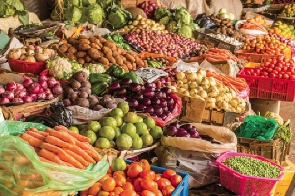
  • Locally produced foods in Nigeria more expensive than imports – Survey

    Locally produced foods in Nigeria more expensive than imports – Survey

    A recent Nairametrics survey conducted across Lagos food markets has unveiled contrasting trends in food prices.

    The survey, spanning from March 12th to April 11th, observed a decline in prices of foreign-produced foods alongside a noticeable rise in locally sourced items.

    Notable drops were observed in the prices of foreign rice, with Igando Market selling a bag for N78,000 compared to N88,000 two weeks earlier, and Iyana Ipaja Market offering it for N79,000 from N90,000 three weeks prior.

    Similarly, a box of super pack Indomie, which surged to N17,000 in March, plummeted to N13,800 by April 11th.

    This downward price trend was also evident in supermarkets, where items like canned beans and beans flour experienced price reductions.

    Conversely, locally produced staples such as garri and yams witnessed significant price hikes.

    For example, a paint bucket of garri surged from N2,500 to N3,400 in Igando Market, while yam prices rose from N2,500 to N3,500.

    Traders attribute the decline in imported food prices to the strengthening of the naira, making foreign imports more affordable.

    Janet Ogbuefuna, a shop owner, noted a drop in Indomie prices, attributing it to falling prices of foreign inputs.

    However, experts like Sola Akhomolafe, an agronomist, and Dr. Muda Yusuf, CEO of the Center for the Promotion of Private Enterprise (PPE), point to insecurity hindering farming activities, high transportation costs, seasonality, and inadequate storage facilities as factors driving up local food prices.

    Wholesale yams dealer Alhaji and cattle dealer Sani also highlighted transportation costs, with Sani mentioning the burden of illegal tax collectors on highways.

  • Debt restructuring must be fair to local investors – Analyst

    A financial analyst, Jerome Kuseh, has urged the government to treat local investors fairly should it decide to restructure its external and domestic debt.

    According to him, there is a need for the government to restructure external debts, as doing so would aid domestic investors to avoid losses in their businesses. “Now let’s say you are going to give them [local investors] a haircut, but the foreign investors who only decided to only buy your Eurobonds, they are not going to be subjected to a haircut. Where is the fairness in that situation?” “The domestic market stayed with you and kept oversubscribing, even to treasury bills. Now, these investors are going to be punished,” he is quoted by citibusinessnews.com.

    The need for debt restructuring has recently arisen due to Ghana’s debt stock growing unsustainable as a result of the depreciation of the Ghana Cedi and the difficulty in obtaining loans as a consequence of downgrades by rating agencies.

    Debt restructuring, a strategy adopted by business entities or individuals, happens when a debtor in financial difficulty receives a concession from a
    creditor in line with a consensual agreement or a court order.

    The procedure entails haggling over a lower interest rate and extending the loan’s repayment time. This approach can help debtors who are struggling to pay their bills due to numerous factors that may have posed a challenge for them to do so under the terms and conditions that have been agreed on.

    The government of Ghana is expected to participate in some debt restructuring procedures as part of the country’s debt sustainability agreement with the IMF.

    According to the IMF, the initiative will strengthen the legitimacy of government policies, re-establish trust in the central bank’s ability to control inflation, and build up foreign exchange reserves to sustain the local currency against adverse circumstances. However, financial experts argue that a restructuring of the country’s debt may cause a number of banks to go bankrupt suddenly.

    In the meantime, former Deputy Minister of Finance, Cassiel Ato Forson, has asserted that the country’s debt is unmanageable as “public debt to GDP is now about 100 percent” therefore, debt restructuring is currently the only option for the country.