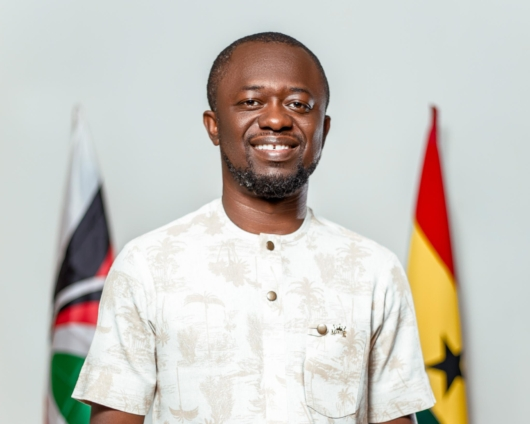
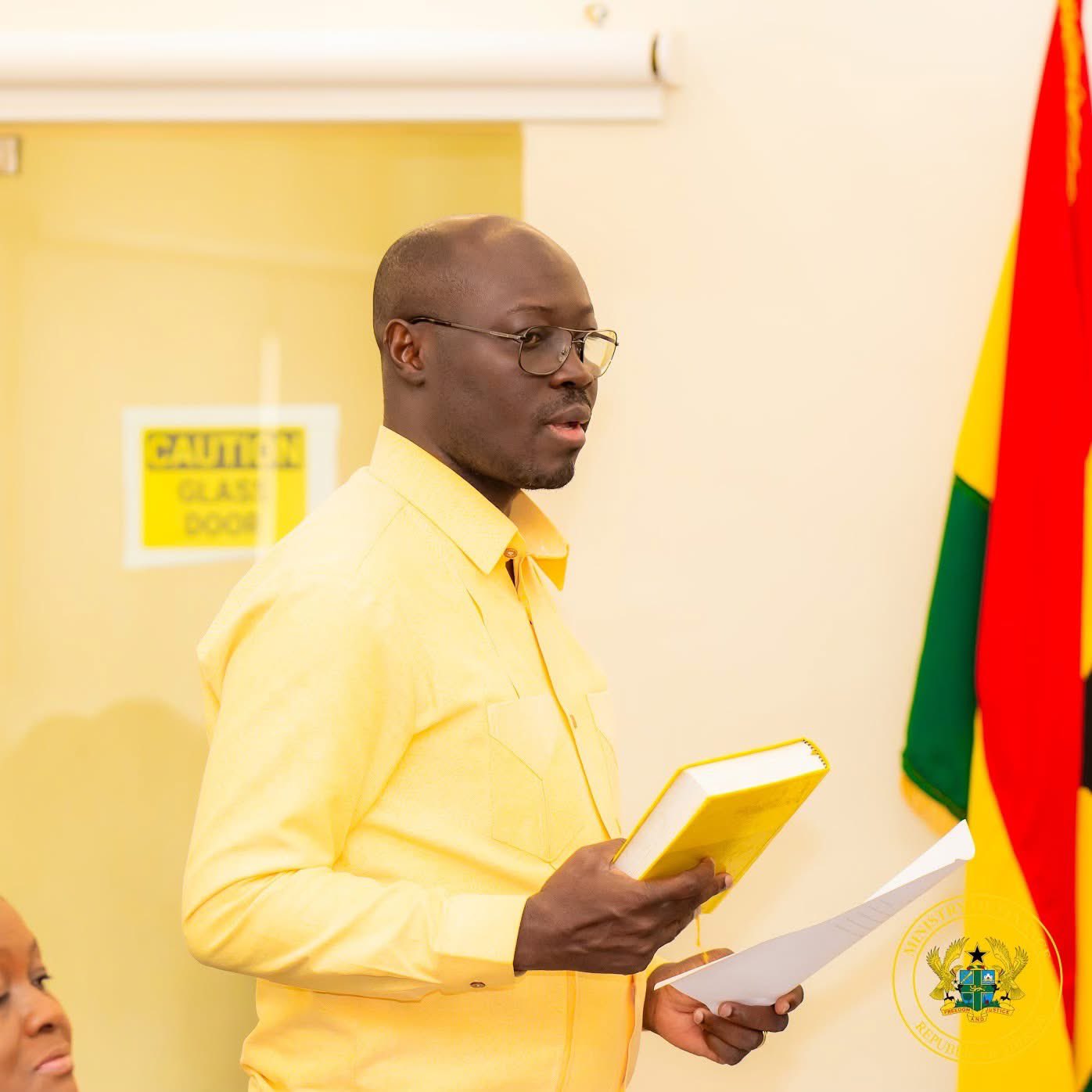
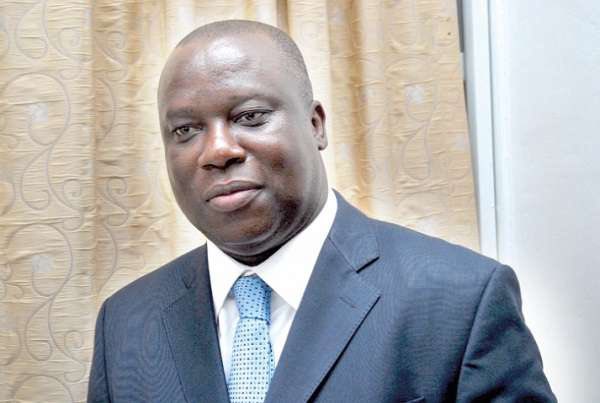
The legal representative of Dr. Kwaku Asiedu Nketia, the Acting Deputy Chief Executive Officer (CEO) of the Minerals Income Investment Fund, has cautioned media houses against the reportage of false information over the ownership of a parcel of land situated at Nmai Dzorm, behind Trassaco, which is a subject of litigation.
Dennis Yao Terkpertey Esq., in a statement authored on behalf of his client, cited a video that has gone viral on social media.
In the video, a man accuses Dr. Kwaku Asiedu Nketia of using unlawful means to possess the land. According to Dennis Yao Terkpertey Esq, Harry Otoo Hesse is the brain behind the circulated video.
The lawyer noted that his client has no interest in or any connection to the said land under litigation.
The said land dispute, according to reliable sources and information cited by Dennis Yao Terkpertey Esq is between two traditional councils.
“Further information received indicate that, the said land is the subject of litigation before a Court of competent jurisdiction, and we want to place on record that, our client is not a party to the said litigation,” he added.
As such, “any attempt to draw our Client’s name into the dispute shall be fiercely resisted and the necessary and the appropriate legal action will be taken against any media house or persons behind such false, malicious and misleading publications.”
Dr. Kwaku Asiedu Nketia’s legal team has thus cautioned all media houses and persons circulating the piece information with the attempt to bring the name of their Client into disrepute and public ridicule.
“We hereby serve a notice to the public through this press statement that, should our Client’s name be mentioned in any further publication by any media house or persons circulating same on social media, we have express instructions from our Client to institute legal actions against the said media house and persons and further press criminal charges to the aspect that borders on criminality,” the statement added.
Also, Harry Otoo Hesse has been directed to immediately retract the said video and render an unqualified apology within 24 hours using the same medium or face legal action.
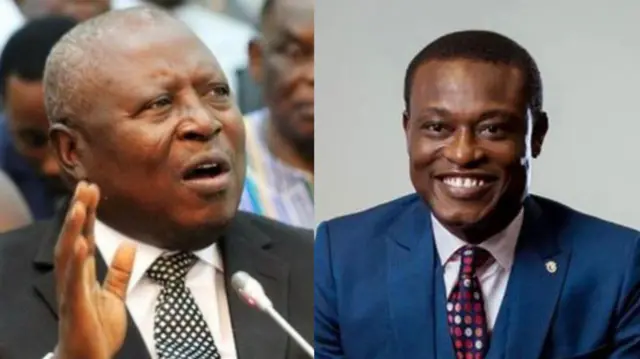
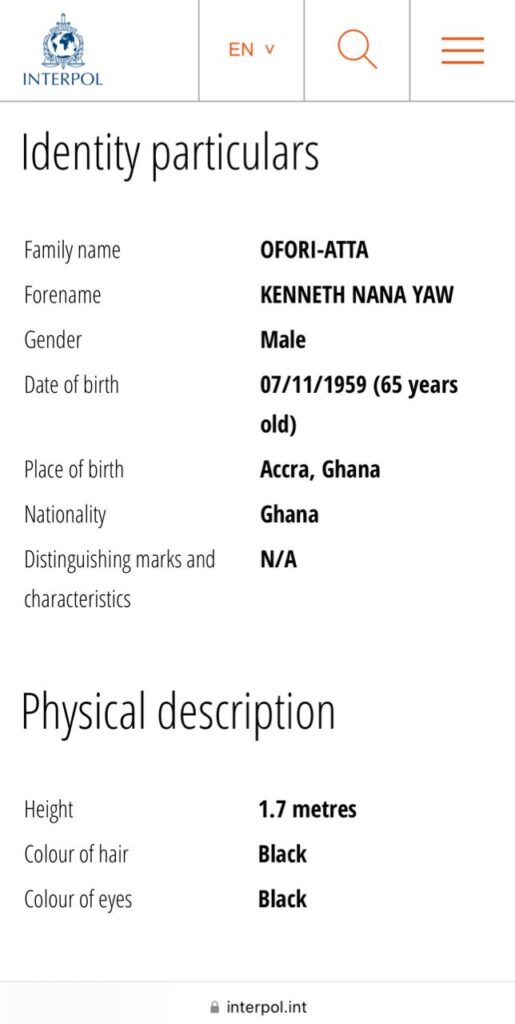
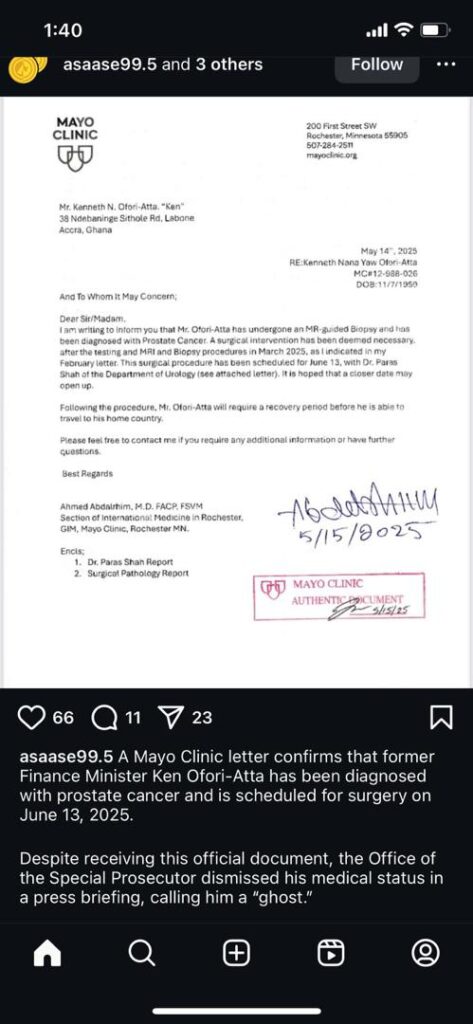
Former Special Prosecutor Martin Amidu has chided his successor, Kissi Agyebeng, for what he believes to be an ill-treatment of former Finance Minister Ken Ofori-Atta, who has been declared “wanted” on Interpol’s official website.
Ofori-Atta’s appearance on Interpol’s website comes at a time when the Office of the Special Prosecutor (OSP) has re-declared him wanted.
The OSP’s re-declaration is due to Ofori-Atta’s failure to honor the office’s invitation for an interrogation on Monday, June 2.
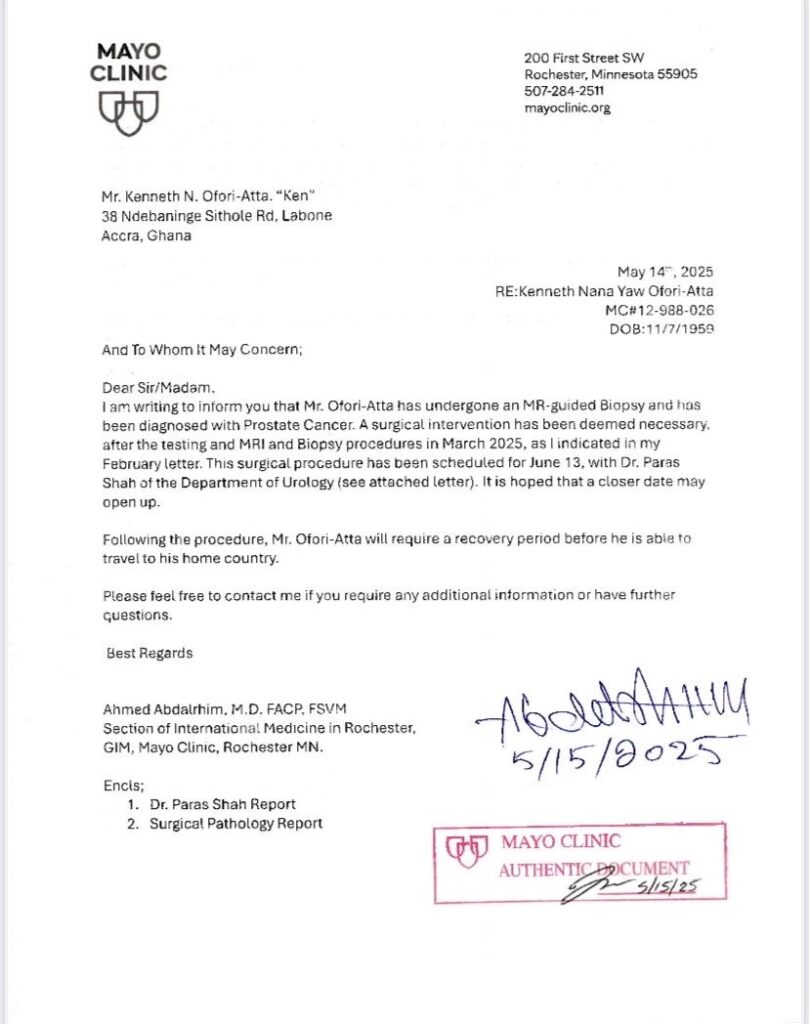
The legal team of the former finance minister had requested a virtual session for a probe into allegations of financial loss to the state, citing deterioration in Ofori-Atta’s health.
However, the OSP refused and issued an Interpol Red Notice. It noted the failure of the former minister to inform the OSP of changes in medical procedure that were to have happened in March of this year.
Reacting to this in a postscriptum titled “THE 5 PM OSP MEDIA CONFERENCE ON OFORI-ATTA”, Mr Amidu noted that the comments by the Special Prosecutor on Mr Ofori-Atta’s health were disparaging.
“It was utter nonsense to hear the Special Prosecutor, Kissi Agyebeng, say in respect of Ken Ofori-Atta that: “The principle upon which we proceed is that – no person, regardless of title, status, or medical condition, is beyond the reach of inquiry by the OSP.”
He recalled a situation where former Chief Justice I. K. Abban made light of Mr Justice G. E. K. Aikin’s prostrate cancer with disparaging statements about him and later was inflicted with the same illness.
“Justice Abban in the fullness of time also developed prostrate cancer and died twelve days after being blackmailed to voluntarily retire on 9 April 2001 as Chief Justice at the age of 67 on pain of impeachment on 21 April 2001, more than a decade before Justice Aikins passed on, on 17 April 2013 aged 89.
Former Chief Justice George Acquah also took advantage of former Chief Justice E. K. Wiredu’s stroke and coma to manoeuvre with the same two other blackmailing collaborators (one of whom is still alive) to succeed him under the ruse of a resignation or voluntary retirement which Chief Justice Wiredu could not have signed while in coma at the Cardiothoracic Unit of Korle Bu Teaching Hospital. Justice Wiredu was flown abroad still in coma only to recover and return to learn to his annoyance that he had voluntarily retired as Chief Justice.
But he lived to attend Chief Justice George Acquah’s funeral at the State House when he died of brain tumour, a cancer. The video of the funeral showed Mr. Justice E. K. Wiredu stopping by the casket, holding it, and saying something to the corpse.”
He therefore advised Mr Kissi Agyebeng not to make light of Ken Ofori-Atta’s ailment, “for his own future health status is unpredictable.”
Mr Amidu stressed that Ken Ofori-Atta is entitled to his privacy and human dignity under the 1992 Constitution.
“It is unprofessional for an investigator and prosecutor to go after the person of the suspect instead of the crime. Power is ephemeral!”
He also noted that name and shame is not part of the criminal justice administration of this country.
“That is the hall mark of an incompetent and unprofessional investigator and prosecutor. Indeed, it is the hall mark of anti-corruption entrepreneurs,” he added.
In February, the OSP declared Ofori-Atta wanted for causing financial loss to the state in several dealings, which include the following:
Contractual arrangement between Strategic Mobilisation Ghana Limited and the Ghana Revenue Authority for the stated objective of the enhancement of revenue assurance in the downstream petroleum sector, upstream petroleum production, and minerals and metals resource value chain.
Termination of a distribution, loss reduction, and associated network improvement project contract between the Electricity Company of Ghana Limited and Beijing Xhao Chen Technology BXC.
Procurement of contractors and materials and activities and payments in respect of the National Cathedral project
Activities and payments in respect of a contract awarded by the Ministry of Health initially commenced by the Ministry for Special Development Initiative to service Ghana Auto Group Limited for purchases and after-sales service and maintenance of 307 Mercedes-Benz Sprinter 304 5 CDI Ambulances for the National Ambulance Service.
Payments out of and utilization of the tax refund account of the Ghana Revenue Authority.
Later, the legal representatives of the former finance minister informed the OSP that their client is currently undergoing medical treatment in the United States and is unable to honor an invitation for questioning.
Ofori-Atta then assured the OSP of its commitment to appearing for questioning on a fixed date, which influenced the OSP’s decision to temporarily take his name off the list in March.
However, the office stressed that he is legally obligated to show up on June 2. Failure to do so, an Interpol Red Notice would be issued and extradition proceedings would be initiated in any country where he may be located.
Ken Ofori-Atta then took legal steps to block the OSP from re-declaring him wanted. His lawsuit argues that the agency’s actions are baseless and unjustified.
Ofori-Atta has dismissed allegations of financial misconduct and corruption, insisting that he has been cooperating with investigators through his legal representatives.
In his court filing, he contends that the OSP’s actions have inflicted serious harm on his reputation and personal life. He is seeking a legal injunction to prevent further declarations against him until the case is fully resolved.
The Human Rights Court has adjourned to June 18 for a ruling on the motion filed by the former Finance Minister, seeking to restrain the OSP from declaring him wanted, among other reliefs.
INTERPOL Red Notice
A Red Notice is a request to law enforcement worldwide to locate and provisionally arrest a person pending extradition, surrender, or similar legal action.
It is based on an arrest warrant or court order issued by the judicial authorities in the requesting country. Member countries apply their own laws in deciding whether to arrest a person.
INTERPOL cannot compel the law enforcement authorities in any country to arrest someone who is the subject of a Red Notice.
Each member country decides what legal value it gives to a Red Notice and the authority of their law enforcement officers to make arrests.
Two convicts, a 34-year-old driver’s mate, Abdulai Ibrahim, and Abdulai Kipo, a 36-year-old butcher, have been found guilty of conspiracy to commit crimes, to wit, robbery and robbery.
The duo were found guilty and sentenced to 28 and 18 years imprisonment in hard labour, respectively.
The conviction and sentencing were carried out at the Wa Circuit Court, presided over by His Honour Jonathan Avoogo.
The Upper West Regional Police Command announced the conviction and sentencing of the culprits in a statement.
The culprits were implicated in a series of robberies across the Napogbakole, Danko, SSNIT, and Konta areas of the Wa Municipality.
Their arrest was made possible through intelligence-led investigations and meticulous gathering of evidence by the Regional Police Intelligence Directorate.
The Upper West Regional Police Command has reaffirmed its determination to make the region safe for peaceful coexistence and will continue to work tirelessly to combat crime and protect its residents.
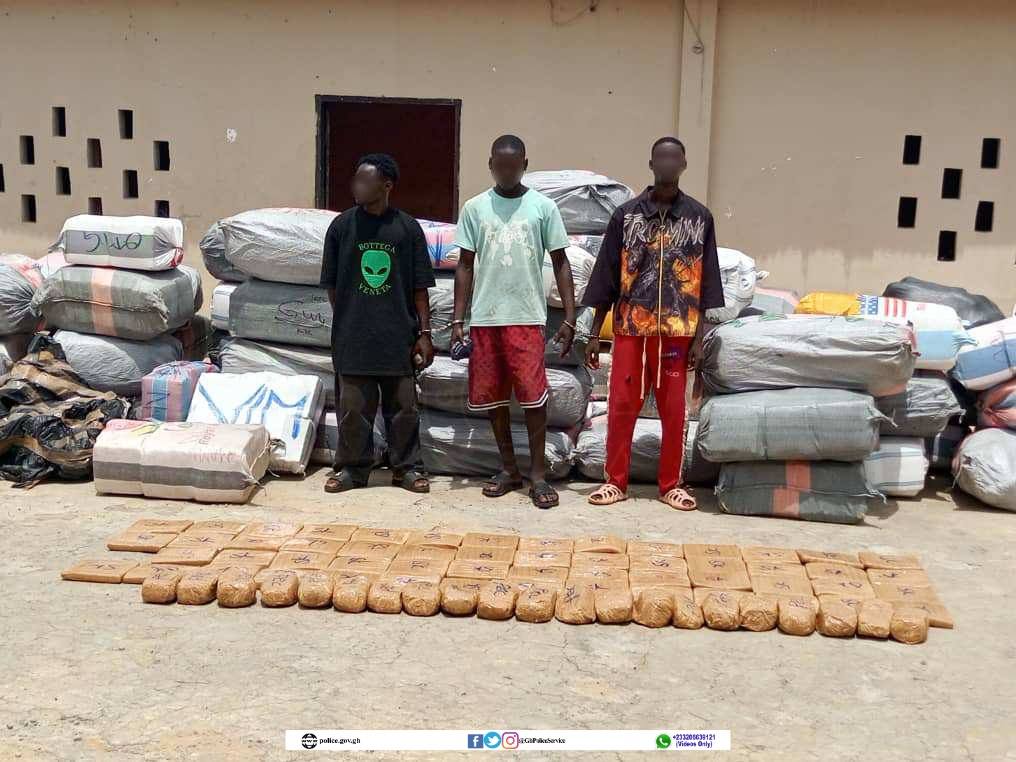
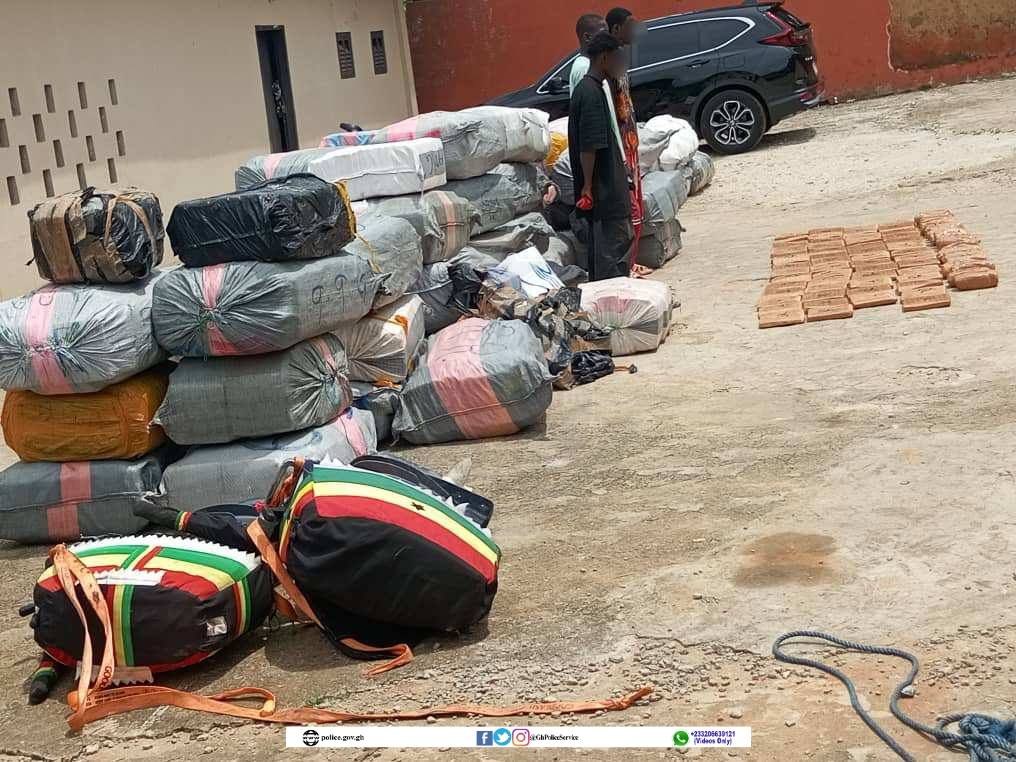
Meanwhile, the Ghana Police Service has arrested two suspects for possession of 11 large compressed sacks of a substance suspected to be narcotics at Ayi Mensah in the Greater Accra Region.
The suspects, Mathew Narkotey and Augustine Teye, were arrested by a team from the National Operations Department (NOD) on June 7 during routine patrols.
The suspects were onboard a Mazda pick-up truck with registration number GT 3490-P when a search uncovered the suspected narcotic substance concealed in the vehicle.
The vehicle and the suspected substances have been impounded and are currently secured at the Joint Operations Centre for evidential purposes.
Both suspects are in police custody assisting with investigations, while efforts are underway to arrest one Martey, named by the suspects as the intended recipient of the consignment.
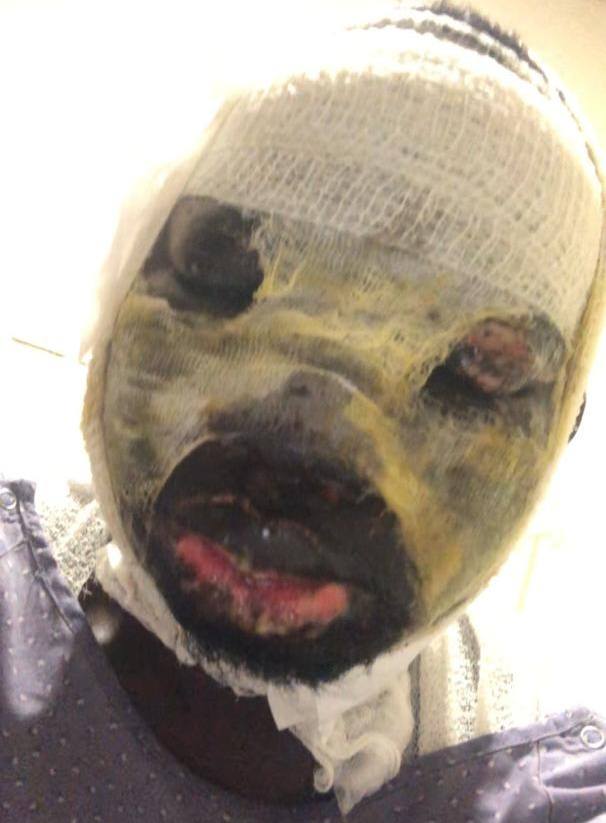
A 30-year-old woman, Mavis Nkrumah, is currently in police custody after her arrest by the Greater Accra Regional Police Command for allegedly pouring a liquid substance suspected to be acid on her ex-boyfriend at Ablekuma Fan Milk, a suburb of Accra.
The Police’s preliminary investigation suggests that on the night of the attack, May 28, Mavis appeared unannounced at the victim’s residence at approximately 1:00 a.m.
The victim, Gideon Frimpong, a 29-year-old taxi driver, engaged her in a brief conversation, during which Mavis asked him to drive her home. Gideon agreed and offered to take her.
On reaching a section of the road, Gideon requested Mavis to alight since the road ahead was bumpy and rough and his vehicle could not drive there.
During the stop at Ofankor, a 7-day stretch, Mavis questioned him about their relationship. After the third confirmation of their breakup, she poured the substance suspected to be acid on him.
The victim, Gideon Frimpong, was identified by a group of people and subsequently rushed to the hospital, where he was treated for injuries sustained. He has since been discharged.
Mavis Nkrumah is said to have fled the scene after the incident and attempted to bolt into a neighbouring country.
She was, however, apprehended on June 3, by the police and is currently in custody, assisting the police with their investigations.
The use of harmful substances by grieving partners has become rife in the country. Many lives have been lost due to an emotional heartbreak or cheating.
The Accra Regional Police Command has therefore cautioned the public to seek lawful and peaceful means of resolving issues.
“Acts of violence are criminal and will be dealt with by the law,” the Police reaffirmed.
Meanwhile, the Police remain committed to ensuring public safety and urge all to report suspicious or harmful behaviour promptly to the nearest police station.
Patrols, swoops, snap checks, and intelligence gathering by the police have led to the arrest of four suspects involved in the peddling of narcotic substances.
The Manso Adubia District Police on June 1, apprehended four suspects – Mohammed Iddrisu (47), Dickson Fosuhene (27) Cletus Nyaaba (19), and Emmanuel Asare (21)
They are said to have been in possession of substances suspected to be Indian hemp and other regulated drugs without authorization.
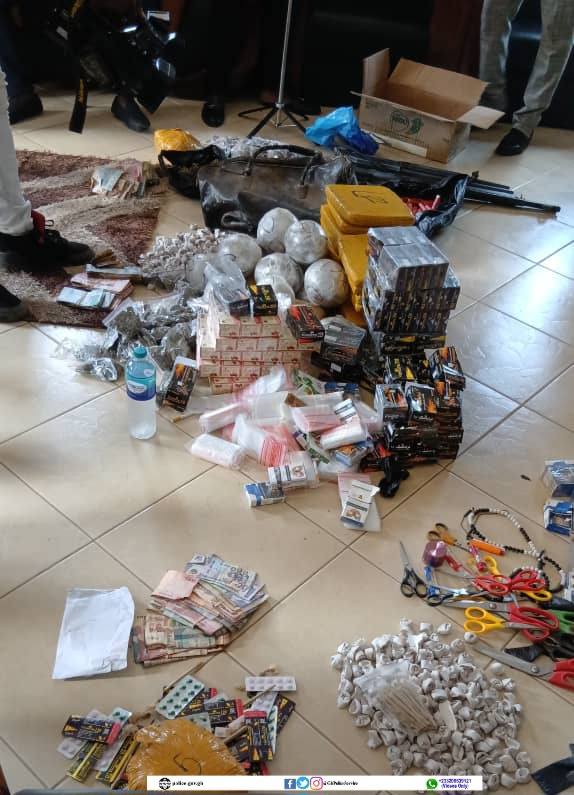
a) Mohammed Iddrisu was arrested with i. 550 wraps of dried leaves suspected to be Indian hemp. ii. 82 sachets of 250 mg taramaking tablets. iii. Cash amount of $11,340.00.
b) Ofosuhene Dickson and Emmanuel Asare were arrested with i. 120 wraps of dried leaves suspected to be Indian hemp. ii. 150 sachets of 250 mg taramaking tablets. iii. Cash amount of $12,000.00.
c) Cletus Nyaaba was arrested with i. 150 wraps of dried leaves suspected to be Indian hemp.
The police proceeded to the house of one “Thunder” who is said to be the source of supplies of these contraband goods, per intelligence.
He, however, eloped upon getting a hint of the operation. A search conducted in his residence revealed the following: ii. 28 boxes of 250 mg taramaking tablets. iii. 54 boxes of 250 mg timiking tablets. iv. 22 slabs of compressed dried leaves suspected to be Indian hemp V. 374 wraps dried leaves suspected to be Indian hemp vi. Cash amount of $25,000.00
The four suspects are currently being processed for court for the necessary action.
“The swoop on ghettos is aimed at combating the peddling and use of narcotic drugs, which in itself is linked to the perpetration of all manner of crimes, including robbery, murder, assault, mass public disorders and at large in illegal mining activities,” the Police noted in a statement.
The Service warned that the abuse of the regulated drugs by the youth is a matter of national concern, where the government and other organizations are making every effort to fight it.
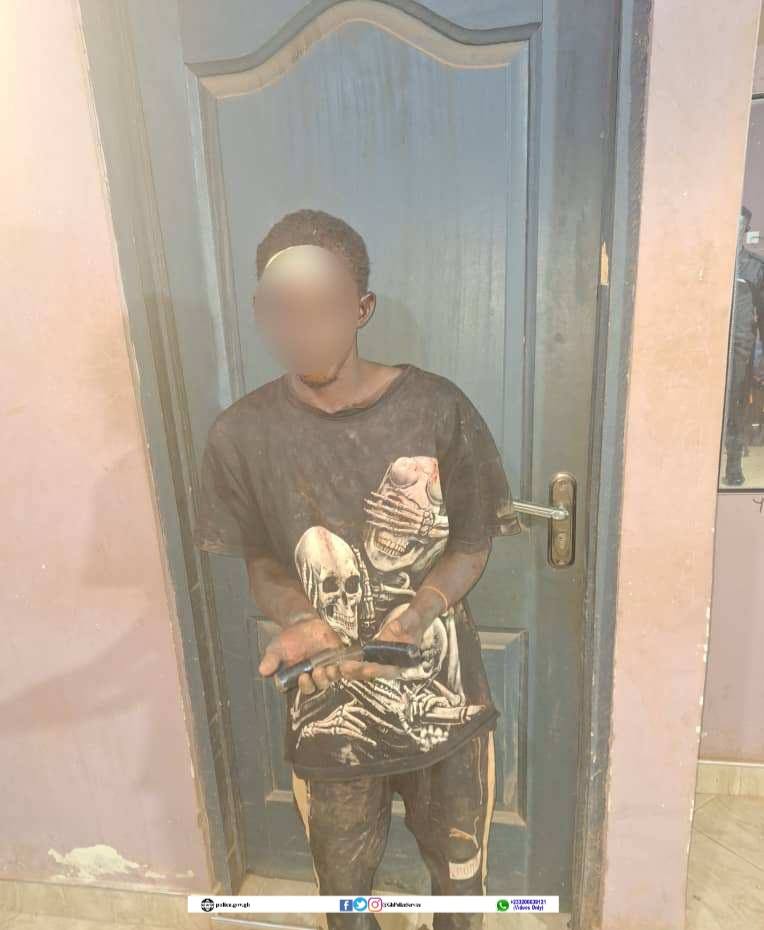
In another development, the Fomena District Police Command has found and taken custody of some arms and ammunitions abandoned in a vehicle given on a ‘spare drive’ by the owner to suspect spare driver known only as Kwaku alias Zador.
The arms and ammunitions include: i. Two pump (2) action guns ii. twenty-three (23) rounds of AA ammunitions iii. Three (3) rounds of BB ammunitions.
A preliminary investigation reveals that the vehicle was given to the said spare driver, Kwaku alias Zador on 09/05/2025 to be returned on 11/05/2025.
However, the deadline expired and the spare driver failed to return the vehicle on the agreed date, so the owner went looking for him and found him at Kwabenakwa, a suburb in Obuasi and took his car away from the suspect.
Later, a search conducted in the vehicle led to the finding of the above mentioned exhibits.
According to the Police, they have intensified their operational activities in all corners of the jurisdiction.
The Service has thus encouraged the public to support the fight by volunteering information on crime and criminals to the Police.
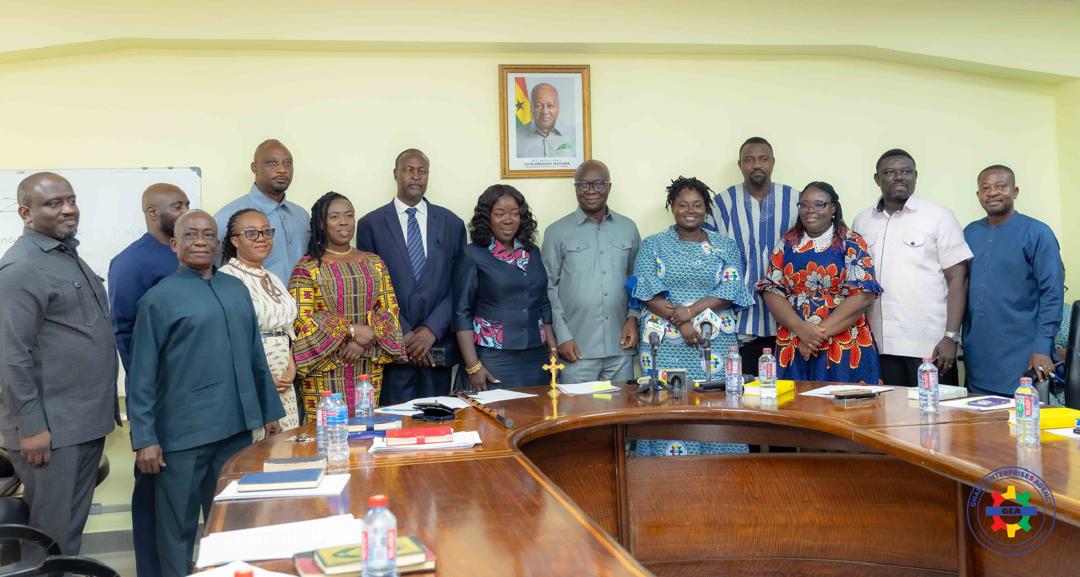
A 12-member Board of Directors for the Ghana Enterprises Agency (GEA) has been sworn in by the Minister for Trade, Agribusiness and Innovation, Hon. Elizabeth Ofosu-Adjare.
On Wednesday, May 28, the newly appointed Board, under the leadership of Chairman Prof. Nathaniel Boso, was charged to drive innovation and enterprise development, with a special focus on leveraging the African Continental Free Trade Area (AfCFTA) to expand market access for Ghanaian businesses.
In her address during the swearing-in ceremony, Hon. Ofosu-Adjare charged the Board to utilize their diverse expertise to scale up Ghanaian businesses.
She emphasized the importance of harnessing the potential of AfCFTA to enhance the competitiveness of MSMEs in the continental market.
The members of the Board include
Ms. Margaret Ansei
Mrs. Caroline Chapman Agyemang
John Matthew Setor Dumelo, MP
Mr. Yaw Sarpong
Ms. Cynthia Yvone Djokoto
Alhaji Osuman Mohadeen Esq
Mr. Langmagne Vitus-Otto
Dr. Mrs. Emelia Assiakwa
Mr. John Kwame Nimo
Rev. Christian Balagi
Mr. Seth Twum-Akwaboah
GEA and Communications Ministry
On Friday, May 24, GEA CEO, Ms. Margaret Ansei, paid a courtesy call on the Minister of Communication, Digital Technology and Innovation, Hon. Samuel Nartey George.
The visit aimed to discuss and strengthen existing collaborations between the Ministry and the Ghana Enterprises Agency. Central to the discussion was the rollout of the World Bank-funded Ghana Digital Acceleration Project (GDAP).
The meeting highlighted the urgency to accelerate the project’s implementation to support youth-led Small and Medium Enterprises (SMEs) in the digital space.
The Ghana Enterprises Agency is responsible for implementing Component 3(i) of the project, which focuses on scaling up Ghana’s digital entrepreneurship and innovation ecosystem.
Also present were Madam Philomina Dsane, Director of Policy Planning, Research, Monitoring and Evaluation; Mr. Eric Affram, Acting Director of Financial Support Services; Ms. RejoiceTettey, Corporate Affairs Officer, Mary Nkrumah Inusah, Partnership Coordinator, Mr. Fred Addo-Yobo, Monitoring and Evaluation Consultant and Ms. Abena Yiadom Nursaa, Access to Market Consultant.
Seven transport companies have found themselves wanting for failing to comply with mandatory registration requirements and regulatory notices under the National Road Safety Regulations 2022 (L.I. 2468).
The companies Express Transport, AY Transport, Dikyebu Transport, Ghana Express, KEK Transport, Nasara Transport, and V3 Express have had their operations suspended.
Also, the National Road Safety Authority (NRSA) has imposed a total administrative penalty of GH₵462,000.00 against these companies.
Each offending transport company is liable to pay to the Authority a monetary penalty of GH₵6,000 for non-registration and GH₵60,000 for non-compliance with lawful notices within fourteen (14) days. Failure to do so will warrant additional sanctions.
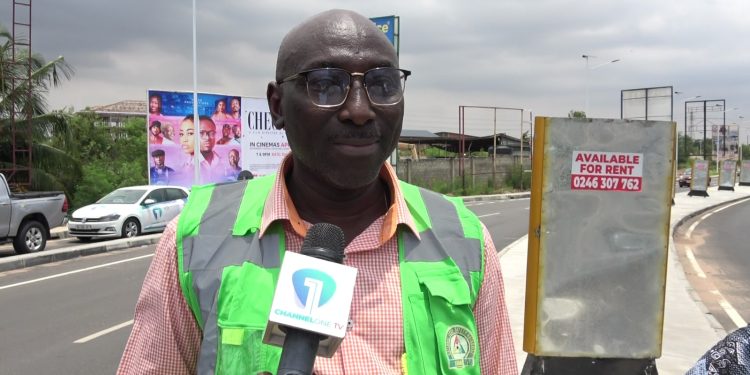
Director-General of NRSA, Abraham Amaliba, who engaged the media, explained that the grace period for these companies to do the needful expired on March 30, 2025.
“These companies have chosen the path of non-compliance despite repeated notices, while some thirty (30) others have complied. We hope that this notice is loud enough for other entities yet to comply with the notice to register with the Authority as required by law,” he stated.
Abraham Amaliba emphasised that the Authority is in an enforcement mode and will not bend the rules for anyone.
“The task of improving service quality begins with recognising which entities work within our operational space,” he added.
Two unions -the Commercial Transport Union and the Vigilante Transport Union—have also been sanctioned for not complying with mandatory registration requirements and regulatory notices.
In February 2024, the National Road Safety Authority began a process to register road transport service providers as part of its mandate to regulate the road transport sector with a special focus on road transport service providers.
Road transport service providers including transport companies, unions, transport departments of all State Agencies, school bus services, tyre service centres and garages are mandated to register with the Authority as required by law.
The law mandates all road transport service providers to be registered or risk sanctions from the Authority.
The National Road Safety Authority is established by an Act of Parliament (Act 993) to develop and promote road safety in the country, to coordinate and to regulate activities, procedures and standards related to road safety and to provide for related matters.
Meanwhile, the NRSA is set to roll out a new Legislative Instrument (L.I.) that will require all vehicle owners in Ghana to subscribe to a registered towing service or insurance package, as part of renewed efforts to improve road safety.
Managing Director of the NRSA, Abraham Amaliba, made this known during an interview on the Citi Breakfast Show on Wednesday, April 30.
The initiative, which forms part of a broader legal framework that also includes the formalisation of commercial motorbike (Okada) operations, is aimed at reducing the number of abandoned vehicles on major roads—a growing menace that contributes to heavy traffic congestion and endangers motorists.
“There is a variant of the towing law that was introduced but was later suspended. The new development will ensure that vehicle owners must subscribe to a towing company or insurance,” Amaliba said. “
“The earlier one that was introduced had a monopoly concern in the collection of the towing fee, but the new thinking, which will be in the Okada legalisation L.I, will see to it that when the law is passed, every owner must subscribe to the towing company or insurance company so that when your vehicle breaks down, you just call your subscriber to come to your aid.”
He emphasized that any vehicle owner who fails to comply with the new directive would face penalties.
“They will require that when you fail to do that, the NRSA will come in and tow the vehicle but you will be surcharged for that. When that is passed, it will reduce the incidents of vehicles breaking down on the roads because as it stands, it appears there is no regulation in that regard,” he explained.
To ensure fairness and effectiveness, Amaliba noted that only certified towing service providers will be authorized under the new regulation.
“We will certify some towing services for road users to subscribe to,” he added.
The proposed legal measure seeks to replace an earlier attempt at implementing a national towing service, which was suspended due to concerns over centralized control and unfair fee structures.
A suspect involved in an armed robbery activity foiled by the Nkawie Divisional Police Patrol Team has lost his life, with four others currently on the run.
On Monday evening, June 2, the gang of five members attacked passengers traveling in two Sprinter buses between Ahwerewa and Esaase, along the Kumasi-Bibiani highway.
The group – with a member wielding a pump-action gun—stopped the two vehicles at gunpoint and were in the process of robbing passengers.
The attack was disrupted by the timely arrival of the patrol team. The gang opened fire at the patrol team upon sighting them.
The officers responded swiftly, returning fire and fatally wounding one of the suspects, who was later confirmed dead by a medical doctor at the Afari Government Hospital.
The remaining four suspects escaped and are currently at large. The police believe the fleeing suspects may have sustained gunshot wounds.
The police have thus entreated all medical facilities and practitioners to be on the lookout and report any persons presenting with gunshot injuries to the nearest police station.
Meanwhile, the body of the deceased suspect has been deposited at the Afari Government Hospital morgue for preservation and further investigation.
The Ashanti Regional Police Command has commended the Nkawie Patrol Team for their bravery and professionalism in swiftly responding to the situation and averting what could have been a tragic incident.
To members of the general public, the police have called for continued support and the provision of timely and relevant information to help maintain law and order.
Recently, four officers of the Western Central Regional Police Command were promoted for exhibiting diligence, professionalism, and dedication in the performance of their duty.
The officers, No. 47459 G/Sgt. Fetus Gameli Kukuia, No. 52192 G/Cpl. Christian Asare, No. 52441 G/Cpl. Nicholas Kingsley Amoah, and No. 59947 G/Const. Adam Yakubu, have been promoted to the ranks of Inspector, Sergeant, and Lance Corporal, respectively.
The officers played a role in resolving the murder of five individuals at Asiyaw near Nsawam.
On 30th April, just a day after the incident, the Western Central Regional Police Command arrested three suspects, Hakeem Imoro, Imoro Tahiru, and Nurideen Wahab, for unlawful possession of arms and ammunition at Bawdie Barrier, near Wassa Akropong in the Western Region.
The suspects were travelling on board a Grand Bird Bus with registration number AS 4431 22, en route to Wassa Akropong, when the officers intercepted and searched the bus.
The search led to the recovery of a submachine gun (SMG) and twenty-one rounds of ammunition from suspect Hakeem Imoro.
Upon interrogation, suspect Hakeem Imoro revealed that the firearm had been given to him by his boss, known as Forson, who was later identified as Samuel Atsu Forson alias Alanyo, already under arrest in connection with the murder at Asiyaw.
Further investigations confirmed that the three suspects arrested at Bawdie Barrier were directly linked to the Asiyaw murder case and were attempting to flee the jurisdiction when they were arrested by the vigilant officers from the Western Central Regional Command.
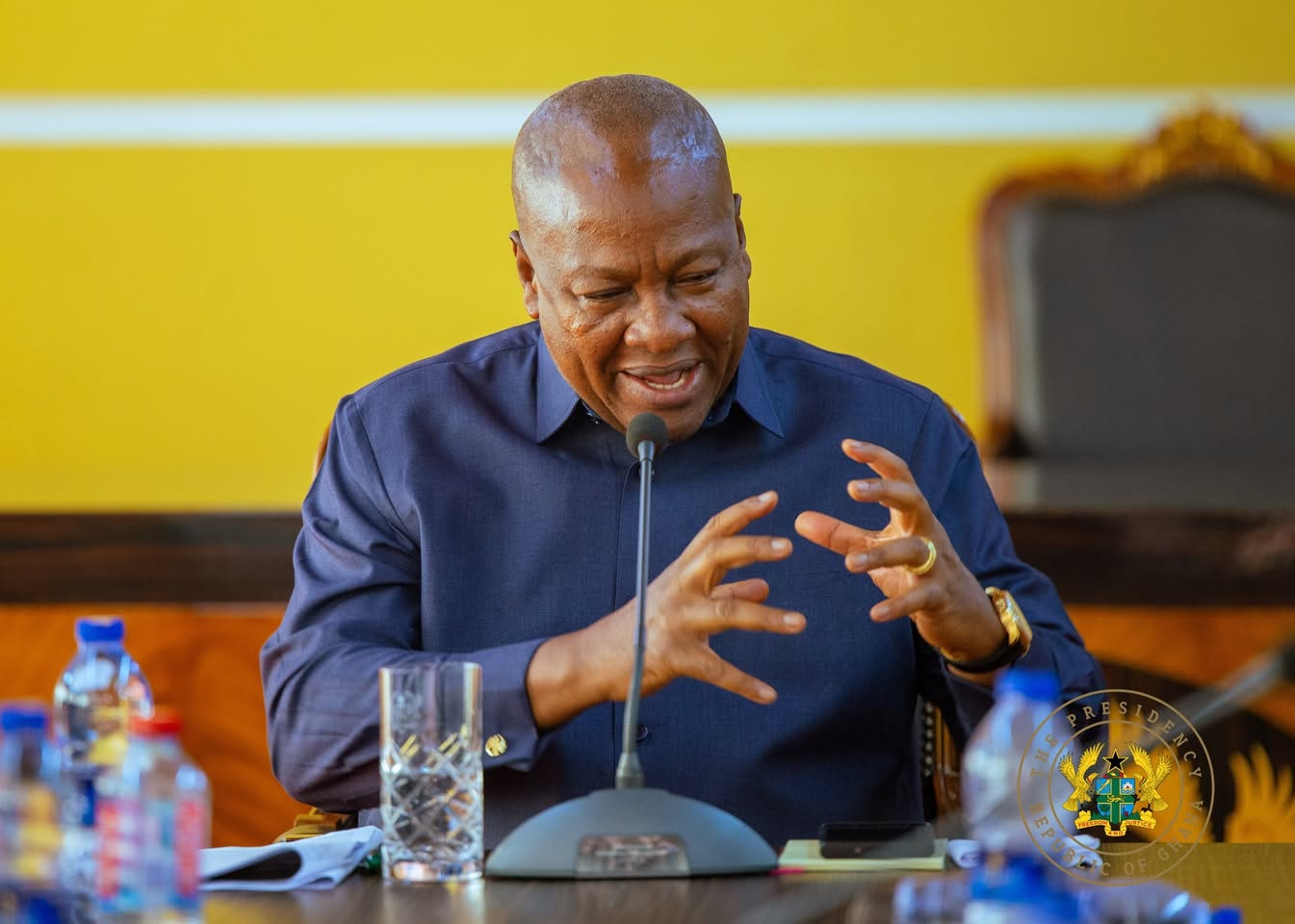
The government is set to implement the Energy Sector Levy (Amendment) Bill, 2025, after its assent by President John Mahama which introduces a GH¢1.00 petroleum levy, following approval by Parliament on Tuesday, June 3.
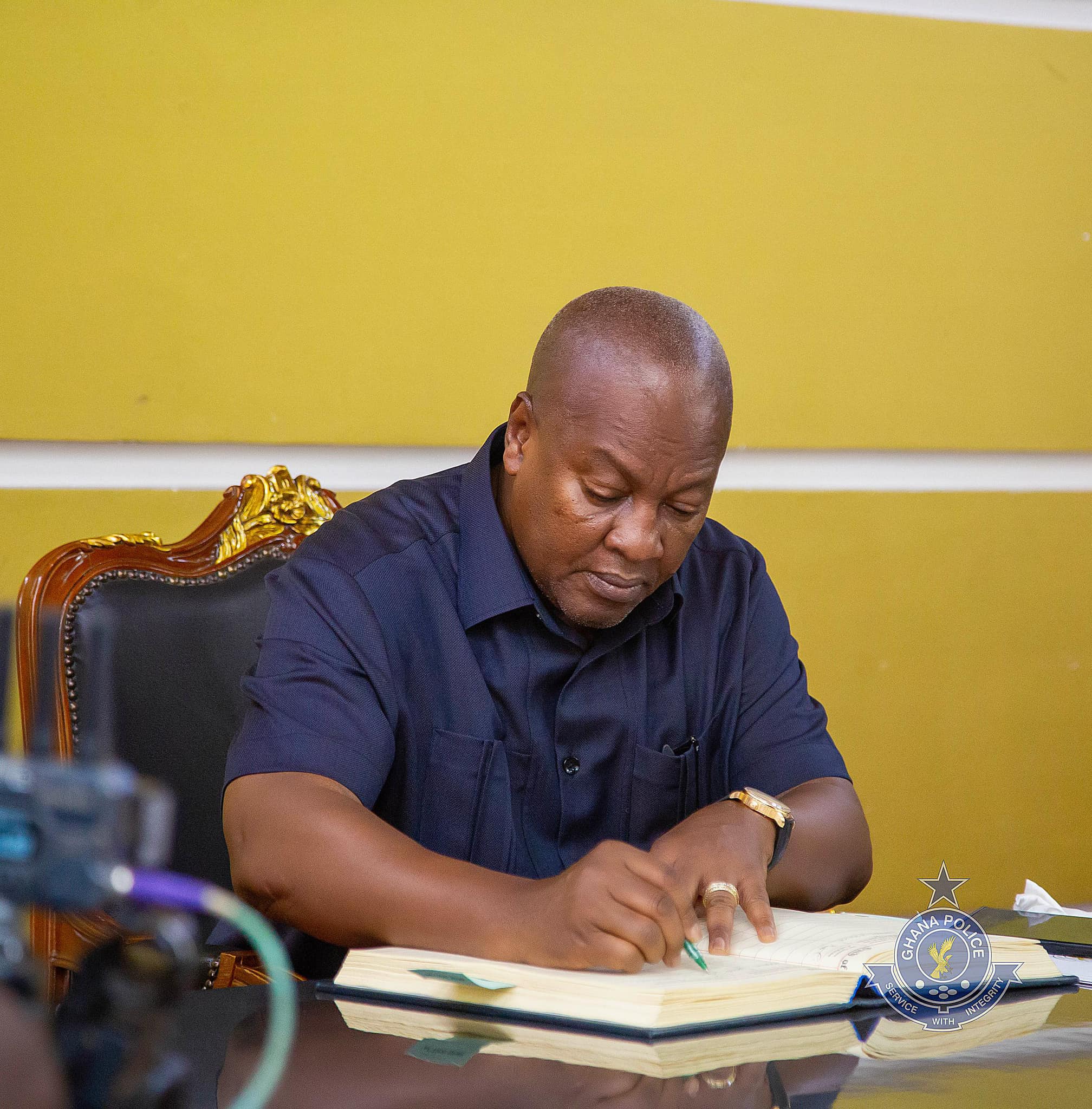
The president signed the bill today after defending the necessity of the bill despite opposition from the Minority in Parliament and some stakeholders in the energy sector.
President Mahama on Wednesday announced the government’s decision to clear the accumulated legacy debts in the power sector with part of the revenue generated by the yet-to-be-implemented levy.
He stated that “initially much of this revenue will go to the purchasing of fuel to ensure stable power of electricity.”
The government will also reduce the use of liquid fuel in the energy mix as it expects more gas from the ENI, Sankofa, Jubilee and TEN fields, as well as the West African Gas Pipeline.
“At that stage, the resources generated by this increased levy will be channeled to pay accumulated legacy debts in the power sector,” he added.
He assured Ghanaians that funds generated from the newly approved GHC1 fuel levy will undergo regular audits.
He explained the move is to ensure accountability and transparency.
“Funds from this levy will not be subject to the hazards of the Consolidated Fund. The fund will be regularly audited and audit reports made public to ensure its transparent use.”
President Mahama made this known while speaking at the presentation of the final report of the National Economic Dialogue 2025 on June 4.
Energy and Green Transition Minister, John Abdulai Jinapor, has defended government’s move despite opposition from some stakeholders in the energy sector.
He noted that the timing of the introduction of the levy is apt as the cedi continues to appreciate against major trading currencies.
The minister projects to generate revenue ranging between GH¢5 billion and GH¢6 billion to support the procurement of liquid fuel.
“Fuel was around GH¢16.00, and a sensitive government will not slap a tax when fuel is GH¢16.00. You couldn’t have imposed that tax around that time when fuel was still very high, and so you needed to work to bring fuel down to this level and share the gain with Ghanaians. At that time, if we had increased it, you can imagine the impact on Ghanaians, but today, the net effect is that you are still having a reduction of GH¢3.00 on a litre of fuel,” he explained.
“It is better to do it today than to (have done) it yesterday, when it would have eroded your income; today, your purchasing power has increased because of the reduction of the value of the dollar,” he said while speaking on JoyFM.
Some stakeholders in the energy sector have expressed their displeasure over the approval of the Energy Sector Levy (Amendment) Bill, 2025, by Parliament and its pending implementation.
On the matter, Chief Executive Officer of the Association of Oil Marketing Companies (AOMCs), Dr Riverson Oppong Peprah,warned that the implementation of the levy could drive fuel prices higher, adding further strain on consumers and the downstream sector.
“When fuel prices began to fall, it wasn’t because the cedi gained stability; rather, it was due to a drop in plant prices caused by the decline in West Texas Intermediate (WTI) crude oil prices. Only after that did the cedi stabilise and support the downward trend.”
“As we speak today, plant prices are already rising again. So, I urge the government to reconsider this levy since there are other options,” he counselled.
Also, Executive Director of the Centre for Environment and Sustainable Energy, Benjamin Nsiah has raised similar concerns, calling the introduction of the levy “unfair.”
“This approach is not only tired but unfair,” Nsiah said. “We’ve seen this playbook before. The Energy Sector Levies Act (ESLA), and the Energy Sector Recovery Levy have provided a lasting solution to the underlying issues. It’s not about collecting more. It’s about managing what’s already collected.”
Meanwhile, the Ghana Private Road Transport Union (GPRTU) has threatened a nationwide strike on Tuesday, June 10, if the policy is not revised.
In a press briefing on Thursday, June 5, the Industrial Public Relations Officer of the Ghana Private Road Transport Union (GPRTU), Abass Ibrahim Imoro, indicated that the government has yet to consult relevant stakeholders over the policy’s implementation.
“We are therefore calling on the government to reverse the levy immediately and engage us and stakeholders on the way forward. In the event that our call is not heeded, we will be compelled to take industrial action and park our vehicles on June 10, 2025.”
“The policy’s rollout will have significant implications for operators, as it will drive up operational costs. We urge the government to consider the impact of the levy on the transport sector and the consequences of our action on the economy, and engage us in meaningful deliberations to help address challenges in the energy sector,” he said.
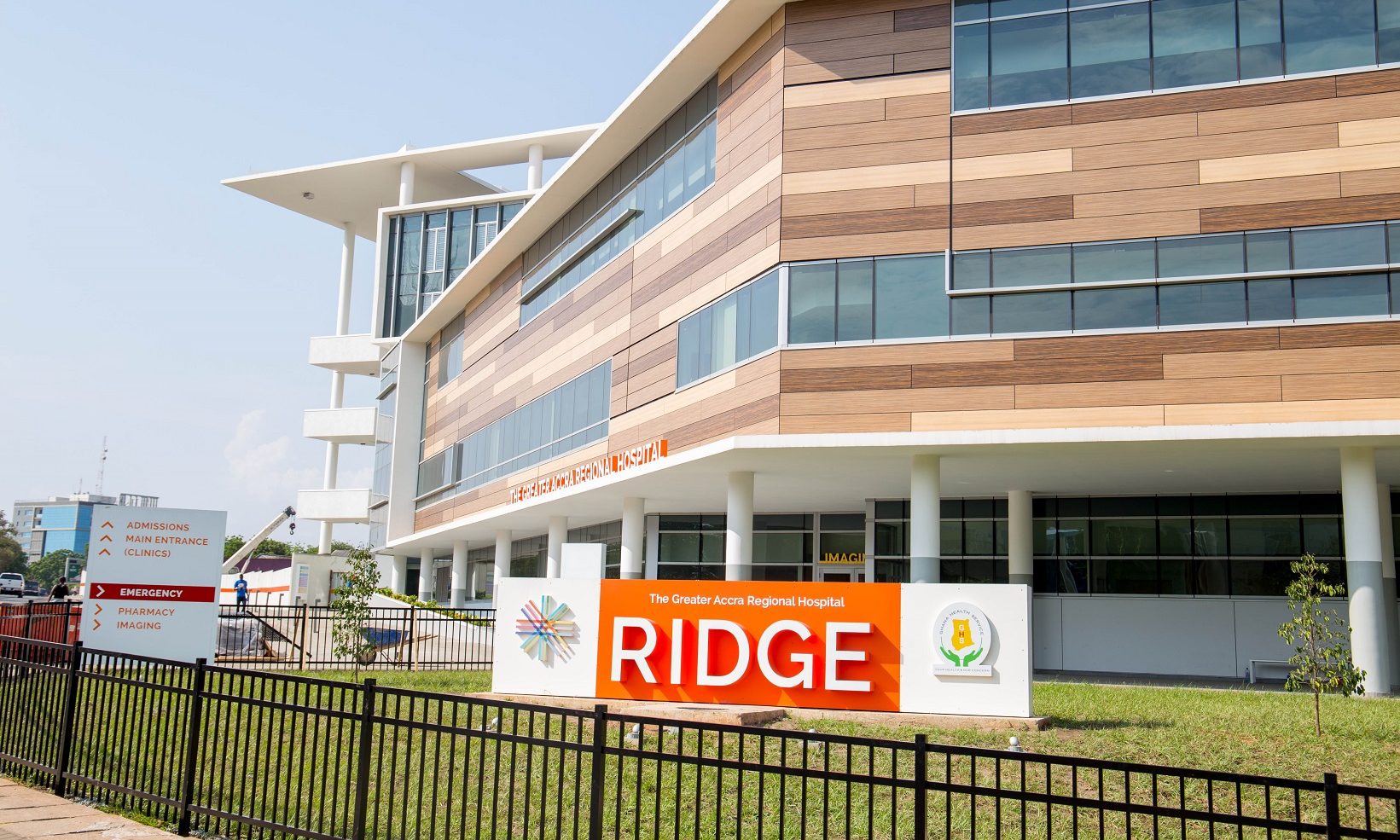
The government’s efforts to mitigate the effects of the strike action embarked on by the Ghana Registered Nurses and Midwives Association (GRNMA) have hit a snag as Greater Accra Regional Hospital authorities reveal major concerns.
The Health Ministry has advised rotational nurses and those currently undergoing mandatory clinical training to refrain from participating in any form of industrial action, as their cooperation is crucial in maintaining essential services during this period.
However, Medical Director of the Greater Accra Regional Hospital, Dr. Leslie Issah Adam-Zakaria, has revealed rotational nurses cannot be effective in this situation due to lack of supervision.
According to Dr Adam-Zakaria, doctors that would have monitored the work of these rotational nurses are currently undertaking some work that would have been done by nurses.
the extent of the disruption caused by the strike action of nurses belonging to the Ghana Registered Nurses and Midwives Association (GRNMA).
“The challenge we are facing is that doctors have to do some of the work of the nurses. We don’t have rotation nurses supporting us because they cannot work unsupervised, so they are not available,” he said in an interview with JoyNews on June 5.
He further explained that “the rotation nurses are like national service people who are supposed to work under supervision. If we bring them alone here, it means they are going to work without supervision because their bosses are on strike. So unfortunately for us, they are uncomfortable working unsupervised.”
Several departments in the hospital currently do not have nurses at post.
“Presently, we don’t have nurses at the various OPDs, we don’t have nurses at post. The emergency unit is in various parts, the part that receives new patients, we don’t have the nurses at post.”
“The theatres where we perform emergency procedures, we don’t have nurses at post. The antenatal clinics where we attend to pregnant women, we don’t have midwives at post. And the labour wards where pregnant women come when they are about to deliver, we don’t have nurses at post,” he said.
According to him, the hospital is “under pressure,” and he is hopeful that “things get better.”
GRNMA embarked on a strike action on Monday June 2, to demand payment of their outstanding allowances following unsuccessful discussions with the ministry
“We negotiated our conditions of service. It was signed, sealed, and delivered, but it is not seeing implementation…and all that we are asking the Ministry of Finance is to approve the signed commission of service for implementation,” President of the GRNMA, Dr David Tenkorang Twum, told the media.
In response, the Ministry of Health on May 30th, met all Associations in the nursing fraternity, including the Ghana Registered Nurses and Midwives Association (GRNMA), Union of Professional Nurses and Midwives (UPNMG), Ghana Registered Midwives Association (GRMA), National Association of Registered Midwives (NARM-G), Psychiatric Nurses Association, Ghana (PAPNG) and the Nurses and Midwives Educators Society.
During the meeting, all parties except the GRNMA accepted the sector minister’s proposal for a three (3) member team with a representation each from the Nurses group, the Ministry of Finance, and the Ministry of Health to see to the finality of the matter.
GNRMA members have withdrawn from their posts, but to ensure that the general public continues to access quality healthcare, the Health Ministry has instructed all hospital managers, particularly Directors of Nursing Services and their Deputies, to be present at work at all times during the period of the industrial action.
Also, the ambulance service is expected to remain on standby in every district to support emergency situations promptly. Additionally, all health facilities are to establish coordinating structures that can effectively manage emergencies and maintain continuous communication with ambulance services to ensure a swift response when needed.
Furthermore, the Director-General of the Ghana Health Service, along with Chief Executive Officers and Medical Directors of Teaching Hospitals, is required to provide daily reports to the Acting Chief Director on the status of healthcare service delivery within their respective institutions.
To manage the anticipated surge in patient numbers due to ongoing industrial action, the Ministry of Health has pledged to collaborate with quasi-government health facilities. This partnership aims to ease the pressure on public health institutions and ensure continuous care delivery.
Ongoing monitoring of the situation will be conducted by the Ministry to ensure that all necessary logistics and resources are made available to mitigate the impact of the strike.
The Ministry of Health has expressed its appreciation to the nurses and midwives who have chosen not to engage in the industrial action while appealing to the leadership of the Ghana Registered Nurses and Midwives Association (GRNMA) to reconsider their stance in the interest of public health and service continuity.
However, the GRNMA remains resolute in its decision to intensify the strike with plans to withdraw both outpatient and emergency services across the country.
The management of the Ghana Immigration Service (GIS) has alerted the general public about a fraudulent recruitment scheme being circulated via the website GOLERNERSHUB.COM.
This site falsely claims the opening of a protocol recruitment portal.
The Service has disassociated itself from this false information and reiterated that the “GIS has not engaged any individual, group, or third-party website to conduct recruitment exercises or sell protocol forms on its behalf.”
The GIS’ Intelligence Section, in collaboration with other state security agencies, is currently pursuing credible leads to apprehend and prosecute the perpetrators behind this fraudulent scheme.
The public has been advised to disregard and report any communication or solicitation from GOLERNERSHUB.COM or similar unofficial sources.
“Anyone who engages with such fraudulent entities does so at their own risk,” the GIS warned.
According to the GIS, no official clearance has been given by the government for any recruitment exercise at this time.
The Service has therefore assured the public that advertisement will be made through the appropriate and credible channels, including the national newspapers and its official platforms when recruitment is authorized.
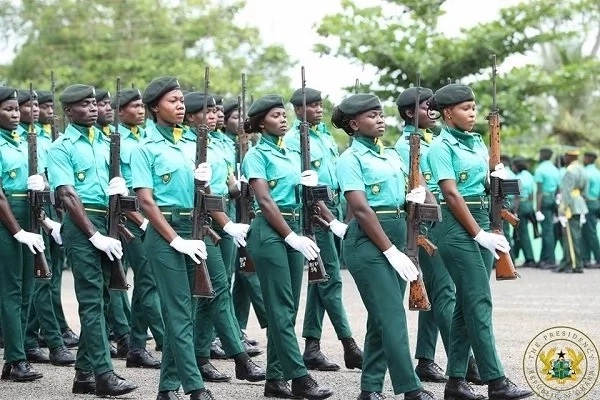
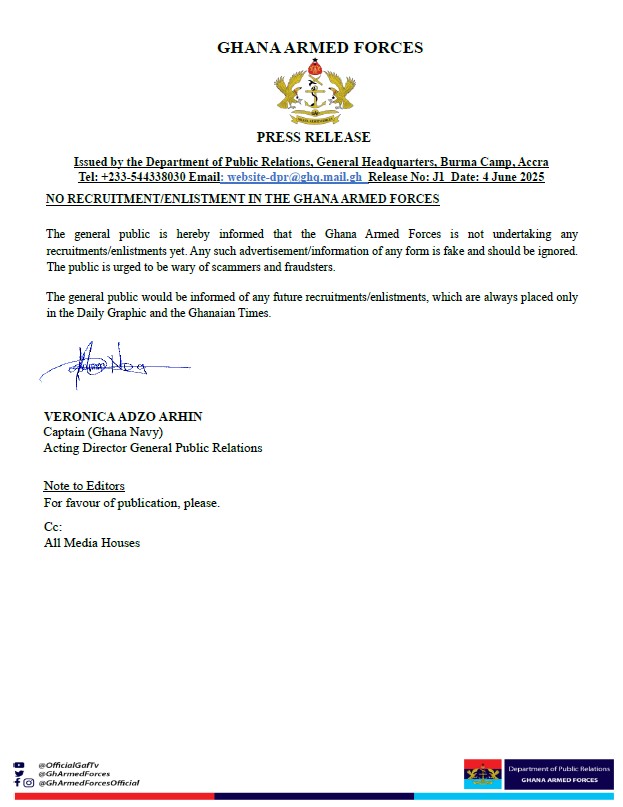
The Ghana Armed Forces (GAF) has joined the many state institutions dispelling claims of ongoing recruitment.
The GAF in a statement said, “the general public is hereby informed that the Ghana Armed Forces is not undertaking any recruitments/enlistments yet.”
The security institution thus noted that any such advertisement or information of any form “is fake and should be ignored.”
The public is thereby urged to be wary of scammers and fraudsters.
“The general public would be informed of any future recruitments/enlistments, which are always placed only in the Daily Graphic and the Ghanaian Times,” the statement added.
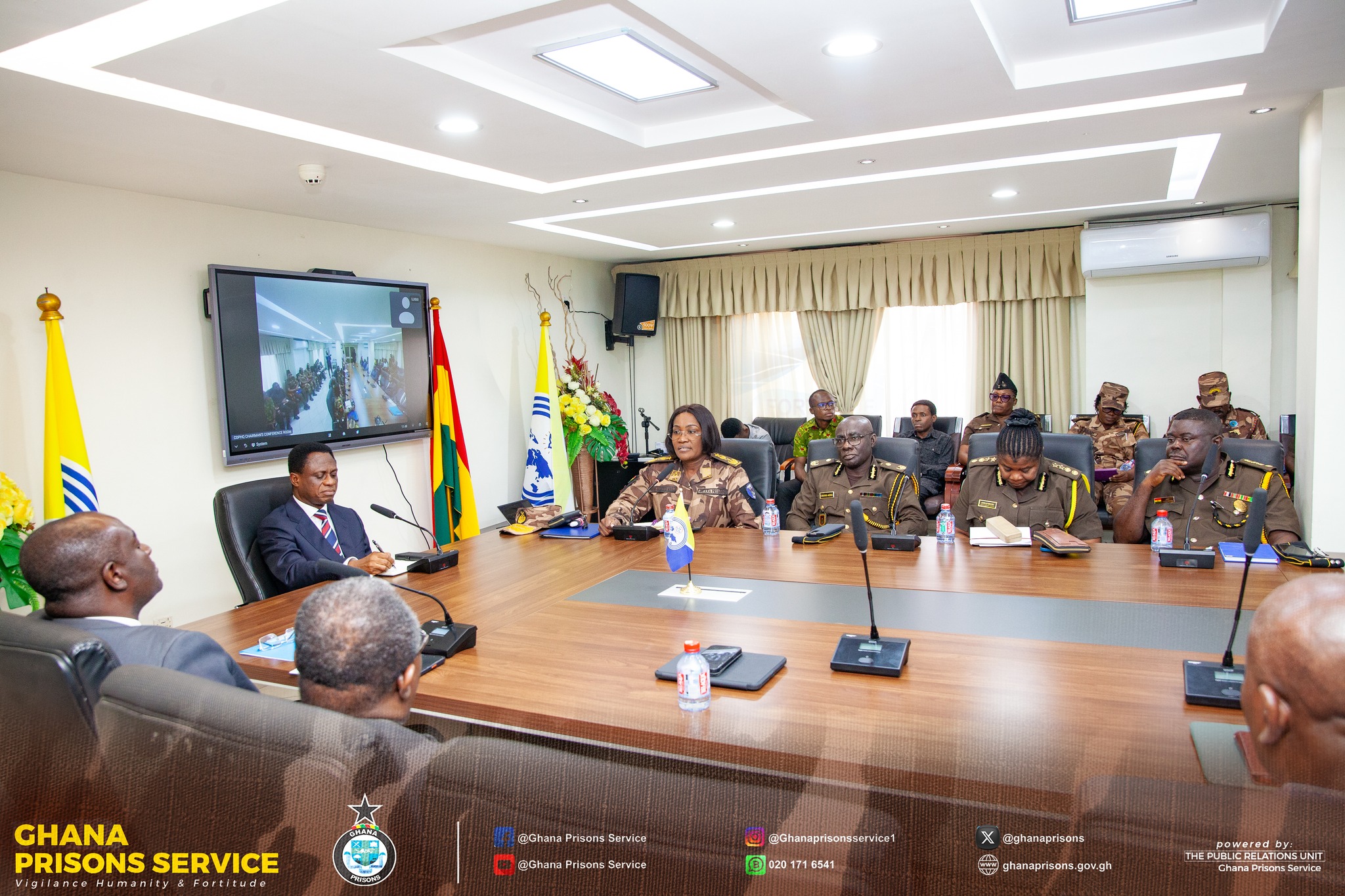
Meanwhile, the Ghana Prisons Service has denied advertising the recruitment of personnel as Prison Office Assistants (POAs) under the Youth Employment Agency (YEA).
The attention of the Prisons Administration has been drawn to a flyer circulating on social media that suggests so.
In a statement, the Prisons Service stated that it “strongly disassociates itself from this advertisement as it has no knowledge or information of the content on the flyer and cautions the public to treat this as fake news.”
The Service noted that the public would be notified through reliable media releases as and when it has collaborated with the Youth and Employment Agency for any such initiative.
It therefore stated that “until such announcement is officially made, all such advertisement must be regarded as fake.”
Acting Chief Executive Officer of Goldbod, Sammy Gyamfi, has noted that the process for reapplying for a licence to engage in gold trade with Goldbod is devoid of corrupt practices.
During a meeting with the Chamber of Licensed Gold Buyers, Mr Gyamfi stated that “I don’t take or demand bribes before I issue licence.”
The acting CEO noted that the process for registering has been made seamless and is devoid of corruption.
“We have removed the human interface element, and so there is no corruption, bribery, inducements, or favoritism. It is a very transparent and competitive process, and once you qualify, you get the license,” he added.
Mr Sammy Gyamfi (Esq.) has stressed that persons who engage in gold trading without Goldbod licenses after June 21 will be prosecuted.
“As we have announced, by the 21st of this month, we shall ensure that only holders of Goldbod licenses are able to buy gold and so if you are not licensed by the GoldBod, you cannot buy gold after June 21st. It will constitute a punishable offense to do so.”
Mr Gyamfi urged the gold buyers to forge partnerships that will boost compliance with the new GoldBod licensing regime.
The Ghana Gold Board (Goldbod) has, for the umpteenth time, extended the deadline for gold traders with outdated licences to reapply under its new regulatory framework .
The May 21 deadline, which was reported to be the final extension, has been extended to June 21 following concerns by stakeholders.
According to Mr Gyamfi, “this new deadline is not extendable.”
The use of a license issued by the defunct PMMC and/or the Ministry of Lands and Natural Resources to deal in gold is prohibited beyond the new non-extendable deadline of June 21.
A breach of this directive shall constitute a punishable offense under the Ghana Gold Board Act, 2025 (ACT 1140).
Under the new Ghana Gold Board Act, all previously issued licences for gold trading have been rendered void. Traders who wish to stay in business must submit fresh applications via the Goldbod website.
Applicants have been advised to pay attention to detail when filling out the forms, as inaccuracies could lead to disqualification.
“If you make serious omissions or errors in the application, it will go against you in terms of the decision that the Gold Board will take on that application,” Mr. Gyamfi warned.
Goldbod will oversee the gold sector, tackle illegal trade, and promote responsible sourcing in line with global standards such as the London Bullion Market Association (LBMA) certification.
The Minister for Finance, Dr Cassiel Ato Forson, has established the newly constituted Board of Directors of the Ghana Gold Board (GoldBod).
Dr Forson extended President John Dramani Mahama’s congratulations to the 13-member board led by Mr Kojo Fynn.
The sector minister also called on the board to deliver their mandate and enhance the country’s gold trade, ensure transparency in dealing, and aid the government’s economic recovery efforts.
Acting Chief Executive Officer of the Goldbod, Mr Sammy Gyamfi (Esq.) has stressed that persons who engage in gold trading without Goldbod licenses after June 21 will be prosecuted.
He stressed this during a meeting with the Chamber of Licensed Gold Buyers.
“As we have announced, by the 21st of this month, we shall ensure that only holders of Goldbod licenses are able to buy gold, and so if you are not licensed by the GoldBod, you cannot buy gold after June 21st. It will constitute a punishable offense to do so.”
Mr Gyamfi urged the gold buyers to forge partnerships that will boost compliance with the new GoldBod licensing regime.
The acting CEO noted that the process for registering has been made seamless and is devoid of corruption.
“We have removed the human interface element and so there is no corruption, bribery, inducements, or favoritism. It is a very transparent and competitive process and once you qualify, you get the license. I don’t take or demand bribes before I issue license.”
The Ghana Gold Board (Goldbod) has, for the umpteenth time, extended the deadline for gold traders with outdated licences to reapply under its new regulatory framework .
The May 21 deadline, which was reported to be the final extension, has been extended to June 21 following concerns by stakeholders.
According to Mr Gyamfi, “this new deadline is not extendable.”
The use of a license issued by the defunct PMMC and/or the Ministry of Lands and Natural Resources to deal in gold is prohibited beyond the new non-extendable deadline of June 21.
A breach of this directive shall constitute a punishable offense under the Ghana Gold Board Act, 2025 (ACT 1140).
Under the new Ghana Gold Board Act, all previously issued licences for gold trading have been rendered void. Traders who wish to stay in business must submit fresh applications via the Goldbod website.
Applicants have been advised to pay attention to detail when filling out the forms, as inaccuracies could lead to disqualification.
“If you make serious omissions or errors in the application, it will go against you in terms of the decision that the Gold Board will take on that application,” Mr. Gyamfi warned.
Goldbod will oversee the gold sector, tackle illegal trade, and promote responsible sourcing in line with global standards such as the London Bullion Market Association (LBMA) certification.
The Minister for Finance, Dr Cassiel Ato Forson, has established the newly constituted Board of Directors of the Ghana Gold Board (GoldBod).
Dr Forson extended President John Dramani Mahama’s congratulations to the 13-member board led by Mr Kojo Fynn.
The sector minister also called on the board to deliver their mandate and enhance the country’s gold trade, ensure transparency in dealing, and aid the government’s economic recovery efforts.
General Officer Commanding (GOC) Southern Command, Brigadier General Isaac Nicholas Paintsil, has paid a familiarization visit to the 5 Infantry Battalion.
During his visit, he interacted with personnel to gain insight into their operations as well as their challenges.
In his interaction with personnel, the GOC disclosed that the Military High Command was working to retool the Ghana Armed Forces to resolve the operational, administrative, and logistical shortfalls that plague the force.
Brigadier General Paintsil also warned against one-man operations and recruitment fraud.
He noted that such illegalities tarnish the hard-earned reputation of the service.
He urged personnel to maintain discipline and work diligently.
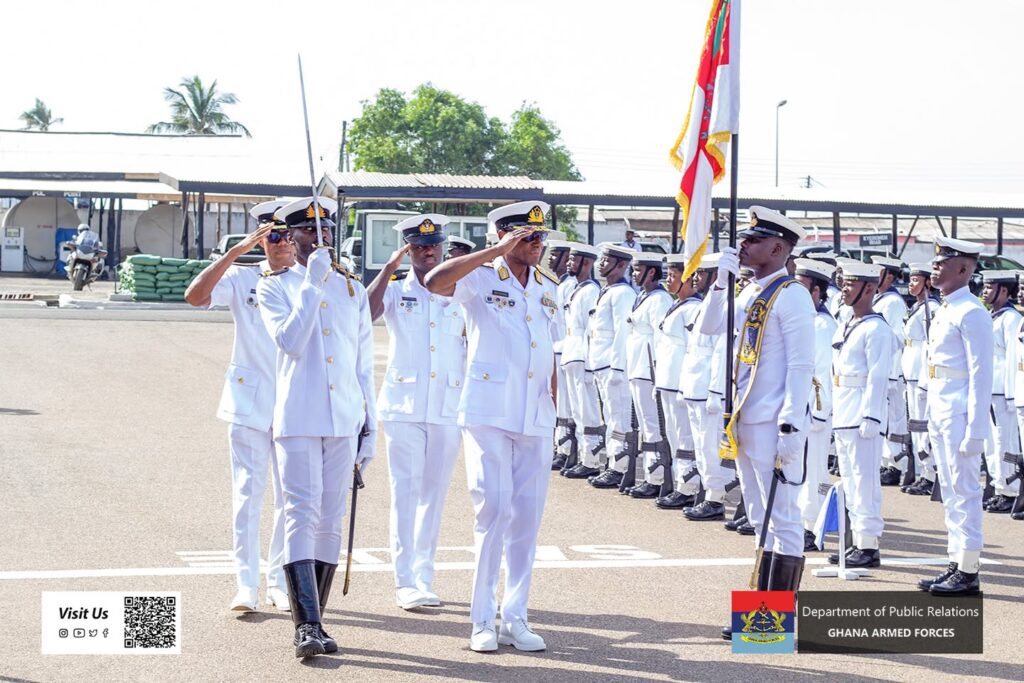
Also, the Chief of Naval Staff, Rear Admiral Godwin Livinus Bessing, has visited the Eastern Naval Command in Tema to acquaint himself with the unit, interact with personnel, and outline his strategic vision for the Ghana Navy.
As part of his itinerary, Rear Admiral Godwin Livinus Bessing had an all-ranks durbar where he reaffirmed his commitment to ensuring the Navy remained a combat-ready, credible, and cohesive force with a forward-looking perspective.
He promised to adopt a people-centred approach, prioritizing maritime security, sovereignty protection, force readiness and professional development among others.
The CNS emphasised discipline, advising that adherence to designated roles and responsibilities. He cautioned personnel against their involvement in illicit activities since it could lead to severe consequences.
The Ghana Armed Forces (GAF) has joined the many state institutions dispelling claims of ongoing recruitment.
The GAF in a statement said, “the general public is hereby informed that the Ghana Armed Forces is not undertaking any recruitments/enlistments yet.”
The security institution thus noted that any such advertisement or information of any form “is fake and should be ignored.”
The public is thereby urged to be wary of scammers and fraudsters.
“The general public would be informed of any future recruitments/enlistments, which are always placed only in the Daily Graphic and the Ghanaian Times,” the statement added.
Meanwhile, the Ghana Prisons Service has denied advertising the recruitment of personnel as Prison Office Assistants (POAs) under the Youth Employment Agency (YEA).
The attention of the Prisons Administration has been drawn to a flyer circulating on social media that suggests so.
In a statement, the Prisons Service stated that it “strongly disassociates itself from this advertisement as it has no knowledge or information of the content on the flyer and cautions the public to treat this as fake news.”
The Service noted that the public would be notified through reliable media releases as and when it has collaborated with the Youth and Employment Agency for any such initiative.
It therefore stated that “until such announcement is officially made, all such advertisement must be regarded as fake.”
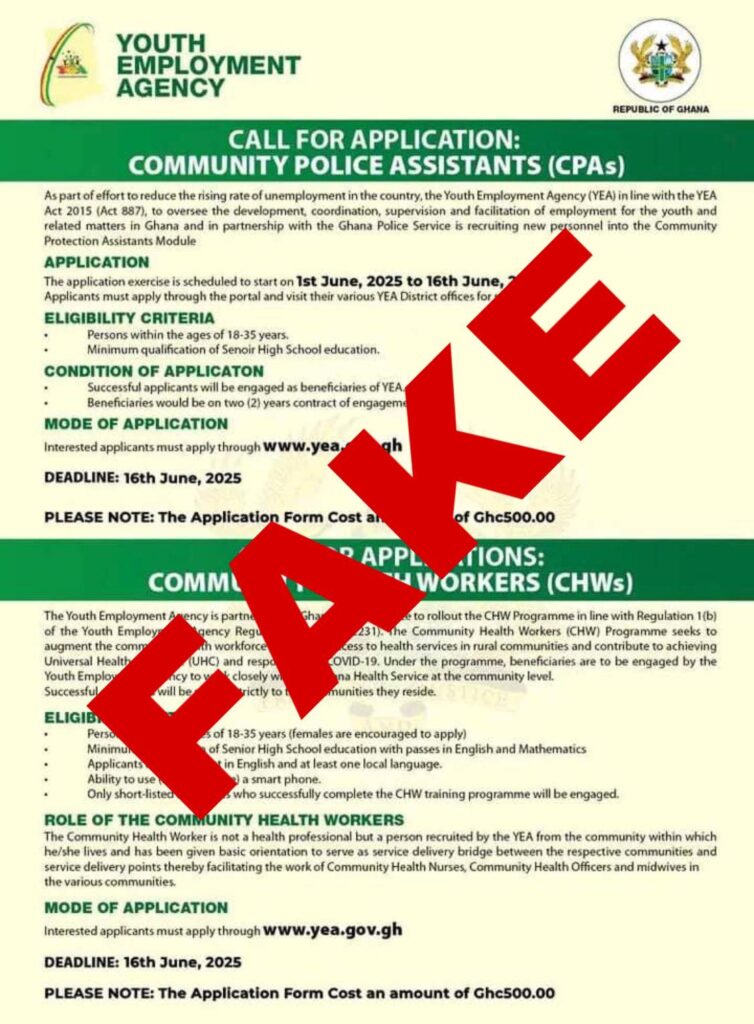
Recently, the Youth Employment Agency (YEA) has distanced itself from a communique announcing the recruitment of new personnel into the Community Protection Assistants Module.
The flier deemed “fake” by the YEA reads:
“As part of effort to reduce the rising rate of unemployment in the country, the Youth Employment Agency (YEA) in line with the YEA Act 2015 (Act 887), to oversee the development, coordination, supervision and facilitation of employment for the youth and related matters in Ghana and in partnership with the Ghana Police Service is recruiting new personnel into the Community Protection Assistants Module,”
Per the falsified flier, “the application exercise is scheduled to start on 1st June, 2025 to 16th June.”
The Agency in a post on Facebook, noted that “The Youth Employment Agency wishes to inform the public that this publication is FAKE and should be completely disregarded, as it does not originate from the Agency.”
The YEA also dispelled claims of recruitment for Community Health Workers (CHWs).
President John Dramani Mahama has reiterated the government’s decision to clear the accumulated legacy debts in the power sector with part of the revenue generated from the GHC1 fuel levy yet to be implemented.
He stated that “initially much of this revenue will go to the purchasing of fuel to ensure stable power of electricity.”
Government will also reduce the use of liquid fuel in the energy mix as it expects more gas from the ENI, Sankofa, Jubilee and TEN fields, as well as West African Gas Pipeline.
“At that stage, the resources generated by this increased levy will be channeled to pay accumulated legacy debts in the power sector,” he added.
Fuel Levy will be used to clear accumulated legacy debts in the power sector – President Mahama
Government is set to implement the Energy Sector Levy (Amendment) Bill, 2025, which introduces a GH¢1.00 petroleum levy, following approval by Parliament on Tuesday, June 3.
The Majority side of the House approved the bill after the Minority side staged a walkout.
Energy and Green Transition Minister, John Abdulai Jinapor, has defended government’s move despite opposition from some stakeholders in the energy sector.
He noted that the timing of the introduction of the levy is apt as the cedi continues to appreciate against major trading currencies.
The minister projects to generate revenue ranging between GH¢5 billion and GH¢6 billion to support the procurement of liquid fuel.
“Fuel was around GH¢16.00, and a sensitive government will not slap a tax when fuel is GH¢16.00. You couldn’t have imposed that tax around that time when fuel was still very high, and so you needed to work to bring fuel down to this level and share the gain with Ghanaians. At that time, if we had increased it, you can imagine the impact on Ghanaians, but today, the net effect is that you are still having a reduction of GH¢3.00 on a litre of fuel,” he explained.
“It is better to do it today than to (have done) it yesterday, when it would have eroded your income; today, your purchasing power has increased because of the reduction of the value of the dollar,” he said while speaking on JoyFM.
Despite the projected revenue government seeks to rake, the Energy Minister noted that the government will still need to push in more finances to address the country’s energy sector crisis.
“This amount, if you look at the object clearly, we talked about the debt that we have and how unsustainable the debt is.”
“So, even with this GH¢1, the Finance Minister will still have to assist us in getting some additional money to buy liquid fuel,” Mr Jinapor said in an interview on Citinews.
On the matter, Chief Executive Officer of the Association of Oil Marketing Companies (AOMCs), Dr Riverson Oppong Peprah,warned that the implementation of the levy could drive fuel prices higher, adding further strain on consumers and the downstream sector.
“When fuel prices began to fall, it wasn’t because the cedi gained stability; rather, it was due to a drop in plant prices caused by the decline in West Texas Intermediate (WTI) crude oil prices. Only after that did the cedi stabilise and support the downward trend.”
“As we speak today, plant prices are already rising again. So, I urge the government to reconsider this levy since there are other options,” he counselled.
Also, Executive Director of the Centre for Environment and Sustainable Energy, Benjamin Nsiah has raised similar concerns, calling the introduction of the levy “unfair.”
“This approach is not only tired but unfair,” Nsiah said. “We’ve seen this playbook before. The Energy Sector Levies Act (ESLA), and the Energy Sector Recovery Levy have provided a lasting solution to the underlying issues. It’s not about collecting more. It’s about managing what’s already collected.”
About Ghana’s energy crisis
Ghana is currently facing a severe energy crisis, evident in the frequent power outages, financial struggles, and fuel shortages. The government is urgently seeking GH₵1.1 billion for fuel procurement.
The Electricity Company of Ghana (ECG), on the other hand, is facing a monthly deficit of GH₵2 billion due to poor revenue collection, making it difficult to pay independent power producers, who have threatened to suspend operations.
Two weeks ago, the Ministry of Energy confirmed the arrival of 450,000 barrels of fuel to support power generation at a time stakeholders project imminent power outages.
Head of Communications at the Energy Ministry, Richmond Rockson, who engaged the media in an interview noted that the challenge before his outfit is financing to procure more barrels of fuel.
“The only challenge is financing because when you look at the tariff structure, fuels are not part of the tariff structure, so every now and then, we have to fall on the Ministry of Finance to make provisions for funding,” he said.
Per reports, the barrels of fuel recently purchased are likely to last no more than 16 days. That sets June 4, as the next critical date by which new fuel must arrive, or the country might experience electricity generation shortfall.
The Ghana Prisons Service has denied advertising the recruitment of personnel as Prison Office Assistants (POAs) under the Youth Employment Agency (YEA).
The attention of the Prisons Administration has been drawn to a flyer circulating on social media that suggests so.
In a statement, the Prisons Service stated that it “strongly disassociates itself from this advertisement as it has no knowledge or information of the content on the flyer and cautions the public to treat this as fake news.”
The Service noted that the public would be notified through reliable media releases as and when it has collaborated with the Youth and Employment Agency for any such initiative.
It therefore stated that “until such announcement is officially made, all such advertisement must be regarded as fake.”
Recently, the Youth Employment Agency (YEA) has distanced itself from a communique announcing the recruitment of new personnel into the Community Protection Assistants Module.
The flier deemed “fake” by the YEA reads:
“As part of effort to reduce the rising rate of unemployment in the country, the Youth Employment Agency (YEA) in line with the YEA Act 2015 (Act 887), to oversee the development, coordination, supervision and facilitation of employment for the youth and related matters in Ghana and in partnership with the Ghana Police Service is recruiting new personnel into the Community Protection Assistants Module,”
Per the falsified flier, “the application exercise is scheduled to start on 1st June, 2025 to 16th June.”
The Agency in a post on Facebook, noted that “The Youth Employment Agency wishes to inform the public that this publication is FAKE and should be completely disregarded, as it does not originate from the Agency.”
The YEA also dispelled claims of recruitment for Community Health Workers (CHWs).
The High Court has convicted Thomas Andy Owusu, aide to New Patriotic Party Ashanti Regional Chairman Bernard Antwi-Boasiako, popularly known as Chairman Wontumi, in a corruption case tied to illegal mining licensing.
According to the Office of the Special Prosecutor (OSP), Mr Owusu, who is the second accused in the case of The Republic v. Charles Bissue & Another, was convicted on his own plea after the court accepted a plea agreement entered under section 71 of the Office of the Special Prosecutor Act, 2017 (Act 959).
The charge was based on corruption of a public officer and accepting a bribe to influence a public officer.
Tiger Eye PI’s 2019 “Galamsey Fraud Part One” investigation implicated Owusu and then-presidential staffer Charles Bissue in facilitating illegal mining licences for bribes, bypassing official processes.
For taking GHS15,000 as his compensation so that he can influence a public officer to bypass the licencing requirements, Mr Owusu, per the agreement reached, will pay a fine of 500 penalty units (equivalent to GHS 6,000) and restitution of GHS 200,000 to the state.
Meanwhile, the court has struck out two additional charges—corruption of a public officer and accepting a bribe to influence a Public Officer.
Following the second accused’s conviction, the court can now focus on the first accused, Charles Bissue, who has been accused of using public office for profit, contrary to section 179C(b) of the Criminal Offences Act, 1960 (Act 29).
His trial will continue on June 10 with a scheduled case management conference.
In a related development, the Supreme Court has delivered a ruling in the ongoing civil legal dispute between Charles Bissue and the OSP.
In 2023, Bissue filed a case at the Human Rights Court, claiming that the OSP had unlawfully obtained an arrest warrant for his apprehension.
The OSP denied this, stating that it did not require a warrant to arrest Bissue. The Kaneshie District Court, which Bissue alleged had issued the warrant, confirmed it had not granted any such order.
The Attorney-General, representing the District Court, also testified that no warrant existed. Bissue was unable to produce the alleged warrant and instead relied on an interview granted by the Special Prosecutor on Joy FM’s Newsfile programme.
His legal team argued that the remarks in the interview led them to believe a warrant had been issued.
The Human Rights Court, after confirming the non-existence of a warrant, dismissed the case and ruled that there was no need to play the interview or allow the cross-examination of Bissue’s lawyer.
Dissatisfied with the decision, Bissue petitioned the Supreme Court to overturn the ruling.
On Tuesday, the Supreme Court ordered that the Newsfile interview be played in court to allow the contents to be properly assessed.
The decision means the matter returns to the Human Rights Court, where the OSP will also be allowed to cross-examine Bissue’s lawyer on the alleged existence of the warrant.
The Ghana Statistical Service (GSS) has announced the fifth consecutive reduction in the inflation rate this year so far.
As of May 2025, the country recorded an 18.4% rate, a 2.8% decline from the 21.2% reported in April. This is also the lowest rate recorded since February 2022.
The decline stems from the significant drop in transport fares and non-food inflation, according to the Government Statistician Alhassan Iddrisu.
Ghana ended the year 2024 with 23.8% inflation. In January 2025, inflation slightly declined to 23.5%. And since then it has continued to ease. In February inflation declined to 23.1%; it saw another decrease in March to 22.4% and declined again in April to 21.2%.
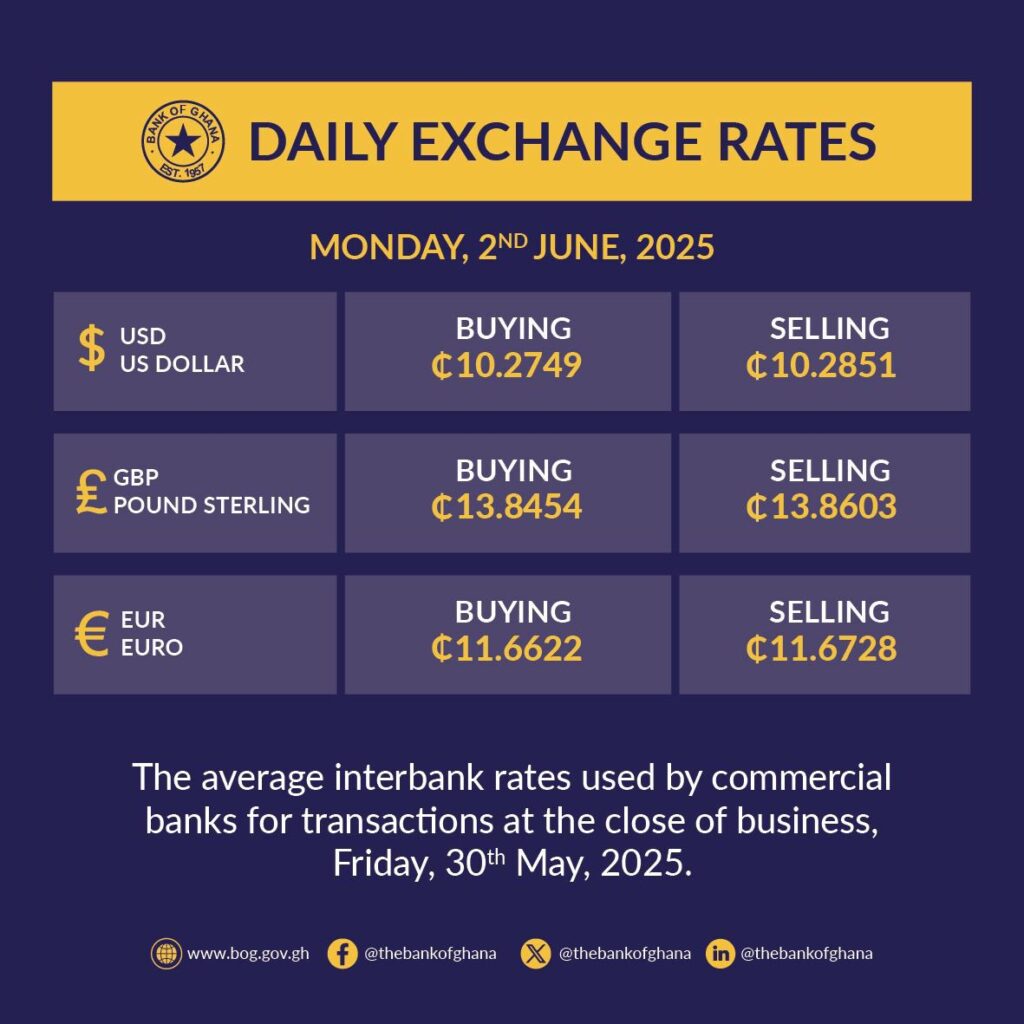
Discussing improvement with macroeconomic variables – exchange rate—the cedi has appreciated by approximately 24% against the US dollar, contributing to a decline in inflation.
The current inflation rate marks a significant milestone, as Ghana’s inflation rate skyrocketed to 31.26 percent in 2022 due to disruptions and cedi depreciation.
President Mahama has projected that single-digit inflation will be reported by the country at the end of the first half of the year.
In an address at the Ghana-EU Business Forum held at the Kempinski Hotel in Accra yesterday, President Mahama stated that his government will achieve this feat by effecting a tighter monetary policy rate, cutting expenditure, and reducing debt accumulation.
“Inflation, which peaked at 23.8% at the end of 2024, has begun to ease, falling to 21.2% in April 2025 largely due to moderation of both food and nonfood inflation and prudent fiscal management. We’re projecting to achieve a single-digit inflation trajectory by the middle of 2026.”
President Mahama noted there are positive signs that the country is recovering in a disciplined and inclusive way, pointing to the fact that Ghana’s international reserves have increased from $8.9 billion in December 2024 to $10.6 billion by April 2025. This is equivalent to almost five months of import cover.
“This reflects enhanced export earnings, particularly from gold and non-traditional exports, as well as timely disbursements for our multilateral partners. These figures, though early in the year, are clear signs of a disciplined and inclusive economy,” the president added.
He stressed that the government is enforcing contract sanctity and implementing firm measures to safeguard investor rights.
In March, the Monetary Policy Committee by a majority decision, decided to raise the Monetary Policy Rate by 100 basis points to 28.0 percent to re-anchor the disinflation process. As inflation becomes firmly anchored, the Committee noted that it will reassess the scope for a gradual easing in the policy stance.
During the 2025 budget presentation on March 11, Finance Minister Dr. Cassiel Ato Forson announced the government’s objective to reduce inflation to 11.9% by the end of the year. The president’s projection suggests that the government may have to re-evaluate its earlier inflation projection.
Fitch Solutions has also forecasted a more conservative outlook, predicting Ghana’s inflation will average 18.8% in 2025 and end the year at 13.6%. This projection suggests that while inflation may decrease, it might not reach the government’s ambitious target.
The International Monetary Fund (IMF) also provided its assessment, projecting Ghana’s inflation to end 2025 at 17.5%, which is also higher than the government’s target.
With the unprecedented performance of the cedi in recent times and the calls for reduction in prices of goods and services to reflect the gains in the cedi, stakeholders continue to monitor the financial sector to observe how the country’s inflation rate will be affected.
Members of the Minority in Parliament are on their way to the Police Headquarters in Accra to demand immediate security for the collation of Ablekum North results.
The Police team, led by the Director General of the CID, DCOP Lydia Donkor, according to reports, received the Minority.
Ablekuma North remains the only constituency in Ghana without a sitting Member of Parliament, months after the 2024 general elections, due to unresolved disagreements over the outcome of the parliamentary vote.
On December 10, 2024, three days after the national polls, the Electoral Commission (EC) declared Ewurabena Aubynn of the National Democratic Congress (NDC) the winner of the Ablekuma North parliamentary seat, defeating the New Patriotic Party’s (NPP) Nana Akua Owusu Afriyieh.
However, the EC later revoked the announcement, revealing that results from 62 of the 281 polling stations had not been included in the initial collation.
Efforts to restart the collation in January 2025 were disrupted by multiple challenges. These included interruptions due to the submission of unverified pink sheets and a violent intrusion at the collation centre that heightened security concerns.
By January 6, only seven polling station results remained uncollated. Yet the process came to a standstill as the EC began engaging both major political parties in an attempt to break the deadlock.
Both the New Patriotic Party (NPP) and the National Democratic Congress (NDC) have declared victory in the December parliamentary elections.
The NPP maintains that its candidate, Nana Akua Afriyie, emerged the winner based on Electoral Commission figures, while the NDC insists that Ewurabena Aubyn was rightfully elected by the people.
At the heart of the dispute are allegations of irregularities and inconsistencies in the pink sheets, which both parties say undermine the credibility of the results.
Inspector General of Police (IGP), Dr. Christian Tetteh Yohuno, has warned that the continued delay poses a serious threat to Ghana’s democratic reputation and the integrity of its electoral system. He cautioned that how the dispute is handled will shape public trust in Ghana’s electoral processes well beyond the current cycle.
He has called on the Electoral Commission (EC) to promptly present a concrete timeline and strategy to complete the stalled collation of parliamentary results in Ablekuma North Constituency.
The IGP assured that the police are ready to provide full security support if the EC chooses to resume the collation process.
Dr. Christian Tetteh Yohuno, made these remarks on Thursday, May 8, while engaging the Election Security Taskforce and other security agencies at the CID headquarters in Accra.
He also appealed to all parties to remain committed to a peaceful resolution, urging a broader reflection on the values underpinning Ghana’s democracy.
“Let us secure not just the ballot boxes but also the belief in the system. Let us not protect just physical lives but also the spirit of democracy,” he said.
The IGP’s comments come amid increasing pressure on the EC to break the stalemate and ensure full representation for the constituents of Ablekuma North.
Meanwhile, the Deputy Director of the EC in charge of Training, Dr. Serebour Quaicoe, has cited inadequate security from the Ghana Police Service as the primary reason the Commission has yet to declare results for the Ablekuma North Constituency after the 2024 parliamentary elections.
During an interview with the media on Wednesday, May 7, Dr. Quaicoe said the Commission is ready to finalize the collation and announce the outcome once proper security arrangements are in place.
He explained that although the EC team had attempted to meet with the Inspector General of Police to discuss the next steps, the IGP was unavailable at the time.
“They are supposed to provide us with protection to complete the process. Unfortunately, when our team visited, they did not meet the IGP. My understanding is that the IGP will be briefed upon his return so that we can engage with them and determine a time to complete the process,” he stated.
Dr. Quaicoe reiterated that the Commission is fully capable of concluding the collation once a secure environment is guaranteed.
Some stakeholders in the energy sector have expressed their displeasure over the approval of the Energy Sector Levy (Amendment) Bill, 2025, by Parliament and its pending implementation.
The approval of the bill has introduced a GH¢1.00 petroleum levy.
On the matter, Chief Executive Officer of the Association of Oil Marketing Companies (AOMCs), Dr Riverson Oppong Peprah,warned that the implementation of the levy could drive fuel prices higher, adding further strain on consumers and the downstream sector.
“When fuel prices began to fall, it wasn’t because the cedi gained stability; rather, it was due to a drop in plant prices caused by the decline in West Texas Intermediate (WTI) crude oil prices. Only after that did the cedi stabilise and support the downward trend.”
“As we speak today, plant prices are already rising again. So, I urge the government to reconsider this levy since there are other options,” he counselled.
Also, Executive Director of the Centre for Environment and Sustainable Energy, Benjamin Nsiah has raised similar concerns, calling the introduction of the levy “unfair.”
“This approach is not only tired but unfair,” Nsiah said. “We’ve seen this playbook before. The Energy Sector Levies Act (ESLA), and the Energy Sector Recovery Levy have provided a lasting solution to the underlying issues. It’s not about collecting more. It’s about managing what’s already collected.”
The Majority side of the House approved the bill after the Minority side staged a walkout.
Energy and Green Transition Minister, John Abdulai Jinapor, has defended government’s move despite opposition from some stakeholders in the energy sector.
He noted that the timing of the introduction of the levy is apt as the cedi continues to appreciate against major trading currencies.
The minister projects to generate revenue ranging between GH¢5 billion and GH¢6 billion to support the procurement of liquid fuel.
“Fuel was around GH¢16.00, and a sensitive government will not slap a tax when fuel is GH¢16.00. You couldn’t have imposed that tax around that time when fuel was still very high, and so you needed to work to bring fuel down to this level and share the gain with Ghanaians. At that time, if we had increased it, you can imagine the impact on Ghanaians, but today, the net effect is that you are still having a reduction of GH¢3.00 on a litre of fuel,” he explained.
“It is better to do it today than to (have done) it yesterday, when it would have eroded your income; today, your purchasing power has increased because of the reduction of the value of the dollar,” he said while speaking on JoyFM.
Despite the projected revenue government seeks to rake, the Energy Minister noted that the government will still need to push in more finances to address the country’s energy sector crisis.
“This amount, if you look at the object clearly, we talked about the debt that we have and how unsustainable the debt is.”
“So, even with this GH¢1, the Finance Minister will still have to assist us in getting some additional money to buy liquid fuel,” Mr Jinapor said in an interview on Citinews.
About Ghana’s energy crisis
Ghana is currently facing a severe energy crisis, evident in the frequent power outages, financial struggles, and fuel shortages. The government is urgently seeking GH₵1.1 billion for fuel procurement.
The Electricity Company of Ghana (ECG), on the other hand, is facing a monthly deficit of GH₵2 billion due to poor revenue collection, making it difficult to pay independent power producers, who have threatened to suspend operations.
Two weeks ago, the Ministry of Energy confirmed the arrival of 450,000 barrels of fuel to support power generation at a time stakeholders project imminent power outages.
Head of Communications at the Energy Ministry, Richmond Rockson, who engaged the media in an interview noted that the challenge before his outfit is financing to procure more barrels of fuel.
“The only challenge is financing because when you look at the tariff structure, fuels are not part of the tariff structure, so every now and then, we have to fall on the Ministry of Finance to make provisions for funding,” he said.
Per reports, the barrels of fuel recently purchased are likely to last no more than 16 days. That sets June 4, as the next critical date by which new fuel must arrive, or the country might experience electricity generation shortfall.
Government is set to implement the Energy Sector Levy (Amendment) Bill, 2025, which introduces a GH¢1.00 petroleum levy, following approval by Parliament on Tuesday, June 3.
The Majority side of the House approved the bill after the Minority side staged a walkout.
Energy and Green Transition Minister, John Abdulai Jinapor, has defended government’s move despite opposition from some stakeholders in the energy sector.
He noted that the timing of the introduction of the levy is apt as the cedi continues to appreciate against major trading currencies.
The minister projects to generate revenue ranging between GH¢5 billion and GH¢6 billion to support the procurement of liquid fuel.
“Fuel was around GH¢16.00, and a sensitive government will not slap a tax when fuel is GH¢16.00. You couldn’t have imposed that tax around that time when fuel was still very high, and so you needed to work to bring fuel down to this level and share the gain with Ghanaians. At that time, if we had increased it, you can imagine the impact on Ghanaians, but today, the net effect is that you are still having a reduction of GH¢3.00 on a litre of fuel,” he explained.
“It is better to do it today than to (have done) it yesterday, when it would have eroded your income; today, your purchasing power has increased because of the reduction of the value of the dollar,” he said while speaking on JoyFM.
Despite the projected revenue government seeks to rake, the Energy Minister noted that the government will still need to push in more finances to address the country’s energy sector crisis.
“This amount, if you look at the object clearly, we talked about the debt that we have and how unsustainable the debt is.”
“So, even with this GH¢1, the Finance Minister will still have to assist us in getting some additional money to buy liquid fuel,” Mr Jinapor said in an interview on Citinews.
On the matter, Chief Executive Officer of the Association of Oil Marketing Companies (AOMCs), Dr Riverson Oppong Peprah,warned that the implementation of the levy could drive fuel prices higher, adding further strain on consumers and the downstream sector.
“When fuel prices began to fall, it wasn’t because the cedi gained stability; rather, it was due to a drop in plant prices caused by the decline in West Texas Intermediate (WTI) crude oil prices. Only after that did the cedi stabilise and support the downward trend.”
“As we speak today, plant prices are already rising again. So, I urge the government to reconsider this levy since there are other options,” he counselled.
Also, Executive Director of the Centre for Environment and Sustainable Energy, Benjamin Nsiah has raised similar concerns, calling the introduction of the levy “unfair.”
“This approach is not only tired but unfair,” Nsiah said. “We’ve seen this playbook before. The Energy Sector Levies Act (ESLA), and the Energy Sector Recovery Levy have provided a lasting solution to the underlying issues. It’s not about collecting more. It’s about managing what’s already collected.”
About Ghana’s energy crisis
Ghana is currently facing a severe energy crisis, evident in the frequent power outages, financial struggles, and fuel shortages. The government is urgently seeking GH₵1.1 billion for fuel procurement.
The Electricity Company of Ghana (ECG), on the other hand, is facing a monthly deficit of GH₵2 billion due to poor revenue collection, making it difficult to pay independent power producers, who have threatened to suspend operations.
Two weeks ago, the Ministry of Energy confirmed the arrival of 450,000 barrels of fuel to support power generation at a time stakeholders project imminent power outages.
Head of Communications at the Energy Ministry, Richmond Rockson, who engaged the media in an interview noted that the challenge before his outfit is financing to procure more barrels of fuel.
“The only challenge is financing because when you look at the tariff structure, fuels are not part of the tariff structure, so every now and then, we have to fall on the Ministry of Finance to make provisions for funding,” he said.
Per reports, the barrels of fuel recently purchased are likely to last no more than 16 days. That sets June 4, as the next critical date by which new fuel must arrive, or the country might experience electricity generation shortfall.
The inauguration of the Board of Trustees for the Social Security and National Insurance Trust (SSNIT) on Tuesday, June 3, was overseen by Finance Minister Dr. Cassiel Ato Forson, who called for prudence, integrity, and transparency in the management of Ghana’s pension funds.
Dr. Forson, in his address, noted the vital national importance of SSNIT, reminding the board that it is an institution “we will all need one day—when we retire.”
He warned against any attempts to sell state assets to politically connected individuals as he questioned some of SSNIT’s past investment decisions
“Please don’t sell state assets to politicians. The President will not accept it, and as your sector Minister, I will be the first to oppose it.”
He stressed that the people of Ghana have entrusted their future into the board’s hands, and therefore, their actions must reflect the weight of that responsibility.
The sector minister charged the new board to chart a new course and let their actions reflect the weight of the responsibility the people of Ghana have entrusted to them.
Chairman of the newly constituted Board, Nana Ansah Sasraku III, committed to providing strategic direction to the Trust by leveraging collective expertise to drive growth, sustainability, and excellence in service delivery.
Nana Ansah Sasraku III noted that a roadmap for the Trust will be provided to safeguard the Scheme’s sustainability and ensure that it continues to meet its obligations to its valued members. He acknowledged the magnitude of the task ahead and expressed the Board’s readiness to deliver.
“We know that the task before us is immense. But what greater responsibility is there than securing the retirement incomes of the very people who built our nation? And what greater task is there than ensuring that after years of service, the Ghanaian worker can rest, assured that their future is safe? Yes, we are fully aware of the magnitude of the work ahead. But we are prepared, united and committed to ensure that the Trust’s resources are managed with integrity, prudence and foresight to secure the future of contributors and beneficiaries,” he said.
In May 2024, Member of Parliament for North Tongu, Samuel Okudzeto Ablakwa, lodged a formal petition with the Commission on Human Rights and Administrative Justice (CHRAJ) to investigate allegations surrounding the sale of six hotels namely, Labadi Beach Hotel, La Palm Royal Beach Resort, Elmina Beach Resort, Ridge Royal Hotel, Busua Beach Resort, and the Trust Lodge Hotel.
The Trust decided to sell a 60% stake in its hotels to Rock City Hotel owned by the Food and Agriculture Minister, Dr Bryan Acheampong. In response, Ghanaians demonstrated peacefully through the streets of Accra, compelling authorities to halt the planned sale.
The then-Minority in Parliament called on former President Akufo-Addo, who was president at the time, to instruct the Social Security and National Insurance Trust (SSNIT) to halt the sale, including several state officials who shared the same sentiments.
Later in July 2024, SSNIT eventually announced that it had halted the sale process following significant opposition from stakeholders. The private investor involved, Brian Acheampong’s Rock City Hotel, also withdrew from the transaction.
Former Minister for Employment, Labour Relations, and Pensions Ignatius Baffour Awuah reported that SSNIT’s total assets under management had seen substantial growth, increasing from GHS15.2 billion in December 2016 to GHS71.69 billion by March 2024. This, he said, represented a remarkable 350% increase over a seven-year period.
Chairman of the newly constituted Board of Trustees for the Social Security and National Insurance Trust (SSNIT), Nana Ansah Sasraku III, has committed to providing strategic direction to the Trust by leveraging collective expertise to drive growth, sustainability, and excellence in service delivery.
Nana Ansah Sasraku III noted that a roadmap for the Trust will be provided to safeguard the Scheme’s sustainability and ensure that it continues to meet its obligations to its valued members. He acknowledged the magnitude of the task ahead and expressed the Board’s readiness to deliver.
“We know that the task before us is immense. But what greater responsibility is there than securing the retirement incomes of the very people who built our nation? And what greater task is there than ensuring that after years of service, the Ghanaian worker can rest, assured that their future is safe? Yes, we are fully aware of the magnitude of the work ahead. But we are prepared, united and committed to ensure that the Trust’s resources are managed with integrity, prudence and foresight to secure the future of contributors and beneficiaries,” he said.
He made the remarks following the inauguration of the new Board of Trustees on Tuesday, June 3, by Finance Minister Dr. Cassiel Ato Forson, who called for prudence, integrity, and transparency in the management of Ghana’s pension funds.
Dr. Forson, in his address, noted the vital national importance of SSNIT, reminding the board that it is an institution “we will all need one day—when we retire.”
He warned against any attempts to sell state assets to politically connected individuals as he questioned some of SSNIT’s past investment decisions
“Please don’t sell state assets to politicians. The President will not accept it, and as your sector Minister, I will be the first to oppose it.”
He stressed that the people of Ghana have entrusted their future into the board’s hands, and therefore, their actions must reflect the weight of that responsibility.
The sector minister charged the new board to chart a new course and let their actions reflect the weight of the responsibility the people of Ghana have entrusted to them.
In May 2024, Member of Parliament for North Tongu, Samuel Okudzeto Ablakwa, lodged a formal petition with the Commission on Human Rights and Administrative Justice (CHRAJ) to investigate allegations surrounding the sale of six hotels namely, Labadi Beach Hotel, La Palm Royal Beach Resort, Elmina Beach Resort, Ridge Royal Hotel, Busua Beach Resort, and the Trust Lodge Hotel.
The Trust decided to sell a 60% stake in its hotels to Rock City Hotel owned by the Food and Agriculture Minister, Dr Bryan Acheampong. In response, Ghanaians demonstrated peacefully through the streets of Accra, compelling authorities to halt the planned sale.
The then-Minority in Parliament called on former President Akufo-Addo, who was president at the time, to instruct the Social Security and National Insurance Trust (SSNIT) to halt the sale, including several state officials who shared the same sentiments.
Later in July 2024, SSNIT eventually announced that it had halted the sale process following significant opposition from stakeholders. The private investor involved, Brian Acheampong’s Rock City Hotel, also withdrew from the transaction.
Former Minister for Employment, Labour Relations, and Pensions Ignatius Baffour Awuah reported that SSNIT’s total assets under management had seen substantial growth, increasing from GHS15.2 billion in December 2016 to GHS71.69 billion by March 2024. This, he said, represented a remarkable 350% increase over a seven-year period.
The Ministry of Health has announced that Lightwave E-healthcare Solution has rescinded its decision to suspend its services under the Lightwave Health Information Management System (LHIMS).
The ministry revealed this information after revealing that the “decision to suspend services came to the Ministry as a surprise since there was no formal communication to the Ministry regarding the suspension of services.”
The suspension of the company’s decision following a fruitful engagement with the Minister for Health, Mintah Akandoh – a document signed by Spokesperson for the Ministry, Tony Goodman.
“Consequently, Lightwave eHealthcare Solutions shall continue to provide uninterrupted services to all relevant facilities,” the statement added.
The Ministry of Health wishes to assure all health workers and the general public that all the outstanding issues will be resolved amicably.
The Ministry of Health’s National E-Health Project, featuring the Lightwave Health Information Management System (LHIMS), is transforming healthcare across the country and placing Ghana at the forefront of healthcare in Africa.
This project has positively impacted the provision of care for all sites onboarded. The LHIMS application has integrated real-time state-of-the-art early warning disease surveillance, integrated management tools, and supporting dashboards unmatched anywhere on the continent.
Patient information and data management is a major challenge for all hospitals. The LHIMS application is providing accurate and timely data for hospital administrators, management, providers and clinicians for vital decision making needs and positive outcomes for patients.
Some testimonials from hospitals and health centers regarding the LHIMS application include:
Patient record portability to any LHIMS site, which assures continuation of care without the patient having to maintain and transport his/her folder.
Elimination of paper patient folders
Elimination of folder, container and storage space costs
Availability of real time data at point of care
Quick and easy access to patient Electronic Medical Records at all levels of treatment
Ability to access patient data and patient files in real time from any part of the hospital
Availability of real time data for management and clinical decisions
Improved revenue accuracy
Reduction in Patient waiting time at Outpatient wards
Reduction in Patient waiting time at Admission counters
Efficiency gains in patient wait times
Easy and accurate collection of NHIS Claims
Reduce human errors in data acquisition for DHIMS
Easily moving images from the imaging department to the consulting rooms, wards or operation theaters
Easy supervision and monitoring from the regional health directorate
Time saving by System generation of a number of management reports, KPIs and public health submissions
Provide an early warning system to predict disease outbreaks
Average annual savings of 50,000 to 300,000 along with a 35-40% improvement in patient wait times have been reported from health centers and district hospitals running LHIMS so far. Regional and Teaching hospitals are reporting over 40% improvement in wait times.
The Lightwave Health Information Management System (LHIMS) was initiated in 2018, through the Ministry of Health, to reduce some challenges in healthcare delivery in the country.
Former Vice President Dr Mahamudu Bawumia noted that so far over 62 percent of health facilities and 21 million Ghanaians had been captured and were using the LHIMS. He was hopeful that the numbers would increase in the coming years.
The Office of the Special Prosecutor (OSP) has denied receiving a letter from a hospital containing an alleged medical report on former Finance Minister Kenneth Ofori-Atta.
This follows the publication of a medical report by the Mayo Clinic by media houses that claimed that the OSP received this letter and still declared the former minister a fugitive.
The OSP in a statement stated; “We wish to place on record that neither Mr. Ofori-Atta nor his lawyers have submitted any such letter to the OSP.
According to the OSP, the only correspondence received from his legal representatives is a letter notifying the OSP of a change in his medical condition, and on their say-so.
“It is notable that this alleged hospital letter has been circulated through the media rather than submitted to the law enforcement agency actively investigating him and responsible for decisions regarding his return to Ghana.”
“To date, no certified medical records or official document from any hospital authority has been submitted to the OSP indicating that Mr. Ofori-Atta is incapacitated or unable to travel to Ghana,” the OSP added.
The letter from the Mayo Clinic revealed that Mr. Ofori-Atta has undergone an MR-guided biopsy and has been diagnosed with prostate cancer; thus, a surgical intervention has been deemed necessary after the testing and MRI and biopsy procedures in March 2025.
“This surgical procedure has been scheduled for June 13, with Dr. Paras Shah of the Department of Urology. It is hoped that a closer date may open up. Following the procedure, Mr. Ofori-Atta will require a recovery period before he is able to travel to his home country,” the letter added.
Yesterday, the Office of the Special Prosecutor (OSP) refused the legal team of former Finance Minister Ken Ofori Atta’s request for a virtual session for a probe into allegations of financial loss to the state.
Ken Ofori-Atta was expected to appear before the Office of Special Prosecutor (OSP) on Monday; however, that was not the case.
The OSP, in reaction to the request during an engagement with the press today, declared Mr Ofori-Atta a wanted person again and issued an Interpol Red Notice for failing to appear before the OSP after assuring the office of his presence.
It noted the failure of the former minister to inform the OSP of changes in medical procedure that were to have happened in March of this year.
“He has failed to show any medical report that shows he is a medical risk.”
“We want him physically, and we insist on it,” the OSP said, while noting that Mr Ofori-Atta cannot indicate the mode of investigation.
“His conduct is totally unacceptable. We will no longer tolerate him.”
In February, the OSP declared Ofori-Atta wanted for causing financial loss to the state in several dealings, which include the following:
Contractual arrangement between Strategic Mobilisation Ghana Limited and the Ghana Revenue Authority for the stated objective of the enhancement of revenue assurance in the downstream petroleum sector, upstream petroleum production, and minerals and metals resource value chain.
Termination of a distribution, loss reduction, and associated network improvement project contract between the Electricity Company of Ghana Limited and Beijing Xhao Chen Technology BXC.
Procurement of contractors and materials and activities and payments in respect of the National Cathedral project
Activities and payments in respect of a contract awarded by the Ministry of Health initially commenced by the Ministry for Special Development Initiative to service Ghana Auto Group Limited for purchases and after-sales service and maintenance of 307 Mercedes-Benz Sprinter 304 5 CDI Ambulances for the National Ambulance Service.
Payments out of and utilization of the tax refund account of the Ghana Revenue Authority.
Later, the legal representatives of the former finance minister informed the OSP that their client is currently undergoing medical treatment in the United States and is unable to honor an invitation for questioning.
Ofori-Atta then assured the OSP of its commitment to appearing for questioning on a fixed date, which influenced the OSP’s decision to temporarily take his name off the list in March.
However, the office stressed that he is legally obligated to show up on June 2. Failure to do so, an Interpol Red Notice would be issued and extradition proceedings would be initiated in any country where he may be located.
Ken Ofori-Atta then took legal steps to block the OSP from re-declaring him wanted. His lawsuit argues that the agency’s actions are baseless and unjustified.
Ofori-Atta has dismissed allegations of financial misconduct and corruption, insisting that he has been cooperating with investigators through his legal representatives.
In his court filing, he contends that the OSP’s actions have inflicted serious harm on his reputation and personal life. He is seeking a legal injunction to prevent further declarations against him until the case is fully resolved.
The Human Rights Court has adjourned to June 18 for a ruling on the motion filed by the former Finance Minister, seeking to restrain the OSP from declaring him wanted, among other reliefs.
INTERPOL Red Notice
A Red Notice is a request to law enforcement worldwide to locate and provisionally arrest a person pending extradition, surrender, or similar legal action.
It is based on an arrest warrant or court order issued by the judicial authorities in the requesting country. Member countries apply their own laws in deciding whether to arrest a person.
INTERPOL cannot compel the law enforcement authorities in any country to arrest someone who is the subject of a Red Notice.
Each member country decides what legal value it gives to a Red Notice and the authority of their law enforcement officers to make arrests.
Many more Ghanaians continue to fall prey to monkeypox (MPox), leading to a surge in cases recorded, according to the Ghana Health Service (GHS).
In its recent update, the Service reported that as of 31st May, 26 new cases had been recorded, bringing the total confirmed cases to 45.
As of now, two individuals who contracted the diseases are on admission at a health facility.
In a post on Facebook, the Service noted the recent increase in the number of confirmed Mpox cases “is largely due to enhanced surveillance efforts, particularly through active contact tracing, and a heightened level of awareness among the public.”
“These efforts are crucial in our strategy to identify and isolate cases promptly within communities.”
“We remain committed to maintaining this momentum to ensure that all cases are detected early, thereby helping to contain the outbreak effectively,” the Service added.
As of May 29, 10 new cases had been recorded, leading to a total of 19 confirmed cases.
Five individuals were on admission at health facilities at the time.
Presently, no deaths have been reported so far.
As of May 21, the GHS in a flier revealed that the country’s confirmed cases had hit nine. The Service earlier noted that as of May 18, the number of cases stood at four.
The cases were identified in the Greater Accra and Western regions. This brings the total number of cases to four.
Ghana recorded the first Mpox case in June 2022, with five cases, and by November 2023, health authorities had confirmed a total of 34 cases.
Despite the increase in cases, Ghana has not recorded any Mpox-related deaths.
The Ministry of Health and the Ghana Health Service have called on all media houses to support public education efforts by using their platforms to raise awareness and provide accurate information on Mpox.
“The Government of Ghana remains committed to safeguarding public health. Drawing on our experience in managing similar outbreaks, we will continue to implement appropriate measures to protect the health and well-being of all residents,” said in its statement dated May 18.
Mpox is a viral illness similar to smallpox. It typically causes fever, swollen lymph nodes, and a rash.
The virus spreads through direct contact with an infected person’s skin or bodily fluids, including through sexual contact.
To reduce your risk, avoid close contact with symptomatic individuals, maintain proper hand hygiene, and refrain from sharing personal items.
Symptoms may include fever, rash or lesions, tiredness, headaches, muscle and back pain, and swollen glands.
Across Africa, the disease remains a major concern. As of March 2025, more than 24,200 cases and around 260 deaths have been recorded in 22 countries.
The governments of Ghana and Japan on Monday, June 2, signed the Exchange of Notes on a ¥402 million grant for the “Project for Human Resource Development Scholarship.”
The Ministry of Foreign Affairs of the Republic of Ghana, led by its Chief Director, Ambassador Ramses Joseph Cleland and the Embassy of Japan in Accra, led by Ambassador of Japan to Ghana, His Excellency Mr. Yoshimoto Hiroshi, undertook the signing of the agreement.
Ambassador Cleland in his remarks noted that the Japanese Development Scholarship (JDS) will empower Ghana’s youth and unlock the full potential of the nation’s workforce.
According to him, this initiative reflects the strong and enduring partnership between the governments of Ghana and Japan, aimed at building the human capital necessary to advance Ghana’s development agenda.
On behalf of the Foreign Affairs Minister, Samuel Okudzeto Ablakwa, Ambassador Cleland extended sincere gratitude to the Government of Japan for their continued commitment and expressed optimism for the successful implementation of the grant assistance.
His Excellency Hiroshi, on his part, expressed appreciation to the sector minister for his ongoing support and to Ambassador Cleland for signing the agreement on behalf of Ghana.
Highlighting the significance of the JDS since its inception in 2012, the Ambassador underscored Japan’s dedication to supporting Ghana’s human resource development through quality education and capacity building.
He reaffirmed Japan’s commitment to further strengthen the enduring partnership between the two countries through sustained cooperation in human resource development.
Over the said agreement, Finance Minister Dr Cassiel Ato Forson met with Executive Senior Vice President of the Japan International Cooperation Agency (JICA), Miyazaki Katsura, who reaffirmed Japan’s commitment to long-term development cooperation in preparing Ghanaian professionals for leadership and institutional reform.
Dr Ato Forson expressed Ghana’s appreciation to the government and people of Japan for their consistent support. He noted that the programme aligns with Ghana’s ongoing efforts to strengthen institutional capacity and build a resilient, knowledge-driven public sector.
In April this year, the sector Minister Samuel Okudzeto Ablakwa indicated that Ghana and Japan are committed to advancing key infrastructural and agricultural initiatives, focusing on improving regional connectivity and agricultural output.
The two nations have agreed to prioritize the revival of the Volivo to Dorfor Adidome bridge project. This bridge will serve as a critical link between the Greater Accra, Volta, and Eastern Regions, enhancing transportation and trade across these areas.
Additionally, they plan to develop an interchange in the Ashanti Region to reduce congestion, improving traffic flow and accessibility for both residents and businesses.
Another significant area of focus is providing technical support to boost rice production in Ghana. This initiative aims to increase local rice yields, thereby promoting food security and reducing dependence on imported rice.
In addition to these projects, Ghana will be fully represented at the 9th Tokyo International Conference on African Development (TICAD 9), where discussions will focus on strengthening ties with Japan. A key area of focus will be scaling up chocolate exports to Japan, in response to the growing demand for high-quality Ghanaian chocolate in the Japanese market.
Minister for Finance Dr Cassiel Ato Forson will appear before Parliament today to brief the House on the payment of some statutory funds and other important matters.
The Majority Leader Mahama Ayariga said this on the floor of the House last Friday when he was presenting the explanatory memorandum for the business statement for the second week ending Friday, 6th June.
The Finance Minister has been accused of flouting Ghana’s financial laws – Act 936 of the Local Governance Act – by failing to release statutory funds nearly six months into the new administration by the minority side in Parliament.
Minority Chief Whip, Frank Annoh-Dompreh noted that money has not been disbursed to the District Assemblies Common Fund (DACF) or the National Health Insurance
The Chairman of the Business Committee also revealed that 11 ministers are expected to appear before the House during the week to respond to 72 questions.
According to Mr Ayariga, ministers of State may be permitted to make statements on government policies.
‘‘Papers may be laid during the week and reports from Committees may also be presented to the House for consideration,’’ he stated.
Commenting on the business statement last week, Deputy Minority Whip Mr. Habib Iddrisu and Minority Chief Whip Mr. Frank Annoh-Dompreh asked when the Finance Minister would appear before the House to present the Mid-Year Budget.
Subsequently, the Minority Front Bench inquired why President His Excellency John Dramani Mahama instructed Minister for the Interior Alhaji Mubarak Mohammed Muntaka to declare only one day, 6th June, 2025, as a public holiday to mark Eid-ul-Adha when he had promised Muslims two days.
The Majority Leader, in response, assured the House that the mid-year budget would be presented in due time and that the Interior Minister would appear before the House to amend the Public Holidays Bill to reflect the promise of the president to Muslims.
The Business Statement was adopted by the House at the end of sitting.
Squadron Leader Sharon Mwinsote Syme of Ghana has received the Military Gender Advocate Award during a ceremony marking the International Day of United Nations Peacekeepers on May 29.
Chief Superintendent Zainab Gbla of Sierra Leone grabbed the Woman Police Officer of the Year Award.
The awards were presented at United Nations Headquarters in New York by UN Secretary-General António Guterres.
Sharon Syme of Ghana was recognised for her exceptional commitment to promoting gender equality and empowering women and girls during her tour of duty with the United Nations Interim Security Force for Abyei (UNISFA).
According to the UN, Ms. Syme’s work has directly impacted local communities, ensuring the voices and needs of women and girls are integrated into security and peacebuilding initiatives since her deployment in 2024 as the Mission’s Military Gender Adviser.
She is said to have conducted an intensive health campaign for the women and men of the local communities on the dangers and health implications of gender-based violence and harmful traditional practices like child marriage.
Ms. Syme also helped strengthen the gender awareness and capacity of UNISFA’s military components, spearheading patrols composed of men and women able to address diverse community needs, and engaging with local women’s groups to promote trust and collaboration.
“Her approach emphasized inclusivity, respect and cultural awareness, setting a benchmark for gender-responsive peacekeeping operations,” the UN wrote on its website.
Under-Secretary-General for Peace Operations Jean-Pierre Lacroix said, “Squadron Leader Syme exemplifies the principles of gender advocacy in peacekeeping.”
“Her dedication has not only improved the effectiveness of UNISFA’s operations, but also ensured that the mission is more reflective of and responsive to the communities it serves.”
On her part, Ms Syme said, “Applying gender perspectives into daily tasks is the responsibility of every peacekeeper.”
“Success comes through diversifying military representation at checkpoints, operating bases and on patrols it also comes from having gender-responsive leaders, who listen and respond to the voices of their male and female peacekeepers,” she added.
In reaction to her recognition, the Ghana Armed Forces (GAF) in a post on Facebook, wrote: “Congratulations to Squadron Leader Sharon Mwinsote Syme on your receipt of the United Nations Award for Gender Advocate of the Year.”
About the Awardees
Chief Superintendent Zainab Mbalu Gbla joined the Sierra Leone Police in 2002, where she has since held various roles in operations, training and leadership. She has been serving with UNISFA since April 2023 as Officer-in-Charge of the Community-Based Disarmament Unit and UNPOL Chief Training Officer. This is her third peacekeeping deployment, after serving with the United Nations – African Union Hybrid Operation in Darfur (UNAMID) in 2010–2013 and 2020–2021.
Squadron Leader Sharon Mwinsote Syme graduated from the Ghana Military Academy after obtaining her first master’s degree in international health at Japan’s Tokyo University. A year later, she joined the Ghana Armed Forces Medical Corps and is the Deputy Chief Dietician at the 37 Military Hospital in Accra, Ghana. Her first peacekeeping deployment, she joined UNISFA in March 2024 as the Mission’s Military Gender Adviser.
About the Awards
The United Nations Woman Police Officer of the Year award was established in 2011 to recognize the exceptional contributions of women police officers to UN peace operations and to promote women’s empowerment, in line with UN Security Council resolution 1325 (2000) on women, peace and security.
The UN Military Gender Advocate of the Year Award is presented annually since 2016 to a military peacekeeper — male or female — who has shown outstanding commitment and leadership in promoting the principles of resolution 1325 (2000).
The resolution calls on actors to mainstream a gender perspective in all aspects of peacekeeping and peacebuilding and to ensure women’s participation in peace and political processes.
The resolution also calls for the protection from, and prevention of, conflict-related sexual violence and for an expansion of the role and contribution of women in UN operations, including of uniformed women peacekeepers.
Officer Commanding ECOMIG GHANCOY 9 Lieutenant Colonel Ronne Yaw Agbemafle officially took over from ECOMIG GHANCOY 8 Lieutenant Colonel (Lt Col) Abraham Dery on Friday, May 30, to head the ECOWAS Mission in the Gambia Ghana Company.
The ceremony, marked by the handing over of the Baton of Authority to the incoming officer commanding, followed by the signing of the handing and taking over notes, took place at the Barra Camp in The Gambia.
Lt. Col. Dery expressed gratitude to God Almighty for a successful tour. He also expressed his appreciation to the personnel of GHANCOY 8 for their unwavering support and dedication during the tour.
On his part, Lt. Col. Agbemafle entreated personnel of his GHANCOY to be professional, disciplined, dedicated, and committed to every task assigned to them.
He also thanked the military high command for the opportunity given him to serve.
In April, the Ghanaian Contingent of the ECOWAS Mission in The Gambia (ECOMIG), GHANCOY 8, made a series of donations to the town of Medina Sering Mass.
This forms part of its ongoing efforts to enhance civil-military relations and strengthen community bonds in the North Bank Region of The Gambia.
The outreach, backed by support from DAS Pharma and UNICHEM Ghana Limited, saw the delivery of essential medical items, packs of bottled water, and mattresses to the Medina Sering Mass Clinic, aimed at boosting healthcare delivery in the community.
The contingent extended similar support to local educational institutions, with EPP Books and Services providing textbooks, fictional novels, stationery, and additional bottled water to the Medina Sering Mass Lower Basic, Upper Basic, and Senior Secondary Schools.
In a show of solidarity with the religious community, GHANCOY 8 also donated mattresses, assorted soft drinks, and water to the town’s mosque.
Minister for Health, Hon. Mintah Akandoh, on May 30, launched the FP2030 Made Possible by Family Planning campaign.
Ghana has become the first among 12 African countries to launch the campaign, which is part of the global FP2030 partnership that aims to ensure access to voluntary, rights-based family planning for 120 million more women and girls by 2030.
At the launch, the health minister described the moment as a celebration of Ghana’s progress and pledged bold steps to close funding gaps.
“We have worked hard to improve access to contraception and reproductive health services. Today’s launch is a reaffirmation of our commitment to the future,” Hon. Akandoh said.
Ghana has, since 1960, established the National Family Planning Programme to improve overall health and well-being by providing access to contraception and other reproductive health services.
The campaign highlights how family planning can improve health, expand educational and economic opportunities, advance gender equality, and accelerate national development.
FP2030 (formerly Family Planning 2020) is a core convening partner on the High Impact Practices for Family Planning.
The vision of FP2030 is a FP2030 is based on four guiding principles: voluntary, person-centered, rights-based approaches, with equity at the core; empowering women and girls and engaging men, boys, and communities; building intentional and equitable partnerships with adolescents, youth, and marginalized populations to meet their needs, including for accurate and disaggregated data collection and use; and country-led global partnerships, with shared learning and mutual accountability for commitments and results.
Director of the Family Health Division, Dr. Kennedy T. C. Brightson, emphasized that family planning is a shared responsibility and critical to boosting national productivity.
The event brought together partners who pledged their commitment to reproductive health and accountability.
FP2030’s five regional hubs work together to make up the FP2030 Support Network—the largest community of practice of rights-based family planning advocates in the world.
As of July 2023, $1.47 billion was provided from donor governments to family planning.
As of July 2024, there were 602 million adolescents and youth across low and lower-middle-income families.
From July 2023 to July 2024, 143 million unintended pregnancies were averted due to modern contraception.
The Office of the Special Prosecutor (OSP) has refused the legal team of former Finance Minister Ken Ofori Atta’s request for a virtual session for a probe into allegations of financial loss to the state.
Ken Ofori-Atta was expected to appear before the Office of Special Prosecutor (OSP) today; however, that was not possible as sources reported deterioration in his health.
His legal team is said to have formally communicated the development to the OSP and the Human Rights Court, submitting medical reports that detail his current condition and outline scheduled surgical procedures.
The OSP, in reaction to the request during an engagement with the press today, declared Mr Ofori-Atta a wanted person again and issued an Interpol Red Notice for failing to appear before the OSP after assuring the office of his presence.
According to the OSP, the lawyers of Mr Ofori-Atta say their client is expected to undergo a medical procedure for cancer later this month.
It noted the failure of the former minister to inform the OSP of changes in medical procedure that were to have happened in March of this year.
“He has failed to show any medical report that shows he is a medical risk.”
“We want him physically, and we insist on it,” the OSP said, while noting that Mr Ofori-Atta cannot indicate the mode of investigation.
“His conduct is totally unacceptable. We will no longer tolerate him.”
In February, the OSP declared Ofori-Atta wanted for causing financial loss to the state in several dealings, which include the following:
Contractual arrangement between Strategic Mobilisation Ghana Limited and the Ghana Revenue Authority for the stated objective of the enhancement of revenue assurance in the downstream petroleum sector, upstream petroleum production, and minerals and metals resource value chain.
Termination of a distribution, loss reduction, and associated network improvement project contract between the Electricity Company of Ghana Limited and Beijing Xhao Chen Technology BXC.
Procurement of contractors and materials and activities and payments in respect of the National Cathedral project
Activities and payments in respect of a contract awarded by the Ministry of Health initially commenced by the Ministry for Special Development Initiative to service Ghana Auto Group Limited for purchases and after-sales service and maintenance of 307 Mercedes-Benz Sprinter 304 5 CDI Ambulances for the National Ambulance Service.
Payments out of and utilization of the tax refund account of the Ghana Revenue Authority.
Later, the legal representatives of the former finance minister informed the OSP that their client is currently undergoing medical treatment in the United States and is unable to honor an invitation for questioning.
Ofori-Atta then assured the OSP of its commitment to appearing for questioning on a fixed date, which influenced the OSP’s decision to temporarily take his name off the list in March.
However, the office stressed that he is legally obligated to show up on June 2. Failure to do so, an Interpol Red Notice would be issued and extradition proceedings would be initiated in any country where he may be located.
Ken Ofori-Atta then took legal steps to block the OSP from re-declaring him wanted. His lawsuit argues that the agency’s actions are baseless and unjustified.
Ofori-Atta has dismissed allegations of financial misconduct and corruption, insisting that he has been cooperating with investigators through his legal representatives.
In his court filing, he contends that the OSP’s actions have inflicted serious harm on his reputation and personal life. He is seeking a legal injunction to prevent further declarations against him until the case is fully resolved.
The Human Rights Court has adjourned to June 18 for a ruling on the motion filed by the former Finance Minister, seeking to restrain the OSP from declaring him wanted, among other reliefs.
INTERPOL Red Notice
A Red Notice is a request to law enforcement worldwide to locate and provisionally arrest a person pending extradition, surrender, or similar legal action.
It is based on an arrest warrant or court order issued by the judicial authorities in the requesting country. Member countries apply their own laws in deciding whether to arrest a person.
INTERPOL cannot compel the law enforcement authorities in any country to arrest someone who is the subject of a Red Notice.
Each member country decides what legal value it gives to a Red Notice and the authority of their law enforcement officers to make arrests.
The Office of the Special Prosecutor (OSP) on Monday gave updates on four ongoing investigations, including the matter involving former Finance Minister Kenneth Ofori-Atta.
The legal team of former Finance Minister Ken Ofori Atta has requested a virtual session with the Office of the Special Prosecutor for a probe into allegations of financial loss to the state.
Ken Ofori-Atta is expected to appear before the Office of Special Prosecutor (OSP) on Monday, June 2. However, that may be unlikely, as sources report deterioration in his health.
His legal team is said to have formally communicated the development to the OSP and the Human Rights Court, submitting medical reports that detail his current condition and outline scheduled surgical procedures.
The Office of the Registrar at the University of Ghana (UG), Legon, has refuted authoring a circulating statement that casts doubt on the academic credentials of Malik Basintale, Chief Executive Officer of the Youth Employment Agency (YEA).
According to a reliable source within the Office of the Registrar who requested anonymity, the letter making rounds on social media was not issued by the university.
The controversial letter, titled “RE: REQUEST FOR VERIFICATION OF DEGREE – MALIK BASINTALE”, alleges that although Mr. Basintale gained admission to the university in 2014, records do not confirm that he completed his programme or was awarded a degree.
“However, Mr. Basintale has not fulfilled all academic requirements necessary for graduation and, as such, has not been officially awarded a degree by the University of Ghana,” the purported letter stated.
It further added, “We hope this clarification is helpful for your due diligence processes. Please do not hesitate to contact us should you require any further information or assistance.”
One Odartei Lamptey also sent an email to the Office of the Registrar demanding authentication of the said letter.
The Office in response, wrote: “I acknowledge receipt of your enquiry on the circulating letter regarding Mr. Malik Basintale’s Degree Certificate. The said letter is a forgery, and the University will issue a statement on the matter shortly.”
I personally reached out to the Registrar of the University of Ghana via email regarding a document circulating online that claims Mr. Malik Basintale is not a graduate of the University. Below is the official response. pic.twitter.com/P6NeAkPW09
President John Mahama has announced the introduction of a regime where operators will be required to receive a permit before importing excavators into the country.
Speaking at the Global Mining Summit on Monday, June 2, President Mahama bemoaned the influx of excavators in the country.
“We will track excavators to know whether they are being used for illegal mining. Ghana currently has more excavators than the rest of Africa combined.”
“The new permitting regime will not allow you to import any excavator unless you have a valid permit to do so,” he said.
You will need a permit to import excavators – President Mahama
The move is part of broader government efforts to combat illegal mining.
A few months ago, the Lands and Natural Resources Minister Emmanuel Armah-Kofi Buah announced the rollout of a system to monitor excavator imports and usage, involving port tagging and digital tracking in partnership with several state agencies.
The third most valuable item imported into this country is excavators, and it is worth GHC6.2 billion, according to the sector minister.
The joint Military-Forestry Commission task force that conducted targeted operations in high-risk districts across the Ashanti, Western, and Western North Regions led to the seizure of 100 excavators, three bulldozers, and four vehicles.
Meanwhile, excavator owners and operators who have failed to register their machines with the Driver and Vehicle Licensing Authority (DVLA) risk losing them to the state, as the government intensifies efforts to clamp down on illegal mining activities.
The Chief Executive Officer (CEO) of the DVLA, Julius Neequaye Kotey, issued the directive in Accra, warning that effective June 1, any excavator not registered with the DVLA will be confiscated.
Speaking at a press briefing, Mr. Kotey announced that the Ghana Police Service and the DVLA’s operational team will begin nationwide enforcement after the deadline, arresting and impounding excavators being used at mining sites or for commercial purposes without proper documentation.
“This exercise will help identify every excavator that enters the country and trace how it is being used. The goal is to ensure we can monitor and hold people accountable,” Mr. Kotey said.
The directive falls in line with Section 38 of the Road Traffic Act, 2004 (Act 683), which mandates the registration of all motor vehicles and trailers, including farm and heavy-duty equipment. Despite the law, the DVLA has found many unregistered excavators operating in mining areas, some of which have been used in illegal activities.
Mr. Kotey emphasized that the DVLA, with its 34 offices nationwide, has the capacity to register all excavators and farm machinery within the two-week period and is ready to strictly enforce the directive.
He stressed the environmental toll caused by unregulated excavator use in illegal mining, saying, “Excavators in the hands of illegal miners have worsened the destruction of our environment. This is why we must act.”
To further control the situation, the DVLA, in collaboration with key agencies like the Minerals Commission, National Security, the Ghana Ports and Harbours Authority (GPHA), and the Customs Division of the Ghana Revenue Authority (GRA), has started tagging all newly imported excavators.
In addition to tagging new imports, the Minerals Commission has been tasked to lead a team that will tag all excavators already in the country. Legal small-scale mining sites have also been geo-fenced, with their site coordinates integrated into the Ghana Mine Repository and Tracking software for better oversight.
Excavator owners and operators who have failed to register their machines with the Driver and Vehicle Licensing Authority (DVLA) will lose them to the state, as the government intensifies efforts to clamp down on illegal mining activities.
The Chief Executive Officer (CEO) of the DVLA, Julius Neequaye Kotey, issued the directive in Accra, warning that effective June 1, any excavator not registered with the DVLA will be confiscated.
Speaking at a press briefing, Mr. Kotey announced that the Ghana Police Service and the DVLA’s operational team will begin nationwide enforcement after the deadline, arresting and impounding excavators being used at mining sites or for commercial purposes without proper documentation.
“This exercise will help identify every excavator that enters the country and trace how it is being used. The goal is to ensure we can monitor and hold people accountable,” Mr. Kotey said.
The directive falls in line with Section 38 of the Road Traffic Act, 2004 (Act 683), which mandates the registration of all motor vehicles and trailers, including farm and heavy-duty equipment. Despite the law, the DVLA has found many unregistered excavators operating in mining areas, some of which have been used in illegal activities.
Mr. Kotey emphasized that the DVLA, with its 34 offices nationwide, has the capacity to register all excavators and farm machinery within the two-week period and is ready to strictly enforce the directive.
He stressed the environmental toll caused by unregulated excavator use in illegal mining, saying, “Excavators in the hands of illegal miners have worsened the destruction of our environment. This is why we must act.”
To further control the situation, the DVLA, in collaboration with key agencies like the Minerals Commission, National Security, the Ghana Ports and Harbours Authority (GPHA), and the Customs Division of the Ghana Revenue Authority (GRA), has started tagging all newly imported excavators.
In addition to tagging new imports, the Minerals Commission has been tasked to lead a team that will tag all excavators already in the country. Legal small-scale mining sites have also been geo-fenced, with their site coordinates integrated into the Ghana Mine Repository and Tracking software for better oversight.
The move is part of broader government efforts to combat illegal mining. Just last month, Lands and Natural Resources Minister Emmanuel Armah-Kofi Buah announced the rollout of a system to monitor excavator imports and usage, involving port tagging and digital tracking in partnership with several state agencies.
The third most valuable item imported into this country is excavators, and it is worth GHC6.2 billion, according to the sector minister.
The joint Military-Forestry Commission task force that conducted targeted operations in high-risk districts across the Ashanti, Western, and Western North Regions led to the seizure of 100 excavators, three bulldozers, and four vehicles.
The Youth Employment Agency (YEA) has distanced itself from a communique announcing the recruitment of new personnel into the Community Protection Assistants Module.
The flier deemed “fake” by the YEA reads:
“As part of effort to reduce the rising rate of unemployment in the country, the Youth Employment Agency (YEA) in line with the YEA Act 2015 (Act 887), to oversee the development, coordination, supervision and facilitation of employment for the youth and related matters in Ghana and in partnership with the Ghana Police Service is recruiting new personnel into the Community Protection Assistants Module,”
Per the falsified flier, “the application exercise is scheduled to start on 1st June, 2025 to 16th June.”
The Agency in a post on Facebook noted that “The Youth Employment Agency wishes to inform the public that this publication is FAKE and should be completely disregarded, as it does not originate from the Agency.”
The YEA also dispelled claims of recruitment for Community Health Workers (CHWs).
In April this year, the agency entered a one-year agreement with SoccaBet Ghana to create 500 job placements.
Also, the agency, in partnership with the Ghana Fire Service, will recruit 5,000 young Ghanaians as fire assistants across the country.
The Youth Employment Agency (YEA) and the Ghana Police Service have signed a Memorandum of Understanding (MoU) to recruit 12,000 young individuals across the country to serve as Community Police Assistants (CPAs).
Oil Marketing Companies (OMCs) have revised the prices of petroleum products at their respective pumps following the appreciation of the cedi against the US dollar.
The Chamber of Oil Marketing Companies’ (COMAC) pricing outlook for the first pricing window of June 2025 projected fuel prices declining effective June 1.
Per reports, a litre of petrol which was selling at GHC13.27 by Goil, Ghana’s largest and wholly indigenous oil marketing company, is now selling at GHC12.52.
A litre of diesel which went for GHC13.87 is now selling at GHC12.98. Their premium product now sells at GHC14.34 from GHC15.27.
Star Oil has also revised its prices. A litre of petrol is now going for GHC11.77 from GHC12.57.
A lire of diesel now goes for GHC12.49 from GHC13.49, whereas premium product still sells at GHC14.89.
Information reaching The Independent Ghana is that Zen Petroleum will soon revise its prices at its pumps.
The cedi continues to appreciate against major trading currencies.
As of Friday, May 30, the average interbank rates used by commercial banks for transactions at the close of business showed the US dollar buying at GH₵10.27 and selling at GH₵10.28.
The British pound is buying at GH₵13.84 and selling at GH₵13.86. The euro is currently being bought at GH₵11.66 and sold at GH₵11.67.
The price cuts will ease the financial burden on consumers and transport operators.
Recently, transport operators reduced their fares by 15% due to the fall in petroleum products.
Should prices continue to drop, this will lead to a further slash in transport fares.
The Ghana Police’s intensified series of intelligence-led operations has led to the arrest of 49 individuals involved in illegal mining activities in some parts of the country.
These operations were carried out at Huniso, Wassa-Dadieso and Wassa-Gyapa in the Western Region; Akrokerri in the Ashanti Region; Dunkwa-On-Offin and Diaso in the Central Region; and the Awin River at Pankese and Akyem Akwadum in the Eastern Region.
At Huniso, Wassa-Dadieso, and Wassa-Gyapa, the Western Central Regional Police Command nabbed 19 suspects, disabled over 135 chanfan machines, and retrieved exhibits including 23 water pumping machines, 4 excavator batteries, and a motorbike.
At Akrokerri, the Ashanti South Regional Police Command apprehended 9 suspects.
In the Awin River at Pankese and at Akyem Akwadum, the Eastern South Regional Police Command arrested 11 suspects and retrieved 1 excavator monitor, two excavator pedals, seven excavator control boards and one gold detecting device.
At Dunkwa-On-Offin and Diaso, the Central North Regional Police Command arrested 10 suspects and retrieved four excavators, 8 pumping machines, and 1 cylinder machine.
These coordinated operations resulted in the retrieval of exhibits, including various mining equipment.
All suspects are in police custody assisting ongoing investigations.
Meanwhile, the Koforidua Circuit Court B has granted 14 suspected illegal miners bail each in the sum of GHC350,000 with two sureties, with one to be justified with movable property.
The suspects were arrested on May 15 for illegally mining at Akyem Muoso in the Eastern Region by the Eastern South Regional Police Command.
At the time of the arrest, police retrieved a pump action gun from one of the suspects, Zuberu Nuhoho, who failed to produce documentation for the weapon.
Two excavator control boards were also retrieved from the mining site.
The accused persons were arraigned before the Koforidua Circuit Court B on May 16.
Parliament will this week receive a detailed report of the corruption scandal at Ghana’s Embassy in Washington DC involving one Fred Kwarteng.
The Foreign Minister, Samuel Okudzeto Ablakwa, made this known in a post on social media after disclosing that a recently discovered 2023 unauthorized, opaque and illegal agreement between Fred Kwarteng and a top official at the Washington Embassy has been declared a nullity and will no longer be respected.
“More on this plus frozen accounts and other remedial actions will be presented in greater detail when I address Parliament next week,” he wrote in a post on the X platform last week.
In 24 hours, Ghana’s embassy in Washington DC has issued over 800 visas after operations resumed on Thursday.
The minister wrote: “From the briefing I have received, our reopened embassy in Washington DC issued over 800 visas yesterday on the first day of resumption. I expect this level of efficiency, professionalism and integrity to continue.”
Ghana’s Embassy in Washington DC, was reopened on May 29, after a team of seasoned diplomats led by an astute diplomat was tasked to run the mission as government probes the corruption scandal involving one Fred Kwarteng.
The sector minister commended the fresh team of seasoned diplomats “for the great job so far in implementing our systems overhaul and institutional fumigation.”
“This is testament that Ghanaian diplomats excel when provided with the right ecosystem and leadership,” he added.
Mr Ablakwa in his post, also refuted claims of new recruitments to replace lost jobs in the Washington embassy, adding that “we have an adequate stock of distinguished and astute diplomats to lead ongoing reforms — this patriotic consequential reset agenda aimed at restoring the image of our diplomatic missions abroad cannot be reduced to “jobs for the boys.””
On May 26, the minister announced the temporary closure of the embassy due to a corruption scandal involving one Mr. Fred Kwarteng, a local staff member recruited on August 11, 2017, to work in the embassy’s IT department.
To aid further probe, all Ministry of Foreign Affairs staff posted to the Washington embassy were recalled home with immediate effect. Also, the IT department was dissolved, and all locally recruited staff at the embassy have been suspended.
Less than a week ago, the ministry announced the reversal of the minister’s decision, and Ghana’s Embassy in Washington DC was reopened on May 29 after a team of seasoned diplomats led by an astute diplomat was tasked to run the mission.
Details of Mr Kwarteng’s activities
Mr Kwarteng is said to have created an unauthorized link on the embassy’s website that diverted visa and passport applicants to his company, Ghana Travel Consultants (GTC) where he charged extra for multiple services on the blind side of the ministry and kept the entire proceeds in his private account.
His illegal extra charges, which were not approved by the ministry and parliament as required under the Fees and Charges Act range from US$29.75 to US$60 per applicant.
“The investigations reveal that he and his collaborators operated this illegal scheme for at least 5 years,” Mr Ablakwa revealed.
Mr Fred Kwarteng has been fired, and his conduct has been reported to the Attorney-General, Dr Dominic Ayine, for possible prosecution and retrieval of funds obtained through fraudulent schemes.
The Auditor-General has been invited to conduct a forensic examination of all transactions and to determine the total cost of this fraudulent scheme.
Further recent development
Deputy Minority Leader in Parliament Hon. Patricia Appiagyei announced that the Minister for Foreign Affairs, Samuel Okudzeto Ablakwa, will be summoned before the House to provide an explanation over the closure of Ghana’s embassy in Washington DC that recently began operations.
Hon. Appiagyei described the action taken by the foreign minister as reckless and diplomatically costly, considering that he failed to consult parliament.
During a media briefing by both caucuses in Parliament on issues programmed to be considered on the floor of the House at the Second Meeting of the First Session of the 9th Parliament of the Fourth Republic on May 28, Honorable Patricia said:
“…the Minority Caucus will initiate efforts to invite the Minister of Foreign Affairs and Regional Integration, Hon. Samuel Okudzeto Ablakwa, to explain his actions regarding the closure of the Embassy.”
Meanwhile, the Majority Caucus has backed the sector minister for his decision to close the embassy in question.
Chairman of the Foreign Affairs Committee in Parliament, Hon. Alfred Oko Vanderpuije, who engaged the media, noted that the closure was a necessary step to address “frontline activities and corrupt practices.”
“The reasons for which the closure became necessary are known to all of us. The Minister has followed information from the Embassy concerning frontline activities, corrupt practices, and made that decision to close the Embassy to ensure that we reset activities… to the highest professional levels,” he said.
The Cyber Security Authority (CSA) has provided the details of digital lending mobile applications whose unlawful activities have led to an exponential surge in cyberbullying incidents.
Between January and May, the Authority received 377 reports, marking a sharp increase compared to the 228 cases reported throughout the entire year 2024.
The apps that have been identified include Miniloan, Mix Loan, Devtage loan, Ozzy money-cash, Plus Cash Arrow, Fundscredit, Getloan, Kcash, Bestloan, Gcash, Daraloan, Loan Base, Tap Loan, Gh Loans, Sune credit, Urgent Money, Sparkloan, Skyloan, Loancloudgh, Pea Money, Cash Arrow.
The rest are HastyCredit, Lever credit, Molo credit, Sunloan pro, Nina loan, Upper loan, Wohia loan, Morloan pro, MumuMoney, Credit bag, Lever credit, Get loan, Ozzy credit, Molocredit, Soarcredit, E+money, Taploan, Dream Fund, Swftcredit, RocketLoan Turbo, DEVTAGE Financial, Vinvedo Wealth, Credit well, Newgry, Easy Buy, Sika Sika, WePay.
According to Bank of Ghana (BoG) Notices BG/GOV/SEC/2022/10 and BG/GOV/SEC/2023/07, these apps violate the provisions of the Banks and Specialised Deposit-Taking Institutions Act, 2016 (Act 930).
In addition, the owners of the apps have not met the compliance obligations of the Data Protection Commission (DPC), and thus their access and use of the data and PII of users violate the Data Protection Act, 2012 (Act 843).
The CSA has therefore advised the public against subscribing to these mobile applications as they are not sanctioned by the Bank of Ghana (BoG) and the Data Protection Commission.
“Individuals who patronise these services do so at their own risk,” the authority warned.
The modus operandi used by the fraudsters, according to the CSA, begins with an automatic credit of an amount less than GHC200 into the user’s mobile money wallet even without an actual loan request upon the installation of the app.
A week later, the fraudsters demand loan repayment with high interest rates from the victim or an associate. They then threaten to circulate actual or fabricated nude photos of the victim on social media, as well as label the victim as a thief or a wanted criminal.
“Even after victims repay, some fraudsters continue to demand additional payments,” the Authority noted.
This is possible as the victims would have granted these apps access to their data (contacts, photos) and personally identifiable information (PII) such as Ghana card ID, during the installation.
The public has been urged to report cybercrimes and seek guidance as well as assistance on the CSA’s 24-hour online activities. Call or text -292, WhatsApp 0501603111, or email report@csa.gov.gh.
The CSA has recorded financial losses of GH¢499,044 between January and April 2025, as against GH¢103,663 recorded in the same period last year in cases of online blackmail and sextortion in Ghana.
A total of 155 cases were recorded between January and April 2024.
However, during the same period in 2025, the number of cases surged, and the financial losses ballooned to GH¢499,044.
The CSA revealed that its data points to increasingly sophisticated methods being employed by cybercriminals and highlights the growing economic impact of such incidents.
It further revealed that the actors use social media to lure their victims.
To combat this growing menace, the CSA advised the public to keep their social media accounts private and avoid storing sensitive content on their devices.
The Authority discouraged payment of ransom as it encourages repeated demands and does not guarantee deletion of the content.
“Preserve all evidence, take screenshots, record usernames, URLs, messages, and payment demands,” the Authority instructed.
The legal team of former Finance Minister Ken Ofori Atta has requested a virtual session with the Office of the Special Prosecutor for a probe into allegations of financial loss to the state.
Ken Ofori-Atta is expected to appear before the Office of Special Prosecutor (OSP) on Monday, June 2. However, that may be unlikely, as sources report deterioration in his health.
His legal team is said to have formally communicated the development to the OSP and the Human Rights Court, submitting medical reports that detail his current condition and outline scheduled surgical procedures.
The OSP is yet to comment on the matter.
Mr Ofori Atta risks being declared a wanted person again and issued an Interpol Red Notice should he fail to appear before the OSP after assuring the office of his presence.
In February, the OSP declared Ofori-Atta wanted for causing financial loss to the state in several dealings, which include the following:
Contractual arrangement between Strategic Mobilisation Ghana Limited and the Ghana Revenue Authority for the stated objective of the enhancement of revenue assurance in the downstream petroleum sector, upstream petroleum production, and minerals and metals resource value chain.
Termination of a distribution, loss reduction, and associated network improvement project contract between the Electricity Company of Ghana Limited and Beijing Xhao Chen Technology BXC.
Procurement of contractors and materials and activities and payments in respect of the National Cathedral project
Activities and payments in respect of a contract awarded by the Ministry of Health initially commenced by the Ministry for Special Development Initiative to service Ghana Auto Group Limited for purchases and after-sales service and maintenance of 307 Mercedes-Benz Sprinter 304 5 CDI Ambulances for the National Ambulance Service.
Payments out of and utilization of the tax refund account of the Ghana Revenue Authority.
Later, the legal representatives of the former finance minister informed the OSP that their client is currently undergoing medical treatment in the United States and is unable to honor an invitation for questioning.
Ofori-Atta then assured the OSP of its commitment to appearing for questioning on a fixed date, which influenced the OSP’s decision to temporarily take his name off the list in March.
However, the office stressed that he is legally obligated to show up on June 2. Failure to do so, an Interpol Red Notice would be issued and extradition proceedings would be initiated in any country where he may be located.
Ken Ofori-Atta then took legal steps to block the OSP from re-declaring him wanted. His lawsuit argues that the agency’s actions are baseless and unjustified.
Ofori-Atta has dismissed allegations of financial misconduct and corruption, insisting that he has been cooperating with investigators through his legal representatives.
In his court filing, he contends that the OSP’s actions have inflicted serious harm on his reputation and personal life. He is seeking a legal injunction to prevent further declarations against him until the case is fully resolved.
The Human Rights Court has adjourned to June 18 for a ruling on the motion filed by the former Finance Minister, seeking to restrain the OSP from declaring him wanted, among other reliefs.
INTERPOL Red Notice
A Red Notice is a request to law enforcement worldwide to locate and provisionally arrest a person pending extradition, surrender, or similar legal action.
It is based on an arrest warrant or court order issued by the judicial authorities in the requesting country. Member countries apply their own laws in deciding whether to arrest a person.
INTERPOL cannot compel the law enforcement authorities in any country to arrest someone who is the subject of a Red Notice.
Each member country decides what legal value it gives to a Red Notice and the authority of their law enforcement officers to make arrests.
The Cyber Security Authority (CSA) has recorded an exponential surge in cyberbullying incidents associated with digital lending mobile applications this year.
Between January and May, the Authority received 377 reports, marking a sharp increase compared to the 228 cases reported throughout the entire year 2024.
The apps that have been identified include Miniloan, Mix Loan, Devtage loan, Ozzy money-cash, Plus Cash Arrow, Fundscredit, Getloan, Kcash, Bestloan, Gcash, Daraloan, Loan Base, Tap Loan, Gh Loans, Sune credit, Urgent Money, Sparkloan, Skyloan, Loancloudgh, Pea Money, Cash Arrow.
The rest are HastyCredit, Lever credit, Molo credit, Sunloan pro, Nina loan, Upper loan, Wohia loan, Morloan pro, MumuMoney, Credit bag, Lever credit, Get loan, Ozzy credit, Molocredit, Soarcredit, E+money, Taploan, Dream Fund, Swftcredit, RocketLoan Turbo, DEVTAGE Financial, Vinvedo Wealth, Credit well, Newgry, Easy Buy, Sika Sika, WePay.
According to Bank of Ghana (BoG) Notices BG/GOV/SEC/2022/10 and BG/GOV/SEC/2023/07, these apps violate the provisions of the Banks and Specialised Deposit-Taking Institutions Act, 2016 (Act 930).
In addition, the owners of the apps have not met the compliance obligations of the Data Protection Commission (DPC), and thus their access and use of the data and PII of users violate the Data Protection Act, 2012 (Act 843).
The CSA has therefore advised the public against subscribing to these mobile applications as they are not sanctioned by the Bank of Ghana (BoG) and the Data Protection Commission.
“Individuals who patronise these services do so at their own risk,” the authority warned.
The modus operandi used by the fraudsters, according to the CSA, begins with an automatic credit of an amount less than GHC200 into the user’s mobile money wallet even without an actual loan request upon the installation of the app.
A week later, the fraudsters demand loan repayment with high interest rates from the victim or an associate. They then threaten to circulate actual or fabricated nude photos of the victim on social media, as well as label the victim as a thief or a wanted criminal.
“Even after victims repay, some fraudsters continue to demand additional payments,” the Authority noted.
This is possible as the victims would have granted these apps access to their data (contacts, photos) and personally identifiable information (PII) such as Ghana card ID, during the installation.
The public has been urged to report cybercrimes and seek guidance as well as assistance on the CSA’s 24-hour online activities. Call or text -292, WhatsApp 0501603111, or email report@csa.gov.gh.
The CSA has recorded financial losses of GH¢499,044 between January and April 2025, as against GH¢103,663 recorded in the same period last year in cases of online blackmail and sextortion in Ghana.
A total of 155 cases were recorded between January and April 2024.
However, during the same period in 2025, the number of cases surged, and the financial losses ballooned to GH¢499,044.
The CSA revealed that its data points to increasingly sophisticated methods being employed by cybercriminals and highlights the growing economic impact of such incidents.
It further revealed that the actors use social media to lure their victims.
To combat this growing menace, the CSA advised the public to keep their social media accounts private and avoid storing sensitive content on their devices.
The Authority discouraged payment of ransom as it encourages repeated demands and does not guarantee deletion of the content.
“Preserve all evidence, take screenshots, record usernames, URLs, messages, and payment demands,” the Authority instructed.
Former Finance Minister Ken Ofori-Atta is expected to appear before the Office of Special Prosecutor (OSP) on Monday, June 2, for questioning over a number of dealings he oversaw while in office that have caused financial loss to the state.
Mr Ofori Atta risks being declared a wanted person again and issued an Interpol Red Notice should he fail to appear before the OSP after assuring the office of his presence.
In February, the OSP declared Ofori-Atta wanted for causing financial loss to the state in several dealings, which include
Contractual arrangement between Strategic Mobilisation Ghana Limited and the Ghana Revenue Authority for the stated objective of the enhancement of revenue assurance in the downstream petroleum sector, upstream petroleum production, and minerals and metals resource value chain.
Termination of a distribution, loss reduction, and associated network improvement project contract between the Electricity Company of Ghana Limited and Beijing Xhao Chen Technology BXC.
Procurement of contractors and materials and activities and payments in respect of the National Cathedral project
Activities and payments in respect of a contract awarded by the Ministry of Health initially commenced by the Ministry for Special Development Initiative to service Ghana Auto Group Limited for purchases and after-sales service and maintenance of 307 Mercedes-Benz Sprinter 304 5 CDI Ambulances for the National Ambulance Service.
Payments out of and utilization of the tax refund account of the Ghana Revenue Authority.
Later, the legal representatives of the former Finance Minister informed the OSP that their client is currently undergoing medical treatment in the United States and is unable to honor an invitation for questioning.
Ofori-Atta then assured the OSP of its commitment to appearing for questioning on a fixed date, which influenced the OSP’s decision to temporarily take his name off the list in March.
However, the office stressed that he is legally obligated to show up on June 2. Failure to do so, an Interpol Red Notice would be issued and extradition proceedings would be initiated in any country where he may be located.
Ken Ofori-Atta then took legal steps to block the OSP from re-declaring him wanted. His lawsuit argues that the agency’s actions are baseless and unjustified.
Ofori-Atta has dismissed allegations of financial misconduct and corruption, insisting that he has been cooperating with investigators through his legal representatives.
In his court filing, he contends that the OSP’s actions have inflicted serious harm on his reputation and personal life. He is seeking a legal injunction to prevent further declarations against him until the case is fully resolved.
The Human Rights Court has adjourned to June 18 for a ruling on the motion filed by the former Finance Minister, seeking to restrain the OSP from declaring him wanted, among other reliefs.
INTERPOL Red Notice
A Red Notice is a request to law enforcement worldwide to locate and provisionally arrest a person pending extradition, surrender, or similar legal action.
It is based on an arrest warrant or court order issued by the judicial authorities in the requesting country. Member countries apply their own laws in deciding whether to arrest a person.
INTERPOL cannot compel the law enforcement authorities in any country to arrest someone who is the subject of a Red Notice.
Each member country decides what legal value it gives to a Red Notice and the authority of their law enforcement officers to make arrests.
Young Ghanaians will soon have the opportunity to work abroad under structured, fixed-term arrangements following the launch of the Ghana Labour Export Programme.
President John Dramani Mahama announced the pending launch while addressing residents in the Ahafo Region on Saturday, May 31, as part of his Thank You Tour.
The president indicated that his government is in advanced talks with several countries experiencing labour shortages.
“We will soon launch the Ghana Labour Export Programme. There are labour shortages in many countries across the world. We are negotiating with several of those countries to export some of our professionals to work on fixed-term contracts abroad,” President Mahama stated.
Domestic job pressures will ease as skilled Ghanaian professionals are engaged in temporary employment roles overseas in various sectors such as agriculture, healthcare, logistics, and hospitality.
Electricians, welders, mechanics, nurses, chefs, caterers, drivers, warehouse supervisors, and machine operators, are among the workers to benefit from the programme.
“Young qualified people will be selected fairly from all the 16 regions of our country, including Ahafo,” the president also announced, highlighting equal opportunity for all.
In March this year, the Ministry of Labour, Jobs & Employment, in partnership with the Youth Employment Agency (YEA) and GIZ Ghana, launched the Work Abroad Programme to address youth unemployment by facilitating access to jobs in various sectors beyond Ghana’s borders.
The Work Abroad Programme is structured to equip Ghanaian youth with the essential skills, guidance, and support needed to secure overseas employment. Officials at the event highlighted its potential to empower participants with international exposure, enhancing their professional growth while contributing to national development.
“This initiative is about creating opportunities, building brighter futures, and ensuring that our young people can thrive both locally and internationally,” YEA CEO Malik Basintale stated.
The launch featured engaging discussions on the programme’s implementation strategy, expected benefits, and long-term sustainability. Collaboration with GIZ Ghana is expected to strengthen the initiative by leveraging global networks and expertise in workforce development.
As the programme rolls out, young Ghanaians aspiring to gain international work experience are encouraged to explore the opportunities available. The government has reiterated its commitment to supporting participants throughout the process, reinforcing its vision of empowering youth and driving economic growth through global employment avenues.
Investigations into the gruesome murder of a male adult within the Tema Harbour enclave in the Greater Accra Region have led to the arrest of two suspects.
The suspects, Ali Mustapha and Zakaria Mohammed, are in police custody at the Tema Regional Police Command.
The arrest follows a distress call received by the police on May 30, reporting the discovery of a lifeless male body within the harbour area.
While investigating the scene, police received further information that a man had been arrested by some members of the public for allegedly carrying a human head.
The police swiftly proceeded to the second location and rescued the suspect, who was identified as Ali Mustapha.
He was subsequently taken into custody. Further investigations led to the arrest of a second suspect, Zakaria Mohammed.
The body of the deceased has been deposited at the Police Hospital morgue for preservation and autopsy.
Efforts are being made to identify the deceased as investigation continues, Public Affairs Officer, Assistant Superintendent of Police, Dede Dzakpasu stated in a press statement.
Suspect, Yahaya Seidu, has been arrested for unlawful possession of a firearm and ammunition at Aponteng Krom in the Western Region.
The suspect who was arrested on May 29 was seen in possession of a locally manufactured pistol and, when questioned, could not provide any lawful justification for possessing the firearm.
Police retrieved from the suspect one locally manufactured pistol and two live cartridges.
The suspect is currently in police custody, assisting the investigation and will be put before the court.
Earlier, the Greater Accra Regional Police Command arrested and charged a 30-year-old trader, Amidu Mohammed, for the possession of quantities of dangerous drugs and an unlicensed firearm at Sabon Zongo, a suburb of Accra.
Upon information received by the Accra Regional Intelligence Team, the suspect, a shop operator at Sabon Zongo, was identified for allegedly possessing and distributing quantities of suspected dangerous drugs.
During initial engagement, the suspect admitted to having some of the drugs in his possession and confirmed that he had earlier sold a quantity to an individual in the area.
A team from the Accra Regional Police Command was immediately dispatched to the area, where the suspect was identified and subsequently arrested.
Upon conducting a thorough search of the suspect’s premises, Police retrieved quantities of various restricted and prescription-only drugs, including Tramico 225, Tramaking 225, and Tafrodol 225-popularly known in the area as “RED”or “Wo Nim Red?” as well as Diazepam 10 (commonly referred to as Blue-Blue or Valium 10).
The search further led to the recovery of a pump-action firearm, which was concealed in a sack within the suspect’s shop.
The suspect claimed ownership of the drugs but alleged that the firearm had been left in his shop by an unknown individual, whose identity he could not provide to police investigators.
Amidu Mohammed has since been arraigned before the Dansoman Circuit Court, where he is facing two charges: Possession of Dangerous Drugs, contrary to Section 38 of the Pharmacy Act, 1994 (Act 489) Possession of a Firearm Without Lawful Authority, contrary to Section 192 of the Criminal Offences Act, 1960 (Act 29)
The police have urged the public to provide credible information to support ongoing efforts to fight crime.
The command also assured the public, especially informants, of utmost safety and confidentiality in all engagements.
“Together, we can make our communities safer and more secure. The Greater Accra Regional Police Command commends the vigilance and cooperation of community members.”
The Eastern North Regional Police Command has arrested three suspects in connection with the transportation of 5,950 compressed and some non-compressed leaves suspected to be Indian hemp on the Volta Lake at Asuboni, near Kwahu Adawso in the Eastern Region.
The suspects, Abraham Agonu, Michael Akuaku, and Confidence Amenuveve, were arrested on May 28 while ferrying the suspected narcotics across the lake.
Preliminary investigations suggest that the suspects were part of a larger operation led by a man identified only as Felix, who is believed to have boarded a separate boat en route to the Akate area.
Exhibits retrieved from the suspects include a pump-action shotgun, 85 maxi sacks containing 5,950 pieces of compressed as well as some non-compressed substances suspected to be Indian hemp, two outboard motors, and one large engine boat.
Police are on a manhunt to arrest the said Felix and other accomplices linked to the case.
On May 14, two individuals were arrested for possessing 1,650 slabs of substances suspected to be Indian hemp at Antokrom in the Eastern Region.
The Eastern North Regional Police Command arrested Hawa Ibrahim and Latifa Adams through an intelligence-led operation.
Twenty-four maxi bags were retrieved when a search was conducted. The suspects who are in police custody will be taken through the due process of the law to face justice.
Earlier, the Airport District Police Command apprehened a 29-year-old suspect, Adam Mohamed, for his involvement in the illegal trade of narcotic substances.
The arrest took place on May 10, at approximately 10:00 p.m. during a special police operation conducted at Aboabo No. 1. The operation was aimed at apprehending individuals engaged in narcotics trafficking within the area.
During the search, police retrieved the following items from the suspect:
• 35 packs of 250mg Tramadol
• 28 packs of 120mg Tramadol
• 11 packs of 225mg Tramadol
• Approximately 50 empty cartons used for packaging and transporting the drugs
Additionally, an amount of GHS 66,950 was discovered in the suspect’s room. The cash is believed to be proceeds from the sale of the illicit drugs and has been retrieved for evidential purposes.
The suspect is currently in police custody and assisting with investigations. All exhibits, including the narcotic substances and the cash, have been secured for further investigation and legal proceedings.
The ruling party, National Democratic Congress (NDC), has suffered a great hit with the death of its former Greater Accra Regional Chairman, Joseph Ade Coker.
The revered politician is reported to have passed away at the Bank Hospital on Saturday, May 31, after battling a brief illness.
The cause of his death has not been made public, as the family is yet to officially announce his demise.
The late Ade Coker was in 2009 elected the NDC’s Greater Accra Regional Chairman and served the party faithful in such capacity for three terms.
In 2022, he lost his position to Emmanuel Nii Ashie Moore, the current Regional Chairman.
Ade Coker was not only renowned for his expertise in politics but also sports. He served as Vice President of the Ghana Football Association (GFA).
The Association has commiserated with the bereaved family in its eulogy, where it described the late Ade Coker as a dedicated servant.
“Rest in Peace, Chairman Ade Coker. The Ghana Football Association mourns the passing of our former Vice President, Joseph Ade Coker.”
“A dedicated servant of the game whose leadership and passion greatly shaped Ghana football. Our thoughts are with his family and loved ones.”
🕊️ Rest in Peace, Chairman Ade Coker. 🖤
The Ghana Football Association mourns the passing of our former Vice President, Joseph Ade Coker.
A dedicated servant of the game whose leadership and passion greatly shaped Ghana football. Our thoughts are with his family and loved… pic.twitter.com/ie6xYmqf49
— 🇬🇭 Ghana Football Association (@ghanafaofficial) June 1, 2025
His passing has come as a shock to many who now revisit their time spent with him. Tributes are being shared on several social media platforms.
Sad to learn about the passing of Chairman Ade Coker. Former G/A NDC chairman and former GFA Veep. He was such high-spirited.
The NDC is yet to officially announce the passing of one of its bigwigs.
Following the announcement, it is expected that all party flags will fly at half-mast in honour of the fallen party member.
Already, some party members, including Bismark Tawiah Boateng, former Eastern Regional Chairman of the NDC, have shared their sympathy.
“It is with Deep Pain and Sorrow that I inform Comrades that our brother and Comrade Ade Coker passed on to eternity this morning at the Bank Hospital. May the good Lord receive his soul and give him rest,” he wrote.
It is with Deep Pain and Sorrow that I inform Comrades that our brother and Comrade Ade Coker passed on to eternity this morning at the Bank Hospital. May the good Lord receive his soul and give him rest . 🙏🏾🙏🏾🙏🏾🙏🏾🙏🏾@JDMahama@georgeoaddo@NatGTetteh@akosuawatpic.twitter.com/zxTtqCd3Ou
— Hon. Bismark Kofi Tawiah Boateng(Otafrigya)🇬🇭 (@EdmundCourageo2) June 1, 2025
Prior to his death, Ade Coker charged the new NDC government to deliver on its mandate and do its best possible to not fail Ghanaians.
My last interview with Chairman Ade Coker 👇🏻
“The NDC must ensure that the mandate given to us by the people of Ghana is well executed” RIP 💔 pic.twitter.com/OXMmINrNmm
— Akosua Journalist (@Iam_aJournalist) June 1, 2025