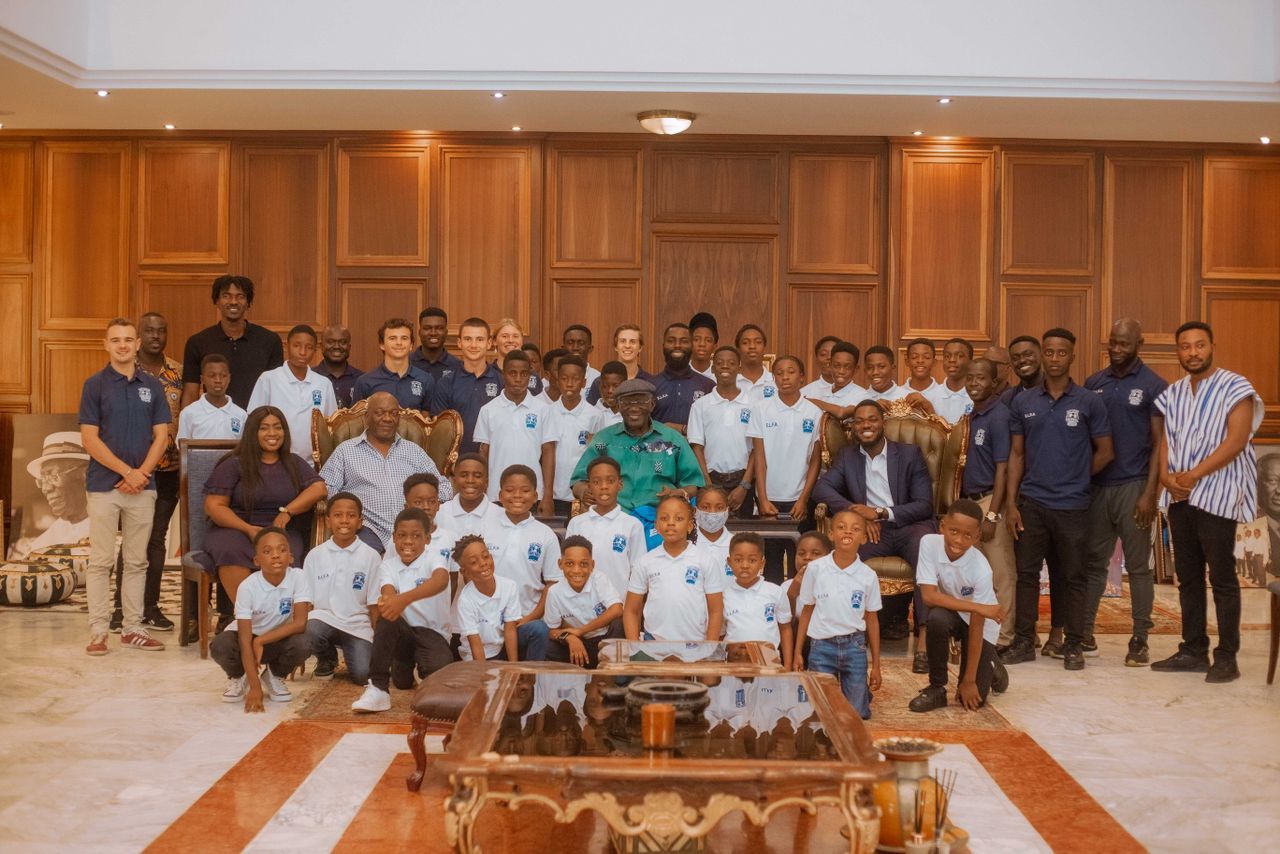
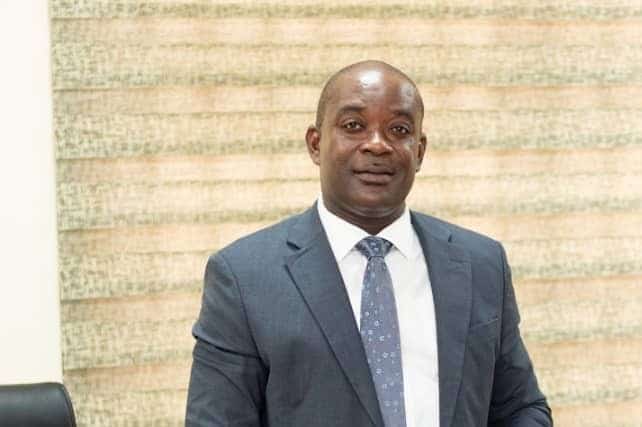
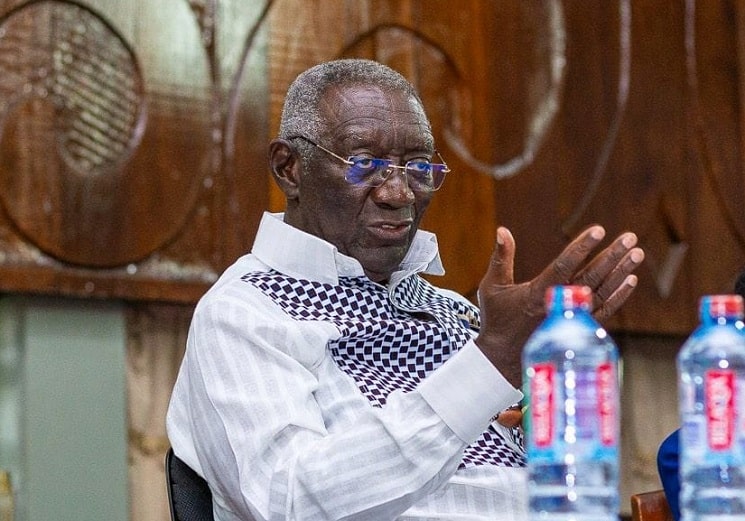
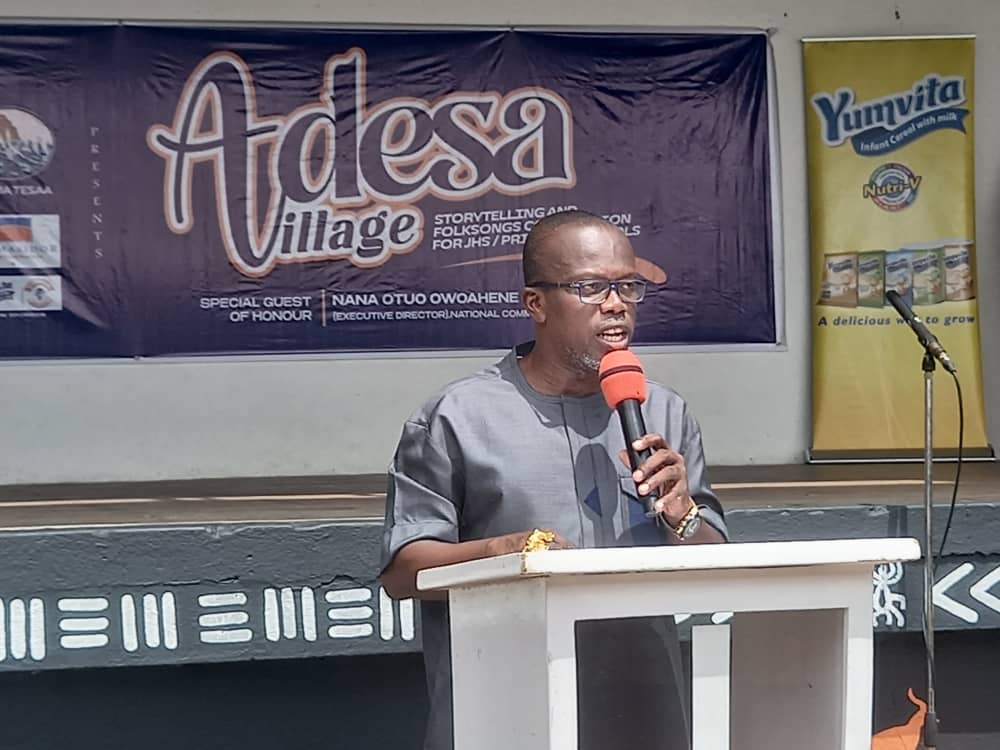
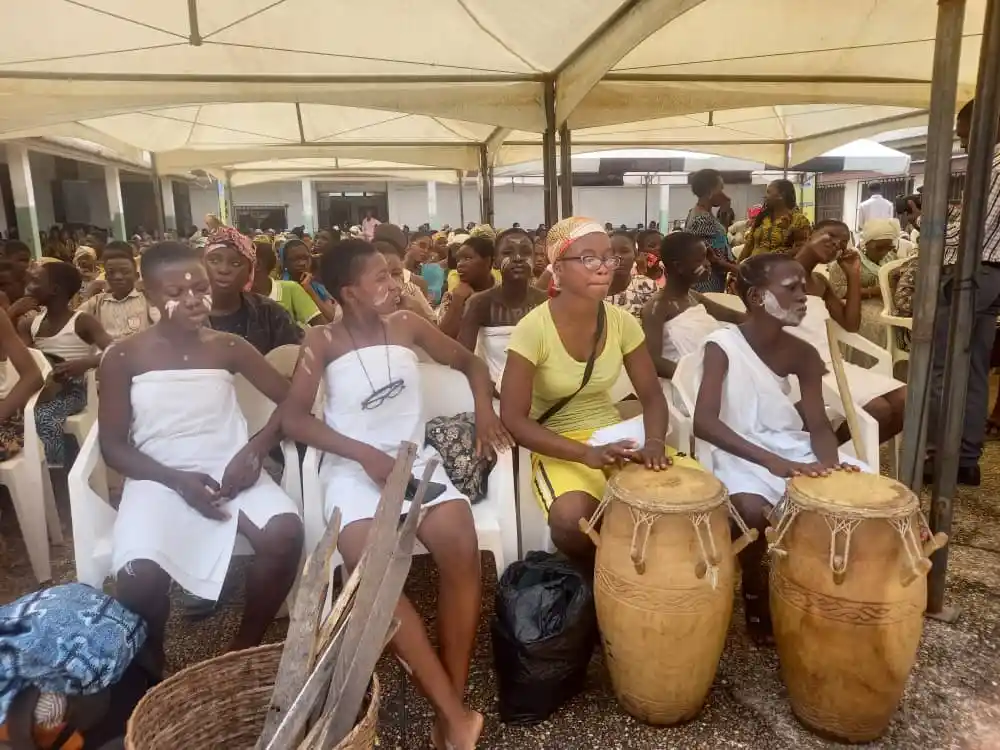
The East Legon Football Academy (ELFA) embarked on a special visit to former President John Agyekum Kufuor, seeking his support and words of encouragement as they prepare for the prestigious Dana Cup tournament in Denmark.
The ELFA delegation was warmly received by the esteemed statesman, who emphasized the transformative power of sports in shaping the youth and fostering national pride.
Former President Kufuor expressed his wholehearted support for the team, urging them to give their best and bring honor to Ghana on the international stage.
ELFA’s founder and leader, Winston Yeboah Danso, expressed his immense enthusiasm for the upcoming journey to the northern part of Denmark for the Dana Cup tournament.
He described it as a significant step towards empowering young athletes to pursue their dreams and become professional stars.
Since its establishment in 2019, ELFA has been dedicated to nurturing talent through its after-school program, catering to boys and girls aged 5 to 16.
Researcher from the University of Cape Coast, Dr. Amanda Odoi, has chosen to withdraw her contempt application against Speaker of Parliament, Alban Bagbin, at the Supreme Court.
The application was filed in connection to the ongoing discussions surrounding the anti-LGBTQ+ bill.
This decision to withdraw the suit comes after the Supreme Court rejected her request to halt Parliament from proceeding with the passage of the Promotion of Proper Human Sexual Rights and Ghanaian Family Values Bill 2021, commonly known as the anti-LGBTQ+ bill.
Dr. Odoi had accused Speaker Bagbin of disregarding the pending legal actions and allowing the consideration of the proposed legislation to continue, which she believed was in violation of the 1992 Constitution.
She argued, “the respondent has continually violated and shown utter disregard for the 1992 Constitution of the Republic of Ghana and the court process. That the respondent’s clear, intentional, and continuous disregard of the court process necessitates the Respondent being sanctioned for contempt in the public interest and to protect the dignity of the Court.”
“He should have proved this balance of convenience well but we have not seen any evidence of that. The speaker is doing his duty and cannot be injuncted,” she said.
Ghana’s Parliament
But Chief State Attorney Dr Sylvia Aduse told the court Dr Odoi’s legal team have failed to show how they will suffer or which right of theirs should be protected in the interim.
“He should have proved this balance of convenience well but we have not seen any evidence of that. The speaker is doing his duty and cannot be injuncted.” She said.
Lawyer for the Speaker, Thaddeus Sory urged the court to dismiss the request.
“We pray that this application doesn’t satisfy any of the tests as set by this court and should be dismissed.”
The panel presided over by the Chief Justice Indicated a case meriting an injunction has not been made.
“We have considered the merits of this case and are of the considered view that a prima facie case has not been made to convince us to injunct the work of parliament.
“Neither have we been convinced to injunct an uncompleted work of parliament. The issues raised by this application for injunction are matters to be determined by the substantive matter. This application for an injunction is dismissed,” the Chief Justice stated.
Other panel members are Paul Baffoe-Bonnie, Gabriel Pwamang, Mariama Owusu, Henrietta Mensa-Bonsu, Yonny Kulendi, Barbara Ackah-Yensu, Samuel Asiedu, George Koomson”.
The Anti-LGBTQ Bill, which has been under discussion and scrutiny since its introduction in 2021, received unanimous consent from all 275 Members of Parliament on July 5th.
Despite facing legal challenges, including a recent lawsuit announced on July 4, 2023, the bill has progressed to the consideration stage following the approval of its laying and subsequent debate by Speaker Alban Bagbin.
Speaker Bagbin emphasized that there is no opposition from any legislator regarding the passage of the Promotion of Proper Human Sexual Rights and Ghanaian Family Values Bill, 2021.
“With the submissions just made by the Honorable Andy Appiah Kubi that all the 275 are in support of the bill, anybody who disagrees be on your feet and I will recognize you.
“Honorable members, since all members are in support of the bill, I am definitely not going to gag the House. I will give you the opportunity to expand and improve further the submissions made so that at the consideration stage, it will be enriched by your contributions.
“But I just want us to be clear that none is against the bill,” he stressed.
President Vladimir Putin will not attend an upcoming summit in South Africa. This decision comes in response to South Africa’s leader stating that any attempt to arrest Putin would be considered a declaration of war against Russia.
If Putin were to leave Russian territory, he would be subject to an International Criminal Court (ICC) arrest warrant. As a signatory to the ICC, South Africa would be expected to assist in his arrest.
Instead, Russia will be represented by its Foreign Minister, Sergei Lavrov, at the two-day summit. However, Putin will participate in the Brics conference, which includes Brazil, Russia, India, China, and South Africa, through a video link.
The Brics conference is often viewed as an alternative to the G7 group of advanced economies.
In a statement, South Africa’s presidency described the agreement for Mr Putin not to attend as “mutual” and said it had come about following a “number of consultations” on the summit.
The decision by South Africa not to arrest Vladimir Putin has faced criticism from supporters of Russia, who argue that the country should have asserted its sovereignty and defended its friendship with Russia. The invitation extended to Putin prior to the ICC’s accusations of war crimes in Ukraine has sparked controversy both domestically and internationally.
This move was seen by some as a departure from South Africa’s traditionally neutral stance, aligned with other African nations, in the conflict between Russia and Ukraine. However, President Cyril Ramaphosa’s government faced increasing pressure to arrest Putin, leading to a sense of urgency.
The Democratic Alliance, the main opposition party in South Africa, took the matter to court in an attempt to compel the authorities to arrest Putin if he visited the country. International human rights organization Amnesty International also joined the legal challenge.
Court documents revealed that President Ramaphosa opposed the arrest, citing national security concerns as the primary reason for his stance.
“Russia has made it clear that arresting its sitting president would be a declaration of war. It would be inconsistent with our constitution to risk engaging in war with Russia,” he said in an affidavit.
Mr Peskov denied Moscow had told South Africa that arresting its president would mean an act of war, but said it was “clear to everyone what [that kind of] infringement against the head of the Russian state would mean”.
Russia has consistently described the ICC arrest warrant as outrageous and legally void, because the country is not a member of the organisation.
The African continent remains split over the war between Russia and Ukraine, with some countries showing reluctance to back United Nations’ resolutions condemning Russia for its actions in Ukraine.
The reasons for this vary from country to country, but experts say one factor is the economic ties that some, including South Africa, have with Moscow.
A sanctioned Russian oligarch, Viktor Vekselberg, is said to be one of the biggest donors to South Africa’s governing party, the African National Congress (ANC).
Chief of Oboabo Oyibi has been granted bail by an Accra Circuit Court in a case involving an alleged fraudulent land sale.
Nii Aboabo, also known as Solomon Boye Borquaye, was initially remanded after being arrested on a bench warrant related to a GHC 45,000 land transaction.
In a motion for bail pending trial, Mr J. K Yeboah, the counsel for the accused, argued that his client had already paid GHC 25,000 to the prosecution, which would be given to the complainant.
Mr Yeboah stated that if granted bail, Borquaye would gather the remaining funds and fulfill his financial obligations.
He urged the court to grant his client bail pending trial.
The prosecutor, Chief Inspector Richard Amoah, did not object to bail.
He acknowledged that Borquaye had displayed a certain level of commitment by making a payment of GHC 25,000.
“We leave the conditions for the grant of bail to the court’s discretion,” he said.
The court presided over by Mr Isaac Addo granted the motion for bail and admitted Borquaye to bail in the sum of GHC 50,000 with one surety. It adjourned the matter to July 24.
According to the prosecution, the complainant, a businessman residing in Kumasi, was introduced to Borquaye in 2021 as the head and lawful representative of the Borkwei Mayewani family of Aboabo. The complainant needed to purchase a parcel of land and engaged in negotiations with Borquaye.
On July 15, 2021, the accused allegedly offered to sell two plots of land to the complainant for GHC 45,000. Borquaye provided documents covering the land and received the payment. However, when the complainant attempted to develop the land, he faced a challenge from an individual named James Folagin, who claimed ownership.
The complainant reported the matter to the police, leading to Borquaye’s arrest. During the investigation, Borquaye admitted to selling the land to the complainant. Subsequent inquiries at the Lands Commission revealed that the land was affected by a land certificate issued to the Okiyipa Ogya Agona Family, indicating that Borquaye had no legal title to the land at the time of the transaction.
Based on this evidence, the prosecution argued that Borquaye engaged in fraudulent activity by selling land that he did not have the rightful ownership of.
Nigeria is facing a serious challenge of feeding its growing population, as millions of people are at risk of hunger due to conflict, climate change, inflation and rising food prices.
The COVID-19 pandemic has worsened the situation, as it has disrupted the food value chain and affected the livelihoods of farmers and consumers.
To address this urgent issue, President Bola Tinubu on Thursday, July 13, declared a state of emergency on food security and announced a series of interventions to boost food production and distribution, as well as to stabilize food prices and create jobs.
Today, we declared a state of emergency and unveiled a comprehensive intervention plan on food security, affordability, and sustainability, taking decisive action to tackle food inflation. These are steps towards a more food secure Nigeria for all. Our new initiatives will tackle… pic.twitter.com/DBb81p1jd2
The government has outlined the following measures to improve the food security situation in the country:
Providing fertilizers and grains to farmers and households to increase crop yields and reduce food shortages.
Assigning the National Security Council to oversee the food and water distribution across the country, especially in areas affected by insecurity and banditry.
Redirecting funds from fuel subsidies to support the agricultural sector, which employs about 70% of the labour force in Nigeria.
Establishing a National Commodity Board to regulate and stabilize food prices, which have increased by more than 20% in 2022, according to the National Bureau of Statistics.
Enhancing agricultural practices and technologies to improve productivity and resilience to climate change and pests.
What are the objectives?
The benefits of government’s interventions include;
Reducing the cost of food for consumers, especially the poor and vulnerable who spend more than half of their income on food.
Promoting agricultural development and diversification, which are key to achieving economic growth and reducing poverty.
Creating employment opportunities for young people, women and rural dwellers, who are often excluded from the formal economy.
President Tinubu has assured of fairness, noting that no one would be overlooked in the government’s pursuit of ensuring affordable and abundant food for all.
And how does he plan to achieve this?
A National Commodity Board will be established to regulate and stabilize food prices, thereby fostering a more sustainable agricultural environment.
Also, government intends to allocate funds previously dedicated to fuel subsidies towards supporting the agricultural sector.
Officials report that 60,000 tonnes of grain have been destroyed, and storage infrastructure has been damaged following Russian missile attacks on Ukraine’s Black Sea coast.
Ukraine’s Agriculture Minister, Mykola Solskyi, stated that a significant portion of export infrastructure is now out of operation.
Russia’s withdrawal from an international grain deal, which ensured safe passage for exports across the Black Sea, has contributed to the escalation of the situation.
The Kremlin claimed that its export demands were not being met, leading to its decision to withdraw from the agreement.
Shortly after the withdrawal, Russia launched missile strikes on the southern port cities of Odesa and Mykolaiv, causing significant damage.
Subsequent attacks targeted grain terminals and port infrastructure in Odesa and Chornomorsk, extending further along the Black Sea coast.
The impact of these attacks poses a serious threat to Ukraine’s grain exports and agricultural sector.
Odesa military spokesman Serhiy Bratchuk called it a “truly massive attack”. The agriculture minister said the 60,000 tonnes destroyed in the strike were “supposed to be loaded on a large-tonnage ship and sent through the grain corridor 60 days ago”.
Ukrainian President Volodymyr Zelensky said each missile strike was a blow not just to Ukraine, but to “everyone in the world striving for a normal and safe life”.
France and Germany also condemned the attack. Germany Foreign Minister Annalena Baerbock said that by covering Odesa with a hail of bombs, Russian President Vladimir Putin was robbing the world of any hope of Ukrainian grain and “hitting the world’s poorest”.
The infrastructure ministry published a series of photos showing damage to silos and other grain facilities. Officials said there had been damage to wharves and reservoirs, but it was international Ukrainian traders and carriers that had suffered the most.
Russian war commentators said the damage proved that Kyiv was unable to shoot down the majority of Russian missiles and drones.
Officials said the co-ordinated attack involved Kalibr cruise missiles, Onyx supersonic and Kh-22 anti-ship missiles as well as kamikaze drones, fired from the Black Sea, Crimea and southern Russia. Although 37 Russian missiles and drones were shot down, a number did penetrate Ukrainian defences, they said.
“I saw a red flash in the window and reacted immediately,” one resident told the Reuters news agency.
“I went downstairs, it was noisy and filled with smoke outside, people were in panic, some were crying, glass shards were scattered all over. It was impossible to remain in the area.”
Russia referred to its initial attack on Odesa as a “retaliatory strike” in response to an alleged attack on the Russian-built bridge over the Kerch Strait, which connects occupied Crimea to Russia. The bridge was targeted by seaborne drones, resulting in the destruction of a section and the death of a Russian couple.
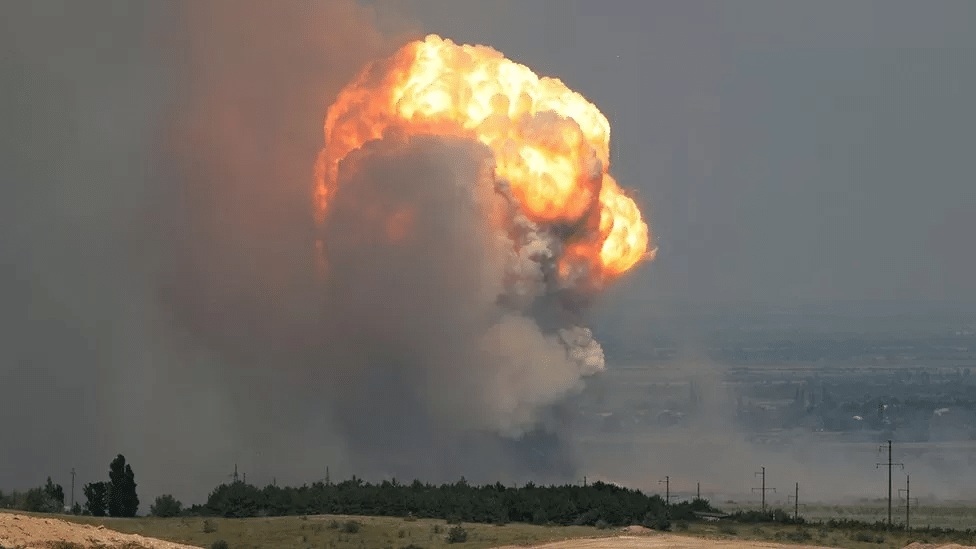
On Wednesday, further disruptions occurred in Crimea as a fire triggered explosions at an ammunition depot near a military training range. As a precautionary measure, approximately 2,200 residents from four nearby villages were evacuated.
Russian-appointed officials also closed a 12-km section of the Tavrida motorway, which connects Simferopol and Sevastopol in southern Crimea to the Kerch Strait bridge. The construction of this road began in 2017 under Russia’s occupation authorities.
Multiple explosions were heard in the area starting at around 04:30 on Wednesday. The cause of the fire near the city of Staryi Krim is under investigation, although unconfirmed reports on social media suggested Ukrainian involvement in the incident.
The Kremlin confirmed that President Putin had been briefed on the situation. Sergei Aksyonov, the Russian-appointed leader in Crimea, stated that the cause of the fire at the military range was being investigated and that no injuries were reported.
Former Tamale Central MP, Inusah Fuseini, has voiced his apprehension regarding the passage of the Promotion of the Proper Sexual Human Rights and Ghanaian Family Values Bill, 2021, also known as the anti-LGBTQ bill.
Mr. Fuseini said enacting the bill into law could potentially lead to more issues rather than resolving existing ones.
He further elaborated that such legislation would compel Ghanaians to intrude into the private lives of others.
“If you come out openly to profess you are LGBTQ+, we will not mind you, but if you engage in it to the knowledge of the law enforcement agencies or responsible citizens, we will arrest you and send you to jail and there is already a law dealing with that, and the bill will introduce more problems for us because they say if you are in your house, you have the responsibility to ensure members of the household uphold proper family values,” he said in an interview on CitiTV.
He added that the description of unnatural carnal knowledge in the bill is disturbing and that there is already a law criminalising interfering in people’s private affairs.
“As Africans, we have traditions and that is why LGBTQ+ is facing stiff opposition, and we see it as a cultural re-colonisation, a cultural imposition, and it is not African, and I have said that unnatural carnal knowledge is an inherently private matter. It is a private matter, and we are not concerned about what goes on in the four walls of your bedroom, and that is why I said the bill is trying to create a police state.
“Why should we use state resources preying on people’s private affairs when it is already an offence to do so?” he asked.
Ahead of its first reading, the Promotion of the Proper Sexual Human Rights and Ghanaian Family Values Bill, 2021 faced two legal challenges due to concerns about its compliance with the constitution.
Additionally, Speaker of Parliament Alban Bagbin faced a contempt charge for allowing the House to proceed with the bill’s discussion while legal actions were pending.
However, during the court hearing on Wednesday, the Supreme Court dismissed the request to halt Parliament’s consideration of the bill.
Presided over by Chief Justice Gertrude Torkonoo, the nine-member Supreme Court panel stated that it was not convinced to issue such an order at this stage. The court reasoned that the issues raised would be addressed in the substantive case.
After weeks of speculation regarding his future, it appears that Ghanaian international Thomas Partey will remain at Arsenal.
The Gunners had been linked with offloading the former Atletico Madrid star during the summer transfer window, but recent reports suggest that the Premier League club is no longer eager to sell the midfielder.
Sports journalist Fentuo Tahiru Fentuo has provided insight into the situation, indicating that Arsenal has changed its stance and is now focused on retaining Partey.
The 30-year-old midfielder has joined his teammates in the United States of America for the club’s preseason tour, where they will fine-tune their preparations for the upcoming season.
Previously left behind at London Colney, Partey’s inclusion in the tour signals Arsenal’s commitment to keeping him as a key player within their squad for the upcoming campaign.
Per Fentuo, Partey is noe very likely to stay at Arsenal than before. He wrote on Twitter: “Thomas Partey has joined the Arsenal team in the US for pre-season.
Thomas Partey has joined the Arsenal team in the US for pre-season. He didn’t initially fly out with the team when they left on Sunday. It is understood Arsenal are no longer keen to offload the Ghanaian midfielder. pic.twitter.com/B2s32gwmBJ
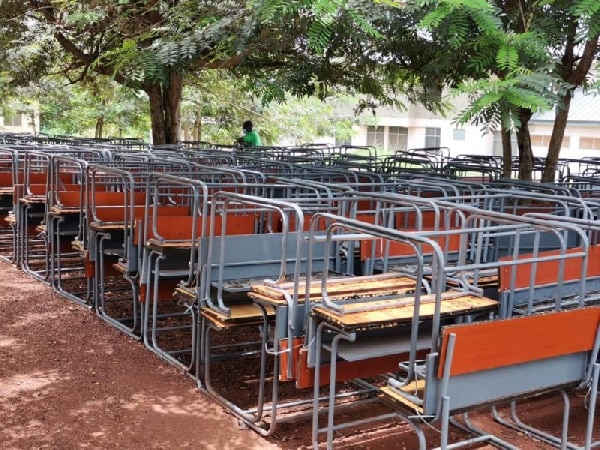
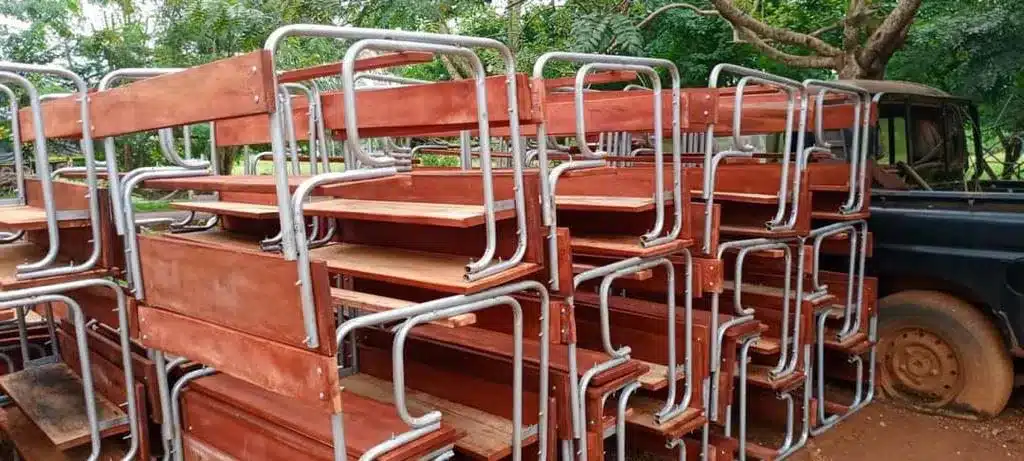
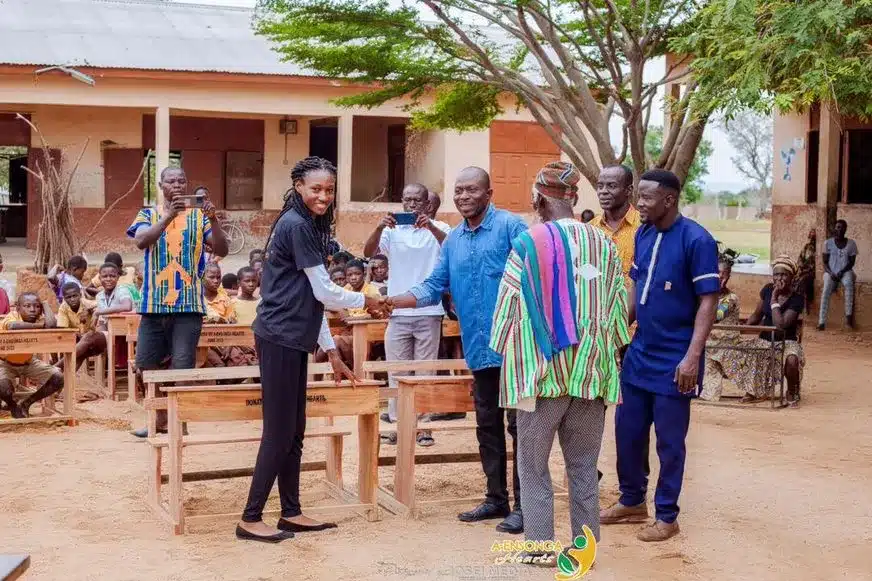
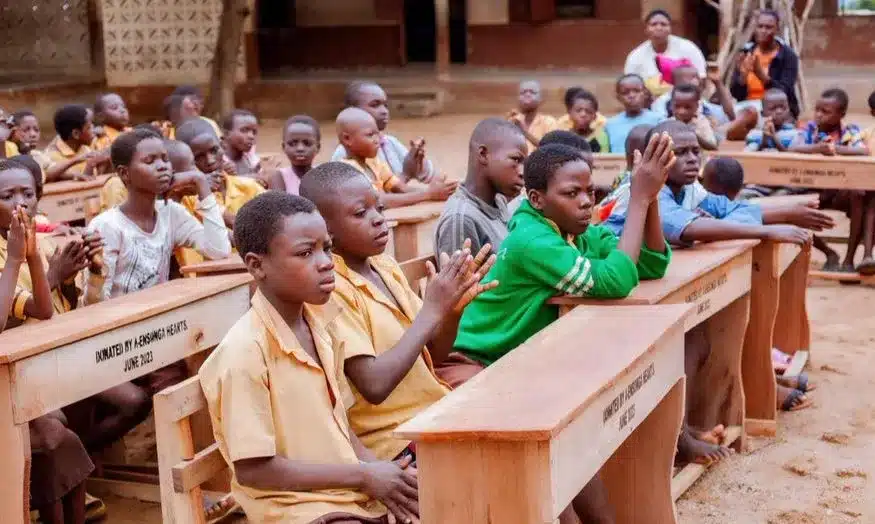
District Chief Executive of Bia West in the Western North Region, Mr. Benard Gyebi Blay, the has presented furniture on behalf of the District Assembly to the Bia West Education Directorate.
The aim of this initiative is to enhance the quality of education in schools within the district.
The furniture, which was funded by the Ghana Accountability Outcome Programme (GALOP), includes 140 dual desks, 34 teacher tables and chairs, and 60 sets of hexagonal tables and chairs.
These items will be distributed to various schools such as Oseikrom English and Arabic, Essam D/A Primary A, Debeiso Methodist Primary C, and Sikaneasem D/A Primary School.
During the presentation, Mr. Blay emphasized that the lack of furniture has been a significant challenge for schools in the district. The District Assembly recognized this issue and took the decision to provide the much-needed furniture.
He further explained that Bia West District is one of six districts in the Western North Region benefiting from the GALOP programme.
Expressing his gratitude, Mr. Blay thanked the GALOP programme for their support and highlighted that the furniture arrived at the perfect time. He emphasized that the government is committed to creating a conducive teaching and learning environment in the area.
Mr. Thomas Kwofie, the Bia West District Director of Education, received the furniture on behalf of the Education Directorate and commended the government for this initiative.
However, he appealed for additional chairs to be distributed to schools facing shortages, in order to further enhance the quality of education in the area.
Professor Ahmed Abdulai Jinapor, the Deputy Director of the Ghana Tertiary Education Commission (GTEC), has announced that the commission will soon release the names of educational institutions that are offering unaccredited programs.
He emphasized that unaccredited programs are those that have not been officially published on the GTEC website. Professor Jinapor further explained that administering such programs is a violation of the law and can result in imprisonment for those involved.
The move to publish the names of institutions offering unaccredited programs aims to ensure transparency and protect the interests of students seeking quality education in Ghana.
Starting from this week till next week, we are going to start publishing all centres, programmes that are run by various institutions that are unaccredited. By law, we are supposed to have published those that are credited, and by inference, it means that if the programme is not published on the GTEC website or in the newspapers, automatically, it is unaccredited,” he said on JoyFM’s Midday.
“It is a “prisonable offence for you to run a programme that is unaccredited or to even advertise it,” he added.
In addition, the Deputy Director highlighted that it is not acceptable for institutions to advertise programs while they are in the process of seeking accreditation. Merely applying for accreditation does not grant permission for program advertisement, he cautioned.
Despite previous warnings from GTEC, some institutions continue to offer programs without proper accreditation. This disregard for the guidelines set by GTEC has been addressed by the commission, urging these institutions to cease such practices.
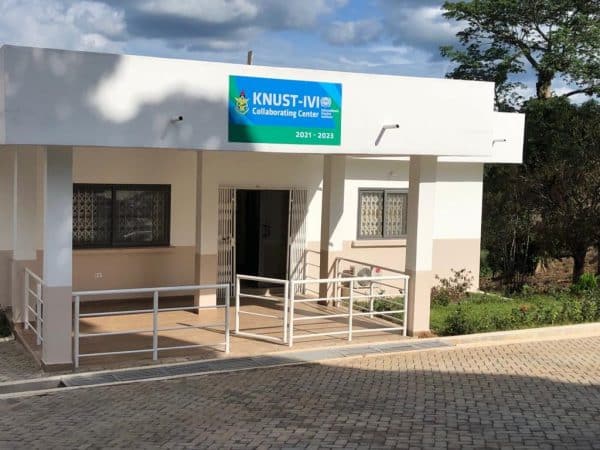
Furthermore, the Vice Chancellor of Kwame Nkrumah University of Science and Technology (KNUST), Prof. Rita Akosua Dickson, revealed that the university currently has over 300 programs awaiting accreditation. Prof. Dickson clarified that most of these programs are in various stages of the accreditation process, emphasizing that it would be unfair to halt these programs based on their current status.
“Currently, we have more than 500 programmes and as we speak, we have about over 140 accredited but some of them are at various stages of accreditation.
“For example, I am able to report that we’ve been working very closely with GTEC to ensure that these programmes are accredited.
“As we speak, we have over 100 programmes that we are expecting GTEC to mobilise faculty and come and review on our campus,” she explained.
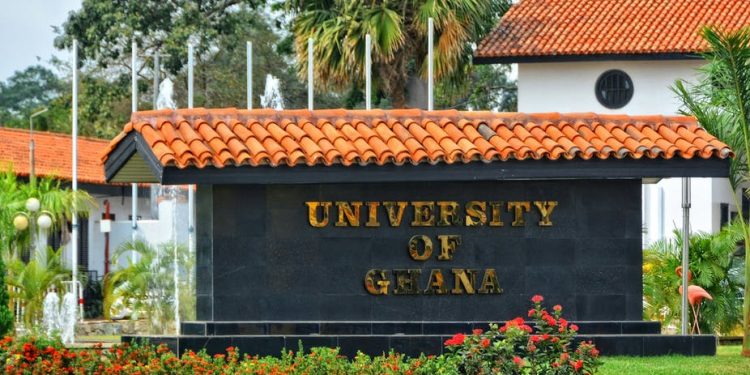
Also, authorities of the University of Ghana (UG) say they have taken steps to ensure the accreditation of some of the school’s programmes listed as unaccredited in the 2021 Auditor General’s report.
Speaking at the Public Accounts Committee on Tuesday, Registrar, Emelia Agyei Mensah said, the University has made sure 60 out of 80 undergraduate programmes are now accredited.
“Out of the 80, I would say that currently, we have 60 of the undergraduate programme fully accredited and the rest are in the process of being accredited,” he told the Vice-Chairman of the Public Accounts Committee, Samuel Atta Mills.
Jesurun Rak-Sakyi, the promising winger from Crystal Palace, has expressed his aspirations of representing Ghana at the international level.
Despite being born in Southwark, England, the talented footballer holds a strong desire to wear the Black Stars jersey and showcase his skills for his parents’ homeland.
Rak-Sakyi’s decision to embrace his Ghanaian heritage and contribute to the nation’s footballing legacy adds an exciting new chapter to his burgeoning career. With his talent and potential, he could become a valuable asset for Ghana’s national team in the near future.
Anthony Hayes, the first-team coach at Charlton Athletic and a former coach of Jesurun Rak-Sakyi, disclosed the player’s intention to represent Ghana.
“Jes[urun Rak-Sakyi] has ambitions to play in the Premier League and represent Ghana, to play in World Cup,” he said.
Having initially been part of Chelsea’s youth system, Rak-Sakyi made the switch to Crystal Palace in 2019, where he continued his development as a promising footballer.
His first involvement with the Crystal Palace first-team came on 10 April 2021, when he was named as an unused substitute in a match against his former club. Just two days later, Rak-Sakyi signed his first professional contract with Crystal Palace, marking a significant milestone in his career.
After a successful loan spell at Charlton Athletic, where he made 43 appearances, scored 15 goals, and provided 8 assists, the talented winger has now returned to Crystal Palace. His impressive performances during the loan spell have further showcased his potential and raised expectations for his future contributions at the club.
The Chief Director of the Ministry of Lands and Natural Resources, Professor Patrick Agbesinyale has refuted claims suggesting that government engages the services of land guards to assist in reclaiming encroached state lands .
On Monday, July 17, Minority members of the Lands and Forestry Committee of Parliament accused the government of enlisting the services of land guards for the retrieval and protection of government lands.
The Minority members made the allegation based on statements allegedly made by the Chief Director of the Ministry of Lands and Natural Resources, Professor Patrick Agbesinyale, during a meeting with the Committee.
According to a leaked tape gone viral on social media, a male voice said to be that of Professor Patrick Agbesinyale accused the Ghana Armed Forces and the Ghana Police Service of being in alliance with land guards.
In view of this, the Deputy Ranking Member on the Lands and Forestry Committee of Parliament, Alhassan Suhuyini, lamented the lack of commitment on the part of the government to combat land guard activities.
“The other shocking revelation according to the Chief Director is that even the Ghana Armed Forces and the Police use this same land guard to protect their lands. So, if the military and the police cannot protect their own lands and have to resort to the use of a land guard, then what will be the fate of the common Ghanaian who wants to acquire land and is faced with land guards?” he quizzed.
However, appearing before the Public Account Commitee (PAC) on Wednesday, July 19, 2023, Prof. Agbesinyale elaborated his statement to the committee, which he seeks to disassociate himself from.
“I think land guard unfortunately is a terminology that all of us dont want to be associated with, at least we know what land guards are, they are illegal entities that operate and engage in all forms of criminal activities, I can’t imagine saying government uses land guards,” he explained.
The Chief Director added that “We cannot attribute land guards to our respectable security agencies, its unfair and I personally take a very strong exception to that, because I never mentioned land guard in my submission to the committee, I never”, he concluded.
Government and two state-security agencies have denied claims of any involvement with land guards in their quest to reclaim portions of encroached lands by illegal squatters.
according to the Ministry of Lands, the Lands Commission has legally engaged the services of Aynok Holding Limited, a registered limited liability company to assist in reclaiming encroached government lands.
That engagement, the ministry in a press statement dated July 17, 2023, said, has been in effect since 2012.
In a press statement signed by the Director General Public Relations, Brigadier General E Aggrey-Quashie, the Ghana Armed Forces (GAF) assured all that the allegation is false and should be treated with the contempt it deserves.
They argued that it is unimaginable that GAF cannot protect its own lands but rather indulge in an illegality by relying on the services of land guards, a proscribed activity.
“GAF deems this allegation as regrettable that news reports emanated from unsubstantiated allegations made by the Chief Director of the Ministry of Lands and Natural Resources, Prof Patrick Agbesinyale at a Parliamentary Committee meeting on 10 July 2023.
“We wish to stress that this allegation which was repeated by Hon Alhassan Suhuyini, Member of Parliament for Tamale North to the media is false and should be dismissed,” the statement added.
Over the matter, the Ghana Police Service said it “has not on any occasion engaged the services of land guards to reclaim or protect its lands.”
According to the Police, contrary to reports, the Service has in recent times intensified its anti-languard operations in communities affected by the activities of landguards.
This renewed effort, the Police said, “will not stop until perpetrators of such illegal activities are brought to justice.”
Meanwhile, the Deputy ranking member on the Lands and Forestry Committee of Parliament has requested the Lands Ministry to furnish the committee with the contract details between itself and Aynok Services Limited.
According to Mr Suhuyini, this is to allow Parliament to determine whether claims that the government has been contracting land guards to reclaim encroached lands on its behalf are true.
During an interview on the Citi Breakfast Show on July 18, 2023, Mr. Suhuyini said “We first want to introduce that contract to the committee and once that contract has been introduced to the committee, we can now invite him as a service provider to the ministry to speak on the contract and that is why we are focussed as a committee on the ministry providing us with that contract.”
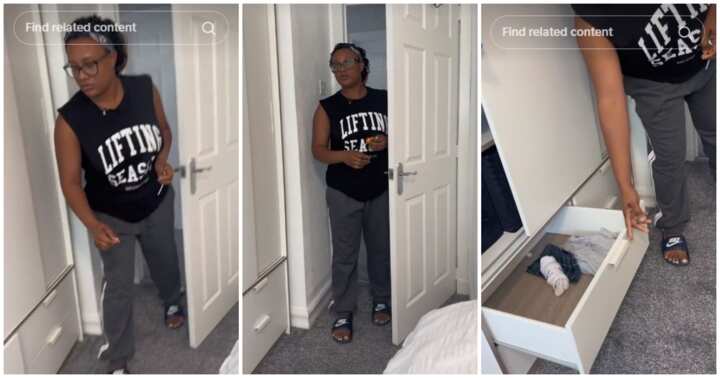
A Nigerian man playfully teased his wife upon his return from a two-week trip, finding his clothes missing from his drawers.
In a humorous video, he showcased the empty compartments where his joggers, hoodie, boxers, polo, and socks were supposed to be stored.
As he called out to his wife to explain the missing clothing, she acted surprised alongside him.
Seeing his clothes on her, the man jokingly lamented, questioning whether he made a mistake by marrying her and wondering why she continuously wore his clothes.
In her defense, the wife playfully stated that everyone does it and praised the comfort and appeal of his garments.
In response, the man amusingly threatened to involve his mother in the matter, expressing his reluctance to continue in such a manner. The wife, appealingly, assured him that his clothes would soon be dry as she had already taken care of them.
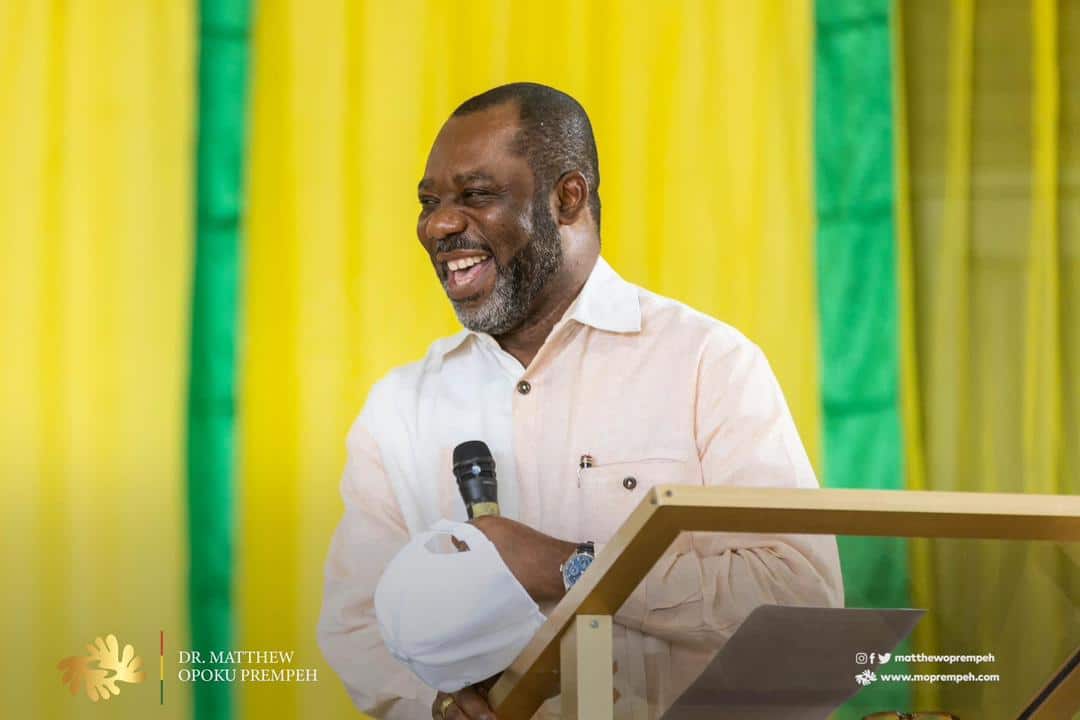
Energy Minister, Dr. Matthew Opoku Prempeh, has emphasized the importance of Ghana’s energy transition framework in promoting economic growth and employment opportunities during the ongoing UK-Africa Ministerial Roadshow on decarbonisation.
The Minister reiterated that the implementation of this framework is expected to generate over 1.4 million new jobs, presenting a significant opportunity for the country’s workforce.
To achieve this ambitious target, Ghana is actively seeking strategic partnerships with the private sector to encourage substantial investments in clean energy resources and the necessary infrastructure.
Dr. Matthew Opoku Prempeh emphasized the essential role of collaboration between the government and private enterprises in successfully developing sustainable energy solutions.
He highlighted that Ghana’s energy transition framework revolves around the concept of green manufacturing, focusing on environmentally friendly production processes.
Furthermore, the framework encompasses the adoption of advanced technologies such as carbon capture, utilisation, and storage (CCUS), nuclear power, hydrogen gas for transportation and electricity generation, e-mobility, charging infrastructure, clean cooking stoves, energy storage, solar PV module production, wind turbines, and hydropower development, among other initiatives.
By leveraging these innovative technologies and embracing clean energy solutions, Ghana aims to significantly reduce carbon emissions while fostering economic growth and job creation.
Dr. Prempeh emphasized the country’s commitment to building a sustainable future, with green energy at the forefront of driving progress and prosperity.
Communications Director of the Ghana Football Association (GFA), Henry Asante Twum, has disclosed that Ghana incurred a total cost of $80,000 due to yellow card accumulations during the 2022 FIFA World Cup.
The Ghanaian national team, known as the Black Stars, received eight yellow cards across three games in the tournament, ultimately falling short of advancing beyond the group stage. Although they secured a victory against South Korea, they faced defeats against Portugal and Uruguay.
During an interview, Asante Twum revealed that Ghana had to pay a fee of $10,000 for each caution received by their players during the tournament in Qatar.
“We paid $80,000 for yellow cards acquisition at the 2022 World Cup in Qatar,” he is quoted to have told Angel TV.
Alidu Seidu (twice), Kamaldeen Sulemana, Daniel Amartey, Tariq Lamptey, Inaki Williams, Andre Ayew and Mohammed Kudus all received yellow cards during the tournament last year.
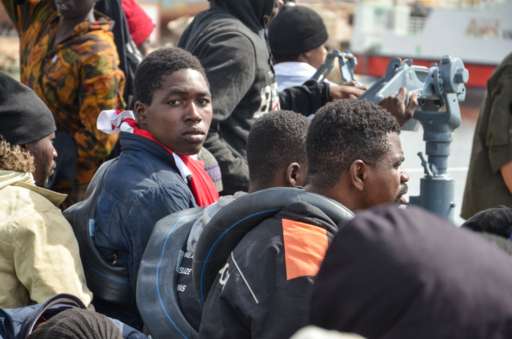
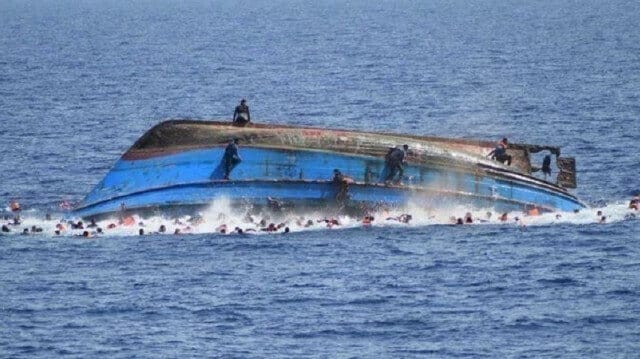
Human Rights Watch (HRW), an international campaign group, has leveled accusations against Tunisian security agents, alleging “serious abuses” against black African migrants seeking to reach Europe.
According to HRW, the organization conducted interviews with over 20 migrants and asylum seekers since March, revealing a disturbing pattern of mistreatment.
In recent weeks, seven individuals were among the more than 1,000 black Africans who were expelled or forcibly relocated by Tunisian authorities to desert border regions with Libya and Algeria.
Tunisian President Kais Saied has accused the migrants of inciting violence and altering the country’s demographic composition.
In response, HRW is calling on the European Union to withhold funding intended for the repatriation of these migrants, citing concerns over the treatment they have endured.
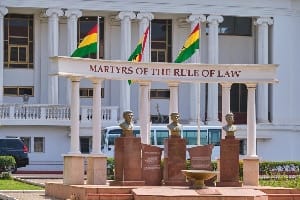
The Supreme Court, led by Chief Justice Gertrude Torkonoo, has dismissed a request to halt Parliament’s consideration of the anti-gay bill.
The court determined that it is not convinced to issue such an order at this stage, as the concerns raised will be addressed in the substantive case.
The decision comes in response to a case filed by researcher Dr. Amanda Odoi, who alleges that Parliament’s work on the proposed law violates the constitution. Dr. Odoi’s legal team also withdrew the case of contempt filed against the Speaker of Parliament.
Dr. Odoi is one of two citizens who have sued the Speaker of Parliament and the Attorney General regarding the anti-LGBTQ bill.
She argues that her investigations confirm that the Speaker of Parliament has been properly served with all relevant court documents, including an injunction request to halt Parliament’s consideration of the law.
Despite this, she claims that the Speaker allowed the bill to proceed to its Second Reading in Parliament.
During the court proceedings on Wednesday, legal arguments were presented regarding whether the case should be temporarily suspended. The Speaker of Parliament was not personally present, but his legal team, led by Thaddeus Sory, represented him.
Lawyers representing Dr. Amanda Odoi were the first to address the court, with lead counsel Dr. Ernest Ako emphasizing the significance of putting the parliamentary consideration on hold and seeking the court’s intervention.
“Per the nature of the provision of article 108…assuming this bill goes through and becomes law and money is expended from the consolidated fund, we would not get the money back meanwhile Ghanaians would not get the millions that would have been spent on this law.”
“If the application is granted and Parliament does not proceed and the substantive matter is determined, parliament would just have suffered a little by not proceeding with the bill in the interim,” he stated.
Chief State Attorney Dr Sylvia Aduse told the court Dr Odoi’s legal team have failed to show how they will suffer or which right of theirs should be protected in the interim.
“He should have proved this balance of convenience well but we have not seen any evidence of that. The speaker is doing his duty and cannot be injuncted.” She said.
Lawyer for the Speaker Thaddeus Sory urged the court to dismiss the request.
“We pray that this application doesn’t satisfy any of the tests as set by this court and should be dismissed.”.
The panel presided over by the Chief Justice indicated a case meriting an injunction has not been made.
“We have considered the merits of this case and are of the considered view that a prima facie case has not been made to convince us to injunct the work of parliament.
“Neither have we been convinced to injunct an uncompleted work of parliament. The issues raised by this application for injunction are matters to be determined by the substantive matter. This application for an injunction is dismissed.” The Chief Justice stated.
Other panel members are Paul Baffoe-Bonnie, Gabriel Pwamang, Mariama Owusu, Henrietta Mensa-Bonsu, Yonny Kulendi, Barbara Ackah-Yensu, Samuel Asiedu, George Koomson”.
Dr Odoi’s legal team have meanwhile withdrawn the contempt case filed against the Speaker of Parliament.
The Ghana National Education Campaign Coalition (GNECC) has urged for a comprehensive nationwide public awareness campaign on the LGBTQ+ bill before its potential enactment into law.
Mr. Kobina Afena-Sam, the Bono Regional Chairman of GNECC, emphasized the importance of ensuring that the public is well-informed about the provisions of the bill.
While acknowledging the positive aspects of the bill, he emphasized the need for the populace to have a clear understanding of its contents. This understanding would enable them to comply with the intended objectives and principles of the bill once it becomes law.
Speaking in an interview with the Ghana News Agency in Sunyani on the Coalition’s position on the LGBTQ+ bill, Mr Afena-Sam said, “Any discerning Ghanaian would push for the passage of the bill into law.”
However, he expressed concerns about the potential consequences if there is not an intensified effort to educate the public about the bill’s content before it is passed into law.
Without proper understanding, there is a risk that some individuals may take matters into their own hands and engage in abuse or mistreatment of those affected by the bill.
Mr Afena-Sam stressed that beyond religion, Ghanaians strongly frowned and condemned sexual immorality, perversion and “strange lusts,” saying, “The passage of the bill is timely and would preserve the nation’s diverse culture that reflects the true identity of the people.”
“But, I think as a nation we need to upscale public sensitisation on the bill. Virtually all Ghanaians frown on LBGTQI+ and if we don’t take our time and sensitise the populace on the bill, people could go lawless and attack suspects, but Ghana is not a lawless country,” he stated.
Describing the LBGTQ+ activities as alien to the Ghanaian culture, faith and spirituality, Mr Afena-Sam said naturally it was not the purpose of God for “men to sleep with men or women to sleep with women,” and therefore urged Parliament to remain resolute in its decision to pass the bill into law.
“I understand the pressure from the LBGTQI+ community and other development partners is too much, but I think Parliament and Ghanaians must remain unyielding and pass the bill in our own interest,” he stated.
Mr Afena-Sam, nonetheless, said the passage of the bill into law did not warrant or allowed the populace to abuse offenders, saying nobody had the right or justification to take the law in his or her hands and mete worse forms of human rights abuses on wrongdoers.
Whether you’re in your 20s or your 50s, personal financial planning around wealth building and risk cover are critical. Here’s what you should consider at key stages of your adult life.
How much money is enough for you to be secure? When it comes to investing in your future, a little can go a long way. It all depends on when you start budgeting for the life you want to live.
“People in their 20s, 30s, 40s and 50s have different savings needs,” says David Cumming, Wealth Manager at Standard Bank. “It would help to consult a financial planner about your investments because there is no generic answer.”
Saving and achieving returns on your money doesn’t guarantee financial freedom when you retire. Setting aside enough today will determine your lifestyle in retirement, as well as the age you’ll be able to retire.
Do you know how much you will be able to live off and how long your capital will last? According to Cumming, reaching your retirement goal is predominantly reliant on three things: time, real return and contributions.
Student loan debt, car repayments, bond deposits and wedding costs are just some of the financial obligations that can delay saving for retirement. But the trick is to start as soon as you can and to save as much as possible.
financial tips for your life stage
This guide includes savvy tips for all stages of your adult life:
Smart financial moves in your 20s
Financial discipline in your youth yields significant advantages later in life, and the sooner you start building your wealth, the better. Consider minimising your debt and your expenses, while maximising savings. You can do this by living with your parents while you save for a deposit on your own house, instead of moving into a rental property and paying a landlord.
Retirement may seem far away, but the earlier you start saving, the more compound interest you will accrue. Automated deposits are easy and effective because they take money directly from your pay cheque and put it where you need it – into a savings account. This will help you become accustomed to saving early on.
Savings and investing in your 20s
Short and medium-term savings:
Savings for a car
Savings for a home
Savings accounts
Tax-free savings account
Unit trusts
Long-term savings and investments:
A retirement annuity can benefit you massively if you start early.
The percentage saved from your salary when you’re 20 years old will increase exponentially, compared to the percentage of your salary saved from when you are 35.
If you begin investing in your 20s, you can build an investment portfolio with a higher risk tolerance for higher gains over time – this can have a significant impact on your ability to begin building wealth in your 20s and beyond.
Property investment affords you the benefit of assets that appreciate over time, plus the long-term advantage of low repayments in relation to higher inflation in future.
Insurance in your 20s
Consider getting cover for younger people who do not yet have dependents, including:
Medical cover or a hospital plan to cover unexpected health expenses.
Disability cover to ensure you’re earning an income even if you can no longer work.
Vehicle and asset cover to replace your car and household contents.
Smart financial moves in your 30s
In your 30s, you might be moving up in your career, starting a business, buying a home, getting married or growing your family. By now, you probably have a financial plan in place, either with the help of a financial planner or through your own research. Being in your 30s still gives you enough time to plan and save for the future. By focusing on a few key points, you can manage your finances better and ensure that you keep the future in mind.
Here are three key tips for maintaining financial control:
Budgeting is just as important as managing your expenses; at this time in your life, commitments such as buying a property and covering family-related costs will continue to mount.
Reducing expenditure on flashy cars, clothes, and entertainment will allow more to be invested in your property or savings.
As your assets and family grow, estate planning and a Will are essential. You also need to focus on fostering strong financial discipline in your children and establishing shared financial goals with your spouse.
Savings and investing in your 30s
Short and medium-term savings:
Set up an emergency fund to avoid unexpected expenses from throwing you off budget
Save for your children’s education
Savings accounts
Tax-free savings account for you children
Unit trusts
Long-term savings and investments:
If you haven’t begun saving for your retirement, now is the time to commit to an annuity and make regular payments. Commit as much as you can to your RA – your future self will thank you.
There are only 30-something years and fewer pay cheques than in your 20s until retirement at 65.
Your investment portfolio can still accommodate higher risk tolerance, resulting in high gains over time.
If you can, pay off a higher rate on your home loan to save you years in interest, and give you more cash to invest.
Insurance in your 30s
Beyond medical cover and disability, life cover is essential if you are concerned about ensuring loved ones and dependents are covered should you pass away.
If you are a homeowner, building and household contents cover is vital.
Funeral cover is an addition that should not cost you too much but will benefit your family a great deal.
Smart financial moves in your 40s
In your 40s, the reminder to save and invest for the future should be top of mind. You’re heading into your peak earning years, but your time horizon is shrinking. As your expenses and commitments mount, budgeting becomes more important. You are probably still paying off your bond, and you may also have to cover family-related costs:
If you have dependents, life cover is vital.
Saving for your children’s education is a priority.
Your Will needs to be reviewed regularly to ensure your estate planning is up-to-date and takes into account life changes such as marriage, children, divorce and changes to your assets and investments.
Savings and investing in your 40s
Short and medium-term savings:
Set up an emergency fund and aim to have at least three months of expenses covered
Review your education savings for your children, as increases in education prices are often higher than average inflation
Savings accounts
Tax-free savings account
Unit trusts
Long-term savings and investments:
If you haven’t begun saving for your retirement, start immediately.
There are at least 25 years and a limited amount of pay cheques until retirement at 65.
Use any bonuses you receive to boost your retirement savings.
How to build wealth in your 40’s? You may wish to consider a portfolio allocation and management method aimed at balancing risk and return.
Consider additional property investment.
Insurance in your 40s
In addition to medical and disability cover, life cover is critical in ensuring your loved ones and dependents are covered should you no longer be around to look after them.
If you are a homeowner, building and household contents cover should be a priority.
Funeral cover is an important addition to these policies.
Smart financial moves in your 50s
Many people get serious about planning for their retirement in the 50s. Financial planning in this decade is hugely important. This is the time to take a thorough look at your future and make some decisions. Review your financial plan to ensure you are on track. It’s important to assess your tolerance for risk-taking and to avoid making bad money choices. Although you may be taking care of older parents, don’t forget about saving for your own retirement.
It’s also wise to review your estate planning regularly, ensuring all information is up to date and accurate.
Savings and investing in your 50s
Short and medium-term savings:
Your 50s should be a time for reaping the rewards of your hard work. Consider savings for the following:
Holidays
Grandchildren
Paying cash for a vehicle
Long-term savings and investments:
If you haven’t begun saving for your retirement, start now by scaling back all expenses to supplement your contributions. You have approximately 15 years until retirement at 65, so use any available funds to boost your retirement savings.
Review your risk exposure in your investment portfolio as you have more to lose at this stage, and it could take longer to recoup losses from risky investments.
You should be aiming to pay off property, so you have fewer expenses leading up to retirement.
Insurance in your 50s
Maintain your medical insurance, as it’s costly to join a plan at this age after interrupted cover.
Ensure your home, its contents and your vehicle are insured, and the premiums up to date.
Funeral cover is a good addition, albeit later in life.
Source: standardbank.co.za
DISCLAIMER: Independentghana.com will not be liable for any inaccuracies contained in this article. The views expressed in the article are solely those of the author’s, and do not reflect those of The Independent Ghana
Management of the University of Ghana (UG), Legon has revealed that about half of its 213 unaccredited postgraduate programmes offered as of 2022 have been axed.
Engaging Parliament’s Public Accounts Committee on Tuesday, July 18, UG Registrar, Emelia Agyei Mensah, rendered an account on the update of unaccredited courses cited by the Auditor-General in 2021.
Management noted that about half of the 213 unaccredited postgraduate courses presented last year were no longer being offered by the institution, hence the decision to have them abolished.
“As part of the process, we have weeded out many programmes that were no longer being offered at the University of Ghana. We have a total of 220 programmes in all.
“So this figure of 213 postgraduate programmes, half of them probably have been taken out because they are no longer offered at the University,” Emelia Agyei Mensah said.
Details of the specific postgraduate courses no longer offered by the tertiary insitution is yet to be made public.
Providing details on the current status of postgraduate courses, management revealed that a total of 220 programmes are being offered.
With regards to unaccredited postgraduate programmes, management assured that “the remainder have gone through the accreditation process or are in the process of going through the accreditation.”
Half of unaccredited postgraduate programmes at UG ‘weeded out’ – Management#INDNews Thomas Partey | Justin Bieber | Cancelo | iMessage | Sheldon | Mason Mount pic.twitter.com/VAPrilFnqj
— The Independent Ghana (@independent_gh) July 19, 2023
In September 2022, the total number of accredited and unaccredited programmes run by the University of Ghanaand Kwame Nkrumah University of Science and Technology (KNUST) were released by the Ghana Tertiary Commission (GTEC).
Some of the unaccredited programmes at the University of Ghana included M.A. Communication Studies, M.A. HIV and AIDS Management, Ph.D. Accounting.
GTEC’s release followed a report by the Auditor-General which indicated that the two main tertiary institutions in the country, University of Ghana and KNUST were running a significant number of unaccredited programmes.
Over 600 programmes run by the two leading universities were without accreditation, the 2021 Auditor-General report noted.
For KNUST, expired programmes that required reaccreditation included B.A. Political Science, B.A. Sociology, B.Sc. Computer Engineering, B.Sc. Computer Science, B.Sc. Mathematics, MPhil Political Science, MSc Mathematics PhD English, PhD Sociology.
Per information sighted by the Independent Ghana on the website of the Ghana Tertiary Commission, the following postgraduate programmes at the University of Ghana that require accreditation as of July 19, 2023, include:
Ph.D. Agricultural Extension, Ph.D. Agriculture Economics, Ph.D. Biomedical Engineering, Ph.D. Development Economics, Ph.D. Development Studies, Ph.D. Food Science, Ph.D. Health Policy and Management, Ph.D. Marketing, Ph.D. Migration Studies, Ph.D. Molecular Cell Biology and Infectious Disease, Ph.D. Nutrition.
Ph.D. Plant Breeding, Ph.D. Public Health, Ph.D. Social Policy Studies, Ph.D. Soil Science, Ph.D. Statistics, PhD Microbiology, PhD. Nursing.
It is yet to be confirmed which of these aforementioned courses are no longer offered by the school.
Some accredited postgraduate courses being offered at the University of Ghana include:
Ph.D. Applied Agricultural Economics and Policy, Ph.D. Chemistry, Ph.D. Chemistry, Ph.D. Communication Studies, Ph.D. Information Systems, Ph.D. Material Science and Engineering, Ph.D. Mathematics, Ph.D. Physics, Ph.D. Plant and Environmental Biology.
Ph.D. Population Studies, Ph.D. Psychology, PhD Classics, PhD Climate Change and Sustainable Development, PhD Climate Change and Sustainable Development, PhD Clinical Sciences, PhD Earth Science, PhD English, PhD Fisheries Science, PhD Food Process Engineering, PhD French, PhD Geography and Resource Development, PhD Information Systems, PhD Law, PhD Management Science, PhD Music, PhD Philosophy, PhD Public Administration and Policy Management, PhD Social Work, PhD Study of Religions.
Note: This is not the full list of accredited and unaccredited postgraduate programmes at the University of Ghana.
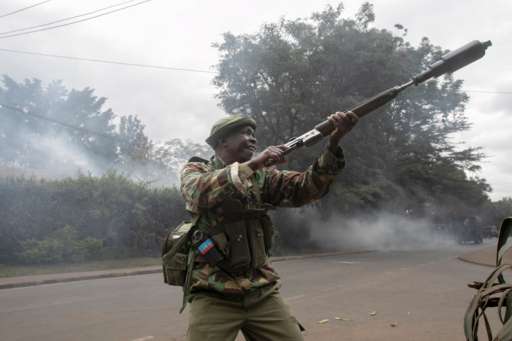
Kenyan authorities have deployed security officers in key towns following the resumption of cost-of-living protests organized by the opposition.
The demonstrations, which began on Wednesday, saw clashes between protesters and police in the capital city of Nairobi, where tear gas was used against stone-throwing demonstrators.
As a precautionary measure, the government ordered the closure of schools in Nairobi and the coastal city of Mombasa, anticipating potential violence during the protests. Consequently, the city’s central business district remained quiet, with many shops closed.
Protesters have taken to barricading roads in Nairobi and other parts of the country. In Nakuru, located in the Rift Valley region, police dispersed protesters who had blocked roads and set fires by using tear gas.
The opposition in Kenya has organized these protests in response to rising discontent over recent tax increases implemented by President William Ruto’s government.
During last year’s election campaign, Ruto had promised to champion the interests of the poor. However, since assuming office, the cost of living has continued to rise, and taxes have been raised, fueling public dissatisfaction.
The situation remains tense as the protests unfold, and authorities are working to maintain stability while addressing the concerns of the demonstrators.
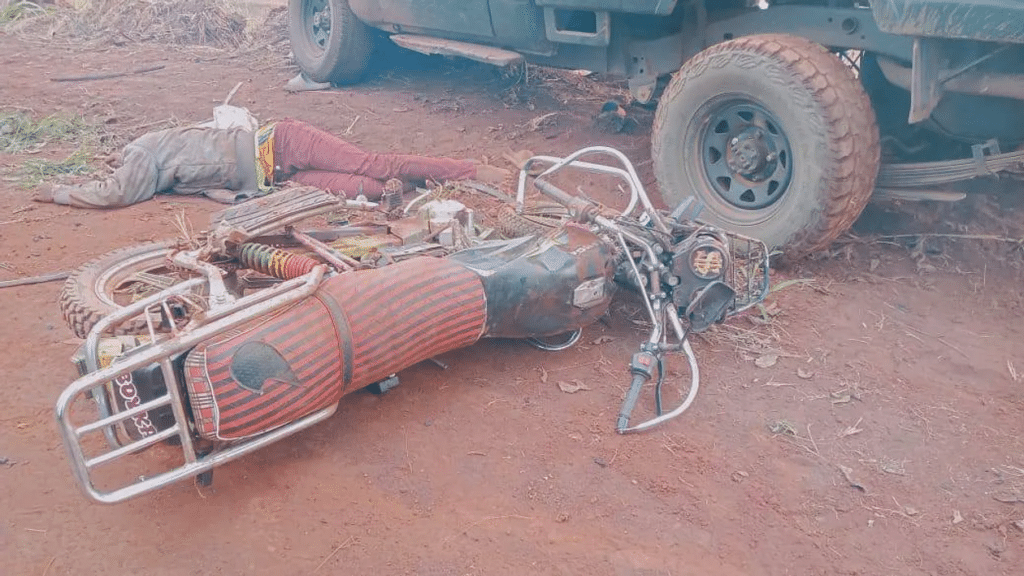
Tragedy struck in Algeria’s Tamanrasset province as a collision between a utility vehicle and a passenger bus claimed the lives of at least 34 people, with 12 others sustaining injuries.
The accident occurred on National Road 01 in the village of Outoul, located approximately 1,900km (1,180 miles) south of the capital city, Algiers.
Authorities swiftly responded to the incident after being alerted around 4:15 am (03:15 GMT) on Wednesday.
The civil defence team confirmed the number of fatalities and ensured that the injured were promptly transported to nearby hospitals for medical treatment.
Videos circulated by local news outlets, including Info Trafic Algerie, depicted the aftermath of the collision, revealing the vehicles engulfed in flames.
The civil defence also shared photographs of the accident, showcasing the devastating extent of the destruction with both vehicles completely burned-out.
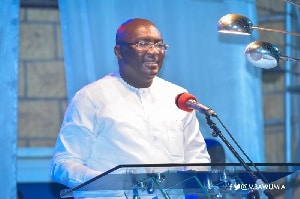
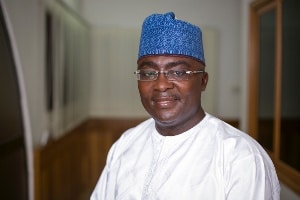
The campaign team of Vice President Dr Mahamudu Bawumia has refuted claims that their flagbearer hopeful is being funded by some Islamic group in Nigeria called the ACF.
In a communique issued by the team’s Communications Directorate, they noted that such falsehood is being peddled by a Nigerian journalist, David Humdeyin.
Apparently, the same narrative, the team says, has been copied by some persons and groups in Ghana on social media.
For the Vice President’s campaign team, such reportage is unfortunate as “Dr Bawumia has no funding or any linkage with any Islamic group in Nigeria or anywhere else.”
“This narrative is obviously false, fabricated, and only serves the propaganda purposes of its promoters,” the circular added.
The team asserts that David Humdeyin has demonstrated a penchant for making similar claims against some persons and groups in Nigeria without any basis whatsoever.
They have therefore entreated to disregard such reports since “Dr. Mahamudu Bawumia has been very diligent and transparent from his days as a scholar, banker, and politician throughout his life and will not depart from these now and forever.”
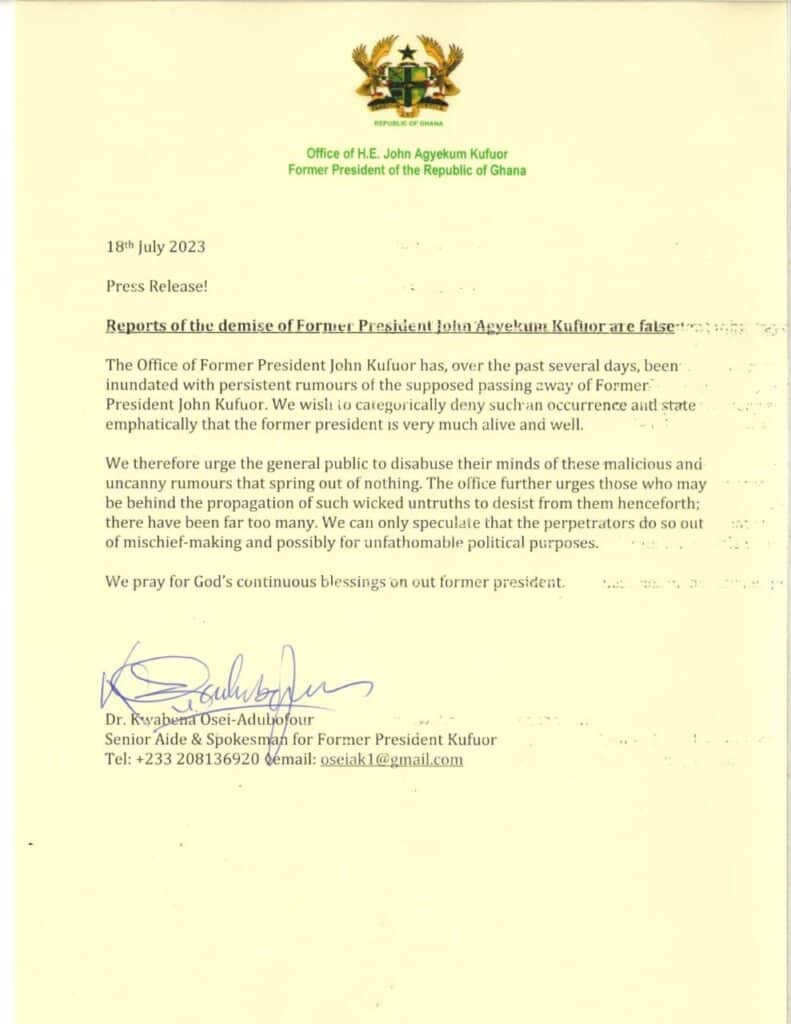
Office of former President John Agyekum Kufuor has denied reports claiming the death of the statesman.
In a press statement dated July 18, the Office of the former president said it has, over the past several days, been inundated with persistent rumours of the supposed passing away of former President John Kufuor.
According to Senior Aide & Spokesman for former President Kufuor, Dr. Kwabena Osei-Adubofour, such claims are false as the former president “is very much alive and well.”
“We therefore urge the general public to disabuse their minds of these malicious and uncanny rumours that spring out of nothing,” the statement added.
On the other hand, the unknown individuals behind the propagation of “such wicked untruths” have been cautioned to to desist from them henceforth.
The Office of the former President speculates that the perpetrators do so out of mischief-making and possibly for unfathomable political purposes.
The recent beheading of two individuals by suspected Islamist militants in northern Mozambique has sparked alarm, particularly because such atrocities had become less frequent in recent years.
This reduction in violence was partially attributed to the deployment of regional troops two years ago, assisting the national army in reclaiming territory from the jihadists in Cabo Delgado province.
While the presence of these troops allowed some people to return to their villages, it also created an opportunity for retreating insurgents to establish relationships with villagers, often buying food from them.
In recent times, the militants have shifted their focus from local populations to primarily targeting the defense forces.
However, on Monday, the decapitated bodies of two fishermen were discovered in a bush near the village of Litamanda in Macomia district.
It is believed that the killings occurred over the weekend, with witnesses reporting the presence of a group of militants near the victims’ residence, located approximately 20 kilometers (12 miles) from Litamanda.
This incident follows another beheading that took place in Cabo Delgado two months prior.
The resurgence of such brutal acts is causing significant concern among villagers in the region who had hoped for an end to the six-year-long insurgency. The unsettling events underscore the ongoing challenges in achieving lasting peace and security in the area.
Oti Regional Minister, Mr. Joshua Makubu, has taken a significant step by picking up a nomination form to contest the upcoming parliamentary primaries of the New Patriotic Party (NPP) in the Nkwanta South Constituency.
Party faithfuls, who share a common belief in the Minister’s vision for the development of the constituency, picked up the form on his behalf.
They firmly believe that Mr. Makubu is the ideal candidate to lead the party to victory in the 2024 elections due to his hard work and significant contributions towards advancing the region’s development.
According to Mr. Peter Ayenkeda, the leader of the supporting group, the Minister has demonstrated a genuine concern for the youth and their welfare.
They are confident that his dedication to the betterment of the constituency will be further amplified as a member of parliament, hence their unwavering support for him.
In urging all contestants to conduct their campaigns in a peaceful manner, Mr. Peter Ayenkeda emphasized the importance of maintaining unity within the NPP family.
He appealed for a campaign environment devoid of insults, emphasizing that all contestants are ultimately working towards the same goal of advancing the party’s agenda.
The Government of Ghana has presented the EPC/Turnkey contract agreement between itself and Douja Promotion Groupe Addoha to Parliament.
The agreement, worth $56.8 million, aims to finance the implementation of the National Affordable Housing Programme and the Revised Redevelopment Scheme.
The First Deputy Speaker, Mr. Joseph Osei-Owusu, referred the loan agreement to the Committee of Works and Housing for further examination and reporting.
In addition, the Finance Committee laid before the House the report on the Financing Agreement between the Government of Ghana and the International Fund for Agricultural Development (IFAD).
The agreement, totaling $52.50 million, consists of a Blended Loan of $35.17 million and a Highly Concessional Loan of $17.32 million. The funds will support the Promoting Rural Opportunities, Sustainable Profits, and Environmental Resilience (PROSPER) Project.
The Finance Committee also presented a report regarding the Request for waiver of Domestic Value Added Tax amounting to $1.86 million on materials and works/services procured by Messrs Canadian Commercial Corporation for the implementation of the 132MW Installed Capacity T3 Power Project.
The First Deputy Speaker instructed the distribution of the two reports to Members of the House.
However, the National Democratic Congress (NDC) Parliamentary Minority Caucus was absent from the Chamber as they were accompanying Mr. James Gyakye Quayson, the Member of Parliament for Assin North, to court for his trial.
Following the proceedings, the House adjourned its sitting and will reconvene on Wednesday, July 19, at 10:00 a.m.
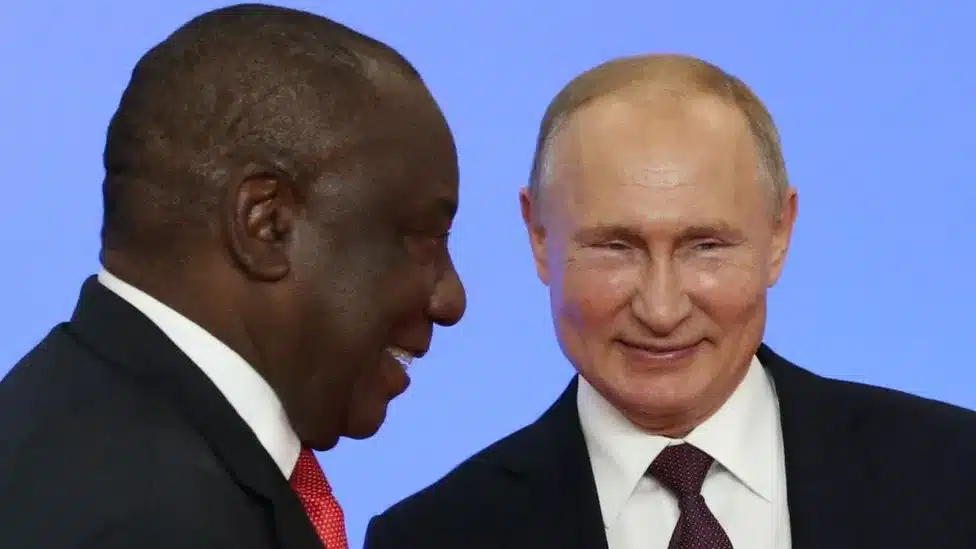
South African President Cyril Ramaphosa has issued a stern warning, stating that any attempt to arrest Vladimir Putin during his potential visit to South Africa would be considered a declaration of war against Russia.
This warning comes ahead of an upcoming international meeting scheduled to take place in Johannesburg, to which the Russian President has been invited.
However, it should be noted that if Putin were to leave Russian soil, he could potentially become subject to an International Criminal Court (ICC) arrest warrant. As South Africa is a signatory to the ICC, it has an obligation to cooperate in the arrest of individuals subject to such warrants.
In the past, South Africa has faced criticism for not honoring its obligation to arrest individuals wanted by the ICC. This was exemplified in 2015 when Sudan’s then-President Omar al-Bashir, wanted for war crimes, was granted safe passage by South Africa.
Mr. Putin has received an invitation to visit South Africa in August, coinciding with the country’s hosting of a summit for members of the Brics countries. The Brics bloc consists of Brazil, Russia, India, China, and South Africa and is seen by some as an alternative to the G7 group of advanced economies.
The Democratic Alliance, South Africa’s largest opposition party, has taken the matter to court, seeking to compel the authorities to carry out an arrest of Putin if he sets foot in the country. However, court documents reveal that President Ramaphosa opposes such a move, citing national security concerns as a primary consideration.
“South Africa has obvious problems with executing a request to arrest and surrender President Putin,” he said in an affidavit.
“Russia has made it clear that arresting its sitting president would be a declaration of war. It would be inconsistent with our constitution to risk engaging in war with Russia.”
President Ramaphosa added that South Africa is one of several African nations holding talks with Russia and Ukraine “with a view of ending the war altogether”, and that attempting to arrest Mr Putin would be counter-productive.
A peace mission to European nations led by African presidents aimed to facilitate dialogue between Ukraine and Russia but ultimately proved unsuccessful. African nations have faced scrutiny for their reluctance to support United Nations General Assembly resolutions condemning Russia’s war in Ukraine.
Various factors contribute to this hesitancy, with each nation having its own reasons. For instance, South Africa’s historical anti-apartheid ties to the Soviet Union may influence its stance. In Mali, there is a current reliance on Russian Wagner mercenaries to combat jihadist groups, which affects their perspective on the Ukraine-Russia conflict.
Economic ties between Russia and African nations also play a role, including in South Africa. Notably, Viktor Vekselberg, a sanctioned Russian oligarch, is reported to be one of the major donors to South Africa’s ruling party, the African National Congress (ANC).
The complexities surrounding African nations’ positions on the Ukraine-Russia conflict involve a combination of historical ties, present-day interests, and economic considerations.
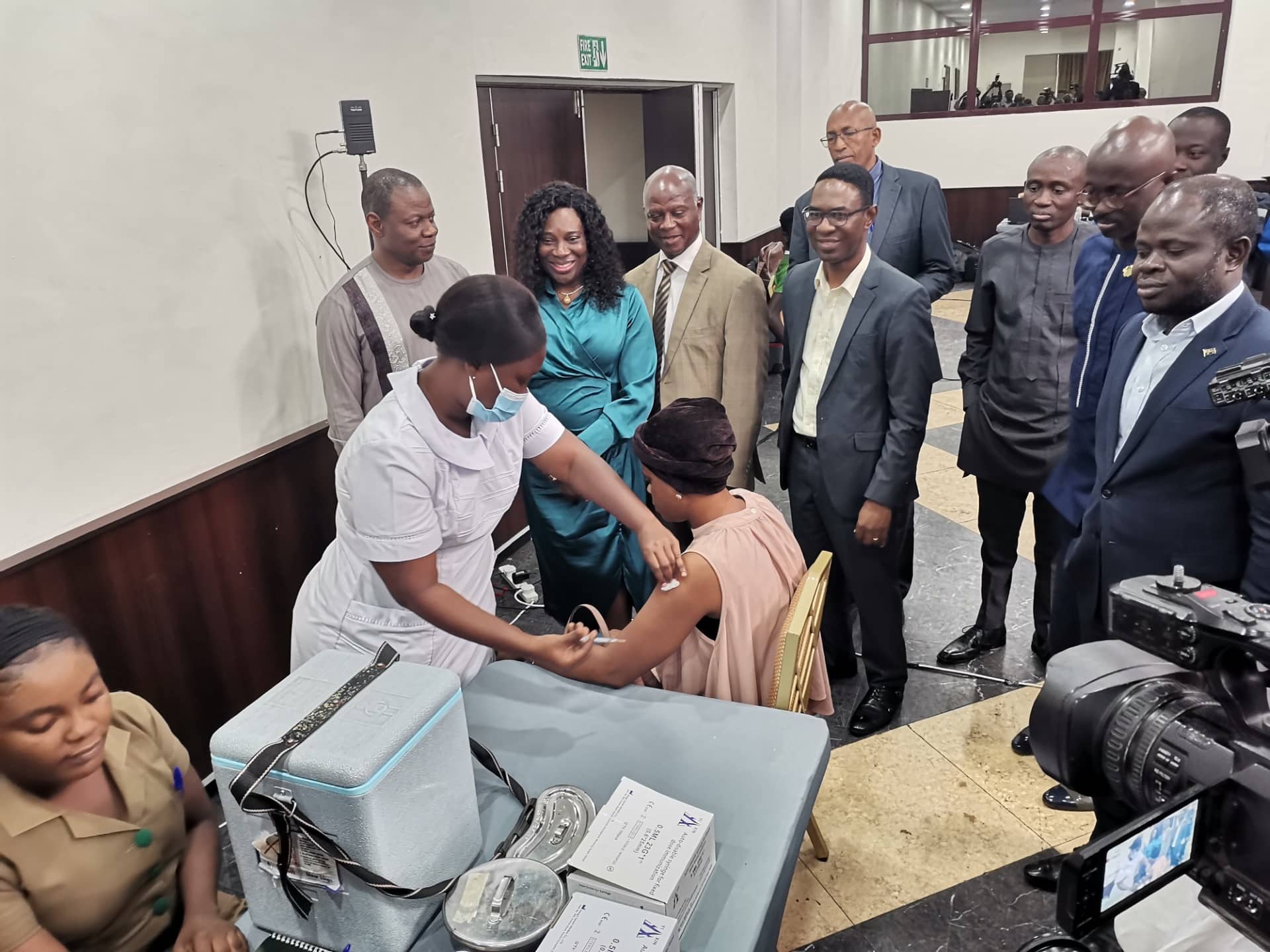
The Ghana Health Service (GHS) initiated a five-day vaccination campaign on Tuesday aimed at boosting the uptake of COVID-19 vaccines throughout the country.
The campaign, spanning from Wednesday, July 19 to Sunday, July 23, 2023, aims to ensure that Ghana achieves the required vaccination target to safeguard the well-being of its citizens.
Additionally, the objective is to incorporate this vaccination effort into the country’s routine immunization program.
During the launch of the 7th National COVID-19 vaccination campaign, Dr. Patrick Kuma-Aboagye, the Director General of the GHS, highlighted the importance of vaccinating the population despite the World Health Organization’s declaration that the pandemic no longer posed a public emergency concern.
Dr. Kuma-Aboagye emphasized that the disease still prevails, emphasizing the need to administer vaccines to protect the population.
“This declaration does not mean that the COVID-19 pandemic is over, what it means is that under the International Health Regulations, the management of the pandemic is taking a different approach, integrating COVID-19 into existing health delivery mechanisms,” he said.
“The WHO, therefore, recommends that countries maintain efforts to increase COVID-19 vaccination coverage for all persons to maintain the gains made in our fight against the disease,” he added.
Dr. Kuma-Aboagye acknowledged the positive outcomes of the national vaccination campaign that commenced on March 1, 2021. However, he emphasized the importance of further efforts to increase the number of vaccinated individuals in order to attain herd immunity.
Expressing concern, Dr. Kuma-Aboagye highlighted that nearly 70 percent of the Ghanaian population remained unvaccinated. He emphasized that until every Ghanaian received the COVID-19 vaccine, the entire population would still be at risk. This warning underscores the imperative of ensuring widespread vaccination coverage to safeguard the health and well-being of all citizens.
“As of yesterday, nearly 26 million doses of COVID-19 vaccines had reached almost 14 million persons, out of which 10 million persons are fully vaccinated,” he said, noting that though the figure represented about 59 per cent of the target, “the county was still far from achieving its national target.”
“This means the whole population still stands a risk of a likely event of new variants as COVID-19 remains extremely unpredictable.”
Professor Francis Kasolo, the WHO Country Director, highlighted the uncertain trajectory of the pandemic and the ongoing transmission of the Omicron variant, posing a risk to vulnerable populations such as the elderly, individuals with underlying medical conditions, healthcare workers, and pregnant women.
He stressed the importance of prioritizing population immunity through vaccination, particularly among high-priority groups as recommended by the strategic advisory Group of Experts.
Dr. Kwame Amposa-Achiano, a public health physician, emphasized the unpredictable nature of the virus and the necessity of continuous campaigns and effective communication to emphasize the importance of vaccination.
He disclosed that the Johnson & Johnson vaccine would be available for the campaign, and individuals aged 18 and above were eligible to receive the vaccine. Each vaccination team member was expected to administer a minimum of 40 doses during the campaign.
Dr. Amposa-Achiano underscored the need for the vaccination campaign to be accompanied by the continuation of COVID-19 safety protocols. He called upon stakeholders, partners, traditional leaders, and the media to support and contribute to the success of the campaign.
Approximately 76 percent of the target population has received at least one dose of the vaccine, with 59 percent having completed the primary vaccination series. The objective of the seventh vaccination campaign is to administer one million doses within a span of five days.
Nearly 53,000 health workers and volunteers have been deployed nationwide for the campaign, comprising 5,000 vaccination teams and over 1,000 supervisors operating at the national, regional, and district levels.
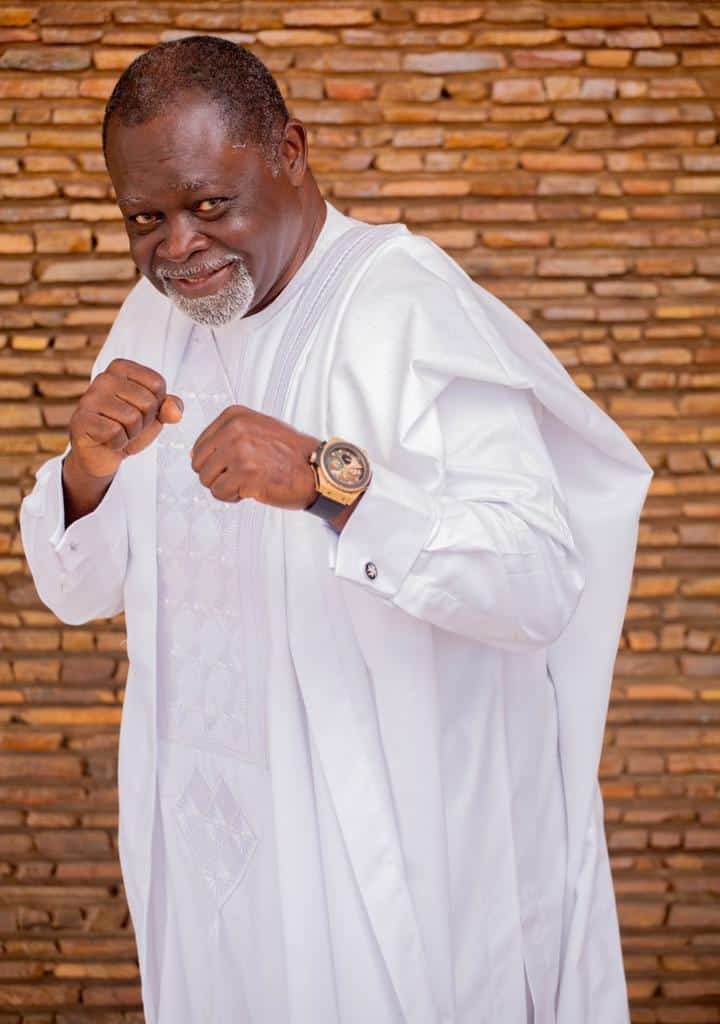
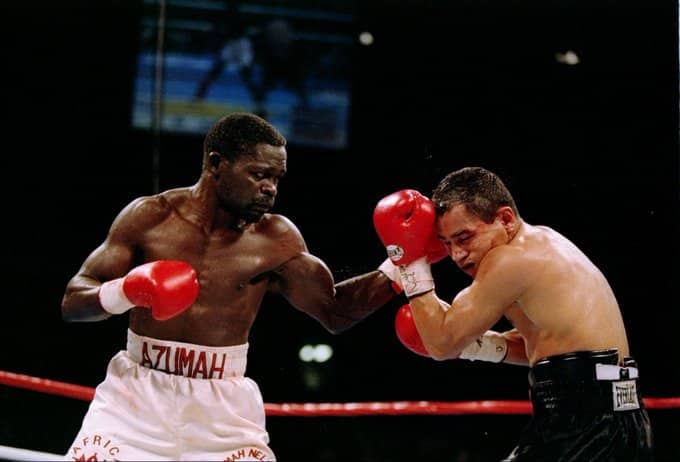
On this momentous day, July 19, 2023, the world celebrates the remarkable 65th birthday of the man who wears the illustrious crown as the greatest boxer to emerge from the African continent.
It is none other than the legendary Azumah Nelson, a name that resonates with power, skill, and an indomitable spirit within the realm of boxing.
As the sun rises on this special occasion, social media platforms and traditional media channels alike are ablaze with a symphony of heartfelt messages, each a beautifully-crafted ode to the iconic pugilist.
Words of love, admiration, and well-wishes pour forth, painting a vivid portrait of the impact Azumah Nelson has had on the hearts and minds of millions across the globe.
The prolific professor, zoom zoom the greatest 🥊🥊delivering one of his interviews after disciplining Pat Cowdell in 1985. I dare say that Azumah Nelson is the best boxer Ghana 🇬🇭 and Africa has ever produced.💫 Long live the Professor 🙌🎉🎊 pic.twitter.com/pqovEWdfO3
Azumah Nelson competed primarily in the featherweight and super featherweight divisions throughout his career.
His professional boxing career spanned from 1979 to 2008, during which he achieved numerous accolades and accomplishments. Nelson had an exceptional record, with 39 wins (including 28 knockouts), six losses, and two draws.
He notably held the WBC Featherweight World Championship from 1984 to 1987 and the WBC Super Featherweight World Championship from 1988 to 1994. His reign as the Super Featherweight champion is one of the longest in boxing history.
Azumah Nelson was admired for his remarkable boxing skills, powerful punches, and relentless fighting style. He displayed tremendous resilience and a never-give-up attitude in the ring, earning him the nickname “The Professor” due to his cerebral approach to boxing.
Throughout his career, Nelson faced and defeated several esteemed opponents, including notable fighters such as Salvador Sánchez, Wilfredo Gómez, and Jeff Fenech. His fights were often thrilling displays of skill and determination, captivating audiences worldwide.
Beyond his boxing achievements, Azumah Nelson is respected for his sportsmanship and his contributions to charity and community development in Ghana. He has been recognized with numerous awards and honors, including induction into the International Boxing Hall of Fame in 2004.
Happy Birthday to Africa's Greatest 🥊🥊Professor 🇬🇭Azumah Nelson who turns 65 today.
Zum Zum held the WBC featherweight title from 1984 to 1987 and the WBC super-featherweight title twice between 1988 and 1997.
Azumah Nelson’s legacy extends far beyond the sport of boxing. He serves as an inspiration to aspiring athletes, representing the power of perseverance, dedication, and the indomitable spirit of a true champion.
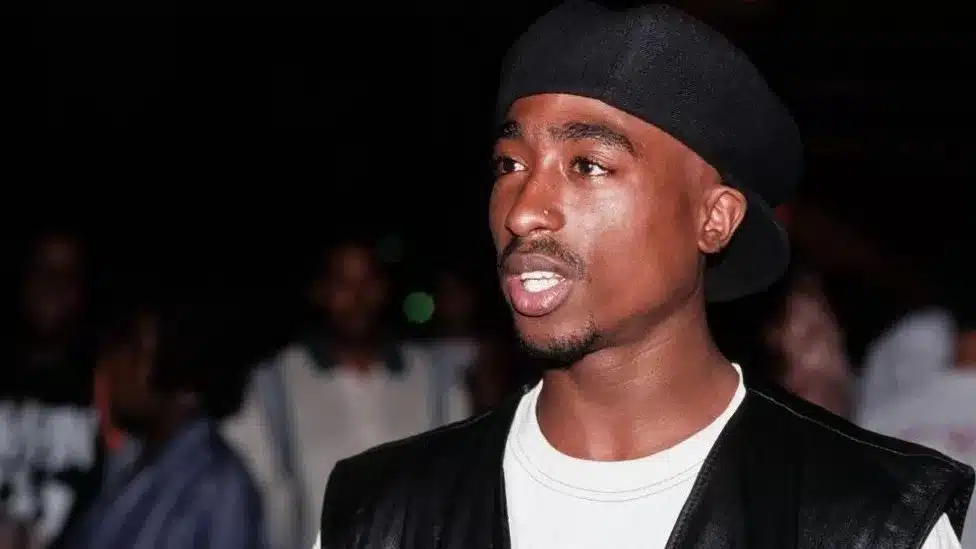
This week, police in Nevada have confirmed that they executed a search warrant in relation to the unsolved murder of rapper Tupac Shakur.
The search took place at a residence in Henderson, a suburb of Las Vegas, where Shakur was tragically shot and killed in September 1996.
The Las Vegas Metropolitan Police, while acknowledging the search, did not provide further details due to the ongoing nature of the investigation into Shakur’s murder. At the time of his death, Shakur was 25 years old.
As of now, no arrests have been made, and there are no suspects currently in custody in connection with the case.
It is worth noting that the searched residence is situated less than 20 miles (32km) from the Las Vegas strip where Shakur was fatally shot in a drive-by shooting.
The investigation into the murder remains open as authorities continue their efforts to bring justice to this long-standing unsolved crime.
“LVMPD can confirm a search warrant was served in Henderson, Nevada on July 17, 2023, as part of the ongoing Tupac Shakur homicide investigation,” a Las Vegas police statement said.
“We will have no further comment at this time.”
Las Vegas Police Lt Jason Johansson told the Las Vegas Review Journal that detectives were working on the cold case once more.
“It’s a case that’s gone unsolved and hopefully one day we can change that,” he told the newspaper.
Renowned rapper Tupac Shakur, known by his stage name 2Pac, made his debut in the music industry in 1991, captivating audiences with his talent. He achieved remarkable success on the charts with hits like “California Love,” “All Eyez on Me,” “Changes,” and “I Ain’t Mad at Cha.”
Tragically, on September 13, 1996, Shakur’s life was cut short when he was shot four times while waiting at a red light in his car. He succumbed to his injuries a week later.
With over 75 million records sold worldwide, Shakur left an indelible mark on the music industry. In recognition of his significant contributions, he was posthumously inducted into the Rock & Roll Hall of Fame in 2017, solidifying his enduring legacy.
The nationwide cost-of-living protests that commenced on Wednesday, has led to the shut down of schools in Kenya’s capital, Nairobi, and the coastal town of Mombasa indefinitely.
This measure has been taken to ensure the safety of students and to mitigate any potential disruptions caused by the ongoing demonstrations.
The protests, which began last week and turned violent, tragically claimed the lives of at least 14 individuals. In light of these events, the decision to shut down schools aims to prevent further casualties and maintain a secure environment for the students.
“The government has received credible security intelligence that criminal elements planning to unleash terror and violence on the public [on Wednesday] intend to engage in armed skirmishes with security agencies around certain schools within Nairobi and Mombasa counties,” the interior ministry said.
Bonfires lit on various roads in Kisumu as demonstrations begin on Wednesday, July 19.
Despite the rejection by the high court on Monday of a request to declare the anti-tax hike protests illegal, Police Chief Japheth Koome has declared them illegal. The conflicting statements create ambiguity regarding the legality of the protests.
Tragically, during similar protests last Wednesday, at least 10 people were shot by the police. Additionally, over 50 schoolchildren in Nairobi were subjected to tear gas while inside their classrooms, resulting in their unconscious state and subsequent hospitalization.
There have been reports of the police firing tear gas canisters at protesters in various neighborhoods around Nairobi. In western Kenya, protesters armed with crude weapons have resorted to barricading roads and extorting money from road users.
The excessive use of force by the police has drawn strong criticism from human rights organizations, who condemn their actions.
Both local and international groups, as well as foreign diplomats, have expressed deep concerns regarding the situation in Kenya. They have called for dialogue as a means to address the underlying issues that have sparked these protests.
The baby, named Faraj Mohammed, was admitted to the hospital for a routine male circumcision procedure.
However, according to sources within the facility, Faraj experienced cardiac arrest during the procedure and sadly passed away a few minutes later while under the care of the medical team.
The devastating turn of events has left the parents of the baby in a state of profound grief. Mohammed Jamal, a 36-year-old private security officer, and Halimatu Adams, a 27-year-old fashion designer, had brought their son to the KNUST Hospital on April 3 for what should have been a simple and routine procedure.
Upon arrival, Faraj Mohammed was attended to by a nurse who then escorted him to the theatre for the circumcision procedure. Unfortunately, the procedure took an unexpected and tragic turn, leading to the heartbreaking loss of the newborn’s life.
“The baby was 10 days old so we decided to send him to hospital for circumcision. Whilst at the hospital, they showed us the theatre. We met a nurse who examined the baby, undressed him and took off his diapers and told us everything was okay,” says Mr Jamal.
The parents, seated anxiously in the waiting area outside the theatre, heard the piercing cry of their baby for what would tragically be the last time. The sound echoed through the air, leaving the parents filled with worry and dread. As the cries subsided, a sense of unease settled in their hearts.
In a distressing turn of events, senior nurses and doctors were observed hurriedly rushing into the theatre, causing the parents’ anguish to deepen. Halimatu Adams, the baby’s mother, instinctively sensed that something terrible had transpired, but she had no choice but to endure the agonizing wait for news about her beloved son.
During this time of uncertainty, every passing moment felt like an eternity, amplifying the emotional turmoil experienced by the parents. Their hearts were heavy with concern as they grappled with the fear of what might have befallen their precious child inside the confines of the operating room.
“I became restless a few minutes later. A woman who spoke to me in Hausa tried to calm me down but it was impossible. I felt like attending nature’s call.”
The lack of consistent communication regarding the situation only heightened the parents’ apprehension and gave rise to various speculations about the baby’s condition. Despite being instructed to obtain a hospital attendance card in preparation for the baby’s admission, the couple soon witnessed the arrival of an ambulance a few minutes later, indicating a sudden change in plans. It became apparent that the baby would be transferred to the Komfo Anokye Teaching Hospital for additional medical care.
Finally, the time arrived when the medical team had to deliver the devastating news of the baby’s passing to the grieving parents. The delicate task of informing Mohammed Jamal and Halimatu Adams about the heartbreaking loss of their child was at hand. The weight of the imminent disclosure hung heavily in the air, as the medical professionals braced themselves to convey the unimaginable tragedy that had befallen the young family.
“I didn’t allow the doctor to finish what he was saying…I told him I think my child was dead…I felt something bad had happened to my son,” Halimatu recounted to JoyNews.
Parent’s nightmarish experience of being denied a male child
The Jamals are traumatised
The thought of losing their only male child under bizarre circumstances has left the couple traumatized.
“The feeling or the pain that you go through; unless you experience it because it’s something you cannot even express,” says Mr. Jamal.
Beyond the trauma, the parents would have to endure the nightmarish experience of the cry of their baby echoing in their minds every now and then, especially at night.
“The psychological pains, the trauma that you go through in the night when you hear the cry of the baby,” Mr, Jamal has opened up.
The Jamals take solace in video and pictures of late baby
For the Jamals, being devout Muslims, the birth of a male child is not only seen as a privilege but also an esteemed honor bestowed upon them by Almighty Allah. This sentiment holds particular significance for Mrs. Jamal, who had fervently wished to have exclusively male children.
While the couple had already been blessed with a two-year-old daughter during their three-year marriage, the longing for a male child had persisted within the Jamals’ hearts.
However, their joyous anticipation has now been abruptly shattered, plunging them into a profound state of sorrow and disbelief. Mr. Jamal, burdened with the additional responsibility of comforting his grieving wife, finds himself grappling with the unimaginable tragedy that has befallen their family.
In this deeply distressing and bewildering situation, the couple is left to navigate the complex emotions and grief that accompany the loss of their beloved baby boy. Their aspirations and hopes for a son have been cruelly dashed, leaving them to reconcile with the harsh reality of their circumstances.
“Any night, when you hear the cry of the child, you can’t do anything. You can’t focus.”
The couple has been reduced to watching videos and pictures of their son on their phones on a daily basis.
Authorities at the KNUST Hospital have declined comments on the matter.
The University Relations Officer says the matter has been referred to the legal department for settlement.
But a patient-centred non-governmental group is leading a campaign to bring justice to the Jamals.
The Advocacy for Medical Malpractice Victims says it can establish a prima facie case against the KNUST Hospital.
“From all indications, the hospital was negligent in the conduct of the circumcision,” Kwame Brobbey Appiah the Executive Secretary said.
“We believe strongly that we would be happy to establish a prima facie case,” he added.
Checks at the Health Ministry indicate that medico-legal cases are on the rise in the country.
In recent times, at least two medico-legal cases are received every week, a development which has left Health Minister, Kwaku Agyemang Manu, worried.
“What I am seeing of late at the ministry is the issue of litigation. For the past four weeks or so, almost every week, we get at least one letter from the Attorney-General’s office.
“Somebody has sued somebody with problems with care, service delivery and they want us to come with information to go to court with.”
That was a concern the minister raised at this year’s senior managers meeting of the Ghana Health Service in Kumasi recently.
Vice-President Dr. Mahamudu Bawumia has emphasized the significance of conducting a clean and respectful campaign In the midst of the escalating New Patriotic Party (NPP) flagbearership race.
Speaking to devoted party members on Tuesday, Dr. Bawumia stressed that once the contest concludes, it is imperative for the party to unite as a cohesive force to prevent the National Democratic Congress (NDC) from returning to power.
Dr. Bawumia firmly asserted that the internal competition should not become acrimonious thus his supporters and spokespersons should not to engage in retaliatory measures against aspirants who launch attacks against him.
Dr Bawumia stressed that as a family, it is crucial for all factions to recognise that a united front was necessary to confront the “main enemy,” which is the NDC.
“I have instructed all my supporters and spokespersons that we must conduct a clean campaign, avoiding any form of insults.”
“We are one family, and we must remain united. Once the contest concludes, we will come together as a cohesive force to ensure the NDC does not return to power.”
NPP Flagbearer Race: Dr. Bawumia advises his supporters and spokespersons not to retaliate against those who insult him#UTVGhanapic.twitter.com/KJsSKomllq
The NPP will elect its flagbearer for the 2024 elections on November 4.
So far, all 10 flagbearer hopefuls have been cleared to contest in the upcoming elections.
The party disclosed this in a press release issued on Wednesday, July 12.
According to the press statement, the Prof Mike Oquaye Vetting Committee approved all 10 candidates after vetting them individually.
The General Secretary of the party, Justin Kodua Frimpong said the Committee made this known in their report pursuant to Article 10(3) of the NPP constitution.
In an official statement released on Tuesday, July 18, the Ghana Football Association (GFA) clarified the purpose behind the upcoming friendly match against Mexico.
The GFA announced that they have reached an agreement for the Black Stars, Ghana’s national football team, to participate in an international friendly match against Mexico on October 14.
“The Ghana Football Association has signed a contract with the Federación Mexicana de Fútbol (FMF) and Soccer United Marketing (SUM) for an International friendly against 2023 Concacaf Gold Cup champions Mexico in the United States as part of the 20th anniversary of the MexTour.
“This fixture comes off on Saturday, October 14, 2023, at a venue yet to be announced,” parts of the GFA statement said.
The Ghana FA further explained that the international friendly match with Mexico forms “part of Ghana’s preparations for important competitions such as the FIFA World Cup qualifiers in November and the Africa Cup of Nations in January next year.”
To play at the 2023 AFCON, the Black Stars of Ghana must beat the Central African Republic in September.
In the qualifiers for the 2026 FIFA World Cup, Ghana is in Group I with Mali, Chad, Comoros, Madagascar, and the Central African Republic.
Nigeria is taking measures to contain the spread of anthrax following reported cases at a livestock farm located north-west of the capital, Abuja.
The Ministry of Agriculture confirmed the outbreak after symptoms of the disease were detected at a farm in Gajiri, situated along the Abuja-Kaduna motorway in Niger state.
The affected farm, which houses cattle, sheep, goats, and poultry, has been placed under quarantine, and 50,000 doses of anthrax vaccine have been dispatched to the area.
Anthrax primarily affects livestock animals, although humans can also become infected through direct contact with contaminated animals or consumption of their products.
The disease is caused by Bacillus anthracis and typically survives in the form of spores that can remain dormant in the soil for several years before entering an animal’s body through a cut or wound.
Clinical signs of anthrax in animals include sudden death and bleeding from the nose, mouth, and anal region.
The government is urging livestock owners, farmers, and the public to stay vigilant and report any suspected cases. It also advises farmers to refrain from slaughtering sick animals to prevent exposure to anthrax spores.
Anthrax can be treated with antibiotics, but prompt treatment is crucial following infection. No cases of human exposure have been reported thus far.
Livestock farming and herding are vital sources of livelihood for many communities in northern Nigeria, as they supply meat to other parts of the country.
En Huang, also known as Aisha Huang, the alleged kingpin of illegal mining, couldn’t hold back her tears on Tuesday during questioning by the Director of Public Prosecution, Yvonne Atakora Obuobisa, regarding her illicit mining activities in Ghana.
During the questioning, Obuobisa highlighted that in Aisha’s statement on August 30, 2016, she admitted to employing the services of four Chinese individuals in Gyaaman, located in the Ashanti Region, to carry out repairs on her six excavators.
“I have not said anything like that. I was asked to sign the various statements so I will be allowed to leave the Police Station. Because I wanted to leave the Police Station, I signed them. In fact, I can swear to that,” Aisah said.
During cross-examination, Aisha became emotional and tearfully expressed her confusion and frustration over the alleged lies being spread about her.
She adamantly denied before the High Court that she had brought the four Chinese nationals from China and employed them in a reclamation exercise.
Aisha also disagreed with the state that in her June 20, 2016, statement, Golden Asian, her company had six excavators whose spare parts were not common and anything they broke down she needed to bring engineers from China to carry out repair works on them.
She also denied that six excavators were located at Bepotenten, adding. “All these are lies; no excavator belongs to me. I do not know what you are talking about.”
The alleged kingpin of illegal mining, Aisha Huang, vehemently denied mentioning Thomas Walenkaki as her partner in her August 30, 2016, statement to the Police. She refuted the claim made by prosecution witness Michael Abotsi that Walenkaki served as her foreman.
The Director of Public Prosecution argued that Aisha had multiple identities. However, Aisha clarified that she possessed two passports, with one of them having been canceled.
Aisha Huang is currently in lawful custody, facing charges of engaging in mining operations without a license, facilitating the involvement of others in illegal mining, and re-entering a prohibited area. She pleaded not guilty to the charges in front of Justice Lydia Osei Marfo.
The court proceedings have been adjourned to July 24, 2023.
On Monday, President Félix Tshisekedi of the Democratic Republic of Congo (DRC) revealed that a $1.9 billion agreement had been signed between the United Arab Emirates and the state-owned mining company la Société aurifère du Kivu et du Maniema (Sakima).
The deal was finalized in Kinshasa by a UAE government delegation. As part of the partnership, the plan is to develop a minimum of four industrial mines in the troubled eastern areas of South Kivu and Maniema.
Sakima currently holds mining concessions in the region for various minerals including tin, tantalum, tungsten, and gold. However, the specific minerals covered by this agreement have not been disclosed by the government.
In December, the Democratic Republic of Congo (DRC) signed a 25-year contract with UAE company Primera Group, granting them export rights for artisanally mined ores. Artisanal mining involves independent miners who are not employed by mining companies.
The agreement provided Primera Group with a majority stake in two joint ventures, Primera Gold and Primera Metals, granting them preferential export rates for gold, coltan, tin, tantalum, and tungsten.
The DRC presented this initiative as a strategy to combat mineral trafficking to armed groups, particularly prevalent in the country’s eastern region.
The eastern part of the DRC has long been plagued by armed conflict, with the United Nations estimating the presence of up to 120 different militia groups in the area. These groups receive support, at least in part, through the trade of smuggled minerals.
However, a report published by the United Nations in June expressed concerns about the legality of artisanal mines supplying Primera Gold. The report highlighted the potential for the supply chain to be contaminated with ore from sites controlled by armed groups due to inadequate traceability mechanisms.
Despite these concerns, Primera Gold commenced operations in South Kivu in January and reportedly shipped a ton of certified gold in May, as reported by the Congolese Ministry of Finance.
In an exhilarating preseason encounter against Shakhtar, Ghanaian talent Mohammed Kudus showcased his abilities on the field and more.
Kudus, sporting a new jersey number, captivated the audience as he propelled Ajax to victory, leaving fans ecstatic with his dynamic performance.
The young midfielder now dons the number 7 jersey, a change from his previous number 20 during his time at the Dutch club.
Last season, the number 7 shirt was worn by Dutch forward Steven Bergwijn, who joined Ajax from the Premier League team Tottenham.
In today’s match, Kudus started the game but was substituted at halftime, with Ajax securing a commanding 3-0 victory over the Ukrainian side.
Kudus kicked off the scoring for the Dutch giants, converting from the penalty spot in the 19th minute. He then turned provider, setting up Steven Bergwijn to score Ajax’s second goal in the 32nd minute.
Just two minutes later, the former FC Nordjaelland star found the back of the net again, extending Ajax’s lead to 3-0 after receiving a pass from Steven Bergwijn.
With a three-goal advantage at halftime, Ajax comfortably maintained their lead in the highly anticipated friendly at the Sportpark De Toekomst.
No further goals were scored in the second half, resulting in a decisive victory for Ajax over the Ukrainian opponents.
A-ensonga Hearts, a Non-Governmental Organization (NGO), has donated 102 dual desks to the Balungu-Nabiisi D/A Primary School in the Bongo District of the Upper East Region to enhance the quality of education.
This initiative is part of the NGO’s ‘Furniture Project,’ which aims to provide furniture to underprivileged schools in communities. The project is designed to complement the government’s efforts in creating conducive and comfortable learning environments for students.
The NGO launched the first phase of the project in 2021, during which it supplied 53 dual desks to the Gorigo Primary School in the Talensi District. Additionally, the NGO renovated the school’s Kindergarten block with the support of partners and generous members of the public.
As part of the second phase of the ‘Furniture Project,’ the Balungu-Nabiisi D/A Primary School was chosen as one of three public basic schools in the Bongo District to benefit from the initiative.
The Founder and Executive Director of A-ensonga Hearts, Ms Kenndicta A-ensonga Ajene, at a brief ceremony to present the furniture, recalled her first visit to the school to assess the furniture situation.
“I was heart-broken when I first visited and saw pupils sitting on the bare floor with others lying on their bellies to write. In fact, I asked myself how these pupils will be able to compete with their colleagues in the urban centres who have everything in their classrooms,” she said.
After visiting various schools in the district, Ms. Ajene, the representative of A-ensonga Hearts, recognized the urgent need for attention at Balungu-Nabiisi Primary School. This prompted the management and partners of A-ensonga Hearts to mobilize resources promptly and assist the school.
The funding for the furniture, estimated to be GHȻ22,000.00, was a challenging task. Ms. Ajene emphasized the importance of the students taking their studies seriously and maintaining the furniture properly for the benefit of future generations, ensuring that the efforts of the organization are not in vain.
Furthermore, A-ensonga Hearts has an additional 300 dual desks to supply to other schools as part of the second phase of the project. Ms. Ajene appealed to kind-hearted individuals within and outside the country to support the NGO in providing furniture to deprived schools in the region.
Mr. Thomas Azure Alukuke, the former headteacher of the school, who collaborated with A-ensonga Hearts for the furniture, recalled the numerous request letters the school had sent to various organizations seeking support.
He expressed gratitude to Ms. Ajene for honoring the promise and providing the much-needed furniture.
Mr. Raymond Awuni, the current headteacher of the school, expressed his gratitude to A-ensonga Hearts and the former headteacher for their collaborative effort in supplying furniture to the school. He also appealed for additional support to improve the furniture situation in the school.
Naba Albert Anaba Atanga, the Chief of the community, conveyed his gratitude on behalf of the elders and community members for the support rendered to the school by A-ensonga Hearts.
He offered prayers for blessings upon the NGO’s management and leadership and used the occasion to appeal for continued support from the Executive Director of the organization to address the various needs of the community and schools in the area.
As temperatures soar in Morocco, Rabat Zoo has implemented additional measures to ensure the well-being of its animals.
Staff members have been taking extra precautions by providing frozen meals tailored to each animal’s specific dietary needs, as explained by head veterinarian Saad Azizi in an interview with AfricaNews.
Considering that mammals and birds are particularly vulnerable to the heatwave, the staff has been advised to regulate the amount of frozen food given to the animals to prevent any potential side effects.
To help cool down the animals, some are receiving refreshing cold showers, while enclosures are being equipped with blocks of ice.
These measures aim to mitigate the effects of the scorching temperatures anticipated on Tuesday, with several towns and cities, including Fez, Zagora, and the popular tourist destination of Marrakesh, expecting temperatures to exceed 40°C (104°F).
The construction of a three-unit classroom block for Nutekpor DA Basic School in the South Tongu District of the Volta region has been funded by the United States government, specifically through the Department of Defence.
This initiative is a demonstration of the community’s ongoing support for the nearby security base known as the ‘Naval Training Command’ (NAVTRAC).
During the inauguration ceremony, Madam Virginia Palmer, the United States Ambassador to Ghana, expressed their commitment to extending support to underprivileged communities across the country.
The construction of the classroom block was a gesture of appreciation towards the Nutekpor community for providing a location for the establishment of the Training Command.
Madam Celestine Korsi-Agordo, the South Tongu District Director of Education, received the facility on behalf of the school and commended the donors for their generosity. She assured that the facility would be utilized effectively for the benefit of the entire community.
Mr. Ben Yao Agbeyesro, the local Assembly member, expressed gratitude to the US government and the Naval Training Command for their contribution. He emphasized that the support would help address some of the school’s infrastructure challenges.
Mr. Johnson Kobby Amedzo, the headteacher of the school, disclosed that the institution faced various difficulties, including a shortage of teaching staff, insufficient furniture for students, and a lack of teaching and learning materials.
He appealed to philanthropists, individuals, and the government for assistance in resolving these challenges and ensuring quality education in the area.
Established in 1974, Nutekpor DA Basic School currently consists of kindergarten, primary, and junior high school sections, accommodating a total of 96 students with seven teaching staff members.
Additionally, pupils from nearby communities such as Dalive, Torzikpota, Tolesem, and Totsoanyi will also benefit from the newly constructed classrooms.
A team in Kenya has successfully generated five brand-new embryos of the northern white rhino species, marking a significant step forward in the ongoing efforts to prevent their extinction.
The organization responsible, BioRescue, revealed that these embryos were derived from 18 eggs that were gathered from Fatu, one of the last surviving northern white rhinos.
Fatu and her mother, Najin, currently reside in the Ol Pejeta Conservancy located in central Kenya.
Originally born in a Czech Republic zoo, they were later relocated to their native environment in 2009.
“Four years since the start of this ambitious project to save the northern white rhino from extinction, the BioRescue consortium has made significant progress towards its ultimate aim,” the project, funded by the German education ministry, said on Facebook.
“The sperm for fertilisation came from two different bulls, thereby improving genetic diversity.”
BioRescue has announced that they have achieved a significant milestone in their conservation efforts by creating the highest number of embryos to date through egg collection, a complex and perilous process.
With the recent success, the total number of embryos generated by BioRescue now stands at 29. These embryos undergo cryopreservation, a technique that involves storing them at extremely low temperatures, in anticipation of future transfer to surrogate southern white rhino mothers.
The reason for using surrogates is that neither Fatu nor Najin, the remaining northern white rhinos, are capable of carrying a pregnancy themselves.
The Ol Pejeta Conservancy reports that the BioRescue team has taken another promising step forward in the species’ preservation by identifying two female southern white rhinos from the wild as potential surrogate mothers.
Previous attempts to implant embryos into southern white rhinos housed in zoos have proven unsuccessful. However, this latest development offers renewed hope for the successful implementation of the surrogate programme.
“A huge congratulations to the team for their phenomenal dedication and hard work that has made this all possible,” the conservancy said.
While it is a race against time to save the northern white rhino, the southern white rhino is also under threat, with just 18,000 of them left in the wild.
Del Monte, a multinational fruit company, is facing allegations that its security guards in Kenya ran over and injured two teenagers at a pineapple farm.
The Bureau of Investigative Journalism reported that the victims were knocked off their motorbikes following a 15-minute pursuit by Del Monte guards driving four-wheel drive vehicles.
This incident follows previous reports by the same organization in June, which revealed that six people had been killed by guards over the past decade, with some of the victims accused of stealing pineapples from the farm.
In response to these allegations, Del Monte, a major supplier to supermarkets worldwide, has stated that it takes the accusations seriously and is conducting its own investigations into the matter.
Farms in the Nabdam District of the Upper East Region are currently facing a severe infestation of armyworms, causing significant damage to crops.
The pests have rapidly consumed the stalks and leaves of various crops, particularly maize, affecting numerous farmlands across multiple communities in the district.
Farmers in the area have expressed deep concern over the invasion and shared their difficulties with the Ghana News Agency (GNA).
They highlighted that the presence of these pests, combined with the high cost of fertilizers, poses a significant threat to their farming operations and could result in reduced yields.
According to Mr. Goubagre Sampana, a former District Best Farmer, the recurring nature of these incidents is discouraging and detrimental to both existing farmers and potential newcomers to the agricultural sector.
The losses incurred as a result of these occurrences not only affect their investments but also have a negative impact on the overall food production capacity of the region.
This situation could potentially discourage individuals who would have otherwise ventured into farming, leading to a decrease in the local food supply.
“This destruction in addition to the cost of fertilizer, is making us lose our investment because we spend so much fighting these pests and at the same time on fertilizer,” he added.
“Year in year out we experience the invasion of these armyworms on our farms, and it is so demoralizing to we those who have been farming for years, so you can imagine young people who may wish to venture into farming” he said
Mr Saah Zoya, a farmer said there was the need for government to act promptly by helping them with pesticides to fight the pests.
This, the farmer explained, would help contain the spread of the armyworms onto uninfected farms and reduce the financial burden on them.
Mr Joseph Adjabui, the District Director of the Department of Agriculture told the GNA that its attention has been drawn to the invasion of the armyworms in some communities of the district and officers were on ground assessing farmlands
He added that the government had provided some pesticides to help farmers and in time they would be given the needed support.
Authorities in Rwanda are continuing their search for 10 individuals, mostly children, who remain missing after a boat they were traveling in sank in the Nyabarongo River.
The incident occurred in the country’s southwest region.
During the rescue operation on Monday evening, four people, including the captain, were saved. However, the captain has since been taken into custody by the police.
Local provincial governor Alice Kayitesi, speaking on Radio Rwanda, acknowledged that the boat did not meet safety requirements, such as lacking an engine and life jackets.
Boat accidents on the Nyabarongo River have occurred over the past decade, often attributed to old and overloaded vessels.
Some residents living close to the river rely on boat trips as a cost-effective and efficient means of transportation through areas that would take significantly longer to reach by land.
Executive Director for the National Commission on Culture (NCC), Nana Otuo Owuahene Acheampong, has emphasized the importance of educating children about Ghanaian culture.
He urged teachers and parents to utilize storytelling and folksongs as effective tools for promoting and preserving cultural traditions.
Acheampong highlighted the influential role of storytelling in shaping minds and inspiring individuals. He noted that leaders throughout history have used storytelling to impart knowledge and foster connections among students.
In today’s digital age, social stories have gained immense popularity, with political, social, and business leaders leveraging them to effectively communicate their messages and engage the public.
Expanding on the objective of storytelling and folksongs, Acheampong emphasized the aim of inspiring young individuals and children to utilize their imagination in conveying cultural values.
By encouraging active participation and instilling cultural pride, these traditional forms of expression can motivate individuals to take meaningful actions within their communities.
The Adesa Village storytelling and folksongs school competition in Accra served as a platform to celebrate and showcase the power of storytelling and folksongs in preserving Ghanaian culture and nurturing young talent.
“Is of no doubt that whether we sit in our homes listening to our children tell an interesting story or at school listening to our teachers telling a story or plot twist by using imaginary, such stories have the power to captivate, engage and cause us to think and act accordingly to the norms and traditions of the society,” he added.
Nana Otuo Owuahene Acheampong emphasized the importance of the current generation being well-informed about the world and using that knowledge to tell authentic stories that inspire action. He highlighted the art of folk music as another impactful medium for storytelling in modernized teaching.
Acheampong reiterated that storytelling and folksongs play a crucial role in preserving Ghana’s traditions and cultural heritage. They not only serve as a means of passing down knowledge but also offer valuable insights into various aspects of life. By engaging with these forms of expression, individuals gain a deeper understanding and appreciation of their cultural roots.
In summary, Acheampong emphasized the significance of storytelling and folk music as powerful tools for cultural preservation, education, and inspiring positive change.
He, therefore, encouraged students to showcase their exceptional abilities in order for their parents and teachers to be proud of them.
Madam Alice Alima Kala, Director, Centre for National Culture (CNC), Greater Accra Region, said the emergence of new trends of fashion, foods, other forms of social activities and life styles across the globe had influenced most youth to lose touch with very important practices
of the tradition, value and norms of the culture.
She added that there was the need for awareness creation to educate the youth on the importance and beauty of the Ghanaian culture.
Madam Kala said storytelling by our forefathers was not only to entertain and educate but also to instill moral cultural values into the citizenry.
She said in the quest to rekindle the spirit of storytelling and folksongs, her outfit as part of its mandate organised and inculcated storytelling in children from primary schools to develop hidden talents of the youth and expose young children to the rich Ghanaian culture.
She said, “our main aim and focus as an institution is to promote, develop and sustain cultural and artistic excellence, hence ‘Adesa Village’, to help bring out the fading cultural norms such as riddles, proverbs, music and dance, among others.”
In response to the unexplained death of 36 cows in a border area, Sierra Leonean authorities have imposed a ban on the movement of cattle from Liberia and the import of meat from the neighboring country.
The incident occurred in the town of Kelima Bendu, located in Lofa County, approximately ten kilometers from the Sierra Leone border and fifteen kilometers from Guinea.
Liberian authorities have initiated an investigation into the cause of the cattle deaths, although no timeline has been provided for when the results will be made known.
As a precautionary measure, Sierra Leone has implemented several actions, including the prohibition of cattle, goats, and sheep movement along the border with Liberia, temporary closure of livestock markets in the border area, and increased surveillance in slaughterhouses.
These measures aim to prevent any potential spread of the unknown cause of death to Sierra Leonean livestock.
It is important to note that Sierra Leone experienced an anthrax epidemic in May 2022, which resulted in the loss of over 200 animals.
Anthrax, caused by spores that can remain dormant in the soil for extended periods, poses a risk to both animals and humans, with potentially fatal consequences in rare cases.
Authorities in both Sierra Leone and Liberia are taking these precautions to ensure the safety of their respective livestock populations and mitigate any potential risks to public health.
Fear has gripped residents in the surrounding communities of the Afienya-Dawenya metal bridge due to its deteriorating condition.
The bridge, plagued with deep holes and weakened metal lanes, is on the brink of collapse.
The bridge serves as a crucial route for tipper trucks, taxi cabs, and motorbikes, providing convenient access to various suburbs in the district such as Shill Hills, Somanya, and Ningo-Prampram, bypassing heavy traffic.
Recognizing the urgency of the situation, Mr. Mohammed Habibu-Awudu, the Assemblyman for Afienya, revealed that the resident associations, in collaboration with the Tipper Trucks Association of Ghana, have taken the initiative to undertake temporary repairs on the bridge. However, this is only a temporary measure.
Highlighting the poor condition of the alternative road networks in the communities, Mr. Habibu-Awudu appealed to the Ghana Highways Authority to expedite the road construction projects in order to alleviate the transportation challenges faced by residents.
He stressed the need for immediate action to repair the severely compromised bridge, in addition to addressing the road infrastructure concerns.
The safety and well-being of the community members are at stake, necessitating swift action to rectify the hazardous state of the bridge and improve the overall transportation system in the area.
Around 700 micro and small enterprises, both in the formal and informal sectors, focused on skills development and job creation, are set to benefit from the newly established $60 million Ghana Skills Development Fund (GSDF).
The fund is part of the $200 million Ghana Jobs and Skills Project, supported by the World Bank, with the aim of enhancing productivity, promoting competitiveness, and increasing income-earning capacities, particularly among women and low-income groups.
The five-year GSDF Project, which aligns with the government’s strategic plan to revamp technical and vocational education and training (TVET), is being implemented by the Commission for Technical and Vocational Education and Training (CTVET) under the Ministry of Education, in collaboration with the International Development Association of the World Bank.
The initiative was launched by Ms Gifty Twum-Ampofo, Deputy Minister of Education in charge of TVET, during a ceremony in Accra.
The fund began implementation in August 2022, with the first call for applications receiving approvals and disbursing funds to 105 enterprises.
The second call for applications is scheduled for August 1 to August 31, 2023, and is expected to benefit approximately 200 enterprises.
Chairperson of the GSDF Steering Committee, Mr. Kwasi Asamoah-Baffour, noted that new enterprises and those operating for less than three years would not be eligible for the grant.
Additionally, enterprises in sectors with high employment growth potential and those with a significant representation of female employees and individuals with disabilities would have an advantage in the selection process.
Ms. Twum-Ampofo emphasized that the GSDF support would not be in the form of a loan and beneficiaries would not be required to repay the funds received. The initiative aims to stimulate job creation, enhance skills development, and contribute to the overall economic growth and competitiveness of Ghana.
“However, implementation of grantee projects will need to result in desired outcomes of the GSDF, which include increased productivity, quality, competitiveness, job creation, and increased incomes,” she said.
According to Ms. Twum-Ampofo, the Government’s objective is for the Ghana Skills Development Fund (GSDF) to support the skills upgrading of employees in beneficiary enterprises and companies, enabling them to improve productivity and adapt to emerging technologies. The Fund is also expected to contribute to the enhancement of skills among master craftspeople and self-employed graduate apprentices.
Ms. Elena Glinskaya, Lead Economist at the World Bank and Co-Task Leader of the Ghana Jobs and Skills Project, praised the GSDF as an innovative initiative and expressed the World Bank’s commitment to supporting Ghana in building its human resource base for sustainable development.
Dr. Fred Kyei Asamoah, the Director General of CTVET, emphasized that the selection of organizations to benefit from the Fund would be based on merit. He further stated that the GSDF would serve as a platform to mobilize financing for technical and vocational education and training (TVET), aligning with the government’s commitment to using TVET as a tool to develop essential skills and provide decent employment opportunities.