Nord Stream 2 – the controversial gas pipeline from Russia – has begun leaking in the Baltic Sea, endangering naval traffic, Denmark has warned.
It set up a prohibitive zone within five nautical miles (9km) of the pipeline near the Bornholm island.
The Danish energy ministry said it had acted after being informed about a pressure drop in the now-defunct undersea pipeline earlier on Monday.
Operating company Nord Stream 2 AG said the drop happened overnight.
“The Nord Stream 2 landfall dispatcher registered a rapid gas pressure drop on Line A of the Nord Stream 2 natural gas pipeline,” it said in a statement, adding that it was investigating the matter.
In its statement, the Danish energy ministry said: “There are no security risks related to the leak outside of the prohibitive zone.
“The incident is not expected to have consequences for the security of Danish gas supply.”
Nord Stream 2 had been built to deliver gas from Russia to Germany and other European nations, but the multi-billion euro project was halted after Russia invaded Ukraine in February.
However, gas had already been pumped into the pipe, and there are now concerns that large amounts of it could be released into the atmosphere.
Nord Stream 1 – a parallel gas pipeline – has been shut for several weeks, with Gazprom saying it was carrying out maintenance work to fix an earlier leak.
The European Union accuses Russia of using its gas supplies to blackmail Europe because of its war in Ukraine, but Moscow denies this.
Energy prices have soared since Moscow invaded Ukraine and scarce supplies could push up costs even further.
There are growing fears families in the EU will be unable to afford the cost of heating this winter.
Europe is now attempting to wean itself off Russian energy in an effort to reduce Moscow’s ability to finance the war, but the transition may not come quickly enough.
Tuesday is the final day of a ballot for Russian-held regions of Ukraine which the government in Kyiv and its Western allies dismiss as a sham.
Nearly four million people from the eastern regions of Donetsk and Luhansk, and the southern regions of Kherson and Zaporizhzhia, are being asked to attend polling stations and vote in so-called referendums on joining Russia.
This follows four days of early voting during which allegations of intimidation multiplied as election officials went house to house accompanied by armed guards.
The votes, called with just a few days’ notice, serve a deadly serious purpose as they will be used by the Kremlin to legitimise its invasion aims.
If Russia absorbs these regions, making up about 15% of Ukraine’s territory, it could take the war to a new and more dangerous level, with Moscow portraying any attempt by Ukraine to regain them as an attack on its sovereign territory.
There is now speculation that Russian President Vladimir Putin may announce the four regions’ annexation in a speech to a joint session of Russia’s parliament on Friday.
In March 2014 he announced that Ukraine’s Crimea Peninsula had been annexed just a few days after a likewise unrecognised referendum was held.
‘At gunpoint’
Were the guns there to protect you as you voted, or to cow you into voting? That was a question passing through people’s minds in recent days as election officials escorted by soldiers come to knock on their doors.
Serhiy Haidai, the governor-in-exile of Luhansk region, accused the separatist authorities there of taking down the names of people who voted against joining Russia or who refused to vote at all.
“Representatives of the occupation forces are going from apartment to apartment with ballot boxes,” he said, quoted by Reuters news agency. “This is a secret ballot, right?”
Talking separately to the Associated Press news agency, he suggested the Russians were using the process as a pretext to search homes for men they could mobilise as soldiers as well as checking for “anything suspicious and pro-Ukrainian”.
One woman described for BBC News how her parents had voted in the city of Melitopol in Zaporizhzhia region.
Two local “collaborators” had arrived with two Russian soldiers at their flat to give them a ballot paper to sign, she said.
IMAGE SOURCE,GETTY IMAGES Image caption, Soldiers are escorting electoral workers going door to door in Donetsk
“My dad put ‘no’ [to joining Russia],” the woman said. “My mum stood nearby, and asked what would happen for putting ‘no’. They said, ‘Nothing’. Mum is now worried that the Russians will persecute them.”
Another woman in the embattled town of Enerhodar, where the Zaporizhzhia nuclear power station is located, told the BBC: “You have to answer verbally and the soldier marks the answer on the sheet and keeps it.”
Ukrainian journalist Maxim Eristavi tweeted to say that his family had been “forced to vote at gunpoint” in southern Ukraine.
“They come to your house,” he wrote. “You have to openly tick the box for being annexed by Russia (or for staying with Ukraine if you feel suicidal). All while armed gunmen watch you.”
Petro Kobernik, who left Kherson just before the voting began, told AP in an interview by phone: “The situation is changing rapidly, and people fear that they will be hurt either by the Russian military, or Ukrainian guerrillas and the advancing Ukrainian troops.”
The vote on paper
The questions on the ballot papers (there is no digital voting) differ according to region.
This is because pro-Russian separatists have been running parts of Donetsk and Luhansk since 2014 when they held unrecognised independence referendums.
Voters there are being asked whether they “support their republic’s accession to Russia as a federal subject”.
In the parts of Kherson and Zaporizhzhia occupied by Russian forces since the invasion in February, people are being asked if they “favour the region’s secession from Ukraine, creation of an independent country and subsequent accession to Russia as a federal subject”.
The ballot papers there are printed in both Ukrainian and Russian whereas in the eastern regions they are printed in Russian only.
Voting was spread over five days to allow for ballots to be “organised in communities and in a door-to-door manner for security reasons”, Russian state news agency Tass reports.
Refugees now scattered across Russia can vote in as many as 200 polling stations there.
The vote is being heavily guarded by Russian or Russian-backed security forces, and with reason.
Not only have Ukrainian forces been pushing the Russians and their separatist allies back in both the east and south, but attacks on figures associated with the Russian occupation have mounted.
IMAGE SOURCE,REUTERS Image caption, People voted at a polling station in the Russian city of Rostov-on-Don
Former Ukrainian MP Oleksiy Zhuravko, who championed the Russian invasion, was killed along with another person in a missile attack on a hotel in Kherson on Sunday.
Reports say that Russian journalists who were also staying at the hotel escaped uninjured.
In the city of Berdyansk in Zaporizhzhia region, the deputy head of the city administration and his wife who headed the city election commission were killed in an attack a week before the referendum.
Members of a guerrilla group called the Yellow Band have spread leaflets threatening anyone who votes and urging others to send photos and video of anyone who does in order to track them down later, AP reports.
The guerrillas have also sent around phone numbers of election commission chiefs in Kherson region, asking activists to “make their life unbearable”, the agency reports.
Ukraine has threatened anyone organising or supporting the so-called referendums with eventual criminal prosecution, saying they face up to 15 years in prison if convicted.
International outcry
Even Serbia, which has close ties with Moscow and is one of the few European countries not to join sanctions on Russia, has announced it will not recognise the results of the voting.
Foreign Minister Nikola Selakovic said that to do so would be “completely contrary” to his country’s policy of “preserving territorial integrity and sovereignty and… commitment to the principle of inviolability of borders”.
But in the face of international opposition, Russia’s Foreign Minister, Sergei Lavrov, insisted that the votes were “the expression of the will” of the people who lived in the regions.
He confirmed that if the four regions joined Russia they would have the same protection as any other part of its territory, including protection with nuclear weapons.
The White House says the US will never recognise “Ukrainian territory as anything other than part of Ukraine”.
In its view, the referendums are a “sham – a false pretext to try to annex parts of Ukraine by force in flagrant violation of international law”.
The UK has responded with new sanctions targeting top Russian officials involved in enforcing the votes among others.
The surrounding streets of Budokan where the state funeral will take place have been closed since early this morning and there are many police officers around – some of whom came from other parts of Japan.
More than 700 foreign guests have flown in for the event, including about 50 current or former state leaders.
Dignitaries include US Vice President Kamala Harris, India’s PM Narendra Modi, Singapore’s PM Lee Hsien Loong, Australian Prime Minister Anthony Albanese, Vietnamese President Nguyen Xuan Phuc, South Korean Prime Minister Han Duck-soo, Philippines Vice President Sara Duterte-Carpio, Indonesia Vice President Ma’ruf Amin, and European Council President Charles Michel.
The military has performed the cannons fire 19-gun salute for slain ex-PM. A stream of people have come to pay their respects to Abe.
Here are some pictures so far of the mourning crowds:
Copyright: EPA
Image caption: People gathered early in the morning to leave flowers for Mr Abe
Copyright: EPA
Image caption: People have to go through metal detectors and have their bags checked first to be able to access the areas.
Copyright: EPA A woman dressed in black and wearing a veil prays at an altar for Abe
Thousands are seated in the arena. A military band has begun playing a dirge as the senior Japanese dignitaries walked in.
His widow Akie Abe arrived at the Budokan venue carrying his ashes, which were covered in a ceremonial cloth.
The motorcade carrying his remains had travelled from his widow’s home in the capital.
Copyright: Reuters
Image caption: The widow of former Japanese prime minister Shinzo Abe, Akie Abe (C), carries his ashes
Copyright: Reuters
Image caption: A military officer carries ashes of the former PM in a box covered with a decorative fabric to be placed at the altar
Copyright: Reuters
Prime Minister Fumio Kishida received the ashes, which appear to be contained in a ceremonial box.
He then formally handed it to military officers who placed the box in the centre of the altar, set up at the front of the room.
The current prime minister, Fumio Kishida, delivered an eulogy to Abe. Kishida spoke of Abe’s significant and incomparable legacy.
He said he rushed to Mr Abe’s side immediately after the shooting. “Why did your life have to be taken away in such a tragic way when you were so indispensable to us?”
“Abe-san, your life should’ve been much, much longer. You were needed for much, much longer. You’ve worked tirelessly and exhausted all your energy for both Japan and the world,” he said.
In what was at times a very personal tribute, Kishida also praised Abe’s temperament and generosity towards others. He then wrapped up a written prayer in a white paper envelope and placed that on the altar.
Copyright: BBC
Former PM Suga worked closely with Abe, in his prime ministerial team for more than seven years.
In his speech he praised Abe’s achievements as a politician – in relations with North Korea and spearheading a campaign calling for the return of abducted Japanese people.
He also noted Abe’s leadership on foreign policy deals like the Trans-Pacific Partnership.”Thank you so much for all you have done. May you rest in peace.”
Credit: Getty Images
Representatives from Japan’s Imperial Family offered prayers and tributes.
Dressed in mourning black, several members – including Fumihito, Crown Prince of Japan, and Kiko, Crown Princess Akishino – approached the altar where they lay flowers.
Credit: Getty Images
Mr Abe’s immediate family, including his wife Akie, remained seated in the front row.
Here are some moments from earlier on:
Copyright: EPA
Image caption: Akie Abe cries while mourners seated next to her watch a video tribute to her late husband
Copyright: Reuters
Image caption: Earlier she had been among the first to approach the altar to pay tribute
Copyright: EPA
Image caption: More than 4,500 people attended including hundreds of foreign guests
Copyright: EPA
Mr Abe’s ashes were placed in the centre of the floral shrine under his portrait
Japan’s former prime minister Shinzo Abe died in a hospital after he was shot at a political campaign event in July this year.
Abe was shot at twice while he was giving a speech on a street in the city of Nara on Friday morning.
The suspect, named as Tetsuya Yamagami, admitted shooting Abe with a homemade gun, and said he had a grudge against a “specific organisation”, police said.
The Ghana Black Stars and Nicaragua will battle it out today as the former wraps up its September friendly as preparations for the FIFA World Cup Qatar 2022 continues.
The match takes place at Estadio Francisco Artes Carrasco in Lorca at 18:00 GMT.
The Black Stars will be looking to bounce back to winning ways against the North American country after being thrashed 3-0 by Brazil in Le Harve and with only two games to play before the finals.
Nicaragua are ranked 139th in the World but have seen an improvement in their team performance in recent time following a seven match unbeaten run that ended on Thursday after losing 2-1 to Suriname.
This is will be first ever meeting between both sides in history.
Thomas Parteywill miss the game due to a suspected knee injury, but it still appears that head coach Otto Addo still has a decent squad that can outwit their opponents following a gusty second half display against Brazil on Friday.
The introduction of debutants Salisu Mohammed, Tariq Lamptey and Inaki Williams changed the dimension of the game as the Stars showed class and resilience against the five-time World Champions.
Ghana are paired with Portugal, South Korea and Uruguay in Group H for the World Cup tournament.
Kai Havertz’s late equaliser denied England a stunning comeback victory as Germany concluded their Nations League campaign with an entertaining 3-3 draw at Wembley.
After a goalless first half, Ilkay Gundogan broke the deadlock from the penalty spot, before Havertz doubled the lead with a stunning 25-yard effort.
But the Three Lions turned the contest on its head with three goals in the space of 12 minutes. Luke Shaw and substitute Mason Mount dragged the hosts level, before Harry Kane’s penalty completed the turnaround.
However, Germanyensured a share of the spoils with three minutes remaining when Havertz tucked home from close range following a goalkeeping error from Nick Pope.
The best opportunity of the first half came following a swift counter in the 24th minute with Shaw’s delicious through-ball picking out Raheem Sterling, who was denied by Marc-Andre ter Stegen after cleverly escaping his marker.
The visitors took the lead seven minutes after the restart; Gundogan calmly slotting past Nick Pope from the penalty spot after Harry Maguire clumsily felled Jamal Musiala.
Havertz doubled the advantage 15 minutes later as he rounded off a quickfire counter by brilliantly bending a curling 25-yard effort in off the post.
But England hit back with two goals in the space of five minutes. Shaw halved the deficit from Reece James’ cross, before Mount wonderfully swept past Ter Stegen following a jinking run from Bukayo Saka.
The Three Lions edged their noses ahead when Kane slammed home his penalty after Nico Schlotterbeck’s rash challenge on Jude Bellingham, but Havertz had the final say after Pope fumbled Serge Gnabry’s initial strike.
What does it mean? Winless streaks continue despite Wembley thriller
England demonstrated character to overturn the 2-0 deficit with their first goals from open play of this Nations League campaign, a goalless run spanning 520 minutes, but the Three Lions have now gone six games without victory for the first time since 1993.
Meanwhile, despite stretching their unbeaten run to nine away matches, Germany have now drawn four in a row on the road for the first time.
6 – England are winless in their last six games in all competitions (D3 L3), their longest run since April-June 1993 (also six). It’s their longest ever winless run going into a major tournament. Countdown. pic.twitter.com/cVvIHeUIwn
Kane completed the turnaround with an emphatic penalty – his 51st international goal – and is now just two shy of equalling Wayne Rooney’s all-time England record.
That came on the day the striker became the fifth player to start 50 games as captain of the Three Lions after Bobby Moore (90), Billy Wright (90), Bryan Robson (64) and David Beckham (59).
Havertz hits a stunner
The pick of the six goals came courtesy of Havertz, who made it 2-0 when he bent a wonderful 25-yard strike beyond the helpless Pope.
Havertz also grabbed the equaliser with his third shot of the match – a tally only matched by Jude Bellingham throughout the contest – in what was a lively outing for the Chelsea forward.
Key Opta Facts
– Having kept six clean sheets and conceded just twice in their first eight games under Hansi Flick, Germany have conceded in each of their past seven games in all competitions (10 goals conceded).
– England have conceded at least three goals in consecutive home games for the first time since June 1995 (v Sweden and Brazil). Meanwhile, this was their highest scoring game that was goalless at half-time since October 2008 (5-1 v Kazakhstan).
– The Three Lions have failed to score in the first half of six consecutive games for the first time in their history, while Shaw’s second-half strike ended the Three Lions’ run of 520 minutes without a non-penalty goal in all competitions.
– There were just 186 seconds between Luke Shaw pulling one back and Mason Mount equalising for England (2-2), with the latter ending a run of 16 games without a goal for England.
– Germany’s Havertz became the first player to score twice against England in a match at Wembley since Alexis Sanchez for Chile in November 2013.
What’s next?
Germany complete their World Cup preparations with a friendly against Oman on November 15, before playing Japan in their Group E opener eight days later. England launch their tournament on November 21 against Iran in Group B.
The American space agency is to pull its Artemis-I Moon rocket off the launch pad in Florida because of an approaching hurricane.
Nasa says the Space Launch System (SLS) vehicle will be rolled back into its engineering workshop to protect it.
Hurricane Ianis moving through the Gulf of Mexico and is expected to make landfall in Florida on Thursday.
High winds and heavy rain are forecast for the Kennedy Space Center.
Although the spaceport will probably escape the worst of the storm’s impacts, Nasa can’t risk its multi-billion-dollar rocket being damaged.
The return to Kennedy’s famous Vehicle Assembly Building (VAB) likely now moves the maiden flight of the SLS to November.
Nasa had hoped the storm’s track through the Gulf would take it sufficiently westwards so that the rocket could stay out on the pad, enabling a lift-off to take place sooner.
But the medium-range forecast models have, in recent hours, seen the expected track shift eastwards, putting the west coast of Florida, or its panhandle, directly in the firing line.
Florida Governor Ron DeSantis has already declared a “state of emergency”.
Nasa has one of its giant tractors on standby at the pad, ready to initiate the roll-back.
The slow speed at which this Crawler Transporter moves means the 6.7km (4.2 miles) journey to the VAB takes the best part of half a day. Engineers will therefore want to get it under way as soon as possible.
The retreat is expected to begin at 0400BST (2300EDT).
Artemis-I is the first in a series of missions that will eventually see humans return to the lunar surface after an absence of 50 years.
The initial flight of the SLS is uncrewed: it’s billed as a safety demonstration of the hardware and will send a capsule called Orion out to and beyond the Moon before coming home to a splashdown in the Pacific Ocean.
Assuming everything works as it should, astronauts will then climb aboard the next scheduled SLS-Orion outing in 2024. This again will do a simple loop around the Moon.
It’s on Artemis-III, possibly in late 2025, that astronauts will make the trip down to the lunar surface.
Watfordhave appointed Slaven Bilic as head coach after sacking Rob Edwards just 10 Championship matches into his reign.
Edwards only took over at Vicarage Road at the end of last season, leaving Forest Green Rovers to replace Roy Hodgson following the Hornets’ relegation from the Premier League.
Watford relieved Edwards and his assistant Richie Kyle of their duties on Monday and swiftly confirmed Bilic had taken the hot seat, signing an 18-month contract – subject to securing a work permit.
The former Croatia defender had been out of work since leaving Beijing Guoan in January but will be the Championship club’s fifth boss in less than a year.
Bilic, who was promoted with West Brom in 2019-20, takes over a side 10th in the table, just one point off the play-offs.
“As with all decisions taken by the board, I believe this change to be in the best interests of the club,” said Watford owner Gino Pozzo.
“We felt Rob had enough time to show us the identity of his team; however, performances haven’t reflected our hopes and ambitions.
“Now we must move forward, and, in Slaven Bilic, we have secured the services of an experienced coach who has recent experience of promotion to the Premier League.”
Claudio Ranieri and Hodgson had spells in charge of Watford last season after Xisco Munoz was fired in October.
Emma Hayes admitted Chelsea were fortunate to beat Manchester City after recovering from a poor first-half showing to claim a 2-0 win.
The champions got their Women’s Super League season up and running thanks to goals from Fran Kirby and Maren Mjelde after the break at a sold-out Kingsmeadow.
It was harsh on City, who registered more shots on target than their counterparts and were particularly dominant during the opening period.
But after coming through that pressure to claim their first points of the season following an opening weekend defeat to Liverpool, the Blues boss felt her side ultimately deserved the win.
Hayes, 45, said: “I thought we over-played in the first half and just kept playing ourselves into trouble.
“We went from kicking long against Liverpool last week to now playing out in every situation and giving Man City their best chances.
“To say we didn’t carry out the game plan is unfair to the team but we over-carried out the game plan and played ourselves into trouble.
“In the second half, we adapted something to draw them underneath and play in the right moments, which really worked, but they also stopped pressing.
“We were lucky in the first half and a little bit tentative. It felt like today was the season opener rather than last week and it was two teams without momentum, but I thought it was comfortable in the end after a poor first half.”
Positive signs for new-look City
Gareth Taylor saw positives despite Manchester City’s winless start to the season
It is now two defeats from two for the Citizens after a shock 4-3 loss to Aston Villa on the opening weekend.
But following a summer of upheaval with plenty of personnel changes, manager Gareth Taylor was encouraged by a lot of what he saw on Sunday despite the result.
On their winless start, he said: “It’s not great but it is what it is.
“We’ve had two away games, two tough away games. We’ve gone to Villa who are a new team and have done tremendously well on the day and coming here was always going to be difficult.
“They don’t really give much away, Chelsea — they lost last week, something was going to give today but I think the reaction and the levels that we showed today was really impressive and gives us something to build on.
“Our situation now is slightly different to what we had last season. It’s not injuries, it’s just a new team and new players to bed in.
“These will be really good players and this will be a really good team. Unfortunately at the moment we’ve had a couple of defeats which are tough to take but I think there were really positive signs there today.”
Park shines in Merseyside derby
Jess Park scored a wonderful solo goal during Everton’s 3-0 win in the Merseyside derby
Brian Sorensen hailed Jess Park’s extraordinary display as Everton ran out 3-0 winners against Liverpool in the Merseyside derby in front of 27,000 at Anfield.
The 20-year-old forward, who is on loan from Manchester City, scored undoubtedly the pick of the goals after showing composure to round goalkeeper Rachael Laws and stroke home.
The Toffees boss said: “I’m really happy. I think the girls did exactly what we’ve been training on. In a game like this to have the coolness and calmness to do well.
“Jess has been a bit sick last week. In pre-season she hasn’t had the best ride so we are really lucky that she performed today and she was extraordinary.
“We are putting in a strategy in terms of how we want to play in a clear plan. The identity we want to show is really aggressive, our pressure was good today but we were composed.
“We saw the situation and we did not always have to send it long and chase it all the time.”
Park’s performance has led to calls for the youngster to gain international recognition with England.
While Sarina Wiegman has a wealth of options in the Lionesses’ attack, Kelly Smith believes the forward has all the attributes to be a future star for the European champions.
The former England forward told Sky Sports: “If she keeps working hard, and she’s got all the vision, technique, pace and power, the world is her oyster.”
Record crowds ‘just the start’
Beth Mead scored the opener in Arsenal’s 4-0 win over Tottenham, which was watched by a record crowd
Arsenal star Beth Mead says the record WSL crowd for the North London derby is a sign of things to come for women’s football.
Mead, 27, scored a superb opener in the Gunners’ 4-0 victory over Tottenham, which was watched by 47,367 at the Emirates Stadium.
It follows a record-breaking summer for the women’s game, with England’s victorious Euro 2022 final against Germany attracting 87,192 spectators at Wembley — the most for a men’s or women’s European Championship showpiece.
Player of the Tournament Mead said: “It was incredible what we did in the summer but now we want to continue this and hopefully this is still just the beginning.
“I’ve never experienced that before, the fans were incredible.”
England captain and Arsenal team-mate Leah Williamson added: “It was incredible. Days like this, you want to celebrate the occasion but, actually, we have a job to do and we need to make sure we win, and that’s what we did and quite convincingly as well.
“It’s almost a relief we have performed in a way that might bring them back again. The occasion is great but you still have to turn up and do the job, and people still have to turn up next time.
“I feel very privileged because I have had an opportunity in an England shirt and an Arsenal shirt to be in these record-breaking crowds, it feels incredible.
“But I’m proud it’s Arsenal and it’s fitting that the club who have always been here for women’s football have pushed the boundaries and set new boundaries again.
“Setting another record on the back of the summer is exactly what we wanted.”
Inter midfielder Marcelo Brozovic is facing a spell on the sidelines after suffering a thigh injury during Croatia’swin over Austria.
Brozovic was withdrawn just 18 minutes into the 3-1 Nations League victory at Ernst Happel Stadion on Sunday.
The Croatian Football Federation on Monday confirmed the 29-year-old sustained a partial rupture of his left thigh and is expected to be out for several weeks.
A statement from the Federation said: “The Croatian national team midfielder, Marcelo Brozovic, underwent an MRI examination today at the Special Hospital of St. Katarina, after exiting due to an injury in the match against Austria.
“The results of the MRI showed a partial tear in the left thigh flexor, so Brozovic is expected to rest for several weeks.
“Further treatment will be taken in charged by the competent Inter doctors, who will also provide a precise recovery prognosis, and the medical service of the Croatian national team will be in constant contact with them.”
The loss of Brozovic is a blow for Inter head coach Simone Inzaghi ahead as the Nerazzurri prepare to return to Serie A action against Roma on Saturday, before taking on Barcelona in the Champions League next week.
Victory for Croatia over Austria sealed top spot in Group A1 and a place in the Nations League finals.
Tyson Fury says December’s proposed bout with Anthony Joshua is “officially over” due to the contract not being signed by Monday’s self-imposed deadline.
WBC champion Fury opened the door for a ‘Battle of Britain’ with Joshua after it became clear a unification bout against Oleksandr Usyk would not occur this year.
However, following drawn-out talks between the fighters’ camps, Fury declared last week that Joshua had until 17:00 BST on Monday to put pen to paper on the terms.
That deadline came and went without any official confirmation, and Fury once again took to social media shortly after to declare the heavyweight fight will not be taking place.
“It’s official. D-Day has come and gone,” he said in a video message on his Instagram account. “It’s gone past 5 o’clock Monday, no contract has been signed. It’s officially over.
“Joshua is now out in the cold with the wolfpack. Forget about it. Idiot, coward, s***house, bodybuilder. Always knew you didn’t have the minerals to fight the Gypsy King.
“Regardless of what you say now, I don’t really care. Good luck with your career and your life, end of.”
Joshua’s promoter Eddie Hearn said last week an initial contract offer sent by Fury’s camp was not acceptable, but the parties were “working positively” to reach an agreement.
That led to Fury making his ultimatum to Joshua to sign the contract by Monday or forget about a fight that has been years in the making.
In response, two-time world champion Joshua – who has lost three of his past five fights – said he fully intended to sign the deal, but it was currently with his legal team.
Should Fury be true to his word, the 34-year-old could look to arrange a title defence against Mahmoud Charr in the same December slot ahead of facing Usyk next year.
Floyd Mayweatherhas found his next opponent after social media star Deji confirmed the pair will meet in an exhibition bout on November 13.
The 45-year-old, who retired undefeated with a 50-0 record after defeating former UFC champion Conor McGregor in 2017, beat YouTuber Mikuru Asakura with a second-round TKO in a similar fight on Sunday in Japan.
It was the latest of several one-off matches the former boxer has taken since his retirement, having also previously fought internet personality Logan Paul.
Now, he will face Deji – brother of YouTuber-turned-professional fighter KSI – in a match in Dubai after his opponent took to social media to confirm the match.
“Huge thanks to Global Titans and my team for creating this incredible opportunity,” Deji stated on Monday.
“It’s a privilege to be headlining this phenomenal spectacle in Dubai, against the all-time great Floyd Mayweather. This is going to be fun!”
Mayweatherprefaced his match with Asakura, who played his part in an entertaining encounter before he was dropped with a right hand, by stating he would meet McGregor again in 2023.
The Irishman took to social media however to shut down reports of a rematch, stating that he was “not interested” in another bout.
Dejan Kulusevski believes Antonio Conte’s coaching style has been critical in his personal improvement at Tottenham after stagnating with Massimiliano Allegri’s Juventus.
Kulusevski rose to prominence during the 2019-20 season when on loan at Parma from Atalanta, with his form in the first half of that campaign persuading Juve to spend €35million on him.
Although he played 55 Serie Agames for the Bianconeri after linking up with them ahead of the 2020-21 campaign, Kulusevski struggled to find the same prominence and consistency he enjoyed at Parma.
Spurs struck a deal in January to take the Sweden international on loan for 18 months, and the agreement will become permanent for £29.2m (€32.6m) if certain sporting criteria are met.
Kulusevski quickly made an impression – from the date of his signing until the end of the season, no player registered more assists than his eight in the Premier League, while Kevin De Bruyne (17), Son Heung-min (20) and Harry Kane (21) were the only three individuals to tally more goal involvements than the Swede’s 13 over the same period.
Similarly, his three assists this season is third to only De Bruyne (six) and Bukayo Saka (four) – he is finding his feet, and he does not think he could have found such comfort had he stayed at Juventus.
“In football sometimes things simply go wrong,” Kulusevski told La Gazzetta dello Sport.
“I have not changed anything about myself in recent months: mentally I went always to go on the pitch and gave my best.
“At Juve, however, it didn’t work beyond what I tried to do. I didn’t feel great for so many different reasons and when you realise that things are not right, then it’s difficult to reverse course by staying in the same environment.
“So, the choice to leave Italy was the best I could have made in that situation.
“In England I am great, everything is better than in Turin, both on and off the pitch. As I said, now I really always want to play football.”
Kulusevski has no doubt what the key difference is: Conte.
Christian Eriksen’s quick emergence as a key player at Manchester United has not surprised former Red Devils midfielder Michael Carrick.
Denmark international Eriksen joined United on a free transfer in pre-season after playing the second half of the 2021-22 campaign with Brentford.
It was initially unclear how United would fit Eriksen into the team given the importance of Bruno Fernandes, but Erik ten Hag’s inability to land key transfer target Frenkie de Jong seemingly made the decision for him.
Eriksen has generally featured slightly deeper than Fernandes and the pair’s collective creativity has been a real asset for United in midfield.
That was particularly plain to see in the impressive 3-1 win over Arsenal, as Eriksen’s passes to Fernandes were crucial in the build-up to two of United’s goals.
Of the Unitedplayers to feature for more than 190 minutes in the league this season, no one has averaged more passes (50.4), successful passes ending in the final third (11.2) or passes into the box (5.6) on a per-90-minute basis than Eriksen, highlighting how quickly he has managed to stamp his personality on their style of play.
“I’m not surprised one bit,” Carrick told United’s official website.
“I played against him a lot; I’ve watched him a lot. I like him a lot. He’s a fantastic footballer. He’s clever, he’s smart.
“It almost doesn’t matter what position he plays, he can adapt. He’s just a clever, intelligent footballer with great quality.
“I was pleased when we signed him, and he’s not surprised me one bit. He’s a top player.”
Eriksen carried his encouraging United form – which earned him their Player of the Month award for September – with him into the international window, impressing for Denmark over the course of their two games.
He scored a stunning long-range effort in the 2-1 defeat to Croatia before producing a wonderful performance in Sunday’s 2-0 win over France as he remarkably laid on eight chances for team-mates.
To put that into context, Eriksen has only registered more key passes in a single club match twice (nine both occasions) since joining Tottenham from Ajax in 2013.
Jack Miller stormed to his first victory of the season and Francesco Bagnaia’s MotoGP title hopes suffered a blow when he crashed on the last lap of the Grand Prixof Japan.
Ducati rider Miller dominated a dramatic race on a dry Sunday in Motegi to the chequered flag, with Brad Binder second and Jorge Martin edging out Marc Marquez to take his place on the podium.
Fabio Quartararo could only finish eighth, but it proved to be a good day for the championship leader as title rival Bagnaia ended up in the gravel when he tried to pass the Frenchman from ninth place.
That costly mistake left Quartararo leading by 18 points with four rounds to go, with third-placed Aleix Espargaro having endured the nightmare of starting from the pits rather than six place as he had to change his bike before the start due to technical issue and finished way back in 16th.
Marquez claimed his first pole for three years on a wet Saturday, but it was Binder who got off to a dream start as he bolted from third on the grid to hit the front.
Martin then passed Binder, but Miller took the lead with 22 laps to go and never looked like losing it in a brilliant ride from the Australian.
There was a yellow flag after Takuya Tsuda retired with his bike on fire in his homeland and Marquez was scenting a 100th podium in the premier class in his 150th race when he moved ahead of Miguel Oliveira into fourth place.
Binder then passed Martin late on to take second before Bagnaia paid the price for pushing a little too hard on the last lap, missing out on points in a stunning finale.
Miller, who started in seventh spot, eased to his fourth MotoGP victory and eight-time world champion Marquez had to settle for an impressive fourth spot in his second race back following a fourth operation on his right arm.
TOP 10
1. Jack Miller (Ducati) 42:29.174
2. Brad Binder (Red Bull KTM) +3.409
3. Jorge Martin (Pramac Racing) +4.136
4. Marc Marquez (Repsol Honda) +6.379
5. Miguel Oliveira (Red Bull KTM) +8.185
6. Luca Marini (VR46 Racing Team) +8.348
7. Maverick Vinales (Aprilia) +9.879
8. Fabio Quartararo (Monster Energy Yamaha) +10.193
9. Enea Bastianini (Gresini) +10.318
10. Marco Bezzecchi (VR46 Racing Team) +16.419
Francesco Bagnaia apologised to his team after a last-lap crash at the Grand Prix of Japan struck a blow to his MotoGP title hopes.
The Italian was going all out to try and pass championship leader Fabio Quartararo in Motegi on Sunday, but found himself in the gravel following a costly mistake.
Quartararo finished eighth, extending his lead over Bagnaia to 18 points with four rounds to go following a race that was won by Jack Miller.
Ducati team manager Davide Tardozzi revealed Bagnaia was quick to hold his hands up for his error.
“He has already said that he’s sorry for the mistake he made,” Tardozzi told BT Sport.
“He was not able to accelerate out of the corner like the other Ducatis. We need to know why. His front tyre overheated so he could not brake hard.
“When it cooled down he was able to recover and gain something on the brakes.”
In an all-American final at the San Diego Open, Brandon Nakashima defeated Marcos Giron 6-4 6-4 to capture the first ATP Tour title of his career.
Nakashima, 21, was playing in the third final since arriving on the ATP Tour, having lost the deciders at both the Atlanta Open and the Los Cabos Open as a teenager back in 2021.
Against Giron, the first set lasted just 35 minutes as San Diego native Nakashima converted the only break point opportunity of the frame, while winning 80 per cent (20-of-25) of his service points.
In a spectacularly efficient display, Nakashima hit 15 winners and only one unforced error, while adding six aces with no double faults.
He cooled off slightly in the second set, but it was still more than good enough, posting another 15 winners with five unforced errors and grabbing a break of serve in the opening game.
Giron would finally nab his first break of the contest in a game where he converted on his fourth opportunity, but Nakashima immediately answered to jump ahead 4-2 and serve it out cleanly.
With the win, Nakashima will rise into the top 50 of the world rankings for the first time when it is next updated.
Aleksandar Kovacevic marked his ATP Tour main-draw debut by knocking seventh seed Miomir Kecmanovic out of the Korea Open on Monday.
American Kovacevic was only playing in the first round as a lucky loser in Seoul after he was beaten in the final round of qualifying, but he grasped his chance by winning 6-4 6-4.
The 24-year-old served 14 aces and broke the world number 32 three times to set up a second-round meeting with Christopher O’Connell or Tseng Chun-hsin.
Radu Albot got the better of Hiroki Moriya in his first appearance in Seoul, while Jaume Munar progressed when Yosuke Watanuki retired early in their match due to an ankle injury.
Kaichi Uchida came out on top in the final match of the day, consigning Hong Seong-chan to a 6-4 6-2 defeat.
Police in Nigeria have paraded four suspected kidnappers, including a “notorious” one called John Lyon, who we reported about earlier.
A spokesperson for the police told the BBC that Mr Lyon was tracked down after three alleged members of the same gang gave information about his whereabouts.
He was then traced to a central district of the capital Abuja where he was said to be living ”lavishly”.
Officers then transferred him to the southern state of Bayelsa where he allegedly committed the crimes.
The authorities said at least 10 kidnappings had been traced to the gang.
Police say the suspects usually targeted ”high-profile” individuals so that they could get ”huge ransoms”.
In one incident, they allegedly collected a ransom of 60m naira ($140,000; £130,000) from their victim – a senior bank executive.
In another kidnapping, they allegedly extorted more than $150,000.
The authorities say the suspects usually hid their weapons by a riverside outside the state capital – and picked them up whenever they planned a kidnapping.
Police say they hope the arrest of “the most notorious kidnapping gang in Bayelsa” will help bring peace to the area.
But more members of the gang remain at large. None of those arrested has commented.
Yet all 34 of the hospital’s interns – including doctors, pharmacists and nurses – have announced their decision to strike in a joint statement.
They say they are being put at undue risk because they lack appropriate safety kit, risk allowances and health insurance.
Six interns at the hospital have already been exposed to the virus, and are awaiting their test results in isolation.
Since the outbreak began earlier this month, official government data shows 36 people are suspected of contracting Ebola, of whom 23 have died.
A 24-year-old-man was the first known Ebola death, and six members of his family also died.
No effective Ebola vaccine is available here yet, because the Sudan strain circulating in central Uganda is different to the Zaire strain that has afflicted West Africa and DR Congo and which can be immunised against.
Experts say it is unrealistic to think Ebola will ever be eradicated, but it is now easier to prevent a crisis.
After Mali lost 81-68 to Serbia on Monday to register their fourth straight defeat at the Women’s Basketball World Cup, their fans might have thought their campaign could not get any worse.
Yet that would have been to reckon without the team having to make their way through the media area, just minutes after their elimination from the competition.
As they loitered on the edge of the mixed zone, where reporters interview players, one member of the Maliteam unexpectedly launched an assault on another.
The incident was caught on camera by Serbian television as they conducted an interview with one of their players following the victory in Sydney, Australia.
Serbia’s Sasa Cado looked visibly shocked, swiftly taking a step back, as she set eyes upon the scene in front of her, with Salimatou Kourouma throwing at least three punches at Kamite Elisabeth Dabou.
Her team-mates swiftly interjected to break up the fight, which came a day before Mali finished their Group B campaign with a match against Canada.
The tournament has been hugely frustrating for the Malians, who are one of two sides at the 12-team finals to have yet to win a game, following previous losses against Japan, hosts Australia and France.
Mali are only playing in the tournament after African champions Nigeria, who beat their fellow West Africans in last year’s Women’s Afrobasket, were withdrawn from the tournament by their government owing to issues in Nigerian basketball.
Malian basketball has also faced considerable challenges in recent times, with a report in 2021 outlining ‘decades’ of sexual abuse in the country’s women’s game.
The report was commissioned by basketball’s governing body Fiba, which cleared its president – Malian Hamane Niang – of neglecting the abuse while he led the Malian basketball federation between 1999 and 2007.
Some Kenyans are criticising plans by First Lady Rachel Ruto to host monthly prayer meetings at the official presidential residence in Nairobi.
On Sunday, dozens of church leaders met and prayed at State House.
The first couple are evangelical Christians and President William Ruto has attributed his faith as having played a key role in his election victory.
Mrs Ruto told the religious leaders that they would always be welcome at State House.
“The doors of State House are open and know that you have Mama Rachel here that will always open the doors for you when the president is busy,” she said.
Local newspaper the Daily Nation shared a clip of the first lady’s remarks:
But some Kenyans say the regular prayer meetings should not happen as Kenya is a secular state and no religion should be given preference.
“If a Muslim president did what the Christians are doing in State House right now, there would be countrywide protests. We are a secular state; no religion comes before any another,” a Kenyan said on Twitter
“The involvement of the church in this current government will be interesting to watch for the next five years in Kenya,” another Twitter user said.
Others have a positive view. “We all need prayers and so does every institution. What’s wrong with offering prayers in the State House?” this Kenyan asks.
The internet may have evolved from a niche pastime to an essential part of our day-to-day life but for many, it’s problematic.
The internet in its current form, Web 2.0, has become too centralized with only a handful of big technology companies – and governments – dominating the market.
There’s even a collective name for these giants who have transformed the way we work, shop and socialize: FAANG – Facebook (now Meta), Amazon.com, Apple, Netflix and Google-owner Alphabet.
Web 3.0 is the third generation of the internet, a decentralized online ecosystem based on the blockchain. The term was coined by a computer scientist named Gavin Wood in 2014. Wood co-founded Ethereum, the decentralized blockchain platform behind the cryptocurrency ether (ETH).
In a podcast with CNBC, Wood explained that the biggest issue with Web 2.0 is trusting the people behind the services: “We’ve managed to architect ourselves into this somewhat dystopian version of what the world could be,” he said.
This is why, for many, Web 3.0 is about looking at the internet in a more distributed and democratic way. It’s also a critical building block towards creating the metaverse, an immersive online world. Venture capitalists are investing billions of dollars into this future vision while others remain sceptical, calling Web 3.0 a marketing buzzword and a pyramid scheme.
Both Elon Musk and Jack Dorsey, the former CEO of Twitter, are known to be ‘against’ the concept, Musk tweeting that “Web 3 isn’t real” and that he couldn’t see a compelling use-case for the VR-driven metaverse.
Brian Solis, a world-renowned digital anthropologist and futurist, explains to FORBES AFRICA that even though the promise of the internet that we’re using today was wonderful, it has negative impacts and consequences that we’re only just beginning to understand: “I was one of the biggest champions of social media and I still believe in its promise,” he says.
“I don’t necessarily believe in the capitalism behind it and how it has evolved… but those same principles can apply and should apply to Web 3.0.”
Solis also differentiates between the aspirational sense of what Web 3.0 could be and where we are today. “There are many aspects of the hype cycle in Web 3.0 – the metaverse, blockchain, NFTs, crypto… they lay the foundation for what we can build in terms of utility and scale.”
While global research and consultancy agency Gartner says Web 3.0 won’t necessarily overtake Web 2.0 before the end of the decade, it will enable new business and social models where users own their own data, identity, content and algorithms.
And that is what makes Web 3.0 so valuable – it shifts digital power back into the hands of the user, rather than to a secondary platform, integrating both the physical and digital world.
Will Africa enter the Metaverse?
For Africa, it’s a little different. While the concept of a digital currency may be confusing at first, Africa embraced mobile money in 2007 with M-Pesa. Africa’s willingness to adopt new technologies that benefit its growing population should not be taken for granted – what was once a basic SIM card-based money transfer application is now a fully-fledged financial service.
Liebe Jeannot, the founder and manager partner of Akazi Capital, a blockchain-based impact fund that invests in female entrepreneurs in sub-Saharan Africa, is optimistic about Web 3.0. “We’re still in early days. This is only the beginning of the cycle so I’m excited to see how things will evolve based on what’s happened in the past but also in terms of new entrants coming into the space,” she says.
A study by Chainalysis, a blockchain data platform with an extensive global research hub, found that Africa not only had the third-fastest growing cryptocurrency economy globally in 2021, it led the world in the share of overall crypto transaction volume coming from peer-to-peer. Today, the second-largest bitcoin market can be found in Nigeria, which also happens to be only one of five nations with a government-introduced central bank digital currency.
“Even though there are countries in Africa with really high crypto-adoption rates, so much of the continent hasn’t jumped on board. It speaks to the fact that when we talk about Web 3.0, it’s a concept that’s quite removed from a lot of people in terms of their lives and what they think it can do,” adds Jeannot. “As soon as you can bring those concepts close to home and show them concepts that they can relate to, that’s when you’ll have more people entering the space with things becoming more user-friendly in terms of the way in which we interact with technology.”
Jeannot believes that Africa is ready to unlock Web 3.0. And that this new, future vision for the internet will become a reality in the same way that we use email.
“We don’t have to understand the technology behind it, what goes on behind the scenes in terms of code, but we understand the way we interact with it and how we apply it to our daily life,” she says. “It’s going to be a similar thing with Web 3.0. NFTs, for example, play an interesting role because people relate to art – you collect it or you enjoy it but in order to buy NFTs, it doesn’t have to be complicated,” says Jeannot.
“The space is so diverse with many different projects that speak to different parts of who we are as people. There’s still a lot of room for African projects by Africans and as we start bringing more people from the continent into the space as investors, there’ll be more of an appetite from people wanting to consume and be a part of Web.3.0.”
In its purest form, Palm oil has a deep red color and a rich fragrance.
When it was first discovered by Ca’da Mosto, a 15th-century explorer, he documented that it has “the scent of violets, the taste of olive oil and a color which tinges food like saffron”.
Palm oil has been consumed as both food and medicine for thousands of years in West and Central Africa. While it remains a beloved, traditional part of African cuisine, it is a product that has become industrialized globally – bleached, refined, deodorized and relabeled to the point that it is now a hidden, food-like substance.
Today, palm oil can be found in everything from ultra-processed foods to cosmetics and household cleaning products. It’s an indispensable ingredient, one linked to controversy ranging from slave labor to deforestation and greenhouse gas emissions. Can the blockchain help?
“Technology is a significant enabler of traceability and transparency, especially when it comes to knowing exactly where our raw material is coming from, even when it passes through many different hands on its way to us,” says Andrew Wilcox, the senior manager for sustainable sourcing and digital programmes at Unilever. “Getting full traceability and transparency in our supply chain is a crucial part of this journey.”
According to Wilcox, current processes that track commodities – such as palm oil – through the supply chain require a lot of time and effort to perform, and often leave out valuable information around sustainability claims. “There are currently no viable methods for preserving origin data at the scale of the commodity supply chain.
This means that by the time the commodities are manufactured into products for consumers, products are simply marked as being sustainable or non-sustainable. This results in consumers rightfully questioning some of these claims.”
And that is where GreenToken comes in, a ‘chain-of- custody’ blockchain developed by SAP to help companies keep track of their bulk commodity supply chain sourcing, especially for raw materials like palm oil which is known for being especially difficult to trace.
“The supply chain is long and complex and until recently, has not had the benefit of a joined up digital transformation in recording palm [oil] movements from end-to-end,” says James Veale, GreenToken’s co-founder. GreenToken is one of the first initiatives to address that and make it into a repeatable standard.
“Ninety percent of the world’s raw materials are traded on a bulk basis. This means they are mixed with other identical raw materials at some point in the supply chain, causing most of the information to get hidden or lost,” adds Wilcox.
“With GreenToken, tokens are created by commodity buyers (mills in the case of palm oil) and a range of information related to the crop (origins or sustainability credentials) are captured within the token. As the crop moves to each stage of the supply chain (e.g., a refinery), a request is made of transfer the digital tokens.” The blockchain tokens are therefore a digital twin for the crops, enabling a ‘virtual segregation’ even if the materials have been mixed with materials from a different source.
“The GreenToken blockchain has the ability to record RSPO certified palm at the grower delivery to the mill level and track that palm throughout the extended supply chain,” explains Veale. “In this way, the sustainable volume is made transparent on the blockchain wherever it may be in the supply chain, giving the end buyer a lot of confidence in their purchase.”
Certification from the Roundtable on Sustainable Palm Oil (RSPO) can take many years to achieve and the proven certified sustainable percentage is relatively small.
“End users can only claim that their palm oil is certified sustainable if they can trace it back to grower deliveries to an originating crush mill. As the supply chain is long and complex with much commingling and processing, and as off takers do not want to make unsubstantiated claims,” says
Veale. “Digital systems like blockchain can help carry this proven sustainable certification along the value chain to the off-taker, quicker, cheaper and with full auditability and so accelerate the evidence down the supply chain to the end consumer.”
Palm oil is the most land-efficient vegetable oil and the main source of livelihoods for millions of farmers and communities from Cameroon to Sierra Leone. There are 10 countries that make up the Africa Palm Oil Initiative with the biggest plantation (to date) sitting in Liberia.
As Russia’s War on Ukraine rages on and sunflower oil exports drop significantly, food producers are struggling to seek replacements and palm oil is making an unforeseen comeback that could potentially derail sustainability efforts if technology like the GreenToken blockchain doesn’t step in.
According to one plant-based company in South Africa that originally abstained from using palm oil, the sunflower oil shortage has made them seriously
Ultimately, the GreenToken blockchain will not only give consumers much-needed assurance that the palm oil they’re using is ethically-grown, it will help recognize the sustainability efforts of growers and smallholder farmers.
“When we have a system that is potentially able to maintain and verify a tamper-proof record of commodities and their credentials, it gives more confidence that the premiums we pay for sustainable raw materials are impactful and can incentivise the production and purchase of sustainable commodities through about the supply chain,” says Wilcox.“
We want our consumers to have the confidence when picking up a Unilever product that the product has been made with sustainable palm oil.”
As the new head of The Firm, Charles now oversees some $42 billion in assets and inherited $500 million from Queen Elizabeth, including her castles, jewels, art collection and a horse farm—all of it tax-free.
When you’re a member of the House of Windsor, going into the family business may come with a lifetime of prestige and privilege, but it doesn’t always bring great wealth.
Even members of The Firm—as high-ranking royals have been known since the days of King George VI—are often dependent on their elders for allowances, gifts and other blue-blooded handouts.
But it’s still good to be the king.
After training for the position for more than 70 years, King Charles III inherited large swaths of land, regal estates, rare jewels, paintings and other personal property—some going back centuries—from his mother, Queen Elizabeth II.
He also now oversees the late monarch’s $42 billion portfolio of assets held in trust for the kingdom, including billions in investments—and other opulent palaces, glittering jewels and priceless art that he will never actually own.
Her Majesty’s will is expected to be sealed for at least 90 years so the exact distribution of her assets will not be known for several generations. But as her eldest son, Charles inherited the Queen’s private estates—her much-loved castle in Balmoral, Scotland, where she died, as well as Sandringham in eastern England, home to the thoroughbred horse farm known as the Royal Studs.
King Charles is also expected to inherit her enormous private collection of jewelry, art, rare stamps and any personal investments. Altogether, Forbes values these personal assets at $500 million. And Charles won’t have to pay a shilling of inheritance tax, thanks to a 1993 agreement with the British government that exempts transfers of property from one sovereign to another.
The 73-year-old monarch also accedes the throne with a king’s ransom of his own, largely through the lucrative annual income he received from the Duchy of Cornwall, which earned him some $27 million this year and which his eldest son, Prince William, will now inherit.
As Prince of Wales, Charles launched several ventures to protect the environment and foster organic farming. Through his Charitable Foundation (which William also inherits now), Charles owned the largest organic food brand in the U.K., as well as a nature retreat and crafts center in Transylvania that each operate as bed and breakfasts.
Prince William will now take possession of the Duchy of Cornwall, a conglomerate with $1.2 billion in net assets including the Oval cricket ground in London, Charles’ former residence at Highgrove House (where he first began farming organically in 1985) and the Isles of Scilly, but the new King will not exactly be left wanting for prime real estate.
As the new monarch, Charles assumes ownership of institutions that manage an estimated $42 billion in assets, including some of the world’s most famous royal palaces and the Crown Jewels.
These assets—which include Buckingham Palace, Windsor Castle and the Tower of London—aren’t held directly by the King, but are instead owned by the reigning monarch “in right of the Crown” for the duration of their reign. They are also held “in trust” for his successors and the nation—meaning they can’t actually be sold.
In contrast to the various estates, which file annual reports, the palaces and jewels are often thought of as priceless. So what’s it all worth? Forbes gave it a royal effort.
The single most valuable asset held by King Charles is the Crown Estate, a sprawling real estate portfolio with $17.5 billion in net assets. Those properties include Regent Street, London’s prime shopping destination, as well as Ascot Racecourse (a favorite of the Queen) and virtually the entire seabed of the U.K. All of the Crown Estate’s net profit—$361 million in fiscal year 2022—goes to the British Treasury.
But the royal family also gets a cut: They receive an allowance from the Treasury known as the “Sovereign Grant,” equal to 25% of the net profit for the financial year two years earlier. In 2022, the Sovereign Grant amounted to $99.6 million, based on the Crown Estate’s net profit in the 2019-20 financial year.
That enormous windfall doesn’t go directly to Charles, however. A 10% cut of that net profit—$39.8 million for 2022—is set aside for maintaining Buckingham Palace, and an additional 15% is used to finance the royal family’s annual travel, formal events, housekeeping and payroll. And those bills add up fast.
The most expensive trip taken by the royals in the past year, for instance, was Prince William and Kate’s nine-day visit to Belize, Jamaica and the Bahamas in March, which cost roughly $260,000, including planning prior to the visit.
The Sovereign Grant isn’t Charles’ only source of income. For one, it doesn’t cover physical security. As King, he also gains control of the Duchy of Lancaster, a private estate with $753 million in net assets that is owned in trust by the monarch.
The Duchy’s net revenues go directly to the King as an allowance called the Privy Purse, which covers any other official expenditures. (In 2022, that amounted to $24 million, pre-tax.) Unlike the Sovereign Grant, which is tax-free, the Queen agreed in 1993 to voluntarily pay income tax on the portion of the Privy Purse not used for official purposes—and Charles agreed to maintain the same policy upon his accession.
In addition to the Crown Estate and the Duchy of Lancaster, Charles also holds the Crown Estate Scotland, a portfolio with some $570 million in net assets, including the Scottish seabed, rural estates and the rights to fish wild salmon and extract naturally occurring gold and silver in Scotland.
The rest of the Crown’s holdings—at least nine former and current royal residences and the Royal Collection, which includes the Crown Jewels—are the most difficult to value because they would never reach the open market and they don’t file annual reports.
The Crown Jewels are perhaps the most identifiable asset associated with the British royal family. As part of the Royal Collection, they are “held in trust by the monarch for the nation.” The Royal Institution of Chartered Surveyors estimated their value at $4 billion in 2019, using the sale of the French Crown Jewels in 1887 and the sale of the late Princess Margaret’s jewelry in 2006 as a comparison.
The overall value of the Royal Collection, which includes works by Rembrandt, Vermeer, Caravaggio and Leonardo Da Vinci, is unquestionably much higher. According to a 2017 report by Brand Finance, a U.K.-based brand valuation firm, the Royal Collection—including the Crown Jewels—is estimated to be worth $12.7 billion.
There are also at least nine palaces, castles and residences owned by the King in trust as sovereign or “in right of the Crown.” According to estimates provided by Lenka Dušková Munter, a sales specialist for historical properties at Czech real estate agency Luxent, and Colby Short, co-founder and CEO of estate agent website GetAgent.co.uk, Forbesestimates the combined value of these properties at $9.5 billion.
The most valuable property in the collection is, of course, the King’s official London residence, Buckingham Palace, estimated at $4.9 billion. On the lower end, there’s Clarence House, Charles’ formal residence in London when he was Prince of Wales, valued at $72 million.
Balmoral and Sandringham, which are now personally owned by the King after he inherited them from Queen Elizabeth, are worth $118 million and $73 million, respectively.
Most of these assets cannot be sold. But in choosing Charles as his regnal name, the new King would be wise to remember what happened to King Charles I’s worldly possessions—after he was beheaded by his people in 1649.
Following Charles I’s death during the English Civil War, his assets were promptly auctioned off— Richmond Palace in London reportedly sold for £13,000 (or about $1.8 million today) before ultimately being demolished. Parliament also sold Charles I’s art collection, considered at the time to be one of the greatest in the world. The appraised value of £35,000 for the paintings alone—some $5 million adjusted for inflation—is a fraction of the $450 million paid at auction for just one of those works, Leonardo Da Vinci’s Salvator Mundi, when it became the most expensive painting ever sold in 2017.
Presumably Charles III’s reign will go a little more smoothly than his regal namesake. The new King has seen a surge in support since his mother’s death. A YouGov survey for the Times of London published Tuesday found that his approval rating has jumped to 63% since May, when only 32% of respondents believed he would do a good job as the monarch.
“The queen was obviously very well regarded globally and inside the U.K.,” says David Haigh, chief executive of Brand Finance. “She did an extremely good job. And the jury’s out as to whether or not Prince Charles will live up to her example.”
THE KING’S PERSONAL ASSETS
As the new King, Charles inherits the Queen’s personal assets, which Forbesestimates at $500 million. That includes Balmoral and Sandringham, the Royal Philatelic Collection—which includes “the world’s finest and most comprehensive collection of British and Commonwealth stamps”—personal investments, horses, jewelry and artworks Her Majesty inherited from her mother in 2002.
The prize painting in that collection is said to be Claude Monet’s Study of rocks, Creuse, reportedly worth as much as $17.3 million. And assuming Charles’ late father, Prince Philip, had a smart estate tax attorney, the Duke of Edinburgh would have bequeathed his own art collection—estimated at $2.3 million by the late royal commentator and journalist David McClure—to the Queen upon his death in April 2021 to avoid paying inheritance tax. If he did, those assets also likely passed on tax-free to Charles.
There is also a vast collection of cars, watches and other extravagant toys held by the King and the royal family. On Sunday, on the first full day of his reign, King Charles turned up to greet crowds at Buckingham Palace wearing an 18-carat gold Parmigiani Fleurier Toric Chronograph watch that he’s owned since the mid-2000s, the Swiss watchmaker told Forbes. Parmigiani Fleurier no longer produces the Toric Chronograph, but a similar model sold at Christie’s for $8,125 in 2019.
The King’s vehicle of choice for his London debut was his mother’s Rolls Royce Phantom VI, which was presented to her for her Silver Jubilee in 1977. While the car is not for sale, a similar model from 1976 can be purchased for $225,000.
Charles also inherits the Bentley State Limousine, originally designed for the Queen’s Golden Jubilee in 2002 to commemorate her half-century on the throne.
In his 64 years as Prince of Wales, Charles also learned how to build his own outrageous fortune. He largely depended on income from the Duchy of Cornwall, which expanded under his tenure to $1.2 billion in net assets, including nearly $400 million in commercial properties and more than 52,000 hectares of land, or about a third the size of Greater London. Between 2011 and 2022, the Duchy’s net assets grew by 51%.
The profits from those assets provided Charles with enough income to be independent of the Sovereign Grant: In the fiscal year ending March 31, 2022, the then-Prince of Wales earned some $26.6 million (pre-tax) from the Duchy of Cornwall, compared to $1.2 million from the Sovereign Grant.
That valuable asset is now in the hands of Prince William, who succeeded his father as the Prince of Wales. With Cornwall, William will no longer have to ask his father for a cut of his income anymore. Prince Harry, on the other hand, is forging ahead with his own business ventures along with his wife, Meghan Markle.
In December 2020, the couple signed a three-year podcasting deal with Spotify that could be worth between $15 million and $18 million. The couple also has an Apple TV+ series on mental health that Harry executive produces with Oprah Winfrey for an undisclosed sum and a $100 million, five-year Netflix deal, which was signed in September 2020.
After all, leaving the royal family isn’t usually a smart financial move: When Queen Elizabeth’s uncle, King Edward VIII, abdicated in 1936 to marry the twice-divorced Wallis Simpson, he was cut off from the Civil List, the royal funding stream now known as the Sovereign Grant. Instead, he negotiated a deal with his brother, King George VI, to receive £25,000 a year ($1.4 million adjusted for inflation.) Still, at the time of his death in 1972, the Duke of Windsor (as he became known) left behind a fortune worth nearly $2.5 million—$17.7 million today—including a villa in Paris.
Charles’ personal assets before he became king are far murkier. He’s also received scrutiny for investments made through the Duchy of Cornwall. In 2017, the International Consortium of Investigative Journalists’ Paradise Papers investigation revealed that the Duchy of Cornwall had invested millions of pounds in offshore funds and companies, including a business registered in Bermuda run by Hugh van Cutsem, an old friend from the University of Cambridge in the 1960s.
At the time, the Duchy said Charles didn’t have any “direct involvement in investment decisions.”
As King, Charles now holds $500 million in personal assets with another $42 billion held in trust as the sovereign. Despite an obviously luxurious lifestyle with access to multiple castles, fleets of cars, private planes and a pretty great collection of tiaras and other jewelry, there is one thing that King Charles III shares with every commoner—death and (some) taxes.
It’s that time of the year again! FORBES AFRICA is calling on Africa’s brightest visionaries, risk-takers, change-makers and pioneers to take their place on the continent’s sought-after 30 Under 30 list.
For 2023, we are now on the quest for 30 of Africa’s most ingenious innovators under the age of 30 for the categories of Business, Technology, Creatives, Sport and Science/Health.
The Class of 2022 proved to the world that Africa’s Under 30s care about making money as well as meaning. For these young trailblazers, it was not just about commerce and clout but about ensuring they represent well their countries and the diverse, heterogeneous Africa they want to serve.
“Every year, the list keeps getting better and 2022 was also historic in that the cover shoot for this issue was in Botswana, for the first time outside of Johannesburg; and the finalists shone in every sense,” says Renuka Methil, Editor of FORBES AFRICA.
As we prepare for the ninth installment of the 30 Under 30 list, we also announce a few changes. Our process is extremely rigorous, and as the nominees progress through the stages, it gets more intense. As in the past, we will require a police clearance certificate (PCC) or report from your country verifying that you have no criminal record, no ongoing or upcoming court cases and that you are a citizen of that country.
As an extra layer of verification, the FORBES AFRICA Under 30 team of curators now also need a recommendation/reference letter from your financial institution (like your bank), ensuring that you are a legitimate business/brand employing your funds responsibly. We recommend that you contact your financial institution or advisor to prepare for this part of the process.
In the end, it will all be worth it as you join these past honorees who are now illustrious Under 30 alumni; like Elsa Majimbo, Mr. Eazi, Lasizwe, Musa Keys, Lloyd Harris, Sho Madjozi, Bruce Diale, Antonio Burna Depina, Karabo Poppy, Thuso Mbedu, Dr. Esperance Luvindao, Nomzamo Mbatha, Kabza De Small, Burna Boy, Nthabiseng Mosia, Davido, Shamim Nabuuma Kaliisa, Sikander Kalla, Nasty C, Chad le Clos, and WizKid.
“These are the shining stars who will be leading our future and deciding what’s best. What we are looking for in 2023? Even more committed young people pivoting the continent to progress, profits, and prosperity,” adds Methil.
NOMINATIONS AND APPLICATIONS CRITERIA:
Please read and take careful note of the following before applying. APPLICATIONS CLOSE 20 January 2023 17:00 (SAST)
Business and Technology categories
Must be an entrepreneur/founder aged 29 or younger on31March 2023
Should have a legitimate REGISTERED business on the continent
Business/businesses should be two years or older (please ensure you have your audited financial documents for at least two years as well as your company’s registration documents; should you make the second stage, this will be required)
The more innovative the business the better (as it contributes to Africa’s growth story!)
Have you/your company created social impact on the African continent?
The company must be profit-generating
Must employ people in Africa
All applications must be in English
Sports category
Must be a sports person aged 29 or younger on 31 March 2023
Must be representing an African team
Should have a proven track-record of no less than two years
Should be making significant earnings
Endorsement deals and/or awards of any kind would be a bonus
Entrepreneurship and social impact are a plus, especially if applying under the Business/Technology category. However, the business must oblige by the same rules as under Business/Technology.
All applications must be in English
Creatives category
Must be a creative aged 29 or younger on 31 March 2023
Must be from or based in Africa
Should be making significant earnings
Should have a proven creative record of no less than two years
Awards of any kind would be a bonus
Social media presence will be taken into consideration.
Entrepreneurship and social impact are a plus, especially if applying under the Business/Technology category. However, the business must be legitimate, registered and also two years or older.
All applications must be in English
Health/Science category
Must be a creative aged 29 or younger on 31 March 2023
Must be from or based in Africa
Should have a proven track record in the field of health and/or science for no less than two years.
Must have social influence and impact.
If the nominee is a doctor/professor, please provide us with documentation and a reference letter from the institution where the applicant received a doctorate or Ph.D.
Entrepreneurship and social impact are a plus, especially if applying under the Business/Technology category. However, the business must be legitimate, registered, and also two years or older.
Employees think they’re being just as productive as ever. Bosses aren’t buying it.
New data from Microsoft’s Work Trend Index, which surveyed 20,000 employees across 11 countries, finds that despite early signs of a productivity boom during the pandemic—when many workers traded commuting time for more hours of working from home—there’s a steep divide between how workers and their employers see productivity two years later.
Eighty seven percent of employees who responded to the survey said they are productive at work, and Microsoft reported earlier this year that many signs of productivity are up. This spring, the tech giant found that the number of meetings per week among users of its Teams platform had increased by 153% since the start of the pandemic.
Overlapping meetings increased by 46%. At least 42% of people multi-task, actively sending an email or pinging a colleague during a scheduled meeting.
Yet as many as 85% of leaders in the survey said hybrid work has made it challenging to be confident employees are being productive. This “productivity paranoia,” as Microsoft calls it in its report, has resulted from the paradox of leaders fearing productivity is being lost, even while hours worked, numbers of meeting and metrics showing actual activity have increased.
“You end up with workers saying ‘I’m doing just great’ and leaders saying, ‘I’m not sure you are,’” Microsoft corporate Vice President Jared Spataro told Forbesin an interview. “There’s real tension that is developing. Every company is working through that.”
Microsoft, of course, is a behemoth maker of productivity software; the research is being released as the software behemoth rolls out new features designed to help address related issues. The company announced a suite of new product updates for Viva, its employee management platform, which will include more integrations of workers “goals” between Viva and Microsoft Teams, for instance, as well as a new app called Viva Pulse for getting worker feedback and a new capability that uses artificial intelligence to match questions from employees with company experts. Two years ago, the company made changes to productivity measures in its tools amid some questions about privacy.
The report comes as macroeconomic figures have shown steep declines in productivity, potentially fueling employers’ fears about how much work their employees are getting done, especially when out of sight. After surging amid the pandemic, U.S. nonfarm labor productivity, which measures goods and services produced per hour worked, fell at the highest rate in 74 years during the first quarter, and also declined in the second quarter.
But many have argued the productivity declines are not really a sign of lazy young workers “quiet quitting” or hybrid workers folding their laundry at home instead of answering email.
Rather, inexperienced workers taking on new jobs following the Great Resignation, seasoned workers having to train so many new hires and the burnout of those who worked overtime during the pandemic’s early years appear to be what’s really having the greatest impact on productivity declines.
Microsoft’sreport says differences show up in the data: Managers of hybrid workers, for instance, are more likely to say they struggle with trusting their employees to do their best work than onsite managers do (49% vs. 36%).
Spataro says he thinks managers’ lack of confidence comes not only from not being able to see their workers in hybrid environments, but the relentless pressures and high expectations managers face for business performance. When he speaks with executives one on one, he says, and reminds them of how productive workers were when the pandemic began, “they’ll say something that really has caught my attention. They’ll say … I wonder if it was just kind of an 18 months to two year surge of adrenaline. We were all pulling together as well as we could. But if this is going to become the new normal, can we continue to be as productive?”
The latest Work Trends Index also found that the offers of free food, rock concerts—or threats of punishment—may not do much to draw people back to the office. What could really get people to return is simply their coworkers: 84% say employees would be motivated to go back to the office by the promise of socializing, and 85% by the opportunity to rebuild team bonds.
Survey takers also said they’d be apt to go to the office more often if they knew their team members (73%) or work friends (74%) would be there.
The great tech selloff of 2022 is far from over as investors brace for earnings misses that may spur a more than 10% plunge in the Nasdaq 100.
More than two-thirds of 914 respondents in the MLIV Pulse survey think profits of the technology companies will disappoint the market throughout 2022.
Firms including Alphabet Inc.’s Google are at risk of advertisers cutting spending as the global economy struggles, while streaming services including Netflix Inc. face an exodus of price-sensitive subscribers with consumers tightening their belts.
The Nasdaq 100 is down about 31% so far this year, wiping trillions of dollars in market value, as investors reassess the post-pandemic value of many business models. Interest-rate hikes are hitting stocks and diminishing the value of their future earnings. Inflation is driving up costs, while a stronger dollar is weighing on profits and the threat of recession is growing.
Retailers such as Amazon.com Inc. are finding some their direct responses to the Covid-19 pandemic — such as massive investments in warehouses and workers to pack products in them — are coming back to bite them.
Futures on the Nasdaq 100 fell 0.5% in Monday trading as global risk assets extended their selloff.
Apple Inc. said it will raise the price of its App Store purchases across Asia and countries that use the euro, as the value of foreign currencies collapses relative to the dollar.
Microsoft Corp. lowered its forecast because of the currency’s strength in June. And in July, Sony Group Corp. warned investors about the impact of the global economic slowdown, especially in Europe, and the adverse effects of the strong dollar on its financial results.
The Bloomberg dollar index, which tracks greenback’s performance against 10 leading global currencies, has set new record since those announcements were made.
Tech’s earnings are projected to lag the S&P 500 in the third and fourth quarters. Info tech’s earnings per share are estimated to fall 6.6% year-over-year in the third quarter, compared to a 3.2% gain for the overall S&P 500, according to Bloomberg Intelligence data. The Nasdaq 100’s 12-month forward EPS has dropped about 2.9% since June 1, compared to a 0.8% drop for the S&P 500.
Meanwhile, retail and professional investors are also bearish on the metaverse. More than 70% of MLIV Pulse respondents said they knew what the metaverse was but that it won’t change the way they interact with people and businesses over the next two years. The sentiment sits awkwardly with how Mark Zuckerberg described the metaverse’s potential. It’s “the next frontier,” he said when the billionaire changed his company’s name from Facebook to Meta Platforms Inc.
His company said that investments in Reality Labs, the Meta division that makes hardware such as virtual-reality headsets, reduced operating profit by $10 billion in 2021.
Computer-graphics chipmaker Nvidia Corp. wants its Omniverse platform to power some of the underlying framework for the metaverse, as does software-maker Unity Software Inc. Innumerable technology companies, both massive and minuscule, have big ambitions for the metaverse. Yet despite the grand promise from industry leaders, MLIV respondents are muted in their enthusiasm for its potential.
On the bright side, technology companies that focus on sustainable and power-efficient products are likely to benefit from the unprecedented energy crisis in the wake of Russia’s invasion of Ukraine. After Russia restricted natural gas supplies to heavily-reliant neighbors, electricity prices surged to record levels, and governments are fighting off a potential economic collapse.
Investors see high power bills and scarcity of fuels boosting the development of green solutions. Retail players were the most optimistic, with 63% of respondents saying they believed a gas-and-oil crisis would encourage the development of sustainable electronics. Sixty percent of professional respondents agreed.
“If we had invested more in energy efficiency, and invested more in renewable energy, then we would be in a better position,” Rachel Kyte, the dean of the Fletcher School at Tufts University, said in a Bloomberg TV interview.
“The nearly 5x surge in European gas prices over the past 12 months is providing a nice tailwind for clean energy equipment suppliers with companies like SolarEdge or Enphase on track to boost sales by more than 50% this year,” said Bloomberg Intelligence Senior Clean Energy Analyst Rob Barnett.
Respondents are somewhat more sanguine when it comes to their positioning. About a third said they planned to increase their exposure to tech stocks, just under a third said they’d reduce it, and the rest said they’d hold steady over the next six months.
Tech remains attractive on some metrics, such as the current price-to-earnings ratio compared to its 10-year average, while companies like Apple are still big cash generators. More generally, it’s hard to avoid tech — the S&P 500’s biggest sector by far at almost 27%.
The Warriors have been at the forefront of schematic changes occurring in the NBA over the last decade, which has resulted in four championships in eight years.
Draymond Green recently revealed what Golden State’s reaction was when coach Steve Kerr introduced his ball movement style and wanted the Warriors to move away from the pick-and-roll offense that dominated the NBA in the early 2010s.
Now, the Warriors are changing the game again as Kerr mixes in two versatile big men on the floor, which allows their offense to flow better when the opposition respect Green’s shot. Many teams noticed, and this offseason made moves to keep up with Golden State.
“I like when teams zig when everybody else is zagging,” Kerr told reporters. “I think it’s smart. I think our advantage has always been Draymond Green. He gives us the flexibility to play big or small. And sometimes we accomplish the small part even playing big because he’s so smart. And I think [Kevon Looney] has now entered that conversation, too.”
Green has proven that he can stay on the floor while defending away from the paint when teams decide to play small ball. Additionally, the 32-year-old has shown that he can guard while having his back to the basket,
“You think back to the Finals, we played Loon and Draymond together a lot,” Kerr said. “What we lost in terms of spacing we more than made up for in terms of intelligence, hand backs, screening. We were able to generate plenty of offense, and then at the other end, put our best defensive lineup on the floor.
“… As other teams play bigger, or really stretch you out and go smaller, we always feel like we can adapt either way because of Draymond mainly. But like I said, I think Loon is part of that, too. Not to mention [Andrew Wiggins] who can guard multiple spots; Klay Thompson. We have been blessed to have a great, flexible roster.”
Draymond Green is ready to bet on himself this season, which should warm the hearts of everyone associated with the Warriors.
Entering the final firm year of his contract – he has a player option for the 2023-24 NBA season – Green would like to have gotten the security of an extension but realizes it’s unlikely.
“At this point, you know, whether I’d like to or not – I don’t think it will happen,” Green said Sunday.
It’s what he said next that surely sent a smile across the faces of the coaching staff and front office:
“I’m just focused on this season and being as great as I can be – and as I know I’m capable of being,” Green said. “And winning another championship and reaching my individual goals that I have as well.”
Draymond will earn $25.8 million this season and, if he opts in, $27.6 million in 2023-24, after which he would become an unrestricted free agent for the first time in his career.
He turns 33 next season and realizes this might be his last chance to earn another large contract that could take him into his late 30s. So, there is more than sufficient incentive.
“Some people are motivated by contract years, and some people are nervous and struggle during contract years,” Green said. “I think it’s all based on the player. For me personally … anytime it’s a contract year is motivation. And that’s kind of how I approach it and how I view it. And it’s always been the way I’ve viewed it.
“I’ve historically been the guy to bet on myself even when others didn’t believe. I’ve always felt confident betting on myself, and nothing changes for me now.”
Which puts those individual goals sharply in focus. At the top of that list is another Defensive Player of the Year award. He wanted that honor last season and was among several contenders before being sidelined with a back injury that forced him to miss nine weeks in the middle of the season.
The DPOY award went to Celtics guard Marcus Smart. There is little doubt that watching Smart get abused by Stephen Curry as the Warriors rolled to an NBA Finals victory enlarged the chip already on Draymond’s shoulder.
Though the collective chip on the shoulder of the Warriors, created by occasional dismissal of their accomplishments, might be fading, Draymond always finds another from which to gain inspiration.
“I don’t think it’s the same chip,” Green said. “I’d be lying to you if I told you it was.
“But there are chips. There are chips. There’s no shortage of chips, I can tell you that.”
“I am now going to move on to the agenda of making sure that we have government-to-government relationships that will progressively now begin the journey to bring the prices of fuel down,” President Ruto said.
He added: “All options are available to us as a country.”
Kenya is facing a deepening economic crisis, sending the price of food and fuel soaring.
Despite rising fuel prices Mr Ruto defended his decision last week to scrap some fuel subsidies.
He said they were unsustainable and prone to abuse.
Several countries have refused to engage with Moscow since the invasion of Ukraine but Mr Ruto said he’s considering all available options.
Jamal Musiala has no regrets and is “very happy” with his decision to represent Germany over England ahead of Monday’s Nations League clash at Wembley.
Born in Stuttgart, Musiala spent a significant part of his childhood in England and was with Chelsea from 2011 until 2019, while he also captained the Three Lions at youth level.
However, he returned to Germany in 2019 to join Bayern Munich and elected to represent Hansi Flick’s side last year.
Musiala will now face off against the side he could have represented on Monday and made it clear he has no regrets about the decision on his international allegiance.
“I feel good to be here in England. I am very motivated. England are a very strong team and my past makes me want to play even more,” he said.
“I don’t know exactly how many times I’ve played at Wembley. I’ve been to school tournaments here before and made it to a final there twice. The atmosphere at Wembley is always great.
“It wasn’t an easy decision and I thought about it for a long time. In the end it was a decision I made with my family and I’m very happy with. Some England fans are definitely not happy with my decision but that shows that I play well.”
Flick has confirmed Musiala will start for Germany in their Nations League dead rubber at Wembley and heaped praise upon the 19-year-old.
“When he trained for the first time, you immediately noticed what a talent he is. His development is fantastic,” he declared.
“He can hold his own well in a small space and has a strong feeling for the space. He is also very strong at dribbling, which is why he can solve situations for us.
“In addition, he is very skilled defensively and has many ball wins. I’m glad he’s playing for Germany.”
In one district on the outskirts of Tunis riot police fired tear gas to disperse protesters who had blocked roads and were throwing stones at officers.
The demonstrators were angry at the suicide of a local man who had allegedly been harassed by police for selling fruit without authorisation.
Serdar Gurler says Turkey can have no excuses after suffering a shock defeat to the Faroe Islands in Sunday’s Nations League clash.
Turkey entered the Group C1 contest unbeaten in six matches, winning five of those en route to earning promotion into the second tier of the competition.
However, the country of around 86 million people fell to a 2-1 reverse in Torshavn against a country with a population of under 49,000.
Viljormur Davidsen and Joan Simun Edmundsson gave the hosts, who are ranked 125th in the world – 83 places below their opponents – a two-goal lead early in the second half.
Gurler pulled one back in the final minute, but the Faroe Islands held on to extend their own unbeaten run to four matches.
⏰ RESULTS ⏰
Netherlands and Croatia seal finals berths! 🥳#NationsLeague
Reflecting on a chastening loss for the side coached by Stefan Kuntz, Istanbul Basaksehir forward Gurler told reporters: “We are incredibly sad. There is no excuse for this.
“Maybe we didn’t want it as much as they did. We didn’t fight. We completed the first four matches with very good results.”
Quoted by Turkish outlet Aspor, Gurler added: “Maybe we were too comfortable, but we can’t make any excuses for this evening. In the dressing room, there’s a silence as if you were at a funeral home.”
The International Criminal Court has begun hearing the trial of a former senior rebel commander in the Central African Republic.
Mahamat Said Abdel Kani has pleaded not guilty to charges of war crimes and crimes against humanity.
He is accused of being in charge of a police compound in the capital Bangui in 2013, where supporters of the deposed President François Bozizé were brutally tortured.
The trial is expected to last several months and the prosecutor will rely on the evidence of 43 witnesses.
Mr Said’s defence team dispute the reliability of the evidence against him.
Milan technical director Paolo Maldiniis confident Rafael Leao wants to sign a new contract with the Serie Achampions.
Leao joined Milan three years ago in a €35million deal that reportedly also includes a 20 per cent sell-on clause.
He made only 12 Serie A starts in his first season, but that increased to 22 the following campaign and then reached 31 last term as Milan won the title.
Leao played a crucial role in Milan winning a first Scudetto since 2011, scoring 11 goals and setting up another eight – his 19 goal involvements was five more than anyone else for the Rossoneri, while only Theo Hernandez (51) laid on more chances than the Portugal international (45).
The forward’s improved productivity has unsurprisingly seen links to other clubs emerge, with Chelsea reportedly keen on him.
But Maldini is optimistic about extending Leao’s contract beyond its current expiry in 2024, despite a dispute with former club Sporting CP – whom the player reportedly owes €16.5m after unilaterally terminating his contract in 2018 – threatening to cause a distraction.
“Leao has a difficult situation deriving from the move to Lille, this is affecting him a lot and has meant that our dialogues have often changed,” Maldini told Gazzetta dello Sport.
“But Rafa is grateful to us, and I’m interested in what he tells us. He understands that the path in the coming years must be at Milan, he understands it and tells us [this].
“Then there will be a negotiation, but we know that strong players must be paid their worth. If the team continues to grow, Leao will have everything to compete to the fullest.
“But of course, there is no non-transferable [player] for all the teams in the world.”
Maldini was then asked if he was confident some form of arrangement could be found with Leao and Sporting, as the player reportedly wants Milan to help fund any future payments to the Primeira Liga side.
“Yes, with [Leao’s contract], yes [but] we have nothing to do with Sporting.”
Leao has already scored three times in six Serie A appearances this season, with Milan sitting fifth and three points off the summit after seven matches.
“Flying debris from the strike injured a driver contracted by WFP and caused minor damage to a WFP fleet truck,” the spokesperson is quoted to have told the Reuters news agency.
The lorry was delivering food to internally displaced people in Tigray, Reuters reports.
A spokesman for the rebel TPLF Getachew Reda termed the incident “an outrageous crime.”
Several previous air strikes have been reported by the Tigray rebels since fresh confrontations erupted on 24 August – which have not been acknowledged by federal authorities.
South Africa’s President Cyril Ramaphosa has informed citizens that there is no end in sight to rolling power cuts being experienced in the country.
However, he said things are changing, albeit slowly.
Mr Ramaphosa said in in his weekly newsletter said “We are making progress in the implementation of the additional actions I announced in July, even though the effects may not be immediately felt.”
South Africa is enduring acute energy shortages, with its state energy provider, Eskom, suffering from a lack of investment amid allegations of corruption.
Coal is used to generate 80% of South African electricity but a new deal signed last week will increase the country’s renewable energy output by 10% through private investment in wind and solar projects.
These are not expected to come online until 2024.
As we work with greater urgency to fix the immediate problem of an unreliable power system, we are also busy laying the groundwork for a sustainable, lasting solution to the country’s electricity woes.https://t.co/ILcDTuzKrspic.twitter.com/xKaQU7qElE
According to Somalia’s Interior Minister Ahmed Mo’alim Fiqi, the Turkish-owned surveillance and combat drones are to provide air support for the Somali army.
Recently, the Somali government forces and armed clans in central Hiiraan and Galgudud regions dislodged al-Shabab from some areas.
The state TV reported that the army had expanded the offensive against al-Shabab in central Somalia to parts of the south-western Gedo region, where the militants hold some territory.
Turkey is among the countries that have been supporting the Somaligovernment.
Mogadishu hosts Turkey’s largest overseas military base, which opened in 2017, where thousands of Somali soldiers have been training.
The number of suspected Ebola infections continues to rise in Uganda.
Currently, the country’s Health Ministry is monitoring 34 suspected cases.
Health officials are also investigating 21 deaths believed to be as a result of the Ebola virus. Already, health teams are continuing to trace any people that may have come into contact with it.
The outbreak began in the central district of Mubende but has now spread to two neighbouring districts.
There are as yet no confirmed cases in the capital Kampala.
This is the fourth Ebola outbreak Uganda has faced. Neighbouring countries have said that they are on high alert.
A five-storey building in Kiambu, central Kenya, under construction has collapsed.
Emergency workers have managed to rescue a child who had been trapped in the rubble. It is not known how many people are still under the debris.
Several others have also been pulled out alive after a six-storey building came down, Kiambu county Governor Kimani Wamatangi said.
“Sadly, some are feared to have succumbed to their injuries,” he added.
The cause of the collapse is not clear but it is reported that the building was under construction.
Eyewitnesses have said it fell on to an adjacent building as it came down.
Photos from the scene show a mechanical digger and rescue workers trying to find survivors.
Five-storey building under construction in Kirigiti, Kiambu County, collapses; authorities say three people rescued, more trapped under the rubble. pic.twitter.com/T4SKuSBC1w
Louis van Gaal praised the Netherlands‘ discipline in their 1-0 Nations League victory over Belgium on Sunday despite describing his team as having played “very badly”.
Victory over Poland on Thursday meant the Oranje only needed to avoid a heavy defeat to their neighbours at the Johan Cruijff ArenA in Amsterdam to seal top spot in Group A4 and progress to the Nations League Finals next year.
A result of that nature never looked like materialising, with Virgil van Dijk securing three points for the hosts in the 73rd minute – the centre-back’s sixth goal for his country, four of those being headers from a corner.
The result extended Oranje’s unbeaten run to 15 games (11 wins, four draws) since Van Gaal was reappointed for the third time in August last year, while it also saw Van Gaal move level with Dick Advocaat as the manager with the most wins in charge of the Netherlands (37).
“We lost the ball so much and in simple situations,” he told NOS. “Just like against Poland, only now even more.
“That also had to do with Belgium, who put more pressure on the ball, especially in the second half. We certainly didn’t play our best game.
“Belgium are very strong in terms of quality. They have a lot of individual quality. [Kevin] De Bruyne and [Eden] Hazard; those are top players. The Belgians did very well from the back. They were the better team today.
“I told the players that we played very badly, but we didn’t give away many chances.
“We also had the greatest opportunities, especially at the end. I think [Steven] Bergwijn and [Davy] Klaassen should have scored.
“This is a disciplined victory and that’s nice. Although we were second best for 90 minutes, we still continued playing our game and were disciplined.”
Marten de Roon replaced the injured Frenkie de Jong in midfield and Van Gaal was pleased with how the Atalanta man contained De Bruyne.
“I thought [De Roon] was one of the better players,” he added. “He gave few balls to the opposition and defensively picked up De Bruyne, who walked a little further away from our pit bulls. He did that very well.”
One of those “pit bulls”, substitute Tyrell Malacia, also received praise from Van Gaal, who said the Manchester United man also did well in shackling De Bruyne.
“I put him on the left of the central defence because De Bruyne played a lot on that side,” Van Gaal explained. “It’s better to have a pit bull like that instead of someone like [Daley] Blind who tries to solve it tactically.
“I had already discussed this with him the day before yesterday. The defensive work he did very well.”
Gareth Southgate says the negativity aimed his way “is not healthy” for England’s players as he urged supporters to get behind their side in Monday’s clash with Germany.
England are winless in five matches – their worst such run since June 2014 – ahead of taking on historic rivals Germany at a sold-out Wembley in their final Nations League tie.
The Three Lions were relegated from Group A3 after Friday’s 1-0 loss to Italy, which followed a 4-0 hammering at the hands of Hungary in their most recent home game.
Southgate was booed after both of those defeats, with fans also heard chanting “You don’t know what you’re doing” during the contest against Italy at San Siro.
But ahead of England’s first game at Wembley since March, in what is their last outing before the World Cup, Southgate hopes his players are backed by those inside the ground.
“We’ve got 90,000 people – the stadium is sold out – so people want to come and see this team play,” he said at Sunday’s pre-match press conference.
“That’s because the players have done an unbelievable job for six years.
“We were on the back of a difficult time in terms of the relationship with the fans at the start of that journey and slowly we’ve built with the finishes that we’ve already discussed.
“It is not healthy for the team to be having this noise around them. I fully understand that. But it is for me to take responsibility, it is for me to allow them to go and play.
“I want them to feel freedom. They know we always talk about that around the training ground, on the training pitch, and I would urge the supporters to get behind the team.
“How they deal with me at the end or whenever, on the phone-ins or wherever else is completely different.
“But this is their last chance to see the boys before they go to a World Cup and we are all in it together. We can only succeed if we’re all pushing in the same direction.
“What happens to me is irrelevant, frankly. It is about the team. The most important thing is the team and the success of the team.”
Across his six years in charge, Southgate has guided England to the 2018 World Cup semi-finals and Euro 2020 final, as well as reaching the Nations League Finals in 2019.
England have won just two of their seven matches this year, however, with both of those coming in friendlies, and have failed to score from open play in more than eight hours.
Indeed, the Three Lions are one of only two nations yet to score a single non-penalty goal in the 2022-23 Nations League alongside minnows San Marino.
Asked how he is coping with the recent criticism, Southgate said: “You’re not going to have six years as we’ve had without a spell where you are going to have some tough results.
“You’ve got to show resilience to come through those moments. I’m not the first coach to go through a difficult time in terms of results and criticism.
“This is part of the territory – for me, it’s a great challenge to lead the team through a moment like this.
“The results haven’t been at the level we want or require. So, no matter what job you have in football, that would be the case.
“Of course, with the national team, that noise is going to be louder and more widespread, I understand that.”
Brazil international Allan will no longer play for Everton as he joins Abu Dhabi side Al Wahda on a two-year deal.
Al Wahda on their official social media accounts on Sunday, confirmed the signing of the 31-year-old, who earned the most recent of his 10 Brazil caps in November 2020.
The UAE Pro League side finished third last season and become the fifth club of Allan’s senior career following spells with Vasco da Gama, Udinese, Napoli and Everton.
Allan spent two seasons with Everton after being brought to Goodison Park by Carlo Ancelotti and made 57 appearances for the club in all competitions.
But Allan had not played a single minute under Frank Lampard this term after falling down the pecking order following the arrivals of Idrissa Gana Gueye and Amadou Onana.
The 45-year-old was hit in the face and fell, striking his head on the pavement, police said. He was treated at the scene but died in hospital a short time later.
A man, 42, has been arrested and charged with assault causing death.
Mr Davidson grew up in Sydneyand competed on the world surfing tour in 2010 and 2011.
He shot to fame as a 19-year-old after he was granted a wildcard entry into the Rip Curl Pro at Bells Beach, Australia, in 1996. There, he beat reigning world champion Kelly Slater in two consecutive heats.
Mr Slater was among those who paid tribute to Mr Davidson after his death.
“Had many a good battle with this guy. One of the most naturally talented surfers I ever knew,” the 11-time world champion wrote on Instagram.
Surfing New South Wales executive director Mark Windon said Mr Davidson was “one of the most stylish surfers” Australia had ever produced.
“He was an absolute prodigious talent and as flamboyant as he was in the water,” he told the Australian Broadcasting Corporation.
“[He] was a larger-than-life character, and for his life to finish that way is really sad.”
Police have not released further details about the incident in South West Rocks, a small coastal town.
The 42-year-old man was refused bail on Monday and will next face a court in November, local media said.
Russian media have posted videos showing panic inside the building where the shooting took place.
Some footage shows blood on a classroom floor and a bullet hole in a window, with children crouching down underneath desks.
Two teachers and two security guards are among the dead, according to Russian officials. Staff and pupils have been evacuated from the school buildings.
The gunman has reportedly killed himself and the motive is unclear. Emergency officials are at the scene.
IMAGE SOURCE,RUSSIAN INVESTIGATIVE COMMITTEE Image caption, Russian officials posted a video showing the inside of a classroom.
One local MP said the attacker had been armed with two armed pistols.
A video posted online by the investigative committee shows the gunman lying dead on the floor wearing a T-shirt with a Nazi symbol.
A mourning period until 29 September has been announced by the head of the region.
The school is in the centre of Izhevsk, a city of about 650,000 residents, close to central government buildings.
Nearly one year after Microsoft launched its flagship Windows 11, the tech giant has officially rolled out its first major update to the operating system.
The update, which is available for free for current Windows 11 users, was released in more than 190 countries on Tuesday. Many of the new features hone in on Microsoft’s vision for the future of hybrid work.
“We have formed new habits; and they stuck,” Panos Panay, the EVP and chief product officer of Windows and Devices at Microsoft, wrote in a blog post announcing the update. “Our work is never done to ensure Windows evolves and adapts to you.”
Panay, who said Windows 11 is the most used version of Windows in its history, detailed how the latest update aims to make remote work on the PC even easier and more secure. For example, a new tool called Smart App control uses AI to block malicious or untrusted apps from running on devices. Microsoft calls Windows 11 the most secure version of the operating system yet.
Other changes include enhancements to the Snap layouts program which helps people optimize their view when they need to have multiple apps or documents in front of them at the same time. It is also introducing a “Focus sessions” and “Do Not Disturb” feature to help minimize distractions that pull you away from the task at hand.
When you start a new focus session, it will activate the Do Not Disturb feature which silences all notifications and turns off taskbar badges.
The Start menu is also getting some refreshing, including a faster and more accurate search function and new ways to customize the menu. There are also now tabs available in the File Explorer, which Panay said was the most requested ask from Windows users.
Meanwhile, a new tool called Windows Studio Effects helps to improve video and audio calls using AI technology that filters out background noise, such as lawnmowers and baby cries, and blurs out background objects. It also subtly lifts a speaker’s eyes to make it appear as though they’re directly looking into the camera on video calls.
Microsoft is also rolling out some of its previously announced accessibility features, including system-wide live captions that automatically generate captions from any form of audio content on Windows 11, and an update to Natural Voices for Narrator, which more closely mirrors natural speech patterns and helps assist in reading documents or browsing the web.
Microsoft previously told CNN that many of its new inclusivity features were developed in part by Microsoft employees who have disabilities.
The update is being offered via a “measured and phased rollout” approach, Microsoft said in a separate blog post. Users with eligible devices can simply get the update by opening “Windows Update” in their settings.
“Salt” resembles many science-fiction films from the ’70s and early ’80s, complete with 35mm footage of space freighters and moody alien landscapes.
But while it looks like a throwback, the way it was created points to what could be a new frontier for making movies.
“Salt” is the brainchild of Fabian Stelzer. He’s not a filmmaker, but for the last few months he’s been largely relying on artificial intelligence tools to create this series of short films, which he releases roughly every few weeks on Twitter.
Stelzer creates images with image-generation tools such as Stable Diffusion, Midjourney and DALL-E 2. He makes voices mostly using AI voice generation tools such as Synthesia or Murf. And he uses GPT-3, a text-generator, to help with the script writing.
There’s an element of audience participation, too. After each new installment, viewers can vote on what should happen next. Stelzer takes the results of these polls and incorporates them into the plot of future films, which he can spin up more quickly than a traditional filmmaker might since he’s using these AI tools.
This image, which is part of the “Salt” short-film series by Fabian Stelzer, was created via Stable Diffusion with the prompt “a luxury apartment with large windows overlooking a lush arid mushroom jungle landscape, sci-fi film still, 1980s science fiction, screenshot from a movie”.
“In my little home office studio I can make a ’70s sci-fi movie if I want to,” Stelzer, who lives in Berlin, said in an interview with CNN Business from that studio. “And actually I can do more than a sci-fi movie. I can think about, ‘What’s the movie in this paradigm, where execution is as easy as an idea?’”
The plot is, at least for now, still vague. As the trailer shows, it generally focuses on a distant planet, Kaplan 3, where an overabundance of what initially appears to be mineral salt leads to perilous situations, such as somehow endangering a nearing spaceship. To make things more confusing (and intriguing), there are also different narrative threads introduced and, perhaps, even some temporal anomalies.
Many of Stelzer’s “Salt” images use terms like “35mm” and “sci-fi.” For this one, created with Midjourney, he typed “hi-res 35mm footage of long space ship freighter 1970s sci-fi, dark and beige atmosphere, dark electronics, salt crusts on the hull, sparse LEDs.”
The resulting films are beautiful, mysterious, and ominous. So far, each film is less than two minutes long, in keeping with Twitter’s maximum video length of two minutes and 20 seconds. Occasionally, Stelzer will tweet a still image and a caption that contribute to the series’ strange, otherworldly mythology.
Just as AI image generators have already unnerved some artists, Stelzer’s experiment offers an early example of how disruptive AI systems could be to moviemaking. As AI tools that can produce images, text, and voices are becoming more powerful and accessible, it could change how we think about idea generation and execution — challenging what it means to create and be a creator. Although the following for these videos is limited, some in the tech space are watching closely and expect more to come.
“Right now it’s in an embryonic stage, but I have a whole range of ideas of where I want to take this,” Stelzer said.
“Shadows of ideas and story seeds”
The idea for “Salt” emerged from Stelzer’s experiments with Midjourney, a powerful, publicly available AI system that users can feed a text prompt and get an image in response.
The prompts he fed the system generated images that he said “felt like a film world,” depicting things like alien vegetation, a mysterious figure lurking in the shadows, and a weird-looking research station on an arid mining planet. One image included what appeared to be salt crystals, he said.
“I saw this in front of me and was like, ‘Okay, I don’t know what’s happening in this world, but I know there’s lots of stories, interesting stuff,’” he said. “I saw narrative shades and shadows of ideas and story seeds.”
For this “Salt” image, Stelzer, used Midjourney with the prompt “film still of a research station on a mining planet, sci-fi atmosphere, beige and dark, 1980s sci-fi movie, tense atmosphere, rare alien plants and vegetation, arid, dusty, fog.”
Stelzer has a background in AI: He co-founded a company called EyeQuant in 2009 that was sold in 2018. But he doesn’t know much about making films, so he started teaching himself with software and created a “Salt” trailer, which he tweeted on June 14 with no written introduction. (The tweet did include a salt-shaker emoji, however.)
That was followed by what Stelzer calls the first episode a couple days later. He’s put out several so far, along with numerous still images and some brief film clips. Eventually, he hopes to cut the pieces of “Salt” into one feature-length film, he said, and he’s building a related company to make films with AI. He said it takes about half a day to make each film.
The vintage sci-fi vibe is partly an homage to a genre Stelzer loves and partly a necessity due to the technical limits of AI image generators, which are still not great at producing images with high-fidelity textures.
To get AI to generate the images, he crafts prompts that include phrases like “a sci-fi research outpost near a mining cave,” “35mm footage,” “dark and beige atmosphere,” and “salt crusts on the wall.”
The look of the film is also fitting for Stelzer’s editing style as an amateur auteur. Because he’s using AI to generate still images for “Salt,” Stelzer uses some simple techniques to make the scenes feel animated, like jiggling portions of an image to make it appear to move or zooming in and out. It’s crude, but effective.
“Salt” goes to college
“Salt” has a small but charmed following online. As of Wednesday, the Twitter account for the film series had roughly 4,500 followers. Some of them have asked Stelzer to show them how he’s making his films, he said.
To envision this view of the interior of a freighter, Stelzer fed Midjourney the prompt “hi-res 35mm footage of the inside of a large space ship freighter control room, in the center there is a person sitting on a chair, dark and beige atmosphere, dark electronics, salt crusts on the wall, sparse LEDs.”
Savannah Niles, director of product and design at AR and VR experience builder Magnopus, has been following along with “Salt” on Twitter and said she sees it as a prototype of the future of storytelling — when people actively participate and contribute to a narrative that AI helps build. She hopes that tools like those Stelzer uses can eventually make it cheaper and faster to produce films, which today can involve hundreds of people, take several years, and cost millions of dollars.
“I think that there will be a lot of these coming up, which is exciting,” she said.
It’s also being used as a teaching aid. David Gunkel, a professor at Northern Illinois University who has been watching the films via Twitter, said he’s previously used a short sci-fi film called “Sunspring” to teach his students about computational creativity.
Released in 2016 and starring “Silicon Valley” actor Thomas Middleditch, it’s thought to be the first film that used AI to write its script. Now, he’s planning to use “Salt” in his fall-semester communication technology classes, he said.
“It does create a world you feel engaged in, immersed in,” he said. “I just want to see more of what’s possible, and what will come out of this.”
Stelzer said he has a “somewhat cohesive” idea of what the overall narrative structure of “Salt” will be, but he isn’t sure he wants to reveal it — in part because the community involvement has already made the story deviate in some ways from what he had planned.
“I’m actually not sure whether the story I have in my mind will play out like that,” he said. “And the charm of the experiment to me, intellectually, is driven by the curiosity to see what I as the creator and the community can come up with together.”
Kim Kardashian. You know her because she’s a reality TV and social media star, an entrepreneur, and a budding lawyer. She’s a whole brand. And an increasingly powerful force in business.
Now she’s entering the secretive, not-so-pretty world of private equity, aka the land of “vulture capitalists.”
Here’s the deal: Kim Kis partnering with Jay Sammons, a former executive with Carlyle Group, to launch SKKY Partners, a private equity firm that plans to invest in areas such as consumer products, hospitality, luxury, digital commerce and media. Her mother, Kris Jenner, is also a partner.
Quick explainer: Private equity can include a lot of different investments, but the vast majority of the industry involves “leveraged buyouts” or LBOs, in which a firm buys a struggling company, loads it up with debt, and then overhauls its business to (hopefully) make it run better, and then sells it or takes it public. In about 20% of cases, the target company ends up going bankrupt within 10 years (See also: the slow death of Toys R Us).
For the rank-and-file, getting bought by a PE firm is usually not a good sign, as it may mean layoffs or other cutbacks coming. But for investors, it can be a bonanza.
Private equity has been around for 40-plus years, says Jeffrey Hooke, a professor at Johns Hopkins University Carey Business School, in part because the high fees are so tantalizing to fund managers.
“It’s survived by being secretive and by perpetuating a myth that it’s providing great returns to investors — it fundamentally is not.”
PE firms are often seen as vultures, swooping in to feast on dying entities. But more recently, according to a report from Mother Jones, the bulk of modern PE work is “not to finish off sick companies, but rather to stalk and gut the healthy ones.”
Oh, and regular people can’t really access these investments. Like most things with “private” in the name, this corner of the finance world is reserved for elite institutional investors or people with verrrrry deep pockets.
Getting back to Kim…There’s a lot we don’t know about the new fund. It hasn’t begun raising money yet, nor did the founders specify the types of investments they want to make.
On first glance, PE might seem an odd fit for someone as powerful and glamorous as Kim Kardashian, who certainly doesn’t need to go sniffing around for distressed assets to buy up and extract value from. She has become a billionaire, according to Forbes, from the success of Skims, her hugely successful apparel business, and her KKW makeup line.
But not all PE involves hunting down companies in distress, and based on what Kardashian has said so far, it looks like SKKY Partners will lean more toward growth equity — as in, companies that are past the startup phase but could use a little financial engineering, along with some of that Kardashian halo effect.
Here’s what she told the WSJ about the new venture on Wednesday: “The exciting part is to sit down with these founders and figure out what their dream is. I want to support what that is, not change who they are in their DNA, but just support and get them to a different level.”
…Which doesn’t sound like the kind of scavengery that PE is known for.
BOTTOM LINE
PE is hot right now. Much like the celeb-fueled SPAC craze of 2020, it’s the kind of investment that comes with a lot of risk. But even if all your deals fall apart, you’re still collecting big fees from deep-pocketed investors.
Which is partly why so many celebrities — including LeBron James, Magic Johnson, Serena Williams, and Will Smith, just to name a few — are putting money into PE.
According to Hooke, a $500 million PE fund could bring in $10 million a year in fixed fees, regardless of whether the fund makes any money.
“If I was a celebrity, I would jump in and start a private equity fund,” Hooke says. “You can’t lose… investors are paying you a lot of money to manage the investments. And you yourself often are putting up maybe 1% of the money and getting 20%-plus of the profits. How is that a bad deal?”
The Central Tonga Islands has welcomed the birth of a new baby; a baby island.
This baby island emerged in the southwest Pacific Ocean, where underwater volcanoes are plentiful.
In a statement, NASA Earth Observatory explained that one of these submerged volcanoes awoke on September 10, spewing lava, steam, and ash.
Just eleven hours after the volcano began to erupt, the new island had emerged above the water’s surface. NASA captured images of the nascent island with satellites.
The newborn island grew quickly in size, according to NASA. On September 14, researchers at Tonga Geological Services estimated the island covered just 4,000 square meters — around one acre.
But by September 20, the island had grown to cover 24,000 square meters, or around 6 acres. The new island sits on the Home Reef seamount in the Central Tonga Islands, southwest of the archipelago’s Late Island.
You might not want to get too attached to the baby island: islands created by underwater volcanoes “are often short-lived,” says NASA. But sometimes the ephemeral islands can persist for years or even decades.
The Home Reef volcano was still erupting as of Friday, according to a Facebook post from the Tonga Geological Services. But the volcano’s activity “poses low risks to the Aviation Community and the residents of Vava’u and Ha’apai,” two island groups in central Tonga.
“No visible ash in the past 24 hours was reported,” added the agency. “All Mariners are advised to sail beyond 4km away from Home Reef until further notice.”
From COVID to chaos, it’s been another bumpy year for the aviation industry.
In much of the northern hemisphere, the busy summer season was beset by delays and cancellations, while in the United States a new study this week found that airplane passenger satisfaction is declining across the board.
Still, as we roll into the calmer travel months of September and October, there was cause of celebration in London on Friday, as the industry’s leaders gathered at the Langham Hotel for the Skytrax World Airline Awards 2022 — the first time the event had been held in person since 2019.
Skytrax, a UK-based airline and airport review and ranking site, conducted more than 14 million customer surveys in more than 100 countries between September 2021 to August 2022 to find out the world’s current favorite airline.
This year’s winner was no stranger to the podium. The newly crowned Qatar Airways has won the top prize a total of seven times since the awards were introduced in 1999.
The Qatari flag-carrier also scooped up eight more gongs on Friday, including Best Business Class, Best Business Class Seat and Best Business Class Lounge Dining. That’s going to be a lot to bring back through hand luggage.
Just two months ago, the carrier took the No.1 slot in AirlineRatings.com’s ranking of the world’s best airlines.
Qatar Airways group chief executive, Akbar Al Baker, thanked his “incredible employees” for “their continued dedication and drive” and said that “to win these awards in the same year that we celebrate our 25th anniversary is even more rewarding.”
Shortly after receiving the award, he told CNN Travel the secret of the airline’s sustained success was: “Consistent service, consistent product, consistent attention to passengers and absolute dedication from everyone that works in the airline.”
A regular on “best of” lists, Emirates was No.3 in Skytrax’s 2022 rankings. Adam Scheck/AP
Singapore Airlines, the world’s new No. 2 carrier according to Skytrax’s survey, also won nine awards, including Best Cabin Staff, Best First Class, Best First Class Seat and Best First Class Catering.
Ryanair’s surprise
UAE flag-carrier Emirates was in third place, and was also awarded for Best Inflight Entertainment, Best Economy Class, Best Economy Class Catering and Best Premium Economy Class Seat.
Japan’s ANA (All Nippon Airways) came in at No.4 and was also named World’s Cleanest Airline: no mean feat when two years of Covid-19 have meant customers are particularly mindful of hygiene and cleanliness standards. It won four more awards besides, including Best Airport Services.
Australian airline Qantas came in fifth in the survey of more than 350 airlines, conducted in English, French, Spanish, Russian, Japanese and Chinese languages.
Delta Air Lines was the leading airline in the US, winning six region-specific awards categories, while Turkish Airlines was the top carrier in Europe, taking home four awards including the highly competitive Best Airline in Europe title.
In one of the biggest shake-ups of the day, Irish airline Ryanair — never afraid of courting controversy in its 37-year history — triumphed at the awards for the first time, claiming the crown for Best Low-Cost Airline in Europe.
This success with customers must in large part be owed to it emerging this summer as one of the region’s more reliable airlines, canceling relatively few flights and even offering “rescue” flights in July and August to help people stranded by cancellations by their competitors.
Albertine Murasira, a flight attendant for RwandAir, which won best airline staff service in Africa, said the award would encourage the carrier to further raise standards.
As it’s an award for “best employees, this is a very big win for us,” she told CNN. “It’s going to encourage us to keep taking care of our passengers.”
Edward Plaisted, Skytrax CEO, said that while the awards celebrated the best of aviation, the industry was still tackling the strain of Covid, staffing shortages and fuel price surges caused by the conflict in Ukraine.
“All in all it’s not been the happiest times in many respects,” he told the ceremony audience.
Airlines do not pay any entry or registration fee to be eligible for the awards and all costs of the survey and awards event are paid for by Skytrax. For the full list of winners, visit the Skytrax site.
The world’s top 20 airlines in 2022, according to Skytrax
1. Qatar Airways
2. Singapore Airlines
3. Emirates
4. ANA (All Nippon Airways)
5. Qantas Airways
6. Japan Airlines
7. Turkish Airlines
8. Air France
9. Korean Air
10. Swiss International Air Lines
11. British Airways
12. Etihad Airways
13. China Southern Airlines
14. Hainan Airlines
15. Lufthansa
16. Cathay Pacific
17. KLM
18. EVA Air
19. Virgin Atlantic
20. Vistara
Qantas is Australia’s flag-carrier and No.5 on this year’s list. Tino Plunert/dpa/picture-alliance/AP
World’s Best Cabin Staff
Singapore Airlines
World’s Best Airline Cabin Cleanliness
ANA All Nippon Airways
World’s Best Independent Airport Lounge
Plaza Premium
World’s Best Business Class Lounge
Virgin Atlantic
World’s Best Leisure Airline
SunExpress
World’s Best Low-Cost Airline/Best Low-Cost Airline in Asia
AirAsia
Best Low-Cost Airline in Europe
Ryanair
Best Low-Cost Airline in North America
Southwest Airlines
Best Low-Cost Airline in Africa
FlySafair
World’s Best Long Haul Low-Cost Airline
Scoot
World’s Best in Class Airlines
The World Best First Class Airline: Singapore Airlines
The World’s Best Business Class Airline: Qatar Airways
The World’s Best Premium Economy Class Airline: Virgin Atlantic
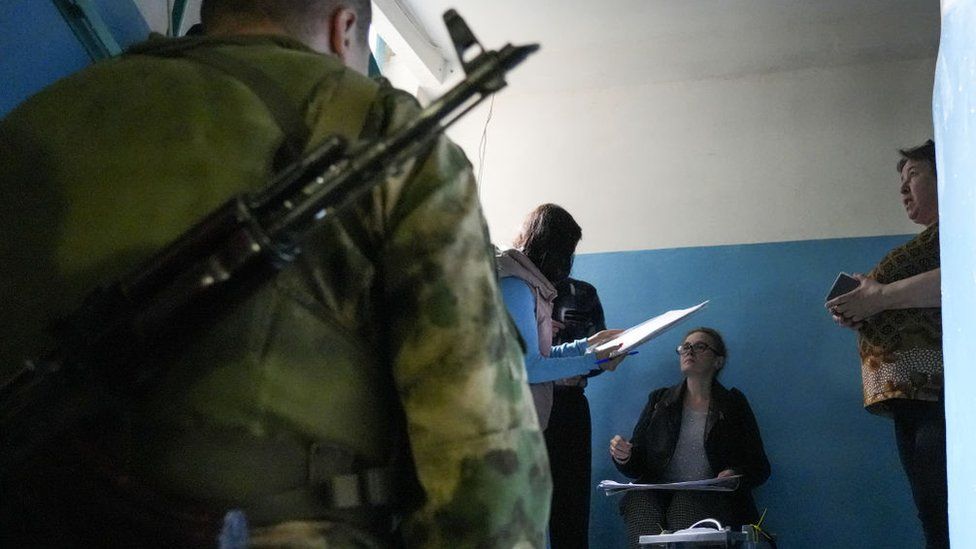
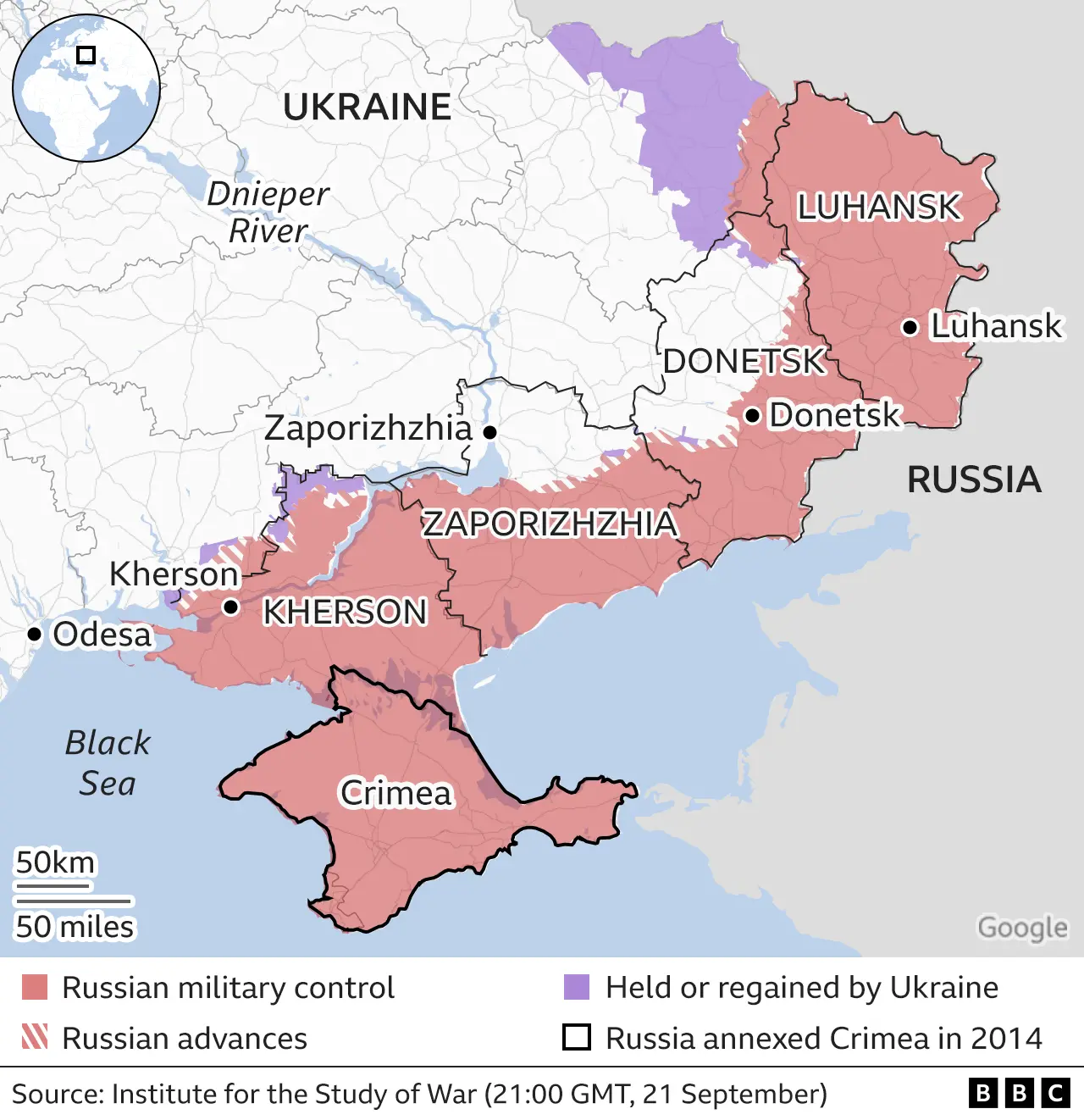
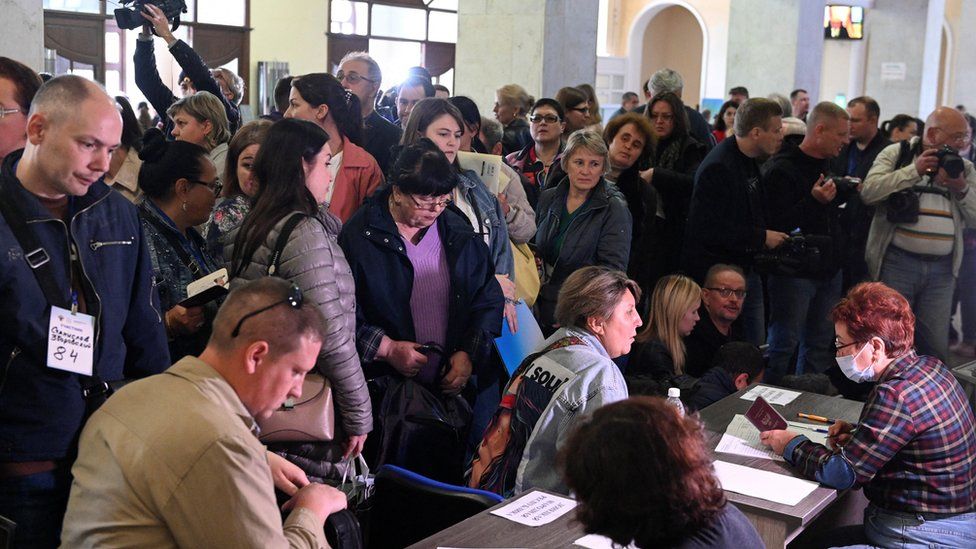


&w=707&quality=100)
&w=707&quality=100)
&w=707&quality=100)