Author: Andy Ogbarmey-Tettey

  • Cristiano Ronaldo: Erik ten Hag says Ronaldo is ‘in our plans’ for season

    Manchester United manager Erik ten Hag says Portugal forward Cristiano Ronaldo is “in our plans” for the new season and is “not for sale”.

    The 37-year-old will miss the first part of United’s pre-season tour to Thailand and wants to leave the club.

    He returned to United last season after playing for Real Madrid and Juventus.

    “He is not with us due to personal issues. We are planning with Cristiano Ronaldo for this season. That is it,” said former Ajax manager Ten Hag.

    “I am looking forward to working with him. Cristiano is not for sale. He is in our plans. We want success together.”

    The Portugal forward’s absence on the tour fuelled speculation over his future after he also missed the club’s return to pre-season training at Carrington.

    Ronaldo instead trained at the Portuguese national team’s headquarters.

    The Old Trafford side play Liverpool in Thailand on Tuesday before flying to Australia and Ten Hag said he does not yet know whether Ronaldo will join later in the tour.

    The Dutchman added that he spoke to Ronaldo before the tour, explaining: “I had a good talk. That is between Cristiano and me, what I can confirm is we had a really good conversation together.”

    Ten Hag also addressed the captaincy, which became an issue as a result of Harry Maguire’s struggle for form last season.

    “Harry Maguire will be captain,” he said. “He has been captain for more than a year. He has achieved a lot of success. I have no doubts about this issue.”

    United’s only signing this summer is full-back Tyrell Malacia from Feyenoord. They look set to sign free agent midfielder Christian Eriksen and are close to an agreement with Barcelona for Frenkie de Jong.

    Ten Hag emphasised United will only recruit players if he believes they will fit into his intended style of play.

    “We want to add the right players. We have a really good squad, we are working to develop our way of playing and the opportunity is there and we will strike,” he added.

    Source: BBC

  • GFA boss Kurt Simeon-Okraku meets Coca Cola Executives in Accra

    Top Executives and Agency representatives of Coca Cola Beverage Company have met the leadership of the Ghana Football Association to discuss issues of mutual benefits.

    The meeting which took place on Friday, July 8, 2022 discussed among other things the Coca Cola 2022 FIFA World Cup trophy Tour, plans and programs to make the tour exciting and possible partnerships between the two entities.In the meeting, the Ghana Football Association was represented by President Kurt Edwin Simeon-Okraku, Director of Marketing Jamil Maraby and Director of Communications Henry Asante Twum.

    “We feel proud and honoured to host this strong team from Coca Cola today,” President Simeon-Okraku said.

    “I think this has been made possible because on March 29, 2022, our gallant Black Stars wrote yet another history by fighting for the colours of our dear country an incredible performance that won us the slot in Abuja.

    “I believe this meeting has come in handy since we have in the past discussed a few partnership possibilities for the growth and forward march of Ghana football,” he added.

    Philip Boadu Assah, Franchise Senior Manager, Equatorial Territory, Dr. Ayeshah Fauzee, Public Affairs, Communication and Sustainability Director, West Africa, Islands and Mid Africa Franchise and Eric Boamah, Public Affairs Manager, the Coca-Cola Bottling Company of Ghana Ltd were present in the meeting.

    Others included Yaw Sakyi Afari, Head of RITE Sports, one of the agencies activating the Coca-Cola FIFA World Cup Trophy Tour, Kwabena Opoku Brand planner West Africa Business Unit Equatorial – Coca-Cola Bottling Company and Peter Adamitey Senor Accounts Manager for Echo house Ghana Limited.

    The Ghana Football Association and the Coca Cola Bottling Company will in the coming days break Communication on the FIFA World Cup Trophy Tour scheduled for Accra in September as part of the build up to the FIFA World Cup Qatar 2022 Tournament.

    Ghana is one of the countries that have been selected to host the Trophy before the competition in November.

    Source: Football Ghana

  • Paul Pogba: Midfielder joins Juventus from Manchester United on free transfer

    Paul Pogba has rejoined Juventus on a free transfer after his Manchester United contract expired.

    The 29-year-old France midfielder won the Serie A title twice with the Italian giants before a then world-record £89m transfer to United in 2016.

    He flew in to Turin on Friday for his medical before the announcement on Monday.

    Pogba had not featured for United since April after struggling with injury and sporadic form.

    Juventus said: “When we say goodbye after an intense adventure shared together, there is always a glimmer of hope that we will see each other again, sooner or later.

    “He left as a boy and returns as a man and a champion, but there is one thing that has not changed – the desire to write unforgettable pages of club history together once more. Pogba is back and we couldn’t be happier.”

    United and Pogba were unable to agree on a new contract and the club confirmed at the start of June that he would leave as a free agent this summer.

    Pogba, who joined the United academy from Le Havre as a 16-year-old in 2009, helped them to win the EFL Cup and Europa League in his first season back at the club, but they would prove to be the only trophies he won in his second spell.

    A disagreement with then United manager Jose Mourinho saw him lose the vice-captaincy in 2018, before injuries and patchy form reduced his impact.

    Pogba, who has 91 international caps, was influential as France won the World Cup in Russia in 2018.

    He went on to score 16 goals for United in the 2018-19 campaign, but over the last three seasons scored just eight goals from 91 appearances, with one from 27 last term.

    Pogba scored 39 goals in 233 appearances across his two spells at the club, but his final home appearance against Norwich City in April saw him jeered by United supporters as he was substituted.

    Juventus finished fourth in Serie A for the second straight season, 16 points behind champions AC Milan.

    They had been Italian champions for the preceding nine seasons, with Pogba playing a key role in their title wins from 2012-13 to 2015-16.

    Source: BBC

  • 17 bodies recovered after Lagos boat tragedy

    The emergency services in Nigeria say they have now recovered 17 bodies after a passenger boat capsized on a waterway in the commercial capital, Lagos.

    Four bodies were recovered on Saturday and a further thirteen on Sunday.

    The inland waterways authority said the boat had set sail on Friday later than the rules permitted and that the tide carried the vessel towards a barge, causing it to overturn.

    The accident came only three days after another passenger boat capsized in the same waters, reportedly drowning two people.

    Boat accidents are common on Nigerian waterways mainly because of overcrowding and poor maintenance.

    Source: BBC

  • Ukraine aims to amass ‘million-strong army’ to recapture south, says defence minister

    Ukraine plans a “million-strong army” equipped with Nato weapons to retake the south of the country from occupying Russians, the defence minister says.

    Retaking the areas around the Black Sea coast was vital to the country’s economy, Oleksii Reznikov said.

    However, the comments are more of a rallying cry than a concrete plan, says the BBC’s Joe Inwood in Kyiv.

    The defence minister’s remarks come as Russia makes progress in taking territory in the eastern Donbas region.

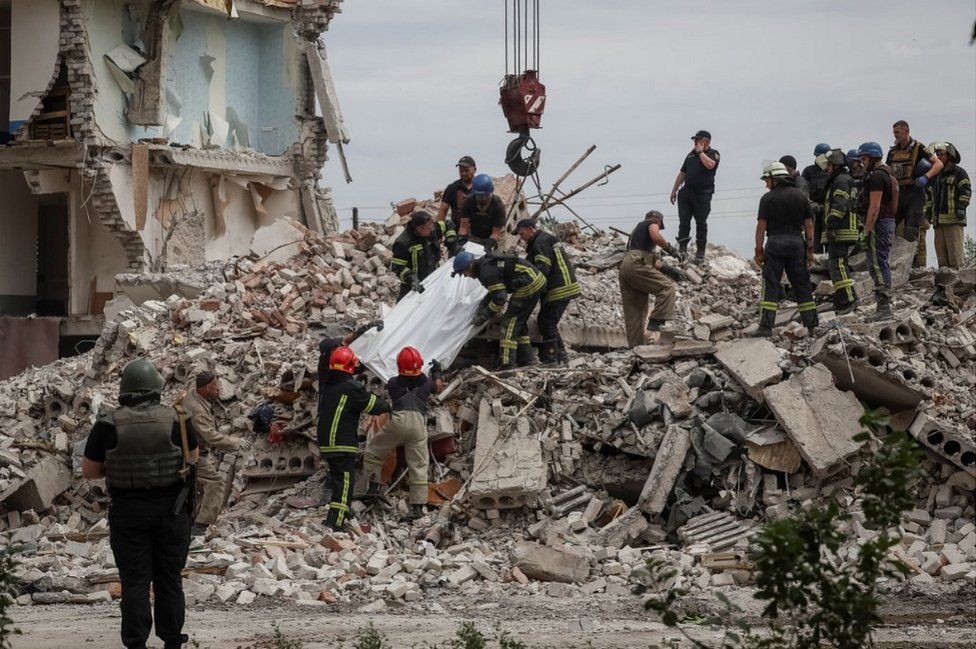
    An attack on a block of flats on Sunday killed at least 18 people – with more than 20 are feared buried under rubble.

    Rescuers are still looking for survivors at the site of the five-storey building in Chasiv Yar, near the city of Kramatorsk, in Donetsk region which has been the focus of a Russian push.

    In his interview with The Times newspaper, Mr Reznikov praised the UK for being “key” in the transition from providing Ukraine with Soviet-era weapons to Nato-standard air defence systems and ammunition.

    He said weapons deliveries needed to be sped up.

    “We need more, quickly, to save the lives of our soldiers. Each day we’re waiting for howitzers, we can lose a hundred soldiers,” he said.

    “We have approximately 700,000 in the armed forces and when you add the national guard, police, border guard, we are around a million strong,” the defence minister said.

    The devastated apartment block in Chasiv Yar, eastern Ukraine, 10 Jul 22
    IMAGE SOURCE,REUTERS Image caption, Chasiv Yar: Bodies were recovered from the devastated apartment block

    However, Dr Jack Watling, senior research fellow at the Royal United Services Institute, cautioned against the figure.

    “It’s not a million strong force that will be conducting a counter-attack,” Mr Watling told the BBC.

    “Normally you would want operational surprise when you launch a counter-attack, so announcing it publicly is partly about forcing the Russians to have to commit resources more widely to guard against this threat.”

    Source: BBC

  • José Eduardo dos Santos: Spain approves autopsy for ex-Angola leader

    A Barcelona court has authorised an autopsy on former Angolan President José Eduardo dos Santo who died in the city on Friday after his family alleged a conspiracy to kill him.

    His daughter, Tchize dos Santos, had requested the autopsy.

    Political enemies did not want him to back the opposition in forthcoming Angolan elections, she said.

    Dos Santos, 79, was in Spain for medical treatment and died after a cardiac arrest.

    He had been in power for 38 years when he stepped down in 2017.

    Lawyers for the Dos Santos family have also denounced moves by the Angolan government to return the body there for a state funeral, against the ex-president’s expressed wish to be buried privately in Spain.

    He is said to have been afraid his death would be politicised because his children would not be able to travel to Angola for his funeral or to visit his grave.

    His death has reportedly worsened relations between his family and the Angolan government.

    Another of his daughters, Isabel dos Santos, has been charged with mismanagement and embezzling public funds when she headed the state oil firm, Sonangol. She has denied the charges and says she is the target of political persecution.

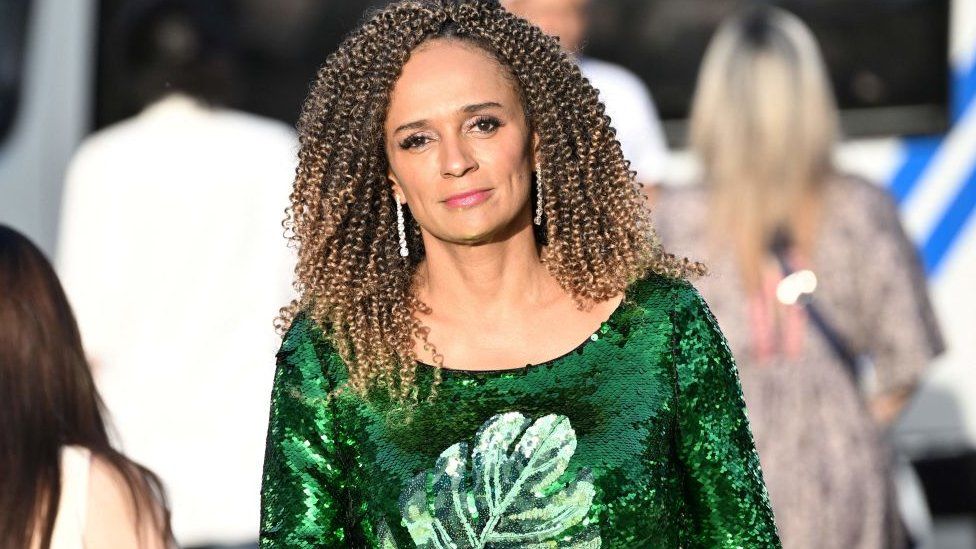
    Isabel dos Santos
    IMAGE SOURCE,AFP Image caption, Isabel dos Santos was said to have become Africa’s richest woman and is banned from entering the US over corruption allegations

    President João Lourenço, who was hand-picked by Dos Santos to succeed him and is from the same party, the MPLA, has denied accusations that the government had any link to the former president’s death.

    He stated that the Angolan government had a duty to organise a state funeral for the country’s long-time leader. He also said any Angolan citizen who wanted to travel to Angola for Dos Santos’ funeral would be able to do so.

    Dos Santos, who was just 37 when he became head of state, will be remembered for ending a long-running civil war in the early 2000s, with his supporters dubbing him the “architect of peace”.

    The war lasted for 27 years and ravaged the country. About 500,000 people are believed to have died in the conflict.

    But his legacy is marred by corruption and human rights violations during his time in power.

    Source: BBC

  • Uber Files: Massive leak reveals how top politicians secretly helped Uber

    Thousands of leaked files have exposed how Uber courted top politicians, and how far it went to avoid justice.

    They detail the extensive help Uber got from leaders such as Emmanuel Macron and ex-EU commissioner Neelie Kroes.

    They also show how the taxi firm’s former boss personally ordered the use of a “kill switch” to prevent raiding police from accessing computers.

    Uber says its “past behaviour wasn’t in line with present values” and it is a “different company” today.

    The Uber Files are a trove of more than 124,000 records, including 83,000 emails and 1,000 other files involving conversations, spanning 2013 to 2017.

    They were leaked to the Guardian, and shared with the International Consortium of Investigative Journalists and a number of media organisations including BBC Panorama.

    They reveal, for the first time, how a $90m-a-year lobbying and public relations effort recruited friendly politicians to help in its campaign to disrupt Europe’s taxi industry.

    While French taxi drivers staged sometimes violent protests in the streets against Uber, Mr Macron – now president – was on first name terms with Uber’s controversial boss Travis Kalanick, and told him he would reform laws in the firm’s favour.

    Uber’s ruthless business methods were widely known, but for the first time the files give a unique inside view of the lengths it went to in achieving its goals.

    They show how ex-EU digital commissioner Neelie Kroes, one of Brussels’ top officials, was in talks to join Uber before her term ended – and then secretly lobbied for the firm, in potential breach of EU ethics rules.

    At the time, Uber was not just one of the world’s fastest-growing companies – it was one of the most controversial, dogged by court cases, allegations of sexual harassment, and data breach scandals.

    Eventually shareholders had enough, and Travis Kalanick was forced out in 2017.

    Uber says his replacement, Dara Khosrowshahi, was “tasked with transforming every aspect of how Uber operates” and has “installed the rigorous controls and compliance necessary to operate as a public company”.

    ‘Spectacular’ Macron help

    Paris was the scene of Uber’s first European launch, and it met stiff resistance from the taxi industry, culminating in violent protests in the streets.

    In August 2014, an ambitious former banker named Emmanuel Macron had just been appointed minister for the economy. He saw Uber as a source of growth and badly needed new jobs, and was keen to help.

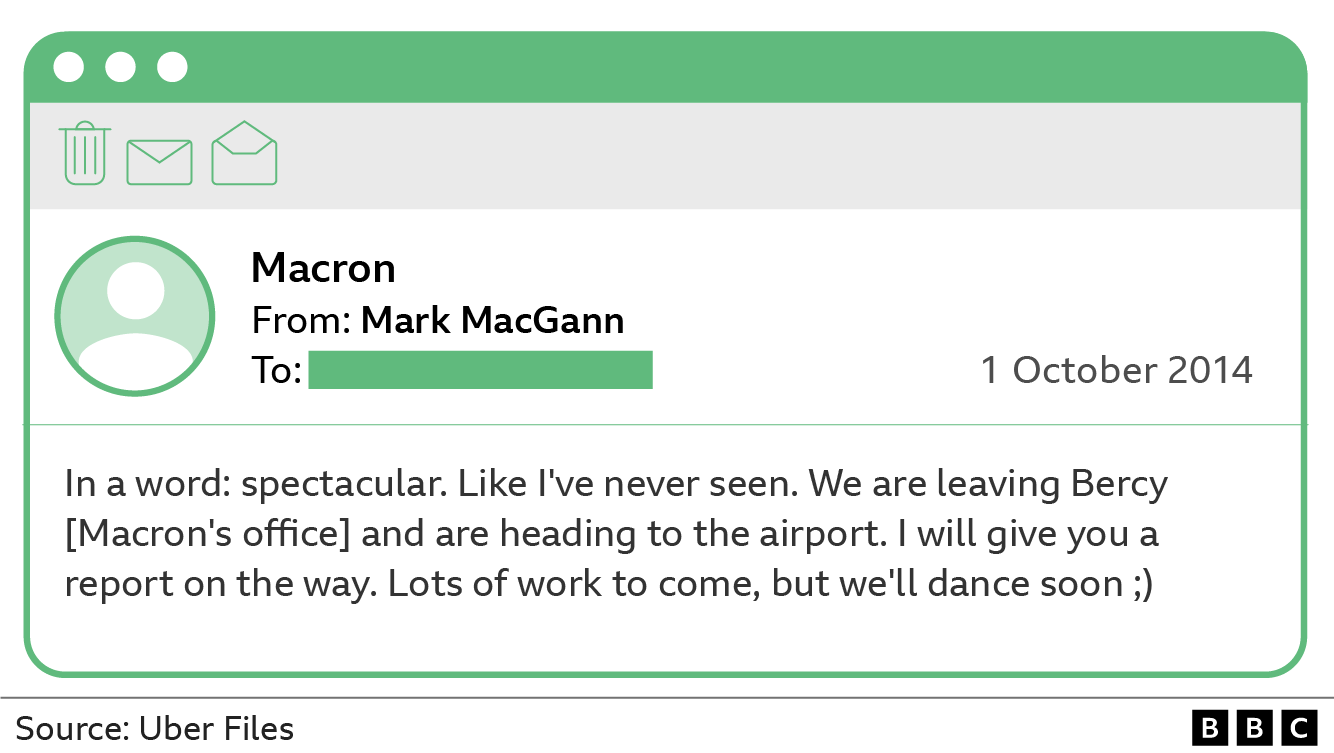
    That October, he held a meeting with Mr Kalanick and other executives and lobbyists, which marked the start of a long – but little-publicised – stint as a champion of the controversial firm’s interests within government.

    Uber lobbyist Mark MacGann described the meeting as “spectacular. Like I’ve never seen,” the files show. “We will dance soon,” he added.

    email about first meeting with Macron

    “Emmanuel” and “Travis” were soon on first name terms, and met at least four times, the files show – in Paris, and at the World Economic Forum conference in Davos, Switzerland. Only the Davos meeting has been previously reported.

    At one point Uber wrote to Mr Macron saying it was “extremely grateful”. “The openness and welcome we receive is unusual in government-industry relations.”

    French taxi drivers were particularly enraged by the 2014 launch of UberPop – a service which allowed unlicensed drivers to offer rides, at much lower prices.

    Courts and parliament banned it, but Uber kept the service running as it challenged the law.

    Mr Macron didn’t think there was a future for UberPop, but he agreed to work with the company to rewrite France’s laws governing its other services.

    “Uber will provide an outline for a regulatory framework for ridesharing. We will connect our respective teams to start working on a feasible proposal that could become the formal framework in France,” an email from Travis Kalanick to Mr Macron reads.

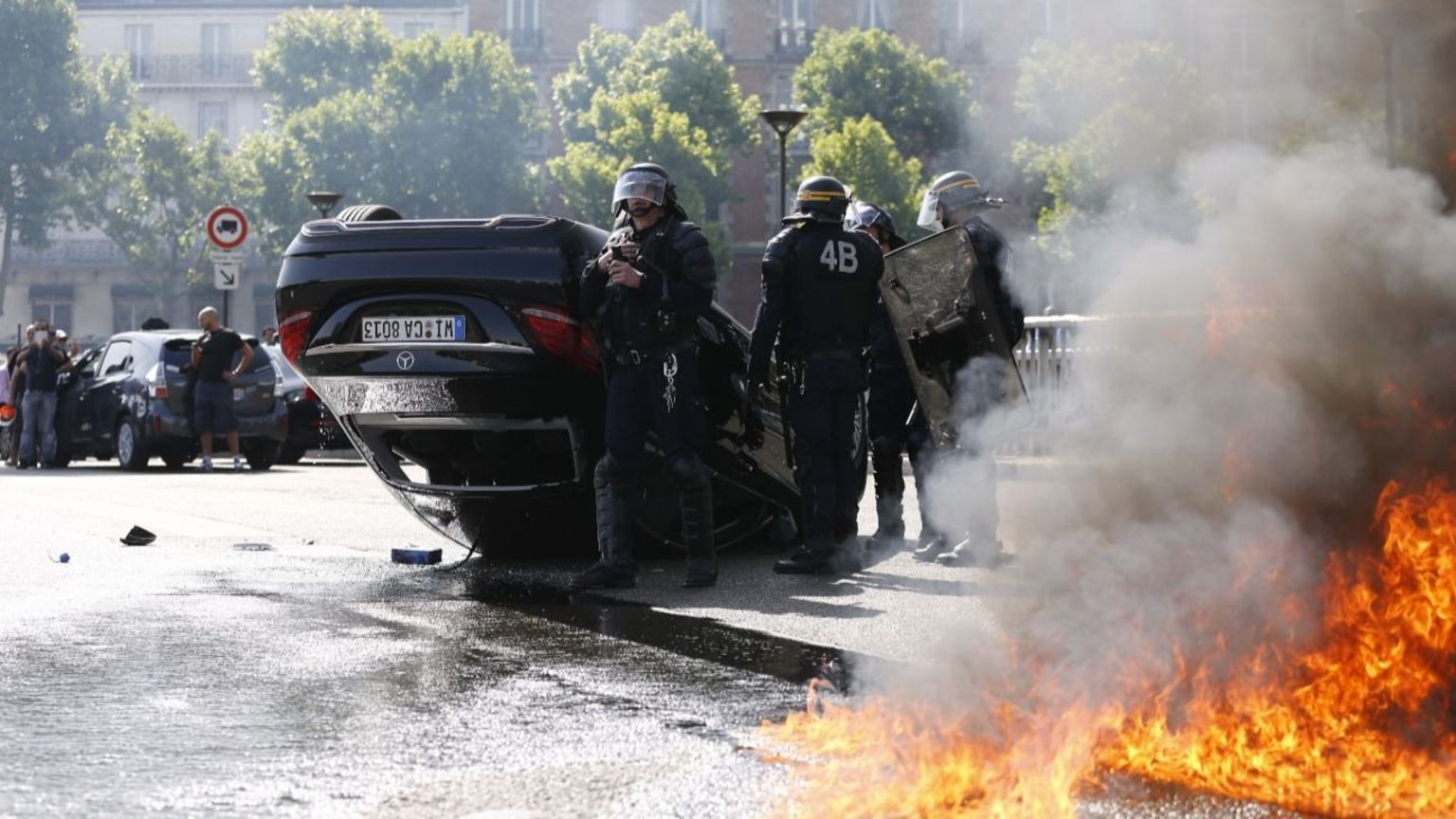
    On 25 June 2015, the protests became violent, and a week later Mr Macron texted Mr Kalanick with an apparent offer of help.

    Protests against UberPop turned violent. Paris, 25 June 2015
    IMAGE SOURCE,GETTY Image caption, Protests against UberPop turned violent. Paris, 25 June 2015

    “[I] will gather everybody next week to prepare the reform and correct the law.”

    The same day, Uber announced the suspension of UberPop in France.

    The extent of the now-president of France’s relationship with the controversial global firm that was operating in violation of French law has not been revealed until now.

    A spokesperson for Mr Macron said in an email: “His functions naturally led him to meet and interact with many companies engaged in the sharp shift which came out during those years in the service sector, which had to be facilitated by unlocking administrative and regulatory hurdles.”

    Uber said the “suspension of UberPop was in no way followed by more favourable regulations,” and a new law that came into force in 2018 resulted in France adopting “stricter regulations” that were “in no way beneficial to Uber”.

    Regulator turned lobbyist

    The files also reveal how Uber’s relationship with one of Europe’s top officials, European Commission vice-president Neelie Kroes, began significantly earlier and ran deeper than previously was known, putting her in an apparent breach of rules governing commissioners’ conduct.

    They reveal she was in talks to join Uber’s advisory board before she even left her last European post in November 2014.

    EU rules say commissioners have to respect a “cooling-off” period, then 18 months, during which new jobs require the approval of the commission.

    As a commissioner, Ms Kroes oversaw digital and competition policy, and was a high-profile scourge of big tech, playing a leading role in hitting Microsoft and Intel with massive fines.

    But of all the companies she could have worked for after leaving, Uber was a particularly controversial choice.

    In her home country, the Netherlands, the UberPop ridesharing service had also brought legal and political trouble.

    Uber drivers were arrested in October 2014, and that December a judge in the Hague banned UberPop, threatening fines up to 100,000 euros. In March 2015, Uber’s Amsterdam office was raided by Dutch police.

    Emails say that Ms Kroes called ministers and other members of the government to persuade them to back down during the raid.During another raid a week later, Ms Kroes again contacted a Dutch minister the Uber Files show, and, in the words of an email, “harassed” the head of the Dutch civil service.

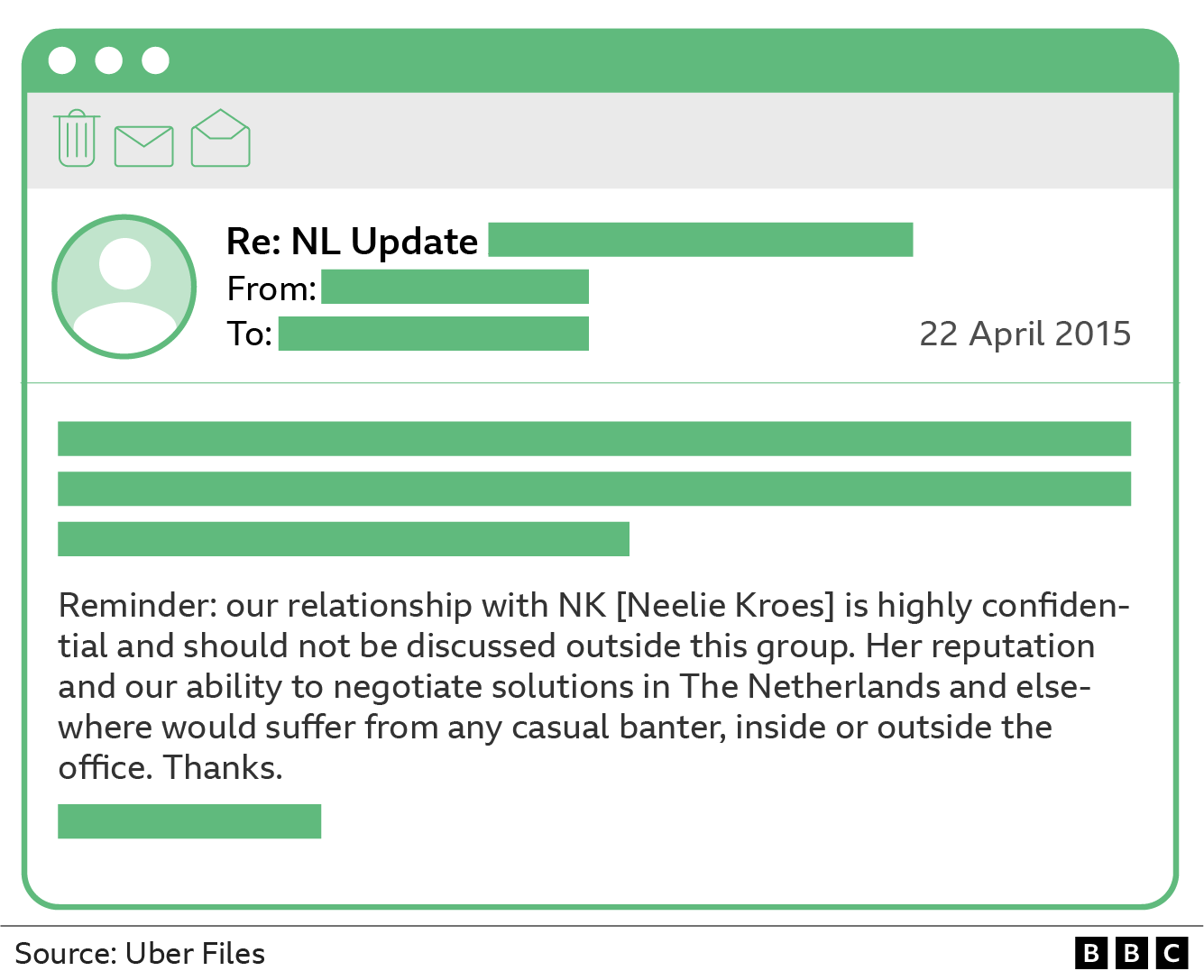
    An internal email advised staff not to discuss her informal relationship externally: “Her reputation and our ability to negotiate solutions in the Netherlands and elsewhere would suffer from any casual banter inside or outside the office.”

    email about keeping Neelie Kroes relationship confidential

    The files show that the company wanted Ms Kroes to pass messages on to the office of the Dutch Prime Minister, Mark Rutte.

    In October 2015, an email reads: “We’ll get backchannel going with Neelie and the PM’s Chief of Staff, to extract maximum advantage through ‘giving’ them the notion of a ‘victory’.”

    She wrote to the commission’s Ad Hoc Ethical Committee requesting permission to join Uber’s advisory board before the 18 months were up, and appealed to commission president Jean-Claude Juncker.

    That permission was denied, but documents show Ms Kroes continued to help the company informally until her appointment was announced, shortly after the cooling-off period had ended.

    This underlines that Ms Kroes was in a “clear breach” of the rules, says Alberto Alemanno, Jean Monnet professor of European Union law at HEC Paris.

    Dutch Prime Minister Mark Rutte, Travis Kalanick and Neelie Kroes, then working for StartupDelta,on a visit to Uber's California HQ in 2016
    IMAGE SOURCE,ANP / ALAMY STOCK PHOTO Image caption, Dutch PM Mark Rutte, Uber’s then CEO Travis Kalanick and Neelie Kroes on a visit to Silicon Valley in 2016

    “You’re proving the fact that you’re doing something you are not allowed to do,” he told BBC Panorama. “Because if she didn’t necessarily ask for permission, you might still argue there was a grey area, there was a grey zone. But now it’s no longer there.”

    Looking at all the disclosures about Ms Kroes’ relationship with Uber, he said: “It makes me feel that our system is probably not fit for purpose because this situation should have been prevented.”

    Ms Kroes denies that she had any “formal or informal role at Uber” before May 2016, when the cooling-off period expired.

    She said as an EU commissioner she interacted with numerous technology companies, “always driven by what I believe would benefit the public interest”.

    During the cooling off period, the Dutch government appointed her special envoy for start-ups, which involved interactions with a “wide array of business, government and non-governmental entities” with the aim of promoting a “business-friendly and welcoming ecosystem in the Netherlands”, she said.

    A spokesperson for the Dutch ministry of economic affairs says that “Uber was not considered a start-up in 2015”.

    Uber says Ms Kroes left the advisory board in 2018, and says it has since introduced new guidelines “strengthening oversight” of “lobbying and external engagements with policymakers” in Europe.

    ‘Hit kill switch ASAP’

    If the police came knocking, Uber had a second line of defence – the “kill switch”, which made it impossible for visiting law enforcement to access the company’s computers.

    This would restrict officers’ access to sensitive company data, such as lists of drivers, which the company believed would harm its growth.

    The files confirm earlier news reports about the kill switch, and reveal that Mr Kalanick himself activated the system at least once.

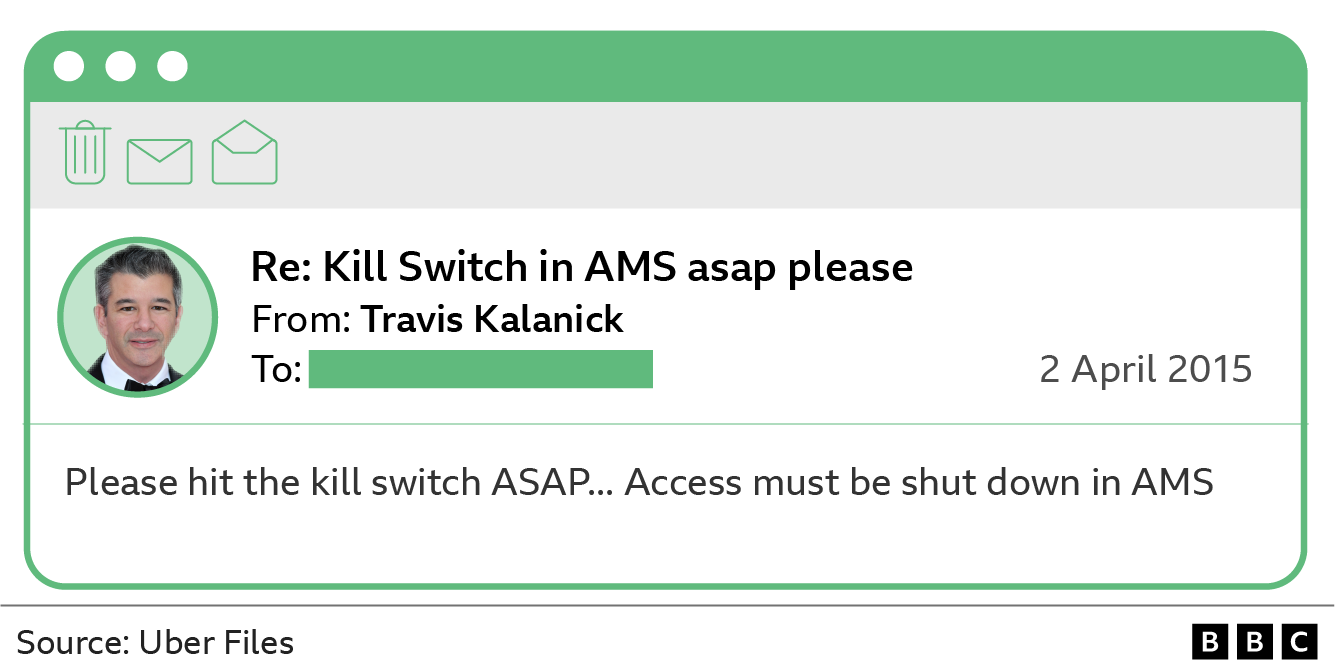
    “Please hit the kill switch ASAP. Access must be shut down in AMS [Amsterdam],” an email from his account says.

    message from Travis Kalanick re: Kill Switch

    The kill switch was also used in Canada, Belgium, India, Romania and Hungary, and at least three times in France.

    Uber says it has had no “‘kill switch’ designed to thwart regulatory inquiries anywhere in the world” since the new chief executive took over in 2017.

    A spokesperson for Mr Kalanick said he never authorised any actions or programmes that would obstruct justice in any country, and any accusation he did is completely false. He said Uber “used tools that protect intellectual property and the privacy of their customers” and that “these fail-safe protocols do not delete any data or information, and were approved by Uber’s legal and regulatory departments”.

    The Uber Files is a leak of 124,000 records including emails and texts exposing conversations and meetings between Uber executives and public officials as the technology-driven taxi firm sought to expand its business. The files were leaked to the Guardian which shared them with the International Consortium of Investigative Journalists in Washington DC and media partners in 29 countries, including the BBC’s Panorama.

    You can watch Panorama: Taking us for a Ride: The Uber Files on BBC Two at 20:00 BST on Monday 11 July or on BBC iPlayer (UK only)

    Uber Files reporting team: James Oliver, Rory Tinman, Nassos Stylianou, Becky Dale, Will Dahlgreen. Writer: Ben King

    Correction 11 July 2022: A previous version of this article stated that Mr Macron agreed a decree relaxing requirements for licensing Uber drivers. While the decree did relax some requirements, it also introduced new conditions.

    Source: BBC

  • Sri Lanka: President confirms resignation, PM’s office says

    Sri Lanka President Gotabaya Rajapaksa has confirmed he will be resigning, the prime minister’s office has said.

    It comes two days after crowds stormed the official residence of both leaders. Demonstrators are still occupying the buildings and are refusing to leave until both leaders are gone.

    The parliament Speaker had earlier said the president would resign on 13 July.

    Mr Rajapaksa’s current whereabouts are unknown. The BBC has been told that he is on a navy vessel at sea.

    His resignation was first announced by the parliament Speaker on Saturday, but many Sri Lankans responded with scepticism to the idea that he would relinquish power.

    On Monday, Prime Minister Ranil Wickremesinghe’s office said in a statement it had been informed by Mr Rajapaksa that he would step down on Wednesday.

    However, there has still been no direct word from Mr Rajapaksa.

    Under Sri Lanka’s constitution, his resignation can only formally be accepted when he resigns by letter to the parliament Speaker – which has yet to happen.

    Mr Wickremesinghe had earlier also said he would step down from his position.

    Mr Rajapaksa had departed the presidential palace before protesters entered on Saturday, calling for his resignation.

    His brother, former Prime Minister Mahinda Rajapaksa, is at a naval base in the country, the sources say.

    For months, Sri Lankans have been calling for the resignations of the Rajapaksa brothers.

    The president has been blamed for the country’s economic mismanagement, which has caused shortages of food, fuel and medicine for months.

    Inside the occupied palace on Sunday, protesters were refusing to budge.

    “Our struggle is not over,” student protest leader Lahiru Weerasekara said, quoted by AFP. “We won’t give up this struggle until [President Rajapaksa] actually leaves,” he said.

    “The next couple of days are going to be extremely uncertain times as to see what transpires politically,” political analyst and human rights lawyer Bhavani Fonseka told Reuters, adding that it would be interesting to see if the two leaders “actually resign”.

    Other politicians in Sri Lanka met on Sunday to discuss how to handle a smooth transition of power.

    The speaker of Sri Lanka’s parliament told the BBC World Service Newshour programme a new cross-party coalition government would need to be formed within a week of the president officially stepping down.

    Sri Lanka: The basics

    • Sri Lanka is an island nation off southern India: It won independence from British rule in 1948. Three ethnic groups – Sinhalese, Tamil and Muslim – make up 99% of the country’s 22 million population.
    • One family of brothers has dominated for years: Mahinda Rajapaksa became a hero among the majority Sinhalese in 2009 when his government defeated Tamil separatist rebels after years of bitter and bloody civil war. His brother Gotabaya, who was defence secretary at the time, is the current president but says he is standing down.
    • Presidential powers: The president is the head of state, government and the military in Sri Lanka but does share a lot of executive responsibilities with the prime minister, who heads up the ruling party in parliament.
    • Now an economic crisis has led to fury on the streets: Soaring inflation has meant some foods, medication and fuel are in short supply, there are rolling blackouts and ordinary people have taken to the streets in anger with many blaming the Rajapaksa family and their government for the situation.
    line
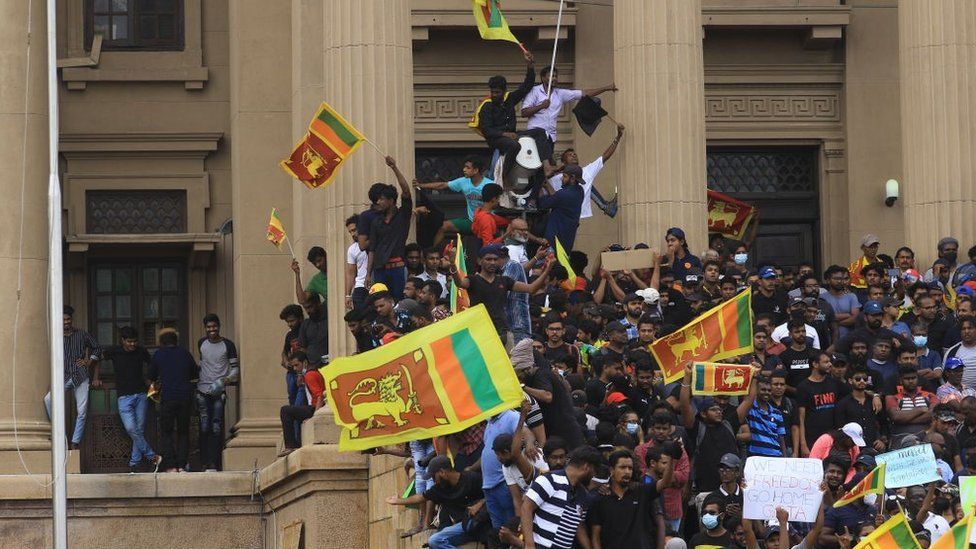
    Sri Lankan anti-government protesters invade the president's office during a protest
    IMAGE SOURCE,GETTY IMAGES Image caption, Protesters made their way into the house, chanting slogans and waving the national flag on Saturday

    The palace storming on Saturday was the culmination of months of mainly peaceful protests in Sri Lanka.

    Huge crowds converged on the official residence of President Rajapaksa, chanting slogans and waving the national flag before breaking through the barricades and entering the property.

    Footage online showed people roaming through the house and swimming in the president’s pool, while others emptied out a chest of drawers, picked through the president’s belongings and used his luxurious bathroom.

    Mr Rajapaksa vacated his official residence on Friday as a safety precaution ahead of the planned protests, two defence ministry sources said, according to Reuters.

    Although it is Mr Rajapaksa’s official residence, he usually sleeps at a separate house nearby.

    Source: BBC

  • Cameroonian forward Junior Kaaba set sights on winning titles with Hearts of Oak

    Cameroonian forward Junior Kaaba has set sights on winning titles with Hearts of Oak, who he is expected to join them in the coming days.

    Hearts of Oak finished the 2021/22 season on the 4th position and retained their FA Cup trophy by beating Bechem United.

    The 27-year-old has been one of the standout players for Cameroonian side Fauve Azur this season, scoring seven goals and providing five assists after only 11 matches.

    “I am coming to Ghana with a single objective, to score goals and win titles,” Kaaba told allezleslions.net in an interview.

    He bagged five goals in his last five matches and was adjudged his club’s player of the month for April.

    His impressive display for Fauve Azur has seen him being linked with a move to several clubs in Africa with Sudanese giants Al Hilal Omdurman and Hearts of Oak keen on signing him.

    Kaaba arrived in Ghana on Wednesday and will be showing up for his medical after agreeing personal terms with the MTN FA Cup champions.

    He will pen a two-year deal with the club and will be expected to hit the ground running as he leads the line together with Daniel Afriyie Barnieh who has been key for the Accra-based side.

    Source: Football Ghana

  • Steven Bergwijn: Ajax sign Tottenham Hotspur winger on five-year deal

    Ajax have signed winger Steven Bergwijn from Tottenham in a £26.4m deal.

    The 24-year-old Netherlands international, who previously played for Ajax at youth level, has signed a five-year contract.

    Bergwijn scored eight goals in 81 appearances for Spurs, after joining from PSV Eindhoven in January 2020.

    “It is indicative of Steven’s ambition that he chose to make the step to Ajax,” said head coach Alfred Schreuder.

    “He is a player with many qualities. He has enormous drive and is also very goal-oriented.

    “Of course, I am happy that we were able to sign him, he adds new quality to our team.”

    Source: BBC

  • Sepp Blatter and Michel Platini found not guilty following fraud trial

    Former Fifa president Sepp Blatter and vice-president Michel Platini have both been found not guilty following their fraud trial in Switzerland.

    The pair stood trial over a payment of 2m Swiss francs (£1.6m) made by Blatter to Platini in 2011.

    Both men had denied wrongdoing and said the transfer was belated payment for Platini’s advisory work for Fifa.

    On his arrival at the court on Friday, Blatter said: “I am not innocent in my life but in this case I am innocent.”

    Blatter, 86, and former Uefa president Platini, 67, were banned from football in 2015 and indicted last November.

    I won a first game – Platini

    Following a case that was opened in 2015, their 11-day trial over the 2011 payment took place at the Federal Criminal Court in Bellinzona and concluded on 22 June.

    “I wanted to express my happiness for all my loved ones that justice has finally been done after seven years of lies and manipulation,” said Platini.

    “The truth has come to light during this trial and I deeply thank the judges of the tribunal for the independence of their decision.

    “I kept saying it – my fight is a fight against injustice. I won a first game.

    “In this case, there are culprits who did not appear during this trial. Let them count on me, we will meet again because I will not give up and I will go all the way in my quest for truth.”

    Frenchman Platini had an illustrious playing career in football and is a three-time Ballon d’Or winner.

    He captained France to victory at the 1984 European Championship and won the 1985 European Cup with Juventus.

    Platini later went on to coach the French national team and became Uefa president in 2007.

    When his own conduct was investigated by Fifa’s ethics committee as part of a wider bid to root out corruption from the organisation, he stood down from the presidency of Uefa and was subsequently banned from football for eight years, though that was later reduced to four.

    His appeal against the ban was rejected by the Court of Arbitration for Sport (Cas) in 2020.

    “Believe me, going from being a legend of world soccer to a devil is very difficult, especially when it comes to you in a totally unfair way,” added Platini.

    What happened during the trial?

    In his testimony during the trial, Blatter said he asked Platini to be his adviser when he was first appointed president of football’s world governing body in 1998.

    He said former France captain Platini wanted 1m Swiss francs (£816,030) per year but Blatter told him Fifa could not afford that fee.

    They instead settled on 300,000 Swiss francs (£244,809) per year, with the outstanding total to be paid at a later date.

    “I knew when we started with Michel Platini that is not the total, and we would look at it later,” Blatter had told the court during the trial, adding they shook hands on their “gentleman’s agreement”.

    He added: “It was an agreement between two sportsmen. I found nothing wrong with that.”

    Platini said: “I trusted the president, and knew he would pay me one day.”

    Platini stopped working for Fifa in 2002 but did not pursue the payment until 2010, telling the court he had not needed the money at the time of his departure, when – according to Blatter – Fifa was in any case “broke”.

    However, Platini later heard that two former employees had received substantial payments and approached Fifa, who he said told him to send an invoice. He did so in January 2011, with the money paid 10 days later after approval by Blatter.

    The Swiss Office of the Attorney General accused Blatter and Platini of “fraud, in the alternative of misappropriation, in the further alternative of criminal mismanagement as well as of forgery of a document”.

    Platini, who was also charged as an accomplice, said he felt the ban was a deliberate attempt to stop him from becoming Fifa president in 2015.

    Source: BBC

  • Japan ex-PM Shinzo Abe assassinated

    Japan’s former prime minister Shinzo Abe has died in a hospital after he was shot at a political campaign event, say local media.

    Mr Abe was shot at twice while he was giving a speech in the southern city of Nara on Friday morning.

    He immediately collapsed and was rushed to the nearest hospital. Pictures taken at the scene showed him bleeding.

    Security officials at the scene tackled the gunman, and the 41-year-old suspect is now in police custody.

    In an emotional press conference earlier, prime minister Fumio Kishida told reporters that Mr Abe was in a “very grave condition”.

    “Currently doctors are doing everything they can,” said Mr Kishida who appeared to be holding back tears, adding that he was “praying from his heart” that Mr Abe would survive.

    He also condemned the attack, saying: “It is barbaric and malicious and it cannot be tolerated.”

    The Fire and Disaster Management Agency confirmed that Mr Abe had a bullet wound on the right of his neck, and also suffered subcutaneous bleeding under the left part of his chest.

    It is unclear if both shots hit him, or if a bullet hit him on the neck and travelled elsewhere.

    National broadcaster NHK said Mr Abe was “conscious and responsive” while he was transported to the hospital, citing police sources.

    But it also quoted a senior member of Mr Abe’s party as saying the 67-year-old’s situation was “worrisome”. Mr Abe’s younger brother told reporters that the former PM was receiving a blood transfusion.

    Ex-Tokyo governor Yoichi Masuzoe had earlier said in a tweet that Mr Abe was in a state of cardiopulmonary arrest. The term is often used before a death is officially confirmed in Japan.

    Eyewitnesses see man with large gun

    Mr Abe was giving a stump speech for a political candidate in Nara at a road junction when the attack happened.

    Eyewitnesses said they saw a man carrying what they described as a large gun and firing twice at Mr Abe from behind.

    Security officers detained the attacker, who made no attempt to run, and seized his weapon which was reportedly a handmade gun.

    The suspect has been identified as Nara resident Tetsuya Yamagami. Local media reports say he is believed to be a former member of Japan’s Maritime Self-Defense Force, Japan’s equivalent of a navy.

    Mr Abe’s speech came as part of a campaign for his former party, the Liberal Democratic Party, as upper house elections in Japan are due to take place later this week.

    Ministers across the country were later told to return to Tokyo immediately, according to local reports.

    On Japanese social media, the hashtag “We want democracy, not violence” was trending, with many social media users expressing their horror and disgust towards the incident.

    Source: BBC

  • Lagos suspends new guidelines for safe abortions

    Lagos state in Nigeria has suspended new guidelines on safe abortion to allow for more consultations, its health ministry has announced.

    The guidelines were developed over four years for the healthcare profession on how to provide safe and lawful abortion services within existing laws.

    But religious leaders said they were not consulted.

    Earlier this week, the Catholic archbishop of Lagos was quoted as saying that the guidelines would legalise abortion through the backdoor.

    On Thursday, Governor Babajide Sanwo-Olu said further sensitisation of the public and stakeholders was needed to ensure a clearer understanding of the guidelines.

    Lagos state law allows for the therapeutic termination of a pregnancy – this means medical professionals can terminate a pregnancy where the life of the mother is in danger or the foetus’ chances of survival are considered minimal.

    Source: BBC

  • Clashes resume in DR Congo after ceasefire pact

    Clashes between Congolese armed forces and the M23 rebels have reportedly resumed in the country’s east.

    Media reports say fresh clashes took place in Rutshuru territory, North Kivu Province, forcing residents to flee their homes.

    The latest round of fighting erupted a day after President Félix Tshisekedi and his Rwandan counterpart, Paul Kagame, agreed on an immediate ceasefire to resolve the conflict in the volatile region.

    M23 spokesman Willy Ngoma is quoted by the Reuters news agency describing the ceasefire agreement “an illusion”.

    “Only the M23 can sign the cease-fire with the government,” he is quoted as saying.

    DR Congo accuses Rwanda of backing the M23, which both Kigali and the rebels have consistently denied.

    Source: BBC

  • Blaise Compaoré returns to Burkina Faso

    The former President of Burkina Faso, Blaise Compaoré, has arrived back in his country after spending seven years in exile.

    The government says he is there to hold talks with the military junta as part of reconciliation efforts.

    One journalist has been tweeting pictures of the return:

    In April this year Compaoré was given a life sentence in absentia for his role in the assassination of the country’s revolutionary leader, Thomas Sankara, during the coup that brought him to power 35 years ago.

    It’s not clear whether Compaoré will be subjected to a judicial process now that he is back in Burkina Faso.

    Lawyers representing the family of Mr Sankara have called for his arrest.

    Source: BBC

  • Mumbai floods: India city on red alert for further rain

    India’s weather department has issued a red alert for Mumbai as heavy rains continue to lash the city and its neighbouring districts.

    The city is expected to receive heavy to very heavy rainfall on Friday, leading to more floods, the Indian Meteorological Department (IMD) said.

    Parts of the city have been inundated in waist-deep water since Monday, bringing life to a standstill.

    Monsoon rains are common in Mumbai around this time of the year.

    But experts say climate change and unchecked urban development has made rains more intense and less predictable in recent years.

    Thousands of people migrate to Mumbai every day in search of jobs which fuels rapid construction, that is very often unregulated.

    Many areas have ageing drainage systems and that causes flooding as well. The city’s vast mangrove swamps, which act as a natural buffer during floods, have also been built over in the past few decades.

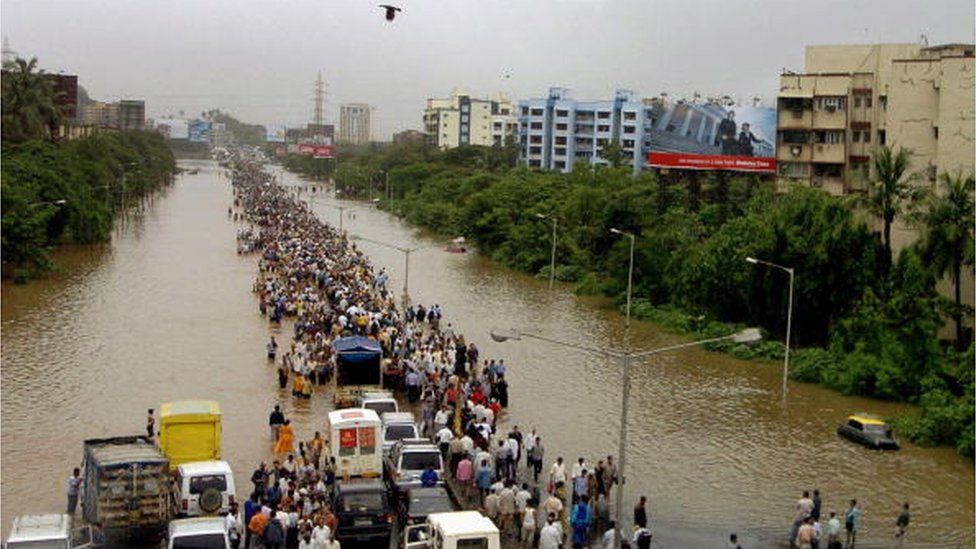
    MUMBAI, INDIA: Indian commuters walk through floodwaters past stranded motor vehicles after heavy torrential rains paralysed the city of Mumbai
    IMAGE SOURCE,GETTY IMAGES Image caption, Commuters had to walk through floodwaters past stranded motor vehicles

    On Thursday, Mumbai’s civic body banned people from visiting beaches on the days for which the weather forecasting agency has predicted heavy rainfall.

    In many areas, waterlogging led to huge traffic snarls and people were seen wading through brown and black murky water which flooded the streets.

    Bus services and commuter trains – which are the lifeline of the city’s transport system – were also disrupted, leaving people stranded on stations for hours.

    Heavy rains have also battered Mumbai’s neighbouring districts. Traffic on a key national highway connecting Mumbai to the tourist state of Goa was diverted after a landslide in Chiplun city.

    Authorities said that work to remove the debris was underway, but that the movement of vehicles along the route would be affected for least two days, news channel NDTV reported.

    Meanwhile, the IMD has also issued flood alerts for the southern state of Kerala and parts of Himalayan state of Himachal Pradesh amid incessant rains.

    Source: BBC

  • Boris Johnson: Tories vie for leadership as race to replace PM begins

    Tory MPs are jockeying for position in the race to succeed Boris Johnson after the prime minister quit as Tory leader following a dramatic cabinet mutiny.

    Tom Tugendhat is the latest MP to enter the leadership battle, joining Attorney General Suella Braverman and Brexiteer Steve Baker who have shown interest.

    Mr Johnson plans to stay on as PM until a replacement is found by the autumn.

    Many Tory and opposition politicians want him to leave now – but he has already filled cabinet jobs.

    New Education Secretary James Cleverly said he did not agree with calls for Mr Johnson to stand down immediately, saying there was no need for a caretaker prime minister.

    But some Tories are deeply unhappy that Mr Johnson is not quitting immediately, with the former Prime Minister Sir John Major saying it would be “unwise” for him to stay until a replacement is chosen.

    The Labour Party has also threatened to try and unseat the PM immediately through a vote of no confidence, although this would need considerable support among Conservatives to succeed.

    Labour’s Deputy Leader Angela Rayner told the BBC “the fact he’s trying to cling on for the next couple of months is completely unacceptable”.

    Mr Johnson resigned on Thursday, following two days of desperate attempts to cling onto power amid a flood of resignations.

    Nearly 60 Conservative MPs have quit government roles in recent days at both senior and junior levels, raising doubts about the government’s ability to function.

    Speaking to his newly appointed cabinet on Thursday, Mr Johnson promised he would not use his remaining time in No 10 to make “major changes of direction”.

    A timetable for the Tory leadership race is due to be confirmed next week and the new prime minister is expected to be in position by September.

    But unofficially, the contest is already under way. The chair of the foreign affairs committee Mr Tugendhat, launched his leadership bid by writing in the Daily Telegraph on Friday, promising tax cuts and “new energy and ideas” for government.

    “I have served before – in the military, and now in Parliament. Now I hope to answer the call once again as prime minister,” said the former soldier, who has been a prominent critic of Mr Johnson.

    Attorney General Ms Braverman has already confirmed she will stand, while former Brexit minister Mr Baker said he was “seriously” considering running after being asked by people to do so.

    Sajid Javid, the former health secretary, and Transport Secretary Grant Shapps – who both revolted against Mr Johnson – are also considering putting their hats into the ring, the BBC has been told.

    Others tipped to run include Foreign Secretary Liz Truss, former Chancellor Rishi Sunak and ex-Foreign Secretary Jeremy Hunt.

    More declarations are expected in the coming days – but some senior Tories have already said they will not be running, including former Levelling Up Secretary Michael Gove, Deputy Prime Minister Dominic Raab and former Health Secretary Matt Hancock.

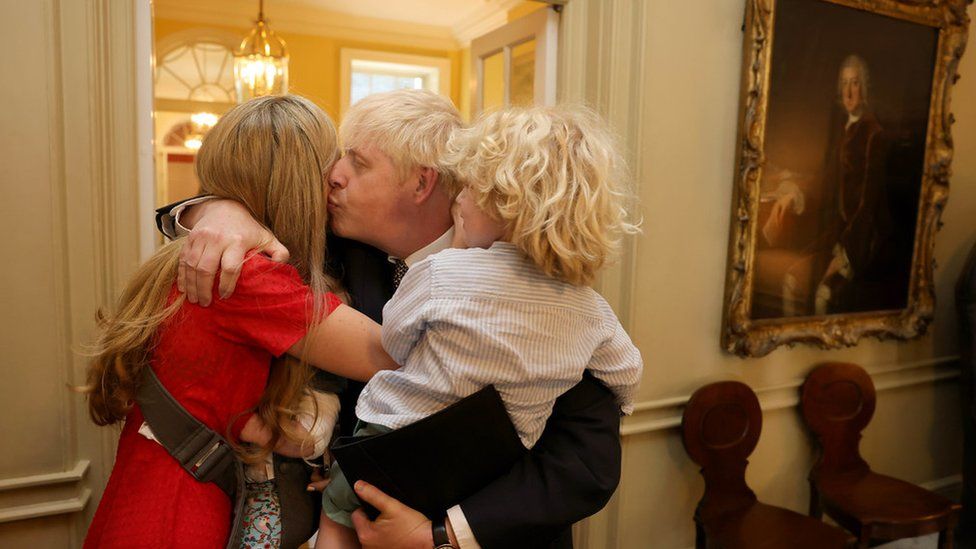
    Boris Johnson is comforted by his wife Carrie and their children after delivering his statement in Downing Street
    IMAGE SOURCE,ANDREW PARSONS / NO 10 DOWNING STREET Image caption, Boris Johnson greets his wife Carrie and their children after delivering his statement in Downing Street

    Brexit minister Jacob Rees-Mogg criticised Mr Sunak on Thursday, saying he was “not a successful chancellor” and “not alert to the inflationary problem”.

    Speaking on Channel 4 News, the Johnson loyalist said the PM had been an “exceptionally good leader” who had been brought down by some “relatively minor missteps that got taken out of all proportion”.

    Transport minister Robert Courts said Mr Shapps, who he works alongside, would be a “great choice” and also suggested Ben Wallace, the defence secretary.

    “I think we need someone who’s got experience, someone who is able to campaign… someone who’s able to deliver,” he told BBC Newsnight.

    Source: BBC

  • Shinzo Abe: Japan ex-PM ‘in grave condition’ after shooting

    Japan’s former prime minister Shinzo Abe is said to be in grave condition after he was shot at a political campaign event.

    Mr Abe was shot at twice while he was giving a speech in the southern city of Nara on Friday morning.

    He immediately collapsed and was rushed to the nearest hospital. Pictures taken at the scene showed him bleeding.

    Security officials at the scene tackled the gunman, and the 41-year-old suspect is now in police custody.

    In an emotional press conference a few hours later, prime minister Fumio Kishida told reporters that Mr Abe was in a “very grave condition”.

    “Currently doctors are doing everything they can,” said Mr Kishida who appeared to be holding back tears, adding that he was “praying from his heart” that Mr Abe would survive.

    He also condemned the attack, saying: “It is barbaric and malicious and it cannot be tolerated.”

    The Fire and Disaster Management Agency confirmed that Mr Abe had a bullet wound on the right of his neck, and also suffered subcutaneous bleeding under the left part of his chest.

    Aerials from the scene where former Japan PM Abe was shot

    It is unclear if both shots hit him, or if a bullet hit him on the neck and travelled elsewhere.

    National broadcaster NHK said Mr Abe was “conscious and responsive” while being transported to the hospital, citing police sources.

    But it also quoted a senior member of Mr Abe’s party as saying the 67-year-old’s situation was “worrisome” and that he was getting a blood transfusion.

    Ex-Tokyo governor Yoichi Masuzoe had earlier said in a tweet that Mr Abe was in a state of cardiopulmonary arrest. The term is often used before a death is officially confirmed in Japan.

    Eyewitnesses see man with large gun

    Mr Abe was giving a stump speech for a political candidate in Nara at a road junction when the attack happened.

    Eyewitnesses said they saw a man carrying what they described as a large gun and firing twice at Mr Abe from behind.

    Security officers detained the attacker, who made no attempt to run, and seized his weapon which was reportedly a handmade gun.

    The suspect has been identified as Nara resident Tetsuya Yamagami. Local media reports say he is believed to be a former member of Japan’s Maritime Self-Defense Force, Japan’s equivalent of a navy.

    Mr Abe’s speech came as part of a campaign for his former party, the Liberal Democratic Party, as upper house elections in Japan are due to take place later this week.

    Ministers across the country were later told to return to Tokyo immediately, according to local reports.

    On Japanese social media, the hashtag “We want democracy, not violence” was trending, with many social media users expressing their horror and disgust towards the incident.

    Source: BBC

  • I never said ‘Ofori-Atta and Bawumia are worse as each other’ – Dr Akoto Osei

    The Presidential Advisor on the Economy, Dr Anthony Akoto Osei has rebutted claims that he described the performance of Vice President Dr Mahamudu Bawumia and Finance Minister Ken Ofori-Atta as worse.

    Dr Akoto Osei is alleged to have remarked “Ofori-Atta and Bawumia are worse as each other” in a leaked tape.

    In a press statement sighted by The Independent Ghana, Dr Anthony Akoto Osei faulted Ghanaweb for disseminating an article indicating that he made such comments.

    “My attention has been drawn to a post on Ghanaweb and other social media platforms including a purported leaked tape which has me allegedly commenting on the performance of the two personalities mentioned in the headline.

    “I wish to categorically deny making these unfounded statements either in an interview or in an engagement with anybody.”

    According to him, the said voice in the viral leaked tape is not his; adding that he does support the comments made by the unknown individual in the tape.

    Dr Anthony Akoto Osei, has therefore, demanded that Ghanaweb retracts the said article on their website and render an apology for the damage caused.

    He also wants the media house to ensure his reputation is left untainted by publishing the rejoinder issued by the Office of the President.

    “Not only do I demand this rejoinder be published with the same prominence given the wicked allegation, I further demand a retraction and apology from Ghanaweb,” the statement read.

    Check this out:

    Source: The Independent Ghana

  • Boris Johnson resigns as Tory leader

    Boris Johnson has resigned following a revolt within his Conservative Party, saying in an address to the nation that the process of choosing a new prime minister “should begin now.”

    “It is clearly now the will of the parliamentary Conservative Party that there should be a new leader of that party and therefore, a new prime minister,” said Johnson.

    “The process of choosing that new leader should begin now,” he added, saying the time line will be announced next week.

    Johnson is not planning to leave office immediately, however. “I’ve today appointed a cabinet to serve, as I will, until a new leader is in place,” he said, in a televised speech outside 10 Downing Street. Appointing new cabinet ministers means that the government can continue to function as he prepares to depart.

    What happens when a British Prime Minister resigns?

    Johnson spoke of his attempts to stay on as leader and how “painful” it is for him to step down, but made no mention of the scandals that have proved his political downfall.

    “In the last few days, I’ve tried to persuade my colleagues that it would be eccentric to change governments when we’re delivering so much… and when the economic scene is so difficult domestically and internationally,” Johnson said.

    “I regret not to have been successful in those arguments, and of course, it’s painful, not to be able to see through so many ideas and projects myself,” he said, adding that he’s proud of “getting Brexit done” and “leading the West in standing up to Putin’s aggression in Ukraine.”

    Johnson went on to address voters directly, and expressed his sadness at stepping down after nearly three years in the role.

    “To you, the British public: I know that there will be many people who are relieved and, perhaps, quite a few will also be disappointed,” he said. “And I want you to know how sad I am to be giving up the best job in the world, but them’s the breaks.”

    Johnson has in recent months been engulfed in a series of scandals that forced even his most stalwart supporters to abandon him.

    Nearly 60 members of the government — including five cabinet ministers — have resigned since Tuesday, furious about the botched handling of the resignation by Johnson’s former deputy chief whip, Chris Pincher, who was accused of groping two men last week.

    Boris Johnson's tenure has been defined by scandal. Here are some of the biggest ones

    Johnson initially attempted to ride out the crisis — despite an unprecedented flight of middle-ranking ministers from the government, a battering at Prime Minister’s Questions and a bruising appearance before a committee of senior lawmakers in Parliament. On Wednesday, he still insisted he wasn’t going to resign.

    But Johnson finally gave in Thursday after some of his most loyal allies told him that the game was up.

    UK Foreign Secretary Liz Truss said Johnson had made the “right decision” to resign. “We need calmness and unity now and to keep governing while a new leader is found,” she added.

    Greg Clark, newly appointed UK Secretary of State for Levelling Up, Housing and Communities, said that he had a “duty to ensure that the country has a functioning government.”

    The leader of the opposition Labour Party, Keir Starmer, said it was “good news for the country” that Johnson had decided to resign, adding that “it should have happened long ago.”

    “He was always unfit for office. He has been responsible for lies, scandal and fraud on an industrial scale,” said Starmer on Twitter.

    The opposition leader also had scathing words for the Conservatives. “They have been in power for 12 years. The damage they have done is profound. Twelve years of economic stagnation. Twelve years of declining public services. Twelve years of empty promises,” Starmer said.

    “Enough is enough. We don’t need to change the Tory at the top — we need a proper change of government. We need a fresh start for Britain.”

    ‘Needless damage’

    While Johnson has announced his resignation as Conservative Party leader, it is possible that he will remain as Prime Minister until October, when the party meets for its annual conference.

    Conventionally, when a Conservative leader resigns, he or she gives the party time to hold a thorough leadership contest.

    Why is UK Prime Minister Boris Johnson facing his biggest crisis, and what comes next?

    But some said Johnson should leave office more quickly.

    “We now need a new Leader as soon as practicable,” Business and Energy Secretary Kwasi Kwarteng said on Twitter. “Someone who can rebuild trust, heal the country, and set out a new, sensible and consistent economic approach to help families,” he added.

    Scottish First Minister Nicola Sturgeon also called for the leadership question to be settled.

    “There will be a widespread sense of relief that the chaos of the last few days (indeed months) will come to an end, though notion of Boris Johnson staying on as PM until autumn seems far from ideal, and surely not sustainable?” Sturgeon said in a series of tweets.

    Conservative MP Steve Baker told CNN that the party needs “to move swiftly to a leadership contest.”

    Baker said Deputy Prime Minister Dominic Raab should be caretaker prime minister, but that Johnson could also continue in office.

    “I am absolutely determined that we should not prolong this crisis. If it’s agreed within government that Boris Johnson should continue as caretaker, then that’s fine with me,” Baker told CNN. “Because we need to just end the crisis, get into a leadership contest, and start fresh in September.”

    Baker had earlier told the BBC that he was “seriously thinking” about standing in the contest.

    Barrage of criticism

    Johnson’s departure will mark a remarkable downfall for a Prime Minister who was once seen as having political superpowers, with an appeal that transcended traditional party lines.

    He won a landslide victory in December 2019 on the promise of delivering a Brexit deal and leading the UK to a bright future outside the European Union. But his premiership unraveled in the aftermath of the Covid-19 pandemic.

    In recent months the Prime Minister has faced a barrage of criticism from all sides over his conduct and that of some members of his government, including illegal, Covid-19 lockdown-breaking parties thrown in his Downing Street offices for which he and others were fined.

    Numerous other scandals have also hit his standing in the polls. These include accusations of using donor money inappropriately to pay for a refurbishment of his Downing Street home and ordering MPs to vote in such a way that would protect a colleague who had breached lobbying rules.

    Last month, he survived a confidence vote among members of his own party, but the final count of his lawmakers who rebelled against him was higher than his supporters expected: 41% of his own parliamentary party refused to back him.

    He suffered a further blow late last month when his party lost two parliamentary by-elections in a single night, raising new questions about his leadership.

    His reputation was also dented by the resignation of his second ethics adviser in less than two years.
    Source: The Independent Ghana

  • Nigeria Kuje prison break: More than 400 missing from Abuja jail

    More than 400 prisoners are missing following a raid on a prison in Nigeria’s capital Abuja, officials say.

    Four inmates, a security guard and several attackers were killed after the prison was targeted on Tuesday night, according to officials.

    Islamist militants have said they carried out the attack, and dozens of jihadists are thought to be on the run.

    More than 5,000 inmates have escaped during prison breaks in Nigeria since 2020.

    Loud explosions and gunfire were heard near the Kuje medium-security prison, just outside the capital, on Tuesday night when the attack happened.

    “We heard shooting on my street. We thought it was armed robbers,” a local resident told AFP news agency. “The first explosion came after the shooting. Then a second one sounded and then a third.”

    As well as the four inmates killed, 16 others were also injured during the attack, Nigeria’s correctional service said.

    A number of high-profile detainees, including suspected militants and jailed politicians, were in the facility at the time of the attack. But the correctional service said jailed senior officials were not among those who had escaped.

    Almost 1,000 inmates were in the facility when the attack took place, according to officials. Almost all of them initially escaped but 443 have since been recaptured.

    Defence Minister Bashir Magashi told reporters the attack had “mostly likely” been carried out by militant group Boko Haram and that 64 jailed jihadists had escaped from the prison.

    “None of them are inside the prison, they have all escaped,” he said.

    The so-called Islamic State group (IS) – which operates in West Africa under the name Iswap and is aligned with Boko Haram – has claimed responsibility for the jailbreak, stating it had “freed tens of inmates”.

    Iswap broke away from Boko Haram in 2016, but sometimes some officials and locals use Boko Haram to refer to either of the two groups.

    Nigeria’s President Muhammadu Buhari blamed the failure of the country’s security forces’ intelligence system for the attack.

    He also questioned the level of security at the prison and demanded a “comprehensive report” into the jailbreak.

    The government of President Buhari is facing increasing criticism for its failure to tackle the country’s widespread insecurity with armed kidnapping gangs and militant groups unleashing violence.

    Source: BBC

  • Ukraine war: 21,000 alleged war crimes being investigated, prosecutor says

    Ukraine says it is investigating more than 21,000 war crimes and crimes of aggression allegedly committed by Russia since the start of its invasion.

    Prosecutor General Iryna Venediktova told the BBC she was receiving reports of between 200 to 300 war crimes a day.

    She admitted that many trials would be held in absentia, but stressed that it was “a question of justice” to continue with the prosecutions.

    Russia invaded Ukraine on 24 February. It denies all war crimes allegations.

    Speaking to the BBC’s World Service Outside Source programme, Ms Venediktova warned that Russian soldiers who killed, tortured or raped civilians “should understand that it’s only a question of time when they all will be in court”.

    She said that although her team was working in regions across Ukraine, it was unable to investigate all cases “properly and effectively” because of a lack of access to some people and areas. This was an apparent reference to Ukraine’s territories occupied by Russian troops.

    In May, Ms Venediktova said that about 600 suspects had already been identified and 80 prosecutions had begun.

    The first Russian soldier to be put on trial in Ukraine, Sgt Vadim Shishimarin, was sentenced to life in prison for killing a civilian in May.

    Ukraine says it has uncovered multiple mass graves in Bucha, Borodyanka and other towns near the capital Kyiv that were briefly seized by Russian troops.

    The International Criminal Court has described Ukraine as a “crime scene”, dispatching its largest team of detectives ever to the country to assist in multiple investigations.

    Moscow has repeatedly denied targeting civilians.

    On the ground, Ukraine’s military said Russian troops were preparing for an offensive in the eastern Donetsk region, shelling several towns.

    Russia captured nearly all of the neighbouring Luhansk region over the weekend, part of its attempts to seize the wider Donbas area.

    In its update, Ukraine’s military said its forces were under intense pressure but had so far held off Russian forces.

    Residents of Slovyansk, a key city in Ukrainian hands, were earlier urged to evacuate further west – a day after a deadly Russian attack on a local market.

    Ukrainian President Volodymyr Zelensky, meanwhile, said “artillery from our Western partners had started working very powerfully, so the losses of the occupiers will only increase”.

    Source: BBCJohnson term in office chart

  • Kotoko and Hearts need money to deliver – Agyemang-Badu

    Former Ghana midfielder, Emmanuel AgyemangBadu, has said enough money must be provided to Asante Kotoko and Hearts Of Oak to enable them deliver in the upcoming 2022/23 CAF Inter Club competitions.

    Emmanuel Agyemang-Badu, who spoke to Ghanaweb, explained that the two teams would need to be assisted financially so they can commute to the needed locations for the competition.

    He said: “Football is about money. You are going to Africa, you need money. They need money to buy players, board their flight to their destination where they will be playing.”

    The Club Licensing Committee of the Ghana Football Association (GFA), has approved the License applications of Premier League Champions Asante Kotoko SC and MTN FA Cup winners Accra Hearts Of Oak SC to participate in the upcoming 2022/23 CAF Inter Club competitions.

    Three clubs; Asante Kotoko SC, Accra Hearts of Oak SC and Bechem United FC earlier applied for licenses to compete in Africa, but Bechem withdrew from the process after their defeat to Accra Hearts of Oak in the MTN FA Cup final.  

    Accra Hearts of Oak and Asante Kotoko have received their official Award Letter with the necessary recommendations.

    On which team stands a better chance at the competition, Agyemang-Badu was indifferent.

    He explained that both teams have the potential to be crowned winners, but Kotoko would have to beef up its players while Accra Hearts of Oak intensifies its effort.

    Agyemang-Manu said: “Hearts have experience now when it comes to this (CAF Club Competitions). Last year, they were there. Kotoko for the past years is now going, so we need to beef up our team. But I think both of them have chances. We are talking about the two great clubs in Ghana  and they have a name in Africa

    “Kotoko can go through if they beef the team a bit. Hearts of Oak have beefed up their team with the inclusion of Samuel Incoom. Sulley Ali Muntari has really helped them. I think Hearts are okay but they need to add a little more.”

    Meanwhile, Asante Kotoko and Hearts of Oak have been given a deadline of July 31, 2022 by the Committee to fix all defects and comply with the recommendations on their match venues.

    Asante Kotoko SC opted for the Baba Yara Sports Stadium in Kumasi and the Accra Sports Stadium was selected by Accra Hearts of Oak SC.

    Source: The Independent Ghana

  • Global natural gas demand is expected to decline over the next three years as prices soar, according to the IEA

    The surge in natural gas prices over the last year is prompting countries to turn to dirtier sources of fuel, despite their environmental commitments, and will ultimately bring about a drop in demand over the next three years, according to the International Energy Agency (IEA).

    In its quarterly market report on Tuesday, the IEA forecast total global consumption will contract slightly in this year and see only limited growth in the next three years of about 140 billion cubic meters between 2021 and 2025.

    “That is less than half the 370 bcm increase seen in the previous five years and well short of the exceptional jump in demand of close to 175 bcm seen in 2021,” the agency said.

    Energy prices have skyrocketed since Russia invaded Ukraine, as Western sanctions over the country’s imports have limited supply. Dutch natural gas futures, the regional benchmark, have soared by 150% so far this year alone.

    On Tuesday, they were trading around 175 euros per megawatt hour ($180), close to their highest since early March, in the immediate aftermath of Russia’s invasion of Ukraine.

    “The turmoil is damaging natural gas’ reputation as a reliable and affordable energy source, casting doubts about the role it was expected to play in helping developing economies meet rising energy demand and transition away from more carbon-intensive fuels,” the IEA said in the report.

    A month ago, Russian state-controlled energy giant Gazprom said it was slashing flows of natural gas to Germany through Nord Stream 1 b 40%.

    prepare for a complete shutdown of gas, Germany recently made a decision to fire up idled coal power plants.

    “The high price and tight supply environment that built up during the second half of 2021 further intensified following Russia’s invasion of Ukraine, leading to fuel switching and demand destruction,” the report said.

    US gas consumption is predicted to more or less stagnate between 2023 and 2025, while the agency expects European gas demand to drop by close to 9% this year.

    “Limited liquefaction capacity additions, together with strong LNG demand from Europe and lower Russian piped imports, indicate that the current tight market conditions may linger into the medium term,” the agency said,

    It added however, that the current forecast is subject to unusually large uncertainty due to what it said was Russia’s unpredictable behavior.

    Source: africa.businessinsider.com

  • Christophe Galtier: Frenchman named Paris St-Germain boss after Mauricio Pochettino exit

    Christophe Galtier has been named Paris St-Germain manager immediately after the departure of Mauricio Pochettino.

    Galtier has signed a two-year deal until the summer of 2024.

    He left Nice last month after guiding them to fifth in Ligue 1 and a runner-up finish in the French Cup last season.

    The 55-year-old, who led Lille to the Ligue 1 title in 2021, is PSG’s seventh coach since the Qatari takeover of the club in 2011.

    “I am delighted to join Paris Saint-Germain, I would like to thank the chairman Nasser Al-Khelaifi, [football advisor] Luis Campos and the club for their confidence in me,” he said.

    “I am fully aware of the responsibilities involved to coach this extraordinary team, which is one of the most competitive and spectacular squads in Europe.”

    Galtier is one of only two managers to stop PSG winning Ligue 1 in the past decade, along with Leonardo Jardim’s Monaco in 2016-17.

    He resigned after leading Lille to that unexpected title success in May 2021 before spending 12 months at Nice. He previously managed Saint-Etienne.

    Pochettino, 50, leaves PSG after just 18 months in charge having guided them to a record-equalling 10th French title last season, his first league success as a manager.

    The exit of the former Tottenham boss had been expected for almost a month now – but was only announced shortly before Galtier’s appointment was confirmed on Tuesday.

    A club statement read: “Paris Saint-Germain confirm that Mauricio Pochettino has ended his role at the club.

    “The club would like to thank Mauricio Pochettino and his staff for their work and wish them the best for the future.”

    The former PSG defender oversaw an unbeaten home record in the league this season, ending the campaign with 16 wins in 19 games.

    PSG regained the title but their last-16 Champions League exit – with Lionel Messi in the team – was seen as a major failure.

    They squandered a 2-0 aggregate lead in the Champions League against eventual champions Real Madrid to cast a serious question mark over the Argentine’s future.

    It was the first time Les Parisiens, who reached the semi-finals in 2021 and were the beaten finalists in 2020, had lost a Champions League away game after leading at half-time since 2001.

    Pochettino was sacked by Spurs in November 2019 after five years in charge of the Premier League club, months after leading them to the 2019 Champions League final.

    After taking charge of PSG in January last year, they finished second in Ligue 1 behind Galtier’s Lille and were beaten in that year’s Champions League semi-finals by Manchester City.

    However, they won the Coupe de France and the Trophee des Champions, which were the first trophies of Pochettino’s managerial career.

    The former Argentina defender began his managerial career at Espanyol and spent 18 months at Southampton before joining Tottenham in May 2014.

    Source: BBC

  • Manchester United: Tyrell Malacia joins on four-year deal from Feyenoord

    Manchester United have signed full-back Tyrell Malacia from Feyenoord on a four-year contract until June 2026, with the option of a further year.

    The Netherlands international, 22, will cost 15m (£13m) euros with a further 2m (£1.7m) euros in add-ons.

    Malacia, who made 136 appearances for Feyenoord, is the first new arrival of Erik ten Hag’s tenure as United manager following his move from Ajax.

    “It’s an incredible feeling to have joined,” he said.

    Malacia added: “This is a new chapter for me, a new league with new team-mates and a tremendous manager leading us.

    “I know from playing against his teams in the Eredivisie, the qualities that he has and what he demands of his players.

    “While I know that I am still young and will continue to develop, I can promise the United fans that I will leave everything on the pitch every time I pull on the red shirt.”

    The left-sided defender had been in talks with French club Lyon before United stepped in.

    It had been hoped the deal for Malacia would be done on Monday but it was delayed waiting for a work permit.

    It is anticipated he will now be part of the United squad that leaves for its pre-season trip to Thailand and Australia on Friday afternoon.

    John Murtough, United’s football director, said: “Tyrell is an exciting, dynamic young footballer with excellent experience for his age, including five seasons in the Eredivisie, a European final and full International honours for the Netherlands.

    “We look forward to seeing him continue to develop under the guidance of Erik ten Hag and his coaching team in the years ahead.”

    The announcement comes just a day after it was reported Denmark international Christian Eriksen had agreed on principle to join United.

    The 30-year-old’s short-term contract at Brentford ended last month and it is believed Eriksen could also have returned to Thomas Frank’s side, but the lure of playing for United proved too much.

    A three-year contract is being prepared for the midfielder, who is still to have his medical at Old Trafford.

    Source: BBC

  • Uganda adopts Swahili as official language

    Uganda‘s cabinet has approved the adoption of Swahili as an official language, according to a statement.

    The cabinet also recommended that the teaching of Swahili in primary and secondary should be made compulsory.

    Swahili, which originated in East Africa, is one of the world’s 10 most widely spoken languages with about 200 million speakers.

    The language and its dialects is spoken from parts of Somalia down to Mozambique and across the Democratic Republic of Congo.

    In a tweeted statement, the Ugandan cabinet said the decision followed a directive by the East African Community bloc to adopt the language to ease communication among member countries.

    Source: BBC

  • Ukraine war: Market hit as Russians shell frontline city Slovyansk

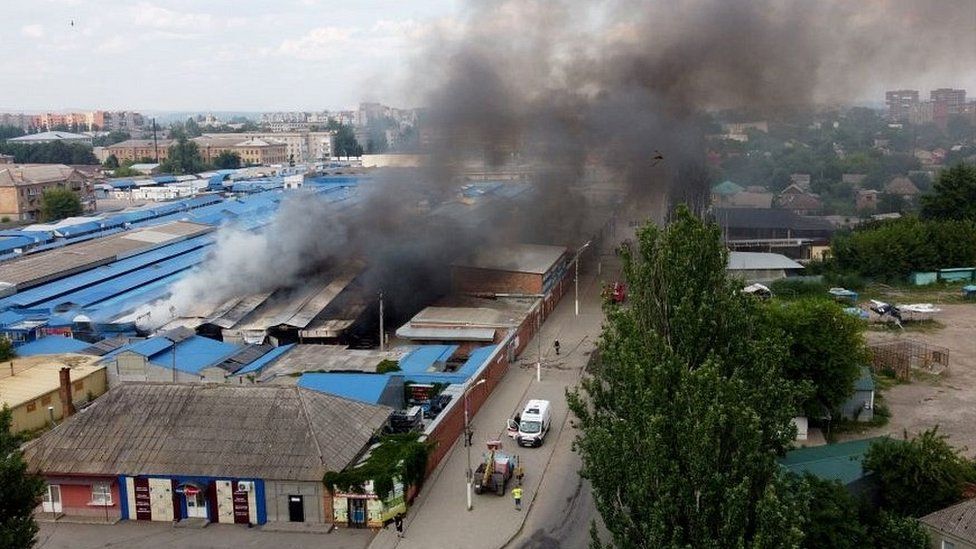
    Russian shelling set a central market ablaze in Ukraine’s eastern city of Slovyansk, killing two people and injuring seven, an official said.

    “This is pure terrorism!” Donetsk regional head Pavlo Kyrylenko said.

    Mayor Vadym Lyakh said Slovyansk was being hit by Russian artillery salvoes from closer positions, as it became a frontline city.

    He posted photos of Tuesday’s blaze on Facebook, describing massive shelling, and urging people to stay in shelters.

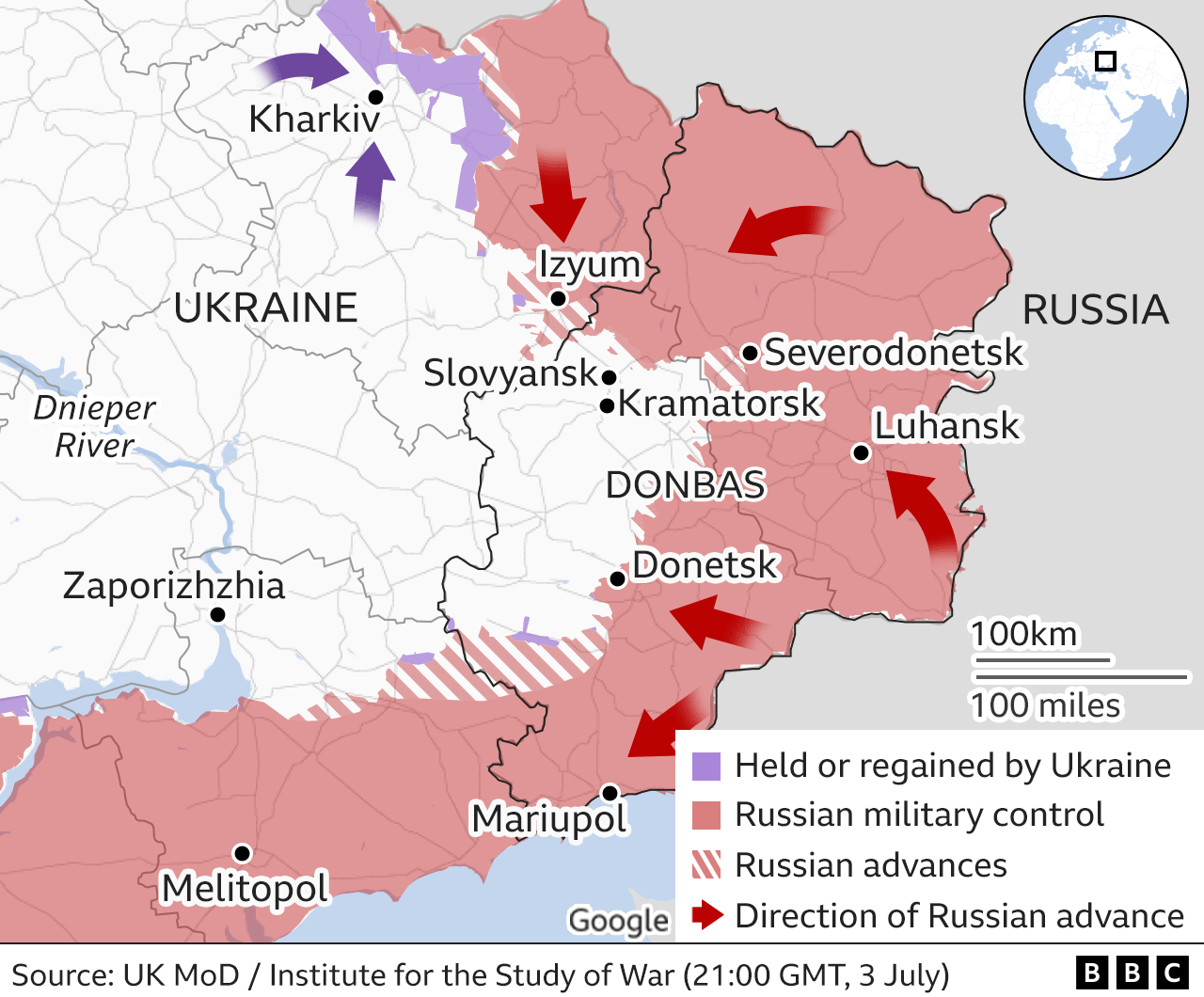
    Russia is seeking to capture all of the eastern industrial Donbas area.

    The area is made up of two regions, Luhansk and Donetsk. After recognising two rebel self-proclaimed statelets there, Russian President Vladimir Putin ordered an invasion of Ukraine on 24 February.

    Last week, Ukraine’s military said it had to pull out of Lysychansk, its last remaining stronghold in Luhansk, under intense Russian fire.

    It said its troops were now strengthening fortifications to defend areas it holds in Donetsk, including Slovyansk.

    Luhansk regional head Serhiy Haidai on Tuesday said that “heavy fighting is going at the edge of the Luhansk region near Lysychansk”.

    “The enemy has deployed significant forces,” he said, adding that Russia was trying to send more of its forces across a river by building pontoon bridges.

    Mr Haidai said the Russians were “sustaining heavy losses”.

    The BBC has not been able to verify details of the latest attacks.

    Map of eastern Ukraine, showing Russian areas of control, updated 4 Jul
    line

    In other developments:

    • In Russian-occupied southern Ukraine grain is being sent for export to the Middle East from the Zaporizhzhia region, Russian media report. Yevgeny Balitsky, a Moscow-appointed official, told Tass news agency that agreements had been reached with buyers in Iraq, Iran and Saudi Arabia. He said a deal with Iran involved supplying 150,000 tonnes of Ukrainian grain
    • Turkish presidential adviser Ilnur Cevik told the BBC that Ankara may sell the grain carried in a Russian ship it detained over the weekend, and hand the proceeds to Kyiv, if proven to be Ukrainian. The Zhibek Zholy is carrying 7,000 tonnes of grain and had left Berdyansk, a Ukrainian port seized by Russia.
    • The foreign ministers of Finland and Sweden launched the process for their countries to join Nato at a ceremony in Brussels. But the parliaments of all 30 Nato members first have to ratify their accession, and Turkey is demanding the handover of more than 70 opposition exiles living in the Nordic countries. They are on a Turkish list of suspects with alleged “terrorist” links.
    • The Russian parliament’s lower house, the Duma, has backed a draft law allowing for “special measures” in industry to support the Russian military in Ukraine. The state would be able to enforce longer working hours and impose contracts on certain enterprises linked to what Russia calls its “special military operation” in Ukraine.
    Central market fire, Slovyansk, 5 Jul 22
    IMAGE SOURCE,AFP Image caption, The central market fire in Slovyansk on Tuesday
    Source: BBC
  • Boris Johnson fights on but hit by new resignations

    Boris Johnson is fighting for political survival after two of his top ministers attacked his leadership and resigned.

    Chancellor Rishi Sunak and Health Secretary Sajid Javid quit within 10 minutes of each other, followed by a flurry of junior ministers and aides.

    New chancellor Nadhim Zahawi has urged his colleagues to unite and said Mr Johnson was focused on delivery.

    But Mr Johnson has been hit by further resignations, as he prepares for PMQs and grilling by senior MPs later.

    Will Quince, who was sent out to defend No 10’s appointment of Chris Pincher as deputy chief whip, has resigned as an education minister.

    Meanwhile Sevenoaks MP Laura Trott, has also quit as a ministerial aide at the transport department, saying the government has lost trust.

    Mr Johnson has Prime Minister’s Questions at noon, and is also due to give evidence to senior MPs on the Liaison Committee later.

    Mr Zahawi, who becomes the fourth chancellor in three years, was appointed alongside the prime minister’s chief of staff, Steve Barclay, who became health secretary.

    A No 10 source said the new chancellor was “more dynamic and more aligned” with Mr Johnson, and described the new health secretary as a “massive upgrade”.

    Bim Afolami – who quit as vice-chair of the Conservative party live on TV on Tuesday evening – said Downing Street’s handling of the Chris Pincher affair had been “really appalling” and he could no longer “defend that sort of behaviour”.

    He told BBC Radio 4’s Today programme he supported Mr Johnson in his recent confidence vote in order to give him time to rebuild trust after Partygate, but things had “got a lot worse” in recent weeks.

    Neither Mr Javid nor Mr Sunak have publicly spoken since standing down, but their resignation letters on Tuesday were highly critical of the PM.

    Mr Javid warned the leadership was not “acting in the national interest”, while Mr Sunak said the public expected government to be conducted “properly, competently and seriously”.

    Opposition party leaders urged cabinet ministers to join the pair and resign, and Labour leader Sir Keir Starmer said he was ready for a snap general election.

    Tory MP and former chief whip, Andrew Mitchell, told BBC Newsnight it was “over” for Mr Johnson, saying “he has neither the character nor the temperament to be our prime minister” – and the only question was how long the affair would go on.

    But the PM cannot be ousted from his post under the current Conservative Party rules, and several ministers have rallied around the PM, including Foreign Secretary Liz Truss – one potential contender to replace him as Tory leader.

    She said she was “100% behind the PM”, while cabinet ministers including Dominic Raab, Michael Gove, Therese Coffey and Ben Wallace also indicated they would be staying in the government.

    Tory backbencher Daniel Kawczynski suggested the resignations would ultimately strengthen Mr Johnson’s position, adding they “could have triggered an avalanche against the prime minister but it hasn’t”.

    Source: BBC

  • 3 arrested as heroin found hidden in baby food

    A haul of heroin hidden inside packs of baby food has been intercepted at Lagos’ main airport, according to an anti-drugs force.

    Three suspects have been arrested in connection with smuggling 23kg (50lb) of the drug on a South African Airways from Johannesburg, said National Drug Law Enforcement Agency spokesman Femi Babafemi on Sunday.

    In a separate case, the anti-drugs agency said a public transport driver was arrested at the same airport on suspicion of “ingesting 90 pellets of cocaine” before attempting to board a flight to Dubai.

    Officials in Nigeria have often described the prevalence of drug consumption in the country as alarming and endemic. It is also a transit point for various illicit drugs.

    Source: BBC

  • Highland Park shooting: Man arrested after 4 July mass shooting

    US police have arrested a suspect after six people were killed in a mass shooting at an Independence Day parade in Highland Park, Illinois.

    Robert E Crimo III, 22, was detained after a brief chase, police said.

    The gunman climbed on to a roof, shooting randomly at spectators using a high-powered rifle.

    It is the latest mass shooting to hit the US – there has been one in every week of 2022. President Joe Biden said he was “shocked” by the violence.

    Hours later, two police officers were wounded in a shooting in Philadelphia during a Fourth of July fireworks display.

    Mr Crimo was detained after a manhunt. He was referred to as a “person of interest” in Monday’s shooting, but after his arrest police said they believed he was responsible.

    Illinois shooting: Six dead in 4 July parade shooting near Chicago

    The gunman opened fire at the parade, near the city of Chicago, at around 10:15 local time (15:15 GMT), just a few minutes after it began.

    The event was scheduled to include floats, marching bands, and community entertainment as part of the city’s Independence Day celebrations.

    But what should have been one of the happiest days of the year quickly turned to panic, with pushchairs, purses and lawn chairs left discarded on the street as crowds fled from the scene. Some witnesses said they thought the sound of gunfire was fireworks.

    Map of Highland Park and Chicago
    1px transparent line

    The gunman fired at members of the public from the rooftop of a nearby shop, where police recovered “evidence of a firearm.”

    Five adults were killed at the scene, as well as a further victim who the local coroner said died in a nearby hospital. At least two dozen others were injured.

    One of those who died has been named as Nicolas Toledo, a man in his late 70s, who was only there because he requires full-time care and his family did not want to miss the event.

    “We went to have a nice family day out – and then suddenly all this gunfire happens,” said Anand P, who was there during the parade.

    “At the time I personally wanted to believe it was a car backfiring. Then people started running – so we start running.”

    Robert E Crimo III
    IMAGE SOURCE,ILLINOIS GOVERNMENT HANDOUT VIA REUTERS Image caption, The suspect has been named as Robert E Crimo III

    Another witness, Noel Hara, described how he was having breakfast at Starbucks after dropping off his son at the parade, when the chaos unfolded.

    “About 30 people suddenly came rushing in screaming and we were locked into the Starbucks bathroom,” Mr Hara told the BBC.

    “Moments later, they evacuated us from the Starbucks because they thought the shooter was trying to get in the back door.”

    No charges have been filed against Mr Crimo and there is no indication of any motive.

    Social media firms suspended accounts apparently belonging to Mr Crimo, who posted rap videos under an alias.

    The attack in Highland Park comes just a month after deadly shootings in Uvalde, Texas and Buffalo, New York.

    Abandoned chairs after a mass shooting in the US
    IMAGE SOURCE,REUTERS Image caption, Spectators abandoned their belongings in the panic that followed the shooting

    Illinois Governor Jay Robert Pritzker warned that mass shootings were becoming an “American tradition”.

    “There are going to be people who are going to say that today is not the day, that now is not the time to talk about guns. I’m telling you there is no better day and no better time then right here and right now,” the Democratic governor said.

    President Biden vowed to keep fighting “the epidemic of gun violence” in the country.

    “I’m not going to give up,” he said, speaking outside the White House in Washington DC.

    Last week, the president signed the first significant federal bill on gun safety in nearly 30 years.
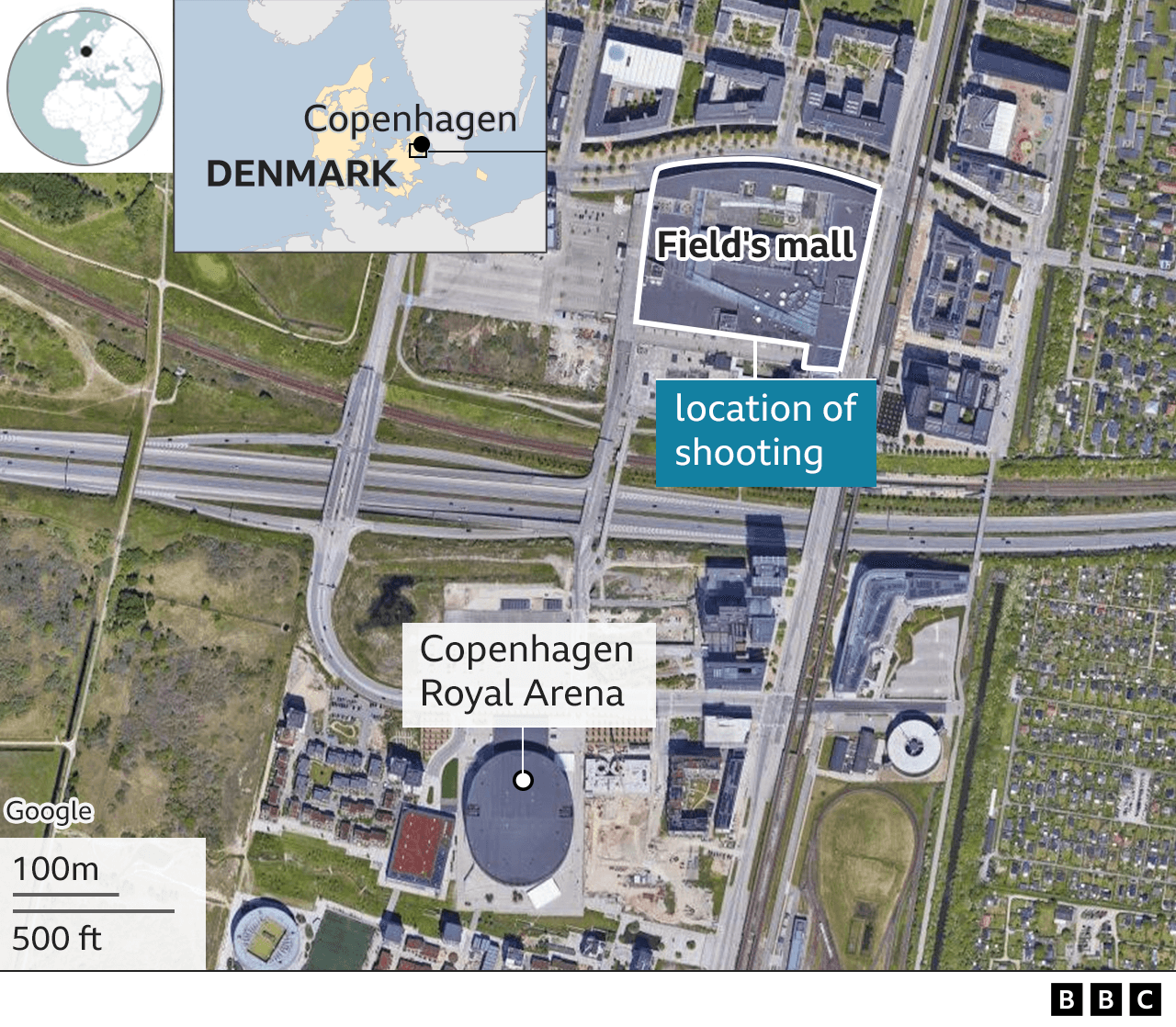
    It imposes tougher checks on young buyers and encourages states to remove guns from people considered a threat – but critics say the measures don’t go far enough.

    Source: BBC

  • Drought emergency declared in northern Italy

    Italy has declared a state of emergency in five northern regions surrounding the Po River amid the worst drought in 70 years.
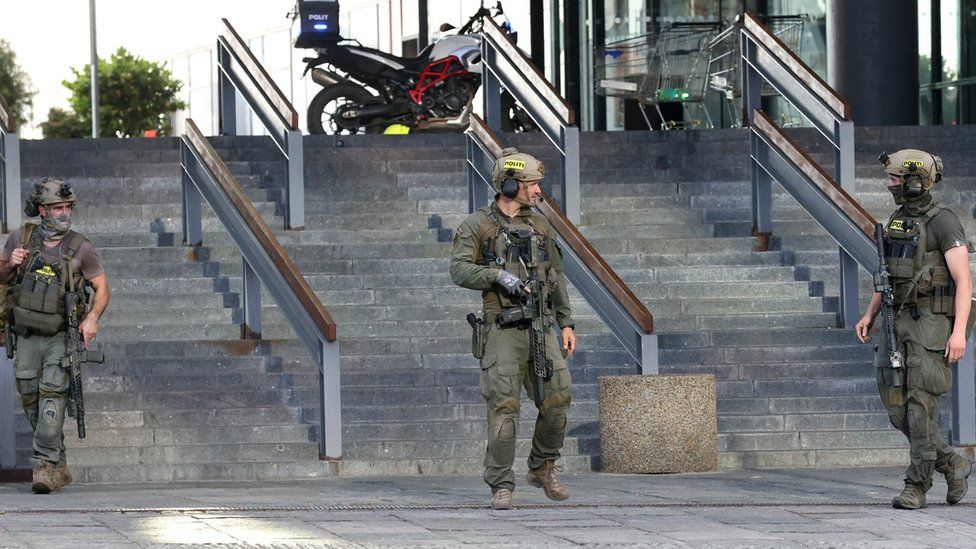
    Emilia-Romagna, Friuli Venezia Giulia, Lombardy, Piedmont and Veneto will be given €36.5m (£31m; $38m) in emergency funds to tackle the water shortage.

    The drought threatens more than 30% of Italy’s agricultural produce, according to the agricultural union Coldiretti.

    Several municipalities have already announced water rationing.

    Unusually hot weather and low rainfall across winter and spring have compounded water shortages in northern Italy.

    “The state of emergency is aimed at managing the current situation with extraordinary means and powers,” the Italian government said.

    It said it could take further measures if the situation did not improve.

    The dry bed of the Sangone River, Po River's left tributary. Photo: June 2022
    IMAGE SOURCE,ANADOLU AGENCY VIA GETTY IMAGES Image caption, Some tributaries of the Po River have dried out

    The Po is Italy’s longest river, flowing eastward for more than 650km (404 miles).

    Farmers in the Po Valley say salty seawater is now seeping into the river, destroying crops.

    On Monday Prime Minister Mario Draghi visited the Dolomites mountain range where 13 people are missing after the collapse of a glacier. He said the disaster was “without doubt” linked to global warming.

    At least seven people died and eight were hurt on the Marmolada mountain, in an avalanche caused by the glacier’s collapse.

    Drones equipped with thermal imaging are taking part in the search for the missing, who include several foreigners.

    Source: BBC


  • Fuel protests: Arrests for slow driving as convoys cause motorway delays

    More than a dozen protesters have been arrested for driving too slowly during demonstrations on motorways in England, Wales and Scotland over fuel prices.

    The go-slow action is mainly targeting three-lane motorways with convoys of vehicles crawling along two lanes – leaving the “fast” outside lane free.

    Twelve people were arrested after a protest on the M4, which led to the Prince of Wales Bridge, between England and Wales, being closed.

    Another man was arrested near the A38.

    Protesters, organised under the social media banner Fuel Price Stand Against Tax, have driven in a series of convoys at 30mph (48.3km/h) to cause gridlock on major roads and motorways across Great Britain.

    Chief Superintendent Tom Harding from Gwent Police said people had been arrested for driving under 30mph for a “prolonged amount of time”.

    Among the roads affected by disruption have been:

    • the M4 and Prince of Wales Bridge
    • the M5 in Devon
    • the M32
    • the A38
    • the M180 in Lincolnshire
    • the A12 in Essex
    • the A92 in Scotland
    • the A64 near York

    Gwent Police said organisers of the protest had been given a legal notice to prevent them from blocking the bridge over the River Severn and from driving under 30mph.

    Ch Supt Harding said restrictions had been placed on the protest as otherwise “emergency and critical services” would have been restricted, posing a risk to the local community.

    He added the force was aware of other driving offences not connected to the protests and these would be dealt with appropriately.

    Two convoys of slow-moving vehicles had brought parts of the M4 to a standstill with vehicles travelling towards the crossing from both directions.

    Tariq Akram
    IMAGE SOURCE,TARIQ AKRAM Image caption, Tariq Akram said other cars joined the convoy as it went by

    Tariq Akram said his was one of 50 vehicles making the 60-mile journey through Scunthorpe and Doncaster at 20mph.

    The Scunthorpe truck driver told the BBC his company had added £4,000 to its fuel bill in the past four months because of rising prices.

    “The turnout was absolutely fantastic.

    “There were 35 vehicles from our yard alone who took part,” he said.

    “At one point, I thought some cars wanted to overtake so I tried to let them by, then I realised they were joining in.”

    BBC Radio Humberside’s Amanda White said when the convoy u-turned the queues were extraordinary with “hundreds if not thousands of vehicles nose to tail crawling along”.

    She said while some motorists were angry others supported the protest and some even joined the convoy in their own vehicles.

    M180
    Image caption, A convoy of vehicles on the M180 in Lincolnshire

    Avon and Somerset Police said all protests in its area had finished and thanked the public for their patience in a tweet at about 15:20 BST.

    On Monday, the force said there had been slow-moving roadblocks on the M4, M5 and M32 and predicted protesters to take a break before returning along the route.

    Earlier, Devon and Cornwall Police said it was aware of a go-slow protest heading northbound from Exeter services of the M5.

    The force also said a further protest began on the A38 heading north from Ivybridge, where a man in his 50s was arrested after ignoring a warning about unsafe driving.

    “Unfortunately we have had unsafe driving on the A38 including vehicles travelling at a dangerously low speed,” a force spokesman said.

    Police Scotland said it was aware of protests on motorways and trunk roads and urged motorists to drive at an appropriate speed for the road conditions.

    But the force warned journey times could be longer than normal.

    In Lincolnshire, police blocked junction one between the M180 and M18 forcing protesters to remain on the former.

    West Yorkshire Police said officers had deployed a “single tyre deflation device” – also known as a “stinger” – at the Ferrybridge services in the early stages of the protest.

    The force said the device had not been used, no damage had been done to vehicles and it had since been withdrawn.

    Protesters talk to the police after they deployed a stinger on the exit junction at Ferrybridge services
    IMAGE SOURCE,GETTY IMAGES Image caption, Police said no vehicles had been damaged when a “single tyre deflation device” was deployed in West Yorkshire

    West Mercia Police said some of the tactics used during a protest on the M54, which had ended by about 08:30 BST, had “compromised the safety of other road users” and said officers would take action against those who committed traffic offences.

    A Facebook event called Stand Up to Fuel Prices, with more than 57,000 responses, called for people to take their cars, lorries and tractors to cause roadblocks all over the country “until there is change”.

    The organisers wrote that fuel costs were driving up other costs of living and said they hoped the more people that joined the protest, the sooner livings costs would drop.

    Fuel prices have risen to record highs in recent weeks with figures from data firm Experian showing the average price of a litre of petrol at UK forecourts had hit 191.5p and 199.0p for diesel on Sunday.

    Petrol prices graph

    RAC fuel spokesman Simon Williams said there did not appear to be any sign of retailers reducing forecourt prices despite weekly wholesale costs having fallen for five weeks.

    Gordon Balmer, executive director of the Petrol Retailers’ Association, which represents independent forecourts, said rising wholesale prices were related to international events and the weakness of the pound against the US dollar.

    Chancellor Rishi Sunak has said he will carefully consider calls for a “more substantial” fuel duty cut after the 5p per litre reduction implemented in March failed to halt price rises.

    Rising fuel prices have been pushed even higher by the war in Ukraine, with Russia, one of the world’s largest oil exporters, facing sanctions.

    Vehicles on the A12 near Colchester
    IMAGE SOURCE,PA MEDIA Image caption, Police escort vehicles across the Prince of Wales Bridge, which runs between England and Wales
    Police escort vehicles across the Prince of Wales Bridge, which runs between England and Wales

    The government has said while it understands people are struggling with rising prices and have a right to protest, “people’s day-to-day lives should not be disrupted” and warned traffic delays “will only add to fuel use”.

    Howard Cox, founder of campaign group FairFuelUK, said other countries had cut fuel duty more than the UK and called for a reduction of at least 20p.

    While he said his organisation was not involved in the protests he said there was an appetite for them and if the government did not deliver on the issue there could be “some serious escalation of protests”.

    Source: BBC

  • Central African Republic launches Bitcoin hub

    The Central African Republic has launched its government-backed cryptocurrency hub called Sango – named after one of the country’s official languages.

    President Faustin Archange Touadéra launched the hub on Sunday in a live announcement on social networks.

    It follows the country’s adoption of Bitcoin as legal tender in May, only the second country after El Salvador, to adopt Bitcoin as legal tender.

    “Sango means the language of money and wealth. Cryptocurrency helps the poor gain control over their investment,” President Touadéra said.

    He likened the project to “digital gold”:

    The specifics are not yet clear, but the project will help people invest in the country’s significant mining resources among other things, according to Mining Minister Rufin Benam Beltoungou.

    The project’s website also says that an island dedicated to cryptocurrency will be created on the Oubangui River where investors can invest without paying taxes and have a digital residence.

    Many concerns remain about the adoption of cryptocurrency in the country, especially after the collapse of Bitcoin by more than 20% last month.

    About 90% of the Central African population does not have access to the internet, although the country has signed an agreement with neighbouring Cameroon to share its fibre optic network in 2023.

    The government estimates Central Africa Republic’s natural resources to be worth more than $3 trillion (£2.4 trillion).

    But the country has been torn apart by a succession of civil wars for nearly a decade and is one of the poorest in the world.

    Source: BBC

  • Africa Cup of Nations: 2023 finals moved to 2024 over weather concerns

    The next Africa Cup of Nations will be played in Ivory Coast in 2024, and not 2023, Confederation of African Football (Caf) President Patrice Motsepe said on Sunday.

    The tournament was to be hosted in June-July 2023, which is the height of the rainy season in Ivory Coast.

    “We cannot take the risk,” the South African said in the Moroccan capital Rabat.

    With the World Cup in Qatar taking place in November and December this year, the decision has been taken to postpone the finals rather than bring them forward.

    It means the Nations Cup will be held in January and February for the second time in a row, after this year’s tournament in Cameroon.

    In 2017, Caf announced that it would move the finals from their traditional January-February slot to June-July in a bid to avoid repeated disputes with European clubs forced to release players in the middle of the season.

    “January is not the ideal time because of the European clubs, but it is the only choice we have,” Motsepe added.

    Under former Caf president Issa Hayatou, who was overthrown in 2017, African football’s ruling body refused to countenance any possible change of date for the months the continent’s flagship sports event is hosted.

    Yet just four months after taking charge, Hayatou’s successor – Ahmad of Madagascar – turned this policy on its head following consultation with the continent’s officials.

    Caf Secretary-General Veron Mosengo-Omba said there are no plans to permanently move the finals back to January-February given the contrasting weather patterns across the continent at different times of the year.

    When asked why it took Caf so long to make a decision on this matter, given that June and July have been the rainy seasons in Ivory Coast for many years, Motsepe failed to directly address the question – saying the choice had been made ‘out of courtesy’ with Ivorian organisers.

    Both Motsepe and Mosengo-Omba were speaking in Morocco, which is hosting the Women’s Africa Cup of Nations.

    African Super League

    On the agenda since Fifa President Gianni Infantino hinted at its possibility in 2019, the African Super League will get underway in August 2023.

    The tournament will feature 24 teams and carry total prize money of $100m, said Motsepe, adding that just over $10m will go to the winner.

    Citing ‘financial challenges’ in Caf which he inherited from Ahmad, whom he replaced last year, Motsepe said that businesses are interested in sponsoring the event.

    “The key issue for us is the abnormal interest we’ve been exposed to from some of the biggest and most prominent investors and sponsors,” he said.

    Caf also said that the African Champions League, which is open to all countries in Africa, will continue alongside the new African Super League, where the top 24 teams will be determined according to their Fifa ranking.

    Following huge criticism by beaten finalists Al Ahly following the decision to stage this year’s Champions League final in the home stadium of eventual winners Wydad Casablanca, Caf has also announced that the decisive clash will return to being a two-legged format.

    “I appreciate the huge amount of unhappiness that the president of Al Ahly expressed in relation to the hosting of the African Champions League final here [in Morocco].”

    After over half a century of staging two-legged finals, Africa’s leading club match became a one-off final from 2020-2022.

    Source: BBC

  • Copenhagen shooting: Gunman kills three in Field’s shopping mall

    A gunman has killed three people and injured another four at a shopping mall in Denmark’s capital Copenhagen.

    The victims are two Danish 17-year-olds and a 47-year old Russian. Two Danes and two Swedes were wounded – one remains critical.

    Police said the suspected shooter, 22, had mental health issues and there is no indication of a terror motive.

    The suspect, who was described as “an ethnic Dane” by police, will face questioning by a judge on Monday.

    Prime Minister Mette Frederiksen said Denmark had suffered a cruel attack.

    She said she wanted to encourage Danes to stand together and support each other in this difficult time.

    “Our beautiful and usually so safe capital was changed in a split second,” she said.

    The deadly shopping mall attack took place as Denmark celebrated hosting the first three stages of the Tour de France for the first time.

    The alleged gunman wandering around inside Field's Shopping Centre
    IMAGE SOURCE,MAHDI AL WAZNI Image caption, The alleged gunman wandering around inside Field’s Shopping Centre

    The suspect had a rifle and ammunition when he was arrested, police said.

    They have no indication that other attackers were involved and urged shop owners to preserve any video surveillance footage they might have.

    Field’s has more than 140 shops and restaurants. The multi-storey mall is on the outskirts of Copenhagen, just across from a subway line that connects to the city centre.

    Eyewitnesses spoke of panic among shoppers as gunfire rang out.

    One of them, named Isabelle, told Danish media: “Suddenly we hear shots. I think I hear ten shots and then we run through the mall and end up in a toilet, where we huddle together in this tiny toilet, where we are around 11 people.

    “It’s really hot and we wait and we are really scared. It’s been a terrible experience.”

    BBC graphic
    1px transparent line

    A concert by British singer Harry Styles at a venue less than a mile from the scene was cancelled.

    Crowds had already gathered inside the venue when the show’s cancellation was announced. Fans – many in their teens – were escorted by police to underground stations where parents picked them up, Danish media report.

    “My daughters were supposed to go see Harry Styles,” Hans Christian Stolz, a 53-year-old Swede who came to pick up his children, told AFP. “They called me to say someone was shooting. They were in a restaurant when it happened.”

    “We thought at first people were running because they had seen Harry Styles, then we understood that it was people in panic… We ran for our lives,” his daughter Cassandra said.

    Writing on Snapchat, Styles said: “My team and I pray for everyone involved in the Copenhagen shopping mall shooting. I am shocked. Love H.”

    Armed police at the scene
    IMAGE SOURCE,REUTERS Image caption, Security forces arrived at the scene moments after the first reports of a shooting

    Shortly after the shooting, the Danish royal family announced that a reception due to be hosted by Crown Prince Frederik to celebrate hosting the Tour de France’s first three stages had been cancelled.

    Several neighbouring leaders expressed horror at the shooting and offered condolences to the families of those impacted.

    People comfort each other outside the Fields shopping centre
    IMAGE SOURCE,REUTERS Image caption, People comforted each other outside the shopping centre

    Finnish Prime Minister Sanna Marin condemned what she called a “shocking act of violence” and Norwegian leader Jonas Gahr Store said his “thoughts go to the victims and their relatives and to the relief crews who are currently working to save lives”.

    Denmark last saw a major terror event in 2015, when two people were killed and six police officers were injured during an attack on a cultural centre and a synagogue in Copenhagen.

    People react in front of the Fields shopping centre during evacuation by armed police
    IMAGE SOURCE,EPA Image caption, People outside the mall were visibly distressed

    The gunman was later killed in a shootout with police.

    The country has some of the strictest gun laws in Europe, with licences to own firearms usually only available for hunting or sport shooting following background checks – and with an almost total ban on automatic weapons. Carrying a firearm in public is strictly prohibited.

    Source: BBC

  • Dr Ibn Chambas withdraws as ECOWAS envoy to Guinea

    Special Envoy of the Economic Community of West African States (ECOWAS) to Guinea, Dr Mohamed Ibn Chambas, has communicated his intention to withdraw as a mediator to the West African State.

    Guinea, whose junta has refused an ECOWAS mediator, announced a 36-month transition period and has conditioned any dialogue towards a successful transfer of power to a constitutionally recognised head of state on the appointment of another ECOWAS mediator.

    Speaking to journalists on the side of the 61st Ordinary Session of the Authority of Ecowas Heads of State and Government on Sunday, July 3 in Accra, Dr Ibn Chambas said his decision to step down is to pave way for a successful dialogue to take place in order for Guinea to return to constitutional democratic rule.

    “In Guinea, the transitional authorities continue to insist that there is no political crisis, yet it is evident that once a military has overthrown a civilian government, there is obviously a political crisis in the country. This reason is what the Guinean authorities have used to refuse to accept an ECOWAS envoy in the country in the person of myself.

    “At this point, I believe that I should not be the stumbling block to dialogue between ECOWAS and Guinea. In order to facilitate forward movement on this issue, I have decided to withdraw myself as the envoy of ECOWAS to Guinea to allow the authority to come up with other names,” Dr Ibn Chambas said.

    Dr Ibn Chambas was appointed in November, 2021 as Special Envoy to Guinea to strengthen dialogue with the Guinean military authority towards the successful and short transitional process.

    Source: MyJoyOnline

  • 6 arrested over land, chieftaincy dispute in Ashanti Region

    The Police Service says it has detained six people for their involvement in a land and chieftaincy dispute at Afrancho near Atwima Kwanwoma in the Ashanti Region.

    The dispute that occurred on Sunday, July 3, resulted in the death of one person, the Police said in its press statement.

    “During the altercation, the deceased, known as Kwame Yeboah, aged 23, was allegedly stabbed to death by Kwadjo Brefo, who is among the suspects arrested.

    Kwadwo Brefo and one other suspect sustained injuries and are currently receiving treatment at the hospital under Police guard.

    According to the Police Service, calm has been restored at Afrancho after the Ashanti Regional Commander interacted with residents.

    “During his interactions with members of the community, he entreated them to be law-abiding and exercise restraint as investigation continues to ensure that all other persons involved are arrested and brought to face justice,” the statement added.

    Meanwhile, the security deployment in the area has been intensified to prevent a recurrence.

    Source: The Independent Ghana


  • Sri Lanka Energy Minister warns petrol stocks about to run dry

    Sri Lanka’s Energy Minister has issued a stark warning over the country’s fuel stocks as it faces its worst economic crisis in more than 70 years.
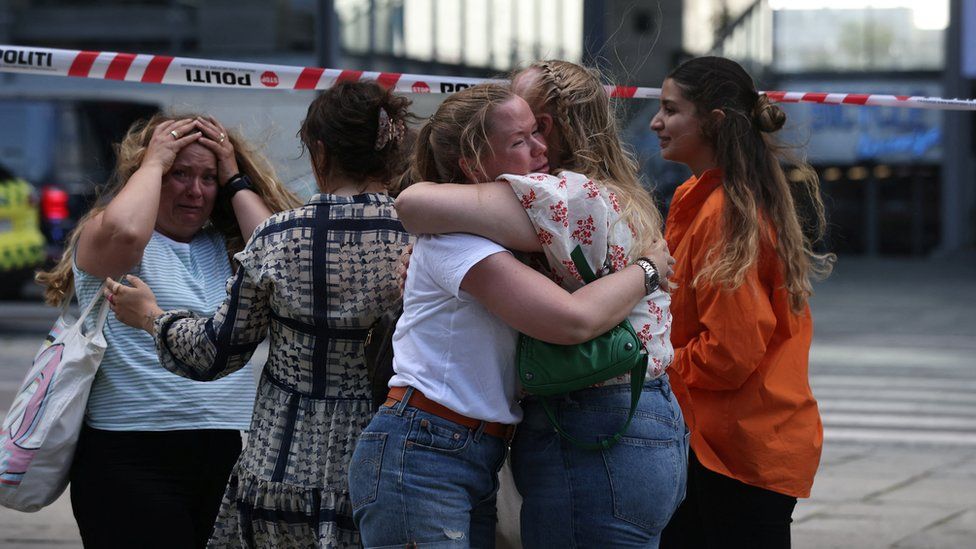
    On Sunday, Kanchana Wijesekera said the nation only had enough petrol left for less than a day under regular demand.

    He also said its next petrol shipment was not due for more than two weeks.

    Last week, Sri Lanka suspended sales of petrol and diesel for non-essential vehicles as it struggles to pay for imports like fuel, food and medicines.

    Mr Wijesekera told reporters that the country had 12,774 tonnes of diesel and 4,061 tonnes of petrol left in its reserves.

    “The next petrol shipment is expected between the 22nd and 23rd [of July],” he added.

    A shipment of diesel is expected to arrive at the weekend, however, Mr Wijesekera warned that the country does not have enough money to pay for planned fuel and crude oil imports.

    He said Sri Lanka’s central bank could only supply $125m for fuel purchases, far less than the $587m needed for its scheduled shipments.

    Mr Wijesekera added that the country owed $800m to seven suppliers for purchases it made earlier this year.

    It came after Sri Lanka banned sales of fuel for private vehicles until next week.

    Experts believe it is the first country to take the drastic step of halting sales of petrol to ordinary people since the 1970s oil crisis, when fuel was rationed in the US and Europe.

    The island nation of 22 million people is facing its worse economic crisis since gaining independence from the UK in 1948 as it lacks enough foreign currency to pay for imports of essential goods.

    Acute shortages of fuel, food and medicines have helped to push up the cost of living to record highs in the country, where many people rely on motor vehicles for their livelihoods.

    Last Thursday, an International Monetary Fund team concluded a fresh round of talks with Sri Lanka over a $3bn (£2.5bn) bailout deal.

    While no agreement has been reached yet, the team said in a statement that it had made “significant progress on defining a macroeconomic and structural policy package”.

    It added that it had “witnessed some of the hardships currently faced by the Sri Lankan people, especially the poor and vulnerable who are affected disproportionately by the crisis”.

    The cash-strapped country has also sent officials to the major energy producers Russia and Qatar in a bid to secure cheap oil supplies.

    Source: BBC

  • Sydney floods: Tens of thousands told to evacuate

    Tens of thousands residents have been told to evacuate their homes in Sydney, following torrential rain and flash flooding in Australia‘s largest city.

    Roads have been cut off, with 18 evacuation orders in western Sydney alone and warnings of more to come.

    “This is a life-threatening emergency situation,” Stephanie Cooke, emergency services minister for the state of New South Wales, said.

    The area was hit by flash flooding in March, killing 20 people.

    “We are now facing dangers on multiple fronts – flash flooding, riverine flooding and coastal erosion,” Ms Cooke told a media briefing.

    Her warning came as the Bureau of Meteorology said up to 350mm of rain had hit certain areas, risking flooding along the Nepean River.

    Sydney’s main dam had also started to spill overnight – a further concern for the authorities.

    Ms Cooke said this was a “rapidly evolving situation” and warned that people should be “prepared to evacuate at short notice”.

    People being evacuated in Sydney
    IMAGE SOURCE,AFP Image caption, Authorities are pleading with people to heed advice to leave their homes

    There had been 83 flood rescues by emergency services in the past 24 hours alone, she said.

    “It unfortunately shows that people aren’t necessarily heeding the advice that we continue to put out multiple times a day in relation to this flooding event,” Ms Cooke said.

    “I’m respectfully asking people to avoid non-essential travel at this time.”

    Experts say the flooding emergency has been worsened by climate change and a La Niña weather phenomenon. A La Niña develops when strong winds blow the warm surface waters of the Pacific away from South America and towards Indonesia. In their place, colder waters come up to the surface.

    In Australia, a La Niña increases the likelihood of rain, cyclones and cooler daytime temperatures.

    Source: BBC

  • Pro-democracy protests continue in Sudan

    Thousands of protesters took to the streets of Khartoum on Saturday, after nine people were killed Thursday in demonstrations against the country’s ruling generals.

    AP video shows a police armoured vehicle firing tear gas towards the protesters, who used shields and threw stones in retaliation at the vehicles.

    The demonstrators moved later to a sit-in area, which started last Thursday night outside al-Jawda hospital where injured protesters are still being treated.

    The United States and others in the international community condemned the violence in the East African nation, which has been rocked by near-weekly protests since an Oct. 25 coup upended its fragile transition to democracy.

    Protester Aisha al-Samany said she took the streets to “restore the transition to a civilian rule and to end the military coup,” with no room for compromise with the military on power-sharing.

    Sudanese military authorities have met the protests with a deadly crackdown, which has so far killed 113 people, including 18 children.

    Photographs of the dead were posted online, in some cases in an effort to identify them.

    The Sudan’s Doctors Committee, a medical group that monitors casualties from demonstrations, said security forces shot and killed nine people, including a child, in or near Khartoum during the rallies on Thursday.

    Thursday demonstrations coincided with widespread internet disruptions.

    Source: Africanews

  • Gambia bans all timber exports to combat rosewood smuggling

    The Gambia has banned timber exports and revoked all export licenses to try to combat illegal logging.

    The ban has come into effect immediately, and the port authorities have been instructed to refuse to load timber logs onto any vessel.

    In 2020, a BBC investigation revealed that vast quantities of protected West African Rosewood were being trafficked through the country from Senegal.

    Much of it ends up in China, where it is used to make furniture.

    It has been listed as an endangered species since 2017, and last month Cites, the Convention on International Trade in Endangered Species, called on seven countries, including The Gambia, to suspend its trade.

    The Gambia is consistently among the five largest global exporters of West African Rosewood (Pterocarpus erinaceus), despite declaring its own stocks close to extinction almost a decade ago.

    By value and by volume, rosewood is one of the most trafficked wildlife products in the world.

    Also called Hongmu or “red wood”, it is prized for its colour and durability and is primarily used for antique-style furniture.

    Figures obtained by BBC Africa Eye showed that China imported more than 300,000 tonnes from The Gambia between 2017 and 2020.

    That is the equivalent of about half a million trees and worth more than $100m (£80m).

    During a year-long investigation in both Senegal and The Gambia, multiple sources confirmed to the BBC that the rosewood being shipped out of The Gambia to China came from the Casamance region of southern Senegal.

    Along a 170km- (105 mile) long stretch of the border between the two countries, the BBC found at least 12 depots containing rosewood and other timber. They were all within Gambian territory.

    Map
    Source: BBC
  • WAFCON 2022: Hosts Morocco beat Burkina Faso in opening game

    Hosts Morocco opened the Women’s Africa Cup of Nations with a 1-0 win over debutants Burkina Faso in the capital Rabat.

    Captain Ghizlane Chebbak’s free-kick just before the half-hour was enough to earn the North Africans their first win in the competition for 24 years.
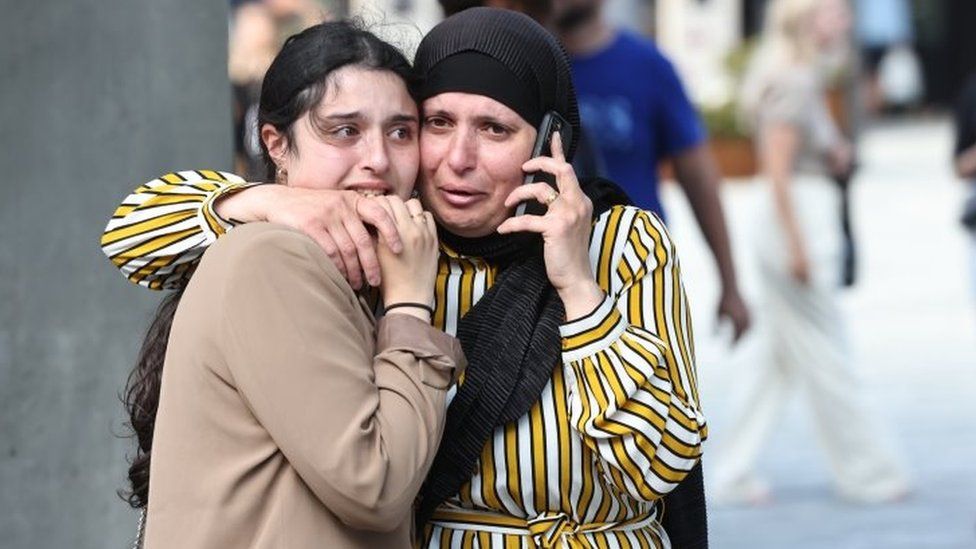
    The strike lacked power but nonetheless deceived Burkinabe goalkeeper Mariam Ouattara, 19, who could have done better.

    At their first Women’s Africa Cup of Nations (WAFCON) in 22 years, the Moroccans next meet Uganda, also in Rabat, on Tuesday.

    The second game in Group A will take place on Sunday when the Ugandan Cranes open their account against Senegal.

    This was the first match at a WAFCON finals in four years after the 2020 edition was cancelled because of the coronavirus pandemic, which the Confederation of African Football (Caf) had said it was reluctant to do.

    The first finals to feature 12 teams, after Caf expanded the tournament in 2019, this WAFCON is also taking place on North African soil for the first time and a healthy crowd was in attendance after local organisers offered free entry to fans for all games.

    Host nation Morocco is currently midway through an ambitious four-year investment plan into women’s football, with the aim of hugely increasing the women’s game’s popularity in the country.

    Little expense has been spared, as shown by the fact that Reynald Pedros, who led French side Lyon to two European Champions League titles in 2018 and 2019, was brought in as coach in late 2020.

    He has been rebuilding the side ever since and although his team looked as if they would run away with the game at times, the former France international showed his frustration that the lead was never extended

    With far more limited resources than their wealthy rivals, Burkina Faso were playing their first competitive match since qualifying in February and the fatigue showed as early as the first half when one of their players went down for cramp, a scenario suffered by others after the break.

    Nonetheless, the Burkinabe – who had never played an official women’s fixture before 2007 – were still in the game late on and could have fashioned an unlikely draw but for some brave goalkeeping from Khedija Errmichi, who twice denied substitute Limata Nikiema late on.

    At the other end, Tottenham Hotspur striker Rosella Ayane struggled to get into the game despite being presented with some presentable chances.

    Midfielder Salma Amani, who impressed throughout, almost doubled Morocco’s lead late in the first half only to fire over from close range after Assanatou Nako had cleared off the line, the first of two such saves from the Burkinabe defender.

    Further chances came and went for Morocco, who will be relieved to have finally won their second game at the finals nearly a quarter of a century on from their first, when beating Egypt 4-1 in 1998.

    Burkina Faso, who face Senegal on Tuesday, will look forward to an extra day of rest after their young and inexperienced squad, over half of which is 21 or younger and all but two of whom are based at home, admirably adapted to the bright lights of a major international competition for the first time.

    Source: BBC

  • Turkish giants Besiktas close to signing Ghana defender Daniel Amartey this summer

    Turkish giants Besiktas are close to signing Ghana defender Daniel Amartey in the ongoing summer transfer window, Footballghana.com can report.

    Amartey’s contract with Leicester City expired at the end of last month, making him a free agent.

    The 27-year-old defender has become an option for Besiktas as a replacement for their defender Welinton Souza Silva.

    It is said Besiktas have already contacted the agent of the Ghanaian international over a possible move this summer.

    Besiktas, according to reports, have agreed to offer Daniel Amartey a salary of 2 million euros a year.

    Amartey was instrumental last season for the Foxes, featuring 38 times in all competitions.

    Source: Football Ghana

  • Andy Goram: Scotland and Rangers goalkeeping great dies aged 58

    Former Scotland and Rangers goalkeeper Andy Goram has died after “a short battle” with cancer at the age of 58.

    Goram was capped 43 times for his country at football and four times at cricket – the only Scot to have played at the top level at both sports.

    He helped Rangers win five Scottish Premier League titles, three Scottish Cups and two League Cups.

    Goram was also on loan at Manchester United during the run-in as they won the Premier League title in 2000-01.

    He was most recently goalkeeping coach with West of Scotland Football League club Cambuslang Rangers.

    It was announced in April that Goram had been diagnosed with oesophageal cancer, which affects the long tube that carries food from the throat to the stomach, and later revealed he been given six months to live.

    He also disclosed that he had turned down chemotherapy as it would only extend his life by three months.
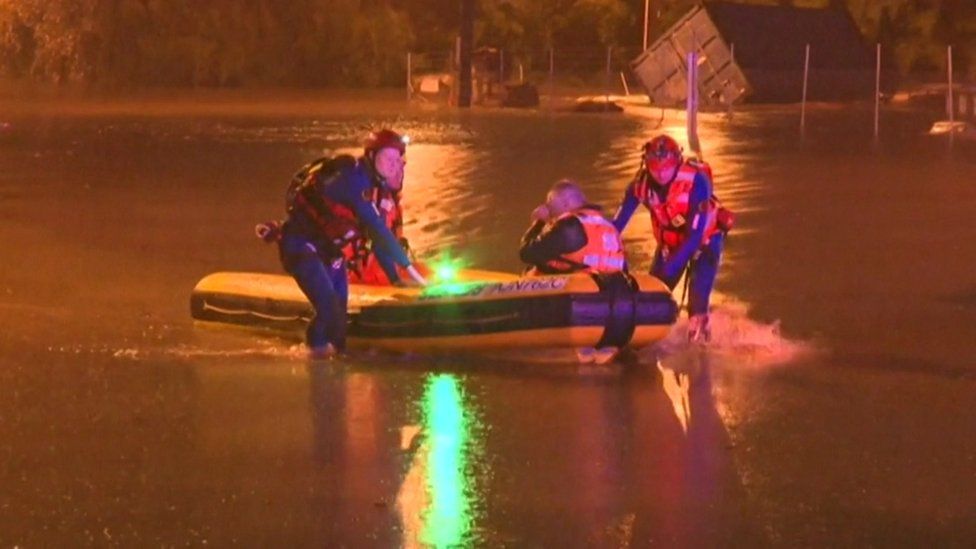
    Many tributes have been made on social media from former clubs, team-mates and rivals to the man who became affectionately known simply as “The Goalie” after Rangers posted on Saturday that they were “deeply saddened” to announce his death.
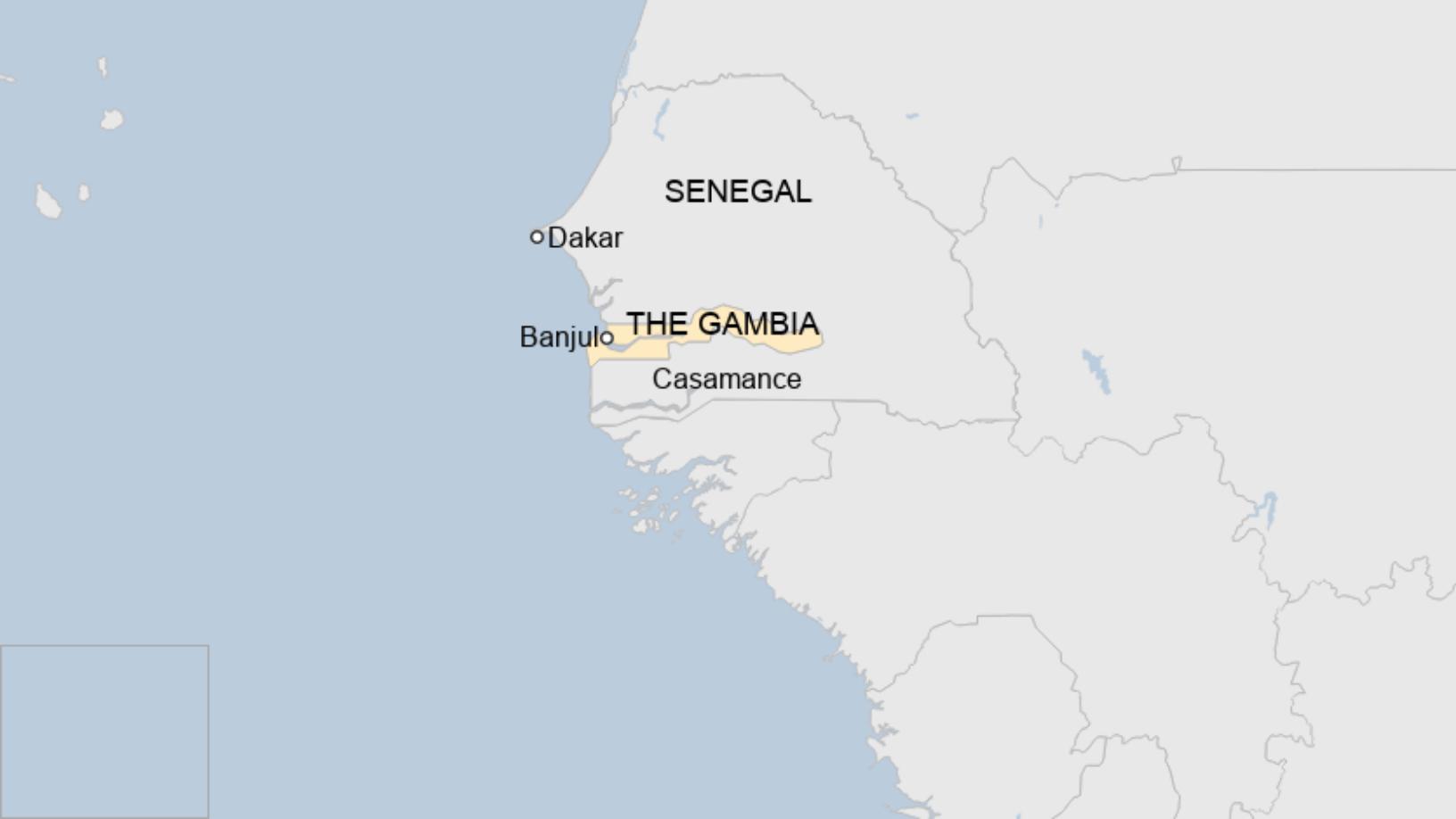
    Born in Bury of a Scottish father, Goram signed for Oldham Athletic, then in England’s Second Division, after his release from West Bromwich Albion’s youth set-up and went on to make 195 appearances.

    Sir Alex Ferguson had already handed him his Scotland debut by the time he moved to Hibernian in 1987 and he would captain the Edinburgh side for many of his 138 appearances before being sold to Rangers for £1m four years later.

    Andy Goram playing cricket for Scotland in 1991
    Goram represented Scotland at cricket as well as football

    The high point of Goram’s stay at Ibrox came in season 1992-93, when the Glasgow side narrowly missed out on reaching the Champions League final but won a fifth consecutive league title as they completed a domestic treble. He also received the Scottish Football Writers’ Association and SPFA player of the year awards.

    Internationally, he was part of the Scotland squad that played at the 1986 and 1990 World Cups and Euro 92 and 96, but he walked out on the squad before the 1998 finals because of head coach Craig Brown’s preference at the time for long-time rival Jim Leighton.

    After brief spells at Notts County and Sheffield United, Goram signed for Motherwell in January 1999, helping them finish fourth in the Scottish top flight the following year.

    He played twice on loan at Old Trafford in Man United’s title run-in before a spell with Coventry City and a return to Scotland with Queen of the South, helping the Dumfries side lift the Scottish Challenge Cup in 2002.

    After retiring at the end of the 2003-04 campaign following a season-long spell at Elgin City, he turned to coaching, with Motherwell, Clyde, Hamilton Academical, BSC Glasgow, Dunfermline Athletic and Airdrieonians among the clubs whose goalkeepers he assisted.

    As a left-handed batsman and right-arm medium-pace bowler, Goram played for a series of local-league clubs in England and Scotland before Rangers manager Walter Smith effectively ended his cricket career when he ordered him to concentrate on football.

    Source: BBC

  • Manchester United: Cristiano Ronaldo wants to leave club this summer

    Cristiano Ronaldo wants Manchester United to let him leave the club if they receive an appropriate offer for him this summer.

    The Portugal forward, 37, returned to Old Trafford from Juventus last summer.

    However, while he was United’s top scorer last season – and third in the Premier League – the overall campaign was seen as a big disappointment.

    United finished sixth in the Premier League so missed out on Champions League qualification.

    That means Ronaldo, who has a year left on his United contract plus an optional year, faces playing in the Europa League for the first time.

    It is not something he is viewing with relish and the five-time Ballon d’Or winner feels there could be more attractive options available to him at this stage in his career.

    The former Real Madrid forward is anxious to stress he respects United but as he enters the final stages of his career, he wants to compete for the biggest prizes.

    It is understood United do not regard Ronaldo as a player who is for sale.

    While it would be a blow to United’s prestige if they were to lose one of the greatest players they have ever had, it would also solve a few issues for new manager Erik ten Hag.

    Ronaldo clashed with Harry Maguire over the United captaincy last season, while interim boss Ralf Rangnick’s desire to implement a pressing game was thwarted by Ronaldo’s refusal to fit in with such a system.

    Although Ten Hag has said how much he is looking forward to linking up with Ronaldo, it is not clear how the forward’s playing style would fit in with the Dutchman.

    In addition, Ronaldo is the highest paid player in the Premier League and his exit would create more scope within United’s summer transfer budget.

    Ronaldo is due to return to the club for pre-season training this week. It is anticipated he will be on their pre-season tour to Thailand and Australia.

    Source: BBC

  • Dozens of Nigerians freed from church awaiting ‘Second Coming’ in Ondo

    Police in Nigeria have rescued 77 people, including children, from a church where they were confined in the south-western state of Ondo.

    Some of them are believed to have been there for months.

    A police spokesperson said many of them had been told to expect the Second Coming of Jesus Christ in April and had abandoned school to witness the event.

    The raid came after a mother complained her children were missing and she thought they were in the church.

    Police say they are investigating suspected mass abduction after the raid on the Whole Bible Believers Church in the Valentino area of Ondo Town.

    The pastor of the Pentecostal church, David Anifowoshe, and his deputy have been arrested, while the victims have been taken into the care of the authorities.

    “Preliminary investigation revealed that one Pastor Josiah Peter Asumosa, an assistant pastor in the church, was the one who told the members that Rapture will take place in April, but later said it has been changed to September 2022 and told the young members to obey only their parents in the Lord,” said police press officer Funmilayo Odunlami.

    In all, police rescued 26 children, eight teenagers and 43 adults, she added.

    The Second Coming is a Christian belief in the return of Jesus Christ after his Biblical ascension to Heaven. Rapture is the idea that Christian believers will be taken to Heaven at the Second Coming.

    Anxiety has been high among Christians in the state since a deadly attack on another church.

    At least 50 people were killed in a mass shooting and bomb attack at St Francis Catholic church in the town of Owo on 6 June.

    Federal authorities suspect the Islamic State West Africa Province of carrying out the massacre.

    Source: BBC

  • Adele: Emotion and simplicity are enough at comeback Hyde Park gig

    Adele told fans she was “so happy” to be back on stage as she briefly became overwhelmed at the start of her first public concert for five years.

    The pop superstar’s composure momentarily cracked as she took in the huge audience in London’s Hyde Park during the opening lines of Hello.

    She quickly resumed singing and went on to play a crowd-pleasing two-hour set for the 65,000 fans in her home city.

    “It’s so strange to be in front of a crowd again,” she told them.

    This would not have been her live comeback if a Las Vegas residency that was scheduled to start in January had gone ahead. But she postponed it 24 hours before the first show, tearfully informing ticket-holders it “ain’t ready”.

    She told Friday’s show that she would announce the rearranged US dates “very, very soon”, and that she was waiting for one more piece of equipment to be ready.

    Her initial show of her feelings was a display of the down-to-earth persona that is a big part of her appeal.

    It soon became obvious that the glammed-up girl next door can still push emotional buttons few other pop stars can reach.

    She appeared overwhelmed again as she watched the crowd belt out the chorus to Someone Like You, and few of the 18 bittersweet torch songs she performed were not accompanied by heartfelt sing-alongs.

    Crowd at Adele concert in Hyde Park
    IMAGE SOURCE,GETTY IMAGES Image caption, Some 130,000 people will watch Adele over two nights this weekend

    As well as those flashes of emotion, she appeared visibly relieved, too, at being back on a big stage.

    She did perform two television specials to promote her latest album 30 in November, but this was her first proper ticketed gig.

    “I get so nervous before each show but I love being up here,” she said on Friday.

    ‘People felt let down’

    Lots of those who were due to see her in Vegas will wonder why she couldn’t have got on stage there too. She clearly feels guilty about that debacle.

    She told the London crowd she knew lots of people felt let down, “which is mortifying for me”. But she said she “had to” take that decision. She has still not quite explained why.

    Her set-up for the British Summer Time festival wasn’t especially complicated. She stood in front of a six-piece band and three backing singers, who were arranged on two 2ft steps.

    Adele with her backing singers and band in Hyde Park
    IMAGE SOURCE,GETTY IMAGES Image caption, Adele’s last full concert was at Wembley in 2017

    Above them were layered fringes of tastefully-coloured tassels, which lifted up part-way through the show to reveal the middle part of a wraparound screen that filed the backdrop of the stage.

    At one point, she and a grand piano appeared at the end of a catwalk that extended into the crowd. There was a bit of confetti, some flame-throwing pyrotechnics, and fireworks at the end.

    Those bells and whistles barely felt necessary, and the fans would have been more than happy if the only added extra was her trademark between-song north London banter.

    She asked if it was anybody’s birthday, giving out dedications like a local radio DJ. Someone in the front rows had a wedding anniversary. “27 years? Oi oi!”

    Then she asked: “Do we have any divorce parties here tonight?” As the crowd roared, so did she: “You liars! Ha ha!”

    Crowd bonding

    Seconds after launching into her James Bond theme Skyfall, she stopped to alert stewards to someone needing help in the crowd, only restarting when they had been seen to.

    At the end of the song, she spotted another possible casualty and her voice turned urgent again. “Do you need help? Are you waving or do you need help? Oh, you’re waving!” She dissolved into laughter once more.

    At one point, she asked if there were any Stranger Things fans present, and for a moment it sounded like she might be about to bring out Kate Bush, whose Running Up That Hill has gone back to number one after becoming the show’s unofficial theme.

    But no. Adele just wanted to bond with the crowd over the latest series, the second half of which was released on the day of her gig. “I’m going to be knackered tomorrow, gobbling up part two all night,” she joked.

    Those going to see her on Saturday will hope she got enough sleep to be on form again for her second night in Hyde Park. After that, she has no more concerts in the diary – until, presumably, Vegas.

    As she puts the finishing touches to those plans, this show proved that her deeply-felt songs, piercing voice and sincere presence can be enough to leave the biggest crowd with a warm glow.

    Set list

    • Hello
    • I Drink Wine
    • I’ll Be Waiting
    • Rumour Has It
    • Water Under the Bridge
    • One and Only
    • Skyfall
    • Send My Love (To Your New Lover)
    • Easy On Me
    • All I Ask
    • Make You Feel My Love
    • Someone Like You
    • Oh My God
    • Set Fire To The Rain
    • Hold On
    • Rolling in the Deep
    • When We Were Young
    • Love Is A Game

    Source: BBC

  • WAFCON 2022: Expanded finals return with World Cup places at stake

    The Women’s Africa Cup of Nations (WAFCON) returns this month after a four-year absence, with what is arguably the continent’s biggest women’s sports event expanded to accommodate 12 teams.

    Having showcased world-class talents from Nigeria’s Mercy Akide-Udoh in the 1990s to South Africa forward Thembi Kgatlana last time out, this year’s tournament will also decide Africa’s four Women’s World Cup 2023 qualifiers.

    It will be hosted on North African soil for the first time by Morocco, with the games played across three venues in Rabat and Casablanca from 2-23 July.

    Nigeria lifted the trophy in the past three editions and have triumphed nine times in 11 previous WAFCONs, and the continent’s highest-ranked side are still the team to beat.

    Cameroon and South Africa are among their closest challengers, but with four countries making their debuts there could be surprises over the next three weeks.

    In 2018, Thembi Kgatlana won Player of the Tournament and the Golden Boot with five goals as Banyana Banyana were beaten on penalties in the final by Nigeria, and the Atletico Madrid player believes the game is progressing across Africa.

    “A couple of years ago we would have argued that it’s just Nigeria, South Africa and Cameroon making strides in women’s football but to make it a 12-team tournament is amazing,” the 26-year-old told BBC Sport Africa.

    “We are showing more countries that they need to invest in women’s football, so that we can even get to a higher level. The objective is to make sure that women’s football grows.”

    Can anyone deny Nigeria?

    Known for their measured control of games from the first blast of the whistle, Nigeria remain heavy favourites to win a record-extending 10th African title.

    One of just four sides returning from the 2018 finals, coach Randy Waldrum’s team will have to navigate a tricky Group C opener against arch-rivals South Africa before taking on debutants Botswana and Burundi.

    The Super Falcons are boosted by a heavy blend of foreign-based internationals, including Barcelona’s four-time African player of the year Asisat Oshoala, who topped this season’s scoring charts in Spain, as well as fellow forward Macleans Chinonyerem, who led the way in Poland.

    Hot on their heels are South Africa, who have reached the final four times but have lost twice apiece to both Nigeria and Equatorial Guinea, the only other side to have ever lifted the trophy.

    Known for their flair and quick passing, Banyana Banyana can draw inspiration from inaugural African Women’s Champions League winners Mamelodi Sundowns and more established foreign-based professionals such as Caf women’s player of 2018 Kgatlana and experienced captain Janine van Wyk.

    Cameroon complete the trio of favourites and, like Nigeria and South Africa, have competed in all the editions of the WAFCON since it began in 1998.

    The Indomitable Lionesses hosted the 2016 tournament, narrowly losing to Nigeria in the final, and have slowly rebuilt after former captain Christine Manie and Gaelle Enganamouit retired.

    The central Africans will have 19 players making their tournament debut, but the more experienced Inter Milan striker Ajara Njoya Nchout and CSKA Moscow star Gabrielle Onguene will look to lead the team to glory.

    Meanwhile, the rise of Morocco has caught the eye, with the hosts making enviable strides over the past two years as part of a strategic four-year plan laid by the Moroccan Football Federation.

    Key to this turnaround is French coach Reynald Pedros – a two-time European Women’s Champions League winner with Lyon – who has hit the ground running since his appointment by the Atlas Lionesses in 2020.

    Known for their flair and pace, the North Africans draw heavily on the nationally-dominant club AS FAR, with Ghizlane Chebbak and striker Sanaa Mssoudy among their key players.

    World Cup spots at stake

    A record 44 countries entered qualifiers to bid for a place in Morocco, with the added carrot of a potential ticket to the World Cup.

    The four semi-finalists will all be assured of spots in Australia and New Zealand next year, with beaten quarter-finalists playing off for two spots in a 10-team intercontinental tournament which will decide the final three qualifiers.

    South Africa’s Kgatlana is pleased that the World Cup’s expansion from 24 to 32 teams has resulted in more slots for Africa, but she is wary that every team at the Nations Cup will have added motivation as a result.

    “It’s important that when you go to this tournament, you do not underestimate anyone because everyone is looking for those four tickets to go to the World Cup,” Kgatlana said.

    “I think I’m most happiest because it was a struggle before, as we only used to have three tickets to the World Cup. Now there’s one extra, which means it could be anyone.”

    The winners of the WAFCON will take home prize money of $200,000 while the four semi-finalists will be certain of $750,000 next year for appearing at the World Cup.

    Other players to watch

    After the 2020 edition of WAFCON was cancelled because of the coronavirus pandemic, a new generation have a chance to make a name for themselves on the continental stage.

    Tunisia’s Mariem Houij scored the joint-most goals during the African qualifiers as her six strikes ensured a third finals appearance for the Carthage Eagles after a 14-year absence.

    Rukiya Bizimana of Burundi, who plays for Etoile du Matin, was just behind Houij after netting five goals for the Swallows.

    Fresh from winning the recently concluded Cecafa Women’s Championship, East Africa’s regional cup competition, Uganda’s Fazila Ikwaput emerged as the tournament’s MVP.

    Star player Barbra Banda had been expected to be key for Zambia, with the 22-year-old hitting global headlines at the Tokyo Olympics last year as she became the first player ever to score successive hat-tricks at the Games, but she was ruled out of the tournament on Friday for medical reasons.

    Source: Football Ghana via BBC

  • Manchester United hope to sign Tyrrell Malacia after agreeing deal with Feyenoord

    Manchester United hope to complete the €15m (£13m) signing of Tyrell Malacia after agreeing a deal to sign the full-back from Feyenoord.

    A move for the 22-year-old has been complicated by an issue involving Malacia’s representation.

    The Dutch international was looked after by the same agent who deals with another United target, Frenkie De Jong.

    However, Malacia wanted a family member to look after the contract discussions and the issue has now been resolved.

    The left-back, who has five Dutch caps, was part of the Feyenoord team beaten by Roma in last season’s Europa Conference League final.

    He was also a target for French club Lyon before United stepped in and made their interest known.

    United’s international players are scheduled to return for pre-season training next week ahead of the club’s departure on 8 July for their first pre-season game with Liverpool in Bangkok four days later.

    The club’s football director John Murtough remains in discussions with Barcelona over De Jong, who is new manager Erik Ten Hag’s number one summer transfer target.

    Source: BBC