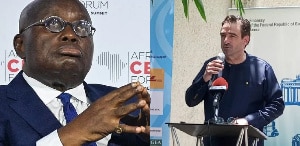
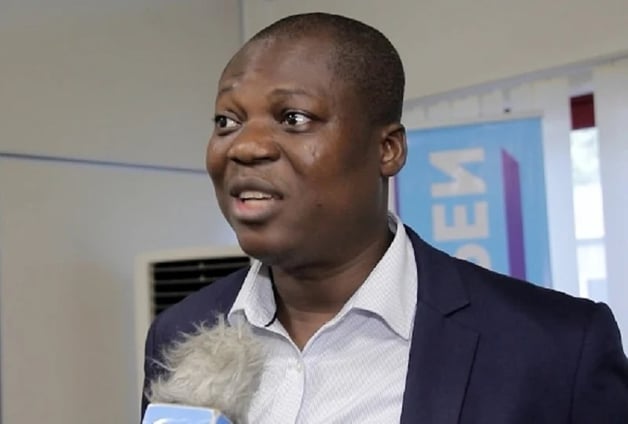
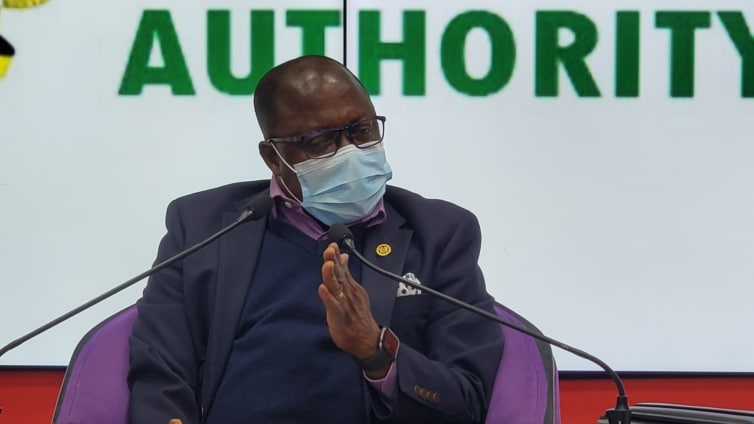
Daniel Krull, the German ambassador to Ghana, has urged the government of Ghana to take a reduction in spending into consideration while it continues to ask creditors for debt forgiveness.
The Ambassador emphasised that Ghana cannot request relief from its external debt while refusing to reduce its spending when speaking at a press conference on Friday, February 24, 2023.
Naturally, it greatly relies on the type of expenses you’re considering. This is true, I’m sure of it—looking at the German Foreign Ministry‘s budget, I can see crucial responsibilities that might be eliminated without harming the country’s economic growth.
“And I’m convinced without going into details this also is true for Ghana. There are certain expenditures that can be lowered substantially and make an important impact and it has to be part of the package.
“I mean, I cannot go out to the international community and say I need help, but I’m not willing to cut my own budget expenditures. I have to be careful not to cut the social expenditures that are destroying lives and families. I have to be very careful not to take measures that might negatively impact economic growth.
“But I’m convinced there are many expenditures that could be looked at very carefully and can be lowered substantially,” he said.
Comparing Ghana’s situation to some countries including Germany, Mr Krull further called for a reduction in the size of Ghana’s government.
“I only can compare and with other countries like my own and I can just come to the conclusion that the number is much higher than in my country. So that might bring me to the conclusion that maybe there’s room for improvement,” he said.
He added that “Ghana has a very dense layer of institutions and responsibilities all over the country.”
Ghana is currently seeking external debt relief from its creditors amidst the country’s current economic hardship.
The government of Ghana is calling for the support of some countries including Germany to persuade one of the country’s major creditor, China, for a debt relief.
With Ghana owing China some $1.7 billion, the government is hoping the debt relief would help the country meet conditions for an IMF bailout.
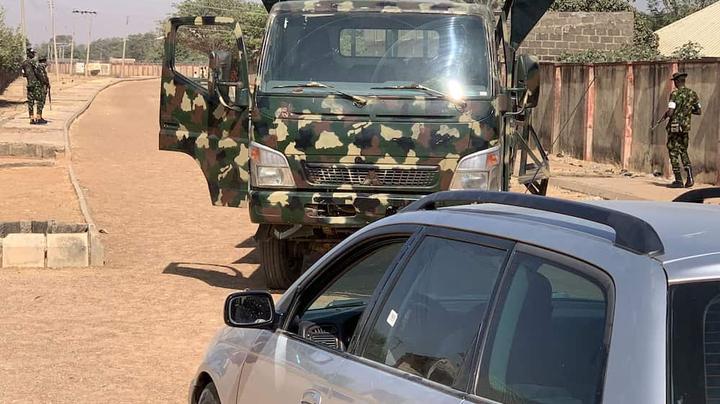
Valentine Onuigbo, the chairman of the Labor Party (LP) in the Karshi area of the Federal Capital Territory (FCT), has passed away. In the early hours of Saturday, his family discovered that he had passed away in his sleep. He was alleged to have been enthusiastically anticipating the start of voting on Saturday as he managed the party’s pre-election operations till late Friday night.
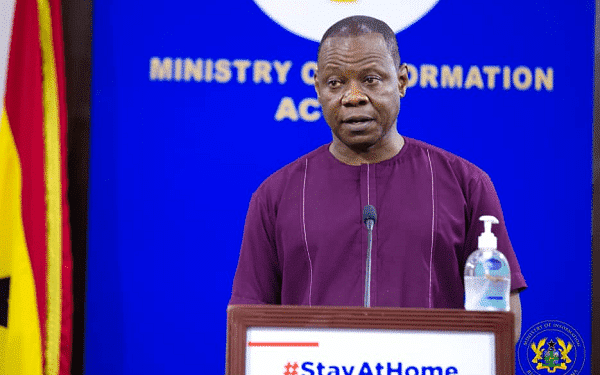
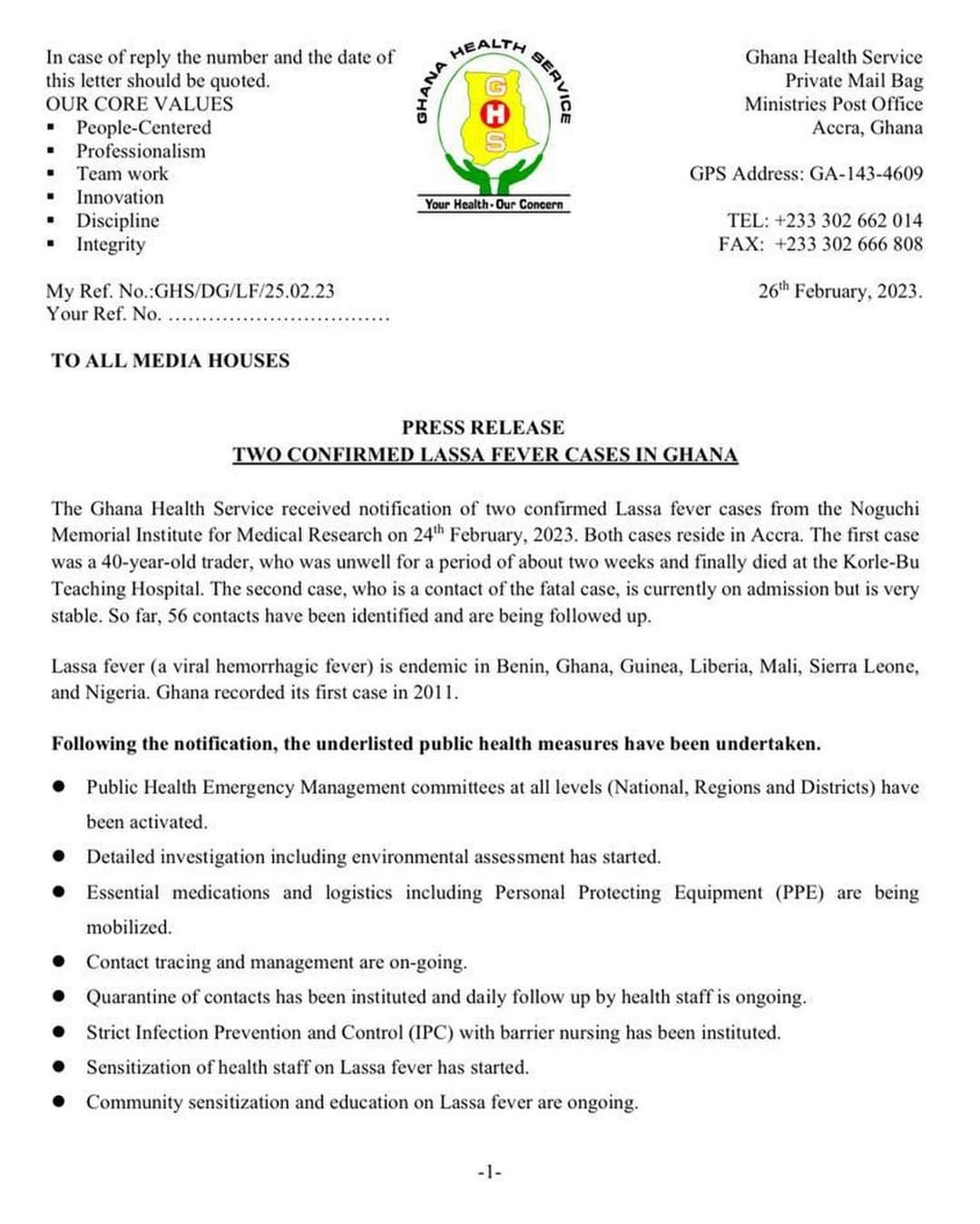
After examinations by the Noguchi Memorial Institute for Medical Research, the Ghana Health Service (GHS) has confirmed two cases of Lassa Fever in Accra.
A 40-year-old businessman who had been ill for almost two weeks before passing away at the Korle-Bu Teaching Hospital was the first case, according to the GHS.
The second case is a contact of the fatal case and is currently on admission but is very stable. So far, 56 contacts have been identified and are being followed up by the Ghana Health Service.
The GHS in a statement signed by Director-General, Patrick Kuma-Aboagye noted that Public Health Emergency Management committees at all levels (National, Regions and Districts) have been activated with detailed investigations including an environmental assessment ongoing.
The Health Service added that essential medications and logistics including Personal Protecting Equipment are being mobilized while contact tracing and management are ongoing.
Lassa fever (a viral hemorrhagic fever) is endemic in Benin, Ghana, Guinea, Liberia, Mali, Sierra Leone, and Nigeria.
15 visually impaired cocoa farmers from three cocoa-producing districts have received awards from the Ghana Cocoa Board (COCOBOD) for their significant contributions to the development of the cocoa sector in Ghana.
Seven of the farmers, who range in age from 50 to 78, are still actively farming after working for 15 to 60 years.
They came from the Central Region’s Asikuma, Assin Fosu, Twifo Praso, and Dunkwa; the Western Region’s Manso Amenfi, Elubo, and Daboase; and the Brong Ahafo Region’s Berekum.
Mr Kofi Esuon, an awardee, was honoured posthumously at the novel awards ceremony held in Cape Coast on Friday.
With support from the Agricultural Manufacturing Group Limited (AMG Ghana) and Mondelez Cocoalife International, each of the blind farmers received undisclosed sums of cash, six bags of fertilizer, two pairs of Wellington boots, two cutlasses, chocolates, and other Cocoa products.
Rev Edwin Afari, Executive Director of Cocoa Health, and Extension Division, COCOBOD, said the gesture was a novelty to reward and motivate less privileged cocoa farmers, particularly Persons with Disabilities (PWDs), who were indispensable to Ghana’s cocoa value chain.
He commended the blind farmers for defying all odds to commit to cocoa farming, the backbone of the country’s economy and many individual families.
“Disability is not inability and so you can do everything you put your mind to.
“Sight is not in eyes alone but also in the heart and mind; if you work diligently with your heart and mind, that is a special kind of sight,” he noted.
Rev Afari expressed concern over the ageing population of cocoa farmers, citing the attendant looming dire impact on the economy and general development.
He expressed worry that many young people were not interested in agriculture despite the vast prospects in the sector.
He, admonished the youth, including professionals from all fields, to venture into agriculture, particularly cocoa to create wealth for themselves and the country.
He indicated that this year, COCOBOD would focus on cocoa pruning, and undertake pollination and pest control exercises to help increase the country’s production.
“We did 1.47 million tonnes last two years but last year was not too good because of the weather and so we came down to about 683,000 tonnes.
“We are targeting 850,000 tonnes this year and we are doing very well for the main crop season,” he indicated, adding that the company was always available to offer support to all cocoa farmers facing challenges on their farms.
While commending the partners supporting them, Rev Afari indicated that the awards would be expanded to include other PWDs when they got more sponsors.
Nana Kwesi Ofori, the Central Regional Chief Farmer, urged the public to take inspiration from the commitment and achievements of the blind farmers.
He also appealed to COCOBOD, government and civil society organisations to support PWDs to thrive in the cocoa industry.
“Let this not be a nine-day wonder. It should continue to motivate everybody,” he said.
Some of the awardees who spoke with the Ghana News Agency after the event expressed excitement and gratitude for the honour and recognition.
Mr Kwesi Adu said “I was farming before I went blind, but I never gave up. I motivated myself even harder, and with the support of the people around me, I am doing better than others.
“I am grateful to COCOBOD for their support,” he added.
Love tales are often romantic, but they can occasionally go south for those who are the victim of infidelity.
Some say that although love is a beautiful thing, because of its immensity, it can also crush hearts.
David, a young man who has experienced heartbreak, described how his girlfriend secretly purchased a parcel of land without his knowledge.
He averred that his girlfriend at the time acquired a plot of land at Oyibi using monies he gave her as weekly allowances.
David, sharing his ordeal on Joy News said, “She [his girlfriend] gets weekly allowances from me. I later got to know that she’s bought a plot of land at Oyibi and has started with the foundation works without my knowledge.”
“When I thought I was giving her money for upkeep, she was using my money to buy blocks. Meanwhile, I have not bought a bag of cement before…These days, the agenda girls have, don’t go there,” he added.
He entreated men to stay woke and ensure they don’t fall prey to women whiles dating.
The recently passed Frances Awurabena Asiam, the outgoing managing director of the Ghana Cylinder Manufacturing Company Limited (GCMCL), has accused President Nana Addo Dankwa Akufo-Addo of betraying her in a dispute over Dr. Matthew Opoku Prempeh’s appointment as energy minister. The dispute ultimately led to her resignation.
In an interview with Yeah FM after announcing her resignation on February 23, 2022, Madam Asiam claimed that the circumstances surrounding her decision to step down demonstrated the unreliability of politicians.
“Politicians, politicians in generic terms should not be trusted and cannot be trusted… the reason being that they do not respect loyalty and the reason being that they feel too big. Their egos overrun and overtake them,” she said in an interview with Okay FM’s Kwame Nkrumah Tikese monitored by GhanaWeb.
In another interview with Accra-based UTV, Madam Asiam said she does not want to have anything to do with the Akufo-Addo government going forward although she remains a member of the New Patriotic Party.
“I thank the president but what I want to tell Nana Addo Dankwa Akufo-Addo is that loyalty which is not respected is not worthwhile and my party and my parting words to the primus inter pares of the Republic of Ghana is that a government or a nation that does not respect its heroes or heroines is not worth following. This is what I have to say to the president.
“For Nana Akufo-Addo, I’ve finished with him. I don’t have any issues to talk out with him, he should not call me. He should take his cylinder (company) I will also find my way. I am a private individual, from now a consultant. I am an international consultant and it is God who takes care of all humans not Nana Addo,” she added.
Awurabena Asiam has blamed the minister of energy for her resignation.
While accusing the minister of meddling in her work, she said GCMCL had partnered with another government agency for its ongoing expansion project but the minister had unilaterally decided to bring in another agency in place of the government agency.
Awurabena Asiam added that she had a huge fight with Dr Opoku Prempeh over his decision at a retreat over the weekend and warned that she will resign if the move happens.
Finance Minister Ken Ofori-Atta is Ghana’s best finance minister since 1957, according to Palgrave Boakye-Danquah, the government spokesperson on governance and security.
He claims that the financial sector has seen a significant transition as a result of the arrangements, policies and initiatives made by the finance minister.
Speaking in an interview with Original TV, he said that the legacies of Ken Ofori-Atta stand out in terms of proper management of the economy when compared to all other finance ministers who have served the country since the fourth republic.
“Ken Ofori-Atta is the best finance minister ever, in Ghana, we study to progress and when I say we study to progress, I’m not talking about academics.
“I’m talking about empiricism and research…when you sit around the table and discuss issues with financial experts in the world, you will realize that even finance ministers on this continent hold him (Ofori Atta) in high esteem.
“Now I have heard various calls that president Akufo-Addo should dismiss Ken Ofori-Atta.
“I said this and I have to say this again and I will continue to say that the best finance minister for the republic of Ghana since 1957 is the Hon. Ken Ofori-Atta, I have said it.
“…undoubtedly, the minister of finance, ever since he was vetted into the office in 2017, I have found Hon. Ken Ofori-Atta, as one of the best finance ministers that Ghana has ever had…posterity will testify about it,” he said.
Last year, some NPP parliamentarians demanded that Mr Ofori-Atta be sacked.
The MPs, numbering about 80, held a press conference to impress on the President to relieve his cousin of the responsibility of managing the national purse or risk losing their
Nigeria‘s second-richest man, Abdul Samad Rabiu, has once again demonstrated its financial prowess by achieving record-breaking profits at the end of its 2022 fiscal year.
Despite intense competition, the company reported a 12.14-percent increase in profit from N90.08 billion ($195.6 million) in 2021 to an all-time high of N101.01 billion ($219.4 million) in 2022, according to its recently released financial statements.
These impressive figures serve as a testament to BUA Cement’s unwavering financial strength and its ability to optimize profitability in a highly competitive market, cementing its position as a top-performing company in the industry.
The group’s remarkable earnings surge can be attributed to a 40.28-percent increase in revenue during the period under review, which rose from N257.3 billion ($558.8 million) to N360.9 billion ($783.8 million). This was due to a combination of pricing benefits and increased sales volume, driven by rising demand and highly efficient operations at its state-of-the-art facilities.
While the surge in revenue would have resulted in even higher profits for the group, the increase was offset by higher direct costs, as well as a rise in selling and distribution costs, including administrative expenses, which exceeded N17.2 billion ($37.3 million) during the period under review.
Nevertheless, the group’s overall performance remains strong and highlights its ability to deliver impressive financial results even in challenging market conditions.
BUA Cement’s exceptional financial performance during the period under review has led to a substantial increase in its assets from N728.5 billion ($1.58 billion) to N874 billion ($1.89 billion), as well as a rise in retained earnings from N181.9 billion ($395 million) to N194 billion ($421.3 million).
These impressive figures reflect the company’s continued success in maximizing profitability and maintaining financial stability. In recognition of its outstanding performance, the Board of Directors approved an increased dividend payout of N2.8 ($0.00608) per share to shareholders, compared to the N2.6 ($0.0056) paid out in the previous year.
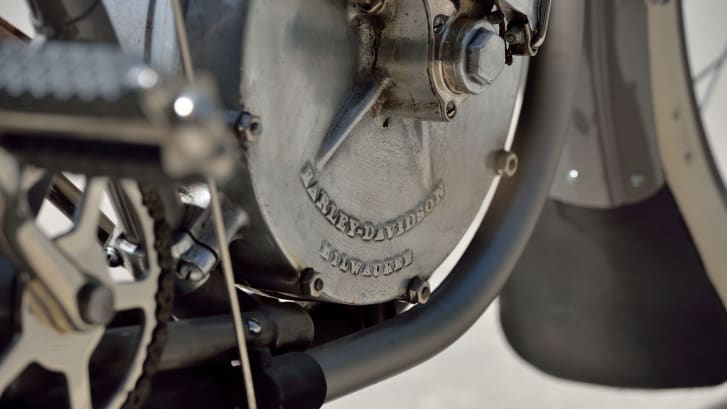
A 1908 Harley-Davidson motorcycle sold at auction for a record-breaking six figures.
The 1908 Harley-Davidson Strap Tank was the most expensive motorbike ever sold at auction at the end of January, according to a press statement from Mecum Auctions, which offers classic cars and historic bikes.
According to a news release, the antique bike was found in a Wisconsin barn in 1941 and maintained there for the following 66 years. The motorbike was “expertly refurbished” by Indiana collector Paul Freehill. The model has the motorcycle’s original wheels, seat cover, muffler sleeve, engine belt pulley, and tank.
The bike was one of the legendary manufacturer‘s first models, known as the “Strap Tank.” Credit: courtesy Mecum Auctions
The Strap Tank is one of only 450 motorcycles produced by Harley-Davidson in 1908, says the release. Less than a dozen are thought to have survived to 2023 — and fewer still are in as good condition as the record-breaking model, according to the auction listing.
The early models earned the name “Strap Tank” because “of the nickel-plated steel bands suspending the fuel and oil tanks from the frame,” says the listing.
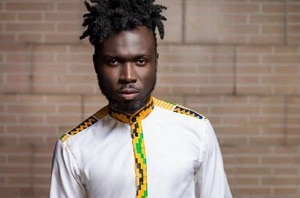
Actor and movie producer, Kobi Rana has asked persons putting pressure on him to get married to back off.
According to the popular actor, there are some people forcing him to get married because they see him to be a “bad boy” who will change after marriage.
But in a Facebook post , he asked such people to take a rest as marriage cannot be a panacea for philandering.
“Those forcing me to marry because you believe I’m a bad boy. Marriage is not the cure for fornication. It only changes the name to adultery. Rest,” the actor wrote.
At 37, Kobi Rana has produced and starred in several movies and is also known for his music career which produced the hit song “Fly.”
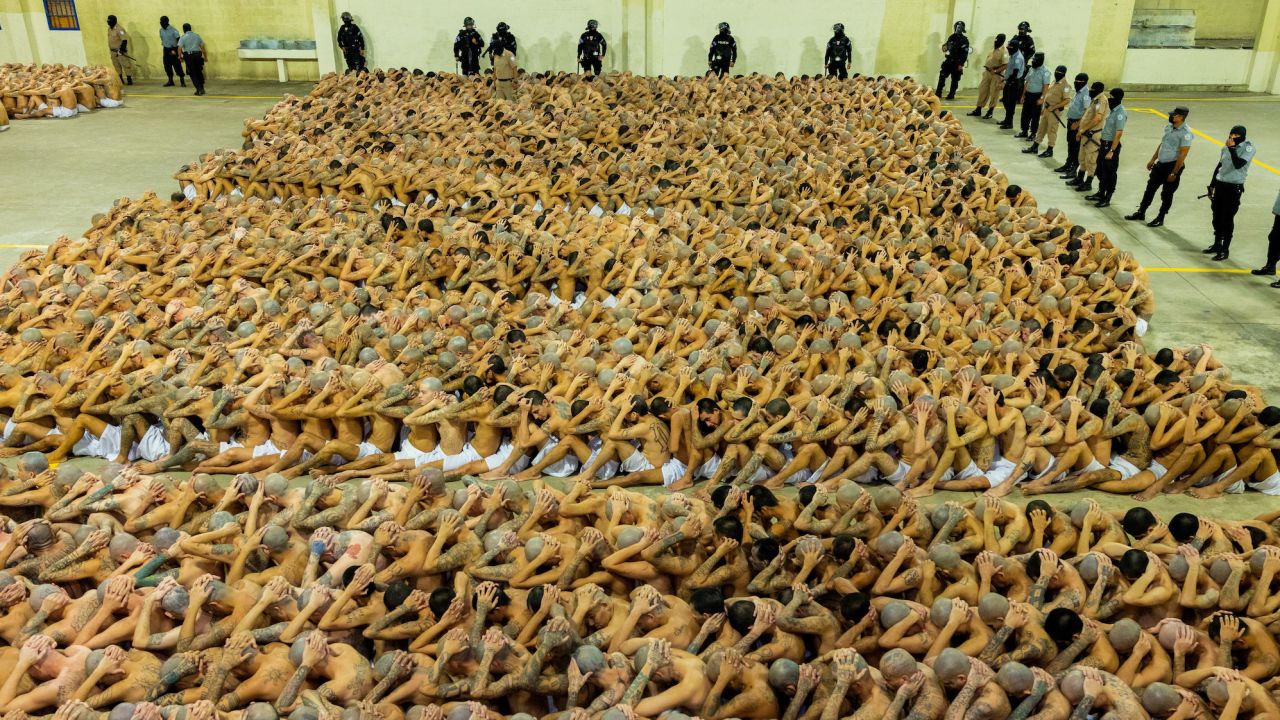
The latest move in a divisive campaign against crime that has seen El Salvador’s prison population swell was the transfer of thousands of suspected gang members to a recently opened “mega prison” on Friday.
President Nayib Bukele stated on Twitter that “this will be their new home, where they won’t be able to cause any more harm to the population.”
Early on Friday morning, almost 2,000 alleged gang members were transferred to the 40,000-person prison, which is thought to be the biggest in the Americas.
In a video posted by Bukele, prisoners stripped down to white shorts, with their heads shaved, are seen running through the new prison into cells. Many bear gang tattoos.
Bukele asked his allies in El Salvador’s Congress to pass a state of exception last year, which has since been extended several times, that suspends some constitutional rights after a dramatic spike in murders attributed to violent gangs.
Since then, more than 64,000 suspects have been arrested in the anti-crime dragnet. Arrests can be made without a warrant, private communications are accessible by the government, and detainees no longer have the right to a lawyer.
Human rights organizations argue that innocent people have been caught up in the policy, including at least dozens who have died in police custody.
But Bukele’s anti-gang push remains widely popular with Salvadorans, and the country’s security minister told Reuters it would continue until all criminals are captured.
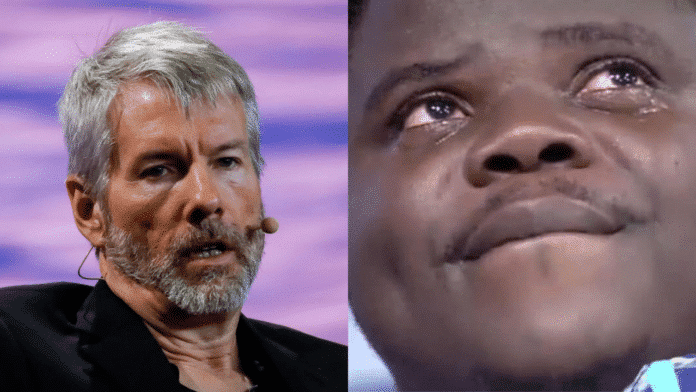
Two days ago, reports went viral that award-winning Ghanaian YouTuber professionally known as Wode Maya has had his Youtube account hacked.
The hackers who hijacked Wode Maya’s over 1.2 million renamed it from Wode Maya to Microstrategy (@micro_strategy0).
Which is an American company that provides business intelligence, mobile software, and cloud-based services to customers.
Ever since the takeover, the channel has been streaming a fundraiser and live session about cryptocurrency, spearheaded by Michael J. Saylor.
According to a simple search on google, Michael J. Saylor is an American entrepreneur and business executive.
He is the executive chairman and co-founder of MicroStrategy, a company that provides business intelligence, mobile software, and cloud-based services.
Saylor served as MicroStrategy’s chief executive officer from 1989 to 2022.
He authored the 2012 book The Mobile Wave: How Mobile Intelligence Will Change Everything.
He is also the sole trustee of Saylor Academy, a provider of free online education. As of 2016, Saylor had been granted 31 patents and had 9 additional applications under review.
Forbes also reports that he has an estimated net worth of around 1.6 billion.
Amidst this tension, Wode Maya is officially yet to break since on the issue. He hasn’t posted on any of his social media pages since Thursday 23rd February 2023.
American rapper Soulja Boy has threatened to kill Nigerian afrobeats superstar, Wizkid, after getting triggered over Wizkid’s ascending career.
Soulja Boy went on a rant against Wizkid after the Nigerian was named the headliner for the Rolling Loud festival in Germany.
Unhappy over Wizkid’s prominence, Soulja Boy started tweeting out at him, calling him all sorts of names.
He called on organisers of the show to take him off the show, then started sending Wizkid threats.
“Take me off that Germany show Rolling Loud,” he wrote in one tweet.
“Wizkid is pssy. This flyer is cap. Keep playing and we gon fin y’all and beat y’all a. Btch a nggas fck y’all,” he wrote in another.
Soulja Boy’s meltdown continued as he wrote in another tweet: “Umma slay you when I see you Wizkid. It’s stamped. I’m done tweeting. We gone k!ll that n*gga,”
Check out the unhinged tweets from Soulja Boy against Wizkid below…
Internet users are most often swarmed with advertisements as they access different websites and social media.
Worst of all, they are not rewarded for viewing these ads.
But two Computer Science students of the Kwame Nkrumah University of Science and Technology, Richard Adjetey and Philip Allotey are trying to change this with an App called myAdmo.
MyAdmo is an adblocker extension that does not only block ads but gives users points for the ads they view.
They then earn points they can use to purchase products in amraketplace provided by MyAdmo.
Advertisers can also sell their products through MyAdmo. MyAdmo does not leave the blogger out. With a MyAdmo account, bloggers can also earn more cash from classified ads.
Prior to the first anniversary of Russia’s invasion of Ukraine, US President Biden travelled by overnight train from Przemyl Góówny, Poland, to Kyiv for his historic visit. This journey was known as “Rail Force One.”
The state-owned operator of Ukraine’s train network, Ukrzaliznytsia, or Ukrainian Railways, faced a top-secret, high security problem with the 10-hour nocturnal trip. Yet, it wasn’t their first.
As Ukraine no longer has any commercial air connections and the skies are too unsafe for politicians to fly in and out, the nation’s train system has taken on the role of its diplomatic thoroughfare. Via train, more than 200 foreign diplomatic missions have so far entered the nation.
World leaders including Canada’s Justin Trudeau, the UK’s Rishi Sunak, France’s Emmanuel Macron and Italy’s Giorgia Meloni have all taken the train to Kyiv. In fact, Japanese Prime Minister Fumio Kishida is the only G7 leader yet to visit the country by train.
Ukraine’s President Volodymyr Zelensky is a regular user of the railway network on his diplomatic missions abroad.
But there’s more to the railways than “Rail Force One,” as Biden’s train was dubbed.
The US president’s high profile journey has shone a spotlight on Ukraine’s vast rail network which, at nearly 15,000 miles, is the 12th largest in the world.
Train transporting Biden in Ukraine now dubbed ‘Rail Force One’
Ukrzaliznytsia is the sixth largest rail passenger transporter in the world, and seventh for freight.
First constructed in pre-Soviet times, its network is predominantly a broad gauge railway – different to the standard gauge, which most of Europe uses.
And while Ukraine forces have destroyed the cross-border links to Russia, the rail network still connects with other countries – although the differing gauges mean trains can’t generally cross the border. To deal with this, over the past year they have rebuilt sections of previously defunct lines to neighboring countries including Moldova, Poland and Romania. Infrastructure has been repaired at 11 border crossings.
This isn’t just about making passenger journeys easier. It’s crucial for freight – and for much of the world, which relies on Ukrainian produce, including grain. In 2022, 28.9 million tons of grain were transported via the railways, most of which was exported. In total, just under 60 million tons of goods were exported from Ukraine, according to Ukrzaliznytsia.
And in total, the company transported 17.1 million passengers via long-distance trains during 2022. These are predominantly sleeper services.
“Before the war, we had planes, cars, buses and trains,” Ukrzaliznytsia’s CEO Alexander Kamyshin told CNN Travel. “Now we’ve got trains and cars, no airplanes. And we’re a large country. So to get from Kyiv to west, south or east Ukraine, sleeper trains are the best way to do it. You go to the train in the late evening, travel the whole night, and in the morning you are in the city you need to be. So you don’t waste time.
“It was comfortable before the war, and now it’s comfortable and safe. Trains are very important.”
Of course, most of the pictures we have seen in the past year of Ukrainian Railways are ones of refugees. Ukrzaliznytsia says it helped four million to safety in 2022, a quarter of whom were children.
Some trains were also reconfigured as medical facilities. Around 2,500 civilians were evacuated for medical treatment via rail last year. The network also transported nearly 336,000 tons of humanitarian aid.
It’s an immense responsibility for Kamyshin, who started with the company just six months before Russia invaded. “I joined with the problem to develop the company, green-light new projects, renew the fleet and it was all about building and construction, and procuring new stuff. But a year ago we had to change to war time, and war rails,” he says.
Perhaps the most extraordinary part of Biden’s journey to Ukraine was the light that it shed on just how smoothly Ukrzaliznytsia operates.
Kamyshin apologized in a tweet that, because of Biden’s complex journey, “only 90% of our trains ran on time yesterday.”
That caused hollow laughter in Biden’s America, where Amtrak is infamous for its late-running passenger trains.
Amtrak’s latest on-time performance figures, looking at June 2022, show that on average, just over 22% of trains ran on time across the US. Some areas have reversed Ukraine’s statistics, with more than 90% of trains arriving late.
In the UK – which has sent two prime ministers to Ukraine by train – just 67.7% of trains run on time, according to the latest data.
That’s no surprise to Ukrainians. The train services have always been excellent, says Kyiv resident Alla Penalba.
“I’ve always taken the train when traveling around Ukraine,” she says. She’s a particular fan of sleeper services. “It’s convenient – you board in the evening and in the morning you’re on the opposite of the country. Even before 2014 [when Russia invaded Crimea] the journey to Crimea from Kyiv was more convenient by train. It took 20 hours, but you sat down, then went to sleep – it was pretty comfy.”
Penalba says that because low-cost airlines entered Ukraine later than in the rest of Europe, the country retained its network of night trains, with limited domestic flights.
Even when the budget airlines did arrive – she reckons that from 2016 there were more viable options to fly cross-country – she didn’t bite.
“I could fly to Odesa from Kyiv but still I’d think, OK, I need to go to the airport two hours in advance, if you live on the opposite side of Kyiv it can take an hour to get there – so that’s three hours plus the flight. Ultimately it’s more convenient to take the train at 11 p.m., sleep, and arrive at 7 a.m.”
Penalba left Kyiv with her family on the second day of the 2022 invasion, driving to France, where her husband is from. But she returned alone in the summer to take care of personal business, and to see if it felt safe to move back.
On her way into Ukraine, she took a flight to Poland and then a bus to Kyiv: “A terrible experience, I hate long bus journeys.”
On the way back, she took the overnight train to Poland: “It was the best experience out of two days of travel.”
When the family moved back to Kyiv, in August 2022, they again took the train from Poland, getting a second class, four-berth compartment for her, her husband and their two kids. Their only stress? The Polish train was delayed by three hours. Unlike the Ukrainian one.
“I was amazed and pretty proud,” says Penalba.
Visitors to the country are equally amazed – starting with Penalba’s husband, who moved from France in 2015.
“He’s always saying that Ukrainian trains are pretty great compared to the ones in France,” she says. “He didn’t use trains there because they were too expensive. Here they are accessible for everyone.”
A cross-border train to Poland costs around 50 euros (about $53) for a lie-flat bed in a four-person, second class berth, and Penalba says that domestic routes are even cheaper – around 15-30 euros. “First class would be around 40 euros,” she says.
Koen Berghuis, editor-in-chief of train specialist travel website, Paliparan, is another fan. Based in Romania, the Dutch national takes around half a dozen long distance or overnight trains per month, and before the war, traveled to Ukraine over 10 times.
For him, if you’re comparing punctuality, Ukraine’s railway system is “better than Germany’s.”
“They’re doing a remarkable job – even now, trains are running more or less on time,” he says.
Astonishingly, Penalba reckons the system has got “more efficient” since the Russian invasion.
In August 2022, Ukrzaliznytsia launched an app, and started taking online bookings. “I can buy tickets in a few clicks now,” she says.
Kamyshin says that the only real change to the service in the past year is that trains run at slightly reduced speeds now. “It’s not much slower, but we slowed them down deliberately to make it safer in case of something [happening].”
Of course, politicians don’t travel in third class. Kamyshin won’t reveal details of the service they do get, but he says that “guests of iron diplomacy,” as he calls them, “usually spend more time on the train than in the city.”
“That’s why the way we treat them is really important, he says.”
But it’s not just about treating them right. The trains also convey “the messages that we would like to send them,” he says.
“We are delicate and we’ll always treat all of our guests properly, but these things help them understand what we expect from them – like iris flowers or leopard print clothes.”
A vase of irises was put in the train for the visit of German President Frank-Walter Steinmeier, whose country agreed to supply an air defense system called Iris-T. For another politician, staff wore leopard print accessories, in a nod to the Leopard-2 tanks Ukraine was requesting from the country in question. Kamyshin won’t say who that was, but Poland and Germany have also donated Leopard-2 tanks, with Germany pledging more on the first anniversary of the invasion.
Rail travel in Europe has always been popular, of course, and the climate crisis is making it increasingly so. Berghuis thinks that Ukraine can teach other rail networks a thing or two.
“The main difference to other European countries is the sheer scale of Ukraine as a country,” he says.
At the start of last year, he took the Rakhiv-Mariupol sleeper train – Ukraine’s longest passenger train route before Russia’s invasion. At 1,806 kilometers, or 1,118 miles, it took just under 29 hours, crossing 12 “oblasts” (regions).
“It was basically the same as Amsterdam to Lisbon or Athens, or New York to Kansas City,” he says. Except passengers on those type of routes would, of course, usually fly.
Ukraine’s size means that its “huge” rail network has “always been a lifeline to Ukrainians – it’s a very important piece of infrastructure,” he says.
That’s why the Ukrainians are leaping into action if any of the line is damaged during the fighting. When the southern city of Kherson was liberated, the trains were running into the city again just eight days later.
“It’s incredible,” says Berghuis.
“It’s hugely important for them, for keeping the country united, ensuring people can visit families and friends, for freight and for the postal network. They use trains to deliver some pensions.
“It’s also for PR, because everything is PR in a war – they’re showing Russia, ‘Hey, even in these circumstances we manage to run trains. Even if there’s no electricity, it doesn’t matter, we can use diesel or steam locomotives.’ But the rail network is also a lifeline in many more ways than we can imagine.”
And while Europe is going through a sleeper train “renaissance” at the moment, Berghuis says that Ukraine is a great example of how to run a night train network.
There are generally three classes to a sleeper, he says, with each carriage having its own attendant. They’re there to give passengers their bedding, take orders for snacks and tea, and make sure passengers get on and off at the right stations. But they’re also there for security – especially important when you’re sleeping in an open cabin of 50-odd berths.
Yes, 50-odd – that’s what you get in the third class carriages, which are essentially wagons of bunkbeds which double as seats during the daytime part of the trip.
“The attendants keep an eye out for everyone in their wagon – they’re proud of what they do,” says Berghuis. Not that they really need to. He says that third class carriages are “part of the fun, with people happy to share their food, stories, try and talk – even if it’s with hand gestures.”
Second class gets you a space in a four-berth couchette, while first class is fancier.
The stations are also worth visiting, says Berghuis, who singles out Kyiv and Lviv as two of the most beautiful historical stations in Europe, and loves Odesa for its “seaside, holiday vibe.”
So what’s the future for Ukrainian Railways? This is a company that hasn’t just kept going during the invasion – it has made improvements, too.
In 2022, the country took possession of 65 new passenger rail carriages, bought two new diesel trains, and even found time to refurbish other trains in the network. They constructed new freight cars, and repaired others.
They launched six new international rail routes, to destinations in Poland and Moldova, and seven domestic routes. The company also electrified more track than they had done in the past decade.
The company even debuted a new onboard menu. Passengers can now enjoy “designer teas” and “natural ground coffee.”
Tragically, 319 railway workers died in 2022, and 703 were injured. The company has launched an “Iron Family” program to support their families.
For 2023, the company predicts a loss of 20.2 billion hryvnia – or $549 million. Yet it is looking to the future. In May 2022, “Children’s Railways” – where kids can learn about locomotives – opened in Kyiv and Rivne. Around 1,300 children are already studying at the two centers.
With the climate crisis intensifying, Kamyshin thinks Ukrainian Railways can teach other countries’ rail networks a few things. “The whole world should pay more attention to overnight sleepers,” he says.
“It’s a really efficient, comfortable way of transportation. And governments should review their relationships to railways. Railways are important, especially in a big crisis.”
In fact, Penalba said she was “shocked” to see people flying than taking the train when she first started traveling around the rest of Europe.
“There’s a lot of talk around ecology, but planes are cheaper and night trains are especially expensive, so it’s cheaper to fly,” she says.
“I’m used to [shorthaul European flights] now, but it’s still shocking. It’d be much more convenient if trains in the rest of Europe were as affordable and easy as in Ukraine.”
Popular YouTube vlogger, Berthold Kobby Winkler Ackon, also known as Wode Maya has announced a restoration of his channel, days after reports that his YouTube channel had been completely lost after hackers took over
Wode Maya who is widely noted for promoting the African continent through vlogging has over 1.2 million YouTube subscribers.
According to reports, the channel name of the vlogger on the channel was changed and all his videos were deleted.
But in a quick announcement on his Facebook page, Wode Maya said, “We are Back!”. A quick check shows that all his previous videos have been restored in the ‘videos’ category of the channel.
Although the ‘Home’ section is still empty, previous videos uploaded by the vlogger have all the previous views.
Many have since been reacting to the post, expressing joy about the development and commending Wode Maya’s work.
A Soyuz spacecraft was launched by Russia to replace a capsule that suffered a coolant leak in December and left two cosmonauts and one NASA astronaut stranded in space.
The Soyuz MS-23 spacecraft was launched on Thursday at 7:24 p.m. ET, or 5:24 a.m. local time, from the Baikonur Cosmodrome launch facility in Kazakhstan, which belongs to Russia.
The unmanned spacecraft manoeuvred towards the International Space Station for nearly two days while in orbit. Just before 8 o’clock ET on Saturday, it subsequently docked with the Russian-run Poisk module on the space station.
The Soyuz MS-23 will be the return vehicle for cosmonauts Sergey Prokopyev and Dmitri Petelin and NASA astronaut Frank Rubio, all of whom traveled to the space station aboard the Soyuz MS-22 capsule in September.
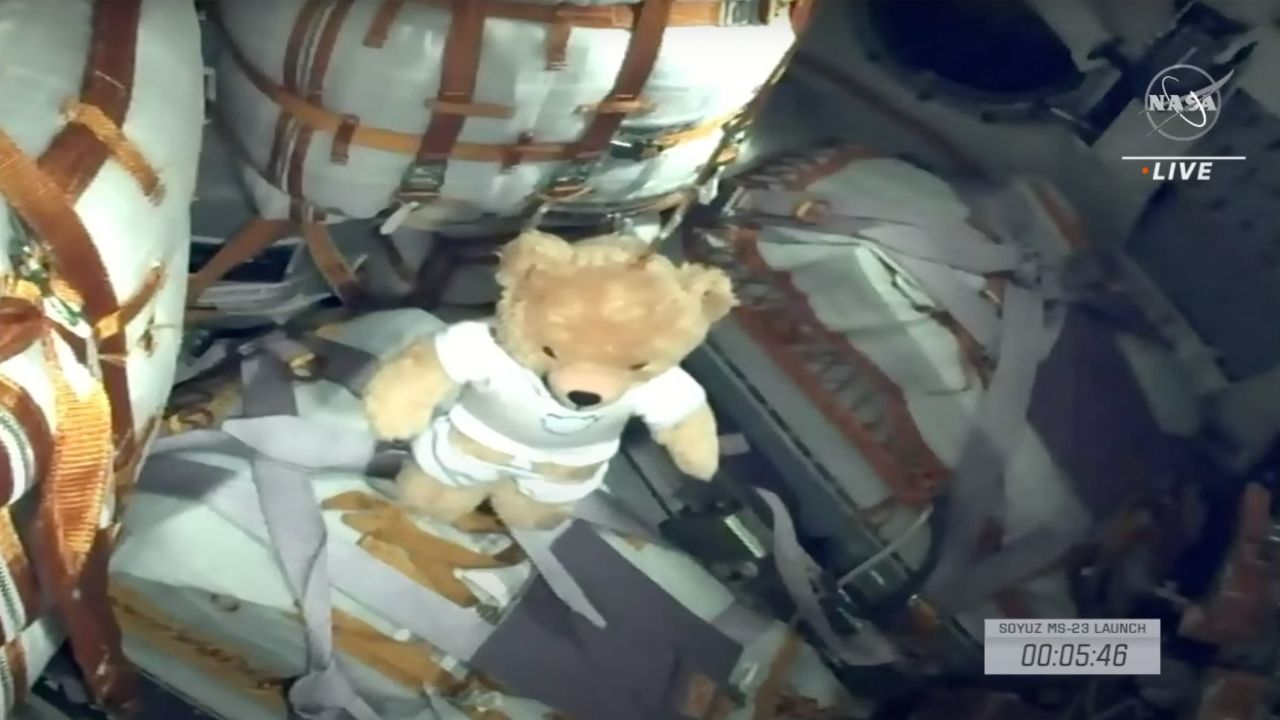
Rather than flying with crew members aboard, the Soyuz MS-23 launched on Thursday with only a “Zero-G indicator,” which can be any object that is left in the cabin and is designed to float freely when the capsule enters microgravity. For this mission, the indicator is a teddy bear tethered by a string inside the cabin.
About two months into the three men’s journey, the MS-22 experienced a coolant leak, leaving the cabin at temperatures deemed unsafe for the crewmates to use for their return journey. The Russian space agency Roscosmos and NASA quickly worked to establish plans to send areplacement vehicle. Roscosmos officials said they had determined that the leak resulted from a small hole caused by an impact with a micrometeoroid.
Plans to launch the rescue vehicle, however, were drawn into question when a Russian cargo ship, called Progress, experienced a similar coolant leakon February 11. Three days later, Roscosmos had said in a post on the social media site Telegram, that it would delay the Soyuz MS-23 launch until at least March while the agency investigated the cause of the Progress vehicle’s coolant leak.
On Tuesday,however, Roscosmos had said in an updated Telegram post that it had determined the cause of the Progress spacecraft leak was “external influences.”
“The Russians are continuing to take a very close look at both the Soyuz and the Progress coolant leaks,” Dana Weigel, the space station’s deputy manager for NASA, said during a Wednesday briefing.
“They formed a state commission that is assessing the anomalies,” she added, noting that the team is analyzing potential causes from the time the capsules launched through their journey in orbit.
Originally, Roscosmos cosmonauts Oleg Kononenko and Nikolai Chub and NASA astronaut Loral O’Hara were expected to launch to the space station on March 16 aboard MS-23.
Instead, Prokopyev, Petelin and Rubio’s time will be extended on the space station until they can return to Earth aboard Soyuz MS-23 later this year. That return could happen in September, according to a report from Russia state-run media outlet TASS.
If that timeline holds, the three crewmates will have extended their expected six-month stay in space to about one year.
When asked about the extended stay, Joel Montalbano, the space station’s program manager for NASA, said the crew remains in good health and there is no reason to expedite their journey home.
The crew is “willing to help wherever we ask,” Montalbano said during a January 11 news conference. “They’re excited to be in space, excited to work and excited to do the research that we do on orbit. So they are ready to go with whatever decision that we give them.”
He added,“I may have to fly some moreice cream to reward them.”
The launch of the Soyuz MS-23 spacecraft comes just days before NASA and SpaceX will launch their Crew-6 mission. Expected to lift off early Monday morning, Crew-6 will carry NASA astronauts Stephen Bowen and Warren “Woody” Hoburg as well as Sultan Alneyadi, an astronaut with the United Arab Emirates, and Roscosmos cosmonaut Andrey Fedyaev.
Shortly afterthose four arrive at the space station, NASA’s Crew-5 astronauts will return home from their five-month staythere aboard the SpaceX Crew Dragon capsule.NASA officials said this week that the coolant leaks experienced on the Soyuz and Progress vehicles would not have any impact on the SpaceX missions and that no similar issues were discovered on Crew Dragon vehicles.
UK-based international performer,Stephanie Benson, also known as Princess Akua Ohenewaa Asieanem of Kokobin, has revealed that the controversies surrounding her and what she does on her social media platform do not affect her life in any way.
She made this revelation on Ebitz on LifeStyle TV with host Nana Ama Gyapong.
Stephanie Benson, 55, a mother of five and wife, has always had people questioning her social media platforms, which promote the education of sex to be taught by parents to children and again show her in a semi-naked state most of the time with her husband or alone.
At her age, most people will assume she should be mentoring the young Ghanaian female artists instead of teaching about sex and counseling married women on how to deal with their spouses, butStephanie Benson has explained that these things people say about her do not affect her at all.
She said: “the thing with me is that controversies do not affect. I don’t get affected by people insulting me or talking bad about me because I don’t know how that has a place in my life.”
She continued: “I have my husband, children and a few people who love me, and what I do is for people, and if they don’t like it they can just scroll down.”
She concluded: “so the controversies about myself and the things I speak about, you can either take it or leave it, either way I will say”.
Stephanie Benson has a clap-back song for all her haters with “Asem Aba,” to wit, there is trouble.
Dean of the University of Cape Coast, Prof John Gatsi, has appealed to government not to tamper with the contact hours of Senior High School students.
The Keta Secondary Technical School (KETASCO) celebrated its 70th anniversary on Saturday, with Torgbui Sri III as the Royal Guest of Honor and Torgbui Tamakloe VI as chairman.
The ceremony was attended by Dzolalians from home and abroad.
Dean of the University of Cape Coast (UCC) Business School, Prof. John Gatsi was the Keynote Speaker.
Prof Gatsi is a Dzolalian- enrolled into KETASCO in 1988 and completed his ‘O’ and ‘A’ levels in 1993 and 1995 respectively.
He spoke on the topic “Quality Second-Cycle Education in Ghana: The Role of Stakeholders.”
The Dean of UCC Business School stated that recent developments in second-cycle education, whereby some students spent only 37 days in school and are asked to vacate for 56 days in order for first-year students to come in, are having negative impact on contact hours and compromising quality of education.
According to him, educational authorities should not trivialise the critical issue of contact hours.
He explained that the “truncated contact hours are the reason why parents have to pay for so many arranged classes for their children to be able to complete the syllabi.” This, he added, creates inequity for many students.
He believes that, while focusing on second-cycle education has political and electoral implications, effective stakeholder engagement should result in better and longer-lasting quality outcomes.
He called for stakeholder engagement and debate about allowing students in second-cycle institutions to use phones and tablets.
He stated that Vice President Mahamudu Bawumia’s promise to give each Senior High Student a tablet should spark debate about whether the policy of not allowing phones and tablets in schools should be changed.
He went on to say that junior high school students, who are mostly day students, are given assignments that primarily require the use of phones and tablets to complete homework. So there must undoubtedly be a discussion in order to ensure that our students learn creatively.
Prof. Gatsi explained that accountability is needed in the operationss of Parent Teacher Association (PTAs).
He said there are reported cases of misuse of PTA dues and called for proper structures to be put in place to assure contributors. Prof Gatsi suggested that those who misapplied PTA dues should be punished because it negatively affects construction of infrastructure projects in the schools.
He inspired teachers to be role models and motivational forces for students. Prof. Gatsi further asked educationists to look at quality holistically saying that “if a school has three programmes and one is churning out good grades and others are not, then quality in his view is not holistic.”
Prof. Gatsi encouraged past students to use the 70th anniversary to reflect on the years and rededicate themselves to defining what KETASCO should be in terms of infrastructure, capacity to enroll more students, and making the school appealing to all.
The majority of analysts predicted a swift win for the invaders when Russian President Vladimir Putin ordered his forces into Ukraine a year ago.
Early forecasts of Russian victory have not come to pass due to a number of variables, according to experts, including stronger morale and superior military strategy on the Ukrainian side as well as – importantly – the delivery of Western weapons.
While recent headlines have made much of the potential for Patriot air defence systems or Western battle tanks to alter the course of the war, these weapons have not yet been deployed in Ukraine.
But there are other weapons that have already helped to change the course of the war. Here are three key ones that the Ukrainians have used to devastating effect.
At the very beginning of the war, fighters on both sides were expecting Russian armored columns to begin rolling into the Ukrainian capital of Kyiv within days.
The Ukrainians needed something that could blunt that attack – and found it in the form of the Javelin, a shoulder-fired, guided anti-tank missile that can be deployed by a single individual.
Part of its appeal lies in its ease of use, as manufacturer Lockheed Martin, which co-developed the missile with Raytheon, explains: “To fire, the gunner places a cursor over the selected target. The Javelin command launch unit then sends a lock-on-before-launch signal to the missile.”
The Javelin is a “fire and forget” weapon. As soon as its operator takes the shot, they are able to run for cover while the missile finds its way to the target.
This was particularly important in the early days of the war as the Russians tended to stay in columns when trying to enter urban areas. A Javelin operator could fire from a building or behind a tree and be gone before the Russians could fire back.
The Javelin is also good at targeting the weak spot of the Russian tanks – their horizontal surfaces – because its trajectory after launch sees it curve upwards then fall on the target from above, according to Lockheed Martin.
‘Fire and forget’: See the US weapons being used in Ukraine
This could be seen in images early in the war of Russian tanks with their turrets blown off. Often, it was a Javelin that had done the damage.
Indeed, so great was the Javelins’ impact that two-and-a-half months into the war US President Joe Biden visited the Alabama plant where they are made to praise the workforce for their help in defending Ukraine.
“You’re making a gigantic difference for these poor sons of guns who are under such enormous, enormous pressure and firepower,” Biden said at the time.
There was one other advantage to the Javelins, particularly pertinent at the start of the war: they were politically acceptable.
“Their low cost and defensive usage make them politically easier for other countries to provide,” Michael Armstrong, an associate professor at Brock University in Ontario, wrote on the Conversation. “By contrast, governments disagree about sending more expensive offensive weapons like warplanes.”
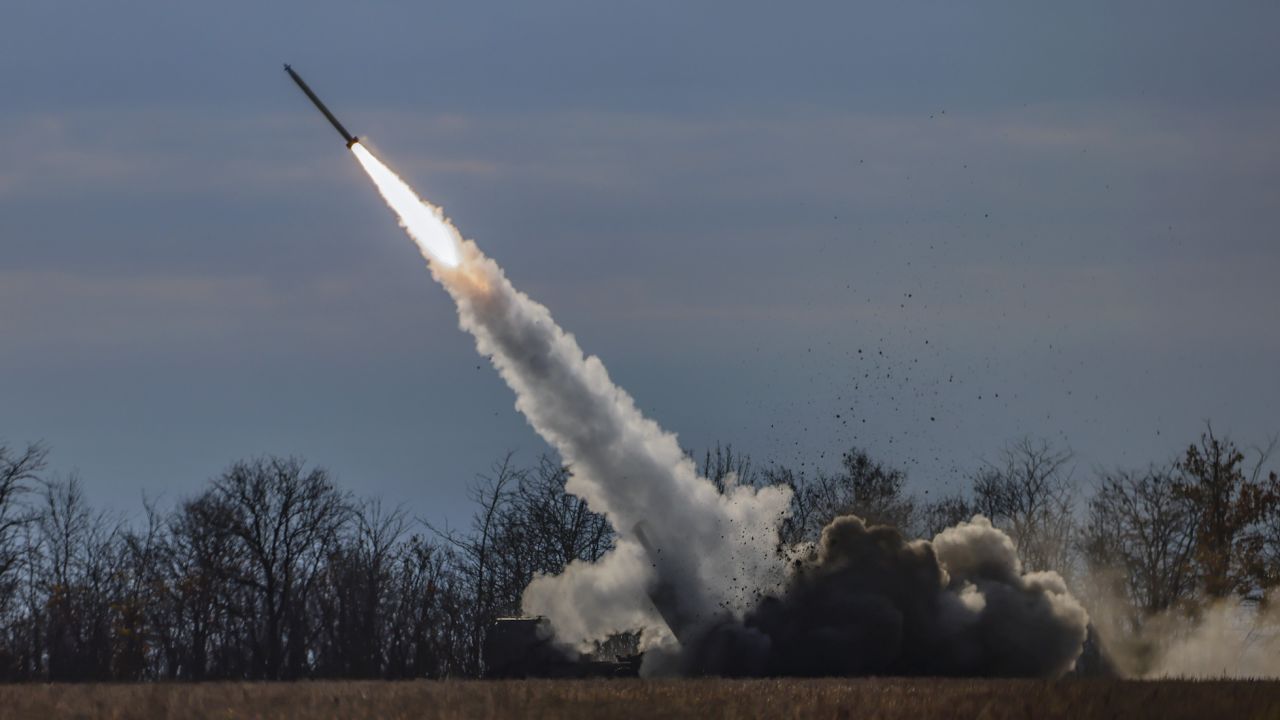
The full US Army name is the M142 High Mobility Artillery Rocket System. It’s “a full-spectrum, combat-proven, all-weather, 24/7, lethal and responsive, wheeled precision strike weapons system,” the US Army says.
That’s a mouthful, but to put it more plainly, HIMARS is a 5-ton truck carrying a pod that can launch six rockets almost simultaneously, sending their explosive warheads well beyond the battlefield’s front lines, and then quickly change positions to avoid a counterstrike.
“If Javelin was the iconic weapon of the early phases of the war, HIMARS is the iconic weapon of the later phases,” Mark Cancian, senior adviser for the International Security Program at the Center for Strategic and International studies, wrote in January.
HIMARS fires munitions called the Guided Multiple Launch Rocket System (GMLRS) that have a range of 70 to 80 kilometers (about 50 miles). And their GPS guidance systems make them extremely accurate, within about 10 meters (33 feet) of their intended target.
Exclusive video shows Ukrainian drones targeting Russian positions
Last July, Russian reporter Roman Sapenkov said he witnessed a HIMARS strike on a Russian base at Kherson’s airport in territory Moscow’s forces had occupied at the time.
“I was struck by the fact that the whole packet, five or six rockets, landed practically on a penny,” he wrote.
HIMARS has had two key effects, Yagil Henkin, a professor at the Israel Defense Forces Command and Staff College, wrote for the US Marine Corps University Press.
The strikes have forced “the Russians to move their ammunition depots farther to the rear, thereby reducing the available firepower of Russian artillery near the front lines and making logistical support more difficult,” Henkin wrote.
And using the long-range rockets to hit targets such as bridges has disrupted Russian supply efforts, he said.
The HIMARS system is manufactured and patented in the United States by Lockheed Martin.
The Turkish-designed drone has become one of the world’s best-known unmanned aerial vehicles (UAV) due to its use in the Ukraine war.
It’s relatively cheap, made with off-the-shelf parts, packs a lethal punch and records its kills on video.
Those videos have shown it taking out Russian armor, artillery and supply lines with the missiles, laser-guided rockets and smart bombs it carries.
“Viral videos of the TB2 are a perfect example of modern warfare in the TikTok era,” Aaron Stein, a senior fellow at the Foreign Policy Research Institute, wrote on the Atlantic Council’s website.
The Bayraktar TB2 was not a “magic weapon,” but it was “good enough,” he wrote.
He cited as its weaknesses its lack of speed and vulnerability to air defenses. Battlefield statistics appear to bear that out. Seventeen of the 40 to 50 TB2s that Ukraine has received have been destroyed in combat, according to the Oryx open source intelligence website.
Turkish drone is so effective, Ukrainian troops are singing about it
But Stein says the number of losses are outweighed by the low cost of the drone, which means they can be relatively easily replaced.
Indeed, a plan to set up an assembly line for the drones in Ukraine was in the works even before the war. And using the drones potentially has saved the lives of Ukrainian pilots who would otherwise have had to carry out the missions.
Recent reports from Ukraine indicate the TB2 may be playing less of a role as Russian forces figure out how to combat it, yet its fans say it delivered when Ukraine’s position was most precarious.
Its videos of Russian kills were “a great morale booster,” Samuel Bendett, adjunct senior fellow at the Center of Naval Analyses Russia Studies (CNAS), told CNN early in the war.
“It’s a public relations victory.”
The TB2 even had a music video made about it. That’s the status it has attained among Ukrainians.
After finding pieces of model and influencer Abby Choi’s dismembered body in a rental property in the city’s north, police in Hong Kong said they have detained her ex-husband.
Police say that Choi, 28, who went missing on Wednesday, was found in parts along with a meat slicer, an electric saw, and some clothing at the Tai Po apartment on Friday afternoon. Choi was reported missing on Wednesday.
At a news conference on Saturday, police superintendent Alan Chung announced that the model’s ex-husband had been detained after being apprehended while attempting to flee at a port in Tung Chung, on one of the city’s outer islands, Lantau.
Superintendent Chung said police believed he had intended to abscond via water transport at the time of arrest.
The ex-husband, along with his brother and his parents – who were arrested on Friday – are being held for questioning while police continue the search for Choi’s remaining body parts, Chung said.
Choi was reported missing on Wednesday, having not been seen since the day before.
Police said the investigation, including into the cause of death, was continuing.
More than 100 police personnel were sent to search the Tseung Kwan O Chinese Permanent Cemetery on Saturday, including a diving team who were deployed to the nearby catchwater.
As a model, Choi had enjoyed international exposure and was photographed at the Elie Saab Spring Summer 2023 Haute Couture show in Paris, France, as recently as last month. She also recently appeared as the digital cover model for the luxury magazine L’Officiel Monaco and attended this year’s Paris Fashion Week.
Choi, who was also known as a social media influencer, has nearly 100,000 followers on her Instagram account, which features photographs of her posing with various luxury brands in locations from London to Paris and Shanghai and aboard yachts in Hong Kong. In her bio she writes that she’s “embracing every moment in life.”
Choi leaves behind a son and a daughter from her ex-husband, and they will be placed in the care of the model’s mother, police added.
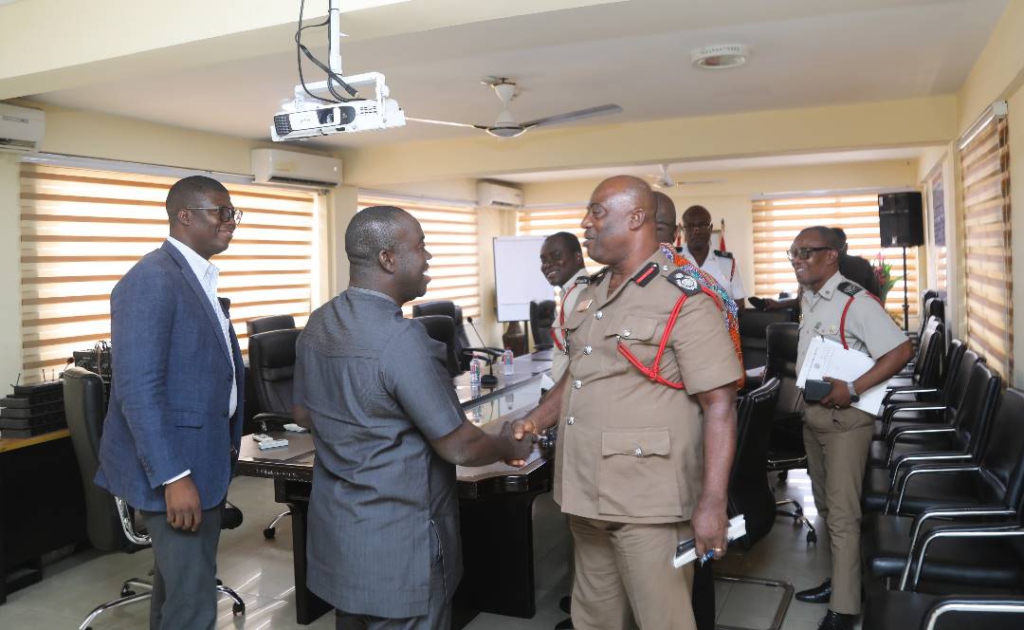
Fire prevention at GRIDCo’s Substations and Safety Training was the focus of discussions when a delegation from the company, led by its CEO Ebenezer Essienyi engaged the Chief Fire Officer and Management of the Ghana Fire Service (GNFS) on February 16.
The discussions with the GNFS reflected diverse ways to best protect the assets from fire.
One of GRIDCo’s core values is safety; for staff and the protection of its 68 substations and other assets nationwide.
The GNFS emphasised the need to undertake a risk assessment of GRIDCo’s facilities.
Based on the report, the GNFS will then advise on the best strategy to adopt to protect the substations from fire.
At the meeting, both entities agreed to sign a Memorandum of Understanding (MoU) to govern how the proposed collaboration, which includes safety training, will be executed.
Of critical mention is GRIDCo’s work with the Forestry Commission to create a green belt along GRIDCo’s Right of Way (or where the transmission lines are located) to protect them from encroachment and other risks.
The GNFS suggested the creation of a “brown belt” alongside the “green belt” to ensure it does not become a fire hazard for the assets (as branches and leaves scattered around the green belt can function as fuel for fire).
Ebenezer Kofi Essienyi thanked the Service for the audience and reception offered to him and his team. The entourage also included Bernard Gyan, Director-Technical Services; Samuel Kow Acquah, Manager of Strategy Risk and Compliance, and Kojo Kwarteng, Special Assistant to the Chief Executive.
Present at the meeting on behalf of the Service were ACFO II George Wiafe, Deputy Director, Fire Safety Education; David Sam Afful, Assistant Director of Investigations; Michael Ato Korsah, Deputy Director – of Fire Certification; Ernest Ampene of Investigation Directorate; Husbert Atobra Nyame-Boame of the Safety Directorate and Ackah Desmond, Deputy National Public Relations Officer.
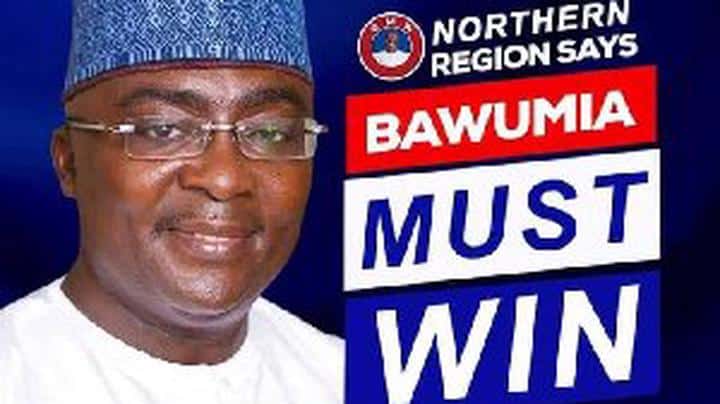
After carefully listening to Hon. Alan Kwadwo Kyerematen‘s interview on Radio Tamale on February 22, as part of his northern region tour, we have realized that, though he is a gentle and cool person, he has nothing to offer NPP supporters and Ghanaians at large should he be given the nod lead NPP as our flagbearer
First of all, one can be supported and voted for to lead the party base on his consistent financial, intellectual or devoted time contribution toward the growth of the party especially from 2007 till date which he has no track record of.
One can also be supported to lead the party considering his ability to empower or mentor people especially, taking into account the number of years he has been contesting. But according to his own response to a question he was asked by the host, Abdul Shakur Omae, to tell whether or not he has helped grown people, especially in the northern region, he was unable to mention a single person and therefore has no footprint on that as well
Finally and ultimately, one can be supported to lead our party based on the message and clear vision he has for Ghanaians which can convince the floating voters to endorse the party to break the 8 come 2024 general elections. But as obvious, he already admitted that he has no campaign message for Ghanaians to break the 8 when he was addressing the Sefwi Wiaso Traditional Council as part of his campaign tour in the Western North Region by saying “The current economic crisis is making it difficult for NPP to craft campaign message” despite all the life-changing and flagship programs implemented by our current government
The overview of that interview points out the fact that he has no message different from the usual mischief of his supporters that ‘it is a queue and it is his term’; ‘it is a tradition’ and or ‘he has suffered for the party’.
But to analyze them logically, to those who say it is a ‘tradition’ and for that Hon. Alan Kyerematen is supposed to lead. I will like to remind them if they care to know, that NPP is based on 3 traditions (i.e Dankwah, Bussia and Dombo) of which we have H.E John Kufuor from Bussia tradition; H.E Nana Addo Dankwa Akufo-Addo from Dankwah tradition and we are yet to have one from Dombo tradition to lead who is no one than H.E Dr. Mahamudu Bawumia.
Therefore, from the angle of tradition, Dr. Mahamudu Bawumia is the best/next to lead.
Again, to those who argue that ‘it is a queue’ and for that matter it is Hon. Alan Kyerematen’s turn, let me kindly bring to their understanding that he joined the so-called queue in the same year Dr. Mahamudu Bawumia was appointed the running mate to Nana Addo Dankwa Akufo-Addo but the difference is that whilst he was spending his time only on contesting, Dr. Mahamudu Bawumia was in the queue campaigning for the party to win elections. Hence, from the perspective of being in the queue for a long time, Dr. Mahamudu Bawumia stands tall and is next/best to lead.
Lastly on the argument that ‘he has suffered’ for the party more than all those bidding to lead NPP, let’s reflect back to the days when H.E Dr. Mahamudu Bawumia was delivering economic lectures from one place to another which had made H.E John Dramani and NDC unpopular that masterminded John Dramani Mahama running as one term president which is unprecedented in the history of Ghana.
Or have they forgotten the Almighty 2012 election petition during which Dr. Mahamudu Bawumia was the only one to withstand the then pressure and defend the party in the supreme court?
To recap, it is apparent that from all perspectives, H.E Dr. Mahamudu Bawumia remains the next and the best to lead and for that matter, we are edging all the sympathisers of NPP, precisely the delegates to remain firm in making sure that he (i.e Dr. Mahamudu Bawumia) leads the party as our next flagbearer to break the 8.
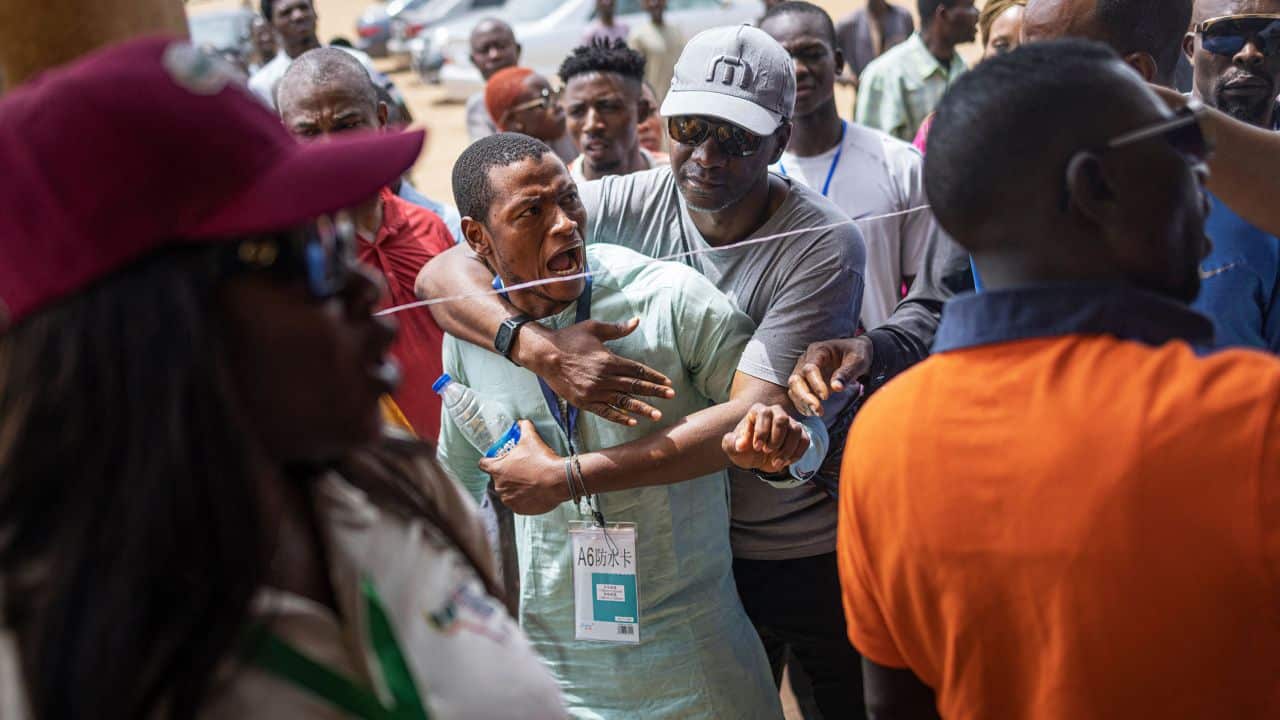
On Saturday, millions of Nigerians went to the polls to choose a new president, but the voting was marred by several delays. Elections to fill seats in the nation’s parliament are taking place at the same time as the contentious election.
Witness allegations of localised violence at two voting places in Lagos that required the military to interfere were corroborated by CNN. CNN has contacted INEC for a response.
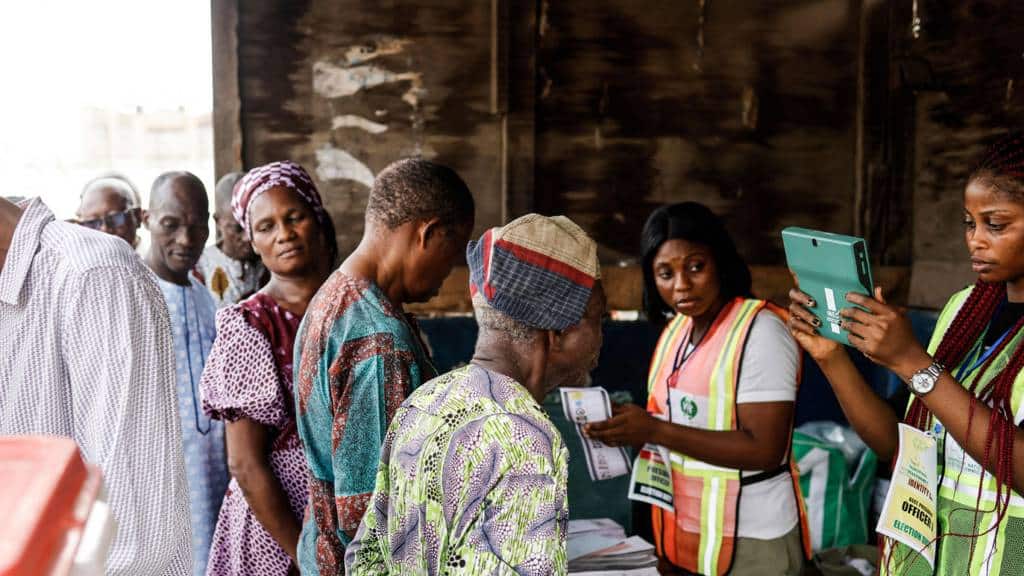
A CNN team saw hectic scenes at a polling place in Maraba, an Abuja suburb, where many voters were having trouble casting their ballots. The Independent National Electoral Commission (INEC) standards, which guarantee voters’ privacy, were broken by those who did manage to cast a ballot since they did so in plain view of people who were standing next to them.
“People are voting in exposed spaces, and everyone can see who they are voting for. There’s no privacy. I won’t be surprised if this polling unit is canceled,” Elias Ajunwa, one registered voter, said.
Ajunwa expressed unease about the situation. “There’s the possibility of any hooligan carting away INEC materials because of how vulnerable the INEC officials and their materials are,” he added.
About 93 million Nigerians in a country of 200 million people are registered to vote, according to electoral body INEC, but only 87 million are holders of a permanent voter card (PVC), a main requirement to cast a ballot. The election will be Africa’s largest democratic exercise.
The Chief Observer of European Union Observation Mission to Nigeria, Barry Andrews, told CNN it was premature to make any conclusions about widespread delays.
“We’ve taken note of those reports and we will look across the country to see whether this a pattern or whether it has in any way hindered the exercise of people’s political rights to vote or caused frustration or caused people to turn away. For the moment, it’s premature to make any conclusions about it.”
People were still waiting to cast their ballots despite polls being expected to close at 2:30 p.m. local time (8:30 a.m. ET). Voting did not start until after the scheduled opening time in some polling stations.
One polling station in Lagos delayed opening as officials were still setting up after polls were meant to open, a CNN team witnessed. An official urged eager voters to be calm and “treat each other with love” as they continued to wait.
The same issue dogged several other voting locations, including in northern Kano State and southern Bayelsa State, with no election officials in sight at 8:30 a.m. local time, according to Reuters. In previous elections, voters in some areas have complained that polling stations opened hours late or did not materialize at all.
Ballots will be counted at polling places at the close of voting and transmitted electronically in real-time to INEC’s Result Viewing portal (IReV), a first of its kind in Nigeria, the commission tells CNN.
“With the electronic transmission system (IREV), people will already know the winners before the official announcement is made,” adds Rotimi Oyekanmi, a spokesman for INEC’s chairperson.
To win, a candidate must garner a sufficient number of ballots to meet the 25% vote spread in 24 of Nigeria’s 36 states. In the absence of this, a second round run-off between the top two candidates will be held within 21 days.
Eighteen candidates are on the ballot for Nigeria’s top, but three are leading the race for the popular vote, according to pre-election surveys.
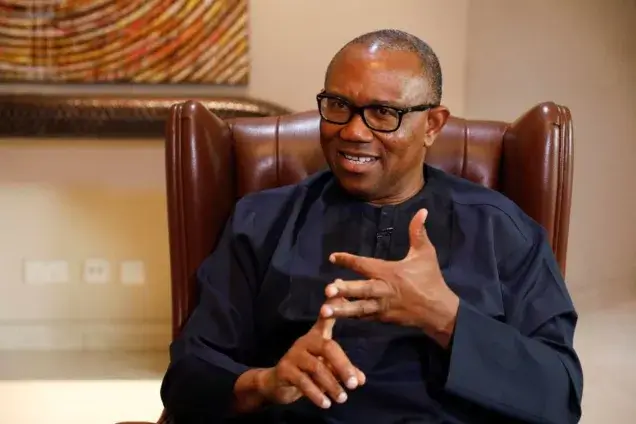
One of the key contenders is Bola Ahmed Tinubu, the candidate of term-limited President Muhammadu Buhari’s party, the All Progressives Congress (APC). Another is the main opposition leader and former vice president Atiku Abubakar, of the People’s Democratic Party (PDP). And third strong contender, Peter Obi, is running under the lesser known Labour Party, and altered early predictions of the presidential vote, which has typically been two-horse races between the ruling and opposition parties.
Seventy-year-old Tinubu, 70, is a former governor of Nigeria’s wealthy Lagos State, who wields significant influence in the southwestern region where he is acclaimed as a political godfather and kingmaker.
He boasts of aiding the election of Buhari to the presidency and declares it is now his turn to lead the country.
Candidate of the opposition party PDP Abubakar, 76, is a former Nigerian vice president and a staunch capitalist who made his fortune investing in various sectors in the country.
Here’s what to know about Nigeria’s presidential election
Abubakar’s presidential bid (his sixth attempt) had fueled concern that it might usurp an unofficial arrangement to rotate the presidency between Nigeria’s northern and southern regions, since he is from the same northern region as the outgoing leader, Buhari.
Labor Party’s Obi is a two-time former governor of southeastern Anambra State and has been touted as a credible alternative to the two major candidates by his hordes of supporters, mostly young Nigerians who call themselves ‘Obidients.’
Obi is also the only Christian among the leading candidates. His southeastern region has yet to produce a president or vice president since Nigeria returned to civil rule in 1999.
The ruling party’s Tinubu, from the religiously mixed southwestern part of the country, is a Muslim and also chose a Muslim running mate, despite the country’s unofficial tradition of mixed-faith presidential tickets.
All top three candidates are confident they can turn Nigeria’s fortunes around if voted into power, as the country battles myriad economic and security problems that range from fuel and cash shortages to rising terror attacks, high inflation, and a plummeting local currency.
One voter, Wandu, told CNN’s Larry Madowo in Lagos on Saturday that the most important issue is security: “We need someone that has a hold and an understanding of the security challenges that we have. The economy is in free fall. We need someone that has a fair understanding of what we need to be better.”
Nigeria’s security forces have mobilized personnel to ensure hitch-free electioneering across the country.
The run-up to the polls has been fraught with violence that stemmed from protests against unpopular government policies and lethal attacks by armed criminal gangs.
On Wednesday, a senatorial candidate for the Labour Party, was shot and burned in his campaign vehicle in the country’s southeastern Enugu State, police said.
Electoral body INEC suspended the election in Enugu East Senatorial District following the death of the candidate, it tweeted on Saturday, adding that the election will now be held on March 11.
Before the killing, violent protests had erupted across Nigerian states as citizens railed against the scarcity of gasoline in petrol outlets and a shortage of cash that followed a controversial currency redesign.
INEC hasn’t been spared from the chaos; its facilities have been torched in parts of the country.
Voting was canceled at more than 200 planned polling units across Nigeria and voters redirected to other poll locations, INEC said, due to security concerns.
Ahead of the elections, national police ordered a restriction of non-essential vehicular and waterway movements from midnight on election day until 6 p.m., while the country’s immigration service has ordered the closure of Nigeria’s land borders from midnight Saturday until midnight Sunday.
Weeks before polling day, the service had confiscated over 6000 voter cards from illegal migrants, whom it said had other national documents in their possession.
INEC spokesperson Oyekanmi nevertheless insists the poll results will be free and fair.
“The experience Nigerians will have for the 2023 elections will be far better than previous elections and the integrity (of the polls) will be clear for everyone to see,”Oyekanmi told CNN days before the election.
Final results are expected to be announced a few days after polling.
Current President Buhari tweeted on Thursday: “There should be no riots or acts of violence after the announcement of the election results. All grievances, personal or institutional, should be channeled to the relevant Courts.”
Former Director of Communications for the oppositionNational Democratic Congress, has questioned the popularity of the party’s 2020 presidential candidate, former PresidentJohn Dramani Mahama; as being touted by his supporters.
According to some supporters of Mr Mahama, the former president based on his popularity with the Ghanaian electorate should have been allowed to run unopposed in the NDC’s upcoming primaries.
But speaking on Top FM’s Final Point talk show hosted by Kwabena Owusu Agyemang (Governor), Solomon Nkansah who is part of the Dr Kwabena Duffour campaign team dared the former president to leave the NDC and contest as an independent candidate if he is that popular.
“It is the NDC that is popular than any individual within the party. No individual who is a member of the party is more popular.
“Jerry Rawlings who is the founder of the party led the campaign of late President Mills but the NDC still lost. If he was that popular, he could have led the party to power,” he said.
“He should go independent. If he is popular than the party, he should go independent and let’s see,” Solomon Nkansah added.
The NDC on Friday, February 23, 2023, closed nominations for its flagbearership contest slated for May 13, 2023.
Former President John Mahama, Dr Kwabena Duffour and two others picked nomination forms to contest in the race.
Whereas Mr Mahama is deemed by some members of the NDC as the party’s presumptive flagbearer based on his popularity, Solomon Nkansah believes the former president’s brand is suffering from diminishing returns.
He posits that Dr Duffour remains the ideal candidate to win the NDC power going into the 2024 presidential election.
In Moldova, a small republic bordering Ukraine to the southwest, tensions are rising amid accusations that Moscow is preparing the ground for a coup that may draw the country into its war.
Maia Sandu, the president of Moldova, has accused Russia of using “saboteurs” dressed as people to incite trouble during a time of political turbulence, echoing similar cautions from Volodymyr Zelensky, the president of Ukraine.
Russian President Vladimir Putin has meanwhile baselessly accused Kyiv of planning its own assault on a pro-Russian territory in Moldova where Moscow has a military foothold, heightening fears that he is creating a pretext for a Crimea-style annexation.
US President Joe Biden met President Sandu on the sidelines of his trip to Warsaw last week, marking the one-year anniversary of Russia’s invasion.
Although there is no sign he has accepted her invite to visit, the White House did say he reaffirmed support for Moldova’s “sovereignty and territorial integrity.”
Here’s what you need to know.
Earlier this month, Zelensky warned that Ukrainian intelligence intercepted a Russian plan to destabilize an already volatile political situation in Moldova.
The recent resignation of the country’s prime minister followed an ongoing period of crises, headlined by soaring gas prices and sky-high inflation. Moldova’s new prime minister has continued the government’s pro-EU drive, but pro-Russian protests have since taken place in the capital, Chisinau, backed by a fringe, pro-Moscow political party.
Amid the tensions, Moldova’s President Sandu issued a direct accusation that Russia was seeking to take advantage of the situation.
Sandu said the government last fall had planned for “a series of actions involving saboteurs who have undergone military training and are disguised as civilians to carry out violent actions, attacks on government buildings and hostage-taking.”
Sandu also claimed individuals disguised as “the so-called opposition” were going to try forcing a change of power in Chisinau through “violent actions.” CNN is unable to independently verify those claims.
“It’s clear that these threats from Russia and the appetite to escalate the war towards us is very high,” Iulian Groza, Moldova’s former deputy foreign minister and now the director of the Chisinau-based Institute for European Policies and Reforms, told CNN.
“Moldova is the most affected country after Ukraine (by) the war,” he said. “We are still a small country, which has still an under-developed economy, and that creates a lot of pressure.”
Despite Moscow’s pleas of innocence, its actions regarding Moldova bear a striking resemblance to moves it made ahead of its annexation of Crimea in 2014, and its full-scale invasion of Ukraine last year.
On Tuesday, Putin revoked a 2012 foreign policy decree that in part recognized Moldova’s independence, according to Reuters.
Then on Thursday, Russia’s Ministry of Defense accused Ukraine of “preparing an armed provocation” against Moldova’s pro-Russian separatist region of Transnistria “in the near future,” state-media TASS reported.
No evidence or further details were offered to support the ministry’s accusation, and it has been rubbished by Moldova.
But the claim has put Western leaders on alert, coming almost exactly a year after Putin made similar, unsubstantiated claims that Russians were being targeted in the Donbas – the eastern flank of Ukraine where Moscow had supported militant separatists since 2014 – allowing him to cast his invasion of the country as an issue of self-defense.
“It was the case before – we have seen constant activities of Russia trying to explore and exploit the information space in Moldova using propaganda,” Groza said.
“With the war, all these instruments that Russia was using before have been multiplied and intensified,” he said. “What we see is a reactivation of Russian political proxies in Moldova.”
“I do see lots of fingerprints of Russian forces, Russian services in Moldova,” Poland’s Prime Minister Mateusz Morawiecki told CBS last Sunday. “This is a very weak country, and we all need to help them.”
Central to Russia’s interests in Moldova is Transnistria, a breakaway territory that slithers along the eastern flank of the country and has housed Russian troops for decades.
The territory – a 1,300 square mile enclave on the eastern bank of the Dniester River – was the site of a Russian military outpost during the last years of the Cold War. It declared itself a Soviet republic in 1990, opposing any attempt by Moldova to become an independent state or to merge with Romania after the disintegration of the Soviet Union.
When Moldova became independent the following year, Russia quickly inserted itself as a so-called “peacekeeping force” in Transnistria, sending troops in to back pro-Moscow separatists there.
War with Moldovan forces ensued, and the conflict ended in deadlock in 1992. Transnistria was not recognized internationally, even by Russia, but Moldovan forces left it a de facto breakaway state. That deadlock has left the territory and its estimated 500,000 inhabitants trapped in limbo, with Chisinau holding virtually no control over it to this day.
Moldova is a country at a crossroads between east and west. Its government and most of its citizens want closer ties to the EU, and the country achieved candidacy status last year. But it’s also home to a breakaway faction whose sentiment Moscow has eagerly sought to rile up.
It has been a flashpoint on the periphery of Russia’s invasion of Ukraine for the past year, with Russian missiles crossing into Moldovan airspace on several occasions, including earlier this month.
A series of explosions in Transnistria last April spiked concerns that Putin was looking to drag the territory into his invasion.
Russia’s stuttering military progress since then had temporarily allayed those fears. But officials in Moldova have been warning the West that their country could be next on Putin’s list.
Last month, the head of Moldova’s Security Service warned there is a “very high” risk that Russia will launch a new offensive in Moldova’s east in 2023. Moldova is not a NATO member, making it more vulnerable to Putin’s agenda.
Should Russia launch a Spring offensive that centers on Ukraine’s south, it may seek again to creep towards Odesa and then link up with Transnistria, essentially creating a land bridge that sweeps through southern Ukraine and inches even closer to NATO territory.
According to reports, family members found him to have died in his sleep in the wee hours of Saturday.
According to the family members, he coordinated the pre-election activities of the party till late Friday night and was said to have been eagerly awaiting the commencement of voting on Saturday, Vanguard Newspaper added.
A senior lecturer at the University of Ghana, Professor Ransford Gyampo, has advised that a limit be placed on the number of legislators.
His comments come in the wake of the increase in the number of parliamentarians. Ghana’s Parliament began with 140 members then it increased to 200 legislators, then to the current 275 MPs.
According to him, if a limit is not placed on the number of parliamentarians, Ghana should be prepared to build a stadium to meet the rising numbers.
“It does make sense, otherwise one day we will have to construct a stadium where members of Parliament will operate,” he said.
Speaking on JoyNews’ Newsfile on Saturday, he stressed that the number of MPs could easily be reduced if some constituencies are merged.
“We have to re-align constituencies and put some together, so that we can even reduce the numbers,” he suggested.
The Political Science lecturer expressed disappointment in the legislature saying “parliament has not lived up to expectation.
He said, “Over the week, I gave an assessment of Parliament and I felt that if you asked me to score them, I will give them 3 over 10 and some people came for remarking, so I increased it to three and a half over 10.”
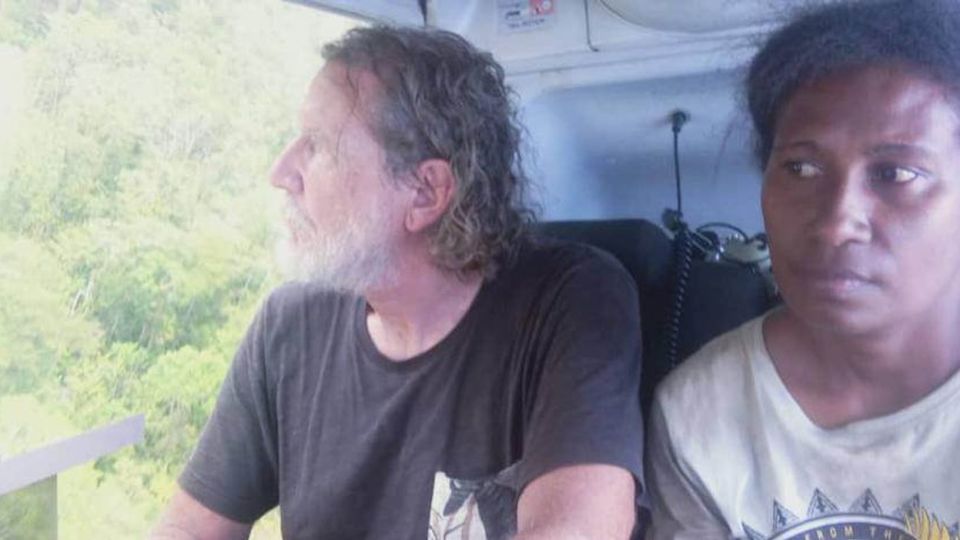
According to Papua New Guinea’s Prime Minister James Marape, all of the captives who had been taken prisoner by armed criminals in a remote area had been released.
Marape said on Facebook that the remaining three hostages had been successfully returned through covert operations without any (ransom) being paid. “We apologise to the families of those seized as hostages for ransom,” Marape said.
A group of heavily armed men had taken four hostages, including foreign nationals and local tour guides, but one of them, a lady, was released on Wednesday. On Monday, national police had referred to the individuals as “opportunists.”
In a tweet on Sunday, New Zealand’s foreign minister Nanaia Mahuta welcomed the release of the group, which included a New Zealander who is a professor at an Australian university.
PNG Police Commissioner David Manning had previously said the hostage-takers had spotted the group “by chance” and taken them into the bush.
“These are opportunists that have obviously not thought this situation through before they acted, and have been asking for cash to be paid,” Manning said.
Papua New Guinea, a Pacific nation of more than 9 million people, shares an island with the restive Indonesian region of Papua.
In a separate incident earlier this month, a New Zealand pilot was taken hostage by separatist fighters in Papua. Identified by local police as Philip Mehrtens, the pilot was captured after landing a commercial Susi Air charter flight at Paro Airport in the remote highlands of the Nduga regency.
The group previously demanded that all incoming flights to Paro Airport be stopped and said the pilot would not be released until the Indonesian government acknowledged Papuan independence.
Peter Obi is a businessman, politician, and former governor of Anambra State in Nigeria. On July 19, 1961, he was born in Onitsha, Anambra State, Nigeria.
Obi earned a Bachelor of Arts degree in Philosophy from the University of Nigeria, Nsukka, in 1984. In 1991, he earned a Master’s degree in Business Administration from the same university.
Obi had a successful business career before entering politics, and he is widely regarded as one of Nigeria’s most successful businessmen.
He established Next International Nigeria Ltd, a conglomerate with interests in a variety of industries, including import and export, manufacturing, real estate, and hospitality.
Obi’s political career began in 2003 when he was elected Governor of Anambra State on the All Progressives Grand Alliance platform (APGA). During his tenure as Governor, Obi oversaw a number of development projects in Anambra State, including road construction, education reform, and healthcare expansion.
Obi was re-elected Governor in 2007, but the Court of Appeal overturned his victory and ordered a new election. Obi won the re-run election and was sworn in as Governor for a second term in February 2010. He served as Governor until his term expired in 2014.
Obi has received numerous awards for his contributions to Nigerian business and politics. In 2018, he was chosen as the People’s Democratic Party’s (PDP) Vice Presidential candidate for the 2019 Presidential election, running alongside Atiku Abubakar. The incumbent President, Muhammadu Buhari, and his running mate, Yemi Osinbajo, defeated the duo.
Obi is still active in politics and is involved in business and philanthropy.
The USA-based Ghanaian who begun his career in Judo spanning 22 years with a black belt transitioned into Mixed Martial Art 2013. He went on to win his first professional bout via technical knockout under 25 seconds and remained undefeated in six before gaining a contract with UFC.
The 37-year old who currently fights in the welterweight division told JoySports’ Razak Musbau that his dream is to become the first Ghanaian to win the UFC title
“My biggest dream now is to win the the UFC title and I hope to do this in 2-3 years time. I have worked hard for this and I believe I have what it takes to win the title. And even more, to become the first Ghanaian to win do so” he said.
He added that “I know it is not gonna be easy but this is the ultimate prize in the competition and I am determined to achieve it”
After a series of defeats due to poor health condition, Razak bounced back against Claudio Ribeiro on January 14, 2023, UFC Fight Night 217 where he won via knockout in the second round to mark his 12th TKO in 17 bouts as a mixed martial artist.
He will return to the arena in matchup against South American Brunno Ferreira on May 20.
Afrobeat and Hiplife artiste KiDi appears to have had a troubled childhood.
His defiant behaviour led him into many troubles at school and at home.
According to KiDi, he was once reported to his father for eating his teacher’s food without permission.
Speaking on The Doreen Avio Show, which airs on Joy Prime, the musician said his father, who had had enough of his troubles, ordered for him to be stripped and sent out of the house.
KiDi was forced to change his ways in order to avoid his father’s wrath.
“My dad called my big sister. He was like, ‘strip him naked; everything. No supporter, nothing, and then, when you’re done, put on his church shoes.So picture this: a young kid, naked, wearing only church shoes.
“My dad said, ‘since you want to act all grown up, leave my house and go and live in your own house.’ I’m still naked and wearing my church shoes. I started crying and walking out, and he called me back, and things have never been the same, so I feel like that punishment stuck with me more than any beating I have ever received,” he said.
According to him, the lawmakers have always put the interest of their respective parties ahead of the interest of their constituents.
His comments come as Ghana’s Parliament commemorates the 30th anniversary of Parliamentary Democracy under the Fourth Republic.
The celebration is under the theme: “Thirty years of Parliamentary democracy under the Fourth Republic: The journey thus far.”
Speaking on the JoyNews’ Newsfile, on Saturday, the professor bemoaned the focus of parliamentarians on party interest.
According to him, the legislative arm of government is supposed to use its power to counter the powers of the executive arm of government when necessary. In this respect, he said the parliamentarians under the fourth republic have failed abysmally.
His said another challenge facing the country as regards our democracy is the nomination of parliamentarians as ministers.
Prof Gyampo explained that the lawmakers who get appointed by their party in power, relent in subjecting the activities of the government to rigorous scrutiny.
“The practice where we appoint Members of Parliament as ministers hasn’t really helped. Once you are appointed as minister, it becomes difficult for the minister to go to Parliament to oppose and subject whatever is emanating from the executive arm of government to rigorous scrutiny. There are also Members of Parliament whose party is in government and who are not appointed as ministers. They also see that the more they shout yeah – yeah, the more they improve their chances of being appointed ministers in the event of a reshuffle,” he said.
Touching on Parliament’s role of exercising oversight responsibility on the public purse, Professor Gyampo said although the current Minority Caucus has made some strides in preventing the government from including some unnecessary items in the budget, they have approved virtually every other budget that has been presented to them.
He said although Parliament may not score zero in his evaluation, they have not lived up to expectations either.
Addressing the role of representation, Prof Gyampo explained that it is the duty of parliamentarians to represent and satisfy the interests of constituents, national, and partisan interests.
However, he pointed out that it appears that from 1992 till date, Members of Parliament have sought to satisfy the interests of the political party they are affiliated to and, in effect, neglected to protect and satisfy the national and constituents’ interests.
He said, “If you are asking me to rate them in terms of their representation function, then they have not performed so well.”
“It appears the political parties outside Parliament or the parties to which they belong wield a lot of influence, and want to control these individual parliamentarians more than the constituents should do, and that’s how come oftentimes, when there’s going to be parliamentary elections, MPs who have not done so well in protecting the interest of their constituents will go there begging …,” Prof Gyampo stressed.
MyAdmo is an adblocker extension that does not only block ads but gives users points for the ads they view.
They then earn points they can use to purchase products in marketplace provided by MyAdmo.
Advertisers can also sell their products through MyAdmo. MyAdmo does not leave the blogger out. With a MyAdmo account, bloggers can also earn more cash from classified ads.
Nigeria’s election will continue on Sunday, February 26, 2023, in some parts of the country.
This is according to the Chairman of the Independent National Electoral Commission (INEC), who disclosed that the election has been rescheduled following disruptions in the election process at some places.
During the second briefing on the elections, Chairman of INEC, Professor Mahmood Yakubu, noted that: “we have a situation in Bayelsa state, particularly in the capital Yenogoa, where in four wards; ward 4, 6, 8, and 14, involving a 141 polling units the process was disrupted.”
He, however, mentioned that the situation is currently under control.
“We will mobilise security. The security is calm for us to proceed with the process but the youth core members expressed some apprehension in going back. So we met with the security agencies and we have decided that voting in these 141 polling units where the materials are actually intact will take place tomorrow morning,” he said.
The elections which commenced on Saturday morning, February 25, 2023, was expected to end at 2pm same day. For some polling stations, the election ended smoothly and counting commenced.
However, at other stations, the process could not go on as expected due to disruptions such as seizing, destroying and in some instances burning of ballot boxes.
To discuss ideas for putting an end to the conflict in Ukraine, Volodymyr Zelensky intends to meet with his counterpart in China.
The Ukrainian president said he was willing to take some of Beijing’s 12-point “peace plan” into consideration when speaking on the first anniversary of Russia’s invasion.
In reference to China’s efforts to mediate peace, he stated at a news conference in Kyiv, “It’s a significant indication that they are preparing to take part in this theme.”
‘So far, I see this as a signal – I don’t know what will happen later.’
Women who belong to the Women Fight 4 UA, a voluntary organization that supports Ukraine, outside the Russian Embassy in London on Friday (Picture: Getty)
Zelensky, who stressed Russia-allied China did not offer a concrete plan but some ‘thoughts’, also warned Beijing against providing Moscow with arms.
‘I very much want to believe that China will not deliver weapons to Russia, and for me this is very important. This is point number one,’ he added, striking a receptive tone.
But any plan that did not include a full withdrawal of Russian troop would not be acceptable to the Ukrainian government.
Zelensky said he planned to meet Chinese President Xi Jinping but did confirm if and when such a meeting has been scheduled for.
Vladimir Putin greets Chinese Communist Party’s foreign policy chief Wang Yi during their meeting at the Kremlin in Moscow (Picture: AP)
‘I plan to meet Xi Jinping and believe this will be beneficial for our countries and for security in the world,’ the leader said.
Meanwhile, he rejected ever holding talks with Russian President Vladimir Putin.
China has refrained from condemning its ally Russia or referring to its intervention in Ukraine as an ‘invasion’.
Chinese officials have also criticised looming Western sanctions on Russia.
‘All parties must stay rational and exercise restraint, avoid fanning the flames and aggravating tensions, and prevent the crisis from deteriorating further or even spiralling out of control,’ the ministry said in its paper.
But NATO secretary-general Jens Stoltenberg told reporters in Tallinn that China does not have ‘much credibility’ as it has failed to condemn the war.
After the greatest fighting to break out on European soil since World War II a year ago, an estimated 6,900 people have died and another 18,000 have been injured.
Thousands of homes and businesses were destroyed as Russian tanks invaded Ukraine on February 24, 2022, and a startling 5.9 million people were forced to flee their homes due to shelling.
More than 18 million Ukrainians now require humanitarian aid, and there are no signs that the violence will abate.
Up to 50% of the country’s power has been affected, and vast swathes of the population have been left with limited heating or running water.
The International Rescue Committee has been working in Ukraine for the past year, distributing essential items, medical services, cash and legal support to those in need.
‘Our field teams are reminded each day of the strength and resilience of Ukrainian people, both inside the country and those who have been forced to cross borders in search of safety,’ Marysia Zapasnik, Ukraine Country Director of the IRC tells Metro.co.uk.
Despite their families and lives being torn apart, for many Ukrainians there is no other option than to try and carry on as best they can, as they learn to balance the brutality of conflict with every day life.
Lyuba and her dog, Lucky, in Kherson. The city continues to be shelled. Russian forces recently targeted a hospital, school, bus station, post office, bank and residential buildings, according to the Kherson regional military administration (Picture: Diana Zeyneb Alhindawi/ International Rescue Committee)Yulia with her kids Anastasiia and Kyrylo have received winter kits from the IRC containing blankets and sleeping bags. The charity has equipped 500 homes with fuel stoves, provided materials for almost 4,500 homes requiring emergency repairs and supplied 1,400 individuals with warm clothes (Picture: Diana Zeyneb Alhindawi/ International Rescue Committee)Svietlana holds her cat in her home, which was heavily damaged in the missile attack in September. She and her husband, Sergii, were both injured that night, but they survived, and have since been slowly rebuilding their house. Their neighbours – two children, their mother and their grandmother – were killed in the attack (Picture: Diana Zeyneb Alhindawi/ International Rescue Committee)Annika is originally from a village in Donetsk, which she left in April due to the conflict. She and her 77-year-old mother, Anna, now share a small studio apartment in Dnipro (Picture: Diana Zeyneb Alhindawi/ International Rescue Committee)Kherson citizen Nikolay shows the broken window in his kitchen. His apartment was heavily damaged by explosions in January and he’s waiting to install boards in place of glass (Picture: Diana Zeyneb Alhindawi/ International Rescue Committee)Sergiy Fyodorovych, 64, shows a picture of his cat on his phone. ‘My wife went abroad with our son. And I have a cat, Michelle; she’s so beautiful! It’s my only happiness. I lay down next to the cat and shestarts meowing. I hear explosions in the background, but I don’t care. I’m used to it.’ (Picture: Diana Zeyneb Alhindawi/ International Rescue Committee)The power, electricity, heating and water outages caused by ongoing attacks on civilian infrastructure are continuing to impact millions of people across Ukraine and severely impede humanitarian activities on the ground (Picture: Diana Zeyneb Alhindawi/ International Rescue Committee)Maryna, Serhii and their son stand in front of their home that was destroyed in a missile strike in Dnipro. They have since been rebuilding it with limited access to supplies and power (Picture: Diana Zeyneb Alhindawi/ International Rescue Committee)A woman and child walk through a residential building complex that was heavily damaged during a missile attack in Mykolaiv in October. Ukrainians have had to show real strength and resilience as they struggle daily to access food, water and power (Picture: Diana Zeyneb Alhindawi/ International Rescue Committee)57-year-old Olga is battling cancer while volunteering by cooking and distributing bread to people in need. Olga has spent IRC financial support on much needed medication, and continues to help her community even as the war takes its toll on her physical and mental health (Picture: Diana Zeyneb Alhindawi/ International Rescue Committee)Olga takes out jars of pickled vegetables from her cellar. When the Russians occupied her neighbourhood, she and her neighbours spent entire days and nights in the small space, using it as a bomb shelter and surviving from her supplies of vegetables (Picture: Diana Zeyneb Alhindawi/ International Rescue Committee)Denys, from Malynivka, has been given a winter kit and his family have registered for financial aid. More than 25% of internally displaced people lack access to sufficient heating and more than 60% of houses have been damaged, IRC analysis shows (Picture: Diana Zeyneb Alhindawi/ International Rescue Committee)When the invasion began on February 24th, missiles flew over Nataliya’s home in Kramatorsk. She left with her two children, aged 3 and 11, and took refuge in Dnipro, further away from the border with Russia. Her husband stayed behind (Picture: Diana Zeyneb Alhindawi/ International Rescue Committee)This theatre used to entertain locals in Dnipro. Now it is used for legal advice as the IRC provides free consultations to residents. Many lost vital documents when their homes were damaged or destroyed by the war (Picture: Diana Zeyneb Alhindawi/ International Rescue Committee)Residential buildings in Mykolaiv were heavily damaged during a missile attack on 1 October last year. Repeated waves of shelling have severely impacted energy infrastructure and knocked out power in major cities across Ukraine, plunging vast parts of the country into darkness (Picture: Diana Zeyneb Alhindawi/ International Rescue Committee)A child’s shoe rests in the rubble of the Saltivka residential area in Kharkiv, Ukraine’s second-largest city. The UN is investigating claims that children are being sent from Ukraine and forcibly deported to Russia where they are offered up for adoption (Picture: Diana Zeyneb Alhindawi/ International Rescue Committee)A damaged car lies unused outside flats with boarded-up windows in Mykolaiv. Such scenes of destruction are common across Ukraine, where blackouts and dwindling resources leave local people vulnerable. Marysia Zapasnik, IRC Country Director, says: ‘Over 18 million people in Ukraine are in need of humanitarian assistance, and millions of lives are facing ever-increasing risk.’ (Picture: Diana Zeyneb Alhindawi/ International Rescue Committee)A crater from a missile impact that obliterated a house in Karolino-Buhaz in Odesa Oblast, Ukraine. Here, Russian missiles landed on local homes, killing civilians and hurting local tourism, the seaside community’s main source of income (Picture: Diana Zeyneb Alhindawi/ International Rescue Committee)Milana, 10, Natasha, 10 and Danil, 13, take refuge in an IRC Safe Healing Learning Space. During conflict, children are exposed to multiple and severe adversities, such as violence, abuse and displacement. Spaces like this provide social and emotional learning, as well as traditional academic lessons (Picture: Diana Zeyneb Alhindawi/ International Rescue Committee)An abandoned toy sits in the rubble at the Saltivka residential area in Kharkiv. Houses were severely damaged in shelling and the local school was bombed (Picture: Diana Zeyneb Alhindawi/ International Rescue Committee)Svitlana fetches drinkable water from a tap in her Mykolaiv neighborhood and carries it back to her home. The city has been without drinking water for months (Picture: Diana Zeyneb Alhindawi/ International Rescue Committee)The Saltivka residential area lies in ruins. This neighbourhood, once home to around 300,000, was Kharkiv’s largest residential area prior to the invasion. Russian artillery, mortars and rockets have left many high-rises dangerous, and they are now being dismantled by local rescue workers (Picture: Diana Zeyneb Alhindawi/ International Rescue Committee)
CEO of K. Badu Agro Chemicals and Chain of Companies, Dr. Augustine Kofi Badu, has held a lush party in Accra to celebrate his 60th birthday.
The ‘all-white’ party was held at the forecourt of the East Legon Executive Fitness Club building where members were gathered in full jolly.
Notable among those present were, Dr. Ernest Ofori Sarpong, Dr. Osei Kwame Despite, COP Kofi Boakye, Managing Director for Ghana Post, Bice Osei Kuffour, and many others.
Not forgetting the ‘jams’ session when patrons, particularly, members of the East Legon Executive club, took to the dancefloor to exhibit their dance moves.
By 8 this morning, efforts resumed back up, and divers later found two bodies.
It had been understood two people were on the boat when it capsized.
On Friday evening, a coastguard spokesman told how its rescue teams from both Helensburgh and Greenock had been scrambled, along with a lifeboat from Helensburgh RNLI and the coastguard helicopter from Prestwick.
The spokesman added: ‘Multiple vessels on the Clyde in the vicinity of the incident also responded, including an MoD Police vessel.’
Police Scotland confirmed on Friday that officers from the force’s dive and marine unit and the air support unit had been involved in the search operation.
West Scotland MSP Neil Bibby tweeted earlier: ‘Very concerning news about the distressing accident off Greenock.
‘My thoughts are with the crew, their families and the rescue team at this worrying time.’
Two people were understood to have been on the boat when it capsized (Picture: Jane Barlow/ PA)Searches had resumed this morning (Picture: Jane Barlow/ PA)
A coastguard spokesman had said this morning: ‘HM Coastguard has been responding to reports of a capsized vessel off Custom House Quay in Greenock today, February 24.
‘It is believed the vessel had two crew members onboard.
‘Just before 3.30pm coastguard rescue teams from Helensburgh and Greenock, a lifeboat from Helensburgh RNLI and the coastguard helicopter from Prestwick were sent to assist and searched the area.
‘Multiple vessels on the Clyde in the vicinity of the incident also responded, including an MoD Police vessel.
Police, the coastguard and the Ministry of Defence had worked on the search (Picture: Jane Barlow/ PA)The scene in East India Harbour, Greenock, yesterday evening (Picture: PA)
‘The coastguard’s involvement in the surface search was terminated at 8pm.’
A Police Scotland spokesperson had said: ‘Police were made aware of a tugboat having capsized off Custom House Quay in Greenock around 3.30pm on February 24.
‘Emergency services attended, including HM Coastguard and RNLI.
‘Officers, including Police Scotland’s Dive and Marine Unit and Air Support Unit, have been carrying out searches in the area and these searches will resume on the morning of February 25.
‘Inquiries are ongoing, assisted by partners, to establish the full circumstances.’
A 4.6 earthquake that rattled homes Wednesday night abruptly woke residents in South Wales.
Locals equated the unsettling noise to “rumbling,” while some likened it to an approaching automobile.
On the magnitude scale, it is estimated to have measured between 3.8 and 4.2.
Just before midnight, the earthquake was initially noticed.
A small earthquake was recorded just before midnight (Picture: Metro.co.uk)The British Geological Survey website showed the earthquake with a magnitude of 3.7 (Picture: PA)
Cath Willcox, from Cwm in Blaenau Gwent, told Sky News: ’I felt the earthquake and was really concerned. It made our house shake, it was loud and the rumbling from it was clearly felt.
‘We’re four to five miles from the epicentre of the earthquake.’
She added: ‘The village is in Cwm Ebbw Vale. An old mining village used to lots of action in the height of coal mining. This is not a wake up call we wanted.’
The epicentre of the earthquake was around 12km from Abertillery at a depth of around 2km – which is said to be ‘very shallow’.
Many had taken to social media to share their confusion.
Aysia Bibi wrote: ‘Earthquake in wales!! Just shook me out of bed.’
The Time for Geography account added: ‘We had an earthquake last night in south Wales. Our team in Cardiff were woken by the shaking. Did anyone else feel it?’
Yesterday, a similarly small quake was felt in Cornwall.
A number of residents living between Redruth and Mabe reported feeling their house ‘shake’ at around 6.30am.
It has been confirmed by VolcanoDiscovery that the earthquake happened around 9.3km south of Redruth at 6.31am.
Although its magnitude is said to be ‘unknown’, the depth of the earthquake was 10km and the strength of the shaking was described as ‘very weak’.
One resident said: ‘I heard a rumble and thought it was thunder.’
A fourth said: “It sounded like a great big truck was coming towards the house (even though we don’t live by a road) and it got louder then the house shook and it went away.”
Another said: ‘I thought it was a large vehicle going past my house.’
The last recorded earthquake in Cornwall was at the end of October 2022. That earth tremor happened at around 6.42pm in Penpol, near Truro, on Tuesday, October 25, and had a magnitude of 0.5.
In order to save more animals from the Russian invasion, an animal rescuer who has evacuated 11 lions from the battle zone in Ukraine is scheduled to return there in a modified British ambulance.
While carrying out a quick operation to save a leopard and jaguar that are in danger of being kidnapped or killed by Kremlin forces, Lionel De Lange intends to provide aid to people.
The most recent expedition comes after his Warriors of Wildlife (WoW) group evacuated a pride of nine lions to the US, with the other two large animals coming to his beautiful refuge in South Africa, along with other groups and individuals.
The non-profit group has also rescued a bear, a wolf and cats and dogs since the full-scale attack began on February 24 last year.
Mr De Lange, 57, had been living in Kherson when war broke out and has since made five journeys back to the warzone, clocking up thousands of road miles in trips to dangerous frontline areas and temporary holding facilities in Romania.
He told Metro.co.uk that he is determined to continue showing ‘compassion’ to animals and humans, a year on from the start of the war
‘We have bought a retired British ambulance which is currently sitting just outside Kyiv and we are going to use it to take aid to where it’s needed,’ Mr De Lange said.
Lionel De Lange with friend Reon Human (centre) and Csaba Borsos, the mayor’s assistant in Targu Mures, Romania (Picture: Warriors of Wildlife/@wowukr)
‘It can carry three and a half tonnes, it’s not an awful lot compared to what other organisations are doing but it’s three and a half tonnes that a village might not have. Then we will rescue animals, and people if needs be, and take them to safer areas.
‘I’m going straight down south to my old city, Kherson, where they desperately need help as they’re basically being shelled nearly every day.
‘The animal shelters are struggling and the people are struggling, so we’ll take in whatever we can. When I lived there, I bought a trailer to move animals around in and I’m hoping it hasn’t been stolen or destroyed, because then we’ll be able to hook it up around the ambulance and tow stuff around the country.’
The lion relocation is thought to be the biggest ever rescue of the species by plane from a war zone. In a hugely complicated undertaking, the big cats were temporarily relocated to Romania before being flown to Doha in the hold of a Boeing Dreamliner.
The converted British ambulance that Warriors of Wildlife has bought to carry out humanitarian work and rescue animals (Picture: Warriors of Wildlife/@wowukr)
From there, the pride of seven adults and two cubs was transferred to the Wild Animal Sanctuary in Colorado while adult males Simba and Mir were taken to Mr De Lange’s Simbonga Game Reserve and Sanctuary in the Eastern Cape.
Aside from the obvious perils of bombs and bullets, the dangers faced by captive animals also include their keepers running out of money to feed and care for them and the risk of being stolen by occupying forces. Keepers who have stayed behind have also been in the firing line, including two workers found holding carrots and dog food after being allegedly being murdered by Russian troops in Kharkiv.
In November, video footage showed Russian lion park owner Oleg Zubkov stealing live creatures including a llama and a racoon from Kherson Zoo.
Other animals, including two camels, a kangaroo, a bison, some piglets, birds and wolves were slaughtered by the occupiers before the city was liberated, according to local authorities.
Eleven lions in Ukraine flying to US and South Africa after rescue effort
Zukov, who owns Taigan Lion Park in Crimea, was convicted of negligence last year after one of his tigers bit a one-year-old boy’s finger off.
The so-called ‘Lion Man’ claimed that he had been given permission to carry out a ‘temporary evacuation’ of the animals out of the warzone.
‘Zukov is a notorious animal trader and breeder with a big place full of lions in Sevastopol,’ Mr De Lange said.
‘He came in with a team and they stole all the animals. We are afraid that will happen in other places where we have worked in the past.’
While the Kherson trip will focus primarily on humanitarian aid and care for domestic and stray animals, Mr De Lange plans to use the ambulance to rescue a black leopard, which belongs to a critically endangered species, and a jaguar from another settlement.
He anticipates that the location, which lies to the south-east of Kharkiv, will be liberated by Ukrainian forces in coming weeks.
Simba in Romania ahead of his relocation to a haven in South Africa (Picture: Warriors of Wildlife/Facebook/@wowukr)
The sanctuary owner, who is due to set off in a fortnight, plans to be no farther than a three-day drive away as he carries out the relief work in areas heavily damaged by the Russians.
‘All the permits are in place but the town is occupied by the Russians, so we are waiting for the Ukrainians to push them back,’ he said.
‘As soon as that happens we are going to rush in and pick up those two animals along with three big Italian mastiffs and take them out.
‘I’ll be sitting there a couple of kilometres back from the frontline and when they get there we’ll go in to pick up the animals quickly and make a run for the west. My biggest concern is whether they are still alive, we have been told that they are, but the information is sketchy.
They are prized animals and as the Russians are, if they can’t have something by towing it away, they just destroy it.
Lionel De Lange, founder of Warriors of Wildlife, is shown on the left next to British vet Gemma Campling with animal rescuer Tom, of Breaking the Chains, on the front right (Picture: Nathan Lainé/Magnus News)
‘If you look at the places that have been liberated within 24 hours the Russians are shelling and bombing the place, which is why it is important to help in the places which are liberated as quickly as possible.’
Amid devastating loss of life and a refugee exodus unprecedented in modern Europe, international efforts to save animals have been a constant part of the war’s backdrop.
British humanitarian volunteers Tim Locks and Jonathan Weaving are among those who have carried out mercy missions, carrying out the initial rescue of Simba from a frontline area in eastern Ukraine and driving the big cat in a van to Romania.
The team involved in the final lion extraction effort pose with Lionel De Lange (centre left) ahead of the flight (Picture: Warriors of Wildlife/@wowukr)
‘It’s a compassion thing,’ Mr De Lange said. ‘I just love animals and I don’t think they should be abused in any way, shape or form.
‘They don’t ask to be there and a lot of owners have died staying in their homes and the animals have managed to survive. Other owners just ran for the border and left their animals behind, which I can understand as I was in the same situation waking up to shelling on the 24th.
‘Even for the animals which have shelter there’s very little food around and if there is it’s enormously expensive.
‘The people who are looking after animals in shelters and in the streets are some of the poorest people, so we will be doing all we can to help reduce the load.’
Simba looks alert as he settles into his new home at a wildlife reserve in South Africa after being repatriated (Picture: Warriors of Wildlife/@wowukr)Mir is getting used to an outdoor reserve that gives him the freedom to roam (Picture: Warriors of Wildlife/@wowukr)
A guiding principle of WoW is that animals should never be left in zoos, making the long-distance relocations necessary.
Mr De Lange said Simba and Mir were settling in well at his 14,000-square metre reserve where they have a more natural habitat and weather.
‘Before they arrived Simba was the big tough guy and Mir was very calm and just got on with staying alive,’ Mr De Lange said.
‘At first Simba was completely terrified of his surroundings being a big cat who had never walked on grass or heard wind howling through the trees, he’d always been on tarmac and cement and behind bars.
‘It took four weeks before he ventured out of his night shelter, which we used as safe spaces for the lions when they first arrive so they can get used to the sights, sounds and smells.
‘After about six and a half weeks he just blossomed and found his roar.
‘They have both been out exploring and are doing very well. The sanctuary is like heaven compared to what they were used to.’
Mzbel and Tonardo, who are closest friends, have unfollowed one another on social media, suggesting that a secret dispute is developing between them.
Checks on their various social media pages, particularly Instagram where they are most active, disclose that they have excluded each other from their friends’ list.
Earlier, in an interview with Barima Kaakire Agyemang, Mzbel tearfully narrated how she had paid for every ounce of love received in her life.
She lamented bitterly about not receiving genuine love from any of her friends or even family members.
“Every love I have ever experienced in my life with people, I have paid for it. Physical cash. No one has become friends, taken me as a mother or sister with me, and hasn’t taken money from me for being my friend. Because I get nervous and insecure because the person spends the whole day with me, and if I don’t give them something when they are leaving, they will think I am a bad person.
“I don’t know why I do that…[cries]…I don’t know why I do that but, I always do that. It hurts, it hurts. No one has loved me for free in my life, not even the men that I have walked with that are influential. Nothing is free for me, I pay for every love. When it comes to my life I pay for it. As I talk to you, someone is dying to give me the world and everything, but I am asking myself, what am I supposed to give in return? I am tired. I don’t want anyone to love me. I can’t afford it anymore. I can’t,” she stated.
Meanwhile, concerned netizens have wondered why Mzbel who has ‘ride or die’ friends including Nana Tonardo, would pass such comments.
Her statements sparked suspicions, which were centered on the fact that she and Tonardo haven’t been goofing around or commenting on each other’s posts on social media.
They were last seen together at Mzbel’s birthday party on December 26, 2022.
But in the latest development, Mzbel has reduced her followers to just five, of which Nana Tonardo isn’t part.
Tonardo is also currently following just one hundred and eight people, which excludes her best friend, Mzbel.
Mzbel and Tonardo’s most-talked-about friendship
After reuniting with Mzbel in 2021, Tonardo and Mzbel have since shared a stronger bond which has been witnessed on social media.
From fighting her battles and inheriting her enemies, Nana Tonardo’s loyalty to Mzbel seemed unmatched.
Netizens online, particularly on Instagram, witnessed how they formed a strong alliance, through which they crashed their enemies and displayed an enviable friendship.
The odd letter from the Department of Work and Pensions, according to Mark Cusack, 48, has left him without a National Insurance number.
The former town councillor claims the town hall was even informed of his “death,” which left him unable to pay his council tax. He now lives alone in Hungerford, Berkshire, with his dog Puggles.
Despite seeing the ‘funny side’ to the experience, he’s now even had to get a letter from his GP confirming that he is, in fact, still alive.
The letter, on The Hungerford Surgery headed notepaper, states: ‘I am writing as the above gentleman’s General Practitioner.
‘I can confirm I consulted with him today in person and that he is alive.’
Mark said: ‘She joked that I should consider cashing in any life insurance I might have.
‘I’ve reported the matter to Action Fraud, given that I’ve had a previous issue of identity theft.
‘The current situation may seem farcical but it has many ramifications.
‘I really wouldn’t want anyone else to be faced with a situation where they’re suddenly “deceased,” especially not someone with a health condition or who is in a vulnerable situation.
‘Unfortunately, reversing everything is not as simple as making a phone call or writing a letter.’
Samuel Allottey Pappoe popularly known as “Frankie Payper” is poised to make an impact on the global music scene with his unique craft.
Frankie Payper, who is signed to Gold Dust Entertainment Records, has already gained international exposure having performed at mini-festivals in Spain.
According to Frankie Payper, he was the lead singer of the Safoa Band that won the Ghana-Spanish singing competition back in 2019.
This achievement in his early music career afforded him the opportunity to perform at numerous festivals in Spain in the summer of 2019.
“I started doing music back in 2017, but it was in 2019 that I gained my major breakthrough after winning the competition with the Safoa Band.
“This gave me the opportunity to perform across Spain, and I was amazed at how the audiences responded to Ghanaian music.
“This experience boosted my morale in pursuing a career in music, and I’m hopeful of a bright spark in 2023,” he said.
When asked about his genre of music and what makes him unique from others, Frankie Payper said: “I consider myself a versatile act, but I love to do Afrobeat, Afrobeat, and Soul music.
“My focus is on expressing my authentic self through music, and I know that when I do that, it will connect me to people in a special way.”
He added that the likes of Michael Jackson, Beyonce, Chris Brown, Usher,Usher, Kirk Franklin, and Fela Kuti, among others, have inspired his music, as he aspires to be great like them.
After pleading guilty to importing and trafficking Class A drugs out of his apartment, Alexander Greening, 22, was sentenced to 32 months in prison.
In the charming Worcestershire village of Martley, he conducted the operation from above a store.
Once Border Force agents seized one of Greening’s packages from abroad, Greening was arrested.
When police raided his flat, they found drugs scattered across a chopping board emblazoned with the phrase ‘Ketflix & Pills’, a play on the euphemistic phrase ‘Netflix and Chill.’
Greening’s one-man criminal empire was busted when officials intercepted one of his packages
Officers also retrieved a number of controlled substances held inside grip sealed bags, including pills embossed with a rendering of the superhero Batman and others stamped with the figure of a naked woman.
Following his arrest, Greening admitted to 10 drug offences, including the import, possession and supply of Class A substances.
He received his 32 month sentence at Worcester Crown Court on February 7.
Alexander Greening imported drugs from his flat in the picturesque Worcestershire village of Martley
The court heard that his operation had involved a supply of eight different drugs imported and sold between April and August of last year.
Detective Inspector Dave Knight, of West Mercia Police, said: ‘This was an investigation by South Worcestershire patrol officers who undertook a detailed investigation which culminated in a decent result in court.
‘It doesn’t matter where you get the drugs from.
‘It doesn’t matter where you are with the drugs – you have got to be lucky every time. We have to be lucky once.
‘We work with other police forces and with Border Force, to stem the flow of drugs into Britain and across county lines.
‘Peddling drugs is inherently risky as is using drugs that have not been tested.
‘In South Worcestershire we have a solid support network in place for drug users and we can signpost as and when required.
‘Drugs dealers will be signposted to the prison service.’
In Bristol, a car crashed through railings and into a river, killing a guy in his 20s.
At before 1.30 am on Saturday, Avon and Somerset Police were summoned to York Road in the city’s Bedminster neighbourhood.
According to the police, a car carrying three occupants drove through fences and into the River Avon.
One man, according to a spokesman, passed away, while the other two had minor injuries treatment.
‘We responded to an incident in the early hours of this morning, Saturday February 25, after a car went through railings alongside the river at York Road, Bedminster, and entered the water,’ she said.
‘There were three occupants in the car. One of them, a man in his 20s, sadly died. The next of kin have been informed and our thoughts are with them during this difficult time.
The All Progressives Congress, Presidential candidate, Bola Tinubu has won the presidential poll with a landslide victory in his polling unit with 33 votes.
The electoral officer of the Ward C Poloing Unit, 085, declared the result at the end of voting at exactly 2.45pm.
APC however led in all other polls in both senatorial and House of Representatives with a total of 324 registered votes and 43 accredited voters.
Labour scored 8 votes while Peoples Democratic Party PDP and Young People’s Party, scored 1 each in the presidential poll.
For Senatorial, APC scored 36, Zenith Labour Party, ZLP, 2, PDP, 4 and Action Democratic Congress, ADC, 1.
As diplomats from the two nations clashed during a Security Council meeting on the anniversary of their war, Russia’s envoy to the UN interrupted a moment of quiet for Ukraine.
Dmytro Kuleba, the foreign minister of Ukraine, suggested a tribute “in memory of the victims of the invasion” as he wrapped off his speech in the chamber.
Vasily Nebenzia, the representative of Russia to the United Nations, remained seated and requested the floor as everyone in the council room stood silently.
He then broke the silence, saying: ‘We are getting to our feet to honour the memory of all victims of what has happened in Ukraine starting in 2014 – all of those who perished.’
His use of 2014 and double emphasis on the word ‘all’ referred to Russia’s claims that the conflict began that year after Ukraine’s Moscow-friendly president was driven from office by mass protests.
The Kremlin responded by seizing the Crimean Peninsula and throwing its weight behind an insurgency in the mostly Russian-speaking Donbas region, which Putin has also now annexed.
Nebenzia went on: ‘All lives are priceless, and that is why we’re rising to honour the memory of them all.’
Vassily Nebenzia, permanent representative of Russia to the United Nations, speaks during a meeting of the UN Security Council (Picture: AP)
Earlier, he accused Malta, which holds the council’s rotating presidency, of giving Ukraine preference in choosing it to speak first just because it is ‘part of your geopolitical project’.
He also objected to foreign ministers of 14 European countries on the speakers list along with the European Union’s foreign policy chief Josep Borrell, saying they all have the same EU position ‘and will bring no added value’ to the debate.
Malta’s Foreign Minister Ian Borg responded that the European ministers flew to New York and asked to speak because ‘they feel that their countries have been and are still being directly impacted by this war’.
Kuleba told the council that ‘Ukraine will resist as it has done so far, and Ukraine will win’. And he declared that Russian President Vladimir Putin ‘is going to lose much sooner than he thinks’.
UN Secretary-General Antonio Guterres opened the meeting recalling his plea to the council for peace just before Russian troops and tanks crossed the border on February 24, last year.
He similarly repeated his warning that war could be the worst since the beginning of the century, with consequences not only for Russia and Ukraine but potentially for the world economy – all of which has proven true in the past year.
The UN chief lamented that ‘peace has had no chance’ and ‘war has ruled the day’, unleashing widespread death, destruction and displacement and leaving 17.6 million Ukrainians, nearly 40% of the population, in need of humanitarian assistance and protection.
The National Identification Authority (NIA) has given the assurance that all outstanding Ghana cards will be printed within the next six months.
According to Executive Secretary of the National Identification Authority (NIA) his outfit is capable of printing all outstanding Ghana Cards.
According to Prof Kenneth Agyemang Attafuah, the NIA has the capacity to print the about 2.5million cards yet to be printed.
“This can be done in six months,” Prof Attafuah assured.
He said 50,000 Ghana Cards can be printed on a daily basis with 500 printers.
This, he explained, is because the Authority has “the capacity and has over 1,000 functional printers, we have people who are trained.”
“That means that in 11 days we can do the 541,000 cards. There are absolutely no reasons for anyone to doubt that ..and as soon as we have the cards, in two days we can have the cards in every nook and cranny of this country where there is a regional or district office,” he assured.
His comments follow complaints over outstanding Ghana Cards.
Speaking in an interview on JoyNews’ Newfile on Saturday, Prof Agyemang Attafuah said as of February 19th, the NIA has over 17 million people registered for the Ghana Card.
However, there are 541,521 cards that have not been printed.
The printing challenge, he said is due to financial difficulties.
“Since about August of last year, we have experienced financial constraints in the system and it created a situation where even though we have 3.5 million stock of cards in a bonded warehouse, we are unable to assess the cards because of financial difficulty….,” he explained.
Prof Attafuah added that the private partner in the arrangement is owed a considerable amount of money hence the refusal to release the Ghana Cards to the NIA.
The NIA boss, however, stated that government on Friday cleared some of the debt, therefore NIA is hopeful that “going into next week, cards will be released.
“Now when cards are released, 541,521 cards can be printed in less than two weeks,” he assured.
Meanhwhile, the Minority says it will resist any attempts by the Electoral Commission to use the Ghana Card as the only source document for compiling the 2024 voters register.
Speaking on Newsfile on Saturday, former Deputy Attorney General and Minister for Justice, Dominic Ayine stressed the Minority’s position, adding that even though the National Democratic Congress (NDC) is not against the Ghana Card, it should not be used as the sole prerequisite for the 2024 voters register.