Author: Chris Kodo

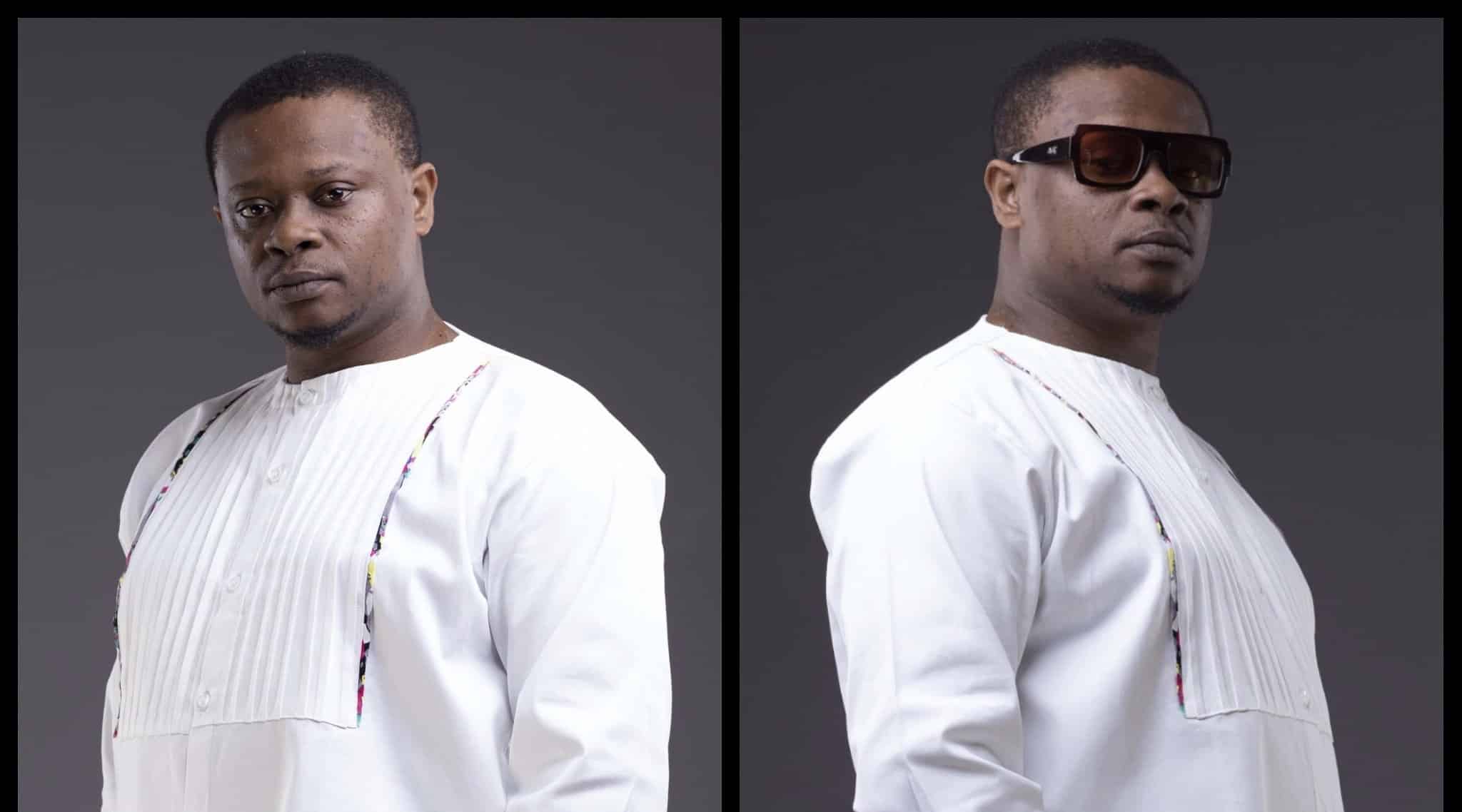
  • There’s nothing special about Sarkodie’s song with Bob Marley – Mr Logic

    There’s nothing special about Sarkodie’s song with Bob Marley – Mr Logic

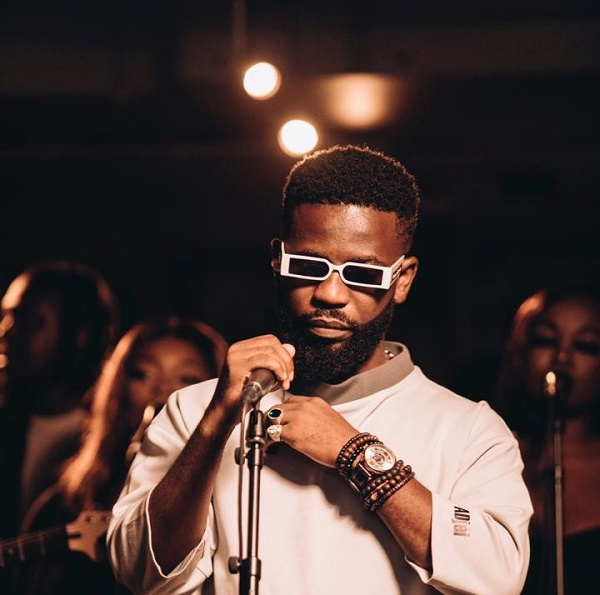
    Mr Logic has posited that Ghanaian rapper, Sarkodie would have gone harder in delivery when he was given the lifetime opportunity to put his verse on ‘Stir It Up’, a classic love song by Bob Marley and The Wailers.

    The rapper was honoured to have been selected to re-make ‘Stir It Up, a song legendary reggae singer, Bob Marley wrote for his wife, Rita in 1967.

    But according to talent manager, Mr Logic who doubles as a musician, “there is nothing special” about the song, adding that it lacks the African touch which would have made it much more enjoyable.

    In his submission on United Showbiz hosted by Abeiku Santana on January 28, 2023, he explained: “You don’t feel Sark’s presence so much because you cannot feel the African vibe but the normal Ghanaian will say it doesn’t matter.

    The re-make of ‘Stir It Up’ was released on Friday, January 20, 2023.

    According to Sarkodie, this is “definitely one of the highest moments in my career/life…such a blessing to lay my vocals right next to the original vocals of the Gong,” parts of a post made by Bob Marley’s Instagram page read.

    But Mr Logic is of the view that “If Sark was able to command the production and had said that he is a Ghanaian known for his Twi rap and this is how our progressions go. I want the song to be made to feel more African and Ghanaian for me, then you would have said that it sounds different.”

    He added: “You would have had a rendition. Now, what you have is a refix aside the buzz of it being Bob Marley, there is nothing extra about it.”

    Watch the video below:

  • Dhat Gyal comes through with ‘You & I’

    Dhat Gyal comes through with ‘You & I’

    The ‘Any man na man’ Hitmaker; Dhat Gyal has released the most awaited banger, “YOU & I”. This was released last December to successfully climax last year.

    ‘You & I” will be used as a pushing voice towards the fight against the gender-based violence people encounter in their daily lives yet cannot come out in the open to voice out their woes. It is a song dedicated to anyone out there who is going through an abusive relationship and feels unappreciated at any point, physically, verbally, and/or emotionally abused, and deserves better than being a victim.

    Produced by Tymadedis and written by Dhat Gyal respectively, the new single is mixed and mastered by Nytwulf of the Don’t keep me waiting hit song by Kwesi Arthur.

    Dhat Gyal recounts what growing up in Dome, a suburb of Accra was like. She saw on countless occasions how women especially, were abused in their relationships and led to their early graves with little or no accountability demanded from the abuser.

    She also expressed her grief on how she had to just watch on when these women were treated badly since she is young and does not have the legal balls to stop the abusers.

    “It hurts me to see people go through such situations and I couldn’t do anything about their situation or help them get out of such abusive relationship”

    As a young rising star in the industry, Dhat Gyal believes she has to take up the mantle and use her own unique way of fighting against abuse.

    “So as a young girl with no strength to defend these women, who are being abused physically or emotionally, I took it upon myself to educate young girls like myself to be mindful of whoever they get into a relationship with since I don’t have other platforms to create this awareness”

    “I have decided to educate all women out there; especially the young girls out there through my song. With this, I hope and I’m sure they will also listen to the lyrics and learn from it as they are also enjoying the sound”.

    Dhat Gyal got the attention of Ghanaians with her lovely voice when she released her first mashup song in 2017 which she combined Samini’s (my own) and the late Ebony’s (sponsor). She is known as the Queen of mashups.

    Her first single was “Mayweather” in 2017 and since then, she has been proving her skills and talent with her voice as she releases one song after another including Be with you, Any man na man remix with Bisa Kdie, Odo, Nobody, Mama, Ay3, Tatto, Miss U, Spendi love, Jo(dance), Trend, Bra Kwaku, Welcome to Africa with Sean Ex.

    She collaborated with numerous foreign artists, including Ras Amankwataia from Ghana and Buil Cole from Liberia. Faya Bantu King is a Zimbabwean artist who is based in the UK and was among those she collaborated with.

    She worked with producers like Dj Breezy, Tymadedis, Trino, Tom Beat, P Kay Beatz, Cash Two, Popping Beat, Eben Beatz, 1kwame Beatz, and Nytwulf.

    She was nominated for the 2018 Vodafone Ghana Music Awards (Unsung Category), 2019 Ghana Music Awards UK, and 2019 Ghana Music Awards South Africa in 2018. She was signed to Zylofon Music Art Fund Board in 2018.

    The 2018 VGMA nominees jam, the closeup cool breeze campus party, the Bhim concept 2018, the Zylofon monetization jam, the lunch of Bet Africa 2021, and Di Asa 2018 are just a few of the stages that Dhat Gyal has mounted.

    Dhat Gyal’s music is available on streaming platforms such as Boomplay, Spotify, and Apple Music, and digitally distributed by Apprise Music.

  • Lumba is the first artiste to give me a huge cash for work done – Appietus

    Lumba is the first artiste to give me a huge cash for work done – Appietus

    Popular sound engineer, Appiah Darkwah known professionally as Appietus says after several years of producing beats for musicians, Daddy Lumba was the first artiste to pay him huge money.

    He says when he started out his career, his focus was on selling himself to the world and making known his innate abilities.

    Appietus who was speaking on Kumasi-based Pure FM said Daddy Lumba blessed the work of his hands with huge sums of money for a project they did together; hence giving him an understanding of how lucrative the industry could be.

    “Daddy Lumba was the first artiste to give me a substantial amount of money in my career. He came to the studio and we had a discussion, afterwards, he went out and brought a jute back saying he had brought me drinks.

    “I carried the bag home without checking the content. The following day, my wife asked me if i won’t send the money to the bank so I got confused. Then she told me the bag I brought was filled with cash. You know when we started it wasn’t about the money but rather it was about the talent,” he said.

  • Wode Maya’s Togo border troubles gets attention of Ketu South MP

    Wode Maya’s Togo border troubles gets attention of Ketu South MP

    Member of Parliament for Ketu South, Abla Dzifa Gomashie has lamented the lack of free movement between countries within the continent particularly in the ECOWAS sub-region.

    According to the former broadcaster, it was time for African leaders to actualize free movement within the region and between countries because that used to be the case before colonialism came to partition different countries.

    In a video shared by influential African Wode Maya, the MP said: “We have to tell the story of who we are. That we can continue blaming colonialists for all we want but they have been gone for so long and we need to wake up and smell the coffee.

    “We need to wake up, all these seemingly hen coop thing we are doing business in, against ourselves is depressing, truly truly depressing. I am willing to break a few protocols speaking the way I am,” he added alluding to her role as a member of the regional commission on Ewe.

    “The excuses are too much, when they go and sit on our behalf, I expected them to do better than they are doing… you owe it to us as citizens and we are demanding that you do better by us,” he added.

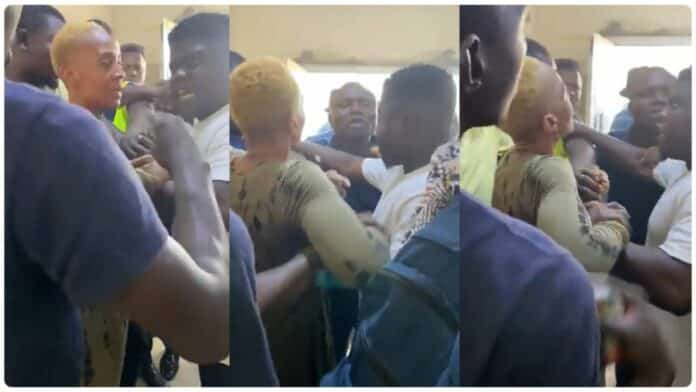
    Wode Maya had gotten into violent exchanges with immigration officials at the Ghana – Togo border as he tried to have his passport stamped.

    “This is me fighting to save my camera at the Togolese border because I refused to pay a bribe of CFA 2000 in order for my passport to stamped,” he captioned a tweet that showed him in a confrontation with supposed border officials.

  • Love is a scam, it’s based on conditions– Yvonne Nelson explains

    Love is a scam, it’s based on conditions– Yvonne Nelson explains

    Actress and entrepreneur Yvonne Nelson has shared her views about love and life in an interview with Accra-based Power FM over the weekend.

    She described love as a scam to the extent that more often than not it was conditional, at least per her experiences.

    “What you see on the screen is acting,” she responded to the host before delving into the issue of love: “Love is a scam (in reality) and we all know it, isn’t it so?”

    She explained further: “I think love is a scam because we are all deceitful. If a person talks about love, there is something they are seeking, be it money or sex; it is conditional so it is a scam.”

    In her opinion, love is the route through which men have often lied to women: “It is just a way of telling you that I want something from you and so they just use the word love and it is usually the ladies being lied to by the men.”

    Asked a point-bank question about whether she was not in love, she responded: “Love, I am sorry, I am not there yet. I used to love but it was like a joke. It is a scam,” she emphasized.

    Yvonne Nelson has a daughter with her partner.

  • Premix fuel shortage is to blame for Tema Newtown’s Fisherfolk’s unemployment

    Premix fuel shortage is to blame for Tema Newtown’s Fisherfolk’s unemployment

    According to fishermen at Tem Canoe Beach, the lack of premix fuel for the past six months has resulted to an increase in youth unemployment in Tema Newtown.

    During a visit, the Ghana News Agency Tema Regional Office saw that the canoe beach was much less crowded than it typically is on a fishing day because so many young men were there loitering and talking the day away.

    A few canoes were also docked since their owners were unable to obtain the premix fuel required to power the sea.

    Nii Adjeirteh Quaye, the Vice President of the Canoe and Fishing Gear Owners Association of Ghana (CaFGOAG), stating the impact of the unavailability of premix on fishing activities said the youth who depended directly and indirectly on fishing were currently unemployed.

    Nii Quaye explained that currently out of the over 1,000 canoes operating from the canoe beach, only about 300 of them engage in fishing activities due to the inability of the state to make the premix fuel available at the various landing beaches.

    He said one canoe, apart from directly employing between 15 and 20 people for its fishing activities, also provided auxiliary jobs to the youth and women who respectively help in removing the fish and selling them.

    According to him, currently, canoe owners have to depend on mixing petrol with engine oil to power their outboard motors adding that due to the cost involved several canoes had to stop operations.

    He disclosed that he has to buy four drums of petrol and engine oil at a cost of GH¢ 3,200 per drum to enable him to continue in business a situation he said would compel him to pass on the cost to the consumer.

    He lamented that due to the hardship and high unemployment in the community, some of the youth have resorted to thievery and snatching of people’s phones especially on the industrial area road in the evenings to make ends meet.

    Nii Ashitey Odametey, Tema Wudum Chief Fisherman, corroborated the unemployment issue saying fisher fishmongersers, and the youth in Tema Newtown were facing serious financial hardship due to supply challenges of the premix fuel.

    Nii Odametey called on the Ministry of Fisheries and Aquaculture to supply the fuel to the landing beaches stressing that their failure to honour their promises to supply it was adversely affecting their survival.

    Source: Ghanaweb

  • Ghana’s public debt stock hits 93.5% of GDP in November 2022 – BoG report

    Ghana’s public debt stock hits 93.5% of GDP in November 2022 – BoG report


    The total public debt stock of Ghana was pegged at GH¢575.7 billion recorded at the end of November 2022.

    The figure, according to the Bank of Ghana’s January 2023 Summary of Economic and Financial Data, represents about 93.5% of Gross Domestic Product for the period.

    The data from Central Bank showed that Ghana’s public debt stock rose by GH¢108.3 billion between September and November 2021, further depicting an unsustainable debt situation.

    The report explained the rise in the debt stock can be attributed to government’s debt restructuring exercise which has an expiration deadline of January 31, 2023 for participation.

    The BoG Summary of Economic and Financial Data however pointed out that the external component of the total public debt increased to $29.2 billion (GH¢382.7 billion) in November 2022 which is equivalent to 62.1 percent of GDP.

    This was from $28.4 billion (GH¢271.7 billion) in September 2022 and $28.3 billion in December 2021.

    The data also showed that the Ghana Cedi depreciated by about 37 percent against the US dollar in 2022 – resulting in a significant rise in the cedi component of the external debt.

    Meanwhile, on the domestic debt front, the figure was pegged at GH¢194.7 billion at the end of December 2022 representing about 31.6 percent of GDP.

    This figure is also against GH¢195.7 billion which was recorded in September 2022 and GH¢193.1 billion in November 2022.

    As part of the government’s Domestic Debt Exchange Programme, about GH¢170 billion of debt is being restructured for a period of 12 years.

    It is important to note the BoG report did not provide figures pertaining to the financial sector resolution debt and other liabilities including the energy sector debt.

    The report futher noted that government’s fiscal deficit in terms of Gross Domestic Product was pegged at 9.8 percent in November 2022 which is more than the 7.4 percent earlier recorded in September 2022.

  • Public sector development key to propel Ghana’s economy – Chief of Staff

    Public sector development key to propel Ghana’s economy – Chief of Staff

    Chief of Staff, Akosua Frema Osei-Opare has said that the development of the public sector is key to propelling the economy if appropriate measures are established.

    Speaking at the presentation of the 2021 Audit Infractions Joint Report, she urged that the public sector to orient strategies by re-evaluating policies and subsequently implementing them to meet best accounting practices.

    According to her, when these policies are put in place, it will help the public sector back on its feet to build the economy.

    “I am confident that with effective collaboration and the implementation of these recommendations, will see the public sector assume its envisaged role as the bedrock of Ghana’s economy even surpassing the envisaged target of contributing 30% of the GDP of this country which is commensurate with the vision of the president.”

    Madam Frema-Opare seized the opportunity to acknowledge the State and Governance Authority (SIGA) for their hard work and diligence in supporting the government.

    “I want to at this stage again acknowledge the hard work and the diligent way you approached the charge by the president to look into these infractions and to ensure that we have recommendations that can be implemented and move these SOEs forward,” she said.

    She pledged the government’s commitment to support SIGA to ensure that it is able to streamline the work of the SOEs to let them make strong contributions to the economy.

    Public sector development key to propel Ghana’s economy – Chief of Staff

    Source: Ghanaweb

  • SOEs must implement recommendation measures – Frema Osei-Opare

    SOEs must implement recommendation measures – Frema Osei-Opare

    Akosua Frema Osei-Opare, Ghana’s Chief of Staff has charged State-Owned Entreprises (SOEs) to implement appropriate measures detailed in the 2021 Audit Infractions Joint Report to ensure a smooth run of their work.

    According to her, the government expects SOEs to prioritise the management of the audit report.

    “The government expects all SOEs to ensure the following: Prioritise the preparation of their respective management and preparation of the auditor’s account in a timely manner; to collaborate with SIGA and the office of the Auditor General to urgently clear the back law of unaudited accounts by the end of the year to prepare management responses to audit queries and red flags raised by auditors. Lastly but not the least, keep an updated asset register and land title registrations at all times”, she noted.

    She also reminded management of SOEs as mandatory to pay monetary fees to enable SIGA perform their onuses appropriately.

    “Distinguished ladies and gentlemen, I would like to remind management of our specified entities that the payment of monetary fees is mandatory as SIGA requires these funds to effectively carry out its mandate,” she charged.

    Madam Frema further assured SIGA of the government’s commitment to solve the inconsistencies of the authority by providing the necessary amendments.

    She made these assertions at the presentation of the 2021 Audit Infractions Joint Report in Accra.

    Source: Ghanaweb

  • Develop solutions needed to deepen intra-African trade – Bawumia to African leaders

    Develop solutions needed to deepen intra-African trade – Bawumia to African leaders

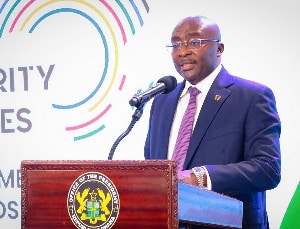
    Vice President, Dr Mahamudu Bawumia, has charged Afri­ca’s political and business leaders to develop signature solutions needed to deepen intra-African trade, spur impactful investments and bring prosperity to the continent.

    Opening the maiden edition of the Africa Prosperity Dialogues (APD), at Adukrom, in the Eastern Region yesterday, he pointed out three main areas that needed attention to bring Africa’s desired transformation.

    They are smart investments in critical infrastructure, unleashing of productive capacities across the continent, and mobilisation of finance and investments to bridge the infrastructure gap and generate sustainable growth.

    “As key stakeholders, we must consolidate the successes so far and, with a sense of urgency, develop the signature solutions needed to deepen intra-African trade and spur impactful investments needed to bring prosperity to the continent and its people. And we must do this with fearless determination,” Dr Bawumia said.

    Dubbed the Kwahu Summit, the first of the annual dialogues, is a three-day event has brought togeth­er Africa’s political and business leaders to discuss intra-Africa trade, with a focus on the Africa Conti­nental Free Trade Area (AfCFTA).

    It is under the theme “AfCFTA: From Ambition to Action, Deliver­ing Prosperity through Continental Trade”.

    “The time has come for Africa and Africans to define our own narrative. Africa can no longer allow poverty and underdevelopment to be the destiny of her peoples, being a continent so blessed with every natural resource imaginable oil, gas, minerals, and sunshine,” Dr Bawumia said.

    On the smart investments in critical infrastructure, he said the continent needed to produce and trade its way out of poverty and underdevelopment by looking for additional resources to finance the ‘arteries for trade’.

    These arteries, he said included the physical infrastructure such as roads, rail, and energy; digital infrastructure such as data centres to facilitate the digital transforma­tion and financial infrastructure for integration of financial markets, which would be critical to delivering the success of the AfCFTA.

    On productive capacities, he advocated the creation of platforms for knowledge brokerage and access to information on critical products and services on the continent to allow 445 million small businesses across the continent to plug into the value chains of these mega industries.

    “We need to develop Africa into a manufacturing zone that will facilitate the trade of value-add­ed products. These, in my view, will be critical to leapfrog Africa’s industrialisation and the enormous socio-economic benefits,” he said.

    For finance and investments, he said Africa needed to mobilise be­tween $ 130 billion and $ 170 billion annually to bridge its infrastructure gap and generate sustainable growth at five per cent per annum or more.

    “This presents immense opportunities for private sector investment. Attracting private sector participation through Public-Private Partnerships (PPPs) is therefore essential for the delivery of various infrastructure projects.

    “There is a need for innovative policies to mobilise and allocate resources more effectively, and for better coordination amongst all African stakeholders and interna­tional partners,” the Vice President indicated.

    The AfCFTA Secretary-General, Wamkele Mene, said Africa’s chal­lenges were great opportunities for the continent to exploit in order to speed up its long-awaited develop­ment.

    He urged participants of the dialogues to dig deep into their thoughts and proffer effective ways and policies that the AfCFTA can fall on in order to achieve the objec­tives of AfCFTA.

    The Founder and Chairman of the Africa Prosperity Network, Gabby Asare Otchere-Darko, on his part, observed that AfCFTA, prom­ises economic integration hence its success would be the collective success of the continent.

    “AfCFTA’s success is our (Af­rica’s) success. If it works, it will boost significantly trade and invest­ments, provide jobs and increase prosperity across the continent, like never before,” he said.

    In order for it (AfCFTA) to succeed, Mr Otchere-Darko said the workings of the AfCFTA should be seen and felt by the people and for African businesses collectively own and benefit from it.

    “The combined voices of Africa’s businesses, big and small, must be heard and felt. The aggregate value of enterprises and industries across Africa must be networked, coordi­nated, and impactfully leveraged,” Mr Otchere-Darko posited.

    Source: Ghanaweb

  • UMB launches two new Life Insurance products with SIC Life

    UMB launches two new Life Insurance products with SIC Life

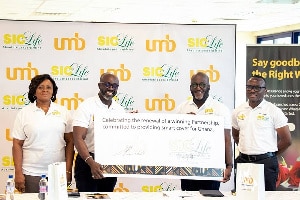
    Two leaders in Ghanaian financial services, Universal Merchant Bank and SIC Life Limited today launched two new life insurance solutions, namely the UMB Education Plan and the UMB Funeral plan.

    This was done in a short but colorful ceremony in the Bank’s boardroom in Accra.

    The solutions are being marketed to the public as UMB Bancassurance are, underwritten by SIC Life. Bancassurance is an arrangement between a bank and an insurance company allowing the insurance company to sell its products through the Bank’s distribution and service channels.

    The UMB Educational Plan ensures that the account value at maturity is substantial enough to meet educational expenses of the assured or that of their children.

    It also gives room for the assured to select at inception the term of the policy and the premium amount. An added feature of this educational plan is that the minimum term of this product is 10 years, with the maximum term being 20 years subject to a maturity age of 60 years.

    The UMB Funeral Plan is designed to provide immediate cash pay out to meet funeral expenses of the assured, or any other designated beneficiaries. Benefits of the UMB Funeral Plan include nominated beneficiaries being paid the updated death benefits upon the death of the assured. Another key innovation is a cash back payment of 15% of the total of the last three years risk premiums, paid every three years when no claims are made subject to the primary assured being alive.

    Speaking at the launch, the CEO of UMB Nana Dwemoh Benneh noted, “the launch of these new products marks another milestone for our two indigenous brands. It is interesting to note that SIC Life was founded in 1962, and UMB was founded in 1972 both as state policy financial institutions, to ensure that Ghanaians seize the commanding heights of this economy. Throughout SIC’s 60 years of existence and our 50 years of existence, we have stayed true to this principle, guided at all times by our aspiration to ensure that we provide world class solutions. This is thus a happy occasion for indigenous Ghanaian enterprise as two leading Ghanaian brands are able to come together to offer a unique proposition to the market”.

    The CEO of SIC Life Mr. Kweku Appiah Menka in his speech said “ SIC Life is very proud, and happy with its partnership with UMB. Both organizations have a shared heritage and outlook. This includes a desire to promote homegrown ingenuity in crafting products that meet the peculiar needs of the Ghanaian market. As we all know, due to our profile as a nation, education and funerals are critical needs for our customers and we are happy to develop a product that enables our customers provide for risk. Today is a first step as we reinvigorate our partnership with UMB. We intend to roll out other exciting life products to Ghana, including products that provide for unserved parts of the markets, for example SME sector”.

    The products are now available in all UMB branches across Ghana, or online, through the UMB sales center at 0800100880.

    The occasion was marked by the signing of a symbolic instrument to signify the renewal of the partnership

    Source: Ghanaweb

  • Ghana to fully attain clean forms of energy by 2070 – Energy Minister

    Ghana to fully attain clean forms of energy by 2070 – Energy Minister

    Energy Minister, Dr. Matthew Opoku Prempeh has intimated that Ghana will by 2070 fully attain clean forms of energy in its mix.

    He said this during a public lecture on Energy Transition at the University of Ghana’s 75th anniversary where he was positive that Ghana will use its own resources to reach that goal.

    He said: “We hope that Ghana would have fully attained the use of clean forms of energy by 2070 using resources not from outside Ghana but exactly all the resources God has given us in this country.”

    Dr. Opoku Prempeh further revealed that the President launched the initiative during the 2022 COP27 held in Egypt which in his view is a blueprint of what his ministry will do to support other sectors to use clean forms of energy.

    The energy minister again assured his commitment to provide directions and policies that will help the country’s economy.

    “As the sector minister, I welcome the dialogue and this discussion because it’s not yet done. The document is still being worked on because people are still expressing their opinion and we have enough room to still listen to any idea.

    “I am fully committed as the sector minister to provide the needed policy direction and leadership to ensure that Ghana is not left out of the energy transition,” he stated.

    Source: Ghanaweb

  • Top 5 trends in data privacy that will dominate in 2023

    Top 5 trends in data privacy that will dominate in 2023

    Although economies and organisations are getting more vigilant and cautious about data management, your private information is still at risk.
    Data breaches have increased recently despite heightened awareness and a general desire to protect data. This is due to insufficient, unclear, or subpar data security management methods.

    In 2022, the average cost of a data breach reached a record high of US$4.35 million, according to a report by IBM and Ponemon Institute.

    The researchers arrived at the staggering number based on several cost factors such as legal, regulatory, and technical activities, loss of brand equity, customer turnover, and drain on employee productivity. More than financial losses, data privacy breach or non-compliance could have an irreparable toll on an organisation’s reputation and erode stakeholder trust.

    Given the rise in cybercrimes, organisations need a two-pronged strategy. First, however robust your security systems may be, it is imperative to keep updating them.

    More essentially, the leadership should focus on strengthening their defenses by looking ahead, predicting the emergence of future cyber threats, and comprehending the wealth of new defensive capabilities that businesses can use both now and in the future. Here are five industry trends on data privacy this year:

    Greater emphasis on privacy by design:

    In the past, privacy was often an afterthought when it came to the development of new products and services. However, this is beginning to change.

    More and more companies are realising that building privacy into their products and services from genesis is not just the right thing to do, but it can be immensely rewarding for business. As a result, in 2023 we’ll see a shift towards a “privacy by design” approach, where companies prioritise user privacy at every stage of the development process.

    Rise of privacy-focused tech:

    As consumers become more concerned about their online privacy, there will be a surge in demand for technologies that prioritise privacy.

    This includes everything from secure messaging apps and browsers to virtual private networks (VPNs) and encrypted email services. It’s important to note that while these tools can certainly help to protect your data, they’re not a magic bullet. Organisations still need to be vigilant and take steps to secure their information.

    Increase in regulations:

    Governments around the world are taking notice of the growing concern over data privacy and are starting to act. In Ghana, the Data Protection Commission (DPC), an independent statutory body established under the Data Protection Act, 2012 (Act 843), is responsible for protecting the privacy of individual and personal data by regulating the processing of personal information.

    The Commission provides for the process to obtain, hold, use or disclose personal information and for other related issues bordering on the protection of personal data. Thus, now companies must implement stricter data privacy policies and procedures to ensure compliance with these regulations and to protect the personal information of their customers.

    Greater transparency: The trend towards greater transparency in data privacy is driven by the increasing awareness of the importance of protecting personal information and the need for organisations to be more accountable for their data collection and use practices.

    In 2023, organisations will begin to be more transparent about their data practices by providing individuals with more control over their data. This includes giving individuals the ability to access, correct, or delete their personal information, and the ability to opt-out of certain types of data collection. This is a win-win for both consumers and businesses, as it helps to build trust and fosters a sense of transparency and accountability.

    Goodbye Cookies:

    As first-party data becomes more significant and consumers become more conscious of their data, third-party cookies will soon become obsolete. Many companies and organisations are now looking to move towards a cookie-less future by implementing new technologies and methods for tracking and targeting users.

    For example, some companies are exploring the use of browser fingerprints, which are unique identifiers that can be used to track a user without the use of cookies. Other companies are experimenting with the use of privacy-enhancing technologies to provide a more secure and private way of tracking users.

  • Casemiro’s brace gives United ticket to next round

    Casemiro’s brace gives United ticket to next round

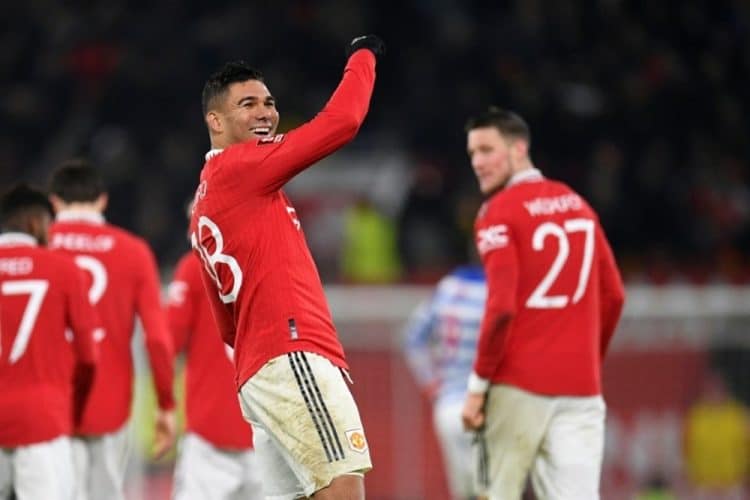
    Manchester United faced Reading in the fourth round of the FA Cup. The match was played at Old Trafford and Ten Hag’s side were very comfortable throughout the game. Casemiro stood out with his brace and it ended 3-1 for the ‘Red Devils’.

    Manchester United faced Reading in the fourth round of the FA Cup. Both teams fought to qualify for the next round of the world’s oldest domestic cup competition.

    United dominated possession in the first half and Reading hardly touched the ball. The ‘Red Devils’ created many chances but the players were not on the same wavelength. Bruno Fernandes had many attempts from inside the box. Moreover, Rashford scored the first goal of the game in the 34th minute but it was disallowed because Antony was caught offside. As a result, Ten Hag’s men were unable to score the first goal in the first 45 minutes.

    However, the situation changed drastically in the second half. Manchester United started much stronger and the changes Ten Hag made also boosted the team. In fact, Casemiro opened the scoring in the 54th minute and scored the second four minutes later. Fred came on to replace Eriksen and netted the third goal for his team. Fred and Bruno Fernandes played together to provide assists and score goals for the Old Trafford club.

    Andy Carroll was sent off with a double yellow card for pushing and shoving several players and tackling too hard. Nevertheless, Ince’s team did not give up. They hit back and Mbengue scored in the 72nd minute but their efforts were not enough to find an equaliser.

    The ‘Red Devils’ won the match and booked their ticket to the next round of the FA Cup. 

  • Bisa Kdei hosts fans and top industry players at ‘Original’ album listening party in UK

    Bisa Kdei hosts fans and top industry players at ‘Original’ album listening party in UK

    Ghanaian Highlife star Bisa Kdei has successfully staged the listening party for his fourth studio album, titled “Original,” in the United Kingdom. 

    The one-off listening party held at the Cafe Koko in Camden was attended by top UK music industry players including Eddie Khadi, Adesope, Nomanoms, and DJ Paek as well as representatives from Sony Music, Universal Records, YouTube, Nikita. Apple Music, Spotify. Imuller. Blacklist. Guap Magazine and the Grammy Academy.

    The listening party allowed music fans to hear the album, which saw Bisa Kdei collaborate with some of the best musicians on the African continent, including Stonebwoy, KiDi, Teni, Camidoh, Sefa, and football star Memphis Depay.

    During the listening party, the multi-award-winning Highlife musician revealed that he had been working on this project for over three years and was overjoyed to finally release it.

    “This music project was monumental, and I am grateful to all artistes who featured on it and made it reality. I wanted fans to explore the versatile aspect of my craft, and I am already thrilled with the feedback,” he said. 

    He also announced plans to stage an album tour around the world with his musical band in his quest to grow Highlife music. 

    Bisa Kdei has already released the “Next Chapter” video off the “Original” album, which addresses issues pertaining to early career setbacks and success chalked up in his 10-year music reign.

    The “Original” album since its release a few days ago has racked up impressive streaming numbers, as it was the third-most streamed album on Audiomack earlier this week.

  • Shatta Wale is not loved by the media, its all street love – Jupitar

    Shatta Wale is not loved by the media, its all street love – Jupitar

    When Dancehall artiste, Jupitar went on a rant on Twitter, he named a number of Ga-speaking artistes whom he claimed do not have the full support of some Ghanaian media houses.

    Jupitar highlighting the ‘hate’ towards the Ga ethnic group in a now-deleted tweet wrote: “This whole industry is a set up and if you be “Ga” like myself, @shattawalegh, @IamKingPromise or @dkbghana etc certain kinda support you go suffer or you no go get kraaa no matter the effort.”

    A section of social media users condemned his statement and shut down the claim that Shatta is loved.

    Jupitar has however maintained his claim and hammered that fans of Shatta Wale are behind his music and career growth, not the media as its being portrayed.

    Speaking on 3Musicnetworks said: “I was criticized for mentioning King Promise and Shatta Wale’s name in my list of artistes who don’t receive support. Shatta is getting love from the media, don’t lie to yourself.

    “What he has is street love, I am telling you. The boys on the streets love and play his songs but the men at the top, don’t connect to us. They don’t see us as a part of their favourite. They exclude us under the claim that we don’t respect them.”

    Meanwhile, Shatta Wale on different platforms and his social media pages called out some media personalities and gatekeepers for sabotaging him

    In a recent Facebook, he wrote: “Am not doing anything for Ghana entertainment industry. My career is for SM fans. F*** that shitdustry. YES,” he wrote in a Facebook post.

  • Asensio has to decide: Madrid or elsewhere

    Asensio has to decide: Madrid or elsewhere

    In a few weeks, Marco Asensio will decide what to do from June, when his contract at Real Madrid is up. ‘Marca’ claim that the player has been offered an extension at the Madrid side and that he also has offers from other sides. He will have to consider everything, but everything points towards him staying, as his priority is to stay at the ‘Meregues’.

    Marco Asensio, together with Dani Ceballos, is one of the Madrid players who will be out of contract at the end of the season. The club are working on keeping him longer.

    From January, the man from the Balearic Islands is free to speak with whichever club he wants to, and those after him are not in short supply. According to ‘Marca’, he has got several offers on the table. In fact, his agent Jorge Mendes is thought to have recently held conversations with FC Barcelona over his future.

    In two or three weeks, the newspaper explains that he could give his final answer. As well as offers from several clubs, the player also has the offer to stay at Real Madrid.

    In the coming days, he will sit down with his agent and they will decide what is the best, even though it appears quite clear for him. Out of all the options, the one which he is most favourable to is staying at the Bernabeu, the club which swooped in for him when he was at Mallorca.

    Money does not matter to Asensio, he just wants to know that he will play a main role if he decides to stay at Real. All he wants to know is that he will play a key role for Ancelotti and, of course, that he will get game time. He is not bothered by how long the contract lasts for, either.

    Asensio, like Ceballos, has turned his situation around. Both players looked like they were heading out of Concha Espina, to now earning themselves a new deal if they so desire. All that is left, having said that, is for them to actually put pen to paper.

  • He is the kindest – Wendy Shay’s positive testimony about Sarkodie

    He is the kindest – Wendy Shay’s positive testimony about Sarkodie

    Wendy Shay has applauded rapper Sarkodie for believing in her talent and demonstrating mad love for her at the onset of her career.

    According to Wendy, Sarkodie blessed her with a verse on her song, Psalm 35 when she was new in the industry.

    She described the rapper as one of the kindest persons to have worked with despite the claim that Sarkodie ignores his colleagues who reach out to him for business.

    “I released my first ever song on 1st June 2018… just 3 months in the industry I sent psalm 35 to @sarkodie. 2 hours later he sent his verse, I still have 2 songs with a top GH Artist since 2020 and the person never do am. I wanna say thank u @sarkodie you are too kind,” she tweeted on January 28.

    Rapper Sarkodie has had a number of his colleagues put dirt on him when it comes to his nonchalant attitude in responding to their messages and calls.

    Samini, Edem, DeeMoney, Yemi Alade, Meiway are among those who have openly rebuked Sarkodie for failing to respond to them at the time they requested a collaboration.

    Samini has openly declared that he will not work with the rapper due to his failure to respond to his messages.

    Describing him as fake and disrespectful in a viral tweet, he wrote: “Not sure I’ll need a verse from sark but if he ever does need one I’m not interested and that’s facts. He knows this himself. )y3 Alo sometimes and I don’t play that. Yes or no be problem for am so e go slow you and your project go dull …, he did it to me on burning EP”.

  • Pedri played his 100th game for Barca

    Pedri played his 100th game for Barca

    Barcelona midfielder Pedri Gonzalez earned his side a tense 1-0 Catalan derby victory at Girona on Saturday, opening a six-point gap ahead of Real Madrid at the top of La Liga.

    Pedri netted the only goal from close range after an hour at an icy Montilivi on his 100th appearance for Barcelona, after replacing the injured Ousmane Dembele. Barca coach Xavi Hernandez said the winger appeared to have a quadriceps injury.

    Despite the narrow margin of victory, Xavi believes his team are significantly stronger than when he took over in November 2021: “We have to be self-critical and improve in many ways, but we are happy, we have to look at where we came from. The change to the team and a lot of players is big, we have many things to improve on, but we’re on the right path. I think the (biggest difference) is the confidence of the players – when we arrived their confidence was on the floor.”

    Defensively the Catalans have been strong, conceding just six league goals this season and winning their last three matches 1-0 – they are unbeaten in 13 consecutive matches across all competitions.

    “I think at grounds like this you have to win, however you do it. We can play better, but in these away games, against opponents playing well, winning is vital. I think keeping a clean sheet is key. The whole team works defensively, not just the back four. Everyone is working well.”

    Centurion

    The league leaders were still without suspended Polish striker Robert Lewandowski, missing his final game after a three-match ban. Dembele, who fired Barcelona into the Copa del Rey semi-finals against Real Sociedad midweek, was forced off injured after 25 minutes.

    Xavi brought on Jordi Alba for Marcos Alonso at the break and it made the difference for Barcelona, who had been sluggish. The left-back set up Pedri’s opener with a cross from the left, tapped in by the Spaniard at the back post at the end of the first incisive move Barcelona had put together all game. Pedri, whom Xavi had intended to rest, reached a century of appearances for Barca at just 20 years old and celebrated with his 15th goal for the club.

    “I know I have to improve in front of goal (but) right now they are going in for me,” Pedri told ‘DAZN’.

  • CHAN 2022: Social media reactions after result of Niger v Ghana game

    CHAN 2022: Social media reactions after result of Niger v Ghana game

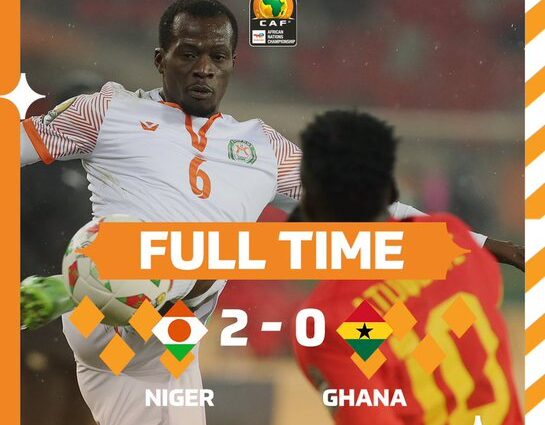
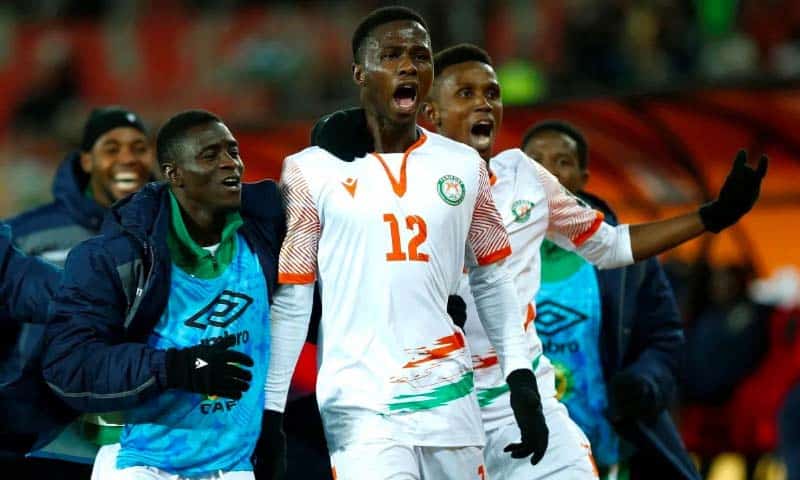
    Ghanaians have taken to social media to react to Black Galaxies‘ 2-0 defeat to Niger at the Miloud Hadefi Stadium in Oran on Saturday evening.

    Fans slammed the players for their poor performance against a very determined Niger side. Others blamed the technical team for not correcting the problems in Ghana’s back four as Ghana has conceded in every game at the tournament.

    In today’s game, Konadu Yiadom turned the ball into his own net in the first half and Soumana Hainikoye scored a wonderful goal to make it two.

    Otu found the net for Ghana but it was ruled out for an earlier foul.

    Ghana coach Annor Walker made five changes in the second half with the introduction of Gladson Awako, Sheriff Mohammed, Kwame Otu, Augustine Boakye, and Benjamin but their inclusion couldn’t earn the Galaxies a win.

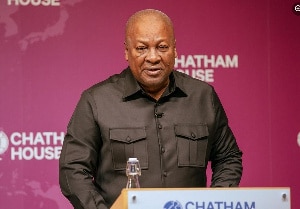
  • John Mahama calls on the government to consult with bondholders

    John Mahama calls on the government to consult with bondholders

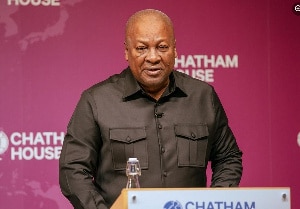
    In order to establish an agreement on how to handle the country’s debt restructuring programme, former president John Dramani Mahama has urged the government to engage in greater engagement with bondholders.

    In a public talk on “Africa’s Strategic Priorities and Global Role” at Chatham House in London, he made the case.

    He said that the debt restructuring deadline of January 31 had been missed twice and that it had been extended three times.

    He reiterated that the longer the debt restructuring was delayed, the more it would prevent the country from going to the International Monetary Fund (IMF) Board and called for a speedy conclusion of negotiations.

    He further appealed to the Finance Minister to sit with the bondholders and discuss the issue and reach a consensus.

    “I am not opposed to debt restructuring. Debt restructuring is a condition precedent to getting an IMF programme and Ghana needs to do a debt restructuring to be able to go into a programme,” Mr Mahama stated.

    “What had been the contention is the lack of dialogue and consultation with the bondholders on the domestic side. I know currently, negotiations are taking place with the bondholders on the external side, not the same treatment with the domestic bondholders.”

    Mr Mahama said he had been an advocate for dialogue; saying “before this whole crisis started, I advised the Government, I said to hold a national dialogue on the economy; give what the state of the economy is and let everybody buy into it and understand and then after that seek a broad consensus behind your economic programme.”

    He noted that his suggestion was never taken by the Government.

    He said the opposition National Democratic Congress (NDC) kept raising red flags since 2019 about Government’s borrowing programme of raising three billion dollars in the euro bond market every year and not investing in the productive sectors of the economy.

    He said the Government must be prepared to make more sacrifices just as it was asking the people to do the same.

  • We’re transforming appliance market – Energy Commission tells secondhand dealers

    We’re transforming appliance market – Energy Commission tells secondhand dealers


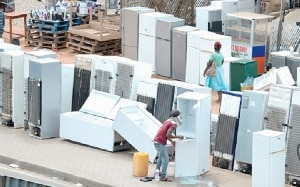
    The Energy Commission of Ghana has cautioned against the dumping of electronic waste into the country from foreign countries.

    Reports suggest that Ghana is largely becoming a dumping ground for electronic waste with the Energy Commission taking serious steps to control that space with the importation of standard goods.

    This follows calls by concerned secondhand dealers demanding reconsideration of the government’s plan in relation to the ban on imported secondhand electrical appliances.

    According to them, the situation is affecting their livelihood, particularly under the current economic situation in the country.

    Commenting on the concerns of dealers with Starr Business, the Energy Efficiency Compliance Officer at Energy Commission, Hubert Nsoh Zan indicated that the Commission has over the years been preaching on the ban on the importation of waste electronics into the country.

    He said the ban includes the importation of used refrigerators/freezers, used air conditions, and incandescent lamps into Ghana.

    “We found out that a lot of the new ones that are coming in are above standard because there is no regulation and there are no standards. In the same light, most of the used ones that are coming in are discarded and meant for recycling back in Europe.

    “What it means is that they have exhausted their life span and are meant to be recycled. And we have our kinsmen who stay abroad importing these products. A lot of research has been done, studies have been done, the impact of used appliances on the environment and the impact of used appliances on consumption, in terms of high data of consumption and we need to look beyond this,” Mr. Nsah Zan stated.

    He continued: “There are more implications, economic implications. What it means to even set up power plants and to be able to meet the high demand from this consumption of appliances.”

    The Enforcement Officers also explained that the move is geared toward protecting consumers and the environment from future danger that these secondhand electronic appliances might have on the environment.

    “Having said this, it is important for us to know, and Ghanaians who are all consumers, that we are only trying to set minimum energy performance of the type of appliances that are coming into the market. The position of the energy commission is very clear that we need to protect the consumers. We are just executing our mandate which is to make sure that the appliance market is transformed.

    “So, to be very fair with you, the energy commission is only executing its mandate. We are trying to transform the appliance market and we are advising importers of appliances, make sure they meet the minimum requirement of what the regulations are saying as passed by parliament,” he stated.

    Source: Ghanaweb

  • If I can’t pay GH $20 million by April, don’t throw me in jail – Ato Essien

    If I can’t pay GH $20 million by April, don’t throw me in jail – Ato Essien

    William Ato Essien, the founder of the now-defunct Capital Bank, has stated that he prefers not to be jailed but rather an opportunity to explain himself in court should he fail to pay the state GH$20,000,000 by April 28, 2023.

    This was stated in a plea document submitted by Mr. Essien’s attorneys in an effort to overturn the High Court ruling from December 13, 2022, which was presided over by Justice Eric Kyei Baffuor, according to a story from myjoyonline.com.

    “We are learning that William Ato Essien has filed an appeal against the decision because he is not happy that will be put into jail or face custodial sentence if he’s not able to pay the sum in the manner that he is required to pay,” Host of Joy News’ Newsfile programme Samson Lardy Anyenini said during the show on January 28, 2023.

    “…As you know he [Ato Essien] is required to pay GH¢90 million although he has paid GH¢30 million and he is required by the 28th of April 2022 to make another GH¢20 million paymentEssien cites the current economic challenges as his reasons should he not deliver on the payment in the time that is required,” the host added.

    In December last year, William Ato Essien pleaded guilty to charges of misappropriation of depositors’ funds and other counts of stealing, abetment to stealing, conspiracy to steal and money laundering among others.

    This was after the court accepted the terms of the agreement reached between the lawyers of Mr. Essien and the prosecution to pay a total of GH¢90 million as a refund to the state.

    Per the judge’s order, he was required to pay an amount of GH¢90 million as restitution and reparation to the state within one year. This would see him pay an initial GH¢30 million (which has been paid) and refund the remaining 60 million in three instalments. The first is due latest by April 28, 2023 while the second is on August 31, 2023.

    Justice Baffuor warned should he default in the payment or it even fell short of the required amount, Mr Essien was to be arrested and produced in court for a custodial sentence to be imposed.

    But Mr. Essien in a “fresh court document however points out that current economic challenges make it imperative for him to be given the opportunity to explain a default before any such move is undertaken,” My joyonline.com stated.

    Background

    Capital Bank was one of the first banks that collapsed after a massive clean-up of financial institutions by the Bank of Ghana started in 2017.

    On August 14, 2017, its licence and that of UT Bank were revoked by the BoG, after the BoG had declared them insolvent.

    The BoG allowed the state-owned bank, the GCB Bank, to acquire the two banks in order to protect depositors’ funds and also enable them to stay afloat.

    The hurricane that swept through the banking sector due to the collapse of the two banks further heightened in August 2018 when the central bank collapsed five other indigenous banks and merged them into one entity — Consolidated Bank, Ghana.

  • Akufo-Addo ruined the thriving economy he inherited – Mahama

    Akufo-Addo ruined the thriving economy he inherited – Mahama

    Former President John Mahama claimed in a presentation on “Africa’s strategic priorities and global position” at Chatham House, London, that President Nana Akufo-government Addo’s has ruined the thriving Ghanaian economy it inherited from the previous administration.

    “Ghana will celebrate 66 years as a nation in a little less than six weeks.
    We shall observe this day under the burden of the worst economic crisis in decades, far from being a time to celebrate independence and the accomplishments of nationhood, he remarked.

    “Today, many of our economic indicators are pointing south. We have in the last month entered the hyperinflation era with an inflation rate of 54%. Our currency has in the past few months been counted among the worst-performing in the world, plummeting by as much as 54% in value within the first ten months of 2022. Widening budget deficits have characterized economic performance since 2018”.

    “A severe cost of living crisis fueled by ever-rising prices of basic goods has imposed extreme hardship on Ghanaians as the government struggles to meet some of its most basic commitments in areas like education and health. Unemployment stood at a staggering 13%, the highest in recent memory”.

    “It would be no hyperbole to assert that our present state bears an uncanny resemblance to the late seventies and eighties”.

    “How was a country with such bright prospects, only a decade ago, brought to its knees so quickly when it should have made far more progress? The present trouble with our economy stems from gross mismanagement and in some instances sheer recklessness”.

    In his view, the “government failed to sustain the gains made after our last IMF programme, which brought stability to the management of the Ghanaian economy. Corruption has also contributed significantly to bring us to this distressing juncture”.

    The government, he said, “has been quick to pass off the COVID pandemic as a reason for this poor economic record. Yet, available data shows that many of our neighbours in West Africa and further afield, posted much better economic performances than we did during and after the pandemic”.

    The World Bank, he noted, “through its Ghana Country Director, has also stated unequivocally that Ghana’s economy was in distress before the pandemic occurred”.

    “The purpose of recounting these failures, driven my mismanagement and corruption, in Ghana is to demonstrate how Africa depletes scarce resources generated from both the continent and development partners. Instead of thinking innovatively to address the fundamental economic problem, many leaders worsen it”, Mr Mahama explained.

    Using the management of the COVID-19 pandemic as a case study, he said: “My own country, Ghana, once a beacon of Africa has come up for mention for dissipating domestic and donor funds”.

    “A recently published audit report by the Auditor General of Ghana into receipts and expenditures on COVID-19 exposes staggering instances of corruption running into billions of Ghana cedis”, he noted.

    “Over GH¢21.8 billion was mobilised to mitigate the impact of the pandemic from the World Bank, IMF, the European Union (EU), the African Development Bank (AfDB), Ghana’s Contingency Fund, and from the sale of Bank of Ghana COVID-19 Bonds”, Mr Mahama added.

    According to him, “hiding under the ‘emergency situation’, the government jettisoned our financial and procurement laws and refused to use the GIFMIS system, which is the agreed budget and accounting digital platform to avoid thorough scrutiny. Such financial malpractices discourage delivery of grants and concessionary loans to Africa”.

    “I have indicated that we need a forensic audit into the receipts and expenditure of the COVID[1]19 funds in Ghana. The forensic audit may be extended to other countries in Africa to restore investor confidence as we build the Africa we want”.

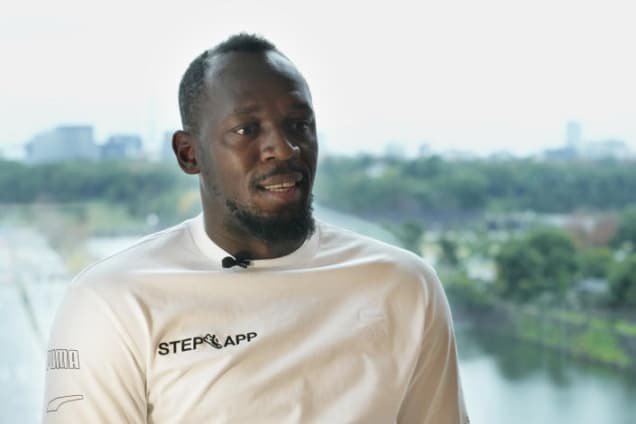
  • Usain Bolt fires business manager over Jamaica fraud case

    Usain Bolt fires business manager over Jamaica fraud case

    Jamaican sprinter Usain Bolt told reporters Friday that he is baffled over how $12.7 million of his money has gone missing from a local private investment firm that authorities are investigating as part of a massive fraud that began more than a decade ago.

    Bolt also said he has fired his business manager, adding that it was not an amicable split.

    When asked if he was “broke,” the retired star athlete laughed.

    “I’m not broke, but it’s definitely put a damper on me,” he said. “It was for my future. Everybody knows I have three kids. I’m still looking out for my parents, and I still want to live very well.”

    Bolt’s attorneys have said the athlete’s account with Kingston-based Stocks and Securities Limited dwindled from nearly $12.8 million to some $12,000. They had given the company until Friday to return the money or face civil and criminal action.

    It wasn’t immediately clear whether any action had been taken as of late Friday. Attorney Linton P. Gordon did not return a message seeking comment.

    He told the Jamaica Observer newspaper that the public should anticipate the “expected and the unexpected” in the case.

    “There is nothing to say at this stage, given what is happening,” he was quoted as saying. “We have met with persons, and we are dealing with certain matters.”

    Earlier this week, Jamaican Finance Minister Nigel Clarke announced that the director of the Financial Services Commission was stepping down and that the Bank of Jamaica would now be in charge of regulating the island’s financial system.

    He said several government agencies and elderly customers also were affected by the alleged fraud.

    “It’s always a sad situation. Definitely disappointed,” Bolt said of the elderly who were affected. “Everybody’s confused. … I’m as confused as the public.”

    Jamaican authorities have requested help from the FBI and other unidentified international experts, adding that clients were given false statements regarding their balances as part of the alleged fraud. Officials have not yet said how many clients overall were affected and how much money in total is missing.

    Earlier on Friday, Bolt spoke at a sponsored luncheon for an upcoming relay and referred to the alleged fraud.

    “As you all know. I’ve been going through a tough week, a few tough weeks,” he said, adding that he would continue to do everything he can to uplift his island.

    “No matter what’s going on right now, Jamaica is my country. That will never change,” he said.

    In an aside with reporters, he said: “I’m just trying to focus on my family and trying not to think too much about it because it’s a difficult situation.”

    Stocks and Securities Limited did not return a message seeking comment Friday. The company contacted authorities earlier this month to alert them that a manager had apparently committed fraud.

    Earlier this week, Jamaican Prime Minister Andrew Holness announced that his administration would not bail out the company.

    “The government will not socialize any debt, and we will not socialize the failure of our banks,” he said.

  • Presentation by John Mahama at Chatham House

    Presentation by John Mahama at Chatham House

    He accused the administration of destroying the booming Ghanaian economy that it had taken over from him in 2017.

    At Chatham House in London, Mahama was giving a lecture on “Africa’s Strategic Priorities and Global Role.”

    “Ghana will celebrate 66 years as a nation in a little less than six weeks.
    We shall observe this day under the burden of the worst economic crisis in decades, far from being a time to celebrate independence and the accomplishments of nationhood, he remarked.

    “It would be no hyperbole to assert that our present state bears an uncanny resemblance to the late seventies and eighties”.

    “How was a country with such bright prospects, only a decade ago, brought to its knees so quickly when it should have made far more progress? The present trouble with our economy stems from gross mismanagement and in some instances sheer recklessness”.

    Read Mr Mahama’s full lecture below:

    Africa’s strategic priorities and global role A Chatham House Lecture by H.E. John Dramani Mahama, Former President of the Republic of Ghana

    Thank you, Alex Vines, and Chatham House for the invitation.

    I am happy to have been able to join you from Brussels where I had very productive discussions on the future perspectives in the framework of Africa- EU relations at the invitation of the European Strategic Initiative.

    It is gratifying to be back here at Chatham House, which through the Africa Programme events, has offered a wide array of African Leaders across various fields, a unique platform to discuss our continent in ways not seen elsewhere.

    The discussions here have helped shape international opinion on Africa and offered a useful focus on its most important subjects. I hope to continue in that tradition by sharing some thoughts on the continent’s present outlook and future while dwelling on the situation in my own country, Ghana.

    Africa’s political and governance history is quite well-known. However, on this occasion, it bears brief recollection to set the tone for an informed assessment of Africa’s prospects and future trajectory.

    It helps a bit that I have a bias towards history, which I majored in at the university in my formative years. And as the famous British statesman Winston Churchill opined, “Study history, study history. In history lies all the secrets of statecraft.”

    The African story is one that evokes immediate memories of colonial exploitation and domination with abundant cheap labour to be used for raw material production and export to build the magnificent metropolises of this world.

    Centuries earlier, we were at the short end of the stick in the slave trade as our best and strongest found themselves bound in chains and bundled unto overcrowded slave ships, never to return.

    However, by the middle of the 20th century, there had emerged a young cadre of Pan Africanists, determined to free the continent from its colonial shackles, who worked, at the peril of their freedoms and very lives. They eventually launched a liberation struggle that reverberated across the continent.

    Names like Kwame Nkrumah – under whom my father, E. A. Mahama, served diligently as a Minister of State, Nyerere, Kaunda, Sekou Touré easily roll off my tongue in this regard.

    Soon enough, after a spirited fight, colonialism fell in one country after another, culminating in the exhilarating liberation of South Africa from the worst form of colonial subjugation— apartheid. The result—freedom for Nelson Mandela after 27 years in jail.

    Africa in the post-colonial independent era was awash with hope for a much brighter tomorrow. We were, however, soon to be enmeshed in a contestation over the most suitable development paradigm and ideology.

    Some faced West and others faced East. We in Ghana, as famously declared by our first President, Osagyefo Kwame Nkrumah, faced neither East nor West. We faced forward and experimented along the line with whatever paradigm we deemed exigent at a particular time.

    Not enough time was afforded for these experiments to yield sustainable fruits because a combination of disillusionment and adventurism ushered in military dictatorships and in many cases, wanton misrule.

    By the mid-eighties to early nineties, it had become obvious that democratic governance and economic reform were imperative to overcome the suffering and stagnation that years of poor governance had spawned. Under the aegis of the Bretton Woods institutions and other multilateral partners, several African countries launched economic recovery programmes with varying degrees of success.

    In the case of Ghana, I can say, that through these reforms, we performed what could be likened to an economic miracle. From the throes of bankruptcy, hyperinflation, and years of negative growth in the mid-seventies and early eighties, the economy was restored to the path of growth. Measurable and impactful progress could be seen!

    Thirty years ago, we were even able to seamlessly integrate up to one million of our compatriots who were unceremoniously deported from Nigeria back to Ghana without causing too much of an upset to our economic outcomes. Analysts have suggested the eviction was Nigeria’s retaliation – in 1983 – to the dastardly deportation of other Africans including Nigerians from Ghana under the Aliens Compliance Order of 1969.

    In the decade that followed that period, millions of Ghanaians were lifted out of poverty through progressive policies and interventions. Similar success stories could be recounted for other African countries. Between those heady days and now, the story of Africa has been patchy even though progress has not completely eluded us.

    Civil strife, famine, genocide, and a relapse into bad governance can all be squeezed into the narrative in the last few decades.

    At present, save for a few countries on the continent, our economies are largely still underdeveloped and underpinned by the colonial economic model of raw material export and little manufacturing or industrialisation.

    Fragile governance institutions and corruption remain major bottlenecks. Insecurity, terrorism, and insurgency have all reared their heads across some countries. In the last few years, we have seen a resurrection of what we had believed to be the extinct spectre of military takeovers in some West African countries.

    Mammoth unemployment and limited economic opportunities continue to confront Africa. This has been exacerbated by the youth bulge; and projected to worsen by 2030 if not addressed. Obviously, a threat to the attainment of the Sustainable Development Goals and Africa’s Agenda 2063.

    Africa being demographically the most youthful continent, should have been an opportunity to be harnessed. However, the limited opportunities available to Africa’s youth has created a distressing scenario and culminated in the biggest threat facing the continent and the world now.

    Africa has always been an opportunity. That has never been in contention. What is in debate, is the extent to which Africa has been an opportunity for itself and exploited its advantage for the benefit of itself. The story of the contribution of Africa has always been one of fascination. From its origin as the cradle of humankind, the continent has through the ages left an indelible mark on the pages of history.

    The echoes of the Arab spring, which took place barely a decade ago, still ring in our ears and serve as too clear a reminder of what possible and probable danger the continent faces if the situation does not improve – and quickly so. The prevalence of cybercrimes including internet-based fraud (‘Sakawa’) and other offences spill beyond Africa and affects the rest of the world. This must be addressed head-on!

    The foregoing by no means suggests that there is no positive news from Africa.

    There is a lot to celebrate on the continent.

    There are many thriving democracies in Africa with some well governed countries and strong economies. Information Communication Technology (ICT) uptake is one area where strong growth has been recorded.

    Just before the COVID-19 pandemic, Africa was recording the fastest rate of new broadband connections, and mobile data traffic was projected to rise astronomically between 2017 and 2020 – growing by a CAGR of about 46% according to Statista.

    The E-commerce sector was also experiencing exponential growth as our population attained more awareness and became more reliant on online retailing. That said, there is still much to worry about.

    It is a fact that Africa has suffered historical injustices like slavery, colonialism, and an unjust world economic order –which have held us back for centuries and deprived us of a level playing field to develop rapidly compared to other continents. But it is no longer tenable to continue to blame these events predominantly for our present state. That will be absolving corrupt African leaders of blame for mismanaging the resources of the continent.

    We have had sufficient time and opportunities over the last few decades to change our story and narrative while crafting and implementing visions that would transform the lives of the over a billion people who dwell on the continent.

    Yes, globalisation has inherent disadvantages for Africa. But Africa can and must rise to the occasion by building and working towards continental unity as we strengthen partnerships with the rest of the world. To achieve Africa’s Agenda 2063 goals, we must let the world buy into Africa’s priorities and global role. In most cases, we have simply squandered opportunities.

    Ghana also comes to mind here. In a little under six weeks from today, Ghana will mark sixty-six (66) years of nationhood. Far from being an occasion to celebrate independence and the successes and achievements of nationhood, we will mark this day under the yoke of the worst economic situation in decades.

    We are currently bankrupt and burdened with a national debt we are simply not able to pay. You may have learnt over the past few weeks that the Ghanaian government has defaulted on the servicing of both external and domestic debt.

    There is currently, a huge uproar over a controversial debt restructuring programme under which the middle-class of Ghana could be wiped out if plans to have them forfeit proceeds of government bonds on which they rely for investment and sustenance, are followed through. In absolute terms, up to about six (6) million people could be deprived of their life savings and investments.

    Ghana’s banking and financial sector could also be under threat of insolvency if no suitable adjustments are made to the debt restructuring plans.

    Our present economic situation, underscored by our bankrupt status, sharply contrasts with our fortunes a little over a decade ago. At the time, our economy posted some of the highest growth rates in the world with a robust and fast-growing non-oil sector.

    Today, many of our economic indicators are pointing south. We have in the last month entered the hyperinflation era with an inflation rate of 54%. Our currency has in the past few months been counted among the worst performing in the world, plummeting by as much as 54% in value within the first ten months of 2022. Widening budget deficits have characterized economic performance since 2018.

    A severe cost of living crisis fueled by ever-rising prices of basic goods has imposed extreme hardship on Ghanaians as the government struggles to meet some of its most basic commitments in areas like education and health. Unemployment stood at a staggering 13%, the highest in recent memory.

    It would be no hyperbole to assert that our present state bears an uncanny resemblance to the late seventies and eighties.

    How was a country with such bright prospects, only a decade ago, brought to its knees so quickly when it should have made far more progress? The present trouble with our economy stems from gross mismanagement and in some instances sheer recklessness.

    Government failed to sustain the gains made after our last IMF programme, which brought stability to the management of the Ghanaian economy. Corruption has also contributed significantly to bring us to this distressing juncture.

    Government has been quick to pass off the COVID pandemic as a reason for this poor economic record. Yet, available data shows that many of our neighbours in West Africa and further afield, posted much better economic performances than we did during and after the pandemic.

    The World Bank through its Ghana Country Director has also stated unequivocally that Ghana’s economy was in distress before the pandemic occurred.

    The purpose of recounting these failures, driven my mismanagement and corruption, in Ghana is to demonstrate how Africa depletes scarce resources generated from both the continent and development partners. Instead of thinking innovatively to address the fundamental economic problem, many leaders worsen it.

    Using management of the COVID-19 pandemic as a case study my own country Ghana once a beacon of Africa has come up for mention for dissipating domestic and donor funds.

    A recently published audit report by the Auditor General of Ghana into receipts and expenditures on COVID-19 exposes staggering instances of corruption running into billions of Ghana cedis.

    Over GH¢21.8 billion was mobilised to mitigate the impact of the pandemic from the World Bank, IMF, the European Union (EU), the African Development Bank (AfDB), Ghana’s Contingency Fund, and from the sale of Bank of Ghana COVID-19 Bonds.

    Hiding under the “emergency situation”, government jettisoned ourfinancial and procurement laws and refused to use the GIFMIS system, which is the agreed budget and accounting digital platform to avoid thorough scrutiny. Such financial malpractices discourage delivery of grants and concessionary loans to Africa.

    I have indicated that we need a forensic audit into the receipts and expenditure of the COVID[1]19 funds in Ghana. The forensic audit may be extended to other countries in Africa to restore investor confidence as we build the Africa we want.

    Let me add that, Africa needs to build stronger institutions to address institutional and political decay. In building stronger institutions, Civil Society Organisations (CSOs) in Africa must also be prioritized. On this note, let me commend many CSOs on our Continent that are holding governments accountable.

    Compounding the socio-economic malaise on the continent, is the erosion of public confidence in state institutions. Many of these state institutions set up to be independent arbiters and offer appropriate checks and balance on the executive arms of government, have in recent years served more as extensions of the government.

    In many cases, as it is the case in Ghana, there has been overt efforts by government to weaken these institutions and bend them to its will.

    A case in point was the ouster of the then Chairperson of Ghana’s Electoral Commission and two other senior officials by the President of Ghana over clearly flimsy and contrived reasons. They were then replaced with persons with noticeable leanings towards the incumbent party and whose actions have served to undermine public confidence in their independence and neutrality, two ingredients which are vital prerequisites for the sustenance of Ghana’s acclaimed democracy.

    Relatedly, Ghana’s Judiciary has also come under public scrutiny in recent years for what is widely perceived as bias towards the government. Until the advent of this government, our judiciary had commanded tremendous public respect and confidence for their firmly independent posture. This is arguably no longer the case.

    This is a worry to investors because one of the factors that boosts confidence of investors to place their money in a country, is the faith they have that in event of a business dispute, they can expect the justice system to be a fair and neutral arbiter.

    For Africa to succeed in achieving her strategic priorities, we must strengthen institutions including the judiciary and grant them their deserved independence and freedoms as prescribed by law. I encourage you not to lose hope in Ghana and Africa because it is far more useful to look forward to the future with hope than to brood over the present with despair.

    I am an eternal believer in the potential and positive energies of Africa and her youth.

    In December, next year, what I consider to be the most important elections in Ghana’s history will be held. The electioneering period will offer a scope for deeper discussions about Ghana’s future and what needs to be done to get us out of the current economic quagmire and to avoid a recurrence.

    We in the opposition in Ghana are very clear on our vision for the country and how to build the Ghana that we all want.

    The first order of business for a new NDC administration is to restore macro-economic stability and ensure fiscal prudence while generating employment for many of our young people who are unsure of what the future holds.

    Though the current economic distress is largely self-inflicted, it is very clear that unless we act to insulate ourselves from these factors, whatever gains that are made going forward will unravel because of structural weaknesses.

    The National Democratic Congress therefore commits itself to immediate structural reforms based on a national dialogue and forging a broad national consensus that will lead to the diversification of our economy and its production base; and the attraction of investment into industry, farming, agribusiness, the digital sector, and tourism.

    We are determined to process our natural resources like cocoa, gold, bauxite, oil, copper while we build more robust capacity to respond to global energy shocks.

    I invite you to look favourably at Ghana again because there is hope ahead! I also urge you to partner Africa as we confront the challenges posed by climate change, emerging diseases, terrorism, and cybercrimes to build a safer world.

    Our borders are borderless because of globalization. Therefore, we must stand in support of one another.

    As we look into the near future with optimism, there are instant solutions that must be found to the crippling economic crisis, which has left a dark pall hanging over Ghana now.

    At a continental level, I want to reiterate my international advocacy for a reinstitution and extension of the Debt Service Suspension Initiative (DSSI) to afford our countries some limited fiscal respite. I would similarly call for the expansion of the Common Framework for Debt Treatment Beyond the DSSI to help African countries access debt restructuring tools and mechanisms.

    I have had cause to also state elsewhere, and I would repeat that the time has come for an African version of a Marshal Plan. I note and applaud the Global Gateway Programme of the EU that seeks to mobilize 300 billion Euros over the next seven years for infrastructure in Africa and the rest of the developing world.

    If Africa is to survive and be a source of hope for the rest of the world, then Africa as an imperative must speedily harness the advantages it has to ensure inclusive growth for its people. With the continent boasting the world’s largest free trade area along with an over 1- billion-person market, Africa is prime, as reported by the World Bank, to carve out a new developmental pathway.

    Under the African Continental Free Trade Area (AfCFTA) agreement, 55 countries with a combined GDP of over US$3.4 trillion will work together to present major opportunities for shared growth and prosperity for Africa and the rest of the world.

    I expect AfCFTA not to de-emphasize the prospects of SMEs as we promote new markets and encourage foreign investments. SMEs have sustained Africa and will continue to do so for a long while. I also urge AfCFTA to secure intellectual property rights of Africans as we partner already mature businesses.

    AFCTA will also need the support of the African Union for greater integration to allow for greater labour mobility across Africa to support countries in need of critical human resource.

    And AFCTA must not allow businesses with political connections to be prioritized over real captains or champions of industry. Neither must innovations from the youth suffer because of lack of political connections.

    All hope is not lost for Africa. Africa, including my country Ghana, has strategic priorities and is ready and willing to play its role in the global community.

    To conclude, it is also of critical importance that regional bodies like the ECOWAS, SADC, EAC, CEMAC, the Arab Maghreb Union and African Union must be empowered to have a firmer grip 9 on their member nations to address regional/ continental/ global challenges. Other international bodies like the European Union and the TANA High-Level Forum for Security in Africa, which I chair, must provide the needed support, including oversight and scrutiny of activities likely to lead to serious consequences.

    I stress on this point of oversight because we observe that the laxity in supervision and oversight has given free reins to some leaders on the continent to wreak constitutional tyranny on their people with some changing their country’s constitution so they could run for extended terms.

    No single country in Africa can on its own attain the highest level of development when it is surrounded by neighbouring countries engaging in full scale-conflict. It is therefore important that there is stability and sustainable development in Africa, which will help lead to global security and prosperity.

    With the right steps and visionary leadership as well as a willingness to dig deep and find innovative solutions to the decades-old challenges, we must emerge a stronger force to reckon with.

    I thank you for your kind attention
  • The major assets that make Rihanna America’s youngest self-made billionaire

    The major assets that make Rihanna America’s youngest self-made billionaire

    With her undeniable talent, relentless work ethic, and keen business acumen, 34-year-old singer and entrepreneur Robyn “Rihanna” Fenty has cemented her place in history by becoming the youngest self-made billionaire in America, according to Forbes.

    This extraordinary accomplishment is a testament to her unwavering dedication to her craft, her astute understanding of the fashion industry, and her ability to identify and capitalize on emerging opportunities in the market.

    Rihanna’s multi-faceted success can be attributed to her flourishing cosmetics line, Fenty Beauty, her illustrious music career, and her innovative lingerie line, Savage X Fenty. Her net worth stands at $1.4 billion due to a slight decrease from the previous year’s valuation of $1.7 billion.

    Her music career has been a major source of income for Rihanna, with hit albums and sold-out tours generating millions of dollars in revenue. But it’s her forays into the beauty and fashion industries that have truly propelled her to billionaire status.

    Fenty Beauty, which she launched in 2017, has become a global phenomenon, for its inclusivity and wide range of shades for women of all skin tones. The brand has since expanded to include a variety of products, from concealers to lip glosses, and has been a major contributor to her fortune.

    Similarly, her lingerie line Savage X Fenty, launched in 2018, has become a popular destination for women looking for comfortable and sexy undergarments.

    These are the three assets that have helped Rihanna achieve billionaire status:

    #1 Fenty Beauty

    Her stake in the cosmetics company is worth $1.1 billion

    Rihanna, the third R&B and hip-hop artist to become a billionaire, earned the majority of her $1.4-billion fortune from her cosmetics line, Fenty Beauty.

    Launched in 2017 as a partnership with LVMH, the company’s products are available on Sephora shelves and online in over 150 countries, with 2020 revenue exceeding $550 million.

    In 2022, Fenty Beauty launched in eight African countries, including Nigeria, South Africa, Botswana, and Kenya, as part of a strategy to expand the business and capitalize on opportunities on the continent.

    #2 Savage x Fenty

    Her stake in the lingerie line is worth $270 million

    In addition to Fenty Beauty, Rihanna’s lingerie line Savage x Fenty has also achieved billion-dollar success. In February 2021, the brand raised $125 million in a funding round led by Neuberg Berman, valuing the company at $1 billion. This brings its total venture capital funding since its launch to an impressive $310 million.

    The company which is 30-percent owned by Rihanna launched in 2018 in partnership with TechStyle Fashion Group, boasts investors such as Jay-Z’s Marcy Venture Partners and private equity firm L. Catterton, which includes Bernard Arnault as a shareholder.

    #3 Rihanna’s net earnings from her career

    With a successful career spanning across music and acting, Rihanna has amassed a significant fortune, with estimates placing her net earnings at approximately $30 million. However, this figure has yet to be officially confirmed by the artist herself or by reputable sources such as Forbes.

    What you should know

    Rihanna is expanding her Fenty brand even further with the filing of two applications for Fenty Hair with the U.S. Patent and Trademark Office.

    This move signals her intention to launch a comprehensive haircare line that will complement her already successful Fenty Beauty and Savage x Fenty lingerie lines.

    Fenty Hair collection will encompass a wide array of hair accessories, including hairbands, bows, clips, ribbons, scrunchies, wigs, curlers, pins, brushes, and combs, further solidifying the Fenty brand’s dominance in the fashion and cosmetics industries.

  • Ghana’s balance of payments deficit worsens to $3.64 billion

    Ghana’s balance of payments deficit worsens to $3.64 billion

    Ghana’s balance of payments further deteriorated to a deficit of $3.64 billion in December from a $3.4 billion deficit the previous quarter, central bank data showed on Saturday.

    The West African nation is facing an economic crisis that saw consumer inflation rise to 54.1% last month. The cedi currency has depreciated around 50% annually, and interest payments on government debt have swelled to between 70% and 100% of GDP.

    Recent balance of payments woes have been largely driven by a sharp reversal in capital flows, with Ghana’s capital account deficit having worsened to $2.18 billion in December from $1.64 billion in September.

    At the same time last year, Ghana had a capital account surplus of more than $3.3 billion.

    Ghana secured a $3 billion staff level bailout from the International Monetary Fund late last year, but must restructure its debts in order to obtain executive board approval.

    The country has requested to restructure its bilateral debt under the Common Framework platform supported by the Group of 20 major economies, and is currently negotiating terms for a domestic debt exchange programme with local bond holders.

    Source: Myjpyonline.com

  • Guyanese singer Kaiya reconnects with ‘homeland’, culture in Ghana

    Guyanese singer Kaiya reconnects with ‘homeland’, culture in Ghana

    Guyanese artiste Keshia Thomas, known in showbiz circles as Kaiya, has touched base in Ghana, West Africa, to explore the deep culture of her original homeland and reconnect.

    According to the Loversrock and Pop star, coming to Ghana confirmed to her that she has a spiritual connection to Africa and Ghana.

    “The first day I stepped foot in Ghana, I felt like I have arrived in my homeland. We the people of Guyana are not so close to our root unlike the people of Barbados and Jamaica, so I am trying to get connected to my homeland country,” Kaiya noted.

    An artiste under the management of Linmart Media Solutions, she paid a courtesy visit to the Director of Diaspora Affairs at the Office of the Presidency Mr Akwasi Awua-Ababio.

    The Diaspora Affairs director expressed happiness at her visit and said Ghana remains the gateway to Africa. He noted that the continent’s doors are open to welcome her children who are lost and want to return home.

    The Barbados-based singer and her management also visited the Chief Executive Officer (CEO) of the Ghana Tourism Authority (GTA) Akwasi Agyemang.

    Messrs Agyemang and Awua-Ababio urged the ‘So Nice’ hitmaker to use her influence through music to attract more Guyanese to reconnect with Africa especially Ghana in this season of ‘Beyond the Return: A Decade of Renaissance’.

    The GTA boss also remarking to Kaiya that her “coming at this time and wanting to collaborate with Ghanaian artistes is timely,” also revealed that “government has plans to bring all agencies together from the Caribbean to collaborate with Ghana in the areas of film, music and other arts to promote the tourism and culture of Ghana and the Caribbean.”

    While in Ghana, Kaiya aims to collaborate with Ghanaian artistes and also shoot music videos for her songs ‘Love Portion’ and ‘So Nice’.

  • CHAN 2022: Niger 2-0 Ghana – HIGHLIGHTS

    CHAN 2022: Niger 2-0 Ghana – HIGHLIGHTS

    Niger put up a solid performance on Saturday night to beat Ghana 2-0 to advance to the semi-finals of the CHAN 2022 tournament.

    The Ghana national team made up of home-based players on Saturday night locked horns with their counterpart from Niger in the quarter-finals of the tournament.

    Unfortunately, Coach Annor Walker’s players could not impress despite seeing a lot of possession.

    In a game that saw Ghana struggle to penetrate the defense of the opponent, Niger equalised after just 11 minutes into the first half.

    It was after the Black Galaxies defenders failed to deal with a dangerous cross from the left side.

    An attempted clearance from Ghana defender Konadu Yiadom, unfortunately, went into the net, leaving goalkeeper Danlad Ibrahim standing.

    Later in the second half, Soumana Hainikoye found the back of the Ghana net again in the 48th minute with a curling effort that excited the fans in the stands.

    Although the Black Galaxies of Ghana will push to get back into the game, the team failed to equalise and had to succumb to a 2-0 defeat at the end of the 90 minutes.

    The result means Ghana is out of the 2022 CHAN tournament. Niger goes through to the semi-finals of the tournament in Morocco.

  • Old trains in Ghana: I spent GH350,000 on two locomotives – Ibrahim Mahama

    Old trains in Ghana: I spent GH350,000 on two locomotives – Ibrahim Mahama

    You may remember that Ibrahim Mahama, an artist, collected some extremely old trains from Ghana and moved them to the North for his collection at the Red Clay Studios.

    Ibrahim Mahama discussed how much these ancient trains were paid for by scrap dealers, how they were repaired, and how they were carried from Sekondi to Tamale in the Northern Region on Caleb Kudah’s YouTube channel.

    He claimed that he spent GH350,000 on two of the locomotives and that moving the century-old trains was a difficult undertaking that required a lot of preparation, time, and effort.

    He further commended the team who assisted him to transport the trains which are now situated at the Red Clay Studios.

    “It took about four days to pack the trains and an extra three to four days driving the locomotive trains to Tamale. We are currently restoring the trains at the Red Clay Studios and that is the core part of the entire project as we seek to breathe life back into things that one would not ordinarily assume can have a sense of value,” he shared.

    Ibrahim Mahama the artist is known for his unique ability to create art out of what most people will consider junk.

    From old materials including sacks, old sewing machines among other things, he has made a name worldwide with his distinct art which not only promotes Ghana but has historical significance.

    In 2021, the artist emerged as one who bought some of Ghana’s old planes to create a museum and community space in Jenakpeng in the Northern Region.

  • VIDEO: Watch highlights of Hearts of Oak’s win over Medeama

    VIDEO: Watch highlights of Hearts of Oak’s win over Medeama

    Kwadwo Obeng  Junior’s goal was enough as Hearts of Oak returned to winning ways over beleaguered Medeama SC at Akoon Park on Saturday.

    The win keeps the phobian’s title hopes alive as they go level on points with Aduana Stars who are yet to play.

    It has been six years that was in 2016 since Hearts of Oak last won a game against Medeama in Tarkwa.

    The game swung like a pendulum in the early exchanges as each side took control briefly with neither team able to establish a grip on the game and neither side able to score.

    Hearts established a firm grip on the game after the half-hour mark and it paid dividends as Kwadwo Obeng Junior slotted home what turned out to be the winner in the 33rd minute after a defensive lapse from Medeama.

    After recess, the home side Medeama made a handful of changes in search of the leveler as the likes of Jonathan Sowah, Joshua Agyemang and Kwasi Donsu were all brought on.

    The home side went closest in the 56th minute as Nana Bayin Quanson could only find the post with his effort that looked goalbound.

    Isaac Gyamfi also had a good chance saved by Hearts goalie Richmond Ayi who also saved Kwesi Donsu’s piledriver from range to keep a clean sheet.

    Hearts of Oak held on despite the Medeama pressure as they sealed a  narrow 1-0 victory.

    VIDEO BELOW:

  • Ghanaian artistes not obliged to collaborate if they don’t feel like it – Bullgod explains

    Ghanaian artistes not obliged to collaborate if they don’t feel like it – Bullgod explains

    Artiste managerBullgod has posited that Ghanaian artistes are not obligated to respond to messages directly sent to them adding that one can also reject a collaboration when they feel the music isn’t good.

    He has urged artistes who wish to work with others to make their requests official.

    According to him, major collaborations were birth out of love.

    “This subject is very delicate and this is what I’ll say, nobody owes anybody anything. Whether it’s a response or a collaboration, we must understand that nothing is permanent,” he said.

    Bullgod made this submission on United Showbiz on the back of Samini’s claim that Sarkodie intentionally ignored his request for a feature years after blessing the rapper with a verse on his 2014 hit song, ‘Love Rock’.

    On account of Bullgod, a section of the public and artistes are “unnecessarily being unfair to Sarkodie “.

    He added: “With the issues of blue ticks, sometimes I forget to reply even after opening the message after two weeks. I don’t know why some people will take these things to heart so I think we are unnecessarily being unfair to Sarkodie.

    “When you want to work with an artiste, you write to them and tell them details of the job,” Bullgod added.

  • Ghana’s balance of payments position worsens to $3.64 billion deficit – BoG report

    Ghana’s balance of payments position worsens to $3.64 billion deficit – BoG report

    Recent data released Bank of Ghana showed that the country’s balance of payments (BoP) position worsened to a deficit of $3.64 billion in December 2022 from a $3.4 billion deficit in the previous quarter.

    Ghana throughout last year experienced a raft of economic challenges which have rendered almost all economic indicators in distress.

    Consumer inflation rate reached 54.1 percent at the end of December 2022, the local currency also tumbled by about 50 percent throughout 2022 while interest payments on government debt increased between 70 percent and 100 percent of Gross Domestic Product.

    The Central Bank report further indicated the balance of payments risks have been occasioned by a sharp reversal in capital flows.

    Additionally, Ghana’s account deficit deteriorated to $2.18 billion in December 2022 from $1.64 billion in September 2022. Within the same period in 2022, Ghana recorded a capital account surplus of more than $3.3 billion.

    As part of efforts to secure an IMF bailout and address the country’s unsustainable debt situation, government launched the DDEP inviting bondholders to voluntarily exchange approximately GH¢137 billion domestic notes and bonds of the Republic including ESLA and Daakye for a package of new bonds.

    Source: Ghanaweb

  • I received a prophecy at Atwea mountains concerning Funny Face, he changed my life – Don Little

    I received a prophecy at Atwea mountains concerning Funny Face, he changed my life – Don Little

    Kumawood actor, Stephen Atanga, chiefly known as Don Little, has credited his major breakthrough in the movie industry to his colleague, Funny Face, the man who featured him on popular television series ‘Cow and Chicken’.

    Narrating his life-changing experience at Atwea mountains, Don Little disclosed that a man of God foretold him that his path was going to cross with Funny Face and he will shoot him to fame.

    The message from the pastor was not taken seriously until it came to pass.

    In an interview with Emelia Brobby, the actor mentioned that there came a time in his life when he had to journey to prayer grounds to seek the face of God concerning the purpose of his life.

    “I visited the Atwea mountains to inquire from God the purpose of my life here on earth. During our prayers on the mountains, one of the pastors called Bro Cee told me that God had answered my prayers adding that I will get an answer when I arrive back home.

    “He disclosed that actor Funny Face was my destiny helper. The man who was going to shoot me to fame. I didn’t take him seriously,” Don Little recounted.

    He added that “Later I met Funny Face and I begged him to feature me in his series ‘Cow and Chicken’…after I approached him, Funny told his men to fetch me and when he tried to film my performance, his phone mysteriously went off. He pressed on and recorded me with someone else’s phone.”

    This, he said, was the beginning of his journey to fame.

    “The first video he took of me went viral. I was captured describing what I will do to a woman if I’m not able to sexually satisfy her. I joked about using my leg.”

    Source: Ghanaweb

  • Gloria Sarfo breaks silence over body enhancement rumours

    Gloria Sarfo breaks silence over body enhancement rumours

    Ghanaian actress, Gloria Sarfo who has been accused of body enhancement has finally broken the silence on the trending saga.

    According to the veteran actress, it will be very absurd and time-wasting on her side to hire a surgeon to work on her body.

    In a new Instagram post, Gloria Sarfo angrily called out the preparators of the fake news publishers and advised them to do better with their lives.

    After lashing out at the carriers of the rumours, she saved herself from insults from her colleagues who have gone under the knife by emphatically stating that she’s not against artificial body enhancement.

    Although she won’t personally go under the knife to enhance her body, she has no problem with people who are willing to artificially modify their shapes just to look better and also gain self-confidence.

    She wrote;

    “So what,,,,
    People can’t work on themselves naturally anymore????????‍♀️

    Wow,,,, strange and evil-minded people all over ‼

    Well, no disrespect to those who feel it’s okay to do it, BUT I’m sorry, THAT’S NOT MY STYLE…THANK YOU‼
    Such a shame‼

    S

  • Agyapa, Bagbin, DDEP: Haruna Iddrisu lists achievements as Minority Leader

    Agyapa, Bagbin, DDEP: Haruna Iddrisu lists achievements as Minority Leader

    Haruna Iddrisu, the immediate-past Minority Leader in Parliament has listed what he considers his achievements over the last six years that he has served in the position.

    He listed four major achievements dating as far back as late 2020 when Minority opposition along with pressure from Civil Society Organizations (CSOs) forced government to drop the controversial Agyapa Royalties deal.

    Then in January 2021 when the Minority Caucus managed to elect Alban Bagbin as Speaker of the House at a time the then-speaker Aaron Mike Oquaye’s candidature for a second term had also been presented by the government.

    “As Minority Leader, you may like or dislike Haruna but at least I got a Speaker elected, I got a budget rejected and installed, I got Agyapa rejected.

    “I got a debt exchange which is still struggling to be approved, all in service of the people,” he told Joy News in an interview early last week.

    Haruna also cited the purported rejection of the 2022 budget of government as well as the opposition mounted by his caucus to the ongoing Domestic Debt Exchange programme (DDEP) of government.

    Haruna’s main reference to his first tenure as Minority Leader (between 2017 – 2021) was the rejection of the Agyapa Deal.

    The controversial deal was essentially a transaction by which 75.6% of royalties payable to the Government of Ghana over the life of a number of mining operations were being assigned to a Jersey-incorporated company and its Ghanaian affiliate.

    The Minority forced Parliament to abandon the deal and vowed to vigorously oppose it in any shape or form when it is tabled before Parliament again. Minister Ofori-Atta mentioned it in the 2022 budget but it has not seen any progress since then.

    On the DDEP, the Minority recently asked government to formally abandon the programme and or hold wide consultation with affected parties with an emphasis on exempting individual bondholders.

    Barely 24 hours after the interview, it was reported that Haruna had been replaced as Minority Leader by Cassiel Ato Forson (MP or Ajumako Enyan Essiam), a decision that has since split the caucus into the pro-Haruna and Ato-Forson blocs.

    NDC rings changes in parliamentary leadership

    The NDC, through its General Secretary Fifi Fiavi Kwetey, wrote to the Speaker of Parliament, Alban Bagbin, to announce the replacement of three members: the Minority Leader, the Deputy Minority Leader, and the Minority Chief Whip.

    The NDC picked Ato Forson to replace Haruna Iddrisu as leader of the Minority Caucus.

    Other changes included Emmanuel Armah-Kofi Buah, MP for Ellembele, who is the new deputy Minority Chief Whip.

    While Kwame Governs Agbodza, MP for Adaklu, will replace Asawase MP Muntaka Mohammed as the Chief Whip.

    Ahmed Ibrahim, MP for Banda, has been maintained as the First Deputy Minority Chief Whip, while Comfort Doyoe Cudjoe-Ghansah, MP for Ada, is also retained as the second deputy Minority Chief Whip.

    Source: Ghanaweb

  • Fans react as Serwaa Amihere starts ‘training’ to get a snatched body

    Fans react as Serwaa Amihere starts ‘training’ to get a snatched body

    Popular media personality, Serwaa Amihere, has hit the gym hard in search of a snatched body to match her colleagues.

    Serwaa is pretty and appears on television highly packaged in corsets, hip pads and every other accessory to look like the perfect curvy woman.

    On the few occasions she’s appeared at occasions off television, Serwaa shows up with a protruding tummy which has sparked a few pregnancy rumours.

    Suddenly, the GhOne TV anchor claims she’s undergoing training to get into her summer shape.

    Serwaa shared a video of herself on a treadmill on social media with the caption: “Summer body loading,”

    It’s an old trick the celebs play – show off a few videos in the gym then when you appear with an impossibly snatched shape, attribute it to hard work and training.

    Netizens are calling out Amihere, warning her not to undergo surgery and come back later to claim she trained for the body!

  • Let’s work quickly to ensure economic security and prosperity – Akufo-Addo

    Let’s work quickly to ensure economic security and prosperity – Akufo-Addo

    African countries have been asked to act quickly to ensure their populations’ economic security and prosperity by President Nana Addo Dankwa Akufo-Addo.

    In order to increase intra-African commerce, he urged African political and corporate leaders as well as other important stakeholders to take advantage of the African Continental Free Trade Area (AfCFTA) agreement’s chance.

    Closing the three-day maiden Africa Prosperity Dialogue series at the Peduase Lodge in the Eastern region on Saturday, President Akufo-Addo said the collective desire to transform the African continent necessitated “quick wins as well as concentrated focus” on the steps towards the prosperity of Africa.

    “We in Africa must with a sense of urgency work together to guarantee the economic security and secure the prosperity of our peoples.

    “To accomplish this shared objective, African political and business leaders, as well as other strategic stakeholders should use the opportunities presented by the AfCFTA agreement to boost intra-African trade in order to enhance the productive capacity and strengthen its resilience to external shocks,” he said.

    Dubbed the Kwahu Summit, the first of the annual dialogues, brought together Africa’s political and business leaders to discuss intra-Africa trade, with a focus on the Africa Continental Free Trade Area (AfCFTA)

    The series, an initiative of the Africa Prosperity Network (APN), was on the theme: “AfCFTA: From Ambition to Action, Delivering Prosperity through Continental Trade”.

    The summit deliberated on building a strong and effective single market of Africa’s 1.3 billion people to help create more opportunities for its citizens and build a more prosperous Africa.

    With the AfCFTA targeting the elimination of tariffs on 97 percent of goods traded within the African continent, President Akufo-Addo noted that the offering presented a significant opportunity for businesses to set up and expand in Africa.

    “While we recognize the enormous challenges we may face, it is the smart actions that we take, the investments we make in our people, and the speed and effectiveness in implementing the common African market that will guarantee that the 1.3 billion people who call this continent home can enjoy a prosperous and fulfilling life,” he stressed.

    The President noted however that there was a great deal to be done to realise the full benefits of intra-African trade.

    Africa, he told the gathering needed to invest in productive capacity and physical infrastructure.

    The continent ought to improve its business and investment climate and look to value addition and promotion of economics of scale. It should scale up efforts to mobilise domestic resources to support its development agenda, including the productive sectors.

    President Akufo-Addo noted the need to pay serious attention to and arrest illicit financial outflows from the continent, which are estimated about some 88 billion dollars annually, depriving Africa of significant resources that could be used to support our development agenda.
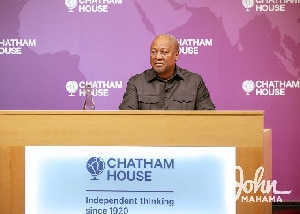
    “We must urgently and collectively institute comprehensive and unambiguous tax policies to combat tax-motivated illicit financial flows, strengthen legal and law enforcement systems and bring together national agencies to stem such flows.

    “We need concrete measures to stop the systemic impoverishment of our continent and the theft of its resources,” he said.

    The President harped on the need for Africa to invest in and harness technology and innovation to transform economic structures and educational systems.

    He said it is imperative for Africa to build technology and trade policy convergencies and to adopt new approaches to sustain technological and market competitiveness.

    President Akufo-Addo said Africa was an opportunity for the world, and the continent must rise and reclaim its place.

    “We must now with great zeal and fortitude back this great ambition with our collective action to harness fully the benefits of a liberalized single market for goods and services, this must be our solemn and moral obligation to our continent, to our children and future generations.

    “We cannot afford to fail, as African nations, we must join hands with each other and work diligently to pursue this noble cause,” he said.

  • Only lazy persons spend one hour watching television – Actor Yaw Dabo

    Only lazy persons spend one hour watching television – Actor Yaw Dabo

    Actor Yaw Dabo has come under heavy criticism over some comments he made recently.

    The well-known Kumawood actor, advised people to put in a lot of effort to attain their goals.

    In an interview with one Saddick Adams, the actor claimed that anyone who spends even one-hour viewing movies is lazy.

    He emphasized that one of the most important conditions for success in life is discipline. Saddick Adams, a well-known sports writer, invited Dabo to talk about his football school, the Dabo Soccer Academy.

    Dabo believed that since the modern world was centered on making money, it was unwise for people to squander their time on unimportant activities. Some people were incensed by Dabo’s comments on viewing movies since they thought they were outrageous.

    Source: Ghanaweb

  • Fiscal readjustments could save Ghana GH$83 billion – Committee Report

    Fiscal readjustments could save Ghana GH$83 billion – Committee Report

    According to a report by the Joint Technical Committee, which was established by the Finance Ministry, Ghana can save around GH 83 billion in fiscal re-adjustments by excluding individual bondholders under the Domestic Debt Exchange Programme (DDEP).

    To contain the current economic issues, the Forum proposed in the Report that the Government review and make some specific modifications to its revenue and expenditure.

    This topic was discussed during a public forum on Ghana’s domestic debt exchange programme titled “Ghana’s Debt Exchange Programme in Context: A Make or Break for an IMF Bailout or Are There Viable Alternatives?”

    It said oil production had dropped from over 200kbpd to below 160kbpd yielding revenue loss more than $300 mill (GH¢3.6 billion).  

    It, therefore, called on the Government to review the regulatory and fiscal environment. 

    The Forum said an estimated GH¢13.9 billion revenue was lost through financial irregularities of Metropolitan, Districts Assemblies per the Auditor-General’s report and the Government must pursue these funds.

    Again, it said GH¢20 billion could be saved by privatising selected State-Owned Enterprises (SOEs) Tier-2 pension funds to drive efficiency and productivity.

    Another recommendation was maintaining the 2022 capital expenditure level by reducing the Annual Budget Funding Amount of Ministries Departments and Agencies and foreign finance Capex provisions by 50 percent, which will save Ghana about GH¢10.7 billion. 

    Professor Godfred A. Bokpin, an Economist at the University of Ghana Business School (UGBS), said the overemphasis on debt restructuring to the detriment of creditors was not the way out. 

    He said the road to debt sustainability involved fiscal and structural adjustments and not solely dependent on debt restructuring.

    “We agree that a certain level of debt restructuring is unavoidable but Ghana’s problem is largely governance. The governance problems manifest explicitly in economic mismanagement.” Prof. Bokpin said. 

    He said the country needed governance reforms in terms of product, market and broad structural reforms, which should be placed higher above fiscal adjustment and debt restructuring.

    With the fiscal adjustment, Prof Bokpin said there was significant room for expenditure-based fiscal consolidation that would not hurt growth.

    Dr Patrick Asuming, an Economist and Senior Lecture at UGBS, said, it was imperative that the government did the fiscal adjustment, otherwise “we will revisit debt restructuring some time to come.”

    “The fiscal is what generates the deficit and accumulates to the debt. If we do the debt operation and the fiscal side is not solved, we would virtually go back for another debt operation,” he added. 

    Dr Asuming said the debt restructuring was about lives that would be affected permanently, therefore, it was important that the citizenry came together and ensured that the right things were done for posterity’s sake. 

  • Ayisha Modi causes stir as she shares scary photos from enstoolment rituals

    Ayisha Modi causes stir as she shares scary photos from enstoolment rituals

    Ghanaian socialite Ayisha Modi has set quite the unbreakable record – becoming the first person in history to share a photo communing with the gods.

    Ayisha is getting enstooled as a developmental chief alongside media personality, Gh Mouthpiece.

    Modi, real name Ayishetu Osekre Aryeetey and Mouthpiece, real name Rita Asuamah, are being enstooled as development queens in Sowutuom.

    The process of enstoolment involved the two ladies being placed in a room with ’99 spirits’.

    For some reason, Modi had photos taken of herself and her partner in the room of the spirits and shared them online!

    Netizens were flabbergasted and wondered why she would do so.

    Modi was described as the first person to take a selfie with the gods!

    Ayisha is shamelessly addicted to attention in this way – there is nothing she does that she will not talk about for clout.
  • Hearts of Oak coach Slavko Matic hails players despite defeat to Medeama

    Hearts of Oak coach Slavko Matic hails players despite defeat to Medeama

    Hearts of Oak tactician, Slavko Matic has heaped praise on his players despite defeat to Medeama on Saturday.

    The Phobians broke the jinx to win at Akoon Park for the first time since 2016 after a 1-0 win in matchday 14 of the Ghana Premier League.

    Kwadwo Obeng Jnr’s solitary goal of the game on 32 minutes was enough to return the Premier League giants to winning ways after back to back draws.

    “I’m very happy because my players they show good attitude and they show very good tactical discipline.”

    Hearts of Oak move to second place on the league standings, level on 24 points with leaders Aduana FC who host Accra Lions on Sunday.

  • Let’s take use of AfCFTA prospects to boost Africa’s socioeconomic development – Abu Jinapor

    Let’s take use of AfCFTA prospects to boost Africa’s socioeconomic development – Abu Jinapor

    Samuel Abu Jinapor, the acting minister of trade and industry, has urged regional economic leaders and African ministers to collaborate closely with the private sector to create the necessary institutional and logistical frameworks for successful continental trade.

    According to him, the private sector has always served as the engine that drives the African Continental Free Trade Area (AfCFTA), and as such, the success of the continent’s single market depends in great part on enabling the private sector to expand.

    “We have a unique opportunity through AfCFTA, to develop our continent, with 54 countries strategically combining our forces in trade and business, to create a single continental market, Africa is undoubtedly, ready to emerge as a leader in the global trade market,” Mr Jinapor stated.

    Mr Jinapor made the call at the closing ceremony of a two-day Business and Policy Leaders’ Dialogue of the Africa Prosperity Dialogues held at the Safari Valley Resort, Adukrom, Eastern Region on Friday.

    It was organised by the Government of Ghana, through the Ghana Investment Promotion Centre (GIPC), in collaboration with the African Continental Free Trade Area Secretariat, Africa Prosperity Network and Economic Commission for Africa.


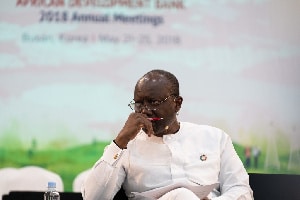
    The dialogue was aimed at proffering actionable solutions to boost intra-African trade and ensuring Africa’s prosperity within the context of the Africa Union’s Agenda 2063 for economic transformation.
    It was held on the theme, “AfCFTA-From Ambition to Action: Delivering Prosperity through Continental Trade”.

    Some key stakeholders in attendance include government representatives across the continent, business leaders, policymakers, heads of Africa Investment Promotion Agencies, academia and the diplomatic community as well as key stakeholders in Africa and international partners.

    The Caretaker Trade minister was of the view that through public-private and multi-sectorial engagements, Africa could unblock the bottlenecks that hamper the full realisation of its single market agenda.

    “I, therefore, respectfully, call on all of us, gathered here, Ministers, policymakers, government representatives, and representatives of regional economic communities, to work with the private sector to institute the requisite institutional and logistical frameworks for the private sector to thrive,” he said.

    “There is no gainsaying that the private sector, which has always been the backbone of the African economy, constitutes the primary driver of the AfCFTA, and the success of this single market depends, largely, on how this sector is empowered and resourced to engage in meaningful trade across the continental market,” Mr Jinapor stressed.

    “While targeting the private sector, we must drill down further to address the needs of micro, small, and medium-sized enterprises in our respective countries, as they contribute more than half of the continent’s gross domestic product (GDP),”he said.

    The International Finance Corporation (IFC) estimates that micro, small, and medium-sized enterprises (MSMEs) account for some 90 per cent of all businesses in Africa and provide some 80 percent of jobs across the continent.

    The Caretaker Trade minister, thus, urged the private sector stakeholders to own the AfCFTA, and continue to work with African governments to ensure its full implementation.

    “For not only will the private sector be the driving force of AfCFTA, but it will also be the primary beneficiary of the single market when we achieve the desired levels of trade between ourselves as a people,” Mr Jinapor stated.

    Mr Jinapor noted that the advancement of intra-continental trade would allow private businesses to expand their markets, and venture into new territories which were previously inaccessible to them.

    “Africa can and will unleash prosperity for its peoples. The Europeans did it, at least beginning from the Industrial Revolution of the eighteenth and nineteenth Centuries, with the mining of coal and the use of steam engines through the development of technology, and the creation of a single market for the movement of goods and people,” the Caretaker Minister pointed out.

    “The Asians have done it, with the Asian Miracle of the Four Asian Tigers fuelled by exports and rapid industrialisation”.

    “Africa can and must do it. The fundamental question is, what does it take to do this? We, therefore, must:

    Firstly, promote a free society, anchored on democratic principles and the rule of law, including an independent judiciary, to adjudicate disputes between the state and private citizens as well as among citizens; for without an independent judiciary, investors will have no confidence to invest in our countries”.

    “Secondly, as articulated earlier, we must promote the private sector as the engine of growth. The development of Japan and the Asian Tigers is enough testimony of the centrality of the private sector to unlock prosperity”.

    “Thirdly, we need well-educated, competent and capable citizens. Europe and America’s technological revolution is attributed, largely, to skilled and educated workforce. We must, therefore, invest in the education of our citizens”.

    Mr Jinapor underscored the need for the promotion of a high sense of consciousness amongst the African youth to be actively involved in every aspect of trading and business activities on the continent.

    “Africans are one people. We share a common history and have common values. As early as the eighth century, and, even before then, we traded without borders on the Trans-Saharan corridors,” the Minister recalled.

    “The youth of our continent are awake and palpably determined not to settle for less. Whether in Accra, Addis Ababa, Cairo, Bamako, Ouagadougou, Jubah, Soweto or Kinshasa, the consciousness of our young men and women is at an all-time high,” Mr Jinapor stated.

  • 2022/23 Ghana Premier League: Week 14 Match Preview – Samartex v King Faisal

    2022/23 Ghana Premier League: Week 14 Match Preview – Samartex v King Faisal

    Samartex will welcome King Faisal to Nsekyire Sports Arena on Sunday in week 14 of the 2022/23 Ghana Premier League.

    Kick off for the game is set at 15:00 GMT. King Faisal and Samartex have not met in a Ghana Premier League tie yet.

    The hosts will come into this fixture busking in the glory of frustrating Hearts of Oak to a goalless draw in Accra the last time out in the league.

    On the other hand, the In Sha Allah lads are approaching this game on the back of a 1-0 win over Tamale City in their previous outing.

    The two sides are separated by just a point, with King Faisal up in 12th place (17 points) while Samartex sit 15th (16 points).

    Samartex have lost just one of their las five league games, a heavy 3-0 defeat to Bibiani GoldStars. They have also registered two wins and two defeats each.

    King Faisal’s form on the road hasn’t been good. They have lost three of their last five games in the league, with a win and a draw each.

    Samartex will still be without head coach, Annor Walker, who led Ghana to a quarterfinal exit at the 2022 Championship of African Nations (CHAN). He won’t return in time to oversee this game.

  • It’s offensive to ask a man living with dwarfism how he satisfies a woman in bed – Don Little

    It’s offensive to ask a man living with dwarfism how he satisfies a woman in bed – Don Little

    Don Little has recounted the number of times a fan, friend or colleague has bruised his ego by questioning how he manages to sexually satisfy a woman with his stature.

    The popular Kumawood actor has educated the public on the need to be measured and do away with the silly comments they pass about midgets.

    According to Don Little, real named Samuel Atanga, it takes a lot of patience to restrict clapping back at persons who look down on them.

    “Respect us, we are humans just like you. Respect is reciprocal…I am a man, not a boy and so don’t pet me like a child,” he warned in an interview with Emelia Brobbey.

    Sharing some of the offensive comments they receive on regular basis he said: “I have people asking ‘Don how do you have sex with a woman with your small size’. I just don’t understand.”

    Don Little also hammered on some disadvantage that comes with dwarfism.

    He said: “Due to our size, we are very careful. Even regular men suffer at the hands of women, how much more us? We cut our coats according to our cloth. Our size down there comes in a form of a toothpick (laughs). We will not even bother and when our sexual desire gets high, we keep it to ourselves.”

    Source: Ghanaweb

  • Tips on how to save money when you buy your fabric online

    Tips on how to save money when you buy your fabric online


    One of the biggest benefits of shopping for fabrics online is the ability to easily compare prices

    Are you a fabric lover looking for ways to save money on your purchases? Shopping for fabrics can be a daunting task but with the rise of online retailers, it’s now easier than ever to find the perfect fabric at the right price. Buying fabrics online can also be a great way to save money compared to shopping at the market. Here, we’ll tell you how you can save money by shopping for fabrics online.

    One of the biggest benefits of shopping for fabrics online is the ability to easily compare prices from different retailers. This allows you to find the best deal without having to physically visit multiple stores.

    Another great advantage of online fabric shopping is the abundance of sales and discounts that many retailers offer. These sales and discounts can help you save money on your purchases, so it’s worth the effort to check back regularly to see what deals are available. In addition, many online retailers offer coupon codes that can help you save even more money.

    Another factor to consider when shopping for fabrics online is shipping or delivery costs. While some retailers charge a premium for delivery or shipping, others may offer free or discounted shipping rates. Be sure to factor in the cost of delivery or shipping when comparing prices from different retailers.

    Lastly, shopping for fabrics online eliminates the need for driving or taking public transportation to the store, saving you both time and money. This can be a huge benefit for those who live in areas that are not near the market or have limited transportation options.

    In summary, the rise of online retailers has made it easier and more cost-effective to shop for fabrics. By taking advantage of these savings opportunities, you can save money on your fabric purchases when you shop online. Just be sure to read reviews and compare prices from different retailers to ensure you are getting the best deal.

    Source: Ghanaweb

  • Dr. Lawrence writes: The identities of Rev. Victor Kusi Boateng and Elections 2024

    Dr. Lawrence writes: The identities of Rev. Victor Kusi Boateng and Elections 2024

    The NPP are talking of “Breaking the 8” and as much as they look ridiculous saying so, I personally think they are serious about it. The NDC are also saying election 2024 is going to be do or die, but what are we doing to ensure that we win the elections hands-down? This article is to explore the little things the NDC might ignore but can be dangerous going into Elections 2024.

    Today we know Rev Victor Kusi Boateng is the same person as Kwabena Adu Gyamfi. Do we know what name he used to vote in the 2020 elections? Isn’t it possible that he could have voted with Kwabena Adu Gyamfi at Ayawaso Central and voted at Ayawaso West with Rev. Victor Kusi Boateng?

    We now know that his Ghana card has the name Kwabena Adu Gyamfi, but when he responded to the allegations against him, he signed the letter as Rev. Victor Kusi Boateng. Is the NIA and the NPP waiting to issue another Ghana card for him with the name Rev. Victor Kusi Boateng before December 2024? This question looks silly but this is something the NDC should watch out for.

    The big question is how many people in the secured constituencies of the NPP has such double identities and can run around voting for the NPP? Do we know if this is the reason why even though they are governing the country like blind people, they are bold to say “breaking the 8?”

    The way the NPP quickly came up with a Supreme Court ruling to defend Kwabena Adu Gyamfi should raise eyebrows for the NDC. Their argument was that it is legal to have multiple Ghanaian names and so Kwabena Adu Gyamfi was legal. This should tell the NDC that the NPP has prepared many Ghanaian names and ready to issue them Ghana cards before December 2024. I know what the NPP are capable of doing and that is why I am bringing it up now, so the NDC will be vigilant now and then.

    Doesn’t the double identity of Rev. Kusi Boateng make it nonsense the digitalization by Dr. Bawumiah? So, after all the noise and money spent on this digitization thing, some people can have two names in Ghana?

    Take the name Nana Addo Danquah Akufo-Addo. Clearly, these are two legal names put together. A law certificate has one of the names on it and the other doesn’t have a law certificate. The name that doesn’t have a law certificate is the President of Ghana.

    The NPP are always changing their rigging tactics. They stopped Ghanaians in Togo from voting in 2016. They used internal intimidation in 2020. They will use something else in 2024, and I smell double identities. I am just a messenger who sees from afar and writes.
    Mahama reba

    Dr. Lawrence is the Founder of the Diaspora Progressive Movement in USA.

  • Performance of changed minority leaders outstanding, reshuffle came as a surprise – Political Analyst

    Performance of changed minority leaders outstanding, reshuffle came as a surprise – Political Analyst

    Economist and political risk analyst, Dr Theo Acheampong says the decision taken by the executives of the National Democratic Congress (NDC) to change the leadership of the Minority Caucus came as a shock.

    According to Dr Acheampong, the ousted leaders have performed remarkably well in terms of holding the Akufo-Addo-led administration to account in Parliament.

    The Economist made this statement in an interview on Newsfile on Saturday, when host, Samson Lardy Anyenini asked his view on the shake-up in the NDC party in parliament.

    “I think Haruna, Muntaka and Avedzi, looking or from where I sit, they’ve actually performed creditably well as the leadership of the minority in actually holding the government to account. The quality of governance from the parliamentary side of things has actually improved with this 137 split-out.”

    “So for them to be reshuffled, tells some of us that perhaps there are other factors or considerations at play, and not necessarily because of the works that they’re doing in parliament and for the party,” he said.

    The NDC reshuffled its leaders in parliament on Tuesday, January 21, 2023. This change affected three major positions: the Minority Leader, Deputy Minority Leader and the Minority Chief Whip.

    Per the new changes, Haruna Iddrissu, lost his position as Minority Leader to Dr Cassiel Ato Forso, while MP for Ketu North James Klutse Avedzi was succeeded by MP for Ellembelle, Emmanuel Armah-Kofi Buah as Deputy Minority Leader.

    The MP for Asawase, Muntaka Mubarak was also replaced by Kwame Governs Agbodza as Minority Chief Whip, while the positions of Ibrahim Ahmed and Comfort Doyoe Cudjoe as First Deputy Minority Whip and Second Deputy Minority Whip, respectively, were retained.

    Meanwhile, Dr Acheampong believes that the current division between members of the party over this change gives an indication that enough consultation was not done in choosing the new minority leaders.

    For this reason, he believes that the current push-back might have an impact on the party’s chances in the 2024 elections.

    However, he added that it was “too early in the day to predict to what extent that if any, would impact the party’s chances, come 2024.”

    Source: myjoyonline

  • Is this the beginning of the end of Ghana’s fiscal crisis?

    Is this the beginning of the end of Ghana’s fiscal crisis?

    A flurry of announcements this week was meant to signal that momentum was building towards a successful close of Ghana’s unorthodox domestic debt restructuring program (DDE). Banks, insurance firms and most capital market players have consented to revised terms for the orderly resolution of the country’s unsustainable domestic debt.

    At a plush conference in the Ghanaian hinterlands, at a resort featuring Australian emus and llamas from Argentina, the Finance Minister had a literal spring in his step as he mounted the podium to praise the government’s commitment to “African prosperity”.

    All this flourish might suggest the beginning of the end of the country’s most debilitating fiscal crisis in recent memory. Considering analyst unanimity about how harsh the Ghanaian DDE has been for domestic savers and investors, it is perhaps not too difficult to understand why the mere fact of some traction is enough to lift government’s spirits. Using the framework of its own advisors, Lazard, the government’s DDE offer definitely merits the investor-unfriendly tag.

    And yet, here we are, on the verge of closure. A sober assessment of the situation, as I hope to explain in a second, would however recall Churchill’s famous statement in 1942 after the Allies blocked a massive Nazi incursion into Egypt and secured the vast oil fields of the Gulf in one of the most dramatic turns of World War II:

    “It is not even the beginning of the end. But it is, perhaps, the end of the beginning.”

    The deals agreed between Ghana’s Finance Ministry and the key financial market players, welcome relief from the stress and anxiety of recent weeks though they are, are significantly caveated.

    In addition to the government revising its earlier stance of paying no interest on bonds this year and paying just 5% interest next year, it will instead pay 5% interest in 2023 and an effective rate of 9% (down from the roughly 19% weighted average rate on the old bonds) for the remainder of the term of the new bonds. Significantly, consenting domestic creditors are not getting a concession on the extended maturity of the reprofiled instruments, a major contributor to the Net Present Value (NPV) losses estimated by analysts.

    To understand the provisionality of the agreements reached, one needs to carefully read the latest announcement, the one announcing a deal between the capital market operators (GSIA) and the Finance Ministry.

    Just like the banks and insurance firms, the deal was brokered on the back of a promise by the government to set up a $1 billion Financial Stability Fund (FSF) to cushion any industry player that finds its solvency or liquidity threatened following the restructuring exercise.

    As analysis of similar structures proposed for the European Union, and used in the Greek and Jamaican debt restructuring episodes, attests, a loan-based FSF is indeed the appropriate mechanism to use in these kinds of situations.

    The only problem is that the design of the proposed Ghanaian version of an FSF is entirely in the heads of mandarins at the Finance Ministry. So far, they have studiously refused to share any details about the interest rate, maximum term, collateral requirements, eligibility criteria, or, indeed, any of the major features one needs to know to properly asses a Fund of this nature.

    At one point the Finance Minister even appeared to suggest that the Fund was for mere show because the Jamaican version ended up redundant. He ignored the Greek example, in which a decade after it was set up, the Greek FSF is still dealing with the lingering effects of the bank bailouts partially attributed to the country’s debt saga.

    Worse still, there is no money as yet for the Ghana FSF. The government says it has approached the World Bank to cover 30% of the costs of the FSF. The World Bank operates within its strategic plan for Ghana. Making additional resources available is contingent on satisfactory progress on a whole host of pending issues about already committed resources. The other expected funders of the program, like Germany’s KfW, have elaborate processes for agreeing to new programs and disbursing funds and, at any rate, would also like to see this whole FSF embedded in a detailed economic recovery strategy, of which none has been forthcoming from the government.

    In short, the FSF is pretty much conceptual at this stage. It is thus not clear whether the financial sector players expect incorporation of language concerning the FSF into an amended debt exchange prospectus. The answer will be interesting come Tuesday, the 31st of January, the deadline of the DDE.

    On the GSIA front, the caveats are more striking. A good chunk of the holdings of these capital market operators are in Collective Investment Schemes (like mutual funds and unit trusts). The chains of exposure are quite complex, entangling some corporate treasuries as well as individuals. For example, the country’s fintech industry parks some assets using these and other bank custodianship arrangements. Under the terms of the provisional agreement with GSIA, government bonds owned by the Collective Investment Schemes (CIS), regardless of ultimate beneficial ownership, must be treated on the same terms as those owned by individual bondholders.

    Any contingencies of the CIS kind imply that the creditor group concerned cannot sign a blanket DDE agreement on Tuesday. A revised document meeting legal muster must be prepared and reviewed before any prudent fund manager can proceed to sign.

    But even if such agreements are signed in short order, they will still be subject to a fuller resolution of the caveated matters before actual immolation of the old bonds and issuance of the new bonds can proceed at the depository of the Ghana Fixed Income Market. It will be interesting how all this unfolds in the coming days, considering the government’s rush to have everything done and dusted in the first week of February.

    And that is only in relation to the creditors signing on to the DDE. We can safely project that the vast majority of individual bondholders and offshore investors would not consent to the DDE by the 31st deadline. A significant number of corporate treasuries will also hold out. Taking that fact into account, and considering the earlier exemption of Pension Funds and the contingencies around the CIS holdings, one can also project a participation rate (on principal basis) in the DDE of about 65%, and debt service relief of less than 50% of the original expected amount.

    A 65% participation rate would be the least impressive DDE performance in the world for a program that went to completion. It would certainly fall short of the government’s preferred target of 80%.

    The underwhelming results of the exercise can be entirely traced to the highly unorthodox approach taken by the Finance Ministry to launch consultations only after the debt exchange had commenced instead of before as has been the case with most DDEs undertaken elsewhere over the course of this decade, most of which saw participation rates above 90%.

    When the exercise commenced in early December, this author said the following about certain financial industry players in Ghana:

    Not only are they few in number, and their client base predominantly middle-class, but the government also wields massive regulatory power over banks and funds and expects them to do as they are told.

    True to form, the government’s approach so far has been to ram the DDE down their throat. It was only after humiliating setbacks that it changed tack midway and grudgingly tried to do some co-creation. It goes without saying that launching consultations much earlier and mobilising a national consensus behind the DDE would have resulted in a higher participation rate and more debt relief whilst also spreading the pain more optimally. But even so, a 65% participation rate is comfortably above the 60% this author considers necessary for the program to have minimal viability.

    It is important, moreover, to bear in mind that the resources freed up by the DDE, holdouts and exemptions notwithstanding, sum up to a figure just below the government’s largest revenue lines like Corporate Income Tax, Oil & Gas and Personal Income Tax. The DDE’s expected debt relief amount is considerably larger than proceeds from trade, energy and communications taxes etc. The banks alone may be “sacrificing” income of 15 billion GHS to the benefit of the government’s purse. Imagine attempting to haul that kind of dough through financial sector taxation.

    So, where does all this leave us?

    First, given the significant variance from the initial debt relief expectations, analysts expect some delays in finalising the full contours of the ECF before presentation to the IMF Board, likely straining the relationship between the IMF and the Finance Ministry. The government’s preferred timeline of IMF Board approval of March 2023 looks overly aggressive at this stage. In particular, earlier contentions by analysts that the fiscal consolidation component of the upcoming ECF program isn’t credible will be thrust back into sharp relief. Finance Ministry mandarins should not wait till the last minute before reworking the expenditure spreadsheets.

    The IMF may choose to overlook the fact that the original debt sustainability strategy needs to be fully overhauled in view of the lower than expected debt relief and still present a program where the government only makes fiscal tightening pledges to the Board for approval. But doing this could dash the government’s hopes of the IMF frontloading tranche 1 disbursement, amounting to about $1 billion, to shore up the country’s forex reserves. Ghana’s reserve position is under unprecedented pressure, with gross reserves dipping below $4 billion, from nearly $10 billion a year ago, without even accounting for some not so liquid items on the Bank of Ghana’s balance sheet.

    The IMF may in turn argue that any such disbursement should happen after successful completion of the first review of the ECF program, perhaps about three months after Board approval. It is highly unlikely that the Finance Ministry will consent to any arrangement that delays forex injection.

    Which is why some analysts are beginning to ponder a scenario where government brings forward deferred domestic debt restructuring plans. Because the current DDE only covers 68% of the primary domestic public debt and less than ~56% of total public sector liabilities, the government may be tempted to initiate additional restructuring exercises earlier than planned in pursuit of additional debt relief.

    The recent episode of Cocobod forcing a rollover of maturing debt (after the giant parastatal failed to raise a new facility to refinance expensive bills and the Bank of Ghana refused to step in) offers a clear hint of the government’s posture. Given that the country’s credit rating is already at rock-bottom, few restraints on debt repudiation remain. Apart from treasury bills and Bank of Ghana’s liquidity management tools, like swaps, every public liability in Ghana today is fair game.

    External investors, keenly observing all these developments, are unlikely to agree quickly to total moratoria on debt service, as is the government’s wish. Trying to play total hardball may protract discussions and interfere further with the IMF Board approval timeline. It will be helpful for the government to be strategic this time around unlike in the leadup to the IMF engagement last July. That time, Ghana literally had to make a mad dash to Washington after a desperate attempt to hustle dollars from all manner of institutions between April and June failed to turn up even a dime.

    Since then, everything has been a mad rush. It would be tragic if the government dilly-dallies with the outstanding creditor concerns until mid-March by which time the country’s forex situation would be completely dire before scrambling to pursue options that were obvious from the start (like abandoning zero percent coupon in 2023 during the DDE standoff).

    It would be foolhardy in these circumstances for economic actors, and indeed the general public, to begin acting as though Ghana is nearly out of the woods. The rising chorus of governance reforms and the push for fiscal discipline should now intensify and not abate. The partial success of the current DDE is a mere lull in a storm that is still gathering.

    All eyes should firmly remain on the foredeck, on the crew steering the ship of state, and no voice should stay calm if signs of rudderless maneuvering emerge.

    Source: Ghanaweb