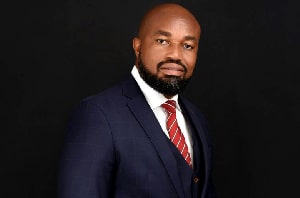
Apparently, the case between slay queen Deborah Adablah and CFO Kwasi Nimako is getting intense as both parties begin to defend themselves.
Deborah Adablah has gone bonkers on social media ranting and giving out more details about why she decided to drag Deacon Nimako to court.
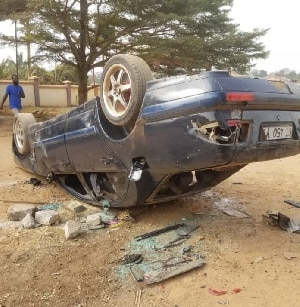
She has disclosed that Deacon Nimako was only concerned about his car when she had an accident.
She revealed Deacon Nimako sent the police after her to claim his car without bothering to check on her.
She, therefore, got pissed and ended their relationship as the only source of entertainment for her was gone!
Reacting to that, Deacon Nimako has noted that he took back his car because he bought it with his own money and registered it in his name.
He explained he gave out the car to her as a means of transport to work since she was a hard-working service personnel and was staying far from the workplace.
He also disclosed that he found out Deborah Seyram is a hookup girl and as a deacon, he cannot offer his car for hookup jobs.
This is going to be an interesting battle! Check out the posts below;
He asserts that in order to reduce violations, Board members, management, chairpersons, and heads of the Specified Entities must familiarize themselves with and put into practice the recommendations made in the Auditor-report. General’s
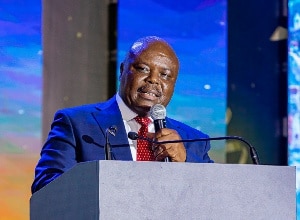
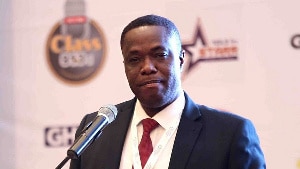
Joseph Cudjoe made a few brief statements during the State Interest and Governance Authority’s presentation of the 2021 Infractions Audit Joint Report, where he urged high levels of commitment from the Specified Entities and other stakeholders.
“One framework that has come up in our discussions is to make recommendations to the Minister of Finance to use withholder methods for budget releases as a punitive measure for non-compliance in this regard. It is non-financial in nature and it is easy to withhold Specified Entities with these sanctions,” the minister added.
Joseph Cudjoe added that he believes the move would come in handy to tackle the issue of non-compliance which has long been endemic among Specified Entities.
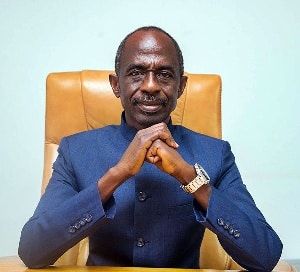
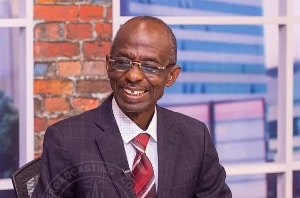
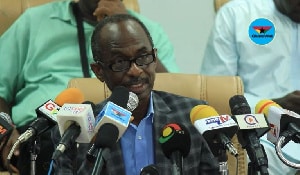
The Chairman of the National Democratic Congress (NDC), Johnson Asiedu Nketiah, has indicated that reshuffling its leadership in Parliament aligns with the party’s agenda ahead of the 2024 elections.
According to him, the 2024 elections will basically be around the economy therefore there is a need for the party to put finance and economic experts around the people to ensure they are able to the community to Ghanaians to do things better.
He added that the party made the right decision with regard to the new leadership, as the party must put its best foot forward to win the elections.
“The 2024 election is going to be fought around the economy, so the debate is basically going to be about the economy. So, if you are a serious party fighting to win an election, you must put your best foot forward to win the debate.”
“You can’t just tell people that the economy is in shambles when you have not been able to put your experts there to be able to communicate to Ghanaians how you will do things better. So, this is the point where we need our finance and economic people around, and that is why we put them there,” Citinewsroom quoted Asiedu Nketiah.
The National Democratic Congress (NDC) has announced changes in its leadership in Parliament.
According to the party, the decision is in the ultimate interest of the party.
In line with prioritising the economy, Dr. Cassiel Ato Forson, who is a former deputy minister for finance, has taken over from Haruna Iddrisu as the new minority leader. Ellembelle MP, Emmanuel Armah-Kofi Buah, will replace James Klutse Avedzi as Deputy Minority Leader.
Kwame Agbodza becomes the Chief Whip for the opposition side and will be deputised by Banda MP Ahmed Ibrahim and Ada legislator Comfort Doyo Ghansah, respectively.
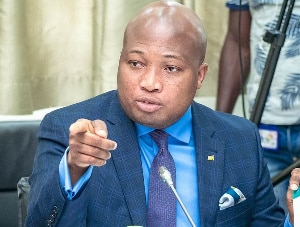
Contrary to the widely publicised information that the building of Ghana’s National Cathedral will cost $400 million, the Member of Parliament for North Tongu, Samuel Okudzeto Ablakwa, has contested the figure.
According to him, the Ghanaian taxpayer could rather be paying about $1 billion for the construction of the edifice that has recently been embroiled in a lot of controversies and allegations of corruption.
“We were told by the finance minister that the project will cost $100 million, then the figure rose to $150 million. The Chairman, Opoku Onyinah later mentioned $200 million but now based on fresh documents, I have realized the project is going to cost the Ghanaian taxpayer about $1 billion.
“The same amount former president Mahama used to set up the Ghana Gas project which is earning us about $400 million a year,” he is quoted by citinewsroom.com to have said.
Explaining further, the MP stated that the original cost of $400 million that has been mentioned does not include such costs as the monies the government had to incur in relocating the judges’ bungalows in the areas that are currently going to house the National Cathedral.
This, he added, did not also include some $50 million needed for the relocation of the Judicial Training Institute, as well as an amount of $10 million that made up the cost of the relocation of the Passport Office of Ghana.
Samuel Okudzeto Ablakwa, who has been at the center of a lot of revelations of misconduct or alleged corruption related to the building of the national edifice, also added that one other company, Waterstone Complex, which had its offices pulled down to allow for the construction to go on, is in court.
He added that the private company has sued the government for $120 million.
By adding all these amounts, plus the modifications to the project, such as the Biblical Garden and the museum, he added, will see the original cost of the project shoot up exponentially.
While the National Cathedral project remains one of the most topical government projects that have been fought against by many currently, President Nana Addo Dankwa Akufo-Addo has reiterated his resolve to see to its completion.
Not even the current economic challenges being faced in the country have stopped him from doing so.
The Member of Parliament for Afigya Kwabre North, Collins Adomako-Mensah, has alleged that the removal of the Member of Parliament for Tamale South, Haruna Iddrisu, as minority leader was something some members of the minority had been orchestrating for a long time.
According to him, he is not surprised by the removal of Haruna Iddrisu because members of the minority caucus have been disrespecting him for a long time.
The New Patriotic Party MP, who made these remarks in a Good Morning Ghana interview monitored by GhanaWeb on Wednesday, January 25, 2022, added that the National Democratic Congress’s (NDC’s) national leaders have not been happy with Haruna Iddrisu because of some of the things that transpired in Parliament under his leadership.
“This is a coup; I mean, you don’t miss words; this is a complete coup. And anybody who has been following the NDC’s politics in parliament will not be surprised.
“The disrespect toward Haruna didn’t start today; it has been there in Parliament, everybody knows this. And the plan to get him out has been staged for a very long time, it has just got to the climax.
“And let me read Sammy Gyamfi’s tweet or Facebook post when the ministers were approved by parliament: “Comrades the betrayal we have suffered in the hands of the Speaker of Parliament … the leadership of our parliamentary group, particularly Haruna Iddrisu and Hon Mubarak Muntaka, and dozens of our MPs, is what strengthens me to work hard for the great NDC party,” he said.
The NDC leadership has appointed the former Deputy Minister of Finance, Dr. Cassiel Ato Forson, as the minority leader in the 8th Parliament of Ghana’s Fourth Republic.
According to the NDC, Kofi Armah Buah, MP for Ellembele, will take over as the Deputy Minority Leader.
While Kwame Governs Agbodza, MP for Abaklu, will replace Asawase MP Muntaka Mohammed as the Chief Whip.
Ahmed Ibrahim, MP for Banda, has been maintained as the First Deputy Minority Whip, while Comfort Doyo Cudjoe-Ghansah, MP for Ada, is the Second Deputy Minority Whip.
This was contained in a letter to the Speaker of Parliament, Alban Bagbin, from the National Democratic Congress, dated January 23, 2023.
Deborah Adablah has a message for her former sweet sugar daddy, Deacon Nimako – its not too late and we can still reconcile!
A new video has popped up online appearing to show Deborah sending an olive branch to her sugar daddy after scattering his life!
As we reported, Deborah has taken Nimako, Chief Finance Officer (CFO) of the First Atlantic Bank to court over their relationship turned sour.
Deborah wants promises Nimako made – giving her a car, paying her rent, giving her capital for business and a monthly Gh 3,000 stipend – to be enforced by the court!
The case has turned the Deacon’s life upside down and opened him up to ridicule!
Solomon Lartey, CEO of the Africa Sureties and Insurance Advisory Company, said during his inauguration as the new president of the Chartered Insurance Institute of Ghana (CIIG) that the sector must unite to find a workable solution for (DDEP).
He said clearly, “We are different sides of the same coin; whatever affects one side, impacts the other as well.
“Thousands of people could also lose their livelihoods. Insurance companies (life and non-life) pay over GH¢4.3million worth of claims to companies and individuals on a daily basis. This would also be lost. And these figures do not include pensions, health and securities – the picture is much worse than it seems,” he added.
The CIIG president said it would be sad to see all the gains made to increase insurance coverage to more than 40% destroyed due to this debt exchange programme. “Insurance penetration currently stands at 1 percent, and this could get worse,” he further stated.
Turning his attention to the banking sector, Mr. Lartey said 17 of the country’s 23 commercial banks would have their capital adequacy ratios fall below 10 percent and require a new capital injection of more than GH¢16 billion to be able to stay in business.
“Banks losses could be as high as GH¢14.5billion, and most of them would have to downsize to keep some portfolios afloat. These would lead to a credit squeeze and high cost of credit. The trickle-down effect on Ghana’s industry and commercial activities would be dire,” he said.
Mr. Lartey argued that the current global economic temperature demands increased vigilance on the part of financial services providers.
Citing the 2023 Global Risk Report by the World Economic Forum – which predicted that the energy supply crisis, cost-of-living crisis, rising inflation, food supply crisis and cyberattacks on critical infrastructure would be among the top risks for 2023 with the most significant potential impact on a global scale – the practitioners said that there is no easy escape route.
“This is evidenced in the current economic crisis faced by Ghana: namely high inflation at 54.1 percent; depreciation of the cedi; high fuel prices; rising food inflation; a high national debt necessitating another visit to the IMF; and the current debt exchange programme,” he said.
The CIIG is the mother-body of all insurance professionals in the country, which brings together practitioners from life and general insurance, and reinsurance, health insurance companies, broking firms, pensions, securities and trustee firms. Mr. Lartey is the CIIG’s 9th president. He took over from Mr. Tawiah Ben-Ahmed, CEO-Sanlam Life Ghana.
Musician and social media commentator, Archipalago has confessed his love for actress Yvonne Nelson who has been open about her relationship status.
The award-winning actress has hammered on several occasions that she is in no rush to find a husband.
“My DOP keeps asking me why I’m not in a relationship. It bothers him,” she tweeted on January 24.
According to Achipalago, he will never miss the opportunity to kiss the famous Ghanaian filmmaker or have her in his bed.
In his latest revelation, he openly proposed marriage to Yvonne and detailed what makes her stand out from other celebrities.
“I wish Yvonne could avail herself for us to marry. I am in love with her. All jokes aside, Yvonne is my type of girl. The only issue is that am yet to see her in my dreams. If not I would have persuaded her.
“Among all the celebrities in Ghana, it is Yvonne I desire. I love her more than food. The video that captured us hanging has garnered over 3 million views on Facebook…we have a great vibe and I could have kissed her if I had the chance,” said Archipalago in an interview with Fiifi Pratt on January 24, 2023.
The social media commentator who has featured in one of Yvonne’s produced movies however pleaded with the actress not to take his confession in the bad light.
According to him, it was done out of love which he has bottled all these years.
“Yvonne, don’t be offended, I love you. I wish I had her in my bed,” he added.
Excessive resentment prevents a person from fully living their life. Negative attitudes about themselves and others, difficulties in interpersonal communication, chronic disappointment, deteriorating health, and it’s just a brief list of the consequences of touchy-feely. Let’s find out how to get rid of this negative character trait.
When It’s Okay to Be Offended
Offensiveness is a heightened tendency to feel resentment in various socially significant situations. This is a fairly stable feature of the personality, accompanied by a long and painful experience of a grudge.
Resentment is a normal emotional reaction to a discrepancy between our ideas about the behavior of another person and his or her actual behavior. In this context, resentment serves as a regulator in social interactions. Suppose this isn’t the first time you’ve made a request of someone close to you, but he doesn’t respond in any way. Voice your grievance, and you both have room for constructive discussion of the conflict.
How You Show Resentment
In cases where a person is offended often and deeply, closes himself off, experts talk about resentfulness as a personality trait or character trait. The formation of touchy-feely occurs in childhood and puberty, and in the latter may consolidate into a character trait. This is due to the characteristic of adolescence heightened sensitivity to the impact of the social environment.
For offensive people are characterized by emotional rigidity, increased vulnerability, stuck on their injuries. They tend to long and hard to experience the emotions and feelings, particularly negative, have a low threshold for interpersonal stimuli, are highly susceptible and sensitive to them. Such people are also called “people without skin”.
Weakness of the nervous system with subsequent unfavorable personal development leads to the fact that the person in the adult state also experiences difficulties in interaction, including with himself/herself.
An Obstacle to a Healthy Relationship
Being offended prevents the creation of healthy relationships, making people stay alone and bet at 22bet.online/gh/ or watch movies instead of being with other people. The immature patterns of behavior that have been established in resentment situations are unworkable and create tension for both the person being resentful and the person being resentful.
Regressive modes of interaction and disharmony are frequent companions of personal relationships where at least one person with excessive resentment is present.
The typical regressive response is to hold a grudge, to pout, to decide ‘let him guess what I’m offended about.’ The offender is at a loss to guess what he did or said wrong, and the victim is waiting for an apology. Not everyone can say “words through the mouth” as we psychologists advise. And the infantile way of interaction in a couple doesn’t give a chance to reach a new level of communication, to harmonize and make relationships more mature.
Threats to the Integrity of a Person’s Worldview
Man is in constant direct and indirect connection with everything that surrounds him. From this, his individual picture of the world is formed. Before becoming an insult, an insult passes through the prism of a person’s individual perceptions of himself and others. This is why resentment constantly threatens the integrity of an individual’s worldview, returning it again and again to existential perceptions of self, others, and the world as a whole.
When a person is regularly offended by others, his inner picture of the world undergoes, time after time, a change. There is yet another transformation in the way a person views himself and his surroundings. Notions of justice, morality, dignity, good and evil, etc., are reexamined. The repeated reassessment of values shatters the unstable construction of ideas about oneself, others and the world. A person has to reconstruct, modify it every time. Naturally, this requires certain efforts and takes away a part of the soul resource. Instead of concentrating on the development, improvement of one’s personality, the person constantly returns to the same point.
Inability to Enjoy Life
The problems described above multiply the person’s negative attitudes about himself or herself and those around him or her. To cope with the strain and continue functioning, the psyche creates additional defense mechanisms. As a result the person, using the terminology of transactional analysis, gets stuck in one of the positions: “I am okay, the world isn’t okay”, “I am not okay, the world is okay” or “I am not okay, the world isn’t okay”. This interferes with a healthy view of oneself and others and with living one’s life fully from the position “I’m okay, the world is okay”.
The position “I’m okay, the world is okay” is characterized by an initial orientation toward the positive perception of oneself and others, an openness to the world. Such a person is internally free and doesn’t waste mental resources on struggle with himself/herself and the environment, but directs them to the development of his/her personality and achievement of the goals set in life.
Subversion of Health
The older the offending person becomes, the more internal pain, accumulated resentments, disappointments and less internal resources to cope with the load on the psyche. Physical health also suffers.
Man is a holistic creature, the relationship between feelings, emotional state and body is close. And resentment is one of the most toxic feelings. An offended person pays with his health.
It’s believed that resentment as a psychosomatic component can provoke cancer. When a person cannot respond to the offender, cannot protect his boundaries, doesn’t respond to his emotions outwardly, he is left alone with his offenses, and they poison his body from the inside.
An Effective Way to Get Rid of Resentment
For those who have noticed increased resentfulness, it’s better to observe it. Explore this part of your personality. Keeping a resentment diary is the best way to do this.
In the process you will be able to explore the factors that trigger the mechanism of resentment. This will provide an opportunity to analyze their behavior, attitudes, relations with themselves, other people and the world at large. For example, irrational beliefs about yourself and others may come to light.
Also a grievance diary will help to experience annoyance, irritation, disappointment, anger, anger, hatred of the offender.
The NDC through its General Secretary Fifi Fiavi Kwetey wrote to the Speaker of Parliament, Alban Bagbin, to announce replacement of three members, the Minority Leader, the deputy Minority Leader and the Minority Chief Whip.
According to Asiedu Nketiah, the changes feed into the larger party reorganization plan that has seen the election of local level to national officers over the last year.
He said, it had reached the turn of Parliament where the party was reorganizing with the focus on winning the 2024 election.
Currently, two major issues the government is facing is the Domestic Debt Exchange programme, which the Haruna Iddrisu-led Minority had asked to be suspended pending broader consultations.
Why Ato Forson in place of Haruna
On the specific reason why the NDC picked Cassiel Ato Forson (Ajumako Enyan Essiam MP) to replace Haruna Iddrisu (Tamale South MP) as leader of the Minority Caucus, he responded:
“We know for instance that going into election 2024, the economy is going to be the major battleground and so many of the debates and other discussions will focus on the economy.
“So, you better put your best man in the economy forward and that is what we’ve done,” he stressed stating that it was not for the party to consult before ringing the changes.
Other changes and retentions
Other changes included, Kofi Armah Buah, MP for Ellembele, who is the new deputy Minority Chief Whip.
While Kwame Governs Agbodza, MP for Adaklu, will replace Asawase MP Muntaka Mohammed as the Chief Whip.
Ahmed Ibrahim, MP for Banda, has been maintained as the First deputy Minority Chief Whip, while Comfort Doyoe Cudjoe-Ghansah, MP for Ada, is also retained as second deputy Minority Chief Whip.
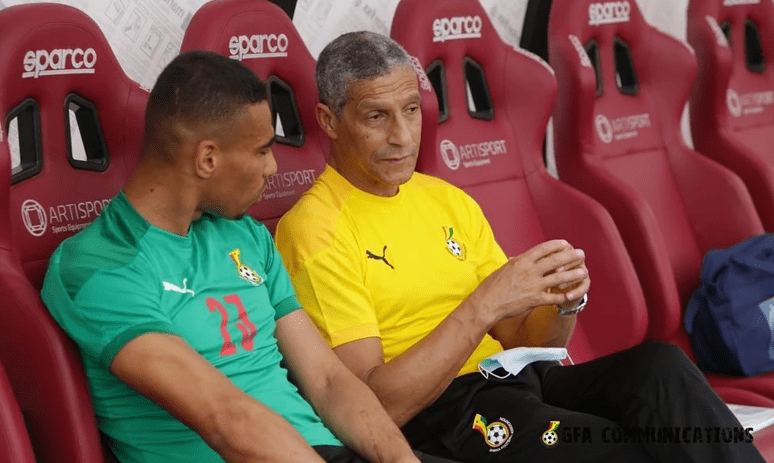
Ghana legend Ntow Gyan is backing calls for the appoint of appointing Chris Hughton as coach of the Black Stars.
The Black Stars is currently without a substantive trainer following the resignation of Otto Addo after the 2022 World Cup in Qatar.
The Ghana FA has been in the haunt for a new trainer for the West African powerhouse ahead of the start of the 2024 Africa Cup of Nations qualifiers in March.
Despite the team’s failure in Qatar, Gyan, who is a CAF license A holder has clamored for the appointment of the former Brighton manager as new Black Stars coach.
“We should give the job to Chris Hughton because we need a coach who can manage the players. To me, Chris Hughton and the entire technical team at the moment are the best. We should maintain them than to go in for a different coach to handle the Black Stars”
Chris Hughton served as the technical advisor of the Black Stars during the World Cup playoff against Nigeria and the tournament proper in the Asian country.
Director-General, State Interest and Governance Authority (SIGA), Edward Boateng, revealed this at a joint Committee media briefing by both SIGA and the Auditor-General upon directives from the president to look into causes of infractions by most SOEs in the 2021 Auditor-General’s report.
“Upon completing the report, we noted that most SOEs are plagued with the above infractions including liquidity challenges,” he noted.
SIGA maintained that the magnitude and impact of the infractions by these SOEs remains a source of grave concern, as most of the issues negate the fundamentals of corporate governance.
Mr. Boateng disclosed the readiness of SIGA to work with governing bodies of specified entities to develop asset revaluation policies, and subsequently implement them to meet best accounting practices.
Chief of Staff, Akosua Frema Osei-Opare – who received the committee’s report on behalf of President Akufo-Addo, said the document is a testament of government’s resolve to fight and weed-out wrongdoings in every sector of the economy.
She said government remains committed to finding lasting solutions to the problem of non-compliance with best financial reporting requirements.
“Government expects all SOEs to prioritise the preparation of their respective management and audited accounts in a timely manner, and collaborate with SIGA and the Auditor General to urgently clear all backlogs of unaudited accounts by end of year 2023,” Frema Osei-Opare directed.
She tasked SOEs to prepare management responses to audit queries and red flags raised by auditors, and also keep updated asset register and land title registrations at all times.
“I am confident that with effective collaboration, the implementation of these recommendations will see the public sector assume its envisioned role as the bedrock of Ghana’s economy and surpassing the envisaged target of contributing 30 percent of the country’s GDP,” she expressed.
Minister of Public Enterprises, Joseph Cudjoe, instructed all board members and stakeholders to take the report’s findings seriously.
The Deputy Auditor-General, Godfred Addison, tasked leadership of SOEs to work in collaboration with auditors and stop regarding them as opposition.
The report was necessitated by findings and performance of SOEs in the 2021 Auditor-General’s report. Total irregularities in the country’s public sector, according to the 2021 Auditor-General’s report, amounted to GH¢17billion. But SIGA maintained that most of these infractions were not necessarily linked to financial corruption; rather, infringements of regulations and corporate governance procedures.
The NDC through its General Secretary Fifi Fiavi Kwetey wrote to the Speaker of Parliament, Alban Bagbin, to announce replacement of three members, the Minority Leader, the deputy Minority Leader and the Minority Chief Whip.
According to Asiedu Nketiah, the changes feed into the larger party reorganization plan that has seen the election of local level to national officers over the last year.
Asiedu Nketiah said in an interview with Joy News (January 24) that the fact that the economy will be a major battleground ahead of the 2024 elections, meant that the NDC needed to field their best in economics and finance as leader.
Currently, two major issues the government is facing is the Domestic Debt Exchange programme, which the Haruna Iddrisu-led Minority had asked to be suspended pending broader consultations.
Why Ato Forson in place of Haruna
On the specific reason why the NDC picked Cassiel Ato Forson (Ajumako Enyan Essiam MP) to replace Haruna Iddrisu (Tamale South MP) as leader of the Minority Caucus, he responded:
“We know for instance that going into election 2024, the economy is going to be the major battleground and so many of the debates and other discussions will focus on the economy.
“So, you better put your best man in the economy forward and that is what we’ve done,” he stressed stating that it was not for the party to consult before ringing the changes.
Other changes and retentions
Other changes included, Kofi Armah Buah, MP for Ellembele, who is the new deputy Minority Chief Whip.
While Kwame Governs Agbodza, MP for Adaklu, will replace Asawase MP Muntaka Mohammed as the Chief Whip.
Ahmed Ibrahim, MP for Banda, has been maintained as the First deputy Minority Chief Whip, while Comfort Doyoe Cudjoe-Ghansah, MP for Ada, is also retained as second deputy Minority Chief Whip.
The CSOs – Peasant Farmers Association of Ghana (PFAG), Chamber of Agribusiness Ghana (CAG), CropLife Ghana and the National Seed Trade Association of Ghana (NASTAG) – said the hold-up could deny millions of Ghanaians access to cheaper food. It also has dire consequences for a sector they said is already fragile due to global price increases in agricultural machinery and inputs.
President Nana Akufo-Addo on September 12, 2020 assented to the Tax Exemption Act 2022, Act 1083, which is meant to regulate the application of tax exemptions and create an exemption regime for goods imported into the country.
But the CSOs have explained that the two-week delay in approval since the application was made is already having negative consequences for importers and the sector.
They therefore warned that the situation, if not addressed immediately, could further worsen the food security situation in the country going forward.
The organisations are of the view that the Ministry of Finance’s decision to have agricultural commodities be considered as general goods and giving discretion to a sector minister is dangerous, and as such augur problems for the country’s food security agenda.
“Unfortunately, agricultural goods and equipment are not included on the list of items exempted from import duties. This decision by government to specifically exclude agro products from the list is shocking, and contradicts government’s policy of transforming the economy through agriculture,” Executive Director of PFAG, Dr. Charles Nyaaba, told the B&FT at a presser in Accra.
The delay
“While we still await a decision from the Finance Ministry to grant the request, our clients and service providers have their goods currently locked up at the ports due to exorbitant import taxes,” the CSOs said.
For instance, one service provider that has livestock vaccines valued at GH¢420,000 in import fees was asked to pay GH¢330,000 as taxes since the products were no longer exempted. The company, according to Dr. Nyaaba, has halted the clearing process and asked for an extension, hoping that the Finance Minister will soon grant the exemption.
Data obtained by the B&FT from the Agro Input Dealers Association of Ghana indicate that current clearance-cost for a 20-foot container of agro inputs is valued at GH¢90,000 – against the previous charge of GH¢15,000 when exemptions were in place.
Consequences
Importers of agrochemicals and inputs have said they will have no option other than to slap the tax margins on cost of agrochemicals and inputs should government refuse to grant their request. Slapping the tax margins on products is expected to further worsen the cost of food situation on the consumer, as farmers are also ready to increase cost of food.
“The major fear is that we may not have enough agrochemicals for the 2023 planting season due to the exorbitant taxes. There are several importers who are unwilling to bring the required inputs due to this development, and farmers are already experiencing limited access to such inputs in one way or another. This is not good for production this year,” Anthony Morrison, CAG’s CEO, has disclosed.
Recommendations
The CSOs recommended that the finance ministry, as a matter of urgency, speed up processes and grant the exemptions as captured by the application letter from MoFA. They added that any further delay may aggravate the international prices of agro goods.
They also recommended that parliament should have a second look at the Exemptions Act, and take steps to amend it to specifically include agro inputs, goods and machinery.
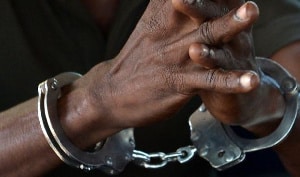
Yaw Desmond was arrested by the Awutu Senya East Municipal Task Force for throwing rubbish under the Kasoa overpass at the Kasoa old market.
Yaw Desmond is said to have collected money from market women in order to dump their garbage at a dumping site but instead dumped it beneath the overpass.
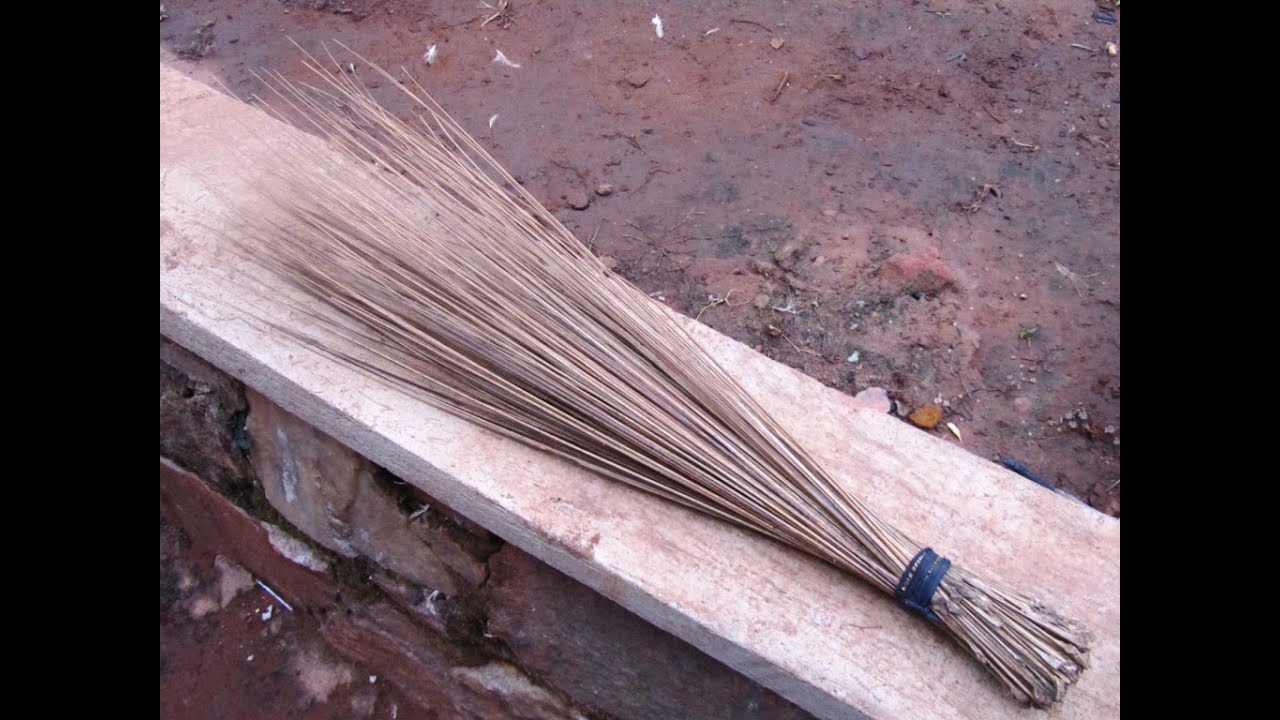
Desmond was apprehended and charged by the sanitation task force with sweeping for 8 hours to serve as a deterrent to others.
Senior Public Health Engineer, Mr. Gabriel Agyei Abrefa, told Atinka News last week that the assembly would begin to enforce its bylaws to address sanitation challenges.
Mr. Gabriel Agyei ABrefa also stated that anyone caught in such an act will face immediate justice by sweeping or, if necessary, will be taken to court.
Mr. Gabriel Agyei, on the other hand, advised market women to dump their refuse at the Assembly-designated location in the market rather than assigning unidentified boys to do so.
With the important goal of providing Ghanaian customers with an exceptional shopping experience, the platform will offer quality products from top brands from around the world, including those not readily available in the country, and a hassle-free shopping process. Wingimall is here to stay!
Powered by iParama – a payment solutions platform that gives Africans ease of access to global inventory – Wingimall’s vision is to become the leading e-commerce platform in Ghana, and eventually, take over the entire African continent.
The platform also makes it easy for customers to make purchases by accepting payments from all mobile money wallets in addition to Visa cards and of course ensures a fast delivery process.
Orders are delivered in less than 7 days!
With its abundance of choices and quick delivery, Wingimall is the premier e-commerce platform for customers looking for unique and high-quality products. Experience an exceptional online shopping experience by visiting
Ghana spends 36 percent on the richest 20 percent of students, compared to 12 percent for the 20 percent of students who are the lowest. Senior High School (SHS) students receive three times as much funding as elementary school students.
According to the civil society organisation, the practice of short-changing the basic for the second cycle at the pre-tertiary level of education started in 2015 when Ghana cancelled free exercise books in basic schools and re-introduced same in SHS in 2017, following the introduction of FSHS policy.
Fast forward, SHS students are already enjoying free exercise books, notebooks, calculators, physical education (PE) kits, school uniforms, and school cloth, which are all good. But these provisions not available in basic schools.
On the flip side, primary schools still do not have all textbooks four years into the introduction of the new curriculum. Also, less than 15 percent of the basic school Capitation Grant (CG) required for this academic year was allocated. This is because the free basic education budget was cut by 40 percent, even as education’s share of the national budget declined to a two-decade low of 12.9 percent due to Ghana’s debt crisis.
“It is great to have tablets for all SHS students as students can access digital content to enhance their learning experience. Eduwatch advocated for this after Wi-Fi was provided in all SHS across the country. The issue is never whether or not the promise of a tablet for 1.3 million SHS students is possible, but its implications on equitable financing of pre-tertiary education in an austerity.
He reiterated that contrary to the government’s promises of providing textbooks, less than 30 percent were supplied last year due to financial issues after four years of a new curriculum. He further stated that in such a period of austerity, the government must first find money to provide all needed textbooks and capitation grants for basic schools; and then purchase the tablets when the economic situation improves.
According to UNICEF’s January 2023 report on education financing, Ghana is among other countries that cannot transform its education without improving on equitable spending.
This is because the country is not spending its education resources equitably across sub-sectors and income categories. Therefore, the one-student, one-tablet initiative is great but must be well-timed until the austerity pressures on the sector’s resources ease.
A pilot in about 20 SHSs from urban, peri-urban (with Internet), and rural SHS without Internet should be a great start this year. The lessons from both off and online usage should be useful in enriching a future roll-out, the Eduwatch suggested.
It said institutionalisation of professional supply chain practices can effectively cut down production cost, especially as the government seeks to industrialise the economy and grow local productivity.
President of the institute, Richard Obeng Okrah, disclosed this during a CISCM dinner in Accra, and added that when effectively implemented, proper supply chain or procurement management can substantially reduce cost.
“Over the past couple of years, we have reviewed the national budgets and put it in perspective of supply chain management and have advised the government on how proactively they can implement those economic policies to gain value.
“Supply chain management is an integral part of most businesses, and is essential to company success and customer satisfaction. It helps to reduce the overall operating cost by ensuring efficiency in purchasing, production, and decrease fixed assets,” he said.
In the manufacturing sector, for instance, he said the entire production process from the establishment of plants to goods production entails procurement, and the utilisation of professionals in that process is the surest bet to eliminating waste, reducing procurement irregularities, and maximising efficiency.
To strengthen professional practices, he called for the enactment of norms and protocols to regulate the development of local content, with the ultimate goal of creating value for indigenous entities.
Group Chief Executive Officer, McDan Group of Companies, Daniel Mckorley, who was guest of honour, reiterated that institutionalisation of supply chain practices can be a game-changer for businesses in their quest to cut down cost and increase profit.
“Supply chain professionals design and operate all of the supply chains in a business entity and society, and manage from transportation, warehousing, inventory, packaging and logistic information. Societies with a highly developed supply chain infrastructure can exchange many goods and services between businesses and consumers quickly and at a low cost,” he said.
Mr. Mckorley added that ISCM is critical for ensuring human survival as humans depend on the supply chain for the delivery of necessities, such as food, water and medical supplies.
Meanwhile, to increase awareness of the profession, the CISM launched three new initiatives; namely: the CISCM Recognition Night, which seeks to identify and appreciate individuals and organisations that contribute to local content development; the CISCM Communications Platform – monthly newsletter, supply chain magazine, and weekly newsflash; and outdooring of the International Federation of Purchasing and Supply Management (IFPSM) African Championship – to be hosted by CISCM.
Former Deputy Defence Minister, Major (rtd) Derek Oduro, says the decision to use aircrafts to fight illegal mining is a laudable.
This comment by the former Minister comes after the Lands and Natural Resources Ministry revealed that it is set to take delivery of four aircraft from the Ghana Armed Forces to aid the fight against illegal mining, also known as galamsey.
George Mireku Duker, Deputy Lands Minister, said the aircraft, which belongs to the Armed Forces, will come in handy as new strategies are being mapped out to fight illegal mining.
“The aircraft have been around, and they are sitting in Takoradi. You could bear with me that in court we may need some evidence, it is the reason these aircraft are very important in the sector. We are hoping to have not less than four of these aircrafts,” Mireku Duker told pressmen.
After the re-launch of Operation Halt II on October 11, 2022, the Ghana Armed Forces deployed in the fight against illegal mining in forest reserves and river bodies seized 30 excavators, destroyed four and immobilized four others on site.
Reacting to the use of aircraft in fighting illegal mining, Major (ret.) Derek Oduro told host Ama Gyenfa Ofosu Darkwa of Atinka TV’s morning show “Ghana Nie” that the use of helicopters will be more effective in the fight against Galamsey than drones.
Major (rtd) Derrick Oduro reiterated that the use of helicopters to support the fight against illegal mining will prevent informants from giving heads-up to illegal miners.
“You were talking about the use of drones in fighting Galamsey, the drones helped but like we all know, there is a limit to the use of the drones. The drones cannot do what the helicopters can do. With the helicopters, the illegal miners can be sighted from afar, traced and followed to hideouts,” Major (rtd) Derrick Oduro told Ama Gyenfa.
Commenting on the setbacks in the fight against illegal mining, Major (rtd) Derek Oduro attributed the hitch to dirty politics.
He opined that during the fight, the media, which had initially embraced the fight, stepped back and began accusing the government of taking bribes from the illegal miners.
“Dirty politics have hindered the progress of the fight. The media which initially embraced the fight stepped and turned against the operations of the fight against illegal mining and begun accusing government for taking bribes from the illegal miners,” he added.
Moesha Budoung has regretted her decision to leave the married man who used to sponsor her lavish lifestyle and make her feel loved.
She feels remorseful for dragging the dignity of the said man through the man when she had relapses and started saying all sorts of things against him.
Moesha revealed that throughout her journey as a socialite, she had never encountered a man who did everything right for her and swept her off her feet.
Moesha stated on the Delay Show that she wishes she could go back in time and correct the mistakes she made in order to reclaim the said man.
“Everything I said at the partially finished building wasn’t true. With any married man, I never had a negative relationship.
“He was wonderful to me and everything. In a Range Rover, I was having a good time. I like exploring the globe on the road.”
“I don’t know how I ended up disparaging a relationship that changed me as a person. I fell in love with him because of him. He was unique to me, and I felt special because of him.
“He impacted how I lived. I don’t understand why I felt the need to travel and preach there to give the impression that I wasn’t a happy person,” Moesha said.
The Chamber’s concerns come on the back of the government announcing that the policy is set to kick start.
Ghana has taken delivery of its first cargo under the gold for oil policy. The delivery is to test the framework if everything that has been put in place will work.
Vice President, Dr. Mahamudu Bawumia has assured Ghanaians that the gold for oil policy will make fuel cheaper in the country.
“So that if the policy is preventing members from sourcing for funds from outside and export then basically they are going to be priced out. Because the policy states that everybody should be held to pay their money,” he said.
“I don’t have evidence that can support that but the idea was that we were even saying that, why don’t you let us sell a portion of what you buy to the PMMC as how the large-scale mines are doing? So that we continue with the export of the remaining 70% of the whole to our principals who actually finance our operations. We have a lot of refining capacity which is very hungry because as of now we don’t even have gold that we can feed those refineries in the country,” Mr. Krampah narrated.
According to him, they have presented a petition to Vice President Mahamudu Bawumia in which they have stated so many points why the policy will not be helpful.
He also suggested that the government should allow licensed gold exporters to keep a portion of what they buy from small-scale miners to the PMMC in connection to the gold for oil policy.
“We are also saying that if you go along with the policy right now, there will be a lot of gaps in the supply chain. Because as I said PMMC doesn’t have structures in all 13 regions. Currently only in Kumasi where they have set up an office and information from Kumasi says there is not even one personnel in the office as of now. They also said they operate from the Diamond House in Accra here so these are some of our concerns. We think that smugglers will take advantage of the system and then cash in and buy the gold that PMMC is not able to buy.”
A former Member of Parliament for Buem Constituency in the Oti Region, Daniel Kosi Ashiamah, says the government’s Free SHS policy is a contributory factor in the current uprisings in the SHS.
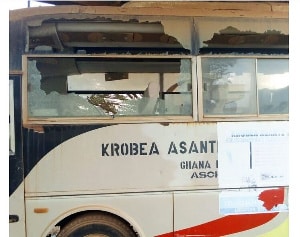
The former lawmaker said this after 40 students at the Krobea Asante Technical and Vocational School in Effiduase Asokore, Sekeyere East District, Ashanti Region, were arrested for violence at the school.
Following a series of protests, the students vandalized schools and private properties and later cut power to the school, resulting in further disorder.
The school’s principal was also attacked by students who broke into his apartment and beat him up.
According to reports, the students’ anger stemmed from their predecessors’ poor performance on their final examinations.
Ebenezer Opoku, who is the Assembly Member for the area and also the Coordinator for Free SHS in the District, confirmed the incident, adding that the students wrecked a total of six cars, including four that belonged to the school and two that were owned privately by teachers.
Some eight students of the Chiana Senior High School in the Kassena-Nankana West District of the Upper East Region were also issued sack letters by the Ghana Education service for insulting President Nana Addo Dankwa Akufo-Addo.
The President had to step in for the decision of the GES to be changed.
Responding to the two scenarios on Atinka TV’s morning show “Ghana Nie” with host Ama Gyenfa Ofosu Darkwa, former NDC MP for Buem, Daniel Kosi Ashiamah, said the students’ behavior can be linked to the free SHS to some extent.
Government has a lot of consultations to make as far as this free SHS is concerned.
“If you look at all these scenarios, you need to ask yourself what percentage of the impact of the free SHS there will be.” This is why some of us are calling for the free SHS to be reviewed. GES and the government should find out the administrative aspect of this free SHS. “They need to find out how the teachers are monitoring and working with the students with these free SHS students, which is resulting in these disturbances,” the former lawmaker said.
Jennifer Antwi, a parent of one of the students arrested over involvement in some acts of violence at the Krobea Asante Technical and Vocational School in Effiduase Asokore, Sekeyere East District, Ashanti Region, is pleading for mercy.
She says her son and the other students in the cells have also refused to eat.
Some 40 students at the Krobea Asante Technical and Vocational School in Effiduase Asokore, Sekeyere East District, Ashanti Region, were arrested for violence at the school.
Following a series of protests, the students vandalized schools and private properties and later cut power to the school, resulting in further disorder.
The school’s principal was also attacked by students, who broke into his apartment and beat him up.
According to reports, the students’ anger stemmed from their predecessors’ poor performance on their final examinations.
Speaking to host of Atinka FM’s AM Drive, Kaakyire Ofori Ayim, Jennifer Antwi, whose son is one of the arrested students, asked the government and the school authorities to have mercy on the students and release them from the police cells.
Jennifer Antwi noted that although she believes that her son is not one of the students who caused the mayhem, she is willing to work and pay any costs that will be billed to her son.
“My son is a calm person, and I know that he is not one of those involved in the acts of violence in the school.” When I visited my son in the cells, he confessed to me that he was asleep at the time of the incident and that he was not involved. “My son knows I am a poor woman, and so he is well behaved.”
“I am willing to work and pay off any bill that will be given to my son.” I am only pleading with the school authorities as well as the government to release the students to us. My son has refused to eat any food. “I was at the police station, and apart from my son, all the other students also refused the food their parents brought to be given to them,” Jennifer Antwi narrated.
Many have walked the surface of the earth but a few get to be called great by their exploits. The history of the people of Ashanti is told with that of great men and women whose impact extended beyond the ancient Ashanti Kingdom.
Fulfilling the niche carved by his kinsmen as being inherently industrious, Nana Kofi Genfi II alias Nyemesem of Kumasi Nurom lived to attain the height of a true Ashanti great.
His autobiography tells the story of a man who defeated the hurdles of life in various forms to attain success.
He was born at Akyeremade, near Adum to Opanyin Kwame Genfi, a businessman from Kwaso near Ejisu, Ashanti, and Madam Adwoa Pinaman otherwise known as Abena Kwabena a bed trader of Nurom village, Kumasi, in the year 1914. At the age of 7, he was sent to stay with his paternal uncle Opanyin Kwadwo Mosi Boateng of Mowere near Kode in the year 1921.
At Mowere, a young Nana Genfi attended to some 100 pigs belonging to his uncle and took exceptional pride in that job as the pigs became his pets. He returned to Kumasi in the year 1923 and later his mum took him to Kwaso. His father who had then traveled to stay at Koforidua in the Eastern Region sent for him from there.
One Opanyin Kwame Duodo ex-Offinsohene, a friend of his father took him to join his father for some time and then moved on to stay in Nsawam. Opanyin Kwame Genfi was a trader in some specially designed velvet cloths sewn in multiple colours. He however died by a car accident when he was returning to Nsawam from Accra in 1924, forcing his son to return to Kwaso to live with his father’s uncle Opanyin Kofi Adwumako.
His mother sensing the need to educate his son in January 1925, sent him and his senior brother to the Kumasi Government Boys School.
With strict supervision and interest in his education by his mother, Nana Genfi became studious and always fell in the 3rd to the 6th positions in class. He left school after passing the 7th Standard Certificate Examination.
He was employed by the Water Works, a division of the Public Works Department (PWD) Kumasi as a pipe fitter assistant on a daily wage of One shilling or twenty-five shillings monthly, exclusive of Sundays. His appointment was made possible by his good performance at football.
PWD had a competitive departmental football tournament for which the then director of the institution, Mr. Hunt recruited Nana Genfi for a job based on his footballing ability.
3 months later in 1934, he left PWD and secured another job as an assistant store keeper with Messrs ‘ C. Mohawage & Co’ a Lebanese trading firm which was dealing in velvet materials.
It was during his time in the store that he met his first wife Madam Yaa Achiaa in June 1934. After 6 months of service with the company he got another job with United Africa Company (UAC) as an Assistant Station Clerk with a lower pay i.e 30 shillings a month.
However, with a strong desire to be on his own, Nana Genfi after making some savings left UAC, bought himself a typewriter, and practiced as a public letter writer at the Asafo roundabout Kumasi. It was through this practice that he had an appointment as Native Court Registrar at Suma (Nweremeh) near Sampa a traditional authority in Wenchi District 1934-1936.
He returned from Suma to establish the first large-scale commercial firewood enterprise in Kumasi in 1936-1937. He acquired a large forest concession as a source of firewood supply from Aputuogya, a village on lake road in Kumasi. He employed a number of felling laborers, put them in the forest and his part was to hire trucks and cart the firewood to the Kumasi Central Market, where his wife was supervising some 30 or so young girls who did the retail on lengthy tables stretched over hundred yards.
In the year 1936, many parts of the present Kumasi Central Market were lying empty or unoccupied. The business although flourishing was short-lived. The attempt at that time for a scholar to deal in firewood was looked upon as a degradation and thus abominable to the notion of the ignorant Ghanaian. So his mother’s friends advised or teased her to tell me to close down the business. He had to obey and wound up the business despite the amount of money he invested into it.
He then switched to Beer Barkeeping Business. He was the first Ghanaian to run a Beer Bar in Kumasi Adum in 1937-1939. Prior to that, the beer bar venture was solely dominated by Lebanese and foreign companies.
With a burning desire to join the army, Nana Genfi later disposed off his store and enlisted in the army. His bravery in the army made him go on active service in India and Burma where he fought gallantly at the war front and held the rank of Staff Sergeant from 1939-1946. His exploits in the army earned him four War Decorations.
On demobilization from the Army, he entered the then Gold Coast Civil Service as 2nd Division Clerk, Political Administration 1946-1949.
He held the office of the Confidential Clerk (Private Secretary) to the then Chief Commissioner of Ashanti (C.C.A) for two years and Court Registrar D.C’s Court, Obuasi for one year.
Having passion for entrepreneurship, Nana Gyenfi left the Service to establish in Nurom, Kumasi, the first Private Commercial Rest-house in Ghana. The Tajmahal in the year 1949, is now known as Nurom Hotel Annex. The main Nurom Hotel was opened by Otumfour Opoku Ware on the 4th December 1976.
He went on to grow a business empire under the umbrella of Nurom Multi-Trade Ltd.
He was one of the first or the second people who established large-scale Poultry Farms in Kumasi in the year 1959, and the 1st to establish commercial rabbitry in Ghana in 1968.
One of the pioneer Sawmillers in Kumasi, his company was Gold Coast Wood Workers Ltd in 955-1962.
In the year 1957, he was the first person to enter into the bottle-buying business by entering into contract with Kumasi Brewery Ltd (before the company set off). He supplied the company empty beer bottles and he was able to meet the demand of the company singlehandedly, for 2yrs. He mobilized supply agents all over the country who supplied his empty bottle requirement.
He was the 1st person to establish a commercial car wash business in Ghana in 1950. He was also the first person to open ladies’ and gents belt manufacturing business in Kumasi in 1951. To sum up, it is worthy to mention the businesses he brought into Kumasi and Ghana through his ingenuity. The industrious Nana Kofi Genfi II was also known for owning a commercial sponge farm.
Beyond his business life, the ever-striving Nana Genfi II attained success in the political space despite facing various challenges.
Two years after his return from his India and Burma campaigns, Nana Genfi II in 1948 took to politics and stood for parliamentary election in the Atwima-Amansie Constituency as an independent candidate in 1954.
The election held on June 15, that year did not only see him suffer defeat against a candidate of the then popular Convention Peoples Party but Nana Genfi was saddled with debt after the campaign.
His status as an opposition to Kwame Nkrumah’s CPP came with consequences that posed a threat to his life and career.
He suffered various forms of attacks at the hands of CPP action troopers and was arrested three times before he fled to France and subsequently London after he had spent six months in neighboring Ivory Coast as a political refugee.
After Kwame Nkrumah, Ghana’s then president announced amnesty to political refugees, Nana Genfi II returned to Ghana in 1962 only to be arrested a week after on allegations of brought bombs from Europe to be used in the Kumbumgu bombing assassination attempt on the president.
Several weeks after his detention, Nana Gyenfi II was released from the Cantonments Police Cells.
Motivated instead of being demoralized in his political pursuit by the troubles he attracted, Nana Genfi II held on to his political career and stood for another parliamentary election in 1969.
This time, he contested the Atwima-Amansie Constituency seat on the ticket of the Progress Party under the leadership of Dr. K. A. Busia and won by an overwhelming majority.
He garnered 8,900 votes against 900 votes obtained by his opponent who was a well-known politician.
After two and half successful years in parliament, the government of Dr Busia was overthrown in a coup d’état staged by Colonel Ignatius Kutu Acheampong in 1972.
The new military government arrested parliamentarians and sent them to prison for one year. Nana Genfi II called it quits on his political career after he returned from prison.
Beyond entrepreneurship and political life, Nana Genfi II held various positions including National President of the Ghana Hoteliers Association, National Patron Society for Blind Ghana, and Chairman of the Ghana Legion (VAG) Ashanti among others.
With his hobby being poetry, Nana Genfi II published his first book “Poems for Leisure” in 1980 and received an America Certificate of Copyright Registration for his book in 1985.
He adopted the Sada-Parastish Religion during his active service in India and held the tenet of the religion; honesty in practice throughout his life.
His years and experience saw him travel to over 40 countries across the world.
The Hotel Life magazine, one of the many that published about Nana Kofi Genfi II in a 1994 edition wrote “Life is war’ so they say. Some are born at a time the war is already won, others live to see the war won for them.
There are those who went to the war front. Kofi Genfi II was at the war front. He started life in a humble way as a victim of stresses, prejudices and circumstances of his early years, yet he did not lose hope. Paradoxically, it was rather out of the wretched situation in which he found himself that he plucked courage, struggled hard and conquered.
“Kofi Genfi II rose from the wretches of as a commoner, through the roughs and hazards of a soldier; the bureaucratic of a civil servant; the hectic life of a contractor; the uneasy life of a member of parliament; a human; man of many parts; and about all, one of the leading personalities that grace the hotel business in this country. Such is the success story of Kofi Genfi II.”
Kofi Genfi II had 36 kids and 225 grandchildren and great-grandchildren.
Today, January 25, 2023, marked twenty years since this illustrious son of the land transitioned into eternity. It is believed that his family will mark the occasion in Kumasi.
Nana Obiri Boahen, a legal practitioner assisting persons affected in the Apiate explosion disaster to battle their case in court has expressed worry over the delay of the Ghana Police Service to provide accident reports for the victims.
He stated: “Honestly speaking, l have not enjoyed the cooperation of the Police. l must be candid about it; so, l have written a letter to the Regional Police Command.
“So far, l have received the accident report of Kwasi Owusu and filed the writ at Tarkwa court,” the legal practitioner added.
Nana Obiri Boahen disclosed this to journalists at Apiate, when the Prestea Huni-Valley Municipal Assembly and the Apiate Disaster Relief Committee organised the first memorial service for the 16 persons who perished in the explosion last year.
He said his office has received about 60 to 70 names, but the accident reports would direct him to know the level and extent of injury, level of incapacitation, whom to sue and who should be vicariously liable.
“The availability of the accident report would facilitate the process but at least l can rely on Mr Owusu’s report and proceed with the case should the Police refuse to cooperate,” Nana Obiri Boahen said.
He added: “It’s rather unfortunate that after my first visit to Apiate community, l learnt some victims were informed to look at it from the political perspective and it beats my understanding.
“A lawyer is prepared to assist a victim, and somebody advised them it’s about politics. What has this got to do with the National Democratic Congress (NDC) and the New Patriotic Party (NPP)?
“Let’s refrain from this attitude.”
Nana Obiri Boahen commended the Municipal Chief Executive (MCE) for Prestea Huni-Valley, Dr Isaac Dasmani and Appiatse Disaster Relief Committee for their continuous support.
In response, the Divisional Police Command of Tarkwa, Assistant Commissioner of Police (ACP) George Andrew Kuma, dismissed claims that the Police have delayed the accident report of the victims.
He said officers of the Police Service have worked tirelessly since the incident happened on January 20, 2022, and had come out with Mr Owusu’s accident report earlier because he came to write his statement alone, but the others presented theirs as a group.
ACP Kuma, however, indicated that they would meet the MCE and set up a desk at the Apiate Relief Camp to enable all the victims to come over and write their statements to help to process the accident reports for them.
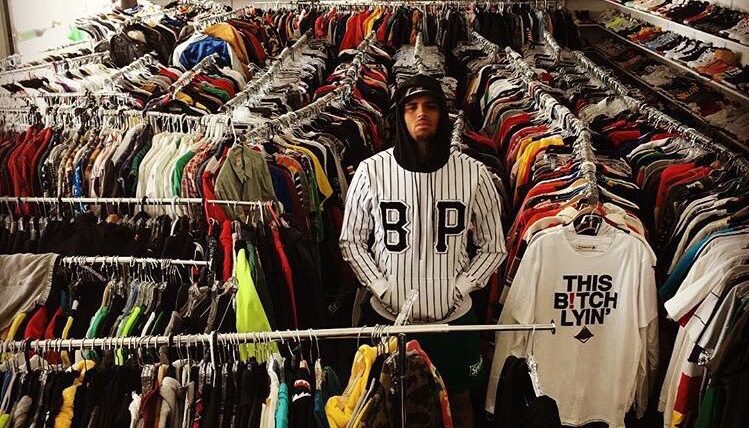
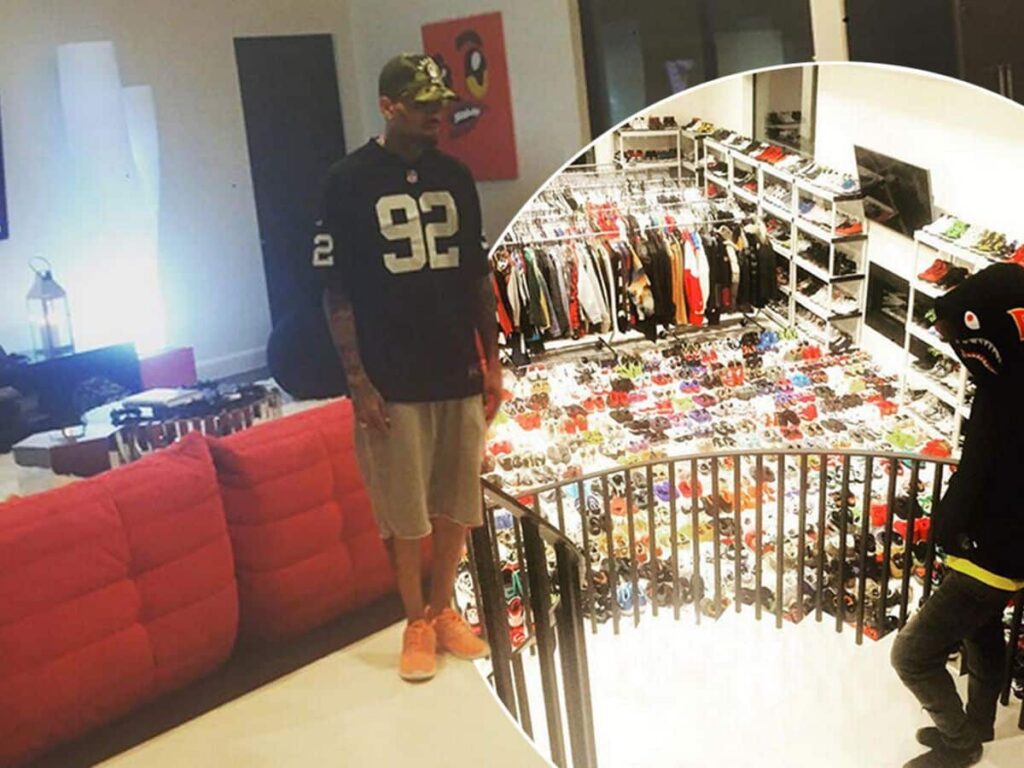
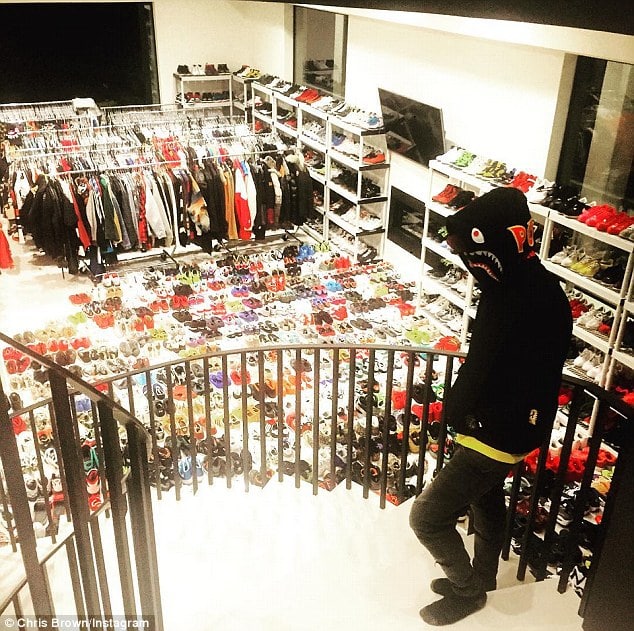
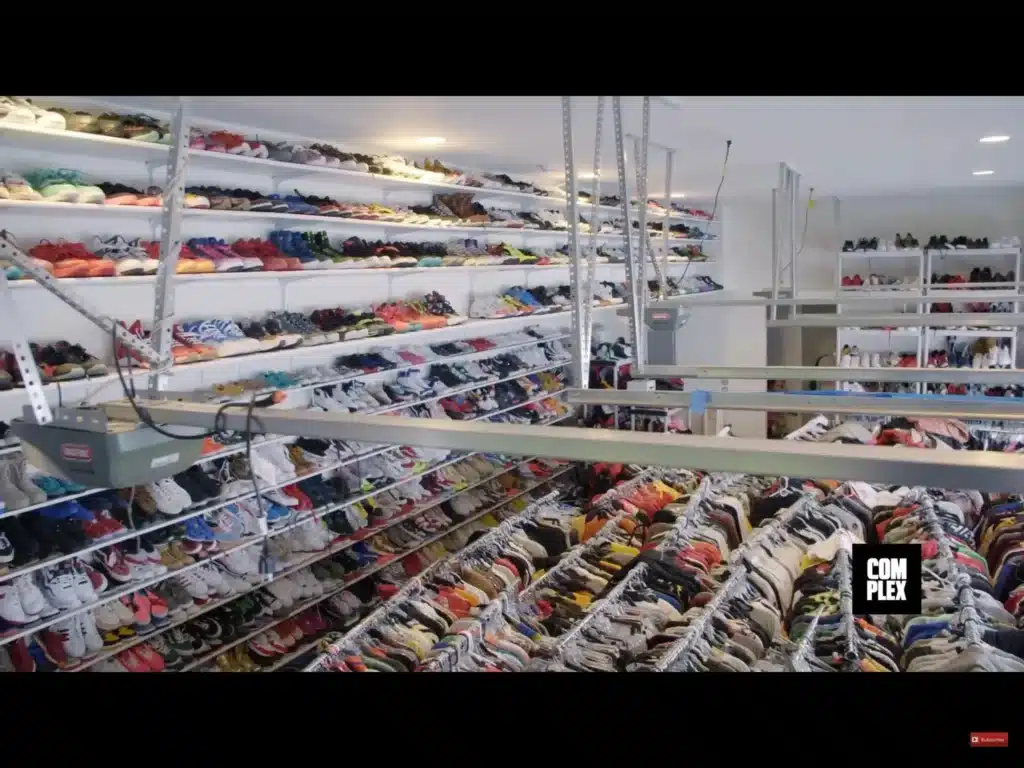
Chris Brown is an American singer, songwriter, dancer, and actor. According to Billboard, Brown is one of the most successful R&B singers of his generation, having often been referred to by many contemporaries as the “King of R&B”.
Chief Justice of Ghana, Justice Kwasi Anin-Yeboah has called on Ghanaians to have confidence in the judicial system.
He made the call during the inauguration of a District Court Complex at Ngleshie Amanfrom in the Ga South Municipality.
“The court is here to serve all of us, let us have confidence in the court processes and make use of the facility”, he said, adding that, the establishment of the court was in fulfilment of the judiciary’s vision to bring justice to the doorsteps of the citizenry.
“It is our resolve to build a justice system that ensures our litigants and countrymen had efficient, timely and quality justice delivery.”
He further admonished individuals and groups to resort to the Alternative Dispute Resolution mechanism (ADR) rather than go through litigation.
According to him, this would improve the turnaround time of cases that went to the court “because ADR is faster, cheaper, easier and less acrimonious and there is neither a winner or a loser.”
He maintained that there was a collective responsibility to ensure that democracy thrived in the country but emphasized that this can happen with a well-resourced judiciary.
Justice Anin-Yeboah urged court users especially, the staff to ensure the highest maintenance culture of the facility and equipment.
Chief of Ngleshie Amanfro, Nii Kwashie Gbobilor, on his part said the court would impact the image of the town as hitherto the area was served by courts in the Awutu Senya East Municipality or Weija in the Weija-Gbawe Municipality.
The well-furnished court meets the standard of utility and modernity with installed computers, solar power, a generator set and a borehole to ensure regular and uninterrupted water and electricity supply.
The project built within three years was funded by the District Assembly Common Fund (DACF) with support from the judicial service.
According to Samuel Okudzeto Ablakwa, a member of parliament for North Tongu, the administration has been dishonest about the exact amount projected to pay for the construction of the national monument.
On January 24, the North Tongu politician questioned the accuracy of the $400 million estimate made by the government and Board of Trustees members while speaking on Citi TV in Accra.
“We were told by the Finance Minister [Ken Ofori-Atta] that the project will cost $100 million, then the figure rose to $150 million. The Chairman, Opoku Onyinah later mentioned $200 million but now based on fresh documents, I have realized the project is going to cost the Ghanaian taxpayer about $1 billion,” he is quoted by citinewsroom.com.
He further disclosed that the estimated $400 million does not include the cost of relocation of the Judges’ bungalows, $50 million for the relocation of the Judicial Training Institute and the $10 million needed to relocate the passport office.
He added that other complexes have been demolished to allow for the construction of the project while others are yet to be relocated.
By his estimation, Samuel Okudzeto Ablakwa believes that the total cost of all these amounts, which will entail modifications to the project could increase the cost from $400 million to over $1 billion.
The Ministry of Health has responded to the Auditor-General’s latest report on the government’s COVID-19 expenditure.
In the report, the Auditor General noted that the Ministry of Health on behalf of the Government of Ghana paid an amount of $120,192,379.80 to UNICEF/VAT for the supply of vaccines, “However, 5,109,600.00 doses of vaccines valued at $38,322,000.00 were supplied to the National Cold Room leaving a difference of US$81,870,379.00 with UNICEF/AVAT.
The Auditor-General thus recommended to the Chief Director of the Health Ministry to renegotiate and recover the outstanding balance.
This, according to the Auditor General must be done immediately to ensure the amount is recovered to the state.
While acknowledging the delay in receiving the vaccines, the Ministry of Health in a statement, explained that government was yet to take hold of the products because of unexpected hesitancy, cold chain storage challenges, spontaneous donations, as well as manufacturer’s storage difficulties.
“Due to the unexpected hesitancy, cold chain storage challenges, spontaneous donations, as well as manufacturer’s storage difficulties, the Ministry in June 2022, was compelled to agree on a delivery schedule for the remaining 11,052 million doses to be delivered from June to December 2022. According to the schedule, 1.6 million doses were to be delivered from June to December 2022 to complete the allocation. However, this process was delayed because of the aforementioned challenges.”
The Ministry in the statement however assured that efforts are in place to review the contract.
“Currently, the Ministry requested and has received the June allocation which was delivered in January 2023. In the meantime, the Ministry continues to work with the AVAT for a possible review of the contract and would want to assure the public of our commitment to work in the supreme interest of the public.”
Francis Dzata, a 30-year-old farmer has been sentenced to seven years imprisonment for defiling a 13-year-old class four pupil.
The convict, who appeared before the Hohoe Circuit Court on August 17, last year, pleaded not guilty to the charge.
Dzata was found guilty and sentenced to imprisonment accordingly.
Chief Inspector Charles Aziati, Prosecuting, told the Court presided over by Mr Michael Johnson Abbey that the complainant, who is a farmer, is the biological mother of the victim.
He said the convict, a resident farmer at Tafi Atome hailed from Kadar, Togo.
Chief Inspector Aziati said on June 6, 2021, at about 1400 hours, the victim attended to nature’s call at her school latrine at Tafi Atome.
He said when the victim was cleaning herself after using the latrine, the convict, who was sitting under a mango tree close to the latrine, suddenly pounced on her.
He said the convict pushed the victim onto the floor and forcibly defiled her and warned them never to disclose the act to anybody, but the victim reported the incident to her mother as soon as she got home.
He said the complainant subsequently informed a former Unit Committee Chairman who was a witness in the case about the incident and he organised some of the town folks to arrest the convict at the Golokuati Police Station with a formal complaint.
Chief Inspector Aziati said a Police Medical Report form was issued to send the victim to the hospital for examination and treatment.
He said the endorsed medical form confirmed a broken hymen, laceration of the vaginal wall and bleeding to attest to forceful penetration, hence, the jail sentence.
In his presentation of the 2023 Budget Statement and Economic Policy on the floor of parliament, Minister for Finance Ken Ofori-Atta said the state’s new posture is born out from acknowledgement of the fiscal adjustments that are required to revive and eventually transform the economy.
“My pledge to this House is that there will be fiscal discipline; that every pesewa we ask the Ghanaian people and businesses operating in Ghana to contribute will be spent well,” he stated, while repeating calls for “broad-based sacrifices”.
Mr. Ofori-Atta disclosed that government seeks to achieve its targets under the broad framework of the Post COVID-19 Programme for Economic Growth (PC-PEG) – which is anchored on domestic revenue mobilisation; the streamlining and rationalisation of expenditures; boosting local productive capacity; and promoting and diversifying exports.
Others are comprehensive protection of the poor and vulnerable; expansion of digital and climate-responsive physical infrastructure; and implementation of structural and public sector reforms.
Additionally, the E-levy, which was reviewed by the middle of the year to GH¢611million – 8 percent of its initial GH¢6.9billion – will see its headline rate go down from 1.5 percent to 1 percent with the daily threshold of GH¢100 also taken off, coupled with the introduction of an additional income tax bracket of 35 percent.
He also promised that implementation of the Unified Property Rate Platform will be expedited in the upcoming fiscal year.
This comes as Total Revenue and Grants for the period is projected at GH¢143.96billion – 18 of Gross Domestic Product (GDP); and a rise in total expenditure (including clearance of arrears) to GH¢205.43billion – 25.6 percent of GDP.
A breakdown of the projected expenditure items shows that compensation of employees is projected at GH¢45billion (5.6% of GDP); interest payment is projected at GH¢52.6billion (6.6 percent of GDP), with capital expenditure (capex) trailing at GH¢27.7billion (3.5% of GDP).
“Other expenditures, mainly comprising Energy Sector Levies (ESL) transfers and energy sector payment shortfalls, are estimated at GH¢26.7 billion,” the finance minister stated, even as the budget deficit for the period is pegged at 7. 7 percent of GDP (GH¢61.5billion).
Reducing cost
While the minister did not explicitly indicate how much has been realised on the estimated GH¢3.5billion saving from the expenditure cuts introduced this year, he disclosed that government will continue with the 30 percent cut in salaries of political office holders.
Additional measures include a reduction in imports for public sector institutions by as much as 50 percent, with local substitutes to be preferred – even as the minister announced that 296 factories are at various stages of implementation under the One District-One Factory (1D1F) initiative.
“Out of these 126 are currently operational, 143 are under construction and 27 are pipeline projects,” he noted.
There will also be a cut in fuel allocations to political appointees and heads of MDAs, MMDAs and SOEs by 50 percent; a ban on the use of V8s/V6s or equivalents except for cross-country travel; with state-owned vehicles to be registered with green Government Vehicle (GV) number plates beginning January 2023.
Similarly, there will be a limit on budgetary allocations for the purchase of new vehicles, with purchases restricted to locally-assembled vehicles.
“There will be a freeze on new tax waivers for foreign companies and a review of tax exemptions for the free zone, mining, oil and gas companies,” the minister noted.
Other measures include a limit to travel, salary and hiring freezes, as well as a suspension of establishing new government agencies and acquiring promotional stationery.
Mr. Ofori-Atta added: “All non-critical projects must be suspended for the 2023 Financial Year”.
The staff of the Bekwai Forest District of the Ashanti Region of the Forest Services Division (FSD) of the Forestry Commission (FC), are waging a war against illegal mining activities in the Bunusu portion of the Oda River Forest Reserve, and the Koboro-Odaho portions of the Apamprama Forest Reserves.
Clement Omari, the Regional Manager of FSD, Ashanti Region, said staff of FSD, who were on their normal patrol duties in the two forest reserves, discovered a number of excavators believed to belong to miners operating illegally in the reserves.
The staff called for reinforcement from the Rapid Response teams stationed in the Nkawie Forest District to join the team at Bekwai.
In a series of operations led by the District Manager of Bekwai, Rexford Twum Damoah, mining equipment including 12 excavators, 12 heavy-duty pumping machines and wooden make-shift housing structures of the illegal miners were burnt down.
No arrests have been made yet since the illegal miners bolted upon seeing the teams and no one has come forward yet to claim ownership of the equipment.
In a related development, the Bekwai Forest District staff of FSD in December 2022, arrested three Chinese nationals who were undertaking illegal mining activities in the Oda River Forest Reserve.
The matter was reported to the police and the three Chinese nationals were taken to the Bekwai Circuit Court where they were granted bail pending further investigations.
The Oda River Forest Reserve is one of the prime production Forest Reserves in the Ashanti Region where timber production is carried out.
It covers an area of 164.43km², out of which about 32.86km², which represents about 20% of the Reserve, lies within the Amansie West Administrative District and the remaining 80% (131.57km²) falls under the Amansie Central Administrative District. It generally lies within the South West corner of the Bekwai Forest District.
Both the Oda River and Apamprama Forest Reserves serve as watersheds for the Oda River, which is one of the major rivers in Ghana. It is home to a wide variety of biodiversity and serves as source of drinking water for communities downstream, including the Obuasi Municipality.
In 2021, the Minister for Lands and Natural Resources, Hon. Samuel A. Jinapor, MP, declared forest reserves and water bodies as red zones and restricted areas, where no mining should be allowed to take place.
He, therefore, instructed Forestry Commission to desist from issuing forest entry permits for purposes of mineral prospecting or mining in any forest reserve.
Forest reserves have come under attack from illegal operations in recent times and Forestry Commission is determined to ensure all forest reserves are protected from illegal mining and other forest offences.
Volta region has seen a decline in rape and defilement cases in 2022 as against 2021.
The region recorded 31 and 39 rape and defilement cases in 2022 as against 49 and 136 in 2021, respectively.
There was also a decrease in abduction, non-maintenance, and assault cases in the year under review, Deputy Superintendent of Police (DSP), Juliana Mawusi Yuiah, Deputy Coordinator of Domestic Violence and Victim Support Unit (DOVVSU) of the Volta Regional Police Command, has disclosed.
DSP Yuiah who made the disclosure at an end-of-year Volta Child Protection Committee meeting said the reduction in the cases was due to the education carried out by the Unit and that there were plans to intensify the education this year.
The Coordinator said apart from receiving and investigating cases of abuse against children, they also undertook sensitisation activities, especially in schools to educate the pupils and students on sexual-related abuses.
She said the engagement was targeted at both Primary and Junior High students to educate them on the common ploys adopted by perpetrators to abuse or exploit them so they would be vigilant to avoid falling prey to their stratagem.
DSP Yuiah said the consequences of rape and defilement were dire, hence, the education was also aimed to empower and encourage the students to come out boldly to report such cases to the appropriate authorities for proper handling.
“Schools visited in the year under review included Philip Akpo R.C Junior High School, Ho Kpodzi Basic Schools, Mawuli Primary, Dora Memorial School complex, Holy schools and Junior high schools, UHAS Basic schools, Islamic Basic School, 66 Artillery Basic Schools, Henry House Basic School,” she said.
DSP Yuiah said some parents and guardians were also sensitised during Parent Teacher Association meetings on their roles in providing for their children, especially the girl child so they would not fall prey to unscrupulous men.
On challenges facing the Unit, she said, the Unit was faced with several challenges including lack of means of transport to move swiftly on cases, visit scenes of crimes to pick vital evidence on time and make follow-ups on cases.
There was also a lack of funds to support victims of abuse, especially rape and defilement victims who were extremely poor and cannot afford to pay their medicals to facilitate investigations, she added and appealed for support.
Alfred Dzikunoo, Programmes Coordinator, Plan International Ghana, said some selected youth in their operational communities and districts have been trained on how to demand accountability from their respective assemblies.
Madam Emily Adevor, Partnership Facilitator, Compassion International Ghana, Adaklu-Agotime Cluster, said they implemented several activities in 2022 in safeguarding the rights of children and promoting their welfare.
She said one of their major focus in the year under review was protecting children against social, psychological, and emotional insecurity and distress, noting that a lot of children suffered such insecurities but not much has been done in that regard to addressing them.
Madam Adevor said they also intensified education on abuses including physical and sexual in all their operational areas including churches to draw their attention to the need to protect children against all forms of abuse.
Sheila Bartels, the Member of Parliament (MP) for Ablekuma North Constituency in the Greater Accra Region, has called on the judiciary to collaborate with Metropolitan, Municipal and District Assemblies (MMDAs) to ensure strict enforcement and compliance of sanitation bylaws of the assemblies.
She made the call on behalf of the Greater Accra Regional Minister, Henry Quartey during the inauguration of a District Court at Ngleshie Amanfro, in the Ga South Municipality.
Present at the inauguration was Chief Justice Kwasi Anin-Yeboah; Sylvester Matthew Tetteh, the MP for the Bortianor Ngleshie Amanfro Constituency, and Joseph Nyarni, the Municipal Chief Executive (MCE) and other dignitaries.
Ms Bartels said the court would not only facilitate the effective administration of justice but also enhance good governance.
She appealed to the judiciary to set aside special days for the adjudication of sanitation related offences in realization of the President’s vision to make Accra the cleanest city.
Mr Tetteh said although the Assembly was created few years back, a lot of development projects have taken place.
He said it was a bold decision to build a court in the area to ensure administration of justice was brought closer to the people.
Meanwhile, the Awutu-Senya-East Municipal Sanitation Taskforce has charged a resident, Yaw Desmond to sweep a portion under the Kasoa overpass for eight hours for dumping refuse there.
Desmond collected monies from market women to dump their refuse at a dumping site but ended up spilling them under the Kasoa overpass at the old market.
He was arrested by the task force and detained in a police cell till the following morning when the assembly directed him to sweep for eight hours to serve as a deterrent to others.
Senior Public Health Engineer of the Department of Environmental Health and Sanitation Unit of the assembly, Mr Gabriel Agyei Abrefa had earlier warned in an interview with the GNA, that the assembly will this year, strictly enforce its sanitation bylaws to address sanitation challenges in the area.
He said anyone arrested in such an act would face instant justice based on the Assembly’s bylaws by sweeping the portion littered or face court action if the need be.
He advised market women to dump their refuse at the allocated places provided by the Assembly in the market and desist from assigning unrecognised people to undertake such activities.
The full entertainment lineup for the 2023 Super Bowl has arrived.
In addition to Rihanna’s highly anticipated halftime show performance, a number of additional Hollywood heavyweights are joining the major sporting event as pre-show performers.
The NFL announced on Tuesday that Emmy-winning actor Sheryl Lee Ralph will perform “Lift Every Voice and Sing” in the pre-show. The “Abbott Elementary” star notably sang on stage while accepting her Emmy award in 2022.
Joining Ralph in the pre-show festivities is Grammy-winning country music artist Chris Stapleton, who has been tapped to sing the National Anthem. R&B crooner Kenneth “Babyface” Edmonds will also perform, with a rendition of “America the Beautiful.”
Each performer will have talent accompanying them to provide American Sign Language (ASL) on behalf of the National Association of the Deaf (NAD), according to a release from the NFL.
Oscar winner Troy Kotsur will sign the national anthem alongside Stapleton. Kotsur won a supporting actor Academy Award in 2022 for his work in “CODA,” becoming the second Deaf person ever to win an acting Oscar after Marlee Matlin.
In case you need any more Super Bowl LVII hype before the February 12 game, here’s our gentle reminder that Rihanna released a teaser on her Instagram to tide you over until then.
As compared to yesterday’s trading of a buying price of 10.3948 and a selling price of 10.4052. At a forex bureau in Accra, the dollar is being bought at a rate of 12.30 and sold at a rate of 12.90.
Against the Pound Sterling, the Cedi is trading at a buying price of 12.8042 and a selling price of 12.8181 as compared to yesterday’s trading of a buying price of 12.8490 and a selling price of 12.8629.
At a forex bureau in Accra, the pound sterling is being bought at a rate of 15.00 and sold at a rate of 16.00.
At a forex bureau in Accra, Euro is being bought at a rate of 12.60 and sold at a rate of 13.70.
The South African Rand is trading at a buying price of 0.6037 and a selling price of 0.6041 as compared to yesterday’s trading of a buying price of 0.6046 and a selling price of 0.6051.
At a forex bureau in Accra, South African Rand is being bought at a rate of 0.50 and sold at a rate of 1.10.
The Nigerian Naira is trading at a buying price of 44.2979 and a selling price of 44.3479 as compared to yesterday’s trading at a buying price of 44.3048 and a selling price of 44.3548.
At a forex bureau in Accra, Nigerian Naira is being bought at a rate of 14.50 Naira for every 1 Cedi and sold at a rate of 19.50.
Our forex bureau rates are provided by Afriswap Bureau De Change in Osu, Accra.
The National Democratic Congress’ (NDC) lawmakers on Parliament’s Health Committee had to quickly abandon their tour of some sites of the Agenda 111 initiative in the Ashanti Region after being hit with news of the re-composition of the leadership of their caucus in Parliament.
Asempa FM reports that the MPs who were led by Ranking Member on the Health Committee, Kwabena Mintah Akandoh on the tour were shocked to learn of the decision by the National Executive Council of the party as they were completely in the dark.
Majority of the MPs who as per the report were ten in number learned of the decision from journalists who were part of the tour.
Kwabena Mintah Akandoh was mentioned as one MP who only got to know of the changes when a journalist tried to get a reaction from him.
According to the report, there was division among the ten MPs as some welcomed the decision and others opposed it.
Another sticking point for the MPs was the lack of consultation and the fact that the new leadership were not selected by the MPs themselves.
A former deputy Minister of Finance, Dr. Cassiel Ato Forson, has been appointed as the Minority Leader, as replacement for Haruna Iddrisu.
Emmanuel Armah-Kofi Buah has also been named as the new Deputy Minority Chief Whip.
Kwame Agbodza takes over as Chief Whip.
Ahmed Ibrahim, MP for Banda, has been maintained as the First Deputy Minority Chief Whip, while Comfort Doyo Cudjoe-Ghansah, MP for Ada, is the Second Deputy Minority Chief Whip.
This was contained in a letter to the Speaker of Parliament, Alban Bagbin, from the National Democratic Congress dated January 23, 2023.
The Deputy National Communications Director of the New Patriotic Party (NPP), Ernest Owusu Bempah believes the National Democratic Congress (NDC) has scored an ‘own goal’ with its decision to substitute Haruna Iddrisu for Dr Cassiel Ato Forson as Minority Leader.
Owusu Bempah believes that the move by the National Executive Council of the NDC works in the favor of the NPP as Haruna Iddrisu had become a thorn in the flesh of the NPP caucus in Parliament.
He holds that the Haruna Iddris has for the past six year mastered the art of parliamentary experience and that bringing Dr Ato Forson, who he considers to be inexperienced, is akin to the party signing its own death certificate.
He is quoted by Onua FM to have said that the move presents a great opportunity for Majority caucus to re-establish its control over the house.
“To sack Haruna Iddrisu, a matured leader to bring an amateur Ato Forson will keep the NDC in opposition,” he said.
“To remove Haruna Iddrisu who has been giving NPP nightmare in Parlaiment and to bring Ato Forson is a political suicide, they will be floored in Parliament. They have written their own obituary in 2024. It tells you the incompetence of the NDC, it tells you they haven’t got a clue.
“Can Ato Forson match up to Osei Kyei-Mensah-Bonsu in terms of parliamentary debate and knowledge? Kofi Armah Buah debating Afenyo-Markin? That is a political obituary, it is a political suicide for NDC,” he said in a statement following the changes made to the leadership of the Minority by the NDC on Tuesday, January 24, 2023.
He added “Mahama comes nowhere near Haruna Iddrisu when it comes to political knowledge. He has won the hearts and minds of Northern region, he is one of the key pillars in the north and for you to get Haruna out to bring Ato Forson it means they have written their political obituary.”
Background
A former deputy Minister of Finance, Dr. Cassiel Ato Forson, has been appointed as the Minority Leader, as replacement for Haruna Iddrisu.
Emmanuel Armah-Kofi Buah has also been named as the new deputy Minority Chief Whip.
Kwame Agbodza takes over as Chief Whip.
Ahmed Ibrahim, MP for Banda, has been maintained as the First Deputy Minority Chief Whip, while Comfort Doyo Cudjoe-Ghansah, MP for Ada, is the Second deputy Minority Chief Whip.
This was contained in a letter to the Speaker of Parliament, Alban Bagbin, from the National Democratic Congress dated January 23, 2023.
Ghana received $4,862,280 from the Forest Carbon Partnership Facility (FCPF) of the World Bank for lowering its carbon emissions for the program’s first monitoring period, which totaled 972,456 tons (June to December 2019).
“This payment is the first of four under the country’s Emission Reductions Payment Agreement (ERPA) with the World Bank to demonstrate potential for leveraging results based payments for carbon credits,” said Pierre Laporte, World Bank Country Director for Ghana, Liberia, and Sierra Leone. “Subject to showing results from actions taken to reduce deforestation, Ghana is eligible to receive up to $50 million for 10 million tons of CO2 emissions reduced by the end of 2024.”
“The many years of dialogue, consultations, and negotiations with local communities, traditional authorities, government agencies, private sector, CSOs, and NGOs have paid off,” said Samuel Abu Jinapor, Minister for Lands and Natural Resources.
“This emission reductions payment will further promote confidence in Ghana’s REDD+ process for action to reduce deforestation and forest degradation while empowering local community livelihoods. The road to global 1.5 degrees cannot be achieved without healthy standing forests, and Ghana is committed to making it possible.”
Ghana is the world’s second-largest cocoa producer. Cocoa drives the economy, but it is also one of the main causes of deforestation and forest degradation in the southeast and western regions of the country.
Stakeholders are working to help some 140,000 Ghanaian farmers increase cocoa production using climate-smart agro-forestry approaches, rather than slash and burn land-clearing techniques that decimate forests. More sustainable cocoa farming helps avoid expansion of cocoa farms into forest lands and secures more predictable income streams for communities.
Ghana’s Cocoa Board is participating in the REDD+ process, as are some of the most important cocoa and chocolate companies in the world, including World Cocoa Foundation members like Mondelēz International, Olam, Touton, and others.
Their combined actions are not only helping bring change to the cocoa sector, but they are also helping Ghana meet its national emissions reductions commitments under the Paris Agreement.
This level of collaboration is also reflected in the benefit-sharing plan underpinning Ghana’s’ ERPA with the World Bank. Prepared through extensive consultations with local stakeholders and civil society organizations throughout the country, the plan ensures all participating stakeholders are fairly recognized and rewarded for their role in reducing emissions.
The Forest Carbon Partnership Facility (FCPF) is a global partnership of governments, businesses, civil society, and Indigenous Peoples’ organizations focused on reducing emissions from deforestation and forest degradation, forest carbon stock conservation, the sustainable management of forests, and the enhancement of forest carbon stocks in developing countries, activities commonly referred to as REDD+.
Launched in 2008 the FCPF has worked with 47 developing countries across Africa, Asia, and Latin America and the Caribbean, along with 17 donors that have made contributions and commitments totaling $1.3 billion.
Hundreds of films were released last year, on all sorts of platforms. Yet if we tend to look back at Hollywood during any given year in part by what earned Academy Award recognition, then 2022 will likely go down as a relatively mediocre year for movies.
To their credit, the 95th annual Oscar nominations reflect the breadth of the industry, from giant, audience-pleasing blockbusters like “Avatar: The Way of Water” and “Top Gun: Maverick” – which have combined for more than $3.5 billion at the worldwide box office – to key nods for little-seen, small-scale films heralded by critics groups, including the stars of “Aftersun” and “To Leslie.”
Streaming also again made waves, as the resistance to its full acceptance at the awards table has steadily eroded, after claiming the last two best-picture winners with Hulu’s “Nomadland” and Apple TV+’s “CODA.”
Still, a number of the movies that made the best picture cut this year felt conspicuously flawed, with “The Banshees of Inisherin” looking pale next to director Martin McDonagh’s more celebrated work, and the biography “Elvis” having to overcome its over-the-top aspects, including Tom Hanks’ Razzie-recognized supporting role.
That’s an observation seldom heard from media outlets caught up in the horserace aspects of Oscar fever, and what the crop of nominees says about the state of a movie business that has undergone wrenching changes.
Specifically, this year’s nominations seem to underscore the shift brought about by the advent of streaming and at-home viewing, and the wrenching and lingering effect of the pandemic that temporarily closed theaters and has helped evaporate much of the theatrical audience for the kind of character-driven movies that traditionally dominate the Oscar race.
On the plus side, the nominations – big and small, theatrical and streaming, sequels and decidedly original – feel as if they offer a little something for everybody, which, in the final analysis, might be the best means of heightening interest in the industry’s marquee awards telecast, which has struggled ratings-wise along with its lower-profile brethren.
In that context, one can cynically look at recognition for “Avatar” and “Top Gun” as bait to help lure people into the tent, or a simple thank-you for a job well done and helping to keep the tradition of theatrical moviegoing alive.
Some other key or notable takeaways from this year’s nominations:
Oscar voters saw through several underwhelming movies to recognize the actors in them, which is sort of like being the MVP player on a losing team.
That included a pair of portrayals of entertainment icons, with Austin Butler’s Elvis Presley and Ana de Armas’ uncanny role as Marilyn Monroe in the otherwise off-putting “Blonde” shining through the layers of excess in those films. Ditto for Brendan Fraser in “The Whale” and arguably Cate Blanchett’s riveting performance as the imperious conductor in “Tár.”
“Everything Everywhere” proves Oscar voters can be (kinda) hip
The most-nominated movie of the year turned out to be one of the most ambitious and occasionally strange, which prompted some speculation about whether stodgier quadrants of the Academy would “get” “Everything Everywhere All at Once,” a multiverse saga punctuated with hot-dog fingers and anthropomorphic rocks. Apparently, enough of them did.
In addition, “Everything Everywhere” found a sweet spot between effects-driven extravaganzas and character-driven stories, as well as a solid toehold at the box office that eluded many of this year’s nominees, which will now likely receive a streaming/digital bump.
The Netflix effect
Speaking of streaming, Netflix didn’t quite match the gaudy strides of recent years but still made noise, with consideration recognition for the German movie that it backed, “All Quiet on the Western Front,” and key nominations for films like “Blonde” and “Guillermo del Toro’s Pinocchio” – all titles that were likely seen by more voters because of the platform’s reach.
Steven Spielberg (and John Williams), take (another) bow
Spielberg’s deeply personal cinematic memoir “The Fabelmans” earned him his ninth nomination as best director, tying Martin Scorsese for that milestone among living directors, behind only the late William Wyler, who received a dozen.
Spielberg’s favorite composer, Williams, at 90, also added to his staggering tally of 53 Oscar nominations, behind only Walt Disney (with 59) on the all-time list.
Spielberg already has a pair of directing Oscars, for “Schindler’s List” and “Saving Private Ryan” (although the latter didn’t win best picture). Another for what amounts to his directing origin story would be a sentimental capper to the 76-year-old director’s illustrious career.
A subtle #MeToo moment
In a year that saw the predatory behavior of producer Harvey Weinstein brought to the screen in “She Said,” it was the low-key film “Women Talking” that broke through in the best-picture field, dealing with abuse of the female inhabitants of a modern-day cult. Yet while there was room for “Women Talking,” there was none for women directing, at least among this year’s nominees in that category, another way the Oscars often seem to take a step back for every two forward.
Justin Bieber has sold his share of the rights to his music to Hipgnosis Songs Capital for a reported $200m (£162m).
The firm now owns the pop star’s stake in some of the biggest hits of recent years, including Baby and Sorry.
Bieber, one of the best-selling artists of the 21st Century, joins a growing group of artists who have cashed out on their catalogues.
The move means Hipgnosis will receive a payment every time a song they own part of is played in public.
The company – a $1bn venture between financial giant Blackstone and the British Hipgnosis Song Management – acquired Bieber’s publishing copyrights to his 290-song back catalogue.
That includes all of his music released before 31 December 2021 – and his writer’s share.
The star’s artist rights to his master recordings were also acquired in the deal.
Hipgnosis has not disclosed the terms of the deal, but a source told the news agency AFP it was worth around $200m.
Artists are increasingly selling stakes in their work to music funds – including Justin Timberlake and Shakira, who have also struck deals with Hipgnosis.
But the trend is more common among older artists. In the last two years, music legends Bob Dylan and Bruce Springsteen both sold back catalogue rights to Sony.
Springsteen received a reported $500m (£376m) for the sale of his life’s work.
The Hipgnosis Songs Fund is building up a catalogue of hit songs and inviting big institutional investors to share in the proceeds.
The fund floated on the London Stock Exchange in 2018.
The man who founded it, Merck Mercuriadis, previously said hit songs can be “more valuable than gold or oil”.
He said Bieber’s music was “arguably the definitive soundtrack of the streaming revolution”, with 13 songs that have each achieved more than a billion streams on platforms like YouTube and Spotify.
As his audience are still relatively young, he added, royalties will continue to pour in for “60 or 70 years”.
“The beautiful thing about music is that when these songs become hits, they become part of the fabric of our lives and they live on forever,” Mercuriadis told BBC Radio 4’s Today programme.
However, the company’s share price has fallen by more than 27% since this time last year, as investor interest waned.
In December, Mercuriadis called the share price situation a “disappointment”, but said he believed in the company’s long-term profitability.
“In the wider music market, people continue to listen to and pay for music irrespective of today’s cost of living challenges with annual audio streams in the US passing the one trillion mark for the first time,” he said.
“These are all exciting indicators for the further growth that we will experience as income flows through the collection process into Hipgnosis.”
The company’s share price rose by 1.6% after the Justin Bieber deal was announced.
According to the most recent consumer inflation statistics, consumer prices continued to rise at the end of 2022 for an accelerated 19th consecutive month, rising to 54.1 percent from 50.3 percent in November 2022, driven by rising food prices and the trickle-down effects of increased oil prices.
At 54.1%, inflation is currently 5.41x above the upper bound of the medium-term inflation target band set by the central bank, which is continuing to have a negative impact on consumer spending and economic activity.
Ahead of the first MPC meetings of the year, starting on Wednesday, January 25, with the policy rate decision expected to be announced on Monday, 31st January 2023; Apakan Securities, a market watcher, in its forecast, says, it expects a hike in the monetary policy rate as the MPC to maintains its aggressive stance.
“We expect the MPC to maintain its hawkish stance, raising the policy rate by 100 basis points (bps) ± 50bps,” it said.
During 2022, the central bank cumulatively increased the benchmark policy rate by 1250 basis points to 27 percent – the highest rate in almost 2 decades.
The central bank has also served indication that it will remain hawkish at least through Q1-2023 until inflation shows signs of moderation and the implementation of other available monetary tools to control money supply and rein in inflation. Tighter monetary policy stance of various central banks around the globe and global recession risks could potentially weigh on Ghana’s economy.
The Bank of Ghana expects inflation to peak in Q1-2023, then decline to a 25 percent area by the end of 2023.
However, the recent utility tarrifs hike effective February 1, 2023 as announced by the Public Utility Regulatory Commission (PURC) remains an upside risk to inflation. The new tariffs will push electricity up by 29.96 percent for all customers and water by 8.3 percent.
According to the PURC, the increments were occasioned by the unstable exchange rate, rising inflation, generation mix and weighted average cost of natural gas.
Inflation expectations
Market watcher, GCB Capital in forecasting what to expect said: “We anticipate a sharper cooling of inflation beyond 1Q 2023 as we believe we have seen the worst of cedi depreciation. With the government committing to fiscal consolidation under an IMF programme from 2023, we expect the much-needed balance of payment support and policy credibility from the programme to anchor cedi stability through 2023”.
“We believe cedi depreciation and rising petroleum prices are the primary triggers of inflation, and given this improved outlook for 2023, we expect a sharper cooling of inflation beyond 1Q 2023,” it said.
Commenting on the outlook, Constant Capital also maintained its outlook of higher inflation in Dec-2022 with a potential peak deferred to Q1-2023.
“In the near term, we expect to see the impact of passthrough effects of cedi depreciation, elevated petroleum prices, upward transport fare adjustment, lagged impact of utility tariff hikes, as well as the yuletide-induced price increase and consumer demand to continue to lift the CPI,” it said.
Black Galaxies management committee chairman Dr. Tony Aubynn has advised the players to give their all and target the ultimate ahead of their quarterfinals clash on Saturday.
The home-based national team will face Niger in Oran after placing second in Group C.
According to the Medeama Board member, the team must be determined to be able to punch above their weight and go on to win the ultimate.
“Everyone wants to be victorious but how then do we become victorious, there are four ways in becoming successful in whatever we may do. “Dedication is one, if you want to get to the levels of Cristiano Ronaldo or Lionel Messi, you have to be dedicated to what you do, you need to work towards it”, Dr Aubyn told the team in a meeting.
“You also need to be determined, obstacles may come your way, but you must find a way to overcome such circumstances, examples may be injuries, personal issues, and many more but what matters is the way you overcome such obstacles,” he said.
“Failure is not the end of one’s life and is not an option, if you fail you need to keep trying and learn from the mistake.” “In both of the factors I have mentioned, what runs through them and is very important is discipline,” he added.
The former Deputy General Secretary of the National Democratic Congress (NDC), Samuel Koku Anyidoho, has berated Johnson Asiedu Nketiah, National Chairman of the NDC for masterminding recent changes in the leadership of the minority in parliament
According to him, the party chairman is having a hidden agenda for facilitating the changes of the leadership of the minority.
In a series of tweets on Tuesday, January 24, 2023, Koku Anyidohu asserted that Johnson Aseidu Nketiah did not consult the leadership of the minority caucus before carrying out the reshuffling process.
“Mosquito, you are the NDC’s chairman and leader, so if you have no hidden perfidious agenda, why were you not bold enough to speak directly to the leadership of the minority and the whole caucus? which elders did you send? tweaa! You can run but cannot hide,” part of his tweet read.
The NDC in a statement signed by the General Secretary, Fifi Kwetey announced that it has made changes to the leadership of the minority in parliament.
The former Deputy Minister of Finance, Dr Cassiel Ato Forson, has been appointed as the Minority Leader in the 8th Parliament of Ghana’s Fourth Republic.
Kofi Armah Buah is also the Deputy Minority Chief Whip. Kwame Agbodza takes over as Chief Whip.
Ahmed Ibrahim, MP for Banda, has been maintained as the First Deputy Minority Chief Whip, while Comfort Doyo Cudjoe-Ghansah, MP for Ada, is the Second Deputy Minority Chief Whip.
The General Secretary of the National Democratic Congress, Fifi Kwetey, has stated that the party’s leadership will not modify the changes it has made to the leadership of the minority in parliament.
Speaking in an interview with Citi News on Tuesday, January 24, 2023, Fifi Kwetey said that the decision was made after consulting with party members and national executives so the party will not reverse the decision.
He added that the party will proceed with the leadership changes when parliament resumes in February.
“The leadership of the party at the highest level has taken a decision and that is just what it is. You cannot set up a precedent where decisions by the leadership of the party are now going to be an issue of the caucus. The leadership of the party in parliament is appointed by the leadership of the party. It is not something that is done by the caucus of the party,” he said.
The NDC in a statement signed by the General Secretary, Fifi Kwetey announced that it has made changes to the leadership of the minority in parliament.
The former Deputy Minister of Finance, Dr Cassiel Ato Forson, has been appointed as the Minority Leader in the 8th Parliament of Ghana’s Fourth Republic.
Kofi Armah Buah is also the Deputy Minority Chief Whip. Kwame Agbodza takes over as Chief Whip.
Ahmed Ibrahim, MP for Banda, has been maintained as the First Deputy Minority Chief Whip, while Comfort Doyo Cudjoe-Ghansah, MP for Ada, is the Second Deputy Minority Chief Whip. Meanwhile, The Tamale South Constituency Chairman of the National Democratic Congress (NDC), Abdul Rauf, has said that he and his constituents will not accept the decision of the national executive of the party to replace Haruna Iddrisu as the minority leader.
According to him, if the party fails to rescind its decision, he will lead the party’s faithful in his constituency to vote against it in the 2024 general elections.
Dr. John Kwakye, the Institute’s Director of Research, asserts that given their financial weakness, which would be impacted by the debt restructuring effort, the move is essential.
On January 24, 2023, Dr. Kwakye told media at a discussion held in Accra that contributions from rural banks are largely for the underprivileged and that their inclusion in the DDEP would rob them of their hard-earned money.
Touching on the three-year moratorium on repayment of principal under the DDEP, Dr Kwakye described the move as regressive and therefore wants government to rather implement a new coupon of 8-12% over the new maturity period.
“They need to adopt a new coupon regime of 8-12 percent over the new maturity period and also consider abolishing the 3-year moratorium on the repayment of principal to save individuals and banks”, he added.
He, however, advised that for any debt restructuring to be successful, it must safeguard the stability and integrity of the financial system.
He added that it must also be designed to prevent capital flight and increase in the cost of borrowing among others.
“There must be proper stress-test exercise at the institution-by-institution level to study the impact of different DDE proposals on financial sector viability and stability and it must not impair government ability to fund itself on an on-going basis,” Dr. Kwakye outlined.
Ghana’s deputy Sports Minister Evans Opoku Bobbie has broken his silence on issues regarding the Black Galaxies bonuses at the ongoing Africa Nations Championship (CHAN) tournament.
In an interview with Success FM, Mr. Bobbie asserted the Sports Ministry did not promise to pay $5000 and $10,000 as qualification bonus to the Black Galaxies as purported to be.
Earlier reports in the media suggested, players had been promised $5,000 and the coach getting $10,000 as qualification bonus.
But deputy Sports Minister has denied, saying his outfit did not approve to pay the said amount.
“The GFA brought their budget to the Ministry in relation to the Galaxies, promising the players $5,000 and $10,000 for the Head Coach when the Ministry had not approved the said amount.
“The Ministry approved of $3,000 for the players and $6,000 for the Head Coach and informed the GFA to let the team be in the known but after 48 hours, they were not able to do so”.
“As a Ministry, we cannot pay what has been promised but what is on paper. The GFA officials should have waited for the approval before they informed the players”.
“So the coaches informed us of some displeasure among the players and that was the reason we needed to come in to speak to the senior players [Awako, Barnieh and Danlad]. The players have each received their cheques of $3,000”, Evans Opoku Bobie explained.
Medeama SC goalkeeper Kofi Mensah has left for Ethiopia to join Premier League side, Legetafo Legedadi.
The 26-year-old shot stopper departed Ghana on Tuesday night to complete his proposed move to the Ethiopian outfit.
Kofi Mensah will join Legetafo Legedadi on short term with an option for a permanent deal if he manages to impress the club.
Legetafo Legedadi are currently struggling in the ongoing campaign and are hoping to establish a formidable side to turn things around in the second phase of the season.
They have just a win with an appalling nine defeats after 13 outings and are currently sitting at the bottom of the league log with 6 points.
Kofi Mensah had stints with Ashantigold before joining Medeama for the start of the 2022/23 season.
He stated that these monies belong to American taxpayers and expect to see dividends anytime such monies were given out to Ghana.
USAID in 2013 and 2014, provided about $45 million to support three main areas of Ghana’s economy which included helping to preserve offshore fisheries along Ghana’s coastal areas, equipping smallholder farmers (single-headed households), especially women up north to increase their yield; and support commercial farmers.
Read the full story originally published on March 25, 2015 by Business Day
USAID Mission Director for Ghana, James A. Bever says Ghanaians should not see financial aid from America as a give-away but treat it with the same radicalism and rigour as the rest of state spending.
USAID has over the last two years, provided about $45 million to support three main areas of Ghana’s economy which include helping to preserve offshore fisheries along Ghana’s coastal areas, which has seen a steady decline recently; equipping smallholder farmers (single-headed households), especially women up north to increase their yield; and supporting commercial farmers.
Mr Bever, who is ending his two-year tour of duty in Ghana, said the investments made by his outfit during his term of office are beginning to yield positive results. Feed the Future project is one of the interventions, which aims to spur sustainable and broadly shared economic growth in the northern regions of Ghana. The project has helped smallholder farmers, especially women, to improve production with an initial number 30 farmers growing to 35,000. He was optimistic that the beneficiaries would grow to 100,000.
“In most cases, the farmers had quadrupled the production of their yearly produce, in mostly grains like rice, soya, and maize,” he said.
He added that “It is a sustainable model and we are extremely excited about it. I think Ghana is in the path to an agricultural revolution that really can turn the northern part of the country to a bread basket and reduce imports.”
On the energy crisis, the outgoing USAID Country Director said the short-term measure that government has adopted to address the country’s power crisis by procuring power barges from Turkey would be expensive.
According to him, government would have to commit a lot of funds to the project in order to assure the private operators of the power barges that they would be paid for their services in future.
“The options that your government has identified in trying to get some power barges mounted, which are basically mobile power generation equipment, is a short-term solution but it is going to be expensive and the country is going to have to come up with the funds to assure the suppliers that they are going to get paid because it is a private deal. The equipment runs on fossil fuel and it is going to cost you something,” Mr. Bever stated.
The government had earlier announced that the two power barges would generate about 450 megawatts (MW) to help stabilize the situation. The power barges are expected in the country by the end of April 2015.
He disclosed that apart from the procurement of the power barges, it would be difficult for government to come up with other short-term solutions without the resuscitation of the thermal plants in Takoradi.
“The good news is the world oil prices have dropped in half so those refined products that are used to power those barges should be more affordable than it would have otherwise. But in the short-term, there is no other solution, the faster they can get the power plant operating again in Takoradi and adjust it to be able to burn oil, gas the better. To an extent Ghana can persuade Nigeria to honour its commitments in the West African Pipeline accord, that too would help the country,” he said.
He however urged government to work hard to improve power generation capacity, which would take a few years but would address the country’s power crisis in the long term.