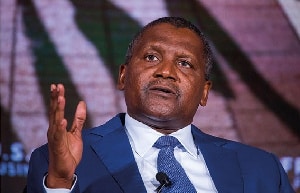
The refinery, which is situated in Lagos’ Lekki Free Zone, can initially process 540,000 barrels of Nigerian crude oil per day before raising that capacity to 650,000 barrels per day.
By 2026, Dangote and the Nigerian government hope to boost the downstream sector of the economy and turn the nation into a net exporter of petrochemicals and refined petroleum products.
The complex will also produce 4 million metric tonnes of jet fuel per day, 65 million litres of premium motor spirits (petrol), 15 million litres of diesel, and 3 billion standard cubic feet of gas.
According to the Organization of Petroleum Exporting Countries, the Dangote Refinery will account for more than half of Africa’s medium-term refining additions.
With Africa’s medium-term distillation additions estimated at 1.2 million barrels per day, the refinery, with a capacity of 650, 000 barrels per day, is the largest of all the refinery additions expected across Africa in the medium term, according to OPEC.
The Dangote refinery was initially scheduled to be commissioned in 2022, but it has been hampered by a variety of factors, including a lack of access to foreign currency, an ailing economy, and the COVID-19 pandemic, which disrupted supply chains and caused delays in refinery equipment.
The commencement of operations at the refinery is a major milestone for both Nigeria and the African continent. It will not only supply much-needed refined petroleum products for domestic consumption, but it also has the potential to create a significant export market, with Dangote at the helm.
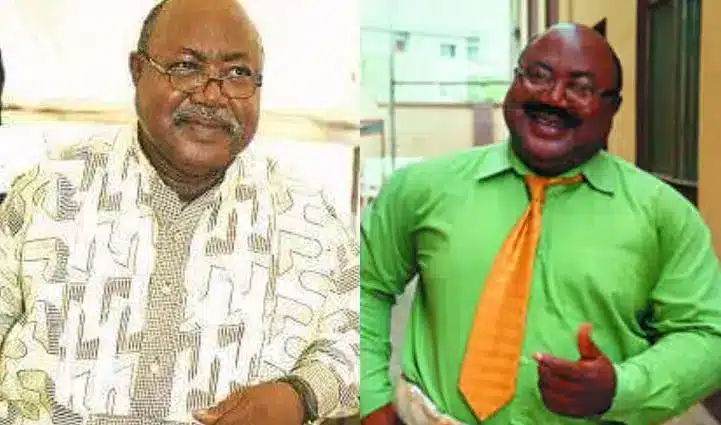
Brand Spur Nigeria understands that Papa Ajasco death was confirmed in a post by lecturer, writer and theatre practitioner, Shaibu Husseini PhD.
Although, the details given by Husseini is quite sketchy, he however confirmed that the seasoned Thespian breathed his last on Saturday, January 14, 2023.
Dr. Shaibu wrote, “I have just been reliably informed that the ethnomusicologist, former Music Instructor with the NationalTroupe OfNigeria and one time stand in for the ‘Papa Ajasco’ character on the popular WAP Comic Series ‘Papa Ajasco’ Mr. Femi Ogunrombi is DEAD”!
According to him, “I am told that the actor, singer, highlifist and trained Nurse whom we fondly called ‘Uncle Ogurombo’ (not to his hearing though) passed on this evening”.
The late Femi Ogunrombi took over the characher, Papa Ajasco when the former character pulled out of the show and he carried the light very well while it lasted.
Femi Ogunrombi was the face of Papa Ajasco, a TV family comedy. An enthno-musicologist with tutelage from masters like Dr. Ademola Adegbite and Pa Christopher Oyesiku, he has made his mark in creative activities both in drama and music, spanning over 25 years.
The late Papa Ajasco was a recipient of many local and international awards, most notably in 1995 when he was awarded a gold plaque and a Diploma Certificate in Creative Composition in North Korea for performing a song in that language.
Before his death, the late Papa Ajasco actor was also the Founder and Director of the famous Ayoro Voices, a performing choral group in the University of Ife.
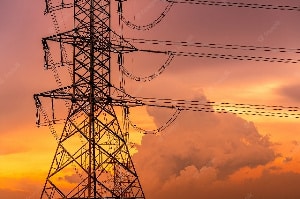
The state power provider blamed a blazing blaze under its high voltage lines near Tarkwa in the Western region for the power outages in several areas of the country.
In a statement sighted by GhanaWeb, GRIDCo said, “As of 17:57GMT, power has been restored to all areas earlier affected by the outage to its transmission lines.”
“GRIDCo extends its appreciation to the Ghanaian public for its patience as efforts were made to restore the NITS and power to Ghanaians,” it added.
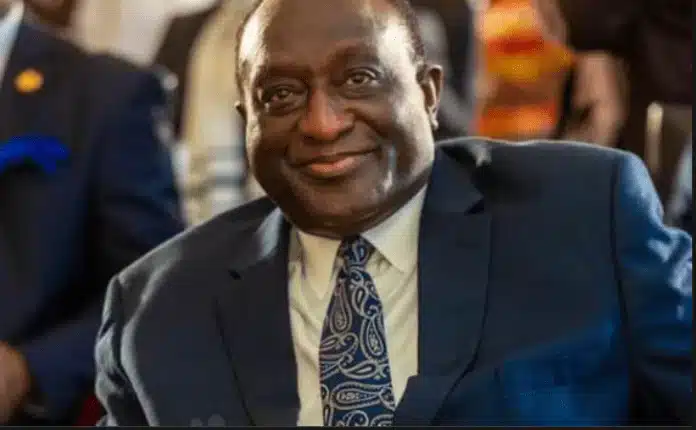
Former Minister of Trade and Industry Alan Kyerematen was not bold enough to tell President Nana Addo Dankwa Akufo-Addo that the government has failed, a private legal practitioner Martin Kpebu has said.
To that end, Mr Kpebu said Mr Kyerematen is unfit to to lead the country as President.
“Alan’s policies are dead on arrival. Alan should have been bold to say this government has failed and he will do better,” he said on the Key Points on TV3 Saturday January 14.
Former Minister of Health under the Mahama administration, Alex Segbefia also asked Mr Kyerematen should be bold and state that the Akufo-Addo administration has failed.
He said Mr Kyerematen, who stepped down from the government, should have resigned long ago because of the failure of the government.
Mr Kyerematen after his resignation stated in an address to the nation that President Nana Addo Dankwa Akufo-Addo has created a strong foundation for development.
Although he believes there are things that could have been done differently, he said the foundation laid will help in reviving the economy.
He said “My vision is to build a superstructure on this foundation that will bring prosperity to our nation, he said in a nationwide broadcast to officially declare his intention to contest the presidential primaries of the New Patriotic Party (NPP).
He further explained that the pre-COVID-19 performance of Ghana ‘s economy, the flagship programmes including the Free SHS, the One District One Factory (1D1F) Initiative, the Planting for Food and Jobs programme, the Agenda 111 project and the COVID-19 Response initiatives, are all testimonies of the “strong leadership that the President has provided over the last six years.”
“In spite of all of the above however, it is an undeniable fact that the combined effect of the COVID-19 Pandemic and the Russia-Ukraine war has stampeded our country into a crisis of unprecedent proportions, with its negative impacts on the economy, on businesses, and on our social lives,” he added.
Contributing to a discussion on the Key Points on TV3 Saturday January 14, Mr Alex Segbefia said “It was over for him the moment he praised Nana Addo.
“Where we are you cannot praise Nana Addo. He should have left earlier. For you to praise Nana Addo, he lost it. Do the campaign, speak truth to us that this government has failed.”
Veteran media personality, Nana Aba Anamoah has hit back at an American woman believed to be a member of the Latter-Day Saint after the latter described Ghana as a place of filth and a poverty-stricken country.
In a viral video, the American, identified as Jessie Clark Funk, while talking about the humanitarian activities of the Latter Day Saint worldwide, revealed how her experience in Ghana gave her the impression that Ghanaians, who she described as poverty-stricken, hungry and living in filth would prefer the church donates its resources to their welfare than to build magnificent temple of worship.
Reacting to the comments of Clark Funk on her official Instagram page, the General Manager of EIB network cautioned her against pushing a false narrative of Ghana for her parochial interests and urged her to quit pushing the impression that Ghanaians are against the Church of Latter Day Saint.
She wrote, “Here you are, @jessieclarkfunk. I knew I’d find you. Those lies you spewed about Ghana made you look less intelligent. That we hate the Mormons? Madam, are you okay? No one resents your temple. The area your temple (the church of Latter-Day Saints) stands in Accra (Ridge) is one of the richest, most peaceful and prestine neighborhoods. “
“I’ll forgive your imbecilic comments about the poverty stricken and hungry people you claim you saw around that temple and assume you just wanted to appear relevant. You looked pathetic instead.”
Nana Aba also took time to educate her on the realities of living in Ghana.
“Indeed, we do have poor people here just as your country does too. There are so many Americans who call cars, shacks, tents and boxes their homes. It’s 2023. Grow up. It’s time to unlearn the truckload of lies you’ve been fed by some of the painfully lazy media platforms in your country about Africa.”
She added, “ I’m willing to help you speak sensibly next time about a country that’s been kind to your ilk, church and any other organisation from your country. To be honest, they’d be shocked to the marrow to hear you speak this way about Ghanaians. You lot need to stop making Africa a victim of your incredibly dumb agenda,” parts of her post on Instagram read.
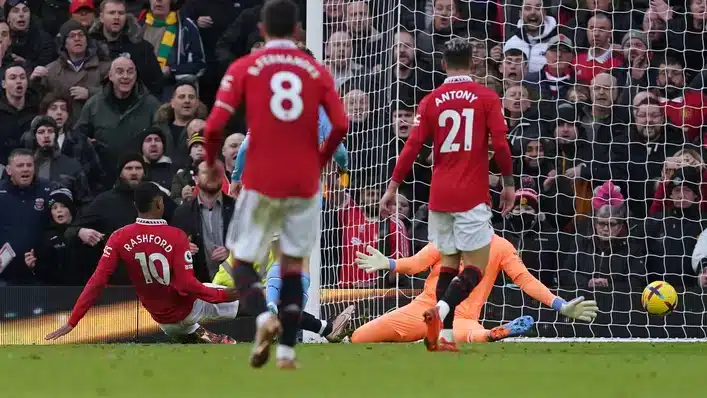
Manchester United struck twice in the space of four minutes late on to snatch a dramatic and controversial 2-1 derby win over Manchester City on Saturday.
Jack Grealish looked to have headed City to a crucial victory in their pursuit of Arsenal at the top of the Premier League when he came off the bench to head home on the hour at Old Trafford.
But United responded to claim a hotly-contested equaliser through Bruno Fernandes after Marcus Rashford was deemed by VAR not to be interfering with play despite racing towards the ball from an offside position.
City reacted furiously and failed to regroup after play restarted, allowing Rashford to poke home a winner from an Alejandro Garnacho cross eight minutes from time.
It was Rashford’s eighth goal in his last seven appearances and lifted United to within a point of title-chasing City, whose recent indifferent spell after their midweek Carabao Cup exit continued.
The result means Arsenal can now move eight points clear at the summit if they win their own derby contest against Tottenham on Sunday.
The drama of the closing minutes was a far cry from the pedestrian nature of the first half, when City were sloppy in possession and unable to stamp their usual authority on the game.
That encouraged United and it was they who had the game’s chance when Bernardo Silva lost possession and Fernandes shot wide from a Christian Eriksen pass.
United threatened again as Anthony Martial broke clear but his ball into the box took a ricochet and Joao Cancelo prevented the in-form Rashford from shooting.
City struggled to get their key forwards, notably Erling Haaland, into the game but the Norwegian but did get an opening as United failed to clear one attack, only for Casemiro to block his powerful strike.
That was a rare opportunity for City. As the first half wore on, United began to look the stronger but were unable to make the most of their attacks.
Rashford beat the outrushing Ederson on one break but was forced wide and Manuel Akanji blocked his shot. On another occasion Rashford was let down by a heavy touch and Ederson gathered.
United looked concerned when Rashford went down with what appeared a hip injury just before the interval but he was able to continue.
The half ended with Kyle Walker curling a speculative effort wide from distance.
City began to show more urgency after the break and the game opened up.
It still took a change from City to make the difference after Grealish replaced the ineffective Phil Foden after 57 minutes.
Moments later Grealish found himself in the right place as Kevin De Bruyne reached the byline and pulled back a cross for the England midfielder to head home from close range.
The real drama was still to come and United levelled on 78 minutes in controversial circumstances.
Rashford was clearly offside as he raced onto a long ball from Casemiro but he opted not to take a touch and Fernandes swept home.
City surrounded the officials in response but, after a delay for a VAR check, the goal was given.
United sensed their opportunity and Rashford did the damage after Garnacho delivered a low ball across goal at the second attempt.
Mr. Yaw Owusu Brefo, a convener of the Ghana Individual Bondholders’ Forum (IBF), claims that he would rather keep his money hidden under his pillow than invest it in Ghana government bonds.
Individual bondholders are required to agree to a “voluntary” agreement to swap their domestic bonds for new benchmark bonds under the Domestic Debt Exchange (DDE) programme.
Mr. Yaw Brefo said during an appearance on the Badwam show on Adom TV hosted by Akwasi Nsiah, that he personally would not invest in it and advised others against doing the same.
He said that if an individual’s investment is impacted, many businesses will fail, with severe ramifications.
He said, “If I had extra money after paying for my children’s schools fees, I would either invest it in something else or hide it under my pillow rather than buy bonds.”
“People won’t grasp the reality of what we’re talking about until they see the true repercussions. I can promise you that the results of this government’s planned Domestic Debt Exchange would be terrible,” he added.
Meanwhile, the IBF has issued a formal notification to its members and invited individual bondholders to become members so that they can continue to consult with them as they provide legal public advocacy and negotiation.
IBF also appealed to labor unions to join them in the fight to protect the hard-earned savings and investments made by Ghanaians, including their own members.
A Ghanaian-American family in the US is mourning the passing of their son who died at a military base in Alabama.
The news has left the family and close friends of the deceased soldier in trauma and shock.
According to the military, the 21-year-old soldier, Pvt. Abdul-Nafsu Latifu was killed in an “altercation with another soldier” at the Alabama Army post, Fort Rucker, where he was training to become an Army air traffic control operator.
A source revealed that news about his demise was published on local websites in Alabama as early as 11:30 am CST, even though his next-of-kin was officially called four hours later to report that he had been hospitalised and in critical condition.
Pvt. Abdul N. Latifu, until joining the US Army, lived in New York.
He is described as very smart and respectful by all who have encountered him.
As relatives, friends and neighbours visit his New York home to mourn with the family, eulogies and questions continue to pour in.
“He was full of life and one of the smartest lads I’ve come across”, a neighbour said. “I cannot seem to comprehend this news because Latifu will not fight anyone for any reason, at best he walks away. So, I’m dumbfounded, to say the least”, another maintained.
“Something is not right about this; someone needs to start saying what really happened, not what they’re feeding us, what are they covering up?” a teary friend of the deceased lamented in disbelief.
Preliminary comments from Jimmie Cummings, a Fort Rucker Public Information Officer, only speak to events surrounding the hospitalisation of the deceased following injuries sustained during the supposed altercation.
The communication also suggested the detention of another soldier involved in the incident but falls short of identifying him or her.
The alleged attacker is said to have used an Army-issued steel folding shovel in the assault that caused Pvt. Latifu his life.
A follow-up statement issued by the U.S. Army Aviation Center of Excellence and Fort Rucker said no formal charges have been filed, but Army Criminal Investigation Division agents are probing the incident.
Maj. Gen. Michael McCurry, the commander of Fort Rucker stated, “On behalf of the U.S. Army Aviation Center of Excellence and Fort Rucker, I extend our deepest condolences to Pvt. Latifu’s family, friends and community,” McCurry said in a statement. “Together we mourn the loss of a promising young soldier.”
Pvt. Latifu was a trainee in the Army’s Advanced Individual Training programme at Fort Rucker where he was assigned to the 1st Battalion, 13th Aviation Regiment, 1st Aviation Brigade.
Loved ones and close friends of the murdered soldier say the communication from the military smacks of a seeming cover-up. It is unclear how far investigations have gone in the murder of the 21-year-old son, brother, uncle and promising soldier, but the army maintains it is conclusively probing the matter.
Majority Leader Osei Kyei Mensah Bonsu warns that involving bondholders without further consultations could wipe out the middle class and will spell doom for the country.
“What we talking about is that many of these bondholders also belong to the middle class and that’s where the major worry is.
“If we are wiping away the middle class that could be dangerous, so we need to have some further dialogue on this. I’m not sure government takes interest and joy in suppressing anyone no government will have any joy in doing that.
“So government thinks that this is the best way forward, however even if it is, we need to engage, reflect and then move on and that will encourage some people who have some doubt to better appreciate where we are.”
This was his response to a group of individual bondholders led by convener, Senyo Hosi and private legal practitioner Martin Kpebu when they presented a petition to him and the ranking member of Parliament’s Finance Committee, Cassiel Ato Forson in Parliament House on Friday, to convey their grievances to the Executive.
Major stakeholders including economists have urged government to halt the plan and exempt them from signing on to the restructuring deal which expires on Monday.
But government says the aim of the program is to make the nation’s debts sustainable as a key component of securing an IMF deal.
Ranking on the Finance Committee, Cassiel Ato Forson disagrees that government must proceed with individual bondholders.
In the meeting with the individual bondholders, he called on the Finance Minister to immediately halt their inclusion for further consultations.
In the interim, bondholders wait with bated breath on the next step government will take.
But in all this, the Majority Leader fears progressing without caution would not only terminate the middle class but destroy the savings culture of the citizenry which has taken decades of painstaking work to build.
“Nothing can substitute for discussions, round table discussions and engagements wherever we find ourselves in. I think it’s important that we go back to the drawing table to have engagements with the major stakeholders.
“As he said, all of us are in it. And if we don’t manage well, we’ve gone through this before, way back some 25, 30 years ago and repositioning was a major, major difficulty.
“Today many people are coming on board and if this thing should happen, how do we build confidence and trust and reconstruct a new savings culture?” he said.
Socialite and US-trained nursing assistant, Efia Odo, has listed her top four influencers on micro-blogging platform – Twitter.
In a one-on-one interview with Tiktok influencer-turned radio presenter, Felicia Osei, Efia Odo explained that, relatively, she is not active on the bird app compared to other social media platforms like Snapchat.
However, she has some influencers on Twitter that she admires their productivity and consumes their content.
The socialite describes these Twitter influencers as her favourites on the micro-blogging app.
According to her, Kalyjay, Mp3asem president, Sikaofficial and Kwadwo Sheldon are her most preferred influencers.
Efia Odo was quick to add that, although she has had banter with Kwadwo Sheldon, she respects his hustle.
She said, “My favorites are, Kalyjay, Memp3asem president, Sikaofficial and Kwadwo Sheldon. Although sometimes I have issues with some especially Sheldon, I think he is good at what he does and I am proud of how far he’s come.”
Efia Odo also confirmed her fall out with musician, Kwesi Arthur.
According to her, although she still loves Kwesi Arthur’s music and she is a fan, she is no longer his biggest fan as she used to be.
She said ” I was a fan but now I’m not a fan anymore. The problem is not his current music releases. His music is still good but everything has its time. Nothing lasts forever except the Word of God.”
Asked if it is the Tema rapper’s personality she has fallen out of love with, Efia after a long pause said, “sometimes, some people can do things that can turn you off and then it’s like, ‘Okay, I can’t really be a fan of this guy anymore”.’
Ghanaian singer and songwriter Kweku Darlington says there is the need to be spiritually strong to survive and be successful in the music industry in Ghana.
According to Kweku Darlington, he had to develop a positive mindset, confidence, and strong spirit to withstand the challenges he had faced in his career thus far.
Kweku Darlington was grateful to God for his blessings in his life, especially in his music career, where he has had many success stories.
“For me, I believe that regardless of how talented you are, you must be spiritually strong to survive in the music industry.
“I always strive to build a strong spirit by being prayerful and doing good deeds. The music industry has been challenging, and if not for God, I wouldn’t still be here,” he said.
When asked about his music plans for the year 2023, Kweku Darlington said he had released the video for his song “Osama” and was looking forward to some top collaborations.
“I hope to debut my first extended play or album this year. I have lots of musical surprises for my fans who have supported me over the years, and I urge them to keep me in their prayers,” he said.
Kweku Darlington’s newly released video captures some interesting love expressions and could be a contender for the video of the year.
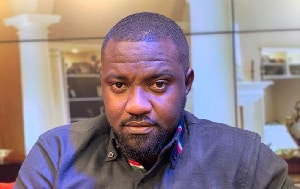
Actor, farmer, and politician, John Dumelo has called on the government of Ghana to work towards the renovation of tourist sites in the country to make it a hub for tourism in Africa.
According to John Dumelo, Ghana arguably has become the choicest place of destination for most persons in the diaspora to be in Africa during festive periods due to the many music concerts and festivals that are organized, however, he believes that visits to Ghana should not only be in December but should be all year round.
The actor believes this can be achieved if government renovates old tourist sites, builds new ones, and creates policies to empower the tourism industry.
If accomplished, John Dumelo says Ghana would become the hub of tourism in Africa and a place foreigners would want to visit at all times.
“Gradually Ghana is becoming the destination for Dec vacations bc of numerous music festivals and entertainment events. Now let’s try and focus on rehabilitating the old tourist sites and build new world-class ones so we can get more tourists all year round. This is our time!,” the actor wrote this one his official page on micro-blogging application, Twitter.
John Dumelo was recently in the news for predicting that the Cedi which was then appreciating would perform poorly against the US dollar in 2023.
According to Mr Dumelo, this is so because import-driven companies have already secured their stock for Christmas and no longer need the dollar to import more stuff.
“$$ will keep coming down in the next few weeks. Reason: 1. Importers don’t need $$ now, they have enough goods for the Xmas period. 2. $$ are in the system due to Xmas visitors,” he tweeted.
Three persons including an ex-convict who robbed a tourist of her mobile phone valued GH₵3,000 at El-Wak Sport Stadium in Accra have appeared before an Accra Circuit Court.
Daniel Atugah, an ex-convict and a student, Musah Ibrahim aka Pantang, a welder, Ibrahim Mohammed aka Ashiaman, unemployed, have been charged with conspiracy to commit crime to wit robbery and robbery.
Lucky Chinedu, a second hone dealer, who allegedly bought the iPhone X for GHC400 has been charged with dishonestly receiving. They have denied the various charges.
The Court presided over by Mr Samuel Bright Acquah has remanded the accused persons into police custody to reappear on January 20.
Prosecuting Chief Inspector Isaac Anquandah narrated that the complainant (name withheld) is a Ghanaian domiciled in Amsterdam, Netherlands.
The Prosecution said all the accused persons lived in various locations in Ashaiman.
It said crime was committed during the month of December 2022, a musical festival dubbed “Afrochella” was held at El-Wak Sports Stadium, Accra to promote Africa’s diverse culture and creativity.
The Prosecution said the programme attracted patrons from all walks of life including the complainant who was also in the country for holidays.
It said on the night of Wednesday December 28, 2022, Atugah, Ibrahim and Mohammed also attended the programme ostensibly to rob unsuspecting audience.
As a result, prosecution said the three accused persons intentionally wore black T-Shirts and positioned themselves strategically around the El-Wak Sports Stadium to conduct their nefarious acts.
The Prosecution said at about 11:30 pm, the complainant was seated at the back of the passenger seat and was fidgeting with his phone.
It said suddenly, Ibrahim skillfully snatched the complainant’s iPhone X from her and passed it on to Atugah and Mohammed and they took to their heels.
The Prosecution said the complainant raised the alarm and Atugah was arrested while Ibrahim and Mohammed escaped.
It said the following day, Mohammed sold the phone for GHS400 to Chinedu and kept GHS200 for himself and gave GHC100 each to Atugah and Ibrahim as their share of the booty.
According to the Prosecution, on January 3, 2023, Atugah escaped whiles he was being escorted by the Police from his residence at Ashiaman.
It said during interrogation, Atugah, Ibrahim and Mohammed admitted robbing the complainant of her phone.
Chief Actuary of Social Security and National Insurance Scheme (SSNIT), Joseph Poku, has disclosed that the highest pensioner in Ghana will from this year earn an amount of GH¢169,725.89 every month.
According to him, this is a 19.05% increment from the previous GH¢142,564.97 received by the highest pensioner in 2022.
Speaking at a press conference in Accra on Friday, January 13, 2023, Mr Poku said the lowest pensioner, on the other hand, will receive GH¢430.58, an increase of 43.53%.
“The indexation rate for 2023 is 25% and this represents a 150% increase over the previous year’s indexation rate which was 10%…Having determined this rate, we don’t want to apply this rate across board because some people are earning far higher than the others so we need to take into account those who are low pension earners and this is what enabled us to introduce the mechanism called the redistribution,” Mr Poku announced.
“So the lowest pensioner who as at last year was receiving GH¢300 is now going to receive GH¢430 and some pesewas and this represents 43.53% increase over the previous years…again, the highest earning pensioner who was having GH¢142,564.97 is now going to receive pension beginning January 2023 of GH¢169,725.89 very month,” he added.
The redistribution method adopted by SSNIT is a mechanism applied to the indexation rate to cushion members on low pensions in conformity with the solidarity principle of social security.
He noted that a total of GH¢5 billion will be distributed by the pension scheme this year to beneficiaries.
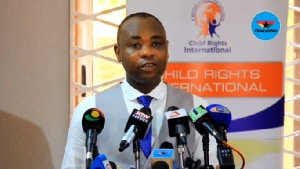
Mr Bright Appiah, Executive Director, Child Rights International (CRI), an NGO has commended President Nana Addo Danquah Akufo-Addo for pardoning eight female students of the Chiana Senior High School (SHS).
Mr Appiah said the President’s intervention was timely and appropriate in ensuring that the students were not denied their rights to education.
On Friday, November 11, 2022, a video of the second year female students of Chiana SHS in the
Kassena-Nankana West District of the Upper East Region using vulgar language towards the
President went viral on social media.
As a result, a Committee was established by the Governing Board of Chiana SHS to investigate the alleged viral video.
After series of investigations, the Committee’s report, copied to the leadership of the Ghana Education Service (GES) at the Headquarters, recommended the dismissal of the students.
In an interview with the Ghana News Agency (GNA), Mr Appiah said the intervention of the President addressed two major issues, which were the nation’s investment in education and its policy environment.
‘Having free education to the Secondary School level, we have made investment in the lives of these children, and I do not think that the father of the nation will allow that investment to go waste,’’ he stated.
The Executive Director underscored the need for a framework for an alternative system of punishment that would lead to the reformation of children rather than victimising them, who would in turn influence other children negatively.
He condemned the act of the students and advised children to behave responsibly and be morally upright to be good citizens of the nation as they exercise their rights in a manner that conformed to the State’s principle on the development of children.
Mr Appiah noted that some parents had failed in bringing their children to a level that was expected, hence, the need for a strengthened state machinery to deal with some of the fallout issues that would ensure that before a child completed the school system, some positive changes would have been made.
‘‘So if children are behaving in that manner, we need to condemn it and make sure that we put them in a place that will let them be more responsible.
“So, as much as we condemn the act of the children, we think that the policy environment must also be strict enough to regulate the behavior of children provided it does not violate their fundamental human rights,’’ he added.
OccupyGhana, a pressure group, in a statement to the GNA noted that some suspension with mandatory counseling for the affected students would be more effective than dismissal.
Meanwhile, some members of the public who praised the President’s intervention called for severe punishments for the students.
Madam Janet Mensah, a parent acknowledged that the children did not do the right thing and appealed to the GES to consider making them repeat their class to serve as a deterrent to others.
Mr Emmanuel Kankam, a final year student of the Koforidua Senior High Technical School, urged students to desist from such acts since it was morally bad.
Blame Russia, the weather, disease and a host of other factors.
“Even though we’re seeing inflationary pressures ease, we still have a war in Ukraine,” said Tom Bailey, senior consumer foods analyst with Rabobank. “Fertilizer costs have improved, but they still remain very high. Energy costs have improved, but they still remain relatively high. Labor costs still remain a problem — and the list goes on.”
Weather and disease are heavily affecting certain products’ prices, too – and none have been more rotten than egg prices: They’re up 59.9% year over year, a rate not seen since 1973,when high feed costs, shortages and price freezes caused certain agricultural products to soar in price. Since early last year, a deadly avian flu has devastated poultry flocks, especially turkeys and egg-laying hens. That was compounded by increasing demand and higher input costs, such as feed.
As a result, people like Jim Quinn are shelling out upwards of $6 and $7 for a dozen eggs.
Quinn has run daytime eatery The Hungry Monkey Café in Newport, Rhode Island, with his wife, Kate, since 2009. As a breakfast and lunch joint, it leans heavily on eggs for the majority of dishes on its menu — and especially for the 15-egg King Kong omelet novelty food challenge at the restaurant.
“I’m trying to hold the line on the prices without having to increase them,” Quinn said. “It makes it extremely challenging for a mom-and-pop [business].”
He added: “We’re just trying to stay alive and hope that things will come down.”
But there’s good news on the horizon. The cost of food is still hard to swallow, but the latest Consumer Price Index shows that those price increases — by and large — are at least growing at slower rates.
In December, “food at home” prices increased 0.2% from the month before.That’s the smallest monthly increase since March 2021.
The expectations are for food price increases to continue to moderate, Bailey said.
“I suspect over the next 12 months we will see improvements in supply, improvements in the conditions that have been challenging across most of our food categories,” he said, “and we’ll finally start to see prices, at least upstream, really starting to come off. And then maybe it’s 2024 where we could eventually see some deflation for food.”
A week after giving birth to a baby boy, Ghanaian child actress turned musician Yaa Jackson has taken to social media to share lewd pictures with online users.
She shared a few Snapchat photos of herself posing with her buttocks tilted towards the camera and her face hidden, with the caption “JJ maame.”
In another post, she wore a bralette and underwear over a colourful pair of shorts while exposing her tummy, which appeared flat, and her belly ring, which hung around her navel.
It is unclear whether the image that captured her almost naked was recent or not.
However, in other photos, she shared shots of her child’s lips and lower body while concealing his face.
On January 6, 2023, the Kumawood actress began the year with some happy news when she gave birth, which she announced on Instagram.
She stated that her baby’s name, JJ Nana Yaw, was chosen in honour of her husband, to whom she has been committed for more than five years.
The birth of their child came after their marriage on December 26, 2022, which had just relatives and a few friends in attendance and made waves on social media.
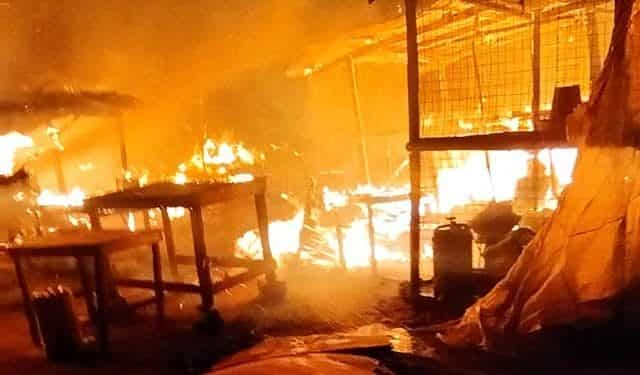
A young woman from Ghana has been confirmed dead after reportedly being burnt during an explosion that happened at Afrochella on December 20, 2022.
The woman’s death had been rumoured on several social media sites, but it wasn’t verified until Friday, January 13, 2023, by the organizers of Afrochella.
In a statement released by the organisers, they disclosed that it was indeed true the young lady had died.
They also indicated that they had since met with her family to extend their support and condolences.
“Since the incident, we’ve met with the family to express our sincere condolences and extend our support,” they said.
They also stated that they were working closely with the Cantonments police station to assist with their investigations.
“During this time, we will continue to liaise with the Cantonments Police Station, As details continue to unfold, we mourn with family and friends and pray for all of those who have been affected by this unimaginable loss,” parts of the statement further said.
Read full statement below:
We are deeply saddened to hear about the untimely passing of a young person who was employed by a vendor on Monday, January 9th due to injuries she sustained from a fire accident that occurred in the Vendor Village at our Festival. The safety and security of all who attend remains our top priority and we are heartbroken to know that this unfortunate event transpired.
As one of the many safety precautions that we take to ensure the wellbeing of our employees, partners, vendors, and guests, we provide onsite safety and fire services during all of our events. Every year, Ghana National Fire Service inspects the Festival grounds, including inspecting all vendors that operate on the field.
Despite these safety efforts, an incident occurred, resulting in an accident that injured a total of three people who were managing the booth all of whom were rushed to the hospital for immediate medical attention by our on-site ambulance services. The authorities are conducting an investigation.
We believe that our vendor showcase, a particularly special partnership, gives festival goers the chance to support locally owned businesses and get a real taste of Ghana this is part of the magic of our experience.
Since the incident, we’ve met with the family to express our sincere condolences and extend our support. During this time, we will continue to liaise with the Cantonments Police Station, As details continue to unfold, we mourn with family and friends and pray for all of those who have been affected by this unimaginable loss.
Member of Parliament for North Tongu Constituency Samuel Okudzeto Ablakwa says come Monday, January 16, he will launch an exposé that will shake the foundations of the National Cathedral of Ghana project.
The National Democratic Congress (NDC) lawmaker has been consistent with his criticism of the project since its inception in 2018.
His criticism, according to him, has attracted name-calling, some of which he mentions as Tobiah, ‘naysayer’ and ‘anti-Christ’.
The Ranking Member of the Foreign Affairs Committee of Parliament brought to light the “wanton” withdrawal of funds from the country’s contingencies to support the project, against the very assurances given by the government.
He had a bust-up with Gabby Otchere Darko, the legal representative of Finance Minister Ken Ofori-Atta, when he appeared before the eight-member ad hoc committee set up by the Speaker, Alban Sumana Bagbin, seeking his removal by censure.
This consistent monitoring of the project is what Mr Okudzeto Ablakwa says has attracted the name-calling.
But he told Paa Kwesi Asare on The Keypoints on TV3 on Saturday, January 14 that he will not relent in his criticism of the project because it is a “personal pledge” of President Nana Addo Dankwa Akufo-Addo’s and not supposed to see the dissipation of state resources.
He pointed out that even the demolition of buildings including a heritage structure like the Scholarship Secretariat, from where past leaders of the country got sponsorship to pursue higher education abroad, has been at a high cost to the country.
“I am pursuing what is expected of me under the Ghanaian constitution and indeed under the whole principle of checks and balances,” he stressed.
‘Galamsey site’
He revealed that Monday’s exposé will be the “mother of all scandals” since the project started and Ghanaians will be shocked by it.
For him, the project, which he describes as a “galamsey site”, must not escape accountability.
“There has to be a full forensic probe into this National Cathedral project. That’s the first thing we must do.”
He announced: “Monday, the mother of all [National] Cathedral scandals will be outdoored.”
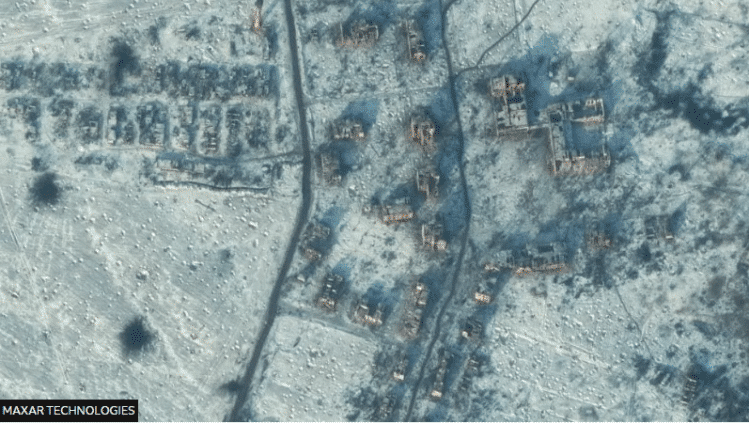
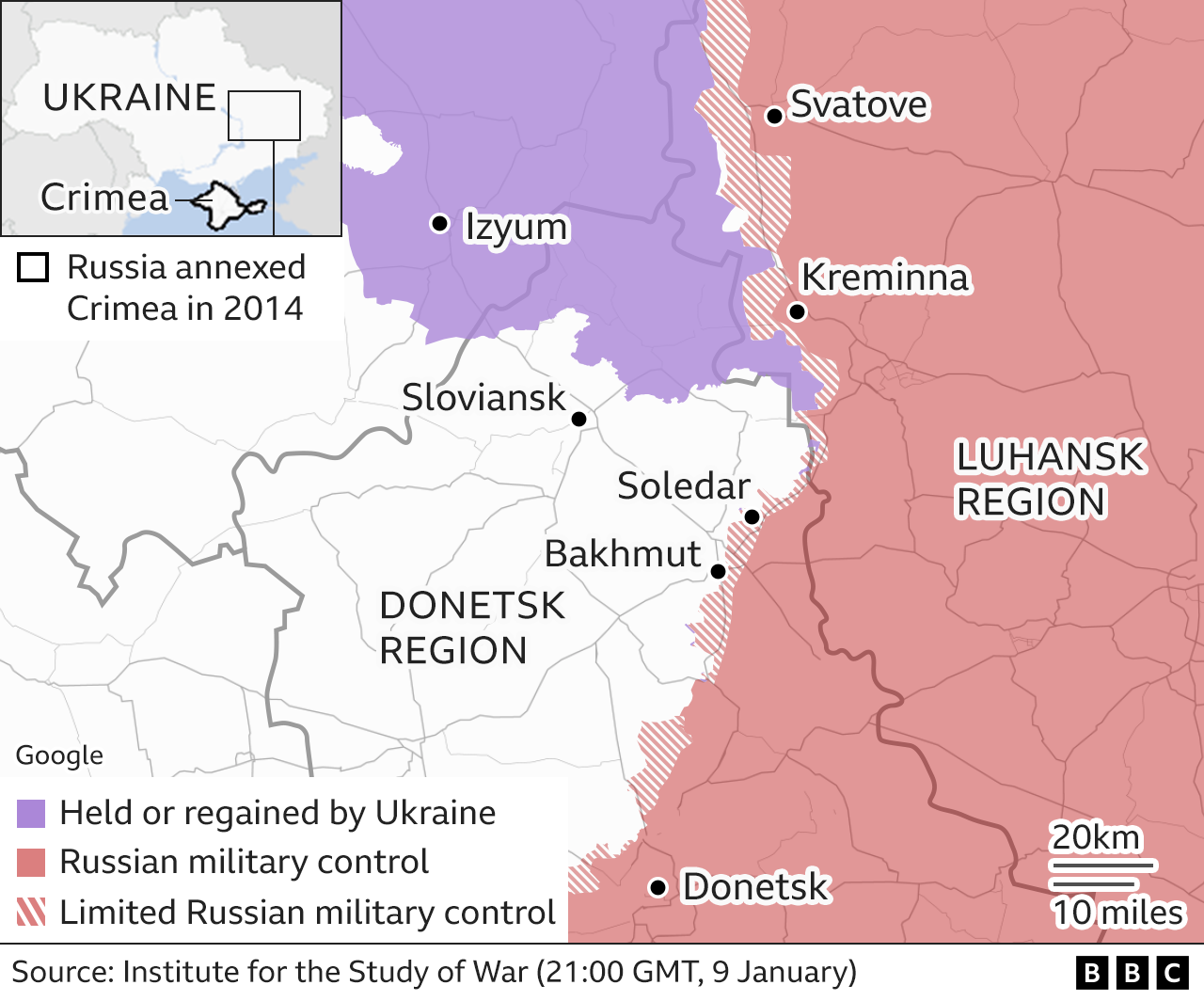
Russia’s military says it has captured the Ukrainian salt-mine town of Soledar after a long battle, calling it an “important” step for its offensive.
The victory would allow Russian troops to push on to the nearby city of Bakhmut, and cut off the Ukrainian forces there, a spokesman said.
This was a very confident and ambitious statement from Moscow.
But Ukrainian officials said the fight for Soledar was still going on and accused Russia of “information noise”.
The battle for Soledar has been one of the bloodiest of the war.
The town is relatively small, with a pre-war population of just 10,000, and its strategic significance is debatable. But if it is confirmed that Russian forces have seized control of it, then there will likely be a big sigh of relief in the Kremlin.
Divisions have emerged between regular Russian forces and the notorious Russian Wagner paramilitary group throughout the battle, with a jealous turf-war developing over who should take credit for the advance.
Barely any walls in Soledar remain standing, Ukraine’s President Volodymyr Zelensky said this week. Describing almost apocalyptic scenes, he spoke of the nearby terrain as scarred by missile strikes and littered with Russian corpses.
Speaking during his nightly address from Kyiv on Friday, Mr Zelensky said the battle in the region continued to rage, but avoided any reference to Russia’s claims of control over Soledar.
“Although the enemy has concentrated its greatest forces in this direction, our troops – the Armed Forces of Ukraine, all defence and security forces – are defending the state,” the Ukrainian leader said.
His chief of staff, Andriy Yermak, compared the fight for Soledar and Bakhmut to one of the bitterest battles of World War One, at Verdun.
Regional governor Pavlo Kyrylenko said on Thursday that 559 civilians including 15 children remained in Soledar and could not be moved out.
The town’s significance for the Russian military is disputed by military analysts because of its relatively small size. The US-based think tank Institute for the Study of War said while it was likely that Russian forces had captured Soledar, it did not believe they would then be able to go on to encircle Bakhmut.
Nevertheless, if it becomes clear that Russia has taken it, then that will be seen in Moscow as progress – even a victory.
That is exactly what President Vladimir Putin needs as Russia has failed to capture a single town in Ukraine since July 2022. Since then, Moscow’s forces have suffered a whole series of embarrassing defeats.
Ukraine’s successful counter-attack pushed Russia almost completely out of Kharkiv region in the north-east. In October, Russia’s Kerch bridge came under attack, with Russian forces retreating from the city of Kherson the following month.
The southern port city had been the only regional capital that Russia had managed to seize since the invasion began.
Capturing Soledar would be something for Moscow to present as some “good news” to the Russian people and the troops on the wintry front line.
But Serhiy Cherevatyi, spokesperson for Ukraine’s eastern military command, denied Soledar was in Russian hands: “We won’t give any more details as we do not want to reveal the tactical positions of our fighters.”
Deputy Defence Minister, Hanna Malyar, said fighting had been “hot in Soledar overnight”. Ukrainian fighters were “bravely trying to hold the defence”, she added, in what was a difficult stage of the war.
Western and Ukrainian officials have said much of the fighting in Soledar and Bakhmut is being done by the notoriously brutal Wagner mercenary group.
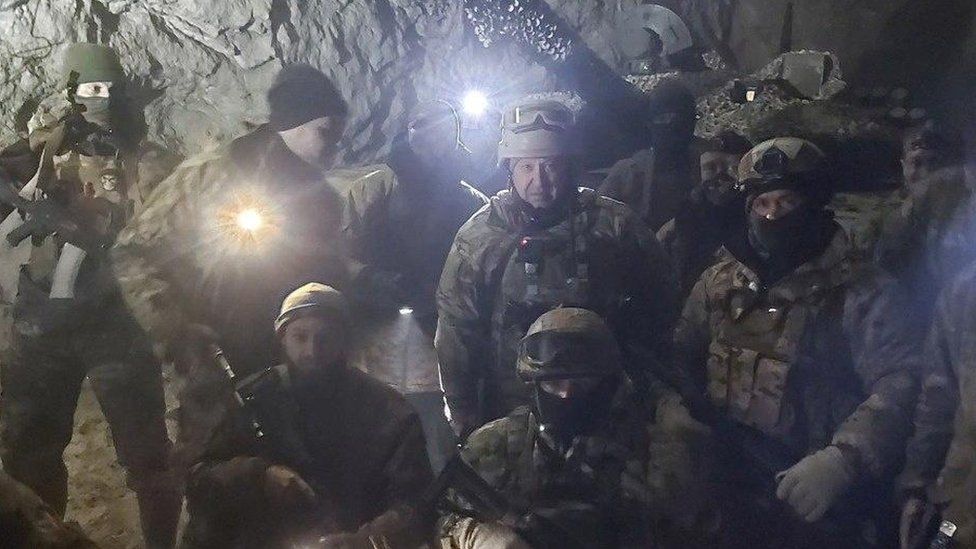
Ukraine this week cast doubt on a photo claiming to show Yevgeny Prigozhin inside a Soledar salt mine
Its leader, 61-year-old Yevgeny Prigozhin, has claimed repeatedly over the past few days that his forces are the only units on the ground in Soledar. He said on Tuesday night that his mercenaries had seized the town, only to be contradicted by Russia’s defence ministry the next morning.
Daily updates from the Russian defence ministry have made no mention whatsoever of Wagner, and Friday’s briefing was no exception. The military said that paratroopers had played a key part in the capture of the town.
Mr Prigozhin then released a statement saying he was “surprised” to read the defence ministry briefing. There “wasn’t a single paratrooper” in Soledar, he insisted, warning against “insulting [his] fighters” and “stealing others’ achievements”.
And on Friday evening, Mr Prigozhin accused “officials who want to stay in their places” of being the biggest threat to his group’s advance in Ukraine.
In a later statement, the defence ministry praised the mercenaries’ “courageous and selfless actions” during the fighting, but again emphasised the leading role of regular Russian forces.
Analysts have long spoken of tensions between the military and Mr Prigozhin’s Wagner group. The Russian oligarch has publicly criticised senior military leaders, including Gen Valery Gerasimov, appointed two days ago as overall commander of Russian forces in Ukraine.
While Russia has mobilised some 300,000 reservists for the war since the end of September, Prigozhin has looked to recruit extra numbers from Russia’s prisons.
Andriy Yermak told French daily Le Monde that Russian criminals had been sent straight to their deaths on the front line: “Soledar is a scene of street battles, with neither side really in control of the town.”
The Chief Executive Officer (CEO) of the McDan Group of Companies, Daniel McKorley, has bemoaned the country’s weak local content law – saying it needs to be reviewed to protect indigenous Ghanaian businesses, especially as the nation pursues economic recovery.
He stated that a stronger legal framework would not only safeguard and assist local businesses but also give them leverage to contest government contracts given to foreign businesses when local businesses have the capability to perform them.
“We have had very weak local content laws and local content spirit. We have to strengthen the local content base…we have to go the Nigerian way to fight and strengthen our local content. There should come a time when the government gives a contract to a foreign company when one of us – that is, a Ghanaian business can do it – and we all rise up and say ‘no, this is wrong’. If we do that, the politicians will start listening to us,” he explained.
Recounting the economic turbulence of 2022, McKorley said business leaders must invest in the local economy and collaborate with the public and private sectors.
He further urged Ghanaian businesses in the private sector to improve packaging and quality to meet market standards and called on fellow businessmen to support the government with ideas and resources.
“Businessmen in the country must be solution-oriented so that we support the government. I believe in the quest to be big in business, we have to extend our hands to support the system. I believe it is about time we supported the government with our resources and ideas,” he said.
The former Association of Ghana Industries (AGI) president, Dr James Asare-Adjei, sharing his thoughts as a participant was also of the view that the prevailing shocks provide an opportunity to boost local production and reduce importation. “What we need as a country is to boost local production and support Ghanaian indigenous businesses in manufacturing,” he stated.
He said that one key area where significant strides have been made in the past three to five years is in local rice production. He indicated that over the period, rice production in the country has moved from a mere 50,000 tonnes to over 400,000 metric tonnes. He added that if local producers are supported they can bridge the import gap, as the current demand is over 1.2 million metric tonnes.
He added that the economy’s recovery will also rely on the government supporting commercial agriculture, and by extension industrialists who are willing to invest in the sector. “The private sector must also partner with the government so we look at what has been done right and how it can be sustained,” he said.
The inaugural New Year Business Forum brought together about 50 business leaders from various industries in Ghana to discuss the lessons learned in 2022 and the strategies for a successful 2023.
Black Stars management committee member, Alhaji Grusah, has opined that it is not a crime if managers of the Black Stars of which he is a part of benefit from Ghana’s World Cup windfall.
Asked if each member of the committee received an alleged $100,000 appearance fee at the 2022 FIFA World Cup, he said even if they received that, they earned it, refusing to categorically confirm or deny the claims.
There has been steam debate about whether management members should take an appearance at major tournaments.
According to Alhaji Grusah, the management members deserve to be paid because they risked their lives in boarding a flight from Ghana to Qatar.
“I want to ask if it’s a crime for us (the management committee) to take that appearance fee of $100,000,” he told Akoma FM.
“I risked my life to be on a flight from Ghana to Qatar. When we were being attacked in Nigeria, where were those people who are now making noise about the money we took?,” he added.
“It’s just some journalists who are only making noise about this, though I agree the money is huge, I think we deserved it,” Alhaji Grusah told Akoma FM in an interview.
He further highlighted the risks they took in joining the team in Qatar.
“A lot could have happened to us, we left our jobs to serve Ghana, if some of us were to stay back, we could have earned more than that from our various jobs, if it’s a crime, Ghanaians should come for their money. We took the money because we deserved it.”
The playing body received a $100,000 appearance fee for the tournament. Ghana exited the World Cup with one victory and two defeats, finishing last in Group H.
The US-licensed gold buying company had previously been implicated in a $1.3 million gold controversy.
The CEO said that the Ghanaian police had hindered their efforts to obtain justice and had thus painted a negative picture of Ghana to outside investors.
Read the full story originally published on June 13, 2017 by Starrfm
James Barbieri, whose company is at the center of a $1.3 million gold scandal, said he has lost confidence in the police service as they are being denied justice in the case.
Speaking to Starr Business after a media briefing Tuesday, Mr. Barbieri alleged the police are involved in a cover-up, increasing his fear to expand investment in the West African country.
In March this year five policemen, including the East Legon District Police Commander, DSP Emmanuel Basintale were arrested in connection with a number of alleged fraudulent gold deals running into several millions of Ghana cedis.
DSP Basintale, who is currently on interdiction, is alleged to have led a group of officers to defraud Green Global Resources Company Limited under the pretext of selling 13 gold bars to the company.
Mr. Barbieri stressed “it really appears everybody was knowledgeable and nobody wants to address this situation. Right now we are out of significant amount of money and we don’t have confidence that this is a safe environment to operate.”
For him, the police has adopted a lukewarm approach because most of its high ranking officials are involved in the scam.
“In this situation, a lot of senior police officials and some other junior ranking officials, some including BNI officers, were allegedly protecting the scammers.
“Unfortunately the country of Ghana is the real loser here because your security services are apparently corrupt and cheat potential investors and drive this potential investor away by protecting the scammers and these police corrupt officials.”
“It must be stated categorically that, the 13 boxes of gold that was confiscated have still not been returned to Green Global Resources Ltd. and we believe it is in the possession of the Police Service. We are therefore calling on the President of the Republic of Ghana, Nana Addo Dankwa Akufo-Addo; Mr. David Asante Apeatu, Inspector General of Police and Mr. Bright Oduro, Director-General of the CID, to act on the information provided above to act upon to retrieve our money or the bars of gold are given to us,” Barbieri opined.
She emphasised that when an institution fails, the Bank of Ghana removes it from the system.
“It is crucial that the media guides the public dialogue in a detached and knowledgeable manner…
We’ve read headlines like “Bank of Ghana has collapsed companies” much too frequently. Nothing ever fails at the Bank of Ghana. No. When an institution fails, we remove it from the system in a way that does not have an impact on the system, she added. We licence, we supervise.
Read the full story originally published on October 13, 2020 by GhanaWeb
Second Deputy Governor of the Bank of Ghana (BoG), Elsie Addo Awadzi, has asked the media to use the right terminologies in their reports on the sector to send the right messages to the public.
Speaking at a media sensitization workshop organised by the BoG and associations representing Specialised Deposit-taking Institutions (SDIs), the 2nd Deputy BoG Governor said some headlines distort the salient point in an event within the sector.
“It is important that the media leads the public discourse in a dispassionate and expert manner…We have heard too often, headlines such as ‘Bank of Ghana has collapsed companies’. Bank of Ghana never collapses anything. No. We licence, we supervise and then when an institution has failed, we take it out of the system in a manner that does not affect the system.
“So do not say ‘Bank of Ghana has collapsed anything’. Bank of Ghana does not collapse anything. These institutions are run and governed by their shareholders, who put their Board of Directors and a team of management. So, they collapsed the companies. We don’t collapse the companies. It is important for the media to understand that,” she stressed.
The media sensitisation event brought together key players in the sector and presented a rare opportunity for the SDI associations to better explain their operations to the media.
It also enabled the media to ask appropriate questions of the key players in the sector and provide feedback to SDIs as to what the public thinks of their service.
Elsie Addo Awadzi said it is important that the media grows to become a key partner that understands the financial sector and the regulatory framework within which the financial sector operates.
“[The financial sector] is very different from other types of businesses and it is important that the media, when they engage in discussions related to the financial sector, they do so with an understanding of regulatory environment as well as the policy environment within which the financial sector operates,” she admonished.
He claims that Alan Kyerematen is a successful businessman who recognises the value of creating jobs in his industry.
He listed Alan Kyerematen’s accomplishments under President Nana Addo Dankwa Akufo-Addo as the creation of One District One Factory, the Ghana Automotive Development Center, and the presidential special initiative.
Speaking on TV3’s Key Points programme on Saturday, January 14, 2023, the former lawmaker said, “Alan is the man for jobs.”
“He is a businessman who understands business and creating jobs. Who doesn’t remember the Presidential Special Initiative (PSI), he makes it happen, automobile, 1D1F, he makes it happen,” he stated.
On January 5, 2023, Alan Kyerematen resigned as the Minister of Trade and Industry.
Meanwhile, President Nana Addo Dankwa Akufo-Addo has appointed the Minister of Lands and Natural Resources, Samuel Abu Jinapor as the caretaker minister of the Ministry of Trade and Industry.
Verify that the operating system on your computer or other device is running the most recent version.
The Ghana Internet Safety Foundation, headed by its Founder and Chief Executive Officer, Emmanuel Adinkrah9 practical recommendations for online safety, has provided some top helpful recommendations for remaining secure online and avoiding hackers, among other cyber criminals, as we approach the first days of the New Year 2023.
Here are some tips for staying safe with technology:
Do not distribute your naked photos.
Don’t share any nude images with your spouse if you’re not certain that you can trust them.
The Internet is forever and there are real-life consequences for the things you share online.
Even on Snapchat, where photos disappear in 24 hours, there is no guarantee someone won’t screenshot your pic or take a picture using someone else’s phone.
Shop more securely
Using a credit card to buy goods online is safer than using a debit card. This is because any fraudulent transaction made using your debit card sees money withdrawn from your bank account but most credit cards come with fraud protection.
Make sure the shop site is secure
If you’re shopping online, you can protect yourself further by only shopping on sites with HTTPS as a URL prefix and a padlock icon to the left or the right of the URL. The ‘S’ in HTTPS stands for ‘Secure’. This signifies that communications between your browser and the website concerned are encrypted.
Update your operating system
Make sure your machine is running the latest version of your operating system and install system updates immediately. Updating your operating system ensures your machine has the latest software to protect itself.
Update your anti-virus software
An out-of-date virus checker is only marginally better than none at all. Hundreds of thousands of new variants of malicious software appear each year in addition to new strains, so the set of malware your virus checker knew about when you first installed it can get out of date very quickly.
Use complex passwords for each account
A recent article by NordPass reported that ‘password’ and variations of ‘123456789’ still rank among the most commonly used. Using capital letters, lower-case letters, numbers and special characters – such as an asterix or a question mark – make passwords much harder for hackers to crack.
Use a password manager
You probably have more accounts than you can remember; so, consider using a reputable password manager such as LastPass. Then use two-factor authentication – such as Google’s 2-Step Verification – to protect your online accounts.
Watch out for Flash
Adobe Flash, a tool used to create online games and animations, is one of the most common ways PCs get infected with malware. Think about disabling it. Adobe isn’t recommending the use of Flash anymore because of security concerns. Check your system.
They found that hair loss was almost 30% more common among men who had a daily habit of drinking up to one sugary beverage such as soft drinks, juice, energy drinks, sports drinks, and sweetened coffee and tea (totalling between one to three litres per week).
Men who reported having more than one sweetened beverage per day were even more likely to have hair loss, 42% higher risk compared to those who never drank sugary beverages.
The researchers also found that the majority of study participants drank a least some beverages containing sugar in their daily diet and nearly half reported having sweetened drinks more than once a day. But men who reported hair loss tended to drink more, about 12 servings a week on average, compared to seven per week for men who didn’t report hair loss.
One limitation of the study is that beverage habits aren’t the only factors in hair loss, and factors like the rest of the diet, overall health, and even stress and mental health history could play a role. For instance, men with hair loss also reported eating more fried food and fewer vegetables, according to the study. The researchers also found that a history of illness or anxiety, or even PTSD, were linked to a higher risk of hair loss.
So far, the link between sugary beverages and hair loss is correlation, not causation, and more studies are needed to find out whether drinking more directly raises the risk of balding.
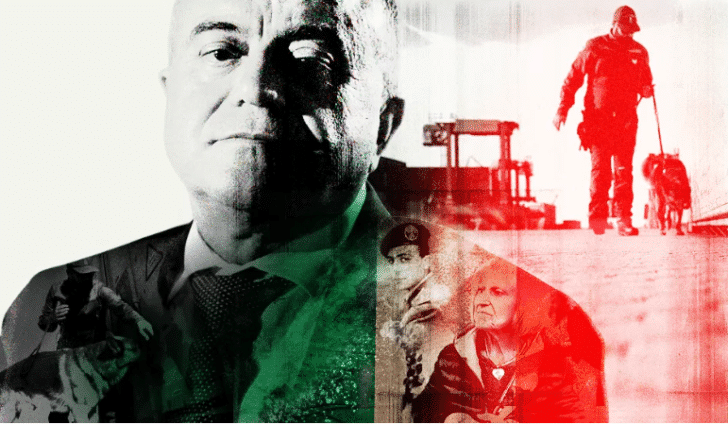
Italy’s highest-profile mafia target only tells us where to find him 20 minutes before we meet. Nicola Gratteri, the prosecutor leading the country’s fight against organised crime, has learnt to live in constant danger – and too much advance warning leaves him exposed.
We are instructed to wait for him outside the court in the southern region of Calabria where he is overseeing the biggest trial of its kind since the 1980s. More than 330 suspects have been testifying there and 70 of them have already been convicted.
Suddenly Gratteri sweeps in, surrounded by his escort of five police cars. We thank him, a few times, for his readiness to meet and talk. “Stop thanking me – and let’s get on with it,” he snaps. “There’s nothing I hate more than dead time.”
The man on the kill list of Italy’s most powerful mafia, the ‘Ndrangheta, who has devoted his entire career to taking on the group, does not do pleasantries.
And then he decides to drive us to his office 40 minutes away. He will be freer to talk there. We climb into his bullet-proof car and so begins perhaps Italy’s most dangerous commute.
“I’ve been living with this level of security since 1989, when my fiancee’s house was shot at, and someone phoned her in the night to tell her she was marrying a dead man,” he recalls. “It’s escalated to reach this suffocating level of control.”
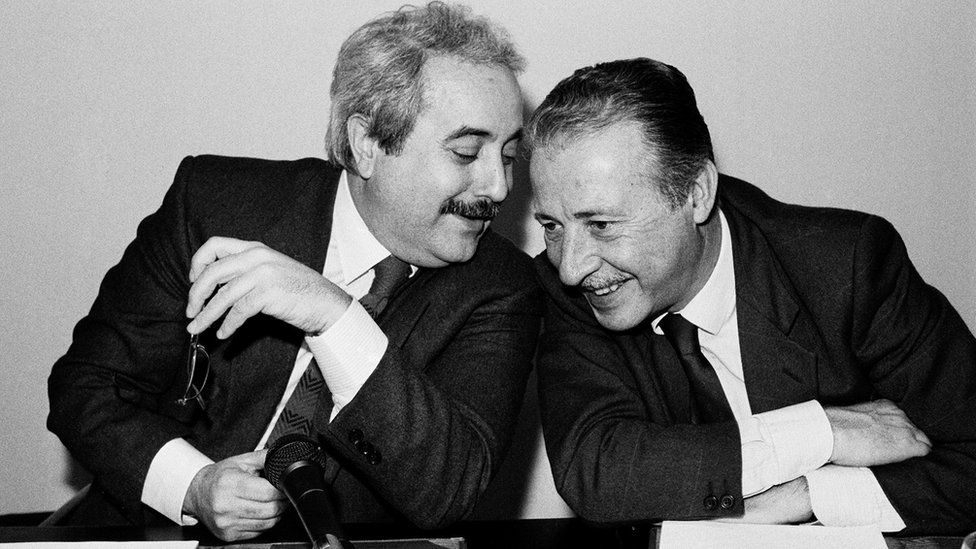
Giovanni Falcone and Paolo Borsellino – both were murdered in bombings
There is no alternative, given what happened 30 years ago. In 1992, prosecutor Giovanni Falcone was blown up by a bomb planted beneath a motorway near Palermo by the Sicilian mafia, Cosa Nostra. It killed him, his wife and three police officers. His colleague Paolo Borsellino was assassinated by a car bomb two months later.
Their murders – and the searing images of the half-collapsed motorway at the scene of the Falcone attack – are still seen by Italians as a defining moment in their modern history. The magistrates are revered for their heroism and the brutality of the crimes remain a potent symbol of the mafia’s capacity for terror.
With his eyes on the road, Gratteri tells me he thinks of the murdered judges often – and how they, too, were moving targets as they drove through another part of the country poisoned by organised crime. “I often talk to death, because you have to rationalise fear in order to move on,” he says. “Otherwise, I couldn’t do this job.”
We speed across the rugged and lush toe of Italy: the bastion of the ‘Ndrangheta since its origins in the 19th Century. The criminal syndicate is based around family clans, or ‘ndrine, who traditionally controlled the mountain-top villages of the Calabrian landscape, their die-hard loyalty forged by blood ties.
While Sicily’s Cosa Nostra and the Camorra around Naples are better known internationally, in part through their dramatic mass bombings, both have been weakened by a relentless police crackdown. As a result, the ‘Ndrangheta has risen in their place and is now Italy’s most potent mafia, with offshoots around the world, from South America to Australia, and an estimated annual turnover of around $60bn (£49bn).
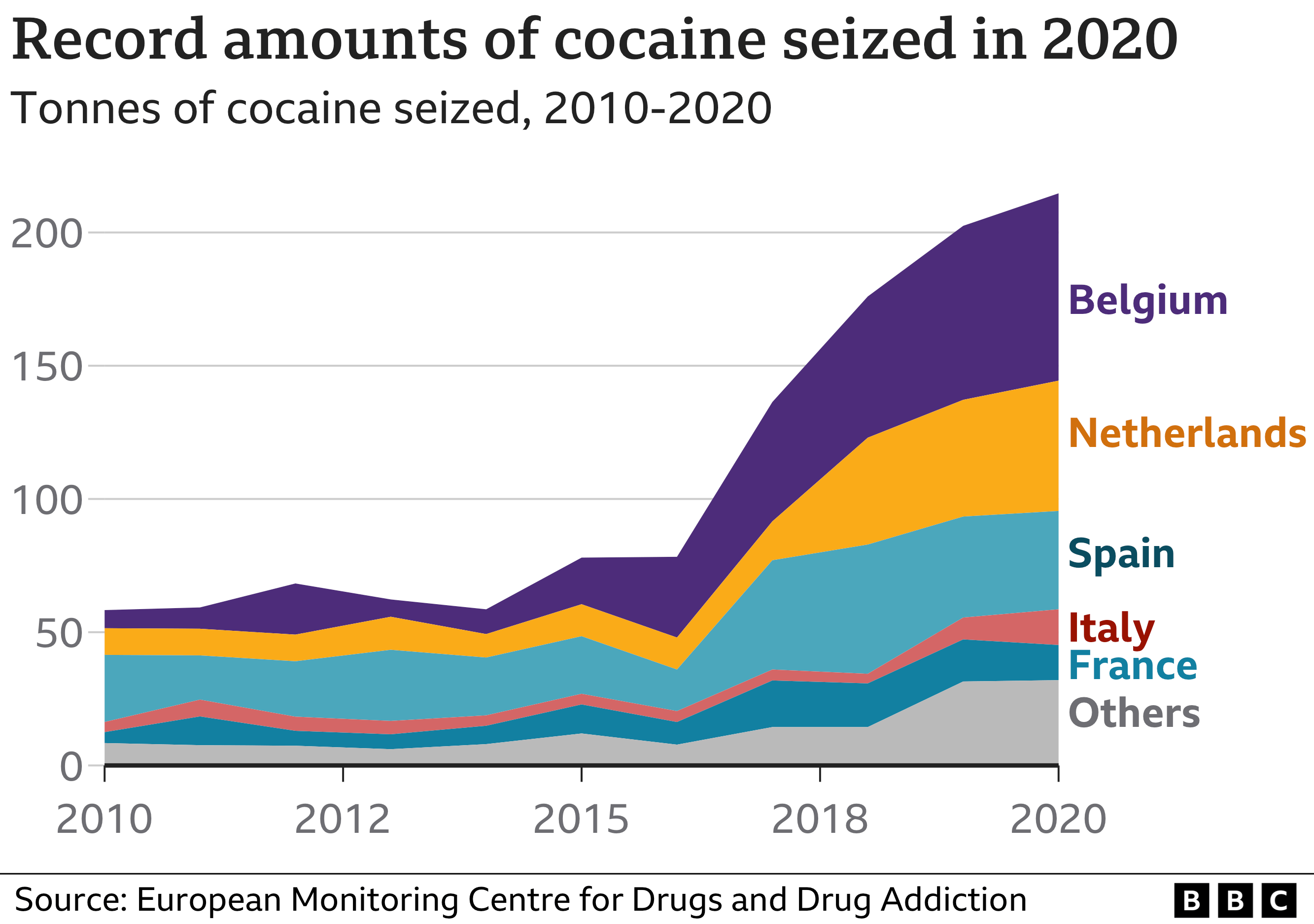
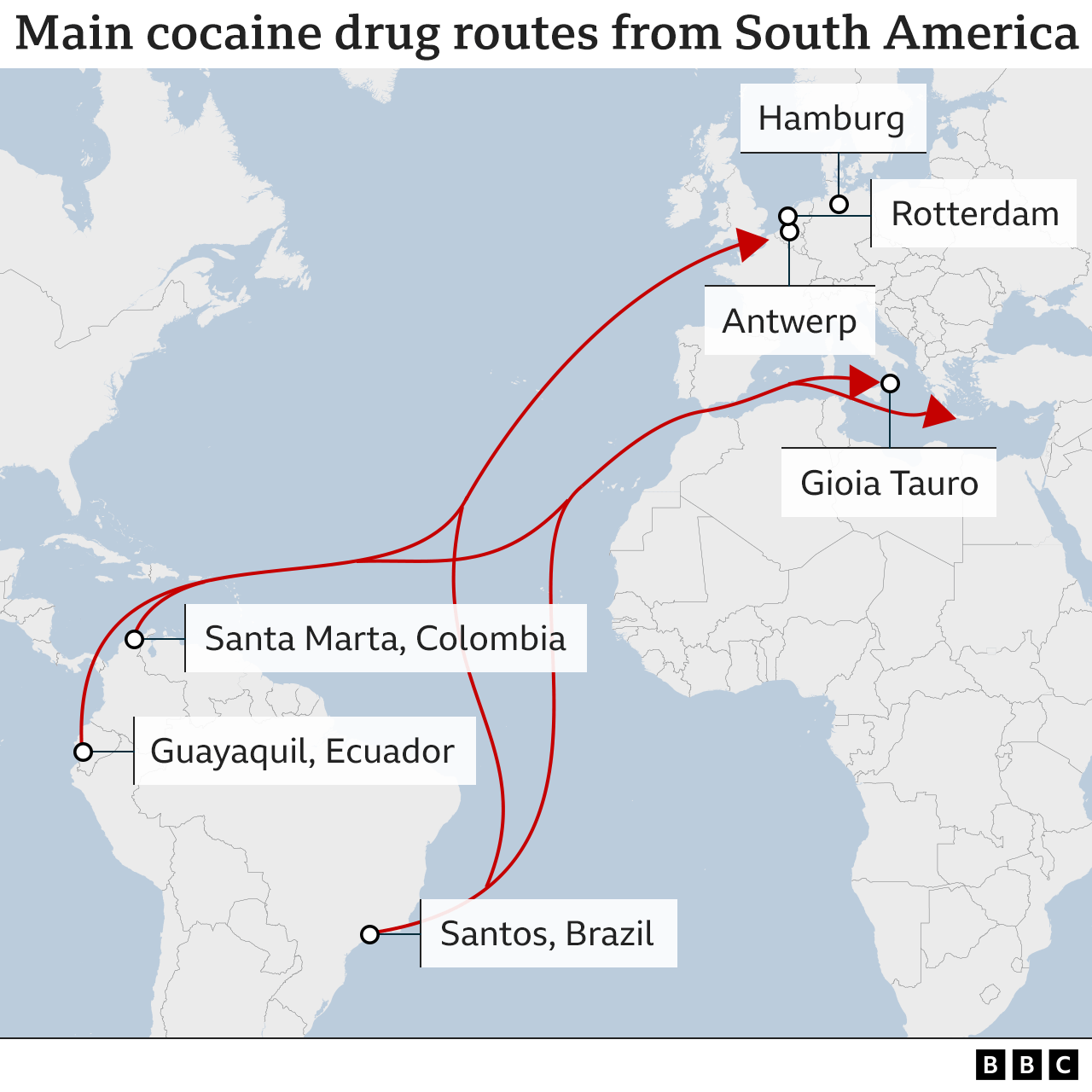
Their currency is cocaine. The group dominates the global market and is now thought to control up to 80% of Europe’s trade in the drug.
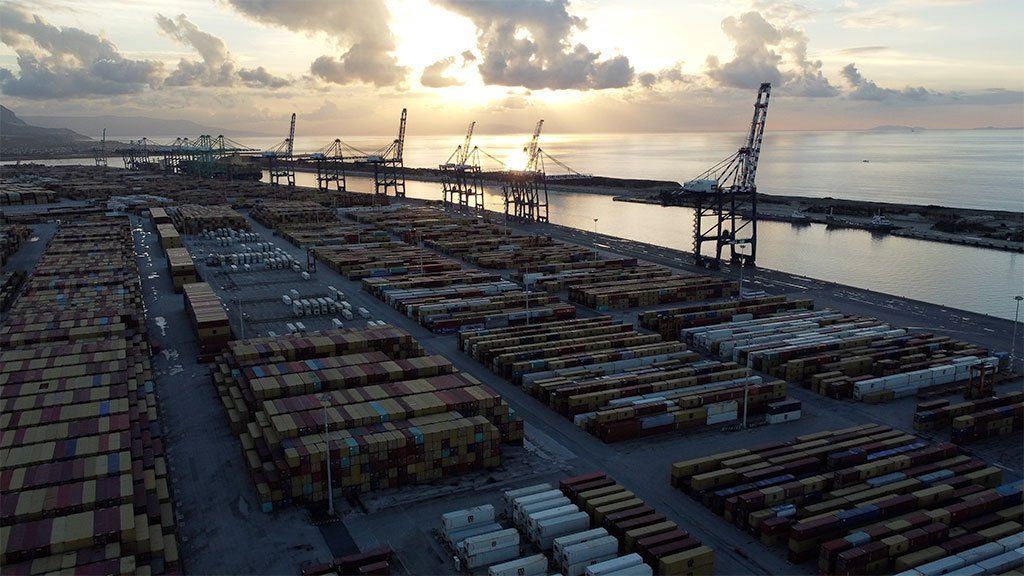
Most is funnelled through Gioia Tauro, Italy’s busiest container port, a hulking facility in the south of Calabria. A fraction of the cocaine that arrives here is for the Italian market, with the rest passing through and onwards east, to the Balkans and the Black Sea. Military hardware bound for Russia has also been intercepted here.
We watch as a freshly arrived container carrying bananas from Ecuador is checked, first by sniffer dogs and then by officers from the Guardia di Finanza, or financial crime squad, who cut open boxes to rifle through the bunches of fruit. This shipment is clean – but many others are not, with the quantity of cocaine impounded here almost tripling in the past two years.
Gioia Tauro port
A recent police operation swooped on port workers suspected of being involved in a massive ‘Ndrangheta trafficking ring. Thirty-five were arrested and seven tons of cocaine, with a street value of $1.4bn (£1.14bn), were seized.
We are given rare access to see the bulk of these drugs, which sit in a locked cell: hundreds of tightly wrapped packets that are photographed and then analysed.
A fragment of the white powder is cut away and placed into a tube containing a liquid solution, which is squeezed into testing kits that look like something from the pandemic – only this time detecting crime, not Covid. After a few seconds, a red line appears. It’s positive, with a purity of 98%.
The cocaine seized by the Guardia di Finanza at Gioia Tauro port over the past two years accounts for more than half of their entire haul from the last two decades. ‘Ndrangheta smuggling may be going up, but so too is police know-how, with forces collaborating across borders.
A massive international operation in 2019 by officers in Italy, Germany, Switzerland, and Bulgaria led to the arrests of 335 suspects, including lawyers, accountants and an ex-MP. All were part of, or linked to, the Mancuso family – one of the estimated 150 ruthless clans that make up the ‘Ndrangheta.
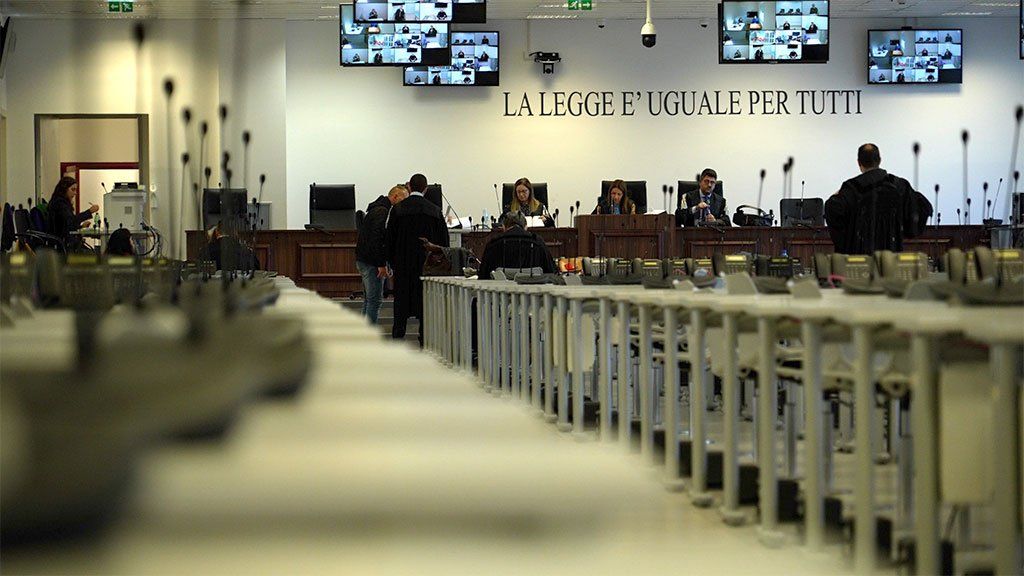
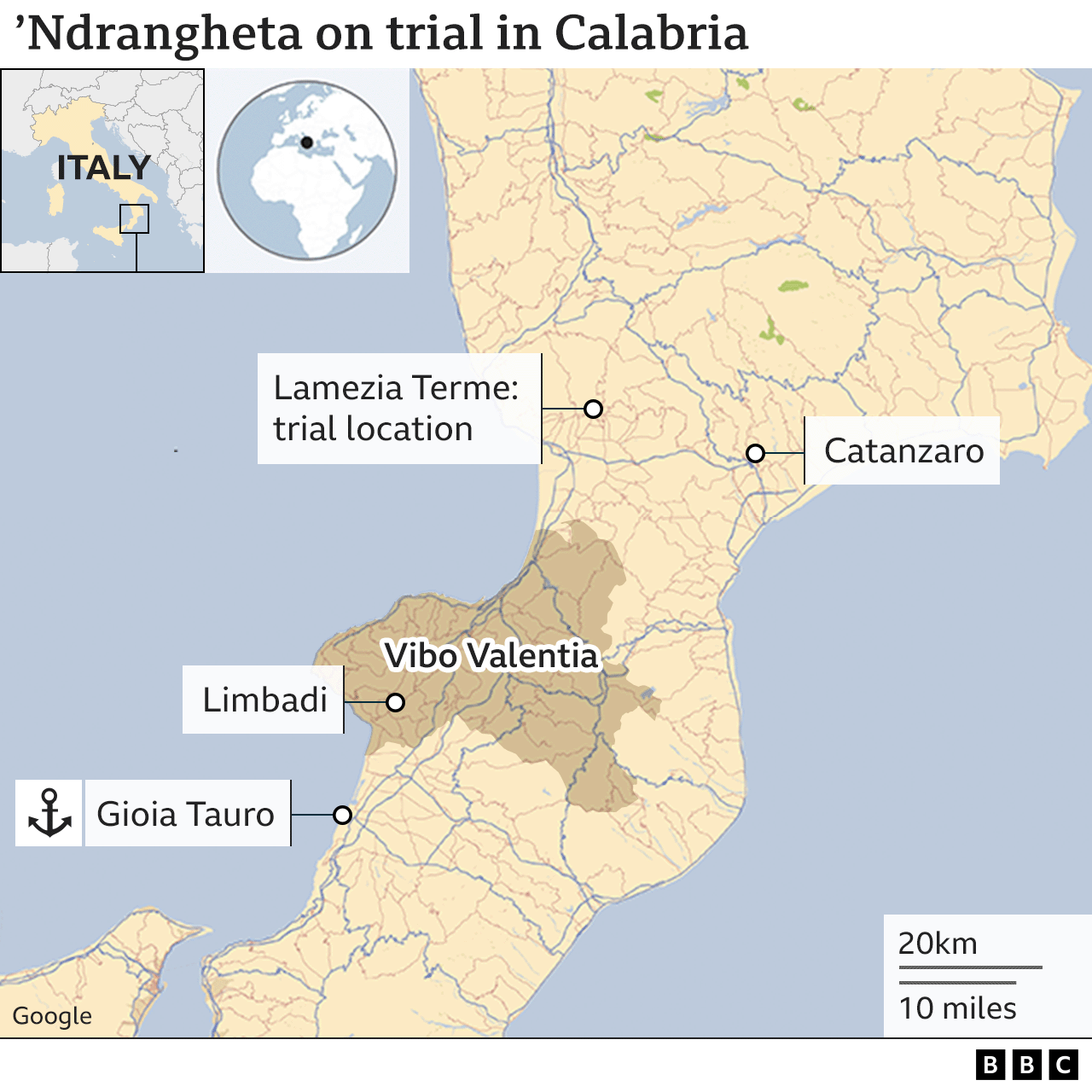
In the aftermath of this, the biggest blow to the group in its history, the so-called “maxi trial” in Calabria began two years ago. A call centre on the outskirts of Lamezia Terme was converted into a space large enough for some 600 lawyers and 900 witnesses, many testifying by video link. Charges include murder, extortion and drug-trafficking. More than 70 have already been sentenced.
Sitting inside the enormous room, with cages set up on the side, it feels like the visual symbolism is important here: a set-up designed to show Italians that their state is hitting the ‘Ndrangheta and that the mobsters are not untouchable.
It is the biggest trial of Nicola Gratteri’s career. As we are whisked into his office, with his close-protection team always one step behind, he tells me the arrests deprived the ‘Ndrangheta of 70% of their control in Vibo Valentia, one of their stronghold provinces.
The large room set up for the trial used to be a call centre
“If they are all convicted, it means breathing space for the community,” he says. The Mancusos, though, are just one, albeit powerful, family of the ‘Ndrangheta and this is by no means the beginning of its end. “As soon as I finish this trial, I’ll be moving on to another,” the prosecutor adds.
He has dedicated – even sacrificed – his life to this struggle. “I don’t have a life,” he tells me. “To go into a cafe, we have to stop and discuss it with my protection team. Someone enters to pay and then we go in and drink the coffee. We have to stop and discuss where to use the bathroom. I haven’t gone to a cinema or a restaurant in 25 years. My barber comes here to the office when I need a haircut. I hardly ever see my family. But inside my head, I’m a free man.”
I ask if it’s worth it. He sighs heavily. “It’s worth it if you believe in it – and I do,” he replies. “I believe I’m doing something important. There are thousands of people who believe in me and for whom I am the last resort, the last hope of change. I can’t disappoint them.”
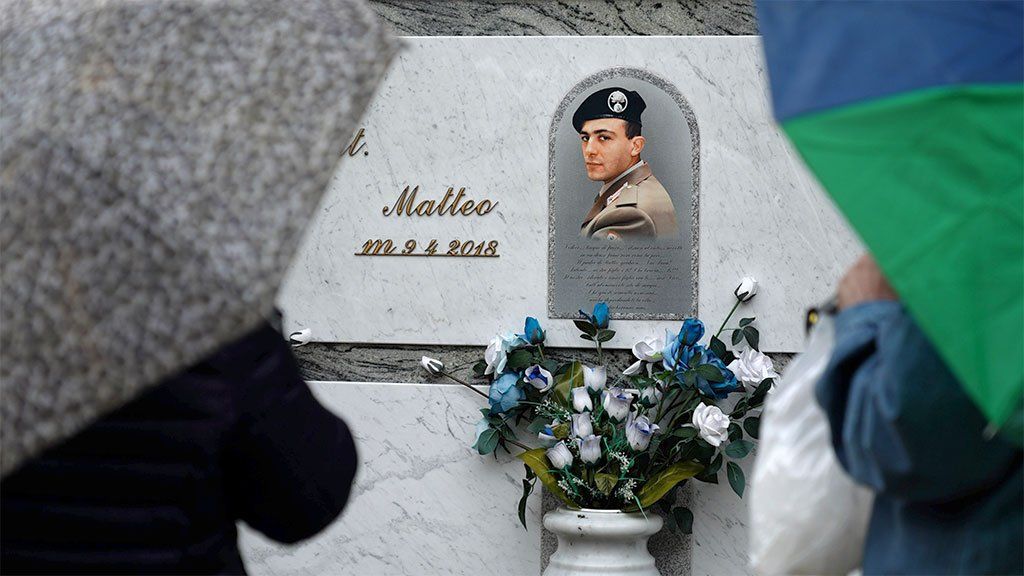
Sara Scarpulla and her husband Francesco are among them. In 2018, they endured the unimaginable, when they buried their only child, Matteo, blown up by a bomb planted on the undercarriage of his car.
His assassins were alleged to have belonged to the Mancusos, the ‘Ndrangheta clan currently on trial, who had targeted Matteo and Francesco after a prolonged dispute over the boundary between each other’s land.
Matteo’s grave
At the cemetery in the town of Limbadi, just metres from the grave of Matteo, lies the Mancuso family tomb: the victim and the relatives of his killers almost side-by-side in a region soaked in its blood feuds.
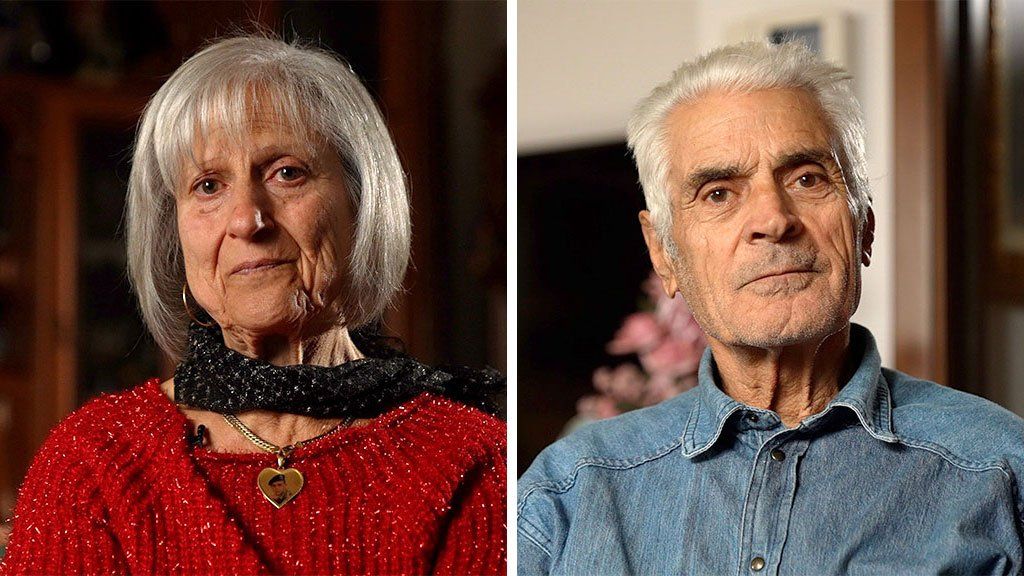
In their living room, where the walls are adorned with giant photographs of Matteo, Sara tells me he was “the joy of life – polite and exceptional. I’m proud to have been Matteo’s mother and proud to have had him as a son”.
Sara and Francesco
Sitting beside her, Francesco, who was in the car with Matteo at the time, distractedly taps on the table, watching helplessly as his wife can no longer hold back the tears.
“Ours is not a life anymore,” she says. “Sometimes, I ask God: ‘Where were you when Matteo was dying?’ And Matteo’s girlfriend tells me: ‘He was there, taking Matteo with him’”.
Limbadi, Sara says, is riddled with the ‘Ndrangheta. They control local businesses, hold the levers of power and inspire fear with their thuggish behaviour. As her land dispute with them escalated, she recalls how they would kill her family’s animals and then throw beheaded chickens on to the roof of her house.
“Until the mentality of people changes, things will never change,” she adds. “We have to plant the seed of change, like Prosecutor Gratteri and all prosecutors like him. Until we follow in the footsteps of these people, we will be stuck here with the ‘Ndrangheta in charge.”
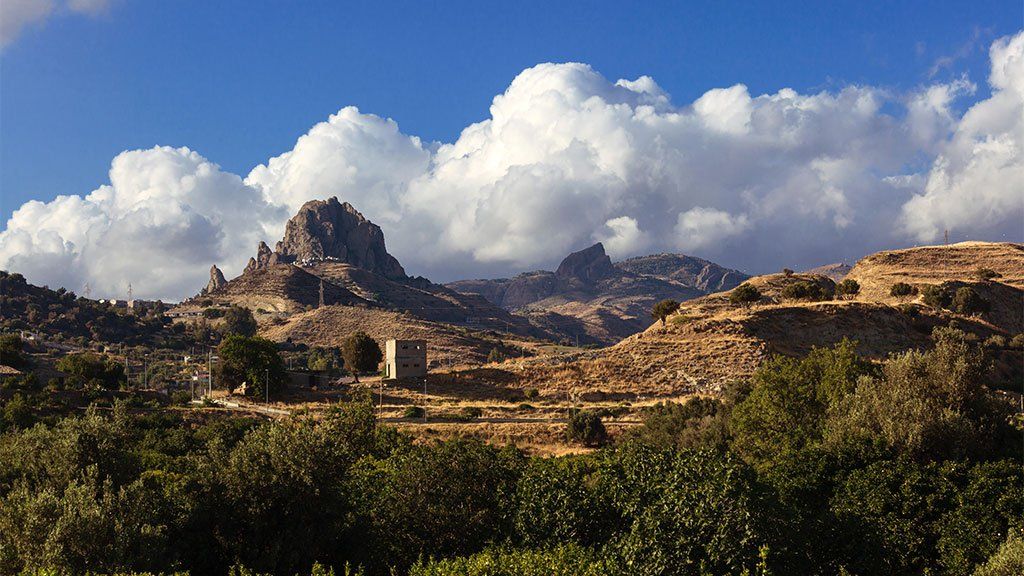
Calabrian hills
A look of defiance suddenly takes hold. “I need to fight, to go the front line and shout in the streets of this town: ‘The ‘Ndrangheta must leave from here!’ This is not the ‘Ndrangheta’s town. It is Matteo’s town.”
But prising apart the ‘Ndrangheta’s suffocating grip will require more than a change in mentality: it will need the mafiosos to turn against the mafia, breaking the “omertà”, or code of silence.
There are, though, precious few turncoats among a group founded on blood ties, in which disloyalty means betraying your own family.
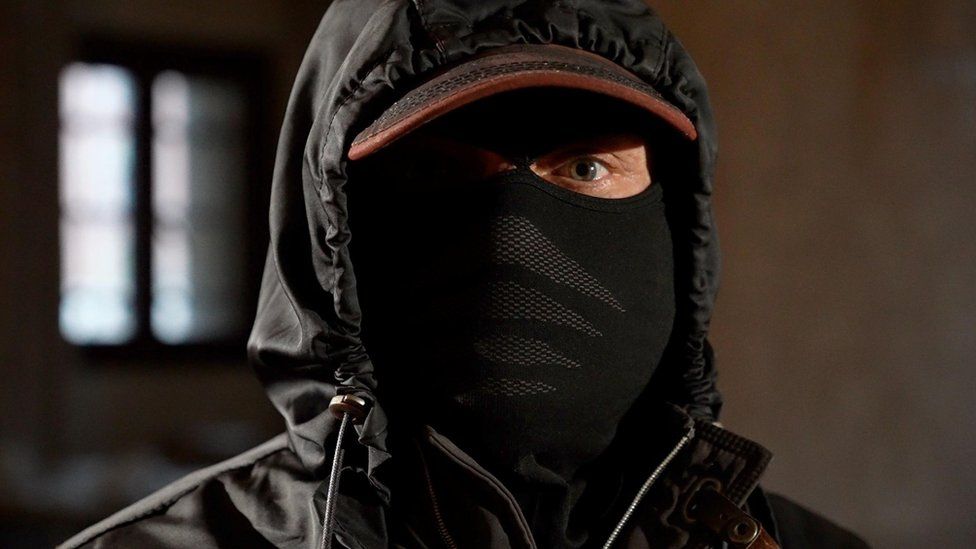
We track down one, Luigi Bonaventura, who is testifying in the Mancuso trial. He agrees to meet in northern Italy, somewhere not far from where he lives, though he will not tell us exactly where that is. His testimony offers a rare insight into the inner workings of the mobsters and how their indoctrination functions.
Luigi Bonaventura – disguised for his own protection
Sixteen years ago, he began collaborating with police – in order, he says, to give his children the freedom that he never had and has lived under witness protection ever since. He uses his own name but covers his face with a balaclava, so as not be recognised by those he turned against.
“The ‘Ndrangheta is a tribe, and if you are born into that family while it is at war, you can do nothing but grow up with the incitement to hatred and violence,” he tells me. “The words repeated were always the same: ‘Kill, kill, kill’”.
He recalls being brought up “as a child soldier”, handed a gun aged 10 and playing with real weapons as if they were toys. Having been trained as what he calls “a sleeper-cell killer”, he was called to fight at 19 when his family went to war with another. “I was involved in five murders,” he says. “Three I witnessed, and two I carried out.”
He claims his collaboration has led to the conviction or arrest of more than 500 ‘Ndrangheta suspects. What impact, I ask, does he think the ongoing “maxi trial” will have on the mafia?
“The ‘Ndrangheta does not have one head, it is not Sicily’s Cosa Nostra, with a boss of bosses who, once he collapses, brings everything down with him,” he replies. “The ‘Ndrangheta is a monster, a multi-headed hydra, and if one is cut off, there are many others. It’s a matter of time, maybe 10 years, but the Mancuso clan will regroup, and they will be back stronger than ever.”
It is a pessimistic prognosis. But on the ground in Calabria, anti-mafia associations are working to educate the next generation and ensure Italy’s young are steered away from the clutches of organised crime.
However, the mafia’s tentacles are so long, its infiltration of Italian society so deep, that even Nicola Gratteri, the country’s top authority on the ‘Ndrangheta, tells me Italy will never be free of its grasp. “It can be reduced a lot, but it would take a revolution to fight it. We still need a stronger system – and above all, we need to invest in education and culture.”
That, he says, is what made the difference for him as a boy, while many of his childhood friends were ensnared by the ‘Ndrangheta.
“If I’d been born a hundred metres down the road, I would have been a mafia boss today,” he remarks. “But I was lucky because I was born into a family of honest people. Many of my classmates have been killed with a sawn-off shotgun; others I have had arrested for weapons or drugs.”
He recalls being deployed to Miami when a former school friend was arrested with 800kg of cocaine on his sailing ship. “He told me he had ruined his life. I said to him: look, you can still change things, there’s a chance to cooperate, but he refused.”
In this battle for the soul of Italy, I ask which side is winning: the mafia or the state? He smiles. “It’s a draw. To win, we need to change the rules of the game, with a prison system strong enough to discourage the criminals.”
Hero to many, enemy of some, Gratteri seems somehow an isolated figure, unafraid to pick fights and unturn stones at the highest level. So does the 64-year-old have regrets?
“No,” he replies. “Maybe I could have done more – even if it was not humanly possible. I’ve done the best job in the world – and I’ll go on as long as I can.”
He pauses, collecting his thoughts. “Everything in life has a price, no? To have had a normal life, I would have had to go slower. Perhaps I’d have had to work less. But I’d have felt like a coward. And living like a coward makes no sense to me.”
As we draw our time with him to a close, he checks his phone. “Pack up quickly,” he instructs us, “and move your bags out, I need to lock up here and go.” With a brisk handshake, the anti-mafia crusader is off to fight his next battle.
He said this at the Ghana Bar conference in Accra.
While delivering his speech, President Akufo-Addo said, “in recent times, we have been witnessing significant difficulties in the management of the national economy, largely as a result of the impact of the COVID-19 pandemic on the global economy, which has been exacerbated by the effects of the Russian invasion of Ukraine.”
Read the full story originally published on September 13, 2022 by www.ghanaweb.com.
He said though the economy has in recent times been fraught with several challenges, he is optimistic the challenges will soon come to an end.
Speaking at the Ghana Bar conference in Accra on Monday, September 12, 2022, President Nana Addo Dankwa Akufo-Addo said, “in recent times, we have been witnessing significant difficulties in the management of the national economy, largely as a result of the impact of the COVID-19 pandemic on the global economy, which has been exacerbated by the effects of the Russian invasion of Ukraine.”
“The basic commitment to resolving these challenges, within the framework of due process and democratic institutions, must remain unshaken. And, I am confident that, God-willing, we will overcome these challenges,” he stated.
On July 1, 2022, government decided to engage the International Monetary Fund for a financial bailout amidst the economic challenges.
Subsequently, a team from the IMF arrived in the country from July 6 to July 13, 2022, to engage Ghanaian authorities for a possible economic support programme
The IMF programme, government said is aimed at restoring macroeconomic stability and safeguarding debt sustainability among many others.
Meanwhile, Ghana is targeting an amount of $3 billion over three years from the IMF once an agreement on a programme is reached.
The new amount requested as a loan is double the government’s initial target of $1.5 billion.
The Ministry of Lands and Natural Resources has said concerns about the intended government initiative to purchase oil with gold from the country will be resolved as the country readies to receive the first consignment of oil under the policy in a week.
Some of the issues raised concerned local content development, fiscal regime stability; and mine security in the era of galamsey, and taxes among others. On the back of these, he recognised that the Chamber is a key partner in the mining industry – with which government will continue to engage.
Also, it emerged that Ghana Armed Forces (GAF) have acquired some high-tech military aircraft that can help boost surveillance in the mining sector. The aircraft, currently being kept in Takoradi, are also expected to be deployed soon to the mining areas as part of efforts to promote responsible mining in the country.
Furthermore, during the meeting Minister for Lands and Natural Resources Samuel Abu Jinapor noted that the Chamber of Mines remains key to attaining the vision of making Ghana a mining hub of Africa. He emphasised the need for deliberate engagement between the ministry and the Chamber to make this vision realisable.
The Chamber, he said, needs to take a leading role in regulation of the mining industry; assuring of the ministry’s readiness to consider proposals and assistance from the Chamber and all other stakeholders.
“As partners, we have to find a proper platform for engagements; and I believe that is the spirit with which we’ve been working for the past two years. We must see ourselves as partners. For us to be able to derive the needed benefits from the sector, we must continue to see each other as partners. As partners, it is important that we have these kinds of constructive engagements,” the minister said.
The President of the Ghana Chamber of Mines, Joshua Mortoti, after the meeting restated the Chamber’s commitment to support government in realising its vision for the sector. However, he observed that the ‘health of the industry’ remains paramount – and that it is key nothing is done to comprise it. The Chamber, he said, is willing to engage further on the gold for oil policy so as to have a deeper understanding.
The District Chief Executive Officer of the Ayensuano District Assembly in the Eastern Region, Josephine Awuku Ansaa Inkoom, has clarified a statement she made about an excavator she repaired to fix roads in her district.
Ansaa Inkoom said in an interview aired on UTV that she repaired the motor grader for GH¢4.5 billion, which saved the assembly some money because it could have cost GH¢2 billion to buy a new one.
In a statement copied to GhanaWeb, the DCE said that the amounts she mentioned were in old cedis, adding that she erroneously mentioned some of the figures.
She reiterated that the decision of the assembly to repair the excavator was prudent because it could have cost more if a new one was bought.
“…the amounts I mentioned in the video were old cedis and it was a harmless slip of tongue when I stated that a new motor grader procured would have cost the assembly more.
“The decision by the Assembly to not procure a new motor grader but repair the old one was financially prudent and economically sound,” she wrote.
Ansaa Inkoom added that the statement she made is intentionally being misinterpreted by members of the National Democratic Congress (NDC).
“…the false narratives that the NDC and its surrogates have put on the viral video are purely propaganda and political mischief,” she said.
OFFICE OF DCE – AYENSUANO DISTRICT ASSEMBLY
My attention has been drawn to an interview I granted UTV which a spin has been put on and circulated virally on social media.
Without a shred of equivocation, I wish to set the records straight as follows:
1. That the amounts I mentioned in the video were OLD CEDIS and it was a harmless slip of tongue when I stated that a new Motor Grader procured would have cost the assembly more.
2. That the decision by the Assembly to not procure a new Motor Grader but repair the old one was financially prudent and economically sound.
3. That the false narratives that the NDC and its surrogates have put on the viral video are purely propaganda and political mischief.
4. That the District Assembly’s annual budget is a public document.
Respectively, I entreat Ghanaians to disregard the false narratives attached to the video.
The Assembly is committed to putting to judicious use, every pesewa it receives to realize the government’s aim to scale up development.
The government had extended the deadline for voluntary participation in the Debt Exchange Programme from December 30, 2022, to January 16, 2023. The Exchange is a government-led debt restructuring policy. It should be noted that the government has been hit by a massive economic downturn characterized by high-interest rates, soaring inflation, record-breaking cedi depreciation, and multiple credit downgrades of the economy.
This programme was introduced with the expectation that it would significantly reduce the burden of interest payments on the Ghanaian government and save approximately US$1.2 billion in interest between 2023 and 2028, or 7% to 8% of the country’s GDP.
The Government announced the following modifications to the Invitation to Exchange, which are set forth;
• Offering accrued and unpaid interest on Eligible Bonds, and a cash tender fee payment to holders of Eligible Bonds maturing in 2023;
• Increasing the New Bonds offered by adding eight new instruments to the composition of the New Bonds, for a total of 12 New Bonds, one maturing each year starting January 2027 and ending January 2038;
• Modifying the Exchange Consideration Ratios for each New Bond. The Exchange Consideration Ratio applicable to Eligible Bonds maturing in 2023 will be different from other Eligible Bonds;
• Setting a non-binding target minimum level of overall participation of 80% of the aggregate principal amount outstanding of Eligible Bonds; and
• Expanding the type of investors that can participate in the Exchange to now include Individual Investors.
Impact on Individual Investors
The investing community, the most average Ghanaian, has raised concerns upon hearing this news of restructuring debts owed them by Government. Many people have imitated that this news will worsen their living conditions because they use these coupon payments to pay for expenses such as daily living cost, rent, school fees and a host of others.
Again, a good number of investors in government bonds are pensioners who have invested their pension payouts as a way to receive a periodic stream of income whilst on retirement. Others who require their investment for any profitable project will be impacted as well, as they will be unable to do so at this time.
Holders of bonds maturing in 2023 will receive coupons starting from 2027 to 2033, while those with bonds maturing in 2024 will receive coupons starting from 2027 to 2038.
Imagine a 62-year-old pensioner who owns a Government of Ghana (GOG) bond and will receive its full principal in 12 years. My question is, what happens to this pensioner if he or she dies before the 12-year period is up? This is the reality for many Ghanaians who have purchased GOG bonds. Many of these bondholders will suffer from depression and die prematurely as a result of this situation.
Impact on businesses
Companies that purchased bonds to fund future business expansion with principal payments will be unable to do so from now (2023) until 2027 because they will not be paid (except coupon payments) according to the terms of their bond. As a result, businesses will miss out on much-needed capital injections to help them expand.
This is likely to have an impact on productivity and, to a greater extent, lead to staff layoffs, because if a company is unable to meet its economic obligations or perform at its usual optimal level, the easiest way out is layoffs.
Impact on financial institutions
The financial sector, which includes stakeholders such as local banks, would be greatly impacted by the implementation of this domestic debt exchange, owing to excessive exposure to government-issued bonds. Bank capital reserves would be severely depleted, resulting in liquidity shortages and, in the long run, financial instability in the economy.
The depreciation of their restructured assets, such as government bonds, may cause the asset side of banks’ balance sheets to suffer a direct hit. On the liability side, banks may face deposit withdrawals and the interruption of interbank credit lines. These issues may jeopardize their ability to mobilize resources.
Way forward
The government needs to be more transparent about the bondholders’ choices if they choose not to accept the DDE. As it stands, the exchange document is not clear on what happens if a bondholder refuses the exchange.
The government should also give bondholders an opportunity to discuss and bargain the offered terms since, in my opinion, doing so will result in a fair resolution moving forward.
Also, government needs to assume more burden in resolving the current economic situation. The just-passed budget still has line items that can be shelved for now to create fiscal space to either continue paying investors their coupons and principals, or reduce the impact of the exchange program with favourable terms.
Additionally, I advise the government to immediately halt the Domestic Debt Exchange Programme and promote greater stakeholder involvement.
The group which is a representative body for individual investors in the country have described the commencement of the debt restructuring initiative as one that takes away the liberty of investors’ funds and subsequently robs them legally of their acquired property.
“The inclusion of Individual Bondholders in the proposed domestic debt exchange (“DDE”) programme announced on the 24th of December 2022 has been extremely unsettling and catastrophic for our membership and all others affected,” it noted.
“We (IBF) hereby humbly petition your office to reconsider your position in the DDE information memoranda of 24th December 2022 and as a matter of urgency grant the following:
1. The exclusion of Individual Bondholders from the DDE.
2. The exclusion of individual investors’ holdings in Collective Investment Schemes affected by the DDE.
3. The exclusion of individual investors’ holdings in the ESLA Bonds in the DDE.
4. The exclusion of individual investors’ holdings in the Daakye Bonds in the DDE.
5. The commencement of discussions and/or negotiations with our membership to discuss the above.
The IBF further noted that since the commencement of considerations and discussions on government’s debt restructuring in the second half of 2022, Individual Bondholders have not been engaged in the process.
“This is at variance with the contractual principles of good faith, fairness and best practices,” the statement stressed.
“The social impact of the DDE as currently presented for individuals is the harshest on any investor category and catastrophic to the livelihoods of the about 1.3 million direct and indirect bondholders and their dependents. Unlike other investor categories likely to benefit from the Financial Stability Fund, Individual Bondholders have no support to fall back on,” it added.
After numerous discussions and talks between the government and employees in the public sector, an agreement was reached.
Even though it was not the original desire of labour, they nonetheless agreed to a 30 percent increase in the Single Spine Base Pay for employees of the public sector for the 2023 Fiscal Year.
Per the agreement, the 2022 Cost of Living Allowance (COLA) of 15 per cent on the base pay will be discounted.
The salary increment will however take effect from January 1, 2023, according to Minister of Employment and Labour Relations Ignatius Baffour-Awuah.
Mr Ignatius Baffour Awuah, Minister of Employment and Labour Relations, directed the Controller and Accountant General to effect the changes starting from the January 2023 payroll.
As Jo Wang, an event planner in Beijing, watched her family members fall ill with Covid-19 one by one late last month she had a single goal: find antiviral pills to protect her elderly grandfather when his turn came.
After three days of trying and failing to purchase a box of Pfizer’s Paxlovid on an e-commerce platform, she got lucky, scoring the Covid treatment via an official channel on the fourth day and receiving it by mail on the sixth. But Wang, who was breaking the rules by seeking the prescription proactively – before her grandfather fell ill – was also wracked with guilt.
“I felt really bad at that time … you don’t know how many days it will take to buy this medicine, it is completely unknown. And you don’t know how long the people in your family can hold on,” she said, stressing her fear that if she waited until the 92-year-old fell ill, it would be too late to get the pills, which are most effective early in the illness. “It’s a very desperate situation.”
Wang is not the only resident scrambling to secure Western medications as a wave of Covid-19 overwhelms China, driving up demand for treatment – especially for the country’s large undervaccinated elderly population.
In recent weeks, many have turned to the black market where hawkers claim to sell Covid treatments ranging from illegal imports of Indian-made generics of Pfizer’s Paxlovid and Merck’s molnupiravir to the bonafide product –up to nearly eight times the market price.
Rising frustration over the shortages wascompounded by an announcement Sunday that the government had failed to reach an agreement with Pfizer to include Paxlovid under its national insurance plan, with officials saying the price asked was too high. That decision could mean that after March 31, the drug will only be available to those who can afford to pay full price, with current rates reportedly around 1,900 yuan ($280) per course.
Paxlovid has been shown to reduce the risk of death and hospitalization in high risk patients when used soon afterthe onset of symptoms. Last February, the drug, widely used in developed countries, became the first oral pill specifically for Covid to be authorized in China.
China did agree to cover two other treatments used for Covid-19 in the latest talks – the traditional Chinese medicine Qingfei Paidu and the homegrown antiviral pill Azvudine. There is limited data on how well Azvudine protects against severe disease.
The pricing pitfall and shortages, nearly a year after the pill was first authorized and months after Pfizer tapped a domestic drugmaker for local production, showthe challenges facing China as its governmentgrapples with demand for treatments for its population of 1.4 billion after abruptly dropping its Covid controls last month.
Currently, Pfizer’s imported pill is available in community hospitals in some cities, including Beijing, Shanghai, Tianjin and Guangzhou, according to state media. It is also sold on several e-commerce platforms, where there is some suggestion in local reports that supply constraints are easing.
But there are questions about how broadly the pills will be distributed across China and if there is sufficient medical resources to prescribe them – an urgent issue as the outbreak shifts from urban hubs to smaller cities and rural China. Experts say procurement appears to be decentralized, with the pills more readily available at hospitals in better resourced major cities and tougher to find elsewhere.
On Monday, Pfizer’s CEO Albert Bourla said the company had ramped up exports, sending millions of courses of Paxlovid to China in the past couple weeks, and was working with its domestic partner Zhejiang Huahai to manufacture Chinese-made Paxlovid in the first half of this year, according to Reuters.
But Bourla, speaking at a conference in San Francisco, also quashed hopes the company might reach a deal with China for domestic drugmakers to produce a generic version of the drug to be sold in-country – denying a January 6 Reuters report that such an arrangement was being discussed.
US-based Merck, known as MSD internationally, on Wednesday said on its WeChat account that it would take legal action against some manufacturers that are supplying unauthorized versions of its Covid drug. The company said it would also partner with domestic firm Sinopharm to supply China with its pill, which is sold under the brand name Lagevrio. Neither Western firm currently holds a patent for the drugs in China, according to a WHO-affiliated database, though both have filed for one.
But as the immediate shortages – and issues of cost – play out in one of the world’s largest generic drug-producing countries, they also throw the spotlight on global issues related to intellectual property rights, according to experts who examine access to medicines.
Two Chinese companies slated to manufacture generic versions of Paxlovid have already submitted their products for evaluation by the World Health Organization (WHO), according to the WHO-affiliated Medicines Patent Pool (MPP) – a signal that they are ready to begin producing the medicine.
Those companies, Zhejiang Huahai and Apeloa Pharmaceutical, along with two others in China, were granted sublicenses in 2022 to make the full generic pill to supply 95 lower and middle income markets – not including China – under an earlier deal between Pfizer and the MPP, an organization that facilitates access to treatments for people in poorer countries.
“At the scale of the health crisis taking place (in China), the most logical next step (would be) that these licenses are expanded to include allowing domestic supply in China, including from other producers (in the region),” said Ellen ‘t Hoen, a former executive director of the MPP and current head of the Medicines Law & Policy project.
However, if the drug developer was unwilling to take that step – as Bourla indicated Pfizer was on Monday – there are measures China could take, such as pledging to protect companies that make generic supplies or importing generics from elsewhere, using legal measures allowed under the World Trade Organization rules during health emergencies, ‘t Hoen said.
That potential has been discussed in public forums in China. Commentators there point out the country has no track record of using these flexibilities, which are often employed with caution by countries, given their potential to irk foreign pharmaceutical companies and the countries where they are based.
In China’s case, concerns about impacting the local economy – in which foreign pharmaceutical firms are major employers – was likely a key reason for the government’s reticence to use such measures, said Yanzhong Huang, a senior fellow for global health at the Council on Foreign Relations in New York.
Beijing this month called on authorities to enhance oversight of online sales of drugs and crack down on price gouging, false advertising and the infringement of intellectual property.
China may be hoping that more domestic antiviral pills in development are able to fill the void. Throughout the pandemic, its regulators have largely opted for homegrown tools to confront the virus – with Beijing yet to approve a foreign Covid vaccine.
Health officials have recently sought to assure the public about affordable access to treatments and downplay the potential impact of the government’s failure to include Paxlovid in its national insurance scheme. A top health official on Wednesday said that hundreds of pills to alleviate Covid symptoms were already covered by insurance and new viral treatments were in the pipeline.
State-run nationalist tabloid Global Times on Monday ran an opinion piece blaming “US capital forces” for China’s inability to cut a deal with Pfizer to include the pills in the national insurance.
“During the past days, a growing number of US politicians and media outlets have been making shrill ‘warnings’ about the epidemic in China … If they do care about it, why don’t Pfizer drop some pursuit of the profit, and cooperate with China with a little more sincerity?” said the article.
Bourlaon Monday said talks broke off after China had asked for a lower price than Pfizer is charging for most lower middle income countries.
In a separate statement to CNN, Pfizer declined to comment on what price it had offered, but said: the company “will continue to collaborate with the Chinese government and all relevant stakeholders to secure an adequate supply of Paxlovid in China” and remained “committed to fulfilling the Covid-19 treatment needs of Chinese patients.”
But for those who have been grappling with the immediate problems of gaining access to medicines for themselves and their families, like Wang in Beijing, there is a feeling – for now anyway – that the system isn’t working.
“It’s cruel … no matter how we feel, there’s nothing we can do,” she said. “It’s not the case that your effort or expectation can make the situation better.”
The president claims that the agreement will help the economy recover and strengthen the nation’s public finances while also helping to “rebuild both the confidence of foreigners in our economy and our own self-confidence in the manner in which economy may develop.”
During a meeting at the Jubilee House with some Harvard University students from the United States, the president stated, “We are going through that process with them (the IMF) right now, as we speak, and hopefully by the end of this month or at the very least by the middle of February, a full-blown IMF agreement will be put in place.”
The government of Ghana at the latter part of 2022 reached a staff-level agreement with officials of the IMF for a $3 billion loan facility.
According to the president, the government is committed to achieving the requirements of the staff-level agreement in order to attain an agreement by the IMF board.
“We will succeed in implementing the various considerations of the staff-level agreement that will enable us to have a full IMF agreement,” the president is quoted in a report by Myjoyonline.com as having said.
The government of Ghana announced a Debt Exchange Programme after its staff-level agreement with the IMF.
However, there have been concerns about the success of the IMF agreement as the Debt Exchange Programme has received widespread rejection by government bondholders.
“Anybody who’s been contacted by your bank, write, back to your bank saying you will not accept it. Anybody who has his money in any of the funds, whether it is the data bank, M fund, or a balance fund, etc do not accept it. It does not augur well for your good or that sort of economy, you are under no compulsion to accept it,” Convener of the Individual Bondholder’s Forum, Senyo Hosi recently said in the media.
The Debt Exchange Programme forms a part of the requirements on the government for an IMF board approval.
The government of Ghana is hoping to receive the loan to salvage the country’s severely challenged economy.
FIFA says it has opened disciplinary proceedings against Argentina for “offensive behaviour” during the team’s World Cup final triumph in Qatar last month.
Argentina beat 2018 winners France on penalties to lift the trophy for a third time.
Goalkeeper Emiliano Martinez made a lewd gesture with his goalkeeper of the tournament trophy after the match, before being filmed in the dressing room mocking French star Kylian Mbappe.
Mbappe won the FIFA Golden Boot trophy after scoring the most goals in the tournament.
Football’s world governing body said Argentina had potentially breached rules regarding “offensive behaviour and violations of the principles of fair play” and “misconduct of players and officials”.
FIFA is also investigating the Argentinian FA over breaching media and marketing regulations.
Martinez has also come under criticism from pundits and social media for mocking Mbappe during Argentina’s victory parade in Buenos Aires – where he held a baby doll with the French player’s face plastered on it.
The Croatian team is also being investigated for potential violations of “discrimination” and “order and security at matches” rules.
Players appeared to sing a song with fascist connotations following their third-place playoff victory over Morocco.
Defender Dejan Lovren defended himself and his teammates, recently telling AFP news agency it was “a patriotic song which relates to my country, which means that I love my country”.
The licences were cancelled, according to the NPA, “for noncompliance with the rules and regulations of the Authority on the acquisition and maintenance of their licences.”
Parts of the statement stated, “The General Public is hereby informed that engaging with the impacted OMCs is at their own risk.”
It also noted that it will bear no liability for any loss or damage that may be suffered by any person who chooses to engage with the affected OMCs in whatever capacity.
Israeli troops have shot dead two Palestinian men in the occupied West Bank during an army raid near a flashpoint town.
The two men – Ezzedine Bassem Hamamreh, 24, and Amjad Adnan Khaliliyeh, 23 – were killed on Saturday “during an assault on the village of Jaba, south of Jenin”, the Palestinian Ministry of Health said.
The Palestinian Islamic Jihad group said Hamamreh and Khaliliyeh were its members. In a statement, the group condemned the killings, describing the two men as “heroic martyrs”.
It said they were killed while trying to intervene against the “occupation forces, which were carrying out a cowardly assassination operation”.
A third Palestinian, 19-year-old Yazen Samer Ja’abari, died of injuries he received when he was shot by Israeli forces on January 2, the ministry added. Ja’abari was wounded in the village of Kufr Dan near Jenin during an army raid, in which two other Palestinians were killed.
The latest deaths bring to 12 the number of Palestinians killed this year by Israeli forces in the West Bank, occupied by Israel since 1967. The number includes three minors. The Israeli military has been engaged in a campaign of intensified raids and killings that has lasted almost a year.
Since a string of attacks carried out by Palestinians in Israel that began in March, the Israeli army has launched a campaign called Break the Wave, which has included near-daily raids, mass arrests and killings in the occupied West Bank with a focus on Jenin and Nablus, where Palestinian armed resistance has grown more organised over the past year.
Mr Appiah said the President’s intervention was timely and appropriate in ensuring that the students were not denied their rights to education.
On Friday, November 11, 2022, a video of the second year female students of Chiana SHS in the Kassena-Nankana West District of the Upper East Region using vulgar language towards the President went viral on social media.
As a result, a Committee was established by the Governing Board of Chiana SHS to investigate the alleged viral video.
After series of investigations, the Committee’s report, copied to the leadership of the Ghana Education Service (GES) at the Headquarters, recommended the dismissal of the students.
In an interview with the Ghana News Agency (GNA), Mr Appiah said the intervention of the President addressed two major issues, which were the nation’s investment in education and its policy environment.
‘Having free education to the Secondary School level, we have made investment in the lives of these children, and I do not think that the father of the nation will allow that investment to go waste,’’ he stated.
The Executive Director underscored the need for a framework for an alternative system of punishment that would lead to the reformation of children rather than victimising them, who would in turn influence other children negatively.
He condemned the act of the students and advised children to behave responsibly and be morally upright to be good citizens of the nation as they exercise their rights in a manner that conformed to the State’s principle on the development of children.
Mr Appiah noted that some parents had failed in bringing their children to a level that was expected, hence, the need for a strengthened state machinery to deal with some of the fallout issues that would ensure that before a child completed the school system, some positive changes would have been made.
‘‘So if children are behaving in that manner, we need to condemn it and make sure that we put them in a place that will let them be more responsible.
“So, as much as we condemn the act of the children, we think that the policy environment must also be strict enough to regulate the behavior of children provided it does not violate their fundamental human rights,’’ he added.
OccupyGhana, a pressure group, in a statement to the GNA noted that some suspension with mandatory counseling for the affected students would be more effective than dismissal.
Meanwhile, some members of the public who praised the President’s intervention called for severe punishments for the students.
Madam Janet Mensah, a parent acknowledged that the children did not do the right thing and appealed to the GES to consider making them repeat their class to serve as a deterrent to others.
Mr Emmanuel Kankam, a final year student of the Koforidua Senior High Technical School, urged students to desist from such acts since it was morally bad.
IBHAG issues a warning, saying that disobeying it will result in its members mounting their strongest opposition to date.
In addition, the association urges all individual bondholders, whether or not they are IBHAG members, to resist the urge to agree to voluntarily exchange their current bonds for the new ones that the government has floated, despite the Minister of Finance’s subliminal threats.
Some are unemployed. Members have been able to make some savings from their sweat and toil, and have invested from as little as GH¢500 in bonds, only for government to rob them of their hard-earned savings – both interest and principal – using such an unconscionable debt restructuring process, which targets the individual.
The association wonders what considerations went into the earlier exemption of individual bond holders from the local debt restructuring, only to replace the pension funds with them, after labour had threatened a strike action.
“We cannot be made to suffer for the recklessness and greed that characterized Ghana’s excessive borrowing, which largely is the reason why we are where we are. Government appointees at the Ministry of Finance cannot make millions of dollars as transaction (borrowing) advisors and go and enjoy with their family and friends, whilst we are denied of the means to purchase our medications and pay for health care. Our inclusion means we cannot pay our children’s school fees, pay for our rent and many other critical essentials. All these hardships are being thrown at us just to protect the greed of those appointees”, a pensioner who is a member of the association said.
Furthermore, IBHAG maintains that the Akufo-Addo led-government continues to overspend by maintaining bloated government machinery made up of party boys and girls with outrageous pecks. Whilst they continue to enjoy, the individual bondholder is being robbed by the government of his or her hard-earned savings in broad daylight, whilst the pecks of the party boys and girls are protected.
The IBHAG calls on parliament, the Council of State, professional associations, religious bodies, Civil Society Organisations, the media and all well-meaning groups and individuals to join the advocacy against the looting of individual investments that the government has planned.
Meanwhile, we urge all members as well as new ones to remain calm – even as they refuse to sign onto the voluntary exchange of bonds – as IBHAG continues to seek audience with government on these vexed issues.
The ranking member on the Education Committee of Parliament, Peter Kwasi Nortsu-Kotoe, has suggested to the Disciplinary Committee of the Chiana Senior High School (SHS) to consider suspension as a better option for the eight students.
The Ghana Education Service (GES) in a statement on January 13, 2023, made U-turn and referred the dismissed eight students of the school to the committee after the President, Nana Addo Dankwa Akufo-Addo intervened.
Eight students of the school were dismissed for using some unprintable words against the President in a viral video in 2022 following the hardships in the country.
Mr. Nortsu-Kotoe believes a suspension will serve as a deterrent to other students, warning that the Minority will not come in next time a student misbehaves in any of the schools in the country.
Speaking on the Eyewitness News with Selorm Adonoo, the ranking member on the Education Committee of Parliament suggested, “If I were in the shoes of the school’s authorities, I think suspension will be a better option for these students. Once they are suspended, its in their records. And they will know that next time if any student misbehaves just like them, that student will not go scot-free. Suspension I think will serve as a deterrent to others”.
Mr. Nortsu-Kotoe expressed his appreciation to the President for listening to the Minority caucus in Parliament as well as Ghanaians by intervening.
“I appreciate the President’s intervention to mitigate the punishment given out to the eight students of Chiana SHS. This is because the minority thought the punishment was too harsh. Punishment is meant to correct so if you want to punish somebody, correct or reform the person, there are opportunities to reform these students because we don’t know what they will become in future. So I want to thank the President for listening to us [Minority] and all other Ghanaians who believed the punishment was too harsh,” Mr. Nortsu-Kotoe thanked the President.
He said if the students were earlier suspended by the school, there wouldn’t have been a public outcry for the President to intervene.
“If the students were suspended, this cry for the students wouldn’t have come in at all,” he stated.
Mr. Nortsu-Kotoe commended the GES for referring the matter to the school’s disciplinary committee.
“What the GES has done I think is also proper by referring the matter back to the school,” the ranking member on the Education Committee of Parliament remarked.
According to him, whether they will be successful or not is not the case of anyone outside the court to determine.
He also added that discouraging affected bondholders may lead to more unrest than there already is.
“A contract has certain principles for it to be able to become a contract. But no contract can be enforced if it’s illegal. What if you went to court and a judge declared that, that very clause you’re talking about is void for illegality as an example, notwithstanding that you entered into it. I’m not saying that, that is what will happen.
“The point I’m making is there’s a public policy principle I want us to avoid; that public policy principle is the situation where anybody, it doesn’t matter who will deny the individual the ability to go to court and seek redress even if he will lose. Give them that chance. Don’t prevent people from going,” myjoyonline.com quoted him.
“So it becomes a constitutional issue as to whether you will go to the supreme court for interpretation or whatever, that’s another matter. I want to emphasise that no lawyer will ever tell anybody that don’t go to court. I’m not advising anybody to go to court either.”
He added that denying people the opportunity to seek legal redress is also a danger to the economy.
“I’m more concerned about the first approach many people take, ‘don’t go to court, you will lose etc,’ because it makes people frustrated and the opposite of ‘don’t go to court, you will lose’ is very dangerous for the society. I think we should avoid that…let them go and leave the judges to decide,” he said.
Lawyer Dorte made the statements on the back of the government’s decision to include individual bondholders in the debt exchange programme.
The Finance Ministry has cautioned individual bondholders who refuse to take the Amended and Restated Exchange Memorandum under the debt exchange programme that they will find it difficult to obtain a judgement against the government.
According to officers of the Ghana National Fire Service, the fire started at about 8:30 pm on Friday.
Although there were no casualties, the fire affected properties after it spread through the structures.
The officers are pointing to a fire that was left unattended to by a woman who was cooking close to the structures although they are yet to conclude investigations.
Ashanti Regional Public Relations Officer of the Ghana National Fire Service, D.O 3 Peter Addai who narrated the incident to Citi News said the timely intervention of his personnel prevented the fire from spreading to other shops.
According to relatives of the deceased, Micheal who had some months ago threatened to commit the offense went ahead to do so on Thursday after accusing his wife of infidelity.
They explained that Abeiku Michael after a short argument with the wife who had just returned home after going to stay with her mother for some time now inflicted multiple deep machete wounds on her limbs, neck, breast, and knees until she bled out profusely and died before the arrival of the police.
An uncle of the deceased Ebenezer Boadi who spoke to the media disclosed that the police had began their investigations.
He noted that the suspect is currently on the run after committing the dastardly act.
“It’s a very sad situation, they have an unresolved issue. The husband a few months ago threatened to kill my niece for allegedly cheating on him after a man called her on phone. The husband later called the man back and the two exchanged words. My niece who was scared of her life, sought divorce, but the man begged me to settle the matter. So we were in the process of doing that and he just killed my niece. The police came to the house to take some pictures and videos,” Mr. Boadi narrated.
He said the kids are now staying with their grand mother.
The bondholders provided the President with a petition in response to his declaration that there will be no haircuts on investments in his speech on December 5, 2022.
The President advised ignoring and discarding any reports of haircuts. However, the government subsequently declared that a restructuring is required due to its significant indebtedness.
They said: “But today, our coupons face absolute haircuts and when we discount your proposed benchmark bonds at the coupon rates of the original bonds, we are losing effectively 50% of our investments. When discounted at current T-bill rates, we are losing 71% of our investments, and at prevailing inflation, we face an 88.2% loss.”
This they noted was a complete deviation from what was promised by the government.
The statement however said “nothing was missing, small or great. I say to you, nothing will be lost, nothing will be missing, and nothing will be broken. We will, together, recover all” as quoted by the President has now become “Great will be lost, too much is missing, everything is broken, you will not recover, your livelihoods shall be destroyed.”
The bondholders in their petition want the government to exclude all individual bondholders of all types of government bonds from the domestic debt exchange programme.
They explained that individual bondholders are not a critical factor in the success of the programme.
“In our estimation, the direct individual bondholding and holdings through collective investment schemes stand at about GHS15.5bn, representing about 11% of the eligible bonds and the capitalized interest. With your set target of 80% of eligible bonds, Individual Bondholders are not a critical success factor to the viability of the DDE programme as you envisage, yet the impact of their inclusion has incalculable consequences. Please exclude us and save 1.3mn livelihoods and dependents from shackled penury,” they said.
The forum led by Senyo Hosi and David Tetteh pleaded with the President to ensure that it is “not said ever that during your tenure, your policies impoverished citizens whose primary duty to country was service and love through hard work and taxes. Your DDE as proposed for Individual Bondholders takes away our liberty to self-sustain, mocks hard work, and robs us of legally acquired property. None of these reflect the tenets of good governance.”
At a joint press conference, Dr. John Ofori-Tenkorang, the Director-General, and Joseph Poku, the Chief Actuary of SSNIT, announced the new increment.
All pensioners on the SSNIT Pension Payroll as of December 31, 2022, will have their monthly pension enhanced by a fixed rate of 19% plus a redistributed flat amount of GH73.58, according to Mr. Poku’s submission.
He indicated that the redistribution is a mechanism applied to the indexation rate to cushion low-earning pensioners in conformity with the solidarity principle of social security.
The effective increase in pensions would therefore range from 19.05% for the highest-earning pensioner to 43.53% for the lowest-earning pensioner.
Accordingly, the highest-earning Pensioner as of 31st December 2022 will receive GH¢ 169,725.89 per month in 2023. The lowest-earning pensioner as of 31st December 2022 will have his / her monthly pension increased from GH¢ 300 to GH¢ 430.58 in 2023.
Pensioners will be paid on the third Thursday of every month.
Dr. Ofori-Tenkorang, Director-General, said the increase was significant given the country’s current economic crisis.
He stated that the new indexation would cost Ghc850 million for the entire year.
He urged employers and SSNIT Scheme members who are affected by the revised maximum and minimum earnings to pay the correct contributions.
He said almost 70 percent of the SSNIT members would benefit from the increase.
Currently, there are about 234,000 legitimate pensioners as of December 31, 2022.
The Pensioners Association of Ghana described the increment as unexpected.
General Secretary Stephen Boakye said the figure was huge and SSNIT must be commended.
Highest pensioner in Ghana to receive GH¢169,725 – SSNIT
The assistance would also assist in educating farmers on the best agronomic methods that would help maximise yields, making the industry profitable as farmers would then be able to supply the needs of the market and populous.
In order to fulfil the increased demand, Dr. Etwire, an agricultural economist, indicated that investments in seed production will aid researchers in creating new seed varieties that are robust to changing climates.
These were contained in a recommendation from a research conducted by a team of research scientists at the Institute on the potentials of groundnut production and challenges confronting the sector.
All other seed companies and seed growers interested in groundnut production partnered the project.
“Having done the baseline survey, we rolled-out the project by exposing farmers to some new varieties that were introduced by SARI with better potentials compared to local seeds. They include SARI nut1, SARI nut2 and Nkatia SARI. We also established demonstration plots for farmers to compare their traditional varieties versus the SARI varieties. This was to enable the farmers make comparisons and judge for themselves by using the yield levels,” Dr. Etwire said.
“We also realised that none of the farmers were producing with the SARI varieties, and most of them were producing with a traditional variety called ‘Chinese’; but when we did the end line survey in November 2022, we realised that most farmers have already started producing with the SARI varieties – which is resulting in very high yields,” he added.
Dr. Etwire further added that: “Beyond the demonstrations, we also invited farmers from nearby communities to pay visits to the trial fields and observe the results for themselves. So, the difference was very clear in terms of yield levels and adoptions have been very impressive”.
He stressed the need for investment into the seed sector to help develop more quality seed varieties for farmers to grow in order to increase yields and meet the market demand. He also reiterated the institute’s commitment to do more research and also provide capacity training for the farmers, seed-growers among others, to enhance best agronomic practices for the country.
The Fair Wages Commission gave the hint after government reached an agreement with labour for a 30% increase in base pay of public sector workers for 2023.
“I’m not too sure they can be able to do it, let me be very frontal that way. They are not ready for it, and saying it and not doing it creates more problems. So the Minister for Employment and Labour Relations shouldn’t have said it. All they have to do is to work at it. I appreciate the dynamics of it because the law enjoins us to do as a nation and as people who occupy these offices. If they do it, I will clap for them from here to my hometown, but I wonder if they can do it, particularly 2023,” he said.
“There’s nothing, there’s no structure in place for them to do it. So to talk about matching productivity with pay, they don’t have the structure in place. They have not trained anybody. All the Head of Departments know very little about it, and how are they going to do it. It is doable if you are ready for it. I can tell you I believe in it and I have been speaking about it for many years. Even private companies they cannot even do it, how much more government,” the labour expert added.