In a video shared on Instagram, she videoed herself chasing after the mentally ill man with the help of three other men. She later revealed the mentally handicappedman’s name as Emmanuel.
According to Joyce, she always saw the mentally challenged man walking around a town close to her mother’s village and wanted to help him.
Her initial attempt to help the man was unsuccessful.
Not giving up, Joyce and the men who were assisting her persisted and finally managed to get him help.
While the mentally challenged Emmanueldid his best to verbally fight off Dzidzor and her team, they kept their cool while buckets of water were brought before him to clean him up.
The men available bathed him while people around joined to support them with more buckets of water and to experience the surreal story of the man they once knew.
Emma while bathing, tried his best to cover his private part from being exposed which shocked some of the observers.
In the background, one woman was heard saying, “Isn’t this Emma? Why is he acting shy when he has shown his private part to the whole town after having a bath.”
The cleaning up was done and Emma was given clean clothes to wear before Joyce then conveyed him to a mental hospital, where he was admitted.
A Florida jury has recommended Stoneman Douglas High School shooter Nikolas Cruz be sentenced to life in prison without parole.
Per Associated Press, a 12-person jury reached the verdict following seven hours of deliberations over the course of two days. Judge Elizbaeth Scherer is expected to formally issue a life sentence on Nov. 1, at which point relatives of victims and those he wounded during the shooting will have the opportunity to speak.
The 24-year-old shooter pleaded guilty to the murder of 14 students and three staff members last year. He carried out the shooting in Parkland, Florida on Feb. 14, 2018, during which he also wounded 17 others. Since Florida law dictates a death sentence requires unanimous vote, Cruz will avoid the death penalty. Lead prosecutor Mike Satz said in his closing statements that “the appropriate sentence” for Cruz would have been the death penalty.
Throughout the three-month trial, Satz highlighted that Cruz exhibited eight months of planning prior to the shooting. He fired 140 shots with his AR-15-style semi-automatic rifle, which he legally purchased in February 2017. In videos and posts shared online, Cruz had shared racist, homophobic, antisemitic, and xenophobic views.
“It’s pretty unreal that nobody paid attention to the facts of this case, that nobody can remember who the victim is and what they look like,” said Tony Montalto, the father of shooting victim 14-year-old Gina Montalto, during a press conference on Thursday, per CNN. “I see my beautiful daughter’s face around our home, in my dreams. And I miss her very much.”
Criticizing the verdict, he read a prepared sentence on behalf of the advocacy group Stand With Parkland that described the ruling as “yet another gut punch for so many of us who devastatingly lost our loved ones.” The group plans to continue to push for changes at federal, state, and local levels to prevent further school shootings.
The Ghanaian Embassy in China has issued a total of 931 Ghanaian visas to Chinese nationals from April to June 2022.
This, is according to information contained in the 2022-Second Quarter Performance Report from Ghana’s Embassy in China, disseminated by Member of Parliament for North Tongu, Samuel Okudzeto Ablakwa, via social media.
“Four travel certificates were also issued (majority of the TC’s were issued on gratis to our passports and required TC’s to facilitate their return home). Nine hundred (99) and thirty-one (31) visas were issued,” portions of the document dated July 21, 2022, read.
The embassy also noted that during the period under review, it processed and issued sixty-six (66) passports and thirty-two (32) authentications.
Mr Ablakwa, after sharing this information, expressed concern at the number of visas issued in such a short period.
He indicated that, “unimpeachable evidence available to” him “confirms that a good number of these visa applications are of dubious and fraudulent validity and should not have been entertained by” Ghana’s missions in Beijing.
The North Tongu legislator predicted that at this pace, a “staggering” four thousand (4,000) Ghanaian visas would have been issued to Chinese nationals by end of 2022.
Mr Ablakwa attributed the source of his worry to the number of foreigners, particularly Chinese, found engaging in illegal mining activities in the country.
In his post, he recalled the words of former Chinese Ambassador to Ghana, Mr Shi Ting Wang who famously remarked in April 2019 that “Ghanaians must acknowledge their role in the menace if the fight was to be successful. We don’t know where your gold is. We don’t issue visas too for the Chinese people coming to Ghana. Ghanaians issue the visas.”
“Ghanaians aid the Chinese to where they can find your gold. Why are Chinese not doing illegal mining in South Africa where there is also a lot of gold…because they cannot do that there and the locals don’t support such illegalities,” Mr Wang is quoted to have added.
Chinese national, Aisha Huang, known to be a galamsey kingpin, is currently in police custody with her several accomplices, the majority of them being Chinese, for allegedly engaging in illegal mining activities and the sale and purchase of minerals without a licence.
Aisha Huangwas arrested and tried in 2017 for engaging in similar illegl mining activities.
Per recent reports, she was repatriated in 2018 and not deported as earlier reported by former Senior Minister, Yaw Osafo Marfo. Meanwhile, Mr Okudzeto Ablakwa has called on President Akufo-Addo and the Foreign Affairs Minister, Mrs Shirley Ayorkor Botchwey to issue new policy directives streamlining visa approval processes for the strict compliance of consular officials in China.
“This ought to be a crucial intervention in the face of the current galamsey crisis,” he stressed.
Hearts will be looking to overturn their 3-0 first leg deficit against AS Real Bamako in the second leg of their CAF-inter club competition.
The MTN FA Cup champions will welcome the Malian side to the Accra Sports stadium in the return leg on Sunday.
“The players of Hearts should psych their mind and have a winning mentality going into this game. If they are to have this winning mentality, I know they can overturn this tie but complacency would be the killer if they are not well concentrated,” Bekoe told Happy FM.
“If they should score the first goal and the fans start hailing and it gets into their head and become complacent, they would receive the shock of their lives.”
He added, “The players need to bring out their all and fight like there is no tomorrow.”
“They need to have that mentality and the fans need to come support them.”
Management of the Metro Mass Transit Company Limited, has appealed to staff of the company to resume work with an assurance that their salaries, which have been in arrears for two months, will be settled by Friday.
The workers are on strike in protest of their unpaid salaries and are calling for the ouster of the company’s Managing Director (MD), Albert Adu Boahene, as well as two other senior executives, whom they have described as inefficient.
According to the unhappy employees, their concerns have gone unheard, with little to no attention from management; thus, their demand that the aforementioned officials be removed.
Head of Communications at Metro Mass, George Asante, addressing the media on the matter, urged the agitated group to calm down as management works assiduously to secure their salaries.
“By Friday, we will be able to close the August payroll, and it will be left with just one month’s salary arrears. I don’t think that it is fair for workers to use current economic challenges to call for the firing of their Managing Director,” he explained. Mr Appiah also appealed to the workers to consider the challenges of the company and resume work.
He also argued in favour of the MD, claiming that he was not at fault for the current development.
He claims that the inability of the company to raise fares to keep up with increases in fuel prices has had a significant impact on the company’s ability to generate revenue.
“The Managing Directors are not necessarily the problem. The Problem is about the challenges that the company is facing, and the challenge we are facing is the inadequacy of the buses,” Mr. Asante said.
Additionally, he noted that “we have a gross salary wage bill of GH¢3.9 million. With the 187 buses we are running, we are not able to mobilise enough to pay these things and other overhead costs.”
Metro Mass Transit Limited is a public transportation provider in Ghana. It was established to provide a reliable and affordable means of transport for commuters within villages, towns, and cities as well as intercity movement.
It was founded in 2001, but it was officially incorporated in 2003. The shareholders included the SIC Insurance Company, National Investment Bank, Ghana Oil Company, Agriculture Development Bank, Prudential Bank Limited, and Social Security and National Insurance Trust.
A total of USD 250 million has been granted by the board of directors of the ECOWAS Bank for Investment and Development (EBID) for Ghana and four other member states to help the oil and gas, energy, road infrastructure, and agricultural sectors of West Africa.
Burkina Faso, Nigeria, Senegal, and Sierra Leone are the other recipients.
The approvals are a part of EBID’s stepped-up efforts to invest in important industries to boost recovery from the COVID-19 epidemic and lessen the effects of the Russia-Ukraine war on ECOWAS member states.
This was disclosed by the President and Chairman of the Board of Directors of EBID, Dr George Agyekum Donkor at the just ended 79th session of the Board of Directors of the Bank.
In his opening statement, Dr Donkor observed that the impact of the COVID pandemic and ongoing Russian – Ukraine war have left many economies in tatters. He indicated that the current market conditions have compelled investors to seek premium on investments in sub-Saharan Africa thereby increasing the cost of capital.
According to the President of EBID, this has resulted in dampening economic growth, wide-spread balance of payments deficits, unfavourable terms of trade, depletion of central bank international reserves, fiscal deficits, and debt distress. Therefore, Dr Donkor stressed the need for EBID, as the financial arm of ECOWAS, to deepen its financial intermediation in all the critical sectors of the Member States to assist them to recover from the economic challenges.
Present at the session was the Vice-President of the ECOWAS Commission, Her Excellency Damtien L. Tchintchibidja, who lauded the tremendous impact of EBID’s interventions in the sub-region and assured the Bank of the commitment of the new administration of the ECOWAS Commission to collaborate and support EBID in its multifarious activities especially in the area of resource mobilization to transform the ECOWAS Communities.
Hearts of Oak legend, Bernard Dong Bortey, believes his former side can turn around their defeat against ASR Bamako on Sunday.
The Ghana Premier League powerhouse in the first leg of the second round of games in the CAF Confederations Cup qualifiers suffered a 3-0 defeat against the Malian side.
The Phobian Club will host the Malian club in the return leg at the Accra Sports Stadium.
Ahead of the game, Bortey, who won the Confederations Cup with Hearts of Oak believes the Rainbow Club can turn around the scoreline.
According to him, it is not over, adding that his former side will bounce back to win the game.
“I am not giving up because this is Hearts of Oak,” he toldAsempa FM.
“I know these players don’t have the spirit to play for Hearts of Oak but I am pleading with the management to give me access to speak to the players.
“We did it against St, Georges in Obuasi and I will ensure we repeat that on Sunday against ASR Bamako.
“We must encourage the players because that is all that they need and for the supporters, they should come in their numbers to support the team.
“There will be a miracle on Sunday because this is Hearts of Oak,” he added.
The game has been scheduled to kick off at 15:00GMT.
In an interview on Daybreak Hitz on Thursday, the Sarki rapper said that the GTA admitted that it was inappropriate for them to use his material without seeking clearance from him or the music video director, David Nicol-Sey.
“They acknowledged that the right thing wasn’t done,” he referenced GTA on Hitz FM.
This comes after Kirani Ayat and Ghana Tourism Authority and the lawyers of both parties met behind closed doors to settle the issue amicably.
During subsequent meetings, the GTA proposed to work with Kirani Ayatand other artists in promoting Ghana through tourism.
When asked whether the GTA has agreed to reimburse him for infringing upon his intellectual property right, Kirani Ayat said: “There has to be compensation. It has come up in the discussion.”
Responding to the “how much are you looking at?” question posed by the host, Kirani Ayat said: “To be honest, it just has to be fair. That’s all. Once it’s fair, then that’s it.
“And I feel like we have an understanding so it will eventually work out either this week or the next so we can let the public know. People are so eager to find out how it is going to end because it is an important topic,” he told Andy Dosty.
Kirani Ayat also added that the issue has become popular on social media partly because a lot of artists have been trying to get support from the government but to no avail.
The rapper believes his copyright case with the GTA serves as a wake-up call to the relevant entities to do the right thing by working with artists to promote Ghana through arts and tourism.
Born Ayat Maqwam, his debut album, Aisha’s Sun is now out in all music stores.
Structures at Akonta Mining Limited’s mining site at Tano Nimiri Forest Reserve, in the Western Region, have been razed down by officers of the Forestry Commission.
The metal-roofed wooden structures were burned down, and pieces of heavy equipment belonging to the company were also evacuated, on Wednesday, October 12, 2022.
These actions, according to the Minister for Lands and Natural Resources, Samuel Abu Jinapor, are to enforce laws that prohibit mining in Forest Reserves.
Reports of alleged illicit activities by Akonta Mining emerged on September 29, 2022, after a confrontation between the youth of Samreboi and personnel of the company.
The firm which belongs to Ashanti Regional Chairman of the New Patriotic Party (NPP), Bernard Antwi Boasiako, popularly known as Chairman Wontumi, has been accused of engaging in illegal mining.
Following this, the Ministry of Lands and Resources ordered the company to halt all of its operations as it “has no mineral right to undertake any mining operations in the Tano Nimiri Forest Reserve” although it has applied for a mining lease to undertake mining operations, which is yet to be determined by the Lands Minister.
Then, in an effort to demonstrate their determination to stop illegal mining, representatives of the Forestry Commission went to the location to halt all Akonta mining activities.
“Thankfully and happily, the report I have received is that the Forestry Commission has been able to clear the forest reserve of any activities. Now, the forest reserve is safeguarded so that people cannot go in any more and so is it for other forest reserves,” he told the media on Thursday, October 13, 2022. The Tano Nimiri Forest Reserve, according to the minister, is currently being safeguarded by the Forestry Commission.
However, Akonta Mining Limited has a mining lease to undertake mining operations in some parts of Samreboi, outside the Forest Reserve in question.
The allegation levelled against Chairman Wontumi’s firm has led many Ghanaians, particularly, the National Democratic Congress (NDC), calling on the government to ensure prominent personalities and government officials, as well as traditional authorities engaged in galamsey are also brought to book, just as the average citizen.
Lands Minister Samuel Jinaporhas pledged to go after all persons involved in illegal mining activities in the country, including the “big men and women.”
“Nobody will be shielded. We are going to go about without fear or favour, and the prosecution of Aisha Huang should be a clear testimony and should send a clear signal to those who are determined to carry on with this menace. I should call that way so that we will come after them and come after them ruthlessly,” he warned. Meanwhile, President Akufo-Addo is engaging the local government on measures to put in place to ensure the issue of galamsey becomes a thing of the past. In April 2021, the Minister of Lands and Natural Resources directed all persons and companies engaged in reconnaissance and/or prospecting in Forest Reserves, with or without legal authorization, to suspend such activities until further notice.
The Minerals Commissionwas directed not to accept, process and/or recommend the grant, including renewal and/or extension of reconnaissance and prospecting licences in Forest Reserves.
Former Black Stars goalkeeper, Fatau Dauda has said failure to progress from the group phase during the 2014 Mundial still hurts him.
After a brilliant performance in South Africa in 2010, the West African country was with hope of improving their performance in Brazil.
However, the four-time African champions exited the tournament in the group phase with just a point after three games played.
The former Ashanti Gold shot stopper featured for Ghana in the 2014 edition in Brazil.
The tournament was a bad one for Ghana as they finished bottom of their group and failed to win a single game.
“I have been in the World Cup once, that was 2014 so that’s the World Cup I can talk about,” he told 3Sports.
“It wasn’t good for us the players because we couldn’t progress in the tournament but it was nice being in the World Cup. It’s good to play in the World Cup as a player.
“We couldn’t progress from the group stages so that was the most painful thing but it was a very good experience for some of us who were playing in the World Cup for the first time,” he added.
Ghana opened their campaign with a defeat against the USA before holding the eventual winners of the tournament, Germany to a 2-2 draw before losing 2-1 to Portugal.
The Black Stars will hope to improve at the 2022 World Cup in Qatar which kick off from November 20 to December 18.
Yaw Lartey, Partner at Deloitte Ghana and President of the Rotary Club of Accra, Westlands, has urged the government to abolish duties imposed on the entry of sanitary items into the country as part of the International Girl Child Celebration.
He claims that this will make the product more accessible to young ladies across the nation.
Speaking to Joy Business at the presentation of sanitary towels and other souvenirs to young girls by the Rotary Club of Accra Westlands to Anumle Basic Schools at Kisseiman also in the Greater Accra region, he said many Ghanaian girls are unable to afford sanitary towels when they menstruate due to the high cost of such products on the market.
“We have been doing this for years and we shall continue to offer help to these young girls and not just young girls but boys as well”, he said.
He added that plans are underway to support the school with other information technology tools to support the agenda of moving away from just theoretical approach to a more pragmatic approach
“Over the years, we have supplied them with some computers and we will continue to do so”, he maintained.
Administrator for the Rotary Club Accra Westlands, Geraldine Osafo Ntim indicated that the club will reach out to other schools within the area.
“We have adopted Anumle Cluster of Schools but we will also reach out to the schools. This is of great importance to these young girls”, she stated
The International Day of the Girl Child is observed on October 11 every year to raise awareness on the rights of a girl child and the potential she holds for the future.
Kevin Hart’s father, Henry Witherspoon, has died. The celebrated comic actor shared the news in an emotional tribute post to Instagram on Thursday.
“RIP to one of the realest & rawest to ever do it…Love you dad,” Hart captioned a slideshow of photos showing himself with his dad and his family from different happy moments over the years.
“Gone but never forgotten….Give mom a hug for me,” Hart continued. “Y’all did good man. Thank you for everything.”
The 43-year-old movie star and father of four went on to share, “I’m a better father because of you We will all make you proud….”
Back in 2017, Hart opened up during an appearance on The Late Show With Stephen Colbert and got candid about how he repaired his once-troubled relationship with his father, and how he learned to be a better dad through his own dad’s mistakes.
“My kids actually think I’m the coolest dad on the planet … I know why I am the way that I am, my dad has a lot to do with that — the mistakes that my dad made, you know, the decisions to do drugs, being in and out of jail, in and out of our lives. I saw firsthand what not being present did and because of that, I now know what being present means,” Hart explained. “I know what that can do, I know what effect it can have on your child coming up.”
“Now, I was strong enough to deal with it coming up because I have a different attitude, I’m a positive guy,” he said of his difficult childhood. “I choose to go positive instead of negative a lot and because of that, my relationship with my dad is amazing now! And my dad understands how I feel and how I look at things, and now my dad is focusing on being the best grandparent that he possibly can.”
The 2022/23 Ghana Premier League remains suspended after the Accra Human Rights Court adjourned the case of Ashanti Gold SC vs Ghana Football Association (GFA) to Thursday, October 20, 2022.
The league was put on hold last Wednesday following a Motion on Notice for Injunction filed at the Human Rights High Court by Ashgold and served on the GFA’s lawyers.
The GFA subsequently communicated this decision to all sponsors, partner and clubs.
Ashanti Gold SC were demoted to the Division Two League after being found Guilty of Match Manipulation in their 2020/21 Ghana Premier League Matchday 34 game against Inter Allies FC.
Spokesperson for former President John Mahama has said that the NDC feels vindicated by the Electoral Commission’s (EC) intention to cancel the registration of some 17 political parties for their non-establishment of party offices at the regional and national levels.
Felix Kwakye Ofosu in an interview on Top Story on Thursdaysaid the development is not surprising to the NDC.
According to him, the party had always suspected that the EC has “procured a number of mushroom political parties who exist only on paper” to court support for them during Inter-Party Advisory Committee meetings.
He noted that the decision by the EC is only a reaction to similar concerns that the NDC has always maintained.
“This post-facto attempt by the EC to crackdown on political parties at best can be described as a reaction to the incessant raising of such issues by the NDC and other interested political parties. So what President Mahama said is absolutely true and factual,” he said.
He alleged that some leaders of the mentioned political parties are financiers of the NPP.
Mr. Kwakye Ofosuaccused the Jean-Mensa-led administration of running one-man IPAC meetings without tolerating counter arguments from other political parties.
“Since Jean Mensah and Bossman Asare took over the running of EC, IPAC has simply become a pale shadow of itself. Instead of being a deliberative forum and platform at which proposals are tabled and considered and consensus reached on them for their consensus and implementation as has been the case since the 1996 elections, IPAC has now become a platform where a presenter comes and presents his presentation to the political parties.”
The spokesperson for the former President was reacting to the EC that it will cancel the registration of some 17 political parties.
The EC in a statement said these parties have not met the requirements of the Political Parties Act, 2000 of establishing regional and national offices across the country.
It, therefore, gave them up to Thursday, October 20, 2022 to show proof of why their registrations should not be cancelled.
Former Black Stars first-choice goalkeeper, Fatau Dauda believes Jojo Wollacott will be Ghana’s first-choice goalie ahead of the 2022 World Cup.
The Charlton Athletic shot stopper since making his debut for the country has kept the post.
Wollacott was hailed for his heroics against Nigeria during the World Cup playoffs.
With less than two months to the start of the Mundial in Qatar, the former Legon Cities and Ahgold goalie says Wollacott will be the country’s first choice ahead of Richard Ofori.
“We all know that when Richard Ofori was injured, Wollacott came in and we did well against Nigeria home and away,” he told 3Sports.
“I think if the tournament starts now, I know he [Wollacott] is our number 1,” he added.
Ghana, who have been housed in Group H will open their campaign against Portugal on November 24 at Stadium 974 in Doha.
Four days later, the Black Stars return to action with a clash with South Korea at the Education City Stadium in Al Rayyan.
Ghana will wrap up their group stage adventure with their much-anticipated encounter with Uruguay at Al Janoub Stadium in Al Wakrah.
The 2022 global showpiece will kick off from November 20 to December 18.
Ghana and Spain have never played at the senior level and have a slim chance of meeting at the upcoming FIFA World Cup in Spain unless the uncertainties in football ensure the two teams cross each other’s path in Qatar.
Not many football pundits fancy the Black Stars to advance beyond the group stage while the 2010 World Cup winners are among the favorites to win the competition. Even in the slightest chance that the two countries meet along the way, Ghana could split another family again in the same manner that football divided the Boateng family during the 2010 and 2014 tournaments in South Africa and Brazil, respectively.
The decision of Athletic Bilbao forwards Iñaki Williams and Nico Williams to commit their international future to two countries means their destinies are set apart. And if Nico makes it into Luis Enrique’s World Cup squad –– Iñaki looks like an automatic choice for Ghana’s head coach Otto Addo –– it means the family will be with divided hearts rooting for two different countries to lift the FIFA World Cup trophy.
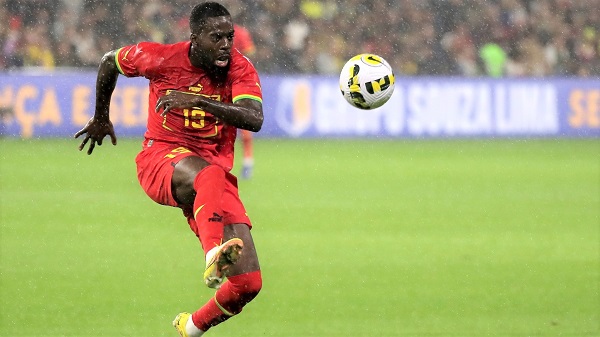
Iñaki Williams made his Ghana debut in an international friendly against Brazil on September 23
On the day Iñaki made his second appearance for Ghana –– a 1-0 victory over Nicaragua in an international friendly at the Estadio Francisco Artes Carrasco in the Spanish city of Lorca last month –– kid brother Nico made his senior Spain debut on the other side of the Iberian Peninsula and across the border in Portugal.
Born in the Spanish city of Bilbao to Ghanaian parents, 28-year-old Iñaki played for Spain’s youth teams and made his maiden and only appearance for ‘La Roja’ in an international friendly against Bosnia and Herzegovina. Six years later, having earlier turned down approaches to play for Ghana, Iñaki decided to commit his international future to the Black Stars with a good chance of playing at the 2022 World Cup.
Iñaki previously said that joining the Black Stars would appear as if he was taking someone else’s place in the team, someone for whom it would mean everything. Today he is older and wiser to accept that he has a brighter chance of playing in the World Cup for his parent country of birth than for Spain.
“I had to make a decision,” Iñaki tells ESPN. “It was a hard decision to make. I had many, many, many doubts and this might close other doors but this is football. It’s part of life.”
Nico, on the other hand, chose to represent Spain, rising from the youth teams to make it into Luis Enrique’s squad for the just concluded UEFA Nations League group stages where he made two appearances, including providing an assist for Álvaro Morata to score against Portugal –– enough to stake a claim for á place in the World Cup squad.
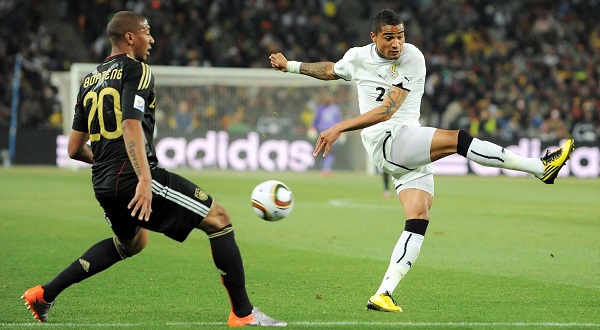
Sibling rivalry: Kevin-Prince Boateng played against his brother Jerome (left) twice at the World Cup
If they meet in Spain, it would be an emotional rivalry similar to what happened to the Boateng brothers –– Kevin-Prince and Jerome –– who found themselves at different ends of the pitch when Ghana played against Germany in group clashes at the 2010 World Cup in South Africa and again four years later in Brazil, with Kevin-Prince playing for Ghana and his junior brother Jerome at the heart a strong German defense.
The Williams siblings seem to be relishing that encounter in Qatar.
Nico believes he and his senior brother made their decisions to play for different countries thoughtfully.
“It was a natural decision, each one took their path and thoughtfully made their decision,” he said.
“I am very happy that my brother is in Ghana, I wish him things to go well, that he can have a great World Cup and achieve the highest goals.”
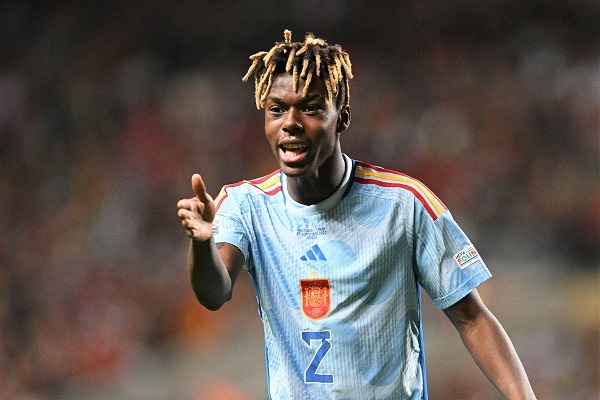
Nico Williams has committed his international future to Sapin, his country of birth
The excitement of another sibling rivalry is not lost on Spain manager Enrique, whose primary focus is on his Group E encounters with Costa Rica, Japan, and Germany.
He said including Nico in his team was not an attempt to prevent him from following his brother’s footsteps, following speculation of a possible nationality switch since their recent visit to Ghana on vacation last June.
“I’m not doing this to stop him from going with Ghana; he’s young and a very interesting player,” he told The Guardian.
“He’s playing more often with Athletic now. He’s progressing wonderfully. I like him enormously. We’ve had him in the junior squad and have been following him for a long time.
“I reckon the family will be delighted: imagine the party if they both go to the World Cup. And they reach the final, well, that would be the absolute business. It will be tough for Nico and Iñaki’s parents to decide who they want to win,” Enrique added.
For now, the two brothers will continue to share the pitch for Athletic Bilbao –– they both scored goals for the first time in the same match, in a 3-2 victory over Rayo Vallecano last month –– but when the La Liga go on break early next month the two brothers will head in different directions and are likely to leave their family split at the heart.
“Ghana has a population of about 31 million people, and receives 15 million used clothes each week – 40 percent of which goes to the graveyard.”
Trade data as of 2020 has shown that Ghana has become the biggest dumping ground of used clothing in the last decade.
The value of used clothing shipped into the country has tripled over the last decade from$65m in 2010 to over$180m in 2020.
“The UK alone shipped over $70m worth of used clothing to Ghana in 2020, accounting for close to 40 percent of the country’s import of used clothing.”
One is greeted with tangled pieces of textiles and discarded clothing washed up at the Korle-Gonno beach in Accra.
These tangled clothing are repeatedly swept along the shores by the changing tides. A closer examination shows that these clothes are burrowed deep into the sand like a new geological formation. “They go as deep as six feet,” said a local fisherman.
“Studies have shown that we have a lot more of such textile waste on the ocean bed,” Solomon Noi, Director of Waste Management for the Accra Metropolitan Assembly said. “This poses a significant threat to aquatic life.”
With the “choked landfills and limited control” over unwanted clothing exports into Ghana, Mr. Noi argues that managing discarded used clothing in Accra has become a “huge burden” for the city authorities.
“This is an area nobody is talking about, this is a real crisis,” he said.
A four-month investigation by Gideon Sarpong has shown that the negative impact of discarded used clothing on Ghana’s environment is fueled by unscrupulous merchants and charities, unsuspecting donors, and the global fast fashion business. Inaction on the part of government officials in Ghana and the UK has also contributed to this crisis.
Kantamanto – A morgue for UK’s used clothing
Kantamanto, the largest used clothing market in West Africa is its own market, distinct from many other markets in Ghana. On a typical day, you should expect to hear sounds of sellers hustling to lure consumers with many yelling things like, “five cedis, four cedis, pants and trousers.”
The market looks like a maze, with several rows of vendors selling their wares. There is a covered indoor market that extends onto surrounding sidewalks. Like any department store in the West, the market also has sections and a general sense of order.
Over the years, Kantamanto, located in Accra’s business district, has transformed into a morgue for UK’s used clothing. It now performs the final retail rites before 40 percentof the 15 million used clothes it receives each week are sent to the graveyard — at choked landfills at Old Fadama, and its surrounding areas in Accra.
Samuel Antwi Oteng, a researcher with The OR Foundation, an NGO which focuses on the intersection of environmental justice and fashion development. He explained how the overwhelming quantity of used clothing imported into Ghana every week was unsustainable for the population.
“Ghana has a population of about 31 million people, so thinking about the ratio between the people living in the country and the quantity (15 million) of clothing that is coming in every week, shows there is a great disconnect.”
The textile trash collected from Kantamanto is the “single largest consolidated waste stream in the entire city of Accra,” according to the Accra Metropolitan Assembly (AMA).
Nana Amo, a used clothing importer and trader at the Kantamanto market admitted to the negative impact of used clothing on the environment, describing clothing importation as a “risk-taking” business.
“The bale I import is sealed and i do not know what is inside. So, if you are a buyer and you detect that there are unusable clothes in there, there is little you can do but discard them and make a loss,” he said. “Unfortunately, improper disposal of these clothes means all our gutters are choked, with very negative consequences for us all.”
Trade data as of 2020 has shown that Ghana has become the biggest dumping ground of used clothing in the last decade. The value of worn clothing shipped into the country has tripled during the last decade from$65m in 2010 to over$180m in 2020.
The UK aloneshipped over $70m worth of used clothing to Ghana in 2020, accounting for close to 40 percent of the country’s imports and the UK’s biggest export product to Ghana.
Not everybody who donates their clothing to charities in the UK understands how charities like Oxfamsell donated clothes to merchants and retailers in nations like Ghana and Nigeria, many of which wind up in landfills, the ocean, and drains and harm the environment.
Ghana’s trade minister, Alan Kyerematen did not respond to several requests for comment on the dumping of used clothes in the country and his ministry’s actions to end it.
Samuel Antwi Oteng attributed a large part of the problem to the commercial practices of the fashion industry, which promote excessive consumption and waste.
“All of these fashion brands like Boohoo, Asos, Nike, H&M, Adidas, they produce clothes in excess, more than people need and so they build waste into their models. But there is a whole business built around donations and buybacks programs, where people and companies collect these clothes, sort them, bail them and ship them to countries like Ghana,” he explained.
In 2019, a UK House of Commons audit report on fast fashion found that fast fashion and consumption in the UK leaves developing countries, “with the bulk of the environmental and social costs.”
“There are too many UK fashion businesses who acknowledge the negative impacts of their operations on workers and the environment but do little or nothing to mitigate the harm they are causing,” said Dr. Mark Sumner, a lecturer in sustainability and fashion at the University of Leeds in astatement to the UK parliament.
Despite the environmental harm facing many societies as a result of fast fashion, the British government following the release of the audit report on “Fixing Fashion,” rejected recommendations made by a cross-political party committee to regulate the supply chain. This included the Government saying it wouldn’t consider improved clothing collection and sorting until 2025.
The report urged the British government to put more pressure on brands and retailers to take more responsibility for the global epidemic of throwaway clothing, including by imposing a tax on fashion manufacturers and requiring high-earning fashion stores to meet mandatory environmental standards.
Katharine Hamnett, a British activist and designer, described the government’s response as “tragic,” adding that the study “hadn’t been hard-hitting enough anyhow.”
Globally, the fashion industry is responsible for around 10 percent of all greenhouse gas emissions, according to the United Nations, and consumes more energy than the international aviation and shipping industries combined.
Madeleine Cobbing, a researcher at Greenpeace explained that most clothes are not designed for recycling.
According to her, most clothes are “blends of synthetic and natural fibers which are difficult to recycle, while the huge volumes of fashion being bought and thrown away prevent any meaningful attempt at circularity.”
Boohoo, and some other top UK fashion companies are currently under investigation by the UK competition watchdog, the Competition and Markets Authority for potential “greenwashing”, following concerns about the way the company’s products are being marketed as eco-friendly and sustainable when this is not the case.
However, Frank Egleton, corporate affairs manager of Boohoo, in an email insisted that “10 percent” of its cotton use is sourced from “Better Cotton farmers who produce cotton in a way that respects people and the environment and improves livelihoods.”
Unemployment, used clothing trade and Ghana’s government inaction
Facing one of the highest youth unemployment rates in the region of close to 40 percent, the government risks “incurring the wrath of workers” in the informal sector if it imposes a complete ban on used clothing said trader, Nana Amo.
“What jobs have the state created and what job will the government expect us to do if it bans the sale of used clothing,” he demanded. “After the state bans the sale and importation of used clothing, it should show us what we should do.”
The second-hand clothing industry directly employs over 35,000 in Ghana.
Samuel Antwi Oteng, argues that the problem of used clothing imports into Ghana, which dates to the 1960s, is far more complicated and needs to be addressed on a variety of levels, including cultural and socioeconomic.
He said: “sometimes when we discuss this issue, we overly focus on a complete ban but there are so many layers to it. We must look at past influences, and how colonialism has influenced. How politics affects it and how the neglect of the informal economy influences it.”
“If you think about the Kantamanto market, it is not as if the current president or previous ones created these jobs for the people there. The people that work there created these jobs for themselves,” he added.
Way Forward
In designing any lasting solution, Samuel recommends that: “we must include the secondhand community itself in the conversation. Thinking about the unemployment situation in the country, what other opportunities are out there if people want to leave the trade?”
For Solomon Noi whose responsibility it is to ensure that Accra always remains clean, the solution lies with producer tax and strict enforcement of textile standards.
“We must have external producer responsibility, so that right from the manufacturer, I think there should some percentage of cost that should be a slap on the product for disposal at the final destination of the product” he said.
Ghana, he maintained should, “tighten” its laws so that we adhere to “strict standards.”
“Beyond a certain minimum standard, the quality of the textile should be rejected.”
“If these cannot be achieved, then Europeans should rather dispose of worn-out clothing in their countries, they have the technology for it, rather than bringing it here [Ghana].”
Report by Gideon Sarpong. | Elfredah Kevin-Alerechi, Alix Smidman and Daniel Abugre Anyorigya contributed to this report.
This investigation was supported by Journalismfund.eu.
According to Dr. Alex Ampaabeng, a tax expert at OXFAM, political intervention is reducing the Ghana Revenue Authority‘s (GRA) ability to effectively carry out its duty.
He claims that the country is paying a high price for the widespread political interference in the management and operation of extremely sensitive state institutions like the Ghana Revenue Authority.
Further, Dr. Ampaabeng demanded that the appointment of the GRA’s head be made by the authority’s staff rather than by the president.
“The political games we are playing are costing the country a lot. I look forward to a time when the president will not be the one to appoint the commissioner of the GRA so that the workers themselves will elect one of them to be the leader. This is my wish” he stated in an interview on 3FM Sunrise Morning Show on Wednesday 12 October, 2022.
Dr. Alex Ampaabeng was reacting to the allegations by the National Organiser of the ruling New Patriotic Party (NPP), Henry Nana Boakye that the GRA is deliberately burdening business owners in the Ashanti Region with nuisance taxes.
Shop owners in the central business district of Kumasi have closed down their shops since Monday 10 October, 2022 as a registration of their displeasure over what they consider as harsh taxes by the GRA and the depreciation of the Cedi which is adversely affecting their business.
The tax expert also opined that some of the taxes that could give the country revenue are not effectively collected because there are some powerful and influential people who are enjoying the benefits of the lapses in the tax regime in Ghana.
“For example, the property fund is not collected because the big men themselves own the properties. If we put our house in order, we will be able to generate the money we look elsewhere for” Dr. Ampaabeng emphasised.
Former Ghana coach Charles Kwabla Akonnor has disclosed that his experience during his time as coach of Asante Kotoko was key as he switched to love the Porcupine Warriors despite being Hearts of Oak fan.
Akonnor was appointed as the head coach of Kotoko, replacing Paa Kwesi Fabin in 2018 on a two-year deal.
He served for nine months, helping them to win the 2019 GFA Normalisation Committee Special Competition and qualify for the 2019/20 CAF Champions League. In July 2019, he was sacked by Kotoko and replaced by Kjetil Zachariassen.
“To be honest with you I was Hearts of Oak supporter but I became to love Kotoko because of what I experienced when I went there. My house, my family were all Hearts supporters. My father is Hearts of Oak man,” he told Metro TV’s Good Evening Ghana
“I was seen in more professional way. If am with Kotoko I want to beat Hearts and if am with Hearts I want to beat Kotoko. No doubt about it.”
Akonnor added, “So when you went to Hearts of Oak did you feel like you have come home? “I felt like I was working and I had to be professional, give all my best for the team. I don’t look at it on that fan perspective but as a job that has been given they pay me so I have to give my best to the club.”
Lands Minister, Samuel Abu Jinapor, says although former National Chairman of the NPP, Freddie Blay, did no wrong representing four of Aisha Huang’s accomplices, he wishes the party stalwart had declined to take up such a case.
This, according to him, is because the development will fuel conspiracy theories against the government’s galamsey fight.
The four accomplices; Gao Jin Cheng, Lu Qi Jun, Haibin Go and Zhang Zhipeng together with the ‘galamsey’ queen, Aisha Huang are being held by the state for their involvement in illegal mining, popularly known as ‘galamsey’ in the country.
On Tuesday, a private legal practitioner, Lucy Ekeleba Blay, had announced in court that she was holding brief for Mr Blay in the case of the four accomplices of Aisha Huang.
Mr. Blay, following the announcement has come under severe criticisms at a time the government is already facing accusations of shielding more prominent, politically-exposed persons involved in galamsey.
But in defence, the NPP guru said his law firm has the responsibility of representing persons they believe are innocent of charges brought against them.
Speaking on Asempa FM’s Ekosii Sen, the Minister who doubles as Damongo Member of Parliament said he was concern despite the defence from Mr Blay.
“I wish Freddie Blay declined it but that is not for me to say; because immediately his daughter announced the brief in court, I told my assistant this is going to be controversial and will fuel conspiracy theories,” he said.
However, he added that Mr Blay being a legal representative will not cause the government to relent on its decision to prosecute the case.
Meanwhile, a Security Analyst has criticised the former National Chairman of the New Patriotic Party (NPP), Freddie Blay for agreeing to represent four persons accused of being accomplices of accused illegal miner, Aisha Huang.
Speaking in an interview on JoyNews’ The Pulse on Tuesday, Mr. Adib Sani stated that Mr. Blay’s acceptance to defend the accomplices is only “indicative of his lack of principles.”
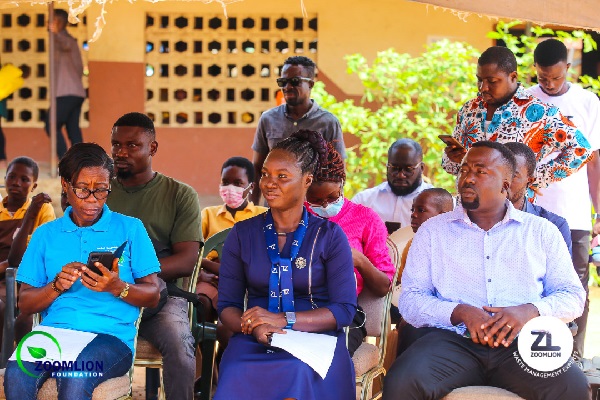
Female Journalists For Women and Rural Development in Africa FJWoRDA in collaboration with B4 foundation a non governmental plastic waste organization have emabarked on health outreach in Brafoyaw in the Abura Asebu Kwamankese District to create breast cancer awareness.
About 150 community members mostly women had their breasts examined.
They were also screens for sugar and blood pressure and educated on breast cancer.
Nineteen of them were referred for further investigation at the Cape Coast Teaching Hospital.
The Executive Director of FJWoRDA, Shirley Asiedu-Addo said this month of October had been earmarked for breast cancer awareness and that it was prudent for FJWORDA to impact the society through a health screening exercise which forms part the groups activities to give back to the society.
SGBV
The beneficiaries were sensitized on sexual and gender based violence among other sexual and reproductive health issues.
Mrs Asiedu-Addo in her address maintained that breast cancer continued to wreck havoc on families and communities.
She said as journalists they they were humans as well they are also mothers, sisters and wives, children and neighbors and that the problems of the society affected them too.
She added that the outreach was to create awareness and encourage the women to seek prompt treatment if detected anything usual.
“Whilst the mass media is important in creating awareness on pertinent issues affecting their communities, the effect of getting our hands to the plough and reaching to the communities physically can not be underestimated” She stated.
She noted that women must begin to take care of themselves first before taking care of others and that they should live to be able to take care of their families and contribute their quota to society.
She encouraged women to take care of themselves first to be able to live so they can take care of their families and contribute their quota to society and also go for regular checkups to seek prompt health care to avert disastrous consequences.
The Executive Director of FJ-WORDA also called on other benevolent organizations to support the association in diverse ways in it’s bid to contribute to change that society needs.
Health Personnel from the Cape Coast Teaching Hospital screened participants and referred a number of them for further screening.
B4 Foundation
The Chief Executive of B4 Foundation, collaborators of the programme Ursula Adadzewa Fynn indicated that the core function of the foundation is to help women and the under privileged in the society hence the support.
Continuous education
She assured that similar outreaches would be organized annually in the future to raise awareness of major societal issues.
An Officer with the Central Regional Directorate of the Domestic Violence and Victim Support Unit (DOVVSU), Richard Twum Boadi urged the participants who were mostly women to attach importance to domestic violence issues and report such issues early for immediate action.
Sex education
He said he was hopeful parents would also educate adolescents on their sexuality and repercussions of engaging in premarital sex.
The Central Regional Director of the Department of Gender, Richlove Amanoo advised parents to treat children with respect to imporoving communications with them.
She further urged the parents to provide with their basic needs as they would fall prey to sexual abuse.
The Cedi has continued to weaken against the US Dollar, according to the energy research tank’s analysis of the forex market over the past two weeks.
The Ghana Cedi lost a huge 2.5% value against the US Dollar from its previous rate of Gh10.53 to its current rate of Gh10.89.
To that end, “The Institute for Energy Security (IES) projects an increase in price for all major products at the pump, due to the increases in price of the products on the international market, and the significant decline in the value of the local currency against the greenback.
“The sharp rise in Gasoline and Gasoil prices on the global market may drive the price of domestic Gasoline and Gasoil rise higher, as against the rise in LPG price. In IES’ estimation, consumers of Gasoline and Gasoil may pay between 7 and 12 percent more for a liter at the pump in the next two weeks, with Gasoil per liter price hinging close to Gh¢15. Although the rise in price of LPG on the world market was moderate, the significant fall in the value of the Cedi, may cause the domestic selling price to rise by not less than 4 percent at the local pump.
“It must also be noted that competition for market share will account for variance in the rate of increases at the pump, across various OMCs”
Below is the full statement issued by the IES…
REVIEW OF OCTOBER 2022 FIRST PRICING-WINDOW
Local Fuel Market Performance
Prices of finished products on the local market saw changes in the last pricing window across all Oil Marketing Companies (OMCs) monitored, as projected by the Institute for Energy Security (IES). The national average price per litre of Gasoline now stands at Gh¢11.05 up from Gh¢10.90 in the last window, representing a 1.36% increase. Gasoil’s national average price per litre fell to Gh¢13.98 from Gh¢14.45 representing a 3.25 percentage reduction.
The IES MarketScan picked Sel, GOIL, Total, and Shell/Vivo as OMCs with the highest-priced fuel on the downstream petroleum market. Benab Oil, Star Oil, Zen Petroleum, Goodness Oil, and Petrosol were spotted as the OMCs with the least-priced fuel on the local fuel market.
World Oil Market
The International Benchmark Brent saw a 1.82% price increase over previous window’s average price of $89.47 per barrel to the present average price of $91.10 per barrel, on the back of OPEC+’s production cut pronouncement. The OPEC+ announcement of their production cuts spooked traders and analysts forcing prices to highs of $97 per barrel.
OPEC+ at its 45th Joint Ministerial Monitoring Committee meeting held in Vienna on October 5th, agreed to cut daily oil production by 2 million barrels per day. The cut is the biggest oil production cut since the start of the Covid pandemic. The size of the cut, equivalent to around 2% of global daily oil production, was significantly larger than the expected figure of 1 million barrel per day (bpd). However, following the International Money Fund’s (IMF’s) further warning of an increased risk of a global recession, oil prices began falling from the $97 per barrel highs to below $95 per barrel. Coupled with that was traders’ re-assessment of the OPEC+ production quota cut and its impact on the supply on the market.
Adding to the bearish sentiment, Shanghai, and Shenzhen, and other Chinese cities, increased Covid-19 testing efforts, with some local municipalities closing social centers as infection numbers climb.
World Fuel Market
On the global fuel market as monitored on Standard & Poor’s (S&P’s) Platts platform within the just-ended pricing window, liquid and gas fuel prices saw sharp changes following a surge in crude oil prices on the world market.
Gasoline shot up sharply by 15.72%, from its initial price of $833.68 per metric tonne to the end date price of $964.75 per metric tonne.
Gasoil price also rose sharply by 9.60% from its earlier price of $1001.05 per metric tonne to close the window at $1097.18 per metric tonne. LPG’s price on the international market also increased by 3.81% from a previous $595.65 per metric tonne price to an end-date price of $618.34 per metric tonne.
Local Forex
IES Economic Desk’s analysis of the foreign exchange (Forex) market over the last two week reveals a further depreciation of the Cedi against the US Dollar. The Ghana Cedi depreciated by a significant 2.5% from the previous rate of Gh¢10.53 to the current rate of Gh¢10.89, to the US Dollar.
IES PROJECTIONS FOR OCTOBER 2022 SECOND PRICING-WINDOW
The Institute for Energy Security (IES) projects an increase in price for all major products at the pump, due to the increases in price of the products on the international market, and the significant decline in the value of the local currency against the greenback.
The sharp rise in Gasoline and Gasoil prices on the global market may drive the price of domestic Gasoline and Gasoil rise higher, as against the rise in LPG price. In IES’ estimation, consumers of Gasoline and Gasoil may pay between 7 and 12 percent more for a liter at the pump in the next two weeks, with Gasoil per liter price hinging close to Gh¢15. Although the rise in price of LPG on the world market was moderate, the significant fall in the value of the Cedi, may cause the domestic selling price to rise by not less than 4 percent at the local pump.
It must also be noted that competition for market share will account for variance in the rate of increases at the pump, across various OMCs.
The Ghana Football Association (GFA) is set to appear in court today for the case filed by Ashanti Gold SC to be heard.
The 2022/23 Premier League was put on hold following a Motion on Notice for Injunction filed at the Human Rights High Court by Ashgold and served on the GFA’s lawyers.
The GFA has subsequently communicated this decision to all sponsors, partner and clubs.
Ashanti Gold SC were demoted to the Division Two League after being found Guilty of Match Manipulation in their 2020/21 Ghana Premier League Matchday 34 game against Inter Allies FC.
Ahead of the court hearing today, the Vice President of the football governing body, Mark Addo told Citi Sports, “If they [Ashantigold] feel they went to the Appeals process and were still found guilty on the basis of that, the next level was for them to have gone to CAS. Even the players that were banned went to CAS and were given a reprieve.”
“If they choose not to go through the process, and go to court, which is fine. Every dog will have his day in court. The FA will strongly present their case and I am very hopeful that we will be vindicated.”
All African nations are being urged by former president John Dramani Mahama to use the African Continental Free Trade Area (AfCFTA) to boost their economies.
According to him, Senegal has created a unique economic zone to draw Chinese and other manufacturing firms.
He noted that South Africa, Rwanda, and Mauritius are all making consistent advancements in manufacturing and value addition.
“We must advantage of AfCFTA, grow our values and get ready for increase international trade,” Mr Mahama stressed.
The AfCFTA is a free trade area founded in 2018, with trade commencing as of 1 January 2021. It was created by the African Continental Free Trade Agreement among 54 of the 55 African Union nations.
The free-trade area is the largest in the world in terms of the number of participating countries since the formation of the World Trade Organization. Accra, Ghana serves as the Secretariat of AfCFTA and was commissioned and handed over to the AU by the President of Ghana Nana Akufo-Addo on August 17, 2020 in Accra.
The agreement was brokered by the African Union (AU) and was signed by 44 of its 55 member states in Kigali, Rwanda on March 21, 2018. The agreement initially requires members to remove tariffs from 90% of goods, allowing free access to commodities, goods, and services across the continent.
The United Nations Economic Commission for Africa estimates that the agreement will boost intra-African trade by 52 percent by 2022. The proposal was set to come into force 30 days after ratification by 22 of the signatory states.
On April 2, 2019, The Gambia became the 22nd state to ratify the agreement, and on April 29 the Saharawi Republic made the 22nd deposit of instruments of ratification; the agreement came into force on May 30 and entered its operational phase following a summit on July 7, 2019.
The general objectives of the agreement are to create a single market, deepening the economic integration of the continent; establish a liberalised market through multiple rounds of negotiations; aid the movement of capital and people, facilitating investment; move towards the establishment of a future continental customs union; achieve sustainable and inclusive socioeconomic development, gender equality and structural transformations within member states; enhance competitiveness of member states within Africa and in the global market; encourage industrial development through diversification and regional value chain development, agricultural development and food security; resolve challenges of multiple and overlapping memberships.
The Minister for Lands and Natural Resources, Samuel Abdulai Jinapor, says the Ghana Armed Forces should be held responsible for either the success or the failure of the fight against galamsey.
According to him, whereas his Ministry is involved with formulating the legal framework and policies that guide the activities of miners in the country, the military is responsible for the implementation of same.
This, he says, implies that the Military is supposed to act independently in policing the activities of miners in the country and preventing illegal miners from taking control of mining communities and concessions.
He made these comments on Asempa FM’s Ekosii Sen on Thursday, October 13.
“This time around it’s been made abundantly clear, we, and for that matter myself as the Minister and Ministry and other stakeholders, are responsible for formulating the policies relating to mining, which is actually what it should be.
“But when it comes to the implementation of the enforcement regime or the enforcement mechanism by the Ghana Armed Forces, they are supposed to do so independent of the Ministry and of any other entity; Chiefs, religious leaders, influential people, journalists, Members of Parliament, Ministers of State, political leaders.
“Military people are not supposed to take any instruction from anybody. I’ve never done that anyway, even in the past, but I’m saying no interference whatsoever,” he said.
He revealed that the Military has since been furnished with the full list of all licensed small scale mining concessionsand would be effecting the arrest of all those who do not appear on the list but are engaged in mining activities.
“And actually what we’ve done is that my Ministry has furnished them with the full list of all licensed small scale mining concessions and that’s what they’re going to work with. So if they go and they find out that you’re not part of the list they’re supposed to clamp you down and nobody is to interfere.
“And the good thing about it is that the military now will be accountable and responsible for the law enforcement results for this particular effort and of this particular phase. So if it doesn’t go well they have to be held responsible.
“Because we have provided them with what they need and the framework, and the contours of the policy so they are now to implement it on the instructions of the President,” he said.
The management of Kumasi City Market has been instructed to put a stop to the planned elections for market leaders by Queen Mother of the Ashanti Kingdom Asantehemaa Nana Konadu Yiadom ll.
According to the Asantehemaa, the market already has over 70 commodities queens in charge of running its daily operations, thus the market management’s decision to elect new leaders is simply a repetition of what already exists.
Speaking on Akoma FM‘s current affairs and political show GhanAkoma Thursday, October 13, Baamuhemaa Nana Konadu Yiadom told host of the show Aduanaba Kofi Asante Ennin that “management of Kumasi City Market and some factions among the traders were summoned by Asantehemaa Nana Konadu Yiadom II to explain why they have decided to conduct elections at her market without her approval, so after the whole meeting it was concluded that the upcoming elections to elect new leaders must be shot down”.
Baamuhemaa Nana Konadu Yiadom whiles recounting what transpired at the Asantehemaa’s palace on Wednesday, October 12 added that “Asantehemaa further reiterated that all markets within Asanteman belongs to her including Kumasi City Market, so not even the market management or Board can conduct elections in the market without her approval”.
Baamuhemaa, who is one of the over 70 commodity queens sworn into office by Asantehemaa to steer the affairs of the entire Market, further explained that “management of the market decision to conduct the elections is a disrespect to the directives of Asantehemaa because already there are various commodities queen mothers steering the affairs of the entire market, therefore no need for elections to elect executives to supersede the powers of the Asantehemaa.”
The Kumasi City Market executive’s election, which was expected to come off on Wednesday, October 26, saw a group of traders calling themselves City Market Traders Union and have been championing the election of new leaders and executives to form common front for the traders welfare.
Meanwhile, another section of traders within the market who go by the name Federation of Kumasi Traders greeted the elections with fierce opposition as they explain the market has leaders who on daily basis report to Manhyia.
The Board of Directors of the ECOWAS Bank for Investment and Development (EBID) has approved $250 million for five member states to boost the oil and gas, energy, road infrastructure and agricultural sectors in those countries.
The beneficiary countries are Ghana, Burkina Faso, Nigeria, Senegal and Sierra Leone.
The approval is part of the intensified efforts by EBID to invest in key sectors to spur post-COVID-19 pandemic recovery.
The investment is also to mitigate the impact of the Russia-Ukraine war on ECOWAS member states.
The President and Chairman of the Board of Directors of EBID, Dr George Agyekum Donkor, disclosed this at the 79th Session of the Board of Directors of the bank in Lome last Wednesday.
Impact
Dr Donkor said the impact of the COVID-19 pandemic and the ongoing Russia-Ukraine war had left many economies in tatters.
He indicated that current market conditions had compelled investors to seek premium on investments in sub-Saharan Africa, thereby increasing the cost of capital.
That had resulted in dampening economic growth, widespread balance of payment deficits, unfavourable terms of trade, depletion of central bank international reserves, fiscal deficits and debt distress, the President of EBID stated.
He, therefore, stressed the need for EBID, as the financial arm of ECOWAS, to deepen its financial intermediation in all the critical sectors of member states to assist them to recover from the economic challenges.
Present at the session was the Vice-President of the ECOWAS Commission, Damtien L. Tchintchibidja, who lauded the tremendous impact of EBID’s interventions in the sub-region.
She assured the bank of the commitment of the new administration of the ECOWAS Commission to collaborate and support EBID in its activities, especially in the area of resource mobilisation, to transform the community.
Context
EBID is a leading regional investment and development bank, owned by the 15 ECOWAS member states.
Based in the Togolese capital, Lome, the bank is committed to financing developmental projects and programmes.
These range from infrastructure and basic amenities, rural development and environment, industry and social services sectors through to its private and public sector windows.
EBID intervenes through long, medium, and short-term loans, equity participation, lines of credit, refinancing, financial engineering operations and related services.
Sensational Ghanaian musician Black Sherif has said that receiving awards is just a bonus to the work done but the art bodies are the most important.
Born Mohammed Ismail well known as Black Sherif has spoken about his feelings regarding the BET nominations he got recently.
During an interview with DJ Reuben of Luv 99.5 FM, Black Sherif stated that the work that goes into the projects is more important than the applause, hence he has channeled his energy to the work and not awards.
According to the ‘Soja’ hitmaker, the awards and accolades that come after the art bodies are produced are just to motivate artists to do more.
“The art bodies are always bigger than the awards because it’s the art bodies that attract the awards. Awards are just bonuses, it’s the art bodies that will attract the awards so basically the body is heavier than the awards”, he said.
Black Sherif disclosed that he does not believe that his BET nomination came too early despite being in the music industry for just a few years. According to him, he has always been ready for anything that comes his way.
“I won’t say my BET nomination came too early. I’ve been ready for anything and whatever. I can’t let anything slide and even when I’m not prepared I know how to tackle things”, he added.
An excerpt from a public release claims that Chinese lenders fined Kenya Sh1.312 billion for SGR loan repayment delays.
Thursday, the Treasury denied a government statement that said Chinese lenders fined Kenya Sh1.312 billion for late payments on loans used to construct the standard gauge railway (SGR).
Kenya has not gone into default on its public debt, according to Treasury Secretary Ukur Yatani, who also claimed that the nation has not accumulated repayment arrears for many years.
He was responding to a Business Daily article that detailed the Export-Import Bank of China’s (EXIM) delayed payments to Chinese lenders.
The story relied on confidential Treasury documents that revealed the performance of the SGR in the year to June, including the disclosure of the Sh1.312 billion penalties on the on-lent loan.
“We wish to state categorically that Kenya has never defaulted on settlement of its debts service obligations to any of its creditors,” Mr Yatani said Thursday.
“At no time has Kenya been flagged as a country defaulting on its external debt obligations.”
Taxpayers have been forced to shoulder the burden of the SGR loans because revenues generated from the passenger and cargo services on the track are not enough to meet the operation costs, which stood at Sh18.5 billion in the year to June against sales of Sh15 billion.
The Treasury document mentioned that Kenya defaulted on the on-lent loan linked to SGR even as the country wired Sh22.7 billion in loan repayments in the year to June.
“This relates to the cost of default on interest at one percent of the due amount,” says the disclosure documents seen by Business Daily in reference to the Sh1.312 billion penalty.
Analysts suggest that Kenya could have been fined for late payment, adding that technically there is a difference between default and delayed pay.
Legally an account goes into default if it’s closed by the lender following mounting arrears, and has the ability to affect a borrower’s or country’s creditworthiness.
The delayed payment came in a year when Kenya had asked for an extension of the debt repayment moratorium from bilateral lenders, including China, by another six months to December 2021, saving it from committing billions to the Beijing lenders.
But the lenders, especially the Exim Bank of China, opposed Kenya’s application for a debt repayment holiday in a standoff that delayed disbursements to projects funded by Chinese loans.
China postponed the repayments in January last year, helping Kenya temporarily retain Sh27 billion that was due for six months ending June 2021. The opposition from Chinese lenders forced Nairobi to drop its push for an extension of the debt repayment holiday to avoid straining relations with Kenya’s biggest bilateral creditor.
China, which accounted for about one-third of Kenya’s 2021-22 external debt service costs, is the nation’s biggest foreign creditor after the World Bank. Kenya spent a total of Sh117.7 billion on Chinese debt in the period, of which about Sh24.7 billion is in interest payments and almost Sh93 billion in redemptions, according to budget documents.
Repayment of the SGR loan started in January 2020 after the lapse of a five-year grace period that Beijing had given Kenya.
Former President Uhuru Kenyatta’s administration largely took loans from China from 2014 to build roads, bridges, power plants and the SGR.
The deal to fund the first phase of the SGR, Kenya’s single-largest infrastructure project by cost since independence, saw China overtake Japan as Kenya’s largest bilateral lender.
Kenya’s debt increased more than four-fold to Sh8.58 trillion under the Kenyatta administration.
The cost of servicing public debt is poised to jump by a third to a record Sh1.39 trillion in the fiscal year through June 2023, more than half of projected State revenue.
Kenya spent almost 57 percent of tax income in the past financial year on repaying loans, according to the Treasury, underlining the effects of the mounting public debt on State finances.
The terms of China’s loan deals with developing countries are unusually secretive and require borrowers to prioritise repayment to Chinese state-owned banks ahead of other creditors. A cache of such contracts was revealed in a past report by Reuters.
The dataset — compiled over three years by AidData, a US research lab at the College of William & Mary — comprises 100 Chinese loan contracts with 24 low- and middle-income countries, a number of which are struggling with mounting debt amid the economic fallout from the Covid-19 pandemic.
It uncovered several unusual features, including confidentiality clauses that prevent borrowers from revealing the terms of the loans, informal collateral arrangements that benefit Chinese lenders over other creditors and promises to keep the debt out of collective restructurings — dubbed by the authors as “no Paris Club” clauses.
The Paris Club is a group of officials from major creditor countries whose role is to find solutions to the payment difficulties of debtor countries.
President William Ruto last month reversed one of the most controversial policies of the previous administration that had made it compulsory for cargo clearance to be done at the inland container depots in Nairobi and Naivasha.
Due to a lack of cash, the Covid-19 outbreak, the crisis in Ukraine, and unfavorable mood in the run-up to the August elections, Kenyan corporations have been experiencing difficulties.
As businesses navigate these uncertain times, Marc Merlino, Citi’s Global Head of the Global Subsidiaries Group, visited the area to meet with customers.
The banker was interviewed by Business Daily to learn how they are overcoming the difficulties.
From the conversation you’re having with the multinational clients you bank, what are some of their biggest concerns?
Probably the primary area of concern is the economy. We have had longer-term conversations, strategic discussions with long-term strategic investors looking to build production facilities and employ people and bring multinational expertise to ESG.
The conversations have also pivoted to happiness around the results of the election. And then not so much in terms of who won, but in terms of the peaceful transition of power here. Our multinational clients are always happy when there are stable, predictable, you know, transitions in power.
What about concerns about accessing dollars?
If you look at what is happening, with the Federal Reserve raising interest rates to control historically high US inflation. That action has global implications on emerging market currencies. You know, it is not the Kenyan shilling alone that has maybe lost six percent this year that is under pressure, it is all currencies.
But it’s not just the Fed that raised rates. The Bank of England, and European Central Bank are also doing coordinated monetary policy actions to try and bring down inflation across the board. So yes, there has been what I would call an imbalance in terms of FX demand and supply in the domestic market.
How, do you think, will this imbalance be resolved?
There was elevated demand earlier in the year because of the dividend season. A lot of corporates did not pay dividends during Covid, then they paid in 2022 as a catch-up. So there was significant demand, and we came into an economy that opened up significantly in 2022. Seven and a half percent in 2021 growth means a lot of industries opened up so there was a demand for dollars from manufacturers, oil importers, consumers, capital goods importers, etc.
Kenya imports a lot of consumer goods as well. Lastly, I think this phenomenon was around an abundance of caution going into the election, where you have people holding onto dollars, not because they have no faith in the shilling, but just because of the uncertainty of the electoral period.
But I want to put it to you that the long-term prospects of the shilling are positive, it will stabilise. Supply-demand will normalise and that is a function of time. So a Citi perspective and a banking industry perspective, we do believe that this is just a matter of time before that issue resolves itself.
Citi is one of the banks that have been arrangers for Kenya’s sovereign debt and we saw the cancellation at the beginning of the year. What sort of conversations would you be having with the government in terms of how best to access commercial markets?
We have a very deep relationship with the government of Kenya, and of course, when called upon to assist in the fundraising programme, externally, we will be responsive to that call.
But I think in terms of strategy, in terms of direction, I would refer that question to the Treasury because that’s the authority that will make that decision. Of course, we have our views, and Kenya is a well-regarded and well-known issuer offshore. Having issued in excess of four Euro bonds, Kenya is known in the international market.
So there’s nothing new about Kenya going back to the market once it settles down. We certainly will see Kenya re-approaching the market.
What is the general outlook for sovereign markets?
Most African sovereigns are single B issuers and what we call frontier markets. Frontier markets have seen their yields elevated in the last six to 12 months. Because of that elevated pricing, a lot of the frontier markets have stayed away from issuing Eurobonds so this is not a Kenya phenomenon.
Kenya is not locked out of the market as a country because of something specific that it has done. It’s a broader frontier market phenomenon and sell-off. So I think what you should look out for is what is going to happen on the global stage. Kenya’s long-term fundamentals and prospects are still attractive to the long-term investor.
Do you see the problems around inflation, the rate environment in the big markets resolving soon?
Markets function based on the basic valuation methodology and a market is a discounted present value. But the present value requires you to have a view of the future, and then you discount that based on what a rate is.
The problem is when the view of the future becomes cloudy or uncertain, it becomes very difficult for all the market players.
In terms of portfolio and FDI flows, how do you see this space evolving for Kenya?
Kenya’s prospects remain excellent, we don’t see the long-term customers changing their view because of this temporary dislocation. When we had the election concluded and President William Ruto sworn in, we had flows come back into the equity market, which rallied.
We have seen financial flows exit, but we have also seen corporate flows coming back into the market for long-term investors. On the corporate side, a lot more of the investments that have been delayed have started coming back to the market. Why do I know this? Because we’ve had a good year as Citi-Kenya as client activity has picked up. When our clients do well, our business does well. And that alone is a barometer, the fact that our customers are starting to come back and get on with business.
Who are some of your typical clients here?
We are positioned to focus on three sets of clients. The historical western multinationals that have been here for decades, the emerging champions that are coming out of East Africa, and then the digital champions that are largely being born have been born in the last 10 years.
What is happening now is we are now seeing digital champions. And these are companies that are broadly digital in their approach to things. These are companies that have cross-border ambitions immediately, and there are several great examples.
What happens, in times of greater uncertainty is, we have a lot more conversations with our clients. They are reaching out to us not to get a quote on an FX trade or to talk about a loan or a product. But they want our advice and perspective because things are changing.
Nicki Minaj is planning a trip to Ghana in order to collaborate on a record with a local Ghanaian musician.
This was how she responded to a question that was asked during her Instagram live session on the likelihood of her travelling to Ghana.
The highly regarded female rapper said that she already had plans to go to Ghana and that she would not be reluctant to make the trip if the appropriate time presented itself.
Good news for Ghanaians came in the form of Nicki Minaj’s announcement that she would be collaborating with a Ghanaian talent in terms of business either when she ultimately gets to Ghana or, more likely, even before she arrives to Ghana.
“I would love to come to Ghana.” I may be doing something major, a business type of situation, with an artist from Ghana,” she revealed.
Already, Ghana has attracted some of the most famous people and celebrities from all over the globe in the last few years.
It has already been visited by notable figures such as Steve Harvey, Kendrick Lamar, Cardi B, and Usher; thus, it would be an incredible honor for Nicki Minaj to come to Ghana.
Energy consulting company Arthur Energy Advisors (AEA) has suggested that more financing be allocated to the supply-side of energy efficiency rather than the demand-side in order to provide a more sustainable means of lowering losses and improving distribution utilities in the energy industry.
Jabesh Amissah-Arthur, a partner at Arthur Energy Advisors (AEA), bemoaned the amount of “abnormal” losses that distribution utilities in African nations experience in his presentation at the recently concluded Africa Energy Conference in Accra. His topic was “Distribution Utilities & Energy Efficiency: The Prospects for Sustainable Performance Improvement for Africa’s Distribution Utilities.”
“If you look in the market for energy efficiency funding, a great majority – if not all – of the energy efficiency funding prioritises demand-side interventions. Very few, if any, of those demand-side interventions will yield the sort of benefit-cost ratios for Africa’s distribution utilities; and given where many countries find themselves with underperforming distribution utilities, we think that it is quite useful for some of the definition and application of funding toward demand-side energy efficiency be put into a place where it can be more sustainably run as an intervention in the form of supply-side energy efficiency.
“The total amount of losses within Africa is estimated, if you take just the abnormal losses, at 7 percent; and an average African distribution utility tariff of US$0.14. The total annual losses of Africa’s distribution utilities equal about US$8.5billion. It is, just for context, bigger than the annual GDP in 2021 of 16 out of the 54 African countries; and this is about how much in abnormal losses African distribution utilities are incurring every single year.
“So, in terms of how we view energy efficiency and define it for the appropriate African future, it is important that supply-side or utility energy efficiency is firmly put on the table. It generates a level of return, and the impact to distribution utilities which anchor many of our electricity systems is absolutely critical,” he stated.
The different forms of loss that can be encountered within the distribution grid may be technical: which includes line losses, transformer core loss, transformer overload, and transformer phase imbalance – with non-technical losses including wiring errors, theft, metering errors and billing errors.
He also cautioned against the sole concept of smart-metering as a sure way to find and curb losses – stressing that metering alone is not an effective and sustainable way of curbing losses in utility distribution.
According to Mr. Amissah-Arthur, during a ‘detailed investigation’ by his firm on West African distribution utility involving some 76 customers over a period of six months, it was found that for about US$350,000 in investment there were annual losses of US$1.5million from customers who have smart-meters.
“So what that means is that, effectively, distribution utilities even by investing in the highest-end metering are still losing a significant amount of electricity to their highest and best-paying customers – either by theft or by other malfeasance.
“The appropriate approach and methodology has to be adopted for dealing with energy efficiency solutions, because it is not enough just to buy a whole bunch of meters and deploy them across the network without prioritising the opportunities within that network which bring the greatest bang for our buck. Simply spending money on smart meters doesn’t necessarily mean you find losses,” he added.
The 2022 edition of the Clean Cooking Forum has come to an end in Accra at the Kempinski Hotel.
The Clean Cooking Alliance (CCA) and the Government of Ghana hosted the Clean Cooking Forum 2022 in Accra from October 11-13.
The three-day event had over 600 attendees from over 50 countries as the largest convening of investors, executives, government officials, academics, and advocates working to accelerate access to clean cooking in Ghana to help pursue SDG 7.
Speaking at the event, the First Lady of the Republic of Ghana, Rebecca Akufo-Addo stated that for Ghana to help meet climate goals, the country ought to consider the use of clean cooking to help save the environment.
“The Clean Cooking Forum is an opportunity to showcase Ghana’s leadership on the matter of clean cooking and inspire stakeholders around the world, to take more action towards a just and inclusive clean energy transition”.
Rebecca Akufo-Addo, said “it will be impossible to meet global climate goals, achieve a just clean energy transition, protect our environment, achieve gender equality and provide a future for the next generation, without changing the way people cook”.
The well-attended forum hosted in Accra also featured an Innovation Expo, showcasing the latest developments in clean cooking technologies and business models, including many from across Ghana.
The Forum also featured a musical performance from two-time Grammy-nominated artist Rocky Dawuni, a native of Ghana and a long-time champion of the Clean Cooking Alliance.
In addition, the Forum’s convening power will facilitate a wide selection of side events hosted by CCA and partners, as well as a “Ghana Day” focusing on the state of the country’s clean cooking sector.
Also speaking at the event on the opening day, Mr. Ed Brown, a researcher at the Loughborough University, stated that it is cheaper to use electricity to cook than make use of traditional cooking methods.
“It’s a myth that cooking with electricity is expensive. If you look at the data and the volume of research done, it is clear that using electricity to cook is far cheaper as compared to the use of charcoal or LPG,” he said.
He added that there is an ongoing discussion going on with the government to help raise awareness and make use of clean cooking to help meet SDG 17 across the country.
CCA commended the African Development Bank, Global Affairs Canada, the Netherlands Ministry of Foreign Affairs, the Norwegian Agency for Development Cooperation, the United Nations Capital Development Fund, World Bank ESMAP, the U.S. Environmental Protection Agency, Endev, the European Commission, the Danish Ministry of Foreign Affairs, Sustainable Energy for All, Modern Energy Cooking Services, UK AID, BIX Capital, the African Guarantee Fund, and the Africa-Europe Foundation.
Rich people in Nairobi are less affected by increased prices for products and services at a time when the rest of Kenyans are struggling with inflation.
Due to their higher discretionary earnings, those in the social class who spend more than Sh184,395 monthly have a stronger ability to withstand price increases.
However, the figure is a rise from 4.15 percent in 12 months to June 2021, pointing to a rise in the cost of living affecting all Kenyan households. President William Ruto campaigned on the platform of bringing down the cost of living in his first 100 days in office and reiterated his commitment to doing so when he took power last month.
But his administration is finding it difficult to fulfil the promise. Already the government has failed to subsidise food items like maize flour, leading to a rise in the price of a 2kg packet of the commodity to around Sh200 from Sh100 under a subsidy introduced by his predecessor, Uhuru Kenyatta.
Inflation soared to a 63-month high in September at 9.2 percent from 8.5 percent in August on higher fuel prices, shocks from food shortages and a depreciating shilling.
The inflation surge occurred against the backdrop of the Russia- Ukraine war and Covid-19 pandemic in 2020. The difference in inflation levels among Nairobi’s income segments is linked to their different consumption habits. The rich spend most of their income on transport and the middle class on utilities and rent.
Food takes the bulk of the poor’s budget. The increase in the prices of food items surpassed that of fuel in January this year, with food inflation hitting 15.5 percent in September compared to fuel inflation at 11.7 percent.
The prices of a three-bedroom house rose by 5.6 percent in 12 months to September compared to a similar period in 2021 while those of furnishing and household equipment rose 10.7 percent.
Middle-class homes spend the bulk of their monthly income — over 23.6 percent — on housing and utilities, followed by food at 22 percent, exposing them to rising costs.
The lower-income residents in Nairobi and in rural areas will be hit hardest by inflationary pressures that eroded the country’s real wage by negative 3.83 percent last year, down from negative 0.59 percent in 2020.
People in rural areas are hurting the most from the jump in food and non-alcoholic beverages inflation —whose weight in the shopping basket is nearly a third
at 32.9 percent — which rose to 15.25 percent in July.
Country Lead at Dubawa, a fact-checking organisation, has advised journalists to build their skills to avoid misinformation in their reportage and guard against fake news.
Ms Caroline Anipah urged them to use their core skills and competencies to verify information before publishing.
Ms Anipa gave the advice during a two-day fact-checking training for journalists in Tamale, supported by the United States (US) Embassy, to enhance their capacity in verifying the authenticity of news stories before publication.
She said: “When using articles and online sources, be sure to check the website and determine who is providing the information and the motive behind it.”
Mr Nathan Gadugah, Editor, Ghana at Dubawa, urged the participants to use the tools and resources at their disposal to verify fake news.
He reminded them to ensure fairness, balance and accuracy in their reportage while keeping their audience informed.
It was the duty of journalists to endeavour to sort out facts from opinions on subjects from experts, not forgetting to use multiple experts in gathering their news, he noted.
Dr Abena Animwaa Yeboah-Banin, the Head of Communication Studies, University of Ghana, urged journalists to be guided by the ethics of the profession.
She said they should be honest and courageous in gathering information and avoid conflict of interest.
Legendary songstress Belinda Amoah also known as Mzbel has disclosed that she will be dropping her most-anticipated track “Asibolanga”
A few days ago, Mzbel released a snippet of her yet-to-drop song titled “Asibolanga’. Social media users went haywire after watching the excerpt from the song.
Mzbel has taken to her Instagram to disclose that she will be releasing her new track dubbed “Asibolanga’ today by “fire by force”. The song was churned out from some of the controversial names Nana Tornado gave to Afia Schwar.
According to Mzbel, she hasn’t been this excited about releasing a song as she is now. However, she disclosed that some men of God and prophets will be calling her over the song she is about to drop because they fear she might be spiritually attacked.
She wrote, “Haven’t been this excited about releasing a song like I am right now but, to be honest, I’m a little nervous about all these Pastors, Prophets and Men of God suddenly calling and sending messages asking me not to release the song cos of some Spiritual Attack Ahead…
Mzbelievers please when say a prayer, meditating, pouring libation or chant, kindly hold some space in there for me. I sincerely want us all to have fun instead of fighting all the time…
#ASIBOLANGA is definitely dropping tomorrow by fire by force!
Dr. Mahamudu Bawumia, vice president, has praised the Ghanaian and Nigerian Securities and Exchange Commissions (SEC) for their achievements in developing their respective securities markets.
Additionally, Dr. Bawumia praised them for promoting the agenda for capital market integration.
Dr. Bawumia gave the compliment, according to a statement released in Accra by the SEC of Ghana, when a delegation from the securities markets of Ghana and Nigeria paid him a courtesy visit at the Jubilee House.
The visit was to officially inform the Vice President about the signing of a Memorandum of Understanding (MoU) between the Securities and Exchange Commissions of Ghana and Nigeria.
Dr Bawumia emphasised the importance of having a robust and vibrant domestic securities market to support the private sector and the economy to thrive.
He urged the heads of the two regulatory bodies to urgently accelerate the integration agenda and operationalise cross-border transactions to enable the private sector to access capital for growth.
The Vice President urged the West Africa Securities Regulators Association to foster closer relationships with the African Export-Import Bank and the Pan-African Payment and Settlement System for mutual benefit and assured the delegation of the government’s support for the sector.
Rev. Daniel Ogbarmey Tetteh, the Director-General of SEC Ghana, expressed gratitude to the Vice President for their continuous support of the securities market.
Mr Lamido Yuguda, the Chairman of the West Africa Securities Regulators Association and Director General of SEC Nigeria, said the securities markets of Ghana and Nigeria continued to enjoy close collaboration for 19 years following the signing of an MoU in 2003.
Mr Yuguda emphasised the need to tap into the vast opportunities offered by the securities market to solve infrastructure deficits that had bedevilled the West African Region.
He said the operationalisation of the African Continental Free Trade Area (AfCFTA) would offer good opportunities for capital and the securities market.
The delegation also visited the Ghana Stock Exchange (GSE) to inspect the trading floor of the Exchange and interact with GSE staff and market operators.
The Director Generals of the two countries were accompanied by Mrs Deborah Mawuse Agyemfra, Deputy Director General Legal of SEC Ghana; Mr Paul Ababio, Deputy Director General Finance of SEC Ghana, and Mr Ekow Afedzie, Managing Director of Ghana Stock Exchange.
The rest are Ms Abena Amoah, Deputy Managing Director of Ghana Stock Exchange; Mr Temi Popoola, CEO of Nigerian Stock Exchange (NGX); Directors and Heads of Department from SEC Ghana, and other dignitaries from SEC Nigeria, NGX, GSE and some staff of the Nigerian High Commission in Ghana.
The 2022 winner of Ghana’s Most Beautiful Queen Teiya has been trending after a video of her receiving a prophecy popped up on social media.
The beauty queen confirmed the prophecy and how she secured the most coveted beauty crown in an interview on 3FM Drive with Giovani Caleb.
She disclosed that after receiving the prophecy from Prophet El-Bernard of Spirit life Revival Ministries, she continued to pray while working hard to materialize her miracle.
Queen Teiya told Giovani, “I was putting in my work. And I was praying a lot because prophecies do come, but you have to work hard. I wouldn’t have mentioned it if you didn’t see the video.”
In the video, the man of God is heard telling Teiya that God says he will give her access to over 67 nations of the world.
GMB Winner, Queen Teiya
Prophet El-Bernard continued to say that Teiya will receive a national honour in Ghana, and she will be broadcasted all over national television.
Uganda’s president’s son, General Muhoozi Kainerugaba has apologised to Kenya’s President William Ruto over tweeted threats about invading the neighbouring country and capturing its capital in two weeks.
Gen Kainerugaba’s tweets drew angry reactions from Kenyans and prompted his father, President Yoweri Museveni, to apologise to Kenya.
In his Thursday evening apology, the general said he had never had any problem with President Ruto.
He added: “If I made a mistake anywhere, I ask him to forgive me as his young brother.”
I have never had any problem with Afande Ruto. If I made a mistake anywhere, I ask him to forgive me as his young brother. Godbless East Africa! pic.twitter.com/5LuzVabLKz
Mr Museveni – who has been in power since 1986 – has long been suspected of grooming his 48-year-old son to succeed him when he eventually steps down, an allegation he has always denied.
Minister of Environment, Science, Technology and Innovation, Dr Kwaku Afriyie, has inaugurated a seven-member Governing Board of the Nuclear Regulatory Authority (NRA) to initiate policies and actions for effective mandate delivery.
The Board chaired by Professor Aba A. Bentil Andam, has other members as Colonel Tim Ba-Taa-Banah, Professor Isabella A. Quakyi, Mr Daniel A. N. N. Adumuah, Mr Ebenezer Appah-Sampong, Professor Edward H. K. Akaho and Dr Nii K. Allotey.
With the declaration by President Akufo-Addo on Ghana’s inclusion of Nuclear Technology in its Power Generation Mix, Dr Afriyie said it behoved the Board to initiate pragmatic policies and actions to best prepare the Authority to effectively deliver on its mandate for Ghana’s nuclear power programme.
He admonished the Board to ensure that its inputs led to proper management of the Authority’s resources while seeing to it that the Authority was abreast of all emerging new technologies.
“I urge you to be passionate about this duty, and bring your years of experience, expertise and excellence which all of you are noted for to bear on the task ahead. Above all, take your mandate as a sacred calling for which posterity would applaud your memory,” he said.
Dr Afriyie told the Board to bear in mind their new role at a time when there were global uncertainties traversing from economic instability, climate uncertainties, energy crisis, and potential food shortage, insecurity as a result of insurrections in the West Africa sub-region and a myriad of other minor issues which in a large measure affected Ghana.
“Nonetheless, we have confidence in the undaunting/unwavering spirit of the Ghanaian to surmount and overcome challenges no matter how dire they may appear,” he said.
The Minister said the government had taken due cognisance that Board members possessed excellent academic credentials, pursued successful professional careers and were individuals with unblemished integrity.
“Undoubtedly, these great heights and feats achieved were gotten through dint of hard work, fortitude and determination,” he added.
Prof. Andam said the task to make the NRA one of the best, most efficient and most effective regulatory bodies, equipped to deliver in the 21st-century fast-growing technological environment had only just started.
The challenges, she said, were great but the potential for meeting them existed, hence success was attainable.
“It is our solemn pledge that we will commit and devote ourselves to the task ahead, initiate policies and see to their quick implementation, and ensure good governance in the NRA for which it is known.
“I can attest to the fact that Members of this Board are known for their lives of service and commitment to the nation. This gives me the confidence that history will show that in our day(s) we met the demands which our time(s) required of us.” Prof. Andam said.
The Chief Representative of the Japan International Cooperation Agency (JICA), Araki Yasumichi and the Training Team of JICA Ghana hosted young promising Ghanaians who have been offered scholarships for this year’s batch of Master’s Degree and Internship Programs in some leading Japanese Universities.
They had a pre-departure debriefing session at the JICA Ghana Office, as an essential component of their trip. It forms part of the training activities to adequately prepare them on important topics including academic and student life, travel arrangements and some perspectives about studying in Japan. This is to ensure that their stay in Japan is fruitful, experential and productive.
These Ghanaian officials will receive specialized education and knowledge in the areas of governance, education, agriculture, health, industrial policy and others, and it will be pivotal to their personal and professional development and the institutional capacity development of their various organisations.
Mr. Araki Yasumichi underscored the importance of human resource development and said the beneficiaries, aside from the main course, would also have the opportunity to learn about Japan’s modernization and development experiences.
He also expressed hope that the current crop of beneficiaries would return to take up leadership roles in Ghana and also enhance the bond of friendship and cooperation the two countries have shared over the decades.
At the 5th Tokyo International Conference on African Development (TICAD V), held in Yokohama in 2013, the Japanese government stated its policy of strengthening support for Africa with stronger public-private partnerships and announced the “African Business Education Initiative for Youth, “ABE Initiative”, a strategic plan to provide youths in Africa with opportunities to study for Master’s degree at Japanese universities and experience internships at Japanese companies.
In Ghana, JICA implements the master’s degree and internship program within the ABE Initiative framework.
Currently, a total of One Hundred and One (101) Ghanaians are in Japan under JICA’s Long-term Training Program that include the Human Resource Development Scholarship, JDS and the ABE Initiative.
The paramount chief of the region must now be formally consulted in order to obtain his approval before any mining concession or license is awarded to any applicant. This directive came from President Nana Addo Dankwa Akufo-Addo.
The metropolitan, municipal, and district chief executives (MMDCEs) of that particular jurisdiction, as well as the regional ministers, shall all be formally consulted before any person or corporation is given a mining concession.
In response to the President’s order, Mr. Samuel Abu Jinapor, Minister of Lands and Natural Resources, has issued a Ministerial Fiat ordering the Minerals Commission to halt all procedures leading to the recommendation for the issuance of mining concessions and licenses until the Commission has gotten input from the relevant authorities.
Mr Jinapor announced this at a media briefing in Accra on Thursday to update the public on new measures being implemented by the Government to combat illegal small-scale mining, otherwise known as “galamsey”.
The directive had become necessary to ensure the traditional and local authorities played a central role in the fight against illegal small-scale mining, which had wreaked havoc on the environment and water bodies.
When the President met the National House of Chiefs in Kumasi recently, the chiefs raised concerns about being sidelined in the issuance of mining licences and granting of concessions to individuals.
Therefore, whenever there was illegal mining within their traditional areas, they had no power to stop it because they did not play any meaningful part in the granting of the licences.
Mr Jinapor said with the enforcement of the Ministerial Fiat, traditional rulers and MMDCEs would play a central role in the fight against galamsey.
He highlighted a gamut of measures implemented by the Government to stop the galamsey menace; procurement of speed boats to patrol rivers, training of river guards, forest reserves declared as “red zones” for mining, and distribution of mercury free gold processing machines (gold kachas) to small-scale miners.
Others are collaboration between the Lands Ministry and the Attorney-General’s Office to prosecute illegal miners, both Ghanaians and foreigners; rolling out Community Mining Schemes for local people, recruitment and engagement of about 80,000 people for alternative livelihood programme, frequent operations by the military (Operation Halt) to mining sites to arrest and burn excavators belonging to illegal miners, and setting up 83 district mining committees to oversee mining at the district level.
Operation Halt II campaign has also been launched, spearheaded by the Military High Commands in the southern, middle and northern belts, which would be sustained until galamsey was brought to the minimal.
The government has, therefore, allocated significant funds and logistics to the new military operation, Mr Jinapor stated, and called for collaboration with stakeholders and a change of attitude by all to help fight the menace.
He said the media should constantly educate the public on the dangerous consequences of galamsey such as kidney diseases and buruli ulcers affecting inhabitants in the mining areas.
Mr Jinapor pledged the unflinching support of the President and the Ministry towards fighing the menace, with integrity and transparency without shielding anyone, irrespective of one’s political affiliation or standing in society.
Female MC, Eno Barony who is highly regarded by her fans as the best female rapper on the African continent has revealed what she wants for her birthday which is a few days ahead.
According to the artiste, she wants cement bags and iron rods when people plan to gift her something for her birthday and not the conventional birthday cake and its accompaniment.
“I beg this month on my birthday nobody should buy me cake I want cement bags and iron rods thank u,” she posted on Instagram on October 12, 2022.
Eno sent messages with a photo of herself sporting hot pants, sunglasses, a baseball helmet, and a black t-shirt with matching long boots.
Prior to this post, the rapper recently shared a profound quote on social media in a bid to stop people from laying violent hands on themselves.
Eno suggested that s,uicide is not the right option to escape from depression or any sort of problem.
She posted on Twitter that no matter what, everyone is bound to die so one must wait until the appointed time that he or she is designed to die instead of quickly resorting to the mechanism of s,uicide.
Eno Barony, real name Ruth Eno Adjoa Amankwah Nyame Adom is a Ghanaian rapper and songwriter. She was born in Tema, Accra, and gained notoriety when she released her debut single, “Wats Ma Name,” and “Tonga,” a remix of Joey B’s song “Tonga,” featuring Sarkodie.
A total of 552, 276 candidates from 18,501 schools will on Monday, October 17, start this year’s Basic Education Certificate Examination (BECE).
A statement issued by the West African Examination Council (WAEC) in Accra on Thursday said this year’s examination would be run for both school and private candidates at 2,023 centres throughout the country.
The statement said, “the entry figure is made up of 276,988 males and 275,288 females. The number of candidates that registered for this year’s BECE is 3.48 per cent less than the 2021 entry figure of 572,167.
In respect of the BECE for Private Candidates (PC), 1,132 candidates made up of 634 males and 498females entered the examination.”
According to the statement, the examination would be taken at 15 selected centres in the regional capitals.
It said the number of registered candidates for the 2022 BECE was 6.09 per cent higher than the 2021 figure of 1067.
The Council assured the public that all appropriate measures had been put in place to safeguard test security and the successful conduct of the examination.
Waste management giant, Zoomlion Ghana Limited, is donating handwashing items to schools.
The donation forms part of Zoomlion’s activities to commemorate Global Handwashing Day (GHD), which is celebrated annually on October 15th. The theme for GHD 2022 is “Unite for Universal Hand Hygiene.”
The Global Handwashing Day is an advocacy day dedicated to increasing awareness and understanding of the significance of handwashing with soap as an effective tool to prevent diseases and save lives.
The items included 150 Veronica buckets, 300 paper towels, 50 waste bins, 50 gallons of handwashing soap and 300 hand sanitizers.
The presentation was done by the Director of Communications and Corporate Affairs of Zoomlion Ghana Limited, Ms. Adwoa Appiah Osei Duah, who was accompanied by the Coordinator of Zoomlion Foundation Thomas Narh Korley.
Speaking to the media on the sidelines of the ceremony, Ms. Appiah Osei Duah explained that Global Handwashing Day is relevant as handwashing among children formed the basis of hygiene, hence awareness must be increased, especially among children.
The project’s contractor, Sinkare, has stated that at least GH2 million will be invested in the construction of the contentious artificial turf at Tumu, in the Upper West region.
The 100 by 120 foot pitch alone will cost 1.1 million cedis, he informed Francis Abban, host of Morning Starr on Starr 103.5 FM.
According to Mr. Sinkare, the remaining funds would be used for ancillary work and floodlights.
The average cost of astroturfs has been between 300,000 and 600,000 Ghana cedis, according to the Public Interest and Accountability Committee (PIAC).
Some Ghanaians on social media reacted to the cost of the Tumu astroturf project questioning why government will splurge GH¢2 million to construct an artificial pitch.
Kim Kardashian revealed to her grandmother that she had sex with Pete Davidson in front of a fireplace “in honor” of her.
On the latest episode of The Kardashians, per People, Kim recalled an intimate encounter with the former SNL star during a stay at a Los Angeles hotel. “You know what’s so crazy?” she said, accompanied by her grandmother Mary Jo “MJ” Shannon, mother Kris Jenner, and sister Khloé. “Pete and I were staying at the Beverly Hills Hotel last weekend, and we were sitting in front of the fireplace, just talking for hours, and I was like, ‘My grandma told me that you really live life when you have sex in front of the fireplace,’ and so we had sex in front of the fireplace in honor of you.”
Immediately after, she laughed and added, “I know that’s really creepy.” Her 88-year-old grandma, however, appeared unphased by the story. “Not in the lobby?” she joked back, to which Kim added, “But how creepy to think about your grandma before you have sex?” MJ replied, “I know, but I was younger once.
At the time the episode was recorded, Pete was set to join a Blue Origin mission to space. While he ultimately didn’t go through with the trip, he was heard talking about it with Kim during a phone call in the episode.
Kim asked Pete if he had a will, in the event the mission went wrong. “I’m making one now,” he said, to which he was asked if he was nervous about the trip. “Nah, my personal life is scarier, to be completely honest,” he said. “I can’t wait to get the fuck away from everybody… I think I’m gonna stay up there, babe.”
Joseph Obeng, the president of the Ghana Union of Traders Association (GUTA), has hinted that stores may close in Accra in protest of the Ghana Revenue Authority’s arbitrary application of tax procedures (GRA).
This event comes after some store owners in Kumasi’s Adum major business district locked their doors in protest of higher taxes on their wares.
The traders explained the action as a result of pressure to honor income tax payments, excessive store rental costs, and fees from the metropolitan assembly.
They have argued that the cumulative taxes are crippling their businesses and have vowed to sustain the action until the GRA withdraws their personnel stationed at shops to record sales of products for tax purposes.
Reacting to the protest on Atinka FM’s AM Drive with host Kaakyire Ofori Ayim, President for the Ghana Union of Traders Association (GUTA), Joseph Obeng described the compulsory implementation of the new electronic platform by GRA as imbalanced.
He added that what GRA has done to the VAT system makes compliance very difficult.
“The capital of most traders have depleted over 50%. The value of our monies has reduced. You have a system that does not ensure fairness, you have a system that does not ensure equity, you have a system that runs trade concurrently in the same market that we have the standard rate that one pays 90.25 percent and then we have VAT rate of four percent and then we have those who do not pay the VAT at all and they are all legitimate. What system is this? We will make a definite statement come Tuesday and everyone will know the way forward,” GUTA President Joseph Obeng told Kaakyire Ofori Ayim.
The eternal legacy of the late Virgil Abloh is the inspiration behind a new collection of limited edition merch from Disney.
Extending the Brooklyn Museum’s “Figures of Speech” experience is the new collection from Disney and Virgil Abloh Securities, which notably features never-before-seen Mickey Mouse artwork. This take on Mickey, per a press release, marks Abloh’s “unique interpretation” of the beloved character. The design is utilized here in a variety of colorways across multiple apparel options, including pieces for children and adults.
Get a closer look at the collection, prices for which top out at $120, below. The pieces are available to shop in person at the Brooklyn Museum and at this link.
Image via Disney/Virgil Abloh Securities
Image via Disney/Virgil Abloh Securities
The Disney pieces follow last month’s rollout of Brooklyn Museum-housed pieces from Off-White. The exhibition itself, meanwhile, opened in July and is currently slated to run through January of next year. The decades-spanning experience was developed by the Museum of Contemporary Art Chicago, with the Brooklyn Museum version from curator Antwaun Sargent boasting archival pieces not previously seen by the public.
Also in September, the Louis Vuitton: Virgil Abloh hardcover book was released, featuring “personal reflections” on the late designer from Kid Cudi, Naomi Campbell, Nigo, and more.
Residents of Bomaa, a farming community in the Tano North District of the Ahafo Region, have appealed to the President, Nana Akufo-Addo, to as a matter of urgency, come to their aid and construct their roads.
They said the nature of the roads has retarded the development of the town after many unfulfilled promises to fix them.
Led by the Patriotic Youth of Bomaa, the residents said the only way the president can save his image and that of his party is to fix the about 60 km of roads. They also served notice of advising themselves during the next elections.
Bomaa has 5km of town roads that connect to Duayaw Nkwanta -14.5km, Tepa -11.3km, Yamfo -19.3km, and Dwenase -8.05km, all in a sorry state.
Bomaa to Dwenase road
Bomaa and the nearby communities have a population of about 7,000 inhabitants and are mostly noted for the cultivation of foodstuffs such as plantain, cassava, yam, cocoyam, and maize, among others. They also produce cocoa and supply timber in large quantities.
Some prominent patriotic songs such as “Dwene Oman yi ho”, “Ghana Akuafo”, “Osee yee Ghana”, and “Aniha mu nni biribi se ohia” were all composed and sung by the Bomaa Paradise Dramatic Choir, led by the late Yaw Owusu Badu.
Bomaa to Duayaw Nkwanta road
But despite Bomaa’s contribution to national development, the road network of the once proud and enviable community in the erstwhile Brong Ahafo Region in the sixties and seventies is in such a shambolic state.
The situation is worse during the rainy season as uncompleted projects and erosion have devastated the town, affecting every aspect of residents’ lives.
The old, sick, and pregnant women, like 90-year-old blind Akua Mansa and Akosua Serwaa said seeking healthcare is a challenge.
90-year-old blind Akua Mansa and Akosua Serwaa said seeking healthcare is a challenge.
“I was carried to the hospital since a car could not pick me up from the house. If something happens in Bomaa, the roads are not motorable. The government should fix them for us,” the fragile old lady appealed.
“As a pregnant woman, if I am in labor, no car would come to my house due to the road, and I could deliver on the way to the hospital, something that scares me,” Madam Serwaa stated.
Farmers are not spared. Stephen Beyuo laments their nightmare of carrying farm crops to the house or market.
Farmer, Stephen Beyuo
“My cocoa is stuck on the farm as I can’t cart them home due to the road. A friend is helping me out, but he would have to leave them at a distance, and I carry them to the house,” the tired-looking Beyuo said.
Mr. Kyeremeh, a driver whose car broke down said, “I have spent three days on these bad roads. Every day I buy new spare parts. Nothing is working for us. We beg the president to come to the aid of Bomaa. We are helpless.”
The residents expressed their frustrations over successive governments’ unfulfilled promises.
Some unhappy faces of residents of Bomaa
Nana Kyei, a resident, said Government officials would come and meet Bomaa leaders on the road with a promise to fix them, but as soon as they leave, they don’t know about Bomaa again.
Due to the situation, the convener of the Patriotic Youth of Bomaa, Isaac Adjei Boateng, at a recent press briefing asked: “Where did Bomaaman go wrong? Where is our part of the national cake? Is it the case that the Parliament of Ghana rejected the portion of the national budget that captured the Bomaa roads? Is the President and Minister of Roads aware of these continuously failed promises and their consequences? Is that what we get from our consistent unflinching loyalty and allegiance to the NPP?”
He bemoaned how politicians have taken them for granted, especially during elections.
Convener of the Patriotic Youth of Bomaa, Isaac Adjei Boateng
Mr. Boateng said they pretend to construct the roads by bringing machines before the elections but those machines vanish after the elections.
“We appeal to the government, led by H..E Nana Akufo-Addo, to as a matter of urgency act to save the image of Bomaa, his own image, and that of his party at large,” he said and also added that the NPP administration must ensure a fair distribution of the national cake.
Mr. Boateng insisted that if the situation does not change, unlike other communities, they would exercise their franchise, but “we may probably have to advise ourselves going into the next polls.”


 We will all make you proud….”