The news was celebrated by hundreds of Khan’s supporters, who rallied outside the Anti-Terrorism Court in the capital, Islamabad, where the ousted leader’s arrival was met with a heavy security presence.
The court extended Khan’s pre-arrest bail until September 1, which means he cannot be arrested before then.
Police opened an investigation into Khan this week after he vowed to “take action” against the head of police and a magistrate during a speech in the capital on Saturday.
“Listen Director Inspector General (of police), we’re not going to let you go, we’re going to file a case against you. And madam magistrate you should also get ready, we will take action against you,” Khan had told his supporters during a rally in support of his former chief of staff, Shahbaz Gill.
Gill was arrested earlier this month on sedition charges after he urged soldiers to disobey orders from military leaders.
Khan has alleged police tortured Gill while in custody and the claims have gained traction among his supporters. Islamabad police deny Khan’s allegations.
Tensions between Khan and the ruling coalition government led by Prime Minister Shehbaz Sharif have simmered since the former star cricketer was ousted in a parliamentary no-confidence vote in April.
Khan has claimed there is a US-led conspiracy against him, accusing Sharif and the Pakistani military of working with Washington to topple his government. The United States, Sharif and the Pakistani military have all denied the allegations.
But Khan’s claims have struck a chord with a young population in a country where anti-American sentiment is common and anger at the establishment is being fueled by a rising cost-of-living crisis.
His enduring popularity has translated to recent provincial election victories for his party and he has repeatedly called for a new parliamentary vote at mass rallies held since his ouster.
Inter have made a perfect start to their Serie A title bid, following up a last-gasp win at Lecce on the opening day by beating Spezia 3-0 last time out.
Lukaku, who fired the Nerazzurri to the Scudetto in 2020-21 with 24 league goals before heading to Chelsea, needed just 82 seconds to find the net when making his second Inter debut at Lecce.
While the Belgian then failed to score in Inter’s routine win at San Siro last weekend, Inzaghi was content with his display and believes it will not be long until he is scoring regularly once more.
“I think he did the first two games in the best way. It is not a matter that concerns only Romelu, but the whole team,” Inzaghi said at a pre-match press conference.
“We know that the condition is improving, we know we have players with important physicality and therefore we knew we needed some important games.
“We started quite well, we want to continue trying to improve all our players, including Lukaku.
“We also want to recover [Henrikh] Mkhitaryan, who will be very important, there will be 19 games in a row before a stop [for the World Cup].We will have to try to have all the players available. Tomorrow everyone travels except Henrikh.”
Lukaku scored 47 goals in 72 Serie A appearances in his first spell at Inter. Only Cristiano Ronaldo (60 goals in 66 appearances) and Ciro Immobile (56 in 72 games) outscored him in the competition during that time.
Lukaku’s return has raisedhopes that Inter could reclaim the Serie A title this season, but holding onto defender Milan Skriniar, who was strongly linked with Paris Saint-Germain, could prove just as important.
While Skriniar struggled with a muscle injury during pre-season, Inzaghi is pleased with the Slovakia international’s progress, adding:Â “I see him very well, concentrated, attentive.
“There was a problem at the beginning of the preparation, it came from an injury with the national team, something new for him because he had never skipped a training session in the last years.
“Instead, this time he slowed down for 40 or 45 days and his condition is growing.”
Inzaghi suffered his first league defeat as Inter boss when visiting former club Lazio in October last year, with Immobile on the scoresheet.
And while Inzaghi still enjoys a close bond with last season’s Serie A top goalscorer, he is not enthused by the prospect of facing the Italy international on Friday.
“A great affectionbinds me to him, he made very important seasons with me, he did it again last year with [Maurizio] Sarri,” he added.
“I know it’s a special game for everyone, we all care about it. I hope Ciro always scores, but maybe tomorrow he rests!”
Moscow has not said how many fatalities its army has recorded since it began the war in Ukraine. However, Western officials and Kyiv believe the number is in the thousands.
Vladimir Putin has ordered Russia’s military to expand with another 137,000 personnel starting from next year.
The announcement by the Russian president came a day after Moscow’s invasion of Ukraine reached  its six-month mark.
Moscow has not revealed any losses in the conflict since the first weeks, but Western officials and the Kyiv government believe the number is in the thousands.
The Russian president signed a decree on Thursday, but it didn’t explain how the military will beef up its ranks and whether this would be through more conscriptions, more volunteer soldiers or a combination of both.
The Kremlin said online volunteer contract soldiers participate in the “special military operation” in Ukraine, denying claims that it was thinking of a broad mobilisation.
According to Professor Michael Clarke, unless a “war” is declared by Russia in Ukraine then conscription is not permitted.
Prof Clarke, former director-general of the Royal United Services Institute, said: “Then there is a fair amount of mutiny at the front lines. But that will not stop the offensive in itself.
“Russia is now offering big amounts (three to four times the average monthly salary) for young men to take the military contract and serve for as little as six months, with virtually no training.
“Desperate stuff, but Russia will keep feeding young men into the war. Many of them will die with bulging bank accounts back home.
Mr Putin’s decree aims to increase the number of military personnel to 1,150,628, which will come into effect on 1 January.
In November 2017, Mr Putin fixed the size of the number of combat personnel in Russia’s army to 1.01 million from a total armed forces headcount, including non-combatants, of 1.9 million.
Dozens killed on Independence Day
Wednesday marked 31 years since it gained independence from the Soviet Union, a date that fell on the same day as the six-month point of Russia’s invasion.
Ukraine had been bracing for heavy attacks during the day, and a rocket attack in the town of Chaplyne killed 25 people at a train station.
In the occupied city of Melitopol, in the southeast, the mayor said resistance forces have “blown up” a building which was being used by Russian-back officials in the village of Pryazovsko, which is just outside the city.
Ivan Fedorov posted a video on his Telegram channel said to show damage to the building, which was apparently being used for issuing Russian passports and to prepare for “voting” in a “pseudo-referendum”.
The vote is being planned as a way to incorporate the region into Russia.
Mr Fedorov also claimed on Thursday that Russia had cut off electricity in nearly all the captured areas of the Zaporizhzhia region and said people were now without power, as well as water and gas.
Iga Swiatek is still a standout candidate to win the US Open, even if the WTA field has plenty of strength in depth, so says Laura Robson.
The latest iteration of the season’s final grand slam gets under way on August 29, with Emma Raducanu looking to mount a successful defence at Flushing Meadows.
But with six different winners in the last eight WTA majors, the race is wide open to take glory in New York, particularly after three-time major winner Ash Barty called time on her career following this year’s Australian Open.
That leaves former British number one Robson feeling any title fight is too tough to call, though she believes the strength of the field makes it all the more thrilling and unpredictable.
“I think it just shows that there’s a lot of depth on the WTA side,” she told Stats Perform. “You’ve got 15 players in any given slam [who could win], which for me makes it more exciting.
“I’m pumped when I see the draw come out, because things can open up so quickly. Had Ash Barty not retired earlier this year, then she probably would have been the front runner going into the rest of the season.
“It really could be anyone. Ons Jabeur is playing great tennis, [Elena] Rybakina and then [Paula] Badosa, on hardcourts is playing great as well.”
Robson acknowledged it is tough to look past world number one Swiatek, though. The Pole claimed her second French Open crown earlier this year and has won 50 matches in 2022.
“She just looked like she was on fire,” Robson added, before suggesting Swiatek’s defeat at Wimbledon to Alize Cornet came merely because “she just ran out of gas”.
“I think she’s going to transition a little slower on to the hard courts then at the US Open. They’re not quite the same surface that works best for her game.
“But at the same time, you know, she’s got so much confidence at the moment that you can’t really bet against her.”
Play Your Way to Wimbledon, Powered by Vodafone is the largest individual mass participation tennis competition in the UK – delivered by Vodafone in partnership with the LTA and The All England Lawn Tennis Club.
The 30-year fixed-rate mortgage averaged 5.55% in the week ending August 25, up from 5.13% the week before, according to Freddie Mac. That is significantly higher than this time last year when it was 2.87%.
After starting the year at 3.22%, mortgage rates rose sharply during the first half of the year, hitting a high of 5.81% in mid-June. But since then, concerns about the economy and the Federal Reserve’s mission to combat inflation have made them more volatile.
The combination of higher mortgage rates and the slowdown in economic growth is weighing on the housing market, said Sam Khater, Freddie Mac’s chief economist.
“Home sales continue to decline, prices are moderating, and consumer confidence is low,” he said. “But, amid waning demand, there are still potential homebuyers on the sidelines waiting to jump back into the market.”
Mortgage rates tend to track rates for the 10-year Treasury, which advanced last week. Rates have been swinging up and down in recent weeks as investors digest a slew of data that shows the economy is resilient in some areas and softening in others. All eyes will be on Federal Reserve Chairman Jerome Powell’s statements at the Jackson Hole Economic Symposium in Wyoming on Friday, said George Ratiu, Realtor.com manager of economic research.
“Expectations are that he will highlight the central bank’s commitment to continued monetary tightening for the remainder of the year,” said Ratiu. “The Fed’s continued rate hikes, combined with balance sheet reduction through mortgage-backed securities rolloffs are expected to keep upward pressure on mortgage rates.”
Looking ahead to the remainder of this year, he said, consumers’ confidence and their ability to weather higher prices are key to keeping the US economy moving and avoiding a recession.
The upside for prospective buyers is that the housing market is offering a growing number of homes with price reductions. But there is also pullback in sellers bringing their homes to market, further reducing already tight housing inventory.
That is worrying, said Ratiu.
“Amid clear signs that affordability is curbing demand, some homeowners may fear that they missed the market’s peak,” Ratiu said. “With real estate markets still contending with significant under building, compounded by construction companies slashing single-family starts, the transition toward balance is losing steam.”
Mortgage affordability improved over the past month
After skyrocketing during the first part of the year, new mortgage payments came down slightly in July from June, according to a survey from the Mortgage Bankers Association.
The national median payment was $1,844 a month in July, down $49 from June, when it was $1,893. However, monthly payments are still up by $461 in the first seven months of the year — a 33.3% increase since January.
The relative improvement in affordability in July came as mortgage rates moved slightly lower and the size of loans got smaller, resulting in lower monthly payments.
“Homebuyer demand has faltered this summer, as lingering economic uncertainty, high inflation, and still-high mortgage rates caused many prospective buyers to delay their home search,” said Edward Seiler, MBA’s associate vice president for housing economics and executive director of the Research Institute for Housing America. “The combination of a strong job market and moderating home price growth could entice some of these buyers to return in the coming months.”
Still, the cost of a mortgage is significantly higher than a year ago, reducing a buyer’s purchasing power. In addition, elevated home prices and inflation are taking a larger chunk of prospective homebuyers’ income.
A year ago, a buyer who put 20% down on a median priced $390,000 home and financed the rest with a 30-year, fixed-rate mortgage at an average interest rate of 2.87% had a monthly mortgage payment of $1,294, according to numbers from Freddie Mac.
Today, a homeowner buying the same priced house with an average rate of 5.55% would pay $1,781 a month in principal and interest. That’s $487 more each month.
In an update on the investigation into the “brutal, callous, thoughtless attack”, Merseyside Police Detective Chief Superintendent Mark Kameen said the killer had failed to hand himself in. In a direct message to him, he said: “We will not rest until we find you – and we will find you.”
He was chasing 35-year-old convicted burglar Joseph Nee, who ran into the terraced house to get away from the shooter.
Despite being rushed to a children’s hospital by officers, Olivia died of her injuries in what police have branded a “shocking and appalling” crime.
Mr Kameen said Nee remains in hospital – and would be returned to prison once his treatment is finalised.
He said the man who was with Nee at the time of the shooting had been identified, but gave no further details.
The officer also said the driver of the Audi had been found and spoken to by police.
The investigation is “incredibly fast-paced” and “complex”, he said, reassuring the community that officers are working “relentlessly”.
The pandemic continues to cast a shadow over the workforce. Long Covid, a combination of symptoms that emerge months or even years after recovering from the virus, is keeping up to 4 million Americans from working, according to a new study.
The Brookings Institution report, released Wednesday, finds that about 16 million working-age Americans (between the ages of 18 and 65) have long Covid today.
People suffering from long s that can make it challenging to work, including brain fog, anxiety, depression, fatigue and breathing problems.
Brookings estimates that 2 to 4 million people are out of work due to long Covid. The midpoint of that range — 3 million full-time equivalent workers — represents a sizable 1.8% of the entire US civilian labor force, the report said.
The findings come as many industries, including education, restaurants and healthcare, struggle with serious labor shortages that are contributing to the worst inflation in four decades.
The economy had 10.7 million unfilled jobs as of June. Although that’s down from recent record highs, it’s still well above pre-Covid levels of 7 million.
The economic cost from long Covid is significant.
Based on the average US wage of $1,106 per week, Brookings estimates the absence of 3 million people from the workforce because of long Covid translates to about $168 billion a year in lost earnings.
However, that sum does not include the full economic burden of long Covid, Brookings said, a burden that includes the cost of lower productivity of people working while sick, the health care costs and the lost productivity of caretakers.
“If long Covid patients don’t begin recovering at greater rates, the economic burden will continue to rise,” the Brookings authors wrote.
They find that if the long Covid population grows by just 10% each year, after 10 years the annual cost of lost wages will amount to half a trillion dollars.
“These impacts stand to worsen over time if the US does not take the necessary policy actions,” the Brookings authors said.
They call for at least five government actions to ease the economic burden of long Covid: better prevention and treatment; expanded paid sick leave; improved workplace accommodations; wider access to disability insurance; and enhanced data collection.
An explosive whistleblower disclosure by Twitter’s former head of security this week exposes the company to new federal investigations and potentially billions of dollars in fines, tougher regulatory obligations or other penalties from the US government, according to legal experts and former federal officials.
Twitter (TWTR) faces tremendous legal risks stemming from the whistleblower disclosure by Peiter “Mudge” Zatko, who claims in a nearly 200-page disclosure to authorities that the company is riddled with information security flaws — and that in some cases its executives have misled its own board and the public on the company’s condition, if not perpetrated outright fraud.
Twitter has accused Zatko, who worked at the company from November 2020 until he was fired this January for what Twitter says was poor performance, of pushing “a false narrative about Twitter and our privacy and data security practices that is riddled with inconsistencies and inaccuracies and lacks important context.” Zatko is a highly regarded cybersecurity expert with experience in senior roles at Google, Stripe and the Defense Department. His whistleblower disclosure was first reported by CNN and The Washington Post on Tuesday.
Complying with a 2011 FTC privacy settlement
In his disclosure to the US government, Zatko claims Twitter suffers “egregious deficiencies” in its cybersecurity posture, deliberately misled regulators about its handling of user data and that the company is not living up to its obligations under a 2011 privacy settlement with the Federal Trade Commission — a legally binding order that requires, among other things, the creation of “reasonable safeguards” to protect users’ personal information. The FTC declined to comment on the disclosure.
Zatko’s damning disclosure alleges that roughly half of Twitter employees, including all its engineers, have excessive internal access to the company’s live product, known within the company as “production,” along with actual user data. It also alleges the company lacks the ability to defend against insider threats, foreign governments and accidental data leaks.
The 5 key takeaways from the Twitter whistleblower
“A fundamental engineering and security principle is that access to live production environments should be limited as much as possible,” the disclosure says. “But at Twitter, engineers built, tested, and developed new software directly in production with access to live customer data and other sensitive information in Twitter’s system.”
Twitter has told CNN its FTC compliance record speaks for itself, citing third-party audits filed to the agency under the 2011 consent order. Twitter added it complies with relevant privacy regulations and that it has been transparent with regulators about its efforts to fix any shortcomings in its systems. Zatko did not participate in the audit work and did not fully comprehend Twitter’s FTC obligations or how the company was fulfilling them, Twitter said.
The disclosure claims Zatko’s staff were “intimately familiar” with Twitter’s issues before the FTC and that it was they who told Zatko Twitter was never in compliance with the 2011 order, nor on track to become compliant.
“We absolutely stand by the contents of Mudge’s disclosure,” John Tye, Zatko’s lawyer and founder of Whistleblower Aid, the organization representing him, told CNN.
Zatko may be eligible for a monetary award from the US government as a result of his whistleblower activities. “Original, timely and credible information that leads to a successful enforcement action” by the SEC can earn whistleblowers up to a 30% cut of agency fines related to the action if the penalties amount to more than $1 million, the SEC has said. The SEC has awarded more than $1 billion to more than 270 whistleblowers since 2012.
Zatko filed his disclosure to the SEC “to help the agency enforce the laws,” and to gain federal whistleblower protections, Tye said. “The prospect of a reward was not a factor in Mudge’s decision, and in fact he didn’t even know about the reward program when he decided to become a lawful whistleblower.”
The whistleblower disclosure comes months after the FTC leveled its own allegations that Twitter misused account security information for advertising purposes in violation of the 2011 order. Twitter agreed to pay $150 million in May to resolve those claims, in a second FTC settlement.
Now, Zatko’s disclosure raises the prospect of yet another possible violation of Twitter’s FTC commitments — an extraordinarily dangerous position for a company and its executives to be in, according to Jon Leibowitz, who was chair of the FTC at the time of Twitter’s 2011 settlement.
“If the facts are true, they would constitute violations of the order and of the FTC Act — and that would make Twitter a three-time loser,” Leibowitz told CNN in an interview. “There would be no reason for the FTC not to throw the book at them.” Of course, Leibowitz added, the FTC would need to conduct a thorough investigation first to determine for itself whether a new violation has occurred.
The Twitter logo is seen at Twitter’s Headquarters in San Francisco, California, in the evening.
Sen. Richard Blumenthal, chair of the Senate subcommittee on consumer protection and a former Connecticut attorney general, said in a statement Tuesday that Zatko’s disclosures “reveal that responsibility for Twitter’s security failures rests with those at the top.”
He further urged the FTC in a letter to investigate the allegations, saying officials should fine and hold Twitter executives personally accountable if it’s found they were responsible for violations of the FTC Act or Twitter’s consent order. The FTC’s own credibility is on the line, Blumenthal said in the letter, which was also sent to the FTC on Tuesday.
“If the Commission does not vigorously oversee and enforce its orders, they will not be taken seriously and these dangerous breaches will continue,” Blumenthal wrote.
“Things actually got meaningfully worse”
Under its charter, the FTC is authorized to prosecute “unfair or deceptive business acts and practices.” In the internet age, that has increasingly meant going after companies that claim to protect consumers’ digital information but that in fact fail to live up to their public claims or misrepresent those protections.
Twitter’s original 2011 settlement arose from two alleged incidents where hackers were able to compromise weak employee passwords and misuse their access to take over Twitter accounts and snoop on private information, in spite of Twitter’s public statements on safeguarding user privacy and security.
Twitter whistleblower to testify at Senate Judiciary hearing next month
Twitter’s settlement was not an admission of wrongdoing. But it required Twitter to create “a comprehensive information security program that is reasonably designed to protect the security, privacy, confidentiality, and integrity of nonpublic consumer information” — a commitment Zatko alleges has never been met.
As part of its latest FTC settlement this year, Twitter committed to even more granular cybersecurity obligations including having “access policies and controls” for all databases containing user data, as well as for systems that either grant employees access to Twitter accounts or that have information that “enables or facilitates” access to internal Twitter systems. Those obligations are already in effect following a judge’s signing of the order this spring, further heightening the potential legal exposure for Twitter.
Despite Twitter’s mounting regulatory requirements, Zatko alleges not much has changed at the company since the FTC’s initial complaint more than a decade ago.
“Things actually got meaningfully worse,” his disclosure to Congress alleges. The disclosure claims that even as Twitter was actively negotiating the second settlement with the FTC last year, the company, in an entirely separate incident, allowed the very same type of misuse of data for advertising purposes to recur.
In response to more than 50 specific questions from CNN related to the disclosure, Twitter did not address Zatko’s allegation surrounding that incident. It did acknowledge that its engineering and product teams are able to access Twitter’s live production environment provided they have a specific business justification, adding that members of other departments — such as finance, legal, marketing, sales, human resources and support — cannot. Twitter also told CNN that employee computers are automatically checked to determine whether they are up to date, and those that fail the checks cannot connect to production.
Potential for new settlement or suit
The stakes of the disclosure could be hugely significant. An FTC finding that Twitter has violated its order a third time could result in the harshest penalties the agency has ever imposed on the company. The FTC is also currently chaired by Lina Khan, a vocal skeptic of tech platforms and of what she calls a “commercial surveillance” industry that profits off of lax national privacy rules. Under Khan, the FTC is considering drafting sweeping new privacy regulations that could directly affect companies across the economy, including Twitter, and how they collect, use and share personal data.
Should the FTC conclude a violation occurred, it would have two main options for holding Twitter accountable, former agency officials say. It could seek a third settlement with the company, or it could sue Twitter over the existing consent orders and ask a court for appropriate penalties.
Twitter is vulnerable to Russian and Chinese influence, whistleblower says
In the case of a settlement, the FTC could even seek to name individual executives — holding them personally accountable and forcing them to accept obligations on their own conduct for which they could be held liable if they or the company violate the order again.
If it turns out that Twitter did violate its legal obligations, Leibowitz said, the FTC should “very seriously consider … putting the executives responsible under order.”
The mere threat of naming individual executives can be effective, he added. During his time as FTC chair, Leibowitz recalled, “I can’t tell you how many CEOs came into my office saying, ‘Please don’t name me. I just don’t want to be named. I don’t mind if I pay more money; I don’t mind if my company is put under a stronger order. But I just don’t want to be named.’”
Megan Gray, a former FTC enforcement attorney who has worked on some of the agency’s biggest privacy cases, said the tools at the FTC’s disposal are numerous. (CNN spoke to Gray prior to Zatko’s allegations becoming public and without disclosing their existence, and then again on Tuesday after CNN and The Washington Post reported Zatko’s disclosure.)
“Escalating fines, more compliance reports, more granular controls and restrictions on their lines of business,” Gray said, ticking off a list of options. “Or a requirement to get advertisements pre-approved by the agency, or excluding them from certain types of transactions.”
An agency in need of more tools to hold companies accountable
Twitter has cited its third-party audits as evidence it has upheld its FTC commitments. But in general, the way the FTC’s audit requirements often work in practice can let companies off the hook far too easily, Gray said.
For example, many FTC orders are written broadly enough to allow a company to satisfy its obligations based on, among other things, “attestations” that they are compliant — a pinkie promise, Gray told CNN. In reports to the FTC, companies conducting third-party audits may simply say, or cite statements by the company under audit, that the company is in compliance.
How Twitter’s security affects your security
From 2011 until 2022, Twitter’s consent order with the FTC allowed for audit reports based on attestations. Then, in its second settlement this year, the FTC made the audit requirements more specific, barring Twitter’s third-party auditors from relying “primarily” on attestations by Twitter’s management.
Even with those types of restrictions, there are still reasons to be skeptical of FTC audit reports, Gray said. That’s because third-party auditors are paid not by the FTC, but by the companies being audited, she said.
“So the incentives are completely out of whack for the auditing companies,” Gray added.
Twitter told CNN that audits are just one of the privacy and security programs Twitter has to meet its FTC obligations.
Many current and former FTC officials, as well as US lawmakers and consumer advocates, have pushed to give the FTC more tools for holding businesses accountable, particularly after the Supreme Court last year struck down the agency’s ability to seek monetary relief under some circumstances.
Some proponents of tougher oversight have called for, for example, letting the FTC issue fines to companies for first-time violations of the FTC Act. Currently, the FTC may generally only seek to impose civil penalties on a company after it has violated a prior settlement.
In the case of Twitter, negotiating a consent order for a third time may seem like an odd look, another former FTC official said, speaking on condition of anonymity in order to speak more candidly. But in the event it finds a violation, and as with any case, the FTC will need to weigh what it believes it can obtain from Twitter through a settlement against what the agency may be able to win from a trial court.
There are risks to long, drawn-out litigation, where a court may actually award the FTC less, the former official said.
“Some people do think these orders are kind of nothing,” the former official said, “but they’re not. Maybe in some cases they are, and companies don’t take them seriously. But in a lot of cases they do, and the FTC can exact a lot of pain. A lot of pain.”
When consumers were stuck inside during the early stages of the Covid-19 pandemic, there weren’t many places to spend money. So they turned their attention to technology, scooping up new gaming consoles, monitors and PCs that made living and working from home a bit easier.
Now, as people return to offices, gyms and restaurants and rethink their spending as inflation starts to bite, sales of gadgets are taking a hit — as are the companies making the chips that power them.
What’s happening: Nvidia (NVDA), which warned earlier this month that its sales were dropping due to weaker gaming revenue, shared earnings on Wednesday. The firm posted revenue between May and July of $6.7 billion, up 3% from one year ago but down 19% from the previous quarter.
“This was a challenging quarter,” Chief Financial Officer Colette Kress told analysts. “Macroeconomic headwinds across the world drove a sudden slowdown in consumer demand.”
Gaming revenue was dinged in part due to a decline in cryptocurrency mining that relies on Nvidia’s chips. Matt Bryson, an analyst at Wedbush Securities, told me that the downturn was tied to the pullback in crypto prices, which has chilled enthusiasm in the sector, and to changes in how the digital coin ether is produced.
Revenue of data center chips reached a record last quarter, but wasn’t as high as the company would have liked given supply chain disruptions.
Looking ahead: The situation isn’t due to improve any time soon. The company said that revenue for its current quarter would come in around $5.9 billion, down 17% year-over-year, and that its gaming business would continue to retrench. Shares are off more than 3% in premarket trading on Thursday.
Nvidia isn’t the only company in the industry that’s run into trouble. Last month, Intel (INTC) posted a surprise loss, pointing to the “sudden and rapid decline in economic activity.”
The firm forecast a sharp drop in PC chip sales this year as top customers tried to clear out existing inventory, a sign they’re expecting lower demand for products.
“This weakness is pervasive across the semiconductor industry for companies that sell into either the PC space … or into the handset space,” Bryson said. “It comes back down to the consumer.”
Problems are spread across markets, too. A report by analytics firm Canalys published on Thursday found that PC shipments from China fell by 16% in the second quarter, the worst decline in nine years.
On the radar: Providing chips for data centers has been a huge revenue driver in recent years, as cloud offerings from companies like Google and Amazon have taken off. But there are concerns that Big Tech firms could pull back spending on this front if other parts of their businesses run into trouble.
The fear, Bryson said, is that if companies spend less on Google ads, or Amazon customers don’t order as many items, those giants of the tech world (and the stock market) may turn more conservative.
His question: “Will the struggles of the consumer ultimately affect them?”
What Biden’s student debt relief plan means for the economy
President Joe Biden’s student loan plan is a potential game changer for Americans drowning in debt. But what will it mean for the economy at a moment when policymakers are losing sleep over high inflation?
The latest: Biden announced Wednesday that his administration will forgive $10,000 for borrowers who make less than $125,000 per year. Low-income graduates who went to college on Pell Grants will receive up to $20,000.
This debt relief will give tens of millions of borrowers some breathing room at a time when the cost of living has skyrocketed.
That said: The cancellation of student debt is being paired with a plan to lift the freeze on federal student debt payments beginning in January 2023. That means many Americans who haven’t had to pay down student loans since March 2020 will have to begin doing so, hurting their budgets.
According to economists, this policy combination means the overall impact on the economy and prices will be minimal, my CNN Business colleague Matt Egan reports.
“The end of the moratorium will weigh on growth and inflation, while the debt forgiveness will support growth and inflation,” said Moody’s Analytics chief economist Mark Zandi. “The net of these cross-currents is largely a wash.”
Moody’s estimates that the combined impact will reduce real GDP in 2023 by 0.05 percentage points, drive down unemployment by 0.02 percentage points and cut inflation by 0.03 percentage points. In other words, a drop in the bucket.
“We’re talking about a really small impact,” said Dean Baker, co-founder of the Center for Economic and Policy Research. “But for individuals this makes a big difference.”
The political fight over ESG is heating up
ESG is a wonky acronym for finance professionals. But in red states, aligning investment decisions with good environmental, social and governance practices has become a political football, putting Wall Street on the defensive.
This just in: Texas agencies could bar BlackRock, the world’s biggest asset manager, and nine European firms — including UBS and Credit Suisse — from doing business in the state after its comptroller on Wednesday found that the companies were boycotting the energy industry, breaking a new law intended to protect the fossil fuel sector.
“The environmental, social and corporate governance (ESG) movement has produced an opaque and perverse system in which some financial companies no longer make decisions in the best interest of their shareholders or their clients, but instead use their financial clout to push a social and political agenda shrouded in secrecy,” Comptroller Glenn Hegar said.
BlackRock (BLK), which manages about $20 billion for public funds in Texas, criticized the decision by officials to politicize state pension funds, which it said would impact financial returns for retirees.
It’s not just Texas. This week, Florida passed a resolution directing the state’s fund managers to ignore ESG factors when making investment decisions.
My takeaway: ESG investments have struggled this year, since many funds have a lot of exposure to tech names that have been hammered hard by the market sell-off. But when I speak with investors, many say they have no choice but to consider how companies in their portfolios are tackling issues like the climate crisis, since this could have a big impact on future returns.
Defending these decisions could become trickier should ESG become increasingly ensnared in America’s culture wars. But broadly speaking, firms are unlikely to change tack.
The electric car company completed a 3-for-1 stock split after the closing bell Wednesday. So one share now costs a third of what it did a day ago. Tesla (TSLA) closed around $891 on Wednesday, which means it should open at around $300 Thursday morning.
Tesla approved the split in June, its second such split in the past two years. But before you start celebrating about how one Tesla share is now “cheaper,” keep in mind that nothing changes with Tesla’s valuation.
The company is still worth more than $930 billion after the split. Shares continue to trade at a lofty multiple of more than 70 times 2022 earnings forecasts — a huge premium to the valuations of traditional auto companies like Ford (F), GM (GM), Volkswagen (VLKAF) and Toyota (TM).
And the stock is still down about 15% this year, as investors worry about growing competition in the EV market from traditional automakers as well as Musk’s many possible distractions. (SpaceX. The Boring Company. The Twitter (TWTR) takeover soap opera. The list goes on.)
The only thing that the stock split changed is that existing investors now own three times as many shares of Tesla trading at one third of the price they ended at on Wednesday.
That includes Musk, the world’s richest person with a net worth of about $264 billion, according to Forbes. Musk still owns approximately 15% of Tesla’s common stock.
Companies with high share prices often split their stocks to make the cost of one share more affordable for individual investors. The rationale is that some investors might be more inclined to buy a stock if it is trading at a lower price.
Amazon (AMZN), Shopify (SHOP), Google owner Alphabet (GOOGL) and meme stock GameStop (GME) have all done splits in the past few months.
The largest power producer in Ukraine, which operates four nuclear power plants, last week survived what officials described as the most powerful attack on Ukraine by Russia hackers since the end of February.
According to the Ukrainian nuclear agency, Energoatom, the attack did not cause any harm.
At the same time, Ukrainians are hitting back at Russian digital infrastructure. In Russia, more than 600 online resources including the federal postal service, pension fund, online banking and video conference platforms were affected by Ukrainian hackers in this month, according to a statement by the Ministry of Digital Transformation of Ukraine.
“Cyberspace is a frontline of the 21st century, and victories there are as important as in actual battlefields,” Mykhailo Fedorov, the Minister of Digital Transformation of Ukraine, told ABC News
He’s responsible for establishing the so-called “IT army” — a gathering of more than 230,000 anonymous volunteers who are working together via Telegram, an online messaging platform.
Russia’s assault on Ukraine has extended into the virtual domain as well as on real-life battlegrounds. And here the enemy is choosing very sensitive targets that could impact security for Ukraine, Europe and even the world.
But Fedorov said his country’s cyber security system was more than efficient.
None out of over 800 cyberattacks since February 24 caused real losses for the Ukrainian economy, stopped the banking system or damaged critical infrastructure,” he said.
Some IT companies in Lviv, one of the biggest hubs for the industry, said they weren’t eager to disclose their involvement in the country’s digital defense efforts. Some in the Lviv IT community told ABC News it is a matter of a personal choice for members of their staff to join the fight.
Stepan, a 41-year-old member of the IT army, spoke to ABC News but asked not to use his real name because of fears of reprisal.
“On the second or third day of a new phase of Russian aggression I saw the tweet from the minister of digital transformation about the establishment of a Telegram channel, and that was very helpful to figure it out, what exactly to do to help my country,” Stepan said.
Prime Minister Fumio Kishida said Wednesday Japan will restart idled nuclear plants and consider developing next-generation reactors, in a policy reversal that will see the nation turn back toward atomic energy as fuel prices soar worldwide.
Kishida told reporters he had instructed officials to come up with concrete measures by the end of the year.
The move is a significant shift for Japan, which has dialed back its use of nuclear power since 2011, when a tsunami triggered by a massive earthquake sent water crashing into the Fukushima Daiichi power plant — leading to the world’s worst nuclear disaster since Chernobyl in 1986.
In recent years the country has also imported greater amounts of natural gas and coal to meet its energy needs.
But Kishida has renewed calls to reduce its dependency on these fuels, and outlined plans for Japan to achieve carbon neutrality in 2050 while at the Cop 26 summit last year.
More recently, increases in fuel prices, partly due to Russia‘s unprovoked invasion of Ukraine, have prompted the government to announce more energy-saving measures.
In late June, the Ministry of Economy, Trade and Industry urged residents to conserve electricity.
As of July 26, Japan had seven operating nuclear reactors, with three others offline due to maintenance, according to the Agency for Natural Resources and Energy
Luis Diaz does not believe Liverpool’s start to the Premier League season has been “problematic”, but accepted the stumbling Reds must improve quickly.
Liverpool have failed to win any of their opening three league games for the first time since Brendan Rodgers’ first season at the helm in 2012-13, having fallen to a 2-1 defeat at Manchester United on Monday.
Goals from Jadon Sancho and Marcus Rashford dealt the Reds their first Premier League loss of 2022, which followed back-to-back draws with Fulham and Crystal Palace.
Liverpool have now conceded the opening goal in seven successive Premier League games for the first time in their history, while a number of injuries to key players have led to calls for Jurgen Klopp to dip into the transfer market.
While Diaz recognises the need for rapid improvements, he was keen to avoid overstating Liverpool’s troubles when speaking to Sky Sports.
“It’s been a bit of a difficult start,” he said. “It’s not quite the outset we wanted for the season. We’re a club that goes out to win three points from every game we play.
“I wouldn’t say it’s problematic for the players or for the manager, but certainly we all know we need to do better.”
Reflecting on Monday’s defeat at Old Trafford, the Colombia winger added: “We were fully aware of what kind of rivalry exists between the clubs and we knew we had a big task ahead of us. It didn’t go our way on the day.
“We know now we have to just do our job and train hard, rest hard and look forward to the next game, when we can hopefully accumulate some points and get a proper start to the season.”
Liverpool have now lost four games against United in all competitions under Klopp, with each coming against a different Red Devils boss; Louis van Gaal in 2017, Jose Mourinho in 2018, Ole Gunnar Solskjaer in 2021 and Erik ten Hag last time out.
“It’s stupendous for me, being able to share my position in the team with Mo,” he added.
“I’ve seen him over many years on television at so many tournaments and I’d like to say I’m proud of myself, having reached this position where I can share with him these experiences, to wear the same shirt and be a team-mate of his.
“It’s really something special. Every day, playing alongside players like him, it helps you to improve, not just in a footballing sense as a player but also as a person.
“He’s a great guy and there’s a very special connection between him and me, and between all of us, in fact.”
Liverpool welcome Bournemouth to Anfield looking for their first win of the Premier League season on Saturday.
Formula 1 is nearly ready to go racing again after a short summer break, with Max Verstappen having one hand on the drivers’ title heading into the second half of the campaign.
Back-to-back victories for the Dutchman before the mid-season recess saw him extend his drivers’ championship lead at the top of the table to 80 points with nine races to go.
The reigning champion’s superb win from tenth on the grid in Hungary has also pushed Red Bull 97 points clear in the constructors’ standings, piling the pressure on a faltering Ferrari outfit.
A catalogue of mechanical and strategic errors from the Scuderia appears to have handed Red Bull the title. Still, after some time to clear their heads, a Ferrari fightback could get underway at historically one of their favourite tracks.
Leclerc chasing Belgium bounty
The Italians have taken the chequered flag 14 times at the iconic Spa-Francorchamps, which has received an €80m facelift despite this potentially being its final F1 appearance.
Charles Leclerc was the last Ferrari driver to win in Belgium in 2019 and is in desperate need of a repeat result, having managed just one podium finish in his previous eight races.
For a driver with seven pole positions to his name, Leclerc can count himself unlucky to not have more points to his name, especially given Ferrari have a car equal, if not better, than Red Bull.
The improvements made by the Maranello-based outfit have largely negated Red Bull’s previous straight-line speed advantage, and there shouldn’t be much between the duo around the power-hungry Spa circuit.
Verstappen hoping to be signing in the rain again
Whether we see Red Bull and Ferrari go flat out and engage in another thrilling battle could depend on the weather.
Showers are forecast for all three days of action in Belgium, bringing back bad memories of last year’s washout race, which lasted two laps and was won by Verstappen, who is the favourite to win this year’s edition.
The world champion’s tainted 2021 victory kept up Red Bull’s impressive record of having at least one car on the podium in 11 of the last 13 years.
Mercedes in the mix
Lewis Hamilton will hope he can kickstart his season in Belgium this weekend
Red Bull will expect to maintain that record of top-three finishes, but both they and Ferrari face the added complication of a rejuvenated Mercedes team.
The Silver Arrows signed off for the summer on a high with back-to-back double podium finishes, coupled with a first pole position of the season from George Russell at Hungary.
The Brackley-based outfit have made steady improvements since a poor start to the year and are looking to kick on in the second half of the season, with Lewis Hamilton now having a realistic chance of continuing his streak of at least one win in every year he’s been in F1.
Mercedes expect to be even closer to the top two in Belgium, courtesy of new technical regulations introduced for the final nine races relating to porpoising or bouncing, believing they will hinder the advantage Ferrari and Red Bull previously enjoyed in that regard.
Prediction
The improvements made by the Silver Arrows and incoming rule changes muddy the waters when it comes to the fight for first, but if Ferrari can stop shooting themselves in the foot, they look the class of the field.
Leclerc hasn’t always handled the pressure well this season, but with the drivers’ title now an unrealistic goal, he could race with a bit more freedom at the scene of his maiden win in Formula 1.
Biden announced Wednesday that his administration will forgive $10,000 for borrowers who make less than $125,000 per year. Low-income borrowers who went to college on Pell Grants will receive up to $20,000 in student loan forgiveness.
This debt relief will give tens of millions of borrowers some breathing room at a time when the cost of living has skyrocketed.
Critically, the cancellation of student debt is being paired with a plan to lift the freeze on federal student debt payments, beginning in January 2023. That means many Americans who haven’t had to pay down student loans since March 2020 will have to begin doing so, eating into their cash flows.
Despite fears that Biden’s student debt relief will fuel already-crippling inflation, economists say the combined impact will be minimal on the economy at large.
“The end of the moratorium will weigh on growth and inflation, while the debt forgiveness will support growth and inflation,” Moody’s Analytics chief economist Mark Zandi told CNN. “The net of these cross-currents is largely a wash.”
Moody’s estimates that the combined impact will reduce real GDP in 2023 by 0.05 percentage points, drive down unemployment by 0.02 percentage points and cut inflation by 0.03 percentage points. In other words, a very tiny effect.
“We’re not talking about raising or lowering inflation by a percentage point or even a half a percentage point. We’re talking about a really small impact,” Dean Baker, co-founder of the Center for Economic and Policy Research, told CNN in a phone interview. “But for individuals this makes a big difference. It wipes out more than half the debt for more than half the borrowers. That’s a big deal.”
Tens of millions of borrowers impacted
The typical undergraduate student with loans graduates with nearly $25,000 in debt, according to a Department of Education analysis cited by the White House.
Up to 43 million borrowers will receive relief from Biden’s student debt plan, including eliminating the full remaining balance for about 20 million borrowers, according to the White House.
The inflationary impact would have been larger if Biden did not impose an income threshold on the debt relief or if he heeded calls from some progressives to wipe out $50,000 in student debt.
Baker praised Biden’s plan as a “good compromise” that avoided going to extremes.
“It’s helping people out, but not giving away the store,” he said.
Some groups, including the NAACP, argue Biden’s debt relief doesn’t go far enough given the mountain of student debt in America.
“Canceling just $10,000 of debt is like pouring a bucket of ice water on a forest fire,” NAACP leaders wrote in a CNN Business opinion piece.
A $300 billion price tag
Of course, there is a cost to canceling student debt. And that cost will be picked up by taxpayers just when deficit reduction had suddenly become a bipartisan trend in Washington.
A one-time cancellation of $10,000 for each borrower earning less than $125,000 will cost the government approximately $300 billion, according to an estimate this week from the Penn Wharton Budget Model. (The Penn Wharton model did not include the cost of wiping out up to $20,000 in student debt for Pell Grant recipients).
Although $300 billion isn’t massive for a $25 trillion economy, the cost of the student debt forgiveness would cancel out the projected federal budget deficit savings from the just-passed Inflation Reduction Act.
“All the deficit reduction will be wiped out,” Marc Goldwein, senior vice president and senior policy director for the Committee for a Responsible Federal Budget, told CNN’s Poppy Harlow.
Note that the White House has hailed the deficit reduction aspect of the Inflation Reduction Act as an important inflation-fighting measure. And this marked a significant shift after years of both parties adding to America’s mountain of debt to fight the Covid-19 pandemic.
Even Jason Furman, head of the Council of Economic Advisers for former President Barack Obama, has doubts about Biden’s plan.
“Pouring roughly half trillion dollars of gasoline on the inflationary fire that is already burning is reckless,” Furman tweeted. “Doing it while going well beyond one campaign promise ($10K of student loan relief) and breaking another (all proposals paid for) is even worse.”
Still, said Zandi of Moody’s, this is a “big positive deal for probably close to 40 million, mostly lower and middle income, Americans, but [a] small negative deal for all American taxpayers.”
‘Sends the wrong message’
Beyond the economic impact, Biden’s plan has sparked questions about fairness because it only helps people who were fortunate enough to go to college.
Rep. Tim Ryan, the Ohio Senate Democratic nominee, said Biden’s decision on student debt “sends the wrong message to the millions of Ohioans without a degree working just as hard to make ends meet.”
“Instead of forgiving student loans for six-figure earners, we should be working to level the playing field for all Americans,” Ryan said.
Citing a Department of Education analysis, the White House said nearly 90% of relief dollars will go to those earning less than $75,000.
The student debt forgiveness comes too late for borrowers who worked for years to pay off their loans, only to now see others have their debt wiped away.
“I take that very seriously,” Baker said of the fairness concerns. “We’re relieving $10,000, not $50,000 or $100,000. That’s why $10,000 is a good number.”
The real problem continues
No matter the amount, wiping out student loan debt doesn’t address the underlying problem: College tuition is way too expensive.
Between 2000 and 2021, the cost of college tuition increased at more than twice the pace of overall inflation, according to Moody’s Analytics. That’s despite a slowdown in tuition hikes during Covid.
The basket of goods measured in the Consumer Price Index cost 57% more in 2021 than it did in 2000, while the cost of college tuition soared by 167%, Moody’s said.
It’s hard to see how eliminating a chunk of student debt solves that issue. And some, including former Treasury Secretary Larry Summers, have warned debt relief could also help raise tuitions.
“Costs are out of control. It’s absurd people have to borrow large amounts and then struggle to pay it back,” said Baker. “That problem is unsolved.”
Google said the “exciting” findings showed how social media can actively pre-empt the spread of disinformation.
The research was founded on a developing area of study called “prebunking”, which investigates how disinformation can be debunked by showing people how it works – before they are exposed to it.
In the experiment, the ads were shown to 5.4 million people, 22,000 of whom were surveyed afterwards.
After watching the explanatory videos, researchers found:
an improvement in respondents’ ability to spot disinformation techniques
an increased ability to discern trustworthy from untrustworthy content
an improved ability to decide whether or not to share content
The peer-reviewed research was conducted in conjunction with Google, which owns YouTube, and will be published in the journal Science Advances.
Beth Goldberg, head of research and development for Google Jigsaw, called the findings “exciting”.
“They demonstrate that we can scale prebunking far and wide, using ads as a vehicle,” she said.
‘Common tropes’
Jon Roozenbeek, the lead author on the paper, told the BBC the research is about “reducing the probability someone is persuaded by misinformation”.
“Obviously you can’t predict every single example of misinformation that’s going to go viral,” he said. “But what you can do is find common patterns and tropes.
“The idea behind this study was – if we find a couple of these tropes, is it possible to make people more resilient against them, even in content they’ve never seen before?”
The scientists initially tested the videos with members of the public under controlled-conditions in a lab, before showing them to millions of users on YouTube, as part of a broader field study.
The anti-misinformation campaign and prebunking campaign was run on YouTube “as it would look in the real world”, Mr Roozenbeek said.
“We ran them as YouTube ads – just like an ad about shaving cream or whatever… before your video plays,” he explained.
How the study worked
Advertisers can use a feature on YouTube called Brand Lift, which tells them if, and how, an advert has raised awareness of their product.
The researchers used this same feature to assess people’s ability to spot the manipulation techniques they had been exposed to.
Instead of a question about brand awareness, people were shown a headline and asked to read it. They were told the headline contained manipulation and asked to identify what kind of technique was being used.
In addition, there was a separate control group who were not shown any videos, but were shown the headline and corresponding questions.
“What you hope to see is that the group that saw the videos is correct in their identification significantly more often than the control group – and that turned out to be the case,” Mr Roozenbeek said.
“On average, the group that got the videos was correct about 5% more often than the control group. That’s highly significant.
“That doesn’t sound like a lot – but it’s also true that the control group isn’t always wrong. They also get a number of questions correct.
“That improvement, even in the noisy environment of YouTube, basically shows that you can improve people’s ability to recognise these disinformation techniques – simply by showing them an ad.”
‘Evidence-based solutions’
Cambridge University said this was the first real-world field study of ‘inoculation theory’ on a social media platform.
Professor Sander van der Linden, who co-authored the study, said the research results were sufficient to take the concept of inoculation forward and scale it up, to potentially reach “hundreds of millions” of social media users.
“Clearly it’s important for kids to learn how to do lateral reading and check the veracity of sources,” he said, “but we also need solutions that can be scaled on social media and interface with their algorithms.”
He acknowledged the scepticism around technology firms using this type of research, and the broader scepticism around industry-academia collaborations.
“But, at the end of the day, we have to face reality, in that social media companies control much of the flow of information online. So in order to protect people, we have come up with independent, evidence-based solutions that social media companies can actually implement on their platforms.”
“To me, leaving social media companies to their own devices is not going to generate the type of solutions that empower people to discern misinformation that spreads on their platforms.”
Myanmar’s military authorities have arrested the UK‘s former ambassador to Myanmar, Vicky Bowman, and her husband.
She has been accused of breaking visa rules, and her husband with helping her to stay in Myanmar – charges that could result in up to five years in jail.
Ms Bowman served as ambassador in Myanmar from 2002-2006. She is married to Htein Lin, a Burmese artist and former political prisoner.
She runs the Myanmar Centre for Responsible Business, based in Yangon.
The pair have been sent to Insein prison in the city, with a trial scheduled for 6 September.
The UK embassy say they are providing consular assistance to her.
The MCRB describes itself as “an initiative to encourage responsible business activities throughout Myanmar”. It co-operates with the Institute for Human Rights and Business (IHRB) – whose aim is “to make respect for human rights part of everyday business”.
Pep Guardiola praised the “amazing” Lionesses of England, saying their victory at Euro 2022 has increased the pressure on Gareth Southgate’s team heading into the World Cup in Qatar.
With a 2-1 triumph over Germany in the Wembley final last month, Sarina Wiegman’s team ended 56 years of major tournament pain for England, outdoing the Three Lions’ performance in their Euro 2020 penalty shoot-out loss to Italy on the same field.
On home soil, the Lionesses shone throughout the competition, winning the title by scoring an incredible 22 goals in six games
According to Manchester City boss Guardiola, their achievements should serve not only as an inspiration to women across the country, but also as a marker for their male counterparts.
“I had the feeling every season, women’s football, the sport of women, is rising and getting better.
“It’s so nice for our daughters and for the next generations, what they have done. And thanks to all of you, because you pay more attention to what they do, and that’s why they get a final in their home country, at Wembley.
“[It was] a special moment, and I think it will put pressure on the men for the World Cup, and that is good, this is good.”
Guardiola’s praise comes in the same week as the retirements of two Lionesses legends, with the team’s record goalscorer Ellen White and second-most-capped player Jill Scott both hanging up their boots as European champions.
Southgate’s side will begin their World Cup campaign against Iran on November 21 before rounding off Group B by facing the United States and Wales.
Minimum wage is £9.50 an hour for workers over the age of 23 and £9.18 for 21 and 22 year olds. Inflation – the rate at which prices rise – is at 10.1% – so wages do not go as far.
Prices are rising at their fastest rate in 40 years, driven by higher food, fuel and energy costs.
Frances O’Grady, general secretary of the TUC, said: “Every worker should be able to afford a decent standard of living.
“But millions of low-paid workers live wage packet to wage packet, struggling to get by – and they are now being pushed to the brink by eye-watering bills and soaring prices.”
The government said it was “determined to make work pay” and that this year’s increase in the minimum wage, in April, was the largest ever rise. However, it said setting the minimum wage too high or increasing it too quickly could lead to higher unemployment.
The TUC argues that at a time when companies are paying increased dividends to shareholders, the government should ensure workers get “their fair share” by increasing minimum wage rates now, rather than waiting for the next expected uprating in April.
It should start with low-paid workers who are “absolutely terrified about what those hikes in energy bills will mean for their budgets, having to fork out for school uniforms and put food on the table”, Ms O’Grady told BBC Radio 4’s Today programme.
She said a higher minimum wage would mean workers were less likely to be claiming in-work benefits, and more likely to be paying taxes as well as buying goods and services on the High Street.
‘We’re living hand-to-mouth’
Kelly, 31, works front of house in a well-known London restaurant and despite eight years of experience in the sector is paid the minimum wage. Her income is topped up with tips and her partner has a salary, but she has still seen a decline in her quality of life over the past decade.
“We are constantly in a precarious position, living hand-to-mouth,” she said. “[We’re] being squeezed further and further.”
But Mark Hodges, 66, who runs a clubhouse restaurant on a holiday park in Norfolk, said raising the minimum wage to £15 an hour would mean restaurants would have to raise prices.
“Although it would be fantastic to see us all move to £15 an hour, I cannot see how such a large rise – across all ages – would do our sector many favours,” he said.
“If somebody said let’s move to £15 an hour by 2027 so the industry had plenty of time to plan and adjust, then maybe it’s achievable,” he told the BBC, but he wouldn’t like to see the minimum wage go up immediately at a time when everything else is rocketing in price.
And giving the same minimum wage across the board, would mean older workers applying for jobs that are currently given to younger, less experienced workers.
“The people who would suffer would be young ones,” he added.
Image source, Getty Images
Before the minimum wage was first introduced in 1999 some economists warned it could lead to job losses because firms would hire fewer people. But there has been no evidence of overall job losses linked to the minimum wage.
The TUC said the evidence from around the world suggested higher minimum wages led to higher wages overall, rather than job losses.
There was no justification for paying lower rates to younger workers, Ms O’Grady added. Workers aged 18 to 20 are paid a minimum of £6.83 an hour.
“It’s clear to me, and I think to many people, that people ought to be paid the rate for the job, regardless of the age they are,” Ms O’Grady said.
“If they’re working as hard doing the same job, why should they be discriminated against simply because they’re under 23?”
However, Matthew Percival, director of skills and inclusion at the CBI, which represents businesses, said there should not be a new target for the minimum wage and that any rise in its rate should be rooted in growth and higher productivity across the economy.
“Firms are increasing wages where they can, but energy price rises are pushing some to the brink. High energy prices require urgent government action to support households and businesses, not relying on the minimum wage alone,” he said.
The minimum wage is set in relation to the median wage – an average calculated by taking every pay packet in the UK and identifying the mid-point. The current target is for the minimum wage to reach 66% of median wages by 2024. The TUC argues wages should rise for all workers to an average of £20 an hour and that the minimum wage target should be 75% of that.
The ace actress has forayed into music and she is set to be released a new single. Titled, Pressure, the new song happens to be a Highlife tune.
Mercy Asiedu announced the upcoming single by sharing a clip of the music video on her Instagram page.
The shot clip sighted by YEN.com.gh shows Mery Asiedu’s music video to be of good quality. From the lyrics heard, it is a love song that talks about failed relationships.
Angola’s election commission says the ruling MPLA party leads with 52% majority; most votes counted
Most votes in Angola’s parliamentary elections have been counted and provisional results show that the ruling MPLA party is ahead with a 52% majority, while their main opposition rivals have 42%, the election commission said on Thursday.
The commission said 86% of ballots had so far been counted, which suggested that former Marxist People’s Movement for the Liberation of Angola (MPLA) was likely to extend its near five-decade stint in power — giving President Joao Lourenço a second five-year term.
The National Union for the Total Independence of Angola’s (UNITA), the opposition party led by Adalberto Costa Junior, did not immediately respond. UNITA dismissed the first provisional results announced by the commission earlier on Thursday as unreliable.
UNITA’s vice-presidential candidate Abel Chivukuvuku told Portuguese radio station TSF that the party was considering contesting the elections result because they do not “correspond to reality”.
Political analysts saw Wednesday’s election as UNITA’s best-ever chance of victory amid growing anger among young Angolans at the MPLA for being sidelined in profiting from their country’s oil-fuelled booms. The MPLA has ruled since Angola gained independence from Portugal in 1975.
Thursday’s announcement of provisional results by the National Electoral Commission (CNE) was surprisingly soon after polls closed — previous announcements have taken days. In 2017, the elections’ final results were announced two weeks after the polls took place.
UNITA and the MPLA have been rivals since before Angola gained independence from Portugal in 1975. The two sides fought a civil war intermittently for over 25 years, in which hundreds of thousands of people were killed.
The last, decade-long bout of fighting was triggered in 1992 when UNITA contested election results giving the MPLA a clear majority. That triggered a re-start of the civil war which lasted until the two sides made a peace agreement in 2002.
Recent ballots, including the last one in 2017, did not spur widespread violence as MPLA’s lead remained solid, but a report by the Institute for Security Studies said that if an MPLA win is perceived as fraudulent, unrest could follow.
“Voters reacted with a lot of incredulity and disbelief,” Angolan political analyst Claudio Silva told Reuters on Thursday, noting that photos of results sheets taken by voters contradicted the provisional count of the CNE.
Several videos emerged during the night of angry voters at polling stations complaining that the result sheet was not shared with the public for consultation, a requirement under Angolan law.
Reuters could not independently verify the footage.
UNITA’s leader Costa Junior had told Reuters on Sunday that contesting the election result was not off the table
Businesses which extract and refine fossil fuels have grabbed the headlines in recent months due to their record profits. Wholesale gas prices have soared on international markets and oil prices have hovered around $100 per barrel due to demand increasing and supply fears following Russia’s invasion of Ukraine.
Saudi Arabia’s Aramco posted record profits between April to June, while BP cleared £6.9bn in that period and Shell topped that with its profits of £9bn worldwide.
Centrica, the parent company of British Gas, has seen profits rise five-fold due to its oil, gas and nuclear assets.
Image source, Getty Images
But there are many firms operating in the UK which get less attention. Among the biggest of the North Sea producers is Harbour Energy. The company has grown by acquiring oil and gas operations and returned to profit this year.
Meanwhile, private-equity backed Neptune Energy, which produces around 12% of UK’s gas saw profits double last year, allowing for $1bn in dividends to be returned to its owners. Israeli-owned Ithaca and Norway’s Equinor are other big producers.
All of these companies will be faced with the government’s 25% windfall tax on the profits they make from extracting UK oil and gas – this is intended to go towards helping households with rising bills. Yet for most of the energy giants, domestic extraction is a small part of their operations.
For example, the UK accounts for just a tenth of BP’s overall oil and gas production.
But there are some firms who are yet to benefit from high oil and gas prices due to the way they buy wholesale energy.
These companies set prices in advance to insure against big swings in the market price – a process known as hedging.
Miners
Image source, Getty Images
As countries look for alternatives to Russian gas, coal is unexpectedly back in fashion.
That’s paying off for mining firms who’ve specialised in the dirtiest of fossil fuels.
Glencore’s thermal coal business benefited from record prices, helping profits double to over £15bn in the first half of 2022.
Many of its rivals have backed away from coal, but Glencore has argued it will be an important fuel in the process of the transition to greener forms of producing energy in some countries, and that it will look to wind down production across the next few decades.
With fears of gas supply disruption this winter from Russia to Europe, energy firms have been asked to delay the closure of UK coal-fired power plants by the government.
German utility Uniper said on Monday it will start producing electricity for the market at its reserve coal-fired power station Heyden 4 due to Russia halting pipeline flows.
Food commodity traders
Archer Daniels Midland (ADM), Bunge, Cargill and Louis Dreyfus, aren’t household names but their products feature heavily on dinner plates globally. The “ABCDs” are the dominant traders of food commodities, and grain in particular.
At times of global disruption, these supply chain middlemen can play a key role in helping food supplies flow to where it’s needed – helping countries find alternative sources of wheat in the face of disruption to supplies from Ukraine and Russia, for example.
But that disruption means wheat prices are now 25% higher than a year ago. Many other staples have become more expensive.
ADM reported a 60% rise in their latest quarterly profits. Bunge fared less well – but is optimistic about the rest of the year. Privately-owned Cargill’s revenues were up by 23% to a record $165bn (£140bn) in the latest financial year. It says it gave $163m to humanitarian relief and other good causes, which equates to 0.1% of sales.
Shipping companies
Pandemic shutdowns may have disrupted economies and supply chains, but they boosted the fortunes of shipping companies.
Freight rates surged and have remained high since demand for consumer goods increased during Covid lockdowns. Restrictions meant ports were congested and new shipbuilding projects were halted.
Image source, Getty Images
The container-shipping industry will have notched up profits of half a trillion dollars over the last two years by the end of 2022, according to consultancy Drewry.
The world’s second-largest container shipping group, AP Møller-Maersk, hiked its annual profit forecast for a third time this year because of the prolonged disruption at ports, saying “normalisation” of rates may now not happen until the end of the year.
Sellers of luxury watches and fine wine
For people with cash to burn, a combination of surging inflation, relatively low interest rates and weak economic growth means decent returns on conventional investments can be difficult to find.
They are turning elsewhere. Brokers at Knight Frank reported that the value of investments in fine wines and luxury watches shot up by 16% last year, art by 13% and whiskies and coins by 19%.
Investors were taking a punt on collectibles, bettering their worth would outpace inflation, and that has continued into this year. The world’s largest fine wine trader, Bordeaux Index, reported a 37% increase in sales in the year to June.
For the rest of us, however, inflation may leave a sourer taste.
Imports of goods from Russia also fell to £33m in June, the lowest level since records began in January 1997, the Office for National Statics (ONS) said.
The only products to see a slight rise were chemicals, driven by an increase in exports of medicinal and pharmaceutical products, which are exempt from sanctions.
The ONS said that apart from government-stipulated sanctions, trade between Russia and the UK was lessened as businesses voluntarily sought alternatives to Russian goods.
The figures were released as Ukraine marked its day of independence, exactly six months since the Russian invasion began.
As a result of Russia’s invasion, the EU has said it will cut gas imports from Russia by two-thirds within a year and has also agreed to ban all Russian oil imports which come in by sea by the end of the year.
Meanwhile, the US has imposed a total ban on Russian oil and gas imports.
This data doesn’t include services, where the UK has in the past made large sums through consultants, accountants and lawyers in London advising Russian companies and wealthy individuals.
But insofar as we’re talking about imported goods, it looks like sanctions have been highly effective.
According to the ONS we imported no fuel whatsoever from Russia in June, whereas normally we’d import on average about half a billion pounds of it.
Prior to the war, gas imported from Russia was about 4.9% of total UK gas imports; now it’s dropped to zero.
The UK hasn’t cut the overall amount of gas it’s importing; Russian gas has largely been replaced with gas from elsewhere.
That shows clearly the mismatch between the effect of war on the supply to the UK of wholesale gas (modest) and the change to the prices we’re paying (huge).
A lot of the fear built into the price of wholesale gas relates to market speculation on the potential disruptions to supply to Germany, Italy and other Russian-gas-addicted countries.
Our own gas supply is much more secure.
Yet because the energy price cap is linked to international wholesale gas prices, the danger is that when the price cap re-sets in October, millions of households will end up paying unnecessarily large bills which have a whole lot of irrelevant fear built into them.
The German government has approved a set of energy-saving measures for the winter which will limit the use of lighting and heating in public buildings.
The government aims to reduce gas usage by 2% through the new rules.
However, it remains a huge market for Moscow and paid almost €9bn (£7.7bn; $9.6bn) for Russian oil and gas in the first two months of the war.
Russia has also cut flows of gas through the key Nordstream 1 pipeline to Germany to 20% of capacity, raising fears it may turn off the taps this winter.
Germany’s Economy Minister Robert Habeck told reporters that his country wanted to free itself “as quickly as possible from the grip of Russian energy imports”.
But he added: “Overall the [new] measures save energy. However, not to the extent that we can sit back and say, ‘That’ll do now.’”
Image source, Getty ImagesImage caption, Brandenburg Gate in Berlin had its lights turned off in July
Starting from September, public buildings apart from institutions like hospitals, are to be heated to a maximum of 19C and the heating may be turned off completely in entrances, corridors and foyers.
Public monuments and buildings will also not be lit up for aesthetic reasons and businesses could be banned from keeping their shops illuminated at night.
Private swimming pool heating could also be banned. And the country will give coal and oil cargo priority over passenger travel on railways meaning passengers will have to wait.
“We have a shortage situation on the rails right now,” Transport Minister Volker Wissing said. “That means that if additional fuel transports are temporarily necessary we would have to prioritise them.”
Boosting storage capacity
Germany also plans to run publicity campaigns to tell locals how they can cut down on their own consumption.
And amid concerns about winter shortages, the country is setting up two liquefied natural gas terminals on the North Sea coast to improve storage.
Most European Union member states have committed to voluntarily reduce gas use by 15% this winter – although this will become mandatory if there are serious shortages. Meanwhile, Spain has already brought in rules limiting use of air conditioning and heating temperatures in public and large commercial buildings, as it seeks to save energy.
On Wednesday, Switzerland’s energy minister said it would “certainly make sense” for the country to align with the EU’s plan in order to prevent an energy crisis.
Switzerland’s electricity commission has also recommended that households stock up on candles in case of blackouts caused by changes in Russian supplies.
Earlier this month Swiss energy Minister Simonetta Sommaruga said she would try to enact a plan to have the heating turned down in public buildings.
Peru’s consumer protection agency is suing Spanish oil firm Repsol over a huge oil spill which blackened beaches off the coast of Lima in January.
The spill, which Peru called the worst ecological disaster around Lima in recent memory, leaked more than 10,000 barrels into the Pacific Ocean.
The civil lawsuit seeks $3bn (£2.54bn) for environmental damage and $1.5bn (£1.27bn) for damages to locals.
Repsol has denied responsibility.
The company initially said the spill was caused by “sudden and for environmental damagewaves produced by the volcanic eruption in Tonga”. However, it later blamed the oil tanker.
On Tuesday, a Peruvian judge admitted the $4.5bn lawsuit by Indecopi against Repsol, meaning the case will go to court.
An underwater oil pipeline owned by the company caused a spill on 15 January. It happened when an Italian-flagged tanker, Mare Doricum, was unloading at Repsol’s La Pampilla refinery.
Repsol has denied responsibility for the spill and said that it sees the claim as “baseless, inadmissible, and inconsistent”.
“We have not yet been notified of the court’s acceptance of the complaint, and we do not know the details of the acceptance,” a spokesperson for the firm told the BBC.
“We reiterate that the causes are still under investigation, but that the preliminary findings indicate that it was caused by an uncontrolled movement by the Mare Doricum vessel while it was unloading crude at the terminal.”
“Even so, Repsol has used all means at its disposal to contain, clean, and remediate the coastline, assist the communities in the area, and rescue and attend to the fauna affected by the oil spill,” the spokesperson added.
Image source, Getty ImagesImage caption, Repsol employees wore biosafety suits at the shore of Cavero Beach
Earlier this year, President Pedro Castillo described the spill as “one of the biggest ecocides ever on our coasts and seas”.
Hundreds of fishermen and hospitality workers also lost income due to the disaster, according to the Peruvian environment ministry.
Local fisherman staged protests because they were unable to go out to sea and work because of the spill.
Indecopi has alleged that the ecological damage is continuing to affect fishermen and the environment.
“We are looking to get compensation for the affected population… that lives within 150km of contaminated coast,” said Julian Palacin, the head of Indecopi, in a statement.
In January, prosecutors also opened a criminal investigation into Repsol’s role in the incident. Four executives from the firm were barred from leaving the country for 18 months amid the ongoing probe.
In May, Repsol said the clean-up would cost the firm $150m (£127m).
Image source, Getty ImagesImage caption, A piquero bird that was affected by the oil spill
Repsol posted a net income of €2.499bn (£2.11bn) last year – sixteen times the clean-up cost.
Professor in geosciences at the University of Edinburgh, Stuart Haszeldine said that communities and countries “have a right to expect safe transport of oil and gas”.
“There is no established market to buy a clean beach or a seabird colony – inevitably large and financially well-resourced oil companies can deploy cash, lobbyists and legal teams to delay and defocus the blame game away from their responsibility,” he said.
“This will be a contest on the strength of Peru’s legal system to enforce environmental justice onto an unwilling and well-resourced multinational.”
“The final settlement may be influenced as much by Repsol’s valuation of its own reputation and future permissions to operate globally,” he added.
Melissa Moore, head of UK policy at Oceana, a charity campaigning for ocean protection, said she was pleased to hear the case would go to court.
“This damaging oil spill wreaked havoc on two protected biodiversity areas: the Ancón Reserved Zone and the Pescadores Islets – home to iconic and legally protected species such as the Humboldt penguin and sea otter,” she said.
“Countries globally such as Peru, as well as the UK, need to end our reliance on offshore oil drilling, which has destructive impacts on the ocean, including accelerating climate change.”
Nana Ama McBrown, a Ghanaian actress, has surprised viewers with her footballing abilities in a video that has surfaced online.
At the just concluded Chalewote Street Festival, the actress channeled her inner Ronaldinho.
The actress’s exceptional football juggling skills dazzled several observers.
Her lovely purple outfit and sunglasses did not stop her from doing some cardio with the football. The fun actress had many dazed as they did not expect her to be that good at controlling a ball.
Nana Ama McBrown, in previous interviews, has stated that she had a keen interest in playing football professionally and played for a few female football teams.
Aside from showing her football ability, the actress’ presence at the Chalewote Street Festival brought joy to many as she bonded with fans.
She danced and took pictures with folks at the festival. Ghanaians have fallen in love with McBrown’sjovial nature and have praised her for being an open person.
After a decade of scepticism over free trade deals, India has been signing a bevy of new agreements with a number of countries to reduce trade barriers, eliminate tariffs and gain preferential access to global markets.
Earlier this year, the country brought into force a comprehensive economic partnership with the UAE and signed an ambitious trade pact with Australia, committing to reduce tariffs by 85%. Advanced negotiations are also under way to sign free trade agreements (FTAs) with the UK and the EU.
These deals are expected to cover a range of products and services from textiles to alcohol, automobiles, pharmaceuticals as well as subjects like labour movement, intellectual property enforcement and data protection.
Image source, Getty ImagesImage caption, Trade minister Piyush Goyal is bullish on FTAs
Indian and UK officials are working “intensively” to conclude a “majority of talks on a comprehensive and balanced FTA by the end of October 2022”, the UK said in a statement last week.
The re-launch of FTA negotiations with the EU after a protracted wait was reflective of a “new India which wishes to engage with the developed world as friends, from a position of fairness”, India’s Trade Minister Piyush Goyal said last month.
This renewed zeal marks a sharp departure from India’s trepidation about trade liberalisation over much of the last decade.
In 2019, India famously pulled out of the Regional Comprehensive Economic Partnership (RCEP), touted to be the world’s largest trade agreement between China and 14 other Asian countries, after being part of the negotiations for seven years.
Delhi was concerned that the agreement would reduce duties on imported goods by 80-90%, and further widen India’s large trade imbalance with China, exposing domestic producers to greater foreign competition.
Image source, Getty ImagesImage caption, India’s large middle class makes it an attractive destination for foreign companies
The government’s assessment of India’s existing FTAs and preferential trade pacts isn’t favourable either.
According to NITI Aayog, the public policy think tank of India, while bilateral trade with partner countries like Japan, South Korea and the ASEAN region increased following the signing of trade deals, imports rose more sharply than exports, leading to “unfavourable gains” to India’s trade partners.
Which is why India’s approach this time is to achieve a “fair and balanced” FTA with complementary economies, focused less on competition and more on collaboration, according to Mr Goyal.
But achieving this balance might be easier said than done.
In Akluj in Maharashtra state in western India, Fratelli, one of India’s biggest winemakers, has been producing wine for the last 15 years.
Gaurav Sekhri, who co-founded the brand, says the company has been growing at 30-40% over the last couple of years, as Indians start to develop a taste for wine.
Image source, Getty ImagesImage caption, Experts say that a balanced approach is needed to ensure small Indian business are protected
But as India fast-tracks free-trade negotiations with countries like the UK and the EU, he’s worried about more competition from cheaper, imported brands, just as the sector is on the cusp of maturing.
Mr Sekhri expects the terms of the UK and EU deals to be similar to the FTA signed with Australia where duties on wines over $5 have been reduced from 150% to 100%, with further phased reductions over the next decade.
He says the industry needs some protection because consumers will be more inclined to choose non-Indian wines of the same cost as they are perceived to be of better quality.
“Also the life of our vineyards is lesser compared to European vineyards. And for that reason alone our costs will be higher and protection will be necessary,” adds Mr Sekhri.
Image source, Getty ImagesImage caption, The textiles sector is one of the biggest sources of employment in the country
But opposition to trade liberalisation is muted.
Textile and apparel firms, which recorded the highest ever exports in the last financial year, are enthused by the prospect of lower tariffs on their goods.
Mumbai based Milaya Embroideries, which produces clothing for global fashion brands like Dolce and Gabbana and Emporio Armani, is currently hit by a double whammy of tariffs – while importing raw material from Europe and while exporting finished clothes back to the continent.
Apparel manufacturers have also been losing business to countries such as Vietnam which recently ratified its FTA with the EU. For them, the imperative to act is greater.
“It’s much cheaper for European companies to place orders with Vietnamese vendors because they don’t have to pay duties. Whereas duties are between 9% and 16% for imports from India. I think we will see a lot of demand from the customers if the duty rates are slashed,” said Shashank Jain, COO of Milaya Inc.
For India and its partners, the reasons behind the renewed interest in these trade talks are as much strategic as they are economic.
India’s annual merchandise exports crossing the $400bn mark in the last fiscal year – a 40% annual jump – has reduced “the hesitation around giving additional market access”, said Biswajit Dhar, a professor at the Centre for Economic Studies and Planning, Jawaharlal Nehru University.
But equally, as countries like Britain look to expand supply chains towards the Indo-Pacific in a post-Brexit world, and global firms adopt a strategy in which they avoid investing only in China and diversify their businesses to alternative markets, Delhi has been presented with a rare opportunity to become globally integrated.
Amitendu Palit, a senior research fellow at the National University of Singapore, says increased collaboration between countries like India, Australia, Japan and the US reflect their growing anxiety over China’s control over supply chains and its ability to disrupt them.
But experts are also concerned about the “dichotomy” between India’s FTA strategy and its overall trade policy.
“(The) new-found enthusiasm for FTA seems to conflict with its trade-policy stance under the self-reliant India initiative, whose genesis is on “vocal for local”, thereby promoting domestically produced goods over imported goods,” researchers Surender Singh and Suvajit Banerjee recently wrote in the journal Economic and Political Weekly.
Image source, Getty ImagesImage caption, Indian wine makers are worries that the entry of cheaper foreign brands will hurt their profits
India has undertaken more than 3,000 tariff increases which has affected 70% of imports, according to Arvind Subramanian, former economic adviser to the government.
This “lack of synergy” between trade policy and FTA strategy “not only weakens India’s negotiating capacity, but also undermines the potential economic benefits of free trade,” Mr Singh and Mr Banerjee say.
Ironing out these inconsistencies will be of essence. The timing will be key as well.
The timelines set to conclude these deals are ambitious. India can ill afford to lose the pace because by the middle of next year, the election cycle will get under way.
“Once you lose momentum, it can be very long drawn,” warns Mr Dhar.
Celebrated gospel musician cum fashion designer, Abena Serwaa Ophelia has released a single titled ‘WÉ”nfa mma no’ which means worthy sacrifices of thanksgiving must be offered to God.
Speaking to Pulse.com.gh, she said ‘WÉ”nfa mma no’ is a song that will aid believers during their moments of prayer and also give assurance that we have God capable of listening to our pleas and requests.
The gospel sensation delivered some incredible vocals on this new soul-lifting and fascinating single
Gospel musicians Ceccy Twum and Efe Grace were featured in the song.
Obaapa Christy, Stella Aba Seal, Prophet Kofi Oduro, and Stacy Amoateng were among the notable faces who came out to support Abena Serwaa Ophelia.
More than a year after the Taliban takeover that saw thousands of Afghans rushing to Kabul’s international airport amid the chaotic U.S. withdrawal, Afghans at risk who failed to get on evacuation flights say they are still struggling to find safe and legal ways out of the country.
Among those left behind is a 49-year-old interpreter who worked for a NATO contractor in 2010 accompanying convoys in Kandahar. Only six days after the Taliban reached the capital last August, they came looking for him.
,
“They come to my house and they threatened my son and my wife (when) I was not at home. They (then) destroy my office,” he told AP via WhatsApp referring to the place where he taught English. He asked that his name not be revealed for security reasons.
This month, he was interrogated by the Taliban again for more than two hours.
During the chaotic days of the U.S. pullout, he had tried several times to reach Kabul Airport but, like many, failed to get through massive crowds made even more dangerous by attacks around the airport that killed dozens. He then tried to leave Afghanistan by crossing the land border with Pakistan but was stopped by the Taliban who demanded $700 per person to cross — money he did not have. To make matters worse, his passport is no longer valid.
Like millions of Afghans, he’s also been impacted by the country’s economic freefall, caused in part by international sanctions and vanishing foreign aid.
“We eat once a day,†the interpreter said. Still, he continues hoping he and his family will leave Afghanistan at some point.
“I never give up because of my future and my children future,†he said.
Since their return to rule, the Taliban have been trying to transition from insurgency and war to governing, with the hard-liners increasingly at odds with the pragmatists on how to run a country in the midst of a humanitarian and economic crisis. But a year on they have so far failed to gain international recognition. Initial promises to allow girls to return to school and women to continue working have been broken.
Those who have failed to evacuate include interpreters and drivers but also women journalists, activists and athletes who say they cannot live freely under a Taliban-led government.
The U.S., together with other Western nations, hastily evacuated more than 120,000 people, both foreign nationals and Afghan citizens, in August last year.
Some 46,000 Afghans who remained in the country after Aug. 31 have since applied for U.S. humanitarian parole, according to the Migration Policy Institute. But only 297 have been approved so far.
Because there is no longer a U.S. consulate in Afghanistan, asylum-seekers must make their way to other countries with consular services for in-person interviews.
The list of obstacles to getting out of Afghanistan is extensive, starting with the difficulty in obtaining passports as offices repeatedly close due to technical problems.
It has been exactly two years since Vice President Dr. Mahamudu Bawumia said that the One District One Factory plan of the government was succeeding.
He pointed out that only 28 of the 76 factories covered under 1D1F were actually in use, while the other 48 were already-existing businesses that were receiving government assistance.
Taking to micro-blogging site, Twitter to share his grievances, Bright Simons asserted that regulators of financial institutions in the country were being inactive to chase out these illegal businesses.
“I thought the Ghanaian regulators would take cue but as with the ponzi schemes, they’re dormant. So the likes of Sokoloan have set shop in Ghana & milking new victims. One fintech called Truecedi claims to be owned by Jain Finscap. It is not even registered as a company in Gh,” Bright Simons’ tweet read.
Beware of loan providers operating without licences – BoG to Ghanaians
Meanwhile, the central bank has urged Ghanaians to desist from doing business with loan providers operating without licences in the country.
The operations of these unlicensed banks, the central bank said, were in contravention of the Banks and Specialized Deposit-Taking Institutions Act, 2016 (Act 930).
The Bank of Ghana added that these unlicensed entities mostly use mobile apps and social media for their activities.
In a press release copied to GhanaWeb, it said, “Bank of Ghana has observed that a number of unlicensed entities are engaged in the provision of loans to the Ghanaian public, in contravention of the Banks and Specialised Deposit-Taking Institutions Act, 2016 (Act 930). These illegal entities mostly employ the use of mobile applications and social media in their activities.
“The activities of these unauthorised entities amount to non-adherence of the consumer protection requirements and an abuse of customer data and privacy laws,” it stated.
It has been exactly two years since Vice President Dr. Mahamudu Bawumia said that the One District One Factory plan of the government was succeeding.
He pointed out that only 28 of the 76 factories covered under 1D1F were actually in use, while the other 48 were already-existing businesses that were receiving government assistance.
Reacting to comments by some Ghanaians that the government has failed in building new factories but rather depending on already existing factories, he said some of the factories could have collapsed if the government did not intervene, saying supporting those factories saved jobs
Dr Bawumia, speaking on Accra-based Peace FM said, “If a business was a the verge of collapsing and you support it, it means that you have helped the situation,†he said.
Meanwhile, Dr Bawumia said government will keep supporting existing factories and as well build new factories to create employment opportunities for the youth.
Meanwhile, he was sure that the NPP government will retain power to continue these projects.
The Rotary Club of Accra Industrial Area has signed a memorandum of understanding (MoU) with BlueCrest University College to enhance collaborations between the two entities.
Under the agreement, Rotaract Club (an arm of Rotary) will be established in the school to enable students to provide service for the community and network with professionals from various industries.
The agreement further seeks to provide scholarship opportunities for women who are interested in pursuing information technology (IT) and also make education affordable and accessible to all.
In a brief meeting last Thursday, the President of the Club, Dean Selorm Senchim, professed his elation with the agreement, citing the benefits of leadership skills that students would gain from the Rotaract Club.
“We are looking at making the BlueCrest Rotaract happen and engaging so that rotarians who have interest in some of the courses that you are offering will come in to learn,†he added.
Education, Mr Senchim stated, was one of the areas of service of the Rotary Club, adding that the partnership would help make tertiary education more affordable and accessible to the youth.
Blue Crest, he said, in its 10 years of existence, had trained over 5,000 students in IT and Fashion.
He explained that the school majored in those courses because they held the potential of equipping students with entrepreneurial skills.
Dr Jayaprakash added that BlueCrest also offered corporate trainings, workshops and refresher courses.
He stated that he looked forward to collaborating with the Rotary Club to diversify the educational space and bring more women into IT.
The Rector also offered the club one slot for the Women in IT scholarship programme, where the club would bring one lady to undertake a four-year degree programme in IT at the college.
He expressed the hope that the partnership would connect students to industry professionals for internships as well as after-school employment.
The announced suspension of 53 radio and television stations has provoked a storm of reactions in Nigeria.
The chairman of the National Broadcasting Commission (NBC), however, insists that this measure has “nothing political”.
At a press conference in Abuja last Friday, he explained that the broadcasters concerned had not renewed their licences in time.
He said they owed more than six million euros in total. He gave them 24 hours to pay up or stop broadcasting.
Faced with heavy criticism, the National Broadcasting Commission finally decided to give more time to the media concerned, which are still broadcasting for the time being.
To prevent their closure, two organisations on Wednesday filed a lawsuit, arguing that such action would be an impediment to freedom of expression and information for millions of Nigerians.
The rate in the country first dropped lower than one child per woman in 2018.
But on Wednesday, figures released by the government showed the figure had dropped to 0.81 – down three points from the previous year, and a sixth consecutive decline.
In comparison, the average rate across the world’s most advanced economies is 1.6 children.
Countries need at least two children per couple – a 2.1 rate – to keep their population at the same size, without migration.
Fertility rates have “declined markedly” in the past six decades says the OECD – Organisation for Economic Co-operation and Development.
But the trend has been particularly pronounced in South Korea, where family sizes have reduced in the span of a few generations. At the start of the 1970s women had four children on average.
A declining population can put a country under immense strain. Apart from increased pressure on public spending as demand for healthcare systems and pensions rise, a declining youth population also leads to labour shortages that impact the economy.
In 2020 there was widespread alarm in South Korea when it recorded more deaths than births for the first time.
In recent years, economic pressures and career factors have been key considerations for people deciding on children, experts say.
For the 2021 figures, experts cited higher living costs, a spike in house prices and the impact of the Covid pandemic as factors discouraging them from having children.
A crisis is brewing. If South Korea’s population continues to shrink, there won’t be enough people to grow its economy, look after its aging population, and conscript into its army.
Politicians have known for years this is coming but have been unable to fix it. They have thrown billions of dollars at trying to convince people to have children and are still scratching their heads as to why this hasn’t worked.
Money of course is a factor. Raising children in South Korea is expensive, and many young people are sinking under astronomical housing costs. But this is also about opportunity.
Women in South Korea are highly educated, yet far from equal in the workplace. The country has the highest gender pay gap of any rich country. Most of the housework and childcare in South Korea still falls to women and it is common for women to stop work after having children or for their careers to stagnate.
Essentially, many women here are still forced to choose between having a career and having a family. Increasingly they are deciding they don’t want to sacrifice their careers.
As one women put it to me: “we are on a baby-making strike”.
Some music lovers and entertainers have embraced beefs as a way of keeping the energy in the industry high, others such as rapper Okyeame Kwamehold a contrary view.
The celebrated rapper would have nothing to do with beef even though it is seen as a way to showcase the prowess of artistes involved.
According to Okyeame Kwame, beefs in the music industry are not progressive and have no real impact on an artist’s ability to remain relevant in the music industry.
The Yeeko hitmaker who spoke in an interview with Graphic Showbiz believes the industry’s beefs were not good because most of the time, the parties involved used insults.
In Okyeame Kwame’s opinion, regardless of who is involved in the beef, it is still negative, and artistes need to find a positive approach to market themselves and their work.
“My take on it is that it is not good, whether it men or women involved in the beef, it is not good. Because it does not bring money or development to the nation, it is not progressive.”
He however said beefs would have been a perfect strategy for artistes to market themselves but the insults involved undermines the aim of the act.
“It is a beautiful way for artistes to express themselves but the insults involved is a no no for me.”
Okyeame Kwame, who clocks 25 years on the music scene says he has been able to maintain his relevance in the industry not because of feuds but his dedication to being honest in his craft.
“This year marks my silver jubilee in music and the secret is being truthful to art and not letting my brand lead my direction.
“I am led by honesty and I am not competing with anyone for attention. My audience can wait till when I have the right expression to release a new songâ€, he added.
According to the Ministry, the number of investigations also increased from 87 in 2020 to 108 in 2021, while prosecutions increased from 13 in 2020 as compared to 22 done last year.
Madam Lariba Zuleira Abudu, the sector Deputy Minister, who was addressing the opening session of a capacity building training programme, at Fumesua, in the Ejisu Municipality of the Ashanti region, said the Government was committed to curbing the menace.
Human trafficking, she said, was a global canker, therefore, stakeholders ought to work together to identify and deal with the issue head-on.
The three-day programme has been put together by the Ministry in collaboration with the European Union (EU) and Expertise France, an international agency, to deepen the knowledge of security agencies on human trafficking and irregular migration.
It would discuss topics on human rights issues, victim identification, rescue operations, victim protection and investigations, amongst others.
Madam Abudu, who is also the Minister-designate for Gender, Children and Social protection, said the training had been designed to equip the law enforcement agencies to effectively implement the Human Trafficking Act 2005 (Act 694).
She indicated that a National Plan of Action had been launched to deal decisively with human trafficking issues in all their forms.
The Plan, according to her, had been structured in a way to whip up public understanding of the complexity of human trafficking and irregular migration.
This is expected to improve the detections, investigations and prosecutions of suspected human traffickers and smugglers.
Mr. Serge Akpalou, an official of Expertise France, said the COVID-19 pandemic and global economic recession had further exacerbated human trafficking.
Therefore, the French International Agency would not relent working with stakeholders to address the issue.
Chief Superintendent Mike Baah, of the National Headquarters, Ghana Police Service, urged the participants to take the training programme seriously to reduce to the barest minimum the incidence of human trafficking.
The way Google calculates the climate impact of your flights has changed.
Your flights now appear to have much less impact on the environment than they did before.
That’s because the world’s biggest search engine has taken a key driver of global warming out of its online carbon flight calculator.
“Google has airbrushed a huge chunk of the aviation industry’s climate impacts from its pages” says Dr Doug Parr, chief scientist of Greenpeace.
With Google hosting nine out of every 10 online searches, this could have wide repercussions for people’s travel decisions.
The company said it made the change following consultations with its “industry partners”.
It affects the carbon calculator embedded in the company’s “Google Flights” search tool.
If you have ever tried to find a flight on Google, you will have come across Google Flights.
It appears towards the top of search results and allows you to scour the web for flights and fares.
It also offers to calculate the emissions generated by your journey.
Google says this feature is designed “to help you make more sustainable travel choices”.
Yet in July, Google decided to exclude all the global warming impacts of flying except CO2.
Some experts say Google’s calculations now represent just over half of the real impact on the climate of flights.
“It now significantly understates the global impact of aviation on the climate”, says Professor David Lee of Manchester Metropolitan University, the author of the most comprehensive scientific assessment of the contribution of air travel to global warming.
Flying affects the climate in lots of ways in addition to the CO2 produced by burning aviation fuel.
These include the creation of long thin clouds high up in the atmosphere – known as contrails – which trap heat radiated by the Earth, leading to a net warming effect on our planet.
These additional warming impacts mean that although aviation is only responsible for around 2% of global CO2 emissions, the sector is actually responsible for around 3.5% of the warming caused by human activity.
And it is a sector that is only going to get bigger.
Since 2000 emissions have risen by 50%, and the industry is expected to grow by more than 4% every year for the next two decades, according to the International Energy Agency (IEA).
Google told the BBC it “strongly believes” that non-CO2 effects of aviation should be included in its calculations.
It says it recognises that at the global scale they are a significant additional impact of flying.
But it argues the company’s priority is the “accuracy of the individual flight estimates” it provides to its consumers.
It says it is working with academics to better understand how contrails and other warming impacts affect specific flights.
After releasing 121 singles in the last 12 years, Nicki Minajhas set a new chart record in the US.
The star’s latest song, Super Freaky Girl, has debuted at number one on the Billboard Hot 100 – making her the first solo female rapper to achieve the feat in almost a quarter of a century.
The last time it happened was in 1998, when Laruyn Hill’s Doo Wop (That Thing) entered the chart at number one.
According to Billboard, Super Freaky Girl was streamed 21M times last week.
It also topped the download chart with 89,000 sales – the highest sales week for any song in 2022 so far.
Super Freaky Girl is also the star’s first number one as an unaccompanied artist and her third overall.
She previously topped the charts with Trollz, a collaboration with 6ix9ine, and as a featured artist on Doja Cat’s TiKTok hit Say So, both of which were released in 2020.
Minaj’s biggest hit as a solo artist before now was 2014’s Anaconda, which peaked at number two.
Only one other solo female rap artist has topped the singles chart since 1998 – Cardi B. Both of her number ones, Up and Bodak Yellow, entered lower down the rankings before climbing to pole position.
Super Freaky Girl is based on Rick James’s funk classic Super Freak, and finds Minaj boasting about her sexual prowess, much like the “very freaky girl” James wrote about in 1981.
A foundational Hip-Hop record, Super Freak has been sampled more than 30 times by artists like Jay-Z, Gucci Mane and MC Young.
However, this is the first time it has reached number one. The original got to number 16, while MC Hammer’s U Can’t Touch This, which was based around the instrumental, got to number eight in 1990.
The musician has steadfastly denied the accusations and sued Kesha for defamation, while his lawyers have won several rounds in the ongoing court battle.
However, many musicians have refused to work with him since the allegations emerged.
Separately, Minaj is due to receive the Michael Jackson Video Vanguard Award at this weekend’s MTV Awards, where she will also co-host and perform.
Earlier this year, she had to cancel an appearance in London after she was mobbed by fans.
The UK is threatening health and marine life on the French coast by allowing raw sewage to be dumped in the Channel and North Sea, say three Euro MPs.
Pollution warnings have been issued for almost 50 beaches in England and Wales, after heavy rain caused sewage overflow to be diverted into rivers and the sea.
The French MEPs accuse the UK of neglecting environmental commitments and risking marine life and fishing.
British water companies have said they are investing in solving the problem.
Since its departure from the European Union, the United Kingdom had neglected its environmental commitments, the MEPs said in a letter calling for legal or political action from the European Commission.
Despite no longer being bound by EU laws, the UK was still a signatory to relevant United Nations conventions on protecting shared waters, they argued.
The three MEPs all belong to French President Emmanuel Macron’s pro-EU En Marche party. One of them, Pierre Karleskind, chairs the European Parliament’s fisheries committee.
The UK could not be allowed to neglect commitments made under Brexit and jeopardise 20 years of European progress on water quality standards, he argued.
The MEPs warn that in the short term the sewage leaks risk bathing waters on the French coast and could also harm marine biodiversity, fishing and shellfish farming.
Most of the UK has a combined sewage system, so wastewater from toilets is carried to sewage treatment works through the same pipes as rainwater.
To prevent homes and public spaces being flooded after heavy rains, the system is designed occasionally to overflow and discharge untreated sewage into rivers and the sea.
Recent hot weather has increased the risk of flooding, as the dry ground is unable to quickly absorb water.
Water UK, which represents the UK water industry, has said water firms “agree there is an urgent need” for action and are investing more than £3bn to improve overflows as part of a wider national environmental programme between 2020 and 2025.
The management of Black Star, a business owned by Charles Adu Boahen, has denied allegations that it caused the state to lose $5 million through its investment in Asante Gold through Minerals Income Investment Fund (MIIF).
“This is patently false and deliberately misleading. Black Star was never engaged by MIIF, as falsely alleged, to advise it on any private placement to do with the shares of Asante Gold Corporation,†the statement stressed.
The management in the statement further explained, “Black Star treats all allegations against it seriously and will review all internal processes and take appropriate action where necessary to safeguard all its stakeholders.
“Lastly, the management of the Black Star would also like to reassure all stakeholders that they have always adhered to all regulatory requirements and have executed their mandate to the highest standards of practice in the financial markets.â€
The Ministry of Finance has, on the other hand, dismissed a similar report that Databank and Black Star Brokerage linked to Finance Minister, Ken Ofori-Atta and the Minister of State at the Finance Ministry, Charles Adu Boahen were handpicked by the Ministry and Bank of Ghana to act as Bond Market Specialists for government bond issuance, hence benefiting from those transactions.
In a statement, the Ministry explained that “the selection of the Primary Dealers [PDs] and Bond Market Specialists [BMSs] is an automatic process based on market performance and historical secondary market trading activity which is publicly available and cannot be manipulated by the Ministry of Finance [MoF] or the Bank of Ghana [BoG].
“Since 1996, the Ministry of Finance with the Bank of Ghana has developed and implemented various policies which affect the issuance and trading of Government of Ghana debt securities (Treasuries and Bonds). The ultimate objectives of these policies are to develop an efficient fixed income market, strengthen the capacity of local institutions and deepen financial intermediation.”
It indicated, however, that Databank and Black Star Brokerage are two out of nine firms that have been selected by BoG/MoF as Bond Market Specialists and not Advisors to MoF, adding, “the other firms selected to be BMSs are Ecobank, Stanbic Bank, ABSA, Cal Bank, GCB Bank, Fidelity Bank, and IC Securities. As stated above, the selection of the firms was solely based on their historical performance on the Bond Market and no other considerationâ€.
The 5,000 senior high school graduates who will be hired by CHPS compounds in rural communities at the end of this month to help with basic health care delivery are said to be well-equipped to be paid, according to the Youth Employment Agency (YEA).
The agency’s head of corporate affairs, Emmanuel Kwasi Afriyie, told Citi TV that all of the agency’s programmes under this administration have been sustained, and this one will be no exception.
“Since the time we had lawyer Justin Koduah as CEO till the time of my current boss, there has never been any instance where our beneficiaries have come out to complain about unpaid allowances. We manage our programmes very well.â€
“We are fully prepared to sustain the programme.â€
Mr Kwasi Afriyie disclosed that the beneficiaries of the initiative would be compensated GH 400.
The announcement of the recruitment of SHS students to assist with basic health care delivery has been met with opposing views from health practitioners.
According to the Ghana Registered Nurses and Midwives Association, the move is worrisome because it believes that only qualified professionals should be hired to discharge such duties.
Responding to critics, the Director-General of the Ghana Health Service, Dr. Patrick Kuma-Aboagye, stated that the system has been in place since 2016 and is focused on community participation rather than clinical work.
A Russian rocket strike on a Ukrainian train station has killed 22 people, Ukraine says, on the day marking six months since Moscow’s invasion began.
It says five of the victims of the attack in the eastern town of Chaplyne burnt to death in a vehicle. An 11-year-old boy was also killed.
President Volodymyr Zelensky announced the strike in the middle of a UN Security Council meeting. He said about 50 people were injured.
Russia has so far made no comment.
It has repeatedly denied targeting civilian infrastructure.
Mr Zelensky said he learned of the strike on Chaplyne, in the Dnipropetrovsk region, as he was preparing to speak to the Security Council, adding: “This is how Russia prepared for the UN Security council meeting.”
Â
“Four passenger carriages are on fire now… the number of fatalities could increase,” he continued.
Ukraine has spent Wednesday marking its annual independence day and Mr Zelensky had previously said Russia might do something “cruel” to disrupt the celebrations.
Earlier he accused Moscow’s forces of turning the Zaporizhzhia nuclear plant into a “war zone” that endangered the plant and the people of Europe, putting the world “on the brink of radiation catastrophe”.
The UN Secretary General told the same meeting that the “senseless war” could push millions of people into extreme poverty, both in Ukraine and beyond.
Around the world, there were gatherings of supporters in the streets to mark Ukraine’s independence today. World leaders also rallied to support the embattled nation to mark the occasion.
Â
UK Prime Minister Boris Johnson appeared in Kyiv on an unannounced trip to show his country’s support, announcing £54m ($63.5m) in new military aid – a figure dwarfed by an announcement from US President Joe Biden of an extra $3bn (£2.5bn).
Messages of support arrived from across the globe: from Australia, Germany, Finland, Poland, Turkey and more. In the Vatican, Pope Francis called for “concrete steps” to end the war and avert the risk of a nuclear disaster at the Zaporizhzhia nuclear power plant.
But in the streets of Kyiv, it was relatively quiet.
The upward adjustments exclude auto-renewable subscriptions.
“In Ghana, these increases also consider a new value-added tax of 12.5% and additional levies of 6%,†the company said in a statement.
This comes in the wake of a worsening economic crisis being faced in the country as complaints of the high cost of living remain rife.
In the August 19 release, Apple Inc explained that proceeds will be adjusted accordingly and will be calculated based on the tax-exclusive price.
Furthermore, “Exhibit B of the Paid Applications Agreement has been updated to indicate that Apple collects and remits applicable taxes in Ghana.â€
Other relevant information contained in the communique;
Once these changes go into effect, the Pricing and Availability section of My Apps will be updated. You can change the price of your apps and in-app purchases (including auto-renewable subscriptions) at any time in App Store Connect. If you offer subscriptions, you can choose to preserve prices for existing subscribers.
A man targeted by a gunman in the shooting that killed nine-year-old Olivia Pratt-Korbel is due to face further questioning about her murder.
Olivia was shot as her mother struggled with two men, one with a gun, at her home in Liverpool on Monday night.
The intended victim of the shooting has been named as 35-year-old Joseph Nee, a convicted drug dealer.
Police have not publicly identified Nee, but said a man had been detained and would be interviewed.
Nee, who was also shot, was previously jailed for drug offences, and in 2018 for three years and nine months for burglary.
He also has previous convictions for theft of a motor vehicle, dangerous driving, driving without insurance and driving while disqualified.
On Wednesday, Merseyside Police said a 35-year-old man injured in the shooting would be recalled to prison for allegedly breaching the terms of his licence conditions with “poor behaviour”.
The man, who was in a stable condition, had been detained in hospital and would be “further questioned” in connection with Olivia’s death, the force said.
Police said, in the hunt for the gunman, officers had been given the same name by two different sources.
A Liverpool city councillor told the BBC earlier that information “was coming into the police” but encouraged more people to come forward.
Liam Robinson said it was “absolutely vital in these early days” that any details were passed on.
Det Ch Supt Mark Kameen said Olivia’s death, as well as the recent shootings of 28-year-old Ashley Dale in Old Swan and 22-year-old Sam Rimmer in Dingle, were all “receiving first-class treatment and will continue to do so”.
He said the force was “absolutely dedicated” to ensuring there were sufficient resources to investigate each case and police raids carried out across Liverpool on Wednesday were in response to the deaths and organised crime.
He said: “We’re proactive, we’re hard-edged and we’ll take the fight to the criminal.”
A police chief accused of botching the response to the fatal shooting of 19 school children and two teachers in Uvalde, Texas, has been sacked.
The local school board voted unanimously to fire Pete Arredondo, who had been on leave since June.
His lawyers said in a written statement that he had been unaware anyone was inside the classrooms with the shooter.
The firing came three months to the day since the attack and two weeks before the new school term begins.
The attack at Robb Elementary School on 24 May was the deadliest US school shooting in nearly a decade.
Many parents and relatives have expressed deep anger at the police response and there has been growing pressure for law enforcements to be held accountable.
Mr Arredondo has taken the brunt of criticism for officers’ 77-minute delay in confronting the teenage gunman, and is the first officer to be dismissed.
Cheering was heard in the auditorium as Uvalde Consolidated Independent School District’s board of trustees filed the motion to remove him from his post immediately.
As Wednesday evening’s meeting began, some in the audience shouted: “Coward!”
School pupil Caitlin Gonzalez, who survived the shooting, said her message for Mr Arredondo was: “Turn in your badge and step down.”
Lawyers for Mr Arredondo – who was not at the meeting – called him “a courageous officer” and his firing “an unconstitutional public lynching”.
They said their client, who had led the small police force since 2020, did not think he was the official in charge at the time of the attack.
In a 17-page statement reported by the Austin American-Statesman newspaper, the attorneys maintained: “Chief Arredondo did the right thing.
“Any allegation of lack of leadership is wholly misplaced.”
The statement also said the school district had failed to carry out any investigation “establishing evidence supporting a decision to terminate” his client.
And it added that Uvalde school officials had put Mr Arredondo’s safety at risk by refusing to allow him to carry a weapon to the school board meeting if he were to have attended.
It continued: “The complaint that an officer should have rushed the door, believed to be locked, to open it up without a shield capable of stopping an AR-15 bullet, without breaching tools… is tantamount to suicide.”
But an inquiry heard in June that the classroom door was not locked and there was no evidence officers tried to open it.
Texas public safety chief Steven McCraw testified to a state Senate hearingthat there were enough police on the scene to have stopped the gunman three minutes after he entered the building.
Labelling the response an “abject failure”, Mr McCraw also said Mr Arredondo had “decided to place the lives of officers before the lives of children”.
Mr McCraw’s department is also under scrutiny – it had more than 90 state troopers at the scene of the massacre.
Among the parents at Wednesday’s meeting was Ruben Torres, father of Chloe Torres, who survived the shooting.
“Right now, being young, she is having a hard time handling this horrific event,” said Mr Torres, a former US Marine.
School officials have said that students will not be sent back to Robb Elementary School when term begins on 6 September and will instead be provided with temporary classrooms elsewhere in Uvalde or virtual schooling.
Mr Arredondo stepped down in July from a city council seat he won shortly before the school shooting, amid angry calls for him to lose that post, too.
A new nuclear deal between world powers and Iran would allow other nations to avoid sanctions and give Teheran $100 billion a year to destabilize the Middle East, Israeli Prime Minister Yair Lapid said on Wednesday.
The United States aims to respond soon to a draft accord proposed by the European Union that would restore the 2015 nuclear deal with Iran, under which it curbed its disputed uranium enrichment programme in exchange for sanctions relief.
The deal was abandoned in 2018 by then-U.S. President Donald Trump. Current President Joe Biden has sought to revive it. Iran has demanded that crippling U.S. financial and trade sanctions reimposed on it by Trump be scrapped as part of any new deal.
“On the table right now is a bad deal. It would give Iran a hundred billion dollars a year … that will be used to undermine stability in the Middle East and spread terror around the globe,” Lapid said. Iran denies fomenting terrorism.
“The sweeping removal of sanctions on sectors like banking – against financial institutions designated today as supporting terrorism – means the Iranians will have no problem whatsoever laundering money … Iran will assist other nations facing sanctions to evade them.”
Lapid did not provide details of what his $100 billion figure was based on, or name nations that could dodge sanctions.
Some critics of the draft deal point to the possibility of Russia – a party to the 2015 pact with Iran but now under severe Western sanctions over its invasion of Ukraine – stepping up transactions with Iran, including oil and weapons.
On Wednesday, Iran launched exercises to test its combat and reconnaissance drones, state media reported, amid U.S. concerns over the possible supply of Iranian-made unmanned aircraft to Russia for use in its invasion of Ukraine.
Israel is not a party to the ongoing nuclear negotiations. But its worries about its arch-enemy and veiled threats to take pre-emptive military action against Iran if it deems diplomacy a dead end have kept Western capitals attentive.
Israeli Defence Minister Benny Gantz is expected to travel to Washington on Thursday, his office said, following other Israeli security officials this week who held discussions with U.S. officials about Iran.
Dr. Bawumia claims that the action will encourage tax compliance while making tax payment less onerous.
Speaking during the 10th Annual International Tax Conference organized by the Chartered Institute of Taxation on August 24, 2022, he noted that the issue of alleged malpractices of some tax officials would become a thing of the past when the system is unveiled.
“For the purpose of promoting tax compliance, the Commissioner-General has maintained a system of Tax Clearance Certificates (TCC) in accordance with Sections 10 & 11 of the Revenue Administration Act. This process of obtaining the clearance certificate has been done manually with the issuance of handwritten certificates over the years. It has been characterized by delays in the issuance by GRA, challenges in verifying genuine TCCs by recipients, the use of fake TCCs, and alleged malpractices of some Tax Officials among others.
“It is from this background that I directed the leadership of the GRA to automate the process of obtaining Tax Clearance Certificates and I am glad to announce to you that this process has been completed and will go live by October,†the Vice President was quoted by myjoyonline.com.
The Vice President also mentioned that the platform will ensure that there are no outstanding tax returns and payments.
“The electronic copy Tax Clearance Certificate is also sent to the requestee- a third Party who has demanded the Certificate. Unsuccessful applicants are then served with reasons for their denial of the automatic TCC.
“From the foregoing, it is evident the issue of fake TCC will be a thing of the past, delays would be eliminated, and there would be enhanced transparency through the automatic verification and electronic issuance of the TCC to the Taxpayer and the requesting institution,†he stated.
Labianca Company Limited has refuted allegations made by the Office of Special Prosecutor (OSP) that its Chief Executive Officer, Eunice Jacqueline Buah Asomah-Hinneh, obtained a customs advance ruling through “influence peddling or trading of influence.”
The sum stated is the difference between what the frozen food manufacturer owes the state in import tariffs.
The OSP in its investigative report accused Eunice Asomah-Hinneh of influence-peddling for allegedly using her position as a member of the Council of State and member of the Board of Directors of the Ghana Ports and Harbours Authority (GPHA) to get a favourable decision from the Customs Division of the Ghana Revenue Authority (GRA), which led to a reduction in the tax liabilities of Labianca Limited.
The Special Prosecutor also directed the opening of a wider investigation in respect of the issuance of the tax liabilities.
In response, Labianca also in a statement said it takes the findings of the OSP seriously and have consequently instructed its lawyers to take the necessary action of the matter.
The company said over the years, it has in accordance with due process, applied for customs advance rulings under the Customs Act 2015 (Act 891).
“Indeed, over the years, the company has been tax compliant and has discharged all its obligations dutifully. Due to the nature of the operations of importers like us, the Ghana Revenue Authority, per Act 891 conducts periodic post clearance audits to determine possible undervaluation or overpayments of taxes,” Labianca’s statement read.
Explaining why it supposedly paid some GHS1million to the state as tax shortfall, it said “the assumption of jurisdiction by the OSP on such post clearance audit and our settlement of such taxes arising from such an audit is not synonymous with corruption and corruption-related activities by the company. The several communications between the Office of the OSP and the Special Prosecutor and the company confirm thisâ€.
England’s Test side have made a promising start to life under Brendon McCullum but suffered their first setback since the New Zealander’s appointment last time out, losing by an innings and 12 runs against South Africa at Lord’s.
The team now trail 1-0 in the three-match series with the Proteas and will be looking to get back to winning ways when the teams reconvene at Old Trafford in Manchester.
Bazball backfires for England
It was all change for England’s Test team earlier this summer when McCullum was appointed as the team’s new head coach, and Ben Stokes replaced Joe Root as captain.
And it seemed the new combination had an immediate impact as England followed a comfortable 3-0 series victory over New Zealand with a win in a rearranged fifth Test against India back in July.
Following the four consecutive Test triumphs, McCullum and Stokes were praised for introducing an aggressive style of play labelled Bazball in the media, but in the first Test against South Africa, that aura of assertiveness appeared to have vanished.
McCullum criticised his team, who posted totals of 165 and 149 at Lord’s, for playing too cautiously last time out, and it is hard to predict what England team will show up in Manchester.
Questions remain over the strength of England openers
Zak Crawley will be desperate to silence his critics at Old Trafford
That said, one consistent theme of this England Test team is the frailty of their openers.
Zak Crawley and Alex Lees were poor at Lord’s, putting England on the back foot with 62 runs scored between them across both innings.
As a result, Crawley’s inconsistency at the crease has come under scrutiny in the last week and rightfully so, given the opener’s scores in Test cricket since the start of June read 43, nine, four, zero, six, 25, nine, 46, nine and 13.
If England are to bounce back at Old Trafford, they will need a stronger performance from their openers.
South Africa pacemen light up Lord’s
England’s batsmen were uninspiring at Lord’s, but South Africa’s pace bowlers deserve praise for their fine performances.
Between them, Anrich Nortje, Kagiso Rabada and Marco Jansen took 17 wickets in the first Test at Lord’s.
Nortje was key to his side’s win, having claimed the scalps of Lees, Jonny Bairstow and Ben Foakes in England’s second innings, and he is worth keeping an eye on at Old Trafford.
Prediction
South Africa should be the more confident side heading into this second Test, given how the first match unfolded but England have a decent record at Old Trafford, having won 12 of their last 15 Test matches at the Manchester venue.
But while it is hard to call the winner, it is easy to pinpoint England’s main weakness – their opening pair.
With that in mind, South Africa can be expected to rack up a higher opening partnership while Anrich Nortje could take the most first-innings wickets for the Proteas.
Vice President Dr Mahamudu Bawumia has opined that the corruption and indiscipline are the major factors hindering the country’s development.
These problems, he noted, have been with the country since its independence because no government has come up with a data-driven solution to fix them.
“The problems that we have as a nation are, we are largely undisciplined society, a corrupt society, a lawless society, an untrustworthy society, an inefficient government bureaucracy, a tax-dodging society, an informal society and a non-transparent society.
“… since independence, governments after governments have, by and large, not focused on building systems to reduce bribery and corruption, the systems that will make the delivery of public service efficient, systems that will enhance domestic revenue mobilisation and the systems that will make life generally easier for Ghanaians,†3news.com reports.
The vice president said that it is for this reason that the government of President Akufo-Addo is investing so much to build the digital infrastructure of the country to block all the loopholes that encourage corruption in the country.
“This is why we have adopted the policy of digitalization. This government is building a system that will enhance transparency, promote accountability, discipline, trustworthiness and enable inclusiveness. You fight corruption with systems, you do not fight corruption with rhetoric.
We are trying to identify everybody uniquely, that is why we are issuing the Ghana Card,†Bawumia is quoted to have said at the Ghana Baptist Convention 59th Annual Session in Ejura in the Ashanti Region on Tuesday, August 23.


&w=707&quality=100)




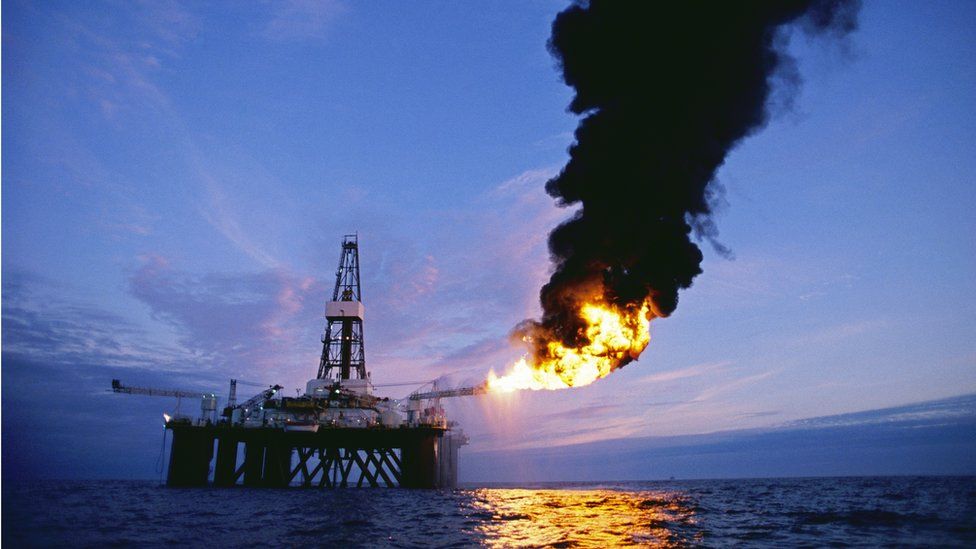
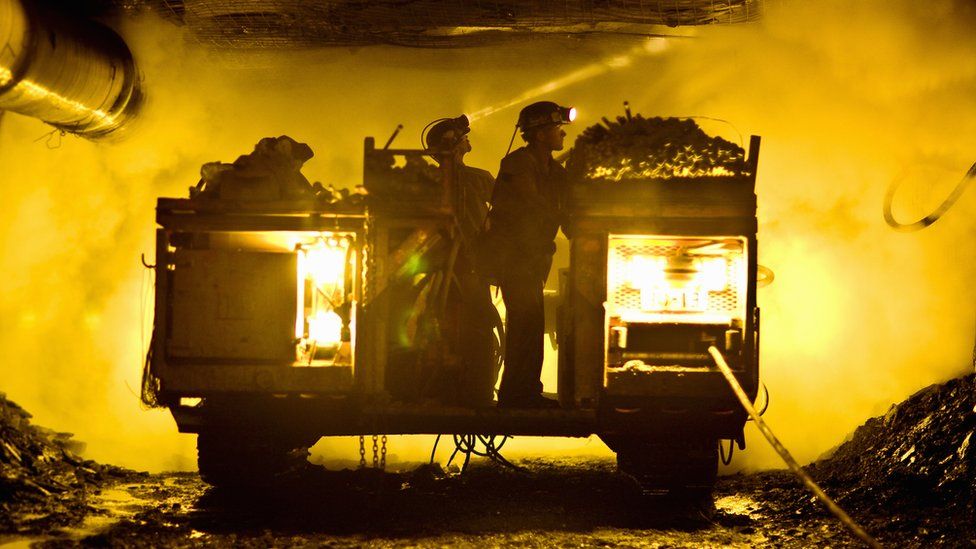
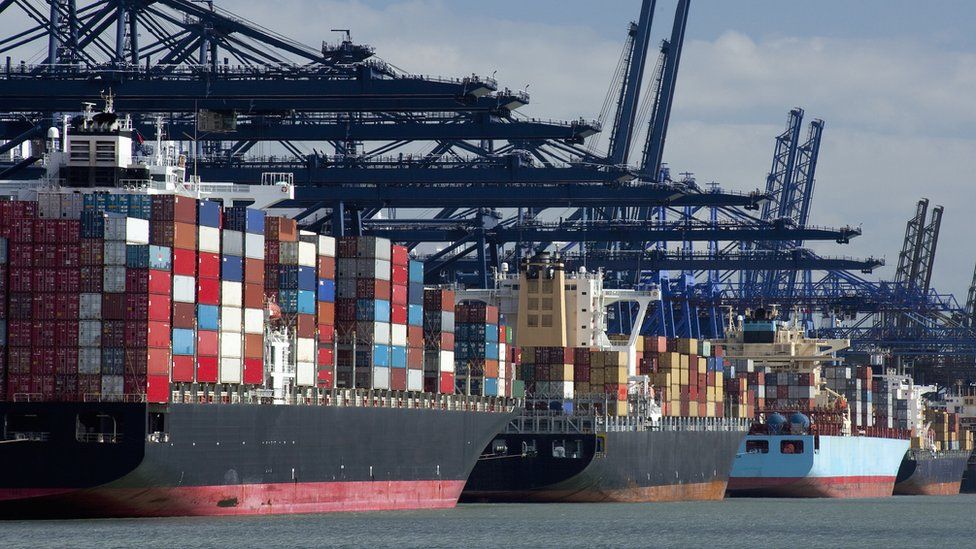



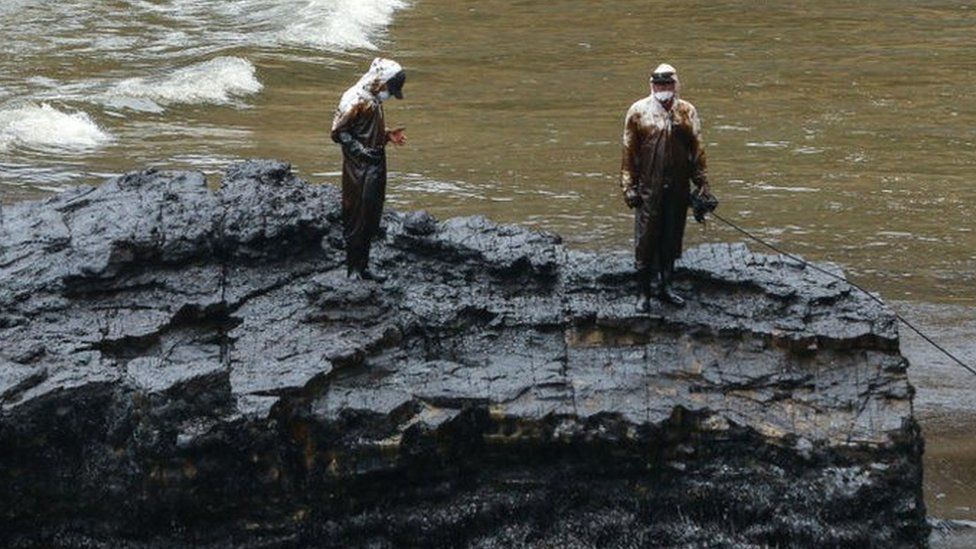
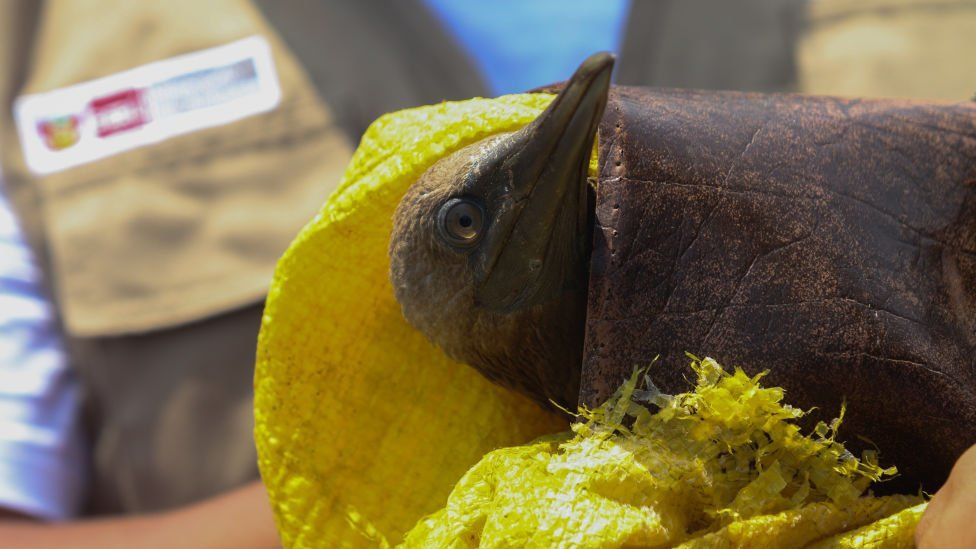
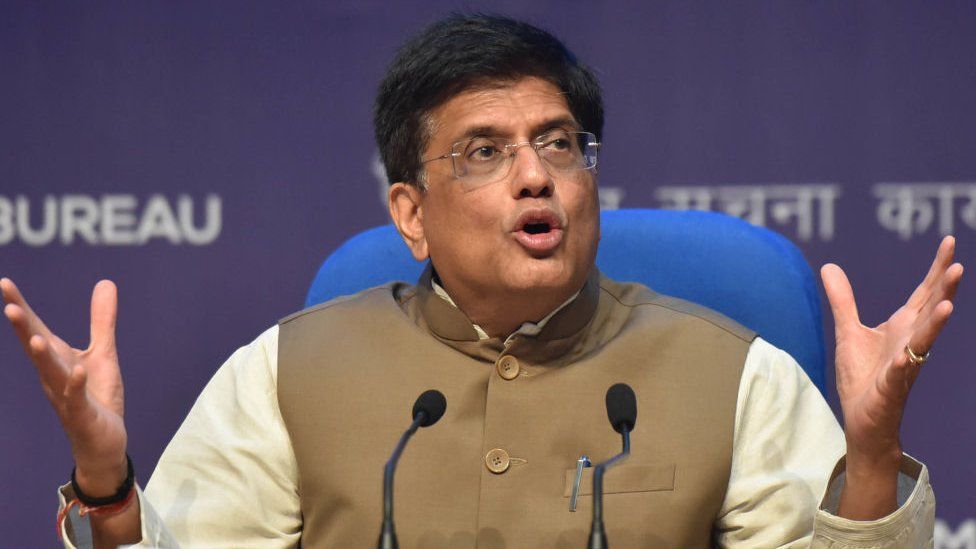

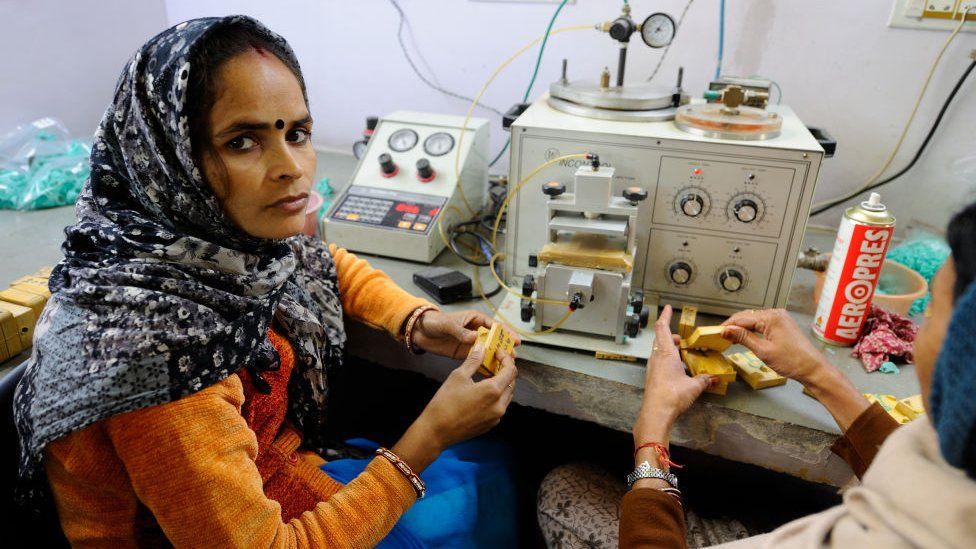
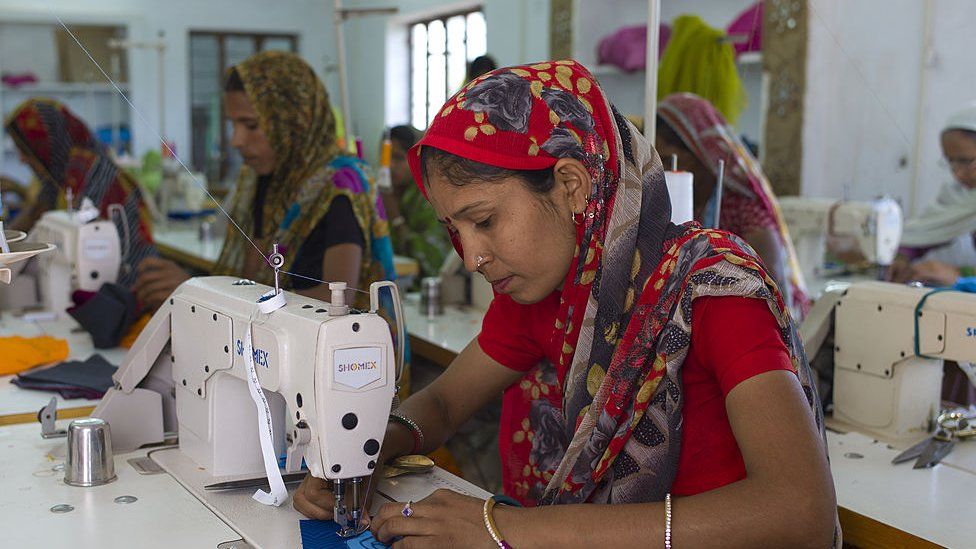

&w=707&quality=100)