The Ministry of Employment and Labour Relations (MELR) has urged the public to disregard reports circulating in the media suggesting that it is disbursing some amount of money as relief package to Ghanaians.
The said amount was being reported as a cushioning package in the fight against the COVID-19 pandemic.
This follows reports on social media and other media outlets entreating the public to log into a website (https://bit.ly/Ghana-funds) to access an amount of one thousand, two hundred Ghana Cedis (GHc1,200.00) as a relief from Government to sustain the Ghanaian public during the COVID-19 crises.
The purported amount was to be disbursed by the Ministry.
However, a statement issued on Monday by the Public Affairs Unit of the Ministry and copied to the Ghana News Agency, said the purported reports were false, and therefore, should be disregarded by the public.
“The Ministry wishes to inform the general public that it is not in charge of any such disbursement. It is being perpetrated by fraudsters and should be disregarded.â€
The statement also urged the public to take note of the only website operated by the Ministry that is: www.melr.gov.gh to avoid falling victim of such reports.
Officials of the Western Regional branch of the Ghana Immigration Service together with the Police and the Bureau of National Investigations have intercepted 18 illegal migrants in the Aowin Municipality of the Western North Region.
This brings the number of interceptions and repatriation of illegal migrants by the Ghana Immigration Service in the Western Region to a total of 190, since the closure of the country’s borders.
The latest operation, led by the Aowin Municipal Commander of the Ghana Immigration Service, Deputy Superintendent of Immigration (DSI) Francis Kofi Apaw, arrested two Nissan Caravan mini busses with registration numbers GX 2137-17 and AS 1899-17, which were en-route to Kumasi.
Assistant Inspector Moses Akakpo, the Western Regional Public Relations Officer of the Immigration Services in a press release, said the intelligence-led joint operation, which took place on Friday, May 1, 2020, at about 0920 HRS, resulted in the arrest of 17 Burkinabes and an Ivorian, bringing the total to eighteen 18.
He said the suspects, all males, were aged between Seventeen 17 and Fifty-Five 55 years according to the information retrieved on their ID cards.
Assistant Insp. Akakpo said investigations conducted after their arrest, proved that all the suspects had entered the country through an unidentified illegal route at Sewum in the Aowin Municipality of the Western North Region.
According to him, the illegal migrants have since been repatriated after an emergency meeting with security heads of the Municipality.
He said, “At the said meeting, a unanimous decision to see to the immediate repatriation of these illegal ECOWAS migrants through the Sewum Border Post was arrived at”.
He added that the Western Regional Command of the Ghana Immigration Service was committed to ensuring the continuous maintenance of optimum security within the various entry points in the Region.
He appealed to all well-meaning people of the Western Region, especially the leadership of the communities dotted across the Borderlines, as well as transport operators to assist by volunteering useful information in that regard.
The country’s borders have been closed since the first two cases of the COVID-19 pandemic were recorded in early March this year.
Michael Yaw Gyato, Member of Parliament (MP) for Krachi East Constituency in the Oti Region has distributed over 60,000 cartons of agrochemicals to farmers in the Constituency.
He said the agrochemicals were estimated at GH¢98,400,00 and procured through the One- Million Dollar per Constituency programme, initiated by President Nana Addo Dankwa Akufo-Addo.
Mr. Gyato said because the people were predominantly farmers, it was imperative to give them needed support with farm inputs that would help boost their farming activities.
The Member of Parliament admonished the famers not to politicize the gesture and also called on them to guard against vote buying in this electioneering year.
He urged them to ensure proper application of the chemicals to get good yield – harvest more to generate income for themselves and also to reduce the country’s food import bill.
The beneficiaries said they were grateful to the MP for his continuous strong support and promised to correctly apply the chemicals to achieve the intended purposes.
They told the Ghana News Agency that the chemicals could not have come at a better time because farming activities had started.
Member of Parliament for Assin Central, Kennedy Agyapong, has stated that he never went to university up until 1993. According to the outspoken politician, at that time, he did not see the need to attend university because he was making lots of money.
Kennedy Agyapong added that he changed his mind and went to the university in 1993 after the former flagbearer for the New Patriotic Party (NPP), told him in 1992 that he (Ken Agyapong) was going to a strong businessman.
In a video sighted by YEN.com.gh, Kennedy Agyapong recounted that during the 1992 general elections then flagbearer for the NPP Prof. Albert Kwadwo Adu Boahen had called some party top shots to his airport residence where he was arranging his ministerial positions because he was sure he was going to win the elections. Kennedy Agyapong said when it got to his turn, Prof. Adu Boahen tapped him on the shoulder and told him that he was going to be a strong businessman.
“When he got to me, he tapped me on the shoulder and said young man you are going to be a strong businessman. I didn’t know what the man had seen in me. When he made that statement, I thought he had offended me. I thought he didn’t give me a ministerial position because I had not attended university. After we lost the election in 1992, I decided that me too I will attend university,” Kennedy Agyapong said in an interview on YFM. He disclosed that Prof. Adu Boahen’s comments motivated him to go attend Fordham University in the US in 1993.
YEN.com.gh earlier reported that Kennedy Agyapong had said that there are some Ghanaian artistes that he enjoys listening to a lot. According to the Ghanaian business mogul, anytime he hears a song from these artistes, he gets excited. He added that he likes listening to Ghanaian music and also some selected foreign ones.
The Attorney-General of the Federation and Minister of Justice, Abubakar Malami, has announced that the Nigerian government on Monday received $311,797,866 of the Abacha loot.
The money was repatriated from the United States and the Bailiwick of Jersey after a recent agreement.
Malami, in a statement by his Spokesman, Umar Gwandu, said the amount increased from over $308 million two months ago to $311 million because of the interest that accrued.
He noted that the litigation process for the return of these assets titled “Abacha III†commenced in 2014, while the diplomatic process that culminated into the signing of the Asset Return Agreement in February.
“This Agreement is based on international law and cooperation measures that sets out the procedures for the repatriation, transfer, disposition and management of the assets.
“In line with the 2020 Asset Return Agreement, the fund has been transferred to a Central Bank of Nigeria Asset Recovery designated account and would be paid to the National Sovereign Investment Authority (NSIA) within the next fourteen days.
“The NSIA is responsible for the management and execution of the projects to which the funds will be applied,†the Minister has said.
Malami said the money will be used to fund projects including Lagos Ibadan Expressway, Abuja Kano Road, and the Second Niger Bridge.
To ensure transparent management of the returned assets, the Nigerian government promised to, “engage a Civil Society Organisation, who has combined expertise in substantial infrastructure projects, civil engineering, anti-corruption compliance, anti-human trafficking compliance, and procurement to provide additional monitoring and oversight.â€
The president of Shatta Movement Empire, Shatta Wale has donated a whopping Ghc10,000 to the family of missing highlife & hiplife artiste, Castro aka the Destroyer.
Shatta Wale announced the donation on Instagram live when renowned music producer, Jay Q, engaged him in a conversation about the exploits of Castro.
According to the dancehall king, the money is to support the family since Castro left without a trace. The artiste went missing 6 years ago together with his girlfriend, Janet Bandu, after they went skiing at Ada estuary with Black Star general captain Asamoah Gyan.
He expressed his profound love for Castro and his craft, sighting his “Boneshaker†tune as his favourite song from the legend.
A German-born Ghanaian doctor, Prof. Dr Marylyn Addo is deeply involved in the global search for a vaccine to tackle the coronavirus pandemic.
The virologist, who has already made a name for herself in the production of vaccines for some infectious diseases and Ebola as well as MERS in 2012.
Aged 50, she is the head of the German Center for Infection Research (DZIF) and also the Head of Infectious Disease at the University Medical Center Hamburg-Eppendorf.
Her exploits may not be surprising as her Ghanaian father was himself a physician.
She had her medical education at the University of Bonn and later earned a diploma at the London School of Hygiene and Tropical Medicine, during which she researched Candida albicans transmission between HIV-positive people.
Born in Germany, she moved to Boston in 1999 where she specialised in infectious diseases at the Harvard Medical School.
At Harvard, Prof Addo was made an Assistant Professor at the Ragon Institute and served as Associate Director of the Harvard University Center for AIDS Research.
Her impeccable records and achievements came to light last week as governments and scientists scrambled to find a cure to the disease which has killed more than 240,000 across the world.
Prof Addo was recently celebrated by the German Ambassador to Ghana, Christoph Retzlaff who tweeted;
“Prof Marylin Addo is a German Ghanaian doctor in Hamburg/ Germany. She and her team are at the forefront searching for a vaccine against #Coronavirus.â€Â
In 2014, she was involved with the development of the preparation RVSV-EBOV, an experimental recombinant live vaccination that can be used against the Ebola virus disease.
Prof. Addo worked on a recombinant live vaccination to tackle the Middle East Respiratory Syndrome (MERS) vaccination and her vaccination was supported by the Coalition for Epidemic Preparedness Innovations.
The European Commission has launched a global effort to fund research on a vaccine and other tools to combat the coronavirus.
It is hosting a virtual conference for world leaders and philanthropists in a bid to raise €7.5bn (£6.6bn; $8.3bn).
European leaders have pledged support for the fundraising plan in a joint open letter.
The Brussels-led initiative was set out by European Commission President Ursula von der Leyen on Friday.
The European Commission has pledged $1bn to fund research on a vaccine. Norway has matched the European Commission’s contribution, and France has pledged €500m, as have Saudi Arabia and Germany. The US, China and Russia are not taking part.
In her opening remarks at the summit, Ms von der Leyen said everyone must chip in to finance “a truly global endeavour”.
“I believe 4 May will mark a turning point in our fight against coronavirus because today the world is coming together,” she said.
“The partners are many, the goal is one: to defeat this virus.”
UK Prime Minister Boris Johnson, another co-host of the conference, said the “more we pull together” in sharing expertise, “the faster our scientists will succeed” in developing a vaccine.
Mr Johnson, who spent three nights in intensive care with Covid-19, was to confirm the UK’s pledge of £388m for vaccine research, testing and treatment during the conference.
Along with the European Commission, the conference is being co-hosted by the UK, Canada, France, Germany, Italy, Japan, Norway and Saudi Arabia.
Italian Prime Minister Giuseppe Conte, French President Emmanuel Macron and German Chancellor Angela Merkel are also among those who have signed up to the initiative.
In the open letter published in weekend newspapers, the leaders said the funds raised would “kickstart an unprecedented global co-operation between scientists and regulators, industry and governments, international organisations, foundations and healthcare professionals”.
“If we can develop a vaccine that is produced by the world, for the whole world, this will be a unique global public good of the 21st Century,” they added.
At the same time, the signatories gave their backing to the World Health Organization in the face of US criticism of its handling of the outbreak.
The UN says a return to normal life will only be possible with a vaccine.
Dozens of research projects trying to find a vaccine are currently under way across the world.
Even with more financial commitment, it will take time to know which ones might work and how well.
Most experts think it could take until mid-2021, about 12-18 months after the new virus first emerged, for a vaccine to become available.
One of the few African countries without any reports of coronavirus has now confirmed its first case.
Comoros’ President Azali Assoumani said the patient is a man who came in contact with a French-Comorian national who’d recently travelled to France before being hospitalised on April 23.
His condition is improving and the authorities are tracing those who came into contact with him, President Assoumani said.
Lesotho is the only remaining African country that hasn’t reported any cases.
There have been reports of people dying from “respiratory distress” in Comoros, but the president last week said no case had been registered in the country’s three islands.
Ohemaa, the ex-wife of Richard Brown, popularly known as Osebo has opened up about her reported affair with Bishop Daniel Obinim.
Ohemaa has spoken for the first time clearing the air about her relationship with Obinim.
As earlier reported, Osebo, in an interview, claimed that Obinim was the reason behind his divorce with Ohemaa.
According to Osebo, Obinim was sleeping with Ohemaa when he was married to her.
Now, Ohemaa who is a TV presenter has finally reacted by setting the records straight.
In a video sighted by YEN.com.gh, Ohemaa confirmed that she was Obinim’s church member.
Ohemaa narrated that she got to know Obinim because of the suffering she was going through in her marriage as Osebo’s family was tormenting her.
The mother of two stressed it was her driver who told Osebo that she had been sleeping with Obinim.
Ohemaa recounted that her driver asked her for financial assistance and she wasn’t able to assist him with the money and it led to the false accusation.
Watch the video below:
She indicated that from that point, her driver turned against her and started speaking ill about her to Osebo.
Ohemaa pointed out that she never slept with Obinim as it is been claimed by her ex-husband.
Peugeot carmaker PSA (PEUP.PA), one of many car companies around the world to have been hit hard by the coronavirus, said on Monday that it would gradually restart production at sites over the course of this week.
PSA said a first wave in the partial resumption in industrial activity would take place between May 4 and May 11, with French sites gradually re-starting from May 11 onwards.
The company added it would have reinforced health and safety measures at sites, such as checking the temperatures of employees, and supplying masks, hydro-alcoholic gel and protective glasses, and social distancing between staff.
How do you find love when you’re stuck at home? The coronavirus pandemic has made that challenging, to say the least. But millions of single Americans are finding ways.
Some have attempted socially distanced outings, others have turned to steamy video chats, while still others have tried international online dating as people adapt the art of seduction to the virus era, and dating apps are finding ways to adjust.
In normal times, Kate Earle, a 30-year-old teacher in Washington, finds it fairly easy to connect in person with men she finds attractive at first glance on Tinder.
“But because that’s not an option, the conversations are going on much longer,” she said.
Earle said those conversations also seem to veer more often toward “online sexual interaction” but she added that, she has never considered breaking lockdown rules for an in-person date.
“I think everybody is a little bit sexually frustrated, and I am as well,” she said.
“And there’s definitely been temptation to meet up with somebody … but I think it’s not so much that I would actually do it.”
Masks off
The Great Lockdown has driven single people around the world to online dating apps in record numbers.
Tinder saw an all-time high in usage on March 29, with more than three billion “swipes,” and the number of messages exchanged on rival app Bumble increased 26 percent over a two-week period in March in the United States.
The lockdown order came at the worst possible time for Beatrice, who was newly separated from her husband and living in the US capital.
A 30-something French woman, registered with several online dating apps in mid-March.
Since then, she has found herself bending some of the confinement rules to improvise outings with her new acquaintances.
“I was a bit nervous,” she told AFP. “It’s hard walking with a mask on your face when you’re meeting someone for the first time. So you end up taking off the mask after five minutes.”
After a few disappointing outings during which she observed physical separation rules, she met someone she liked — “and we ended up not respecting social distancing,” she admitted.
‘The cherry on top’
In the new normal created by the virus crisis, video dating is fast becoming the norm. While Tinder lacks this option, both Hinge and Bumble offer virtual dating.
Zach Schleien launched his Filter Off app for video speed-dating just before the pandemic struck, and at first only a few thousand users signed up. But that changed quickly.
“It’s like a 7,000 percent increase in less than a month,” said the 29-year-old New Yorker, who believes online dating is the best way to assess possible romantic interest before meeting in person. “It’s been nuts.”
So, can a romantic candlelight dinner with a stranger, on a laptop screen really work?
Dating coach Bela Gandhi cited the example of one client, a woman in her 60s, “who has fallen in love with somebody in the last six weeks, and they’ve only met via Skype.”
Gandhi, who founded the Smart Dating Academy website, says video can make it easy to develop “emotional intimacy.”
“And then it’s just the cherry on top of the sundae once you meet in person.”
But Alexandra Solomon, a clinical psychologist on the faculty of Northwestern University outside Chicago, doesn’t see it quite that way.
“Thank goodness we have video dating for now,” she said, but added: “When we come out of this, I really want people to go back to meeting across the table over a glass of wine or a cup of tea and having that old-fashioned organic experience of each other.”
Meanwhile, for those interested in exploring possible matches abroad, Tinder is keeping its Passport feature free until Monday.
After that, “matches will remain, so no one has to say goodbye to anyone new they’ve met,” said a Tinder spokesman.
Founder of Peace Watch Ghana, Nyankopah Daniels has expressed disappointment in the government for failing to crack the whip on the Electoral Commission (EC) for organizing a workshop in violation on the ban on all gatherings including workshops, conferences, funerals and other activities.
Speaking on Nyankonton Mu Nsem on Rainbow Radio 87.5Fm, she posited that the government endorsed the workshop by the EC because if it had not, the EC officials should have been sanctioned.
Madam Nyankopah Daniels was reacting to the arrest of some four Akuapem sub-chiefs for flouting the social distancing rule and other protocols put in place to fight the coronavirus outbreak.
On Friday morning, Kingmakers of Akuapem initiated processes to install their new Okuapehene.
But the chiefs were later arrested for violating the ban on social gatherings.
Commenting on the arrest of the chiefs, Madam Nyankopah Daniels said she feels disgusted that officials of the EC are walking free after holding a workshop, which to her was in clear violation of the protocols in place.
To her, the government cannot pick and choose those to arrest as it deems fit.
She wants everyone who breaks the law to be punished in equal terms without any form of favoritism.
“The government is supporting the activities of the EC even though it is against the protocols in place. What authority did the EC boss Jean Mensa have to organize a workshop when there is ban on forms of gatherings?”
The activities of the EC she noted confirms the allegations by the opposition that the electoral body was in connivance of the government to rig the election.
Describing Jean Mensa as Nebuchadnezzar, she advised her to take steps to diffuse the tension she has created to ensure transparency and accountability.
Ghanaian counselor Cyril George Carstensen Lutterodt, popularly known as Counselor Lutterodt has shared his opinion about the recent rants of Ghanaian comic actor, Funny Face on social media.
The Public Relations Officer of the 3Music Awards, Obed Boafo has described the event, which came off on Saturday, May 2 at the Fantasy Dome, as an excellent one.
The 3Music Awards was held virtually, with no audience at the auditorium as the organisers complied with a ban on public gatherings announced by President Akufo-Addo as part of measures to combat coronavirus.
According to Obed Boafo, although there were a few technical challenges such as breaks in transmission, the show was awesome.
“We had a great night, it was everything we had imagined. The performers came good on the night, which was such a beauty. The feedback we have seen and heard so far points to something well done. This was completely novel to us but we managed to live up to expectation,â€Â he told Graphic Showbiz.
Rapper Sarkodie was the big winner on the night, scooping five awards including the big one Male Act of the Year. His other awards were HipHop/ Hiplife Artiste of the Year, Fan Army of the Year, Best Rapper and Best Collaboration.
Highlife musician Kofi Kinaata’s chart topping song Things Fall Apart helped him win two awards; Song of the Year and Highlife Song of the Year.
Other winners on the night include KiDi who won Male Vocalist of the Year, Kuami Eugene who took home Highlife Act of the Year and Celestine Donkor who won Gospel Song of the Year.
Samini won Live Performer of the Year, Shatta Wale won Digital Act Of the Year and Stonebwoy won Reggae/ Dancehall Act Of the Year.
The event, which started at 8 p.m. had KiDi as the opening act and he put up a splendid show playing the piano and singing songs such as Enjoyment, Adiepena, Thunder and Sugar Daddy. Ojorley singer Cina Soul joined him on stage to do a rendition of Enjoyment.
Other artistes who performed on the night included Daughters Of Glorious Jesus, Bosom P-Yung, Kweku Smoke, Jupitar, Gasmilla, Krymi and Mr Drew.
The third edition of the 3Music Awards, which was telecast live on Joy Prime and on social media, had a great stage set up.
The hosts of the event were Multimedia’s Jay Foley and Naa Ashorkor. Comedians Clemento Suarez and OB Amponsah, made the night interesting with their antics.
General Electric Co (GE.N) said on Monday it was planning to cut its global workforce in the aviation unit by as much as 25% this year, including both voluntary and involuntary layoffs, due to business disruptions caused by the COVID-19 pandemic.
The job cuts are part of the $3 billion in cost and cash savings announced by the company last month.
Ghanaian attacker Kevin-Prince Boateng has eulogised his former teammate Zlatan Ibrahimovic, saying playing with the Swedish star was very easy for him.
Boateng played with Ibrahimovic while the striker was in his prime at AC Milan.
In two seasons for Milan, the Swede scored an impressive 42 goals in 61 Serie A games to help fire his team to the title – a feat that clearly impressed Boateng.
“It was easy for me to play with Zlatan, I immediately understood it,” said Boateng, “he would open up lots of fields on the field and give me the passes I dreamed. He was an excellent friend. If he didn’t get the ball well or made a mistake in front of the goal, then he would criticize everyone. But he would do it in a tutorial way. ”
In two spells with Milan, Boateng scored 11 goals in 85 appearances.
Spanish La Liga outfit Deportivo Alaves have recorded income surplus following the sale of Ghana international Mubarak Wakaso to Chinese club Jiansu Suning.
Wakaso left Alaves for the Chinese Super League side for 4 million Euros, an amount that has cushioned the financial statement of the Spanish club.
Despite the adverse financial impact of cornavirus on clubs, Alaves have profited from the sale of some key players including Wakaso.
The club also sold Guillermo Maripán to AS Monaco for about 15 million Euros to offset some of the club’s expenses.
There were also loan deals for Antonio Sivera Salvá, John Alberto Guidetti and Jorge Franco.
Deportivo Alaves made 76.12 million Euros from players transfers and loans, helping the club to a favourable financial statement.
Mubarak Wakaso made 18 La Liga appearances for Alaves before his departure in the winter transfer window.
The Ketu South Municipality in the Volta region is topping confirmed cases of the coronavirus outbreak in the Volta region with a total number of twenty-one cases.
On April 12, 2020, some twenty-seven travellers from the neighbouring country Nigeria, who unlawfully entered Ghana through Aflao were intercepted by the security officials and quarantined accordingly and out of which six of them were tested positive of COVID -19, after which seventy-six persons were discovered in contact tracing.
On April 30, 2020, five new positive COVID-19 cases were recorded from the seventy-six contact persons, this brings to the total number of eleven cases within the Municipality only.
On May 1, 2020, the additional seventy-two test result was released with ten being new positive COVID-19 cases recorded in the area, this brings the total to twenty-one cases of Covid-19 recorded in the Ketu South, this making the Municipality becoming a hotspot of the coronavirus pandemic in the Volta region.
However, out of this number, twelve are foreign nationals who are in quarantine and nine are Ghanaians who are contacts to the original six positive cases.
According to the Municipal Chief Executive (MCE) for the Municipality, Hon. Elliott Agbenorwu, the affected persons are “all the people are in stable condition”, he urged residents in the Municipality to be vigilant and obey the various protocols saying “I continue to urge all of us to remain calm and let’s continue to observe the protocols and follow the other measures instituted by the President and the Ketu South Municipal Assembly” he noted in a press release dated Friday 1 May, 2020.
What are the Municipal Authority and individuals doing to contain the virus?
The Municipal Health Directorate led by the MCE, Elliott Agbenorwu has since the outbreak of the virus in the Municipality donated thousands of nose masks to residents, intensified education in remote and urban areas, benefited from both nationwide and regional fumigation exercise, partial lockdown of markets and encouraging residents to adhere to protective measures.
On Thursday, April 30, the Assembly led by the MCE distributed some 5,000 pieces of nose masks and 3,000 bottles of hand sanitizers to market centres, commercial motorbike riders, lorry stations, public and private institutions within the municipality in order to curb the spread of the pandemic.
The MCE has appealed to hotel managers and owners within the Municipality to co-operate with the Assembly and allow their facilities to be used as quarantine centers, which is yet to yield a result.
The Municipal Security Taskforce and the Ghana Immigration Service in the Municipality have successfully intercepted over seventy foreign nationals who have tried to illegally enter the country. Some residents in the area, especially in Aflao and Denu are swiftly adhering to the various protective measures, many commuters and market women now uses at least a nose mask or hand sanitizer, whilst fear and uncertainty has forced more people to stay at home, streets of Aflao which looks very crowded with all sort of human activities now looks dead.
The governing New Patriotic Party (NPP)’s Parliamentary Candidate for the Ketu South constituency, David Tiano has on Wednesday 22 April 2020 donated food and some assorted items worth Gh¢40,000 to the aged in the constituency.
The items included bags of corn, 1500 packs of mosquito coil, 750 boxes of matches among the rest were distributed to 30 persons in each of the 39 electoral areas in the Ketu South constituency.
What are challenges in the Municipality?
Despite the interventions to discourage the spreading of coronavirus in the area, residents, especially the less privileged people and petty traders have since been struggling to survive.
President Nana Addo Dankwa Akufo-Addo has ordered the closure of the country’s entry points, which affected Aflao the main entry point to Togo and other West Africa countries within the Municipality.
Residents, hawkers and petty traders have no business to do, few traders who goes out to toil amidst the border closure are commonly returning home with low sales. Transport services have increased lorry fares while one can barely find a transit for domestic travels.
Aflao to Accra transport fare was initially GHS 27.00 but the transport unions now charge between GHS 40.00 and GHS 45.00 meanwhile the State Transport Company (STC) has not changed its lorry fare.
Commercial Motorbike riders popularly known as Okada riders in Pokrom, a farming Community in Akuapem South District on Monday Morning flouted the public gathering restriction order by trooping to bury a deceased colleague.
The Okada riders numbering over 35 were seen ridding roughly in the community and in procession heading to the cemetery for the burial without observing social distancing principles.
The deceased Okada rider reportedly died in a fatal accident.
Amaadi Daniel Ahwireng Assembly Member for the area said the Unit Committee members in the community have been trying to restrict the riders but to no avail.
Eastern Region has recorded 30 new Confirmed cases of Coronavirus as of May 2, 2020.
Fanteakwa North, Denkyembour, Akuapem North, Lower Manya Krobo, Nsawam, and Asuogyaman Districts have known districts that have recorded cases of Covid-19 in the region.
The latest update by GHS indicate a surge in the Covid-19 cases in Ghana has risen to 2169 with 18 deaths and 225 recoveries.
Due to the Coronavirus pandemic, President of Ghana Akufo Addo has imposed restriction on public gathering. Private burials are however allowed with people numbering not less than 25.
Defender of Ghanaian descent Alexander Djiku says he intends to stay at Strasbourg after one year with the French Ligue 1 side.
Djiku, who was born in the French city of Montpellier to a Ghanaian father and a Senegalese mother, was recruited from Caen last summer.
While his contract runs until 2023, the Ghanaian wants to honour his commitment and is not looking elsewhere this summer.
In an interview with Telefoot, the 25-year-old defender spoke of his future. He was clear and reassured the supporters of Strasbourg. According to his words, Djiku will stay in Alsace for at least one more season.
“I am very well in Strasbourg, and there is very little chance of me leaving this summer. To see me start next season in the Racing jersey would make sense,” he said.
For his first season, Djiku was a real satisfaction. He has become essential in the defensive sector of coach Thierry Laurey.
Joe Addo, a former Ghana Black Stars and Hearts of Oak central defender, has made a stunning revelation about legendary Abedi Pele and Tony Yeboah (Yegoala).
He said the duo discharged their national team duties without taking winning bonuses and per diem.
According to the former Berekum Chelsea relations manager, the former Olympic Marseille and Eintracht Frankfurt men went the extra mile to provide financial support to the rest of the team from their purses occasionally.
He hailed the gesture of the two as highly commendable.
“In my time at the national team, Abedi Pele and Tony Yeboah never took their winning bonuses and per diems. They always wanted their share to be distributed among the rest of the team,†he told Joy Sports.
Addo added, “They even gave us money on top and because of that we wanted to die for them on the pitch. They had families they could have given the money to but they gave it to us instead. We knew that we will get money from them even before the administrators pay us.
Former winner of the Stars of the Future Talent show, Irene Logan in a recent submission revealed that she never had the chance to see her father.
Speaking to Stacy on her Restoration Program, Irene Logan indicated that just 3 months after her birth, her father died.
What made it a very bad year for her mother was that, her brother too died and she stated that the pain was very unbearable for her mother.
Irene Logan further stated that her father loved music whiles her mother was a big gospel musician in Liberia during the time she was born.
She said her mother opted to stay in Ghana because at the time she used to travel to minister and when she once came to Ghana to minister at the Action Chapel.
The general overseer of the Action Chapel, Archbishop Duncan-Williams knew her mother so during the civil unrest in Liberia, he asked that her mother together with her children should be brought to Ghana and that is who they finally settled in Ghana.
34-year-old Odehye Kwadwo Kesse has finally completed all customary rites and has ascended the Ofori Kumah Stool as the new Okuapehene with the stool name, Oseadeyo Kwasi Akuffo II.
He succeeds the late Oseeadeyo Addo Dankwa III who died in 2015 after being on the throne for over 41 years.
After going through the various installation processes last Friday, May 1, the new Okuapehene was sworn-in on Sunday at a closed-door ceremony under tight security with respect to the public gathering and social distancing law.
All five Divisional Chiefs of Akuapem including Adonteng, Gyaase, Kronti, Nifa and Benkum were present at the ceremony where the new Okuapehene swore his oath to them and they also swore their allegiance to him as tradition demands.
Since 2015 after the demise of the late Okuapehene, Oseadeyo Addo Dankwa III, fierce litigation over who to succeed him ensued round the Ofori Kumah Stool.
While the Abrewatia of Sakyiabea Royal House, whose turn it was to nominate a successor to the stool, had nominated then Odehye Kwadwo Kesse to the kingmakers, the Okuapehemea (Queen mother) had unilaterally appointed her preferred candidate from the same Sakyiabea House and installed him as Chief.
Uncomfortable with the development, the Abrewatia, Madam Lily Nana Agyeman petitioned the Eastern Regional House of Chiefs to ascertain whether or not it is the Okuapehemea who should nominate a candidate to the throne.
After three years of legal tussle, the Judicial Committee of the Regional House of Chiefs ruled that it is the Abrewatia of every Royal House who has the mandate to nominate a candidate to the Ofori Kumah Stool and not the Queen mother.
The Judicial Committee, therefore, annulled the Queen’s choice and ordered him never to parade himself anywhere as Chief of Akuapem.
Following the judgement given, majority of the kingmakers of Akuapem, eight in number, went ahead to start traditional processes and installed the Abrewatia’s candidate, Kwadwo Kesse, as the next Okuapehene on Friday, May 1.
Subsequently on Sunday, May 3, the new Okuapehene was sworn-in, under the stool name Oseeadeyo Kwasi Akuffo II, in the presence of all personalities who matter in the Akuapem chieftaincy.
In his short address after the swearing of oaths, the new Okuapehene, Oseadeyo Kwasi Akuffo II, called for unflinching support from his Elders and the Divisional Chiefs.
He contended that as young as he is, he could not reign successfully without the support, directions and guidance of his Elders.
Oseadeyo Nana Kwasi Akuffo II said he would subject himself to the needed counsels and experiences from the Elders and would work hard at restoring unity and to advance development for Okuapeman.
He completed his senior high school education at the Presbyterian Boys SHS, Legon after which he went to further his education abroad. He currently holds a degree in Business Administration from the Westchester Community College, Valhalla in New York.
Ghana international and former Chicago Fire winger David Accam has pleaded with state broadcaster GTV Sports to telecast the CAF Confederation Cup final between Hearts of Oak and Asante Kotoko daily.
GTV Sports plus used the lockdown and post lockdown period to bring back some football memories by telecasting the maiden edition of the CAF Confederation Cup final between Kotoko and Hearts of Oak as well as other memorable games in the history of the country.
The station brought legends Bernard Dong Bortey, Amankwah Mireku, Yussif Chibsah, and Adjah Tetteh to re-live the CAF Confederation Cup moment in their studio.
The aftermath of the show saw many people particularly Hearts of Oak fans use social media to troll their rivals(Asante Kotoko) for missing out on the maiden edition of the CAF Confederation Cup trophy.
David who joined the trolling on Twitter wrote” It all tears and despondency for the followers of Asante kotoko†Face with tears of joy,Face with tears of joy@GTVSportsPlusTV please can you show this game every day.. @HeartsOfOakGHgood evening @CHIBSONY17″ David Accam now plays for Nashville SC after moving from Philadelphia Union and Columbus within the space of two years.
“It all tears and despondency for the followers of Asante kotoko†😂😂@GTVSportsPlusTV please can you show this game every day.. @HeartsOfOakGH good evening @CHIBSONY17
Hearts of Oak defender Larry Sumaila has revealed his admiration for former captain and club legend Amankwah Mireku.
The defender admits that the 2005/06 CAF Confederation Cup winner is his idol and wants to emulate the kind of success chalked by the right back during his playing days.
“Amankwah Mireku is my idol. Although my style of play is not reminiscent of his but I really adore him. He is a fresh breath of fresh air, a dynamic figure who makes an immediate impact with his spiky personality. I’m not surprised that he excelled as the captain of the the club,” he told kickgh.com
“He went through strings of frustrating injuries and difficult times in his career but as soon he makes a return to the pitch, he reminds everyone of his quality. I think he was one of the best in his generation,” he added.
Larry joined the Phobians last year before the start of the NC Special competition and has since made his way into the starting line up of coach Edward Nii Odom.
As the nation is told to stay at home, defiant protesters against HS2 have chosen to self-isolate at makeshift camps in under-threat forests. Dozens are living in ancient woodlands during lockdown – spending the days up trees – where they say they have been isolating as though they are a single, large household.
The camp at Crackley Woods, near Kenilworth, Warwickshire, consists of a roundhouse built from hay bales and covered in tarpaulin, a field kitchen, about 20 small tents and a handful of camper-vans. The landowner gave the protesters permission to set up here before lockdown, and they have continued to do so over the past six weeks.
Supporters bring food and care packages and leave them at the edge of the camp. It was originally made up of locals from the Stop HS2 campaign group, but they have been joined by people from other organisations including Extinction Rebellion.
It is possible to walk along a public bridleway which brings you through the woods to the edge of the camp, and to the fences which have been erected by HS2 contractors to keep the protesters out. On one side are mobile CCTV camera units called Armadillos, as well as HS2 staff wearing PPE who are patrolling the boundary to check for incursions.
On the other side, the protesters have built tree-houses and a gantry so they can see what’s happening over the fence. Nearly all of the trees that should have been felled have been taken down over the past few weeks. The campaigners took to the treetops to try to stop the work going ahead, and a number were arrested by enforcement officers.
One, known as Quercus – the Latin for oak – is a former tree surgeon. He spends most of the day in a tree-house 30ft up. He told me when he saw the trees coming down he was “overcome with grief” and he was willing to be arrested again to try to stop the trees being felled.
He has been at the camp for several weeks and says he feels it is important to continue the fight as the country remains in lockdown.
“Even before we had the pandemic and lockdown, there were a vast minority of people that were able to come out and do protests like this – certainly far fewer people now,” he said.
“People’s democratic right to protest and have their say has been taken away at this time.”
Another protest group, called HS2 Rebellion says it has blockaded more than 20 other sites around the UK from London to Crackley Woods.
One member said in an online video: “Our nurses and doctors are without PPE, yet these workers can continue because the Government deems them key workers.
“Our real key essential workers are without PPE because of projects like this.”
A statement said the group “wish to emphasise the public resistance to HS2’S destruction of our ancient woodland and wildlife habitats, and HS2’S failure to stop construction works at multiple sites breaching HSE Covid guidelines and exposing their workers, protesters, families and communities to unnecessary risk during a national health crisis”.
Campaigners claim 108 ancient woodlands along the route, which has been given the go ahead by the government, are under threat. HS2 said that was an exaggeration.
Paul Faulkner, chief executive of Greater Birmingham Chambers of Commerce, is a big supporter of the project. He believes it has very strong green credentials and says a tiny fraction of the country’s ancient woodland will be felled.
“HS2 is aiming to be the world’s most sustainable high-speed railway. It’s got a whole host of pro-environmental measures that it’s introducing, and that’s before we get on to the massive economic benefits that HS2 is going to bring.”
Stop HS2 has argued the economic benefits have never been proven and they believe the money would be better spent after lockdown ends.
Chief executive of HS2 Mark Thurston said 11,000 people from 2,000 companies were already working on the project and he expected that to double over the next two years.
“We see HS2 now as having an important role in getting the economy back on its feet,” he said.
The Department for Transport said in a statement: “While the government’s top priority is rightly to combat the spread of coronavirus, we should not delay work on our long-term plan to level up the country.”
Matt Bishop grew up in Coventry and visited Crackley Woods when he was a child. He has become one of the camp’s leaders. He still hopes the project – which has been given the green light by the government – can be halted.
“We need to show the government that you cannot just draw a line across the middle of the countryside. That’s just not acceptable,” he said.
The first train is not expected to roll into the new Birmingham Curzon Street station until 2029.
The Roads Minister says government has initiated various road projects to be undertaken in Kumasi so as to give the Ashanti Region a major facelift.
These projects, according to Kwesi Amoako Atta will include the construction of four interchanges at Suame, Oforikrom, Airport Roundabout and Ahodwo Santasi all in the capital city of Kumasi.
“By the time we finish the new roads together with all the interchanges, and also improve the road network generally in Kumasi, Ashanti Region will be a place to visit because people will be comfortable when driving.
“Not only will there not be traffic but the roads will also be smooth and people can enjoy this within the next two to three years.â€
Speaking at a press brief in the regional capital Monday, the Minister said plans are far advance for the commencement of the over 150 projects which have all been sourced to local contractors.
“Four major interchanges are going to get started within Kumasi. And we have gone far with the process. We also have a bypass program in the pipeline. This will be done to create additional travel options for commuters.
“A number of roads outside Kumasi are also being undertaken, there are about 156 projects that are currently being done in the Ashanti region. And these projects are being done by strong contractors in our nation.â€
Mr Amoako Atta also revealed that phase two of the Abuakwa-Tanoso stretch on the Kumasi-Sunyani road will be started by the end of May.
According to the Minister, although phase one remains uncompleted, work on both will run concurrently.
“We have done 56% of the job and the rest will be done. We know how important this project is to residents and Ghanaians. The EPA authorities have improved the contract for phase two and work shall commence before the end of May.
“I want to assure people that the government of Nana Akufo-Addo is tackling the Sofoline interchange and we shall within the next one to two months finish the first phase and since we have approval from EPA, the next part will also begin.â€
Residents of Abuakwa and its environs in the Atwima Nwabiagya District of the Ashanti Region took to the streets in September last year to demonstrate against the delay in the execution of the Sofoline interchange project and other road-related matters in the district.
They complained of the heavy traffic jam as a result of the delay in the project.
Started in August 2007, the project that spans some 11 kilometres is yet to be completed.
Nigerian Prophet and Televangelist, TB Joshua has returned from the mountains, where he said he was going to pray without ceasing so God can reveal himself to him, with a powerful message.
Upon his return, the head of the Synagogue Church of All Nations said God is angry the government has decided to suspend church activities owing to Covid-19.
He explained that the ban on churches and lockdown has put the souls of people in serious, enslavement and anger. He made this known while delivering a sermon via Facebook Live.
He said;
“Our leaders are doing good for the world but what you are trying to protect us from is not as dangerous as what you are putting us into.
That spirit that has entered your life spirit of fear, spirit of addiction, spirit of violence be cast out! Be cast out! In the name of Jesus!â€
Police in the eastern region are unclear about charging chiefs who flouted law restricting social distancing directives to install the new paramount chief of Akuapem.
The police are yet to take a decision on the chiefs who were arrested and granted bail last Friday.
The Akropong District Police Commander, Stephen Tetteh told Joy News he is not certain when the case will be dealt with.
The police in the region arrested 18 persons persons over the weekend in separate incidents for violating the ban on social distancing.
On Friday, April 1, the Akropong district police command apprehended four chiefs for their roles in the installation of the new Akuapehene, Oseadeyo Kwesi Akuffo.
The chiefs, according to the police disregarded the ban on public gatherings and social distancing directives.
The police a day after the arrest of the chiefs also apprehended 14 persons for performing puberty rites at Sawer, a suburb of Somanya for same offences.
For breaching the same ban on social gatherings, they will be put before court on Tuesday, May 5.
But the police are not certain when the Akropong suspects will be charged and prosecuted.
Explaining their rationale, Superintendent Stephen Tetteh said, “they are chiefs and have a huge following so if we are not careful the situation will get out of handsâ€.
However, the Somanya District Police boss, DSP Isaac Otsin, told Joy News, the Somanya suspects would be put before court on May , 5.
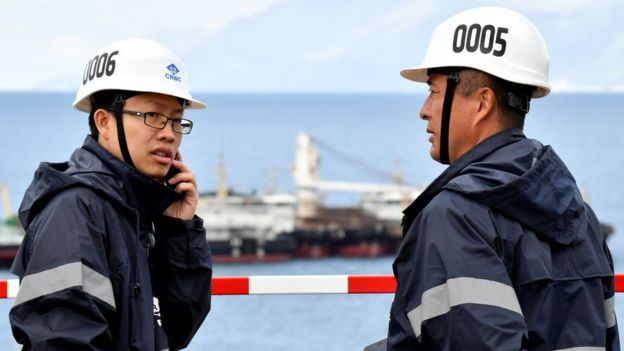
The authorities in south-west Nigeria’s Osun State have arrested 27 illegal miners, including 17 Chinese nationals and a local traditional ruler.
A government official said they would all be prosecuted and made to pay for the environmental damage they had caused.
Thousands of people work in informal mines across Nigeria which has significant mineral deposits including gold.
Correspondents say successive governments have failed to regulate the sector as they have focused on the oil industry.
Last year the authorities banned much of the gold mining activity in Zamfara State over concerns that it was linked to an escalation of violence and kidnapping in the region.
The Mexican government has auctioned off the villa of the late drug lord Amado Carrillo Fuentes.
The Mexico City home sold for more than $2m (£1.6m) and the proceeds will go to Mexico’s public health service and its fight against coronavirus.
Carrillo Fuentes, who was known as “Lord of the Skies”, died in 1997 after botched plastic surgery.
He gained his nickname for his knack of smuggling large quantities of drugs in his private fleet of airplanes.
Amado Carillo Fuentes was one of the most powerful Mexican drug lords in the 1980s and 1990s. Born in the northern state of Sinaloa, he was the nephew of one of the founders of the Guadalajara cartel, which he soon joined.
Carillo Fuentes learned to fly planes and would later use his knowledge of planes and flight routes to expand the drug-smuggling business to the skies, earning him his nickname.
He began by smuggling marijuana but later switched to smuggling mainly cocaine from Colombia through Mexico and on to the US in his fleet of aeroplanes.
He took control of the Juárez cartel after killing his boss, Rafael Aguilar Guajardo, and was known for his ruthlessness.
He kept out of the public eye and was rarely photographed. In 1997, he checked into a Mexican hospital under a false name to have plastic surgery to alter his appearance and evade capture.
He died as a result of the botched operation, which included liposuction.
The authorities released gruesome photos of his body to counter rumours he was still alive. But the battered state of the body meant he was almost unrecognisable and their release only fuelled the rumours.
The surgeons who performed the operation were killed some months later. Their bodies, which showed signs of torture, had been stuffed into oil drum and covered in concrete.
Amado Carrillo Fuentes’ brother, Vicente, allegedly took over leadership of the Juárez cartel after Amado’s death.
Vicente Carrillo Fuentes was arrested in October 2014 and is awaiting sentencing in a jail in Mexico.
The two-million-dollar home
Under the slogan “buy goods to do good”, Indep, the Mexican government body created to return the proceeds of crime to the people, put up the Mexico City home for auction on Sunday.
There was only one bidder for the luxurious property in the Ãlvaro Obregón neighborhood and the sum he offered fell short of the $2.17m Indep had hoped to sell it for.
The house measures 3,500 sq m (38,000 sq ft) and boasts a swimming pool, a jacuzzi, a bar, and a wine cellar, as well as extensive gardens.
Apart from Carrillo Fuentes’ home, there were another 143 lots for sale at the auction held at the presidential palace.
Among them were more than 70 cars, five planes, five other homes and more than 100 items of jewelry.
In total, the six-hour-long auction raised more than 111m Mexican pesos ($4.5m; £3.6m) the highest amount an Indep auction has so far fetched, the government body said in a statement.
British Prime Minister Boris Johnson will set out his plan to ease a nationwide coronavirus lockdown next Sunday, media reports said, as new guidance emerged on how to maintain social distancing in workplaces.
Stay-at-home orders imposed in late March are up for review on Thursday in Britain, one of the worst hit countries in the COVID-19 pandemic, but the government has already said the measures will be eased only gradually.
New guidance drawn up with company bosses and trade unions, seen by the BBC and the Financial Times, suggests office workers will be encouraged to stay at home for months to avoid overwhelming the transport system.
But where staff must come in, companies are being urged to stagger shifts, stop people sharing desks or stationery, step up hygiene measures, keep staff canteens shut and restrict the number of people in lifts.
Shop or bank branch workers dealing with customers must be protected by plastic screens, according to the recommendations, although there is no detail on what kind of protective equipment other employees might require.
Britons are currently being told to stay at home unless they need to work, buy essentials or take daily exercise, but they must stay at least two metres away from other people.
Maintaining this social distancing while restarting the economy brings huge problems.
“It won’t work in aviation or any other form of public transport, and the problem is not the plane, it is the lack of space in the airport,” said the chief executive of London’s Heathrow airport, John Holland-Kaye.
“Just one jumbo jet would require a queue a kilometre long,” he wrote in the Daily Telegraph.
A total of 28,446 people have now died after testing positive for COVID-19 in Britain, almost on a par with Italy, Europe’s worst affected country.
An “intermediate host” animal passed the coronavirus from wild bats to humans, evidence suggests.
But while the World Health Organization says that the research points to the virus’s “natural origin”, some scientists say it might never be known how the first person was infected.
It remains unclear whether this host animal was sold in the now infamous Wuhan wildlife market in China.
But the wildlife trade is seen as a potential source of this “spillover”.
Researchers say the trade provides a source of species-to-species disease transmission, which caused previous outbreaks and has been blamed for this pandemic.
The WHO’s technical lead on Covid-19, Dr Maria Van Kerkhove, told the BBC’s Andrew Marr show: “We were preparing for something like this as it’s not a matter of if, it is a matter of when.”
The spillover
Infectious disease experts agree that, like most emerging human disease, this virus initially jumped undetected across the species barrier.
Prof Andrew Cunningham, from the Zoological Society of London, explained: “We’ve actually been expecting something like this to happen for a while.
“These diseases are emerging more frequently in recent years as a result of human encroachment into wild habitat and increased contact and use of wild animals by people.”
The virus that causes Covid-19 is far from the first case of such spillover. It joins a murky list of household name viruses – including Ebola, rabies, Sars and Mers – that have originated in wild bat populations. Some of the now extensive body of evidence about bat viruses, and their ability to infect humans, comes from searching for the source of the 2003 outbreak of Sars, a very closely related coronavirus.
It took until 2017 for scientists to discover the “rich gene pool of bat Sars-related coronaviruses” in a single cave in China.
What viruses needed in order to infect a new host is the ability to “unlock” and get inside a cell to replicate. And, like Sars, the ancestral bat coronavirus appears to have held the human cellular key. “In the case of Sars-CoV-2 the key is a virus protein called Spike and the main lock to enter a cell is a receptor called ACE2,” explained Prof David Robertson, a virologist from the University of Glasgow.
“The coronavirus is not only able to fit that ACE2 lock, “it’s actually doing this many times better than Sars-1 does”, he said.
That perfect fit could explain why the coronavirus is so easily transmitted from person to person; its contagiousness has outpaced our efforts to contain it. But bringing the bat virus to the door of a human cell is where the trade in wildlife plays an important role.
Buying, selling, infecting
Most of us have heard that this virus “started” in a wildlife market in Wuhan. But the source of the virus – an animal with this pathogen in its body – was not found in the market.
“The initial cluster of infections was associated with the market – that is circumstantial evidence,” explained Prof James Wood from the University of Cambridge.
“The infection could have come from somewhere else and just, by chance, clustered around people there. But given that it is an animal virus, the market association is highly suggestive.”
Prof Cunningham agreed; wildlife markets, he explained, are hotspots for animal diseases to find new hosts. “Mixing large numbers of species under poor hygienic and welfare conditions, and species that wouldn’t normally come close together gives opportunities for pathogens to jump species to species,” he explained.
Many wildlife viruses in the past have come into humans via a second species – one that is farmed, or hunted and sold on a market.
Prof Woods explained: “The original Sars virus was transmitted into the human population via an epidemic in Palm civets, which were being traded around southern China to be eaten.
“That was very important to know because there was an epidemic in the Palm civets themselves, which had to be controlled in order to stop an ongoing process of spillover into humans.”
In the search for the missing link in this particular transmission chain, scientists have found clues pointing to mink, ferrets and even turtles as a host. Similar viruses were found in the bodies of rare and widely trafficked pangolins, but none of these suspect species has been shown to be involved in this outbreak. What we do know is that our contact with and trading of wild animals puts us – and them – at risk.
“Trying to make sure that we are not bringing wildlife into direct contact with ourselves or with other domestic animals is a very important part of this equation,” said Prof Wood.
Regulating the global trade in wildlife, though, is far from straightforward.”
“There have been various campaigns to ban all trade in animals and all contact with wildlife,” said Prof Wood. “But typically what you do then is penalise some of the poorest people in the world. In many cases, by introducing measures like that you drive trade underground, which makes it far harder to do anything about.”
The WHO has already called for stricter hygiene and safety standards for so-called wet markets in China. But in many cases – such as the trade in bushmeat in Sub-Saharan Africa, which was linked with the Ebola outbreak – markets are informal and therefore very difficult to regulate.
“You can’t do it from an office in London or in Geneva; you have to do that locally on the ground in every country,” added Prof Wood.
Dr Maria Van Kerkhove agreed: “It’s very important we work with population and people who are working at the animal/human interface – people who work with wildlife.”
What that will be is a truly global and highly complicated effort. But the Covid-19 outbreak appears to have shown us the cost of the alternative.
Scientists have discovered a microbe that completely protects mosquitoes from being infected with malaria.
The team in Kenya and the UK say the finding has “enormous potential” to control the disease.
Malaria is spread by the bite of infected mosquitoes, so protecting them could in turn protect people.
The researchers are now investigating whether they can release infected mosquitoes into the wild, or use spores to suppress the disease.
What is this microbe?
The malaria-blocking bug, Microsporidia MB, was discovered by studying mosquitoes on the shores of Lake Victoria in Kenya. It lives in the gut and genitals of the insects.
The researchers could not find a single mosquito carrying the Microsporidia that was harbouring the malaria parasite. And lab experiments, published in Nature Communications, confirmed the microbe gave the mosquitoes protection.
Microsporidias are fungi, or at least closely related to them, and most are parasites.
However, this new species may be beneficial to the mosquito and was naturally found in around 5% of the insects studied.
How big a discovery is it?
“The data we have so far suggest it is 100% blockage, it’s a very severe blockage of malaria,” Dr Jeremy Herren, from the International Centre of Insect Physiology and Ecology (icipe) in Kenya told the BBC.
He added: “It will come as a quite a surprise. I think people will find that a real big breakthrough.”
More than 400,000 people are killed by malaria each year, most of them children under the age of five.
While huge progress has been made through the use of bed nets and spraying homes with insecticide, this has stalled in recent years. It is widely agreed new tools are needed to tackle malaria.
How does the microbe stop malaria?
The fine details still need to be worked out.
But Microsporidia MB could be priming the mosquito’s immune system, so it is more able to fight off infections.
Or the presence of the microbe in the insect could be having a profound effect on the mosquito’s metabolism, making it inhospitable for the malaria parasite.
Microsporidia MB infections appear to be life-long. If anything, the experiments show they become more intense, so the malaria-blocking effect would be long-lasting.
When can this be used against malaria?
At the very least, 40% of mosquitoes in a region need to be infected with Microsporidia in order to make a significant dent in malaria.
The microbe can be passed between adult mosquitoes and is also passed from the female to her offspring.
So, the researchers are investigating two main strategies for increasing the number of infected mosquitoes.
“It’s a new discovery. We are very excited by its potential for malaria control. It has enormous potential,” Prof Steven Sinkins, from the MRC-University of Glasgow Centre for Virus Research, told the BBC.
This concept of disease control using microbes is not unprecedented. A type of bacteria called Wolbachia has been shown to make it harder for mosquitoes to spread dengue fever in real-world trials.
During the middle of the 19th century, Africa was referred to as the “Dark Continent†by the United States of America journalist turned explorer Henry Morton Stanley because little was known about the mysterious land itself. Little did they know that Africa was not just a single country but a whole continent with fifty-five countries and over thousands of tribes and languages spoken by the people.
The western world did not regard Africa and its people because the African people were not able to write their own history. This notwithstanding, made the Europeans felt that there was no civilization in Africa. But in the actual sense, Africa was already civilized in its own special ways. The African had their own system of doing things before the arrival of the Europeans on the African continent.
Upon their arrival on the African continent, the Europeans had no knowledge that the people of Africa had an education. They perceived that the people of Africa had no education and so they preempted the African continent with western education. But the fact remains that, the people of Africa had education systems in every country.
Additionally, every country on the African continent had what was called the visual language or proto writings. In Ghana, for instance, the Ghanaians (Gold Coast) were using symbols in their communications. Some of these symbols were Gye Nyame, Sankofa, Akonfona and many more. The Nigerians, Angolans and the Congolese also had similar symbols they also used in their communications. They were also considered as African alphabets and could be used in forming sentences as well.
Taking the Gikuyus for example, they also had a wonderful system of education. Mothers and nurses were primarily the teachers. It was believed that, before a child grew up, the child must be taught certain things including songs, and the history of their ancestors, tribes, and families. These teachings transcended to knowing almost everything about the community in which they lived. So, even though they had no formal education, they had their own special way of keeping their history and preserving them.
In the Timbuktu (Mali) culture, scriptures, manuscripts, and the teachings of Islam were stored on scrolls, tied and kept for years. One can also conclude that African had a way of learning mathematics as well. Between Congo and Rwanda, dated about 1500 years ago was a bone called “Ishango Bone†which was used for calculation and writing. Today, this form of calculation has found its way in the western world and no credit whatsoever is giving Africans. This tells the world that, the people of Africa had a sophisticated way of education.
Another aspect that depicts that the African continent could never be described as a dark continent is medicine. Before the Europeans arrived with their European way of curing diseases, the people of Africa had their own system of curing the same diseases. In the Gikuyu country, for example, the people had clear ideas as to the nature of the disease and which treatment was required in various cases. Some diseases were due to natural causes, controllable by medication; and a wide range of herbs was used for medical purposes. Other diseases were beyond ordinary control and called for magical treatment.
Africans believe that herbs can cure all kinds of diseases. It was however believed that the medicines produced by the western countries were all made from some specific herbs which have been diluted with other chemical substances hence reducing its natural contents from curing a disease instantly. In Ghana for example, when a person broke the leg, the herbalist will as a form of an experiment to show that his client could be saved, will shatter the leg of a hen, and use herb on it. If the hen was healed, it’s them believed that his client would also be healed by the same herb.
These methods of healings worked perfectly and are still relevant to all Africans in this 21st Century.
Civilization in Africa before the arrival of the Europeans took different forms and one of those is communication. Though there were no formal means of communication, the people of Africa had a very unique way of communicating.
Unlike today, there are various means of communication like television, radio, Facebook, WhatsApp, and others, it was not so during that juncture. However, if the ruler or the elders of a community wanted to communicate to their subjects, a messenger was sent to sound a gongon or drums. When the people heard these instruments sounded, they knew there was a meeting being called by the elders and they followed to the venue in that line. In the Nile valley civilization, a stone was used as a bell because it sounded like a bell and so whenever it was sounded, the people knew what it was meant for.
Governance is one of the important institutions Africans cherished most before the Europeans arrived on the continent. Before the inception of the European role which suppressed the African system of government, Africans were already practicing the monarchical system of government. The people were governed by chiefs and kings. Without official police and military officers, the chiefs were able to assemble built bodied men who were referred to as guards. The chiefs presided over disputes and resolved them amicably. Moreover, the chief also made sure that people who were found guilty were punished to sever as a deterrent to others. Taking the Ghana empire, for example, the empire was ruled by the Asante king. The Asante kingdom was so powerful that all the people were submissive to the authorities and this has continued till today.
The Americans and the Europeans believe that Christopher Columbus was the first person to complete four voyages across the Atlantic Ocean but it is vividly clear that this happens to be inaccurate. Because Africans could not write their own history, the fact has been obliterated that an African was the first person to take such a voyage with a canon sponsored by the then Malian king, Mansa Musa. Religion, Agriculture, Trade and Architecture all depict that Africans already had civilization before the arrival of the Europeans on the African continent.
From the above discussions, we can all agree that most of the things Africans practiced before the Europeans arrived have resurfaced in the western world today. Many people from the western world travel to some African countries in such of some of these things which they thought did not even exist. It has come to light that, the western world erred in describing Africa as a dark continent. Africa was already civilized before the American journalist turned explorer arrived on the African continent because what he came to do Africa had already been done by some Africans. Lack of written history by Africans culminated in the description of Africa as a dark continent by the western world.†Until the lion learns how to tell its own story, the hunter will forever remain the protagonist.â€
Disclaimer : “Opinions expressed in this article are the sole responsibility of the author(s) and do not in any way reflect those of backend.theindependentghana.com. Our outfit will hereby not be liable for any inaccuracies contained in this article.â€
The coronavirus pandemic is forcing the US Supreme Court to adopt some extraordinary changes.
Over the next two weeks, America’s highest court will hear court arguments over the phone for the first time in its history. Audio from the proceedings will also be live-streamed.
Most lawyers will be making their cases from the comfort of their homes – though the government’s lawyers will be in the office of the Solicitor General, a few blocks from the court.
And in a nod to formality, they’ll wear their usual formal attire during the proceedings.
Several high-profile cases are scheduled to go ahead, including one about President Trump’s financial records.
Covid19 pandemic is still on the rise since it outbreak in China which has gone a long way to hit countries worldwide. According to John Hopkins University as at 22:25 GMT, 27/04/2020 the world recorded 3,034,801 total confirmed cases, 210,551 deaths from the disease. Ghana is one of the countries hit, recorded 2,169 total confirmed cases, 18 deaths according to Ghana Health Service as of the same date and time.
His Excellency President Nana Addo Danquah Akufo-Addo as part of his efforts to fight this deadly virus have been giving the country a regular press update on our situation as a country and necessary steps and decisions taken to win the fight. These speeches are much appreciated by the Ghanaian populace.
However, the content gets criticized whenever there are gaps or lack of clarity on some of the policies, interventions, and directives propounded.
Criticism in the midst of the crisis should be constructive, that is the only way it can be helpful to this course. I have found a little virus which can become deadly as well if not managed properly. This virus in few words is the President’s’ explanation or reasons given for the deaths recorded by the Ghana Health Service. This information is privy to him anyway but does he have to necessarily tell us?
Reasons why I think its unnecessary
Let’s do a quick throwback, On the 27th March 2020 , The president in his speech said “Four (4) persons, who had tested positive for the virus, but were aged and had other serious, underlying medical conditions, have lost their lives. May their souls rest in perfect peace.”
On the 5th of April, He said; “Two (2) persons are moderately ill, and five (5) persons, as I said before, have lost their lives.”
In his recent speech, that is his Eighth, 26th April 2020, He made this statement as he sort to give hints on why there is a need to strengthen the health system; “Whilst maternal, new-born, adolescent health and nutrition remain our top priorities, we must pay increased attention to chronic, noncommunicable diseases such as heart diseases, diabetes and asthma, which have proved to be the common risk factors for the eleven (11) deaths we have recorded from the virus.
The president in his addresses purports to spread calm by telling us that those with the underlying medical conditions he listed are those at risk and are those who have died from the disease. It is fair but unfortunate because of the following;
1. There is a greater number of people who have at least one of the underlying conditions; heart disease, diabetes, asthma, hypertension, cancer etc. According to WHO; cardiovascular disease (CVD), cancer, diabetes, and chronic respiratory disease, and reduction in suicide mortality rates NCDs collectively caused 41 million deaths worldwide in 2016, equivalent to 71% of all global deaths.
So in his quest to boost the morale of the general populace he is in turn killing the spirit of those with such conditions which constitutes quite a number.
2. It is also not founded that all those recovered are people who do not have any of the underlined conditions. If people in this category are not given hope of getting recovery, you may end up speeding the toll the virus can have on them if they contract it which could lead to more deaths.
A documentation by the WHO on the 27/03/2020 recorded Dr Hans Kluge who answered a question put before him: What is the psychological impact of this disease on the elderly?
“Regarding older people and also those with underlying health conditions, having been identified as more vulnerable to COVID-19, and to be told that you are very vulnerable, can be extremely frightening and very fear-inducing. The psychological impacts for these populations can include anxiety and feeling stressed or angry. Its impacts can be particularly difficult for older people who may be experiencing cognitive decline or dementia. And some older people may already be socially isolated and experiencing loneliness which can worsen mental health.” As at now most people do know it all has to do with the immune system but the constant reminder by the president in his effort to calm nerves is also increasing fear in others. 3.The Ghana Health Service since the start of the spread of the virus until a week ago puts out situational update but do not add in detail why deaths were recorded even though they have adequate information. If it were that important , wouldn’t they have? Does it really make any difference if details of information were given out?. Most leaders around the world leave updating of covid19 cases to the appropriate authorities. In another angle, he doesn’t explain how people do recover or how they catch the virus, should deaths should be any different. 4. Backed by science and data as the president uses for most of his decisions, the age and medical conditions he placed in the context are also not entirely accurate. Over the world, ages do not really matter. There have been deaths in all ranges of ages. Likewise there are people who do not have any of the underlined conditions whom have also died. No group of people are susceptible to the disease. 5. As we have not being able to contain the virus since it keeps spreading to new places, it will be quite irresponsible to paint a picture in a way that seems to mean everything is under control. Not to be a prophet of doom but what if case counts increase drastically? Definitely that will mean much more factors will or can cause more deaths. And if it does, will he update us on what amounted to those deaths? Certainly not.
I am strongly of the view that there is no need for the update on the cases recorded, be it total cases confirmed, total recovery and number of deaths. But to be fair, he has been doing it from day one. The intention behind putting out reasons for the deaths might be good but the adverse effect is extremely great and cannot be overlooked. Everyone is joining hands to help fight covid19. The enemy is the virus ,not one another.
Our anxiety and fears should be acknowledged and not be ignored, but better understood and addressed by individuals, communities and governments,†Dr Hans Kluge.
This is my little way of supporting the course. As little of a problem it may look could silently act like a virus by working on the mental health of people which could help increase deaths. The mind is powerful and I think the idea to omit that portion won’t take anything away from him.
By: Dzorlevo Bright
Email: bsmasher74@gmail.com
Disclaimer : “Opinions expressed in this article are the sole responsibility of the author(s) and do not in any way reflect those of backend.theindependentghana.com. Our outfit will hereby not be liable for any inaccuracies contained in this article.â€
Some 19 Burkinabe nationals have been arrested at the Savelugu inland post in the Northern Region for entering Ghana illegally.
They have subsequently been repatriated.
According to the Ghana Immigration Service (GIS), the Burkinabe nationals were onboard an OA transport vehicle with registration number GT 8242-19 en route to Accra when they were arrested.
A statement from the GIS said the Burkinabes who used unapproved routes into the country attempted to bribe the men at the post to allow them to continue their journey, but the officials rejected the offer.
“Upon interrogation, it was revealed that they used unapproved routes into the country. Each of them offered GHS100 to the officers to be allowed to continue their journey. This, the officers rejected,†the release disclosed.
“The officers asked that they are sent back. The driver of the vehicle was very cooperative with the officers. Due to the fact that some Ghanaian nationals who were also onboard the vehicle could be inconvenienced, a call was placed to the manager on the OA Transport company, named Kingsley, who arranged for another vehicle from Tamale to convey them back to the Paga Border post to be repatriated.â€
Ghana has closed its land, sea, and air borders and is not allowing the movement of public buses except it is transporting goods and cargo.
The move is part of efforts to stop the spread of Coronavirus in the country, yet some foreigners continue to illegally find their way into Ghana.
Since the border closure, about 40 Burkinabe nationals have been arrested in the Northern part of the country using unapproved routes to enter the country.
Confirmed cases of coronavirus in Ghana
As of Saturday, May 2, 2020, Ghana had recorded a total of 2,169 cases with 18 deaths 229 recoveries.
Regional breakdown
The Greater Accra region still leads as the region with the highest number of confirmed cases followed by the Ashanti Region and the Eastern Region.
European leaders have pledged support for a plan to raise €7.5bn (£6.6bn; $8.3bn) to find a coronavirus vaccine in a jointly signed open letter.
The Brussels-led initiative was set out by European Commission President Ursula von der Leyen on Friday.
The promises come ahead of an online pledging conference on Monday.
UK Prime Minister Boris Johnson will urge countries to “pull together” to meet “the most urgent shared endeavour of our lifetimes”.
Mr Johnson, who spent three nights in intensive care with Covid-19, will also confirm the UK’s pledge of £388m for vaccine research, testing and treatment.
The conference will be co-hosted by the UK, Canada, France, Germany, Italy, Japan, Norway, Saudi Arabia and the European Commission.
The UN says a return to normal life will only be possible with a vaccine.
Italian Prime Minister Giuseppe Conte, French President Emmanuel Macron and German Chancellor Angela Merkel are also among those who have signed up to the initiative.
In the open letter published in weekend newspapers, the leaders said that the funds raised would “kickstart an unprecedented global co-operation between scientists and regulators, industry and governments, international organisations, foundations and healthcare professionals”.
“If we can develop a vaccine that is produced by the world, for the whole world, this will be a unique global public good of the 21st Century,” they added.
At the same time, the signatories gave their backing to the World Health Organization in the face of US criticism of its handling of the outbreak.
Dozens of research projects trying to find a vaccine are currently under way across the world.
The Nightingale Hospital in London is being “stood down” in the coming days.
The Abu Dhabi-owned ExCeL Centre in London’s Docklands was turned into a field hospital for coronavirus patients and opened on 3 April by Prince Charles via video link, a week after he had tested positive for Covid-19.
The BBC understands there are fewer than 20 patients being treated there at the moment and once they’ve been discharged, the UK government has confirmed that the 4,000-bed hospital will be placed on standby with staff and some equipment redeployed and redistributed.
In a briefing to staff, Charles Knight, chief executive of the new hospital, said: “Thanks to the determination and sacrifice of Londoners in following the expert advice to stay home and save lives we have not had to expand the Nightingale’s capacity beyond the first ward.”
Mr Knight added that the hospital would be “placed on standby, ready to resume operations as and when needed in the weeks and potentially months to come”.
Iran on Monday reopened mosques in parts of the country deemed at low risk from the novel coronavirus as it announced another 74 deaths from the disease.
Health ministry spokesman Kianoush Jahanpour said the new fatalities brought to 6,277 the total number officially recorded in Iran since it reported its first cases in mid-February.
That was a jump in deaths compared with 47 on Sunday, which was the lowest daily count that Iran has recorded in 55 days.
Another 1,223 cases of COVID-19 infections were recorded in the past 24 hours, Jahanpour said, raising the total to 98,647.
Mosques were allowed to reopen to worshippers in 132, or around a third, of Iran’s administrative divisions which are considered low-risk.
The country has started using a colour-coded system of “white”, “yellow” and “red” for different areas to classify the virus risk.
Worshippers have to enter mosques with masks and gloves, can only stay for half an hour during prayer times and must use their personal items, said the health ministry.
Mosques must also refrain from offering food and drinks, offer hand sanitisers and disinfect all surfaces, it said in a statement published by ISNA news agency.
According to Jahanpour, 79,397 of those hospitalised with the disease since Iran reported its first cases in mid-February have been discharged, while 2,676 are in critical condition.
He declared that Iran was among “top five countries in the world” with the highest number of recoveries, without elaborating.
Experts and officials both in Iran and abroad have cast doubts over the country’s COVID-19 figures, saying the real number of cases could be much higher than reported.
Shares in the US and Asia have risen on hopes that an experimental drug could help treat symptoms of Covid-19.
A leading US infectious disease expert said that early results of a clinical trial on anti-viral treatment remdesivir were “quite good news”.
Investors are betting the drug could help countries emerge from lockdowns aimed at curbing the outbreak.
Gilead Sciences, which is developing the drug, saw its shares rise by more than 5.5% New York trading.
White House health advisor Anthony Fauci said a National Institute of Allergy and Infectious Diseases’ (NIAID) study showed that the drug had a “clear-cut, significant, positive effect in diminishing the time to recovery” from the coronavirus.
Markets had already begun to rise after Gilead said preliminary indications from a remdesivir trial showed that it helped patients recover more quickly.
A potential medical breakthrough like this is seen as a key step towards governments being able to ease the tight restrictions they have imposed on the movement of people as they try to slow the spread of the infection.
Lockdowns across the world have frozen economic activity, led to hundreds of millions of people being put out of work and raised concerns of a long, deep global recession.
Shares also got a boost from a promise by the US central bank that it would continue to shore up the American economy against the impact of the pandemic.
At the end of its two-day monetary policy meeting, the Federal Reserve left key interest rates near zero, while Chairman Jerome Powell warned that the US economy would drop at an “unprecedented rate” in the current quarter.
But he also said growth would pick up as restrictions were lifted and vowed that the Fed would continue to support the recovery.
Japan’s benchmark Nikkei 225 was up by 2.1% and Australia’s S&P/ASX 200 was 2.4% higher.
That came on the back of strong gains for US stock markets. The Dow Jones Industrial Average closed 2.2% higher, the S&P 500 ended up by 2.7% and the Nasdaq gained 3.6%.
US President Donald Trump, has expressed optimism that there would be a Coronavirus vaccine by the end of 2020.
Trump speaking to Fox News hosts Bret Baier and Martha MacCallum inside the Lincoln Memorial on the National Mall in Washington, D.C. on Sunday, said the Coronavirus vaccine will come in 2020 while heaping praise on people willing to volunteer for clinical trials of the vaccine.
The US will have a COVID-19 vaccine
‘We think we’ll have a vaccine by the end of this year. And we’re pushing very hard. We’re building supply lines now and we don’t even have the final vaccine,’ Trump said. He pointed to Johnson & Johnson as one of such companies.
‘Many companies, I think, are close,’ he told the Fox News.
When asked if his hopes of an American company producing the vaccine first didn’t sound like his usual ‘America First’ rhetoric, and how he would feel if another country developed a successful vaccine first,
Trump answered, ‘I don’t care,’ ‘I really just want to get a vaccine that works,’I really don’t care. If it’s another country, I’ll take my hat off to them. We have to come up with a vaccine.’ the president said.
When asked if he was worried about people volunteering for vaccine trials, Trump replied; ‘No, because they’re volunteers,’ Trump said.
‘They know what they’re getting into,’ he added, calling those who sign up ‘good people.’
Trump also said he’ll like to see therapeutics, too, that would work to cure patients who have COVID-19.
‘I would rather have therapeutics, something to make people better, not a cure, at least a therapeutic,’ Trump said.
According to Trump the U.S. is working alongside Australia and the United Kingdom to develop a vaccine and said Prime Minister Boris Johnson, who became extremely ill from COVID-19 though he was going to die.
‘He thought it was over, it was vicious,’ Trump added.
The recent mass deaths reported in Nigeria’s Kano state have been linked to coronavirus by the head of the presidential task force.
Nasiru Sani Gwarzo told journalists that samples taken from bodies that were yet to be buried turned positive.
He said initial mapping showed that the virus may have spread as people visited the sick and attended burials.
“It is necessary for people of Kano to wake up from their slumber… this is a serious issue,” he was quoted as saying by local media.
The mysterious deaths were first mentioned by grave diggers who noticed an increase in burials at the cemetery. The Kano state government initially linked the deaths to underlying medical conditions.
The country has 2,558 confirmed cases of the virus, with Kano the second leading in the number of cases after the commercial city of Lagos.
Greece has always prided itself on its sunny weather, beaches and islands. And anyone familiar with the coast of Croatia will know that finding towel room on its increasingly crowded beaches is a challenge.
But the coronavirus pandemic threatens to ruin the summer season, so vital to the economies of both countries, even though they moved fast to stop the spread. Their proximity to Italy concentrated minds, as Covid-19 started spreading rapidly.
How did they react?
Croatia was on alert soon after news of the Covid-19 epidemic emerged from China.
The Institute of Public Health had published guidelines even before the arrival of a busload of tourists from Wuhan in late January.
Local media raised concerns that Chinese workers constructing the Peljesac Bridge on the Dalmatian coast might have returned from virus-affected areas in China.
In Greece, too, the government moved well before the virus reached its shores, as it saw infections spread in Italy. An ad-hoc scientific committee was set up with top epidemiologists, virologists and infectious disease experts.
Some accused the government in Athens of not just entrusting the handling of the pandemic to scientists, but of handing over responsibility too.
When did lockdown start?
The first confirmed Croatian case came on 25 February, almost a month after Italy and the UK. It involved a man who had been in Milan six days earlier to see the now-notorious Champions League match between Atalanta and Valencia.
The match has been linked to one of Italy’s biggest outbreaks – in Bergamo, where Atalanta are based.
The first confirmed case in Greece was recorded a day later than Croatia, on 26 February. And both countries reacted swiftly.
Greek Prime Minister Kyriakos Mitsotakis imposed tighter restrictions over a period of weeks and it was made clear that no exceptions could be made:
Greeks have since been allowed out of their homes only for essential work, buying food or walking the dog.
It became more difficult to enter Croatia immediately after its first case. Although an EU member, it is not yet part of the Schengen border-free area. So, despite protests from neighbouring Slovenia, it had no compunction about imposing “health checks” at border crossings.
By the end of February, a border queue of freight traffic stretched back for miles.
Restrictions tightened rapidly. Within two weeks, arrivals from 18 countries would find themselves confined to quarantine or self-isolation if they entered Croatia.
There were internal measures to match. Most commercial and cultural activity had ceased by mid-March. And on 23 March people were confined to their neighbourhoods unless they obtained an “e-pass” to travel.
Image copyrightGETTY IMAGESImage captionPublic transport has now resumed and shops have reopened as Croatia loosens its lockdown
Greek enforcement was strict too. More than 60,000 fines were issued for violating the lockdown which, according to Greek police, totalled €9,247,800 (£8.1m).
All this seems to have restricted the spread of Covid-19. Croatia’s death rate currently stands at 18 per million, while Greece’s stands at 13 per million.
How Greece handled Easter
One of the biggest challenges facing the Greek government came from the country’s religious tradition. According to Greek Orthodox ritual, priests offer holy communion using the same spoon.
Media captionGreek film directors confined by the pandemic made 10 short films in their homes
The Church of Greece’s leadership insisted for days that diseases could not be contracted from communion, which represents the blood and body of Jesus. Doctors and scientists immediately called on the Church to listen to science.
The prime minister intervened with an emotional, televised speech. “Personally, in recent days I felt the need to invoke my faith in order to draw strength and stand up to the challenges,” said Mr Mitsotakis. However, he said he had to “listen to scientists”. “What applies to public gatherings will also apply to churches.”
As a result, and with only a handful of hiccups, all church Easter liturgies took place behind closed doors.
Can they rescue summer?
Now Croatia and Greece are moving to a gradual easing of those restrictions.
For Croatia the problem is no longer how to keep foreigners out, but to bring them back in. About half of Croatia’s 20 million annual visitors arrive in July and August and tourism is responsible for at least a fifth of its economic output.
Those are the crucial months for Greece’s tourist industry too. This year’s motto, says Tourism Minister Haris Theocharis, is that Greece is coronavirus-safe.
The Greek economy had only just begun to recover from an eight-year financial crisis when the lockdown was imposed.
Image copyrightGETTY IMAGESImage captionGreeks have been able to get out and about again in the past week as the lockdown is eased
Tourism accounts for approximately 25% of Greek GDP and one in five jobs, so a new crisis is looming: 65% of Greek hoteliers say bankruptcy of their business is either “likely” or “most likely”, according to a study by the Hellenic Chamber of Hotels.
Greek scientists are working on health requirements for visitors, the tourism minister says. “The basic principles behind the new rules are that social distancing will be required, and that more frequent and different kinds of cleaning procedures are to be followed.”
In other words, hotel staff will be tested regularly to ensure tourists and Greeks themselves are protected.
Why Croatia needs open borders
Croatia needs co-operation from its neighbours, Slovenia in particular.
Slovenians rank second only to Germans in terms of the number of nights they spend in Croatia. If you travel by road from Northern Europe you have to cross Slovenia to reach the beaches of Istria, Dalmatia and the Kvarner Gulf.
The two countries’ tourism ministers met in Zagreb last week to sketch out a plan to allow Slovenians to travel across Croatia’s borders by the end of this month, with other nationalities following in June.
Czech travel agencies are keen to establish a “corona corridor” enabling quarantine-free travel to the coast, a plan warmly received by Croatia’s prime minister, Andrej Plenkovic. A survey in Austria too has indicated that people are still hoping to bask in the Croatian sun.
Uncertainty over air travel
With big questions over when holiday flights will resume, Greece too is initially looking for tourists who can reach the country by road.
It is currently focused on getting the EU to set common rules that would allow people to travel for holidays.
But if there is no consensus, Greece is prepared to go it alone, in order to “open up our economic activity as soon as possible and in a health-wise manner”, says Mr Theocharis.
“We will first see domestic tourism, then tourists from neighbouring countries, and then middle-distance countries and long-distance ones. Travelling by road will be safer initially than flying and we’ll see that kind of tourists earlier.”
Traditional markets like Germany, the UK and the US may well be replaced by countries that are both closer and have not been hit hard by the pandemic.
This may seem like an odd time to be thinking about holidays. But these are both countries with tourism-reliant economies and, having acted swiftly and thoroughly, a successful summer could be seen as a fitting reward.
Four alleged fraudsters are being tried in France, accused of conducting fake police checks on people’s permits to leave home during the lockdown.
The woman and three men allegedly posed as officers and robbed victims after asking them to produce the official form people must carry away from home.
It is believed they stole €25,000 (£22,000; $27,000).
The four, who are all Iranian nationals, are being tried as France prepares to ease its lockdown curbs.
ince 17 March, people across the country have only been allowed to leave their homes to go to work, shop, exercise, seek care or conduct urgent family business.
While out, they are required to carry a certificate stating the reason for their trip.
Police say the gang impersonated officers and approached people wearing face masks. After asking to see their victims’ forms, they allegedly searched bags and took whatever cash or valuables they could find.
In an interview with France Info radio, Police Commissioner Nathan Bauer said the suspects “did not speak very good French” and targeted foreigners.
He added that police had identified seven victims, and that €12,000 had been stolen from one of them.
The four are to be tried in the city of Meaux, east of Paris.
The coronavirus outbreak has been linked to about 25,000 deaths in France. But with falling numbers of new fatalities and cases, the government has announced plans to lift some restrictions from 11 May.