Author: Persis

  • Coronavirus lockdown: Sierra Leone ‘role model’ minister carries baby and holds Zoom meeting

    At first it looks like a cute Twitter picture to cheer us up in these uncertain times.

    But as the man sharing the image of his 10-month-old daughter tied to his back during an online meeting was Sierra Leone’s education minister, the conversation turned to gender roles.

    David Moinina Sengeh said he wanted to set an example for other men.

    He told the BBC that it was very rare to see a child on a father’s back in his country.

    Of course, a picture of a woman with a baby on her back would have barely raised an eyebrow, something which the 33-year-old acknowledges.

    Zoom multi-tasking

    “Many women do this daily, but it is so normalised that we don’t talk about it at all. If it was my wife who did it then this would not have been a viral tweet,” he told the BBC’s Newsday programme from Sierra Leone’s capital, Freetown, where there is a partial lockdown to help prevent the spread of coronavirus.

    The education minister was in the kitchen at home feeding Peynina when he started taking part in a Zoom meeting. He noticed that she looked sleepy, so decided to tie her on his back in order to carry on with the meeting.

    This image “forces men to think about themselves, it shows them that it is possible to take care of their child”, Dr Sengeh said.

    “I have friends who have never ever changed a diaper and they have several children, and they don’t even understand how that is possible,” he added.

    Some men responded to his tweet with pictures of their own childcare efforts.

    Role model

    He has also been applauded by some activists.

    “He is a role model to other men in Sierra Leone and in Africa,” Sierra Leonean women’s rights campaigner Nemata Majeks-Walker told the BBC.

    “He is somebody who does not believe that it is only a woman who should take care of her children.”

    The education minister also wanted to encourage leaders, particularly his male counterparts, to share their family lives. He thinks that it has helped him better understand and empathise with other parents and should lead to better policy making.
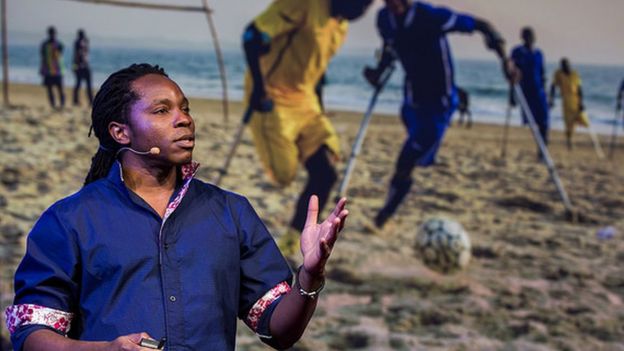
    David Sengey
    Before becoming education minister Dr Sengeh helped develop prosthetic limbs| TED

    The UN’s population fund says that “gender inequality and denial of women’s rights are still prevalent at all levels in Sierra Leonean society”. An assessment that Dr Sengeh agreed with.

    He said that more girls than boys drop out of education before the end of high school and he was developing policies, which he described as “radical inclusion”, that should boost the number of girls who stay at school.

    A month ago, he was instrumental in overturning the country’s ban on pregnant girls going to school.

    Sierra Leone has 124 confirmed cases of coronavirus and has recorded seven deaths from the disease.

    Source: bbc.com

  • Guinea-Bissau PM tests positive for coronavirus

    Guinea-Bissau’s Prime Minister Nuno Gomes Nabiam has tested positive for coronavirus, the health ministry has said.

    Interior Minister Botche Cande and two other ministers also have Covid-19.

    Mr Nabiam said that several members of an interministerial coronavirus committee had the disease.

    Guinea-Bissau has a poor healthcare system due to mismanagement and a lack of resources.

    The country has so far confirmed 205 coronavirus cases and one death.

    Source: bbc.com

  • Sierra Leone jail set ablaze after coronavirus riot

    There has been an attempted prison break in Sierra Leone after a recently arrived inmate developed symptoms of coronavirus.

    A warden was killed and several others injured in the riot at Pademba Road prison in the capital, Freetown. The jail was set ablaze.

    Pademba Road prison has capacity for about 300 prisoners but currently houses more than 1,000.

    Criminal courts have been suspended for a month in an effort to stem the spread of Covid-19 in jails.

    There have been 104 confirmed coronavirus cases in Sierra Leone and four deaths.

    Source: bbc.com

  • Outrage as Kenya spends virus funds on tea and snacks

    Kenyans online are outraged after the ministry of health spent huge sums on tea, snacks and mobile phone airtime for its staff in the battle against coronavirus pandemic.

    Some 4m Kenyan shillings ($37,000; £30,000) has been spent on tea and snacks, while 2m Kenyan shillings has been used on airtime for staff, according to the ministry’s budget that has been made public.

    This is part of a budget of 10m Kenyan shillings for tea and snacks for an unspecified period and 6m Kenyan shillings for airtime for three months.

    Other items in the budget include leasing of ambulances, stationary and fuel.

    The money was part of the $9.3m donated by the World Bank to Kenya for emergency response during the pandemic.

    Kenyan newspapers on Thursday headlined with a rebuke of the expenditure.

    On social media citizens pointed out how poor Kenyans had nothing to eat and doctors do not have adequate protective equipment:

    “You are charging Kenyans for mandatory quarantine and subsequent treatment in time of a global pandemic while shamelessly telling us you spent tens of millions of ksh on printing and tea!” Njau Muchira tweeted

    “How you spend millions on tea and snacks while people don’t even have face masks is obnoxious and cantankerous,” Walter Nyauma tweeted

    “A certain ministry allocates itself 4 millions just on tea and snacks in 1 month while a woman in Mombasa resorts to boiling stones just to convince her children that there is food cooking,” Denzin tweeted.

    Source: bbc.com

  • Horn of Africa facing ‘unprecedented’ threats

    The charity Save the Children has warned that the Horn of Africa is facing an unprecedented triple threat as the region is hit by the coronavirus pandemic, locust swarms and flooding.

    The organisation says more than five million children under the age of five are already acutely malnourished and Covid-19 is now affecting the economy and health services.

    Vast new swarms of crop-eating locusts are expected in June, and rivers have been swollen by recent heavy rain.

    Save the Children has called for urgent international action to help Somalia, Kenya and Ethiopia cope, saying the situation is completely overwhelming.

    The charity also warns there is a heightened risk of virus infection in camps for millions of displaced people.

    Source: bbc.com

  • Buhari appoints dead man to official position

    Nigeria’s President Muhammadu Buhari has appointed a dead man into office, naming the late Tobias Chukwuemeka Okwuru as a board member for a government agency, two months after he died.

    Mr Buhari sent a letter to the country’s senate on Tuesday to confirm the list of 37 appointees but was unaware that Mr Okwuru had passed away in February.

    The president’s media aide, Lauretta Onochie, said Mr Okwuru was alive when the president appointed him to serve on the board and that “he even came to update his CV, in readiness for the appointment after the Senate screening”.

    “When he sadly passed away while waiting for the screening by the Senate, that information was not communicated to the Federal Government,” she said.

    This is not the first time Mr Buhari’s presidency has made the grave error of appointing a dead person. In 2017, the president appointed at least five people who were long dead on to several boards of government agencies.

    Source: bbc.com

  • Tamale: Testing for COVID-19 commences today

    The Public Health and Reference Laboratory (PHRL) located within the premises of the Tamale Teaching Hospital (TTH) in the Northern Region has begun testing for the novel coronavirus (COVID-19).

    The testing for the COVID-19 started today, Thursday, April 30, 2020, with a total of about 350 samples collected through contact tracing from some districts in the Northern region.

    The samples for testing at the PHRL in Tamale are from the Nanumba North (Bimbilla) and the Yendi municipalities, Nanumba South (Wulensi) and the Kpandai Districts were contact-tracing is currently ongoing. A few of the samples are from other areas including the Savelugu municipality bringing the total number of samples for COVID-19 testing at the PHRL in Tamale to about 350.

    This is the maiden testing for COVID-19 in the Northern sector of the country after the PHRL in Tamale was provided with the necessary equipment and personnel to start testing for the virus.

    The Head of the PHRL in Tamale, Dr Abass Abdul Karim told Graphic Online that he was delighted about the initiative, adding that: “Based on the capacity of our equipment and the personnel we have we are hoping to complete our maiden testing for the 350 COVID-19 samples collected through contact tracing and brought to the lab hopefully by today”.

    He said the PHRL would serve the five regions of the north, namely Northern, Upper East, Upper West and the two newly created regions out of the then Northern region; Savannah and North East.

    Dr Abass stated that a capacity building for the laboratory staff for the COVID-19 testing centre in Tamale ended on Wednesday and they are due to begin work today, Thursday, April 30, 2020, after the two-day training that begun on Tuesday.

    He said about 40 personnel drawn from the Ghana Health Service (GHS), Veterinary Service Department, University for Development Studies (UDS), TTH and the Navorongo Research Centre in the Upper East region were trained and would constitute the staff for the COVID-19 testing centre in Tamale.


    Dr Abass also appealed for more Personal Protective Equipment (PPE) for the staff of the laboratory and other logistics as well as the expansion of the infrastructure at the PHRL.

    Background

    The COVID-19 testing centre in Tamale has the capacity to test over 200 samples a day.

    The setting of the COVID-19 testing centre in Tamale now means that samples collected for COVID-19 test in any part of Northern Ghana would no longer be sent to the Kumasi Centre for Collaborative Research (KCCR) in the Ashanti region and the Noguchi Memorial Research Institute in Accra for testing.

    According to the Northern Regional Health Directorate, the establishment of the COVID-19 testing centre in Tamale would reduce its financial burden as it costs not less than GHC1,000 to transport samples.

    Source: graphic.com.gh

  • Ahead of May Day: ICU urges workers to help fight COVID-19

    The General Secretary of the Industrial and Commercial Workers Union (ICU), Mr Solomon Kotei, has urged workers to renew their commitment to support the fight against the novel coronavirus (COVID-19).

    To do that, he asked members of the ICU and workers in general to religiously observe the prescribed safety measures put in place by the health authorities to halt the spread of the virus.

    Mr Kotei made the call in a statement made available to the Daily Graphic yesterday ahead of the May 1 celebration.

    “As we are all aware, we are not in normal times, so as we report back to work we must preserve our lives and the lives of others by adhering to social distancing and the protocols of frequently washing our hands under running water, applying alcohol-based sanitisers on our hands, wearing face masks as well as hand gloves,” he said.

    May Day

    May Day, otherwise called Workers Day, is celebrated annually across the world in recognition of the pivotal role workers play in the development of the world and growth of local economies.

    Ghanaian workers observed the first May Day in 1960 and have since then marked the day with parades amid funfair.

    Unfortunately, because of the protocols of social distancing meant to stem the spread of COVID-19, workers cannot gather to celebrate the 2020 May Day with the hustle and bustle that comes with it.

    Be positive

    Mr Kotei said although the global onslaught of COVID-19 had dealt a devastating blow to the hopes and aspirations of workers and employers alike, it was important for workers to gird their loins and work towards sustainable solutions.

    “Its unwelcome impact, as all of us are aware, has been the lockdown of two major regions of Ghana – Greater Accra Metropolis and Greater Kumasi Metropolis as well as Kasoa, with biting repercussions for business and industry,” he said.

    He noted that although COVID-19 had compelled the country to observe the day without the usual funfair, it was important for workers to remain positive that there was light at the end of the tunnel.

    “Let all of us celebrate the 2020 May Day in the quietness of our homes and have a sober reflection of our work and how best we can contribute to the growth and development of the organisations we work for and, by extension, the economy of Ghana for our own good and the good of Mother Ghana,” he said.

    Collaboration

    Mr Kotei emphasised the need for workers to collaborate with employers to tackle the negative impact COVID-19 had visited on businesses.

    That, he said, was the best approach to revive the economy for the mutual benefit of all parties and the country at large.

    He observed that the negative effect of the pandemic on the economy would take long to repair and that required collaboration between workers and employers.

    Mr Kotei added that organised labour had decided that union members who distinguished themselves in the service of their unions and as such deserved recognition, would be rewarded in due course.

    Source: graphic.com.gh

  • CDC extends coronavirus social-distancing guidelines to pets

    Now even dogs have to roll over for the coronavirus.

    The Centers for Disease Control and Prevention is telling pet owners that their furry family members need to follow the same social-distancing rules as everyone else during the COVID-19 pandemic — including keeping away from their other four-legged friends.

    “Treat pets as you would other human family members — do not let pets interact with people or animals outside the household,” the agency said in an advisory. “If a person inside the household becomes sick, isolate that person from everyone else, including pets.”

    The organization is also advising pet owners to avoid dog parks or public places where a large number of people and dogs gather.

    The advice comes after reports of animals becoming infected after having contact with a person with the virus.

    Last week, two pet cats in New York tested positive for the coronavirus, in the first diagnoses of domestic animals on American soil. And on Monday, a North Carolina pug became the first dog in the country known to have tested positive for the virus.

    The first known case of any animal coming down with the virus in the US was a 4-year-old Malayan tiger at the Bronx Zoo named Nadia, who is believed to have been infected by a zookeeper, it was reported earlier this month.

    Seven more big cats at the zoo then also tested positive for the coronavirus, the Wildlife Conservation Society announced last week. All are now on the mend.

    However, while there are some cases of human-to-animal transition, the CDC stressed there is no evidence that animals play a significant role in spreading the virus to humans.

    “The first infections were thought to be linked to a live animal market, but the virus is now primarily spreading from person to person … Based on the limited information available to date, the risk of animals spreading COVID-19 to people is considered to be low,” the CDC said.

    Source: Jorge Fitz-Gibbon| nypost.com

  • Compensate Ayawaso traders over market closures Unit Committee members demand

    The coalition of Ayawaso East Unit Committee Members has petitioned the Ayawaso East Municipal Assembly to pay compensation to traders in the area following consistent closure of markets over COVID-19.

    According to the Unit Committee Members, their attention has been drawn to the fact that the assembly closed the Nima Market on April 24, 2020 which was the 3rd consecutive time since the emergence of the Covid-19 in the country.

    The convenor for the committee, Naziru Iddriss said: “it is important to state that the consistent posture of the assembly on the closures of the market is unfortunate and unjustifiable considering the fact that the municipality had the opportunity to implement social distancing protocols before reopening it for business when it was closed for the disinfection.

    “Although we cannot discount the effect of the pandemic on the inhabitant of the municipality, it is imperative to state that the assembly has not been proactive in minimising the impact of the market closures hence closing it for the 3rd time before talking about social distancing measures”.

    He said it is imperative to state that most of these traders have invested their hard-earned livelihood while some have acquired loans for their businesses and in some cases “they invested in perishable goods considering the fact of the month of Ramadan sales.”

    “As stakeholders of the municipality we are by this letter requesting for the following; an expedite action to reopen the market latest by Tuesday April 28, 2020 with social distancing protocols, institute measures for continues Covid-19 outreach education in the market, compensate the market traders for any lose or damages which may arise to them in mitigating impact of the market closures, especially those dealing in perishable goods and suspend payment of market tolls for all traders within reasonable period of time,” he stated.

    The convenor said the committee needs briefing with the assembly in respect to the Covid -19 action plans of the assembly and how one can also contribute to complement the effort of the assembly in the fight against the novel coronavirus considering the fact that the municipality is named as one of the hotspots in the country.

    Source: Ghana/Starrfm.com.gh/103.5FM/Philip Antoh

  • Coronavirus: AMA supports 5000 households with food items

    The Accra Metropolitan Assembly (AMA), has begun the distribution of food items to some 5000 households in the city as part of efforts to cushion residents to mitigate the challenges brought about by the coronavirus outbreak.

    The items made up of rice, gari, tomato paste, cooking oil, sardines and beans are being distributed to communities in Asiedu Keteke, Ablekuma South and Okai Koi North sub metros.

    Metropolitan Chief Executive of Accra, Mohammed Adjei Sowah in an interview before the distribution, said the gesture was intended to ameliorate the burden of the vulnerable especially the aged and Persons with Disabilities (PWDs) during the fight against the COVID-19.

    He disclosed that officers from the National Disaster Management Organization (NADMO) would present the items to the beneficiaries in their various households and not in the open to prevent the gathering of people.

    He urged residents to adhere to the precautionary measures of handwashing under running water and sanitizing, the wearing of nose masks and avoiding large crowds to prevent the spread of the virus in the city.

    The Metro Director of NADMO who led the team to distribute the food items admonished residents to exhibit high sense of orderliness to prevent crowding.

    Some beneficiaries expressed gratitude to the assembly and government for the intervention at this difficult period.

    Source: AMA

  • Pfizer coronavirus vaccine could be ready for emergency use by this fall

    The pharmaceutical giant Pfizer said Tuesday that a new coronavirus vaccine could be tested as early as next week — with the potential for emergency use by fall, a report said Tuesday.

    “This is a crisis right now, and a solution is desperately needed by all,” Pfizer chief executive Albert Bourla told the Wall Street Journal.

    Pfizer is working with German-based BioNtech to deliver the possible vaccine. Clinical trials on human volunteers in Germany have already started.

    Health regulators in the US may approve testing the vaccine on humans by next week, Bourla told the paper.

    If that timeline holds true, study results could be delivered within a month. Then, with favorable testing outcomes, the vaccine may be ready to distribute in emergency cases by the fall, Bourla said.

    The New York-based corporation has invested $650 million into developing and possibly manufacturing the vaccine.

    “You can imagine the demand for something like that will be extremely, extremely high,” Bourla told the Journal.

    The Pfizer logo is seen at their world headquarters in Manhattan
    The Pfizer logo is seen at their world headquarters in Manhattan REUTERS/Andrew Kelly/File Photo

    But the odds of developing a successful vaccine are slim, with just 6 percent of them becoming market-ready after a series of strict tests, the report said, citing a 2013 study published by PLOS ONE.

    Source: Kenneth Garger| nypost.com

  • Introducing malaria vaccine into immunisation, one year on…

    Eno, a healthy-looking, bubbly six-month-old baby girl, is one of thousands of children who are unaware of their role in the pilot implementation of a new malaria prevention tool with the potential to significantly reduce malaria in children.

    In April last year, children roughly six months old from selected areas in Ghana were among the first children to receive their first dose of RTS,S malaria vaccine through routine immunisation.

    Eno’s mother, Salome, readily brought her daughter for vaccination, understanding that the vaccine could reduce the number of times a child got malaria, including life-threatening severe malaria.

    One year on…
    Introducing malaria vaccine into immunisation

    “My older daughter Akosua, who is five years old, first became ill with malaria at nine months, which became a bother to me as it happened frequently and anytime it happened, I spent hours and also spent a lot of time and money seeking care for her. I have since been educated to ensure all my children sleep under mosquito nets always and also report to the facility whenever they feel unwell, and I just wanted this recurring sickness and suffering of my child to end. Since then, I have decided to take all necessary precautions to protect my family from malaria and this is why I have brought Eno, my six-month-old baby, to take the vaccine as I am told it will provide additional protection besides the net and other malaria prevention methods,” Salome said.

    RTS,S malaria vaccine
    The Ministry of Health is introducing the RTS,S malaria vaccine (Mosquirix) in selected areas of high malaria transmission. The RTS,S vaccine acts against plasmodium falciparum, the most deadly malaria parasite globally and the most prevalent in Africa. It was developed specifically for African children who are at the highest risk of dying of malaria.

    Although in recent years malaria death rates in the African region have dropped significantly following a major scale-up of long-lasting insecticidal nets (LLINs), artemisinin-combination therapies (ACTs) and other malaria control measures, the disease continues to take a heavy toll. Malaria control progress has slowed, particularly in sub-Saharan Africa.

    In 2018, the African region was home to 94 per cent of all malaria deaths globally (or an estimated 405,000 deaths), mainly among young children. (World Health Report 2019).

    Pilot programme 

    The RTS,S vaccine is undergoing phased introduction by the Ministries of Health of Malawi, Ghana and Kenya. Children who present to health facilities for vaccination in the pilot areas receive the vaccine as part of their routine immunisations. Approximately 360,000 children per year across the three pilot countries will receive the RTS,S vaccine.

    In Ghana, the pilot or phased introduction took off in April 2019. Children in 44 selected districts in the Bono, Ahafo, Bono East, Central, Volta, Oti and Upper East regions are receiving the vaccine, which is given at six months, seven months, nine months and 24 months of age. To date, 106,000 children in Ghana have received the first dose of the vaccine. The programme is expected to continue through 2023.


    Safety
    Safety of the vaccine is a top priority. In July 2015, the European Medicines Agency – a stringent regulatory authority – issued a positive scientific opinion of RTS,S, indicating that the benefits of the vaccine in preventing malaria outweighed potential risks, said Dr Kwadwo-Odei Antwi-Agyei, a Senior Technical Advisor at PATH and former EPI Manager of the Ghana Health Service (GHS).

    Highlights

    • RTS,S/AS01 (RTS,S) is a vaccine that acts against Plasmodium falciparum, the deadliest malaria parasite globally and the most prevalent in Africa.
    • It is the first, and to date the only vaccine that has demonstrated it can significantly reduce malaria and life- threatening severe malaria in young African children.
    • Beginning in 2019, three sub- Saharan African countries – Ghana, Kenya and Malawi – led the introduction of the vaccine in selected areas of moderate-to- high malaria transmission as part of a large-scale pilot programme.

    “As with other new vaccines, and in line with national regulations, the safety profile for RTS,S will continue to be monitored,” he added.

    Collaboration
    The malaria vaccine pilot programme is a collaboration between the Ministry of Health and a range of in- country and international partners and coordinated by WHO.

    The Ghana Food and Drugs Authority (FDA) is working with the GHS and in- country research partners to ensure the safety of children who receive RTS,S during the phased introduction.
    Separate from the introduction of the vaccine, independent evaluation teams are assessing its routine use.

    “We look forward to the outcome of this ongoing evaluation that will inform decisions on the vaccine’s broader use in high-burden areas in Ghana and elsewhere to complement the existing malaria tools being deployed,” Dr Antwi- Agyei, said.

    Funding for the pilot programme is provided by the Gavi, the Vaccine Alliance, the Global Fund to Fight AIDS, Tuberculosis and Malaria, and Unitaid. GSK is donating up to 10 million doses of RTS,S vaccine for use in the pilot phase. UNICEF is supporting the forecasting and deployment of the donated RTS,S vaccine to pilot countries.

    Source: graphic.com.gh

  • Retired Kenyan bishop dies in Italy from COVID-19

    A retired Kenyan Catholic Bishop has died in the Italian city of Turin from Covid-19 while undergoing treatment in hospital.

    Silas Njiru, who had served as bishop of Meru in central Kenya from 1976 until 2004, died at Rivoli Hospital on Tuesday. He was 92 years old.

    His successor in Meru, Bishop Salesius Mugambi, told the Daily Nation newspaper

    that the retired cleric had been living in a house where two other elderly priests had also contracted the virus.

    Kenya’s Deputy President William Ruto has paid tribute to the bishop

    , calling him a “tender-hearted and gracious man with steadfast religious credence, which he instilled to many”.

    Italy has been one of countries worst-affected by coronavirus with more than 200,000 cases and over 27,00 deaths.

    Source: bbc.com

  • COVID-19: 16-year-old boy donates food items to PWDs

    A 16-year-old boy, Arnav Nambiar has made a donation of food items to Persons with Disabilities (PWDs) in Accra.

    The donation by the Founder of Limitless Ghana Foundation, which includes 150 bags of rice and 25 cartons of Milo was to support PWDS in the country amid the coronavirus (COVID-19) pandemic.

    Arnav Nambiar did the presentation at the Accra Rehabilitation Centre on Tuesday, April 28, 2020, with the support of his family and friends.

    The Minister of Gender, Children and Social Protection, Cynthia Mamle Morrison received the donation.

    Presenting the items to the PWDs, the high school student of Lincoln Community School noted that the main objective of the Limitless Ghana Foundation is to create awareness about people living with disabilities in Ghana and support their needs by raising funds through any means possible.

    Arnav Nambiar said, “The outbreak of Corona showed us how vulnerable we are as a society to disasters. It also showed us how we may not necessarily be prepared to deal with a pandemic of this proportion. In my opinion, it is my job as an Ambassador for the Paralympics team to help aid the community in Accra during these difficult times. I sincerely hope that the pandemic will soon be a thing of the past and we can all go about our lives peacefully.”

    He called on the youth to also support PWDs with their resources especially when the whole world is in crisis.

    Minister commends the initiative 

    After receiving the Items, the Minister of Gender commended him for supporting the PWDs with the funds he raised through the Limitless Ghana Foundation.

    She called on the public to emulate the gesture by the boy so that PWDs and all other vulnerable persons will feel part of the society.

    “For a young man at his age to think about the vulnerable and to raise awareness at this time, I encourage other young boys and girls to do the same. I know that a lot of young boys and girls have big parents who can rally behind them to get things going so that we would all together know that there are people who are in need, that in times of crisis, we would come together and help. I am so proud of him, this is not from Kempinski, his mother or father, it is from him and I thank him for his support,” he said.

    Appeal for more support

    For his part, Dr Peter Obeng Asamoah, the Executive Director of Ghana Blind Union thanked Arnav Nambiar for his gesture, encouraging the public to support PWDs in the country especially during the COVID-19 pandemic.

    Elvis Alpui, a National Accessibility Ambassador, who is also a PWD, applauded the boy for remembering PWDs in such difficult times.

    He also appealed to the public to channel their support to the PWDs so that they can also have resilience in their daily activities.

    President for the Greater Accra Federation of Disability organisations, Anthony Adarkwa, also commended the young donor for remembering them in such a critical time.

    He noted that PWDs were unable to go out to queue to get food being donated by government, companies or individuals on the streets, urging all to emulate how the young boy has presented the food items to them.

    About Limitless:

    Limitless Ghana Foundation is a non-governmental organisation (NGO) whose main objective is to create awareness about people living with disabilities in Ghana and supporting their needs by raising funds through any means possible.

    This organization was established by Nambiar in 2018 after he met with a road accident which left him in a wheelchair and crutches for a few weeks.

    The project is called “Limitless” because it truly represents the spirit of the people with impairments.

    Over the course of two years, Arnav has been meeting various heads of organizations to advocate for the communities who need the most support.

    The National Paralympic Committee appointed Arnav as the Ambassador of the Ghana Paralympic team for the upcoming Tokyo Olympics.

    Source: graphic.com.gh

  • COVID-19: Rolider supports Ayawaso West with GH¢20,000

    The Ayawaso West Municipal Assembly has received a GH¢20,000 boost from Rolider Ghana Limited to support its battle to curb the spread of COVID-19 in the municipality.

    The Operations Manager for Rolider, Mr Avi Cohen made the presentation on behalf of the company on April 29.

    Mr Cohen said the company wants their donation to go directly to the needy.

    He said: “In total, we have donated about GH¢100,000 to the communities in which we operate. This money is to support the budget of the Assembly towards the acquisition of essentials for Covid-19 and to support needy families”.

    Hon Sandra Owusu-Ahinkorah, the MCE for the municipality expressed gratitude to Rolider on behalf of the assembly and residents of Ayawaso West.

    Source: graphic.com.gh

  • Paramount chief of Dormaa tours market to enforce social distancing protocol

    The Paramount of Dormaa Traditional Council, Osagyefo Osedeeyo Dr. Agyemang-Badu II has toured the Dormaa market to observe and ensure that traders are observing the safety measures implemented by the Municipal Assembly in order to contain the spread of the virus.

    According to the Paramount Chief, the Coronavirus outbreak is highly contagious and deadly hence the need to ensure that his residents are observing the social distancing protocol enforced at the market.

    Speaking to reporters after the tour, Osagyefo Osedeeyo Dr. Agyemang-Badu II, known in private life as Justice Daniel Mensah, a High Court Judge explained that anybody at all is at risk of contracting the virus hence the need for each and everybody to assume responsibility for one another.

    He, therefore, pleaded with the traders in the market to abide by the measures enforced in the market so that there will not be any community spread of the virus in the market.

    He again urged the residents of the Dormaa to eschew stigmatization of the infected persons since such behaviour will worsen the woes of these persons.

    “This virus is no respecter of persons. It can infect a chief, linguist, police, soldier, pastor and even presidents. I extend my sympathies to every any family whose member has contracted the virus.  I am pleading with everybody, especially Bono people in Dormaa, the virus is very infectious and hence everybody should be very careful,” the paramount chief of the Dormaa Traditional Council admonished.

    He also took the opportunity to donate some face masks to the traders in the market in order to enhance their safety measures in preventing the spread of the virus.

    Source: ABCNewsGh.com

  • GFA given till May 5 to decide whether to cancel or continue with league season

    The Ghana Football Association has until May 5, 2020, to make a decision on the status of the 2019/ 2020 league season.

    The decision has become necessary following the abrupt suspension of the league due to the outbreak of the Coronavirus pandemic in the country.

    Football governing body on the continent, Confederation of African Football, CAF, has directed, in a letter written to all General Secretaries of Football Administrations in the member nations, that a determination of the league status should be decided by May 5, 2020.

    UEFA is yet to decide the status of the UCL but some member countries have either suspended their leagues or made plans to resume.

    Belgium, France and the Netherlands have all been forced to end their seasons because of the suspension of sporting activities in the respective countries by the government.

    Britain, Germany and Italy, some of the hardest-hit countries of the pandemic have, however, initiated talks to resume their seasons though concrete dates are yet to be announced.

    To make appropriate plans for football on the continent and draw a timetable to guide football activities in Africa, CAF says, “In view of the current circumstances, we would like to enquire about the current situation of your national leagues/ National cup (ranking, number of pending matches etc…) as well as the strategies you intend to apply to finalise those competitions be it through completion or annulment

    “We would appreciate receiving a reply by the 5th of May  2020, in order to enable us to design a plan for the organisation of our interclub competitions during the next season,” the statement added.

    The suspension of the league season has come as deadly blow to the clubs in the Ghana Premier League as clubs were just recovering from a 2-year break following the dissolution of the FA.

    This was as a result of an investigative piece that uncovered alleged cases of corruption and malfeasance by the administration at the time.

    Source: ABCNewsGh.com 

  • GFA given till May 5 to decide whether to cancel or continue with league season

    The Ghana Football Association has until May 5, 2020, to make a decision on the status of the 2019/ 2020 league season.

    The decision has become necessary following the abrupt suspension of the league due to the outbreak of the Coronavirus pandemic in the country.

    Football governing body on the continent, Confederation of African Football, CAF, has directed, in a letter written to all General Secretaries of Football Administrations in the member nations, that a determination of the league status should be decided by May 5, 2020.

    UEFA is yet to decide the status of the UCL but some member countries have either suspended their leagues or made plans to resume.

    Belgium, France and the Netherlands have all been forced to end their seasons because of the suspension of sporting activities in the respective countries by the government.

    Britain, Germany and Italy, some of the hardest-hit countries of the pandemic have, however, initiated talks to resume their seasons though concrete dates are yet to be announced.

    To make appropriate plans for football on the continent and draw a timetable to guide football activities in Africa, CAF says, “In view of the current circumstances, we would like to enquire about the current situation of your national leagues/ National cup (ranking, number of pending matches etc…) as well as the strategies you intend to apply to finalise those competitions be it through completion or annulment

    “We would appreciate receiving a reply by the 5th of May  2020, in order to enable us to design a plan for the organisation of our interclub competitions during the next season,” the statement added.

    The suspension of the league season has come as deadly blow to the clubs in the Ghana Premier League as clubs were just recovering from a 2-year break following the dissolution of the FA.

    This was as a result of an investigative piece that uncovered alleged cases of corruption and malfeasance by the administration at the time.

    Source: ABCNewsGh.com 

  • Hundreds of Moroccan inmates test positive for virus

    Some 313 coronavirus cases have been reported in Moroccan jails following mass testing for Covid-19.

    The authorities say Ouarzazate prison in central Morocco recorded 303 cases, while 10 other cases were in Oudaya prison in Marrakesh and Ksar Kebir prison in the north-west.

    Most of the cases involved prisoners, but a small number of prison warders were also diagnosed.

    The mass testing started after one person in Ouarzazate prison tested positive last week.

    The authorities say they have isolated all positive cases and all warders have been issued with protective gear.

    There are nearly 80,000 inmates in Moroccan prisons. In early April, more than 5,654 inmates were pardoned by the king to reduce the risk of spreading the virus in notoriously overcrowded prisons.

    Morocco has 4,252 confirmed cases of coronavirus, including 165 deaths.

    Source: bbc.com

  • Ghanaian arrested for posing as Canadian Army Officer

    Bernard Ayeh, a 41-year-old Ghanaian, has been arrested by the Ghana Military Police for allegedly posing as a Canadian Army Officer.

    The suspect, a resident of Adjiriganor, was picked up around Adentan Barrier, wearing a camouflage uniform while driving a Mazda saloon car with registration number GR1406-20.

    At the time of arrest he had in possession two pistol holsters, two handcuffs with keys, a jackknife, a baton, two fake Canadian Army identity cards, bearing the name Lieutenant Colonel Bernard Ayeh, three mobile phones, and an amount of GHC 13,470.

    According to a statement from the Army, Bernard Ayeh explained that he got the Canadian Army camouflage uniform whilst working as a contractor for personnel of the Canadian army.

    He also allegedly disclosed that one of the pistols found on him was for his late Uncle and the other, he purchased from an official of the Ghana Police Service.

    The Military Police says that it has processed the suspect for a referral to the Police Headquarters for further investigation and possible prosecution.

    Source: ABCNewsGh.com 

  • Kenyan research centre ‘running out of test kits’

    The Kenya Medical Research Institute (Kemri) has depleted its supplies of coronavirus screening and testing kits, the Star newspaper says, quoting a report tabled on Tuesday by a Senate committee .

    The institute needs at least 790m Kenyan shillings ($7.3m; £5.9m) to restock reagents and other materials used for testing for coronavirus, the institute’s director Yeri Kombe as saying.

    Kemri is co-ordinating the country’s screening and testing of coronavirus cases, as well as conducting research on a possible vaccine for the pandemic.

    The East African nation has to date confirmed 373 cases and 14 deaths.

    Source: bbc.com

  • Jihadists killed in major Mozambique crackdown

    Mozambique’s security forces have killed nearly 130 Islamist militants in the past three weeks, the government says.

    Interior Minister Amad Miquidade said the gas-rich northern province of Cabo Delgado was now under government control.

    He said the military would carry out further operations to make sure all jihadist bases were destroyed.

    The Islamist fighters, known locally as al-Shabab, have been beheading people and burning villages in northern Mozambique for the past three years.

    It is not clear whether the group has any links to the Somali group of the same name.

    At least 900 people have been killed and there has been an upsurge in attacks recently.

    Last week the authorities said for the first time that the militants were part of the Islamic State group.

    Source: bbc.com

  • Cuban doctors ruffle feathers in South Africa

    The arrival of more than 200 Cuban medics in South Africa to help battle coronavirus has received mixed reactions, with some of the sharpest criticism coming from the South African Medical Association (Sama).

    The organisation, which represents about 16,000 health workers, says it welcomes extra hands but says unemployed local medics should have been given priority.

    “There are many unemployed doctors in South Africa and many community service medical officers have still not been placed. In addition, many private practitioners have indicated their willingness to assist,” IOL news quotes Sama head Angelique Coetzee as saying.

    There have also been raised eyebrows about a Business Live article saying it is going to cost taxpayers 440m rand ($24m; £19m) to have the Cubans in the country for a year.

    The team of Cuban medics include family physicians, epidemiologists, biotechnology experts and health-care technology engineers who are being deployed across the country.

    Health Minister Zweli Mkhize has sought to play down the concerns, saying no jobs would be threatened.

    “We welcome them and we want to assure everyone that they will not take anyone’s posts and they will be working alongside South Africans. There should not be anyone that feels that they are a threat to [local employment],” Mr Mkhize said.

    He added that the Cuban medics were particularly experienced in community medicine.

    Cuba is also believed to be one of the leaders in using biotechnology in disease prevention and has expertise in handling infectious diseases.

    South African officials say they requested Cuba’s help to try and prevent an escalation of coronavirus infections as has been seen in Europe and the US.

    South Africa currently has nearly 5,000 confirmed cases, the highest in Africa – with 93 deaths – and its health system, particularly state hospitals, is already overstretched.

    Cuba and South Africa have close ties and the Caribbean island was instrumental in the fight against white-minority rule in South Africa, which did not end until 1994 when anti-apartheid leader Nelson Mandela was elected president.

    Since then Cuban doctors been working in some of the most rural parts of South Africa, including at the height of the HIV pandemic.

    Source: bbc.com

  • Anger over Tanzania’s failure to give virus updates

    Tanzania’s Prime Minister Kassim Majaliwa says the country now has 480 cases of coronavirus, following criticism on social media about the failure to give daily updates about the situation.

    When the government last released figures a week ago there were 306 cases.

    The lack of updates has led to speculation that the authorities were concealing the true number of cases.

    President John Magufuli has urged people to engage in mass worship as a way of preventing the spread of Covid-19, the respiratory illness caused by coronavirus.

    He said the virus was satanic and therefore could not thrive in churches.

    Source: bbc.com

  • 10 food vendors, 3 taxi drivers reportedly test positive for COVID-19 at Achimota Hospital

    Ten food vendors and three taxi drivers who operate at the Achimota government hospital have tested positive for COVID-19, Starrfm.com.gh has gathered.

    The cases were confirmed after the hospital decided to conduct mass testing for individuals who do business within the hospital community.

    The samples were taken to the Noguchi memorial centre and came out positive.

    Nurses and other medical staff of the hospital are currently undergoing compulsory testing for COVID-19 beginning today Tuesday, April 28.

    Meanwhile, a police officer at Adenta in Accra has tested positive for COVID-19 after arresting and detaining a suspect who defied the lockdown directive.

    According to Starrfm.com.gh sources within the security agencies, the suspect, who was apparently positive of the virus, was detained for a longer period at the Adenta police cells after court hearing because the Prisons service was not accepting new inmates as a result of the pandemic.

    A source at the Adenta district police command says the officer has been asked to self-quarantine after he tested positive.

    Coronavirus death toll in Ghana now stands at 11 with 1,550 infections and about 150 recoveries.

    Source: Starrfm.com.gh

  • Dont admit foreign tenants without coronavirus test clearance Minister tells landlords

    It is mandatory for landlords to request for proof of negative COVID-19 test results from all potential tenants who are foreigners, Samuel Atta Akyea, Ghana’s Works and Housing Minister has announced.

    The new directive is part of the government’s efforts in containing the spread of the deadly coronavirus in the country, especially at the community level.

    “Landlords must also be wary of potential tenants from foreign countries. It is very mandatory to insist that without a negative COVID-19 test clearance, the landlord should not rent out the premises” he said this afternoon at a press briefing organized by the Ministry of Information.

    The Works and Housing minister cautioned landlords not to put their lives at risk by ignoring this directive just because of a few dollars they take from these tenants.

    “We all know that this pandemic has been imported so be careful in the name of dollars, you don’t bring in a foreigner who hasn’t gotten a clearance that he has not been infected by the disease to come and live in your premises. I need not remind you that the virus is an importation from foreigners.”

    Ghana as of this afternoon has recorded 1,671 coronavirus cases with 11 deaths and 188 recoveries.

    Meanwhile the Ghana Immigration Service (GIS) has entreated all property owners and landlords to report the arrival dates of Ghanaian and non-Ghanaian tenants who arrived in the country from March 3 to 23rd.

    This, according to the GIS, is to enable the government effectively and efficiently identify such individuals through contact tracing for the Ghana Health Service (GHS) to assess and manage.

    The new directive was contained in a press release signed by Supt. Michael Amoako-Atta, Head of Public Affairs and copied to GhanaWeb on April 1, 2020.

    “The GIS can be reached through phone numbers: 0291502110, 0291502169, 0291502257 and 0291502253”, the statement announced.

    Source: www.ghanaweb.com

  • Coronavirus:Ghana’s case count now 1671 with 188 recoveries

    Ghana’s coronavirus cases have risen to 1671 with 188 recoveries, the Ghana Health Service has disclosed in a press briefing.

    Addressing journalists on Tuesday afternoon at the Ministry of Information, Director-General of the Ghana Health Service, Dr Patrick Kuma-Aboagye, stated that 563 of the infected were from general surveillance.

    According to him, 1,461 are well or showing “no symptoms and responding to treatment”.

    Out of the total cases, Dr Kuma-Aboagye said six patients are “critically ill” with two of them at the University of Ghana Medical Centre (UGMC), three at Ga East Municipal Hospital and one at the Korle Bu Teaching Hospital.

    On the number of casualties, the Director-General also disclosed that Ghana has recorded five new deaths from the disease raising the death toll to 16.

    Source: Ghanaweb

  • Nigerian lawyers sue China for $200 billion over coronavirus damage

    A group of Nigerian lawyers is suing China for the adverse effects of the coronavirus outbreak on the country and its citizens.

    Recent reports said that the lawyers demand $200 billion in damages for the “loss of lives, economic strangulation, trauma, hardship, social disorientation, mental torture and disruption of the normal, daily existence of people in Nigeria,” according to a statement by the lead counsel, professor Epiphany Azinge (SAN), whose firm, Azinge and Azinge, is championing the action.

    The lawyers established a two-phase action plan, as they will first go to the federal high court of Nigeria and, second, to persuade the government of the Federal Republic of Nigeria to institute a state action against the People’s Republic of China at the International Court of Justice (ICJ) at the Hague.

    “The legal experts will be claiming damages to the tune of $200 billion and the Chinese government will be served through its Embassy in Nigeria,” Azinge said.

    A child with his mother, from Makoko Slum, carries their food parcel distributed by the Nigerian Red Cross, provided for those under coronavirus-related movement restrictions, in Lagos, Nigeria, April 25, 2020. (AP Photo)

    Previously, an Egyptian lawyer has pressed charges against Chinese President Xi Jinping, calling on his country to pay $10 trillion in damages caused by the novel coronavirus in Egypt.

    Also, last week, the U.S. state of Missouri filed a lawsuit against the Chinese government over the coronavirus, alleging that the nation’s officials are to blame for the global pandemic.

    Source: dailysabah.com

  • Beware of imposters using my name for fraud Information Minister cautions public

    Minister of Information, Kojo Oppong-Nkrumah has called on the public to be wary of fraudsters using social media accounts purported to be his to dupe innocent people.

    The Minister in a Facebook post said he has alerted the security personnel to investigate and bring perpetrators to book.

    The Ofoase Ayirebi Mp cautioned that he is not in any way involved in soliciting for or providing protocol opportunities.

    ”It has come to my notice that a good number of persons are falling victim to fraudulent persons purporting to be me on social media. Please note that I do not solicit for, nor provide any protocol opportunities to people either in person or via social media,” he wrote

    He added that ”I urge you to ignore or report to the police any of such persons soliciting payments in my name. I have notified the National Security apparatus to investigate and apprehend such fraudsters.”

    Government has in recent times intensified public education on the growing incidents of fake social media accounts of public officials set up to defraud unsuspecting persons.

    It has insisted that anybody who needs information or assistance about any opportunity should contact the institution or follow the appropriate channels to have their concerns addressed.

    Source: ABCNewsGh.com

  • Coronavirus: Nigeria to ease Abuja and Lagos lockdowns on 4 May

    Nigeria will begin a “gradual easing” of coronavirus-related lockdowns for millions of people in its largest city Lagos and the capital, Abuja.

    President Muhammadu Buhari said the lockdowns, which had been due to end on Monday, needed to continue until 4 May.

    He also ordered new nationwide measures against Covid-19, including a night-time curfew and mandatory face masks.

    The moves would ensure the economy functioned “while still maintaining our aggressive response”, Mr Buhari said.

    The easing will apply to Abuja, Lagos and neighbouring Ogun state, where collectively more than 25 million people have been under lockdown since 30 March. Other states have introduced their own measures.

    Before the announcement, workers at a construction site in Lagos rioted in protest at the lockdown.

    A police spokesman said the workers at the Lekki Free Trade zone – including those at the oil refinery of billionaire Aliko Dangote – injured several officers in the area. Fifty-one people were arrested, he added.

    There are reports that the protesters were angry that some foreign nationals were allowed to go to work at the site.

    Nigeria, Africa’s most-populous nation and largest economy, has reported 1,273 confirmed cases of Covid-19 and 40 deaths.

    In a televised address on Monday night, Mr Buhari acknowledged that the lockdowns in Abuja, Lagos and Ogun had “come at a very heavy economic cost” since they began on 30 March.

    “Many of our citizens have lost their means of livelihood. Many businesses have shut down,” he said.

    He added: “No country can afford the full impact of a sustained lockdown while awaiting the development of vaccines.”

    The president said there would therefore be a “phased and gradual easing” of these lockdowns next Monday to allow some economic activities to resume.

    But to limit the spread of Covid-19, he announced that the government would impose a curfew across the country between 20:00 and 06:00, require everyone to wear face masks in public, and stop “non-essential inter-state passenger travel”.

    Bans on social and religious gatherings will also remain in place.

    Mr Buhari also expressed deep concern over the unexplained deaths of a number of people in the northern state of Kano.

    He said a lockdown would be imposed there for two weeks with immediate effect and that he was sending a government team to investigate.

    Source: bbc.com

  • French police officers suspended for using racist slur in viral video

    Two police officers in Paris have been suspended after being filmed using an extremely offensive racist slur.

    The officers used a derogatory term for North Africans to mock a man they were arresting, and repeated a racist trope about him being unable to swim.

    The footage went viral on social media and has sparked outrage across France.

    Interior Minister Christophe Castaner also strongly criticised the officers involved, saying there was “no place” for racism in the police force.

    He also announced that the IGPN internal police watchdog had been notified and would launch an investigation.

    The police commissioner also tweeted: “With the approval of the interior minister, the chief of police Didier Lallemant has asked the head of the national police to suspend the two officers involved in uttering racial comments heard on a video circulated on social media on 26 April.”

    The incident took place in the early hours of Sunday morning in the Seine-Saint-Denis suburb, north of Paris.

    A man who was suspected of theft had jumped into the river Seine, reportedly to avoid arrest, and was then pulled out by the police.

    As they escorted the man to the police van, one of the officers called the man the racist slur and added: “He doesn’t know how to swim.”

    His colleague then laughed, and replied: “You should have tied a weight to his foot.”

    The exchange was filmed by journalist and anti-racism activist Taha Bouhafs, who then posted it on Twitter. So far it has been viewed more than 1.8 million times.

    In response, Mr Castaner tweeted: “All light will be shed on the matter… Racism has no place in the Republic’s police force.”

    Source: bbc.com

  • What is behind Nigeria’s unexplained deaths in Kano?

    The Nigerian president has expressed deep concern over a high number of unexplained deaths in the northern state of Kano, amid fears they could be caused by Covid-19.

    President Muhammadu Buhari said a lockdown would be imposed in Kano for an additional two weeks, and that he was sending a government team to investigate.

    Nigeria’s Health Minister Dr Osagie Ehanire says the situation is being “monitored closely”.

    But following preliminary investigations the state authorities have dismissed a connection with coronavirus.

    Hundreds of people are rumoured to have died in the community but no official death records are kept.

    Grave diggers initially raised concerns that they were burying a higher than usual number of bodies.

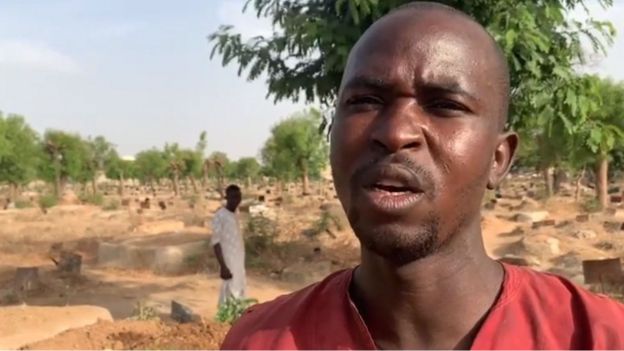
    Ali, a grave digger at the Abattoir Graveyard, told the BBC: “We have never seen this, since the major cholera outbreak that our parents tell us about. That was about 60 years ago.”

    grave digger
    Image caption Grave digger Ali says he is burying more bodies

    This week, the state governor issued a statement saying the “mysterious deaths” were unrelated to coronavirus.

    But after ordering a “thorough investigation into the immediate and remote causes of the deaths”, announced that their preliminary findings “indicated that the deaths are not connected to the Covid-19 pandemic”.

    The state government said “reports from the state ministry of health has shown that most of the deaths were caused by complications arising from hypertension, diabetes, meningitis and acute malaria”.

    “Governor Abdullahi Umar Ganduje is earnestly waiting for the final report from the state ministry of health so as to take the necessary action.”

    The commercial and industrial centre of the north, Kano has become the epicentre of coronavirus in northern Nigeria. Its highly dense population is still in lockdown in an effort to contain the spread of the virus.

    Don’t tests show the cause of death?

    State officials started testing for Covid-19 two weeks ago and one lab has had to close due to contamination. Samples are being sent to the capital, Abuja, which authorities say is causing a delay in announcing how many positive cases have been detected in the state.

    Dr Sani Aliyu, who is the national co-ordinator for the presidential task force on Covid-19, says a team of five medical experts were deployed to Kano to facilitate in reopening the testing centre this week after it was fumigated.

    Officials also plan to open a second lab, at Bayero University, for testing for Covid-19 from next week.

    How many people have died?

    It is unclear how many people have died, as the deaths causing concern are happening in the community. Deaths in many parts of Nigeria are not registered, and so for those who died outside of hospital, no records are kept.

    This makes it difficult to understand how many people have died in recent weeks.

    Sabitu Shaibu, the deputy head of the state task force on Covid-19, is hoping to release preliminary findings of the investigation by next week but believes that most of the rumoured 640 deaths are from natural causes and says the figure is below the average death rate for Kano.

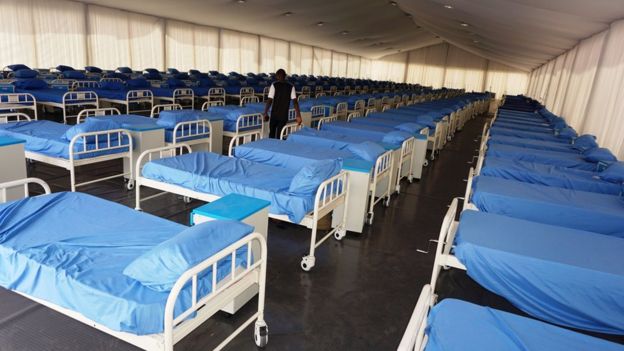
    A COVID-19 coronavirus isolation centre at the Sani Abacha stadium in Kano, Nigeria, on April 7, 2020.
    Getty Images| Health workers prepared beds for a coronavirus isolation centre in Abuja at the beginning of April

    Hospital records which provide the only death register available are thought to provide lower numbers than the real picture across the state.

    Those on the investigating taskforce say they will conduct “verbal autopsies” with family members to help establish why people are dying.

    If not coronavirus, what else could be going on?

    Private hospitals which provide for a significant part of health provision in the region have been closed due to coronavirus fears. This could mean a lack of support for those with existing conditions who may have died as a result.

    Dr Nagoma Sadiq who works at the Aminu Kano Hospital, thinks this could be behind the additional deaths, but he is also not ruling out coronavirus.

    “It’s shocking to most of us that the count of the dead is alarming. But it’s likely due to the reduction in the number of health institutions available in the state.

    “Because there are a lot of hypertensive patients, diabetic patients, asthmatic patients, cancer patients, and they don’t have much access to the hospitals. The lockdown is affecting everybody.

    “Our poor majority don’t even have a vehicle to take them to the hospitals.”

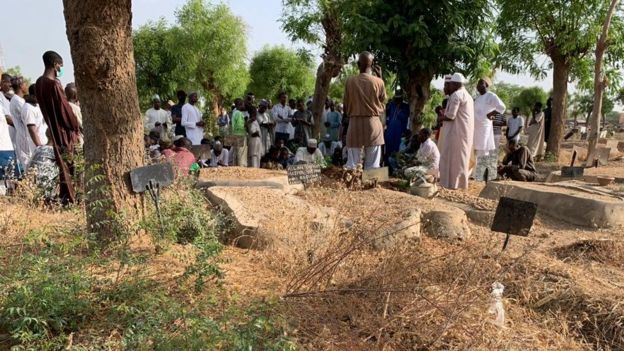
    People at grave
    More funerals are happening

    Grave digger Ali agrees, adding “some say the current situation is due to the epidemic, others say it’s difficulties of life. People have so many problems in their lives and a lack of peace of mind.”

    However Covid-19 is known to be more dangerous for those with underlying health conditions, so it could be that the deaths are related to coronavirus. The only way to know for sure is to test for coronavirus.

    Dr Sadiq also said that there was still a concern about an ongoing Lassa fever infection amongst communities. The state has had five confirmed cases and one death, according to the most recent report from the Nigerian Centre For Disease Control.

    Kano currently has 77 positive cases of coronavirus with three deaths.

    Authorities are urging the public not to panic.

    What else did the president announce?

    President Buhari announced a gradual easing of lockdown restrictions in Abuja, Lagos and neighbouring Ogun state from next Monday.

    But he also said that the government would impose a curfew across the country between 20:00 and 06:00, require everyone to wear face masks in public, and stop “non-essential inter-state passenger travel”.

    Bans on social and religious gatherings will also remain in place.

    You may also be interested in:

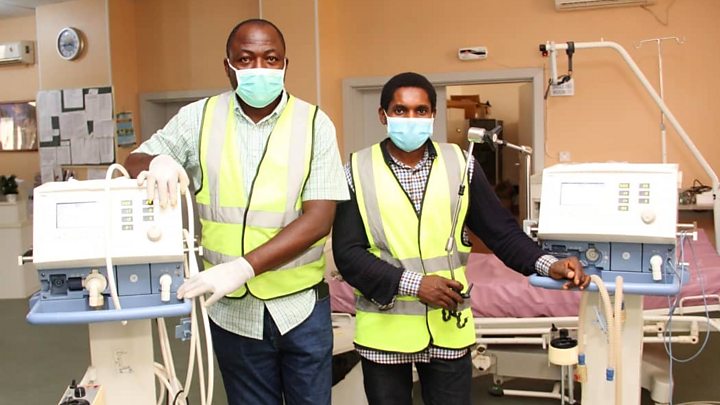
    Two Nigerian software engineers have been fixing ventilators for free at a hospital in northern Nigeria.

    William Gyang and Nura Jubril, who have experience doing electrical repairs, discovered that there were 40 faulty machines at the University of Jos teaching hospital.

    Coronavirus in Nigeria: The engineers fixing ventilators for free

    Source: bbc.com

  • Uganda denies sending back Covid-19 positive truck drivers

    Uganda’s health minister has denied that the country repatriated 14 truck drivers who tested positive for coronavirus.

    The minister, Jane Aceng, said only one driver was repatriated and that 13 others left on their own.

    On Monday, director general of health services Dr Henry Mwebesa announced that 14 drivers returned to their countries.

    The announcement triggered reactions from Kenyans and Tanzanians online prompting the minister to clarify that 13 of the drivers left Uganda of their own accord:

    Uganda has so far reported 79 confirmed cases of coronavirus.

    Several truck drivers who arrived in Uganda through its borders with neighbouring Kenya and Tanzania have tested positive.

    The Kenyan government has since begun mandatory testing of long-distance drivers before they are allowed to leave the country.

    The testing has caused a tailback on the Kenyan side of the border with Uganda with business people decrying losses caused by the delay.

    Source: bbc.com

  • Cameroonian bishop denies finding cure for virus

    The Archbishop of Cameroon’s commercial capital, Douala, has denied reports that he has found a cure for Covid-19 but said he has been “studying plants for a long time”.

    Local media reported last week that Samuel Kleda had been offering a free treatment “based on plants he says he knows”.

    Archbishop Kleda told Cameroon’s Equinox TV that “taking into account the symptoms of people who are presented as infected with coronavirus, I apply recipes made from plants. I apply this treatment to them. They respond positively, that is, they feel better”.

    He however warned that he did not say he “found a cure for coronavirus. That I did not say”.

    The World Health Organization says it does not recommend “self-medication with any medicines… as a prevention or cure for Covid-19” and there is no proof that these can work.

    International trials are under way to find an effective treatment, it adds.

    After South Africa, Cameroon has the highest number of coronavirus cases in sub-Saharan Africa. Some 1,705 people have tested positive, 58 of whom have died.

    Source: bbc.com

  • UN warns of ‘excessive force’ in Covid-19 response

    The United Nations Human Rights Office has warned countries against using excessive force during the Covid-19 pandemic.

    The agency urged governments to “recognize that the threat is a virus, not people”.

    South Africa, Kenya, Uganda and Rwanda are among countries where security forces have used repressive measures to enforce restrictions to movement.

    The UN Human Rights Commissioner Michelle Bachelet said countries should not use emergency powers as a weapon to quash dissent and control the population.

    She said shooting, detaining or abusing people for breaking curfew because they are desperately searching for food is unacceptable and unlawful.

    The UN body she heads said more than 17,000 South Africans have been arrested as a result of Covid-19 restrictions.

    In Kenya, 27 human rights organisations have written an open letter to the government demanding that it stops punishing curfew offenders by forcefully sending them into quarantine centres.

    About 32,100 coronavirus cases have been reported in 52 African countries, with 1,428 deaths and 9,741 recoveries.

    Source: bbc.com

  • Botswana extends nationwide coronavirus lockdown

    Botswana’s President Mokgweetsi Masisi has announced a one-week extension of the nationwide lockdown that was due to end on 30 April after one month.

    President Masisi said the extension was agreed after advice from health experts following an increase in local transmissions.

    The extension will end on 7 May followed by two weeks of “sequentially easing” the restrictions.

    During the extension, the government will decide on a strategy to ease restrictions depending on how citizens follow guidelines designed to reduce the spread of coronavirus.

    Botswana has confirmed 22 cases of the virus and one death.

    Source: bbc.com

  • Rogue general declares himself Libya’s leader

    Libya’s Gen Khalifa Haftar, whose forces are fighting the UN-backed government in the capital Tripoli, has accepted the “popular mandate” to govern the country, he said in a televised address on Monday.

    His declaration was dismissed as “the final, desperate act of a defeated man,” by an adviser to Libya’s UN-backed Government of National Accord (GNA).

    “Haftar has once more exposed his authoritarian intentions to the world,” said GNA adviser Mohammed Ali Abdallah adding, “he no longer seeks to conceal his contempt for a political solution and democracy in Libya.”

    Libya has been wracked by conflict since the 2011 uprising which ousted long-time leader Muammar Gaddafi.

    The Libyan National Army (LNA), which is loyal to Gen Haftar, controls most of eastern Libya.

    His forces have been trying to capture Tripoli and its surrounding areas – which are controlled by the GNA – for more than a year.

    Speaking on Monday, Gen Haftar reportedly told TV viewers:

    Quote Message: We announce that the general command is answering the will of the people, despite the heavy burden and the many obligations and the size of the responsibility, and we will be subject to the people’s wish.”

    He promised to “put in place the necessary conditions to build the permanent institutions of a civil state”, according to AFP news agency.

    But he did not offer details of what the new structure would look like, the Reuters news agency reports.

    Source:bbc.com

  • Gabon eases coronavirus lockdown in capital Libreville

    Gabon’s Prime Minister Julien Nkoghe Bekalé has eased lockdown restrictions in the capital, Libreville, and three neighbouring municipalities.

    The government has instead imposed a dusk-to-dawn curfew and allowed shops to reopen. Schools and places of worship will remain closed.

    Movement out of the capital has also been restricted to avoid the possible spread of coronavirus to other provinces.

    The prime minister said the decision was intended to avoid “social destabilisation” if people were unable to earn a living, according to AFP news agency.

    “We are approaching the peak of the epidemic, which could come between the end of May and mid-June,” he was quoted by AFP as saying.

    Gabon has so far confirmed 211 cases of coronavirus including three deaths.

    Source: bbc.com

  • Rwanda accuses Burundi army of fighting in DR Congo

    Rwanda’s President Paul Kagame has accused Burundi’s army of fighting in eastern Democratic Republic of Congo, as he denied claims of deploying his own troops to the region.

    Tens of thousands of residents have been displaced in the South Kivu province of DR Congo in a conflict that has escalated in the past few days.

    Rwandan and Burundian troops have been accused by locals and foreign non-governmental organisations of fighting alongside rival militia groups in eastern DR Congo.

    In a video press conference on Monday, Mr Kagame told journalists that NGOs and observers “don’t look at what is happening there, but want to see Rwandan army presence”.

    “Our intelligence collection tells us [that] we have forces from Burundi, government forces, operating in that region.

    “There is not a single soldier of Rwandan Defense Force that has gone to that territory…[and] the government of DRC knows the fact that not a single soldier of RDF is there,” Mr Kagame said.

    Burundi’s president spokesperson Jean Claude Karerwa denied Mr Kagame claims on Burundi army.

    He told the BBC that: “Unless requested by AU or UN, Burundi can’t deploy troops to another country.”

    The East African neighbours fell out in May 2015 when a coup attempt against President Pierre Nkurunziza of Burundi failed, amid claims that some of the plotters fled to Rwanda.

    Source: bbc.com

  • Tanzanian rapper ‘discharged from hospital’ after virus

    Tanzanian rapper Mwana FA, real name Khamis Mwinjuma, has been discharged from hospital after treatment for Covid-19, the Citizen newspaper has reported

    The rapper spent 28 days in hospital and is quoted as saying he was tested eight times during the period. He said he was released after testing negative twice.

    Mwana FA said Tanzania’s President John Magufuli called to check on him while he was hospitalised.

    The rapper was among the first people in Tanzania to test positive for coronavirus. He went public about his status on 19 March in a video, but never said when he was hospitalised:

    Source: bbc.com

  • Nigerian state apologises to ‘runaway’ Covid-19 patient

    The authorities in Nigeria’s north-eastern Borno state have apologised to a coronavirus patient after it was wrongly announced that she had escaped from an isolation centre in the city of Maiduguri.

    The woman was one of two patients authorities said had fled from a treatment centre. The other patient, a man, was traced to his house in Maiduguri where he was found in a “critical” condition. He is undergoing treatment in hospital.

    The authorities apologised to the woman when she turned herself in at the hospital.

    In a statement, Borno state government said it emerged that the woman was not informed that she had tested positive for the virus and needed to be in isolation.

    Health officials are now tracing those who might have had contact with these two people.

    Borno state has confirmed 30 cases of coronavirus so far. It is considered vulnerable to the spread of coronavirus because of the ongoing, decade-long Boko Haram insurgency that has displaced more than two million people in the state.

    Source: bbc.com

  • Coronavirus: Africans face arbitrary detention in Guangzhou, rights groups say

    International human rights groups have told the BBC that reports of “forced quarantine” of African nationals in the Chinese city of Guangzhou amounts to “arbitrary detention”.

    For weeks, Africans in the southern Chinese city say they have faced discrimination over fears that coronavirus is spreading among African communities.

    The BBC has been told that Africans nationals have faced extended quarantine in hotels, hospitals wards and university campuses, despite testing negative for the virus on multiple occasions.

    “Singling out Africans and forcibly quarantining them in hotels despite having been tested negative for coronavirus, not having travelled outside of China recently or not having been in contact with people who are known to be infected, amounts to arbitrary detention,” said Yaqiu Wang from Human Rights Watch.

    The Chinese government has denied allegations of discrimination. But it says health authorities have tested every African in the city.

    “In this instance, if people are being put into quarantine with no reference to specific and relevant medical indications, but rather simply because of the colour of their skin or their country of origin, we would consider that to be a form of arbitrary detention and a violation of international law,” says Joshua Rosenzweig from Amnesty international.

    Community leaders say that hundreds of Africans were evicted from their hotels and apartments and “forced” into quarantine.

    Weeks on, many say they are still being turned away from hotels and being stopped from returning to their apartments.

    Source: bbc.com

  • Ellembelle Coronavirus Committee directs commercial drivers to reduce passengers

    In an effort to ensure social distancing protocol to prevent the spread and contract of the deadly Coronavirus pandemic, the Ellembelle District Assembly in the Western Region has directed all drivers of commercial vehicles to reduce their passengers.

    This directive was taken by the Ellembelle District Public Health Emergency Committee in conjunction with the Transport Unions in the area.

    In an interview with GhanaWeb’s Western Regional Correspondent Daniel Kaku over the weekend, the District Chief Executive (DCE) for the area, Mr. Kwasi Bonzoh disclosed that the Committee sat down and realized that passengers who always use commercial vehicles are not safe and can be exposed to the virus since the existing criteria allows passengers to get closer to each other.

    The DCE said with the new criteria, drivers who use taxi cars would reduce their passengers to two at back seat instead of three and maintain the front seat of one passenger.

    “The Public Health Emergency Committee and the Transport Unions agreed that, taxis and trotro cars that take three passengers on a row shall more than two (2) passengers on a row with one (1) passenger in front with immediate effect”, he explained.

    He continued that, “Other commercial vehicles taking four (4) of five (5) passengers on a row shall not take more than three passengers on a row with one (1) passenger in front with immediate effect”.

    He emphasized that this directive would not affect the transport fares until Government decides otherwise.

    “… And that, till ant official directive from the national level, the transport fares will remain as being charged presently”.

    Mr. Kwasi Bonzoh emphasized that, “Other commercial vehicles taking four (4) of five (5) passengers on a row shall not take more than three (3) passengers on a row with one (1) passenger in front with immediate effect”.

    He, therefore, seized the opportunity to urge passengers to as much as possible minimize conversation in commercial vehicles.

    “Passengers are to as much as possible reduce the rate of talking while in commercial vehicle, wash their hands with running water and soap or use hand sanitizer before boarding and after alighting”, he said.

    He advised passengers to report to authorities or insist on the aforementioned directive in case a driver or driver’s mate decides otherwise for immediate sanction.

    He also promised to continue to visit public places to educate residents about the deadly Coronavirus.

    Ghana has so far, recorded 1,550 confirmed cases with 11 deaths and 155 recoveries.

    Source: www.ghanaweb.com

  • Bees kill 74-year-old farmer in Nsawkaw

    A cashew nut farmer Kwadwo Fordjuor has been stung to death by bees at Yabraso a town six miles away from Nsawkaw in the Tain District.

    The visually impaired man believed to be 74-years-old was attacked while he went nut picking with his teenaged son.

    Disclosing the details to Ultimate News, assembly member of the Yabraso electoral area Yakubu Wudah Zackaria recounted that the teenage son who accompanied the deceased raised the alarm after escaping to inform other farmers.

    He said the town folk had to get some agrochemical products to move to the farm after all the farmers in the area who tried to go close were met by the charged bees.

    The aged man was, however, unable to survive the severe multiple stinging after he was finally rushed to the Tain Government Hospital.

    He told reporter Ivan Heathcote Fumador, “The man had stings all over his back and face after apparently taking off his shirt to whisk off the swarm. He was bitten so much that he was weak when we finally managed to pick him up.”

    Yakubu Wudah Zackaria, however, complained that access to prompt health care in Yabraso had become a challenge as a CHPS compound which was completed in the town as far back as the year 2015 had not been commissioned and staffed to operate.

    He was of the belief that the victim could have had a higher chance of surviving if he received some first aid early enough before transporting him to the Tain Government Hospital where he died.

    Source: Starr FM

  • Coronavirus: Ugandan policeman arrested for attending house party

    A Ugandan policeman who gave permission to a businessman to hold a party and then attended it himself has been arrested and charged with the disobedience of lawful orders and committing negligent acts likely to cause the spread of diseases, a police spokesman told the BBC.

    Samson Lubega, a police commander in Agago, northern Uganda, was detained on Sunday after being at the party organised by someone who had visited the UK and travelled back through Dubai, reports the Daily Monitor newspaper.

    President Yoweri Museveni banned social gatherings in Uganda to prevent the spread of coronavirus.

    Source: bbc.com

  • Kenyan bouquets for UK attract criticism

    What must have seemed like a good idea to remind people of Kenya’s flower industry has come in for some criticism from the country’s notorious Twitter community.

    On Saturday, the Standard newspaper reported that Kenya would be sending 300 bouquets of flowers

    to the UK to be given to British health workers involved in treating coronavirus patients.

    The UK is one o the largest markets for Kenyan flowers, but the country’s horticulture sector has come to a standstill because of a worldwide drop in demand.

    The Kenya Flower Council called the bouquets “flowers of hope”, The Standard reports.

    But many tweeters in Kenya want more focus on the situation at home.

    Otieno Omollo wants the authorities to address the dire conditions that some live in, rather than sending flowers abroad.

    Chilufya Mateyo tweeted that “mental slavery is real” and another tweeter accused the president of “behaving like a village chief”.

    Source: bbc.com

  • US admits civilian casualties in Somalia

    The United States’ military has admitted there were civilian casualties as a result of an airstrike in Somalia.

    A statement from US Africa Command (Africom) says two civilians were “regrettably and unintentionally” killed and three were injured during the incident in February.

    It says the same attack killed two members of the Islamist militant group, al-Shabab.

    Amnesty International says the airstrike killed a banana farmer and an employee of a telecoms company.

    It says over the last year more than 20 Somali civilians have been killed during air strikes. The US military denies this.

    Africom says by the end of May a website will be available that will allow people to register allegations of any civilian casualties.

    Source: bbc.com

  • Coronavirus: Rwandair cuts salaries by up to 65%

    Rwanda’s national carrier, Rwandair, has announced it will cut the net salaries of its employees by between 8% to 65% as it seeks to deal with the effects of coronavirus pandemic.

    In a memo to its staff, Rwandair said the decision was made to “avoid laying-off staff”.

    It has also extended the suspension of contracts for pilots and non-essential staff until further notice.

    “This was an extremely tough decision, however, the choice we made is the best option at this time,” the memo stated.

    An air hostess, who spoke on condition of anonymity, told the BBC Great Lakes that the pay cuts was not a surprise.

    “It is very sad, we are always expecting the worst this time around. This is the hardest time I am going through in my four years with Rwandair,” she said.

    The carrier that flies to 26 international destinations in Africa, Asia and Europe stopped flights on 19 March after Rwanda announced restrictive measures to halt the spread of the virus.

    The country reported eight new cases of coronavirus on Sunday taking the total tally to 191 with 92 recoveries and no fatalities.

    Source: bbc.com

  • Heres how to properly wear your nose mask without causing contamination or transmission of COVID-19

    The use of face masks has been described by Health experts as a necessary arsenal in the fight against COVID-19, therefore, medical masks (surgical masks), non-medical masks (cloth masks), or the N95 mask have been highly recommended especially in areas where social distancing is difficult to practice.

    On Saturday, April 25, 2020, the Ghana Health Service in a statement announced that the wearing of face masks has been made compulsory by the Health Ministry.

    But how does one wear the mask properly to avoid contamination, infection, and transmission of the virus? The Ghana Health Service has grouped this under three steps; procedures for wearing and removing a mask, changing and disposing of mask and sizes and standards of the mask.

    Under Procedures for wearing and removing a mask, the following are recommended:

    • Clean your hands with soap and water or an alcohol-based sanitizer before putting on a mask.
    • Ensure that your mask fully covers your mouth and nose with no gaps between your face and the mask.
    • Avoid touching the mask after you have worn it.
    • Remove the mask by passing a finger through the loop of the mask behind one ear and lift off without touching the front of the mask NEVER TOUCH THE FRONT OF THE MASK

    Under changing and disposing of masks; the Ghana Health Service advises the following;

    • Do not use the mask for more than 12 hours at a time.
    • Replace the mask immediately it is damp or soiled.
    • When using a reusable mask, prepare a soapy or bleach lathered water and drop the mask directly into it on removing. Leave in the water for five (5) minutes before washing. Rinse, dry, and iron before reuse.
    • Do not re-use single-use surgical masks more than twice or N95 masks more than three times.
    • Dispose all used masks in a closed bin or burn it in a safe place. Wash hands immediately with soap and water, where available, apply alcohol-based sanitizer after disposal.

    Sizes and standards of masks; here, the Health Service advises that it is important all masks used meet the minimum standards of safety. The Ministry of Health recommends that the Food and Drugs Authority approved masks are used. Where these are not available, homemade masks made of the following materials or specifications may be used;

    • JAVA or WAX cloths are sown triple-layered and stringed with side loops to be worn as hooks to the ear.
    • Calico inlaid with fabric stiffens and inner covered with side loops to be worn as hooks to the ear.
    • Homemade masks with strings to be tied behind the neck or head ARE NOT ENCOURAGED
    • Adult masks must not be worn by children child-appropriate length masks must be worn by children.

    Read the Statement from the Health Service below:


    Source: ABCNewsgh.com