Recently, the cost of a bowl of local rice in Bolga in the Upper Upper East Region has rapidly shot up to GH¢30. The same quantity of rice was sold at GH¢20 just a few months ago.
Many have attributed the hike in price to the extinction of the US-based polished rice which has been extinct on the market for the past five months.
This brand of rice has always been a hot cake among buyers because according to many consumers, it does not stick together when cooked.
They are blaming the situation on the fact that consumers of the US-based polished rice were now drifting to the local rice, as they do not have any other alternative.
This they said, has increased the demand for the locally grown rice, thereby leading to price increase.
They spoke to GhanaWeb’s Upper East Regional correspondent, regarding the matter.
Madam Lamisi noted that the US brand of polished rice had been missing on the market for the past five months.
She explained that the development was due to the depreciation of the Ghana cedi.
She noted that their suppliers in Burkina Faso explained that they could no longer supply due to the depreciation fn the cedi; they felt they would not be able to afford anymore.
“They said the (CFA Franc) is high so when they buy and bring, we cannot buy. We too, we don’t have the (CFA Franc) so that we can use it to buy,” she stated.
Madam Lamisi, intimated that many customers initially kept asking of that brand for a long time, and subsequently got used to the local rice and other brands.
“At first, they used to ask of the US one, but when they noticed that it was no longer there, they started buying the other types and they are beginning to like them,” she said.
She however indicated that business moved faster when the USA brand was available.
A rice seller madam Mary, indicated that when the US rice was on the market, the affluent customers purchased that, whiles the poor purchased the locally grown rice.
“When that polished rice was there, the rich people were buying that one, while the poor were buying the local rice,” she said.
She expressed worry that the current hike in the cost of locally grown rice was at the disadvantage of the poor.
“Now that the price of the local rice has gone up here, the poor people are suffering because it is not easy for them to buy. It is very difficult for them now,” she lamented.
Another seller Madam Lizzy, rather wondered why people liked the USA brand of rice. According to her, there are other brands of rice that are equally good.
“I don’t know why people do not want to try the other types of rice. Look at this brand of rice, it is equally very good and even better in taste. Just try it and see, you will come back for more,” she said.
“l don’t know whether it is because it has a very bright colour, l don’t know why people like it like that. When it even got finished, people were putting other rice in the US sacks and selling and they were buying because they know if it is that one they will buy,” she revealed.
“Sometime ago, a man went to a store and bought a bag of rice in a US rice sack. When he got home, he realized that it was a different kind of rice and he quickly sent it back,” she recalled.
She however noted that many people have now embraced the local rice, as they have noticed that is good.
An American couple living in Uganda accused of torturing their 10-year-old foster child could face the death penalty if convicted of their latest charge, prosecutors said.
Nicholas Spencer and Mackenzie Leigh Mathias Spencer, both 32, were arrested and charged earlier this month with aggravated torture, which carries a life sentence if convicted, for alleged abuse spanning two years.
This week, they were also charged with aggravated child trafficking, which carries the death sentence if convicted, Joan Keko, an attorney with the Ugandan state prosecutor’s office, confirmed to ABC News.
The Spencers previously pleaded not guilty to the aggravated torture charge, The Associated Press reported. They will be able to plead to the new charge once the case moves to a higher court, according to the AP.
The two are being detained at a maximum-security prison in Luzira, a suburb of the capital of Kampala, and were not granted bail after being determined a flight risk, Keko said.
The couple allegedly “constantly tortured” the foster child between 2020 and 2022, which “attracted the attention of neighbours,” who notified Kampala Metropolitan police, according to a statement from the Uganda Police Force.
PHOTO: American couple Nicholas Spencer and Mackenzie Leigh Mathias Spencer, both 32, stand in the dock at Buganda road court, where they were charged with torturing a 10-year-old, in Kampala, Uganda, on Dec. 14, 2022. (Abubaker Lubowa/Reuters)
The child was allegedly locked in an empty room, without clothes, food or water, and a medical report showed beating marks on his body, according to Kampala Metropolitan spokesperson Luke Owoyesigire.
Police received video evidence from a neighbor and nurse who were checking on the child, a Kampala police source told ABC News.
he Spencers are originally from South Carolina, according to Keko. They moved to Uganda in 2017 as volunteers, police said.
The couple fostered three children in 2018, including the one they were alleged to have tortured, from an organization called Welcome Ministry, in Jinja City, police said. The couple then joined a private company and moved to Upper Naguru, a neighborhood in Kampala, police said.
Their work permit expired in 2021, according to Keko.
The infamous French serial killer who inspired the award-winning TV show “The Serpent,” escaped from a Nepali prison on Friday.
“Sobhraj has been released from the jail. He has been handed over to the immigration department. The officials at the immigration department informed us that he would be deported to France soon, as early as today,” Ishwari Prasad Pandey, an official at Nepal Central prison told CNN.
He arrived in Paris on Saturday, according to AFP.
Sobhraj, aged 78, had been serving a life sentence in Nepal for killing two tourists in 1975, but many of his alleged murders remain unsolved.
He was freed after Nepal’s top court on Wednesday ordered his release on the grounds of his age and health. He is suffering from a heart disease and needs open-heart surgery, the court said.
Born in French-administered Saigon, Vietnam, Sobhraj was first jailed in Paris in 1963 for burglary but went on to be accused of committing crimes in a list of countries: France, Greece, Turkey, Iran, Afghanistan, Pakistan, Nepal, India, Thailand and Malaysia.
He also escaped from prison inseveral countries, and his propensity for evading the authorities earned him the nickname “The Serpent.”
Sobhraj eventually admitted to at least 12 killings between 1972 and 1976, and hinted at others to interviewers before retracting the confessions ahead of further court cases, according to his biographers. His true number of victims is unknown.
In 2014, a Nepali court convicted Sobhraj for the 1975 murder of Canadian tourist Laurent Carrière, handing down a 20-year sentence.
The 2021 BBC/Netflix drama called “The Serpent” is based on the story of Sobhraj’s alleged murders. It tells how for years, he evaded the law across Asia as he allegedly drugged, robbed and murdered backpackers along the so-called “hippie trail” – while former Dutch diplomat Herman Knippenberg worked with authorities to capture him.
King Charles is set to include a tribute to his mother, Queen Elizabeth II, in his first Christmas message as monarch.
An image of Charles delivering his speech, which is due to be broadcast on Christmas Day at 15:00 GMT, shows the King in St George’s Chapel, Windsor.
In her final Christmas message, the late Queen spoke of “passing the baton” to the next generation.
And her son’s first Christmas Day message will remember her legacy.
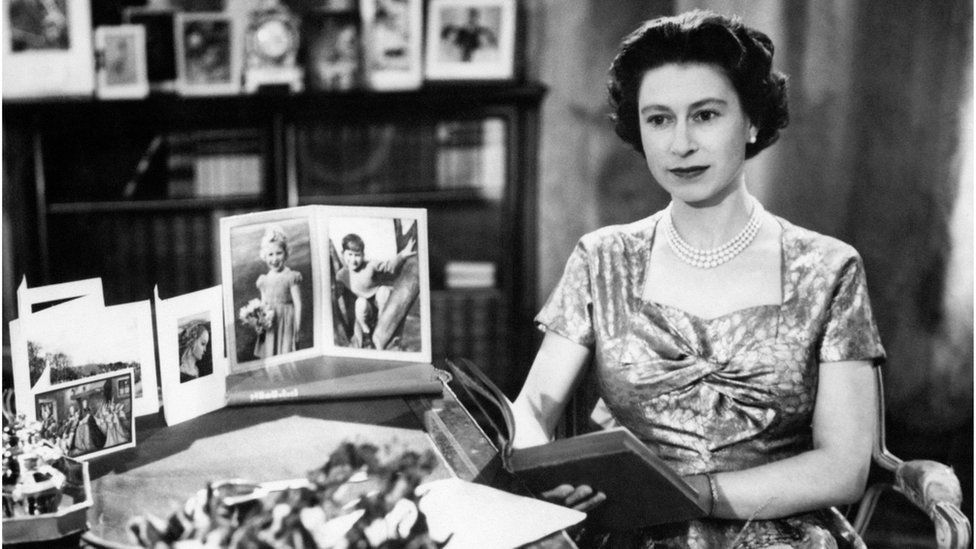
This will be the first televised annual royal Christmas Day broadcast not to be presented by the late Queen, who appeared in the first TV message in 1957.
The photo of the King shows him recording this year’s message in the chapel where a committal service was held during the Queen’s funeral in September.
Both his mother and father, Prince Philip, are buried in the George VI Memorial Chapel within St George’s Chapel.
The picture, released by Buckingham Palace, shows King Charles standing in front of a Christmas tree with plastic-free, recyclable decorations and arrangements of holly and ivy in the background.
This year sees the King and Camilla the Queen Consort return to the tradition of spending Christmas in Sandringham, Norfolk, after concerns about Covid and Queen Elizabeth’s health kept the Royal Family in Windsor last year.
The Prince and Princess of Wales are among the senior royals expected to be with King Charles for Christmas.
In her 2021 Christmas message, the Queen gave a highly personal tribute to her “beloved” Prince Philip, who died in April of that year.
Image caption,Queen Elizabeth presented the first televised Christmas message in 1957
The King’s Christmas Day broadcast continues a tradition going back 90 years.
The first royal Christmas broadcast was a live radio speech in 1932, delivered from Sandringham by George V, with the script written by the author Rudyard Kipling.
In 1957, Elizabeth II delivered the first televised message, saying that it was a technological landmark that “television has made it possible for many of you to see me in your homes on Christmas Day”.
The message became part of many families’ Christmas celebrations and the first televised broadcast in 1957 set a familiar pattern.
The national anthem was followed by the monarch speaking directly to the camera, with a speech that included Christmas greetings, a religious lesson, support for the Commonwealth, a round-up of the royal year and a moral message for the times.
In 1957 it meant a warning about values in public life, criticising a culture of “self-interest”.
The timing of the Christmas broadcast was originally set for 15.00 GMT as best for reaching the most countries in different time zones around the world.
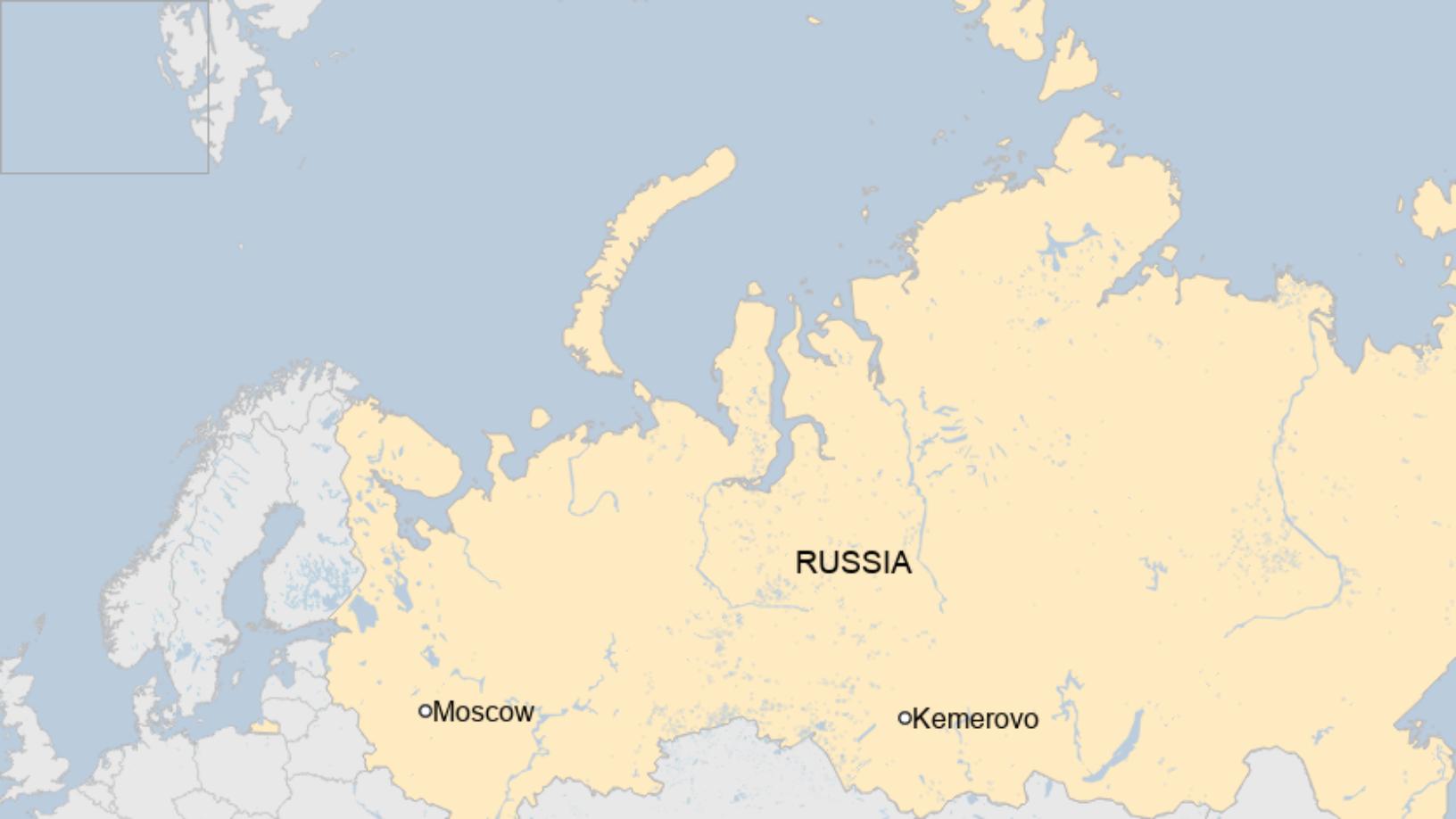
At least 20 people have been killed after a blaze swept through a home for the elderly in the Siberian city of Kemerovo, Russian officials say.
Another six people were injured. The entire top floor of the the two-storey wooden building was gutted by the overnight fire.
Initial reports say it may have been caused by a faulty heating boiler.
The private home for the elderly was operating illegally, officials were quoted as saying by Tass news agency.
Dozens of firefighters were deployed and the blaze was extinguished early on Saturday.
The governor of the region said all similar facilities would now be inspected.
A criminal inquiry has been launched.
Local fire service officials told Tass that many unregistered homes for the elderly were operating across Russia. As such, they were considered private property and not be subject to fire safety inspections.
In 2018, 60 people – including 37 children – died in a leisure centre fire in Kemerovo.
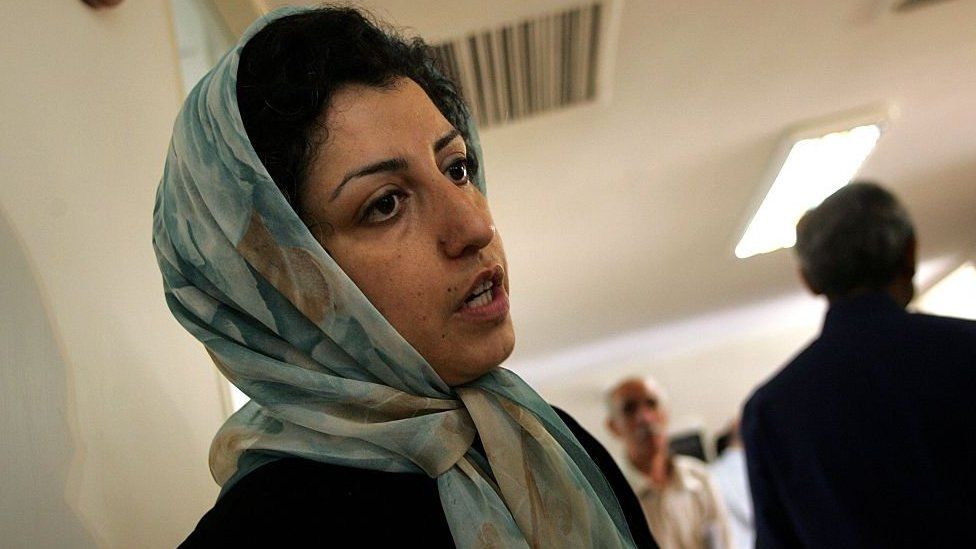
A leading human rights activist in Iran has written from prison to give the BBC details of how women detained in recent anti-government protests are being sexually and physically abused.
Narges Mohammadi said such assaults had become more common in recent protests.
She is serving a lengthy sentence in Tehran’s notorious Evin prison.
The protests were triggered by the death in custody in September of 22-year-old Mahsa Amini, arrested for violating strict dress codes.
She was detained by morality police in mid-September for allegedly wearing her hijab, or headscarf, “improperly”.
More than 500 protesters, including 69 children, have been killed, while thousands of others have been arrested, human rights activists say. Dozens of Iranian security personnel are also reported to have been killed.
Many of those arrested have allegedly been subjected to torture and other ill-treatment in custody.
Ms Mohammadi is deputy head of Nobel laureate Shirin Ebadi’s Defenders of Human Rights Center. She has received several jail sentences since 2011 and is currently in prison for “spreading propaganda”.
This year she was also included in the BBC’s 100 Women – a high profile list of 100 inspiring and influential women from around the world.
‘Hands and legs tied to hook’
Ms Mohammadi says in her letter that some of the women arrested during the recent demonstrations were transferred to the women’s ward in Evin prison.
That gave her a chance to hear shocking details of the abuse they suffered.
She says that one well-known activist had her hands and legs tied to a hook above her head in the vehicle taking her to prison – and was then sexually assaulted by security officers.
Image caption,Ms Mohammadi, pictured here in 2007, is serving a lengthy sentence in Evin prison
Ms Mohammadi says she saw bruises and scars on her body.
She says another woman who was arrested in the street was taken on a motorbike by two security officers – one in front and one behind – and was repeatedly assaulted.
Iran’s state broadcaster has denied reports of security forces using rape and sexual abuse against female protesters.
A report on 19 December said female prisoners were kept in facilities run by all-female staff, adding that claims of rape in the Western media were “rumours” and “baseless”.
But Iran also continues to heavily repress domestic reporting of the protests, with one recent report suggesting it was now the third largest jailer of journalists in the world.
Ms Mohammadi says that even though reporting abuse may lead to intimidation of the families of women in detention, she believes it’s necessary to expose what’s happening – in order to try to put a stop to it.
“Not revealing these crimes would contribute to the continuation of application of this repressive methods against women,” she says.
“Therefore, it seems that the assault on women activists, fighters, and protesters in Iran should be widely and powerfully reported at the global level.”
She added that this was especially important given the pressure on civil society in Iran.
“In the absence of powerful independent civil organisations, the attention and support of the media and international human rights organisations and global public opinion is essential,” she said.
Ms Mohammadi ended the letter by expressing the belief that Iran’s “brave, resilient, lively and hopeful women” would attain victory.
“Victory means establishing democracy, peace and human rights and ending tyranny,” she added.
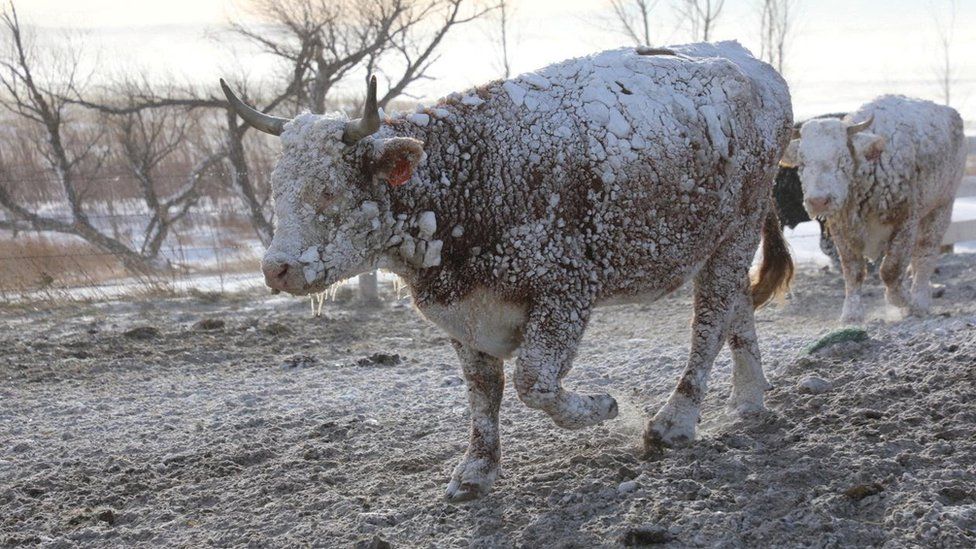
Some 200 million Americans are feeling the icy grip of a massive winter storm that has been linked to at least 19 deaths ahead of the holiday weekend.
More than 1.5 million people lost power and thousands of flights were cancelled on Friday.
The vast storm extends more than 2,000 miles (3,200km) from Texas to Quebec.
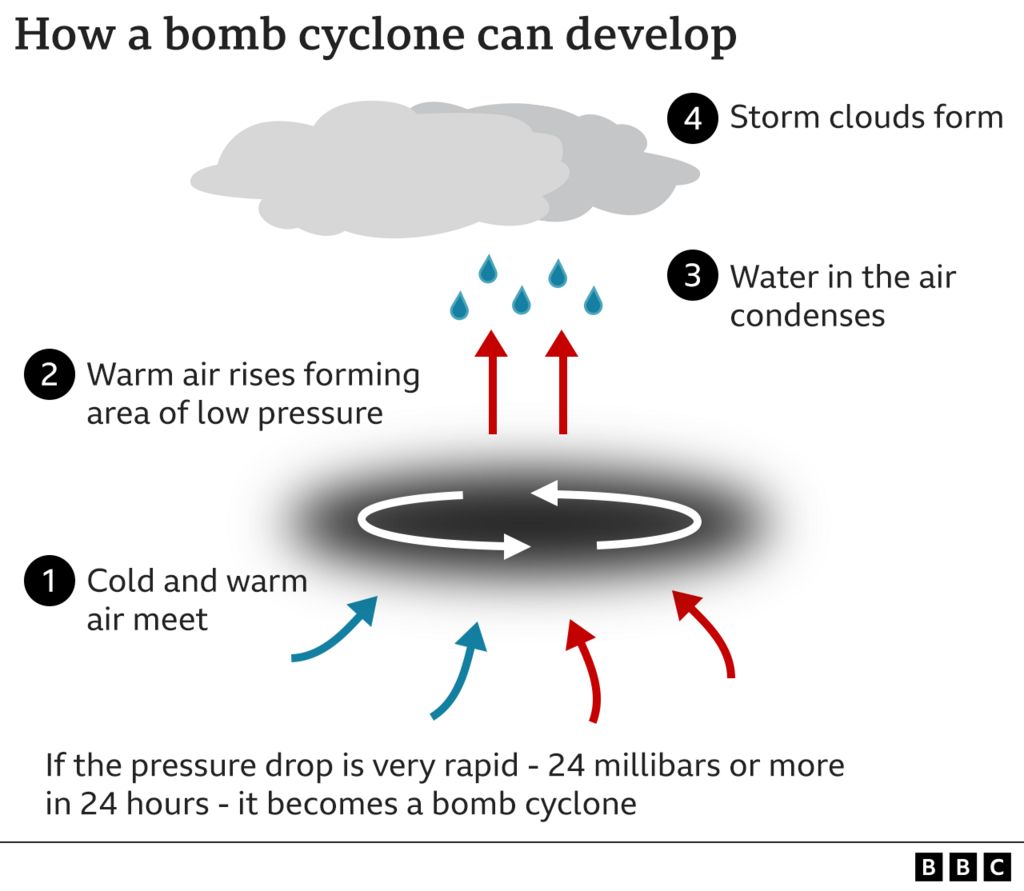
A bomb cyclone, when atmospheric pressure plummets, has brought blizzard conditions to the Great Lakes on the US-Canada border.
In Canada, Ontario and Quebec were bearing the brunt of the Arctic blast, with power cut to hundreds of thousands.
Much of the rest of the country, from British Columbia to Newfoundland, was under extreme cold and winter storm warnings.
The US National Weather Service (NWS) said its Friday map “depicts one of the greatest extents of winter weather warnings and advisories ever”.
Temperatures in Elk Park, Montana, dropped to -50F (-45C), while the town of Hell, Michigan, has frozen over.
It was 1F (-17C) in the snow-covered community on Friday night. Emily, a bartender at Smitty’s Hell Saloon, told the BBC: “It’s pretty cold here, but we’re having a hell of a time.”
In South Dakota, snowed-in Native Americans burned clothes for warmth after running out of fuel, said tribal officials.
Heavy snowfall was forecast in areas of Pennsylvania and Michigan.
Buffalo, New York, was expecting at least 35in (89cm). The National Weather Service reported “zero mile” visibility there and posted video of white-out conditions.
“We don’t even want to be parked in it, you *definitely* don’t want to be driving in it. Seriously,” it said in the tweet.
More than eight million people remained under blizzard warnings, said the NWS.
Coastal flooding has been seen in New England, New York and New Jersey.
Image caption,Cows walk in the snow following a blizzard in Sturgis, South Dakota
In the Pacific Northwest, some residents ice-skated on frozen streets in Seattle and Portland.
Even the usually milder southern states of Louisiana, Alabama, Florida and Georgia were experiencing hard-freeze warnings.
A number of the storm-related fatalities have involved road traffic accidents, including a 50-car pile-up in Ohio that killed four motorists. Another four died in separate crashes in the state.
Travel problems across the country were being exacerbated by a shortage of snow plough operators, with low pay rates being blamed.Media caption,
Watch: Flooding pours through the streets of New York and New Jersey
More than 5,900 US flights were cancelled on Friday, according to the tracking site FlightAware, as flyers battled to make it home for Christmas. Another 1,200 Saturday flights have already been cancelled.
By Friday night one million customers had no electricity across the US, according to PowerOutage.us.
Utilities throughout the Tennessee Valley were implementing rolling blackouts to save power.
The NWS says more than 100 daily cold temperature records could be tied or broken over the next few days. Decades-old records have already been matched:
Denver, Colorado, dropped to -24F on Thursday, its lowest point since the 1990s. Craig McBrierty, 34, who is originally from Scotland, but now lives in Denver, told the BBC it is “colder than I have ever experienced”
Wichita, Kansas, recorded its coldest wind chill (-32F) since 2000
Nashville, Tennessee, saw its temperatures plunge to below zero for the first time in 26 years
Casper, Wyoming, set a new record low on Tuesday of -42F
Dr. Kwame Asah-Asante, a political scientist, has claimed that given Ghana’s current economic circumstances, a National Cathedral is not necessary at this time.
“At this time we don’t need it,” he said on the Key Points on TV3 Saturday December 24.
He further indicated that the financing mechanism for the project was not transparent enough.
He said “Initially, we thought the churches were going to finance but later we were made to know that the state was involved.”
“Utmost transparency, we missed that,” he stressed.
Parliament did not approve the controversial GHS80 million that was earmarked for construction of the National Cathedral.
To that end, the amount has been channeled into Communication and Road sectors.
Earlier, the Ranking Member on the joint committee of Trade, Industry and Tourism, Emmanuel Armah-Kofi Buah, on Tuesday, December 20 dedicated a Minority voting decision to reject the budget estimates for the building of the National Cathedral as captured in the 2023 budget statement to Ghanaians.
He said the decision was a victory to all Ghanaians as previous allocations to the project were not properly accounted for.
Eleven Minority MPs as against 10 Majority MPs, therefore, voted to reject the GH¢80-million allocation for the continuation of the project.
Commenting on this development, Member of Parliament for North Tongu Samuel Okudzeto Ablakwa said “Government compelled to withdraw and reallocate the obnoxious and dubious GHS80million for President Akufo-Addo’s Cathedral to the Roads and Communications sectors.
“We won this battle for God and the suffering masses. Thank you all for your unflinching support.”
A contender in the just-ended National Youth Organizer election of the National Democratic Congress (NDC), Brogya Genfi, has warned that issues that characterized the party’s National Youth Organizer election if not immediately resolved could cause division in the party.
Brogya Genfi who narrowly lost to incumbent George Opare Addo is in court to restrain the latter from holding himself as the National Youth Organizer of the party.
Speaking to Starr News, Brogya Genfi said the issues must be resolved now to ensure the needed unity and cohesion in the party to enable the NDC to wrestle power from the governing New Patriotic party come the 2024 election.
“… for example, the Eastern Regional Youth election has been annulled, why, because the Regional Youth Organizer is my supporter. Because he’s from the home region of the National Youth Organizer and he’s not supporting him, he’s gone to court to annul the election. That can also breed division and so that must be looked at. So it’s not just about the action I have taken.”
He added: “I would love to have an opportunity with the former President(Mahama) for an extensive discussion on the way forward for the party.”
Meanwhile, the NDC at its National Delegates Congress over the weekend defied a court injunction secured by Brogya Genfi and swore in George Opare Addo as its Youth Organiser.
The Electricity Company of Ghana (ECG) has finally restored electricity to inhabitants of Nuaso in the Lower Manya Krobo Municipality of the Eastern Region after nearly five months of no power.
The residents had over the months lamented over the lack of electricity in the community after a joint team of ECG and military personnel disconnected the community on August 22, three days after power was restored to the Krobo area after a month of total outage over the installation of prepaid meters.
A clash between soldiers and some agitated residents during the disconnection led to eight residents sustaining gunshot wounds.
The affected customers bemoaned that the situation was hindering economic, social and domestic activities in the community.
Several engagements involving the Municipal Chief Executive (MCE) for the area, Simon Kwaku Tetteh, the National Security Ministry, the Energy Ministry, the Assemblyman for the area, Hon Samuel Torgbor, management of the ECG and some prominent personalities in the community were held towards restoring power to the area.
Currently, prepaid meters are being installed in various households in the community without any agitations in the final phase of the month-long controversial exercise in the Krobo area.
Some residents who spoke with GhanaWeb in an interview expressed relief at the restoration of the power supply to the neighbourhood.
They however lamented that their sources of livelihood were affected with many of them thrown out of business.
A hairdresser, Tettey Mercy Angmorkie said, “The light out affected our businesses but we are happy to power has been restored. We could not work because we rely on power for our work so we ended up sitting down without working.”
Another, Bernice Asimeh, a cold store operator said she was forced to close down her shop and only resumed work following the restoration of power to the community. “It affected us because I use the fridge to freeze my drinks so when we were in the dark it affected me so much.”
Bernice who said she initially opposed the prepaid meters said though she still prefers the postpaid meters, she was nevertheless ready to accept the new meters now. “We have nothing to say, we’re just there so when they bring it we’ll accept it,” she expressed.
According to her, she has lost many of her customers as a result and it would take her a long time to get them back.
A manager of a car washing bay, Francis Asimeh said all the 25 employees who worked at the facility before the outage became unemployed, forcing them to join other nearby washing bays to enable them to make ends meet.
He said though they were making sales of between Ghc150 and Ghc200 a day before the outage, they’re unable to make as many sales now as they notify their customers to return to their base for business.
The respondents however expressed their preparedness to accept the prepaid meters currently being rolled out in the community but called for further sensitization from the power distributors.
Assemblymember for Nuaso Old Town, Samuel Torgbor said the people were happy that power supply had been restored to the area and blamed the lack of understanding for the unfortunate incident.
On her part, the Public Relations Officer (PRO) of the Electricity Company of Ghana (ECG) Tema Region, Miss Sakyiwaa Mensah said the company’s decision to restore power to the area followed an agreement reached from engagements with various stakeholders to safeguard ECG interests in the area.
“There had been ongoing discussions with various stakeholders, aimed at restoring power, safeguarding ECG property and ensuring that work can be carried out in a safe environment. The restoration is part of the consensus reached from these stakeholder engagements with chiefs, opinion leaders and management of ECG,” she said.
She furthered that the meter installation exercise has been completed at Nuaso New Town and currently progressing smoothly at Nuaso Old Town. “It has been smooth so far. ECG is appreciative of the cordial working environment which has enabled work to go on smoothly,” noted the PRO.
Dormaahene, Osagyefo Oseadeeyo Agyemang Badu I has urged President Nana Addo Dankwa Akufo-Addo to halt work on the National Cathedral.
Dormaahene, who is the President of the Bono Regional House of Chief, said that the Cathedral project cannot be a priority of the government, given the difficulties Ghanaians are facing.
Osagyefo Agyemang Badu I, while addressing the media, added that the project can continue once the country is out of the woods and Akufo-Addo should not be the one who has to necessarily complete it.
“One of the things Ghanaians are asking me to talk to the president about is the National Cathedral. He (Akufo-Addo) swore to God to build a National Cathedral when he becomes president which is a good thing.
“However, given the economic difficulties Ghanaians are facing around this time, the people have asked me to tell you (Akufo-Addo) to put the project on hold. It is your initiative, no one can take it away from you but don’t use the national coffers to build a cathedral.
“.. tell him to focus on economic recovery so that in good time even if he is not able to complete it, any of these brothers (successors) could do so. That is what Ghanaians want me to tell you,” he said in Twi.
Meanwhile, Parliament’s Trades and Industry Committee has suspended the approval process for an amount of GH¢80 million allocated for the construction of the National Cathedral.
Tamale Central Member of Parliament, Ibrahim Murtala Mohammed, who disclosed the development to Accra-based JoyNews on December 13, said the suspension will be in place till justification for the allocation is made.
“What the Committee decided was that we cannot just approve this GH¢80 million, we must know how the other GH¢339 million was spent. What did it constitute?
“The GH¢80 million you want us to approve, how did it find space in the budget line of the Ministry of Tourism when the Minister and the directors could not speak to the questions we were asking? What constitutes the GH¢80 million, they should give us a breakdown,” he stressed.
In opposition to the government’s proposed Debt Exchange Program, the country’s health sector workers have released a strike action schedule.
The health sector workers, made up of the Ghana Medical Association (GMA), the Ghana Registered Nurses and Midwives Association (GRNMA), the Health Sector Workers’ Union (HSWU) of TUC Ghana, and the Government and Hospital Pharmacists Association (GHOSPA), all constituent members of Organised Labour, reiterated that following a meeting held by Organised Labour on Monday, December 19, 2022, it was agreed that an industrial strike will be embarked on.
It stressed that the “action has become necessary to press home our demand for the exemption of pension funds from the domestic debt exchange programme as announced by the Finance Minister.”
It, therefore, entreated all health sector workers “to follow the outlined road map to ensure a smooth implementation of the strike.”
According to the health sector workers, the industrial strike will take place as follows: “27 December 2022, withdrawal of all outpatient services; 2 January 2023, withdrawal of emergency services; 9 January 2023, withdrawal of all services.”
Organised Labour has served notice of a nationwide strike beginning next week over the government’s failure to exempt pension funds from the debt exchange programme that has been extended to next year.
The stipulated date for the strike is Tuesday, December 27, 2022.
The Secretary-General of Organised Labour, Dr. Anthony Yaw Baah, made this known at a press briefing today, Monday, December 19, 2022.
He said the strike has been occasioned by the government’s decision to introduce a debt exchange programme.
According to him, the strike will be in force until the government exempts pension funds from the planned debt exchange programme.
“We are asking the government to exempt us from the debt exchange programme.
“We have already told the world that if the government doesn’t do that, we will advise ourselves.
“Today, we are here to announce the advice. The advice is very simple.
“We have all agreed that because the government has refused to grant our request, we have decided firmly that all workers of Ghana are going to strike on December 27, 2022, and we will be on strike until our demands are met,” Dr Yaw Baah vehemently noted.
A representative for Assin Central parliament, Kennedy Ohene Agyapong, visited the national leadership of the New Patriotic Party (NPP) on Tuesday, December 20, as a courtesy call in order to learn about recent events there.
Mr. Agyapong was full of praise for the national officers for how they have taken steps to bring the party and government together for a common purpose.
He said closeness in party and government is important for ensuring unity since it affords the opportunity for the government and other officials to liaise with each other in the implementation of policies and ideologies.
He eulogized the national executives and urged them to do more in strengthening the ties between the party and the government as it helps to augment unity. Mr. Agyapong said he is concerned very much for party unity and urged all those who aspire to lead it to do their best in that regard.
He pledged his support for anyone who would be endorsed to lead the party and said, once he would need everyone’s support should he become the next leader, he is ever prepared to help others.
He said the NPP cannot afford to relinquish political power as the alternative party would be worse and scary. He advised the NPP not to waste time on the newly elected NDC national executives especially Mr. Asiedu Nketiah and Fiifi Kwetey as they are only propagandists.
Mr. Agyapong recalled in 2008 when these same people out of their propaganda, fabricated documents and assigned money in false bank accounts for him and other NPP appointees at the time and made Ghanaians believe that they had stolen money from the state.
Hon. Agyapong said that, although these stories were deliberately fabricated by the NDC but many Ghanaians bought into and it affected the fortunes of the NPP. He has therefore cautioned his party members to take the fight to the NDC this time round but not to sit down to remain callous while they lie to Ghanaians.
A New Patriotic Party (NPP) Member of Parliament, Eugene Boakye Antwi, has wondered why the country is continuously entertaining the Minister of Finance, Ken Ofori-Atta.
Describing it as “nonsense,” the Subin MP said that if this was happening in another jurisdiction, such things would never have been allowed to fester.
According to a myjoyonline.com report, the MP, who is part of some rebel parliamentarians who are seeking the sacking of their party member, the Minister of Finance, made this known while speaking in an interview on JoyNews.
He stated that they are determined to keep President Nana Addo Dankwa Akufo-Addo’s promise of removing the minister after he completes his tasks of presenting the 2023 budget to parliament and leading the conclusion of the IMF talks.
“…these are major policy failures that in any civilized democracy, Ken Ofori-Atta will not stand on his feet. Why are we entertaining such nonsense? Excuse my French.
“… what have we got against him as a person? You brought something to us; we are talking about those issues, and you forget about this and say that we want to unseat somebody in the constituency just because you have failed?
“You saw us in the Chamber fighting our NDC guys to pass the e-levy. So, what have we not done for Ken Ofori-Atta to succeed as a finance minister and I say posterity will judge us if this is personal,” he said.
Eugene Antwi further said that he was elected as an MP by his people and as such, all he is seeking is in their interest first, just as it is for the good of the country, far more than anything that will please the president.
“Nobody made me an MP, Akufo-Addo did not make me an MP. God made me an MP. I was elected just as Akufo-Addo was elected so nobody should dare threaten anybody. When you veer into that realm you even muddy the waters more… I contested the primaries like Akufo-Addo contested the primaries to become president.
“The fact that we have taken this position does not mean that it is directly directed at President Akufo-Addo, no. We are talking about the supreme interest of the party. No individual is bigger than this party including Nana Akufo-Addo.” he added.
Over 80 MPs from the majority party have openly declared their opposition to Ken Ofori-Atta, calling on the president to fire him.
The MPs have recently reactivated their demands after the minister fulfilled the requirement of President Nana Akufo-Addo to have him stay on a little longer to complete the IMF deal and present the 2023 budget to parliament.
Even though the beginning of the eighth parliament had major happenings like a hung parliament and the election of the speaker from the opposition party, among others, the year 2022 had some unprecedented incidents that got the nation talking.
GhanaWeb compiles a list of some of these happenings;
Majority calls for Dome-Kwabenya’s seat to be declared vacant
On April 5, 2022, Speaker Alban Bagbin directed Adwoa Safo, Kennedy Agyapong and Henry Quartey to the Privileges Committee.
The Speaker’s directive was in line with Article 97 (1) (c) of the 1992 Constitution and Order 17 of the Standing Orders of Parliament, which states emphatically that “A Member shall not absent himself during a meeting for more than fifteen sittings without the permission in writing of the Speaker. Any member infringing this Order shall have his conduct referred to the Privileges Committee.”
The Privileges Committee produced a report after meeting the two other MPs, Ken Agyapong and Henry Quartey, and presented it to parliament.
The Privileges Committee said in their report that they could not reach Adwoa Safo; therefore, they could not come out with a decision, but the majority maintained that whether or not they heard from Adwoa Safo, the constitution stated clearly that the seat should be declared vacant as it was automatic for it to be so.
However, when the report was brought to the house, the majority leader insisted that the committee had submitted the report to the house and the report had been laid for the information of the house and, therefore, a decision had already been determined concerning the three persons and the imperatives of Article 97 would automatically be triggered.
The majority leader added that what was captured as a motion in the order paper had issues as the purpose of a motion is for the house to make a determination, one he considers already determined (by declaring the seat vacant).
“Mr Speaker, the privileges committee have submitted the report, and indeed my own thinking and the incumbent of the situation is that once the committee has made a determination in respect of the three persons, then the imperative of Article 97 will automatically be triggered.
“Mr Speaker, my thinking is that even what is captured here as a motion; the purpose of a motion is for the house to make a determination and thinking that rarely this is not for the house to make a determination.”
The Minority Leader, Haruna Iddrisu, argued that the house is governed by the 1992 constitution and the standing orders of the house.
According to him, the house should not set a precedent that a seat can be declared vacant based on recommendations of a Privileges Committee report, a precedent that could likely affect the house subsequently.
Haruna Iddrisu emphasized that if a report has been submitted to parliament, the house must take a decision.
However, the Speaker dismissed this call by the majority, stating that the report from the committee was not final but to be brought before the house for the plenary to take a decision on the matter.
The Speaker is yet to take a decision on this matter even though Adwoa Safo officially returned to the house on November 11, 2022.
NPP MPs protesting against an appointee of their govt
On October 25, a group of New Patriotic Party (NPP) Members of Parliament petitioned President Nana Addo Dankwa Akufo-Addo to sack the Minister of Finance, Ken Ofori-Atta, and the Minister of State at the Finance Ministry, Charles Adu Boahen, to restore public confidence in the economy.
This was announced in a media briefing by their spokesperson, Andy Kwame Appiah-Kubi, Member of Parliament for Asante-Akim North.
The group said it will not partake in government business nor support the 2023 budget if the president fails to heed their calls.
According to them, the move follows previous concerns sent to the government that had not yielded any positive results.
“We have had occasions to defend allegations of conflicts of interest, lack of confidence, and trust against the leadership of the Finance Ministry.
“The recent development within the economy is of major concern to our caucus and our constituents. We have made our grave concern to our president through the parliamentary leadership and the leadership of the party without any positive response,” Andy Appiah Kubi said.
The MPs believe the move would change the current economic situation in the country.
This action has been described as unprecedented, as many have also called on the president to take action to avoid political instability.
However, just at the time these calls were made, a video of Aremeyaw Anas’ latest exposé, dubbed ‘Galamsey Economy’ compelled President Nana Addo Dankwa Akufo-Addo to sack the Minister of State in Charge of Finance, Charles Adu Boahen, from office.
Charles Adu Boahen alleged on video that Vice President Dr. Mahamudu Bawumia needs just USD 200,000 as an ‘appearance fee’ and some positions from an investor for his siblings to get his backing and influence in establishing a business in Ghana.
A few days before the budget reading, the leadership of the New Patriotic Party called on the aggrieved members not to boycott the budget reading.
They obliged this plea and showed up in their numbers for the budget.
Joe Wise overturns major decision by Alban Bagbin again
On February 22, 2022, the First Deputy Speaker, Joseph Osei Owusu, threw out a motion by the minority for a bipartisan committee to look into the government’s COVID-19 expenditure.
This is after the Speaker, Alban Bagbin, had admitted the motion before leaving his chair for the First Deputy Speaker to continue with proceedings in the chamber on the day.
It is not the first time the First Deputy Speaker has overturned a decision by the Speaker of Parliament.
Motion by Minority to probe COVID-19 expenditure
On February 22, the Minority in Parliament presented a memo to the House seeking to probe the government’s expenditure on COVID-19 from 2020.
The motion, championed by three members of the minority, proposed, “that this house constitutes a bi-partisan parliamentary committee chaired by a member of the minority caucus, to enquire into the expenditures made by the Ghana Government in relation to COVID-19 since the outbreak of the pandemic in 2020.”
Haruna Iddrisu, Minority Leader; Mohammed-Mubarak Muntaka, Minority Chief Whip; and Dr. Cassiel Ato Forson, Ranking Member on Parliament’s Finance Committee, were the proposed members.
The motion was presented and read by Dr. Cassiel Ato Forson as he outlined the need for the house to probe the expenditure.
Ato Forson stated that an amount of 1.2 billion Ghana cedis was approved by parliament to support the Coronavirus alleviation program, but the government is yet to account for their expenditure, even though they exceeded the approved amount to 8.2 billion Ghana cedis.
Seconding the motion, the Member of Parliament for Asawase, Mohammed-Mubarak Muntaka, added that the health ministry, per the 2021 budget review, was only able to account for an amount of 600 million Ghana cedis.
However, before the debate could continue, Speaker Alban Bagbin requested that the Deputy First Speaker take the chair, leaving the actual debate in the hands of Joseph Osei Owusu.
After the motion was seconded, the Deputy Majority Leader, Alexander Afenyo-Markin, raised a preliminary objection to the motion.
He described the motion as baseless and urged the sit-in Speaker to reject the motion.
Making reference to Article 187 of the Constitution, he indicated that the Auditor General is the best person to investigate the matter and not any other committee.
Ruling on the motion, Joe Wise said the Speaker, Alban Bagbin, should not have admitted the motion.
“My view is that the motion ought not to have been admitted and it is improperly before the house. I so rule,” he said.
On March 29, the Minority Members of Parliament staged a walk-out before the Electronic Transfer Levy (E-Levy) Bill 2021 was passed.
The walkout occurred after the House had concluded the debate on the bill and the Speaker was to put the question on the motion for the adoption of the Finance
The Committee’s report in 2.4 million, approximately eight per cent of the population, were registered as personal income taxpayers.
Prior to the walking out, the minority had complained that the E-Levy bill consideration came as a surprise as it was not listed in Parliament’s business statement for the week.
However the bill was passed after the 137 MPs of the Minority side of Parliament staged a walkout of the Chamber, on the grounds that they did not want to be associated with any further proceedings on or approval of the bill, which was being considered under a certificate of urgency.
A Chinese national, Aisha Huang, who is currently on trial in Ghana for allegedly conducting mining operations without a permit, was allegedly responsible for the damage of the River Offin, according to a witness in the case.
The witness, Timothy Teye Ali, a farmer at Sukuumu, Bepotenten, in the Amansie Central District of the Ashanti Region, who is the fifth to appear before the court so far, made this known through a written statement read on his behalf in court.
He added that the mining activities of Aisha Huang also led to the destruction of other water bodies in the Ashanti Region, a report by graphic.com.gh has said.
Timothy Teye Ali told the court that in 2017, he was contacted by one James Ogbey over his interest in purchasing land to mine gold.
He added that after an assessment of what he had to offer, they came to an agreement on GH¢28,000 as the final charge.
He continued that he was then informed by Ogbey that the accused, Aisha Huang, was on that day elsewhere and for which reason she could not be present with them.
Timothy added that although they had an agreement for Ogbey to make full payment before the land was released to him, the four-acre farmland was cleared the following morning.
Upon confronting him, Timothy, through his statement that was read by the Director of Public Prosecutions, Yvonne Atokora Obuobisa, said that Ogbey then paid him GH¢3,000, GH¢4,000 and GH¢5,000 as part payments for the land that had already been cleared.
“The accused person continued to work on my land without fully paying me until she was arrested for illegal mining,” his statement said.
Timothy explained further that following Aisha Huang’s arrest in 2017, together with his family members, they went to meet James Obey (Aisha’s foreman), to demand the rest of his money, but he only got the assurance from Ogbey that even if convicted, Aisha Huang’s properties would be enough to be sold off to make up his money for him.
“The galamsey activities of the accused person led to the destruction of the Offin, Nkyingo, Afraso, and Kobri rivers at Sakuumu, Bepotenten,” he added.
Timothy Ali will be cross-examined in court on Wednesday, December 21, 2022.
Aisha Huang (En Huang) is standing trial for being deeply involved in galamsey (illegal mining).
In 2018, she was deported from the country after the state decided to discontinue her trial, in which she was accused of engaging in small-scale mining without a license.
It was later discovered that the Chinese national had found her way back into the country and returned to mining.
The Member of Parliament (MP) representing the Wa West Constituency in the Upper East Region, Mr. Peter Lanchene Toobu, thinks the New Patriotic Party (NPPactual )’s nature is to create noise while it is in opposition and do little when it is in power.
Mr. Peter Lanchene Toobu painted this picture of the NPP while speaking in an interview with Odehyieba Kofi Essuman, host of the Ghana Yensom morning show on Accra 100.5 FM on Wednesday, December 21, 2022.
According to him, people who are not politicians, including pastors, find their voices when the NPP is in opposition.
He said some of these pastors take the noise to the hilt by offering politically tainted prayers and preaching.
He said that coupled with this, the party elements make all manner of noise, which turns out to be “much ado about nothing.”
He noted that all these pastors artificially lose their voice when the NPP is in government.
“When Ghana is quiet, you need nobody to be told that the NPP is governing,” he disclosed.
“Yes! Look at what is happening with the construction of the National Cathedral yet these pastors are mute,” he added.
He said when the National Democratic Congress (NDC) led by former President Mahama was in government, the NPP in opposition made all manner of allegations against the then government, only to come to power and repeat the same mistakes they spoke about.
He then stressed that there is relative silence when the same NPP is in government.
“This government has gone to the contingency vault to withdraw funds for the construction of the National Cathedral,” he charged, adding that funds cannot be withdrawn from the vault for projects that will last for four years and more.
He predicted that this government will end up using GHS3 billion on the project and it will still be at the foundation levels.
“This is not an era for building a cathedral for God when people are hungry,” he asserted.
The National Chairman of the National Democratic Congress (NDC), Johnson Asiedu Nketiah, and Samuel Ofosu-Ampofo, his predecessor, have appeared in public for the first time since the NDC Congress in Accra that just ended.
The two met at the wedding ceremony of Sammy Gyamfi, the National Communications Officer of the NDC, on Wednesday, December 21, 2022.
Ahead of the election that saw Asiedu Nketiah, the former General Secretary of the party emerge winner in the National Chairman-ship race, the two candidates were actively engaged in a lot of media banters.
The last time they were seen together was on the morning of Sunday, December 18, 2022, just moments before the official results for the polls were declared by the officials of the Electoral Commission of Ghana.
After the contest, Asiedu Nketiah won convincingly with a 5,569 to the 2,892 votes garnered by Samuel Ofosu-Ampofo.
Sammy Gyamfi’s wedding is a private one that was attended by dignitaries like the former president, John Dramani Mahama.
The Minister of Lands and Natural Resources, Samuel A. Jinapor, has guaranteed private plantation owners that the government and his ministry will always support and fully back their business as long as it advances the government’s goal of finding answers to the climate change.
Mr. Jinapor gave this assurance when he joined the plantation developers during a sensitisation forum organised for the private developers by the Ghana Forest Investment Programme, (GFIP) under the auspices of the Ministry of Lands and Natural Resources.
The awareness creation on the plantation loan scheme programme is on the sidelines of the sector minister’s one-day tour of the Ashanti Region on Tuesday, December 20, 2022.
He noted that government has absolute trust in the private sector even as it is giving out loans from its Forest Investment Project to engage in plantation enterprises because, he said, “we believe in the private sector as anything you do in human endeavour, whether medicine, commerce, agriculture, plantations, or anything, when you have the private sector at the fulcrum or the pivot around which your enterprise revolves, you can rest assured that you will be successful.”
The sector minister said that the Ministry’s presence at their meeting to create awareness of the plantation loan scheme is a testimony of the government’s commitment to their endeavour, adding that this support to the private sector to establish commercial forest plantation will yield a common goal which is the provision of industrial timber, restoration of the degraded landscape, job creation for the youth and provision of ecological services which he is especially happy about.
He indicated that this financing is also a vehicle for Government to realise its vision to protect the remaining forests, increase its forest estate, improve the lives of community members working in the rural landscape and pilot the viability of contracting commercial loans for plantation development.
He encouraged the private developers saying that the work they are involved in, although difficult, is a very important one and with a government that believes in the private sector, he urged them to get actively involved and make it work for the common good.
Stating the objective of the loan scheme to private sector plantation developers, Benito Owusu-Bio, the Deputy Minister responsible for Lands and Forestry, disclosed that in line with the achievements, the Ghana Forest Investment Programme (GFIP) and to consolidate the gains made under the original GFIP programme, financing of USD 19.39 million loans and grants were extended to Ghana in January 2019 and out of this total sum, USD 7.0 million is being loaned out to support small to medium scale plantation development through a concessionary loan scheme.
He opined that the objective of the scheme is to stimulate private sector investment in commercial forest plantations, which he said will be achieved through the provision of financial assistance and technical support to small and medium-scale forest plantation investors.
The Deputy Minister informed the developers that there are terms and conditions to acquire the loan, and the most pertinent among all is ownership of the lands on which they have the plantation.
He appreciated the efforts of the sector minister and the ministry for the tireless efforts in getting the loan scheme approved, noting that he is certain the private sector will do a good job with this opportunity given.
The government’s 2023 plans to demolish the Accra International Conference Centre(AICC) and build a new one for €116 million were thwarted by members of parliament from the opposition National Democratic Congress (NDC), both in the Foreign Affairs Committee and in plenary last night, Tuesday, December 20, 2022. (GHC 1.3 billion).
The MPs also successfully blocked proposals to open new Ghanaian embassies in Jamaica, Trinidad and Tobago, and Mexico.
MP for North Tongu, Samuel Okudzeto Ablakwa, who disclosed this in a Facebook post, said the government cannot be defaulting on its loan obligations and imposing “crude haircuts, particularly on pensions for the vulnerable aged and still be pursuing fanciful projects which can be deferred to better economic times in the future.”
This comes after the trade, industry, and tourism committee of parliament also rejected the GHC 80 million budgetary allocation for the construction of the National Cathedral.
The minority side of the committee voted against the budget in a 11:10 majority decision.
A member of the committee, Mr. Yussif Sulemana, told journalists on Tuesday, December 20, 2022: “I can tell you on authority that at the end of the day, we had to vote, and after the vote, the minority carried the day. We have voted against it, and we are saying that this is not the time for us to be spending that huge sum of money on building a cathedral.”
The Bole-Bamboi MP said: “Apart from that, we were told at the committee level that they had already spent GHC 339 million, and when we asked them to give us evidence of how the money was spent, it was a challenge.”
Again, he noted, “We were told that they have moved the cathedral from wherever it was to the ministry of tourism. And the question I put to them was that the organisation that is handling this cathedral, the secretariat, is it under the ministry of tourism?”
“If it’s not under the ministry of tourism, then it means that you want to use the ministry as a conduit to send the money wherever you want to send it, and we, the minority, will not accept it.”
The Minority leader in parliament, has asked Parliament to shoulder some of the blame and accountability for the failure to hold the executive branch of government accountable for carrying out its duties.
According to him, Parliament must accept the blame for the government’s excessive borrowing.
He said it was the responsibility of Parliament to check the excessive borrowing by the government, asking: “How did we get here?”
“Parliament’s role as the defender of the people’s interests is lost,” he said.
He made the admission on Tuesday, December 20, 2022, during a roundtable with the core leadership of Parliament on harnessing the dividends of democracy over the last 30 years, organised by the Ministry of Parliamentary Affairs.
Democratic dividends refer to the benefits that a democratic system can provide for society.
Among these benefits are the provision of public goods and an institutionalised arrangement for carrying the people along in the discharge of the duties of the state.
The discussion was on the theme: ‘Parliament and the harnessing of democratic dividends: Assignment.’
It brought together experts, including the Chairman of the National Media Commission (NMC), Yaw Boadu-Ayeboafoh, and Dr Maame Adwoa Gyeke-Jandoh, former Head of the Political Science Department at the University of Ghana, Legon.
The Minority Leader admitted that Parliament was always found wanting when it came to exercising its oversight due to intense partisanship.
He said the House struggled to determine what was best for the national interest against the interests of political parties.
Mr. Iddrisu said the consequences of excessive borrowing were being felt by “all of us.”
He argued that Article 181 of the Constitution gave Parliament the sole right to approve the terms and conditions of all loans.
“So if the Minister of Finance’s borrowing has exceeded 100 percent of GDP, how did we get here?” He asked.
He intimated that Parliament had become a “clearing house,” approving Executive members nominated to serve, without scrutinizing them and telling them in the face “that their conduct is not good enough.”
“The Parliament of Ghana is contributing, through acts of commission or omission, to eroding public faith and confidence in our democracy,” he stressed.
The four suspects who were being imprisoned for the kidnapping of two Canadian women were each given a sentence of 40 years in jail with hard labor by the Criminal Division of the Accra High Court.
Sampson Agarlor, the ring leader, Elvis Ojiyorwe, Jeff Omarsar, all Nigerian nationals and Yusif Yakubu, a Ghanaian were convicted after the court found them guilty of two charges of conspiracy and two charges of kidnapping.
They were each sentenced to serve nine years for the charge of conspiracy and 10 years for kidnapping.
The sentencing, the court said are to run concurrently, meaning they will each serve the highest which is 10 years but a combined 40 years for all.
The Court presided over by Justice Lydia Osei Marfo ordered that the mobile phones of the convicts used in perpetrating the offense should be burnt while the pistols retrieved were handed over to the authorities.
According to EIB Network’s Legal Affairs Correspondent, Murtala Inusah, the families of the victims monitored the judgement via video link.
The Court said the prosecution after calling 11 witnesses was able to discharge the burden of proof which the convicts could not counter.
The Court also said the convicts came to the country purposely to kidnap expatriates to make money, a development the court observed destroyed Ghana’s International relations with investors.
Justice Osei Marfo urged the state to undertake law reforms to ensure that harsher punishments are imposed to deal with issues of kidnapping.
According to her, the current maximum punishment of 10 years for kidnapping is not deterrent enough and Ghana should learn from other countries who have strengthened their laws.
The Director of Public Prosecution, Mrs Yvonne Atakora Obuobisa welcomed the call and said a committee has been constituted to review some of the laws.
She said they will request for the judgement of the court and refer the call to the committee.
Lawyer Yaw Dankwah, who represented three of the four convicts apologised to the victims and their families.
He said, their job as lawyers is just to strengthen the judicial system.
The second convict, Elvis Ojiyorwe, knelt down before the court after he was sentenced to apologise to the victims and their families.
But his plea for a reduced sentence was turned down by the court.
Apology
Justice Osei Marfo while apologizing to the victims and their family said, “No one deserved what they (victims) have been through.”
She said in “matters like this justice must be done. My sincere apology to the victims and their family.”
Background
The four accused persons were standing trial for kidnapping two Canadian ladies since 2020.
The two ladies – Miss Lauren Patricia Catherine Tiley and Miss Bailey Jordan Chilley, who were in Kumasi to participate in a youth programme on June 4, 2019, were kidnapped.
The four persons who have been charged with unlawful imprisonment of two Canadian nationals have pleaded not guilty to four charges related to kidnapping.
The accused – Sampson Agharlor, aka Romeo, the ring leader together with Elvis Ojiyorwe, Jeff Omarsar and Yusif Yakubu have all denied the charges of conspiracy to kidnap, two kidnappings, and unlawful imprisonment.
A 39-year-old taxi driver, Kojo Amonoo was nearly shot dead at Ajumako after armed robbers snatched his taxi cab from him.
According to the victim, a young girl about 14 years old hired him to drive her to a building construction site surrounded by a bush.
He narrated to Kasapa News’ Yaw Boagyan that upon reaching the destination, three men at the site immediately rushed, attacked him and snatched his taxi cab from him.
He said he was shot at by the armed rubbers but fortunately and miraculously the bullet failed to eject, which angered the robbers to beat him up mercilessly until he pretended to be dead before they left him and took his taxi with registration number GW-5692-20 away.
He said he did not get any help while shouting for help at the scene of the attack so he crawled till he met somebody who took him to the Ajumako District Government Hospital.
The case has been reported to the Ajumako District Police Station for investigation.
The Chairman of the National Media Commission of Ghana (NMC), Yaw Boadu Ayeboafo, has said that the newly elected National Chairman of the National Democratic Congress (NDC), Johnson Asiedu Nketiah, can no longer serve on the Parliamentary Service Board.
Speaking at an event in Accra, Boadu Ayeboafo, explained that Asiedu Nketiah can no longer serve on the Parliamentary Service Board because the Constitution of Ghana indicates that members of such boards should be apolitical.
He also suggested that Asiedu Nketiah, as the leader of the NDC, may not give objective advice to the Speaker of Parliament, Alban Bagbin.
“There is this concern that once Mr. Asiedu Nketiah is now the chairman of the NDC, he should not be part of the advisory group to the speaker and serve on the board.
“Because I know that Mr. Peter Ala Adjetey was a member of the National Media Commission, and because of him, the Constitution was amended to say that anybody who holds political office should not be a member of the National Media Commission.
“So, if somebody holding political office cannot be a member of the commission. How can somebody leading a political party advise the speaker, who is supposed to demonstrate objectivity and neutrality in the highest sense?” He questioned.
Johnson Asiedu Nketiah won the party’s chairmanship race at the National Delegates Congress held at the Accra Sports Stadium last Saturday.
Asiedu Nketia received 5574 votes, with Ofosu Ampofo receiving 2892 votes, Samuel Yaw Adusei receiving 52 votes, and Nii Armah Ashietey receiving 38 votes.
Former President John Dramani Mahama has hailed Ghanaians for their contributions at the recently concluded National Democratic Congress (NDC) Delegates Congress.
Mr. Mahama also commended Ghanaians for responding to his appeal and helping the largest opposition party raise some GHC 1,083,000 in donations in 12 days to assist in hosting its 10th National Delegates Congress.
In a Facebook post on Monday, December 19, 2022, Mr. Mahama said: “I wish to express my appreciation to all donors who helped us make up the shortfall in our budget for the Congress.”
He noted that “this is a demonstration of the love Ghanaians generally and members of the NDC have for our party and the worthy cause we are embarking on.”
Mr. Mahama solicited funds to help with the party’s 10th National Delegates Congress, held on Saturday, December 17, 2022, where the NDC elected a new set of national executives for the party.
The former president, through social media, invited 500,000 willing Ghanaians, NDC supporters, sympathisers and friends to donate a minimum of GHC 10 each to help the NDC fund the congress.
The National Chairman of the (NDC) has received criticism from senior psychologist Professor Joseph Osafo for his remarks encouraging violence.
Johnson Asiedu Nketiah in his victory speech after being declared winner of the Chairmanship position at the recently held 10th National Delegates Congress said:
“We are prepared to sacrifice everything; and I mean everything, including our lives, to achieve victory … wherever impunity becomes law, resistance becomes a duty,” he noted.
“Looking at the array of executives elected today, I have no doubt the party wants us to carry the battle to the elephant. We cannot let the country and we cannot let the party down. We are not taking the confidence for granted. Ghana is in a crisis and the NDC is also at a crossroads.
“What we need is unity. We pledge on behalf of myself and the new executives that in the coming days, our first assignment is to work to unite the party and bring everybody on board, even as we march forward to defeat the elephant and set the nation on the path of progress,” he added.
Prof Joseph Osafo contributing to a panel discussion on Peace FM’s ‘Kokrokoo’ asked General Mosquito to apologise to Ghanaians.
“He should apologise … I don’t think we need to beat war drums. I totally disagree with him … we are growing in our democratic culture so we don’t need comments like this.”
He has, however, commended the party for a successful congress.
In the Central Region, a mentally ill woman was discovered dead next to the home of the Ajumako Enyan Essiam District Chief Executive Officer.
The body of the woman who died Sunday, December 18, 2022 morning was still lying at the spot as of Monday evening.
Speaking in an interview with Kasapa News, Yaw Boagyan, residents said the deceased was earlier found sleeping opposite the District Chief Executive’s house during a downpour but was later found dead.
They are sad nobody attended to the deceased when she was helplessly lying opposite DCE’s residence and near the office of the National Service Secretariat, Youths Employment Agency office.
They are appealing to the police service, Environmental agency, and Social Welfare Director in the Ajumako Enyan Essiam District to act now.
As part of comprehensive efforts to economically empower the African continent, Alan John Kwadwo Kyerematen, Ghana’s Minister of Trade and Industry, has proposed for extensive investment in the agricultural sector.
The industrial expert made this pronouncement during the recent summit of US- African leaders in Washington DC from December 13-15, 2022.
The U.S.-Africa Leaders’ Summit was anchored on the shared values of fostering new economic engagement; reinforcing the U.S.-Africa commitment to democracy and human rights; mitigating the impact of COVID-19 and future pandemics.
It also focused on working collaboratively to strengthen regional and global health; promote food security; advance peace and security; respond to the climate crisis; and amplify diaspora ties.
African Trade Ministers used the opportunity to stage a round table discussion with US Members of Congress and other high-ranking officials led by Ambassador Katherine Tai, the US Trade Representative.
They also used the platform to discuss continental matters with an emphasis on the industrialization agenda as exposed by recent external shocks that threaten to ground most economies in Africa.
Speaking on behalf of the US Government, Ambassador Tai highlighted the importance of the U.S. – Africa economic relationship in addressing current financial challenges and building a more resilient, sustainable, and inclusive future. Ambassador Tai reiterated the need for the two sides to work together to fulfil AGOA’s promise to boost the productive capacity of the continent and to pursue equitable growth for all segments of both societies.
Central among the many areas discussed was the extension of the African Growth and Opportunity Act (AGOA) which is set to expire in September 2025.
Mr Kyerematen, in his speech at the roundtable, called for the need for enhanced US investment in selected strategic sectors such as Agriculture and Agribusiness, oil and gas, blue ocean economy and investment in light manufacturing industries, support for the development of infrastructure including roads, rail, port infrastructure and renewable energy.
The longest-serving Trade and Industry Minister in Ghana urged African leaders and the United States to identify key areas whose transformation will be felt by the average African amidst the global economic meltdown.
Mr. Kyerematen also joined President Akufo-Addo to attend a series of high-profile meetings and events including the meetings with the Managing Director of the International Monetary Fund (IMF) and the President of the World Bank Group.
He represented the President of the Republic at the National Black Chamber of Commerce Business Forum as well as the US Chamber of Commerce and Corporate Council on Africa’s Presidential Dialogue all in Washington DC.
Accra, now has the largest photography library in all of Africa, housing more than 30,000 books.
According to theguardian.com, the Dikan Centre library was founded by Ghanaian photographer and filmmaker Paul Ninson.
The report indicated that the Dikan Center is the first of its kind in Ghana and that it comprises a photo studio as well as classrooms that provide space for workshops and a fellowship programme for African documentarians and visual artists.
The library also has an exhibition space that will host regular shows with Ahennie, a series by the late Ghanaian documentary photographer, Emmanuel Bobbie, being the first to be hosted.
The report also indicated that the library was crowdfunded with the support of the author of Humans of New York, Brandon Stanton whom Paul Ninson met while living in New York.
The over 30,000 books in the Dikan Centre include those of pioneering black photographers, such as Gordon Parks, who was the first African American photographer to have a staff position at Life magazine. In addition to publications including National Geographic, there are rare books, including one signed by Stephen Hill, who was governor of Gold Coast, as Ghana was known before independence, dated 1852.
The report also indicated that Paul Ninson started collecting photography books while schooling at the International Centre of Photography in New York.
“I started buying African photo books, with the idea of sharing them with young photographers back home, but as my collection grew, it dawned on me that I could create a library dedicated to photography and visual education, so I started reaching out to booksellers for donations. I also received donations from private galleries and collectors,” theguardian.com quoted Ninson.
By the first quarter of 2023, the much-discussed Cylinder Recirculation Model (CRM) would be completely operational, this is according to a statement from the National Petroleum Authority (NPA).
According to the NPA, this is to eliminate the activities of gas filling stations stemming from the gas explosion at the Atomic Junction in the Greater Accra Region.
On October 7, 2017, a petrol tanker offloading products at the state-owned Ghana Oil Company (GOIL) station caught fire resulting in a large-scale explosion at the site of a Liquified Petroleum Gas (LPG) station located at Atomic Junction in the Madina Constituency of the Greater Accra Region.
The Chief Executive Officer (CEO) of NPA, Dr Mustapha Abdul-Hamid announced the phasing out of the gas filling stations at a press soiree held in Accra.
He said going forward, gas fillings stations will become exchange points where customers will have to exchange their cylinders for a filled one from the cylinder bottling plants.
“We are encouraging investors to venture into the cylinder bottling plant establishments in the county, particularly up north,” he said.
He said already GOIL is doing one in the Kumasi metropolis of the Ashanti Region and one at Tema in the Greater Accra Region.
He added that these two bottling plants will come on stream by the first quarter of next year for the full implementation of the CRM exercise.
He expressed worry over the delay in rolling out the CRM exercise all these years.
He revealed that four other companies have renewed their licences with the NPA to start the processes for the establishment of the bottling plants.
Former trainees under the Nation Builders Corps (NABCO) have given the government a one-week ultimatum to pay their 9-month arrears.
According to them, several engagements with the government to pay allowances owed to them have proved futile.
Speaking to Citi News, the Public Relations Officer of the former NABCO trainees, Naa Techie expressed his sentiments over the delay in payment of arrears owed them.
“A number of demonstrations have been staged. If you would recall, we earlier sent an official petition to the Speaker of Parliament to add his influential voice to our resentment for the payment of arrears and nothing has been done about it. We have submitted another petition to the NABCO secretariat and they have not responded. We haven’t heard anything from them,” he said.
Expressing the emotions of these former NABCO trainees, he said, “the indication is that NABCO trainees have been left in limbo. NABCO Trainees have been subjected to incessant public ridicule, and they have also been subjected to severe hardships and are in a state of starvation to death.”
Naa Techie also confirmed that a letter has been sent to the finance minister, and they are awaiting his feedback. However, he threatened several protests till their demands are met.
“We have sent a letter to the finance minister. Probably it will end next week Wednesday and we will stage several demonstrations if demands are not met,” he added.
The NABCO program was introduced in 2018 as one of the policies of the Akufo-Addo-led government to ease unemployment in the country.
However, a directive was issued for all beneficiaries to remain at their post even though the program ended in 2021.
On December 19, 2022, I held a meeting between the leadership of the various drivers union in Akoasi, the Unit Committee and the Chief Inspector in charge of the Akoasi Police Station on the new transportation fares directive issued by the Ghana Road Transport Cordinating Council and the GPRTU of TUC.
Considering the distance from Nkawkaw to Akoasi (19.5 km) and that of Akoasi to Abirem, and juxtaposing with the new fares chart issued by the GPRTU and the Ghana Road Transport Cordinating Council, it was resolved that all taxes from Nkawkaw to Akoasi and from Akoasi to Abirem must charge Nine Ghana Cedis (GHC9.00).
Per the calculations, it was supposed to be Eight Cedis Fifty Pesewas (GH¢8.50), but due to the difficulty in getting the Fifty Pesewas (0.50P) change it was agreed to be adjusted or pegged at the GH¢9.00.
This proactive measure was taken to prevent any unpleasant occurrences between our cherished drivers and the traveling public.
We are by this statement directing all drivers and the passengers to strictly comply with the agreed fares to help prevent any unpleasant situations.
I thank the leadership of the various drivers union in Akoasi, the Chief Inspector in charge of the Akoasi Police Station and the Unit Committee of Akoasi for attending the meeting.
The Deputy National Women’s Organiser of the ruling political party, N.P.P, Hon Mimi Duah on Sunday, 18 December upon her chain of political engagements at Bono East and Ashanti Region still made time to attend an orientation section organized by the Kwadaso Constituency Women’s Organizer, Madam Jenet Awuah.
During her Media engagement, a journalist asked if the re-election of Dr. Hanna Louisa Bissiw as the National Women‘s Organiser for the opposition NDC poses any threat to Madam Kate Gyamfuah.
Hon Mimi Duah replied, “Our mother Kate Gyamfuah worked against the same person during the last election. We all witnessed her abysmal performance as a failed national women organizer for NDC and a Parliamentary candidate for Tano North.”
Her constituency even rejected her, it is only the NDC that Ghanaians as of today know they are not a better alternative that will re-elect Dr. Bissiw to marshal women. She is the same old Bissiw we know “Dada no a”.
Obaatanpa Kate Gyamfuah as she is affectionately known by all has demonstrated great leadership in leading the NPP Women’s Wing across the nation. Statistics rightly prove women’s votes increased in the last election which made the NPP government to retained political power. NPP Women and women in Ghana know what is good for their children’s future and it is better with the NPP.
Obaatanpa Kate Gyamfuah through her ambition to get in touch with every woman in NPP has authorized all constituency women to organize an orientation workshop for all polling station women organizers in their constituencies.
When Hon Mimi Duah was speaking to the polling station executives gathered, she humbly extended greetings from the party’s national executives, especially the National Women’s Organizer.
She wished them a merry Christmas and a prosperous new year ahead of 2023.
She further thanked them for showing up in their numbers to listen to what their leaders had to tell them and also to acquire knowledge to help the constituency women organizer and other executives to achieve the target of the party which is to Break the 8!
She encouraged them to continue working harder for the sake of the party and talk to their community members about policies of the NPP government that have helped the poor in society. She further asserted that the party can only fulfill the Ghanaian’s expectations and individual needs if only the party stays in power for a longer period.
“Let’s all work hard to support our Constituency women organizer by talking about the party’s programs and policies to our neighbors, the party cannot satisfy everybody at the same time unless we work hard to keep the party in power for a longer period. You did not get the positions by chance, the people trust and voted for you or gave you the mandate with the other executives to win political power.”
The Member of Parliament (MP) for Kwadaso Constituency, Hon Dr. Kingsley Nyako, the constituency executives, and many more dignitaries attended the program to empower and support the women in the constituency. Some media houses were also there to capture the event.
Over alleged assassination attempts on the life of the Aowin Paramount Chief, Beyeeman Tano Kwaw Benbuin III, the chiefs of Aowin are calling for the dismissal of Western North Regional Minister Richard Ebbah Obeng.
A petition signed by at least sixteen sub-chiefs in the enclave and forwarded to the president said the regional minister was complicit in the numerous attacks on the life of the traditional leader, including assaults with offensive weapons.
They contend that despite the knowledge of the Regional Security set up on the eight separate attacks on the paramount chief, he [Omanhene] has not received the protection that he requires, and neither has there been any clear investigation into the assassination attempts.
“We would like to bring to your notice that it is alleged that the Western North Regional Minister, Hon. Richard Ebbah Obeng, supports the perpetrators’ assaults on the Omanhene and his palace. The alleged involvement of the Western North Regional Minister in the ongoing attack on the palace is now an open secret in Enchi.
It is hard to believe that the Regional Minister, who is an indigene of Aowin and the Head of the Regional Security Council (REGSEC), to date, has been silent and unconcerned about the unrest and insecurity in Enchi and Aowin in general. To confirm this, he has not even paid a visit to the palace, nor has he even sent a sympathetic message to the Omanhene and the people of Aowin, in spite of his numerous visits to Enchi.
The chiefs and community leaders, which comprise former MPs and church leaders, are appalled by the actions and inactions of the Regional Minister, especially about his inexplicable silence despite the countless courtesy calls paid to him before and after the tragic incidents.
“We are reliably informed that Ellis Famieh Duncan, Mannah Kofi Nzoleh, Nana Kwame Nkansah II (a.k.a Louis Yamoah), Bernard Amoaka Mussey, Acquay Nortey and Opayin Ayepa Bullu who are the kingpins and the prime perpetrators of these incidents have been invited by the Regional Police Command, Sefwi Wiawso and granted bail after their statements have been taken on that same day. All these matters were engineered by the Regional Minister,
Hon. Richard Ebbah Obeng .On May 2022, we did a follow-up about the matter of the stolen funds from the Aowin Traditional Council’s bank account undertaken by Nana Kwame Nkansah II, Nana Kojo Sekantia II and others including an injunction on the Aowin Traditional Council.
We were, however, invited to the Regional Police Command and were told that the Regional Minister had intervened and wanted to settle the disputes among Nananom. Since then, no efforts have been made to deal with this matter.”
“Considering the numerous attacks on the Omanhene and the palace, we would therefore like to appeal to your office to help launch a thorough investigation into the various assassination attacks on the Omanhene and the death of the four (4) people, and also to provide adequate security for the protection of the life of the Omanhene.
“We also appeal to you, Mr. President, to investigate the inactive and odd behaviour of the Western North Regional Minister, Hon. Richard Obeng Rocky. We see him as a Regional Minister who does not see Aowin as part of his jurisdiction and therefore does not work in the interest, development, and peace of the Aowin Municipality.”
As public opposition to the controversial National Cathedral‘s construction grows, President Nana Addo Danqua Akufo-Addo has reassessed his justification for why Ghanaians should support it.
This time, the president’s reason for building the national cathedral is no longer his personal gratitude to God for helping him win the 2016 elections to become president, as has been widely propagated by promoters of the edifice, but rather to thank God for sparing Ghana from the ravages of civil war, as have been witnessed by most of our neighbors in the subregion.
Speaking at the centenary celebration of the Ga Presbytery of the Presbyterian Church of Ghana at the Black Star Square in Accra, on December 18, President Akufo-Addo said the cathedral, when built, will help Ghana thank God for “sparing us the ravages of civil war that have bedevilled the histories of virtually all our neighbours and the outbreak of deadly mass epidemics, but also as a rallying point for the entire Christian community of Ghana, which represents seventy-plus percent of the population.”
This is a remarkable departure from what the president said at the launch of the project on December 29, 2018: “…the building of the National Cathedral is to serve as a gesture of thanksgiving to God for his blessings, favour, grace and mercies on our nation, and to give me an opportunity to redeem a pledge I made to Him before I became President.
“It will provide us with an avenue to call the nation to prayer, to worship, to celebrate, and to mourn. It will house a Bible Museum and will be an iconic infrastructure for national, regional and international pilgrimage and tourism. It will create jobs and serve as a catalyst for technology and skills transfer into our country,” President Akufo-Addo stressed.
Meanwhile, Parliament has put on hold its approval for the cathedral project pending explanations on how previous expenditures were disbursed.
According to Tamale Central MP, Murtala Mohammed, who spoke to Joy News on December 13, “What the Committee decided was that we cannot just approve this GH₵80 million; we must know how the other GH₵339 million was spent. What did it constitute?
“The GH₵80 million you want us to approve, how did it find space in the budget line of the Ministry of Tourism when the Minister and the directors could not speak to the questions we were asking? What constitutes the GH₵80 million, they should give us a breakdown.”
President Nana Addo Danqua Akufo-Addo’s government has insisted on building a befitting National Cathedral for the republic at a time when people are dealing with excruciating hardship amid rising costs of living, a weakened economy, and high debt-to-GDP exposure.
Many Ghanaians have spoken against the timing of the project, especially when the Finance Minister is at the IMF begging for 3 billion dollars to put the economy back on the path of recovery while announcing various levels of haircuts on investments and suspending the servicing of parts of the nation’s foreign debt.
Editor of Ghanaian online news portal, WhatsUp News, David Tamakloe, has commended the efforts of the Ghana Police Service throughout the year for what he believes to be a remarkable year for the country’s security agency.
According to him, despite the numerous demonstrations and uproar the country has experienced this year, the police have maintained sanity and order across the country and hence deserve special mention.
In an interview on the Happy Morning Show during the ‘Editors Take’ edition, Mr. Tamakloe reiterated that the upcoming Christmas festivities pose another tough challenge for the police.
He, therefore, charged the police service to take advantage of the busy weeks ahead to maintain a positive image in the minds of Ghanaians.
“We need to appreciate the good works of the Ghana Police force this year. Despite some challenges, they’ve stood their ground. Their work at this time of the year is always very difficult. They do their best to see to it that the country keeps its sanity in times like this. In terms of accidents, criminals and the busy nature of our cities and roads, they do their best to keep things running. So, we’ll give them their flowers and encourage them to continue the good works,” he told Samuel Eshun.
“The few bad officers who take advantage to make money during this situation should be cautioned and rather take advantage of the festive situations to keep the image of the police service intact and they’ll reap the benefits when everything is said and done,” he added.
Visitors who have not had the COVID-19 vaccination are now permitted to enter the country, according to Patrick Kumah Aboagye, director general of the Ghana Health Service.
He claims that those who haven’t had their shots will however undergo a ‘PCR’ test on arrival.
“Previously what we had was that if you are not a Ghanaian and you were not fully vaccinated you cannot come, but now you can come, but if you come in and you’re not vaccinated, whether unvaccinated or partially vaccinated you have to do a ‘PCR’ test 48 hours before you travel to Ghana and upon arrival, we will test you at the airport,” he said.
The Director General further noted that a lot of tourists will be flocking to the nation for the holidays, therefore precautions have been taken to prevent the spread of COVID-19. This was mentioned during a ministry press briefing on Sunday, December 18, 2022.
“A surge in COVID-19 cases among international arrivals is expected largely due to; anticipated increase in the number of arrivals; increase in global travel with the associated risks of disease transmission; similar experience during past Christmas season; possible emergence of new strains of concern; increased activities in-country also likely to contribute to a possible surge.
“The Ministry of Health and the Ghana Health Service will continue to implement the protocols on international travel as currently exists. Increased surveillance and monitoring of new strains and persons returning from countries of concern,” he added.
The Ghana Statistical Service (GSS) has reported that 12,000 people in Ghana are internally displaced as a result of sociopolitical events or natural disasters.
The data released by the GSS to mark International Migrants Day said findings from the 2021 Population and Housing Census indicate that there are 11,717 internally displaced persons (IDPs) in Ghana.
The reasons for internal displacement are socio-political factors (55.2% of IDPs) or natural disaster (44.8% of IDPs).
According to the figures, one in every 10 (10.7%) of the IDPs have stayed less than one year in their current place of residence with six in 10 (60.8%) having been displaced for five years or more.
More than half of (57.3%) of IDPs reside in four regions: Greater Accra (19.2%), Northern (14.1%) Ashanti (13.7%) and Central (10.2%) regions.
The adult literacy rate for IDPs is twice that of persons that are not displaced: four in every 10 (41.3%) IDPs aged 15 years and older are not literate compared to two in every 10 (21.9%) non-IDPs.
The percent of children aged four to 17 years who have never been to school is three times higher for IDPs (15.2%) than non- IDPs (4.8%).
The census also provides statistics on international migrants in Ghana.
It said the leading drivers of immigration to Ghana is employment (36.9%), settlement (22.7%) and marriage or family unification (25.0%).
For males, getting employment (49.8%) is the most frequent purpose for migration while for females, it is migration for marriage or family unification (46.9%).
A greater share of migrants is male (60.5%) compared to females (39.5%). Almost half (48.3%) of international migrants have lived in Ghana for five years or more
The International Migrants Day is commemorated on 18th December every year to highlight the contribution of migrants and the challenges they face.
The Minister of Energy, Dr. Matthew Opoku Prempeh, has encouraged the Tertiary Students’ Confederacy of the New Patriotic Party (TESCON) to work hard and support the administration in order to make the NPP appealing to Ghanaians.
Dr. Prempeh made this charge when he addressed TESCON Executives and Members of Institutions in the Ashanti Region on Saturday, December 17, 2022, at the Ashanti regional TESCON Conference.
Dr. Prempeh, who is also Member of Parliament for Manhyia South in the Ashanti Region, said the NPP’s quest at winning a 3rd term bid, which has become known as “breaking the 8,” will not come on a silver platter but through hard work and determination.
He charged TESCON to lead the conversation on the achievements of the NPP as better managers of the Ghanaian economy even in the face of exogenous shocks.
“TESCONITES, we have a responsibility to lead the conversation on the NPP record especially in the 1st term of the Akufo-Addo administration before these ‘force majeures’ badly hit our economy. This intellectual exercise which is underpinned by incontrovertible facts and data will cement the NPP’s long held reputation as better managers of the Ghanaian economy than the NDC” he said.
Dr. Prempeh said the recent appreciation of the Ghanaian cedi, resulting in the reduction of fuel prices and prices of other commodities was the result of deliberate policy measures the Akufo-Addo administration has been implementing.
He expressed the confidence that the Ghanaian economy will even see further strength in the coming days for the needed relief to be brought to Ghanaians.
“For our political opponents, the NDC, they have failed to mention one thing they would do differently in the unlikely event the come to power. All they are relying on is that the global challenges collapses Ghana’s economy, but by the grace of God, we will be out of the woods soon,” he added.
Dr. Prempeh also said that the power stability that Ghana is experiencing was also a result of prudent management of the energy sector.
“In the wake of these economic difficulties, by the grace of God and proper management, the lights are on and there is fuel availability,” he said to a tumultuous applause.
He said the NPP is the only political party in Ghana that has the blue-print for the prosperity and progress of the country and therefore asked the young NPP supporters not to despair.
“We will continue to support TESCON through the needed capacity building so that you can support the party win the 2024 elections just like in the years 2000, 2004, 2016 and 2020.
The minister, also known as ‘Napo’ urged TESCON to be proud of the achievements and record of the NPP and expressed optimism that the NPP will win the 2024 elections.
An ex-Municipal Chief Executive (MCE) of the Ejisu-Juaben Municipal Assembly in the Ashanti Region has identified causes for the National Democratic Congress’ (NDC) defeat Samuel Ofosu-Ampofo.
According to Afrifa Yamoah Ponko, the delegates voted against the outgone National Chairman because of his dealings with some elements in the governing New Patriotic Party (NPP).
He stressed that delegates were just not enthused about the administration of the outgone chairman.
“And the delegates were resolved to show him (Ofosu Ampofo) the exit,” he stressed.
“We vehemently registered our protest against his administration by massively voting against him,” he said.
“Some of us knew he (Ofosu) was going to lose to the current Chairman,” he added.
He noted that delegates were not ready to forgive the outgone chairman for the harm he had caused the party in the 2020 general elections.
He explained that the delegates were angry with the former National Chairman’s mismanagement of the party.
He accused the previous NDC administration under the watch of the outgone National Chairman of hobnobbing with the NPP.
“At the congress grounds, delegates were just waiting for the whistle to be blown by the Electoral Commission for them to vent their spleen on Ofosu-Ampofo’s administration,” Mr Ponko claimed.
He said the vote against Ofosu-Ampofo was a protest vote against the way and manner the chairman, handled the affairs of the party.
The former MCE and a stalwart of the party in the Ashanti Region assigned the above reasons to the National Chairman’s defeat while speaking in an interview with Odehyieba Kofi Essuman, host of Accra 100.5 FM’s Ghana Yensom Morning show on Monday, December 19, 2022.
He said at the grounds, delegates made it clear they needed a new direction for the party going into the 2024 general elections.
He said that many of the delegates held the view that the NDC won the last elections but victory was snatched from the party because of the ineptitude of some officers of the party.
“Some of these officers failed to live up to the expectations of delegates,” he argued.
The National Chairman of the National Democratic Congress (NDC) Johnson Asiedu has couched an identity for himself with the symbolic smocks he wears at virtually every major party event.
Among the numerous smocks he wears, there’s one particular smock he is noted for donning for some of these events.
The smock is a black one with party colours, which also contains emblems.
Speaking in an interview, he revealed that he often appears in this symbolic smock whenever there is a battle.
He explained at the National Delegates Congress, he chose to wear his symbolic smock to indicate his readiness for the battle – elections.
“I wear this type of costume occasionally, when the occasion demands. It is our traditional war battle dress, so when you are going into battle you wear it and you know I’m referred to as the General of NDC for a good reason because people think that whenever there is crisis, I am the one who is called upon to take the lead. Traditionally this is the regalia of a war general and so on occasion like this is the dress…,” he said.
Johnson Asiedu Nketiah has been elected National Chairman of the National Democratic Congress.
At the National Congress held on Saturday, December 17, 2022, Asiedu Nketiah secured 65.17% of the total vote cast to win the election.
His closest competitor, Samuel Ofosu-Ampofo polled just 33.81% of the total vote cast.
According to the Electoral Commission, Johnson Asiedu Nketiah garnered 5,569 while the incumbent Samuel Ofosu-Ampofo managed 2,892 votes.
Through its informants’ reward program, the Ghana Revenue Authority(GRA) has been able to retrieve more than $93 million as well as an extra GH421 million from foreign and domestic corporations doing business in the country.
These were hitherto taxes that the State could have lost as a result of the firms’ unwillingness to pay until the intervention of these informants who used the Informant Application system to draw the attention of the Authority.
The Informant award scheme is a means of awarding individuals, entities or organizations who offer information to the GRA on persons who commit offences or companies under the tax laws of Ghana.
Acting Head of Intelligence at the Ghana Revenue Authority, Wisdom Xetor said the scheme has been helpful in retrieving monies that the state would have easily lost.
“It is a scheme that is yielding results and many are providing information that is leading to the recovery of monies that would have been lost if this avenue was not provided for them to provide information to us about impropriety relating to tax.”
Mr Xetor said the respective informants have been rewarded handsomely for their initiative.
The Informant Award Scheme is a means of rewarding individuals, entities or organisations which offer information to the GRA about persons or companies who attempt to evade taxes under the tax laws of Ghana.
This information is relied upon to enforce compliance with tax laws.
It is also often relied upon to determine whether a person is registered as a taxpayer, whether a taxpayer files his tax returns, or whether the correct amount of tax has been declared and paid, etc.
The Ghana Health Service (GHS) has said that if proper precautions are not taken during and after the Christmas season , the country could record a new COVID-19 strain.
The Service indicates that, the country is likely to experience a surge in COVID-19 cases given that some countries around the world have seen hikes in cases due to a change in weather conditions.
At a media briefing in Accra, the Director General of the GHS, Dr. Patrick Kuma-Aboagye expressed the Service’s preparedness to contain any upsurge.
“There is also a potential for a new variant just like we had during the last Christmas -the Omicron variant. So, we also have to look at that as a risk factor, and so we need to be alert and make sure that we sustain the gains made so far, so we don’t go back to where we were many months ago.”
He also mentioned that, the mass vaccination campaign re-launched last week ahead of the yuletide has recorded a little over one million people receiving the jab.
Dr. Patrick Kuma-Aboagye urged opinion leaders to continue to entreat their opinion leaders to take the vaccines.
The Ghana Health Service from Wednesday, December 14, commenced the vaccination of citizens who are yet to be vaccinated against Covid-19.
The latest vaccination drive which ends today, Monday, December 19, 2022 was expected to last for five days to prevent a possible surge in cases of Covid-19 before, during and after the Christmas festivities.
Under the theme, Protect Yourself, Protect Your Family, Get Vaccinated Against Covid-19, this edition was expected to vaccinate over 1.4 million people between 14th and 18th December 2023.
The GHS has currently administered a total of 21,179,341 vaccine doses as of November 30.
Existing Covid-19 prevention measures at the airport for visitors have been strengthened to reduce the number of cases which may enter the country.
Ghana’s largest opposition party, the National Democratic Congress (NDC), just came out of a successful National Executive Congress at the Accra Sports Stadium where Asiedu Nketiah emerged winner in the National Chairmanship race.
Asiedu Nketiah’s win saw the end of the reign of Samuel Ofosu-Ampofo as the National Chairman, and also saw the election of some women into the executive team of the NDC.
Ahead of the race, GhanaWeb looked at the 16 females who were contesting for some of the positions in the party.
In this updated article, we take a look at the successful women candidates and which positions they won.
Here they are:
Dr. Sherry Ayittey
Dr. Sherry is a veteran female member of the NDC and has served in many ministerial portfolios. She has served as Minister of Health, Minister of Environment, Science and Technology, and, Minister for Fisheries and Aquaculture Development.
She was a member of the 31st December Women’s Movement, a non-governmental organization affiliated to the NDC, whose president is Nana Konadu Agyeman Rawlings, wife of Jerry Rawlings; former President of Ghana.
She has been elected as the Second Vice Chairperson of the NDC.
Barbara Serwaa Asamoah
Barbara Serwaa Asamoah is a Ghanaian lawyer and politician. She is the deputy general secretary of the National Democratic Congress.
She was also the Deputy Minister for Lands and Natural Resources from 2013 to 2017.
Barbara has been retained as a Deputy General Secretary of the NDC.
Dr. Hanna Louisa Bissiw
Dr. Hanna Bissiw is an outspoken member of the NDC.
She was the Deputy Minister for Food and Agriculture from 2013 to 2017, and the former Member of Parliament for Tano South, in the Brong Ahafo Region Ghana.
Hannah Bissiw started her political career in 2008. She rose through the ranks from being a member of the NDC Manifesto Committee in 2008, Deputy Minister of State (Ministry of Water Resources, Works and Housing in 2009, Deputy Minister of Food and Agriculture, and also Member of Parliament for Tano South from 2012 to 2017.
She has been retained as the National Women’s Organiser of the NDC.
There were also the election of three women to serve on the National Executive Committee (NEC) of the NDC. They are Victoria Kuma-Mintah, Cecilia N. Asaga, and Araba Tagoe.
Below is list of all the national Executives of the NDC
President Akufo-Addo has defended the need to complete the construction of the National Cathedral.
He insists that the controversial project will signify an appreciation to God who he believes has spared the country from conflicts and plagues over the years.
According to him, the project whose 2023 budgetary allocation approval has been suspended will be geared toward thanking God for “sparing us the ravages of civil war that have bedevilled the histories of virtually all our neighbours and the outbreak of deadly mass epidemics but also as a rallying point for the entire Christian community of Ghana, which represents seventy-plus per cent of the population.”
He spoke during the centenary celebration of the Ga Presbytery of the Presbyterian Church of Ghana at the Black Star Square in Accra on December 18.
Addressing the congregants, President Akufo-Addo further courted the support of Ghanaians to make the country a better place for all.
“I need the support of every Ghanaian, together with the prayers of the church, to help me and my government carry out our mandate successfully,” he added on Sunday.
Key among the clergy present at the event were the Moderator of the Presbyterian Church of Ghana, Rev. Prof. Joseph Obiri Yeboah Mante.
On December 13, the Trades and Industry Committee of Parliament put on hold the approval of ₵80 million allocated for the construction of the National Cathedral.
The allocation, which was made to the Ministry of Tourism (MoT), failed to receive endorsement by the Committee because members want more answers from the sector Minister.
According to Tamale Central MP, Murtala Mohammed who disclosed this to JoyNews, until the Committee is satisfied, they will approve the Ministry’s estimates without the funds allocated to the National Cathedral.
“What the Committee decided was that we cannot just approve this GH₵80 million, we must know how the other ¢339 million was spent. What did it constitute?
“The ¢80 million you want us to approve, how did it find space in the budget line of the Ministry of Tourism when the Minister and the directors could not speak to the questions we were asking? What constitutes the ¢80 million, they should give us a breakdown,” he disclosed in an interview with JoyNews.
In the wake of the economic downturn, many are asking why the construction of the National Cathedral remains the subject of big-ticket spending in the spending plans of the government.
Already, some ¢339 million has been spent on the project, an edifice that President Akufo-Addo says is his personal pledge to God.
But, the Okyehene, Osagyefuo Amoatia Ofori Panin II has pleaded support for the building of the National Cathedral so as not to bring shame to President Akufo-Addo.
Johnson Asiedu Nketiah, the new Chairman of the National Democratic Congress (NDC), has described his election as the leader of the Party as “a call to duty.”
“Sunday’s event indicate that the NDC is not done with me yet. I see this election as a call to duty; the duty is enormous,” he said when he delivered his victory speech on Sunday morning to climax the Party’s National Executive Elections.
Mr Nketiah, who had served as General Secretary of the NDC for 17 years, dethroned Mr Samuel Ofosu Ampofo, who became the Party’s Chairman in 2018, but lost his re-election bid.
Mr Fifi Fiavi Kwetey, a former Propaganda Secretary of the NDC is now the new General Secretary.
Mr Joseph Yammin, a former Deputy Ashanti Regional Minister, also won the National Organiser contest.
While thanking the delegates for the confidence reposed in the new National Executive Members, Mr Nketiah said his foremost task would be to unite the rank and file of the Party for victory in the 2024 parliamentary and presidential elections.
“This is a victory for the NDC and that their defeat(losing candidates) is not a defeat in the actual sense but an indication that the Party needs them to serve in other positions,” he said.
He described the Party’s National Executive Congress as an election to “regain the independence of this country,” adding: “We are prepared to sacrifice everything, including our lives to ensure that the country is rescued.”
Former President John Dramani Mahama congratulated all the new executives and commended the Party’s delegates for their sacrifices and efforts to the progress of the Party.
“I believe the delegates have the best wisdom and they have told us what they want. It is our duty to work with the blueprint,” he said.
Mr Mahama urged the new executives to “cut their celebrations short” and set to work immediately.
“(Election) 2024 has the highest stake and the executives must understand the responsibilities entrusted on their shoulders,” he said.
In his congratulatory message to the newly-elected national executives of the National Democratic Congress (NDC), John Dramani Mahama had to be prompted after he made the mistake of referring to Asiedu Nketiah as General Secretary instead of his new role of National Chairman.
The moment was funny and perhaps awkward and reminiscent of President Akufo-Addo’s ‘manka no yie kwraa’ intervention after he mistakenly referred to the New Patriotic Party’s parliamentary candidate of Odododiodioo as Nii Lante Vanderpuye instead of Nii Lante Bannerman.
But when someone occupies a role for 17 years, it becomes difficult for anyone to within five minutes of that person taking over a new role, move on and address him with the credentials of his new position.
Such is the formidability and astuteness of General Mosquito as he is called. For seventeen years he served as General Secretary of the NDC and became synonymous with the position in Ghana’s body politics.
It, therefore, came as a shock when he announced that he was going to move up the ladder and test new waters as National Chairman of the NDC.
The shock was premised on two things;
Why would he leave a position he has been so good at and why would he take up the option of challenging Samuel Ofosu-Ampofo who had also had quite an eventful journey in Ghana’s politics?
But if there was anyone in Ghana politics who could pull this off successfully under the prevailing circumstances, it certainly was Asiedu Nketiah.
It, therefore, came as a shock to no one that at the end of voting on Sunday, December 18, Aseidu Nketiah was named winner of the chairman race with total votes of 5,569.
GhanaWeb today looks at the five reasons behind his success
Experience
In Ghana’s body politics, there is not one person with more experience in intra-party elections than Asiedu Nketiah.
Spending seventeen years in a position that returned a high turnover in the camp of the ruling New Patriotic Party (NPP) means Asiedu Nketiah had mastered the rudiments of winning intra-party politics.
Per his own calculations in his interview with UTV, there have been about six General Secretaries in the NPP since he took over the same role in the NDC and spending such time there teaches you experience.
The NDC’s internal processes are still beautiful – Ofosu-Ampofo
0 seconds of 2 minutes, 47 secondsVolume 90%
In his now famous supposedly leaked audio, Asiedu Nketiah spoke about how he had mastered the art of winning intra-party elections.
He knew what to say and what to do to swing votes in his favor and fortunately for him, his closest competitor Samuel Ofosu-Ampofo, perhaps, came against the wrong man at the wrong time.
’ We can’t do without him’
Possibly a view from his supporters but when leading members of the NDC talked about Asiedu Nketiah versus Samuel Ofosu-Ampofo race, there was the sense that much as they appreciate the work of Ofosu-Ampofo, Asiedu Nketiah was too valuable a person and institution not to be deeply involved in the party’s organization.
From the Deputy Minority leader to the former MP for Tamale Central, Inusah Fuseini who spoke on Joy News, there was some acceptance that Asiedu Nketiah makes the NDC tick and that without him the party will struggle, especially going into a must-win election.
Even Victor Smith who openly campaigned against Asiedu Nketiah appreciated that fact, the reason he recommended that should Ofosu-Ampofo have won, Asiedu Nketiah was going to be appointed campaign manager of the NDC for the 2024 elections.
And that idea is not lost on Asiedu Nketiah either. In his leaked audio, he stated that he would have loved to retire but he knows the party, NDC, at this point cannot stand without him.
Ofosu-Ampofo’s ‘questionable’ loyalty to Mahama
Throughout his spell as national chair, Ofosu-Ampofo lived under the tag of not being a Mahama person and with John Mahama currently being the de-facto leader of the party, anyone in an opposing camp stood a high chance of losing intra-party elections.
As claimed by Insuah Fuseini, there is suspicion within the ranks of the NDC that Ofosu-Ampofo has surrounded himself with persons who are identified to be anti-Mahama.
Unlike Ofosu-Ampofo, Asiedu Nketiah is seen to be a person who will do everything within the law to make sure John Mahama returns to the Jubilee House.
Despite John Mahama’s public denial of same, the suspicion that Asiedu Nketiah’s remains a pro-Mahama candidate continues to fester.
Election 2020
Election 2020 proved decisive in the NDC elections for two things. The first one was the election petition and the second was the election of Alban Bagbin as Speaker of Parliament, which outcome is a product of the hung parliament produced by the 2020 elections.
Despite being the one who mounted the witness box in the 2020 election petition, Asiedu Nketiah, as heard in the notorious audio absolved himself of any blame and placed the whole petition fiasco at the doorsteps of Ofosu-Ampofo.
Dirty politics it may seem but that may have been enough to make people, especially NDC delegates, appreciate the issues and vote for him.
Also, there had been a plethora of witnesses from NDC Parliamentarians that but for Asiedu Nketiah’s presence in Parliament on the eve of January 6, 2021, Alban Bagbin could not have won the elections.
These two things were cited by Asiedu Nketiah and his team to drum home the reason for him to win the role.
Natural progression to the top
Some persons argue that Asiedu Nketiah’s decision to run for the chairmanship slots was a self-actualization move for him as he was suffering fatigue of occupying the General Secretary role. He made mention of this in his interviews with Okay FM and UTV on Friday.
There was also a widespread conspiracy that Asiedu Nketiah’s decision was part of a bigger plan by the party’s leadership to introduce someone from the Volta block who identified more with the Volta Region into the national executive committee.
According to reports, Fifi Fiavi Kwetey was impressed upon to offer himself for the position as the party believed that his presence in the committee would benefit the party and its relationship with the Volta Region.
Inusah Fuseini made allusions to this grand plot in his discussion with Joy News.
The former leader of the National Democratic Congress (NDC), Samuel Ofosu-Ampofo, has aired his dissatisfaction with the Akufo-Addo-led administration.
Speaking to party members at the NDC national delegates election on December 17, 2022, at the Accra Sports Stadium, Samuel Ofosu-Ampofo said that the Akufo-Addo administration’s level of mismanagement is so evident that even witches from his village have realized and are worried.
“Even the witches and villages from Kyebi say catastrophe, NPP’s Akufo-Addo-Bawumia catastrophic scent ‘agye bebiaa’ has spread everywhere, the NPP catastrophic performance in government has been so repugnant that their own party could not stand the stench of their own rotten government, they started what looks like a cleansing and deodorizing exercise by demanding the sack of Ken Ofori-Atta as finance minister,” he said.
Meanwhile, Johnson Asiedu Nketiah, a former NDC general secretary, defeated Samuel Ofosu-Ampofo in the election for national chairman of the National Democratic Congress (NDC) that was held in the Accra Sports Stadium on Saturday, December 17, 2022.
At the close of polls, Johnson Aseidu Nketiah pulled a total vote cast of 5,569 representing 65.17% whilst Samuel Ofosu-Ampofo garnered 2,892 votes representing 33.81%.
The immediate-past National Chairman of the National Democratic Congress (NDC), Samuel Ofosu-Ampofo, has said that the victory of all the candidates in the just-ended national delegate congress is a foretaste of what to expect in the 2024 general elections.
He expressed confidence in the newly-elected team, adding that the 2024 elections is a battle that the new executives will be able to handle.
He made this known in his official statement to congratulate the new crop of NDC leadership, led by Asiedu Nketiah, the new National Chairman.
“Let us appreciate that this victory is simply a prelude to the battle ahead of us. I pray that we quickly recover from our individual pain and dented reputation to restore our public morality so we can join forces to soldier on,” he said.
Samuel Ofosu-Ampofo lost his re-election bid to Asiedu Nketiah, the former General Secretary of the party, in a 5,569 to 2,892 vote.
Congratulating the new executives, Ofosu-Ampofo stated that there had been unnecessary internal vilifications prior to the elections, which he hoped people would put behind them and forge ahead for victory in 2024.
“On behalf of Team Ofosu Ampofo, I wish to congratulate the newly elected National Chairman and other National Executives of our dear party, the National Democratic Congress (NDC) who emerged victorious at the just ended 10th National Delegates Congress held at the Accra Sports Stadium on Saturday, December 17, 2022.
“While this elections needlessly witnessed the worse form of inner vilification, personal attacks and public injury to the hard-won reputation of our Party through various means of public spaces and on social media platforms, this insensitivity would inadvertently affect our restitution, unity and cohesion needed to engender the collective prosecution of our agenda for victory 2024,” he added.
The new executives were sworn into office by officials of the Electoral Commission of Ghana at the Accra Sports Stadium, minutes after the official results were declared on Sunday, December 18, 2022, morning.
Fifi Kwetey, a former Member of Parliament for Ketu South, was also elected as the new general secretary of the party.