The Ghana Hydrological Authority has announced its commitment to rigorously enforcing laws related to developments along major drains across the country, stating that any structures built in violation of these regulations will be demolished.
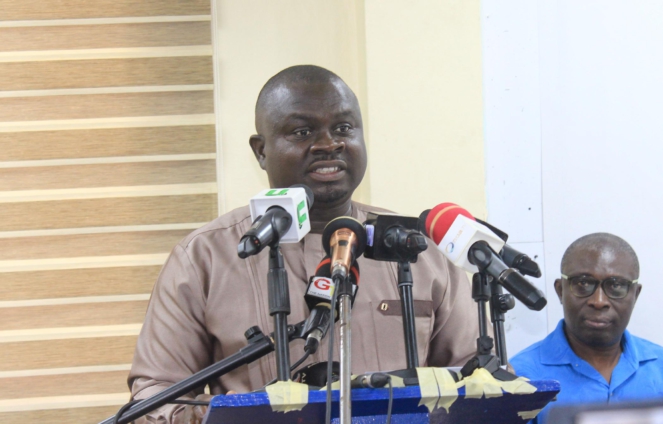
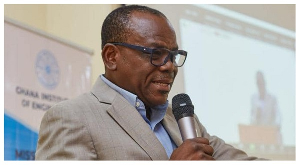
During an inspection of ongoing drainage projects at St. Peter, Anaji, and Kwesimintsim near Takoradi in the Western Region, Mr. Kwasi Anim, Chairman of the Authority’s Governing Board, emphasized the need for strict action, saying, “We really have to start to bite, the law has to bite, otherwise people will continue with the impunity.”
The delegation observed that a private developer had violated regulations by encroaching on the statutory buffer zone at the Kwesimintsim main drain site, where a fence wall had been erected. This incident underscores the Authority’s determination to uphold the law and maintain the integrity of drainage systems in Ghana.
Mr Anim described the developer’s action as a huge drain on national investment, and firmly said, “that wall cannot stand; it’s coming down.”
He further said “The Act gives Ghana Hydrological Authority the mandate to actually demolish properties. Even if you have spent a lot of money in the investment, we have the power to do that. And we’re going to start to enforce the law.”
Mr. Anim shared these views on Tuesday while leading a delegation of board members to inspect drainage projects in St. Peter, Anaji, and Kwesimintsim, located near Takoradi in the Western Region.
During their visit to the Kwesimintsim main drain site, the team noted that a private developer had encroached upon the statutory buffer zone by constructing a fence wall.
Mr. Anim characterized the developer’s actions as a significant drain on national investment, asserting, “that wall cannot stand; it’s coming down.”
He further said “The Act gives Ghana Hydrological Authority the mandate to actually demolish properties. Even if you have spent a lot of money in the investment, we have the power to do that. And we’re going to start to enforce the law.”
He highlighted that Ghana’s challenges stem not from a lack of laws but from their enforcement, stressing the need for citizens to recognize that the nation is squandering money and resources, which is counterproductive.
Expressing particular concern about the recently constructed property, which was only a month old, Mr. Anim questioned,
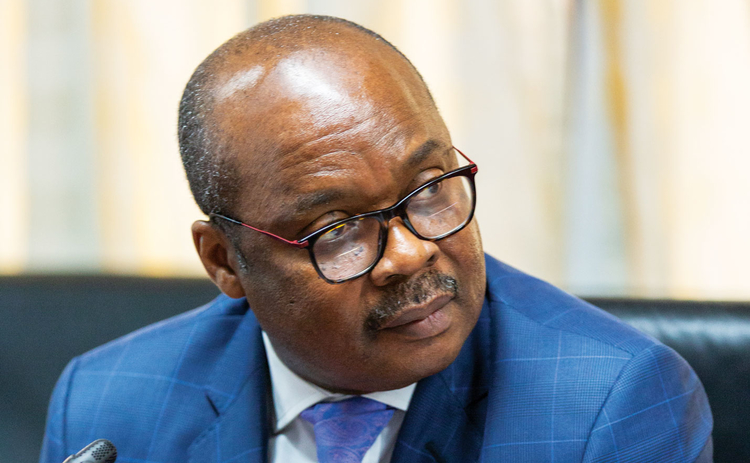
Dr. John Kissi, the Chief Executive Officer of the Authority, informed journalists that mobilizing machinery to the site would be exceedingly difficult, reiterating, “this wall would need to go.”
He clarified that all structures must maintain a distance of at least 50 meters from the drainage channel.
Dr. Kissi urged residents to support the government by safeguarding its infrastructure investments. He noted that the Kwesimintsim corridors had previously been waterlogged, with water consistently overflowing the banks of the drain.
While he acknowledged that the area had dried up, he expressed concern over the construction of new buildings in the vicinity.
He expressed concern over the recent development of buildings in the area, noting that while the environment has dried up, new constructions are emerging too close to the drainage channels.
Dr. Kissi emphasized the need to urge local authorities to refrain from granting planning approvals or permits for construction projects in proximity to river bodies.
He pointed out a wall directly behind them that is alarmingly close to the drain, making maintenance work a significant challenge.
Since 2017, the government has demonstrated a commitment to mitigating flood risks through the National Flood Control Programme, investing approximately GH¢250 million in 2018, GH¢200 million in 2020, GH¢90 million in 2023, and an ongoing project of GH¢250 million.
He highlighted that the Kwesimintsim drain is a priority project, mentioning that the Takoradi Airport is another critical area impacted during heavy rains, preventing aircraft from landing or taking off, which poses economic repercussions for airlines.
Mr. Isaac Wuttoh, the Regional Director of the Authority, recalled that the Kwesimintsim drain project originated from community concerns, leading to a petition about the water flooding their homes.
He informed journalists that the engineers have completed approximately 300 meters of the drain and have excavated one kilometer out of the planned four-kilometer stretch, which begins at the SSNIT Flats area and extends to the ocean.