Tag: 5G

  • 5G services to be launched in Ghana today by govt at La Palm Beach Hotel

    5G services to be launched in Ghana today by govt at La Palm Beach Hotel

    The government is set to officially unveil its high-speed 5G internet service today, November 1, 2024, at the La Palm Royal Beach Hotel in Accra.

    President Akufo-Addo is anticipated to announce this initiative, which aims to elevate internet connectivity and speed to unprecedented levels.

    Known as the Fifth Generation of Wireless Technology, 5G is designed to deliver significantly faster internet speeds, enhanced upload and download capabilities, and more reliable connections with improved capacity.

    5G networks operate on the same radio frequencies as previous technologies, including 3G, 4G, and 4G LTE, which have historically supported most mobile devices globally.

    Advancements in speed, latency, and bandwidth associated with 5G networks enable shorter download and upload times, stronger connectivity, and enhanced reliability, establishing them as the logical successor to 4G technology.

    In fact, 5G is reported to achieve speeds up to ten times faster than the 4G Plus service.

    Government on 5G roll out

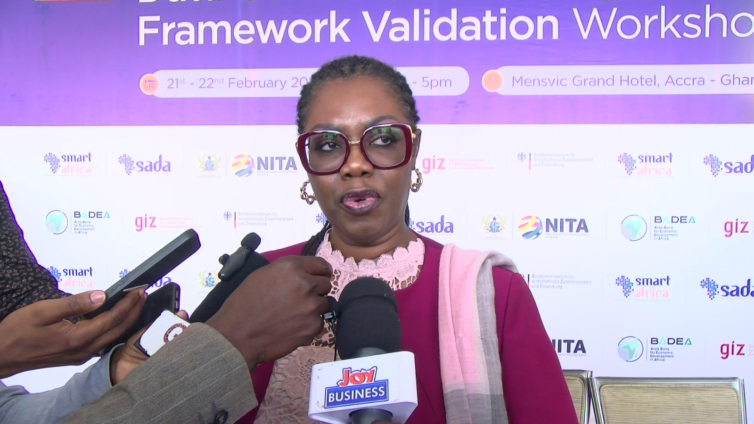
    In a previous interaction with the media, Minister for Communications and Digitalisation, Mrs. Ursula Owusu-Ekuful, announced that the government has teamed up with seven industry players to create a shared infrastructure for 5G services.

    This initiative aims to provide affordable and high-speed mobile broadband services throughout Ghana.

    During a Meet-the-Press session earlier this year, she highlighted that the implementation of 5G is expected to offer numerous advantages for Ghanaians, such as faster data speeds, reduced latency, and improved connectivity.

    As a result, citizens will be able to access digital services—ranging from healthcare and education to financial services—more efficiently and effectively.

    5G service provision and consortium of companies

    The government has granted a 5G license to The Next Gen InfraCo NGIC, a newly established shared Infrastructure Company that is co-promoted by the government alongside seven other companies.

    According to the government, this shared infrastructure initiative is designed to provide affordable 5G mobile broadband services throughout Ghana.

    The collaborating partners include Ascend Digital, K-NET, Radisys, Nokia, Tech Mahindra, AT Ghana, and Telecel Ghana.

  • Ghana set to launch 5G service on Nov 1

    Ghana set to launch 5G service on Nov 1

    The Minister of Communications and Digitalisation, Ursula Owusu-Ekuful, has announced that Ghana will officially launch 5G services on November 1, 2024.

    This groundbreaking move marks a significant step in the country’s digital transformation efforts.

    Speaking on Peace FM’s Kokrokoo Show with Kwami Sefa Kayi on Wednesday, October 2, 2024, the Minister confirmed that all necessary preparations have been completed to ensure a smooth rollout of the next-generation network.

    “The infrastructure is in place, and we are ready to bring the benefits of 5G to the people of Ghana,” she said.

    The announcement follows the government’s earlier promise to launch the 5G service by the end of 2024, which is expected to revolutionize digital connectivity across the country.

    The Fifth Generation of Wireless Technology (5G) offers significantly higher internet speeds, faster download and upload times, and enhanced connectivity.

    Using the same radio frequencies as 3G and 4G networks, 5G is said to provide improved speed, latency, and bandwidth, making it up to 10 times faster than the current 4G Plus services.

    This leap in technology is expected to transform the digital landscape, offering quicker data transfer, stronger connections, and better reliability.

    Mrs. Owusu-Ekuful further highlighted the government’s collaboration with seven key industry players to establish a shared infrastructure for the 5G rollout.

    This initiative, she explained, aims to provide affordable, high-speed mobile broadband services throughout Ghana.

    During a Meet-the-Press session earlier this year, the Minister emphasized the transformative potential of 5G, stating that it would offer numerous benefits, including faster data speeds, lower latency, and increased connectivity. “This will enable Ghanaians to access digital services such as healthcare, education, and financial services more efficiently,” she added.

    The government has awarded the 5G license to Next Gen InfraCo (NGIC), a shared infrastructure company co-promoted by the government alongside seven private firms.

    These partners include Ascend Digital, K-NET, Radisys, Nokia, Tech Mahindra, AT Ghana, and Telecel Ghana. The partnership is aimed at delivering affordable 5G mobile broadband services nationwide.

    As the November 1 rollout date approaches, Ghanaians are expected to witness a new era of digital connectivity that will reshape how businesses operate and how citizens engage with the digital world.

  • 5G rollout at risk due to power instability and weak digital infrastructure – ACDT

    5G rollout at risk due to power instability and weak digital infrastructure – ACDT

    As Ghana advances in adopting cutting-edge technology, addressing power supply issues and developing digital public infrastructure (DPI) is essential, according to the Africa Centre for Digital Transformation (ACDT).

    The 5G network promises ultra-fast speeds, massive connectivity, and ultra-low latency, enabling innovative new applications and services. However, the ACDT emphasized that robust DPI is necessary to fully leverage these benefits.

    The ACDT noted that the success of 5G relies heavily on the capacity and resilience of underlying DPI, such as broadband networks, data centers, and advanced computing resources.

    In this context, the introduction of 5G services presents both opportunities and challenges amid Ghana’s ongoing power crisis. The ability of NextGen InfraCo, the company tasked with rolling out 5G, to navigate these challenges should be a concern for all.

    ACDT’s concerns arise amid periodic power outages across the country due to infrastructural limitations and supply-demand imbalances. These interruptions impact the seamless operation of the 5G network, which requires a consistent and reliable electricity supply.

    ACDT’s Executive Director, Kwesi Atuahene, highlighted that to cover a defined geographical area, a 5G network will require more base stations than a 2G/3G/4G network.

    “While the deployment of 5G technology holds immense potential for enhancing connectivity, driving innovation, and fostering economic growth, it also necessitates a robust and resilient power infrastructure to effectively support its operation.

    “A constant supply of electricity will be necessary for the operation of 5G base stations and data centers. Power outages can cause network downtime and service interruptions, which have an impact on user connectivity,” he said.

    Thus, the current power crisis means the 5G network will also need additional backup power.

    “While the deployment of 5G technology holds immense potential for enhancing connectivity, driving innovation, and fostering economic growth, it also necessitates a robust and resilient power infrastructure to effectively support its operation.

    “A constant supply of electricity will be necessary for the operation of 5G base stations and data centers. Power outages can cause network downtime and service interruptions, which have an impact on user connectivity,” he said.

    He added that 5G is designed to support fast networking speeds for Internet of Things (IoT) devices, some of which power critical equipment like medical devices. Power outages affecting these devices can be disastrous.

    “The current power outages will degrade the quality of service for 5G users, resulting in slower data speeds, dropped calls, and communication disruptions. This can have an impact on a range of sectors dependent on 5G connectivity, such as healthcare, manufacturing, and transportation,” he highlighted.

    The ACDT emphasized that for 5G to transform industries and communities, gaps and vulnerabilities in DPI must be addressed. It calls on policymakers and industry leaders to make strategic investments to fortify this critical foundation and unleash the full potential of 5G.

    Key priority areas include upgrading and expanding electricity infrastructure to improve reliability and reduce power outages, exploring renewable energy solutions like solar and wind power, and enhancing the power grid’s resilience.

    Other measures include strengthening backup power systems for 5G infrastructure, deploying advanced battery technologies and efficient generator systems, and expanding high-speed broadband access to unserved and underserved areas.

    “We recognize the importance of addressing the power crisis to ensure a successful implementation of 5G telephony services by NextGen InfraCo. Therefore, we seek to draw the attention of Ghana’s government to immediately prioritize the following, or else it will be another avenue for ‘create, loot and share,’” ACDT cautioned.

    It called on all stakeholders – including government agencies, private sector entities, civil society organizations, and the general public – to address the power crisis first before fully unlocking the transformative power of 5G for Ghana’s sustainable development.

    This call follows the government’s announcement to roll out 5G network services within the next six months.

  • VIDEO: Bright Simons gives breakdown of controversial NextGen Infraco 5G deal

    VIDEO: Bright Simons gives breakdown of controversial NextGen Infraco 5G deal

    Bright Simons, the Honorary Vice President of IMANI-Africa, has stated that NextGen Infraco holds an exclusive license to provide 5G services in Ghana for the next ten years.

    He elaborated that this would grant NextGen Infraco a monopoly in the telecommunication sector. During his appearance on JoyNews’ Newsfile, Mr Simons revealed that in 2021, MTN applied for a 5G license but was denied access.

    As such, he said  “We are working very carefully and diabolically to construct a new monopoly that controls multiple telecom access, that for us is very dangerous.”

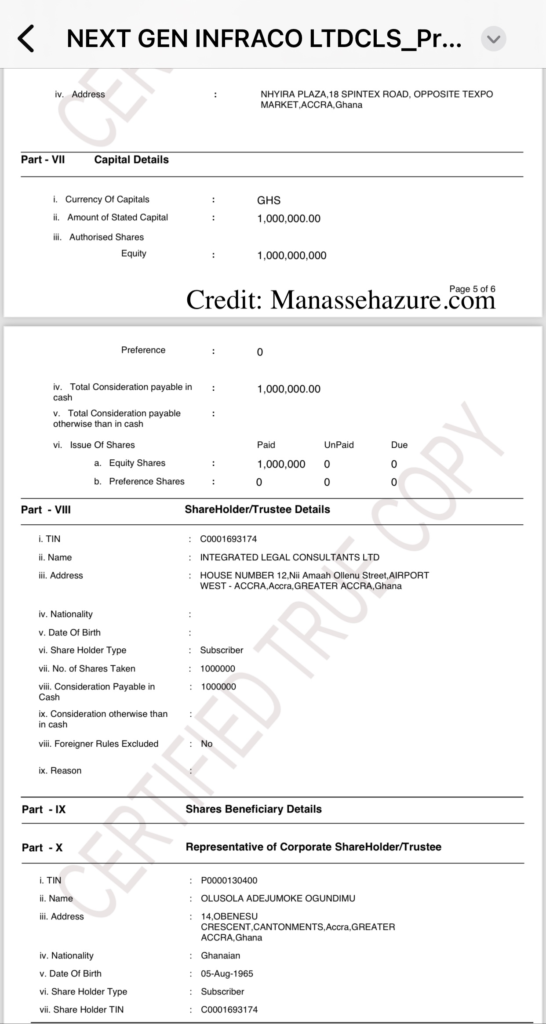
    Bright Simons further noted that this development would further fragment the telecommunications sector. Additionally, he pointed out that shares of NextGen Infraco are owned by companies involved in a questionable deal.

    For a detailed breakdown, watch the full video.

  • Govt told to prioritize stable electricity for 5G network

    Govt told to prioritize stable electricity for 5G network

    The Government is urged to prioritize immediate actions to ensure stable electricity supply for Ghana’s rollout of 5G mobile broadband services.

    With Next-Gen Infrastructure Company licensed to launch 5G from Q3 2024, the goal is a fully digitized society by 2030 with affordable services.

    The Africa Centre for Digital Transformation (ACDT) highlighted 5G’s importance and called for power crisis resolution to ensure successful implementation.

    A 2021 study noted 5G sites require over 11.5 kilowatts, up 70% from 2G, 3G, 4G sites, due to new components.

    Kwesi Atuahene, ACDT’s Executive Director, urged focus on upgrading and expanding electricity infrastructure, suggesting renewable energy sources like solar and wind, and advanced battery technologies for backup power.

    He warned of slower data speeds, dropped calls, and communication disruptions if power outages persist, affecting sectors like healthcare, manufacturing, and transportation.

    Collaboration among stakeholders is crucial for addressing the power crisis before fully embracing 5G for sustainable development.

  • Why a week-old company was awarded 5G contract – Communications Minister explains

    Why a week-old company was awarded 5G contract – Communications Minister explains

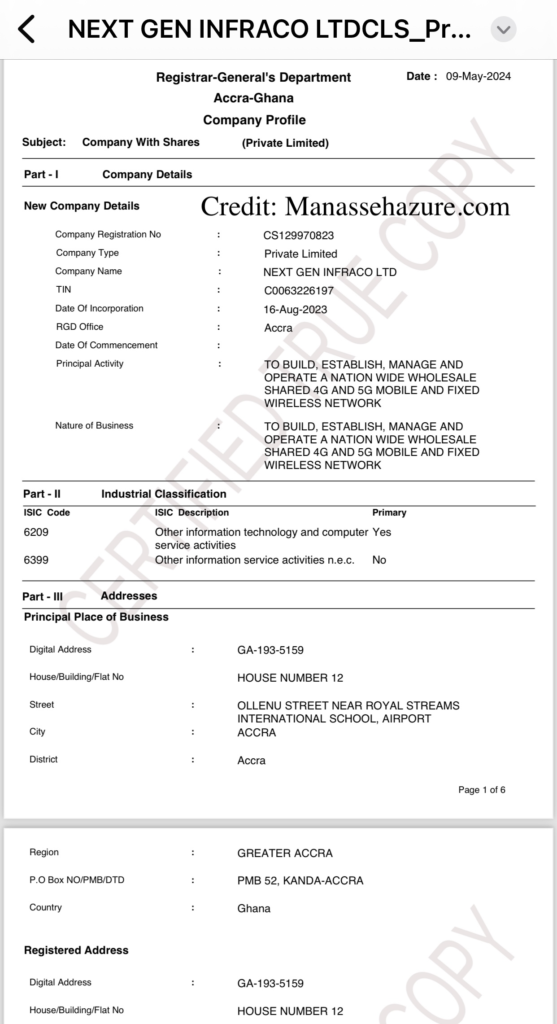
    Communications and Digitalisation Minister Ursula Owusu-Ekuful has confirmed that NextGen InfraCo, the company awarded the contract for the rollout of the 5G network, was established just one week before receiving the contract.

    Madam Owusu-Ekuful clarified that the company was specifically created for this purpose because there was no existing neutral infrastructure company capable of handling the rollout at that time.

    During a press briefing on the 5G rollout, she elaborated on the government’s reasoning behind this decision. She noted that auctioning the contract was not pursued due to previous experiences and setbacks that had hindered the rollout of the country’s 4G technology, which has achieved only a 15% nationwide penetration since its introduction in 2015.

    The Minister highlighted that the challenges faced during the 4G rollout influenced the government’s approach to the 5G deployment. By directly awarding the contract to a newly created entity, the government aims to avoid similar obstacles and expedite the implementation process for the 5G network.

    The Member of Parliament for Ablekuma West provided insight into the government’s strategic decision-making process, emphasizing the need for a dedicated infrastructure company to ensure the successful and timely rollout of 5G technology across the country.

    “This is a special purpose vehicle and once the government took the decision that we will use a neutral infrastructure company to deliver this service, there is no existing neutral infrastructure company that can deliver it at the moment.” 

    “So, it had to be specifically formed for the purpose of delivering this service based on the strategic policies and decisions of the government, and it is borne out of our experiences and that is why we chose not to auction it,” she stated.

    Confirmation of the contract awarded to NextGen InfraCo Ltd. for the 5G network rollout has sparked concerns raised by investigative journalist Manasseh Azure Awuni.

    In a Facebook post on Thursday, May 30, Awuni highlighted that the company was incorporated barely a week before President Akufo-Addo granted executive approval for the deal.

    Awuni pointed out that the contract, estimated to be worth hundreds of millions of dollars, was awarded through sole sourcing, without giving other companies the opportunity to bid for the project. This lack of competitive bidding raises suspicions about the transparency and fairness of the procurement process, according to Awuni.

    Before these claims, the government had announced a partnership with seven industry leaders to develop a new shared infrastructure aimed at delivering affordable 5G mobile broadband services across Ghana. The partners, including Ascend Digital, K-NET, Radisys, Nokia, Tech Mahindra, and two telecommunications companies – AT Ghana and Telecel Ghana, have formed the Next-Gen Infrastructure Company (NGIC), which has been awarded a 5G license.

    NGIC is expected to launch 5G services across Ghana within the next six months, with plans for further expansion into other parts of Africa. The partnership aims to enhance the lives of Ghanaians by introducing digital services in education, healthcare, and digital payment transactions through peer-to-peer (P2P), peer-to-merchant (P2M), and merchant-to-merchant (M2M) systems, reducing the digital divide and promoting financial inclusion.

    The multi-party partnership will support NGIC in deploying network infrastructure and related services, addressing both enterprise and consumer markets with enhanced digital services. Tech Mahindra will build a Cloud Native Core Network powered by leading original equipment manufacturer (OEM) platforms.

    NGIC plans to adopt India’s successful model of affordable handsets, digital platforms, and localized content and applications to replicate this high-speed mobile data model across Africa, starting with Ghana.

  • Manasseh drops bombshell on company awarded 5G contract 

    Manasseh drops bombshell on company awarded 5G contract 

    Investigative journalist Manasseh Azure Awuni has raised concerns about a contract awarded by the Communications Ministry to a company called Next Gen Infraco Ltd. for the rollout of Ghana’s 5G infrastructure.

    In a Facebook post on Thursday, May 30, Mr. Azure highlighted that the company was incorporated less than a week before President Akufo-Addo granted executive approval for the deal. He emphasized that the timing raises suspicions given the significant nature of the contract.

    Mr. Awuni noted that the contract, estimated by experts to be worth hundreds of millions of dollars, was awarded through sole sourcing, bypassing the competitive bidding process. This decision, he argued, casts doubt on the transparency and fairness of the procurement process.

    The journalist also questioned the track record of Next Gen Infraco Ltd. and expressed doubts about its capacity to effectively execute such a substantial contract.

    Given the company’s recent incorporation and limited history, he raised concerns about its ability to meet the project’s requirements efficiently and reliably.

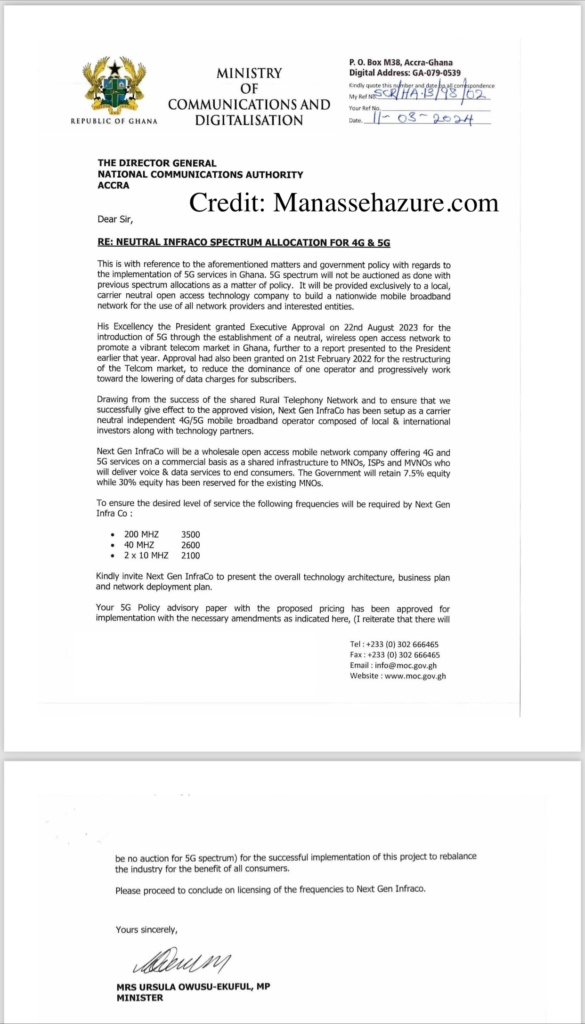
    “President Akufo-Akufo-Addo “granted Executive Approval on 22nd August 2023 for the introduction of 5G through the establishment of a neutral, wireless open access network to promote a vibrant telecom market in Ghana.”

    “The company that has been handed the deal was formed less than a week before the president’s approval.”

    “The 5G technology, according to industry experts, can be worth hundreds of millions of dollars. Why is it being handed to one company without an auction?” the award-winning journalist quizzed.

    The government has announced a groundbreaking partnership with seven industry leaders to develop a new shared infrastructure aimed at delivering affordable 5G mobile broadband services across Ghana. The partners, including Ascend Digital, K-NET, Radisys, Nokia, Tech Mahindra, and telecommunications companies AT Ghana and Telecel Ghana, have formed the Next-Gen Infrastructure Company (NGIC), which has been awarded a 5G license.

    NGIC is expected to launch 5G services across Ghana within the next six months, with plans for further expansion into other parts of Africa. It will be the first entity to build a nationwide 4G/5G network and collaborate with telcos to introduce affordable 4G/5G-enabled fixed wireless access (FWA) customer premises equipment (CPE) and smartphones in Ghana this year.

    The partnership aims to enhance the lives of Ghanaians by introducing digital services in education, healthcare, and digital payment transactions through peer-to-peer (P2P), peer-to-merchant (P2M), and merchant-to-merchant (M2M) systems. This initiative is expected to reduce the digital divide and promote financial inclusion.

    Additionally, the multi-party partnership will support NGIC in deploying network infrastructure and related services. Communications service providers (CSPs) aim to address both enterprise and consumer markets with enhanced digital services.

    To facilitate this, Tech Mahindra will build a Cloud Native Core Network powered by leading original equipment manufacturer (OEM) platforms.

    NGIC plans to adopt India’s successful model of affordable handsets, digital platforms, and localized content and applications, aiming to replicate this high-speed mobile data model across Africa, starting with Ghana.

    Minister for Communications and Digitalisation, Ursula Owusu-Ekuful said, “The creation of a shared 5G Mobile Broadband Infrastructure is critical for delivering affordable, high-speed data access to the people of Ghana and help achieve our Digital Ghana vision.”

    “The creation of NGIC as a neutral, shared platform, accessible to all mobile network operators and tower companies, will help to expand 5G services rapidly across the country. We are inspired by India’s digital infrastructure and low-cost mobile data usage and keen to replicate it in Ghana.”

  • 5G services to be rolled out by end of 2024

    5G services to be rolled out by end of 2024

    The government has announced a partnership with seven industry players to develop shared infrastructure aimed at delivering affordable 5G mobile broadband services across Ghana.

    The seven partners are Ascend Digital, K-NET, Radisys, Nokia, Tech Mahindra, and two telecom companies – AT Ghana and Telecel Ghana.

    Together, these partners have established the Next-Gen Infrastructure Company (NGIC), which has been awarded a 5G license. The NGIC is expected to launch 5G services across Ghana within the next six months, with plans for subsequent expansion to other parts of Africa.

    NGIC will be the first 5G Mobile Broadband Shared Infrastructure Entity to build a nationwide 4G/5G network. The company will also collaborate with the telcos to launch affordable 4G/5G-enabled fixed wireless access customer premises equipment (FWA CPEs) and smartphones in Ghana within this calendar year.

    The partnership aims to improve the lives of Ghanaians by introducing digital services in education, healthcare, and digital payment transactions through peer-to-peer (P2P), peer-to-merchant (P2M), and merchant-to-merchant (M2M) systems. This initiative is expected to reduce the digital divide and promote financial inclusion.

    Moreover, the multi-player partnership will support NGIC in the full deployment of network infrastructure and associated services. Communications service providers (CSPs) aim to address both enterprise and consumer markets with enhanced digital services. Tech Mahindra will contribute by building a Cloud Native Core Network powered by leading original equipment manufacturer (OEM) platforms.

    NGIC plans to adopt India’s successful model of affordable handsets, digital platforms, and localized content and applications. The goal is to replicate this high-speed mobile data model across Africa, starting with Ghana.

    Minister for Communications and Digitalisation, Ursula Owusu-Ekuful said, “The creation of a shared 5G Mobile Broadband Infrastructure is critical for delivering affordable, high-speed data access to the people of Ghana and help achieve our Digital Ghana vision. The creation of NGIC as a neutral, shared platform, accessible to all mobile network operators and tower companies, will help to expand 5G services rapidly across the country. We are inspired by India’s digital infrastructure and low-cost mobile data usage and keen to replicate it in Ghana.”

    Senior vice president, Middle East and Africa at Nokia, Mikko Lavanti said, “Ghana holds immense potential for mobile broadband growth on the back of an unmet demand for connectivity. Establishing an Open Access Network like NGIC will foster innovation and create numerous opportunities across various sectors. We are proud of our partnership with NGIC in helping Ghana realize its digital vision and unlock its full potential.”

    CEO of Radisys, Arun Bhikshesvaran said, “Connectivity for all, through the use of open and disaggregated multi-access solutions, is a key component of Radisys’ initiatives to bridge the digital divide. By bringing Fixed Wireless Access alongside 4G and 5G cellular services to help drive economic growth and digital inclusion, Radisys looks forward to helping Ascend and NGIC build a disruptive and affordable shared broadband infrastructure across Ghana. In addition, our communications platform and digital applications will help create new digital experiences that empower the Ghanian community and foster sustainable and inclusive development.”

    Chief technology officer, Telecom & Global Business Head, Network Services, Tech Mahindra, Manish Mangal said, “Our partnership with Next Gen Infra Co. is based on a shared vision for digital connectivity and providing Network-as-a-Service to innovate and bring cost efficiency to the telecom market in Ghana and Africa. Echoing our promise to scale at speed, we aim to rapidly advance operations by building a Cloud Native Core Network with leading OEM platforms combined with Tech Mahindra’s automation platform, netOps.ai. Together with NGIC, we will support the complete network infrastructure deployment and introduce high-speed 4G/5G services in the region.”

    CEO of Ascend Digital and Executive Director, NGIC, Harkirit Singh said, “NGIC intends to launch its wholesale 4G/ 5G Network as a Service and make it available to all mobile network operators within the next six months. We have proven strengths of our partners – Radisys, Nokia, and TechM, to scale the network and deliver affordable mobile broadband services to all Ghanaians. We intend to gradually expand to other parts of Africa as well. We will tap the capital markets and bring in strategic investors as and when required.”

    COO of Telecel Ghana, Mohamad Ghaddar said, “NGIC’s neutral and ‘Network as a Service’ model creates a level-playing field for all telecom operators in Ghana. As an MNO our focus will be to enhance customer experience through innovative services, localized content , applications, and affordable devices. We are excited to be part of this venture and looking forward to work with NGIC in a shared vision of universal access to broadband and transform Ghana into Digital Economy”.

    CEO of AT Ghana, Leo Skarlatos said, “This partnership will enable us to leverage a neutral, shared platform and scale up our services across Ghana. We are confident that our customers will experience enhanced network quality and affordable services that they deserve. We look forward to working with NGIC and the MOCD, to contribute to the country’s digital transformation agenda.”

  • Man jailed for 5G phone mast arson attack

    A man in the UK who thought 5G technology was linked to Coronavirus has been jailed for an arson attack on a phone mast.

    Michael Whitty, 47, set fire to the mast’s equipment box in Kirkby, north-west England, after reading erroneous internet claims about the virus, Liverpool Crown Court heard.

    Theories claiming that 5G technology helps to transmit coronavirus have been widely condemned by the scientific community.

    Attacks on 5G masts pre-date the coronavirus pandemic. But there are concerns that a surge in the amount of vandalism has been caused by conspiracy theories which falsely claim the deployment of 5G networks has caused, or helped accelerate, the spread of COVID-19.

    Source: bbc.com

  • There’s no connection between coronavirus and 5G – ICT Professionals Ghana

    The Institute of ICT Professionals Ghana (IIPGH), on Thursday, said the new mobile telephony technology called 5G has no connection with the novel coronavirus disease (COVID-19) as being speculated.

    The Association, in a statement signed by Mr David Gowu, the Executive Director and copied to the Ghana News Agency in Accra, said 5G does not spread COVID-19.

    The Association, therefore, urged the public to disregard the conspiracy theories linking the new technology to the deadly pandemic.

    The statement explained that 5G was a technology to provide an extra-large pipe of the internet to connect mobile phones and other devices with 10 times the current speed and data volume being provided by 4G.

    It said 5G was a technology designed to carry voice and big data using non-ionizing electromagnetic wave as a means of transport over the air interface to devices.

    ?These devices are mainly electronic devices and not human beings,? it said.

    Non-ionizing electromagnetic wave in this context is the range of frequencies (3KHz – 300GHz) on the electromagnetic spectrum that cannot cause harm to the human tissue/cell/DNA when exposed to the radiation, it said.

    FM Radio Frequencies (87MHz – 108MHz), Television Frequencies (700MHz), Mobile network frequencies such as 1G (150MHz – 900MHz), 2G (900MHz – 1.8GHz), 3G (1.6GHz – 2.0GHz), 4G (2GHz – 8GHz) and 5G (2GHz – 300GHz) are examples, the statement said.
    It explained that COVID-19, on the other hand, was a zoonotic disease caused by a pathogen that jumped from non-human animals (usually vertebrates) to humans and then spread from human to human.

    It said Pangolin-like animal was suspected to have transmitted this string of the virus called the novel coronavirus.

    The statement said the novel coronavirus was biological and could be transferred from one person to the other through the mouth, nose and eyes when one came into contact with an infected person.

    The infected patient, who may be asymptomatic or symptomatic, can transfer the virus to another person when droplets of fluids containing the virus are spread through coughing, sneezing or spitting into the air or surfaces.

    Source: GNA

  • Coronavirus not linked 5G technology NCA clarifies

    Contrary to assertions and speculations about Coronavirus being spread by the emissions from 5G Technology, the National Communications Authority has debunked such linkages.

    In a statement copied to GhanaWeb, the NCA urged the public to disregard the misleading videos and audios circulating on social media, describing them as misinformation.

    Outlining the evolution of mobile technology in the country, the NCA explained that although 5G had not yet been introduced it would provide faster internet speed without health repercussions.

    “The fifth-generation (5G) is the next generation of mobile technology which has not yet been deployed in Ghana. However, it promises significantly higher internet data speeds which will enable innovative products and services in agriculture, transportation, education, health, security and commerce.

    All generations of mobile cellular technology (1G, 2G, 3G, 4G and 5G) operate on radio frequencies (RF). These frequencies are not visible, but they exist in the atmosphere; they are what enable radio and television stations to transmit news and information to us. They generate non-ionizing radiation which pose no harm to human beings,” a portion of the statement read.

    In a bid to calm fears, they also averred that although there have been several years of research into the potential health risk associated with radiofrequency signals and telecommunication installations, the World Health Organisation has said there is no conclusive evidence to show exposure to such emissions had any unhealthy effects.

    The NCA maintained that stringent measures have been put in place to protect Ghanaians from any such exposures.

    “The NCA, as part of its consumer protection mandate, has established a Type Approval laboratory with test and measurement equipment for Radio Frequencies (RF), Electromagnetic Fields (EMF) and Specific Absorption Rate (SAR) (See attached pictures). The laboratory undertakes measurements to ascertain the safety of mobile devices (phones, tablets, etc) and field measurements of radiations from mobile base stations at frequencies below 6GHz which is the range of frequencies for 2G, 3G and 4G in Ghana. Future 5G deployments in Ghana will also utilize some frequencies below 6GHz as well as higher frequencies and within safe limits.”

    They assured the public that emissions from the mobile telecommunication bases in Ghana are safe.

    “The measurements taken by the NCA clearly indicate that the non-ionizing radiations from mobile base stations are even more stringent and safer than those set by the International Commission on Non-Ionizing Radiation Protection (ICNIRP), which is the international body responsible for safe use of non-ionizing radiation,” they added.


    There have been several debates on social media with many describing the phenomenon as a conspiracy theory.

    Founder and leader of the Christ Embassy trended on Twitter after preaching and stressing that people desist and shun the 5G network since it was being used as a tool to propagate the Coronavirus.