Tag: Ablakwa

  • Mistreat our citizens and we will respond in equal measure – Ablakwa to Israeli Embassy

    Mistreat our citizens and we will respond in equal measure – Ablakwa to Israeli Embassy

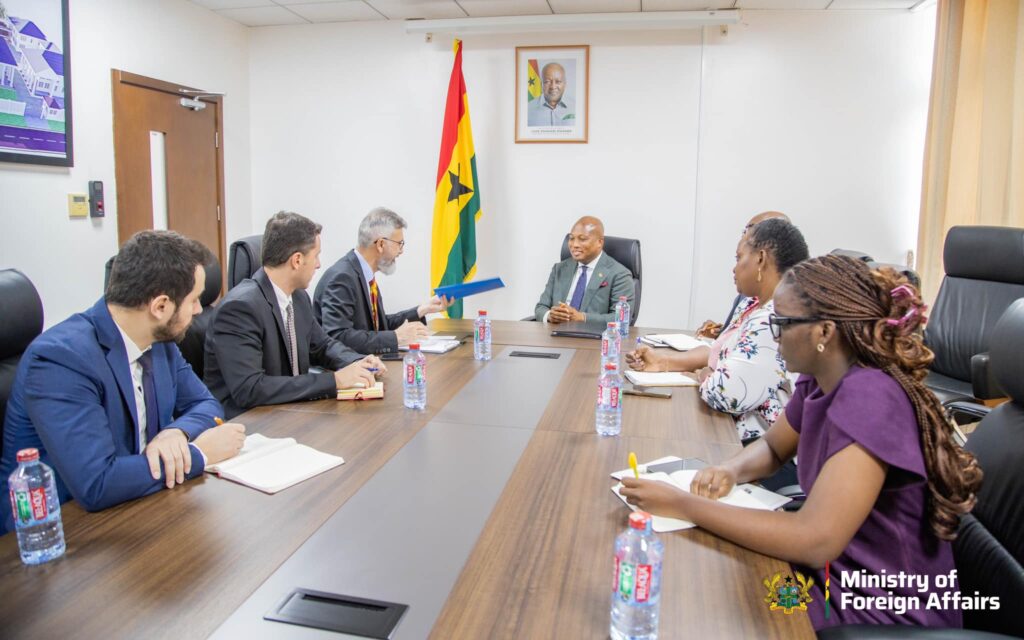
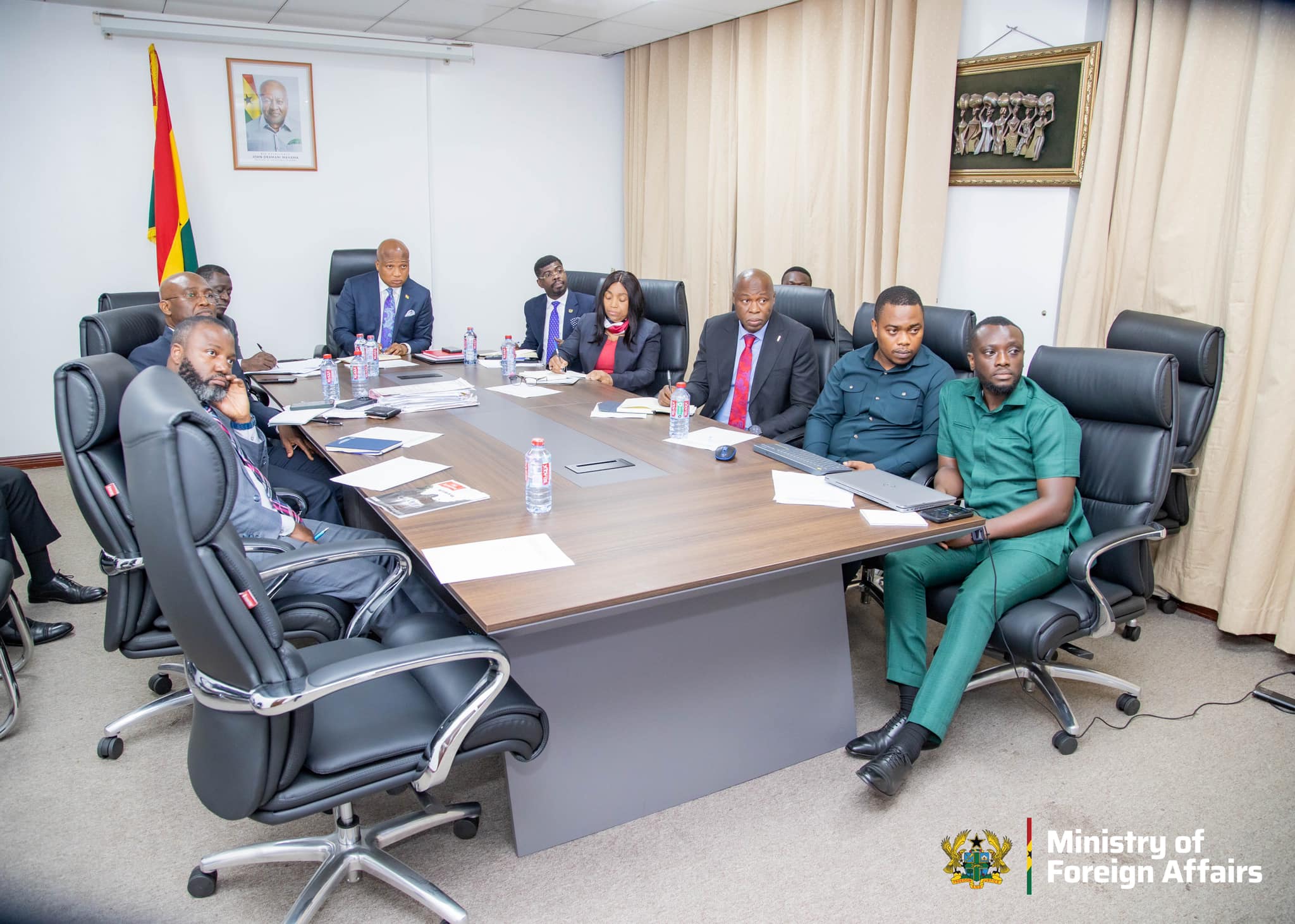
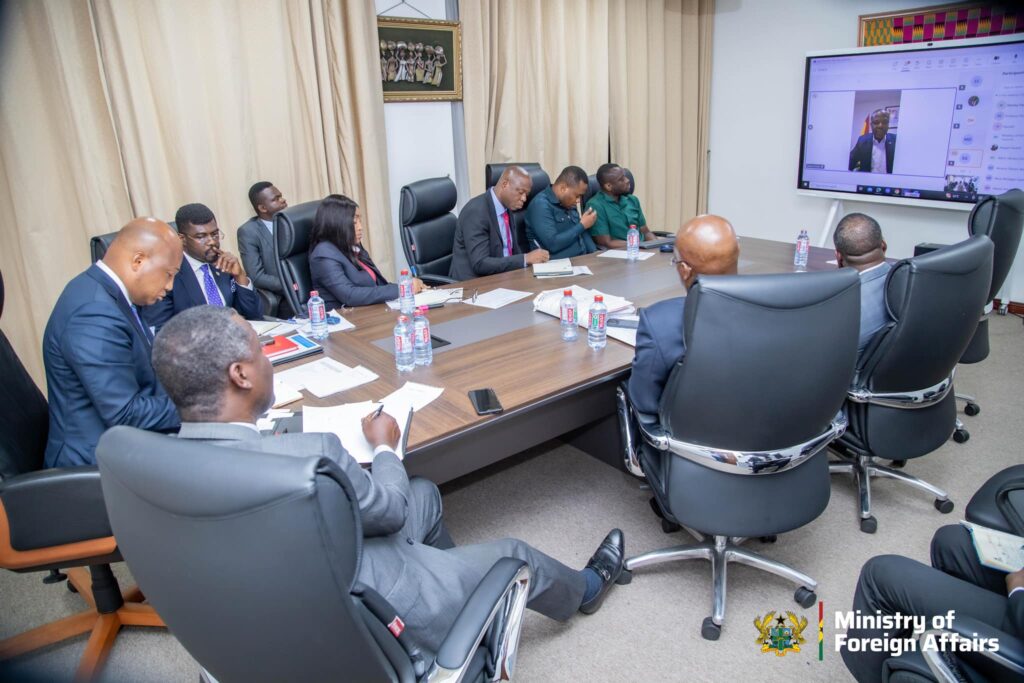
    The Minister for Foreign Affairs, Samuel Okudzeto Ablakwa, has warned the Israeli Embassy against maltreating Ghanaian nationals.

    Speaking to the media on Thursday, December 11, Mr. Ablakwa noted that Ghana will respond with equal force if any of its citizens are deported.

    According to him, “If they deport ten Ghanaians, we will deport ten. If they deport twenty, we will deport twenty. If they deport fifty, we will deport fifty. We are not going to accept this.”


    His comments are in response to a recent incident in which several Ghanaian travellers, including four members of a parliamentary delegation en route to Tel Aviv for an international cybersecurity conference, were detained and deported by Israel Embassy officials.


    Mr. Ablakwa narrated, “We were told that the Ghanaian Embassy was uncooperative, but the facts simply do not support that. Out of the six people on the list that Israel provided, one is not even Ghanaian. He is Gabonese. Our embassy had every right to verify the identity of the individuals involved.

    “One of the people listed was seriously ill, and Israeli doctors themselves advised that she should not travel until she had recovered. How can you deport someone who is unwell and needs medical attention? Another individual had already been issued a travel certificate, so there was no reason to stop their entry into Israel.”


    But in their actions, Israeli officials indicated that six Ghanaians who were supposedly due for deportation failed to provide the necessary details needed by Ghana’s Embassy in Tel Aviv to issue travel certificates.

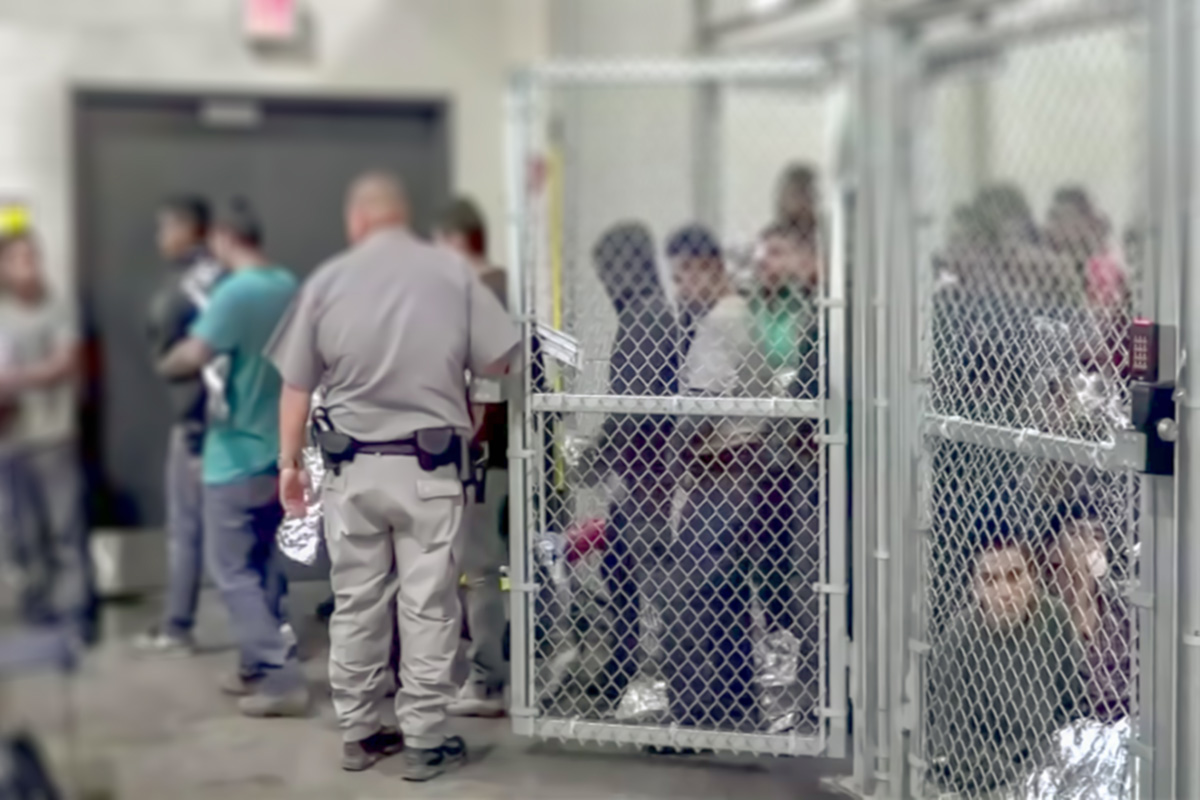
    The matter adds to broader concerns surrounding deportation practices. In September, eleven West African nationals filed two ex-parte applications at the Labour Division of the High Court in Accra, challenging their alleged detention in Ghana after being deported from the United States (U.S).


    The eleven individuals include Nigerians Daniel Osas Aigbosa, Ahmed Animashaun, Ifeanyi Okechukwu, and Taiwo K. Lawson; Liberian national Kalu John; Togolese nationals Zito Yao Bruno and Agouda Richarla Oukpedzo Sikiratou; Gambian national Sidiben Dawda; and Malians Toure Dianke and Boubou Gassama.


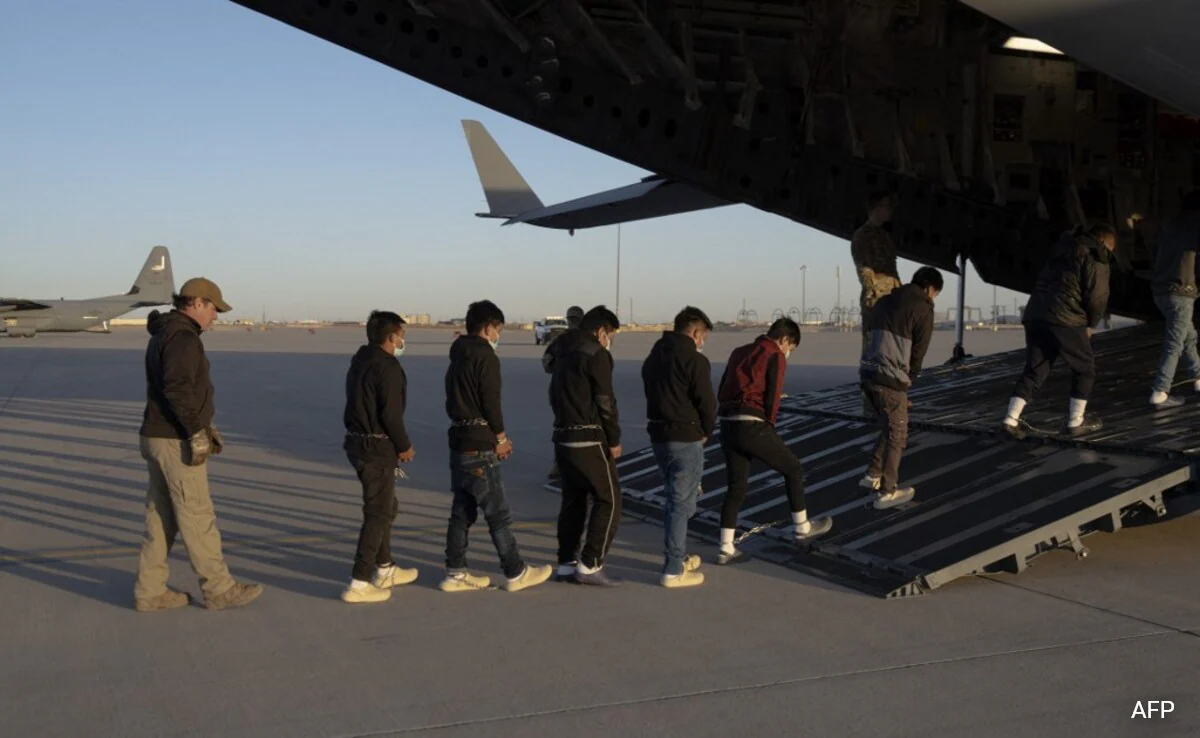
    According to the applicants, they were forcibly transported to Ghana without prior notice. They allege that they were secretly moved from the U.S. detention centers between September 5 and 6 in shackles.

    They want the court to temporarily stop them from being deported back to their home countries until the court decides on their case. Their submission further revealed that Ghanaian authorities allegedly confined them in a military facility.


    They cited Article 14(1) of Ghana’s 1992 Constitution, which guarantees personal liberty, as well as Article 23, which protects the right to administrative justice. They are arguing that Ghana is violating international law by trying to send them back to countries where their lives or freedom could be at risk.


    As a result, they have demanded that the Attorney-General, the Chief of Defence Staff, and the Comptroller-General of the Ghana Immigration Service appear before the Human Rights Division of the High Court with valid reasons. The court has fixed Tuesday, September 23, to hear the case.


    In the meantime, Minister of Foreign Affairs, Samuel Okudzeto Ablakwa, has disclosed that Ghana is anticipating the arrival of forty (40) West African deportees from the United States of America.

    Speaking to Channel One TV on Wednesday, September 17, Mr. Ablakwa noted, “I can reveal to you that we’re expecting another 40 in the next few days. We vet them before they come.”


    This revelation follows criticism from the Minority in Parliament, who accused the government of accepting 14 deportees without Parliamentary approval. Ablakwa, however, clarified that a Memorandum of Understanding (MoU) with the U.S., which does not require Parliamentary ratification, necessitated the arrangement.


    Opposition Members of Parliament (MPs) have argued that President Mahama’s deal with the U.S. was never ratified and therefore unlawful.

    The Minority cited Article 75 of Ghana’s Constitution, which dictates that an international agreement must be approved by Parliament. They pointed to previous Supreme Court rulings, such as the one involving the Gitmo 2 detainees, as precedent for why executive-only agreements are unconstitutional.


    “The deal should have been brought to Parliament. It’s the same President Mahama who entered into a deal for the relocation of the Gitmo 2 to Ghana. What’s in it for our beloved country, Ghana?” NPP MP for Abirem, Charles Owiredu, wrote.


    The opposition also accused Mahama of hiding behind the Economic Community of West African States (ECOWAS) protocol on free movement, describing it as misleading.

    They argued that those protocols apply to voluntary travel, not forced deportations orchestrated by non-member states like the U.S.


    “Accepting forced deportations orchestrated by non-ECOWAS states contradicts the spirit of regional integration protocols designed for voluntary movement,” stated the Minority Caucus on the Foreign Affairs Committee.


    But the Foreign Affairs Minister has explained that the decision was driven primarily by humanitarian concerns after observing the harsh treatment of deportees abroad.


    “We didn’t agree to this because we agree with President Trump’s immigration policies. We’re not doing the U.S. a favour. We’re doing our fellow Africans a favour; we’re offering them refuge, hope, and we want them to come back home and be comfortable.

    “We solidarised with them when we saw those images, the arrests, the violation of their rights, and their being detained against their will. It was purely on a humanitarian basis; we did not take any financial benefits. We’re doing this because we want to continue to position Ghana as the Mecca for Africans,” Ablakwa stressed.


    Responding to whether the deportees will remain in Ghana, Honourable Ablakwa said, “So the choice is theirs really. For 90 days, if they want to stay here, they can stay. But so far all of them have indicated that they want to go back after some time, and we have been facilitating that.”


    At the Government Accountability Series held at the Jubilee House on Monday, September 15, Ablakwa clarified that Ghana’s agreement with the United States to accept some West African deportees was not motivated by financial or material gain.


    “It is important to state that Ghana has not received any money, compensation, or any material benefit in relation to this understanding. Our decision is grounded purely on humanitarian grounds and principle,” he said.


    On Wednesday, September 10, the first batch of West African nationals arrived in Ghana following their deportation from the U.S. During a media encounter at the Jubilee House, President John Dramani Mahama said that the batch consisted of 14 individuals, mostly Nigerians, along with one Gambian national.


    “We were approached by the U.S. to accept third-country nationals who were being removed, and we agreed that West African nationals could be accommodated, since all our fellow West Africans do not require a visa to enter Ghana. So, if they travel from the U.S. to Accra, entry is not an issue. Bringing our West African colleagues back is therefore acceptable,” President Mahama explained.


    Mahama did not explicitly detail the deal of Ghana serving as a transit hub for West African nationals deported from the U.S. A federal judge, Judge Tanya Chutkan, has expressed concern that the arrangement suggested complicity on the part of the Ghanaian government in the deportation process.


    Judge Chutkan granted an emergency hearing after lawyers for the deportees argued that their clients expected to be returned to Nigeria and Gambia, and feared torture or persecution if sent home. She instructed the Trump administration to submit a report outlining measures to prevent Ghana from returning the deportees to their home countries.


    According to her, concerns about their safety were not speculative but “real enough that the United States government agrees they shouldn’t be sent back to their home country.” Judge Chutkan described the arrangement as appearing to have been designed by U.S. officials “to make an end run” around legal requirements barring the government from deporting migrants to situations of danger.


    The deportations, she noted, form part of President Donald Trump’s broader strategy of relocating migrants to “third countries” to expedite removals and pressure undocumented immigrants to leave the U.S.


    It later emerged, following a lawsuit filed on Friday, September 12, by the American Civil Liberties Union (ACLU) and Asian Americans Advancing Justice, that five of the nationals deported to Ghana had U.S. legal protections preventing deportation to their home countries. One of them, a bisexual man, was already sent to Gambia and is reportedly in hiding.


    The others were held in an open-air facility managed by the Ghanaian military, which was described as having squalid conditions.

    The complaint alleged that the migrants were taken from a Louisiana detention facility, shackled, and flown on a U.S. military aircraft without being told their destination. Some were reportedly restrained in straitjackets for 16 hours.


    The U.S. Department of Justice, responding to Judge Chutkan’s request, argued that it no longer had custody of the migrants and therefore the court lacked authority to interfere in matters of diplomacy. They cited a Supreme Court ruling allowing deportations to third countries.


    U.S. Department of Homeland Security spokesperson Tricia McLaughlin rejected the claim that straitjackets were used during the flight, but declined to comment on allegations of circumventing immigration law.


    In January 2016, President Mahama welcomed two Yemeni nationals, Mahmud Umar Muhammad Bin Atef and Khalid Muhammed Salih Al-Dhuby, who had been detained at Guantanamo Bay for about 15 years.

    They were linked to Al-Qaeda activities, and their transfer to Ghana formed part of a bilateral agreement with the U.S. The Mahama government explained that the move was a humanitarian gesture and that the two men would stay in Ghana for two years.

    However, the deal was never submitted to Parliament as required by the Constitution.
    In June 2017, the Supreme Court ruled that the Gitmo 2 agreement was unconstitutional, ordering the government to present it to Parliament within three months or return the detainees to the U.S.

  • Ghana not included – Ablakwa clears air on U.S. Green Card review

    Ghana not included – Ablakwa clears air on U.S. Green Card review

    Ghana has been exempted from the United States government’s latest Green Card review and temporary immigration suspension, the Foreign Affairs Minister, Samuel Okudzeto Ablakwa, has confirmed.

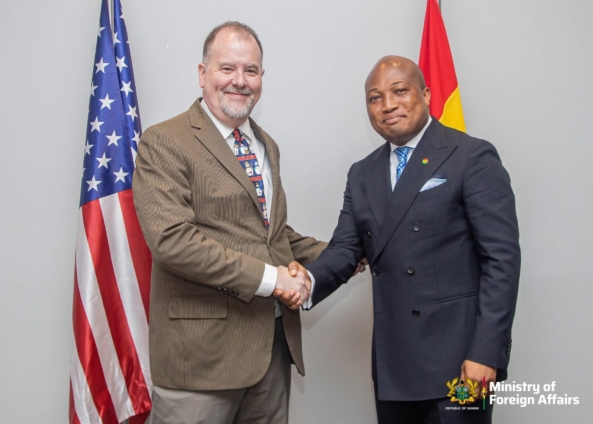
    The Foreign Affairs Minister disclosed on the X platform on Monday, December 1, after a formal briefing from the acting United States (U.S.) Ambassador to Ghana, Rolf Olson.


    “I held a very constructive meeting with acting US Ambassador to Ghana, H.E. Rolf Olson, today. We assessed recent positive strides in our bilateral relations, including the restoration of 5-year visas for Ghanaians, the removal of President Trump’s 15% tariffs on cocoa, semi-processed cocoa and other qualifying agricultural products, arrangements for World Cup soccer fans and the exemption of Ghana from last week’s Trump Green Card Review and immigration suspension policy.


    “We are also pleased to announce enhanced security cooperation efforts with the United States. In accordance with our longstanding bilateral Defence Cooperation Agreement, Ghana and the United States have increased intelligence sharing and training activities with the coordinated use of U.S. military aviation assets. Ghana welcomes this collaboration with the United States on our shared security priorities. Aviation activities will always be coordinated with the appropriate government authorities,” he added.

    Ablakwa’s statement has allayed fears among many Ghanaians as the U.S. moves to review Green Card holders from selected countries following President Trump’s order. President Donald Trump’s directive follows a shooting incident involving an Afghan man who held a Green Card.


    In November, the U.S. government made a U-turn on its decision to impose a 15% tariff on Ghana’s cocoa and selected agricultural goods exported to the country. Some of the agricultural products include cashew nuts, avocado, banana, mango, orange, lime, plantain, pineapple, guava, coconut, ginger and assorted peppers.


    With the new development, Ghana stands a chance of earning about $60 million more per year from selling cocoa to the U.S. This revelation was made by the Minister of Foreign Affairs, Samuel Okudzeto Ablakwa, in a post on X on Monday, November 24. According to him, the 15% tariff reversal was effected earlier this month.


    He added, “The United States Administration has officially informed the Government of Ghana that President Trump’s 15% imposition of tariffs on cocoa and certain qualifying agricultural products from Ghana has been rescinded. US diplomats confirm to me that the 15% tariff reversal came into effect on November 13, 2025, following President Trump’s new Executive Order.”


    “Other agricultural products from Ghana now exempted include cashew nut, avocado, banana, mango, orange, lime, plantain, pineapple, guava, coconut, ginger and assorted peppers. With an estimated annual Ghanaian cocoa beans export to the US averaging 78,000 metric tons, and at current spot price of $5,300/MT, Ghana stands to raise additional revenue of US$60 million (GHS667million) each year resulting from Trump’s tariff rescission. Ghana welcomes this positive development from the US which is the world’s leading importer of chocolate and cocoa products.”

    He concluded that Ghana and the USA will continue to forge closer and mutually beneficial relations. On Friday, July 31, the United States of America’s (U.S.A.) President Donald J. Trump issued a new executive order imposing a fifteen percent (15%) ad valorem tariff on Ghana’s exports.

    This means Ghanaian goods shipped to the U.S. would attract a 15% tax based on their price. Thus, a product priced at $100 would cost $115 as a result of the $15 tariff.


    The U.S. government explained that this measure formed part of ongoing efforts to protect its economy, as the country buys more goods from abroad than it sells.


    According to the Executive Order, “These modifications shall be effective with respect to goods entered for consumption, or withdrawn from warehouse for consumption, on or after 12:01 a.m.”

    The policy was expected to affect Ghanaian goods entering the U.S. in the following days and was also expected to affect several countries, including Nigeria, Zimbabwe, Zambia, Uganda, Mozambique, Mauritius, Malawi, Lesotho, and Madagascar.


    Additionally, countries such as South Africa and Libya were to face a 30% tariff, while Tunisia was set to face a 25% tariff. Meanwhile, the Ghana Export Promotion Authority (GEPA) and Ghana’s Trade Ministry were yet to respond to the tariff announcement.


    The tariff adjustment also came at a time when the Ghanaian government was implementing tax reforms aimed at eliminating excessive compounded taxes that raise the cost of goods and services.


    Although the measure was premised on the principle of reciprocity, President Trump insisted in the executive order that the United States had been unfairly disadvantaged by trade barriers erected by other countries.

    The policy affected numerous Ghanaian exports, especially those under the African Growth and Opportunity Act (AGOA), which previously offered duty-free access to the U.S. market.


    Ghanaian officials criticised the move, arguing that the U.S. could not claim the tariffs were intended to protect domestic industries. Ghana was not alone in facing the challenge, and the African Union and the African Continental Free Trade Area (AfCFTA) began coordinating a collective response.


    Some African nations, such as Lesotho, could have faced import duties of up to 50%. AGOA, passed by the U.S. Congress in 2000 to provide duty-free access for African exports, remains in effect but now faces new scrutiny in light of the broader U.S. trade policy shift.


    In 2022, two-way trade between AGOA members and the U.S. exceeded $46 billion, with imports surpassing exports by $13.5 billion. That year, AGOA members exported $30 billion worth of goods to the U.S., of which $10.2 billion were sold under the duty-free AGOA preference. However, with AGOA’s framework set to expire in September, there are growing concerns that the Trump administration’s stance may hinder renewal efforts.


    Earlier this year, the U.S. government announced a new 10% tariff on exports, but the then U.S. Ambassador to Ghana, Virginia Palmer, insisted the new global tariff adjustments could benefit Ghana more than other countries.


    In an interview with Citi News on Monday, May 26, she explained that the 10% tariff on exports to the U.S. could work in Ghana’s favour, as the nation’s key exports—oil and gas—were not affected, while rival countries faced significantly higher tariffs.


    “There were 10% applied globally, which the new US administration has taken, that may in the short term [be] to Ghana’s advantage, vis-à-vis its competitors. Oil and gas, which is being [a] major exporter to the US, is not subject to the tariff. If Ghana faces a 10% tariff, Bangladesh and Vietnam face 47% and 63%,” she said.


    According to her, Ghana was in a comparatively better position in the U.S. market compared to 60 countries facing much higher tariff rates. “There were 60 countries where tariffs were much higher than 10%, which may be an advantage for Ghana in the near term. I hope that Ghana will be the one making that point to the American legislature when it expires at the end of September [2025],” she added.


    Virginia Palmer therefore urged Ghana’s leadership to seize the opportunity to persuade the U.S. government to renew the trade benefit before its expiry in September. She emphasised that Ghana remains a valued partner. Trade analysts, however, suggest that the U.S. may be unintentionally encouraging African countries to forge closer economic ties with China.


    In July, the U.S. Department of State—Bureau of Consular Affairs—limited the number of entries and duration granted under non-immigrant visa classifications. Ghanaian visa applicants, including those applying for B-class visas—which cover business and tourism travel—will now be issued single-entry visas valid for only three months. They will no longer have access to the five-year multiple-entry visa.


    The updated guidelines, published under the U.S. Visa Reciprocity and Civil Documents schedule, also affect student visa applicants. F-1 visa holders, typically enrolled in full-time academic programmes in the U.S., will now receive visas that allow for a single entry and expire after three months.


    Diplomats and government officials will, however, continue to receive multiple-entry visas with validity ranging from 24 to 60 months. The K1 visa, issued to the foreign-citizen fiancé(e) of a U.S. citizen, and the K2 visa, issued to their unmarried dependent child (under 21), will now be single-entry visas valid for six months.

    The K3 visa, for the foreign-citizen spouse of a U.S. citizen, and the K4 visa, for their unmarried dependent child, will remain multiple-entry visas valid for 24 months. All other visa applicants, including B-class visa applicants, will now receive single-entry visas valid for three months.


    The Ministry of Foreign Affairs has debunked reports claiming it is responsible for the U.S. government’s revision of the reciprocity schedule for several African countries, including Ghana. The ministry noted that, consistent with bilateral arrangements, U.S. passport holders are entitled to a maximum visa validity of five years, and in most cases, five-year multiple-entry visas are issued upon request. “Some applicants, however, apply for single-entry visas owing largely to limited validity of their passports,” a statement released by the ministry read.


    In addition to the maximum five-year multiple-entry visa, Ghana also issues multiple-entry visas valid for six months, one year, two years, three years, and four years based on various considerations. From January 2025 to date, 40,648 visas have been issued by Ghana’s missions in Washington, D.C., and New York. Out of this number, 28,626 are multiple-entry visas.


    The statement further indicated that “The official statistics clearly demonstrate that, contrary to false narratives, Ghana has issued, on average, an impressive 70.42% of multiple long-term visas to U.S. passport holders, consistent with our bilateral arrangements.”

  • 15% U.S. tariff on Ghanaian exports lifted – Ablakwa

    15% U.S. tariff on Ghanaian exports lifted – Ablakwa

    The United States (U.S.) government has officially made a U-turn on its decision to impose a 15% tariff on Ghana’s cocoa and selected agricultural goods exported to the country.

    Some of the agricultural products include cashew nuts, avocado, banana, mango, orange, lime, plantain, pineapple, guava, coconut, ginger and assorted peppers.


    With the new development, Ghana stands a chance of earning about $60 million more per year from selling cocoa to the U.S.
    This revelation was made by the Minister of Foreign Affairs, Samuel Okudzeto Ablakwa, in a post on X on Monday, November 24. According to him, the 15% tariff reversal was effected earlier this month.


    He added, “The United States Administration has officially informed the Government of Ghana that President Trump’s 15% imposition of tariffs on cocoa and certain qualifying agricultural products from Ghana has been rescinded. US diplomats confirm to me that the 15% tariff reversal came into effect on November 13, 2025, following President Trump’s new Executive Order.”


    “Other agricultural products from Ghana now exempted include cashew nut, avocado, banana, mango, orange, lime, plantain, pineapple, guava, coconut, ginger and assorted peppers. With an estimated annual Ghanaian cocoa beans export to the US averaging 78,000 metric tons, and at current spot price of $5,300/MT, Ghana stands to raise additional revenue of US$60 million (GHS667million) each year resulting from Trump’s tariff rescission.

    Ghana welcomes this positive development from the US which is the world’s leading importer of chocolate and cocoa products.”
    He concluded that Ghana and the USA will continue to forge closer and mutually beneficial relations.


    On Friday, July 31, the United States of America’s (U.S.A.) President Donald J. Trump issued a new executive order imposing a fifteen percent (15%) ad valorem tariff on Ghana’s exports.
    This means Ghanaian goods shipped to the U.S. would attract a 15% tax based on their price. Thus, a product priced at $100 would cost $115 as a result of the $15 tariff.

    The U.S. government explained that this measure forms part of ongoing efforts to protect its economy, as the country buys more goods from abroad than it sells.


    According to the Executive Order, “These modifications shall be effective with respect to goods entered for consumption, or withdrawn from warehouse for consumption, on or after 12:01 a.m.” The policy was expected to affect Ghanaian goods entering the U.S. in the following days and was also expected to affect several countries, including Nigeria, Zimbabwe, Zambia, Uganda, Mozambique, Mauritius, Malawi, Lesotho, and Madagascar.


    Additionally, countries such as South Africa and Libya were to face a 30% tariff, while Tunisia was set to face a 25% tariff. Meanwhile, the Ghana Export Promotion Authority (GEPA) and Ghana’s Trade Ministry were yet to respond to the tariff announcement.

    The tariff adjustment also came at a time when the Ghanaian government was implementing tax reforms aimed at eliminating excessive compounded taxes that raise the cost of goods and services.


    Although the measure was premised on the principle of reciprocity, President Trump insisted in the executive order that the United States had been unfairly disadvantaged by trade barriers erected by other countries.

    The policy affected numerous Ghanaian exports, especially those under the African Growth and Opportunity Act (AGOA), which previously offered duty-free access to the U.S. market.


    Ghanaian officials criticised the move, arguing that the U.S. could not claim the tariffs were intended to protect domestic industries.

    Ghana was not alone in facing the challenge, and the African Union and the African Continental Free Trade Area (AfCFTA) began coordinating a collective response.


    Some African nations, such as Lesotho, could have faced import duties of up to 50%. AGOA, passed by the U.S. Congress in 2000 to provide duty-free access for African exports, remains in effect but now faces new scrutiny in light of the broader U.S. trade policy shift.


    In 2022, two-way trade between AGOA members and the U.S. exceeded $46 billion, with imports surpassing exports by $13.5 billion. That year, AGOA members exported $30 billion worth of goods to the U.S., of which $10.2 billion were sold under the duty-free AGOA preference.


    However, with AGOA’s framework set to expire in September, there are growing concerns that the Trump administration’s stance may hinder renewal efforts.

    Earlier this year, the U.S. government announced a new 10% tariff on exports, but the then U.S. Ambassador to Ghana, Virginia Palmer, insisted the new global tariff adjustments could benefit Ghana more than other countries.


    In an interview with Citi News on Monday, May 26, she explained that the 10% tariff on exports to the U.S. could work in Ghana’s favour, as the nation’s key exports—oil and gas—were not affected, while rival countries faced significantly higher tariffs.


    “There were 10% applied globally, which the new US administration has taken, that may in the short term [be] to Ghana’s advantage, vis-à-vis its competitors. Oil and gas, which is being [a] major exporter to the US, is not subject to the tariff. If Ghana faces a 10% tariff, Bangladesh and Vietnam face 47% and 63%,” she said.


    According to her, Ghana was in a comparatively better position in the U.S. market compared to 60 countries facing much higher tariff rates. “There were 60 countries where tariffs were much higher than 10%, which may be an advantage for Ghana in the near term. I hope that Ghana will be the one making that point to the American legislature when it expires at the end of September [2025],” she added.

    Virginia Palmer therefore urged Ghana’s leadership to seize the opportunity to persuade the U.S. government to renew the trade benefit before its expiry in September.

    She emphasised that Ghana remains a valued partner. Trade analysts, however, suggest that the U.S. may be unintentionally encouraging African countries to forge closer economic ties with China.


    In July, the U.S. Department of State—Bureau of Consular Affairs—limited the number of entries and duration granted under non-immigrant visa classifications.


    Ghanaian visa applicants, including those applying for B-class visas—which cover business and tourism travel—will now be issued single-entry visas valid for only three months.

    They will no longer have access to the five-year multiple-entry visa. The updated guidelines, published under the U.S. Visa Reciprocity and Civil Documents schedule, also affect student visa applicants.


    F-1 visa holders, typically enrolled in full-time academic programmes in the U.S., will now receive visas that allow for a single entry and expire after three months.

    Diplomats and government officials will, however, continue to receive multiple-entry visas with validity ranging from 24 to 60 months.


    The K1 visa, issued to the foreign-citizen fiancé(e) of a U.S. citizen, and the K2 visa, issued to their unmarried dependent child (under 21), will now be single-entry visas valid for six months.

    The K3 visa, for the foreign-citizen spouse of a U.S. citizen, and the K4 visa, for their unmarried dependent child, will remain multiple-entry visas valid for 24 months.

    All other visa applicants, including B-class visa applicants, will now receive single-entry visas valid for three months. The Ministry of Foreign Affairs has debunked reports claiming it is responsible for the U.S. government’s revision of the reciprocity schedule for several African countries, including Ghana.


    The ministry noted that, consistent with bilateral arrangements, U.S. passport holders are entitled to a maximum visa validity of five years, and in most cases, five-year multiple-entry visas are issued upon request. “Some applicants, however, apply for single-entry visas owing largely to limited validity of their passports,” a statement released by the ministry read.


    In addition to the maximum five-year multiple-entry visa, Ghana also issues multiple-entry visas valid for six months, one year, two years, three years, and four years based on various considerations. From January 2025 to date, 40,648 visas have been issued by Ghana’s missions in Washington, D.C., and New York. Out of this number, 28,626 are multiple-entry visas.


    The statement further indicated that “The official statistics clearly demonstrate that, contrary to false narratives, Ghana has issued, on average, an impressive 70.42% of multiple long-term visas to U.S. passport holders, consistent with our bilateral arrangements.”

  • Visa waiver signed between Ghana, Antigua and Barbuda

    Visa waiver signed between Ghana, Antigua and Barbuda

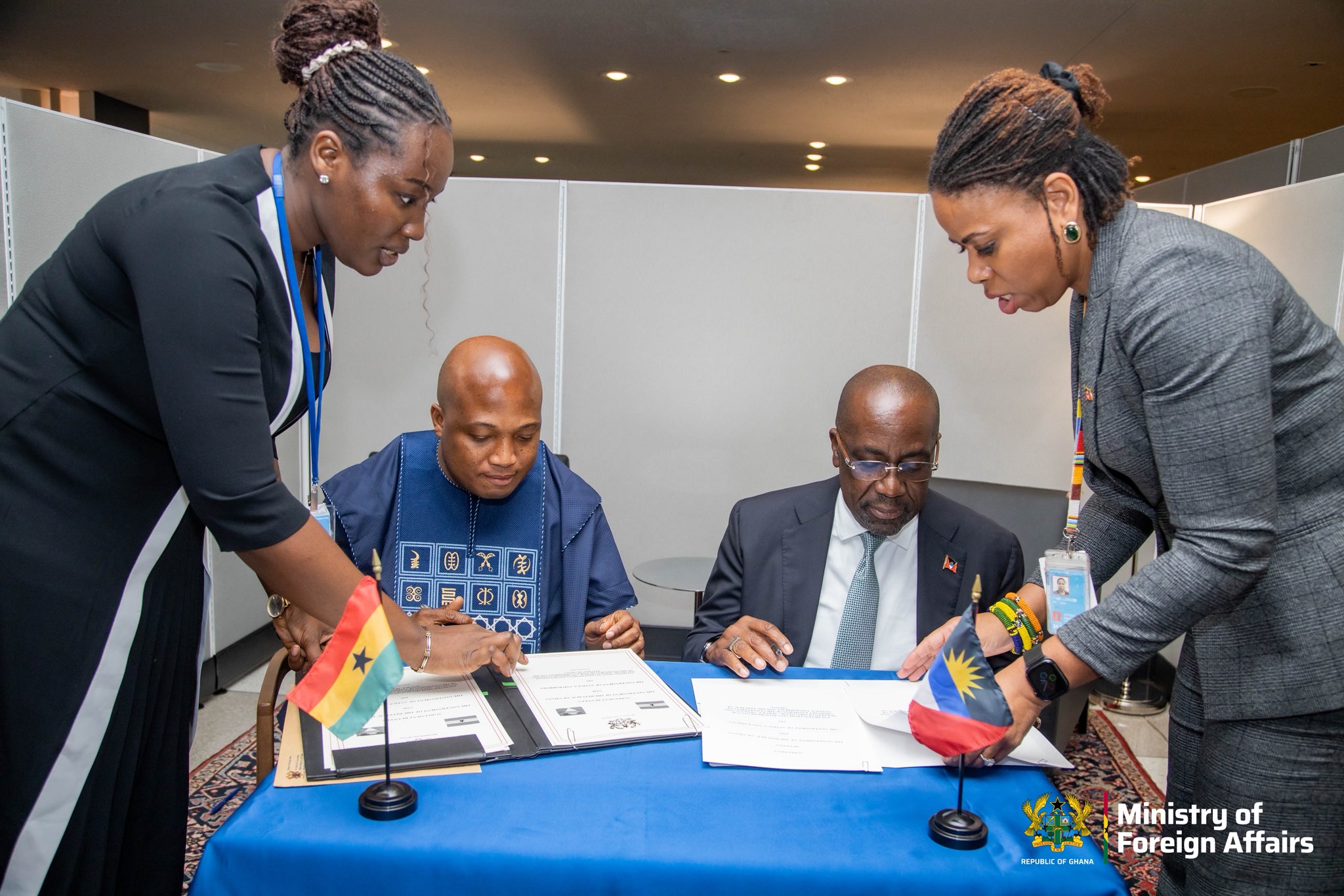
    A visa waiver agreement has been signed between Ghana and Antigua and Barbuda at the United Nations General Assembly. The deal was signed by Minister for Foreign Affairs and Regional Integration, Samuel Okudzeto Ablakwa, and Antigua and Barbuda’s Minister for Foreign Affairs, Trade, and Barbuda Affairs, H.E. E.P. Chet Greene.

    During the signing ceremony, Ablakwa noted that with the recent development, Ghana has successfully signed ten visa-free travel deals for its citizens under his leadership.

    He added, “The Mahama Administration is deliberate about adding more value to the Ghanaian Passport, projecting our image in the comity of nations and enhancing the travel experience of Ghanaians as we boost trade, tourism, and in this particular instance connect us to our brothers and sisters in the Caribbean”.


    In July, the Parliament approved the ratification of agreements to waive the visa requirements for holders of diplomatic, service and ordinary passports to four countries.


    These are Mozambique, Sao Tome and Principe, Colombia and the Commonwealth of Dominica. Chairman of the Foreign Affairs and Regional Integration Committee in Parliament, Hon. Alfred Okoe Vanderpuije, while speaking on the floor of the House on Wednesday, July 23, explained that the objective of the agreements is to encourage multilateral partnership in areas such as trade, tourism, energy, education, and agriculture.


    There are no anticipated direct revenue losses from the implementation of the agreements, Foreign Affairs and Regional Integration Minister, Samuel Okudzeto Ablakwa, said when he appeared before the House.
    He also confirmed that the visa waiver arrangements will contribute to a surge in trade, tourism, and other forms of bilateral cooperation for the countries involved.


    The government of Ghana has, in recent times, joined the many African countries waiving visa requirements to sister countries to enhance trade and boost economic growth.
    In March this year, Ghana and Morocco took a significant step toward enhancing diplomatic and economic relations by agreeing to introduce a visa waiver for all categories of travelers.

    The agreement, which is set to be presented to both nations’ parliaments for ratification, aims to facilitate seamless travel and boost cooperation in various sectors.


    The decision emerged from discussions between Minister of Foreign Affairs, Samuel Okudzeto Ablakwa, and the Moroccan Ambassador to Ghana, Her Excellency Imane Ouaadil, on March 23.

    During their meeting, Ambassador Ouaadil also addressed concerns over recent viral videos alleging violence against Africans in Morocco. She clarified that the footage in circulation was from a past border incident on June 24, 2022, which led to the deaths of 23 individuals but did not involve any Ghanaian casualties.


    Additionally, Morocco has announced a significant boost in educational support for Ghana, doubling scholarships for Ghanaian students from 90 to 180 this year.


    In March last year, the Ministry of Foreign Affairs and Regional Integration informed the public that the Republic of Ghana and the Republic of Malawi entered into an agreement on a visa waiver regime for holders of ordinary, diplomatic, and service passports, which took effect on 7th February 2024.


    The decision was taken to strengthen their bilateral relations and existing cooperation. In light of this, travellers transit through, depart from, and stay in the territory of both countries for a cumulative period of up to ninety (90) days without recourse to work within a calendar year.


    On November 1, 2023, Ghana and South Africa began the implementation of a 90-day visa waiver programme for holders of ordinary passports.For this number of days, there was no need for work permits.


    In reaction to the visa waiver agreements, at the Bi-National Committee meeting in Johannesburg, President Ramaphosa noted that the visa waiver has positively influenced bilateral ties.


    “We welcome you to the second session of the Bi-National Commission between the Republic of South Africa and the Republic of Ghana, we welcome you with warm hearts. One of the recent highlights in our bilateral relations was the signing of the reciprocal visa exemption for ordinary passport holders for a period of 90 days per annum, which entered into force on November 1, 2023. The surge in travellers between our nations has not only benefited tourism but has also strengthened our business connections, educational collaborations, and interpersonal relationships,” President Ramaphosa said.


    Following this, some Nigerians took to social media to question why the Tinubu-led government had not been able to secure similar arrangements.


    “Nigeria should asked itself, why is South Africa not extending this same visa regime to Nigeria? What has our fellow country done in the past that South Africa is not extending this 90 days free entry visa to Nigeria. We need to look at the mirror to answer this question,” one Omano Edigheji, PhD quizzed.


    Ghana kick-started a visa-on-arrival waiver strategically designed to ignite a surge in tourism through the government’s “Beyond the Return” drive, and this ran from December 22 to January 15, 2023.


    The policy is a prominent feature of the “Beyond the Return” initiative, a decade-long plan framed under the theme “A decade of African Renaissance—2020-2030.” “Beyond the Return” follows in the footsteps of the “Year Of Return” initiative launched in 2019, commemorating the 400th Anniversary of the arrival of the first recorded enslaved Africans in Jamestown, Virginia, in 1619. The aim is to beckon people of African origin to Africa, particularly Ghana.


    In 2021, Parliament approved a visa waiver agreement between the United Arab Emirates (UAE) and Ghana. A Memorandum of Understanding (MoU) signed by both parties was presented to the House by the then-Foreign Affairs Minister, Shirley Ayorkor Botchway.


    African countries that waived their visa requirements
    Effective January 2024, Kenya eliminated visa requirements, opening its borders to all foreign nationals. Kenyan President William Ruto, in his announcement on December 12, 2023, revealed that the country is transitioning to a visa-free status.


    President Ruto stated, “This is to echo a message to humanity to welcome everyone home…this is why the government of Kenya has abolished the requirements of visas for all visitors.”


    “To implement this policy, we have developed a digital platform to ensure that all travellers to Kenya are identified in advance on an electronic platform. Consequently, all travellers will obtain electronic travel authorization as they come to Kenya,” President Ruto added.


    Uganda is the third East African Community (EAC) Partner State to waive visa requirements for DRC citizens after Kenya and Tanzania.
    The decision was taken during the 8th Ordinary Session of the Joint Permanent Commission between the two Partner States in Kinshasa, DRC, on Saturday, 21st October, 2023.


    Ugandan President Yoweri Museveni who had been advocating for visa-free entry between the two nations, remarked, “Crossing in East Africa should be cost-free. You pay for a visa when going to America, or Europe, but a visa to DR Congo?! That is rubbish. If that is the case, I have removed it.”


    President Museveni commented two years ago in December when he launched the Mpondwe one-stop border post at Uganda’s border with DR Congo. The East African Community (EAC) applauded the decision by the Republic of Uganda and the Democratic Republic of Congo (DRC) to waive visa fee requirements for citizens travelling across their borders.


    In 2021, DRC joined the EAC as its seventh Partner State. The other partner states are the Republics of Burundi, Kenya, Rwanda, South Sudan, Uganda and the United Republic of Tanzania.

  • Ghana to receive 40 more deportees from U.S.A – Ablakwa

    Ghana to receive 40 more deportees from U.S.A – Ablakwa

    Minister of Foreign Affairs, Samuel Okudzeto Ablakwa, has disclosed that Ghana is anticipating the arrival of forty (40) West African deportees from the United States of America.

    Speaking to Channel One TV on Wednesday, September 17, Mr Ablakwa noted, “I can reveal to you that we’re expecting another 40 in the next few days. We vet them before they come”.

    This revelation follows criticism from the Minority in Parliament, who accused the government of accepting 14 deportees without Parliamentary approval. Ablakwa, however, clarified that a Memorandum of Understanding (MoU) with the U.S., which does not require Parliamentary ratification, necessitated the arrangement.

    Opposition Member of Parliament (MPs) have argued that President Mahama’s deal with the U.S. was never ratified and therefore unlawful. The Minority cited Article 75 of Ghana’s Constitution, which dictates that an international agreement must be approved by Parliament. 

    They pointed to previous Supreme Court rulings, such as the one involving the Gitmo 2 detainees, as precedent for why executive-only agreements are unconstitutional.


    “The deal should have been brought to Parliament. It’s the same President Mahama who entered into a deal for the relocation of the Gitmo 2 to Ghana. What’s in it for our beloved country, Ghana?” NPP MP for Abirem, Charles Owiredu, wrote.

    The opposition also accused Mahama of hiding behind the Economic Community of West African States (ECOWAS) protocol on free movement, describing it as misleading. They argued that those protocols apply to voluntary travel, not forced deportations orchestrated by non-member states like the U.S.


    “Accepting forced deportations orchestrated by non-ECOWAS states contradicts the spirit of regional integration protocols designed for voluntary movement,” stated the Minority Caucus on the Foreign Affairs Committee.

    But the Foreign Affairs Minister has explained that the decision was driven primarily by humanitarian concerns after observing the harsh treatment of deportees abroad. 

    “We didn’t agree to this because we agree with President Trump’s immigration policies. We’re not doing the U.S. a favour. We’re doing our fellow Africans a favour; we’re offering them refuge, hope, and we want them to come back home and be comfortable.


    “We solidarised with them when we saw those images, the arrests, the violation of their rights, and their being detained against their will. It was purely on a humanitarian basis; we did not take any financial benefits. We’re doing this because we want to continue to position Ghana as the Mecca for Africans,” Ablakwa stressed.

    Responding to whether the deportees will remain in Ghana, Honourable Ablakwa said, “So the choice is theirs really. For 90 days, if they want to stay here, they can stay. But so far all of them have indicated that they want to go back after some time, and we have been facilitating that.”

    At the Government Accountability Series held at the Jubilee House on Monday, September 15, Ablakwa clarified that Ghana’s agreement with the United States to accept some West African deportees was not motivated by financial or material gain.

    “It is important to state that Ghana has not received any money, compensation or any material benefit in relation to this understanding. Our decision is grounded purely on humanitarian grounds and principle,” he said.

    On Wednesday, September 10, the first batch of West African nationals arrived in Ghana following their deportation from the U.S. During a media encounter at the Jubilee House, President John Dramani Mahama said that the batch consisted of 14 individuals, mostly Nigerians, along with one Gambian national.


    “We were approached by the U.S. to accept third-country nationals who were being removed, and we agreed that West African nationals could be accommodated, since all our fellow West Africans do not require a visa to enter Ghana. So, if they travel from the U.S. to Accra, entry is not an issue. Bringing our West African colleagues back is therefore acceptable,” President Mahama explained.

    Mahama did not explicitly detail the deal of Ghana serving as a transit hub for West African nationals deported from the U.S.  A federal judge, Judge Tanya Chutkan, has expressed concern that the arrangement suggested complicity on the part of the Ghanaian government in the deportation process.

    Judge Chutkan granted an emergency hearing after lawyers for the deportees argued that their clients expected to be returned to Nigeria and Gambia, and feared torture or persecution if sent home. She instructed the Trump administration to submit a report outlining measures to prevent Ghana from returning the deportees to their home countries. 

    According to her, concerns about their safety were not speculative but “real enough that the United States government agrees they shouldn’t be sent back to their home country.”

    Judge Chutkan described the arrangement as appearing to have been designed by U.S. officials “to make an end run” around legal requirements barring the government from deporting migrants to situations of danger. The deportations, she noted, form part of President Donald Trump’s broader strategy of relocating migrants to “third countries” to expedite removals and pressure undocumented immigrants to leave the U.S.

    It later emerged, following a lawsuit filed on Friday, September 12, by the American Civil Liberties Union (ACLU) and Asian Americans Advancing Justice, that five of the nationals deported to Ghana had U.S. legal protections preventing deportation to their home countries. One of them, a bisexual man, was already sent to Gambia and is reportedly in hiding.

    The others were held in an open-air facility managed by the Ghanaian military, which was described as having squalid conditions. The complaint alleged that the migrants were taken from a Louisiana detention facility, shackled, and flown on a U.S. military aircraft without being told their destination. Some were reportedly restrained in straitjackets for 16 hours.

    The U.S. Department of Justice, responding to Judge Chutkan’s request, argued that it no longer had custody of the migrants and therefore the court lacked authority to interfere in matters of diplomacy. They cited a Supreme Court ruling allowing deportations to third countries.

    U.S. Department of Homeland Security spokesperson Tricia McLaughlin rejected the claim that straitjackets were used during the flight, but declined to comment on allegations of circumventing immigration law.


    In January 2016, President Mahama welcomed two Yemeni nationals, Mahmud Umar Muhammad Bin Atef and Khalid Muhammed Salih Al-Dhuby, who had been detained at Guantanamo Bay for about 15 years. They were linked to Al-Qaeda activities, and their transfer to Ghana formed part of a bilateral agreement with the U.S.

    The Mahama government explained that the move was a humanitarian gesture and that the two men would stay in Ghana for two years. However, the deal was never submitted to Parliament as required by the Constitution. In June 2017, the Supreme Court ruled that the Gitmo 2 agreement was unconstitutional, ordering the government to present it to Parliament within three months or return the detainees to the U.S.

  • More than 161k passports printed, 122k delivered so far – Ablakwa

    More than 161k passports printed, 122k delivered so far – Ablakwa

    Over 161,824 chip-embedded passports have been printed since the introduction of the Foreign Affairs Ministry’s new system, the sector minister, Samuel Okudzeto Ablakwa, has revealed.


    Speaking at the Government Accountability Series in Accra on Monday, September 15, Mr. Ablakwa indicated that as of September 10, the Ministry had delivered 122,895 of these to applicants.


    “These passports incorporate over 175 advanced security features, compared to 32 in the previous version, and fully meet International Civil Aviation Organisation (ICAO) standards. This has greatly enhanced the global credibility and security of Ghanaian travel documents,” he added.

    He noted that the new development marks significant progress in the country’s passport reform agenda. The reform initiatives surrounding the new passports also include 24-hour operations, e-tracking, and reduced application fees, all aimed at improving the overall experience for applicants.


    The ministry has emphasized that the passport overhaul is an integral component of a comprehensive initiative aimed at modernizing the system, eliminating intermediaries, and ensuring a more transparent and user-centric application process.


    In addition, the rollout will include several reforms throughout 2025, such as 24/7 passport processing, courier delivery to both home and office addresses, electronic application tracking, and a 30% reduction in processing fees.


    As an upgrade to the current biometric passport, the new chip-embedded passport also boasts an improved design that reflects Ghana’s rich cultural heritage. The passport design incorporates Adinkra symbols such as “Fawohodie” (Freedom and Independence) and “Funtunfunefu Denkyemfunefu” (Democracy and Cooperation).


    The new chip-embedded passport, which was rolled out on April 28, represents a major shift from the outgoing biometric system and brings Ghana in line with international travel standards. The updated document contains 175 security features and is embedded with nanotechnology to safeguard against fraud and damage.

    It also includes a compressed polymer-based biographical data page, which users are advised to handle carefully. Ghanaians still holding valid biometric passports can continue using them until 2030 in line with regulations set by the International Civil Aviation Organization (ICAO), though they may opt to upgrade to the new version at any time.


    Biometric Travel Solutions spearheaded the development of the new passport platform, with Troskit and Ghana Post leading courier services under a 24-hour operational model. In May, the minister announced that a total of 31,935 passports had been printed.

    As of the time, a total of 8,463 Ghanaians had received their new chip-embedded passports across the country. During that period, Mr Ablakwa saw to the first round of delivery of Ghana’s new chip-embedded passport. The minister joined Ghana Post on 9th May to personally hand over passports to clients at the addresses they provided.


    Applicants facing address challenges will be able to retrieve their passports from designated Ghana Post offices at no extra cost. The Ministry of Foreign Affairs has assured that Ghana Post will continue to ensure the timely delivery of passports across the country. Delivery packages have been designed with tamper-evident sealing to guarantee document integrity.


    Meanwhile, Director of the Accra Passport Office, Felix Nyarku, has expressed concerns over the inconsistencies in applicants’ identification documents, highlighting mismatches between names on Ghana Cards and birth certificates.


    During a visit by the Parliamentary Select Committee on Foreign Affairs last week, Mr Nyarku noted that this often delays the processing of chip-embedded passports.

    What not to do


    The new passport contains a biographical data-page composed of layers of polymer compressed into a solid substrate that must not be bent or kept in the pocket, especially the back pockets.
    It must be protected from heat and all forms of liquid.

    Holders are advised not to store other cards with chips embedded in them inside the passport, as it may interfere with encoded information on the RFID. inside the passport.
    Avoid attempting to split the biographical data page. This will permanently damage the passport.

    Meanwhile, the Ministry of Foreign Affairs has debunked reports that it is responsible for the United States government’s revision of the reciprocity schedule for a considerable number of African countries, including Ghana, reducing the B1/B2 visa validity from 5 years multiple entry to 3 months single entry.

    Ghanaian visa applicants can no longer access the 5-year visa and multiple-entry.

    It was reported that the Foreign Ministry had also limited the number of entries and duration given to US passport holders, hence the reciprocity by the US government.

    However, in a statement, the Ministry refuted this claim, noting that consistent with bilateral arrangements, US passport holders are entitled to a maximum visa validity of five years, and in most instances, five-year multiple-entry visas are issued upon request.

    “Some applicants, however, apply for single-entry visas owing largely to limited validity of their passports,” the statement read.

    Besides the maximum five-year multiple visas, Ghana also issues multiple-entry 6-month, one-year, two-year, three-year, and four-year visas based on various considerations.

    From January 2025 to date, 40,648 visas have been issued by Ghana’s missions in Washington, D.C., and New York. Out of this, 28,626 are multiple-entry visas to Ghana.

    The statement further indicated that “The official statistics clearly demonstrate that contrary to false narratives, Ghana has issued, on average, an impressive 70.42% of multiple long-term visas to US passport holders, consistent with our bilateral arrangements.”

    The Foreign Ministry noted that the present limitations imposed by the United States vary substantially from the prior reciprocal arrangements that Ghana has kept with the United States.

    The US’ decision has sparked concerns, and the Ministry has acknowledged the legitimate concerns of Ghanaian travellers to the United States for professional, business, educational, touristic, medical and family purposes inconvenienced.

    The Ministry has expressed its firm solidarity with all thoseGhana recognizes the sovereign right of every country to determine its visa regime.

    While the Government of Ghana studies the current developments more closely and considers its options, it remains committed to working expeditiously with its longstanding partner, the US Government.

    “We hope for an early resolution of the concerns that have led to the revision of the schedule which have been confirmed to be overstays, including by ensuring that the conduct of applicants align with the visa application procedures and requirements of the United States,” the statement added.

    Government has stated that it will, at its highest levels, sustain best efforts in strengthening relations with the United States in a manner that further enhances people-to-people relations in the mutual interest of both countries.

    The updated guidelines, published under the U.S. Visa, reveal that Reciprocity and Civil Documents by Country for Ghana also affect student visa applicants.

    F-1 visa holders, who are typically enrolled in full-time academic programmes in the U.S., will now be issued visas that allow for only one entry and expire after three months.

    Diplomats and government officials will, however, continue to receive multiple-entry visas with validity ranging from 24 to 60 months.

    The K1 visa, issued to the foreign-citizen fiancé(e) of a US citizen intending to marry within 90 days of arrival in the United States, and the K2 visa, provided to the unmarried dependent child (under 21 years old) of a K1 visa holder, are single-entry visas that will be valid for 6 months.

    The K3 visa, for the foreign-citizen spouse of a US citizen, and the K4 visa, for their unmarried dependent child (under 21 years old), are multiple-entry visas that will be valid for 24 months.

    All other visa applicants, including those applying for B-class visas, which cover business and tourism travel, will now be issued single-entry visas valid for just three months.

  • Ghana’s embassy in Iran will resume operations on Tuesday – Ablakwa

    Ghana’s embassy in Iran will resume operations on Tuesday – Ablakwa

    Minister of Foreign Affairs, Samuel Okudzeto Ablakwa, has disclosed that Ghana’s embassy in Iran will resume its operations tomorrow, Tuesday, September 16.

    Speaking at the Government Accountability Series at the Jubilee House on Monday, September 15, Mr Ablakwa indicated that all measures have been put in place to ensure the successful operations of the embassy.“I can announce that after three months of closure of our embassy in Iran, we shall fully reopen tomorrow, the 16th of September 2025.

    Measures have been put in place to guarantee the safety of our diplomatic staff,” the Minister stated.

    Heightened tensions between Iran and Israel forced the closure of the embassy in June. However, significant improvements in the security situation in Iran have influenced the resumption of operations in the area, according to a press statement issued on Tuesday, September 2, by the Ministry of Foreign Affairs.


    “The Ministry of Foreign Affairs wishes to inform the public that with the improvement in the security situation in Iran, a decision has been taken for the Embassy to resume its operations on Tuesday, September 16, 2025,” the statement read.


    Meanwhile, Meanwhile, President John Dramani Mahama has announced plans to end government funding for expensive rent at its diplomatic missions abroad. He explained that the move will save the country $15 million every year.


    Speaking at the induction ceremony for the 15 distinguished individuals, President Mahama emphasized that Ghana can no longer bear the cost of expensive properties rented by diplomatic missions abroad.


    He called the practice wasteful and one that can no longer be tolerated under the ruling National Democratic Congress (NDC) Reset Agenda.
    The President added that the Cabinet has given the nod to the government’s new initiative, Strategic Transition from Rental to Developing (STRIDE).

    However, the Ministers for Foreign Affairs and Finance to review the STRIDE policy that has already been approved by the Cabinet. The STRIDE policy is to reduce unnecessary losses the country absorbs on renting properties abroad for its diplomatic missions, hence, ensuring Ghana’s foreign missions are accommodated in state-owned properties.


    Meanwhile, the first batch of Ghana’s newly appointed envoys has been sworn in by President John Dramani Mahama. The induction ceremony was held at the Jubilee House on Thursday, September 4.


    The fifteen (15) appointees sworn in today include: Benjamin A. Quashie will oversee the operations of Ghana’s diplomatic mission in the Republic of South Africa, while Kojo Bonsu takes charge of the People’s Republic of China. Kulsoume Sinare Baffoe will head affairs in the Kingdom of Spain.


    Hammed Rashid Tunde Ali will the United Arab Emirates, Hon. Captain George Kofi Nfojoh in the Togolese Republic, and Grace El Mahmoud Marabe in Dubai, United Arab Emirates. Prof. Ohene Adjei will head the mission in the Federal Republic of Germany, and Abdul Nasiru-Deen in the Republic of Turkey.


    Theresah Adjei-Mensah in the Czech Republic, and Prof. Kwasi Obiri-Danso in India. Dora Francisca Edu-Buandoh, Ph.D., will serve in Canada, Dr. Margaret Miewien Chebere in Denmark, Labik Joseph Yaani in Equatorial Guinea, Nii Amasah Namoale in the Federative Republic of Brazil, and Dr. Felix Kumah Godwin Anebo in the Republic of Senegal.


    The remaining eight appointees yet to be sworn in are Alhaji Abdul-Rahman Harruna Attah, the Ambassador to the Republic of Namibia; Kojo Choi, Ambassador to the Republic of South Korea; Dr. Kwame Ampofo, who will represent Ghana in Hungary; Mona Helen Kabuki Quartey, who will serve as Ambassador to the Italian Republic; Magnus Kofi Amoatey, who has been appointed as Ambassador to the Democratic Republic of the Congo.


    Kenneth Akibate, who is Ambassador to Burkina Faso, Said Sinare, who is Ambassador to Saudi Arabia, and Paul Evans Aidoo, who will head Ghana’s mission in the Republic of Kenya.

    The twenty-three individuals are expected to promote Ghana’s foreign policy and protect the welfare of Ghanaians overseas. Speaking at the induction ceremony for the 15 distinguished individuals, President Mahama noted that their “appointment is a mark of the confidence reposed in you and a recognition of your years of dedicated service, sterling achievement, and exemplary contributions both in the public and private sectors”.


    He urged the envoys to uphold transparency in carrying out their duties. On Monday, September 1, Ghana’s historic five hundred (500) Key Performance Indicators (KPI) for heads of missions was launched by President John Dramani Mahama.


    The initiative is to provide heads of mission with a clear framework for assessing their work and supporting the President’s Reset Vision for the country.


    Delivering his keynote address, President Mahama stated that Ghana’s mission had advanced into paths of economic engagement, facilitating trade, attracting investment, and promoting innovation.


    Thus, he charged the heads of missions to promote investments in Ghana’s priority sectors, industrialization, renewable energy, digital services, agro-processing, infrastructure and tourism.


    “I charge you to expand our export markets, especially for value-added goods such as processed food, shea butter, textiles, crafts, and digital services. I charge you to move the life of our diaspora not only as remittance of money, but also as investors, innovators, and partners in Ghana’s development,” he said.


    The 500 KPIs cover areas such as securing scholarships and promoting exchange programmes with foreign institutions to build human capacity as well as increasing tourist arrivals by a least 10 per cent each year to create jobs and strengthen foreign reserves.


    They also require strict compliance with financial and procurement rules, enhancing national security through stronger intelligence sharing and partnerships with foreign agencies, navigating Permanent Joint Commissions for Cooperation (PJCC) with major partners, and shifting from renting office spaces to building permanent infrastructure to cut down rent costs.


    He stressed that the performance of the heads of missions will be judged not by ceremonial protocols, but by the level of investment, trade, and opportunities they can attract for the country.


    President Mahama explained that the Government’s Reset Agenda also focuses on governance, particularly restoring public trust through transparency and accountability.


    He added that as Ghana’s envoys abroad, the heads of mission are expected to reflect these principles, managing the nation’s missions with integrity, efficiency, and professionalism.


    “Our citizens abroad must experience fairness and respect, for our diplomacy’s credibility is inseparable from the credibility of our governments,” he added.

  • I never approved $5.2m contract for renovation of Benin embassy – Ablakwa

    I never approved $5.2m contract for renovation of Benin embassy – Ablakwa

    The Minister for Foreign Affairs and Regional Integration, Samuel Okudzeto Ablakwa, has shot down claims that he approved an amount of  US$5.2 million for the renovation for Ghana’s embassy in Benin.

    Taking to his official Facebook page, Mr. Ablakwa emphasized that  no such contract had been awarded under his tenure.

    “For the record, I have not awarded any embassy renovation contract anywhere in the world. Let me be clear — not a single embassy renovation or construction contract has been awarded by me since I became Foreign Minister,” he wrote.

    In an unrelated development, Ghana’s Embassy in Tehran, Iran, will fully resume its operations on Tuesday, September 16, after a temporary closure.

    Heightened tensions between Iran and Israel forced the closure of the embassy in June. However, significant improvements in the security situation in Iran have influenced the resumption of operations in the area, according to a press statement issued on Tuesday, September 2, by the Ministry of Foreign Affairs.

    “The Ministry of Foreign Affairs wishes to inform the public that with the improvement in the security situation in Iran, a decision has been taken for the Embassy to resume its operations on Tuesday, September 16, 2025,” the statement read.

    Meanwhile, Ghana’s historic five hundred (500) Key Performance Indicators (KPI) for heads of missions have been duly launched by President John Dramani Mahama. The initiative is to provide heads of mission with a clear framework for assessing their work and supporting the President’s Reset Vision for the country.

    The President was aided by Vice President Professor Naana Jane Opoku-Agyemang and Nii Tackie Teiko Tsuru, the Ghana Mantse, to perform the launch at the Ministry of Foreign Affairs in Accra, on Monday, September 1, 2025. Delivering his keynote address, President Mahama stated that Ghana’s mission had advanced into paths of economic engagement, facilitating trade, attracting investment, and promoting innovation.

    Thus, he charged the heads of missions to promote investments in Ghana’s priority sectors, industrialization, renewable energy, digital services, agro-processing, infrastructure and tourism.

    “I charge you to expand our export markets, especially for value-added goods such as processed food, shea butter, textiles, crafts, and digital services. I charge you to move the life of our diaspora not only as remittance of money, but also as investors, innovators, and partners in Ghana’s development,” he said.

    The 500 KPIs cover areas such as securing scholarships and promoting exchange programmes with foreign institutions to build human capacity as well as increasing tourist arrivals by a least 10 per cent each year to create jobs and strengthen foreign reserves. They also require strict compliance with financial and procurement rules, enhancing national security through stronger intelligence sharing and partnerships with foreign agencies, navigating Permanent Joint Commissions for Cooperation (PJCC) with major partners, and shifting from renting office spaces to building permanent infrastructure to cut down rent costs.

    He stressed that the performance of the heads of missions will be judged not by ceremonial protocols, but by the level of investment, trade, and opportunities they can attract for the country.

    President Mahama explained that the Government’s Reset Agenda also focuses on governance, particularly restoring public trust through transparency and accountability. He added that as Ghana’s envoys abroad, the heads of mission are expected to reflect these principles, managing the nation’s missions with integrity, efficiency, and professionalism.

    “Our citizens abroad must experience fairness and respect, for our diplomacy’s credibility is inseparable from the credibility of our governments,” he added.

    List of newly appointed envoys

    Twenty-three individuals have been appointed as ambassadors, high commissioners, and consul-generals following their nomination by President Mahama.

    Among the first fifteen appointees are Benjamin A. Quashie for the Republic of South Africa, Kojo Bonsu for the People’s Republic of China, Kalsoume Sinare Baffoe for the Kingdom of Spain, Hammed Rashid Tunde Ali for the United Arab Emirates, Hon. Captain George Kofi Nfojoh for the Togolese Republic, and Grace El Mahmoud Marabe for the United Arab Emirates–Dubai.

    The others are Prof. Ohene Adjei for the Federal Republic of Germany, Abdul Nasiru-Deen for the Republic of Turkey, Theresah Adjei-Mensah for the Czech Republic, Prof. Kwasi Obiri-Danso for India, Dora Francisca Edu-Buandoh, Ph.D., for Canada, Dr. Margaret Miewien Chebere for Denmark, Labik Joseph Yaani for Equatorial Guinea, Nii Amasah Namoale for the Federative Republic of Brazil, and Dr. Felix Kumah Godwin Anebo for the Republic of Senegal.

    The remaining eight appointees are Alhaji Abdul-Rahman Harruna Attah, the Ambassador to the Republic of Namibia; Kojo Choi, Ambassador to the Republic of South Korea; Dr. Kwame Ampofo, who will represent Ghana in Hungary; Mona Helen Kabuki Quartey will serve as Ambassador to the Italian Republic; Magnus Kofi Amoatey has been appointed as Ambassador to the Democratic Republic of the Congo; Kenneth Akibate is Ambassador to Burkina Faso, Said Sinareis, Ambassador to Saudi Arabia, and Paul Evans Aidoo will head Ghana’s mission in the Republic of Kenya.

    4th Made-in-Ghana Bazaar set for September 5

    In an unrelated development, the 4th Made-in-Ghana Bazaar is slated to commence on September 5 at the Accra International Conference Centre (AICC). The three-day event will run from 9:00 a.m. to 7:30 p.m. daily.

    Organized by the Ministry of Foreign Affairs under the theme “Championing Economic Diplomacy: Connecting Producers, Markets, and Opportunities,” the bazaar seeks to promote Ghanaian products and services globally through economic diplomacy. It will also connect Ghanaian producers with consumers, investors, diplomats, and foreign buyers.

    The event is being organized in partnership with institutions such as the Ministry of Trade and Industry, Ghana Export Promotion Authority (GEPA), Ghana Investment Promotion Centre (GIPC), Association of Ghana Industries (AGI), Ghana Free Zones Authority (GFZA), Ghana Chamber of Commerce, Ghana Enterprises Agency, and the Ghana National Chamber of Commerce & Industry.

    Sponsors include Green Coast, GRA, and Zonda, among others.

    The official media partners are The Multimedia Group and SP Agency. For inquiries, interested persons may contact 0538 062 264 or 0209 249 932, or email bazaar@mfa.gov.gh. Earlier this month, the Ministry of Foreign Affairs launched the 4th Made-in-Ghana Bazaar in Accra. At the launch, Minister for Foreign Affairs Samuel Okudzeto Ablakwa stated that the bazaar seeks to support micro, small, and medium-sized enterprises (MSMEs) and increase the country’s export of non-traditional goods.

    “We are not merely talking about Made-in-Ghana; we are institutionalising it through bold reforms and strategic action,” he said.

    He added that the initiative forms part of President Mahama’s vision to make Ghanaian businesses competitive on the international market and drive national self-reliance.

  • Foreign Minister undertakes official visits to core departments under his outfit

    Foreign Minister undertakes official visits to core departments under his outfit

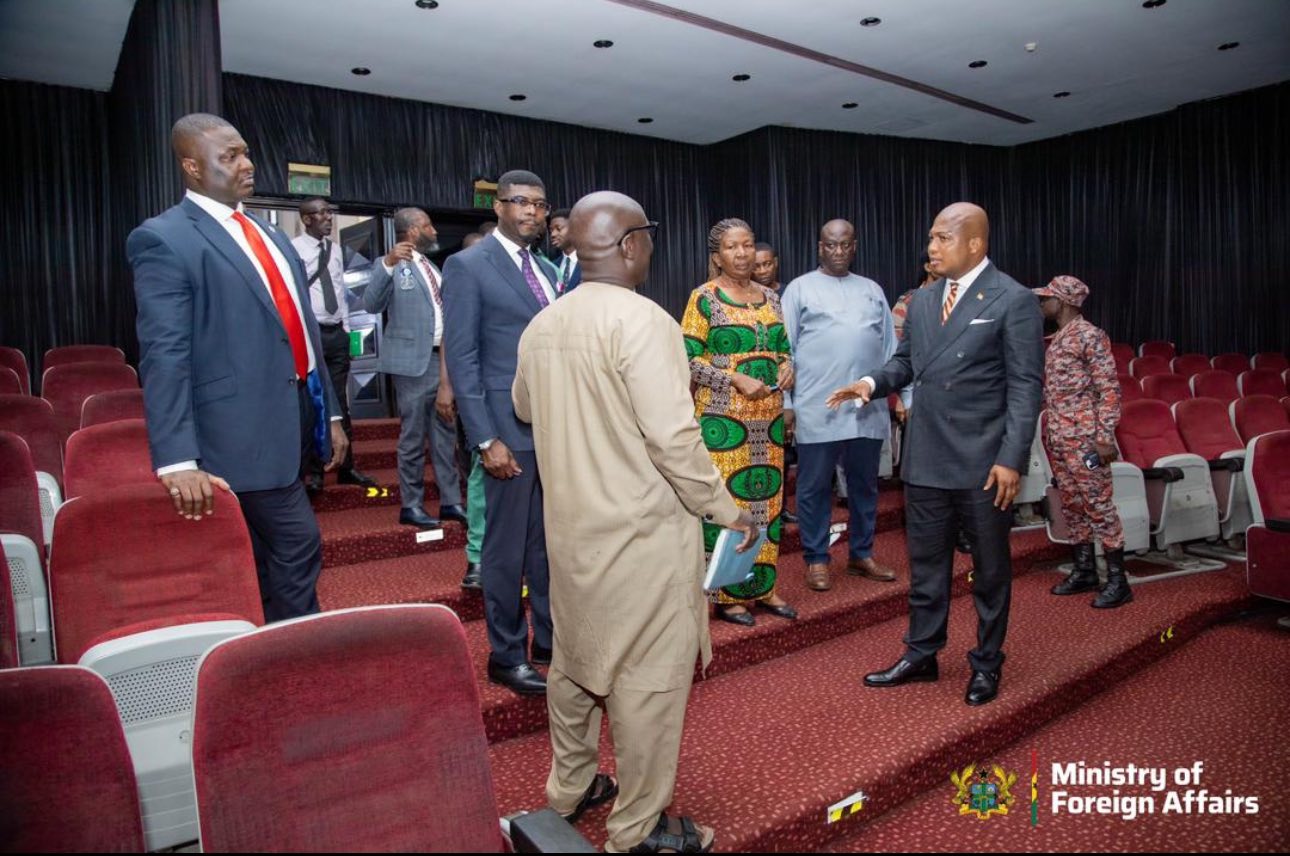
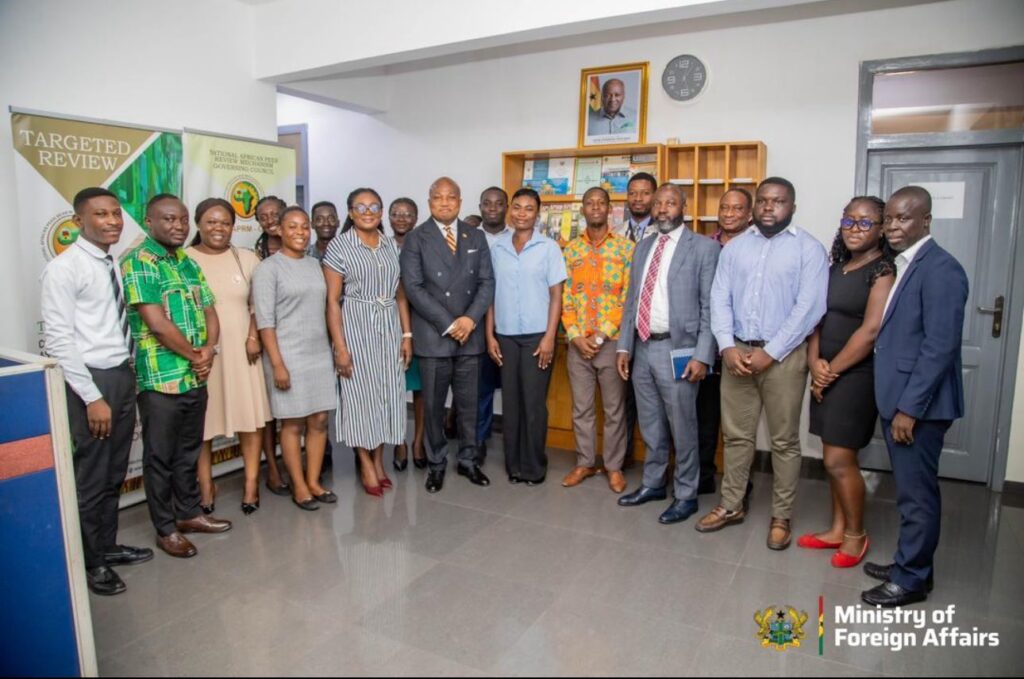
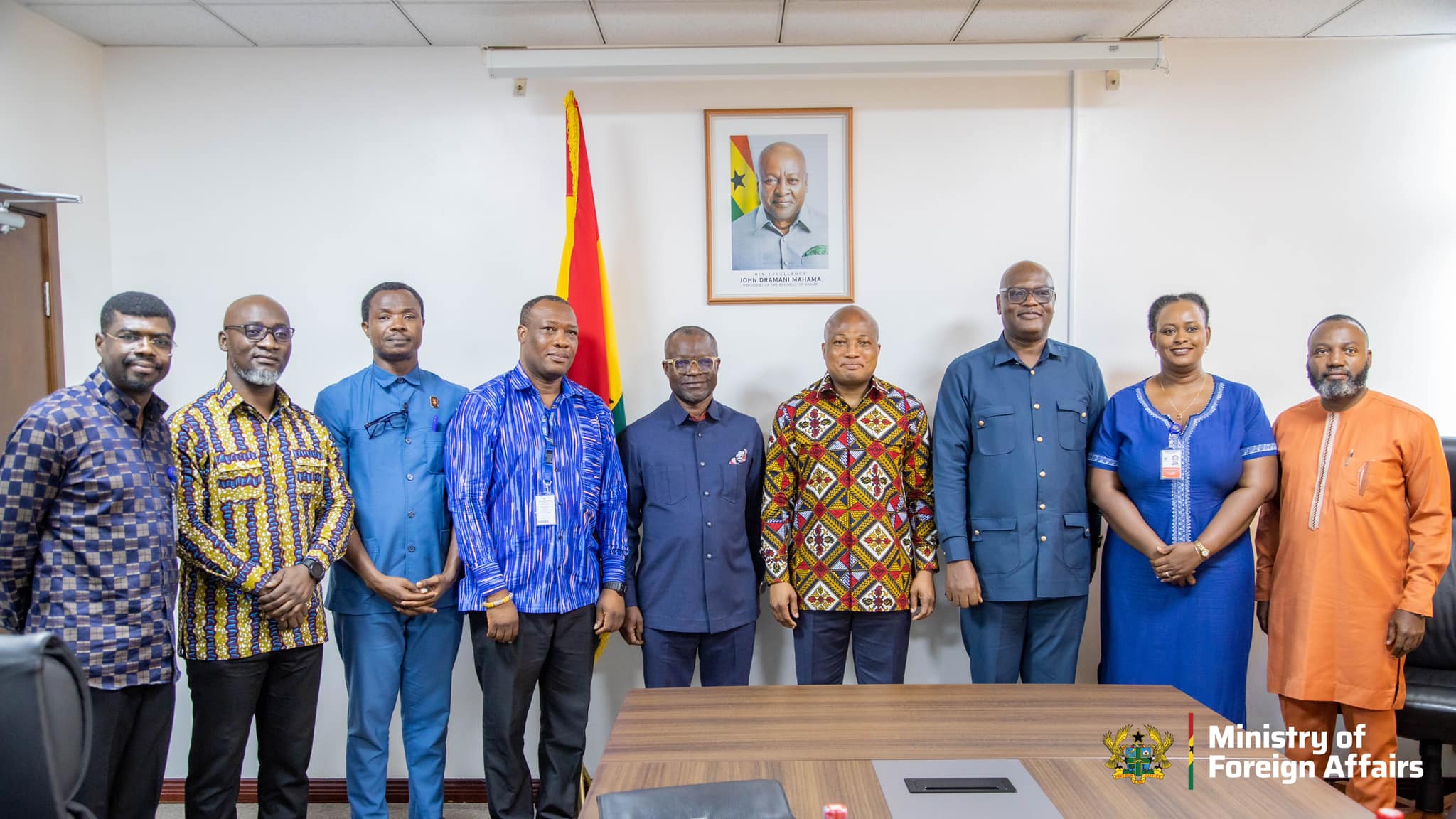
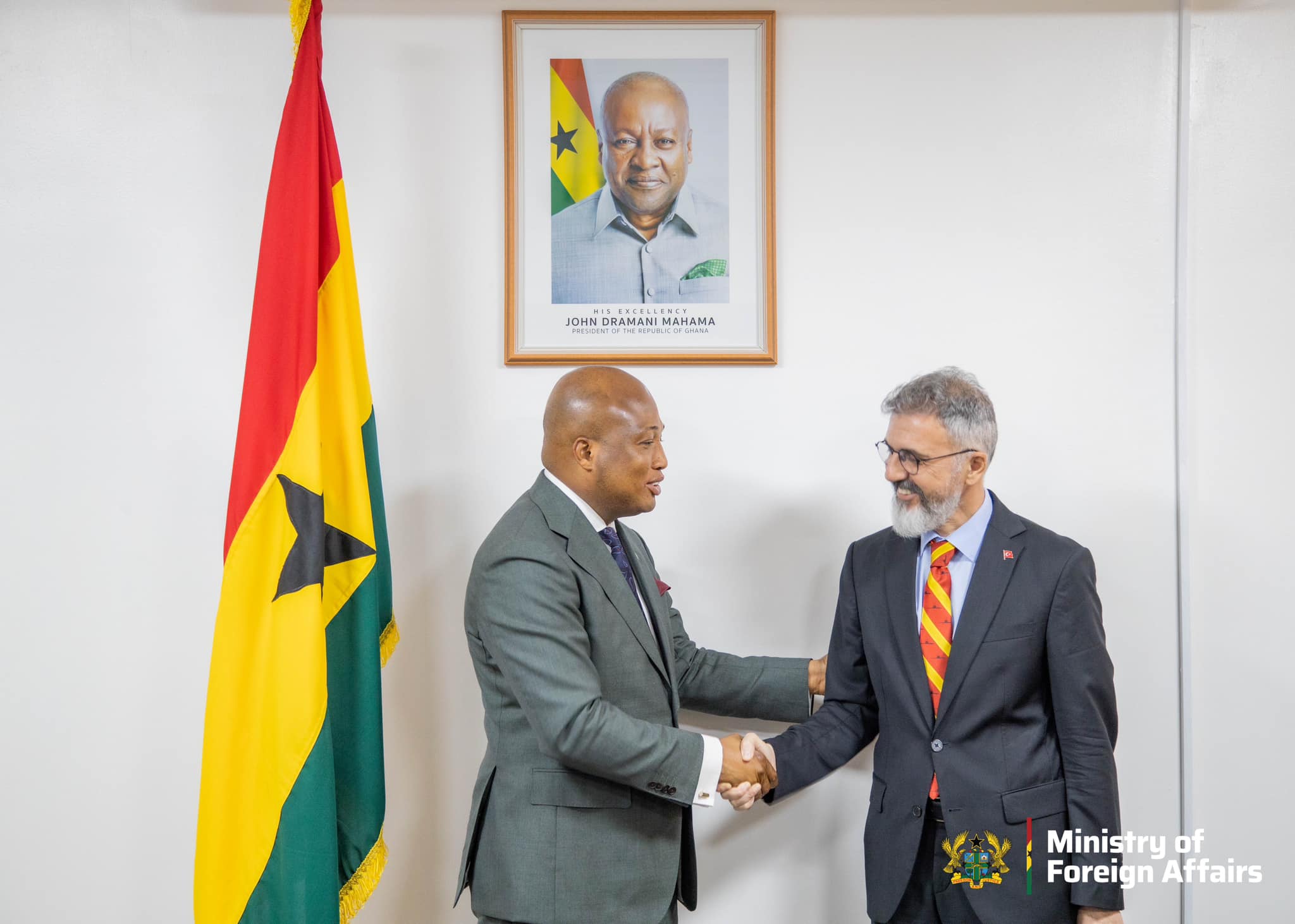
    Minister for Foreign Affairs , Samuel Okudzeto Ablakwa, has embarked on a series of official visits to major departments and agencies under his Ministry.

    The visits formed part of a broader strategy to assess the functionality and efficiency of various institutions aligned with the Ministry’s mandate. Facilities visited included the Tema Passport Office, the Africa Peer Review Mechanism (APRM), the Foreign Service Institute (FSI), and the Accra International Conference Centre (AICC).

    At each stop, the Minister engaged directly with management and staff, observing daily operations and gathering insights into the challenges faced by personnel.

    These interactions allowed the Minister to better understand the working conditions and identify areas that require attention to improve output and service delivery.

    The engagements also served as a platform for fostering collaboration and encouraging staff to share recommendations aimed at enhancing client experience, institutional effectiveness, and overall productivity.

    The initiative aligns with the Ministry’s overarching vision of fostering a results-driven environment rooted in accountability, continuous improvement, and professional excellence. Staff welcomed the visits as a sign of leadership’s commitment to addressing concerns at the ground level and promoting a more responsive and supportive work culture.

    By undertaking these official visits, the Foreign Minister reaffirmed the Ministry’s focus on strengthening its institutional structures, investing in human capital, and delivering diplomatic and consular services that meet high national and international standards.

  • Govt to cut passport fees for diaspora Ghanaians – Foreign Minister

    Govt to cut passport fees for diaspora Ghanaians – Foreign Minister

    Minister for Foreign Affairs, Samuel Okudzeto Ablakwa, has shared that the number of passport applications dropped by 20,000 in the past year after the previous administration raised passport fees.

    Speaking at a community event held at Ghana’s Consulate-General in Lagos, Nigeria, the Minister criticized the fee increase, calling it a harsh decision that negatively affected both Ghanaians at home and abroad.

    During the meeting, members of the Ghanaian diaspora voiced their dissatisfaction with the high costs of acquiring passports.

    In response, Ablakwa assured the audience that the government is actively considering a reduction in passport fees for Ghanaians living abroad, just as it had already done for those within the country.

    He further explained that the government is currently reviewing the Fees and Charges Act and assured that the concerns raised by the diaspora would be part of that review process.

    Ablakwa also emphasized the administration’s dedication to easing the financial and bureaucratic burdens on Ghanaians wherever they are.

    He mentioned that the government plans to work with the National Identification Authority to register Ghanaians abroad, a move aimed at improving the accuracy of data and making access to services more efficient for citizens living outside Ghana.

    Updating the audience on the government’s ongoing reforms, the Minister reiterated the removal of the electronic transfer levy (e-levy), the betting tax, and the emissions levy.

    “We are determined to deliver on our promises and ensure relief reaches all Ghanaians,” he affirmed.

  • Next budget will scrap COVID-19 levy – Ablakwa

    Next budget will scrap COVID-19 levy – Ablakwa

    Minister for Foreign Affairs, Samuel Okudzeto Ablakwa, has announced that the government will remove the COVID-19 levy in its next budget.

    Speaking to a gathering of Ghanaians residing in Benin, Ablakwa emphasized that the move is part of the government’s ongoing efforts to fulfill its promise of reducing taxes imposed by the previous administration.

    “Only one more tax remains for the government to scrap in order to fulfill its promise of removing four taxes imposed by the previous administration,” the Minister said.

    His comments were met with applause from the audience, many of whom had expressed concerns about the financial burden caused by various levies.

    Ablakwa also highlighted that significant progress has already been made in this direction. The government has abolished the betting tax, the E-Levy, and the emissions tax, following the President’s formal approval of the relevant bills on April 2.

    The removal of these taxes has been welcomed by many, as it aligns with the government’s commitment to easing the financial pressures on Ghanaians.

    In addition to the tax cuts, Ablakwa took the opportunity to address the Ghanaian community about developments at home. He assured them that the Mahama administration is dedicated to keeping its promises and urged the diaspora to remain confident in the government’s ability to deliver.

    “The government is investing in the youth by setting aside funds to cater for their needs,” Ablakwa concluded, underscoring the government’s commitment to supporting the future of Ghana through youth empowerment and development initiatives.

    The Minister’s address not only reassured Ghanaians abroad but also reinforced the government’s ongoing agenda of tax relief and economic support for its citizens, both at home and abroad.

  • Ghanaian students abroad to receive higher stipends – Ablakwa

    Ghanaian students abroad to receive higher stipends – Ablakwa

    The Minister for Foreign Affairs, Samuel Okudzeto Ablakwa, has given assurance that monthly stipends for Ghanaian students abroad will soon be reviewed upward by the government.

    Although no exact figures were shared, he indicated that discussions would be launched shortly to examine and improve the current allowance structure for students enrolled in government-funded academic programmes.

    During his official trip to Cotonou, Benin, Mr. Ablakwa met with members of the Ghanaian community, where he also promised to work towards ensuring that payments are made on time. Students have previously raised concerns about frequent delays in receiving their stipends.

    At present, students taking part in the one-year exchange initiative in Benin receive CFA 45,000 (GHS 1,147) monthly. They are also given a one-off book grant of CFA 60,000 (GHS 1,500) and another CFA 60,000 to cover medical expenses.

    The programme currently accommodates around 40 students from the University of Media, Arts and Communication (UNIMAC) and the University of Ghana. An additional 30 from Kwame Nkrumah University of Science and Technology (KNUST) are scheduled to join them next week.

    While interacting with the Minister, the students expressed their frustration with recent changes to the programme’s timeframe, saying, “the 12-month duration has been reduced to six months,” making it difficult to complete their academic requirements.

    Records from Ghana’s embassy in Benin show that the country currently hosts over 2,000 Ghanaian nationals.

    The engagement in Cotonou brought together more than 100 participants. Mr. Ablakwa highlighted that this visit is part of a new quarterly outreach strategy designed to address the concerns of Ghanaians abroad. His tour begins with Benin and Nigeria.

  • Ghana blocks sale of diplomatic assets in Nigeria, Zambia

    Ghana blocks sale of diplomatic assets in Nigeria, Zambia

    The government has taken decisive action to block the sale of diplomatic properties in Nigeria and Zambia, a move initiated under the Akufo-Addo/Bawumia administration.

    Speaking in Parliament, Minister for Foreign Affairs Samuel Okudzeto Ablakwa stated that the decision had the full backing of President John Mahama.

    “Yesterday, I informed Parliament that with the full backing of President Mahama, we have canceled two transactions initiated by the previous Akufo-Addo/Bawumia government to sell Ghanaian diplomatic properties in Nigeria and Zambia,” he said.

    He further revealed that efforts were underway to recover an illegal part payment made in one of the transactions and assured that those responsible—some of whom are currently on the run—would be tracked down and sanctioned.

    “Determined efforts are underway to retrieve an illegal part payment in one of the transactions. The masterminds, who are currently on the run, will surely be found and sanctioned,” he emphasized.

    Ablakwa reassured Ghanaians that no diplomatic properties, either within the country or in any of Ghana’s 71 diplomatic missions abroad, would be sold under the current administration.

    “We mean it when we say no diplomatic property belonging to the people of Ghana will be sold under our watch,” he warned potential buyers.

    He also reaffirmed the government’s commitment to transparency and preventing state capture.

    “Notice is hereby served that none of our diplomatic properties, either in Ghana or in any of our 71 diplomatic missions abroad, are available for sale—hands off! The principles of ORAL, strict abhorrence for state capture, and the national interest shall continue to guide our decisions,” Ablakwa declared.

    Operation Recover All Loot (ORAL), which has been set up to gather information on corruption and pass it on to the appropriate government institutions for further investigation, is being led by Okudzeto Ablakwa, who also serves as the Member of Parliament for North Tongu.

    Currently, the hundreds of issues presented by the ORAL team to President John Mahama are being investigated by the Attorney-General and Minister for Justice, Dr. Dominic Ayine.

    Ghana operates several diplomatic missions with properties spread across the globe. As a member of the Commonwealth of Nations, Ghanaian diplomatic missions in the capitals of other Commonwealth countries are referred to as High Commissions.

  • Georgia considering establishing diplomatic presence in Accra – Ablakwa

    Georgia considering establishing diplomatic presence in Accra – Ablakwa

    Foreign Affairs Minister Samuel Okudzeto Ablakwa has disclosed that Georgia is exploring the possibility of setting up a diplomatic mission in Ghana’s capital, Accra.

    This was revealed following his discussions with the Foreign Ministers of Ukraine and Georgia on the sidelines of the Raisina Dialogue in India.

    In a Facebook post, he stated, “Georgia on the other hand, is considering establishing diplomatic presence in Accra.”

    Ablakwa noted that his engagements with both countries focused on strengthening bilateral ties, particularly in education, agriculture, and tourism.

    He further disclosed that Ukraine is eager to restore its medical scholarship program for Ghanaian students and expand its bilateral educational partnership agreement with Ghana once the ongoing war comes to an end.

    Additionally, their discussions touched on potential agribusiness collaborations as Ukraine works toward rebuilding its economy.

    The Ukrainian Foreign Minister reaffirmed his country’s commitment to ending the war with Russia, emphasizing that Ukraine is not an obstacle to achieving lasting peace.

    “I am deeply grateful to His Excellency Andrii Sybiha of Ukraine and Her Excellency Maka Botchorishvili of Georgia for their warmth and great respect for Ghana,” Ablakwa wrote.

  • Stronger security frameworks necessary to tackle cybercrime, terrorism, food insecurity – Ablakwa

    Stronger security frameworks necessary to tackle cybercrime, terrorism, food insecurity – Ablakwa

    Minister for Foreign Affairs, Samuel Okudzeto Ablakwa, has underscored the urgent need for stronger security frameworks to address critical global threats, including cybercrime, terrorism, and food insecurity.

    Speaking at a diplomatic gathering at Jubilee House during an annual New Year exchange hosted by President John Mahama, Mr. Ablakwa emphasized the necessity of international cooperation in tackling these challenges.

    “Moreover, global economic uncertainties, cybercrime, terrorism, food insecurity, and pandemics are pressing challenges that need a unified response,” he stated.

    “These threats to global stability and security make it clear that comprehensive cooperation and stronger security frameworks are necessary,” he added, stressing that collective action was vital in navigating the evolving global landscape.

    To reinforce Ghana’s diplomatic strategy, Mr. Ablakwa announced the introduction of a Comprehensive Foreign Policy, which will guide the country’s approach to international relations in a more proactive and strategic manner.

    He also revealed that the Ministry of Foreign Affairs had established a Delivery Unit to enhance efficiency and responsiveness in diplomatic affairs, ensuring Ghana remains adaptable in an ever-changing world.

    Reaffirming Ghana’s commitment to multilateralism, the Foreign Affairs Minister assured the diplomatic corps of the government’s dedication to working closely with international partners to promote peace, security, and economic stability.

    He urged continued collaboration to build resilient global systems capable of addressing the pressing threats facing nations today.

  • Ablakwa engages heads of GEPA, GIPC, Disapora Office at the Presidency

    Ablakwa engages heads of GEPA, GIPC, Disapora Office at the Presidency

    Foreign Affairs Minister Samuel Okudzeto Ablakwa has held what he describes as crucial discussions with key leaders from the Ghana Export Promotion Authority (GEPA), the Ghana Investment Promotion Centre (GIPC), and the Diaspora Office at the Presidency.

    The meeting, which took place last Friday, focused on strengthening collaboration between the Ministry of Foreign Affairs and these institutions to advance Ghana’s Economic Diplomacy Agenda.

    In a Facebook post, Ablakwa emphasized the significance of these strategic partnerships in driving investment, boosting industrialization, and creating sustainable jobs.

    “We are forging close partnerships which must ultimately attract more investments into Ghana, accelerate industrialization, increase FDI, create sustainable jobs and position Ghana as the preferred destination in Africa,” he stated.

    He also extended his best wishes to the newly appointed heads: Francis Kojo Kwarteng Arthur, Esq of GEPA, Simon Madjie of GIPC, and Kofi Okyere Darko of the Diaspora Office.

    “We won’t let President Mahama and the good people of Ghana down,” he assured.

  • I became boisterous to save NPP govt from Ablakwa, Dafeamekpor’s punches – Afenyo-Markin

    I became boisterous to save NPP govt from Ablakwa, Dafeamekpor’s punches – Afenyo-Markin

    Minority Leader Alexander Afenyo-Markin has explained why he adopts a calm demeanor outside Parliament but appears more aggressive during parliamentary debates.

    According to him, his assertive nature in Parliament is a deliberate strategy to defend the New Patriotic Party (NPP) government from relentless opposition attacks.

    Speaking on The KSM Show, the Effutu legislator recounted how his role in Parliament evolved over the years, shaping his public persona.

    “I started as a backbencher in 2013, but I was soon moved to the middle bench because the party needed people to push back against the opposition,” he explained. He noted that during his early years in Parliament, his responsibility was to engage in rigorous advocacy for the party while in opposition.

    Even after the NPP assumed power, Afenyo-Markin said he had to maintain his combative stance, despite not securing a leadership role. “If you don’t push back, your back will always be against the wall. That was my assignment, and I played my part,” he emphasized.

    His transition into a leadership role as Deputy Majority Leader further reinforced his approach. He credited then-Majority Leader Osei Kyei-Mensah-Bonsu for preparing him for major parliamentary debates.

    “He understood procedure and the rules, but he needed my legal advocacy skills, so we worked on debate strategies together,” he disclosed.

    Afenyo-Markin also acknowledged that his intense parliamentary demeanor has drawn criticism. “Some say I’m boisterous, and I accept that because it was a necessary role,” he admitted.

    Explaining the dynamics of parliamentary debates, he pointed out the strength of the opposition, particularly the National Democratic Congress (NDC). “The NDC is a grassroots party with roots in the revolution, while the NPP is more middle-class. If you take a gentlemanly approach with them, you’ll remain in opposition forever. You have to know when to negotiate, when to hit back, and when to hold back,” he remarked.

    Reflecting on the previous parliamentary term, Afenyo-Markin highlighted the intense battle between both sides, given the 137-137 equal split in seats. He praised the resilience of NDC MPs, including Samuel Okudzeto Ablakwa, Alhassan Suhuyini, Rockson-Nelson Dafeamekpor, and Mahama Ayariga, describing them as a formidable force.

    “On any given day, about 10 NDC MPs would be attacking the government, setting all kinds of political agendas. Many of our strongest men were in government, and others didn’t have the same energy to match the opposition. I was often left to take them all on alone. So if I seemed boisterous, it was because the situation demanded it,” he stated.

    Afenyo-Markin maintained that his approach was crucial in countering the NDC’s aggressive tactics, ensuring that the NPP government was not drowned out in parliamentary debates.

  • Ablakwa engages Turkish Ambassador on higher quota of scholarships for Ghanaian students

    Ablakwa engages Turkish Ambassador on higher quota of scholarships for Ghanaian students

    Foreign Affairs Minister Samuel Okudzeto Ablakwa has reaffirmed Ghana’s commitment to deepening diplomatic and economic relations with Türkiye following a productive meeting with the Turkish Ambassador to Ghana, His Excellency Hüseyin Güngör.

    The discussions centered on expanding mutually beneficial projects between the two nations, strengthening cooperation, and increasing the number of scholarships available for Ghanaian students in Türkiye.

    Highlighting the strong partnership between Ghana and Türkiye, Ablakwa recalled the successful completion of major projects, including the award-winning Terminal 3 at Kotoka International Airport in 2016, as a testament to the fruitful collaboration between the two countries.

    “We welcome the global community to partner with us in resetting Ghana,” he stated in a social media post.

    With both nations keen on exploring new areas of cooperation, the meeting is expected to pave the way for more investments, infrastructure development, and educational opportunities for Ghanaians.

  • Be more responsive to Ghanaian compatriots living abroad – Ablakwa urges High Commissioners, others

    Be more responsive to Ghanaian compatriots living abroad – Ablakwa urges High Commissioners, others

    Foreign Affairs Minister, Samuel Okudzeto Ablakwa, has called on Ghana’s envoys to be more proactive in addressing the concerns of Ghanaians living abroad.

    During a virtual engagement on Thursday with all 71 Ambassadors, High Commissioners, Heads of Missions, and Consul-Generals across the world, Ablakwa emphasized the need for improved responsiveness and commitment to the welfare of Ghanaian nationals in the diaspora.

    “Ghanaians out there must truly feel we care for them,” he stressed.

    The meeting also provided an opportunity to outline key reforms and strategic initiatives aimed at enhancing the effectiveness of Ghana’s diplomatic missions. Ablakwa commended the envoys for their dedication to national service and briefed them on President Mahama’s vision for the Foreign Service.

    “We discussed President Mahama’s vision, ongoing institutional reforms including creating a delivery unit to improve the performance of the foreign service, KPIs for envoys, strategies to better serve Ghanaians living abroad, passport reforms, conditions and welfare of staff in our diplomatic missions,” he shared in a Facebook post.

    He reiterated the government’s commitment to strengthening Ghana’s diplomatic presence and ensuring that foreign missions operate efficiently to support both the nation’s interests and its citizens abroad.

  • Gov’t to establish passport offices in every region – Ablakwa

    Gov’t to establish passport offices in every region – Ablakwa

    The Minister for Foreign Affairs and Regional Integration, Samuel Okudzeto Ablakwa, has revealed plans to establish passport application centers in all 16 regions of Ghana.

    The initiative is aimed at easing the pressure on the Accra-based passport center, which has been overwhelmed by high demand and long processing times.

    Speaking in Parliament on Thursday, March 12, Ablakwa stressed the importance of decentralizing passport services to ensure citizens across the country can apply for passports without needing to travel to the capital.

    He clarified that while district-level passport offices are not currently in the plans, the government believes that regional centers, coupled with reforms such as 24-hour operations and faster processing times, will significantly improve efficiency.

    “Our plan now is to regionalise and make sure we have passport application centers in all the 16 regions of Ghana. We do not currently have plans to have district offices.

    “We take the view that the reforms we are carrying out, the delivery, the 24-hour operations, reducing the waiting period and all of that, should suffice once you have regional offices and the courier service will make sure that your passport is delivered to you wherever you are in the region.”

    Currently, applicants from various regions must travel long distances to Accra, leading to congestion, additional costs, and delays in processing.

    By setting up regional passport centers, the government aims to address these challenges, making the passport application process more convenient and efficient for all Ghanaians.

  • 3 Ghanaians to be deported from US in March, April – Ablakwa

    3 Ghanaians to be deported from US in March, April – Ablakwa

    Three Ghanaians in the United States are set to be deported on commercial flights later this month and in early April, according to Foreign Affairs Minister Samuel Okudzeto Ablakwa.

    Briefing Parliament on the latest developments, Mr. Ablakwa revealed that the affected individuals are scheduled to depart the U.S. on March 19, March 28, and April 1.

    “None of the affected Ghanaians are in detention as we speak. 50 out of the 150 individuals have received final deportation orders for court. Their deportation is expected to take place by mid-year. The remaining 100 cases are either under appeal or have been dismissed,” he stated.

    He further disclosed that one Ghanaian was granted release on medical grounds following discussions with U.S. authorities. Additionally, ten others have been interviewed by Ghana’s Embassy to verify their nationality and ensure they received fair legal representation before their removal. Their deportation now depends on the U.S. Department of Homeland Security securing flight tickets.

    Last month, concerns arose over mass deportations of Ghanaians from the United States, with reports suggesting that over 6,000 could be affected. Addressing these claims, Mr. Ablakwa provided clarification during his appearance before Parliament’s Appointments Committee in February.

    “There have been reports suggesting that about 6,200 Ghanaians will be affected by the mass deportation from the United States. However, based on the official brief I have received from the Ministry of Foreign Affairs, the actual number currently communicated to us from Washington, D.C., stands at 156, not 6,200,” he clarified.

    The Minister assured Parliament that the government remains committed to ensuring the humane treatment of deportees and continues to engage with U.S. officials through Ghana’s consulate.

    “We will not leave them to struggle on their own. The government of Ghana and its people care about their plight, and we are doing our best to extend consular assistance to them,” he added.

    The ongoing deportations are part of an intensified immigration enforcement effort by U.S. authorities, which began on January 26. The crackdown, led by the Immigration and Customs Enforcement (ICE) agency, has so far resulted in nearly 1,000 arrests, focusing on individuals considered threats to public safety and national security.

    The Ghanaian government has pledged to continue monitoring the situation and providing necessary support to affected nationals.

  • 100 deportation cases involving Ghanaians either under appeal or dismissed – Ablakwa

    100 deportation cases involving Ghanaians either under appeal or dismissed – Ablakwa

    Foreign Affairs Minister Samuel Okudzeto Ablakwa has disclosed that out of 150 Ghanaians previously detained across various U.S. immigration centers, 100 have had their cases either dismissed or are currently under appeal.

    Briefing Parliament on Thursday, March 13, Mr. Ablakwa clarified that 50 of the affected individuals have received final deportation orders and are set to be repatriated by mid-year.

    “None of the affected Ghanaians are in detention as we speak. 50 out of the 150 individuals have received final deportation orders for court. Their deportation is expected to take place by mid-year. The remaining 100 cases are either under appeal or have been dismissed,” he stated.

    The minister further revealed that the government had successfully intervened in the case of a Ghanaian detainee who was released on medical grounds to seek treatment.

    Additionally, three Ghanaians have completed processing and are scheduled to return home on commercial flights on March 19, March 28, and April 1, respectively. Meanwhile, ten others have undergone interviews with the Ghanaian Embassy to confirm their nationality and ensure they receive due process before deportation. Their return is now pending ticket arrangements by the U.S. Department of Homeland Security.

    The latest update follows earlier concerns about mass deportations of Ghanaians from the United States. Last month, reports suggested that as many as 156 Ghanaians were facing imminent removal due to stricter immigration enforcement policies.

    During his appearance before Parliament’s Appointments Committee in February, Mr. Ablakwa addressed these concerns, stating:

    “There have been reports suggesting that about 6,200 Ghanaians will be affected by the mass deportation from the United States. However, based on the official brief I have received from the Ministry of Foreign Affairs, the actual number currently communicated to us from Washington, D.C., stands at 156, not 6,200.”

    He assured Parliament that the government, through Ghana’s consulate in the U.S., is closely coordinating with American authorities to oversee a smooth deportation process and provide necessary consular assistance.

    “We will not leave them to struggle on their own. The government of Ghana and its people care about their plight, and we are doing our best to extend consular assistance to them,” he added.

    The U.S. Immigration and Customs Enforcement (ICE) has intensified deportation efforts following an immigration crackdown initiated on January 26. The operation, involving multiple federal agencies, has led to nearly 1,000 arrests so far, targeting individuals deemed threats to public safety and national security.

    The Ghanaian government remains actively engaged with U.S. authorities to monitor the situation and ensure the well-being of its citizens affected by these deportations.

  • 50 Ghanaians set to be deported from US mid-2025 – Foreign Minister

    50 Ghanaians set to be deported from US mid-2025 – Foreign Minister

    Ghana’s Foreign Minister, Samuel Okudzeto Ablakwa, has disclosed that 50 Ghanaians currently facing deportation from the United States are expected to be deported by mid-2025.

    Updating Parliament on the situation, he revealed that a total of 150 Ghanaians have been implicated in immigration-related offenses, including illegal entry, internet fraud, and rape.

    “None of the affected Ghanaians are in detention as we speak. Fifty out of the 150 individuals have received final deportation orders for court. Their deportation is expected to take place by mid-year. The remaining 100 cases are either under appeal or have been dismissed,” he stated.

    He further noted that the Ghanaian government had successfully intervened in one case involving an individual in need of urgent medical care, leading to their release.

    Additionally, three Ghanaians have been processed and are set to return on commercial flights on March 19, March 28, and April 1, respectively.

    Ten more individuals have undergone verification interviews at Ghana’s Embassy to confirm their nationality and ensure they received due process. They are now waiting for the U.S. Department of Homeland Security to finalize their travel arrangements before deportation is executed.

    Earlier reports suggested that about 156 Ghanaians were at risk of deportation due to heightened immigration enforcement. However, in a previous engagement with Parliament’s Appointments Committee, Mr. Ablakwa dismissed exaggerated figures, clarifying that the official number communicated from Washington, D.C., was 156, not 6,200 as had been speculated.

    “There have been reports suggesting that about 6,200 Ghanaians will be affected by the mass deportation from the United States. However, based on the official brief I have received from the Ministry of Foreign Affairs, the actual number currently communicated to us from Washington, D.C., stands at 156, not 6,200,” he clarified.

    The Foreign Minister assured Parliament that the government, through its consulate in the U.S., is closely monitoring the situation and will continue to offer necessary consular support to affected individuals.

    “We will not leave them to struggle on their own. The government of Ghana and its people care about their plight, and we are doing our best to extend consular assistance to them,” Mr. Ablakwa assured.

    Meanwhile, the U.S. continues its nationwide immigration enforcement operation, launched on January 26. The operation, spearheaded by Immigration and Customs Enforcement (ICE), has led to the arrest of nearly 1,000 individuals, with authorities prioritizing cases deemed threats to public safety and national security.

    The Ghanaian government remains in dialogue with U.S. officials to monitor developments and safeguard the rights of its citizens throughout the deportation process.

  • 150 Ghanaians in US detention centres awaiting deportation – Ablakwa

    150 Ghanaians in US detention centres awaiting deportation – Ablakwa

    Update from Washington Mission indicates that there are currently 150 Ghanaians in detention across various centres in the United States of America (USA) who are awaiting deportation.

    Briefing Parliament today, Minister for Foreign Affairs, Samuel Okudzeto Ablakwa, noted that these compatriots have been accused of unlawful activities such as rape, internet fraud, and illegal entry.

    “None of the affected Ghanaians are in detention as we speak. 50 out of the 150 individuals have received final deportation orders for court. Their deportation is expected to take place by mid-year. The remaining 100 cases are either under appeal or have been dismissed,” he said.

    He added that representations have been made to US authorities on behalf of one Ghanaian on the ground of ill health, and he has been released to seek medical care.

    Three Ghanaians have also been processed and are scheduled to depart from the US on commercial flights on the 19th of March, 28th, and 1st of April, respectively.

    Ten Ghanaians have also been interviewed by the Embassy to verify their nationality and ensure that they have received a fair hearing. They are now awaiting the Department of Homeland Security to purchase their flight ticket before their deportation can be issued.

    A month ago, it was reported that approximately 156 Ghanaians are facing imminent deportation from the United States following an executive order by former U.S. President Donald Trump to deport illegal immigrants.

    This was revealed by Foreign Affairs Minister Samuel Okudzeto Ablakwa in February during his interaction with Parliament’s Appointments Committee. He emphasized that the government is closely monitoring the situation to safeguard the rights of the affected individuals.

    “There have been reports suggesting that about 6,200 Ghanaians will be affected by the mass deportation from the United States. However, based on the official brief I have received from the Ministry of Foreign Affairs, the actual number currently communicated to us from Washington, D.C., stands at 156, not 6,200,” he clarified.

    Mr Ablakwa further noted that the government is working in collaboration with Ghana’s consulate in the U.S. to facilitate the deportation process and ensure its smooth execution. He reassured the affected individuals of the government’s commitment to providing them with the necessary support.

    “We will not leave them to struggle on their own. The government of Ghana and its people care about their plight, and we are doing our best to extend consular assistance to them,” he assured.

    Meanwhile, on January 26, President Trump initiated a comprehensive immigration enforcement operation, enlisting multiple federal agencies. According to U.S. Immigration and Customs Enforcement (ICE), this operation has already resulted in the arrest of nearly 1,000 individuals.

    As part of a broader strategy to strengthen immigration enforcement, ICE agents, supported by officials from various Justice Department agencies, have been targeting individuals classified as threats to public safety and national security. The operation is expected to continue in the coming weeks.

    The Ghanaian government remains engaged with U.S. authorities to monitor developments and ensure the well-being of its citizens affected by the ongoing deportations.

  • Passport application fees reduced from GHS500 to GHS350 – Ablakwa

    Passport application fees reduced from GHS500 to GHS350 – Ablakwa

    Foreign Affairs Minister Samuel Okudzeto Ablakwa has announced a reduction in the cost of an ordinary passport booklet from GH₵500 to GH₵350, representing a 30 percent decrease.

    Speaking in Parliament on Thursday, March 13, the North Tongu MP emphasized that the proposed reduction is intended to alleviate financial strain on Ghanaians without imposing additional costs on the state.

    “In our effort to make passports more accessible to all Ghanaians, and per instructions I have received from His Excellency President John Dramani Mahama, we are pleased to announce the reduction of the ordinary passport booklet, that is the 32-page booklet from the GH₵500 to GH₵350,” he said.

    He assured Parliament that the necessary legislative processes would soon be undertaken to formalize the adjustment.

    Furthermore, he disclosed plans to establish a committee tasked with assessing the transition to chip-embedded passport booklets, an initiative originally introduced by the previous administration.

    Under the Akufo-Addo administration, the price of the 32-page passport booklet was increased from GH₵100 to GH₵500 to cover printing costs.

    At the time, the NDC, then in opposition, condemned the increase as excessive and pledged to review it if elected after the 2024 elections.

  • Foreign Ministry land allocations reversed by Mahama – Minister reveals

    Foreign Ministry land allocations reversed by Mahama – Minister reveals

    President John Dramani Mahama has ordered the immediate cancellation of all allocations and sales of land belonging to the Ministry of Foreign Affairs, Minister Samuel Okudzeto Ablakwa has revealed. The directive aims to protect state assets and curb further encroachment on public lands.

    In a Facebook post on Wednesday, March 5, Ablakwa stated that the order specifically affects land adjacent to the Foreign Affairs Ministry at Airport Residential, which had been allocated to seven organisations and individuals under the previous administration.

    “Yesterday’s presidential directive will ensure that the Ministry’s adjoining land at Airport Residential, which some seven organisations and individuals claim to be the new owners, would now be cancelled and preserved for the people of Ghana,” he stated.

    The minister lauded President Mahama for his swift and firm intervention, describing it as a demonstration of patriotic leadership. He emphasized that the move reinforces the government’s commitment to safeguarding national resources.

    “I am enormously grateful to President Mahama for his unwavering patriotic and decisive presidential backing,” Ablakwa added.

    Reaffirming his commitment to protecting Foreign Ministry properties, Ablakwa assured the public that no assets belonging to the ministry—whether in Ghana or abroad—would be sold under his leadership.

    “Under my watch as Foreign Minister, no land or property of the Ministry, located either home or abroad, would be sold,” he affirmed.

  • Foreign Minister engages US, France Ambassors on fostering cordial relation

    Foreign Minister engages US, France Ambassors on fostering cordial relation

    Foreign Minister Samuel Okudzeto Ablakwa has engaged a number of prominent individuals upon assumption of office to maintain the cordial relationship between Ghana and the countries she trades with.

    Last week, the minister held disucssions with US Ambassador to Ghana, Her Excellency Virginia E. Palmer and French Ambassador to Ghana, His Excellency Jules-Armand Aniambossou.

    The Minister in a post on Facebook noted that “there are much better days on the horizon for Ghana-US relations”, adding that “We are committed to advancing the frontiers of Ghana-France bilateral relations.”

    Accoridng to the sector minister, it was sincerely a delight to host these ambassadors during their working visit.

  • Foreign Minister summoned by Parliament over deportation of Ghanaians from US

    Foreign Minister summoned by Parliament over deportation of Ghanaians from US

    Ghana’s Minister for Foreign Affairs, Samuel Okudzeto Ablakwa, has been summoned to appear before Parliament on Friday, February 28, 2025, to address growing concerns over the deportation of Ghanaians from the United States of America.

    The summons follows an appeal from Reverend John Ntim Fordjour, the Member of Parliament for Assin South, who raised concerns about reports of mistreatment faced by Ghanaians in US detention centres.

    “What is most distressing about these deportations is not only the scale but the inhumane treatment our citizens endure at US detention centres before their forced removal,” Fordjour said during a parliamentary session on Friday, February 21.

    He also called for the government to establish “structured reintegration programmes, including job placement initiatives,” highlighting that many deportees have spent most of their lives in the US and may face difficulties reintegrating into Ghanaian society.

    Prior to the summon, Mr Ablakwa has pledged to establish a Consular Fund to support Ghanaians abroad, particularly those at risk of deportation.

    “Ghana’s foreign missions currently lack a designated budget for interventions of this nature, making it urgent to establish a dedicated fund for consular services,” Ablakwa stated.

    The issue has become more pressing amid intensified immigration enforcement under President Donald Trump’s administration. Recent reports indicate that nearly 1,200 individuals were detained in a single day, with almost half having no criminal records. There are also plans by the Trump administration to set up a large detention facility at Guantánamo Bay, Cuba, to house deported migrants.

    Parliament is urging the government to provide immediate support for deportees and implement long-term measures to effectively manage migration challenges.

  • Passport office to operate 24-hours – Ablakwa

    Passport office to operate 24-hours – Ablakwa

    Foreign Affairs Minister, Samuel Okudzeto Ablakwa has instructed passport office staff to prepare for round-the-clock operations, including morning, evening, and overnight shifts, as part of the government’s plan to implement a 24-hour economy.

    Speaking at the passport headquarters in Accra, he highlighted that a major objective of the reform is to ensure that applicants receive their passports within seven days of submission.

    Ablakwa further disclosed plans to roll out biometric chip-enhanced passports and synchronize passport data with the National Identification Authority system to improve the verification process.

    Reiterating his dedication to upgrading the Foreign Affairs Ministry, he announced a review of passport fees, proposing reductions for regular applicants while adjusting charges for expedited services.

    “You have also heard about our big reforms that we want to carry out. We want the Passport Administration in our country to become a 24-hour operation,” he stated.

    “This year [2025], you need to stand and get ready, prepare yourselves. We’re going to run three shifts. We want to cut down on the waiting time for passports.

    “We believe that within a week, it should be possible to get a Ghanaian passport when you apply for it. The 24-hour economy intervention we’re making will address that,” he added.

  • Foreign Ministry sets up special department to cater for needs of Ghanaian students abroad

    Foreign Ministry sets up special department to cater for needs of Ghanaian students abroad

    The Ministry of Foreign Affairs has established a dedicated department within Ghana’s diplomatic missions to specifically address the needs of Ghanaian students studying abroad.

    This initiative is aimed at providing tailored support and assistance to students in various aspects of their academic and personal lives.

    The ministry has already set up “Student Desks” in 11 countries with a high concentration of Ghanaian students. These countries include Abidjan, Beijing, Belgrade, Cotonou, Havana, Lome, London, Moscow, Rabat, Rome, and Ottawa.

    In a post shared on Facebook, Foreign Minister Samuel Okudzeto Ablakwa confirmed that the initiative will expand to all Ghanaian diplomatic missions following a successful pilot phase.

    He emphasized that the new department would not incur additional costs for the taxpayer or require new staff, as it would rely on reassigning consular staff to manage these desks.

    Embassy officials tasked with this responsibility will be required to submit monthly reports to the Consular and Humanitarian Affairs Bureau, which will then forward them to the Foreign Minister.

    Minister Ablakwa added, “The Mahama administration is determined to end the era where Ghanaian students studying abroad, particularly those on government scholarships, are left stranded, neglected, and frustrated when they need urgent assistance in areas such as fees facilitation, immigration support, medical emergencies, verification of academic records, housing and accommodation support, evacuations, and legal aid.”

  • Court to decide whether Kusi Boateng would testify in defamation suit against Ablakwa on March 4

    Court to decide whether Kusi Boateng would testify in defamation suit against Ablakwa on March 4

    The High Court will rule on March 4, on whether Kwabena Adu Gyamfi, also known as Victor Kusi Boateng, should be compelled to testify in his defamation case against North Tongu MP Samuel Okudzeto Ablakwa.

    Kusi Boateng, who initiated legal action against Ablakwa, concluded his case after presenting two witnesses—his brother, Samuel Kusi Boateng, and Dr. Paul Opoku Mensah of the National Cathedral Secretariat. However, the defence team for Ablakwa issued a subpoena, insisting that Kusi Boateng himself should take the stand as part of their argument.

    His legal representatives strongly opposed the move, but the court ruled that he must appear in person. This marked his first physical presence in court in relation to the multiple legal battles between the two parties.

    During the hearing, Kusi Boateng’s lawyers objected to him being made to testify, arguing that it could expose him to self-incrimination and that the defence had not previously indicated their intent to call him as a witness in their pre-trial checklist.

    In response, Ablakwa’s legal team maintained that the pursuit of truth requires all relevant witnesses to be made available when necessary and that the court has the authority to summon witnesses at any stage of the trial.

    “All witnesses are compellable when necessary to establish the truth, and the court has the authority to summon a witness at any point during proceedings,” they stated.

    They further defended their decision to subpoena Kusi Boateng, emphasizing that it is a legally recognized procedure essential to ensuring justice.

  • We saved 50 govt bungalows from private developers – ORAL team

    We saved 50 govt bungalows from private developers – ORAL team

    The immediate past Chairman of the Operation Recover All Loot (ORAL) Committee and Minister for Foreign Affairs, Samuel Okudzeto Ablakwa, has revealed that the committee’s intervention averted the destruction of 50 bungalows that were at risk of being demolished.

    “Thanks to the establishment of ORAL, we have been able to save 50 bungalows that were on the verge of being demolished,” Ablakwa announced.

    The Committee’s Chairman disclosed that anxious public servants had reported that private developers were on the verge of razing their homes.

    “We received distress calls from public servants who said people had queued up so-called private developers ready to demolish their bungalows,” he said.

    During the report presentation to the President on Monday, February 10, Mr. Ablakwa disclosed that the threatened bungalows were properties of multiple government bodies, such as the Ministry of Foreign Affairs, the Ministry of Gender, Children and Social Protection, and the Council for Scientific and Industrial Research (CSIR), among others.

    “We have provided the details of these bungalows, some belonging to the Ministry of Foreign Affairs, Ministry of Gender, and the Council for Scientific and Industrial Research (CSIR), and all of that. But for the president establishing ORAL, we take the view that all of these 50 bungalows would have been demolished,” he stated.

    The Operation Recover All Loots (ORAL) Committee handed over its report to President Mahama, detailing 2,417 instances of suspected corruption.

    Acknowledging their efforts, the President lauded the team for their diligence and selflessness, noting that they carried out their work without requesting any financial reward.

    He stated that “every pesewa” retrieved through the operation would be directed toward national development, stressing that Ghana will no longer tolerate corruption.

    The President then forwarded the report to the Attorney General and Minister of Justice, tasking him with investigating the cases and taking appropriate action where required.

  • 2,417 complaints filed with ORAL team – Ablakwa discloses

    2,417 complaints filed with ORAL team – Ablakwa discloses

    The Operation Recover All Loot (ORAL) Committee has recorded 2,417 complaints from individuals and Civil Society Organisations (CSOs).

    Chairman Samuel Okudzeto Ablakwa disclosed this on Monday, February 10, while submitting the committee’s conclusive report to President John Dramani Mahama.

    This initiative is a crucial part of broader measures aimed at curbing corruption and reclaiming unlawfully acquired public assets.

    “We received 1,493 calls through the toll-free line. We also received 924 emails. Fortunately, all the calls are recorded automatically, and the emails have also been preserved for verification and validation.

    “In total, the number of complaints received amounts to 2,417 complaints.”

    He highlighted the importance of the ORAL Committee, posing the question of what alternatives the petitioners would have pursued if the President had not initiated it.

    “So, those who had any doubt about how relevant and timely the President’s intervention was at the time, this is your evidence. 2,417 complaints received. Where would all of these people have gone if President Mahama had not set up the ORAL preparatory team?”

  • Mahama is leading the charge to ensure Mali, Niger, and Burkina Faso return to ECOWAS – Foreign Minister

    Mahama is leading the charge to ensure Mali, Niger, and Burkina Faso return to ECOWAS – Foreign Minister

    Foreign Affairs Minister Samuel Okudzeto Ablakwa has reaffirmed Ghana’s commitment to regional stability, emphasizing that President John Dramani Mahama is actively working to reintegrate Mali, Niger, and Burkina Faso into the Economic Community of West African States (ECOWAS).

    Speaking at a swearing-in ceremony for newly appointed ministers at the Jubilee House, Ablakwa assured Ghanaians of the government’s dedication to upholding the country’s international obligations while maintaining transparency and integrity in governance.

    “We wish to assure His Excellency the President and the people of Ghana that we do not take this confidence for granted and we do not take lightly the responsibility that has been put in our hands,” he stated.

    Ablakwa highlighted the high standards set by President Mahama, describing him as a leader whose dedication to duty should inspire every public servant.

    “If your boss epitomizes these principles and examples, you have absolutely no excuse to serve the people differently,” he said.

    He further emphasized the ministers’ commitment to protecting state resources and ensuring that public assets are managed responsibly.

    “As the President has charged us, we shall at all times make sure that in our service to the country, we protect the public purse, that we are mindful that the assets we are going to preside over do not belong to us, but they belong to the people of Ghana.”

    He assured that the administration’s guiding principles would be drawn from the National Democratic Congress’ (NDC) manifesto and President Mahama’s leadership philosophy.

    “We will not let the chiefs and people of Ghana down. We know expectations are high, we are conscious of that, and this emphatic victory that President Mahama received, the lesson there is that if you fail to meet the people’s expectations, you will be punished at the post,” he noted.

    Ablakwa pledged that the government would serve all citizens, regardless of their political affiliations or backgrounds, and remain focused on national development.

    “Your Excellency, we shall not let you down,” he declared.

  • We shall attend upon our duties with the highest sense of integrity – Ablakwa

    We shall attend upon our duties with the highest sense of integrity – Ablakwa

    Minister of Foreign Affairs, Samuel Okudzeto Ablakwa, has reaffirmed his commitment, along with his fellow ministers, to serve Ghana with integrity, diligence, and discipline.

    Speaking on behalf of the newly sworn-in ministers at a ceremony presided over by President John Dramani Mahama at the Jubilee House, Ablakwa assured Ghanaians that they would uphold the highest standards of public service.

    “We wish to assure His Excellency the President and the people of Ghana that we do not take this confidence for granted and we do not take lightly the responsibility that has been put in our hands,” he stated.

    He pledged that under President Mahama’s leadership, they would work with dedication, humility, and accountability to meet the expectations of Ghanaians.

    “We make a solemn pledge that we shall serve the people of this country as His Excellency the President of the Republic has charged us, with utmost diligence, integrity, hard work, discipline, and with great respect for the chiefs and people of our country,” Ablakwa added.

    Acknowledging President Mahama’s exemplary leadership, he noted that his dedication and work ethic set a standard they were determined to follow.

    “If your boss epitomizes these principles and examples, you have absolutely no excuse to serve the people differently,” he emphasized.

    Ablakwa also stressed their responsibility to protect the nation’s resources, vowing to ensure that public assets are managed transparently and used for national development.

    “As the President has charged us, we shall at all times make sure that in our service to the country, we protect the public purse, that we are mindful that the assets we are going to preside over do not belong to us, but they belong to the people of Ghana,” he assured.

    He emphasized that under no circumstances would they exploit public resources for personal gain, pledging instead to enhance and develop them for the benefit of all citizens.

    He further noted that the ministers would be guided by the ruling National Democratic Congress’ (NDC) manifesto and President Mahama’s principles of governance.

    “We will not let the chiefs and people of Ghana down. We know expectations are high, we are conscious of that, and this emphatic victory that President Mahama received, the lesson there is that if you fail to meet the people’s expectations, you will be punished at the post,” he remarked.

    Ablakwa reaffirmed their dedication to serving all Ghanaians, regardless of political affiliation, background, or social status.

    “We shall not let you down,” he declared, signaling their readiness to deliver on their mandate and drive national progress.

  • 70k uncollected passports to be delivered via courier services – Foreign Minister

    70k uncollected passports to be delivered via courier services – Foreign Minister

    About 70,000 uncollected passports will be distributed through a newly introduced courier system, Foreign Affairs Minister Samuel Okudzeto Ablakwa has announced.

    The initiative seeks to address the backlog and ensure that applicants receive their passports without unnecessary delays. Speaking in an interview with TV3, Mr. Ablakwa revealed that a comprehensive audit would be conducted to verify applicants’ details before dispatching the documents.

    “We will roll out a courier system so that applicants can receive their passports wherever they are. There must be a clear indication of who the applicants are, and if addresses are available, we will call them,” he stated.

    Beyond the courier service, the minister emphasized the need for digital transformation and operational improvements at the passport office. According to him, such reforms will not only expedite passport processing but also enhance efficiency in service delivery.

    Addressing concerns about the issuance of diplomatic passports, Mr. Ablakwa criticized the current system, stressing that these special documents should be strictly reserved for government officials and foreign service personnel.

    To prevent abuse and maintain Ghana’s international credibility, he announced plans for a thorough review of the diplomatic passport issuance process.

    This reform, he noted, would introduce stricter regulations, enhance transparency, and reinforce accountability in the management of the country’s passport system.

  • Ablakwa doesn’t own Airport Hills residence, it’s being rented – Finali Ltd to Appointments Committee

    Ablakwa doesn’t own Airport Hills residence, it’s being rented – Finali Ltd to Appointments Committee

    Real estate firm Finali Limited has set the record straight on allegations surrounding Ghana’s Foreign Affairs Minister, Samuel Okudzeto Ablakwa’s residency at Airport Hills, clarifying that he is a tenant, not a homeowner.

    In response to speculation fueled by claims from the Minority, Ablakwa formally requested the company to provide official documentation to the Appointments Committee of Parliament to confirm his tenancy status.

    In a letter dated Monday, February 3, Finali Limited outlined the details of the arrangement, affirming that Ablakwa rents the property rather than owning it.

    According to the company, a tenancy agreement was signed on March 1, 2017, between Husni Altheebeh and Samuel Okudzeto Ablakwa, along with Nuhela Seidu. Finali Limited subsequently granted consent for the arrangement on August 8, 2018.

    Providing further clarity, the letter confirmed that the tenancy was renewed on March 1, 2022, and remains valid.

    “The tenancy is still subsisting, and the requisite consent has been granted thereon,” the letter stated, dismissing allegations that Ablakwa secretly owns the property under a different name.

    By making these details public, the Foreign Affairs Minister seeks to dispel any lingering doubts and reinforce his transparency regarding his residency at Airport Hills.

  • My rent allowance as an MP covers payment for accommodation at Cantonments – Ablakwa

    My rent allowance as an MP covers payment for accommodation at Cantonments – Ablakwa

    Ghana’s Foreign Affairs Minister and Member of Parliament for North Tongu, Samuel Okudzeto Ablakwa, has defended his housing arrangements, stating that his residence at Cantonments is fully covered by his rent allowance as an MP.

    Mr Ablakwa, who was sworn in as Foreign Affairs Minister on Friday, February 7, explained that Members of Parliament receive rent allowances to secure accommodation in suitable locations, such as Cantonments, where he currently resides.

    “What they failed to tell the Ghanaian people is that MPs receive rent allowance,” he emphasised, dismissing any claims of financial impropriety regarding his housing.

    He further clarified that his residence is legally funded through this allowance, just as other MPs who do not have government-provided accommodation rely on similar arrangements.

    Speaking on TV3 on Saturday, February 8, he further dismissed allegations that he secretly owns a property at Airport Hills registered under his sister’s name. He challenged his critics to produce evidence to back their claims.

    “I challenge them to put out that evidence that shows that the Airport Hills residence belongs to me and that I’ve put it in my sister’s name. That’s absolutely untrue. That property doesn’t belong to me,” he stated.

    Condemning the spread of misinformation, he urged the public to focus on verified facts instead of being misled by baseless accusations.

    “It is important that we focus on facts and not allow misinformation to mislead the public,” he added.

    Ablakwa reaffirmed his commitment to transparency and accountability in public service, calling on Ghanaians to seek the truth and not fall for politically motivated falsehoods.

    “I have always upheld transparency, and I will continue to serve with honesty and dedication,” he concluded.

  • There will be 24-hour passport services under my watch – Ablakwa

    There will be 24-hour passport services under my watch – Ablakwa

    Foreign Affairs Minister, Samuel Okudzeto Ablakwa, has announced plans to introduce a 24-hour passport issuance service to enhance efficiency and eliminate long processing delays.

    Speaking on TV3’s The Key Points on Saturday, February 8, he highlighted the urgent need for a more accessible and responsive passport system that meets the needs of Ghanaians.

    “It is unacceptable for Ghanaians to endure long waiting periods for passports. My vision is to establish a 24-hour service that ensures swift and reliable passport issuance,” Ablakwa stated.

    The newly appointed minister, who also serves as the Member of Parliament for North Tongu, was sworn into office on Friday, February 7. He acknowledged the widespread frustrations surrounding passport acquisition and assured the public that comprehensive reforms would be implemented to address these concerns.

    “We need a modern, efficient passport system that meets international standards. I am committed to making this a reality,” he added.

    Ablakwa outlined his strategy for achieving this goal, emphasizing the role of technology and streamlined administrative procedures.

    “We will invest in digital solutions, expand processing centres, and enhance service delivery to ensure that passports are issued within the shortest possible time,” he noted.

    As part of the initiative, he also hinted at a decentralisation plan aimed at bringing passport services closer to people across the country.

    He called for collaboration between government institutions, private sector partners, and the public to make the 24-hour passport service a success.

    “This is about serving the people better. We will do whatever it takes to make passport acquisition a seamless process for all Ghanaians,” he concluded.

  • Mahama swears in Ablakwa, Sam George, 15 others

    Mahama swears in Ablakwa, Sam George, 15 others

    President John Dramani is swearing in another set of approved ministers by Parliament.

    Among the appointees being sworn-in include:

    • Issifu Seidu – Minister-Designate for Climate Change and Sustainability
    • Samuel Okudzeto Ablakwa – Minister-Designate for Foreign Affairs
    • Charity Gardiner – Minister-Designate for Ahafo Region
    • Salisu Bi-Awuribe – Minister-Designate for Savannah Region
    • Wilbert Petty Brentum – Minister-Designate for Western North Region
    • Joseph Nelson – Minister-Designate for Western Region
    • Joseph Addae Akwaboa – Minister-Designate for Bono Region
    • Kwabena Mintah Akandoh – Minister-Designate for Health
    • Francis Owusu Antwi – Minister-Designate for Bono East Region
    • Felix Kwakye Ofosu – Minister of State-Designate for Government Communications
    • Ekow Panyin Okyere Eduamoah – Minister-Designate for Central Region
    • Charles Lwanga Puozuing – Minister-Designate for Upper West Region
    • Rashid Pelpuo – Minister-Designate for Labour, Jobs, and Employment
    • Kofi Adams – Minister-Designate for Sports and Recreation
    • Joseph Nikpe – Minister-Designate for Transport
    • Murtala Ibrahim – Minister-Designate for Environment, Science, and Technology
    • Sam George – Minister-Designate for Communication, Technology, and Digital Innovation
  • I felt very unsafe but I had to be calm in my seat – La Dadekotopon MP on vetting chaos

    I felt very unsafe but I had to be calm in my seat – La Dadekotopon MP on vetting chaos

    La Dadekotopon MP, Rita Naa Odoley Sowah, has raised concerns about the disorder that erupted during the vetting session on Thursday, January 30, 2025.

    She stated that she felt unsafe and refrained from moving around due to the large number of people in the room, which created a tense and risky environment.

    The vetting process for Kwabena Mintah Akandoh and Samuel Okudzeto Ablakwa sparked heated exchanges between the Minority and Majority members of the Appointments Committee.

    A disagreement arose when the Minority pushed for the session to be postponed to Friday, January 31, while the Majority insisted on proceeding as planned.

    The standoff escalated into a chaotic scene, with furniture and microphones being removed in an apparent effort to disrupt proceedings.

    Appearing before the Special Committee investigating the disturbances on Friday, February 7, Odoley Sowah emphasized the need to regulate the number of attendees in the vetting hall to ensure order and security.

    “I felt very unsafe but I had to be calm in my seat.When you look at this hall and the number of people that come in, if there is any danger, where do you pass? I didn’t know what was going on outside this room, and so I didn’t want to risk going out—that’s why you saw me seated quietly in my chair,”she added.

    Sowah expressed satisfaction that the vetting guidelines, particularly those restricting the number of visitors, would be strictly observed.

    “I am happy that the rules governing this appointments vetting will be adhered to because the number of visitors that troop into this room is not the best,” she said, adding, “You have visitors or guests of appointees or nominees also joining in the argument.

    “I saw some of them moving from where they were supposed to be and coming round the table, and I don’t think that’s the best.”

    She advocated for an overhaul of the guidelines to enhance safety.

    “If we can consider the in and out and the number of people coming in, I think it will be the best for us. I really felt unsafe,” Sowah stated.

  • Chaos at vetting was embarrassing, shameful – Ablakwa

    Chaos at vetting was embarrassing, shameful – Ablakwa

    The Minister for Foreign Affairs, Samuel Okudzeto Ablakwa, has vehemently criticized the disorder that erupted during the Appointments Committee sitting on January 30, describing it as disgraceful and deeply regrettable.

    While testifying before the Parliamentary Committee on Friday, February 7, the North Tongu MP voiced his disappointment over the conduct of the Minority members, asserting that their disruptive actions had subjected Parliament to intense public scrutiny and disrepute.

    Ablakwa emphasized that the chaotic scenes had severely dented public confidence in the legislative body, stressing that such behavior dealt a serious blow to Parliament’s credibility and reputation.

    “I was terribly disappointed and embarrassed as a Member of Parliament because I believe that the title honourable is earned by conduct and what happened that night was very disgraceful and shameful and the sad part is that it was the same week that the Minority Chief Whip had brought up a matter at plenary that he had been called silly and that he will not accept it and this conduct happened in less than 48 hours.

    “All of us were bashed and brought into disrepute but you cannot actually blame the public and so I was embarrassed and I still feel embarrassed and I think there is a lot we have to do as an institution to reclaim our image and restore our honour and dignity before members of the public.”

  • There was a deliberate scheme to obstruct my vetting – Ablakwa

    There was a deliberate scheme to obstruct my vetting – Ablakwa

    Foreign Affairs Minister Samuel Okudzeto Ablakwa has alleged that the disruptions during last week’s ministerial vetting in Parliament were part of a calculated attempt to block his confirmation.

    Testifying before the special committee investigating the disturbances on Friday, February 7, 2025, Ablakwa maintained that the chaos was not spontaneous but rather a well-orchestrated plan to derail his approval process.

    “It was evident that I was the focal point of the turmoil. The sequence of events was not random; it was a deliberate scheme to obstruct my vetting,” he told the committee.

    The clashes among lawmakers during the vetting session forced Speaker Alban Bagbin to suspend four MPs and order a formal inquiry into the matter.

    The investigative committee, led by Ho West MP Emmanuel Bedzrah, has been tasked with identifying those responsible and recommending appropriate measures to prevent similar incidents in the future.

    Ablakwa’s claims introduce a new angle to the inquiry, hinting at potential political motives behind the disruptions.

    The January 30 vetting session spiraled into chaos following a dispute between the Majority and Minority. A disagreement over extending the proceedings beyond 10 PM led to heated exchanges, culminating in physical altercations.

    Amid the commotion, some Minority MPs reportedly dismantled tables and damaged parliamentary property, including microphones. Security officers had to step in to restore order. Despite attempts by Majority Leader Mahama Ayariga and other parliamentary leaders to de-escalate tensions, the session had to be suspended.

  • Appointments Committee Chairman’s authority was disregarded – Ablakwa

    Appointments Committee Chairman’s authority was disregarded – Ablakwa

    Foreign Affairs Minister Samuel Okudzeto Ablakwa has accused members of the Minority Caucus of openly disregarding the authority of the Appointments Committee Chairman during the chaotic vetting session on January 30.

    Appearing before the investigative committee looking into the disturbances, Ablakwa, who is the North Tongu legislator, described the events as deeply regrettable.

    He claimed that the Minority MPs’ actions not only undermined the committee’s leadership but also created a hostile environment for his visitors and him.

    “It was a regrettable situation,” Ablakwa said. “Not only was the Appointments Committee Chairman’s authority disregarded, but my visitors and I were also subjected to unwarranted hostility. This is not how parliamentary proceedings should be conducted.”

    He labeled the incident an embarrassment to the legislative process, emphasizing that such actions tarnish Parliament’s reputation.

    “Parliament must be a place of order and mutual respect, yet what transpired that night was a blatant act of defiance against leadership,” he added.

    The veteran lawmaker underscored that the disruption compromised the integrity of the vetting process, making it impossible for the session to proceed smoothly.

    Ablakwa stressed that it is crucial for MPs to respect the authority of the Appointments Committee Chairman to avoid setting a dangerous precedent.

    “Moving forward, we must reaffirm our commitment to discipline and respect for leadership. Undermining the Appointments Committee Chairman sets a dangerous precedent that must not be encouraged,” he stated.

    The January 30 vetting session descended into chaos after a tense disagreement between the Majority and Minority parties. The Majority’s attempt to extend the session beyond 10 PM sparked opposition from the Minority, which led to an escalating physical altercation.

    As the tension rose, Minority MPs dismantled tables and damaged property, including microphones, prompting the intervention of police officers to restore order. Despite efforts by Majority Leader Mahama Ayariga and other parliamentary leaders to mediate, the session was ultimately adjourned.

  • Some NDC MPs wanted to block approval of Ablakwa, Sam George – Annoh-Dompreh alleges

    Some NDC MPs wanted to block approval of Ablakwa, Sam George – Annoh-Dompreh alleges

    The Member of Parliament for Nsawam Adoagyiri, Frank Annoh-Dompreh, has suggested that the Minority caucus’ attempt to block the approval of Samuel Okudzeto Ablakwa as Minister of Foreign Affairs and Sam Nartey George as Minister of Communications, Digitalisation, and Innovation had the support of certain MPs from the Majority caucus.

    During a parliamentary session on February 4, 2025, discussing the confirmation of ministerial nominees, the New Patriotic Party (NPP) Minority caucus called for a secret vote to decide the fate of Ablakwa and Sam George.

    They argued that, due to disagreements over the nominations, a confidential ballot would be the most appropriate way to handle the matter.

    Nevertheless, the Majority approved both nominees after the Minority caucus chose to abstain from the voting process.

    In an interview on Asempa FM on February 5, 2025, Annoh-Dompreh revealed that some MPs from the National Democratic Congress (NDC) were reportedly ready to vote against Ablakwa and Sam George if the vote had been conducted secretly.

    He also explained that the Minority caucus receives information from sources within the Majority, which is how they became aware of these internal dynamics.

    “… At that time, if we wanted to assemble our members, we would have. We also had intel on their side. There are times you give in to the vote, and times you don’t because we had intel. Some of the people were grumbling that we were going to vote against them. There was pressure from their side, and the presidency telling them to make sure to attain their numbers,” he said.

    The Minority Chief Whip further explained that these MPs ultimately withdrew their intentions due to supposed pressure from senior figures and their potential aspirations for future appointments.

    When the host asked how they could have known which MPs voted against their party, Annoh-Dompreh explained, “If we had done the secret voting, we would have known because we know the number of NDC MPs, which is 187, including the independents. They may not know the individuals, but they have their intelligence and suspects.”

  • Frustration makes Minority do “certain things” – Bernard Ahiafor

    Frustration makes Minority do “certain things” – Bernard Ahiafor

    The First Deputy Speaker of Parliament and Chair of the Appointments Committee, Bernard Ahiafor, has offered insights into the events that led to the actions of the Minority during the turbulent ministerial vetting session.

    Testifying before the committee probing the disturbances on February 5, Mr Ahiafor acknowledged that frustrations within the Minority played a key role in the disruptions, ultimately affecting the vetting process.

    He emphasized that while efforts were made to secure agreements with the Minority, some of these understandings were later disregarded, further fueling tensions in the House.

    Ahiafor’s remarks come at a time when discussions are ongoing about potential reforms to improve the vetting process and enhance collaboration between the Majority and Minority caucuses.

    “I must say that sometimes I see frustration on the part of the minority. Because sometimes there was some external pressure on them and that has resulted in them doing certain things, which ordinarily should not happen.”

    The disorder on January 30, 2025, erupted when the Minority strongly objected to the vetting of Okudzeto Ablakwa and Kwabena Mintah Akandoh. The situation quickly spiraled into a heated confrontation, leading to the destruction of parliamentary furniture and equipment.

    Following the incident, four MPs were suspended, prompting the Minority to stage a walkout, which allowed the Majority to proceed with the vetting of Ablakwa and other nominees on January 31.

    Notably, the standoff unfolded after Minority Leader Alexander Afenyo-Markin had already subjected Ablakwa to rigorous questioning.

  • Ablakwa’s vetting was planned ahead of time – Agbodza clarifies

    Ablakwa’s vetting was planned ahead of time – Agbodza clarifies

    The Roads and Highways Minister, Kwame Governs Agbodza, has strongly rejected accusations that Foreign Minister-designate Samuel Okudzeto Ablakwa was “smuggled in” during the ministerial vetting on Thursday, January 30.

    In his testimony before the committee investigating the disruption on Wednesday, February 5, Agbodza clarified that Ablakwa’s vetting had been set for January 30 all along.

    The proceedings, however, faced a disruption after the vetting of nominees scheduled for Wednesday, January 29, had to be postponed due to the unanticipated appearance of social activist Oliver Barker-Vormawor.

    Agbodza explained that on January 30, tensions escalated when the Majority insisted on moving forward with the vetting, despite opposition from the Minority.

    The Minority objected to the vetting of both Ablakwa and Health Minister-designate Kwabena Mintah Akandoh, citing inadequate consultation.

    This led to the suspension of four MPs, a decision that was later reversed by Speaker Alban Bagbin on Tuesday, February 4.

    Agbodza dismissed claims of an eleventh-hour arrangement, emphasizing that Ablakwa’s vetting had been planned well ahead of time, with no intention to circumvent proper parliamentary procedures.

    “I know Hon. Ablakwa wanted to be vetted a week before the incident happened. They couldn’t give him the opportunity to be vetted. So, originally, Hon. Ablakwa was supposed to be vetted on Thursday, January 30, so if anybody says Hon. Ablakwa was smuggled in on Thursday, that is not true.”

    Agbodza further stated that the committee opted to move five nominees from January 29 to be considered alongside the three that were originally set for January 30.

    “The spillover from Wednesday, January 29, 2025, where five nominees originally were scheduled to be vetted were added to the three. We had a situation of three plus five. That decision had to be made by the committee and have some leeway.

    “If anyone says, we were originally to vet three, we give in and make it four and somebody is trying to make it five, that is not entirely the situation. The situation was the Appointments Committee elected not to vet on Wednesday, and they had made people know that there will be vetting of 8 people.”

  • Let’s make Mahama and Ghana proud – Ablakwa reacts to parliamentary approval

    Let’s make Mahama and Ghana proud – Ablakwa reacts to parliamentary approval

    Samuel Okudzeto Ablakwa, Ghana’s Foreign Affairs Minister-designate, has expressed his gratitude following his approval by Parliament. In a Facebook post, Ablakwa shared his joy and thanked his supporters for their unwavering trust.

    “Glory be to God for my successful parliamentary approval last night, which paves the way for me to become Ghana’s next Foreign Minister. I wish to express my sincerest gratitude to my formidable and patriotic NDC colleagues in Parliament,” he wrote.

    “Deepest appreciation to the good people of Ghana and my family for your kind prayers and support. Now, let’s make President Mahama and Ghana proud. For God and Country. Ghana First.”

    Ablakwa’s confirmation came after the Minority in Parliament chose to abstain from voting. Their decision was influenced by concerns surrounding the Operation Recover All Loot (ORAL) initiative, past controversies, and other related issues.

    With the Minority abstaining, his approval was secured solely through a voice vote. During the parliamentary proceedings, Minority Leader Alexander Afenyo-Markin led the caucus in a symbolic act, requesting water to “wash their hands” of Ablakwa’s approval.

  • 17 ministerial appointees approved by Parliament

    17 ministerial appointees approved by Parliament

    Parliament has officially confirmed the nominations of 17 ministerial appointees, including Kwabena Mintah Akandoh, Samuel Okudzeto Ablakwa, and several others, following a comprehensive debate and voting process.

    This approval highlights Parliament’s key role in reviewing and approving executive appointments before they take effect.

    However, the approval of North Tongu MP and Foreign Affairs Minister nominee, Samuel Okudzeto Ablakwa, was met with mixed reactions. While the majority in Parliament endorsed his nomination, the Minority abstained from the voting process. Their decision to opt out was based on concerns surrounding the Operation Recover All Loot (ORAL) initiative and past controversies involving Ablakwa.

    The Minority’s abstention meant that Mr. Ablakwa’s approval was secured solely through a voice vote. During the proceedings, Minority Leader Alexander Afenyo-Markin led his caucus in a symbolic act, requesting water to “wash their hands” of the approval.

    Similarly, the nomination of Sam George as Minister-Designate for Communication, Technology, and Digital Innovation also faced no opposition from the majority side, but the Minority abstained from voting, as was the case with Mr. Ablakwa.

    Among the appointees confirmed without any opposition were:

    • Issifu Seidu – Minister-Designate for Climate Change and Sustainability
    • Charity Gardiner – Minister-Designate for Ahafo Region
    • Salisu Bi-Awuribe – Minister-Designate for Savannah Region
    • Wilbert Petty Brentum – Minister-Designate for Western North Region
    • Joseph Nelson – Minister-Designate for Western Region
    • Joseph Addae Akwaboa – Minister-Designate for Bono Region
    • Francis Owusu Antwi – Minister-Designate for Bono East Region
    • Felix Kwakye Ofosu – Minister of State-Designate for Government Communications
    • Ekow Panyin Okyere Eduamoah – Minister-Designate for Central Region
    • Charles Lwanga Puozuing – Minister-Designate for Upper West Region
    • Rashid Pelpuo – Minister-Designate for Labour, Jobs, and Employment
    • Kofi Adams – Minister-Designate for Sports and Recreation
    • Joseph Nikpe – Minister-Designate for Transport
    • Murtala Ibrahim – Minister-Designate for Environment, Science, and Technology

  • Approval of Ablakwa, Sam George’s nomination will be through secret balloting – Minority

    Approval of Ablakwa, Sam George’s nomination will be through secret balloting – Minority

    The Minority in Parliament has announced its intention to subject the nomination approval of Samuel Okudzeto Ablakwa and Samuel Nartey George, designated for the Foreign Affairs and Communications Ministries, to secret balloting.

    Speaking on the floor of Parliament, Minority Leader Alexander Afenyo-Markin explained that the decision to conduct a secret vote stems from the failure of the Appointments Committee to reach a consensus on their nominations. “We will take Ablakwa, Sam George through secret voting,” he stated during the session on Tuesday, February 4.

    He further noted that the nominees had made certain claims during their vetting and had promised to submit supporting documents to substantiate them. “Those documents they promised to bring to us must be made available,” he insisted.

    However, Majority Leader Mahama Ayariga countered, stating that the committee’s report indicated a consensus approval. “The report of the committee says they have been approved by consensus,” he argued.

    Following a brief but heated exchange on the matter, Ayariga proposed a suspension of sitting to allow for further discussions. The motion was seconded by the Minority Leader, leading Speaker Alban Bagbin to pause proceedings for an hour to enable both sides to deliberate on the nominees’ approval process.