Shawnna Bolick spoke continuously for 20 minutes without pausing. The politician who supports traditional ideas was arguing in a strong way in the Arizona Senate, controlled by the Republican party, about a law to get rid of a rule from 1864 that prohibits almost all abortions.
The Democrats needed to get one more vote from the right to move the bill forward.
Bolick, feeling sad and struggling to speak, talked about her three hard pregnancies, and one of them ended in a miscarriage. She said she couldn’t have made it without her husband’s support.
Her husband, Clint Bolick, who is a judge in the Arizona Supreme Court, was one of the majority that voted in April to bring back the almost complete ban.
People in the audience booed when the senator said she was “pro-life. ” It was only at the end of her speech that her true intentions became clear.
“I am here to keep more babies safe,” she said. “I say yes when I vote. ”
The bill was approved and the next day, on May 2, Democratic Gov. Katie Hobbs officially made it a law.
Shawnna Bolick voted to get rid of a law that makes it almost impossible to have an abortion in Arizona. Her husband helped bring back this law, so her vote shows how confused and messy the rules about abortion are in Arizona. It also shows that national Republicans are having a hard time figuring out what to do about abortion during a presidential election year.
This might be a problem for the judge and the senator. Both said no to being interviewed by The Associated Press.
Shawnna and Clint Bolick met in Washington at an event put on by the Heritage Foundation, which is a conservative research center. They have been friends with US Supreme Court Justice Clarence Thomas for a long time. He is the godfather to one of Clint Bolick’s sons. Clarence Thomas and his wife Ginni are both conservative political activists.
Clarence Thomas helped to change a law from 1973 in 2022. This is something he wanted for over 30 years. He also tried to convince his coworkers to change laws that protect marriage between people of the same sex, gay relationships, and the use of birth control.
After the 2020 president election, Ginni Thomas sent emails telling Republican lawmakers in Arizona, like Shawnna Bolick, to pick their own electors to reverse Joe Biden’s win in the state. Bolick, who was a state representative at the time, suggested a new law in the next year to change Arizona’s election rules. The new law would allow state lawmakers to cancel election results before the president is sworn in. However, her idea didn’t get voted on and was not passed.
Despite being conservative, they are being criticized as Clint Bolick tries to stay on the bench for six more years. His wife, who was appointed last year to represent her district in Phoenix, is also facing a primary challenge on July 30th.
After the top court made its decision, people on the right started asking to cancel the almost complete ban right away. On social media, US Rep David Schweikert, who is a member of the Republican party, said that the court made laws instead of just interpreting them. Former Republican Gov. Doug Ducey also said that the court’s decision did not show what the majority of people wanted.
A liberal group started a campaign against Justices Bolick and Kathryn King because they voted to bring back a 160-year-old ban on abortion. They are both running for re-election in November.
Abigail Jackson, who works for Progress Arizona, said people in Arizona can make sure judges and justices do their job. “We want to tell people in Arizona that two judges will be on the ballot in November. We encourage them to focus on trying to remove these judges from their positions. ”
People don’t usually vote against a judge who is already in office when it’s time for them to be re-elected. It has only happened six times since Arizona started its system for judges to be re-elected in 1974.
Democrats are focusing on the abortion ruling as they try to gain control of the state Legislature for the first time in a long time. Sen. Bolick is one of the main people the other party is trying to beat in the upcoming election because he represents an important area in the state.
Bolick spoke on the floor and said she wants to get rid of extreme measures that would make abortion rights a permanent part of the state’s constitution. She said she wants to limit the number of abortions in the state.
Arizona Policy Center, who is against abortion, criticized her decision to repeal, saying she sided with lawmakers who support abortion.
Some Republican friends said yes.
“Senator Jake Hoffman said that she has made the pro-life community confused. ” “Don’t be mistaken, everyone watching and listening to me right now, and everyone who will hear it, she supported abortions. ”
The repeal bill won’t start until 90 days after the state’s legislative session ends, usually in June or July. During the Civil War period, a ban on abortions was in place. But recently, the high court stopped this ban and made a new law that bans abortions after 15 weeks in Arizona.
But laws about abortion could change if Arizona voters say yes to a new law in November. This law would make it legal to have an abortion up to 24 weeks into a pregnancy. The organizers are planning to submit plenty of signatures before July 3rd.
Tag: abortion
-
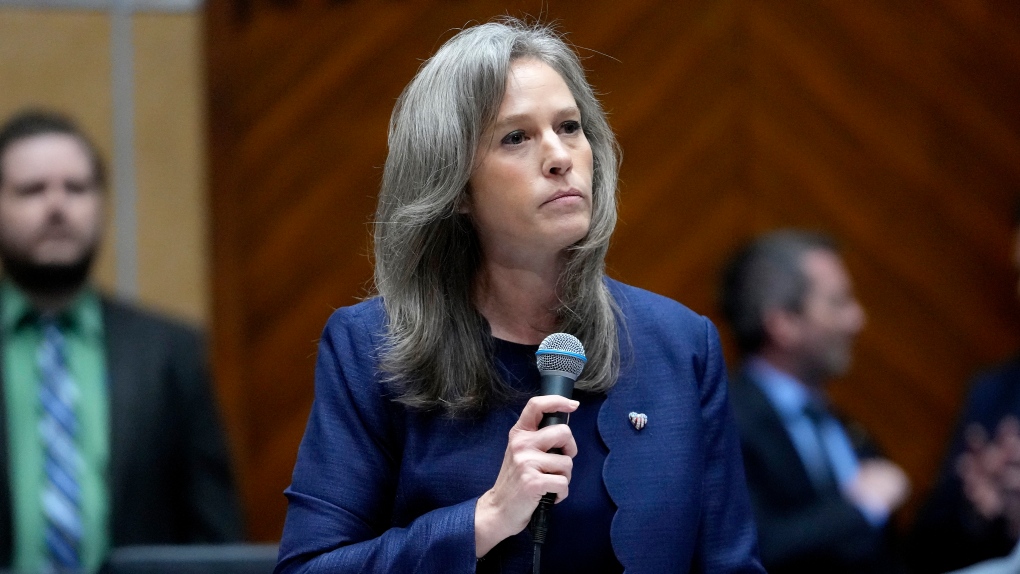
Abortion legislation from 1864 was revived by an Arizona judge – Shawnna Bolick
-
1864 nearly total ban on abortion lifted by Arizona lawmakers
The Arizona government has agreed to get rid of a very old rule against almost all abortions on Wednesday. The bill will now go to Gov Katie Hobbs, who is from the Democratic party and is likely to approve it.
Two members of the Republican party and members of the Democratic party in the Senate voted 16-14 to get rid of a ban on abortions that has been in place since the Civil War. This ban was recently allowed to be enforced by the state’s highest court. The ban on all abortions is still in place. It doesn’t have any exceptions for survivors of rape or incest, and only allows for procedures done to save the patient’s life. This will continue until the fall.
Hobbs said she’s excited to sign the repeal soon, with a ceremony planned for Thursday.
Hobbs said that women in Arizona shouldn’t have to live in a state where politicians are making decisions that should be made between a woman and her doctor. “The repeal is needed to save women’s lives, but we still have a lot more to do to protect healthcare for women. ”
Reviving a law from the 1800s has made Republicans in Arizona feel like they are in a difficult position. Arizona is one of a few states where the outcome of the election will be very important.
“Women all over the country are experiencing chaos and cruelty because of Donald Trump,” said Vice-President Kamala Harris in a statement on Wednesday. Arizona Democrats are trying to fix the problems caused by Trump and his followers, but the state’s ban on abortion, with no exception for rape or incest, is still the law.
If the repeal bill is signed, a new law will make it illegal to have an abortion after 15 weeks of pregnancy in Arizona. However, for a period of time, almost all abortions may become illegal, because the repeal will not take place until 90 days after the end of the legislative session, which will probably be in June or July.
Efforts started immediately to stop the old abortion ban from happening before the repeal happens.
Arizona’s Attorney General Kris Mayes said that without a special rule, the people of Arizona might have to follow the almost complete ban on abortion for some time this year. “Don’t worry, my office is looking at every choice we have to stop this old law from happening. ”
Planned Parenthood Arizona asked the state’s highest court to stop a temporary halt in abortion services until the law changing the rules is in place.
The law that mostly stops abortions has been around since before Arizona became a state. Last month, the Arizona Supreme Court said that doctors could be charged with a crime for helping with an abortion. The law from 1864 says that anyone who helps with an abortion can go to jail for two to five years. Last week, the repeal bill barely passed in the Arizona House.
Voting on the bill took over an hour on Wednesday, with emotional speeches.
Democratic state Sen Eva Burch said, “This is about a law from the Civil War time that makes it a crime for doctors to perform almost all abortions. ” “We’re here to get rid of a law that is not good. ” I don’t think we should follow laws about women that were made when women were not allowed to vote because people thought their opinions were not as important as men’s.
Burch said on the Senate floor in March that she had a pregnancy that wasn’t going to survive, so she was going to have an abortion. On Wednesday, she told supporters of women’s ability to choose to have children that they still need to be careful, even after the law is changed.
“They will use all available resources to try to stop the ban from being lifted,” she said.Many people in the Senate gallery caused disturbances while Republican state Sen Shawnna Bolick explained her vote to repeal a law and sided with the Democrats.
Bolick said that getting rid of the law would protect against very strong abortion rights proposals. She is married to Clint Bolick, who is a judge, and he voted to allow a law from a long time ago about abortion to be enforced again.
The senator said he wants to make sure that our state constitution limits the number of abortions. “I am here to keep more babies safe. ” I say yes when voting.
Supporters and opponents of abortion came to the Arizona Senate to speak out about their opinions.
A young girl prayed in front of a statue of Mary at school while a man yelled at people to ask for forgiveness.
Ex-president Donald Trump didn’t support a national abortion ban, but he’s happy he chose Supreme Court judges who allowed states to make it illegal. He’s worried it could make Republicans lose elections.
The Arizona law was stopped after the US Supreme Court’s decision in the Roe v. Wade case in 1973. Wade’s decision made sure that women all over the country have the right to get an abortion.
When the decision of Roe v Wade was canceled in June 2022, the former Arizona Attorney General, Mark Brnovich, who is a Republican, convinced a state judge that the ban from 1864 could be enforced again. However, the law has not been put into action while the case was going through the courts. Mayes, who took over for Brnovich, asked the state’s highest court not to bring back the law.
Planned Parenthood will make sure that patients can go to New Mexico and California for an abortion if they need to.
Supporters are gathering signatures for a vote to make it legal to have an abortion up to around 24 weeks into a pregnancy, with exceptions for when the parent’s life is in danger or to protect her physical or mental health.
Republican politicians are thinking about having different plans about abortion on the November voting list. -
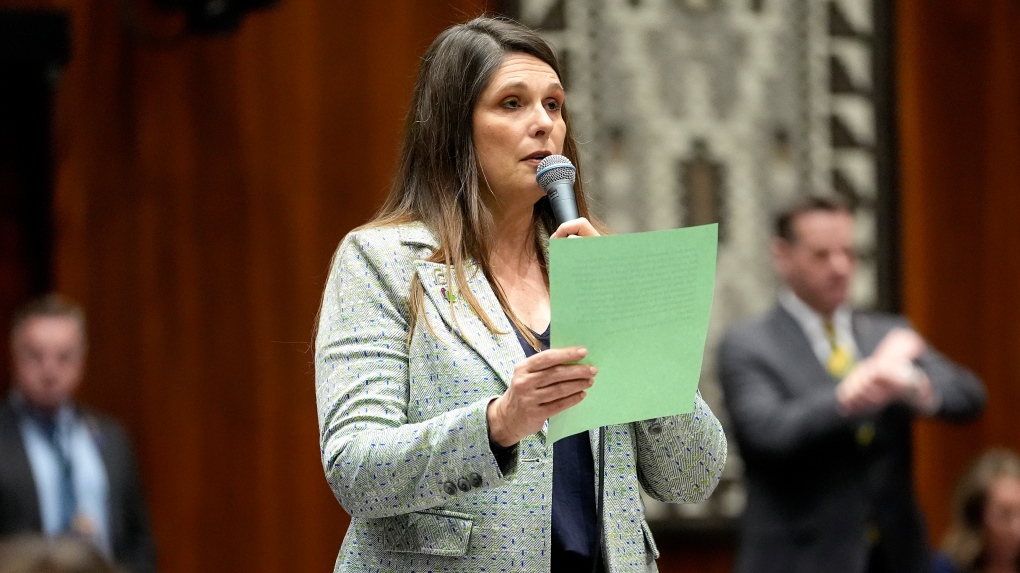
Arizona House sends bill to Senate to abolish nearly complete ban on abortion
The state House in Arizona voted to approve a proposal to lift almost all restrictions on abortions. Republicans faced a lot of pressure over this issue for two weeks. This has been a difficult issue for former U.S leaders President Donald Trump is trying to become president again.
Three Republicans and 29 Democrats worked together to get rid of a law in Arizona that doesn’t make any exceptions for rape or incest and has been around since before the state became official. If the Senate says yes, Arizona will let women have abortions up to 15 weeks.
Trump and US Senate candidate Kari Lake wanted Arizona lawmakers to make it easier for women to get abortions because their plans for politics were in danger because many people were against a nearly complete ban on abortions. However, before Wednesday, many Republicans in the state House used procedural votes to stop the repeal. This made President Joe Biden, a Democrat, very upset because he strongly believes in the right to have an abortion. He has been focusing on this issue in his campaign for re-election.
“Arizonans are living in the past because Donald Trump got rid of Roe v. Wade,” said Democratic state Sen. Priya Sundareshan from Tucson spoke at a news event on Wednesday held by the Biden campaign and the Arizona Democratic Party.
The repeal vote happened the day after Biden said Trump made it harder for women to get health care.
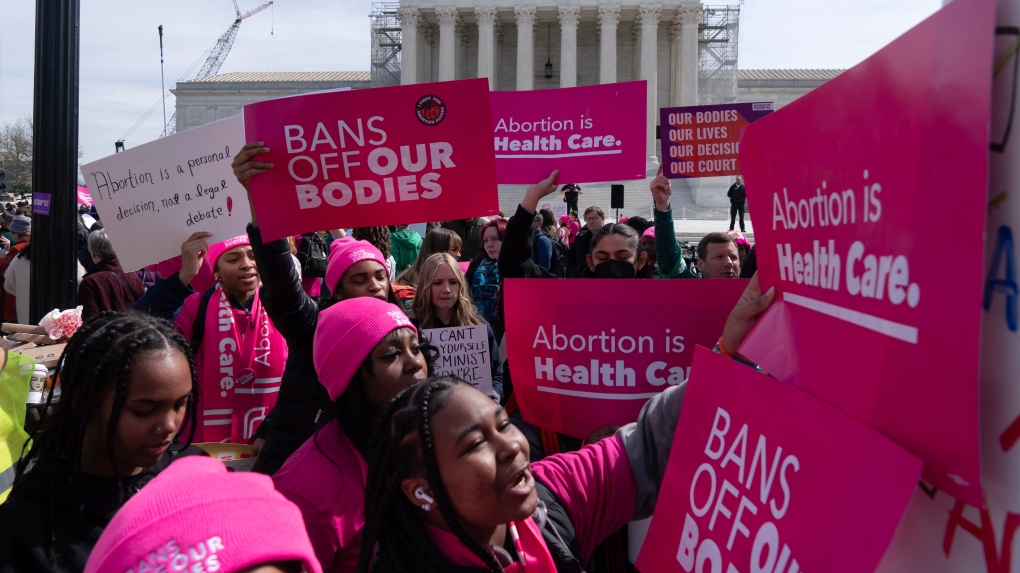
Many people stood outside the state Capitol and then went inside to watch as lawmakers voted. Some of them had signs or wore shirts to show they disagreed with abortion rights.
Arizona Republicans are feeling pressure because some of the people who support them want to ban abortion. But, this is causing problems with other voters who are undecided and will make important decisions in elections. The Senate and the GOP control the government.
The Republican representative said he is very upset today. Rachel Jones did not want to cancel something. “Life is an important part of our Republican beliefs. ” I feel very upset when I see people not following that value.
The highest court in Arizona decided that the state can start using a law that allows abortions only when the patient’s life is in danger. The decision said doctors could be charged under a law from 1864 that punishes people who help with abortions with two to five years in prison.
A week ago, one Republican and all Democrats in the Arizona House voted to get rid of a law, but it didn’t pass.
The law was stopped after the US Supreme Court’s 1973 Roe v. Wade decision said that it’s a constitutional right to have an abortion all over the country.
After the court decided to change Roe v. Wade in June 2022, the former Arizona Attorney General Mark Brnovich convinced a state judge to enforce the 1864 ban. However, the law has not been put into action while the case has been going through the courts. Kris Mayes, who is the new Attorney General and a Democrat, asked the state’s highest court not to bring back the law.
Mayes says the law might start on June 8. But the anti-abortion group, Alliance Defending Freedom, says that county prosecutors can start enforcing it when the Supreme Court’s decision is final, which will likely be this week.
If the Republican-controlled Legislature and Democratic Gov. Katie Hobbs agree, a new law banning abortions after 15 weeks of pregnancy would become the main rule for abortions in 2022.
Planned Parenthood promises to keep doing abortions as long as it’s still allowed. They will also find ways to help patients go to other states like New Mexico and California for abortions.
Last summer, people who support abortion rights started an effort to have Arizona voters make a new law that says women have the right to choose abortion.
The new law would make sure women can have an abortion up to around 24 weeks into their pregnancy, when the baby could live outside the womb. It would also permit abortions at a later stage if it’s necessary to save the parent’s life or to protect her physical or mental well-being.
Republican politicians are thinking about adding different ideas about abortion to the voting choices in November.
A secret document showed what House Republicans are thinking about for abortion laws. They might make existing regulations into laws, make a 14-week ban that looks like a 15-week law, and stop abortions after six weeks of pregnancy.
House Republicans have not told anyone about the plans they have for voting. -

Trump opposes ban on abortion nationwide
Former President Donald Trump said on Monday that he thinks each state should decide their own rules about abortion. He made a video where he talked about this and didn’t say he supports a national ban on abortion, after giving different opinions before.
“Many people want to know my thoughts on abortion and abortion rights,” Trump said in the video on his Truth Social website. I think that now that abortion is legal, each state will decide if it is allowed through voting or making laws. And whatever they choose will be the rule for everyone in the state.
In the video, Trump did not say when he thinks abortion should be banned during pregnancy. He didn’t support a national cutoff that Democrats could use against him in the upcoming election. However, by supporting the mix of different ideas, he can be linked to the toughest state laws that President Joe Biden and his campaign are trying to connect him to.
Anti-abortion activists were really upset that Trump didn’t do more.
In the video, he said he did something good for the United States. “The Supreme Court decided to stop Roe v. ” Wade said he was happy that he was the one who ended the law about abortions, and he thanked the conservative judges who helped overturn it.
He once again said he supports three exceptions in certain cases, like when a woman is raped, there’s incest, or the mother’s life is in danger. He also talked about how different states have different rules about abortion after the court’s Dobbs v. caseWade decision, has sparked a lot of controversy and debate. The decision could have a big impact on women’s rights and access to abortion in the United States. Wade decision explained simply.
“A lot of states will change. ” “Some will have more weeks than others, and that’s just how it is,” he said. “In the end, it’s all about what the people want. ”
Trump believed that the Supreme Court’s decision on abortion gave people who are against it a lot of power to make deals. He wanted to use this power to make both sides happy and bring the country together. Abortion is a very controversial issue in American politics, with some people thinking it’s murder and others thinking it’s a right for women.
SBA Pro-Life America, a major organization against abortion, quickly criticized the announcement.
“The group’s president, Marjorie Dannenfelser, said she is very unhappy with President Trump’s decision,” “Unborn babies and their mothers should be protected by the government and supported by the whole country from the harm caused by abortions. ” The Dobbs decision gives permission for both states and Congress to take action.
SenatorLindsey Graham, a politician from South Carolina who supports Trump, disagrees with him about whether states should make their own rules about abortion. Mike Pence, who is against abortion and was Trump’s vice president, is now competing with him to be the Republican nominee for this year. He has also said that he will not support Trump. This has upset many pro-life supporters of Trump.
Trump went on a social media app called Truth Social on Monday and criticized his critics. He said that Dannenfelser and Graham were not helpful and blamed them for the Democrats winning elections. He also told Graham to focus on the wars that he supports, where many people are dying.Biden’s team acted fast, using the opportunity to their advantage. Spokesperson Ammar Moussa posted on X that Trump supports all abortion bans, even those with no exceptions. “and he’s proudly talking about his part in making this terrible place. ”
Biden said Trump is to blame for causing cruelty and chaos in America since the Dobbs decision. He said women are being denied medical care and forced to travel long distances for help.
“Trump is facing problems and he is aware of it,” Biden mentioned at a fundraiser in Chicago on Monday.
Jenny Lawson, who runs Planned Parenthood Votes, said she is sure that the people who said no to anti-abortion laws in the past will do the same in the 2024 election against Donald Trump and his supporters.
During a Biden campaign call, a Texas mom named Kaitlyn Kash talked to reporters about her struggles. She had to go to another state for medical care after she lost one baby, and then had trouble getting a procedure after giving birth to a healthy baby. She blames Trump for making it harder for her to get the care she needed.
“Kash said that what happened to me was avoidable, but it happened because of Donald Trump. ”
Biden’s team made a commercial with a woman from Texas named Amanda Zurawski. She almost died twice because she couldn’t get help for a miscarriage, due to a law in Texas that blocks abortions. This law was made because of Donald Trump’s decision to overturn Roe v. WadeWade
Last month, Trump said in a radio interview that he was thinking about supporting a national ban on abortions after 15 weeks of pregnancy. But he also seemed unsure about making it a law for the whole country.Republican-controlled states have put in place many new rules after Roe v. Wade was overturned in 2022. Wade, go ahead. Over 12 states run by the GOP have made abortion illegal, and others have made the time allowed for getting an abortion shorter.
Other procedures related to making babies have had limits, like in vitro fertilization. It became a big issue in a campaign after the Alabama Supreme Court said this year that frozen embryos can be seen as children by the law. Trump said he really wants IVF to be available. The government officials in Alabama and the Republican Governor. Kay Ivey said that she will make sure that IVF providers can’t be sued for any mistakes they make.
Democrats think that supporting abortion rights makes more people vote for them, and they have done better than expected in elections as a result. Voters in seven states voted to support abortion rights. Abortion will also be on the ballot in more states like Florida, Maryland, and New York this year.
Trump has been talking about abortion during the campaign. He says he is very against it, but he also blames other Republicans for the party’s losses in 2022 because they didn’t allow any exceptions.
In the video, Trump told Republicans to listen to their feelings about this issue. But keep in mind, you also need to win elections to bring back our culture and save our country, which is currently declining.
Instead, he has tried to make Democrats look like the extreme ones on this issue.
Democrats and Biden’s team have been focusing on this problem as they try to show the differences between them and Trump.
Most surveys have found that the majority of Americans think that abortion should be allowed in the early stages of pregnancy. Roughly half of American adults think women should be able to have an abortion at 15 weeks, a recent survey found.
Information from the Centers for Disease Control and Prevention tells us that most abortions between 2012 and 2021 happened during the first 13 weeks of pregnancy. -
Texas lady sues prosecutors who accused her of murder after having abortion on her own
A woman in Texas is taking legal action against prosecutors and Starr County for over US$1 million. She was arrested and wrongly accused of murder for having an abortion in 2022.
Lizelle Gonzalez was arrested and accused of murder in Starr County, Texas in 2022 for using abortion medicine to end her pregnancy 19 weeks in. She was 26 years old at the time and spent two nights in jail. Her name, photo, and private medical information were shown on national news. The charges were dropped a few days after.
Wade, the court case that made abortion legal in the United States. The US Supreme Court overturned Wade’s decision at a time when abortions after six weeks were not allowed in Texas. Pregnant people cannot be charged with a crime for getting an abortion according to state law, both now and at the time of Gonzalez’s 2022 arrest.
“Gonzalez is taking legal action against the prosecutors. She says they lied and didn’t respect her rights when they had her arrested and charged. This drastically changed her life. ”
Last week, someone made a complaint against Gocha Allen Ramirez, the district attorney of Starr County, and Alexandria Lynn Barrera, the assistant district attorney, and the county.
“We are sure that the Starr County District Attorney knew that Texas law says a woman who gets an abortion cannot be charged with murder. But they still decided to unfairly charge Gonzalez. ” Gonzalez’s lawyers, Cecilia Garza and Veronica S. Martinez said to CNN in a message. MsAn action that clearly breaks the rules. Gonzalez’s rights cannot be seen as just a small error.
Ramirez is facing trouble with his job because of the lawsuit.
A Texas State Bar investigation found that Ramirez did something wrong in his work and was fined $1,250. His license is suspended for one year, starting Monday.
Lawyers in Ramirez’s office tried to bring charges of criminal homicide against someone for actions that are not considered criminal under the Texas Penal Code. Ramirez did not stop the prosecution of a charge even though it was clear that there was not enough evidence to support it, according to a report from the state bar’s investigative panel that Ramirez acknowledged and signed.
The panel found that Ramirez said he didn’t know about the case before it was prosecuted. But investigators found out that he was actually asked about it by a prosecutor in his office, and he said it was okay to go ahead with it.
Barrera became a lawyer in Texas five years ago and has not been publicly disciplined for her part in prosecuting Herrera, according to state bar records.
The complaint says that Gonzalez had an abortion in January 2022 by taking a pill called misoprostol. This pill can be used alone or with another pill called mifepristone to have an abortion.
After the hospital checked Gonzalez, the staff told the Starr County District Attorney’s Office about the abortion, which is against the privacy laws. CNN has asked the hospital for a comment, even though they are not being sued.
The complaint says Ramirez and Barrera lied to the grand jury and didn’t care about the plaintiff’s rights, which led to a harmful legal case against her.
Some time after Gonzalez was accused, Ramirez said she would not continue the case because she believed Gonzalez didn’t do anything wrong.
“When we looked at this case, it was obvious that the Starr County Sheriff’s Department did the job of looking into the incident that the hospital reported to them. ” He wrote in a news release on April 10, 2022 that it would have been a failure of their duty to ignore the incident.
However, the complaint claims that neither the Starr County Sheriff’s Office nor the Rio Grande City Police Department looked into the case. Instead, the district attorney’s office started and carried out its own investigation using information from hospital staff.
After Gonzalez was forced into the public spotlight against his will, the attention on him increased even more when the charges were dropped, according to the complaint.
Supporters of women and their rights to make decisions about their bodies say this is an obvious try to limit women’s access to healthcare.
Rachel O’Leary Carmona, the executive director of Women’s March, said that the Starr County District Attorney and Assistant District Attorney did not have the right to charge someone with murder because it was a personal decision about abortion. She said that most Americans support access to abortion pills.
Months after Gonzalez was arrested, Texas made a law that almost completely stops abortion, with unclear rules for when it’s allowed for medical emergencies. State law says that patients who get an abortion cannot be charged with a crime, but doctors who do the procedure can be prosecuted.
“In Texas, we are seeing extreme abortion laws that punish and control women who really need to have an abortion. It’s unfair and radical. ” Carmona explained -

Abortion becomes fundamental right after bill approved by French parliament
French lawmakers have agreed on a new rule that will protect a woman’s right to have an abortion in the French Constitution. This decision was made during a special meeting of parliament at the Palace of Versailles on Monday.
The bill was passed by a large majority of 780-72 votes, and almost everyone in the meeting stood up and clapped for a long time.
In France, people were really happy and celebrating because the President, Emmanuel Macron, promised to protect women’s rights after abortion rights were limited in the United States.
Both the National Assembly and the Senate have agreed to change Article 34 of the French Constitution to make sure that women have the right to get an abortion.
A law to make sure women can have an abortion is going to be voted on in France. Lawmakers are meeting at the Palace of Versailles for this important vote.
President Emmanuel Macron promised to take action because there were laws changing that make it harder for women to get an abortion in the United States.
The French government wants to change Article 34 of the Constitution to make sure women have the right to get an abortion as long as the law allows it.
Both the Senate and the House of Representatives have agreed on the bill. Monday’s meeting is likely just a formality.
Before the important vote, Prime Minister Gabriel Attal spoke to 925 lawmakers in Versailles. He said that France should be a leader in women’s rights and show other countries how to defend women’s rights.
“We owe it to women to do what is right,” Attal said. He honored Simone Veil, who was an important lawmaker and feminist. In 1975, she fought for the law that made abortion legal in France.
“We can make history change,” Attal said in a passionate and determined speech. “He said to a big applause that he wanted to make Simone Veil proud. ”
The National Assembly, which is part of the government, agreed with the proposal in January by a large majority. The Senate approved the bill on Wednesday, which is an important step for a law promised by Macron’s government. This law is meant to make sure that women can’t be denied the right to have an abortion.
The rule needs to be agreed upon by at least three out of every five people in the meeting.
No big political parties in France’s parliament have questioned the right to abortion, including Marine Le Pen’s far-right National Rally party and the conservative Republicans. But some lawmakers disagreed with adding the right to have an abortion to the constitution in past votes in both the senate and the house.
Le Pen, who got a lot of seats in the National Assembly two years ago, said on Monday that her party will vote for the bill, but she also said it’s not necessary to make this a big day in history.
Many people in France support the right to have an abortion. A new survey found that more than 80% of people support this, which is the same as other surveys in the past. The survey also found that most people support putting it in the constitution.
People in France were celebrating before the important meeting of the parliament.
Sarah Durocher, who is a leader in the Family Planning movement, said that Monday’s vote is a win for feminists and a loss for people who are against giving choices to women.
Women’s rights activists believe that if the right to have an abortion is included in the constitution, it will be more difficult to stop women from choosing to end a pregnancy in France.
“We made sure this important right is more protected,” said Anne-Cécile Mailfert from the Women’s Foundation. “Women in France can always have the right to choose to have an abortion now and in the future. ”
The government said that the right to have an abortion is in danger in the United States. This is because the Supreme Court recently overturned a 50-year-old rule that used to protect this right.
“Sadly, this is not just happening in one place. In many countries, including Europe, there are people who want to stop women from being able to choose to have an abortion. ”
The choice made by the United States. The decision of the Supreme Court to take away women’s right to have an abortion has caused a lot of discussion in Europe. This has made the topic of abortion a big part of the public debate in France, especially at a time when there is a lot of political change happening.
Mathilde Philip-Gay, who knows a lot about the laws in France and America, said it’s important not to let up on getting laws that help women. She’s worried because far right political groups are gaining power and want to take away women’s rights in many countries.
Philip-Gay said that it might not be a problem in France because most people there are in favor of abortion. “But those people might eventually choose a very conservative government to rule, like what happened in the U. S” It can also happen in other parts of Europe, like France.
Adding abortion into the French constitution will make it more difficult for people who are against abortion to argue against it in the future. But with the right political plan, they could still try to challenge it.
Yael Braun-Pivet, the first female president of the French parliament, said that everything we think we have accomplished can disappear in a moment.
Changing the constitution in France is difficult and doesn’t happen very often. Since 1958, the French Constitution has been changed 17 times. In 2008, the government gave more power to parliament and allowed French people to complain to the Constitutional Court. -
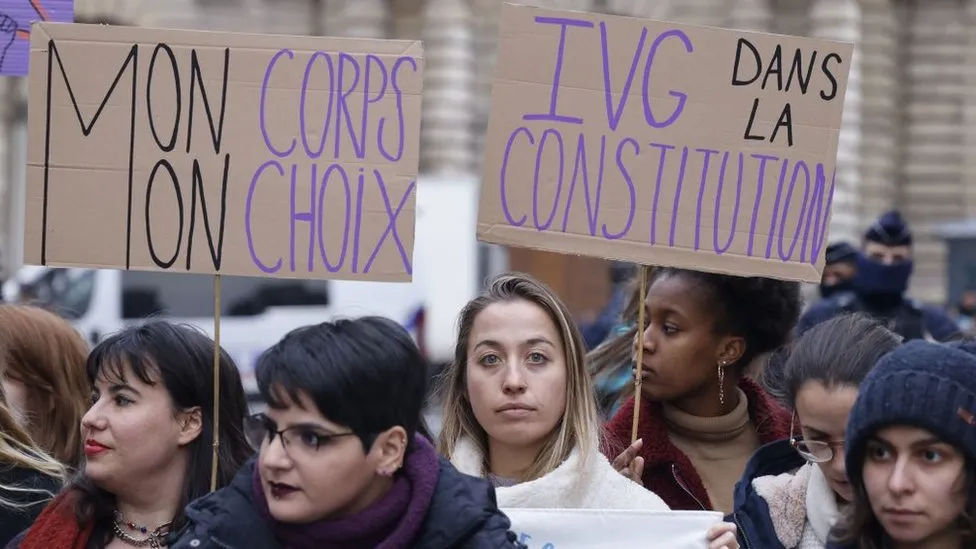
French Senate supports constitutionally enshrining right to abortion
The Senate in France voted heavily in favor of making women’s right to abortion a part of the country’s constitution.
Since 1974, abortion has been permissible in France, but there is growing pressure to enhance and make it a more enduring legal protection.
The suggestion was supported by 267 votes to 50 on Wednesday. It was approved by the lower house, the National Assembly. Many people are worried that in countries like the US and Poland, the right to end a pregnancy is being taken away.
French President Emmanuel Macron wants to have another important vote on Monday. Both the Senate and the National Assembly will meet together in Versailles,outside of Paris.
If most of the members of the joint session agree to change the constitution, there won’t be a need to ask the public to vote on it. In November 2022, a survey by Ifop found that 86% of people supported the amendment while the National Assembly was voting on the legislation.
All of the important political parties in the country support abortion rights. The words used in the amendment about abortion were changed after the 2022 vote, when the National Assembly approved the “right” to abortion.
Last month, the government voted to support the right to have an abortion, after Mr Macron’s government requested changes to the constitution to guarantee women’s freedom to have an abortion.
The Senate approved the new wording about “guaranteed freedom” on Wednesday.
Mr Macron said on X that he is dedicated to making it impossible to take away women’s right to have an abortion by putting it in the constitution.
In response to the vote, the Justice Minister Eric Dupond-Moretti said that France is soon going to have a “historic day” because it will be the first country in the world to protect women’s freedom to decide what happens to their bodies in its constitution.
Several conservative senators told the AFP news agency that they felt pressured to agree to the amendment.
I was told that if I don’t vote for it, my daughters won’t come for Christmas anymore.
The argument about abortion has been going on in the US since the Supreme Court took away the right for women to have an abortion in June 2022.
Last month, 21 out of 50 states in the country have made laws against abortion. Some of these laws are very strict and could result in doctors and others helping with the procedure facing severe penalties like going to jail,paying a lot of money, and losing their medical licenses.
In2020,Poland’s highest court made a decision to almost completely ban abortion in the country. Now, it is only allowed in situations where a woman has been sexually assaulted, has a serious health risk during pregnancy, or when her life is in danger. -

Kemi Olunloyo accuses Tonto Dikeh of womb damage due to alleged abortion
Investigative journalist Kemi Olunloyo has made serious allegations against actress Tonto Dikeh, claiming that she has damaged her womb through an abortion.
According to Kemi’s posts on her X page, Tonto Dikeh allegedly became pregnant by Nigerian socialite Ramon Abbas, also known as Hushpuppi, who is currently serving time in a US prison.
Kemi further alleges that Tonto Dikeh attempted to pin the pregnancy on Hafiz, a London-based individual involved in alleged fraudulent activities.
According to Olunloyo, Hafiz denied the pregnancy, leading Tonto Dikeh to undergo a challenging abortion procedure that resulted in damage to her womb.
Kemi Oluloyo wrote on X;
Some of the best gossip came in 2017 when Tonto befriended me trying to manipulate stories about her in the media. I quickly distanced myself from her and her bribes. She had just set ended a violent relationship with Dr Olakunle Churchill claiming to be the victim.”
“I told her she should have used the gun if he tried to kill her first. Ghana police told me she was the aggressor destroying Dr Churchill’s clothes, shoes, water damage etc. I had just got out of the first prison arrest and she had a small baby. Let me tell you about Tonto and Hafiz/Hushpuppi. The H factor was a mess. She got pregnant with twins and had to have a complicated abortion.”
“Both men denied being the father. Tonto spent time with Hafiz at the Intercontinental Hotel alternating with Hushpuppi at the George Hotel Ikoyi. She used a lot of cocaine and her baby would be shaking from the transmission to the child as a nursing mother.”
“The child was left with a nanny in Abuja while she was balling in Lagos. When she got pregnant, she cried her eyes out to reality star Tutu Pie because she did not know who the father was. Hafiz went back to London while Hush went back to Malaysia. Is this the role model your daughters are following? People made fun of her in the Instagram comments. KONTINUE”.
-
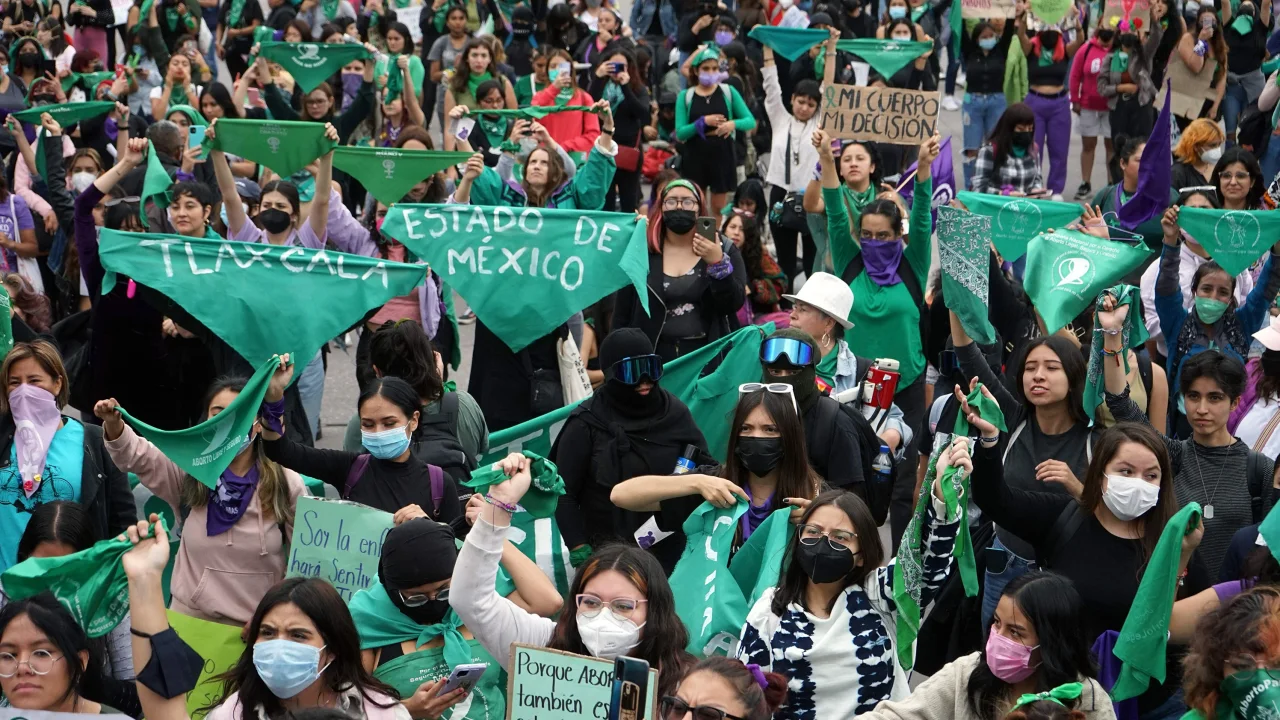
Supreme Court of Mexico legalises abortion
Mexico’s Supreme Court made a decision on Wednesday to make abortion legal across the country. They declared that the current law prohibiting abortion is against the constitution.
The Supreme Court said on social media that the First Chamber of the Court ruled that the legal system that punishes abortion in the Federal Criminal Code is against the constitution. This is because it goes against the rights of women and people who can become pregnant.
Abortion is no longer a crime in 12 states in Mexico. The most recent decision happened in Aguascalientes, a state located in the center of Mexico, just a few days ago. According to Reuters, many people praised this ruling online. Rights activists showed their support by posting green heart emojis on social media.
The hearts symbolize the Green Wave, which is a social movement fighting for the right to make decisions about reproductive health. It has gained a lot of support in Latin America since the early 2000s.
The Supreme Court of Mexico decided in 2021 that it’s not right to make abortion illegal. They disagreed with a law in Coahuila that punished women who have abortions with up to three years in prison and a fine.
Wade in 1973. This decision made abortion legal across the United States. However, the political landscape has changed over time and some states have enacted restrictive abortion laws. As a result, American citizens seeking an abortion may choose to go to another country where it is more accessible. In June 2022, Wade will be present.
Verónica Cruz, someone who supports the right to have an abortion, said to CNN in 2022 that she was surprised to see Mexico making progress while the US was moving in the opposite direction. -
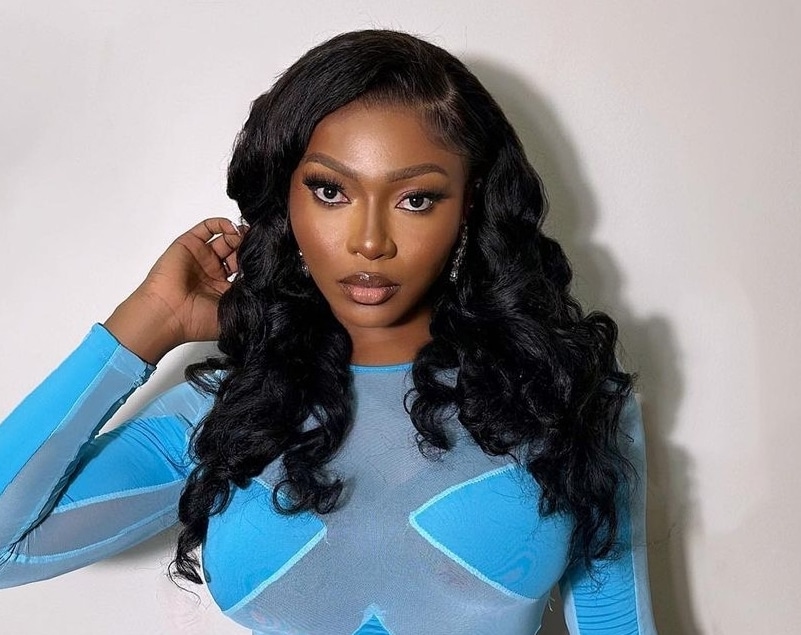
It is not a big deal to consider abortion – Sefa
Ghanaian musician, S3fa, has her opinion on abortion and the hypocrisy that surrounds it.
The talented singer told the media in an interview that many people who publicly oppose the practice have probably also had abortions but have chosen to keep quiet about their experiences.
S3fa’s remarks became public after actress Yvonne Nelson revealed in her biography, “I am Not Yvonne Nelson,” that she had an abortion 13 years prior.
S3fa exposes the apparent social injustice by contesting the pervasive stigma in Ghana associated with abortion.
She underlines that many people in the nation have had the treatment, but they are quick to criticize those who are willing to share their experiences in public. By shedding light on this subject, S3fa hopes to promote a more candid and compassionate discussion on abortion.
The singer has a firm and unwavering position on abortion. S3fa firmly responded that it would not be a huge matter for her to directly confess having an abortion, despite the stigma it carries in Ghanaian society.
She affirms that if she were to write her memoir now, she would without hesitation disclose every detail of her life, including any individual experiences with abortion.
S3fa’s courage to speak candidly on such a delicate subject illustrates her dedication to dismantling society taboos and inspiring people to embrace their truths.
S3fa’s outspoken stance on abortion presents a chance for fruitful discussion within Ghanaian culture.
She desires to foster an atmosphere where people feel at ease expressing their tales without worrying about being judged by doing so by standing up for honesty and acceptance.
The musician thinks that having open discussions about delicate subjects like abortion can increase empathy, understanding, and support for individuals who have gone through similar experiences.
-

Abortion brouhaha likely to derail Sarkodie and Yvonne Nelson’s mental health – Psychologist
As a recent abortion controversy swirls around renowned Ghanaian artists Sarkodie and Yvonne Nelson, mental health experts are voicing concerns about the potential negative effects on the well-being of these celebrities. In an recent interview, a prominent psychologist has shed light on the possible emotional and psychological repercussions that such a publicized issue can have on individuals’ mental health.
Dr. Isaac Newman Arthur, a medical doctor and clinical psychologist, says the social media outburst arising from Sarkodie and Yvonne Nelson impasse could worsen their mental wellbeing and not heal them emotionally.
The release of Yvonne Nelson’s memoir has sparked social media conversations, especially after Sarkodie’s damning “Try Me” response over their relationship that took place some years ago.
According to Dr Newman Arthur, who is also the Acting Director of University of Professional Studies Medical Directorate, the exposure of such sensitive issues regarding their private lives had repercussions for not only the celebrities involved but their children as well as people who look up to them.
“One of the most ‘dangerous’ places to express your emotions and failures is on social media. When you do that, you lose control of what people will say or do to you.
“People’s responses on social media can add on to the pain and worsen their mental wellbeing. The safest place to heal is in a professional setting with the right professional. They both need to heal. Really, we all need healing,” he said.
When asked to share his opinion about the actions of both celebrities, Dr. Newman Arthur said: “I am not sure exactly why Yvonne Nelson put it out there, whatever the reason was, it expressed how she felt, and also, Sarkodie’s response expressed how he also felt.
“Unfortunately, the masses are divided on who did the right thing. This shows that there was something basically wrong. As for the impact on people, it may set a negative or positive precedence on issues regarding sensitive issues like abortion, relationships, trust, and confidentiality, depending on how people will evaluate what was put out there.”
Dr Arthur expressed concern about the repercussions it could have on their kids, especially when they grow up.
“Whatever we put out there never goes away. For the kids, it may affect the value they place on themselves and lead to identity crises, anxiety in social settings, and depression if they don’t receive the right help,” he stated.
-
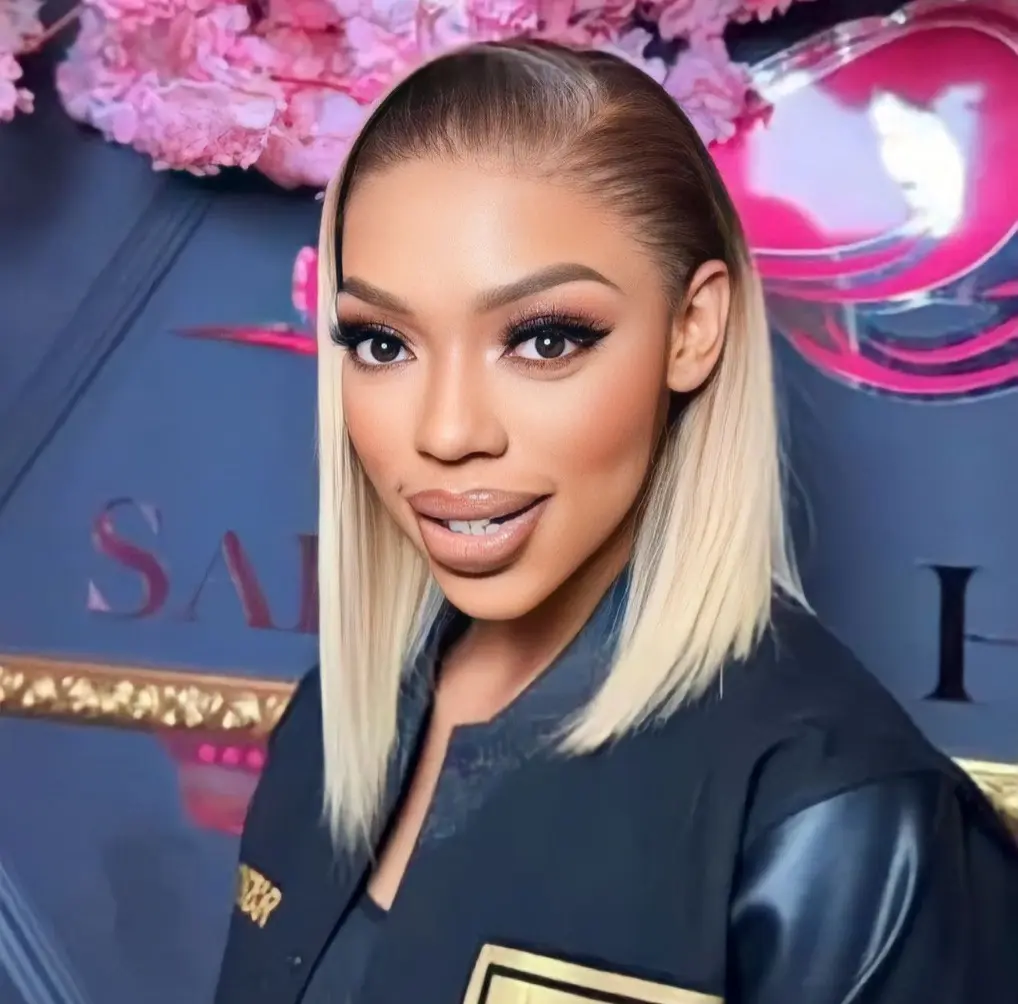
Abortion cannot be considered as murder – BBTitans’ Khosi
Makhosazane Twala, also known as Khosi, the winner of Big Brother Titans Season 1 reality show, has expressed her belief that abortion, despite involving the termination of life, should not be considered as murder.
According to her, she is “pro-life”, but she respects people’s decisions.
She said she is never the one to judge anyone.
The 25-year-old South African journalist stated this while featuring as a guest on the latest episode of Doyin’s Corner audiovisual podcast hosted by ex-Big Brother Naija reality star, Doyinsola Anuoluwapo David.
The host asked: “Do you think abortion is murder? Because there are people that said it’s killing of a child; that’s a life. There are also people that argued, it’s not a life yet. So, do you think it’s murder?”
After dilly-dallying, Khosi replied: “Honestly, I don’t want to be technical. But I wouldn’t say murder but it is definitely killing a life.”
The reality star added that she wouldn’t call an abortionist a murderer.
-

“Your street line is played out” – Yvonne Nelson claps back at Sarkodie
The ongoing drama between Yvonne Nelson and Sarkodie seems to be reaching new heights, captivating fans and onlookers alike.
Yvonne Nelson has now taken a stand against Sarkodie’s alleged insinuations in his latest song, which appear to reference her recently released memoir, “I Am Not Yvonne Nelson.”
She wrote that Sarkodie drove her to an abortion clinic and encouraged her to terminate the pregnancy because he was in a serious relationship with another woman who would later become his wife.
She also claimed that he was not supportive of her decision and that he did not believe that she was pregnant in the first place.

Sarkodie is a popular Ghanaian rapper “I had gone for a pregnancy test to confirm what becomes the obvious conclusion for a sexually active young woman who missed her monthly flow. I was in the company of Karen. And when the test result was ready, I wasn’t strong enough to open it. She did and declared the verdict,” she wrote in Chapter 8 titled ‘Abortion’.
“On an ordinary day, I would have laughed out loud and that would trigger a string of jolly conversations and jokes. But this was no laughing matter. It was a grim piece of information that was capable of turning my world upside down. I wasn’t the only one responsible for the situation, so I called the man whose potent seed had germinated in me. His name is Michael Owusu Addo, a renowned Ghanaian musician who is better known as Sarkodie.”
Her revelations sparked a lot of reactions from fans of both celebrities. Some were sceptical and thought it was a publicity stunt to boost her book sales, while others were sympathetic and blamed Sarkodie for being insensitive and irresponsible.
Sarkodie, who is known for being silent on controversies, surprised many when he released a song 11 days after the book launch that seemingly responds to Yvonne Nelson’s allegations.
The song, titled “Try Me”, features some lyrics that hint at their past relationship and dispute some of her claims.
He rapped: “First few hours heard the book is doing well. Who is really shocked Cos everybody can tell. So it’s not because your book is really good but we living in a world where negativity sells. I pray you get the healing that you need. M3n be claimi good girl, you are for the streets. Strategy na hot obaahemaa gye wo 2. Meaa ma gye one copy sharp I’m about to read.”
He also denied that he pushed her for an abortion and said that he told her to keep the baby but she refused.
“Yes I wasn’t ready but then I told you to keep it. Wo kyer3 me s3 wo school na wo ko gotto complete it. To be very honest till today I don’t believe it .Cos me kaas3 Meaa me doctor Mb3 wh3 wo you said you don’t need it. After conversation naa then you sent me a text. S3 wadanfo bi wo doctor bi hut you know he’s the best. So don’t you make it seem like I was the one pushing you for abortion. Cos that b the only part wey make I vex.”
Ghanaian Actress, Yvonne Nelson Yvonne Nelson, who was not amused by Sarkodie’s song, took to Twitter to clap back at him and defend herself.
She wrote: “Michael , you claim I was desperate to abort because I needed to complete school….would you have readily agreed for me to keep a pregnancy when you were in a serious relationship with another lady who would become your wife? Your street line is played out.”
And would you have readily agreed for me to keep a pregnancy when you were in a serious relationship with another lady who would become your wife? Your street line is played out.. #thetruthsetsyoufree #theyouthislearning
— 𝓨𝓿𝓸𝓷𝓷𝓮 𝓝𝓮𝓵𝓼𝓸𝓷 (@yvonnenelsongh) June 28, 2023The drama between the two stars has left many wondering what will happen next and how this will affect Sarkodie’s family, especially his wife and two children.
Source: The Independent Ghana
-

Yvonne Nelson crossed boundaries – Wei Ye Oteng
Since the launch of her memoir, “I am Not Yvonne Nelson,” Ghanaian actress and movie producer Yvonne Nelson has sparked numerous conversations and discussions.
The 262-page book has 24 chapters dealing with various aspects of her life. However, Chapter 8, titled Abortion, which is about her alleged pregnancy for rapper Sarkodie and subsequent abortion is what has generated the most talk.
While some praise her for her ‘bravery’ and see nothing wrong with Yvonne spilling the beans, others like music producer, Wei Ye Oteng, believes that was ‘over-divulging’ of information in the public space.
Wei Ye Oteng who is obviously not amused with the pretty actress, posted on his Facebook wall on the morning of Tuesday, June 20 writing, “Obaa, this is not not, u have and will lose a lot of respect from now on, all these dirty sexcapades, and you think it is the right time for attention? There are a lot of great things you have done and can motivate the youth with but you choose this path, it is sad and sickening. Is your agenda to break homes or tell how open you were in bed to people u were attracted to?”
Wei Ye Oteng went further to elaborate his stance on the issue when Graphic Showbiz touched base with him.
“We live in a society where some things are meant to be kept and not told and we should not forget one thing that whatever we are leaving behind today, irrespective of how damaging or how good it is, will live on for generations to come.
“Sex is something that is done in private, Yvonne, you were not raped, everything that you did with Sarkodie was in agreement. So if there was a situation and you went to abort the pregnancy or whatever, I think it is confidential so it needs not come out in the public domain. When that thing happened, if she was not happy with it at that time, she could have taken Sarkodie to court.
“She dated Iyanya too, why is she bringing these names up? Is she trying to say they are the only people she dated who let her down? Why isn’t she mentioning the others? Not to mention that she said in an interview on Adom FM in 2019 that she lost her virginity in 2017 which was captured, so how could all this have happened then? Is she even telling us the truth?
“In fact, Yvonne could have talked about these things without mentioning names. What she’s done, is like you are going down the drain and dragging well established people along with you by using their names. It’s not right. Yvonne should have held back a bit because a lot of people look up to her”, he added.
Does he think Sarkodie will be affected as a result of all this? “Sarkodie could be affected, we see people lose ambassadorial deals because of some of these things, so it could affect him so badly.
“If tomorrow Sarkodie gets an endorsement deal that has to do with social vices, somebody can easily use this against him. It is very irresponsible on Yvonne’s part”, he stated.
Asked if Sarkodie should let the whole thing slide or speak on the issue to ‘clear’ himself, Wei Ye Oteng said, “At times, it becomes very necessary to clear your name, there are two sides to the story—Sarkodie’s and Yvonne’s so it won’t be bad hearing from the other side as well.
“There is no clear evidence that even though Sarkodie was with Yvonne then, he was responsible for her pregnancy so it will be very good if we could hear from him. I think this has to do with image so Sarkodie should release a statement to clear the air,’’ he said.
-
My mother said I was a mistake – Yvonne Nelson
In her newly published memoir titled ‘I am not Yvonne Nelson,’ actress Yvonne Nelson bravely exposes her innermost thoughts and shares a heart-wrenching confession about her mother considering her a mistake and contemplating terminating the pregnancy.
Looking back on her childhood, Yvonne shares that music and the arts became her refuge, shielding her from the potential loneliness and depression that accompanied her feeling of not fully belonging in her own family.
Recalling the hurtful words her mother would use to inflict pain, Yvonne candidly expresses, “When my mother was angry with me and really wanted to hurt me, she would tell me she had given birth to me by mistake. Whenever she said it, she knew how I felt. She knew she was driving a sharp nail into my heart. I could feel she really wanted to hurt me. Maybe, she was just being truthful.”
She mentioned that the impact of her mother’s words left an indelible mark on her spirit, reminding her constantly that she was not wanted or appreciated while she reflected on the profound emotional toll.
“She made me feel terrible about my existence. I cannot imagine ever getting angry with my daughter and telling her that. And I do not think any child, for whatever reason, deserves such psychological torture,” he disclosed.
In a brave revelation, Yvonne unveils the shocking revelation her mother shared about the attempted termination of her pregnancy.
Yvonne discloses, “My mother told me that when she got pregnant, she did not want to have me, so she went to see a medical doctor to terminate the pregnancy. (My mother has told me that the doctor who saved my life is still alive, but she has not told me who he is or which hospital he worked in.) She took that decision in her sixth month.
“The doctor agreed, and on the said day, she paid the fees, and all was set for the abortion. She lay on the surgical bed and raised her legs, but just when the doctor was about to begin the procedure, he shook his head. ‘I can’t do this,’ the doctor told her. ‘If you really want to do it, go somewhere else. I’m sorry I can’t do it.’”
Yvonne Nelson’s memoir delves deep into the profound struggles she faced and the emotional wounds she carried throughout her life.
-
12-year-old girl dies from failed abortion
In a heart-wrenching incident, a young girl has tragically lost her life after what is being reported as a failed abortion attempt. The incident has sparked shock and concern, shedding light on the pressing issue of unsafe abortions and the need for proper reproductive healthcare.
The girl, 12-year-old Augustina Gabriel, who resides at Telekubukazo, a community in the Ellembelle District of the Western Region, is reported to have been pronounced dead on arrival at the St. Martin de Porres Hospital in Eikwe.
Narrating what happened, Jonas Kubatey, the Ellembelle Social Welfare Officer, who confirmed the news of the death of the girl, said that there were suspicions that she died from the effects of a failed abortion.
He added that she was five-months pregnant at the time.
“We believe she took unprescribed medicine to get rid of the five-month-old pregnancy but she started having complications and was rushed to the Esiama Hospital where she was given First Aid. The Hospital even noticed that the placenta was already out before she was rushed there.
“Her situation was getting worse so they transferred her to the St. Martin de Porres Hospital at Eikwe where she was pronounced dead on arrival,” he said.
The officer further explained that the person who impregnant the deceased Augustina was a 21-year-old man living in the same area with her, and that her parents were aware of this relationship.
“She started having an affair with the boy at the age of eleven to the extent that the girl sometimes sleeps over at her boyfriend’s house.
“Her parents, who are herbalists, were even aware of the situation and they agreed to it since they were benefitting financially from the relationship,” he further added.
He added that the young man has since been invited to aid in some investigations.
Jonas Kabutey, however, stated that the case of the late Augustina is not an isolated one.
He explained that similar cases are a norm in the area, and being the paralegal of the Western Region, he called for support to be able to get this situation addressed properly.
“These issues are rampant in the Ellembelle District and when that happens, the parents refuse to report the case. They take money from the suspects and allow the case to slide. We need the intervention of NGOs and other organizations to help in curbing the situation.
“We need to have a lot of education for the people of Ellembelle on some of these things. We have Free Education so we don’t understand why parents allow their girl children in the Ellembelle District to follow men instead of being in school,” he stressed.
-
Wife dies while undergoing abortion initiated by husband
A woman has reportedly lost her life while undergoing abortion to please her husband who doesn’t want a daughter.
This sad story was first shared on Twitter by a lady who’s believed to be close to the deceased woman who was forced into getting an abortion by her husband who wanted a son.
@_Mayowa_Sam revealed that the couple had three daughters before the recent pregnancy.
The woman’s husband who doesn’t want another girl child, made her undergo an abortion and she died after the procedure.
It was also gathered that the man has left the woman’s family in the dark since her death.
Read the tweets below to know more…
“This man asked his wife to go for an abortion, saying he is sure she’s carrying another baby girl. The wife died on Tuesday after the abortion. They had only 3 girls.“The ladies family don’t know his whereabout at the moment.”
This man asked his wife to go for an abortion😭, saying he is sure she’s carrying another baby girl. The wife died on Tuesday after the abortion. 😭😭😭😭😭😭— BlackLuna (@_Mayowa_Sam) April 27, 2023
-

Nigerian rights commission to probe alleged 10,000 forced abortions in army
The National Human Rights Commission (NHRC) has said that it has begun an investigation into the allegation that the Nigerian Army has been running a secret abortion programme for female officers since 2013.
Recall that a report by the Reuters had alleged that the Nigerian Army had been running a secret abortion programme for rescued women and girls for which about 10,000 pregnancies have been aborted since 2013. But the military had denied the report
The Executive Secretary of NHRC, Tony Ojukwu (SAN) on Tuesday in a statement issued by the Deputy Director of Public Affairs and External Linkages, Fatimah Agwai Mohammed, said that the commission would Tuesday, February 7, 2023, inaugurate a Special Independent Investigative Panel on Human Rights Violations in the Implementation of Counter Insurgency Operations in the North-East.
According to Ojukwu, the panel will among other things “Focus on investigating the Reuters report which alleged that the Nigerian military was involved in abortion of many pregnancies in the North-East in the last 10 years.”
The statement noted that members of the panel are retired Justice of the Supreme Court, Justice Abdu Aboki, (Chairman); Ms Kemi Okonyedo (representing women rights organisations); Azubuike Nwankenta (representing the Nigerian Bar Association); a military law and intelligence expert, Major-General Letam Wiwa (retd.).
Other members of the panel are consultant in Obstetrics and Gynecology at Modibbo Adama University Teaching Hospital, Yola, Dr Maisaratu Bakari; humanitarian expert (representing civil society), Dr. Fatima Akilu and psychologist (representing youths), Ms Halima Nuradeen.
Recall that the Chief of Defence Staff, General Lucky Irabor, had on Friday, December 17, 2022, during a visit to the commission, demanded an investigation into the Reuters report.
Similarly, a coalition of over 228 women’s rights organisations under the aegis of Womanifesto, requested an investigation of the reported forced abortion.
The convener of Womanifesto and Executive Director of Women Advocates Research and Documentation Centre, Dr Abiola Akiyode-Afolabi, reportedly made the demand in a statement issued in Abuja, with a call on the Nigerian Government to institute a panel of inquiry.
Source : Sahara Repoters
-

Nigerian rights commission to investigate army over alleged abortions
In its campaign against Boko Haram in northeast Nigeria, the military reportedly used a covert abortion programme, according to a December report from Reuters.
A special panel appointed by Nigeria’s human rights commission has been tasked with looking into a Reuters report alleging that the military used a covert abortion programme to fight armed groups in the northeast.
The government-appointed National Human Rights Commission (NHRC) announced on its website on Tuesday that it would introduce the special panel in Abuja the following week.
“The National Human Rights Commission will on Tuesday (7th February 2023) inaugurate a Special Independent Investigative Panel on human rights violations in the implementation of counterinsurgency operations in the northeast,” NHRC said.
“The panel will, among other things, focus on investigating Reuters report which alleged that Nigerian Military was involved in abortion of many pregnancies in the North East in the last 10 years,” NHRC said.
The seven-member panel will be chaired by retired Supreme Court Judge Abdu Aboki and includes a retired major general, a representative from the Nigerian Bar Association and an expert in obstetrics and gynaecology, NHRC said.
It was not immediately clear how long the investigation would last and what the panel would do with its findings. NHCR has no powers to prosecute human rights violators but can recommend prosecution for offenders.
An NHRC spokesperson did not respond to calls and messages sent to their mobile phone seeking further details.
Reuters reported in December, based on dozens of witness accounts and documentation, that the military abortion programme involved terminating at least 10,000 pregnancies among women and girls, many of whom had been kidnapped and raped by rebel fighters.
The Nigerian military said it would not carry out an investigation because the report was not true.
-
Abortion right: Woman with Down syndrome has lost her abortion law appeal
A woman with Down’s syndrome has lost her appeal against a law that permits abortion for a foetus with the condition up until birth.
Heidi Crowter, 27, of Coventry, stated that she was “angry that the judges say my feelings don’t matter.”
The Court of Appeal ruled that the Abortion Act did not violate the rights of the living disabled.
Heidi and her team intend to “keep fighting” and take the case to the Supreme Court to “fight there.”
Under current legislation for England, Wales and Scotland, there is a 24-week time limit for abortion, unless “there is a substantial risk that if the child were born it would suffer from such physical or mental abnormalities as to be seriously handicapped”, which includes Down’s syndrome.
Heidi Crowter, who has the condition, argued that the rules were discriminatory to people with Down’s. She said the legislation “doesn’t respect my life” and brought a case against the government at the High Court in July 2021.
The case was brought by Ms Crowter and Maire Lea-Wilson, 33, from west London, whose son Aidan has Down’s syndrome.
‘Keep on fighting’
In a summary of the decision, by Lord Justice Underhill, Lady Justice Thirlwall and Lord Justice Peter Jackson, the judges said: “The court recognises that many people with Down’s Syndrome and other disabilities will be upset and offended by the fact that a diagnosis of serious disability during pregnancy is treated by the law as a justification for termination, and that they may regard it as implying that their own lives are of lesser value.
“But it holds that a perception that that is what the law implies is not by itself enough to give rise to an interference with article 8 rights (to private and family life, enshrined in the European Convention on Human Rights),” the judges said.
Speaking outside the Court of Appeal, Heidi was visibly upset as she told family members “we lost”.
She told reporters she felt “not as valuable” as a person without Down’s syndrome, and that she “felt like crying”.
Comforted by her husband James, who also has Down’s syndrome, and mum Liz, Heidi said: “I will keep on fighting because we have already informed and changed hearts and minds and changed people’s opinions about the law.”
Solicitor Paul Conrathe called the judgement “disappointing and perplexing”, and said that the Court had “further diminished a fragile voice for equal value“.
A Department of Health and Social Care spokesperson said abortion was an issue on which the government adopted “a neutral stance”.
“It is for Parliament to decide the circumstances under which abortions should take place, allowing members to vote according to their moral, ethical or religious beliefs.”
-
French voted in favour of abortion rights in their constitution
The National Assembly of France has backed a proposal to enshrine the right to abortion in the country’s constitution, prompted largely by increased restrictions elsewhere.
A large majority of lawmakers voted to include a clause guaranteeing “the effectiveness and equal access to the right to end pregnancy voluntarily.”
The change, according to left-wing MP Mathilde Panot, is intended to protect against the “backsliding” seen in the United States and Poland.
However, the bill’s passage will be difficult.
Last month the upper house, the Senate, rejected a similar proposal and is thought unlikely to back the new amendment. Right-wing parties – which dominate the Senate – argue that abortion rights are not under threat in France.
A change of constitution would also have to go to a referendum, although opinion polls suggest more than 80% of French voters are behind it.
Ms Panot’s amendment went through after securing the support of MPs in Emmanuel Macron’s ruling Renaissance party, but a reference to the right to contraception was scrapped.
Macron MP Aurore Bergé had been due to present her own abortion amendment next week but withdrew it, telling MPs how her mother had endured an abortion without anaesthetic before it was legalised in 1974.
“The question of access to abortion and of protecting it isn’t a whim; it shouldn’t be politicised; it’s not a matter of party politics,” she said.
Justice Minister Eric Dupond-Moretti also backed changing the constitution and praised the “historic” vote.
Last February, the French parliament voted to extend the legal timeframe for abortion from 12 to 14 weeks, similar to neighbouring Spain. It is lower than other European countries, including Sweden, the Netherlands, England, Wales and Scotland.
Ms Panot dedicated Thursday’s vote to women in the US, Poland and Hungary. Her push to change constitution was triggered by a vote in the US Supreme Court to end the national guarantee to abortion access, overturning the landmark Roe v Wade ruling in 1973.
Thirteen US states have since begun enforcing abortion bans, while voters in states including California backed proposals this month to enshrine the right to abortion in their constitution.
Poland has a near-total abortion ban and this year began enforcing a ruling that terminating pregnancies with foetal defects was unconstitutional.
Meanwhile, Hungary’s nationalist government recently tightened restrictions on abortion to require pregnant women to prove a foetus’s sign of life before requesting a termination.
-
Abortion supporters prevail in both conservative and liberal states
Abortion rights supporters triumphed in the four states where access was on the ballot Tuesday, with voters enshrining it in the state constitutions of battleground Michigan, blue California, and Vermont, while an anti-abortion measure was defeated in deep-red Kentucky.
Overall, it was a dramatic demonstration of how the June decision by the United States Supreme Court to eliminate the nationwide right to abortion has galvanized voters who support women’s right to choose. The court’s decision in June resulted in near-total bans in a dozen Republican-controlled states.
The Kentucky outcome repudiated the state’s Republican-led legislature, which had imposed a near-total ban on abortion and had placed the proposed state constitutional amendment on the ballot.
The outcome echoed what happened in another red state, Kansas, where voters in August rejected changing that state’s constitution to let lawmakers tighten restrictions or ban abortions.
“As we saw in Kansas earlier this year, and in many other states last night, this is not a partisan issue,” said Nancy Northup, president the Center for Reproductive Rights, in a statement. “People are energized and they do not want politicians controlling their bodies and futures.”
Nationally, about two-thirds of voters say abortion should be legal in most or all cases, according to AP VoteCast, an expansive survey of over 90,000 voters across the country. Only about 1 in 10 say abortion should be illegal in all cases.
About 6 in 10 also say the Supreme Court’s abortion decision made them dissatisfied or angry, compared with fewer who say they were happy or satisfied.
Early returns in Kentucky showed thousands of voters who cast their ballots for Republican Sen. Rand Paul split with the GOP on the abortion ballot measure.
At a elementary school in Simpsonville, a small town outside of Louisville, 71-year-old voter Jim Stewart is a registered Republican who said he voted for Paul, but voted no on the amendment, even though he’s opposed to abortion.
“You got to have a little choice there,” he said.
Some originally thought the Kentucky ballot measure would drive more conservative voters to the polls. But after the Roe decision, abortion-rights supporters raised nearly $1.5 million to fight it.
In Michigan, supporters of the push to protect abortion rights collected more signatures than any other ballot initiative in state history to get it before the voters. It puts a definitive end to a 1931 ban on abortion that had been blocked in court but could have been revived.
On Michigan State University’s campus, junior Devin Roberts said students seemed “fired up” and that he had seen lines of voters spilling out of the school’s polling places throughout the day. The ballot measure was one of the main drivers of the high turnout, he said.
“I think students want to have the same rights that their parents had when they were younger,” Robert said.
Christen Pollo, spokeswoman for Citizens Supporting MI Women & Children, blamed the Michigan measure’s success on out-of-state donors who supported it, and predicted an “inevitable flood of litigation” over issues of parental consent.
Kentucky’s election outcome doesn’t lift its ban, which does not include exceptions for rape and incest, but it means a legal battle over the law will keep playing out. The ban faces a legal challenge presently before the state Supreme Court, and the amendment’s rejection leaves open the possibility that the court could declare abortion a state right.Anti-abortion groups in Kentucky said they were disappointed in the results but the executive director of the Family Foundation pointed out that abortion bans remain in place and voters again backed “pro-life legislative majorities” in state government.
The reproductive-rights question in Vermont came after Legislature passed a law in 2019 guaranteeing reproductive rights, including becoming pregnant and having access to birth control. Supporters with the Reproductive Liberty Ballot Committee said the overturning of Roe meant “state-level protections are vital to safeguarding access to reproductive health care.”
California already had passed several measures aimed at easing access to abortion and set aside millions of taxpayer dollars to help pay for some out-of-state abortion travel. On Tuesday, voters approved language that would explicitly guarantee access to abortion and contraception in the state constitution.In Montana, meanwhile, it was too early to determine the result of a ballot measure to create criminal penalties for health care providers unless they do everything “medically appropriate and reasonable” to save the life of a baby after birth, including the rare possibility of birth after an attempted abortion.
Associated Press writer Tammy Webber in Flint, Michigan, Joey Cappelletti in Lansing, Michigan, and Rebecca Reynolds in Simpsonville, Kentucky, contributed to this report.
-
US midterm elections: What are the key issues?
‘Don’t let Russia starve the world’: Ukraine responds to Russia’s suspension of grain agreements
As US politicians make their final appeals to voters ahead of critical midterm elections, a wide-reaching and varied set of issues has dominated discussions across the United States.
Republicans, who are seeking to retake control of Congress from their Democratic Party rivals, are lamenting the state of the economy amid a global financial downturn and a steady rise in the cost of living.
And Democrats are focusing on abortion rights after the US Supreme Court revoked the constitutional right to the procedure while raising concerns about the future of democracy and fair elections in the country.
The November 8 election, which will see all the seats in the House of Representatives and more than a third of the Senate up for grabs, will have an enormous influence on the rest of President Joe Biden’s term.
Here, Al Jazeera examines the major issues at play in this election cycle.
The economy
“It’s the economy, stupid.”
That was the de facto motto of Bill Clinton’s 1992 campaign against incumbent President George HW Bush, who had rallied dozens of countries across the world to beat back Saddam Hussein’s invasion of Kuwait. As Bush tried to tout the triumph of the first Gulf War, Clinton shifted the focus to an economic recession at that time and won the presidency.
Taking a page out of Clinton’s book, this year Republicans have been pushing to make the economy a central issue in the midterm elections, often accusing Biden of seeking to distract from soaring inflation.
Despite a dip in petrol costs in August, consumer prices went up 8.3 percent compared to the same month last year. While Democrats argue that inflation is linked to global events, such as the war in Ukraine, and coronavirus pandemic-related supply chain issues, Republicans say government spending, which has accelerated under Biden, is to blame.
“Inflation is crushing Americans, and it’s disproportionately hurting the most vulnerable,” Mehmet Oz, a Republican Senate candidate running in the swing state of Pennsylvania, wrote on Twitter on September 20. “It’s making everyday necessities like groceries cost more. Hurting small businesses. And hitting seniors, many of whom rely on Social Security, when they need every last penny.’
Abortion
In contests across the country, Democrats are prioritising abortion rights in their pitch to voters, portraying the elections as a referendum on reproductive rights.
Since the overturning of the Supreme Court’s 1973 Roe v Wade ruling in June, many conservative US states passed restrictive abortion laws, including near-total bans.
In response, Democrats have been trying to pass a federal law to protect the right to abortion, but currently, they do not have the numbers in the Senate, where a legislative procedure known as the filibuster requires 60 votes in the 100-member chamber to pass major legislation.
With the election looming, Biden and other top Democrats have promised to carve out a filibuster exception if they retain the House and expand their majority in the Senate.
Most Republican officials argue that abortion regulations should be handled by US states. But Senator Lindsey Graham – who is not up for re-election – recently introduced a federal bill to ban abortions at 15 weeks of pregnancy.
“This November: Abortion access will be on the ballot. A woman’s freedom will be on the ballot. The future of women’s reproductive rights will be on the ballot,” Democratic Senator Maggie Hassan, who is seeking re-election in New Hampshire, wrote on Twitter on September 17.

Abortion rights became a major campaign issue for Democrats after the US Supreme Court in June revoked the right to the procedure [File: Alyssa Pointer/Reuters] Immigration
With a record number of migrants and asylum seekers crossing the southern border this year, Republicans are turning opposition to Biden’s immigration policies into a political rallying cry ahead of the elections.
Republicans blame Biden – who reversed some of his predecessors Donald Trump’s anti-immigration policies but has failed to revoke others – for the arrivals, saying his administration is failing to secure the border.
Most recently, Republican governors in Texas, Arizona, and Florida have captured national headlines by paying to transport migrants to liberal-leaning northern cities in what they say is an effort to share the burden.
Migrant rights groups, Democratic lawmakers, and the White House have denounced the push as “cruel political theater” meant to curry votes at the expense of asylum seekers. But the Republican governors are sticking by it, while others have pledged to continue some of Trump’s most hardline strategies if elected.
For example, on his campaign website, Adam Laxalt, a Republican Senate candidate trying to unseat a Democratic incumbent in Nevada, has vowed to “finish the wall” at the southern border.
Democracy
Democrats have been sounding the alarm that Trump’s Republican base is growing increasingly authoritarian – or as Biden put it, “semi-fascist” – as the former president is still contesting the 2020 presidential elections based on false allegations of voter fraud.
Democratic candidates are now arguing that a Republican return to power could fundamentally harm the governing system in the country, especially with the GOP having nominated election deniers to offices up and down the ballot across the country.
Trump had pressured state legislatures, the US Department of Justice, and his own vice president to overturn the 2020 vote, and as recently as last month, he called to be reinstated as president.
With Trump likely to seek the White House again in 2024, Democrats say blocking a Republican return to power is needed to safeguard American democracy.
Earlier this month, Biden warned that Trump’s far-right supporters “represent an extremism that threatens the very foundations of our republic”.
“As I stand here tonight, equality and democracy are under assault. We do ourselves no favour to pretend otherwise,” he said.
Other issues- Education: Republicans – wary of discussions about race, sexuality, and gender identity in schools – want more parental control over what children are taught. In his platform, House Minority Leader Kevin McCarthy vows to “recover lost learning from school closures, and expand parental choice so over a million more students can receive the education their parents know is best”. Democrats dismiss the Republican rhetoric as a push for censorship that especially harms LGBT students.
- Climate: Democrats, especially those in the progressive wing of the party, say mitigating the climate crisis is one of their most pressing priorities. They are looking to keep control of Congress to expand on recent legislation signed by Biden that incentivises a push towards green energy and electric cars.
- Public safety: The US saw an uptick in homicides and violent crime in 2020 and 2021 – a trend that conservatives blame on liberals and progressives. Biden had rejected calls to “defund the police” that rose in the wake of the George Floyd racial justice protests in 2020. Still, many Republicans are trying to paint their rivals as enabling crime. “In the US Senate I’ll fight every day to make life in Arizona safe again,” Republican Senate Candidate Blake Masters says on his website.
- Gun control: With the country regularly witnessing mass shootings, Democrats are pushing for tighter gun restrictions, including an assault weapons ban. At the same time, Republicans are vowing to protect gun access and the Second Amendment of the US Constitution, which grants the right to bear arms.
Source: Aljazeera.com
-
Georgia Senate race: Second woman called Herschel Walker a “hypocrite” for opposing abortion
A high-profile Republican Senate candidate running on an anti-abortion platform is facing allegations from a second woman that he paid for her abortion.
Herschel Walker, a former American football star, hopes to unseat Georgia’s Democratic incumbent in the midterm elections next month.
The latest accuser called him “a hypocrite” unfit to be a US senator.
The ex-NFL star has denied both claims, calling the latest one “foolishness”.
Mr Walker, backing former US President Donald Trump, is running neck and neck with Democrat Raphael Warnock in November’s mid-term race.
The second woman spoke anonymously to reporters over Zoom, saying Mr Walker pressured her into ending her pregnancy. Neither woman has revealed her identity publicly.
The woman, who is being named by her lawyer only as “Jane Doe”, told reporters on Wednesday that she had a years-long relationship with Mr Walker while he was married and that he had driven her to a clinic.
She did not appear on camera during the virtual news conference in Los Angeles.
“He had publicly taken the position that he is about life and against abortion under any circumstance, when in fact he pressured me to have an abortion and personally ensured that it occurred by driving me to the clinic and paying for it,” she said.
Her lawyer, Gloria Allred, cited exhibits including alleged love letters, a 1992 voicemail, and a hotel receipt that proved the two had a relationship in the late 1980s and 1990s. The BBC has not inspected the purported evidence.
Speaking at a campaign event in Dillard, Georgia, just before the news conference, Mr Walker – who has staked out a strong anti-abortion stance – called the latest accusation a “lie”.
“I’m done with this foolishness,” he said. “I already told people this is a lie, and I’m not going to entertain, continue, to carry a lie along.”
“And I also want to let you know that I didn’t kill JFK either,” he joked, accusing the Democrats of politically dirty tricks against him.
The new accuser, who says she is an independent voter that supported Donald Trump, said she became pregnant in 1993 by Mr Walker while he was playing for the Dallas Cowboys.
She said Mr Walker “encouraged” and gave her money to have an abortion, but after she became emotional on her first visit to the clinic to complete the procedure, he returned with her the following day and “waited for hours in the parking lot until I came out”.
“I was devastated because I felt like I was pressured into having the abortion,” she said.
Earlier this month, Mr Walker denied a claim from another anonymous woman that he had pressured her and paid for her to get an abortion in 2009.
Mr Walker is challenging the incumbent, Mr Warnock, a pastor at Ebenezer Baptist Church in Atlanta who supports abortion. The extremely close race could determine which party controls the US Senate after next month’s elections.
Warnock campaign spokeswoman Rachel Petri said in a statement on Wednesday: “Today’s new report is just the latest example of a troubling pattern we have seen play out again and again and again.”
Mr Warnock has himself been assailed over reports his church was evicting low-income tenants from apartments it owns, and that he ran over his ex-wife’s foot in a car during a domestic dispute.
-
Judge to decide next steps on Ohio ‘heartbeat’ abortion ban
A judge in Ohio was scheduled to hear arguments Friday on whether to extend a block on Ohio’s law banning virtually all abortions on a more permanent basis.
Hamilton County Judge Christian Jenkins previously decided to pause the law through Oct. 12, after it took effect in the wake of federal abortion protections being overturned by the U.S. Supreme Court in June.
That marked the second 14-day pause Jenkins had ordered in a lawsuit brought by the ACLU of Ohio on behalf of the state’s remaining abortion providers. He found their lawsuit was “substantially likely to prevail on the merits.”
He must now decide whether to issue a permanent injunction that would pause the law as the litigation proceeds.
The suit argues that the abortion ban violates protections in the state constitution guaranteeing individual liberty and equal protection. It also says the law is unconstitutionally vague.
Republican Gov. Mike DeWine signed the law in April 2019. It prohibited most abortions after the first detectable “fetal heartbeat.” Cardiac activity can be detected as early as six weeks into pregnancy, or before many people know they’re pregnant.
The law was initially blocked through a legal challenge, but it went into effect after the landmark 1973 Roe v. Wade decision was overturned.
Source: Wfmz
-
Doctors worry that online misinformation will push abortion-seekers toward ineffective, dangerous methods
After a US Supreme Court draft decision on Roe v. Wade was leaked in May, Dr. Joshua Trebach noticed a disturbing turn in the online conversation around abortion.
“I started seeing things on social media, things like TikTok, Twitter, Facebook, Instagram, people saying ‘oh, if Roe v. Wade does get overturned, here are some secret, sneaky ways that you can drink some tea and have an abortion,’ ” Trebach said.Now that Roe v. Wade has been overturned and some states are putting strict limits on abortions, there’s widespread confusion about whether the procedures are available and to whom. Physicians and poison control officials say they’re worried that people seeking abortions will turn to ineffective and dangerous methods shared online, potentially delaying or preventing safe, proven abortion care.Social media companies told CNN they’re taking a range of actions, including reviewing some abortion-related posts, elevating content from verified sources, and labeling or removing certain posts.This type of abortion misinformation is “scary,” said Trebach, an emergency medicine physician and a medical toxicologist in New York City. Some herbs people described may not do anything at all. Others could have a range of medical effects or even be deadly.Trebach said the online posts he saw came from unverified sources and described substances he learned about only in toxicology training. In the US, many herbs and supplements are regulated as food, not drugs, meaning there isn’t safety or efficacy data to back their use. Negative effects from an herb can’t always be treated easily, he said.“At the end of the day, nothing — no plant, no herb, no tea, no tincture — is going to be safer or more effective than the current medical standard of abortion, the current medical therapies that we have,” he said. “Nothing is a fair substitute for that.”Julie Weber, board chair of the American Association of Poison Control Centers, said centers have not seen an increase in exposure calls about people attempting abortions, but they’re preparing for it. People can call the association at 1-800-222-1222 or reach experts at poisonhelp.org if they have questions about a substance and its potential effects.“When I hear or start seeing questions on social media, I hear of people talking about alternative medications or herbal products or supplements, I do get concerned,” Weber said. “And I am concerned with this, and we do want to get that message out there that this is not necessarily a safe alternative or one that’s even going to be effective.”Tech companies respond
Andrea Miller, president of the advocacy group National Institute for Reproductive Health, has seen abortion misinformation online and said some of it might be coming from “well-intentioned people who are outraged and fearful and want to help right now, but they may inadvertently be sharing information that isn’t accurate or directing people to nefarious resources without realizing it.”Miller also worries that some posts may be designed to misinform and confuse.“There has been a calculated, pernicious misinformation campaign that has been many decades in the making from those who are opposed to reproductive freedom, and we anticipate that that is going to be ratcheted up significantly now,” she said. What is medication abortion, and who has access to it?One TikTok video — with hashtags such as #womenshealth and #womensrights — listed a range of fruits, herbs and other “DIY” methods that it claimed could induce abortions.It got more than 244,000 likes before CNN flagged it and it was removed by the platform last week.TikTok says it’s removing videos about abortion that violate its policy against medical misinformation, although it allows other content on the topics, such as videos discussing access to the procedure, according to a spokesperson. The short-form video platform is also redirecting searches for certain hashtags such as #herbalabortion and #naturalabortion to its Community Guidelines rather than showing results.Similar posts with misleading, potentially dangerous claims about inducing an abortion have also been shared on Twitter and Facebook, although most appeared to have less reach and engagement than on TikTok.A Facebook spokesperson said that posts about abortion may be reviewed by its third-party fact-checking partners, and content that is rated “false,” “altered” or “partly false” by fact checkers will have its distribution reduced. Facebook pages, groups or accounts that repeatedly share content debunked by fact checkers may also have their reach reduced or lose the ability to advertise or monetize, according to the company.Two posts listing potentially harmful claims about self-induced abortion that CNN flagged to Facebook had not been labeled by fact checkers, which choose which content to review, as of Wednesday.Twitter says it is working to “pre-bunk” misinformation by elevating reliable sources, including on its Trends and Twitter Moments features, according to a spokesperson. Twitter’s rules generally do not prohibit discussion of abortion, contraception or related topics; under the platform’s misinformation policy, it takes action against misleading information related to Covid-19, civic integrity, synthetic and manipulated media, and crisis situations, but the policy does not mention abortion.As of Wednesday, the platform had not labeled or removed several posts flagged by CNN that contained advice on using herbs or large doses of medication that toxicologists said could be ineffective or harmful.Miller advises people seeking abortions or information about the procedure to approach the issue in the same way they would any other health concern:“That is to make sure that they are seeking it out from reputable sources, or if they think ‘hey, that’s an intriguing post, that’s an intriguing thing, I might want to check that out,’ make sure to do some additional research if you’re not confident of the source, even if it’s one of your closest friends and you’re not sure where they got it and they’re not sure where it came from.”
Distraction from truthful information
Doctors CNN spoke with said they’re worried that videos containing abortion misinformation imply there are no paths to legal abortion — which could distract from safe, available options and create more confusion.“I feel like nowadays, we are lucky that we do have very safe medication abortion options for people, and I’m worried that if people are circulating misinformation, then people will not know that there are ways that they can access safe methods,” said Dr. Jody Steinauer, director of the UCSF Bixby Center for Global Reproductive Health.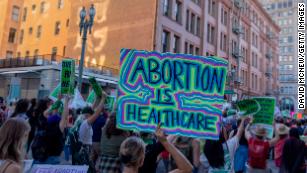 Demand for abortion providers is expected to surge in some states. Doctors and nurses turned to TikTok to offer helpAlthough there are medications that are approved by the US Food and Drug Administration to allow abortion to take place at home, some people may assume they can’t access them, Dr. Nisha Verma, a fellow with the American College of Obstetricians and Gynecologists and an ob/gyn with a specialty in complex family planning.“Some people may also turn to unsafe abortion methods when they feel they have no other option or based on information they are gathering on social media,” Verma said.Posts and content on topics that inspire emotion are much more likely to go viral on social media. And that can be dangerous when they contain false or misleading claims.“Misinformation can be harmful because it may lead people to try to end their pregnancies in an unsafe way, potentially exposing them to serious bodily harm. While people can self-manage their abortions in a safe way, spreading misinformation about unsafe methods of abortion is incredibly dangerous,” Verma said.
 Internet searches for medication abortion reached record highs after Supreme Court leakHowever, without a federal constitutional right to an abortion, access to abortion differs from state to state. The Biden administration is working across multiple federal agencies to respond to the Roe v. Wade reversal.On Tuesday, the Justice Department announced a task force aimed at identifying ways to protect reproductive rights in the wake of the Supreme Court decision that struck down the federal right to abortion. And last week, President Joe Biden signed an executive order aimed at protecting access to reproductive health services.The order attempts to safeguard access to medication abortion and emergency contraception, protect patient privacy and launch public education efforts. It also aims to bolster the security of and the legal options available to those seeking and providing abortion services.
Losing valuable time
Even before the Supreme Court decision, there was evidence that some people tried to self-manage abortions with things like herbs, physical trauma and uterine trauma, said Jenny Higgins, a professor of obstetrics and gynecology at the University of Wisconsin, Madison.“We, of course, know those techniques are ineffective and, in some cases, also harmful,” Higgins said.When it comes to methods circulating on social media, she said, her bigger concern is that they will use up valuable time. Abortion laws impact people trying to become pregnant, too“Someone might look into alternatives such as herbs, spend time trying to gather information, procure that substance, take the herb, take it again, take it again, and by then, they are later in gestation and maybe even less likely to be able to access effective methods,” Higgins said.“There’s a real-time constraint here,” she said. “The later people are in gestation, the more effort that needs to be involved in the abortion.”Being on the border of 10 to 12 weeks of pregnancy can make a big difference in whether someone can safely use FDA-approved abortion drugs, she said.The available methods for self-managed abortion today are very different from in the pre-Roe era.“I want people to understand that now we have the very same pills, the very same FDA-approved pills that are used in standard abortion care can be ordered online,” she said. “There are self-managed techniques that are extremely safe and effective.”Source: CNN
 -
The Indiana legislature has passed a law barring almost all abortions
Indiana lawmakers passed an abortion bill Friday that bans the procedure with very few exceptions, making it the first state to pass such a bill since Roe v. Wade was overturned by the Supreme Court in June.
Known as SB1, the GOP-led state Senate 28-19 voted to accept the bill after it was passed by the Republican-controlled state House 62-38 earlier that day.
The bill replaces the state’s current 22-week abortion ban with a near-total ban on abortion. There are exceptions if the woman’s life is in danger and in cases of rape or incest up until 10 weeks gestation.
Under the bill, patients cannot use telehealth medicine to seek an abortion and must consult a provider in person.
This bill “makes Indiana one of the most pro-life states in the nation,” Republican Rep. Wendy McNamara, who sponsored the legislation, said at a media briefing after the House voted to pass the bill.
The Indiana legislature has passed a law barring almost all abortions
It now heads to Gov. Eric Holcomb’s desk. Holcomb is expected to sign the bill into law, and it would go into effect on Sept. 15.
Earlier last week, the state senate voted on several amendments to the bill, including stripping exceptions for rape or incest.
Republican state Sen. Michael Young, who introduced the amendment, said at the time that “exceptions equal death.”
“And what you’re telling me is if they rape the woman, we oughta kill the baby,” Young said during the debate, according to local reports. “That is not right, and I will never, ever accept that.”
However, the amendment failed to pass on a 28-18 vote, with 18 Republicans siding with the Democrats to keep rape and incest exceptions in place.
Republicans in the state house also attempted Thursday to remove exceptions for rape or incest from the bill, but it failed on a vote.
The House also changed some language from the Senate version of the bill. The Senate bill allowed abortions for rape and incest among girls 16 years and older up until eight weeks’ gestation and up until 12 weeks for those aged 15 and younger, which the House changed to 10 weeks for all victims regardless of age.
Additionally, the House removed a portion of the bill requiring rape and incest victims to sign an affidavit attesting the attack happened before being allowed to get an abortion.
-
Aborted foetuses, condoms increase operational cost Ghana Sewerage Company
Managers of Ghana Sewerage System Limited in Accra have cautioned residents in and around Accra to desist from contaminating liquid waste with solid ones such as aborted foetuses and other foreign materials.
According to the handlers of faecal waste in the country, the practice does not only increase their cost but threatens their operations as well.
According to the Head of Processing and Engineering at the Sewerage Systems Ghana Ltd, Eric Amofa-Sarkodie, about four aborted foetuses have been retrieved so far from faecal waste brought to the facility for processing.
Speaking to Accra100.5FM News during a visit to the facility by the parliamentary press corps, Mr Amofa-Sarkodie disclosed that the company spends over GHS20,000 monthly in separating solid waste from liquid waste.
Mr Amofa-Sarkodie also said the controversial sanitation and pollution levy will be a game-changer in the management of sanitation services in the country.
He, therefore, urged citizens to embrace the levy to help sanitation service providers keep a clean country.
Source: Class FM
-
18-month-old baby dumped in public toilet alive and kicking
A year and a half old baby, Blessing, who was rescued from a public toilet in Tumu is alive and kicking.
During a visit paid to the child, this reporter monitored that she was happily living with her caretakers.
Blessing was rescued from a public toilet on one Thursday morning at around 5:30 am on July 11, 2019 after she was dumped and abandoned at a public toilet at Kusinjan in the Sissala East Municipal capital, Tumu.
According to an elder from Kusinjan, Mr Tommie Kanton, he said the child was discovered after a native of Kusinjan, Mr. Abdulai Kanton (Ngeni) had gone to use the toilet that faithful morning, but was later washed down by her caretakers.
Since the incident, a Community radio station, Radford FM and other stakeholders have been playing various roles in the child’s upkeep and development.
Consequently, a bag of maize, 10 pieces of soap and a number of nose masks were donated to Blessing and her caretaker at the Tumu Chief’s Palace on January 12, 2021.
Speaking on behalf of the General Manager of Radford, Head of Programs, Mr Samuel Batuame while expressing his gratitude to the caretaker, Madam Alima Kanton he has said the presentation was a little gesture from Radford FM to support efforts she has been putting in to provide the needed parenting to the child in the past 1 and a half years.
“We are excited coming to meet you and Blessing this afternoon. A child is literally everybody’s responsibility. And so giving the fact that you have been taking care of Blessing who happens to be a child today through our efforts, we have decided, through our flagship ‘mong mua'(putting smiles on the faces of the poor and marginalized) program this year, to present these few items to you and Blessing, knowing that we cannot thank you enough. We cannot certainly pay you for your efforts but we have brought this to support you in taking care of this our child too” he told Alima Kanton.
Reacting to the gesture, Madam Alima Kanton has hailed the radio station and other stakeholders for their continuous support right from the day the girl was rescued and given the needed care.
She has also expressed in prayer and hope that Blessing would become an icon to Sissalas and the country at large.Source: Dimah Araphat, Contributor
-
Nigeria urged to review abortion laws
Experts have called for a review of the restrictive abortion laws in Nigeria to protect women’s sexual and reproductive health and rights.
They made the call at the weekend during a training for journalists on the Global Gag Rule and women’s sexual and reproductive health and rights in Keffi, Nasarawa state.
The Global Gag Rule also known as the Mexico City Policy is a United States Government policy that blocks US federal funding for non-governmental organisation that provide abortion counselling or referrals, advocate to decriminalize abortion or expand abortion services.
Lucky Palmer, Country Director, Ipas Nigeria, said Nigeria was still using an abortion law formed in 1861, stressing that “it is time for us to amend the law to reflect the modern realities and protect our women who are currently dying from unsafe abortions.”
Palmer said lack of information about contraceptives, abortion services by women and girls as well as the law restricting access to abortion except to save the lives of women had led many women to patronize quacks, and utilize unsafe approaches that have led to needless loss of lives.
He said it was important for Nigerian civil society organisations to note that the fact that they were receiving USAID grant, did not prevent them from supporting survivors of gender-based violence in case they needed access to safe abortion, referral or counselling.
Dr Abiola Akiyode-Afolabi, Executive Director, Women Advocates Research and Documentation Centre, said the Global Gag Rule led to unsafe abortions and a major cause of maternal mortality killing tens of thousands of women every year.
She said those who created the law did not factor its impact on the rest of the world, adding that it affected family planning, HIV services, maternal and child health and even malaria services.
Source:Â allafrica.com
-
US judge rules abortion pills can be posted to homes
A US federal judge has ruled that a regulation requiring that women seeking an abortion pill visit a provider in-person is likely to be unconstitutional during a pandemic.
This means that healthcare providers can now send the pill to patients in the post. District Judge Theodore Chuang did not set any geographic limitations on the ruling but noted states could continue to regulate the drug in accordance with their specific laws.
“By causing certain patients to decide between forgoing or substantially delaying abortion care, or risking exposure to Covid-19 for themselves, their children, and family members, the In-Person Requirements present a serious burden to many abortion patients,†he ruled.
He noted that infringing on the right to an abortion “would constitute irreparable harmâ€. Putting a pause on the rule amid Covid-19, he added, was in line with public health guidance.
The challenge to the rule was brought by the American Civil Liberties Union, which argued the rule presented an undue burden on women because of Covid-19. Government lawyers had argued that the rule was necessary to keep patients safe.
Source: BBCÂ
-
US Supreme Court divided on precedent-making abortion rights case
U.S. Supreme Court justices appeared divided on Wednesday in a major abortion rights case, with Chief Justice John Roberts representing the potential decisive vote on a challenge to a Louisiana law that could make it harder for women to obtain the procedure.
The court, with a 5-4 conservative majority, heard arguments in an appeal by Shreveport-based abortion provider Hope Medical Group for Women seeking to invalidate the 2014 law. The measure requires that doctors who perform abortions have a sometimes difficult-to-obtain arrangement called “admitting privileges” at a hospital within 30 miles (48 km) of the clinic.
The liberal justices, including the court’s three women, appeared skeptical toward that requirement. The conservative justices seemed more receptive.
Roberts and fellow conservative Justice Brett Kavanaugh asked questions that suggested they – and perhaps other conservative justices – do not believe the Louisiana law is automatically doomed by a 2016 Supreme Court precedent that struck down similar admitting privileges restrictions in Texas.
Roberts, considered the court’s ideological center, cast the deciding vote last year when the justices on a 5-4 vote blocked Louisiana’s law from taking effect while the litigation over its legality continued.
That vote brought him into conflict with his position in the Texas case when Roberts was among the three dissenting justices who concluded that an admitting privileges requirement did not represent an impermissible “undue burden” on abortion access.
Roberts appeared to acknowledge in his questions that he might feel bound by the court’s 2016 finding that admitting privileges laws provide no health benefit to women. But his questions also indicated he may stray from the 2016 finding about the specific impact of the Texas law, which led to multiple clinic closures, because Louisiana’s situation could be viewed differently.
Two of Louisiana’s three clinics that perform abortions would be forced to close if the law is allowed to take effect, according to lawyers for the clinic. Louisiana officials have said no clinics would be forced to close.
“I understand the idea that the impact might be different in different places, but as far as the benefits of the law, that’s going to be the same in each state, isn’t it?” Roberts asked.
Roberts indicated that the 2016 ruling requires the analysis to be “a factual one that has to proceed state-by-state.”
The questions asked by Roberts and Kavanaugh could open the possibility of them voting to uphold the Louisiana law without specifically overturning the Texas precedent. Kavanaugh asked whether “in some states, admitting privileges laws could be constitutional, if they impose no burdens.”
Restrictve state laws
The case, with a ruling due by the end of June, will test the court’s willingness to uphold Republican-backed abortion restrictions being pursued in numerous conservative states. President Donald Trump’s administration supported Louisiana in the case.
Abortion remains one of the most divisive issues in American society, with Christian conservatives – an important constituency for Trump – among those most opposed to it.
Abortion rights advocates have argued that restrictions such as admitting privileges are meant to limit access to abortion not protect women’s health as proponents say. When the Supreme Court in 1992 reaffirmed the Roe v. Wade ruling, it prohibited laws that placed an “undue burden” on a woman’s ability to obtain an abortion.
Liberal Justice Sonia Sotomayor said it was a “mystery to me” why a 30-mile limit was imposed if the law’s intent was to show that doctors were properly credentialed. She asked why doctors could not get credentials from hospitals further away.
Fellow liberal Justice Ruth Bader Ginsburg also questioned the 30-mile limit, noting that in most cases women who have complications from abortions would be at home after the procedure and not at the clinic. As a result, it would not be relevant that the doctor has a relationship with a local hospital, she said.
Trump, seeking re-election on Nov. 3, promised during the 2016 presidential race to appoint justices who would overturn the landmark 1973 Roe v. Wade ruling that legalized abortion nationwide. The Louisiana case marked the first major abortion dispute heard by the court since Trump appointed Kavanaugh and Neil Gorsuch as justices.
Gorsuch said nothing during the argument. Conservative Justice Clarence Thomas, who rarely speaks during arguments, was also silent.
The most outspoken conservative was Justice Samuel Alito, who questioned whether the clinic and doctors even had legal standing to bring the challenge because their interests are different from their patients. He suggested that women seeking abortions should be plaintiffs in such cases.
Conservative Justice Anthony Kennedy, who retired in 2018, joined the four liberal justices to defend abortion rights when the court struck down the Texas law.
Baton Rouge-based U.S. District Judge John deGravelles cited the undue burden precedent when he struck down Louisiana’s law in 2016. After Louisiana appealed, the New Orleans-based 5th U.S. Circuit Court of Appeals upheld the law.
Source: reuters.com
-
Abortion access will not expand in Colombia, court rules
Colombia’s Constitutional Court shut down a landmark abortion case on Monday that divided the South American country and offered what experts called an opportunity to “set a precedent for the region”.
For 14 years, Colombian law allowed for abortions under three circumstances: if the mother’s life was endangered, if the pregnancy was a product of rape or if the fetus is fatally deformed.
A case, brought forward by a hardline anti-abortion rights activist, sought to eliminate those exceptions, but instead offered the court an opening to permit abortions during the first months of pregnancy.
On Monday afternoon, the magistrates announced in a 6-3 decision that it would maintain the status quo, a move hailed both as a disappointment and a victory for women’s rights activists.
“The court is missing an opportunity to expand abortion access,” said Paula Avila-Guillen, director of Latin America Initiatives for the Women’s Equality Center. “However, it’s a verification that we’re not moving backward.”
The case divided the South American country. A February poll by Colombian magazine Semana suggested that nearly 70 percent of the country was opposed to the legalisation of abortion in the first four months of a pregnancy, but abortion rights and anti-abortion rights protests have mounted leading up to Monday’s decision.
As the court deliberated, protesters on both sides faced off on the street outside the court building. An invisible ideological wall seemed to run along the city’s main street, dividing the two groups who screamed at each other.
Protesters with green pro-choice bandanas screamed, “Yes, yes, yes for abortion”, while groups with blue anti-abortion rights bandanas screamed back, “Yes, yes, yes, for life.”
The controversial case was brought to the table by hardline anti-abortion rights lawyer Natalia Bernal in 2019. Bernal asked for a total ban on abortion after a 22-year-old woman in the western Catholic city of Popayan had an abortion at seven months after a psychological assessment noted that she was suffering from severe mental issues like depression as a result of the pregnancy.
“My theory is that if abortion rights are increased, there will be many more women who are raped because the rapist knows that the State will permit women to get rid of the consequences of the rape,” Bernal told local media Red+ in late 2019 without providing any evidence to back up her claim.
But instead, the legal challenge put on the table the possibility of legalisation.
The case came after a wave of feminist movements swept across the region. Of the 33 countries that make up Latin America and the Caribbean, only Uruguay, Cuba and Guayana allow for abortion procedures without a woman needing to prove her pregnancy endangers her life or that she was raped. In Argentina, a similar conversation is playing out as congressional legislators are set to consider a bill that would legalise abortion.
Despite the shifts, much of the largely Catholic country remains strongly against abortion rights, including Colombian President Ivan Duque who called any move away from the three exceptions “very tough”.
“I’m pro-life. I believe life starts at conception,” he said in February.
Legal red tape
In 2006, Colombia’s Constitutional Court overturned an all-out ban on abortion and, on paper, Colombia’s laws appear more liberal than neighbouring countries. But the legal red tape associated with the laws make access to abortion in many cases virtually impossible, and women seeking abortions are often asked for proof of rape beyond police reports.
Other healthcare providers refuse to perform the abortion or create elongated approval processes for women who are often “running against time” to receive the care, said Cristina Rosero, a lawyer at the Bogota-based women’s advocacy group, Women’s Link.
We’re “seeing health professionals just … putting up illegal obstacles, and they’re not being held accountable for it,” Rosero told Al Jazeera. “That creates this impunity feeling that lets them not comply with the law because they don’t feel there is going to be any consequence.”
In 13 years, 300 legal complaints have been filed from women who say they were denied a legal abortion, yet only three of those cases ended in sanctions of healthcare providers, according to Women’s Link.
In rural zones of the country also often lack sufficient medical supplies or training to perform such procedures, so such care becomes inaccessible to large swaths of the population.
“This is about privilege,” said Avila-Guillen, who recalled that while growing up in a rural area, friends would have to travel more than 350km (217 miles) by bus to get medical attention in Bogota.
An estimated 400,400 abortions are performed each year in Colombia, according to US-based reproductive rights organisation Guttmacher Institute. In 2018, private abortion provider Profamilia said 16,878 legal abortions were performed legally.
Despite that being a massive jump in the number of legal procedures from 2008 – when Guttmacher documented 322 legal procedures performed in medical clinics – it means the vast majority of abortions performed in the country are still clandestine.
Almost 15 percent of maternal deaths across the world are a product of botched clandestine abortions, and women living in rural zones are more likely to experience medical complications than those in cities.
While the court decision did little to change the legal status quo in the South American country, Rosero said the case is still an important step for groups to open new challenges to abortion law in the predominately Catholic country because the court refused to acknowledge Bernal’s challenge.
It also, she said, launched a public conversation that is only expected to continue.
“It opens the doors for advances which haven’t happened in 14 years,” she said. “This is a huge step because it means that the public debate is going forward and the people are ready for a conversation.”
Source: aljazeera.com
-
Moroccan journalist Hajar Raissouni jailed on abortion charges
A Moroccan journalist has been sentenced to a year in prison for premarital sex and having an abortion, in a case activists say is part of a crackdown on critical reporters.
Hajar Raissouni was arrested with her fiancé as they left a gynaecologist’s clinic in the capital Rabat in August.
The 28-year-old denied the charges, saying she had sought treatment for internal bleeding.
Ms Raissouni works for an independent newspaper critical of the authorities.
Read:Morocco abortion trial postponed amid protests
A journalist at the Akhbar Al-Yaoum daily, she denounced the case against her as a “political trial”, saying she had been questioned by police about her family and her writing.
Wearing a black veil covering her head, Ms Raissouni appeared calm on arrival at the courtroom in Rabat. She and her fiancé, a Sudanese national, denied that an abortion had taken place.
“We’re shocked by this verdict,” her lawyer, Abdelmoula El Marouri, told the Reuters news agency, saying that all the medical and legal evidence should have led to an acquittal. He said he would appeal against the verdict.
Read:Morocco grants royal pardon to protesters
The prosecutor in the case said the circumstances of the journalist’s arrest had nothing to do with her work as a journalist, and that the clinic she had visited was under police surveillance on suspicion of carrying out illegal abortions.
The court sentenced her fiancé to a year in prison and her doctor to two years. The doctor’s assistant and a nurse at the clinic were also found guilty but were given suspended sentences.
Ahmed Benchemsi, regional director for Human Rights Watch, described the verdict as a “black day for freedom in Morocco”, calling it “a blatant injustice, a flagrant violation of human rights, and a frontal attack on individual freedoms.”
Source:Â bbc.com
-
Doctor performs abortion on the wrong woman
Police have launched an investigation in South Korea after a doctor performed an abortion by mistake.
On August 7, a pregnant patient with a 6-week-old fetus had gone to a clinic in district of Gangseo, in the country’s capital Seoul, according to the Gangseo police. At the clinic, a mix-up in medical charts and failure to check her identity led to the mistaken abortion.
The doctor and nurse in charge are under investigation, and the case will soon be sent to the prosecutor’s office, police told CNN.
Read:Suspected fake doctor arrested for abortion gone wrong
“The doctor and nurse have acknowledged their fault,” a police official said. They are now being accused of negligence resulting in bodily harm.
According to South Korean news agency Yonhap, the patient was supposed to receive a nutritional shot at the clinic. The nurse had allegedly injected her with anesthesia without confirming her identity, and the doctor had performed the abortion without checking her identity either, Yonhap reported. The patient had been unaware of the procedure.
The police announced the investigation on Monday, Yonhap said.
Read:Multiple abortions leading cause of ectopic pregnancy Expert
South Korea moved to legalize abortion in April this year, with the country’s constitutional court ruling that lawmakers must revise existing laws by December 31, 2020.
However, under existing laws, the practice remains illegal and is technically punishable by up to a year in prison. Exceptions are granted in cases where the parents have hereditary diseases, the pregnancy is due to rape or incest, or the fetus is threatening the life of the mother.
An estimated 50,000 abortions were carried out in South Korea last year, according to the country’s Health Ministry. Actual numbers may be much higher, since the criminalization of the practice distorted reporting of it.
Source:Â cnn.com
