Ghanaian actor, Don Little, has narrated how a man at Addis Ababa airport nearly caused his arrest after accusing him of being a thief.
In a video sighted on social media, Don Little explained that he could not convert his Ghanaian cedis into foreign currency before leaving Ghana on one of his usual travels.
After arriving in Addis Ababa, Don Little said he became very hungry. With no local currency on him, he approached a man at the airport to request some Ethiopian birr, offering to pay back with Ghana cedis. Rather than assist, the man accused him of attempting to swindle or steal and even threatened to call the police.
“Within minutes, he was calling me a thief,” Don Little recalled, noting that the confrontation drew attention from bystanders. Fortunately, another traveller recognised him from his movies and intervened, defusing the situation before officers arrived.
He described the situation a scary one and advised fellow Ghanaians to exchange their cedis before boarding international flights to avoid similar embarrassment.
Talking about Don Little’s love life, he has invited women interested in a romantic relationship with him to feel free to express their interest.
In a post shared on X, Don Little shared that he is wealthy enough to accommodate the love of his life.
Unfortunately, his search for the love of his life has been nothing but unsuccessful.
“I have suffered to build a 10-bedroom house but I live in it alone. I occupy just one bedroom. I need someone to live with me, but that has been challenging. I need a woman o…All efforts to find the love of my life have been unsuccessful,” Don Little shared in a video sighted by The Independent Ghana.
Due to his status as a Bachelor, Mr Little says he often feels lonely, describing his home as being as quiet as a cemetery.
“So the ladies who are interested, comment. Let me see your comment in the comments section. The ladies, I am single and still searching, so if you are interested, comment,” he stated.
Meanwhile, Nigerian rapper and actor Falz has revealed that he has no plans to settle down anytime soon, as he enjoys his single life at the age of 34.
In an interview with Chude Jideonwo, Falz shared his thoughts on commitment, explaining that a combination of challenges in the entertainment industry and personal hesitation has kept him from pursuing a relationship.
According to Falz, balancing a fulfilling love life or family life with the demands of his career in entertainment is extremely difficult. He admitted that his fear of “ruining things” and not knowing how to properly manage a serious relationship has made him hesitant about getting involved.
Despite his fame and success, the rapper stated that he has yet to find a woman who is genuinely interested in him. He also confessed that he has never experienced romantic heartbreak or expressed his love to anyone.
“I’ve never been heartbroken. In a romantic way, I’ve never told somebody that I love you. I’ve not found anybody that likes me,” Falz admitted. “Honestly, it’s incredibly tough to maintain a healthy love or family life while being in entertainment. Not knowing how to navigate that, along with the fear of messing things up, has led me to avoid relationships.”
The rapper made it clear that he is not ready for a relationship and would not deceive himself or others by pretending otherwise.
As for the rumors of relationships with various women, Falz dismissed them with a lighthearted comment, saying that they were simply the product of fans’ imaginations.
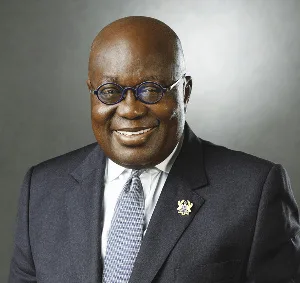
On Tuesday, 14th February 2024, President Akufo-Addo embarked on an official journey, leading the Ghanaian Delegation to partake in the Munich Security Conference in Munich, Federal Republic of Germany.
The Munich Security Conference (MSC) stands as a significant forum for global discourse on security policy. MSC 2024 aims to strengthen the rules-based international order and counter revisionist tendencies. The conference will feature debates, side events, and mark its 60th anniversary.
Following his engagements in Munich, President Akufo-Addo will attend the 37th AU Summit in Addis Ababa, Ethiopia, from 17th to 18th February 2024.
The summit theme is “Educate an African fit for the 21st Century: Building resilient education systems for increased access to inclusive, lifelong, quality, and relevant learning in Africa.”
During the summit, President Akufo-Addo will host Member States of the Commission for a breakfast meeting on Education and on the AU Financial Institutions.
Additionally, he will provide an update on Ghana’s role as the host of the Secretariat of the African Continental Free Trade Area.
Accompanied by the First Lady, Mrs. Rebecca Akufo-Addo, Minister for Foreign Affairs Hon. Shirley Ayorkor Botchway, MP, and officials from the Presidency and the Foreign Ministry, President Akufo-Addo is scheduled to return to Ghana on Sunday, 18th February 2024.
During his absence, Vice President Alhaji Dr. Mahamudu Bawumia will act in accordance with Article 60(8) of the Constitution.
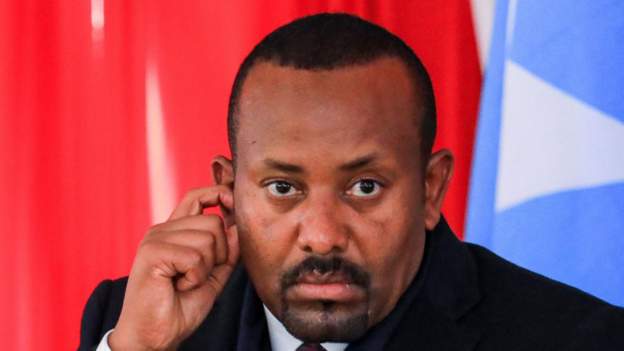
The Prime Minister of Ethiopia, Abiy Ahmed, said that his country will not attack or invade any neighboring countries. This statement came after some people in the region were concerned about his previous comments about Ethiopia needing access to a sea.
Speaking to the nation in the capital city of Addis Ababa to commemorate Army Day on Thursday, Mr. Abiy stated that Ethiopia will never initiate an attack on any other nation.
He said our army has never started a fight before and now we won’t attack anyone.
Some people are worried that there might be an invasion because Ethiopia has been talking about the need to talk about certain issues. Ethiopia does not want to accomplish anything by invading. I want to make it very clear that we will not harm or force our own people to get what we want, the Prime Minister said.
It comes a few days after Mr. Abiy said that having access to the sea is very important for his country’s survival.
Ethiopia no longer has access to the sea since Eritrea separated in 1993. Now, it relies on Djibouti for more than 85% of the goods it brings into the country and sends out to other nations.
Ethiopia and Eritrea had a fight over their borders that lasted for two years from 1998 to 2000.
In 2018, the two countries became less tense when Mr Abiy and President Isaias Afwerki of Eritrea made a peace agreement.
Authorities in Ethiopia claim to have cracked down on hotels, restaurants, and entertainment venues in the nation’s capital where it is said that homosexual acts are occurring.
The city government claimed that the activities were the result of public tips and that a guest house had already been raided.
It added that it would continue conducting operations in other locations and urged the public to report any such actions to the police.
Although homosexual actions are illegal in Ethiopia, there haven’t been any recent reports of instances or convictions connected to them.
An LGBT advocacy group, House of Guramayle, claimed earlier this week that Ethiopia was experiencing “unprecedented attacks on individuals based on their real or perceived sexual orientation and gender identity”.
It asked social media platforms to deal with hate speech videos encouraging violence and urged human rights organisations to denounce such acts both locally and globally.
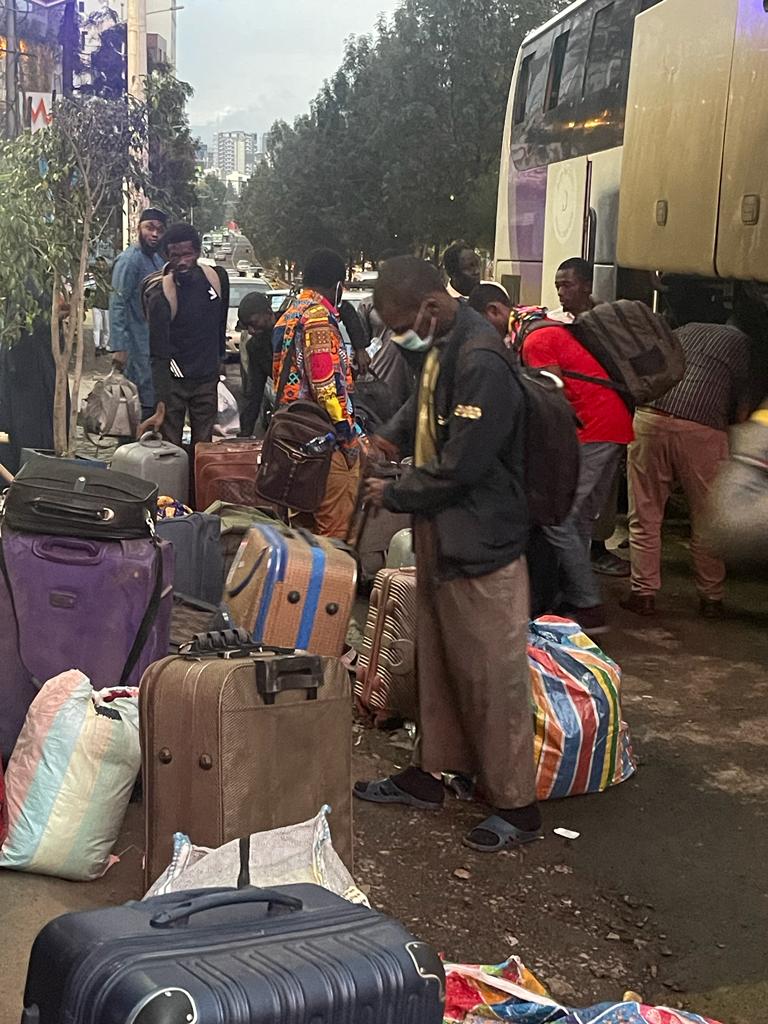
Seventy-six Ghanaians have successfully been relocated from Sudan to Addis Ababa in Ethiopia for safety, according to the Ministry of Foreign Affairs and Regional Integration.
On Tuesday, May 2, 2023, seventy-four of these people are anticipated to be flown to Accra.
While two other football players are going through immigration procedures, a football player and two engineers have received assistance to cross the Egyptian border at Hadi Walfa.
Ghanaians moved to Addis Ababa
The Ministry has remained steadfast in its pledge to remove every one of its citizens who are entangled in the turmoil taking place in Sudan.
Ghanaians moved to Addis Ababa
Sudan began to observe chaos after the government’s army and the paramilitary Rapid Support Forces clashed over two weeks ago.
Over 300 lives have been lost and several properties have been destroyed.
International bodies have called for an end to the ongoing conflict. There appeared to be progress when a truce was held.
However, reports indicate that fighting has resumed in the country’s capital, Khartoum.
Countries such as Nigeria, UK, South Africa, Turkey among others have evacuated their nationals.
The representative for North Tongu, Samuel Okudzeto Ablakwa, has lauded President Akufo-Addo for traveling toGermanyand Ethiopia in Ghana’s presidential jet.
In a tweet shared on Monday, February 20, 2023, the MP said that the president’s decision not to use a luxury private jet for his recent trip has saved the country almost GHC6.5 million.
He added that if Akufo-Addo had been consistent in using the presidential jet for his travels, he will have saved Ghana a lot of money and possibly averted the current economic crisis in the country.
“I can confirm from our unimpeachable tracking that for President Akufo-Addo’s latest travel to the Munich Security Conference and AU meetings in Addis Ababa, he used Ghana’s Presidential Jet (Dassault Falcon 900 EX) for the entire 17hr:53min flight time. He returned to Accra at 11:40 pm last night.
“By this commendable conduct, and having regard for the current luxury VIP private jet market rate, the President has saved the suffering Ghanaian taxpayer some €480,000 (GHC6.5 million) by avoiding his favourite profligate luxury chartered jet.
“This is the prudent presidential conduct Ghanaians have been demanding for years- a sensitive and frugal leadership which could have saved Ghana over GHC100million and perhaps averted the current economic crisis,” parts of the MPs tweet read.
Ablakwa added that it is his hope that President Akufo-Addo will continue to use the presidential jet till he leaves office for the sake of the country.
View the MPs’ tweet below:
Our unimpeachable tracking of Prez Akufo-Addo’s latest foreign travels to Germany & Ethiopia reveal that he used Ghana’s Presidential Jet for the entire duration.
His commendable conduct saves the suffering taxpayer some GHS6.5million.
This is what Ghanaians have been demanding pic.twitter.com/4QgfCrxo18— Sam Okudzeto Ablakwa (@S_OkudzetoAblak) February 20, 2023
African leaders met Saturday to discuss a slew of challenges facing the continent as UN chief Antonio Guterres urged them to do more to bring peace to conflict-hit regions.
Africa is reeling from a record drought in the Horn and deadly violence in the Sahel region and the eastern Democratic Republic of Congo (DRC), with the two-day African Union summit aiming to address these issues and jumpstart a faltering free trade pact.
Most of the sessions are being held behind closed doors at the AU headquarters in the Ethiopian capital Addis Ababa, with more than 30 presidents and prime ministers in attendance.
But eyes will be on the bloc to see if it can achieve ceasefires in the Sahel and the eastern DRC, where the M23 militia has seized swathes of territory and sparked a diplomatic row between Kinshasa and Rwanda’s government, which is accused of backing the rebels.
Guterres called for Africa to take “action for peace”, adding that the continent of 1.4 billion people faced “enormous tests… on virtually every front”.
“I am deeply concerned about the recent rise in violence by armed groups in the eastern Democratic Republic of the Congo and the rise of terrorist groups in the Sahel and elsewhere,” he told the gathering.
“The mechanisms for peace are faltering,” the UN secretary-general warned. Nevertheless, he urged the bloc to “continue to battle for peace”.
At a mini-summit on Friday, leaders of the seven-nation East African Community pushed for all armed groups to withdraw from occupied areas in the eastern DRC by the end of next month.
Guterres met with several African leaders on Friday, including Rwandan President Paul Kagame, to discuss in particular the crisis in the Congo.
Ethiopian Prime Minister Abiy Ahmed, host of the summit, lauded the bloc for its role mediating a peace deal between his government and the Tigray People’s Liberation Front (TPLF) in November to end a brutal two-year year in northern Ethiopia.
– Backsliding of democracy –
Junta-ruled Mali, Burkina Faso and Guinea, which have been suspended from the AU, cannot participate in this weekend’s summit, but have sent diplomats to Addis Ababa to lobby for readmission.
Moussa Faki Mahamat, head of the African Union Commission, told the meeting the bloc needed to come up with new strategies to counter the backsliding of democracy on the continent.
He said “sanctions imposed on member states following unconstitutional changes of government… do not seem to produce the expected results”.
“It seems necessary to reconsider the system of resistance to the unconstitutional changes in order to make it more effective,” Faki added.
The summit will also aim to accelerate implementation of the African Continental Free Trade Agreement (AfCFTA) launched in 2020.
The deal is billed as the biggest in the world in terms of population, gathering 54 out of 55 African countries, with Eritrea the only holdout.
African nations currently trade only about 15 percent of their goods and services with each other, and the AfCFTA aims to boost that by 60 percent by 2034 by eliminating almost all tariffs.
But implementation has fallen well short of that goal, running into hurdles including disagreements over tariff reductions and border closures caused by the Covid-19 pandemic.
The African leaders are also expected to discuss the food crises rocking a continent hit hard by the worst drought in four decades and the knock-on effects of the war in Ukraine that have pushed up the cost of basic goods.
– Debt cancellation call –
Created in 2002 following the disbanding of the Organisation of African Unity, the AU comprises all 55 African countries, with a population of 1.4 billion people.
While the bloc has been credited with taking a stand against coups, it has long been criticised as ineffectual.
Kagame, who has been urging the AU to implement major changes for years, is due to present a report on the reform of the bloc’s institutions.
The Rwandan leader has called for the AU to take steps towards financial independence, with the bloc largely dependent on foreign donors.
Comoros President Azali Assoumani, leader of the small Indian Ocean archipelago of almost 900,000 people, took over the one-year rotating AU chairmanship from Senegal’s Macky Sall.
Assoumani, 64, called for a “total cancellation” of African debt in his acceptance speech, but did not elaborate on how this would be achieved.
In order to play a role in the affairs of the continent, the US is sending a strong delegation of special envoys to Addis Ababa this week for the annual African Union Summit.
The Department of State announced on Tuesday that the delegation will “meet with stakeholders to discuss the global food security crisis and its disproportionate impact on Africa, as well as to follow up on US commitments made at the US-Africa Leaders’ Summit”.
The US gathered African leaders in December last year in Washington for a summit that sought to improve partnerships.
The Delegation is led by Molly Phee, the US assistant secretary for Africa, and former US ambassador to Kenya Johnnie Carson, now the Special Presidential Representative for US-Africa Leaders’ Summit Implementation. Others include US Special Envoy for Global Food Security Cary Fowler, USAid Assistant Administrator in the Bureau for Africa Monde Muyangwa, acting USAid Assistant to the Administrator for the Bureau of Resilience and Food Security Dina Esposito, and US Global Aids Coordinator and Special Representative for Health Diplomacy John Nkengasong. Dr. Nkengasong was until last year the director for the Africa Union Centres for Disease Control and Prevention (Africa-CDC), the AU’s public health agency.
Food security
“The US delegation will reinforce US commitment to advance food security and highlight the ongoing work through the US government’s Feed the Future initiative, and efforts to scale up work on climate-resilient agriculture and soil health, including upcoming work on the “Vision for Adapted Crops and Soils” (VACS),” a statement said.
Heads of state and governments of AU member states are gathering in Addis Ababa as the continental body marks 20 years since it was re-formed from the old Organisation of African Unity (OAU). According to the programme, leaders will be meeting under the theme ‘The Year of AfCFTA: Acceleration of the African Continental Free Trade Area Implementation’.
But the Assembly of Heads of State and Government will also look into continual problems “and make far-reaching decisions on various political and socio-economic areas to promote and advance the welfare and quality of life for the African citizenry”, according to the programme.
Some of the issues will fall under the institutional reforms of the African Union, peace and security and the missed deadline to silence guns, global financial and energy issues and the food crisis, response to Covid-19, climate change and Agenda 2063.
According to Ambassador Albert Muchanga, the African Union’s commissioner for economic development, trade, tourism, industry, and minerals, the continent’s abundant mineral resources continue to be a key factor in the structural change of the continent.
He said that 50% of Africa’s income and 70% of its exports are derived from the sale of oil, gas, and minerals.
Ambassador Muchanga stated this during the Launch of the African Minerals Development Centre (AMDC) Phase II and the Second Forum on Mining, taking place at the African Union Headquarters, in Addis-Ababa, Ethiopia.
“However, despite the enormous potential of the continent’s mineral industry, most African countries have historically been unable to fully benefit from their natural wealth as we have remained producers and exporters of mineral raw materials, a low rank in the global value chain.
“And there are major threats that may hinder Member States’ abilities to fully reap the benefits of the mineral wealth endowment.”
He said for a start, Africa had a disproportionate dependence on extractives exports, which waas major vulnerability as it exposed the continent to the boom and bust cycles associated with commodity prices as well as illicit financial flows. The illicit financial flows from Africa now hover around US$90 billion annually.
Africa hosts 6 per cent of global reserves of copper, 53 per cent of cobalt, 25 per cent of bauxite, 21 per cent of graphite, 46 per cent of manganese, 35 per cent of chromite, 79 per cent of phosphate rock, 91per cent of platinum group metals.
“We can add to the foregoing: hydrogen, water, wind and solar power.
“When one looks at production, Africa accounts for a greater share of current production of many of these minerals, including 70 per cent of cobalt. Lithium is mined in Zimbabwe and Mali, while Namibia, Ghana and the DRC also have them. Rare Earth Elements (REEs) are mined in Angola and Burundi as well.”
Mr Muchanga said Africa was part of the global value-chains for green minerals; however, that role was concentrated at the first phase of the value chain, exploration and extraction.
“The task ahead is to move towards value addition and the Africa Commodity Strategy will assist in this regard.
“In line with our commitment towards the green transition, the Department of Economic Development, Trade, Tourism, Industry and Minerals (ETTIM) will organize a side event on the margins of COP27 in Sharm El Sheikh, Egypt next month under the theme: “Decarbonizing African Industry”.
“I also invite you all to the AU Summit on Industrialization and Economic Diversification to be held in Niamey, Niger from 20-25 November, 2022.”
On mining, he said there was urgency to ensure that the roadmap envisioned in the Africa Mining Vision with a central theme of “Transparent, equitable and optimal exploitation of mineral resources to underpin broad-based sustainable growth and socio-economic development” was implemented effectively and fully.
“This is because AMV is a continental vision for managing the continent’s mineral resources for the benefit of Africans.
“In this vision, minerals are considered a key driver of industrialization and transformation of our economic structures. These are critical to the continent’s long-term inclusive growth and sustainable development.”
He said the African Minerals Development Centre (AMDC) was established as the specialized agency of the African Union to implement the African Mining Vision (AMV) as well as the minerals segment of the Africa Commodity Strategy.
The first phase of the AMDC was launched in 2013 as a five-year flagship project housed in the United Nations Economic Commission for Africa (UNECA). As a project, it provided strategic support and coordination for the implementation of the AMV and its Action Plan adopted in 2009.
In 2018, the Assembly of the African Union Heads of State and Government decided that the Republic of Guinea would host the African Minerals Development Centre as a specialized agency of the African Union.
In February 2019, the AMDC was officially handed over to the African Union by the United Nations Economic Commission for Africa to start the process of transferring it to Conakry, Guinea as a specialized agency of the Union.
The Host Agreement between the African Union and the Government of the Republic of Guinea was signed in 2021.
Since May 2022, the AMDC is being supported through the ACP-EU Development Minerals Programme (Phase II), initiated by the Secretariat of the Organization for African, Caribbean and Pacific States (OACPS) and we are most grateful for this support.
Financing came from the European Commission with UNDP as the implementing agency.
As highlighted in the AMDC Business Plan, the AMV’s value proposition of exploiting minerals for sustainable development throughout the value chain calls for a major shift in the conceptual methods and institutional arrangements adopted to-date regarding the minerals sector.
In the envisaged changes, greater importance is given to improving internal governance, building capacities, capturing the more lucrative links in the value chain such as manufacturing and the related support services such as research and development which is critical to boosting innovation in the mineral value chain.
He called on all of you to accelerate the signing and ratifications of the AMV Statutes to enable the AMDC to become a full-fledged Specialized Agency of the AU.
He also called for regional and continental value chains, to develop reliable and resilient supply chains within the African Continental Free Trade Area, using the lever of intra-African trade in finished and intermediate goods.
“Second, Africa will have to reposition herself as a reliable supply base to the rest of the world, not in the historical mode of supplier of basic raw materials but supplier of either finished or intermediate goods that place Africa higher in the global value chains.
“Minerals, and in particular, the AMDC, will play critical roles in both cases.
“As we do so, let us also recall that some regions of the world have come up with the concept of Critical Raw Materials. These are raw materials they will always require to make their industries run. Let us engage these countries to agree on how we can mutually benefit from international trade in minerals.”
He said the overall goal of the African Forum on Mining was to defined as a strategic way forward for minerals development that would contribute to the energy transition, and hoped that the Forum will come up with actions required to transition the mineral industries across Africa towards net zero emissions of carbon dioxide and digitalization.
“Achieving that will strategically position the African continent in the global energy transition. In this connection, I applaud the initiative of the Democratic Republic of Congo and Zambia to jointly develop electric car batteries. We encourage other African countries to also promote the development of regional and continental value chains to position the African Continental Free Trade Area increase intra-African trade flows.
“It is also my expectation that the Forum will galvanize efforts towards enhanced domestication of the Africa Mining Vision with its core thematic areas. In this connection, I invite you all to come up with practical measures on how the continent can optimize benefits from the minerals sector through realignment of policies, legal and regulatory frameworks, taking into consideration new imperatives such as de-carbonization.”
Commissioner of African Union for Economic Development, Trade, Tourism, Industry and Minerals has stated that Africa’s vast mineral wealth remains an important driver for the continent’s structural transformation.
This, Ambassador Albert Muchanga, added was enshrined in Agenda 2063, as it represented 30 per cent of the mineral deposits in the world.
He said Africa’s exports of oil, gas and minerals account for 70 per cent of their exports and 50 per cent of their revenue.
Ambassador Muchanga stated this during the Launch of the African Minerals Development Centre (AMDC) Phase II and the Second Forum on Mining, taking place at the African Union Headquarters, in Addis-Ababa, Ethiopia.
He said the mineral wealth positioned Africa to play a central role in the energy transition agenda in the dangerous era of climate change.
“However, despite the enormous potential of the continent’s mineral industry, most African countries have historically been unable to fully benefit from their natural wealth as we have remained producers and exporters of mineral raw materials, a low rank in the global value chain.
“And there are major threats that may hinder Member States’ abilities to fully reap the benefits of the mineral wealth endowment”.
He said for a start, Africa had a disproportionate dependence on extractives exports, which waas major vulnerability as it exposed the continent to the boom and bust cycles associated with commodity prices as well as illicit financial flows. The illicit financial flows from Africa now hover around US$90 billion annually.
Africa hosts 6 per cent of global reserves of copper, 53 per cent of cobalt, 25 per cent of bauxite, 21 per cent of graphite, 46 per cent of manganese, 35 per cent of chromite, 79 per cent of phosphate rock, 91per cent of platinum group metals.
“We can add to the foregoing: hydrogen, water, wind and solar power.
“When one looks at production, Africa accounts for a greater share of current production of many of these minerals, including 70 per cent of cobalt. Lithium is mined in Zimbabwe and Mali, while Namibia, Ghana and the DRC also have them. Rare Earth Elements (REEs) are mined in Angola and Burundi as well.
Mr Muchanga said Africa was part of the global value-chains for green minerals; however, that role was concentrated at the first phase of the value chain, exploration and extraction.
“The task ahead is to move towards value addition and the Africa Commodity Strategy will assist in this regard.
“In line with our commitment towards the green transition, the Department of Economic Development, Trade, Tourism, Industry and Minerals (ETTIM) will organize a side event on the margins of COP27 in Sharm El Sheikh, Egypt next month under the theme: “Decarbonizing African Industry”.
“I also invite you all to the AU Summit on Industrialization and Economic Diversification to be held in Niamey, Niger from 20-25 November, 2022”.
On mining, he said there was urgency to ensure that the roadmap envisioned in the Africa Mining Vision with a central theme of “Transparent, equitable and optimal exploitation of mineral resources to underpin broad-based sustainable growth and socio-economic development” was implemented effectively and fully.
“This is because AMV is a continental vision for managing the continent’s mineral resources for the benefit of Africans.
“In this vision, minerals are considered a key driver of industrialization and transformation of our economic structures. These are critical to the continent’s long-term inclusive growth and sustainable development.
He said the African Minerals Development Centre (AMDC) was established as the specialized agency of the African Union to implement the African Mining Vision (AMV) as well as the minerals segment of the Africa Commodity Strategy.
The first phase of the AMDC was launched in 2013 as a five-year flagship project housed in the United Nations Economic Commission for Africa (UNECA). As a project, it provided strategic support and coordination for the implementation of the AMV and its Action Plan adopted in 2009.
In 2018, the Assembly of the African Union Heads of State and Government decided that the Republic of Guinea would host the African Minerals Development Centre as a specialized agency of the African Union.
In February 2019, the AMDC was officially handed over to the African Union by the United Nations Economic Commission for Africa to start the process of transferring it to Conakry, Guinea as a specialized agency of the Union.
The Host Agreement between the African Union and the Government of the Republic of Guinea was signed in 2021.
Since May 2022, the AMDC is being supported through the ACP-EU Development Minerals Programme (Phase II), initiated by the Secretariat of the Organization for African, Caribbean and Pacific States (OACPS) and we are most grateful for this support.
Financing came from the European Commission with UNDP as the implementing agency.
As highlighted in the AMDC Business Plan, the AMV’s value proposition of exploiting minerals for sustainable development throughout the value chain calls for a major shift in the conceptual methods and institutional arrangements adopted to-date regarding the minerals sector.
In the envisaged changes, greater importance is given to improving internal governance, building capacities, capturing the more lucrative links in the value chain such as manufacturing and the related support services such as research and development which is critical to boosting innovation in the mineral value chain.
He called on all of you to accelerate the signing and ratifications of the AMV Statutes to enable the AMDC to become a full-fledged Specialized Agency of the AU.
He also called for regional and continental value chains, to develop reliable and resilient supply chains within the African Continental Free Trade Area, using the lever of intra-African trade in finished and intermediate goods.
“Second, Africa will have to reposition herself as a reliable supply base to the rest of the world, not in the historical mode of supplier of basic raw materials but supplier of either finished or intermediate goods that place Africa higher in the global value chains.
“Minerals, and in particular, the AMDC, will play critical roles in both cases.
“As we do so, let us also recall that some regions of the world have come up with the concept of Critical Raw Materials. These are raw materials they will always require to make their industries run. Let us engage these countries to agree on how we can mutually benefit from international trade in minerals”.
He said the overall goal of the African Forum on Mining was to defined as a strategic way forward for minerals development that would contribute to the energy transition, and hoped that the Forum will come up with actions required to transition the mineral industries across Africa towards net zero emissions of carbon dioxide and digitalization.
“Achieving that will strategically position the African continent in the global energy transition. In this connection, I applaud the initiative of the Democratic Republic of Congo and Zambia to jointly develop electric car batteries. We encourage other African countries to also promote the development of regional and continental value chains to position the African Continental Free Trade Area increase intra-African trade flows.
“It is also my expectation that the Forum will galvanize efforts towards enhanced domestication of the Africa Mining Vision with its core thematic areas. In this connection, I invite you all to come up with practical measures on how the continent can optimize benefits from the minerals sector through realignment of policies, legal and regulatory frameworks, taking into consideration new imperatives such as de-carbonization”.
The over 15 players who recently returned from Ethiopia and were quarantined at the Ghanaman Soccer School of Excellence Isolation Centre at Prampram have been released by the Ghana Health Service.
The players were airlifted from Addis Ababa two weeks ago after sending an SOS message to the Government of Ghana and the Ghana Football Association (GFA).
Leader of the team, Lee Addy expressed their profound gratitude to the government of Ghana for facilitating their return.
“On behalf of the players, I would like to thank the Government of Ghana, the GFA, the Sports Writers Association of Ghana (SWAG) and everybody who contributed for us to be brought back home,†the 2010 FIFA World Cup defender told the GFA Communications team
“We say a big thank you to the GFA, especially Mr. Alex Asante, the Deputy General Secretary; they have done very, very well.
“I will like to use this opportunity to thank the media, the people who spread the message for the government to come to our aid.
“We thank the Ghanaian public and the Doctors who took care of us upon our return. May God bless us all,†he added.