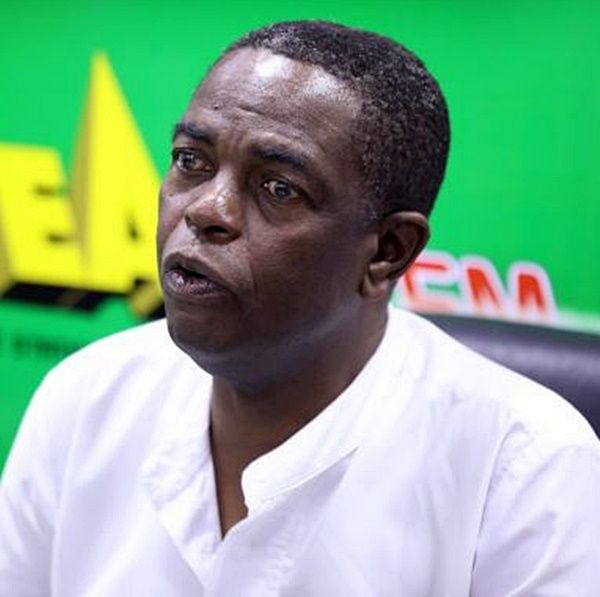
A respected lecturer, author, and preacher, Rev. Dr. Emmanuel Kwasi Amoafo, has called for increased collaboration between the church and the government to tackle Ghana’s galamsey crisis, or illegal mining.
He advocates for the church to provide sustainable alternatives through effective regulation and intervention.
In an interview with Bernard Avle on Channel One TV’s The Point of View on Monday, September 30, Rev. Dr. Amoafo emphasized the church’s crucial role in raising awareness.
He urged religious leaders to use their platforms to educate the public, especially those engaged in illegal mining, on the importance of protecting the environment and conserving water resources.
When asked if the church should take a stronger stand on environmental issues, Rev. Dr. Amoafo responded, “And then, secondly engaging actively with the government, because the government takes the church seriously. Especially in a country like Ghana, where virtually everybody goes to church.
“The government seeking votes from the public knows that the people listen to the church. The church should actively engage with the government and say that we think this thing needs to be regulated this way. They need to also provide alternatives if you just tell the government to regulate it, [it doesn’t work that way].”
Rev. Dr. Amoafo called for the church to put aside political differences and unite in the fight against the galamsey menace, advocating for a collective approach as one body. He emphasized this point by stating, “So if the church is so divided that they cannot play that role of being the salt and the light, that’s a failure.”
Rev. Dr. Amoafo urged the church to pray for the emergence of God’s chosen leader in the upcoming 2024 general elections, emphasizing the need for divine guidance in selecting a leader committed to promoting peace, justice, and righteousness.
“As a united church, it doesn’t matter which denomination you are, whether Pentecostal or mainline denomination or whatever, the church should organise prayer and say, Lord, we’re coming to you at this critical time in the history of our nation, we’re crying out to you to avert bloodshed, violence and discord, and so on, you give us the leader of your choice.
“Yes, I will not say don’t demonstrate or speak from the pulpit, even as you do that, place a lot more emphasis on organising prayers for the country by the churches.”
Abraham Amaliba, a private legal practitioner and Director of Conflict Resolution for the National Democratic Congress (NDC), criticized Akufo-Addo‘s ‘Ghana Beyond Aid’ initiative, arguing that it has become ineffective due to heavy borrowing and reliance on donor support by the current New Patriotic Party (NPP) government.
Mr Amaliba pointed out that despite Ghana receiving medical donations such as tuberculosis, HIV/AIDS, and malaria medications, as well as treated mosquito nets from the Global Fund for Community Foundation, these supplies have been stuck at the Tema port for over a year due to government inaction.
Speaking on the TV3 New Day programme, Amaliba expressed dismay over the government’s failure to clear the donated medical supplies promptly.
He emphasized that the delay in clearing these essential items contradicts the ‘Ghana Beyond Aid’ mantra, stating, “you, as a government, said Ghana Beyond Aid; that slogan has fallen in [the] water; people are giving you aid so that you can help the ordinary Ghanaians you have refused to go and clear them.”
Furthermore, Amaliba questioned the leadership of the country, expressing bewilderment at how the government is managing national affairs. He criticized the administration’s approach to governance and its impact on delivering crucial healthcare support to ordinary Ghanaians.
He said, “you, as a government, said Ghana Beyond Aid; that slogan has fallen in [the] water; people are giving you aid so that you can help the ordinary Ghanaians you have refused to go and clear them.”
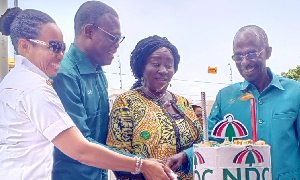
The leadership of the National Democratic Congress (NDC) has issued a stern warning to its members against fostering a culture of corruption within the government.
They emphasized that being in power should focus on bringing sustainable development to the people, rather than enriching a select few.
Speaking at the 32nd Anniversary celebration and flag raising ceremony, Mr. Fifi Fiavi Kwetey, the General Secretary, underscored the need for an NDC government to prioritize selflessness, patriotism, value for money, and accountability to the citizens.
He said: “Cadres may go, cadres may come, but the revolution of good governance, development, probity, accountability and integrity have come to stay and, therefore, the Party must be sacrosanct.
“We must ensure this Party becomes stronger and not have people in government whose thinking is how much money can we make. It must always be Ghana ahead of the Party and Party ahead of individuals,” the former MP said.
Mr. Kwetey, a former two-term Member of Parliament for Ketu South, highlighted the importance of commitment and sacrifice in achieving these goals, drawing from the example of past and present cadres.
He stressed the enduring principles of good governance, development, probity, accountability, and integrity within the party, asserting that the NDC must remain unwavering in its dedication to these ideals.
Chairman of the NDC, Mr. Johnson Asiedu Nketiah, urged party members to remain focused on winning the 2024 general election.
The NDC was formed in 1992, following a rigorous process of party formation led by Yusufu Ali, involving nationalists and revolutionists across all districts and regions.
Their efforts culminated in the acceptance of an interim certificate from the Electoral Commission on June 10, 1992, at the Art Centre, with the permanent certificate officially granted on July 27, 1992.
Deputy Ranking Member of Parliament’s Lands and Forestry Committee, Alhassan Suhuyini, has criticized the government’s Green Ghana Day initiative, labeling it as susceptible to procurement irregularities.
According to the Tamale North legislator, the initiative has failed to significantly increase Ghana’s forest cover.
While acknowledging the noble intentions behind the initiative, Suhuyini pointed out its flawed approach, which he believes lacks transparency and falls short of making a substantial environmental impact.
“While the intention behind the government initiative under the Green Ghana project remains noble, we believe that the approach is inadequate, not transparent and falls short of making a significant impact on the environment because the campaign is not linked to the creation of natural reserves and the overall effective management and conservation of forest reserves.
“It is worse that our forests and green spaces have been so compromised due to the government’s unwillingness to defeat illegal mining and its reckless policies; such as the self-serving declassification of Forest Reserves and sale of same lands to private developers and cronies. Eg Achimota Forests and Tamale Timber Market and the promotion of legislation on mining in Forest Reserves. Eg EPA LI2462.”
He expressed concern that the initiative is not linked to the establishment of natural reserves or the effective management and conservation of forest reserves.
Mr Suhuyini highlighted the degradation of Ghana’s forests and green spaces due to the government’s failure to address illegal mining and implementation of policies favoring land declassification and sale to private interests. Examples cited include the Achimota Forests and Tamale Timber Market, along with legislation promoting mining in Forest Reserves.
The legislator emphasized that simply planting seedlings once a year is insufficient to combat deforestation and climate change, especially considering the financial burden it places on the government.
He criticized the alleged corrupt procurement practices associated with the initiative, such as awarding contracts to cronies without competitive bidding, resulting in inflated costs and mounting debts for the Forestry Commission.
Mr Suhuyini urged the government to reassess its approach to the Green Ghana Project, advocating for a more sustainable, long-term strategy for reforestation.
He emphasized the importance of continuous, transparent efforts throughout the year, coupled with robust monitoring and evaluation, to achieve meaningful results in environmental protection and climate change mitigation.
“The last couple of years have proven that planting millions of seedlings only once a year is not enough to combat deforestation and address the challenges of climate change.
“It only creates the conditions for corrupt procurements; a scheme where seedlings supply contracts, printing paraphernalia are offered to cronies without competitive bidding, at inflated prices, thus, burdening the Forestry Commission with mounting debts.
“According to the Seedlings Contractors Association in Ashanti Region last year, 2023, the government owed them GH¢28 million for 2021 and 2022 seedling supplies.”
The Ga Mantse, King Tackie Teiko Tsuru II, has condemned the widespread corruption engulfing Ghana.
In a recent interview with Citi FM on Sunday, June 2, the King expressed dismay at the opulent lifestyles of the political elite, funded by public funds, while ordinary citizens grapple with poverty.
Highlighting the stark contrast between politicians’ luxuries and rural communities’ lack of basic amenities, King Tackie Teiko Tsuru II lamented the disparity.
He questioned the source of funds for expensive vehicles owned by politicians, contrasting it with the struggle to provide basic necessities like desks in classrooms.
The King emphasized the detrimental effects of misplaced priorities, particularly on the youth, urging immediate government action against corruption.
He stressed the urgency of addressing corruption for the citizens’ welfare, warning of potential consequences if left unchecked.
“Corruption is everywhere. I believe that the government must find a way to stamp its authority on corruption,” he urged.
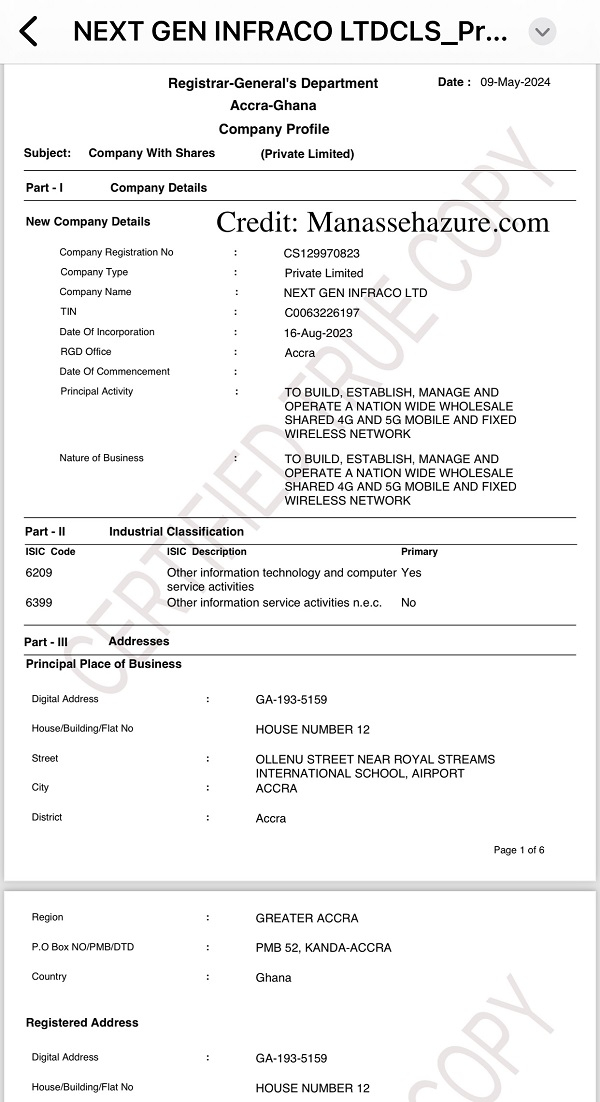
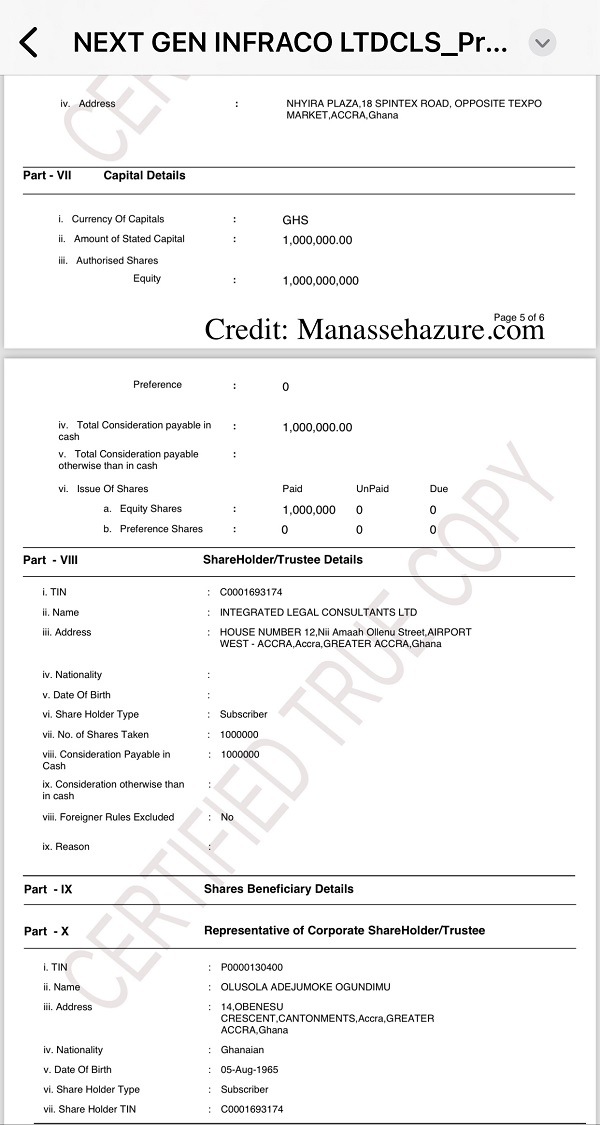
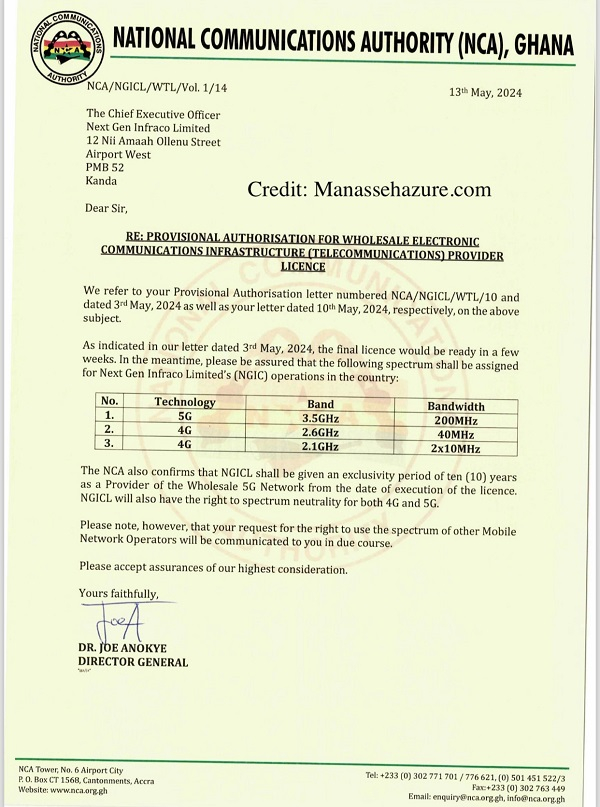
The Akufo-Addo government is facing scrutiny for reportedly awarding the contract to roll out a 5G network in Ghana by the end of 2024 to NextGen InfraCo Limited, a company only one week old.
The Minister of Communications and Digitalisation, Ursula Owusu-Ekuful, confirmed and justified the deal at a press briefing in Accra on Thursday, May 30, 2024.
She stated that there was nothing wrong with offering the contract to NextGen, as it was created specifically to deliver this service due to the absence of existing “neutral infrastructure companies” capable of doing so.
Earlier on Monday, investigative journalist Manasseh Azure Awuni detailed the contract on Facebook, highlighting issues with the deal.
He noted that President Akufo-Addo granted executive approval for the 5G deal to NextGen just a week after the company was created, raising serious procurement concerns.
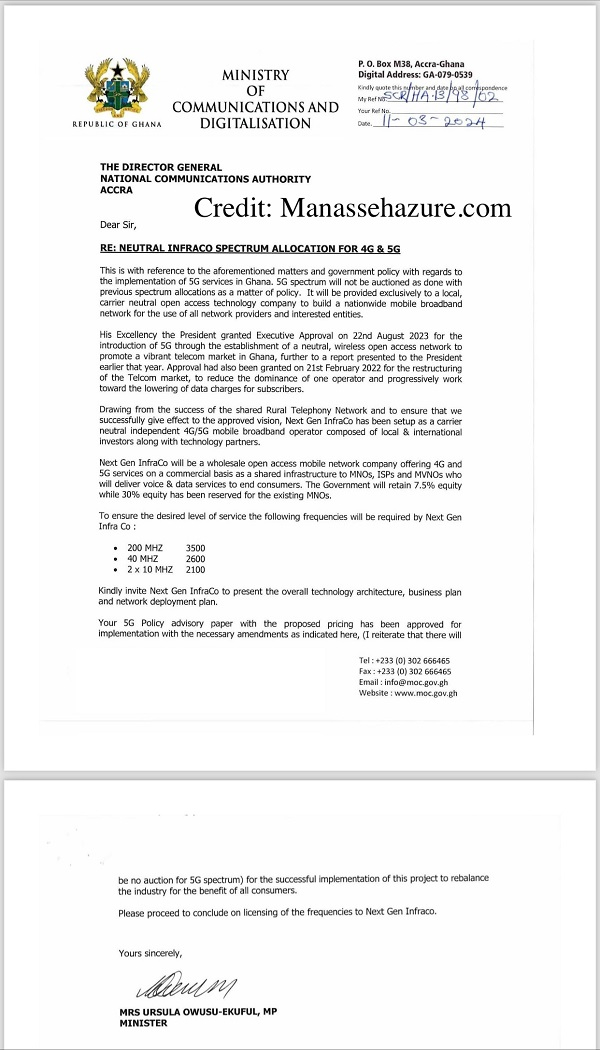
The journalist shared a supposed document from the Ministry of Communication and Digitalisation, showing that President Akufo-Addo granted executive approval for the project on August 22, 2023.
“His Excellency the President granted Executive Approval on 22nd August 2023 for the introduction of 5G through the establishment of a neutral, wireless open access network to promote a vibrant telecom market in Ghana, further to a report presented to the President earlier that year,” part of the document reads.
Ghana is making strides toward securing board approval from the International Monetary Fund (IMF) for the third tranche of $360 million under its $3 billion extended credit facility.
The government’s ongoing support program, aimed at stabilizing the economy and fostering sustainable growth, is yielding better-than-expected results.
To date, Ghana has received $1.2 billion in IMF funding, which has aided fiscal consolidation, bolstered foreign exchange reserves, and supported general economic recovery.
The IMF acknowledges Ghana’s progress toward the next disbursement, noting that the country continues to meet necessary economic and policy benchmarks.
Julie Kozack, Director of Communications at the IMF, spoke about Ghana’s status during a recent press conference in Washington, D.C., expressing confidence and support from the IMF.
Ghana is poised to receive approval for its third tranche of $360 million when the IMF Executive Board convenes in June, following a staff-level agreement on the second review of the loan-support program.
The Fund has indicated that additional adjustments will not be required from the Ghanaian government.
The government is hopeful that ongoing discussions among official creditors will lead to the conclusion of talks, facilitating the release of the third tranche of funds.
Julie Kozack also highlighted positive economic indicators, such as higher-than-anticipated growth in 2023, declining inflation, improved fiscal and external positions, and reduced exchange rate volatility.
She noted Ghana’s progress on comprehensive debt restructuring efforts, including engagements with official bilateral and external private creditors.
“On April 13th, IMF staff and the Ghanaian authorities reached a staff-level agreement for the second review of the programme. The aim is to bring the review to the IMF’s Executive Board before the end of June, and once approved by the Board, the review would give Ghana access to about $360 million. The authorities’ strong policy and reform efforts under the programme are bearing fruit, and signs of economic stabilization are emerging.”
“Growth, for example, in 2023, was higher than anticipated, and the growth projections are being revised upward. Inflation has been declining rapidly, the fiscal and external positions have improved, and exchange rate volatility has declined quite significantly. The authorities are making good progress on their comprehensive debt restructuring. The domestic debt exchange was completed last year, and on January 12th, the government reached agreement in principle with its official bilateral creditors. Ghana is also engaging with external private creditors to seek their support”, Julie Kozack added.
A Ghanaian man has alleged that the government turned down a lucrative deal with Delta Airlines due to the airline’s refusal to pay a bribe.
In an interview with Kingdom FM, he recounted that during an embassy meeting with US commercial representatives, a series of frustrating encounters and unproductive negotiations ultimately resulted in a dead end for the American airline.
According to him, he and one Hannah Acquah attended numerous meetings where Delta Airlines representatives, including one John Fechushak who stayed in a hotel for over four months, attempted to secure a deal.
He added that Mr Fechushak visited Ghana around 40 times, yet despite their efforts, the agreement was never finalized.
Delta Airlines had proposed a comprehensive contract that included the construction of an aviation school in Ghana at no cost.
This school was intended to train Ghanaian pilots, stewards, flight attendants, and other aviation personnel.
The proposal aimed at significantly boosting the local aviation industry by providing essential training and career opportunities for Ghanaians.
Despite these generous offers, the government allegedly turned down the deal.
“We had an embassy meeting with a US commercial, I and Hannah Acquah. Joseph Chuks was in a hotel for more than 4 months. He was in Ghana for 40 times but did not get the deal. We had meetings upon ,meetings where Delta Airlines (USA) were prepared for the deal but the government turned them down.
In the contract, the people had wanted to build an aviation school for free to train Ghanaian pilots. They had wanted to train stewards, flight attendants etc but the government still refused this offer. However they were quick to accept Delta Accra NewYork non-stop one aircraft,” he added.
Watch video below:
Delta Airlines (USA) were denied a deal by the @NAkufoAddo@MBawumia Government just because they refused to pay bribe to the Ghanaian Authorities.
The deal was to Establish Aviation School to Train Pilots, Flights Attendances etc for Free so they can establish full Presence… pic.twitter.com/dWDjHjrxWZ
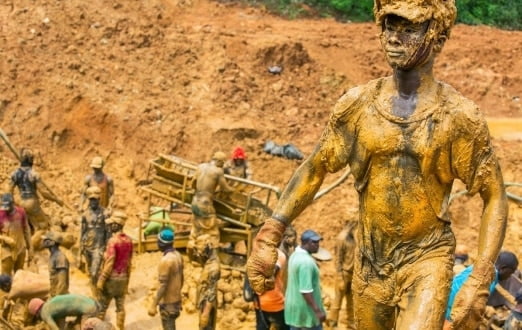
Residents and farmers of Twabidi Beposo in the Ahafo Ano North municipality of the Ashanti region have raised concerns over illegal mining activities, which they say are endangering their livelihoods.
On Wednesday, May 16, 2024, the farmers and residents took to the streets to express their opposition to galamsey in the area.
Dressed in red and black, they protested against the illegal mining, known locally as galamsey, in their community, led by the unit committee chairman, Mr. Opoku John.
They raised the issue of the sudden encroachment of lands by illegal miners, stressing that the situation poses an imminent threat to their cocoa farms, water sources, and livelihoods.
The residents believe that some chiefs are collaborating with illegal miners for their selfish interests, allowing the activities to continue in the area.
The community was taken by surprise when heavy machinery appeared in their town without prior notification or consultation.
They emphasized the necessity of protecting their land and resources for future generations and urged authorities, particularly Otumfour Osei Tutu II, the Asante Kingdom’s overlord, to act quickly to prevent impending environmental and social disasters.
The area’s Assemblyman, Augustine Fosu, who also attended the protest, expressed his dismay at the covert operations of those behind the galamsey.
He criticized the lack of proper licensing and transparency, noting that no authorization had been sought from the local assembly before the machinery’s arrival.
Fosu stated that the government of Ghana, led by His Excellency Nana Addo Dankwa Akufo-Addo, opposes illegal mining and will not tolerate land destruction and social vices such as rape and teenage pregnancies.
The assembly member emphasized the community’s stance against galamsey, highlighting its negative social impacts and urging the government to swiftly enforce regulations to protect the community’s resources and well-being.
The Minority Leader, Dr. Cassiel Ato Forson, has contended that the government’s financial decisions are significantly exacerbating the rapid depreciation of the Cedi.
Both the business community and trade unions have voiced myriad concerns about the steep decline of the Cedi against the US dollar, with recent rates hovering around GH¢15 to $1 as of Thursday, May 16.
During a press conference on Wednesday, May 15, the Minority Caucus revealed that the government disbursed an excess of GH¢7 billion to contractors outside the 2024 budget. They allege that this amount was utilized to purchase dollars, further weakening the Cedi.
In conversation with Bernard Avle on the Citi Breakfast Show aired on Citi FM, the Minority Leader emphasized that the government’s actions have led to a Cedi depreciation of over 70% since July 2022.
“Since 2022, the Cedi has depreciated more than 70% and the current problem is primarily a result of how the government is spending.
“In the last month, the government has borrowed over GH¢7 billion from the T-bill market and used this money to pay contractors who have also purchased dollars hoping that the Cedi will depreciate and so even if you go to the market to buy dollars, you struggle to get it and this is because people lack confidence in the economy.”
“The Ministry of Finance is approving these payments, and the contractors are using it to buy dollars and it is easy to track this. Unless you are not watching the fiscal space, you will see that these monies are used to buy dollars.
“My concern is that it is coming at a time when we have defaulted on our external debts, and since we have defaulted on it, one would have thought we should be seeing a lot of forex, but that is not the case,” Dr. Forson added.
The Director of Business Operations at Dalex Finance, Joe Jackson, has called upon the government to exercise fiscal discipline in the run-up to the December 7 elections to stem the further depreciation of the Cedi.
During an appearance on the Citi Breakfast Show on Wednesday, May 15, Joe Jackson emphasized the importance of avoiding a budget deficit, which he argued would exacerbate the challenges faced by the struggling Cedi and the Ghanaian economy.
He stressed the need for the government to adhere to its budgetary commitments and reduce spending, cautioning against exceeding promised expenditures, especially during an election year.
“What the government needs to do at this moment is to be fiscally disciplined and spend within its budget. The government must cut down on its spending. Make sure that you don’t spend more than you promised in this election year.
“Remember, people like Bloomberg and others do not see that this government can spend within its budget,” Joe Jackson added.
Joe Jackson attributed the current free fall of the Cedi against major trading currencies to the unplanned injection of Dollars into the economy after Ghana’s expulsion from the international market.
He pointed out that the deficit financing had contributed significantly to the currency’s depreciation, highlighting it as a consequence of Ghana’s expulsion from the international market.
“It [The Cedi depreciation] is the lapse effect after we fell out of the international market. If we had not pumped that much money into the economy, we would not be facing this situation. The major reason is that when we pumped in deficit financing, this is the effect we are now experiencing.”
The year-to-date loss on the Cedi currently stands at about 14 percent, with the Dollar trading at GH¢14.90 on the forex market, a significant increase from the GH¢10.97 recorded for the same period in May 2023.
According to Bloomberg reports, the Cedi’s depreciation has been worsened by a decline in cocoa earnings due to poor weather conditions and the swollen shoot disease, leading to a $500 million drop in exports in January and February 2024.
Bloomberg analysts anticipate a further weakening of the Cedi due to elevated risks associated with election-year funding and stalled debt deals.
Contrary to Bloomberg’s projections, Fitch forecasts that the Cedi will end 2024 at GH¢12.25 to a dollar.
President Akufo-Addo has lauded his government’s unprecedented achievements in enhancing judicial infrastructure.
He expressed this sentiment during the inauguration of the 2024 Africa Conference of the International Association of Women Judges.
Under the theme “The Role of Women Judges in Combatting Negative Cultural Practices in Contemporary Times,” the conference provided a platform to discuss crucial issues surrounding gender equality and judicial activism.
Addressing the jurists, President Akufo-Addo emphasized that investing in judicial infrastructure is crucial to realizing the conference’s theme.
“Indeed, since I assumed office in 2017, my government has made unprecedented progress in the provision of court buildings and residences for judges around the country.
“In 2020, we set out to construct 100 courthouses with residential facilities nationwide. As of February 2024, seventy-nine courthouses have been successfully inaugurated and are in use in various parts of the country. The remaining 21 projects are at various stages of completion and are expected to be completed and inaugurated soon, at least before I leave office,” he stated.
In her remarks, Chief Justice Gertrude Torkonoo welcomed members of the association and acknowledged the president’s support, praising his commitment to democracy.
“We appreciate the strong support we have received from the office of the president. The co-rumination of this support is the presence of His Excellency with us this morning who will officially be opening this conference.
“His Excellency is a lawyer and champion of justice and his name is definably hatched in the legal history of this country as the most distinguished legal practitioner. His belief in the rule of law has been evident during his tenure as president and the judicial service of Ghana has been a beneficiary of the exceptional level of physical and technological infrastructure during this period,” she added.
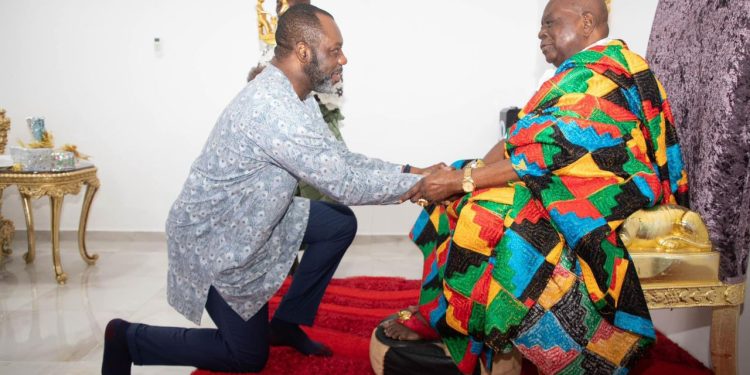
The Awomefia of Anlo State, Togbe Sri III, offered his support to Energy Minister Dr. Matthew Opoku Prempeh, urging him to remain focused on his commendable work for the nation during a courtesy visit to his palace in Anloga on Wednesday, May 8th, 2024.
Expressing delight at seeing the Energy Minister, whom he referred to as his son, Togbe Sri encouraged Dr. Prempeh to make regular visits to his palace and continue his diligent efforts that have defined his tenure in public office.
“I fully support you and urge you to maintain your focus. Greater things lie ahead, so don’t let anything distract you,” the Awomefia advised Dr. Opoku Prempeh.
“I am solidly behind you and I want you to keep being focused. What is ahead of you is greater and so do not be distracted by anything,” the Awomefia told Dr. Opoku Prempeh.
Dr. Prempeh, in turn, acknowledged the longstanding relationship between himself and Togbe Sri, which motivated his visit. He also reminisced about the strong bond between his grandfather, the Asantehene, and Togbe Sri, which prompted a previous visit by the Asantehene to the Awomefia.
The discussions further revolved around the enduring collaboration between the government and traditional leadership in Ghana, emphasizing a mutual commitment to inclusivity, dialogue, and development.
“I have enormous confidence in Ghana’s future, where the political class and traditional authorities work together harmoniously for the advancement of the growth and prosperity of the people,” Dr. Prempeh said.
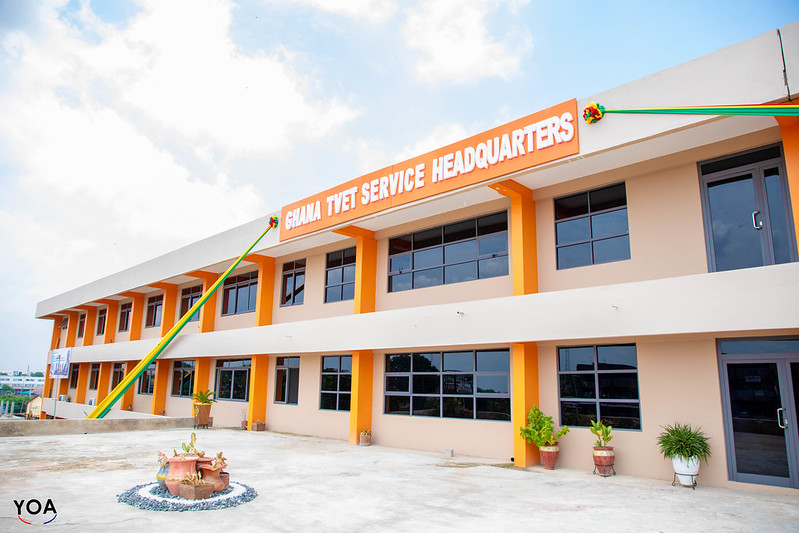
The government plans to distribute 1.2 million Technical and Vocational Education and Training (TVET) learning materials covering 24 trade areas to both government and private TVET institutions nationwide.
The distribution of these textbooks is set to commence within the next two weeks, following proposed delivery schedules tailored for the various TVET schools.
“These books are going to be distributed to the students for free in fulfilment of the President’s promise of providing free TVET for all,” Dr Fred Kyei Asamoah, Director General, Commission for Technical and Vocational Education and Training (CTVET) said at a media engagement.
Dr. Fred Kyei Asamoah, Director General of the Commission for Technical and Vocational Education and Training (CTVET), highlighted that these books will be provided to students free of charge, fulfilling the President’s commitment to offering free TVET education for all.
Dr. Asamoah also noted that the government has completed the implementation of the initial five-year strategic plan (2018-2022) and is now in the process of developing a TVET policy and the subsequent five-year strategic plan (2025-2029).
He further outlined the significant strides made, including the upgrade of all 34 former NVTI institutions, the establishment of new workshops for Technical Universities, and the modernization of Technical Institutes with industry-standard equipment.
Additionally, he announced the construction of four new District TVET centers of excellence in Anyinam, Poky No. 2, Assin Jakai, and Akumadan, funded by 25.7 million Euros.
“Our appeal to the media will be to support us in promoting these achievements and to also support us in making TVET the number one choice among the youth of Ghana,” he said.
Dr. Asamoah emphasized the importance of media support in promoting these achievements and making TVET the preferred choice among Ghanaian youth.
He highlighted the adoption of Competency Based Training (CBT) curriculum as a key reform strategy to enhance the quality of teaching and learning.
As part of this approach, existing curricula have been standardized, and over 8,000 TVET instructors have undergone training in the CBT methodology.
Furthermore, he mentioned ongoing efforts in curriculum development to address skills gaps, with collaboration between the Commission and Sector Skills Bodies (SSBs) playing a vital role in tasks such as occupational standards generation and curriculum development.
He revealed an increase in the number of economic sectors identified from 22 to 24, with a total of 12 established SSBs as of 2023.
The Commission, in conjunction with SSBs, has developed 108 CBT curricula at various levels, with an additional 115 CBT programs currently in development as of January 2023.
Veteran Journalist and Managing Editor of the Insight newspaper, Kwesi Pratt Jr., has expressed deep admiration for President Akufo-Addo’s significant infrastructure investments in the education sector of Ghana.
Mr. Pratt shared his sentiments during a panel discussion on Peace FM’s morning show programme, Kokrokoo, moderated by Kwami Sefa Kayi on Tuesday, April 16, 2024.
“I thought inspite of Free SHS there was nothing government to write home about but I have chanced on some information that points to the fact that a lot is going on in the education sector. I know what I am talking about and Kwami, you know that I do not talk without facts. A lot is happening, and the construction of new science laboratories is also ongoing,” he added.
Also present on the panel were deputy campaign chairman and strategist for the 2024 campaign team of the New Patriotic Party (NPP), Nana Akomea, and Professor Kofi Agyekum, popularly known as Opanyin Agyekum.
He questioned why government’s not creating public awareness about the significant investments made in education.
“This morning I was enquiring from Nana Akomea [leading member of the New Patriotic Party, NPP] who was a member of the panel, why the government has made all these massive investments in the country’s education sector but very little is heard about them.
Acknowledging prevailing economic difficulties, Mr. Pratt expressed his astonishment and appreciation for the Akufo-Addo administration’s accomplishments in the education sector, urging the government to better showcase its achievements.
Mr. Pratt advocated for prioritizing education achievements over digitalization in government communication efforts.
“The education sector undoubtedly has challenges that we all read and know about but if you look at the construction of new science laboratories going on across the country, it explains why examination results in the sciences have greatly improved and I think this is what the government should be talking about,” Kwesi Pratt said.
This is Kwesi Pratt, a sharp critic of the NPP government praising Nana Addo for his unprecedented contributions to Ghana's education system.
No government has invested in Ghana's education like the Nana Addo Bawumia led government:
The New Patriotic Party (NPP) remains optimistic about winning the upcoming by-election in the Ejisu Constituency, despite the emergence of independent candidate Kwabena Owusu Aduomi as a strong contender.
Both the party’s national and regional executives have intensified their campaign efforts within the constituency, expressing confidence in retaining the Ejisu parliamentary seat.
Henry Nana Boakye, National Organizer of the NPP, affirmed the party’s unwavering confidence in an interview with Citi News, stating, “Ejisu is clearly NPP, and NPP is Ejisu…we do not believe any independent candidate can secure victory in the Ejisu Constituency.”
The party further emphasized that Kwabena Owusu Aduomi, the former Member of Parliament for the area running as an independent candidate, has made minimal contributions to the constituency’s development.
Nana Boakye emphasized that the independent candidate does not pose a threat to the party’s anticipated triumph.
“Clearly Ejisu is NPP and NPP is Ejisu…we do not see that any independent candidate can win the Ejisu Constituency.
“We have a vibrant and energetic lawyer and we are strategically positioning the party to win this hands down,” he stated.
“The facts are there; under President Kufuor, he was appointed at the Ministry of Highways as a director. Under Nana Akufo-Addo he was appointed as a deputy minister of roads…NPP gave him the opportunity to be an MP for 12 good years.”
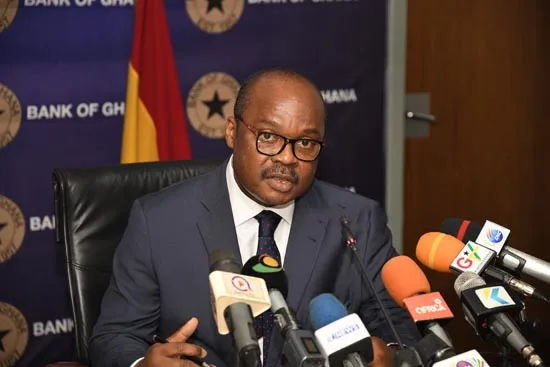
Governor of the Bank of Ghana (BoG), Dr. Ernest Kwamina Yedu Addison, has reaffirmed the government’s commitment to preventing state institutions from draining the nation’s finances with election-related expenses.
He emphasized that this narrative has hindered the economic advancement of the country, a challenge the government aims to address this year, notwithstanding the upcoming elections.
Dr. Addison highlighted that Ghana has historically struggled to execute IMF-supported programs during election years due to excessive spending by state entities.
During a press briefing on Saturday, April 13, 2024, after Ghana reached a staff-level agreement with the International Monetary Fund (IMF) on the Extended Credit Facility (ECF) arrangement, Dr. Addison stated, “In Ghana’s recent history, we have not been able to successfully implement an IMF-supported programme in an election year without derailment.” He emphasized the government and the Central Bank’s commitment to changing this pattern.
It is anticipated that the IMF Board will approve Ghana’s third tranche of GHS$360 million in June this year, following the staff-level agreement between Ghanaian authorities and the IMF Mission team.
This approval would bring the total disbursement for Ghana’s ECF arrangement, supported by the Post-COVID-19 Programme for Economic Growth (PC-PEG), to US$1.56 billion.
To date, Ghana has received US$1.2 billion from the first two tranches of the US$3 billion three-year IMF loan-support program.
The overarching goal of the program is to restore macroeconomic stability and debt sustainability, enhance resilience, and establish the groundwork for stronger and more inclusive growth.
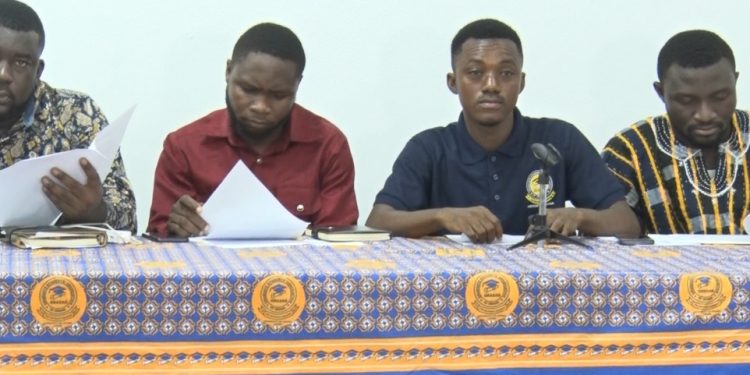
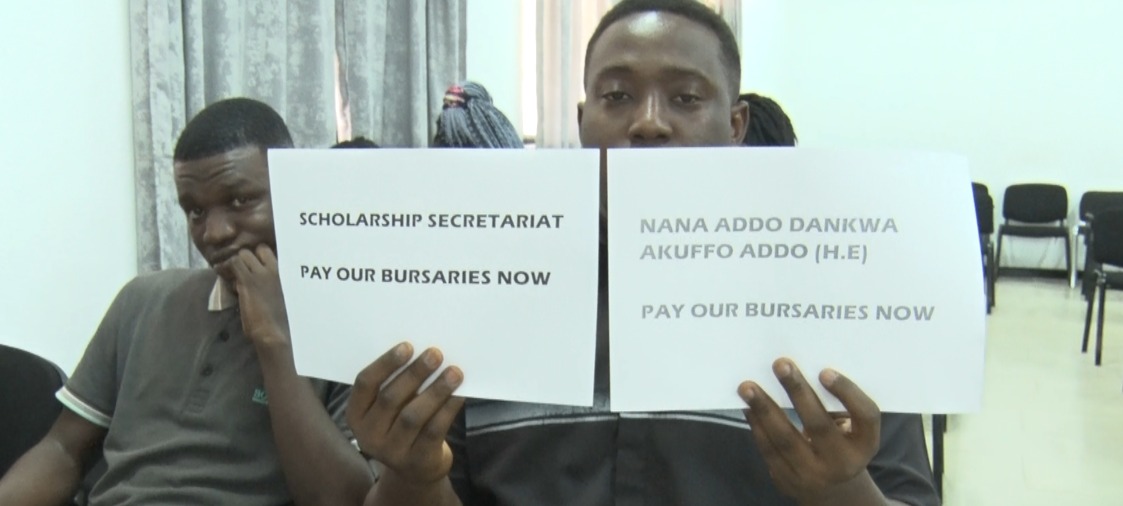
The leadership of the Graduate Students Association of Ghana (GRASAG) has issued a stern one-week ultimatum to the government, demanding the immediate disbursement of long-overdue research support grants, colloquially referred to as “bursaries.”
Expressing grave concerns over the prolonged three-year delay in fund allocation, the association emphasized the detrimental effects of this delay on the academic pursuits of numerous graduate students.
Speaking at a press briefing held in Accra on Wednesday, April 10, President of the University of Ghana Chapter for GRASAG, Claudius Angsongna, underscored the urgency of the situation. He warned that failure to address their grievances promptly would inevitably lead to nationwide demonstrations.
Calling on the government to ramp up funding for graduate students and ensure adequate resourcing, Mr Angsongna emphasized the pressing need for immediate action. The association demands a response from the government within one week.
Failure to do so will prompt nationwide demonstrations and further press conferences to amplify their grievances.
“We wish to express our profound dissatisfaction with the persistent delays in the disbursement of research grants by the Scholarship Secretariat. Despite the repeated assurances, the crucial financial assistance required for our research endeavours remains elusive.
“For approximately three years now, GRASAG members have been deprived of any governmental support to conduct research. We implore the director of the Scholarship Secretariat to promptly address the issue to fulfil the obligations of graduate students. Graduate students are neglected, and we’re suffering.
“We call on the government to increase the funding for graduate students and ensure that we’re adequately resourced. We demand a response from the government within a week, in the absence of that, we will organize nationwide demonstrations and further press conferences to highlight our grievances.”
Chairman of the Foreign Affairs Committee and Member of Parliament (MP) for Asante Akyem North, Andy Appiah-Kubi, has justified the increment in passport fees.
Appiah-Kubi argues that passport acquisition has shifted from a necessity to a discretionary choice, asserting that it is no longer a primary means of identification but rather an option.
He highlighted the Ghana Card as the primary identification document, rendering passports necessary only for travel purposes.
“You and I know that with Ghana card as identification card, one will only need passport if he or she wants to travel. So why should someone who does not need passport for anything be made to pay?” he quizzed.
Speaking on Adom TV’s Big Agenda, Appiah-Kubi emphasized the redundancy of passports for individuals who do not require them for travel, questioning the rationale behind charging them.
His remarks follow the Ministry of Foreign Affairs and Regional Integrations’ recent increase in passport fees, effective April 1, 2024. The adjustment includes a rise in fees for both 32-page and 48-page booklets.
While facing backlash, Appiah-Kubi rationalizes the fee hike by explaining that prior to the adjustment, passport printing costs were absorbed significantly by the government. He underscores that this practice has been ongoing since 2016.
Moreover, Appiah-Kubi anticipates that the increased fees will facilitate revenue generation for the ministry, enabling the establishment of more district offices. This expansion aims to alleviate the inconvenience faced by individuals traveling long distances to obtain passports.
He further elaborates on the challenges with passport issuance, citing delays caused by shortages of printing materials.
Mr Appiah-Kubi expressed optimism that the fee increment will address these issues by providing the government with the necessary resources to procure additional printing materials.
The Ministry of Finance, in collaboration with the Ministry of Energy, has directed the National Petroleum Authority (NPA) to exclude the Price Stabilisation and Recovery Levy (PSRL) from the Price Build-Up.
This directive follows the provisions of section 2 (b) of the Energy Sector Levies Act 2015 (Act 899), as amended in 2021, Act 1064, and will be effective for a three-month period.
Responding to this directive, the NPA has announced the removal of the PSRL from the Price Build-Up, effective from April 1st to June 30th, 2024. All Oil Marketing Companies (OMCs) and LPG Marketing Companies (LPGMCs) are required to comply with the adjusted PSRL rates during this period.
Previously, the PSRL rates were established at 16.00 GHp/Lt for petrol, 14.00 GHp/Lt for diesel, and 14.00 GHp/Kg for LPG, effective from March 16th, 2024.
However, these levies will be reduced to zero for all fuel products starting April 1st, 2024.
This government intervention is aimed at alleviating the financial burden on consumers caused by high fuel costs resulting from rising global prices.
By temporarily eliminating the PSRL, the government intends to ease the financial strain experienced by consumers at fuel stations.
All OMCs and LPGMCs are urged to implement the revised PSRL rates in their Price Build-Up from April 1st to June 30th, 2024, ensuring transparency and adherence to the government’s directive.
Consumers are advised to take note of these adjustments and adjust their expectations accordingly. The government is implementing measures to mitigate the impact of global market fluctuations on fuel prices, and this action is part of that effort.
A Democracy Scholar affiliated with the Hoover Institute and Stanford University, Prof. Larry Diamond, has voiced his apprehensions regarding the global regression of democracy.
Highlighting a decline in the number of democracies worldwide compared to a decade ago, Prof. Diamond noted citizens’ increased discontent with their governments.
During an interview on The Point of View on Citi TV, hosted by Bernard Avle, Prof. Diamond cited countries such as Niger, Burkina Faso, Mali, and Tunisia, where insurgencies have erupted.
“Democracy is in decline globally, which means there are fewer democracies now than it was 10 years ago. More countries have been living in democracy than have been moving to it. Witnessed Niger, Burkina Faso, Mali, Tunisia, if you want to go further North, the only Arab countries that had democracy no longer has it.
“We have had troubles in Latin America. We’ve had troubles elsewhere in Africa. South Africa is not doing very well right now democratically because of bad governance.”
“So, if you ask why [I say democracy is in decline], one reason is the failure to control corruption. The poor quality of governance and the rule of law are often a leading indicator. But there’s also a trend of greater social polarization as a result of social media, and disinformation, particularly from authoritarian actors like Russia and China,” he asserted.
Prof. Diamond attributed the erosion of democracy to governmental failures in curbing corruption and ensuring effective governance.
He also underscored the exacerbation of social polarization due to the proliferation of social media and disinformation campaigns, particularly originating from Russia and China.
“The decline in democracy can be attributed to governments’ inability to curb corruption and uphold the rule of law. Additionally, the rise of social media has fueled social divisions, exacerbated by disinformation campaigns from authoritarian regimes,” he explained.
Prof. Diamond emphasized citizens’ heightened expectations for economic progress, juxtaposed with disappointments stemming from the global economic downturn since the 2008 financial crisis.
While acknowledging citizens’ enduring faith in democracy, Prof. Diamond stressed the urgent need for global efforts to strengthen democratic institutions and combat corruption.
“More democracies are failing, and it seems to be on trial because it’s often yielding to authoritarian rule, via military coups we have seen in West Africa. We have a lot of work to do to show that democracy can be made to work, and can become more effective. To fight corruption and improve the rule of law,” he opined.governments must address citizens’ economic grievances and combat corruption to restore trust in democratic governance,” he advocated.
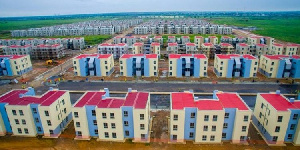
The opposition in Parliament has vehemently opposed the government’s proposal to collaborate with a private developer to address the issues surrounding the Saglemi Housing Project.
This stance follows the revelation by the Minister for Works and Housing, Kojo Oppong-Nkrumah, that an estimated $100 million is needed to make the area suitable for occupancy.
During a visit to the project site on Tuesday, Oppong-Nkrumah outlined the government’s plan to engage a private partner within five weeks.
“I gave instructions to the technical working group that within the next five weeks, it should go ahead with an international expression of interest that is designed to attract private developers who can come in and complete this project for us so that we can put it to use.”
However, the Ranking Member on the Works and Housing Committee, Vincent Oppong Asamoah, expressed reservations, alleging that the government aims to transfer the Saglemi Housing Project to its political allies.
Asamoah further criticized the current administration, stating, “the only thing is that they just want to reduce the price, and then they will sell it to their cronies. They are saying, Oh, we are bringing in partners here, and at the end of it, it is their people that are going to come in.”
He further criticized the current administration, claiming, “If you go out there, all state lands and every property are going for sale under the NPP administration. Every property, landed property, is going for sale. Let’s see the end of the NPP administration, and we will see the rot,” citinewsroom.com quoted him.
Initiated in 2012 during the National Democratic Congress (NDC) government’s tenure, the Saglemi Housing Project aimed to build 5,000 housing units.
However, the project has been embroiled in controversy, with allegations of financial mismanagement leading to its suspension.
“I gave instructions to the technical working group that within the next five weeks, it should go ahead with an international expression of interest that is designed to attract private developers who can come in and complete this project for us so that we can put it to use.”
“The only thing is that they just want to reduce the price, and then they will sell it to their cronies. They are saying, Oh, we are bringing in partners here, and at the end of it, it is their people that are going to come in.”
Late in March, Qasim received a call informing him that his brother, a Taliban government employee in Afghanistan, had suffered critical injuries in a suicide attack close to Kabul’s Ministry of Foreign Affairs.
The 32-year-old and his family hurried to the hospital, but when they arrived, the physicians informed him that his brother had already passed away.
A security checkpoint was struck by the explosion as government workers were departing for the day. It struck at the centre of the “Green Zone,” the capital’s strongly defended diplomatic quarter, which existed up to the fall of the old Afghan government in August 2021. Later, Islamic State Khorasan, also known as ISIS-K, claimed responsibility for the incident. This was the group’s second attack on the ministry this year as it focuses its firepower on high-profile targets in an effort to topple the Taliban’s government and erode public trust in its guarantees of security.
“The Taliban are saying that they protect us, but really they cannot. Still we face threats from different groups in Afghanistan. I don’t know who is really behind these incidents, ISIS or others,” Qasim, who asked that his last name not be used due to security concerns, told CNN.
“Currently we don’t have security in Afghanistan at all, whenever we go out we don’t know if we will come home alive or not,” he added.
In the nearly two years since the Taliban seized control of Afghanistan, ISIS-K has scaled up the volume and complexity of attacks across the country, putting pressure on the new government and raising concerns in the West about the possible regeneration of a group that could once again pose a serious threat internationally.
ISIS-K and the Taliban, both Sunni Islamist extremist groups, are enemies with differing ideologies, fighting each other for control over parts of the country — and recruits.
ISIS-K’s recent attacks have largely been aimed at the Taliban and other symbolic targets, as well as at Afghanistan’s Shia Muslim minorities, in particular the ethnic Hazaras. Bombings have increased in urban areas, leaving hundreds injured and dead. Between late 2022 and early 2023, ISIS-K attacked the Pakistani and Russian embassies, hit a hotel where Chinese business representatives were staying and carried out an explosion at an air force compound.
The group has frequently published its claims in its weekly newsletter, Al Naba, alleging that it has struck on 283 occasions in Afghanistan since the Taliban’s takeover, killing at least 670 people and injuring 1,200 — a significant uptick in casualties per attack.
With media restrictions severely affecting journalists’ ability to report independently in the country, and an absence of Western intelligence, it’s difficult to verify these figures. In an address to the Security Council in March, the head of the UN Assistance Mission in Afghanistan (UNAMA), Roza Otunbayeva, said that ISIS-K posed “a growing threat,” and raised concerns over the Taliban’s capacity to cope with that challenge. But the Taliban have insisted that it has full control.
In light of patchy information on the ground, analysts are increasingly turning to open sources to assess the state of play in Afghanistan.
Afghan Witness, a project run by the UK-based Centre for Information Resilience, which monitors human rights in the country, this week released a new dataset of verified abuses and violent incidents since the Taliban’s takeover. The data, which is available in a live map, includes 367 pieces of open-source evidence — largely videos and images shared on social media — about 70 ISIS-K attacks since August 2021. Taken together, they reveal a gradual shift in the group’s activities in Afghanistan — from a few small-scale attacks targeting Taliban patrols and checkpoints in rural areas, such as the eastern Nangarhar province, where ISIS has maintained a presence since 2015, to a concentration of attacks in urban areas, including in the capital, Kabul, Herat in the west, and Mazar-i-Sharif and Kunduz in the north.
Before the Taliban’s return to power, ISIS-K had not claimed any attacks in Mazar-i-Sharif, Afghanistan’s third most populous city, but since then the group has claimed nine, including a blast in March that killed the Taliban governor of Balkh province in his office. In the first year under the Taliban’s new government, ISIS-K claimed eight attacks in Kunduz city.
Afghan Witness’ data on verified attacks and ISIS-K claims reflect the group’s continued targeting of civilians, notably the Hazara community in Kabul, Herat and other cities, though attacks have slowed over the past few months as the group has focused on higher-profile Taliban targets.
“It is clear from the data and propaganda that they are pursuing elements of strategies used elsewhere, such as the targeting of minorities to promote sectarianism, and they have become increasingly bold in targeting high-profile and symbolic targets within Afghanistan,” said David Osborn, team leader of Afghan Witness.
“Recently, the Taliban appear to have conducted a series of raids against the Islamic State, coinciding with a reduced number of attacks by the group. This is the picture we get from open source but in the long term it is unclear how far the Taliban’s actions will blunt Islamic State-Khorasan’s capability inside Afghanistan,” he added.
Despite the Taliban’s promises of a more moderate form of rule than when they were last in power two decades ago, they have reintroduced harsh measures in line with their strict interpretation of Islamic law, or Sharia, including public executions, flogging and banning women from education and the workplace.
As the Taliban try to minimize the threat ISIS-K poses, attacks on civilians continue.
“We’ve seen Islamic State-Khorasan target Shia Hazara as they attend schools, mosques and festivities. What is most striking is the helplessness of those caught up in the violence and the constant state of instability and fear that is created by the attacks,” Osborn said of Afghan Witness’ research. These communities feel the de facto authorities won’t defend them, after years having been persecuted by the Taliban themselves, he added.
Nearly half of the attacks verified by Afghan Witness hit crowds as they gathered in public spaces, including markets, schools, hospitals, funerals, weddings and religious services.
In October 2021, two months after the US withdrawal, ISIS-K fighters bypassed Taliban security to access Imam Bargah Mosque, the largest Shia mosque in Kandahar, a city in the south of the country, during Friday prayers. They shot the temple guards, then detonated their explosive vests among the crowds, claiming to have killed and wounded more than 100 people. At the time, CNN was able to confirm more than 30 deaths.
A year later, in September 2022, a suicide bombing struck Kaaj Educational Center in Kabul’s Dasht-e-Barchi district — a predominantly Hazara and Shia neighborhood that had suffered several devastating ISIS-K attacks before the Taliban took over — killing at least 25 people. The students, many of them girls, were taking a practice university entrance exam. The attack, videos of which were verified by Afghan Witness, was not claimed by ISIS-K, but, according to analysts, bore the hallmarks of the group.
Earlier that month, Human Rights Watch (HRW) said that Taliban authorities “had an obligation to protect at-risk communities” from repeated ISIS-K attacks, but that those authorities were failing to provide them with security, based on interviews with 21 survivors and their family members. Richard Bennett, the UN special rapporteur on human rights in Afghanistan, has also called for investigations into attacks on Hazara, Shia and Sufi communities, which he described as bearing the hallmarks of “crimes against humanity.”
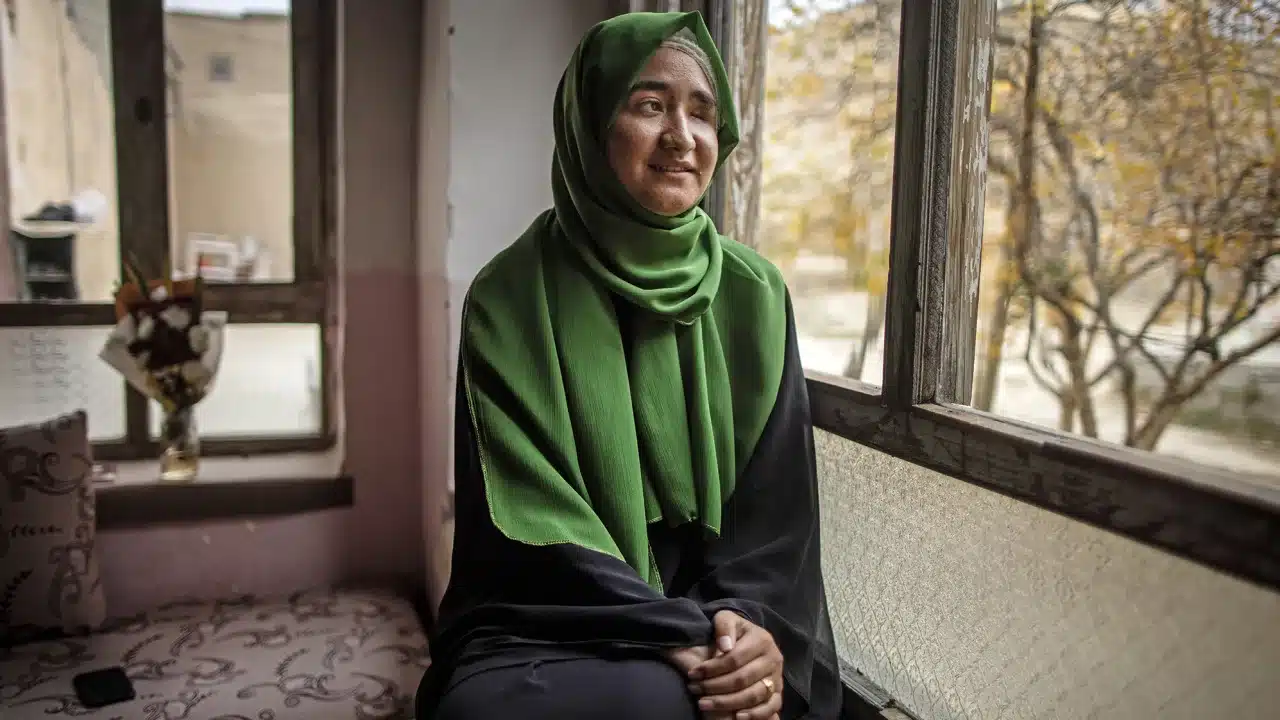
Fatima Amiri, 18, was among the students sitting the exam when gunfire erupted. She lost an ear and an eye in the attack that also shattered her jaw, and is still receiving medical treatment for her injuries. She recalls students screaming as a gunman opened fire on them at their desks, followed by the sound of an explosion, and her peers lying bloody around her on the floor.
“I saw many of my classmates were dying. I tried to escape. All the ways were closed. I climbed on a wall and jumped, I was in a bad condition full of blood,” she said. “I am now a half-normal human being with one eye and one ear.”
“We know that the Taliban cannot protect us. No one feels safe currently in Afghanistan.”
ISIS-K’s attacks have stoked anxiety among US officials about the group’s capabilities, with some warning that it could soon develop the ability to strike Western targets.
Gen. Michael “Erik” Kurilla, head of the US Central Command (CENTCOM), told lawmakers in March that ISIS-K had become more emboldened, aiming to grow its ranks and inspire or direct attacks in the region and beyond. He estimated that the group would be able to conduct “an external operation against US or Western interests abroad in under six months, with little to no warning.” Pressed about where terrorist attacks originating in Afghanistan might be directed, Kurilla said Europe or Asia were more likely targets than the United States.
Kurilla’s statement highlights one of the chief concerns among Western intelligence — that now, in the wake of the US withdrawal, it is difficult if not impossible to assess the Taliban’s effectiveness in curtailing ISIS-K. With no military or diplomatic presence on the ground, and drones now having to fly many hours from distant bases to get to Afghanistan for reconnaissance, intelligence access is incredibly limited, according to US officials and analysts.
For that reason, some have disparaged the Biden administration’s “over-the-horizon” strategy — aimed at striking terrorists without American boots on the ground — as “over the rainbow.” They point to the botched US drone strike in Kabul that killed 10 civilians, including an aid worker and seven children, as an example of the pitfalls for intelligence agencies even before the complete withdrawal, and the killing of al Qaeda leader Ayman al-Zawahiri as one of the sole successes to date.
In a 2023 threat assessment report by US intelligence agencies, the Office of the Director of National Intelligence said that ISIS-K “almost certainly retains the intent to conduct operations in the West and will continue efforts to attack outside Afghanistan.”
The US has not recognized the Taliban as the government of Afghanistan. US officials are not cooperating with the Taliban to counter ISIS-K, nor does the US share any intelligence information with them, CENTCOM spokesperson Maj. John Moore told CNN. Instead, the Taliban are fighting the group — which the US estimates now numbers between 2,000 and 2,500 fighters in Afghanistan — on its own.
The uptick in violence has put the Taliban in a difficult spot. After two decades fighting their own insurgency, they are grappling with delivering security and sticking to their signature pledge under the US-Taliban Doha Agreementin 2020, to prevent any group from using Afghanistan to threaten the safety of the US and its allies.
Taliban security forces have been waging ongoing operations and night raids against ISIS-K. The raids often target civilians accused of harboring or helping ISIS-K members, with the Taliban assaulting and detaining people without due process, according to research by Human Rights Watch (HRW). In some cases, Taliban authorities have forcibly disappeared or killed detainees, dumping or displaying bodies in public areas.
“The Taliban have been going after them in ways that are actually counterproductive because they have tackled them in the same way that everyone who’s been in power in Afghanistan has tackled insurgencies, which is as brutally as possible, which means you stir up a lot of resentment in local communities, and that stirs up more recruits,” Patricia Gossman, associate director for HRW’s Asia division, said. “We documented a number of raids by the Taliban in Kunar and Nangarhar, which ended up with a lot of people being killed who may or may not have had anything to do with ISIS-K.”
The US National Security Council claimed in April that the Taliban had killed the ISIS-K leader who plotted the deadly 2021 suicide bombing at the Kabul international airport’s Abbey Gate, which was carried out amid chaotic evacuation efforts, killing 13 US service members and more than 170 Afghans who were trying to flee the country. In the days prior to the attack, the suicide bomber was among thousands of prisoners who were freed by the Taliban from Parwan detention facility at Bagram air base and Pul-e-Charkhi prison.
“In 2021, ISIS-K was reduced to a couple of cells in the country and a very tiny, small stronghold in Kunar Province, and that was it. However, in the less than stellar handover procedure, in that chaos, the Taliban opened the prisons, including Bagram, which was a big mistake … they underestimated that there were also a couple of thousand ISIS-K members, who, once freed, just walked off,” said Hans-Jakob Schindler, senior director of the Counter Extremism Project, who served as a member and then as coordinator of the UN Security Council’s ISIL, al Qaeda and Taliban Monitoring Team.
“The organization was very diligently able to reestablish itself.”
UN Secretary-General António Guterres reported in January 2022 that the number of ISIS-K recruits had doubled in less than a year, from approximately 2,200 to nearly 4,000 fighters, with up to half of them foreign terrorist fighters, according to one assessment. Their ranks were buoyed by the prison breaks, and their diverse membership has meant the Taliban risk defections by countering them, Schindler said, adding that could spur anti-Taliban factionalism. Since the group was established in 2015, ISIS-K has included a number of former Taliban, as well as Pakistani fighters, including from the Tehrik-e Taliban Pakistan (TTP) which was designated as a foreign terrorist organization by the United States in 2010.
The group, operating in compartmented cells, is capitalizing on loose tactical partnerships and a large number of unaffiliated fighters, or freelance jihadists, who now have greater access than ever before to a large number of capabilities following the United States’ hurried departure, according to Javid Ahmad, a nonresident senior fellow with the Atlantic Council’s South Asia Center who is tracking ISIS-K’s activities.
“They now have unfettered access to the black market, for purchasing not just light weapons, but fertilizers for explosives, smaller commercial drones, which they can customize. They have access to sophisticated communication equipment. They are buying laser-guided sniper weapons. They have access to night vision goggles. And oftentimes when they do targeted assassinations, that’s how they do it,” said Ahmad, formerly Afghanistan’s ambassador to the United Arab Emirates, who has worked with the US defense community.
Ahmad and Schindler both say that the ISIS-K bombing at the entrance of the foreign ministry, past at least three checkpoints, reflects the group’s growing access to intelligence and its capacity to execute complex operations. And though it has not yet demonstrated its ability to carry out attacks outside of Afghanistan, it has ambitions to do so, they agree.
“We are about to repeat the same mistake that we did in the 1990s, believing that Afghanistan … has very little if anything to do with us,” Schindler said. “We took the eye off the ball and we are about to do the same thing again.”
Leaked classified documents from the Pentagon, obtained by The Washington Post in April, portray Afghanistan as a staging ground for ISIS-K, and suggest the group is a growing threat to the US, Europe and Asia. The US intelligence assessment, which was disseminated on the Discord messaging platform, revealed the group’s efforts to coordinate several external operations, targeting embassies, churches, business centers and the 2023 FIFA World Cup soccer tournament, the Post reported.
Responding to a question about the leaks, Vedant Patel, the US State Department’s deputy spokesperson, said: “The degradation of ISIS in the region continues to be a top priority for this administration and it’s something that we continue to work collectively on with our allies and partners.”
The Taliban rejected the report, with its spokesperson, Zabihullah Mujahid, saying in a statement on Twitter that the Islamic Emirate of Afghanistan “has full control over the country and does not allow anyone to use Afghanistan against the security of any other country,” adding that terrorist groups like ISIS-K had been “severely affected and are in the process of being destroyed.”