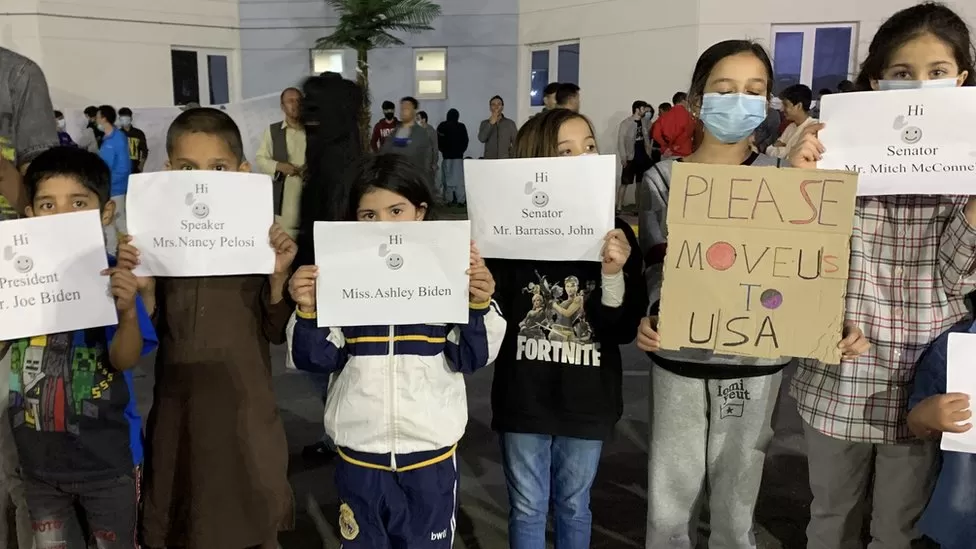
Tag: Afghan

  • Special forces prevents elite Afghan troops’ bids for resettlement in UK

    Special forces prevents elite Afghan troops’ bids for resettlement in UK

    The UK’s Special Forces stopped Afghan soldiers they had fought with from moving to the UK when the Taliban took over Afghanistan. This is according to a report by BBC Panorama.

    Leaked papers prove that special forces said no to some people who applied to join them, even though some of the applications showed strong proof that the person had served with the British military.

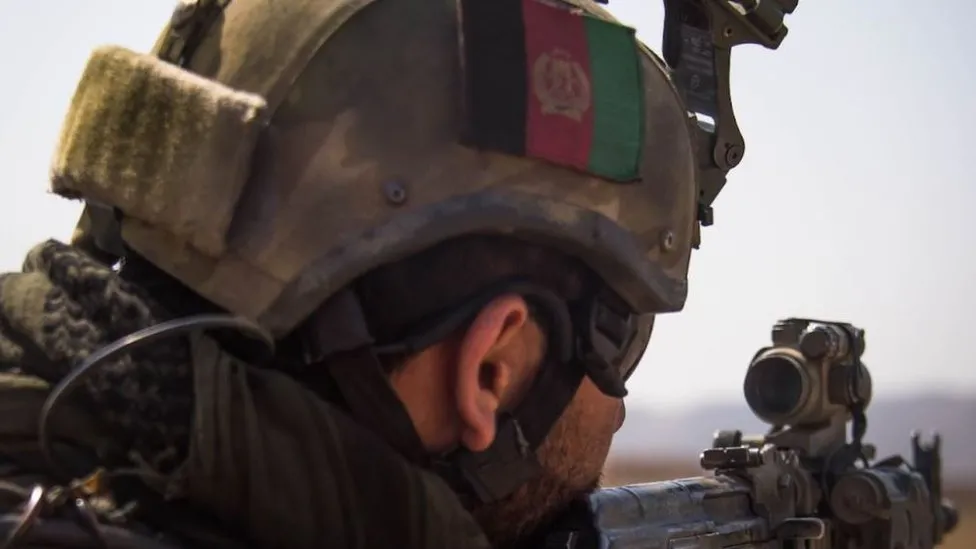
    Afghan commandos went with British special forces on very risky missions during the war.

    The Defence Ministry said it was doing a review on its own.

    When the Taliban took control in August 2021, members of Afghan Special Forces units CF 333 and ATF 444 were in danger because they had helped UK Special Forces fight against the Taliban.

    They could apply to move to the UK under the Afghan Relocation and Assistance Policy (Arap) program, but many were not approved. Many people have been hurt, harmed, or killed by the Taliban since.

    The Armed Forces Minister, James Heappey, said that they will check 2,000 applications again because they think the process for making decisions about them was not strong enough.

    Panorama saw some papers that show a set of rules that say since 2023, any Triples applications that meet a certain standard have been sent to UK Special Forces for approval or denial of sponsorship.

    The SOP document, which was found by the investigative website Lighthouse Reports and shared with Panorama, says that if UK Special Forces said no to sponsoring someone, that person was automatically seen as not eligible and got a rejection letter.

    Panorama got a hold of emails from inside the Ministry of Defence. The emails showed that government workers in charge of moving people to a new place couldn’t argue with the special forces’ decision to say no, even when they thought the person should be resettled.

    Ex-SAS soldiers have told Panorama that they think the veto in the SOP document is a problem for UK Special Forces because it creates a conflict of interest.

    The veto allowed special forces to make decisions about applications at a time when an investigation was happening in the UK. The investigation was looking into claims that SAS soldiers had committed war crimes in Afghanistan while the Triples units were there.

    The public inquiry can force people in the UK to come and give information, but it can’t force people from other countries who are not in the UK to do the same. If the Afghan Special Forces were in the UK, they might be asked to give important evidence.

    “One former UK Special Forces officer said it’s a clear conflict of interest. ”

    “At the same time that UK Special Forces are being looked into for their actions by a public inquiry, their headquarters were able to stop former Afghan Special Forces colleagues and potential witnesses from coming to the UK safely. ”

    Another ex-soldier from the UK Special Forces told the BBC that it’s not okay and it seems like they are trying to hide something.

    A person from the inquiry team told Panorama that they cannot talk about particular witnesses but they know about the recent news about the Triples. They also want anyone with important information to speak up.

    Panorama talked to people who used to be part of the Triples but were not allowed to move to a new place in 2023. They say they saw or told about things that seemed like serious crimes done by UK Special Forces.

    We looked at the papers from two ex-Triples officers when they applied to the Arap scheme. Here are some examples:

    A letter inviting someone to come to SAS headquarters in Hereford to give a talk about the Triples.

    Message from the British embassy about money.

    Pictures of two UK Special Forces leaders and a British ambassador.

    Pictures with Gen David Petraeus, who leads all US troops in Afghanistan.

    A British officer’s letter talking about someone who is a part of the “UK mentored Afghan SF” team.

    Previous permission to come into the UK.

    The people who applied to be officers were not allowed to enter the UK.

    They told Panorama that they are hiding in Afghanistan, going from one house to another. They can’t be with their families or work.

    One person said he was questioned and hurt by the Taliban before running away. The other person said he ran away first, but heard the Taliban went to his house looking for him.

    I’m in a really bad situation. I am hiding and my family can’t live together, go out, or work,” he said.

    “I thought my British coworkers and friends, who I worked with for many years, would help me get to a safe place. ” Now I feel like no one remembers the sacrifices I made.

    “I feel like I’m all by myself in a really terrible place. ”

    Both officers were involved in SAS operations that are currently being looked at closely by the public inquiry.

    Someone complained to the British military during those operations. He said that the SAS did bad things in the war and took his team away from helping them because he thought they were killing Afghan people without following the law.

    The move caused a big problem in the UK Special Forces. The leaders had to try to fix the situation and get the Afghan partner units to cooperate again.

    Lawyers who help former Triples members apply for support said that more of them are getting denied under the Arap scheme.

    “Many Triples asked us for help after being turned down in 2023, even though they showed proof of working with the UK Special Forces in Afghanistan and the dangerous situation they are still in,” explained Erin Alcock, a lawyer at Leigh Day.

    Ms Alcock said that the applications were rejected all at once under a “blanket policy”.

    The Ministry of Defence said that Arap caseworkers make the final decisions and then send eligible cases to the minister for approval.

    But it did not argue that UK Special Forces could not refuse applications in 2023.

    “We are carefully looking at all the applications from former members of Afghan specialist units, including the Triples, one by one. ” This review will look at all the information we have, including what other people have given us.

    “Someone who has never worked on these applications is doing the review. ”

    Mr Heappey, who is in charge of the military, said that Triple applications were rejected because the government does not have enough information about their employment and payment history compared to other applicants.

    However, soldiers who worked with the Triples disagreed with the minister’s explanation. They said that the Afghan forces were paid by the British directly and that there were records for every payment.

    “One former officer saw spreadsheets that clearly showed we paid them for their service, skills, rank, and the number of operations. ”

    “These men were on the ground almost every day for 20 years, risking their lives in operations that we told them to be a part of,” he said.

    A former soldier said to the BBC that Mr. Heappey was given the wrong information or was lied to. Either way, he is not showing a real interest in learning and exploring new things in his job.

    The UK Special Forces were accused of stopping military investigators from asking Afghan partner units about alleged war crimes by the SAS.

    Experienced investigators from the Royal Military Police said that leaders of special forces kept stopping them from talking to Afghan soldiers during their investigations from 2012 to 2019.

    One former senior investigator said that they found the Afghan partner forces who worked with UKSF could be important witnesses. But when they tried to interview them, the special forces leaders made it very difficult.

    The RMP had a hard time getting information, so in 2014 they asked the military prosecutor to charge a high-ranking UK Special Forces officer with interfering with justice. This happened after he ended an interview with an Afghan soldier about accusations of war crimes. The Service Prosecuting Authority decided not to take on the case.
  • UK to send its former Afghan special forces elsewhere

    UK to send its former Afghan special forces elsewhere

    The government says it will look again at the cases of Afghan special forces who worked with the British but were not allowed to come to the UK.

    James Heappey, the Minister in charge of the Armed Forces, said that applications from people who were not eligible would be looked at again if they had good reasons to say they were connected to special units in Afghanistan.

    The “Triples” were special groups created and paid for by the UK.

    However, many people were not allowed to move to a different place after the Taliban took over Afghanistan in 2021.

    Activists have been advocating for them since the Taliban took over Kabul in August 2021. One person called the government’s decision a very important and life-changing day.

    The ARAP program started in April 2021 to help Afghan people who worked closely with the UK government.

    People who qualify can move to the UK with their partner, children who rely on them, and other family members who are eligible too, according to the program.

    Last month, media said that over 200 ex-members of the Triples are in Pakistan and could be sent back. British soldiers gave them good reviews but didn’t keep track of them.

    Mr Heappey said that after reviewing the ARAP criteria, they found some inconsistencies. They will take action to fix this.

    He said a new team in the Ministry of Defence will review the cases again. The UK is thankful to the people who served in Afghanistan with or for the British forces.

    ‘Deceptive or not skilled’

    Commando Force 333 and Afghan Territorial Force 444 were considered to be the best soldiers in the Afghan military.

    The British started them during their 20-year mission in the country, working closely with UK special forces. Former high-ranking officers told BBC Newsnight that the British paid them for many years.

    When the Taliban took control of Kabul, the Triples were one of the last Afghan groups still fighting. They also helped to keep British people safe as they left the city.

    Some people were able to leave the country during the disorganized evacuation, but many people were not able to. They thought that because they had been with the British for a long time, they would automatically get help from the ARAP scheme. But many former Triples have gotten stuck in a process that is called “a big unfairness. ”

    One person told the BBC that it was really awful.

    “They were really sure they would be looked after, but it was really sad to have to hide and see their friends get killed, and not get any help or be turned away,” they said.

    “We did not take care of these people like we were supposed to. We made a mistake. ” These choices were against the law. The MoD knew they were breaking the law but just tried to postpone dealing with it.


    “They have been tricky. “

    Gen Sir Richard Barrons, who was in the British Army in Afghanistan for more than 12 years, said it is shameful that the UK has not moved these soldiers. It shows that either we are not honest as a country or we are not capable.

    Many important military, legal, political, and diplomatic people have been helping them for a long time. However, the government had not wanted to review their cases up until now.

    Last month, the minister in charge of the military told the lawmakers that there was a problem with identification. Mr Heappey said it was difficult to check the work of those who served in the unit but not directly with UK personnel.

    Former soldiers were very angry and said they tried to give references but were ignored.


    ‘Not everyone will succeed’

    Thursday’s news was good for the people who wanted it, but the delay has caused some people to die. We don’t know the exact number, but there are a lot of reports about former soldiers being hurt or killed by the Taliban.

    “We have lost some people already, not everyone will survive, but for those who do, this is the end of two and a half years of hiding. ” This is good news for them, because it has the chance to give them and their families a better life.

    Heappey said it was difficult to figure out who was eligible because the government didn’t have all the information they needed.

    He also said: “We appreciate the support and advocacy for ARAP from members, and we understand how much it means to people here and in other places. ” We feel strongly about this in the MoD and the government, and we will work fast to make it happen.

    Despite the announcement on Thursday, supporters of the Triples who talked to the BBC still have questions about how quickly eligible people will be brought over and why it took the government so long to change a policy they see as a betrayal.

  • First Afghan flight from Pakistan lands in United Kingdom

    First Afghan flight from Pakistan lands in United Kingdom

    The first plane carrying Afghan refugees from Pakistan has arrived in the UK.

    The airplane departed from Pakistan with 132 individuals onboard, according to officials in the country who spoke to the BBC.

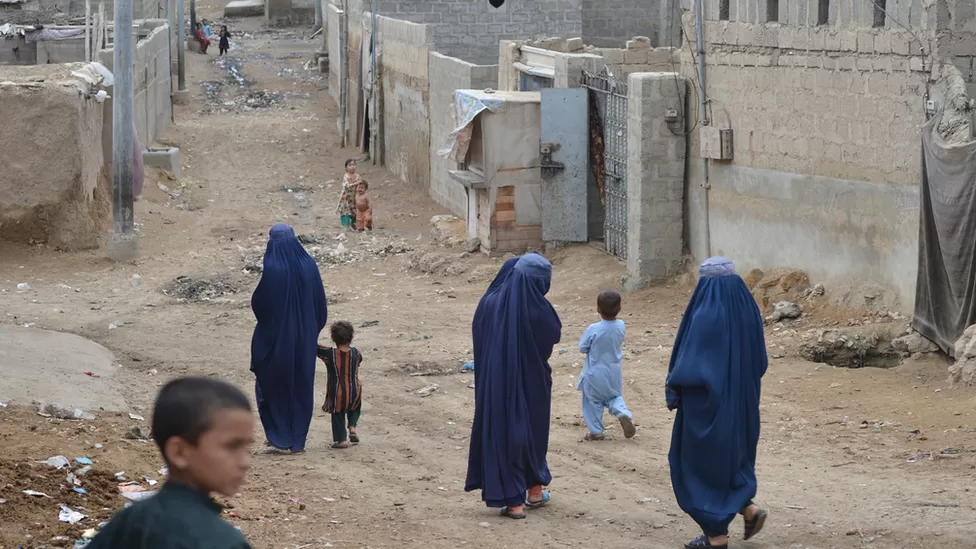
    Many people escaped from the Taliban in Afghanistan because they had worked with or for the UK government. These people are now in Pakistan and waiting to be moved to a new place.

    Some of them used to translate for the British Army and teach for the British Council.

    The UK government has arranged and hired 12 flights to bring people from Afghanistan to the UK by the end of December, as confirmed by the Civil Aviation Authority.

    All the refugees are either in the Afghan citizens resettlement scheme or Afghan Relocations and Assistance Policy.

    They were told to go to Pakistan to get their visas, but charities say some people have been waiting there for over a year, and that many of their visas have now become invalid.

    Earlier this month, Pakistan announced that it intended to begin sending back people who are in the country illegally starting from 1 November.

    After the Taliban took over Afghanistan again in 2021, they said they would forgive and not punish people who helped the international forces. However, many Afghans still feel scared that they will get in trouble for what they did.

    Some people told the BBC that they are worried they have put themselves in more danger by following the UK’s instructions to leave Afghanistan.

    Qasim, a person using a fake name, was one of the people who helped the UK authorities.

    Before we left Afghanistan, our lives were in danger half of the time. “He said that they are in complete danger now. ”

    Pakistan has told 1. 7 million people from Afghanistan to leave the country.
    The UK is requesting assistance to relocate more Afghan people who had been employed by them.

    A document shared in court shows that the British authorities in Pakistan believe that people who are waiting for UK visas in Pakistan are likely to be sent back to their home country.

    According to information from the government, about 3,250 people, including men, women, and children, are currently staying in guest houses and hotels in the capital city of Pakistan, Islamabad.

    While they are there, they cannot work legally and their kids cannot go to school.

    A lot of people thought that when they first went to Pakistan, they would only have to wait there for a few weeks.

    Court documents revealed that many people had to wait longer to come to the UK and stay in hotels because Prime Minister Rishi Sunak stated that only in very rare situations could they be allowed to do so.

    Instead, they had to find a place to stay for a longer period of time before they could move to a new location. An email said that this plan should save the taxpayer money overall.

    The government has decided that people on relocation programmes will not have to find suitable housing before they move. The BBC has this information.

  • 2,400 Afghan asylum seekers arbitrarily detained in UAE – report

    2,400 Afghan asylum seekers arbitrarily detained in UAE – report

    According to Human Rights Watch, the UAE arbitrarily detains at least 2,400 Afghan asylum seekers.

    The adults and children detained in Abu Dhabi were evacuated from Kabul following the Taliban takeover in August 2021.

    HRW said they were living in “cramped, miserable conditions” and “stranded in limbo” with no hope of being resettled.

    The UAE denied that conditions were deplorable and stated that it was collaborating with the US to complete the resettlement process.

    More than 10,000 other Afghans who were flown to the UAE were reportedly resettled in the United States, Canada, and other countries, while another 70,000 were evacuated directly to the United States before American troops left Kabul.

    Following the Taliban takeover, Afghans were flown to Abu Dhabi and housed in two converted apartment complexes known as Emirates Humanitarian City and Tasameem Workers City.

    HRW said in a report published on Wednesday that it had spoken to 16 Afghans detained at Emirates Humanitarian City, including eight who had previously worked at some point for US government-affiliated entities or programmes in Afghanistan.

    They reported constraints on their freedom of movement, lack of access to fair and effective refugee status determination, lack of adequate access to legal counsel, inadequate education for children, and no psychosocial support.

    The detainees also described overcrowding, decaying infrastructure and insect infestations, according to the US-based campaign group.

    One unnamed Afghan was quoted as saying that Emirates Humanitarian City was “exactly like a prison”, while another described a “widespread mental health crisis among residents”.

    Under international law and UN Refugee Agency guidance, asylum seekers and migrants should not be detained for administrative purposes unless it is necessary and proportional to achieve a legitimate aim, and only in the absence of viable alternatives.

    HRW called on the UAE to release the detainees and provide access to fair and efficient processes for determining their status and protection needs.

    “Governments should not ignore the shocking plight of these Afghans stranded in limbo in the UAE,” said Joey Shea, the group’s UAE researcher.

    “The US government in particular, which co-ordinated the 2021 evacuations and with whom many evacuees worked before the Taliban takeover, should immediately step up and intervene to provide support and protection for these asylum seekers.”

    An Emirati official told AFP news agency that the UAE was providing “high-quality housing, sanitation, health, clinical, counselling, education and food services” for the Afghans at Emirates Humanitarian City.

    They also said the UAE was continuing to work with US authorities to “resettle the remaining evacuees in a timely manner”.

    “We understand that there are frustrations and this has taken longer than intended to complete,” they added.

    The US state department said there was an “enduring” US commitment to resettle all eligible Afghans, including those at Emirates Humanitarian City.

  • Kabul blast kills teenagers sitting practice exam

    A suicide attack at a tuition centre in the Afghan capital Kabul has killed at least 19 people, most of them female students, police and witnesses say.

    Nearly 30 others were wounded at the Kaaj education centre in the Dasht-e-Barchi area in the west of the city.

    Students had been sitting a practice university exam when the bomber struck. No group has yet claimed the attack.

    Many of those in the area are minority Hazaras, who have often been targeted by Islamic State (IS) militants.

    Footage on local TV and shared on social media appeared to show scenes from a nearby hospital, where rows of covered bodies were laid out on the floor. Other media reportedly from the site of the private college showed rubble and upturned tables in the damaged classrooms.

    “We didn’t find her here,” a woman who was looking for her sister at one of the hospitals told AFP news agency. “She was 19 years old.”

    Eyewitnesses told the BBC that most of the victims were girls. A student who was wounded told AFP that there were around 600 people in the room when the attack happened.

    Young man at hospital after the attack
    Image caption, Friends and relatives have been looking for their loved ones in hospitals in the capital

    The Kaaj tuition centre is a private college which teaches both male and female students. Most girls’ schools in the country have been closed since the Taliban returned to power in August last year, but some private schools are open.

    Hazaras, most of whom are Shia Muslims, have long faced persecution from IS and the Taliban, which both adhere to Sunni Islam.

    The Hazaras are Afghanistan’s third largest ethnic group.

    On Friday the Taliban’s interior ministry spokesman said security teams were at the site and condemned the attack.

    Abdul Nafy Takor said attacking civilian targets “proves the enemy’s inhuman cruelty and lack of moral standards”.

    The attack was also strongly condemned by the United Nations and the US.

    “Targeting a room full of students taking exams is shameful; all students should be able to pursue an education in peace and without fear,” said Karen Decker, charge d’affaires at the US mission to Afghanistan, in a tweet.

    The security situation in Afghanistan, which had improved after the end of fighting following the Taliban takeover, has been deteriorating in recent months, with a number of attacks on civilians but also Taliban supporters. Some have been claimed by IS, which is a bitter rival of the Taliban.

    Schools and hospitals have been targeted in the Dasht-e-Barchi area in a series of attacks, most of which are thought to have been the work of IS.

    Last year – before the Taliban returned to power – a bomb attack on a girls school in Dasht-e-Barchi killed at least 85 people, mainly students, and wounded hundreds more.

    Source: BBC


  • Photos: Poverty pushes Afghan children to work at brick kilns

  • Freed Taliban prisoners eye return to the battlefield

    Afghan authorities are opening prison doors for thousands of Taliban inmates in a high-risk gambit to ensure the insurgent group begin peace talks with Kabul.

    Security concerns are mounting as many of the newly liberated fighters say they are ready to resume their holy war.

    “If the Americans do not pull out, we will continue our jihad, because they have killed many Afghans in their operations,” said Mohamed Daud, who was freed from Bagram jail north of Kabul last month.

    “We do not want foreign forces in our country anymore,” he told AFP, dressed in a traditional shalwar kameez, before taking a taxi back to his village with a cash handout from authorities worth $65.

    US forces arrested Daud, 28, in the northwest province of Faryab nine years ago.

    Afghan authorities accelerated the planned release of 5,000 Taliban prisoners, including Daud, as a “goodwill gesture” after the insurgents called a three-day ceasefire to mark the Eid holiday.

    Those released include members training to be suicide bombers, suicide vest makers, kidnappers and even foreign fighters, a security official said.

    The move is part of a larger prisoner swap agreed as a precursor to peace talks starting.

    Before their release, inmates were required to sign a pledge that they would not pick up arms again. It is increasingly clear such commitments mean little.

    A Taliban commander in Pakistan told AFP there should be “no ambiguity” that the released men will eventually be deployed to Afghanistan’s front lines.

    “It’s an ongoing jihad, and will continue until and unless we reach some sort of agreement with the Kabul government,” he said.

    Several other freed insurgents say they remain angry at US troops, but under a US-Taliban deal signed in February, the insurgents committed to stopping attacking American and foreign forces as they withdraw from the country by next year.

    The immediate enemy is instead the struggling Afghan National Defence and Security Forces (ANDSF), with whom no such pledge has been made.

    ‘Additional leaders, fighters’

    A key concession Washington extracted from the Taliban during negotiations was the requirement to begin peace talks with Kabul.

    In return, the Afghan government must release 5,000 insurgent inmates while the Taliban pledged to free 1,000 security force prisoners.

    Since the swap started, Afghan authorities have freed 3,000 Taliban inmates while the insurgents have released more than 750 government prisoners, officials said.

    It could represent a boost of up to 10 per cent for the Taliban’s fighting force, with estimates on the number of insurgents ranging between 50,000 and 100,000.

    Afghan security officials said the US did not consult them as Washington and the Taliban finalised the prisoner swap.

    The Taliban heralded the US deal as proof they have defeated America in its longest war, and the bluster has only grown in recent months.

    “Politics and negotiations should not be taken to mean that we will neglect jihadi affairs and the strengthening and development of our jihadi military force,” Taliban deputy leader Sirajuddin Haqqani said in a broadcast last week.

    The Taliban now find themselves in a win-win situation – even if peace talks with Kabul fail.

    With its key donor calling the shots, the Afghan government had no choice but to yield to Washington’s demand to proceed with the exchange.

    Still, some observers hold out hope for successful peace talks that would bring an end to Afghanistan’s 19-year-old war.

    “These talks hold a better hope for a lasting ceasefire than any other current approach,” said Andrew Watkins, an analyst with International Crisis Group.

    “Swift initiation of talks is the best way to eliminate that threat.”

    No start date has been set for the talks.

    Source: france24.com

  • Coronavirus: The porous borders where the virus cannot be controlled

    As nations shut borders, a surge of people pouring unmonitored over international boundaries in a volatile and vulnerable part of the world has sparked warnings about the unchecked spread of the virus there.

    In March, more than 150,000 Afghans spontaneously returned from Iran, one of the countries worst hit by the coronavirus – thousands more arrive daily.

    Tens of thousands have also recently returned from Pakistan – among the worst affected countries in South Asia.

    Officials are struggling to control this unprecedented movement across what have always been porous and often lawless borders.

    So far, Afghanistan is not among countries severely hit by the virus, reporting 423 cases and 14 deaths, but this influx has raised fears of much higher transmission rates.

    “With the numbers of likely infected people who have crossed the border, I expect the numbers of cases and deaths [in Afghanistan] to go up significantly,” says Natasha Howard, associate professor of global health and conflict at the National University of Singapore.

    If there is an explosion of cases, like we’ve seen in the US, Spain and Italy, war-ravaged and impoverished Afghanistan’s health system would be completely overwhelmed.

    Iran crossing: Overwhelmed by numbers

    Abdul Maez Mohammadi and his family were in Iran for eight years. But after the boss at the construction company where he worked stopped paying his salary, he gathered his wife, brother and one-year-old son and headed home.

    This week they crossed from the Islam Qala border into Herat as undocumented migrants and will head back to their Taliban-controlled village where there are no health facilities.

    “The situation in Iran of Covid-19 is very dangerous and I heard there is nowhere to admit cases,” says Mr Mohammadi.

    At this border crossing there is no quarantine centre on either side. The provincial authorities are conducting basic health checks, but they are overwhelmed by the number of people.

    Herat has a shortage of Covid-19 testing kits and results take four or five days for those who do get tested – and by then it is likely they would have already left for their villages.

    Mr Mohammadi says he will have to earn money as soon as he is back in his village, but he knows they will have to take precautions.

    “We have to do hand-washing when we wake up from sleep, brush teeth three times a day, avoid mass gatherings, not travel to neighbouring areas and food should be well cooked,” he says.

    The International Organization for Migration (IOM), part of the UN, has set up centres to provide humanitarian assistance for the most vulnerable of those crossing back into Afghanistan.

    Aziz Ahmad Rahimi, senior regional director for IOM in Herat province, says when they see anyone showing Covid-19 symptoms they transfer them to the local hospitals. Ten to 15 people so far have tested positive he says.

    Pakistan crossing: Forced to abandon controls A similar situation is playing out on the border with Pakistan.

    The Afghan government requested Pakistani authorities to open border crossings to allow Afghans who had become stranded after Pakistan shut its borders to return home.

    Authorities said they would allow 1,000 people a day but 20,000 are reported to have crossed at the Chaman border in the last two days prompting authorities to abandon the stipulation that only those with valid documents be allowed to cross.

    Afghan authorities had made arrangements to quarantine 4,000 Afghans for 14 days at Torkham but were quickly overwhelmed by the numbers, reports say.

    In total 60,000 crossed into Afghanistan in three days, according to IOM.

    An unverified video that has been widely shared by media outlets shows people rushing across the border without showing any documentation.

    And these are the people going through official checkpoints. For many years there has been illegal cross-border movement between Afghanistan and Pakistan – those numbers are much harder to track.

    All of this has led aid agencies and NGOs working in the region to give a dire warning about the spread of coronavirus across these borders.

    And if, as they fear, cases erupt in the next few weeks, how Afghanistan might deal with the numbers given developed countries with top-class health systems are struggling, is leading to some daunting estimates.

    How can Afghanistan cope? The Afghan ministry of public health forecasts that 16 million out of a population of more than 30 million could get the coronavirus, citing the World Health Organization (WHO).

    Waheed Ullah Mayar, the spokesperson for the ministry of public health, says in the worst-case scenario 700,000 people will require hospitalization, 220,000 of them may require ICU treatment. From that number 110,000 people may die due to COVID-19.

    Afghanistan has 10,400 hospital beds in the entire country. In Herat province, some estimates put the number of ventilators at as little as 12.

    “Afghanistan will not have such a number of beds even in 10 years,” he says, adding that health authorities are focused on preventative measures.

    Kabul is now under complete lockdown and public gatherings have been banned in Herat.

    But this is a population where many have pre-existing conditions like tuberculosis, cancer, diabetes and there are approximately 2.5 million malnourished children, according to the charity Save the Children.

    Source: bbc.com


  • Taliban protest as Kabul releases another 100 insurgents

    The Afghan government said it would release another 100 Taliban inmates Thursday, even though the insurgents have walked out of talks over a comprehensive prisoner swap and dismissed Kabul’s piecemeal freeing of captives as “unacceptable”.

    The administration of President Ashraf Ghani on Wednesday released 100 low-risk Taliban prisoners who had vowed never to return to the battlefield, and officials said the same number of insurgents with similar profiles would be set free Thursday.

    The releases come as Ghani faces an ongoing political crisis, US fury over a floundering peace process and a growing coronavirus epidemic in Afghanistan, where officials fear the disease could run riot through the country’s prisons.

    Kabul “will release 100 Taliban prisoners today based on their health condition, age and length of remaining sentence as part of our efforts for peace and containment of COVID-19,” Javid Faisal, spokesman for the Office of the National Security Council (NSC), said on Twitter.

    Taliban spokesman Zabihullah Mujahid told AFP the step was inadequate.

    A small Taliban team came to Kabul last week to meet the government to discuss a comprehensive prisoner swap that was initially supposed to see 5,000 Taliban released in return for 1,000 Afghan security forces.

    But they abandoned the “fruitless” meetings on Tuesday and returned to the southern province of Kandahar.

    “Our stance has been very clear on prisoners swap,” Mujahid said.

    “Now, hundreds hundreds prisoners are released on a daily basis. This is not part of our process and it is unacceptable to us.”

    When asked why the government was still releasing Taliban inmates even though the prisoner swap appeared to have collapsed, Faisal said: “We need to push the peace process forward.”

    The United States signed a withdrawal deal with the Taliban in late February that required the Afghan government — which was not a signatory to the accord — to participate in the prisoner exchange. That step was supposed to have led to “intra-Afghan” peace talks starting on March 10.

    No one knows when, or if, they may now start.

    In the agreement, the US and other foreign forces will withdraw from Afghanistan in 13 months, and the Taliban must talk to Kabul and stick to several security guarantees.

    Source: AFP