Tag: Afghanistan

  • Internet access restored in Afghanistan after Taliban nationwide blackout

    Internet access restored in Afghanistan after Taliban nationwide blackout

    People are now happy while holding their phones and conversing with their family and friends after internet service was restored in Afghanistan.

    The disruptions in internet service started around September 15, following regional fibre-optic failures. It lingered for days until it spread across all parts of the nation by the evening of Monday, September 29, when both mobile and fibre internet services were totally cut off.

    This affected emergency services as Afghans were unable to access both mobile data and fibre internet service, blocking access to basic communications platforms like WhatsApp and Signal, severely impacting education, healthcare, humanitarian aid, and daily life.

    However, according to Internet Society Pulse, there has been a partial restoration in early October.
    Local reports also suggest that internet and telco services are gradually being restored.

    “…Communications were resuming across provinces while internet monitor NetBlocks said live network data was showing a ‘partial restoration’ of connectivity”.

    A source close to the government confirmed to BBC Afghan that the internet is back by special order of the Taliban prime minister.

    The 48-hour blackout disrupted businesses and flights, limited access to emergency services and raised fears about further isolating women and girls whose rights have severely eroded since the Taliban swept back to power in 2021.

    One man who visited several areas in the capital city, Kabul, on Wednesday told BBC Afghan: “Everyone is happy, holding their cell phones and talking to their relatives.

    “From women, to men and Talibs [a member of the Taliban], each was talking on phones after services were restored. There are more crowds now in the city.”

    The government is yet to issue a formal statement on the shutdown; however, in September, when the disruptions began, a spokesperson for the Taliban governor in the northern province of Balkh said internet access was being blocked “for the prevention of vices”.

    Though the spokesperson didn’t specify what vices, it was widely reported that access to online pornography and immoral content contradicts their Islamic values. Also, the Taliban government have cited the use of social media by citizens for dissent or activism. Authorities have expressed unease over platforms being used to organise protests, share critical commentary, or promote ideas they deem subversive.

    The internet has been a lifeline for Afghan women and girls, especially since bans on formal education for girls over 12. The Taliban view some of this digital engagement as contrary to their governance model.

    Afghan women have told the BBC that the internet is a lifeline to the outside world since the Taliban banned girls over the age of 12 from getting an education. Women’s job options have also been severely restricted, and in September, books written by women were removed from universities.

    Since returning to power in 2021, the Taliban have imposed numerous restrictions in accordance with their interpretation of Islamic Sharia law.

    Following the internet shutdown on Monday, the United Nations said it left Afghanistan almost completely cut off from the outside world. It added that it risked “inflicting significant harm on the Afghan people, including by threatening economic stability and exacerbating one of the world’s worst humanitarian crises”.

    Meanwhile, in an unrelated development, users of MTN in Ghana, a leading telecom giant in Ghana, had their excitement short-lived when they began to make purchases of the newly increased data packages.

    This was after customers made attempts to purchase data at around 7 am, according to a user on X (formerly Twitter) who was receiving feedback such as ‘the service is being upgraded, try again after 7 AM.’

    Others also claimed they were being given noon as another time to retry purchasing.In response to this, MTN issued a statement dated July 1, apologising for the inconvenience and assuring customers that services would be restored swiftly.

    “We recognise the importance of staying connected and sincerely apologise for the inconvenience this may cause”, the MTN Corporate Communications Department explained.

    They explained that they were experiencing what they described as a “major technical issue” while they were working to implement the 15% increment in data.“Whilst implementing the data offer, which will provide 15% additional volume of data from today, 1st July, 2025, MTN experienced a major technical issue that has affected data bundle purchases, including the data volume offer.

    As a result, customers are temporarily unable to purchase data bundles,” parts of the statement read.

    They concluded with an appreciation of customers’ patience, promising occasional updates on the state of the service.

    This comes on the back of Minister for Communication, Digital Technology, and Innovations Sam Nartey George announcing on June 10 in a press conference that, effective July 1, telecommunication companies will review the amount of data provided for their bundle packages.

    Airtel Tigo (AT) and Telecel, he noted, were expected to increase their data offers by over 10%, whereas MTN will review their data offers by 15%, Mr Sam George revealed while engaging the press today, Tuesday, June 10.

    AT’s GHC400 data package, providing 195 GB, will now offer 236 GB. Telecel’s GHC400 data package will now be worth 250 GB and not 190 GB, effective next month.

    According to the minister, MTN will reintroduce its GHC399 data package, offering 214GB, and will stop providing 92.88GB for GHC350.

    In a turn of events, AT and Telecel implemented a 15% increase in their data bundles. However, MTN stated that they were unable to do the same, citing challenges in implementing the increase.

  • 3 out of 10 children to experience hunger by 2024 in Afghanistan – NGO

    3 out of 10 children to experience hunger by 2024 in Afghanistan – NGO

    Approximately 6.5 million kids in Afghanistan are expected to be very hungry in 2024, according to nongovernmental organization.

    Almost 3 out of 10 kids in Afghanistan will not have enough food this year. This is because of floods, drought, and people coming back from Pakistan and Iran. Save The Children released a report about this on Tuesday.

    The Integrated Food Security Phase Classification says that before October, about 12.4 million people in Afghanistan, which is 28% of the population, will not have enough food to eat. Save the Children says that almost 2.4 million people are expected to have very little food, which is really bad.

    The new numbers are a little better than the ones from October 2023. But it’s clear that many people still need help because half of the population is living in poverty.

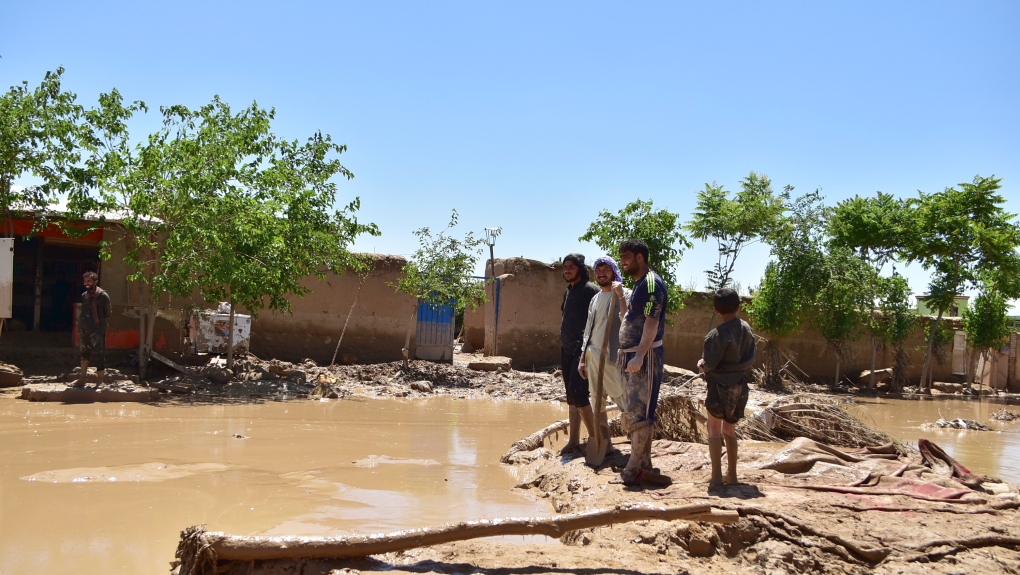
    In May, heavy rain and floods in northern Afghanistan caused the deaths of over 400 people. Many homes were wrecked or broken and the fields were covered in mud.

    Save the Children is running a mobile clinic in Baghlan province to help the people affected by floods. This is part of their quick response to the emergency. The organization said that about 2.9 million young kids may not have enough food to eat in 2024.

    Arshad Malik, who is in charge of Save the Children in Afghanistan, said that the organization has helped over 7,000 children with serious malnutrition this year.

    Malik said that the numbers show that families need a lot of support because they keep experiencing difficult situations. Kids are being hurt by three years of not enough rain, lots of people not having jobs, and 1.4 million people coming back to Afghanistan from Pakistan and Iran.

    Malik said we need to find ways to help families in the community rebuild their lives for the long term.

    Over 557,000 Afghans have come back from Pakistan since September 2023. Pakistan started to send away foreigners it thinks are in the country illegally, including 1.7 million Afghans. It says the campaign is not aimed at Afghans, but most of the people from other countries in South Asia are from Afghanistan.

    Last April, Save the Children reported that 250,000 Afghan children need help with school, food, and housing after being sent back to Afghanistan from Pakistan.

    Malik said that only 16 out of every 100 dollars needed for the 2024 humanitarian response plan has been given, but almost half of the people need help.

    “He said now is not the time for the world to ignore the situation. ”

    At the same time, the European Union is giving an extra 10 million euros (almost US$10. 9 million) to the UN food agency. This money will be used to provide meals to children in schools in Afghanistan. The EU gave more money to the World Food Program’s school meal program in Afghanistan. They already gave 20. 9 million euros, and now they gave even more.


    The money comes just in time and stops WFP from having to decrease its school meal program this year because there isn’t enough money, the WFP said.

    “Not having enough food can stop people from learning. ” “The EU is giving more money to WFP to make sure that more kids in Afghanistan get healthy food,” said Raffaella Iodice, who represents the EU in Afghanistan.

    The WFP said they will use the money to give healthy snacks to students in over 10,000 schools in eight provinces.

    In the previous year, WFP helped 1.5 million kids go to school through this program.

  • Over 300 people killed and thousands more displaced by floods in northern Afghanistan

    Over 300 people killed and thousands more displaced by floods in northern Afghanistan

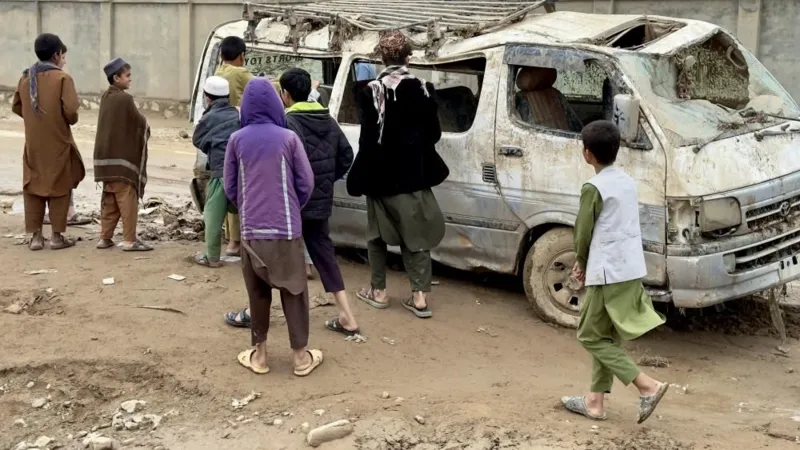
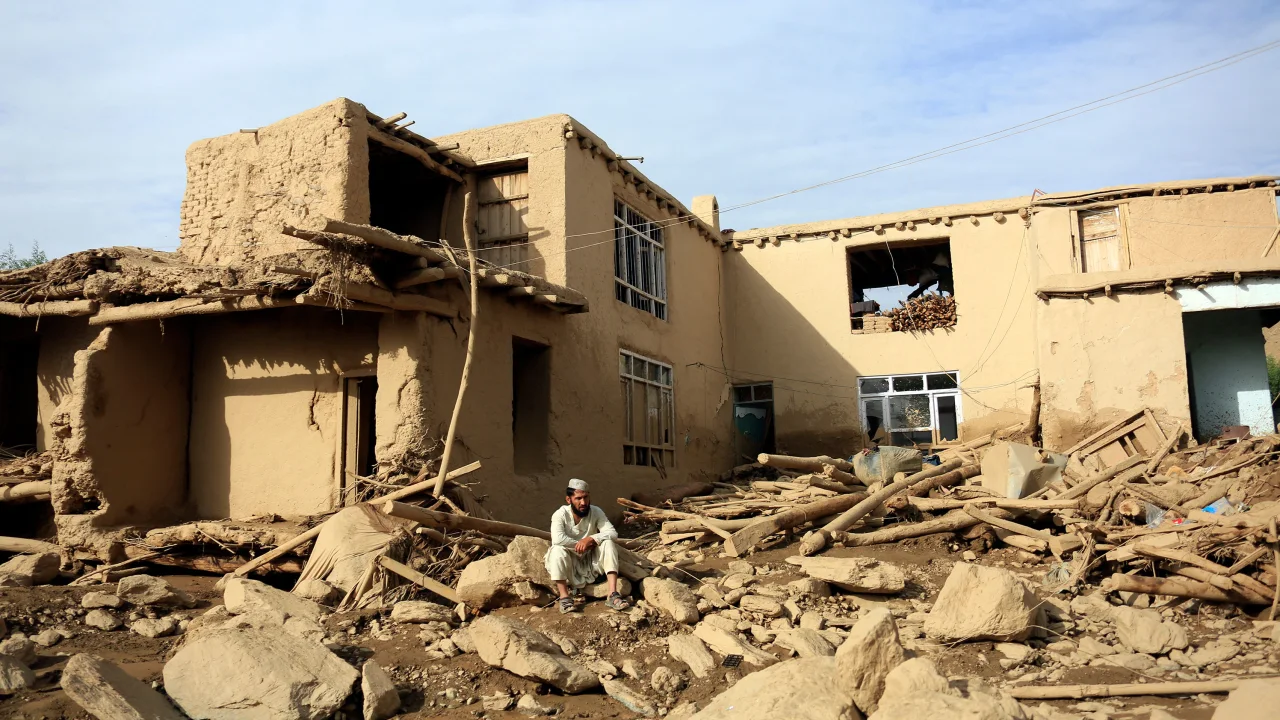
    The UN food agency said that really strong rain in Afghanistan has caused more than 300 people to die and thousands of houses have been destroyed. Most of the damage happened in the northern province of Baghlan on Friday.

    “Lots of people have lost their lives and jobs,” said Arshad Malik, who works for Save the Children. “The fast floods went through villages, taking away houses and killing animals. ” Kids have no more things. Families who are still struggling from the financial effects of three years of drought really need help right away.

    He said Afghanistan is not ready for climate change and needs help from other countries, especially with the heavy rains.

    In April, heavy rains and floods killed 70 people and destroyed 2,000 homes, three mosques, and four schools in the country.

    According to shopkeeper Nazer Mohammad quickly went home when he heard about the sudden floods hitting the edges of a city in northern Afghanistan. When he arrived, there was nothing left, not even his family of five.

    “Everything suddenly happened. ” I went home, but there was no home there. Instead, I saw the neighborhood covered in mud and water,” said Mohammad, who is 48 years old. He said he buried his wife and two sons who were 15 and 8 years old. He’s still searching for his two daughters, who are 6 and 11 years old.

    Mohammad found his wife and two sons’ dead bodies on the edge of Puli Khumri, the capital of Baghlan province, late Friday night.

    “I hope someone has found my daughters and they are okay,” he said, trying not to cry. “In a very short time, I lost my family, home, and everything I owned. Now I have nothing left. ”

    At least 240 people have died, including 51 children, according to UNICEF. Many international aid groups are sending teams to give help, like medicine, blankets, and other things. The World Health Organization gave 7 tons of medicine and emergency supplies.

    The Save the Children group said that about 600,000 people, with half of them being children, are living in the five districts in Baghlan that have been badly affected by the floods. The group sent a mobile clinic with doctors and social workers to help kids and their families.


  • Afghanistan flash floods claim hundreds of lives

    Afghanistan flash floods claim hundreds of lives

    Flash flooding in northern Afghanistan has claimed hundreds of lives, with concerns that the death toll may escalate due to further storms in the region.

    Taliban officials report at least 150 fatalities, while the World Food Programme indicates that the toll exceeds 300 following heavy rainfall in five districts of Baghlan province on Friday night.

    Social media images depict torrents of water engulfing houses in numerous villages, leaving widespread devastation.

    The country has experienced unusually intense rainfall in recent weeks, resulting in numerous flood-related fatalities since mid-April.

    Abdul Mateen Qani, a spokesperson for Afghanistan’s interior ministry, informed the BBC of at least 131 deaths in Baghlan province and 20 in Takhar.

    Rana Deraz, a communications officer for the UN’s World Food Programme, informed the AFP news agency of 311 fatalities in Baghlan, along with the destruction of 2,011 houses and damage to 2,800 more. Additionally, three mosques and four schools were impacted.

    Many casualties occurred in the Borka district of Baghlan province, where over 200 individuals were trapped in their homes.

    Severe damage is also reported in the provinces of Badakhshan, Ghor, and western Herat.

    Local official Hedayatullah Hamdard told AFP news agency emergency personnel including the army were “searching for any possible victims under the mud and rubble”.


    Some families who lost their homes received tents, blankets, and food, according to the official.

    The primary road linking Kabul to northern Afghanistan has been shut down.

    Last month’s flooding in the west resulted in numerous deaths and left thousands in need of humanitarian assistance.

    Flash flooding occurs when rainfall exceeds the capacity of drainage systems.

    Experts note that a relatively dry winter has hampered the soil’s ability to absorb rainwater, leading to extensive flooding of farmland.

    Torrential rain and flooding claim lives annually in Afghanistan, particularly affecting poorly constructed homes in remote rural areas.

    Afghanistan ranks among the world’s most vulnerable nations to climate change impacts.

    Decades of warfare, culminating in the 2021 Taliban resurgence following the withdrawal of a US-led coalition, have left Afghanistan one of the world’s poorest countries.

    Various factors contribute to flooding, but climate change-induced warming increases the likelihood of extreme rainfall.

    Global temperatures have already risen by approximately 1.1°C since the onset of the industrial era, with further increases projected unless governments worldwide enact significant emissions reductions.

  • Novice boxer to become champion for refugees in two years

    Novice boxer to become champion for refugees in two years

    A young refugee has been boxing since coming to the UK two years ago, and now he is a national champion and hopes to have a career in the sport.

    Ahsan Karimi, who is 18 years old and lives in Bristol, is learning at Sweatbox Gym in South Bristol with coach John Conway.

    The teenage boy and his family left Kabul, Afghanistan in 2021 and were given a place to stay near the gym in Redcliffe, Bristol.

    Mr Conway said it’s very uncommon to train for only two years and then win the championships.

    Mr Conway met Ahsan’s dad through a friend and invited the family to join his gym, Sweatbox Gym, which he owns with someone else.

    When Ahsan started boxing at 16, Mr. Conway said the teenager was really good at it right away.

    Over the next two years, Ahsan worked hard and won eight out of nine fights. Then he went to the National Development Championships in Cannock, Staffordshire, in October.

    He said he was “very happy” to win the National Youth Champion at 67kg.

    “I worked really hard, trained a lot, and went through tough times to become the champion today. ”

    “My family was really happy, especially my parents who supported me a lot, and I want to make my family even happier. ”

    Mr Conway said: “The final was really exciting. ” The person in the group who had the most knowledge and skill and was likely to win. Ahsan won against them.

    “He got better every time he fought and ended up winning against people who had more experience than him. ”

    “He goes to the gym three times a week to work out, and he has made many friends there. The atmosphere at the gym is really positive. ”

    Mr Conway said that everyone is very proud of Ahsan because they watched his progress in a short time and were impressed.

    “I’m very glad that we could help him and give him an opportunity, and he made the most of it,” said Mr.

    Ahsan said, “Sweatbox feels like my other home. ” I am thankful to them for giving me this chance and will always be grateful for it. I want to thank my coach John for helping me a lot with my training.

    He said he is excited to keep practicing with his friends and wants to do even better in the future.

    “I want to be the best in the world one day and be a hero to my country. I also hope to teach others to be champions,” he said.

  • Taliban puts battered Afghan women in jail – UN

    Taliban puts battered Afghan women in jail – UN

    The Taliban government in Afghanistan is putting women who have survived abuse in prison, saying it is for their safety, a UN report says.

    The UN said that doing this thing hurts the mental and physical health of the survivors.

    The Taliban government doesn’t think there is a need for government-funded women’s shelters anymore. So, there are none.

    The Taliban in Afghanistan treat women very badly and don’t give them rights.

    The United Nations help group in Afghanistan said that violence against women and girls has always been a big problem, even before the Taliban took control of the country.

    “But now, these types of incidents happen a lot because of the problems with money, finance, and people’s well-being in the country,” UNAMA said. More and more, women have been forced to stay at home. This makes them more likely to experience violence from their family or partner.

    Before the Taliban took control again in 2021, there were 23 government-supported shelters for women’s safety in Afghanistan. According to UNAMA, these shelters have disappeared.

    The Taliban officials told UNAMA that women should not need shelters because they should be with their husbands or male family members. Someone said that shelters like this are “a concept from the western world”.

    The officials said they would ask the male family members to promise not to harm the woman survivor.

    If there were no men in her family to stay with, or if she might be in danger, the survivor would be sent to prison to keep her safe. This is like how some people who are addicted to drugs and people who don’t have a home are given a place to live in the capital city of Kabul, according to UNAMA.

    UNAMA said that this would mean taking away someone’s freedom without a good reason.

    “Punishing women in a vulnerable situation by keeping them confined could make their mental and physical health worse. It could also make them feel like victims again and put them at risk of being discriminated against and stigmatized when they are released. ”

    UNAMA said that the Taliban did not handle gender-based violence complaints clearly or consistently for a year starting on 15 August 2021.

    For instance, it’s hard to tell the difference between criminal and civil complaints, which means women and girls might not get the legal help they need.

    Most complaints are dealt with by men. The United Nations said that because there are not many women handling complaints, it makes it hard for survivors to speak up.

    People who have experienced something bad can no longer be sure they will get help for their problems, like through the legal system or getting money to make up for what happened to them. UNAMA reported that people are scared of the Taliban government and how they do things, so they don’t want to ask for help from the official justice system.

    Between 2001 and 2021, there were some moves to improve women’s rights, like changing laws and policies. But now, these changes have almost all gone away.

    Since the Taliban took over again in 2021, they have almost completely gone back on their promises to allow women to work and go to school.

    In Afghanistan, only young girls can go to primary school. Young girls and women are not allowed to go to school or college.

    They can’t go to parks, gyms, and pools. Beauty shops are closed, and women have to cover their bodies except for their eyes. They need to have a male family member with them if they are traveling more than 72km (45 miles).

  • Afghanistan surpassed by Myanmar as world’s largest producer of opium

    Afghanistan surpassed by Myanmar as world’s largest producer of opium

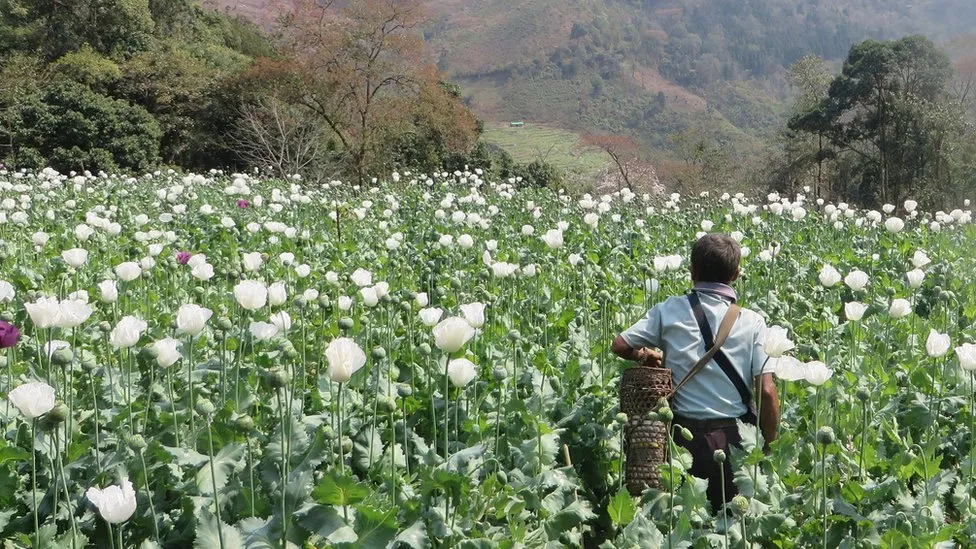
    Myanmar now makes more opium than any other country in the world, surpassing Afghanistan, according to a report from the United Nations.

    This year, it’s expected that the amount of opium made will increase by 36% to 1,080 tonnes, which is much more than the 330 tonnes that Afghanistan is said to have made.

    Poppy growing in Afghanistan decreased by 95% after the Taliban rulers banned the drug last year.

    At the same time, farming has grown in Myanmar because a violent civil war has made it a profitable way to make money.

    Jeremy Douglas, who works for the United Nations and wrote the report, says that the problems with the economy, safety, and government since the military took over in February 2021 are making farmers in faraway places turn to growing opium to survive.

    For many years, opium has been grown in Myanmar. It is used to make the dangerous drug heroin. The money made from selling opium has been used to support rebel groups who are fighting against the government.

    However, in the last year, while the civil war caused by the 2021 coup continued, farming has grown by about 18%. The report also says that farming has become more advanced and productive because of the use of well-organized fields, irrigation systems, and sometimes fertilizers.

    More and more people are starting to grow the crop because prices are going up. The pandemic and Myanmar’s bad economy has made growing opium more appealing as a job. A new report from the World Bank says the country is not expected to grow much.

    Shan State is a place in Myanmar where there has been a lot of fighting between some armed groups and the military. It is also the biggest producer of opium in Myanmar. The fighting in Shan has gotten worse and has even affected big mafia families who got rich from gambling, scams, and drugs. However, the rebel groups still depend on selling opium to get money for their activities.

    Mr Douglas said that the fighting in Shan and other border areas will probably cause more opium to be made.

    The report also said that more opium is being grown in the northern Shan State, as well as in Chin and Kachin states, where rebel groups are fighting the army.

    Opium farming has been an important way for people in Shan to make money, even though their land is not very good for growing crops. Many people who lost their jobs in other parts of Myanmar have been coming back to Shan. They have found work growing opium there.

    Making and selling heroin is the most money-making business in the opium industry. The report says that this year, Myanmar has exported around 154 tonnes of heroin, which is worth about $2. 2 billion

    The place where Myanmar, Thailand, and Laos meet is called the Golden Triangle. People there have been making a lot of opium and heroin for a long time. Most of the heroin sold around the world comes from Myanmar and Afghanistan.

  • Chief of UN Human Rights ‘alarmed’ by allegations of torture against Afghan refugees in Pakistan

    Chief of UN Human Rights ‘alarmed’ by allegations of torture against Afghan refugees in Pakistan

    The United Nations‘ human rights leader, Volker Türk, expressed great concern about the mistreatment of Afghan refugees in Pakistan as the country forces them to leave.

    Türk said he is worried about reports that Afghan people are being kicked out of Pakistan for no good reason and also being treated badly, arrested, and forced to leave their things behind.

    He asked the Pakistani government to stop sending people back to their country until they have a fair way to decide who should go back and investigate reports of mistreatment by the police.

    Pakistan asked over a million Afghan refugees to leave the country by November 1. They can leave on their own, without being forced.

    The UN says that over 327,000 refugees have returned to Afghanistan from Pakistan because they were afraid of getting arrested.

    The UN heard that Afghan refugees in Pakistan are being treated unfairly. Some were arrested for no reason and had their things taken away by the police.

    “Unfair arrests and keeping people in custody go against Pakistan’s responsibilities under international laws,” Türk added.

    The UN Human Rights Chief wants Pakistan to make sure that people who could be in danger in Afghanistan are kept safe and not sent back there.

    Türk said that women and girls are at higher risk if they are sent back against their will because the authorities’ rules stop them from going to school, working, moving around, and taking part in public activities.

    In August 2021, the Taliban took over the country again and stopped girls from going to school and women from going to university. Lately, they have shut down beauty salons and stopped women from going to a well-liked national park.

    By the end of 2022, Pakistan had over 1. 3 million Afghan refugees who were officially registered, and about 427,000 other people from Afghanistan in similar situations, as reported by the United Nations refugee agency.

    But many people in Pakistan have been upset about them being there for a long time. The police have tried to stop them and have threatened to send them away in the past.

    Pakistan’s government has made a plan to crack down on people who are in the country illegally.

    A group of people is working together to catch people who have fake ID cards and illegal houses built with fake documents. The national database and registration body has been told to cancel any fake ID cards and check with DNA testing to confirm cases.

    In 1979, lots of Afghans left their country because of the Soviet invasion and went to live in Pakistan. This was the biggest refugee crisis in the world at that time. In 2021, many Afghans fled to Pakistan after the Taliban took control of Kabul. They didn’t have all the right papers and were waiting for visas to go to other countries like the United States.

  • Eight dwellings purchased for conflict refugees

    Eight dwellings purchased for conflict refugees

    A council has bought eight houses for people escaping Ukraine and Afghanistan.

    East Hampshire District Council said that the government and developers provided money to fund the accommodation.

    There are five houses in Bordon, two houses in Petersfield, and one house in Horndean. Seven Ukrainian families will live in these homes, and one home will be for an Afghan family.

    Councillor Adeel Shah said: “One of our visitors cried because she was so happy when she saw her new house. ”

    He said that many generous people let Ukrainian refugees stay in their homes when the conflict started, and now we can find a permanent home for them.

    Nobody should have to leave their home because they are scared. It is really good that this country is ready to help and provide safety and comfort to people who need it.

    Mr Shah said that the buildings will be put back into the social housing supply when they are available again.

    The department in charge of improving fairness, housing, and communities requested councils to purchase homes to assist with the refugee problem caused by wars in Ukraine and Afghanistan.

  • Afghanistan records 3rd earthquake

    Afghanistan records 3rd earthquake

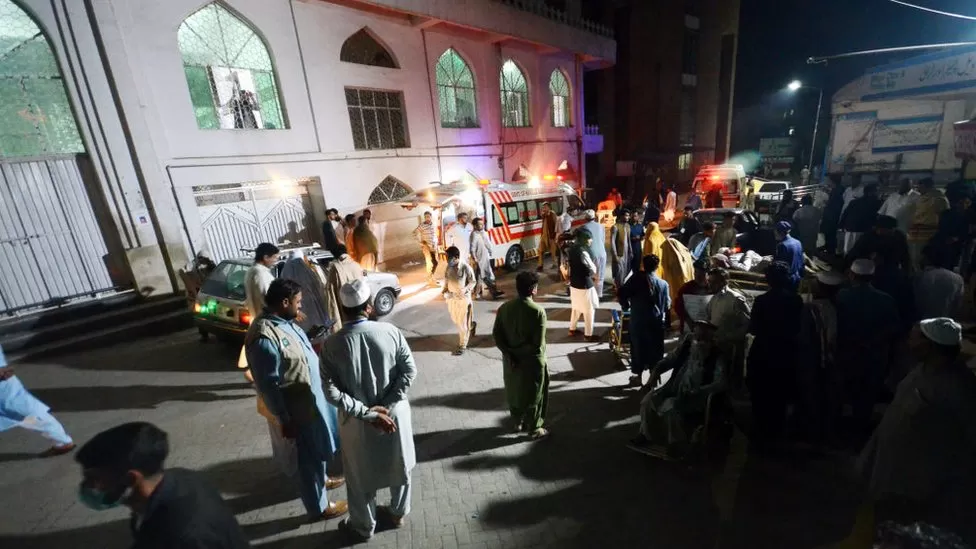
    A potent 6.3-magnitude earthquake has struck western Afghanistan, occurring just over a week after a series of strong earthquakes and aftershocks caused significant casualties and flattened entire villages in the same region.

    According to the US Geological Survey, the latest earthquake had its epicenter approximately 21 miles (34km) outside Herat, the provincial capital, with a focus 5 miles beneath the surface.

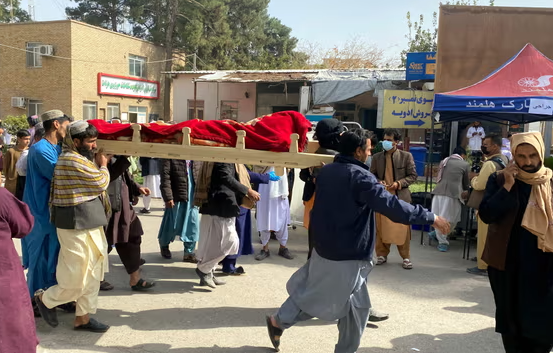
    Doctors Without Borders, an aid organization, reported two fatalities, and Herat regional hospital received over 100 individuals injured in Sunday’s earthquake.

    Mohammad Zahir Noorzai, the head of the emergency relief team in Herat province, indicated that one person had lost their life, and nearly 150 others were injured. He also mentioned that casualty numbers might increase as they were yet to reach all affected areas.

    Sayed Kazim Rafiqi, a 42-year-old resident of Herat city, described the unprecedented devastation, with most houses damaged and the population gripped by fear. In response, Rafiqi and others rushed to the hospital to donate much-needed blood.

    “We have to help in any way possible,” he said.

    On October 7th, a series of earthquakes decimated entire villages in Herat, constituting one of the most devastating seismic events in the country’s recent history.

    UN officials disclosed that over 90% of the casualties a week ago were women and children.

    Taliban representatives stated that the prior quakes resulted in more than 2,000 fatalities throughout the province. The epicenter was located in Zenda Jan district, where UN statistics indicate that 1,294 people lost their lives, 1,688 sustained injuries, and every residence was razed.

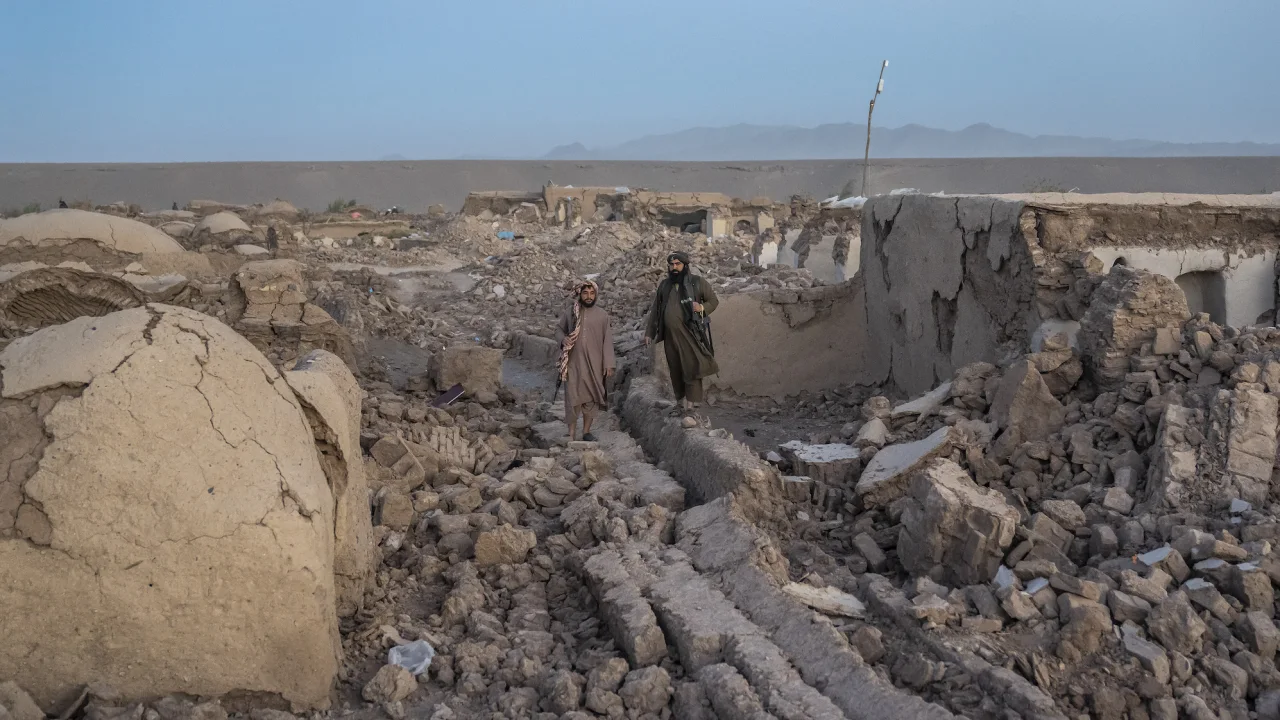
    The initial earthquake, coupled with numerous aftershocks and a subsequent 6.3-magnitude quake on Wednesday, laid waste to villages, reducing hundreds of mud-brick homes to rubble. Additionally, schools, healthcare facilities, and other vital structures in the villages succumbed to the powerful forces.

    Following this devastation, little remained of the villages nestled in the region’s arid hills aside from debris and the somber proceedings of funerals. Survivors are grappling with the profound loss of family members, and in many locations, those who remain are outnumbered by volunteers who have arrived to assist in sifting through the wreckage and organizing mass burials.

  • Second earthquake strikes Afghanistan in few days

    Second earthquake strikes Afghanistan in few days


    A new strong quake with a magnitude of 6. 3 hit around 05:10 in the morning, local time (00:40 GMT), on Wednesday. It happened 28km (17 miles) north of the city Herat.

    Over 100 people were hurt and taken to the hospital, according to health officials.

    The bigger effect is still not certain, but a lot of people were sleeping outside because their houses got destroyed on Saturday.

    Charitable organizations have reported that there is not enough blankets, food, and other essential items available.

    A person who saw what happened in central Herat, where a few houses are still standing, said that she woke up shouting and quickly ran out of her house.

    “I was very tired and slept deeply because I hadn’t slept in the days before,” she said to the BBC.

    “I have never felt so near to dying,” she said. She explained that she ran without shoes to the edge of the city, where a lot of people have been sleeping in tents since the initial earthquake.
    On Saturday morning, an earthquake happened in Zindajan, a rural area that is about 40km away from Herat.

    Pictures from the villages show that the houses, which were not strong enough to survive the shaking, have been completely destroyed.

    Afghanistan often experiences earthquakes, especially in the Hindu Kush mountain range. This happens because the country is located close to where the Eurasian and Indian tectonic plates meet.
    “Video explaining the concept”

    “I lost 11 members of my family,” said the person affected by the earthquake.

  • Aid organisations warn of destruction from the earthquake in Afghanistan

    Aid organisations warn of destruction from the earthquake in Afghanistan

    International organizations that provide assistance from other countries are urgently trying to send aid to people who survived an earthquake in Afghanistan. The earthquake killed over 2,000 people and caused many more to be injured. This is a big problem because Afghanistan is already in a terrible state due to ongoing war and an economic crisis.

    The big earthquake with a magnitude of 6. 3 happened on Saturday, not far from Herat city in Afghanistan. It occurred in the western province of Herat, which is the third largest province in the country.

    It was a very powerful earthquake that happened in Afghanistan last year. It caused a lot of death and destruction, especially in the provinces of Paktika and Khost in the east, which share a border with Pakistan. Over a thousand people lost their lives during that tragic event.

    Pictures taken by aid and rescue teams on the ground showed very large piles of broken pieces of buildings and rubble after they fell down.

    Some people were digging in the remains to look for survivors while others gathered on the streets to stay safe from falling objects after the main earthquake.

    Thamindri de Silva, who works for World Vision Afghanistan, said that the situation is even worse than we had thought. People in the destroyed villages are still trying very hard to save survivors from under the rubble, using only their hands.

    Extra help from a team in Kabul came to assist, but there was only one hospital and it was very busy dealing with critical patients who were being sent to other private facilities.

    We are doing our best to respond. People need immediate help with their health, water, food, shelter, and safety,” added de Silva.

    Mark Calder, who works for World Vision Afghanistan and speaks up for their needs, told CNN that the recent earthquake was another terrible event for the Afghan people. This is especially difficult for them because they have already experienced many years of fighting, periods of no rain causing dryness, and an economy that has become very weak.

    Calder said that the financial support from other countries has not been enough.

    He said that organizations like ours can help people in need and assist with recovery. However, without support from international governments and donors, more people will need help, displacement will worsen, and lives will be lost.

    We cannot ignore Afghanistan right now.

    The spokesperson for the Taliban, Zabihullah Mujahid, said on Sunday that 2,053 people were killed. Additionally, 1,240 people were injured, and 1,320 houses were either completely or partially destroyed. However, some people are worried that the number of deaths might increase even more.

    The UN Secretary-General, António Guterres, said that he stands with the Afghan people affected by the earthquake. He urged other countries to unite and help those who were already struggling before the disaster.

    UN agencies and partners are providing more help and doing more work after the earthquake on Saturday. They are sending more teams to help with humanitarian efforts.

    “We are working together with the governing authorities to quickly evaluate what they need and offer immediate help,” said spokesperson Stéphane Dujarric.

    UNICEF, which is a part of the United Nations and helps children, has sent out 10,000 packages with hygiene supplies, 5,000 packages with things for families, 1,500 sets of warm clothes and blankets for winter, 1,000 big sheets of strong material, and basic items for homes to help the ongoing humanitarian work.

    Teams are checking things on the ground and giving extra medicine and shelters to busy health clinics.

    Siddig Ibrahim, who works for UNICEF in Afghanistan, told CNN that this is the worst earthquake the country has experienced in a long time.

    Not having enough water is a big problem, especially for women and children.

    “He said that Afghanistan is facing one of the most severe humanitarian and child rights problems in the world. ” “The whole world must not ignore or divert attention from the children in Afghanistan, especially at this critical time when they need assistance the most. ”

    Save the Children said that the damage in Herat was very bad and expects that more people will die as bodies are found under the rubble.

    Save the Children’s Afghanistan director, Arshad Malik, said that this situation is very bad and it adds more problems to the existing problems. “Even before this terrible event, Afghan kids were already going through a very difficult time because they didn’t have enough to eat. ”

    We are working hard to help more children who are in need. We are providing things like healthcare, food, education, protection, shelter, clean water, and sanitation. We also help with food security and helping people make a living. But, we need help from donors to give the necessary aid to save lives.

    Existing humanitarian programs will be affected and unable to continue if they do not receive immediate money, because the current funding they have is already stretched thin.

    Afghanistan has been a very poor country in Asia for a long time and has experienced a lot of fighting for many years.

    In August 2021, the Taliban took control again after being removed from power by US soldiers 20 years ago. This caused a lot of aid groups and NGOs to leave and stopped important aid programs.

    The Taliban’s control made Afghanistan even more alone and made Washington and its allies stop giving money to the country. This made the economy even worse as it relies heavily on aid.

    Last week, the World Bank said that two-thirds of families in Afghanistan are currently going through a lot of difficulties in sustaining their way of life. This makes it even more difficult for Afghan people to recover from earthquakes.

    International aid organizations are saying that their ability to help during big disasters has been greatly affected by the Taliban taking control. They are asking for more immediate help from around the world, but only a few countries have said they will help publicly.

    “Even before this earthquake, with recent floods and instability within the country, more than 29 million people in Afghanistan needed help from humanitarian organizations,” said Salma Ben Assia, director of the IRC.

    The earthquake made things worse for communities that were already vulnerable. The upcoming winter will make things even worse for people who have been forced to leave their homes. This is especially dangerous for women and children, who are most at risk of being taken advantage of and mistreated when they are displaced.

    Many people have lost their homes and belongings, leaving them without a place to live. – Arshad Malik from Save the Children.

    The whole world must help the children and families in Herat who urgently need assistance.

  • More than 2,000 people feared dead after powerful earthquake hit Afghanistan – Taliban government

    More than 2,000 people feared dead after powerful earthquake hit Afghanistan – Taliban government

    Many people may have died after a strong earthquake happened in western Afghanistan, close to Iran.

    As more information is received from rural areas, the number of people who have died is expected to increase. The Taliban, a government group, believes that the death toll could be greater than 2,000.

    The strong earthquake with a magnitude of 6. 3 caused a lot of destruction and damage to at least 12 villages near the city of Herat on Saturday.

    There were strong tremors after the main earthquake. People who survived the event were very scared because buildings were falling down all around them.

    Rescue teams worked all night to search for people who were trapped under the collapsed buildings.

    Many people got hurt. In a country with very limited and insufficient medical resources, hospitals are having a difficult time treating the injured. The UN and other organizations have started quickly bringing in urgent supplies.

    The earthquake happened on Saturday at around 11:00 local time (06:30 GMT). It hit about 40km (25 miles) northwest of Herat.

    The communities that are suffering the most are located far away and their houses are made of mud. “In the beginning, when the earthquake happened, all the houses fell down,” said Bashir Ahmad, a resident of Herat whose family lives in one of the villages, to AFP news agency.

    “He said that the people who were in the houses got buried. ” We haven’t heard anything about some families.

    The Taliban minister in charge of public health is going to Herat to see how much damage has been done. The World Health Organization (WHO) stated that at least 465 homes had been completely destroyed.
    Videos from Herat Central Hospital showed injured people connected to IV drips being treated outside the main building. This indicates a sudden and overwhelming need for emergency care.

    Other pictures show the destruction in Injil district of Herat, where debris has blocked roads, making it difficult for rescue teams to reach the affected areas.

    “The situation was really bad, and I have never experienced anything like it,” said student Idrees Arsala to AFP. He was the last person to leave his classroom safely after the earthquakes started.

    The city of Herat is about 120km (75 miles) away from the border of Iran. It is known as the cultural capital of Afghanistan. About 19 million people are thought to live in the province.

    Afghanistan often experiences earthquakes, especially in the Hindu Kush mountains area because it is close to where the Eurasian and Indian tectonic plates meet.

    Last year in June, there was a very big earthquake in the province of Paktika. It was a 5. 9 magnitude earthquake and it caused more than 1,000 people to die. It also made tens of thousands of people lose their homes and become homeless.

  • Dozens feared dead after strong earthquake in Afghanistan

    Dozens feared dead after strong earthquake in Afghanistan

    Many people are believed to have died when a strong earthquake occurred in western Afghanistan, close to the border with Iran.

    Some people think that more people have died than what has been officially reported. On Saturday, a very strong earthquake with a magnitude of 6. 3 caused a lot of destruction in at least 12 villages close to the city of Herat.

    There were strong shaking that happened after an earthquake. The survivors were very scared as the buildings fell down near them.

    Rescue workers worked all night to find people who were stuck under the pile of debris.

    Many people have gotten hurt.

    In a country with very limited hospitals, it is difficult for them to take care of the injured patients. The UN and other groups have started to send urgent aid.

    The earthquake hit an area about 40km (25 miles) away from Herat, in the north-west region. It happened at around 11:00 in the morning, according to the local time, which is 06:30 in the morning based on GMT. The earthquake occurred on Saturday.

    We were at work when the building suddenly began to shake. The wall plaster started to come off and there were cracks in the walls. Some walls and parts of the building fell down, a resident named Bashir Ahmad said.

    I cannot reach my family. “I feel really anxious and afraid, it was really frightening,” he said.

    The public health minister of the Taliban is going to Herat to see how much damage has been caused.

    A video from Herat Central Hospital showed injured people getting medical treatment outside the main building using tubes connected to their bodies. This shows that there were too many injured people needing urgent care all at once.

    Other pictures display destroyed areas in Herat’s Injil district where debris is blocking the roads, making it difficult to carry out rescue operations.

    “The situation was really bad, and I have never experienced anything like it,” student Idrees Arsala told AFP. He was the last person to leave his classroom safely when the earthquakes started.

    Herat is a city in Afghanistan that is known for its culture and is found 120km (or 75 miles) to the east of the Iranian border. It is thought that around 1. 9 million people live in the province.

    Afghanistan often experiences earthquakes, especially in the Hindu Kush mountain range. This happens because it is located close to where the Eurasian and Indian tectonic plates meet.

    Last year in June, the province of Paktika experienced a strong earthquake with a magnitude of 5. 9The earthquake caused over 1,000 deaths and many people lost their homes, leaving them without shelter.

  • Pakistan to deport large numbers of ‘illegal immigrants’ including Afghans

    Pakistan is sending back a lot of people who came from Afghanistan because of violence. These people are called “illegal immigrants. ”

    In a meeting with the media, the person in charge of handling the country’s internal affairs, Sarfraz Bugti, said that people who are living in the country without permission have to leave by November 1. If they don’t leave by this date, the police and other authorities will forcibly remove them from the country.

    By the end of 2022, Pakistan was home to over 1. 3 million Afghan refugees who were officially registered, plus an additional 427,000 people from Afghanistan who were in similar circumstances to refugees, as reported by the United Nations’ refugee agency.

    But their existence in Pakistan has always caused problems, with police taking strict actions and the possibility of being sent back to their home countries in past years. According to volunteer groups who have looked at local records, many people from Afghanistan have been sent back from Pakistan this year.

    During a press conference on Tuesday, Bugti said that people from Afghanistan were responsible for 14 out of the 24 major terrorist attacks that happened in Pakistan this year.

    We are being attacked by people from Afghanistan, and some of them are Afghan citizens. He said we have proof for that.

    “In the crackdown, Bugti said that businesses and properties owned by people living in a country illegally will be taken away, and those who are operating illegal businesses and helping them will be punished. ”

    If any Pakistani citizen or company helps illegal aliens by giving them a place to live or any other support, they will face severe punishment according to the law. This punishment will be enforced even if the deadline has passed.

    The National Apex Committee met today and made a decision. A team has been created to catch people with fake ID cards and demolish properties built using these fake documents. The national database and registration organization has been directed to cancel any fake ID cards and confirm cases through DNA testing.

    Pakistan has many refugees, who have come from Afghanistan. Because Afghanistan and Pakistan are neighbors and have similar cultures, what happens in one country often affects the other. This means that when there is conflict or humanitarian problems in Afghanistan, it also affects Pakistan.

    In 1979, a lot of people from Afghanistan ran away because the Soviet Union invaded their country. They went and lived in Pakistan. It was a very big refugee crisis and the most serious one happening in the world at that time. In 2021, when the Taliban captured Kabul again, many Afghans moved to Pakistan. They didn’t have all the necessary documents and were waiting for visas to go to other countries, like the United States.

    A lot of Afghans who are scared of the Taliban have gone to Pakistan to escape. But in Pakistan, they are being taken into custody, arrested, and may even be sent back to Afghanistan, according to Amnesty International.

    “It is worrying that the struggles of Afghan refugees in Pakistan are not getting enough attention from the world. ”

  • Tory MP Ellwood resigns from his Commons position over Afghanistan controversy

    Tory MP Ellwood resigns from his Commons position over Afghanistan controversy

    Conservative Member of Parliament Tobias Ellwood has stepped down from his role as the chair of a committee in the House of Commons. This decision came after he faced backlash for his remarks about Afghanistan.

    In July, the ex-defense minister received negative comments for saying that the country had changed a lot during the Taliban’s time in power.

    He was at risk of losing a vote of confidence from his fellow Conservative members of parliament on the defense select committee.

    But people who know say that he has now quit his position, according to information received by the BBC.

    Someone who knows about what happened said that he quit his job before he could be forced to leave.

    Mr Ellwood first supported his statements, stating that the country’s stability was significantly higher compared to times of conflict.

    However, he later said sorry because he made a mistake with his comments. He posted them on social media while he was in Helmand province.

  • 20 Afghan students to be helped by a Scottish organisation

    20 Afghan students to be helped by a Scottish organisation

    A charity created to honor a Scottish aid worker who died in Afghanistan wants to bring 20 Afghan medical students to Scotland so they can complete their education.

    Linda Norgrove, who was from Lewis, was taken by the Taliban in 2010 and passed away while there was an effort to save her.

    Her parents started a foundation in her honor to help women and girls in Afghanistan.

    The charity wants the UK and Scottish governments to make things easier for female medical students.

    The organization said that despite making efforts and talking to both governments, they have not made any progress in bringing the women from Afghanistan to Scotland.

    The Scottish government stated that Education Secretary Jenny Gilruth had a meeting with the charity and sent a letter to the Home Office in order to get clear and quick information about the situation.

    The UK government said helping eligible Afghans move to a new place is very important.

    The Linda Norgrove Foundation, which is located in the Western Isles, received upsetting messages from the students. The messages expressed their concerns about living under the Taliban regime in Afghanistan.

    The Taliban came back in charge in August 2021 after the US-led group that was in Afghanistan for almost 20 years left the country.

    After that, many strict rules were again put on women in Afghanistan.

    The Taliban had said before that they would respect women’s rights in Afghanistan, but only according to Islamic law.
    Linda Norgrove was a person.

    The Linda Norgrove Foundation said that Scotland’s five medical schools agreed last year to allow 20 students to finish their studies.

    However, Linda’s dad, John Norgrove, said, “We are getting very annoyed with all the wait times. ”

    He said the charity was first told that the pathway for Afghan citizens through the UK’s Afghan Citizens Resettlement Scheme would start in January.

    Mr Norgrove said that they decided to move the date to August, but now they are saying that it won’t open for a while.

    He said, “Our students went from learning to be doctors to living a restricted life, where they only do housework and take care of children. ”

    They are not allowed to go outside the house without a man with them. Some are scared for their safety and others may be forced to get married without their consent.

    “They feel extremely sad and desperately need our assistance. ”
    Tried to save

    The Scottish government asked the UK government for information about what actions it was taking.

    A spokesperson said: “We will provide a solution to assist these women by offering them free tuition and financial support for their living expenses.

    In Scotland, students from Afghanistan who are part of certain resettlement programs can be considered as local students and receive financial support for living expenses.

    We are upset that they haven’t given us this information yet, but we believe the Home Office can find a practical solution.

    A spokesperson from the UK government said: “The UK has promised to help people in Afghanistan who are in danger, and we have so far managed to bring around 24,600 at-risk people to safety. This includes thousands of people who are qualified for our programs to resettle Afghan individuals. ”

    Helping eligible Afghans move to new homes is very important to us. We are still working with others who have similar intentions and countries that are near Afghanistan to deal with the resettlement problems. Our aim is also to assist eligible individuals in safely reaching their destination.

    Linda, who is 36 years old, was in charge of a project by USAID. This project aimed to create jobs and help the economies in unstable parts of Afghanistan.

    She was taken against her will in Kunar on September 26, 2010 and unfortunately lost her life when US special forces tried to save her on October 8 of the same year.

    A team of investigators from both the United Kingdom and the United States concluded that someone from the American soldiers threw a grenade that caused her death.

  • We have been ‘erased from everything’ after two years under Taliban rule – Afghan women

    We have been ‘erased from everything’ after two years under Taliban rule – Afghan women

    She had “a lot of friends” when she was a student in Afghanistan.

    She remarked, “We were happy together. We were studying, occasionally getting together, and riding bikes.

    20-year-old Zahra no longer rides bicycles. Or visit friends who have left the nation, attend to school, or go outside without hiding her face. She claims that the only thing she can do is stay at home and fret about a future that is disintegrating in front of her.

    “When I stand in front of the mirror, when I look at myself, I just see a different Zahra from two years ago,” she said. “I feel sad for my past.”

    On Tuesday, the Taliban will have been in power in Afghanistan for two years. The Taliban took power during the chaotic and contentious American pullout from the country following nearly two decades of conflict.

    Tuesday has been proclaimed a national holiday by the Taliban, who are not acknowledged by the majority of nations in the world. The day is “full of pride and honour for Afghans,” Taliban deputy spokesperson Bilal Karimi told CNN.

    Afghans were able to reclaim their nation, freedom, government, and will once the country was liberated from occupation. Pressure and force are not reasonable solutions; understanding and communication are the only options, he continued.

    But as life under the Taliban regime becomes more oppressive and harsh, celebrating is the last thing many Afghan women like Zahra, who CNN is only identifying by her first name for safety reasons, want to do.

    Activists caution that as the world turns its back on Afghanistan because it is weary of the country’s protracted battles and is too consumed with its own domestic problems, things could only grow worse. Millions of Afghans are suffering from disease, malnutrition, and drought in the midst of a crisis that the UN’s human rights experts warned this week is becoming worse.

    Mahbouba Seraj, an Afghan women’s rights advocate and 2023 Nobel Peace Prize finalist, declared that “women’s freedom” no longer exists.

    The women of Afghanistan are gradually being eliminated from society, from daily life, from everything, including their voices, opinions, and whereabouts.

    They are unable to attend school? Afghan woman upset over Taliban’s restriction on women attending universities

    When the Taliban, a hardline Islamist organisation that had previously controlled Afghanistan in the 1990s, came to power in 2021, it originally portrayed itself as a more moderate version of its former self and even made the promise that women would be permitted to pursue higher education.

    But since then, it has stepped up its enforcement, closing girls’ secondary schools, prohibiting women from going to college and working for NGOs like the United Nations, restricting their freedom to travel without a chaperone, and barring them from public places like parks and gyms.

    Since the Taliban shut down all beauty salons nationwide last month, women have lost access to the majority of professions. The sector had employed about 60,000 women, many of whom were the only wage earners in their homes, adding to the financial difficulties of already struggling families.

    The abrupt disruption of daily life is especially upsetting to young women like Zahra as they mature and form goals for the future. She likes art and had hoped to become a designer or launch her own company, but neither of those things seem feasible in Afghanistan now.

    She said, “I’m twenty years old, and it’s time for me to study, to get educated.” But I’m not permitted. I’m only at home. I’m only concerned about my future, the future of my sisters, and the future of all Afghan women.

    She attempts to keep herself busy at home by drawing, reading, and enrolling in any accessible online classes because she is unable to spend much time outside. However, she claims that it seems confining, like being in jail.

    I am having trouble focusing because I can see my sister and the other girls sitting in their homes. They are powerless to act.

    According to a UN report last month, collected following a week-long visit to Afghanistan, it has also had a devastating impact on mental health, with widespread allegations of sadness and suicide, especially among adolescent females who have been stopped from pursuing an education.

    According to the poll results, about 8% of respondents knew of a girl or woman who had tried suicide. According to the report, restrictions and economic difficulties have also contributed to an increase in domestic violence and girl forced marriages.

    The Taliban has asserted time and time again that women are welcome to work in specific fields as long as they adhere to “Islamic values.”

    Another Taliban representative, Zabiullah Mujahid, agreed that there was still a “problem regarding the girls’ education,” but stated that the group wished to “pave the ground for Islamic rules and regulations” and create a “safe environment for their education.”

    Additionally, he asserted that “women are actively working in health, education, police departments, passport offices, airports, and so on.”

    However, experts and nonprofit organisations assert that this is untrue, and the health care industry is one area where there is a glaring gap.

    Women are only permitted to receive medical care from other women under Taliban regulations, but due to the ban on women’s higher education, no female medical students have been able to complete their degrees, which has led to a dearth of much-needed female doctors, midwives, and nurses.

    Heather Barr, association director of the women’s rights division at Human Rights Watch, cautioned that “(the Taliban) seem perfectly comfortable with the idea that women and girls are almost certainly already dying because of a lack of health care professionals, because of their policies.”

    “I did nothing wrong,” Afghan girl: “I only want my right to education.”

    The Taliban’s treatment of girls and women has drawn widespread condemnation from the international community, and last week the UN human rights body urged the group to implement reforms and respect women’s rights.

    However, these messages haven’t done much to affect change, and the international spotlight has largely receded, leaving many Afghans to feel bitter and abandoned by the outside world.

    According to Seraj, a women’s rights activist, “the young people of Afghanistan are screaming their lungs out, trying to bring the world’s attention to themselves and to the situation of the war, of the woman in Afghanistan.”

    Zahra questioned why other nations appeared prepared to turn a blind eye. She remarked, “They are at ease; their daughters, sisters, and kids are in school. But there are girls and women in this area of the world who are helpless because they are disregarded by the rest of the population.

    Following the Taliban takeover, the US and its allies cut off international assistance and frozen roughly $7 billion of the nation’s foreign funds. With millions of Afghans out of work, government employees going without pay, and the cost of food and medication increasing, the decision destroyed an economy that was already highly dependent on aid.

    The US established a $3.5 billion economic assistance fund with the frozen assets last year, but officials said they won’t immediately give the funds to an institution in Afghanistan and will instead go through an external organisation that is independent of the Taliban and the nation’s central bank.

    Following the Taliban’s restriction on women working for NGOs, humanitarian help has become even more scarce recently. Numerous organisations, including the UN, were forced to halt crucial operations or programmes in the nation.

    Even though the Taliban is not generally seen as a legitimate administration and does not hold power over Afghanistan’s UN seat, advocates worry that it may gradually become more accepted on the international scene.

    They’re getting on private aircraft to fly off to significant high-level meetings where people spread out the red carpet for them, and they’re posing for photos with beaming ambassadors, according to Barr. “They are being given permission to take over embassies in an increasing number of nations. So, in my opinion, things are going fairly well from their perspective.

    According to the UN, the catastrophic situation has caused more than 1.6 million Afghans to leave their country since 2021. Even those refugees face an unclear future because many are still awaiting admission to the US and other Western countries, and some have waited for so long that they were forcibly deported back to Afghanistan and were forced to go into hiding.

    Seraj, a women’s rights activist, stated, “The only reason I’m here Afghanistan and why I’m remaining here is to be next to my sisters and attempt to help them. “I haven’t given up on hope. But I can tell that it’s getting harder and harder with each decision and step along the way.

    And it appears like escaping is the only way forward for young Afghans seeking to save what’s left of their future.

    Naturally, everyone enjoys visiting their home country because it is where they were born and raised. However, I believe that staying here is the only option, said Zahra. “I must make a choice on my future. So leaving the nation is the greatest option.

  • UK foreign aid cuts would cause thousands deaths – Report

    UK foreign aid cuts would cause thousands deaths – Report

    Ministers have been informed that thousands of African women will perish during pregnancy and childbirth as a result of funding cuts to the UK’s foreign aid programme.

    An internal evaluation by state workers predicts that nearly 200,000 additional women will undergo risky abortions.

    The results of this year’s budget reduction for foreign aid are revealed in their report.

    According to the Foreign Office, in order to meet a savings goal, the budget for low-income nations has been temporarily reduced. However, it will later virtually quadruple.

    According to an internal report, a 76% reduction in aid to Afghanistan will deprive some of the most disadvantaged women and girls in the world of necessary services.

    Additionally, Yemen will be without healthcare for 500,000 women and children.

    The findings are from a report that Foreign Office civil servants produced earlier this year to advise ministers before they made budgetary decisions.

    The International Development Committee received it from Development Minister Andrew Mitchell as part of his efforts to restore the transparency of UK assistance spending, which was lost when the Department for International Development was combined with the more cloistered Foreign Office.

    Such thorough analyses of the effects of prior administrations’ spending cuts were infrequently published.

    The department’s Overseas Development Assistance budget, which totals more than £900 million for this year, will be subject to potentially significant cuts, according to the Foreign Office’s assessment.

    After the Treasury gave the Home Office permission to spend nearly a quarter of the aid budget housing refugees in Britain, many of these cuts were placed on the Foreign Office.

    For the first year of a refugee’s residence in the UK, this is permitted by international law.

    However, the price of hotel rooms has skyrocketed as a result of the large influx of migrants and asylum seekers crossing the Channel in small boats.

    The government can now spend less on its international initiatives as a result.

    According to the report, the Foreign Office “won’t be able to support critical services for women and girls. Reducing funding will potentially leave some of the most vulnerable women and girls in the world without access to critical services.”

    There would be less safety for women in Africa, according to the report, with “the number of unsafe abortions averted from nearly 300,000 to approximately 115,000; the number of maternal deaths averted will drop from 2,531 to just over 1,000.”

    According to the report, “fewer preventable deaths will be avoided” in Yemen and 500,000 women and children will go without medical care. If other donors are unable to support it, “it may cause long-lasting damage to Yemen’s health systems,” it said.

    The Foreign Office will have to “delay this year, and potentially stop altogether” a campaign against female genital mutilation in Somalia.

    Cuts to the humanitarian funding will also result in “27,000 children suffering from severe acute malnutrition going untreated, of which 12% (3,000) could die” in South Sudan.

    A displaced Afghan mother holds her child as she waits outside a UNCHR distribution facility on the outskirts of Kabul with other women to receive assistance supplies.

    According to the report, aid reductions to Afghanistan will deprive women and girls of essential services.

    The Foreign Office has found a little more money to spend on aid this year using “in-year underspends and other resources” in an effort to lessen the impact of these cuts. This additional funding includes £41 million for Afghanistan, £32 million for Yemen, £30 million for Syria, and £30 million for Somalia.

    And Mr. Mitchell stressed in his letter to the Development Committee that assistance expenditure would rise in the upcoming year, with roughly double going to Africa.

    The International Development Committee’s chair, Sarah Champion, however, claimed the cuts were “intolerable” and would have a “terrible impact.”

    “This incredibly candid analysis of the true consequences makes for depressing reading. It is a litany of the people who will no longer receive support from the UK’s direct aid funding, including those who are disabled, women, girls, and those who are poor and hungry.

    According to Ian Mitchell, senior policy fellow and co-director of Europe at the Centre for Global Development: “The abrupt nature of the budget reduction imposed by Chancellor Jeremy Hunt last year meant that [the Foreign Office] was] unable to protect the poorest or most vulnerable groups; or even stated government priorities like girls’ education or climate.”

    According to a Foreign Office spokesperson, UK aid funding will increase to £8.3 billion in the coming year with an emphasis on responding to humanitarian emergencies, safeguarding women and girls, and helping those in need “while delivering value for money for taxpayers.”

    The budget for low-income nations has had to be cut in the short term in order to meet our savings goal, but it is expected to nearly double for these nations the next year, especially in Africa, where aid will increase from £646 million to £1.364 billion.

  • Explosion kills 44 at Pakistan political rally

    Explosion kills 44 at Pakistan political rally

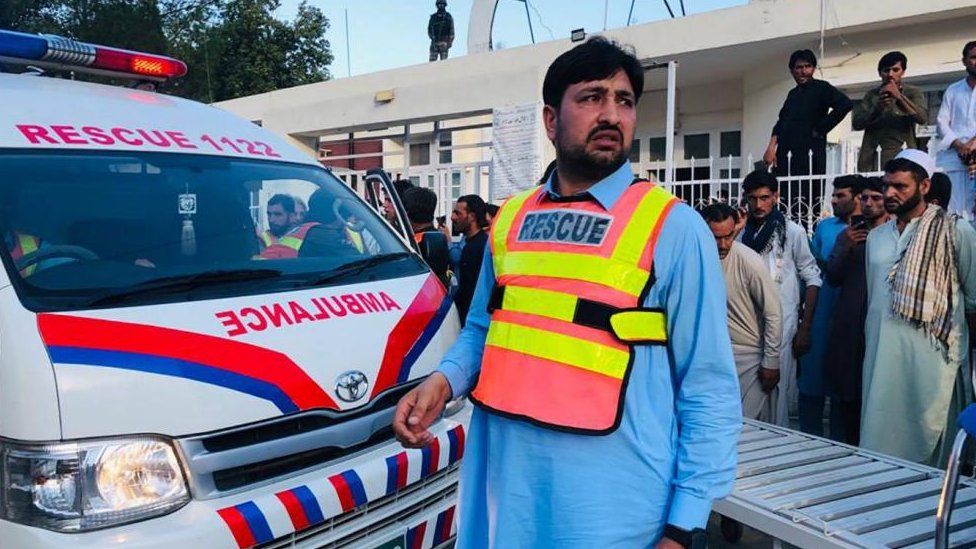
    At least 44 people have lost their lives, and more than 100 others injured during an explosion at an Islamist party’s rally in Pakistan’s north-west Bajaur district.

    Police suspect the explosion to be a possible suicide attack and have completed a rescue operation, transporting the injured to hospitals.

    The motivation behind the attack remains unclear, and security forces have cordoned off the area for investigation.

    The incident occurred during the Jamiat Ulema-e-Islam-Fazl (JUI-F) workers’ convention in the town of Khar, near the Afghanistan border.

    Pictures showed a large gathering under a canopy when the blast occurred near the stage, causing the tent to collapse and trapping people attempting to escape.

    Ambulances were seen transporting the injured to hospitals, with military helicopters aiding those with serious injuries to nearby Peshawar for urgent medical treatment.

    A regional JUI-F leader, Maulana Ziaullah, was among the casualties.

    Pakistan’s Prime Minister, Shehbaz Sharif, condemned the attackers as terrorists who targeted those advocating for Islam, the Quran, and Pakistan, vowing to eliminate them.

    The JUI-F, a significant religious political party and part of the government coalition, had organized the gathering to garner support ahead of an upcoming election.

    “The terrorists are enemies of Pakistan, we will eliminate them from the face of existence,” the PM said in a statement.

    Although no group has claimed responsibility for the attack, the local branch of the Islamic State group (IS) has been linked to previous attacks in the region, including targeting JUI-F.

  • Afghanistan flash floods claim dozens of lives

    Afghanistan flash floods claim dozens of lives

    The fatal flash floods that struck multiple Afghan provinces over the weekend claimed at least 31 lives, according to authorities’ reports on Sunday.

    74 people had been harmed, and at least 41 were still missing, according to Shafiullah Rahimi, a spokesman for the Taliban’s Ministry of Disaster Management, who talked to the media from Kabul.

    Rahimi claims that in seven regions of Afghanistan, flash floods caused by heavy seasonal rains have destroyed 606 residential dwellings and hundreds of acres of agricultural land, either completely or in part.

    Teams from the ministry, as well as teams from the defence and public welfare ministries, the Red Crescent, provincial officials, and other officials, arrived at the flood scenes and managed the rescue efforts, the official claimed.

    In a statement made public on Sunday, the Taliban’s Ministry of State for Disaster Management asserted that since the year 2023 got underway, over 100,000 families in different provinces affected by natural disasters had gotten food and money aid.

    According to the report, including the most recent recorded deaths from flash floods, at least 214 individuals have perished as a result of natural catastrophes in the previous four months.

  • Afghanistan’s Taliban outlaws women’s beauty parlours

    Afghanistan’s Taliban outlaws women’s beauty parlours

    The Taliban‘s most recent assault on Afghan women’s rights calls for the closure of all beauty parlours.

    The prohibition was announced today by the Ministry for the Prevention of Vice and the Propagation of Virtue, but a letter about it, dated June 24, has been making the rounds on social media.

    The timeframe for closing women’s beauty salons is one month, according to spokesperson Mohammad Sadiq Akif.

    Each salon is then required to file a report attesting to the fact that it has closed for business.

    These places are usually female-only and have their windows covered so that customers cannot be seen from outside.

    Despite the Taliban’s promise to implement a more moderate rule than when they were previously in power in the 1990s, the group is essentially barring women from public life.

    Women are not allowed at parks, gyms, or public baths and their access to education has been suppressed with all universities for women ordered to close at the end of last year.

    One woman, named only as Sahar for security reasons, said the salon ban takes away the final avenue women had for socialising safely outside of the family.

    The Kabul local, who is used to getting her hair and nails done every few weeks, said: ‘Parks are not allowed for women so it was a good place for us to meet our friends.

    ‘It was a good reason to see each other, to meet other women, other girls to talk about issues.

    ‘Now I don’t know how to meet them, how to see them, how to talk to each other… I think it will be very impactful for us and women around Afghanistan.’

    The Taliban’s measures have triggered a fierce international uproar, increasing the country’s isolation at a time when its economy has collapsed.

    Western governments and major organisations have said the restrictions on women are essentially preventing the Taliban from getting any international recognition.

    The administration says it respects women’s rights in accordance with its interpretation of Islamic law and Afghan customs.

  • About 80 Afghanistan students, mostly females, poisoned – Officials

    About 80 Afghanistan students, mostly females, poisoned – Officials

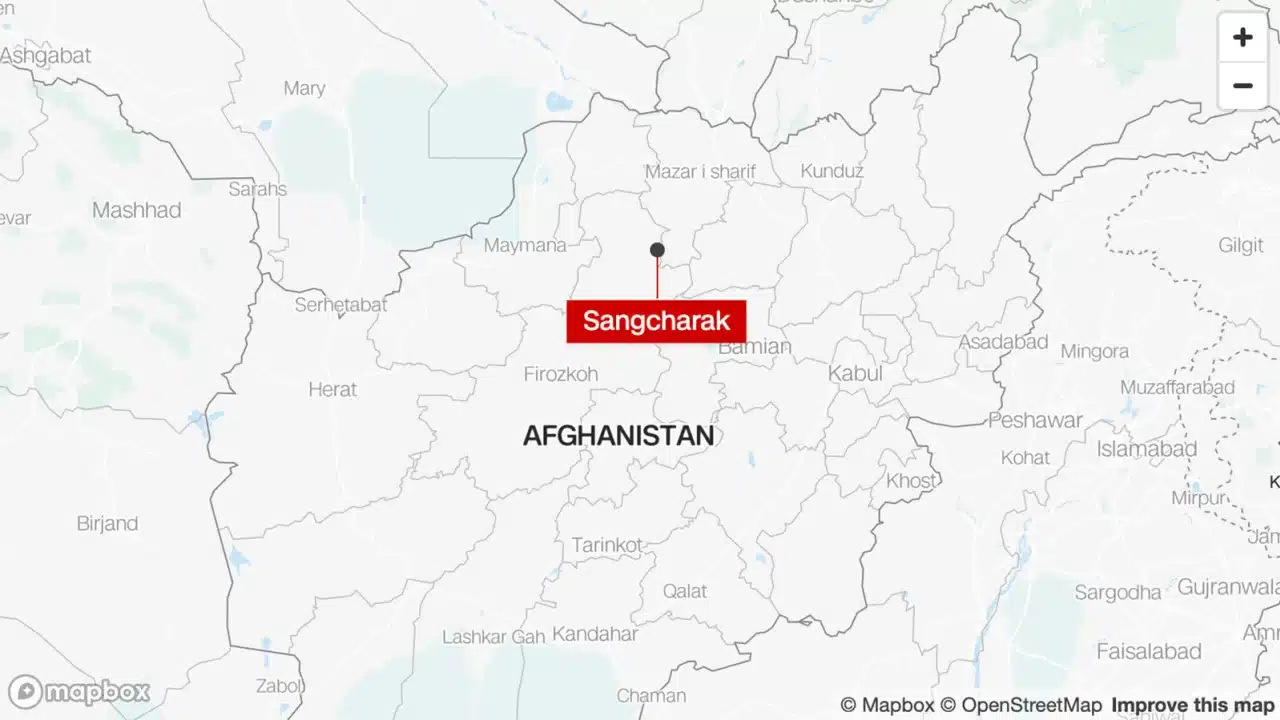
    As reported by Mohammad Rahmani, the chief of the education department in the northern Sar-e-Pul province, over 80 elementary students, predominantly females, are said to have been poisoned over the weekend and taken to a hospital in Afghanistan‘s Sangcharak district.

    According to Rahmani, who claimed to have spoken with authorities directly, the regional police department’s intelligence unit stated that they are currently looking into the situation. According to him, authorities are still unsure of the perpetrator, the reason behind it, and the kind of poison that would have been administered to the schoolchildren.

    According to Rahmani, the probe was brought on by reports of 17 female students in one school on Saturday and 60 others, largely female, in another school in a nearby village.

    “After reaching school in the morning, the students suddenly started feeling dizzy, headache, and nausea,” Rahmani said. The students were admitted to a local hospital, but 14 whose situation was more critical were transported to a hospital in the provincial capital, according to Rahmani.

    A doctor at Sar-i-Pul hospital confirmed to CNN that some of the girls were admitted to hospital and he believes they were poisoned based on their symptoms.

    The doctor spoke on the condition of anonymity, citing safety concerns.

    The education of girls has become a divisive issue in Afghanistan since the Taliban takeover of the country in 2021, where the group proceeded to strip away hard won freedoms for women and exclude them from public life.

    Some of its most striking restrictions have been around education, with girls barred from returning to secondary schools and universities, depriving an entire generation of academic opportunities.

    Following international pressure, the Taliban kept primary schools open for girls until around the age of 12, Reuters reported.

    Several poisoning attacks against schoolgirls took place during Afghanistan’s previous foreign-backed government. In 2012, more than 170 women and girls were hospitalized after drinking apparently poisoned well water at a school. Local health officials blamed the acts on extremists opposed to women’s education.

  • Qatari’s prime minister meets Taliban leader in Afghanistan

    Qatari’s prime minister meets Taliban leader in Afghanistan

    Two individuals familiar with the encounter confirmed to CNN that Qatar’s prime minister had a covert meeting with the Taliban‘s top official earlier this month in Afghanistan.

    On May 12, the Taliban Supreme Leader Haibatullah Akhundzada and Qatar’s Prime Minister Mohammed bin Abdulrahman bin Jassim Al-Thani met in the southern city of Kandahar.

    The encounter between Akhundzada and a foreign leader is said to be their first. Reuters broke the news first.

    The Biden administration was quickly briefed by Qatar in Washington and then in a phone call the day after the meeting between US Secretary of State Antony Blinken and Al-Thani, who also serves as foreign minister. A brief readout by the State Department on May 13 only noted Blinken’s “appreciation for Qatar’s continued assistance on Afghanistan.”

    CNN has reached out to the US State Department and the Qatari Embassy in the US for comment.

    Qatar’s Al Jazeera reported a few days later that Al-Thani had visited the Afghan capital as part of “facilitating the relations between the caretaker [Taliban] government and the international community…”

    American officials have met occasionally with Taliban representatives in the Qatari capital, Doha, since the US left Afghanistan in August 2021 amid the Taliban takeover of the country.

    Despite American warnings to the Taliban not harbor terrorists, Al Qaeda’s leader Ayman al-Zawahiri took up residence in Kabul before being killed in a US drone strike last July.

    Qatar serves as the US protecting power in Afghanistan, where it does not have a diplomatic presence. The diplomatic compound in Kabul – once one of the largest US Embassies in the world – has been shuttered since August 2021, and the US relocated its diplomatic mission to Doha.

  • India establishes soft power in Afghanistan bypassing Pakistan

    India establishes soft power in Afghanistan bypassing Pakistan

    Through Iran and the exclusion of a once-essential Pakistan, India is enhancing its soft influence in Afghanistan by supplying vital supplies.

    According to a recent statement made to Nikkei Asia by a representative of the United Nations World Food Programme, an Indian gift of 20,000 metric tonnes of wheat is anticipated to reach Afghanistan in the coming months. This will fulfil a commitment New Delhi made in March to export the wheat through the Chabahar port in Iran. The final destination of the goods is the Afghan province of Herat over the Iranian border.

    Hunger in Afghanistan remains widespread, with the WFP estimating that more than 19 million people suffer from acute food insecurity, when a lack of adequate food puts lives or livelihoods in immediate danger. A recent Taliban-imposed ban on female U.N. staff in Afghanistan caused an uproar in the international community and raised additional fears for the country’s future, even prompting hints at a U.N. pullout. But the WFP representative clarified the organization is committed to delivering aid where hunger threatens the lives of millions.

    “The humanitarian needs across the country remain very high,” the representative said, “and [India’s] contribution will help us reach hungry families where needs are highest.”

    The move not only reinforces India’s position as a key provider of essential aid to Afghanistan but also highlights New Delhi’s efforts to craft positive relations, even though it does not formally recognize the Taliban regime that seized power in August 2021. India reestablished its diplomatic presence in mid-2022 by deploying a “technical team” in the Afghan capital. Experts say the region is simply too important to leave.

    In addition, the latest food aid marks a geopolitically significant change in the way India supplies assistance.

    In response to the crisis in Afghanistan, India initially suggested trucking 50,000 tonnes of wheat through archrival Pakistan. Following extensive deliberations and prodding from the Afghan Taliban, Pakistan granted approval in November 2021. Consequently, the first shipment of Indian wheat was transported via the Pakistani transit route in February 2022.

    However, despite India’s request, Pakistan did not grant an extension to the stipulated period, limiting the shipments to 40,000 tonnes.

    Using the port at Chabahar offers substantial advantages over sending wheat through Pakistan, skirting the tense relationship between the nuclear-armed neighbors and allowing India to help Afghans more effectively.

    “Use of Chahbahar negates the indispensability of Pakistan in terms of India reaching out to Afghanistan and Central Asia, especially since [Islamabad’s] own relations have gone south with the Taliban and ours have gotten better,” said Ashok Sajjanhar, a former Indian ambassador to Kazakhstan, Sweden and Latvia.

    “India has always had a historical and civilizational connect with the people [of Afghanistan],” he added. He also stressed the importance of having Indian officials in Afghanistan: “We want to have a technical presence and not a diplomatic one on Afghan soil,” he said. “We want to ensure that the aid we are going to supply reaches the rightful beneficiaries and not used by the authorities to serve its own people.”

    Asked if India’s use of Chahbahar should worry Pakistan, Sajjanhar said it might be “a matter of concern.”

    Islamabad’s own relations with the Afghan Taliban have soured, in part over the Kabul rulers’ inability or unwillingness to rein in Pakistani Taliban militants. And now India is tightening ties in a country Islamabad has long considered part of its sphere of influence.

    A Pakistani expert, however, downplayed the shift, stressing that India and Afghanistan are sovereign states and their relationship should not be viewed through the prism of Pakistan.

    “I think India and Afghanistan are free countries and must pursue autonomous, independent relations with each other,” said Mosharraf Zaidi, senior fellow at the TABADLab think tank and a former policy adviser to Pakistan’s Ministry of Foreign Affairs. “In fact, the more regionally integrated countries are amongst each other, the better it is for Pakistan.”

    Afghanistan’s internationally isolated officials have naturally welcomed India’s outreach.

    “India is an important country in the region, and Afghanistan values it,” Taliban spokesman Zabiullah Mujahid told Nikkei Asia. “We want to have good, friendly, and strong people-to-people relationships with India. The fact that India has just announced a donation of 20,000 metric tonnes of wheat is a great help to the people of Afghanistan, and we are very thankful to the people and government of India for this support.”

    Afghan women wait to receive food in Kabul. Millions in the country suffer from acute food insecurity.   © Reuters
    There are other signs of deepening ties, though New Delhi is keeping expectations in check. In mid-March, after India promised the wheat, the Taliban’s Ministry of Foreign Affairs released a memo about a four-day training program for ministry officials through the Indian Embassy. Soon afterward, India clarified in its own local media that the Indian Technical and Economic Cooperation (ITEC) program under the Indian External Affairs Ministry is fully online and does not reflect a change in New Delhi’s policy toward Kabul.

    Nevertheless, Mujahid acknowledged the training and thanked the embassy for its engagement.

    Zaidi, the Pakistani expert, suggested that ties between Pakistan’s neighbors are inevitable and that the key is to solve the nuclear powers’ own rivalry.

    “It’s understandable that eventually the Taliban and India would get along, and Iran and India would get along,” Zaidi said. “I think the question for me is how Pakistan can develop a framework for a normal relationship with India in which key issues are resolved to a point where countries don’t feel threatened by each other.”

  • Mona4Real reportedly took cash to help fake US army officer in receiving funds from Afghanistan

    Mona4Real reportedly took cash to help fake US army officer in receiving funds from Afghanistan

    It is reported that Ghanaian Influencer, Mona Faiz Montrage, also known as Mona4Real took money worth over $2 million from several victims of her romance frauds.

    Among the many alleged acts she undertook was to receive payments to assist a fake United States army officer in receiving funds from Afghanistan.

    She also received money to resolve a fake FBI unemployment investigation and also transport gold to the United States from overseas.

    Montrage is also alleged to have sent another victim a tribal marriage certificate purporting to show that she and the victim had been married in Ghana. 

    “The victim sent MONTRAGE approximately 82 wire transfers totaling approximately $89,000 to purportedly help with costs associated with MONTRAGE’s father’s farm in Ghana.

    In total, MONTRAGE controlled bank accounts that received over $2 million in fraudulent funds from the Enterprise,” the U.S. Attorney’s Office, Southern District of New York wrote in a press statement.

    It is believed that she has been engaging in such activities from at least in or about 2013 through in or about 2019.

    The 30-year-old is currently facing six counts and might end up spending close to a century in prison.

    She is charged with one count of conspiracy to commit wire fraud, one count of wire fraud, one count of money laundering conspiracy, and one count of money laundering, each of which carry a maximum sentence of 20 years in prison. 

    Montrage is also charged with one count of receipt of stolen money, which carries a maximum sentence of 10 years in prison, and one count of conspiracy to receive stolen money, which carries a maximum sentence of five years in prison.

    The charges against Mona4Real are merely accusations, and the defendant is presumed innocent unless and until proven guilty.

    The case is being prosecuted by the Office’s Complex Frauds and Cybercrime Unit. Assistant U.S. Attorneys Mitzi Steiner and Kevin Mead are in charge of the prosecution.

  • UN advises Afghan personnel to remain at home as Taliban prevents women from working with organizations

    UN advises Afghan personnel to remain at home as Taliban prevents women from working with organizations

    Following the Taliban’s ban on female Afghan humanitarian workers, the United Nations instructed all of its employees in Afghanistan to avoid the organization’s offices in the nation and claimed that this forced it to make a “appalling choice.”

    “UN national personnel, both genders, have been advised not to report to UN offices, with only restricted and calibrated exceptions provided for vital activities,” the agency said in a statement.

    It happens after Afghan men who work for the UN in Kabul last week choose to stay at home in support of their female coworkers.

    The UN said the Taliban’s move was an extension of a previous ban, enforced last December, that prohibited Afghan women from working for national and international non-governmental organizations.

    The decree forced the UN “into having to make an appalling choice between staying and delivering in support of the Afghan people and standing by the norms and principles we are duty-bound to uphold,” the organization said in a statement Tuesday.

    It added that the ban was “the latest in a series of discriminatory measures implemented by the Taliban de facto authorities with the goal of severely restricting women and girls’ participation in most areas of public and daily life in Afghanistan.”

    The UN will continue to “assess the scope, parameters and consequences of the ban, and pause activities where impeded,” the statement said, adding that the “matter will be under constant review.”

    Several female UN staff in the country had already experienced restrictions on their movements since the Taliban seized power in 2021, including harassment and detention.

    Ramiz Alakbarov, the UN Deputy Special Representative, Resident and Humanitarian Coordinator for Afghanistan, called the Taliban’s decision an “unparalleled violation of human rights” last week.

    “The lives of Afghanistan women are at stake,” he said, adding, “It is not possible to reach women without women.”

    The UN Secretary-General’s Special Representative for Afghanistan, Roza Otunbayeva, is engaging with the Taliban at the highest level to “seek an immediate reversal of the order,” the UN said last week.

    “In the history of the United Nations, no other regime has ever tried to ban women from working for the Organization just because they are women. This decision represents an assault against women, the fundamental principles of the UN, and on international law,” Otunbayeva said.

    Other figures within the organization also condemned the move, with the UN High Commissioner for Human Rights calling it “utterly despicable.”

    After the Taliban banned female aid workers in December, at least half a dozen major foreign aid groups temporarily suspended their operations in Afghanistan – diminishing the already scarce resources available to a country in dire need of them.

    The Taliban’s return to power preceded a deepening humanitarian crisis in Afghanistan, worsening issues that had long plagued the country. After the takeover, the US and its allies froze about $7 billion of the country’s foreign reserves and cut off international funding – crippling an economy heavily dependent on overseas aid.

  • UN in need of $800m to ward off ‘catastrophic hunger’ in Afghanistan

    UN in need of $800m to ward off ‘catastrophic hunger’ in Afghanistan

    Afghanistan is at the biggest risk of famine in a quarter-century, according to the U.N. food agency, and it urgently needs $800 million over the next six months.

    After the Taliban took power in August 2021 and the economy collapsed that followed, aid organizations have been supplying food, education, and health care assistance to Afghans. However, a Taliban decree that forbade women from working for domestic and foreign nonprofit organizations last December has had a significant negative impact on distribution.

    Although the U.N. was not a party to this restriction, it claimed last week that Afghan women were no longer permitted to work for its agencies there because of the Taliban-led government. The restriction has not yet been addressed by the authorities.

    The World Food Program stated that female staff members are actively involved in delivering the organization’s food and nutrition support and that it will “make every possible effort” to maintain this.

    “The WFP urgently needs $800 million for the next six months to continue providing assistance to people in need across Afghanistan,” the organization said. “Catastrophic hunger knocks on Afghanistan’s doors and unless humanitarian support is sustained, hundreds of thousands more Afghans will need assistance to survive.”

  • Taliban allegedly holding 3 British men hostage

    Taliban allegedly holding 3 British men hostage

    According to a humanitarian organization, the Taliban are now holding three British people hostage in Afghanistan.

    One of the males was identified by Scott Richards of the Presidium Network as Kevin Cornwell, a 53-year-old Middlesbrough resident.

    According to Mr. Richards, Mr. Cornwell and a different nameless guy were both detained in January. He stated that on a different day, a third man was also taken into custody.

    The home secretary stated that the men were “the subject of discussions” by the administration.

    Speaking to Sky News, Suella Braverman said: “Anyone travelling to dangerous parts of the world should take the utmost caution. If they are going to do that they should always act on the advice of the Foreign Office travel advice.

    “If there are risks to people’s safety, if they’re a British citizen abroad, then the UK government is going to do whatever it takes to ensure that they’re safe.

    “The government is in negotiations and working hard to ensure people’s safety is upheld.”

    The Foreign Office said it was working hard to contact the men.

    The Presidium Network is a UK-based non-profit organisation that provides support to communities in crisis, representing the needs of people affected by violence or poverty to international policy makers.

    Mr Richards confirmed the organisation is representing Mr Cornwell, a paramedic who works for a charity, and the second unnamed man but not the third British national.

    Mr Richards said while there were “no official charges as such”, the two men’s detention on 11 January was understood to be over a weapon in a safe in Mr Cornwell’s room, which he said was stored with a licence issued by the Afghan interior ministry.

    “That license is missing,” he said, adding: “But we have taken several statements from witnesses who have seen the licence and affirm its existence.

    “It is perfectly possible that during the search the licence was separated from the weapon and, as such, why we refer to this scenario as a probable misunderstanding.”

    The third man is understood to be Miles Routledge, 23, from Birmingham, who was evacuated from Afghanistan by British Armed Forces in August 2021.

    Miles Routledge gives a thumbs up signal while in Kabul
    Image caption,Miles Routledge said previously he travelled to Afghanistan as he enjoys “dark” and “extreme” tourism

    The former Loughborough University student has attracted attention by travelling to dangerous countries and posting about it on social media.

    He previously shared that he chose Afghanistan because he enjoyed “dark” and “extreme” tourism.

    Following his extraction from the country less than two years ago, he told the BBC he was “exhausted but relieved” and thanked the British Army who had been deployed to support the evacuation of UK nationals from Kabul.

    Mr Richard told Sky News: “To our knowledge and awareness, we do believe they are in good health and being well treated.

    “We have no reason to believe they’ve been subject to any negative treatment such as torture and we’re told that they are as good as can be expected in such circumstances.”

    He added that there has been “no meaningful contact” between authorities and the two men Presidium is assisting.

  • 12 dead after earthquake hits Pakistan, Afghanistan

    12 dead after earthquake hits Pakistan, Afghanistan

    Large portions of Pakistan and Afghanistan were shaken by a strong earthquake that have left at least 12 people dead and more than 200 injured.

    Buildings were damaged by the 6.5-magnitude earthquake, which also caused landslides and forced residents to flee into the streets.

    It happened on Tuesday night and was centered in a hilly area in northern Afghanistan, close to the Pakistani border.

    India was affected by the tremors coming from the isolated Jurm valley.

    “It was a terrifying tremor. I had never felt such a tremor before in my life,” Kabul resident Khatera told AFP news agency after rushing out of her fifth-storey apartment.

    Nine of the confirmed deaths were reported in the valley region of Khyber Pakhtunkhwa in Pakistan.

    Three others were killed in Afghanistan, the country’s health ministry spokesman said. A child was among those killed in the Laghman province near the country’s border with Pakistan, AFP reported.

    Many families had been out of their homes celebrating the Persian New Year or Norwuz when the quake hit.

    But the damage found so far had been less than feared, emergency workers in Khyber Pakhtunkhwa told AFP.

    However the remoteness and rugged terrain of affected areas is likely to slow relief and rescue work.

    Many in the affected regions braved near-freezing temperatures to sleep outside after the quake – fearing aftershocks. Some had dashed out of their homes barefoot when they felt the shaking.

    In the capital of Islamabad, a vast multi-storey residential block was evacuated after huge cracks appeared in the building.

    Phone lines have been affected, and in Pakistan the highway in the worst-hit Swat area has been blocked by landslides.

    Pakistan Prime Minister Shehbaz Sharif has asked disaster agencies to take emergency measures to help people.

    Tremors were felt over a 1,000-km area that spans India, Uzbekistan, Tajikistan, Kazakhstan, Kyrgyzstan, Afghanistan and Turkmenistan, according to the European-Mediterranean Seismological Centre.

    Earthquakes are more likely in this region because it lies at the juncture of the Eurasian and Indian tectonic plates.

    In June last year more than 1,000 people were killed after a 5.9-magnitude quake struck Afghanistan’s Paktika province, the country’s deadliest in nearly a quarter of a century.

  • Taliban detains professor who protested ban on women’s education

    Taliban detains professor who protested ban on women’s education

    Ismail Mashal was arrested after he tore up his degree certificates on live television to protest the exclusion of women from higher education, according to the Taliban.

    An academic who tore up his degrees on live television in protest against a ban on women attending universities in the nation was detained by Afghanistan’s Taliban authorities, according to his aide on Friday.

    “From today I don’t need these diplomas any more because this country is no place for an education. If my sister and my mother can’t study, then I don’t accept this education,” veteran journalism lecturer Ismail Mashal said in the video that went viral on social media last month.

    Mashal’s aide Farid Ahmad Fazli told AFP news agency that the academic was “mercilessly beaten” and taken away in a very disrespectful manner by members of “the Islamic Emirate”, the Taliban government.

    Al Jazeera was also able to confirm Mashal’s detention.

    The shredding of his degree certificates on local Tolonews in December caused a storm, adding to protests by women and activists against a Taliban edict ending women’s university education.

    A Taliban official confirmed the detention.

    “Teacher Mashal had indulged in provocative actions against the system for some time,” tweeted Abdul Haq Hammad, director at the Ministry of Information and Culture.

    “The security agencies took him for investigation.”

    ‘Giving free books’

    In recent days, domestic channels showed Mashal carting books around the capital, Kabul, and offering them to passers-by.

    Mashal, who has worked as a lecturer for more than 10 years at three Kabul universities, was arrested on Thursday despite having “committed no crime”, Fazli said.

    “He was giving free books to sisters (women) and men,” he added. “He is still in detention and we don’t know where he is being held.”

    It is rare to see a man protest in support of women in Afghanistan but Mashal, who ran a co-educational institute, said he would stand up for women’s rights.

    “As a man and as a teacher, I was unable to do anything else for them, and I felt that my certificates had become useless. So, I tore them,” he told AFP at the time.

    “I’m raising my voice. I’m standing with my sisters … My protest will continue even if it costs my life.”

    Curb on women’s rights

    The denial of secondary and tertiary education for girls and women has been a continuing concern expressed by the international community.

    The majority of girls’ secondary schools remain closed, and most girls who should be attending grades 7-12 are denied access to school, based solely on their gender, experts have said.

    Women and girls in Afghanistan have been protesting against the measures continuously for the past five months, demanding their rights to education, work and freedom.

    Their Taliban rulers have repeatedly beaten, threatened or arrested demonstrating women.

    The Taliban, which returned to power in August 2021, initially promised women’s rights and media freedom but has since gradually imposed curbs on women, bringing back memories of its last rule between 1996 and 2001.

    Some senior Taliban leaders have said that Islam grants women rights to education and work but the hardline faction of the group has prevailed in implementing anti-women measures.

  • Afghanistan: Some Taliban open to talks on women’s rights, says top UN official 

    Afghanistan: Some Taliban open to talks on women’s rights, says top UN official 

    A senior UN official thinks Afghanistan’s restrictions on women participating in public life are gradually being lifted.

    Amina Mohammed, the deputy secretary-general, has been in Kabul for four days in an effort to persuade the Taliban to change their minds.

    The nation’s Islamist leaders outlawed all women from working for non-governmental organisations last month (NGOs).

    Several aid organisations had to halt operations as a result of the action.

    At the conclusion of her trip, Ms. Mohammed told the BBC that the majority of senior Taliban figures she encountered were eager to discuss women’s and girls’ rights.

    However, she described the talks as tough and cautioned that it would be a very long journey before the leadership took the fundamental steps required for international recognition of their rule.

    “I think there are many voices we heard, which are progressive in the way that we would like to go,” Ms Mohammed said. “But there are others that really are not.”

    “I think the pressure we put in the support we give to those that are thinking more progressively is a good thing. So this visit, I think, gives them more voice and pressure to help the argument internally.”

    Ms Mohammed also criticised the international community, including other Islamic states, for not doing enough to engage on the issue.

    Since seizing back control of the country last year, the Taliban has steadily restricted women’s rights – despite promising its rule would be softer than the regime seen in the 1990s.

    As well as the ban on female university students – now being enforced by armed guards – secondary schools for girls remain closed in most provinces.

    Women have also been prevented from entering parks and gyms, among other public places.

    It justified the move to ban Afghan women from working for NGOs by claiming female staff had broken dress codes by not wearing hijabs.

    Ms Mohammed’s comments come as Afghanistan suffers its harshest winter in many years.

    The Taliban leadership blames sanctions and the refusal of the international community to recognise their rule for the country’s deepening crisis.

    Ms Mohammed said her message to Afghanistan’s rulers was that they must first demonstrate their commitment to internationally recognised norms and that humanitarian aid cannot be provided if Afghan women are not allowed to help.

    “They’re discriminating against women there. for want of a better word, they become invisible, they’re waiting them out, and that can’t happen,” she said.

    But she said the Taliban’s stance was that the UN and aid organisations were “politicising humanitarian aid”.

    “They believe that… the law applies to anyone anywhere and their sovereign rights should be respected,” she said.

    The Taliban health ministry has clarified that women can work in the health sector, where female doctors and nurses are essential, but Ms Mohammed said this was not enough.

    “There are many other services that we didn’t get to do with access to food and other livelihood items that that will allow us to see millions of women and their families survive a harsh winter, be part of growth and prosperity, peace,” she said.

    This visit by the most senior woman at the UN also sends a message that women can and should play roles at all levels of society.

  • Australia cancels a cricket match with Afghanistan due to restrictions on women

    Australia cancels a cricket match with Afghanistan due to restrictions on women

    Australia has withdrawn from an upcoming one-day series in the United Arab Emirates due to Taliban government efforts to further curtail women’s rights.

    Following additional Taliban restrictions on the rights of women and girls, Australia’s men’s team has withdrawn from their March One-Day International (ODI) series against Afghanistan, according to Cricket Australia (CA).

    Three One-Day internationals between Australia and Afghanistan were set to take place in the United Arab Emirates, but CA decided against it after “extensive consultation” with all relevant parties, including the Australian government.

    “This decision follows the recent announcement by the Taliban of further restrictions on women’s and girls’ education and employment opportunities and their ability to access parks and gyms,” CA said in a statement on Thursday.

    “CA is committed to supporting growing the game for women and men around the world, including in Afghanistan, and will continue to engage with the Afghanistan Cricket Board in anticipation of improved conditions for women and girls in the country.

    “We thank the Australian government for its support on this matter.”

    The series formed part of the International Cricket Council’s (ICC) Super League, where the top eight teams automatically qualify for the 2023 World Cup. Australia have already qualified for the tournament.

    Australia were scheduled to play a Test match against Afghanistan in November 2021 but the fixture was postponed after the Taliban seized power in August of that year.

    Afghanistan remain the only ICC full-member nation without a women’s team. They have continued to appear at ICC events since the Taliban takeover, however, and faced Australia during last year’s Twenty20 World Cup.

    ICC Chief Executive Geoff Allardice has said Afghanistan’s lack of commitment to women’s cricket is a concern for the sport’s global governing body and that the matter will be discussed at its next board meeting.

    “Our board has been monitoring progress since the change of regime,” Allardice said. “It is a concern that progress is not being made in Afghanistan and it’s something our board will consider at its next meeting in March. As far as we are aware, there isn’t activity at the moment.”

    Australia will forfeit 30 competition points for the series, which go towards World Cup qualification. But they have already secured automatic qualification to the 50-over tournament in India in October.

    The Taliban regained Kabul’s control in mid-2021 and immediately placed restrictions on female participation in sports.

    The new rulers also barred teenage girls from secondary schools and last month banned women from attending universities, prompting global outrage. Women have also been excluded from parks and gyms.

    More recently, women were told they could no longer work in Afghanistan’s aid sector.

    Source: Aljazeera.com
  • Prince Harry dismisses “dangerous spin” regarding his remarks about the Taliban

    Prince Harry dismisses “dangerous spin” regarding his remarks about the Taliban

    Accusations that Prince Harry boasted about killing 25 Taliban fighters while on duty in Afghanistan have been called a “dangerous lie,” according to Prince Harry.

    Several military leaders criticized the prince for bringing up murders in Spare, claiming it was improper to refer to the deceased as “chess pieces.”

    Harry, however, claimed on US television that the media misinterpreted what he said and threatened his family with the misinterpretation.

    He also defended his remarks by saying that his goal was to lower veteran suicide.

    Spare, which was published on Tuesday, has become the fastest-selling non-fiction book ever in the UK.

    Some 400,000 copies of the memoir have been bought, despite many excerpts being leaked in the press ahead of its official release.

    In a wide-ranging interview with Stephen Colbert on The Late Show – the first conducted after details from the book were published – Harry suggested there had been attempts to undermine his book, spoke of his fractured relationship with his brother, and attacked the “bigoted” British press.

    Harry said writing the book had been a “cathartic” experience and the “most vulnerable I have ever been in my life”, while also leaving him feeling stronger.

    But he added: “The last few days have been hurtful and challenging, not being able to do anything about those leaks.”

    In his condemnation of the media coverage, Harry claimed outlets had intentionally chosen to “strip away the context” of his account.

    “Without a doubt, the most dangerous lie that they have told, is that I somehow boasted about the number of people I killed in Afghanistan,” he said.

    “If I heard anyone boasting about that kind of thing, I would be angry. But it’s a lie.

    “It’s really troubling and very disturbing that they can get away with it… My words are not dangerous – but the spin of my words are very dangerous to my family. That is a choice they’ve made.”

    He said he had wanted to be honest about his experience in Afghanistan, and to give veterans the space to share theirs “without any shame”.

    “My whole goal and my attempt with sharing that detail is to reduce the number of [veteran] suicides,” he added.

    Harry also claimed Buckingham Palace attempted to undermine the stories told in his memoir, assisted by the British press.

    No names were mentioned but host Colbert asked if there had been attempts by the palace to undermine the book.

    “Of course, and mainly by the British press,” he replied, without going into more detail.

    In lighter moments during the interview, Harry drank Tequila with Colbert, joked that it felt like “group therapy” and performed a skit introducing the show with Hollywood actor Tom Hanks.

    Prince Harry
    Image caption,Harry served as an Apache helicopter pilot in 2012-13

    In Spare, Prince Harry reveals for the first time that he killed 25 enemy fighters during two tours in the Helmand region of Afghanistan.

    “It wasn’t a statistic that filled me with pride but nor did it make me ashamed,” he writes.

    “When I was plunged into the heat and confusion of battle, I didn’t think about those as 25 people. You can’t kill people if you see them as people.

    “In truth, you can’t hurt people if you see them as people. They were chess pieces taken off the board, bad guys eliminated before they kill good guys.”

    Subsequent media coverage of the comments, which were leaked to the press ahead of the book’s publication, drew criticism from figures in the military.

    Ex-army officer Col Richard Kemp, who oversaw forces in Afghanistan, told the BBC he was concerned at references to dead Taliban insurgents as chess pieces, saying such descriptions could give “propaganda to the enemy”.

    And Ex-colonel Tim Collins, who gained worldwide fame for an eve-of battle speech to troops in Iraq, said: “He has badly let the side down. We don’t do notches on the rifle butt. We never did.”

    Source: BBC.com
  • Prince Harry will face trial over killing of 25 in Afghanistan, Taliban says

    Prince Harry will face trial over killing of 25 in Afghanistan, Taliban says

    The Taliban administration has declared that Duke of Sussex Prince Harry, who has admitted to killing 25 Afghan soldiers, will appear before the International Court.

    The Taliban’s police spokesman, Khalid Zadran, made this declaration on Friday in Kabul, the nation’s capital.

    The Telegraph reports that Zadran responded to Prince Harry’s admission that he killed 25 Taliban fighters while operating an Apache helicopter during the conflict.

    The Duke of Sussex described how he flew six sorties during his second tour of duty in Afghanistan in 2012 and killed 25 Taliban in his upcoming biography, Spare.

    http://backend.theindependentghana.com/prince-harry-admits-to-having-murdered-25-people-in-afghanistan/

    Reacting, the Taliban official said, “Prince Harry will always be remembered in Helmand – Afghans will never forget the killing of their innocent countrymen.”

    “The perpetrators of such crimes will one day be brought to the international court and criminals like Harry who proudly confess their crimes will be brought to the court table in front of the international community.”

    http://backend.theindependentghana.com/harry-criticised-for-remarks-on-killing-taliban-in-afghanistan/

    Zadran added that Prince Harry’s description of those he had killed as “chess pieces” and that he was “neither proud nor ashamed” of his actions, was “cruel”, “barbaric” and that such actions had legitimised the Taliban’s deadly insurgency against NATO troops in Afghanistan.

    “Occupying forces in Afghanistan used to start operations under nightfall on our villages. Prince Harry was involved in this and he has taken the lives of dozens of defenseless Afghans,” said Zadran.

    “The cruel and barbaric actions of Harry and others aroused the Afghan population and led to an armed uprising against them. We call this kind of uprising holy jihad,” he added. 

  • Harry criticised for remarks on killing Taliban in Afghanistan

    Harry criticised for remarks on killing Taliban in Afghanistan

    According to a veteran British commander, Prince Harry’s comments about murdering Taliban fighters in Afghanistan have damaged his reputation.

    In his memoir, the Duke of Sussex describes his 25 kills as “chess pieces taken off the board”.

    Colonel Richard Kemp, a former army officer, told the BBC that Harry’s remarks were “ill-judged.”

    He stated that the comments might have jeopardized his security and aroused retaliation.

    In his biography Spare, which BBC News has a copy of after it went on sale early in Spain, Prince Harry goes into depth about his time serving as a helicopter pilot in Afghanistan.

    After two deployments in the country’s Helmand province, he makes the first public admission in it that he killed 25 enemy combatants.

    “It wasn’t a statistic that filled me with pride but nor did it make me ashamed,” he writes.

    “When I was plunged into the heat and confusion of battle, I didn’t think about those as 25 people. You can’t kill people if you see them as people.

    “In truth, you can’t hurt people if you see them as people. They were chess pieces taken off the board, bad guys eliminated before they kill good guys.

    “They trained me to ‘other’ them and they trained me well.”

    Prior to beginning his second longer tour while piloting Apache helicopters, Harry temporarily worked as a forward air controller on the ground calling in strikes.

    Responding to the prince’s comments, a senior Taliban leader Anas Haqqani tweeted: “Mr Harry! The ones you killed were not chess pieces, they were humans; they had families who were waiting for their return…

    “I don’t expect that the (International Criminal Court) will summon you or the human rights activists will condemn you, because they are deaf and blind for you.”

    The US and its Nato allies invaded in October 2001 to oust the Taliban, whom they said were harbouring Osama Bin Laden and other al-Qaeda figures linked to the 9/11 attacks.

    Col Kemp, who was sent to Kabul in 2003 to take command of forces in Afghanistan, said the Taliban insurgents killed were bad people and he did not have a problem with Prince Harry revealing his kill number – but took issue with the way Harry suggested Taliban insurgents were seen by the army as “sub-human and just as chess pieces to be knocked over”.

    He told BBC Breakfast: “I think he’s wrong when he says in his book that insurgents were seen just as being virtually unhuman – subhuman perhaps – just as chess pieces to be knocked over.

    “That’s not the case at all. And it’s not the way the British Army trains people as he claims…

    “I think that sort of comment that doesn’t reflect reality, is misleading and potentially valuable to those people who wish the British forces and British government harm, so I think it was an error of judgement.”

    In defense of Harry, he claimed that the prince should be “proud” of his kill total because of the “effective impact” it would have had on the campaign, his bravery in the field, and the way he has supported wounded soldiers.

    However, he warned that it would make the duke’s security issues worse and might “provoke attempt revenge” among those who support the Taliban.

    Adam Holloway, the Conservative MP for Gravesham who fought in Iraq for the British Army, wrote in the Spectator that many soldiers did not think it was appropriate to publicise their kill count.

    “It’s not about macho codes. It’s about decency and respect for the lives you have taken,” he wrote.

    Ben McBean, who lost an arm and a leg serving with the Royal Marines in Afghanistan and was described by Prince Harry as a hero after the pair met at several events, said the royal needed to “shut up”.

    He wrote on Twitter: “Love you #PrinceHarry but you need to shut up! Makes you wonder the people he’s hanging around with.

    “If it was good people somebody by now would have told him to stop.”

    Another serviceman still serving told the BBC Harry’s comments were “very unsoldier-like”.

    The soldier, who’s done several tours of Afghanistan, said he would struggle to work out how many “kills” he had been directly involved in – without access to all the specific patrol reports. Lots of people firing roughly in the same direction would make it harder to tell too.

    And like many military personnel he said he had no interest in keeping count. More often it is those who write books who seem to take more of an interest in their kill statistics.

    Harry in his role as a helicopter pilot would have had a better view than most from his cockpit – seeing individuals up close using sensors and screens.

    He would also see the impact of his cannon and hellfire missiles – although clarity would be soon obscured by dust – and he would be able to review footage from the cockpit. But it is not always possible to count bodies on the ground or to distinguish between someone injured or killed.

    Prime Minister Rishi Sunak said he would not comment on the appropriateness of the prince’s 25 kills claim, but added he was “enormously grateful to our armed forces”.

    A Ministry of Defence spokesperson, when asked about the prince’s kill number, said: “We do not comment on operational details for security reasons.”

  • Prince Harry admits to having murdered 25 people in Afghanistan

    Prince Harry admits to having murdered 25 people in Afghanistan

    Harry claimed that the army instructed him not to see Taliban members as actual individuals, according to The Telegraph, which got an excerpt from the book.
    He continued by saying that his kill total as a pilot of an Apache assault helicopter is “neither proud nor ashamed.”

    Prince Harry in his upcoming memoir ‘Spare,’ wrote that he killed more than two dozen people in Afghanistan during his time as a soldier hunting Taliban extremists.

    According to The Telegraph, which obtained an excerpt from the book, Harry said the army taught him not to view members of the Taliban as people. He further stated that he is “neither proud nor ashamed” of his kill count as an Apache attack helicopter pilot.

    Harry, the Duke of Sussex, served in Afghanistan first as a forward air controller in air raids from 2007-2008, then flying the attack helicopter between 2012 and 2013.

    The 38-year-old is due to release a book, Spare, in the next week, in which he revealed that he undertook six missions as a pilot that led to him “taking human lives”.

    According to the report, Harry said he was neither proud nor ashamed of doing so. He also described eliminating the targets as removing “chess pieces” from a board.

    “My number is 25. It’s not a number that fills me with satisfaction, but nor does it embarrass me,” he wrote.

    The prince explained his justification for his actions because of the 9/11 attacks in the United States and meeting the families of the victims.

    He said those responsible and their sympathisers were “enemies of humanity” and fighting them was an act of vengeance for a crime against humanity.

    The US-led foreign forces withdrew from Afghanistan in August 2021 after 20 years of military occupation that left tens of thousands of people dead, mostly civilians.

    In the already controversial book to be published on January 10, Harry talked for the first time about the number of Taliban fighters he killed during his service.

    Prince Harry’s autobiography ‘Spare’ is not due out until next week but it dominated headlines on Thursday after a Spanish-language version of the memoir mistakenly went on sale.

    The book was hurriedly withdrawn from shelves in Spain but not before copies were obtained by media outlets, who pored over its contents and published key excerpts.

    They include how Harry was allegedly physically attacked by his older brother, Prince William, in a blazing 2019 row about his wife, Meghan Markle. He wrote that his fight with William came after his brother called Meghan “difficult”, “rude” and “abrasive”.

    The memoir also touches on his strained relationship with his father, King Charles III, as well as disclosures about how he was told of the death of his mother Princess Diana in a car crash in 1997, and his use of cocaine as a teenager.

    Source: Sahara Reports

  • ‘My dear son’: Harry reveals how he found out about Diana’s car accident in a new book

    ‘My dear son’: Harry reveals how he found out about Diana’s car accident in a new book

    Prince Harry has written about the moment he learned his mother, Princess Diana, had been killed in a car accident.

    Spare, details a series of revelations in which Harry admits to using cocaine and discusses how he lost his virginity.

    When his mother died, he was woken up by his father, who “sat on the edge of the bed and put his hand on my knee,” he wrote.

    “My dear son, mum has had a car accident,” he says Charles said.

    “There have been complications. Mum has been seriously injured and has been taken to hospital, my dear son.”

    The book added: “He would always call me ‘dear son’, but he was repeating it a lot.

    “He spoke quietly. It gave me the impression he was in shock.”

    Diana died in 1997 following a car crash in Paris.

    The book Spare was mistakenly put on shelves in Spain, five days ahead of the official release date – but Sky News has obtained a copy.

    Members of the royal family (left to right) the Prince of Wales, the Duke of Cambridge, the Duchess of Cornwall and Prince Harry leave following a service of thanksgiving, at Saint Paul's Cathedral, in central London.
    Image:From left: The then Prince Charles, William, the then Duchess of Cornwall and Harry

    ‘Don’t remarry’

    Prince Harry also says in his new book that he asked his father not to marry Camilla.

    The Duke of Sussex also talks about the moment he was told his mother had a car accident, amongst a number of other revelations.

    Speaking about his father marrying Camilla, the prince writes: “That’s why when the question came, Willy and I promised our father that we would welcome Camilla to the family. The only thing we asked for in return was that he didn’t marry her. ‘You don’t need to get married again’ we asked him.”

    Harry in Afghanistan in 2012
    Image:Harry in Afghanistan in 2012

    Harry killed 25 people in Afghanistan

    In Spare, the duke also said that he killed 25 people while serving in Afghanistan.

    Writing about his two tours of duty, the Prince, who spent 10 years in the Army, said: “So my number: twenty-five. It was not something that filled me with satisfaction, but I was not ashamed either. Naturally, I would have preferred not to have that figure on my military resume, or in my head, but I would also have preferred to live in a world without the Taliban, a world without war.”

    A young Prince Harry and his mother in London's Hyde Park in 1995

    Prince claims he was dissuaded from asking for Diana investigation

    Harry also claims in his memoir that he and his brother William were dissuaded from jointly asking for an investigation into their mother’s death.

    He wrote: “Especially the summary conclusion, that our mother’s driver was drunk and, as a result, that was the only cause of the accident. It was simplistic and absurd. Even if the man had been drinking, even if he had been drunk, he wouldn’t have had any problem driving through such a short tunnel.

    “Unless paparazzi were following him and dazzled him. Why had those paparazzi got off lightly? Why weren’t they in prison? Who had sent them? And why weren’t those people in jail either? What other reason could there be apart from corruption and cover-ups being the order of the day? We agreed on all those questions, and also what we should do next. We would issue a statement, asking jointly for the investigation to be reopened. We might call a press conference. Those who decided dissuaded us.”

    Pic: AP

    Harry admits he took cocaine

    In the book, he also admitted that he took cocaine, spoke about how he lost his virginity and claimed his brother physically attacked him during a row over his marriage to Meghan Markle.

    Speaking about using cocaine, Prince Harry said “it wasn’t very fun, and it didn’t make me feel especially happy”.

    Harry described losing his virginity as “a humiliating episode with an older lady”.

    He said it was “with an older lady, who loved horses very much and treated me like a young stallion”.

    The excerpt read: “‘I mounted her quickly, after which she spanked my ass and held me back… one of my mistakes was letting it happen in a field, just behind a busy pub. No doubt someone had seen us’.”

    Source: Skynews.com
  • Dozens feared dead in explosion outside Kabul military airport

    Dozens feared dead in explosion outside Kabul military airport

    A spokesman for the interior ministry controlled by the Taliban says that an explosion outside the airport resulted in numerous casualties.

    Multiple people have been hurt in an explosion that occurred near Kabul’s military airport, according to a spokesman for the Taliban-run interior ministry.

    “Today morning an explosion took place outside Kabul military airport, due to which a number of our citizens were martyred and injured,” spokesman Abdul Nafi Takor told Reuters news agency, adding that an investigation is underway.

    He did not specify the nature or target of the explosion. There was no immediate claim of responsibility for the blast.

    Local residents said a loud explosion was heard before 8am (03:30 GMT) in the vicinity of the military side of the heavily fortified airport.

    They said the area had been sealed off by security forces, and all roads had been closed.

    The Taliban authorities claim to have improved security since storming back to power in August 2021 but there have been scores of bomb blasts and attacks, many claimed by the local chapter of the ISIL (ISIS) armed group.

    Last month, at least five Chinese nationals were wounded when ISIL attackers stormed a hotel popular with Chinese nationals in Kabul.

    Hundreds of people, including members of Afghanistan’s minority communities, have been killed and wounded in attacks since the Taliban returned to power.

  • UN Security Council urges Taliban to reverse restrictions on women

    The UN Security Council has denounced Taliban government policies targeting women and girls in Afghanistan.

    The 15-member Security Council said it was “deeply alarmed” by the increasing restrictions on women’s education.

    UN Secretary-General Antonio Guterres said that the latest restrictions “must be revoked”.

    A statement from the Council called for the “full, equal, and meaningful participation of women and girls in Afghanistan”.

    It urged the Taliban “to reopen schools and swiftly reverse these policies and practices, which represents an increasing erosion for the respect of human rights and fundamental freedoms.”

    The ban on female humanitarian workers “would have a significant and immediate impact for humanitarian operations in country”, including for the UN, it added.

    Mr Guterres said that the latest restrictions were “unjustifiable human rights violations”.

    “Actions to exclude and silence women and girls continue to cause immense suffering and major setbacks to the potential of the Afghan people,” he wrote on Twitter.

    At least five top NGOs halted work in Afghanistan after women were banned from working for them by the Taliban government.

    Care International, the Norwegian Refugee Council (NRC) and Save the Children said they could not continue their work “without our female staff”.

    The International Rescue Committee also suspended services while Islamic Relief said it was stopping most of its work.

    The Taliban last week arrested five women taking part in a protest in the Afghan capital, Kabul, over the ban on female education. Three journalists were also arrested.

    Since seizing back control of the country last year, the Taliban have steadily restricted women’s rights – despite promising their rule would be softer than the regime seen in the 1990s.

    As well as the bans on NGO workers and female university students – in the case of students, now being enforced by armed guards – secondary schools for girls remain closed in most provinces.

    Women have also been prevented from entering parks and gyms, among other public places.

  • Foreign aid groups halt work after Taliban ban on female staff

    Three major non-governmental organisations (NGOs) have halted work in Afghanistan after women were banned from working for them by the Taliban.

    In a joint statement, Care International, the Norwegian Refugee Council (NRC) and Save the Children said they would be unable to continue their work “without our female staff”.

    The aid groups are “demanding” that women can continue to work for them.

    Afghanistan’s ruling Taliban have been steadily repressing women’s rights.

    The latest edict on NGOs came just days after the Taliban banned women from attending university.

    Abdel Rahman Habib, spokesman for the Taliban’s ministry of economy, claimed female workers at the foreign aid groups had broken dress codes by not wearing hijabs.

    The Taliban threatened to cancel the licence of any organisation that did not swiftly comply with the ban.

    The leaders of Care, the NRC and Save the Children said the organisations “would not have jointly reached millions of Afghans in need since August 2021” were it not for their female staff.

    “Whilst we gain clarity on this announcement, we are suspending our programmes, demanding that men and women can equally continue our lifesaving assistance in Afghanistan,” their statement added.

    Ramiz Alakbarov, the United Nations’ top humanitarian coordinator, said the UN was trying to get the ban reversed and that it was a “red line for the entire humanitarian community”.

    The United Nations could stop humanitarian aid delivery in Afghanistan if the Taliban authorities do not reverse their edict banning women aid workers, the official told the BBC.

    But Mr Alakbarov said it was still unclear what the Taliban meant by its edict.

    He said the Taliban’s minister of health had told the UN the agency should continue its health-related work and women could “report to work and discharge their services”.

    Other ministries had also contacted the UN directly to say work in the areas of disaster management and emergencies should continue, he added.

    Jan Egeland of the NRC said nearly 500 of the aid group’s 1400 workers were women, and that female staff had been operating “according to all traditional values, dress code, movement, [and] separation of offices”.

    He said he hoped the decision would be “reversed in the next few days” and warned that millions would suffer if NGOs’ work was obstructed.

    NGOs also expressed concern about the effect the ban would have on jobs “in the midst of an enormous economic crisis”.

    Female Afghan NGO workers acting as the main earners in their household previously told the BBC of their fear and helplessness following the ban.

    One asked: “If I cannot go to my job, who can support my family?” Another breadwinner called the news “shocking” and insisted she had complied with the Taliban’s strict dress code.

    The ban triggered international outcry, with US Secretary of State Antony Blinken warning it would “disrupt vital and life-saving assistance to millions”.

    Since seizing back control of the country last year, the Taliban has steadily restricted women’s rights – despite promising its rule would be softer than the regime seen in the 1990s.

    As well as the bans on NGO workers and female university students – in the case of students, now being enforced by armed guards – secondary schools for girls remain closed in most provinces.

    Women have also been prevented from entering parks and gyms, among other public places.

  • Afghanistan: Taliban bans women from working for NGOs

    An order by the Taliban banning women from working for non-governmental organisations (NGOs) has been condemned by the United Nations, which said the move violated fundamental rights.

    The Islamist rulers justified the move by saying female NGO staff had broken dress codes by not wearing hijabs.

    The US Secretary of State also criticised the move saying it would be “devastating for the Afghan people”.

    Female Afghan NGO workers acting as the main earners in their household told the BBC of their fear and helplessness.

    One asked: “If I cannot go to my job, who can support my family?” Another breadwinner called the news “shocking” and insisted she had complied with the Taliban’s strict dress code.

    A third woman questioned the Taliban’s “Islamic morals”, saying she would now struggle to pay her bills and feed her children.

    “The world is watching us and doing nothing,” said another female interviewee. The BBC is not publishing the women’s names in order to protect them.

    Saturday’s order came in a letter from the Ministry of Economy to both national and international NGOs. It threatened to cancel the licence of any organisation that did not swiftly comply.

    By way of explanation, it said women were breaking Sharia law by failing to wear the hijab.

    The move has sparked international outrage, with US Secretary of State Antony Blinken saying he was deeply concerned, adding that it “will disrupt vital and life-saving assistance to millions”.

    “Women are central to humanitarian operations around the world. This decision could be devastating for the Afghan people,” Mr Blinken said.

    It was also described as a “clear breach of humanitarian principles” by a senior United Nations official.

    UN agencies have a significant presence in the country, carrying out relief and development work. An urgent meeting of the Humanitarian Country Team was planned for Sunday to respond to the news.

    An employee of Save the Children told BBC News the organisation was planning to meet Taliban authorities, saying that if women were not allowed to work then some NGOs would have to close.

    It is also feared that Afghan women could be left unable to receive aid directly, if organisations are only allowed to employ men. Taliban rules prevent men from working with women.

    Female employees were “essential” for reaching other women and girls, explained Melissa Cornet from Care International.

    She added: “Without them, the humanitarian situation might deteriorate rapidly, in a situation where most of the country is already facing life-threatening levels of hunger.”

    The South Asian branch of Amnesty International described the ban as “yet another deplorable attempt to erase women from the political, social and economic spaces” of Afghanistan.

    One doctor working in the northern city of Mazar-i-Sharif and nearby remote villages said she was “sad and devastated” at the development.

    She predicted “great difficulty” for women trying to access medical treatment, as they “can’t fully tell their problems to men”.

    Meanwhile, one imam – whose identity is again being protected by the BBC – said the Taliban was “not committed to any Islamic value”.

    He explained: “Islam has not said that men can educate and women cannot. Or men can work and women cannot. We are confused about this decision.”

    A ban on women attending Afghan universities earlier this week met similar criticism. It triggered protests – including in Herat on Saturday – which were rapidly suppressed by the Taliban.

    Since seizing back control of the country last year, the group has steadily restricted women’s rights – despite promising its rule would be softer than the regime seen in the 1990s.

    As well as the ban on female university students – now being enforced by armed guards – secondary schools for girls remain closed in most provinces.

    Women have also been prevented from entering parks and gyms, among other public places.

  • Afghanistan: Taliban bans women from universities amid condemnation

    The Taliban has banned women from universities in Afghanistan, sparking international condemnation and despair among young people in the country.

    The higher education minister made the announcement on Tuesday, saying it would take immediate effect.

    The ban further restricts women’s education – girls have already been excluded from secondary schools since the Taliban returned last year.

    In Kabul, female students have told the BBC about their anguish.

    “They destroyed the only bridge that could connect me with my future,” one Kabul University student said.

    “How can I react? I believed that I could study and change my future or bring the light to my life but they destroyed it.”

    The US on Tuesday roundly condemned the Taliban’s actions “in the strongest terms” and said such a move “will come with consequences for the Taliban”.

    “The Taliban cannot expect to be a legitimate member of the international community until they respect the rights of all in Afghanistan,” said Secretary of State Antony Blinken in a statement.

    “No country can thrive when half of its population is held back.”

    Western countries have demanded all year that the Taliban improve female education if they wish to be formally recognised as Afghanistan’s government.

    The United Nations also said it was “deeply concerned”.

    “Education is a fundamental human right. A door closed to women’s education is a door closed to the future of Afghanistan,” said Ramiz Alakbarov, UN chief’s deputy special representative for Afghanistan.

    The Taliban’s leader Hibatullah Akhundzada and his inner circle have been against modern education – particularly for girls and women.

    The Taliban had promised a softer rule after seizing power last year following the US’ withdrawal from the country. However the hardline Islamists have continued to roll back women’s rights and freedoms in the country.

    The ban on tertiary education follows rules set last month, where women were banned from parks, gyms and public baths in the capital.

    Tightening rules

    Just three months ago, the Taliban had allowed thousands of girls and women to sit university entrance exams in most provinces across the country.

    But there were sweeping restrictions on the subjects they could apply for, with engineering, economics, veterinary science and agriculture blocked and journalism severely restricted.

    Under Taliban rule, universities had already been operating under discriminatory rules for women – with gender segregated entrances to campuses and separate classrooms.

    Female students could only be taught by women professors or old men.

    One woman told the BBC about how there were “too many difficulties” just trying to continue her education after the Taliban takeover.

    She said: “We fought with our brothers, with our fathers, with society and even with the government.

    “We went through a hard situation just to be able to continue our education.

    “At that time at least I was happy that I could graduate from university and achieve my dreams. But, now how can I convince myself?”

    Afghanistan’s economy has been largely dependent on foreign aid in recent decades, but aid agencies have partly – and in some cases fully – withdrawn support to the education sector after the Taliban refused to allow girls into secondary schools.

    There was an exodus of trained academics after the withdrawal of US-led forces, and this year many teaching staff have gone unpaid for months.

    In March, the Taliban had promised to re-open some high schools for girls but then cancelled the move on the day they were due to return – citing funding and syllabus issues which rights groups said were excuses.

    Source: BBC

  • Afghanistan: Taliban bans women from attending universities

    A letter from the higher education minister has noted that , the Taliban have announced that women’s universities in Afghanistan will close.

    The change, according to the minister, is temporary. Immediate implementation is anticipated.

    Given that they are already prohibited from attending secondary school, it further restricts women’s access to formal education.

    Numerous women and girls took entrance exams for universities across Afghanistan three months ago.

    But sweeping restrictions were imposed on the subjects they could study, with veterinary science, engineering, economics and agriculture off limits and journalism severely restricted.

    After the Taliban takeover last year, universities included gender segregated classrooms and entrances.

    Female students could only be taught by women professors or old men.

    In November, the authorities banned women from parks in the capital Kabul, claiming Islamic laws were not being followed there.

    Source: BBC.com 


  • TTP seizes hostages at Pakistan counterterrorism center

    The facility in northwest Bannu town is the scene of a standoff after Pakistani Taliban men overpower security guards, steal weapons, and take hostages.Pakistani authorities have started negotiations in an effort to end a standoff with attackers who have taken over a counterterrorism facility in the country’s northwest and are holding several security personnel hostage.

    According to reports on Monday, security forces have encircled the heavily fortified military cantonment that houses the interrogation centre in Bannu district, where about 20 Tehreek-e-Taliban Pakistan (TTP) fighters — also known as the Pakistani Taliban — are holed up.

    Bannu is located just outside of North Waziristan, a region of Pakistan’s Khyber Pakhtunkhwa province that is dominated by tribes and borders Afghanistan. The area has long served as a refuge for TTP combatants.

    Pakistan has been fighting an armed rebellion by the TTP since 2007 when it emerged. The group associates itself with Afghanistan’s Taliban and is fighting for the enforcement of their strict interpretation of Islamic law in the country, the release of their members who are in government custody, and a reduction of Pakistani military presence in the country’s former tribal regions.

    There has been a surge in attacks on security forces since the TTP pulled out of peace talks with Islamabad last month.

    Pakistan Bannu
    Security officials stand guard on a blocked road outside the Bannu facility [Muhammad Hasib/AP]

    The incident in Bannu erupted late on Sunday and quickly evolved into a standoff.

    According to Mohammad Ali Saif, a provincial government spokesman, the attackers were demanding safe passage to Afghanistan.

    “We are in negotiations with the central leaders of the Pakistani Taliban in Afghanistan,” the Reuters news agency quoted Saif as saying.

    He said the authorities were yet to receive a response from the TTP, adding that relatives of the attackers and area tribal elders were also involved in initiating talks with the hostage-takers.

    Authorities said at least one counterterrorism official was killed by the attackers who snatched weapons from the guards during their interrogation, Reuters said.

    Several significant TTP members were present at the centre, Saif said.

    He did not say how many security personnel were being held hostage. An intelligence officer told Reuters, however, that there were six hostages – four from the military and two counterterrorism officials.

    Pakistan Bannu
    Security officials patrol near the counterterrorism centre in Bannu, Pakistan [Muhammad Hasib/AP]

    Pakistan’s Dawn newspaper on Monday said the situation at the facility remains tense 15 hours after it was seized and that there has been no breakthrough in negotiation with the TTP attackers.

    There were concerns that the military could storm the facility if the negotiations fail.

    In a video message circulating on social media, the hostage-takers threatened to kill the officers if their safe passage was not arranged.

    Pakistan’s military has conducted several offensives in the tribal regions since 2009, the time when the area was in full control of armed groups.

    The operations forced the groups and their leadership to run into neighbouring Afghanistan where Islamabad says they set up training centres to plan and launch attacks inside Pakistan, a charge Kabul denies.

    The attackers in control of the interrogation facility had demanded a safe passage to Afghanistan, a TTP statement sent to Reuters said. It added that the TTP had also conveyed the demand to Pakistani authorities, but hadn’t heard back any “positive” response.

    A statement by the TTP said the hostage-takers were demanding safe passage to North or South Waziristan districts and had “mistakenly mentioned Afghanistan” in a video they released on Sunday.

    The hostage situation came a day after the TTP claimed the killings of four policemen in a nearby district.

    Also on Monday, a roadside bombing targeted a security convoy in North Waziristan, killing at least two passersby, police said. No group immediately claimed responsibility for the bombing.

    The violence by TTP has strained relations between Pakistan and Afghanistan’s Taliban rulers, who had brokered the ceasefire with the group in May this year.

    Source: Aljazeera.com 


  • Taliban carry out their first public execution since seizing power

    Taliban has carried out their very first public execution since assuming power in Afghanistan last year.

    According to a Taliban government spokesperson, a man was killed after confessing to murder at a crowded sports stadium in south-western Farah province.

    The hanging was attended by dozens of leaders, including the majority of their government’s top ministers.

    It comes just weeks after judges were told to fully implement Sharia law.

    Haibatullah Akhundzada, the Taliban’s supreme leader, issued the edict last month, ordering judges to impose punishments that could include public executions, amputations, and stoning.

    However, the exact crimes and corresponding punishments have not been officially defined by the Taliban.

    While several public floggings have been carried out recently – including that of a dozen people before a crowded football stadium in Logar province last month – it marks the first time the Taliban have publicly acknowledged carrying out an execution.

    According to their spokesperson Zabihullah Mujahid, the execution was attended by several Supreme Court justices, military personnel and senior ministers – including the justice, foreign and interior ministers.

    Mohammad Khaled Hanafi, charged with imposing the Taliban’s strict interpretation of Islamic law as minister for vice and virtue, was also present. However, Prime Minster Hasan Akhund did not attend, the statement said.

    According to the Taliban, the executed man named Tajmir, a son of Ghulam Sarwar and a resident of Herat province, had stabbed a man named Mustafa about five years ago.

    He was subsequently convicted by three Taliban courts and his sentence was approved by Mullah Akhundzada.

    Before the execution, a public notice was issued publicising the event and “asking all citizens to join us in the sport field”.

    The murdered man’s mother told the BBC that Taliban leaders had pleaded with her to forgive the man, but she had insisted upon his execution.

    “Taliban came to me and begged me to forgive this infidel,” she said. “They insist me to forgive this man in sake of God, but I told them that this man must be executed and must be buried the same as he did to my son.”

    “This could be a lesson to other people,” she added. “If you do not execute him he will commit other crimes in the future.”

    During their rule from 1996-2001, the Taliban were condemned for regularly carrying out punishments in public, including executions at the national stadium in Kabul.

    The Taliban vowed that they would not repeat the brutal repression of women. Since they seized power, women’s freedoms have been severely curbed and a number of women have been beaten for demanding rights.

    At present, no country has recognised their new government and the World Bank has withheld around $600m (£458m), after the Taliban banned girls from returning to secondary schools.

    The US has also frozen billions of dollars held by Afghanistan’s central bank in accounts around the world.


  • Afghanistan bombing: At least 10 children killed after huge explosion hits school

    At a religious school in northern Afghanistan, Taliban militants are seen walking through dead bodies scattered across prayer mats and smashed glass in a horrible, unconfirmed video that is going viral on social media.

    According to reports, these Taliban militants had earlier bombed a boy’s religious school, Jahdia seminary, in Aybak city of Samangan.

    The exact number of fatalities is yet unknown since there are two different accounts.

    A hospital doctor informed local news that at least 15 people perished and 27 others were injured.

    Taliban Interior ministry spokesman Abdul Nafi Takor also disclosed that at least 10 children have died after the bomb with several others wounded.

    “This afternoon, an explosion occurred in a religious seminary in Aybak, the capital of Samangan province, as a result of which about 10 students were martyred and several others were injured,” Mr Nafi Takor said.

    “Our detective and security forces are working quickly to prevent this unforgivable crime and identify the perpetrators and punish them for their actions.”

    Source: The Independent Ghana


  • Bomb blast at an Afghan school kills students

    Afghanistan’s Taliban regime has announced that at least ten people were killed when a bomb exploded near a religious school in northern Afghanistan.

    The blast is said to have occurred as people were leaving congregational prayers, and a doctor at the local hospital said most of the victims were students at the school.

    “All of them are children and ordinary people,” one doctor was quoted by AFP as saying.

    Interior ministry spokesperson Abdul Nafee Takkur said the Taliban’s security forces were investigating the attack, and vowed to “identify the perpetrators and punish them for their actions”.

    Afghanistan has been rocked by dozens of blasts since the Taliban seized power last year, mostly claimed by the local offshoot of the Islamic State group.

  • Afghanistan: ‘I drug my hungry children to help them sleep’

    Afghans are giving their hungry children medicines to sedate them – others have sold their daughters and organs to survive. In the second winter since the Taliban took over and foreign funds were frozen, millions are a step away from famine.

    “Our children keep crying, and they don’t sleep. We have no food,” Abdul Wahab said.

    “So we go to the pharmacy, get tablets and give them to our children so that they feel drowsy.”

    He lives just outside Herat, the country’s third largest city, in a settlement of thousands of little mud houses that has grown over decades, filled with people displaced and battered by war and natural disasters.

    Abdul is among a group of nearly a dozen men who gathered around us. We asked, how many were giving drugs to their children to sedate them?

    “A lot of us, all of us,” they replied.

    Ghulam Hazrat felt in the pocket of his tunic and pulled out a strip of tablets. They were alprazolam – tranquilisers usually prescribed to treat anxiety disorders.

    Alprazolam

    Ghulam has six children, the youngest a year old. “I even give it to him,” he said.

    Others showed us strips of escitalopram and sertraline tablets they said they were giving their children. They are usually prescribed to treat depression and anxiety.

    Doctors say that when given to young children who do not get adequate nutrition, drugs such as these can cause liver damage, along with a host of other problems like chronic fatigue, sleep and behaviour disorders.

    Men and children on the streets in Herat
    Image caption, The men in this area outside Herat are struggling to find work

    At a local pharmacy, we found that you can buy five tablets of the drugs being used for 10 Afghanis (about 10 US cents), or the price of a piece of bread.

    Most families we met were sharing a few pieces of bread between them each day. One woman told us they ate dry bread in the morning, and at night they dipped it in water to make it moist.

    The UN has said a humanitarian “catastrophe” is now unfolding in Afghanistan.

    A majority of the men in the area outside Herat work as daily wage labourers. They have been leading difficult lives for years.

    But when the Taliban took over last August, with no international recognition for the new de-facto government, foreign funds flowing into Afghanistan were frozen, triggering an economic collapse which left the men with no work on most days.

    On the rare day they do find work, they make roughly 100 Afghanis, or just over $1 (£0.83).

    Everywhere we went, we found people being forced to take extreme steps to save their families from hunger.

    Ammar (not his real name) said he had surgery to remove his kidney three months ago and showed us a nine-inch scar – stitch marks still a bit pink – running across his abdomen from the front of his body to the back.

    He’s in his twenties, in what should have been the prime of his life. We’re hiding his identity to protect him.

    “There was no way out. I had heard you could sell a kidney at a local hospital. I went there and told them I wanted to. Some weeks later I got a phone call asking me to come to the hospital,” he said.

    “They did some tests, then they injected me with something that made me unconscious. I was scared but I had no option.”

    Ammar's scar on his side
    Image caption, Ammar said he had his kidney removed for payment three months ago

    Ammar was paid about 270,000 Afghanis ($3,100) for it, most of which went into repaying money he had borrowed to buy food for his family.

    “If we eat one night, we don’t the next. After selling my kidney, I feel like I’m half a person. I feel hopeless. If life continues like this, I feel I might die,” he said.

    Selling organs for money is not unheard of in Afghanistan. It used to happen even before the Taliban takeover. But now, even after making such a painful choice, people are finding that they still cannot find the means to survive.

    In a bare, cold home we met a young mother who said she sold her kidney seven months ago. They also had to repay debt – money they had borrowed to buy a flock of sheep. The animals died in a flood a few years ago and they lost their means of earning a living.

    The 240,000 Afghanis ($2,700) she got for the kidney are not enough.

    “Now we are being forced to sell our two-year-old daughter. The people we have borrowed from harass us every day, saying give us your daughter if you can’t repay us,” she said.

    “I feel so ashamed of our situation. Sometimes I feel it’s better to die than to live like this,” her husband said.

    Over and over again, we heard of people selling their daughters.

    “I sold my five-year-old daughter for 100,000 Afghanis,” Nizamuddin said. That’s less than half what a kidney goes for, according to what we found on the ground. He bit his lip, and his eyes welled up.

    The dignity that people here led their lives with has been broken by hunger.

    “We understand it’s against Islamic laws, and that we’re putting our children’s lives in danger, but there’s no other way,” Abdul Ghafar, one of the heads of the community, said.

    Nazia
    Image caption, Nazia is still living with her family but has been sold to be married when she is 14

    In one home we met four-year-old Nazia, a cheerful little girl who made funny faces as she played with her 18-month-old brother Shamshullah.

    “We have no money to buy food, so I announced at the local mosque that I want to sell my daughter,” her father Hazratullah said.

    Nazia has been sold to be married to a boy from a family in the southern province of Kandahar. At 14, she will be sent away. So far Hazratullah has received two payments for her.

    “I used most of it to buy food, and some for medicine for my younger son. Look at him, he’s malnourished,” Hazratullah said, pulling up Shamsullah’s shirt to show us his bloated belly.

    The staggering rise in malnutrition rates is evidence of the impact that hunger is already having on children under the age of five in Afghanistan.

    Médecins Sans Frontières (MSF) has seen the rate of admissions at their facilities treating malnutrition across the country increase by as much as 47% this year over the last.

    MSF’s feeding centre in Herat is the only well-equipped malnutrition facility catering not just to Herat, but also to the neighbouring provinces of Ghor and Badghis, where malnutrition rates have gone up by 55% over the last year.

    Since last year, they’ve increased the number of beds they have to cope with the number of sick children they’re having to admit. But even so, the facility is almost always more than full. Increasingly the children arriving have to be treated for more than one disease.

    Omid is malnourished, and has hernia and sepsis. At 14 months, he weighs just 4kg (9lb). Doctors told us a normal baby at that age would weigh at least 6.6kg. His mother Aamna had to borrow money to make the journey to the hospital when he began to vomit profusely.

    A small, emaciated child is fed by a spoon
    Image caption, Omid is 14 months old but weighs much the same as a newborn baby

    We asked Hameedullah Motawakil, spokesman of the Taliban’s provincial government in Herat, what they were doing to tackle hunger.

    “The situation is a result of international sanctions on Afghanistan and the freezing of Afghan assets. Our government is trying to identify how many are in need. Many are lying about their conditions because they think they can get help,” he said. It’s a stance he persisted with despite being told that we have seen overwhelming evidence of how bad the situation is.

    He also said the Taliban were trying to create jobs. “We are looking to open iron ore mines and a gas pipeline project.”

    It’s unlikely that will happen soon.

    People told us they felt abandoned, by the Taliban government and the international community.

    Hunger is a slow and silent killer, its effects not always immediately visible.

    Away from the attention of the world, the scale of the crisis in Afghanistan might never truly come to light, because no one is counting.

  • Afghanistan: ‘I drug my hungry children to help them sleep’

    Afghans are giving their hungry children medicines to sedate them – others have sold their daughters and organs to survive. In the second winter since the Taliban took over and foreign funds were frozen, millions are a step away from famine.

    “Our children keep crying, and they don’t sleep. We have no food,” Abdul Wahab said.

    “So we go to the pharmacy, get tablets and give them to our children so that they feel drowsy.”

    He lives just outside Herat, the country’s third largest city, in a settlement of thousands of little mud houses that has grown over decades, filled with people displaced and battered by war and natural disasters.

    Abdul is among a group of nearly a dozen men who gathered around us. We asked, how many were giving drugs to their children to sedate them?

    “A lot of us, all of us,” they replied.

    Ghulam Hazrat felt in the pocket of his tunic and pulled out a strip of tablets. They were alprazolam – tranquilisers usually prescribed to treat anxiety disorders.

    Alprazolam
    Image caption, Five alprazolam pills now cost the same as a piece of bread

    Ghulam has six children, the youngest a year old. “I even give it to him,” he said.

    Others showed us strips of escilatopram and sertraline tablets they said they were giving their children. They are usually prescribed to treat depression and anxiety.

    Doctors say that when given to young children who do not get adequate nutrition, drugs such as these can cause liver damage, along with a host of other problems like chronic fatigue, sleep and behaviour disorders.

    Men and children on the streets in Herat
    Image caption, The men in this area outside Herat are struggling to find work

    At a local pharmacy, we found that you can buy five tablets of the drugs being used for 10 Afghanis (about 10 US cents), or the price of a piece of bread.

    Most families we met were sharing a few pieces of bread between them each day. One woman told us they ate dry bread in the morning, and at night they dipped it in water to make it moist.

    The UN has said a humanitarian “catastrophe” is now unfolding in Afghanistan.

    A majority of the men in the area outside Herat work as daily wage labourers. They have been leading difficult lives for years.

    But when the Taliban took over last August, with no international recognition for the new de-facto government, foreign funds flowing into Afghanistan were frozen, triggering an economic collapse which left the men with no work on most days.

    On the rare day they do find work, they make roughly 100 Afghanis, or just over $1 (£0.83).

    Everywhere we went, we found people being forced to take extreme steps to save their families from hunger.

    Ammar (not his real name) said he had surgery to remove his kidney three months ago and showed us a nine-inch scar – stitch marks still a bit pink – running across his abdomen from the front of his body to the back.

    He’s in his twenties, in what should have been the prime of his life. We’re hiding his identity to protect him.

    “There was no way out. I had heard you could sell a kidney at a local hospital. I went there and told them I wanted to. Some weeks later I got a phone call asking me to come to the hospital,” he said.

    “They did some tests, then they injected me with something that made me unconscious. I was scared but I had no option.”

    Ammar's scar on his side
    Image caption, Ammar said he had his kidney removed for payment three months ago

    Ammar was paid about 270,000 Afghanis ($3,100) for it, most of which went into repaying money he had borrowed to buy food for his family.

    “If we eat one night, we don’t the next. After selling my kidney, I feel like I’m half a person. I feel hopeless. If life continues like this, I feel I might die,” he said.

    Selling organs for money is not unheard of in Afghanistan. It used to happen even before the Taliban takeover. But now, even after making such a painful choice, people are finding that they still cannot find the means to survive.

    In a bare, cold home we met a young mother who said she sold her kidney seven months ago. They also had to repay debt – money they had borrowed to buy a flock of sheep. The animals died in a flood a few years ago and they lost their means of earning a living.

    The 240,000 Afghanis ($2,700) she got for the kidney are not enough.

    “Now we are being forced to sell our two-year-old daughter. The people we have borrowed from harass us every day, saying give us your daughter if you can’t repay us,” she said.

    “I feel so ashamed of our situation. Sometimes I feel it’s better to die than to live like this,” her husband said.

    Over and over again, we heard of people selling their daughters.

    “I sold my five-year-old daughter for 100,000 Afghanis,” Nizamuddin said. That’s less than half what a kidney goes for, according to what we found on the ground. He bit his lip, and his eyes welled up.

    The dignity that people here led their lives with has been broken by hunger.

    “We understand it’s against Islamic laws, and that we’re putting our children’s lives in danger, but there’s no other way,” Abdul Ghafar, one of the heads of the community, said.

    Nazia
    Image caption, Nazia is still living with her family but has been sold to be married when she is 14

    In one home we met four-year-old Nazia, a cheerful little girl who made funny faces as she played with her 18-month-old brother Shamshullah.

    “We have no money to buy food, so I announced at the local mosque that I want to sell my daughter,” her father Hazratullah said.

    Nazia has been sold to be married to a boy from a family in the southern province of Kandahar. At 14, she will be sent away. So far Hazratullah has received two payments for her.

    “I used most of it to buy food, and some for medicine for my younger son. Look at him, he’s malnourished,” Hazratullah said, pulling up Shamsullah’s shirt to show us his bloated belly.

    The staggering rise in malnutrition rates is evidence of the impact that hunger is already having on children under the age of five in Afghanistan.

    Médecins Sans Frontières (MSF) has seen the rate of admissions at their facilities treating malnutrition across the country increase by as much as 47% this year over the last.

    MSF’s feeding centre in Herat is the only well-equipped malnutrition facility catering not just to Herat, but also to the neighbouring provinces of Ghor and Badghis, where malnutrition rates have gone up by 55% over the last year.

    Since last year, they’ve increased the number of beds they have to cope with the number of sick children they’re having to admit. But even so, the facility is almost always more than full. Increasingly the children arriving have to be treated for more than one disease.

    Omid is malnourished, and has hernia and sepsis. At 14 months, he weighs just 4kg (9lb). Doctors told us a normal baby at that age would weigh at least 6.6kg. His mother Aamna had to borrow money to make the journey to the hospital when he began to vomit profusely.

    A small, emaciated child is fed by a spoon
    Image caption, Omid is 14 months old but weighs much the same as a newborn baby

    We asked Hameedullah Motawakil, spokesman of the Taliban’s provincial government in Herat, what they were doing to tackle hunger.

    “The situation is a result of international sanctions on Afghanistan and the freezing of Afghan assets. Our government is trying to identify how many are in need. Many are lying about their conditions because they think they can get help,” he said. It’s a stance he persisted with despite being told that we have seen overwhelming evidence of how bad the situation is.

    He also said the Taliban were trying to create jobs. “We are looking to open iron ore mines and a gas pipeline project.”

    It’s unlikely that will happen soon.

    People told us they felt abandoned, by the Taliban government and the international community.

    Hunger is a slow and silent killer, its effects not always immediately visible.

    Away from the attention of the world, the scale of the crisis in Afghanistan might never truly come to light, because no one is counting.


    Source: BBC