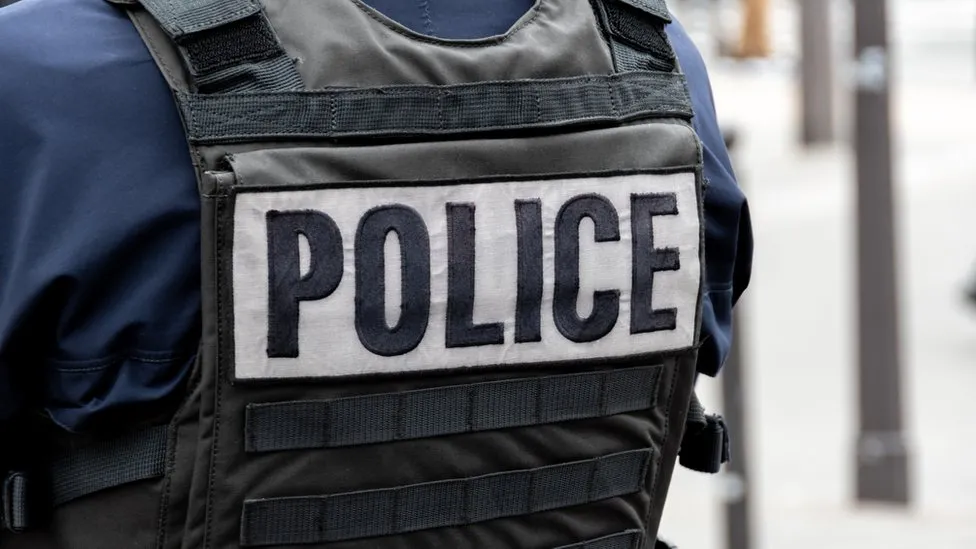
A French policeman who insulted a woman reporting a sexual assault has not been punished by the police court.
In February 2022, the woman went to a police station in Paris to report what happened.
The police officer called her and left a message about paperwork. But he accidentally insulted her after he thought he hung up the phone.
The situation made people angry about how police in France handle victims of sexual abuse.
At the trial, the court had to think about whether the officer insulted himself or his colleagues, not the woman.
They asked for the officer to be found not guilty or given a pass because he had a good record in the past.
A woman judge decided that the comments were not a sexist insult and cleared the officer of any wrongdoing.
The woman’s lawyer, Arie Alimi, said to the AFP news agency that his client will ask for another decision.
She said that the courts still support the police.
The cop got in trouble and then moved to another job. He said sorry to the woman in court for the mean things he said.
He also said that he had to ask Interior Minister Gérald Darmanin to let him keep his job.
Mr Darmanin was really upset about the case. He said that when the officer’s wrongdoing was discovered, the officer should not be in the police anymore.
In February 2022, he said on Europe 1 radio that the man had made all the women who want to report a problem look bad, but it’s better for them to go to the police station to report it.
Mr Darmanin also said the officer had disrespected the uniform of the Republic and his 250,000 other police and gendarme colleagues by dirtying and spitting on it.
The police are looking into the woman’s complaint about being attacked. French media group bfmtv shared this information.
Tag: AFP news agency
-
French police exonerated of demeaning victim of sexual assault
-
More least 60 migrants suspected dead off coast of Cape Verde
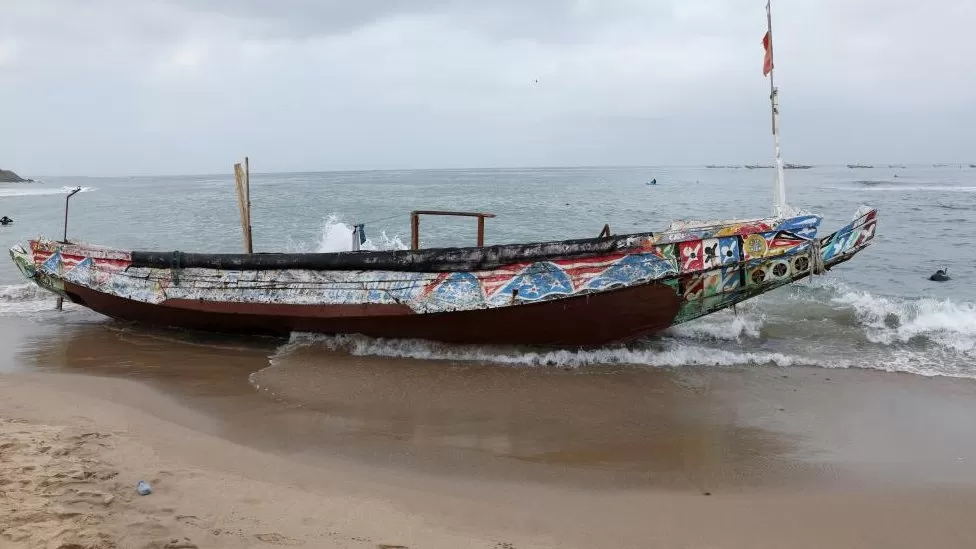
After a boat carrying migrants was discovered off the coast of Cape Verde in West Africa, it is believed that more than 60 people are dead.
Video of the 38 rescues, some of whom were carried ashore on stretchers, showed that they included youngsters.
It is believed that almost everyone on board the boat, which was at sea for more than a month, was from Senegal.
To help stop more deaths, Cape Verde officials have asked for international action on migration.
Police informed the AFP news agency that the vessel was initially noticed on Monday. Although initial reports claimed the boat had sunk, it was later revealed that it had been discovered adrift.
A Spanish fishing boat saw the wooden pirogue-style boat some 320 kilometres (200 miles) off Sal, in the Cape Verde islands, and immediately contacted the authorities, according to the police.
Four children, ages 12 to 16, are among the survivors, according to an International Organisation for Migration (IOM) official.
The boat departed the Senegalese fishing community of Fasse Boye on July 10 with 101 people on board, according to survivors quoted by Senegal’s foreign ministry on Tuesday.
Nearly everyone on the boat had grown up in the area, according to elected official Moda Samb, who also noted that several local families were still awaiting word on whether their relatives were among the survivors.
The ministry declared that it was coordinating with Cape Verdean authorities to set up the repatriation of Senegalese people.
According to reports, the passengers also hail from Sierra Leone and, in one instance, Guinea-Bissau.
The survivors were being cared for, according to Jose Moreira, a health officer on Sal, with an emphasis on rehydration and tests for illnesses like malaria.
We are aware that migration concerns are global challenges that need for international cooperation, extensive discussion, and a worldwide plan, according to Health Minister Filomena Goncalves.
Most importantly, “we all – all the nations – have to sit down at the table and see what we can do” to prevent other maritime fatalities.
Safe migration routes, according to IOM spokeswoman Safa Msehli, are “sorely lacking” and provide “room for smugglers and traffickers to put people on these deadly journeys”.
According to reports, the group was aboard a boat resembling this one when 15 migrants drowned in an incident in July.
It’s possible that the survivors wound up in Cape Verde, but it wasn’t their original location.
The archipelago is 600 kilometres (370 miles) off the coast of West Africa and is a major migratory route to the Canary Islands, a Spanish enclave that many people view as a gateway to the EU. It is one of the riskiest voyages a migrant may take, according to the IOM.
As is always the case with irregular migration, exact numbers are difficult to ascertain, but at least 67,000 migrants arrived in the Canary Islands between 2020 and 2023.
Just over 2,500 people died during that time. The IOM notes that this number includes all registered deaths. The actual number may be far higher given the route’s erratic and covert characteristics.
What motivates people to leave their homes and take such a risky voyage, then? Poverty is frequently considered to be a significant issue. Many people view migration to Europe as a way to a better life and to send money back home to help their families.
But there are also other elements at work. A large portion of West Africa is becoming more insecure, and Islamist insurgencies and coups are making an already difficult situation even worse.
In Senegal, there have been reports of violent crackdowns by the government that resulted in the imprisonment of opposition figures. Despite the recent announcement that President Macky Sall would not run for a third term, emotions are still high.
Ultimately, there are just as many motivations to relocate as there are migrants. Each person has a unique drive and background. It appears that at least 60 of them met a tragic end in the Atlantic.
-
Libyan militias clash in Tripoli following the capture of a commander
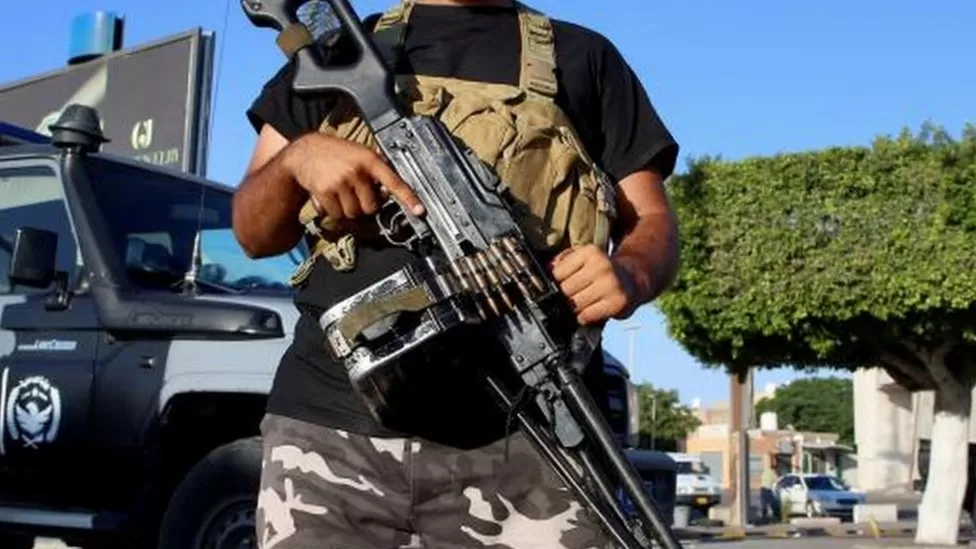
55 people have been killed and 146 injured in clashes between two strong militias supporting the UN-backed government of Libya in the nation’s capital, Tripoli, according to medical personnel.
The city’s main airport was forced to close due to the intense violence, which broke out on Monday and continued into late Tuesday.
Fighting only stopped after a commander whose incarceration started it was released by one side.
After long-time leader Col. Muammar Gaddafi was deposed and killed in 2011, Libya is now in a state of political instability.
Currently, the nation is divided practically between a temporary, internationally recognised administration in Tripoli and another in the east.
A truce in 2020 has contributed to some degree of peace, but ingrained factionalism on all sides always poses a threat to disturb it.
The most recent conflict occurred in Tripoli, where Prime Minister Abdul Hamid Mohammed Dbeibah is in charge of the government.
A senior commander from the 444 Brigade was detained on Monday as he attempted to leave the airport by the Special Deterrence Force, which has control of the facility.
The leader had previously served as an officer in the competing militia, according to the Reuters news agency.
Battles broke out in various areas of the capital, notably Ain Zara in the southeast, trapping many residents inside their homes.
3 field hospitals were established to care for the casualties, 60 ambulances were dispatched, and 234 families had to be evacuated from frontline areas, according to Libya’s Emergency Medicine and Support Centre.
The commander was released to a “neutral party” when the prime minister intervened, according to the AFP news agency.
He later took a tour of the impacted neighbourhoods to gauge the extent of the harm.
Later on Wednesday, the airport reopened, according to AFP.
Concerned about the potential effects of these developments on the ongoing work to prepare for elections that were delayed two years ago, the UN mission expressed alarm.
“All parties must preserve the security gains achieved in recent years and address differences through dialogue,” its statement said.
-

Israeli strike in Damascus killed four soldiers – Syria claims
Syrian official television reports that an Israeli missile attack overnight claimed the lives of four Syrian soldiers and injured another four.
According to a military source cited by Sana news agency, the strike near the Damascus capital also resulted in minor physical harm.
According to the source, some of the Israeli missiles were shot down.
Israel has not yet commented. It routinely hits Syrian military facilities connected to insurgents supported by Iran.
According to the AFP news agency, an explosion could be heard in Damascus.
On social media, there is another video that appears to show bright flashes in the sky near Damascus.
In Syria, where Iran’s influence has risen in recent years, Israel’s military rarely confirms precise strikes on targets.
Israel and Iran are sworn enemies who have been fighting a “shadow war” of covert assaults on each other’s assets, infrastructure, and citizens in recent years.
Details about this story to follow