Tag: Africa Education Watch

  • Challenge no-long-hair rule in SHS – Eduwatch to parents

    Challenge no-long-hair rule in SHS – Eduwatch to parents

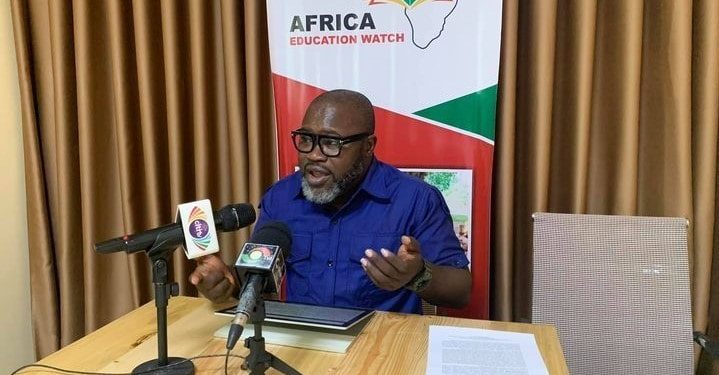
    Executive Director of Africa Education Watch, Kofi Asare, has weighed in on the conversation calling for female Senior High School (SHS) students to wear their natural long hair on campus.


    The debate was ignited from a recent video circulating on social media shows a first-year female student looking unhappy while having her hair cut in a barbershop as part of preparations to begin school.

    Dressed in a Yaa Asantewaa Girls’ Senior High School uniform, she appeared visibly displeased as her long hair was trimmed.

    Following the video, scores of Ghanaians have called on the government to scrap what they describe as a “barbaric” act, arguing that a student’s hair length does not determine academic success.

    Others, however, believe that allowing students to wear long hair to school could distract them from their studies. However, Kofi Asare, speaking to the media on Sunday, October 26, noted that parents and students who are against the hairstyle policy can pursue legal redress. He argued that such a policy should not violate students’ personal rights or freedom of expression, although its motive is to instill discipline in schools.


    “It’s not always about indiscipline or discipline. I align with the law, and I encourage anyone who feels unfairly treated to engage the law. Society grows and so should the law grow,” he said.


    Kofi Asare noted that parents taking the matter to court would not be the first, as a precedent has already been set.

    “Marhguy argued that maintaining his Rasta was linked to his belief in Rastafarianism. And that denying him admission based on Rasta meant that his rights to religion and culture were being impugned on account of the school regulations…It was necessary for him to be allowed to manifest his religion by wearing his hair, which he related directly to his belief in Rastafarianism, and the court upheld that.

    He added, “The court simply said, yes, schools may set their rules for regulating dress codes, including hairstyles. But in setting those rules, they shouldn’t be inconsistent with their right to religion.


    “In the Marhguy case, culture and religion erupted. Before, all of us believed that it was unconscionable for the Ghana Education Service to deny people admission based on their hairstyles. That was our position.


    “Then, the Marhguy’s case came, and the court made a pronouncement, and so we all aligned with the law until there is a contrary pronouncement by the court.”

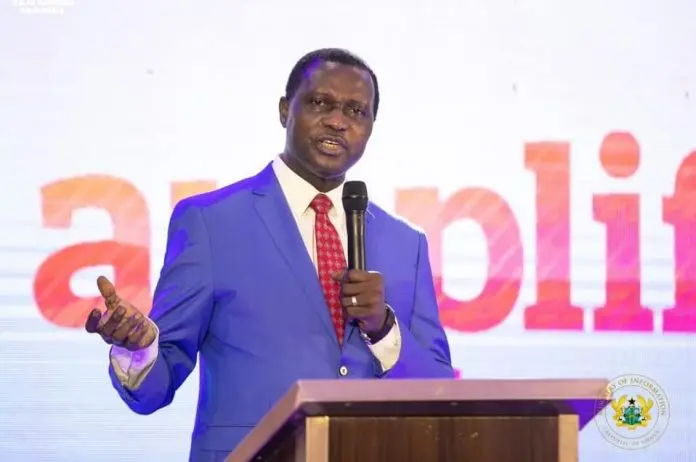
    But speaking at the 75th anniversary celebration of Mawuli Senior High School in the Volta Region on Saturday, October 25, the Minister of Education, Haruna Iddrisu emphasized that the secondary school environment is not a place for beauty contests to entertain such practices.


    “There is an ongoing debate about hair cuts, and size and length of hair in secondary schools.We will not tolerate it today or we will not tolerate it tomorrow, in so long as molding character.


    “If we give in to hair today, tomorrow it will be shoes, and the next day it will be the way they [students] dress.Therefore, as part of our disciplinary measures, headmasters and GES, you are accordingly empowered to take full control of how students behave on your campuses.”


    “So anybody who thinks that your child will walk into any institution of learning, as if that child, forgive my words, was to attend a beauty contest, the school environment will not for that purpose and not cut for that purpose and we will not tolerate that as an institution,” the minister stated.


    This is not the first time such calls have surfaced. In 2021, a first-year student, Tyrone Iras Marhguy, who gained admission to Achimota School was denied enrollment because he refused to trim down his dreadlocks. The family of Tyrone Iras Marhguy won the case after the court ruled that rules in schools shouldn’t be inconsistent with students’ right to religion.


    Meanwhile, the Minister of Education has instructed the Ghana Education Service (GES) to fully implement the use of mother tongue as a medium of communication in Ghanaian schools.


    The Minister mentioned that the directive constitutes efforts to reform the education sector, while championing the use of local languages in teaching and learning.


    Speaking at the launch of the Free Tertiary Education Programme for Persons Living with Disabilities, Mr. Iddrisu stressed that the directive will enhance comprehension and learning outcomes in basic schools.


    “I am directing the DG of the GES and the GES that from today, teacher use of mother tongue instruction is now compulsory in all Ghanaian schools. The GES is to ensure strict enforcement of this…This is part of President Mahama’s reset agenda,” the Minister firmly stated.


    The country celebrates Ghana throughout March every year to commemorate its Independence. The historian thinks that people’s enthusiasm for the celebration is depleting as the years pass.


    He believes people’s interest is dwindling because most designers in recent times are adding foreign products to their designs.
    The historian also indicated that opinion leaders can be blamed for the low interest of the people, as they have failed to insist on the involvement of local languages in the school curricula.


    As to whether the late Osagyefo Dr. Kwame Nkrumah would have maintained the country’s heritage if he were alive, Nana Osei-Bonsu said, “Who knows that he would have kept doing what he was doing because politicians are dictated to.”


    However, Ghanaians are encouraged to project the culture globally by wearing locally made designs, eating Ghanaian food, and speaking the local languages among others, throughout the month of March.

  • Asantehene to support G/A Educational Trust Fund with GHS500k

    Asantehene to support G/A Educational Trust Fund with GHS500k

    The Asantehene, Otumfuo Osei Tutu II, has pledged GH¢500,000 to an educational endowment fund in the Ga State, aimed at supporting the region’s children.

    This commitment was made during a durbar held in his honor at the Ga Mantse Palace on Sunday, as part of his historic visit to King Tackie Teiko Tsuru II, the Ga Mantse.

    Following a similar courtesy visit by the Ga Mantse to the Manhyia Palace during the Asantehene’s 25th anniversary celebration, the visit underscores the longstanding relationship between the Asantes and the Gas.

    Notably, Otumfuo Agyemang Prempeh II’s visit to the Ga State 78 years ago on July 25, 1946, remains significant.

    Addressing the gathering through his linguist, the Asantehene emphasized the importance of traditional rulers uniting for national development, highlighting the shift from chieftaincy as a symbol of conquest to a driver of progress.

    Expressing gratitude for the warm reception during his Silver Jubilee celebrations, the Asantehene reiterated his commitment to strengthening ties between the Ga State and the Asante Kingdom. He assured continued support for King Teiko Tsuru II’s reign.

    The Greater Accra Regional Minister, Mr. Daniel Nii Kwartei Titus Glover, praised the Asantehene’s reign as a beacon of peace and leadership, affirming the Ga State’s eagerness to benefit from his wisdom.

    In response, King Tackie Teiko Tsuru II thanked the Asantehene for the financial assistance and stressed the importance of unity for the Ga State’s progress.

    He urged political parties to ensure peaceful elections in December.

    The event, characterized by a blend of Ga and Asante cultures, witnessed the presence of dignitaries from various sectors, showcasing rich traditions and cultural displays.

    Among them were government officials, religious leaders, and members of the diplomatic corps.

    Watch video below:

  • Govt spent GHS33m in procuring past questions in 2020 – Education minister tells parliament

    Govt spent GHS33m in procuring past questions in 2020 – Education minister tells parliament

    The Minister of Education, Yaw Osei Adutwum, has defended the government’s decision to utilize sole-source procurement for acquiring past questions for Senior High School (SHS) students in 2020 and 2021.

    Revealed in 2020, the government reportedly disbursed over GH¢68.5 million to a supplier for materials distributed to SHS students ahead of the 2021 West African Senior High School Certificate Examination (WASSCE).

    Detailing the transaction in Parliament on March 4, 2024, the minister clarified that the government “procured 446,954 West African Senior School Certificate Examination (WASSCE) questions from Messrs Kingdom Books and Stationery at a unit price of GH¢78.00.”

    The procurement, he disclosed, was financed through the Free Senior High School account.

    “Mr. Speaker, in 2020, the government through its efforts to help students amidst COVID-19 to prepare for the 2020 West African Senior School Certificate Examination (WASSCE) procured 568,755 past questions for students to try their hands on before sitting for the actual exams.”

    He continued: “The Ministry of Education contracted Messrs Kingdom Books and Stationery to supply 568,755 WASSCE past questions at a contract price of GHS 33,641,043.75.

    “The procurement of these questions was funded through the Free Senior High School Account and the results of the 2020 WASSCE were tremendous compared to previous years’ WASSCE performance,” he stressed.

    The minister also gave updates on efforts to supply textbooks to basic schools: “Mr. Speaker, the procurement process for the supply of published textbooks to Basic Schools is currently ongoing.

    “The Ministry placed an advert in the Ghanaian Times on 1st June 2020, where various publishers approved by NaCCA, submitted their books and relevant documents to be taken through a Pre-Qualification procurement process,” he added.

    Additionally, the minister provided updates on the textbook supply efforts to basic schools: “The procurement process for the supply of published textbooks to Basic Schools is currently underway. The Ministry initiated the process on 1st June 2020, with various publishers approved by NaCCA submitting their books and relevant documents for a Pre-Qualification procurement process.”

  • Free SHS must exclude children from privileged homes – Eduwatch

    Free SHS must exclude children from privileged homes – Eduwatch

    The Africa Education Watch (Eduwatch) is recommending that the government direct the Free Senior High School (SHS) policy towards children from economically disadvantaged backgrounds.

    According to him, government must utilize data from the Livelihood Empowerment Against Poverty (LEAP) program as a basis.

    Eduwatch noted that the government currently maintains a database of over 346,019 impoverished households nationwide through the LEAP program, where cash grants are distributed bi-monthly.

    In its report on the Financial Burden Analysis of the Free SHS Policy and Implications on Equitable Access, Eduwatch emphasized that targeting lower-income households would allow the government to allocate more funds to cover the complete cost of secondary education for students from such backgrounds, as opposed to those from higher-income families.

    “This will enable the government to spend more to cover the full cost of secondary education for students from the lower-income households, compared to those from the upper-income,” Eduwatch added in its report on Financial Burden Analysis of the Free SHS Policy and Implications on Equitable Access.

    “The government’s annual per-student spending under the Policy averaged GH¢1,241 representing 23 per cent of the total per unit SHS expenditure per annum, while parents contributed the remaining GH¢4,185, representing 77 per cent of the cost, suggesting that, the Policy has taken off about a quarter of the financial burden previously borne by parents before its introduction,” it added.

    According to Eduwatch, between the academic years 2017 and 2023, a total of GH¢7.6 billion was allocated to the Free SHS Policy, with GH¢5.3 billion expended from 2017 to 2021.

    The organization pointed out that the government’s annual per-student spending under the policy averaged GH¢1,241, representing 23% of the total per unit SHS expenditure per year. Meanwhile, parents contributed the remaining GH¢4,185, constituting 77% of the cost.

    This shift, according to Eduwatch, has relieved parents of about a quarter of the financial burden they previously bore before the policy’s implementation.

    Eduwatch also highlighted that, between the academic years 2019/20 and 2022/23, approximately 194,862 candidates placed in secondary schools were unable to enroll initially, primarily due to financial barriers.

    The organization identified the high cost associated with boarding education as a significant factor preventing parents, especially those with low incomes, from enrolling their wards even after placement.

    To achieve the goal of equitable access under the Free SHS Policy, Eduwatch stressed the need for additional support to parents from low-income households, ensuring they can afford to send their children through secondary school.

    Africa Education Watch is a research and advocacy organization collaborating with Civil Society Organizations, Government, and the Private Sector to foster an equitable, accountable, and responsive education system that ensures quality and equal opportunities for all.

    Working with partners in Ghana, Sierra Leone, Liberia, Kenya, and Nigeria, their vision is to create a continent with globally competitive human capital driving economic and social development.

  • Allocate 70% of GETFund to infrastructure – Africa Eduwatch to Education Ministry

    Allocate 70% of GETFund to infrastructure – Africa Eduwatch to Education Ministry

    Senior Programmes Officer at Africa Education Watch, Divine Kpe, has urged the Ministry of Education to allocate at least 70% of the Ghana Education Trust Fund (GETFund) to address infrastructure challenges in schools.

    He specifically called for 50% of the allocation to focus on basic education infrastructure, with 30% dedicated solely to providing desks.

    Mr. Kpe made these recommendations during a presentation of findings from a Scooping Study Report on the Impact of Desk Deficits in Public Basic Schools on Girls’ Participation in Basic Education in Ghana.

    “GETFund allocation to infrastructure projects across all levels of education increased from GHC 198.7 million in 2021 to GHC 856.0 million in 2022 (representing a 331 per cent increment) and thereafter declined to GHC 383.9 million in 2023 (representing a 55 per cent decline).”

    “On the other hand, the allocation to non-infrastructure projects increased from GHC 116.9 million in 2021 to GHC 503.3 million in 2022 (representing a 330 per cent increment), and further increased to GHC 978.5 million in 2023 (representing a 95 per cent increment),” he noted.

    Mr Kpe urged the MoE and District Assemblies to commit to a policy of ensuring that no basic school infrastructure contract was awarded without the full complement of school furniture, including desks and chairs.

    He said they should design and implement a furniture resource mobilisation strategy that involved Coporate Ghana, Faith-Based Organisations, Non-Governmental Organisations, and the Forestry Commission. He stressed that could be done within the context of the Infrastructural Planing and Development Policy Framework.

    Mr Kpe said the unavailability of desks at basic schools had a bearing on the rate of school dropout, saying, most pupils absented themselves or did not go to school due to the unavailability of desks. He said the situation was more worrying for girls, who did not have sitting positions and ended up exposing themselves.

    Meanwhile, a total of 2.3 million basic school pupils, representing 40 per cent of pupils from Kindergarten to Junior High School, across Ghana, are without desks as of a 2021, according to data from the Ministry of Education’s (MoE) Education Management Information System.

    While the national desk shortage is 40 per cent, all the six regions in the northern part of Ghana, together with the Bono East and Oti regions have ratios above the national percentage. The rate in North East is as high as 80 per cent; Northern, 70 per cent; Savannah, 60 per cent; Upper East, 60 per cent; Bono East, 60 per cent; Upper West, 50 per cent and Oti, 50 per cent.

  • Unequal dissemination of resources affecting quality of basic level education – Kofi Asare

    Unequal dissemination of resources affecting quality of basic level education – Kofi Asare

    The Executive Director of Africa Education Watch, Kofi Asare, has attributed the challenges faced at the basic education level to inadequate budget allocation and a disparity in resource distribution across different education tiers.

    Speaking to the media, Mr. Asare commended the government for the positive strides made with the Free SHS initiative.

    However, he expressed concern that an excessive focus on and disproportionate investment in higher education had led to neglect of the foundational level of education.

    “If resources are deployed inequitably, you will have a situation where some part of the three segments of the system will be more developed than others. If you look at the pre-tertiary budget of the Ministry of Education, you realise that Basic education is taking about 4 percent and the remaining 96 percent is going to Senior High School and TVET. That 4% is the reason you’ll hear capitation grants not being released in two years among others.

    “It has been declining from 2016 when we started investing in Senior High Schools which was 19% all the way to right now which is 4%.

    “So far as we maintain the Free Senior High School programme in this way, that basic education share of the Ministry of Education budget will continue to decline… it’ll be the reason why we’ll not be seeing adequate textbooks,” the Africa Education Watch director explained.

    He highlighted a decline in the budget allocation for basic education, which had decreased from 19% in 2016 (when investment in Senior High Schools began) to the current 4%.

    Mr. Asare further explained, “As long as we continue with the Free Senior High School program in this manner, the allocation for basic education within the Ministry of Education’s budget will continue to dwindle. This will inevitably lead to insufficient provision of textbooks and other resources.”

    He urged the government to reconsider its budget distribution across different education levels in order to reinforce the fundamental aspects of basic education.

    The overarching theme of the National Education Dialogue is “Free SHS in Perspective: Problems, Progress, and Prospects.”

  • Capitation grant for basic schools must be increased – EduWatch to govt

    Capitation grant for basic schools must be increased – EduWatch to govt

    Ahead of the Mid-Year Review of the 2023 Financial Year’s Budget Statement and Supplementary Estimates to Parliament, the Executive Director of Africa Education Watch (EduWatch), Mr. Kofi Asare, is advocating for a 100% increment in the Capitation Grant for basic schools nationwide.

    This measure, he believes, will address the challenges associated with achieving universal education in the country.

    During an Economic Forum in Accra, Mr. Asare emphasized the need for the capitation grant to be raised from ¢10 to ¢20.

    “We expect to hear a 100% increment in the capitation grant from ¢10 to ¢20,” he said. “We also want an assurance from the Finance Minister that the disbursement regime where the grant is disbursed as a token ends and that there is a clear disbursement roadmap to assure stakeholders that the grant will not be in arrears.”

    Additionally, he called for an assurance from the Finance Minister that the current disbursement regime, where the grant is provided as a token, will be replaced with a clear disbursement roadmap to prevent delays.

    “We also want to hear from the Ministry of Finance about plans to pay the arrears that have accumulated over the years. There are headteachers who have taken loans to run schools, and they are owing in their communities. We don’t want to encourage that,” he added.

    Addressing the issue of accumulated arrears, Mr. Asare urged the Ministry of Finance to outline plans for settling these outstanding payments.

    Many headteachers have been burdened with loans to run schools, leading to debts in their communities, a situation that EduWatch seeks to discourage.

    Furthermore, Mr. Asare highlighted the urgent need for the government to announce a supplementary budget to support the provision of desks in schools.

    The lack of desks has been a significant challenge in the education sector, affecting over two million children.

    He emphasized the importance of real commitment in the supplementary budget to address this pressing issue and support the procurement of desks through the GETFund Formula.

    “One of the biggest challenges in the education sector is the issue of desks. Over two million children have been struggling with the issue of desks. We’ve seen some efforts by some stakeholders, district assemblies, and others to support, but the most recent data we have from the Ministry of Education suggests that we need one million desks. So we want to see some real commitment made in the supplementary budget to support the limited amount of funding that was made available for the procurement of desks in the GETFund Formula,” he added.

  • Free Wi-Fi usage in Senior High Schools must audited – Eduwatch

    Executive Director of Africa Education Watch (Eduwatch), Kofi Asare, is requesting a performance audit of the government’s free Wi-Fi usage in Senior High Schools.

    He emphasizes the need for the Auditor-General to conduct a thorough examination of the Wi-Fi usage, highlighting that many students in different schools are unable to access the facility for their studies.

    In an interview with the media, Mr. Asare revealed that some schools have been without free Wi-Fi for six months, while others have been unable to access it for a year.

    “Some of the schools we sampled, there was no Wi-Fi. In order to get value for money for the GH¢6.3 million paid to Busy Internet, it’s incumbent on the Ministry of Education to ensure that before government pays money every month for the provision of Wi-Fi services, we must have a mechanism to ascertain that all the institutions under the contract are receiving internet, and to ensure that the schools receive the right internet specifications as contracted.”

    “Where you have about 75% of Senior High Schools not getting internet, it means that there’s a high risk of low efficiency and low value for money. That is why we have requested the Auditor-General to conduct a broad performance audit into the entire programme serving about 1000 educational institutions. Some of the schools have been off the internet for the past year,” he stated.

    According to Eduwatch’s latest report, the free Wi-Fi program has been found to be malfunctioning in approximately 75% of the sampled senior high schools.

    Busy Internet Ghana Limited was responsible for installing Wi-Fi equipment and providing internet facilities to 717 senior high schools, 16 Regional Education Offices, 46 Colleges of Education (CoEs), and 260 District Education Offices.

  • EduWatch advocates for limit on Ghana Teacher Licensure Exam resits

    EduWatch advocates for limit on Ghana Teacher Licensure Exam resits

    Africa Education Watch, an influential education think tank, is advocating for the implementation of a limit on the number of attempts allowed for candidates taking the Ghana Teacher Licensure Examination. This call comes as a response to concerns surrounding the current examination system and aims to enhance its effectiveness and fairness.

    This comes after the National Teaching Council revealed that some of the 6,000 candidates who failed the 2023 resit examination had taken the exam on nine previous occasions.

    The Executive Director for Africa Education Watch, Kofi Asare, told Citi News that the Licensure Examination would ensure that professional teaching standards are enhanced.

    “The policy is a great one, and it is a means of separating the boys from the men for a want of a better word and ensuring that teachers who do not have the minimum competence to teach even though have their degrees are not allowed to teach.

    “Moving forward, I think the National Teaching Council should put a cap on the number of times one can do a resit and I think that the maximum number of resit that should be permissible should be three.”

    Meanwhile, the Ghana National Association of Teachers (GNAT) is also calling for a stakeholder dialogue to identify the gaps and propose solutions to curb the annual persistent failure, which is worsening over the years.

    “The issue requires a national dialogue, and we need to find out what is the issue because we have been here before, and it was business as usual, but for me, I don’t think it should be business as usual, and we all need to come together and bring all the regulatory bodies on board to find out what it is that we are not doing right.”

  • Northern Region: Over 364, 762 public schools lack desks

    Northern Region: Over 364, 762 public schools lack desks

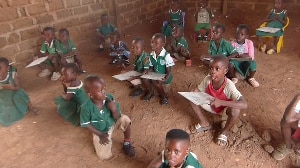
    Over 364, 762 public schools in the Northern region do not have desks, according to the Africa Education Watch (Eduwatch).

    A report cited by GhanaWeb, Eduwatch, noted that 80% of pupils in kindergarten, making a hundred and four thousand, four hundred and forty-five (104, 445) children, did not have desks per data provided by the Ministry of Education.

    The report further revealed that “70% (213,352) of Primary, and 50% (46, 965) of JHS pupils did not have desks.”

    Eduwatch is therefore calling on the minister of education, Dr. Yaw Osei Adutwum, and the regional minster, Alhaji Shani Alhassan Saibu, to intervene in the disturbing situation.

  • Govt told to commit 33% of education budget to basic education

    Govt told to commit 33% of education budget to basic education

    The government has been told to at least commit 10% of the Goods and Services budget and 33% of the infrastructure budget of the education sector to basic education.

    Africa Education Watch (Eduwatch) said the government must do this if the country is to invest adequately to build new schools to replace the over 5,000 schools currently under trees and sheds, and provide education for the 1 million out-of-school children.

    Eduwatch said on the occasion of the International Day of Education that although Ghana has made efforts to improve on child education, there is still more room for improvement.

    the think tank noted that five (5) years ago, the United Nations proclaimed 24th January as
    International Day of Education, to acknowledge and celebrate the role of education as a tool for peace and development.

    This year’s celebration marks the mid-point of the journey to achieve Sustainable Development Goals by 2030.

    Ghana, like many countries, has committed to ensuring all children of basic school-going age, enroll and complete the full course of basic education with relevant learning outcomes by 2030.

    “While Ghana has since made significant strides over the years to promote access to education for many children, there still remain 1 million children out of school – approximately 9% of children aged 4 -16. Quality in the delivery of education remains a challenge, as about 87% of children aged 10 could not read and understand age-appropriate sentences by 2018,” a statement issued by Eduwatch said.

    It added that Ghana’s government has expressed its commitment to transforming education, and this requires adequate and equitable financing. However, the recent 40% budgetary cut to basic education (Goods and Services) does not support the transformation agenda of the government.

    To transform education, the government must increase the current 12% allocation of the national education budget to 23%, in line with the President’s commitment at the 2022 United Nations Transforming Education Summit.

    “At least 10% of the Goods and Services budget and 33% of the infrastructure budget of the education sector must be committed to basic education, if we are to invest adequately to build new schools to replace the over 5,000 schools currently under trees and sheds, and provide education for the 1 million out of school children.

    “There is no better day to recommit to adequate and equitable financing of education than the International Day of Education 2023,” it said.

  • Query finance minister on GETFund capping modus ponens – Eduwatch urges Parliament

    The Africa Education Watch (Eduwatch) has petitioned Parliament to question the Finance Minister, Ken Ofori Atta, on the Ghana Education Trust Fund (GETFund) capping method of affirmation or formula as it deviates from the GETFund Law 2020, (Act 581) and the Earmarked Funds Capping and Realignment Law 2017 (Act 947).

    This petition is against the backdrop of a sharp decline in the budgetary allocation to the only statutory fund available for educational infrastructure provision in the country.

    According to the civil society organisation (CSO), the 2023 Budget Statement indicates that despite an increase in the total accrual to the get GETFund levy to a record GH₵4.6billion, for the first time, only GH₵1.8billion, representing 39 percent of the GETFund Levy accrual was allocated to the fund to finance education projects and activities.

    This, the CSO laments, is inconsistent with the law; hence, the need for the Parliament to question the Finance Minister’s modus ponens for allocating only 39 percent of total accruals as against 60 percent and 81 percent in the 2021 and 2022 budgets respectively.

    “Under the Earmarked Funds Capping and Realignment Act, 2017 (Act 947), GETFund was capped at 25 percent; but historically, allocations have been in the region of 60 percent and above. Using the same parameters of this same minister, we estimate that at least GH₵2.7billion, representing 60 percent of the total 2022 GETFund Levy accruals of GH₵4.6billion should be allocated to the fund for 2023.

    “The continuous decline in the allocation to the GETFund, amid consistent increment in the GETFund Levy, remains a serious worry for stakeholders concerned about the widening infrastructure gap in the education sector, especially at the basic education level,” Executive Director, Kofi Asare said.

    Implications of capping infraction, among others

    According to Eduwatch, the implications of the minister’s action are that the widening infrastructure gap in the education sector, especially at the basic level, will continue to increase; and it would take several decades to address.

    Currently, there are over 5,000 schools existing under trees, sheds, and dilapidated structures, and another 4,000 Junior High Schools are needed for primary schools without such continuation infrastructure. Meanwhile, 1.2 million children are not in basic school due to the lack of public basic schools in underserved communities, among others.

    “This action constricts the realisation of the objectives of the government’s free Compulsory Universal Basic Education under section 38(2) of the 1992 Constitution of Ghana,” he added.

    The clarion calls

    The Executive Director of Eduwatch stressed that as Parliament prepares to consider the appropriation estimates for the education sector, the CSOs are drawing the attention of the House to the requirements of 25 percent capping of realignment law, viz. the 61 percent of GETFund levy accruals being reallocated to other sectors, leaving only 39 percent for allocation to the fund.

    “Eduwatch calls on Parliament to reject the allocation and cause the Minister of Finance to review the weights applied in allocating the GETFund, in line with the Earmarked Funds Capping and Realignment Act, 2017 (Act 947),” he concluded.

    GETFund capping history

    In the 2019 Budget Statement, out of a GETFund levy accrual of GH₵1.8bn, GH₵1.2bn – representing 66 percent – was allocated to the fund, in line with the Earmarked Funds Capping and Realignment Law.

    Also, in 2020, out of the GH₵2bn accrual, GH₵1.2bn – representing 60 percent – was allocated to the fund.

    Furthermore, in the 2021 Budget Statement, out of the GH₵2.3bn, GH₵1.4bn – representing 60 percent of accruals – was allocated, in line with the capping and alignment law.

    Fast forward, to the 2022 Budget Statement, GH₵2.6bn of the GH₵3.2bn accruals were disbursed, representing 81 percent. However, in the 2023 Budget Statement, the ministry surprisingly decided to release only GH₵1.8bn of the GH₵4.6bn, representing a meager 39 percent – far from what the capping and realignment law stipulations.

    Source: Ghanaweb

  • Scrap wasteful teacher trainee allowances – EduWatch to gov’t

    The Executive Director of the Africa Education Watch, Kofi Asare, has described the payment of allowances to trainees at the Colleges of Education as a wasteful expenditure that must be scrapped with immediate effect.

    Mr Asare said if the government intends to deliver on its 2023 budget policy then some wasteful expenditures must be cut.

    According to him, the government is spending far more on Senior High Education to the detriment of basic education, a situation that creates a lacuna in basic school development.

    Speaking at a roundtable discussion organized by the Citizen’s Coalition in Accra, Mr Asare noted that, much of the expenses done in the Education sector must be reconsidered taking into account the poor implementation and deficiencies that are impacting negatively the quality of education in Ghana.

    “I think the budget failed to appreciate that there is a certain wasteful expenditure that should leave the education space, especially teacher trainee allowance. The government has repeated that it intends to spend 241 in 2023 to feed adult trainees who are in tertiary education and have the right to access student loans just like other tertiary students.

    “In austerity, the government must be cutting down on wasteful expenditure and spending more on the vulnerable, we also don’t see more enhanced spending on Free compulsory basic education,” Mr Asare said.

    Meanwhile, the Africa Education Watch has petitioned Parliament to reject the allocation of GH¢1.8 billion made to the Ghana Education Trust Fund (GETFund), a major education infrastructure financing facility in Ghana.

    “The sharp decline in the 2023 allocation raises serious concern about the formula used in capping the GETFund in the 2023 budget, and whether it is in accordance with the Earmarked Funds Capping and Realignment Law.

    “Going by the 25% capping under the Earmarked Funds Capping and Realignment Act, 2017 (Act 947) and the history of allocations in line with the same, we estimate that, at least GHC 2.7 billion, representing 60% of the total 2022 GETFund Levy accruals of GHC 4.6 billion should be allocated to the GETFund for 2023.”

  • Eduwatch petitions Parliament against 2023 GETFund allocation

    Africa Education Watch (otherwise known as Eduwatch) is unhappy about the budget allocation for the GETFund. It thus has petitioned Parliament to reject the allocation of ₵1.8 billion made to the Ghana Education Trust Fund (GETFund).

    According to Eduwatch the allocation of ₵1.8 billion raises serious concern about the formula used in capping the GETFund in the 2023 budget, and whether it is in accordance with the Earmarked Funds Capping and Realignment Law.

    The ₵1.8 billion GETFund allocation forms only 39% of the GETFund levy accruals which are meant to be used to finance education projects and activities.

    This a sharp decline from the previous year’s 81% allocation.

    “Going by the 25% capping under the Earmarked Funds Capping and Realignment Act, 2017 (Act 947) and the history of allocations in line with same, we estimate that, at least ₵2.7billion, representing 60% of the total 2022 GETFund Levy accruals of ₵4.6billion should be allocated to the GETFund for 2023,” Eduwatch said in a statement to Parliament.

    They added that the continuous decline in the allocation to GETFund, amidst consistent increment in the GETFund Levy, has remained a significant issue of worry for stakeholders concerned about the widening infrastructure gap in the education sector, particularly at the basic education level.

    Source: Myjoyonline

  • Government fails to meet at least 15% budgetary allocation benchmark for education

    Government in the 2023 Budget Statement has only allocated 12 percent to the education sector which is about three to eight percent short of the international benchmark of at least 15 percent to 20 percent, a situation the Africa Education Watch (Eduwatch) describes as alarming.

    In the budget statement, out of the projected government expenditure of GH₵205billion, only GH₵24.7billion, representing 12 percent of the total budget, is allocated to the education sector.

    Meanwhile, at the Global Education Summit held in July 2021 in the United Kingdom (UK), President Nana Addo Dankwa Akufo-Addo pledged to spend at least 23 percent of the national budget toward the development of education in the country over the next medium term from 2021 to 2025.

    According to Eduwatch, this is not only one of the lowest proportions of government budget allocation to the education sector in about two decades, but also raises concerns about Ghana’s ability to meet the upper limit of the international education financing benchmark of 15 percent to 20 percent of public expenditure, and 4 percent to 6 percent of gross domestic product (GDP).

    Even more alarming, according to Eduwatch, is that only 39 percent (GH₵1.8billion) of the GH₵24.7billion was allocated to Ghana Education Trust Fund (GETFund), against total GETFund levy accruals of GH₵4.6billion for education financing.

    Furthermore, out of the total allocation to education, GH₵2.7billion, representing 12.1 percent of the total education allocation, is earmarked for Capital Expenditure (CAPEX), where education infrastructure is financed.

    This, compared to the 2022 allocation of GH₵1.4billion, represents an increase of 92 percent but is still too insignificant to tackle the gargantuan education infrastructure needs, hence, fewer infrastructure projects outcome should be expected.

    “The declining proportion of the national budgetary allocation to the education sector has a strong potential to negatively affect the attainment of the Sustainable Development Goal (SDG-4) targets, especially at the basic education level. Government must take steps to augment the deficit in the 2023 supplementary budget, and revise the medium-term expenditure framework to reflect its international commitments on education financing, as well as the real needs of the sector,” Eduwatch lamented.

    The Executive Director of Eduwatch, Kofi Asare, has called on Parliament to interrogate the Minister of Finance, Ken Ofori Atta, about why the 25 percent capping of the GETFund could possibly lead to an allocation of only 39 percent of accruals to the GETFund levy, adding that the continuous capping of GETFund is inimical to education development, especially at the basic level where the infrastructure gap continues to widen.

    Out of the total allocation to education, GH₵4.9billion, representing 21.4 percent of the education budget is allocated to goods and services.

    This, compared to the 2022 allocation of GH₵4.4billion, does not only represent an increase of 11 percent, but indicates an increase in the proportion of the education budget spent on goods and services from 17.9 percent in 2022 to 21.4 percent in 2023.

    Out of this Gh₵2.95 billion representing 60 percent is earmarked for financing the free Senior High School (free SHS) programme. This constitutes an increase of 26 percent from the 2022 allocation of Gh₵2.3 billion.

    Infrastructure deficit at basic level

    There are 1.2 million children out of basic school in Ghana, mainly because of huge deficits in the availability of public basic schools in underserved communities.

    This, coupled with the over 5,000 basic schools taking place under trees, sheds, and dilapidated structures, and the lack of Junior High Schools in about 4,000 primary schools must be enough reason for the government to listen to calls by Parliament and Civil Society for uncapping the GETFund.

  • WAEC must prevent exam malpractice instead of punishing culprits – Kofi Asare

    The West African Examination Council’s (WAEC) withdrawal of papers owing to examination fraud has drawn criticism from Africa Education Watch’s executive director.

    Mr Kofi Asare contends that rather than punishing students who engage in examination malpractice, the Exam Council ought to take proactive measures to avoid it.

    He revealed this in an interview on JoyNews on Thursday.

    Mr. Asare’s remarks come after WAEC cancelled a number of candidates’ exam results due to exam fraud during this year’s WASSCE exams.

    In his words, “looking at the information issued by WAEC, we realized that there is an increase in the number of subjects that were cancelled relative to last year by almost 187 percent. So it has increased from from 1,300 last year to roughly 3,600 this year.

    According to the data, the prevalence of exam fraud is growing, hence WAEC needs to be more aggressive in responding to such events as they happen.

    The greatest method to stop examination malpractice, according to Mr. Asare, is to make sure it doesn’t happen in the first place rather than trying to fix it after it has already happened.

    Even though Ghana performed better this year in the WASSCE exam, he pointed out that the country still has a long way to go.

    For WASSCE applicants taking the 2022 exam, the West African Examination Council has announced preliminary results.

    According to a statement released by WAEC on Thursday, the results only apply to students from Ghana who sat the examinations this year.

    The exam body claims that candidates can view the results on its website.

  • Don’t allow GES staff to supervise WASSCE again -Africa Education Watch to WAEC

    Education think tank, Africa Education Watch, is admonishing the West Africa Examination Council (WAEC) to stop the use of supervisors from the Ghana Education Service (GES) and solely use external supervisors during the West Africa Senior School Certificate Examination (WASSCE).

    The group made the call at the launch of its 2022 WASSCE monitoring report.

    “The low number of supervisors that were appointed by WAEC was a huge challenge in the supervision of the just-ended WASSCE. WAEC must end the use of GES staff as supervisors and use external agents to supervise the WASSCE”, Programme Officer at the Africa Education Watch, Kwasi Nimo Jnr. stressed.

    He also said, findings showed that centers that had GES supervisors recorded high cases of exam malpractice.

    This he says is problematic as the country strives to fight the canker of examination malpractices, hence, the reversal of the practice.

    “GES staff cannot be made to supervise their own students with an interest for them to pass to enhance their own KPIs. This is what we are recommending because our monitoring report showed that, whenever there are WAEC supervisors on the ground, there is orderliness and no cheating”.

    The education think tank added that the Ministry of Education (MOE) and WAEC should re-negotiate the fees for invigilators and supervisors to realistic levels and ensure prompt payments.

    The report revealed that the involvement of the Bureau of National Investigations (BNI) contributed greatly to the low incidence of question leakages.

    It also called on the Ministry of Education to explore the possibility of providing access to market-led, pre-university distance programs for candidates who score at least E8 in all subjects to improve and pursue other careers.