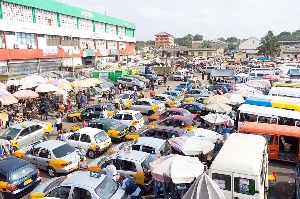
The Deputy Transport Minister, Hassan Tampuli, has advised the public to dismiss the Concerned Drivers Association’s proposal for a 15 percent fare increase scheduled for November 2.
He emphasized that fare changes are determined by several factors, including the stability of fuel prices, inflation, and other economic indicators, which he asserts are presently stable.
Speaking to JoyNews, Mr Tampuli stated, “We’ve heard some noises coming from the Drivers’ Union about the threat of an increase in lorry fares. I want to say here, unequivocally, that there’s no basis for any such increase in lorry fares between now and the next six months.
“The leadership are here, and they know what we do, the triggers that would arise in increasing the lorry fares. Nothing of that sort has happened. And indeed, as of this morning, Ghana is one of nine countries that have prices of petrol below one dollar… the prices that we have in Ghana are some of the lowest anywhere in the world,” he said.
In response, David Agboado, the Public Relations Officer of the Concerned Drivers Association, rejected Mr. Tampuli’s statements, asserting that the Transport Ministry lacks the authority to determine when transport operators should adjust fares.
He argued that rising costs of vehicles, spare parts, and fuel make the proposed fare increase essential for maintaining the viability of their businesses.
“My first question to you to ask Hassan Tampuli for me is, does he exist on this planet Earth called Ghana? The price of a vehicle has increased more than 100%. The price of a lubricant has increased more than 57%. You should go and check the market.
“The price of fuel has increased, so what is he saying? … We are doing business as transporters. We are not doing business as charity-running organisations… We are also charging the 15% starting on the second,” Agboado insisted.
Meanwhile, the Ghana Private Road Transport Union (GPRTU) has urged the public to ignore the fare increase notice.
The GPRTU Industrial Relations Officer, Imoro Abass, emphasized that any adjustments to fares should involve consultations with all relevant stakeholders.
“Did they pass through the process, the procedure we use in coming up with upward adjustments in lorry fares? The answer will definitely be no… We go around, looking for prices of items we use—lubricants, spare parts, vehicle values, etc. And fuel, of course, is inclusive.
“Then after doing all these things, we come to a conclusion of what percentage we have to adjust on the lorry fares. But we don’t just come out and say we are going to increase lorry fares without going through the processes that I’ve just mentioned. So we are urging the general public to disregard their claims,” Mr Abass explained.