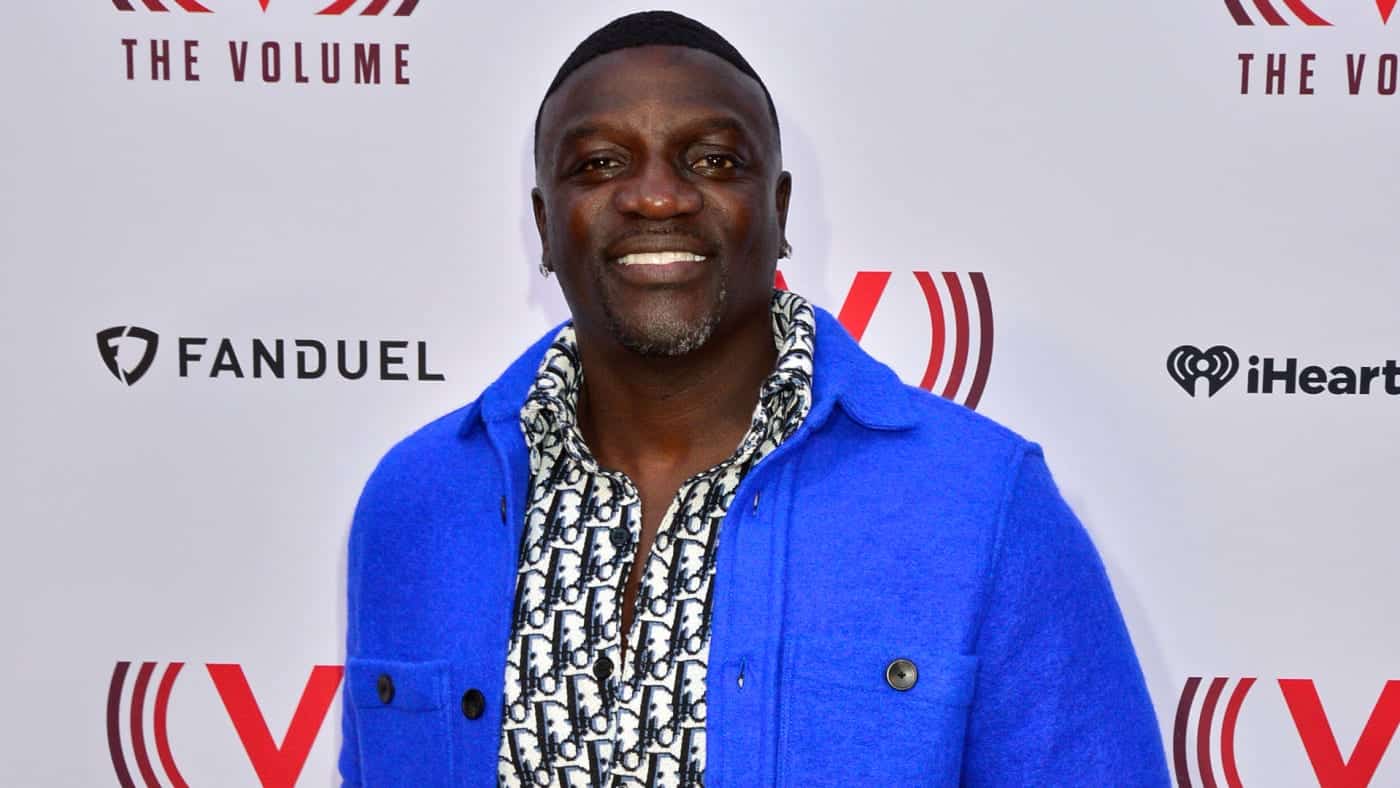
This, he believes, will develop the continent and make it the best in the world.
The Senegalese-American singer, who is on a mission to “develop Africa,” has called on people of African descent to make the continent a better place by impacting their expertise in various countries.
“My goal is to get everybody to move back to Africa. I want to get as much many African-Americans back home to Africa as I possibly can,” he disclosed.
He touted the continent as the safest place for African-Americans and added that they will no longer fight for their rights when they finally settle at home.
“I know the day they move back, everything they’re fighting for in America, they will not have to fight for again. All the struggle they struggle over there, they are going to come there with this mindset, mentality, the finances that they’ve built and invest that in Africa,” he disclosed on DEPOSIT$ with Brook England.
“Africa will be the best nation (continent) in the world,” he hammered.
In Ghana, the ‘Year of Return’ campaign launched in 2019 has witnessed an estimated 1,500 African American move to this West African state.
Some people are willing to go the extra mile to prove their love to their partners but this is beyond absurdity.
Why would any sane person tattoo his/her lover’s face on any part of his/her body – What happens if there’s a breakup?
If the lady thinks tattooing her boyfriend’s face on her bare face will keep him, then she has made a very great mistake because the guy will still cheat regardless of her tricks to pin him to herself alone.
I don’t want to believe this is a permanent tattoo but rather, a temporary tattoo that lasts around 2-3 days maximum.
Well, we are in the age of clout chasing and attention seeking hence nothing is surprising at all.
I’m just wondering how she’ll get the guy’s face off her body if they break up in the future.
All the comments under the viral video suggest the lady refused to think like an adult no matured person will draw his or her lover’s face on his\her’s just to prove a point.
Take a look at some of the reactions from shocked netizens below;
@Samanthafrea – tattoo artists gotta have some kind of rule to tell these girls that this is dumb lmao
@Iamyoursign – As a tattoo artist I try talk them out of it or try to make them get something else llf
@Kxshanell – I would be a lil scared if someone got my face tatted. Like ion even think it’d turn me on fr.
@Kunstoppable – Please tell me this is fake. Where are her parents why would the tattoo artist agree to do this.
Reading was not something I loved to do when I was a tweenager!
And I know that may come to you as a surprise considering my line of work, but that’s the truth. I mean, we were made to read books in our time. “Go to the naughty corner (or your room) and read your book!” – a parent would say to a recalcitrant tweenager.
“Go to the library and read a book; and think about what you did wrong”, my teacher would say to me for being disruptive in class. What? You didn’t think I gave my teachers stress, like some of you are doing now? LoL!!
The Gilded Ones
And when that happened, I would refuse to read a book. Within moments, I would realise I was bored and wanted something to do in my confined space. Then I would reach for a book to just flip through the pages, and I found myself reading. Then, next thing I knew, I was either bursting out laughing or tearing up because I was moved by the story, and “Your time is up; you can go back to class”, the librarian would announce to me.
And this was how my love for reading was nurtured. I loved to read because it took me to some place instead of the current place I found myself, especially if I didn’t like it there. Through reading, I had travelled to many different countries around the world before actually setting foot there.
The places I enjoyed the most, mainly because they tugged at the African in me (read as relatable), were Senegal, Kenya, Nigeria, South Africa and somewhere in the deep south of America (a predominantly African American community).
When I was in secondary school, by which time my love for reading was firmly established, I read books by African authors. Again, not by choice, but this time I’d say it was curated…deliberately chosen to have a certain effect on our thinking, maybe? Or not?
I will admit that these books exposed me to the cultures of some settings in Africa. I found out that Senegal is a West African country that has a 95 percent Muslim population and considered begging for alms a part of their culture. Soweto in South Africa, when I read about it, was a place where African children had to live with the reality and harsh effects of Apartheid; Kenya’s Mau Mau revolution to reclaim their land and freedom from the colonisers. When I read Chinua Achebe’s Things Fall Apart, I was taken in by how very verbose and colourful Nigerians were with language – and the intrusion of Western missionaries and colonial governments among the Igbos.
What all these books did for me was to prepare me for my later travels to these countries. I was knowledgeable (albeit a tad) about these countries to the point where I could hold conversations with their citizens when we met. Remember, in our time, we didn’t have the Internet, which now allows you to read up on anything and anywhere under the sun before you venture there.
I love my African-authored books, especially those that dwell on their culture and societal structures or challenges. I have noticed, though, that many of you do not have such books in your collection nor have you read any (or should that be, enough?) To be fair, finding such books – targetted at you, tweenagers – is quite the task, so I’m not blaming you. However, I would love to introduce you to a few of these books; read them before you finish secondary school, and you will notice how your perspective in and about life will shape up
Things Fall Apart – Chinua Achebe (Penguin Modern Classics edition): the struggle between change and tradition is explored through the life of a young Nigerian man, Okonkwo.
Purple Hibiscus – Chimamanda Ngozi Adichie: explores the themes of religious hypocrisy, finding one’s voice, and the persistence of love through the story of a young Nigerian woman struggling to find her way in a world beset with conflict and strife.
The Marriage of Anansewaa – Ama Ata Aidoo: tells of a father, Ananse, who submits his daughter’s suitors to test to find out which one of them can display financial strength and also seek the welfare of his daughter.
The Gilded Ones – Namina Forna: an action-packed new fantasy series following the story of a young female, named Deka, who lives in the West-African-inspired society of Otera, where women live to be of service to men, and their roles in everyday life are grounded in misogyny.
“The boys came up to me and they ambushed me sort of, like caged me in,” Ms Allen told local media.
“And so they put their hands over my mouth. They put my hands behind my back and they started cutting my hair and told me that I was ugly.”
“They like took my lunch and ate it in front of me and told me I didn’t deserve it, that I could just starve and stuff like that,” Ms Allen added.
The family say the incident only came to light on Wednesday when her grandmother noticed her hair was suddenly different lengths.
“It’s very painful,” Cynthia Allen told a local CBS affiliate. “I want to see them dismissed from the school. I want to see something done.”
In a statement, the school said they had asked local police to investigate the incident.
“We take seriously the emotional and physical well-being of all our students, and have a zero-tolerance policy for any kind of bullying or abuse,” Immanuel Christian School said in a statement.
“We are deeply disturbed by the allegations being made, and are in communication with the family of the alleged victim to gather information and provide whatever support we can.”
The school, which costs Ms Allen’s family almost $12,000 (£9,800) a year, is where Karen Pence – the wife of Vice-President Mike Pence – teaches art part-time.
She resumed working at the school earlier this year, amid scrutiny over its anti-LGBT requirements of staff.