Tag: African countries

  • Scrapping GHS1 fuel levy risks financial strain on energy sector – IES

    Scrapping GHS1 fuel levy risks financial strain on energy sector – IES

    A senior Research and Policy Analyst at the Institute for Energy Security (IES), Smith Prosper Boahene, has noted that it would be ‘premature’ for the government to scrap the GH₵1 fuel levy amid growing calls for its abolition.

    Addressing the media on Wednesday, March 25, explained that although there’s a recent drop in global oil prices, it will be dangerous for the government to scrap the levy.

    He added that the GH₵1 fuel levy is crucial to Ghana’s energy sector which is already at the verge of collapsing.

    “IES from the commencement has been against it; that call is premature.The levy is there to serve a very critical purpose… to replenish the debt that has been accumulating in the sector,” he added.

    The researcher argued that calls should rather be directed towards the temporary suspension of the Price Stabilisation and Recovery Levy (PSRL) to help reduce fuel prices and ease the burden on consumers.

    Meanwhile, global crude oil prices have dipped by about 5%, falling from around $104 per barrel to approximately $98.95, while gas prices in Europe have also declined by roughly 8%.

    Last year, the President John Dramani Mahama government implemented GH¢1 fuel levy on petroleum products. This move comes under the Energy Sector Levies (Amendment) Act, 2025 (Act 1141), which was assented to by President on June 5 to settle energy sector shortfalls, reduce legacy debts, and stabilize power supply across the country, following parliamentary approval.


    The government insists the levy is crucial for the financial recovery of Ghana’s energy sector. President John Mahama, while speaking at the presentation of the final report of the National Economic Dialogue 2025 on June 4, announced the government’s decision to clear the accumulated legacy debts in the power sector with part of the revenue generated by the yet-to-be-implemented levy.


    He stated that “initially much of this revenue will go to the purchasing of fuel to ensure stable power of electricity.”


    The government will also reduce the use of liquid fuel in the energy mix as it expects more gas from the ENI, Sankofa, Jubilee, and TEN fields, as well as the West African Gas Pipeline.


    “At that stage, the resources generated by this increased levy will be channeled to pay accumulated legacy debts in the power sector,” he added.


    He assured Ghanaians that funds generated from the newly approved GHC1 fuel levy will undergo regular audits. He explained the move is to ensure accountability and transparency.


    “Funds from this levy will not be subject to the hazards of the Consolidated Fund. The fund will be regularly audited and audit reports made public to ensure its transparent use.”


    Energy and Green Transition Minister, John Abdulai Jinapor, has defended government’s move despite opposition from some stakeholders in the energy sector.


    He noted that the timing of the introduction of the levy is apt as the cedi continues to appreciate against major trading currencies.
    The minister projects to generate revenue ranging between GH¢5 billion and GH¢6 billion to support the procurement of liquid fuel.


    “Fuel was around GH¢16.00, and a sensitive government will not slap a tax when fuel is GH¢16.00. You couldn’t have imposed that tax around that time when fuel was still very high, and so you needed to work to bring fuel down to this level and share the gain with Ghanaians. At that time, if we had increased it, you can imagine the impact on Ghanaians, but today, the net effect is that you are still having a reduction of GH¢3.00 on a litre of fuel.


    “It is better to do it today than to (have done) it yesterday, when it would have eroded your income; today, your purchasing power has increased because of the reduction of the value of the dollar,” he said while speaking on JoyFM.


    Some stakeholders in the energy sector have expressed their displeasure over the approval of the Energy Sector Levy (Amendment) Bill, 2025, by Parliament and its pending implementation.


    On the matter, Chief Executive Officer of the Association of Oil Marketing Companies (AOMCs), Dr Riverson Oppong Peprah, warned that the implementation of the levy could drive fuel prices higher, adding further strain on consumers and the downstream sector.


    “When fuel prices began to fall, it wasn’t because the cedi gained stability; rather, it was due to a drop in plant prices caused by the decline in West Texas Intermediate (WTI) crude oil prices. Only after that did the cedi stabilise and support the downward trend.”


    “As we speak today, plant prices are already rising again. So, I urge the government to reconsider this levy since there are other options,” he counselled.


    Also, Executive Director of the Centre for Environment and Sustainable Energy Benjamin Nsiah has raised similar concerns, calling the introduction of the levy “unfair.”


    “This approach is not only tired but unfair. We’ve seen this playbook before. The Energy Sector Levies Act (ESLA) and the Energy Sector Recovery Levy have provided a lasting solution to the underlying issues. It’s not about collecting more. It’s about managing what’s already collected,” he added.


  • Togo tops African countries streaming my songs – Celestine Donkor

    Togo tops African countries streaming my songs – Celestine Donkor

    Ghanaian gospel musician Celestine Donkor has revealed that Togo leads the list of African countries streaming her music the most.

    Speaking on Hitz FM, she said, “Yes, Ghana is number three. Togo followed by Benin, then Ghana, and this happens with most of my songs.”

    Celestine further clarified that the trend shifts whenever she releases songs entirely in Twi.

    “I’ve noticed that when I do completely Twi songs, Ghana tops. But the moment you introduce some Ewe, then the conversation changes,” she explained.

    In 2023, young Ghanaian drill musician, Mohammed Ismail Sherif, also known as Black Sherif chalked another success with his latest song ‘Soja’ on the digital streaming platform, Audiomack.

    As you may remember, Black Sherif just released “Soja,” another banger on September 22, 2022, and the single has already made great waves across the country.

    The song’s release date was confirmed by Black Sherif, who was just nominated for a BET Award in the Best International Flow category.

    Since the release of the single, it has recorded a series of achievements and frankly we are not surprised.

    View this post on Instagram

    A post shared by Audiomack Africa (@audiomackafrica)

    The song recently peaked at number one on Ghana’s Apple music defeating Asake’s ‘Terminator’ after leading the charts for a couple of weeks.

    Black Sherif also celebrated after his ‘Soja’ surpassed 1 million views in 3 days on YouTube.

    Well, Blacko has reached another milestone with the song as it becomes the most streamed song on Audiomack this week.

    The list was posted on the digital streaming platform, Audiomack’s social media pages on September 27, 2022.

    The award-winning singer, who has dominated the field in his brief time in the music business, earlier revealed his upcoming album ‘THE VILLAIN I NEVER WAS’ will be available for purchase and streaming on all digital music platforms on Thursday, October 6, 2022, according to the details he shared via his official Apple Music account.

    The album, ‘The Villain I Never Was’, contains 14 tracks which include the ‘Second Sermon’ remix featuring Burna boy, ‘Kweku The Traveller’, and ‘Soja’.

    Black Sherif, has been on fire with his unmatched talent since breaking into the Ghana music industry in 2021 and is arguably the hottest artist in Ghana right now.

    The Empire Records signee has solidified his name by dropping some bangers that are leaving rent-free in our heads, with the likes of First Sermon, Second Sermon, Second Sermon remix, and Kwaku The Traveller, among others.

    The Barbie film has achieved remarkable success, emerging as the biggest film of the year so far in the US and Canada, according to distributor Warner Bros.

    It raked in an estimated $155 million (£120 million) during its opening weekend.

    In the same weekend, another new release, “Oppenheimer,” distributed by Universal Pictures, made $93.7 million (£72 million) in the US.

    These film successes are particularly noteworthy as cinemas have been facing challenges due to competition from streaming platforms.

    However, in the UK, both films created a surge in cinema attendance, with Vue reporting its busiest weekend in four years.

    The cinema chain, which operates in the UK and Ireland, saw a record number of admissions, with around half a million people flocking to Vue screens to catch the movies. “Barbie,” directed by Greta Gerwig, seems to be on track to become the biggest film of 2023 in the region, surpassing “Super Mario Bros.”

    Vue experienced 4,000 sold-out viewings for “Barbie” across the UK and Ireland, further highlighting the film’s popularity and success.

    On Twitter, one user said that it had been years since she had felt like going to the theatres to re-watch a movie, but Barbie had achieved that for her. She said it would “remain a timeless masterpiece over the years – ideas really are forever”.

    Before the films’ release, Odeon in the UK said more than 200,000 advance tickets had been bought and some 10,000 filmgoers were expected to see both the Barbie and Oppenheimer films during the opening weekend.

    Meanwhile, Vue cinema in the UK reported on Friday that Barbie’s pre-sale purchases were “higher than any other blockbuster released this year”. Admissions on Friday were the highest for any Friday since the pandemic – and the chain’s third biggest Friday ever.

    Oppenheimer, distributed by Universal Pictures, has performed exceptionally well in the UK and Ireland, grossing £8.05 million since its release on Friday.

    The film is expected to surpass the opening three-day earnings of Christopher Nolan’s other blockbuster films, including Interstellar, Dunkirk, and Inception.

    However, the premiere of Oppenheimer faced some challenges in July when strike action led stars to leave early due to grievances, including concerns about the increasing influence of artificial intelligence in the filmmaking and writing process in Hollywood.

    Internationally, Oppenheimer also achieved success, making $93.7 million (£75 million) in other markets, contributing to a global total of $174.2 million (£135 million), according to Universal Pictures’ reports.

  • From Hollywood to the homeland: Why African countries are courting black American stars

    From Hollywood to the homeland: Why African countries are courting black American stars

    Although their forefathers were seized from West and Central Africa centuries ago, the bond between African-Americans and their ancestral home has been a lasting one.

    For instance, Liberia, Africa’s oldest republic, was founded by freed black American slaves in 1822. After Ghana became independent in 1957, a wave of black intellectuals and artists moved there from the US. Martin Luther King, Malcolm X and Muhammad Ali subsequently paid high-profile visits to Ghana, while Guinea became home to Black Panther leader Stokely Carmichael.

    This transatlantic connection has ebbed and flowed over time – but in recent years, there has been a real resurgence, helped by the use of DNA tests.

    A number of black American celebrities have sought the nationality of African countries – singer Ciara has become a citizen of Benin, rapper Ludacris and film star Samuel L Jackson are officially Gabonese, actors Meagan Good and Jonathan Majors are citizens of Guinea and musical icon Stevie Wonder has Ghanaian papers.

    Just last week, wildly popular content creator IShowSpeed was approved for a Ghanaian passport after stopping in the country on a whirlwind African tour.

    The celebs have, in most cases, flown out for elaborate citizenship ceremonies and tours of local beauty spots, all of which have been captured for glossy social media content.

    Posting photos of her citizenship ceremony in Guinea, Meagan Good told her 7.8m Instagram followers last month: “This is history in motion”.

    Good, who has featured in films like Think Like A Man and Saw V, and her husband Majors, known for Creed and Marvel flick Ant-Man and the Wasp, became citizens after DNA testing traced their ancestry to Guinea.

    “This recognition goes beyond titles, it is a homecoming and a reconnection to our Afrodescendant roots,” said Good.

    Messaging from the various African governments has echoed this sentiment.

    “In conferring Ghanaian citizenship upon Stevie Wonder,” former president Nana Akufo-Addo said at Wonder’s 2024 ceremony, “we not only extend our warmest embrace to a beloved son of Africa but also reaffirm our belief in the enduring spirit of pan-Africanism and the global African family”.

    Ghana has long promoted its pan-African credentials – for a decade anyone whose ancestors came from Africa have been entitled to Ghanaian nationality, a policy that arguably inspired Benin to launch a similar scheme.

    Ghana also launched the “year of return” in 2019, a buzzy initiative encouraging Africans in the diaspora to relocate there.

    More than 1,000 African-Americans have done so in the past decade, according to Dr Erieka Bennet, ambassador for the Diaspora African Forum, which helps people relocate to Ghana.

    “It is not only about romanticism,” Marie-Roger Biloa, a Cameroonian journalist with a focus on West Africa, tells the BBC.

    “It’s all very much about how can we tap into the potential they have, the Americans.”

    Tourism is an obvious motivator. Governments hope that social media posts from the stars will encourage other black Americans, a large group with a growing economic power, to visit and inject money into their countries.

    Biloa notes that Benin’s president, a former business tycoon, is keenly aware that his country’s former role as a key departure point for slaves makes it a poignant destination for black Americans.

    “President [Patrice] Talon has really started investing in cultural heritage, in a way to engage the African-Americans worldwide. He understood it could be an engine for a new form of tourism and a new branch of economy,” she says, mentioning The Marina Project, a memorial and tourist complex being built in Ouidah, once one of Benin’s main slave ports.

    Positive publicity from stars like Ciara may also encourage diasporans to invest or buy property in Benin, as they have been doing in Ghana since the year of return.

    Soft power is also an important factor – by promoting their culture and building a robust network around the world, countries like Benin, Guinea, Gabon and Ghana stand to gain global influence.

    In this mission, celebrity citizens act as ambassadors, Francis Kpatindé, a Beninois lecturer at France’s Sciences Po University, tells the BBC.

    “Benin has no diamonds like the Democratic Republic of Congo, no petrol, nothing. We just have cotton, the ports and culture,” he says.

    The celebrity ambassadors are “a way for us to be on the record, to be on-screen. Now it’s working. You can go to the social networks. You see Benin everywhere,” Kpatindé says.

    Many peoplefrom the countries involved recognise the economic and political benefits of giving citizenship to black American celebrities, but others are more critical.

    There is an underlying feeling that the stars are bypassing what can be, for those born in the countries, a cumbersome and costly process to get passports.

    Taufic Suleman, a painter and decorator from Ghana, felt “irritated” when the foreign minister announced that IShowSpeed, who grew up in the US but has a Ghanaian mother, had been approved for a passport.

    “It is really, really, really a bad precedent… why do people, your citizens, have to go through vetting? Sometimes others end up being denied,” Suleman, aged 32, tells the BBC.

    “You just can’t hand out a passport to anyone just because the person is a celebrity.”

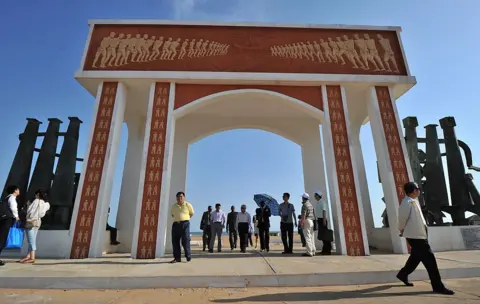
    AFP via Getty Images People stand under and around the door of no return
    The “door of no return” monument in Ouidah marks the last place seen by many enslaved Africans before they were forced to leave for other continents

    Following the foreign minister’s announcement, Patrick Boamah, a member of the Ghanaian parliament’s Foreign Affairs Committee, told local broadcaster Channel One that the content creator must follow the required legal procedures to get a passport, although the authorities “may waive certain steps for him”.

    Sindé Chekete, the head of Benin’s tourism authority, told the BBC that “citizenship processing is not influenced by celebrity status” and that Ciara “followed the same standard procedure as any other applicant”.

    Another criticism of the celebrity citizenship trend is that it will be superficial and fleeting – the stars will collect their certificates, publish a few social media posts, then go quiet.

    It is not clear whether, in all cases, the celebrities are required to publicise or maintain lasting links to their second homes, but Chekete stressed that Beninois citizenship “is not a transaction and it does not come with contractual obligations, whether promotional, financial, or otherwise”.

    Six months after getting her citizenship, Ciara returned to Benin in January to play at the Vodun Days festival.

    Meagan Good and Jonathan Majors have stressed that their connection with Guinea would be “long-term and evolving”.

    “We could absolutely see ourselves having a home here and spending meaningful time in Guinea,” they told the BBC over email.

    Yaw Nyame, one of the numerous Ghanaians who welcomed IShowSpeed’s naturalisation, says he hopes the content creator uses his passport to set up a base in the country.

    “Even if he’s not going to come to Ghana all the time, at least him having his presence in Ghana or doing a project in Ghana,” Nyame says.

    The doctor says giving IShowSpeed, real name Darren Watkins Jr, a passport is a “brilliant, strategic move” as the creator currently has “all eyes on him”. He has more than 50 million YouTube subscribers, with a recent 20-country tour of Africa contributing to the growth of his platform.

    It will take time for Ghana, Gabon, Guinea and Benin to gauge whether their strategies have paid off – maybe one or two decades, Kpatindé says.

    Earlier this week, Benin’s government said it would open a government agency specifically dedicated to nationalising “Afro-descendants”.

    However, Ghana reached a roadblock in its plans to reconnect with the diaspora, announcing it was pausing its citizenship applications as it needed to make the system more accessible and user-friendly.

    Regardless, Kpatindé believes that by welcoming home some of the diaspora’s brightest stars, the African countries are on the right trajectory.

    People on the continent have long hailed pan-Africanism, “but now we need action,” he says. “We need concrete acts, not to just speak”.

    Source: BBC

    DISCLAIMER: Independentghana.com will not be liable for any inaccuracies contained in this article. The views expressed in the article are solely those of the author’s, and do not reflect those of The Independent Ghana

  • Gates Foundation, OpenAI launch $50m AI partnership to boost Africa’s health systems

    Gates Foundation, OpenAI launch $50m AI partnership to boost Africa’s health systems

    The Gates Foundation and OpenAI have announced a $50 million partnership aimed at supporting African countries to deploy artificial intelligence in strengthening their health systems.

    The initiative, known as Horizon1000, will collaborate with African leaders to identify practical and effective ways of applying AI in healthcare delivery, with Rwanda selected as the starting point.

    “In poorer countries with enormous health worker shortages and lack of health systems infrastructure, AI can be a gamechanger in expanding access to quality care,” Gates said in a blog post announcing the initiative. He has previously described artificial intelligence as one of the most transformative technologies ever developed.

    The Gates Foundation has already rolled out several AI-focused projects, while Rwanda established an AI health hub in Kigali last year to advance innovation in the sector.

    Under the Horizon1000 programme, the partnership aims to support 1,000 primary healthcare facilities and surrounding communities across multiple African countries by 2028, according to Gates.

    The announcement comes at a time when many low-income countries are grappling with significant reductions in international aid. Gates said in December that these funding cuts had contributed to the first increase in preventable child deaths this century.

    Gates noted that AI holds particular promise for countries facing critical shortages of trained health professionals, adding that estimates suggest sub-Saharan Africa lacks about six million healthcare workers.

    The New York Times, a prominent US news organization,filed a lawsuit against OpenAI, the owner of ChatGPT, and Microsoft, alleging copyright infringement in training the language model.

    The lawsuit contends that ChatGPT, along with other large language models (LLMs), unlawfully used “millions” of articles from the New York Times without permission, resulting in damages amounting to “billions of dollars.”

    The lawsuit argued that ChatGPT, by incorporating New York Times content without authorization, is now a direct competitor to the newspaper as a reliable source of information.

    It claims that the language model sometimes generates “verbatim excerpts” from New York Times articles when queried about current events, offering access to subscription-based content for free.

    Additionally, the lawsuit highlights instances where the Bing search engine, powered by ChatGPT, produced results sourced from a New York Times-owned website without proper attribution or referral links. This, according to the New York Times, not only deprives the newspaper of subscription revenue but also impacts advertising revenue from website visits.

    The legal action, initiated in a Manhattan federal court on Wednesday, alleges that attempts for an “amicable resolution” were made in April when the New York Times approached Microsoft and OpenAI. The BBC has reached out to OpenAI and Microsoft for comments on the matter.

    Multiple lawsuits

    It came a month after a period of chaos at OpenAI where co-founder and CEO Sam Altman was sacked – and then rehired – over the course of a few days.

    His sacking shocked industry insiders and led to staff threatening mass resignations unless he was reinstated.

    But as well as the internal issues, the firm is now facing multiple lawsuits filed in 2023.

    In September a similar copyright infringement case was brought by a group of US authors including Game of Thrones novelist George RR Martin and John Grisham.

    That followed legal action brought by comedian Sarah Silverman in July, as well as an open letter signed by authors Margaret Atwood and Philip Pullman that same month calling for AI companies to compensate them for using their work.

    And OpenAI is also facing a lawsuit alongside Microsoft – and programming site GitHub – from a group of computing experts who argue their code was used without their permission to train an AI called Copilot.

    As well as these actions, there have been many cases brought against developers of so-called generative AI – that is, artificial intelligence that can create media based on text prompts – with artists suing text-to-image generators Stability AI and Midjourney in January, claiming they only function by being trained on copyrighted artwork.

  • Under-developing African countries must have their own credit rating agencies – Associate Prof.

    Under-developing African countries must have their own credit rating agencies – Associate Prof.

    In a call for financial independence and development, Professor Elikplim Komla Agbloyor, an Associate Professor in Finance at the University of Ghana Business School (UGBS), has urged under-developing African countries to establish their own credit rating agencies. T

    his, he argues, will empower more companies to issue bonds, thereby bolstering local financial markets, reducing borrowing costs, and increasing access to capital markets for African nations.

    Speaking at an inter-college lecture during the 2024 Day of Scientific Renaissance of Africa (DSRA) celebrations, organized by the College of Humanities of UGBS in Accra, Professor Agbloyor emphasized the importance of developing local financial infrastructures.

    “We cannot always be going to the Eurobond market to borrow,” he said. “We need to develop our own financial markets where African countries can issue bonds and ensure that investors will be able to buy these bonds.”

    The lecture, titled “A $75 Billion Question: Do African Countries Suffer a Systematic Sovereign Credit Ratings Bias?” highlighted the biases faced by African countries in the global credit rating system. Professor Agbloyor pointed out that credit ratings are crucial indicators of a borrower’s quality.

    However, recent downgrades in Ghana’s credit rating have had significant repercussions, increasing borrowing costs and limiting access to international capital markets.

    “The downgrades mean that the quality of borrowers has been reduced,” he explained.

    “If you are downgraded, your credit quality reduces, cost of borrowing increases, making borrowing very expensive. In the case of Ghana, Egypt, and Zambia, you can no longer access international capital markets, meaning you cannot issue Eurobonds.”

    These downgrades lead to capital flow reversals, currency depreciation, imported inflation, banking crises, and eventually full-blown economic crises. Professor Agbloyor noted that Ghana might regain access to the global capital market by 2028.

    Currently, Standards and Poor’s (S&P) has rated Ghana as Selective Default, complicating its ability to issue bonds in the near future.

    The professor’s research was inspired by an article from the Economist, which suggested that African countries might suffer from a credit rating bias.

    Further motivation came from a United Nations Development Programme (UNDP) study, which posited that fair credit ratings for African countries could save the continent an average of $75 billion annually—funds that could be redirected towards development.

    “Credit rating agencies have argued that there is no rating bias and that the ratings are fair and reflect the risks of Africa,” Professor Agbloyor said. However, his findings indicate otherwise.

    A random sampling of African countries compared with non-African countries revealed a bias, with Africa being a significant predictor of lower credit ratings.

    He stressed that a country’s location should not determine its credit ratings, whether it is in Africa, the United States, Canada, or Asia.

    To mitigate these biases, Professor Agbloyor advocates for the establishment of African credit rating agencies, run by the private sector to avoid potential credibility issues associated with government-run agencies.

    “People may not trust the ratings from the onset due to credibility issues, but credibility starts from somewhere, so let us support our own,” he concluded.

    The DSRA celebration also featured an exhibition of scholarly works by various departments, institutes, and centres of the University of Ghana, including the Centre for Migration Studies, School of Performing Arts, Centre for Social Policy Studies, and Department of Geography.

  • List of top 10 poorest African countries

    Africa, the world’s second-largest continent with 54 nations, boasts diverse cultures and histories. Unfortunately, many African nations grapple with poverty, leaving millions below the poverty line. Political instability, economic mismanagement, and environmental issues contribute to poverty across the continent.

    Despite abundant natural resources, numerous African countries rank among the world’s poorest. According to the World Bank, 22 of the globe’s 26 low-income economies are in Africa. These nations struggle with low GDP per capita, high unemployment rates, and insufficient access to vital services like healthcare, education, and clean water. While progress has been made in some areas, many countries still confront substantial obstacles in alleviating poverty and enhancing living conditions for their populations.

    Most Poorest African Countries

    • Overview of Poverty in Africa
    • Top 10 Poorest African Countries
    • Factors Contributing to Poverty
    • Efforts to Alleviate Poverty

      Overview of Poverty in Africa

      Africa is the poorest continent in the world, with over 40% of its population living in extreme poverty. The majority of African countries are classified as low-income economies by the World Bank, with a per capita income of less than $1,025 per year.
    • Poverty in Africa is a complex issue that is influenced by a variety of factors such as political instability, conflict, poor governance, lack of infrastructure, climate change, and economic inequality. These factors often interact with each other, exacerbating poverty and creating a vicious cycle of poverty and underdevelopment.

    According to the World Bank, poverty in Africa is concentrated in rural areas, where the majority of the population relies on subsistence agriculture for their livelihoods. In addition, poverty is more prevalent in countries affected by conflict and political instability, such as Somalia, South Sudan, and the Central African Republic.

    Despite efforts to reduce poverty in Africa, progress has been slow. While the poverty rate has declined from 56% in 1990 to 43% in 2012, the number of people living in poverty has increased due to population growth. Moreover, the COVID-19 pandemic has pushed an additional 40 million people into extreme poverty in Africa, according to the World Bank.

    To address poverty in Africa, there is a need for comprehensive and sustainable solutions that address the root causes of poverty. These solutions should include investments in education, health, infrastructure, and social protection programs, as well as efforts to promote economic growth and reduce inequality.

    Top 10 Poorest African Countries

    Africa is a continent with vast resources and potential, yet many of its countries struggle with poverty. According to the World Bank, the poverty rate in sub-Saharan Africa is over 40%. This section will highlight the top 10 poorest countries in Africa based on their Gross Domestic Product (GDP) per capita.

    Nigeria

    Nigeria, located in West Africa, is the most populous country in Africa and has the largest economy on the continent. However, it is also one of the poorest countries in Africa, with a GDP per capita of $2,229. The country’s economy heavily relies on oil exports, which has led to a high level of corruption and income inequality.

    Ethiopia

    Ethiopia is a landlocked country in the Horn of Africa with a population of over 100 million people. Despite its rapid economic growth in recent years, it remains one of the poorest countries in Africa, with a GDP per capita of $875. The country faces challenges such as political instability, high levels of poverty, and a lack of infrastructure.

    Democratic Republic of Congo

    The Democratic Republic of Congo (DRC) is a country located in Central Africa with a population of over 85 million people. It is one of the richest countries in the world in terms of natural resources, yet it is also one of the poorest countries in Africa, with a GDP per capita of $551. The country has been plagued by conflict, political instability, and corruption.

    Tanzania

    Tanzania is a country located in East Africa with a population of over 60 million people. It is one of the poorest countries in Africa, with a GDP per capita of $1,039. The country faces challenges such as high levels of poverty, a lack of infrastructure, and a reliance on agriculture.

    Mozambique

    Mozambique is a country located in Southeast Africa with a population of over 31 million people. It is one of the poorest countries in Africa, with a GDP per capita of $620. The country faces challenges such as political instability, high levels of poverty, and a lack of infrastructure.

    Madagascar

    Madagascar is an island country located off the coast of East Africa with a population of over 27 million people. It is one of the poorest countries in Africa, with a GDP per capita of $520. The country faces challenges such as political instability, high levels of poverty, and a lack of infrastructure.

    Chad

    Chad is a landlocked country located in Central Africa with a population of over 16 million people. It is one of the poorest countries in Africa, with a GDP per capita of $663. The country faces challenges such as political instability, high levels of poverty, and a lack of infrastructure.

    Niger

    Niger is a landlocked country located in West Africa with a population of over 24 million people. It is one of the poorest countries in Africa, with a GDP per capita of $417. The country faces challenges such as political instability, high levels of poverty, and a lack of infrastructure.

    South Sudan

    South Sudan is a country located in East-Central Africa with a population of over 12 million people. It is one of the poorest countries in Africa, with a GDP per capita of $303. The country faces challenges such as political instability, high levels of poverty, and a lack of infrastructure.

    Burundi

    Burundi is a landlocked country located in East Africa with a population of over 11 million people. It is the poorest country in Africa, with a GDP per capita of $261. The country faces challenges such as political instability, high levels of poverty, and a lack of infrastructure.

    Factors Contributing to Poverty

    African Lady

    African Lady© Provided by Years Of Traveling

    Poverty is a complex issue that is caused by a variety of factors. In Africa, there are several factors that contribute to poverty, including political instability, economic challenges, social and health issues.

    Political Instability

    Political instability is one of the major factors contributing to poverty in Africa. Many African countries have experienced political instability due to civil wars, coups, and corruption. These political problems have led to a lack of investment in infrastructure and social services, which has resulted in high levels of poverty.

    Economic Challenges

    Economic challenges are another factor contributing to poverty in Africa. Many African countries are heavily dependent on a few export commodities, such as oil, minerals, and agricultural products. This dependence on a few commodities makes these countries vulnerable to fluctuations in global prices, which can lead to economic instability and poverty.

    Social and Health Issues

    Social and health issues are also major factors contributing to poverty in Africa. Many African countries have high rates of HIV/AIDS, malaria, and other diseases. These diseases not only cause suffering and death but also have a significant impact on the economy, as they lead to lost productivity and increased healthcare costs. Additionally, social issues such as gender inequality, lack of education, and discrimination against minorities can also contribute to poverty.

    In conclusion, poverty in Africa is caused by a variety of factors, including political instability, economic challenges, and social and health issues. Addressing these issues will require a coordinated effort from governments, non-governmental organizations, and the international community.

    Efforts to Alleviate Poverty

    Villagers in Africa

    Villagers in Africa© Provided by Years Of Traveling

    International Aid

    Many African countries have received significant amounts of international aid to help alleviate poverty. The World Bank has been a major contributor to this effort, providing loans and grants to African countries to help fund development projects and support economic growth. In addition, many non-governmental organizations (NGOs) have also been active in providing aid to African countries. For example, the Bill and Melinda Gates Foundation has donated billions of dollars to support health and development programs in Africa.

    Economic Reforms

    In recent years, many African countries have implemented economic reforms aimed at reducing poverty. These reforms have included measures such as reducing trade barriers, deregulating markets, and implementing policies to attract foreign investment. While these measures have been controversial, they have also been credited with helping to spur economic growth and reduce poverty in some African countries.

    Sustainable Development Initiatives

    Sustainable development initiatives have also been a major focus of efforts to alleviate poverty in Africa. These initiatives aim to promote economic growth and development while also protecting the environment and promoting social equality. For example, the United Nations has launched the Sustainable Development Goals (SDGs), which include a number of targets related to poverty reduction in Africa. Many African countries have also launched their own sustainable development initiatives, such as the African Union’s Agenda 2063.

    Overall, while poverty remains a significant challenge in many African countries, there have been significant efforts to alleviate poverty through international aid, economic reforms, and sustainable development initiatives.

  • Ghana tops African countries in Concessional Lending debt to  IMF

    Ghana tops African countries in Concessional Lending debt to IMF

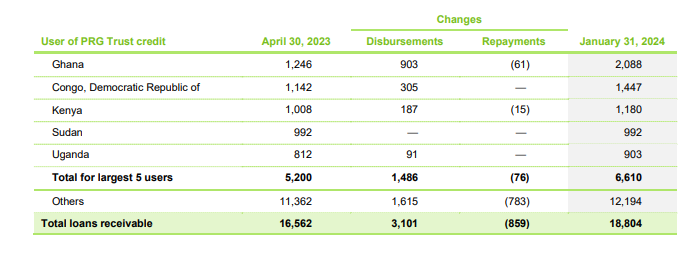
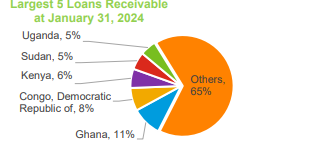
    As of January 31, 2024, Ghana retained its position as the foremost debtor to the International Monetary Fund (IMF) in Africa concerning Concessional Lending and Debt Relief Trust.

    The country’s indebtedness to the Fund amounted to 2.088 billion Special Drawing Rights, equivalent to $2.77 billion.

    According to the IMF’s Quarterly Finances for January 2024, Ghana’s outstanding concessional loans to the institution had increased compared to the figures recorded in July 2023. This surge followed Ghana’s receipt of a $600 million bailout package from the IMF in both June 2023 and January 2024, aimed at revitalizing its economy amid prevailing economic challenges.

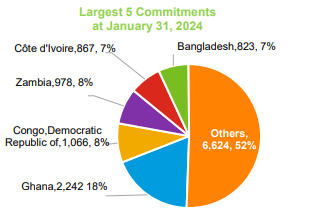
    Ghana’s concessional loan outstanding to the IMF represented 11.0% of Africa’s total indebtedness to the tune of SDR 18.804 billion. Additionally, Ghana demonstrated a commitment to debt repayment by remitting SDR 61 million, equivalent to $81.13 million, to the IMF.

    The loans extended to Ghana by the IMF fall under concessional lending, featuring low-interest financing. Specifically, the PRG Trust offers loans under concessional terms to qualifying low-income member nations.

    Meanwhile, the Democratic Republic of Congo and Kenya maintained their positions as the second and third-largest debtors to the IMF in Africa, respectively, as of January 1, 2024.

  • Former US soldier calls for ‘recolonisation’ of African countries in viral video

    Former US soldier calls for ‘recolonisation’ of African countries in viral video

    The former Chief Executive Officer (CEO) of the controversial private security firm Blackwater, Erik Prince, has sparked outrage by calling for the U.S. to “put the imperial hat back on” and take over African countries that he deemed “incapable of governing themselves”.

    In a recent episode of his podcast “Off Leash”, Prince said that the U.S. should intervene in Africa to stop the “invasion” of migrants and terrorists, and to exploit the continent’s natural resources.

    He claimed that many African governments are “just criminal syndicates” that “deserve better” than their current leaders.

    “It’s time for us to just put the imperial hat back on to say that we’re going to govern those countries. If you’re incapable of governing yourselves because enough is enough, we’re done being invaded.

    “You can say that about pretty much all of Africa. They’re incapable of governing themselves and benefiting their citizens because the governments there are all about looting, pillaging, lining their pockets, and going shopping in Paris instead of ruling their countries,” he said.

    Prince’s remarks were met with fierce criticism from human rights activists, African officials, and former colleagues, who accused him of promoting a racist and neo-colonial agenda.

    They also pointed out that Prince has a vested interest in expanding his business in Africa, as he is the founder and former chairman of Frontier Services Group (FSG), a Chinese state-owned security and logistics company that operates in several African countries.

    Erik Prince has a history of involvement in controversial and illegal activities in Africa and other parts of the world.

    He is currently under investigation by the U.N. for allegedly violating an arms embargo in Libya, and he was previously implicated in the 2007 Nisour Square massacre in Iraq, where Blackwater contractors killed 17 civilians.

    Watch video below:

  • Ghana leads 15 African countries in Chinese debt, with $31.1b – Report

    Ghana leads 15 African countries in Chinese debt, with $31.1b – Report

    Data compiled by the US-China Economic and Security Review Commission, has it that Ghana emerges as the most indebted to China among 15 African nations.

    The data reveals that Ghana’s total loans from China, following the completion of the HIPC Initiative, amount to $31.1 billion, constituting the entirety of the country’s Chinese loans.

    Guinea follows with $21.9 billion, Ethiopia with $14.8 billion, and Tanzania with $12.6 billion.

    Economist Theophilus Acheampong expressed astonishment at Ghana topping the list, drawing parallels to the debt challenges faced by nations in the 1970s that led to interventions like HIPC.

    He wrote on X: “Very interesting visual. I thought Ethiopia would have taken more Chinese loans than Ghana. Data comes from the US-China Economic and Security Review Commission. According to the Commission, 60% of China’s debtor nations were in financial distress in 2022, up from 5% in 2010. But how is this any different from the debt distress of the 1970s, late 90s to early 2000s, which led to the likes of HIPC/MDRI? Same game, just different players!”

  • Growth ‘with dignity’ the focus of Africa Climate Summit

    Growth ‘with dignity’ the focus of Africa Climate Summit

    Wanjira Mathai, an environmental campaigner, said that the current Africa climate summit in Nairobi is a very important moment for Africa to stand together and take big steps towards a better future.

    Ms Mathai, the daughter of Prof Wangari Mathai who won the Nobel Peace Prize, is saying that Africa is showing leadership by finding solutions to its problems. Africa has lots of renewable energy, important minerals, and a young workforce that is growing quickly.

    But she said on the BBC’s Newsday show that we cannot adjust to extreme poverty. This needs to be about economic growth that is focused on reducing carbon emissions, being environmentally sustainable, and including everyone in the process.

    She said that she wants to see a strong effort for fair and equal access to global markets for products made with clean energy in Africa.

    Furthermore, she mentioned that African countries need to have “fair and equal opportunities to obtain financial resources”.

    This is one of the most important things that people want. The global financial system is unfair to Africa, as Africa has to pay eight times more for financial services compared to the rest of the world. “I think that finance is very important, just like technology and knowledge,” she said.

  • New York experiences highest cocoa price in 12 years

    New York experiences highest cocoa price in 12 years

    The price of cocoa, a crucial raw material for chocolate production, has surged to its highest levels in over a decade. On Tuesday, cocoa prices reached a peak in New York, just weeks after hitting a 46-year high in London. This surge comes as traders and chocolate manufacturers grapple with limited supplies.

    The benchmark cocoa contract at the Intercontinental Exchange in New York soared to $3,429 per metric ton during the trading session, marking the highest level since mid-March 2011. It eventually closed at $3,407, reflecting a 1.4% increase.

    Cocoa has emerged as one of the hottest agricultural commodities, primarily due to a significant decrease in production in the western part of Africa, which serves as a major supplier of raw cocoa to chocolate makers worldwide. Additionally, concerns about potentially adverse weather conditions in the future have also contributed to the price surge.

    Analysts have pointed out that regions like Ghana, Ivory Coast, Nigeria, and Cameroon are susceptible to drier-than-normal weather in the coming months due to the development of the El Niño pattern. As a result, the supply of cocoa from these regions may face further challenges, leading to the current price hike in the cocoa market.

    “Cocoa production is usually weaker in an El Nino year. We don’t know how strong this current El Nino will be, but forecasters say it will probably be strong,” said Rabobank cocoa analyst Paul Joules.

    “The 2023/24 mid crop could be affected, as well as the 2024/25 main crop,” he added, referring to the two annual cocoa crops African countries harvest.

    The amount of cocoa arriving at ports to be exported in number one grower Ivory Coast is down 4% in the season compared with the previous year, exporters estimated on Monday, indicating smaller production.

    London cocoa futures ​​settled up 18 pounds, or 0.7%, at 2,532 pounds per metric ton.

    Among other commodities, raw sugar ​​settled up 0.3%, at 23.86 cents per pound, still trading in a recent narrow range, below the 11-year peak above 27 cents hit late in April.

    Arabica coffee rose 0.3%, to $1.563 per pound, while robusta coffee settled down $20, or 0.8%, at $2,532 a metric ton.

  • 12 African countries to receive new malaria vaccine – WHO

    12 African countries to receive new malaria vaccine – WHO

    The World Health Organization (WHO) and its partners have announced plans to distribute approximately 18 million doses of the world’s first malaria vaccine to 12 African nations by 2025.

    These countries include Malawi, Ghana, and Kenya, where the Mosquirix vaccine has already been utilized in pilot programs. Due to limited supply and overwhelming demand, priority will be given to countries with the most urgent need, as well as those where the vaccine can have the maximum impact.

    Regrettably, Mozambique and Sudan have been excluded from this distribution due to their high rates of vaccine drop-outs. The WHO has made this decision to ensure that the vaccine reaches the intended recipients effectively.

    The vaccine, developed by the British pharmaceutical company GSK, has the potential to save one life for every 200 children vaccinated, according to the WHO. Malaria remains a significant threat in Africa, claiming the lives of approximately half a million children under the age of five each year.

  • 58% of African countries experienced corruption surge in 2022 – Afrobarometer

    58% of African countries experienced corruption surge in 2022 – Afrobarometer

    A survey by Afrobarometer has revealed a drastic rise in corruption across 36 African countries in 2021 and 2022.

    In these countries, the report indicates a significant increase of 46% in corruption, a moderate increase of 12%, and a stagnation at approximately 20%.

    According to the survey, nearly 58% of Africans state that corruption has intensified in their respective countries over the past year.

    Afrobarometer emphasized the situation has notably deteriorated in 12 out of 30 countries surveyed in both 2014/2015 and 2021/2022.

    The report further highlights specific countries where corruption has witnessed a sharp surge, including Senegal (leading with a 39-percentage point increase), Burkina Faso (+29 points), Gabon (+24 points), Cameroon (+23 points), and Côte d’Ivoire (+22 points).

    “Almost six in 10 Africans (58%) say that corruption in their countries increased over the past year. The situation has worsened significantly in 12 of the 30 countries surveyed in both 2014/2015 and 2021/2022, most dramatically in Senegal (where perceptions of increasing corruption have risen by 39 percentage points), Burkina Faso (+29 points), Gabon (+24 points), Cameroon (+23 points), and Côte d’Ivoire (+22 points).

    In contrast, Afrobarometer’s report highlights a remarkable improvement in Benin, where the proportion of respondents reporting an increase in corruption dropped significantly by -61 percentage points.

    Additionally, Afrobarometer notes that while a majority of Africans acknowledge the increase in corruption within their countries, there is a prevailing fear among individuals to report such cases to authorities.

    “A majority of Africans say that corruption has increased in their countries, but an even larger
    proportion fear retaliation should they report corrupt acts to the authorities,” Afrobarometer hinted in its report.

    Maame Akua Amoah Twum, Afrobarometer’s communications coordinator for anglophone West and North Africa, revealed these findings during a corruption webinar hosted by the Data for Governance Alliance in partnership with the African Union Advisory Board Against Corruption.

    The webinar’s theme was “Civil society organizations’ Contribution to driving accountability in the Fight against Corruption in Africa.”

    This event served as a prelude to the 20th anniversary celebration of the adoption of the African Union Convention on Preventing and Combating Corruption (AUCPCC), scheduled to take place on 11th July 2023 in Arusha, Tanzania.

  • 10 African countries you should invest in and why

    10 African countries you should invest in and why

    With a population of more than 1 billion people who are considered intellectual and brand-loyal, Africa is one of the continents with the fastest-growing consumer markets in the world. Due to the continent’s rapid urbanization, experts predict that household consumption in Africa will reach $2.5 trillion by 2030.

    The US, France, UK, and China are among the continent’s largest investors, with China’s efforts alone, generating an average of more than 18,000 jobs. This goes to show that Africa undoubtedly offers great potential for investors willing to take a chance.

    Highlighting the continent’s potential for investment, here are 10 African countries you should consider investing in and why.

    Nigeria is one of the richest nations in Africa, with a nominal GDP of $504.2 billion; owing to its abundant natural resources, human potential, and second-largest GDP in terms of purchasing power parity ($1.3 billion).

    The country has the sixth-largest population in the world, the largest economy in Africa, and is a good place to invest. It is estimated that Nigeria had a population of 215 million as of January 2022, with young people aged 0 to 14 accounting for 42 to 54% of that population and those aged 15 to 35 accounting for 36%. The population is anticipated to reach 480 million by the end of 2050.

    The West African nation continues to be the most populous and major oil producer on the continent despite having a per capita GDP that is significantly lower than it had prior to independence.

    Egypt

    According to economists, Egypt’s GDP will grow by 3.8 percent by year’s end. It is also anticipated that the country’s economy will grow by 5.20 percent in 2023.

    Furthermore, the World Bank and the International Monetary Fund, both of which are making significant investments in Egypt’s public infrastructure, are also major supporters of the Egyptian government.

    Egypt is a great place to invest because of its geostrategic location, land availability, capacity for solar and wind energy, skilled labor pool, and sizable domestic market. It is perfectly capable of acting as the MENA and Africa’s manufacturing hub. The tangible assets are those.

    With $469.1 billion, Egypt has the second-highest GDP in Africa. The country’s GDP continually rose in 2021 despite the pandemic’s negative effects. The North African nation is also a great place to invest because of its diverse economy, which is fueled by fossil fuels, agriculture, and tourism.

    South Africa

    South Africa is one of the greatest business hubs in Africa. As the third-richest country on the continent, South Africa is the most industrialized and technologically advanced country on the continent. It has a dual economic structure, with one sector competing favorably with industrialized nations and another in dire need of basic infrastructure.

    According to the US Department of State, South Africa has one of the world’s fastest-growing consumer markets and is a “comparatively” low-risk location for conducting business in Africa. Foreign investors are welcome in the Southern African nation, especially in industries like manufacturing and other labor-intensive industries.

    Since the end of apartheid, South Africa’s economy has diversified, especially in the services sector, even though the country’s natural resource extraction industry—particularly that of chromium, manganese, gold, and platinum—remains one of the largest, contributing 13.5 billion dollars annually to the country’s gross domestic product.

    Algeria

    Foreign direct investment is lucrative in Algeria’s renewable energy, tourism, and liquidity reserve. Oil and gas, which make up 60% of the government budget, are the foundation of the economy of the nation.

    Furthermore, depending on the location and size of the project, Algeria offers investors a variety of tax and special taxation advantages under its investment incentive policy, including up to 10 years of exemption from VAT, customs duties, corporate income tax (IBS), business activity tax (TAP), property tax, and other benefits.

    By wiping out $902 million in debts it held on behalf of 14 African Union members in 2013, the Algerian government displayed its strength in the financial department.

    Morocco

    Morocco’s relatively stable political structure directly contributes to its robust economy; better than any other nation in sub-Saharan Africa.

    The most recent World Bank annual rankings place Morocco at number 53 out of 190 economies in terms of business ease. Morocco rose from 60 to 53 in the ranking for the year 2019.

    Additionally, the country’s strategic location between Europe and sub-Saharan Africa, good infrastructure, and the stability of its political system and currency all contribute to its relatively low labor costs.

    Angola

    Angola is the richest country in Central Africa and the sixth richest in Africa. Both agricultural land and significant oil and gas reserves are present in the country.

    It is the continent’s second-largest oil producer. According to a report on the country’s investment risks and prospects, Trade, transportation, storage, building, and fishing, all contribute to Angola’s GDP. These markets offer potential for growth for investors.

    Additionally, Angola’s oil and gas industry is supported by a well-established infrastructure, which enables prospective investors and project developers to cut costs and shorten the time needed to develop new projects.

    Kenya

    This nation in East Africa serves as the continent’s logistical, economic, and commercial hub. Young technology entrepreneurs, particularly those in the fintech sector, are the driving force behind this. Additionally, foreign investors are drawn to new businesses that aim to have a positive social impact.

    With a healthy economy, high demand for goods and services, and a welcoming business environment, Kenya is a fantastic place to invest in. Tax reforms and financial policies that make it easier to conduct business in the nation have improved the business climate there.

    Kenya’s promising growth prospects are also aided by the nation’s expanding middle class and rising demand for high-quality goods and services. Many companies have been able to reduce operating costs and boost profit margins thanks to Kenya’s friendly business environment and strong economy.

    Moreover, according to the World Bank’s Doing Business Report, Kenya is the 56th most business-friendly nation.

    Ethiopia

    Due to its status as one of the world’s top coffee producers and the second-largest exporter of flowers from Africa, Ethiopia is a lucrative location for investments.

    Ethiopia is one of the wealthiest nations in Africa; it has one of the world’s fastest-growing economies, and is the second-most populous country in the world.

    Ethiopia’s agricultural economy has been hampered by droughts, food shortages, and political unrest, but the nation is quickly transitioning to an industrial and export-based economy.

    Being the second-largest recipient of foreign direct investment (FDI) in Africa, Ethiopia has maintained a high level of investor interest as one of the top investor destinations on the continent. It is anticipated that investments will also increase as a result of the recent launch of the African Continental Free Trade Area (AfCFTA).

    Ghana

    Ghana is one of the most democratic and politically stable countries on the continent.

    The country’s economy grew at the fastest rate in Africa in 2019 and is still outpacing predictions from economists.

    The tenth-richest nation in Africa is a major producer of natural gas and petroleum, with the sixth-largest reserves of crude oil in Africa and the twenty-fifth-largest reserves worldwide.

    Ghana has beef, fish, and poultry, but agriculture—particularly the production of cocoa and gold—contributes to about half of the nation’s GDP.

    Farmers’ main source of income is typically from cocoa and its derivatives, which make up two-thirds of its exports. Along with shea, which is used to extract edible fat and coffee, Ghana also produces lumber, palm oil, coconuts, and other products made from the palm tree.

    For investors looking for a favorable business environment, committed and progressive government-private sector participation, political stability, transparent regulations, and a vibrant private sector ready for partnerships, the nation has established itself as a top business destination.

    Cote D’ivoire

    Côte d’Ivoire has experienced a steady and robust economic expansion over the past ten years, making it one of Africa’s underappreciated emerging markets.

    Venture capitalists and private equity firms continue to show interest in infrastructure projects funded by public and private investment funding. Construction, manufacturing, agriculture, transportation, and energy are other industries in Côte d’Ivoire that investors need to look out for, because they stimulate foreign direct investment.

    A stable political climate supports its fair business environment. Additionally, the nation has good infrastructure, including the second-largest seaport in West Africa, airports, and roads.

  • Stray Kids’ ‘5-STAR’ album captivates audience in Africa

    Stray Kids’ ‘5-STAR’ album captivates audience in Africa

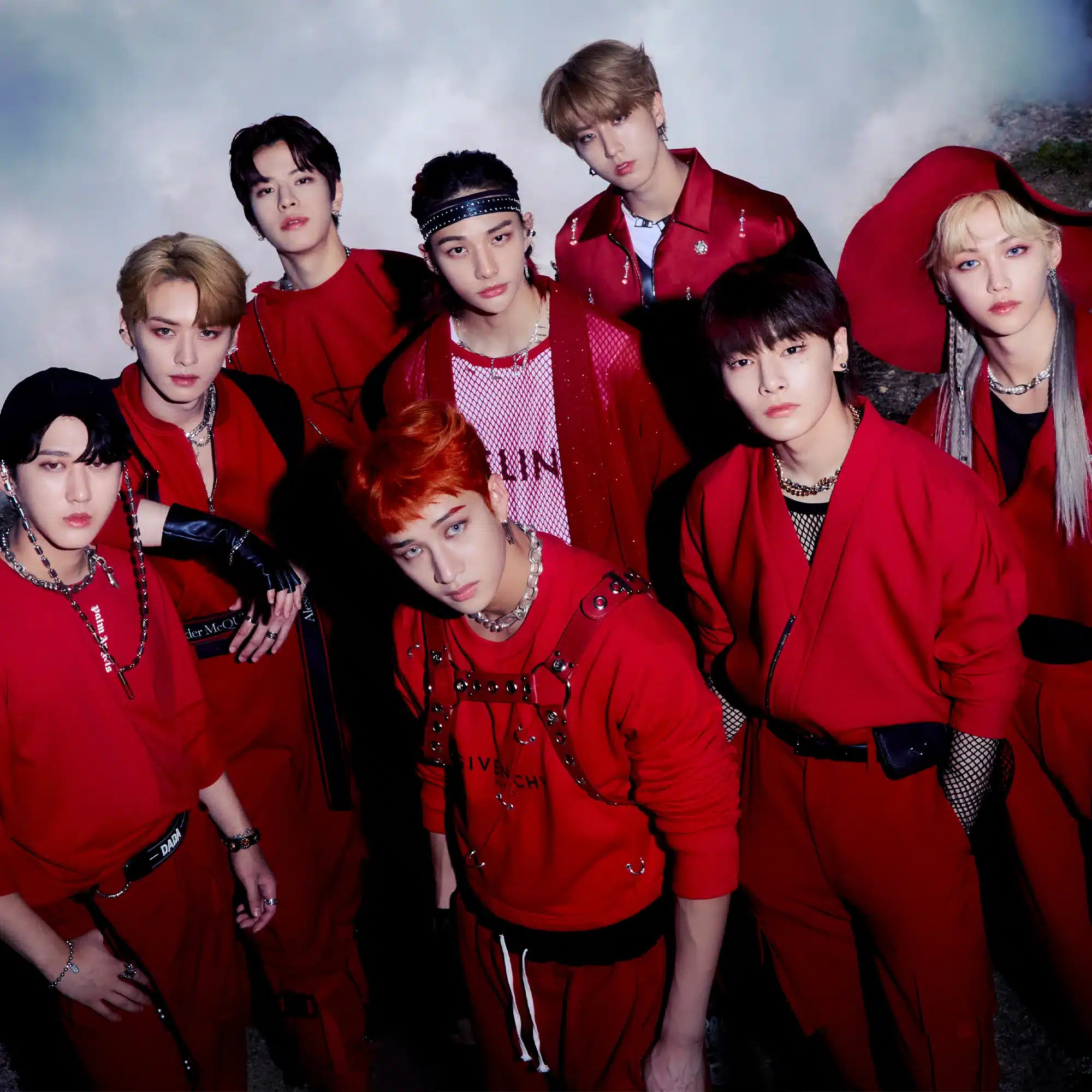
    Stray Kids, the popular K-pop group, has recently unveiled their highly anticipated album titled “5-STAR” on June 2. The album’s lead single, “S-Class,” has garnered immense attention and captivated audiences not only in South Korea but also in several African countries.

    With its undeniable appeal and catchy melodies, the album has achieved remarkable success, topping various charts and gaining recognition in multiple African countries.

    Shortly after its release, “S-Class” quickly became a sensation on YouTube, garnering significant attention from African viewers. The music video trended on the platform, reaching the coveted number-one spot in Tunisia, showcasing Stray Kids’ rising popularity in North Africa.

    It peaked at #3 in Botswana and Libya, #5 in Algeria and Benin, and seven in Egypt. Additionally, it ranked #12 in Morocco, #26 in South Africa, #28 in Ghana, and #29 in Nigeria. These achievements highlight the group’s ability to captivate audiences across diverse African nations.

    Stray Kids’ “5-STAR” album and its title track also gained significant traction on the African iTunes charts. The album soared to number one on the iTunes chart in South Africa and Nigeria, showcasing the group’s fan base in these countries.

    Similarly, the single “S-Class” reached number one in Nigeria, Ghana, Namibia, South Africa, and Uganda, solidifying Stray Kids’ popularity across multiple African territories. Another track from the album, “GET LIT,” achieved an impressive number-one position on the iTunes chart in Uganda, further highlighting the group’s broad appeal.

    Stray Kids’ release of the “5-STAR” album reinvigorated their presence on Spotify’s charts in Africa. The group spent over ten days on the Daily Top Artists chart in Egypt, South Africa, and Morocco. Moreover, on Spotify’s Weekly Top Artists chart, Stray Kids reached #76 in Egypt and #92 in Morocco and South Africa, emphasizing the group’s expanding fan base and increasing streaming numbers.

    Stray Kids’ “5-STAR” album also made strides on Spotify’s Weekly Top Albums chart, with impressive placements in Nigeria and South Africa. The album entered the chart at #118 in Nigeria and ranked 30 in South Africa. These rankings showcase the group’s ability to captivate audiences through their music and reflect the enthusiastic response of African fans to the album’s release.

    In a testament to Stray Kids’ enduring popularity, the group was ranked as the second most streamed K-pop act in sub-Saharan Africa in 2022 on Spotify.

  • International collaboration needed to improve healthcare in Africa

    International collaboration needed to improve healthcare in Africa

    In order to address Africa’s issues with regard to health investments, training, and employment, the Minister of Health, Kwaku Agyeman-Manu, has called for global synergies.

    He said while the World Health Organisation (WHO) and the global community were discussing the protection of health investments and boosting health workforce with more emphasis on Africa, it was very important for stakeholders to appreciate that most African countries were saddled with challenges that required global support.

    He was speaking at the fifth Global Forum on Human Resources for Health in Geneva.

    “Everybody is talking about Africa.

    Our country’s context is not that bleak but in some other African Countries, there is that challenge.

    “Can we build global and regional synergies? Can we push some from one side to the other?

    Can we put investments into areas lacking?

    “ This is a problem that needs a global approach to resolve, I suspect that those holding the funds can do human resource capacity building across Africa, that will be helpful a lot in the global health workforce discussions,” Mr Agyeman-Manu emphasised.
    Global Forum

    The forum was held on the theme; “Protecting, safeguarding, and investing in the health and care workforce”.

    It examined the required policy solutions, investments and multi-sectoral partnerships to address health and care workforce challenges and advance health systems towards universal health coverage and health security.

    The outcomes will inform the United Nations General Assembly’s High-Level Meeting on UHC in September 2023.

    The WHO is recommending that all countries increase the graduation of health personnel to reach 8 to 12 per cent of the active workforce per annum.

    This means that a country with a total of 5000 physicians will need to graduate between 400 and 600 physicians each year to maintain and improve capacity in relation to population needs and health system demands.
    Health work force, country situation

    Mr Agyeman-Manu said around half of the world’s health workers experienced burnt-out during the COVID-19 pandemic, while 55 countries faced serious shortages of health workers – exacerbated by the poaching of skilled staff by wealthier countries.

    “Many countries are struggling to retain health workers, ensure they are equitably distributed, ensure an adequate skills mix, and battling to mitigate their health workers mobility and migration.

    However, citing the country’s situation, Mr Agyeman-Manu said the issue of training and employing health workforce was as bleak as it looked in other African countries because the country was producing a huge number of health workforce who were expecting the government to employ them.

    “The challenge is that the health sector is attracting a lot of the over a million products of the government’s free Senior High School graduates because the country has an automatic recruitment policy in the health sector after health training.

    “The government can no longer soak that anymore so how do we continue to train and keep them.

    This is a challenge and these are things we may have to look at when discussing protecting health investments,” he said.
    Applause

    Mr Agyeman-Manu said although the country’s primary health system had been applauded globally, the country was not there yet.

    “We all agree that more investments are required in the health workforce. We also need to protect health investments.

    “The world is currently seeing inflation and low growth rate and the negative socio-economic impact of COVID-19,” he said.

    He said the issue then was how individual countries and the global community could protect health investments as recommended in the face of all the challenges.

    “If we continue to train without investments into facilities and scaling up equipment and all that, what would be the use of the workforce?” he querried.

    He said during the COVID-19 active period, the country managed to recruit about 50, 000 plus additional health workers who were sitting in their homes doing nothing.

    He said the number had been maintained but there still remained a huge backlog yet to be put on government payroll due to financial challenges.

    The minister reiterated that health professionals in the country needed to upgrade themselves and improve their skills, hence the need to establish specialist colleges and introduce new programmes of specialisation that would be useful for the country.
    Africa Charter

    Mr Agyeman Manu appealed to global delegates to support the Africa Health Workforce Investment Charter, which Ghana spearheaded last year after COVID-19 exposed continental weaknesses.

    The charter aims to align and stimulate investments to half the inequalities in access to health workers, especially in countries with the greatest shortages.

    “The 5.3 million shortage comes amid 30 per centunemployment or underemployment among graduates,” said Mr Manu.

    “We are also adversely impacted by unmanaged migration.

    This is not just an African problem for Africa.

    The world is interdependent, and we must act together.

    “It is time for governments to show leadership in health workforce investments.

    It is time for us to align and synergise efforts with all partners in prioritising health workforce investments.

    It is time to walk the talk,” Mr Agyeman-Manu concluded, appealing for global support for the charter.
    WHO response

    The Director-General of the WHO, Dr Tedros Adhanom Ghebreyesus, in a response to the challenges, announced at the closing plenary that he would establish a multisectoral advisory group of experts that would provide him with the evidence for action in support of national health policy and workforce priorities.

    “This advisory group will comprise government and partners with expertise in education, finance, gender, economy, health and labour, and will report to a WHO global policy group which will include me and the six regional directors,” he said

    He said some of the key outcomes of the forum would be forwarded to the United Nations General Assembly’s High-Level Meetings on Universal Health Coverage and Pandemic Prevention, Preparedness and Response in September 2023.

  • Community-based response boosts Liberia’s COVID-19 detection, others

    Community-based response boosts Liberia’s COVID-19 detection, others

    Rapid diagnostic testing for everyone residing within 100 meters of newly confirmed cases helped break transmission chains and greatly increased the uptake of COVID-19 vaccinations through reactive immunization as Liberia battled escalating COVID-19 cases in 2022.

    The community-based testing strategy to decentralize COVID-19 response allowed health workers to conduct door-to-door community sensitization to tackle COVID-19 misinformation, including myths about vaccination. The approach helped the country reach 81% vaccination coverage of the population by the end of 2022.

    With financial and technical support from World Health Organization (WHO), mobile health teams administered tens of thousands of rapid tests in Nimba, Margibi and Montserrado counties, which are home to nearly half of Liberia’s total population.

    With polymerase chain reaction (PCR) tests mostly no longer mandatory for cross-border travellers, the community-based response initiative enabled surveillance and monitoring of epidemiological trends to augment virus control measures.

    The initiative, which uses rapid tests to counter the challenge of identifying COVID-19 cases outside health facilities, was launched in Liberia in July 2022. By the end of last year, 74 000 rapid tests had been administered.

    “Expanding testing in communities using the antigen tests is helping provide a better way for the country to respond to the pandemic,” says Chea Sanford Wesseh, Assistant Minister for Vital Statistics in Liberia’s Ministry of Health, adding that there are plans to broaden their use beyond the three counties.

    In practice, the mobile teams target everyone living within a 100-metre radius of new confirmed COVID-19 cases, administering rapid tests to identify other potential cases. The technology is simple, making it suitable for use in all settings.

    Anyone who tests positive and requires treatment is linked to their nearest health facility. In cases where patients are either experiencing mild symptoms or asymptomatic, they are managed under home- based isolation and care, receiving infection prevention and control materials, including information on COVID-19 risk factors and prevention measures such as vaccination and handwashing. 

    “With testing in communities, we are reaching both the asymptomatic and symptomatic cases. That way we are undertaking timely isolation of confirmed cases leading to a break in the chain of transmission,” explains Dr Monday Julius, the WHO team lead for health emergencies in Liberia.

    The positive impact on vaccination uptake saw Liberia join Mauritius, Rwanda and Seychelles as the only four African countries to achieve the 70% global vaccination coverage target by December 2022.

    Victoria Dekpah, a student at Nimba University in Liberia, was among those convinced to get vaccinated against COVID-19 when health workers visited her community.

    “I didn’t think it was important to test. Many people were afraid of knowing their status and what would happen to them. But after listening to the health worker, I volunteered to take the test and it turned out positive. I isolated myself at home and the health worker visited me regularly until I tested negative again. I also got vaccinated thereafter,” she says.

    Isaac Cole, County Surveillance Officer in Nimba, blames rampant misinformation surrounding COVID-19 for the reluctance among Liberians to accept testing and vaccination. But working with local leaders who are trusted by their communities, he says, is changing attitudes.

    “The people now know that once they are tested and found to be positive, they will be taken care of either at the health facility or through the home-based care approach. When we go to communities, health workers also lead by example by being vaccinated first, as one of the ways of dispelling myths about vaccination and its effect on the body,” he adds.

    WHO is supporting 18 other African countries to implement community-based COVID-19 response, with more than 400 000 rapid tests carried out to date. Across these countries, rapid testing currently accounts for at least 60% of all COVID-19 testing.

  • World Cup 2022: Africa’s sole rep Morocco stun Portugal to reach semifinal for the first time in history

    Morocco became the first African nation to reach a World Cup semi-final and ended the hopes of Cristiano Ronaldo’s Portugal.

    Striker Youssef En-Nesyri scored the winning goal in the first half, leaping highest to beat goalkeeper Diogo Costa to the ball and heading in to spark pandemonium at Al Thumama Stadium.

    The north African side’s supporters populated most of the venue and joyously celebrated their breakthrough moment on the global stage.

    Ronaldo came off the bench in the 50th minute to equal the men’s all-time appearance record of 196 in international matches, but he could not drag his side back into the contest

    .

    Morocco, who will play England or France in the last four, were happy to play on the counter and grabbed the opener just before the break when En-Nesyri headed in from Yahya Attiyat-Allah’s cross.

    Portugal skipper Bruno Fernandes came agonisingly close to levelling just minutes later but a brilliant individual effort struck the crossbar.

    Decimated by injuries, Morocco sat back for the majority of the second half and Yassine Bounou brilliantly tipped over Joao Felix’s drive – the closest they came to an equaliser.

    Morocco striker Walid Cheddira was sent off for a second yellow card in eight minutes of additional time but Portugal could not find the equaliser as their last-four hopes were dashed

  • World Cup 2022: African national teams set new 24-year-old record

    For the first time in 24 years, African nations scored more points during a World Cup competition.

    Africa has five countries participating in the Qatar 2022 FIFA World Cup.

    Ghana, Cameroon, Morocco, Tunisia, and Senegal are among the nations.

    Unlike the 2018 FIFA World Cup when no African country advanced to the Round 16 stage, two countries in this year’s tournament progressed from the group stage.


    While Ghana, Cameroon, and Tunisia would go home, Morocco and Senegal advanced to the last 16 stage.

    The success means Africa now has done better at this year’s mundial than the 2018 tournament.

    Meanwhile, the 24 points accrued by African countries at this year’s tournament is the best to be ever picked by African reps since 1998.

    At that tournament, the African representatives only picked 15 points.

    Unfortunately, it appears Africa may not have a rep in the quarter-final stage.

    Senegal are already out after losing to England. Today, Morocco will face off with Spain in hopes of winning to advance to the last 8 stage.

  • Disrupting inequalities: Inclusive development matters

    1960 was declared the ‘Year of Africa’ as many African countries around the continent broke free from European colonial rule and gained independence,with the joy and excitement of celebrations signalling hope and possibilities as Africa has ‘arrived’ on the world stage.

    It turns out it was more than liberation in Africa, a single moment in the global process of decolonization because it also marked the end of civil wars, dictatorship, corruption, and so on.

    But many countries in Africa where to go on to experience stagnation, failed attempts at nationalisation of foreign assets, military dictatorships and Structural Adjustment Programmes (SAP) that international financial institutions were to later apologise for worsening many national economic woes. These events were not allowed to dampen continent-wide spirits as a new era of democratic governance ushered in impressive records of GDP growth.

    The much-achieved political stability coupled with macro-economic gains in the region unseated the deep sense of ‘Afro-pessimism’ dominantly around the 1980s–2000s and replaced it with a more optimistic and at times even ‘Afro-euphoric’ outlook.

    Remarkably by 2010, the continent made waves in international media outlets, publishing narratives with catchy headlines such as Life Africa, Rising Africa, and Imaging Africa among others.

    This again raised hopes and expectations to lift the region’s ‘bottom millions’ out of poverty by 2030, though dogged by the question – how realistic that goal is.

    Over a decade now and we are seeing contrasting headlines about this same continent once positioned on a global economic scale as a result of a resurgence of economic increase predominantly within the Sub-Saharan countries.

    This raises a fundamental question of when will Africa get out of the doldrums. How have countries once known as front-runners of higher GDP growth fared in development trajectories? Do the current development parameters offer much hope for poverty eradication by 2030 as anticipated?

    Countries like Nigeria, Ghana, and Morocco among others with higher GDPs around that time had nominal growth of 11.3% in 2010, 14.05% in 2011 and 3.82% in 2010 respectively.

    Ghana’s Structural Adjustment Program (SAP) had its agricultural sector perform reasonably with growth by 4.5 percent per annum over 1994–2013 as the cocoa sector also grew by 5.6 percent per annum over this period, coupled with one of the highest GDP growth now suddenly possesses the worst-performing currency in Africa.

    What could have gone wrong? Why has optimism faded once again?

    Protests against economic stagnation already began in mid-2021 in Accra. While some are saying the reason for this is not far-fetched, given the current Covid-19 pandemic coupled with the Russian-Ukrainian war happenings, others are questioning why the gains of 2010 -2012 have not been deepened to withstand such external events.

    Does it mean that the macro gains of 2010 were not translated into individual gains of the citizens? Does it mean that individual citizens are being excluded from the macro expansion of the economy despite the regular mantra of inclusive development, social inclusion and the like?

    Recounting the 1960 euphoria of independence that gave way to the 2010 economic pessimism within the continent and contrasting current realities. Problems of exclusion, economic underdevelopment, political instability, and ethnic tensions continued to pose difficulties for the continent.

    Of course, the continent has made tremendous improvement over time. Politically Africa is more integrated than ever through institutions such as the ‘African Union’ and since the launching of the African Continental Free Trade Agreement (AfCFTA), emerging as a single, integrated market. However, is the continent confidently charting its course, has attained greater agency in world affairs and is poised to take up its rightful place in international
    affairs?

    It is high time we start questioning the definition of growth and the ways in which macroeconomic developments are translated in a way that leaves no one behind.

    My answer still anchors hope on the kind of development that is inclusive. The kind of growth that raises the living standards for broad swathes of a population.

    The kind of growth that will emphasise efficiency at the cost of inclusiveness and warns that inequitable growth may have
    adverse political outcomes.

    Such will help reduce social inequality and provide opportunities for enhancing human well-being while reducing the resource base and exacerbating the
    climate vulnerability of these people.

    The question is what ways can public governance succeed at inclusivity?

    Source: Rebecca B. Cudjoe


  • 15 African countries set for launch of Single African Air Transport Market

    After minimal progress since its launch in January 2018, the Single African Air Transport Market (SAATM) appeared to reach a decision this week with 15 of the 35 signatory states launching a cluster to pilot the scheme in real life.

    The announcement is a major boost to the proposed joint airline by Kenya Airways and South African Airways, which will have immediate and unlimited access to key markets on the continent as both countries will be participating in the trial runs.

    It is also a signature achievement for the International Air Transport Association (IATA), which has been working behind the scenes to get SAATM off the ground in 2023.

    Dubbed the SAATM Pilot Implementation Project, the landmark decision – which bands together some of Africa’s more significant air transport markets – was announced on November 14 by the African Civil Aviation Commission (AFCAC).

    Meeting in Dakar, Senegal, to mark the 23rd anniversary of the Yamoussoukro Decision, ministers from Kenya, Ethiopia, Rwanda, South Africa, Cape Verde, Côte d’Ivoire, Cameroon, Ghana, Morocco, Mozambique, Namibia, Nigeria, Senegal, Togo and Zambia, agreed to launch SAATM flights between their territories.

    The fifteen countries are as follows:

    Kenya

    Ethiopia

    Rwanda

    South Africa

    Cape Verde

    Côte d’Ivoire

    Cameroon

    Ghana

    Morocco

    Mozambique

    Namibia

    Nigeria

    Senegal

    Togo and

    Zambia


    Source: theeastafrican.co.ke

  • UAE slams visa ban on all citizens of Cameroon, Nigeria, 17 other African countries

    The United Arab Emirates has reportedly banned nationals of some 20 African countries from entering its capital city, Dubai.

    “This is to inform you that we will not be posting 30 days visa applications for these nationalities effective today October 18, 2022,” the notice read in part.

    countries affected by the visa ban include Uganda, Ghana, Sierra Leone, Sudan, Cameroon, Nigeria, Liberia, Burundi, Republic of Guinea, Gambia, Togo, Democratic Republic of Congo, Senegal, Benin, Ivory Coast, Congo, Rwanda, Burkina Faso, Guinea Bissau, Comoros, and the Dominican Republic.

    In a notice issued to trade partners including travel agents, authorities indicated that all applications should be rejected.


    “Any applications from the above-mentioned countries will be sent back or canceled.” According to reports.

    this is not the first time some African countries have been banned from entering Dubai.

    In December 2021, Emirates Airlines announced that eight African countries will not be accepted to travel through Dubai until further notice due to the spread of Covid 19.

    It is however not clear the reason behind the latest ban.

    Source: Cameroon.com.org

  • 13 African countries report 6,883 monkeypox cases in 2022: Africa CDC

    Some 13 African countries have reported 6,883 monkeypox cases since the start of 2022, the Africa Centers for Disease Control and Prevention (Africa CDC) has said.

    According to data released by the Africa CDC, 173 deaths and a case-fatality ratio of 2.5 per cent have also been registered during the same period. The continental health agency noted that out of the 6,883 cases, 5,992 are suspected cases while 891 are confirmed cases.

    The monkeypox cases were reported from eight endemic and five non-endemic countries. The eight endemic countries are Benin, Cameroon, Central African Republic, Congo, Democratic Republic of Congo, Ghana, Liberia and Nigeria; the five non-endemic countries are Egypt, Morocco, Mozambique, South Africa and Sudan, according to the Africa CDC.

    Following the announcement by the World Health Organization that declared monkeypox a global public health emergency of international concern in July this year, the Africa CDC has been calling on African countries to strengthen laboratory diagnostic capacities and genomic sequencing capacity for monkeypox.

    The continental health body also called on African states to develop and distribute both general and tailored risk communication messages for communities and vulnerable population groups.

    Monkeypox, first detected in laboratory monkeys in 1958, is assumed to transmit from wild animals such as rodents to people, or from human to human. It is a rare viral disease usually transmitted through body fluids, respiratory droplets and other contaminated materials. The infection usually results in fever, rash and swollen lymph nodes.


    Source: GNA

  • 18 African countries that abstained from UN condemnation of Russia over Ukraine

    Eighteen African countries abstained from voting for or against a United Nations resolution that condemned Russia over its illegal annexation of four Ukrainian territories.

    Four others did not cast a vote at all meaning as many as 32 African countries voted in favour of the resolution that garnered 143 YES votes, 5 NO votes and 35 ABSTENTIONS.


    The abstaining nations were:

    Burundi

    Central African Republic

    Congo Republic

    Eritrea

    Eswatini

    Ethiopia

    Guinea

    Lesotho

    Mali

    Mozambique

    South Africa

    South Sudan

    Sudan

    Togo

    Uganda

    Tanzania and

    Zimbabwe

    A UN statement on the vote read: “The results were 143 Member States in favour, with five voting against, and 35 abstentions. The countries who voted against were Belarus, the Democratic People’s Republic of Korea, Nicaragua, Russia and Syria.

    “A majority of those countries abstaining were African nations, alongside China and India.

    “The resolution “defending the principles” of the UN Charter, notes that the regions of Donetsk, Kherson, Luhansk and Zaporizhzhia are temporarily occupied by Russia as a result of aggression, violating Ukraine’s territorial integrity, sovereignty and political independence,” it added.

    The quartet that did not vote at all were, Burkina Faso, Cameroon, Equatorial Guinea and Sao Tome e Principe.

    Source: Ghanaweb

  • Every bullet, bomb that hits a target in Ukraine hits our pockets – Akufo-Addo tells UN

    The effects of the Russia-Ukraine conflict on the world economy, particularly for African nations, have been emphasized once more by President Nana Addo Dankwa Akufo-Addo.
    According to the President, the conflict, which broke out in February 2022, made an already bad position even worse for African economies, which were just beginning to recover from the COVID-19 pandemic’s consequences.

    Akufo-Addo said the war had direct impact on Africa especially in the area of food supply triggering importantly, inflation.

    “Two years ago, our world came to a thundering halt, as we cowered from a health pandemic from an unknown, malicious virus, coupled with a devastating global economic pandemic. High budget deficits were no longer concerns of only developing nations.

    “By 2021, COVID-19 had pushed Africa into the worst recession for half a century. A slump in productivity and revenues, increased pressures on spending and spiralling public debts confronted us without relent,” he submitted.

    On the specific case of the Russian invasion, even though Moscow insists it was a military operation, Akufo-Addo stated: “As we grappled with these economic challenges, Russia’s invasion of Ukraine burst upon us, aggravating an already difficult situation.

    “It is not just the dismay that we feel at seeing such deliberate devastation of cities and towns in Europe in the year 2022, we are feeling this war directly in our lives in Africa.

    “Every bullet, every bomb, every shell that hits a target in Ukraine, hits our pockets and our economies in Africa. The economic turmoil is global with inflation as the number one enemy this year,” he added.


    Government has routinely explained that recent economic headwinds are attributable largely to the ravages of the COVID-19 pandemic, the ongoing Russia-Ukraine war and the banking sector clean-up.

    The rippling effect has been an increase in the cost of living, record high inflation rates and downgrades of the economy by rating agencies such as S&P and Fitch – a situation which has dealt a heavy blow to government’s ability to access the international capital market.

    The Cedi has also been on a free fall compelling the Bank of Ghana to resort to hiking its monetary policy rate to deal with the situation.

    The worsening economic situation compelled the government in July to initiate contact with International Monetary Fund for an economic support programme.

    Ghana is targeting an amount of US$3 billion over three years from the Fund once an agreement on a programme is reached.

    Government hopes to complete negotiations by end of the year in order to receive the funds in the first quarter of next year.


  • Progress in Africa’s fight against tax evasion

    African countries have made “significant” progress in reaffirming their commitments and building their capacity to achieve tax transparency.

    This is the main conclusion of the recent report on “Tax Transparency in Africa” of the Africa Initiative, which shows that the five African countries committed to fighting these phenomena have recorded almost $12 million in additional revenue, and eight countries on the continent have collected $189 million in additional revenue between 2014 and 2019”.

    Somali economy weakened by COVID-19 Hundreds of companies dangerously impacted by Covid-19 are on the verge of bankruptcy.

    The Somali economy is being hit hard by the coronavirus pandemic that is affecting the entire world. From SMEs to large companies, everything is affected, and even the fast-growing aviation sector is all in the red.

    However, the country can rely on the cancellation of part of its debt and the approval of several IMF economic programmes to boost its economy.

    Source: africanews.com

  • Trump latest travel ban may include four African countries

    US President Donald Trump is planning to add four African countries to the travel ban list, according to media reports.

    The four countries are thought to be Nigeria, Tanzania, Sudan and Eritrea, according to multiple US media outlets who reported they had spoken to people who had seen the list.

    Read:U.S. watchdog says Trump administration violated law by withholding Ukraine aid

    President Trump, in an interview with Wall Street Journal on the sidelines of the World Economic Forum in Davos, Switzerland, confirmed that he was considering adding some countries to the travel ban list but declined to name them.

    The list is not final and could be changed, the Politico website said.

    The ban will not be a blanket one for all the listed countries but will be on specific types of visas, such as business or visitor visas.

    The list is still being debated but the final announcement could be made next week, media reports said.

    Read:Trump impeachment articles delivered to Senate

    In September 2017, President Trump issued a travel ban prohibiting most people from Iran, Libya, Somalia, Syria and Yemen from entering the US.

    The ban was challenged in court but a Supreme Court ruling in June 2018 upheld it.

    Source: bbc.com