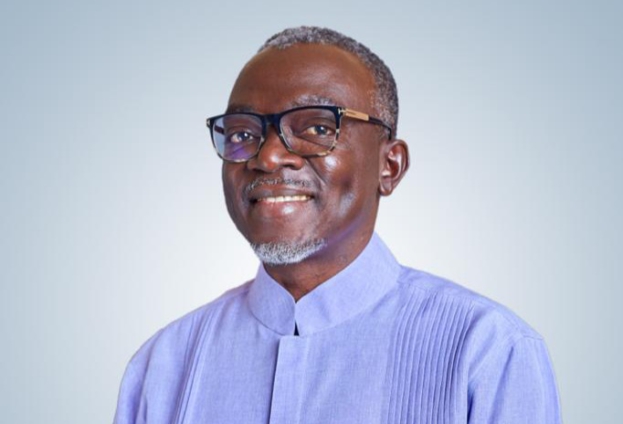
The head of the African Export-Import Bank (Afreximbank), Prof. Benedict Oramah, has encouraged African heads of state to secure more favorable terms in discussions with the International Monetary Fund (IMF).
He emphasized that African nations must leverage their membership in the IMF to seek improved treatment when requesting assistance from the fund.
At the unveiling of the Alliance of African Multilateral Financial Institutions in Accra, Prof. Oramah highlighted the importance of African countries uniting to tackle issues impacting the financial sectors of their respective economies.
“It’s either you go there or quit. Because we are members of the IMF. The only problem is that when they go, they must make sure that they treat us the way they treat the European or Asian countries. I think that’s what we have to demand”, he said.
“African countries must demand a change in the quota. We cannot have a continent with a 17 percent population of the world and have a five percent quota of an institution that have to bring stability in the micro-economies of these countries. They must know that African countries are members and not an outsiders. We shouldn’t expect anybody to dictate for us”, he stressed.
Offering some suggestions, Professor Oramah emphasized the necessity of a united effort among African countries to create their own credit rating agency.
He pointed out that setting up a rating agency within Africa is a long-awaited initiative.
Elaborating further, he mentioned that an African Credit Rating Agency is crucial for intra-continental integration, allowing African nations to access capital and connect with global financial markets.
“It is institutions like ours that can force the IMF to recognize an African rating agency. When we go to China and Japan, they tell us to go to their own agencies to be rated but for us when we always want to issue papers we have to be rated by Fitch and whatever. We are just doing ourselves ill so charity begins at home so we need to do it” he said.
The Alliance of African Multilateral Institutions seeks to work together and share information on innovative joint strategies and frameworks to meet Africa’s development challenges.
Additionally, it aims to advance and uphold collective stances on shared concerns in international forums, including advocating for Africa’s interests in global financial matters.
An expert in industrialization and supply chain management, Professor Douglas Boateng, has emphasized the necessity for African nations to develop the complete value chain of products and services within the continent to ensure the success of the African Continental Free Trade Area (AfCFTA) initiative.
He described this process as “strategic sourcing,” advocating for a shift away from importing “cheap products” from overseas to instead enhancing the value of local produce. This, he explained, would foster a competitive edge and diminish reliance on foreign goods.
Prof. Boateng delivered these remarks during an inaugural lecture series organized in collaboration with the Ghana Institution of Engineering (GhIE), under the theme: “Engineering, Industrialisation, AfCFTA, and Strategic Sourcing: The Inextricable Links.”
In order to enhance the value chain comprehensively, from production to consumption, he highlighted the necessity for Africans to refrain from exporting the continent’s natural resources in their raw form.
He remarked that the failure to add value to local resources has resulted in an excessive influx of foreign goods, leading to significant capital outflows from the continent.
In line with the vision of AfCFTA to establish a unified market, Prof. Boateng reiterated the need to eliminate “artificial borders” between nations to facilitate the smooth movement of people, goods, and services across the continent.
He urged Africans to “plan and think long-term,” adding that AfCFTA must be “more of a continental issue than a national issue.”
To achieve this objective, he stressed the crucial role engineers must play in constructing Africa’s supply and value chain infrastructure to position the continent as a prominent player in global trade.
Prof. Boateng underscored the importance of providing support to engineers to enable them to contribute effectively to value addition and problem-solving, thus expediting industrialization.
He encouraged Africans to adopt a long-term planning approach, asserting that AfCFTA should embody a strategic and forward-thinking perspective.
In response to a deepening shortage of hard currency on the continent, African governments are resorting to measures such as bartering, currency devaluations, central bank exchange controls, and seeking assistance from the International Monetary Fund and the Middle East to strengthen their balance sheets.
Investors are now differentiating between nations successfully enhancing dollar liquidity and those struggling to ensure access to the currency necessary for investment and repatriation of returns. Consequently, countries lacking adequate reserves to cover import costs or debt repayments are facing investor apprehension. This is reflected in the dismal performance of African currencies, with approximately a dozen experiencing declines of at least 15% against the dollar, making them the worst performers globally this year.
“Dollar holdings are part of the value proposition,” said Benedict Craven, country risk manager at the Economist Intelligence Unit. “Will investors be able to trade using foreign exchange from official sources? Will they be able to expatriate their dividends abroad? These questions are separating where investment is going.”
The impact of the dollar squeeze is most evident in local currencies, with Eurobond issuers like Egypt, Nigeria, and Angola being compelled to devalue this year. Dwindling capital inflows have led to record lows against the greenback for currencies such as Kenya’s shilling and Zambia’s kwacha. Kenya, facing significant dollar-debt repayments next year, has seen its dollar bonds incur a 2.1% loss since July, outpacing the 1.7% average loss for emerging and frontier peers in a Bloomberg sovereign dollar bond index. Nairobi’s stock index has recorded the steepest decline among 92 global markets tracked by Bloomberg in 2023, slumping by 32%, while the shilling has fallen by 19%.
In Zambia, Mozambique, and Nigeria, the inability to access foreign financing has compelled governments to increase domestic issuance in shallow markets, resulting in higher borrowing costs. Since April 2022, African sovereigns have been shut out of international debt capital markets. Nigeria’s longest-dated naira bond is now trading at a record 18% yield, but foreign buyers remain cautious due to concerns about depreciating local currencies and challenges in repatriating returns. In Zambia, foreign holdings of domestic debt have dropped from 29% at the end of 2021 to approximately 22%, attributed in part to the restructuring process and liquidity issues.
IMF rescue
In certain instances, the IMF is providing assistance. In order to strengthen its reserves in advance of a $2 billion eurobond maturity in June, it announced last week that it will increase financing to Kenya by $938 million. Because of this, yields on the 2024 notes fell by nearly 200 basis points in just four days, ending on Friday, even though they are still much higher than 14%.
“The general perception is when a country trades above 10% in USD yields they are not able to issue in the USD market,” said Lars Krabbe, a portfolio manager at Coeli Frontier Markets AB. “This is of course not good for the general investment environment and debt sustainability in these countries and makes them highly dependent on concessional funding” such as IMF loans, he said.
On the other hand, countries with less pressing foreign-exchange needs are becoming more appealing.
“Countries with less punishing dollar-denominated loan amounts and bond repayments, and large stocks of foreign reserves, are most attractive,” said David Omojomolo, Africa economist at Capital Economics. “And more so those that have made large FX adjustments already.”
One such country is Egypt. Citigroup Inc. strategists are the latest to express optimism about the North African nation’s dollar debt, driven by the acceleration of state asset sales and the government’s progress in meeting IMF-set targets. According to al-Borsa, the central bank is nearing the finalization of securing up to $5 billion in new deposits from Saudi Arabia and the United Arab Emirates.
Egypt’s eurobonds have delivered a robust return of 8.7% in the second half of this year in dollar terms, contrasting with losses experienced by the average developing-nation peers in a Bloomberg sovereign credit index.
For Kaan Nazli, a portfolio manager at Neuberger Berman Asset Management, investors are likely to favor sovereign issuers that have better access to alternative financing sources, citing Ivory Coast and Senegal as examples.
“Ivory Coast, for example, was able to rely on blended finance deals at reasonable cost over the last year,” he said.
The West African nation has additionally secured an IMF loan, and its currency, the CFA franc, is pegged to the euro, providing a buffer against fluctuations. In the same region, Senegal is drawing investments into public-private partnerships in climate finance.
Comparatively, losses in the eurobonds of both Senegal and Ivory Coast have been less pronounced than those of Kenya and narrower than the average since July. Their performance this month has surpassed that of their peers.
Simultaneously, the scarcity of dollars is adversely affecting consumers and local businesses, leading to a surge in import costs and fueling inflation.
In Nigeria, prices of prescription drugs for conditions like hypertension and diabetes have tripled in the past year. One of Zimbabwe’s major retailers, OK Zimbabwe, reported that sales volumes are now below the break-even point due to escalating costs and an exchange rate that has driven customers to the informal sector. In Malawi, the price of corn, a dietary staple, has more than doubled over the past year.
“The problem is there’s only so much you can do if you don’t have a vast trove of dollar reserves,”said Sonu Varghese, global macro strategist at Carson Group. “For investors, the risk that these countries remain on the verge of crisis hasn’t gone away.”
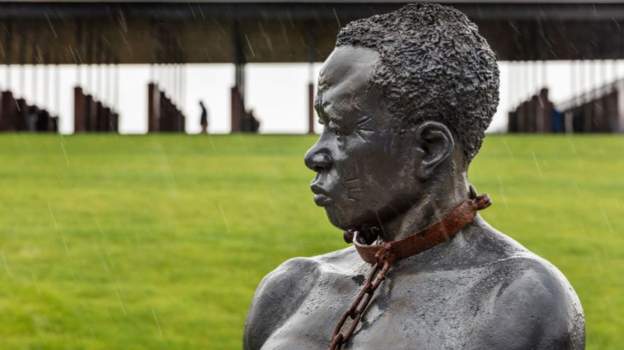
He spoke at the UN General Assembly and said that now is the right time to focus on reparations.
He said that for many centuries, the world has not wanted or been able to deal with the effects of slave trade.
”It’s time to openly recognize that a lot of Europe and the United States have been built using the immense wealth gained from the hard work, suffering, and terrible experiences of the transatlantic slave trade.
He stated that reparations should be given. He mentioned that even though no amount of money could fully make up for the terrible experiences of the slave trade, it would highlight the fact that millions of hardworking Africans were forced to work without being paid.
The Ghanaian president has talked about reparations before. Last year, he said it was time to have more serious discussions about the topic.
He asked European countries to say sorry officially for their involvement in the slave trade. He also encouraged the African Union to involve the dispersed African population in supporting the reparations movement.
The transatlantic slave trade was a very big and cruel event in history where millions of Africans were forcefully taken away from their homes and treated very badly. The United Nations (UN) says it was the biggest forced movement of people ever and one of the most terrible.
Many Africans left their homes and went to different parts of the world for 400 years.
Many people who were forced into slavery in West Africa started their journey from Ghana.
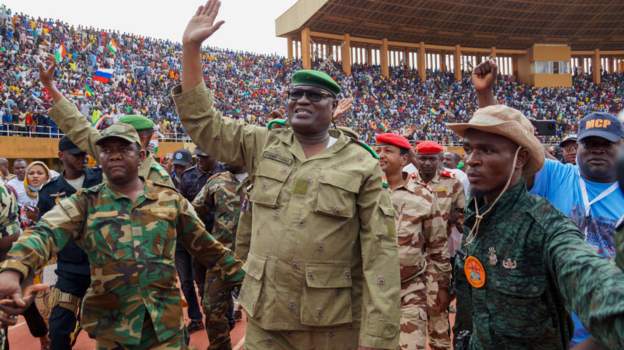
The foreign ministry of Italy has urged Ecowas, the regional organisation for West Africa, to extend the deadline set for the coup’s organisers in Niger to restore ousted leader Mohamed Bazoum.
“Diplomacy is the only available option. Antonio Tajani, the foreign minister of Italy, said on Monday, “I hope that the Ecowas ultimatum, which expired last night, will be extended today.
After ignoring the deadline, the junta in Niger closed the nation’s airspace late on Sunday. International flights were either forced to make a diversion or return to their home country as a result.
The army asserted that it thinks two African nations have started making plans to invade Niger but provided no proof.
Since the deadline passed, Ecowas has not released any remarks.
Societe Generale has recently announced its agreements with two African banking groups to sell four of its subsidiaries located in Congo, Equatorial Guinea, Mauritania, and Chad.
The sale will involve two subsidiaries being acquired by the Vista group in Congo and Equatorial Guinea, while the Coris group will take over the remaining subsidiaries in Mauritania and Chad.
According to a press release by the bank, these two African banking groups will assume all the operations, client portfolios, and employees of Societe Generale in the respective countries.
The move aligns with Societe Generale’s strategy to focus its resources on markets where it can establish itself as one of the leading banks, synergizing with its other business activities.
The bank also announced the initiation of a strategic review of its subsidiary in Tunisia.
The transactions are expected to be completed by the end of the year and involve the complete sale of Societe Generale’s shares in its African subsidiaries: Societe Generale Congo, Societe Generale de Banques en Guinée Equatoriale, Societe Generale Mauritania, and Societe Generale Chad. Currently, Societe Generale holds ownership stakes of 93.5%, 57.2%, 95.5%, and 67.8% in these subsidiaries, respectively.
Furthermore, Societe Generale holds a 52.34% capital share in Union Internationale de Banques (UIB), a subsidiary based in Tunisia.
The bank has announced a strategic evaluation of its participation in this entity as well.
In order to protect the ocean’s ability to regenerate,President Akufo-Addohas called on African countries to enhance their domestically defined contributions and adaptation strategies.
This would ensure that the ocean continues to deliver substantial economic, environmental, and social value for the continents’ development.
The President made the call when he opened the National Blue Economy Summit (NBES) in Accra on Wednesday.
The summit is on the theme “Our Ocean’s Health, Our Prosperity, Our Planet’s Security.” It brought together blue economy experts to brainstorm and drive policy on the marine ecosystem.
The objective of the two-day summit is to reverse marine pollution and enhance the management and restoration of the marine and coastal ecosystem of the nation.
It also aims to mobilise transformative ocean action to achieve the United Nations(UN) Sustainable Development Goals (SDGs).
Blue economy refers to the sustainable use of coastal and marine resources for economic growth and improved livelihoods and jobs.
President Akufo-Addo explained that the health of the planet and the health of the peoples of the world are linked to the health of oceans, which are now under pressure from unsustainable fishing practices, pollution, marine debris, habitat loss, ocean acidification and climate change.
He told the gathering that the ocean, the lifeblood of the planet, generated half of the world’s oxygen supply, drove the global economy through transport trade, and provided food and sustenance, mineral resources, energy, employment, and livelihoods, as well as cultural recreation value for billions of people around the world.
“The consequences of neglecting the ocean are dire not just for the millions of people who depend on it for their livelihoods, but also for the health of our planet.
“There is therefore the need to preserve and protect the ocean and all its resources…We need to take decisive actions now to safeguard the ocean’s capacity to regenerate and continue to deliver substantial economic, environmental and social value for our development.”
President Akufo-Addo noted that in Ghana’s instance, its coastal exclusive economic zone stretches 218,00 square kilometres, and is home to over 7.5 million people.
Sadly, Ghana’s coastal and marine resources face significant threats in the form of biodiversity loss, pollution, ocean dumping, overfishing, illegal and unreported and unregulated fishing, piracy, and trafficking.
Those threats, the President said, “are avoidable” and the inability to deal with them held consequences for the livelihoods of many people, affecting food security prospects, critical infrastructure, important ecosystems and the security and stability of the entire African region.
“Like many other coastal African countries, the blue economy provides us with food, employment, and income. For instance, some 10 per cent of Ghana’s workforce is employed in the fishing sector which also accounts for 4.5 per cent of the country’s GDP.
“Additionally, 70 per cent of Ghana’s trade is carried by sea through the ports of Tema and Takoradi. We are well positioned to benefit from the ocean resources if sustainably managed,” he said.
The President thus proposed a five-point agenda for urgent action at the country and continental levels to protect the ocean, the planet, and the wellbeing of all.
He said the continent must prioritise sustainable management of its oceans by establishing and enforcing robust regulations to prevent overfishing and promote responsible fishing practices.
“We must collaborate closely with our international partners as well to establish marine protected areas, safeguarding critical habitats and promoting biodiversity conservation.”
Secondly, the President suggested that Africa deepens strategic partnerships and build a progressive coalition led by the private sector, academia, civil society organisations and community leaders, for enhanced ocean health and the accelerated development of communities.
He said the Continent must be deliberate in ensuring greater and smarter investments into ocean action.
President Akufo-Addo also urged investment in research and technological advancements and innovation to navigate the challenges to the blue economy to pave the way for a brighter future.
He also called for international cooperation, the sharing of data and research findings and collaboration on joint projects.
“We must recognize the interconnectivity of our global community and the need for international collaboration. The challenges facing the ocean transcend borders and no single nation can tackle them alone…We can leverage the collective wisdom and expertise of nations worldwide.
“Together, we can drive innovation, develop sustainable solutions, and address the pressing issues that threaten the ocean. The ocean is the life source of our planet, a healthy ocean, human wellbeing, and sustainable ocean management are inseparably interconnected,” he stressed.
He urged participants at the summit to, as a matter of urgency, propose policies that would help Ghana and the rest of the African continent protect its oceans and marine life.
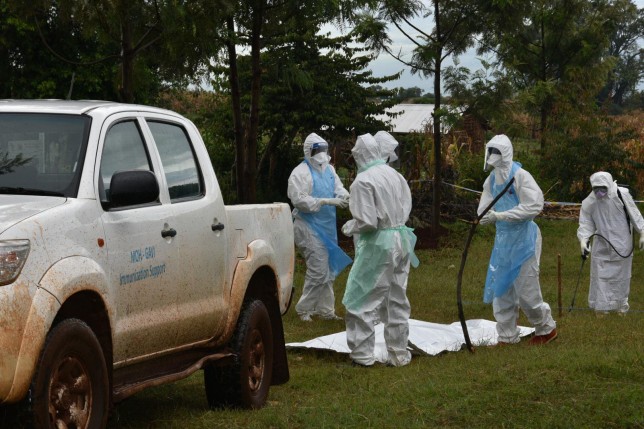
Further deaths and instances of the deadly Marburg disease are being reported in two African nations.
The World Health Organization (WHO) revealed on Thursday that eight brand-new confirmed illnesses had been discovered in Equatorial Guinea.
Since the outbreak began last month, there have been a total of 20 documented deaths, nine laboratory-confirmed cases, and 20 suspected cases.
The virus, which is a viral hemorrhagic fever like Ebola, can cause fever, vomiting that is tinged with blood, diarrhea, and exhaustion in its victims.
There are no vaccines or antiviral treatments and it can have a fatality rate of up to 88%, according to the WHO. The average case fatality rate is around 50%.
Experts have warned efforts to stop the spread must be intensified as the new cases in Equatorial Guinea are around 93 miles apart.
Of the eight infections, two were in the province of Kié-Ntem, four from the Litoral and two from Centre- Sur provinces.
Efforts have been launched to stop the virus from spreading further.
‘The confirmation of these new cases is a critical signal to scale up response efforts to quickly stop the chain of transmission’, WHO Africa Director Matshidiso Moeti said in a statement.
Yesterday, Tanzania announced its first ever outbreak of the disease with five deaths reported in Kagera.
Emergency teams have been sent to the area in the country’s north-west region as three further cases were reported at a hospital.
Last month, Cameroon health officials said two teenagers were suffering from suspected cases.
But the nation’s health ministry dismissed the reports, with movement currently restricted along the border to avoid contagion.
The Egyptian rousette fruit bat often carries the virus, but African green monkeys and pigs can also harbour it.
Marburg virus disease was initially detected in 1967 after simultaneous outbreaks in Marburg and Frankfurt in Germany and in Belgrade, Serbia.
The Egyptian rousette fruit bat often carries the virus, but African green monkeys and pigs can also harbour it.
It spreads through human-to-human transmission via direct contact with the blood, secretions, organs or other bodily fluids of infected people, and with surfaces and materials contaminated with these fluids, the WHO says/
Both Marburg and Ebola – which sparked an epidemic centered in Western Africa from 2013 to 2016 – are members of the Filoviridae family (filovirus).
They are caused by different viruses, but the two diseases are clinically similar.