Tag: African Union

  • President Mahama rallies support for AU’s 2025 reparation agenda

    President Mahama rallies support for AU’s 2025 reparation agenda

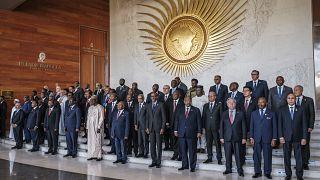
    President John Dramani Mahama has thrown his full weight behind the African Union’s agenda this year to seek justice for Africans and people of African descent who have been directly and indirectly affected by colonialism and slavery.

    Delivering his African Day 2025 message based on the Union’s theme this year, “Justice for Africans and People of African Descent through Reparations,” the president emphasized the need for a united front in addressing the lingering effects of slavery, colonialism, and neo-colonialism, which he described as historical injustices that have cast a shadow on the lives and progress of Africans and Africans in the diaspora.

    “As the AU Champion for this critical cause, I am deeply committed to working with you all to achieve this vital objective. Reparations are not merely about financial compensation. They are about acknowledging the profound and enduring damage inflicted upon our people,” he said.

    The president further outlined an approach to justice that involves official apologies from complicit nations and institutions, cancellation of unjust debt burdens, and return of stolen cultural artifacts, encouraging increased investment in African education and development as part of the reparation process.

    “We seek justice—justice that encompasses a comprehensive range of measures. Addressing the crippling debt burden that continues to stifle economic growth in many African nations—a direct consequence of exploitation and unfair trade practices—is essential,” he said.

    President Mahama urged fellow African leaders, civil society organizations, youth groups, and members of the diaspora to join hands in pushing for reparations, stressing the importance of advocacy, dialogue, and solidarity.

    “Let us work together to build a future where justice prevails, where the wounds of the past are healed, and where the potential of every African and person of African descent is fully realized,” he said.

    He called on African leaders, civil society, and the diaspora to forge a united front. “Let Africa Day 2025 be a turning point. Let the pursuit of reparations be a testament to our resilience and belief in a brighter future,” he remarked.

    In an address on behalf of the African Union Commission (AUC), Chairperson H.E. Mahmoud Ali Youssouf highlighted Africa’s resolve to secure justice for past wrongs while building a continent anchored in prosperity and unity.

    “Justice and reparations remain long overdue,” he said, adding that “the continent continues to sacrifice and strive towards freedom from conflict, underdevelopment, and war.”

    H.E. Youssouf underscored Africa’s strategic assets—including a youthful and growing population, vast natural resources, and renewable energy potential—as key drivers of a transformative future. With Africa’s population expected to surpass 2.5 billion by 2050, he described the continent not just as the future but as “the engine of global transformation.”

    H.E. Ambassador Hadera Abera, Ethiopia’s State Minister of Foreign Affairs, remarked that reparatory justice goes beyond redressing past wrongs. “It is about affirming the dignity of our people and shaping a future rooted in fairness and accountability,” she said.

    Ambassador Abera called for deeper bonds between Africa and its diaspora to push for global recognition and restitution. She also pointed to the role of youth and digital innovation as critical to Africa’s future and urged investments in emerging sectors like artificial intelligence and big data.

    She concluded by pledging Ethiopia’s unwavering support for Agenda 2063, the African Union’s strategic vision for a prosperous, peaceful, and self-reliant continent.

    Meanwhile, UNESCO has reaffirmed its solidarity with the African Union’s agenda. Dr. Rita Bissoonauth, the Director and UNESCO representative, announced the launch of a high-level roundtable later this year themed “Reparations, Memory and Sovereignty: African Liberation Movements and the Relevance of Pan-Africanism Today.” She described the initiative as a platform for policy exchange and action, not mere symbolism.

    Righting the wrongs with African states

    In 2024, the United Kingdom returned 32 gold and silver treasures stolen from the Asante Kingdom more than 150 years ago on a six-year loan. 

    The artefacts, comprising 15 items from the British Museum and 17 from the Victoria and Albert Museum (V&A), were looted from the court of the Asante king during the turbulent 19th-century clashes between the British and the Asante people.

    The relics, including gold and silver regalia associated with the Asante Royal Court, have been showcased at the Manhyia Palace Museum in Kumasi, the capital of the Ashanti region, as part of the yearlong celebration honouring Asantehene Otumfuo Osei Tutu II’s silver jubilee.

    Three years ago, Benin received two dozen treasures and artworks stolen in 1892 by French colonial forces during the sacking of the royal Palace of Abomey.

    Currently, a Dutch museum is taking measures to send more than a hundred precious artefacts back to Nigeria. The Wereldmuseum in Leiden is preparing a collection of Benin Bronzes looted during a violent British raid in 1897.
  • VIDEO: Mahama’s full speech at the African Union Institutional Reforms

    VIDEO: Mahama’s full speech at the African Union Institutional Reforms

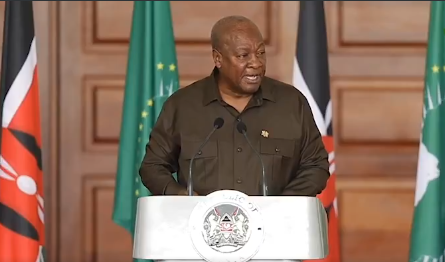
    Ghana’s President, John Dramani Mahama, is in Nairobi, Kenya, with other African leaders at a High-Level Retreat on African Union (AU) Institutional Reforms.

    The retreat, hosted by Kenya’s President and African Union Champion, William Ruto, will run from January 27 to 28. It will focus on evaluating the progress of AU reforms and exploring strategies for the organization’s sustainable growth and impact.

    Discussions will center on Sustainable Financing, a comprehensive review of the AU’s structure, and improving its operational framework to address Africa’s emerging priorities effectively.

    President Mahama, bringing his extensive leadership experience, contributed valuable perspectives during the discussions.

    Below is a video of the president’s speech.

    https://twitter.com/tv3_ghana/status/1883874832435069149

  • 2020 electoral violence must not repeat itself in Dec 7 polls – Ibn Chambas to Akufo-Addo

    2020 electoral violence must not repeat itself in Dec 7 polls – Ibn Chambas to Akufo-Addo

    The African Union High Representative for Silencing the Guns, Dr. Mohamed Ibn Chambas, has urged President Akufo-Addo to prioritize a peaceful and bloodless election in 2024.

    Addressing the maiden edition of the Diplomatic Honours in Accra, Dr. Chambas recalled the unfortunate loss of lives during Ghana’s 2020 general elections, which he described as a blemish on the country’s otherwise admirable record of peaceful elections.

    He stressed that it is essential for President Akufo-Addo to ensure that the upcoming elections do not repeat the violent events of 2020, calling it a critical aspect of the president’s legacy.

    “2024 is about legacy,” Dr. Chambas emphasized, adding, “Let it be your pledge, Mr. President, to deliver elections in which not a single Ghanaian blood will be shed.”

    While praising Ghana for its role as a beacon of hope and stability on the African continent, Dr. Chambas noted that election periods often pose significant risks to the country’s reputation for democratic governance. He urged all stakeholders to work together to safeguard the nation’s image.

    “Some will say 2024 is particularly tense, but it shouldn’t be,” he remarked, acknowledging that the country is fortunate to have two experienced political figures—former President John Dramani Mahama and Vice President Dr. Mahamudu Bawumia—competing for the highest office.

    He appealed for a peaceful electoral process, warning that any violent downturn during their election would be a serious setback for Ghana’s democracy.

    Dr. Chambas further called on the country’s security agencies to act with restraint and professionalism during the polls. Drawing on his experience with Ghanaian forces in peacekeeping missions, he urged them to avoid the use of lethal weapons and to ensure fairness and impartiality.

    “Lethal weapons are totally uncalled for,” he said, advocating for the police to take the lead in security operations with military forces stepping in only in exceptional circumstances.

    In a stern warning, Dr. Chambas underscored the importance of accountability, stressing that no one involved in potential violence—whether individuals, service personnel, or vigilante groups—would escape responsibility. He emphasized that it is the duty of all Ghanaians to contribute to a peaceful election, stating that delivering credible elections is a shared responsibility.

    The Ghana Police Service reported five persons shot and killed in the December 7 national elections. Subsequently a sixth person died from gunshot wounds. Two of the deaths occurred in Techiman South (Bono East Region) and involved security forces. Investigations into these deaths are yet to be completed.

  • AU backs Akufo-Addo’s plan for enhanced mobile money interoperability in Africa

    AU backs Akufo-Addo’s plan for enhanced mobile money interoperability in Africa

    The African Union (AU) has approved President Nana Addo Dankwa Akufo-Addo’s initiative for mobile money interoperability across the African continent.

    This initiative, deemed essential for Africa’s economic integration, aims to streamline economic transactions and boost intra-African trade and development.

    The AU Heads of State and Government reached this decision after President Akufo-Addo submitted two reports for review at the Union’s Sixth Mid-Year Coordination Meeting of Regional Economic Communities in Accra last weekend.

    The recommendations in the two reports, “Establishment of the African Union Financial Institutions (AUFIs)” or “Scaling up Interoperability for Economic Integration: Using Mobile Money to Buy and Sell Across Africa,” were endorsed unanimously by meeting. The meeting also endorsed that the reports be tabled for consideration by the 79th Session of the United Nations General Assembly later in September 2024.

    The gathering was held to review the progress of the continental integration agenda and to assess the effectiveness of policy harmonization between the AU and the regional economic communities.

    President Akufo-Addo, who also holds the position of AU Champion on African Union Financial Institutions, highlighted during the session that mobile money interoperability would not only further Africa’s integration goals but also enhance financial inclusion for its most disadvantaged populations.

    He stressed the transformative impact of mobile money interoperability, particularly for small businesses and informal sector traders, who are the backbone of many African economies.

    This initiative is expected to revolutionize business practices in Africa, create jobs for young people, and stimulate economic activity, as the continent already accounts for over 70% of global mobile money transactions.

    “By leveraging mobile money technology, we can break down barriers to trade and boost and boost economic activities to empower millions of Africans in the continental and global economy.

    “Our continent is home to a vibrant market of nearly 1.4 billion people, with majority being the youth; what they call Generation Z, with the Alpha Generation in tow…It is in our collective interest as today’s leaders to offer the youth of our continent the freedom to express their creativity economically and without border constrains and earn from their enterprise.

    “Give the youth of Africa the freedom to aspire, and they shall be inspired to lead in creating the Africa we want, the Africa we desire, and the Africa they deserve.

    “Let us leave Accra knowing we have committed our union, our Regional Communities, and our Member States to allowing our people the opportunity to buy and sell anywhere in Africa, using just their hand-held mobile device. Let us leave this room committing all our relevant institutions to fast-tracking the process.

    “By championing interoperability, we are taking a decisive step towards realising the Africa that our freedom fighters dreamed of, which today is in our hands to bring about—a prosperous, integrated, and globally competitive continent,” President Akufo-Addo said, and urged his counterparts to demonstrate the will and commitment required to enable the ambitious agenda work for Africa.

    The AU has called on member states, regional economic communities, and other stakeholders to commit to achieving mobile money interoperability by 2027.

    This involves incorporating all member countries into the Pan-African Payment and Settlement System (PAPSS), enabling cross-border mobile money transactions, and establishing a continental regulatory framework for mobile money activities.

    Africa’s mobile money transactions are valued at over $1.26 trillion, representing nearly 40 percent of the continent’s GDP.

    Financial inclusion in West Africa has surged due to mobile money, reaching 71 percent and increasing.

    East Africa boasts a 73 percent mobile money penetration rate, while Southern Africa stands at 45 percent and is on the rise.

    The adoption of mobile money interoperability is a crucial step toward the African Union’s objective of creating a single, unified market for Africa.

    It is expected to stimulate economic growth, reduce transaction costs, and enhance continental economic integration.

    Mohammed Cheikh El Ghazouani, Chairperson of the African Union and President of Mauritania, stressed the importance of aligning national and regional policies to foster socioeconomic development on the continent.

    The mobile money interoperability initiative is consistent with the AU’s aim of fostering economic stability and enhancing connections among member states.

  • Akufo-Addo seeks AU support for reparations initiative

    Akufo-Addo seeks AU support for reparations initiative

    Ghana has announced its intention to lobby the African Union (AU) to garner backing for a pan-continental initiative aimed at bolstering the call for reparations related to the transatlantic slave trade.

    President Akufo-Addo emphasized the importance of building bridges and fostering unity within the community to address the reparations issue effectively.

    He underscored the need to create a powerful and unified voice that would compel action and lead to consequential decisions.

    “It is time that the Caribbean and those of us on the other side of the Atlantic get together on this matter because it is a common fight,” he stated while addressing the Prime Minister of Trinidad and Tobago, Dr Keith Rowley, at the Jubilee House, Accra.

    The President stressed the need to work towards a strategy that would compel the perpetrators of the trans-Atlantic slave trade “to be able to sit down across the table with us and talk about how we can achieve our goals.”

    As part of his visit to Ghana, Prime Minister Dr. Keith Rowley paid a courtesy call on the President. His visit coincided with the invitation to celebrate the 25th anniversary of His Royal Majesty Otumfuo Osei Tutu II’s ascension to the throne as the Asantehene of the Asante Kingdom.

    Dr. Rowley, known for his advocacy for an international entity like an AU-Caribbean body, seeks to promote reparations for African people affected by the slave trade’s atrocities.

    The Equal Justice Initiative (EJI) reports that approximately 13 million Africans were kidnapped and trafficked across the Atlantic to the Americas, including British, French, and Spanish colonies, between 1501 and 1867. Tragically, about two million individuals are believed to have perished during the horrific Middle Passage.

    “Kidnapping, trafficking, abusing, and dehumanising African people and their descendants was as lucrative for Europeans and white Americans as it was traumatising for black people.

    “The trans-Atlantic slave trade enriched many white people across occupations and industries—from early European colonists to priests and popes, shipbuilders to rum and textile producers, bankers to insurers—and generated the capital used to build some of America’s greatest cities and most successful companies,” says the EJI.

    Despite the enduring benefits that many European and American families, businesses, and institutions derive from the immense wealth generated by enslavement, African communities still bear the burdens of inequality, injustice, poverty, and diminished self-worth.

    President Akufo-Addo expressed support for the concept of an international body to streamline the processes involved in securing reparations for the atrocities of the slave trade, stating, “We welcome this idea and will collaborate to make it a reality.”

    “I think the people in Addis Ababa, the AU, will be very happy to hear this initiative, especially because of the decisions that have been taken in this last year or two along the same lines.

    “It is extremely important for us, for all of us, for our self-confidence and self-worth that this matter is dealt with, if possible, in our lifetimes.

    “The people were taken from here and dumped across on the other side of the ocean. So, we have a direct interest,” he told Dr Rowley.

    President Akufo-Addo has been pushing the AU leadership for some time to seriously explore the issue of reparations.

    “If people can be compensated for the Holocaust, Africans can be compensated for slavery,” he told participants at a recent forum in Ghana’s capital, Accra.

    He insisted that the atrocities committed during the slave trade should not be repeated and that Africans would never again allow such evil to be perpetuated against them.

    Dr. Rowley praised Ghana’s government for playing a key role in generating public support for reparations to Africans.

    “We the descendants of the enslaved would want to be emancipated from that inhumanity, and we have been fighting it with Africa.

    “And, we think the time has come for an international body to put this conversation, this narrative to the Western world so that some sort of rectifications could come our way,” the Prime Minister appealed.

  • African Union firmly opposes military takeovers, advocates for democracy

    African Union firmly opposes military takeovers, advocates for democracy

    The African Union (AU) has firmly condemned military takeovers and reiterated its dedication to fostering peace, democracy, and prosperity across the continent.

    Bankole Adeoye, Commissioner for Political Affairs, Peace, and Security within the AU, stressed the critical importance of upholding peace and democratic values in Africa.

    “Throughout the last decade, the African Union has consistently led the charge in advocating for democracy, constitutionalism, the rule of law, and sustainable development,” Adeoye remarked. “However, despite our efforts, significant challenges such as terrorism, violent extremism, transnational organized crime, and poverty persist. To combat these challenges, it is imperative that we collectively and vigorously defend democracy.”

    Highlighting the inclusive nature of democracy, Adeoye urged all Africans to stand together in its defense, citing the 2022 Accra Declaration endorsed by African heads of state as evidence of the AU’s unwavering stance against military takeovers.

    “The emerging threat posed by military regimes seeking to regress our continent will not be tolerated,” he emphasized.

    The Accra Declaration, drafted in March 2022, reflects the AU’s determination to safeguard democracy and restore constitutional governance in nations under military rule.

    “In March 2022, the African Union convened in Accra to rally all stakeholders in defense of democracy, resulting in the Accra Declaration endorsed by our heads of state,” Adeoye added.

    The AU’s resolute stance serves as a clear warning against any attempts to undermine democratic processes through military intervention.

    To further bolster its position and rally support for democracy, the AU is organizing the 2nd AU Reflection Forum on Unconstitutional Changes of Government, scheduled for March 18 and 19, 2024.

  • Ghana empowers women-led businesses with 10% subsidized interest rates under AfCFTA

    Ghana empowers women-led businesses with 10% subsidized interest rates under AfCFTA

    In a significant move to support women entrepreneurs participating in the Africa Continental Free Trade Area (AfCFTA), 

    The Ashanti Regional Director of the Ministry of Trade and Industry, Mamuda Osman, has announced a groundbreaking initiative in a significant move to support women entrepreneurs participating in the Africa Continental Free Trade Area (AfCFTA).

    Women-led businesses venturing into exports under AfCFTA will now have access to bank loans at a subsidized interest rate of 10 percent.

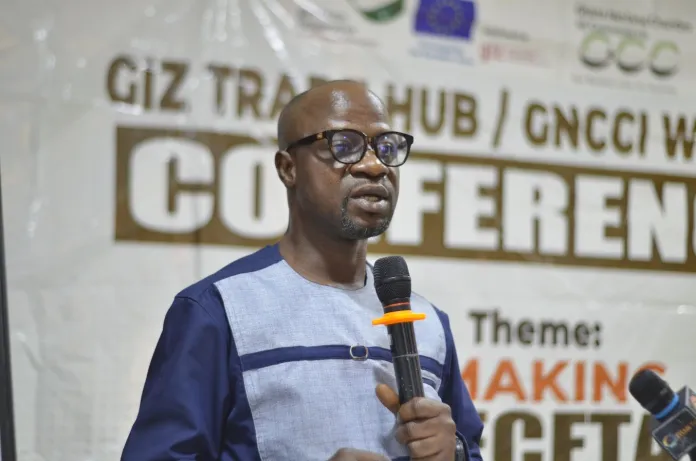
    Mr Mamuda highlighted the government’s commitment to bolstering women in business, recognizing their crucial role in the nation-building process. Addressing participants at the Ghana National Chamber of Commerce/GIZ Trade Hub conference for GNCCI Women in Kumasi, he emphasized the significance of supporting women in their export endeavors.

    He revealed that a special protocol for Women and Youth-led businesses, addressing their specific challenges and facilitating trade, has been negotiated under the AfCFTA agreement. This protocol is set to be adopted in the next African Union (AU) meeting for operationalization.

    As part of the government’s ongoing support, Mr Mamuda assured participants that 200 companies, inclusive of women-led enterprises nationwide, have been selected to receive hands-on support under the AfCFTA agreement.

    In his address, Mr Mamuda stressed the importance of women entrepreneurs in the current era of intense competition, globalization, and liberalization. He encouraged businesses to strive for excellence, develop core competencies, and gain confidence to effectively compete in both continental and global markets.

    Highlighting the positive impact of successful women-led businesses on the country’s socio-economic development, Mr. Mamuda underscored the need to deliberately include women in making AfCFTA a success. He emphasized that the success of women-led businesses can contribute to reducing female dropouts in schools and diminish women’s over-reliance on men for daily survival.

    Meanwhile, Victoria Hajar, the first Vice President of the Ghana National Chamber of Commerce and Industries (GNCCI), stressed the importance of inclusivity and sustainable socio-economic development for the full benefits of increased intra-African trade under AfCFTA. She acknowledged the persistent challenges faced by women in business and highlighted the immense potential of AfCFTA to harness the strength of women.

    The GNCCI and GIZ Trade Hub have been proactive in supporting women-led businesses through initiatives such as sensitization programs, workshops, and seminars. The dedication of the year 2023 to a gender-focused approach aligns with the AfCFTA Protocol on Women and Youth in Trade, emphasizing gender-inclusive trade policies and gender mainstreaming in the national and regional implementation strategies of AfCFTA.

  • Senate from Kenya stirs things up with post about Somaliland

    Senate from Kenya stirs things up with post about Somaliland

    The leader of Kenya’s senate is being accused of acknowledging that Somaliland is an independent country, even though that goes against Kenya’s official stance.

    Tuesday, Speaker Amason Kingi posted on social media that he talked with Somaliland’s “ambassador to Kenya”.

    He said they met to find new ways for our governments to work together.

    Principal Secretary of Foreign Affairs, Mr. Korir Sing’Oei, was one of the people who said that Mr. Kingi made a mistake by acknowledging the government of Somaliland in his post, which he later deleted.

    Mr Sing’Oei said that Kenya’s foreign policy, like the African Union, only recognizes Somalia as a state.

    “Somaliland is part of Somalia and has an office in Nairobi for doing business. ” “This place is not a embassy. ”

    Some people think the speaker should not get involved in foreign policy because it’s not their job.

    In 1991, Somaliland decided to break away from Somalia. However, other countries and organizations like the UN and African Union don’t officially consider it a separate country.

  • Gabon suspended by AU after ousting of Ali Bongo

    Gabon suspended by AU after ousting of Ali Bongo

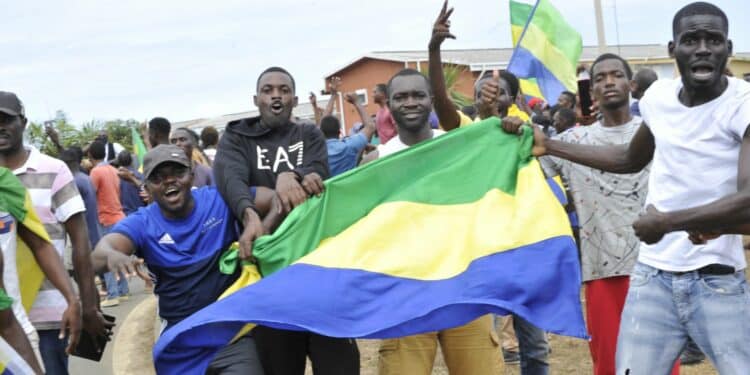
    The African Union’s Peace and Security Council has taken swift action in response to the recent military coup in Gabon.

    In a statement posted on X, formerly known as Twitter, the council expressed its strong condemnation of the coup and announced the immediate suspension of Gabon’s participation in all activities of the AU, as well as its organs and institutions.

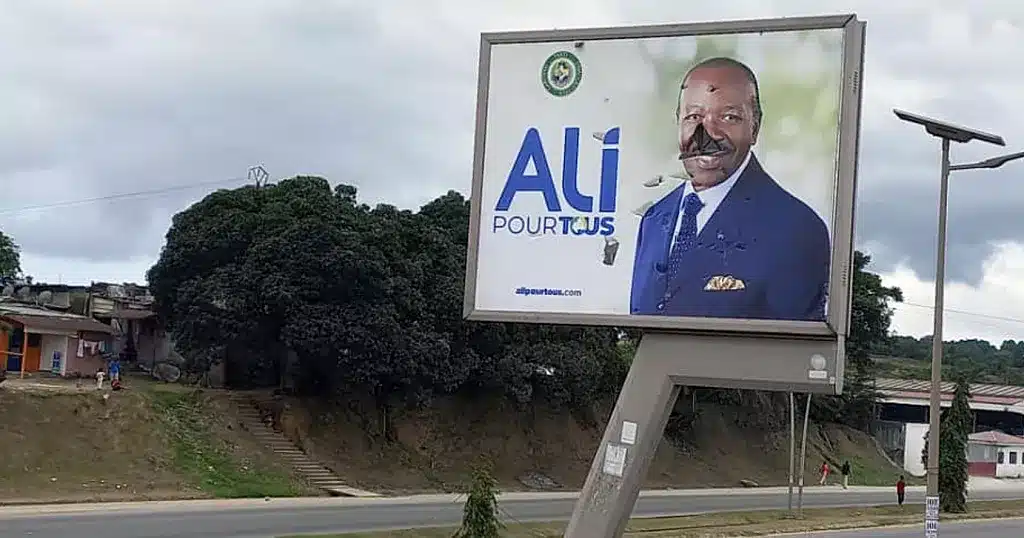
    This decision was made during a council meeting convened to address the situation in Gabon, which unfolded following disputed elections that resulted in President Ali Bongo Ondimba being declared the winner.

    The meeting was chaired by Bankole Adeoye of Nigeria, the African Union commissioner for political affairs, and the current chair of the council, Willy Nyamitwe of Burundi.

    The military coup in Gabon marked the conclusion of the Bongo family’s nearly six-decade-long rule and posed a fresh challenge for a region that has grappled with a total of eight coups since 2020.

    Nigeria’s recently elected president Bola Tinubu called it a “contagion of autocracy”.

    “My fear has been confirmed in Gabon that copy cats will start doing the same thing until it is stopped,” Tinubu, who chairs West Africa’s main regional body ECOWAS, said on Thursday.

    The military general who led the overthrow of Gabon’s Bongo dynasty is set to be inaugurated as the transitional president on Monday, according to an announcement by the army. Meanwhile, the opposition is demanding that their candidate be officially recognized as the victor of the recent weekend elections.

    The military sought to reassure donors they would “respect all commitments” at home and abroad and “phase in” transitional institutions, Colonel Ulrich Manfoumbi Manfoumbi, spokesman for the new regime, said on state television.

    The swearing-in ceremony for the new leader, General Brice Oligui Nguema, is scheduled to take place at the constitutional court, as disclosed by a spokesman. This marks the initial indication of how the Committee for the Transition and Restoration of Institutions (CTRI) intends to operate following the coup that occurred on Wednesday.

    The ECCAS (Economic Community of Central African States) has strongly condemned the coup and expressed its intention to convene a meeting of heads of state in the near future to determine the appropriate response. However, the statement did not specify a date for this meeting.

    The coup was initiated by senior officers in Gabon shortly after the election body declared that President Bongo had secured a third term following Saturday’s vote.

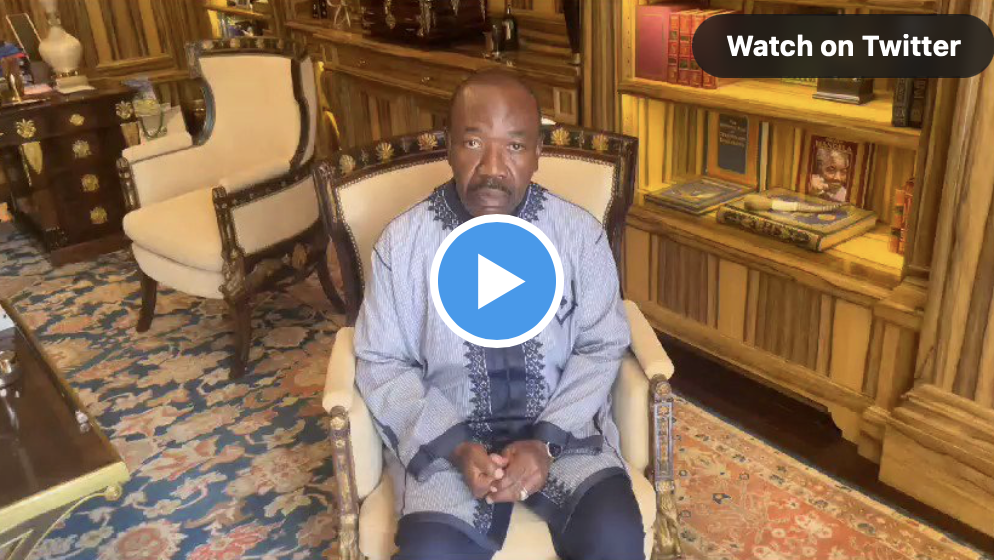
    Subsequently, a video surfaced of President Bongo detained in his residence, appealing to international allies for assistance while seemingly unaware of the unfolding events. The officers also announced General Nguema, the former head of the presidential guard, as the new head of state.

    On Wednesday, Tinubu announced that he was collaborating closely with other African leaders to address what he referred to as the “spread of autocracy” across Africa.

    In response to the coup in Niger on July 26, ECOWAS had threatened military intervention and imposed sanctions. However, the military government has not yielded to these measures. Similarly, military leaders in other African nations, such as Mali, have resisted international pressure, managing to maintain their grip on power and, in some cases, even garnering popular support.

    The Economic Community of Central African States (ECCAS), representing Central Africa’s political bloc, issued a statement condemning the coup. ECCAS announced plans for an “imminent” meeting of heads of state to determine an appropriate response, although no specific date was provided.

    According to Al Jazeera’s Nicolas Haque, reporting from Dakar, Senegal, the response from the Central African Economic and Monetary Community (CEMAC) has been relatively subdued. This may be attributed in part to concerns in the region about the potential for a “contagion of coups” among countries with political systems similar to the Bongo dynasty.

  • Gabon suspended over coup by AU

    Gabon suspended over coup by AU

    The African Union has decided to suspend Gabon’s membership due to the recent military junta in the Central African nation. This announcement was made by the AU’s Peace and Security Council on Thursday evening, as reported by NAN.

    It’s worth noting that the AU suspended suspended Niger Republic’s membership just a few weeks ago when a military takeover occurred at the end of July.

    In addition to Gabon, Burkina Faso, Mali, Guinea, and Sudan have also faced suspensions from international bodies due to recent coups in these countries.

    In Brussels, top EU diplomat Josep Borrell expressed the European Union’s strong stance against any unlawful seizure of power in Gabon. He emphasized the need for resolving the challenges facing Gabon through adherence to the principles of the rule of law, constitutional order, and democracy. Borrell stated that the country’s peace, prosperity, and regional stability depended on this approach.

    He called for an inclusive and meaningful dialogue as the means to uphold the rule of law, human rights, and the will of the Gabonese people, rather than resorting to the use of force.

    The military took control of Gabon on Wednesday, announcing the dissolution of state institutions on state television. They asserted that the recent election results were invalid due to fraud and closed the country’s borders. Shortly before these developments, electoral authorities had declared the incumbent president, who had been in office since 2009, as the winner of the August 26 election.

    On Wednesday evening, military leaders designated the head of the Presidential Guard, Brice Clotaire Oligui Nguema, as the interim leader of the country.

  • Gabon suspended by African Union over coup

    Gabon suspended by African Union over coup

    In the aftermath of this week’s military coup, the Peace and Security Council of the African Union announced on Thursday that it had resolved to “immediately suspend” Gabon.

    On X, previously Twitter, the organization declared that it “strongly condemns the military coup that overthrew President Ali Bongo of the Republic of Gabon on August 30, 2023.”

    It “decides to immediately suspend Gabon’s participation in all AU activities, including those of its organs and institutions, pending the restoration of the nation’s constitutional order.”

    The announcement followed a council meeting convened to address the situation in Gabon, prompted by the recent coup that occurred after contested elections, resulting in Bongo’s contested victory.

    This session was overseen by Bankole Adeoye of Nigeria, the AU Commissioner for Political Affairs, and Willy Nyamitwe from Burundi, who currently holds the council’s rotational chairmanship.

    On the preceding Wednesday, Moussa Faki Mahamat, the Head of the African Union Commission, called upon the Gabonese military and security forces to ensure the safety of Bongo, who the coup leaders claimed was put under house arrest.

    Faki also denounced the coup, characterizing the events in Gabon as a “blatant breach” of the legal and political frameworks of the African Union headquartered in Addis Ababa.

    In his statement on X, Faki urged all political, civil, and military stakeholders in Gabon to prioritize peaceful political avenues, facilitating a swift return to democratic constitutional governance within the country.

    This move mirrors a similar action taken earlier this month by the African Union, which suspended Niger after a coup in the West African nation in July that ousted the elected president, Mohamed Bazoum.

  • AU condemns Gabon coup

    AU condemns Gabon coup

    The seizure of power by the military in Gabon represents a clear breach of the African Union’s (AU) regulations, according to a prominent AU official.

    Moussa Faki Mahamat, the Chairman of the AU Commission, is closely monitoring the situation and has expressed significant concern, as stated in a released statement.

    He “strongly condemns the coup attempt in the country as a way of resolving its crisis current post-election”.

    The statement further emphasizes the necessity for the military and security forces to ensure “the physical safety of the president of the republic,” as well as his family members and other government officials.

    The commissioner refrains from explicitly advocating for President Bongo’s reinstatement, opting instead to urge “all political, civilian, and military stakeholders in Gabon to support peaceful political avenues that facilitate the swift restoration of democratic constitutional governance.”

    Gabon has held membership in the AU, a coalition of 55 African nations, since 1963.

  • Niger Coup: We have support from the AU – ECOWAS

    Niger Coup: We have support from the AU – ECOWAS

    Commissioner Political Affairs, Peace & Security of the Economic Community of West African State (ECOWAS), Ambassador Abdel-Fatau Musah, has dismissed reports that the African Union is not in support of the measures being put in place to restore democratic governance in Niger.

    The Economic Community of West African States (ECOWAS) has indicated that a significant number of its member nations are prepared to engage in a standby force, which could potentially intervene in Niger following a coup that transpired there at the end of the previous month.

    This measure, according to reports, has been condemned by the African Union.

    But engaging JoyNews on the sidelines of a strategic meeting organised by the sub-regional body ECOWAS in Accra on Thursday, Ambassador Abdel-Fatau Musah noted that the African Union has given its backing to ECOWAS.

    According to him, a communiqué to that effect is yet to be made public by the Union.

    “Has anybody read the communiqué of the African Union Peace and Security Council. I was there. I participated. Of course, when you have a situation like this, you are going to have different opinions. What matters is what comes out of the communiqué. So everybody should wait for the communiqué, and you’d realize that the African Union Peace and Security Council supports all the measures being taken by ECOWAS to restore constitutional order.”

    “They have condemned it, and many of them are even calling for the suspension of Niger,” he added.

    The Peace & Security Council

    The Peace and Security Council (PSC) is the standing decision-making organ of the AU for the prevention, management and resolution of conflicts. It is a collective security and early warning arrangement intended to facilitate timely and efficient responses to conflict and crisis situations in Africa. It is also the key pillar of the African Peace and Security Architecture (APSA), which is the framework for promoting peace, security and stability in Africa.

    The Protocol Relating to the Establishment of the Peace and Security Council was adopted on 9 July 2002 in Durban, South Africa, and entered into force in December 2003. The PSC became fully operational in early 2004. The PSC Protocol, together with the PSC Rules of Procedure, the AU Constitutive Act and the conclusions of various PSC retreats, provide operational guidance to PSC activities.

    The powers of the PSC, in conjunction with the Chairperson of the AU Commission, include to:

    • Anticipate and prevent disputes and conflicts, as well as policies, which may lead to genocide and crimes against humanity
    • Undertake peace-making and peacebuilding functions to resolve conflicts where they have occurred
    • Authorise the mounting and deployment of peace support missions, and lay down general guidelines for the conduct of such missions including the mandate
    • Recommend to the Assembly, pursuant to article 4(h) of the AU Constitutive Act, intervention, on behalf of the Union, in a Member State in respect of grave circumstances, namely, war crimes, genocide and crimes against humanity as defined in relevant international instruments
    • Institute sanctions whenever an unconstitutional change of government takes place in a Member State
    • Implement the AU’s common defence policy
    • Ensure implementation of key conventions and instruments to combat international terrorism
    • Promote harmonisation and coordination of efforts between the regional mechanisms and the AU in the promotion of peace, security and stability in Africa
    • Follow-up promotion of democratic practices, good governance, the rule of law, protection of human rights and fundamental freedoms, and respect for the sanctity of human life and international humanitarian law
    • Promote and encourage the implementation of conventions and treaties on arms control and disarmament
    • Examine and take action in situations where the national independence and sovereignty of a Member State is threatened by acts of aggression, including by mercenaries
    • Support and facilitate humanitarian action in situations of armed conflicts or major natural disasters.
  • We are going to Niger with our own resources; we don’t need UN express permission – ECOWAS military chiefs 

    We are going to Niger with our own resources; we don’t need UN express permission – ECOWAS military chiefs 

    Commissioner for Political Affairs for the Economic Community of West African States (ECOWAS), Abdel-Fatau Musah, has stated that ECOWAS does not need the express permission of the United Nations before taking any decision or embarking on any action.

    On the sidelines of the first day of the ECOWAS military chiefs meeting convened in Accra on August 17, 2023, he stated that the community intends to intervene in Niger with its own resources, and did not require permission from any external organization.

    “We are going to Niger with our own resources. Anybody who wants to help us, fair enough,” he said and further refuted claims that the Peace and Security Council of the African Union has dissociated themselves from the move. He labeled such news as “fake.” 

    “Why is it in Africa that people start asking why don’t you go to the Security Council? Did the Russians go to the Security Council before going to Ukraine, and those pumping weapons into Ukraine, are they asking the Security Council? When Libya was attacked, was it a security sector authorisation?” he asked. 

    Additionally, he asserted that the suggested intervention aims to prevent the recurrence of such activities across the continent.

    “There’s a time you have to draw the line in the sand. There have been 3 successful coups and no muscular approach was applied and this doesn’t mean that we should allow the domino to continue,” he said.

    Also, he stated that ECOWAS has the full support of the UN, though clarifying that this doesn’t necessarily equate to an endorsement from the Security Council.

    “The UN has condemned the coup, they are supporting the actions of the ECOWAS. When the UN supports, it doesn’t mean it is like an approval from the Security Council. The UN Secretariat has supported us and we are constantly working with the special representative for the Secretary General for West Africa which also shows their support to what we are doing,” he said.

    As a follow-up to the directive of the ECOWAS Authority of Heads of State and Government at its Extraordinary Summit on the political situation in the Republic of Niger held on 10th August 2023 in Abuja, Nigeria, the ECOWAS Committee of Chiefs of Defence Staff (CCDC) has commenced the activation of the ECOWAS Standby Force for the restoration of constitutional order in the Republic of Niger.

    To this end, the ECOWAS Committee of Chiefs of Defence Staff will be having an extraordinary meeting in Accra, Ghana from 17th to 18th August 2023 to finalise plans for the deployment of the Standby Force.

    Addressing the gathering on the first day of the meeting, Minister of Defence of Ghana Dominic Nitiwul mentioned that some countries including Mali, Guinea, etc., were not present. 

    “Four of our member states [Mali, Burkina Faso, Guinea and Niger] are now facing sanctions for resorting to unconstitutional change of government which contradicts the ECOWAS protocol on good governance and democracy,” he explained. 

  • Kenya’s Ruto calls for stronger, financially autonomous A.U. at Mid-Year Meeting

    Kenya’s Ruto calls for stronger, financially autonomous A.U. at Mid-Year Meeting

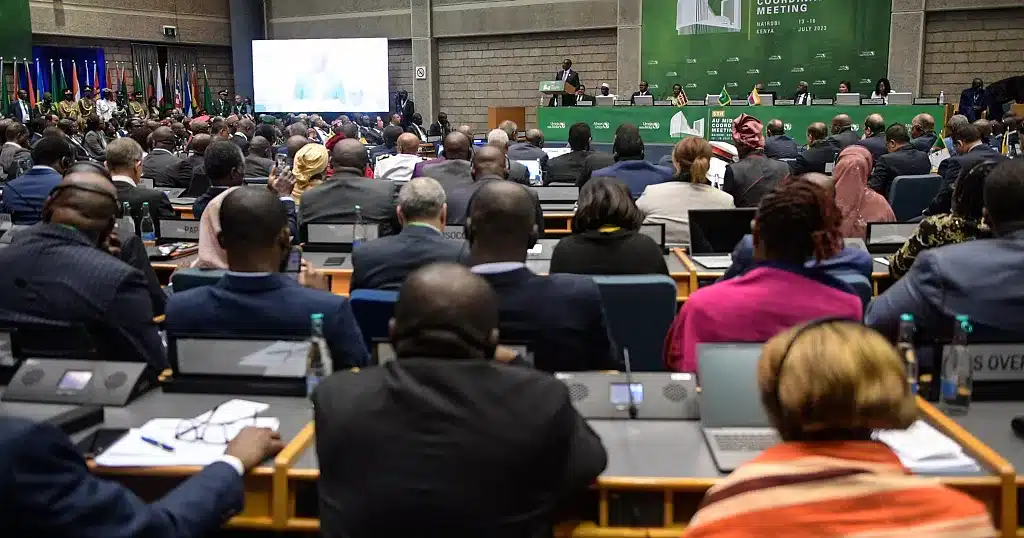
    African leaders gathered Sunday (July. 16) in Gigiri, Nairobi County for the African Union’s fifth Mid-Year coordination meeting.

    The summit aimed among other things to address critical issues of African integration and division of labour.

    The meeting was led by Kenya’s President. William Ruto called for a reform of the AU focusing on the body’s financial autonomy.

    “The pan-African movement has always been about sovereignty and agency,” the leader said.

    “First and foremost, chronic dependence even on well-meaning partners is inconsistent with the aspiration of independence, sovereignty and agency. And I therefore believe that we must take seriously the recommendations that have been made towards making our organization an organization that stands on its feet, and an organization that is funded by us.”

    According to A.U. figures, less than 40% of Member States pay their yearly contributions to the institution.

    A piece on the body’s website titled _”_African Union sustainable funding strategy gains momentum” broke down the institution’s2020 budget as follows:

    US$157.2 million to finance operational budget of the Union ; US$216.9 million will go into the program budget and US$273.1 million will finance peace support operations.

    “Peace support operations will be funded by member states and international partners. Of the total budget, 38% is to be assessed on Member States while 61% will be from partners. The operating budget will be fully funded by Member States while the programme budget will be funded 41% by Member States and 59% solicited from international partners,” the document read.

    Debt burden

    President Ruto pointed to the burden of debt many countries on the continent carry, championing a fairer financial system. 

    A UN report found that, African nations are disadvantaged borrowers compared to the wealthiest European nations.

    “The UN secretary general himself has said that our continent pays anywhere up to 8 times more than our brothers and sisters elsewhere do. It is only fair that we have a financing mechanism that treats everybody equally.”

    The focus of the 5th Mid- Year Coordination Meeting was the AU theme of the year “Acceleration of the African Continental Free Trade Area Implementation.

    The Regional Economic Communities, the Regional Mechanisms and AU Member States attended the meeting which ended on Sunday. They convened under the AU theme of the year Acceleration of the African Continental Free Trade Area Implementation.

    The President of Comoros Azali Assoumani, who currently chairs the Union, was also in attendance.

    Also present were Bola Tinubu (Nigeria), Abdel Fattah (Egypt), Macky Sall (Senegal), Ismail Guelleh (Djibouti) and Ali Bongo (Gabon) among others.

    The summit had been preceded by the Ordinary Session of the Executive Council.

  • AU force hands over bases in Somalia

    AU force hands over bases in Somalia

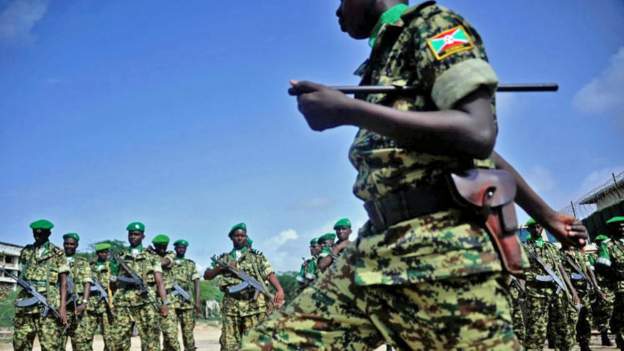
    The African Union (AU) force in Somalia has handed over three more military bases to the Somali army as part of a gradual withdrawal meant to conclude by the end of next year.

    By the end of June the plan is to withdraw around 2,000 troops from Somalia.

    Tuesday’s handover took place in Adale, Mirtaqwa and Hajji Ali, in the Middle Shabelle region, bases which fell under the control of the mission’s Burundian contingent.

    So far this year the AU force has handed over six military bases, five of them in Middle Shabelle.

    The first base, located in Heliwa district of the capital, Mogadishu, was handed over on 22 January. It was also run by Burundian forces.

    It is not clear how many AU soldiers have already been withdrawn from Somalia.

    Somalia has been training new soldiers in Uganda, Ethiopia and Eritrea to replace some 19,000 AU troops currently deployed.

    This is happening as Somalia prepares for the second phase of a major military offensive against al-Shabab.

    The al-Qaeda-linked militant group has released a new video showing the graduation of hundreds of new fighters.

  • Ghana celebrates AU Day with flag-raising ceremony

    Ghana celebrates AU Day with flag-raising ceremony

    On Thursday, May 25, 2023, the Ministry of Foreign Affairs and Regional Integration organized a flag-raising ceremony and a food market to honor the 60th anniversary of African Union (AU) Day.

    The ceremony was held at the Forecourt of the State House under the theme “Accelerated Implementation of the African Continental Free Trade Area (AfCFTA)”.

    The Minister for Foreign Affairs and Regional Integration, Shirley Ayorkor Botchwey, in a statement read on her behalf by the Deputy Minister for Foreign Affairs Regional Integration, Hon. Thomas Mbomba, stated that the theme for the 60th anniversary of the African Union was critical towards harnessing the opportunities under AfCFTA for Africa’s sustainable development, now and in the future.

    Shirley Ayorkor Botchwey called on member states of the African Union to work together for the implementation of the African Continental Free Trade Area (AfCFTA) and added that AfCFTA is the largest free trade area in the world which is a reason for all African countries to commit to the promotion of intra-African Trade and economic integration.

    Ms Ayorkor Botchwey further noted that accelerating the implementation of AfCFTA has the potential to stimulate economic growth and development across Africa by removing barriers to Trade, such as tariffs, quotas and dumping, which culminates in increasing Trade within Africa through the creation of a larger single markets, boosting economies of scale and attracting direct foreign investment.

    The Minister further urged member states to work together towards accelerating the implementation of the AfCFTA protocols as it has the potential to shape the economic future of the continent, strengthen its position in the global market, uplift the lives of its peoples and accelerate the sustainable growth and development of the continent.

    The Secretary-General of the African Continental Free Trade Area (AfCFTA) Secretariat, Wamkele Mene, reaffirmed the strong commitment of the AfCFTA Secretariat to work with all the AU member states and partners to effectively execute its mandate to help achieve the goals and aspirations of the AfCFTA towards an integrated, prosperous and peaceful Africa. H.E. Mene urged member states to get involved in the actualisation of the aspirations of the African Continental Free Trade Agreement for the benefit of all Africans.

    For her part, the Ambassador of Morocco to Ghana and Dean of the African Group of the Diplomatic Corps, Imane Quaadil, noted that considerable progress had been made since the inception of the AU. She reiterated the commitment of the African Group to take active part in all future initiatives aimed at achieving Africa’s prosperity and the well-being of the continent.

    The flag-raising ceremony was followed by a food bazaar featuring different cuisines from across the African continent for participants to savour.

    The ceremony was attended by members of the Diplomatic Corps, officials from the Ghana Armed Forces, Ministries, Departments and Agencies, the media, and students.

  • Free trade, armed conflict dominate African Union summit in Addis Ababa

    Free trade, armed conflict dominate African Union summit in Addis Ababa

    African leaders met Saturday to discuss a slew of challenges facing the continent as UN chief Antonio Guterres urged them to do more to bring peace to conflict-hit regions.

    Africa is reeling from a record drought in the Horn and deadly violence in the Sahel region and the eastern Democratic Republic of Congo (DRC), with the two-day African Union summit aiming to address these issues and jumpstart a faltering free trade pact.

    Most of the sessions are being held behind closed doors at the AU headquarters in the Ethiopian capital Addis Ababa, with more than 30 presidents and prime ministers in attendance.

    But eyes will be on the bloc to see if it can achieve ceasefires in the Sahel and the eastern DRC, where the M23 militia has seized swathes of territory and sparked a diplomatic row between Kinshasa and Rwanda’s government, which is accused of backing the rebels.

    Guterres called for Africa to take “action for peace”, adding that the continent of 1.4 billion people faced “enormous tests… on virtually every front”.

    “I am deeply concerned about the recent rise in violence by armed groups in the eastern Democratic Republic of the Congo and the rise of terrorist groups in the Sahel and elsewhere,” he told the gathering.

    “The mechanisms for peace are faltering,” the UN secretary-general warned. Nevertheless, he urged the bloc to “continue to battle for peace”.

    At a mini-summit on Friday, leaders of the seven-nation East African Community pushed for all armed groups to withdraw from occupied areas in the eastern DRC by the end of next month.

    Guterres met with several African leaders on Friday, including Rwandan President Paul Kagame, to discuss in particular the crisis in the Congo.

    Ethiopian Prime Minister Abiy Ahmed, host of the summit, lauded the bloc for its role mediating a peace deal between his government and the Tigray People’s Liberation Front (TPLF) in November to end a brutal two-year year in northern Ethiopia.

    – Backsliding of democracy –

    Junta-ruled Mali, Burkina Faso and Guinea, which have been suspended from the AU, cannot participate in this weekend’s summit, but have sent diplomats to Addis Ababa to lobby for readmission.

    Moussa Faki Mahamat, head of the African Union Commission, told the meeting the bloc needed to come up with new strategies to counter the backsliding of democracy on the continent.

    He said “sanctions imposed on member states following unconstitutional changes of government… do not seem to produce the expected results”.

    “It seems necessary to reconsider the system of resistance to the unconstitutional changes in order to make it more effective,” Faki added.

    The summit will also aim to accelerate implementation of the African Continental Free Trade Agreement (AfCFTA) launched in 2020.

    The deal is billed as the biggest in the world in terms of population, gathering 54 out of 55 African countries, with Eritrea the only holdout.

    African nations currently trade only about 15 percent of their goods and services with each other, and the AfCFTA aims to boost that by 60 percent by 2034 by eliminating almost all tariffs.

    But implementation has fallen well short of that goal, running into hurdles including disagreements over tariff reductions and border closures caused by the Covid-19 pandemic.

    The African leaders are also expected to discuss the food crises rocking a continent hit hard by the worst drought in four decades and the knock-on effects of the war in Ukraine that have pushed up the cost of basic goods.

    – Debt cancellation call –

    Created in 2002 following the disbanding of the Organisation of African Unity, the AU comprises all 55 African countries, with a population of 1.4 billion people.

    While the bloc has been credited with taking a stand against coups, it has long been criticised as ineffectual.

    Kagame, who has been urging the AU to implement major changes for years, is due to present a report on the reform of the bloc’s institutions.

    The Rwandan leader has called for the AU to take steps towards financial independence, with the bloc largely dependent on foreign donors.

    Comoros President Azali Assoumani, leader of the small Indian Ocean archipelago of almost 900,000 people, took over the one-year rotating AU chairmanship from Senegal’s Macky Sall.

    Assoumani, 64, called for a “total cancellation” of African debt in his acceptance speech, but did not elaborate on how this would be achieved.

    Source: BBC

  • Leaders leave for Washington for a US-Africa summit

    African leaders are making their way to Washington ahead of President Joe Biden’s US-Africa summit.

    According to organisers, the three-day summit, which begins on Tuesday, will aim to demonstrate President Biden’s administration’s commitment to the continent.

    The summit has been invited to 49 heads of state, including African Union Commission Chairperson Moussa Faki Mahamat.

    Mali, Guinea, Sudan, and Burkina Faso were not invited because they are suspended by the African Union. Eritrea was also left out.

    Some African leaders have been tweeting about their departure to the summit:


  • Rivals in Ethiopia civil war to begin peace talks

    Ethiopia’s warring parties are expected to begin talks today as part of efforts to end a brutal civil war.

    This war has been raging for two years.

    The talks, sponsored by the African Union, will enable representatives from the government and rebel forces from the besieged northern region of Tigray meet in South Africa.

    Violence returned to the region in August, shattering a five-month truce.

    Fighting has escalated in Tigray with government troops and their Eritrean allies controlling key areas deep in the region.

    The war has had devastating impacts with tens of thousands believed to have been killed, while millions have been left without food and access to basic services.

    War crimes have been alleged and atrocities reported.

    Tigrayan forces said their delegation had arrived in South Africa and their priorities include immediate cessation of hostilities, resumption of humanitarian aid and the withdrawal of Eritrean troops – something echoed by the international community.

    The government said it’s committed to peace but vowed to continue with an offensive to control airports in the region.

    The talks initially might not address all the details – but they sure have ignited hope for a long-suffering country.

  • African Union commission head condemns Chad clashes

    The head of the African Union (AU), Moussa Faki Mahamat, has condemned violent clashes which have erupted in Chad between police and protesters in the capital city, as we reported earlier.

    “I strongly condemn the repression of the demonstrations which led to the death of men at #Tchad,” the AU’s chair of the commission, Mr Mahamat said.

    “I call on the parties to respect human lives and property and to favour peaceful ways to overcome the crisis,” he continued.

    Protest

    People are demonstrating against Chad’s transitional military government and calling for a return to civilian rule.

    Police used gunfire and tear gas to disperse the protestors and some parts of N’Djamena have been cordoned off.

    A journalist and a policeman have reportedly been killed during the protest, but there are no official casualty figures.

    Meanwhile, France’s spokesperson condemned the use of lethal weapons against protesters and denied Paris’ involvement.

    Chad military

    Social embed from twitter

  • African Union struggling to bring Ethiopian parties to talks

    The African Union is still mum on the next course of action after its planned peace talks between Ethiopia’s warring parties were abruptly cancelled, raising questions on the capacity challenges at the continental body.The AU had sponsored peace talks between the Ethiopia government and Tigray People’s Liberation Front (TPLF), the rebel group in the northern Tigray region, last week, before they fell through on logistical problems.

    They had been scheduled for Sunday, October 9, in South Africa although the AU did not clarify on which city.

    A spokesperson for the African Union Commission did not respond to our inquiries even though the AU had said last week before the cancellation that it would communicate on the plans once all parties had been briefed.

    In spite of the cancellation, questions emerged on whether the AU had briefed parties, and mediators, on the planned talks.

    Ethiopia’s government and TPLF had announced, separately, their readiness to attend the talks in South Africa.

    Advertisement

    Redwan Hussein, Ethiopia’s National Security Advisor to the Prime Minister said they were ready to attend as has been their pledge to have local issues resolved through the African Union.

    The TPLF also said they would send a delegation but raised conditions including on accommodation and security of the delegates.

    And the Chairperson of the AU Commission, Moussa Faki Mahamat, welcomed the avowed commitment of the two parties in the conflict, to the restoration of peace and stability in Ethiopia.

    The postponement filtered through diplomatic sources Friday – with officials citing logistical and other issues.

    Former Kenyan President Uhuru Kenyatta, one of the ‘troika of negotiators’ nominated by the AU complained of a “conflict in my schedules” after he told the Commission the planned date was inconvenient to him.

    Kenyatta, Kenya’s peace envoy to the Horn of Africa and Great Lakes’ region, said the AU should clearly communicate to him on the structure and modalities of the talks, “including but not limited to the rules of engagement for all the interlocutors invited.”

    This clarification, Uhuru said, would greatly help in preparations for his engagement and participation in the Ethiopian peace talks.

    “Furthermore, as we discuss the agenda for the talks, it is my hope that among the most urgent issues high on that agenda will be the immediate and unconditional cessation of hostilities,” he stated.

    “This silencing of the guns is particularly important in order to avail the right conditions for the consultations and negotiations while alleviating human suffering and allowing for continued access to humanitarian assistance,” Uhuru added.

    The lack of clarity had been cited by TPLF earlier, even though the group had said they would be ready to attend if the issues surrounding their security and logistics would be resolved.

    The TPLF, who have been critical of AU-led efforts to bring peace to Ethiopia said that they were “ready” to send negotiators but asked for clarity on invited participants, observers and guarantors.

    “Considering we were not consulted prior to the issuance of this invitation, we need clarification to some of the following to establish an auspicious start for the peace talks,” read a statement signed by TPLF leader Debretsion Gebremichael.

    Ethiopian political analyst Metta-Alem Sinishaw, suggested Kenyatta’s refusal to attend said more about the quality of arrangements than a conflict with his diary.

    “His request for details for future engagement signals some level of displeasure,” he told The EastAfrican.

    “His invitation to serve as a ‘mediation panellist’ may have fallen short of his ambition to play a mediator role. And his issuance of his statement one day following Kenya’s president Ruto’s official visit to Ethiopia may suggest a national or other strategic motivation than mere conflict of schedule,” he said.

    Ruto who appointed Kenyatta peace envoy toured Addis Ababa Thursday, but the trip was more business oriented as he witnessed the launch of Safaricom Ethiopia.

    “The failure of the African Union to promptly address the queries and concerns of the Tigray government indicates the AU’s lack of commitment to mediation, and its poor specialist expertise in the mediation process,” argued Million Gebremedhin, a Tigrayan activist, criticising the bloc’s poor communication with the parties.

    As the talks were cancelled, the biggest issue for TPLF was how its delegation would travel given a blockade imposed in Tigray region by the Ethiopia government, something the UN has criticised for causing the humanitarian situation there.

    There was also fear that talks that had not involved Eritrea and other forces party to the conflict may make TPLF vulnerable.

    Previously, AU mediator, former Nigerian President, Olusegun Obasanjo has recommended inviting Eritrea to the mediation attracting criticism from Tigrayan activists.

    He is accused of taking a partisan position on Tigray over his continued failure to push Eritrea to withdraw its forces from parts of Tigray and silence in the face of deplorable atrocities committed by Eritrean forces.

    Eritrea recently launched an offensive on the TPLF areas, but the African Union did not clarify whether Asmara would attend.

    The AU invitation sent by Moussa Faki Mahamat to TPLF actually requested Dr Debretsion Gebremichael, leader of the group to participate in the proposed talks.

    “AU’s designation of Debretsion to represent TPLF in the proposed talks meeting could proliferate suspension among the Tigray leadership” added Metta-Alem.

    He added that, a statement issued from a prominent ex-US diplomat that Ethiopian government could only offer amnesty and safe exit for TPLF leadership may have exacerbated the confusion and urged the postponement of the proposed peace talks.

    In a Joint Statement issued Wednesday, Australia, Denmark, Germany, the Netherlands, the UK, and the US expressed their deep concern over the escalation of the ongoing conflict and humanitarian crisis in Ethiopia.

    “We call on the Government of Ethiopia and the Tigray regional authorities to immediately halt their military offensives, agree to a cessation of hostilities, allow for unhindered and sustained humanitarian access, and pursue a negotiated settlement through peace talks under an AU-led process”

    They also condemned the escalating involvement of Eritrean military forces.

    Source: theeastafrican.co.ke

  • Mahama to present report on peace, security in Africa at Tana Forum

    Former President John Dramani Mahama is in Bahir Dar, Ethiopia, for the 10th Tana High-Level Forum on Security in Africa.

    He was received at the Bahur Dar airport by the President of Amhara Region, Dr yilkal kefal Amhara and officials of the Tana Secretariat.

    The three-day Forum is on the theme “Managing security threats: building resilience for the Africa we want”.

    The former Ghanaian leader is the Chairperson of the Tana Forum and will present a report on the State of Peace and Security in Africa for 2021.

    Ethiopian Prime Minister Abiy Ahmed is expected to officially open the Forum, with the President of Sudan, the Vice President of Uganda, a number of former presidents and prime ministers and officials of the African Union in attendance.

    Over one hundred participants are attending the Forum in person, with others joining the virtual session.

    In a message to participants, President Mahama said the world is experiencing a host of challenges, adding that, “our continent, Africa, and the world must address ongoing socioeconomic, political, and security challenges head-on.”

    “The African continent is mired by unconstitutional changes of government, intra-state conflict, and terrorism that continue to punctuate our peace and security spheres. Our continent has witnessed six ‘successful’ coups, and two attempted coups in the last two years alone. Authoritarian entrenchment seems almost a hallmark not only in Africa but around the globe”, he added.

    The Tana Forum is an initiative in response to the African Union’s Tripoli Declaration of August 2009 for “African-led solutions” and to peace and security as a collective “intellectual challenge”.

    The annual Tana High-Level Forum on Security in Africa was initiated by the Institute for Peace and Security Studies (IPSS) of the Addis Ababa University (AAU) and the late Prime Minister Meles Zenawi of the Federal Democratic Republic of Ethiopia. The Forum brings African leaders, decision-makers, and stakeholders to engage and explore African-led security solutions.

    Members of the Tana Board are H.E. Hailemariam Desalegn, former Prime Minister of Ethiopia, H.E. Dr. Joyce Banda, former President, Republic of Malawi, H.E. Catherine Samba-Panza, former President, Central African Republic Central African Republic, and H.E. Michelle Ndiaye, Special Representative of the Chairperson of the African Union Commission.

    The others are Amb. Lakhdar Brahimi, former Algerian Minister for Foreign Affairs, Dr. Lassina Zerbo, Executive Secretary, Comprehensive Nuclear-Test-Ban Treaty Organization (CTBTO), Amb. Soad M. Shalaby, Director-General, Egyptian African Centre for Women (EACW), Mr. Alain Foka, Journalist, Radio France International, France and Professor Patrick Loch Otieno Lumumba, Former Director and Chief Executive Officer, Kenya School of Laws.

  • Eritreans frightened as military call-ups increase in response to the Tigray war in Ethiopia

    As the conflict in neighbouring Ethiopia intensifies, numerous Eritrean sources have told the BBC that the government of Eritrea has increased military mobilisation and is looking for draught evaders throughout the nation.

    The latest round-ups are the worst so far as women have not been spared, with many elderly mothers and fathers detained in a bid to force their children, who have gone into hiding, to surrender, they say.

    They spoke on condition of anonymity as Eritrea is a highly restrictive state that controls almost all aspects of people’s lives.

    Eritrea has sent troops to help the Ethiopian government against forces from its northern Tigray region, which borders Eritrea.

    “As many ignored the call-up, the round-up has been intensified,” a source said, adding that wives have also been detained after their husbands tried to avoid conscription.

    Checkpoints have been set up along major roads, and widespread searches are taking place in cities and villages.

    In the capital, Asmara, round-ups are being carried out on the streets while in many rural areas, the authorities have sealed homes, confiscated cattle, and harassed relatives if a wanted person is not found, the BBC has been told.

    The BBC has contacted the Eritrean government for comment.

    Last month, Information Minister Yemane Gebremeskel said that a “tiny number” of reservists had been called up, denying that the entire population had been mobilised.

    The almost two-year-long war in Tigray and neighbouring regions has been described by some analysts as bloodier than the conflict in Ukraine. But there has been fewer media coverage of it as the Ethiopian and Eritrean governments have heavily restricted travel, and communication lines to Tigray have mostly been down.

    Tigrayan forces have also embarked on a mass mobilisation campaign to bolster its army following the collapse of a five-month-long truce in August and the failure of the African Union to get peace talks off the ground.

    A source in Eritrea said the authorities were trying to “stir emotions” at public meetings, linking their military intervention to “the existence and sovereignty of the nation”, and saying that Tigray’s ruling party “must be buried”.

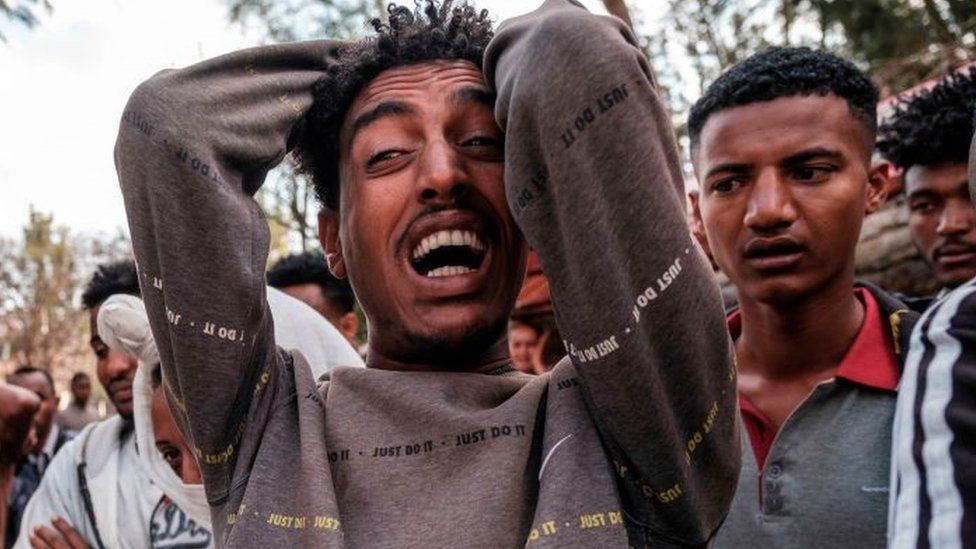
    A man reacts as people gather around the body of a young man that witnesses say was shot by security forces after breaking curfew, capital of Tigray on February 27, 2021
    IMAGE SOURCE, GETTY IMAGES Image caption, The conflict has caused a massive humanitarian crisis in Tgray

    Last month, Eritrea recalled reservists under the age of 55, and some were sent to the frontlines.

    In the last few days, fighting has been reported in many border areas, including Adigrat, Rama, Shiraro, and Zalambesa.

    But many Eritreans have resisted the latest call-up, saying they do not want to die in what they see as a needless war.

    Elderly men have also “been forced to be on a war footing in many areas and in most cases, the operation of the conscription is being carried out arbitrarily”, one source said.

    An Eritrean in the diaspora expressed concern about his brother and sister-in-law in Asmara.

    He said his sister-in-law had fled with the couple’s children to her parent’s village, and he feared that his brother had been detained.

    Authorities are also refusing to issue shopping coupons – used to buy basic commodities like sugar and oil at discounted prices – until families heed the call-up, sources added.

    ‘Hiding someone is treason’

    “What they had been doing in the countryside, they have started in the capital, abusing families with the local administration coupons, licences, and so on,” a source told the BBC.

    Residents have been brought to the offices of local administrations, and warned that “hiding one’s children or husband, or cooperating in desertion is considered as treason”.

    “They are putting a lot of stress on the people,” the source added.

    One woman in Eritrea said that many people were frustrated and bitter as war has consumed the lives of generation after generation.

    “People are expressing their opposition in various ways, but the security system is so merciless that it can commit any kind of atrocity against its people,” the woman added.

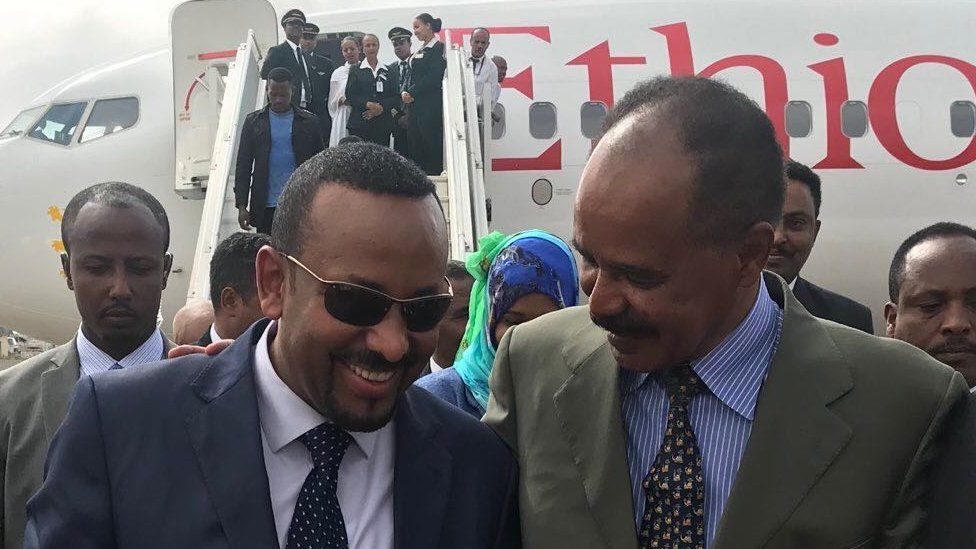
    Abiy Ahmed and Isaias Afwerki
    IMAGE SOURCE, FITSUM AREGA Image caption, Eritrea’s President Isaias Afwerki (R) and Ethiopia’s Prime Minister Abiy Ahmed, seen here in 2018, are staunch allies

    An Eritrean living in Europe said he feared for the safety of his family back home.

    His 67-year-old father was a reservist who had been deployed in his area, though he has not yet been ordered to fight on the frontlines.

    He was more worried about his 23-year-old sister, who, he said, had been detained at a military camp near the western city of Akurdet after being caught attempting to cross the border.

    “It has been a while since the family heard from her. She is now missing,” the man said.

    Sources said the authorities have been threatening to take detainees far away to areas with harsh conditions. The regime runs a network of secret detention centers where people are held for many years without due process of law, human rights groups say.

    The war in Tigray broke out in November 2020 following a massive fall-out between Ethiopia’s Prime Minister and Nobel Peace laureate Abiy Ahmed and the Tigray People’s Liberation Front, which formed the regional government, over a wide range of issues, including whether Ethiopia should retain an ethnically based federal system.

    The conflict comes against the backdrop of long-standing hostility between the Eritrean regime and the TPLF, which dominated a coalition government in Ethiopia until Mr Abiy’s rise to power in 2018.

    Under the TPLF, Ethiopia and Eritrea fought a border war that claimed the lives of about 80,000 people. An international tribunal later ruled that Ethiopia should hand over territory to Eritrea, but the TPLF-controlled government failed to do so.

    Eritrea regained its territory soon after the current war started in November 2020.

    In the 28 years since it gained independence from Ethiopia, Eritrea has fought wars with all of its neighbours – Yemen in 1995, Sudan in 1996, Ethiopia from 1998 to 2000, and Djibouti in 2008.

    Mandatory military service was supposed to last for 18 months but has become indefinite.

    In the last two decades, tens of thousands of young Eritreans have left the country to escape conscription, which includes forced labour.

    “This situation has affected the children of my martyred brother whom I considered as my hope. They have joined the army. What can I say except to beg for God to protect all the young,” said an Eritrean woman exiled in Italy.

  • ECOWAS, AU condemn coup d’etat in Burkina Faso

    The Economic Community of West African States (ECOWAS) and the African Union (AU) have condemned the recent military takeover in Burkina Faso, describing it as a setback to the restoration of constitutional rule.

    The two organisations have also asked the military junta to refrain from acts of violence and comply with a laid down process agreed with transition authorities to return the country to constitutional order by July 1, 2024.

    This was contained in separate statements issued by ECOWAS Chairman, Guinea-Bissau’s President, Umaro Sissoco Embalo, and AU Commission Chairperson, Moussa Faki Maham, at the weekend.

    In the country’s second coup in a year, Burkina Faso military leader, Paul-Henri Damiba, was on Friday deposed as army Captain, Ibrahim Traore, took charge, dissolving the transitional government and suspending the constitution.

    Traore said on Friday evening that the new group of officers removed Damiba due to his inability to deal with a worsening armed uprising in the country for which he initially toppled the civilian government.

    “ECOWAS finds this new coup a major setback at a time when progress had been made, particularly through diplomacy and efforts undertaken to ensure an orderly return to constitutional order by 1st July 2024”, the ECOWAS statement said.

    While reaffirming its “unreserved condemnation” of any seizure or retention of power by unconstitutional means, it demanded the scrupulous respect of the timetable already agreed upon with the Transition Authorities for a rapid return to constitutional order.

    “ECOWAS hereby warns any institution, force or group of persons who, by their actions, may hinder the planned return to constitutional order or contribute to undermining the peace and stability of Burkina Faso and the Region.

    “The ECOWAS Commission remains seized with developments in the country”, the statement said.

    The AU statement extended the AU Chair’s support for ECOWAS and expressed his deep concern about the resurgence of unconstitutional changes of the government in Burkina Faso and elsewhere on the African Continent.

    It said the support was in conformity with the Lomé Declaration of Year 2000, the African Charter on Democracy, Elections and Governance and the Accra Declaration on Unconstitutional Changes of Government.

    The Chairperson called upon the military to immediately and totally refrain from any acts of violence or threats to the civilian population, civil liberties, human rights, and ensure strict compliance with electoral deadlines for the restoration of Constitutional order by 1 July 2024, at the latest.

    “The Chairperson reaffirms the continued support of the African Union to the people of Burkina Faso to ensure peace, stability and development of the country,” the AU statement said.

  • Develop specific policy to protect persons with albinism — NGO advocates

    International non-governmental organization Engage Now Africa (ENA) has encouraged the government to create specific regulations to safeguard the lives of people with albinism.

    Although the constitution guarantees that every citizen will be protected from discrimination, stigmatization, and other forms of abuse, according to Kwame Andrews Daklo, the program coordinator for the organization’s albinism project, there is still a need for specific laws to protect the rights of particular groups.

    “You need to establish what their requirements are if you want to take care of a particular set of individuals, and then you need to create the law that protects them,” he said.

    He said this in an interview after a sensitisation programme held in Accra last Tuesday to educate the residents of Kokrobite in Greater Acrra Regionon misconceptions about albinism.

    The programme forms part of the organisations nationwide tour to sensitise the populace on albinism to promote inclusivity.

    Mr Daklo, therefore, called on the government to adopt the African Union’s (AU) Action Plan on the rights of persons with albinism in Africa, which spans from 2021 to 2031.

    Misconceptions

    The Education Director for the organisation, Bishop Francis Ansah, who took patrons through some myths, dispelled a popular misconception that persons with albinism do not die but disappeared.

    He explained that this was because persons with albinism were usually abducted and killed by people who use their body parts for rituals.

    Bishop Ansah also stated that persons with albinism die of natural causes common of them being skin cancer as a result of sun rays affecting their skin.

    “Persons with albinism do have vision problems due to the lack of pigment on their eyelids to protect their eyes from the ultraviolet sun rays,” he added.

    He explained that marrying a person with albinism did not necessarily mean one would have children with the condition, adding that it depended on the genetics.

    Furthermore, he made it clear that it was equally possible for dark skinned couples to give birth to a child with albinism if both parents carried the genes.

    “We are one people. They breathe, eat, sleep and talk just like we do so we need to embrace them as brothers and sisters and not stigmatise them,” Bishop Ansah added.

  • Africa needs to upgrade its food systems during Year of Nutrition, reports warn

    As Africa continues with its Year of Nutrition, which was declared for 2022 by the African Union, two leading agronomists have said that the time is right for African countries to transform their food systems to tackle hunger.

    Writing recently on the Devex website, a global media platform for the development community, Josefa Sacko, a leading agronomist and AU Commissioner for Agriculture, and Agnes Kalibata, President of the Alliance for a Green Revolution in Africa (AGRA), noted: “As the world scrambles to address the current crises, the continent is reminded that only Africans can take responsibility for building climate resilient, nutritious, and inclusive systems that leave no one behind — as envisioned by the Sustainable Development Goals.

    “This is why the African Union declared 2022 as the Year of Nutrition and why we must implement the national food systems pathways agreed upon at the UN Food Systems Summit in 2021.

    “Progress made to date will be undone if we fail to lead and fail to act now,’ Sacko and Kalibata argued.

    Last week in New York, President Nana Akufo-Addo echoed this call when he addressed the UN General Assembly, urging investors to support the roll-out of Africa’s lucrative agro-industry to guarantee global food security.

    In the wake of overlapping food systems shocks, such as climate-induced drought and floods, locust attacks, the Covid-19 pandemic, and conflict, the World Bank has warned that for each one percentage point increase in food prices, 10 million people are thrown into extreme poverty.

    If food prices stay this high for a year, global poverty could go up by more than 100 million people, it added.

    Sacko and Kalibata highlighted a number of achievements in African agricultural production after decades of stagnation, pointing out that the continent witnessed sustained agricultural growth of 4.73 per cent a year on average between 2000 and 2018.

    But, currently, “Africa is struggling to achieve the SDGs”.

    “The African Common Position and national food systems pathways will not happen without stakeholders at every stage of the food system taking ownership — governments, the private sector, finance institutions, producers, and civil society,” Sacko and Kalibata wrote.

    The IMF, in a recent blog, also picked up on the issue of weak food systems in Africa, pointing out that “climate change is intensifying food insecurity across sub-Saharan Africa, where Russia’s war in Ukraine and the pandemic are also adding to food shortages and high prices”.

    “One-third of the world’s droughts occur in sub-Saharan Africa, and Ethiopia and Kenya are enduring one of the worst in at least four decades.

    “Countries such as Chad are also being severely impacted by torrential rains and floods,” the IMF said.

    The multiple crises that have created rippling effects on Africa’s food systems were brought into sharp focus at this year’s Africa Green Revolution Forum (AGRF) in Kigali

    The AGRF is Africa’s premier platform for discussing the continent’s food systems and agricultural transformation and managing food crisis.

    “We have already heard from the governments of Ghana, Malawi and Rwanda at the AGRF on how they are implementing their food systems pathways to inspire other countries,” Sacko and Kalibata said.

    In New York, President Akufo-Addo made a direct call for more investors in the continent’s agro-industry: “Africa is ready for business. Africa needs you and you need Africa.”

    In Angola, Paramount Energy and Commodities has pumped $500 million into the country’s food sector, as it looks to develop the agro-industry in Africa.

    It said that poor processing capacity in Africa was leading to post-harvest losses of fruit and vegetables of between 35-50 per cent or 15-25 per cent for grains.

    The company said in a statement that sustainable, long-term, and self-sufficient solutions to the current global commodities crisis must be carried out rapidly, “otherwise even more people will face alarming levels of hunger and poverty”.

    Paramount pointed out that by enabling access to affordable energy and food supply the economies of Africa could “flourish, economic activity is stimulated, and local entrepreneurship encouraged, ultimately leading to a more equal distribution of wealth and power”.

    Sacko and Kalibata noted optimistically: “Farmers are increasingly using innovative approaches and scientific research combined with traditional knowledge to increase the productivity of their fields, diversify their crops, boost their nutrition, and build climate resilience.”

    Source: GNA

  • AU suspends participation in UN-led Sudan talks

    The African Union has suspended its participation in the UN-facilitated talks to end the Sudan political crisis.

    Its representative in the talks cited lack of transparency and exclusion of important political actors from the process.

    Mohamed Belaish, the AU representative in Khartoum was quoted by the state-run Sudan news agency as saying that “the African Union cannot participate in a process that is not based on transparency, honesty and non-exclusion”.

    He said the AU would “not participate in a process that does not respect all the actors and treat them with full respect and on an equal footing”.

    The AU and the regional bloc Intergovernmental Authority on Development (Igad) had previously backed the UN-led intra-Sudanese dialogue process, which began on 8 June.

    The dialogue was however postponed indefinitely a few days later, after the former ruling Forces of Freedom and Change (FFC) coalition refused to join its sessions.

    The FFC is demanding the military to leave power and return power to a civilian transitional government.

    Source: BBC

  • AU condemns reports of ill-treatment of Africans trying to flee Ukraine

    The African Union has condemned disturbing reports of ill-treatment of African citizens in Ukraine trying to flee the country but are being refused the right to cross borders safely. 

    Thousands of Africans and other foreign nationals, particularly students, have been scrambling to leave Ukraine following Russia’s invasion.

    But as hundreds of thousands throng to Ukraine’s various land borders, overwhelming authorities in neighbouring countries, reports have emerged that Africans are being treated differently and sometimes prevented from leaving.

    Several people have shared videos and testimonies on social media, denouncing discrimination at train stations and border posts.

    “Reports that Africans are singled out for unacceptable dissimilar treatment would be shockingly racist and in breach international law,” AU Chair, Senegal’s President Macky Sall, and Moussa Faki Mahamat, head of AU Commission said in a joint statement.

    The statement added that all people have the right to cross international borders during conflict, and should enjoy the same rights to cross to safety from the conflict in Ukraine, notwithstanding their nationality or racial identity.

    “The Chairpersons commend the efforts by African Union Member State countries and their embassies in neighbouring countries to receive and orientate African citizens and their families trying to cross the border from Ukraine to safety,” the statement concluded. 

    Find below the full statement:

    Source: www.ghanaweb.com

  • AU sides with Western Sahara on autonomy despite US decision

    The African Union has maintained that the fate of Western Sahara must be decided by a referendum, even after the US endorsed Morocco’s control over the breakaway region.

    Ebba Kalondo, spokesperson of AU Commission chair Moussa Faki Mahamat, says the AU supports the self-determination of Western Sahara through a free and fair referendum as decided by the UN Security Council.

    “The position of the African Union remains unchanged, in conformity with relevant AU and United Nations resolutions,” Ms Kalondo wrote on Twitter on Friday.

    Both Western Sahara and Morocco are members of the AU although Morocco sees Western Sahara as part of its territory.

    In 1982, Morocco quit the AU in protest after the then Organisation of African Unity (the precursor to the AU) admitted the proclaimed Sahrawi Arab Democratic Republic as a member.

    Morocco returned to the AU in 2017 after failing its bid to enter the European Union.

    Israel relations

    On Friday, Washington announced that Morocco should be the definitive government over Western Sahara.

    This came after Morocco re-established relations with Israel, becoming the fifth member of the Arab League to do so in under three months.

    The Polisario Front, which runs the government of the Saharawi Arab Democratic Republic, which controls about a fifth of Western Sahara, has often operated from refugee camps in Algeria.

    The entire Western Sahara region was initially a Spanish colony but was annexed by Morocco in 1975.

    While the region seeks independence, Morocco has argued for some autonomy but while having it run as part of its territory.

    UNSC resolution

    A United Nations Security Council (UNSC) resolution proposed a referendum voted for by natives of the region, to decide between independence and integration into Morocco.

    The Polisario Front favoured separation while the Kingdom of Morocco favoured integration.

    However, Morocco has been accused in the past of sending non-natives to live in the region in a bid to weaken the vote. The referendum has never been held despite the AU’s endorsement.

    With the US support of Morocco, the poll is unlikely to occur and this may just reflect another form of defiance to the UNSC’s decision, to which the US, as a permanent member, was part of.

    In October, the US sided with a UNSC resolution that extended the mandate of the United Nations Mission for the Referendum in Western Sahara (MINURSO) until October 31, 2021.

    Resolution 2548 (2020) was endorsed by 13 votes with none against, while Russian and South Africa abstained.

    The October resolution called for resumption of negotiations without preconditions. It noted the “need for a realistic, practicable and enduring solution to the Western Sahara question based on compromise”.

    On Friday, Washington announced that Morocco should be the definitive government over Western Sahara.

    This came after Morocco re-established relations with Israel, becoming the fifth member of the Arab League to do so in under three months.

    The Polisario Front, which runs the government of the Saharawi Arab Democratic Republic, which controls about a fifth of Western Sahara, has often operated from refugee camps in Algeria.

    The entire Western Sahara region was initially a Spanish colony but was annexed by Morocco in 1975.

    While the region seeks independence, Morocco has argued for some autonomy but while having it run as part of its territory.

    UNSC resolution

    A United Nations Security Council (UNSC) resolution proposed a referendum voted for by natives of the region, to decide between independence and integration into Morocco.

    The Polisario Front favoured separation while the Kingdom of Morocco favoured integration.

    However, Morocco has been accused in the past of sending non-natives to live in the region in a bid to weaken the vote. The referendum has never been held despite the AU’s endorsement.

    With the US support of Morocco, the poll is unlikely to occur and this may just reflect another form of defiance to the UNSC’s decision, to which the US, as a permanent member, was part of.

    In October, the US sided with a UNSC resolution that extended the mandate of the United Nations Mission for the Referendum in Western Sahara (MINURSO) until October 31, 2021.

    Resolution 2548 (2020) was endorsed by 13 votes with none against, while Russian and South Africa abstained.

    The October resolution called for resumption of negotiations without preconditions. It noted the “need for a realistic, practicable and enduring solution to the Western Sahara question based on compromise”.

    Source: theeastafrican.co.ke

  • ECOWAS, AU, UNOWAS commend Ghana for peaceful election

    The Economic Community of West African States (ECOWAS) has commended Ghana for the conduct of a peaceful election on Monday, December 7.

    A joint statement issued by ECOWAS, African Union and the United Nations Office for West Africa and the Sahel (UNOWAS) also urged political stakeholders and citizens to exercise patience and remain calm even as the Electoral Commission was yet to announce the final official results.

    The statement also urged the two leading political parties; NPP and NDC, to respect the spirit and letter of the Peace Pact they signed on December 4 and ensure that the peace of the country was preserved.

    “Furthermore, we appeal to political parties and their followers to refrain from any conduct that may undermine the successful conclusion of the electoral process. We also call on state institutions to continue to carry out their responsibilities with professionalism and transparency,” it added.

    Below is the full statement

    Source: Graphic.com.gh

  • Liberia loses membership at African Union: Owes $1.6 Million

    The Republic of Liberia has lost her full membership rights at the African Union, is now an observer at the African Union, one without a voting right, from being a founder to a shocking rejected stone, one who understood the purpose for which the organization was founded.

    Over the past three years, Liberia has struggled with meeting up with every single report to be submitted to the AU. These reports are the core responsibilities of being a member country, some of these reports either come in later or never do, with key diplomats at the AU headquarters truly bothered about the ministry of foreign affairs in Liberia and the Minister not understanding the core function of international diplomacy, starting with the African Union.

    Fingers pointing have never stopped, though the situation is pathetic and disgraceful, it is not known why it had to get thus far, the past administration of former President Ellen, left with about $800,000 united states dollars to the AU and the present administration have feared or even performed worst. These non-actions to international responsibilities, only closes the nation’s doors to benefiting and having a voice around graceful tables, most especially when we have had major scandals at the passport office in Liberia, which led to the suspension of the former Director of Passport, it has also placed the Nation’s credit rating on a downward low, limiting the capacity to borrow above a certain limit.

    Former Minister Findley who is now contesting for a senate seat in the Liberian senate is said to be a major point of interest in understanding the issues which lead to this unfortunate situation, which a founder of the African union, cannot today vote on nothing and have a period upon which even the observer statues may also be lost.

    It must be remembered, most of the discussions were held in Sanniquellie, Nimba county in Liberia which were finalized in addis and then where the Organization was formed with head quarters stationed today and in 1979, Liberia finally was able to host the general assembly or summit for the first time.

    Pundits are of the Opinion, this partial expulsion or demotion, does not and should not represent the position Liberia should be found at no time in her history. Today the AU is composed of 55 countries and Liberia was one of the most important members.

    Observer status is a privilege granted by some organizations to non-members to give them an ability to participate in the organization’s activities. … Observers generally have a limited ability to participate in the IGO, lacking the ability to vote or propose resolutions. It is with these in mind that Liberia must return as quickly as possible to the full membership statues of the African Union for the good of the nation her people and humanity.

    It must be known that as at today, shamefully a Nation who was a founding member of a major international Organization as Liberia, doe not have a permanent representative at the African union., this does not only spell doom of Liberia, but exposes the importance the Weah Led government attaches to international diplomacy and a clear understanding of the benefits therein.

    Source: allafrica.com

  • UN peacekeepers killed in Mali convoy attack

    Two UN peacekeepers have been killed in Mali in an attack on a convoy in the north of the country.

    The vehicles had stopped while travelling from Tessalit to Gao on Saturday when unidentified gunmen opened fire, a UN statement said.

    The victims are reported to be Egyptian.

    The head of UN force Minusma, Mahamat Saleh Annadif, condemned the attack and said every effort would be made to apprehend those behind it.

    More than 13,000 international troops are in Mali to contain violence caused by various armed groups in the north and centre of the country, including jihadists linked to al-Qaeda and the Islamic State group.

    Source: bbc