A major collaboration between the government and private investors is set to drive a large-scale expansion in cocoa farming, with more than 10,000 hectares earmarked for cultivation.
The initiative is part of broader efforts to stimulate economic activity and increase Ghana’s competitiveness in the global cocoa industry.
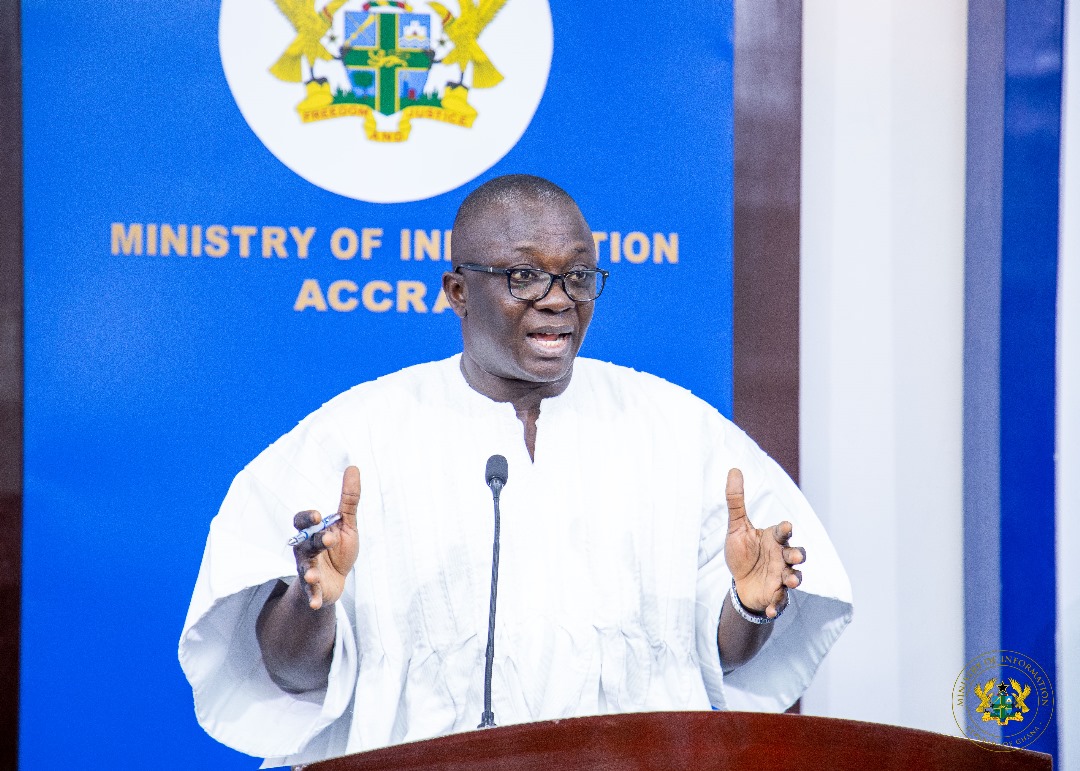
Minister for Food and Agriculture, Dr. Eric Opoku, shared details of the plan at a press briefing ahead of the Feed Ghana Project’s official launch on April 11.
He stressed that government would play a key oversight role to ensure the program leads to real benefits such as jobs, export growth, and value-added production.
“We are even bringing in some investors, they’re partnering Ghanaians to go into 10,000 hectares of cocoa production and they have assured that they will establish processing plant to add value before they export. So we are in touch with the private sector in the production as well as the marketing,” he said.
The announcement comes amid a troubling decline in Ghana’s cocoa sector. In the last quarter of 2024, the industry shrank by 21.4%, continuing a six-quarter trend of negative growth. Earlier in the year, output also fell sharply by 26% in both the second and third quarters.
To address broader challenges in agriculture, Dr. Opoku highlighted additional steps being taken, including new partnerships to improve market access for tomato farmers.
“In the short term what we have done is that we have had discussions with some tomato factories in Tema to connect to the farmers and provide ready market for them by deploying mini processing plants to the farmers in the hinterland,” he added.
These actions form part of a wider strategy to revitalize agribusiness and attract more private investment into Ghana’s food production value chain.
Addressing staff from various directorates during his tour of the ministry’s departments and agencies on Monday, January 27, 2025, the minister emphasized the need for teamwork and a focus on national development
“The politics is over. You may belong to whichever party. At the end of the day, we’re talking about Ghana and how to govern our country. So let us hang our political jackets and mobilise all that we have.” He cautioned.
He further warned that “if you’re still in the political mood and you think everything is about politics, then you become an obstacle. And every obstacle must be cleared.
You can’t say because you do not belong to this party, you want to work to sabotage government. I will not entertain that.”
Agriculture Minister Eric Opokuhas urged staff to collaborate with the government to drive improvements in the country’s agricultural sector.
Accompanied by Chief Director Paul Siameh, the minister has embarked on a nationwide working tour of various departments and agencies under the ministry. The purpose of the tour is to engage with staff and better understand the challenges facing the sector.
His first visit was to the Plant Protection Regulatory Services Directorate in Pokuase, where he emphasized the need to harness the expertise of the Directorate to boost crop production. He expressed his commitment to reducing Ghana’s dependence on imported produce such as onions and tomatoes from neighboring countries.
Currently, Minister Opoku is engaging with personnel from key directorates, including the Statistics Research and Information Directorate (SRID), the Directorate of Agricultural Extension Services (DAES), and the Human Resource Directorate at Ghana House in Accra.
The Peasant Farmers Association of Ghana (PFAG) has urged President John Dramani Mahama to appoint a youthful and experienced Minister for Agriculture as he prepares to form his new government.
In a congratulatory message to the President, PFAG stressed the importance of choosing a candidate with a solid agricultural background and the capacity to engage effectively with stakeholders across the entire value chain.
“We humbly request that you nominate a Minister for the agricultural sector who possesses a strong agricultural background, has the experience, is affable, youthful, and has the ability to connect with stakeholders across the value chain,” the statement read.
The association highlighted that selecting such a minister would be crucial for addressing systemic challenges in the agricultural sector and ensuring better collaboration with smallholder farmers.
President Mahama, meanwhile, has acknowledged the mounting pressure and expectations surrounding his promise of a lean government.
Speaking at the Presidential Dinner in Accra on Wednesday, January 8, Mahama noted the difficulties of balancing public expectations while ensuring effective leadership.
“You wouldn’t want to be in my shoes when you’ve promised to appoint only 60 ministers, yet thousands of people are sending in their CVs. Then, maybe some people will be disappointed,” the President remarked.
He further emphasized that while maintaining a smaller government size is significant, the collective contributions from all sectors of society remain essential for the success of his administration.
The Minister of Food and Agriculture, Bryan Acheampong, has urged farmers to abandon traditional farming methods, emphasizing that they hinder the agricultural progress the country seeks to achieve.
He encouraged the adoption of digital farming techniques to boost productivity and enhance food security.
In a speech delivered on his behalf at the Fifth Department of Development and Social Services (DDSS) Consultation of the Presbyterian Church of Ghana at Abokobi near Accra, the minister noted that modern technology, particularly digital innovation, is driving a revolution in agriculture. Technologies such as artificial intelligence are transforming farming practices and optimizing food production, he stated.
“The traditional way of farming is a hindrance to the level of agriculture stage we want to reach. The main reason our farmers still practice the traditional farming way is because they had successes. It has become extremely difficult to encourage them to incorporate these digital platforms in their farming practices,” Mr. Acheampong said.
He highlighted the ongoing digitalization of agriculture, which offers opportunities to improve the sector, but acknowledged the reluctance of smallholder farmers to adopt these new techniques.
Mr. Acheampong called on religious institutions, particularly the Presbyterian Church, to collaborate with the Ministry of Food and Agriculture (MoFA) in promoting the use of digital farming technologies. He also encouraged the church to leverage the Planting for Food and Jobs program to help address food security challenges.
The minister expressed optimism about the Ghana Agriculture and Agribusiness Platform (GhAAP), a web-based platform designed to provide farmers with access to vital resources such as real-time weather data, market information, and best farming practices. He urged farmers to utilize the platform to enhance their productivity.
“The digital service will offer reliable agricultural data,” he said, calling on farmers to embrace the information available on the platform to improve their practices.
The GhAAP platform aims to enhance coordination, transparency, interaction, tracking, and real-time reporting in the agricultural sector. However, several challenges remain, including high costs, limited skills, and inadequate infrastructure, as noted by the Council for Scientific and Industrial Research (CSIR).
Dr. Abraham N. O. Kwakye, Moderator for the General Assembly, reaffirmed the Church’s commitment to initiatives that address both the spiritual and physical needs of the community. He praised the Church’s long-standing contribution to Ghana’s agricultural sector and development, focusing on food security and improving farmers’ livelihoods.
Rebecca Tagoe Sabah, National Director for DDSS, highlighted the Church’s collaborative efforts in agriculture, health, and entrepreneurship, which contribute to 13 of the 17 Sustainable Development Goals (SDGs). She also pointed out the Church’s initiative to foster young entrepreneurs through the establishment of entrepreneurship hubs aimed at promoting youth employment.
Agriculture Minister Bryan Acheampong has refuted claims that the government is distributing GH¢3,000 to 800,000 farmers affected by the recent dry spell in the northern regions of Ghana.
The allegations, raised by Minority Leader Dr. Cassiel Ato Forson, suggested that the government was allocating GH¢3,000 per farmer as a political move to gain favour ahead of the December 7 elections. Dr. Ato Forson implied that the payments were meant to compensate farmers who suffered losses due to the prolonged dry season, but were also intended to influence their votes.
However, during a parliamentary session on Wednesday, October 16, Bryan Acheampong categorically denied these assertions. He clarified that the government is offering GH¢1,000 per farmer, specifically targeting those who are most vulnerable to the agricultural challenges caused by the harsh climate conditions.
“We have not said anywhere that we are giving GH¢3,000 to any farmer. We have not said anywhere. In my press conferences from the beginning, I mentioned that we are going to give GH¢1,000 per farmer,” the minister stated.
He further explained that the relief package is aimed at providing subsidized agricultural inputs, particularly fertilisers, to ensure the sustainability of farmers’ operations during this difficult period.
“If you can identify very vulnerable farmers in your constituency, we are allocating fertilisers to you to give to these very vulnerable farmers,” Acheampong added.
The minister’s clarification seeks to dispel any misunderstandings regarding the government’s efforts to support farmers facing severe challenges in the northern regions.
Food and Agriculture Minister, Bryan Acheampong, has stated that government efforts alone will not be enough to end illegal mining, known as “galamsey,” without the active involvement of local communities.
Speaking on Joy News’ PM Express Business Edition, the Minister stressed the need for a national dialogue that brings together all sectors of society to tackle the crisis effectively.
Mr Acheampong acknowledged that while the government has implemented various interventions, including deploying security forces, the challenge of illegal mining goes beyond the reach of military or police actions.
“If we spread 34,000 soldiers across the country, they won’t even be able to stop galamsey in the Ashanti region alone. We need communal effort, not just central government enforcement,” he stated.
He emphasized that although security personnel can enforce laws in the short term, illegal miners often return once they leave. This, he argued, is why a community-driven approach is essential to solving the problem. Mr Acheampong highlighted the crucial role of community members in protecting their own lands and resources.
“You need a mindset change by the people in the community. When you fight the people who are destroying your land and polluting your waters, security personnel can back you up. But if you wait for central government to bring in soldiers or police, they don’t come and stay there,” he explained.
The Minister also made it clear that addressing galamsey is not solely the responsibility of district authorities or political appointees. He pointed out that most people involved in local governance structures come from the same communities affected by illegal mining and should play a more active role in stopping it.
“Are you saying the DCE is the only one looking on for all this to happen? Galamsey is happening in communities, not in the DCE’s house,” he said.
Mr Acheampong called for a nationwide conversation on the issue, emphasizing that the fight against galamsey must extend beyond the capital and directly engage the affected communities.
“We need a national dialogue on this matter. We need to agree on the role of the community, civil society, security forces, political parties, and the media. Only then can we swing into action.”
He warned that without the involvement of local communities, the galamsey crisis would only worsen, threatening Ghana’s food security, water supply, and environment.
“What will a state of emergency do if you don’t have the community rising up to stop galamsey?” he asked, urging Ghanaians to take ownership of their environments and play an active role in the fight against illegal mining.
The Minister for Food and Agriculture, Dr. Bryan Acheampong, has announced an expectation of more than a 50% reduction in food prices in the upcoming months.
He explained that this projection stems from various government measures designed to boost food production and assist farmers who have been negatively impacted by the recent dry spell.
“Because of this, we are expecting prices to go down, up to April next year, and this is based on verifiable data at the Agric Ministry”, he said.
“We are beginning to see the results of prices of some foodstuffs going down around March and April this year”, he added.
Dr. Acheampong made this announcement during the PM EXPRESS Business Edition on October 10, 2024, in a conversation with host George Wiafe.
The discussion focused on Ghana’s food security status and the government’s recent initiatives to address the impact of the dry spell.
He revealed that the government has provided farmers with 200,000 metric tonnes of fertilizer as part of these efforts.
“Government is also working to invest about 80-million-dollar worth of inputs into the market, that will help keep prices at some very low levels going forward”, he added.
Dr. Acheampong assured that the government is making significant efforts to deliver relief specifically to farmers impacted by the recent dry spell.
“Over the years, the Agric Ministry has led a lot of initiatives that extend support to farmers and the data is there for everyone to verify the beneficiaries”, he said.
He pledged that all farmers impacted by the dry spell would receive adequate support to enhance the country’s food supply.
“We have instituted several measures that will ensure that the affected persons get the inputs needed”. Speaking on the interest-free loans extended to farmers, Dr Acheampong said the aid will go to commercial farmers who suffered from the dry spell.
“We have about GH₵50 million and the government is planning to use that to take up the interest cost on these loans”, he revealed.
He emphasized that the loans would not be mere “handouts” but would be funneled through the Agricultural Development Bank to assist farmers.
Rejecting claims of a bleak food supply outlook, he maintained that the future appears promising.
He revealed that the ministry has successfully secured approximately GH₵3.6 billion of the GH₵8 billion target.
Food and Agriculture Minister, Bryan Acheampong, has revealed that the government had anticipated the dry spell experienced this year and had projected its impact as far back as February.
In a recent interview on Joy News’ PM Express Business Edition, Bryan Acheampong shared that the Ministry took proactive measures to mitigate the effects of the dry spell, which many feared would lead to a food crisis.
“We knew about the dry spell and had projected its impact as far back as February,” he disclosed, highlighting the Ministry’s early efforts to protect Ghana’s food systems. “We’ve been working to ensure that if it did happen, we would not feel that much of an effect on our food systems,” he added.
The Minister credited the Ministry’s strategic planning for the stability in food prices despite the drought, which could have otherwise had a more severe impact. “It is not something that just dropped out of the sky; it’s something that we planned for, and we are beginning to see the fruits of it,” he emphasized.
However, in August, the Ministry of Food and Agriculture (MoFA) acknowledged that it had not predicted the full severity of the drought affecting northern Ghana. Farmers in the region, having faced over a month without rain, called for government support to address the extensive damage to their crops.
Tanko Bagbara, MoFA’s Head of Public Relations, admitted, “We did not foresee this.” He explained that despite collaboration with the Meteorological Agency, the intensity of the drought caught them off guard.
“The Ministry of Food and Agriculture has worked closely with the meteorological station over the period, and we do heed their advice, but we did not foresee this.”
MoFA has since begun collecting data on affected farmers to prepare for government intervention. “The Ministry is collating this data to inform future decisions,” Tanko confirmed.
Bryan Acheampong acknowledged that while maize prices had risen due to lower production, other staple food prices had remained stable or decreased, thanks to the Ministry’s actions. He stated, “By now, the northern grains should have been on the market. It is not so, but the price of food should have been way through the roof. Yet, there’s a lot of food on the market.”
He noted that while the maize market faced challenges, the overall food supply remained resilient. “Except for maize, every other staple that we consume, the price is either coming down or has been relatively stable,” Acheampong pointed out.
Minister of Food and Agriculture, Dr. Bryan Achaempong, has stated that major cocoa processors, as opposed to banks, will be the main providers of funding to address any possible financial gaps the Ghana Cocoa Board (Cocobod) could encounter ahead of the 2024/2025 season.
In response to concerns regarding local banks’ readiness to finance the cocoa regulator’s bean purchases, he clarified that the “alternative funding” the government is pursuing will largely involve direct agreements with processing companies at prevailing market prices.
“We are going to deal with them directly at world market price, which can bring more benefits to our farmers,” Dr. Acheampong stated during the monthly Economic Press Briefing for August held at the Ministry of Finance. He however declined to name specific companies due to ongoing negotiations.
Dr. Achaempong’s remarks come as Cocobod announces a shift in its cocoa financing strategy for the 2024-2025 season, transitioning from a heavy dependence on syndicated loans to more direct, uncollateralized sales.
Although this departure from over three decades of tradition by the cocoa regulator has been met with widespread skepticism regarding its motives and viability, the Agriculture Minister contended that the change is designed to leverage rising cocoa prices and enhance benefits for local farmers.
Finance Minister Dr. Mohammed Amin Adam had earlier assured stakeholders that the country would continue using syndicated loans for cocoa financing in the upcoming 2024-2025 season, though with notable adjustments.
He disclosed that while Cocobod initially aimed to secure up to US$1.5 billion through syndication, the actual figure is expected to be closer to US$600 million. This marks a considerable reduction from previous years, when syndicated loans typically ranged between US$1 billion and US$1.2 billion.
The Minister for Food and Agriculture offered additional insights into this strategic change, explaining that Ghana intends to increase its reliance on uncollateralized sales, potentially raising them from the usual 10-30 percent of total sales to a significantly higher proportion.
This shift is influenced by recent market dynamics, which have seen cocoa prices soar from US$2,800 per tonne to nearly US$10,000 per tonne.
He noted that these substantial price hikes have created a disparity between committed sales prices and current market rates, underscoring the drawbacks of relying heavily on pre-season syndicated loans that lock in prices and can prevent farmers from benefiting from market upturns.
“We are aiming to flip our sales model. Traditionally we’ve relied heavily on syndicated loans, which account for 70-90 percent of our sales. We are now looking to increase uncollateralised sales to 30 percent or more of total sales,” he explained.
“We have committed to contracts at US$2,800, but the market is now at US$10,000. Our farmers see these high world market prices and demand more money, but earlier commitments bind us,” he added.
This new strategy is anticipated to enable more flexible pricing and potentially greater earnings for Ghana’s cocoa farmers, who have frequently missed out on global price hikes due to prior commitments made through syndicated loans.
By shifting away from fixed-price pre-season loans, the government aims to ensure that local producers reap more of the benefits from the rising global cocoa prices.
The shift in financing strategy coincides with a period when Ghana is facing broader economic challenges. Dr. Adam noted that ongoing negotiations are taking place with private banks and contractors regarding an outstanding US$2.8 billion debt, adding that the government has directed its advisors to present proposals to commercial creditors.
Minister for Food and Agriculture, Dr Bryan Acheampong, has clarified that the ongoing drought affecting parts of the country should not be viewed as a failure of the government’s ‘One Village, One Dam’ (1V1D) policy.
In his remarks, the Minister emphasized that the 1V1D initiative was not designed to address the broader irrigation challenges that farmers are currently facing.
This clarification comes in the wake of significant losses incurred by farmers in eight regions due to a lack of rainfall. The drought has not only jeopardized crop yields but also threatened the livelihoods of countless families who rely on agriculture for their sustenance.
Amid these difficulties, some have questioned the effectiveness of the 1V1D policy and its capacity to support farmers during such critical times.
Addressing these concerns during an interview on Adom FM’s morning show, Dwaso Nsem, on Tuesday, the Abetifi Member of Parliament (MP) firmly defended the 1V1D initiative, explaining that its purpose differs from what is required to mitigate the current drought situation.
“In the situation we find ourselves, what we need is irrigation. All the 574 dams were to hold rainwater and they have been extremely effective and never a failure,” Dr. Acheampong stated.
He further clarified, “With the irrigation, it will require us to pump water from a big water source into a big canal or dam to hold the water.”
The Minister’s comments underscore the distinction between dams, which are designed to store rainwater, and irrigation systems, which require more complex infrastructure to distribute water from larger sources to farmlands.
He maintained that the 1V1D policy has been successful in fulfilling its intended purpose of rainwater storage, despite the challenges posed by the current drought.
Dr. Acheampong’s remarks aim to address the growing public debate over the role of the 1V1D policy in supporting agricultural productivity, particularly in times of adverse weather conditions.
While acknowledging the hardships faced by farmers, the Minister highlighted the need for a broader understanding of the different agricultural infrastructure required to tackle varying challenges.
The drought has brought renewed focus on the need for more comprehensive irrigation solutions to ensure the resilience of Ghana’s agricultural sector.
Close to five hundred thousand (500,000) individuals across eight regions of Ghana have been affected by the ongoing dry spell.
These regions account for approximately 62% of the country’s grain production. The regions are Bono, Bono East, Oti, Northern, North East, Savannah, Upper East, and Upper West.
This was disclosed by the Minister for Food and Agriculture, Bryan Acheampong, while addressing the press on Monday August 26.
According to the Agric Minister, farmers residing in these regions have suffered losses amounting to approximately GH₵3.5 billion in investments with a potential revenue loss of GHS10.4 billion.
He explained that approximately 871,745 hectares of their farmlands have been destroyed.
The Agric Minister stated that the most severely impacted crops across these regions include maize, rice, groundnuts, soybeans, sorghum, millet, and yam
Mr. Acheampong also mentioned that initial assessments show around 928,523 farmers cultivating 1,857,000 hectares are vulnerable.
He added that if the crops fail entirely, these farmers stand to lose an estimated GH₵7.4 billion in investments.
He added that “About 988,523 farmers cropping 1.8 million 557 thousand hectares are at risk. These farmers will lose an estimated investment of 7.4 billion Cedis if there is total crop failure. The corresponding revenue law is estimated at 22.2 billion.
“The affected farmers have lost an estimated investment of GHS 3.5 billion with a corresponding potential revenue loss of GHS10.4 billion”
“The corresponding revenue loss is estimated at GH₵22.2 billion representing 10% of agriculture GDP of GH₵220 billion investment”.
In response to the ongoing dry spell, the government has with immediate effect placed a ban on the export of grains including maize, rice, and soya bean.
It has also announced the construction of nineteen (19) small earth dams which will cover six hundred and five (605) hectares in the affected regions.
The dams will enhance irrigation, boost crop production, and support the livelihoods of individuals in the communities.
Government is set to construct nineteen (19) small earth dams which will cover six hundred and five (605) hectares within the Northern parts of the country.
The regions to benefit from this project include the Northern, Upper West, Upper East and Eastern regions.
Government’s initiative aims to enhance irrigation, boost crop production, and support the livelihoods of individuals in the communities.
This was revealed by the Agric Minister, Bryan Acheampong, while engaging the press on Monday, August 26.
The Minister also announced that government has also initiated processes for the construction of 13 irrigation facilities which will add 15,000 hectares of irrigable land.
In addition to the construction of these nineteen small earth dams, the Minister outlined a broader strategy to further support agricultural development.
This includes the establishment of 500 boreholes equipped with solar-powered irrigation systems, which will provide a sustainable and efficient water source for farming.
Furthermore, he added that the plan involves the procurement of 1,000 water pumps designed to facilitate the extraction of water for vegetable cultivation.
These measures are intended to enhance irrigation capabilities, improve water availability for crops, and support year-round vegetable farming in the region.
“The ministry has this year invested in the development of irrigation facilities in the Northern, Upper West, Upper East and Eastern regions covering a total of a irrigable area of 4.4700 hectares to expand crop production.
“Procurement processes have also commenced for the construction of 13 irrigation facilities which will add 15,000 hectares of irrigable land. The construction of 19 small earth dams covering a total area of 605 hectares are also currently in progress in the Northern, Upper East and Upper West Regions.
“This irrigation schemes are complimented with the construction of 500 boreholes for solar pump irrigation systems and the procurement of 1,000 pumps for water extraction for vegetables production, when completed, these additional schemes will enable the irrigation of 6,250 hectares of farmland for all year round vegetable farming,” he added.
Minister for Food and Agriculture, Bryan Acheampong has been sighted in a video revealing the present price for a box of tomatoes at an undisclosed market.
In the video gone viral, the Minister while in the presence of traders seated, noted that one could purchase a box of tomatoes at prices ranging from GHC400 to GHC500.
He suggested a further decline in the prices in months nearing the end of the year as the MOFA-engineered tomatoes make their way into the market.
His video is believed to be a response to concerns over the escalating prices of tomatoes for some months now.
Minister of Agriculture, Hon. Bryan Acheampong has shown that the prices of a box of tomatoes have drastically dropped to as low as 400 and 500 cedis. Recently, the prices of tomatoes on the market skyrocketed as high as GHS3,500 per box, sparking a lot of complaints from… pic.twitter.com/ot7xE41cBB
In May this year, a female trader in Ghana expressed concern over the escalating prices of tomatoes.
In an interview, she mentioned that a bag of tomatoes costs GHC8,000, while a basket is sold at GHC1,500. A bucket, she said was priced at GH200. As such, a single tomato was sold for GHC5.
She also mentioned that some of her customers are opting for tomato puree as an alternative due to affordability issues and therefore called on the government to intervene and help control the rising cost of tomatoes.
The price of a box (adaka) of tomatoes increased by more than 360% in less than six months: January 2024 – GH¢1,500, June 2024 GH¢6,000 to GH¢7,000.
The rise in tomato prices can be attributed to many factors, including a delayed monsoon, insufficient production, and high temperatures.
Ranked 10th among 20 items with the highest inflation rates, fresh tomatoes have seen a substantial increase compared to the national inflation rate of 25%.
Tomato prices caused quite a stir on social media just around the time the Ghana Statistical Service (GSS) revealed a staggering 46% inflation rate for the vegetable in its April Consumer Price Index report.
Before the GSS released its April figures, complaints flooded social media platforms like Twitter. Users from various regions lamented the exorbitant prices of tomatoes. Many shared photos depicting small quantities of tomatoes being sold at premium rates.
The surge in tomato prices has been attributed to a supply shortage, exacerbated by the off-season period. Ghana has had to import tomatoes from neighbouring Burkina Faso, which practices year-round tomato farming.
Minister for Food and Agriculture, Dr. Bryan Acheampong, credits the noticeable decrease in kenkey prices to the surplus of maize in the market, a direct outcome of the effective implementation of the Planting for Food and Jobs Programme (PFJ).
During an interview on the Citi Breakfast Show on Wednesday, March 13, the Abetifi MP highlighted a widespread reduction in kenkey prices nationwide, with some areas recording an average price of GH¢2.
Although acknowledging slight price variations, Dr. Acheampong mentioned that kenkey could be found priced between GH¢2 and GH¢5.
“There is a lot of maize out there too and if you look at the price of maize on the market, it tells you that there is a lot of it out there and that is why the price of Kenkey is going down. The average is about 2 cedis and 3 cedis. I can get you kenkey for 2 cedis, I can get you kenkey for 4 cedis, I can get you kenkey for 5 cedis.”
He emphasized collaborative efforts to enhance rice production, citing partnerships with companies like Yara that have led to a surplus of rice in various regions.
Furthermore, he pointed out the surplus of maize in the market as a contributing factor to the decrease in kenkey prices.
Dr. Acheampong assured the public that his administration has effectively managed to mitigate food inflation nationwide.
Encouraging farmers to participate in the registration process, he underscored the significance of enhancing food production and agricultural practices in the second phase of the Planting for Food and Jobs Programme (PFJ Phase 2).
The Ministry of Agriculture commenced a nationwide registration of farmers on Tuesday as part of PFJ Phase 2, initiated in August last year. This phase aims to establish an input-credit guarantee system for farmers, addressing challenges encountered during the program’s initial phase.
Agriculture Minister Bryan Acheampong faced boos from the audience over the weekend as he sought to undermine former President John Dramani Mahama’s proposal for a 24-hour economy.
While acknowledging the merit of the proposal at an event in the Central Region, Acheampong contended that Mahama, due to the electricity challenges encountered during his presidency, was not the suitable individual to put forth such an initiative.
His remarks were met with disapproval from some members of the audience.
“The 24-hour economy is good news, but even in the 8-hour economy, he (Mahama) was unable to keep the lights on… the 8-hour economy he failed at and bequeathed to us, is it 24 hours that he can manage?” Acheampong asked.
Then there were boos from some parts of the crowd, and some people started chanting “away, away.”
Despite the jeers, the minister—who also happens to be the Abetifi Member of Parliament—maintained his position.
Agribusiness minister jeered for undermining the idea of a 24-hour economy.
The 2024 NDC flagbearer, Mahama, recently suggested a 24-hour economy, claiming it would help create jobs and spur economic growth, particularly for young people.
The leader of the New Patriotic Party and his greatest opponent in the 2024 presidential contest, Dr. Bawumia, has countered that the policy is unimaginative.
“This is one idea that John Mahama thinks that he has brought, it is a bad idea, it is an idea that hasn’t been thought through so I want you to compare me to John Mahama, who has the ideas to transform this economy.
“The track record of John Mahama doesn’t show innovative thinking, it doesn’t show ideas, the track record of Dr Bawumia is idea after idea. I have my own priorities and I have my own vision, when I become president I will bring more ideas and you will hear them very soon,” Dr Bawumia stated a recent campaign stop in the Northern Region.
Agric Minister Bryan Acheampong was booed while giving a speech at Bremen Asikuma during Odwira Festival recently.
Ghana is currently the highest exporter of yam on the globe, and this is according to the Minister for Food and Agriculture, Bryan Acheampong.
Speaking on Citi TV’s The Point of View, Mr Acheamong indicated that such achievement is ridden on the government’s Planting for Food and Jobs (PFJ) programme.
He noted that the programme has ensured that commodities such as maize and plantain are in excess supply.
“Today, we produce more maize than we consume, and we produce more yam than we consume, indeed, we are the largest exporter of yam in the world. We also produce more plantain than we consume.”
“I am saying on authority that we produce more maize in this country than we consume and the fact that the poultry farmers are unable to buy the feed does not mean the programme has failed.”
Meanwhile, the country is recording a decline in the importation of rice. According to the Agric minister, rice importation has been trimmed to 500,000 metric tons of rice per year from 950,000 metric tons per annum.
“We were importing 950,000 metric tons of rice per annum, and today, it is about 500,000 metric tons of rice and so PFJ has halved the importation of rice,” he said.
"Ghana is now highest exporter of yam in the world. Planting for food and jobs program halved the country's rice importation" – Minister for Food and Agriculture Dr. Bryan Acheampong refutes claims Government's Planting for Food and jobs program has failed.
Minister for Food and Agriculture, Bryan Acheampong, has given a resolute assurance to farmers nationwide regarding his commitment to collaborate closely with them. The aim is to enhance yields and productivity, simultaneously curtailing the reliance on food crop imports into the country.
He conveyed that the Ministry has initiated strategic measures to ensure that farmers across the nation gain access to essential inputs and other production costs, thereby alleviating their burdens and augmenting their earnings.
The Minister provided this reassurance during a meeting with farmers, traders, and aggregators from the Peasant Farmers Association of Ghana (PFAG) at his office in Accra. The discussions encompassed crucial topics influencing the sector’s growth.
Subjects ranged from the ongoing onion crisis leading to the impoundment of over 60 truckloads of imported onions at the borders of Benin and Burkina Faso, the forthcoming implementation of Planting for Food and Jobs (PFJ) 2.0, to the implications of the newly enacted Tax Exemptions Act on the prices of agricultural inputs.
Addressing the onion crisis, Mr. Acheampong stated that the government’s primary objective is to boost domestic onion production, ultimately reducing and eventually ceasing imports. He stressed that while diplomatic efforts are underway to address the locked-up goods, the Ministry’s immediate focus is to unite onion producers and devise a strategy to surmount the present challenges hampering sufficient local production.
Regarding PFJ 2.0, the Minister highlighted the modalities formulated to address key farmer concerns. With the aggregator system integrated into PFJ 2.0, farmers will access seeds, fertilizers, extension services, mechanization, and post-harvest services, only reimbursing the expenses after the harvest.
Regarding the selection criteria for aggregators, the Minister assured that existing ones would not be marginalized by the program. The Ministry remains dedicated to ensuring that the right aggregators working closely with farmers are chosen.
The Minister underlined that the program embraces inclusivity, encompassing all farmers, including youth, female farmers, and aggregators.
Regarding the Tax Exemptions Act’s impact on agricultural prices, the Minister acknowledged the issue and disclosed that cabinet is considering the inclusion of agricultural inputs for exemptions.
“However, despite the ongoing process, the Ministry continues to approve requests for exemptions for agricultural inputs by importers,” he added.
He bemoaned the fact that these importers had not adjusted their rates to reflect these exemptions and pleaded with them to do so.
He said, “Even though the proposal has been sent for cabinet’s approval, as of August alone, we have approved over 60 exemption requests from importers. The problem is when prices go up, no matter what we do, our business is unwilling to bring prices down and that is the problem. Irrespective, I will do all I can to ensure your request is granted.”
Dr. Charles Nyaaba, the Executive Director of PFAG, expressed admiration for the Minister’s steadfast commitment to collaborating with farmers for the betterment of the sector.
He assured the Minister of the Association’s collaboration and assistance to facilitate the realization of his enduring vision to establish food self-sufficiency within the country.
He appealed to farmers, participants within the value chain, and service providers to collectively contribute towards transforming Ghana into a regional food hub. He encouraged them to also present their ideas, as the Minister is receptive to input from diverse stakeholders.
Minister for Food and Agriculture, Bryan Acheampong, has indicated that businessmen Osei-Kwame Despite and Dr Ernest Ofori Sarpong have announced their intention to veer into poultry farming.
Osei-Kwame is the Chief Executive Officer of Despite Firm Limited, a trade company with subsidiaries in the media industry, including UTV, Peace FM; whereas Dr Ernest Ofori Sarpong is the Chief Executive Officer of Special Ice Limited, Co-founder of Best Point Savings Loan.
In an interview on Peace FM’s Kokroko with host Kwame Sefa Kayi, Mr Acheampong recounted that the two men pitched the idea of investing in poultry farming while he engaged some individuals.
He noted that upon concluding his discussion with some stakeholders, Osei-Kwame Despite and Dr Ernest Ofori Sarpong approached him. He then informed him of how much would be needed to set up a poultry farm business.
According to the Agric Minister, all they then asked for was land.
“So I am working on a land for them at Dawhenya and they have assured me that they will build one of the biggest poultry farms in this country. So when you share your challenges, you get them resolved. It is good for business and the country,” he added.
Poultry production in Ghana has a great value on the country’s economy, accounting for 14% of the country’s total gross domestic product, according to reports as of 2022.
Minister for food and agriculture, Bryan Acheampong has recently revealed that President Nana Addo Dankwa Akufo-Addo is poised to announce series of measures aimed at benefiting cocoa farmers. This eagerly anticipated announcement is expected to deter farmers from resorting to illegal mining activities by presenting them with compelling alternatives.
While the Minister refrained from providing specific details in advance of the President’s announcement, he expressed his confidence that the forthcoming measures will offer significant incentives to cocoa farmers.
“I don’t want to take the wind out of the president’s sail. There’s a big announcement coming for Cocoa farmers in this country. It is unprecedented. There’s going to be a big, big, big announcement for cocoa farmers,” he was quoted by myjoyonlline.com.
“Cocoa farming is going to change in this country because we know it is an important crop, and we know the toils of farmers,” he added.
The Minister further added that the benefits of leasing cocoa lands to illegal miners may be juicy in the interim but cannot match the benefits that cocoa farming will bring in the long run.
“I don’t think the money the ‘galamsey'[illegal miner] person will give you if you aggregate it over ten years, it will beat what cocoa will give you,” he argued.
“Yes, if you compare what you will get from Cocoa to that of what the galamsey person will give you, maybe the galamsayers money will be so much for this year, but what happens next year, next five years, and next ten years? You may be coerced to give out your property but in the long term, you will lose,” he explained.
According to him, the Nana Addo Dankwa Akufo-Addo-led government is doing all it takes to stabilize and reboot the economy which has suffered from the aftershocks of COVID and the ongoing Russian-Ukrainian war.
He told party faithful at a rally in the Eastern Region on April 8, that by June, July 2023, a deal will be secured with the multilateral lender.
“Due to the challenges encountered by the economy in recent times the opposition NDC think they will win power.
“But the government has instituted measures to salvage the situation with impact already showing in the reduction in fuel prices and appreciation of the Ghana cedi against the major foreign currencies.
“The NDC was thinking that the election will be held at a period where the economy has been entangled with difficulties but the government will fix the challenges before that.
“I promise that by June/July this year the government will be able to secure a deal from the IMF to help drive the economy out of its current economic challenges and this will subsequently collapse the NDC,” he said in Twi.
Government hoped to secure a Board approval of the IMF for a US$3billion facility after securing a staff-level agreement late last year.
Government is looking to secure external debt restructuring agreements after a tumultuous domestic debt exchange programme was passed earlier this year.
A March ending timeline was missed but there has yet to be any official communication of when the approval is likely to be secured.
Former New Patriotic Party (NPP) constituency chairman for New Juaben North has pledged to resign from politics should Vice President Dr. Mahamudu Bawumia be defeated in the NPP flagbearership contest.
According to Kwadwo Boateng-Agyemang, Dr. Bawumia’s defeat will merely confirm that politics is in fact a game of deception.
He was speaking on Asempa FM’s Ekosii Sen.
“Mark it on the wall, I swear by the grave of my father who passed when I was 10 that I will quit politics because it will give me a clear picture that there is indeed no truth in politics,” he stated without mincing words.
Former New Juaben North Chairman
About five leading members of the governing NPP including former Energy Minister; Boakye Agyarko, former Agric Minister; Dr Owusu Afriyie Akoto, former Trade Minister; Alan Kyerematen, and former General Secretary Kwabena Agyapong have all expressed interest in contesting the flagbearership slot of the party.
Many have also tipped Vice President Dr Mahamudu Bawumia for the position but he is yet to officially make his intentions known.
But Mr Boateng-Agyemang has expressed conviction Dr Bawumia will gain a resounding victory, adding the grounds are fertile for him.
“I know what is happening on the grounds and you can go and conduct a survey to ascertain that fact,” he added.
An aide to former President John Dramani Mahama, Joyce Bawah Mogtari, has described moves by the Agric Minister to sell foodstuff at its premises to control prices as a disaster.
According to her, it is unbelievable that the “incompetent Minister for Agriculture actually went ahead to sell plantains at the ministry”.
In a Facebook post, she said if this was the standard for measuring the performance of the sector minister, then all farmers would be excellent Agric Ministers.
“I simply can’t believe the obviously failed and incompetent Minister for Agriculture actually went ahead to sell plantains in the ministry. Is plantain the only food item Ghanaians eat and which is expensive to buy today?
“How can the sale of plantains at controlled prices ensure food security for our entire population?
“And should all Ghanaians move to the ministry in Accra to buy the plantain at the controlled prices?”, the former aide added.
As part of efforts to control prices of foodstuff, the Ministry of Food and Agriculture began selling foodstuff within its premises to serve people in Accra.
The products are brought from the farms to the ministry and sold to consumers at a cheaper price.
However, when the project commenced, plantain was the only item at the venue.
An aide to former President John Dramani Mahama, Joyce Bawah Mogatri, has described moves by the Agric Minister to sell foodstuff at its premises to control prices as a disaster.
According to her, it is unbelievable, the “incompetent Minister for Agriculture actually went ahead to sell plantains in the ministry” while quizzing if plantain is the only food item Ghanaians eat.
In a Facebook post, she said should this be a standard of measuring the performance of the Agric Minister, then all farmers will qualify to be Agric Ministers.
“Who would have thought that six years down the line, a debate about food prices will ensue and government will pour plantain at the centre of Ghana’s ministerial enclave to sell at controlled prices? I simply can’t believe the obviously failed and incompetent Minister for Agriculture actually went ahead to sell plantains in the ministry. Is plantain the only food item Ghanaians eat and which is expensive to buy today? How can the sale of plantains at controlled prices ensure food security for our entire population? And should all Ghanaians move to the ministry in Accra to buy the plantain at the controlled prices?”
“What a disaster! If this is the measure of a Minister’s performance then all our farmers would be excellent Agriculture Ministers,” she shared.
As part of the efforts to control prices of foodstuff, the Ministry of Food and Agriculture began selling foodstuff within its premises to serve people in Accra.
The product is brought from the farms to the ministry and sold to consumers at a cheaper price.
However, when the project commenced, plantain was the only item at the venue.
But the Ministry announced that some other foodstuffs will be added as time goes on.
It is based on this Joyce Bawa has raised concerns about the project describing it as a disaster.
The General Agricultural Workers Union (GAWU) has bashed the Ministry of Food & Agriculture’s decision to have a farmers’ market at its premises to sell foodstuff to Ghanaians.
Speaking on the Citi Breakfast Show, the General Secretary of GAWU, Edward Kareweh said it was a bad idea to conceive the initiative without carefully evaluating the forces driving up the prices of foodstuff in the various markets.
He said the initiative is just a knee-jerk measure and its sustainability is highly in doubt because the entire procedure is shredded in secrecy.
“What is their budget for this exercise? We are asking this because, at the beginning of the year, the Ministry indicated to all of us that they were reducing their support to farmers to produce. The subsidy on fertilizer and subsidized seed which was 36% in 2021 has been reduced to 15%. The volume of fertilizer that was subsidized last year has been cut down to only a quarter.”
“The quality of fertilizer that gets to the farmers is not the same as what they claim they subsidized. There are real challenges facing agricultural production in this country. The other part has to do with post-harvest losses. The Ministry has to work to ensure we minimize post-harvest losses. Records have that 60 percent of yam produced never reaches the table of the consumer.”
Mr. Karaweh called for a re-evaluation of the foodstuff supply chain and said that what the government needs to do is “to facilitate the movement of foodstuff from the rural areas to the urban areas” so they can be sold at reasonable prices.
The initiative, which commenced on Friday, November 11, was first revealed by the Agric Minister Dr. Owusu Akoto Afriyie during a meeting with farmers in Sefwi Wiawso in the Western North Region.
Minister for Food and Agriculture, Dr. Owusu Afriyie Akoto says his outfit through its price formation analysis has found no justification for the high retail prices of food across various cities in the country.
Some Ghanaians say market women have capitalized on the high price of fuel and are selling goods to customers at abnormal prices to make undue profits.
The country’s inflation rate is currently beyond 40 percent with the price of food as a major driver.
Answering questions in Parliament on Wednesday, the Minister said this development of profiteering by market women must be investigated.
“There are speculations that it could be due to some traders making supernormal profits. It is something that has to be investigated but in terms of price formation analysis, there is nothing to justify the doubling or tripling of the retail price of food in the major cities.”
Dr. Owusu Afriyie Akoto also insisted that the cost of transportation is not the cause of the current food price hikes.
“Some are saying it is the market women who are making supernormal profits, some are saying it is traders. But I definitely know that with this analysis it is not transportation because transportation is included in the calculations that my Regional Directors of Agriculture have given me,” he said.
The Minister also retierated his outfit’s plans to bring food from the local areas to Accra in order to compete with the high cost of food on the market.
President Lazarus Chakwera of Malawi has fired Agriculture Minister Lobin Lowe and his deputy Madalitso Kambauwa Wirima for “incompetence and gross negligence.”
President Chakwera made the announcement on Tuesday evening during a televised address.
The agriculture ministryis accused of botching the implementation of a programme in which Malawian rural farmers are provided with subsidized fertilizer and farm inputs.
Mr Lowe has not commented on the accusations.
The president has since appointed Sam Kawale, formerly the lands minister, to replace Mr Lowe.
The president said more changes in his cabinet would be coming in due course.
Food and Agriculture Minister, Dr. Owusu Afriyie Akoto says government has banned the export of foodstuff to neighbouring countries.
Dr. Akoto says the move is aimed at preserving enough food in the country following reports of food shortages across the globe.
Speaking to journalists in Kumasi, Dr. Owusu Afriyie Akoto said Ghana is producing enough food.
“We have officially banned the export of food to neighbouring countries to make food security even stronger. All our neighbours have faced very severe food shortages, and we want to keep food within the country, not only for human consumption but for our livestock.”
Founder and leader of the Liberal Party of Ghana (LPG)Percival Kofi Akpaloo, has expressed doubts about the leadership skills of Agriculture Minister Owusu Afriyie Akoto in charge of the nation’s flagship Planting for Food and Jobs program.
He argued the sector ministerhas run out of ideas to add any progress to the development of the agricultural sector.
“There was a major problem with the prices of the raw materials, especially maize and soybean. Maize, for instance, went up by 100%, and then wheat and soybean all went up,” he said.
“Why must we import frozen chicken and maize while we can grow some in Ghana? President Akufo-Addo has to relieve him of his post, “Kofi Akpaloo exclusively told Accra-based Angel FM.
He further revealed that the Minister for Agriculture had disobeyed the president’s directives to save the local poultry industry.
President Akufo-Addo has often touted the progress of the planting for food and jobs programme, alluding to the feat it has achieved.
This, he said, is a complete misapplication of the subsidies.