Tag: Ahmed Ibrahim

  • Over 143 district assemblies failed performance test conducted by govt – Local Government Minister

    Over 143 district assemblies failed performance test conducted by govt – Local Government Minister

    More than half of Metropolitan, Municipal and District Assemblies (MMDAs) did not pass a recent performance assessment conducted by government.

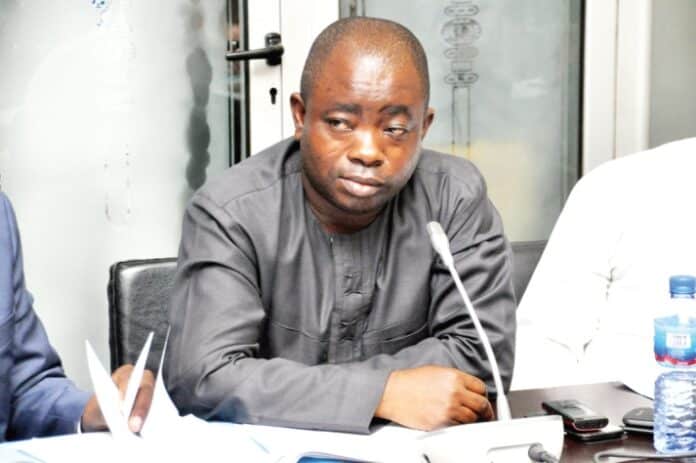
    This was made known by the Local Government Minister, Ahmed Ibrahim at the Government Accountability Series in Accra on Monday, April 20.

    Mr Ibrahim explained that out of the 261 assemblies assessed, only 118 met the benchmark, while 143 failed.

    “Because of that, all the donor partners who were supporting Ghana’s decentralisation said if you can’t help yourself, we will not help you. I am happy to announce to you that in 2025, we were able to reset the decentralisation concept of the district assemblies in 2024, and in the assessment, out of the 261 Metropolitan, Municipal and District assemblies, 143 of them failed and 118 of them passed. The passed mark was 36/100,” he added.

    Last year, President Mahama warned that MMDCEs who do not live up to expectations shall be sacked following the assessment exams.

    “The Minister of Finance is about to release the first quarter of the District Assemblies Common Fund. As I said, 80% of the money is going directly to the regions for you to decide how to use it. So, MMDCEs, you have no excuse.

    “We will send you the guidelines, approved at the last Cabinet meeting, to show how the funds should be disbursed. This will serve as your Key Performance Indicators. Every year, we will assess your performance, and based on that, we will decide whether you stay or go,” he said.

    Meanwhile, the government has pledged a minimum of ₵25 million each to all Metropolitan, Municipal, and District Assemblies across the country this year.

    The Fund is to support district assemblies in executing their duties in the regions.

    The president made this known at an orientation and training programme held in Accra on Wednesday, June 18.

    “This year, every assembly—from the largest to the smallest—will receive not less than GH₵25 million. The NDC manifesto outlines a bold and people-centred agenda that puts local government at the heart of national development. You are the first line of the economy,” he stated.

    The government earlier announced the distribution of 80% of the District Assembly Common Fund (DACF) to MMDCEs.

    The remaining 20% of the fund, he noted, will be designated for projects managed by agencies such as the National Disaster Management Organization (NADMO), ensuring continued support for critical national initiatives.

    In a separate development, President John Dramani Mahama has shared that his government, in the coming years, will allow citizens to elect the next Municipal and District Chief Executives (MMDCEs).

    He explained that this is to allow citizens to have a direct say in choosing their local leaders.

    Addressing the MMDCEs during an orientation and training programme on Wednesday, July 18, in Accra, he noted that the upcoming system will be dependent on the recommendations by the National Review committee established by the government.

    “MMDCEs, you may be the last batch of MMDCEs appointed. The National Review committee is going round and will present its recommendation in August this year, and one of the major items that has come up is the election of the MMDCEs. There is no doubt that Ghanaians want the MMDCEs elected. Those who succeed you might have to go through elections,” he stated.

    President Mahama further called on all MMDCEs to declare their assets by July 15.

    “I wish to remind you that you are among the office holders required to declare your assets, and so I expect that by July 15, all of you will have declared your assets,” he said.

    The legal framework guiding asset declaration is the Public Office Holders (Declaration of Assets and Disqualification) Act, 1998 (Act 550). The Act mandates public officials to declare their assets before assuming office, every four years, and at the end of their term, submitting the forms no later than six months after any of these events.

    Importantly, Section 8 of the Act provides that allegations of non-compliance must be referred to the Commission on Human Rights and Administrative Justice (CHRAJ), which is empowered to investigate and take appropriate action.

    President John Dramani Mahama submitted his asset declaration forms to the Auditor General on February 18 and issued a firm order to his appointees to follow suit by March, warning of sanctions for defaulters.

    A report by The Fourth Estate revealed that several high-ranking officials have yet to fulfill their constitutional obligations. Out of 55 ministers and deputy ministers, nine have failed to declare their assets.

    Additionally, eight out of 32 presidential staffers and 37 out of 84 heads of state institutions appointed between January 15 and March 18 had not complied with the president’s directive.

    On May 6, the president sanctioned his appointees who missed the March 31 deadline by directing them to forfeit their three months’ salary, which he noted will be channeled into the Ghana Medical Trust Fund, also known as The MahamaCares, a landmark initiative aimed at providing financial assistance to individuals living with chronic diseases across the country.

    He gave a May 7 ultimatum, emphasizing that any official who fails to meet the deadline will be sacked. As no government official has been relieved of his or her duties, it is believed that all government officials have declared their assets.In the meantime, civil society groups and anti-corruption advocates have supported the full publication of asset declarations as a means to promote integrity and accountability.

    Meanwhile, Special Prosecutor, Kissi Agyebeng, has expressed his opposition to the declaration of assets by government officials as mandated by the Public Office Holders Act.

    Justifying his opposition, he indicated such an initiative puts public officers in a position where they expose themselves to unnecessary attention and potential threats against their lives and their loved ones.

    “I do not and I will not add my voice to calls for the publication of assets for public scrutiny. In our experience, it will be unhelpful and would merely subject public officers to inordinate public curiosity and a specter of the real likelihood of reprisals against the assets,” he said.

    To him, fighting corruption effectively in the country requires striking a balance between transparency and the protection of individual rights.

    “In my estimation, publication of who has declared or has not declared his assets in the context of a workable asset verification and treason model would be sufficient to assure the integrity of the asset declaration system,” he added.

  • Govt to introduce national day of prayer and thanksgiving

    Govt to introduce national day of prayer and thanksgiving

    The Minister of Local Government, Chieftaincy, and Religious Affairs, Ahmed Ibrahim, has announced that President John Dramani Mahama has instructed the ministry to organize national prayer and thanksgiving events for both Christians and Muslims.

    To achieve this, a special task force will be formed, including representatives from all Muslim sects, to coordinate a National Prayer and Thanksgiving Service. Similarly, Christian denominations will collaborate to establish a National Prayer and Thanksgiving Day.

    Ahmed Ibrahim made this known during a visit to various Muslim communities on Friday, March 14. His team donated essential food items such as rice and sugar, along with an undisclosed amount of money, to support them during Ramadan.

    Among the leaders visited were the National Chief Imam, the Supreme Leader of the Al-Suna Muslim Community, the Ameer of the Ahmadiyya Muslim Mission, and the Supreme Leader of the Shia Muslim Community.

    During the visit, the minister also addressed concerns raised by Muslim leaders about the challenges some Muslim students face in mission schools, particularly restrictions on practicing their religious beliefs. He assured them that the government is committed to promoting religious tolerance and peaceful coexistence.

    “The kind of religious tolerance that we have, which has long been an asset to the country, must be preserved. Their prayer is that we do everything possible to promote it.

    “Concern was also raised about Muslim students being denied the right to observe their religious practices in some mission schools. Their opinion was that we must create a platform, together with the Minister for Education, as well as the leadership of the Education Service, to find an amicable solution to the problem.”

    “We were tasked with working together with the National Peace Council and religious institutions to resolve the situation, which I believe may not be too difficult to achieve”he said.


    He assured that after Ramadan, he would engage relevant stakeholders to find a lasting solution and foster mutual respect for religious diversity.

    “His Excellency, the President, recognizes the role of Allah in governance. Therefore, he has tasked the ministry with establishing a National Thanksgiving Service for both our Muslim and Christian brothers and sisters.

    “Additionally, we were directed to form a task force that will institute a National Prayer Day for Muslims and a similar one for Christians. We have already made initial contact with them, but we will revisit the issue after Ramadan to get their representatives for the committee,” he noted.

  • Ahmed Ibrahim pledges to set up platform to foster communication between MPs and DCEs

    Ahmed Ibrahim pledges to set up platform to foster communication between MPs and DCEs

    Ahmed Ibrahim, the Local Government Minister-designate, has vowed to establish a communication platform to enhance the working relationship between Members of Parliament (MPs) and District Chief Executives (DCEs).

    Speaking during his vetting on Tuesday, January 21, Mr. Ibrahim underscored the importance of mutual respect and effective collaboration between the two groups to advance governance and development at the local level.

    “I will not allow any DCE to disrespect any Member of Parliament,” he stated firmly. “In the same way, I’ll ensure there is a common platform for smooth communication between MPs and DCEs.”

    He noted that fostering respectful and cooperative relationships between MPs and DCEs is crucial for the successful implementation of government policies and projects aimed at addressing the needs of local communities.

    According to Mr. Ibrahim, creating a structured avenue for dialogue will help to bridge gaps in communication and coordination, ensuring that both offices work together efficiently to achieve shared goals.

    “This approach reflects my commitment to maintaining a harmonious and productive working relationship between MPs and DCEs,” he explained. “Such collaboration is essential for fostering national development and delivering essential services to the public.”

  • Every district will experience tangible economic improvement – Ahmed Ibrahim vows

    Every district will experience tangible economic improvement – Ahmed Ibrahim vows

    Ahmed Ibrahim, the Minister-designate for Local Government, has pledged to drive significant economic transformation in districts across the country, ensuring that all communities experience meaningful growth.

    Speaking during his vetting before Parliament’s Appointments Committee on Tuesday, January 21, Mr. Ibrahim highlighted his commitment to fostering grassroots economic development as part of President John Dramani Mahama’s agenda for equitable progress.

    “Our nation’s prosperity is rooted in vibrant local economies,” he remarked. “I am fully committed to ensuring that every district witnesses real economic improvement through targeted initiatives.”

    According to Mr. Ibrahim, his ministry will focus on empowering local businesses, creating jobs, and improving infrastructure as core pillars of this agenda.

    He stressed the importance of working collaboratively with key stakeholders to identify and develop the unique opportunities within each district. “Engaging district assemblies, traditional leaders, and the private sector will be critical in unlocking the economic potential of our communities,” he explained.

    Ahmed Ibrahim also underscored his alignment with President Mahama’s vision of decentralised governance and inclusive development.

    “My priority is to advance the President’s vision of equitable growth and to build strong, self-reliant communities,” he added. “Together, we will enhance living standards and create resilient districts across the country.”

    The minister-designate assured the Committee that his leadership would focus on practical solutions to address economic disparities while fostering innovation and collaboration at the local level.

  • DRIP lacks management contract due to procurement of machines by the Presidency – Ahmed Ibrahim

    DRIP lacks management contract due to procurement of machines by the Presidency – Ahmed Ibrahim

    Minister-designate for Local Government, Chieftaincy, and Religious Affairs, Ahmed Ibrahim, has revealed that the Direct Roads Improvement Programme (DRIP) lacks a management contract due to the procurement of machines being handled by the Office of the President during the Akufo-Addo-led administration.

    Speaking during his vetting before Parliament’s Appointments Committee on Tuesday, Mr. Ibrahim disclosed that the Ministry of Local Government, Decentralisation, and Rural Development, which spearheaded the initiative, was excluded from the procurement process.

    “Workers in the Ministry of Local Government watching me would testify that they have no records of any agreement related to the DRIP project,” he said. “There is no programme or inventory of the DRIP machines. This is a challenge because it was procured through the Office of the President, which has created problems.”

    Launched by former President Akufo-Addo at Independence Square on July 31, 2024, the DRIP initiative aimed to address deteriorating road conditions in all 275 constituencies, a critical issue flagged by the National Security Ministry as a potential threat to national stability.

    However, Mr. Ibrahim pointed out glaring deficiencies in the programme’s implementation framework. “There is no management contract, no provisions for spare parts, and no committees established to oversee the machines,” he said, adding that such lapses have hindered the programme’s effectiveness.

    Despite the challenges, the minister-designate expressed his commitment to ensuring the success of the DRIP initiative. “We are committed to ensuring that the DRIP programme materialises and delivers on its promise of enhanced road infrastructure in all districts,” he stated.

    He further emphasised the importance of accountability and efficient resource utilisation in achieving the programme’s objectives. “It is crucial that the equipment and resources allocated to this programme are used for their intended purpose, and we will closely monitor its execution to ensure that roads are built to the highest standards,” Mr. Ibrahim assured.

    As Ahmed Ibrahim prepares to take charge of the ministry, he faces the daunting task of addressing these structural issues to realise the goals of the ambitious DRIP initiative.

  • Profile of Ahmed Ibrahim, Local Government, Chieftaincy and Religious Affairs Minister nominee

    Profile of Ahmed Ibrahim, Local Government, Chieftaincy and Religious Affairs Minister nominee

    President John Dramani Mahama has appointed Ahmed Ibrahim, the Member of Parliament (MP) for Banda and a leading figure in the National Democratic Congress (NDC), as the Minister for Local Government, Chieftaincy, and Religious Affairs.

    This role positions him to lead a ministry dedicated to enhancing local governance, supporting traditional leadership, and promoting religious unity across the country

    Mr Ibrahim is an experienced politician and public servant, with a robust academic background. He holds a Master of Business Administration (MBA) in Finance from the Ghana Institute of Management and Public Administration (GIMPA) and a Bachelor of Arts (BA) in Political Science and Philosophy from the University of Ghana.

    His educational foundation has been instrumental in shaping his contributions to public service.

    Since 2009, Mr Ibrahim has served as an MP, representing first the Tain Constituency and later the Banda Constituency.

    During his tenure in Parliament, he has held key leadership roles, including Deputy Majority and Minority Whip, showcasing his ability to navigate diverse political dynamics and build consensus among his peers.

    Beyond politics, Mr Ibrahim has demonstrated his entrepreneurial acumen as the former Chief Executive Officer (CEO) of Flamingo Publications Ghana Ltd. His experience in managing an enterprise has provided him with valuable insights into governance and development, which he brings to his ministerial role.

    He has also participated in international workshops on parliamentary governance and telecommunications, further enriching his expertise.

    These engagements have equipped him with a global perspective, enabling him to address local governance challenges with innovative solutions and best practices.

  • Profile of Ahmed Ibrahim, Local Government, Chieftaincy and Religious Affairs Minister nominee

    President John Dramani Mahama has appointed Ahmed Ibrahim, the Member of Parliament (MP) for Banda and a leading figure in the National Democratic Congress (NDC), as the Minister for Local Government, Chieftaincy, and Religious Affairs.

    This role positions him to lead a ministry dedicated to enhancing local governance, supporting traditional leadership, and promoting religious unity across the country

    Mr Ibrahim is an experienced politician and public servant, with a robust academic background. He holds a Master of Business Administration (MBA) in Finance from the Ghana Institute of Management and Public Administration (GIMPA) and a Bachelor of Arts (BA) in Political Science and Philosophy from the University of Ghana.

    His educational foundation has been instrumental in shaping his contributions to public service.

    Since 2009, Mr Ibrahim has served as an MP, representing first the Tain Constituency and later the Banda Constituency.

    During his tenure in Parliament, he has held key leadership roles, including Deputy Majority and Minority Whip, showcasing his ability to navigate diverse political dynamics and build consensus among his peers.

    Beyond politics, Mr Ibrahim has demonstrated his entrepreneurial acumen as the former Chief Executive Officer (CEO) of Flamingo Publications Ghana Ltd. His experience in managing an enterprise has provided him with valuable insights into governance and development, which he brings to his ministerial role.

    He has also participated in international workshops on parliamentary governance and telecommunications, further enriching his expertise.

    These engagements have equipped him with a global perspective, enabling him to address local governance challenges with innovative solutions and best practices.

  • Akufo-Addo using every avenue not to sign anti-gay bill – Ahmed Ibrahim

    Akufo-Addo using every avenue not to sign anti-gay bill – Ahmed Ibrahim

    First Deputy Minority Whip, Ahmed Ibrahim, has alleged that President Akufo-Addo is employing various strategies to avoid giving assent to the anti-LGBTQ+ Bill.

    The bill, criminalizing LGBTQ+ activities, promotion, advocacy, and funding, was approved by Parliament on February 28, 2024.

    President Akufo-Addo has committed to awaiting the Supreme Court’s ruling on a legal challenge by Richard Sky before making a decision on the controversial anti-LGBTQ+ Bill.

    In an interview with Citi News, the Member of Parliament for Banda suggests that President Akufo-Addo is attempting to delay signing the bill into law.

    He pointed out that if the president doesn’t sign the bill within seven days, he is obligated to refer it to the Council of State for advice.

    “The president I know is buying time. He used every avenue and wanted us to delay the bill so that it doesn’t come to Jubilee House under his time for him to sign. That is why they wanted to put it down, bring other bills, we finish them, and they will bring others until Parliament said if we don’t finish this one, we will not do anything else. That is when they realized their hands were tied, and it was passed.”

    “Now, by Article 106 of the 1992 Constitution, the president is mandated to refer the bill within seven days to the Council of State if he doesn’t want to sign it.”

  • Minority disputes allegations NPP will ‘break the 8’ as a result of Tinubu’s victory

    Minority disputes allegations NPP will ‘break the 8’ as a result of Tinubu’s victory

    The minority in parliament has refuted the claim made by the New Patriotic Party (NPP) that if Nigerians kept the APC in office, the party will likewise be kept in power.

    The Deputy Minority leader, Alexander Afenyo-Markin was reacting to comments by Deputy Minority Whip, Ahmed Ibrahim that the NDC will be occupying the majority side after the 2024 elections.

    According to Mr. Afenyo-Amarkin, APC candidate, Tinubu has ‘broken the 8’ in Nigeria and thus a similar thing can happen in Ghana.

    However, Member of Parliament for Bodi, Sampson Ahi quickly shredded the claim of the Deputy Majority leader.

    According to him, the APC is rather attempting to break the 16 years of continuous rule of the PDP and not 8 years.

    Mr. Ahi consequently told the NPP to abandon the campaign since the dynamics in Nigeria are totally different.

    “I’ve heard from my colleagues from the other side that in Nigeria they have broken the ‘8’,  and that will reflect in Ghana. Mr. Speaker, I want them to know that in Nigeria they don’t ‘break the 8’ they break 16, it’s 16 years. Because Obasanjo did eight years, Yar’Adua came in and did four years, Goodluck Jonathan did four years all under PDP, that was 16 years.

    “So APC is struggling to break 16 and not eight. So the two scenarios are different. So prepare your handing over notes you will leave office come January 2025. You are leaving office, don’t compare Nigeria to Ghana. There is a vast difference between Ghana and Nigeria,” the lawmaker stated.

  • Minority reintroduces motion for vote of censure against Health Minister

    The minority has reintroduced a motion to kick out the health minister, Kwaku Agyeman-Manu over his involvement in the Sputnik-V vaccines procurement scandal.

    The private members on the motion, according to the Parliament’s Order Paper, are James Avedzi, Mubarak Muntaka, Ahmed Ibrahim, and others.

    The motion was filed against the minister on the following conduct;

    1. Undertaking International Business or Economic Transaction (procurement and supply of vaccines) as Minister for Health with the Private Office of His Highness Sheik Ahmed Dalmook Al Maktoum without prior approval of Parliament contrary to article 181 of the 1992 Constitution of the Republic of Ghana;

    2. Signing Procurement Agreement with the Private Office of His Highness Sheik Ahmed Dalmook Al Maktoum and S.L. Global Ltd without prior approval of the Board of the Public Procurement Authority under sections 40 and 41 of the Public Procurement Act, 2003 (Act 663) as amended by Act 914 which constitutes Criminal Offence under the law;

    3. Dishonest Procurement of Sputnik-V vaccines from the Private Office of His Highness Sheik Ahmed Dalmook Al Maktoum and S.L. Global Ltd at the cost of US$ 19.00 and US$18.5 respectively when the ex-factory price of the Sputnik-V vaccine generally announced was US$10 confirmed by the Minister to the Committee responsible for Health.

    4. Knowingly procuring Sputnik-V vaccine from the Private Office of His Highness Sheik Ahmed Dalmook Al Maktoum and S.L. Global Ltd at the cost of US$19.00 and US$18.5 respectively per dose. Nevertheless, informs the Committee responsible for Health that the ex-factory price of the Sputnik- V does not exceed US$10.00 per dose;

    5.Causing payment in the sum of US$2,850,000.00 (Cedi the equivalent of GH$16,331,640.00) to the Private Office of His Highness Sheik Ahmed Dalmook Al Maktoum under void agreement with the Private Office of His Highness Sheik
    Ahmed Dalmook Al Maktoum, yet fibbed and misrepresented to the Ad Hoc Committee on Oath that no payment was made under the Agreement to the Private Office of His Highness Sheik Ahmed Dalmook Al Maktoum and thereby committing a crime, to wit perjury; and

    6.The above conduct, being in direct breach of the Constitution and Laws passed by this Honourable House, the Minister for Health be removed from office as Minister by a Vote of Censure passed in accordance with article 82 of the 1992 Constitution.

    Source: Ghanaweb

  • Minority reintroduces motion for vote of censure against Health Minister

    The minority has reintroduced a motion to kick out the health minister, Kwaku Agyeman-Manu over his involvement in the Sputnik-V vaccines procurement scandal.

    The private members on the motion, according to the Parliament’s Order Paper, are James Avedzi, Mubarak Muntaka, Ahmed Ibrahim, and others.

    The motion was filed against the minister on the following conduct;

    1. Undertaking International Business or Economic Transaction (procurement and supply of vaccines) as Minister for Health with the Private Office of His Highness Sheik Ahmed Dalmook Al Maktoum without prior approval of Parliament contrary to article 181 of the 1992 Constitution of the Republic of Ghana;

    2. Signing Procurement Agreement with the Private Office of His Highness Sheik Ahmed Dalmook Al Maktoum and S.L. Global Ltd without prior approval of the Board of the Public Procurement Authority under sections 40 and 41 of the Public Procurement Act, 2003 (Act 663) as amended by Act 914 which constitutes Criminal Offence under the law;

    3. Dishonest Procurement of Sputnik-V vaccines from the Private Office of His Highness Sheik Ahmed Dalmook Al Maktoum and S.L. Global Ltd at the cost of US$ 19.00 and US$18.5 respectively when the ex-factory price of the Sputnik-V vaccine generally announced was US$10 confirmed by the Minister to the Committee responsible for Health.

    4. Knowingly procuring Sputnik-V vaccine from the Private Office of His Highness Sheik Ahmed Dalmook Al Maktoum and S.L. Global Ltd at the cost of US$19.00 and US$18.5 respectively per dose. Nevertheless, informs the Committee responsible for Health that the ex-factory price of the Sputnik- V does not exceed US$10.00 per dose;

    5.Causing payment in the sum of US$2,850,000.00 (Cedi the equivalent of GH$16,331,640.00) to the Private Office of His Highness Sheik Ahmed Dalmook Al Maktoum under void agreement with the Private Office of His Highness Sheik
    Ahmed Dalmook Al Maktoum, yet fibbed and misrepresented to the Ad Hoc Committee on Oath that no payment was made under the Agreement to the Private Office of His Highness Sheik Ahmed Dalmook Al Maktoum and thereby committing a crime, to wit perjury; and

    6.The above conduct, being in direct breach of the Constitution and Laws passed by this Honourable House, the Minister for Health be removed from office as Minister by a Vote of Censure passed in accordance with article 82 of the 1992 Constitution.

  • Minority to move vote of censure against Ofori-Atta on November 10

    The Minority caucus in Parliament has slated Thursday, November 10, 2022, to move its vote of censure motion against the Finance Minister, Ken Ofori-Atta.

    This comes after the Speaker admitted the motion filed by the minority group on Tuesday, October 25, to censure Ken Ofori-Atta over the country’s current economic hardship.

    The group accused the minister of a despicable conflict of interest in ensuring that he directly benefits from Ghana’s economic woes as his companies receive commissions and other unethical contractual advantages, particularly from Ghana’s debt overhang.

    Among other things, Mr Ofori-Atta is also accused of making unconstitutional withdrawals 

    from the Consolidated Fund, supposedly for the construction of the president’s cathedral.

    Addressing the Parliamentary press corps on Friday,  the Deputy Minority Chief Whip, Ahmed Ibrahim, blamed the current hardship on the poor management of Ghana’s economy by the Minister.

    According to him, the country has lost confidence in Ofori-Atta’s ability to manage the economy and he, therefore, should be stripped of his post.

    But before the legislative arms of government can impeach the Finance Minister, Article 81 (1) of the 1992 Constitution states that “Parliament may, by a solution supported by the votes of not less than two-thirds of all the members of Parliament, pass a vote of censure on a Minister of State.”

    As such, the minority group needs 180 MPs to pass a vote of censure on Ken Ofori Atta.

    The minority group, with the exception of MP Assin North, who is battling a dual citizenship court case, has 136 MPs., while the majority in parliament has 137MPs including an independent candidate.

    This means that the minority will need support from some MPs on the majority side. 

     Already, 80 majority MPs have called for the sacking of Mr Ofori-Atta and also that of the Deputy Finance Minister, Charles Boahen.

    This means the finance minister may be on his way out if the 80 majority legislators follow 

    through with their demand.

    With almost a hung parliament, Mr Ahmed Ibrahim has sent a word of caution to all the 136 NDC MPs to be present in Parliament in order to oust the minister from office.

    All 136 minority MPs must be in the chamber on Thursday, so any member who absents himself does so at his own risk.”

    If a vote of censure is successfully passed against the Finance Minister, President Akufo-Addo would be compelled to revoke the appointment of Mr Ofori-Atta.

    Mr Ofori-Atta, however, has a right to defend his case as the parliament decides his.

    Source: The Independent Ghana

  • Minority to move vote of censure against Ofori-Atta on November 10

    The Minority in Parliament has served notice that it will move its vote of censure motion against the Finance Minister, Ken Ofori-Atta, on Thursday, November 10, 2022.

    The Minority filed the vote on censure against the Minister on grounds of conflict of interest and financial recklessness leading to the current economic crisis.

    Addressing the media, the Deputy Minority Chief Whip, Ahmed Ibrahim, said the group will not relent in its efforts to have the Finance Minister removed from office.

    “The motion of censure is slated to be moved on Thursday, the 10th of November 2022, and the Minority Chip Whip, Mubarak Muntaka has sounded a note of caution to all Minority MPs that all 136 minority MPs must be in the chamber on Thursday, so any member who absents himself does so at his own risk.”

    Mr. Ahmed Ibrahim added that the Finance Minister has been duly served and will be in the Chamber to defend himself.

    The grounds the Minority cites for the vote of censure are:

    • Despicable conflict of interest ensuring that he directly benefits from Ghana’s economic woes as his companies receive commissions and other unethical contractual advantages, particularly from Ghana’s debt overhang.
    • Unconstitutional withdrawals from the Consolidated Fund in blatant contravention of Article 178 of the 1992 Constitution, supposedly for the construction of the President’s Cathedral:
    • Illegal payment of oil revenues into offshore accounts, in flagrant violation of Article 176 of the 1992 Constitution:
    • Deliberate and dishonest misreporting of economic data to Parliament 5. Fiscal recklessness leading to the crash of the Ghana Cedi which is currently the worst-performing currency in the world:
    • Alarming incompetence and frightening ineptitude, resulting in the collapse of the Ghanaian economy and an excruciating cost of living crisis;
    • Gross mismanagement of the Ghanaian economy which as occasioned untold and unprecedented hardship

    I can turn economy around

    Meanwhile, the Finance Minister, Ken Ofori-Atta, is fighting to save his job and has called on Ghanaians to trust in his competence and ability to rescue Ghana’s ailing economy.

    Speaking at a meeting with the Association of Ghana Industries, Mr. Ofori-Atta said Ghana remains the best destination to do business.

    “Let me assure you that you have a Finance Minister who has gone through all the pains and the aches, and nobody can really say we don’t understand what we are doing. The question is what resources do we have and how are we going to deploy them in the nation that we have and how do we stand firm in very difficult circumstances but being very confident?”

    “Let me assure you all that your best bet is still Ghana; we can do it, and we should do it,” the embattled Finance Minister said.

    Source: Citi News

  • Weak Parliament failed Ghanaians on Agyapa deal; Amidu, Franklin Cudjoe stopped it MP

    Member of Parliament for the Banda constituency, Ahmed Ibrahim has said, but for the intervention of civil society organizations and the Office of the Special Prosecutor, the controversial Agyapa deal would have been executed.

    He said the majority side of parliament used its numbers to push the deal through, much against the consent of the minority and the public, a reason he believes makes the 7th Parliament the weakest in the Fourth Republic.

    Speaking to journalists in Parliament, the Banda MP specifically mentioned the former Special Prosecutor, Martin Amidu and President of IMANI Africa, Franklin Cudjoe as people who played pivotal roles in stopping the execution of the Agyapa Royalties Agreement which was passed by parliament to mortgage the mineral royalties of the country.

    “This was the weakest Parliament that we have simply because we passed the Agyapa Royalties deal and Civil Society, Franklin Cudjoe and co had to stand up against it.

    “And if not for Franklin Cudjoe and Martin Amidu, Agyapa deal would have been a thing now,” he said.

    Civil Society was very critical of the deal before, during and after its passage in Parliament, alleging corruption, conflict of interest, undervaluation among others.

    The continuous mounting of pressure by Civil Society caused the former Special Prosecutor to take interest in the matter and initiated a corruption-risk assessment which unraveled the risk of corruption is high.

    Succeeding events would later lead to the resignation of Martin Amidu who cited executive interference as a reason.

    Mr. Ahmed explained the Agyapa deal was just one of the many things parliament the government used it 169 majority in Parliament to push through.

    “When they [government] brought Ameri, we said it was not good, the government used his majority to passed it. When the government brought BOST scandal, Agyapa deal, within thirty munite, Asibey was able to produce a report”, he said.

    He however believes that the 8th Parliament will be different.

    “We had the weakest parliament because the majority was 169 against 103, so whatever government wanted to do they could do it but now this government is going to be critical and strong.”

    Source: 3 News