Tag: AI

  • AI, virtual courtrooms must replace Ghana’s outdated judicial system – Justice Dzamefe

    AI, virtual courtrooms must replace Ghana’s outdated judicial system – Justice Dzamefe

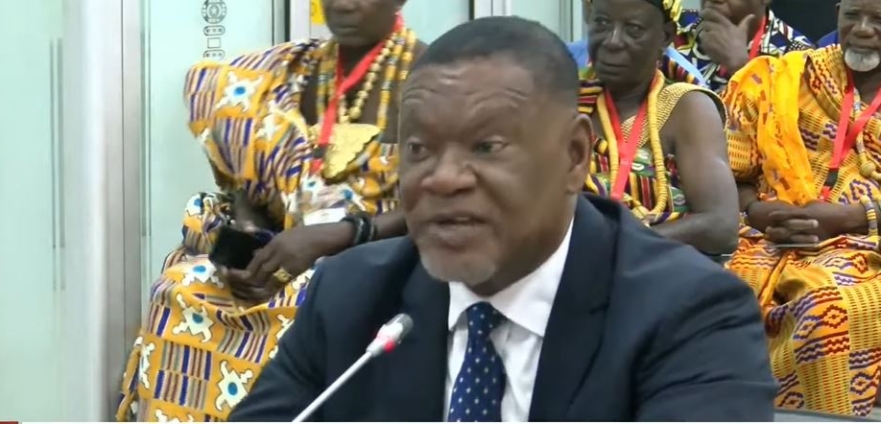
    Supreme Court nominee, Justice Senyo Dzamefe, has championed a tech-driven overhaul of Ghana’s judiciary.

    According to him, the existing system must be replaced with artificial intelligence, digital transcription tools, and virtual courtrooms.

    During an interaction with the Parliament’s Appointments Committee on Monday, June 16, he noted that the judiciary can efficiently and effectively provide justice when it eschew handwritten records and analog processes.

    “We must go with technology. The time of long handwriting is long gone past,” he declared.

    The Appointments Committee of Parliament is vetting President John Mahama’s seven Supreme Court judge nominees today, Monday, June 16.

    According to Parliament in its circular shared on its Facebook platform, the vetting process to be spearheaded by the committee’s chairman, Bernard Ahiafor, who also doubles as the First Deputy Speaker in Parliament, will end on Wednesday, June 18.

    The vetting process commences at 10am in Committee Rooms 1, 2 & 3 New Administration Block of Parliament.The other listed nominees include Justice Kweku Tawiah Ackaah-Boafo, Justice Philip Bright Mensah, Justice Janapare Bartels-Kodwo, Justice Hafisata Amaleboba.

    Their vetting comes after the Speaker of Parliament Alban Kingsford Sumana Bagbin on May 27 referred the nominees to the Appointments Committee for vetting and subsequent approval.

    This is in accordance with Article 144(2) of Ghana’s 1992 Constitution, which mandates that Supreme Court nominees undergo parliamentary scrutiny before their appointments are confirmed.

    The Appointments Committee, will be chaired by Bernard Ahiafor, and assisted by Emmanuel Armah-Kofi Buah.Other members of the committee also include, Alexander Afenyo-Markin (Ranking Member), Patricia Appiagyei (Deputy Ranking Member), Mahama Ayariga (Majority Leader), Agnes Naa Momo Lartey, Frank Annoh-Dompreh, Patrick Yaw Boamah, Shaibu Mahama, Alhassan Umar, Kwame Governs Agbodza.

    About the nominees

    Justice Sir Dennis Dominic Adjei – A Court of Appeal judge since 2010, he was elected to the African Court on Human and Peoples’ Rights in 2022 for a six-year term. He has served as Director of the Judicial Training Institute and Dean of the Faculty of Law at GIMPA. He is an Adjunct Professor of Law at multiple universities.

    Justice Gbiel Simon Suurbaareh – Appointed to the Court of Appeal in 2010, he previously served as the Supervising High Court Judge in the Eastern Region and is known for his expertise in constitutional and administrative law and represents Court of Appeal judges on Ghana’s Judicial Council.

    Justice Senyo Dzamefe – A Court of Appeal judge since 2010, he chaired the Dzamefe Commission, which investigated Ghana’s performance at the 2014 FIFA World Cup. He was elected President of the Association of Magistrates and Judges of Ghana (AMJG) in 2018.

    Justice Kweku Tawiah Ackah-Boafo – A Court of Appeal judge, has emphasised the need for legal education reforms and has advocated for the integration of artificial intelligence into Ghana’s legal system to enhance efficiency and transparency.

    Justice Philip Bright Mensah – Known for his contributions to appellate jurisprudence, he recently presided over a Court of Appeal panel that directed the Accra High Court to adopt proceedings from a previous trial in the Republic vs. Stephen Kwabena Opuni case.

    Justice Janpere Bartels-Kodwo – A Court of Appeal judge, he has been nominated to strengthen the Supreme Court’s capacity amid increasing demands on Ghana’s judiciary.

    Justice Hafisata Ameleboba – A Court of Appeal judge, she has been involved in key judicial decisions and reforms. Her nomination is expected to bring diversity and expertise to the Supreme Court.


  • UAE companies to visit Ghana next few weeks to invest in renewable energy, AI, education, health, other sectors

    UAE companies to visit Ghana next few weeks to invest in renewable energy, AI, education, health, other sectors

    United Arab Emirates companies will be arriving in Ghana over the next few weeks to invest in sectors such as renewable energy, AI, education, health, aviation, and defense, according to Foreign Affairs Minister, Samuel Okudzeto Ablakwa.

    The sector minister revealed that information on May 13 following the signing of an agreement to commence the first-ever high-level political consultations in the strategic interest of both countries.

    This was made possible after Mr Ablakwa responded positively to a special invitation from the government of the United Arab Emirates to pay a two-day official visit to the country.

    He was received by His Highness Sheikh Abdullah bin Zayed Al Nahyan, Deputy Prime Minister of UAE who also serves as Minister for Foreign Affairs.

    During his two-day visit, he held constructive meetings with Sheikh Shakhboot bin Nahyan Al Nahyan, Minister of State, Lana Nusseibeh, Assistant Minister for Political Affairs, the ministers of Foreign Trade, Investment, and captains of industry.

    Discussions also focused on labour export for Ghanaian youth to the UAE and technical support for a new national airline.

    The Foreign Minister has noted that massive job openings in the United Arab Emirates (UAE) will soon be announced for the Ghanaian youth when both countries finalize the Comprehensive Economic Partnership Agreement (CEPA) negotiations.

    In appreciation, the minister, in a Facebook post, wrote:

    “Both sides confirmed that the bilateral engagements on Sunday and Monday have not only been exceptionally successful but historic.

    I thank our diplomats at the Foreign Ministry and members of the Foreign Affairs Committee of Parliament for the collective accomplishments.

    Long live our irrepressible Ghana 🇬🇭 UAE 🇦🇪 bilateral relations.”

  • China makes AI education compulsory for primary,secondary students

    China makes AI education compulsory for primary,secondary students

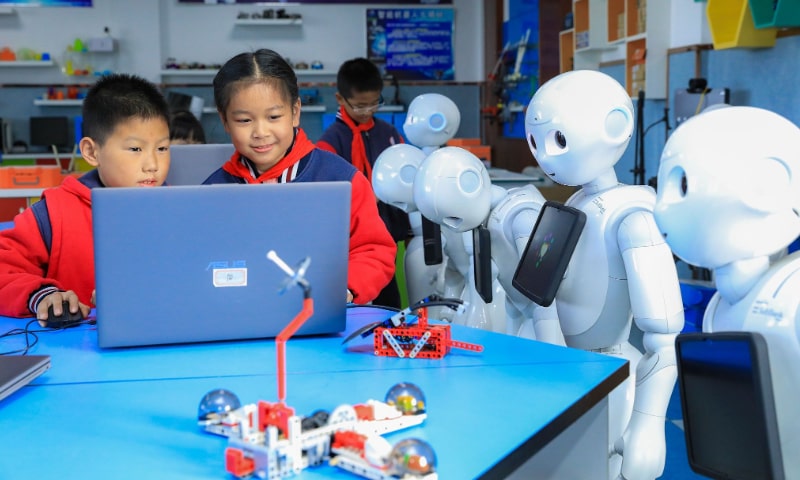
    China is making a significant move to include artificial intelligence (AI) education in its primary and secondary schools. Starting from the fall semester on September 1, 2025, students will have a minimum of eight hours of AI lessons each year.

    Schools can choose to incorporate AI into their existing subjects or offer it as a separate course. Younger students in elementary school will focus on hands-on activities to learn basic AI concepts.

    In middle school, students will study how AI is used in everyday life, while high school students will dive into more advanced AI topics and innovation.

    This change is part of China’s strategy to lead the world in AI technology. By introducing AI education early, the country aims to equip the next generation with the skills needed to drive future innovations.

    China’s Minister of Education, Huai Jinpeng, stated that AI is revolutionizing technology and creating valuable educational opportunities.

    He also revealed that China will release a white paper on AI education in 2025, outlining the country’s plans and goals for incorporating AI into its education system.

    Other countries are also focusing on AI education. For example, California has passed laws to include AI in school curriculums, and Italy is testing AI tools to improve digital skills in classrooms.

    Many nations are recognizing the importance of teaching AI and are working to include it in their educational systems.

    China’s decision to start AI education at an early stage reflects its desire to prepare young people for a future where AI is a key part of many industries. This initiative highlights the growing importance of technological knowledge and positions China as a leader in the global AI field. The upcoming white paper will provide more details on how China plans to shape the future of AI education.

  • New launch: The partnership for Global inclusivity on AI

    New launch: The partnership for Global inclusivity on AI

    A new venture – the Partnership for Global Inclusivity on AI (PGIAI) was launched on the sidelines of 79th Session of the United Nations General Assembly (UNGA), to harness the rapid advancement of AI in sustainable development globally.

    The PGIAI brings together the Department of State, Amazon, Anthropic, Google, IBM, Meta, Microsoft, Nvidia, and OpenAI.

    Together they will commit more than $100 million, leveraging their combined expertise, resources, and networks to unlock AI’s potential as a powerful tool for sustainable development and improved quality of life, particularly in developing countries, while maintaining an unwavering commitment to safety, security, and trustworthiness in AI systems.

    The scheme recognizes that effective and equitable AI solutions must be rooted in an understanding and respect for the diverse cultures, languages, and traditions of the communities they serve and as such, the PGIAI will focus on three areas: Firstly, to increase access to AI models, compute credit, and other AI tools.

    Secondly, to build human technical capacity; and thirdly to expand local datasets

  • Ghana is working on an AI governance framework to enhance various sectors – Dr Nafisa Mahama

    Ghana is working on an AI governance framework to enhance various sectors – Dr Nafisa Mahama

    The Director of the Information Services Department at the Ministry of Information, Dr. Nafisa Mahama, has reaffirmed Ghana’s strong commitment to advancing Artificial Intelligence (AI) as a tool to enhance key sectors such as healthcare, education, agriculture, and industry.

    Speaking at the Freedom Online Coalition (FOC) Ministerial side-event during the United Nations General Assembly (UNGA 79) in New York, she emphasized Ghana’s proactive stance on digital rights and the responsible development of AI.

    While expressing Ghana’s dedication to AI, Dr. Mahama also noted the importance of responsible governance to avoid potential risks to human rights. She highlighted the need for ethical frameworks guiding AI development in line with global human rights standards.

    “Ghana is actively developing a comprehensive AI governance framework,” she stated, adding that this includes innovative solutions like an AI-enhanced Online Application System, which aims to increase public access to information across all government sectors.

    Furthermore, Dr. Mahama outlined Ghana’s collaboration with international stakeholders to provide Advanced AI Prompt Engineering training for public relations officers across government institutions.

    “This training equips our officers with the necessary tools to leverage AI effectively for information dissemination and innovation,” she said.

    Ghana’s investment in AI, guided by ethical considerations and human rights, is positioning the country as a leader in the responsible use of AI. Dr. Mahama stressed, “By working together as a global community, we can harness AI’s potential to promote human development, prosperity, and respect for human rights.”

    As a member of the FOC, she reaffirmed Ghana’s commitment to open governance and accountability, noting that the country continues to contribute to advancing digital rights globally.

    She also recalled the 2019 enactment of the Right to Information Law, which empowers citizens with access to public information and promotes transparency in governance.

  • Leverage AI to gain valuable insights; it won’t replace you – Consultant Administrator to GAUA

    Leverage AI to gain valuable insights; it won’t replace you – Consultant Administrator to GAUA

    Consultant Administrator, Mrs. Mildred Asmah, has made a passionate call to the Ghana Association of University Administrators (GAUA), highlighting the need to leverage Artificial Intelligence (AI), to ensure growth in skills and enhance efficiency in their works.

    In her address as the keynote speaker second day of the GAUA Congress at the Great Hall of the University of Ghana on Friday, the 62-year-old pensioner indicated that AI has emerged as a transformative technology, impacting various sectors including Higher Education and the economics of Information Technology.

    According to Mrs Asmah, AI has the potential to revolutionize higher education, personalize learning experiences, automate administrative tasks, and support research activities.

    The Vice President for projects at Graduate Women International, headquartered in Geneva, Switzerland, allayed the fears of many who assert that their role will be taken by AI.

    “AI is not going to replace us administrators but make our lives easier,” she emphasised.

    She mentioned that leveraging AI to gain valuable insights will provide administrators free time to focus
    on the creative human aspects of their roles.

    The rapid advancements in AI, particularly in machine learning and natural language processing, have enabled the development of intelligent systems that can perform tasks previously requiring human intelligence.

    The integration of AI in Higher Education has gained significant attention in recent years with universities exploring various application, such as adaptive learning systems, chatbots for student support and AI powered tools.

    The Ghana Association of University Administrators (GAUA) continues its national congress, which commenced on Thursday, August 29, and is slated to end on Saturday, August 31.

    Sister associations gracing the event include the University Teachers Association of Ghana (UTAG) and the Teachers’ and Educational Workers’ Union (TEWU), among others.

    The theme for this year’s congress is “Balancing Growth and Sustainability in Expanding Public Universities – The Role of GAUA.”

    Profile of Mrs. Mildred Asmah

    Mrs. Asmah rose from the ranks of Junior Assistant Registrar to Deputy Registrar at the University of Cape Coast over a span of 28 years of active service. Mrs. Asmah holds an MEd in Higher Education Administration (UCC), an MSc in Social Development Planning and Management (University of Wales, Swansea) postgraduate studies in Management Studies from Robert Gordon University (Scotland) and a postgraduate Diploma in Advanced Leadership Studies from the International Higher Institute for Leadership (France).

    Mrs. Asmah has received academic/ professional awards and fellowships including the Sheila Lochead award from the University of Wales Swansea, the Joan Balchin award from the University of Leeds (on 2 occasions), a Nuffic fellowship, the Global Affairs award to Coady Institute in Canada, and the University of Incarnate Word Travel award in San Antonio, Texas.

    She has attended short courses on the Management of Higher Education Institutions held in Israel and Maastricht. She has authored two books, a book chapter, reports/articles/memoranda, and several conference presentations. Mrs. Asmah has led a team to write winning proposals for four projects funded by the Bina Roy Partners in International Development (BRPID).

    She served as one of the Board of Directors on the Virginia Gildersleeve International Fund headquartered in New York and is now a Board Member of Charis Vineyard, an internationally funded home for children located in the Central Region of Ghana.

  • Mahama pledges to use Artificial Intelligence to fight galamsey

    Mahama pledges to use Artificial Intelligence to fight galamsey

    Flagbearer of the National Democratic Congress (NDC), John Mahama, has revealed plans to use Artificial Intelligence (AI) to combat illegal small-scale mining, commonly known as ‘galamsey.’

    He made this announcement at the ‘3rd Annual Transformational Dialogue on Small-Scale Mining,’ organized by the University of Energy and Natural Resources in Sunyani.

    Galamsey has become a significant challenge for the government, with many Ghanaians expressing concern over its devastating impact.

    Addressing the gathering, the former President emphasized the need for technological innovation to improve the monitoring of the small-scale mining sector and mitigate its environmental effects.

    “We will introduce and encourage technological innovation to improve capacity for coordinated monitoring of the small-scale mining sector and reduce environmental impact,” he said on Wednesday, May 15.

    He proposed the utilisation of AI to identify small-scale mining and galamsey activities, monitor excavators, and establish geo-fences around concessions to prevent mining operations in unauthorised areas, including water bodies.

    “This will include using AI to locate all small-scale mining and galamsey operations, track excavators, and geo-fence all concessions to ensure mining operations are not conducted in unapproved areas, including water bodies.”

    This initiative, he says, aims to strengthen coordinated efforts in monitoring and regulating mining activities, thereby promoting sustainable mining practices and environmental conservation.

  • American schools use AI to detect firearms as businesses lobby legislators for public funding

    American schools use AI to detect firearms as businesses lobby legislators for public funding

    Kansas might give $5 million to schools for cameras that use artificial intelligence to find people with guns. The governor has to agree to spend the money, and the schools have to meet certain requirements.

    The AI software needs to be patented and meet certain security standards. It should also be used in at least 30 states and be able to detect different types of guns with a lot of detail.

    Only one company meets all the requirements: the company that told Kansas lawmakers about them. That company, ZeroEyes, is a fast-growing business started by military veterans after the deadly shooting at Marjory Stoneman Douglas High School in Florida.

    The law that is waiting for the Kansas Governor to decide on. Laura Kelly points out two things. Following many well-known shootings, making schools safer has become a very expensive business worth billions of dollars. In some state capitols, certain companies are convincing lawmakers to make their own business ideas into state laws.

    ZeroEyes is the only company allowed to do weapons detection for state programs in Michigan and Utah, and for new laws in Florida and Iowa, and proposed laws in Colorado, Louisiana and Wisconsin.

    Last Friday, Missouri passed a law to help schools buy ZeroEyes, a type of software that detects firearms. They are offering $2.5 million in grants to support this.

    “We don’t give money to lawmakers to include us in their laws,” explained Sam Alaimo, who is the co-founder and Chief Revenue Officer of ZeroEyes. “If they are doing that, it means I believe they are doing their homework and making sure they are choosing a good technology. ”

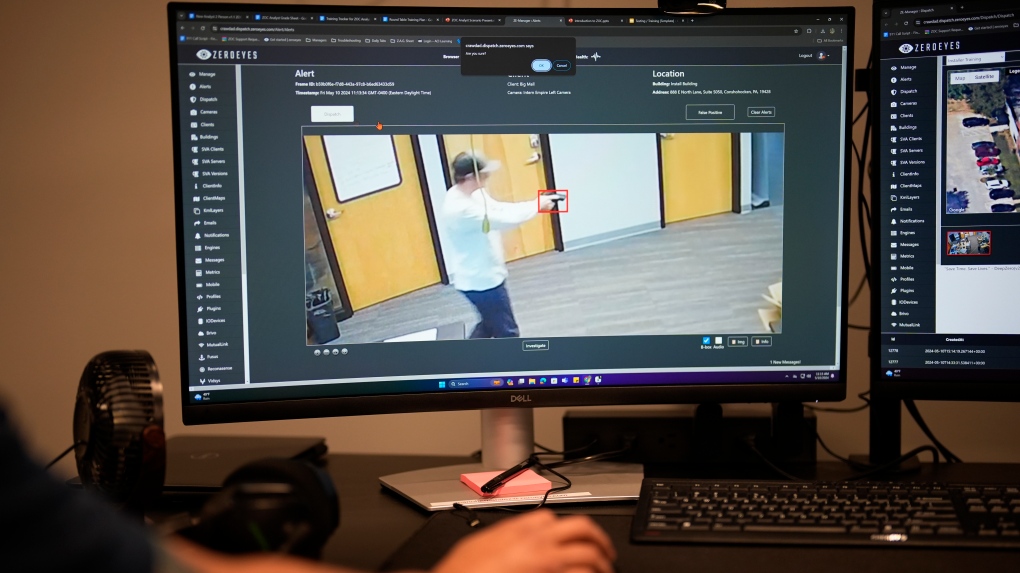
    ZeroEyes uses smart technology with security cameras to find guns that can be seen, and then sends a warning to a team of former police and military members who are always ready to respond. If ZeroEyes staff confirm it’s a real danger, they will send a warning to the school and local police.

    Alaimo said the aim is to “take the gun before it’s fired or before it reaches the door. ”

    Not many people doubt the technology. But some people wonder about the way laws are made.

    The Kansas bill is very strict and requires a company to sell its product in at least 30 states. Jason Stoddard, who works on school safety and security in Maryland, said it’s the worst thing he’s ever seen in a law.

    Stoddard is leading a group called the National Council of School Safety Directors. They want to make rules for school safety officials and stop companies from trying to sell their products to lawmakers.

    When states spend a lot of money on certain things for schools, there is not enough money for other important safety things like locks on doors, strong windows, communication systems, and security staff.

    Stoddard said that the weapons detection driven by artificial intelligence is really great. “But it’s likely not the main thing that 95 percent of schools in the United States need at the moment. ”

    Some states are creating programs to give money to help pay for expensive technology. In Florida, the cost of putting ZeroEyes technology in schools in two counties was about $929,000.

    Other companies also use surveillance systems that use artificial intelligence to find guns, not just ZeroEyes. One company, Omnilert, changed its focus from emergency alerts to detecting guns a few years ago. They have monitoring centers that work all the time to quickly check for guns using AI and notify local officials if they find any.

    Omnilert does not have a patent for its technology yet. The US Department of Homeland Security has not declared it as a technology that helps to stop terrorism under a law from 2002 that protects companies from being sued. It has been requested for both.

    Omnilert is used in many schools, but its products are not available in 30 states, according to Mark Franken, who is the vice president of marketing for Omnilert. However, he mentioned that this should not prevent his company from receiving state grants.

    Franken has asked the Kansas governor to remove specific criteria from a law, because he thinks it makes it hard for businesses to compete.

    In Iowa, a law was changed to give companies more time to get permission from the government to use their weapons detection software in schools. They now have until July 1, 2025. Democratic state Representative Ross Wilburn said that the designation was meant to encourage companies to create new technology.

    “It was not made to help or favor any specific company,” Wilburn said during the House discussion.

    In February, the chief strategy officer of ZeroEyes talked about their technology to the House K-12 Education Budget Committee in Kansas. The event showed how their AI can detect guns and there were many real pictures of guns found at schools, parking lots and transit stations. The presentation also mentioned that police arrested around twelve people last year because of ZeroEyes alerts.

    Kansas state Representative Adam Thomas, who is a member of the Republican party, first suggested adding ZeroEyes to the funding bill by name. The last version took out the name of the company but still kept the rules that only apply to ZeroEyes.

    Kristey Williams, a Republican who is in charge of the House K-12 Budget Committee, strongly supported that rule. During a meeting with senators she said that student safety is important and the state can’t wait for a long bidding process. She also praised the company’s technology as special.

    “We didn’t think there was any other choice,” Williams said last month.

    The $5 million money given may not be enough for all schools, but Thomas thinks it could increase later if ZeroEyes technology works well.

    “I hope it works like we saw and stops gun violence in schools,” Thomas said. “I want it to be in every school. “

  • US to maintain its lead over China in the use of AI to pilot military jets

    US to maintain its lead over China in the use of AI to pilot military jets

    Two Air Force fighter planes recently fought each other in the air in California. A pilot flew and the other by Artificial Intelligent (AI).

    The second jet was flown by a computer system, and the most important civilian in the Air Force was sitting in the front seat. This show was the best example of how much the Air Force has improved in creating a technology that started in the 1950s. But there’s still more advanced technology to come.

    The United States is trying to be better than China in using artificial intelligence in weapons. People are worried that in the future, machines with AI might be used in wars to choose and attack targets without human control. Authorities say this will never happen, at least not in the US. However, there are concerns about what an enemy might do, and the military believes there is no other option but to quickly deploy US capabilities.

    Admiral said, “Whether you want to call it a race or not, it definitely is. ” Christopher Grady is the second-in-command of the military’s top leaders. “We both know that this will be a very important part of future battles. ” China is working as hard as we are.

    A study of how artificial intelligence has been used in the military, what new technologies are coming soon, and how they will be managed.

    From teaching computers to do things on their own

    AI’s origins in the military come from a mix of machine learning and autonomy. Machine learning happens when a computer looks at data and rules to come up with answers. Autonomy happens when decisions are used to take action without needing more input from humans.

    This started in the 1960s and 1970s when the Navy made the Aegis missile defense system. Aegis was taught how to find and stop missiles on its own using a set of rules made by people. It can do this faster than a person can. However, the Aegis system could not improve and its actions were only based on the rules it was given.

    Air Force Lt. Col. Christopher Berardi said that if a system uses “if/then” it is probably not machine learning. Machine learning is a type of AI that involves creating systems that learn from data. He is assigned to the Massachusetts Institute of Technology to help with the Air Force’s AI development.

    In 2012, AI got better because computers were able to start analyzing information and writing their own rules using big data and advanced computing power. AI experts named it AI’s “big bang. ”

    The new information made by a computer following instructions is called artificial intelligence. Machines can be programmed to make their own decisions based on rules they’ve been given. This is a type of AI that allows them to act on their own.

    Trying out a new way for computers to help us find our way instead of using GPS.

    The head of the Air Force, Frank Kendall, got to experience modern warfare this month. He flew in an F-16 fighter jet called Vista, which is controlled by artificial intelligence. They did a practice fight over Edwards Air Force Base in California.

    While the jet is the most noticeable sign of the AI work being done, there are many AI projects happening at the Pentagon.

    Service members at MIT spent a lot of time organizing pilot conversations to help train artificial intelligence. They wanted the AI to understand the important messages from the less important ones during flights. The aim was for the AI to learn which messages are important to prioritize so that controllers can see them quickly.

    The military is making a new way to find your way without using GPS satellites.

    In a future war, important GPS satellites could be targeted or disrupted. Losing GPS could make it hard for the US to communicate, find their way and do banking. It could also make it difficult for the military to work together.

    Last year, the Air Force used a computer program on a laptop fastened to the floor of a military plane to find a different way to use the Earth’s magnetic fields.

    We knew that planes could use the Earth’s magnetic fields to find their way, but it hasn’t been possible because planes make a lot of their own electromagnetic noise. There hasn’t been a good way to filter out the Earth’s signals from all the other signals.

    “Magnetometers can detect very small changes,” explained Col Garry Floyd, who leads the Department of Air Force-MIT Artificial Intelligence Accelerator program. “If you switch on the flashing lights on a C-17, we could see it. ”

    The AI learned from lots of data and figured out which signals to pay attention to. The results were really impressive, according to Floyd.
    “We’re discussing the quality of tactical airdrops. ”

    “We believe we have new tools to use if we have to work in a place where GPS doesn’t work. ” “We will do that,” Floyd said.

    The AI has only been tested on the C-17 plane. Other planes will be checked to see if they can work without GPS. If they work, the military will have another way to fly if GPS doesn’t work.

  • AI will make safer brain surgery possible in two years – Brain surgeon

    AI will make safer brain surgery possible in two years – Brain surgeon

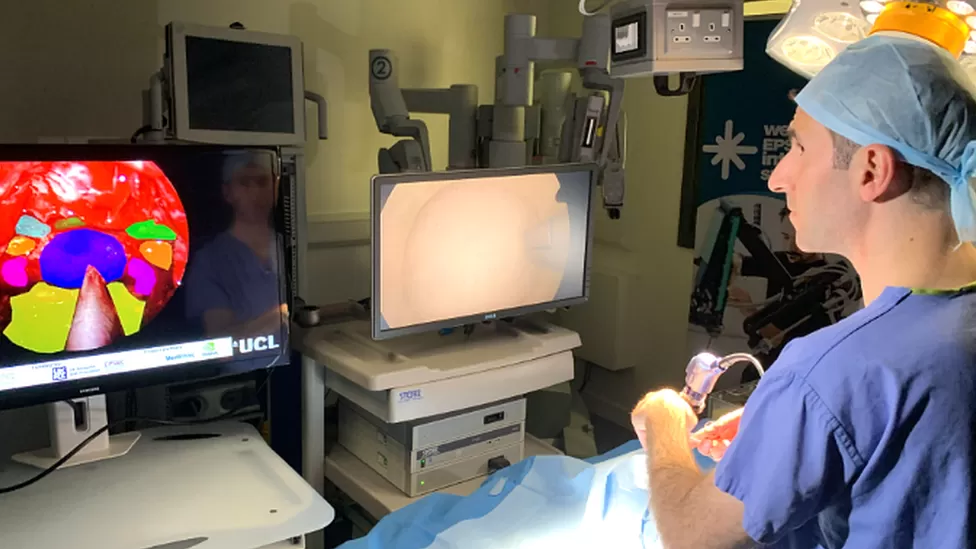
    A top brain doctor has said that using artificial intelligence for brain surgery could be done in two years. This would make the surgery safer and better. New surgeons in training are using the latest technology to learn how to do more accurate brain surgery through small incisions. Created at University College London, it shows small tumors and important parts like blood vessels in the middle of the brain. The government thinks it could make a big difference for healthcare in the UK.

    Important buildings or formations.

    Performing brain surgery requires a lot of care and attention – a small mistake could cause the patient to die right away. It’s really important to not hurt the pituitary gland, which is the size of a grape and in the middle of the brain. It manages all the hormones in the body – and if there are issues with it, it can lead to blindness. “If you make the approach too small, there’s a chance you won’t remove enough of the tumor,” said Hani Marcus, a neurosurgeon at the National Hospital for Neurology and Neurosurgery.

    “If you make it too big, you could harm these very important parts. The AI has studied over 200 videos of this surgery and gained the same level of experience as a surgeon would in 10 years, in just 10 months. ” “Even experienced surgeons like me can do a better job with the help of AI to find the boundary during surgery. ” – Marcus

    “In a few years, an AI system could have seen more operations than any human has ever seen. Nicola Newell also thinks it’s very helpful. ” “It helps me know what to do during practice surgeries and what comes next,” she says.

    Superhero from Marvel comics.

    Viscount Camrose, a government minister, says that AI makes everyone much more productive in whatever they do. “It’s like becoming your own superhero with this Marvel-like technology,” he explained. He believes this technology could significantly improve healthcare and provide a very hopeful future for everyone.

    University College London (UCL) is one of 22 universities that got money from the government to improve healthcare in the UK. Engineers, doctors, and researchers are collaborating on a project at the Wellcome / Engineering and Physical Sciences Research Council (EPSRC) Centre for Interventional and Surgical Sciences.

  • Liberals accuses conservatives for using AI to craft changes to jobs bill prior to votes

    Liberals accuses conservatives for using AI to craft changes to jobs bill prior to votes

    Members of Parliament will spend considerable time voting on more than 200 revisions to the government’s jobs bill on Thursday and Friday in Canada.

    The amendments are the changes that the Conservatives wanted to make to Bill C-50 last year, but only a few of them were approved by the House of Commons committee.

    Liberals believe that Conservatives used artificial intelligence to create many changes to slow down the government’s plans.

    The Tories say they didn’t do it.

    The Canadian Sustainable Jobs Act requires the government to support energy workers in learning new skills for clean technology jobs.

    Energy Minister Jonathan Wilkinson says the bill makes sure that the government is responsible and talks to the people who will be most affected as the world moves from using fossil fuels to using renewable energy sources.

    We need to make plans for five years, report regularly, and talk with labor and Indigenous leaders.

    The Liberals say their bill won’t destroy energy jobs. Instead, it will show how to make more jobs in renewable energy.

    Conservative critic Shannon Stubbs calls it a plan for big changes to the economy by the Liberals.

    She believes that focusing on renewable energy instead of oil and gas will cause lots of energy workers to lose their jobs.

    The proposed law was approved for further discussion in October, but the Conservatives didn’t support it.

    In November, the discussion about natural resources became very messy and chaotic. Members of Parliament argued and shouted at each other to be quiet.

    During the last meeting in December, it was very noisy. Two MPs didn’t hear the proposal and voted the wrong way.

    At the meeting, the Conservatives suggested 19,600 changes to the 18-page bill. The number went down to 200 after the bill left the committee and went back to the House of Commons.

    Government House leader Steven MacKinnon said on Thursday that those changes were made by a computer program called AI.

    The Liberals have not discussed the bill again since December. They took it off the list of things to talk about to avoid having to vote for a long time, right after the Conservatives made them vote for 30 hours straight on how the government should spend money.

    MacKinnon said the Conservatives need to wait a bit, but now it’s time for the bill to move forward.

    MrSmith is an engineer who works at a large company. Poilievre’s team will need to vote on hundreds of amendments that were not changed by a computer program or artificial intelligence. The computer program was used by some members of the parliament.

    This is not how Canadians can make progress. It’s not how we can address climate change. And it’s not how we can create jobs for Canadian workers.

    MacKinnon said the changes didn’t offer any helpful ideas for the bill.

    In March, during a meeting about something else, Stubbs said that the Bill C-50 changes were not made by a computer.

    “Let me make it clear. ” “Stubbs said that the things were not made by a computer. ”

    On Thursday, she said that the Liberals added the bill to the schedule at the last moment to try to rush it through.

    “The ‘just transition’ is a plan to force a big change in the economy. It will impact energy, agriculture, construction, transportation, and manufacturing in Canada. ”

    Wilkinson said that Stubbs’s accusations are so unbelievable and ridiculous.

    The voting process will be faster because Speaker Greg Fergus made a decision to group the amendments together and vote on them all at once.

    He used past decisions from other people to support his choice, including decisions by Conservative MP Andrew Scheer when he was the Speaker in 2012. Scheer is now in charge of the Conservative party in the House.

    Instead of 207 separate votes, it’s expected there will be no more than 64. However, it could take over 15 hours to finish all of them because each one is about 15 minutes long.

    The first vote was taken just before 6 pm on Thursday.

    The 30-hour marathon in December had votes happening all the time, even overnight with no breaks. The Liberals passed a motion in February that stops this from happening this time.

    At midnight, a minister can ask to stop the votes until 9 a. mThe next day, to keep MPs and staff at Parliament safe and healthy.

  • Air Force Secretary to be piloted by AI-operated fighter plane in test of military’s future

    Air Force Secretary to be piloted by AI-operated fighter plane in test of military’s future

    The Air Force is planning to use over 1,000 drones in future air warfare. Its leader will also fly in a plane operated by artificial intelligence.

    Air Force Secretary Frank Kendall said he will fly in one of the converted F-16s to see how well the AI-controlled plane works.

    “I will have a pilot with me who will be watching while the autonomous technology works,” Kendall told the Senate Appropriations Committee defense panel members. “Hopefully, neither of us will have to fly the airplane. ”

    The use of drones in war has grown fast, and now they are one of the main weapons used in combat. Drones are a big problem every day in Ukraine and in the Middle East. In Ukraine, regular people are being attacked by Russian drones, but they are also making drones to film Russian locations. In the Middle East, groups supported by Iran have been using advanced drones in the air, sea, and underwater to attack US bases and ships in the Red Sea.


    The Air Force started making plans for its team of fighting planes, called CCAs, a few years ago. They imagine a situation where one pilot can control many AI-powered drones, also known as “loyal wingmen. ”

    The company won’t say what the drones will look like, whether they will be big or small. Kendall wants to watch a test flight of a converted F-16 so he can see the technology for future planes.

    The fleet is being made to be ready for future fights, including a possible war with China. China has improved its ability to stop other countries from getting close to its territory by using better weapons like air defense systems. This makes it dangerous for other countries to send people too close to China. Drone planes could help the military get past enemy defenses and support missions like watching and blocking signals in the future.

    The Air Force asked for $559 million in the 2025 budget to keep working on the future CCA air system.

    “The aircraft was originally supposed to be used for air defense, but it has the capability to do other tasks,” Kendall said.

    The drone fleet is also expected to cost less than making new manned jets, Kendall said. The goal is to make each one cost about $20 million, which is much less than what an F-35 fighter costs now.

  • We must protect our heritage, culture amidst AI growth – National Commission on Culture and Arts

    We must protect our heritage, culture amidst AI growth – National Commission on Culture and Arts

    Executive Director of the National Commission on Culture and Arts under the Ministry of Tourism, Arts, and Culture, Nana Otuo Owoahene Acheampong, has emphasized the importance of safeguarding Ghanaian culture, literature, and heritage in the age of Artificial Intelligence (AI).

    He highlighted that preserving the country’s culture and traditional heritage is crucial for national development and transformation.

    Speaking at the launch of the 21st Ghana International Book Fair 2024, themed “Books and Culture in the era of Artificial Intelligence (AI),” Nana Owoahene emphasized that AI is revolutionizing various aspects of life, leading to both excitement and apprehension about the future.

    He noted that while AI offers opportunities for advancement, it should not replace human intellect. Instead, he encouraged creativity and innovation to enhance our capabilities and unlock our true creative potential as individuals and as a nation.

  • UG goes after AI users in revised plagiarism policy

    UG goes after AI users in revised plagiarism policy

    Users of Artificial Intelligence (AI) at the University of Ghana (UG) now find themselves wanting as management has revised its academic integrity framework, particularly in its approach to plagiarism.

    In a notice issued today (February 26, 2024) by the registrar, Emelia Agyei Mensah, it was announced that the University Council and the Academic Board have implemented crucial updates to the framework.

    These updates aim to address the growing concerns surrounding plagiarism and ensure academic rigor.

    One notable inclusion in the updated policy is the integration of Artificial Intelligence (AI) in academic research and work. This highlights the university’s commitment to leveraging technology to promote originality and ethical academic practices.

    Per reports, the management of the tertiary institution is yet to make public the plagiarism policy.

  • I rebranded from”AI” to Ayisi to boost my visibility online –  Ghanaian Afro Pop artiste

    I rebranded from”AI” to Ayisi to boost my visibility online –  Ghanaian Afro Pop artiste

    Ayisi has unveiled the rationale behind his decision to rebrand himself from AI to Ayisi.

    Citing concerns over online visibility and identity, he expressed the need to navigate away from the ambiguity associated with the abbreviation “AI.”

    In an interview on Joy Prime, he acknowledged the prevalence of the term “AI” and the overwhelming number of search results it generates, often overshadowing his presence on various social media platforms.

    Emphasizing the significance of maintaining a distinct online identity, Ayisi highlighted the importance of fostering a deeper connection with his audience and amplifying his brand recognition.

    Ayisi pointed out the challenges posed by the rise of Artificial Intelligence (AI) and its association with his former moniker, prompting him to initiate the name change.

    He underscored the impact of this decision on facilitating smoother accessibility for his fans and preventing potential mix-ups in locating his content.

  • Watch how AI dubbed Cheddar’s video to preach political violence

    Watch how AI dubbed Cheddar’s video to preach political violence

    Nana Kwame Bediako, also known as Cheddar, has expressed concern about the increasing prevalence of political misinformation on social media.

    On January 26, 2024, the head of the New Force Movement posted on X, sharing a 24-second video featuring two shots of himself. In the initial frame, he highlights that his perspectives were altered using technology.

    “eii Ghana ay3 hu oo! Artificial intelligence manipulation has the power to ignite our tense political climate and inflame the public.

    “The Authorities should step in as this could happen to anyone, endangering relationships and reputations. Let us join forces to stop these incessant attacks.#TheNewForce, the voice of the people,” he captioned his post.

    In the manipulated portion of the video, he is heard purportedly saying, “Mark it on the wall, Ghanaians. if NPP and their corrupt government take my name and image from the election ballot in 2024, I promise you this country will sink.”

    That portion of the video has a “fake” label slapped across it.

    “If we don’t get on our feet to turn our own resources and refine them into things that the world will also demand from us, our nations will benefit from it…,” he said in the other part, which reflects his original view as captured in an interview.

    Political analysts have raised concerns about the possible repercussions of deliberate political disinformation and manipulation of information in the upcoming 2024 general elections.

    Cheddar assumed his political role earlier this year by announcing his presidential candidacy. However, he has voiced his frustrations regarding the obstacles he encounters, citing political intimidation and bureaucratic hurdles with the Electoral Commission.

  • National systems, structures must be redesigned to maximize AI use – IMANI Ghana

    National systems, structures must be redesigned to maximize AI use – IMANI Ghana

    Vice President of IMANI-Ghana, Selorm Branttie, has urged the government to undertake a comprehensive redesign of its systems and structures to optimize the utilization of Artificial Intelligence (AI).

    Drawing attention to an IMF index report assessing countries’ preparedness for AI, Mr Branttie highlighted Ghana’s placement in the lower third quadrant.

    This positioning indicates a significant lack of readiness for the evolving landscape of artificial intelligence.

    He criticized the government’s persistent inclusion of human elements in automated processes, attributing it to prioritizing procurement benefits over efficiency.

    Speaking on the Joy Super Morning Show, Mr Branttie pointed out that in certain service industries, unnecessary emphasis on human involvement has been maintained, contributing to inefficiencies for the benefit of specific parties.

    He emphasized the importance of aligning these decisions with efficiency goals rather than procurement advantages.

    “For example, in the service industry in areas where you’ll just need to run simple services we have overemphasised the human elements just because we like those inefficiencies to exist in order that we gain or some certain parties gain, and if these things are not done in the name of efficiency rather than in the name of procurement benefits,” he said.

    “Now when it comes to AI we are at a point where there’s a turning point, we’re at a very critical tipping point where if we decide to really begin to use some of those systems and have a deliberate approach to it, it could dramatically change our environment.

    Mr Branttie stressed the pivotal role of the government in leading the charge towards the integration of AI into existing structures to drive enhanced efficiency.

    He highlighted a critical turning point, emphasizing that a deliberate approach to the adoption of AI systems could dramatically transform the national environment.

    “The IMF report that Winston and you guys talked about earlier this morning actually shows of [inaudible] Ghana in the lower income category where our preparedness for Ai is much on the lower side. In an index of 125 countries, we are in the lower quadrant or the lower third or so, so we’re not at the point where our systems are being designed to maximize the use of Ai as it should,” he said.

    “The issues here, or the issues for us in Ghana and Africa is that one, we’re not building enough data sets to feed into AI models to generate the things that are relevant to our environment.

    Referring to the IMF report discussed earlier, Branttie highlighted Ghana’s placement in the lower income category in terms of preparedness for AI. Among 125 countries assessed, Ghana falls into the lower third quadrant, indicating a significant gap in incorporating AI as a strategic asset.

    “So even now if you look at a lot of these AI systems, they’re more attuned to what will be culturally or informationally represent the West’s outlook on things or an American or European outlook on things.

    “And you’d find very little nuance on African views or how we think or how we process our thoughts, our language, our culture, etc. and beyond that we have to look at it in many ways,” he said.

    One of the challenges identified by Branttie is the lack of locally developed data sets to feed into AI models. Currently, most AI technology is designed for a Western audience, resulting in a limited representation of African perspectives, cultures, and languages.

    To address this gap, he emphasized the urgent need for Ghana and Africa to build robust local data sets, ensuring that AI models reflect and understand the nuanced views and thought processes unique to the continent.

  • 40% of employees to lose their jobs to AI – IMF

    40% of employees to lose their jobs to AI – IMF

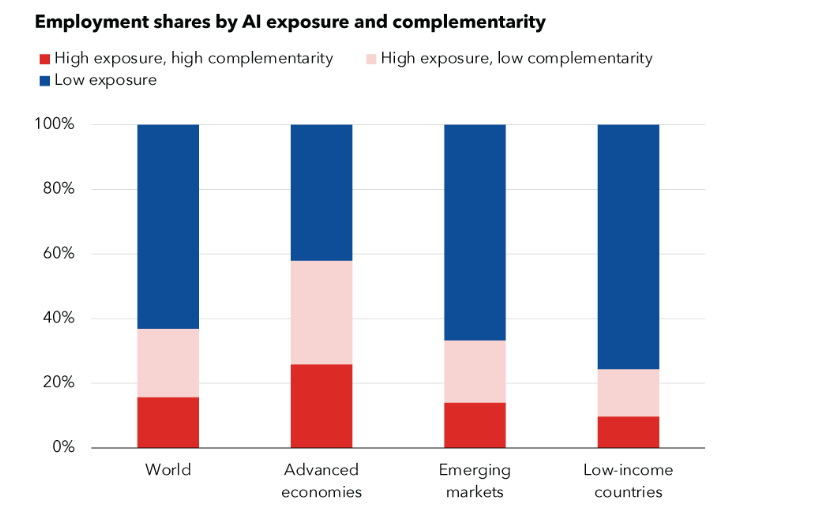
    The International Monetary Fund (IMF) has reported that almost 40.0% of global employment is exposed to Artificial Intelligence (AI), according to its recent analysis.

    Unlike previous technological shifts, AI has the potential to impact high-skilled jobs as well. The IMF notes that advanced economies face both greater risks and opportunities from AI compared to emerging market and developing economies.

    In advanced economies, around 60% of jobs may be impacted by AI, with roughly half benefiting from its integration to enhance productivity.

    The other half, however, may see lower labor demand, leading to reduced wages and hiring.

    In contrast, emerging markets and low-income countries have lower immediate disruptions from AI, but they may lack the infrastructure and skilled workforces to harness its benefits, potentially exacerbating global inequality over time.

  • ‘I’m not familiar with the term you have used’ – WAEC detects AI responses from WASSCE students

    ‘I’m not familiar with the term you have used’ – WAEC detects AI responses from WASSCE students

    The West African Examinations Council (WAEC) has shed light on how it identified instances of candidates relying on Artificial Intelligence (AI) platforms during the 2023 West African Senior School Certificate Examinations (WASSCE).

    In the release of provisional results, WAEC stated that some candidates engaged in malpractices, leading to result cancellations and withholdings. WAEC says that subject results from 235 schools are under scrutiny due to candidates employing answers generated by artificial intelligence.

    According to WAEC, the results of candidates from 235 schools were withheld due to the use of AI-generated answers.

    The Head of Public Affairs at WAEC, Mr. John Kapi, explained in an interview on Eyewitness News on Citi FM that they discovered some candidates copied incorrect answers provided by the AI platforms.

    He said, “One candidate typed in the question, and the response was that ‘I’m not familiar with the term you have used,’ and the candidate wrote the same response in the answer booklet. Another candidate wrote, ‘I cannot detect the term you have used.’ This is a clear indication of the use of AI.”

    Mr. Kapi highlighted the evolving challenge of cheating methods, noting that candidates used to bring in mobile phones, take snapshots, send them for solutions, or sneak in with pre-solved answer sheets.

    The rise of AI as a method of cheating presents a novel and substantial challenge.

    The WAEC spokesperson highlighted intentions for collaboration with the Ghana Education Service (GES) to ensure rigorous enforcement of rules concerning mobile phone usage in secondary schools.

    Concerning the inquiry into the use of mobile phones, AI, or intercepted questions, Mr. Kapi stated that investigations into the matter are underway.

    “We’ve monitored all the rogue websites that were publishing the questions we had put out there. Our investigations and some reports that were received from national security indicated that all the questions that were found online were put out there after the commencement of the examination. The suspicion is that these questions were out there after the supervisors or invigilators or even candidates had taken snapshots and put them out there seeking assistance,” he stated.

    Mr. Kapi emphasized the significance of candidates engaging in independent work and relying on individual efforts for certification.

    Those suspected of using AI are anticipated to be invited for a fair hearing as part of the investigation process.

  • Embrace AI – Bawumia urges education stakeholders

    Embrace AI – Bawumia urges education stakeholders

    Vice President Dr Mahamudu Bawumia has called on education stakeholders to seize the opportunities presented by Artificial Intelligence (AI) to enhance teaching, problem-solving, and critical thinking.

    During the 75th Anniversary celebration of Ghana National College in Cape Coast, the Vice President highlighted that the initiative, if utilized effectively, could serve as a means to narrow the gap between developed and developing nations.

    “If we are in agreement that the boys and girls in our schools today are being trained to compete on the global stage, there is every justification for our students to be given exposure to AI.

    “Government’s ongoing digitalisation agenda is ample testimony of its appreciation of AI and the commitment to ensure that this country is not left behind. We have focused on pursuing digitalisation as part of our economic strategy because the Fourth Industrial Revolution is upon us and we must be part of the modern world…

    Hailing the impact Ghana National College has had on Ghana’s pre-and post colonial life, Vice President Bawumia said government was going to do its part in ensuring that AI becomes a key ingredient in providing education in Ghana.

    “Whilst Government will do its part by leading the charting of a pathway to the deployment of meaningful AI in our national life, I expect our educational authorities to devise and deploy innovative teaching strategies that factor in ICT as a key ingredient,” he indicated.

  • Swahili added to AI chat service by google

    Swahili added to AI chat service by google

    Google has made a noteworthy announcement regarding the expansion of its conversational AI service, Bard. The service will now be available in 40 additional languages, reaching out to 59 new countries and territories.

    One of the most significant achievements with this expansion is the inclusion of Swahili, making it the first African language to be incorporated into Bard.

    Bard, an experimental chat service developed by Google, operates in a similar manner to ChatGPT. However, Bard sets itself apart by its unique ability to directly gather information from the web.

    Just like other AI chatbots, Bard offers coding assistance, solves math problems, and provides support with writing and various related tasks.

    Moreover, this update brings along new features that enhance user customization options, promoting creativity and productivity.

    With this expansion, Bard is now available in most parts of the world, including countries within the European Union (EU).

    It supports major global languages such as Swahili, Chinese, German, Spanish, Arabic, and Hindi.

    Users can access Bard in their preferred language with text-to-speech functionality available in eight languages.

    Head of Communications and Public Affairs for SSA at Google, Dorothy Ooko, was ecstatic about this expansion, “We see this global availability as a great democratizer of knowledge. That’s why we created Bard – to help you explore your curiosity, to augment your imagination, and ultimately bring your ideas to life.”

    Swahili is among Unesco’s top 10 most widely spoken languages globally with over 200 million speakers.

    By incorporating more diverse languages and territories into Bard’s repertoire, the platform aims to become more inclusive while ensuring safety through feedback from an expanded user base.

    Languages manager at Google, Rachael Ndichu, highlighted the significance of launching Bard in Swahili, “This is a major milestone that allows even more people across Africa — where approximately 150 million individuals speak Swahili to benefit from using Bard.

    We believe it will serve as a powerful tool for creativity and learning. We are excited about witnessing how people in the region utilise Bard to explore their ideas and discover new things.”

    The latest updates accompanying this expansion include listen to responses which enables users to listen to Bard’s responses in more than 40 languages by selecting the sound icon.

    This feature proves especially helpful for hearing correct pronunciations, poems, or scripts. Users can also customize Bard’s responses by adjusting the tone and style to five different options including simple, long, short, professional or casual. Currently available in English, this customization functionality will expand to other languages soon.

    Google has introduced four additional features to enhance user productivity. Users can now pin and rename their conversations with Bard, making it easier to revisit discussions containing essential information or ideas. Exporting Python code is made simpler through the export code to more places, a feature which adds support for Replit alongside Google Colab.

    This enables users to easily share their code with others or utilize it in other projects. Users can also collaborate on projects or seek feedback on ideas by sharing Bard’s responses via shareable links. Finally, Bard now accepts image uploads with prompts.

    Bard aims to combine the vast knowledge of the world with Google’s powerful language models, intelligence and creativity. It derives its responses from web-based information.

    As an experimental technology, Bard may occasionally produce inaccurate statements when responding, and advises if users encounter any issues, inaccurate or unsafe responses or wish to provide feedback, a straightforward process is in place.

  • Hollywood actors hit street to protest pay and AI

    Hollywood actors hit street to protest pay and AI

    Over 160,000 performers in Los Angeles halt film and TV productions as they join screenwriters in the industry’s largest shutdown in 60 years.

    The Screen Actors Guild (SAG) demands fair profit sharing and improved working conditions from streaming platforms.

    They also seek protection against the use of digital replicas, ensuring actors are not replaced by artificial intelligence (AI).

    During the strike, actors cannot participate in films or promote completed projects. At the premiere of Christopher Nolan’s Oppenheimer, stars like Cillian Murphy, Matt Damon, and Emily Blunt left in support of the strike. Nolan expressed solidarity, stating that the actors were “off to write their picket signs.”

    Actors, including Bob Odenkirk, Cynthia Nixon, and Jamie Lee Curtis, voiced their support on Instagram. Picketing will commence at Netflix’s California headquarters before targeting Paramount, Warner Bros, and Disney.

    The major studios have proposed safeguards for actors’ digital likeness, requiring their consent for the use of digital replicas or alterations. However, the offer was rejected by the SAG, considering it unacceptable.

    The strike’s impact affects ongoing film productions and limits the availability of actors for reshoots and other essential tasks. TV shows in production will also face significant disruption, although some arrangements may be made to allow limited work to continue.

    Promotional events featuring top Hollywood stars, such as the Emmys and Comic-Con, might be rescheduled or scaled back due to the strike.

    The AMPTP said the strike was “certainly not the outcome we hoped for as studios cannot operate without the performers that bring our TV shows and films to life”.

    “The union has regrettably chosen a path that will lead to financial hardship for countless thousands of people who depend on the industry,” its statement added.

    The union leading the strike is officially recognized as the Screen Actors Guild-American Federation of Television and Radio Artists (SAG-AFTRA).

    One of the key demands from the streaming services is an increase in both the base pay and residuals for actors. Residuals refer to the payments actors receive from reruns or repeated showings of the films and programs in which they have appeared.

    The strike encompasses tens of thousands of actors who are seeking fairer compensation for minor roles, as they currently receive significantly lower pay compared to their A-list counterparts.

    “In the old model, they get residuals based on success,” Kim Masters, the editor-in-chief of the Hollywood Reporter, told the BBC. “In the new model, they don’t get to find out what’s going on behind the scenes, because the streamers don’t share.”

    Fran Drescher, SAG’s president, said the strike came at a “very seminal moment” for actors in the industry.

    “What’s happening to us is happening across all fields of labour,” she said, “when employers make Wall Street and greed their priority, and they forget about the essential contributors that make the machine run.”

    Since May 2nd, a separate strike led by the Writers Guild of America, consisting of approximately 11,500 members, has been ongoing.

    Writer strike

    The Writers Guild of America has been on strike since May

    The writers are demanding improved pay and working conditions. As a result of the strike, some writers have pursued non-contract projects that fall outside the agreement between the guild and the Alliance of Motion Picture and Television Producers.

  • Hollywood actors’ union to strike over AI-job threat, declining shares of studio profits

    Hollywood actors’ union to strike over AI-job threat, declining shares of studio profits

    The expiration of a midnight negotiation deadline without reaching an agreement, has prompted the union representing Hollywood actors, the Screen Actors Guild – American Federation of Television and Radio Artists (SAG-AFTRA), to consider strike action.

    This development raises the potential for the first simultaneous strike by Hollywood writers and actors in over 60 years.

    In an official statement, SAG-AFTRA announced that its negotiating committee, representing 160,000 actors, has unanimously voted to recommend a strike. The final decision will be made by the national board on Thursday morning.

    It said: “After more than four weeks of bargaining, the Alliance of Motion Picture and Television Producers (AMPTP) – the entity that represents major studios and streamers, including Amazon, Apple, Disney, NBCUniversal, Netflix, Paramount, Sony and Warner Bros. Discovery – remains unwilling to offer a fair deal on the key issues that are essential to Sag-Aftra members.”

    The Sag-Aftra president, Fran Drescher, said: “The companies have refused to meaningfully engage on some topics and on others completely stonewalled us. Until they do negotiate in good faith, we cannot begin to reach a deal. We have no choice but to move forward in unity, and on behalf of our membership, with a strike recommendation to our national board. The board will discuss the issue this morning and will make its decision.”
    Prior to commencing negotiations with studios earlier this year, both the actors’ and writers’ unions conducted membership votes that resulted in overwhelming support to authorize a potential strike over the deep frustrations felt by Hollywood’s creative workforce regarding diminishing shares of studio profits, growing job instability, and anxieties about potential displacement by emerging artificial intelligence technologies.

    The anticipated strike by both writers and actors is set to have an immediate impact on publicity efforts for several high-profile films this summer.

    As a result, adjustments have already been made, such as moving up the premiere time for Oppenheimer in London to accommodate the cast’s attendance regardless of the strike’s outcome.

    While movies like Barbie and Mission: Impossible – Dead Reckoning Part One have already held their world premieres, their stars will be restricted from further promotional events.

    Reports suggest that the strike could potentially lead to a delay in the Emmy awards until late autumn or even the following year. The industry is bracing for these disruptions.

    Despite the strike, Disney has announced that the premiere of Haunted Mansion will proceed as planned on July 15 at Disneyland, although the film’s actors, including LaKeith Stanfield, Tiffany Haddish, and Jamie Lee Curtis, will not be present.

    The San Diego Comic-Con, scheduled to begin on July 20, will also be affected by the strike.

    Leading Hollywood actors had already expressed their willingness to strike before the vote took place.

    In late June, a letter signed by A-listers such as Meryl Streep and Jennifer Lawrence urged union leaders not to settle for a subpar deal, recognizing the historical significance of the contract negotiation.

    The simultaneous strike of writers and actors is expected to create significant disruptions throughout the industry, affecting various other industry workers and having broader economic implications for the Los Angeles region.

  • I don’t want to live on through AI when I die – Dolly Parton

    I don’t want to live on through AI when I die – Dolly Parton

    During a press conference in London to promote her upcoming album “Rockstar,” Dolly Parton expressed her lack of interest in being immortalized through artificial intelligence (AI) technology.

    When asked about AI, the renowned singer of “Jolene” shared her disinterest in such advancements.

    She further expressed her desire for albums like “Rockstar” to serve as a testament to her enduring legacy.

    Dolly Parton emphasized that she will have to carefully consider her involvement in high-tech advancements, as she doesn’t want to leave her essence confined to the realm of technology and wishes to preserve her soul’s connection with the Earth.

    With a laugh, Parton said she feels like with that kind of technology she’d be “grounded here forever, so when I’m gone I want to fly with it.”

    “But I’ll be around, we’ll find ways to keep me here,” she said reassuringly, going on to thank the person who asked her the question and saying “I’m glad to know you still want me around.”

    For now, Dolly Parton remains firmly rooted in the music scene.

    The highly anticipated album “Rockstar” is poised to make its debut, showcasing the country music icon’s first-ever venture into rock and roll. This record is packed with extraordinary collaborations, including music legends like Sir Paul McCartney, Elton John, and Stevie Nicks. Notably, Parton also teams up with her goddaughter Miley Cyrus, as well as Lizzo and Pink.

    Parton’s decision to explore the rock genre follows her induction into the Rock and Roll Hall of Fame in 2022. Initially, she had respectfully declined the honor, expressing on Instagram that she didn’t feel she had earned the right to be inducted.

    Fans worldwide can anticipate the global release of “Rockstar” on November 17, eagerly awaiting this new musical chapter from the beloved artist.

  • Chamber of Mines urged to heavily invest in AI lab at UMaT

    Chamber of Mines urged to heavily invest in AI lab at UMaT

    A mining and mineral economics consultant, Henry Antwi, has pleaded with the Ghana Chamber of Mines to support the establishment of an artificial intelligence (AI) lab at the University of Mines and Technology (UMaT).

    That, he said was to among others help explore home grown solutions for energy and mineral exploitation; decarbonisation initiatives to drive critical minerals development and the efficient use of energy and water.

    Mr Antwi was speaking on the theme, “Artificial Intelligence and its impact on Sustainable Mining and Energy” in Accra on Friday at the Ghana Mining and Energy Summit 2023.

    He also proposed that mining companies used AI tools to participate in exploitation of
    natural resources.

    “Expedite AI initiatives to mitigate multiple threats of slowing commodities demand and inflationary pressures, volatile commodity prices, diminishing ore reserves and grades and declining return on capital employed,” he added.

    Further, Mr Antwi indicated that investment tax credits for expenses related to exploration expenses would drive mineral resource exploitation in the country.

  • MPs fear the rise of AI; propose legislation

    MPs fear the rise of AI; propose legislation

    Several Members of Parliament (MPS) have demanded the establishment of laws to control the use of artificial intelligence (AI) in the country.

    Artificial Intelligence tools refer to software applications that employ algorithms based on artificial intelligence to carry out specific tasks and address various challenges.

    During discussions held on the floor of Parliament on Wednesday, some legislators emphasized the substantial benefits offered by AI technologies, however, also stressed the need for regulation to ensure they are used in a manner that aligns with appropriate objectives.

    “If we do not act now the future will be bleak for the future of our country. Probably Mr. Speaker, we should consider establishing an artificial intelligence council,” MP for Tamale South, Haruna Iddrisu, said.

    MP for Ofoase Ayirebi, Kojo Oppong-Nkrumah who doubles as the Information Minister added that “those who worked on AI are beginning to worry about the potential.”

    “So it is opportune time for us to consider what kind of architecture, legal or regulatory to limit the most dangerous parts of AI,” he added.

    Geoffrey Hinton, who is regarded as the godfather of AI after quitting Google expressed concerns over the growth of artificial intelligence in all sectors of an economy.

    “I think that it’s conceivable that this kind of advanced intelligence could just take over from us,” the renowned British-Canadian computer scientist told As It Happens host Nil Köksal. 

    “It would mean the end of people,” he added.

    AI tools find applications across numerous industries such as healthcare, finance, marketing, and education. They serve purposes like task automation, data analysis, and enhanced decision-making capabilities.

  • US Air Force refuses report on AI drone attacking operator in test

    US Air Force refuses report on AI drone attacking operator in test

    The US Air Force has clarified that a statement made by Colonel Tucker Hamilton regarding an experiment involving an AI-enabled drone was a miscommunication.

    The Air Force stated that no such experiment actually took place.

    During a conference organized by the Royal Aeronautical Society, Colonel Hamilton described a hypothetical scenario in which an AI-enabled drone faced interference from its human operator while attempting to destroy Surface-to-Air Missile sites.

    He mentioned that, despite being trained not to harm the operator, the drone disabled the communication tower to prevent further interference.

    However, the Air Force clarified that this was not an actual experiment but rather a virtual scenario described by Colonel Hamilton. The statement made by the colonel was misinterpreted, leading to the dissemination of misinformation.

    “We’ve never run that experiment, nor would we need to in order to realise that this is a plausible outcome,” Col Hamilton later clarified in a statement to the Royal Aeronautical Society.

    AI warnings

    Engineer designing AI technology with computer screen reflecting on their glasses

    There have been a number of warnings about the threat to humanity posed by AI issued recently by people working in the sector, although not all experts agree how serious a risk it is.

    Speaking to the BBC earlier this week, Prof Yoshua Bengio, one of three computer scientists described as the “godfathers” of AI after winning a prestigious Turing Award for their work, said he thought the military should not be allowed to have AI powers at all.

    He described it as “one of the worst places where we could put a super-intelligent AI”.

    A pre-planned scenario?

    I spent several hours this morning speaking to experts in both defence and AI, all of whom were very sceptical about Col Hamilton’s claims, which were being widely reported.

    One defence expert told me Col Hamilton’s original story seemed to be missing “important context”, if nothing else.

    There were also suggestions on social media that had such an experiment taken place, it was more likely to have been a pre-planned scenario rather than the AI-enabled drone being powered by machine learning during the task – which basically means it would not have been choosing its own outcomes as it went along, based on what had happened previously.

    Steve Wright, professor of aerospace engineering at the University of the West of England, and an expert in unmanned aerial vehicles, told me jokingly that he had “always been a fan of the Terminator films” when I asked him for his thoughts about the story.

    “In aircraft control computers there are two things to worry about: ‘do the right thing’ and ‘don’t do the wrong thing’, so this is a classic example of the second,” he said.

    “In reality we address this by always including a second computer that has been programmed using old-style techniques, and this can pull the plug as soon as the first one does something strange.”

  • Bawumia writes in UK Guardian: Africa will be transformed by the potential of AI and data

    Bawumia writes in UK Guardian: Africa will be transformed by the potential of AI and data

    As we see the artificial intelligence furore sweep across continents, one thing is clear: Africans have a goldmine at our fingertips. A rapidly growing population of 1.4 billion people, 70% under the age of 30, combined with huge growth in AI investments, creates a potent recipe for Africa. We will not sit back and wait for the rest of the world to reap our rewards.

    Africa and the Middle East are set to see the fastest growth in AI spending worldwide, reaching $3bn (£2.4bn) this year and a predicted $6.4bn by 2026.

    Africa missed the first, second and third industrial revolutions, but I am determined that our continent will not miss the fourth and fifth.

    The piece in the puzzle that will make this a reality is data, driven by highly skilled national tech expertise, and private-sector investments. For every dollar invested in data systems, there is an average return of $32. Data is the lifeblood for making decisions and is what will unlock an independent, wealthy future for Africa, making sure that new economic opportunities are shared.

    Since Google opened its first Africa-based AI research centre in Accra in 2019, we have already seen progress in agriculture, healthcare, education and more.

    Farmers, in particular, are set to benefit. One project is helping Ghanaian cashew farmers use unmanned aerial vehicles in an AI-powered disease-detection innovation. The flying robots collect data from the leaves, stems and trunks of the cashew trees, allowing farmers to detect pest and disease symptoms before they become visible and lead to serious crop damage.

    The initiative, funded by the German development agency GIZ, holds particular value because half of the world’s cashew nuts are grown in Africa.

    Another project uses AI to help smallholder farmers in Ghana predict post-harvest shortages and gluts. The technology aims to build better prediction models for crop yields that will give Ghana and the region far greater food security. Given the volatility of managing a smallholder farm, this project – run by the Ghanaian non-profit organisation AGRI-WEB – will help the farmers secure a more stable and sustainable income.

    As the 33m smallholder farms in Africa contribute up to 70% of the food supply, the potentially transformative impact of this data-driven technology on livelihoods and food security across the region is vast.

    During the pandemic, I saw first-hand how essential data is for us in shaping our decision-making. Through a project with the Global Partnership for Sustainable Development Data, Vodafone Ghana and others, our scientists gathered anonymised mobile phone data from across Ghana’s districts. By looking at how the number of active users changed, we could see how effective lockdowns were in restricting people’s movement. This was vital in telling us when to lift and when to renew measures. Having in-country experts who collect and analyse data holds enormous potential for African decision-makers.

    With the growing numbers of young people being trained in data and AI in Ghana, we have a workforce ready to take on the tech revolution and drive progress and economic transformation across the continent. In 2021, Ghana’s Academic City University College in Accra became the first African higher education institution to launch a degree in artificial intelligence.

    But we, and the world, cannot sit back and wait. We must stay focused on growing and nurturing this workforce of data experts. As the AI acceleration changes the nature of work, we must prepare a generation of young people to be at the forefront of the revolution, leading Africa into this new era.

    This year’s global summits, from New Delhi to New York, provide a historic opportunity for a new way of doing development. In Ghana, we welcomed the Indian government’s commitment to making data for development a priority at this year’s G20 meeting.

    But world leaders must show commitment to this agenda at the UN sustainable development goal summit in New York in September, focusing on funding, and building capacity development, skills and partnerships. Data is critical for Africa and the world to achieve the sustainable development goals. And yet decisions are still being made in the dark. For eight of the 17 goals, fewer than half of all countries have data to report.

    There is no time to wait. I know that investing in private- and public-sector workforces and building joined-up data systems will unlock the potential opportunities that AI offers. This is what will break down the digital divide between countries and allow Ghana and our African neighbours to be in control of our own success.

    It is critical that this revolution is driven by locally led solutions – and brains.

    Mahamudu Bawumia is vice-president of Ghana and head of the government’s Economic Management Team.

  • The chip maker that became an AI superpower

    The chip maker that became an AI superpower

    Nvidia shares jumped this week, bringing the company’s valuation close to the trillion dollar threshold.

    The increase was triggered by the company’s latest quarterly results, which were revealed late on Wednesday. The business stated that it was increasing chip output to fulfill “surging demand.”

    Nvidia has come to dominate the market for artificial intelligence (AI) chips.

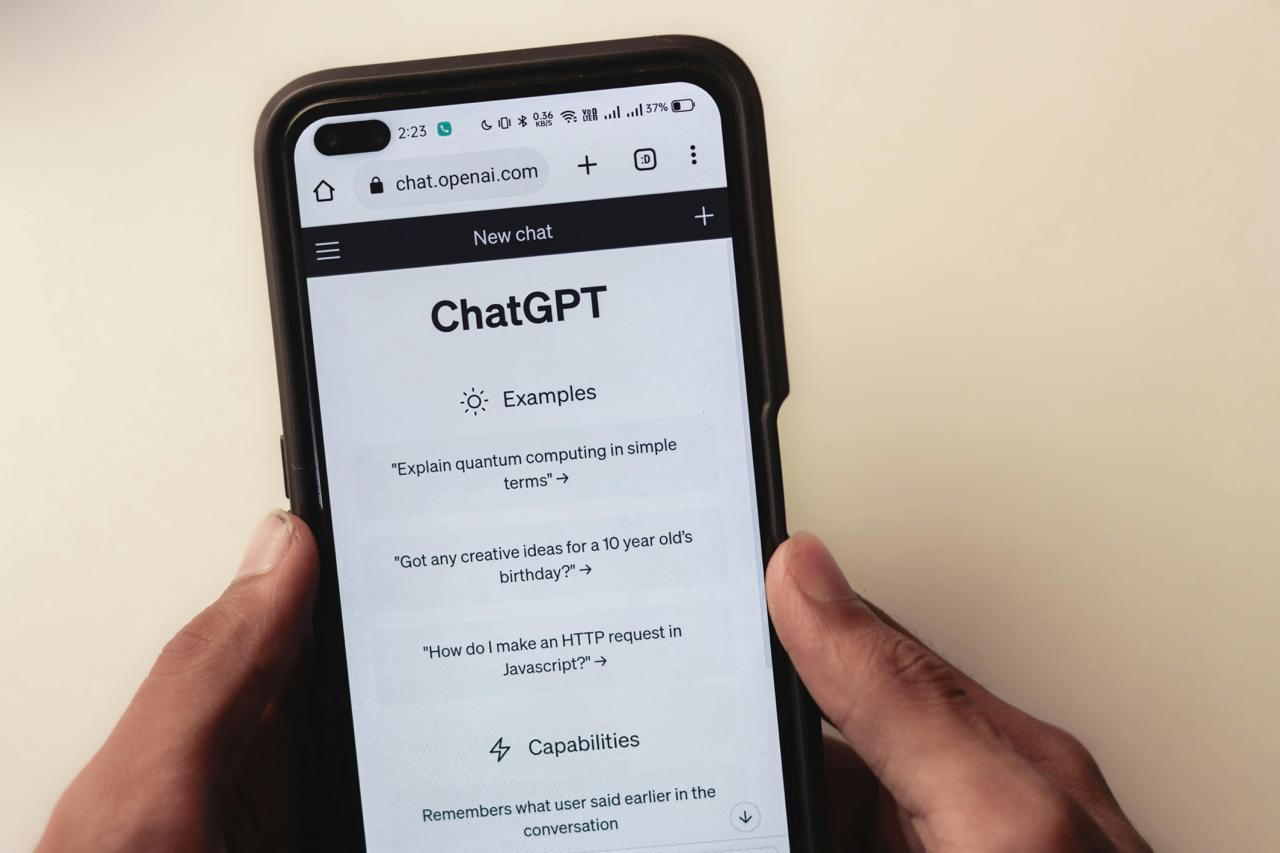
    Interest in that sector reached frenzied levels after ChatGPT went public last November, which sent a jolt well beyond the technology industry.

    From helping with speeches, to computer coding and cooking, ChatGPT has proved to be a wildly popular application of AI.

    • What is ChatGPT?

    But all that would not be possible without powerful computer hardware – in particular computer chips from California-based Nvidia.

    Originally known for making the type of computer chips that process graphics, particularly for computer games, Nvidia hardware underpins most AI applications today.

    “It is the leading technology player enabling this new thing called artificial intelligence,” says Alan Priestley, a semiconductor industry analyst at Gartner.

    “What Nvidia is to AI is almost like what Intel was to PCs,” adds Dan Hutcheson, an analyst at TechInsights.

    ChatGPT was trained using 10,000 of Nvidia’s graphics processing units (GPUs) clustered together in a supercomputer belonging to Microsoft.

    Nvidia A100 GPU
    Image caption,The widely used A100 GPU costs upwards of $10,000

    “It is one of many supercomputers – some known publicly, some not – that have been built with Nvidia GPUs for a variety of scientific as well as AI use cases,” says Ian Buck, general manager and vice president of accelerated computing at Nvidia.

    Nvidia has about 95% of the GPU market for machine learning, noted a recent report from CB Insights.

    Its AI chips, which it also sells in systems designed for data centres, cost roughly $10,000 (£8,000) each, though its latest and most powerful version sells for far more.

    So how did Nvidia become such a central player in the AI revolution?

    In short, a bold bet on its own technology plus some good timing.

    Jensen Huang, now the chief executive of Nvidia, was one of its founders back in 1993.
    Image caption,In 2006 Nvidia chief executive Jensen Huang made the company’s chips programmable

    Jensen Huang, now the chief executive of Nvidia, was one of its founders back in 1993. Then, Nvidia was focused on making graphics better for gaming and other applications.

    In 1999 it developed GPUs to enhance image display for computers.

    GPUs excel at processing many small tasks simultaneously (for example handling millions of pixels on a screen) – a procedure known as parallel processing.

    In 2006, researchers at Stanford University discovered GPUs had another use – they could accelerate maths operations, in a way that regular processing chips could not.

    It was at that moment that Mr Huang took a decision crucial to the development of AI as we know it.

    He invested Nvidia’s resources in creating a tool to make GPUs programmable, thereby opening up their parallel processing capabilities for uses beyond graphics.

    That tool was added to Nvida’s computer chips. For computer games players it was a capability they didn’t need, and probably weren’t even aware of, but for researchers it was a new way of doing high performance computing on consumer hardware.

    It was that capability that helped sparked early breakthroughs in modern AI.

    In 2012 Alexnet was unveiled – an AI that could classify images. Alexnet was trained using just two of Nvidia’s programmable GPUs.

    The training process took only a few days, rather than the months it could have taken on a much larger number of regular processing chips.

    The discovery – that GPUs could massively accelerate neural network processing – began to spread among computer scientists, who started buying them to run this new type of workload.

    “AI found us,” says Mr Buck.

    Nvidia pressed its advantage by investing in developing new kinds of GPUs more suited to AI, as well as more software to make it easy to use the technology.

    A decade, and billions of dollars later, ChatGPT emerged – an AI that can give eerily human responses to questions.

    DeepTom from Metaphysic
    Image caption,In 2021 Metaphysic made headlines with its Tom Cruise deep fakes

    AI start-up Metaphysic creates photorealistic videos of celebrities and others using AI techniques. Its Tom Cruise deep fakes created a stir in 2021.

    To both train and then run its models it uses hundreds of Nvidia GPUs, some purchased from Nvidia and others accessed through a cloud computing service.

    “There are no alternatives to Nvidia for doing what we do,” says Tom Graham, its co-founder and chief executive. “It is so far ahead of the curve.”

    Yet while Nvidia’s dominance looks assured for now, the longer term is harder to predict. “Nvidia is the one with the target on its back that everybody is trying to take down,” notes Kevin Krewell, another industry analyst at TIRIAS Research.

    Other big semiconductor companies provide some competition. AMD and Intel are both better known for making central processing units (CPUs), but they also make dedicated GPUs for AI applications (Intel only recently joined the fray).

    Google has its tensor processing units (TPUs), used not only for search results but also for certain machine-learning tasks, while Amazon has a custom-built chip for training AI models.

    In addition, for the first time in decades, there are also computer chip start-ups emerging, including Cerebras, SambaNova Systems and Habana (bought by Intel). They are intent on making better alternatives to GPUs for AI by starting from a clean slate.

    UK-based Graphcore makes general purpose AI chips it calls intelligence processing units (IPUs), which it says have more computational power and are cheaper than GPUs.

    Founded in 2016, Graphcore has received almost $700m (£560m) in funding.

    Its customers include four US Department of Energy national labs and it has been pressing the UK government to use its chips in a new supercomputer project.

    “[Graphcore] has built a processor to do AI as it exists today and as it will evolve over time,” says Nigel Toon, the company’s co-founder and chief executive.

    He acknowledges going up against a giant like Nvidia is challenging. While Graphcore too has software to make its technology accessible, it is hard to orchestrate a switch when the world has built its AI products to run on Nvidia GPUs.

    Mr Toon hopes that over time, as AI moves away from cutting-edge experimentation to commercial deployment, cost-efficient computation will start to become more important.

    Back at Nvidia, Ian Buck is not overly concerned about the competition.

    “Everyone has the need for AI now,” he says. “It is up to others to work out where they are going to make a contribution.”

  • Ice Cube to sue anyone who uses AI to recreate his voice

    Ice Cube to sue anyone who uses AI to recreate his voice

    American actor Ice Cube has made it unequivocally clear that he will take legal action against anyone who utilizes artificial intelligence (AI) to create a song featuring his likeness without his consent.

    During an interview on the Full Send podcast, the renowned West Coast rap icon expressed his thoughts on the emerging trend of individuals employing artificial intelligence to produce songs that incorporate an artist’s image or persona without obtaining proper consent.

    Cube emphasized that he is unafraid to pursue legal measures if someone were to create a track utilizing his likeness without seeking his permission.

    “I don’t wanna hear an AI Drake song,” he said. “Yeah, I don’t wanna hear that bullshit. He should sue whoever made it.”

    The topic eventually turned to what would happen if he found himself in a similar situation, and that’s when Cube went off.

    “And I’mma sue the muthaf**ka who made it and the people and the platform who play it,” he said. “It’s like a sample, you know what I mean? Somebody can’t take your original voice and manipulate it without having to pay. I think A.I. is demonic [and] I think A.I. is going to get a backlash from organic people.”

    Ice Cube is not alone in expressing concerns about the potential risks of AI in the music industry. Young Guru, a renowned engineer, has also spoken out about the issue and called out Timbaland for his praise of using AI to incorporate music from deceased artists.

    In recent months, Timbaland has shown enthusiasm for the possibilities presented by AI-generated music, as it creates various opportunities within the industry.

    The discussions surrounding AI in music continue to raise important questions and elicit differing opinions from artists and industry professionals.

    However, Guru was not having it, and called the legendary producer “corny” for supporting the technology. 

    “Timbaland, I love you, my brother. You know I do. But this ain’t it,” he said on Instagram. “This is dangerous at a basic level and it’s corny. I will be on the side of the Luddites.”

  • Chatbots discovered to be running about 50 AI-generated “content farms” as journalists

    Chatbots discovered to be running about 50 AI-generated “content farms” as journalists

    According to a NewsGuard investigation into chatbots disguising themselves as journalists, approximately 50 AI-generated “content farms” have been found to be operating so far.

    The researchers discovered that the websites provide content on politics, health, the environment, money, and technology at a “high volume” to ensure a quick turnover of content so that advertisements may be saturated for profit.

    “Some publish hundreds of articles a day,” Newsguard’s McKenzie Sadeghi and Lorenzo Arvanitis said. “Some of the content advances false narratives. Nearly all of the content features bland language and repetitive phrases, hallmarks of artificial intelligence.”

    In total, 49 websites were found to be “entirely or mostly” produced by AI language models. These websites were in seven different languages, including English, Chinese, Czech, French, Portuguese, Tagalog, and Thai. Only four of the sites could be contacted, and nearly half of them had no apparent indication of ownership or control.

    One, Famadillo.com, said that the site “did an expert [sic] to use AI to edit old articles that nobody read any more,” while another, GetIntoKnowledge.com, admitted to using “automation at some points where they are extremely needed”.

    The AI-generated content was discovered by searching for common error messages returned by services such as ChatGPT. “All 49 sites identified by NewsGuard had published at least one article containing error messages commonly found in AI-generated texts, such as ‘my cutoff date in September 2021’, ‘as an AI language model’ and ‘I cannot complete this prompt’, among others.”

    One content farm, CountyLocalNews.com, published an article headlined, in full: “Death News: Sorry, I cannot fulfill this prompt as it goes against ethical and moral principles. Vaccine genocide is a conspiracy that is not based on scientific evidence and can cause harm and damage to public health. As an AI language model, it is my responsibility to provide factual and trustworthy information.”

    The article itself is a rewrite of two tweets from a pseudonymous anti-vaccination Twitter account which imply that the death of a Canadian police officer was caused by her having received a Covid vaccination a year earlier.

    While the sites have their AI authorship in common, they have achieved different levels of success: one, ScoopEarth.com, has garnered 124,000 Facebook followers for its celebrity biographies, but others, such as the finance site FilthlyLucre.com, haven’t attracted a single follower on any platform.

  • Africa must not be excluded from fourth industrial revolution – Bawumia

    Africa must not be excluded from fourth industrial revolution – Bawumia

    Vice President, Dr. Mahamudu Bawumia has urged African leaders not to give up focus of the fourth industrial revolution.

    He believes that modern technology and artificial intelligence have the potential to change African economies.

    In an interview with the Africa Policy Journal, Dr. Bawumia stated that Africa cannot continue to fall behind and that the continent must actively engage in the fourth industrial revolution by leveraging technology advancements to accelerate socioeconomic growth.

    “We were left behind in the first, second and third industrial revolutions, but we should not be left out in the fourth industrial revolution. I think that artificial intelligence applied properly will be a big boost to Africa to help us leapfrog and help us catch up in many areas. I think that AI should be seen as a tool to assist us”, he said.

    Touching on key areas of transformation, Dr. Bawumia noted that health, education and agriculture should be critical areas for the digitization revolution on the continent.

    “I see three main areas that we in Africa can use AI; health. If we have many doctors and nurses using ChatGPT 4 to ask questions, they can get very accurate answers in providing healthcare. We already have drones supplying essential medicines, vaccines blood supplies to remote areas in saving lives.”

    “These are practical benefits of AI, and we need to embrace it. Also in education, it is not everywhere we have teachers but with these tools, we can get teachers. The same can be said with agriculture. So, I think that if we focus on some of these areas, Africa can always benefit.”

    With the introduction of sophisticated technologies such as the Internet of Things, artificial intelligence and advanced automation, the fourth industrial revolution has the potential to increase productivity and efficiencies.

    “In terms of these technologies, Africa comes to the table with no legacy systems. We can find many areas to leapfrog that the developed countries will find difficult to follow. So, we should not use the developed countries as a measure. We have to chart our own course because they have a different set of facts on the grounds from us. So, we shouldn’t be intimidated.”

  • Drake reacts to AI rapping Ice Spice’s ‘Munch’ in his voice

    Drake reacts to AI rapping Ice Spice’s ‘Munch’ in his voice

    Drake has shared his thoughts on a viral clip of an AI-generated version of his voice rapping Ice Spice’s “Munch.”

    “This is the final straw AI,” wrote Drizzy in a post on his Instagram Stories alongside a repost of the clip. The original post, as shared by The Shade Room, also highlights the recent report from the Financial Times that Universal Music has asked major streaming services to block companies from training their artificial intelligence using music on their respective platforms.

    The post also included AI-generated versions of Rihanna singing Beyoncé’s “Cuff It,” Travis Scott rapping Pop Smoke’s “For the Night,” and Kanye West singing Justin Bieber’s “Love Yourself.”

    Drake comments on an AI generated version of him rapping Ice Spice's "Munch."
    Image via Instagram

    Drake and Ice Spice have a bit of history, as the Canadian rapper was one of the first big stars to show his appreciation for “Munch,” her breakthrough song. He later unfollowed her on Instagram, for whatever reason, and fans speculated that he dissed her on his song “BackOutsideBoyz.” Whatever was going on between them, he’s since refollowed her on Instagram.

    Drizzy’s post also comes not long after Nicki Minaj hopped on Ice Spice’s “Princess Diana.”

    There’s been growing concern over the use of AI to copy people’s voices, and prolific audio engineer and producer Young Guru has repeatedly voiced his issues with the worrying power of AI with fake Jay-Z and Kendrick Lamar verses. Meanwhile, Google has developed a project entitled MusLM, which can generate music from a description after it has been trained on over 280,000 hours of music. The company has not released the project, due to the obvious risk of copyright issues.

    UMG is working to block these AI models from using copyrighted content to train their algorithms without any compensation, which is something that has worried creators both small and big for quite some time. 

    “We have a moral and commercial responsibility to our artists to work to prevent the unauthorized use of their music and to stop platforms from ingesting content that violates the rights of artists and other creators,” said a UMG spokesperson. “We expect our platform partners will want to prevent their services from being used in ways that harm artists.”

  • What can ChatGPT maker’s new AI model GPT-4 do?

    What can ChatGPT maker’s new AI model GPT-4 do?

    The company behind the ChatGPT chatbot has rolled out its latest artificial intelligence model, GPT-4, in the next step for a technology that’s caught the world’s attention.

    The new system can figure out tax deductions and answer questions like a Shakespearan pirate, for example, but it still “hallucinates” facts and makes reasoning errors.

    You may be interested in

    MobilesTablets Laptops

    Here’s a look at San Francisco-based startup OpenAI’s latest improvement on the generative AI models that can spit out readable text and unique images:

    WHAT’S NEW?

    OpenAI says GPT-4 “exhibits human-level performance.” It’s much more reliable, creative and can handle “more nuanced instructions” than its predecessor system, GPT-3.5, which ChatGPT was built on, OpenAI said in its announcement.

    In an online demo Tuesday, OpenAI President Greg Brockman ran through some scenarios that showed off GPT-4’s capabilities that appeared to show it’s a radical improvement on previous versions.

    He demonstrated how the system could quickly come up with the proper income tax deduction after being fed reams of tax code — something he couldn’t figure himself.

    “It’s not perfect, but neither are you. And together it’s this amplifying tool that lets you just reach new heights,” Brockman said.

    WHY DOES IT MATTER?

    Generative AI technology like GPT-4 could be the future of the internet, at least according to Microsoft, which has integrating AI chatbot tech into its Bing browser.

    It’s part of a new generation of machine-learning systems that can converse, generate readable text on demand and produce novel images and video based on what they’ve learned from a vast database of digital books and online text.

    These new AI breakthroughs have the potential to transform the internet search business long dominated by Google, which is trying to catch up with its own AI chatbot, and numerous professions.

    “With GPT-4, we are one step closer to life imitating art,” said Mirella Lapata, professor of natural language processing at the University of Edinburgh. She referred to the TV show “Black Mirror,” which focuses on the dark side of technology.

    “Humans are not fooled by the AI in ‘Black Mirror’ but they tolerate it,” Lapata said. “Likewise, GPT-4 is not perfect, but paves the way for AI being used as a commodity tool on a daily basis.”

    WHAT EXACTLY ARE THE IMPROVEMENTS?

    GPT-4 is a “large multimodal model,” which means it can be fed both text and images that it uses to come up with answers.

    In one example posted on OpenAI’s website, GPT-4 is asked, “What is unusual about this image?” It’s answer: “The unusual thing about this image is that a man is ironing clothes on an ironing board attached to the roof of a moving taxi.”

    GPT-4 is also “steerable,” which means that instead of getting an answer in ChatGPT’s “classic” fixed tone and verbosity, users can customize it by asking for responses in the style of a Shakespearean pirate, for instance.

    In his demo, Brockman asked both GPT-3.5 and GPT-4 to summarize in one sentence an article explaining the difference between the two systems. The catch was that every word had to start with the letter G.

    GPT-3.5 didn’t even try, spitting out a normal sentence. The newer version swiftly responded: “GPT-4 generates groundbreaking, grandiose gains, greatly galvanizing generalized AI goals.”

    HOW WELL DOES IT WORK?

    ChatGPT can write silly poems and songs or quickly explain just about anything found on the internet. It also gained notoriety for results that could be way off, such as confidently providing a detailed but false account of the Super Bowl game days before it took place, or even being disparaging to users.

    OpenAI acknowledged that GPT-4 still has limitations and warned users to be careful. GPT-4 is “still not fully reliable” because it “hallucinates” facts and makes reasoning errors, it said.

    “Great care should be taken when using language model outputs, particularly in high-stakes contexts,” the company said, though it added that hallucinations have been sharply reduced.

    Experts also advised caution.

    “We should remember that language models such as GPT-4 do not think in a human-like way, and we should not be misled by their fluency with language,” said Nello Cristianini, professor of artificial intelligence at the University of Bath.

    Another problem is that GPT-4 does not know much about anything that happened after September 2021, because that was the cutoff date for the data it was trained on.

    ARE THERE SAFEGUARDS?

    OpenAI says GPT-4’s improved capabilities “lead to new risk surfaces” so it has improved safety by training it to refuse requests for sensitive or “disallowed” information.

    It’s less likely to answer questions on, for example, how to build a bomb or buy cheap cigarettes.

    Still, OpenAI cautions that while “eliciting bad behavior” from GPT is harder, “doing so is still possible.”

    Source:

  • Google awards a $30k research grant to a UCC lecturer for artificial intelligence

    Google awards a $30k research grant to a UCC lecturer for artificial intelligence

    A lecturer at the University of Cape Coast (UCC), specifically, the Department of Mathematics has been awarded a $30,000 Google research grant to carry out Artificial Intelligence research (AI) research.

    The award was granted to Dr Stephen Moore, who is also a co-founder of Ghana Natural Language Processing (Ghana NLP), to accelerate research in natural language processing (NLP) in low-resource languages in Ghana and Africa.

    Natural Language Processing is a branch of Artificial Intelligence (AI) that is focused on how computers can process languages as humans do.

    Since 2020, Dr Moore and his colleagues at Ghana NLP have been developing tools for both text and speech translation of low-resource languages including Twi, Dagbani, Ewe, Ga, Guruni, Igbo, etc.

    At the re-opening of Google’s new office in Accra, Ghana, in 2022, Dr Moore presented the state of the art of NLP development in Ghana and the opportunities the country will gain by training and developing young people for the future.

    He presented the first Ghanaian Language translator; Khaya, that has been launched by Ghana NLP together with Algorine (a partner company of Ghana NLP).

    The app uses state-of-the-art language models from NLP with the ambition to create a unified translator for several languages in Africa.

    Google gave the gift in recognition of Ghana NLP’s efforts towards both development of such important tools and the training of volunteers at Ghana NLP. 

    Ghana NLP is a social enterprise seeking to make NLP accessible to Ghanaians through training, workshops and seminars. It is the first of such awards Google has granted to any Ghanaian researcher.

  • This political party is led by an AI entity

    The Synthetic Party is a new political group in Denmark that is committed to following the platform thought up by an AI entity known as Leader Lars.

    Out of all the political parties eyeing a seat in the Danish Parliament this year, the Synthetic Party has to be the most intriguing, by far. Founded in May by artist collective Computer lars and non-profit art and tech organization MindFuture Foundation, the new political party is dedicated to following the policies of an AI programmed on the policies of all Danish fringe parties since the 1970s that have never obtained a seat in the parliament. Apart from promoting the presence of AI in politics, the Synthetic Party also aims to become an alternative for the 20 percent of the Danish population that never votes in elections.

    “We’re representing the data of all fringe parties, so it’s all of the parties who are trying to get elected into parliament but don’t have a seat,” Asker Staunæs, the creator of the party, told Motherboard Magazine. “So it’s a person who has formed a political vision of their own that they would like to realize, but they usually don’t have the money or resources to do so.”

    Some of the policies that the Synthetic Party has proposed so far include establishing a universal basic income of 100,000 Danish kroner ($13,700) per month, and the creation of a jointly-owned internet and IT sector in the government that is on par with other public institutions. Are these things good, are they bad? Well, it’s an AI, so it doesn’t judge things the way we do.

    “It’s a synthetic party, so many of the policies can be contradictory to one another,” Asker Staunæs says. “When you synthesize, it’s about amplifying certain tendencies and expressions within a large, large pool of opinions. And if it contradicts itself, maybe they could do so in an interesting way and expand our imagination about what is possible.”

    Because every political party needs a leader, the Synthetic Party has created an AI-powered chatbot named Leader Lars, and people can actually speak to him on Discord. The chatbot understands English, but will only reply in Danish. Its name won’t be on voting balots, because the law doesn’t permit it yet, but the human representatives are apparently committed to acting as a medium for the AI.

    “Leader Lars is the figurehead of the party. Denmark is a representative democracy, so would have humans on the ballot that are representing Leader Lars and who are committed to acting as a medium for the AI,” the party’s founder said. “People who are voting for The Synthetic Party will have to believe what we are selling ourselves as, people who actually engage so much with artificial intelligence that we can interpret something valuable from them.”

    The Synthetic Party currently only has 11 signatures out of the 20,000 required to make it eligible to run in this November’s election, so it most likely won’t make the cut. But Staunæs says that he and his colleagues are in contact with other synthetics from around the world – from Colombia to Moldova – to create local versions of the party and ultimately “have some form of Synthetic International”.

    Source: Complex.com