
Tag: Airports

  • Take positions at airports, land borders to prevent corrupt officials from skipping town – Sam George

    Take positions at airports, land borders to prevent corrupt officials from skipping town – Sam George

    Sam Nartey George, Member of Parliament for Ningo-Prampram, has called on Ghanaians to be vigilant at airports and land borders to prevent individuals accused of corruption from fleeing the country.

    In a post on X, George urged his supporters to take action and ensure that those responsible for looting the nation’s resources face justice.

    “Dear Comrades, Take positions at the airports and land borders. None of those who have raped our nation’s resources should be allowed to skip town. Those who have stolen the public purse MUST be made to account for every pesewa. Operation Recover All Loot (ORAL) must swing into full action. For our Children. For our Nation. Let’s go,” he wrote.

    George, who was re-elected in the 2024 general elections, secured a commanding victory in both the presidential and parliamentary races in his constituency.

    For the presidential election, John Dramani Mahama of the National Democratic Congress (NDC) dominated with 47,251 votes, securing 80.92% of the total valid votes. Vice President Mahamudu Bawumia of the New Patriotic Party (NPP) followed with 9,989 votes, representing 17.11%.

    In the parliamentary race, George triumphed with 44,953 votes, amounting to 76.58% of the total votes. His closest contender, Michael Tetteh Eku of the NPP, garnered 12,101 votes, or 20.62%. Independent candidates Evans Tetteh Nartey and Frederick Forzie secured 2.43% and 0.37%, respectively.

    https://twitter.com/samgeorgegh/status/1865587568772882545

  • Regional airports raised GHS13.13m revenue and spent GHS39.14m in 2022 – AG

    Regional airports raised GHS13.13m revenue and spent GHS39.14m in 2022 – AG

    A recent Auditor-General’s report has highlighted financial results for the five regional airports in the country.

    The report, which covers the accounts of public boards, corporations, and statutory institutions for 2023, shows that the airports collectively earned GH¢13.13 million in revenue for 2022, while their expenditures totaled GH¢39.14 million.

    This led to a substantial deficit of GH¢26.01 million, prompting a reassessment of strategies to enhance regional airport development and boost economic benefits.

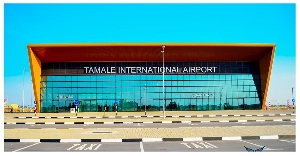
    The airports involved are Kumasi Airport (now Prempeh I International Airport) in the Ashanti Region, Tamale Airport in the Northern Region, Wa Airport in the Upper West Region, Sunyani Airport in the Bono Region, and Ho Airport in the Volta Region.

    A closer look at the financial details reveals Kumasi Airport had expenses of GH¢15.68 million but only generated GH¢8.22 million in revenue.

    Tamale Airport reported revenue of GH¢4.74 million against an expenditure of GH¢15.41 million. Sunyani Airport brought in GH¢95,626.58 in revenue with a spending of GH¢4.53 million.

    Ho Airport did not generate any revenue but had an expenditure of GH¢1.38 million. Wa Airport earned GH¢77,250.48 in revenue while investing GH¢2.15 million in its operations.

    Auditor-General Johnson Akuamoah Asiedu attributed the poor performance to low passenger numbers, a limited number of domestic airlines, and the underutilization of rentable airport facilities.

    The report noted that the airports’ lack of commercial viability is impacting the financial health of Ghana Airports Company Limited (GACL) due to high operational costs and low revenue.

    The report also warned that neglected facilities, like those at Ho Airport, might deteriorate over time.

    To address these challenges, it recommended that GACL management incentivize domestic airlines to use these airports and launch marketing campaigns to attract more travelers.

    Additionally, it suggested finding concessionaires for idle spaces to generate rental income and collaborating with regulatory authorities to ease restrictions for potential airlines while ensuring safety.

    In response, airport management acknowledged the commercial challenges but expressed hope that new infrastructure and international flights could improve viability.

    They stressed that developing these airports aligns with national policy and will create significant job opportunities during and after construction.

    GACL emphasized its role in providing essential social and public services across the country and is committed to investing in regional airports to support national economic growth.

  • Airlines and Airports commit $35bn to IT system – Report

    Airlines and Airports commit $35bn to IT system – Report

    The 2023 Air Transport IT Insights report by SITA reveals a year-on-year increase in IT spending for Airports and Airlines, reaching an estimated 10.8 billion USD and 34.5 billion USD in 2023.

    Over two-thirds of CIOs anticipate continued growth into 2024.

    Airlines and airports focus on optimizing passenger experience, with 50% implementing IT for efficiency in check-in, bag tag, and boarding.

    Biometrics are gaining popularity, with 70% of airlines expecting biometric ID management by 2026, and 90% of airports investing in related programs.

    CIOs prioritize business intelligence (BI), artificial intelligence, and data sharing for operational efficiency.

    BI is the leading technology investment for airlines, with 73% planning major programs. AI and machine learning, embraced by 97% of airlines and 82% of airports by 2026, aim to leverage data for insights and operational improvement.

    David Lavorel, CEO of SITA, emphasized the role of advanced data tools in uniting stakeholders for efficient, agile responses to disruptions.

    “As we approach a full recovery of passenger demand for air travel, with domestic travel even surpassing pre-pandemic levels in some regions, airlines and airports have learned from the congestion and disruptions seen in the past two years. Advanced data sharing and analytics tools will allow them to unite stakeholders and identify opportunities for greater efficiency and leaner operations. Solutions like total airport management and BI for passenger processing provide airports and airlines real-time insight into the management of assets and passenger flow, allowing for agile, collaborative responses to any disruptions.”

    Sustainability is a key focus, with over 90% of airlines planning IT solutions for emissions reduction by 2026.

    On the airport side, energy management systems are a priority for emissions reduction, with over half planning investment by 2026.

    Airlines and airports aim to achieve net-zero CO2 emissions by 2050, adopting digital tools for accurate monitoring and optimization of energy consumption.

    The research, based on the views of over 250 senior airline and airport executives, covers a quarter of global passenger traffic and was conducted from August to November 2023.

  • UK: By 2024, airports could be free of liquid luggage restrictions

    Due to high-tech 3D scanners, security restrictions on liquids and laptops in airport hand luggage could be eliminated in the UK within two years.

    The government is considering deploying more advanced scanners by mid-2024, according to a source, though no final decision has been made.

    The equipment, which is similar to CT scanners used in hospitals, provides a clearer picture of the contents of a bag.

    Due to the pandemic, an earlier installation deadline was pushed back.
    According to the Times, ministers have been conducting a review, and an announcement is expected before Christmas, with the hope of reducing queues at UK airports.

    Currently, passengers taking liquid in their cabin baggage are restricted to clear plastic bags holding no more than 100ml, which must be shown to security staff in a single, transparent, resealable plastic bag of about 20cm (8in) x 20cm.

    Those limits have been in place since November 2006. Their introduction ended a ban on liquids in the cabin imposed three months earlier, when British police said they had foiled a plot to blow up as many as 10 planes using explosives hidden in drinks bottles.

    But the new technology enables staff to zoom in on a bag’s contents and rotate the images for inspection.

    The 3D scanners have been trialled at London Heathrow Airport, starting in 2017.

    Its chief executive, John Holland-Kaye, told The Times newspaper: “We are slowly rolling them out.

    “We have just started the expansion of the security area in Terminal 3 which will have more CT scanners and have a deadline of mid-2024 from the [Department for Transport]. By then the normal passenger experience will be that liquids stay in bags.”

    The technology has already been in use by US airports, such as Atlanta’s Hartsfield-Jackson and Chicago’s O’Hare, for a number of years.

    Former Prime Minister Boris Johnson made a pledge to use the scanning technology to speed up pre-boarding checks and improve security, giving UK airports a deadline of the end of 2022.

    But passenger numbers were dented during the pandemic with travel restrictions in place across much of the globe.

    The latest figures from the International Air Transport Association for September show that passenger traffic levels have only reached 73% of pre-Covid levels.

    A spokeswoman for the Department for Transport said: “Passengers at UK airports must not carry liquid containers larger than 100ml through security, and both liquids and electronics should be taken out of cabin bags at airport security checkpoints.”