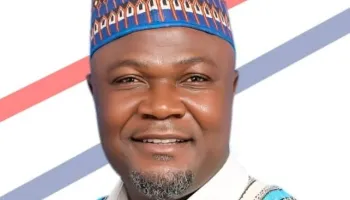
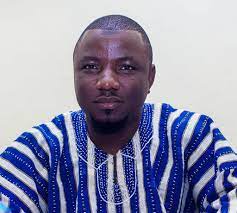
Mr. Tapha Tassah, a private legal practitioner based in Accra, has emerged victorious in the Akan New Patriotic Party (NPP) parliamentary candidate election.
He secured 316 votes, defeating Rabiu Awal, the Akan constituency NPP chairman, who garnered 296 votes. The total valid votes cast were 612, with no rejected ballots.
The result was declared by Mr. Justice Odame-Frempong, the Kadjebi District Electoral Officer, at Kadjebi in the Oti Region.
In his acceptance speech, Lawyer Tassah expressed gratitude to the delegates, describing their vote as a call to duty. He pledged to work tirelessly with the constituency chairman to secure the Akan seat for the NPP for the first time.
Assuring party members that campaign logistics would not be an issue, he stated his readiness to handle the campaign effectively.
Chairman Awal, the runner-up, assured Lawyer Tassah of his full support in the December 7 polls to win the seat for the party.
Mr. Jonathan Akpabey Menu, the NPP’s Oti regional secretary, urged party members to campaign vigorously for the NPP candidate to “Break the Eight.” He emphasized the importance of starting the campaign immediately, acknowledging the significant task ahead.
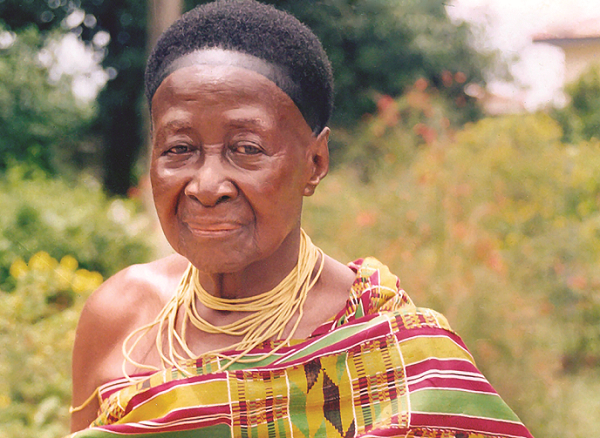
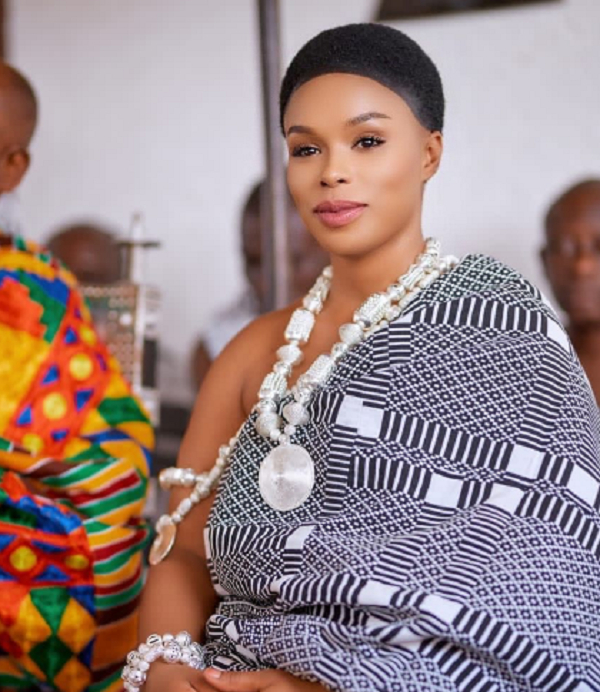
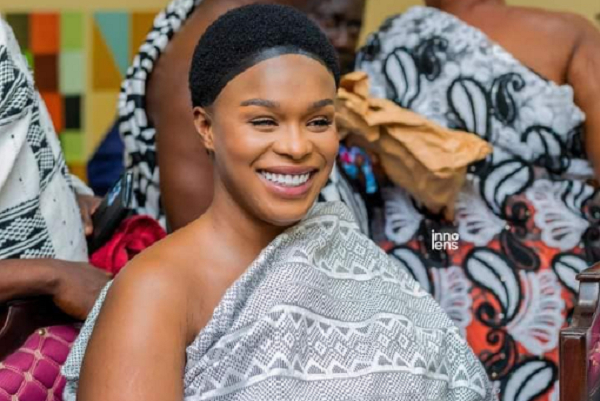
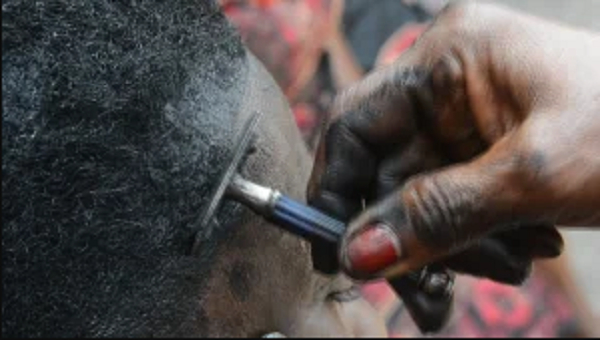
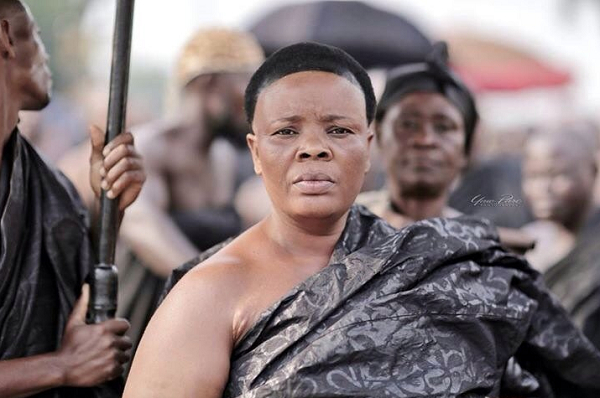
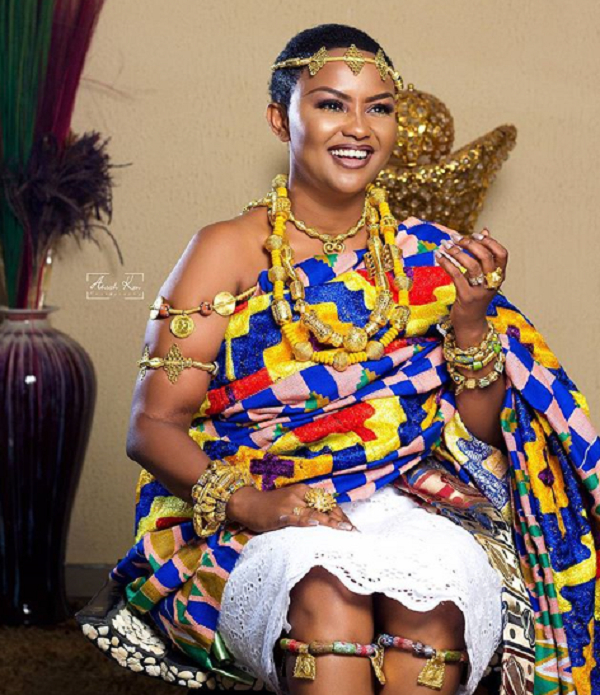
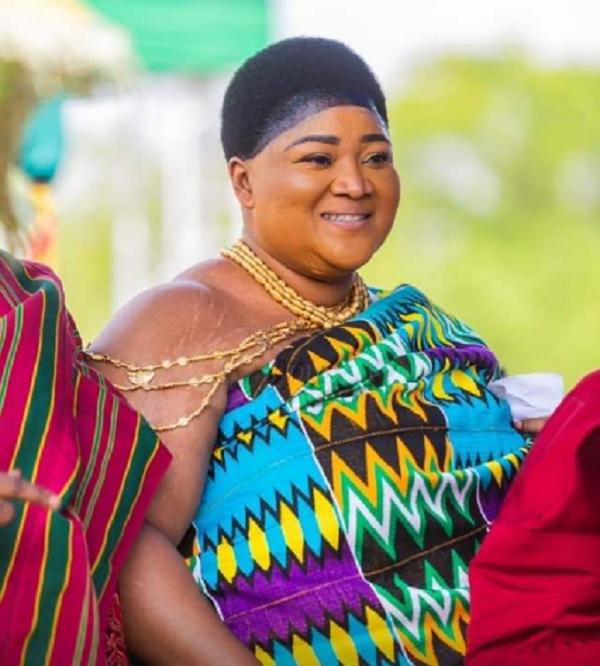
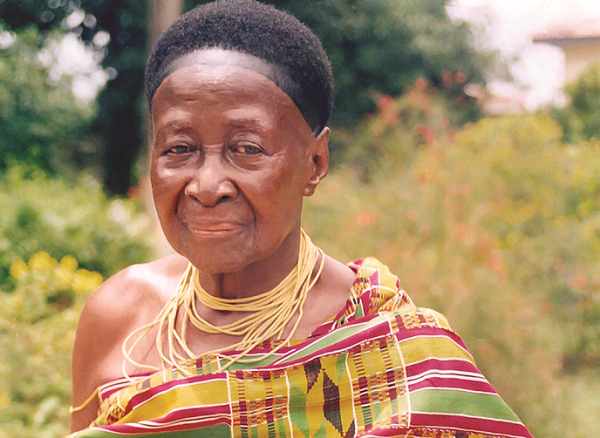
For generations, Akan queens have sported the Dansinkran, a distinctive uniformed low haircut adorned with a thick black dye forming the shape of a calabash on their foreheads.
This traditional hairstyle, primarily worn by queens of the Akan tribe, especially the Asantes, holds deep cultural significance as a symbol of authority and royalty within the community.
What is its origin?
Although there are several twists to the inception of this hairstyle, there are two most prevalent stories.
The first story detailed that Nana Kwaadu Yiadom II, the queen mother of the Asante Kingdom and sister of Nana Prempeh I, once performed the regal ‘Adowa’ dance during the Asante Confederacy’s restoration and the ‘Dansinkran’, then ‘Kentenkye’ hairstyle, was first spotted on her.
The reigning Governor at that time was said to have referred to her hairstyle as a “dancing crown” because of its aesthetic appeal during the dance.
Afterward, the term “dancing crown” was verbally altered into ‘Dansinkran’, which has since become its name today.
In the second story however, during the 1824 Katamanso war when the British joined forces with other tribes to defeat the Asantes, the ‘Dansinkran’ hairstyle, then known as ‘Gyese Nkran’, was introduced and worn by the Asante women to mourn the Asantehene who died in the war.
It is, however, unknown why it was labeled ‘Gyese Nkran’.
Its significance
Aside from representing power and wealth, the ‘Dansinkran’ hairstyle distinguishes the queen mothers and women of the royal family from other people.
Although in recent times, other women wear Dansinkran, the queen mother’s style is exceptional because they work on their hair daily, whereas other women wear it only on special occasions.
Some customs associated with the hairstyle
The ‘Dansinkran’ hairstyle is usually adorned to pay homage to dead Akan royals (kings and queens).
In the event of death, royal women not adorned in Dansinkran are not allowed to file past the dead bodies of kings or queens.
The transitioning into a modern day ‘sweat hairstyle’
The Dansinkran hairstyle, usually meant for royals and the elderly, has stood the test of time.
In recent times, the youth has embraced it and created a ‘modern look’ known as ‘Sweat’.
The difference is that the ‘Sweat’ is a unisex style and is also not done with the shiny dark mixture applied to the hair.
Some traditional brides nowadays also rock the Dansinkran hairstyle to meet their husbands and in-laws.
What is the thick black dye in the haircut made of?
The thick black dye spotted at the edges of the haircut is made up of a mixture of charcoal soot from a cooking pot or fire lamp, and shea butter.
It is believed that the dye used on the hair enhances the thinking capabilities of the wearer.
Photo credits: Ansah Ken Photography, Inno Lens, Yaw Opare Photography
Head of the Political Science Department at the University of Ghana, Dr. Alidu Seidu, has put forth a suggestion that the opposition National Democratic Congress’ (NDC) flagbearer, John Dramani Mahama, should contemplate selecting an Akan as his running mate for the 2024 election.
He explained that this is necessary “because of the dominance of the Akan votes and the significant contribution the Akan vote can make to the NDC’s victory in 2024 election.”
In an interview on Joy FM’s Top Story on Thursday, December 14, Dr. Seidu highlighted that while the Volta region, Oti region, and the five regions of the north have consistently been the stronghold of the National Democratic Congress (NDC), relying solely on votes from these regions would pose a challenge for the party to secure victory in an election.
“So, I think a lot of people are calling for him to look beyond the Volta region and go to maybe an Akan-dominated region. The running mate should be an Akan either from the Ashanti region or any of the Akan-speaking regions,” he said.
Dr. Seidu has emphasized the importance for the National Democratic Congress (NDC) to consider a running mate who can seamlessly continue in a leadership role, especially since John Dramani Mahama would have only one term left if he emerges victorious in the polls.
His comments come amid increasing pressure on Mr. Mahama to announce his running mate. During Mr. Mahama’s campaign tour in the Bono and Western North regions, traditional leaders made suggestions regarding potential running mates. Additionally, NDC youth groups in the Volta and Oti regions have expressed their desire for the running mate to come from the NDC stronghold.
Dr. Seidu noted that the lobbying by traditional rulers might be rooted in the expectation that their regions would benefit in terms of development. He also acknowledged that individuals being lobbied for might find it appropriate to engage with traditional rulers due to the respect they command.
Despite the lobbying, John Dramani Mahama has stated that the decision on the running mate will be made in February 2024, adding a timeline to the anticipation surrounding the selection.
“I don’t choose a running mate alone. Myself, together with the Functional Executive Committee and Council of Elders, pick from a list and decide on one person,” he pointed out.
He urged those appealing for their preferred candidates to exercise restraint.
“I would pray for your patience, as we all know that God grants the King and the NDC doesn’t discriminate.”
Mr Mahama was partnered by Professor Jane Naana Opoku Agyemang in the 2020 election, and there are suggestions she may be retained, although others want to see a new face.
Did you know Baoule people from Ivory Coast are a subset of the Akan tribe?
And oh, presentIvory Coastwas founded by a great woman….
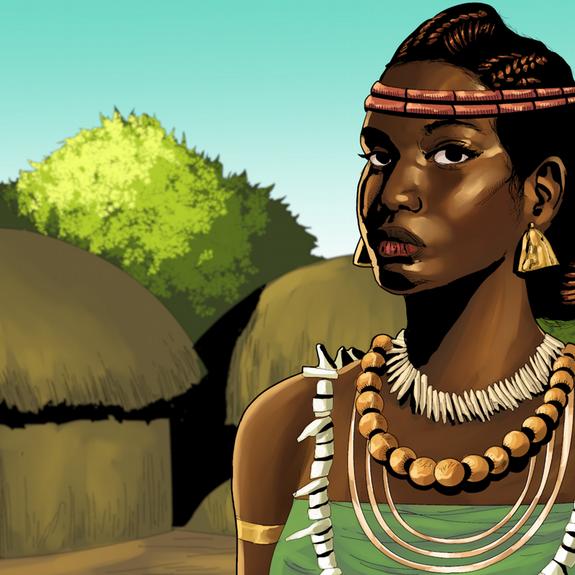
Queen Abla Pokou born between 1700 and 1720 on Tuesday, in Kumasi, was King Osei Tutu‘s niece, a co-founder of the Ashanti Empire in present-day Ghana.
Osei Tutu was ambushed and assassinated in 1718, Pokou’s second brother Dakon took over as leader of the Ashanti. The King’s reign lasted for almost two decades.
Following the passing of King Osei Tutu, a succession dispute resulted in the death of Dakon.
Pokuo got married but could not conceive, this became a challenge as she had needed to produce a son in order to succeed her brother.
One day, while Dakon and his army were engaged in battle away from the Ashanti capital of Kumasi the town was taken over by troops. Pokou was the only royal princess who survived the massacre, as such she was prepared to die at her post.
The enemy however, took her hostage, Dakon upon rival noticed her absence.
In rescuing the royal princess, Dakon appointed Tano, a warrior in leading the army to the camp of the enemy.
The warrior later married Pokuo, an heir to the golden Ashanti throne was ensured by the birth of a boy from the union.
In no time Dakon became ill and died, before his death, named a successor to the throne, since Pokuo’s son was young.
Nevertheless, Kwissi, Dakon’s rival, assassinated the successor shortly after.
Knowing that Pokou’s son would ultimately be the legitimate heir, Kwissi asked Pokou for permission to rule, but she refused.
Abla Pokou,however, fled out of fear for her safety and that of her family. She escaped with Dakon’s faithful subjects to modern-day Ivory Coast.
Queen Abla Pokou and her fugitives were unable to cross the Comoe River, upon rival.
Abla Pokuo and her people could not cross the river due to the high water caused by the continuous rain. The Comoe is a natural border between present-day Ghana and Ivory Coast.
Queen Abla Pokuo
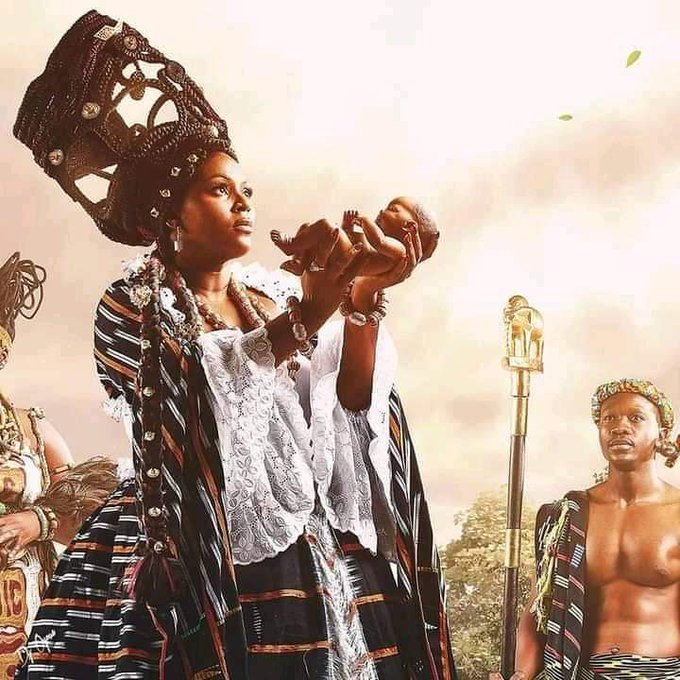
According to the wise man with Pokuo a child from a noble lineage must be offered as sacrifice to appease the river gods. She flung her son into the river, he vanished among the waves. The trees on the bank immediately bent their trunks to create a bridge.
Another account indicates that, Abla and her escort were able to cross the river after a hippopotamus appeared on the river to pave way.
When they reached the other side, Abla Pokou she wailed and said “Bâ wouli,” to wit the child dead.
The Baoule people, who now reside in modern-day Ivory Coast, derived their name from this phrase (“ba wouli”). to serve as a reminder of the sacrifice of their leader.
Today, Abla is considered as the first and matriarch of the Baoule ethnic group in West Africa, in Ivory Coast. She reigned from around 1750 until around 1760.
She controlled a division of the great Ashanti Kingdom as it spread westward.
One of the main ethnic groups in present Ivory Coast is the Baoule people, a subset of the Akan.
She is acknowledged for her braveness to save her people and provide them with a better life.
The Queen’s jacket crafted from Baoule loincloth pays homage to the Baoule ethnic community and its heritage.
Ghana’s cedi slumped to the world’s worst-performing currency to the dollar as wait-and-see investors continued to squeeze foreign capital into the west African country before its deal with the International Monetary Fund(IMF).
The currency of the world’s second-biggest cocoa producer depreciated 2% on Monday to 11.2625 per dollar, taking its losses this year to 45.1%, the most among 148 currencies tracked by Bloomberg.
The currency that derived its name from ‘sedie’, the local Akan language name for cowrie shell, switched position with the Sri Lankan rupee, which is now the second worst performer with a 44.7% drop to the greenback this year.
Ghana started engaging with the IMF in July but only began formal negotiations for an extended credit facility program with the lender last month.
The country is hoping to receive up to $3 billion in loans over three years under the arrangement to spur its finances and support the balance of payments.
Ghana reversed course to seek IMF help after homegrown policies, including cutting 2022 discretionary expenditure by up to 30%, failed to stem a selloff in its international bonds.
The premium investors demand over US Treasuries to hold Ghana debt has widened to 2,669 basis points.
There is often this rift between persons belonging to the Akan and the Ewe ethnic groups, with each group accusing the other of some disrespect.
But this was not the case at the celebration of the 7th Akwasidae in the Asante calendar at the Manhyia Palace in Kumasi, on Monday, October 4, 2022, which was attended by many dignitaries, including an Ewe chief, the chief of staff of the Forum for Kings and Traditional Leaders of Africa, Torgbui Gobah Tengey.
During a speech at the event, Torgbui Gobah Tengey, who is also an International Peace Ambassador, described the Asantehene, Otumfuo Osei Tutu II, as the greatest monarch in the world.
He also praised the Ashantehene for his role in the maintenance of world peace.
“His Majesty, my great brother, the greatest monarch of the world today by your deeds. Otumfuo Osei Tutu II is a King of Peace. He has performed creditably, to the admiration of the whole world.
“We call each other brothers. As an Ewe man, he loves me to the narrow. So, when we see each other, we are always smiling at each other. Otumfuo is a great King, a peacemaker, a loving father. Your peaceful overturns are unparalleled. A few years ago, you were at the United Nations, (and) you surprised the whole world with your oratory, ‘The African is a Great Son of the World’.
“You have proved beyond reasonable doubt that Africans can remake the world. And I rely on you, we rely on you to have that union of fellowship among the rest of Africa so that we can conquer the world,” he said.
Torgbui Gobah even went on to dedicate his “Development Chief of Africa” award which was conferred on him by the President of Congo, Félix Antoine Tshisekedi Tshilombo, to the Asantehene.
“As a peace ambassador, I’ve been honoured by the President of the Democratic Republic of Congo through the All Africa Conference of Churches because of my peace overtures in the world.
“It is through your (the Asantehene’s) prayers and blessings that I have reached that level in the world. And I’m showing this honour, for the first time, to you, my mentor, before it goes any were. But I would like you to keep this in your kingdom,” he said.
Denkyira people are ancient warlords and matriarchal Kwa-speaking people which forms the sub-set of the larger Akan ethnic group residing in the Central Region of Ghana. The Denkyira people who were once a famous kingdom until Asante people brought it to its knees, speak Akan Twi language and can be found in Twifo Ati-Mokwa (Hemang lower Denkyira) and Upper Denkyira districts.
The Asante Kingdom was a vassal of Denkyira. In 1699, Denkyirahene Ntim Gyakari requested hire taxes from Asantehene Osei Tutu. This action caused war to break out. Initially, the war went the way of Denkyirahene Gyakari, but the tides turned. In 1701, Denkyirahene Ntim Gyakari was defeated by the Asante Kingdom at Feyiase. The Asante Kingdom proceeded to aquire remaining Denkyira territories.
Denkyira was broken into to two regions, metropolitan and provincial. Abankeseso represented the metropolitan area, where the king or denkyirahene resided. Under the king were different officers; Batahene (Minister of Trade), the Sanaahene(Finance), the Gyaasehene(Home Afrairs), the Akyeamehene (Foreign Affairs and Head Linguist) and the Sumankwaahene(Religious Affairs).
The provincial regions represented conquered territories. Kings of conquered territories still remained in authority and served in a council that advised the denkyirahene. They were to pay tax and provide soldiers for the army during wartime.
Denkyira’s two broad regions fell into three political/military division: Akumatire(Advance Guard), Kyeremfem (Leftwing) and Agona Adontendom(Right Guard)
The kingdom traded with the Europeans at the coast. Gold and slaves were major items in exchanged for guns and manufactured goods at Elmina. Gold and slaves were heavily taxed by the kingdom. Guns were the most sought after product. It was used to build up the military and support the empire’s expansionist thrust. Denkyira held the Note to Elmina Castle of the Dutch, before it was taken by the Asante Empire in 1701. The Note represented overlordship and control of all trading activities.
In an era of synthesis music spreading fast across the continent, Ghanaian versatile artiste, AkAN, has delivered a masterpiece highlife song featuring Efya, one of the best female vocalists in Ghana.
The song produced by TwistedWavex is an uncommon tune you would normally hear in the music circles, as it explains how crafty AkAN can be.
The single tells a love story when one falls out of love to experience a new single life without heartbreaks.
Having made his debut in 2015, AkAN has risen sharply in the music ranks creating a unique niche in Ghana and beyond.