The High Court in Accra has extended the deadline for Oliver Barker-Vormawor to submit his statement of defense by an additional week.
This ruling comes in the context of a defamation lawsuit initiated by Albert Kan Dapaah against Barker-Vormawor, prompting the need for an extended timeframe for the preparation of the defense.
The case revolves around allegations of defamation brought forward by Dapaah, adding an extra layer of anticipation as both parties navigate the legal proceedings.
The National Security Minister is pursuing a GHS10 million claim in response to an alleged bribery accusation leveled against him by the political activist.
During the court session on Tuesday, January 9, 2024, when the case was called, legal representatives of Oliver Barker-Vormawor, led by Dr. Justice Srem Sai, informed the court that their legal processes encountered an unforeseen setback.
As a result, he requested a brief adjournment to ensure they could properly file their defense and counterclaims.
Despite Kan Dapaah’s legal team, led by Otchere Adjekum, pushing for a default judgment, the Court decided to adjourn the case, allowing the defendant time to file his defense.
EIB Network’s Legal Affairs Correspondent Murtala Inusah reports that, a cost of GH¢3,000 was awarded against the defendant.
Meanwhile, Lawyers of Barker-Vormawor are challenging the court’s ruling on their application to have the substantive applications dismissed.
Their motion for Stay of Proceedings pending appeal which was initially fixed for hearing on January 10, has been adjourned to January 24 for consideration.
Both National Security Minister, Kan Dapaah, the Plaintiff, and Oliver Barker-Vormawor, the defendant were present in Court.
Justice Joseph Adu Agyemang, the sitting judge, has since adjourned the case to January 24, 2024.
The Right to Information (RTI) Commission has slapped the National Security Minister, Albert Kan Dapaah, with a ¢50,000 penalty.
This is contained in a decision of the Commission on a case brought before it by the Fix the Country Convener, Mr. Oliver Barker-Vormawor.
He is additionally directed to release the following pieces of information to Mr. Barker-Vormawor;
“The Report of the investigation committee set up by the Ministry of National Security to investigate a report of arrest of Mr. Caleb Kudah of Citi FM on May 11, 2021, which was referred to in the Statement by the National Security of 20th May, 2021.
The Standard Operating Procedures of the National Security which was referred to in the Statement by the National Security on 20th May, 2021.
The specific aspects of the Standard Operating Procedures of the National Security which were found to have been contravened by Lt. Colonel Frank Agyeman as indicated in the Statement by the National Security of 20th May 2021.
The specific aspects of the Standard Operating Procedures or any other protocols of the Ministry of National Security which require that persons effecting arrest of Ghanaian citizens in Ghana should be masked.
Information indicating which ethics and professional standards guiding the operational duties of the Ministry of National Security require that persons effecting arrests of Ghana citizens should be masked.”
The Commission however says the following should not be released:
“The CCTV recordings of the interrogation of Caleb Kudah of Citi FM pursuant to his arrest on 114 May, 2021.
The CCTV recordings of Mr. Caleb Kudah of Citi FM’s movements in the complex of the National Security prior to his arrest on 114 May, 2021.
The names and ranks of the three Police Officers mentioned in the Statement by the National Security of 20th May 2021.
The names, designations and roles of the individuals who effected the arrest of Mrs. Zoe Abu-Baidoo at the premises of the Citi FM.”
These orders were issued after the Commission found that the actions of the National Security Ministry and the Minister “militates against the right of access to information enshrined under Article 21(1)(f) of the 1992 Constitution…”.
The Fix the Country convener in 2022 wrote to the Ministry requesting the above specified information following widespread news regarding the alleged assault on Caleb Kudah and Zoe Abu Baidoo.
The Ministry did not respond to the application and a review application causing the youth activist to seek the intervention of the commission.
The Commission as part of its probe wrote to the Ministry of National Security asking that it responds to the petition. The Ministry has still not responded. The Commission therefore determined the matter on its own.
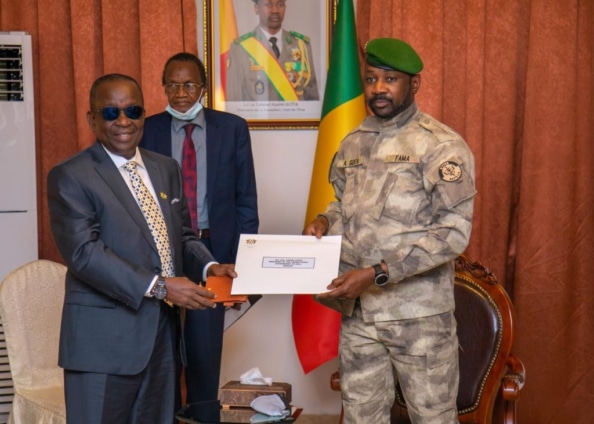
National Security Minister Albert Kan Dapaah on Thursday delivered a special message from President Akufo-Addo to Mali’s Interim President, Colonel Assimï Goita, in Bamako.
He led a delegation from Accra, which held extensive discussions behind closed doors with Col. Goita on security in West Africa and the Sahel.
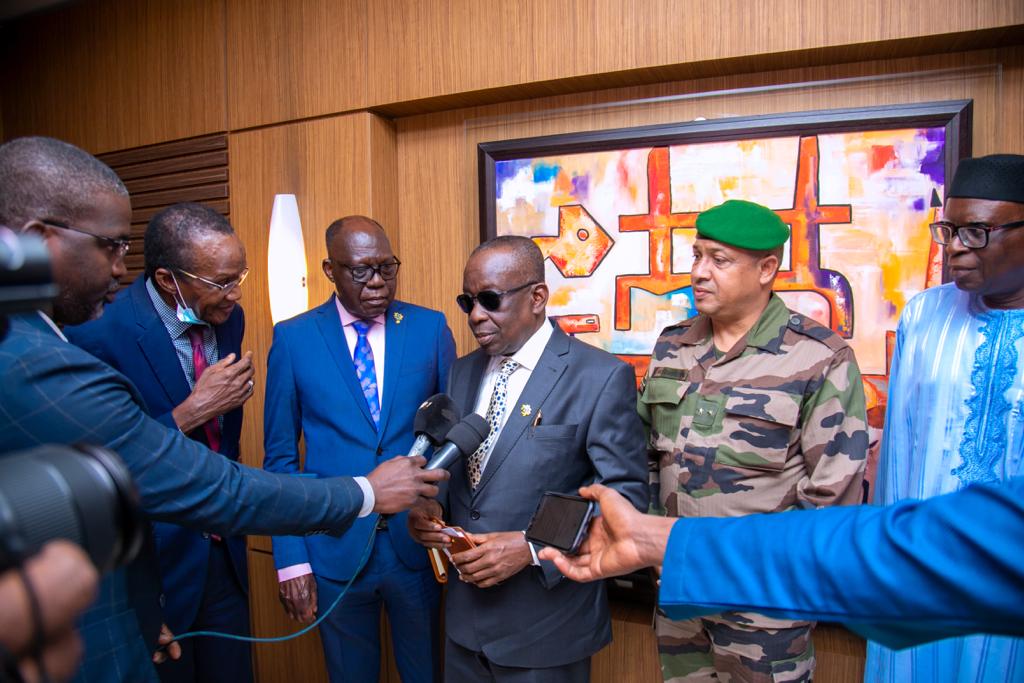
Speaking to the media after the meeting, Mr Kan-Dapaah said Ghana has had long historical and bilateral relations with Mali dating back to the early post-colonial years and was, therefore, interested in the welfare and progress of the Malian people.
“We did talk about how we can be of help to each other because a fire in your neighbour’s house has to be of concern to you,” he said.
Col. Goita, he said, extended “warm greetings” to President Akufo-Addo, adding that Ghana looked forward to further engagements with Mali.
Members of the delegation included Maj. Gen Adu-Amanfoh, Ambassador Kwabena Osei-Danquah, Special Adviser to the Foreign Ministry, Benedict Dere, Executive Secretary of the Accra Initiative, and Napoleon Abdulai, Ghana’s Ambassador in Mali.
The Accra High Court has instructed three government institutions to apologize to Emmanuel Ajarfor Abugri, editor of the news portal ModernGhana.com, for breaches of human rights.
The parties in the case filed terms which were adopted by the Human Rights Division Court 2.
In a judgment obtained by myjoyonline.com, the presiding Judge, Justice Nicholas Abodakpi held by the terms of settlement had been adopted by the court.
In July 2019, Emmanuel Ajarfor Abugri, the Applicant, sued the National Security Coordinator, Inspector General of Police and Attorney General as Respondents for violation of his human rights.
The judgement ordered that the respondents shall issue an apology to the applicant and have the same published in the Daily Graphic within 14 days of the adoption of the terms of the settlement.
The respondents are also to pay compensation, and legal fees and shall pay for gadgets that were seized from the applicant including a laptop, two mobile phones and a tablet.
Arrest, detention and torture
On June 27, 2019, gun-wielding operatives of National Security arrested Emmanuel Ajarfor Abugri and his reporter Emmanuel Britwum at their offices.
The officers whisked them into a black van, strapped their heads in black polythene bags and sped off.
Their laptops and mobiles were confiscated and they were subjected to interrogation at National Security offices.
Emmanuel Ajarfor Abugri, the Editor of the online news portal, Modernghana.com, later told the media he was subjected to electric shock and other forms of torture whiles in detention.
The interrogation was on two articles the website published on the National Security Minister, Albert Kan Dapaah.
The National Security Council Secretariat denied it tortured the journalist.
The Ministry said the journalists were picked up for allegedly engaging in cybercrimes.
On July 5, 2019 State prosecutors filed cybercrime charges against Emmanuel Ajarfor Abugri and two other journalists, Emmanuel Britwum reporter of ModernGhana.com and Obeng Manu Editor of Peace FM for alleged unlawful access to an email account belonging to a local radio station Peace FM.
However, the state was forced by the Accra High Court to drop charges the first day the journalists appeared in court.
This was after the Judge, Afia Asare Botwe, pointed out errors and turned down appeals by Senior State Attorney Stella Ohene Appiah because what the state wanted to court to do was without legal backing.
Lawyers for the accused, led by Samson Lardy Anyenini, had said the criminal case was a face-saving act that was doomed at inception.
Ajarfor sues National Security Coordinator and two others for torture
On July 11, 2019, Emmanuel Ajarfor Abugri instituted legal action against the National Security Coordinator, the Inspector General of Police and the Attorney General for the torture he suffered at the hands of the national security operatives.
He prayed the Human Rights Division of the High Court to direct the Attorney-General to find, name and subject the National Security Coordinator and the officials, who were directly or indirectly involved in human rights violations against him, to criminal prosecution or punishment.
He also prayed the court to order the immediate and unconditional release and surrender of all seized items to him.
The application for the enforcement of Mr Ajarfor’s fundamental human rights was filed on his behalf by Samson Lardy Anyenini who was working with a legal team including Dr Justice Srem Sai and Nii Kpakpo Samoa Addo.
The Ministerial Session of the Accra Initiative (AI) ended in Accra yesterday after further deliberations on the need for joint actions by Member States to address cross-border security issues.
The conference brought together Ministers of Security and Defence of Member States of the AI, which are Benin, Ghana, Togo, Burkina Faso, Cote d’Ivoire, Mali, and Niger.
Other participants were some representatives of the United Nations (UN) and the Economic Community for West African States (ECOWAS).
The AI was established in September 2017 as a mechanism to enhance intelligence and security cooperation between the security agencies of member states.
Its formation was necessitated by the urgent need to address the deteriorating security situation in the Sahel region and curb the southward drift of the threat of terrorism to Coastal West African States.
Opening the session, Minister for National Security, Mr. Albert Kan-Dapaah, said with strong collaboration between African countries, winning the fight against terrorism in the sub-region could be possible.
He stated that the seemingly deteriorating security situation in some African countries did not mean efforts of leaders of the affected countries to combat violent extremism were in vain.
Rather, the minister stressed that the situation could have even been worst without some interventions like intelligence sharing and capacity building, put in place to monitor situations and avert further misfortunes.
He commended the AI for its dedication to ensuring that terrorists and extremists do not take refuge in its member states.
Commissioner, of Political Affairs, peace and security of the ECOWAS Commission, Dr. Abdel-Fatau Musah, in his remarks bemoaned that terrorism was steadily gaining a foothold in the region, especially in the Sahel with the onslaught of Boko Haram in Nigeria and the southward movement towards the coastal member states especially in Benin, Togo, and Cote d’Ivoire.
He noted that the incremental gains of a combination of determined efforts by the Multinational Joint Task Force (MNJTF), counterterrorism operations across the Lake Chad Basin as well as inter terrorist conflicts which had to some extent degraded the capacities of terrorist groups such as the Boko Haram.
According to Dr. Musah, the worrisome incursion of terror acts in Benin and Togo in recent times and the attacks in Cote D’Ivoire in 2016 confirmed the spread of the terrorist menace toward coastal member states.
Over the years, various counterterrorism mechanisms, he said had emerged to respond to the terrorist threat, “Which are often uncoordinated and independent of ECOWAS.”
“It is worthy to note that the three areas of effort of the AI namely, information exchange between intelligence services and security forces, training of intelligence services and security forces, and the joint military operations at the borders of member states correspond very well for the eradication of terrorism in the ECOWAS region,” he added.
In her remarks, a representative of the UN, Ms Giovanni Biha indicated that cross border cooperation and joint military operations to address the terrorist threat had been largely possible by virtue of the commitment of member countries of the AI.
She assured of her outfit’s readiness to continually support the AI in achieving its objectives.
The Ambassador of the European Union (EU) to Ghana, Mr. Irchad Razaaly, stressed that thinking outside the box to find innovative solutions to counter terrorism in the sub-region was very necessary.
The Minister of National Security, Albert Kan-Dapaah, has revealed that 346 terrorist attacks were recorded in Africa in the first quarter of 2022, with 49 per cent of them occurring in West Africa alone.
Also, he indicated that between July and September this year, 246 terrorist attacks resulting in 745 fatalities and 239 injuries were recorded in West Africa.
The minister was speaking at the opening of the two-day international conference on the Accra Initiative (AI), held in Accra on the theme ‘Accra Initiative: Towards a credible, preventive and coordinated response to challenges facing the Coastal and Sahelian States’.
The AI aims at preventing spillover of terrorism from the Sahel and to address transnational organised crime and violent extremism in member countries’ border areas.
Participants at the technical conference included representatives of relevant international governmental agencies, civil society organisations (CSOs), academia, think tanks, practitioners in the security sector and other multinational initiatives.
The conference, supported by the European Union (EU), would afford them the opportunity to reflect on measures and strategies deployed towards addressing the threat of terrorism and violent extremism and to come up with innovative approaches toward enhancing regional security.
According to Kan-Dapaah, enhanced collaboration was a key to countering terrorism in the region, adding that the heads of states of West African states in 2017 took pragmatic steps to address their common threats, hence the AI.
Describing the AI conference as timely, he said the deteriorating security situation in the Sahel and West Africa required the active collaboration and participation of all stakeholders including the media, CSOs, political leaders and academics among others, both at the national and regional levels.
The threat landscape he said had consistently changed, resulting in the frequent changes in security requirements among the citizenry.
“The geo-strategic dynamics, with direct influence on state survival keep undergoing mutations without warning. The threat posed by COVID-19 has also taught us that consolidating our efforts at the regional level is the best approach to secure our States.”
“This underscores the relevance of dialogue and multi-stakeholder engagement, not only at the national levels but also at regional levels, towards finding lasting solutions to the common security threats of West African States,” he added.
He mentioned that the prominence given to the threat of terrorism and violent extremism in recent times must not be interpreted as the trivialisation of other prevailing security threats such as cross-border crimes.
Executive secretary of the AI, Benedict Dere, on his part stated that it had become necessary to strengthen collaboration and cooperation between security and intelligent services through exchange of information and operational intelligence.
Throwing more light on the objectives of the AI, he said preventing terrorists and extremists from seeking refuge in a member State, dismantling terrorists networks and preventing the expansion of their cell and combating transnational organised crime were among its top priorities.
To achieve this, the AI he said relied on information and intelligence sharing, capacity building and the conducting of joint multinational operations.
Dere mentioned that the AI currently comprised of seven-member States which are Benin, Togo, Ghana, Burkina Faso, Côte d’Ivoire, Mali and Niger, adding that Nigeria was an observer State waiting to be fully incorporated as a full member of the AI.
The Minister of National Security, Mr Albert Kan-Dapaah, has presented branded motorbikes and vehicles to some security agencies in the Upper West Region to enhance the maintenance of peace and security in the region.
The Ghana Police Service received 20 motorbikes and a pickup; the Ghana Armed Forces, 15 motorbikes and a pickup, and the Ghana Immigration Service had 10 motorbikes and a pickup.
Addressing the security personnel in Wa at a brief ceremony to present the logistics, Mr Kan-Dapaah acknowledged their efforts in ensuring regional peace and security.
He said the Prisons Service, Fire Service, and the National Disaster Management Organisation (NADMO) would also receive their share of the logistics later through the Upper West Regional Minister, Dr Hafiz Bin Salih.
He acknowledged that the ministries of Defence and Interior had played crucial roles in providing the security officers with the requisite training and logistics to work with, which had earned Ghana the enviable status as the most peaceful country in West Africa and second in Africa, next to Mauritius.
“I know they are doing well but, we thought at the Ministry of National Security that we could also do something, however small, to complement what my colleagues in the Ministries of Defence and Interior are doing,” Mr Kan-Dapaah said.
“This is why we thought it’s necessary to have a look at our budget to see what we can do to assist.”
He commended members of the Regional Security Council (REGSEC) and the security and intelligence agencies for the work done to maintain peace in the country.
It was the duty of every government to provide public services to the citizens, including health and educational facilities, he said, but security was the most important as none of the other services could be enjoyed without security.
He said Ghana had been the preferred destination for foreign nationals for businesses or education due to security and urged stakeholders, especially the security agencies, to up their game to maintain that status.
Dr Salih, on his part, said the logistics was timely as it would help improve the security situation in the region.
Commenting on the recent killings and abductions in Wa, he said the REGSEC was not resting on its oars and would work to bring the perpetrators to book.
Brigadier General Matthew Essien, General Officer Commanding, Northern Command, on behalf of the security agencies, acknowledged the government’s efforts in supporting their work.
He commended the National Security Minister for the logistics and said it would make them more effective in their duties but appealed for more support to beef up security.
Minister for National Security, Mr Albert Kan Dapaah, has lauded officers of the various security agencies in the country over their consistent efforts in ensuring peace and tranquillity in the country.
He said the fact that Ghana was recognised as the most peaceful and secured country in the sub-region and considered the second most powerful and secured country in Africa, was an achievement all Ghanaians should be proud of.
“If our investment drive has been successful, that has fed into it. Investors come because they know that there is peace and tranquillity in our country.
“Let us, as Ghanaians never forget that the peace and tranquillity that we have is the result of sacrifices being made by our gallant troops.
“I want to take this opportunity to salute and thank them and to let them know how much we in government appreciate the work that they are doing for us,” the National Security Minister said.
Mr Kan Dapaah gave the commendation in Bolgatanga at a brief ceremony to hand over motorbikes and pick-up vehicles to four security agencies in the Upper East Region to boost their operations.
The beneficiary agencies were the Ghana Immigration Service which received one pick-up vehicle and 10 motorbikes, the Ghana Armed Forces had a pick-up vehicle and 15 motorbikes.
The Ghana Police Service had a pick-up vehicle and 20 motorbikes, while the National Investigations Bureau, got two pick-up vehicles and five motorbikes.
Mr Kan Dapaah said even though it was not the primary responsibility of the Sector to provide vehicles to the security agencies, the Ministry took the initiative from its budget to support the agencies to function effectively.
He noted that some of the agencies, especially the Ghana National Fire Service, and the Ghana Prison Service had not benefitted, and gave the assurance that they would soon receive their share of the vehicles.
The National Security Minister said the security challenges in the Upper East Region were peculiar, and needed a lot of attention to handle, and commended members of the Regional Security Council (REGSEC) for the successful management of the security challenges in the Region.
He said the conflict in Bawku required careful management, “In recent times, the reports that I get from Bawku indicate that to a large extent, we are able to get the two sides to work together.
“That is necessary and can only be achieved through the commitment, loyalty, and determination of the security agencies, especially the REGSEC,” Mr Kan Dapaah added.
Mr Stephen Yakubu, the Upper East Regional Minister, said the security situation in the Region was of national concern and indicated that apart from the Bawku and Doba-Kandiga conflicts, there were threats of violent attacks from extremist groups from the Sahel.
He said the Region hosted a number of immigrants who had escaped the attacks at various locations in communities which share border with neighbouring countries, and said REGSEC was sensitising the border communities on the “See something, say something” campaign.
Mr Yakubu, who is the Chairman of REGSEC, thanked the National Security Minister for the support and gave the assurance that REGSEC would monitor to ensure the vehicles were used for the intended purpose.
The continuous spate of illegal mining in Ghana has necessitated a review of the government’s security strategies in combating the menace.
Minister of National Security, Albert Kan-Dapaah who disclosed this stated that the revision, when implemented, will help the government institute strict and robust anti-galamsey policies to weed out illegal mining.
Speaking at the West Africa Mining Security (WAMS) Conference in
Accra on Wednesday, Mr Kan-Dapaah intimated that foreign nationals involved in the ongoing canker could truncate the current state of the country’s security system and forest reserves.
“The strategy is under review because we need to find a more effective way of stopping the degradation.”
Government in its quest to eradicate illegal mining, set up a military task force in 2017 and ordered a 20-month ban on all small mining.
The taskforce was given the authority to confiscate equipment belonging to illegal mining operators and shut down mines without official paperwork.
Recently, the taskforce arrested 164 suspected illegal miners, impounded 300 Changfans and 12 excavators used in illegal mining at Ayinam and Mampong, in the Eastern Region.
In spite of the various measures instituted to curtail the canker, little progress has been made so far as the activities are still in full force.
This led to a series of calls from various environmental bodies asking the government to go back to its drawing board and revise its anti-galamsey strategy.
An environmentalist, Nana Dwomoh Sarpong, said the government’s top-bottom operations were not yielding any results.
He argued that “we have had Operation Vanguard, Operation Akufo-Addo involved in another video theft after Kirani Ayat’s episode Halt and Operation Halt II, all constituted at the top in Accra, but the problem persists, which tells us that something is wrong in our strategy.”
“The regions and districts are there already; they know all the areas and the people who engage in the illegal activities, so why do we send people from Accra to take charge of the operations?” he queried.
The National Security Minister, however, assured the public that the revision of the security strategy to fight illegal mining will incorporate all suggestions made by both private and governmental institutions.
He, thus, called for collaboration between stakeholders to ensure a safe mining industry.
A total of 159 terrorists and extremists attacks occurred in the Sahel and West Africa Sub-region, the Minister of National Security, Albert Kan-Dapaah, has revealed.
He said the attacks resulted in 538 fata lities and 127 injuries, and displacing many of the victims of the attacks that occurred this year, between July 1 and August 28.
Mr Kan-Dapaah disclosed this when he opened a two-day workshop titled “The Role of Civil Society Organisations in Ghana’s Border Security Management”.
It was organised by the Ghana Integrity Initiative, a local chapter of Transparency International, in collaboration with the International Centre for Migration Policy Development (ICMPD) to partner CSOs under the Strengthening Border Security in Ghana Project (SBS Ghana).
The SBS Ghana is funded by the European Union Trust Fund For Africa and implemented by the Ghana Immigration Service and ICMPD.
The project seeks to, among others, work closely with CSOs, universities, research and think tanks to submit research and action projects highlighting innovative approaches and best practices on mobility and border management.
Opening the workshop, Mr Kan-Dapaah expressed concern about the growing threat of terrorism and extremism in the Sahel and West African Region.
He said the Sahel and the West African Region was going through difficult times.
Mr Kan-Dapaah observed that countries such Togo and Benin, which one thought would not be attacked, were currently being attacked.
The National Security Minister indicated that insurgent had taken control of six of the thirteen regions of Burkina Faso.
He said Burkina Faso was located in a strategic position of the Sub-region.
Mr Kan-Dapaah said Ghana was not immune to attacks by terrorists and extremists and called on all stakeholders to forestall any attack on the country.
“The security agencies and stakeholders are not sleeping and are working closely to respond to the growing threat of terrorism and extremism in the Sub-region,” he said.
Mr Kan-Dapaah called for closer collaboration between security and state agencies and Civil Society Organisations (CSOs) on effective border management to promote security and peace in the Sub-region.
He said CSOs had data, skills and knowledge which could be tapped as part of efforts to ensure border security and peace in the Sub-region.
“This is the time when active collaboration with CSOs is critical if we want to secure the security of the country,” he said.
He appealed to the media to be circumspect in reporting on security issues to sustain the peace and security of the country.
The Head of the European Union Delegation in Ghana, IrchardRazaaly, in his remarks, said the security of the Sahel and West African Sub-region was coming under threat through activities of extremists and terrorists.
He said promoting security in the border regions could not be the responsibility of government alone.
Mr Razaaly said the SBS Ghana could help curb the threat of violent extremism in the Sub-region.
“This project will help give a new vision of what borders should look like,” Mr Razaaly said.
The Executive Director of GII, Mrs Linda Ofori-Kwafo, said the emergence of terrorism and extremism was posing a threat to the Sub-region.
She said the porous land borders made border communities vulnerable to terrorist attacks.
Mrs Ofori-Kwafo said the SSB Ghana was seeking the support and collaboration in ensuring effective border security, and the two-day programme gave the beneficiary CSOs the opportunity to receive a grant of 700,000 euros to showcase their projects.
She called for the active involvement of CSOs in border security issues.
The Minister of National Security, Albert Kan-Dapaah, has said that despite the recent number of threats and insecurity concerns in the country, Ghana is relatively stable.
According to him, a number of measures have been instituted to ensure the country is continuously stable, adding that night patrols have been deployed while police visibility has increased.
“I want to state that Ghana is relatively stable despite a number of threats, both external and internal, that can potentially undermine security and stability.
“These threats have been prominent in recent times include crime, land chieftaincy disputes, violent extremism, and activity of secessionists,†he said.
He added that there has been a decline in criminal activities in the country as well as with tensions emanating from land-related issues.
“There has been a noticeable decline in criminal activities across the country,†he said in parliament.
Speaking on the Bawku conflict, he said measures have been put in place to curb the situation.
“…there is an ongoing investigation to unravel the individuals behind the shooting incident. We will try to make sure that all persons connected to the shooting incident are arrested as quickly as possible,†he said.
He said maintaining peace in Bawku has not been easy for the security agencies but there is light at the end of the tunnel.
The Ministry of National Security has denied arresting a freelance journalist, Sacut Amenga-Etegu for following up on a case of extortion levelled against an operative of the Ministry.
A statement issued by the Ministry on Sunday, February 27 said the journalist was arrested based on a High Court order for filming court proceedings without authority.
“The Ministry of National Security has taken note of a false publication in circulation on social media which purports that Sacut Amenga-Etegu, a freelance journalist has been unduly arrested and detained by personnel of the Ministry.
“According to the said publication, the journalist was arrested at the premises of a court where he had gone to follow up on a case of extortion levelled against some operatives of the Ministry of National Security.
“Contrary to the content of the publication the journalist was arrested based on an order of a High Court for Filming and/or videoing the court proceedings without authority.
“It is worth noting that the journalist was remanded by the same court to reappear on 14th March 2022. The public is therefore urged to disregard the content of the false publication in circulation on social media,†the statement said.
Mr Albert Kan Dapaah, the Minister for National Security, says the coming into force of the National Security Strategy will promote multi-agency cooperation and safeguard the economic security of the State.
The Strategy, the Minister said, would open new channels of communication among actors tasked with the duty of enhancing domestic revenue mobilization and remove barriers that militate against efficient revenue collection.
“The Strategy will place the work of the Ghana Revenue Authority (GRA) at the very heart of all security considerations of the State, implying an enhanced cooperation between State Security and Intelligence Agencies and the Authority in preventing leakages,†he said.
Mr Dapaah said this on Wednesday at a sensitization workshop on the National Security Strategy for staff of the GRA in Accra.
Government in June, 2021 launched a National Security Strategy blueprint to enable stakeholders in the security sphere to deal effectively with existing, new and emerging threats to the country.
The Strategy is in line with nationally devised paths towards a proactive and inclusive coordinated response to internal and external security and stability challenges.
It is the product of four years of consultations with stakeholders including Parliament, the Ministries, Departments and Agencies, Civil Society Organizations and security experts, spearheaded by the National Security Ministry.
The Minister said the workshop was timely because it came at a time when economic security issues, resulting from the devastating effects of the COVID-19 pandemic, were threatening to disturb the peace and stability of the country.
He said developments which were recorded in the country such as increased agitations for the improvement in the living conditions of citizens leading to the emergence of pressure groups like fix the Country movement, and the recent gridlock in Parliament over the introduction of the E-levy, shed light on the magnitude of the economic security threats that confronted the country.
Mr Dapaah said these economic security threats were tightly connected to the ability of the State to generate revenues and tackle the socio-economic problems facing the country.
“In pre-pandemic times, it was prudent for developing countries including Ghana to rely on external borrowings to augment shortfalls in domestic revenues generated for development.
“Today, that alternative is no longer attractive due to rising debt levels and the ballooning of deficits occasioned by the pandemic,†he said.
He said many countries in sub-Saharan Africa were exploring ways to widen the tax net and increase domestic revenue mobilization as the only potent means to restore their economies to normalcy and Ghana was no exception, even though these measures sometimes impose a certain degree of discomfort on the citizenry.
He said the government had implemented other measures such as the Immediate Tax Force and the Revenue, Assurance and Compliance Initiative to complement the efforts of the GRA in blocking revenue leakages, but the challenges still persisted due to limited cooperation from stakeholders.
Colonel Kwadwo Damoah (Rtd), the Commissioner of the Customs Division, GRA said the workshop would deliberate on the roles and responsibilities of the Authority in mobilizing revenue and the need to address any threats that would impede their work.
The Minister for National Security, Albert Kan-Dapaah has stated that the installation works of CCTV cameras in some 900 police stations across the country are currently ongoing.
According to him, 432 stations under phase 2 will be completed before the end of December 2021.
He revealed that to date, installation works of about 6,500 cameras have been completed and 400 powered online mainly in Accra and Kumasi, and other regional capitals.
He said it was part of government plans and efforts to fix CCTV cameras in all police stations across the country.
The move he noted is to help in the successful detection of infractions and criminal activities as well as help to solve recent violent crimes such as armed robbery and kidnapping cases.
The minister indicated that the government through the ministry of Communications and Huawei Technology Co. Ltd signed a contract in 2012 for the establishment of the first phase to install a network of CCTV cameras to enhance the operational efficiencies of the security and intelligence agencies of the country.
His response was in connection to a question posed by Hon. Peter Lanchene Toobu MP for Wa West has sought to find out the state of the project in which CCTV cameras were to be fixed in all police stations across the country.