Tag: Ambassador

  • President Mahama appoints 8 new ambassadors

    President Mahama appoints 8 new ambassadors

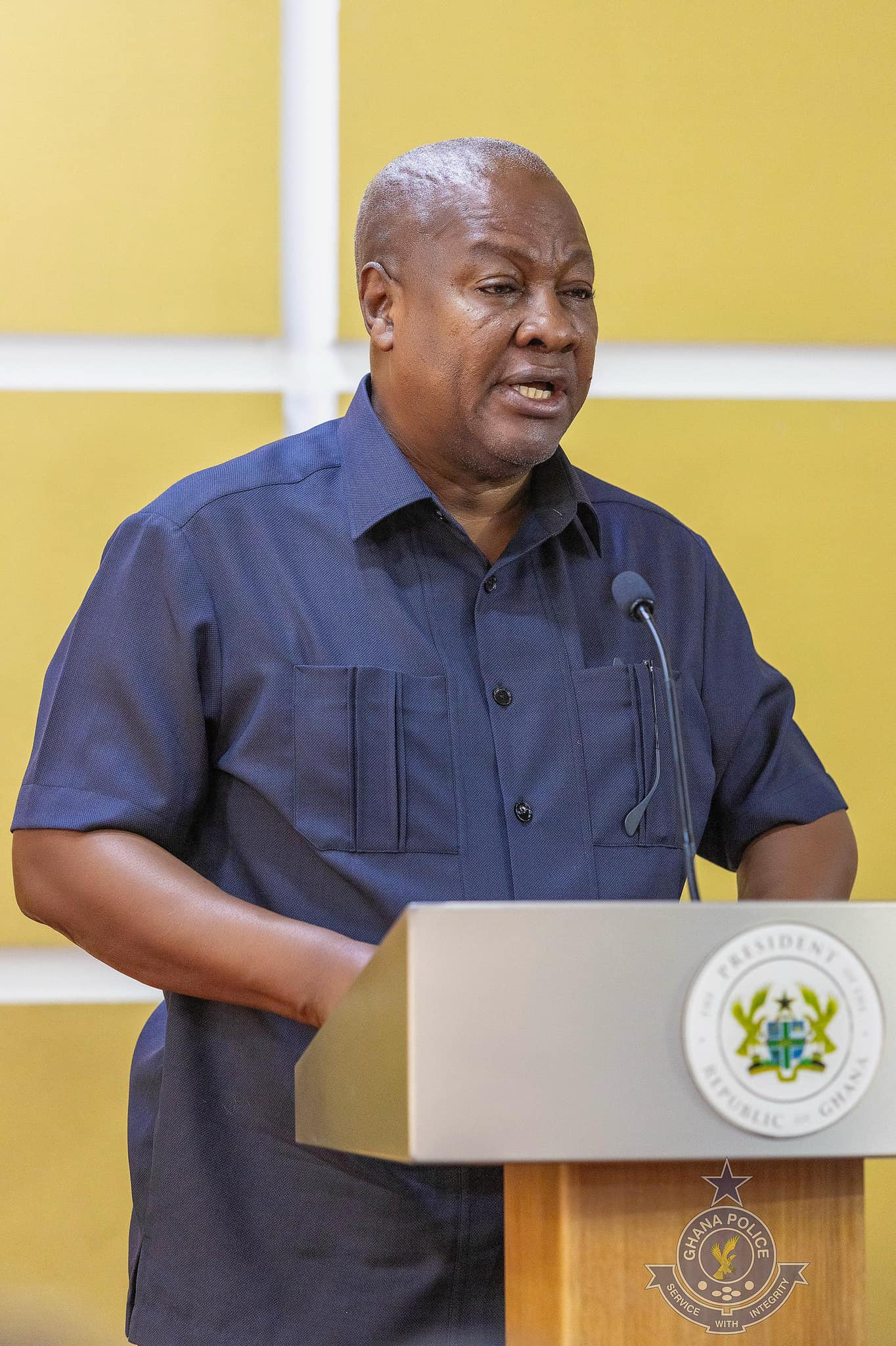
    Eight individuals have been appointed by President John Dramani Mahama as Ghana’s new Ambassadors and High Commissioners to various countries.

    This was contained in by a formal communication issued by the Secretary to the President, Dr. Callistus Mahama, on Monday, July 21.

    Their appointment is expected to boost Ghana’s influence and partnerships around the world.

    The nominees are as follows; Alhaji Abdul-Rahman Harruna Attah will serve as Ambassador-designate to the Republic of Namibia.

    Kojo Choi has been named Ambassador to the Republic of South Korea. He is a Ghanaian by naturalization. Kojo Choi has been committed to the country for 33 years.

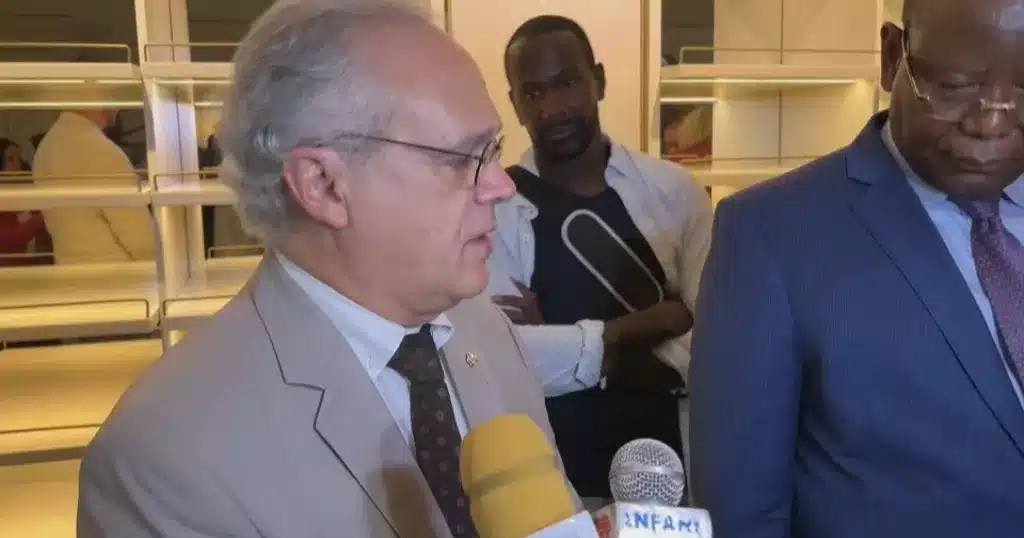
    Dr. Kwame Ampofo will represent Ghana in Hungary, he was a member of the Seventh Parliament of the Fourth Republic under the National Democratic Congress (NDC). He represented the Sene West Constituency in the Brong-Ahafo Region. He graduated from Montclair University and Essex University.

    Mona Helen Kabuki Quartey will serve as Ambassador to the Italian Republic, bringing nearly 25 years of experience in banking and mining.

    Magnus Kofi Amoatey has been appointed as Ambassador-designate to the Democratic Republic of the Congo. He holds a B.A., B.L., and a Diploma from the University of Ghana, as well as a Certificate A from Methodist Training College.

    Kenneth Akibate is Ambassador-designate to Burkina Faso, Acting Deputy Clerk in charge of Finance, Administration at the Human Resources Pan-African Parliament (PAP).

    Said Sinare is a member of the National Democratic Congress (NDC). He is the former National Vice Chairman of the party. This is his second appointment as Ambassador to Saudi Arabia.

     Paul Evans Aidoo will head Ghana’s mission in the Republic of Kenya. He is the Member of Parliament for Sefwi-Wiawso and is the Minister for the Western Region of Ghana.

    The newly appointed adds to the earlier fifteen (15) appointed by the President, bringing the total to twenty-three (23).

    Among the nominees are Benjamin A. Quashie for the Republic of South Africa, Kojo Bonsu for the People’s Republic of China, Kalsoume Sinare Baffoe for the Kingdom of Spain, Hammed Rashid Tunde Ali for the United Arab Emirates, Hon. Captain George Kofi Nfojoh for the Togolese Republic, and Grace El Mahmoud Marabe for the United Arab Emirates–Dubai.

    The others are Prof. Ohene Adjei for the Federal Republic of Germany, Abdul Nasiru-Deen for the Republic of Turkey, Theresah Adjei-Mensah for the Czech Republic, Prof. Kwasi Obiri-Danso for India, Dora Francisca Edu-Buandoh, Ph.D., for Canada, Dr. Margaret Miewien Chebere for Denmark, Labik Joseph Yaani for Equatorial Guinea, Nii Amasah Namoale for the Federative Republic of Brazil, and Dr. Felix Kumah Godwin Anebo for the Republic of Senegal.

    The letter instructed the Ministry of Foreign Affairs to initiate all required procedures to ensure the nominees’ appointments are successfully processed.

    Profile of the 15 nominees

    Benjamin Kofi Quashie is a prominent entrepreneur and philanthropist, founding the BKQ Foundation to support education, healthcare, and disability initiatives in the country. He chairs the NDC Council of Elders in South Africa and leads Allied Consortiums, demonstrating strong leadership in both political and business spheres. He is academically grounded with studies at the University of Ghana, LSE, and Robert Kennedy College; he brings a wealth of global insight to the diplomatic service.Kojo Bonsu is a seasoned public servant and businessman, having served as Kumasi’s Metropolitan Chief Executive (2013–2016) and as managing director of GOIL, where he led the company’s rebranding. He holds a diploma in Sports Business and Marketing through Adidas in Germany and speaks fluent French, giving him cross-cultural expertise. A former presidential aspirant for the NDC, Bonsu’s broad experience in governance, sports administration, and entrepreneurship positions him well for advancing Ghana-China relations

    Kalsoume Sinare Baffoe is a former model and a veteran actress who has appeared in over 50 films, notably Babina, Trinity, and Sala. She has won awards, including Golden Actress at the Golden Movie Awards. She holds a Master’s degree in International Relations and Diplomacy from GIMPA (2023), following a first degree in Public Service and Governance (2021), demonstrating her academic commitment subsequent to a successful screen career. Known for her advocacy in women’s empowerment, education, and youth development, she brings a blend of cultural diplomacy and public engagement to her ambassadorial role.

    Hammed Rashid Tunde Ali is a distinguished figure in public service or business. Hammed Rashid Tunde Ali brings extensive experience in international relations and management. His career is expected to include leadership within commercial or diplomatic sectors relevant to Ghana–UAE ties. He is appointed to promote bilateral collaboration in trade, tourism, and investment between Ghana and the UAE.

    Capt. George Kofi Nfojoh is a respected Ghanaian politician who served as the member of parliament for the 4th parliament of the 4th republic of Ghana. He represented the National Democratic Congress of the Ho Central Constituency. He was a captain and worked with the Public Relations Department of the Ghana Armed Forces. His career spans maritime or military roles, giving him insight into regional cooperation. He’ll be responsible for strengthening Ghana-Togo relations in areas of trade and regional diplomacy.

    Grace El Mahmoud Marabe brings a wealth of leadership experience both at home and abroad. She was voted Entrepreneur of the Year at the 2021 BlackExcellence Awards and named among the Top 10 Business Coaches by Herald Magazine in 2020. Her global engagement includes serving as a speaker at the 13th World Cancer Conference in Paris in 2019. From 2013 to 2016, she contributed to national policy as a Board Member of the Ghana Revenue Authority. Earlier, in 2008, she made history as an elected Virginia State Delegate for President Barack Obama..

    Professor Ohene Adjei is an esteemed academic who holds a senior faculty position in Ghana, with specialization likely in economics, science, or engineering. His scholarly work and leadership in higher education make him adept at promoting scientific, educational, and technological cooperation with Germany. His appointment reflects Ghana’s ambition to deepen ties in research and innovation.

    Abdul Nasiru‑Deen brings a professional background in diplomacy or international business. His skills and experience position him to foster stronger economic, cultural, and educational ties between Ghana and Turkey. His appointment is aligned with Ghana’s goals to diversify partnership in Eurasia.

    Theresah Adjei-Mensah is a seasoned diplomat and or an international relations expert. Her role will involve advancing Ghana–Czech interests in trade, tourism, and academic exchange. Her appointment signals Ghana’s growing outreach in Central Europe.

    Professor Obiri‑Danso is the former Vice‑Chancellor of KNUST, known for his expertise in biotechnology and higher education leadership. During his tenure, he enhanced KNUST’s research output and global linkages. His diplomatic role will emphasize educational partnerships, tech collaboration, and innovation between Ghana and India

    Dora Francisca Edu-Buandoh is a seasoned development practitioner with advanced academic credentials and extensive public service experience. She has held leadership roles in academia or international NGOs, earning respect for her analytical and policy-making skills. Her appointment aims to deepen Ghana–Canada ties in education, migration, and diaspora engagement.

    Dr. Margaret Miewien Chebere is a public health specialist or international development expert with a Ph.D. and a strong record in project implementation. She has worked with development partners to enhance health systems and community resilience in Ghana. Her diplomat role will emphasize cooperation on health, climate change, and renewable energy.

    Labik Joseph Yaani is a senior Foreign Service officer with extensive experience in regional diplomacy. His expertise in West/Central African affairs positions him to manage relations with Equatorial Guinea. He is poised to advance Ghana’s interests in energy, regional security, and policy coordination.

    Nii Amasah Namoale has served as Ghana’s Minister for Food and Agriculture and as an MP, bringing extensive experience in agriculture, trade, and policy development. He is credited with advancing agricultural modernization and rural development. His role in Brazil will focus on strengthening cooperation in agribusiness, biofuels, and technical exchange.

    Dr. Felix Kumah Godwin Anebo is a medical doctor and former health official or public health specialist with advanced qualifications. His work has involved strengthening Ghana’s health systems, health security, or disease control initiatives. His diplomatic appointment to Senegal reflects Ghana’s commitment to regional collaboration in health and development.


  • US Ambassador assures Ghana of continued engagement on 10% tariff

    US Ambassador assures Ghana of continued engagement on 10% tariff

    The U.S. Ambassador to Ghana, Virginia Palmer, has emphasized the strong relationship between the U.S. and Ghana, even in light of the recent introduction of a 10% tariff on Ghanaian exports.

    The Ambassador made these remarks after a private meeting with Ghana’s Minister for Foreign Affairs, Samuel Okudzeto Ablakwa.

    The discussion focused on the possible effects of the tariff and the broader implications it could have on the trade dynamics between both nations.

    Following the meeting, Ambassador Palmer reassured the public about the robust ties between the two countries.

    “I had a great conversation with the Minister of Foreign Affairs, and we talked about how the relationship with Ghana is very strong, and how we can keep it going that way. The sort of detail of what the tariffs are and some things the United States and Ghana can do to improve the relationship,” she said.

    While the Ghanaian government has raised concerns regarding the tariff, Palmer expressed optimism that continued dialogue and cooperation would strengthen their relationship.

    She also touched on potential benefits for Ghana under the new tariff system, stating, “I hope Ghana will get some benefits vis-à-vis its competitors.”

  • Ghana has become a hideout for extremists – Ambassador to Burkina Faso

    Ghana has become a hideout for extremists – Ambassador to Burkina Faso

    Ghana’s Ambassador to Burkina Faso, Boniface Gambila Adagbila, has stated that terrorists from Burkina Faso and other Sahel regions enter Ghana, access Ghanaian hospitals, and return to their originating locations.

    During a discussion in the Upper East Region, he highlighted the alarming threats posed by terrorism spilling over from neighboring Burkina Faso and the broader Sahel region, especially impacting West African coastal nations.

    “The serious threat is between Burkina and Niger and Mali, and then to the east, and then to the west, that is where the terrorists movement occurs most. Believe it or not, they are able to come into Ghana and go back. Yes, they move in and go back, and they roam, they come to our hospitals and go back. But governments are working at that. It’s not something we need top dilate so much about.

    “They also know… when they are attacked north, north-east, west, they think that they have a safe haven coming down south of Burkina and they come as far as to our frontiers, and we need to be careful.”

    While acknowledging ongoing governmental efforts to address this menace, he stressed the need for vigilance.

    Additionally, Ambassador Adagbila noted that seven Ghanaians who disappeared after entering Burkina Faso last year remain unaccounted for.

    He advised travelers to strictly adhere to approved routes and official document processing procedures to mitigate risks, emphasizing the collaborative efforts between the two nations to locate the missing individuals.

    Highlighting similar concerns, National Security Minister Albert Kan-Dapaah questioned the inability of security agencies in affected countries to neutralize the terrorist threat.

    His remarks were made during an event organized by the Kofi Annan International Peacekeeping Training Centre (KAIPTC), in partnership with Japan and the United Nations Development Programme (UNDP), focused on bolstering capacities to implement the Accra Initiative in West Africa and the Sahel.

    Japanese Ambassador to Ghana, Hisanobu Mochizuki, pledged substantial financial support totaling approximately USD 500 million over the next three years.

    This contribution aims to foster peace, stability, and sustainable growth in the Sahel region and neighboring Gulf of Guinea coastal nations.

  • Israel’s arms embargo still “being refined” – Ambassador

    Israel’s arms embargo still “being refined” – Ambassador

    A leader in Canada’s international affairs says the government is still figuring out what it means to stop selling weapons to Israel in the future.

    Global Affairs Canada regional head Alexandre Leveque told senators on Wednesday that this is being improved right now.

    Many Liberal Members of Parliament (MPs) decided to support the NDP’s motion on Monday to stop giving new military permits for weapons going to Israel.

    Canada’s Minister of Foreign Affairs, Melanie Joly, says that Canada has stopped giving permission for Israel since early January because of concerns about human rights.

    Joly’s office says the rule applies to more than just guns. It also includes weapon technology and equipment.

    Leveque, who works for the Canadian government, said he wasn’t completely sure how the new rule would affect weapons sales in the Middle East.

    This includes looking at the possible effect on exports that can be used for civilian and military purposes, and also whether Israel has to agree to certain things before selling weapons can start again.

    “Some things are being improved,” Leveque said.

    Ottawa wants to restrict exports that could be used in weapons or conflicts until they know more about the volatile situation.

    Businesses can still ask for permission to send weapons overseas, but the government won’t make any decisions for now.

    Israel makes a lot of weapons and gets parts from Canada to put in the things they sell. This includes stuff that Canada buys for themselves.

    “Supply chains, like many other industries, rely on each other. ”

    The words used in the motion have made Liberal and NDP MPs confused. Some people think it’s like stopping the sale of weapons, while others think it’s just keeping the same rules that have been in place for two months.

    Global Affairs Canada said that the motion does not stop current permits to export goods. If we did that, it could harm Canada’s friendships with other countries.

    Despite being asked by groups like Project Ploughshares to stop sending exports that already have permission, they argue that the worries about human rights are still important for those shipments.

    The NDP wants the Liberals to explain what weapons are still being sent to Israel.

    Joly’s office gave copies of the permits for Israel to a group of government officials after the war with Hamas started in October. 7, but that information has not been made available to the public.

    Not all members of parliament (MPs) agreed with the decision. The Conservatives said no to it, and three Liberals also said no. One person named Anthony Housefather is thinking about leaving the party. Niki Ashton, the only New Democrat who didn’t vote, didn’t say why on Thursday.

    Israel’s representative in Ottawa did not say if the motion has a big impact on his country, but he emphasized that it is worrying for many Israelis.

    Israel’s foreign minister said that the vote would weaken Israel’s ability to protect itself, but ambassador Iddo Moed was cautious in an interview on Wednesday.

    Moed said that he doesn’t want to talk about that topic right now.

    “In any case, we are a powerful country with a strong military. I believe we can easily keep defending ourselves. ”

    Moed said that Israelis are still very upset and scared because of Hamas, a group that Canada has said is a terrorist organization.

    Before the decision was made on Monday, Joly told the Parliament that Canada has not given permission for any military goods to be sent to Israel since January. Rewrite this paragraph in simple words: “8. The infinitesimal calculus is a mathematical theory that involves the limits, derivatives, integrals, and infinite series. It was developed in the 17th century and has since become an important tool in many fields including physics, engineering, and economics. ”

    She said that the reason is because we can’t make sure that human rights are being protected and that our export rules are being followed.

    When asked about this, Moed said he can’t speak for how Canadian authorities see this, but he believes Israel is respecting human rights.

    Moed said that he doesn’t think the situation on the ground has changed much since the January policy change.

    Health officials in Gaza, controlled by Hamas, say almost 32,000 people have died in the fighting that started in October. Seven incidents where armed groups killed 1,200 people and held 240 others captive.

    Even before the fighting started, Canada was trying to gain the trust of the area so they could work towards peace in the future, said Leveque.

    “He said that once the first domino falls, it will create a small amount of confidence. This can then lead to more trust and confidence-building measures. ”

    “That’s the only solution, but it won’t happen quickly. ”

    Leveque said that when Joly visited the area recently, she wanted to see Palestinian leaders making real efforts to stop the hate and violence in their society.

    In Israel, she looked for a small chance of peace in the future.

    “We think that the best way to make this happen is for two separate states to live next to each other,” he said.

    “Some people in Israel are saying that they don’t think a two-state solution is possible anymore. ”

    Leveque said that Joly talked about that in her speeches, even in Jerusalem last week.

    “Canada has a plan and has some experience in making things right,” he said.

    “Without making unfair comparisons, we offered that as a unique Canadian idea that could also help bring about a peaceful agreement in the future. ”

    He said that when the Senator mentioned it. Margo Greenwood, who is Cree, wanted to know if we could learn anything from how First Nations govern themselves in Canada.

  • UN Security Council set to vote on ceasefire resolution between Israel, Gaza

    UN Security Council set to vote on ceasefire resolution between Israel, Gaza

    Later today, the United Nations Security Council is scheduled to vote on a new resolution advocating a ceasefire between Israel and Gaza.

    The council, responsible for upholding global peace, has thus far refrained from endorsing calls for a ceasefire.

    In an interview with the BBC’s Today program, Ambassador Husam Zomlot, the head of the Palestinian Mission to the UK, emphasized that the “solution is with the Security Council.”

    He added that Israel has “demolished” rules in war, and now is the time for the world to “enforce these rules.”

    “We must stop this normalisation of these horrific scenes that we said never again after the horrors of the Second World War,” Zomlot added – and when asked about Hamas, he reiterated that “we reject the targeting of civilians from any side”.

  • Junta in Niger gives police orders to remove the French ambassador

    Junta in Niger gives police orders to remove the French ambassador

    The military junta in Niger, which took control of the government last month, announced on Thursday that it had nullified the diplomatic immunity of the French ambassador and directed the police to remove him from the country.

    In addition, Sylvain Itte’s visa and those of his family have been invalidated.

    Last Friday, the junta informed him that he had 48 hours to depart from the nation as a reaction to actions taken by the French government, which the junta claimed were not aligned with Niger’s interests.

    However, the Monday deadline elapsed without any recall orders from Paris.

    Emmanuel Macron, the President of France, declared on Monday that the ambassador would remain stationed in Niger despite the military regime’s pressures. Macron also restated France’s backing for the deposed democratically-elected president, Mohamed Bazoum.

    The French government maintained that it does not acknowledge the coup leaders as the rightful authorities of the country.

    Following the overthrow of the president, the junta has exploited anti-French sentiments within the populace to consolidate its backing.

  • German Ambassador clarifies Ghana’s expenditure reduction reports during World Bank Loan request

    German Ambassador clarifies Ghana’s expenditure reduction reports during World Bank Loan request

    In an article that was published on February 25, 2023, the German ambassador to Ghana, Daniel Krull, clarified any misunderstandings over stories that indicated his position on Ghana’s expenditure reduction during the World Bank loan application process.

    The initial piece, which was distributed across a number of media outlets, quoted Ambassador Krull as saying that Ghana’s government could not request aid from outside while also refusing to reduce spending.

    The ambassador, however, claimed that his viewpoint had been misrepresented.

    Ambassador Krull addressed the discrepancy between his actual words and how they were reported by the press and social media exclusively with Doreen Abanema Abayaa on GhanaWeb Special.

    “There was what I said, and that was what was reported, reportedly. Social media is a very huge difference between the two, and I never advised to cut down on parliamentarians,” he stated.

    Ambassador Krull made a point of emphasizing that his comments were consistent with the fiscal approach Ghana and the International Monetary Fund (IMF) had jointly agreed upon.

    He emphasized that his remarks were entirely consistent with the framework established during talks.

    “I think what I reflected in that interview was precisely what Ghana agreed with the IMF. Not more, not less, and I think it’s by now in a way, common sense,” he added.

    The ambassador also placed his remarks within a broader global context, discussing collaborative efforts aimed at assisting Ghana through its fiscal challenges.

    “I think I clearly flagged that Germany is willing to help, and we do that in a certain context, and the context that all the other countries are also willing to help, especially all the other creditors, especially the big ones, especially China,” he stressed.

    He added another level of complexity to the situation by highlighting the ongoing difficulties in the creditor’s committee negotiations.

    The ambassador emphasized the importance of Ghana’s commitment to upholding its financial obligations.

    “And I added also, the obvious fact that, of course, Ghana has to do its homework,” he stated.

    He reemphasized that the Ghanaian government had communicated its intentions to the IMF, aligning with his original remarks.

    This approach entails a concerted effort to curtail expenditures and bolster revenue sources, aligning with the consensus reached between the IMF and the Ghanaian government.

    Watch the full interview with Doreen Abanema Abayaa on GhanaWeb TV below:

  • Juliet Ibrahim addresses participants at 2023 Essence Festival of Culture

    Juliet Ibrahim addresses participants at 2023 Essence Festival of Culture

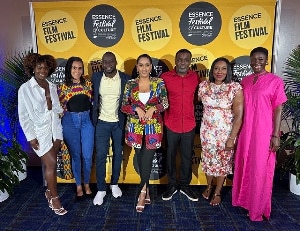
    Ghanaian actress and global brand ambassador, Juliet Ibrahim, made a lasting impact as a panelist during the 2023 Essence Film Festival.

    This festival is a significant component of the broader Essence Festival of Culture, which has been commemorating African American culture in the United States for the past thirty years.

    With a staggering daily attendance, the event claims the title for the largest festival in the U.S., attracting approximately 500,000 participants over its three-day duration.

    Juliet’s participation on the highly anticipated panel, “Clips & Conversations: Ghana’s Road to Global Expansion,” held tremendous significance for both the Ghanaian film industry and the diaspora at large.

    Juliet Ibrahim leaves an indelible mark at the Essence Film Festival, featuring the inaugural Africa House.

    Esteemed actors, directors, and producers from Ghana, Nigeria, South Africa, and Kenya unite to advance collaborative efforts for global expansion.

    The expertly moderated panel, including Juliet Ibrahim, highlights their experiences and insights in producing remarkable projects, propelling the industry to greater global heights. Juliet’s presence adds inspiration and prestige, representing Ghana’s film industry as a global brand ambassador.

    Her commitment to diversity, storytelling, and promoting Ghana’s cultural heritage solidifies her place among elite talents.

    As a participant in the Essence Festival of Culture, Juliet aims to showcase Ghana’s talent and establish it as a film hub.

  • Sudan: Attack on US diplomatic convoy in Khartoum

    Sudan: Attack on US diplomatic convoy in Khartoum

    A U.S. Embassy convoy was attacked in Sudan, according to Washington’s top ambassador, who also condemned “indiscriminate military operations” as the nation’s armed forces and a potent adversary continued to use heavy weapons in populated areas.

    The convoy of clearly marked embassy vehicles was attacked on Monday April 17 2023, and preliminary reports link the assailants to the Rapid Support Forces, the paramilitary group battling Sudan’s military, U.S. Secretary of State Antony Blinken told reporters. Everyone in the convoy was safe, Blinken said.

    The convoy attack in Khartoum, along with earlier assaults on aid workers and the EU envoy’s residence in the Sudanese capital, signaled further descent into chaos since the battle by two rival generals for control of Africa’s third-largest country erupted over the weekend.

    More than 185 people have been killed and more than 1,800 wounded, according to U.N. figures, which did not include a breakdown of civilians and combatants. The Sudan Doctors’ Syndicate said Tuesday that at least 144 civilians were killed and more than 1,400 wounded since Saturday.

    The overall death toll could be much higher because clashes in Khartoum have prevented the removal of bodies in some areas. The two sides have been using tanks, artillery and other heavy weapons in densely populated areas.

    Late Monday, fighter jets swooped overhead and anti-aircraft fire lit up the skies as darkness fell. Fighting resumed early Tuesday around each side’s main bases and at strategic government buildings — all of which are in residential areas.

    Satellite images from Maxar Technologies taken Monday showed damage across Khartoum, including security service buildings. Tanks stood guard at a bridge over the White Nile River and other locations in the capital.

    Satellite images from Planet Labs PBC, also taken Monday, showed some 20 damaged aircraft at Khartoum International Airport, which also has a military side. Some had been completely destroyed, with one still belching smoke. At the El Obeid and Merowe air bases, north and south of Khartoum, several fighter jets were among the destroyed aircraft.

    Top diplomats have urged the two rival generals — armed forces chief Gen. Abdel-Fattah Burhan and RSF leader Gen. Mohammed Hamdan Dagalo — to halt fighting.

    The State Department said late Monday that Blinken spoke by phone separately with the two generals.

    “I made very clear (in my calls) that any attacks or threats or dangers posed to our diplomats were totally unacceptable,” Blinken told reporters at the Group of Seven wealthy nations meeting in Japan on Tuesday,

    He appealed for an immediate 24-hour cease-fire, as a foundation for a longer truce and a return to negotiations. “Indiscriminate military operations have resulted in significant deaths and injuries, recklessly endangering civilians, diplomats, including U.S. personnel, and humanitarian personnel,” he said.

    Dagalo said in a series of tweets Tuesday that he had approved a 24-hour humanitarian truce after speaking to Blinken while the Sudanese military said more troops would join the battle and that it would “widen the scope of its operations” against the RSF.

    Burhan and Dagalo, former allies who jointly orchestrated an October 2021 coup, have dug in, demanding the other’s surrender. The violence has raised the specter of civil war just as Sudanese were trying to revive the drive for a democratic, civilian government after decades of military rule.

    The Sudanese military blamed the RSF, which grew out of the notorious Janjaweed militias in Sudan’s Darfur region, for the attack on the U.S. convoy and an earlier assault on the home of the EU envoy in Khartoum.

    The European Union’s foreign policy chief, Josep Borrell tweeted Monday that the EU ambassador to Sudan “was assaulted in his own residency,” without providing further details.

    The RSF denied involvement in the attack on the ambassador’s home, instead blaming the military. However, a Western diplomat in Cairo said the residence was ransacked by armed men in RSF uniforms. No one was hurt but the armed men stole several items, said the diplomat who spoke on condition of anonymity because he was not allowed to talk to media.

    Under international pressure, Burhan and Dagalo had recently agreed to a framework agreement with political parties and pro-democracy groups, but the signing was repeatedly delayed as tensions rose over the integration of the RSF into the armed forces and the future chain of command.

    Both generals have a long history of human rights abuses and their forces have cracked down on pro-democracy activists.

    Only four years ago, Sudan inspired hope after a popular uprising helped depose long-time autocratic leader Omar al-Bashir.

    But the turmoil since, especially the 2021 coup, has frustrated the democracy drive and wrecked the economy. A third of the population — around 16 million people — now depends on humanitarian assistance in the resource-rich nation.

  • Zimbabwean ambassador-cum-pastor exposed in multi-billion dollar gold smuggling scandal

    Zimbabwean ambassador-cum-pastor exposed in multi-billion dollar gold smuggling scandal

    Zimbabwean ambassador, Prophet Uebert Angel has been exposed for laundering millions of dollars through a gold-smuggling scheme from Zimbabwe to Dubai.

    This was revealed through an undercover operation by Al Jazeera’s Investigative Unit.

    Being appointed as ambassador-at-large and a presidential envoy by Zimbabwe’s President Emmerson Mnangagwa in March 2021, Angel told reporters that he is in the capacity to carry large volumes of cash into the country using his diplomatic status.

    “I’m an ambassador at large and an ambassador to 85 countries but on this special envoy am a representative of the president. That means i can sign contracts and treaties with government without the president getting involved, ” the acclaimed prophet told the reporters in the video during their investigations.

    In furtherance to this, Angel assured the supposed Chinese criminals that a call on the president of miners association would make the gold readily available at the very minute he was speaking.

    “You want gold, gold we can do it right now, we can make the call right now, and it’s done,” he bragged.

    Under The vienna convention, states have agreed to exempt diplomatic languages from airport searches.

    Hence, the diplomatic privilege used by Mr Angel to smuggle the gold items out of the country.

    “Right now I can put a bag like this with 1.2 billion and put red tape written, diplomat. That it. It is a very very easy thing, it will land in Zimbabwe, Zimbabwe can’t touch it until i get to my house.”

    So far the president of Zimbabwe is yet to speak on the matter.

    Zimbabwean journalist and anti-corruption activist, Hopewell Chin’ono in a live interview with a journalist commended the international media for putting out a not new exposé but this time with a detailed evidence on camera.

    “ What Aljazeera has done which we were not able to do is to put the evidence and have the people themselves speaking of how they are involved in looting of public funds, the smuggling of natural resources and the laundering of monies used in state institutions in the documentary” 

    For him, he has been thrown into prison on three occasions for obvious reasons thus, most journalists who come across similar information hesitate to put it out for the fear of putting their lives in danger.

    Meanwhile the ruling party has shared a post refuting the accusations leveled against the government official, Mr Chin’ono mentioned.

    Apparently,  Uebert Angel’s ambassadorial appointment by the president in 2021 obliged him to bring investments into Zimbabwe because the country’s own currency has lost value in international trade due to hyperinflation.

    Thus a commodity like gold is a good way to earn dollars, but international sanctions imposed on the country make it difficult for the government to export gold because of the additional scrutiny on officials in power.

    “So you have to figure out other ways to do that,” Karen Greenaway, a former FBI investigator who tracks international money laundering schemes, told Al Jazeera. One way around: individual gold miners, who don’t face those restrictions.

    This scenario makes Zimbabwe fertile ground for money launderers who can help the country earn dollars in exchange for gold.

    Head of the Zimbabwe Miners Association, Henrietta Rushwaya, is at the center of Angel’s operations trading gold for illegal currency. On a phone call with Angel and the reporters, Rushwaya, who is also the niece of President Mnangagwa, said that smuggling 100kg of gold each week would be simple.

    The idea would need an initial filthy cash investment of $10 million into Fidelity, the government’s gold refinery. Fidelity would set aside $5 million of the total as a reserve during the con, and the remaining amount would be used to purchase gold every week.

    A further $5 million would be brought in to purchase more gold after the first purchase, and so on until all the money had been laundered into the precious metal, which would then be sold globally for legal, clean money.

  • Woman to pay £1,000,000  court fee for refusing to vacate a millionaire’s mansion

    Woman to pay £1,000,000 court fee for refusing to vacate a millionaire’s mansion

    After losing her court case, a lawyer who insisted she was the “heiress” to a former ambassador‘s rural estate now faces a legal bill of more than £1 million.

    Judge Leigh White, 56, instructed her to vacate grade I-listed Wotton House, close to Aylesbury, by Friday.

    The wealthy David Gladstone, 87, accused her of squatting in his family’s wealth despite her claims that she had the “right to stay.”

    After he successfully sued her, she now has to pay his legal fees because she was denied a grace period of one month before packing her things.

    After refusing to vacate a millionaire’s mansion, a woman will have to pay £1,000,000 in court fees.

    Ms White moved into the stately home in 2017 after the death of Mr Gladstone’s son. She claimed she had been treated as a ‘surrogate daughter’ by the former high commissioner to Sri Lanka – and that he must have forgotten earlier promises that she would inherit his £20million estate.

    But the High Court heard Mr Gladstone was ‘desperate to spend what remains of his life’ at ­Wotton having moved to Cumbria to shield from Covid with wife Mary in 2020.

    The diplomat met Ms White 30 years ago when he was married to his first wife and their friendship blossomed due to a shared passion for classical music and theatre. She became part of the couple’s inner circle and managed Wotton House after his wife died.

    Champion News Service Ltd news@championnews.co.uk Tel: 07948286566 / 07914583378 Wotton House, near Aylesbury, which is at the centre of High Court battle between David Gladstone and Leigh White.
    Wotton House, near Aylesbury, is the centre of the court battle
    Former British High Commissioner to Sri Lanka David Gladstone (Credit: Lou Macnamara and Angus Frost/Yardstick Films)
    David Gladstone, former British High Commissioner to Sri Lanka, sued Ms White

    However, after the pandemic the pair had a falling out and he asked Ms White to leave the house.

    She claimed she had sacrificed a high-flying law career to look after the property and had enjoyed a ‘close personal bond of love and affection’ with Mr Gladstone.

    After rejecting Ms White’s case earlier this month, Mr Justice Trower returned to court to refuse a request by her lawyers that she be allowed to delay her departure by a month. He also ordered her to pay £725,000 up front towards Mr Gladstone’s costs, which are likely to exceed £1million.

    Her own costs were estimated at £350,000 even before the case came to court.

  • DR Congo expels Rwandan ambassador as M23 rebels seize towns

    Kinshasa orders Ambassador Vincent Karega to leave the country within 48 hours after accusing Kigali of supporting M23 rebels.

    The Democratic Republic of the Congo’s government has ordered Rwandan Ambassador Vincent Karega to leave the country within 48 hours after accusing Kigali of supporting M23 rebels, who have seized two towns in the DRC’s east, raising tensions between the two countries.

    Saturday’s announcement by government spokesman Patrick Muyaya came after a meeting of the defence council, presided over by President Felix Tshisekedi, in the wake of rebels seizing control of Kiwanja and Rutshuru in the province of North Kivu.

    DR Congo has repeatedly accused Rwanda of backing the rebels, an allegation Rwanda has repeatedly denied. The decision to expel Karega is expected to further ratchet up tensions between the two countries whose relations have been fraught for decades.

    Muyaya said that in recent days “a massive arrival of elements of the Rwandan element to support the M23 terrorists” against DR Congo’s troops had been observed.

    “This criminal and terrorist adventure” had forced thousands of people to flee their homes, he added.

    Rebel advance

    The latest advance by rebel fighters prompted the UN peacekeeping mission, known as MONUSCO, to increase its “troop alert level” and boost support for the army.

    Fierce fighting erupted on Saturday morning between the Congolese army and M23 rebels in Kiwanja, which is 70km (43 miles) from the North Kivu capital, Goma.

    John Banyene, a local civil society leader, later told The Associated Press that the rebels now controlled both Kiwanja and Rutshuru Centre. AFP, quoting unnamed officials, said the rebels had seized control of the towns.

    “As we speak, we confirm that the M23 rebels and their allies control the town of Kiwanja, but the armed forces of the Democratic Republic of Congo are not giving up,” Banyene told journalists in Goma.

    There was no immediate confirmation from Congolese authorities or the military on the reported seizure of the two towns.

    Ongoing fighting

    The M23 was formed in 2012, claiming to defend the interests of Congolese Tutsis, a group sharing the ethnicity of Rwanda’s President Paul Kagame, against Hutu armed groups, seizing Goma, the largest city in DR Congo’s east, the same year. After a peace deal in 2013, many M23 fighters were integrated into the national military.

    The group resumed fighting in late 2021 after lying dormant for years, accusing the government of having failed to honour an agreement over the demobilisation of its fighters.

    It has since captured swathes of territory in North Kivu, including the key town of Bunagana on the Ugandan border in June.

    Since May, M23 has waged its most sustained offensive in years, killing dozens and forcing at least 40,000 people to flee in only a week’s time. Nearly 200,000 people had already been displaced over the past year even before the latest surge in violence.

    The M23’s resurgence has inflamed regional tensions and spurred deadly protests against the UN peacekeeping mission in DRC, which civilians accuse of failing to protect them.

    Rwanda denies the charges and counters that DR Congo works with the Forces for the Liberation of Rwanda (FDLR), a notorious Hutu rebel movement involved in the 1994 genocide of Tutsis, which Kinshasa also denies.

    In August, a report by UN experts said they had “solid evidence” that members of Rwanda’s armed forces were conducting operations in eastern DR Congo in support of the M23 rebel group.

    Rwanda, though, has repeatedly denied the allegations and has accused Congolese forces of injuring several civilians in cross-border shelling.

    Source: Aljazeera.com


  • We are still issuing visas to Ghanaians – UAE ambassador

    The Ambassador of the United Arab Emirates (UAE) to Ghana, Amer Al Alawi, has refuted reports that Ghana and 19 other African Countries have been barred by his government from entering Dubai.

    According to him, reports of the ban are mere rumours because his office has not received any official communication on it yet.

    “There is nothing official regarding the rumours in the news. There is no official statement from my government or the other governments.

    “So, our daily work routine is the same, it hasn’t changed. Until we find or receive an announcement or an official statement, we can’t talk about it.

    “There is nothing. Maybe there is something under process but I can’t assure you,” Amer Al Alawi told the media on the side-lines of a tree planting event to symbolise 50 years of diplomatic ties between the UAE and Ghana.

    The ambassador added that the UAE has rather made the process for applying for visas more flexible to make Dubai and other parts of the UAE easily accessible to Ghanaians and other nationals.

    His comments come after reports indicated that the UAE had banned nationals of Ghana and 19 other African countries from entering its capital city, Dubai, effective Monday, October 24, 2022.

    “The United Arab Emirates (UAE) has announced a visa ban on nationalities from 20 African countries seeking to visit Dubai.

    “Countries affected include Ghana, Sierra Leone, Sudan, Cameroon, Nigeria, Liberia, Burundi, Republic of Guinea, Gambia, Togo, Democratic Republic of Congo, Senegal, Benin, Ivory Coast, Congo, Rwanda, Burkina Faso, Guinea Bissau, and Comoros. The ban takes immediate effect,” parts of a Facebook post shared by DW Africa on Monday read.

    DW Africa stated that one of the reasons for the ban was that most nationals from the 20 countries always fail to leave Dubai after their visas have expired.


  • Leverage partnerships to tackle challenges in agribusiness – US Ambassador

    Ambassador Virginia Evelyn Palmer, United States Ambassador to Ghana, has called on stakeholders in the agribusiness sector to leverage partnerships to tackle challenges hindering the growth and development of the sector.

    She noted, particularly the difficulties in accessing agribusiness financing in the country and, therefore, said working together could possibly expand access to affordable and commercial financing for farmers and agribusinesses, thereby promoting food security and sustainable economic growth.

    Ambassador Palmer made the call when she addressed the 2022 Agribusiness Investment Summit held in Accra on the theme: “Strategic Partnerships for Sustainable Agricultural Financing,” organised by the United States Agency for International Development (USAID)-supported Feed the Future Ghana Mobilizing Finance in Agriculture (MFA) Activity.

    The Summit provided a platform for stakeholders in the agribusiness space to share information and knowledge on innovative agricultural financing in the country and showcased economically viable agribusiness investment opportunities in the maize, soy, groundnut, cowpea, mango, pineapple, cashew, and shea value chains.

    Ambassador Palmer expressed concern about economic challenges confronting the country and called on the government to adopt steps to improve the nation’s macro-economic conditions.

    “It is a challenging time for farmers and the finance sector, in particular because of high inflation and depreciation of the cedi. Additionally, fertilizer prices have been high, reducing usage which could lead to smaller yields in the coming months”, she said.

    The US government, she indicated, was creating opportunities to promote job creation and support of incomes in the country.

    “In just the past two months, our programmes facilitated US$16 million in financing through 15 financial institutions.

    This financing in turn supported more than 7,500 agribusinesses, including 3,600 female-led enterprises”, Ambassador Palmer added.

    In a speech on his behalf, Dr. Owusu Afriyie Akoto, the Minister for Food and Agriculture, entreated financial institutions to support the development of climate-smart agriculture interventions to increase food productivity.

    This would help financial institutions to manage climate change risks in agricultural lending, he said, adding “agricultural financing needs to be innovative to attract private capital and deepen the resilience of agriculture finance markets.”

    Dr. John Apontuah Kumah, a Deputy Minister of Finance, said the government had adopted a paradigm shift to transform agricultural financing to reposition the sector and make it a true driver for sustainable economic growth and development.

    He said the Ministry had created a special unit to liaise with key sector players for collection of data, policy analysis on the agriculture sector, and research on agribusiness financing options to boost commercial agriculture in the country.

    Dr. Victor Antwi, the Chief of Party of MFA Activity, said the Activity would help mobilize more than US$260 million in financing for the agribusiness sector.

    He announced “in approximately two years of the activity, MFA has mobilized over US$178.5 million (72.5 percent from commercial banks) for 18,636 farmers and agribusinesses, including 54 per cent female-led agribusinesses in the country.

    The Activity is also implementing a US$2.77 million COVID-19 Relief and Resilience Challenge Fund to benefit more than 29,000 smallholder farmers with 66 per cent being women, Dr. Antwi stated.