On Sunday, Archbishop Dr. Charles Agyinasare, founder of Perez Chapel International, was inaugurated as the President of the Bible Society of Ghana (BSG).
He makes history as the first leader from the charismatic community to assume this role, taking over from Apostle Prof. Opoku Onyinah, the former Chairman of the Church of Pentecost and outgoing President of BSG.
At the induction service held at the Perez Chapel, Archbishop Agyinasare, along with the newly appointed Council and Committee members of BSG, expressed his joy and commitment to the position.
He pledged to advance the Society’s mission of making God’s word accessible, affordable, and impactful.
In his address, Archbishop Agyinasare called on churches, Christians, and para-church organizations to work together to ensure the translation of the Bible into multiple languages, aiming to make it available in homes, schools, and public spaces.
“As your new President, I am committed to advancing the mandate of the Bible Society of Ghana, which is to make God’s words available, affordable and actively used to transform lives,” he said.
Former President, John Dramani Mahama has expressed his commitment to creating a future where mothers and children can thrive, acknowledging the sacrifices and dedication of mothers in his Mother’s Day message.
In his statement, Mahama promised to ensure that the sacrifices of mothers do not go unnoticed and reaffirmed his dedication to building a Ghana that caters to the needs of all generations.
“I recognize the sacrifices and dedication of our mothers, and I am determined to create a future where every mother and her children can thrive,” he stated.
Mahama’s message, shared on Mother’s Day, emphasized his vision for a Ghana where mothers can raise their children in safety and security, with access to quality healthcare, education, and economic opportunities.
His post celebrated the impact of mothers on society, highlighting their strength, wisdom, and resilience as the foundation of communities.
In conclusion, Mahama extended his gratitude to all Ghanaian women for their love, care, and unwavering support, wishing them a Mother’s Day filled with love and joy.
“I want to reaffirm my commitment to building a Ghana that works for all generations—a Ghana where mothers can raise their children in safety and security, where they have access to quality healthcare, education, and economic opportunities.”
Read Mahama’s post below:
Happy Mother’s Day!
Today, we celebrate and honor the incredible impact our mothers have on our society. Your strength, wisdom, and resilience are the foundation of our communities.
Today is a special day for all women, and on my part, I want to reaffirm my commitment to building a Ghana that works for all generations—a Ghana where mothers can raise their children in safety and security, where they have access to quality healthcare, education, and economic opportunities.
I recognize the sacrifices and dedication of our mothers, and I am determined to create a future where every mother and her children can thrive.
Thank you for your love, care, and unwavering support. Happy Mother’s Day to all Ghanaian women. May your day be filled with love and joy.
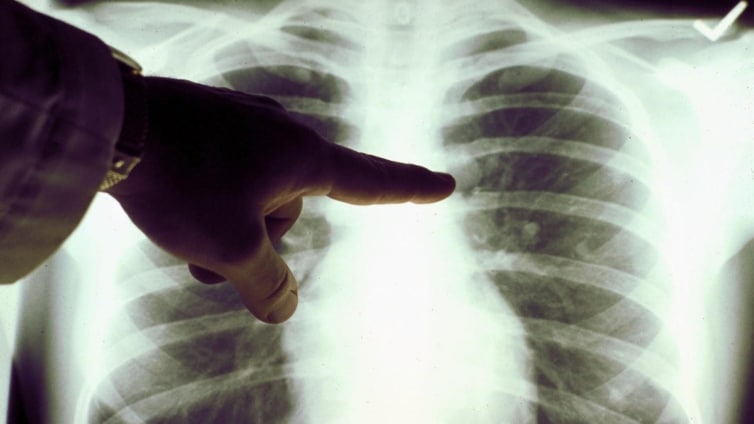
Death rates from cancer in the US have fallen by 32% over the three decades from 1991 to 2019, according to the American Cancer Society.
The decline is thanks to prevention, screening, early diagnosis and treatment of common cancers, including lung and breast cancer.
The drop has meant 3.5m fewer deaths.
However, cancers are still the second leading cause of death in the US, after heart disease.
In 1991, the cancer death rate was 215 per 100,000 people and in 2019 it dropped to 146 per 100,000 people.
Lung cancer, of which there are 230,000more cases each year, kills the most patients, 350 per day.
But people are being diagnosed sooner, and technological advancements have increased the survival rate by three years.
Breast cancer rates have actually increased by 0.5% a year since the mid-2000s, which the American Cancer Society report attributes to “more women having obesity, having fewer children, or having their first baby after age 30”. Increased presence of fat tissue can elevate levels of the hormone oestrogen, which has been linked to the cancer.
Though having fewer children or having them later has been linked to increasing breast cancer chances, the link is not well understood.
Mortality rates from breast cancer, though, have declined.
The research found that “at least 42% of the projected new cancers are potentially avoidable”, noting that 19% of cancers are caused by smoking and 18% of cancers are “caused by a combination of excess body weight, drinking alcohol, poor nutrition, and physical inactivity”.
The report also examined racial and economic disparities in cancer outcomes.
The Covid-19 pandemic added to already existing difficulties for marginalised groups to get cancer screenings and treatment.
For nearly every type of cancer, white people have a higher survival rate than black people. Black women with breast cancer face a 41% higher death rate than white women.
One bright spot was that cancer death rates in children and adolescents have seen large declines. Since the 1970s, cancer death rates in children have declined by 71% and by 61% for those ages 15 to 19.
Cancer is the second most common cause of death, after accidents, for children one to 14 years old.
Some cancer progress in children has lagged behind adult research due to “lower enrolment in clinical trials, differences in tumour biology and treatment protocols, as well as treatment tolerance and compliance,” according to the report.