Tag: Americans

  • ‘The most famous black person in America’: How the 1950s ‘Red Scare’ erased a US icon

    ‘The most famous black person in America’: How the 1950s ‘Red Scare’ erased a US icon

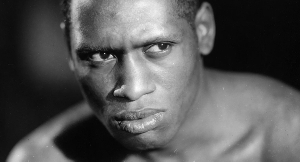
    Paul Robeson was a superstar of the stage and screen, a talented football player and a music hitmaker. Then, amid the “anti-communist fervour” of the US in the Cold War, came a dramatic fall from grace.

    Paul Robeson’s Ballad for Americans was an unlikely pop smash. A 10-minute-long patriotic folk cantata, it offered an inclusive version of the US story, from fiery formation (“In ’76 the sky was red”) to a pan-ethnic present, as articulated by a narrator who reveals himself to be America itself.

    Warning: This article contains use of an antiquated racial term that some readers may find offensive

    Yet when the celebrated baritone first performed the song on a national CBS radio broadcast in 1939, it became an instant sensation. The studio audience cheered for 20 minutes. Letters and phone calls flooded into the station, and the show was repeated throughout the following year. Already a star of stage, screen and the football field, the broadcast and subsequent single release of Ballad for Americans cemented Robeson’s status as the most famous black person in America.

    He died on 23 January 1976, 200 years after the bloody birth of the US and 50 years ago this month. His final decades were marked by illness and seclusion, the lingering effects of a campaign of suppression that was unprecedented, even amid the widespread entertainment industry blacklisting that characterised the “Red Scare”.

    Paul Robeson was born in 1898 in Princeton, New Jersey, the youngest of five children. His father, a pastor, raised the family after his mother died in a house fire a few years after his birth. To say that Robeson was a remarkable young man would be a significant understatement. He excelled academically, in sports and the arts while attending his Jersey high school.

    He won a four-year scholarship to Rutgers University, eventually leaving with the highest academic honours and delivering the graduating class oration. He was awarded 15 varsity letters, including for baseball, basketball, javelin, discus and shot put. But it was at American football that he became a true star, twice making the All-American first team before playing professionally to help finance his studies at Columbia Law School in the early 1920s. Walter Camp, the US’s leading football expert, called Robeson “the greatest defensive back ever to trod the gridiron”.

    Living in Harlem at the height of the Harlem Renaissance, Robeson also used his time at Columbia to take up acting, as well as singing in the famous Cotton Club. His legal career ended abruptly not long after graduation, when he quit his position at a law firm in protest after a white secretary refused to take dictation from him. Instead, he became a full-time performer, supported financially at first by his wife Eslanda, the head of New York-Presbyterian hospital’s pathology laboratory. He starred in two Eugene O’Neill plays (All God’s Chillun Got Wings and Emperor Jones), recorded albums of so-called Negro spirituals and opened a new Oscar Hammerstein/Jerome Kern musical, Show Boat, in 1927, singing Ol’ Man River to critical acclaim.

    A mere decade later, however, he had been branded not just “un-American” but an effective non-person, barred from television, expunged from textbooks, his passport revoked. As the Cold War took hold and the US political and cultural establishment was gripped by anti-communist fervour, Robeson’s civil rights activism and socialist solidarity made him a prime target.

    He also began travelling to the UK and Europe. In 1930, he played Othello at London’s Savoy Theatre, the first black actor to do so in the British capital since Ira Aldridge a century before. And when, after spending much of the early decade performing overseas, he returned to the US to star in the 1936 Hollywood film version of Show Boat, his ascension to A-list status was complete. In 1928, New Yorker magazine had labelled him “the promise of his race”, “King of Harlem”, and the “idol of his people”.

    By 1940, shortly after he performed Ballad for Americans for 30,000 people at the Hollywood Bowl, Colliers magazine crowned him “America’s No. 1 Negro Entertainer”. According to his biographer Martin Duberman, Robeson seemed to “the white world in general […] a magnetic, civilised, and gifted man who had relied on talent rather than belligerence to rise above his circumstances”.

    A swift and damning response

    In reality, Robeson spent much of his rise to fame educating himself and becoming increasingly outspoken on the broader context of the black struggle. In Europe, he performed benefits for Welsh miners, Jewish refugees and Republican fighters in the Spanish Civil War. He studied African languages and Marxist writings, and visited the Soviet Union. Back home in the US, he refused to perform for segregated audiences, joined union picket lines, and, in the 1948 presidential race, campaigned for Henry Wallace’s Progressive Party. Yet all these causes proved relatively undamaging to Robeson, prior to a speech he gave in Paris on 20 April 1949. The World Congress of Partisans for Peace was a gathering of some 2,000 scientists, teachers, activists and artists from 75 countries, convened to condemn the Cold War arms race and what it saw as US aggression against the Soviet Union.

    “It is unthinkable that American Negroes would go to war on behalf of those who have oppressed us for generations,” Robeson announced to the assembled leftists, “against a country [the USSR] which in one generation has raised our people to the full dignity of mankind.” Some six years before the Montgomery Bus Boycott and the birth of the modern civil rights movement, Robeson suggested a form of black rebellion that far outstripped the assimilationist goals of the then-dominant NAACP (National Association for the Advancement of Colored People). The response, from mainstream liberals and conservative anti-communists alike, was swift and damning.

    A few months after Paris, Paul Robeson twice attempted to perform a concert for holidaymakers at Jewish socialist summer camps near Peekskill, New York, just as he had done in previous summers. Twice, thousands of local war veterans counter-protested, and rioters attacked concertgoers with rocks, sticks and fists, overturning cars and injuring 150 people while the police watched on. While this violent attempted cancellation of Robeson was broadly condemned and never repeated, a more subtle version began almost immediately afterwards.

    In March 1950, NBC barred him from appearing on Eleanor Roosevelt’s TV show, Today With Mrs Roosevelt, after protests by the American Legion (a veterans’ organisation) and others. Then in July, the State Department revoked his passport, preventing him from performing overseas, where he remained hugely popular. In the US, his career was effectively already over. Record companies refused to issue his old records or record new ones. From being one of the top 10 highest paid performers in the US in 1941, and earning $100,000 from concerts as late as 1947, by 1952 he was barely making $6,000 a year.

    “Of all those blacklisted, from Hollywood screenwriters to civil servants and academics, none were as high profile or once-beloved”

    The lyrics of Ballad for Americans were removed from school textbooks, and the poet Langston Hughes was forced to cut any mention of Robeson from his book Famous Negro Music Makers, lest it be banned from school library shelves. His name was retrospectively erased from lists of NAACP award winners and football champions alike. Even owning a Paul Robeson record, as hundreds of thousands of Americans had done, was enough to earn government employees a black mark at the various loyalty board interviews that took place in the 1950s.

    Baseball star Jackie Robinson was brought before the House Committee on Un-American Activities (HUAC) to disassociate himself, and by extension, the black public, from Robeson’s Paris remarks. Eventually, in 1956, Robeson himself appeared before HUAC. Unapologetic as ever, he told the committee members: “you are the un-Americans”.

    ‘A unique threat’

    In her book Many Are the Crimes, Cold War historian Ellen Schrecker argues that “probably no other individual was as heavily censored” as Paul Robeson. And in some ways he did present a unique threat. Not as a spy, but as an outspoken black socialist. Someone who linked the African American fight for civil rights to the cause of the working classes worldwide, from the Welsh valleys to West Africa, from Mississippi to Moscow. And of all those blacklisted, from Hollywood screenwriters to civil servants and academics, none were as high profile or once-beloved. As Schrecker says, “The most charismatic black actor and singer of his generation had become a non-person”.

    Robeson’s passport was finally returned to him in 1959 and he tried to once again tour internationally. But, worn down from his years of struggle, his efforts were derailed by bouts of sickness and depression. By the mid-60s he ceased giving concerts entirely, and, following the death of Eslanda, spent his remaining years under the care of his sister.

    In 1973 he addressed a Salute to Paul Robeson event at New York’s Carnegie Hall. He declared himself “dedicated as ever for the worldwide cause of humanity for freedom, peace and brotherhood”, affirmed his commitment to the struggle of African Americans to “achieve complete liberation from racist domination”, and paid tribute to anti-colonial movements around the world. He concluded his message with the following. “Though ill health has compelled my retirement, you can be sure that in my heart I go on singing:

    Source: BBC
  • 3 lawmakers criticized by Americans over expensive US$60,000 trip to Ghana

    3 lawmakers criticized by Americans over expensive US$60,000 trip to Ghana

    Local politicians from Loudoun County in the American state of Virginia have faced severe criticism for embarking on a trip to Ghana in the middle of June this year.

    According to Fox News, concerned residents in the area attended a Board of Supervisors meeting on Tuesday, September 5, to express their dissatisfaction with the use of taxpayer dollars by local leaders to finance an extravagant journey to Ghana. The expenses reportedly covered first-class flights, luxurious accommodations at a five-star hotel, fine dining, and other lavish expenditures.

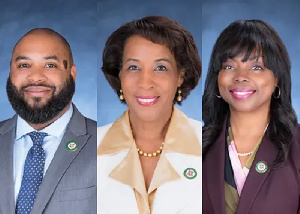
    The three officials in question, Phyllis Randall, Koran Saines, and Sylvia Glass, are reported to have expended over $60,000 in public funds during their visit to Ghana, primarily for the purpose of formalizing a sister city agreement with the Tema Metropolitan Assembly (TMA).

    Phyllis Randall serves as the Chair of the Loudoun County Board of Supervisors, with Koran Saines as her vice-chair, and Sylvia Glass as a Supervisor on the Board.

    Randall responds to allegations:

    Randall denied utilizing tax payer money to pay for the vacations in a statement to Fox 5.

    “I don’t travel on county taxpayer revenue and never have,” she said, according to the outlet. “It’s a policy I put in place when I came to office in 2016.”

    But according to the source, Randall did not pay for the money himself. They originated from the transitory occupancy tax collected by the economic development authority, which is typically borne by outsiders visiting Loudoun County rather than locals.

    “There are people who are rebelling in their ignorance while ignoring the truth because they don’t want the answer, they want the issue,” Randall said during Tuesday’s meeting.

    Click here for more details on facebook:

    https://www.facebook.com/tmaGreenwich1990/posts/651737346989012?ref=embed_post

  • American victims in Mexico hotel room died from undetermined substance

    American victims in Mexico hotel room died from undetermined substance

    ‘Intoxication by an unidentified substance,’ according to an autopsy report, was the cause of death for the two Americans who were discovered dead in a posh hotel room earlier this week.

    The deaths of two American vacationers were found Tuesday morning in their room at the Hotel Rancho Pescadero in Baja California Sur.

    The pair was already dead when paramedics arrived, according to the Baja California Sur Attorney General’s Office, and they were unable to revive them.

    They were identified as Abby Lutz, 28, and John Heathco, 40, both from Newport Beach, California. They were had been dead for about 11-12 hours before they were found by hotel staff, the attorney general’s office estimated.

    Local police said their bodies showed no obvious signs of trauma, and it appeared the couple died from gas inhalation. A recently completed autopsy revealed the couple suffered from ‘intoxication by an undetermined substance.’

    It is unclear what substance the couple ingested.

    Paramedics who responded to Heath and Lutz’s room said told ABC News that they also experienced ‘intoxication symptoms’ at the scene. These included ‘hypoxia and racing heartbeat,’ and they checked themselves in to the hospital after leaving.

    On Wednesday, Lutz’s family members began a GoFundMe campaign to raise money to bring her body back to the US.

    In a post on the fundraiser, family members revealed Lutz and Heathco checked themselves into the hospital only days before, believing they had food poisoning.

    They also said investigators told them ‘improper venting’ and ‘carbon monoxide poisoning’ could be the cause of their deaths.

    The Hotel Rancho Pescadero is a high end resort in Mexico’s Baja California peninsula. The hotel said safety and security of guests was their ‘top priority.’

    ‘We are truly heartbroken by this terrible tragedy,’ said Henar Gil, the general manager of the hotel. ‘Our hearts are with the impacted families and loved ones during this unimaginable loss.’

  • US: The three Ghanaians shot dead in 2023

    US: The three Ghanaians shot dead in 2023

    Gun regulation and racial crime have been two of the most contentious problems in the United States of America in recent years.

    Mass shootings, racially or religiously motivated gun attacks have always brought to the fore how the country should treat guns in private hands but before the politicians agree on anything, the next attacker or assailant strikes.

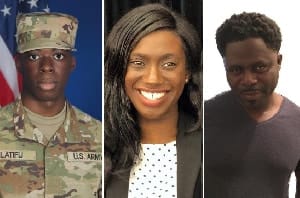
    Ghanaian immigrants and or Ghanaian Americans have been victims of gun violence in the last few years, GhanaWeb tracking shows that three Ghanaians have so far been killed in the US this year alone.

    They are:

    May 2023 – Ghanaian cab driver murdered by three teenagers in New Jersey

    A cab driver was shot and killed by a group of young teenagers during a robbery incident in New Jersey, with police identifying the victim as 57-year-old Ghanaian immigrant, Koffi Addo.

    Addo came to the U.S. from Ghana in 2006 determined to work hard — and he did, six days a week, driving a school bus by day, a taxi by night. On the night he died, three teenagers reportedly called All Brunswick Taxi and said they needed a ride to the movie theaters. But evidently, their motives were much more sinister.

    “He was a beautiful soul to be taken away from us so soon. He had so much more on this Earth to do,” said his widow, Kecia Banks.

    Addo had done so much already, having brought his two sons here from Ghana to give them a better life. He also worked to send money back to his village to help others do the same.

    He was behind the wheel of his taxi the night of May 18 when he got the call to come to a quiet block of Franklin Township — unaware that three teenagers, just 13 and 14 years old, allegedly lay in wait.

    The three teenagers who are charged with killing him are in juvenile detention. His widow, an educator, said that despite her family’s pain, she prays for them.

    “Those are someone’s babies and my heart goes out to their families as well. I pray they have strength,” said Banks.

    February 2023 – Ghanaian-American councilwoman killed in New Jersey

    The New Jersey Republican Party (NJGOP) in the United States issued a statement confirming the murder of one of its members, Councilwoman, Eunice Dwumfuor, a Ghanaian-American.

    According to multiple reports by news portals in the US, the 30-year-old, from Sayreville, New Jersey, was found inside her car with multiple gunshot wounds just before 7:30 p.m. on Thursday, February 1, 2023.

    The police have since said they believe she was the intended target of the shooting, but they do not have a clear motive, the report added.

    Eunice Dwumfour, who was a business analyst and part-time EMT, is said to have been elected to the council in 2021.

    January 2023 – Ghanaian-American soldier killed at Alabama military base

    A Ghanaian-American family based in the US is mourning the passing of their son who died under strange circumstances at a military base in Alabama.

    According to the military, the 21-year-old soldier, Pvt. Abdul-Nafsu Latifu was killed in an “altercation with another soldier” at the Alabama Army post, Fort Rucker where he was training to become an Army air traffic control operator.

    A source close to the family revealed that news about his demise was published on local websites in Alabama as early as 11:30 am CST, even though his next-of-kin was officially called four (4) hours later to report that he had been hospitalized and in critical condition.

    Pvt. Abdul N. Latifu until joining the US Army lived in New York. He is described as very smart and respectful by all who have encountered him. As relatives, friends, and neighbours visit his New York home to mourn with the family, eulogies and questions continue to pour in.

  • American-purchased pistol used fatal kidnapping of Americans in Mexican border – Criminal complaint

    American-purchased pistol used fatal kidnapping of Americans in Mexican border – Criminal complaint

    One of the firearms used in the murderous kidnapping of four Americans in the Mexican border city of Matamoros earlier this month was bought in the US and given to a Mexican cartel, claims a federal court filing.

    A criminal complaint submitted on Saturday in US District Court in Brownsville, Texas, charges Roberto Lugardo Moreno with intentionally conspiring to export or transmit from the United States a “multi-caliber AR type weapon” for use by the Gulf Cartel. Moreno was detained and charged with this crime.

    The firearm was “recovered by Mexican authorities and linked to an incident involving the murders and kidnappings of US nationals which occurred on March 3, 2023 in Matamoros, Tamaulipas, Mexico,” according to the lawsuit.

    The four Americans were kidnapped as they were driving to a medical appointment, two family members told CNN earlier this month. LaTavia Washington McGee and Eric Williams survived the kidnapping, while Shaeed Woodard and Zindell Brown were killed. Mexican authorities have arrested six people in the kidnapping case.

    Lugardo Moreno told investigators he purchased the pistol on October 17, 2019, for individuals that he knew were going to provide the weapon and other guns to a Gulf Cartel figure in Mexico, according to the criminal complaint. During that time, Lugardo Moreno said he received a $100 payment, the complaint states.

    Lugardo Moreno also told investigators that he did not apply for a license to export the firearm from the United States to Mexico.

    CNN has reached out to the FBI and to Lugardo Moreno’s attorney of record for comment and has not immediately heard back. Lugardo Moreno faced a federal judge Monday and is being held without bond, according to the court docket.

  • Family members find the 4 Americans who went missing in Mexico

    Family members find the 4 Americans who went missing in Mexico

    Based on the most recent information from officials, the four Americans who were abducted in Mexico on Friday were a close-knit group of friends going from South Carolina so one of them, a mother of six, could receive medical attention across the border, according to two family members.

    Latavia “Tay” Washington McGee, 33, traveled to Mexico for the treatment with Shaeed Woodard, Zindell Brown, and their buddy Eric, but she never showed up for her doctor’s appointment on Friday, according to her mother Barbara Burgess, who spoke to CNN.

    Burgess claimed that the FBI had notified her on Sunday that her daughter had been abducted and was in danger.
    They instructed me to phone them if she calls, she claimed.

    Mexican authorities are still searching for the missing Americans, who drove into the border city of Matamoros on Friday, where they werefired upon by unidentified gunman and “placed in a vehicle and taken from the scene by armed men,” according to the FBI.

    An innocent Mexican bystander was also killed in the encounter, US Ambassador to Mexico Ken Salazar said.

    Investigators believe the Americans were mistakenly targeted by a Mexican cartel that likely mistook them for Haitian drug smugglers, a US official familiar with the ongoing investigation tells CNN.

    The US citizens have no concerning criminal history that has been identified by investigators, the source said.

    The group of friends, who were bonded “like glue,” grew up together in South Carolina, Brown’s sister Zalandria Brown told CNN. She added, that she and her brother are also close. “Zindell is like my shadow, he’s like my son, he’s like my hip bone. We’re just tight like that.”

    This was the second time Washington McGee, a mother of six children,had gone to Mexico for a medical procedure, her mother said. About two to three years ago, Burgess said, her daughter traveled to the country for a surgery.

    Mexico has become a popular destination for “medical tourism,” attracting travelers who may be seeking cheaper alternatives or medical treatments that are unapproved or unavailable in the US. But the CDC warns the growing trend can carry dangerous risks depending on the destination and facility, including infection and possible post-procedure complications.

    Receipts found in the group’s vehicle also indicated the Americans were in Mexico for medical procedures, a US official with knowledge of the investigation tells CNN.

    Mexican President Andrés Manuel López Obrador said Monday that the group had crossed the border to “buy medicines” and assured the “whole government” is working to resolve the case.

    Federal and local Mexican authorities are participating in the effort to locate the missing Americans, Tamaulipas Attorney General Irving Barrios Mojica said Monday.

    The White House and US State Department are “closely following” the case, spokespeople said in briefings Monday.

    “These sorts of attacks are unacceptable. Our thoughts are with the families of these individuals and we stand ready to provide all appropriate consular assistance,” White House press secretary Karine Jean-Pierre told reporters on Monday, adding that the State and Homeland Security departments are coordinating with Mexican authorities.

    “We will continue to coordinate with Mexico and push them to bring those responsible to justice,” Jean-Pierre said.

    CNN has reached out to the FBI, the Tamaulipas Secretary of Public Security’s office and the Mexican Attorney General’s Office for more information.

    Washington McGee’s aunt, Mary McFadden, told CNN that when the family hadn’t heard from the group of friends by Sunday, they began searching online for any news related to their travel destination. Then, the family saw a video McFadden described as showing her niece being kidnapped.

    “We recognized her and her blonde hair,” McFadden said. She said she also recognized her niece’s clothing from a live video Washington McGee had posted to Facebook earlier Friday.

    “This happened in plain daylight. We don’t know if she is dead or alive. The last picture we saw, she was walking alive,” McFadden said.

    “She is a mother and we need her to come back here for her kids,” she said, adding that Washington McGee’s children range in age from 6 to 18 years old.

    A video obtained by CNN shows a woman and other unidentified people being roughly loaded into a white pickup truck. CNN has confirmed the video matches the incident but has not independently confirmed it is the four Americans shown in the video.

    The video shows the woman being pulled or pushed onto the bed of the truck by two unidentified people as a third visibly armed man watches. The three men then appear to drag at least two limp people onto the truck bed, the video shows.

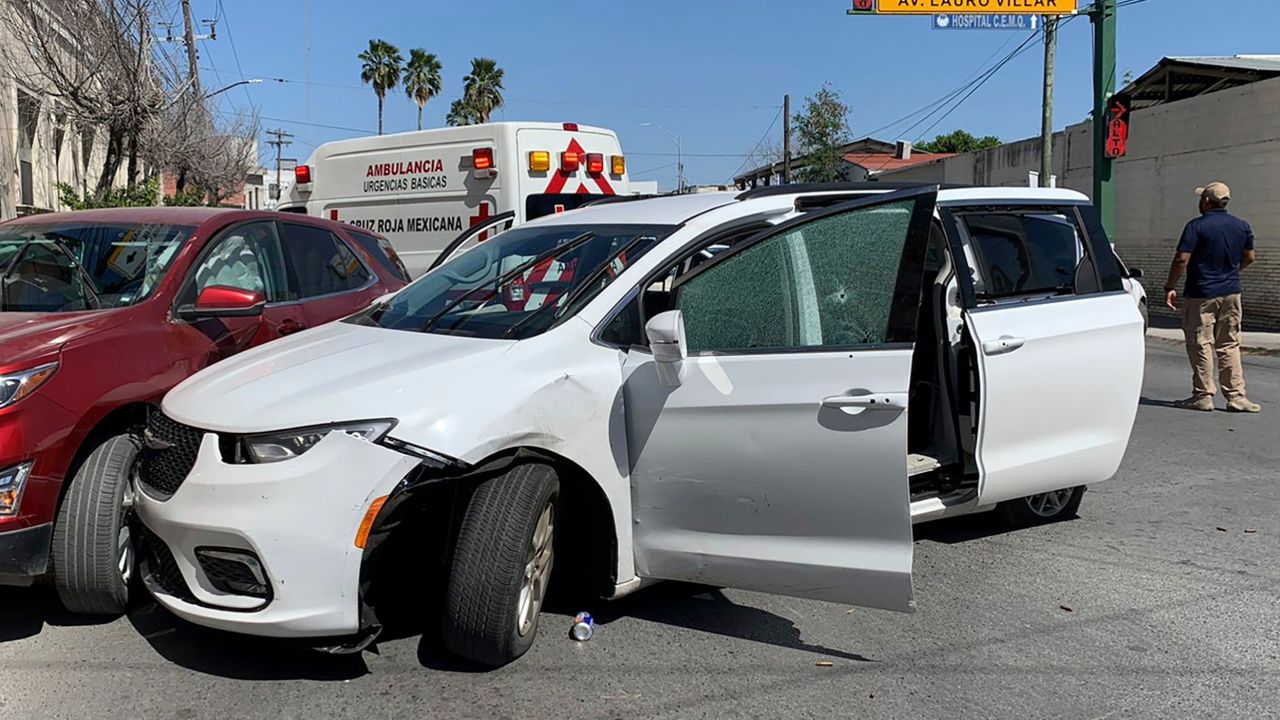
    Additionally, photos obtained by CNN appear to show fragments of the scene where the situation occurred, including the car believed to have been driven by the Americans crashed with another vehicle before they were taken at gunpoint from the scene.

    The US citizens were driving a white minivan with North Carolina plates, according to the FBI in San Antonio.

    The FBI would not confirm the authenticity of the photos, but CNN has geolocated the images and confirmed their authenticity with a US official with knowledge of the investigation.

    The photos also show a woman looking at and then sitting next to three people lying on the ground outside a white minivan. All the doors of the van are open. It is unclear whether the four people in the photos are the US citizens.

    The woman then appears to have been loaded onto the bed of a white pickup truck, beside which several people can be seen lying on the street, the photos show.

    One photo shows that an ambulance arrived, but it’s unclear if medical attention was being provided.

    Investigators trying to locate the US citizens and identify those involved in the alleged kidnapping have been working to gather surveillance footage, collect ballistics and fingerprint evidence, take biological samples for genetic profiles and process the vehicles involved, Tamaulipas officials said.

    A joint task force of federal and state agencies has been created for “processing all the information related to the case” and maintaining constant communication with US officials, Barrios Mojica, the Tamaulipas Attorney General, said.

    “Given the presumption that they are American citizens, a line of direct communication was established with US authorities to exchange information and dedicated to locating them. These communications are being carried out at the highest level between the State Government, the Ministry of Foreign Affairs, and the United States Embassy in Mexico,” Barrios Mojica said.

    The FBI is also requesting the public’s help in finding the Americans and identifyinganyone involved in the incident. The agency announced a $50,000 reward for the return of the victims and the arrest of those responsible.

    Ongoing violence has plagued some Mexican cities as they become the backdrop of organized crime and drug trafficking operations, which the country’s government has been battling since at least 2006.

    Matamoros, a city in the state of Tamaulipas, has a population of more than 500,000 people and is located just across the Rio Grande from Brownsville, Texas. The city has recently been the site of a large encampment of asylum-seeking migrants hoping to cross into the US.

    The US State Department has issued a “Level 4: Do Not Travel” advisory for US citizens thinking of going to Tamaulipas, citing crime and kidnapping.

    “Criminal groups target public and private passenger buses, as well as private automobiles traveling through Tamaulipas, often taking passengers and demanding ransom payments,” the State Department advisory says.

  • US winter storm: Americans and Canadians face mass outages on Christmas Day

    More than one million Americans and Canadians are facing Christmas Day without power as a massive winter storm continues to pummel North America.

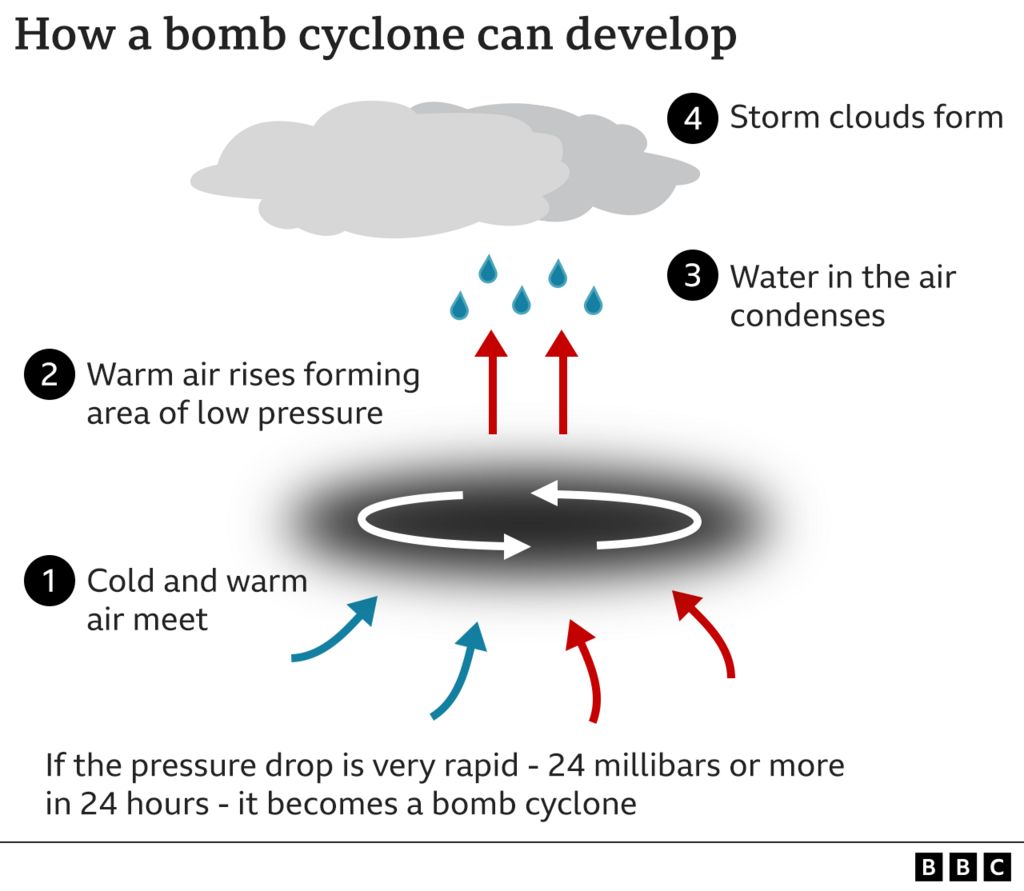
    A bomb cyclone, when atmospheric pressure plummets, has brought snow, strong winds and freezing temperatures.

    Nearly 250 million are affected, and at least 19 deaths have been linked to the storm that extends more than 2,000 miles (3,200km) from Quebec to Texas.

    Thousands of flights have been cancelled during the festive period.

    The western US state of Montana is the worst hit by the cold, with temperatures dropping to -50F (-45C).

    Near white-out conditions have been reported in Minnesota, Iowa, Wisconsin and Michigan. In the city of Buffalo, New York state, the US National Weather Service (NWS) reported “zero mile” visibility.

    In the Pacific Northwest, some residents ice-skated on frozen streets in Seattle and Portland.

    Coastal flooding has been seen in America’s north-eastern New England region, inundating communities and downing power lines.

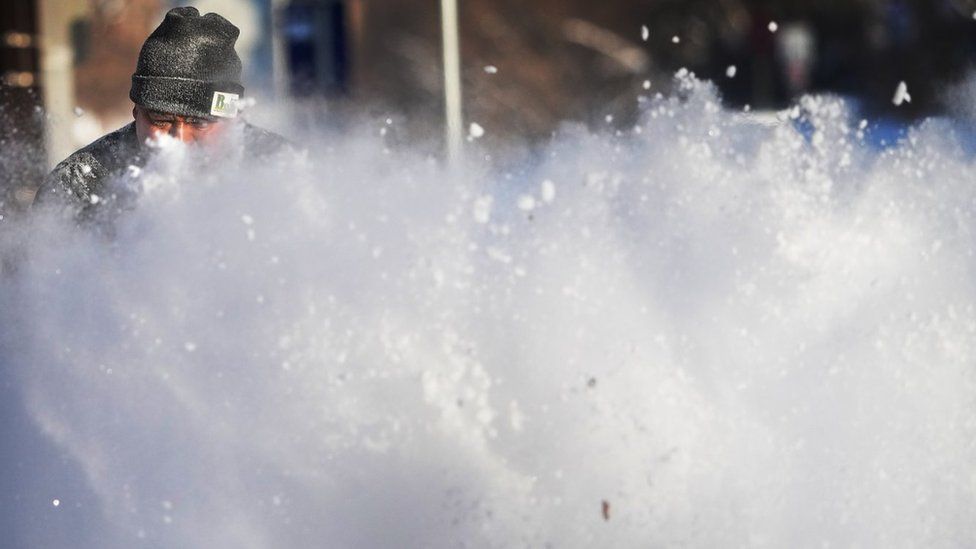
    A man shovels snow to clear passage in Minneapolis, Minnesota state. Photo: 22 December 2022
    Image caption,This man in Minneapolis, Minnesota state, clearly struggled to clear a passage from heavy snow
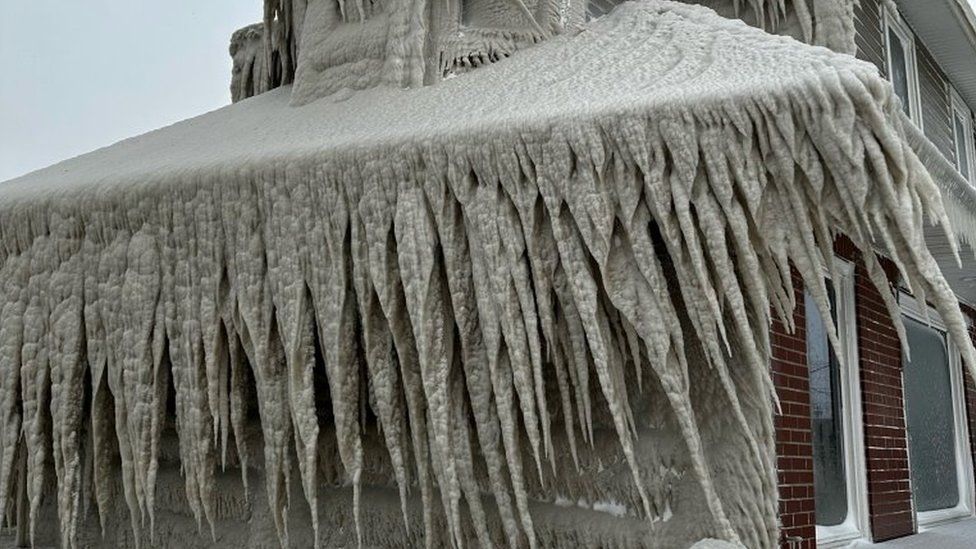
    A restaurant covered in ice from the spray of Lake Erie waves in Hamburg, New York state. Photo: 24 December 2022
    Image caption,This restaurant in Hamburg, New York state, was covered in ice from the spray of Lake Erie waves
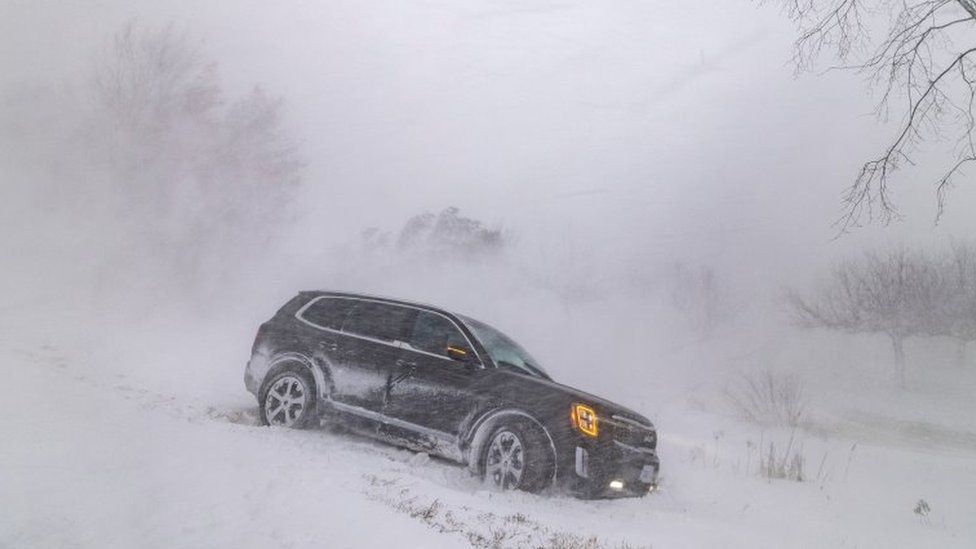
    A car in a ditch during a winter storm near Wainfleet, Ontario province, Canada. Photo: 24 December 2022
    Image caption,In Canada, a number of motorists have had to abandon their vehicles in blizzards in the province of Ontario

    Even the usually milder southern states of Florida and Georgia are experiencing hard-freeze warnings.

    The only region that has largely been spared the cold weather is California where continental mountain ranges are helping to protect the Golden State.

    In Canada, the provinces of Ontario and Quebec were bearing the brunt of the Arctic blast.

    Much of the rest of the country, from British Columbia to Newfoundland, was under extreme cold and winter storm warnings.

    A number of the storm-related fatalities have involved road traffic accidents, including a 50-car pile-up in Ohio that killed four motorists. Another four died in separate crashes in the state.

    Travel problems across the country were being exacerbated by a shortage of snowplough operators, with low pay rates being blamed.

    The NWS says more than 100 daily cold temperature records could be tied or broken over the next few days.

  • US winter storm: Icy blast hits 200 million Americans

    Some 200 million Americans are feeling the icy grip of a massive winter storm that has been linked to at least 19 deaths ahead of the holiday weekend.

    More than 1.5 million people lost power and thousands of flights were cancelled on Friday.

    The vast storm extends more than 2,000 miles (3,200km) from Texas to Quebec.

    A bomb cyclone, when atmospheric pressure plummets, has brought blizzard conditions to the Great Lakes on the US-Canada border.

    In Canada, Ontario and Quebec were bearing the brunt of the Arctic blast, with power cut to hundreds of thousands.

    Much of the rest of the country, from British Columbia to Newfoundland, was under extreme cold and winter storm warnings.

    The US National Weather Service (NWS) said its Friday map “depicts one of the greatest extents of winter weather warnings and advisories ever”.

    Temperatures in Elk Park, Montana, dropped to -50F (-45C), while the town of Hell, Michigan, has frozen over.

    It was 1F (-17C) in the snow-covered community on Friday night. Emily, a bartender at Smitty’s Hell Saloon, told the BBC: “It’s pretty cold here, but we’re having a hell of a time.”

    In South Dakota, snowed-in Native Americans burned clothes for warmth after running out of fuel, said tribal officials.

    Heavy snowfall was forecast in areas of Pennsylvania and Michigan.

    Buffalo, New York, was expecting at least 35in (89cm). The National Weather Service reported “zero mile” visibility there and posted video of white-out conditions.

    “We don’t even want to be parked in it, you *definitely* don’t want to be driving in it. Seriously,” it said in the tweet.

    More than eight million people remained under blizzard warnings, said the NWS.

    Coastal flooding has been seen in New England, New York and New Jersey.

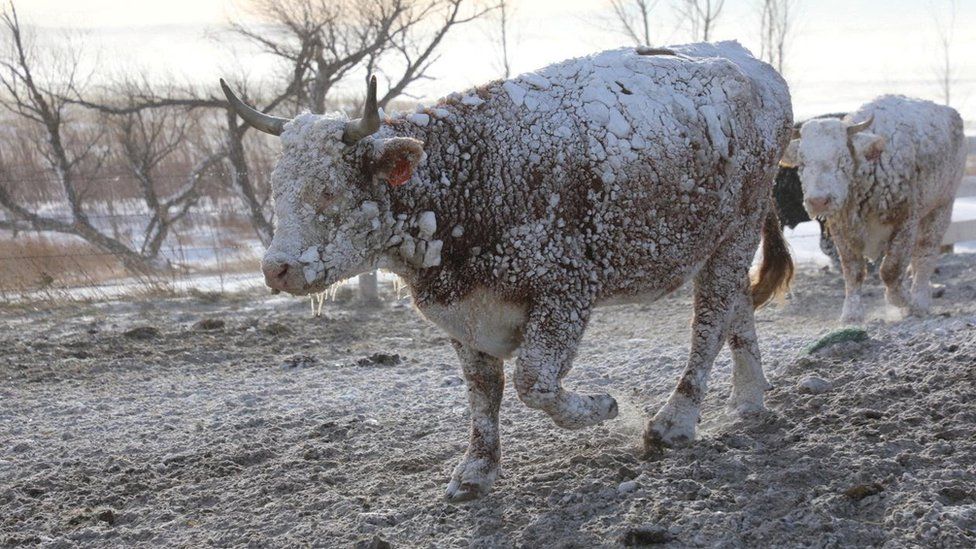
    Cows walk in the snow following a blizzard in Sturgis, South Dakota
    Image caption,Cows walk in the snow following a blizzard in Sturgis, South Dakota

    In the Pacific Northwest, some residents ice-skated on frozen streets in Seattle and Portland.

    Even the usually milder southern states of Louisiana, Alabama, Florida and Georgia were experiencing hard-freeze warnings.

    A number of the storm-related fatalities have involved road traffic accidents, including a 50-car pile-up in Ohio that killed four motorists. Another four died in separate crashes in the state.

    Travel problems across the country were being exacerbated by a shortage of snow plough operators, with low pay rates being blamed.Media caption,

    Watch: Flooding pours through the streets of New York and New Jersey

    More than 5,900 US flights were cancelled on Friday, according to the tracking site FlightAware, as flyers battled to make it home for Christmas. Another 1,200 Saturday flights have already been cancelled.

    By Friday night one million customers had no electricity across the US, according to PowerOutage.us.

    Utilities throughout the Tennessee Valley were implementing rolling blackouts to save power.

    The NWS says more than 100 daily cold temperature records could be tied or broken over the next few days. Decades-old records have already been matched:

    • Denver, Colorado, dropped to -24F on Thursday, its lowest point since the 1990s. Craig McBrierty, 34, who is originally from Scotland, but now lives in Denver, told the BBC it is “colder than I have ever experienced”
    • Wichita, Kansas, recorded its coldest wind chill (-32F) since 2000
    • Nashville, Tennessee, saw its temperatures plunge to below zero for the first time in 26 years
    • Casper, Wyoming, set a new record low on Tuesday of -42F
    BBC Graphic showing how a bomb cyclone can develop

  • Americans’ confidence in elections has faded since January 6

    (CNN)Most Americans lack confidence that the results of US elections reflect the will of the people, a sentiment that has grown steadily since January 2021, according to a new CNN poll conducted by SSRS.

    And about half of Americans, 48%, say they think it is at least somewhat likely that in the next few years, some elected officials will successfully overturn the results of a US election because their party did not win.

    Follow-up interviews with people who participated in the poll suggest that the driving factors behind Republicans’ and Democrats’ views on elections are near-opposite. But there is a common thread: Concern.

    When asked her outlook on the future of American democracy, Patricia Reasoner, an 83-year-old independent from Vermont, said, “I’m concerned because we came so close this time and we’re not putting enough controls in place to keep it from happening again so far. And if it happens again, I’m afraid it will topple us.”

    In January 2021, shortly after the attack on the US Capitol, 59% of Americans said they had at least some confidence that US elections reflected the will of the people. That included 36% who were very confident that elections were representative of the public’s wishes.

    Now, a year and a half later, only 42% have some confidence, and just 16% are very confident.

    The biggest shifts over that time have come among Democrats and independents, even as Democrats remain the political group most likely to express confidence in American elections. In early 2021, 90% of Democrats said they were at least somewhat confident that elections reflected the will of the people; now, just 57% are. Among independents, the share who have at least some confidence has fallen from 54% to 38%. Among Republicans, by contrast, confidence has modestly increased but remained low, from 23% confident then to 29% now.

    Kelly Woodward, a teacher and parent from Denver, where all voters receive mail ballots, said her experience of voting has been largely positive.

    “I take both girls when I do it, when I drop off the ballot, and they sit with me as I’m filling it out. I know for my parents, who are older and are both very politically active, it’s very easy for them, which I appreciate, because it would be hard for them to go stand in line.”

    But Woodward, a Democrat, has concerns about how well the system works elsewhere. “Even though it works for me, I don’t think it works for everybody, and it shouldn’t be that way in our country. It should be the same for everybody; they should feel that it works for them.”

    Some worried that not everyone who should be able to vote actually could. LaRee Smith, a health care worker in Washington state said in an email to CNN, “[M]y biggest concern is not for myself but for voters in states (particularly in the South) where conservatives appear to be ramping up voter suppression and intimidation for citizens in lower socioeconomic classes.”

    And Isaac Odibo, a Democrat from Norfolk, Virginia, said the nation’s election system is weaker now because, “a lot of people qualified to vote might be prevented from voting because of all the laws placed and new laws being passed.”

    But on the other side, Republicans’ concerns seem rooted in doubts about the last presidential election, even as there has been no evidence of either voter fraud or tampering that would change the results. Despite the lack of evidence, numerous candidates for office and former President Donald Trump continue to push the falsehood that the election was stolen.

    Still, Ruben Andres Delgado, a 26-year-old Republican from El Paso, Texas, said of 2020, “Anyone with logic and reasoning could tell you something fishy happened, something illegitimate happened.”

    And another survey-taker from Northport, Alabama, who did not wish to be named, said, “There were instances of polls going smoothly and turning in the true vote count. But there were also instances that were claims from viewers and people working the polls that that didn’t take place, so there was a question mark.”

    The survey was conducted as the House select committee investigating the January 6 attack on the Capitol held public hearings on its findings.

    Woodward has been following the hearings a little bit.

    “I just never thought in my lifetime that I would have seen something like January 6,” she said. “I guess there’s a fear of if that could happen, and if there aren’t any lasting consequences for the individuals who participated, does that just leave the door open for that to happen again? I do place great importance on the hearings, and sort of the precedent that that sets that this cannot happen in our country.”

    Susan Loconsole, a Democrat from Carol Stream, Illinois, who has been watching as much of the hearings as she can and said she felt “devastated” by the attack, believes the election system has been weakened in the aftermath of the 2020 presidential election.

    “I don’t think that there’s suddenly any more fraud or anything different going on,” she said. “It’s just one person saying there was and having so many people that believe everything he says, that they now have taken that as their message. There in itself is the most frightening thing in this country.”

    Americans’ views on the likelihood that an election in the US would be overturned for partisan reasons have held steady at a roughly even split since last summer. Republicans (53% very or somewhat likely) and Democrats (49%) are about equally apt to say it is likely an election would be overturned, but Republicans are more likely to see such an outcome as “very” likely (21% among Republicans vs. 11% among Democrats).

    The poll participant from Alabama, a retired teacher who backed Trump in 2020, said, “I still have my values, so I’m going to vote for the candidate that I normally would vote for, but there’s a concern about the correct candidates that are truly elected being put in office.” Transparency, the respondent said, was key. “Make sure the true vote is shown, whether it’s the vote I want or not, it should be the true vote, the true voice of the American people.”

    Loconsole, the Democrat from Illinois, expressed faith that the results would be trustworthy. “I will, again, trust the system in the next election, even if that means that the Republicans take over.”

    And when asked about her views on the future of American democracy, Woodward, the teacher from Colorado, said, “I’m an optimist. I have to be to wake up and vote and to watch the news. I am optimistic that people will do the right thing and that we’ll find a way to come together, also because I have children and teach children. I just have to think that good things are on the horizon, and that we can do this.”

    The new CNN poll was conducted by SSRS June 13 through July 13 among a random national sample of 1,459 adults initially reached by mail, and is the third survey CNN has conducted using this methodology. Surveys were either conducted online or by telephone with a live interviewer. Results for the full sample have a margin of sampling error of plus or minus 3.3 percentage points.

  • Trump signs executive orders extending financial relief for Americans amid pandemic

    President Donald Trump on Saturday, August 8, 2020, signed executive actions extending financial relief to Americans hit by the Coronavirus pandemic as polls showed a large majority of voters unhappy with his handling of the crisis.

    The four measures marked a presidential show of strength after Trump’s Republican party and White House team failed to agree with opposition Democrats in Congress on a new stimulus package aimed at stopping vulnerable Americans from falling through the cracks.

    “We’ve had it and we’re going to save American jobs and provide relief to the American workers,” Trump said at a press conference at his golf club in Bedminster, New Jersey, where he was spending the weekend.

    With double digit unemployment, disruption to businesses from social distancing rules, and persistent Coronavirus spread, many Americans had been relying on relief measures approved earlier by Congress, but which mostly expired in July.

    Trump said his decision to circumvent Congress with executive actions would mean relief money getting “rapidly distributed.”

    In reality, his measures are likely to face court challenges because Congress controls federal spending, and in any case they may add up to less money than initially appears.

    For Trump, lagging badly in the polls against his Democratic rival Joe Biden ahead of the November 3 presidential election, the orders were partly about showing he is in charge.

    He turned the signing ceremony in the ballroom of the golf club into an assault on his opponents and threw in several false claims about his accomplishments in office.

    To cheers from club members invited to watch the event, Trump insulted the Democratic “crazy” leader of the House of Representatives Nancy Pelosi, denounced Biden as “far left,” and claimed that Democrats want to “steal the election.”

    Biden called Trump’s orders Saturday “a series of half-baked measures.”

    “They are just another cynical ploy designed to deflect responsibility,” Biden said, adding that Americans need a “real leader” who would work to hammer out a deal with lawmakers.

    Haggling in Congress

    One key Trump order promises to get $400 a week added to Americans’ unemployment benefits, while two others offer some protection from evictions and relief for student loans.

    The $400 assistance is below the $600 offered in the expired stimulus package. It may also end up amounting only to $300 extra a week, because Trump said $100 would be provided from state, not federal, budgets – and only if states were willing or able to do so.

    A fourth measure – opposed by many Republicans as well as Democrats – ordered a freeze in payroll taxes. This makes a big headline for Trump but is only a deferral, rather than a cut in the tax.

    “Today’s meager announcements show President Trump still does not comprehend the seriousness or the urgency of the health and economic crises facing working families,” Pelosi said on Twitter Saturday. “These policies provide little real help for families.”

    Democrats, Republicans and White House negotiators had worked all last week without coming close to a deal on an overall congressional relief bill for those struggling to make ends meet in the world’s richest economy.

    Democrats pushed for a massive new $3 trillion stimulus package aimed at propping up the economy, repairing the tattered postal system in time for the presidential election and giving the unemployed an extra $600 a week.

    Democrats later announced they could drop the price tag but refused the Republicans’ offer of a $1 trillion package.

    Source: france24.com

  • Heroes: A group of black men have been hailed as heroes for saving a white policeman during protest

    A couple of hours ago, in the home city of the legendary boxer, Mohammed Ali, Louisville, Kentucky, Americans found an amazing love in the midst of complete chaos and unusual circumstance. It was a scene that brought many Americans to tears and made many realize what a beautiful country they would have, if only they could love one another.

    Following, the death of George Floyd at the hands of four Minneapolis Police officers a couple of days ago, angry protests and riots have ravaged several cities of America. The people have become frustrated and consequently furious as they take to the streets of the United States of America to demand for Justice and end to police brutality that is constantly meted out on the African Americans.

    As the angry protesters who had let loose the dogs of vandalism on several cities of the United States of America got to the city of Louisville, Kentucky, something very remarkable and unusual happened. A white Police officer who is among the deployed forces to contain the angry protesters, inadvertently found himself isolated from his team.

    With the angry mob bearing down on him, the police officer was clearly in danger of being hurt or probably loose his life. However, a group of black people who realized that the police officer was facing a mortal danger, quickly formed a human – shield to protect the police officer from the angry protesters.

    No doubt, this police officer will definitely be eternally grateful to these black young men for saving his life. However, their heroics have gotten the attention of many Americans who have hailed them as heroes.

    Reacting to this great act of love and brotherhood, John F. Kennedy Jr. wrote on his Twitter handle:

    “These men are protecting an officer that was separated from, was out numbered and in danger. This made me cry.”

    Truth be told, I also cried while writing this piece. Pastor Joshua Feuerstein also wrote:

    “These men are heroes. When an officer got separated from his squad… These men formed a line and refused to let rioters harm him! SHEAR THESE MEN’S FACES! THEY ARE HEROES!”

    The actions of these great Americans, have truly reaffirms the eternal words of the great Martin Luther King Jr.

    “I refuse to accept the view that mankind is so tragically bound to the starless night of racism and war that the bright daybreak of peace and brotherhood can never become a reality… I believe that unarmed truth and unconditional love will have the final word.

    Source: opera.com

  • Venezuela detains two Americans over speedboat incursion

    President Nicolás Maduro says the Venezuelan authorities have arrested 13 people, including two US citizens whom he described as mercenaries.

    The announcement came a day after Venezuelan security forces claimed to have foiled what they described as an incursion by men in speedboats from Colombia.

    Officials in Washington denied any US government involvement.

    Mr Maduro has often accused the US of trying to overthrow him.

    Venezuelan authorities said eight armed men were killed during Sunday’s alleged coup attempt.

    In a live broadcast on Monday, Mr Maduro displayed what he said were the passports of the two arrested Americans – Airan Berry and Luke Denman – who work for a Florida-based security company.

    He told viewers: “They were playing Rambo, they were playing hero.”

    The Venezuelan government said the group of “terrorist mercenaries” left Colombia and landed in the town of Macuto, about 21 miles (34km) north of the capital Caracas, on Sunday, before they were intercepted and arrests were made.

    Jordan Goudreau, a former member of the US Army special forces who leads a Florida-based private security firm called Silvercorp USA, has since told Reuters news agency he was one of the plot’s organisers.

    When he was asked about the Americans’ arrest, he said: “They’re working with me. Those are my guys.”

    According to a recent investigation by the Associated Press news agency, Mr Goudreau had previously plotted cross-border incursions which had failed to get off the ground. It said he was working alongside retired Venezuelan military men, who have allegedly been training deserters from Venezuela’s security forces at secret camps in Colombia.

    AP said it had found no evidence of US government involvement.

    The news agency says Mr Goudreau turned his focus to Venezuela in February 2019, after he worked on security at a benefit concert on the Colombian-Venezuelan border arranged by UK billionaire Richard Branson and supported by Venezuelan opposition leader Juan Guaidó.

    Mr Goudreau has also repeatedly made claims about past associations with Mr Guaidó, who is recognised by more than 50 countries as Venezuela’s legitimate leader.

    On Monday, Mr Guaidó denied having anything to do with the ex-Green Beret. In a statement, he said he had “no relationship nor responsibility for any actions” taken by the US war veteran.

    He also accused President Maduro’s administration of trying to distract people from recent outbreaks of violence – including a deadly prison riot on Friday and a gang battle in Caracas on Saturday night.

    Mr Guaidó has the backing of Washington, which has vowed to use tough sanctions to force President Maduro and the Socialist Party out of office.

    Source: bbc.com

  • Another 4.4 million Americans filed for unemployment benefits last week

    For the fifth week in a row, millions of American workers applied for unemployment benefits, seeking financial relief as businesses remained closed during the coronavirus pandemic.

    First-time claims for unemployment benefits totaled 4.4 million in the week ending April 18, after factoring in seasonal adjustments, the US Department of Labor said.
    Without those adjustments — which economists use to account for seasonal hiring fluctuations — the raw number was 4.3 million.

    No matter how you look at the data, the last five weeks have marked the most sudden surge in jobless claims since the Department of Labor started tracking the data in 1967. American workers filed 26.5 million initial claims since March 14, according to the seasonally adjusted numbers.

    Not all of those claims will result in benefits being paid. Some will be rejected because workers did not meet eligibility requirements. Even so, numbers at that level reflect a devastating blow to workers, indicating roughly 16.2% of the US labor force is suffering from layoffs, furloughs or reduced hours during the coronavirus pandemic.

    Weekly claims numbers have come down over the past three weeks, falling from a peak of 6.9 million in the last week in March. Even so, claims continue in the millions every week — a stark contrast to the pre-pandemic strength in the job market. Just a couple months ago, weekly claims were hovering in the low 200,000s. That puts recent weekly claims north of 20 times the pre-coronavirus level, and more than five-times of the worst five-week stretch during the 2007-2009 financial crisis, according to Heidi Shierholz, senior economist at the Economic Policy Institute.

    And even though the declines from week to week are somewhat encouraging, the data shows that much of the damage is already done, said Paul Ashworth, chief US economist at Capital Economics. Case in point, the seasonally adjusted insured unemployment rate sat at 11% in the week ending April 11 — the highest level recorded in the series, according to the DOL.

    Continued jobless claims, representing workers who filed for their second week of benefits or more, stood at nearly 16 million in the week ended April 11, after seasonal adjustments, up from 11.9 million in the prior week.

    Early studies have shown lower-income workers are particularly affected by job losses, and minorities, specifically black and Hispanic families, are expected to bear the brunt of the economic cost of this crisis.

    Meanwhile, states continue to struggle to process the overwhelming volume of unemployment claims.

    In Hawaii, where much of the economy is tourism-based, roughly 26% of the March labor force has filed for first-time benefits over the past five weeks. In Kentucky and Michigan, some 24% of workers have filed for initial claims.

    New York Gov. Andrew Cuomo told reporters Tuesday that his state had 1,000 people “just to take the incoming unemployment calls. That’s how high the volume is. And they still can’t keep up.”

    And Florida’s state unemployment agency said on Tuesday that it had only paid a paltry 14% of the claims filed since March 15 — among the slowest in the country, according to an Associated Press analysis.

    Just over a quarter of Florida’s claims were rejected because filers were found ineligible for the regular jobless benefits program. However, some may still qualify under a new pandemic unemployment assistance program that Congress created in the $2 trillion relief package last month.

    Lawmakers temporarily extended the unemployment program to independent contractors, the self-employed, gig workers and those affected by the coronavirus — and states have scrambled to update their computer systems to process those new types of claims.

    Source: edition.cnn.com

  • Coronavirus renders 6.65 million Americans jobless

    The number of Americans filing new claims for unemployment benefit has surged to 6.65m, as the coronavirus pandemic continues to upend the country’s economy.

    The actual figure is believed to be even higher as many people have reported jammed phone lines and difficulties with filing their claims online.

    It’s also worth noting that some kinds of workers, such as people working part-time, do not qualify for unemployment benefits.

    The latest figure eclipses the previous week’s record of nearly 3.3m people, according to Department of Labor data.

    The rush, which is unprecedented in modern US history, has overwhelmed many state offices handling the claims.

    Car firms have halted production and air travel has fallen dramatically. According to economists, a fifth of the US workforce is now on some form of lockdown.

    Source: bbc.com

  • Anglo American says to reschedule work to at mines to contain virus

    Anglo American said on Friday it would reschedule work at mines in countries such as Chile to contain the spread of coronavirus but added there had been no material disruption on production.

    The virus, which has claimed over 10,000 lives globally, has roiled global markets and forced miners such as Rio Tinto and Teck Resources to reduce activity as governments limit the movement of their populations.

    “At certain operations, such as those in Chile, we are taking measures to temporarily reschedule operational work in order to help reduce the density of people on site and with it to reduce the probability of the virus spreading,” Anglo said in a statement.

    The global miner, which produces copper in Chile, said its supply chains were functioning well at the moment as a result of engagement with suppliers.

    Anglo said on Thursday it would reduce operations at its Los Bronces copper mine in Chile and said production losses would be minimal.

    Source: reuters.com

  • ‘Don’t panic’ says US woman who recovered from coronavirus

    An American woman who has recovered from the novel coronavirus has a simple message for people who are worried: Don’t panic but do think about high-risk individuals and stay home if you feel ill.

    Elizabeth Schneider lives in Seattle, the biggest city of Washington state, which has the most deaths in the United States from the disease sweeping the globe.

    The 37-year-old, who has a PhD in bioengineering, said she was sharing her story “to give people a little bit of hope” through her own relatively mild experience with the infection, which she treated herself from home.

    But, she added, “obviously, it’s not something to be completely nonchalant about, because there are a lot of people who are elderly or have underlying health conditions.

    “That means that we need to be extra vigilant about staying home, isolating ourselves from others.”

    This week, US health authorities citing Chinese data said 80 percent of cases have been mild, while the remaining serious cases that required hospitalization affected mainly people over 60 and those with conditions like diabetes, heart disease or lung disease.

    The party

    Schneider first began experiencing flu-like symptoms on February 25, three days after going to a party that was later identified as the place where at least five other people also got infected.

    “I woke up and I was feeling tired, but it was nothing more than what you normally feel when you have to get up and go to work, and I had been very busy the previous weekend,” she told AFP in an interview Wednesday.

    By midday, however, she felt a headache coming on, along with a fever and body aches. She decided to leave the office of the biotechnology company where she works as a marketing manager and went home.

    After waking up from a nap, Schneider found she had a high temperature, which peaked at 103 degrees Fahrenheit that night (39.4 Celsius).

    “And at that point, I started to shiver uncontrollably, and I was getting the chills and getting tingling in my extremities, so that was a little concerning,” she said.

    She turned to over-the-counter flu medications to treat the symptoms and called a friend to be on standby in case she needed to be taken to an emergency room — but the fever began to recede in the coming days.

    Schneider had been following news reports about the novel coronavirus. The first US case was detected in Washington in late January.

    The state has since gone on to become the epicenter of the disease in the country, with more than 260 cases and at least two dozen deaths. Nationwide, there have been more than 1,100 cases and 30 deaths.

    Because she didn’t have the most common symptoms like a cough or shortness of breath, “I thought, okay, well that’s definitely why I don’t have coronavirus,” said Schneider.

    She had gotten a flu shot but assumed her illness was a different strain. A visit to the doctor would only result in her being asked to go home, rest and drink plenty of fluids.

    ‘Pleasantly surprised’

    A few days later, however, she discovered through a friend’s Facebook post that several people from the party had all developed similar symptoms, and she began to get more suspicious.

    Several of these people went to their doctors, where they were found to be negative for the flu, but they were not offered coronavirus tests because they too were not coughing or having breathing trouble.

    Knowing that she would also likely be turned down for the test, she decided to enroll in a research program called the Seattle Flu Study, hoping it might provide an answer. The team behind the study sent her a nasal swab kit, which she mailed back and waited several more days.

    “I finally got a phone call from one of the research coordinators on Saturday (March 7), telling me that ‘You have tested positive for COVID-19,’” she said.

    “I was a little bit pleasantly surprised, because I thought it was a little bit cool,” Schneider admitted, laughing, though her mother cried when she told her.

    “Granted, I probably would not have felt that way if I was severely ill,” she said. “But from a scientific curiosity perspective, I thought it was very interesting. And also the fact that I finally got confirmation that that’s what I had.”

    By this time, her symptoms had already subsided, and she was told by local health authorities to remain at home for at least seven days after the onset of symptoms or 72 hours after they subsided.

    It’s now been a week since she’s felt better. She has started going out for errands but is still avoiding large gatherings and continuing to work from home.

    Schneider said she hoped her example, which will probably be typical of the high majority of cases, could comfort others.

    “The message is don’t panic,” said Schneider. “If you think that you have it, you probably do; you should probably get tested.”

    “If your symptoms aren’t life-threatening, simply stay at home, medicate with over-the-counter medicines, drink lots of water, get a lot of rest and check out the shows you want to binge-watch,” she said.

    Source: AFP