Tag: Amnesty

  • Amnesty will not address problems with Ghana’s tax system – Economist

    Amnesty will not address problems with Ghana’s tax system – Economist

    A Professor of Economics at the University of Cape Coast (UCC), John Gatsi, has voiced skepticism regarding the proposed tax amnesty put forth by Vice President Dr. Mahamudu Bawumia.

    Prof. Gatsi doubts that this initiative will effectively increase tax compliance or tackle the underlying challenges associated with tax collection.

    Dr. Bawumia, the presidential candidate of the New Patriotic Party (NPP), has pledged to introduce a tax amnesty alongside a simplified flat tax system, aiming to foster a more straightforward and favorable environment for both citizens and businesses.

    This proposal, outlined during a speech at the University of Professional Studies, Accra, entails implementing a flat tax structure based on a percentage of income for individuals and Small and Medium Enterprises (SMEs), which constitute the majority of businesses in Ghana.

    The plan also includes provisions for exemption thresholds to shield low-income earners and guarantees a streamlined corporate tax framework and VAT system.

    However, Professor Gatsi challenges the efficacy of this approach, asserting that it fails to address the core obstacle in tax collection within the country.

    He contends that the primary issue lies in the lack of citizen commitment to voluntary tax payment, driven by a perceived absence of direct benefits.

    In an interview with Umaru Sanda Amadu on Eyewitness News, Professor Gatsi advocated for a shift in focus towards improving public services as a means to incentivize tax compliance.

    He posited that enhancing the quality and accessibility of public services would instill confidence in citizens regarding the tangible returns on their tax contributions, thereby fostering a culture of voluntary compliance.

    “Even if you give everybody tax amnesty for which everybody should start afresh, that will not bring about any change because that is not the main problem of tax collection in the country.”

    “The main problem is that people are not committed to the payment of taxes if they are supposed to voluntarily declare to pay taxes because it does not commensurate with the provision of public infrastructure for the people. Public transport is not the best. Access to public services is not the best for most people in Ghana, therefore they don’t see why they should be paying taxes. Those are the issues that should be addressed,” he said.

  • Gay refugees experience major human rights violations in Kenya – Amnesty

    Gay refugees experience major human rights violations in Kenya – Amnesty

    Amnesty International and a Nairobi-based gay rights organization, has indicated in a joint report that LGBTQ refugees and asylum seekers in Kenya face serious human rights violations, including rape.

    The report released on Friday said hundreds of gay people, who are among more than 200,000 refugees and asylum seekers in north-western Kakuma camp, experience “extreme discrimination and violence”.

    “Perpetrators of violence and intimidation targeting LGBTI individuals can commit their crimes with almost total impunity, enabled by the lack of adequate responses from the police,” Amnesty and the National Gay and Lesbian Human Rights Commission (NGLHRC) said in a statement.

    Researchers interviewed 41 people between 2018 and February 2023 who described facing “hate crimes, violence, including rape, and other serious human rights abuses”.

    Most of the refugees and asylum seekers interviewed reported having suffered assaults, threats and intimidation in Kakuma camp, most of them more than once, because of their sexual orientation.

    Based on the findings, Amnesty International and NGLHRC said that the Kakuma refugee camp complex was not safe for LGBTQ asylum seekers and refugees.

    The rights organisations urged the Kenyan government to uphold the rights to life, protection against inhuman treatment and freedom from non-discrimination of everyone, including LGBTQ people.

  • Amnesty blasts Mozambique’s ‘forgotten war’ after viral video

    Amnesty blasts Mozambique’s ‘forgotten war’ after viral video

    Since the conflict began in 2017, 4,500 people have died and nearly a million have been driven from their homes.

    According to Amnesty International, a video showing soldiers tossing a corpse onto a pile of burning rubble in northern Mozambique “gives a glimpse” of what is going on in a “forgotten war.”

    The video, which is thought to have been taken in November, shows a soldier dousing a corpse with liquid as bystanders, including one dressed in a South African uniform, observe and record the action on their cell phones.

    “Human rights violations and violations of international humanitarian law are still occurring,” the rights watchdog said in a statement on Thursday.

    An investigation has been opened by regional forces on the possible “involvement of its members in this despicable act”, the South African army announced on Tuesday.

    The video “is another horrific event that gives a glimpse of what is going on away from the attention of international media in this forgotten war,” said Amnesty’s east and southern Africa director, Tigere Chagutah.

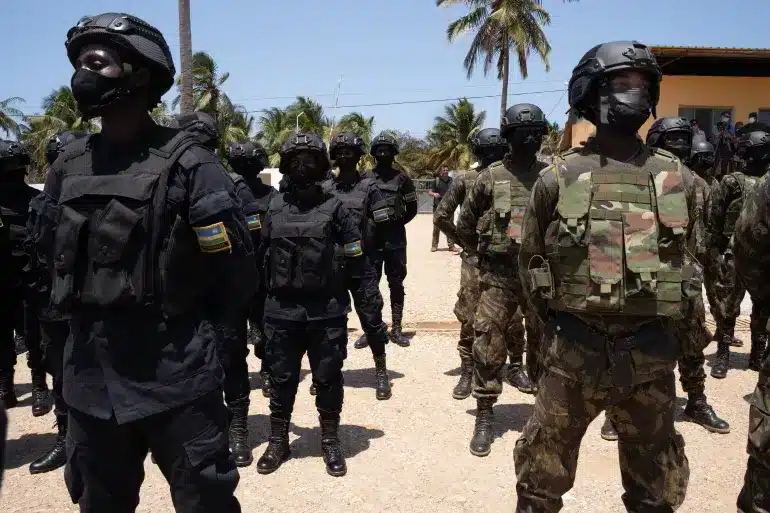
    The crisis began in Cabo Delgado province in 2017, prompting the deployment of troops from Rwanda and neighbouring countries in mid-2021 to help Mozambique’s embattled army.

    The conflict has led to the death of more than 4,500 people, while nearly a million have fled their homes, according to NGOs and the United Nations.

    The government has regained control over much of the region since thousands of African troops were deployed in 2021.

    But “security in Cabo Delgado must not come at the cost of human rights violations”, Chagutah warned.

  • Amnesty criticizes Algerian convictions for mass murder

    Amnesty criticizes Algerian convictions for mass murder

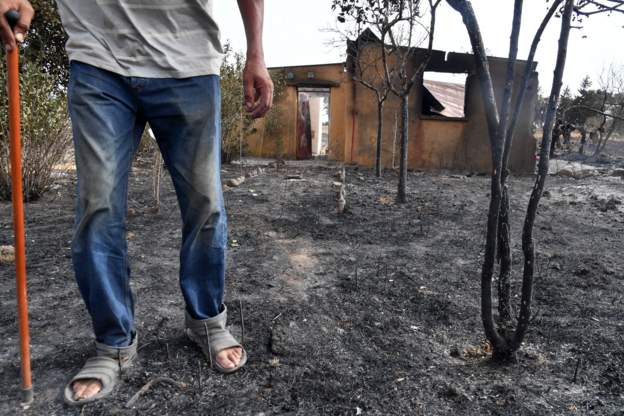
    The Algerian government has been urged by Amnesty International to commute the death sentences of scores of prisoners who were wrongfully accused of causing forest fires.

    Amnesty said five of the 54 people who were convicted last November received their sentences in absentia, and included a woman.

    A further 28 people were sentenced to between two and 10 years, while another 17 were acquitted over the lynching of Djamel Ben Ismail, who had gone to help fight the fires.

    Locals falsely accused Ismail of starting fires himself and attacked him, torturing and burning him before taking his body to the village square.

    On Monday, Amnesty said the cases were “marred by fair trial violations and torture claims” and least six people “were prosecuted due to their political affiliations”.

    “By resorting to the death penalty in mass proceedings following unfair trials, the Algerian authorities not only reveal their utter disregard for human life, but also send a chilling message about how justice is delivered,” said Amnesty’s regional head, Amna Guellali.

    She urged the authorities to urgently overturn “these callous death sentences and convictions”.

    The defendants are appealing against their convictions but the date of their appeal has yet to be fixed, the AFP news agency has quoted their lawyer as saying.

    Source: BBC

  • Senior Correctional Centre appeals for amnesty for juvenile offenders

    The Senior Correctional Centre of the Ghana Prisons Service has appealed to the President to grant amnesty to a number of juvenile offenders to enable them observe the social distancing protocol in the wake of the COVID-19 pandemic.

    Assistant Chief Officer Mr Francis Agbomadzi, the Greater Accra Public Relations Officer, said the facility has a total of 266 juvenile offenders in custody and the number has made it difficult for them to observe the preventive measures.

    Mr Agbomadzi said this in an interview with the Ghana News Agency in Accra.

    He said the country is not in ordinary times and since some of these juvenile offenders have learnt their lessons from their past experience it would be appropriate if the President could pardon them to create enough space.

    Some of them have learnt lessons from their past experience due to the number of mechanisms being put in place and this has informed them on the need to avoid crime but to realize their potentials and focus on the future, he added.

    He said with the benevolent donation of some groups and individuals, the Centre now has sanitizers, tissue towels, liquid soaps, Veronica buckets among others to ensure they practice the other precautionary measures but need social distancing also to give them a wholesome approach in the fight against the disease.

    Mr Agbomadzi again appealed to government to increase the GHC 1.80 pesewas feeding per head to enable them feed the inmates properly.

    He advised parents of juvenile offenders not to neglect them when they come into conflict with the law but rather show them love and support.

    He said that is important as the Juvenile Act 658 states that the parent or sibling had to accompany the offender from the court to the centers to help have effective communication with relatives to curtail criminal activities.

    He appealed to philanthropist, corporate institutions and other well-meaning Ghanaians to come into their aid and provide the inmate with food items to boost their immune system to be able to fight the COVID -19 and also control the spread.


    Source: GNA

  • Akufo-Addo grants amnesty to 808 prisoners

    President Nana Addo Dankwa Akufo-Addo has granted amnesty to eight hundred and eight prisoners in the country.

    The decision was arrived upon the recommendation of the Prisons Service Council and in consultation with the Council of State

    The amnesty is in accordance with Article 72 (1) of the Constitution, a statement from the Prisons Service stated.

    This was contained in a statement signed by Patrick Dark Missah, Director-General of Prisons copied to GhanaWeb, today March 26, 2020.

    According to the statement, amnesty has been granted to prisoners in 5 categories.

    The first group of prisoners are 783 first offenders; followed by 11 seriously ill prisoners.

    It added that 7 inmates on death row will be commuted to life imprisonment, whiles 4 inmates serving a life sentence will have the sentence commuted to 20 years definite term.

    Last on the category are 3 very old prisoners who are 70 years.

    Source: www.ghanaweb.com

  • Nigeria’s president suspends Amnesty programme coordinator

    President Muhammadu Buhari has approved the suspension of the coordinator of the Presidential Amnesty Programme, Charles Quaker Dokubo.

    Presidential spokesperson, Femi Adesina, said in a statement issued Friday that President Buhari had directed that the caretaker committee set up to review the programme should oversee the running of the programme henceforth with a view to ensuring that government objectives were achieved.

    Adesina said the National Security Adviser (NSA) set up a caretaker committee to look into the activities of the programme on the directive of President Buhari.

    He said the directive followed numerous allegations and petitions surrounding the Presidential Amnesty Programme.

    The statement said part of the committee’s task was to ensure that allocated resources were properly utilized in consonance with government’s objective of alleviating problems in the Niger Delta region, and stamping out corruption in the Amnesty Programme.

    The NSA, the statement added, recommended to Mr President that the coordinator of the Amnesty Programme, Dokubo, be suspended, a recommendation which had been approved took immediate effect.

    Source: allafrica.com